Microsoft Broke the Only Thing That Actually Mattered

Any tech nerd knows the unspoken contract that comes with being the only tech-literate person in the family. You get texts when someone’s laptop is slow, called over during the holidays to fix the router, and consulted every eighteen months when someone needs a new phone or computer. For years, the laptop question had a clean, confident answer: a Windows machine. Cheap entry points, massive software compatibility, games that actually run, no walled gardens, no ecosystem hostage situations, and enough flexibility that even a non-technical person could figure out the basics without feeling like they’d violated a terms of service agreement. But the last time someone asked me what laptop to get, I paused. For a good minute I asked myself, should I even recommend Windows anymore?

That pause is new, and it carries weight that no benchmark score or spec sheet can explain. The designated family tech person has historically been one of the most reliable organic distribution channels Windows ever had, recommending the same platform generation after generation because it worked, it was accessible, and there was nothing obviously better for normal people at a reasonable price. When that person hesitates, the platform has a problem. Microsoft built an empire on being the obvious, low-friction answer to the laptop question, and somewhere between Windows 10 and the Copilot era, they stopped protecting that position. And with Apple dropping a $599 MacBook just last week, that position seems even more in danger.

2024 CrowdStrike Outage

The OS that holds civilization together

Windows runs somewhere between 72 and 73 percent of the world’s desktops, and while that’s an impressive monopoly, it completely ignores the critical systems where Windows is actually even more prevalent and essential. Hospital admission systems, ATM networks, military command infrastructure, government offices, court systems, school networks, and banking operations across virtually every country on earth run on Windows. These institutions did not choose Windows out of preference; they are locked in through decades of infrastructure investment, software dependencies, and training costs that make switching systemically impractical at scale. The July 2024 CrowdStrike incident put a specific number on what this dependency looks like under pressure: one faulty content update to a single Windows security tool simultaneously bricked approximately 8.5 million machines, grounded over 8,500 flights globally, knocked hospital systems offline across multiple countries, and disabled 911 call centers across several US states. One third-party software layer, one bad update, and the operational skeleton of modern civic life visibly buckled.

That is the platform Microsoft has been treating as a vehicle for AI feature experiments. Recall, the AI tool Microsoft attempted to ship as part of Windows 11, worked by screenshotting the user’s screen every few seconds and storing those images locally to build a searchable timeline of everything they had ever done on the machine. Security researchers flagged it almost immediately as a catastrophic privacy liability: a permanent, silent, queryable record of every document, message, and webpage the screen had ever displayed. Microsoft paused the rollout after a fierce public backlash, but the revealing fact is that Recall cleared internal review in the first place. The teams approving that feature were not thinking about hospital clerks processing patient records, lawyers working with privileged communications, or government employees handling sensitive data. They were building a keynote demo.

The market is responding accordingly

Microsoft ended official Windows 10 support in October 2025, cutting off security patches for what was still the most widely used version of the OS. Months of upgrade campaigns, notification banners, and every available form of institutional pressure followed. The result: as of December 2025, Windows 10 sits at 44.68% market share and actually gained users after support ended, while Windows 11 dropped from 55.18% in October to 50.73% in December, shedding over four percentage points in two months while the officially dead OS clawed back ground. People are choosing to run a security-vulnerable, unsupported operating system rather than upgrade to the one Microsoft actively maintains, and that is not technophobia or inertia. It is a calculated judgment, made by millions of users independently, that the known risks of the old version beat the unknown risks of moving to the new one.

The TPM 2.0 hardware requirement blocked installation on millions of perfectly functional machines with no meaningful performance justification for everyday users, which meant the upgrade conversation started with resentment before it ever got to features. First-boot setup funnels new users toward a Microsoft account, with the offline bypass buried past the point where most non-technical people will ever find it. OneDrive integration sits deep enough in the OS that users regularly discover their Desktop files have been syncing to the cloud without understanding when or how they agreed to that. A fresh Windows 11 install in 2026 ships with TikTok, Instagram, Disney+, and a collection of Microsoft’s own unfinished apps pre-pinned to the Start menu, none of them arriving with any user consent. Copilot, which no consumer demand survey had identified as a priority, now appears in the OS sidebar, the taskbar, and since 2024, as a dedicated hardware key on new laptops, occupying real estate where a key with actual utility used to live.

Running alongside all of that is a separate update quality crisis that has been building its own track record. A January 2026 security update caused boot failures on certain Windows 11 machines, with Microsoft eventually tracing the issue to a botched December 2025 update that had left affected devices in what they diplomatically described as an “improper state.” An October 2025 security update broke VPN networking for enterprise users running OpenVPN and Cisco Secure Client, a bug that carried through the December patch cycle without a clean resolution. Security updates, the category Microsoft explicitly tells users they cannot afford to skip, became a threat to system stability in their own right. When the patch and the problem are indistinguishable from each other, the trust issue has moved well past inconvenience.

A modified version of a comic by Manu Cornet

Nadella is a great CEO. Just not for desktop operating systems.

Satya Nadella took Microsoft’s stock from roughly $35 in 2014 to over $400 at its peak, killed the Nokia disaster before it could fully metastasize, repositioned the entire company around cloud infrastructure, and placed an early bet on OpenAI when AI was still considered expensive academic theater. Azure’s consistent 30%-plus year-over-year growth commands complete executive attention and pulls the best engineering talent in the building toward it like gravity. By any honest standard corporate metric, Nadella’s Microsoft is a legitimate turnaround story, and the shareholder returns are not fabricated. But Nadella is a cloud and enterprise person at his core, and consumer Windows is a mature product in a saturated market, which in corporate strategy language translates cleanly to “managed asset.” The product that generates excitement gets the architects and the product visionaries; the one that just needs to keep working gets whoever is left after that allocation is done.

Paul Thurrott, who has covered Microsoft longer than most of the current Windows team has worked there, documented what that organizational reality looks like in practice. He wrote that Microsoft “relegated Windows to a backwater world led by B-teamers as the brightest minds at the company moved onto more lucrative career opportunities in Azure and AI.” That is an organizational autopsy, not editorial frustration, and it explains the product trajectory better than any feature changelog can. The talent followed the money and the excitement, and what remained shipped a redesigned Start menu nobody requested, a Copilot key nobody asked for, and a feature that the security community identified as dangerous within hours of its public announcement. The B-team does not ship bad decisions out of malice; they ship them because nobody senior enough to stop them is paying attention.

This pattern has a name

Nadella did not invent this behavioral tendency; it recurs reliably enough across modern tech to qualify as its own CEO archetype. Elon Musk built Tesla into the most culturally significant car company on earth, then spent the better part of two years fixated on Twitter, rebranding it to X, eliminating roughly 80% of staff, and torching advertiser relationships that took years to build, while Tesla’s stock dropped roughly 40% in the first quarter of 2025 alone. Now, he’s discontinued two Tesla models permanently while focusing efforts on an extremely polarizing AI chatbot. Mark Zuckerberg committed somewhere between $40 and $50 billion to the metaverse between 2021 and 2023, a virtual world that peaked at approximately 300,000 daily active users on Meta Horizon Worlds, before quietly pivoting to AI and becoming a public figure most associated with jiu-jitsu tournaments. The pattern is consistent enough to have a shape: a CEO builds something genuinely dominant, gets pulled toward the next big technological narrative, and hands the original product to the maintenance crew while energy and capital chase the new story. The difference with Nadella is the scale of what he handed off.

What separates his case from Musk and Zuckerberg is that he did not get distracted from Windows. He consciously stripped it for parts. Azure and AI received the budget, the senior talent pipeline, and the executive attention. Windows received the downstream output of that redistribution: mandatory AI integrations nobody requested, hardware specifications designed around Microsoft’s AI keynote roadmap rather than user needs, and a product direction driven more by investor narrative than by any user research that has ever been made public. The ordinary people buying $400 laptops are absorbing the cost of that sacrifice. The shareholders benefiting from Azure’s quarterly growth numbers are not.

Enshittification, documented

Cory Doctorow’s enshittification framework describes a platform lifecycle: start good for users, degrade toward serving business partners, then degrade further to extract maximum value for shareholders at everyone else’s expense. Windows 11 maps cleanly onto the third stage. The Start menu was rebuilt from scratch for the Windows 11 launch, stripping out Live Tiles that users had configured over years and replacing them with a static grid that is less functional and harder to customize, with no usability gain justifying the regression. Drag-and-drop onto taskbar applications was removed entirely at launch and only partially restored after months of sustained community pressure. Windows 11 originally shipped without the ability to right-click the taskbar to open Task Manager, a function that had existed since Windows NT 4.0 in 1996, and whose removal was not a redesign decision so much as evidence that nobody tested the product against the habits of actual users.

Control Panel, introduced in 1985, and the modern Settings app, first introduced in 2012 with Windows 8, still coexist in parallel inside Windows 11 in 2026. Basic system configuration requires jumping between both because neither is complete on its own, and the logic governing which settings live in which interface has never been consistently explained or resolved. Thirteen years of two competing tools sharing the same OS, and Microsoft never cared enough about the end-user experience to finish the job. This is not a legacy oversight or a technical debt problem that nobody knows how to solve. It is a choice, visible in its incompleteness, that reveals how little Windows product ownership has mattered to anyone with the authority to demand better.

Where this leaves ordinary people

Windows remains the most practical OS for most consumers, and that matters because it means there is no clean exit for the people being failed by it. MacOS is polished and stable but paternalistic by design: Apple creates deliberate friction around installing software from outside its ecosystem, the interface carries a genuine learning curve for anyone transitioning from Windows, and a MacBook Air M4 starts at $1,099 against a capable Windows laptop at around $400. Sure you can buy the $599 MacBook Neo too, but it’s genuinely less of a laptop and more of a netbook. The price difference between a regular MacBook and a similarly spec’d Windows laptop is not marginal in most of the world, particularly in the markets where Windows adoption is highest. Linux is genuinely improving year over year and deserves acknowledgment for it, but recommending Ubuntu to a non-technical family member invites more trouble than relief. The alternatives exist, but they serve a different user than the one who has to ask for a laptop recommendation.

A regular person can still buy an affordable Windows machine, install whatever software they want, run games across a hardware range that nothing else matches, plug in any peripheral without a compatibility interrogation, and operate without being treated as a security risk for opening a file from outside a curated store. Microsoft is eroding that value proposition methodically, one forced integration at a time, but the erosion has not yet reached full collapse. As of early 2026, reporting suggests Microsoft is pulling back from the AI-everywhere approach in Windows and refocusing on core stability, with Paul Thurrott describing the shift as “something happened,” which from a journalist who has spent years documenting Windows’ decline with the exhausted precision of someone watching a building settle incorrectly reads as cautious acknowledgment rather than optimism. Whether that represents genuine reprioritization or noise management ahead of a Windows 12 announcement nobody has officially confirmed is the question worth watching.

Rebuilding trust after Recall, after a year of destabilizing updates, after years of treating the world’s most consequential operating system as a demo environment for products the market never asked for, takes considerably longer than a few stable patches and a tonal reset in engineering blog posts. The millions of people still on Windows 10, knowingly running an unsupported OS past its expiration date, made a rational call: the known risks of yesterday’s software beat the unpredictable risks of an OS whose roadmap is driven by whatever Microsoft needs to show investors next quarter. That is not the normal frustration cycle where users grumble and eventually upgrade. It is a trust deficit built through years of consistent bad decisions, and a few good patch cycles will not close it. The easiest tech recommendation in the world has become a pause, and the people responsible for that pause are too deep in Azure dashboards to understand what it actually costs.

The post Microsoft Broke the Only Thing That Actually Mattered first appeared on Yanko Design.

Microsoft Broke the Only Thing That Actually Mattered

Any tech nerd knows the unspoken contract that comes with being the only tech-literate person in the family. You get texts when someone’s laptop is slow, called over during the holidays to fix the router, and consulted every eighteen months when someone needs a new phone or computer. For years, the laptop question had a clean, confident answer: a Windows machine. Cheap entry points, massive software compatibility, games that actually run, no walled gardens, no ecosystem hostage situations, and enough flexibility that even a non-technical person could figure out the basics without feeling like they’d violated a terms of service agreement. But the last time someone asked me what laptop to get, I paused. For a good minute I asked myself, should I even recommend Windows anymore?

That pause is new, and it carries weight that no benchmark score or spec sheet can explain. The designated family tech person has historically been one of the most reliable organic distribution channels Windows ever had, recommending the same platform generation after generation because it worked, it was accessible, and there was nothing obviously better for normal people at a reasonable price. When that person hesitates, the platform has a problem. Microsoft built an empire on being the obvious, low-friction answer to the laptop question, and somewhere between Windows 10 and the Copilot era, they stopped protecting that position. And with Apple dropping a $599 MacBook just last week, that position seems even more in danger.

2024 CrowdStrike Outage

The OS that holds civilization together

Windows runs somewhere between 72 and 73 percent of the world’s desktops, and while that’s an impressive monopoly, it completely ignores the critical systems where Windows is actually even more prevalent and essential. Hospital admission systems, ATM networks, military command infrastructure, government offices, court systems, school networks, and banking operations across virtually every country on earth run on Windows. These institutions did not choose Windows out of preference; they are locked in through decades of infrastructure investment, software dependencies, and training costs that make switching systemically impractical at scale. The July 2024 CrowdStrike incident put a specific number on what this dependency looks like under pressure: one faulty content update to a single Windows security tool simultaneously bricked approximately 8.5 million machines, grounded over 8,500 flights globally, knocked hospital systems offline across multiple countries, and disabled 911 call centers across several US states. One third-party software layer, one bad update, and the operational skeleton of modern civic life visibly buckled.

That is the platform Microsoft has been treating as a vehicle for AI feature experiments. Recall, the AI tool Microsoft attempted to ship as part of Windows 11, worked by screenshotting the user’s screen every few seconds and storing those images locally to build a searchable timeline of everything they had ever done on the machine. Security researchers flagged it almost immediately as a catastrophic privacy liability: a permanent, silent, queryable record of every document, message, and webpage the screen had ever displayed. Microsoft paused the rollout after a fierce public backlash, but the revealing fact is that Recall cleared internal review in the first place. The teams approving that feature were not thinking about hospital clerks processing patient records, lawyers working with privileged communications, or government employees handling sensitive data. They were building a keynote demo.

The market is responding accordingly

Microsoft ended official Windows 10 support in October 2025, cutting off security patches for what was still the most widely used version of the OS. Months of upgrade campaigns, notification banners, and every available form of institutional pressure followed. The result: as of December 2025, Windows 10 sits at 44.68% market share and actually gained users after support ended, while Windows 11 dropped from 55.18% in October to 50.73% in December, shedding over four percentage points in two months while the officially dead OS clawed back ground. People are choosing to run a security-vulnerable, unsupported operating system rather than upgrade to the one Microsoft actively maintains, and that is not technophobia or inertia. It is a calculated judgment, made by millions of users independently, that the known risks of the old version beat the unknown risks of moving to the new one.

The TPM 2.0 hardware requirement blocked installation on millions of perfectly functional machines with no meaningful performance justification for everyday users, which meant the upgrade conversation started with resentment before it ever got to features. First-boot setup funnels new users toward a Microsoft account, with the offline bypass buried past the point where most non-technical people will ever find it. OneDrive integration sits deep enough in the OS that users regularly discover their Desktop files have been syncing to the cloud without understanding when or how they agreed to that. A fresh Windows 11 install in 2026 ships with TikTok, Instagram, Disney+, and a collection of Microsoft’s own unfinished apps pre-pinned to the Start menu, none of them arriving with any user consent. Copilot, which no consumer demand survey had identified as a priority, now appears in the OS sidebar, the taskbar, and since 2024, as a dedicated hardware key on new laptops, occupying real estate where a key with actual utility used to live.

Running alongside all of that is a separate update quality crisis that has been building its own track record. A January 2026 security update caused boot failures on certain Windows 11 machines, with Microsoft eventually tracing the issue to a botched December 2025 update that had left affected devices in what they diplomatically described as an “improper state.” An October 2025 security update broke VPN networking for enterprise users running OpenVPN and Cisco Secure Client, a bug that carried through the December patch cycle without a clean resolution. Security updates, the category Microsoft explicitly tells users they cannot afford to skip, became a threat to system stability in their own right. When the patch and the problem are indistinguishable from each other, the trust issue has moved well past inconvenience.

A modified version of a comic by Manu Cornet

Nadella is a great CEO. Just not for desktop operating systems.

Satya Nadella took Microsoft’s stock from roughly $35 in 2014 to over $400 at its peak, killed the Nokia disaster before it could fully metastasize, repositioned the entire company around cloud infrastructure, and placed an early bet on OpenAI when AI was still considered expensive academic theater. Azure’s consistent 30%-plus year-over-year growth commands complete executive attention and pulls the best engineering talent in the building toward it like gravity. By any honest standard corporate metric, Nadella’s Microsoft is a legitimate turnaround story, and the shareholder returns are not fabricated. But Nadella is a cloud and enterprise person at his core, and consumer Windows is a mature product in a saturated market, which in corporate strategy language translates cleanly to “managed asset.” The product that generates excitement gets the architects and the product visionaries; the one that just needs to keep working gets whoever is left after that allocation is done.

Paul Thurrott, who has covered Microsoft longer than most of the current Windows team has worked there, documented what that organizational reality looks like in practice. He wrote that Microsoft “relegated Windows to a backwater world led by B-teamers as the brightest minds at the company moved onto more lucrative career opportunities in Azure and AI.” That is an organizational autopsy, not editorial frustration, and it explains the product trajectory better than any feature changelog can. The talent followed the money and the excitement, and what remained shipped a redesigned Start menu nobody requested, a Copilot key nobody asked for, and a feature that the security community identified as dangerous within hours of its public announcement. The B-team does not ship bad decisions out of malice; they ship them because nobody senior enough to stop them is paying attention.

This pattern has a name

Nadella did not invent this behavioral tendency; it recurs reliably enough across modern tech to qualify as its own CEO archetype. Elon Musk built Tesla into the most culturally significant car company on earth, then spent the better part of two years fixated on Twitter, rebranding it to X, eliminating roughly 80% of staff, and torching advertiser relationships that took years to build, while Tesla’s stock dropped roughly 40% in the first quarter of 2025 alone. Now, he’s discontinued two Tesla models permanently while focusing efforts on an extremely polarizing AI chatbot. Mark Zuckerberg committed somewhere between $40 and $50 billion to the metaverse between 2021 and 2023, a virtual world that peaked at approximately 300,000 daily active users on Meta Horizon Worlds, before quietly pivoting to AI and becoming a public figure most associated with jiu-jitsu tournaments. The pattern is consistent enough to have a shape: a CEO builds something genuinely dominant, gets pulled toward the next big technological narrative, and hands the original product to the maintenance crew while energy and capital chase the new story. The difference with Nadella is the scale of what he handed off.

What separates his case from Musk and Zuckerberg is that he did not get distracted from Windows. He consciously stripped it for parts. Azure and AI received the budget, the senior talent pipeline, and the executive attention. Windows received the downstream output of that redistribution: mandatory AI integrations nobody requested, hardware specifications designed around Microsoft’s AI keynote roadmap rather than user needs, and a product direction driven more by investor narrative than by any user research that has ever been made public. The ordinary people buying $400 laptops are absorbing the cost of that sacrifice. The shareholders benefiting from Azure’s quarterly growth numbers are not.

Enshittification, documented

Cory Doctorow’s enshittification framework describes a platform lifecycle: start good for users, degrade toward serving business partners, then degrade further to extract maximum value for shareholders at everyone else’s expense. Windows 11 maps cleanly onto the third stage. The Start menu was rebuilt from scratch for the Windows 11 launch, stripping out Live Tiles that users had configured over years and replacing them with a static grid that is less functional and harder to customize, with no usability gain justifying the regression. Drag-and-drop onto taskbar applications was removed entirely at launch and only partially restored after months of sustained community pressure. Windows 11 originally shipped without the ability to right-click the taskbar to open Task Manager, a function that had existed since Windows NT 4.0 in 1996, and whose removal was not a redesign decision so much as evidence that nobody tested the product against the habits of actual users.

Control Panel, introduced in 1985, and the modern Settings app, first introduced in 2012 with Windows 8, still coexist in parallel inside Windows 11 in 2026. Basic system configuration requires jumping between both because neither is complete on its own, and the logic governing which settings live in which interface has never been consistently explained or resolved. Thirteen years of two competing tools sharing the same OS, and Microsoft never cared enough about the end-user experience to finish the job. This is not a legacy oversight or a technical debt problem that nobody knows how to solve. It is a choice, visible in its incompleteness, that reveals how little Windows product ownership has mattered to anyone with the authority to demand better.

Where this leaves ordinary people

Windows remains the most practical OS for most consumers, and that matters because it means there is no clean exit for the people being failed by it. MacOS is polished and stable but paternalistic by design: Apple creates deliberate friction around installing software from outside its ecosystem, the interface carries a genuine learning curve for anyone transitioning from Windows, and a MacBook Air M4 starts at $1,099 against a capable Windows laptop at around $400. Sure you can buy the $599 MacBook Neo too, but it’s genuinely less of a laptop and more of a netbook. The price difference between a regular MacBook and a similarly spec’d Windows laptop is not marginal in most of the world, particularly in the markets where Windows adoption is highest. Linux is genuinely improving year over year and deserves acknowledgment for it, but recommending Ubuntu to a non-technical family member invites more trouble than relief. The alternatives exist, but they serve a different user than the one who has to ask for a laptop recommendation.

A regular person can still buy an affordable Windows machine, install whatever software they want, run games across a hardware range that nothing else matches, plug in any peripheral without a compatibility interrogation, and operate without being treated as a security risk for opening a file from outside a curated store. Microsoft is eroding that value proposition methodically, one forced integration at a time, but the erosion has not yet reached full collapse. As of early 2026, reporting suggests Microsoft is pulling back from the AI-everywhere approach in Windows and refocusing on core stability, with Paul Thurrott describing the shift as “something happened,” which from a journalist who has spent years documenting Windows’ decline with the exhausted precision of someone watching a building settle incorrectly reads as cautious acknowledgment rather than optimism. Whether that represents genuine reprioritization or noise management ahead of a Windows 12 announcement nobody has officially confirmed is the question worth watching.

Rebuilding trust after Recall, after a year of destabilizing updates, after years of treating the world’s most consequential operating system as a demo environment for products the market never asked for, takes considerably longer than a few stable patches and a tonal reset in engineering blog posts. The millions of people still on Windows 10, knowingly running an unsupported OS past its expiration date, made a rational call: the known risks of yesterday’s software beat the unpredictable risks of an OS whose roadmap is driven by whatever Microsoft needs to show investors next quarter. That is not the normal frustration cycle where users grumble and eventually upgrade. It is a trust deficit built through years of consistent bad decisions, and a few good patch cycles will not close it. The easiest tech recommendation in the world has become a pause, and the people responsible for that pause are too deep in Azure dashboards to understand what it actually costs.

The post Microsoft Broke the Only Thing That Actually Mattered first appeared on Yanko Design.

Your Personal Free Netflix and other Top 5 Tech you Absolutely Need in 2026

Last year I put together a list of products everyone absolutely needed to own in 2025. It included basic stuff, AirTags, GaN chargers, and even some slightly complex gadgets like NAS devices to help you cut the cord on cloud storage subscriptions. This year’s list expands on the same philosophy from last year – make life easier, cheaper, and faster. Here are 5 pieces of tech you need to consider owning in 2026, they’re on the bleeding edge of tech now, but I assume will become mainstream in a decade. However, if you want to stay ahead of the curve, consider adopting them now!

The list is short but sweet – it includes AI recorders/notetakers, translator buds that do a way better job than the AirPods, personal AQI monitors, travel routers that make connecting to dubious airport and hotel WiFi networks much easier, and finally (my grand pick for 2026) a personal media server that helps you actually own movies instead of paying Netflix or Hulu or Paramount a monthly fee that they seem to increase every year without batting an eyelid.

1. AI Notetakers: Your Second Brain That Actually Shows Up

There is a very real advantage to having a dedicated AI notetaker that is not your phone. Phones are distraction machines; they are notifications, doomscrolling, unsolicited ads, and “sorry, I just need to reply to this Slack” all rolled into one. A device like Plaud Note, Comulytic, Mobvoi’s TicNote or a Notta‑powered recorder does one thing: it listens (and it remembers what it listens). You hit a physical button, drop it on the table, and forget about it. Later, the audio is cleaned up, transcribed, summarized, and tagged without you babysitting the process. That separation alone changes how you behave in meetings and interviews. You stop half‑typing notes while someone is talking and instead stay present, knowing you will get a clean transcript and a decent summary afterward.

The other big win is what happens after the recording. Tools like Plaud, Notta, and similar AI‑first platforms are not just dumping a raw audio file into your storage; they are turning it into something you can actually work with. Meetings become bullet‑point action lists, interviews turn into structured quotes you can drop into drafts, and keynotes morph into highlight reels and to‑do items. Compare that to your phone’s stock voice recorder, where everything is just “Recording 032.m4a” in a long, unlabeled list. No speaker separation, no smart search, no summaries, no automatic organization. Dedicated AI notetakers treat audio as input to a workflow, not a dead file. And once you have used one a few times for client calls or field interviews, going back to a generic phone app feels like going from a modern IDE back to Notepad.

2. Translator Earbuds: When You Actually Need To Talk To People

Apple adding Live Translation to AirPods is very on‑brand: take a niche idea, wrap it in a clean UI, and ship it as a feature most people will try once in a while. It is genuinely handy if you and the other person both live inside the Apple ecosystem, and you are somewhere with good connectivity. But at the end of the day, AirPods are music‑first earbuds that happen to do translation on the side. Brands like Vasco, Viaim, and Timekettle flips that completely. Timekettle products like the M3, WT2 Edge, and W4 are built as translation devices first, earbuds second. The hardware, the app, and the interaction modes are all tuned for one job: two‑way, face‑to‑face conversation that does not feel like you are dictating into Google Translate.

You see the difference the minute you try to use them in the real world. Timekettle lets both people wear an earbud and just talk, with the system handling two‑way interpretation in near real time. Even Vasco, which secured our award at CES 2025, offers incredible translation features with the added ability to clone your voice using AI. There are specific modes for sitting across a café table, walking side by side, or listening to an announcement, and you can preload offline language packs so you are not stranded the moment you lose data. That matters when you are in a noisy street market, on a factory floor, or in a client meeting where “sorry, can you repeat that for the app” gets old fast. AirPods’ live translation is clever, but it is still bolted onto a general‑purpose audio product, with limited languages and workflows that quietly assume ideal conditions. Dedicated translator earbuds are what you pack when you know you are going to be operating in another language for days at a stretch; AirPods translation is what you pull out when you are already there and hoping the feature is good enough.

3. Personal Air Monitors: The Little Box That Calls Out Bad Air

A personal air quality monitor is very different from the big purifier that sits in one corner of your living room. This is the pocketable version: a small, battery‑powered sensor that tracks things like CO₂, particulates, VOCs, temperature, and humidity, and comes with you everywhere. Think of the same mindset behind something like Goveelife or uHoo’s indoor monitors, but shrunk down into a device you can toss in a bag or park on your desk. The moment you start carrying one, patterns jump out. That “3 p.m. crash” in your home office often lines up perfectly with CO₂ quietly creeping past the point where your brain stops firing properly. The subway line that always gives you a headache is not just “crowded and stressful,” it is a mix of stale air and fine dust. Your favorite café might have great coffee and terrible ventilation, while the boring chain across the street quietly nails fresh air and lower CO₂.

Where this becomes essential is when you pair it with travel and health decisions. Instead of vaguely checking a city‑wide AQI number, you get hyper‑local readings: the actual air in your Airbnb bedroom, that underground bar, that coworking space with sealed windows. A personal monitor can be the thing that tells you “open a window now,” “today is an N95 day,” or “maybe do not work six hours straight in this meeting room.” It is not a glamorous gadget, but it quietly moves you from guessing to measuring. In a world of wildfire smoke, construction dust, packed trains, and increasingly sealed buildings, that shift feels very 2026: less “trust the vibes,” more “trust the numbers in your pocket.”

4. Travel Routers: Bring Your Own Internet, Not Just Your Own Laptop

TCL and Asus quietly made one of the most important travel gadgets last year: routers built to live in your bag instead of under your TV. On the surface they look like yet another little plastic box with antennas, but the use case is very different from the router you got from your ISP. These are “BYO infrastructure” for people who work, stream, and store their lives online. You plug them into sketchy hotel Ethernet or join them to the random café Wi‑Fi, and they spin up your own private, password‑protected network for your laptop, phone, handheld console, and whatever else you are carrying. Instead of each device logging into “Hotel_WiFi_3” separately and fighting through captive portals, everything just connects to your SSID, with your own password, your own settings, and your own rules.

The VPN side is where they really earn a place in a 2026 kit. A good travel router can automatically tunnel all your traffic through a VPN or back to your home network, so every device behind it inherits that protection without you installing clients and certificates on each one. That means you can sit on airport Wi‑Fi and still safely access your media server at home, your NAS, your work tools, or region‑locked services, all as if you were on your own couch. For digital nomads and frequent flyers, it also solves a bunch of annoying edge cases: game consoles and streaming sticks that hate captive portals, devices that do not support VPNs natively, hotel networks that limit the number of devices per room. The travel router becomes the one “client” the hotel sees, while you hang a whole personal LAN off the back of it. It is not a glamorous product, but once you have had a week where your entire setup rides on that one little box, it is hard to go back to trusting whatever router the hotel happened to bolt to the ceiling.

5. Personal Media Servers: Owning Your Movies In A World That Hates Ownership

The idea of “buying” a movie used to be straightforward. You paid for a DVD or Blu‑ray, you got a disc, and that disc was yours until it got scratched to death or you moved house and lost it. You could watch it a thousand times, lend it to a friend, rip it for convenience, whatever. The streaming era quietly rewrote that deal. You are not buying movies anymore, you are renting access. A title lives on Netflix or Max or whatever for a while, then licensing changes, mergers happen, some accountant decides to write it off, and suddenly your favorite film or show just does not exist in your catalog. You can chase it across services, stacking subscriptions like trading cards, but that gets expensive very fast, and you are still at the mercy of contracts you never see.

A personal media server is the underdog rebellion against that. If you already have a NAS, you are basically one weekend away from rolling your own “Netflix” with something like Plex, Jellyfin, or Emby sitting on top. The workflow is not rocket science: buy discs, rip them, store the files on your NAS, let the media server scrape metadata and artwork, and suddenly you have a slick, searchable library that shows up on your TV, laptop, phone, or tablet just like a streaming app. The difference is that nothing disappears because a studio changed its mind. You decide what lives there, how long it stays, what version you keep, and who gets access. You can share that library with parents or siblings across the country without running into “password sharing crackdown” nonsense, and you can watch your stuff in a cabin with terrible internet because it is all local. It is the same basic promise we had with physical media, just updated for a world where your screen is no longer tethered to a disc player.

Now, the awkward bit: yes, pirating content is illegal. That is the line, and it is worth stating clearly. At the same time, the industry has created a situation where it is technically legal to charge you repeatedly for non‑ownership, while making entire catalogs vanish, region‑locking films behind arbitrary borders, and punishing you for sharing an account with your own family. When a bidding war over something like Warner Bros Discovery means one or two mega‑streamers get even more control over what exists where and for how long, it is hard not to see why people fall back on “if buying is not owning, piracy is not stealing” as a coping mechanism. I am not here to tell you what to do with torrents, but I will say this: a personal media server built around content you actually own is one of the few sane, future‑proof ways to make sure the movies and shows you care about are still watchable ten years from now. In a landscape that keeps trending toward bigger monopolies and weaker ownership, that box in the corner of your house starts to look less like a nerd toy and more like self‑defense.

The post Your Personal Free Netflix and other Top 5 Tech you Absolutely Need in 2026 first appeared on Yanko Design.

Did Ferrari And Jony Ive Just Build The ‘Apple Car’?

Five years after Jony Ive left Apple, and two years after Apple killed Project Titan, we finally know what the Apple Car’s interior *could* have looked like. It just happens to have a prancing horse on the steering wheel instead of a bitten apple.

The Ferrari Luce, revealed last week in San Francisco, is a transplant of Apple’s design language into automotive form. Everything about this interior, from the E-ink key fob to the OLED dials to the obsessive material purity, carries the unmistakable signature of Apple’s design peak from 2015 to 2019, when Ive still occupied his Cupertino office and the car project remained alive.

The Apple DNA is Everywhere

Walk through the components and the Apple DNA becomes impossible to ignore. The key fob magnetically docks into the center console and changes color via E-ink display. This is MagSafe technology meets Apple Watch complications, translated into a car key. The center screen features an analog clock that transforms into a chronograph and compass with the press of two buttons. Pull up any image of Apple Watch faces and the interaction model is identical.

The toggle switches and knobs scattered throughout the cabin represent the physical interface philosophy Ive has been refining since the original iMac. The Digital Crown on the Apple Watch, the mute switch on the iPhone, the volume controls on the HomePod. These are the same careful considerations about how humans interact with objects through touch and rotation. The OLED binnacle behind the steering wheel uses a parallax effect to create depth perception, the same technology that made the iPhone X’s face recognition possible, now applied to gauge clusters.

Then there’s the material palette: recycled aluminum with a microscopic anodized texture, Corning glass surfaces, leather in muted tan. This is the 2017 iPhone X material story. This is the unibody MacBook recipe. This is every premium Apple product from the past decade, reassembled into automotive architecture.

Wait, Is This the Same Jony Ive?

Consider what Ive said at the reveal: “It’s bizarre and lazy to assume the interface should be digital if the power source is electric.”

This is the man who killed the headphone jack. Who removed every port from the MacBook. Who spent twenty years eliminating physical buttons, physical connections, physical everything. And now he’s arguing that physical controls matter? That tactility is essential? That you can’t just solve everything with a touchscreen?

Maybe the context really does change everything. A phone lives in your pocket. You can look at it. A car moves at 200 kilometers per hour. Looking away kills people. Or maybe Ive has simply evolved. Perhaps LoveFrom represents a different philosophy than Apple did, one less concerned with relentless minimalism and more interested in appropriate solutions. Or perhaps this is who Ive always was, and Apple’s commercial pressures pushed him toward deletion when his instincts wanted refinement.

The Luce interior suggests that physical interfaces weren’t the enemy. Bad physical interfaces were. Give Ive the freedom to perfect a toggle switch, to make a dial that clicks with precision, to create a button that feels inevitable, and he’ll choose physical every time. The question is whether we’re seeing growth or contradiction.

The Timeline is ‘Interesting’

Apple started Project Titan in 2014. By 2016, Ive had become increasingly involved as the project shifted from full autonomy toward driver-focused experiences. He left Apple in 2019 but reportedly continued consulting on the car. In 2024, Apple abandoned the project entirely. During those years, Bloomberg reported that the Apple Car was supposed to feature premium materials, minimalist interiors, physical controls prioritized over touchscreens, and a “living room on wheels” concept.

Here’s what actually happened: Ive leaves Apple in 2019 and forms LoveFrom. Two years later, in 2021, Ferrari announces the partnership. That means conversations started immediately after his departure, possibly before. Ive spent a decade developing car interior concepts at a company with unlimited resources. Then he got to actually build one at a different company with unlimited resources and, crucially, manufacturing capability that Apple never developed.

My guess is Ferrari didn’t hire LoveFrom for an overhaul. They hired them for battle-tested thinking that never shipped.

Why Ferrari Said Yes

From Ferrari’s perspective, the logic is clear. They’ve never built an electric vehicle. Their customer base is deeply skeptical of electrification. They need to signal that the Luce represents something genuinely different, something beyond an electrified 296 GTB. So they hire the two most famous industrial designers on Earth, who happen to have spent years thinking about this exact problem at a different technology giant.

It’s outsourcing credibility as much as design. When people inevitably say “that doesn’t look like a Ferrari,” Ferrari can point to LoveFrom and say “well, exactly.” They’ve purchased permission to break from tradition by hiring people with no Ferrari tradition to break from. The prancing horse gives LoveFrom legitimacy in automotive circles. LoveFrom gives Ferrari legitimacy in technology circles. It’s a perfect exchange.

But the question remains: did Ferrari want Ive’s vision, or did they want Ive’s brand? Because what they received feels unmistakably like Apple-thinking while wearing a Ferrari cap.

The May Reveal Will Answer Everything

The real test arrives in May when Ferrari reveals the exterior. Right now we’ve only seen the interior, which is LoveFrom’s natural domain: screens, materials, ergonomics, spatial relationships. The exterior is different. It has to work in a Maranello showroom next to a 12Cilindri and an SF90. It has to look fast while standing still. It has to carry seventy-nine years of design language forward into an electric future.

Can Ive do that? Has he ever designed anything with that kind of visual aggression? His career has been defined by approachability, by objects that invite touch, by forms that recede rather than announce themselves. Ferraris don’t recede. They dominate spaces. They demand attention. If the exterior looks like an Apple product in May, then this really could be what the Apple Car might have become. If it looks genuinely Ferrari, then maybe LoveFrom understands they serve the brand rather than the reverse.

What This Tells Us About the Car That Never Was

The Luce interior reveals something bittersweet about the Apple Car that never was. This is the closest we’ll get to seeing what that vision might have looked like. But it also proves why Apple was probably right to kill the project. It took Ferrari, a company with seventy-nine years of automotive manufacturing experience, five years and presumably nine figures to turn Ive’s concepts into reality. And they still don’t know if customers will accept it. Imagine Apple attempting this from scratch, competing with Tesla on price, managing recalls and service networks and dealer relationships.

The Luce interior is stunning. It’s also a monument to why the Apple Car would have most likely been an operational nightmare, given that Apple isn’t an automotive company.

The irony is perfect: Jony Ive finally got to build his car. He just needed Ferrari to do the hard part.

The post Did Ferrari And Jony Ive Just Build The ‘Apple Car’? first appeared on Yanko Design.

Meta Misread the Future Twice. Now They’re Sitting on a Golden Egg, But Don’t Know It

Mark Zuckerberg changed his company’s name to Meta in October 2021 because he believed the future was virtual. Not just sort-of virtual, like Instagram filters or Zoom calls, but capital-V Virtual: immersive 3D worlds where you’d work, socialize, and live a parallel digital life through a VR headset. Four years and roughly $70 billion in cumulative Reality Labs losses later, Meta is quietly dismantling that vision. In January 2026, the company laid off around 1,500 people from its metaverse division, shut down multiple VR game studios, killed its VR meeting app Workrooms, and effectively admitted that the grand bet on virtual reality had failed. Investors barely blinked. The stock went up.

The official line now is that Meta is pivoting to AI and wearables. Zuckerberg spent much of 2025 building what he calls a “superintelligence” lab, hiring top-tier AI talent with eye-watering compensation packages that are now one of the largest drivers of Meta’s 2026 expense growth. The company released Llama models that benchmark decently against OpenAI and Google, embedded chatbots into WhatsApp and Instagram, and talks constantly about “AI agents” and “new media formats.” But from a product and profit perspective, Meta’s AI strategy looks suspiciously like its metaverse strategy: lots of spending, vague promises, and no breakout consumer experience that people actually love. Meanwhile, the thing that is quietly working, the thing people are buying and using in the real world, is a pair of $300 smart glasses that Meta barely talks about. If this sounds like a pattern, that’s because it is. Meta has now misread the future twice in a row, and both times the answer was hiding in plain sight.

The Metaverse Was a $70 Billion Fantasy

Reality Labs has been hemorrhaging money since late 2020. As of early 2026, cumulative operating losses sit somewhere between $70 and $80 billion, depending on how you slice the quarters. In the third quarter of 2025 alone, Reality Labs posted a $4.4 billion loss on $470 million in revenue. For 2025 as a whole, the division lost more than $19 billion. These are not rounding errors or R&D investments that will pay off next year. These are structural losses tied to a product category, VR headsets and metaverse platforms, that the market simply does not want at the scale Meta imagined.

The vision sounded compelling in a keynote. You would strap on a Quest headset, meet your coworkers in a virtual conference room with floating whiteboards, then hop over to Horizon Worlds to hang out with friends as legless avatars. The problem was that almost no one wanted to do any of that for more than a demo. VR remained a niche gaming platform with occasional fitness and entertainment use cases, not the next paradigm shift in human interaction. Zuckerberg kept insisting the breakthrough was just around the corner. He was wrong, and the January 2026 layoffs and studio closures were the formal acknowledgment that Reality Labs as originally conceived was dead.

The irony is that Meta actually had a potential killer app inside Reality Labs, and it murdered it. Supernatural, a VR fitness game that Meta acquired for $400 million in 2023, was one of the few pieces of Quest software that generated genuine user loyalty and recurring revenue. People who used Supernatural regularly described it as the most effective home workout they had ever done, combining rhythm-based gameplay with full-body movement in a way that treadmills and Peloton bikes could not replicate. It had a subscription model, a dedicated community, and real retention. In January 2026, Meta moved Supernatural into “maintenance mode,” which is corporate speak for “we fired almost everyone and it will get no new content.” If you are trying to prove that VR has mainstream utility beyond gaming, fitness is one of the most obvious wedges. Meta had that wedge, and it chose to kill it in the same round of cuts that shuttered studios working on Batman VR games and other prestige titles. The message was clear: Zuckerberg had lost interest in Quest, even the parts that worked.

The AI Bet That Looks Like the ‘Metaverse Bust’ 2.0

After spending years insisting the future was virtual worlds, Meta pivoted hard to AI in 2023 and 2024. Zuckerberg now talks about AI the way he used to talk about the metaverse: with sweeping language about paradigm shifts and transformative platforms. The company stood up an AI division focused on building what it calls “superintelligence,” hired aggressively from OpenAI and Anthropic, and made technical talent compensation the second-largest contributor to Meta’s 2026 expense growth behind infrastructure. This is not a side project. Meta is spending billions on AI research, training, and deployment, and Zuckerberg expects losses to remain near 2025 levels in 2026 before they start to taper.

From a technical standpoint, Meta’s AI work is solid. The Llama family of models is legitimately competitive with GPT-4 class systems and has found real adoption among developers who want open-source alternatives to OpenAI and Google. Meta’s internal AI is also driving real business value in ad targeting, content ranking, and moderation. Those systems work, and they contribute directly to Meta’s core revenue. But from a consumer product perspective, Meta’s AI feels scattered and often unnecessary. The company has embedded “Meta AI” chatbots into WhatsApp, Instagram, Messenger, and Facebook, none of which feel like natural places for a chatbot. Instagram’s feed is increasingly stuffed with AI-generated images and engagement bait that users actively complain about. Meta has launched character-based AI bots tied to influencers and celebrities, and approximately no one uses them. The gap between “we have impressive models” and “we have a product people love” is enormous, and it is the exact same gap that sank the metaverse.

What Meta is missing, again, is product intuition. OpenAI built ChatGPT and made it feel like the future because the interface was simple, the use cases were obvious, and it delivered consistent value. Google integrated Gemini into Search and productivity tools where users were already working. Meta, by contrast, seems to be throwing AI at every surface it controls and hoping something sticks. Zuckerberg talks about “an explosion of new media formats” and “more interactive feeds,” which in practice means more algorithmic slop and fewer posts from people you actually know. Analysts are starting to notice. One Bernstein note from early 2026 argued that the “winner” criteria in AI is shifting from model quality to product usage, which is a polite way of saying that having a great model does not matter if your product is annoying. Meta has a great model. Its products are annoying.

The financial picture is also murkier than Meta would like to admit. Reality Labs is still losing close to $20 billion a year, and while AI is not a separate reporting segment, the talent and infrastructure costs are clearly rising. Meta’s overall revenue growth is strong, driven by advertising, but the company is not yet showing a clear path to AI profitability outside of ‘ad optimization’. That puts Meta in the awkward position of having pivoted from one unprofitable moonshot (metaverse) to another potentially unprofitable moonshot (consumer AI products) while the actual profitable parts of the business, social ads and engagement, keep the lights on. This is a pattern, and it is not a good one.

The Smart Glasses Lead That Meta Is Poised to Lose

Meta talks about the Ray-Ban smart glasses constantly. Zuckerberg calls them the “ultimate incarnation” of the company’s AI vision, and the pitch is relentless: sales more than tripled in 2025, the glasses represent the future of ambient computing, this is the post-smartphone platform. The problem is not that Meta is ignoring the glasses. The problem is that Meta is about to squander a massive early lead, and the competition is closing in fast. 2026 is shaping up to be a blockbuster year for smart glasses. Samsung confirmed its AR glasses are launching this year. Google is releasing its first pair of smart glasses since 2013, an audio-only pair similar to the Ray-Ban Meta glasses. Apple is reportedly pursuing its own smart glasses and shelved plans for a cheaper Vision Pro to prioritize the project. Meta dominated VR because it was early, cheap, and had no real competition. In smart glasses, that window is closing fast, and the field is getting crowded with all kinds of names, from smaller players like Looktech and Xgimi’s Memomind to mid-sized brands like Xreal, to even larger ones like Google, TCL, and Xiaomi.

The Ray-Ban Meta glasses work because they are simple and focused. They take photos and videos, play music, make calls, and provide real-time answers through an AI assistant. Parents use them to record their kids hands-free. Travelers use them for translation. The form factor, actual Ray-Ban Wayfarers that cost around $300, means they do not scream “I am wearing a computer on my face.” This is the rare Meta hardware product that feels intuitive rather than forced, and it is selling because it solves boring, everyday problems without requiring users to change their behavior.

Then Meta made a critical mistake. To use the glasses, you have to route everything through the Meta AI app, which means you cannot just power-use the hardware without engaging with Meta’s AI-slop ecosystem. Want to access your photos? Meta AI. Want to tweak settings? Meta AI. The app is the mandatory gateway, and it is stuffed with the same kind of algorithmic recommendations and AI-generated suggestions that clutter Instagram and Facebook. Instead of letting the glasses be a clean, utilitarian tool, Meta is using them as another vector to push its AI products. Google and Samsung are not going to make that mistake. Their glasses will integrate with Android XR and existing ecosystems without forcing users into a single AI app. Apple, if and when it launches, will almost certainly take a similar approach: clean hardware, seamless OS integration, optional AI features. Meta had a head start, Ray-Ban branding, and a product people actually liked. It is on track to waste all of that by prioritizing AI evangelism over product discipline, and the competition is going to eat its lunch.

What Happens When You Chase Narratives Instead of Products

The pattern across metaverse and AI is that Meta keeps betting on big, abstract visions rather than iterating on the things that work. Zuckerberg is a narrative-driven founder. He wants to define the future, not respond to it. That impulse gave us Facebook in 2004, when no one else saw the potential of real-identity social networks, but it has led Meta astray repeatedly in the 2020s. The metaverse was a narrative, not a product. The idea that billions of people would strap on headsets to work and socialize in 3D was always more science fiction than product roadmap, but Zuckerberg committed so hard to it that he renamed the company.

AI feels like the same mistake. The narrative is that foundation models and “agents” will transform every part of computing, and Meta wants to be seen as a leader in that transformation. The actual products, chatbots in WhatsApp and AI-generated feed content, do not meaningfully improve the user experience and in many cases make it worse. Meanwhile, the thing that is working, smart glasses, does not fit cleanly into the AI or metaverse narrative, so it gets less attention and investment than it deserves. Meta’s 2026 strategy, “shifting investment from metaverse to wearables,” is a tacit admission of this, but it is couched in language that still emphasizes AI rather than the hardware itself.

The other pattern is that Meta is willing to kill its own successes if they do not fit the broader narrative. The hit VR fitness game on Meta’s Horizon, Supernatural, was working. It had subscribers, retention, and cultural momentum within the VR fitness community. It was also a relatively small, specific product rather than a platform play, and that made it expendable when Meta decided to scale back Reality Labs. The same logic applies to Quest more broadly. The headset had carved out a niche in gaming and fitness, and with sustained investment in content and ecosystem development, it could have grown into a meaningful adjacent business. Instead, Meta is deprioritizing it because Zuckerberg has decided the future is AI and lightweight wearables. That might turn out to be correct, but the way Meta is executing the pivot, by shuttering studios and putting products in maintenance mode rather than spinning them out or finding partners, suggests a lack of product discipline.

Why Smart Glasses Might Actually Be the Next Facebook

If you step back and ask what Meta is actually good at, the answer is not virtual reality or language models. Meta is good at building social products with massive scale, capturing and distributing content, and monetizing attention through ads. The Ray-Ban Meta glasses fit all of those strengths. They make it easier to capture photos and video, which feeds into Instagram and Facebook. They use AI to provide contextual information, which ties into Meta’s model development. And they are a physical product that people wear in public, which is a form of distribution and branding that Meta has never had before.

The bigger story is that smart glasses as a category are exploding, and Meta happened to be early. It is not just Samsung, Google, and Apple entering the space. Meta itself is expanding the Ray-Ban line with Displays (which adds a heads-up display) and partnering with Oakley on HSTN, a sportier model aimed at action sports. Google is teaming up with Warby Parker for its glasses, which gives it instant credibility in eyewear design. And then there are the startups: Even Realities, Xiaomi, Looktech, MemoMind, and dozens more, all slated for 2026 releases. This feels exactly like the moment AirPods sparked the true wireless earbud movement. Apple defined the format, then everyone from Samsung to Sony to no-name brands flooded the market, and now you can buy HMD ANC earbuds for 28 dollars. Smart glasses are following the same trajectory, which means the form factor itself is validated, and Meta’s early lead matters less than whether it can keep iterating faster than everyone else.

The other underrated piece is that having an instant camera on your face is genuinely useful in ways that VR headsets never were. People are using Ray-Ban Meta glasses as GoPro alternatives while skateboarding, cycling, and doing action sports, because POV capture without holding a phone or mounting a camera is frictionless. Content creators are using them to shoot hands-free B-roll at events like CES. Parents are using them to record their kids playing without the weird “I am holding my phone up at the playground” vibe. Pet owners are capturing spontaneous moments with dogs and cats that would be impossible to get with a phone. These are not sci-fi use cases or metaverse fantasies. They are boring, real-world problems that the glasses solve immediately, and that is why they are selling. Meta has spent a decade chasing grand visions of the future, and it accidentally built a product that people want right now. The challenge is whether it can resist the urge to over-complicate it before Google, Samsung, and Apple catch up.

The Real Lesson Is About Focus

Meta has spent the last five years oscillating between grand visions, metaverse and AI, and neglecting the products that actually work. The Ray-Ban Meta glasses are proof that when Meta focuses on solving real problems with tangible products, it can still build things people want. The metaverse failed because it was a solution in search of a problem, and the AI push is struggling because Meta is shipping features rather than products. Smart glasses, by contrast, are succeeding because they make everyday tasks easier without requiring users to change their behavior or buy into a futuristic narrative.

If Zuckerberg can internalize that lesson, Meta might actually have a shot at owning the next platform. But that requires a level of product discipline and restraint that Meta has not shown in years. It means resisting the urge to turn every product into a platform, admitting when a bet has failed rather than pouring another $10 billion into it, and focusing on iteration over narration. The irony is that Meta already has the right product. It just needs to stop looking past it.

The post Meta Misread the Future Twice. Now They’re Sitting on a Golden Egg, But Don’t Know It first appeared on Yanko Design.

2026 ROG Zephyrus Duo, ASUS Zenbook DUO: Versatility You Can Use Today

We have seen quite a number of laptops bearing mind-blowing flexible screens that fold or roll, and while they do help push the envelope of laptop design, they might be the future, but it is definitely not yet here. Foldables still scratch easily and are expensive, rollables are at a concept stage, and both rely on technology that is impressive in a demo booth but nerve-wracking when you actually need to get work done and cannot afford downtime or repair bills.

At CES 2026, ASUS and its gaming brand Republic of Gamers are offering two designs for people who need to get stuff done here and now. Although less spectacular than a screen that folds like paper, the ROG Zephyrus Duo 2026 (GX561) and the ASUS Zenbook DUO 2026 (UX8407) promise a more versatile and more reliable experience, using two rigid OLED panels, conventional hinges, and software layouts that treat dual screens as a workflow multiplier instead of a party trick.

Designer: ASUS

Dual Screens, Multiple Possibilities

With a foldable laptop, you get a large screen that folds down to the size of a normal laptop, or a laptop-sized screen that folds down to half its size. A rollable laptop, on the other hand, starts with a normal size and then expands for more real estate. They both try to offer more screen space with a manageable footprint, but it is still a single panel with a limited set of poses. You can fold it like a book or lay it flat, but you cannot flip one half around into a true tent or dual-monitor arrangement, and the panel itself stays soft and fragile under your fingertips.

The dual-screen design sported by the new Zephyrus Duo and Zenbook DUO uses two independent but connected screens, practically dual monitors connected by a hinge. They are conventional, rigid OLED panels, so none of the soft, scratch-prone flexible displays of foldables. It feels almost like a normal laptop, just one that has a second monitor permanently attached, hinged, and ready to be stood up, laid flat, or folded back into tent mode for sharing across a table.

More importantly, however, this design offers more versatility in terms of how you actually use the machine throughout the day. You can use only a single screen in laptop mode if space is a constraint or if you want to stay focused. You can flip the whole thing into tent mode to share your screen with someone sitting across from you. You can detach the keyboard entirely and stand both panels up as a tiny dual-screen desk, with the keyboard floating wherever your hands are most comfortable. ASUS brings this design to two different kinds of laptops, really just two sides of the same coin, offering the same core idea with the flexibility you can use today.

ROG Zephyrus Duo 2026 (GX561): Not Just a Gaming Laptop

This is not the first Zephyrus Duo, but the first one launched nearly six years ago was more of a one-and-a-half-screen laptop. There was a smaller touchscreen right above the keyboard that offered some space for tool palettes and chat windows, but it was still very much a secondary strip. This 2026 redesign, in contrast, is a bold new direction, going full dual-screen with two large OLED panels and a detachable keyboard like no other gaming laptop has dared to go.

It is a true gaming laptop, of course, and the specs show its pedigree. An Intel Core Ultra 9 processor, paired with up to an NVIDIA GeForce RTX 5090 Laptop GPU pushing up to 135W TGP, backed by up to 64GB of LPDDR5X memory and up to 2TB of PCIe Gen5 SSD storage with easy swap access. The 90Wh battery supports fast charging, hitting 50% in 30 minutes.

The main display is ROG Nebula HDR, a 3K OLED panel running at 120Hz with 0.2 ms response time, HDR 1100 nits peak brightness, 100% DCI-P3 coverage, and ΔE below 1 color accuracy, protected by Corning Glass DXC. All of that is cooled by ROG’s Intelligent Cooling system, with liquid metal on the CPU, a vapor chamber, graphite sheets, and 0 dB Ambient Cooling mode for silent operation when you are not rendering or fragging.

At 6.28 lb and just 0.77 inches thin, it is heavy enough to remind you there is serious silicon inside, but still portable enough to live in a backpack. The machine includes Wi-Fi 7, Thunderbolt 4, HDMI 2.1, USB 3.2 Gen 2 Type-A, and an SD card slot, plus a six-speaker system with two tweeters and four woofers running Dolby Atmos, so you can actually enjoy game audio without always reaching for headphones.

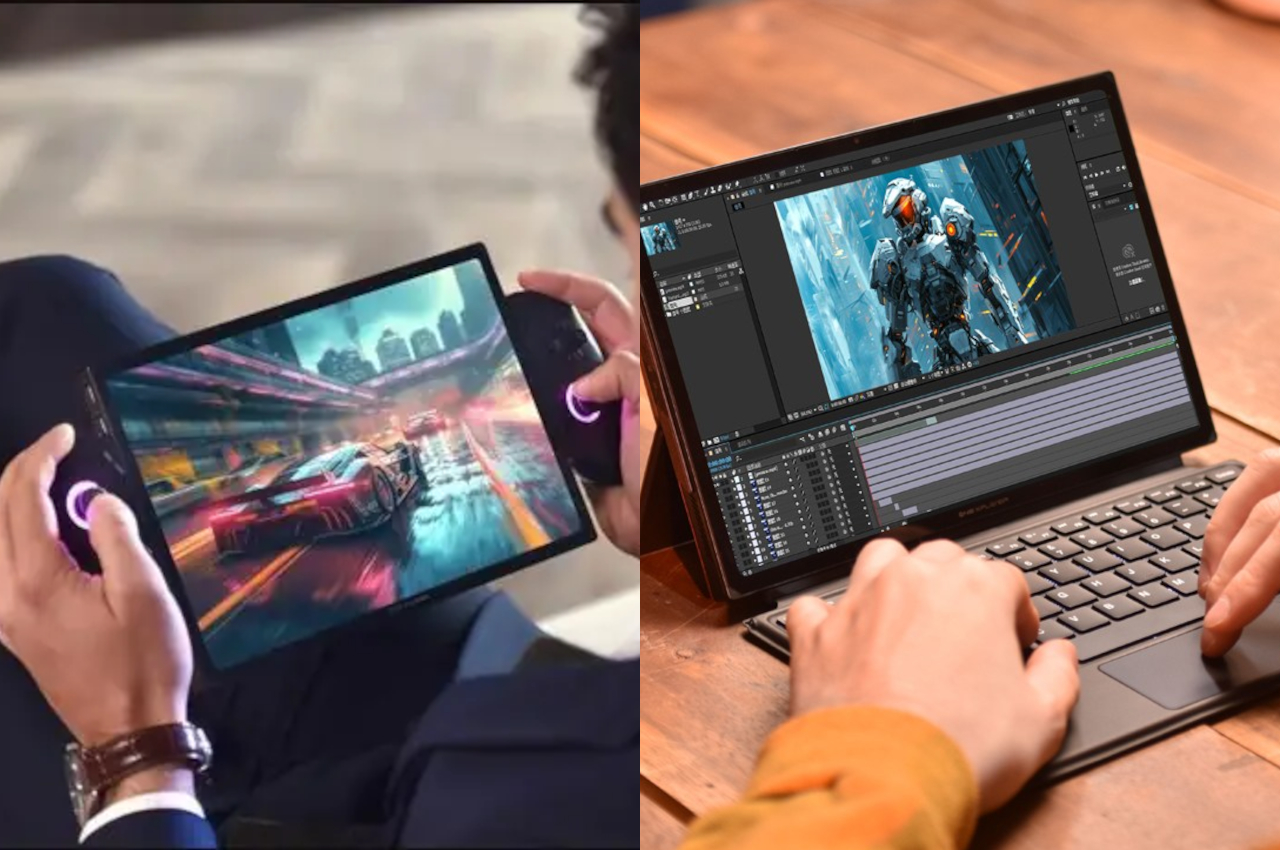
Where the ROG Zephyrus Duo 2026 really shines is in versatility. Because a laptop that can run AAA games can practically do anything as well, including content creation, programming, video editing, and 3D work. Designers and creatives will definitely love the freedom such a design offers, paired with powerful hardware that does not compromise just to fit two screens. You can keep After Effects timelines on one panel while the preview lives on the other, or split code and output, or run a game on the main screen with Discord and guides on the second, all without alt-tabbing or shrinking windows.

ASUS Zenbook DUO 2026 (UX8407): Dual-Screen Goes Lux

The ASUS Zenbook DUO 2026 shaves off some of the gaming hardware to offer a dual-screen laptop that is slimmer, lighter, and a little more stylish. It is no slouch, though, and carries plenty of muscle to handle any productivity task you might throw at it. That also includes content creation, with a bit of light gaming on the side when you want to unwind between meetings or deadlines and do not need RTX power for every session.

The Zenbook DUO 2026 runs a next-gen Intel Core Ultra processor with up to 50 TOPS NPU for AI workloads, paired with Intel Arc integrated graphics, up to 32GB of memory, and up to 2TB of SSD storage. It supports up to 45W TDP with a dual-fan thermal solution, keeping the machine stable during sustained loads without the heavy cooling overhead of a discrete GPU, which helps keep the chassis thin and light.

The main display is an ASUS Lumina Pro OLED with 1000 nits peak brightness, and both screens are treated with the same level of care, making them equally usable for productivity, media, and light creative work. What differentiates this next-gen dual-screen from its predecessor is the new hinge design that puts the screens closer together. With thinner bezels, they now sit just 8.28mm apart, a 70% reduction, and they almost look like a single continuous piece.

ASUS has adopted its Ceraluminum material for the Zenbook DUO 2026’s laptop lid, bottom case, and kickstand, making it not only look and feel more luxurious but also be a bit more resilient to accidents and daily wear. The Zenbook DUO weighs just 1.65kg and has a 5% smaller footprint than previous generations, which makes it easier to carry and fit on smaller desks or café tables.

It is packed with ports, including two Thunderbolt 4 connections, HDMI 2.1, USB 3.2 Gen 2 Type-A, and an audio jack, plus six speakers with two front-firing tweeters and four woofers for surprisingly rich audio from a thin chassis. The keyboard connects via magnetic pogo pins or Bluetooth, and the machine supports ASUS Pen 3.0, turning both screens into writable surfaces for notes, sketches, or annotations during video calls or brainstorming sessions.

Like the Zephyrus Duo, the Zenbook DUO 2026 can be used in multiple orientations. Laptop mode with the keyboard on top of the lower screen for traditional clamshell use. Desktop mode with both screens stacked or side-by-side, the detachable keyboard placed separately, and the built-in kickstand propping the whole thing up like a tiny dual-monitor workstation. Tent mode for presentations or sharing content across a table without needing an external display or awkward screen mirroring. The flexibility is the point, and it works without asking you to trust a flexible panel not to crease or scratch under normal use.

Trade-offs and Potential

Dual-screen laptops are not perfect, of course. You need to keep track of a separate keyboard you hope you will not lose, though that is also the case for some foldable laptops anyway, and the detachable keyboard is also what lets both the Zephyrus Duo and Zenbook DUO behave like tiny dual-monitor desks in tent or desktop modes. These machines are easily heavier than single-screen laptops with equivalent specs, and they will likely be priced firmly in premium territory, though still far below the stratospheric costs of early foldables.

There is also that unavoidable divider between the two screens, though ASUS has gotten it down to 8.28 mm on the Zenbook DUO, and at that point it starts to feel more like a subtle pause than a major interruption. The hinge is still visible, the gap is still there, but it is less about accepting compromise and more about acknowledging that two rigid, high-quality OLED panels with a small gap are more practical than one fragile foldable panel with no gap at all.

Despite those limitations, these designs offer a kind of versatility that neither conventional laptops nor foldable laptops can match. You get to decide how to use the laptop, unrestricted by a single panel or a prescribed set of folds. You can boost your productivity with two screens for timelines and tools, or save space with just one when you are working in a tight spot. You can stand them up for presentations, lay them flat for collaborative work, or use them as a traditional clamshell when muscle memory takes over.

Maybe someday, we will have foldable laptops that can bend both ways, support multiple modes, and will not easily scratch with a fingernail or develop a permanent crease after a few months of daily folding. But if you want to be productive and create content today, the ROG Zephyrus Duo 2026 and ASUS Zenbook DUO 2026 could very well be among the most productive and most versatile laptops of 2026, delivering the dual-screen promise without the fragility, the expense, or the anxiety that comes with carrying a piece of still-experimental tech into the real world.

The post 2026 ROG Zephyrus Duo, ASUS Zenbook DUO: Versatility You Can Use Today first appeared on Yanko Design.

The Upcoming iPhone Fold feels like a response to Peer Pressure, not Innovation

Image Credits: Techtics

I could be wrong, and I hope to be… but the iPhone Fold seems to be gathering interest but not for the right reasons. Everyone loves innovation – not everyone adopts it. We saw how the Vision Pro absolutely caused a tsunami online before subsiding into the tiny ripple it now is. For what it’s worth, the iPhone Fold feels like déjà vu. Impressive tech that Apple took years to perfect, launched to much fanfare, but without a true reason or ecosystem to actually boost user adoption. The Vision Pro is cool, but even after 3 years, nobody really NEEDS it.

We all knew the iPhone Air was going to just be a stepping stone towards something greater – but the iPhone Air’s sales prove one thing – nobody needed a slim phone, so nobody ended up buying one. Samsung’s been making foldables for the better part of a decade, and I still don’t see people overwhelmingly choosing them over regular candybar phones, so my question is simple. What exactly can Apple do to make their iPhone Fold measurably better? And more importantly, does “Measurably Better” actually translate to sales? Or is this a response to peer pressure without really innovating in a direction that users want?

Joining a Party After the Music Has Faded

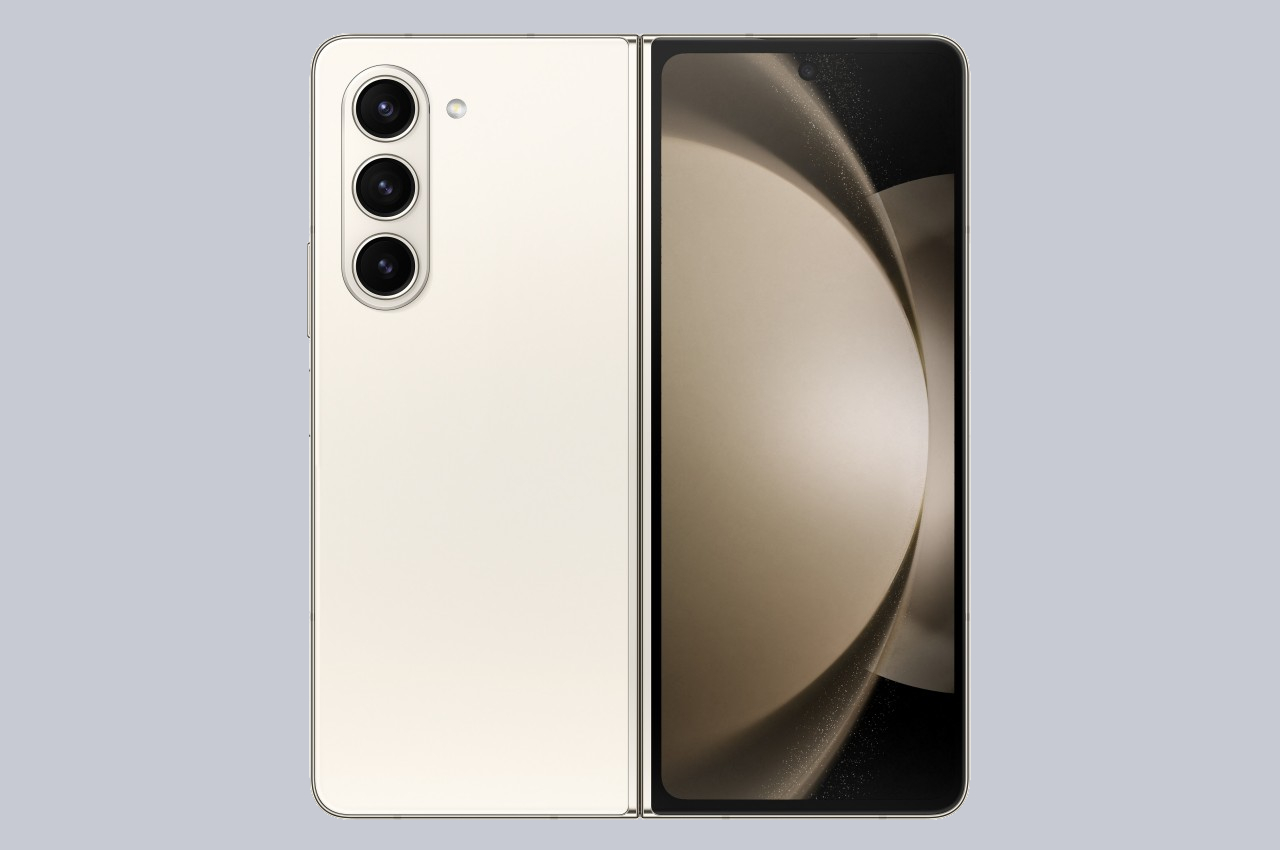
The context for Apple’s entry is a market that has already chosen a winner, and it is the conventional smartphone. For all the engineering hours poured into hinges and flexible glass by Samsung, Google, and others, the foldable category remains a rounding error in the grand scheme of things. Global foldable shipments are expected to hover around 20 million units in 2025, with Samsung commanding nearly two-thirds of that volume. This sounds impressive until you place it next to the more than one billion smartphones shipped annually. Foldables are a niche, a high-priced experiment that has had years to capture the public’s imagination and has largely failed to do so. Apple is not just late to this party; it is showing up after the keg is tapped and most of the guests have gone home.

This sets up a strange dynamic. Apple’s usual playbook involves letting a market mature, identifying its core flaws, and then releasing a product so polished and user-focused that it redefines the category. With the iPhone Fold, the company appears to be entering a segment that is not just mature but also stagnant, with little evidence of pent-up consumer demand. The consensus timeline points to a 2026 launch, positioning the device as a hyper-premium “Ultra” or “Fold” model within the iPhone 18 lineup. This framing alone suggests a halo product, something to be admired from afar, rather than the next revolutionary device for the masses. It feels less like a strategic strike and more like an obligation.

Image Credits: Techtics

An Obsession with Perfecting the Crease

The rumored hardware details paint a picture of a device engineered to within an inch of its life. Reports converge on a book-style foldable with a 7.7 to 7.8-inch inner display and a smaller 5.5-inch screen on the outside. The central obsession seems to be the crease, that subtle valley that plagues every other foldable. Apple is reportedly holding out for a near-invisible fold, leaning on a next-generation ultra-thin glass solution from Samsung Display and a complex internal hinge with metal plates to manage stress. The device is also expected to be incredibly thin, perhaps just 4.5 millimeters when open and around 9.6 millimeters when closed, which would make it one of the most slender mobile devices ever made.

These are impressive technical feats, to be sure. A phone that unfolds into a small tablet without a distracting crease is a laudable goal. But it also speaks to a focus on solving problems that only engineers and tech reviewers seem to lose sleep over. To achieve this thinness, compromises are already surfacing, such as the rumored omission of Face ID in favor of a Touch ID sensor on the power button. This is the kind of trade-off that indicates Apple is prioritizing the physical object itself, its thinness and aesthetic perfection, over the established user experience. It is a device built to win spec-sheet comparisons and design awards, while its practical value for the average user remains an open question.

Image Credits: Techtics

A Playbook Written by a Rival

Perhaps the most telling detail in this whole saga is Apple’s reported reliance on its chief rival. Analyst Ming-Chi Kuo and others have indicated that Apple will adopt Samsung Display’s “crease-free display solution” instead of a fully homegrown technology stack. This is a significant departure for a company that prides itself on vertical integration and owning the core technologies that define its products. From custom silicon to camera sensors, Apple’s advantage has always been its ability to design the whole widget. By turning to Samsung for the most critical and defining component of its first foldable, Apple is tacitly admitting that it is playing catch-up in a game whose rules were written by someone else.

This move fundamentally supports the “peer pressure” thesis. It suggests that the urgency to have a foldable in the lineup has overridden the traditional, patient Apple R&D cycle. The company is effectively outsourcing the hardest part of the problem to the very competitor that has defined the category for years. While Apple has been filing patents related to flexible displays since 2014, the decision to launch with a rival’s core technology feels reactionary. It is a move made to fill a perceived gap in its portfolio, ensuring that Samsung does not get to claim the “most futuristic” phone on the market without a fight.

Image Credits: Techtics

The Ghost of the Vision Pro

This entire narrative feels eerily familiar. Just a few years ago, Apple launched the Vision Pro, a product of breathtaking technical achievement that answered a question few people were asking. It was, and is, a marvel of engineering that commands a price tag to match, and its sustained adoption has been modest at best. The iPhone Fold appears to be tracking along the same trajectory: years of secretive development, a focus on solving incredibly difficult hardware challenges, and a final product that will likely be priced into the stratosphere. Leaks suggest a starting price between $1,800 and $2,300, placing it well above even the most expensive iPhone Pro Max.

This pricing strategy pre-selects its audience, limiting it to die-hard enthusiasts and those for whom price is no object. Just like the Vision Pro, the iPhone Fold risks becoming a solution in search of a problem. A crease-free display is a better display, but is it $2,000 better? A thinner phone is nice to hold, but does it fundamentally change what you can do with it? The Vision Pro proved that technical excellence alone does not create a market. Without a compelling, everyday use case that justifies its cost and complexity, the iPhone Fold could easily become another beautiful, expensive piece of technology that is more admired than it is used.

Image Credits: Techtics

A New Class of Halo Product

Ultimately, the iPhone Fold is shaping up to be less of a mainstream product and more of a statement piece. It is Apple’s answer to a question posed by its competitors, a way to plant its flag at the absolute peak of the smartphone market. The goal may not be to sell tens of millions of units in the first year, though some bullish forecasts suggest shipments could reach 13-15 million. It is about defending the brand’s reputation for innovation and ensuring that the title of “most advanced smartphone” does not belong exclusively to an Android device. It is a halo product in the truest sense, designed to make the rest of the iPhone lineup look good by comparison.

The real innovation users crave might be more mundane: longer battery life, more durable screens, and more accessible pricing. The iPhone Fold, with its focus on mechanical novelty and aesthetic perfection, does not seem to address these core desires. Instead, it doubles down on the very trends that have made high-end phones feel increasingly out of reach for many. It is a beautiful, exquisitely engineered response to industry pressure, a device that perfects the foldable form factor. Whether it perfects it for a world that actually wants it remains to be seen.

The post The Upcoming iPhone Fold feels like a response to Peer Pressure, not Innovation first appeared on Yanko Design.

When the Wolf Is Already Part of You: Yama Moon’s Quiet Character Design

Most illustration that deals with human-animal hybridity treats it as a problem to be solved, a boundary to be crossed or defended, a transformation caught mid-process. Yamazuki Mari refuses this framing entirely. Her figures don’t struggle with their condition. They wear it.

A woman stands before a massive black wolf, their bodies aligned so precisely that the creature reads less as a separate entity and more as an extension of her silhouette. No tension exists between them. No drama of possession or escape. Mari positions the wolf head directly above the woman’s own, along the same vertical axis, creating a visual grammar of doubling rather than confrontation. The relationship feels ceremonial, almost devotional, with the wolf serving as guardian rather than threat.

What makes this work distinctive isn’t the subject matter but the formal clarity she brings to it. Against deep black backgrounds, her figures emerge in pale creams and icy blues, coloring deliberately muted to let compositional geometry carry emotional weight.

Surface as Signal

Mari builds atmosphere through material choices that reward close attention. Fine crosshatched textures give her digital work a tactile quality suggesting engraving or woodcut, linking contemporary illustration to centuries of folk art tradition. When color does assert itself, it arrives as intrusion: coral red branches cutting through darkness like warning signals, their sharpness creating tension against the soft gradients of hair and fur.

Her background in graphic design shows in the disciplined relationship between figure and ground. Black backgrounds create ceremonial weight. White backgrounds create clinical clarity. Neither choice is neutral, and the shift between them across her body of work creates a tonal range that color specification alone can’t achieve.

By introducing fine grain and crosshatching into digital illustration, Mari creates a surface quality that resists the smoothness associated with computer-generated imagery. The textures read as handmade even when they’re not, and this material fiction supports the folkloric atmosphere her subjects require. The wolf’s fur carries the same visual density as the woman’s hair, unifying disparate biological forms through shared treatment.

Color operates with similar intentionality. Limited palettes prevent the images from reading as naturalistic while specific hues, coral red against midnight blue, winter gray against bone white, carry cultural associations that enrich the viewing experience without requiring explicit narrative. Red as warning, white as purity or death, black as depth or the unconscious: Mari leverages these associations without being constrained by them.

Stillness as Strategy

Stillness in Mari’s work isn’t absence of movement but rather the deliberate suspension of it.

Her compositions feel frozen at the instant before something happens, and this temporal ambiguity becomes a structural principle. The woman and wolf don’t move because they exist outside of narrative time. They occupy a space where transformation has already occurred and no further change is necessary. Traditional fantasy illustration often relies on dynamism to generate interest, filling the frame with action that guides the eye along predictable paths. Mari inverts this expectation. Her figures hold their positions, and the viewer must do the work of discovering the relationships between elements.

The result is an experience closer to portrait study than narrative illustration, where the reward comes from sustained attention rather than immediate comprehension.

Motion as Rupture

Her second piece abandons stillness entirely, and the contrast illuminates what the first image withholds. A human figure fuses with a lunging wolf in mid-leap, their bodies stretched forward in parallel lines of urgent motion. The wolf’s jaws are open, its eye wide with instinct, and the scene pulses with predatory energy that the first composition suppressed.

Cool grays and winter whites dominate the palette, replacing ceremonial blacks with something closer to raw weather. Sharp white branches frame the movement like cracked ice. The grainy textures that felt archival in the static piece now read as velocity blur. Same technical vocabulary, entirely different emotional results.

What the motion reveals is the cost of transformation. Static imagery presented hybridity as achieved and peaceful. Dynamic imagery shows it as ongoing and violent. These aren’t contradictory statements but rather complementary views of the same condition: the wolf is both guardian and hunter, protector and predator, and the human figure rides that duality rather than resolving it.

Mari doesn’t choose between interpretations because choosing would reduce the complexity her work investigates.

Tenderness Without Sentiment

Her final piece pivots toward something that resembles cuteness but refuses to commit to it. Two small catlike figures stand side by side against a clean white background, their rounded forms and oversized fur collars giving them a plush, doll-like presence. One wears red, the other blue. The color dialogue emphasizes individuality within obvious companionship.

Simplicity here is deceptive. These figures share the hybrid logic of the wolf pieces, with feline ears, tails, and paw-like hands rendering them not quite animal and not quite human. Their expressions are subdued rather than cheerful, and this restraint prevents the image from tipping into pure whimsy.

Mari names them May and Mii, the Nekochi, describing them as inseparable companions ready for playful mischief. The characterization suggests personality and relationship, but the visual treatment maintains distance. She doesn’t animate their mischief or show them in action. Like the woman and the wolf, they simply exist in their hybrid state, present to the viewer without performing.

Grammar of Integration

Across all three works, Mari establishes a consistent visual grammar for depicting hybridity. Human and animal elements don’t compete for dominance within the frame. They occupy the same compositional space with equal formal weight, aligned along shared axes, rendered with equivalent levels of detail.

Neither element reads as metaphor for the other.

The wolf isn’t the woman’s inner nature made visible. The woman isn’t the wolf’s civilized aspect. They exist together as a unified presence that simply happens to contain both forms. This approach distinguishes her work from transformation imagery in the Western fantasy tradition, where hybridity typically signifies conflict, corruption, or metamorphosis in progress. Mari’s hybrids carry no implication of instability. They aren’t becoming something else. They’ve already become, and the images document that completed state with the formal precision of taxonomy rather than the drama of mythology.

Cultural lineage matters here. Japanese visual traditions have long accommodated hybrid beings without requiring them to resolve into single identities. Kitsune, tanuki, and other shapeshifters populate folklore not as monsters to be defeated but as neighbors to be negotiated with. Mari draws on this heritage while filtering it through contemporary illustration sensibilities, producing images that feel simultaneously ancient and digitally native.

What the Hybrids Suggest

Most depictions of human-animal fusion carry anxiety about boundary dissolution, about losing the characteristics that define human identity.

Mari’s figures express no such concern. They wear their hybridity as comfortably as the Nekochi wear their fur collars, as a feature of existence rather than a problem to be solved. This comfort may be the most radical aspect of her visual language. In a design context where character illustration often relies on conflict, transformation, or aspiration to generate viewer engagement, Mari offers figures who’ve arrived at a place of integration and simply occupy it.

The wolf doesn’t need to devour the woman. The woman doesn’t need to tame the wolf. The Nekochi don’t need to choose between their feline and humanoid aspects.

For illustrators working in character design, the approach suggests an alternative to narrative-driven imagery. Not every character needs to be caught mid-journey. Some can simply exist, fully realized, inviting the viewer to spend time in their presence rather than anticipate their next transformation. Mari’s hybrids model this possibility with quiet confidence, their stillness a form of visual authority that movement would only diminish.

The post When the Wolf Is Already Part of You: Yama Moon’s Quiet Character Design first appeared on Yanko Design.

How to Spot Fake AI Products at CES 2026 Before You Buy

Merriam-Webster just named “slop” its word of the year, defining it as “digital content of low quality that is produced usually in quantity by means of artificial intelligence.” The choice is blunt, almost mocking, and it captures something that has been building for months: a collective exhaustion with AI hype that promises intelligence but delivers mediocrity. Over the past three months, that exhaustion has started bleeding into Wall Street. Investors, analysts, and even CEOs of AI companies themselves have been openly questioning whether we are living through an AI bubble. OpenAI’s Sam Altman warned in August that investors are “overexcited about AI,” and Google’s Sundar Pichai admitted to “elements of irrationality” in the sector. The tech industry is pouring trillions into AI infrastructure while revenues lag far behind, raising fears of a dot-com-style correction that could rattle the entire economy.

CES 2026 is going to be ground zero for this tension. Every booth will have an “AI-powered” sticker on something, and a lot of those products will be genuine innovations built on real on-device intelligence and agentic workflows. But a lot of them will also be slop: rebranded features, cloud-dependent gimmicks, and shallow marketing plays designed to ride the hype wave before it crashes. If you are walking the show floor or reading coverage from home, knowing how to separate real AI from fake AI is not just a consumer protection issue anymore. It is a survival skill for navigating a market that feeds on confusion and a general lack of awareness around actual Artificial Intelligence.

1. If it goes offline and stops working, it was never really AI

The simplest test for fake AI is also the most reliable: ask what happens when the internet connection drops. Real AI that lives on your device will keep functioning because the processing is happening locally, using dedicated chips and models stored in the gadget itself. Fake AI is just a thin client that calls a cloud API, and the moment your Wi-Fi cuts out, the “intelligence” disappears with it.

Picture a laptop at CES 2026 that claims to have an AI writing assistant. If that assistant can still summarize documents, rewrite paragraphs, and handle live transcription when you are on a plane with no internet, you are looking at real on-device AI. If it gives you an error message the second you disconnect, it is cloud-dependent marketing wrapped in an “AI PC” label. The same logic applies to TVs, smart home devices, robot vacuums, and wearables. Genuine AI products are designed to think locally, with cloud connectivity as an optional boost rather than a lifeline.

The distinction matters because on-device AI is expensive to build. It requires new silicon, tighter integration between hardware and software, and real engineering effort. Companies that invested in that infrastructure will want you to know it works offline because that is their competitive edge. Companies that skipped that step will either avoid the question or bury it in fine print. At CES 2026, press the demo staff on this: disconnect the device from the network and see if the AI features still run. If they do not, you just saved yourself from buying rebranded cloud software in a shiny box.

If your Robot Vacuum has Microsoft Copilot, RUN!

2. If it’s just a chatbot, it isn’t AI… it’s GPT Customer Care

The laziest fake AI move at CES 2026 will be products that open a chat window, let you type questions, and call that an AI feature. A chatbot is not product intelligence. It is a generic language model wrapper that any company can license from OpenAI, Anthropic, or Google in about a week, then slap their logo on top and call it innovation. If the only AI interaction your gadget offers is typing into a text box and getting conversational responses, you are not looking at an AI product. You are looking at customer service automation dressed up as a feature.

Real AI is embedded in how the product works. It is the robot vacuum that maps your home, decides which rooms need more attention, and schedules itself around your routine without you opening an app. It is the laptop that watches what you do, learns your workflow, and starts suggesting shortcuts or automating repetitive tasks before you ask. It is the TV that notices you always pause shows when your smart doorbell rings and starts doing it automatically. None of that requires a chat interface because the intelligence is baked into the behavior of the device itself, not bolted on as a separate conversation layer.

If a company demo at CES 2026 starts with “just ask it anything,” probe deeper. Can it take actions across the system, or does it just answer questions? Does it learn from how you use the product, or is it the same canned responses for everyone? Is the chat interface the only way to interact with the AI, or does the product also make smart decisions in the background without prompting? A chatbot can be useful, but it is table stakes now, not a differentiator. If that is the whole AI story, the company did not build AI into their product. They rented a language model and hoped you would not notice.

3. If the AI only does one narrow thing, it is probably just a renamed preset

Another red flag is when a product’s AI feature is weirdly specific and cannot generalize beyond a single task. A TV that has “AI motion smoothing” but no other intelligent behavior is not running a real AI model; it is running the same interpolation algorithm TVs have had for years, now rebranded with an AI label. A camera that has “AI portrait mode” but cannot recognize anything else is likely just using a basic depth sensor and calling it artificial intelligence. Real AI, especially the kind built into modern chips and operating systems, is designed to generalize across tasks: it can recognize objects, understand context, predict user intent, and coordinate with other devices.

Ask yourself: does this product’s AI learn, adapt, or handle multiple scenarios, or does it just trigger a preset when you press a button? If it is the latter, you are looking at a marketing gimmick. Fake AI products love to hide behind phrases like “AI-enhanced” or “AI-optimized,” which sound impressive but are deliberately vague. Real AI products will tell you exactly what the system is doing: “on-device object recognition,” “local natural language processing,” “agentic task coordination.” Specificity is a sign of substance. Vagueness is a sign of slop.

The other giveaway is whether the AI improves over time. Genuine AI systems get smarter as they process more data and learn from user behavior, often through firmware updates that improve the underlying models. Fake AI products ship with a fixed set of presets and never change. At CES 2026, ask demo reps if the product’s AI will improve after launch, how updates work, and whether the intelligence adapts to individual users. If they cannot give you a clear answer, you are looking at a one-time software trick masquerading as artificial intelligence.

Don’t fall for ‘AI Enhancement’ presets or buttons that don’t do anything related to AI.

4. If the company cannot explain what the AI actually does, walk away

Fake AI thrives on ambiguity. Companies that bolt a chatbot onto a product and call it AI-powered know they do not have a real differentiator, so they lean into buzzwords and avoid specifics. Real AI companies, by contrast, will happily explain what their models do, where the processing happens, and what problems the AI solves that the previous generation could not. If a booth rep at CES 2026 gives you vague non-answers like “it uses machine learning to optimize performance” without defining what gets optimized or how, that is a warning sign.

Push for concrete examples. If a smart home hub claims to have AI coordination, ask: what decisions does it make on its own, and what still requires manual setup? If a wearable says it has AI health coaching, ask: is the analysis happening on the device or in the cloud, and can it work offline while hiking in the wilderness? If a laptop advertises an AI assistant, ask: what can it do without an internet connection, and does it integrate with other apps (agentic) or just sit in a sidebar? Companies with real AI will have detailed, confident answers because they built the system from the ground up. Companies with fake AI will deflect, generalize, or change the subject.

The other test is whether the AI claim matches the price and the hardware. If a $200 gadget promises the same on-device AI capabilities as a $1,500 laptop with a dedicated neural processing unit, somebody is lying. Real AI requires real silicon, and that silicon costs money. Budget products can absolutely have useful AI features, but they will typically offload more work to the cloud or use simpler models. If the pricing does not line up with the technical claims, it is worth being skeptical. At CES 2026, ask what chip is powering the AI, whether it has a dedicated NPU, and how much of the intelligence is local versus cloud-based. If they cannot or will not tell you, that is your cue to move on.

5. Check if the AI plays well with others, or if it lives in a silo

One of the clearest differences between real agentic AI and fake “AI inside” products is interoperability. Genuine AI systems are designed to coordinate with other devices, share context, and act on your behalf across an ecosystem. Fake AI products exist in isolation: they have a chatbot you can talk to, but it does not connect to anything else, and it cannot take actions beyond its own narrow interface. Samsung’s CES 2026 exhibit is explicitly built around AI and interoperability, with appliances, TVs, and smart home products all coordinated by a shared AI layer. That is what real agentic AI looks like: the fridge, washer, vacuum, and thermostat all understand context and can make decisions together without you micromanaging each one. Fake AI, by contrast, gives you five isolated apps with five separate chatbots, none of which talk to each other. If a product at CES 2026 claims to have AI but cannot integrate with the rest of your smart home, car, or workflow, it is not delivering the core promise of agentic systems.

Ask demo reps: does this work with other brands, or only within your ecosystem? Can it trigger actions in other apps or devices, or does it just respond to questions? Does it understand my preferences across multiple products, or does each device start from scratch? Companies that built real AI ecosystems will brag about cross-device coordination because it is hard to pull off and it is the whole point. Companies selling fake AI will either avoid the topic or try to upsell you on buying everything from them, which is a sign they do not have real interoperability.

6. When in doubt, look for the slop

The rise of AI-generated “slop” gives you a shortcut for spotting lazy AI products: if the marketing materials, product images, or demo videos look AI-generated and low-effort, the product itself is probably shallow too. Merriam-Webster defines slop as low-quality digital content produced in quantity by AI, and it has flooded everything from social media to advertising to product launches. Brands that cut corners on their own marketing by using obviously AI-generated visuals are signaling that they also cut corners on the actual product development.

Watch for telltale signs: weird proportions in product photos, uncanny facial expressions in lifestyle shots, text that sounds generic and buzzword-heavy with no real specifics, and claims that are too good to be true with no technical backing. Real AI products are built by companies that care about craft, and that care shows up in how they present the product. Fake AI products are built by companies chasing a trend, and the slop in their marketing is the giveaway. At CES 2026, trust your instincts: if the booth, the video, or the pitch feels hollow and mass-produced, the gadget probably is too.

The post How to Spot Fake AI Products at CES 2026 Before You Buy first appeared on Yanko Design.

How AI Will Be Different at CES 2026: On‑Device Processing and Actual Agentic Productivity

Last year, every other product at CES had a chatbot slapped onto it. Your TV could talk. Your fridge could answer trivia. Your laptop had a sidebar that would summarize your emails if you asked nicely. It was novel for about five minutes, then it became background noise. The whole “AI revolution” at CES 2024 and 2025 felt like a tech industry inside joke: everyone knew it was mostly marketing, but nobody wanted to be the one company without an AI sticker on the booth.

CES 2026 is shaping up differently. Coverage ahead of the show is already calling this the year AI stops being a feature you demo and starts being infrastructure you depend on. The shift is twofold: AI is moving from the cloud onto the device itself, and it is evolving from passive assistants that answer questions into agentic systems that take action on your behalf. Intel has confirmed it will introduce Panther Lake CPUs, AMD CEO Lisa Su is headlining the opening keynote with expectations around a Ryzen 7 9850X3D reveal, and Nvidia is rumored to be prepping an RTX 50 “Super” refresh. The silicon wars are heating up precisely because the companies making chips know that on-device AI is the only way this whole category becomes more than hype. If your gadget still depends entirely on a server farm to do anything interesting, it is already obsolete. Here’s what to expect at CES 2026… but more importantly, what to expect from AI in the near future.
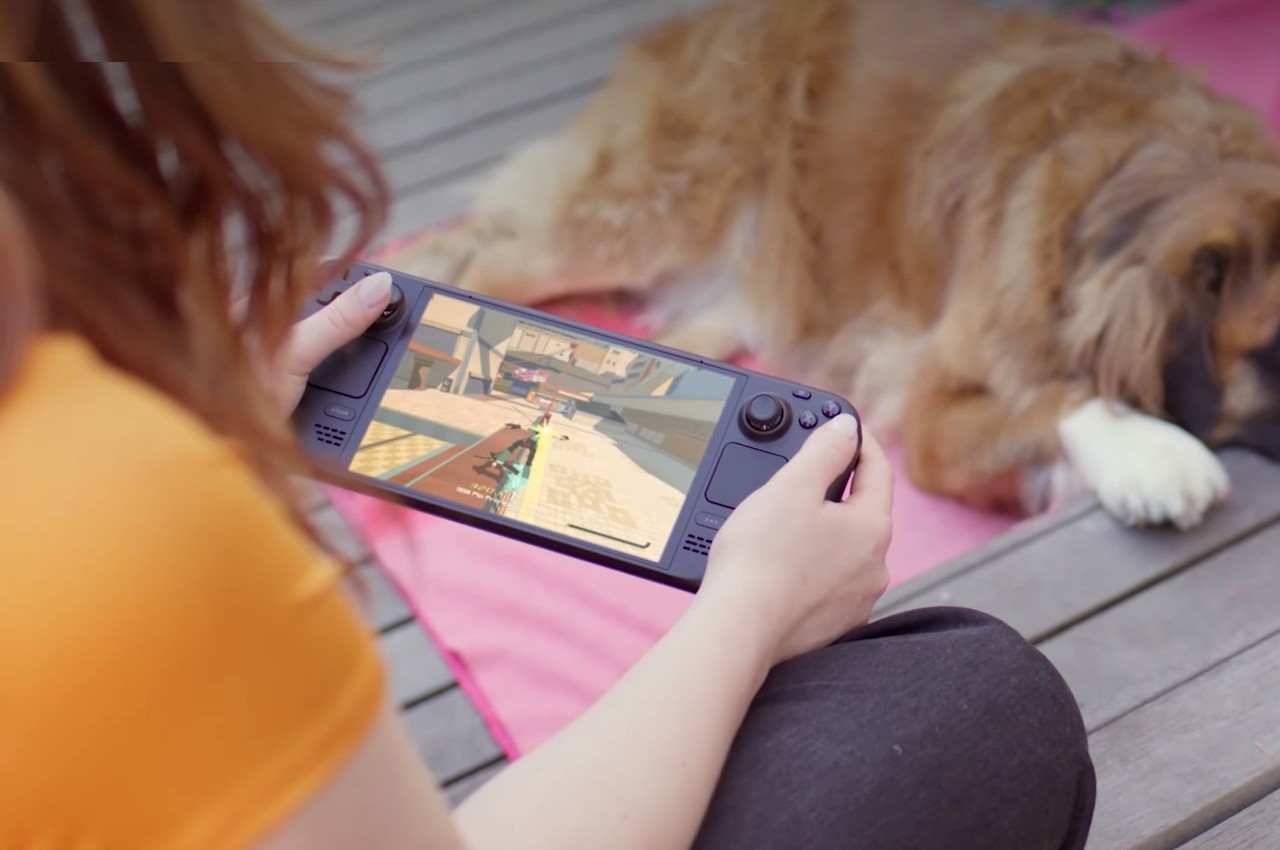
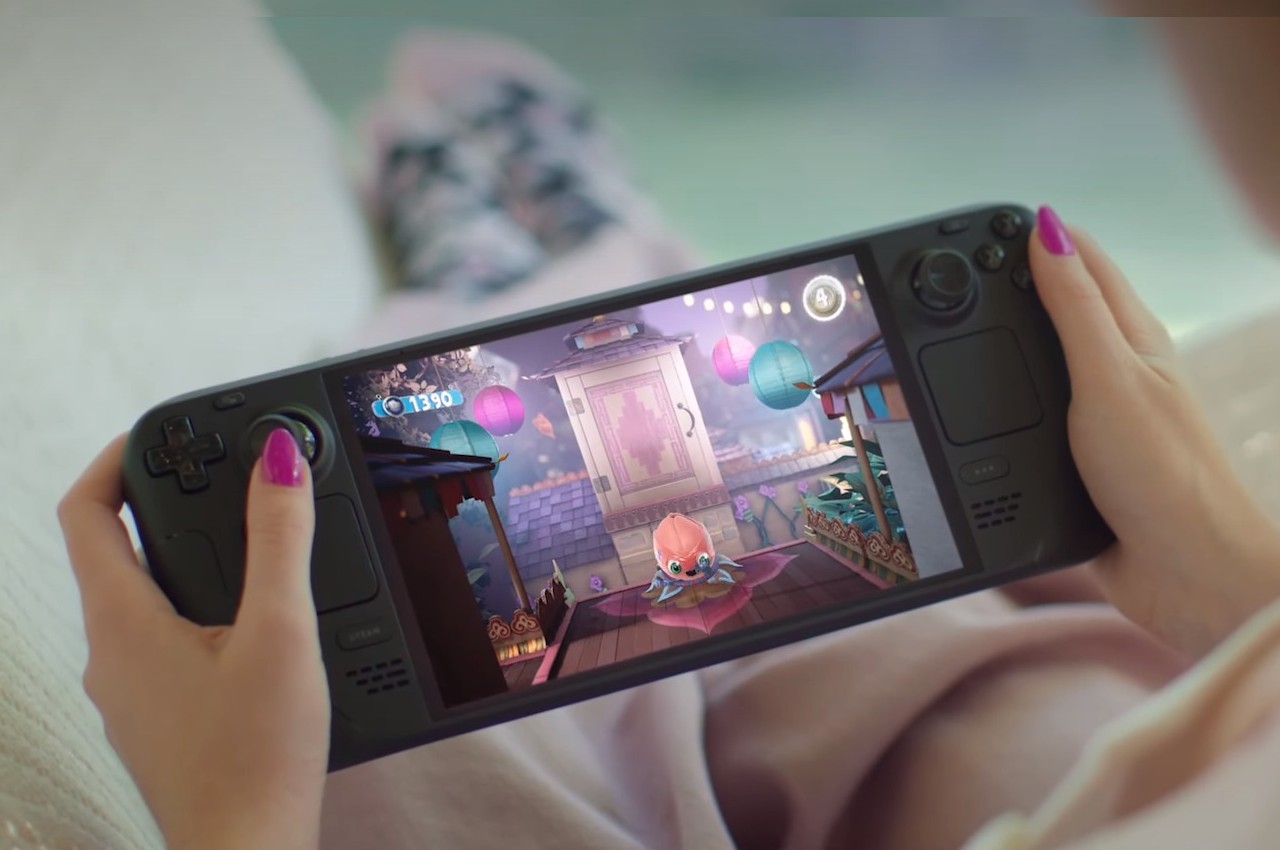
Your laptop is finally becoming the thing running the models

Intel, AMD, and Nvidia are all using CES 2026 as a launching pad for next-generation silicon built around AI workloads. Intel has publicly committed to unveiling its Panther Lake CPUs at the show, chips designed with dedicated neural processing units baked in. AMD’s Lisa Su is doing the opening keynote, with strong buzz around a Ryzen 7 9850X3D that would appeal to gamers and creators who want local AI performance without sacrificing frame rates or render times. Nvidia’s press conference is rumored to focus on RTX 50 “Super” cards that push both graphics and AI inference into new territory. The pitch is straightforward: your next laptop or desktop is not a dumb terminal for ChatGPT; it is the machine actually running the models.
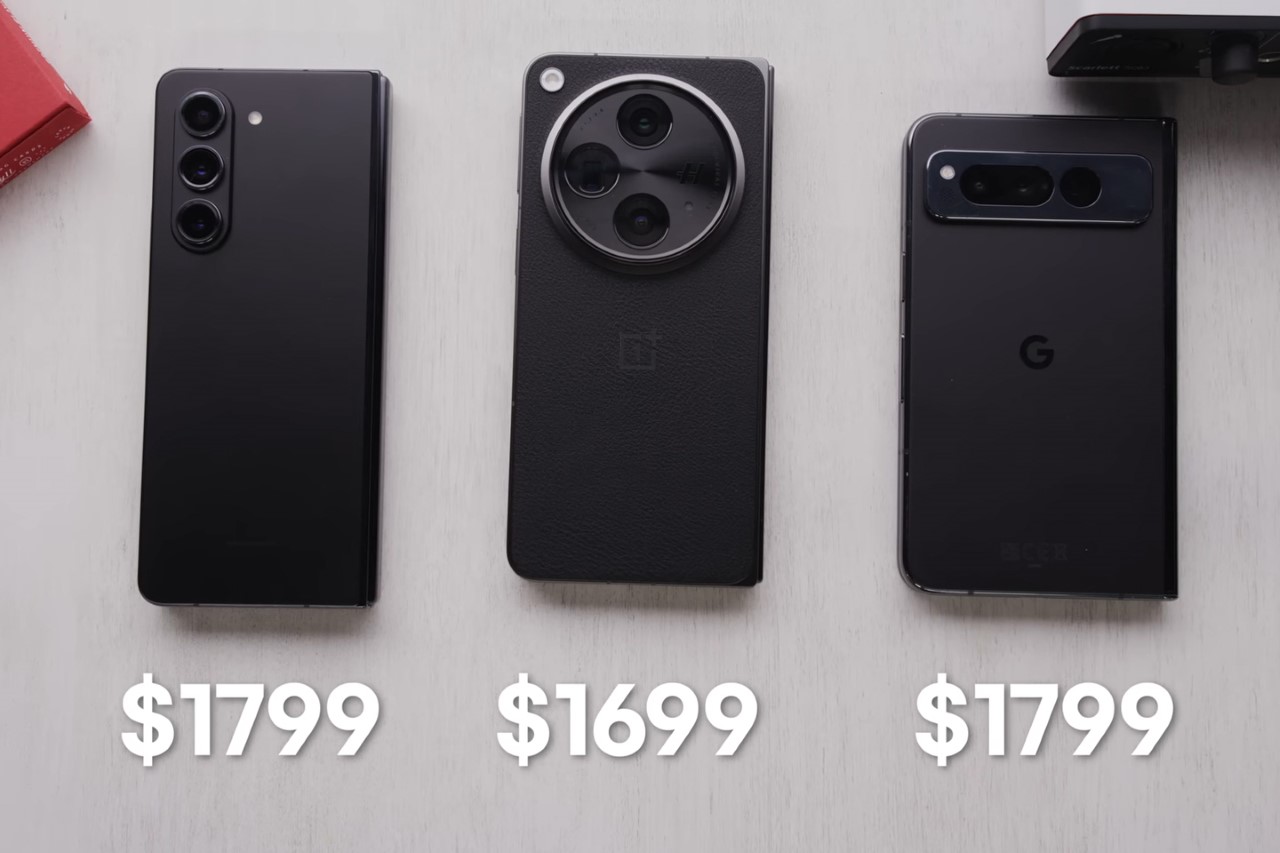
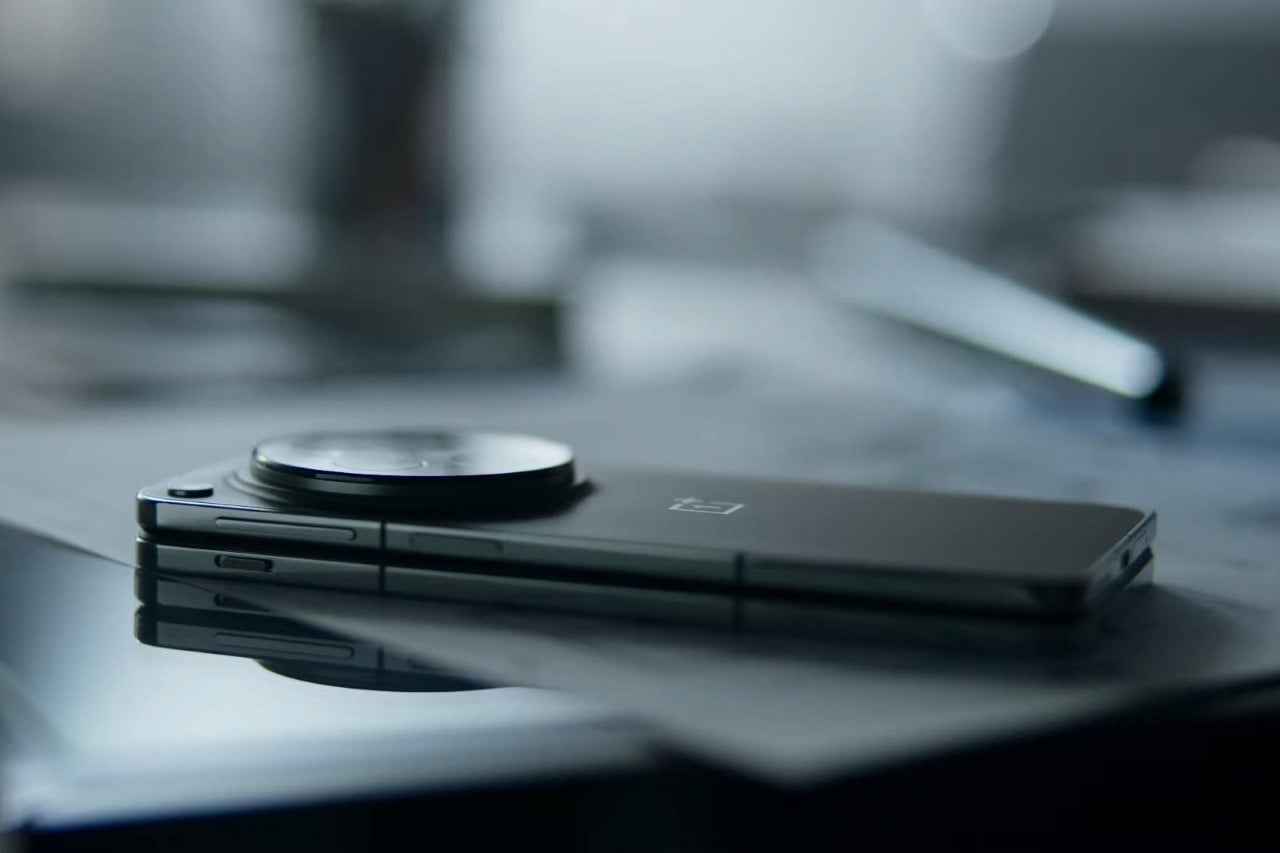
What does that look like in practice? Laptops at CES 2026 will be demoing live transcription and translation that happens entirely on the device, no cloud round trip required. You will see systems that can summarize browser tabs, rewrite documents, and handle background removal on video calls without sending a single frame to a server. Coverage is already predicting a big push toward on-device processing specifically to keep your data private and reduce reliance on cloud infrastructure. For gamers, the story is about AI upscaling and frame generation becoming table stakes, with new GPUs sold not just on raw FPS but on how quickly they can run local AI tools for modding, NPC dialogue generation, or streaming overlays. This is the year “AI PC” might finally mean something beyond a sticker.

Agentic AI is the difference between a chatbot and a butler

Pre-show coverage is leaning heavily on the phrase “agentic AI,” and it is worth understanding what that actually means. Traditional AI assistants answer questions: you ask for the weather, you get the weather. Agentic AI takes goals and executes multi-step workflows to achieve them. Observers expect to see devices at CES 2026 that do not just plan a trip but actually book the flights and reserve the tables, acting on your behalf with minimal supervision. The technical foundation for this is a combination of on-device models that understand context and cloud-based orchestration layers that can touch APIs, but the user experience is what matters: you stop micromanaging and start delegating.

Samsung is bringing its largest CES exhibit to date, merging home appliances, TVs, and smart home products into one massive space with AI and interoperability as the core message. Imagine a fridge, washer, TV, robot vacuum, and phone all coordinated by the same AI layer. The system notices you cooked something smoky, runs the air purifier a bit harder, and pushes a recipe suggestion based on leftovers. Your washer pings the TV when a cycle finishes, and the TV pauses your show at a natural break. None of this requires you to open an app or issue voice commands; the devices are just quietly making decisions based on context. That is the agentic promise, and CES 2026 is where companies will either prove they can deliver it or expose themselves as still stuck in the chatbot era.

Robot vacuums are the first agentic AI success story you can actually buy

CES 2026 is being framed by dedicated floorcare coverage as one of the most important years yet for robot vacuums and AI-powered home cleaning, with multiple brands receiving Innovation Awards and planning major product launches. This category quietly became the testing ground for agentic AI years before most people started using the phrase. Your robot vacuum already maps your home, plans routes, decides when to spot-clean high-traffic areas, schedules deep cleans when you are away, and increasingly maintains itself by emptying dust and washing its own mop pads. It does all of this with minimal cloud dependency; the brains are on the bot.

LG has already won a CES 2026 Innovation Award for a robot vacuum with a built-in station that hides inside an existing cabinet cavity, turning floorcare into an invisible, fully hands-free system. Ecovacs is previewing the Deebot X11 OmniCyclone as a CES 2026 Innovation Awards Honoree and promising its most ambitious lineup to date, pushing into whole-home robotics that go beyond vacuuming. Robotin is demoing the R2, a modular robot that combines autonomous vacuuming with automated carpet washing, moving from daily crumb patrol to actual deep cleaning. These bots are starting to integrate with broader smart home ecosystems, coordinating with your smart lock, thermostat, and calendar to figure out when you are home, when kids are asleep, and when the dog is outside. The robot vacuum category is proof that agentic AI can work in the real world, and CES 2026 is where other product categories are going to try to catch up.

TVs are getting Micro RGB panels and AI brains that learn your taste

LG has teased its first Micro RGB TV ahead of CES 2026, positioning it as the kind of screen that could make OLED owners feel jealous thanks to advantages in brightness, color control, and longevity. Transparent OLED panels are also making appearances in industrial contexts, like concept displays inside construction machinery cabins, hinting at similar tech eventually showing up in living rooms as disappearing TVs or glass partitions that become screens on demand. The hardware story is always important at CES, but the AI layer is where things get interesting for everyday use.

TV makers are layering AI on top of their panels in ways that go beyond simple upscaling. Expect personalized picture and sound profiles that learn your room conditions, content preferences, and viewing habits over time. The pitch is that your TV will automatically switch to low-latency gaming mode when it recognizes you launched a console, dim your smart lights when a movie starts, and adjust color temperature based on ambient light without you touching a remote. Some of this is genuine machine learning happening on-device, and some of it is still marketing spin on basic presets. The challenge for readers at CES 2026 will be figuring out which is which, but the direction is clear: TVs are positioning themselves as smart hubs that coordinate your living room, not just dumb displays waiting for HDMI input.

Gaming gear is wiring itself for AI rendering and 500 Hz dreams

HDMI Licensing Administrator is using CES 2026 to spotlight advanced HDMI gaming technologies with live demos focused on very high refresh rates and next-gen console and PC connectivity. Early prototypes of the Ultra96 HDMI cable, part of the new HDMI 2.2 specification, will be on display with the promise of higher bandwidth to support extreme refresh rates and resolutions. Picture a rig on the show floor: a 500 Hz gaming monitor, next-gen GPU, HDMI 2.2 cable, running an esports title at absurd frame rates with variable refresh rate and minimal latency. It is the kind of setup that makes Reddit threads explode.

GPUs are increasingly sold not just on raw FPS but on AI capabilities. AI upscaling like DLSS is already table stakes, but local AI is also powering streaming tools for background removal, audio cleanup, live captions, and even dynamic NPC dialogue in future games that require on-device inference rather than server-side processing. Nvidia’s rumored RTX 50 “Super” refresh is expected to double down on this positioning, selling the cards as both graphics and AI accelerators. For gamers and streamers, CES 2026 is where the industry will make the case that your rig needs to be built for AI workloads, not just prettier pixels. The infrastructure layer, cables and monitors included, is catching up to match that ambition.

What CES 2026 really tells us about where AI is going

The shift from cloud-dependent assistants to on-device agents is not just a technical upgrade; it is a fundamental change in how gadgets are designed and sold. When Intel, AMD, and Nvidia are all racing to build chips with dedicated AI accelerators, and when Samsung is reorganizing its entire CES exhibit around AI interoperability, the message is clear: companies are betting that local intelligence and cross-device coordination are the only paths forward. The chatbot era served its purpose as a proof of concept, but CES 2026 is where the industry starts delivering products that can think, act, and coordinate without constant cloud supervision.

What makes this year different from the past two is that the infrastructure is finally in place. The silicon can handle real-time inference. The software frameworks for agentic behavior are maturing. Robot vacuums are proving the model works at scale. TVs and smart home ecosystems are learning how to talk to each other without requiring users to become IT managers. The pieces are connecting, and CES 2026 is the first major event where you can see the whole system starting to work as one layer instead of a collection of isolated features.

The real question is what happens after the demos

Trade shows are designed to impress, and CES 2026 will have no shortage of polished demos where everything works perfectly. The real test comes in the six months after the show, when these products ship and people start using them in messy, real-world conditions. Does your AI PC actually keep your data private when it runs models locally, or does it still phone home for half its features? Does your smart home coordinate smoothly when you add devices from different brands, or does it fall apart the moment something breaks the script? Do robot vacuums handle the chaos of actual homes, or do they only shine in controlled environments?

The companies that win in 2026 and beyond will be the ones that designed their AI systems to handle failure, ambiguity, and the unpredictable messiness of how people actually live. CES 2026 is where you will see the roadmap. The year after is where you will see who actually built the roads. If you are walking the show floor or following the coverage, the most important question is not “what can this do in a demo,” but “what happens when it breaks, goes offline, or encounters something it was not trained for.” That is where the gap between real agentic AI and rebranded presets will become impossible to hide.

The post How AI Will Be Different at CES 2026: On‑Device Processing and Actual Agentic Productivity first appeared on Yanko Design.