Giant Sculptures Look Like Machines but, Nobody Knows What They Do

Most public sculptures ask you to stand in front of them and feel something, usually reverence, awe, or a vague sense of civic pride. They represent people, events, or abstract ideals, but they rarely suggest function. A figure cast in bronze doesn’t appear to be doing anything, and that’s largely the point. The statue commemorates; it doesn’t operate. The relationship between viewer and object is, by design, entirely passive.

Michael Jantzen had a different idea. The Santa Fe-based designer set out to create public sculptures that look like they’re built to do something, even if no one, including Jantzen himself, can say what that something is. The result is the Monumental Engines of Creation, a concept series drawing from the visual language of high-technology hardware, assembled into objects that feel purposeful, alien, and oddly believable all at once.

Designer: Michael Jantzen

The design process is telling. Jantzen didn’t start with a function and work backward to a form, as industrial designers typically do. He built the pieces intuitively, combining various components into composites that simply suggest some kind of high-level intelligence at work. The question of what they might actually be for was deliberately left unanswered, and that open-endedness is precisely what gives the series its strange pull.

Standing near one of these sculptures, you’d spend a while trying to decode it. Jantzen’s hope is that viewers engage with the objects and find themselves genuinely wondering about their origin, their creators, and their purpose. That kind of sustained curiosity is harder to provoke than it sounds. Most public sculptures deliver their meaning almost immediately; these deliberately withhold it, rewarding prolonged attention with more questions rather than answers.

Part of why that works is scale. Each piece in the series is intentionally gigantic, dwarfing any person nearby to the point of near insignificance. That proportion isn’t accidental; Jantzen designed the scale to convey the symbolic weight of each object relative to its imagined function. A machine built to scatter the seeds of creativity throughout the universe, the thinking goes, should probably look the part.

There’s something worth sitting with in the idea that creativity itself deserves monuments. Most of what we commemorate in public space is history, politics, or governance. Jantzen’s machines point somewhere else, toward imagination, invention, and the strange optimism embedded in building. They don’t ask to be understood. They ask to be wondered at, which turns out to be a different, and arguably more honest, kind of public art.

The post Giant Sculptures Look Like Machines but, Nobody Knows What They Do first appeared on Yanko Design.

Rogbid SpinX smartwatch has built-in scroll wheel and tactical flashlight

Most modern smartwatches are essential health and connectivity hubs, featuring high-resolution OLED/LCD screens, comprehensive health monitoring, built-in GPS, NFC for contactless payments, and whatnot. They focus on fitness tracking while being highly practical and comfortable to wear.

Rogbid wants to change the perception of a smartwatch from just being a health tracking wearable that stays connected to your smartphone to one that is utilitarian within its own rights. The Chinese smartwatch brand has revealed the SpinX smartwatch that comes with a scroll wheel for navigating menus and other options with better precision. This little change simplifies things for the wearer, which is a small win that goes a long way.

Designer: Rogbid

This precision scroll wheel has a full-area pressure-sensing system to make operations smooth. The little hardware comes with a full-area pressure-sensing system that eliminates any blind spots, especially in the corners. Essentially, we are talking about a 360-degree pressure-sensing control system that brings faster command navigation to the fore and improves the overall experience. The SpinX smartwatch comes with a 1.43-inch AMOLED display with a 466 x 466 pixel resolution. The elements displayed are going to be color correct since it has 99.5% Adobe RGB color accuracy.

Apart from the intuitive scroll wheel control, the watch has a built-in flashlight that is much more than the bright screen mode that normal smartwatches use for the flashlight function. SpinX goes a step further by adding a specialized optical lens and a deep reflector for better results. The focused beam from this flashlight is very useful in inclement weather conditions as it prevents light scattering. This comes very handy on foggy nights and rainy seasons. The flashlight comes in three modes: High, Beam, Strobe, and SOS for a more granular control over the usage scenarios.

Another highlighting feature of the smartwatch is the built-in 1100mAh battery pack, which ensures you don’t need to recharge it for 40 days on active usage. In the standby mode, it can last up to 100 days, which is staggering. Compare that to my Galaxy Watch’s meagre backup that lasts only a day at best, and this smartwatch already has my vote. The 3ATM water-resistant watch is adventure-ready with military-grade durability (MIL-STD 810H certified) and a built-in compass.

Of course, it comes with comprehensive health tracking features like a heart rate monitor, tracking SPO2 levels, and keeping a tab of sleep health. For active individuals, the smartwatch has more than 100 sports modes, including an activity tracker. The watch faces on this one can be customized as per your liking, and the Bluetooth 5.4 connectivity to your phone keeps things seamless. SpinX is available in classic black finish with the option to choose from the Tech Black or Vibrant Orange scroll wheel. With a price tag of $50, this smartwatch is already going to be on many people’s wishlists, I’m sure.

The post Rogbid SpinX smartwatch has built-in scroll wheel and tactical flashlight first appeared on Yanko Design.

Spotify is now a fitness app too

In its quest to become an all-in-one app, Spotify is now breaking into the fitness app world by offering "guided workout experiences" and on-demand Peloton classes. Premium subscribers will get access to Peloton's library of more than 1,400 classes in the app, while both Free and Premium can browse curated playlists (they're listed under the genre "fitness.")

Spotify's Fitness section showing example workouts and video to follow along with.
Spotify

Spotify said the classes are primarily in English, but there are some options in Spanish and German. Like music and podcasts, Spotify lets you bounce between different devices for its fitness media, so you can start a video workout on your TV and switch to an audio-only version on your phone or smart speaker. Users can even download the classes for offline use.

The fitness category may feel like a sharp turn for Spotify, but the company said that nearly 70 percent of its Premium subscribers work out monthly and that fitness and workout content was one of the top use cases for its Prompted Playlist feature. Spotify has long been expanding its offerings outside of music, with its latest efforts giving users a way to buy physical books or create group chats

This article originally appeared on Engadget at https://www.engadget.com/apps/spotify-is-now-a-fitness-app-too-144037057.html?src=rss

Oprah brings her podcast to Amazon’s streaming services

Amazon has brought another high-profile podcasting name into its fold after agreeing to a multiyear licensing deal with Oprah Winfrey. Her podcast will expand to two episodes a week starting in July and it will be available across the likes of Prime Video, Amazon Music, Fire TV channels and Audible. New episodes will still hit YouTube and other podcast platforms, according to Variety.

Winfrey will stick to the same format she's been using on YouTube since starting a podcast channel there at the end of 2024. It will feature interviews with authors, celebrities and others in the public eye.

In addition, Winfrey will create specials based on her Oprah's Favorite Things and Oprah’s Book Club franchises for Amazon. The company is also licensing all 25 seasons of The Oprah Winfrey Show but Winfrey and Amazon haven't figured out exactly how to repurpose the long-running talk show as yet. 

Last year, Amazon split its Wondery podcast company in two, with a team focusing on narrative podcasts merging with Amazon’s Audible team and a crew that handles celebrity-hosted shows forming a new division called Creator Services. That group promotes podcasts like New Heights with Jason and Travis Kelce and Armchair Expert with Dax Shepard across Amazon's various properties, as The New York Times notes.

Oprah's Book Club will tie into Audible, Kindle, Goodreads and the Amazon storefront. Products featured in the annual Oprah's Favorite Things holiday list will be highlighted on the latter as well. Winfrey and Amazon will split sales and ad revenue.

It’s become common for major media companies to make a play for popular podcasts over the last several years. As video podcasts have grown, the likes of Netflix have gotten in on the action too. Some people play these as background noise and Winfrey's podcast might be particularly appealing to fans of her TV show, which ended in 2011.

This article originally appeared on Engadget at https://www.engadget.com/entertainment/oprah-brings-her-podcast-to-amazons-streaming-services-142846445.html?src=rss

Bang & Olufsen Just Taught Stone to Sing at Milan 2026

Every year, Milan Design Week raises the question of what design is actually for. Not in the abstract, philosophical sense that gets debated in panel discussions nobody remembers, but in the most immediate, physical way: you walk into a space, and either you feel it or you don’t. The Bang & Olufsen and Antolini installation this year, From Quarry to Garden: The Shape of Beautiful Sound, is the kind of experience that makes you feel it before you can even explain why.

The collaboration between Bang & Olufsen, the Danish audio luxury brand founded in 1925, and Antolini, the Verona-based natural stone company with 70 years of history, is one of those pairings that sounds unlikely on paper but makes complete sense once you see it. Both brands are obsessed with material. Both are deeply committed to the idea that an object should not only perform but move you. Putting them in the same room, or rather the same garden, was probably inevitable.

Designers: Antolini® with Bang & Olufsen

The installation, hosted at Antolini’s MilanoDuomo Stoneroom, centers on the preview of Beosound Haven, Bang & Olufsen’s forthcoming landscape speaker. It’s a sphere of precision-engineered aluminium that sits on a stone plinth, surrounded by living greenery, water lilies floating on a reflective table, and the kind of deliberate quiet that makes you lean in. Droplets fall onto the water surface and send out ripples, which is either a very beautiful metaphor for sound or just a very beautiful moment. I’m not sure it matters which.

The primary stone throughout the space is Antolini’s Taj Mahal quartzite in a matt finish, chosen for its soft, almost luminous tonality. It reads as both ancient and contemporary at once, exactly the kind of visual tension that great design installations live on. The stone doesn’t compete with the speaker; it contextualizes it. Beosound Haven looks like it belongs there, among the moss and the hydrangeas, in a way that speakers almost never manage to look like they belong anywhere outdoors.

That, to me, is the most interesting design question this collaboration raises: can sound be architectural? Not metaphorically, but literally, the way a wall or a window or a threshold is architectural? Bang & Olufsen’s Senior Director of Design, Kresten Bjørn Krab-Bjerre, speaks about sound as “an architectural language,” one that interacts with materials and forms atmosphere. It’s the kind of language that’s usually associated with interiors, with rooms and ceilings and acoustic panels. Translating it outdoors, into the open air, into a garden or a terrace, is a genuinely new proposition. And one worth taking seriously.

The collaboration also extends to a limited series of Beolab 18 speakers reinterpreted in Antolini stones: Amazonite, Retro Black Petrified Wood, Patagonia Original, Dalmata, Cipollino GreyWave, and Taj Mahal, each piece defined by the specific character of its material. No two are identical, which is exactly how it should be when you’re working with stone. Stone isn’t uniform and it was never meant to be. That unpredictability is part of the point.

This is the second chapter of the Bang & Olufsen and Antolini partnership, building on work introduced in 2025. It feels more confident this time around, more willing to make a statement. Carlo Alberto Antolini describes the result as “a dialogue between the elements,” and that framing feels right. It’s not a speaker placed in a garden. It’s a conversation between nature and craft, between sound and surface, between something ancient and something very, very deliberate.

Milan Design Week produces a lot of installations that photograph well and feel thin in person. This one seems to work differently, designed to be experienced with the body, not just processed with the eyes. The sound moves through the space. The stone holds light. The water catches everything. Whether you’re drawn in by the audio, the aesthetics, or simply the spectacle of a garden growing inside a Milan stoneroom, you’re likely to leave thinking about what it means to really listen to a space rather than just look at it.

The post Bang & Olufsen Just Taught Stone to Sing at Milan 2026 first appeared on Yanko Design.

August 2026: Mark Your Calendars for the Samsung Galaxy Glasses Debut

August 2026: Mark Your Calendars for the Samsung Galaxy Glasses Debut

Samsung is preparing to make a significant impact on the extended reality (XR) market with its highly anticipated Galaxy Glasses. Recent leaks from a One UI 8.5 software teardown have revealed a device that is designed to integrate seamlessly into the broader Samsung ecosystem. Developed in collaboration with Google, these glasses aim to combine advanced […]

The post August 2026: Mark Your Calendars for the Samsung Galaxy Glasses Debut appeared first on Geeky Gadgets.

Posted in Uncategorized

The sequel to the iconic emulator ZSNES is called Super ZSNES, of course

Somehow, ZSNES has returned after laying dormant for 20 years. The developers of the iconic Super Nintendo emulator, which originally debuted in 1997 for DOS (something I distinctly remember trying to install on my ancient Intel 486 Packard Bell), are back with a sequel release dubbed Super ZSNES. And really, what else would they call it?

Developers zsKnight and Demo say that Super ZSNES has been rewritten from scratch with a focus on a GPU-powered “Super Enhancement Engine,” which allows for high resolution playback, overclocking (which could help with games notorious for slowdown), widescreen support, uncompressed audio and 3D height maps for Mode 7 graphics. Purists, of course, can turn all of these extra features off if they want.

Super ZSNES is built on “far more accurate CPU and Audio cores” than the original emulator, according to the developers, as well as the usual fast forward/rewind save states and a higher-resolution version of the original ZSNES UI. And as a cherry on top, they promise there’s “No Vibe Coding.”

There’s no shortage of SNES emulators out there today, but it warms my gaming heart to see ZSNES completely revived. And while I still need to play with its enhancement features to truly judge them, the early footage from Modern Vintage Gamer looks very sharp without losing the SNES charm. There’s no replacement for playing the original console on a CRT, but the GPU upgrades in Super ZSNES seem to do a great job of modernizing classic games like Super Mario World for modern displays.

Super ZSNES is currently available as an early build for Windows, Mac and Android. An iOS release is coming soon, according to the emulator’s website.

This article originally appeared on Engadget at https://www.engadget.com/gaming/nintendo/the-sequel-to-the-iconic-emulator-zsnes-is-called-super-zsnes-of-course-135203417.html?src=rss

7 Claude Design Use Cases to Speed Up Your Prototyping Workflow

7 Claude Design Use Cases to Speed Up Your Prototyping Workflow Claude Design interface generating a custom landing page from user prompts

Claude Design is a platform that supports designers in turning ideas into functional outputs with efficiency and precision. As highlighted by Zinho Automates, one standout feature is its ability to generate branded, interactive app prototypes from simple text prompts. This functionality helps designers test usability and address potential issues early in the process, reducing the […]

The post 7 Claude Design Use Cases to Speed Up Your Prototyping Workflow appeared first on Geeky Gadgets.

Posted in Uncategorized

This Side Table Tricks You Into Thinking Books Are Holding It Up

Side tables have always been one of the harder pieces of furniture to make genuinely interesting. They’re functional by nature, meant to hold a drink, a remote, or that ever-growing stack of books. Most designs take the easy route: a flat surface, four legs, and nothing more. A few try to add storage or visual flair, but the table and whatever sits on it rarely share anything deeper than proximity.

Deniz Aktay’s Delusion Table turns that relationship on its head. The Stuttgart-based designer has crafted a side table concept where books aren’t just accessories resting on the surface; they become part of the table itself, or at least appear to. The idea is simple but arresting: a purpose-built metal framework connects the tabletop to the base, and once books are loaded onto it, the metal structure all but disappears.

Designer: Deniz Aktay (dezinobjects)

The trick borrows from a principle already used in certain bookmarks and floating wall shelves, where a thin metal channel slides between a book’s pages and disappears behind the covers. Aktay applies the same logic vertically: the table’s central stem has integrated clips that hold books upright against the structure. Slot a few thick art or design volumes in, and the metal seems to dissolve quietly into the spines.

What results is a table that looks as if a small stack of books has somehow defied physics to hold an entire surface aloft. It’s a visual gag, but an elegant one. The books aren’t floating or leaning on something concealed behind them. They’re gripping the structure, pages pressed against the clips, covers facing outward, spines reading clearly, creating something that looks accidental but is actually very deliberate.

That deliberateness extends to the books themselves. The volumes you choose to insert don’t just support the illusion; they become part of the design statement. A stack of oversized architecture monographs communicates something entirely different from a row of photography books or a handful of paperbacks. The table changes with whoever assembles it, which is a quiet but genuinely meaningful layer of personalization built right into the concept.

It’s also worth considering where a table like this fits most naturally. A reading nook, a home office corner, or a bedside setup for someone who always has a few books in rotation: in any of these settings, the Delusion Table doesn’t need anything extra to feel complete. The books it needs to function are probably already nearby, waiting to serve a purpose they weren’t originally designed for.

Aktay has made a habit of designing furniture that asks questions as much as it answers them, and the Delusion Table is no exception. It’s a concept that works on two levels: as a functional object that holds books and a tabletop, and as something that quietly unsettles your perception. You look at it, pause a moment, and find yourself genuinely unsure of what’s doing what. That’s exactly the point.

The post This Side Table Tricks You Into Thinking Books Are Holding It Up first appeared on Yanko Design.

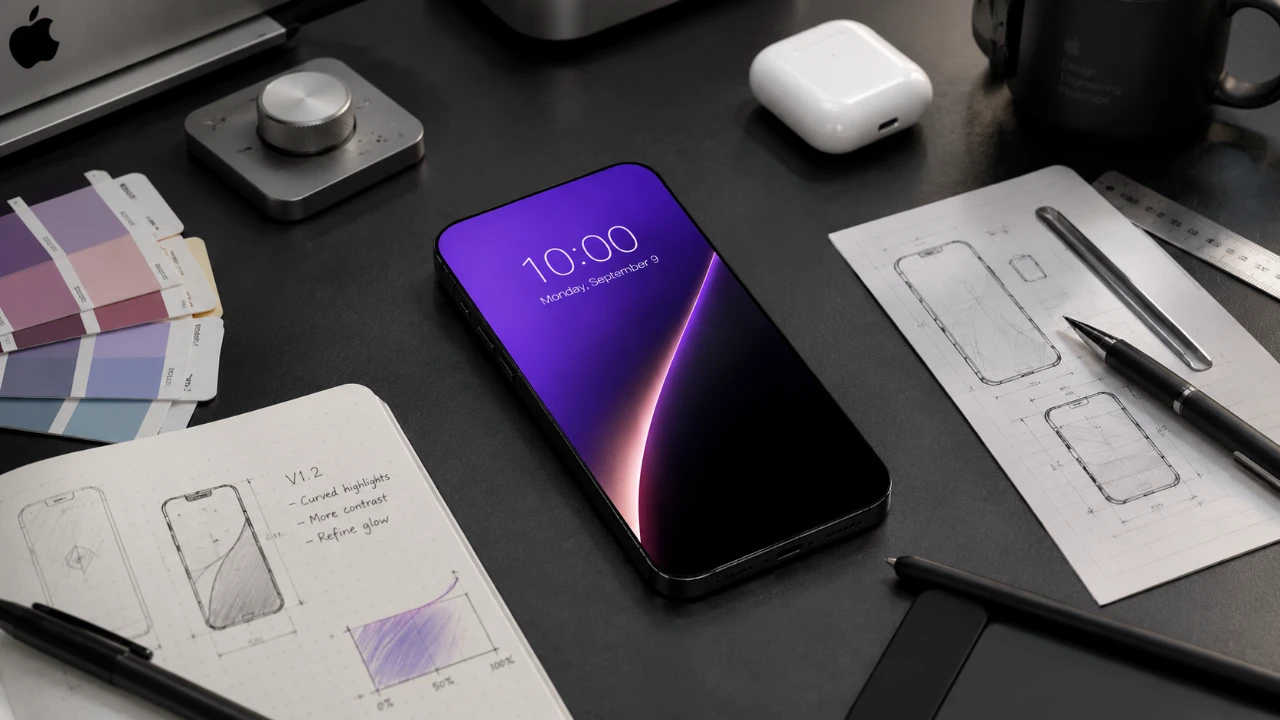
iPhone 18 Pro Max Discovery: Apple’s New Variable Aperture Lens is a Game Changer

iPhone 18 Pro Max Discovery: Apple’s New Variable Aperture Lens is a Game Changer iPhone 18 Pro Max

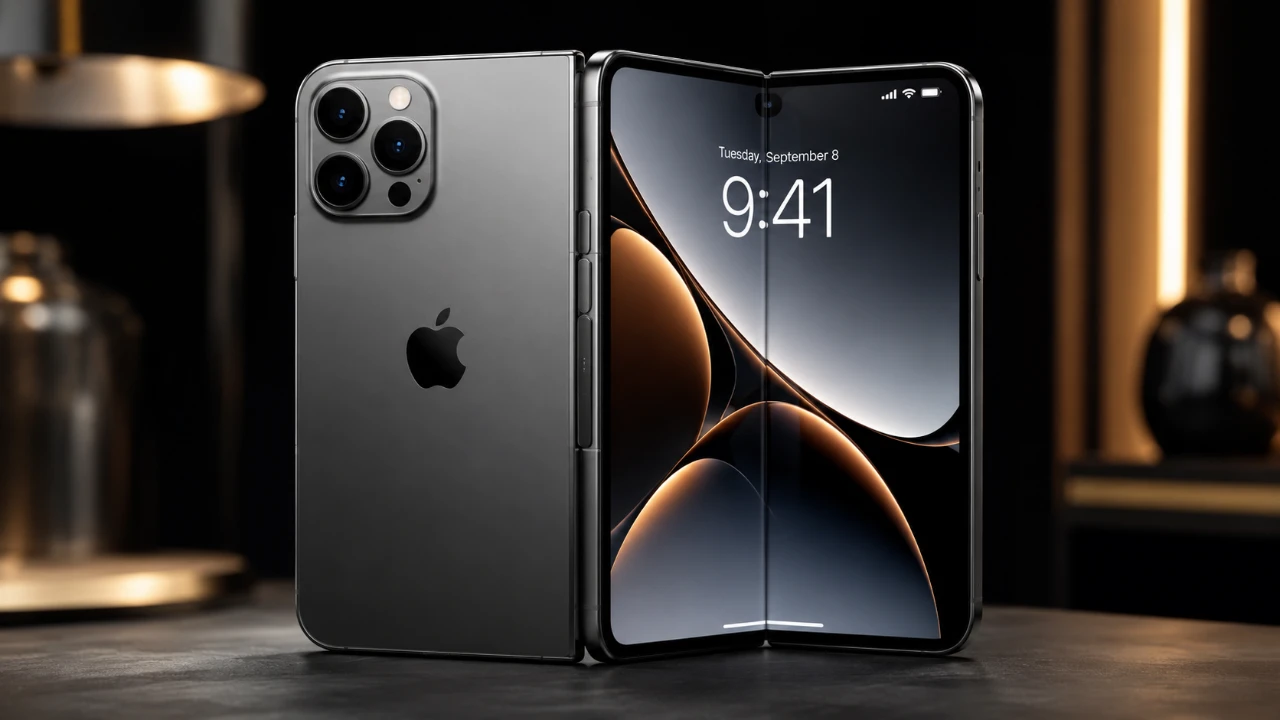
Apple’s iPhone 18 Pro Max represents a significant leap forward in smartphone technology, introducing new advancements in display quality, camera performance and processing power. Alongside the Pro Max, the iPhone 18 lineup includes the highly anticipated iPhone Fold, which aims to establish a new standard in foldable devices. While the base iPhone 18 offers subtle […]

The post iPhone 18 Pro Max Discovery: Apple’s New Variable Aperture Lens is a Game Changer appeared first on Geeky Gadgets.

Posted in Uncategorized