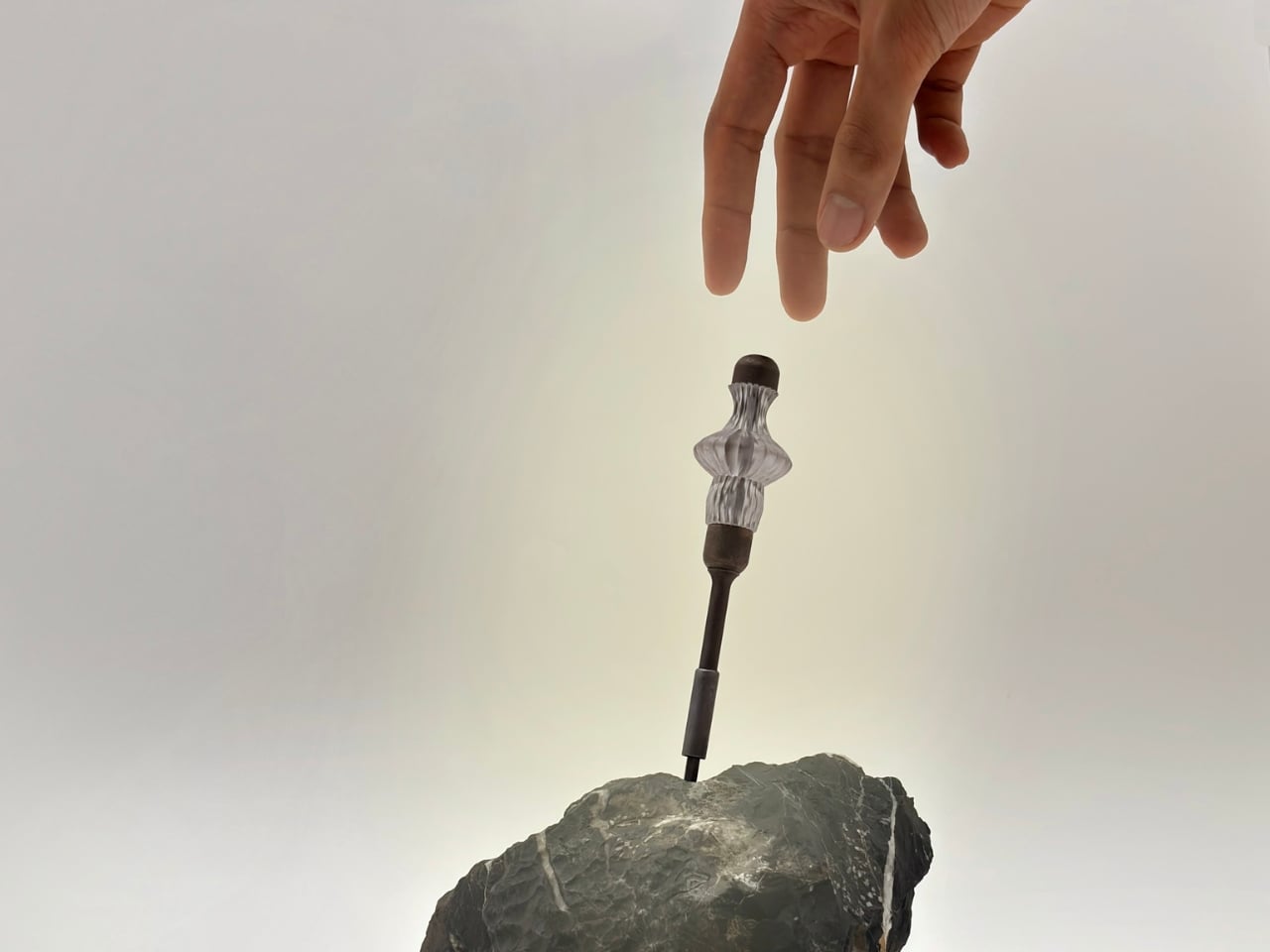
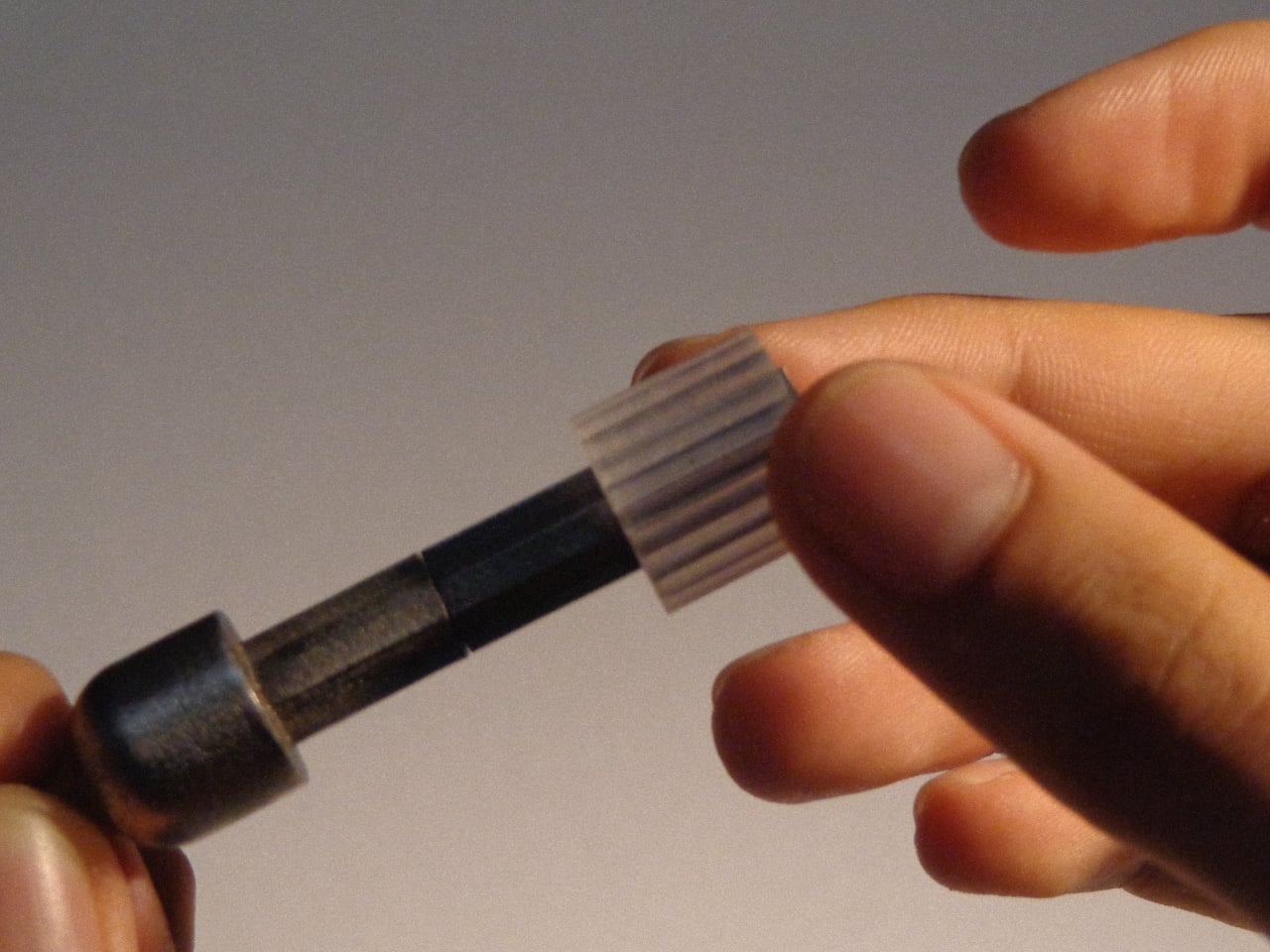
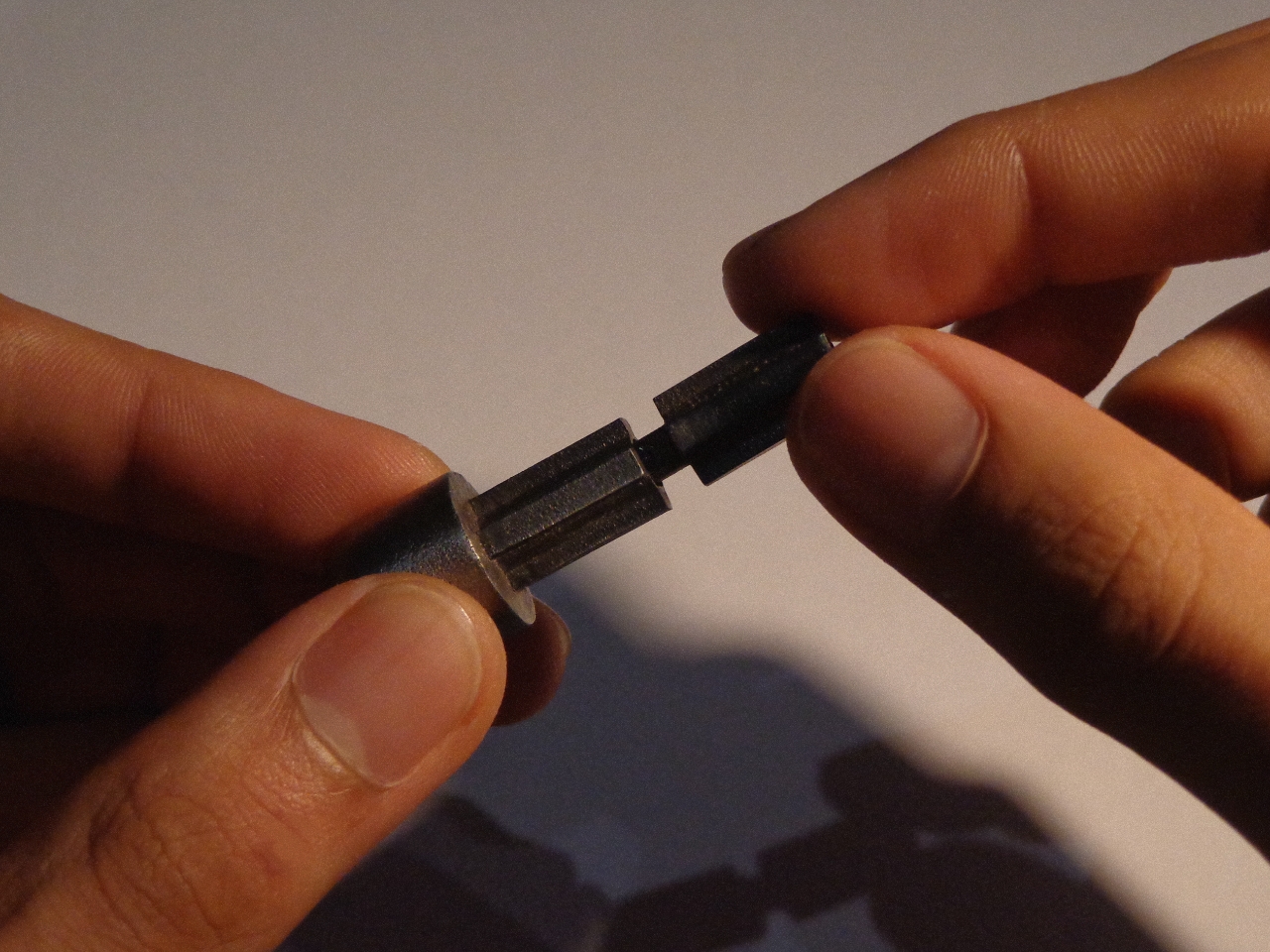
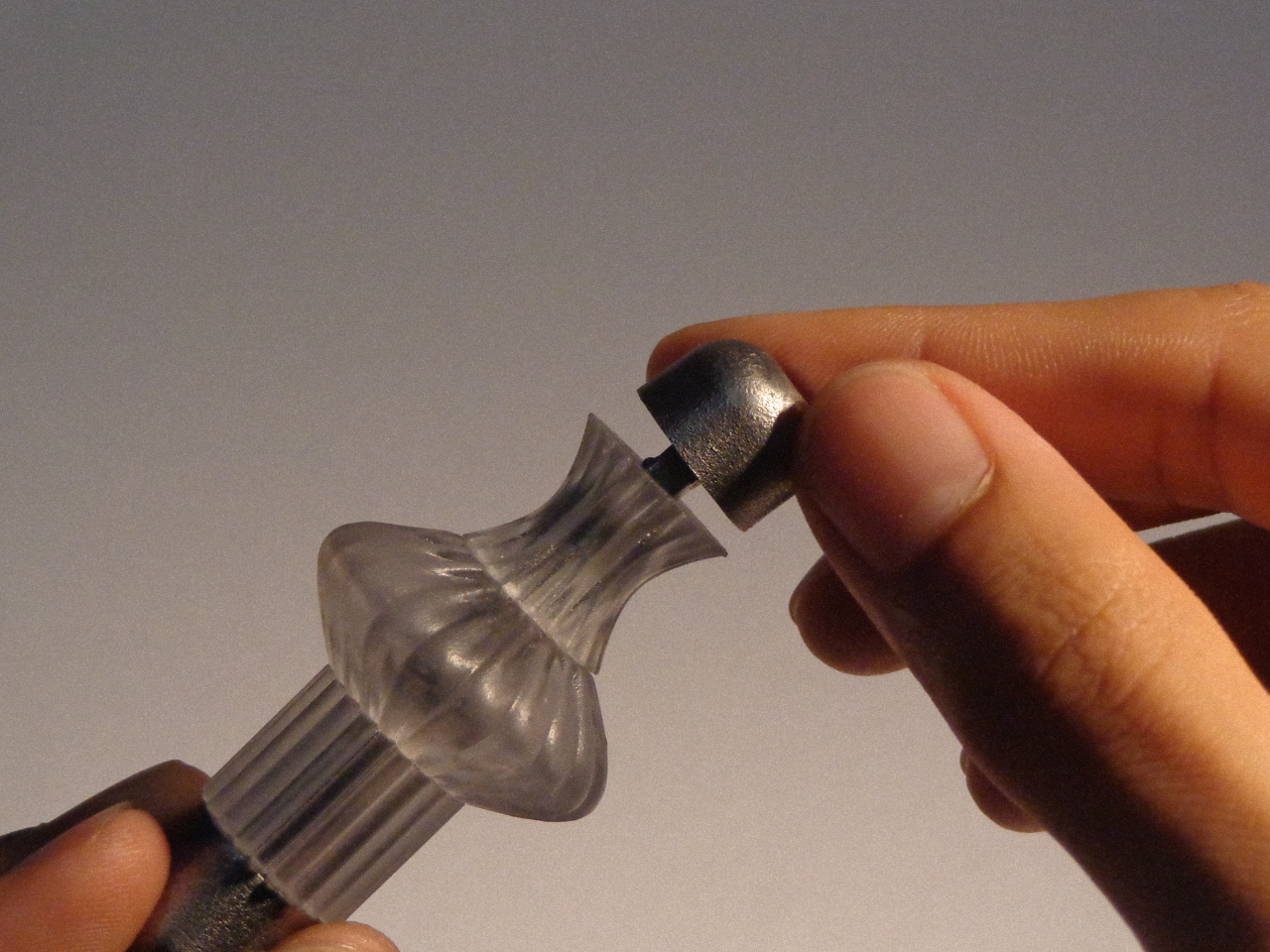
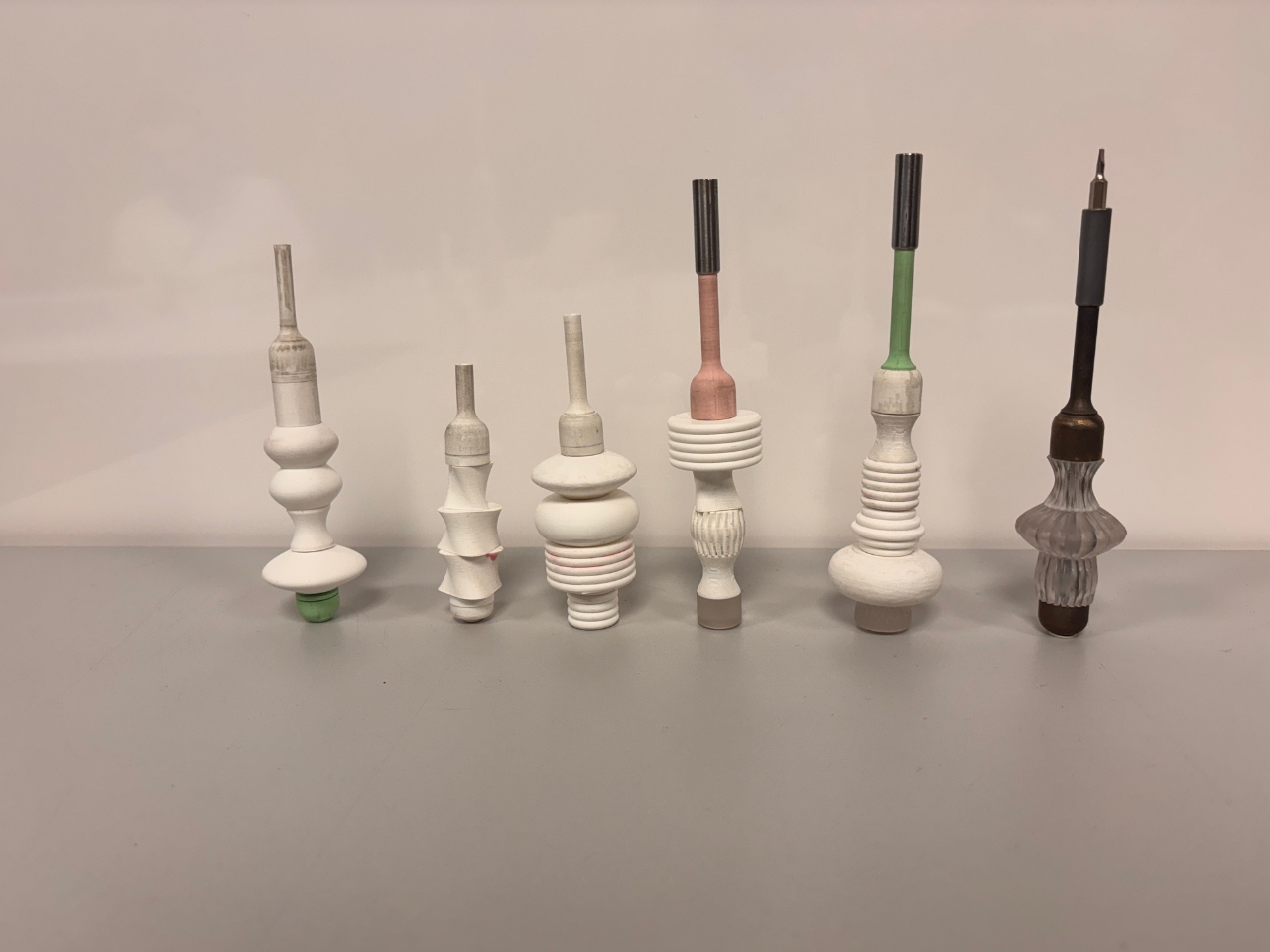
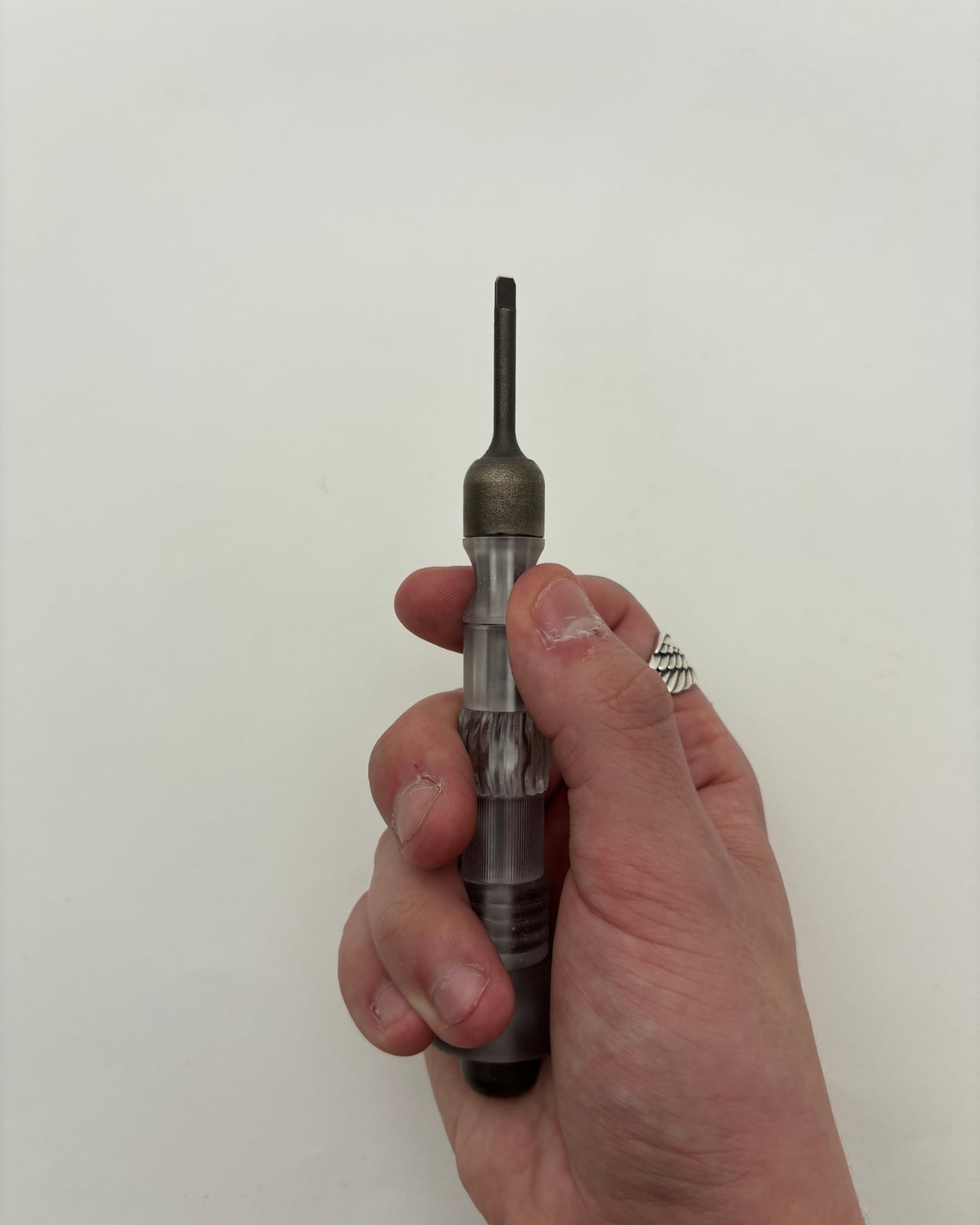
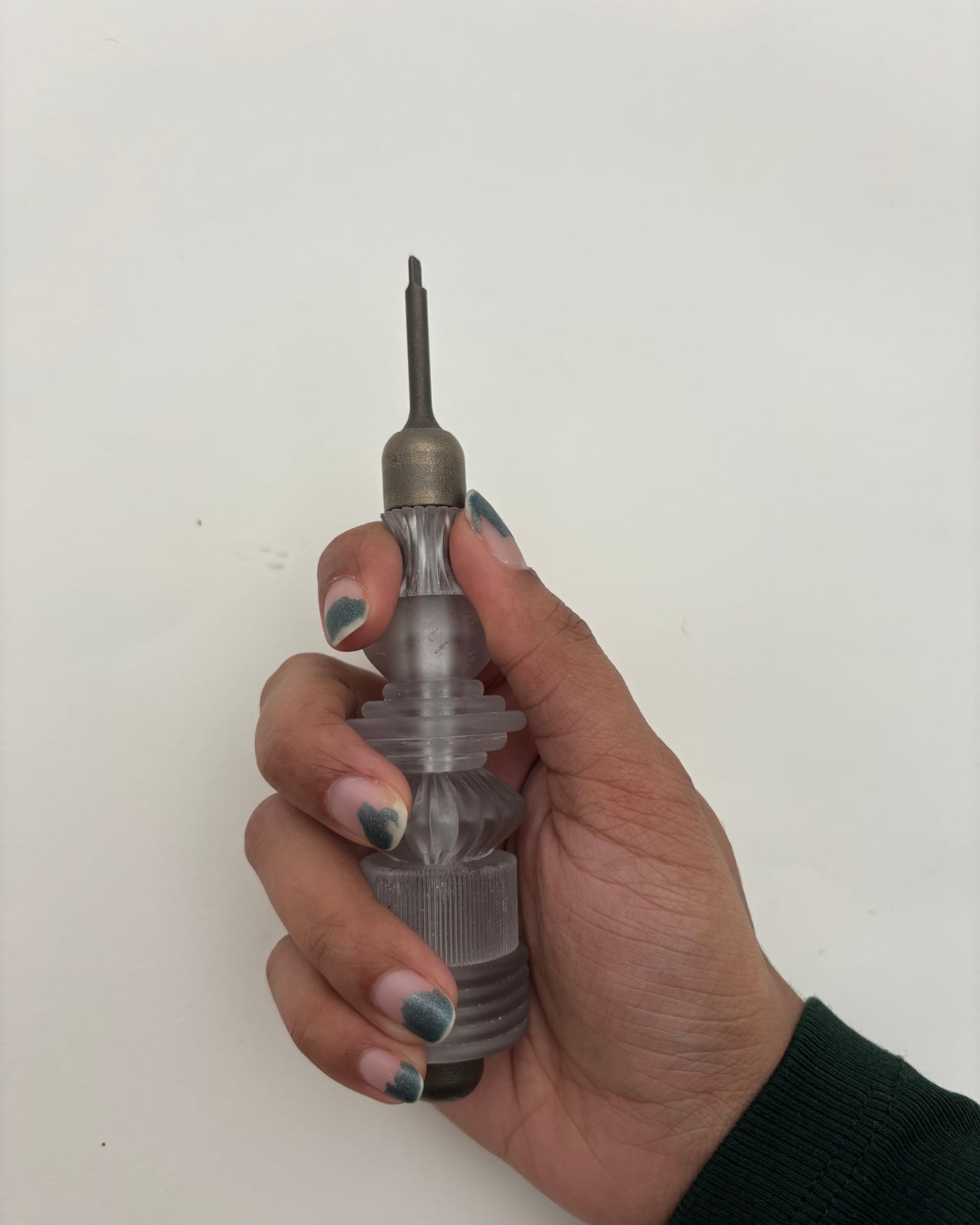
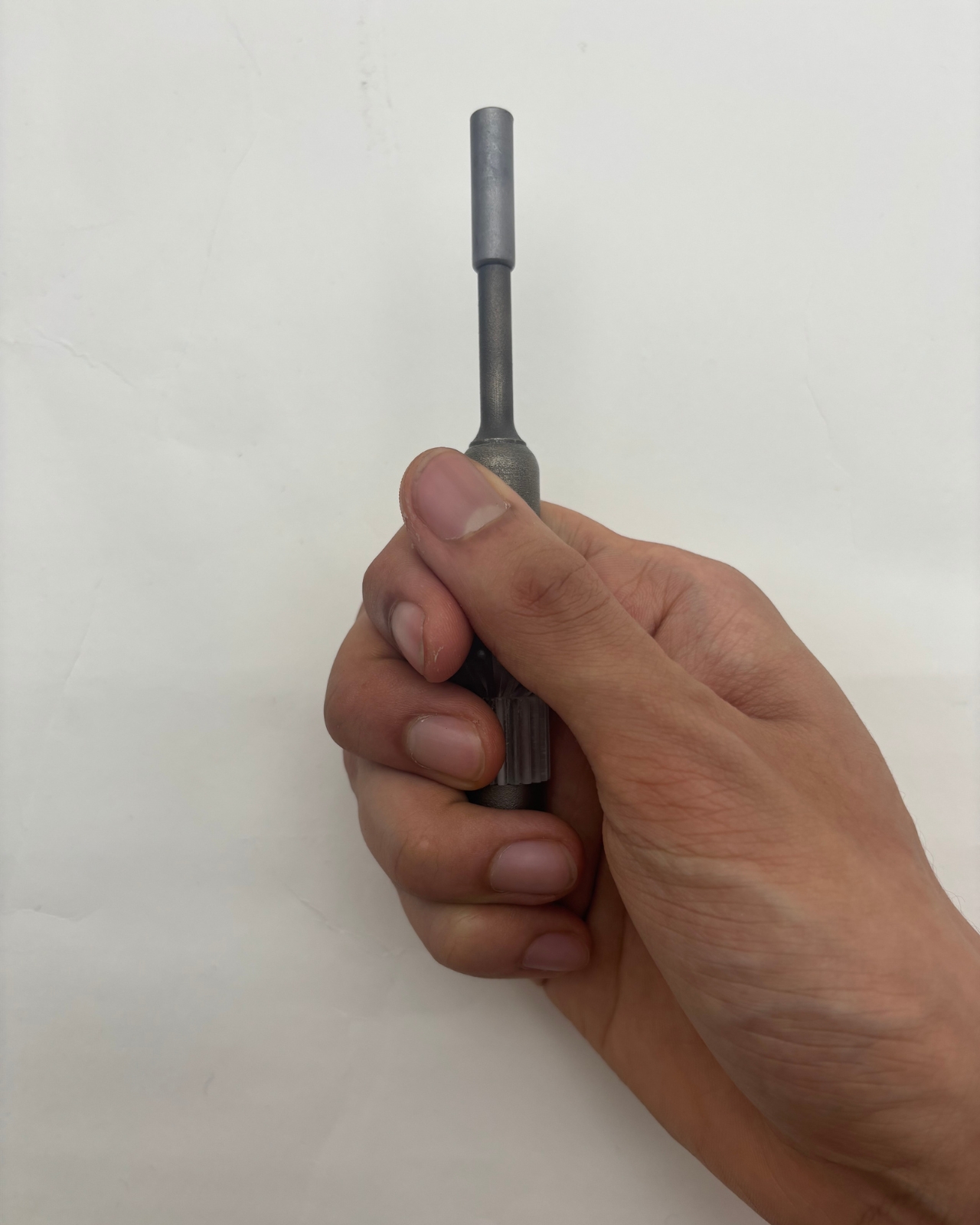
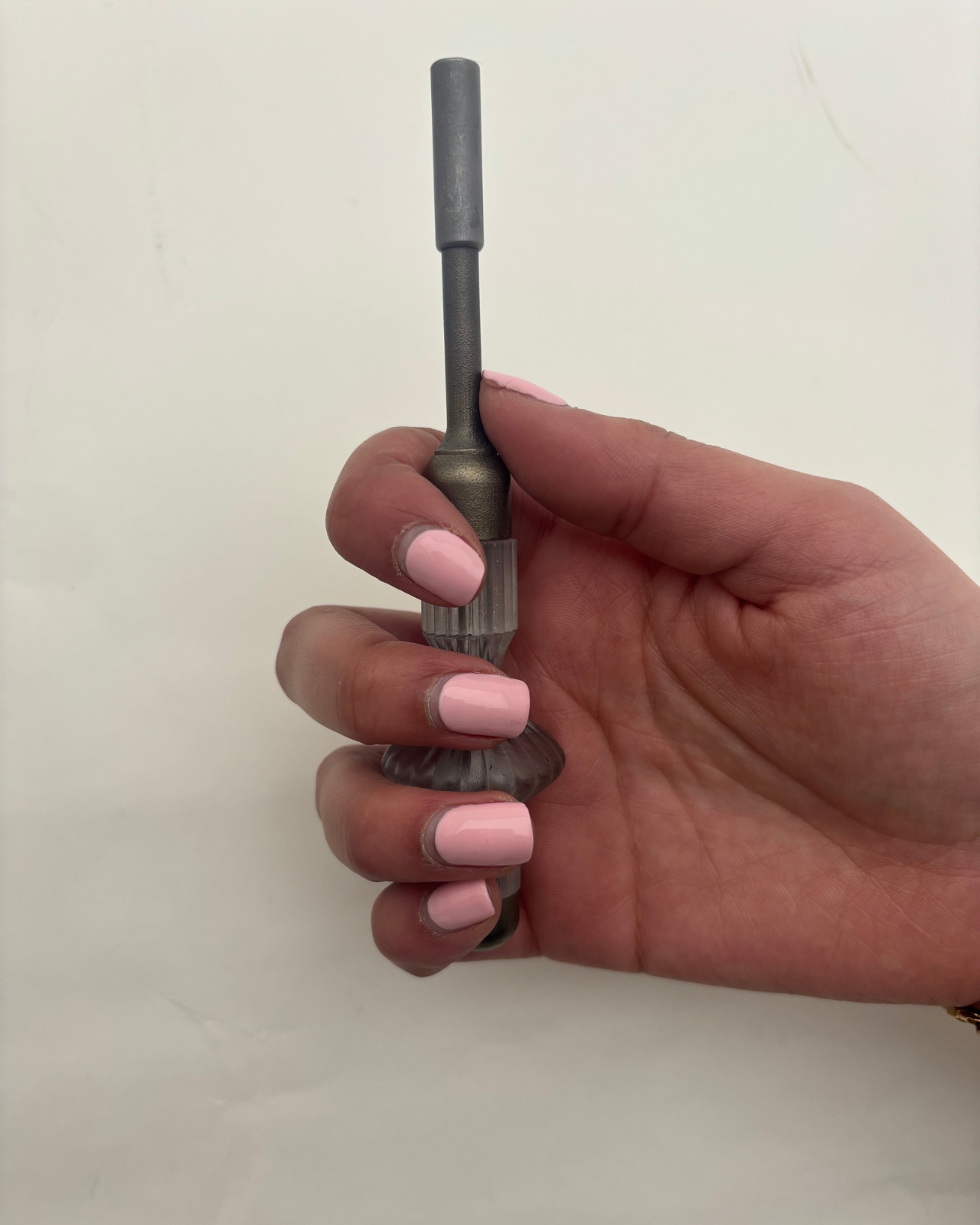
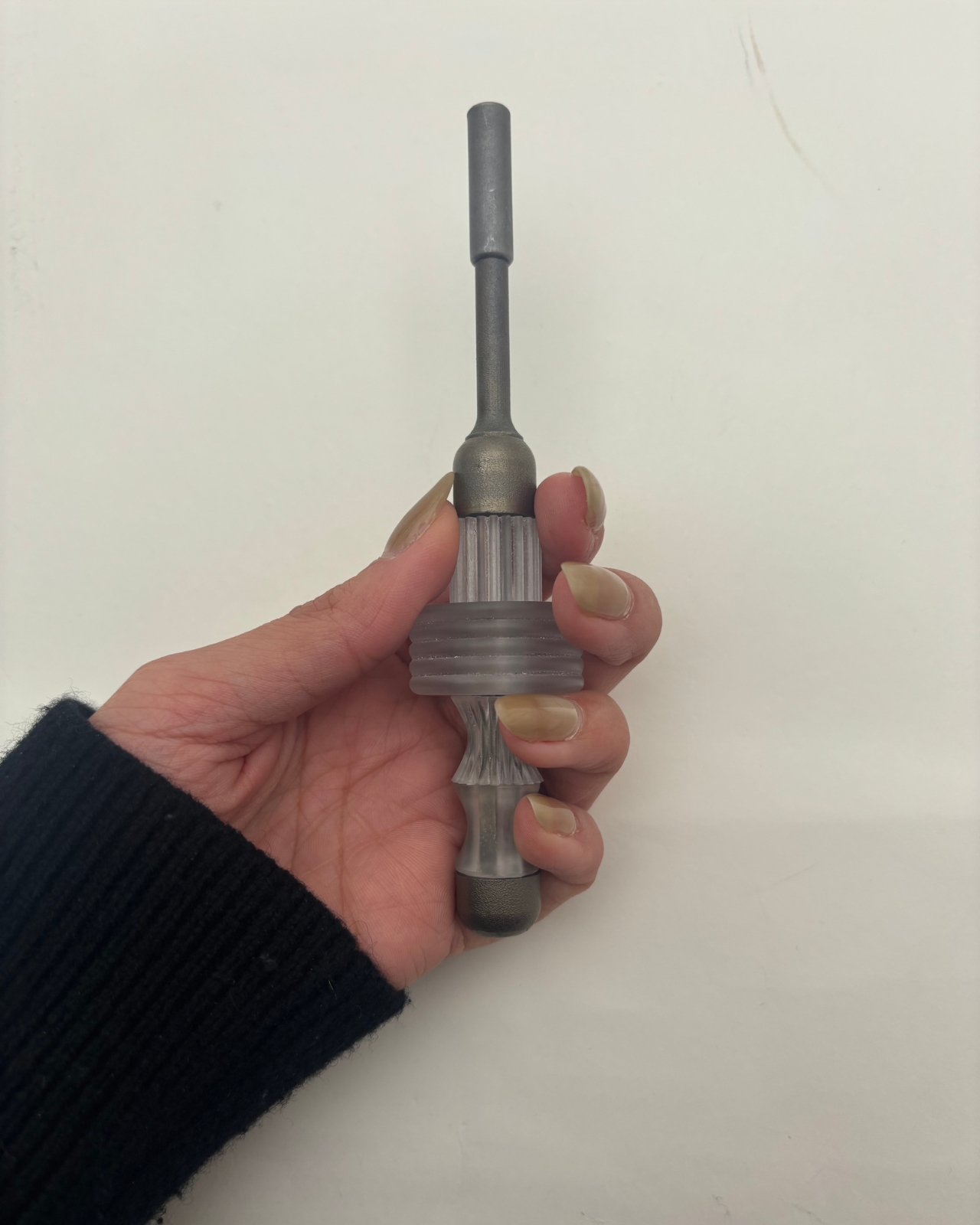
There’s a quiet arrogance built into most tools. Someone in a design studio somewhere decided how your hand should hold a screwdriver, how long the shaft should be, how thick the grip ought to feel. They tested it on a handful of people, ran the ergonomic studies, picked a shape, and shipped it to millions. The assumption is always the same: one form, optimized for an average that doesn’t actually exist, should work for everyone.
Siddhant Rai Garg’s final-year project at Central Saint Martins, titled Not Just Another Screwdriver, starts from a different place entirely. It asks a question that most product designers avoid because the answer is inconvenient: what if the person holding the tool is actually the best person to decide what it should feel like?
Designer: Siddhant Rai Garg
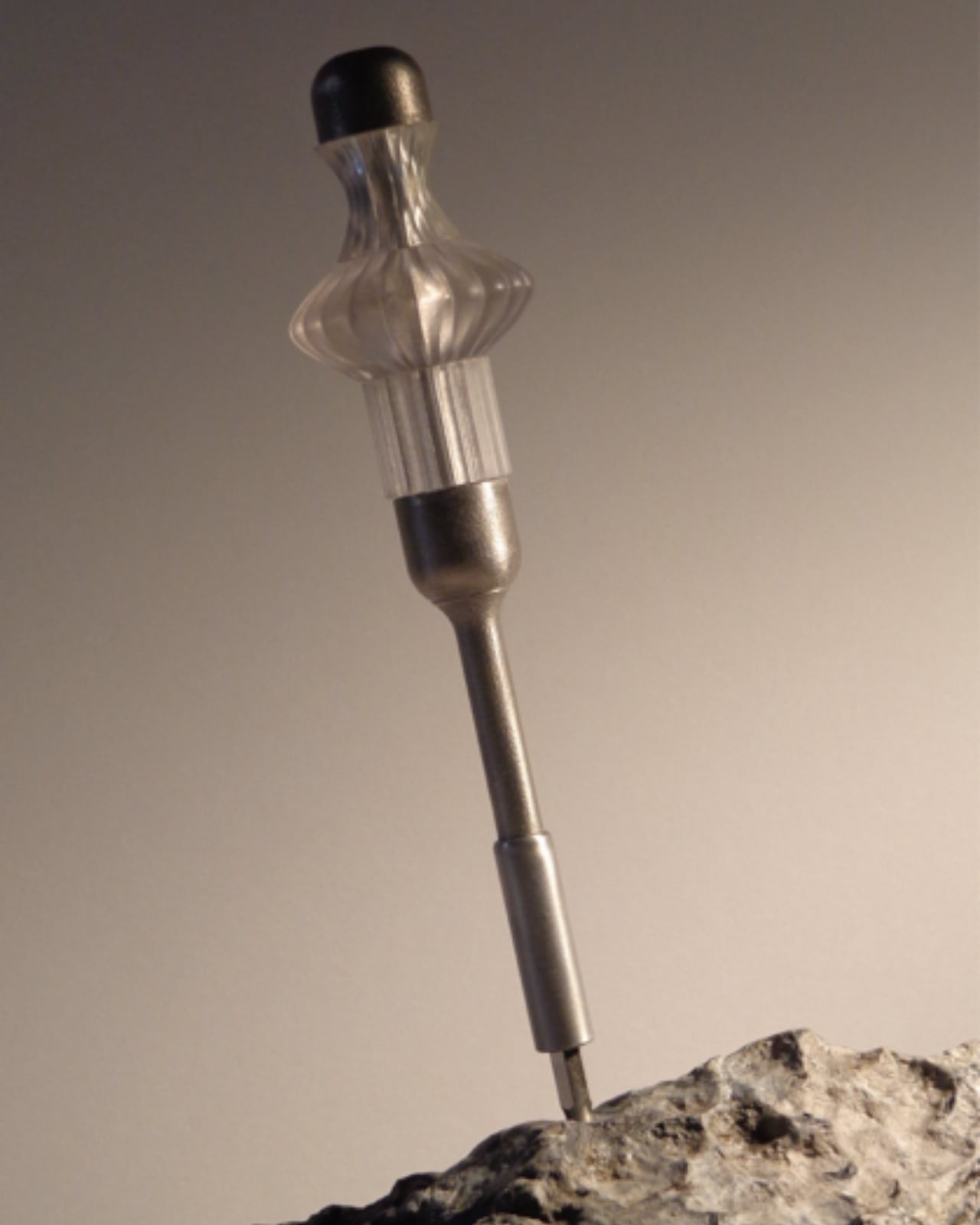
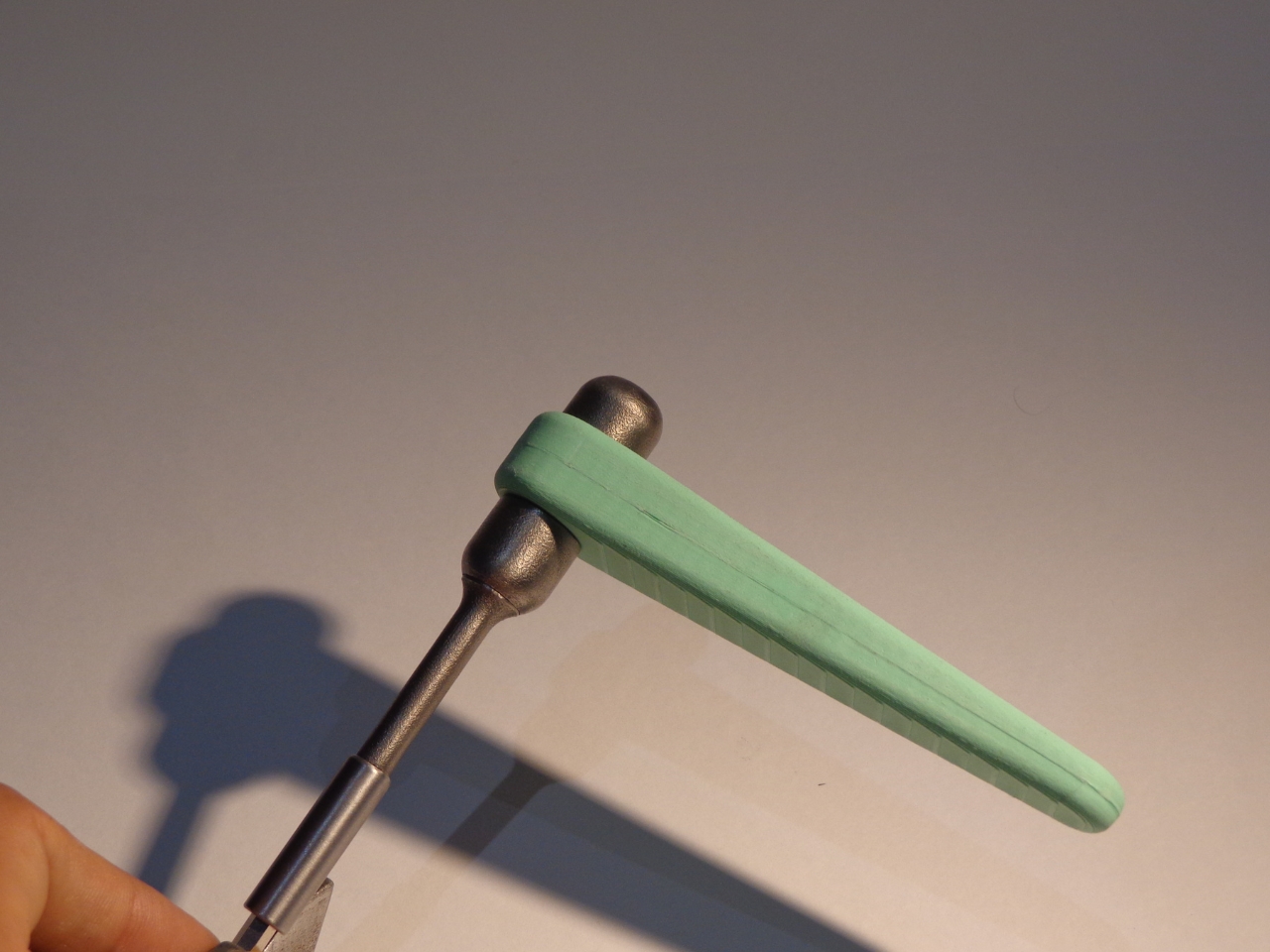
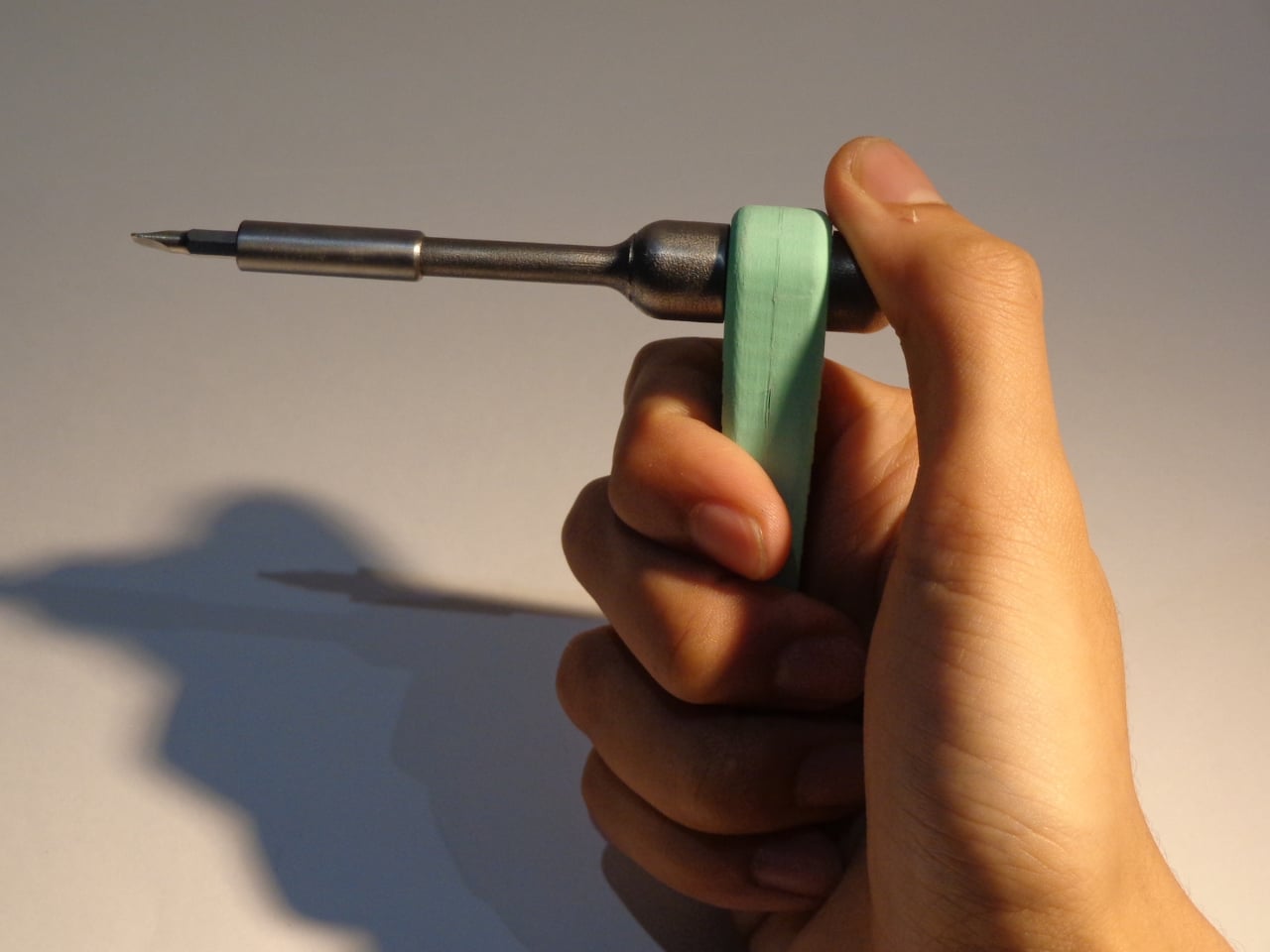
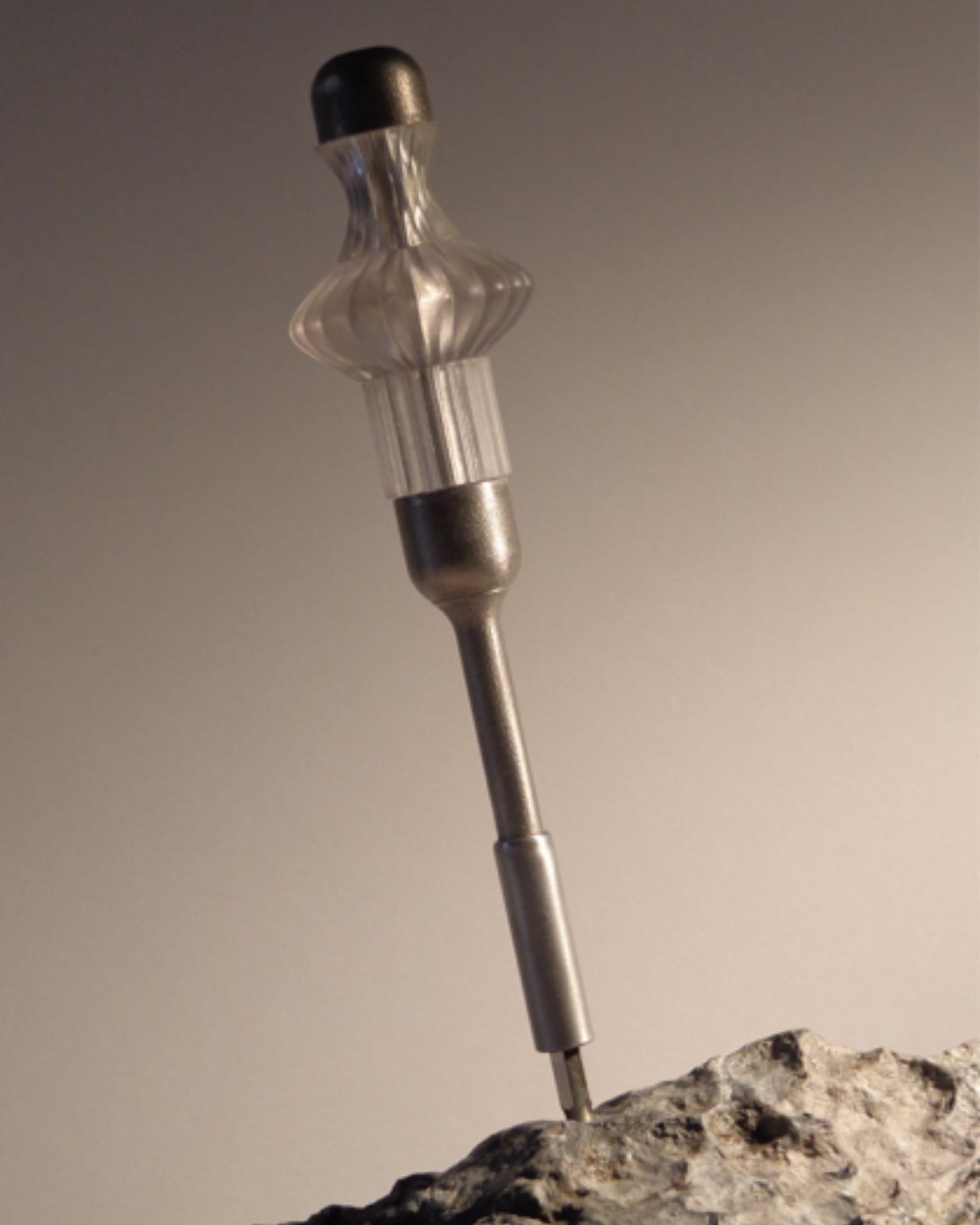
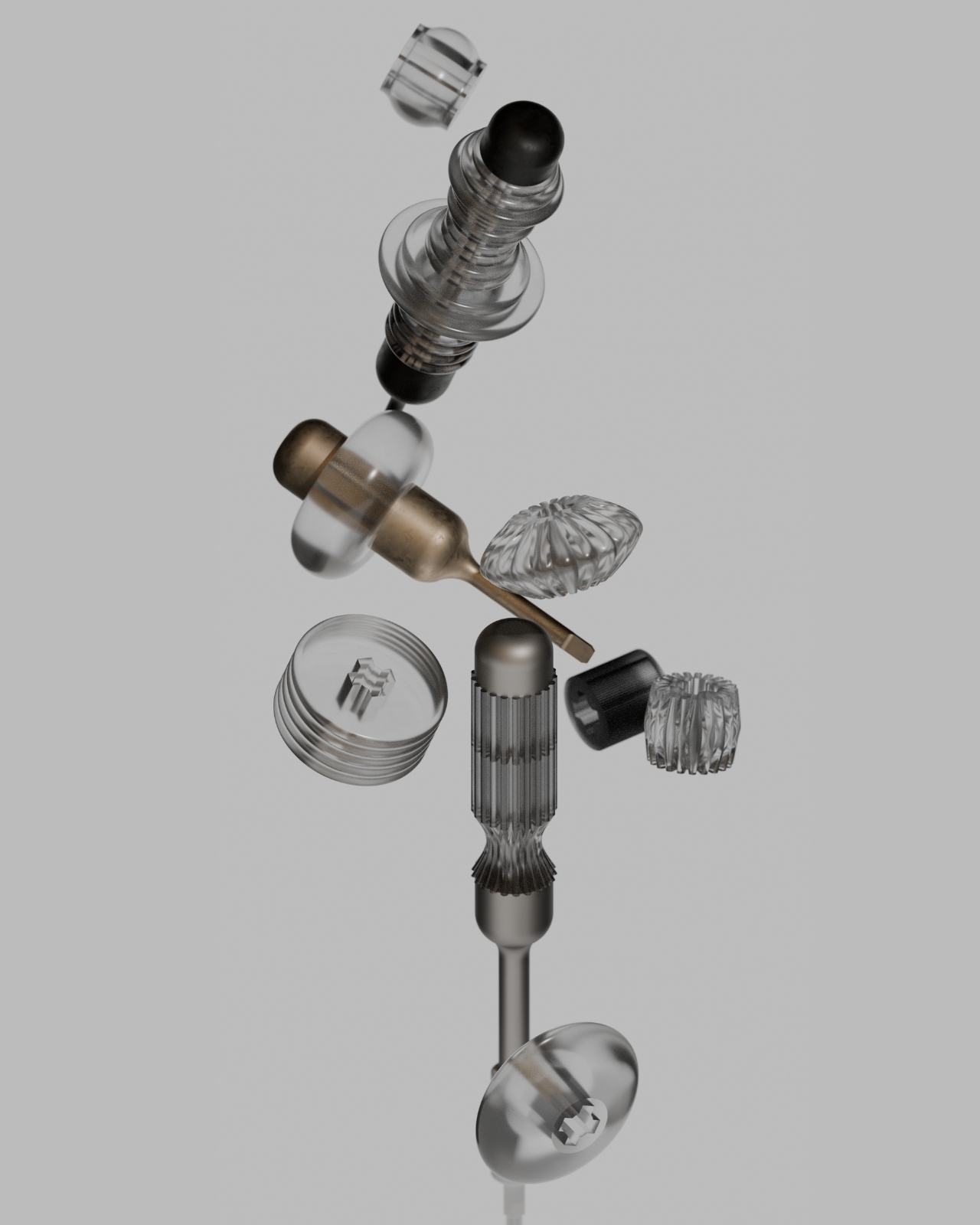
The system is deceptively simple in concept. A permanent titanium spine handles all the structural work, the torque, the load, the mechanical reality of driving a screw. Everything else around it, the grip, the length, the feel, is modular and replaceable. Segments can be added or removed to change the tool’s reach. Grip files are open-source, meaning anyone with access to a 3D printer or a block of wood and some patience can shape their own handle. The titanium core stays. Everything around it is yours to define.
What makes this interesting isn’t really the engineering, though the material separation between structural and non-structural components is genuinely clever. It’s the philosophical shift. Most product design operates on a model of authority: the designer knows best, the user receives the finished object, and any modification is either warranty-voiding or just plain weird. Garg’s project flips that relationship. The designer provides a skeleton and a set of rules. The user provides the identity.
I find this compelling because it confronts something the design world talks about constantly but rarely acts on: sustainability through longevity. We’ve all heard the pitch about buying fewer, better things. But “better” almost always means “more expensive and more permanent,” which assumes the first version of a product will remain the right version forever. That’s not how people work. Our hands change, our tasks change, our preferences change. A tool that can’t change with us eventually becomes waste, no matter how well it was made.
Not Just Another Screwdriver sidesteps this by making the most resource-intensive part, the titanium spine, the permanent element, while letting the lightweight, low-cost components around it evolve freely. It’s not asking you to commit to one perfect screwdriver for life. It’s asking you to keep the bones and swap the skin whenever you need to.
There’s also something worth noting about the open-source dimension. Releasing grip designs as downloadable, modifiable files is a deliberate act of giving up control. In an industry that guards intellectual property fiercely, choosing to let users become co-designers is a statement about where value actually lives. It suggests that a tool’s worth isn’t locked into its factory finish but grows through use and adaptation.
Of course, a final-year project isn’t a product on shelves. There are real questions about whether most people want this level of involvement with their screwdriver, whether the modularity holds up under years of heavy use, and whether open-source grip files would actually build a community or just sit on a server somewhere. These are fair challenges.
But the idea itself feels like it belongs to a larger shift happening across design, one that treats users less like consumers of finished objects and more like participants in an ongoing process. We’re seeing it in modular electronics, in open-source furniture, in customizable prosthetics. Garg’s contribution is taking that thinking and applying it to something so ordinary, so taken-for-granted, that most of us never think to question it.
A screwdriver is a solved problem. Except it isn’t, not if you believe that the person using it deserves a say in how it feels in their hand. That’s what makes this project worth paying attention to. Not because it reinvents the screwdriver, but because it reconsiders who gets to decide what a screwdriver is.
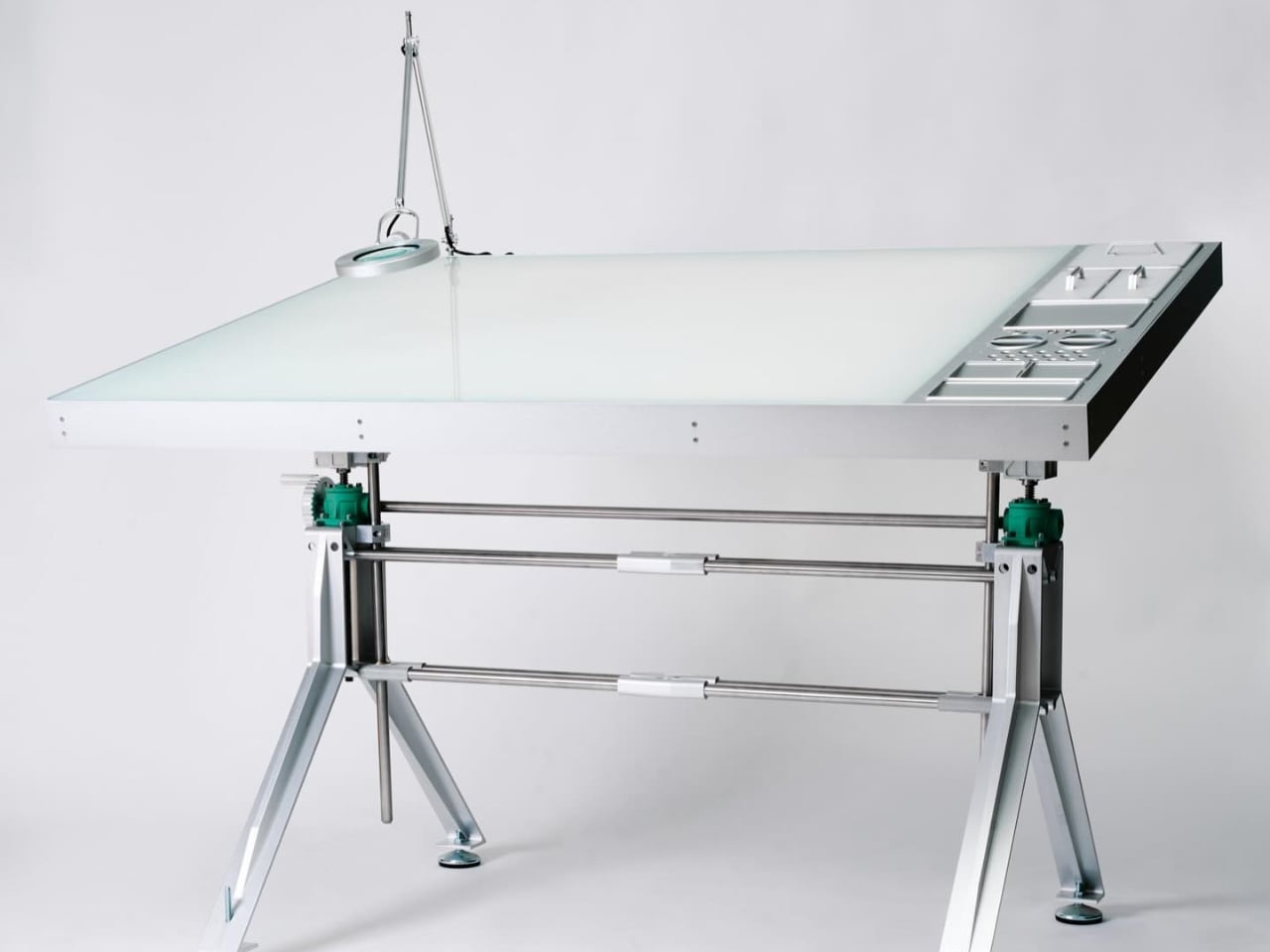
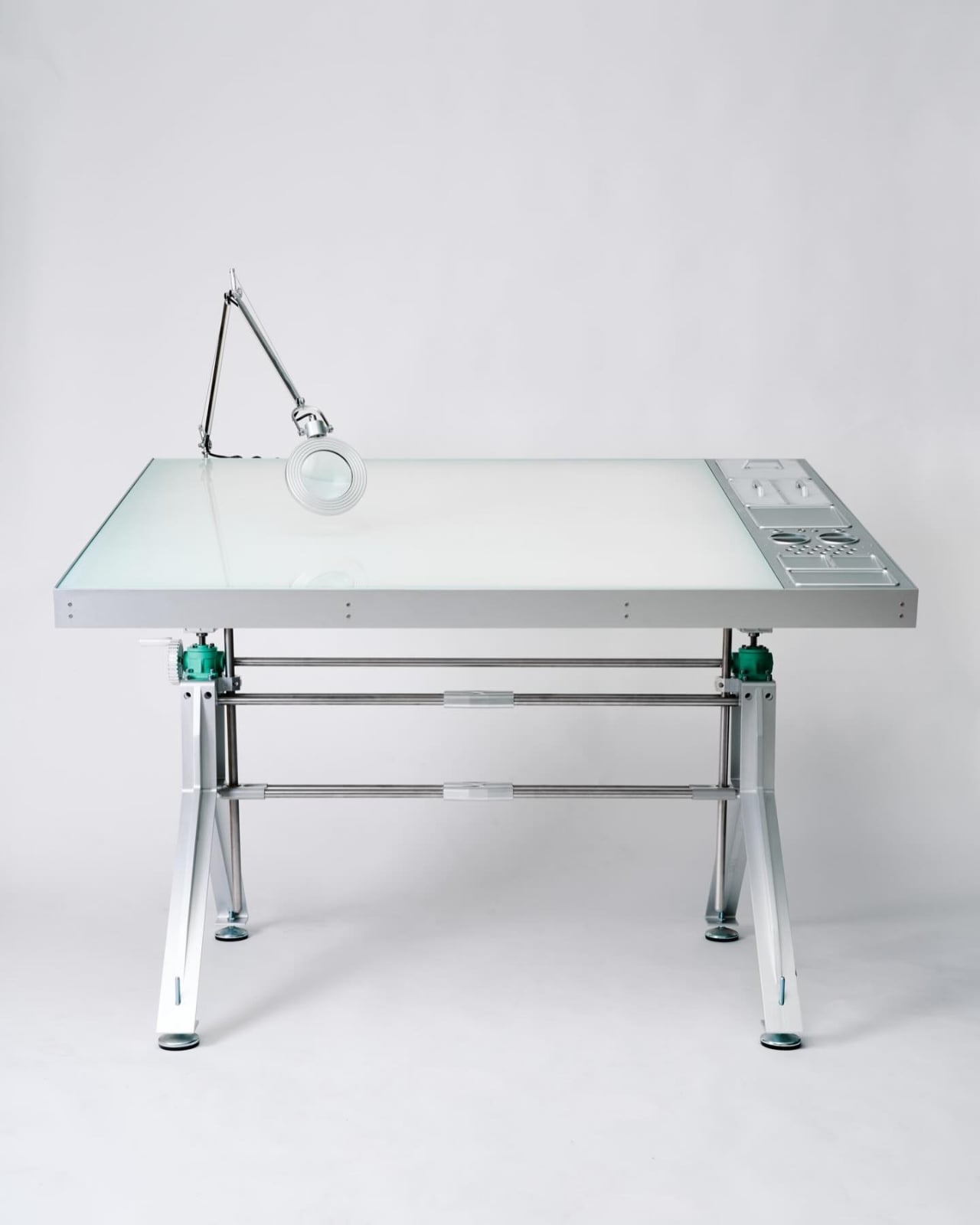
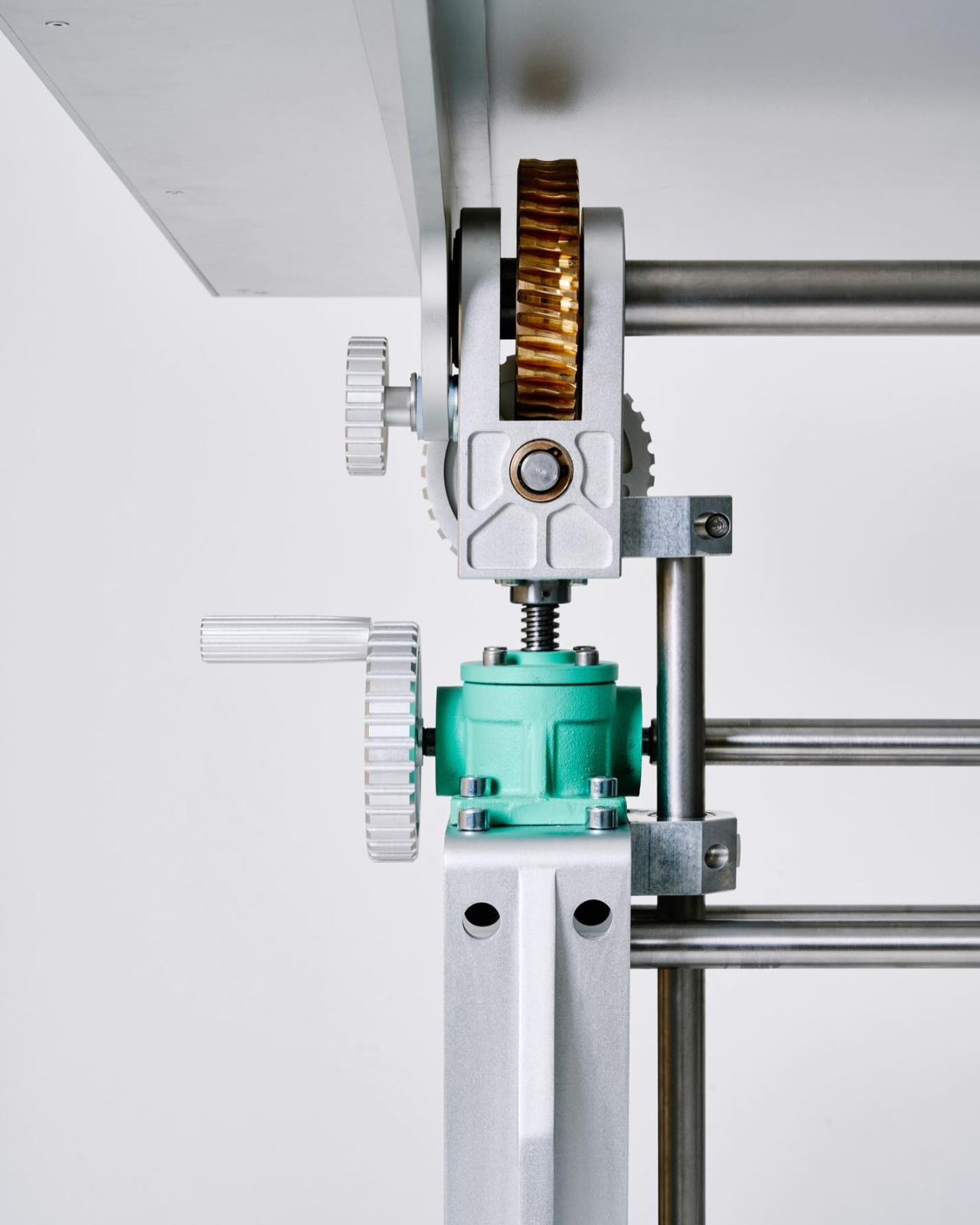
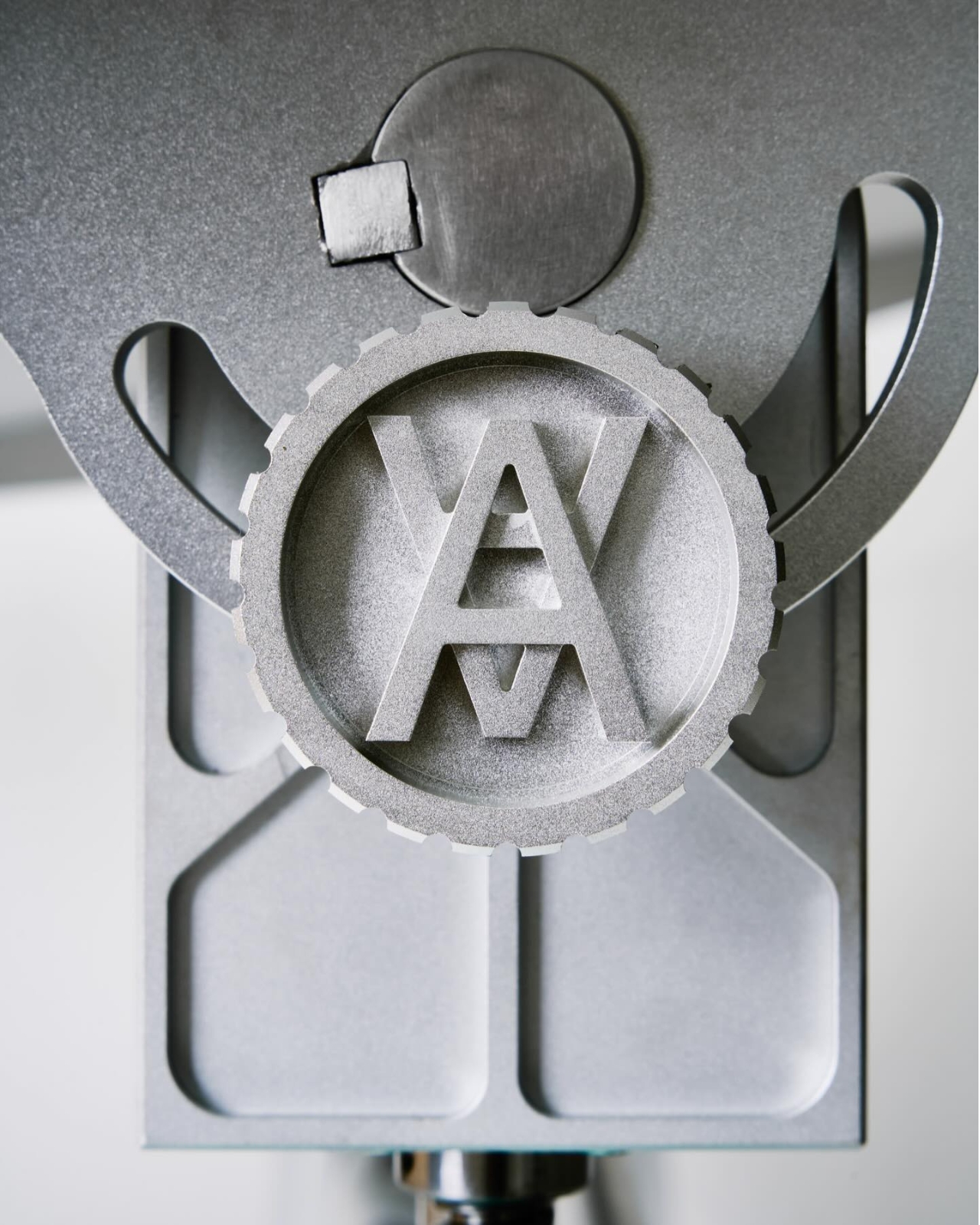
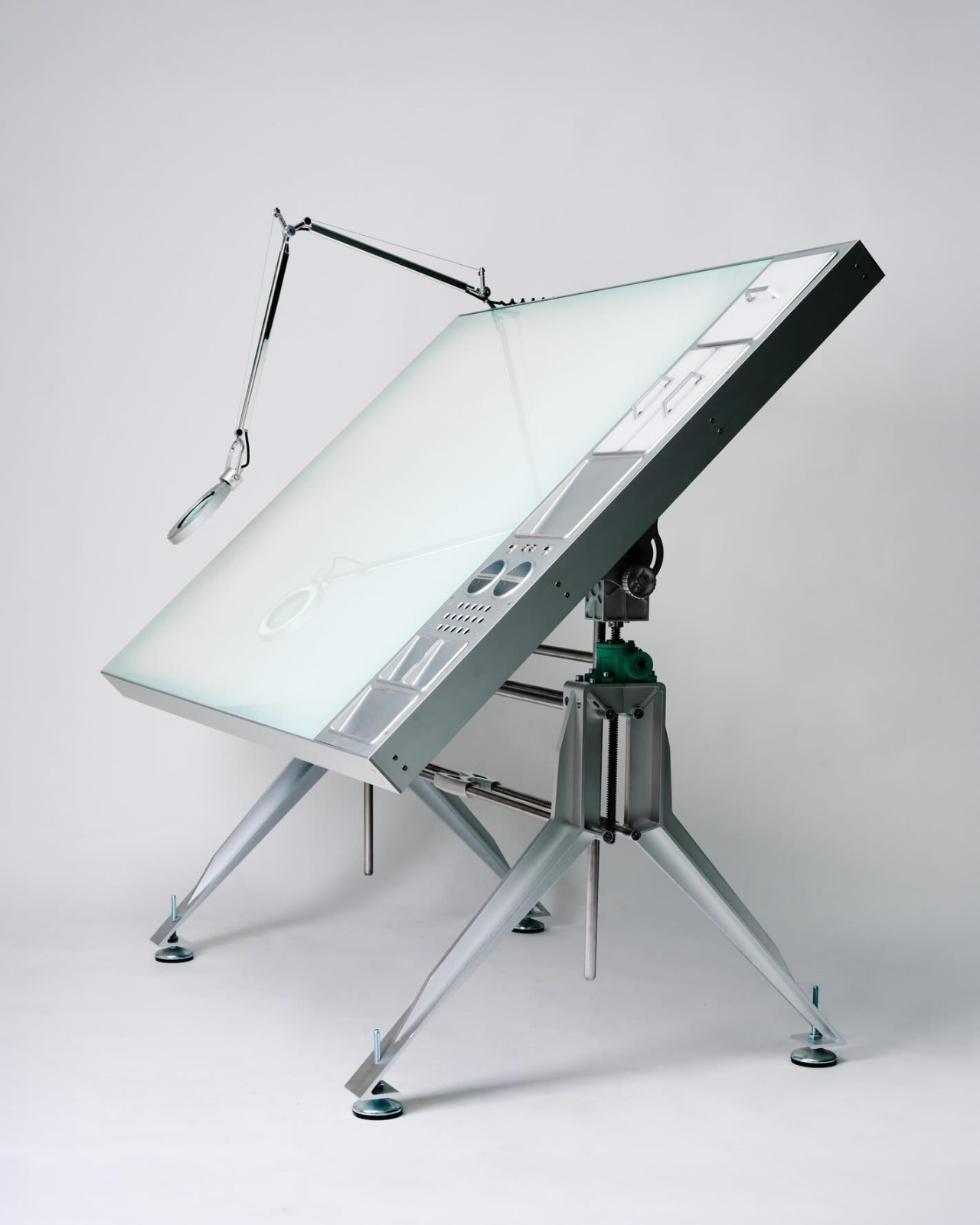
Contemporary artist Daniel Arsham’s studio just received a custom drafting table from Madrid-based CALIPER, and it looks less like furniture and more like a precision instrument from a machine shop. The entire structure is CNC-machined aluminum with exposed brass gears, machined hand cranks, and yes, two built-in cup holders, because even meticulous charcoal drawings require coffee.
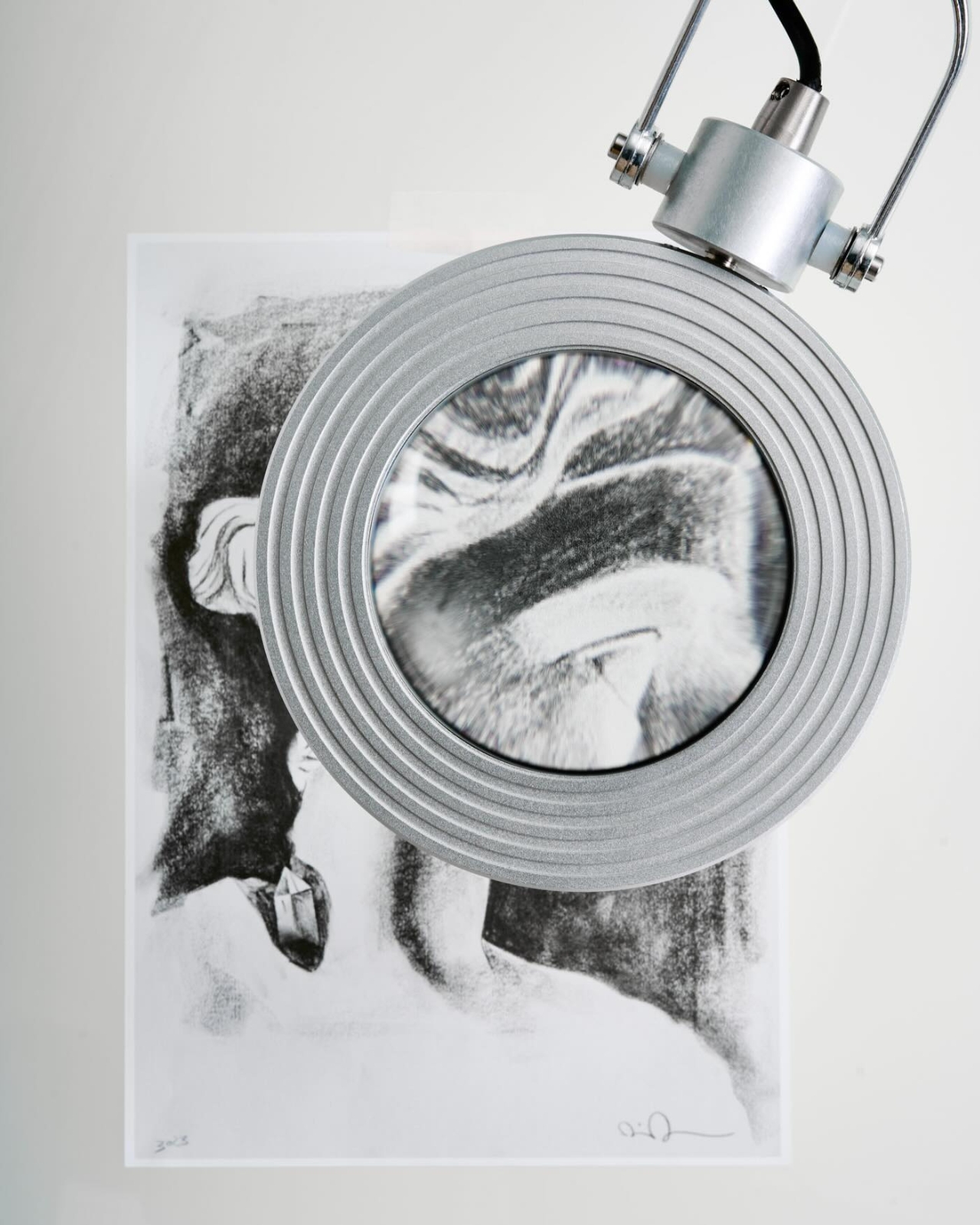
The table was commissioned as a functional workstation for Arsham’s small-scale charcoal and graphite drawings on paper. If you know Arsham primarily through his large eroded sculptures or his high-profile collaborations with Dior, Adidas, and Porsche, the drawings might surprise you. They’re intimate, quiet things: detailed studies of the same classical and pop-cultural forms he renders in volcanic ash and crystal at monumental scale. Making work like that demands precision, sustained focus, and the right light. So this isn’t a vanity object. It’s a production tool with a very specific brief.
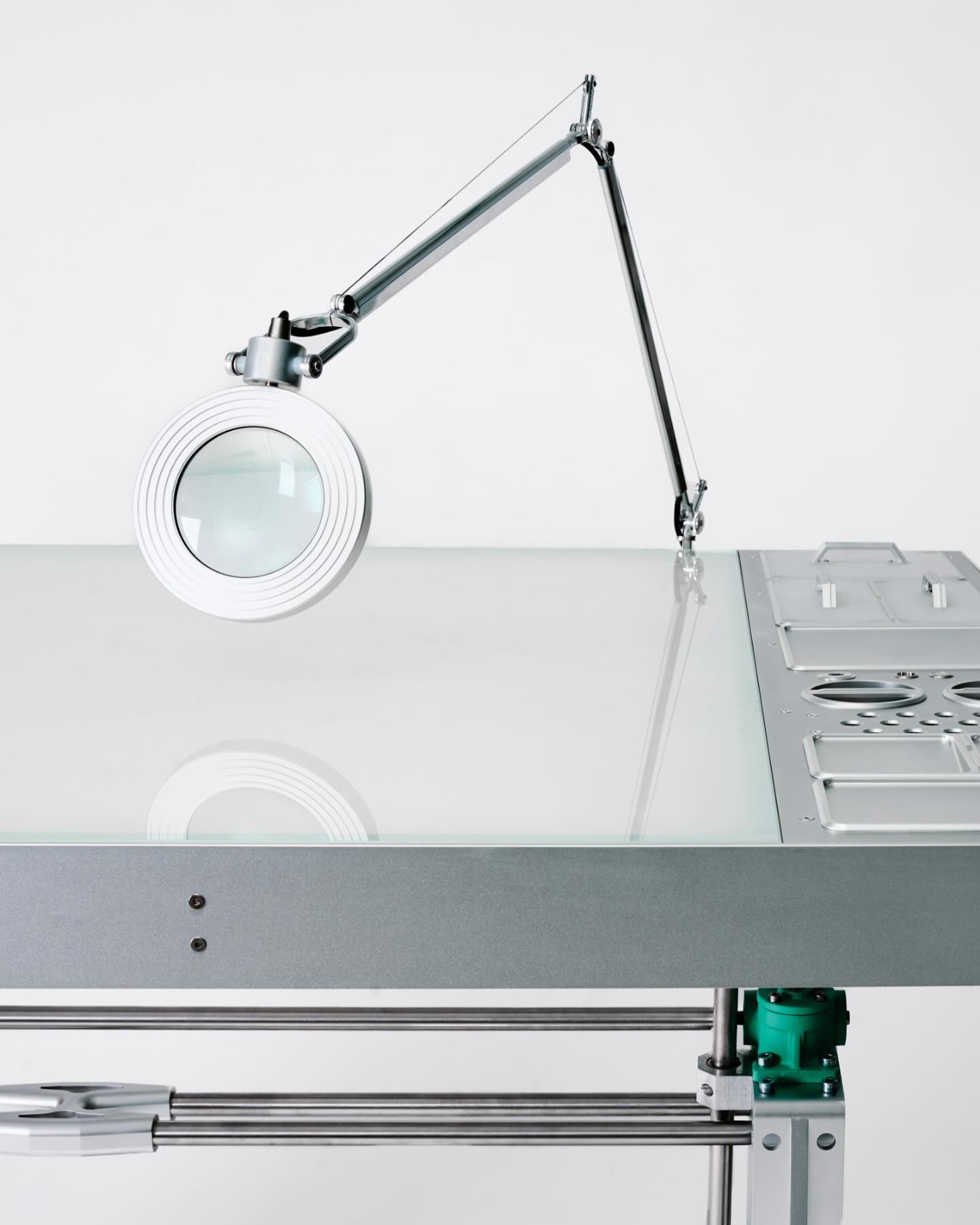
CALIPER’s design addresses that brief with an almost obsessive level of care. The table surface is backlit, providing even illumination through a frosted glass top for tracing and examining fine mark-making. A magnifying lamp on an articulated arm lets Arsham inspect the surface of the paper up close, which matters enormously when you’re working with the kinds of tonal subtlety that charcoal and graphite demand. The whole thing tilts on a worm-gear mechanism with a machined hand crank and those beautiful brass gears, allowing the drawing surface to be angled from flat to near-vertical. The hardware looks like it belongs in a machine shop, and that’s entirely the point.
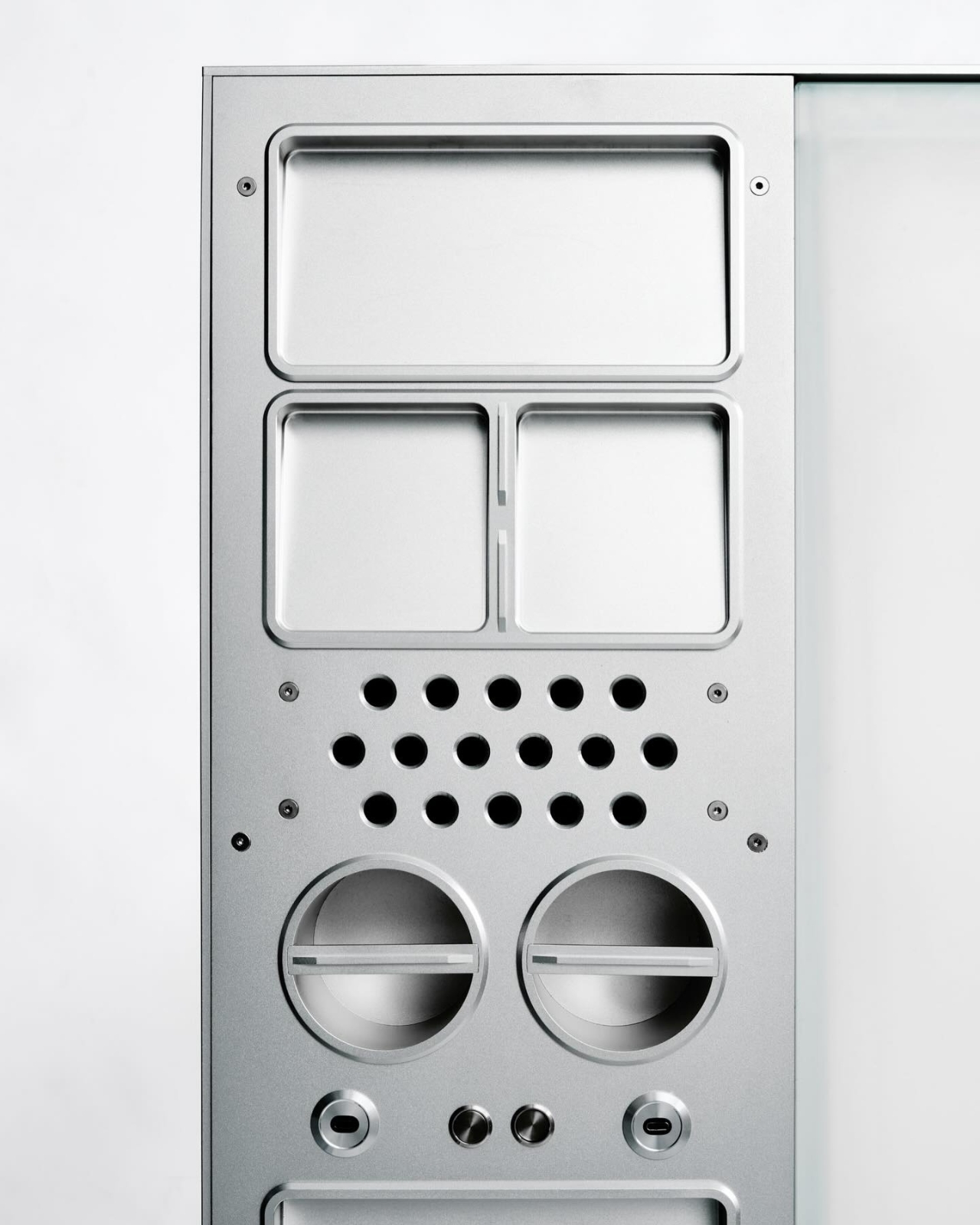
What elevates this beyond a well-made table is the integrated storage panel on the right side of the surface. CNC-machined from aluminum, it features recessed compartments for paper, charcoal sticks, and other tools, plus those two cup holders (the unsung hero of any studio setup) and what appear to be surface-mounted charging ports and controls for the light sources. Everything is contained within the footprint of the work surface, so there’s no reaching over to a side table or hunting through drawers. It’s the kind of considered, artist-specific workflow thinking that separates a custom commission from something you’d buy off a catalog page.
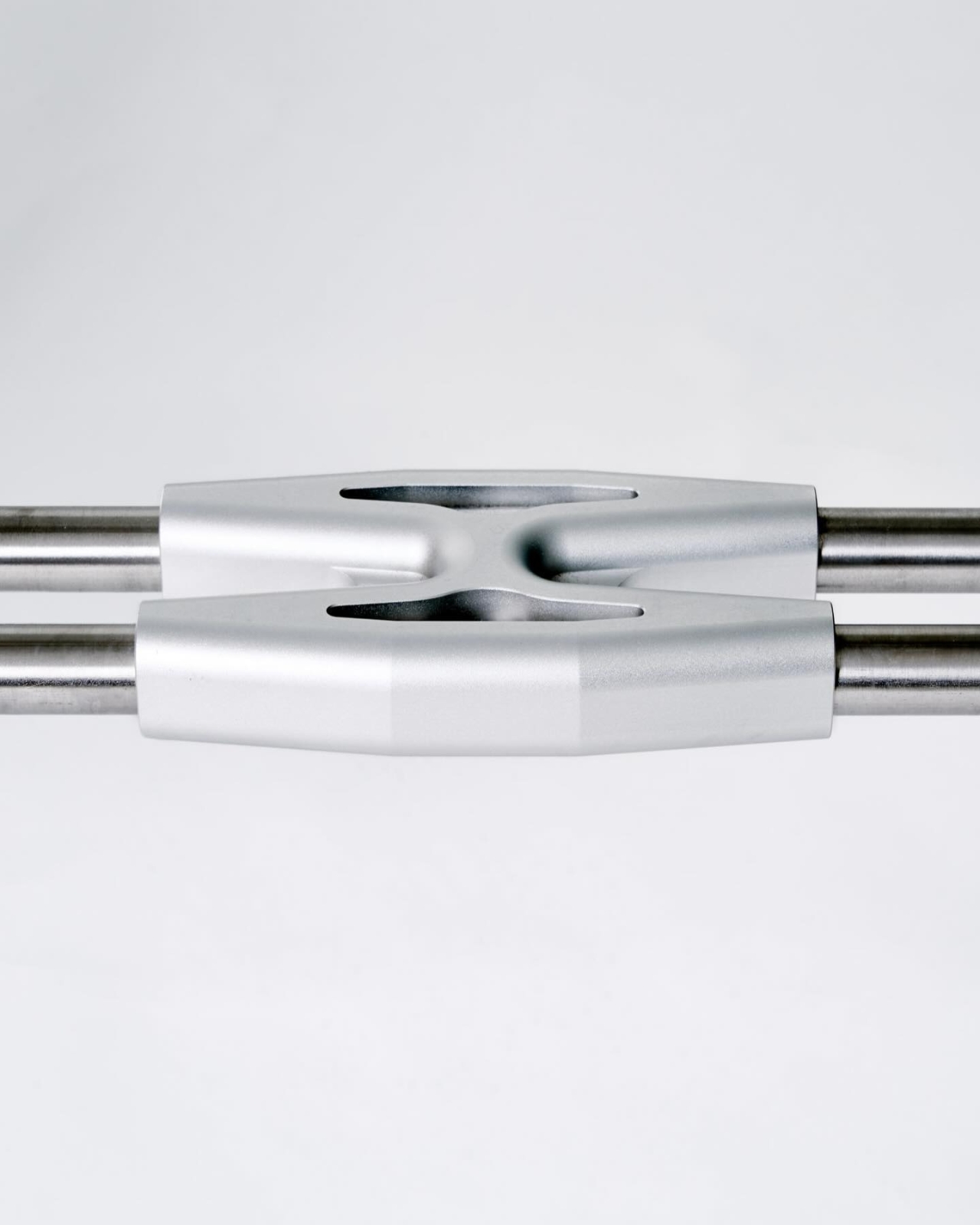
The material choice is worth noting too. The entire structure is CNC-machined aluminum with a clear anodized and bead-blasted finish, giving it a uniform matte silver tone that reads as both industrial and refined. It’s not trying to be warm or domestic. It’s not pretending to be anything other than a machine for drawing. The base structure uses a pair of splayed trestle legs connected by horizontal stainless steel rods, with beautiful machined junction pieces where the rods intersect. Even the feet, with their leveling pads, look purposeful.
CALIPER assembled the table entirely in-house at their Madrid studio before shipping it to New York, where Arsham is based. For a studio whose work spans from trivets for Madrid restaurants to homeware collaborations, this kind of one-off commission represents the more ambitious end of their capabilities, and they’ve clearly relished the challenge.
What makes this project compelling beyond the obvious craft is what it says about the relationship between tools and creative practice. Arsham’s drawings exist in deliberate contrast to his larger, more commercially visible work. They’re analog, slow, and physically demanding in a way that eroded crystal sculptures are not. Building a bespoke instrument for that practice is a statement about its value. It says: this part of the work matters enough to warrant its own architecture.
There’s also something appealing about the visible mechanics of the thing. In an era where most studio equipment tries to disappear into sleek minimalism, CALIPER has left the gears exposed, the crank handles proud, the engineering legible. You can see how it works, and that transparency feels right for a tool that supports handmade work. It’s a machine that respects the hand.
Who would've guessed we'd get to play the original Banjo-Kazooie on a handheld with just a D-pad in 2026. HyperMegaTech!'s latest release is a collaboration with Rare Ltd., the legendary game developer known for the Banjo-Kazooie franchise and, more recently, Sea of Thieves, called the Super Pocket Rare Edition.
The vertical handheld features 14 classics from the British developer, including two Battletoads titles, Conker's Pocket Tales and many more. While most of the games were released on 8- or 16-bit consoles, Banjo-Kazooie will be the headliner since it was originally released on the Nintendo 64. It may sound weird to control Banjo and Kazooie with a D-pad, but HyperMegaTech! assured that the game has been enhanced and optimized specifically for the Super Pocket handheld.
Since HyperMegaTech! and Evercade share Blaze Entertainment as a parent company, that means the Rare Edition handheld will be compatible with Evercade cartridges. Once you're done with the 14 included games, you can expand your Super Pocket's library with cartridges that feature collections from Taito, NeoGeo or Atari. HyperMegaTech! said the Rare Edition handheld will be available for $69.99 in June 2026, but has already opened preorders.
This article originally appeared on Engadget at https://www.engadget.com/gaming/this-retro-inspired-handheld-comes-with-banjo-kazooie-and-battletoads-built-in-203111135.html?src=rss
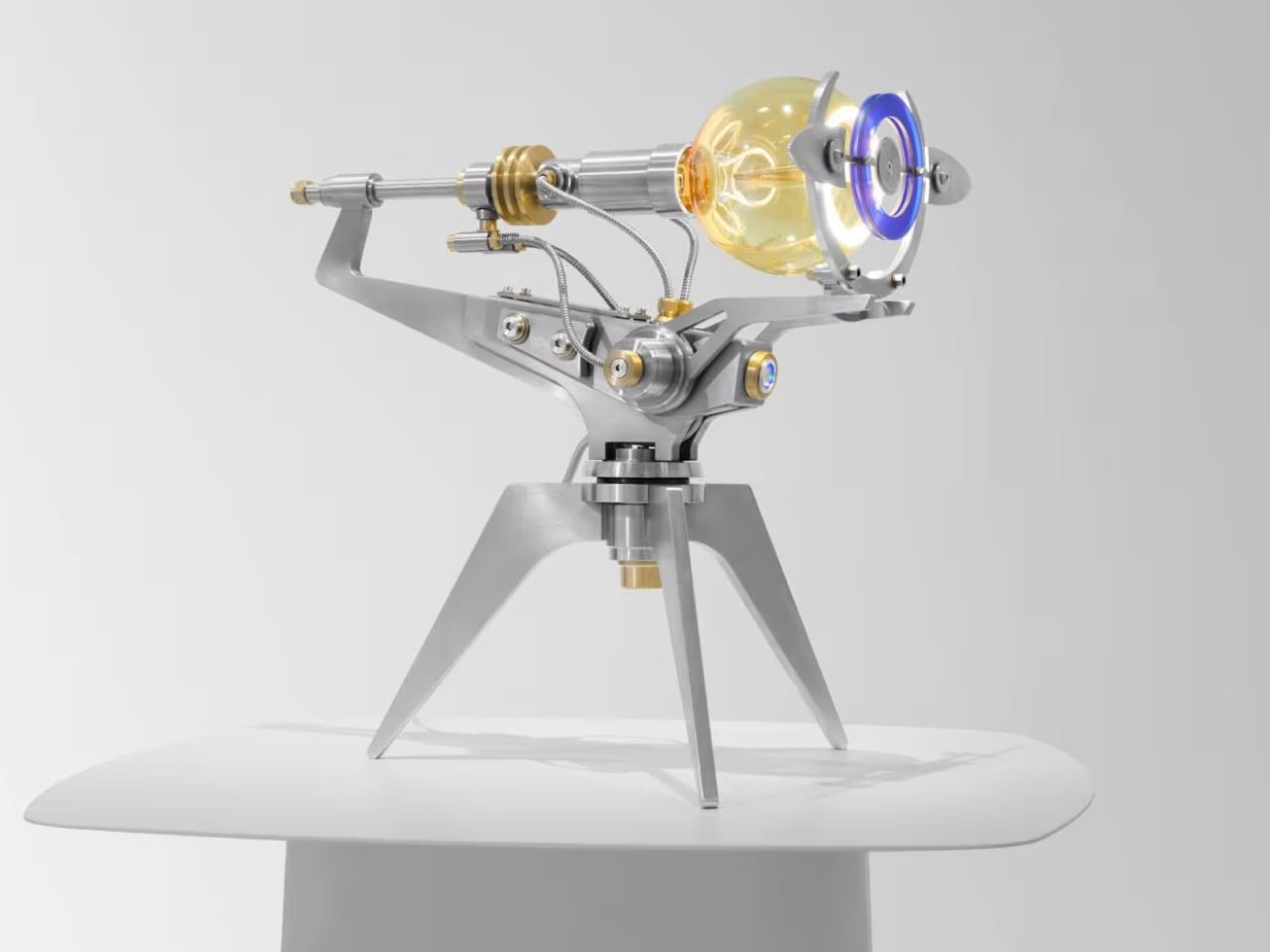
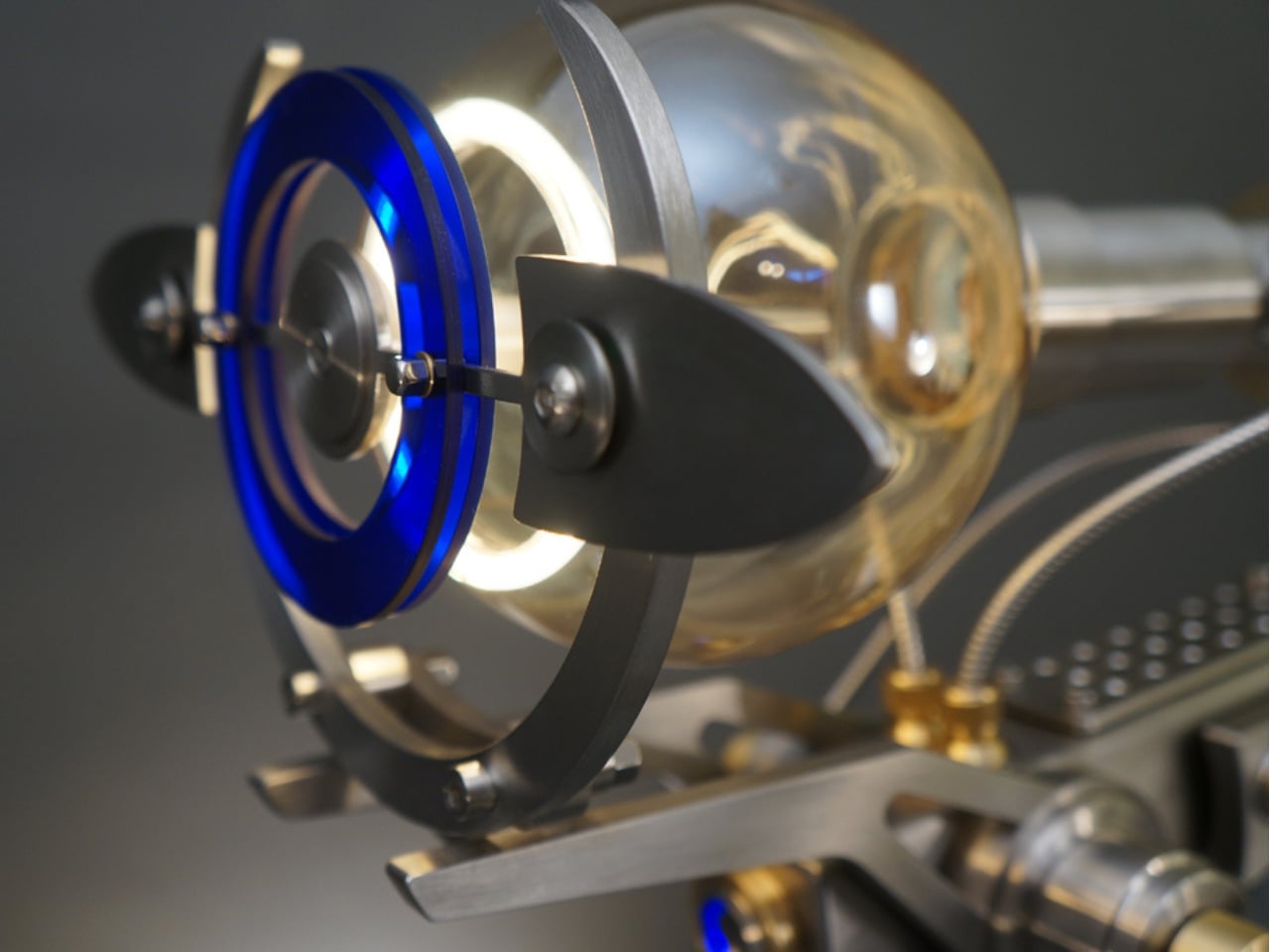
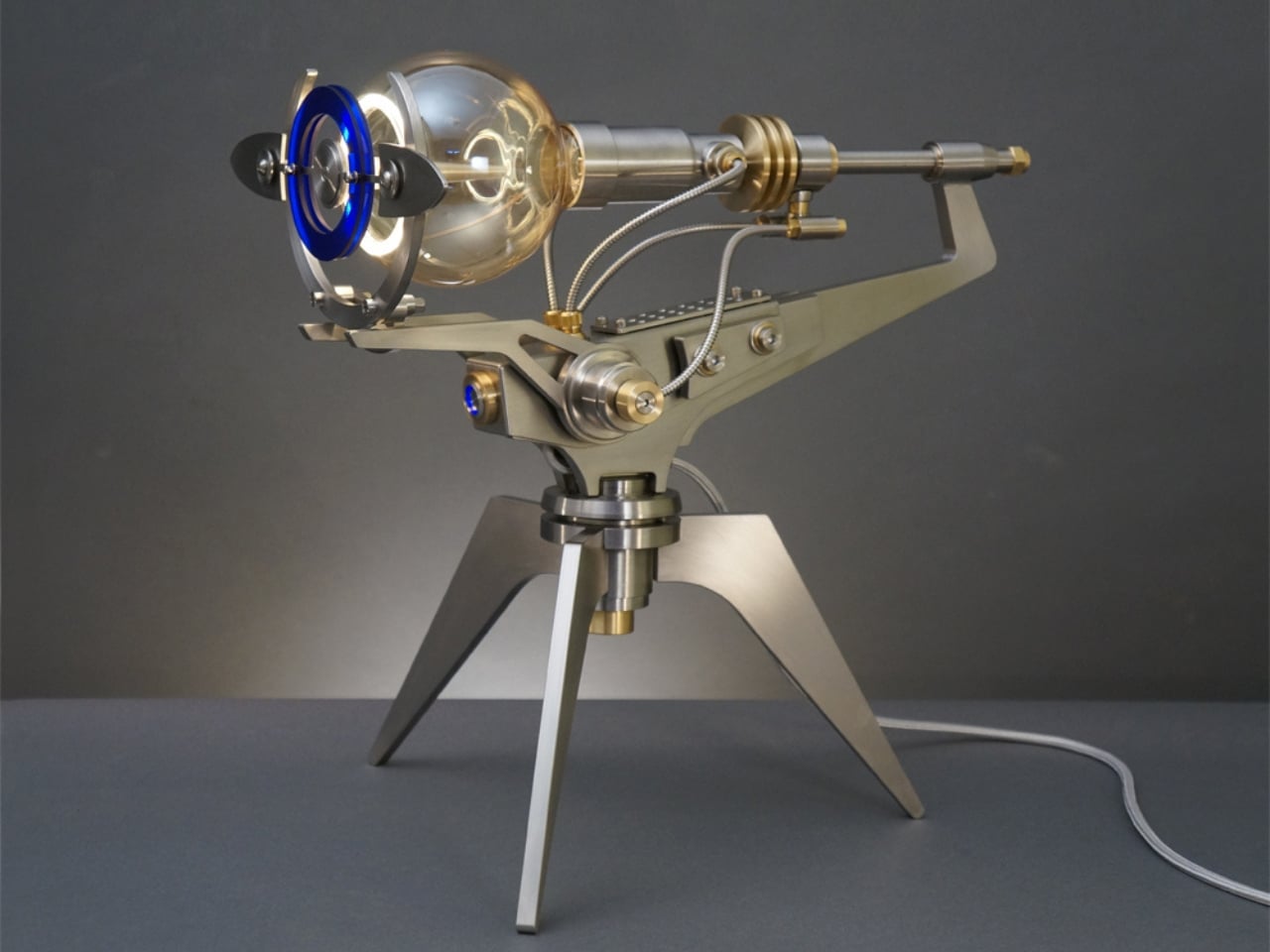
Most lamps want to disappear into a room, but every now and then, one shows up that demands the room reorganize itself around it. The ML15 Helios, designed by Berlin-based artist Frank Buchwald in collaboration with MB&F’s M.A.D.Gallery, is one of those objects. It’s a lamp, technically. It gives off light, it has a switch, it plugs into a wall. But calling it a lamp feels reductive in the same way calling a Porsche 911 a commuter car technically isn’t wrong but misses the entire point.
The ML15 Helios was created to mark the 15th anniversary of the M.A.D.Gallery, MB&F’s network of spaces dedicated to what they call Mechanical Art Devices. The gallery itself was born out of a kind of beautiful stubbornness. Back in 2011, MB&F founder Maximilian Büsser couldn’t get traditional retailers to properly display his three-dimensional watches, and art galleries told him his creations weren’t really art. So he opened his own space in Geneva’s Old Town and started curating the kind of work that lived between disciplines. Frank Buchwald was one of the very first artists to join.
The origin story between the two is almost too good. Büsser discovered Buchwald’s retro-futuristic Machine Lights online, visited his scarred industrial workshop in Berlin, and left having committed to buying the next ten lights for a gallery that didn’t even exist yet. That kind of instinct, that willingness to bet on something before the infrastructure is in place, is rare. Fifteen years later, the ML15 Helios feels like the natural product of a creative relationship built on that kind of trust.
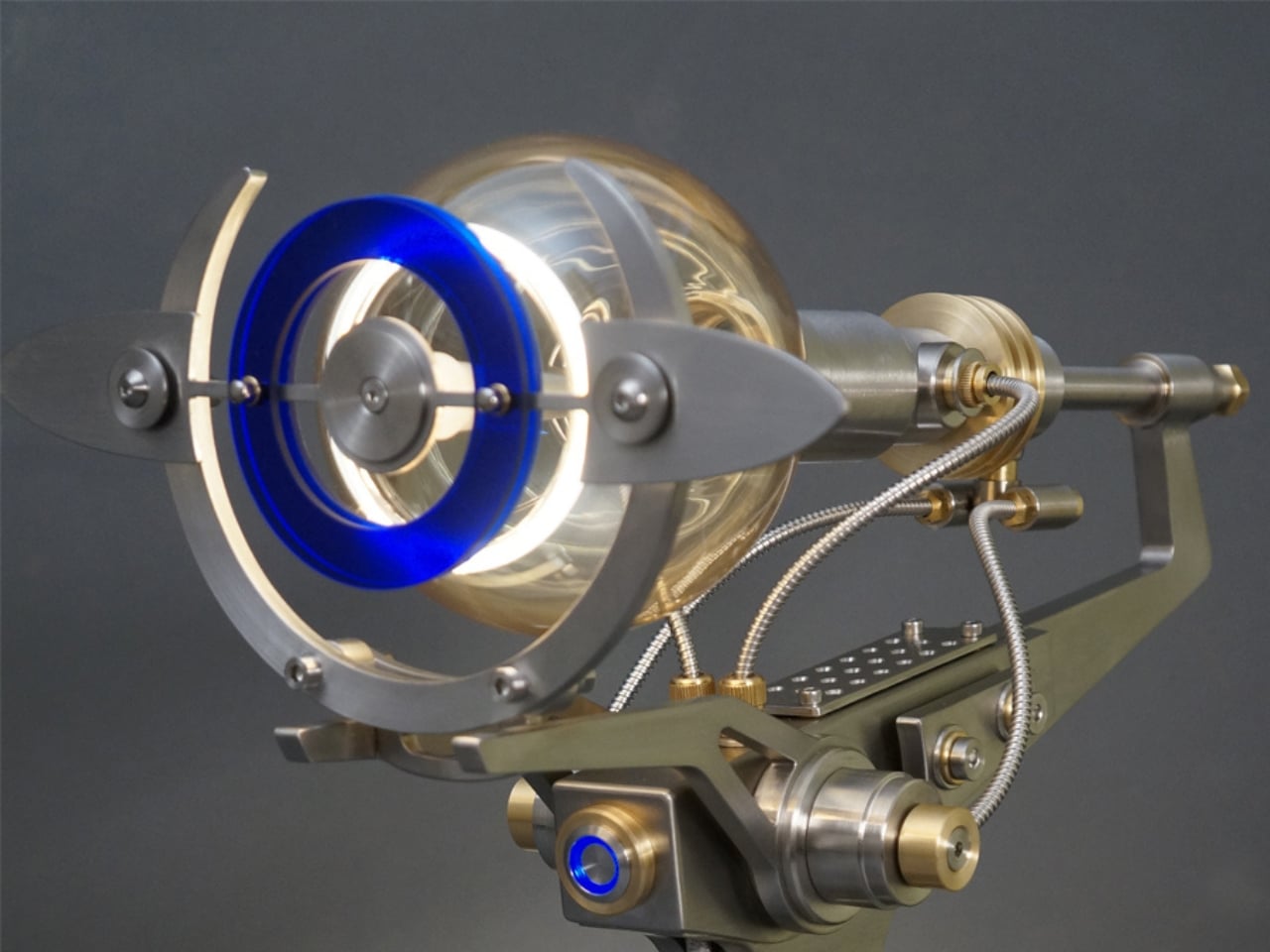
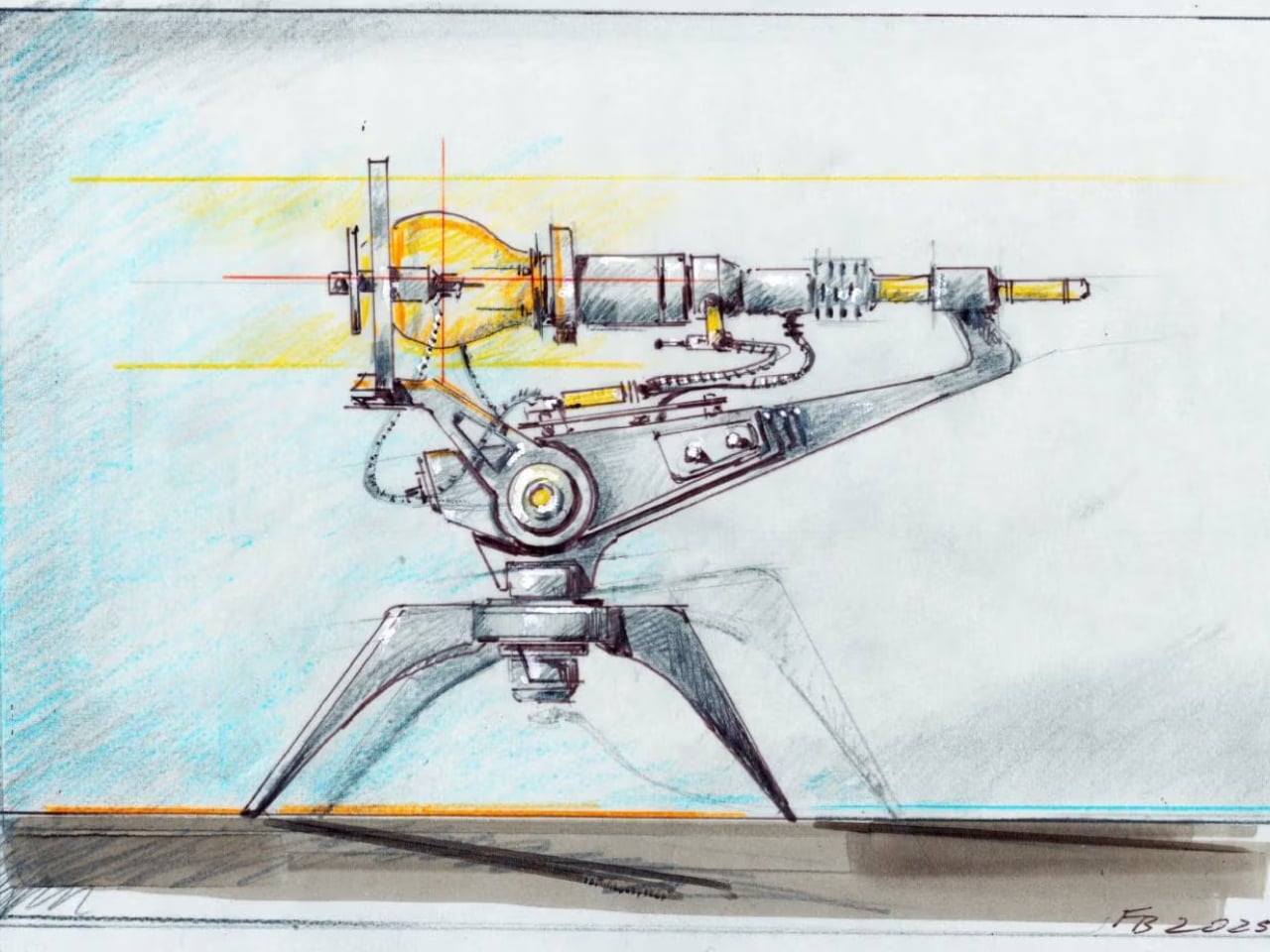
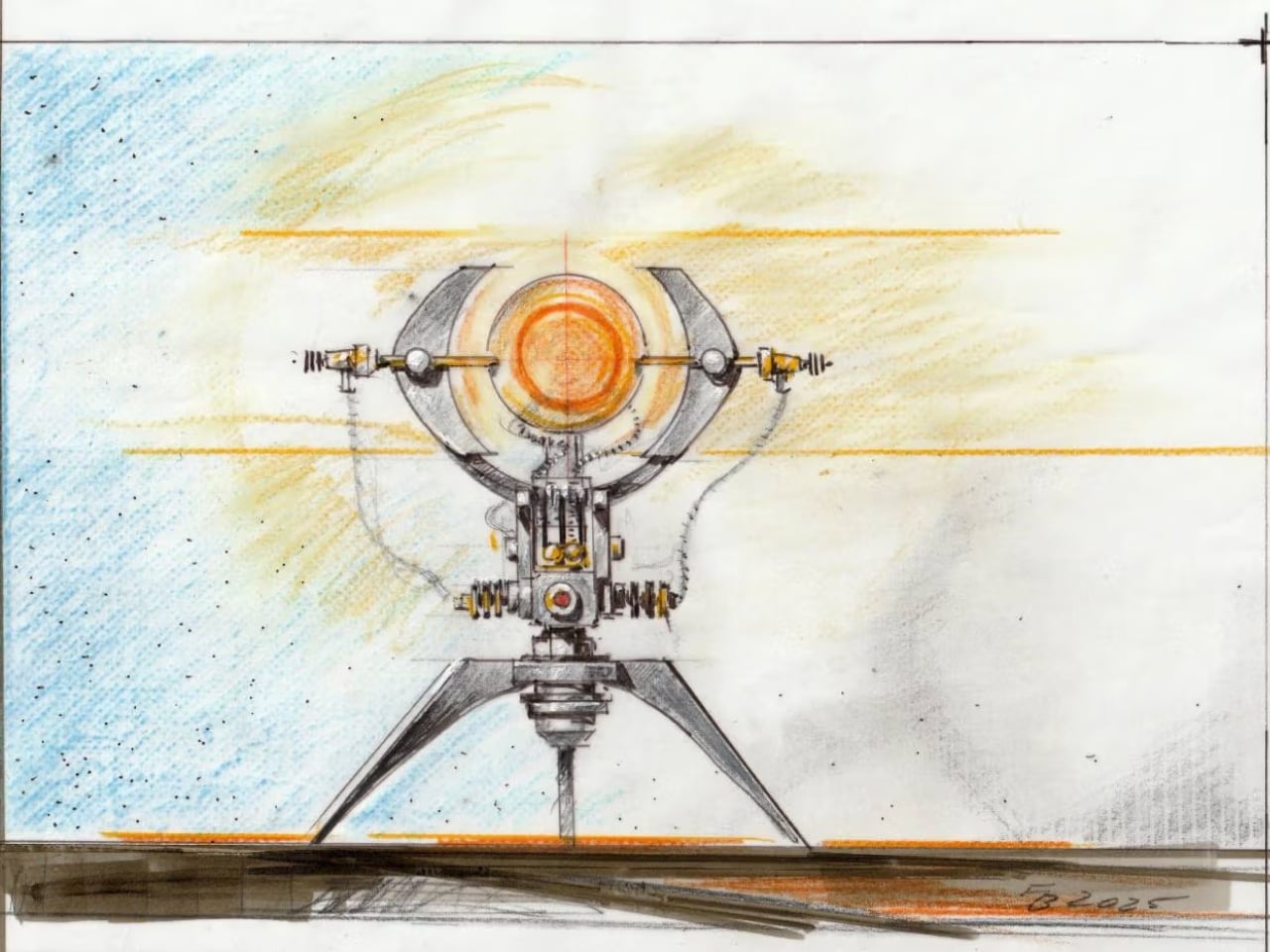
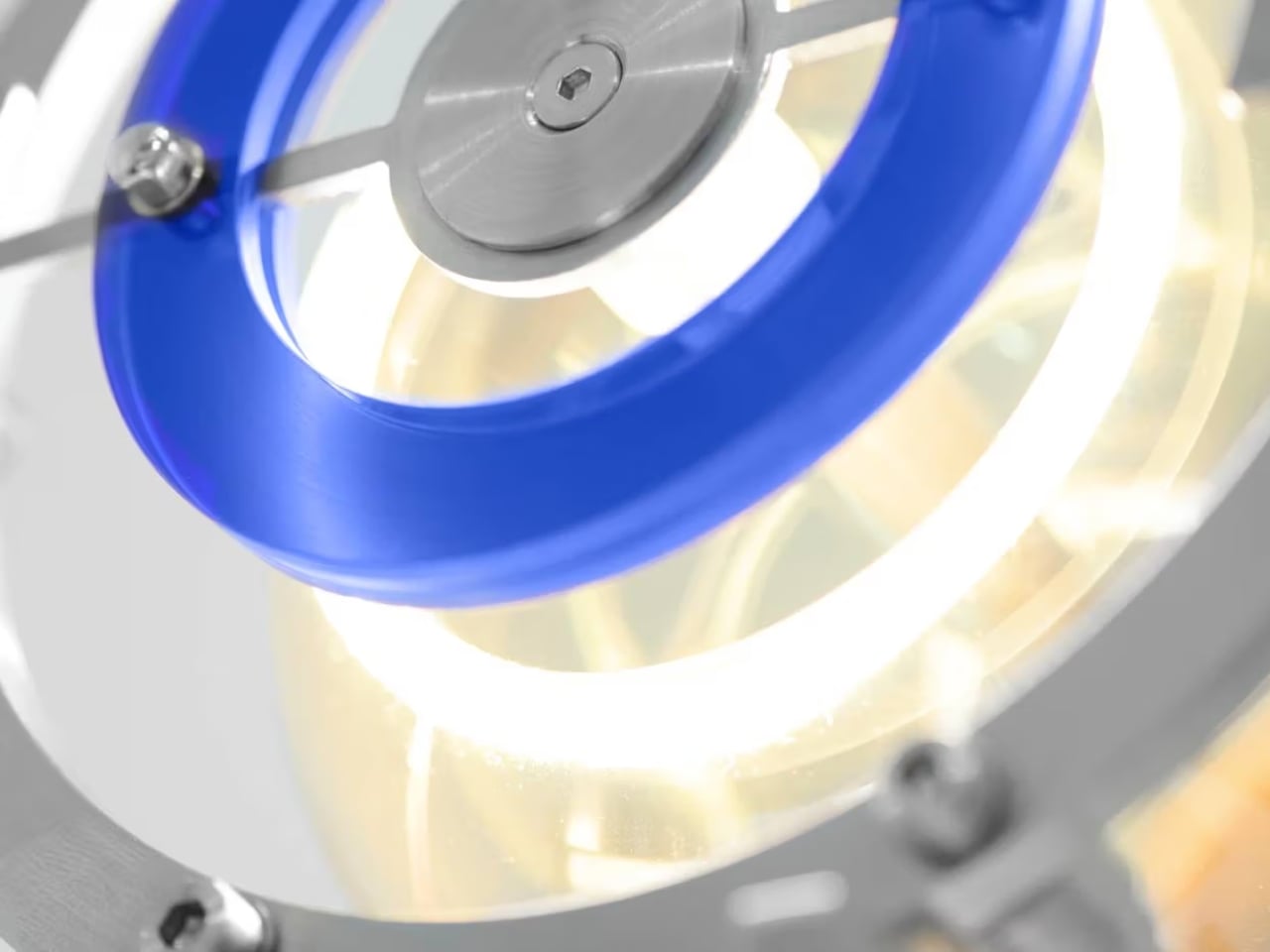
The piece itself is a 9-kilogram sculpture made from stainless steel and brass, standing on three legs that give it an almost biological quality, like something that evolved rather than was engineered. At its center sits a 120mm spherical globe bulb surrounded by a dimmable LED ring that replicates a solar corona. Two blue diffuser rings frame the sphere, and this is where the design gets interesting. Depending on your angle and your mood, the Helios can look like a celestial body, a precision scientific instrument, or a human eye staring back at you. That ambiguity is intentional, and it’s what separates Buchwald’s work from decorative lighting that simply tries to look expensive.
Every one of the 120 individual components is handcrafted in Buchwald’s Berlin workshop. The electrical wiring runs through flexible stainless steel tubes, kept visible rather than hidden, because Buchwald believes in showing the inner workings of his machines. Even the laser-cut parts get extensive manual reworking, and each piece takes several weeks to complete. The head rotates 90 degrees, which means the Helios isn’t just a static sculpture but something you physically interact with to direct light across a room.
What I find most compelling about the ML15 Helios is how it occupies a space that most designers avoid entirely. It’s not minimalist, it’s not maximalist, it’s not mid-century modern, and it doesn’t reference any trend you could pin to a specific decade. Buchwald was a science fiction illustrator before he started working with metal, and that background shows. There’s a narrative embedded in the object, a sense that it belongs to a fictional world where machines are revered for their beauty as much as their function.
Limited to just 15 pieces and exclusive to M.A.D.Gallery locations in Geneva, Dubai, and the MB&F Labs network, the Helios is priced on request, which in this world means it’s not for the casually curious. But I think the limitation is part of what makes it meaningful. In an era where everything scales, where even luxury brands chase volume, there’s something quietly radical about a handmade object that exists in a quantity of 15 because that’s all one artist can responsibly make.
The ML15 Helios isn’t trying to be the future of lighting design. It’s trying to be a singular object that earns its place in a room not through branding or spectacle, but through the sheer quality of its craft and the clarity of its vision. In that sense, Buchwald and Büsser have made something that the M.A.D.Gallery was always meant to celebrate: a machine that gives light, and in doing so, becomes art.
Alaska's House of Representatives unanimously passed HB47, a bill that imposes sweeping limits on when and how minors use social media apps, along with bans on generating or distributing harmful deepfakes of children.
The bill's original form was focused on prohibiting the possession and distribution of sexually explicit images of children using AI, but Alaska lawmakers decided to add amendments that would impose social media restrictions. The proposed limitations include a statewide curfew on using social media between 10:30 PM and 6:30 AM, banning "addictive design features" and requiring social media platforms to verify user ages and get parental consent if they are minors.
While the House bill saw 39 votes in favor and zero against, the amendments offered some hints at potential upcoming revisions. Before the bill went to a vote, some of the House representatives expressed concern about adding such broad rules on social media without consulting the companies behind them first.
The bill still has to make its way through the Alaska State Senate, which already has presented a companion bill, and the governor. Alaska is following the footsteps of many other states, and the House even modeled its social media amendments in the HB47 bill after Utah. While Utah was the first to propose social media restrictions for kids, it was later met with a preliminary injunction.
This article originally appeared on Engadget at https://www.engadget.com/social-media/alaska-could-be-the-next-state-to-crack-down-on-ai-generated-csam-and-restrict-kids-social-media-use-190506366.html?src=rss
Responsive touch controls with the slide for volume
CONS:
Not integrated with Google Find My Device
RATINGS:
AESTHETICS
ERGONOMICS
PERFORMANCE
SUSTAINABILITY / REPAIRABILITY
VALUE FOR MONEY
EDITOR'S QUOTE:
At this price, the combination of triple drivers, solid ANC, and excellent fit makes the Redmi Buds 8 Pro hard to beat.
Redmi Buds 8 Pro arrives as Redmi’s more ambitious take on everyday wireless earbuds. They aim to combine punchy sound, serious noise cancellation, and gaming-friendly latency in a package that still feels relatively affordable. This is not a basic budget pair built only for casual background listening, and it clearly wants to feel like a step up the moment you start using it.
What makes them interesting is how they chase premium style features without making the experience feel intimidating. The triple driver setup is the headline, but the real promise is a well-rounded daily companion that can handle commuting, workouts, and long listening sessions with minimal fuss. At 399 CNY in China, the value story is hard to ignore, and the key question is whether the real-world experience matches that strong first impression.
Designer: Xiaomi
Aesthetics
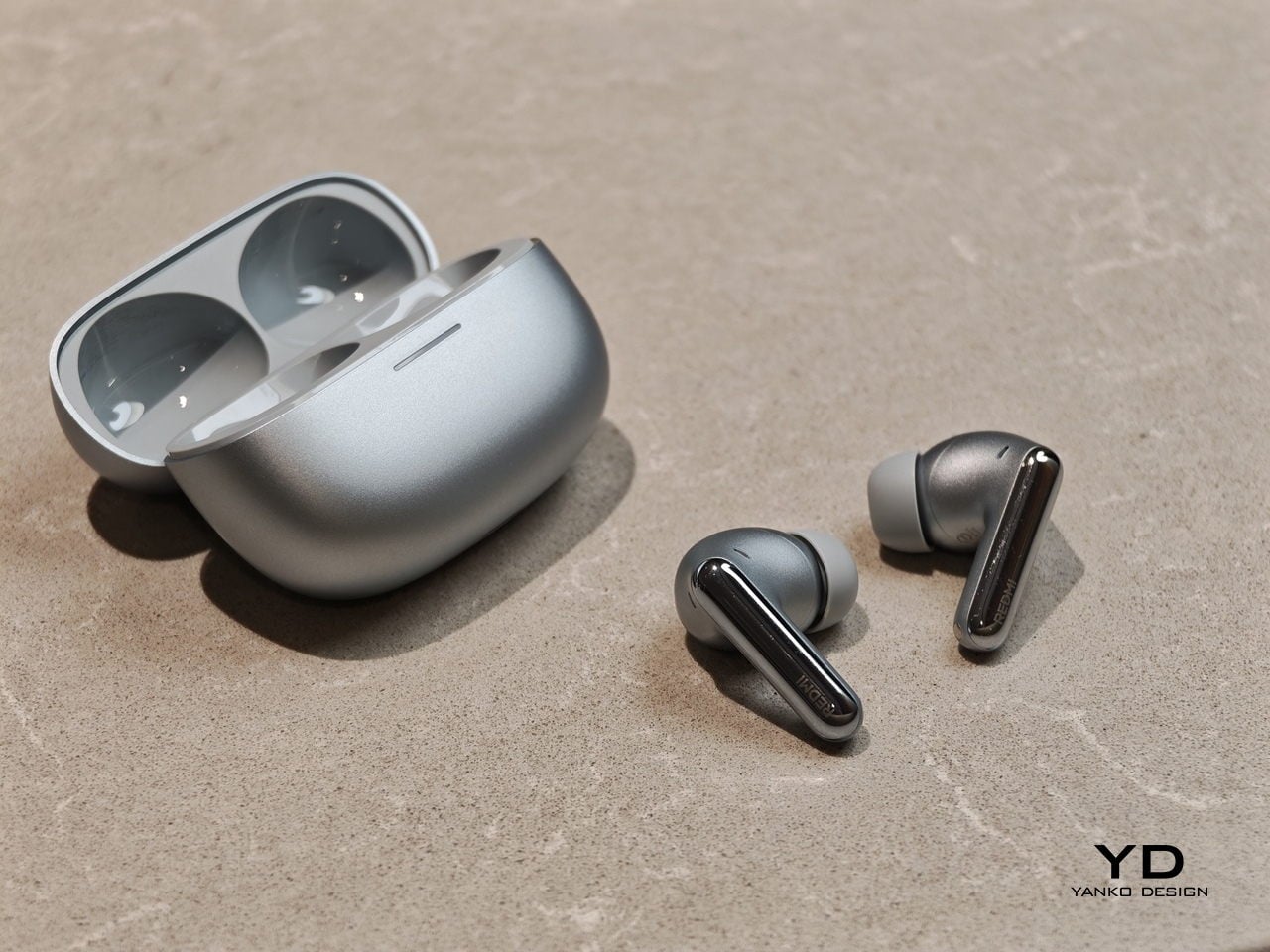
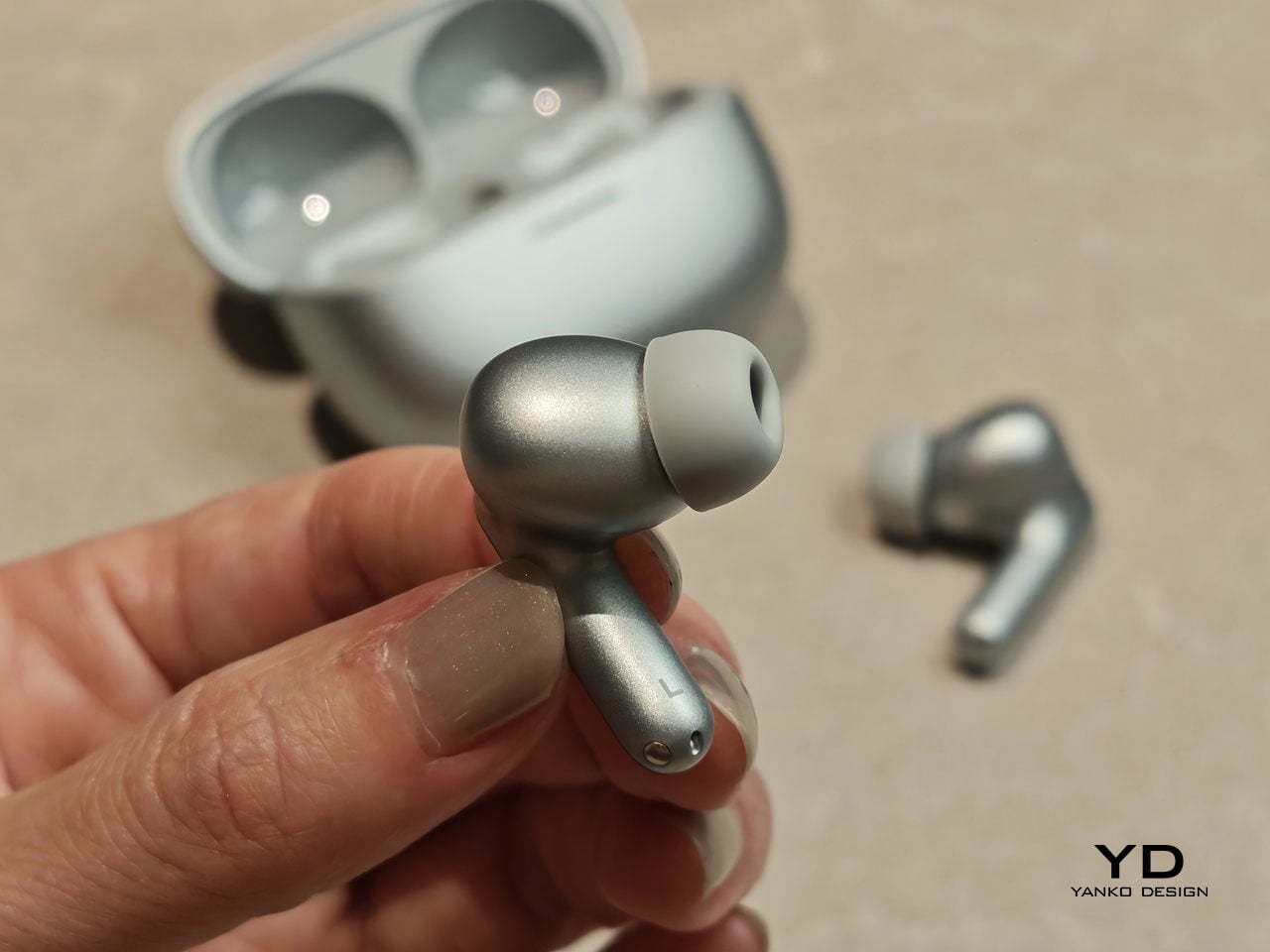
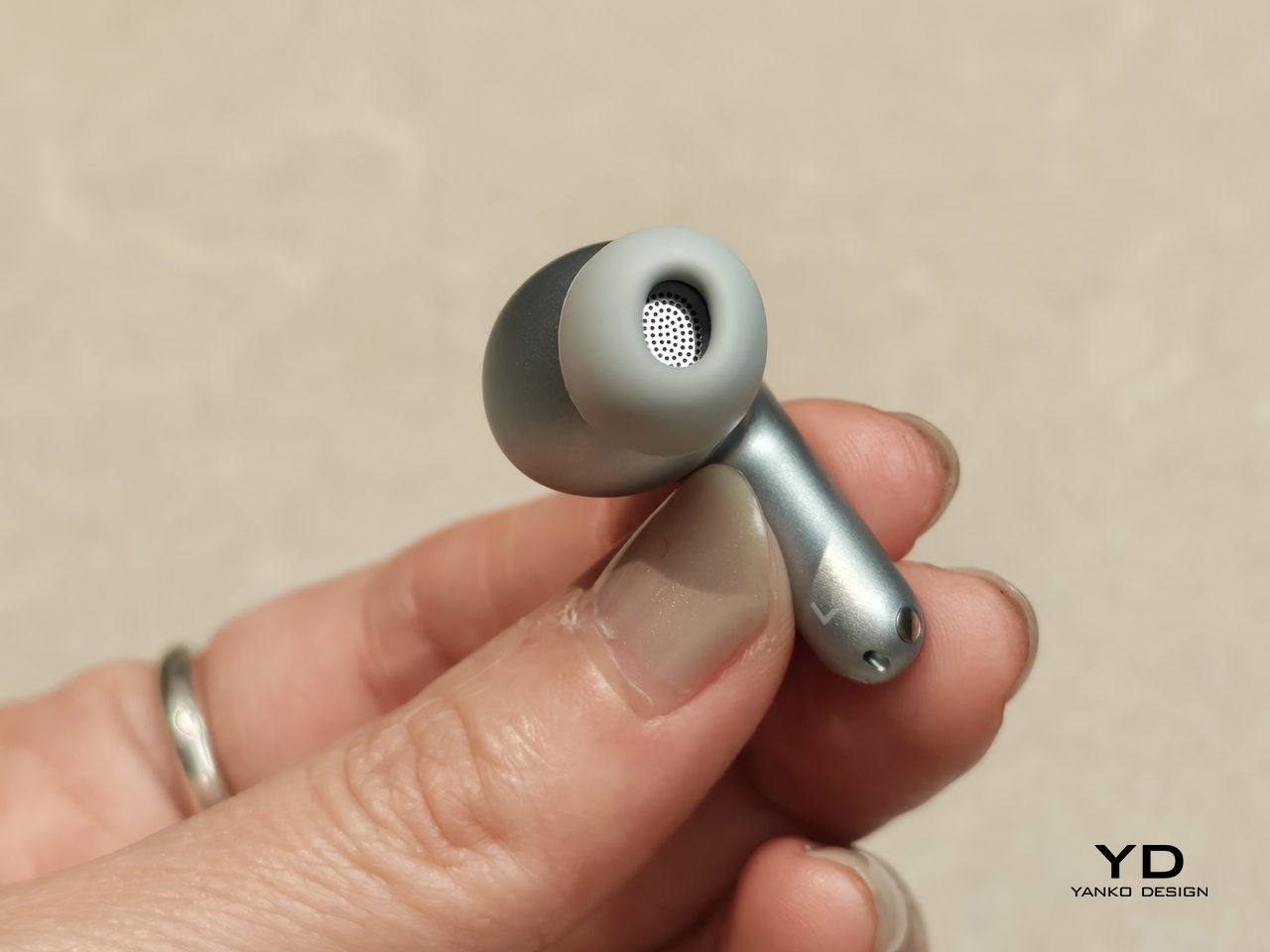
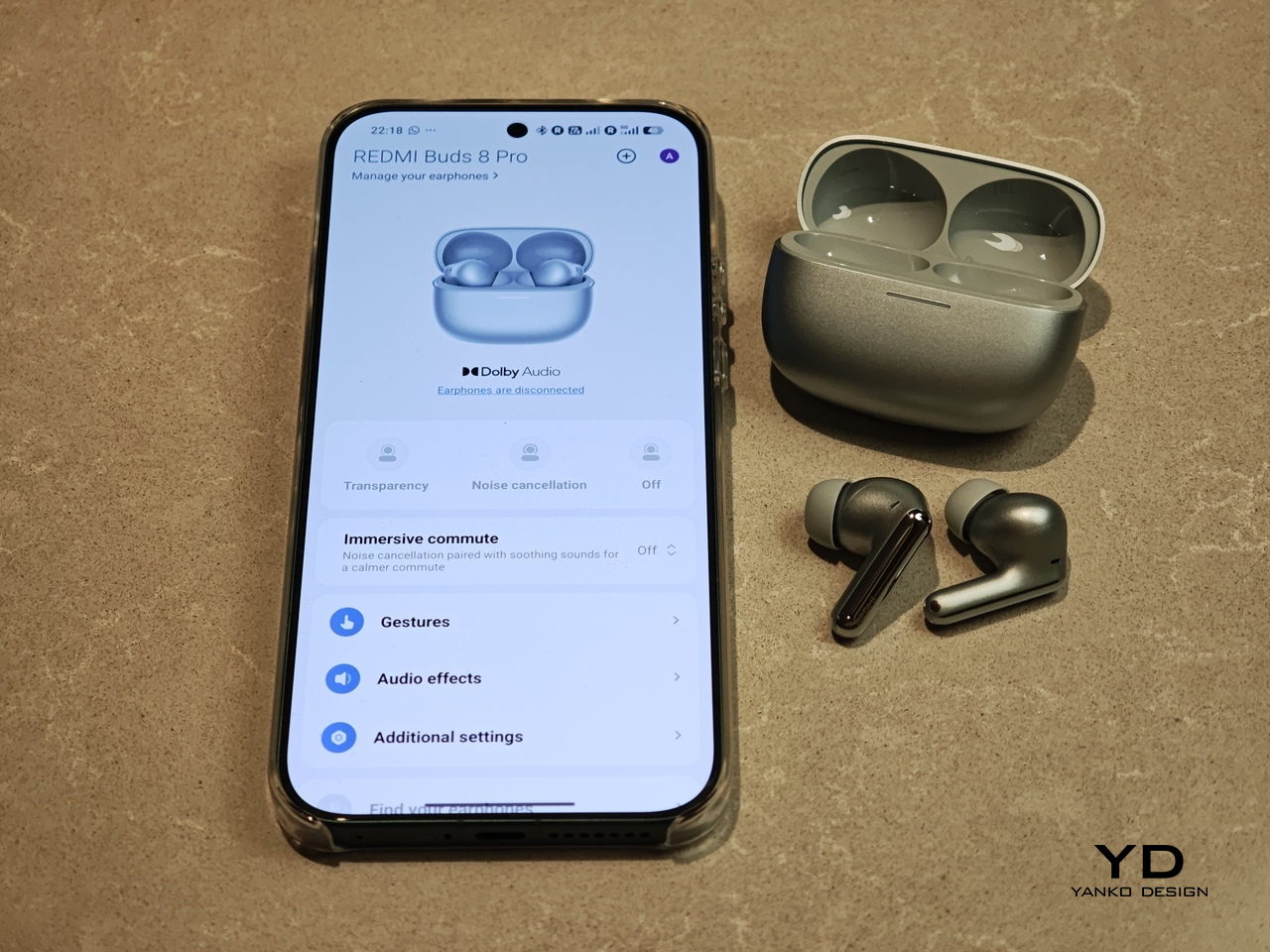
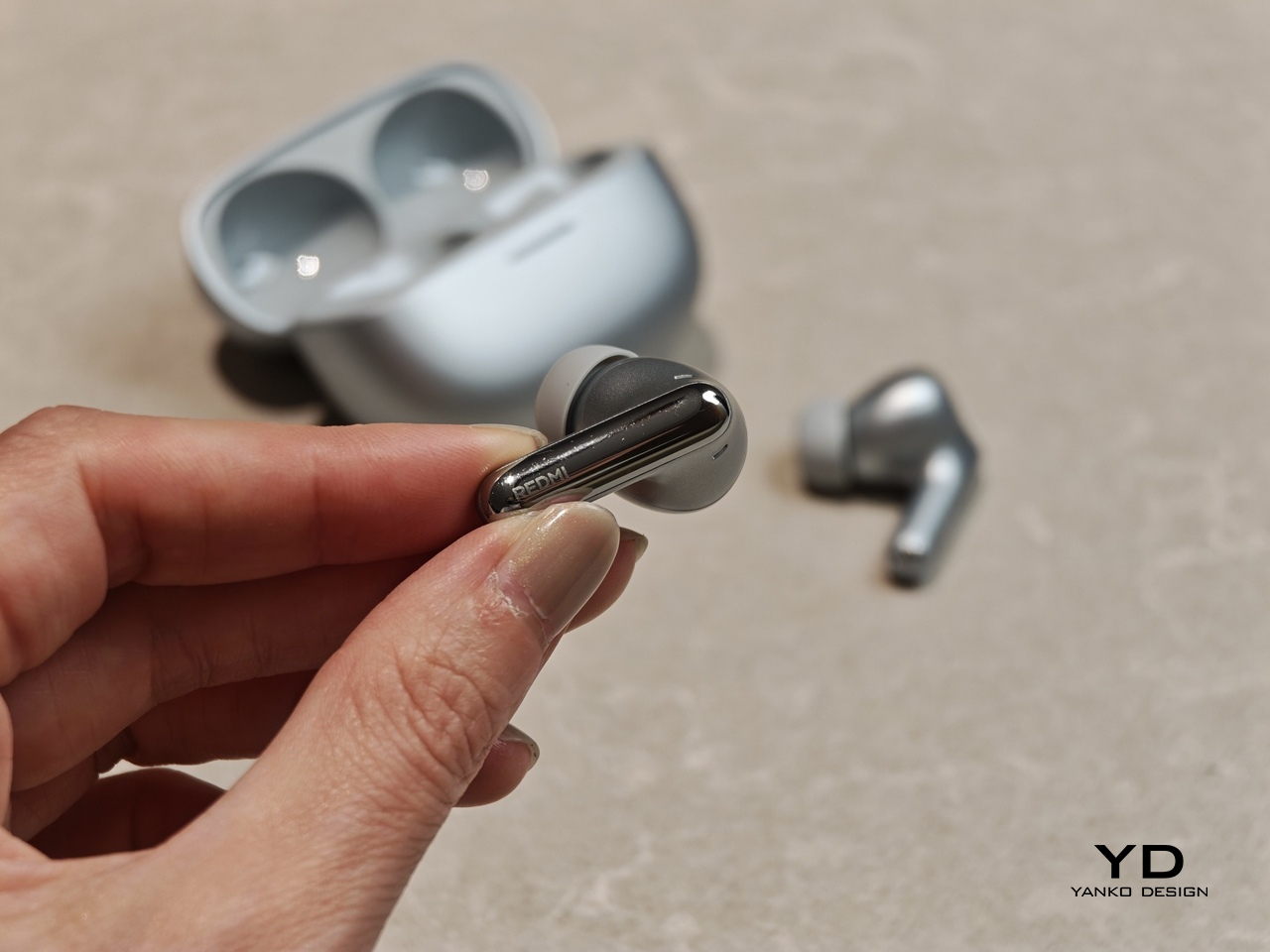
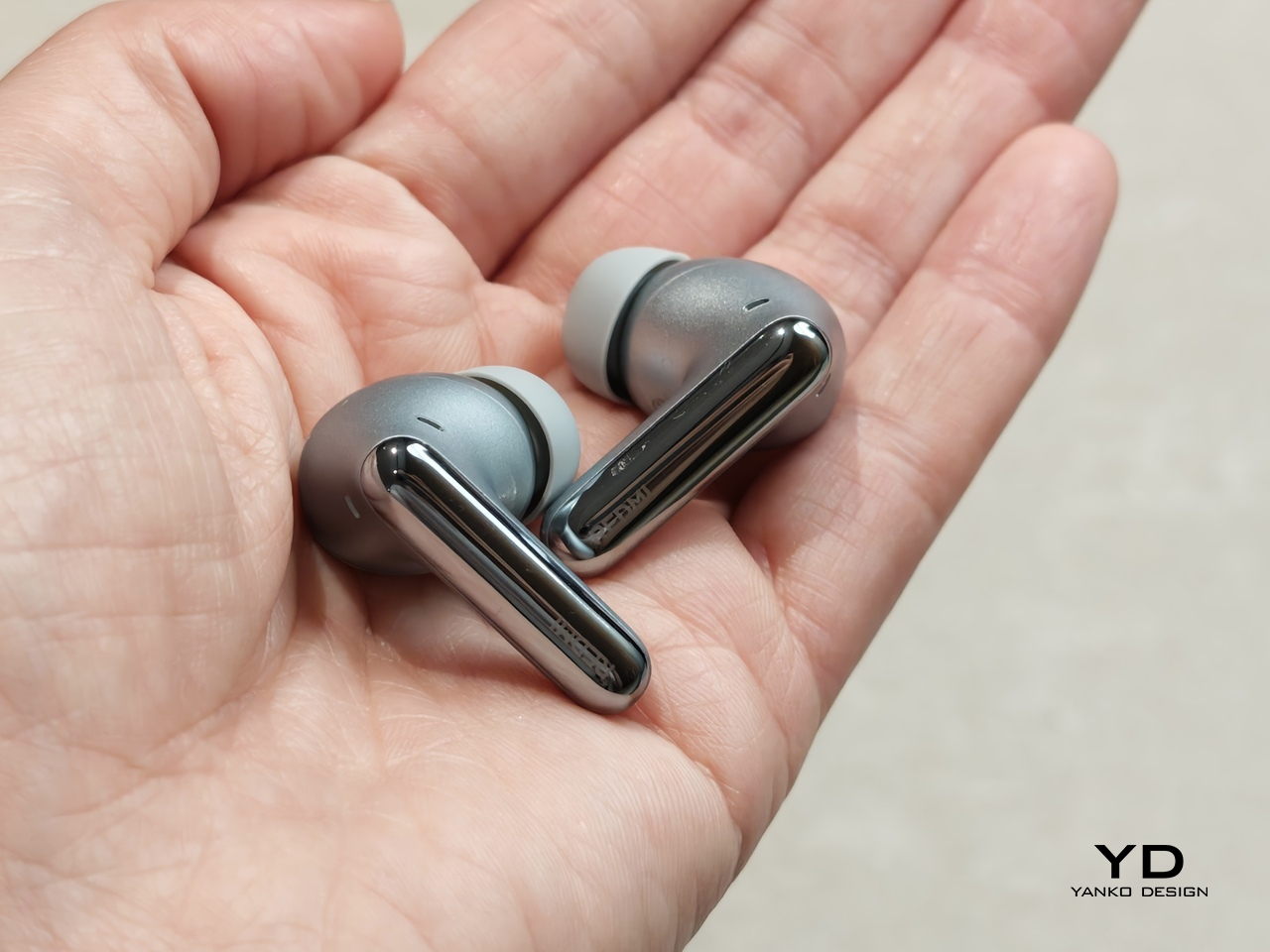
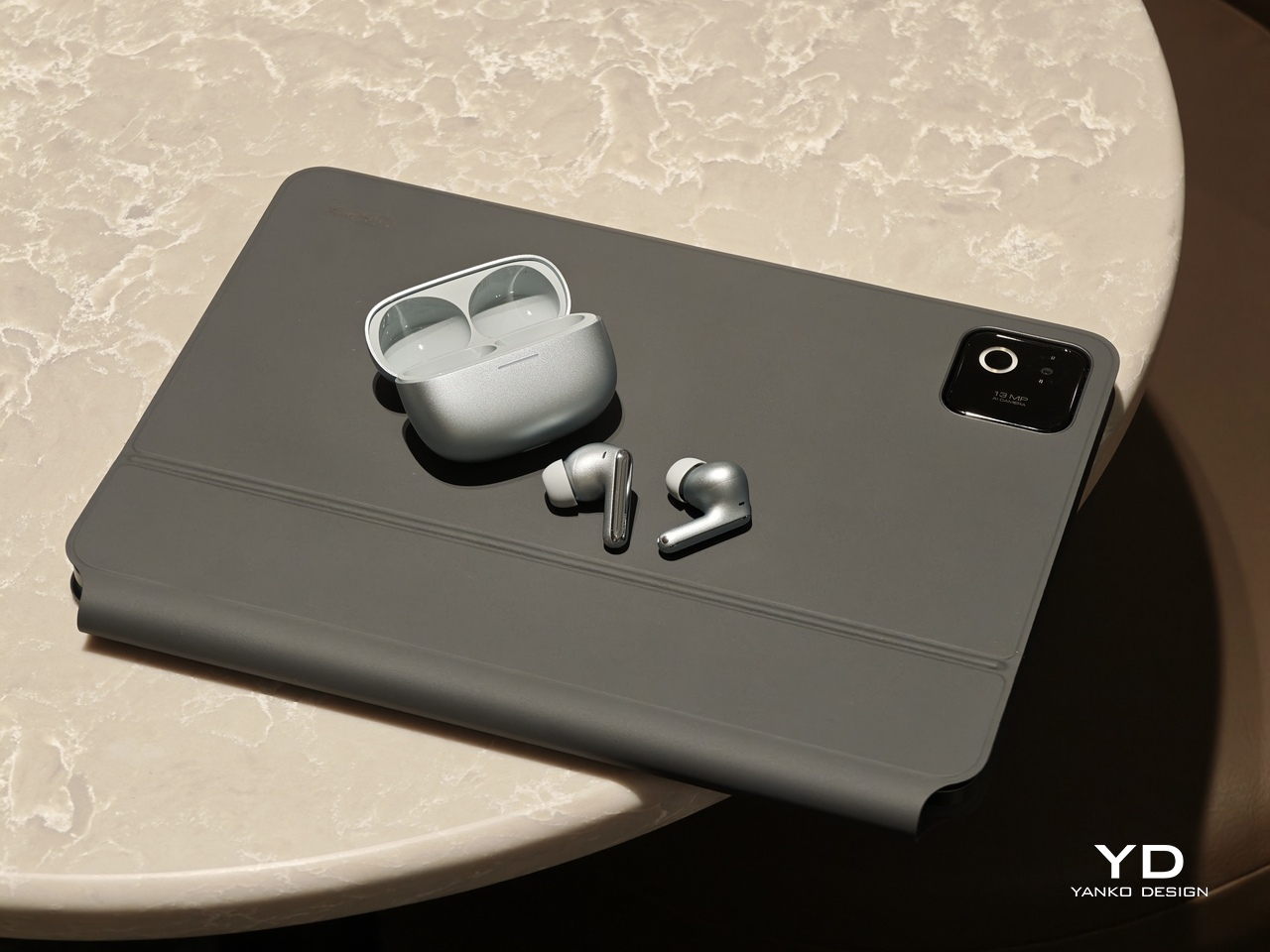
Redmi Buds 8 Pro follows a familiar stem style layout, but the visual language leans clean and modern rather than flashy. The earbuds have smooth, flowing lines, with a compact in-ear body that blends into a slim, rounded stem. Most of the earbud surface is finished in a soft matte texture that hides fingerprints and keeps the look understated. On the outside-facing side of each stem, Redmi adds a shiny strip that catches the light, with a small Redmi logo at the bottom as a neat visual anchor. This contrast between matte and gloss gives the buds a touch of sophistication while still keeping them low-key.
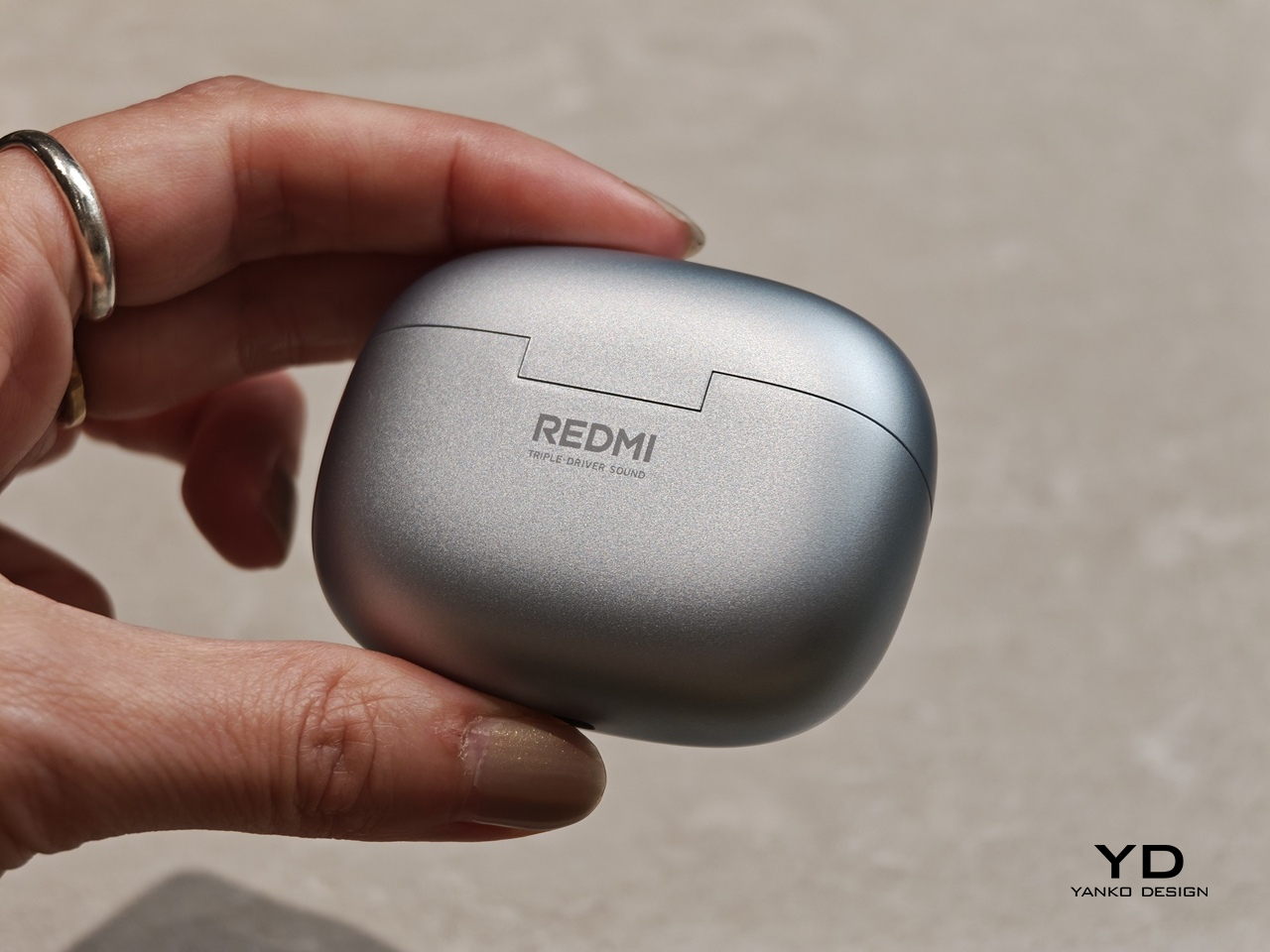
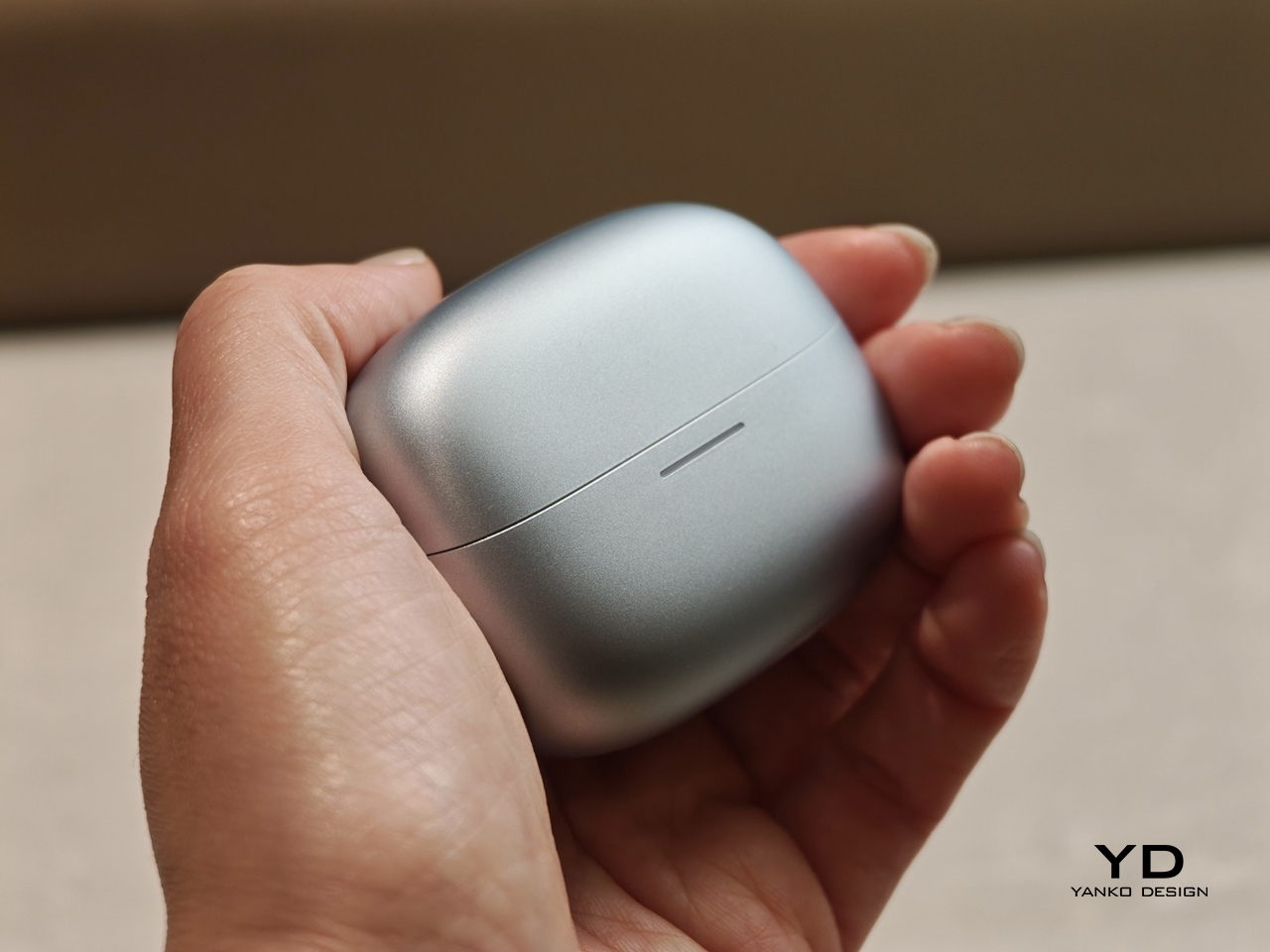
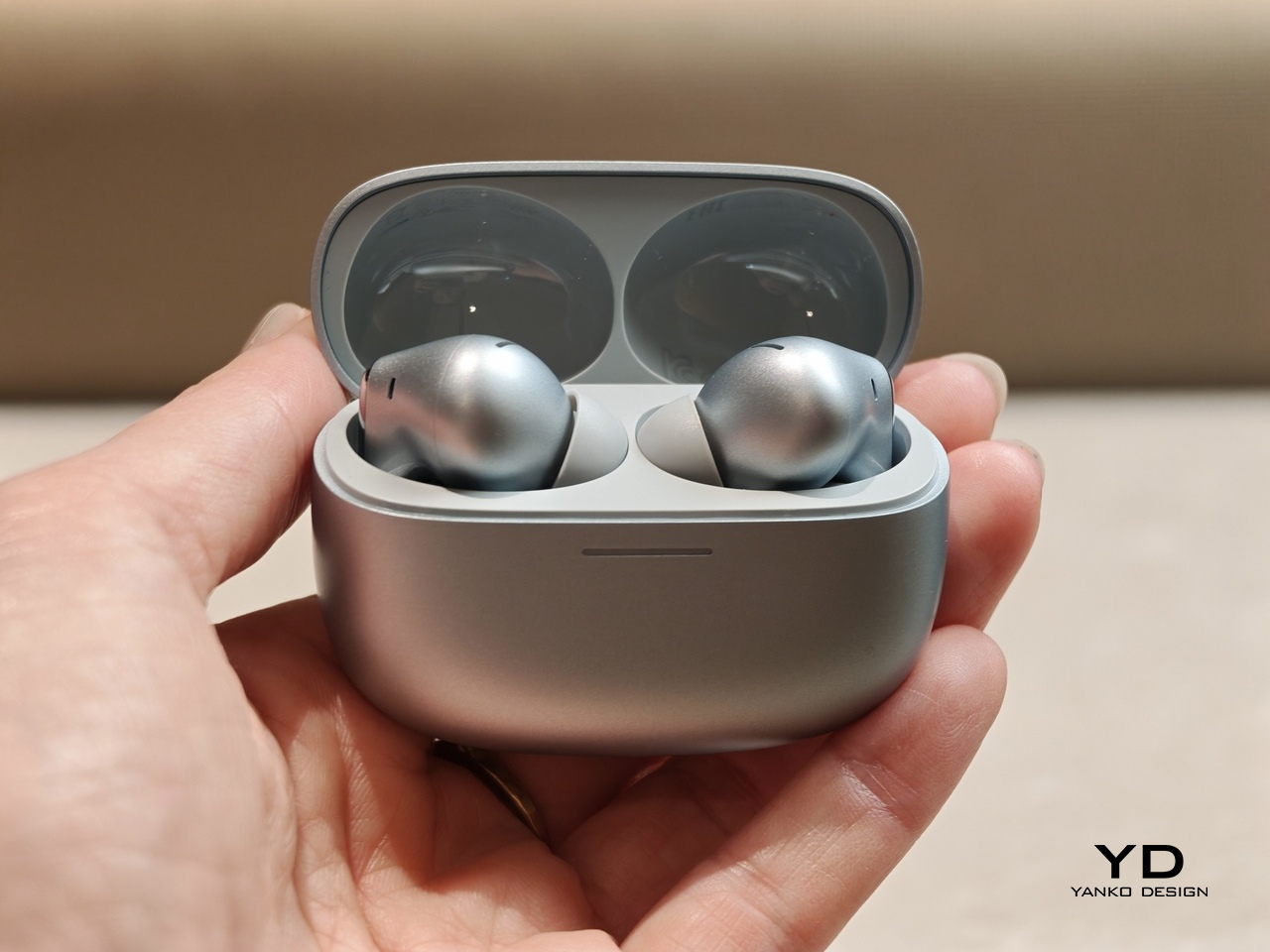
The charging case continues that restrained approach with a compact, pebble-like shape that slips easily into a pocket or bag. Its semi-matte shell feels smooth and resists smudges, while a subtle Redmi logo and “triple driver sound” text on the back quietly nod to the hardware inside. On the front, a slim bar of LEDs offers at a glance battery and pairing information but remains discreet when off, so the case still looks clean.
Color options and small accents may vary by region, yet the overall design clearly targets a wide audience. These are earbuds you can wear at the office, on public transport, or at the gym without drawing much attention. If you like bold, statement-making designs, they may feel a bit too reserved, but if you prefer tech that looks tidy and well finished, Redmi Buds 8 Pro sit in a very comfortable sweet spot.
Ergonomics
While the design focuses on clean lines and visual calm, the build of Redmi Buds 8 Pro focuses on comfort and practicality. Each earbud weighs about five point three grams, which helps them feel light enough for long listening sessions without that dragging sensation some heavier buds can cause. Of course, fit and comfort are different from person to person, but Redmi Buds 8 Pro fit my ears very well and never felt like they were about to fall out.
The medium-sized silicone tips come preinstalled, and Redmi also includes small and large tips in the box so you can fine-tune the seal. I usually go with medium-sized tips and sometimes switch to small tips on certain earbuds, but with Redmi Buds 8 Pro, the medium size worked best for me. Some earbuds struggle to stay put even when I am not moving or talking, yet here I had no problem with fit or comfort, even when I talked, ate, did yoga, or went for a jog with the earbuds in.
The charging case weighs about 47 grams, which keeps the full kit small and light enough to disappear into a jeans pocket or a slim sling bag. The rounded shape and smooth finish make it easy to grip and open, and the lid snaps shut with a reassuring click. Magnets inside guide the earbuds into place so they line up with the charging contacts without much effort. In everyday use, that means you can carry the case all day and quickly pop the buds in or out whenever you need them, without really noticing the extra bulk.
Performance
Redmi Buds 8 Pro pack impressive specifications for their price range, and the audio hardware is the main reason why. They use a coaxial triple driver configuration that combines an 11 mm driver with a titanium diaphragm and twin 6.7 mm PZT ceramic tweeters. In listening, the sound comes across as clear and nicely balanced, with bass that feels full and satisfying without overpowering vocals or detail.
Redmi Buds 8 Pro carry Hi-Res Audio Wireless certification and support codecs such as LDAC, but in day-to-day use, the bigger story is simply that the tuning feels well judged. Dolby Audio and Xiaomi Dimensional Audio are also supported, giving you extra options to change the sense of space and presentation, especially for movies and shows.
Active Noise Cancellation works great overall, especially considering the price. It does not completely block out train noise or airplane engine rumble, but it comes close, which makes music and podcasts easier to enjoy at lower volumes. With higher-pitched sounds like a baby crying, it still does not fully cancel everything out, yet it reduces the sharpness enough that you are less likely to get distracted from what you are doing.
One comfort note is heat. I felt the earbuds get slightly warm at first when ANC was on, but it did not seem to build up over time. It is also possible I simply got used to the sensation after wearing them for a while, so I would not call it a major issue, but it is worth mentioning if you are sensitive to heat on hot days.
Battery life is solid on paper and practical in daily use. Each earbud houses a 54 mAh battery, with rated playback of up to about eight hours on a single charge when ANC is off. Turn ANC on and use higher volumes, and actual listening time will drop somewhat, which is typical for this type of product, while the 480 mAh charging case extends total listening time up to roughly 33 hours across multiple top-ups.
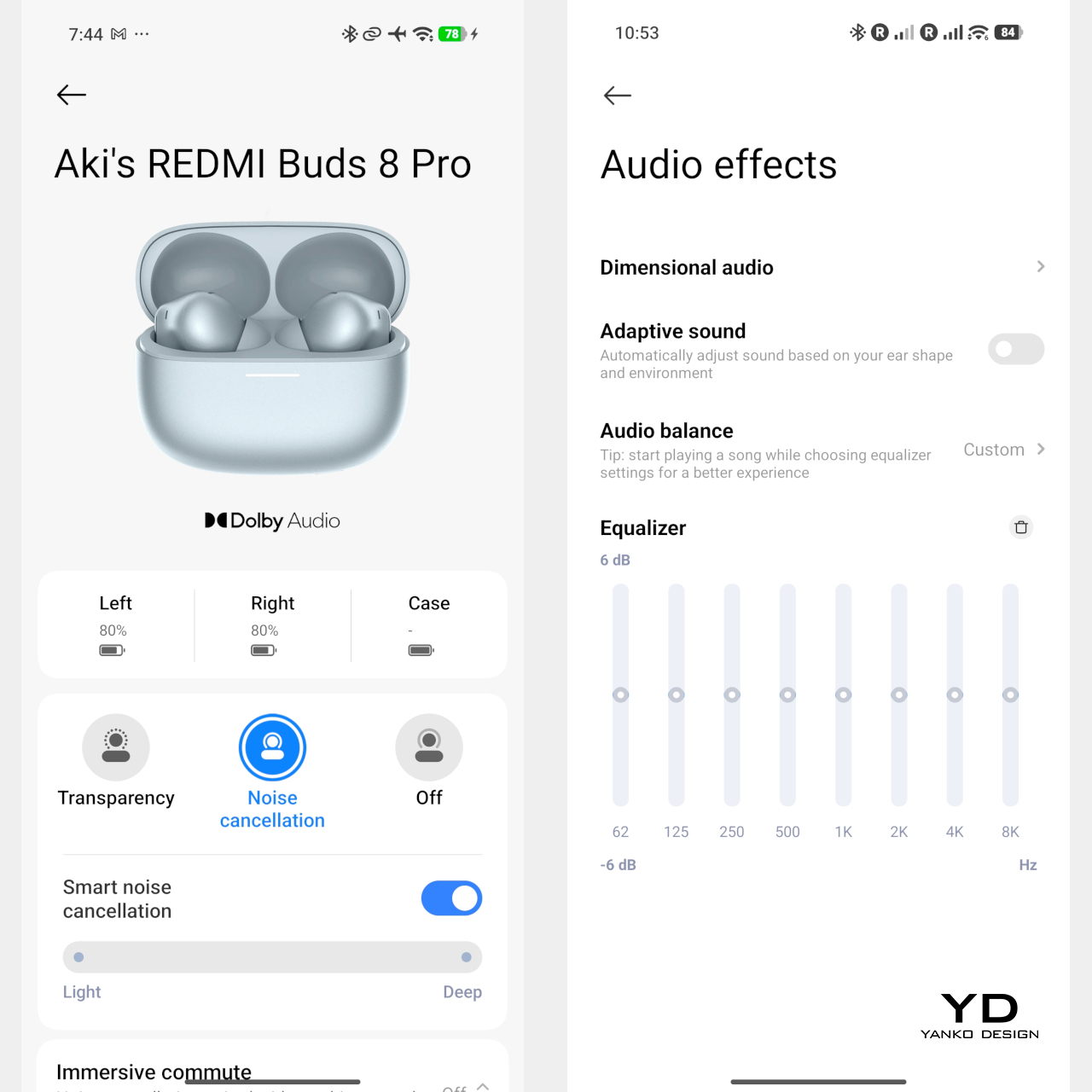
Touch controls on the stems worked great in my use, and the biggest usability upgrade is that volume control is supported via sliding on the stem. The controls support single tap, double tap, triple tap, press and hold, and swipe, which gives you a lot of flexibility without needing to reach for your phone. You can customize these gestures in the Xiaomi Earbuds app, so the controls can match your habits instead of forcing you into a fixed layout.
The app also gives you practical sound tuning options without making things feel overly technical. You can pick from preset audio profiles like Balanced sound, Enhanced bass, Enhanced treble, and Enhanced voice, depending on what you are listening to. If you want more control, there is also a custom EQ option that lets you adjust eight separate bands, with each slider running from plus six to minus six, so you can fine-tune the sound without guessing too much.
Sustainability
For a product category like true wireless earbuds, sustainability is rarely a strong point, and Redmi Buds 8 Pro are no exception. The compact, sealed design means the internal batteries are not user-replaceable, so once overall battery health drops, most people will end up replacing the whole set rather than repairing it. That pattern is common across almost all TWS earbuds today, but it still makes this a product that is easier to discard than to keep alive for many years.
The IP54 rating does offer a small positive by protecting against dust and splashes, which can reduce early failures from sweat, light rain, or accidental spills. One small feature that nudges in a better direction is the “find your earphones” function, which lets you play a tone from the left, right, or both earbuds via the app to help you track them down when they go missing. It is not a full integration with Google Find My Device, yet anything that helps you avoid losing a bud and replacing the whole set still counts as a quiet step toward better longevity.
Value
Redmi Buds 8 Pro is priced at 69.90 Euros, which works out to roughly $83. That puts them in the affordable end of the true wireless market. They still cost more than the absolute cheapest buds, but remain very accessible for anyone looking to step up from basic or bundled earphones.
From a value perspective, they make the most sense if you care about sound quality and noise cancellation more than simply paying the lowest possible price. Cheaper options can handle calls and casual listening, but usually lack the triple driver setup, stronger ANC, and more polished overall experience you get here. For many buyers, Redmi Buds 8 Pro will feel like a worthwhile upgrade that adds clear benefits without demanding a luxury-level budget.
Verdict
Redmi Buds 8 Pro is an easy recommendation if you want strong everyday performance without paying flagship prices. The triple driver setup delivers clear, balanced sound with bass that feels full but controlled, and the ANC is effective enough to make commutes and busy spaces noticeably calmer. Touch controls are reliable, and the volume slide gesture is a genuinely useful upgrade that makes daily listening feel smoother.
They are not perfect, with ANC that cannot fully erase the loudest train or plane noise and weaker results on some high-pitched sounds, plus the usual sealed battery limitations for sustainability. Still, the fit was excellent in my ears, the case is easy to carry, and the “find your earphones” tone feature helps prevent frustrating losses. If you care most about sound quality, noise cancelling, and a polished experience at a very competitive price, Redmi Buds 8 Pro hit a sweet spot.
Bloodborne fans may not be happy to hear that a remake was reportedly rejected, but that doesn't mean it's completely off the table. Bluepoint Games, Sony's closed-down studio behind many PlayStation remakes, pitched remaking the classic Gothic horror RPG in early 2025, but was blocked by the game's developer, FromSoftware, according to a Bloomberg report.
As Bloomberg reported, Bluepoint pitched a Bloodborne remake after several years of working towards a live-service title in the God of War franchise that was ultimately canceled. Looking for the next project, a modern-day version of Bloodborne made a lot of sense, considering the title came out in 2015 and Bluepoint was responsible for the successful Demon's Souls remake in 2020. However, Bloomberg's sources said that FromSoftware was against it, but didn't offer a concrete reason why. With some digging, Bloomberg's Jason Schreier pointed to an interview from Kinda Funny Games with PlayStation exec Shuhei Yoshida, which aired last year. In the video, Yoshida mentioned that FromSoftware's president, Hidetaka Miyazaki, wanted to pursue a Bloodborne remake, but was too busy to do it himself and "doesn't want anyone else to touch it."
After failing to get the Bloodborne remake greenlit, Bluepoint wasn't able to secure another project for more than a year, according to the Bloomberg report. Now that Bluepoint has been shut down, we're likely even further away from a remake. That's not to say a remake will never happen, but when it does, it'll have to get a stamp of approval and likely a lot of oversight from FromSoftware.
This article originally appeared on Engadget at https://www.engadget.com/gaming/playstation/shuttered-studio-bluepoint-reportedly-pitched-a-bloodborne-remake-but-it-got-shot-down-by-fromsoftware-173744228.html?src=rss
MWC 2026 kicks off today, running from March 2 through March 5, but announcements were pouring in all weekend in the lead-up to its official start. We can always count on the annual tech event to bring tons of new phones, laptops and tablets, and we're expecting to see some robots and other gadgets too — plus plenty of AI news, of course. In addition to the announcements, MWC is our chance to get hands-on time with some of the most interesting new devices, like the Xiaomi 17 Ultra and Honor's Robot Phone, and concepts like the Legion Go Fold.
Engadget’s Mat Smith is on the ground in Barcelona, and we'll be updating this story as the week goes on to keep you in the loop on everything that caught our attention. Keep checking back here for the latest MWC news.
Lenovo
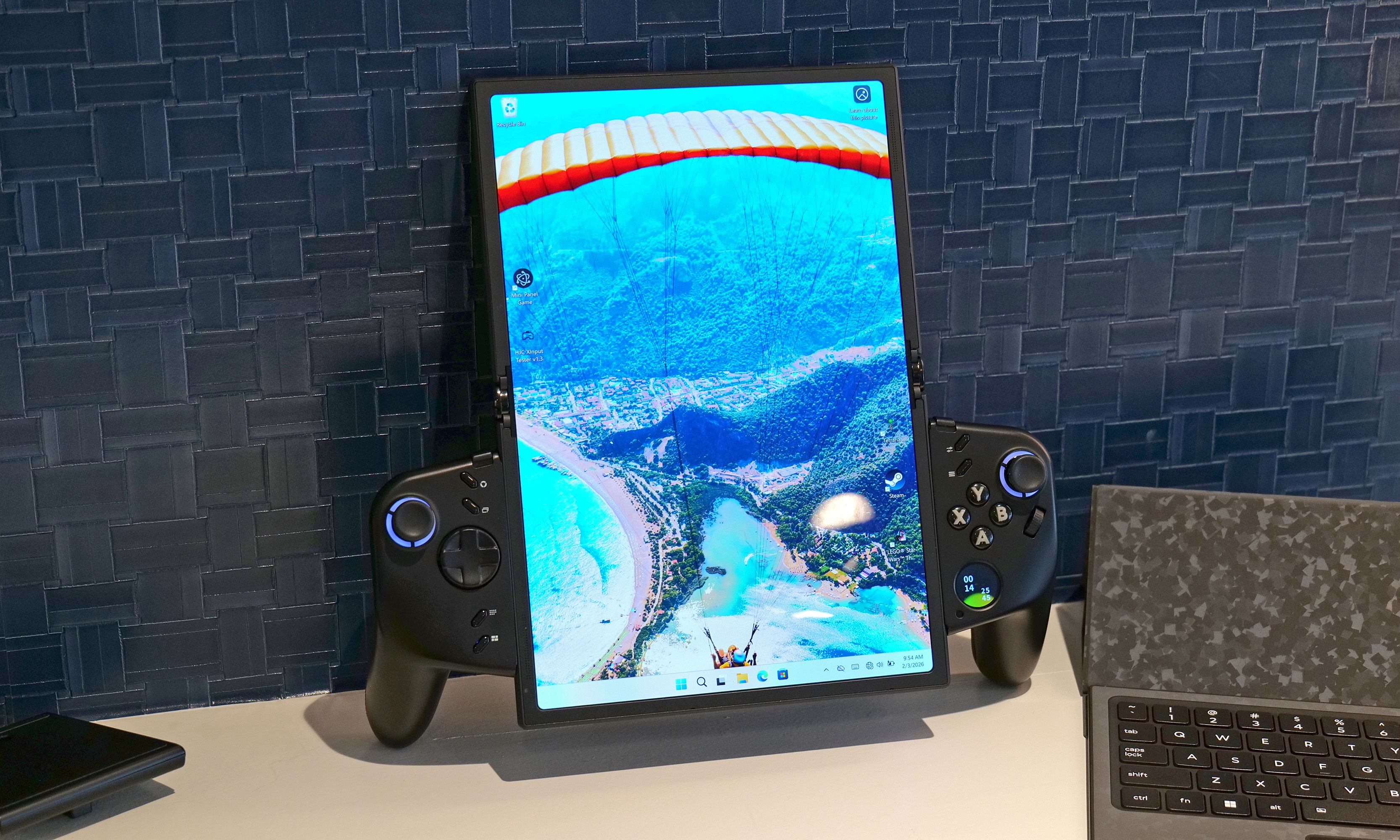
How silly does this look when its flexible display is fully extended in portrait mode?
Sam Rutherford for Engadget
Lenovo pulled up to MWC with a bunch of new products and concepts, but if there's one thing everyone's going to be talking about, it's the Legion Go Fold. (Check out Sam Rutherford's coverage of the Legion Go Fold here). In short, the Legion Go Fold is a concept foldable gaming handheld with a flexible display that can unfurl to a massive 11.6 inches. Or, it can be folded in half to become a 7.7-inch display. It has detachable controllers, and there are multiple mounting points along the tablet so you can switch things up between landscape and portrait mode. The left and right gamepads can also be combined into one controller with an accessory, and the display can be propped up kickstand-style with the folio cover.
You think we're done here? We're not. The Legion Go Fold can go laptop mode too, with a strip of pogo pins where a wireless keyboard can be connected. Its right gamepad can serve as a mouse, thanks to the inclusion of a little scroll wheel and a hidden sensor. That gamepad also features a tiny circular OLED display below the buttons, which can both show widgets such as the time and be used as a touchpad.
It is a concept, though, so don't get your hopes up too much about this one going into production. And if it does ever become a real, buyable product, it'll no doubt be expensive.
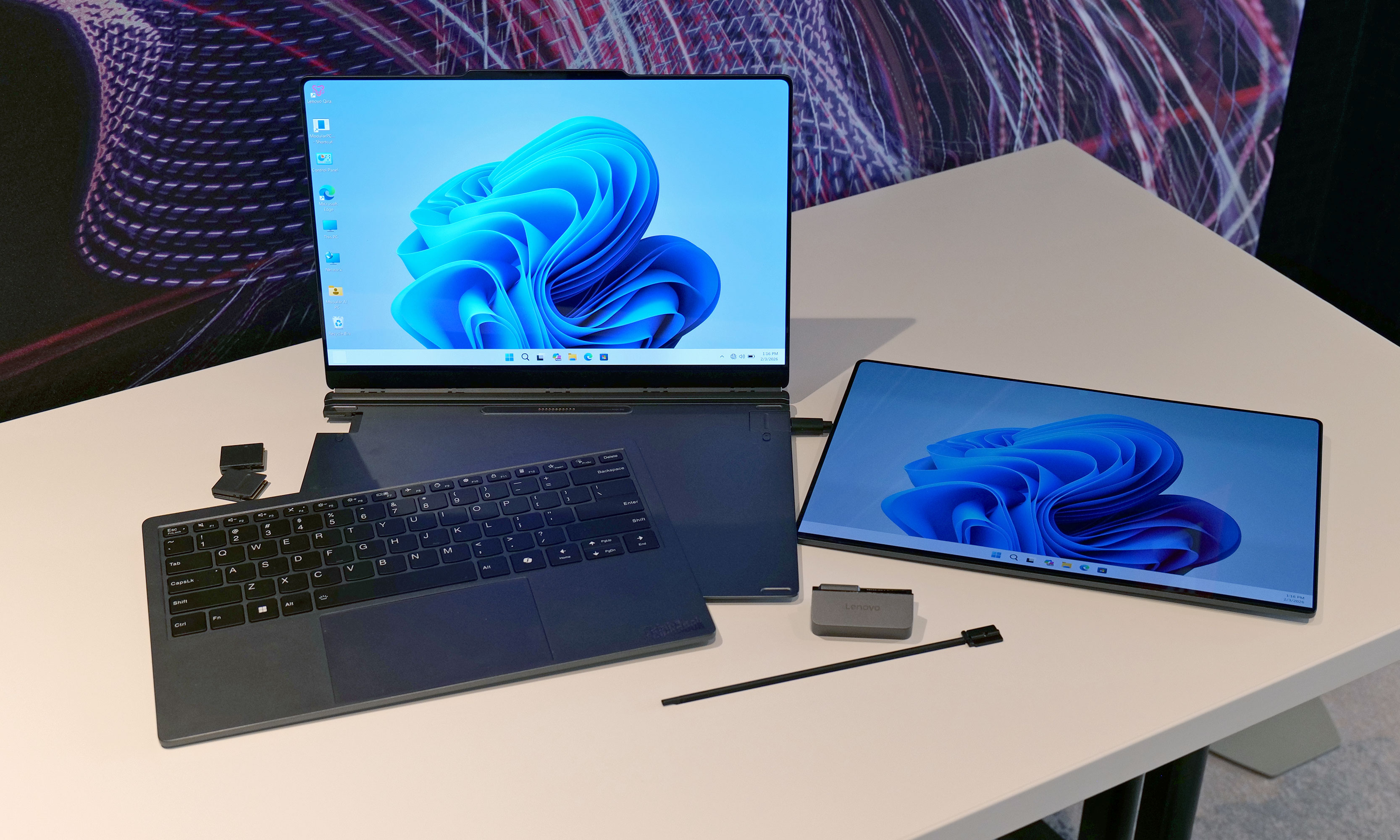
The Lenovo Modular AI PC concept is an ambitious mashup between a traditional clamshell and a dual-screen notebook with hot swappable ports.
Sam Rutherford for Engadget
Lenovo also announced its Modular AI PC concept — a laptop with two displays and a detachable keyboard. As Sam Rutherford, who got a chance to check it out in person, explained, "This allows you to move its keyboard and secondary display around at will, so the system can better adjust to its environment or workload." Perhaps even more exciting is that it has hot swappable ports. Lenovo demonstrated it with USB-C, USB-A and HDMI connectors, but said others could be possible too.
Still, while everything looked pretty polished in the demo, Lenovo says this one will remain a concept.
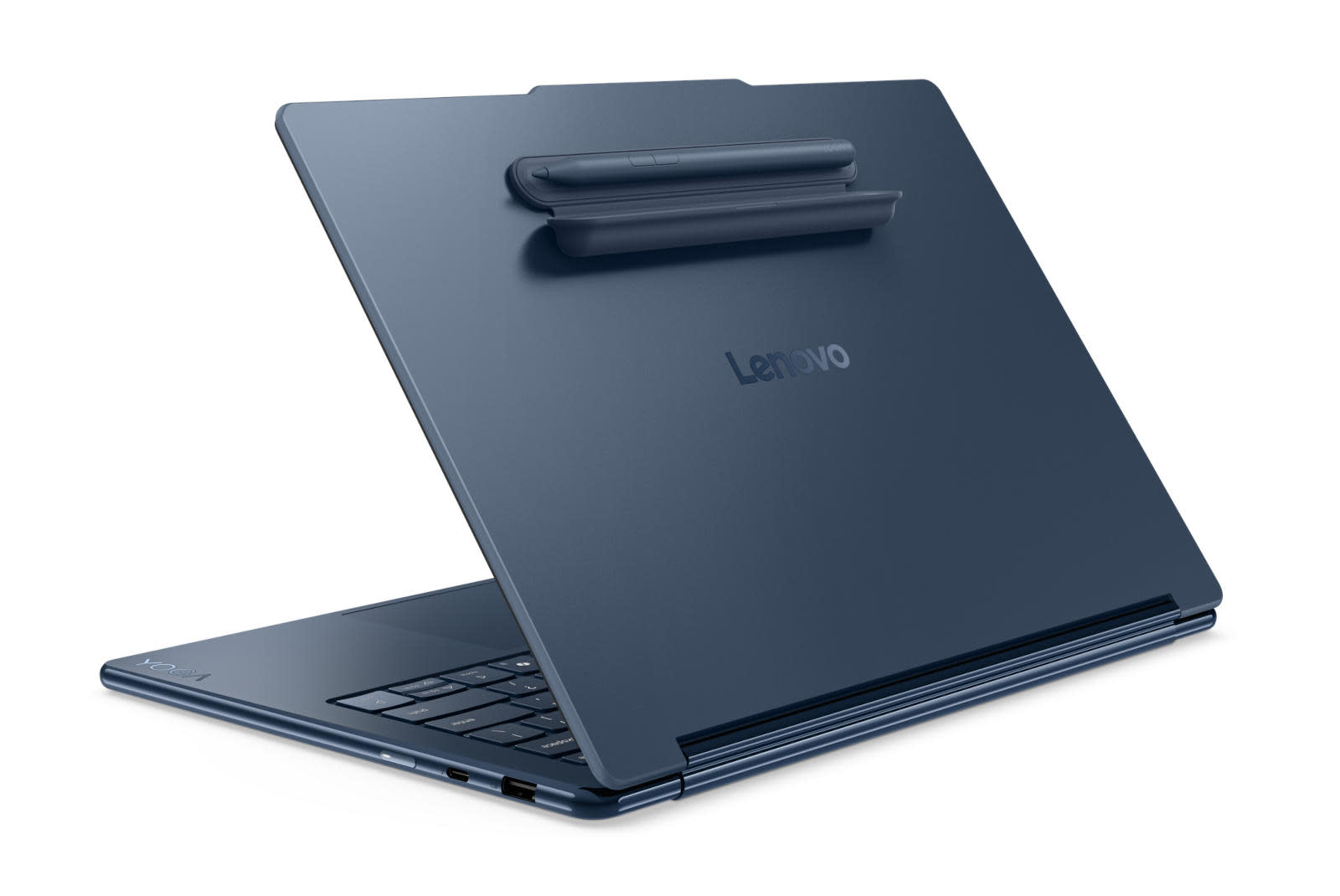
The Lenovo Yoga 9i 2-in-1 Aura Edition Gen 11
Lenovo
It hasn't all been concepts at MWC. Lenovo also refreshed some of its existing tablet and laptop lineups for 2026. The company introduced the Yoga 9i 2-in-1 Aura Edition Gen 11 (with the new Canvas Mode configuration), starting at $1,949, and the new 15.3-inch Yoga Pro 7a, which starts at $2,099. It's updated its more affordable IdeaPad Slim 5i Ultra laptop ($799) as well. All of those new laptops come with Copilot+ features. For students, Lenovo is launching the 13-inch Idea Tab Pro Gen 2, starting at $419, with its Quira AI assistant and AI tools. You can find all the specs and release dates for those here.
Upgrades are here for Lenovo's ThinkPads too, along with the Yoga-like ThinkBook 2-in-1. And, Lenovo announced a $499 industrial tablet, the ThinkPad X11.
Lenovo's 8.8-inch gaming tablet is getting a spec boost with the latest version announced at MWC 2026, the $849 Legion Tab Gen 5. The tablet has a Snapdragon 8 Gen 5 chipset, 16GB of RAM and up to 512GB storage. It also has a 9,000mAh battery to support longer gaming sessions, and two USB-C ports. The Legion Tab Gen 5 comes in three colors: Eclipse Black, Glacier White and the lime-green Surge. It launches in May. That'll be followed shortly after in July by the launch of the new 15-inch Legion 7a Gen 11 gaming laptop, starting at $2,299.
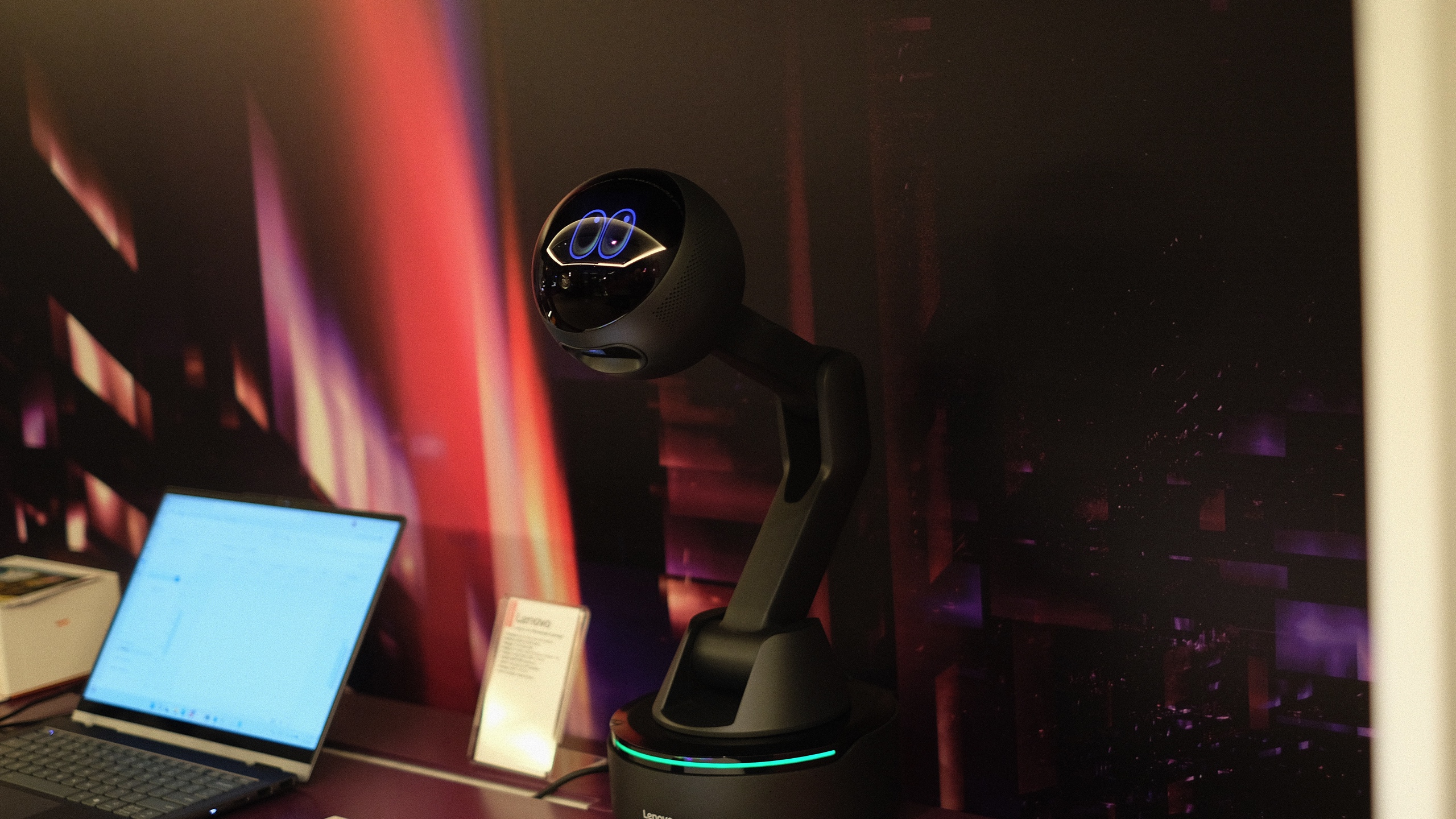
Lenovo AI Workmate Concept at MWC 2026
Image by Mat Smith for Engadget
And we're back to the concepts. Lenovo showed off two work-oriented AI devices: the AI Workmate Concept, a desktop robot, and the AI Work Companion Concept, a clock/display that can sync tasks across devices and organize them into a daily plan. The robot has a cute little face, and its head doubles as a projector that can display images and documents on nearby surfaces.
Honor
The Robot Phone. (Image by Mat Smith for Engadget)
Honor teased its Robot Phone this past fall and we just finally got a proper look at it at MWC. And it's pretty freakin' cute. The phone is equipped with a camera that's mounted on a highly mobile 4-degrees-of-freedom gimbal, which tucks away into a compartment on the back when it's not in use (making for a pretty beefy camera bump). In a demo at MWC, the camera, which behaves like a little robot head, bobbed along to music and showed off some of its gesture skills, like cocking its “head” and nodding in agreement.
Honor didn't reveal too much spec-wise, but the company says the primary camera uses a 200-megapixel sensor. The gimbal will offer three-axis stabilization, which will be coupled with camera modes such as Super Steady Video and AI Object Tracking. The Robot Phone isn't quite ready for release at the moment, but the company says it will launch later this year.
Be sure to check out Mat Smith's writeup on the Robot Phone for a more in-depth look.
Honor's humanoid robot. (Image by Mat Smith for Engadget)
Image by Mat Smith
It's not a humanoid robot reveal without some backflips and a choreographed dance performance. Honor introduced its robot at MWC with all the spectacle we've come to expect (though the bot didn't do any talking). It’s simply called the Honor Robot, and the company has plans for it to be used in both industrial and domestic settings.
Honor Magic V6 (Honor)
The Robot Phone isn't the only phone Honor showed off at MWC. The company also announced its Magic V6 smartphone, which it says is the thinnest phone in its category, measuring 8.75mm folded and 4.0mm open in the white colorway. The other three colors — black, gold and red — are slightly thicker, at 9mm folded and 4.1mm open.
Not too much has changed from the V5, though, which only came out in August 2025. It does however have the Snapdragon 8 Elite Gen 5, with 16GB RAM and 512 GB storage. As for the cameras, there are two 50-megapixel lenses and a 64-megapixel telephoto, plus a 20-megapixel f/2.2 selfie lens on the cover and internal display.
The international version of the Magic V6 will have a 6,660mAh battery with 25 percent silicon content, while the version sold only in China will boast a battery with a rated capacity of more than 7,000mAh and 32 percent silicon content. Honor hasn't yet shared details about pricing and availability.
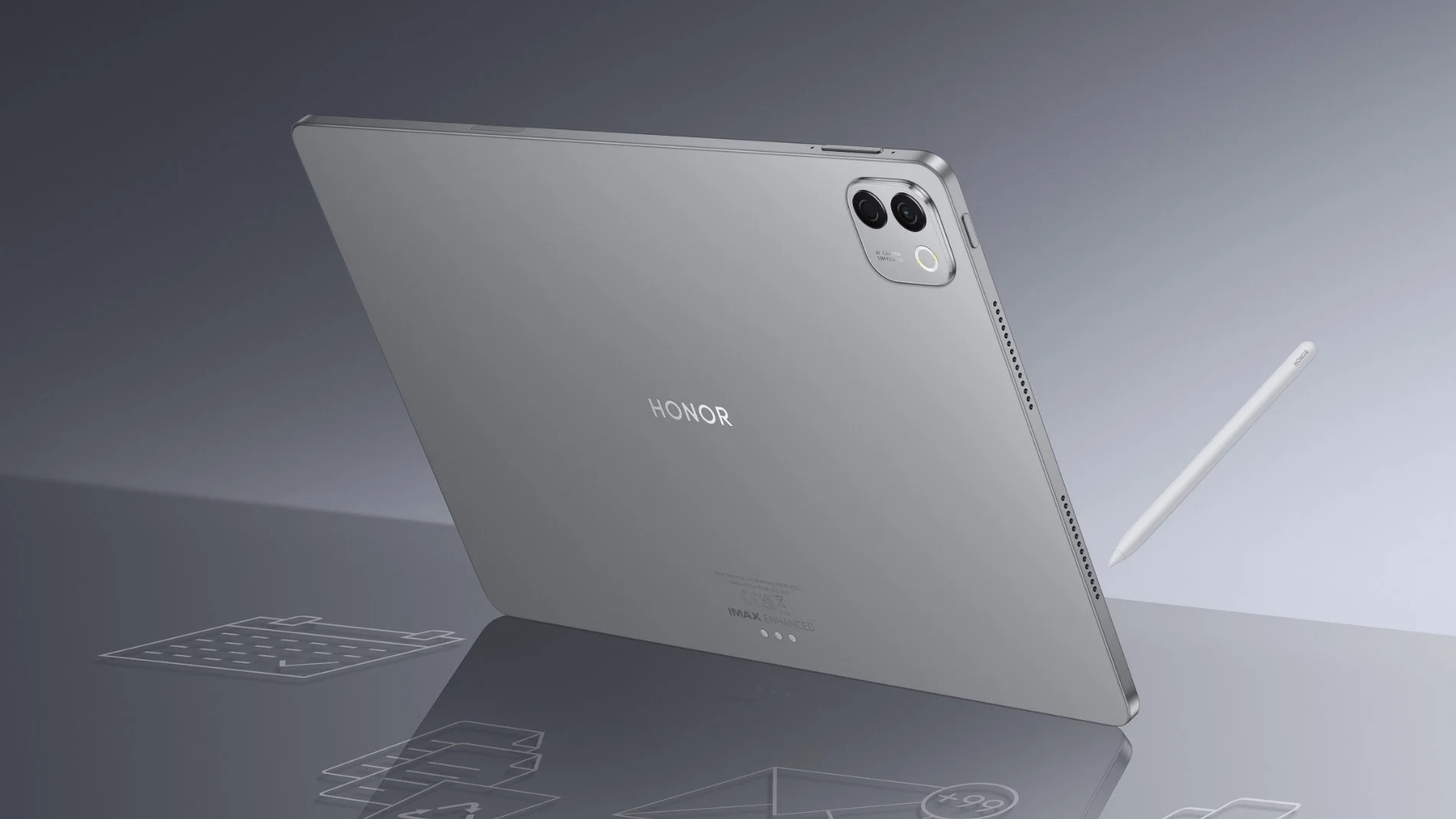
Honor MagicPad
Honor
Ahead of MWC, Honor also announced what it claims is the thinnest Android tablet in the world: the 4.8mm thick MagicPad 4. We're expecting to hear more about this at Honor's press conference on Sunday, but so far we know it features a 12.3-inch 165Hz OLED display and weighs just 450g. It comes with up to 16GB of RAM and 512GB of storage, and is powered by Qualcomm's Snapdragon 8 Gen 5 chipset. The thinness doesn't count the camera bump, Honor notes. The MagicPad 4 has 13MP rear and 9MP front cameras. It also boasts spatial audio, with eight speakers.
Just as the display is slightly smaller than the previous MagicPad, the MagicPad 4 has a smaller battery at 10,100 mAh. It comes with a 66W fast charger. The MagicPad 4 will run Honor's MagicOS 10. We don't yet know how much it will cost, but we'll update this after Honor's press conference (where we're also expecting to see the company's robot) with any new details.
Xiaomi x Leica
Mat Smith for Engadget
Xiaomi kicked off MWC this year by announcing the global launch of its 17 Ultra smartphone, which debuted first in China back in December. It's unclear if the phone will ever come to the US, but it's now rolling out in Europe. Xiaomi teamed up again with Leica to make a photography-focused smartphone, and the 17 Ultra sports a 1-inch 50-megapixel camera sensor with a f/1.67 lens, a telephoto setup with a 200MP 1/1.4-inch sensor, and a 50MP ultrawide camera. There's also a manual zoom ring around the camera.
Check out our hands on for our first impressions of what it's like shooting with the Xiaomi 17 Ultra. And there's more to it than just the camera. The 17 Ultra has a 6.9-inch OLED 120 Hz display that peaks at 3,500 nits of brightness, and a 6,000mAh silicon-carbon battery. The Xiaomi 17 Ultra starts at £1,299 (roughly $1,750).
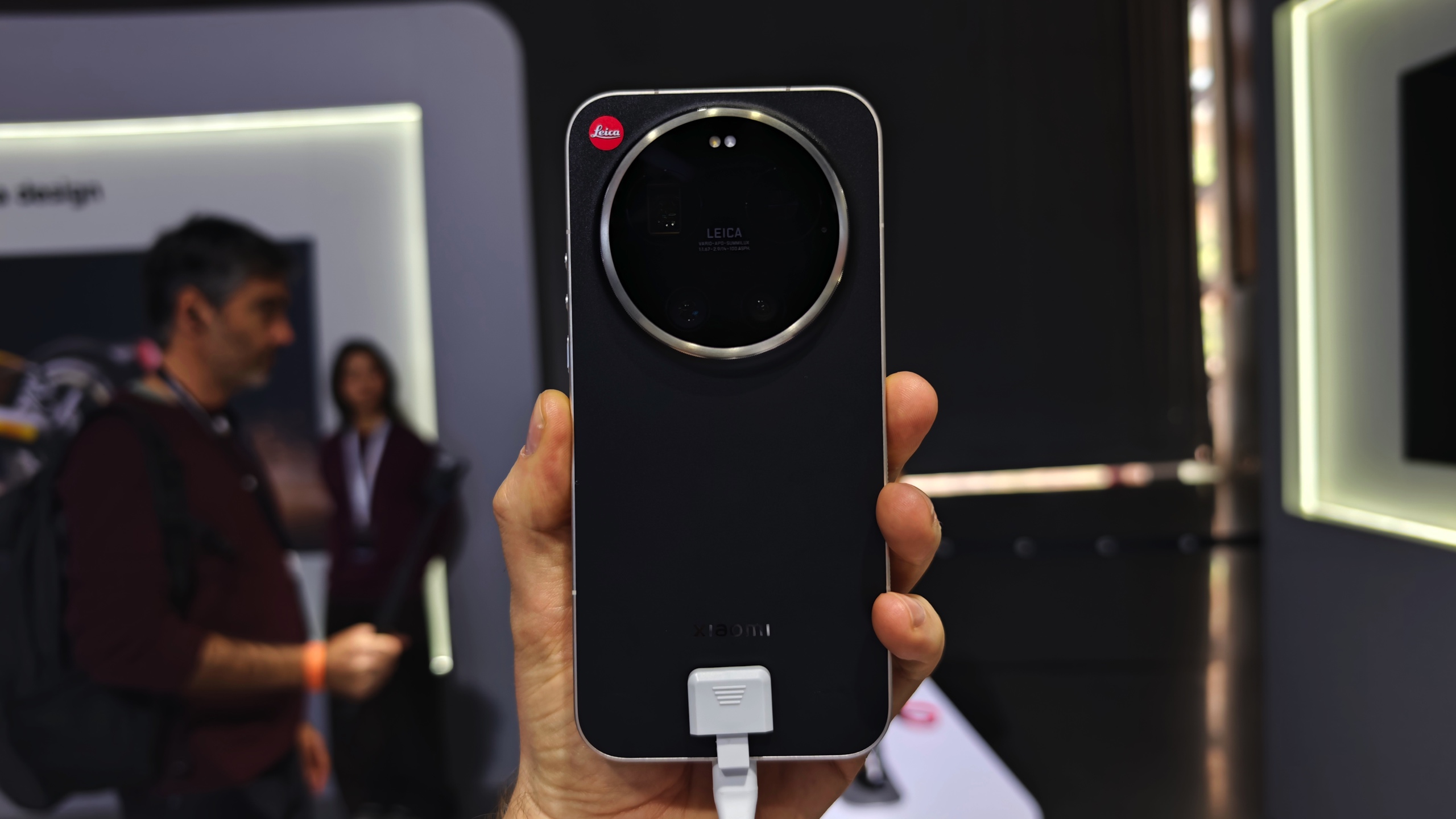
Leica also announced a new phone made in partnership with Xiaomi at MWC. It looks a whole lot like Xiaomi's 17 Ultra, but isn't the 17 Ultra, exactly.
Leica Leitzphone by Xiaomi hands-on at MWC 2026
Image by Mat Smith for Engadget
Like the 17 Ultra, Leica's Leitzphone by Xiaomi has a 1-inch camera sensor and physical controls for zoom and other settings, using a mechanical ring around the camera unit. It features a Leica-designed intuitive camera interface with the option to show just the essentials when you're shooting, hiding all the modes and labels. There's a monochrome shooting mode and Leica filters.
The Leica branding is splashed all over it in design and wallpapers, but it's otherwise pretty similar to the 17 Ultra, with the same specs. Like the 17 Ultra, it has a Snapdragon 8 Elite Gen 5 chip and a 6.9-inch 120Hz display. This one's priced at €1,999 (roughly $2,362).
The Xiaomi Pad 8 Pro
Xiaomi
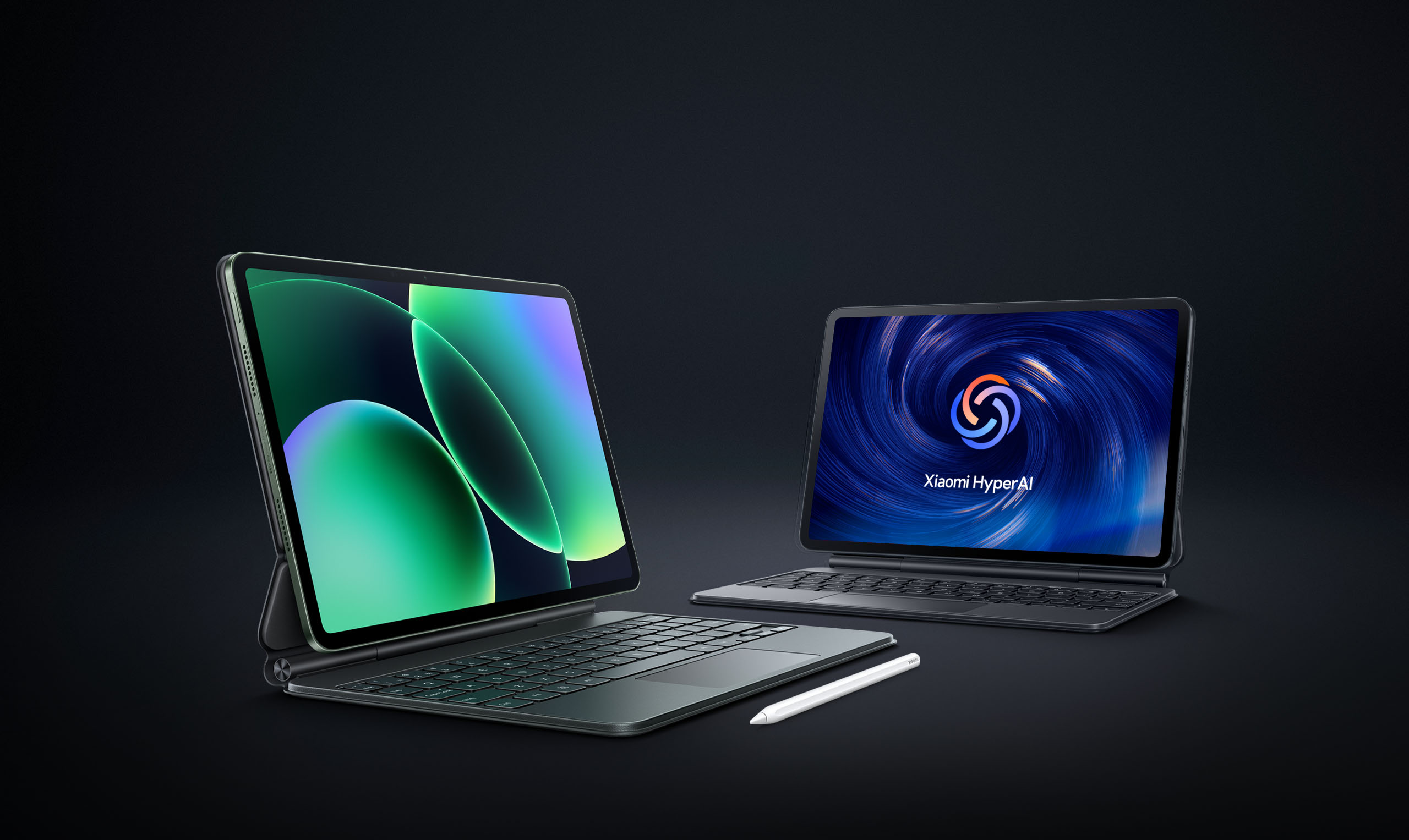
In addition to the 17 Ultra, Xiaomi announced two new tablets at MWC this year: the Xiaomi Pad 8 and Xiaomi Pad 8 Pro. There's nothing revolutionary here, but they're lightweight and thin, with both being 5.75mm thick and weighing 485g, and have a 9,200mAh battery. The Pro model is powered by a Snapdragon 8 Elite chip, while the regular Pad 8 uses the Snapdragon 8s Gen 4 chipset.
Xiaomi also unveiled a new 5,000mAh powerbank, the UltraThin Magnetic Power Bank 5000 15W. The 6mm thick power bank comes in three colors with an aluminum alloy shell: orange, silver and charcoal gray. Along with that, the company introduced the Xiaomi Tag, its own take on the Bluetooth item tracker. The Xiaomi Tag has a built-in hanging loop so it can be attached directly to a keyring, and the company says it will work with both Apple Find My and Google's Find Hub for Android.
Tecno
Tecno
We can always expect to see some wild phone concepts at MWC, and this year we're starting with one from Tecno. The company unveiled a modular concept smartphone design that can be as thin as 4.9mm in its base configuration. There’d be 10 modules to choose from based on the announcement, including various camera lenses, a gaming attachment and a power bank, relying on magnets to keep it all together — or Modular Magnetic Interconnection Technology, as Tecno is calling it.
This article originally appeared on Engadget at https://www.engadget.com/mobile/everything-announced-at-mwc-2026-lenovos-wild-foldable-gaming-handheld-honors-robot-phone-and-more-172442814.html?src=rss
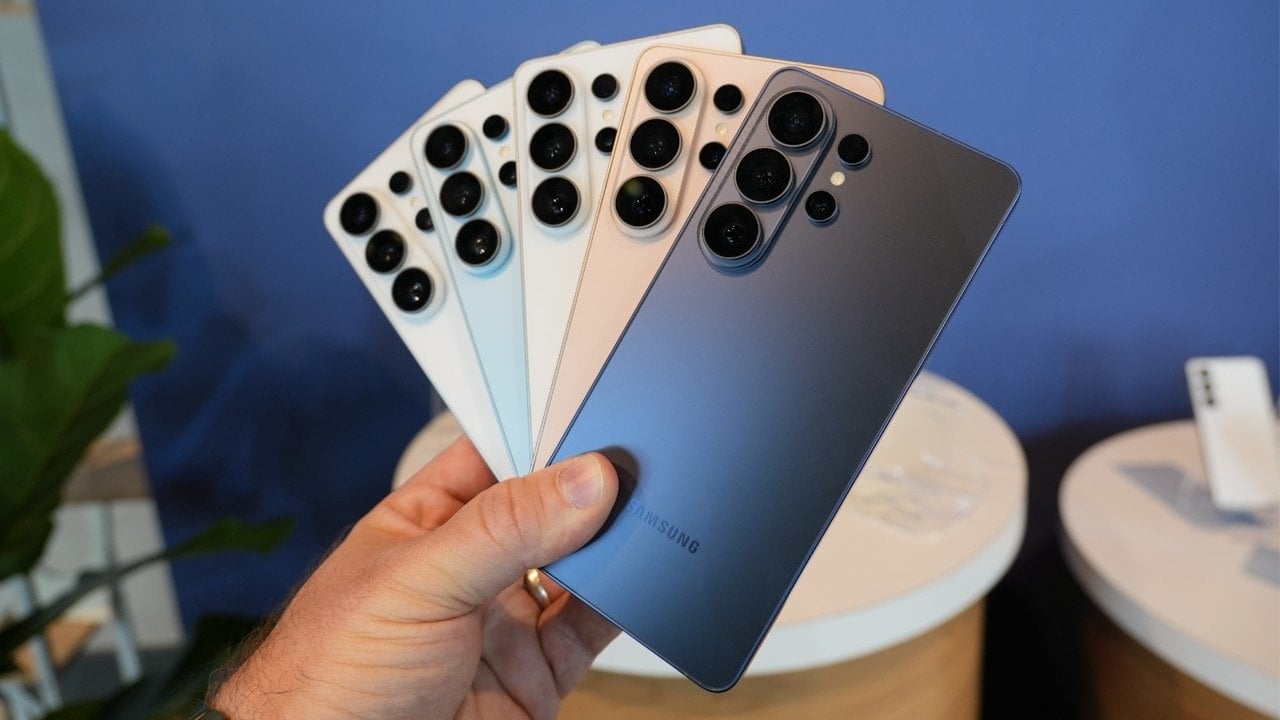
The Samsung Galaxy S26 Ultra marks a pivotal advancement in smartphone technology, seamlessly integrating innovative hardware with intelligent software to deliver an unparalleled user experience. With significant upgrades in performance, camera innovation, and AI-driven tools, this flagship device sets a benchmark for modern smartphones, catering to a wide range of user needs. The video below […]