At 9.6 Metres, the Cabarita Might Be the Most Livable Tiny Home on Wheels

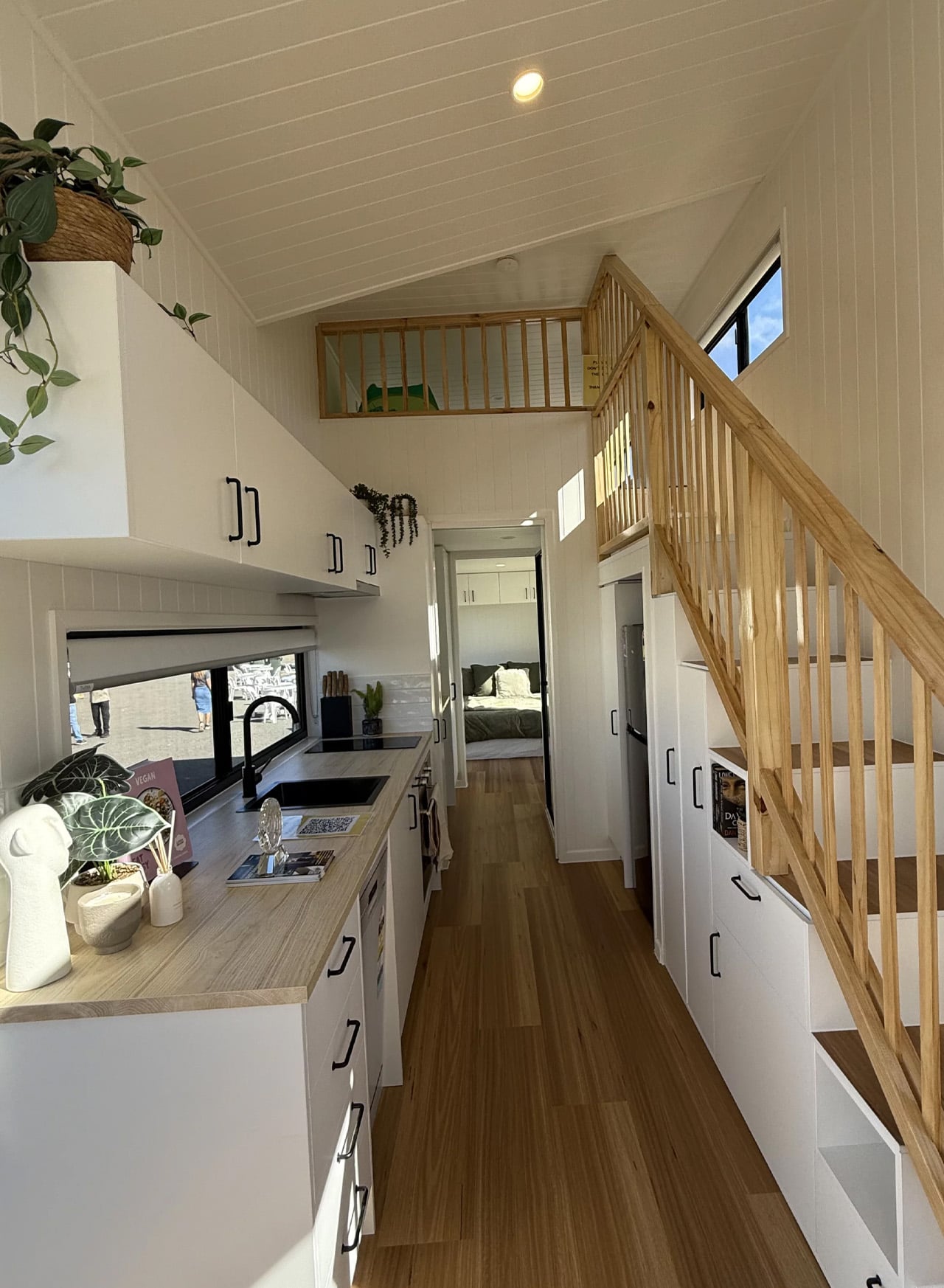
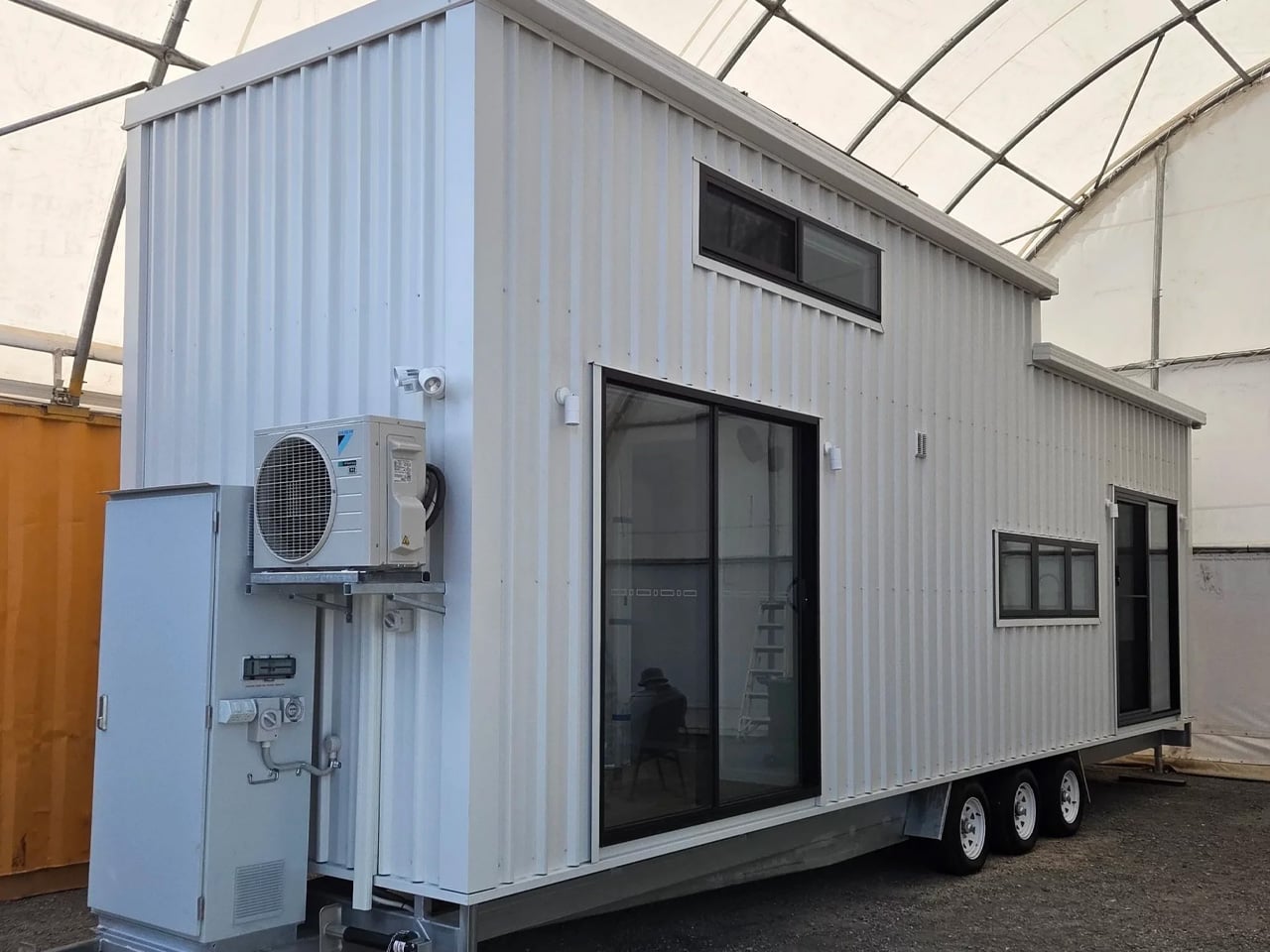
There’s a version of tiny home living that still feels like a proper home — not a camper van with aspirations, not a studio apartment on wheels, but something genuinely livable. The Cabarita by Removed Tiny Homes sits squarely in that category. It’s a two-bedroom towable built on a triple-axle trailer, measuring 9.6 metres long, 2.4 metres wide, and 4.3 metres high, totalling 33 square metres of considered space. The numbers alone don’t tell the story — the layout does.

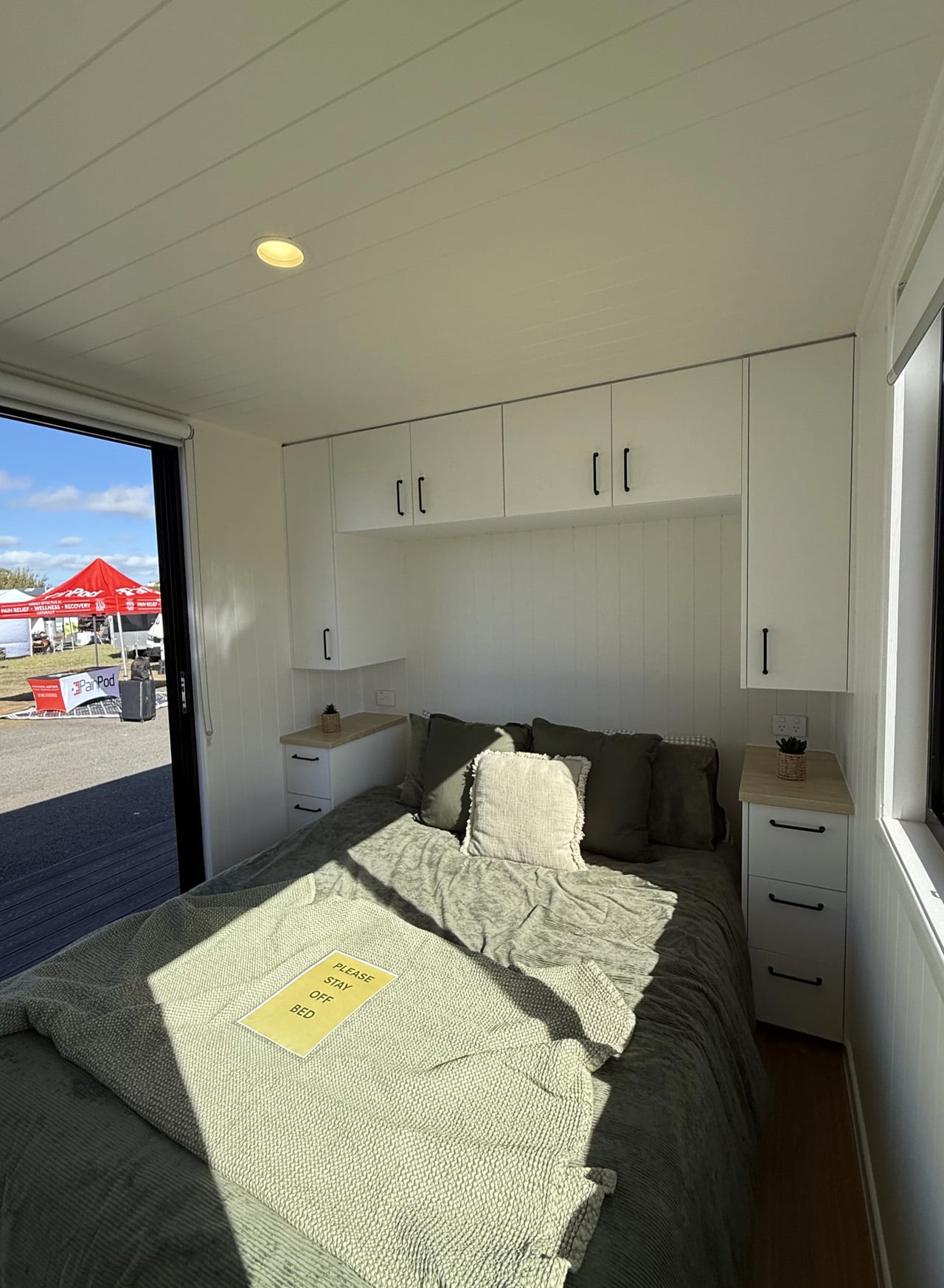
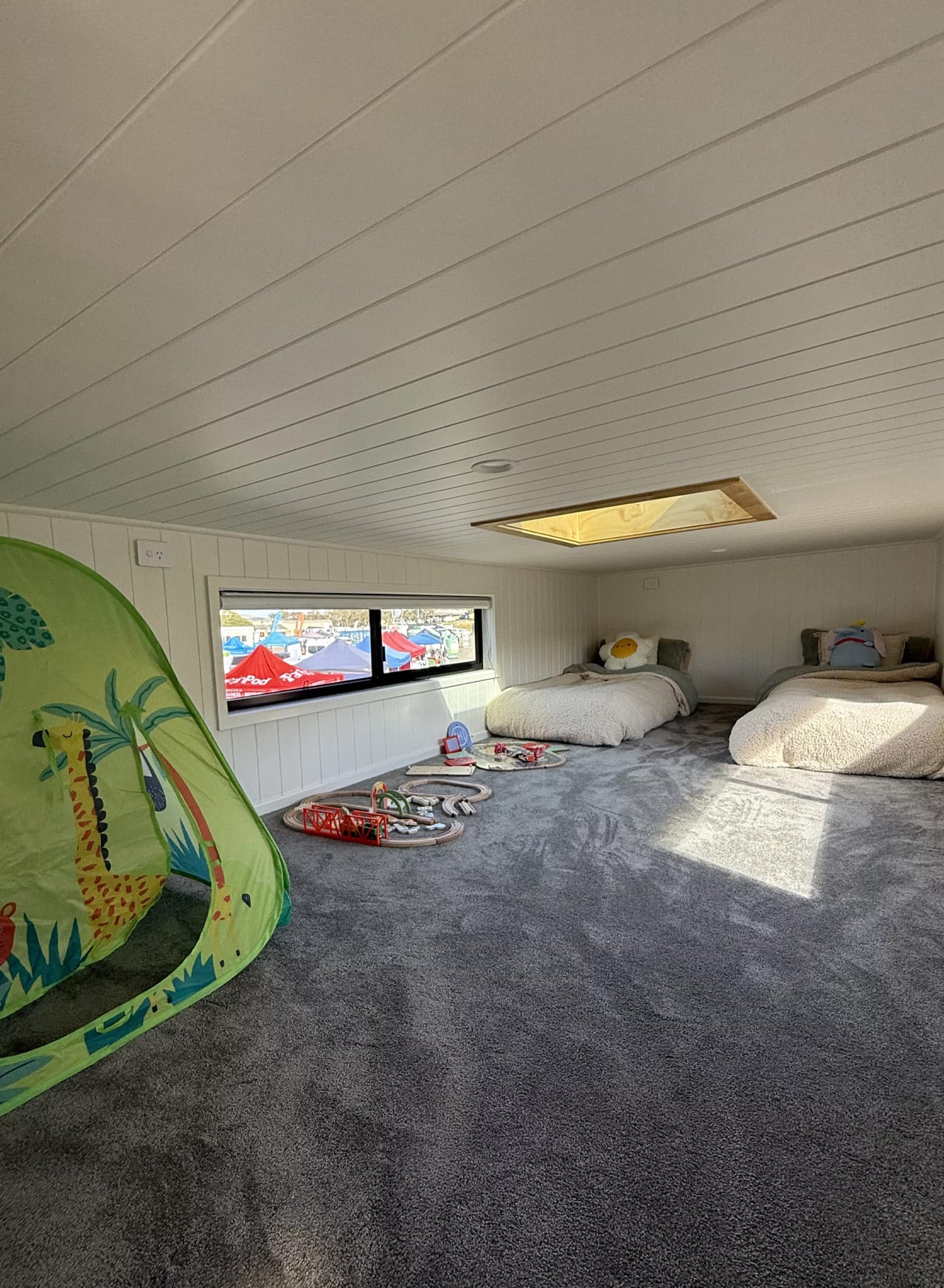
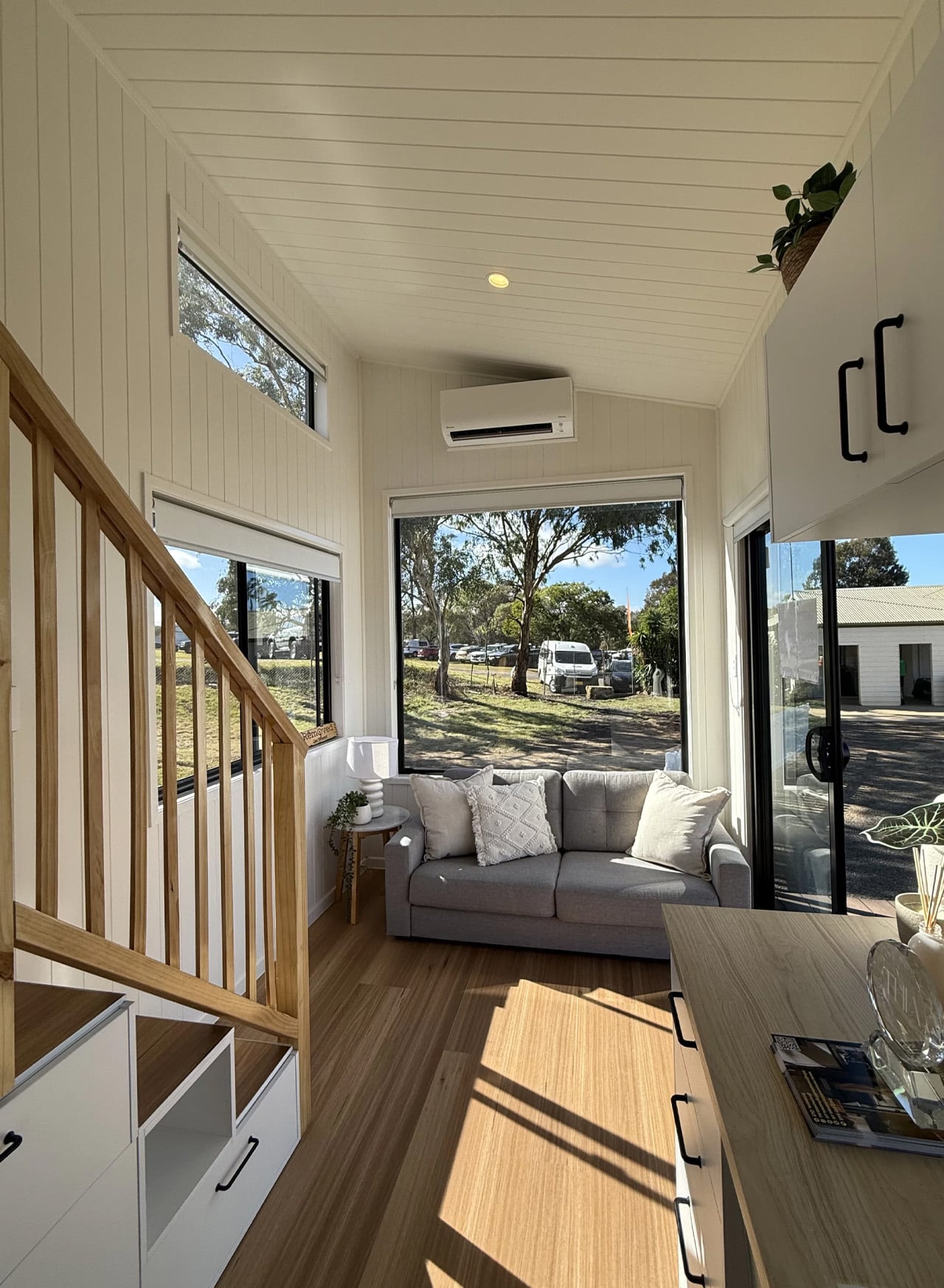
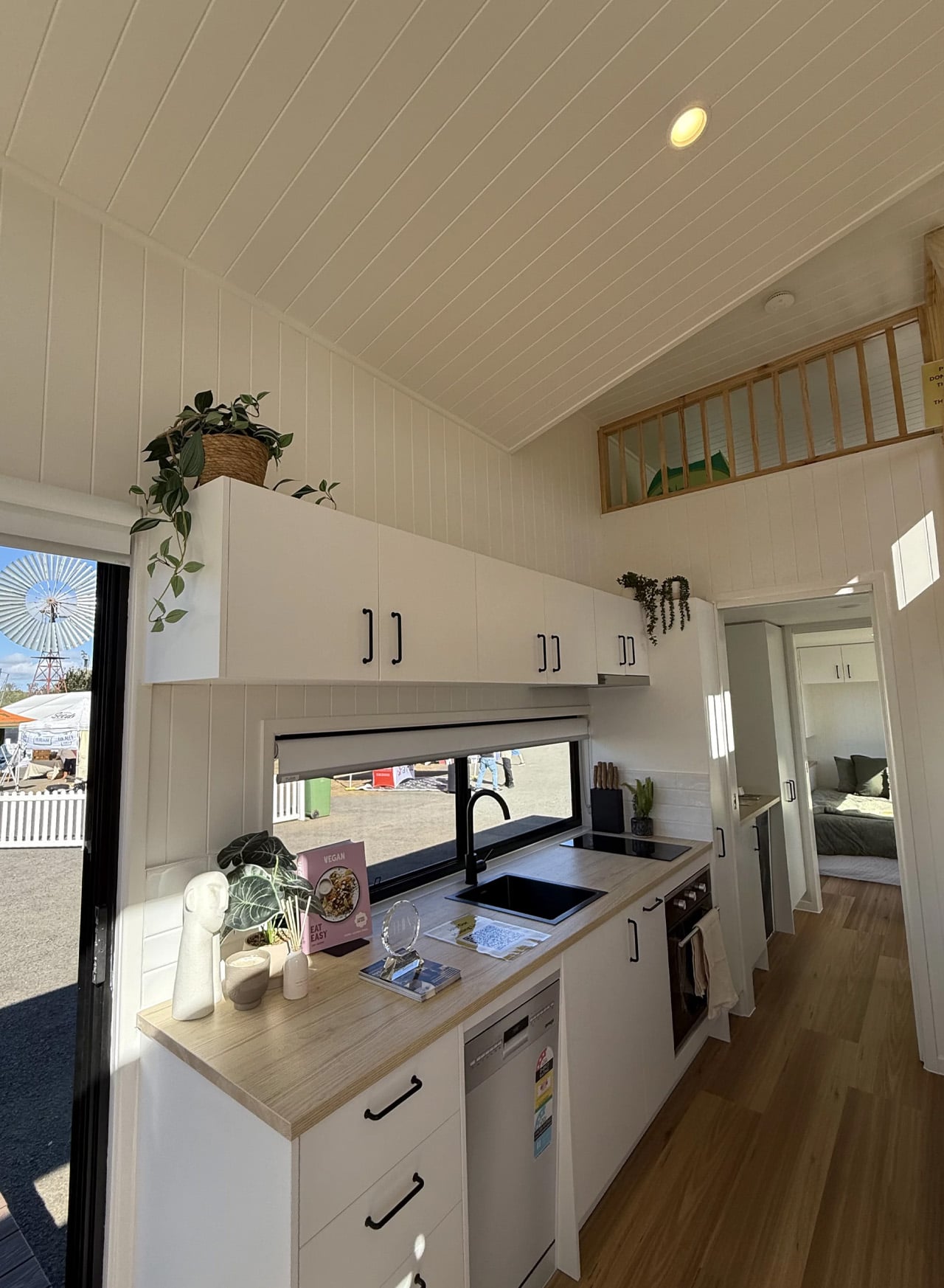
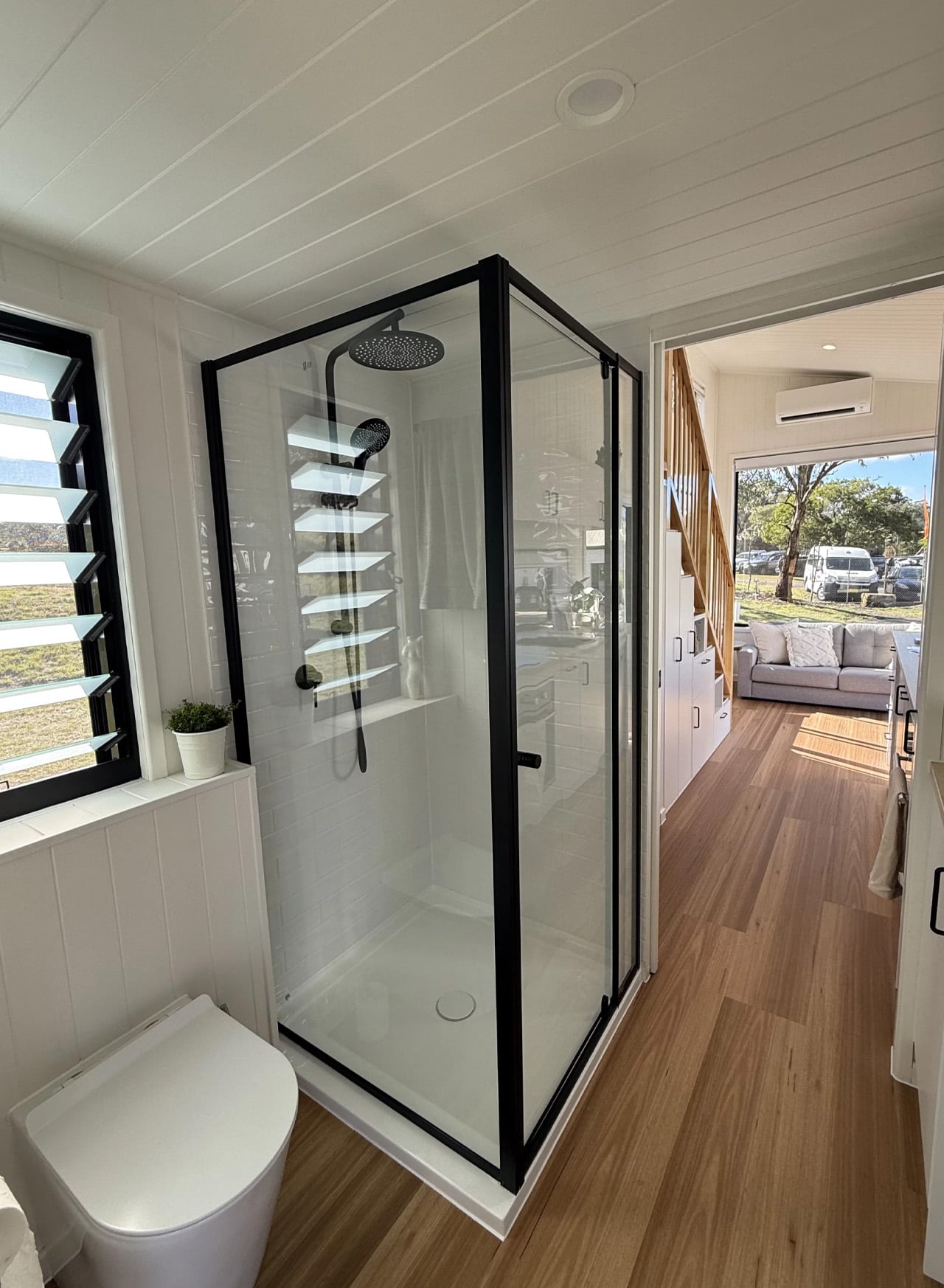
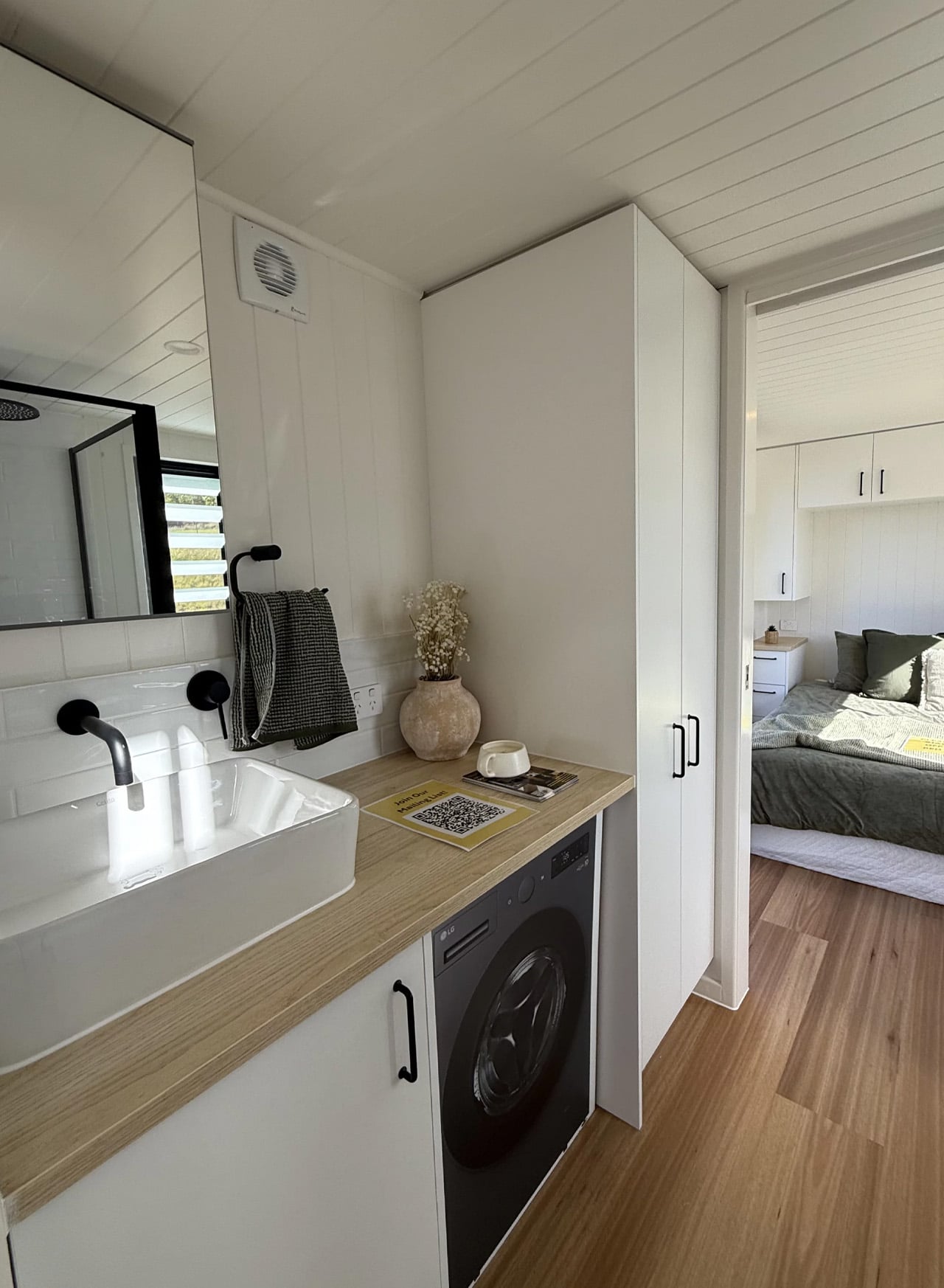
Removed Tiny Homes is a Brisbane-based builder with a straightforward philosophy: tiny living shouldn’t mean compromise. The Cabarita is the clearest expression of that thinking. Downstairs, you get a full bedroom and a bathroom fitted with a glass-enclosed shower, vanity sink, and flushing toilet, plus a separate laundry area with a washer and dryer. The kitchen and living room flow together under a high ceiling with a large picture window that pulls the outside in — a detail that does a lot of heavy lifting in a compact floor plan. Upstairs, a generous loft functions as the second sleeping zone, giving the layout enough separation to actually feel like a two-bedroom home rather than a converted storage space.

Designer: Removed Tiny Homes
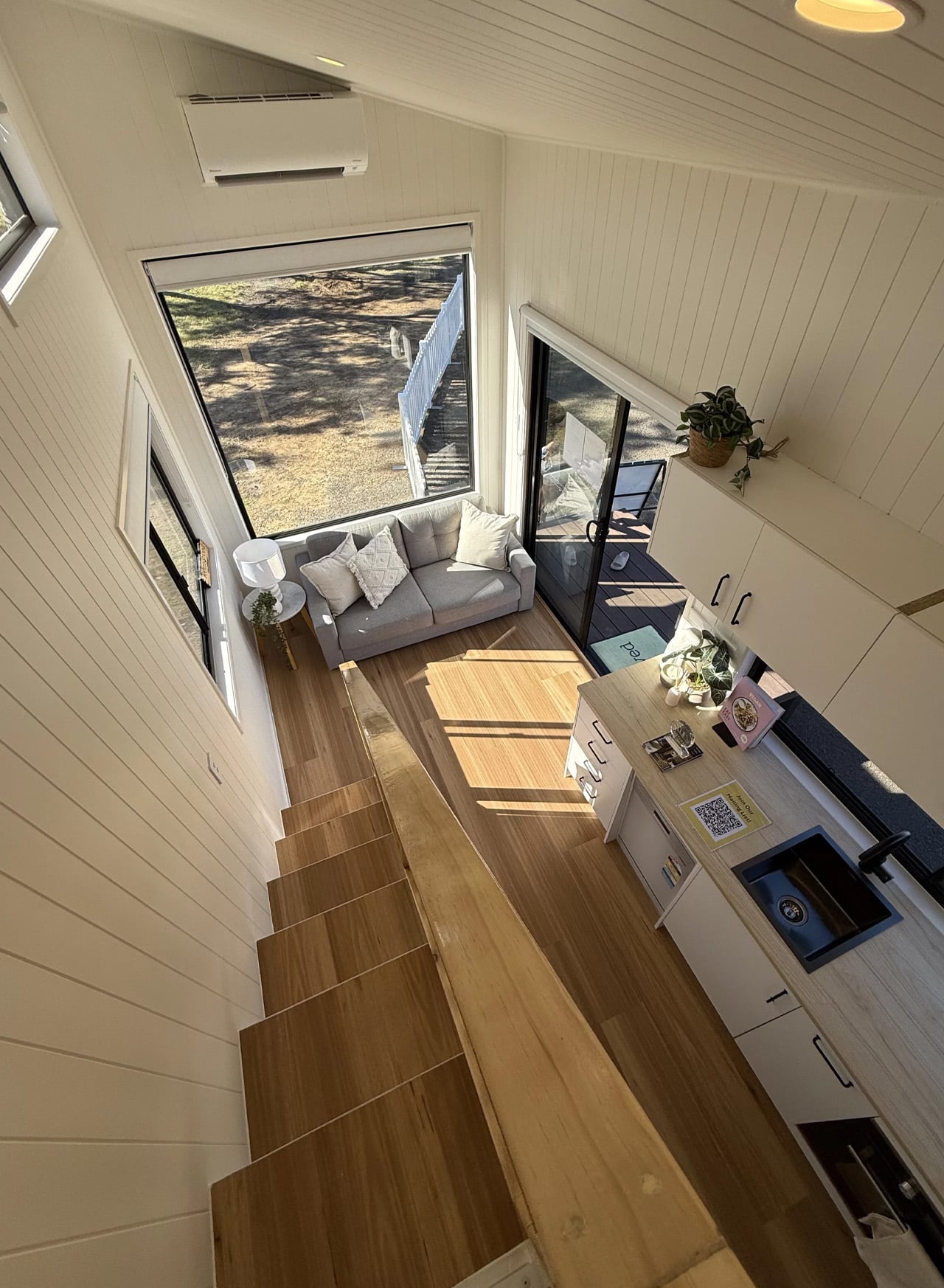
What makes the Cabarita worth paying attention to isn’t just how it looks — it’s how thoroughly it’s been thought through. The standard model includes high-efficiency air conditioning and gas hot water, and for those who want to live off-grid, Removed Tiny Homes offers three upgrade packages: solar power systems, rainwater tanks, and multi-stage water filtration. The trailer dimensions are calibrated so the home can be towed without requiring special permits, which keeps the mobility genuinely practical rather than theoretical.

The design language is unfussy — clean lines, warm timber, natural light prioritised over decoration. Nothing is trying to prove itself. The Cabarita reads as a home for someone who’s done the math on what they actually need versus what they’ve been conditioned to want. At approximately USD $97,800, it’s not cheap in absolute terms, but relative to the property market it was designed as an alternative to, the numbers land differently.
The tiny home space is crowded with concepts that photograph well and compromise everywhere else. The Cabarita isn’t that. It’s a workable, well-proportioned home that happens to be towable — and that distinction matters more than any design trend currently circulating.
The post At 9.6 Metres, the Cabarita Might Be the Most Livable Tiny Home on Wheels first appeared on Yanko Design.

The $4,499 ASUS Gaming Laptop With Two Full Screens Will Make You Question Every Laptop You’ve Owned

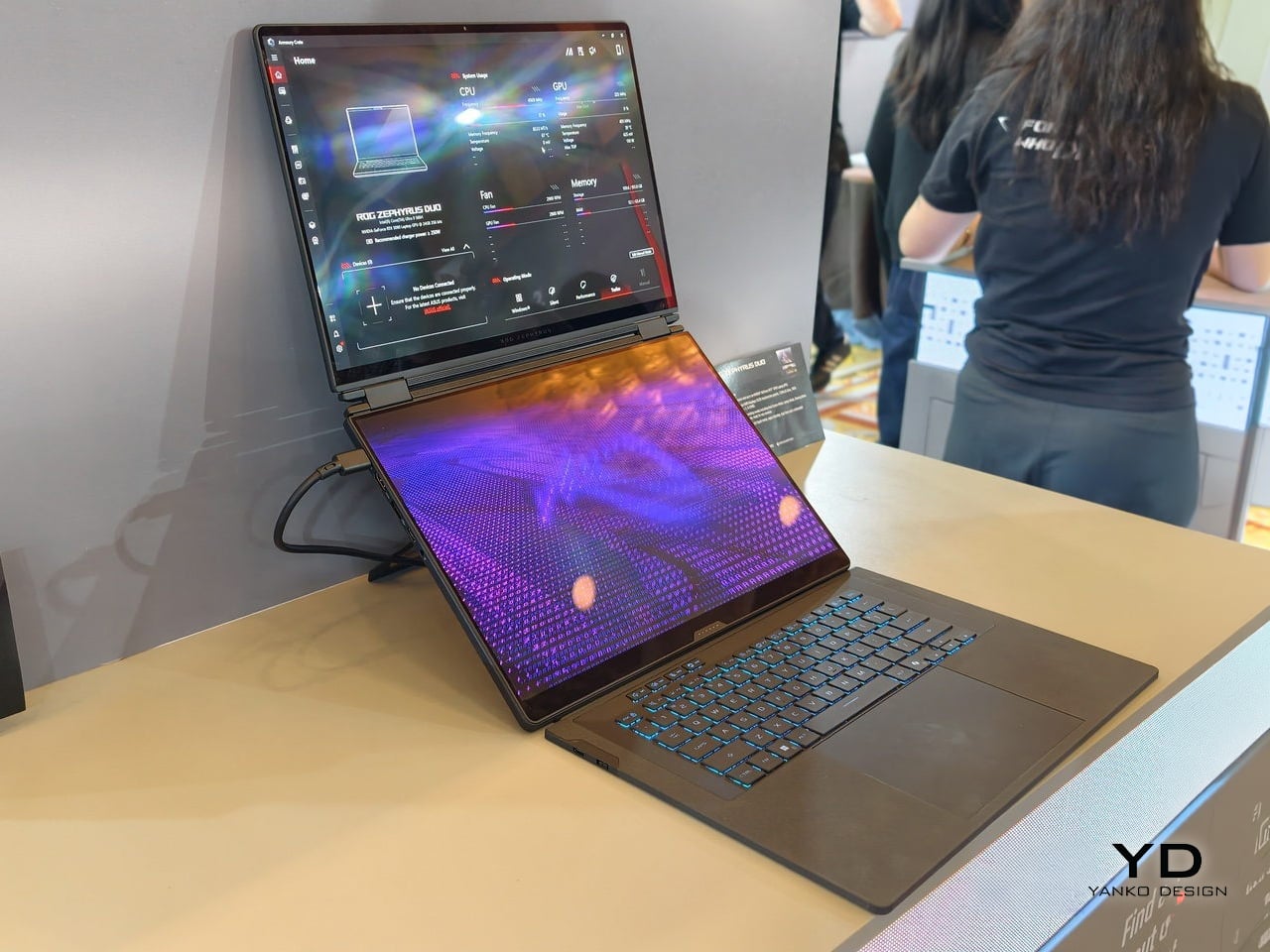
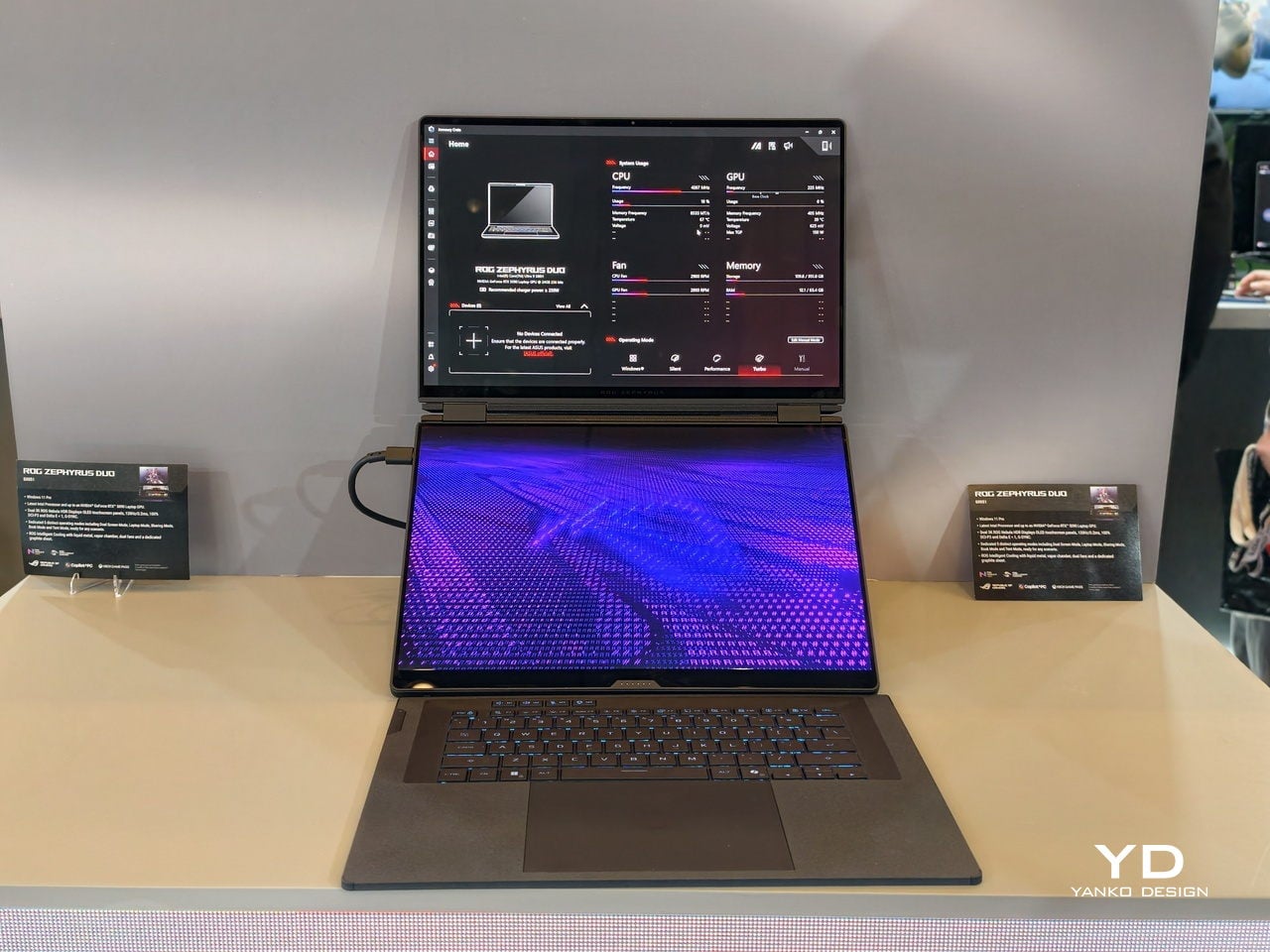
Dual-screen laptops have been ASUS’s long game. The Zenbook Duo spent several years proving that two displays could coexist for productivity users before the form factor felt genuinely mature. The ROG Zephyrus Duo carried that logic into gaming territory, though the 2022 original hedged its bets with a half-sized secondary panel perched above the keyboard. The 2026 GX651, which first appeared at CES earlier this year and got its US pricing confirmed at Computex this week, drops the hedge completely. Two full 16-inch OLED panels, same resolution, same refresh rate, same brightness ceiling.

The base configuration opens at $4,499, and the Computex backdrop gives that number useful framing. Nvidia and Microsoft were teasing ARM-based laptop chips a few booths over, and the rest of the gaming hall was running its annual RTX refresh cycle. None of that noise touched the Duo’s story, because its headline was a chassis decision rather than a silicon one. After six years and three generations, ASUS finally has a dual-screen gaming laptop that leads with the screens and lets everything else follow.

Brand: ASUS ROG

Dual-screen laptop on a showroom table; main keyboard visible and purple-pattern display on the lower screen, upper screen showing software UI.

Matching the displays across both panels is the design decision that signals intent. Both screens deliver 3K resolution at 2880 x 1800 pixels, both run at 120Hz with variable refresh rate support, and both hit 1,100 nits peak brightness in HDR with full DCI-P3 color coverage. The top panel gets G-Sync compatibility because it handles gaming duties, but the bottom screen doesn’t get downgraded to compensate. Previous Zephyrus Duo models gave you a flagship display up top and a secondary utility screen below, a hierarchy that made sense when the bottom panel was physically smaller. The GX651 treats parity as the baseline, which changes the relationship between the two surfaces entirely. One screen runs your game, the other runs Discord, Spotify, streaming software, browser tabs, whatever parallel workflow gaming actually requires in 2026.

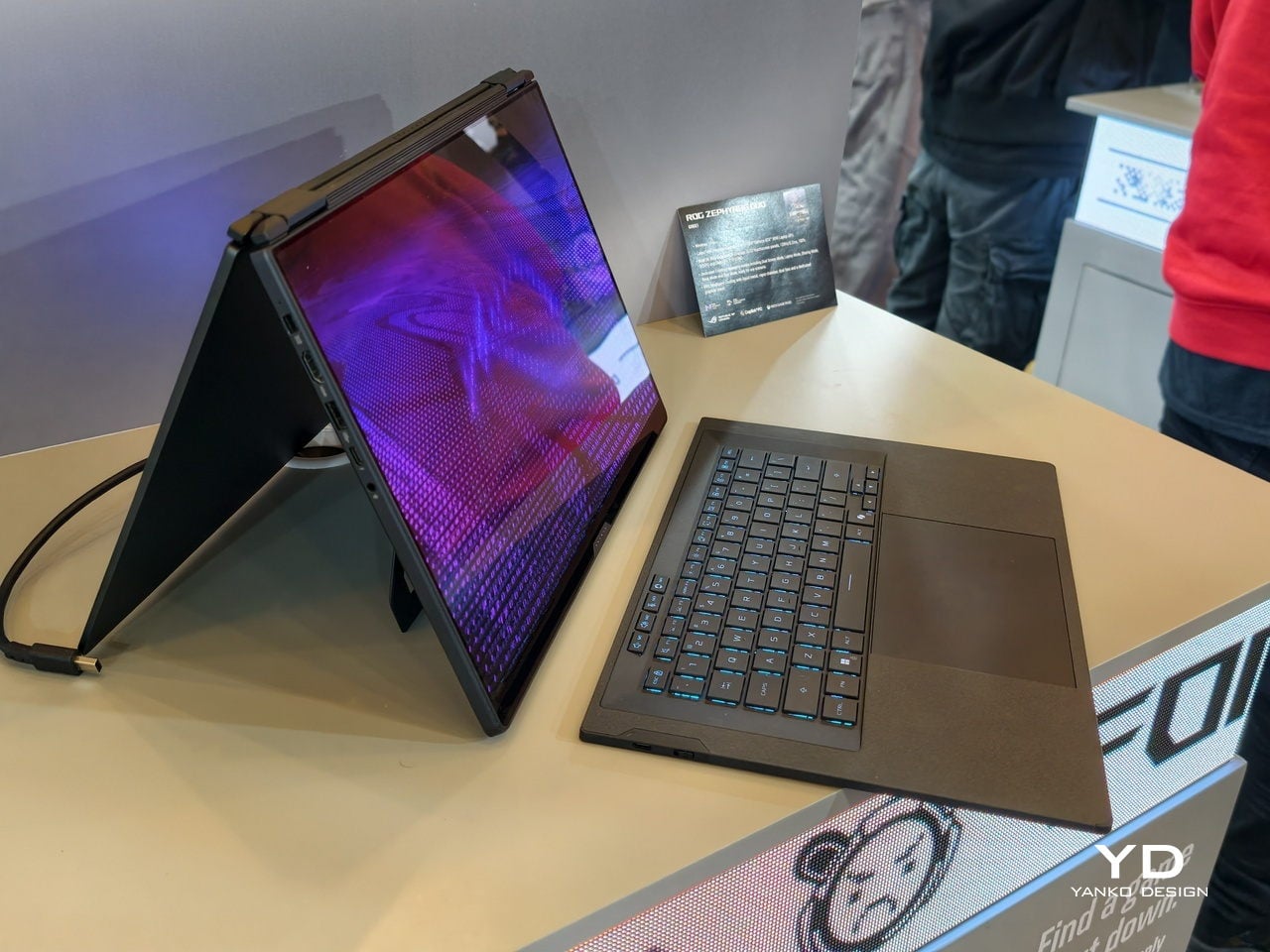
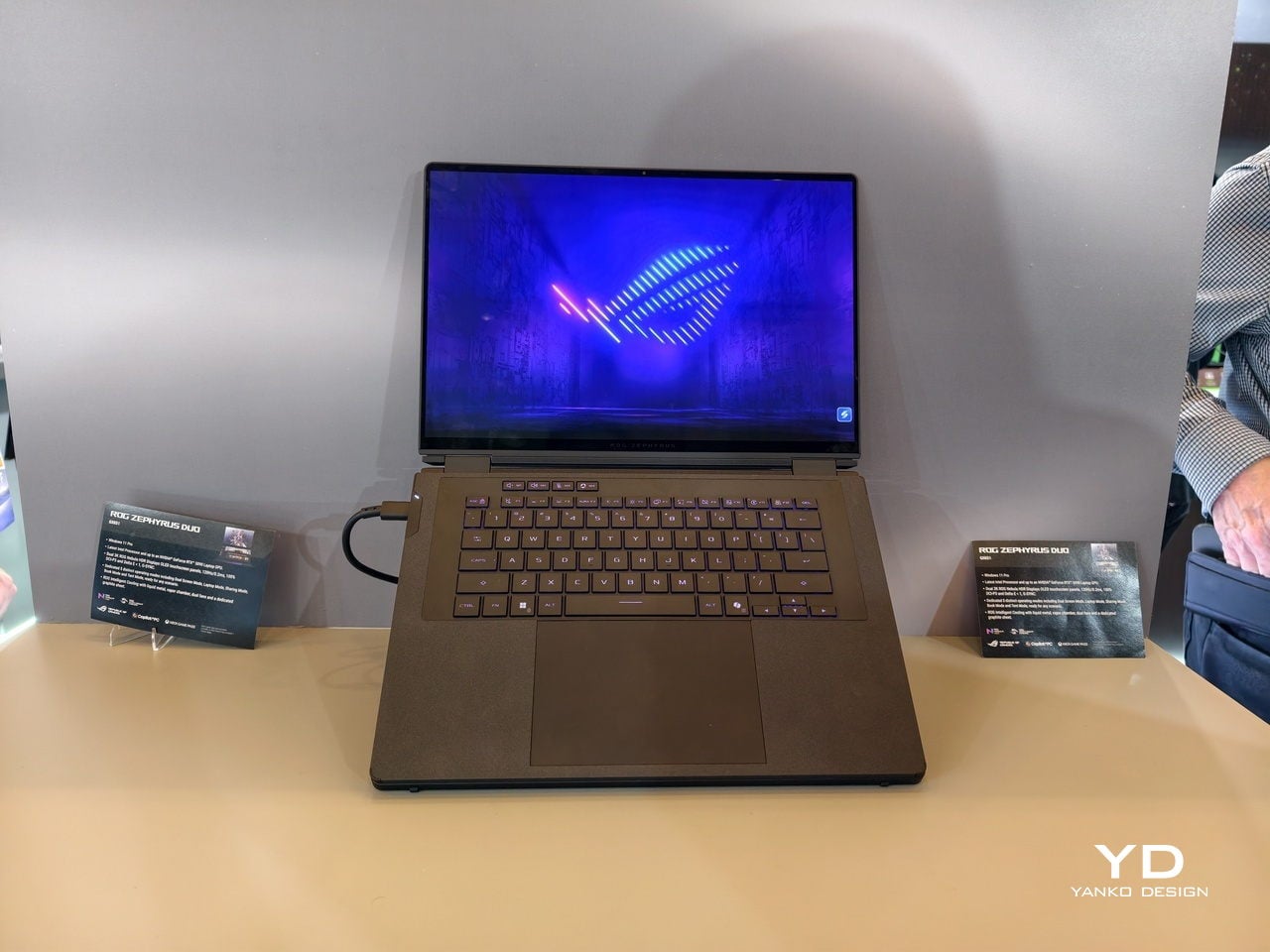
The keyboard detaches completely and connects over Bluetooth when separated from the chassis, continuing the design language ASUS refined with the Zenbook Duo line over the past few years. Magnets hold it in place when docked, covering the lower display for traditional laptop mode, but the machine was engineered to run with both screens exposed. Pull the keyboard free and set it wherever makes ergonomic sense, angled on a stand or flat on the desk beside the laptop itself. The trackpad lives on the keyboard folio, so input travel is part of the design assumption. ASUS isn’t treating detachment as a party trick or an edge case. The entire thermal layout, the hinge mechanism, and the port placement assume you will use this machine with the keyboard removed.

Two-in-one laptop set in tent mode on a display table, screen glowing purple.

The silicon inside follows the screen-first brief rather than leading it. The base $4,499 configuration ships with an RTX 5070 Ti, while the top-end model pushes into RTX 5090 territory at a price ASUS hasn’t officially published yet but Gizmodo clocks at $5,500. Intel’s Panther Lake CPUs handle the processor side, with options ranging across the Core Ultra X series depending on configuration. All of that is competitive hardware in mid-2026 terms, but the specs themselves are table stakes. What matters is how ASUS packaged them. The cooling system has to manage thermals across a chassis that expects both displays to be running simultaneously under load, and the hinge assembly has to support the weight and structural integrity of two full glass OLED panels without compromising rigidity. Those are the engineering problems that define this product, and the GPU choice is downstream of solving them.

Open dual-screen laptop on a showroom table with purple backlit keyboard and a blue neon screen display on the main panel.

ASUS confirmed US availability at Computex after showing the hardware at CES in January, which means the company spent the better part of six months watching feedback, finalizing logistics, and preparing the supply chain for a machine that doesn’t fit neatly into any existing SKU category. At $4,499 the Zephyrus Duo GX651 costs meaningfully more than a conventional gaming laptop with identical silicon, and the delta is purely the dual-screen chassis. That premium is either justified or deal-breaking depending on whether you’ve spent the last several years wishing your gaming laptop had room for a second panel. ASUS is betting that enough buyers have been waiting for exactly this. Computex 2026 will be remembered for Nvidia’s ARM tease and the RTX 5090 mobile flood, but the Zephyrus Duo is the machine that asked a different question entirely and shipped with an answer.

The post The $4,499 ASUS Gaming Laptop With Two Full Screens Will Make You Question Every Laptop You’ve Owned first appeared on Yanko Design.

A Zipper Patent Sat in a Garage for 40 Years. Now It’s Real.

Back in 1985, an electrical engineer at Polaroid named Bill Freeman had an idea for a three-sided zipper. Not a novelty item, not a quirky art piece, but a genuinely functional fastener capable of switching objects between soft, floppy states and rigid, load-bearing structures. He submitted it to a design competition. They rejected it. He patented it anyway, then tucked the prototype away in his garage, where it sat for nearly four decades. That detail alone should give us pause. How many brilliant ideas are sitting in someone’s garage right now, waiting years for the tools and technology to finally catch up?

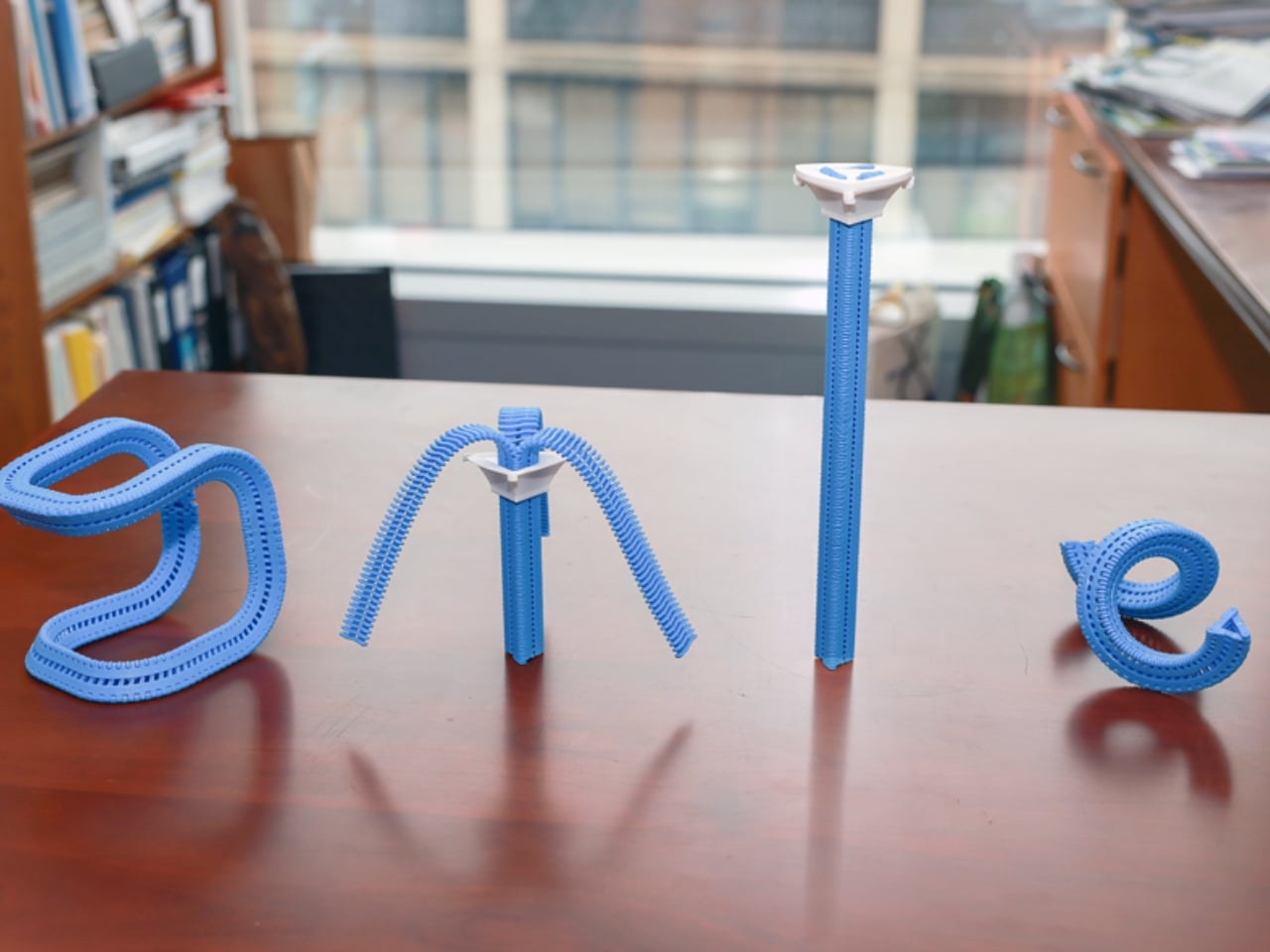
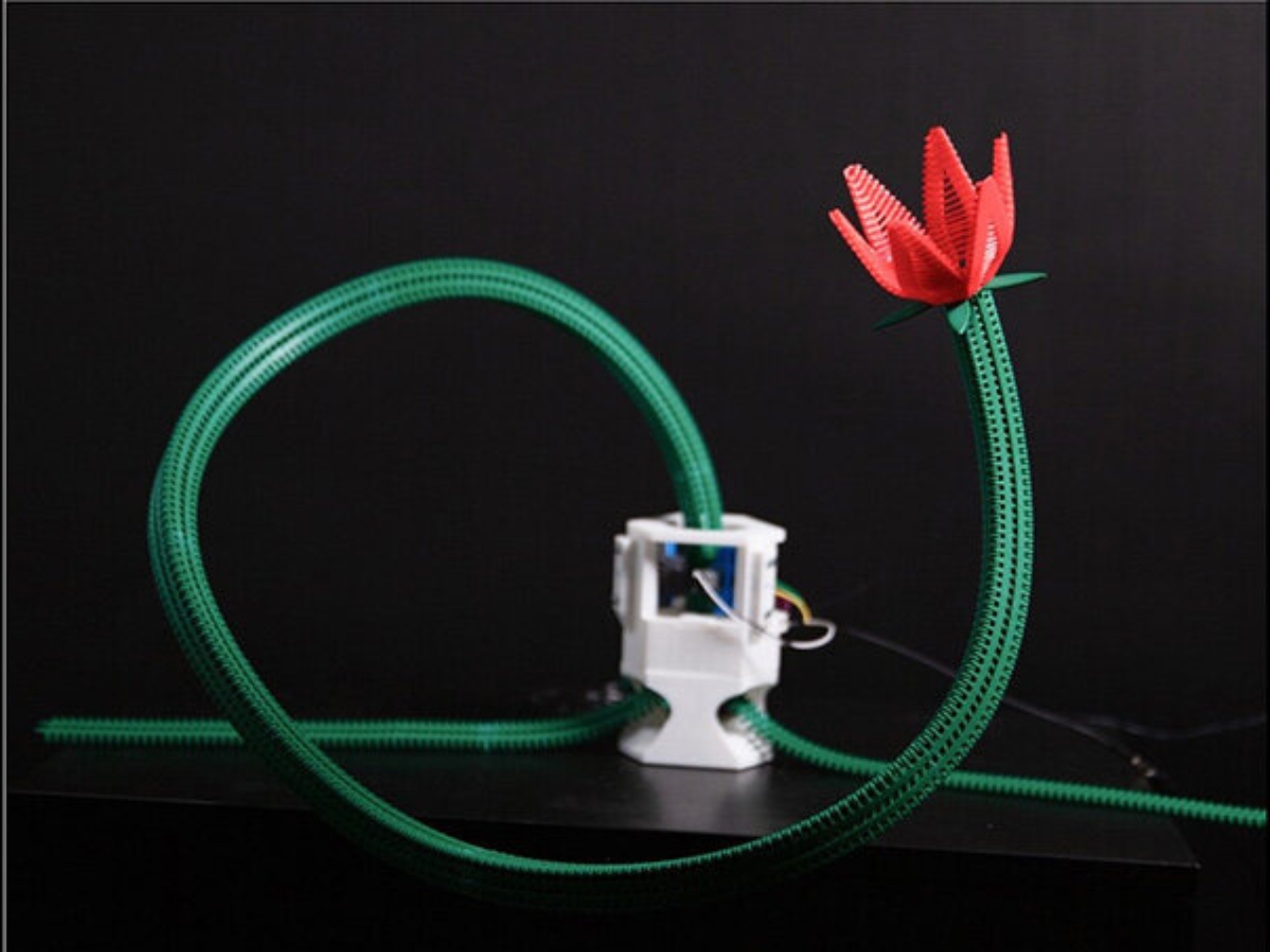
Freeman is now an MIT professor, and the researchers at MIT’s Computer Science and Artificial Intelligence Laboratory (CSAIL) finally did what his 1985 judges couldn’t: they took his concept seriously. The result is the Y-Zipper, a 3D-printed, three-sided fastener that can snap a floppy, flexible structure into a rigid, load-bearing beam with one smooth pull. Lead researcher Jiaji Li and the CSAIL team didn’t just rebuild Freeman’s prototype. They built an entire automated design system around it, making the whole process accessible, repeatable, and surprisingly intuitive.

Designer: MIT Computer Science and Artificial Intelligence Laboratory

The way it works is genuinely fascinating. The Y-Zipper joins three independent flexible strips into a triangular, load-bearing rod the moment it’s zipped. Unzip it, and you’re back to soft and pliable. The process is fully reversible, and that matters more than it might initially sound. Prior attempts to create structures with so-called “tunable stiffness” were either difficult to reverse or required a frustrating amount of manual assembly. The Y-Zipper solves both problems at once.

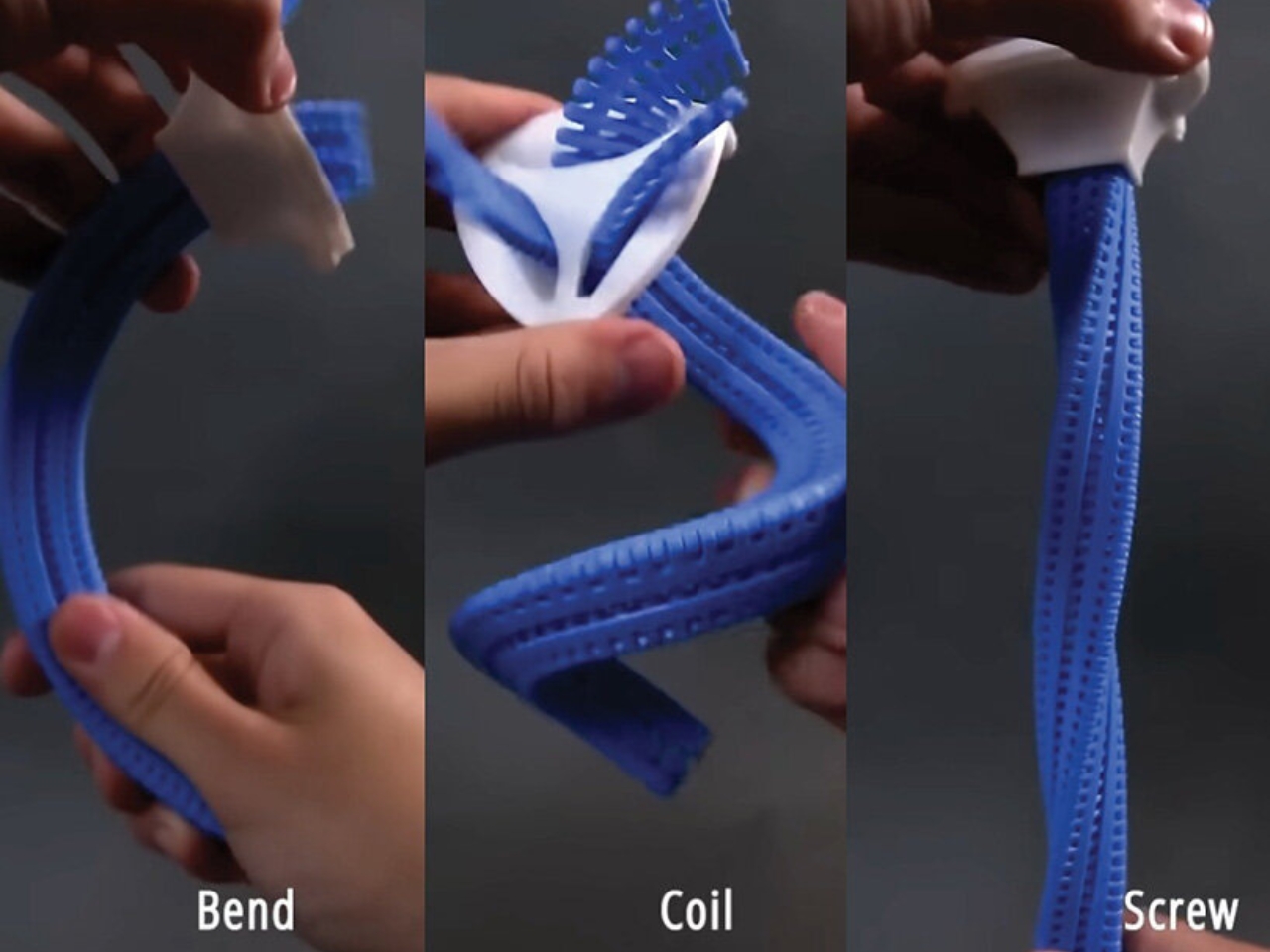
Users can customize their zipper through CSAIL’s software before sending it to a 3D printer. You choose the strip length, the bend angle, and one of four motion configurations: straight, bent like an arch, coiled like a spring, or twisted like a screw. The printer builds the rest entirely on its own. That level of design control, combined with how simple the final action is (just zipping), is the kind of elegant engineering that deserves more attention than it typically gets.

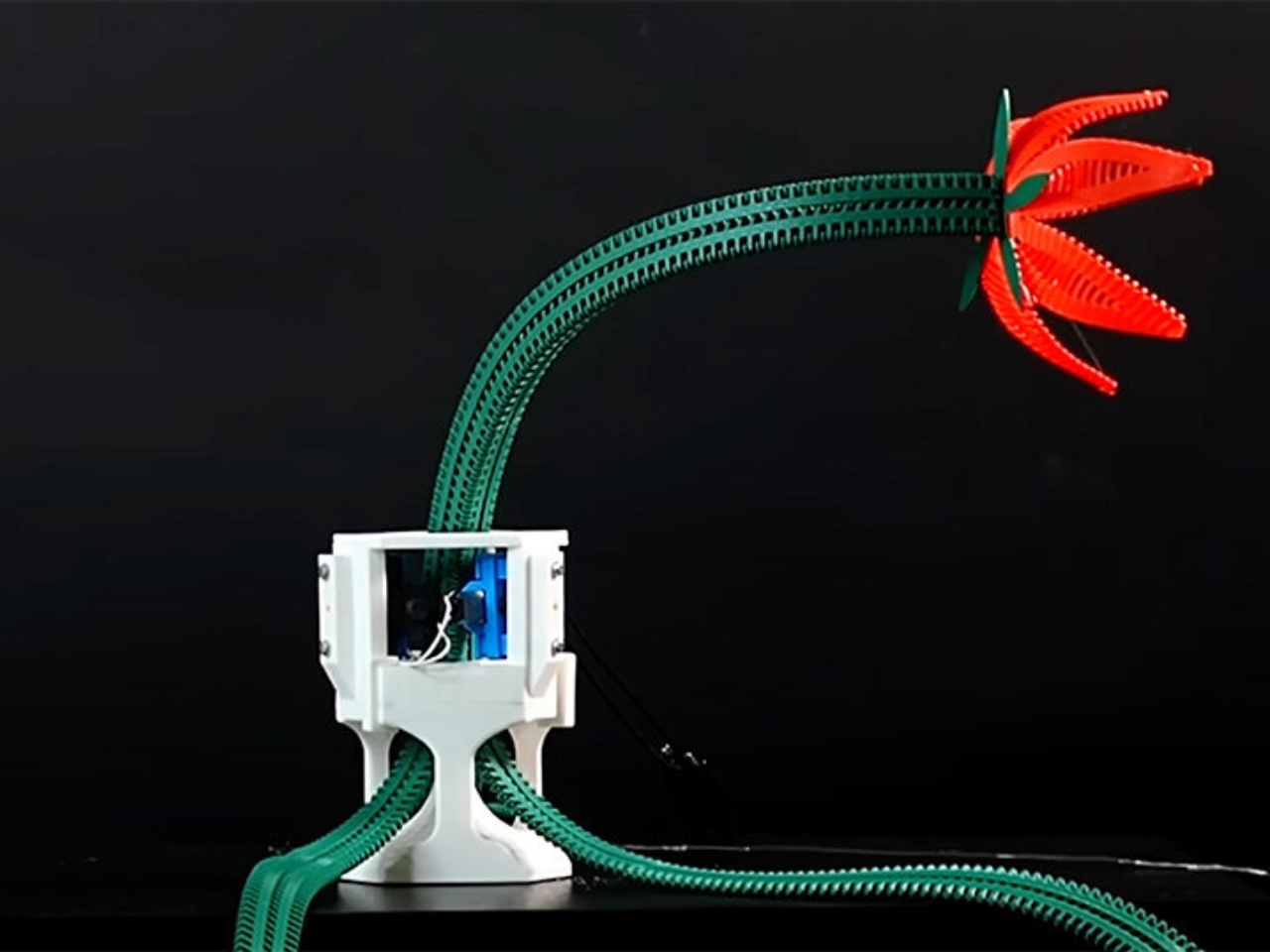
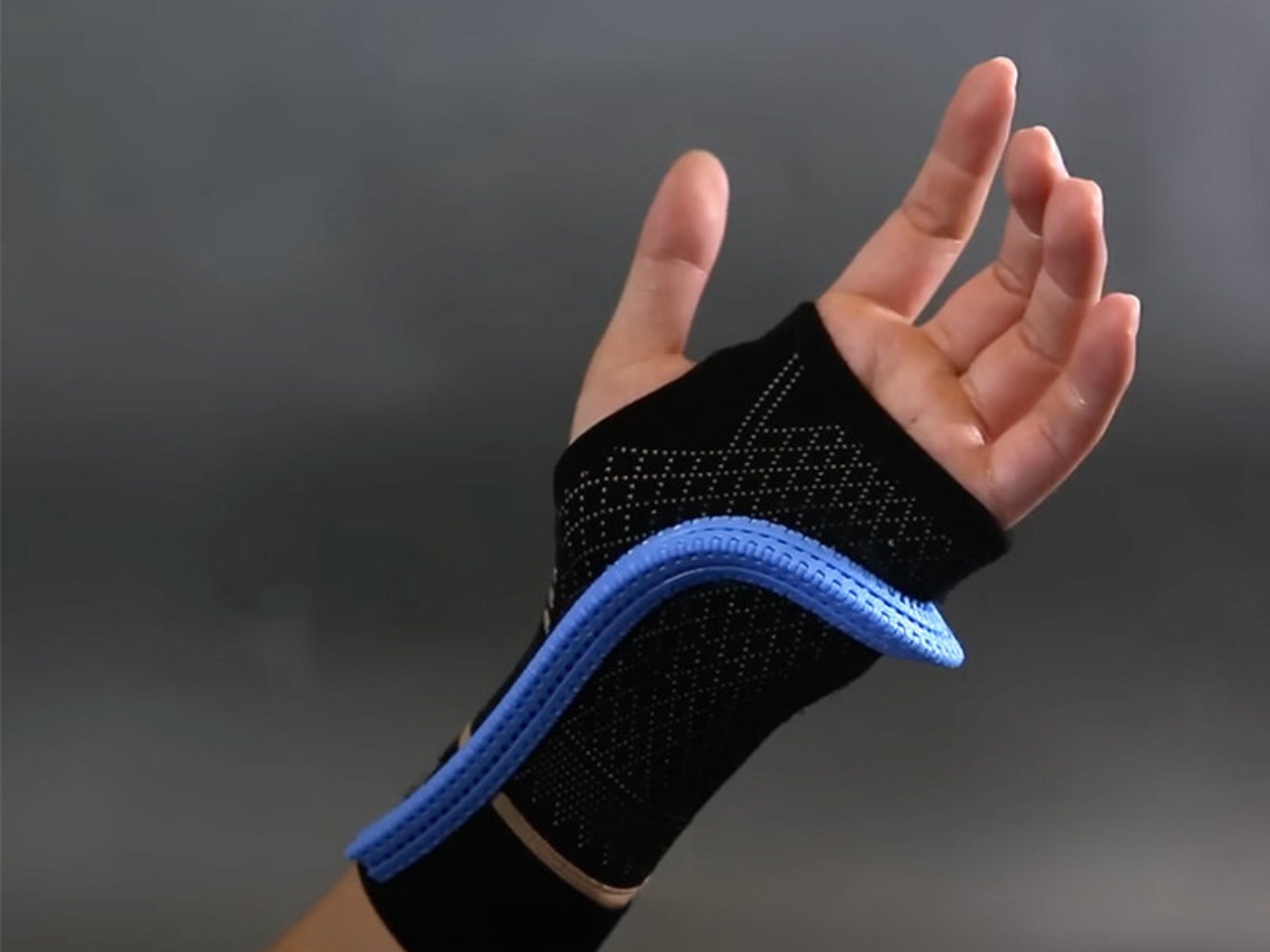
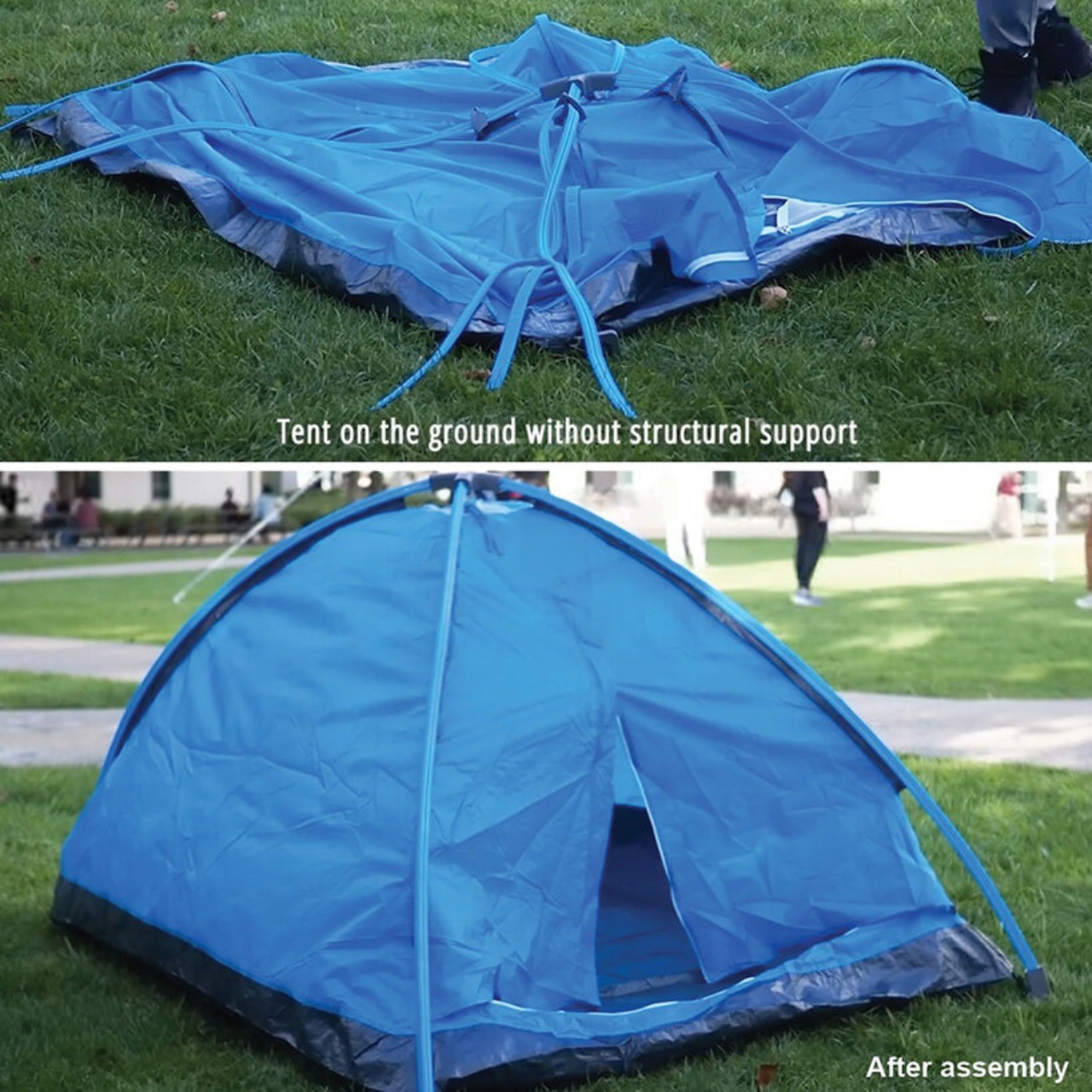
The range of potential applications is broad enough that it’s hard to pick a favorite. The team has already demonstrated uses in camping gear, medical equipment, robotic limbs, and art installations. But the possibilities they hint at are where it gets genuinely exciting. Imagine a spacecraft with Y-Zipper-equipped tentacles that can flex and lock into position to grab rock samples, or disaster relief workers assembling rigid medical tents in seconds from structures that were flat and portable just moments before. These aren’t far-fetched scenarios; they’re on the CSAIL team’s own radar.

It also raises an interesting design question. We tend to think of rigidity and flexibility as fixed properties of a material. You pick one or the other at the manufacturing stage, and that’s what you get. The Y-Zipper challenges that assumption at a very basic level. An object doesn’t have to commit to a single state. It can be soft when you need to fold it, transport it, or store it, and rigid when it needs to perform. That’s not a minor tweak to existing materials science. That’s a fundamentally different way of thinking about how we build things.

For now, the Y-Zipper is limited to plastic filaments, and the team openly acknowledges that future versions using metal could unlock even more durability and strength. Scaling up to larger structures is also something they’re working toward. But the fact that a fully functional, customizable version already exists and works is the more significant milestone. The foundation is there.

Credit where it’s due: Freeman deserves the recognition. He saw the potential of a three-sided fastener forty years before anyone had the tools to build it properly. That kind of ahead-of-its-time thinking tends to get dismissed precisely because it can’t be proven yet. The Y-Zipper’s story is, among other things, a quiet argument for why we should be much slower to reject ideas that simply need more time to find their moment.

The post A Zipper Patent Sat in a Garage for 40 Years. Now It’s Real. first appeared on Yanko Design.

The Stool Made From 100% Recycled Plastic That Looks Like Art

If you’ve ever tossed a plastic bottle cap into the recycling bin and wondered where it actually ends up, the Bit Stool might be the most satisfying answer the design world has offered in a while. Created by Neetica Pande for Normann Copenhagen, it’s a piece of furniture that reframes the entire conversation around sustainable design. Not because it comes with a manifesto, but because it’s genuinely, undeniably beautiful.

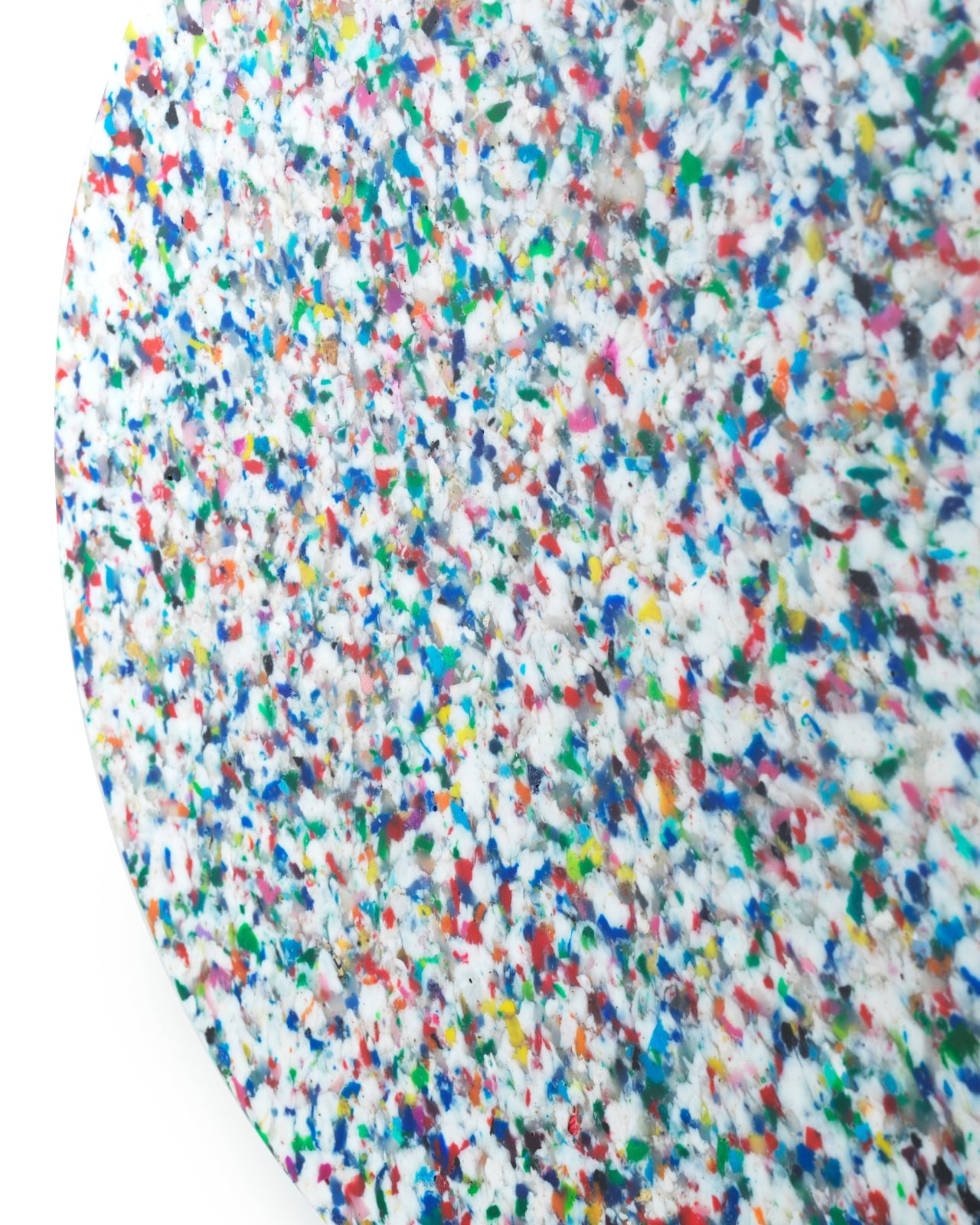
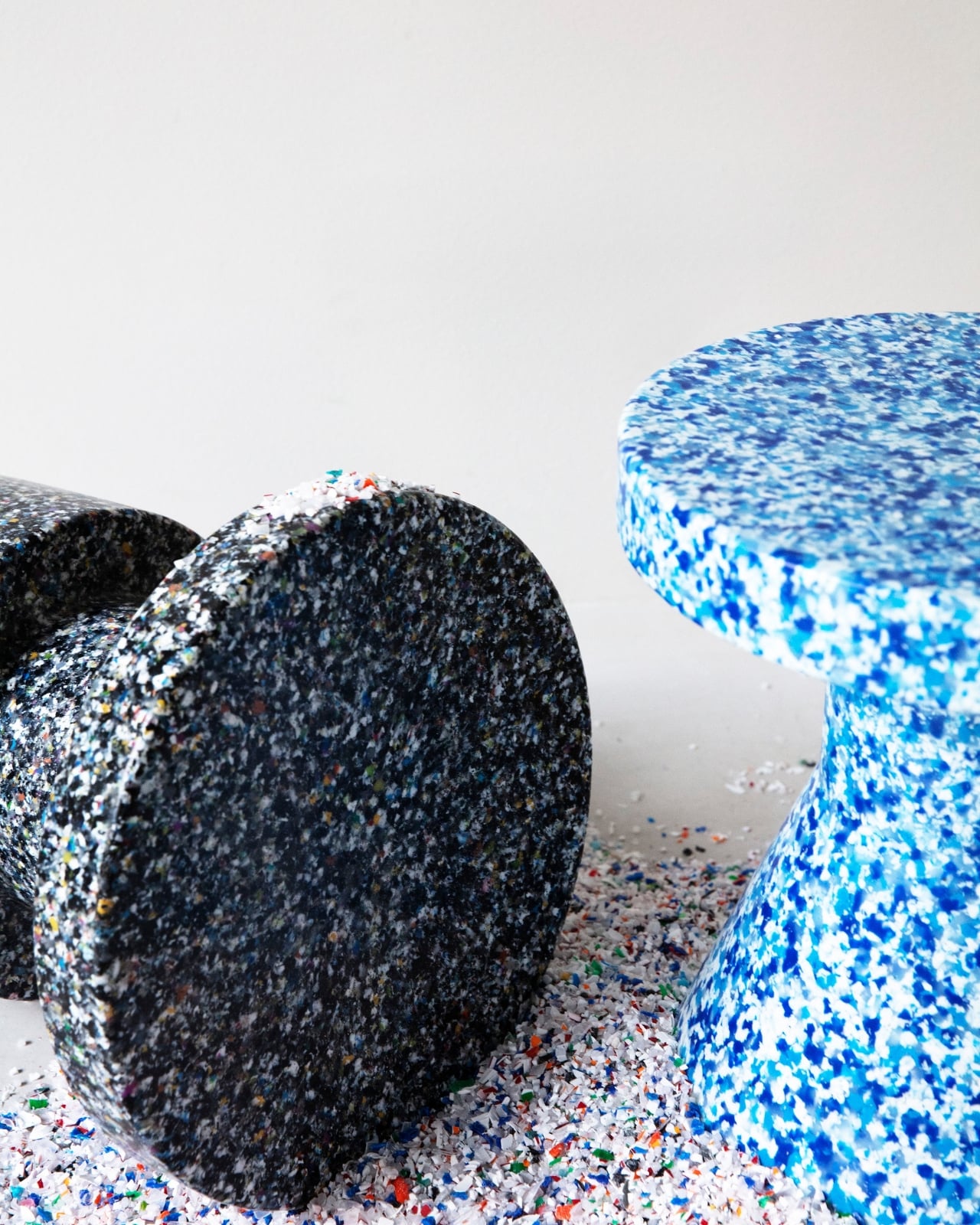
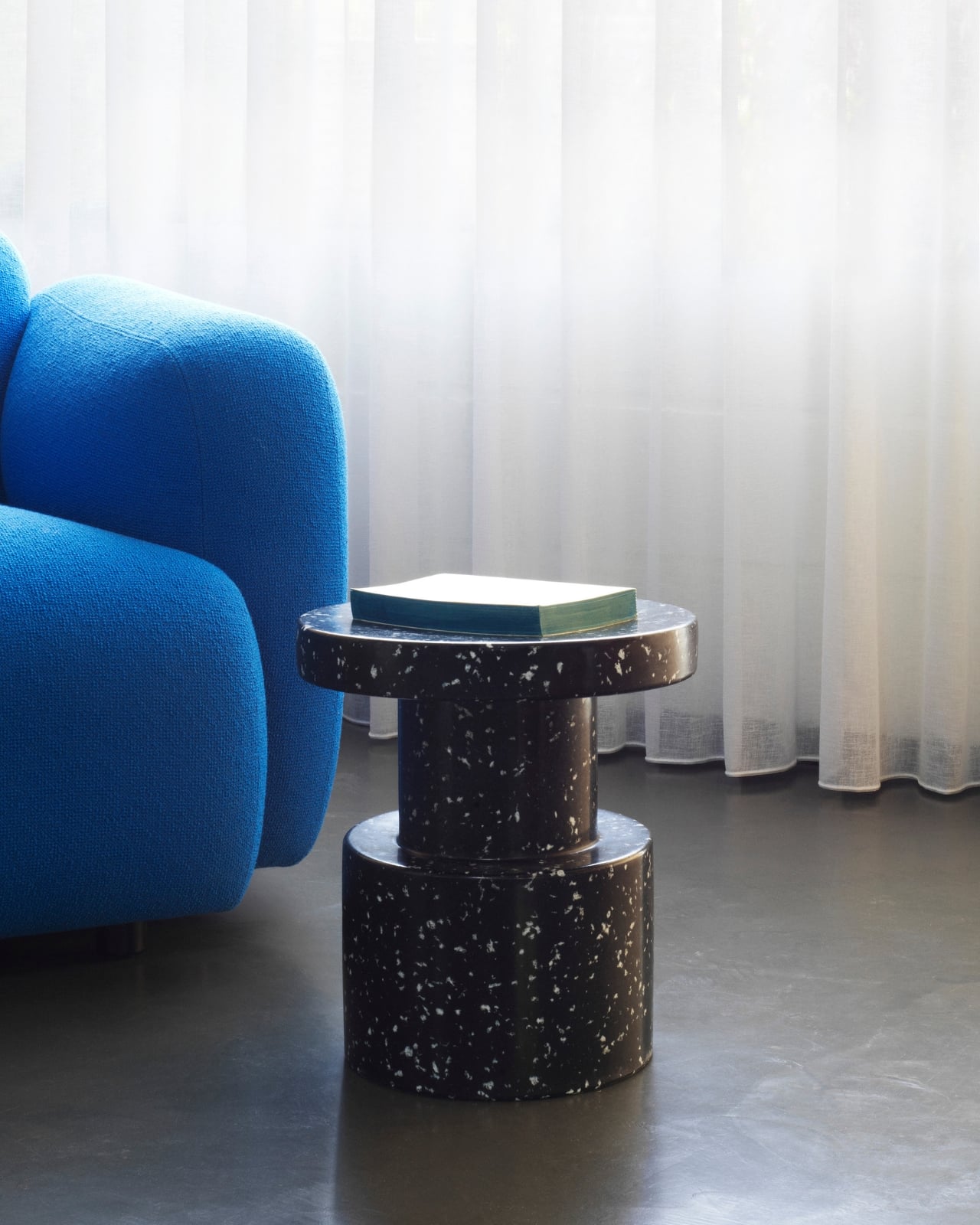
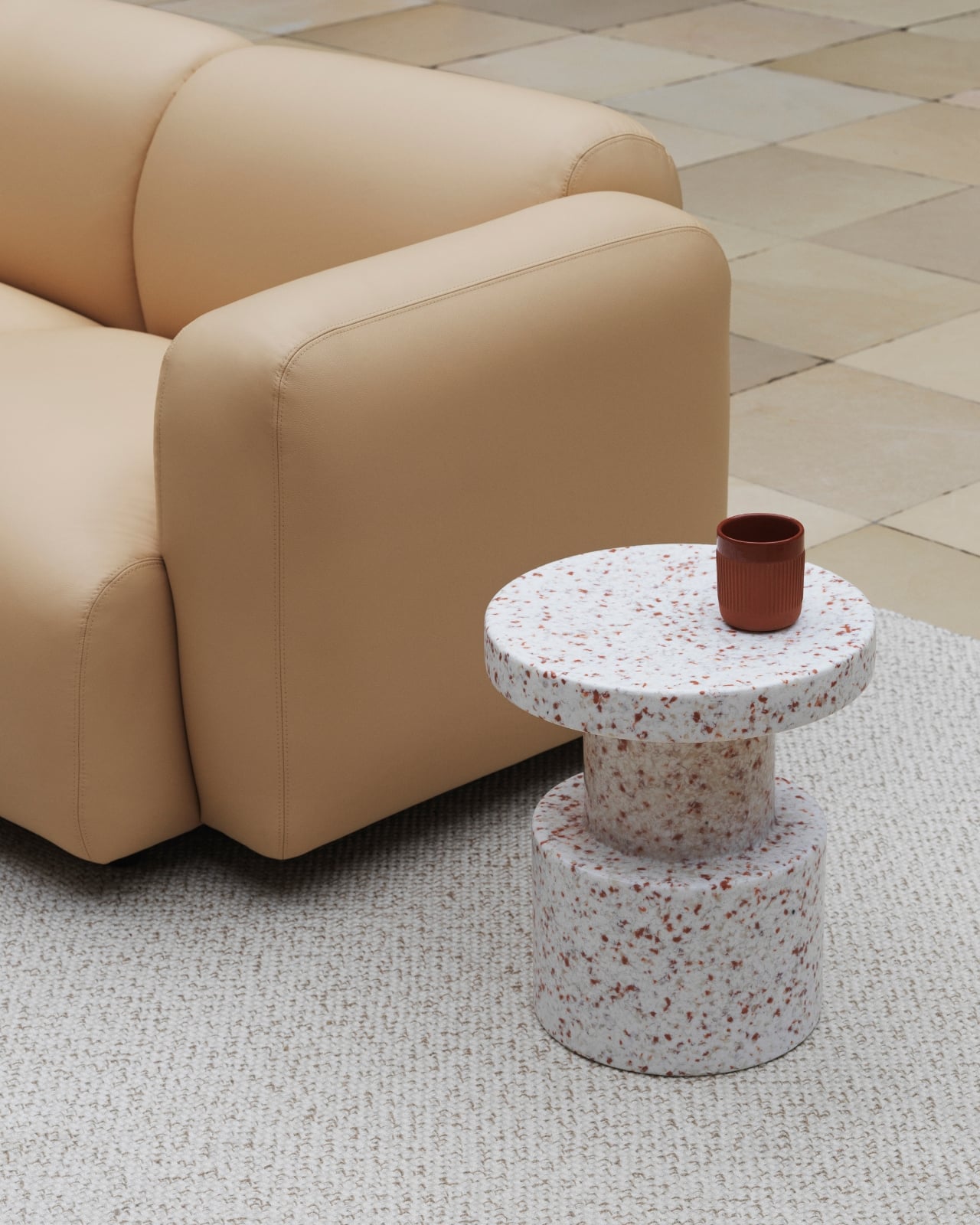
The design brief was built around a deceptively simple tension: familiar forms, surprising materials. Pande took 100% recycled household and industrial LDPE, the kind of low-density polyethylene that shows up in your everyday plastic packaging and bottle caps, and compressed it into dense, speckled cylinders and discs. The result looks, at first glance, like granite or terrazzo. The texture is almost painterly. Get close enough and you see the whole story: a surface made up of color fragments, each one a former piece of something that would otherwise have been thrown away.

Designer: Neetica Pande

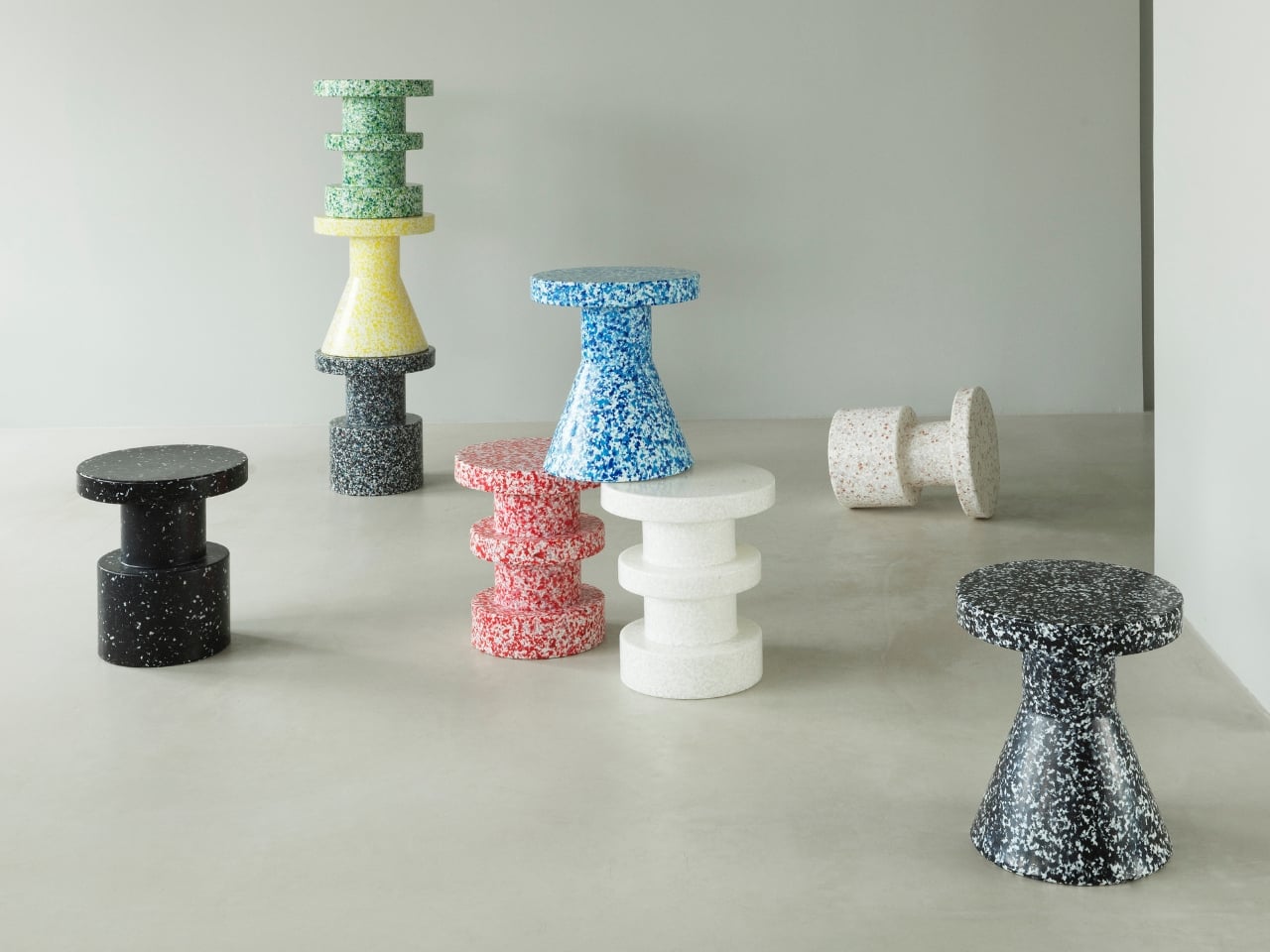
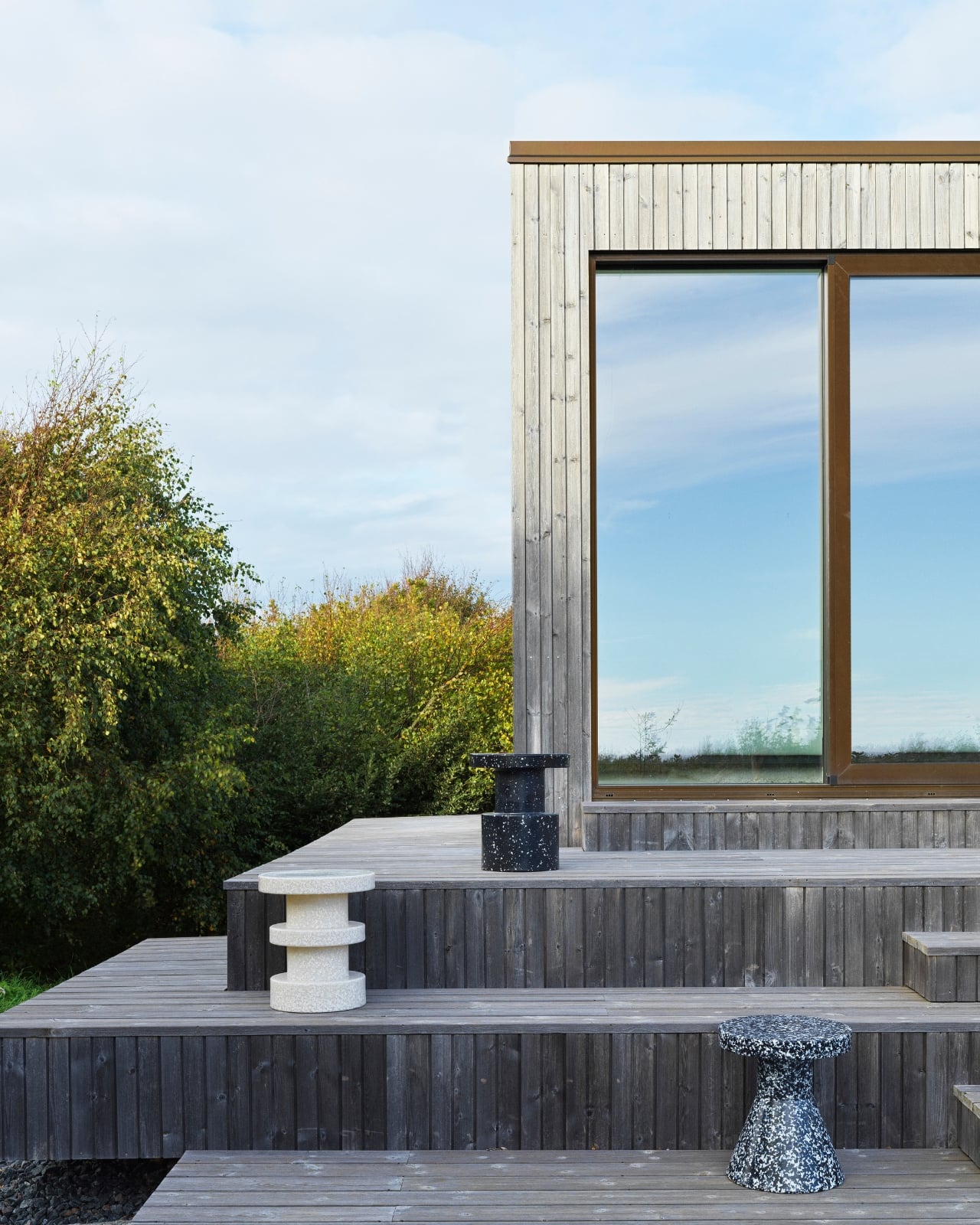
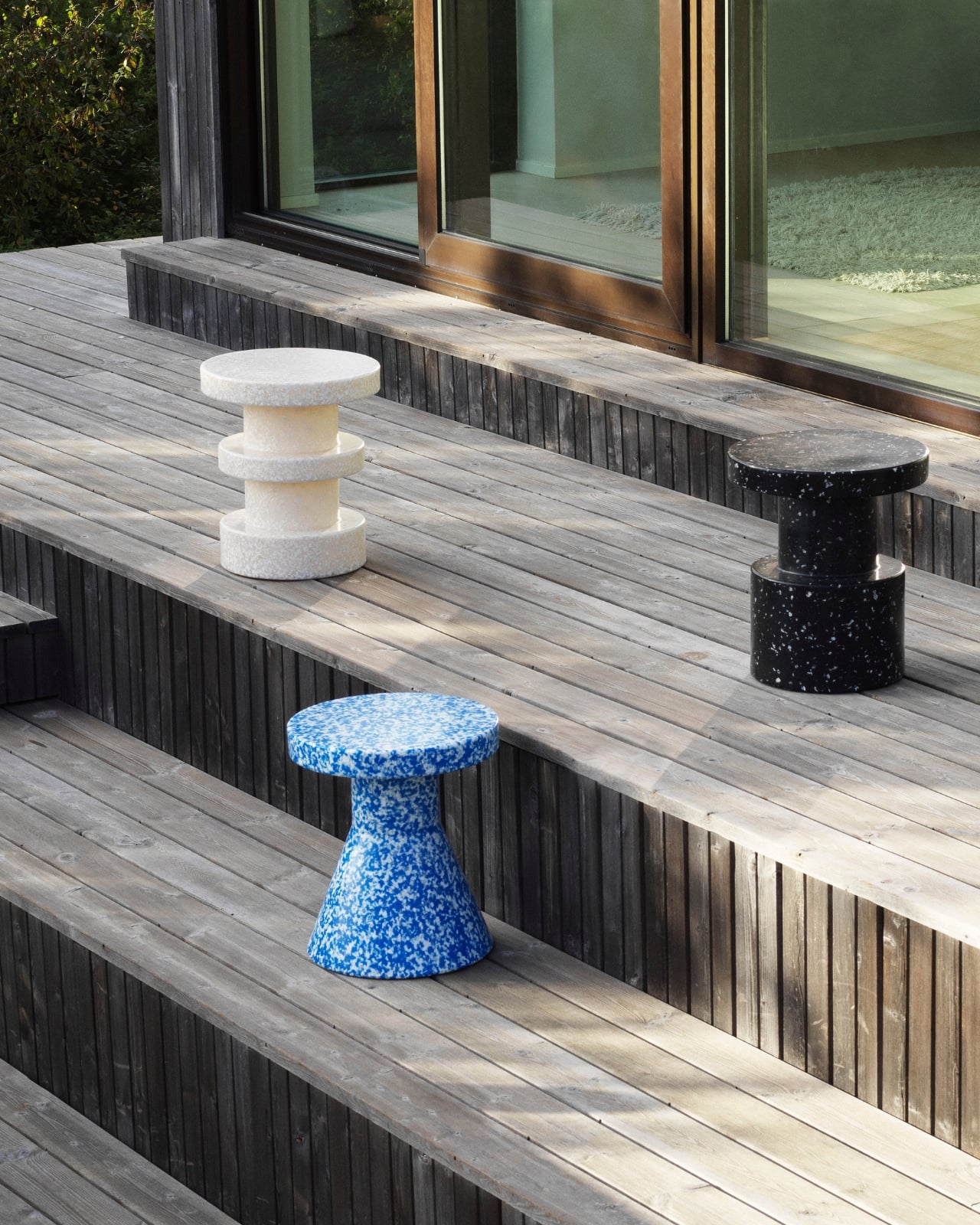
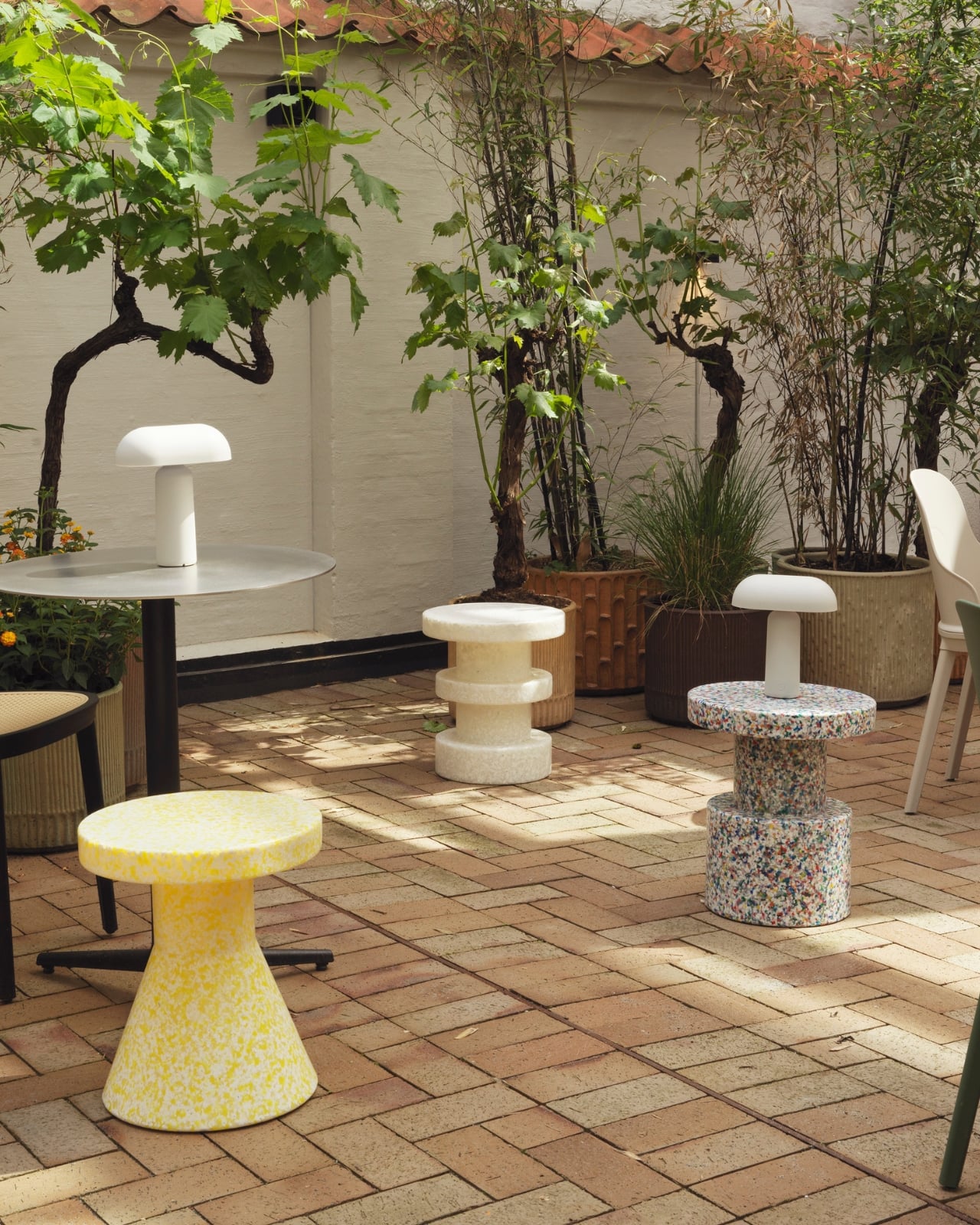
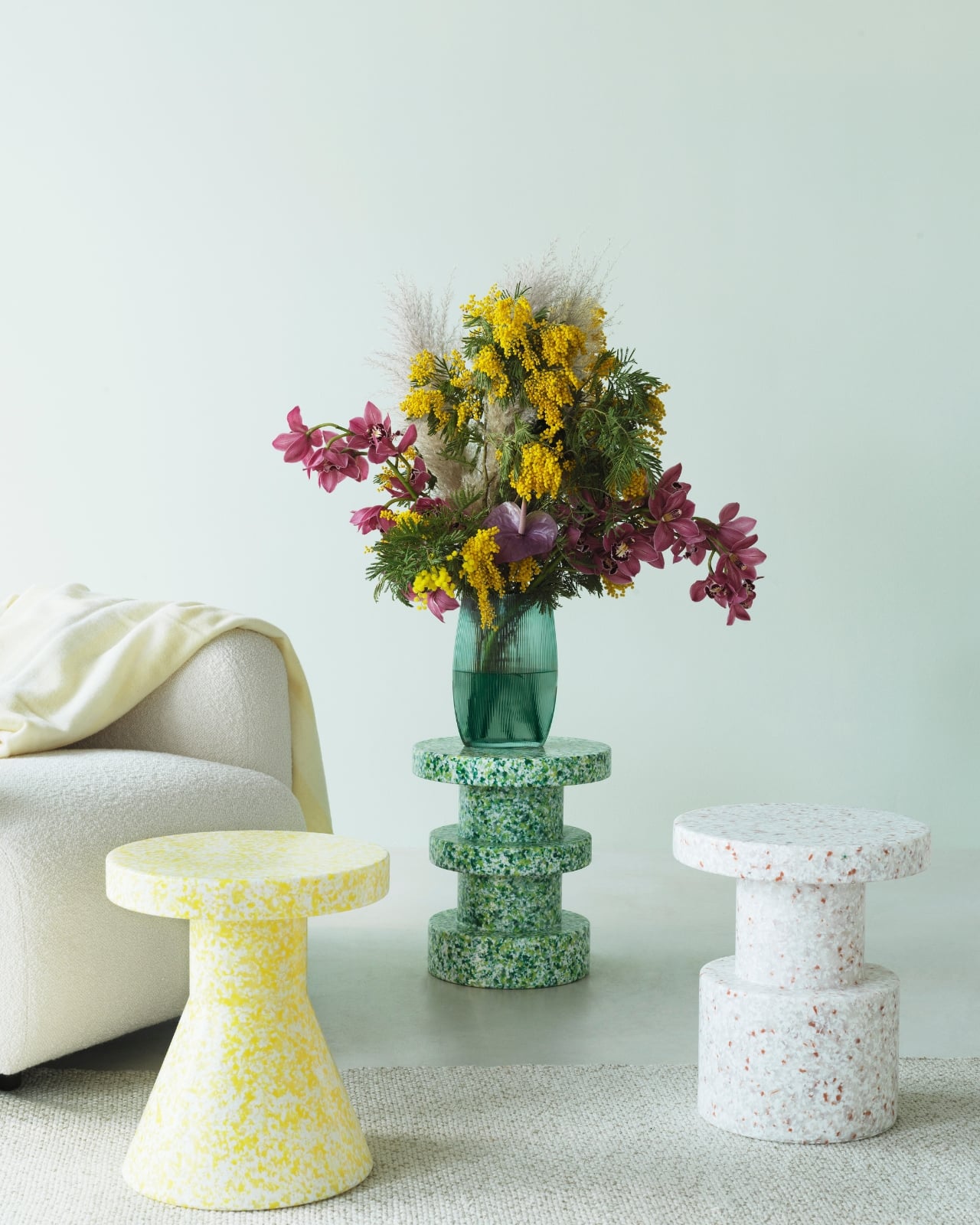
What the Bit range gets right, architecturally speaking, is restraint. The three variants, the Bit Stool, Bit Stool Stack, and Bit Stool Cone, all work with stacked geometric volumes: cylinders, discs, cones widening toward the base. The silhouettes feel ancient, like something lifted from a Roman column or a mid-century Scandinavian furniture catalogue. That familiarity is intentional. Pande, working under the mentorship of Simon Legald and Saskia Huebner alongside collaborator Marie Bal-Fontaine, leaned into shapes the eye already trusts, then let the material do the unexpected.

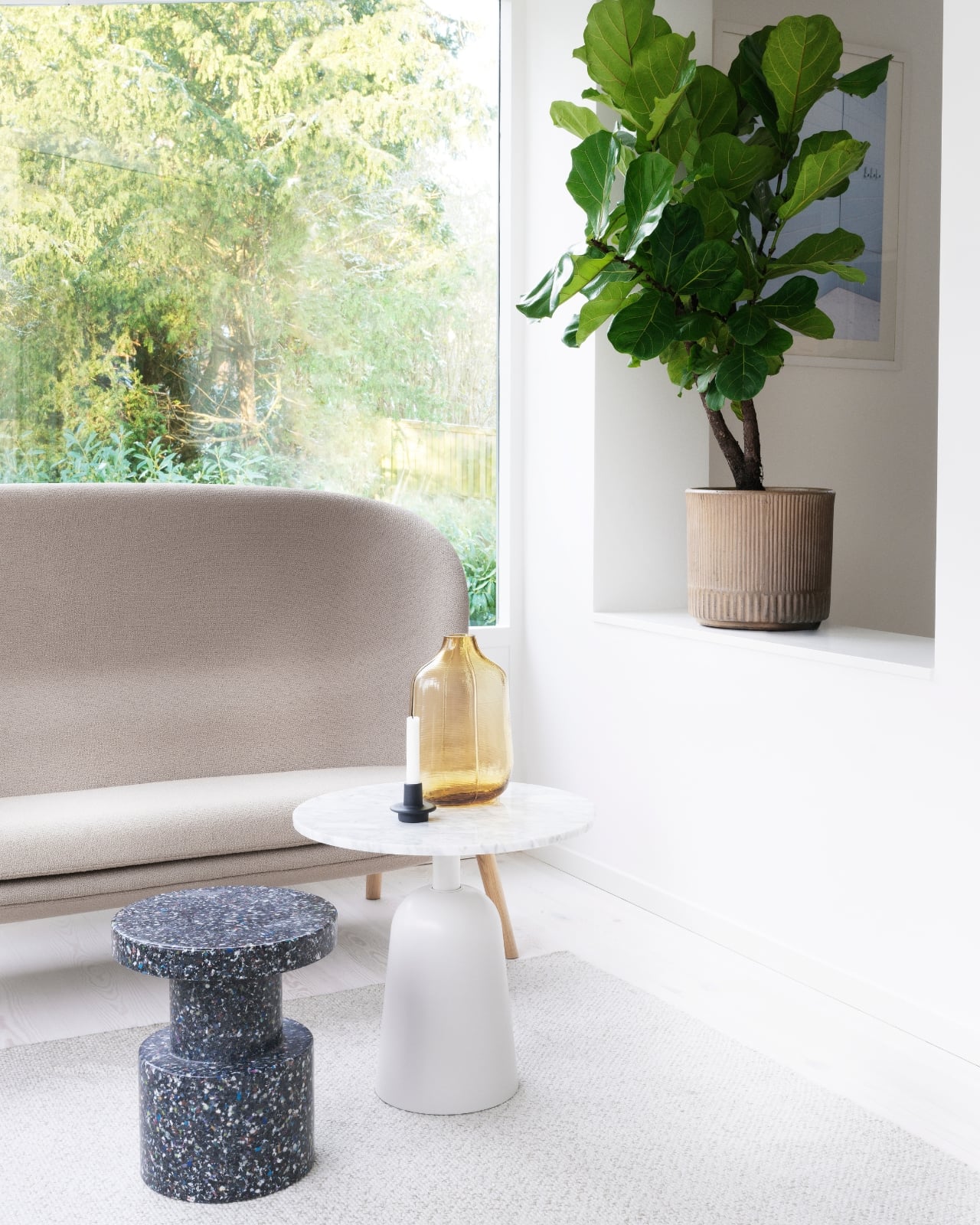
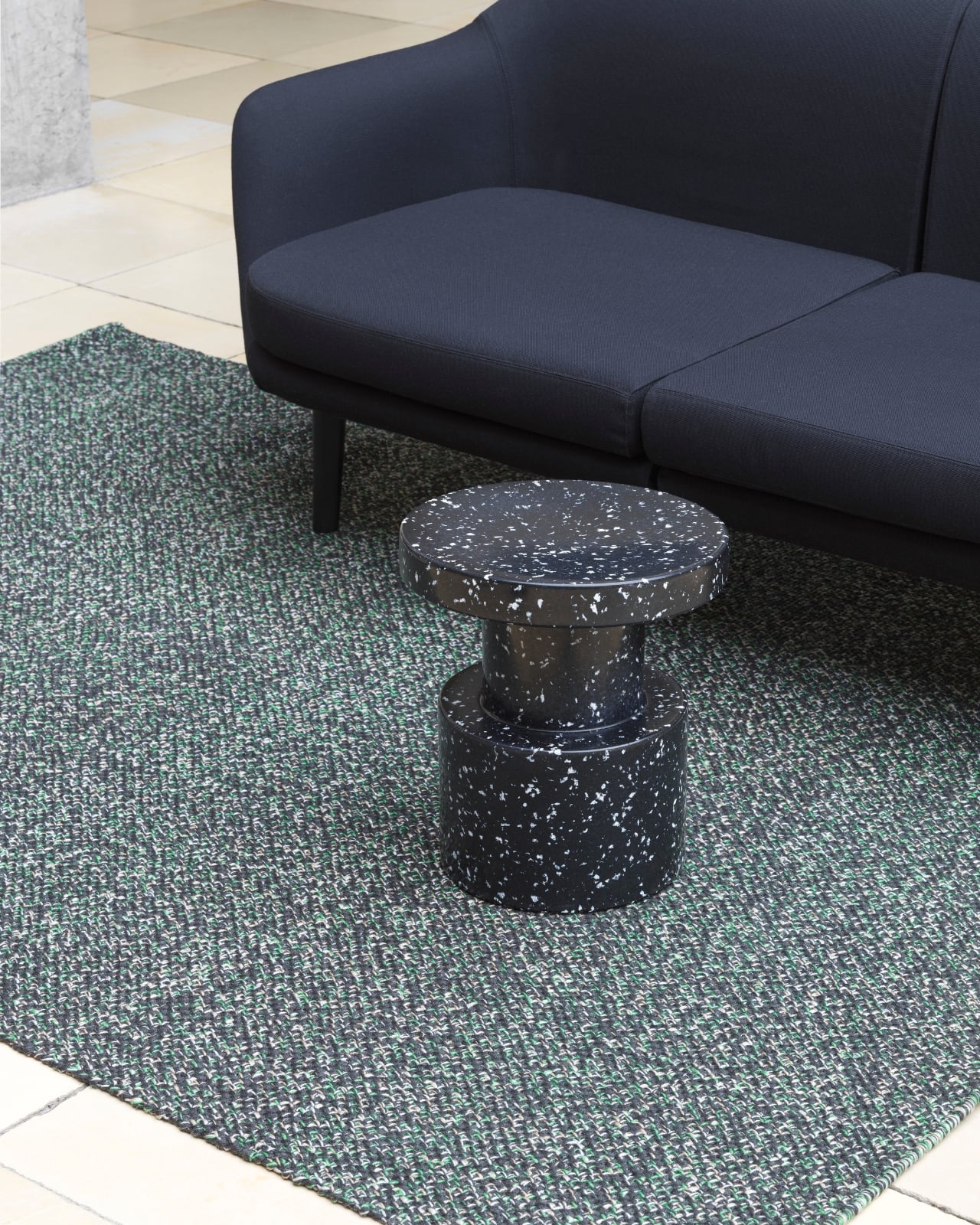
And that material does a lot of heavy lifting, literally. The Bit Stool handles temperatures from -10°C to +50°C, making it equally at home on a sun-drenched outdoor terrace and inside a living room. It’s also genuinely multifunctional in a way that doesn’t feel forced. Use it as a seat. Park a vase on top. Slide it next to the sofa as a side table, or push it over when an unexpected dinner guest shows up. That kind of quiet adaptability is something I appreciate more and more in furniture right now, especially as living spaces keep shrinking and every object in the room has to justify its footprint.

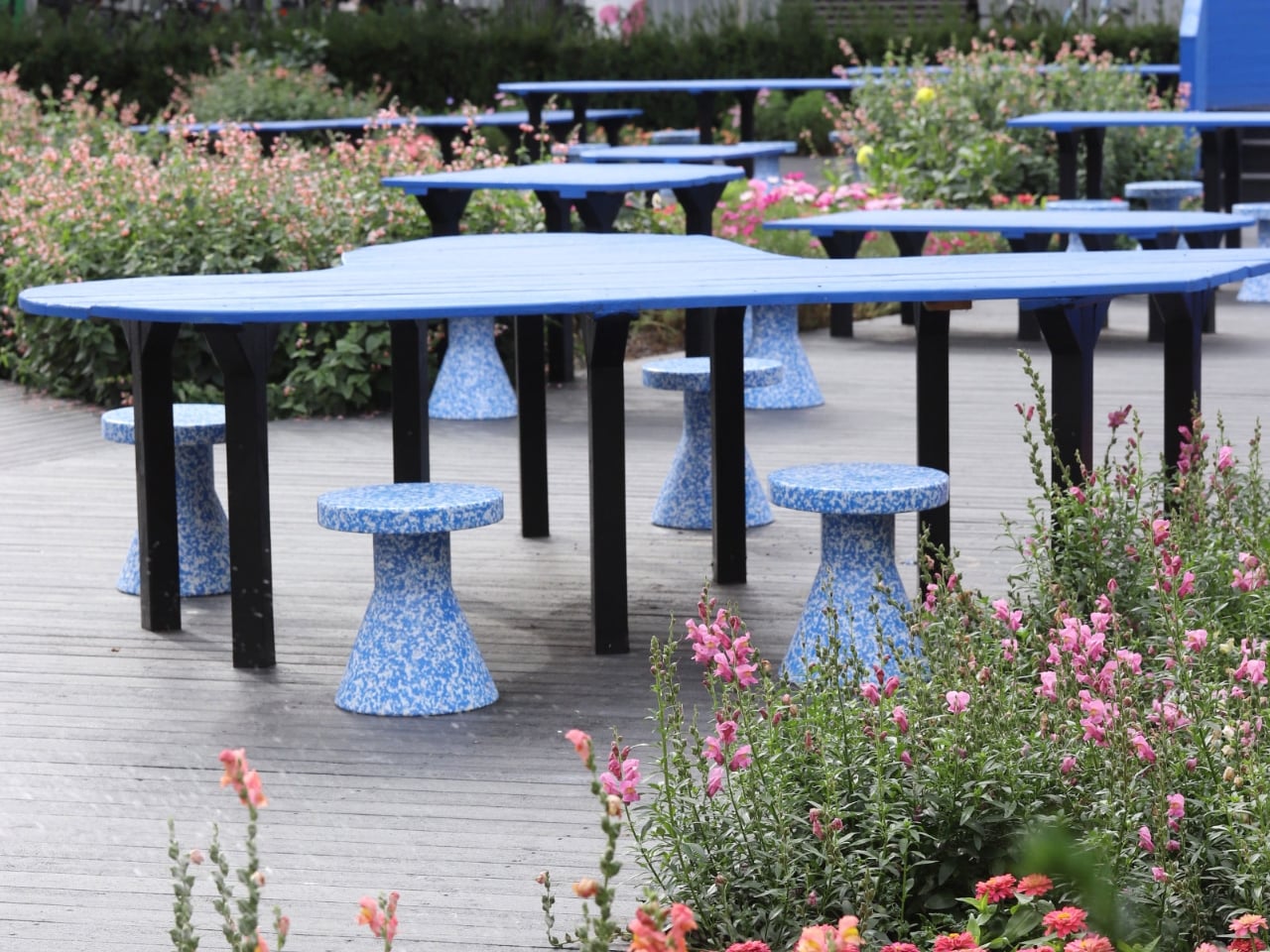
The color palette is where the collection really hits its stride. The range comes in black, white, red, yellow, blue, green, and a confetti-speckled multicolor that leans directly into the recycled identity instead of downplaying it. These aren’t muted, apologetic tones. They’re bold and deliberate, treating sustainability as something to celebrate rather than something to compensate for. That shift in framing matters more than it might seem. Sustainable design has spent a long time wrapped in neutral linens and earthy tones, as though beauty were somehow incompatible with responsibility. The Bit Stool proves otherwise.

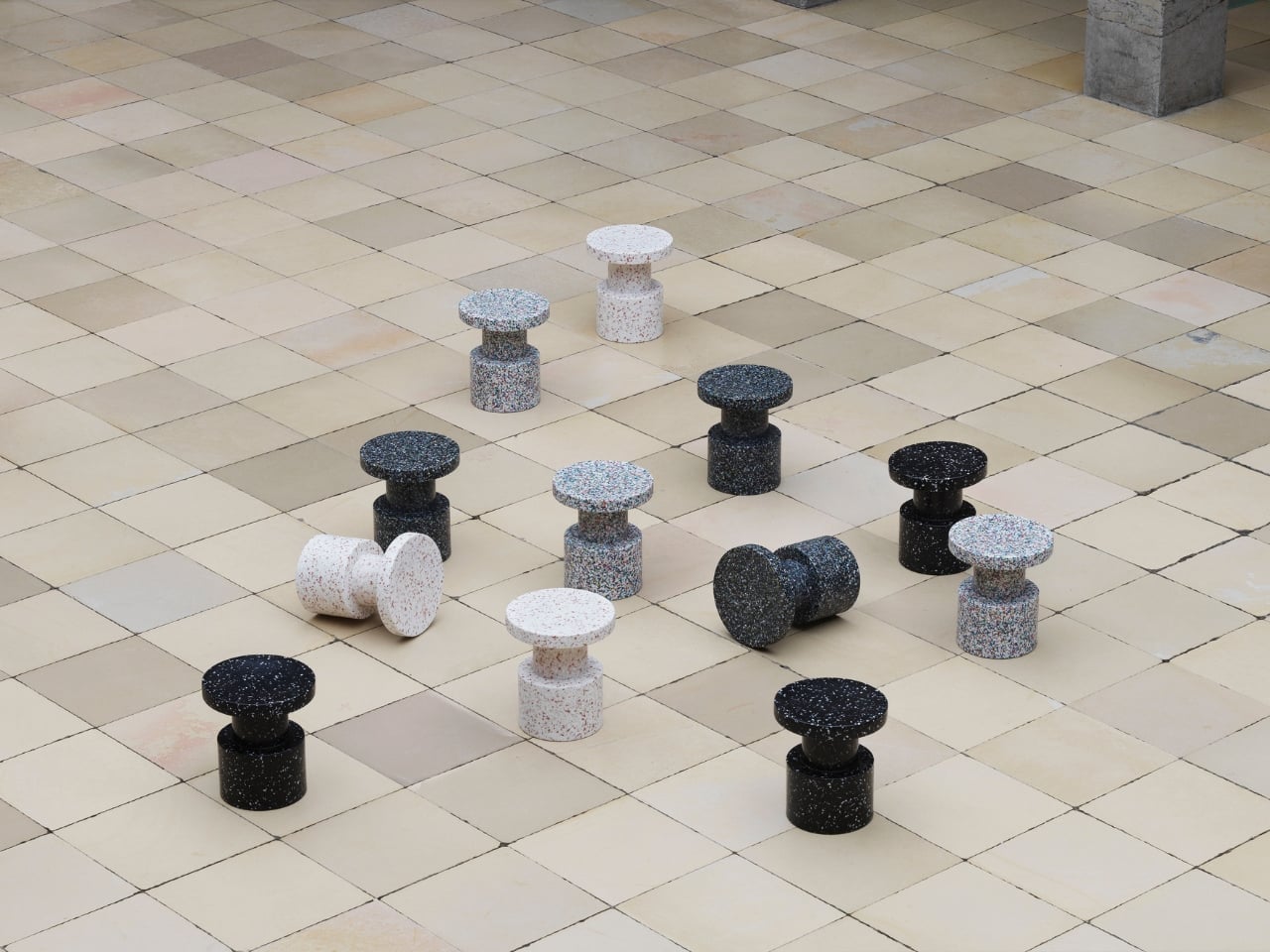
The campaign photography makes a compelling argument too. Seeing the stools scattered across tiled floors like oversized chess pieces, or sitting quietly on a wooden outdoor deck with open countryside behind them, or propping up flower arrangements in a well-lit interior, you get a clear sense that these are objects designed to be looked at just as much as used. The sculptural confidence the collection carries earns its place in any room.

Pande never tried to hide what the Bit Stool is made of, and that honesty is the crux of why it works. The speckled surface isn’t a flaw to be corrected or a quirk to be tolerated. It’s the entire aesthetic argument. Every fragment of compressed plastic embedded in those cylinders is evidence of the process, proof that something discarded became something worth keeping. Making recycled material feel genuinely desirable, without dressing it up as something it isn’t, is a much harder design challenge than it appears. This collection handles it quietly and confidently.

Normann Copenhagen has long had a reputation for functional objects that also happen to be beautifully considered. The Bit Stool sits well within that lineage, while also feeling like something new. The conversation around sustainable design doesn’t have to be earnest or beige. Sometimes it gets to be speckled, sculptural, and exactly what your terrace was missing.

The post The Stool Made From 100% Recycled Plastic That Looks Like Art first appeared on Yanko Design.