Pebble brings its round-faced smartwatch back from the dead

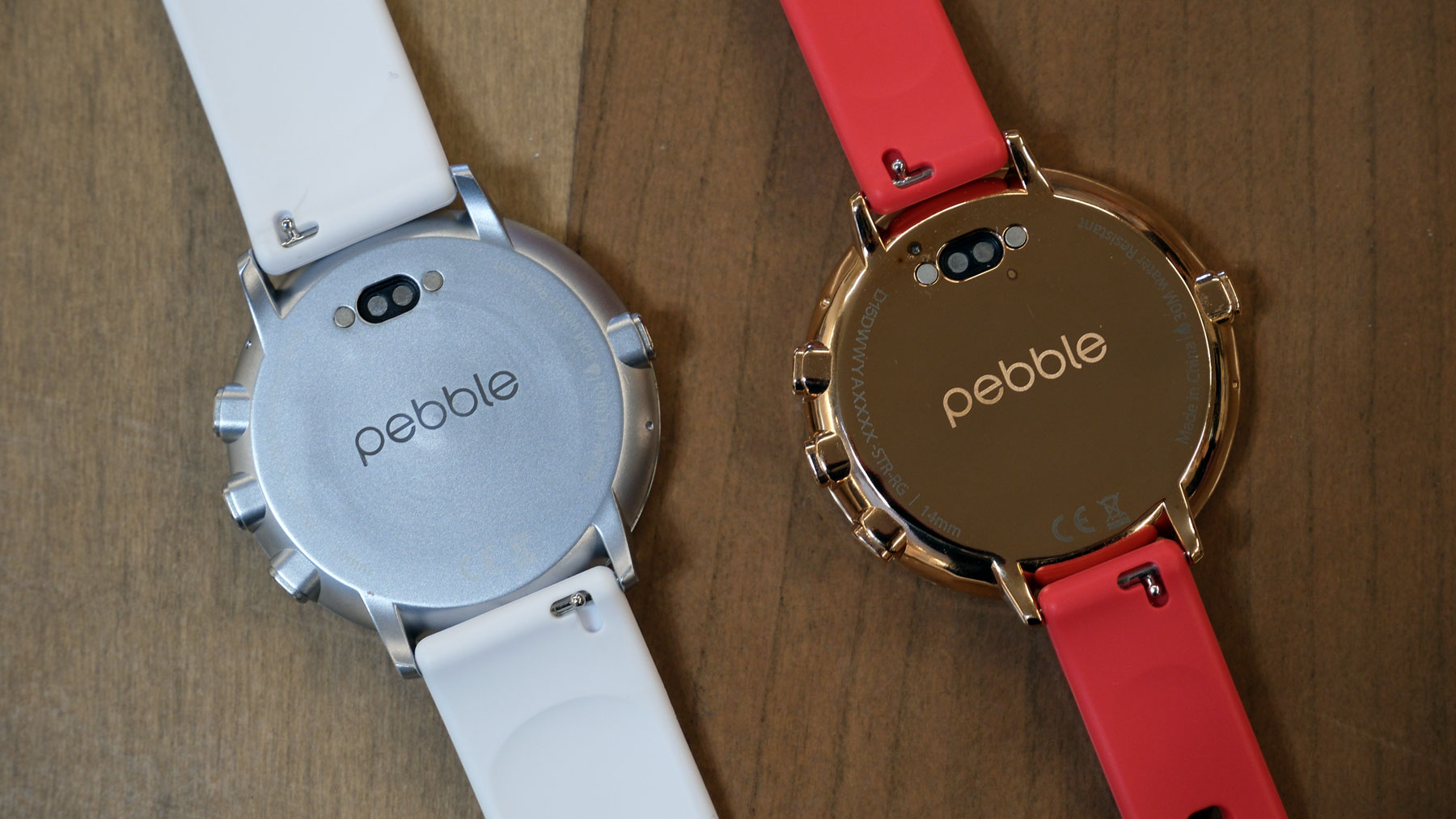
You’ve probably heard people say it’s impossible to go back and correct some error from the past. To those people, you should raise a middle finger in defiance (they are miserable, after all), and then point them to the tale of Pebble’s unlikely revival. The smartwatch pioneer’s return was a surprise of 2025, and now the company has resurrected one of its last great triumphs. It’s announcing the Pebble Round 2, and company founder Eric Migicovsky is looking to put right what once went wrong.

The Pebble Round 2 is the successor to the Pebble Time Round, which debuted in 2015 to what can only be described as frustrated reviews. It was a truly thin smartwatch, with a glorious round display, but that came at the cost of battery life and durability. The fancier components also added to the cost which pushed it to an unreasonable-for-the-time $249. It’s these flaws which the company has sought to address with the Round 2, as well as some of the issues that weren’t deal breakers at the time, but certainly weren’t ideal. 

For instance, the massive bezel around the display is now a thing of the past, with the Round 2’s 1.3-inch color e-paper touchscreen now stretching to the edge of its case. The viewing angles have also been dramatically improved, enabling you to check the time without having to move your wrist. The display has also been bonded to the glass crystal, reducing reflectivity and glare which was another downside for the original model. 

Better still, the battery life is now more than two weeks on a single charge, giving it the sort of Pebble-esque longevity its users demand. And it’s retained that thinness — measuring in at just 8.1mm — which is far more elegant than the chunkier smartwatches from other manufacturers. Plus, there’s dual microphones for interacting with AI agents and dictating messages, as well as step and sleep tracking.

Migicovsky explained that the focus here isn’t just to correct some of the more glaring issues from the first model. As he wrote back in 2022, Pebble’s failure was down to its attempt to broaden its appeal beyond the users who had so warmly adopted it in the first place. Consequently, rather than include bulky features like a a built-in optical heart-rate sensor, the focus is on utility. Not to mention a desire to reintroduce some much-needed whimsy into hardware, and empowering users to tinker with their devices, enabling them to craft their own watch faces.

Hopefully, we’ll get some time in person with the Pebble Round 2 in the next few days, but in the meantime, it’s up for pre-order from today. It’ll set you back $199, and will begin shipping in May. And if you’ve already put down cash for a Pebble Time 2, and want to change your mind, you can switch your order over, no questions asked.

This article originally appeared on Engadget at https://www.engadget.com/wearables/pebble-brings-its-round-faced-smartwatch-back-from-the-dead-150000172.html?src=rss

The best smart scales for 2026

If you are trying to stay on top of your health this year, a smart scale can make the process feel more manageable. These devices log details like body fat, muscle mass and water levels, then sync everything to your phone so you can see patterns instead of guessing. It is an easy way to track changes and stay motivated between workouts or check-ins with your doctor.

Some smart scales keep things simple and focus on just your data, while others tie into big fitness platforms or support multiple users under one roof. With so many choices, we pulled together the best smart scales to help you find one that fits your goals and your budget.

There are valid reasons to weigh yourself but your self-worth shouldn’t be defined by what number shows up between your feet. If you’re looking to alter your body shape, that figure could go up as your waistline goes down since muscle weighs more than fat.

Some scales go further by providing additional metrics like visceral fat levels, giving you a more comprehensive picture of your health. Dr. Anne Swift, Director of Public Health teaching at the University of Cambridge, said “weighing yourself too often can result in [you] becoming fixated on small fluctuations day-to-day rather than the overall trend over time.” Swift added “it’s sometimes better to focus on how clothes fit, or how you feel, rather than your weight.”

A meta-analysis from 2016 found there may be some negative psychological impact from self weighing. A 2018 study, however, said there may be a positive correlation between regular weigh-ins and accelerated weight loss. It can be a minefield and I’d urge you to take real care of yourself and remember success won’t happen overnight.

A scale that measures weight is probably the top requirement, right? Whether you're after a basic weight scale or a full-featured body fat scale, bear in mind, with all these measurements, the readings won’t be as accurate as a calibrated clinical scale. It’s better to focus on the overall trend, up or down over time, rather than a single measurement in isolation. Scales offering high-precision measurements can help, especially if you’re looking at the data to inform a specific health or fitness goal.

Before you buy your scale, work out how you’re planning on weighing yourself and when, as it is an issue. Some lower-end smart bathroom scales connect via Bluetooth and have no internal storage, so if you don’t have your phone to hand, it won’t record your weight. If your scale has Wi-Fi, then your scale can post the data to a server, letting you access them from any compatible device. Also, you should be mindful that some smart scales aren’t built with security in mind, so there’s a small risk to your privacy should your scale be compromised.

The stronger your bones are, the less risk you have of breaks and osteoporosis — common concerns as you get older. Clinical bone density tests use low-power x-rays and some scales can offer you an at-home approximation. These bone mass tests pass a small electrical current through your feet, measuring the resistance as it completes its journey. The resistance offered by bones, fat and muscle are all different, letting your scale identify the difference. A body composition monitor often includes this feature, too, providing a detailed breakdown of bone density, fat and muscle mass.

Fat and muscle are necessary parts of our makeup, but too much of either can be problematic. Much like bone density, a body composition measurement feature can monitor your body fat and muscle mass percentages using Bioelectrical Impedance Analysis (BIA). This measurement tests how well your body resists an electrical signal passing through your body. (It’s a rough rule of thumb you should have a 30/70 percent split between fat and muscle, but please consult a medical professional for figures specific to your own body and medical needs.) For those with specific athletic goals, smart scales offer an athlete mode to better tailor readings for accuracy. If body fat monitoring is a priority, look for a model marketed as a body fat scale.

A lot of scales offer a BMI calculation, and it’s easy to do since you just plot height and weight on a set graph line. Body Mass Index is, however, a problematic measurement that its critics say is both overly simplistic and often greatly misleading. Unfortunately, it’s also one of the most common clinical body metrics and medical professionals will use it to make judgements about your care.

French health-tech company Withings has offered Pulse Wave Velocity (PWV) on its flagship scale for some time, although regulatory concerns meant it was withdrawn for a period. It’s a measurement of arterial stiffness, which acts as a marker both of cardiovascular risk and other health conditions. For those looking for an even deeper understanding of their health, some scales now offer a body scan, which provides more advanced metrics such as segmental body composition and vascular health insights.

Pairing your smart scale with wearables like fitness trackers or smartwatches can further enhance your health-tracking ecosystem. Many smart scales sync directly with platforms like Fitbit or Apple Health, making it easier to track trends and analyze your data in one place.

Less a specification and more a note: Smart bathroom scales have displays ranging from pre-printed LCDs or digital dot matrix layouts through to color display screens. On the high end, your scale display can show you trending charts for your weight and other vital statistics, and can even tell you the day’s weather. If you are short-sighted, and plan on weighing yourself first thing in the morning, before you’ve found your glasses or contacts, opt for a big, clear, high-contrast display.

You’ll spend most of your time looking at your health data through its companion scales app, and it’s vital you get a good one. This includes a clear, clean layout with powerful tools to visualize your progress and analyze your data to look for places you can improve. Given that you often don’t need to buy anything before trying the app, it’s worth testing one or two to see if you vibe with it. It’s also important you check app compatibility before making your purchase. Some health apps will only work with iOS or Android — not both. Apple Watch connectivity can also be a bonus for tracking workouts and health metrics seamlessly. Several companies also offer premium subscriptions, unlocking other features – including insights and coaching – to go along with your hardware.

Using the same scale or app platform for years at a time means you’ll build up a massive trove of personal data. And it is (or should be), your right to take that data to another provider if you choose to move platforms in the future. Data portability is, however, a minefield, with different platforms offering wildly different options, making it easy (or hard) to go elsewhere.

All of the devices in this round-up will allow you to export your data to a .CSV file, which you can then do with as you wish. Importing this information is trickier, with Withings and Garmin allowing it, and Omron, Xiaomi, Eufy and Fitbit not making it that easy. (Apps that engage with Apple Health, meanwhile, can output all of your health data in a .XML file.)

It’s not a huge issue but one worth bearing in mind that each scale will either run disposable batteries (most commonly 4xAAA) or with its own, built-in battery pack. Either choice adds an environmental and financial cost to your scale’s life — either with regular purchases of fresh cells or the potential for the whole unit to become waste when the battery pack fails.

For this guide, I tested six scales from major manufacturers:

Our cheapest model, Xiaomi / Mi’s Body Composition Scale 2 is as bare-bones as you can get, and it shows. It often takes a long while to lock on to get your body weight, and when it does you’ll have to delve into the Zepp Life-branded scales app in order to look at your extra data. But you can’t fault it for the basics, offering limited (but accurate) weight measurements and body composition for less than the price of a McDonald’s for four.

Fitbit, now part of Google, is the household name for fitness trackers and smartwatches in the US, right? If not, then it must be at least halfway synonymous with it. The Aria Air is the company’s stripped-to-the-bare bones scale, offering your weight and a few other health metrics, but you can trust that Fitbit got the basics right. Not to mention that most of the reason for buying a Fitbit product is to leverage its fitness app anyway.

Eufy’s Smart Scale P2 Pro has plenty of things to commend it – the price, the overall look and feel (it’s a snazzy piece of kit) and what it offers. It offers a whole host of in-depth functionality, including Body Fat, Muscle Mass, Water Weight, Body Fat Mass and Bone Mass measurements, as well as calculating things like your Heart Rate and Basal Metabolic Rate (the amount of calories you need to eat a day to not change weight at all) all from inside its app. In fact, buried beneath the friendly graphic, the scale offers a big pile of stats and data that should, I think, give you more than a little coaching on how to improve your overall health.

It’s worth noting that Anker – Eufy’s parent company – was identified as having misled users, and the media, about the security of its products a few years back. Its Eufy-branded security cameras, which the company says does not broadcast video outside of your local network, was found to be allowing third parties to access streams online. Consequently, while we have praised the Eufy Smart Scale for its own features, we cannot recommend it without a big caveat.

Given its role in making actual medical devices, you know what you’re getting with an Omron product. A solid, reliable, sturdy, strong (checks the dictionary for more synonyms) dependable piece of kit. There’s no romance or excitement on show, but you can trust that however joyless it may be, it’ll do the job in question and will be user-friendly. The hardware is limited, the app is limited, but it certainly (checks synonyms again) is steady.

Joking aside, Omron’s Connect app is as bare-bones as you can get, since it acts as an interface for so many of its products. Scroll over to the Weight page, and you’ll get your weight and BMI reading, and if you’ve set a fitness goal, you can see how far you’ve got to go to reach it. You can also switch to seeing a trend graph which, again, offers the most basic visualization of your workouts and progress.

Garmin’s got a pretty massive fitness ecosystem of its own, so if you’re already part of that world, its smart scale is a no-brainer. On one hand, the scale is one of the easiest to use, and most luxurious of the bunch, with its color screen and sleek design. I’m also a big fan of the wealth of data and different metrics the scale throws at you – you can see a full color graph charting your weight measurements and goal progress, and the various metrics it tracks in good detail. If there’s a downside, it’s that Garmin’s setup won’t hold your hand, since it’s for serious fitness people, not newbies.

At the highest end, Withings’ flagship Body Comp is luxurious, and luxuriously priced, a figure I’d consider to be “too much” to spend on a bathroom scale. For your money, however, you’ll get a fairly comprehensive rundown of body composition metrics including your weight, body fat percentage, vascular age, pulse wave velocity and electrodermal activity. Its monochrome dot matrix display may not be as swish as the Garmin’s, but it refreshes pretty quickly and feels very in-keeping with the hardware’s overall sleek look.

If you want to flaunt your cash, you don’t buy a car, you buy a supercar, or a hypercar if you’re flush enough. What then, do we call Withings’ $400 Body Scan if not a super-smart scale, or a hyper-smart scale? As well as doing everything the Body Comp does, plus running a six-lead ECG, segmented body composition, and will even check for neuropathy in your feet. It is the best scale I’ve ever used, it is also the most expensive, and I suspect it’s too much device for almost everyone who’d consider buying one.

A regular scale is pretty straightforward — it tells you how much you weigh, and that’s usually it. A smart scale, on the other hand, does much more. Not only does it give you your weight measurements, but it can also track things like your body fat percentage, muscle mass, and even your BMI. Some smart scales even monitor more advanced metrics like bone density, depending on the model.

What’s even better is that smart scales sync with scales apps on your phone using Wi-Fi or Bluetooth, so you can see all your health data in one place. This lets you monitor trends over time, like if your muscle mass is increasing or your body fat percentage decreasing.

When more than one person in a household uses the smart scale, it usually recognizes each person by their weight range and other body measurements (like body fat percentage). Most smart scales allow you to set up individual profiles in the companion app, and once your profile is linked, the scale can automatically figure out who’s standing on it.

Let’s say you and a family member have fairly different weights — the scale will easily know who’s who based on that. But if you and someone else have similar weights, it might ask you to confirm the profile on your phone after the weigh-in. Some scales even let you assign a profile manually in the scales app if it’s not sure.

This article originally appeared on Engadget at https://www.engadget.com/home/smart-home/best-smart-scale-160033523.html?src=rss

What happened to iRobot can happen to anyone

The company which popularized robot vacuum cleaners around the world has filed for Chapter 11 bankruptcy. iRobot, makers of the Roomba, has been synonymous with the category since its inception, but its star had dulled in recent years. The company plans to sell its assets to its primary supplier, China’s Picea Robotics, in the hope of maintaining its business.

Everyone’s got a strident opinion as to why iRobot fell from grace. The rugged individualists blame limp regulators on both sides of the pond (and their hatred for big tech) for blocking Amazon’s attempted purchase in 2023. Those on the hardware side of the fence say iRobot’s refusal to embrace LiDAR for navigation until this year left it behind rivals.

Then there’s the geopolitical experts, who can point at China’s industrial policy, subsidies and favorable regulatory environment compared to the US approach. After all, iRobot’s US gear is made in Vietnam, which is now subject to a 46 percent import levy. As BBC News reported, that added around $23 million to iRobot’s costs and increased the price of its hardware.

The real answer is that iRobot’s demise was caused by a perfect storm of all these factors piling on to the company. More importantly, iRobot’s situation isn’t any way unique, and should serve as a warning to every major American technology brand. It’s also a lesson in why companies need to deal with existential threats when they have the time and cash to do so. 

For instance, once iRobot perfected the concept for the Roomba, it wasn’t long before the first copies burst onto the scene. iRobot had the brand and the know-how, but that only goes so far against well-motivated copycats. Think about the first Samsung Android handsets, and how quickly they went from iPhone imitations to class-defining devices of their own — and how hard Apple fought in court to prevent it.

Even before this year’s tariffs, iRobot struggled to compete on price in a manner we’ve seen in other fields. Remember Fitbit before Google purchased it, happily selling $80 fitness trackers for years until Xiaomi swiped the low-end part of its business for itself. Even if the early MiBands weren’t very good, you could buy three for the price of a single Fitbit Charge. Yes, the argument around quality and reliability is important, but it’s often not as loud or compelling as a competing product sold for a fraction of the price.

iRobot should have either made more of an effort to offer a dirt-cheap model to undercut its rivals, or more likely pull out of the low end altogether. Earlier today, I checked out local retail listings for Roombas and its nearest competitors. Next to one another were the Roomba 405 Combo with Dock and the Roborock Q7 L5+ — both capable of vacuuming and mopping your floor. The former is currently on sale for $400 direct from iRobot, while the latter is currently selling for $220. I’m sure plenty of buyers would have seen the price difference and opted for the cheaper model.

I’m not going to throw too many Told You So’s over iRobot’s fence for not embracing LiDAR sooner. Its omission was a mistake, but you could see why it was shy about abandoning its existing setup. But the company had forgotten one key mantra about the tech world, Andy Grove’s maxim that “only the paranoid survive.” Even the fanciest, highest-end Roombas of the last five years felt a generation behind rival products.

And, at the risk of sounding like a marketing guru, it was never clear what iRobot, or Roomba, stood for. When companies flooded the market with cheaper models, iRobot needed to make it clear what it meant when you bought a Roomba over a generic model. What did, and could, it offer beyond the name and history that made it stand out against cheaper competitors? Companies like Apple and Dyson command a premium, but you almost always know what you’re getting for your money.

All I can say is that it’s good that there isn’t another American company presently in a similar position. I certainly can’t think of a controversial US company that builds things with wheels that has historically rejected LiDAR for its autonomous services. One that has a brand that doesn’t stand for much, or has its identity tied too closely to the identity of its CEO. One that is staring down the barrel at a raft of better equipped and often cheaper Chinese alternatives. Because that company could surely be looking at a similar fate a decade or so down the road.


This article originally appeared on Engadget at https://www.engadget.com/home/what-happened-to-irobot-can-happen-to-anyone-164500625.html?src=rss

In 2025, AI and EVs gave the US an insatiable hunger for power

You may be surprised to learn electricity only accounts for 21 percent of the world’s energy consumption. Fossil fuels and the rest all play their part to make the world go around, but their role is likely to diminish no matter what happens. The International Energy Agency believes electricity’s share of global energy consumption is going to double in the next decade alone. You all know the causes: Electrification, EVs, data centers and AI mean the planet needs to dramatically increase its power generation, transmission and storage capacity. It’s a shame, then, that the world is nowhere near ready to satisfy such an outrageous surge in demand. 

Re-learning to love the atom

The US has certainly spent the year opening doors to dramatically increase domestic energy production. Part of that has to give the signal that the US will embrace nuclear power in ways it hasn’t for generations. This January, an executive order titled Unleashing American Energy included an instruction for the government to eliminate rules and regulations related to power generation. Its primary focus was to destroy environmental regulations limiting the extraction of oil, natural gas and coal, but also to remove roadblocks to the construction of new nuclear plants. Then, in May, a subsequent order declared a desire to ensure the deployment of “advanced nuclear technologies.” 

As the driving force behind the AI push, big tech has made some high profile moves to buy up extra generation capacity. Meta signed a 20-year deal with Constellation to own the output of the Clinton Power Station, preserving the 1.1GW facility once its state tax credit expires next year. Microsoft has its own 20-year deal with Constellation to own the power generated by reactor 1 at Three Mile Island, now renamed the Crane Clean Energy Center. On November 18, that project was also given the backing of the Department of Energy which authorized a $1 billion loan. But even without the backing of big tech, other mothballed reactors are being restarted, like the Palisades plant in Michigan. Earlier this year, the Department of Energy handed out a $1.52 billion loan to get the facility, capable of generating 800MW, back up and running. 

Big tech is also betting on the future of nuclear power, signing deals with a number of startups looking to build out a new generation of reactors. Google, for instance, has backed Kairos Power and its plan to build a series of small, modular reactors. Amazon, meanwhile, invested in X-Energy and has published plans for its own buildout in Washington State. 

It’s not just the US that is learning to fall back in love with nuclear power, as the rest of the world is also building out new capacity. The World Nuclear Association says there are 70 reactors currently under construction across 15 countries. Russia, India, Argentina, Turkey, South Korea, Japan, and Brazil, to name just a few, are all working on new reactors. 

China on its own is presently building 33 reactors and, as Nuclear Business Platform reported earlier this year, greenlit a further 10 this April. That same report adds that China’s policy of producing multiple reactors at a time has seen costs crater. It says that while the UK’s two new reactors at Hinkley Point will cost in excess of $60 billion, each of these new reactors will cost $2.7 billion. 

Bridging the nuclear gap

coal handling in a port
Indigo Division via Getty Images

Building a nuclear reactor is not a swift process, and construction of a facility can take the better part of a decade. You can add on a few more years if you include the necessary procedural steps that need to be undertaken before a single piece of concrete is poured. Consequently, any major shift in the US’ power generation fleet will be measured in generations, rather than years. It’s a concern that, for all of the attention nuclear power is getting, it’s merely a smokescreen for a renewed push for fossil fuel extraction.

After all, one major casualty from the Big, Beautiful Bill was the eradication of subsidies for the US’ solar industry. As we reported back in July, the act has kicked the legs out from domestic solar panel manufacturing, handing renewable energy dominance to China. This goes hand in hand with the US Department of Energy setting up a $625 million funding stream to revive America’s coal industry and recommission old power plants. Or that it is also awarding contracts to grow America’s strategic petroleum reserve

Back in September, Energy Secretary Chris Wright made the implausible claim to BBC News that fossil fuel extraction was nothing to worry about as fusion power would be on the grid in the next decade. Wright, himself the former CEO of fracking company Liberty Energy, was taken to task by a number of climate experts for publishing a report riddled with “misleading or fundamentally incorrect” assertions. Similarly, on November 20, the Department of Energy reshuffled its org chart to eliminate several departments responsible for renewable energy and energy efficiency while forming the Office of Fusion. 

Solar’s unstoppable rise

This stunning aerial view captures an  array of solar panels arranged in neat, parallel rows across the landscape. From above, the panels shimmer under the bright sunlight, creating a striking contrast against the natural terrain below. The organized rows of solar panels stretch across acres of land, symbolizing the growing global shift toward renewable energy. The grid-like pattern highlights the efficiency and scale of modern solar farms, contributing to sustainable energy production.This high-resolution image showcases the incredible reach and potential of solar power as a clean, renewable energy source. Whether situated in rural fields, expansive deserts, or atop rooftops, these solar panels represent a major step toward reducing carbon footprints and combating climate change. The solar farm's orderly rows and reflective surfaces create a visually appealing scene, demonstrating both technological innovation and environmental responsibility.
This stunning aerial view captures an array of solar panels arranged in neat, parallel rows across the landscape. From above, the panels shimmer under the bright sunlight, creating a striking contrast against the natural terrain below. The organized rows of solar panels stretch across acres of land, symbolizing the growing global shift toward renewable energy. The grid-like pattern highlights the efficiency and scale of modern solar farms, contributing to sustainable energy production.This high-resolution image showcases the incredible reach and potential of solar power as a clean, renewable energy source. Whether situated in rural fields, expansive deserts, or atop rooftops, these solar panels represent a major step toward reducing carbon footprints and combating climate change. The solar farm's orderly rows and reflective surfaces create a visually appealing scene, demonstrating both technological innovation and environmental responsibility.
Diane Keough via Getty Images

The US may have kneecapped its domestic solar industry, but it may not be enough to defeat renewables’ momentum. In October, the International Energy Agency projected renewable energy will grow by 4.6 TW by 2030 — a figure equal to the combined generation capacity of China, the EU and Japan combined. 77 percent of that figure is expected to come from solar power alone, despite the loss of subsidies in the US and less favorable circumstances in China. 

The domestic US forecast has been revised downward significantly as a consequence of its policy choices. But despite this, the obvious benefits of solar power haven’t gone away even if the price may be higher than it was at the start of the year. It remains the fastest and cheapest way to add new power in many countries, and can be installed on a grid or individual basis. Not to mention its utility in remote areas with poor generation resources, where it can reduce dependency on fossil fuels. This year, clean energy think-tank Ember reported on the growth of solar power in the last decade, and how it went from adding just one percent of global power generation in 2015 to 8.8 percent in the first half of 2025.

“AI demand for electricity is the macro driver of US made solar,” said Rob Gardner, VP at the Solar Manufacturers for America Coalition. “AI investments can’t deliver expected returns without quickly deployed power, and US solar is the fastest and cheapest to deploy,” he said. Gardner cited a recent FERC forecast which predicts that 92.6GW of solar will come online between now and July 2028. 

The dream of fusion

Construction inside the reactor of ITER.
ITER

The US is pinning a lot of its hopes on fusion power to wipe away the debt of our fossil fuel past. Earlier this year, the Department of Energy released a roadmap to get fusion out of the lab and into the world. It wants to coordinate the remaining resources of the federal government to close the fusion world’s “critical science, materials and technology gaps.” In the next three years, officials have been tasked with designing facilities for reactors and developing sources of fuel. Within the next decade, it’s hoped the government will be able to offer large-scale fuel cycle plants to help private sector plants start operations.

If fusion power can be harnessed, it has many of the same upsides as nuclear fission with a lot fewer downsides. If nuclear fission harnesses the energy released when an atom is broken apart, then fusion harnesses the energy released when two smaller atoms are smashed together to create a larger one. It harnesses the same principle as you’ll find inside our sun: Superheated hydrogen atoms fusing to create helium. And while nuclear fusion requires radioactive material, we can source deuterium and tritium from water and lithium. 

ITER (International Thermonuclear Experimental Reactor) is a giant experimental fusion reactor under construction in France which, when operational, will be the world’s largest. It is backed by a coalition of nations, including the US, EU and China, and has the aim of both generating power and developing the technologies necessary to make Fusion a reality. The organization claims that there is enough of both materials available on the planet to run fusion plants for at least a thousand years, if not longer. There are also a raft of safety benefits, as there’s no creation of the sort of long-lived and dangerous waste associated with nuclear power, no risk of a meltdown, and its raw materials can’t be used to make weapons. 

But while fusion is entirely possible, and on paper could be the salve to all of the world’s energy ills, it’s not yet a reality. There are a large number of engineering challenges sitting between us and a viable commercial reactor. The shift that has happened this year is that fusion is now being treated as a “strategic national priority,” according to the International Atomic Energy Agency. More than 160 fusion facilities are operational worldwide, each one looking to explore ways of solving the hard problems standing between us and limitless power.

But as well as ITER, there are other major nations working to build out their own fusion capacity. The biggest would likely be China’s Experimental Advanced Superconducting Tokamak (EAST) which has already set a record for energy generation. At the start of this year, it was able to produce a steady state for 1,066 seconds

But what we are seeing now, which may offer some degree of hope, is the surge in interest from the private sector. Companies like Commonwealth Fusion, Type One Energy, Helion and Pacific Fusion are all working on their own fusion facilities. These projects have received billions in funding, but it’s likely all will need time to work out if their approaches are viable. 

Stuart White is a spokesperson for Tokamak Energy, a British-Japanese startup spun out from the UK’s Atomic Energy Authority which is developing its own fusion technologies. In 2022, the company’s own reactor was able to reach a plasma temperature of 100 million degrees celsius. “It’s an incredible achievement but that isn’t going to power homes around the UK or anywhere,” he said. White believes the fusion world will spend the next decade “scaling up,” projects to find the right pathway to building commercial reactors. He cited national programs, like the UK’s STEP which is targeted to begin working in 2040, while the US’ plan for the mid-2030s he feels is “aggressive.”

White also explained that, as equally important as solving the key physics issues, is building out the supply chain to actually make the equipment. He cited the importance of manufacturing in Japan and China to produce the hardware necessary to build fusion reactors. And that this process, while time consuming now, will help accelerate the eventual development of the technology down the line. White added that another positive sign is that regulators aren’t likely to want to scrutinize fusion reactors with the same intensity as they do nuclear reactors. That will both speed up the construction of new facilities and reduce costs when they do eventually enter service. 

What’s clear, however, is that Fusion is not going to be able to swoop in and decarbonize the world’s energy needs in the sort of time scale it’s likely to be required. (White said it is likely to arrive in time to complement other clean sources of energy over the next half century, rather than so quickly that every other power station gets mothballed instantly.) Consequently, the government of the world must keep prioritizing the rollout of renewables rather than hoping that fusion will simply bail everyone out in the next decade.

This article originally appeared on Engadget at https://www.engadget.com/science/in-2025-ai-and-evs-gave-the-us-an-insatiable-hunger-for-power-133000673.html?src=rss

iFixit’s new app uses AI to help you repair your stuff

We’ve all been there: You can’t (or won’t) get help when something breaks, but the YouTube clip doesn’t cover your specific issue. It’s what repair gurus at iFixit want to solve with FixBot, an AI-enabled app that talks you through whatever repair you’re doing. The chatbot will help you diagnose the problem and then walk you step-by-step through the fix. Plus, it’s voice-enabled so you won’t have to get your phone all smeary when you’re elbows-deep in a job. After all, iFixit’s guides don’t just cover fixing your electronics, but everything you might fancy doing yourself, from appliances through to cars and trucks.

Unlike traditional AIs, FixBot has been trained on iFixit’s library of 125,000 guides, its forum and database of repair manuals. The company says there’s less risk of hallucination as it pulls from and shows you the schematics it’s referencing to ensure you don’t order the wrong gear. Users can even upload images from their phone, so the app can point out which bit is which. The company is open about its limitations: It’s an AI, so it’s not bulletproof, and its knowledge only runs as far as its library. It can hunt elsewhere for manufacturer data and on other repair forums but you’ll be warned about the information it pulls from it.

In addition, FixBot will keep an eye on your phone’s battery health in real time to tell you when it’s time to get a replacement. The tool is, for now, in beta, thanks to the fuzzy way some companies track their battery health, but iFixit is promising greater detail than what you currently get. Plus, when it is time to swap out your battery, you can order the parts and kit all within the app. 

FixBot is launching for free on both the App Store and Google Play but it won’t remain that way forever. At some point, free users will switch to a version with access limits, and will be prompted to upgrade to the paid tier for $4.99 a month or $50 a year.

This article originally appeared on Engadget at https://www.engadget.com/general/ifixits-new-app-uses-ai-to-help-you-repair-your-stuff-130000091.html?src=rss

Fairphone updates its over ear headphones with better sound

Two years ago, Fairphone launched a pair of modular, fully-repairable headphones called the Fairbuds XL. Now, the Dutch social enterprise is releasing an updated version where the focus isn’t just on the quality of its hardware, but on the merits of its raw materials. 

The 2025 Fairbuds XL ship with new “premium” 40mm dynamic drivers and stronger N52 rated magnets for “more power and enhanced bass response.” Listeners should expect to hear “improved accuracy in mid and high frequencies” thanks to improved audio tuning. And there’s a new paper-based speaker membrane that’s more refined than what went before.

Sound-quality is certainly improved over the predecessor, with cleaner bass and sharper mid and high tones. You can really hear how clean the sound is, especially when you’re listening to something lush and orchestral. Going by my memory from two years ago, the ANC seems to be unchanged, able to deal with unwanted sounds like the tapping of my own keyboard with ease. 

Obviously, you shouldn’t go in expecting the same sort of brilliant sound you’d get from top tier manufacturers. Although I think Fairphone has likely closed the gap so while you’re still a generation or two behind the bleeding edge, it’s not by a shameful degree. And, if we’re honest, if you’re looking for a pair of cans that’ll last you years and years, you’re likely able to forgive the absence of the shiniest bells and whistles. 

Closeup image of the Fairbuds XL (2025)
Daniel Cooper for Engadget

It’s easy to notice the design changes, too, with the more austere Fairphone logo and the use of solid plastic in place of the original speckled pattern. Sadly, that extends to the little pop of copper found on the four way joystick, which is now a different shade of the same colorway. I get it: A lot of people want their consumer electronics to blend in, but the loss of whimsy pains me a little. 

There’s some fairly minor but welcome quality of life improvements, including adding automatic power off after 30 minutes. Plus, buyers get the benefit of a three year warranty, and can rest assured the XL are Longtime certified. Longtime is a new European labeling standard for gear built to be long-lived, repairable and supported by a robust repair infrastructure. And, if you already own a pair of XLs, you can buy the new drivers and slot them into your existing cans.

Side showing logo.
Side showing logo.
Daniel Cooper for Engadget

But, in line with Fairphone’s founding principles, the update is equally focused on the raw materials that have gone into making the 2025 XLs. The PU “leather” found in the ear cushions — hardly a climate friendly material — has been ditched in favor of Bird’s Eye Fabric. That’s a cotton fabric produced with a series of air holes for breathability more commonly found in athleisure products. Similarly the PU found in the headband gets replaced with fabric that reminds me of plenty of other high end sport headphones.

Beneath the surface, the new model contains 100 percent fair mined cobalt, copper and silver — via mining credits, at least. The rare earth metals used in the speaker magnets are now 100 percent recycled, and they were assembled in a facility using 100 percent renewable energy. You’ll also find more than 90 percent recycled aluminum, and 80 percent recycled plastics, with the company pledging to recycle an equal amount of e-waste to every pair sold. Plus, as usual, Fairphone will pay the people who assemble the hardware a living wage bonus to ensure “workers can cover their family’s needs.” 

Fairbuds XL are available to order today in Europe both from the Fairphone website and select third party retailers. If you’re in the US, you’ll need to wait until “later” this month, but you’ll be able to pick them up via Amazon for $229. 


This article originally appeared on Engadget at https://www.engadget.com/audio/fairphone-updates-its-over-ear-headphones-with-better-sound-080000773.html?src=rss

Netflix to buy Warner Bros. for $82.7 billion

Shortly after rumors of a deal between the two media giants broke, Netflix has announced it is buying Warner Bros., HBO and HBO Max for approximately $82.7 billion. If approved, the deal will take place after Warner Bros. has disentangled itself from both its legacy cable and Discovery assets as part of the already-announced de-merger. That's likely to take place in the third quarter of 2026, with this new tie-up taking place at some point after that.

In a statement, Netflix said it expects to "maintain" Warner Bros. current operations, as well as its policy of theatrical releases for its films. But the deal may spell the end for HBO Max as its own product in the longer term, as the statement also says "by adding the deep film and TV libraries and HBO and HBO Max programming, Netflix members will have even more high-quality titles from which to choose."

Naturally, the deal will see Netflix become one of the biggest players in global media, combining its global reach with some of the most recognizable names in entertainment. That includes HBO, DC Studios, Cartoon Network, its game development studios and TCM, as well as the chunks of TNT not cast adrift with Discovery. 

It's likely the deal will not go ahead without a lot of objections from other buyers, as well as the government itself. Yesterday, Paramount Skydance said (via the Hollywood Reporter) any deal between WB and Netflix would be the result of an "unfair" process. Given the close ties between Paramount's new owners and the administration, it's likely any deal will be subject to scrutiny as well as the usual questions around the size of the combined operation.

Since the announcement was made, Engadget senior reporter Devindra Hardawar has spoken with Hollywood players and collated studies and statements to answer any burning questions you might have on what this deal means for you. He also answers questions about the likelihood of regulatory approval, theatrical releases and physical media. Catch up on all that in his piece titled “The Netflix and Warner Bros. deal might be great for shareholders, but not for anyone else.

Update, December 5 2025, 1:45PM ET: This story has been updated to add a paragraph and link to a new article we’ve published that contains deeper analysis and more information about the Netflix/Warner Bros. deal and what that might mean for streaming, movies, TV and shareholders.

This article originally appeared on Engadget at https://www.engadget.com/entertainment/netflix-to-buy-warner-bros-for-827-billion-120836295.html?src=rss

The Hitchhiker’s Guide to the Galaxy Live is an enjoyable mess

The following contains mild spoilers for The Hitchhikers’ Guide to the Galaxy.

Following its birth as a 1978 BBC Radio sitcom through its many and varied adaptations, Douglas AdamsThe Hitchhikers’ Guide to the Galaxy has become an enduring part of our culture. Despite the fact its satire centers on the anxieties of Britain at the tail end of the ‘70s, its unique wit and surrealism have brought it worldwide fame. It is a rite of passage for at least one subset of British teens and their anglophile cousins, as well as a tech culture shibboleth that has embedded itself in the broader culture. Now, it has been reborn as a live immersive theatre production at London’s Riverside Studios that preserves the series most singular quality: Its messiness. 

Given it started as a half-hour radio comedy, Hitchhikers’ plot is surreal, episodic and prone to (what appear to be) digressions. But the broad shape of each version of the story sees Arthur Dent waking up to discover bulldozers about to demolish his home to make way for a new highway. He is distracted from his protest by his friend Ford, who reveals he is not an out-of-work actor, but an alien researcher for a book called The Hitchhikers’ Guide to the Galaxy. Minutes later, the Earth itself is demolished to make way for a new interstellar highway, but Ford and Arthur hitchhike onto one of the ships demolishing the planet. 

The “book” itself is in fact a small tablet containing a Wikipedia-style trove of knowledge that acts as the series’ narrator. Still wearing his pajamas, Arthur is dragged across the universe in various adventures which culminate in meeting a group of multi-dimensional aliens looking to discover the ultimate meaning of life, the universe, and everything. Subsequent radio series and novels take the same characters forward, backward and sideways with diminishing returns. Adams’ love of the long shaggy dog joke means that the ultimate question and the ultimate answer is… “What do you get if you multiply six by nine?” “Forty-Two.” (God’s final message to his creation is a similar tale, revealed as “We apologise for the inconvenience.”) 

Image of the Vogon Cargo Hold, one of the immersive sets.
Jason Ardizzone West / Hitchhikers Live

Each adaptation is twisted and turned to suit its new format, so there’s only a handful of essentials. Arthur, Ford, The Book, 42 and the Eagles’ Journey of the Sorcerer (the chorus of which is the theme) are the only mainstays. It should come as no surprise then that generous liberties have been taken here to compress the sprawling journey narrative into a format suitable for a live immersive theatre show. [If you’re unfamiliar, rather than sit and watch the action unfold on a stage, you’re instead walking around an environment with the story taking place in front of you. You can even engage with the actors directly at points, although only if you want to.] Here, you’ll be loitering in the bar of the Horse and Groom pub, the cargo hold of the Heart of Gold, the… cargo hold of the Vogon destructor ship and the factory floor at Magrathea. 

Fenchurch and Arthur lock eyes at the Horse and Groom.
Jason Ardizzone West / Hitchhikers Live

To try and impose some degree of conventional narrative on the story, Hitchhiker’s Live takes the beats of the first story (in all its forms) and the romance from the fourth novel, So Long, and Thanks for All the Fish. We spend most of our time with Ford (Oliver Britten), while Arthur (Robert Thompson) flits in and out of the narrative as part of his universe-spanning quest to reunite with his beloved Fenchurch (Kat Johns-Burke). We get to spend a little time with Zaphod Beeblebrox (Lee V-G) and Slartibartfast (Richard Costello), while (one form of) Trisha McMillan (Lenora Crichlow) only appears as a recorded voice identified with a photo that looks a lot like a publicity shot from Avenue 5 rather than one taken fresh for this show. 

Slartibartfast (Richard Costello) holds court on the factory floor of Magrathea.
Jason Ardizzone West / Hitchhikers Live

Hitchhikers’ digressive surrealism means it struggles against the limits imposed upon it by any and every medium it’s ever been made into. As someone who grew up with the novel version, I see that as definitive, but even the later works struggled to remain on the page. At times, the immersive theatre format works to the story’s detriment, meaning you’re likely to miss a beat or two if you’re not able to sprint to every corner of each scene. For instance, there were so many audience members gathering around the Jatravartids area that I thought I’d check out the emptier areas first. Which was a mistake, as Humma Kavula then engaged in a big song and dance number center stage that I’d missed the buildup for. Similarly, I didn’t even realize that the show featured Wowbagger the Infinitely Prolonged (Tom Bowen) until I read the cast list while writing this review.

The abbreviated nature of the storyline means you’re often missing not just the connective tissue but even a lot of the meat from the original. Some of the emotional weight of the set pieces feels unearned because the makers have elided a lot of the necessary everything. When you get to the big finish, it’s hard not to wish we’d seen some of the effort one character has made beyond their hair growing out to mark the passage of time. The more I watched the show, and its many musical numbers, the more I wished its creators had simply made a more traditional stage musical. It would have made for a smoother, more cohesive show, especially given the source material’s thematic and narrative complexity. 

Marvin the Paranoid Android (Andrew Evans) is feeling very depressed.
Jason Ardizzone West / Hitchhikers Live

The immersive format does have its strengths, including the ability to pepper the set with little visual jokes. The Vogon Complaints Office is packed full of gags hidden in boxes and filing cabinets, as are the little references on the screens in the Horse and Groom set. But best of all is any and all time you get to spend with Marvin the Paranoid Android (Andrew Evans), a masterful mix of design, acting and puppetry. Rather than cram Evans into a suit, the actor has the beautiful Marvin puppet on a chest harness, giving it a fluidity of motion and expressiveness that previous versions could only dream of. It helps, too, that Marvin’s perpetual misery beautifully undercuts the more saccharine parts of the story.

I also need to heap praise upon the guide segments, both in their animation style and for Tamsin Grieg’s narration. I’d say Grieg (Black Books, Episodes)  is the true heir to original voice Peter Jones’ crown, bringing a perfect blend of voice-of-God exposition and dry undercutting. In fact, you’ll struggle to find a bad element in the whole production, especially in the well-choreographed set pieces where the cast acts against pre-recorded footage. It’s a technical marvel in several ways and it is obvious that every person involved in its creation is operating with a bottomless pit of love for the source material and Adams. It’s just that all of those elements don’t quite cohere enough to push the show from good and entertaining through to being a must-see. 

Consequently, I’d say if you’re local to London and are even vaguely familiar with Adams’ work, you should go and enjoy yourself. But I might warn Adams devotees from further afield they may find the production underwhelming if they’re making a big trip to go and see it. Like every other Hitchhikers’ adaptation, it’s a mess, but then the messiness has always been at least half the point.

This article originally appeared on Engadget at https://www.engadget.com/entertainment/the-hitchhikers-guide-to-the-galaxy-live-is-an-enjoyable-mess-140000853.html?src=rss

The Morning After: Valve revives the Steam Machine

Valve has announced a raft of new hardware, including a new VR headset, Steam Machine and Controller. The devices are all designed to usher in a new era of PC gaming, with Valve’s usual focus on the player. Steam Frame is a slender VR headset that connects wirelessly to your PC and has a built-in battery to rid you of those pesky cables. That focus on freedom extends to the Frame operating as a standalone device, like the Meta Quest.

At the same time, the company has revived its long-loved (but not massively successful) Steam Machine. This new model has semi-custom AMD silicon capable of running 4K games at 60 frames per second. Valve says it’s roughly six times as powerful as its portable unit, the Steam Deck. Rounding out the list is the controller, which looks like a Steam Deck with the screen cut out. But it’s not as if that’s a bad thing, especially as it’s got TMR sensors which, while using a different underlying technology, promise the same benefits as a Hall Effect stick.

As someone on the not particularly game-y end of the spectrum, I use announcements like this as an exercise to see how excited I would be. To that end, I’m curious how much Valve will charge for this gear when it makes its debut early next year. On one hand, the performance promises laid out here are fairly substantial but, on the other, this is also a company that sells the base model Steam Deck for less than a Switch 2.

That said, I would certainly get off the couch if there was a new Half-Life game in the works, and that seems plausible here. Nathan Ingraham is certainly getting his little hopes up that the revival of the Steam Machine might see Valve revive something else too.

— Dan Cooper

Get Engadget's newsletter delivered direct to your inbox. Subscribe right here!

Image of the Even Realities G2 on a desk.
Sam Rutherford for Engadget

I was a massive fan of Even Realities’ original smart glasses and was excited to see what Sam Rutherford thought of their successor. Sadly, he was testing the specs with a beta version of the new software and found them lacking in several important ways. He’s urging folks to hold off buying these until the gaps in the software have all been filled in.

Continue Reading.

Image of the Framework 16 with its two new GPU and CPU modules.
Daniel Cooper for Engadget

For years, the world has clamored for a modular, upgradeable gaming laptop offering the same longevity as a desktop. Now, Framework has achieved where so many have failed, selling an NVIDIA GeForce RTX 5070 for its two-year-old Laptop 16. I reviewed the new GPU (and CPU), and I’m blown away by itquite literally, thanks to the cooling issues that mean the fans are running at full speed whenever you put it under heavy load.

Continue Reading.

AppleID
Apple

Apple is rolling out a Digital ID to its wallet that will, at some point in the near future, be legally accepted at TSA checkpoints. It’s coming to more than 250 US airports and can eventually be used as your ID for domestic flights. But, you know, probably worth reading all of the details before you declare your paper passport a thing of the past.

Continue Reading.

Image of the DJI Neo 2 floating in mid air
 
Steve Dent for Engadget

DJI’s Neo was good but not great — short battery life, noisy propellers and a lack of object avoidance all dulled its shine. Now, the company’s successor has addressed all of those issues, leading our Steve Dent to call it “the best personal drone on the market.”

Continue Reading.

This article originally appeared on Engadget at https://www.engadget.com/general/the-morning-after-engadget-newsletter-121512665.html?src=rss

Rode’s Rodecaster Video S is a smaller, cheaper production console for creators

Rode is today launching the Rodecaster Video S, a smaller and cheaper version of its existing all-in-one production console. The Rodecaster Video is targeted at professionals and environments regularly producing multi-camera content. The S, meanwhile, is aimed at bedroom streamers, video podcasters and other indie creators with more modest production needs. Consequently, the focus here is on trimming down unnecessary features to get the price to a more reasonable $500.

Close-up image of the Rodecaster Video S
Rode

It’s easy to spot the differences by sight alone, since the hardware is smaller than its bigger sibling. It’s got fewer input and scene buttons, and is clad in plastic, rater than metal, since it probably won’t need to be moved around a lot. The number of HDMI inputs/outputs drops from 4/2 on the original to 3/1 here, and there’s only one multi-function USB-C port. Similarly, there’s only two headphone outputs here, and you’ll only get 24GB internal storage rather than the microSD-card slot found on the original.

The Rodecaster Video S is available to pre-order today, with units expected to ship across December, depending on your territory.

This article originally appeared on Engadget at https://www.engadget.com/entertainment/streaming/rodes-rodecaster-video-s-is-a-smaller-cheaper-production-console-for-creators-230052793.html?src=rss