A parking lot is useful right up until someone asks you to spend an afternoon in one. At BAG Café in Riyadh, AO Architects took a former parking yard and made it a reason to stay rather than a place to leave your car. That feels like a small but meaningful fix for a familiar problem: cafés need room for people to gather, while the space around them is often designed only for traffic.
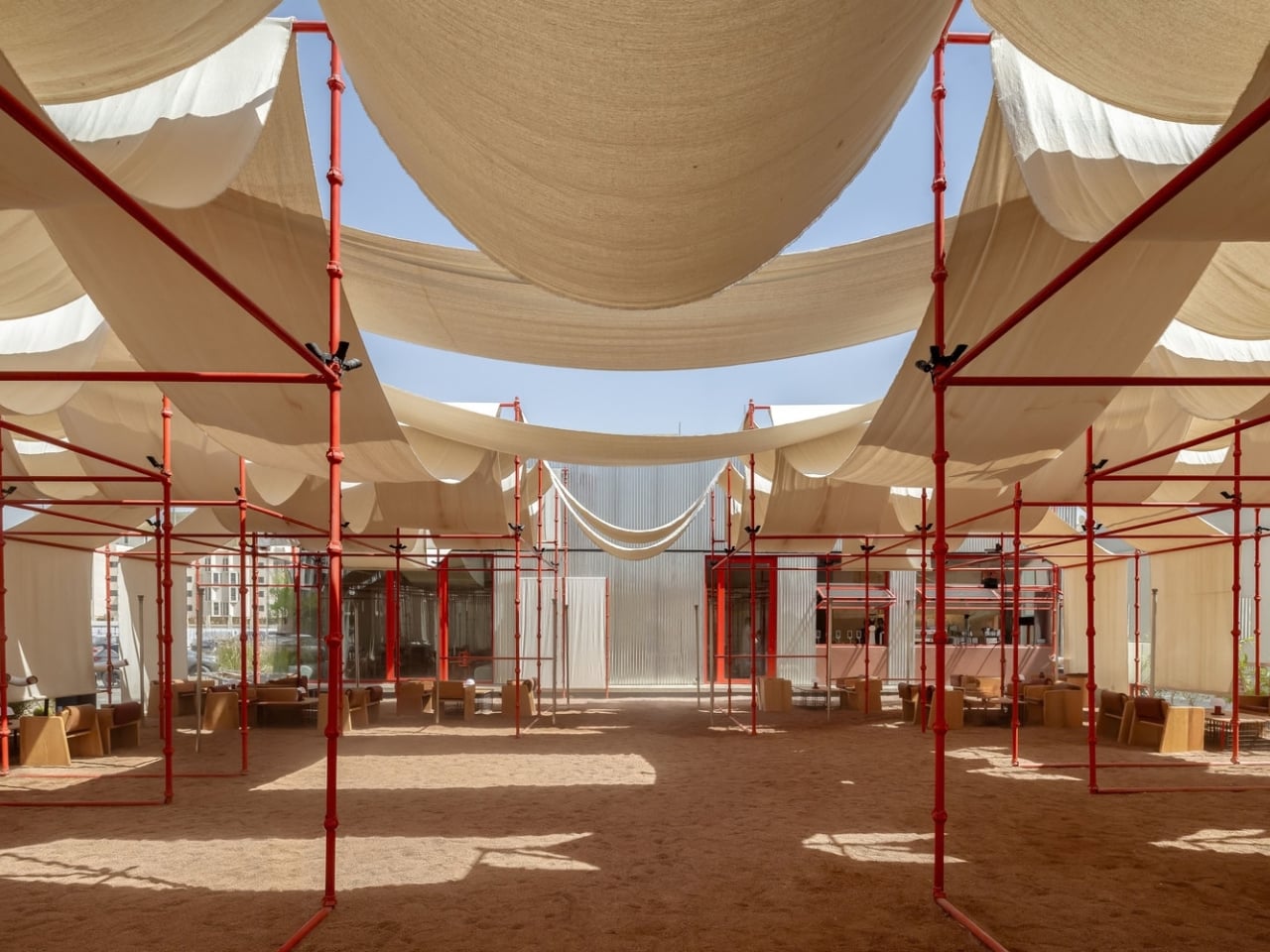
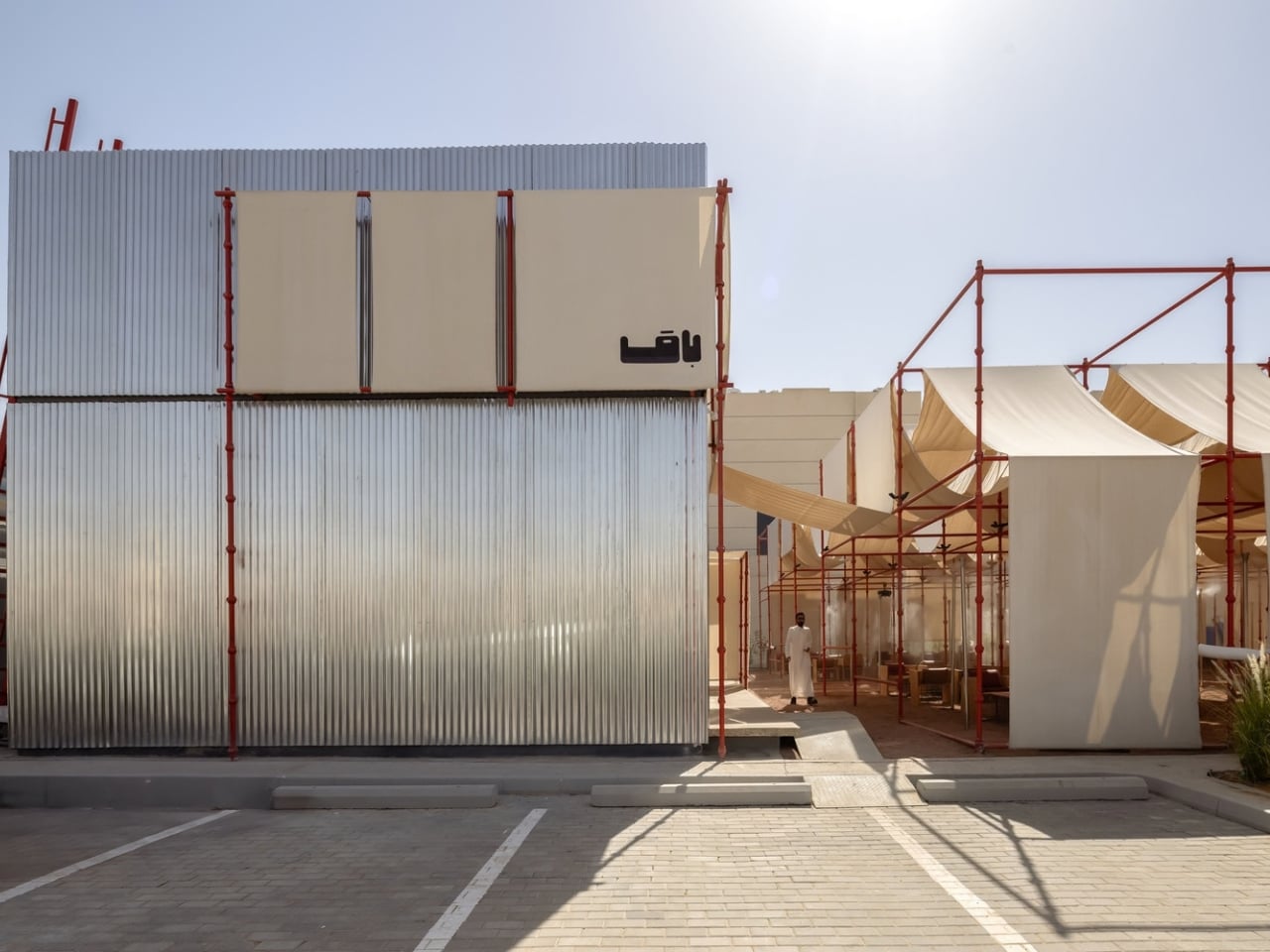
The other problem is harder to measure. Coffee shops can blur together, even when their interiors are expensive and meticulously styled. BAG gives people a place they can recognize at a glance. A grid of red construction scaffolding stretches over the outdoor area and continues into the ceiling inside. Instead of hiding the thing that usually signals a building isn’t finished, the architects made it part of the finished design.
Designer: AO Architects
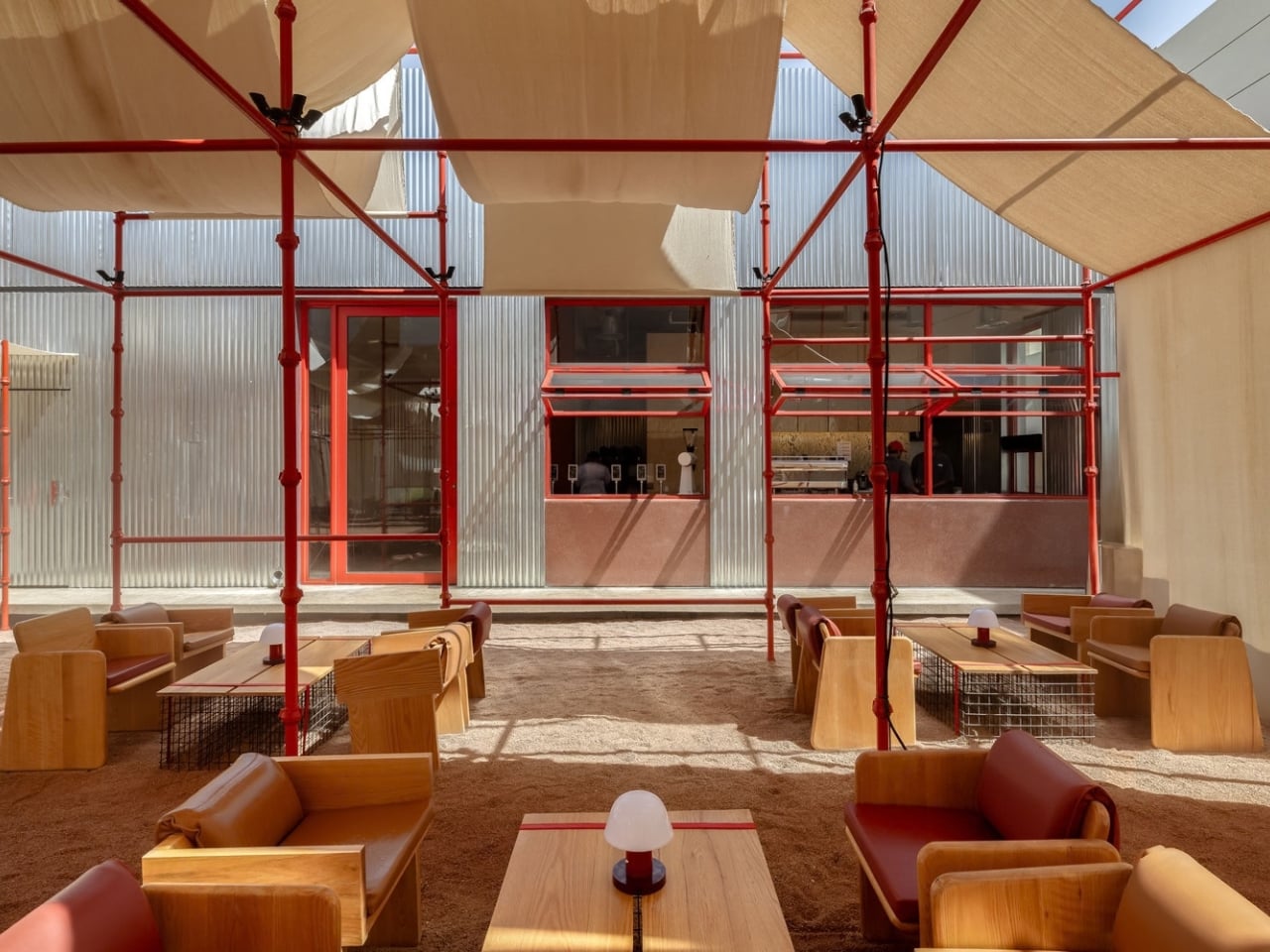
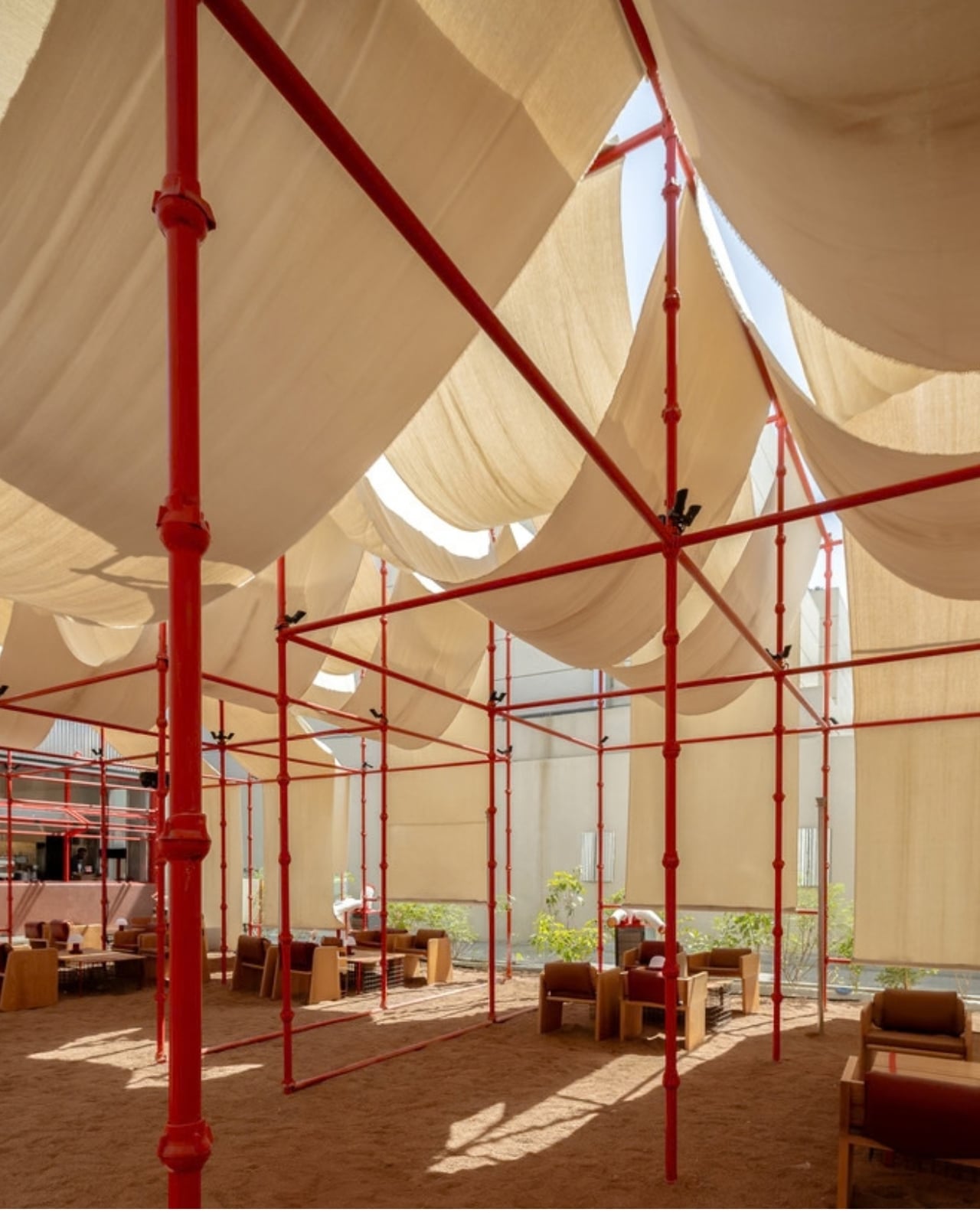
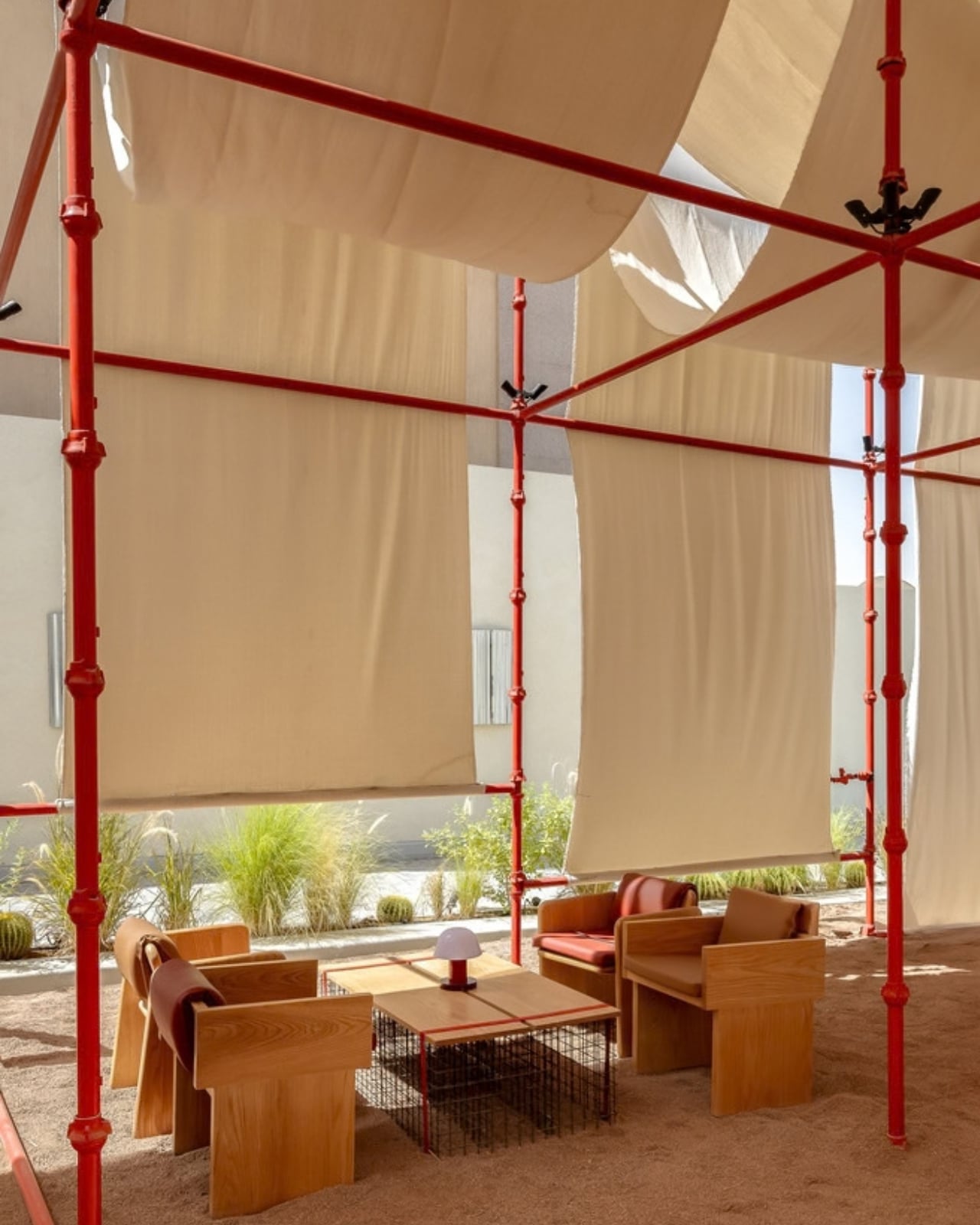
That reversal is more interesting than a clever photo opportunity. Scaffolding is normally a promise that something else is coming. Here, it becomes part of the place people came to see. The architects describe the project as using a temporary construction system to create a lasting presence. I like how little explanation it needs once you picture someone sitting under those bright red bars with a coffee in hand.
The red has a practical logic, too. The scaffolding’s standard industrial finish already matched BAG’s brand color, so it could be used without repainting. It is rare to find branding that feels this inseparable from the architecture. The café does not need a giant logo in every photograph to announce itself. Its structure does that work, while still looking like a structure rather than a prop.
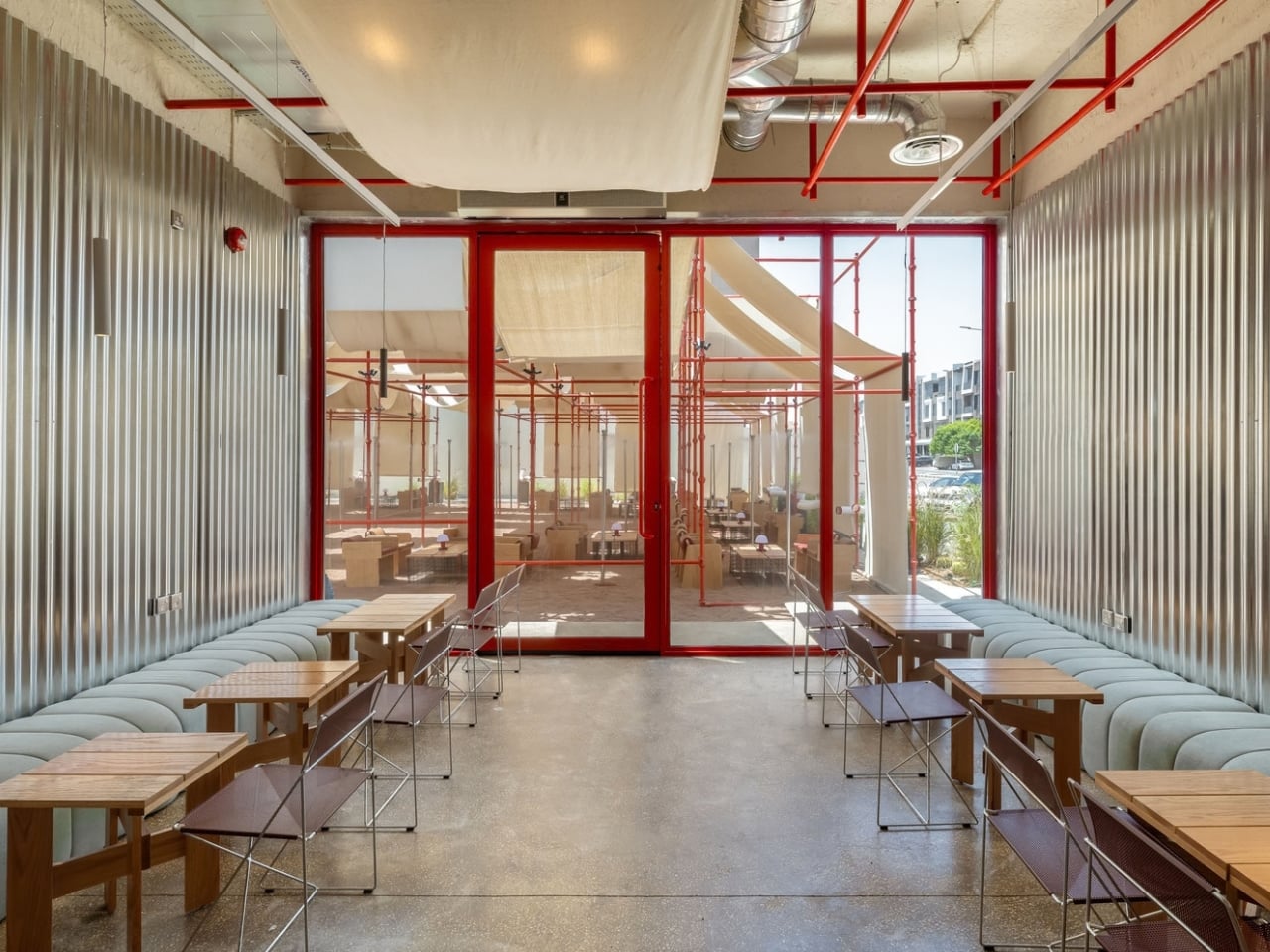
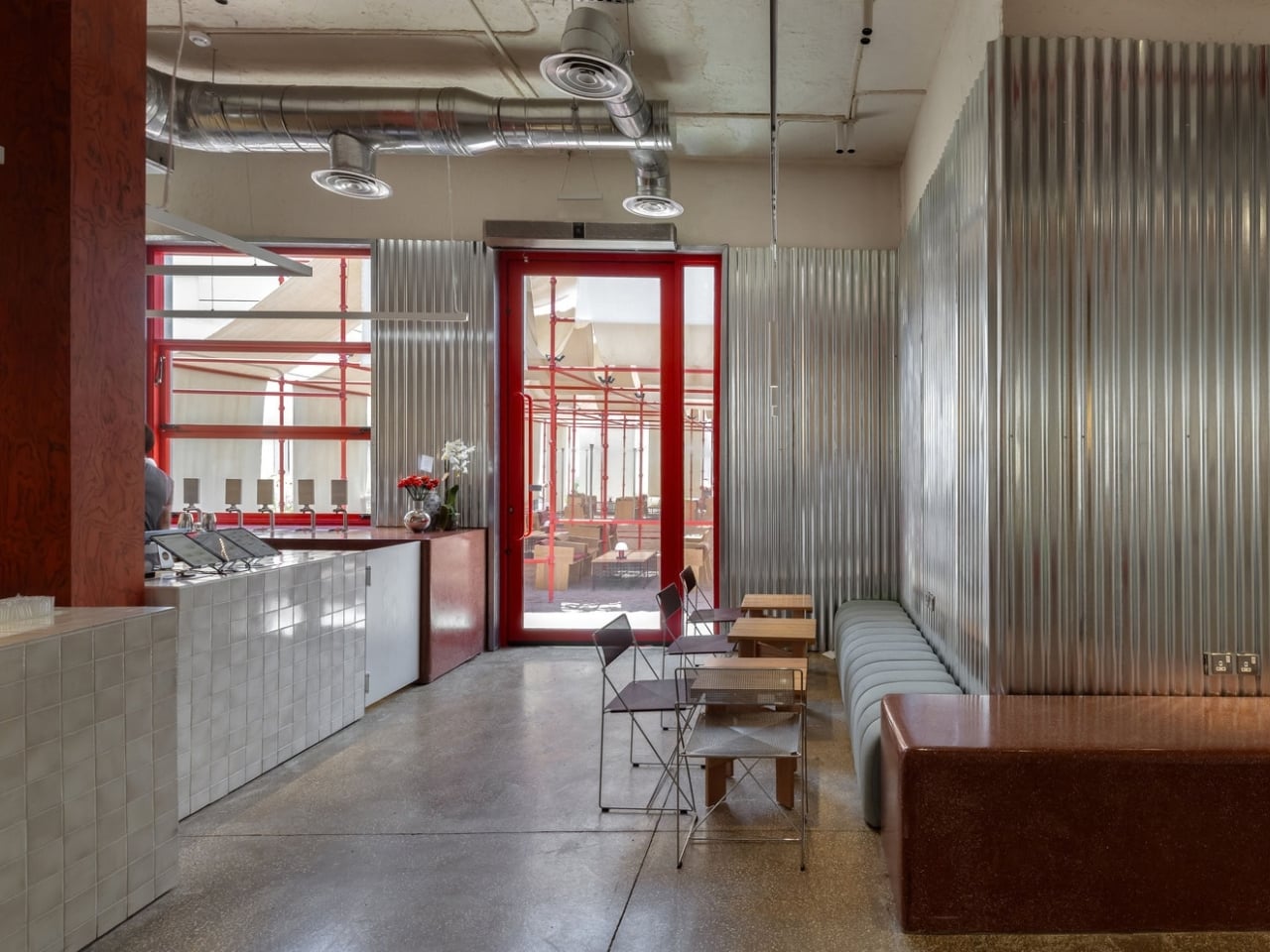
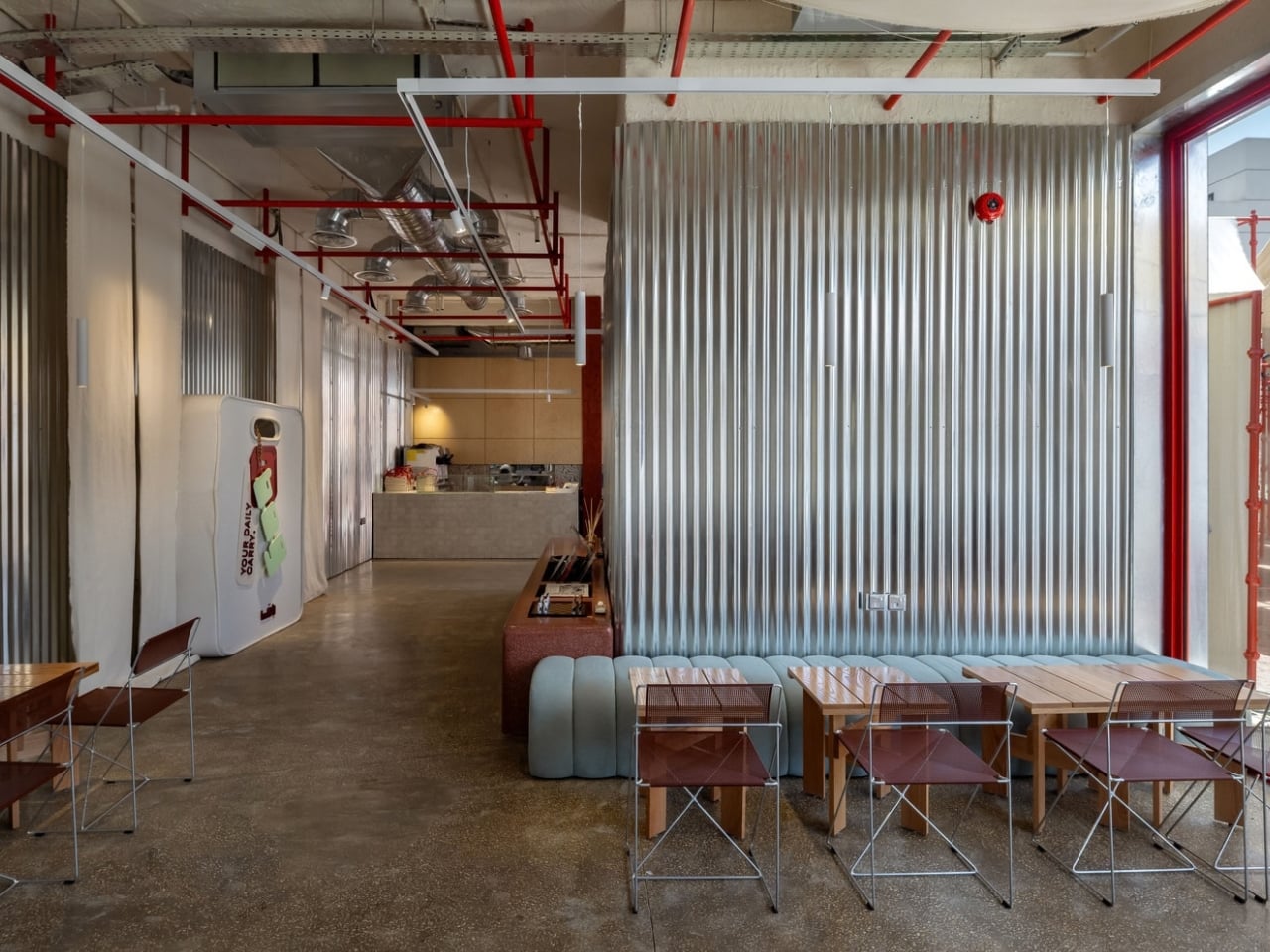
Over the gravel-covered yard, woven cloth associated with traditional goat-hair tents stretches across the scaffolding. It offers shade and gives the hard geometry a softer edge. The pairing connects two very different ways of making shelter: one tied to contemporary construction, the other to a regional tradition of portable tents. The contrast could have felt like a concept looking for a café. Here, it gives the outdoor seating a character of its own.
Inside, corrugated galvanized steel runs from the exterior into the café without being painted to resemble anything more polished. Concrete underfoot keeps the palette straightforward. Those choices matter because exposed materials are often asked to perform authenticity. BAG seems less interested in looking unfinished than in deciding which parts are worth finishing differently. The metal is metal. The scaffolding stays visible. Neither needs a decorative apology.
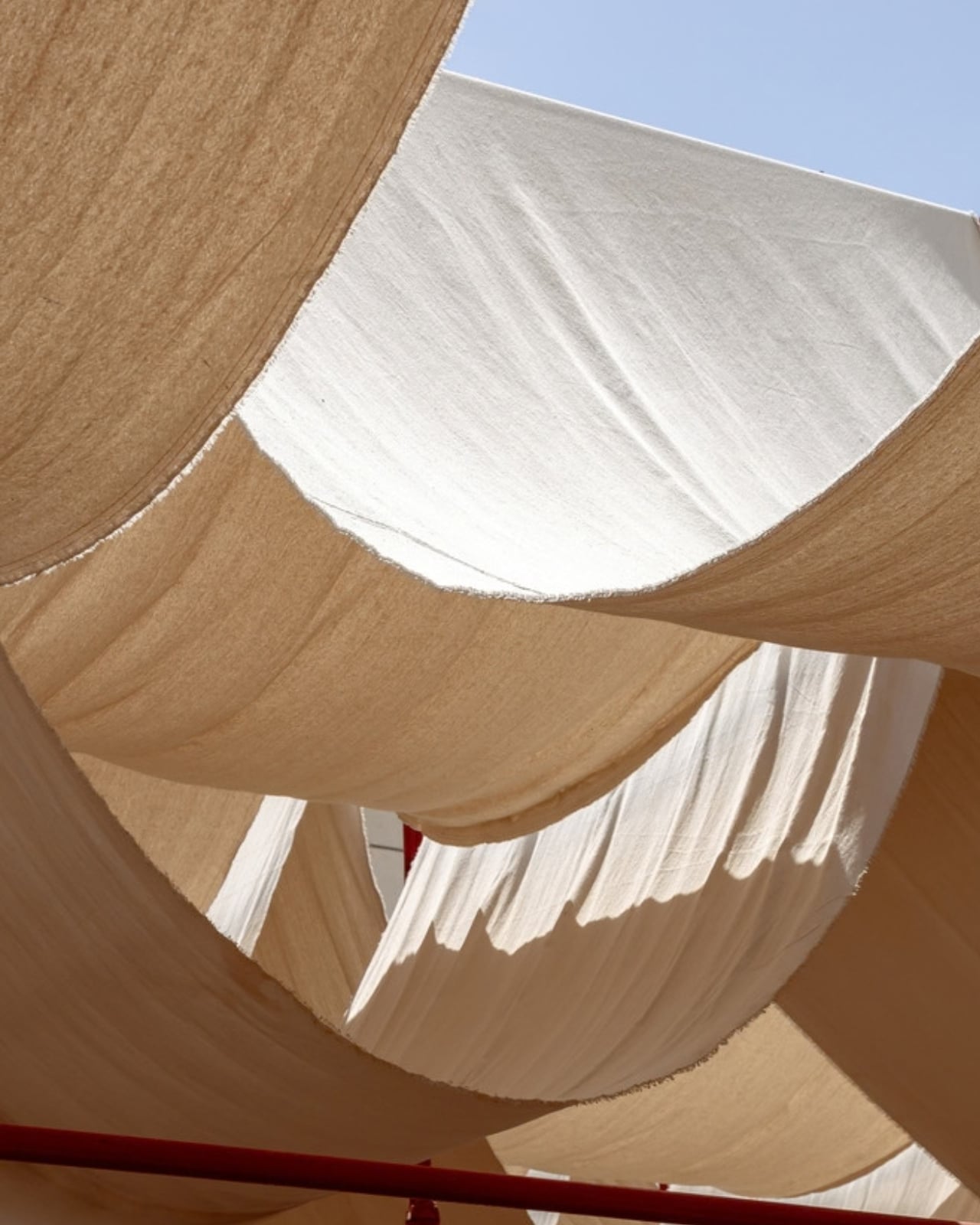
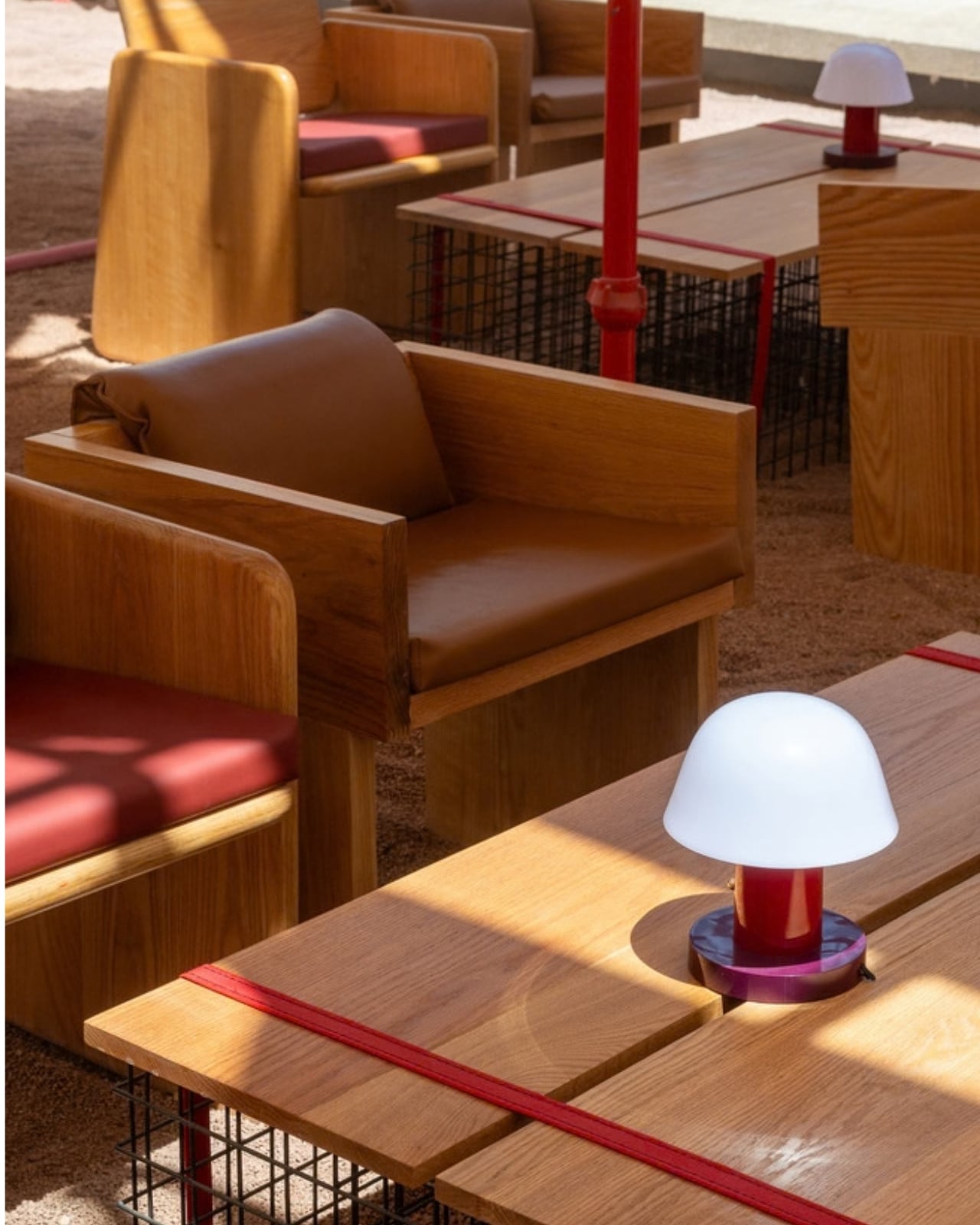
This was not a matter of dropping a new building onto an empty lot. The existing structure was rehabilitated, while the kitchen and service areas were rebuilt. The drive-thru lane remained in use. That combination gives the project an appealing sense of proportion: change the parts that need changing, keep the parts that still work, and let the former parking yard have a better life as outdoor space.
For visitors, the payoff is simple. You can choose the ease of a drive-thru or sit outside under a canopy that makes the setting feel intentional, not like a few tables left beside the curb. The grid also carries the same visual language from outside to in, so the café feels like one coherent place. None of that requires you to know the architect’s concept before ordering.
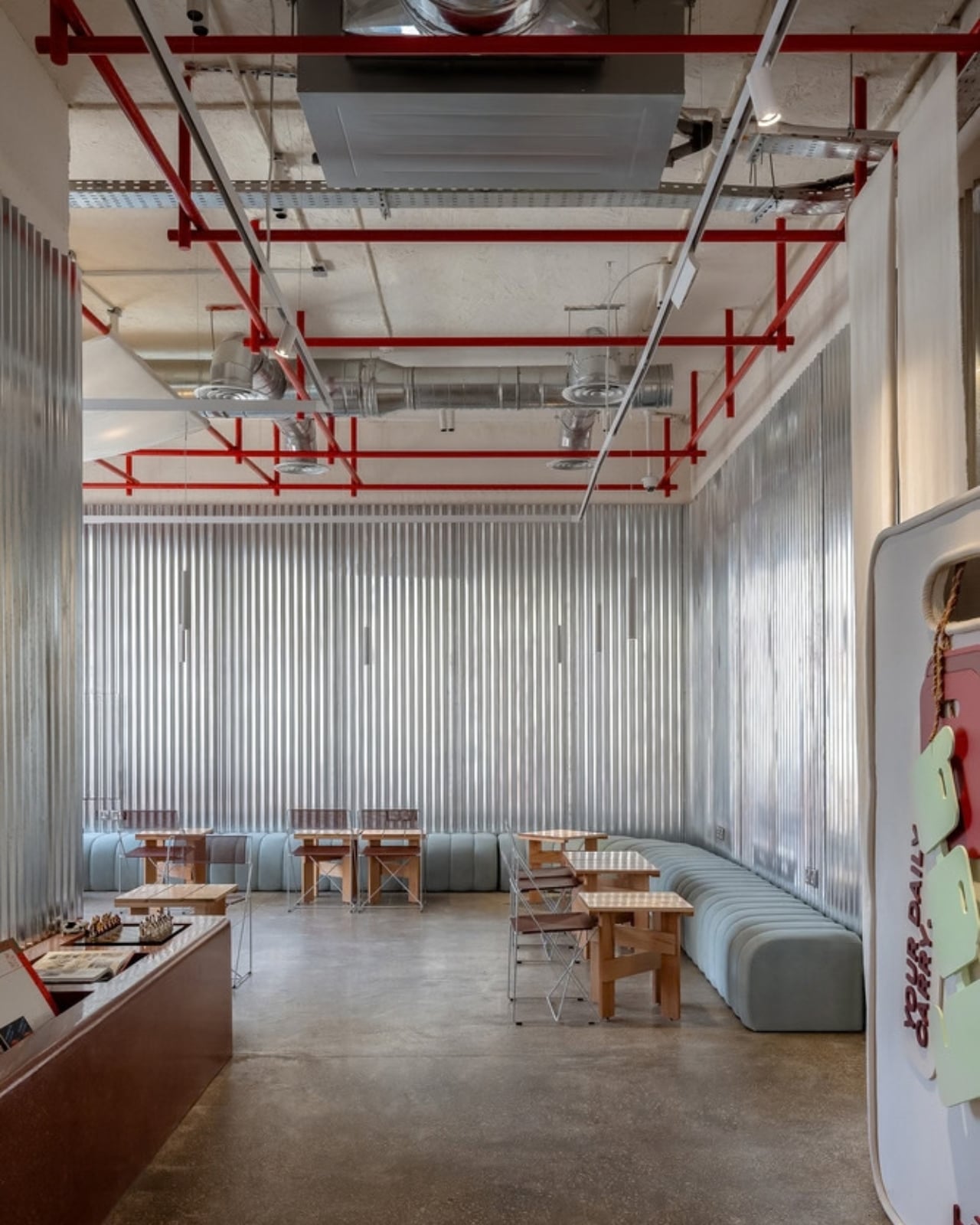
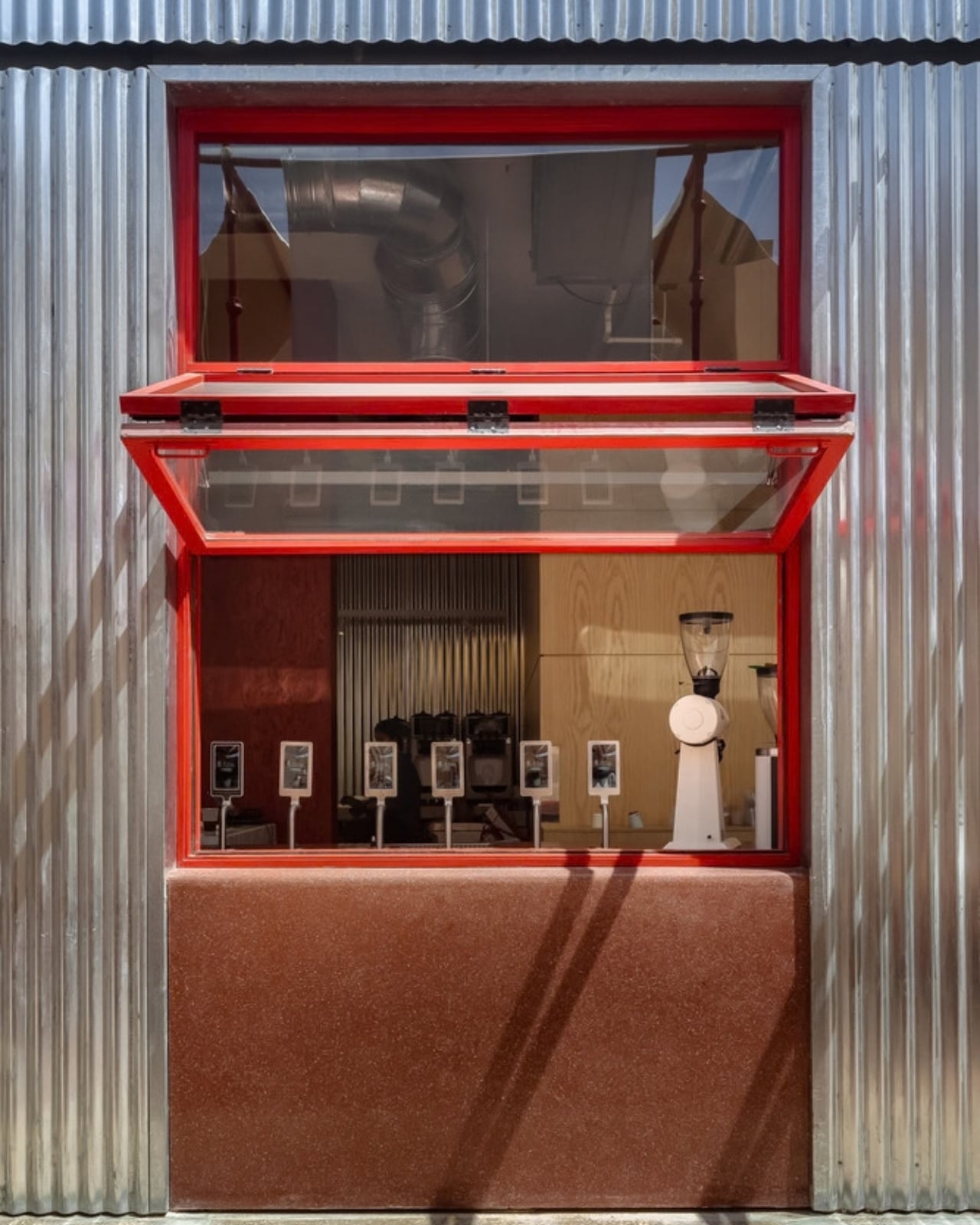
I appreciate that BAG doesn’t ask its industrial materials to pretend they are luxurious. It trusts the arrangement of ordinary things to be memorable: a red frame, a gravel yard, a length of fabric, a sheet of metal. That is a useful idea beyond cafés. A space does not always need a fresh skin or a blank slate to become somewhere people want to be.
The strongest part of the design may be its restraint. It makes room for an afternoon where there used to be parking, but it never erases the site’s earlier purpose entirely. Cars can still pass through the drive-thru; people can now choose to linger. BAG Café offers a gentle reminder that a place can change its job without having to hide how it got there.
The post The Café That Refuses to Take the Scaffolding Down first appeared on Yanko Design.