The Case for Heirloom Furniture in an Era Obsessed With Biodegradable Everything

Joe Doucet has always been good at saying uncomfortable things politely. His latest provocation, delivered via Columns, a furniture collection with Bulgarian studio Oublier, is that the design industry’s obsession with biodegradable materials might be missing the point entirely. Furniture made from mycelium or algae can decompose in five years, sure, but a well-made antique armoire outlives empires because no one throws it away. Columns takes that logic seriously. Handcrafted in solid oak, natural leather, and horsehair, the pieces are built to last a thousand years, which sounds like marketing hyperbole until you look at the joinery, the hand stitching, and the material choices. This is furniture designed to be inherited, repaired, and remembered.

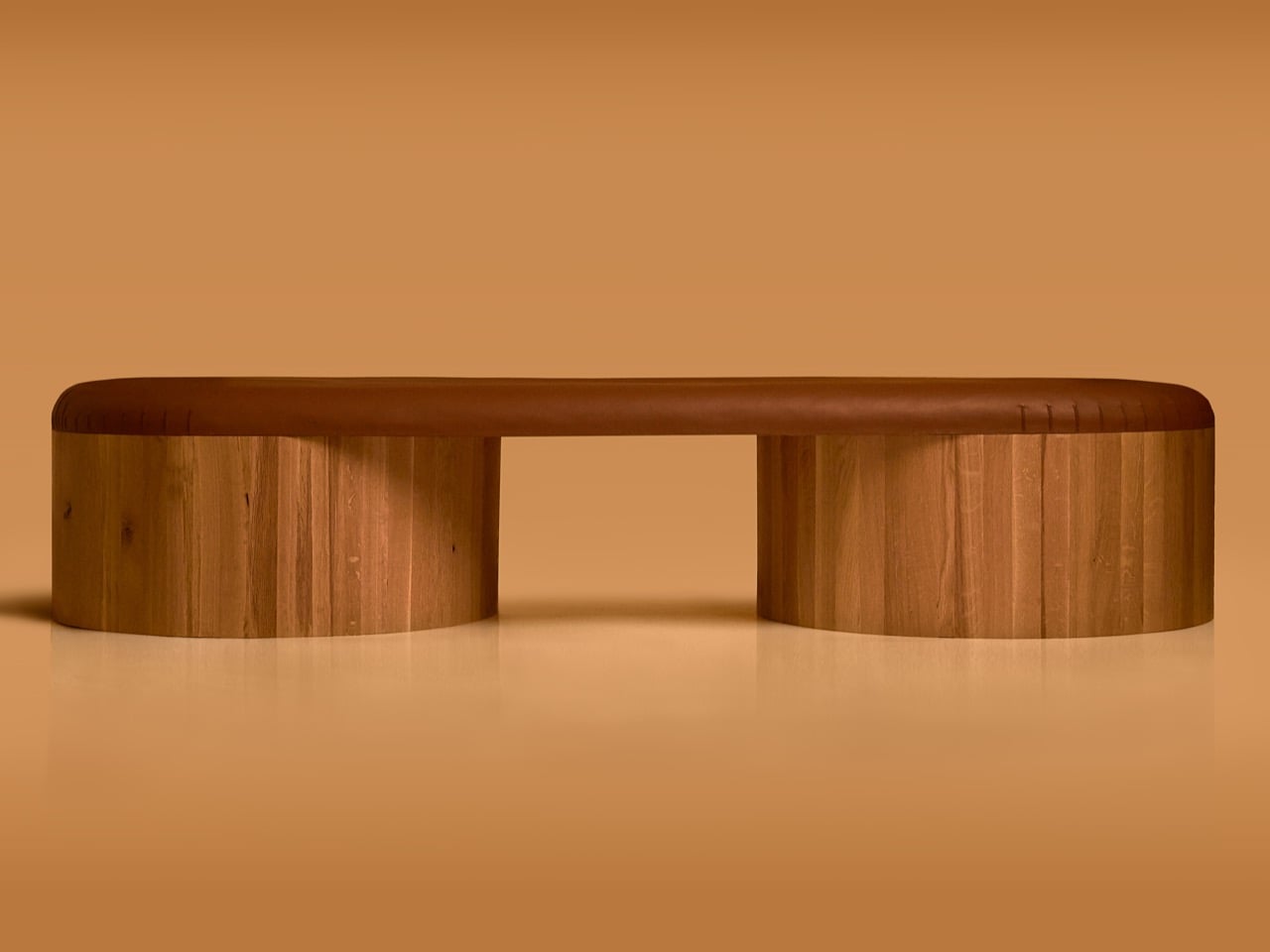
Oublier, a studio that typically explores forgetting as a cultural and creative act, seems like an odd partner for a project about permanence. But the contradiction makes sense once you see the work. The collection’s name refers to its columnar bases, two cylinders of oak laid horizontally and bridged by a continuous leather top. There are no fashionable details to anchor it to a specific decade, no finishes that will look dated in ten years. The form is so spare it borders on austere, which may be the entire strategy. If sustainability is about what we keep rather than what we compost, then the object has to earn its place across generations. Columns bets on clarity, craft, and a very patient understanding of time.

Designers: Joe Doucet X Oublier
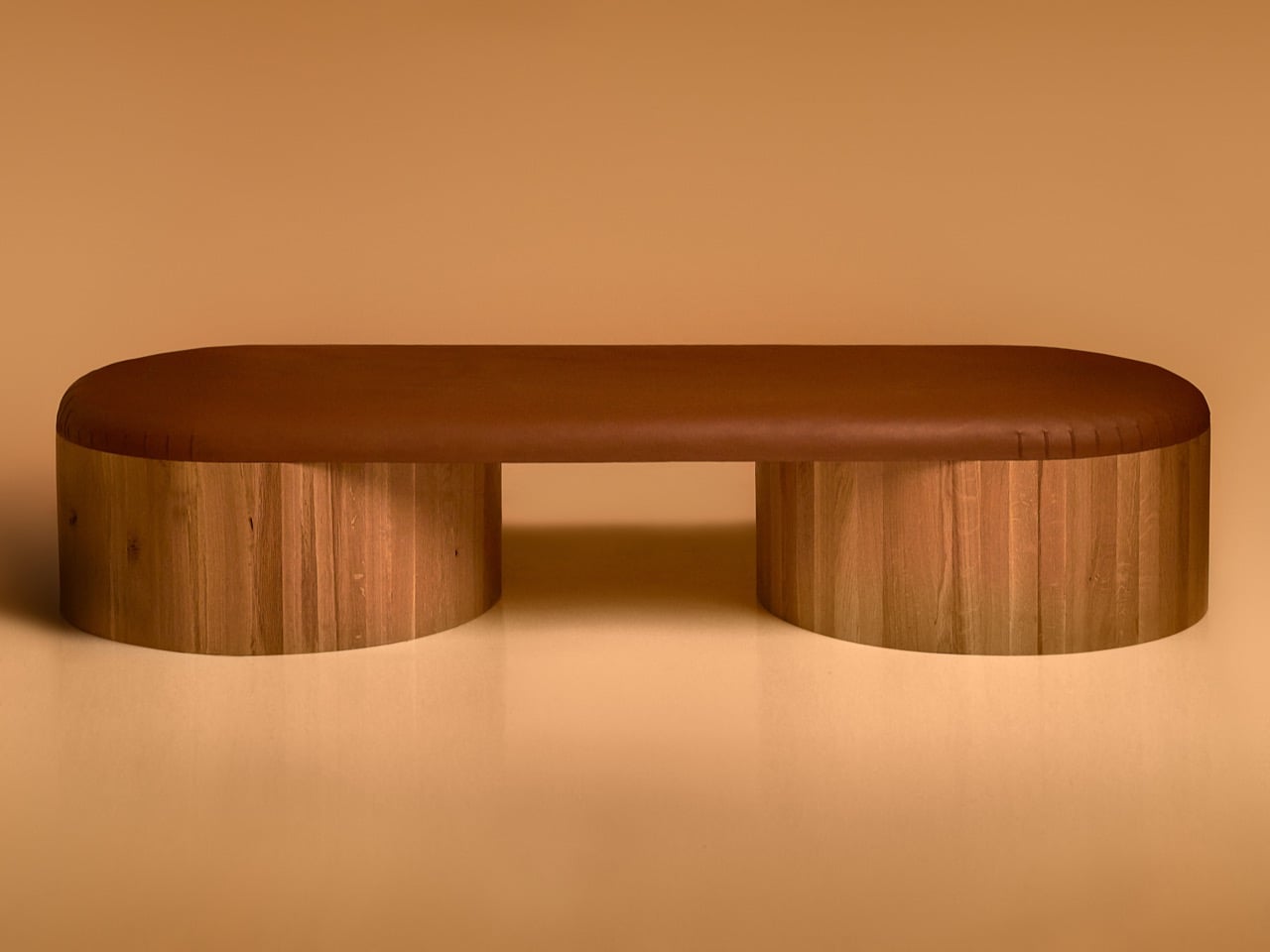
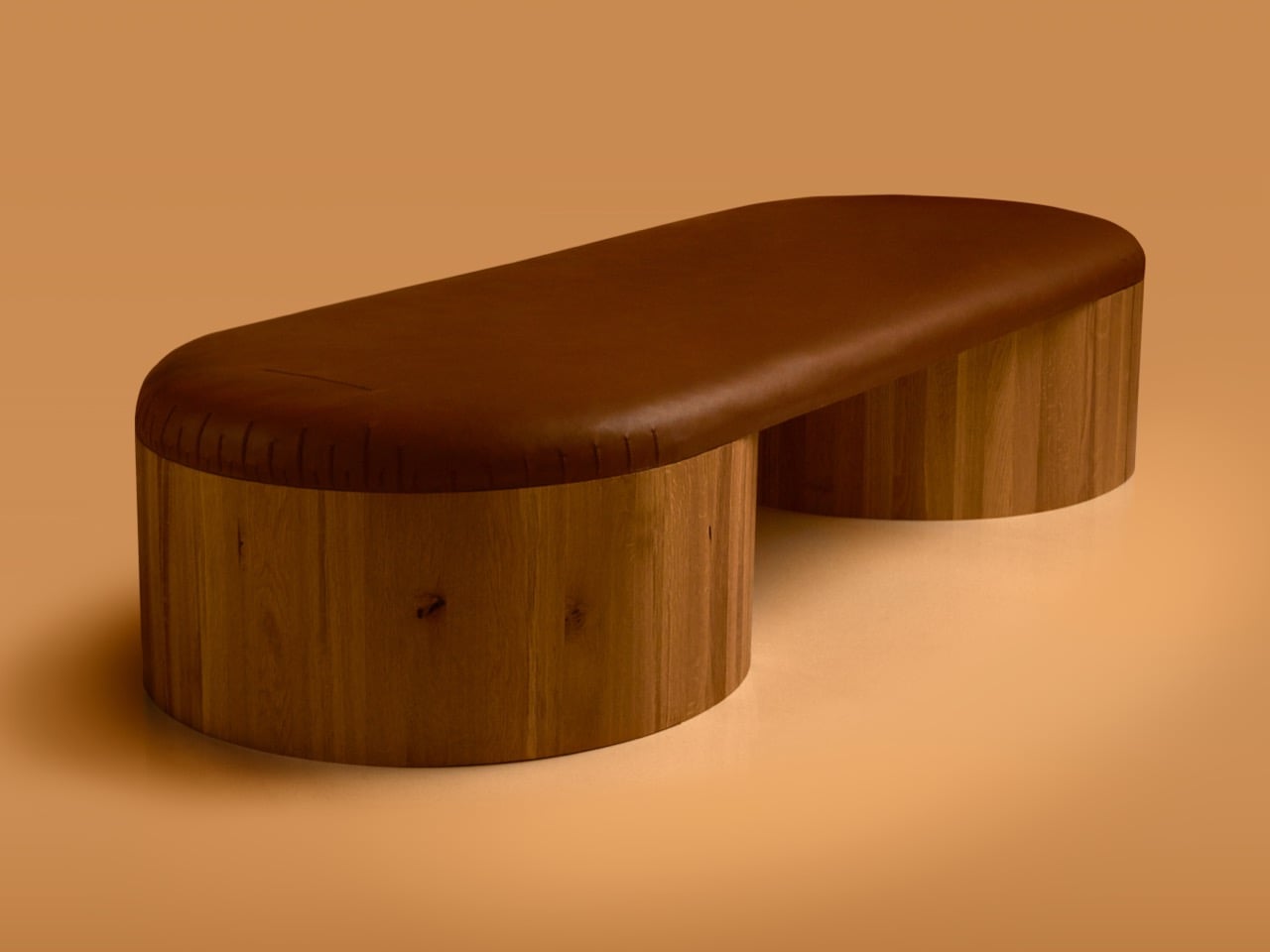
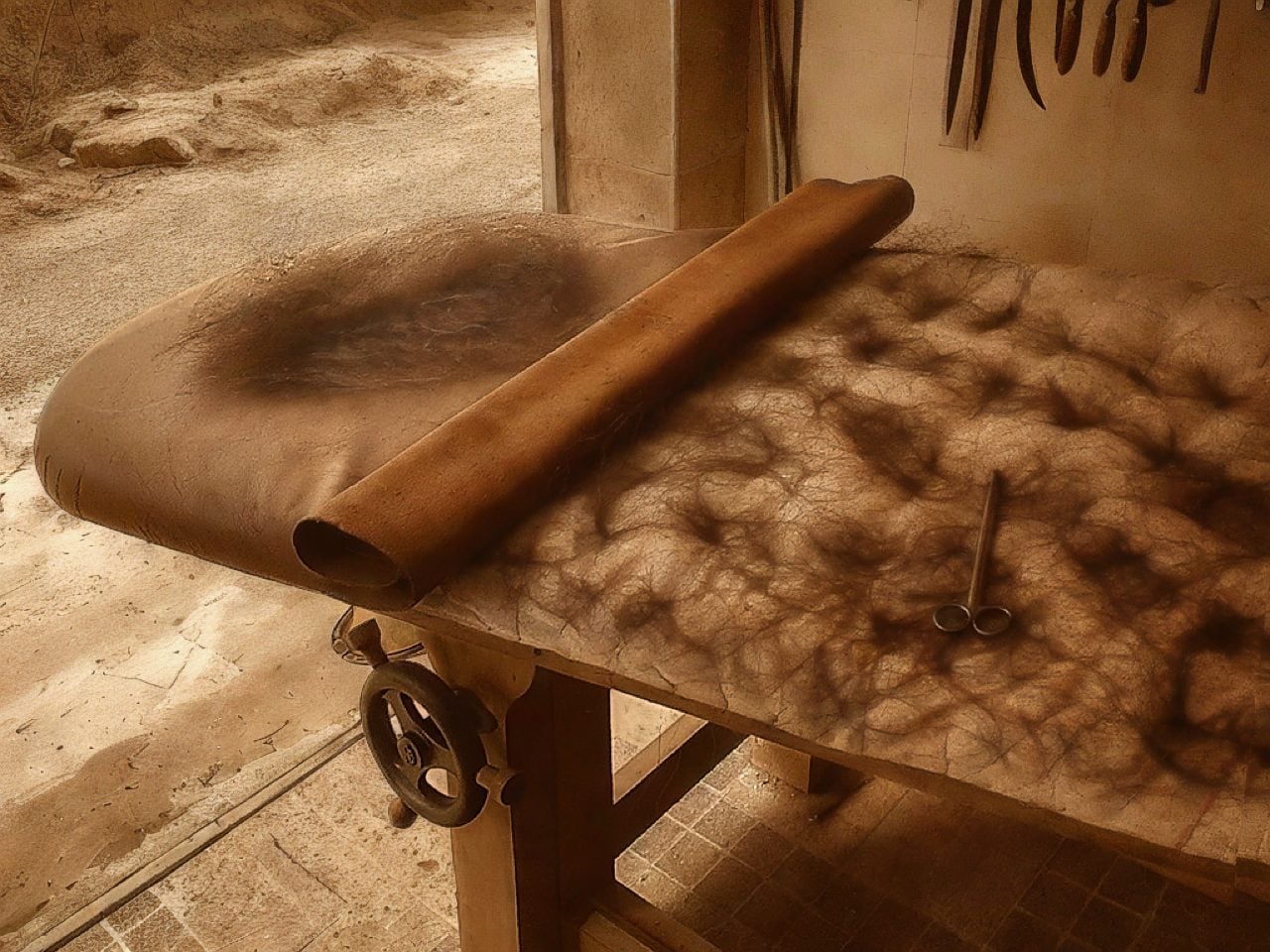
Looking at the piece itself, the argument becomes tangible. The form is elemental, almost architectural, with the two solid oak drums giving it a grounded, permanent presence. The leather top is stretched over this base with a continuous curve, and the hand stitching along the perimeter is left visible. This small detail is a critical part of the story, acting as a quiet signal of human labor and future repairability. It suggests the piece can be opened, its horsehair padding refreshed, and its leather resewn a century from now. There is a thoughtful honesty in showing the construction, which reinforces the idea that this is a working object, not a sealed artifact. It feels built to withstand use, not just admiration.
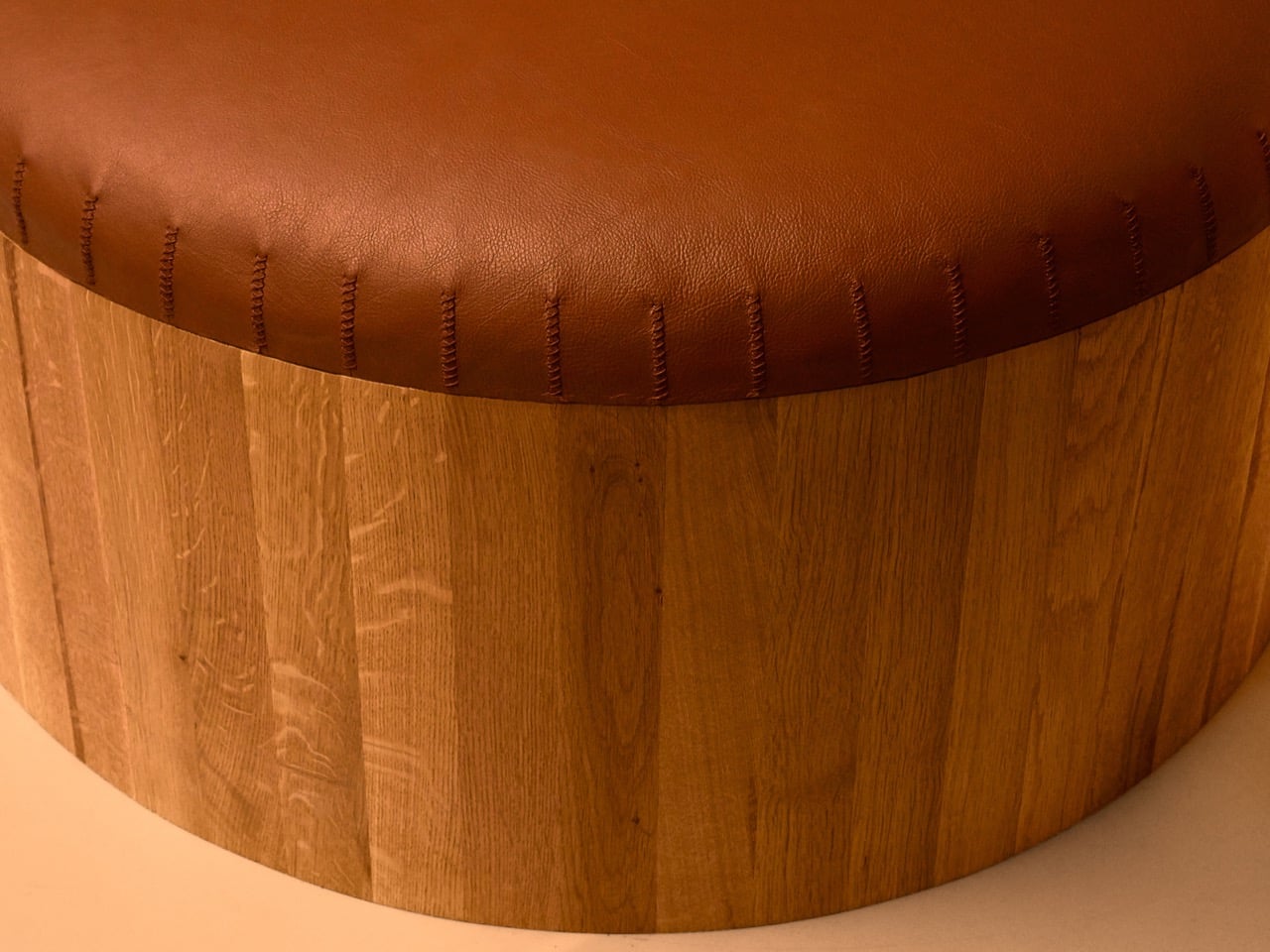
The choice of materials is a direct commitment to graceful aging. The solid oak is not a uniform, characterless surface; it has grain and life that will deepen over the decades. Similarly, the natural leather is intended to absorb the evidence of its existence, developing a rich patina from sunlight, touch, and time. This philosophy is the complete opposite of designing for pristine, showroom condition. Instead, Columns proposes that wear is a form of beauty, that an object’s value increases as it accumulates a history. This approach redefines luxury away from novelty and toward endurance, suggesting that the ultimate premium is an object that improves with you.
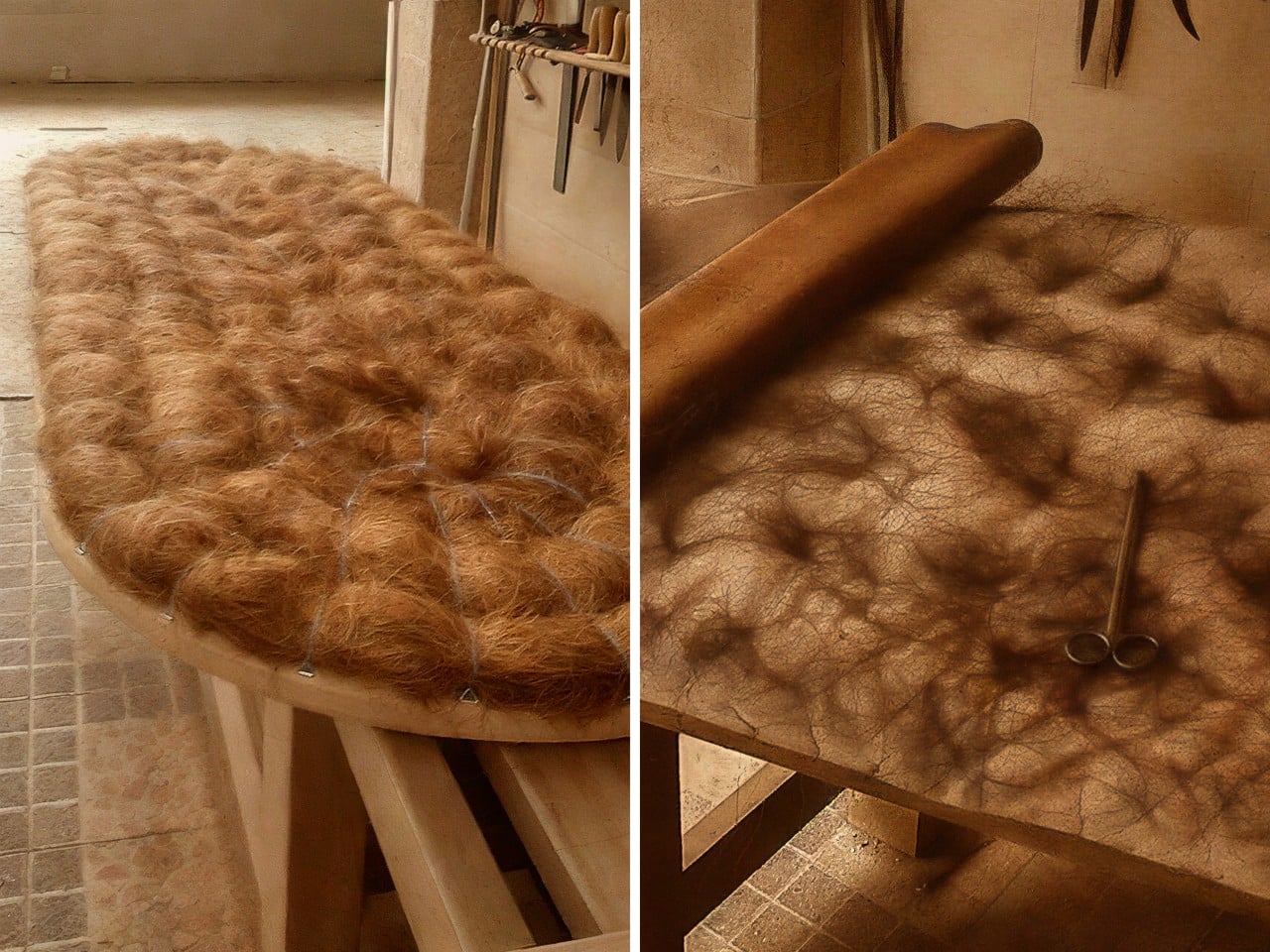
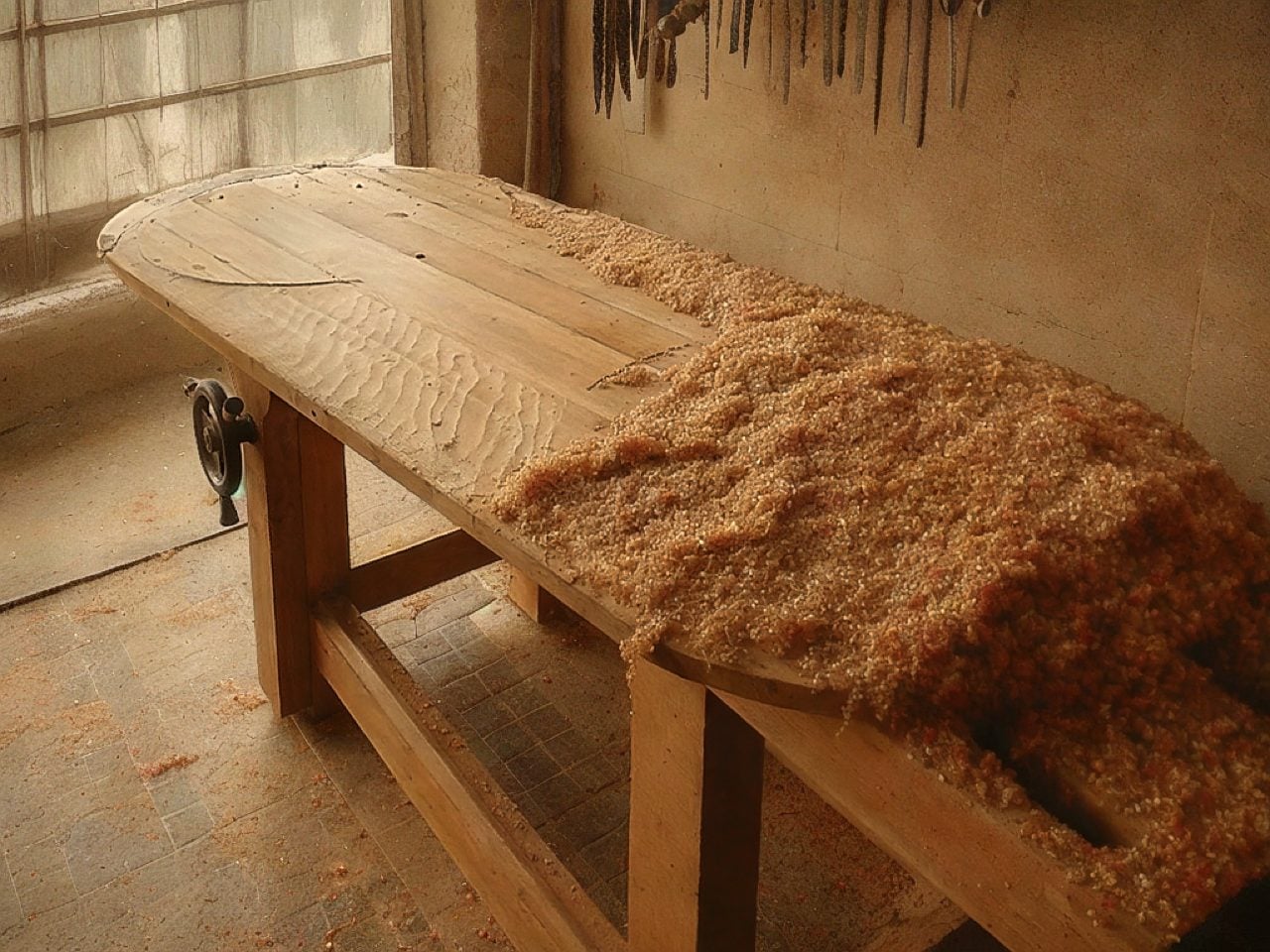
 

What Doucet and Oublier have created is a subtle but firm critique of disposability. The project opines that true innovation might lie in looking backward, applying traditional techniques and durable materials to a clean, contemporary form. It challenges the prevailing notion that sustainability requires constant material invention and complex recycling systems. Instead, it offers a simpler, more profound solution: make things that last, and are simultaneously too good to throw away. Columns proposes that the most responsible act of consumption is to buy something once and keep it for a lifetime, passing it on as a functional heirloom rather than a problem for a landfill.
The post The Case for Heirloom Furniture in an Era Obsessed With Biodegradable Everything first appeared on Yanko Design.
Airiva: Modular Rotary Turbine Walls Revolutionize Urban Wind Energy

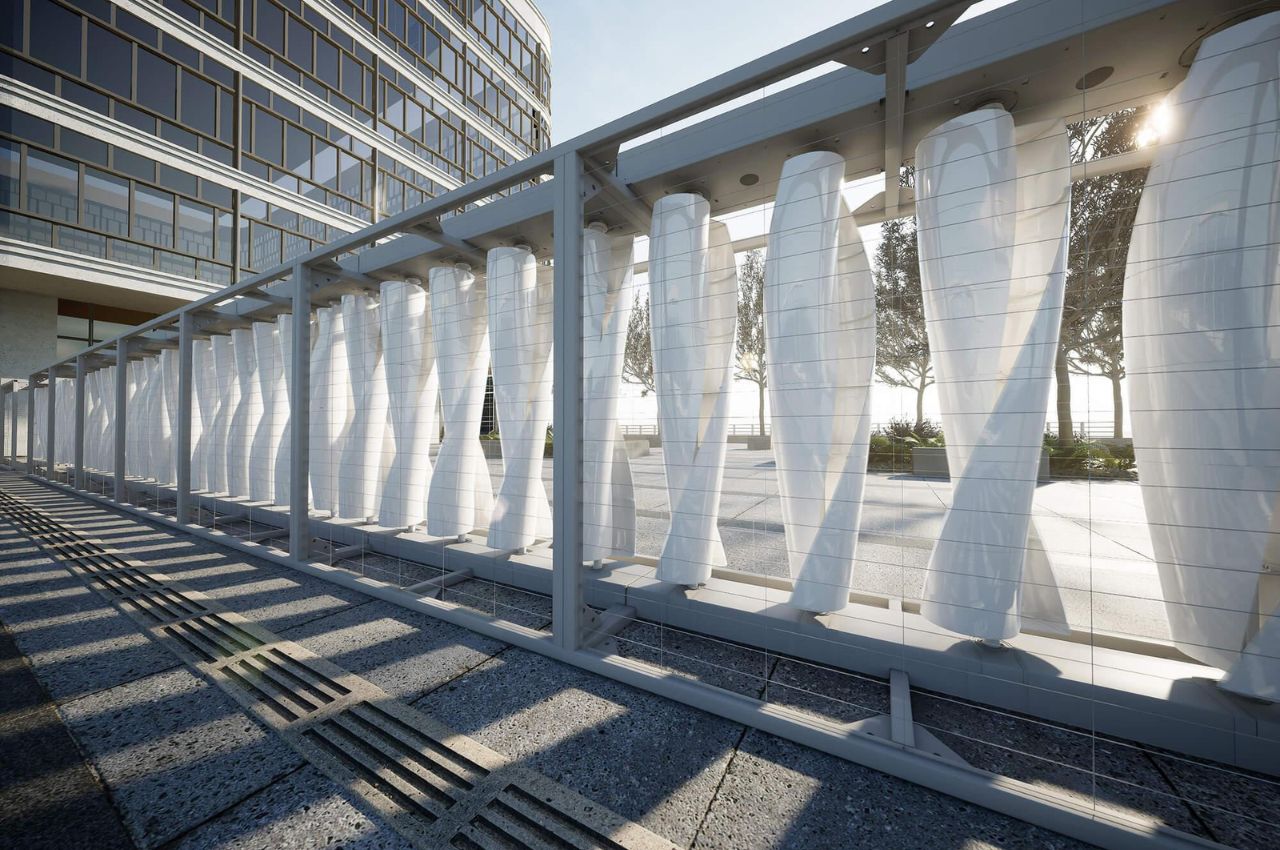
Since introducing the concept for an energy-generating wall in 2021, designer Joe Doucet has been tirelessly working to turn this innovative idea into reality. Now, with the launch of Airiva, a modular rotary wind turbine wall designed for urban installations, this vision is closer than ever to being realized. Airiva promises to revolutionize how cities and infrastructures harness wind energy, bringing sustainable power generation directly to the places where people live and work.

Designer: Joe Daucet

Wind energy has been instrumental in reducing global dependence on fossil fuels. However, the adoption of wind turbines for residential and commercial use has been slow, largely due to their intrusive designs. Airiva addresses this challenge by combining functionality with aesthetic appeal.

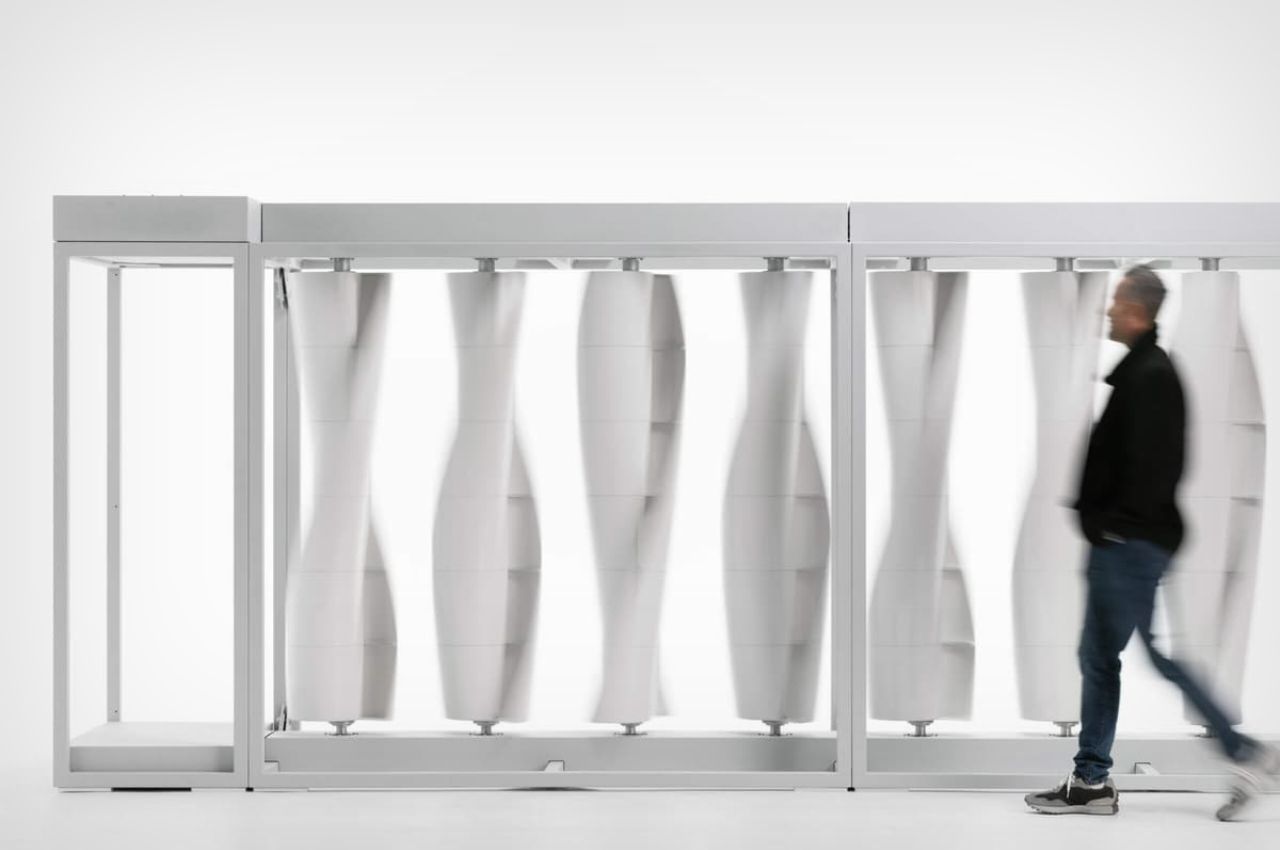
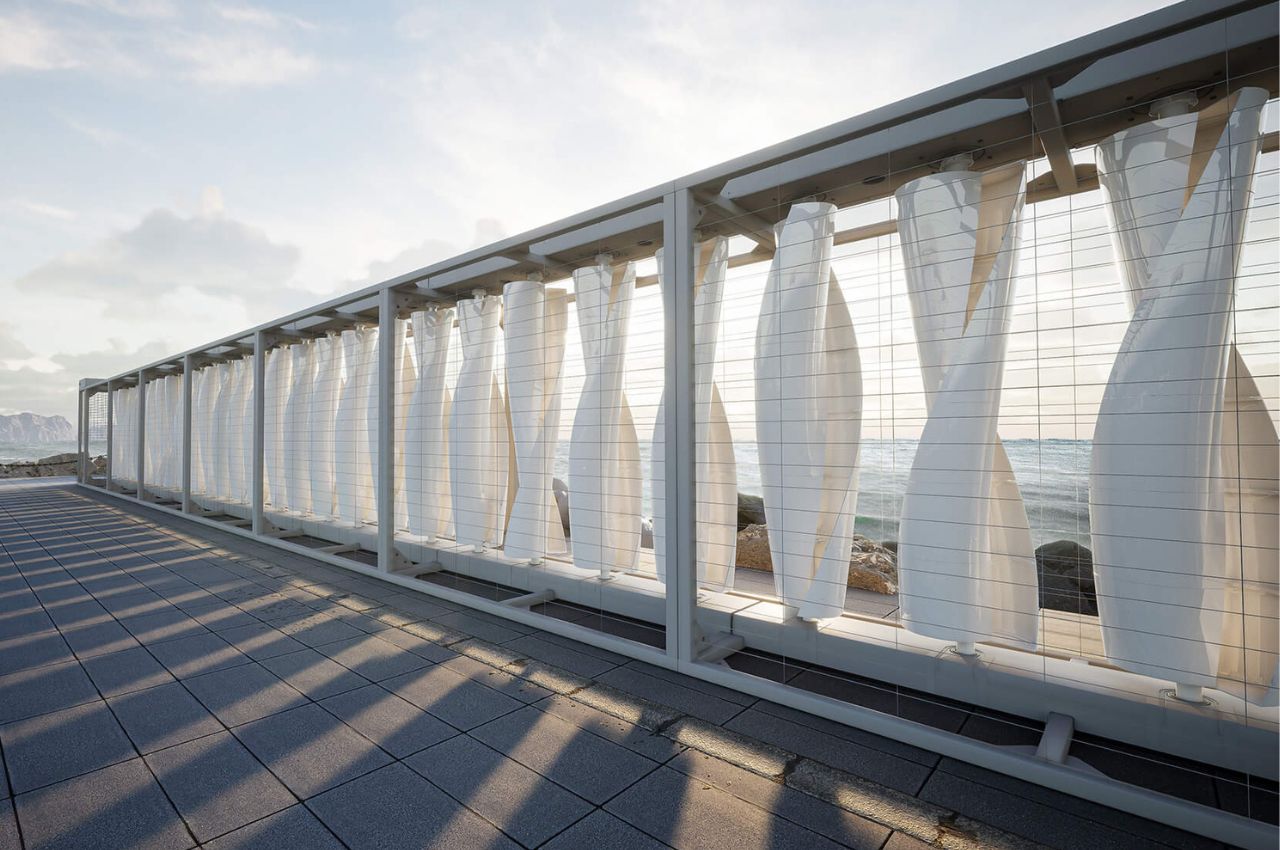
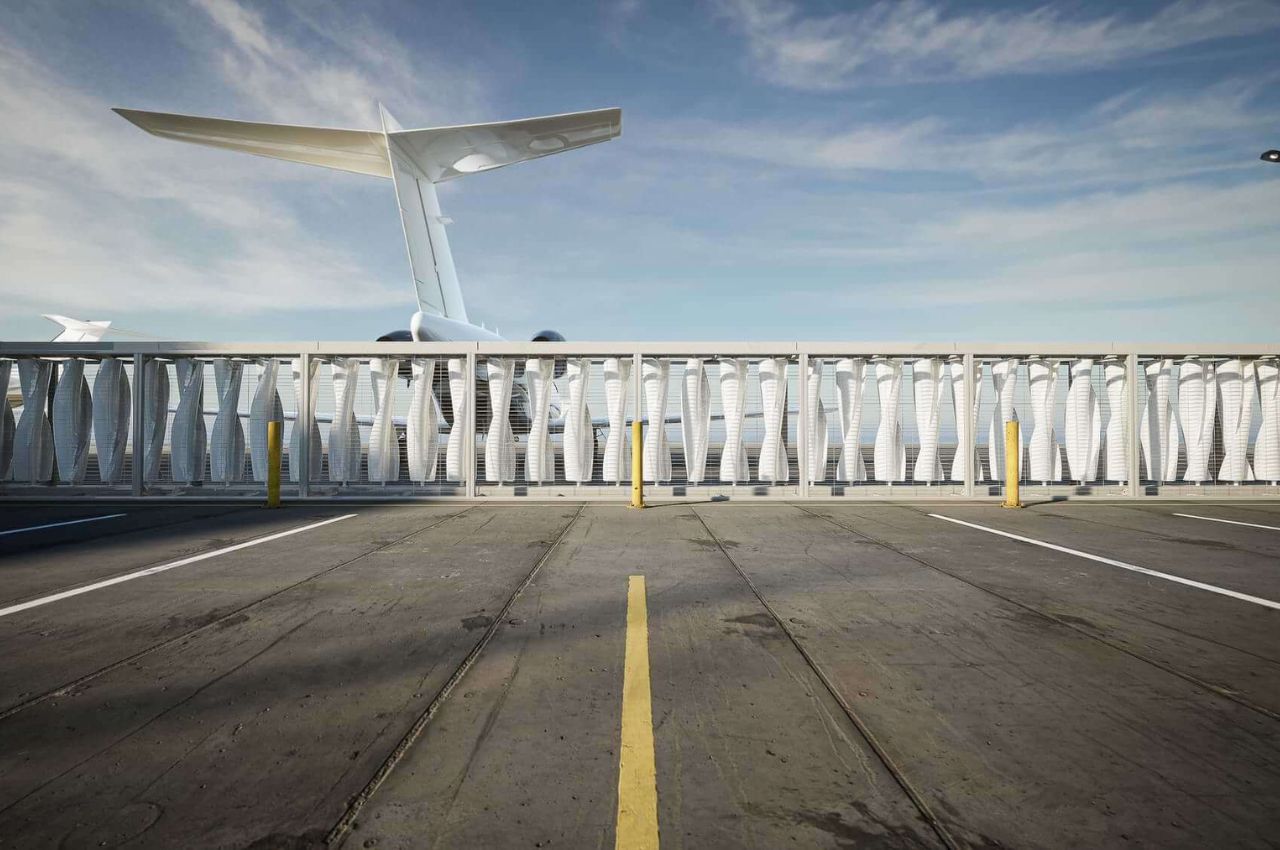
The wind turbine wall is composed of multiple rotary blades that spin independently, driving a generator to produce clean, renewable electricity. This modular and scalable solution is tailored for urban and suburban environments, allowing it to augment or coexist with other power generation methods. The electricity generated can be used on-site, stored, or fed back into the grid. The system is not only efficient but also quiet and safe, making it suitable for a wide range of environments. Potential installation sites include municipal and public facilities, commercial buildings, transportation networks, and coastal areas, among others.

Airiva places a strong emphasis on sustainability. The manufacturing process aims to use at least 80% post-consumer and recycled materials, aligning with circular economy principles and minimizing environmental impact. This commitment to sustainability is a fundamental aspect of Airiva’s design and manufacturing strategy.

One of Airiva’s key strengths is its flexibility. The system’s modular design allows it to be easily transported and scaled to meet specific site requirements. Multiple units can be networked together, creating a flexible, clean energy system that can adapt to various use cases. Additionally, Airiva is designed to complement other distributed energy technologies, providing a versatile alternative that can enhance existing installations.

Airiva’s smart technology enables remote monitoring of system and site information, offering visibility and control over geographically dispersed installations. Each unit consists of two segments, each measuring 2100mm in length and height and 1050mm in depth, along with an end hub unit for controls, communications, and power management. This design facilitates global transport and distribution, ensuring that the system can be deployed wherever it is needed.

The initial idea in 2021 envisioned a wall of 25 vertical-axis turbines with a total peak power output of 10 kilowatts. While the intermittent nature of wind means that actual energy production can vary, the refined Airiva system is expected to produce approximately 2,200 kWh annually per unit. While this may not cover the entire energy needs of an average home, it can significantly reduce energy bills. Larger installations, such as those on commercial campuses or transportation hubs, can harness more power, demonstrating the system’s scalability.

Currently in the prototyping stage, Airiva plans to begin customer pilots in the latter half of this year, with orders expected to open in 2025. Although specific figures have yet to be disclosed, Airiva’s targeted Levelized Cost of Energy (LCOE) aims to be competitive both domestically and internationally against other small-scale distributed energy resources. Upcoming pilots will be crucial in validating these claims and demonstrating the system’s effectiveness in real-world conditions.

The post Airiva: Modular Rotary Turbine Walls Revolutionize Urban Wind Energy first appeared on Yanko Design.