These Solar Gazebos Have 4 Wind Turbines and Let You Charge Below

University campuses function like small cities. Students move between buildings, find outdoor spots to read or work, and constantly need power for phones and laptops. Sustainability tends to get communicated through plaques, rooftop panels, and annual reports, things you don’t interact with. There’s a gap between “this campus is reducing its carbon footprint” and “here’s a place where you can sit, charge your phone, and actually experience that in some tangible way.”

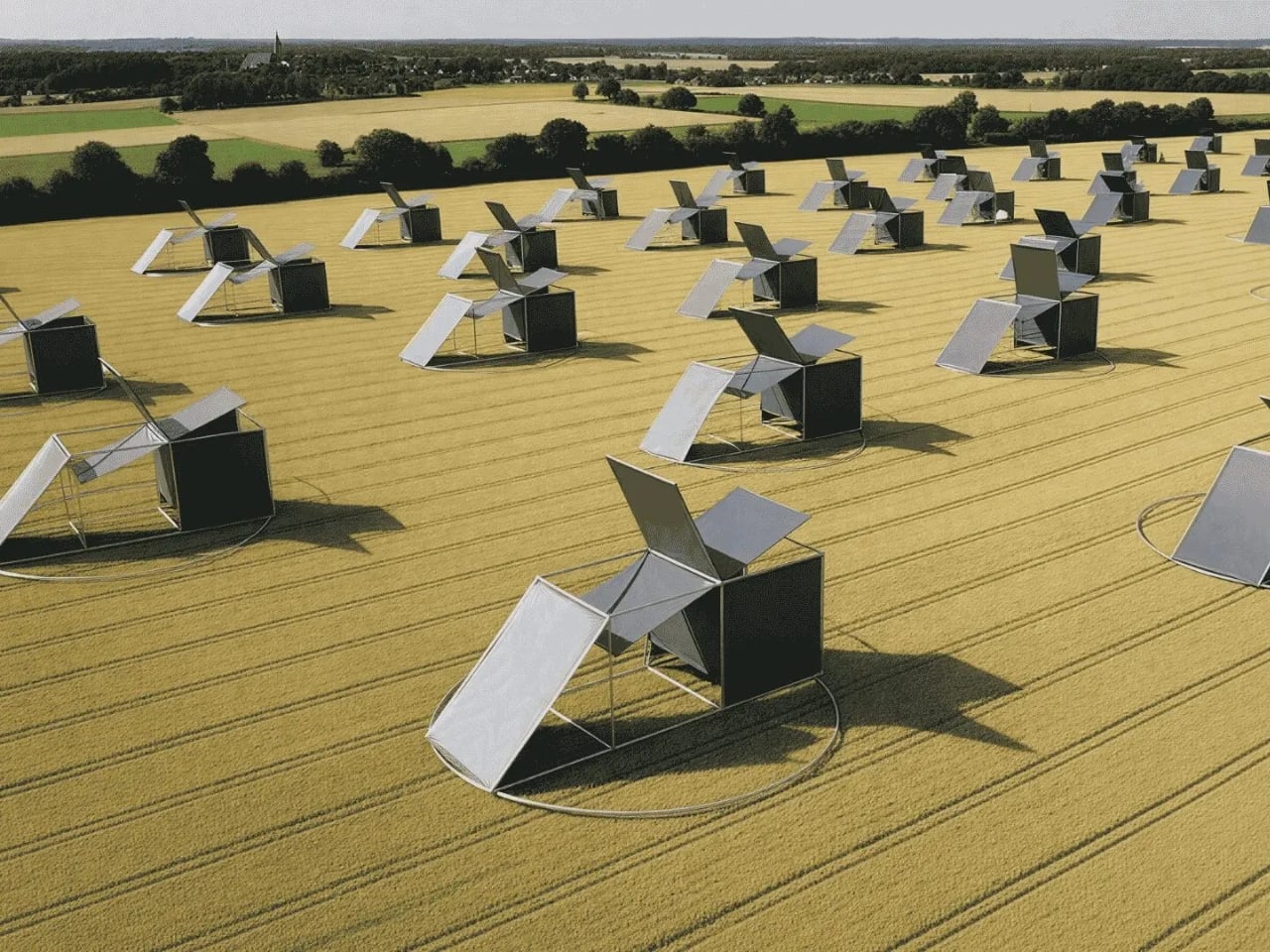
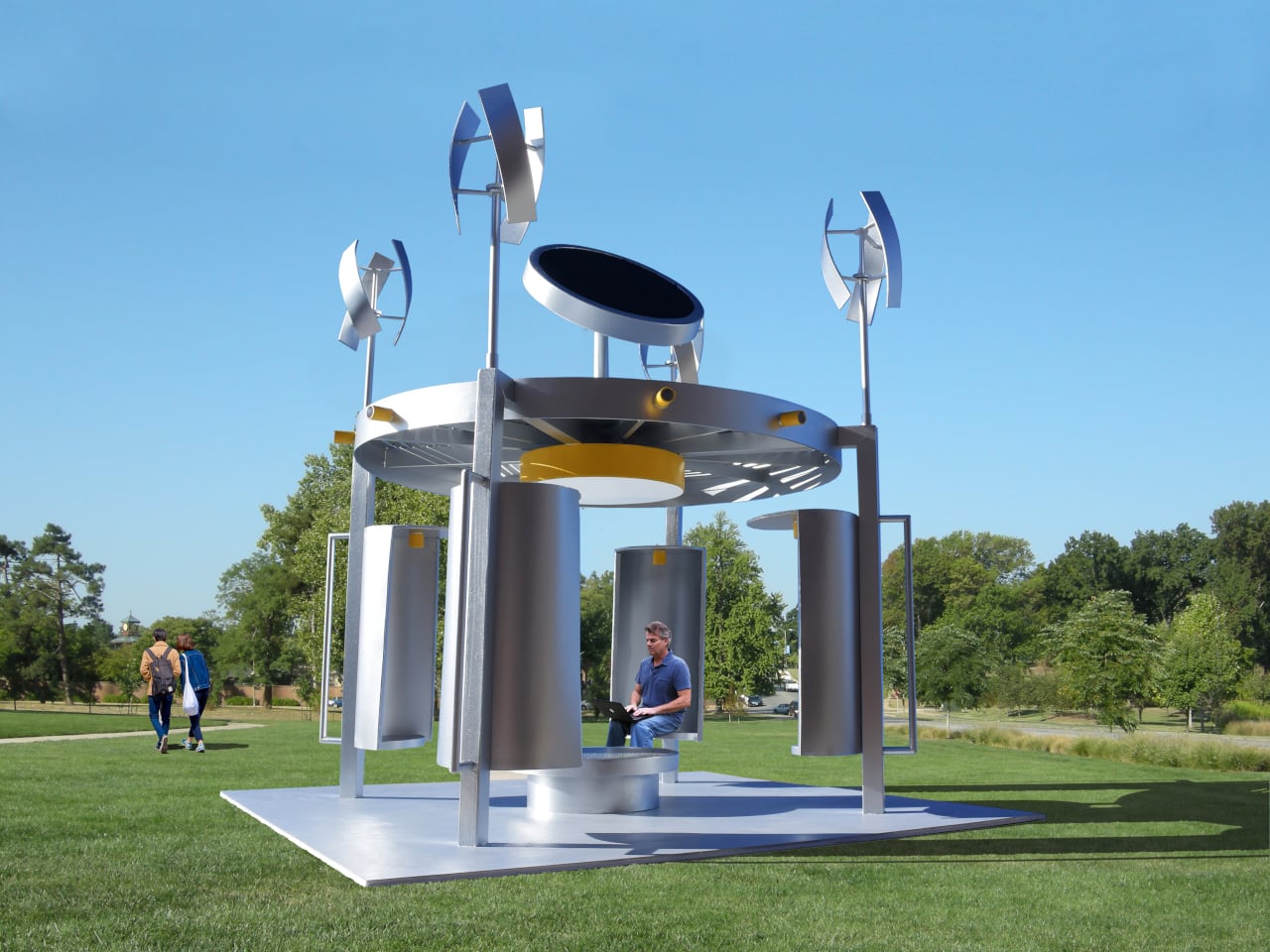
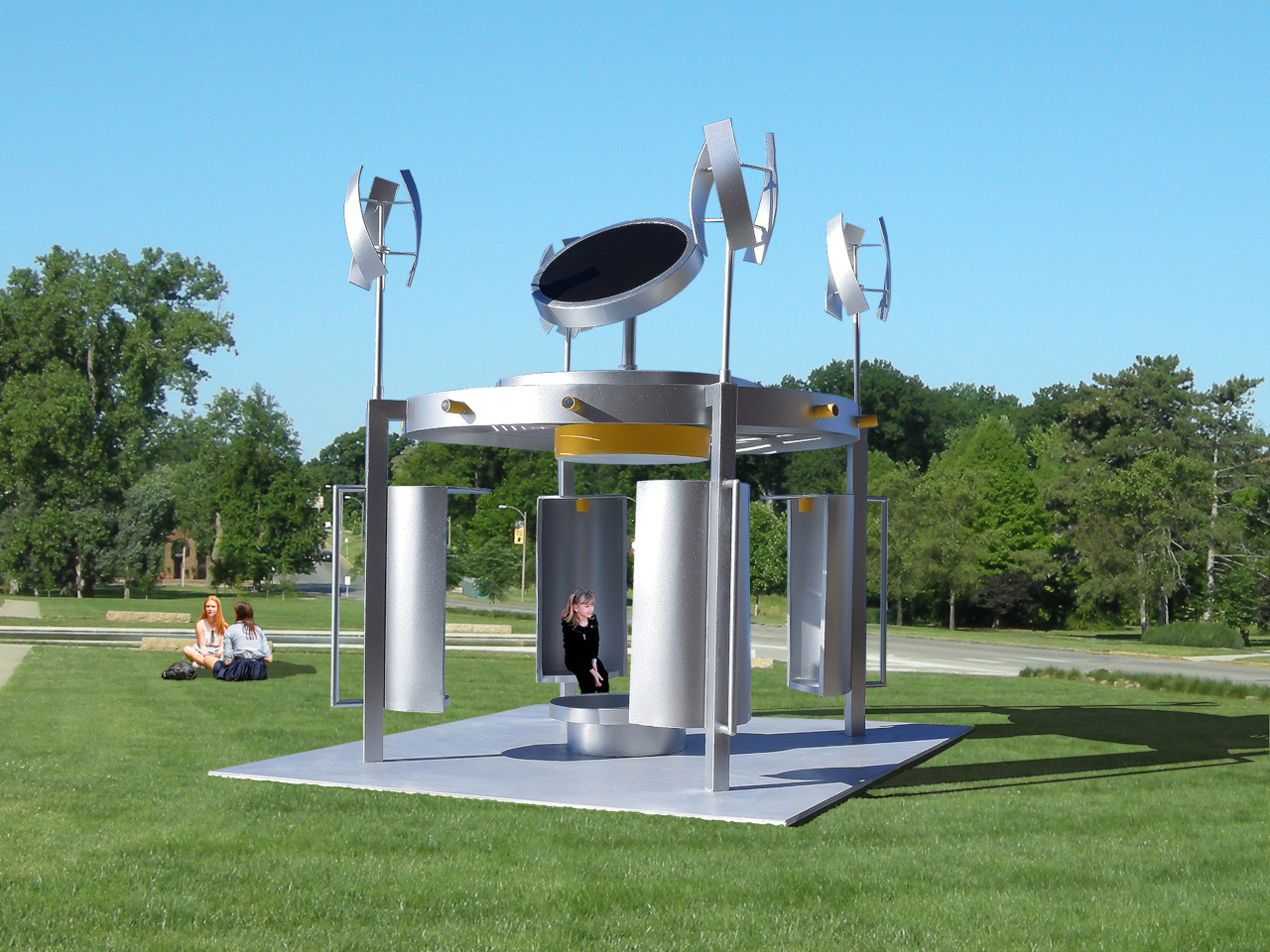
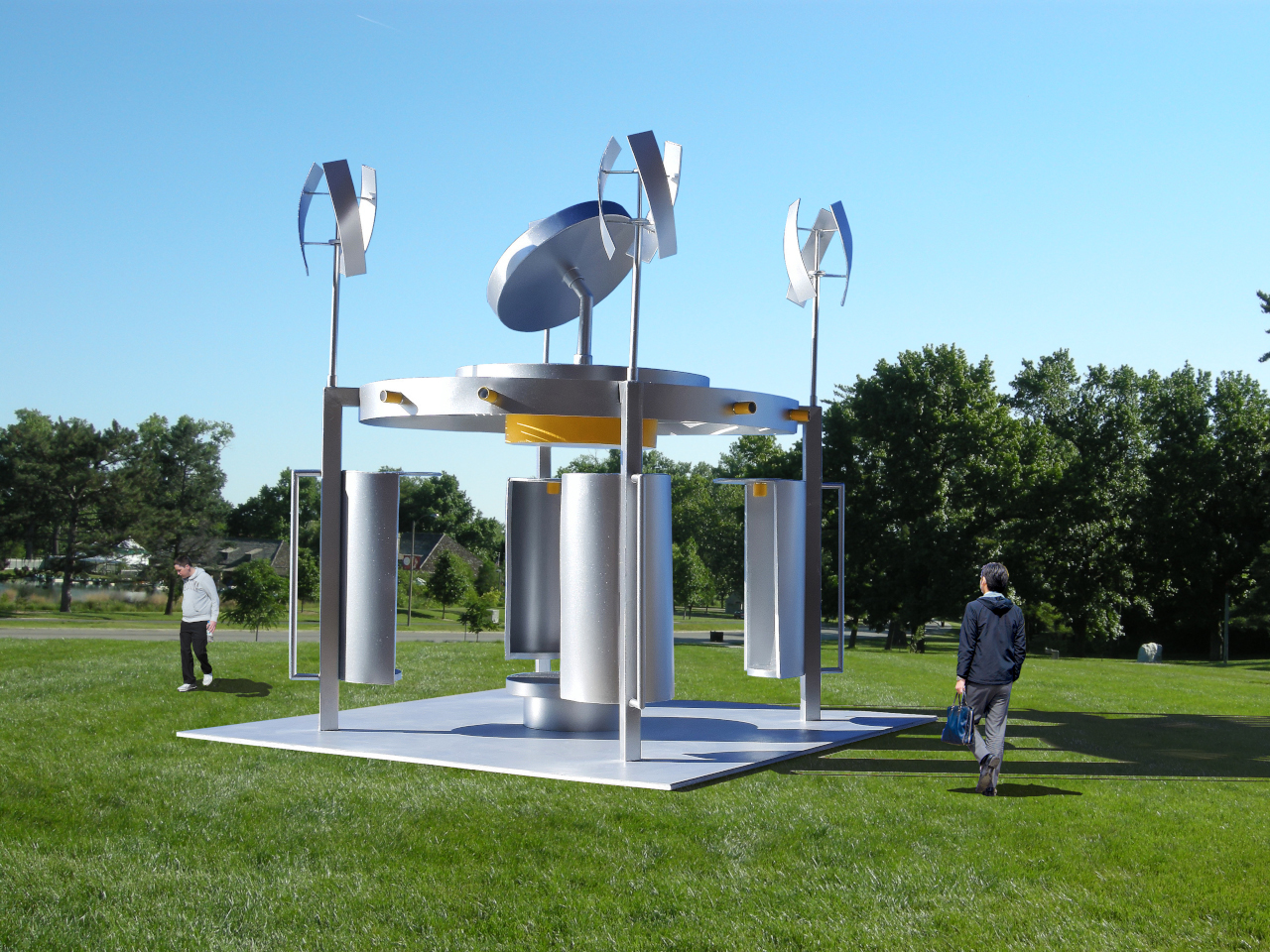
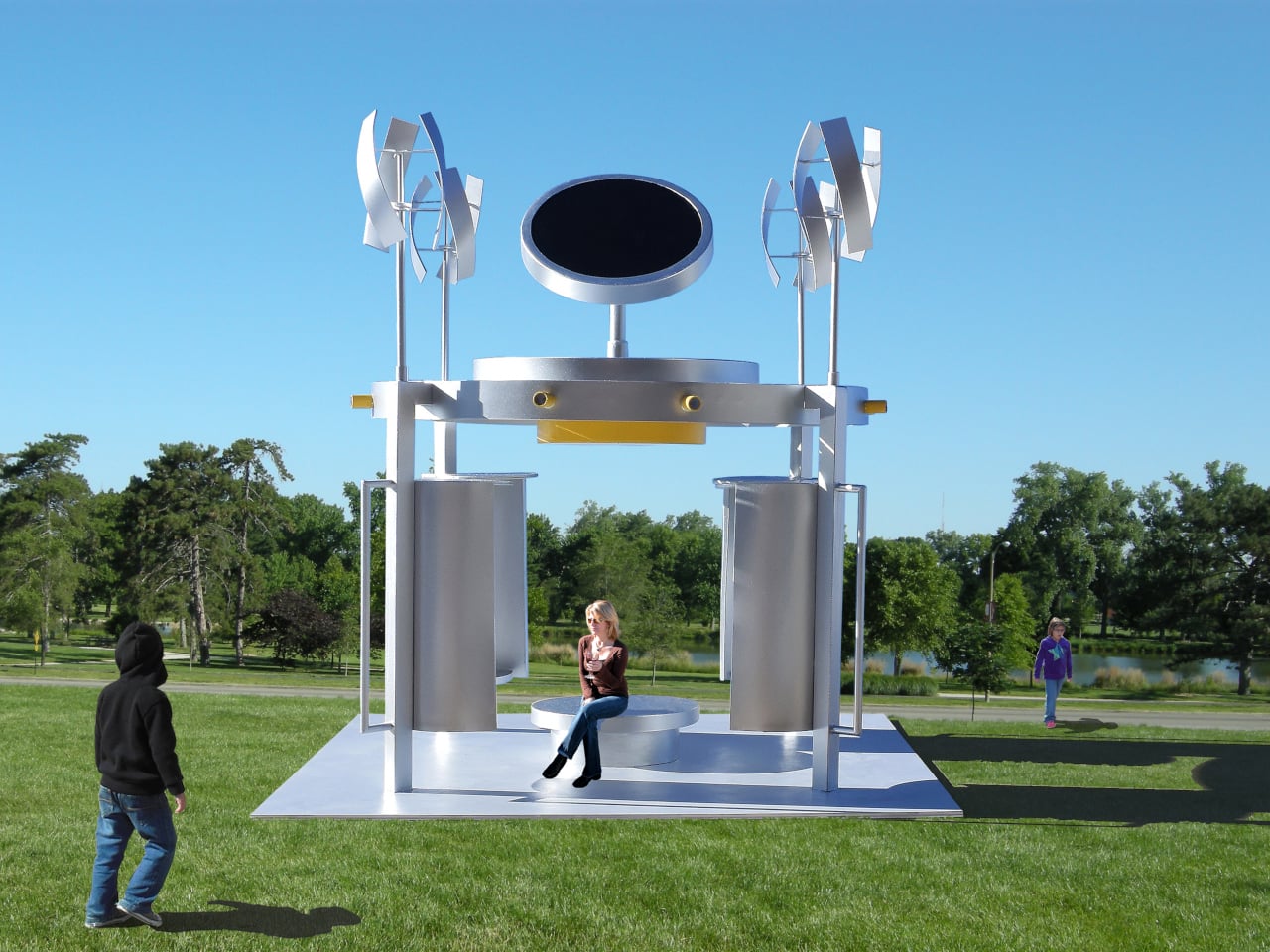
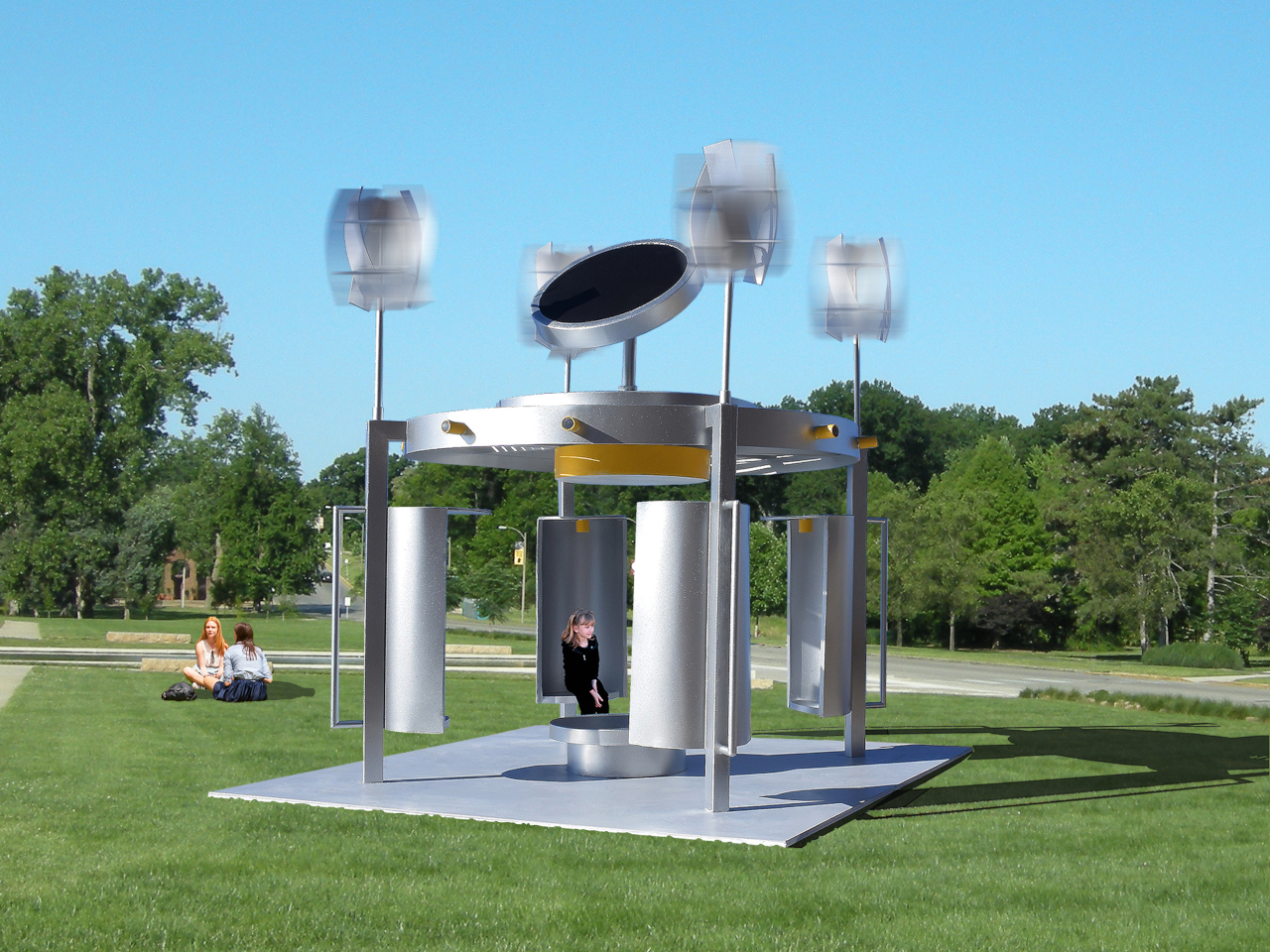
Michael Jantzen’s Solar Wind Gazebos are public pavilions designed to close that gap. Intended for university campuses, they function as gathering spaces while generating electricity from sun and wind, with the power feeding into the university’s grid. The proposal treats renewable infrastructure as a place to inhabit rather than a system to install, and it makes that infrastructure legible to anyone who walks up to one.

Designer: Michael Jantzen

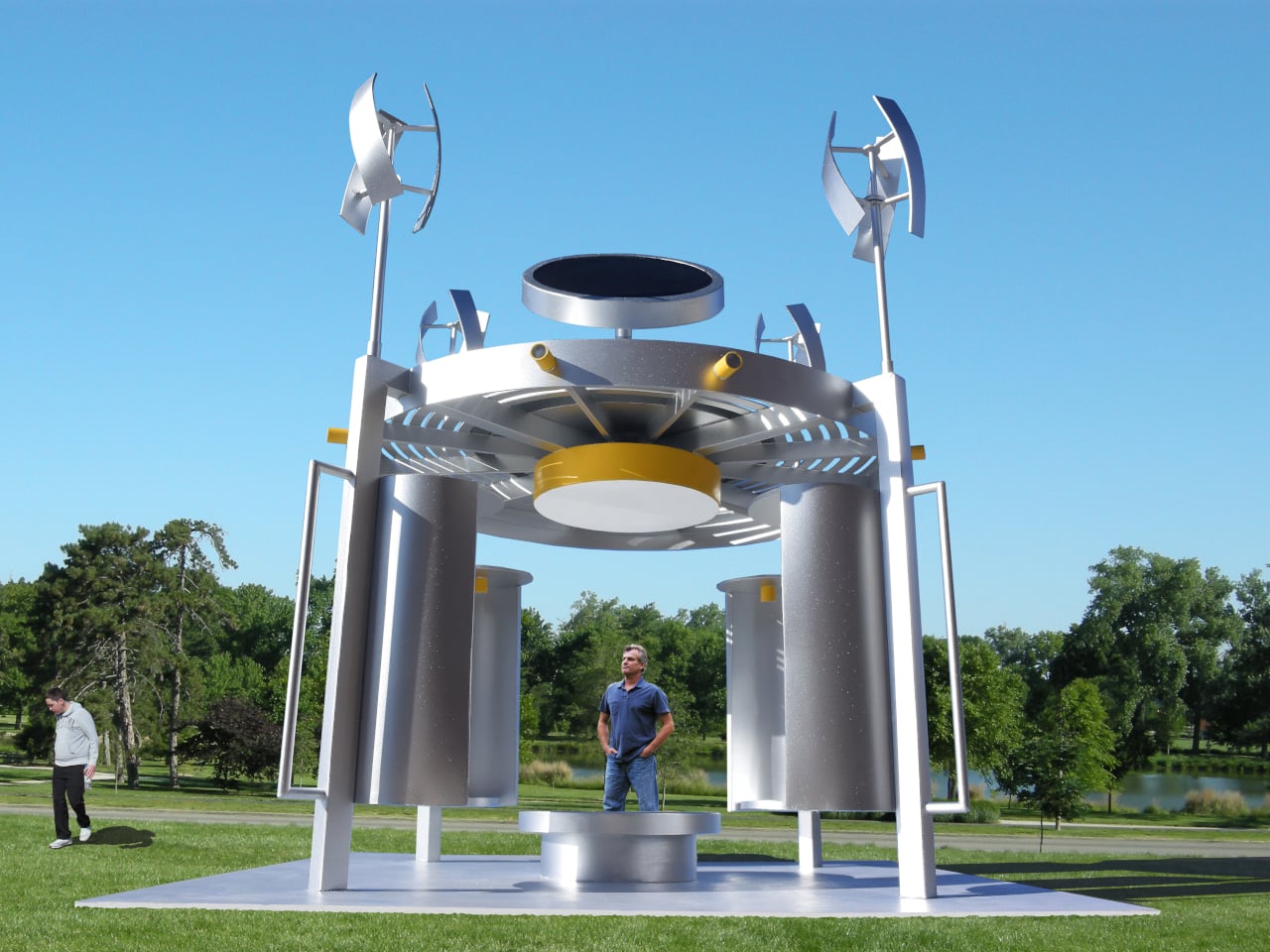
The roof does most of the communicating. Four commercially available vertical-axis wind turbines sit at the corners, while a large circular solar panel occupies the center. That layout is easy to read at a glance: wind at the perimeter, sun at the core. You don’t need a label to understand what’s happening because the structure’s own geometry explains its energy logic, which is something most utility infrastructure completely fails to do.

The frame is predominantly stainless steel on concrete bases, which is a deliberate choice for outdoor public installations. Campuses need structures that handle weather, seasonal temperature swings, and constant use without requiring frequent maintenance windows. Stainless steel and concrete aren’t glamorous materials, but they’re honest ones for a building type that needs to outlast a decade of students without becoming an eyesore or a liability.

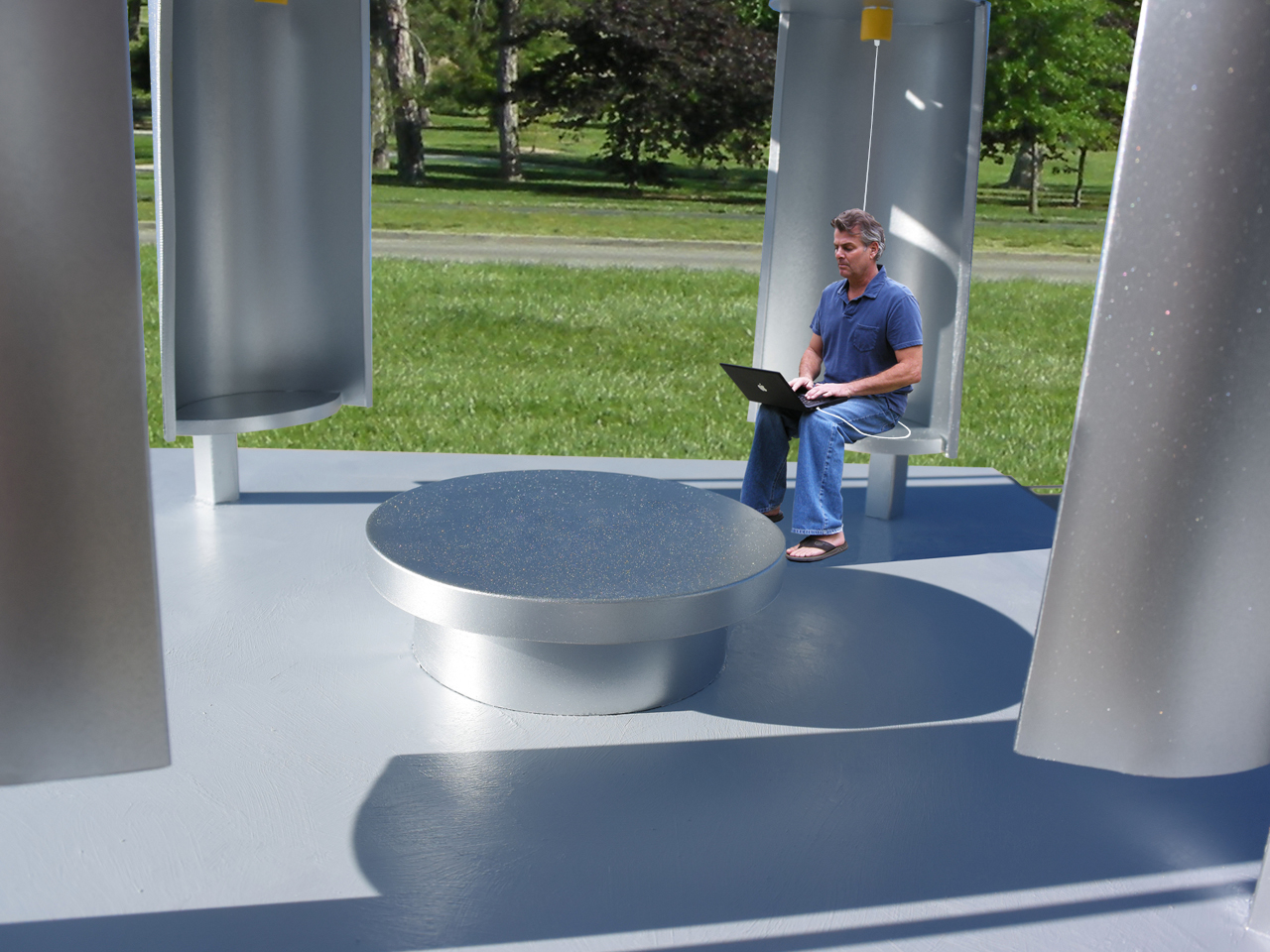
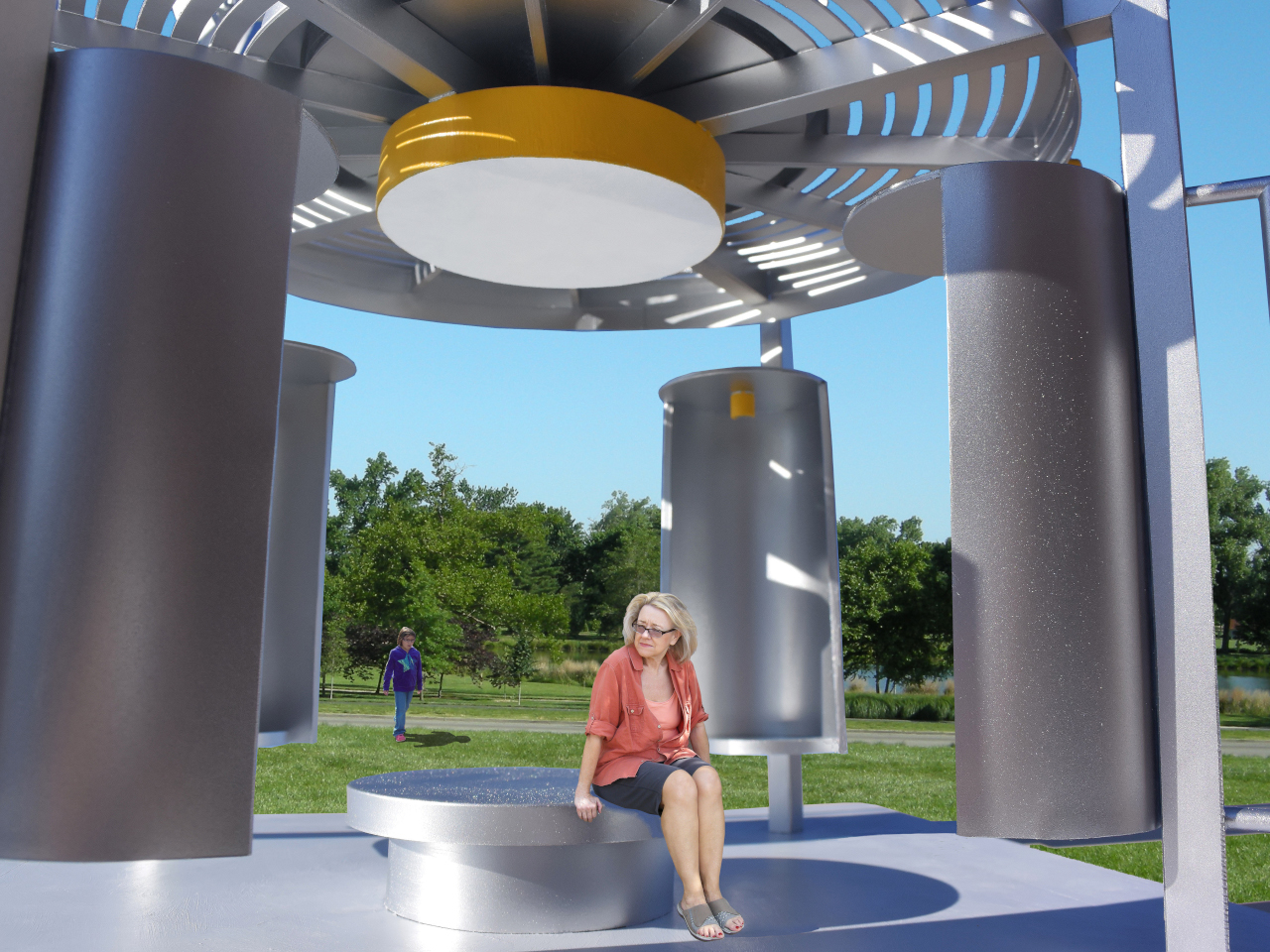
Inside, four cylindrical seating spaces are attached to the support columns, each with a receptacle at the top for plugging in devices. That detail is quiet but important, turning charging into a normal part of sitting down outdoors rather than a task that sends students hunting for an outlet inside a building. A large round central platform offers a shared surface for sitting or lying down, creating a mix of semi-private individual zones and an open communal gathering area.

A circular electric light mounted above the central platform runs off the same solar and wind generation, extending the pavilion’s usefulness into evening hours. The structure essentially powers its own ambience, which gives the whole thing a satisfying sense of completion, generation, use, and light running off the same rooftop.

The gazebos are designed to be reproduced as prefabricated structures in various sizes and installed across different landscapes. The same concept fits public parks, corporate campuses, and any open space where people gather and need shade, seating, and somewhere to plug in. The broader implication is that renewable energy infrastructure doesn’t always have to hide behind fences or sit on rooftops. Sometimes it can be the very thing you sit inside of on a Tuesday afternoon between classes.

The post These Solar Gazebos Have 4 Wind Turbines and Let You Charge Below first appeared on Yanko Design.
A Wind-Powered Sculpture Is Lighting Up Tanzania’s Plains

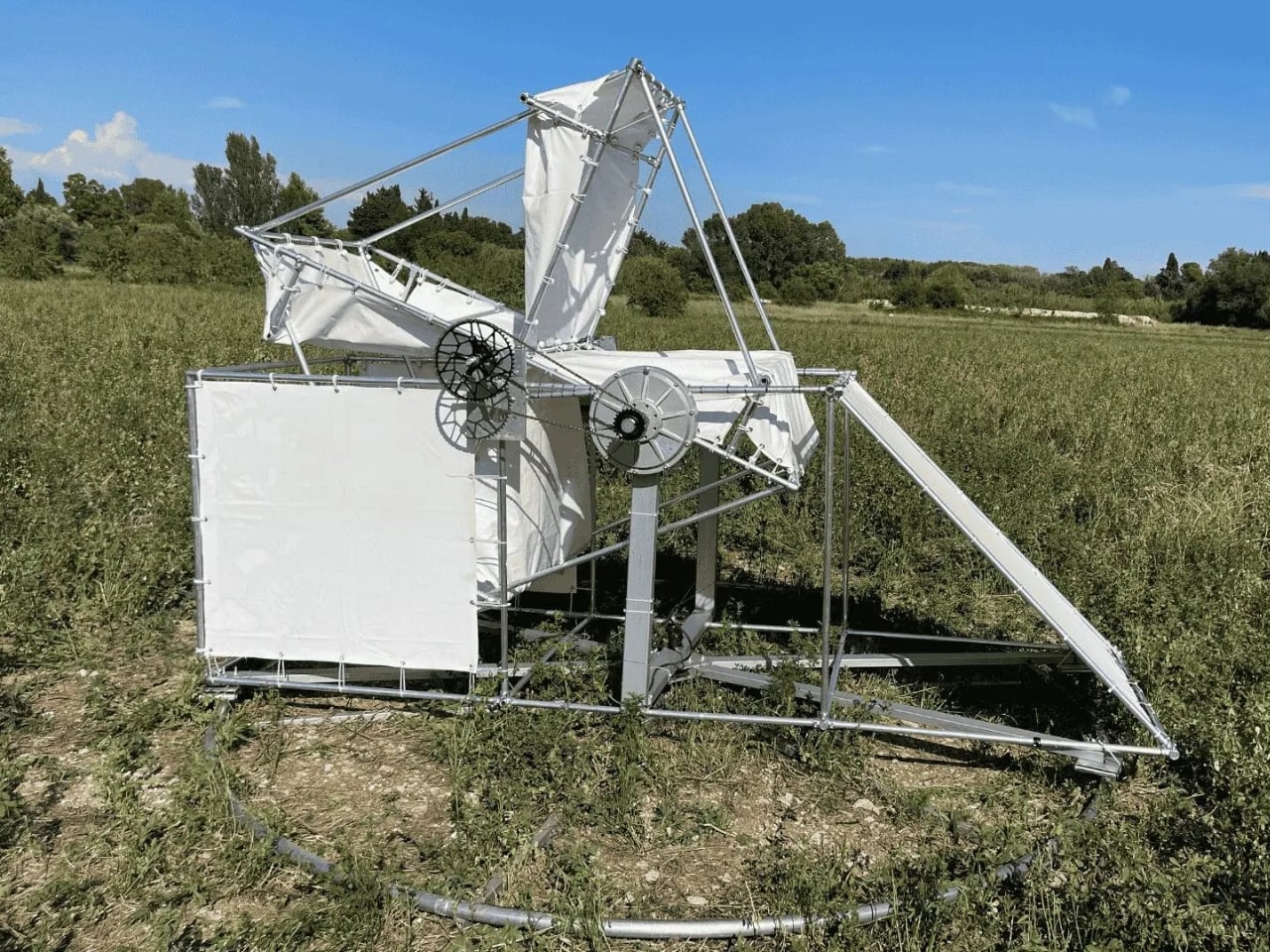
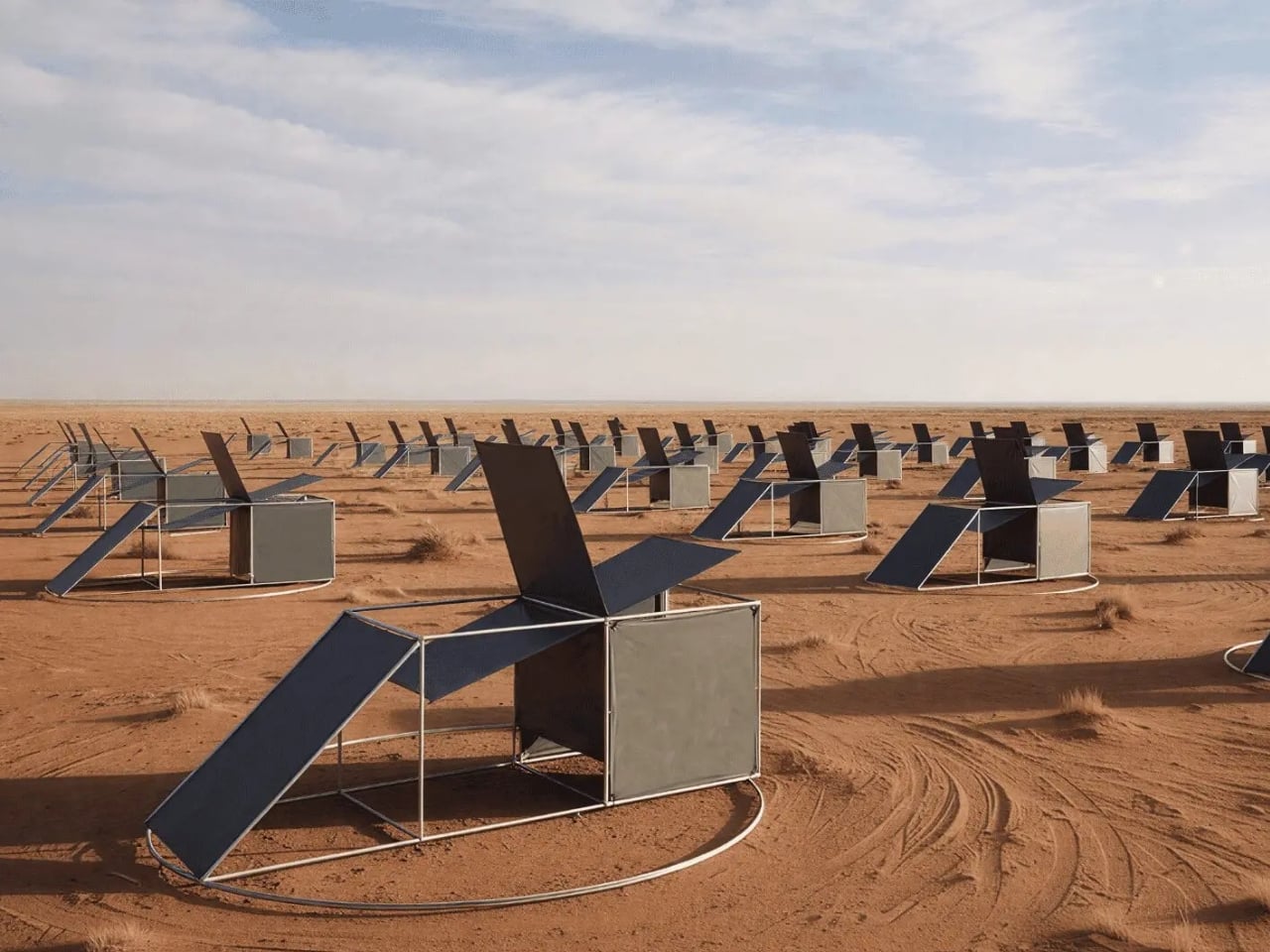
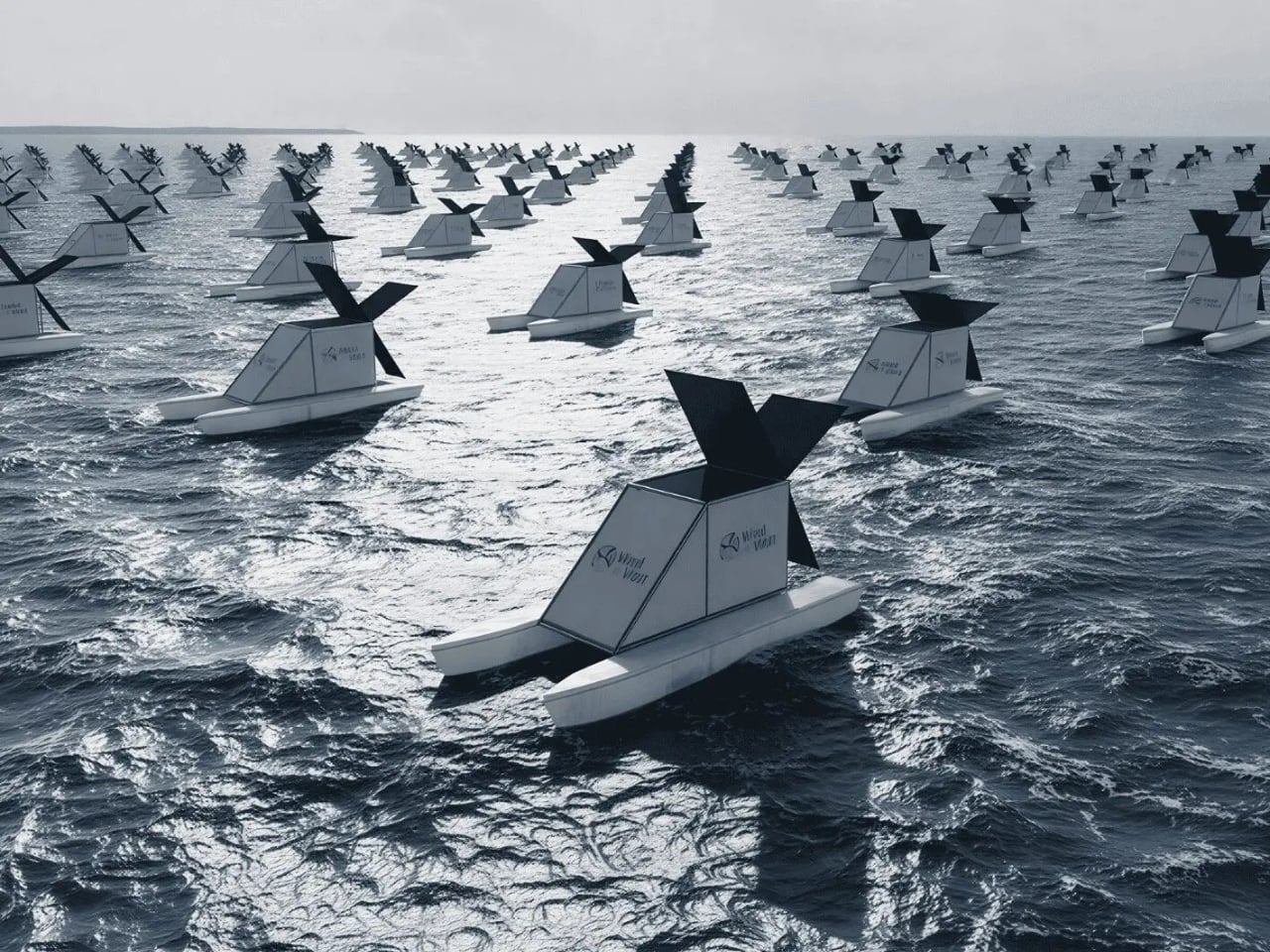
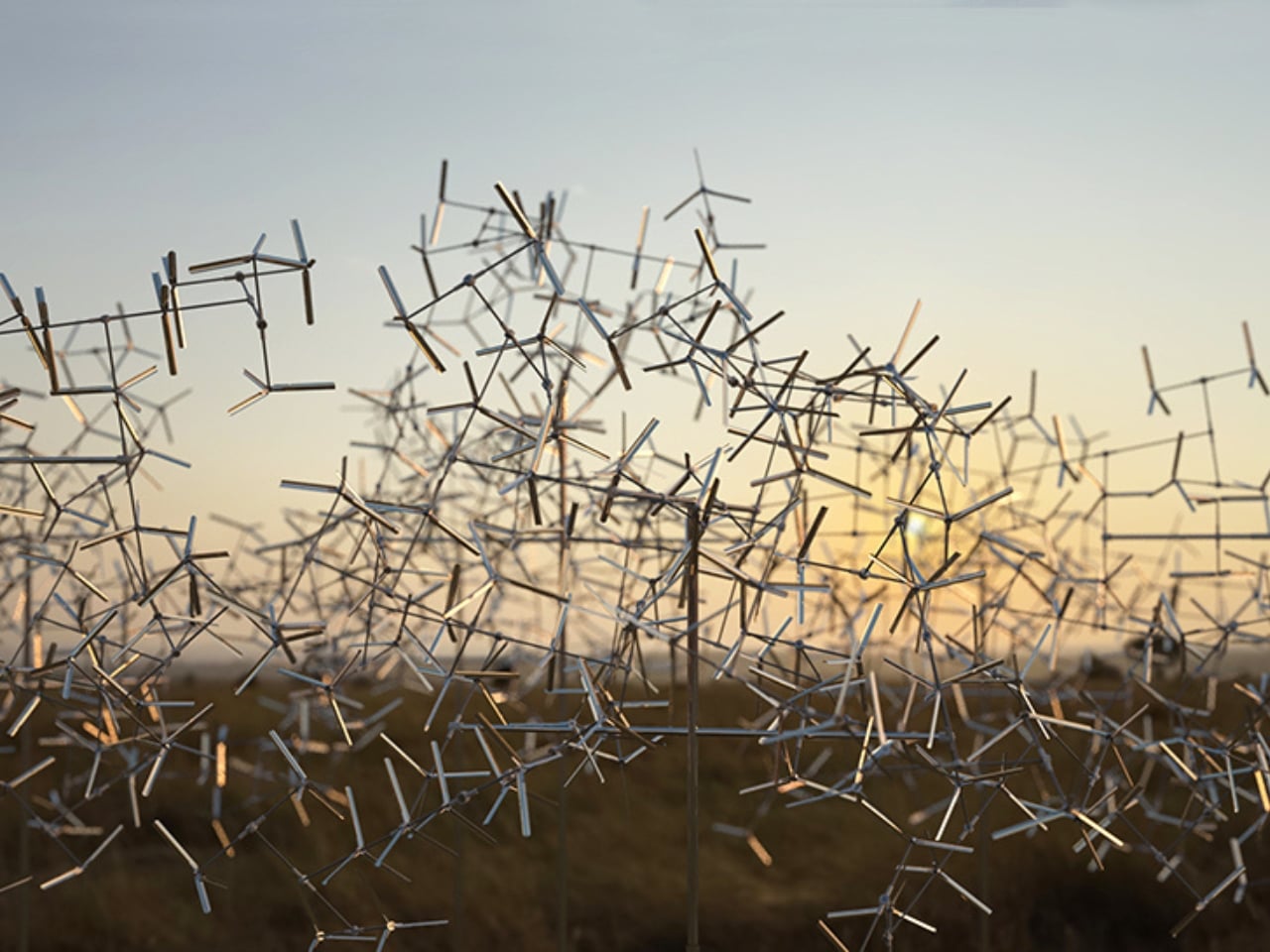
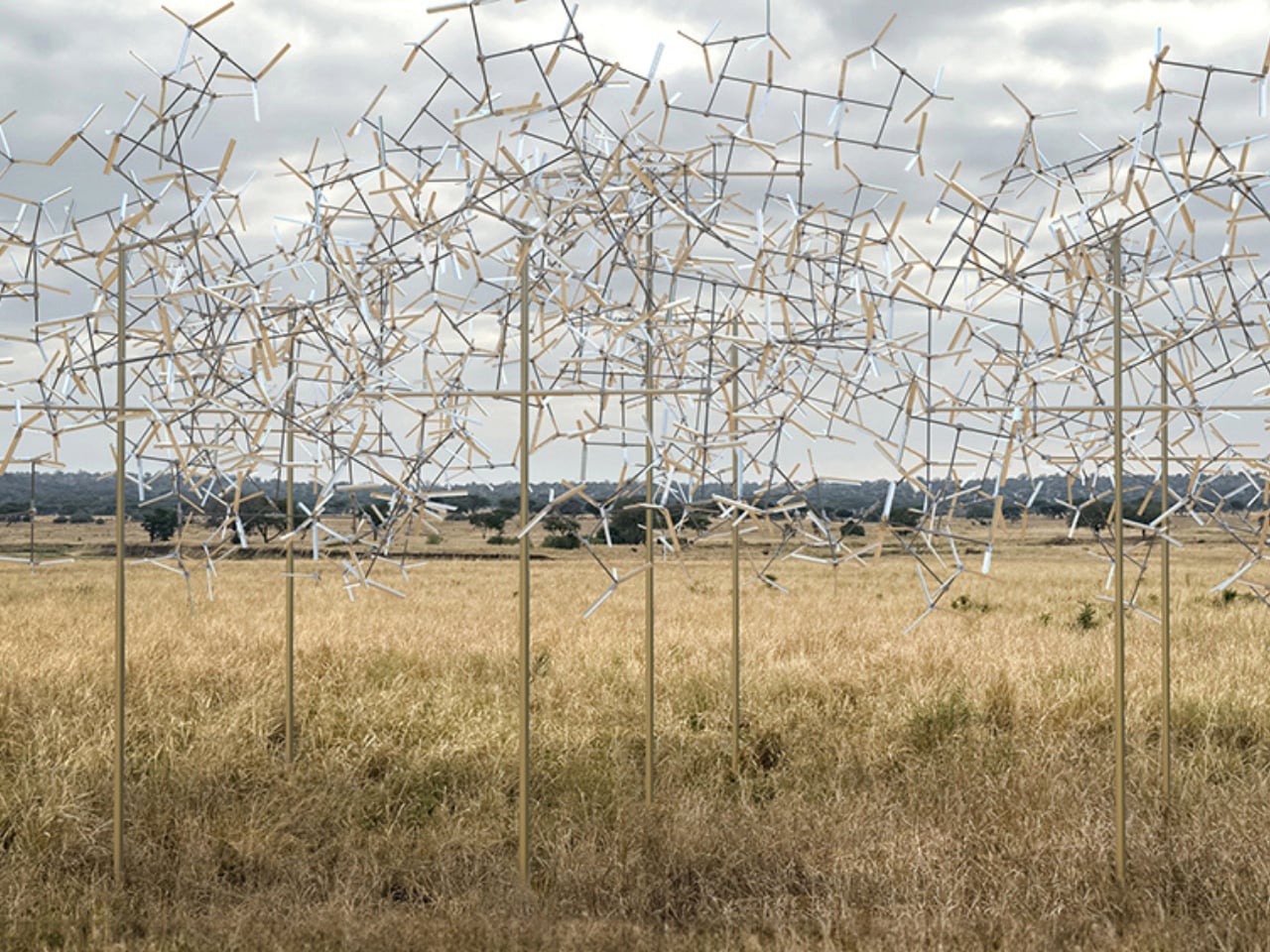
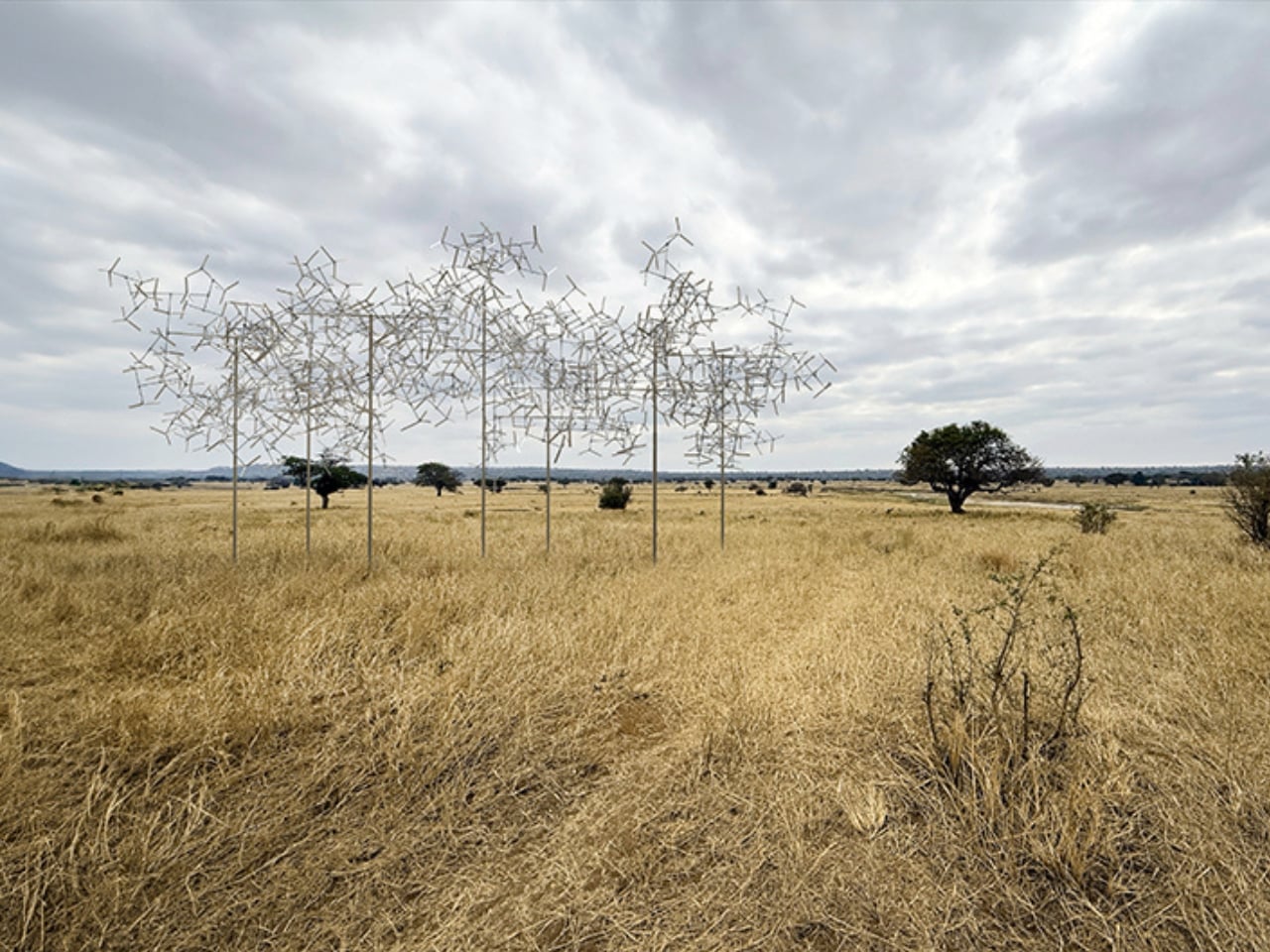
There’s something almost unsettling about a structure that appears to breathe. Not in a horror movie kind of way, but in that quiet, mesmerizing way that makes you stop, squint, and wonder if what you’re seeing is really happening. That’s exactly what Vincent Leroy’s Fractal Swarm does to people. It sits in the vast openness of the Tanzanian plains, and it moves. Not because of motors or hidden mechanisms, but because of the wind.

Leroy is a Paris-based French artist who grew up in rural Normandy tinkering with whatever he could get his hands on. That early habit of experimenting turned into a full-blown obsession with movement, which led him to study industrial design at the Ecole Nationale Supérieure de Création Industrielle in Paris. By the time he graduated, he was already making kinetic work that galleries wanted to show. Since then, he has built a practice that sits comfortably between sculpture, installation art, and something that doesn’t quite have a name yet. His work has appeared everywhere from Parisian museums to Zanzibar’s shoreline, and the thread that runs through all of it is the same: movement as a material, not just as an effect.

Designer: Vincent Leroy

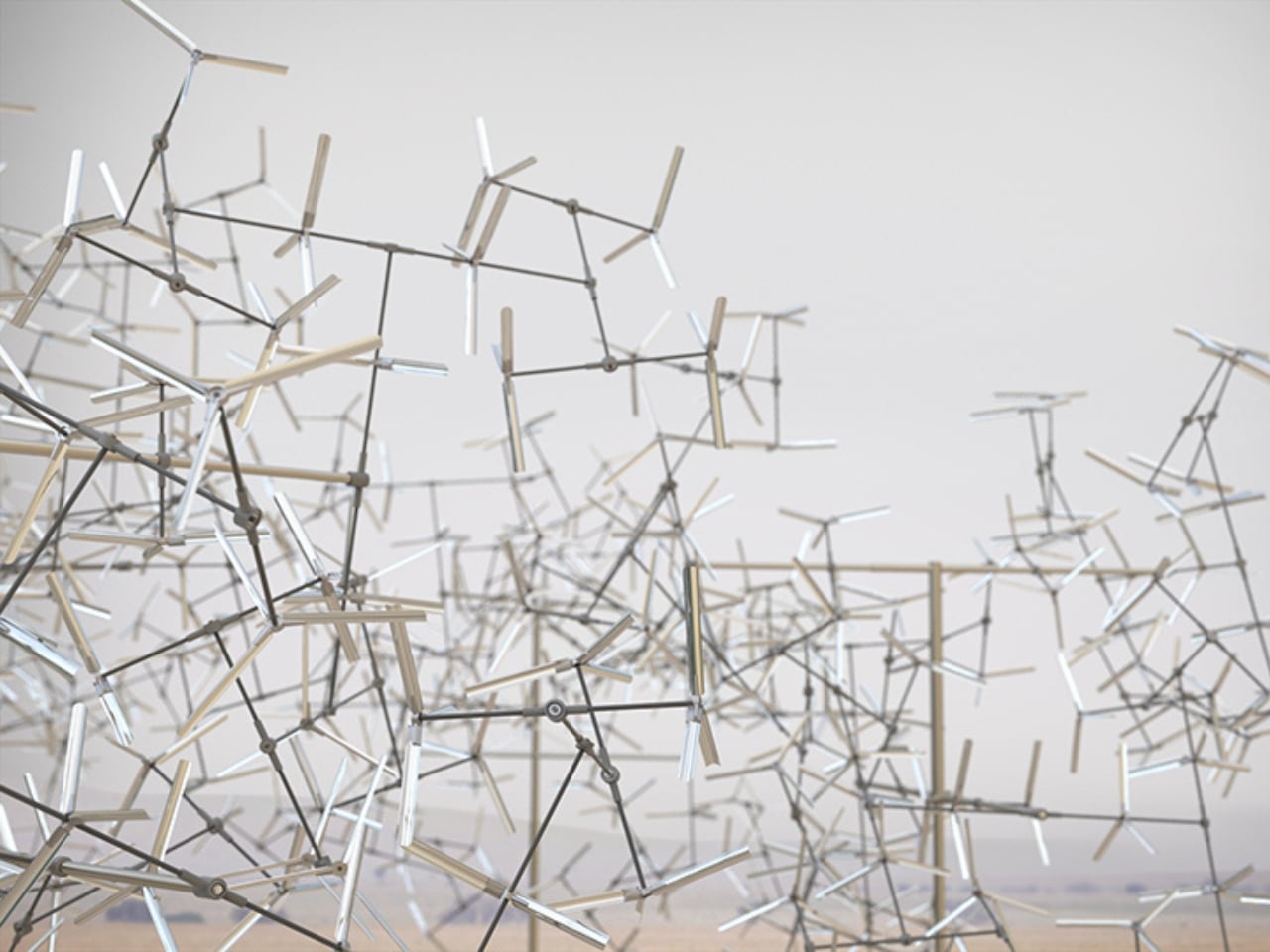
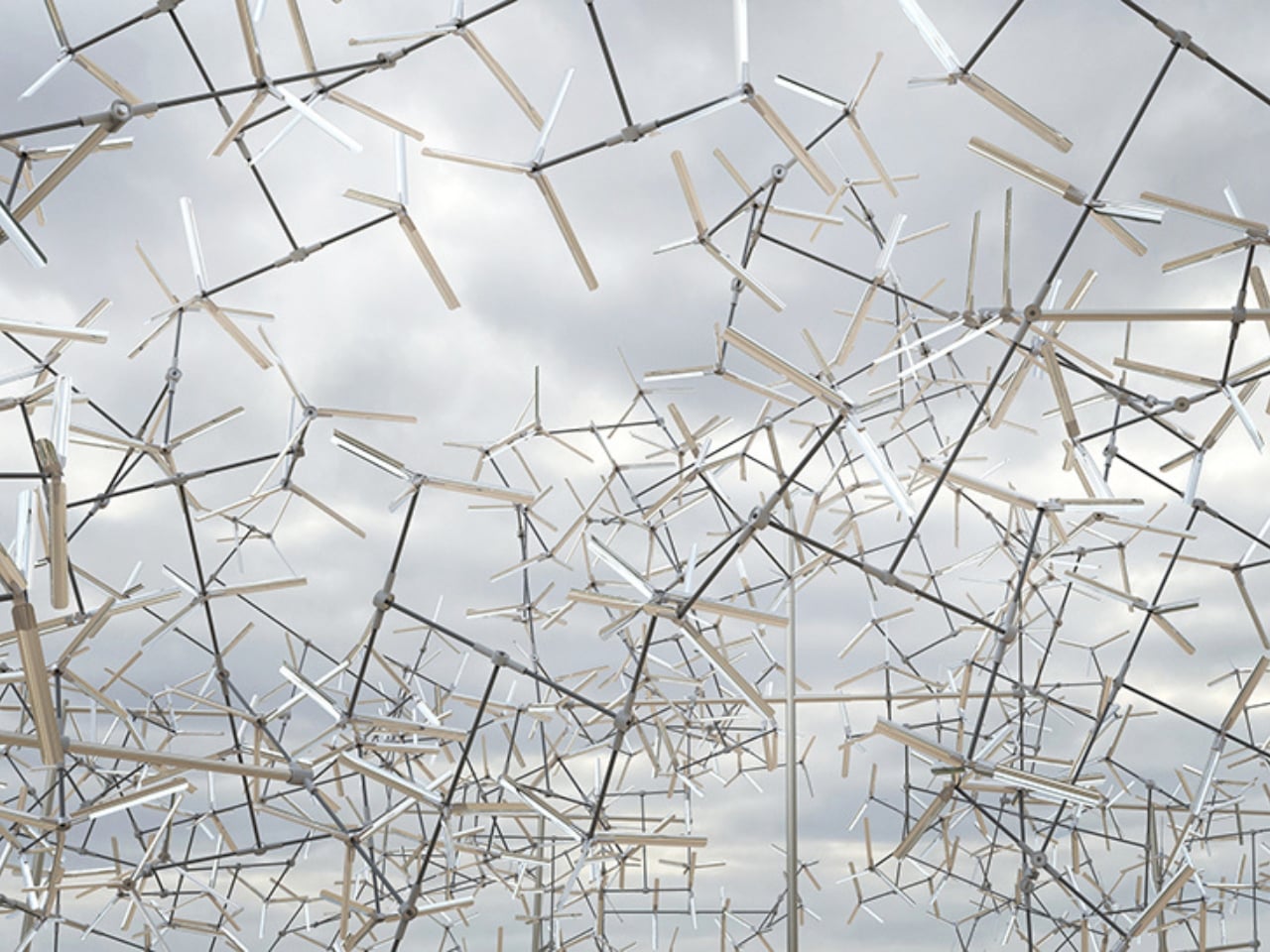
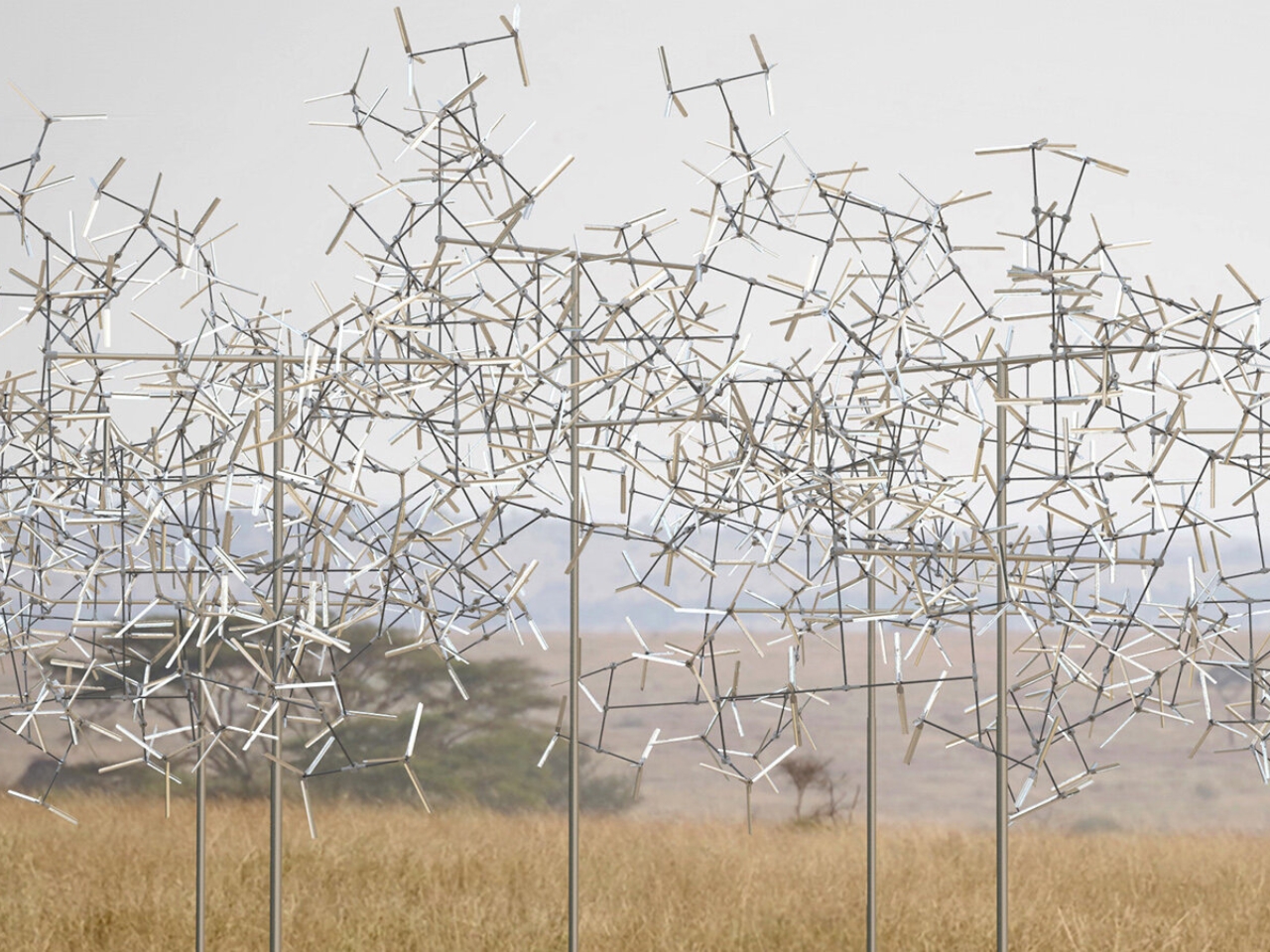
Fractal Swarm is his latest statement on that idea, and it might be the most ambitious one yet. The installation is built around the logic of fractal geometry, which is the kind of math that describes the way nature repeats itself at different scales. Think of the branching pattern of a tree, or the way a fern unfolds, or the texture of a coastline seen from above. Nature uses this structure constantly, and Leroy decided to make it visible in a landscape where that pattern is already everywhere.

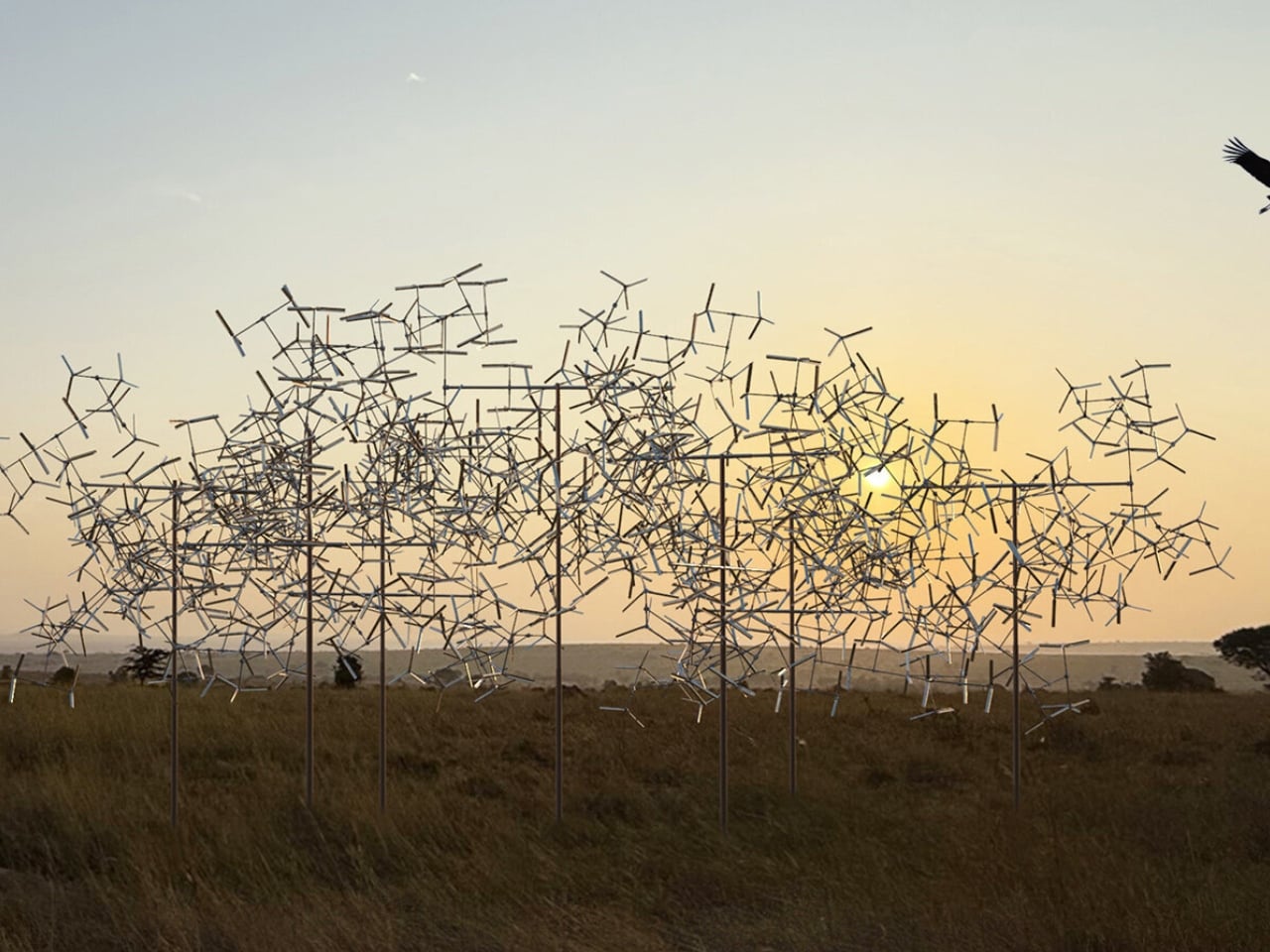
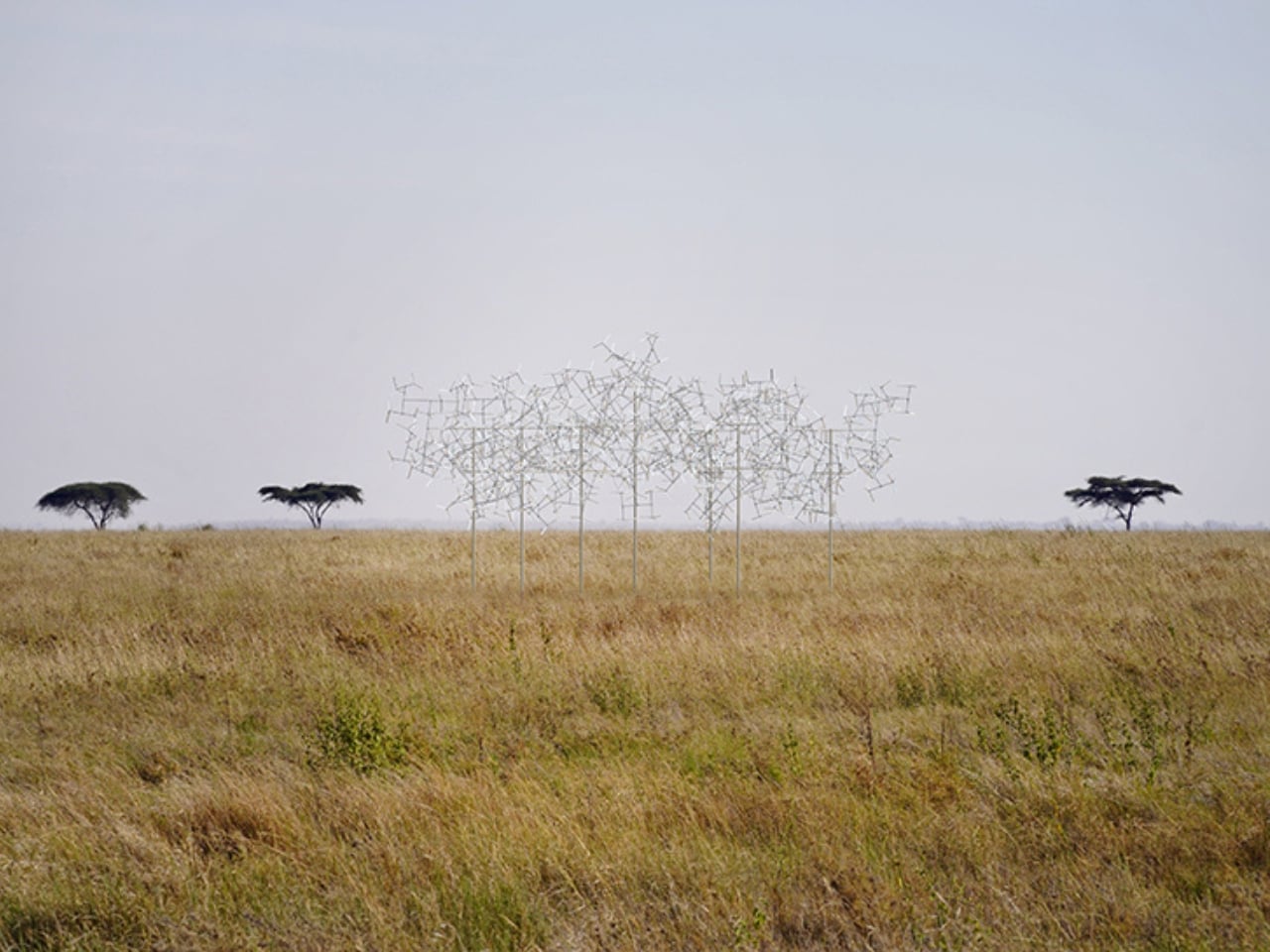
The Tanzanian plains during the dry season are stripped down to essentials. Acacia trees stand with bare, branching silhouettes against the sky. The ground breaks into fragmented, textured patches of arid vegetation. Leroy’s installation mirrors all of that. Its branching configuration echoes the acacia silhouettes so closely that from a distance, it reads more like something that grew there than something that was built. That’s the point. Rather than imposing itself on the landscape, Fractal Swarm extends it.

What makes it come alive, literally, are the mirrored fins embedded within the structure’s modules. Thin and precisely placed, these fins catch and refract the intense light of the plains as they move. The wind sets everything in motion, and the fins respond by scattering light in constantly shifting patterns across the ground and the air around them. The result is something that changes every second depending on where you’re standing, what direction the wind is coming from, and what time of day it is. No two moments of looking at it are the same.

This is what Leroy keeps coming back to in his practice: the idea that slowing down and watching something move can completely change how you see it. His work tries to reveal the gaps that usually go unnoticed in today’s frenetic race for speed and performance. Fractal Swarm does that on a grand scale. It puts you in front of something enormous and quietly says: stand here. Watch this. Let the wind do something beautiful.

It’s also worth noting that Leroy isn’t new to working with wind in dramatic outdoor settings. His Drifting Cloud installation on Zanzibar’s east coast used rotating canvas discs that interacted directly with the shoreline’s breeze. Fractal Swarm takes that same sensibility deeper into the continent and scales it up into something more structural and mathematically precise.

What’s quietly radical about all of this is that Leroy uses some of the most rigorous abstract math available (fractal geometry) and turns it into something you feel before you think about it. You don’t need to understand the Mandelbrot set to be moved by Fractal Swarm. You just need to stand near it when the wind picks up and watch the plains light up like they’re waking. That’s the kind of art that sticks with you long after you’ve walked away.

The post A Wind-Powered Sculpture Is Lighting Up Tanzania’s Plains first appeared on Yanko Design.
World’s first MW-class S2000 airborne wind turbine just powered the grid in China

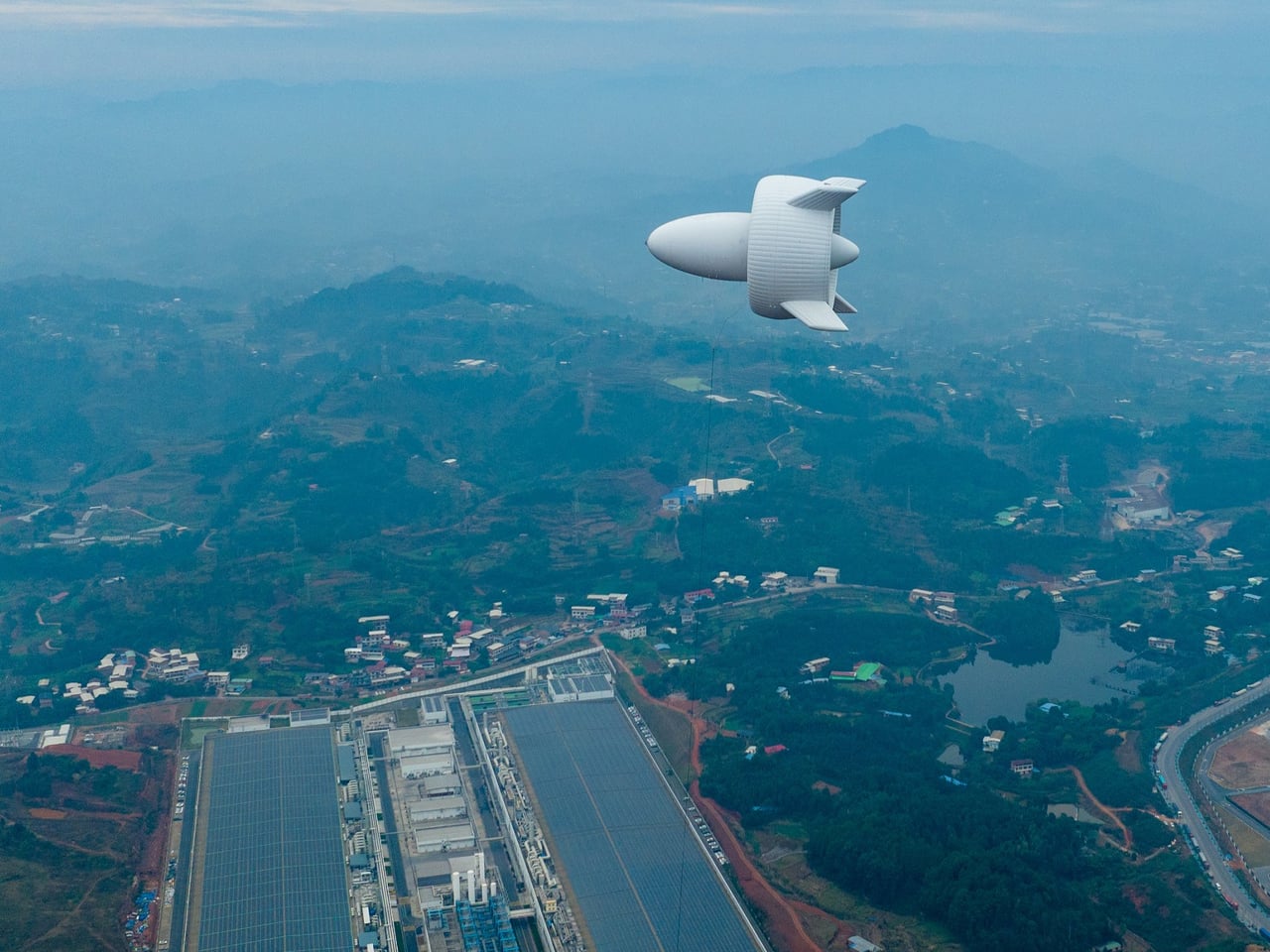
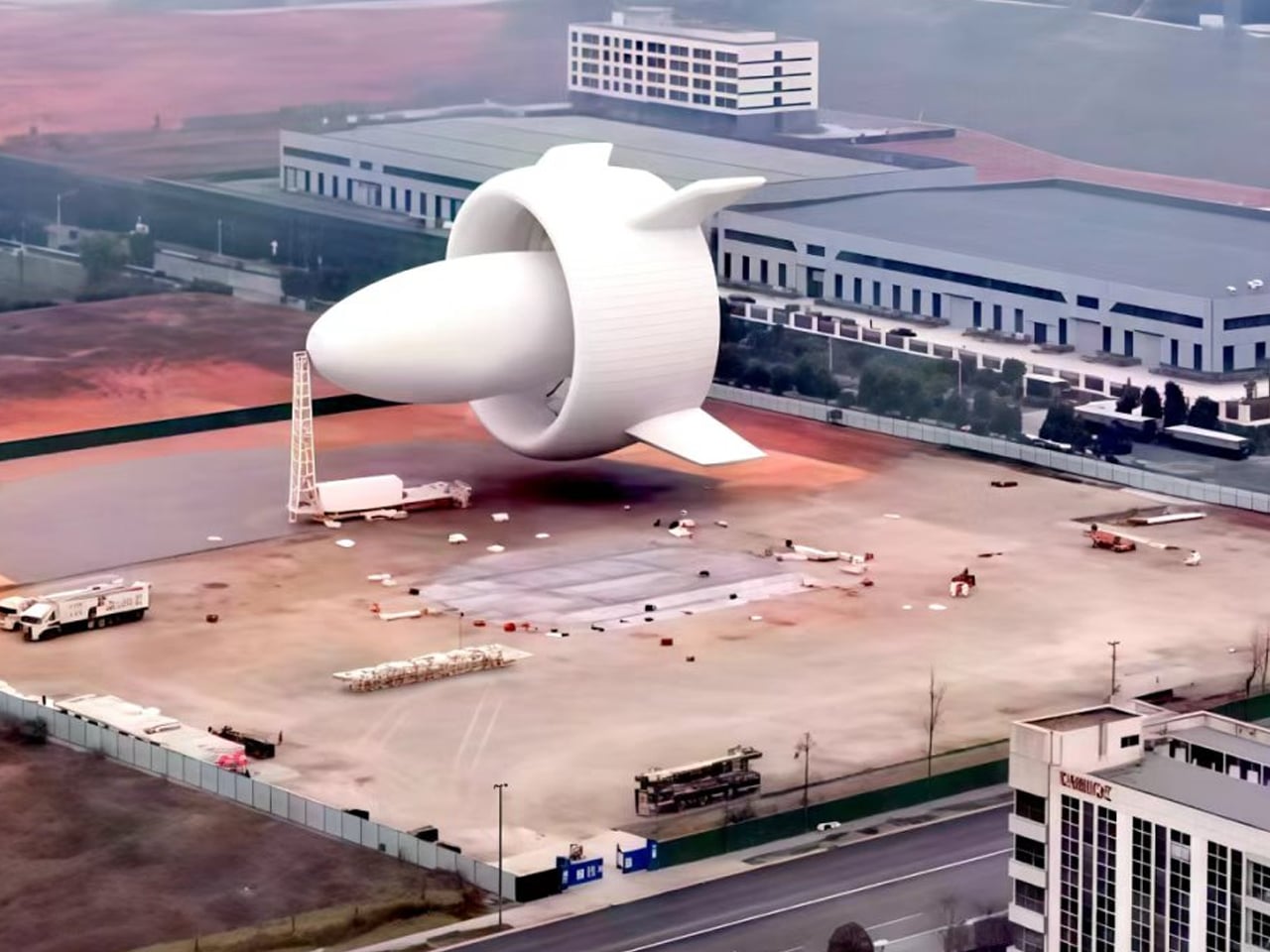
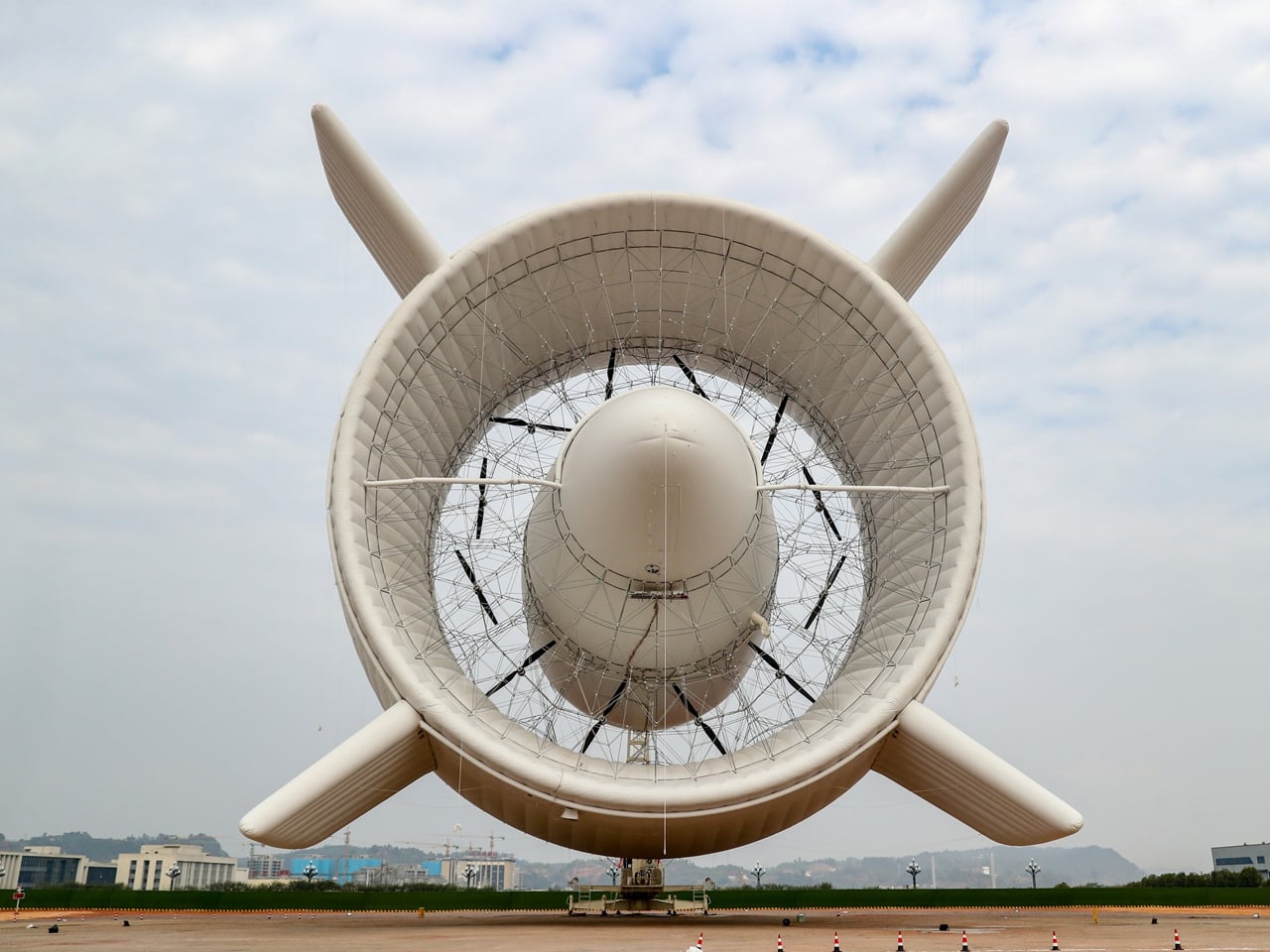
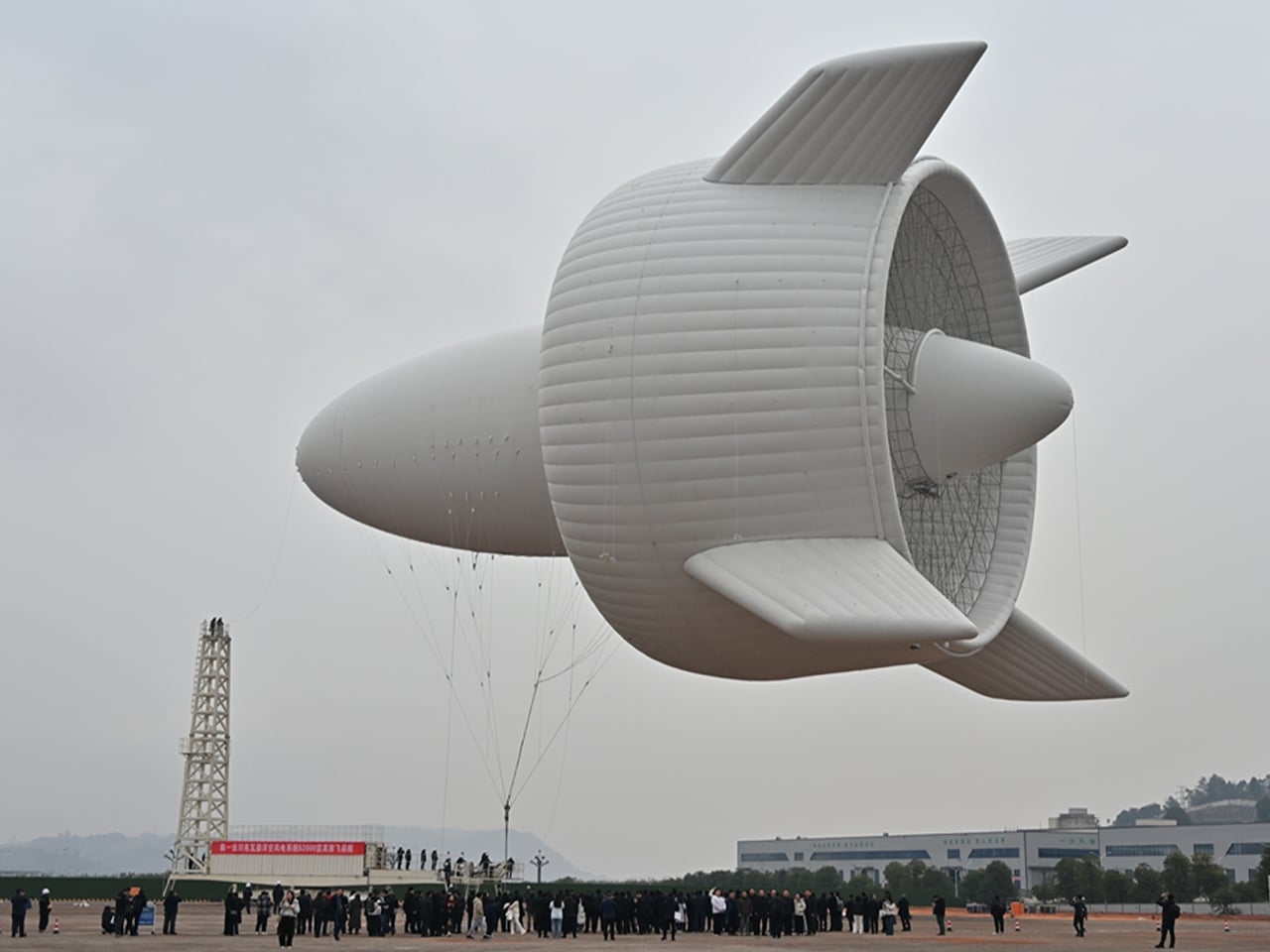
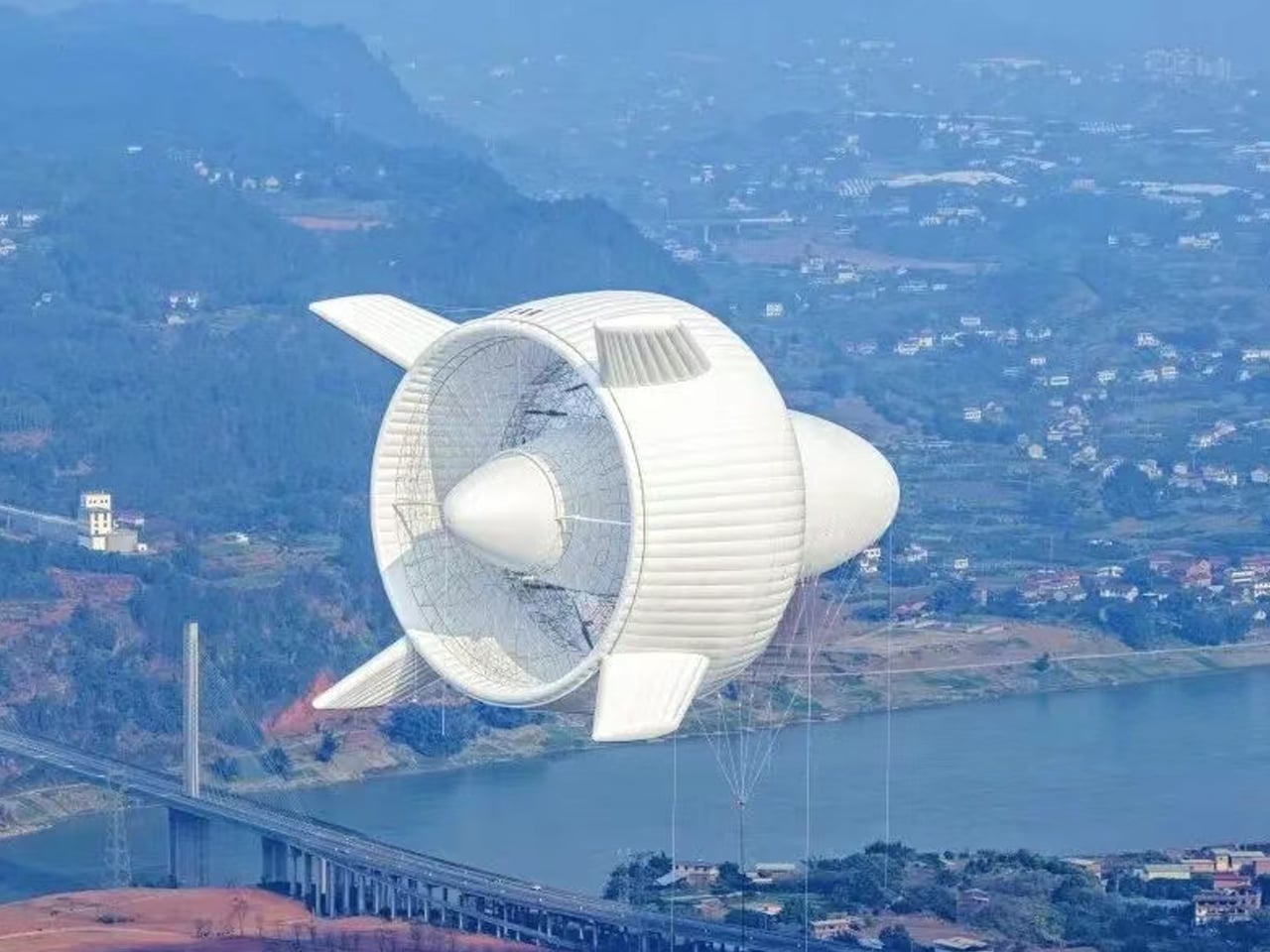
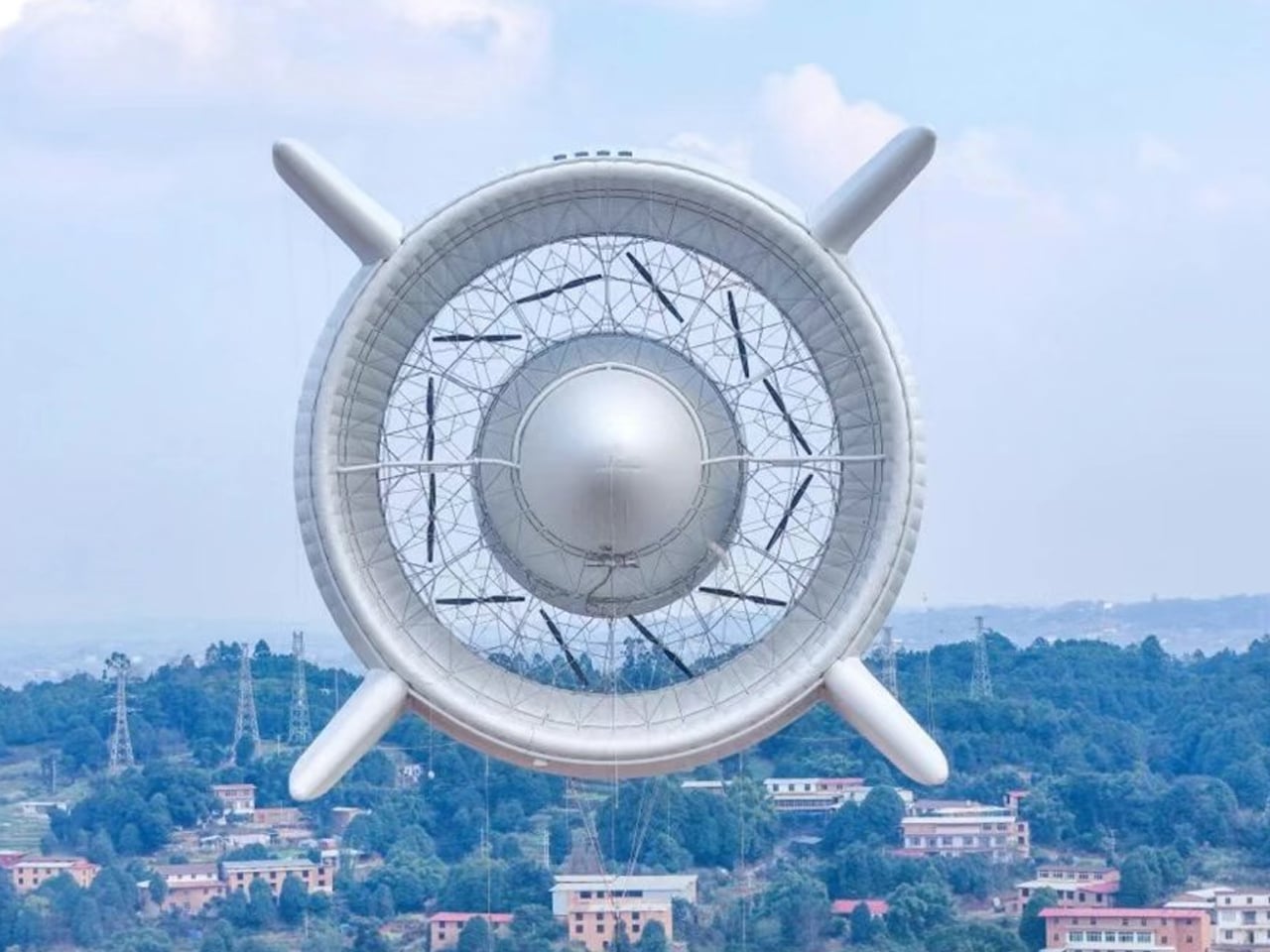
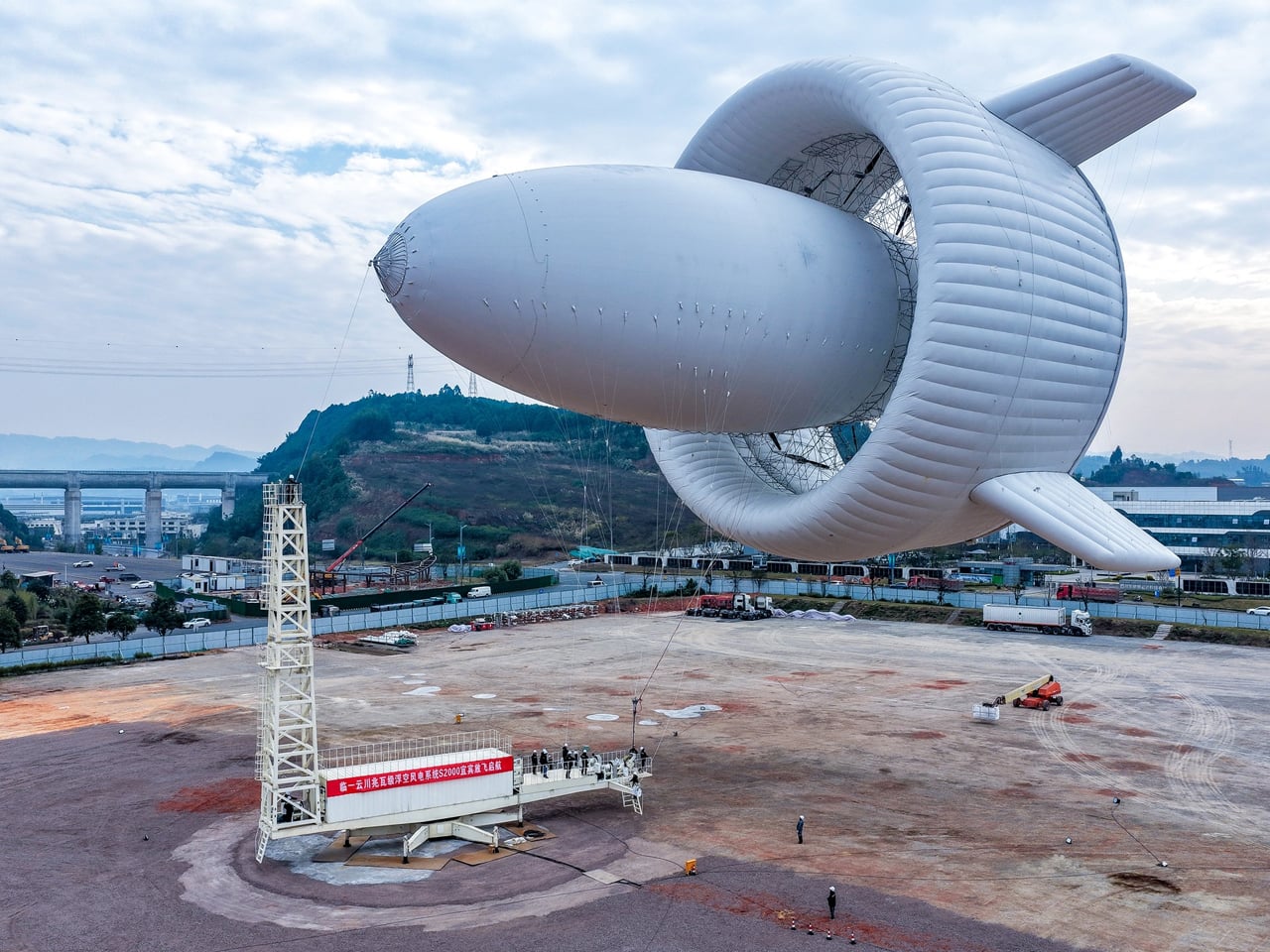
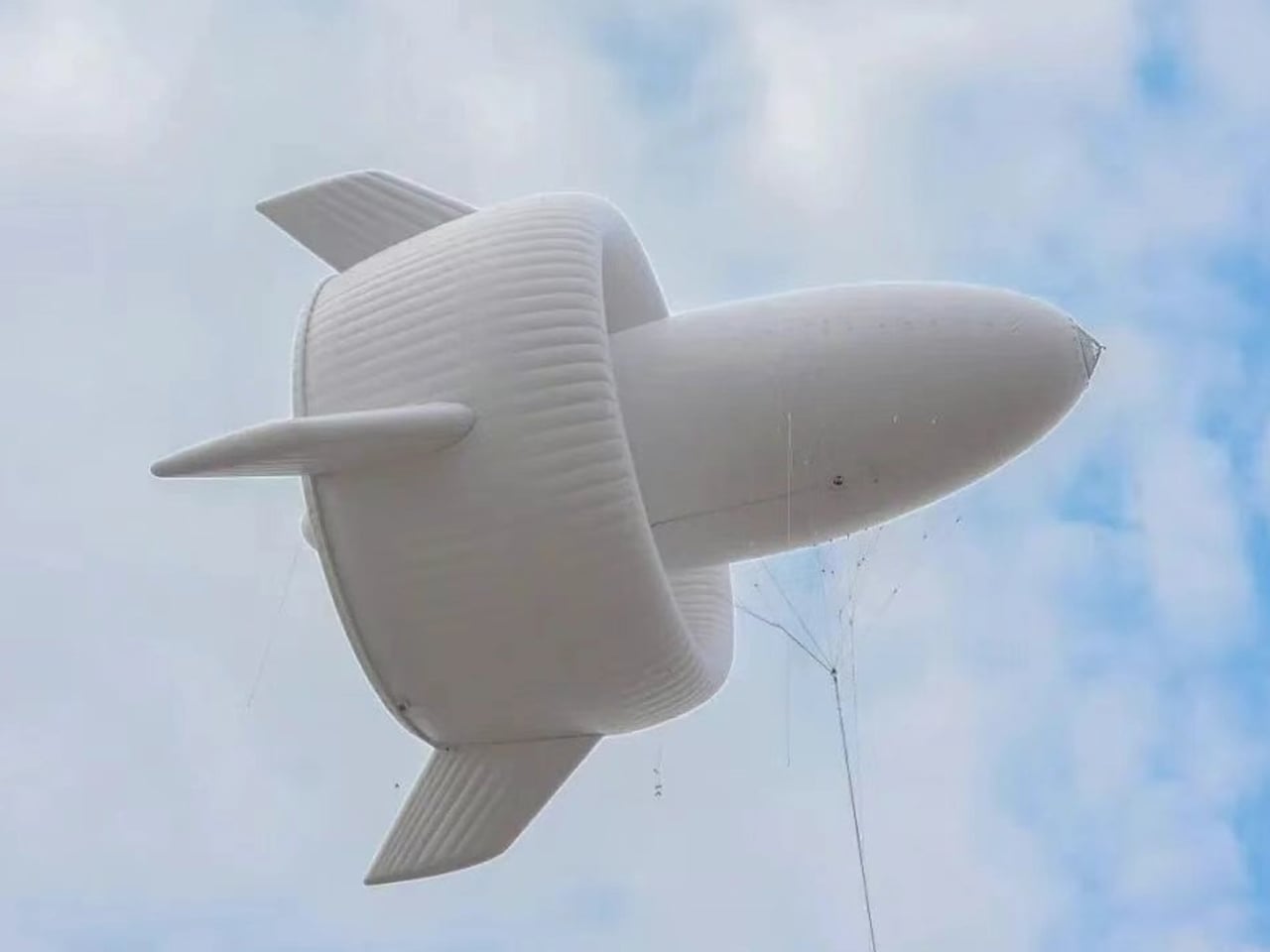
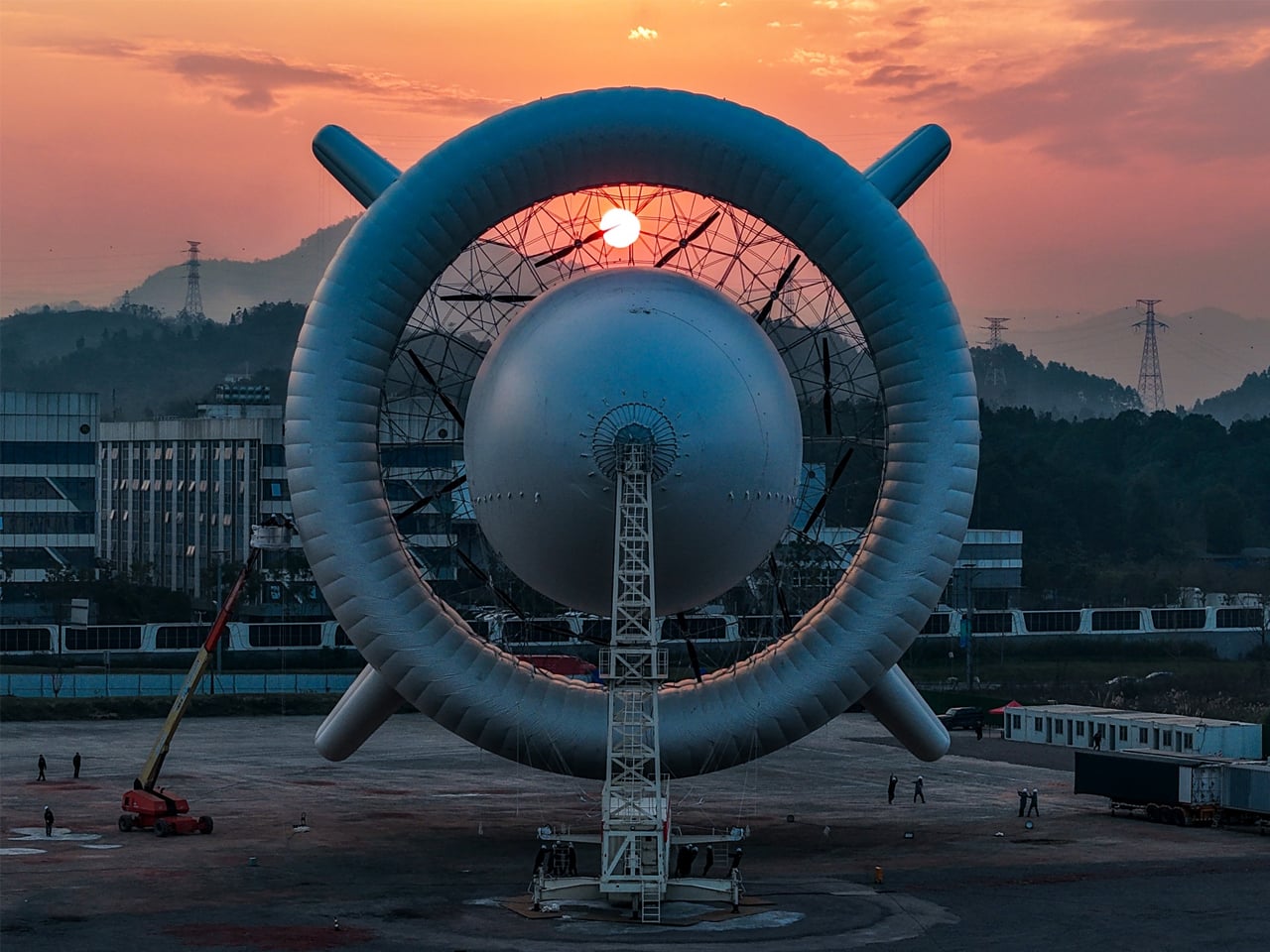
An object shaped like an inflatable airship was seen floating over Yibin, Sichuan Province in Southwest China earlier this month. Turns out, it wasn’t some unidentified object. In fact, it was an airborne wind turbine completing its maiden in-flight grid-connected power generation test. The airborne wind energy system comprises an airship platform and wind turbines integrated in a single unit resembling a fantasy airship.

Dubbed the world’s first MW-class S2000 Stratosphere Airborne Wind Energy System (SAWES), it is developed by Beijing Linyi Yunchuan Energy Technology and designed for use near urban areas. Its successful testing marks a demonstration of how an airborne wind power system can generate and transmit electricity down for real-world usage.

Designer: Beijing Linyi Yunchuan Energy Technology

Wind turbines on the ground require a massive land area, tend to have low efficiency, and end up spoiling the landscape. The company behind the S2000 says that their Stratosphere Airborne Wind Energy System could be a difference, which definitely is not cost-effective, but is actually viable and an environmentally-friendly choice. During its testing, the floating power platform was able to rise up to about 2,000 meters, successfully delivering 385 kilowatt-hours of electricity to the local grid. The S2000 SAWES has a volume of about 20,000 cubic meters and, according to press information, has a maximum rated power capacity of 3 megawatts.

The system measures 60 meters long, is 40 meters high, and also 40 meters wide. The big thing took almost 30 minutes to ascend to 2,000 meters in the Yibin test. When at that altitude, it was able to maintain a stable hover, while generating power and delivering it back to the grid. The system basically uses a helium-filled balloon to get the power generation unit high into the atmosphere, where winds are generally stronger and more consistent than those near the ground. This means a power generating unit in the higher altitudes can generate and transmit several times more power compared to ground-based turbines, that with a lower carbon footprint.

When airborne the system, tethered by cable to the ground, uses it to send the power back to the ground, and also helps keep the power-generating unit stable mid-air during operation. Even though the S2000 is chiefly tested and developed for urban areas, it should be able to work just fine in remote areas, such as over a barren desert. The system, therefore, has manifold applications: while it can be used in off-grid settings offering relatively stable alternative energy, or it can function as a backup, complementing traditional ground-based wind power stations. Whatever may be the use case, S2000 is already going into production in small batches, and we could see the wind power generating airships in the stratosphere sooner than we can think.

The post World’s first MW-class S2000 airborne wind turbine just powered the grid in China first appeared on Yanko Design.
This Silent Wind Turbine Solves Sailing’s Power Problem

There’s something romantic about sailboats that still speaks to us in this hyper-connected age. The idea that you can harness nothing but wind and water to glide across the ocean feels almost magical. But here’s the reality check: even the most old-school sailor needs power these days. Your GPS has to stay on, your radar needs juice, those navigation lights aren’t optional, and let’s be honest, nobody wants to lose their phone charge mid-voyage.

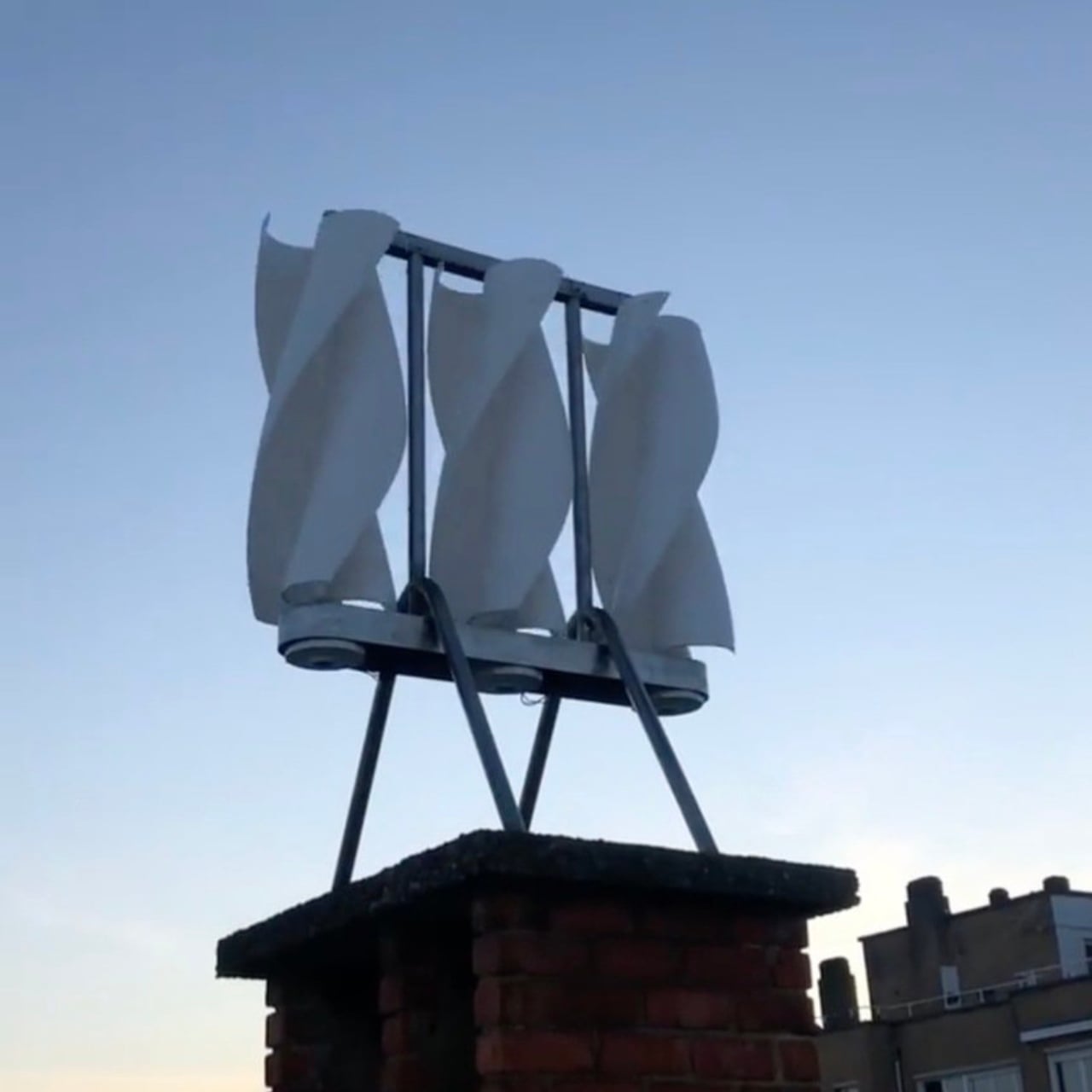
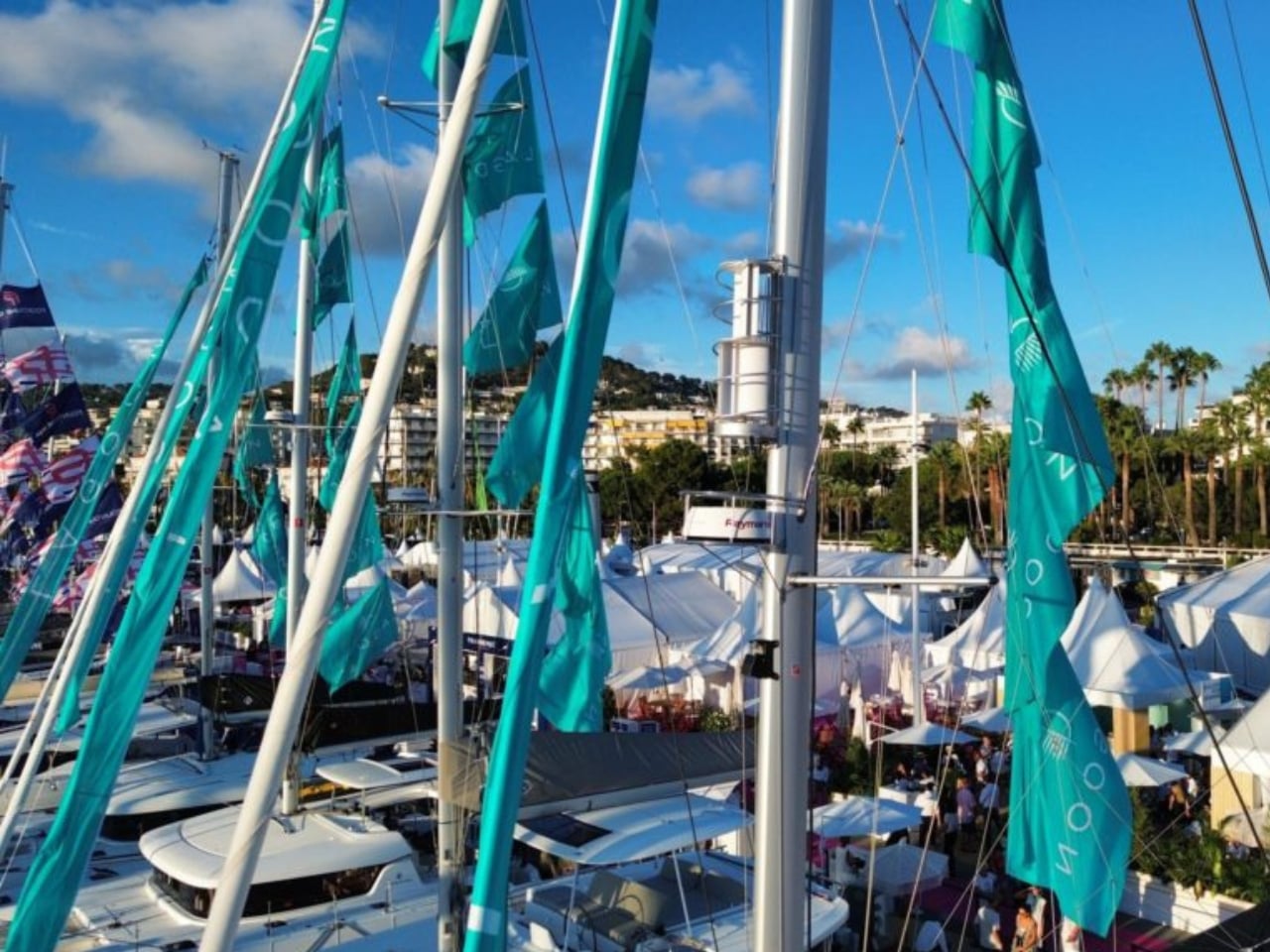
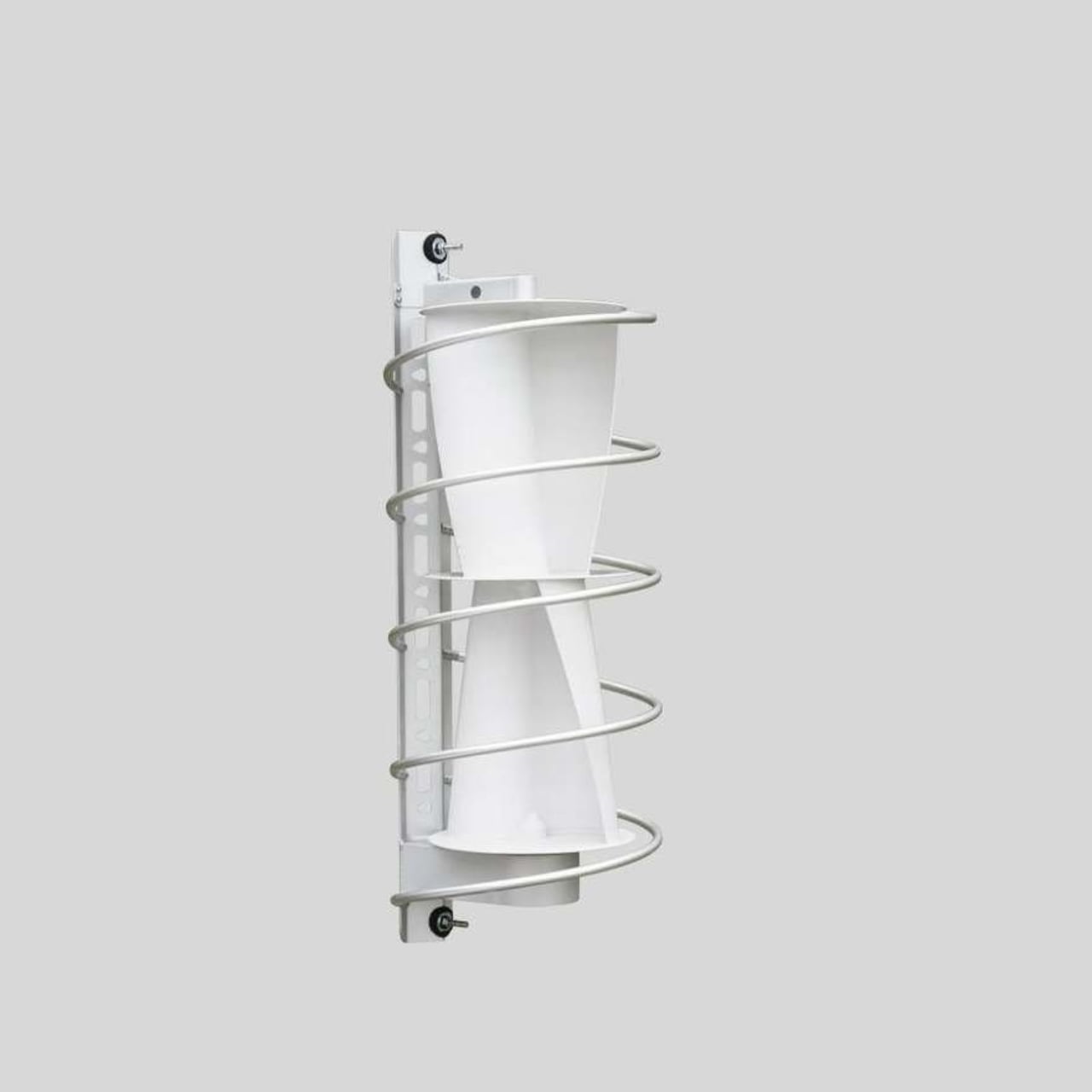
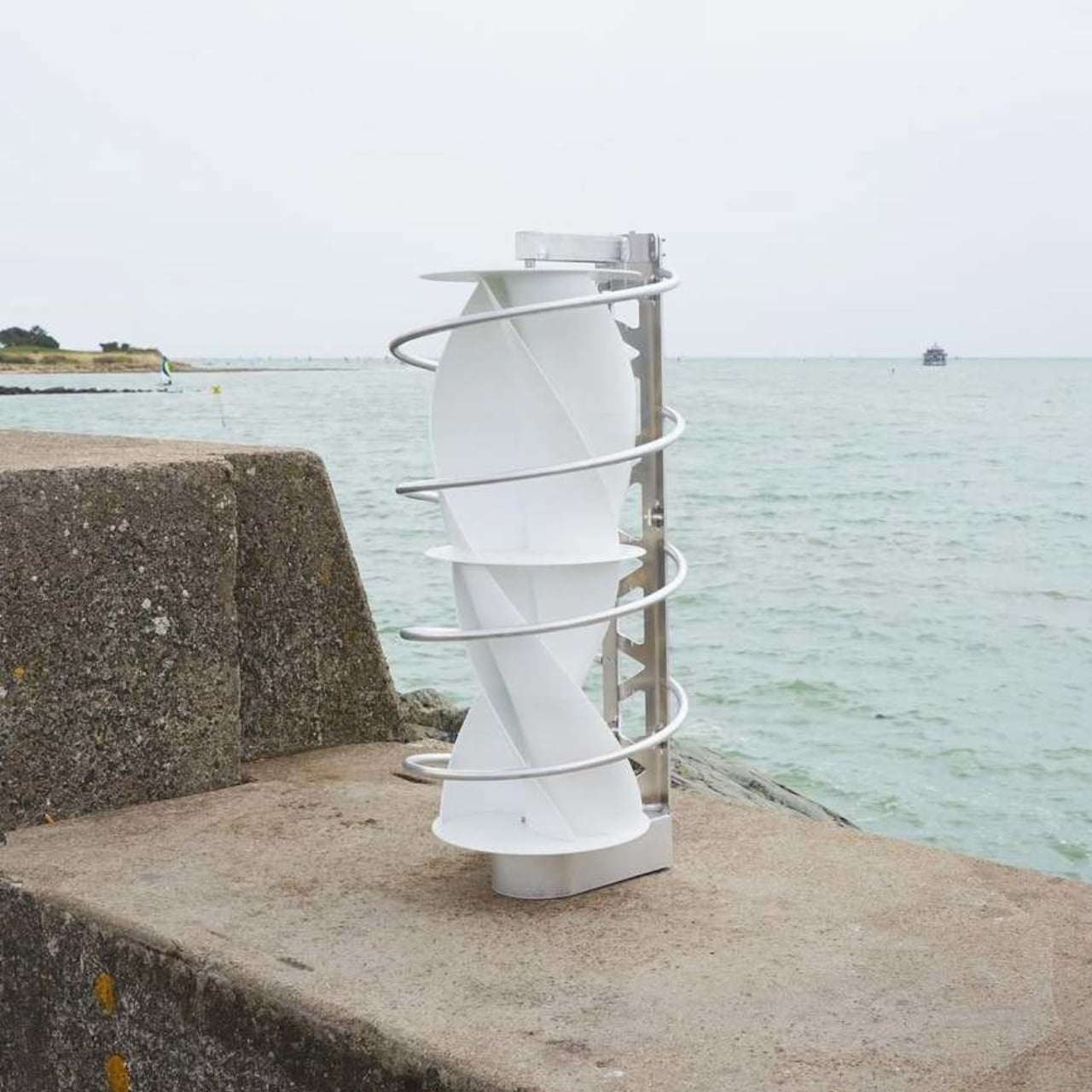
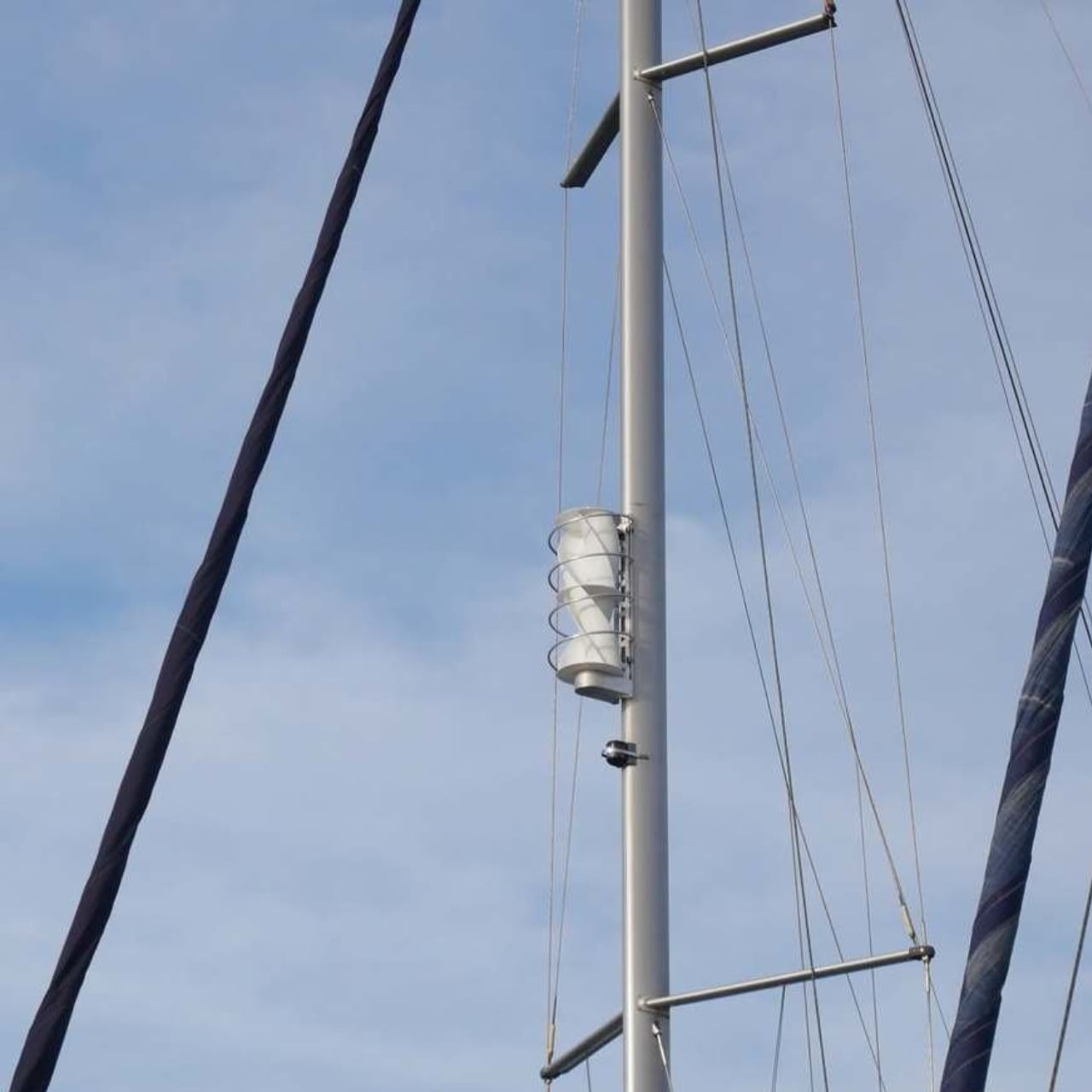
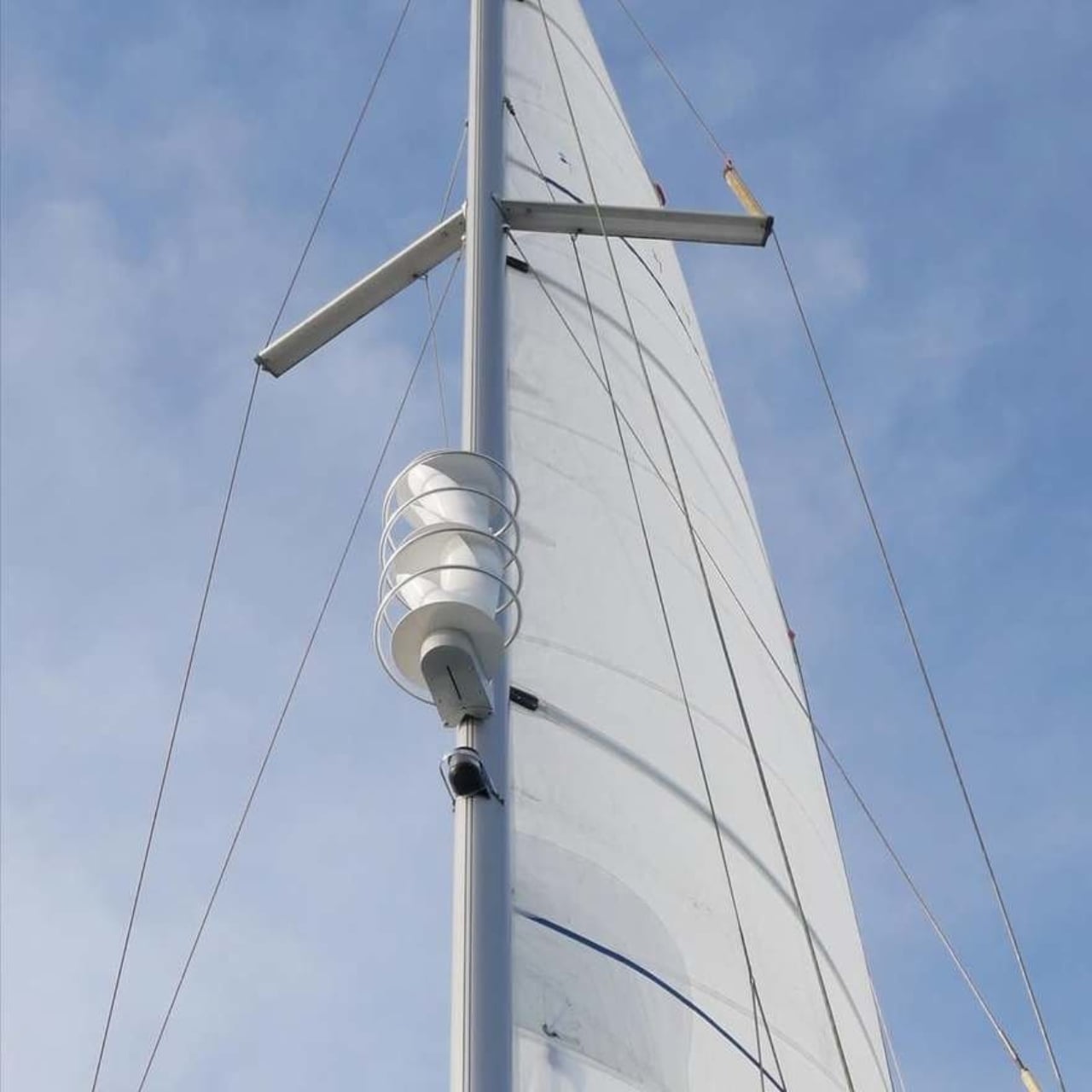
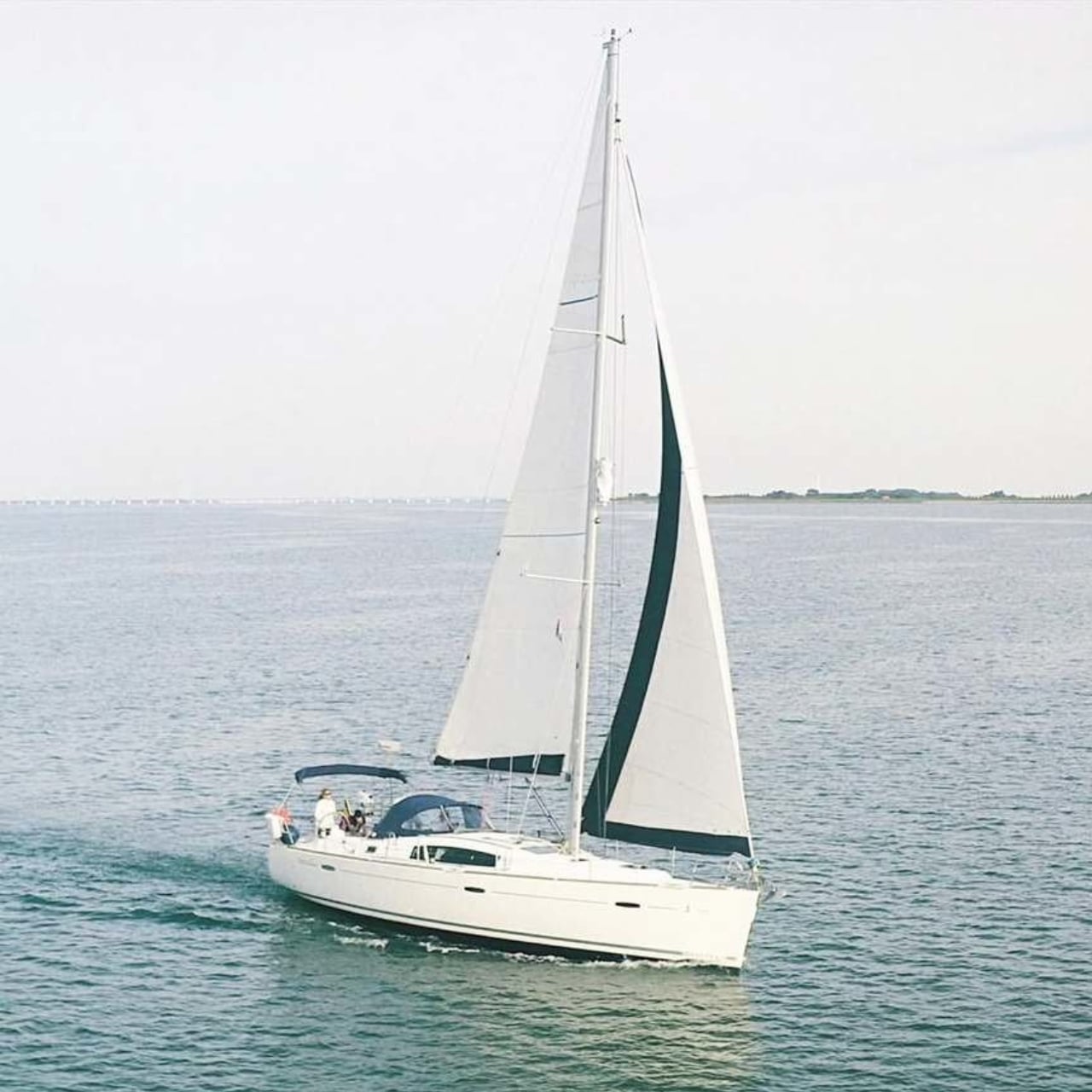
Traditionally, sailors have dealt with this in less-than-ideal ways. You can run an auxiliary motor to charge your batteries, which kind of defeats the whole wind-powered romance. Or you plug in at the dock and hope you remembered to charge everything before casting off. Neither option is particularly elegant, and both leave you dependent on fossil fuels or shore power. Enter the Grain Blanc, a clever little wind turbine from Belgian startup Phileole that’s rethinking how sailboats stay powered. This compact vertical turbine bolts right onto your mast and does something that feels almost too obvious in hindsight: it uses the very wind that’s already moving your boat to generate electricity for everything onboard.

Designer: Phileole

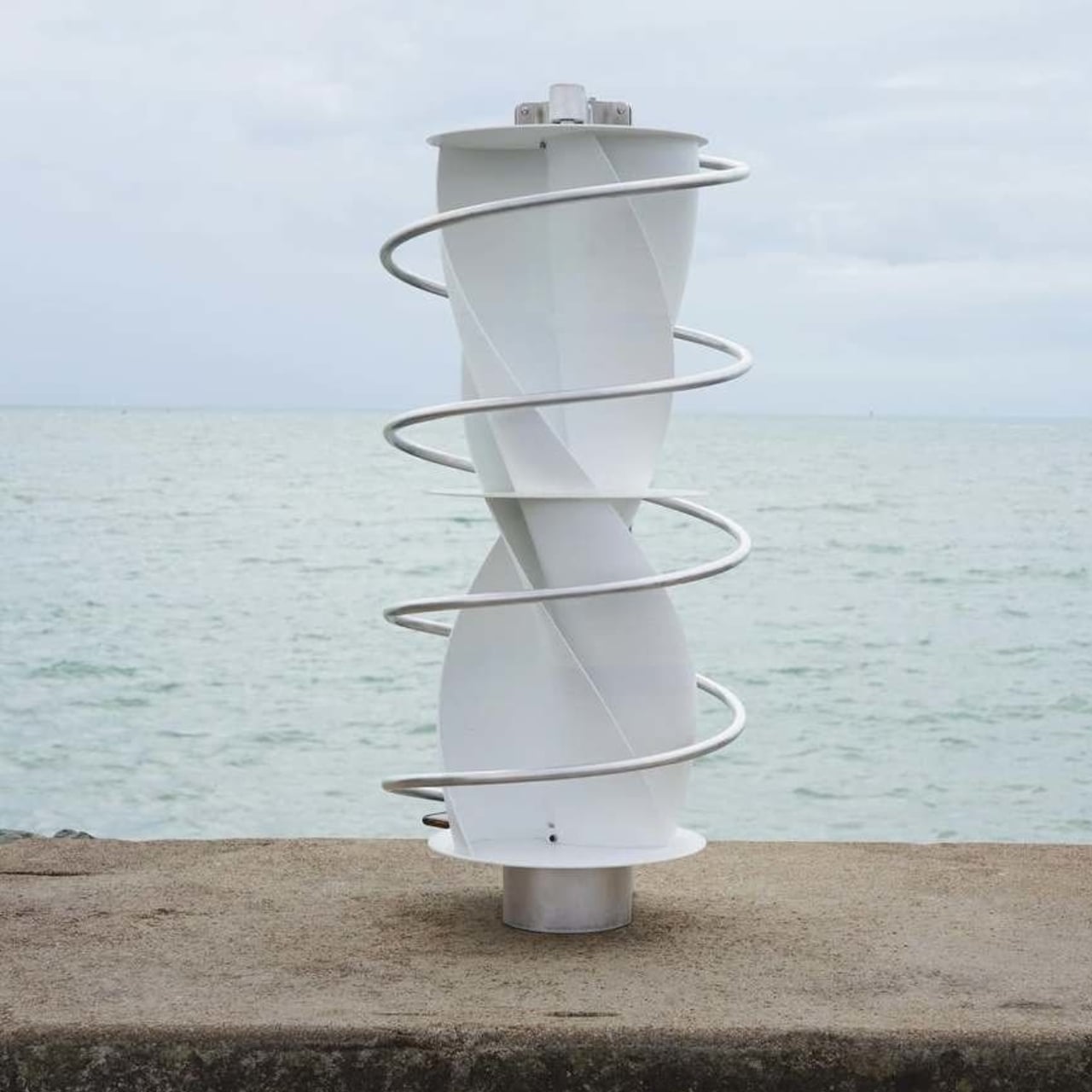
The design itself is refreshingly simple. Standing about 100 centimeters tall and 45 centimeters in diameter, it’s compact enough not to get in your way but substantial enough to actually do something useful. The vertical orientation is the key here. Unlike traditional horizontal wind turbines that need to pivot to face the wind, this thing captures air from any direction. When you’re out on the water and wind direction changes constantly, that’s a huge advantage.

What really makes the Grain Blanc stand out is how quiet it operates. Anyone who’s been around conventional wind turbines knows they can sound like an angry mechanical bee convention. This one? Silence. That’s not just nice for your peace of mind while you’re trying to enjoy the ocean; it’s better for marine life too. Phileole designed it to produce no vibration or disturbance to biodiversity, which feels increasingly important as we become more aware of how our technologies impact ecosystems.

The turbine handles all your essential navigation needs: keeping your lights on, your radar scanning, your VHF radio crackling, your GPS tracking, and your navigation console powered. Basically, all the stuff that keeps you safe and legal out there. But the utility doesn’t stop when you dock. Throughout winter, when your boat is sitting at the marina, the Grain Blanc keeps your batteries topped off and can even power a dehumidifier. Anyone who’s dealt with musty boat interiors knows that’s worth its weight in gold.

The environmental credentials here are genuinely impressive. The units are made primarily from recycled polypropylene and are themselves 95 percent recyclable. In an industry that’s historically generated mountains of waste, that circularity matters. It’s also worth noting that the turbine comes with a smart regulator that requires zero manipulation after installation. It automatically keeps your batteries charged and shuts itself down during storms. That kind of set-it-and-forget-it reliability is exactly what you want when you’re dealing with the unpredictability of ocean conditions.

While Phileole designed the Grain Blanc specifically for sailboats, the technology has broader implications. The same principles that make it work on a mast could potentially apply to other scenarios where you need compact, omnidirectional wind power. Urban balconies, remote cabins, mobile installations: anywhere traditional turbines are too bulky or finicky, vertical designs like this could fill the gap.

What strikes me most about the Grain Blanc is how it represents a shift in thinking about renewable energy. We often imagine clean power requiring massive infrastructure: sprawling solar farms or towering wind turbines dominating landscapes. But sometimes the most effective solutions are small, quiet, and fit seamlessly into existing systems. This little turbine doesn’t try to revolutionize sailing or make grand promises about saving the world. It just solves a real problem elegantly, using the resources already at hand. And honestly? That’s the kind of practical innovation that actually changes how we live.

The post This Silent Wind Turbine Solves Sailing’s Power Problem first appeared on Yanko Design.
A Wind Turbine Is Repurposed Into A Sustainable Tiny Home Of The Future

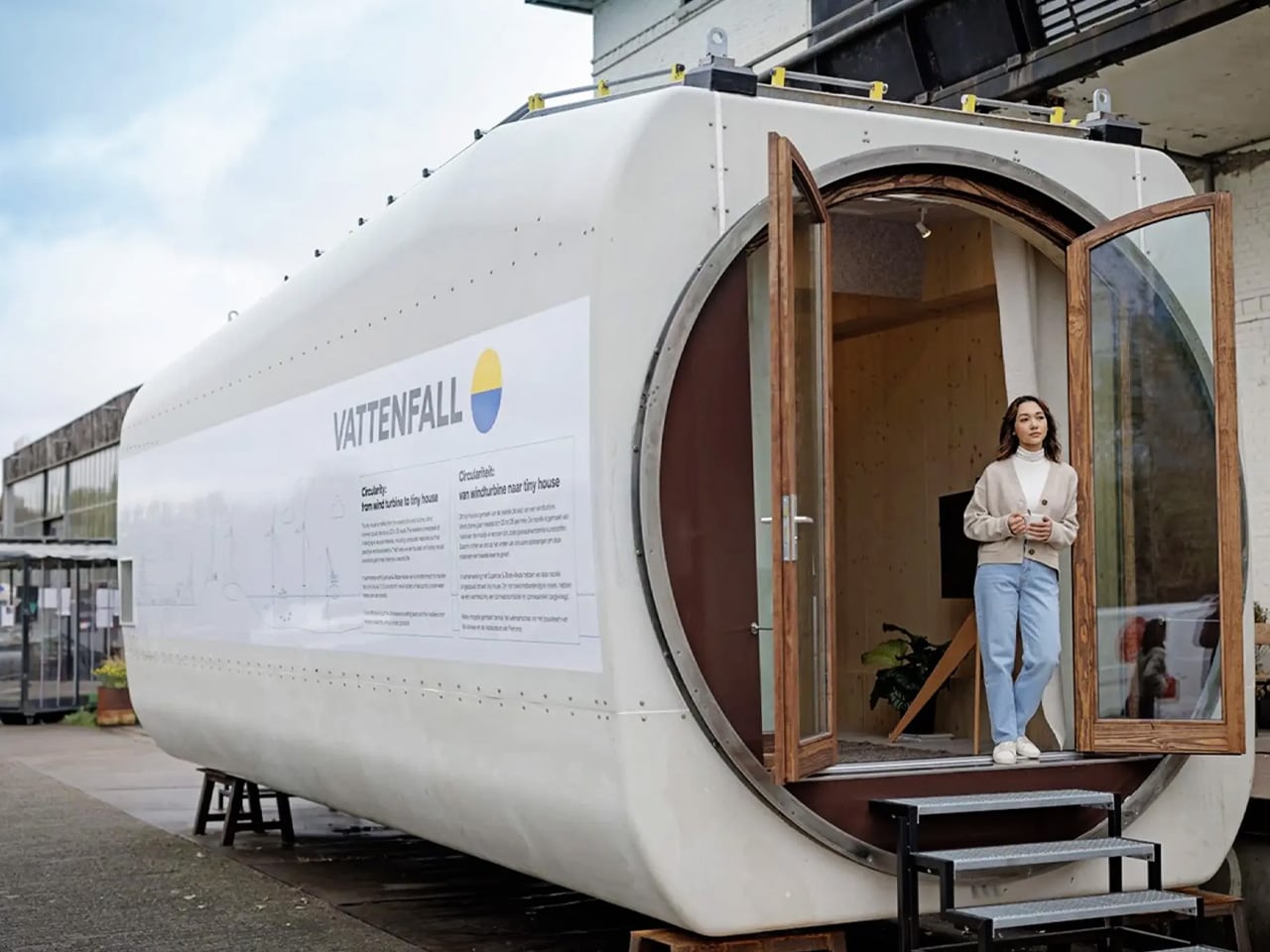
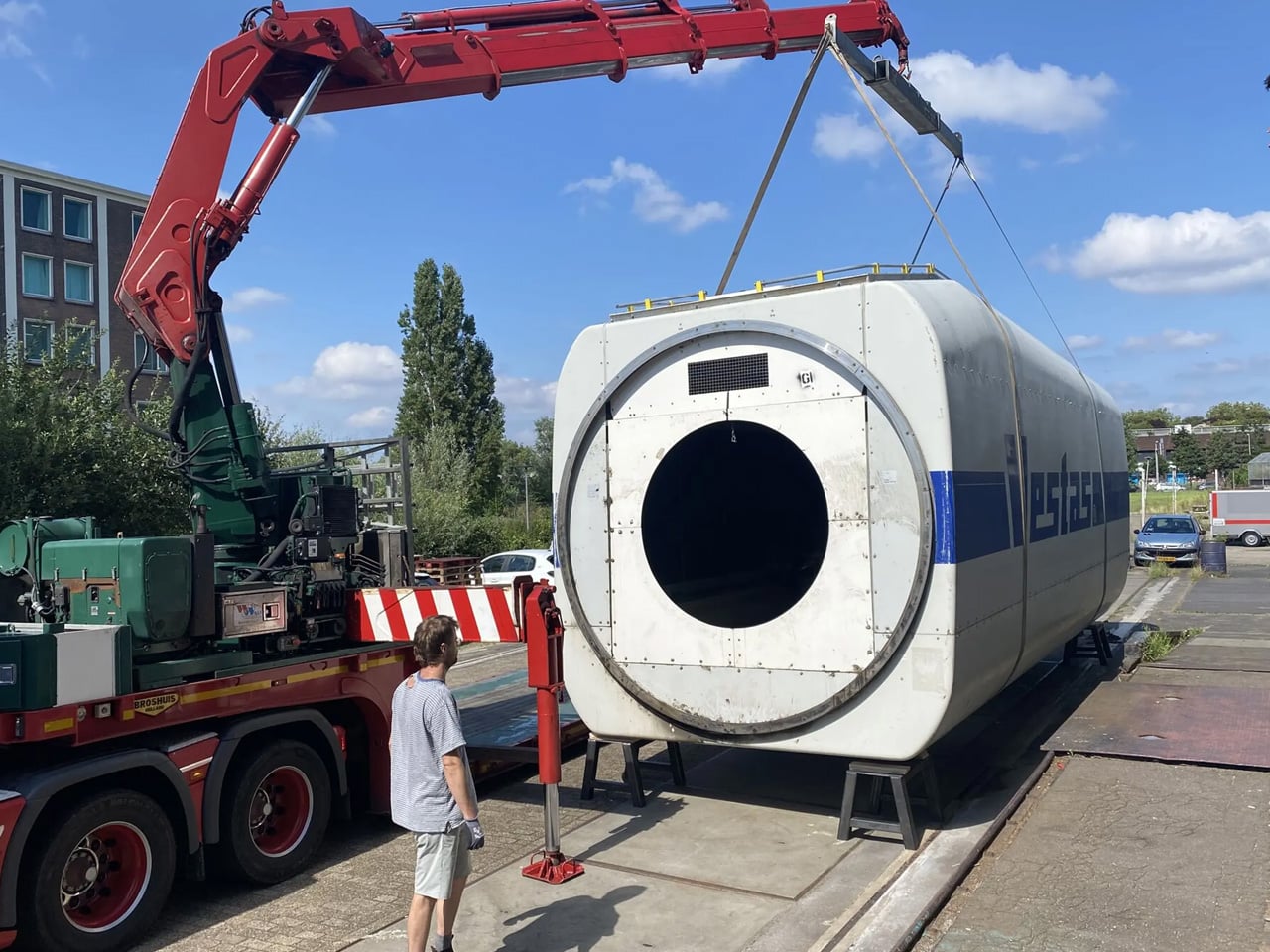
Do you know what a ‘nacelle’ is? It is a streamlined container that sits on top of a wind turbine and holds various components like the generator and gearbox. Wind turbines are known for being pretty huge, but a nacelle is big enough to live in! European energy company Vattenfall teamed with Superuse Studios intending to repurpose decommissioned turbines. They’ve explored these old machines, creating a tiny home inside a nacelle. The tiny home is pretty cute and cozy and is being displayed at the Dutch Design Week 2020 in Eindhoven this month.

Designer: Vattenfall x Superuse Studios

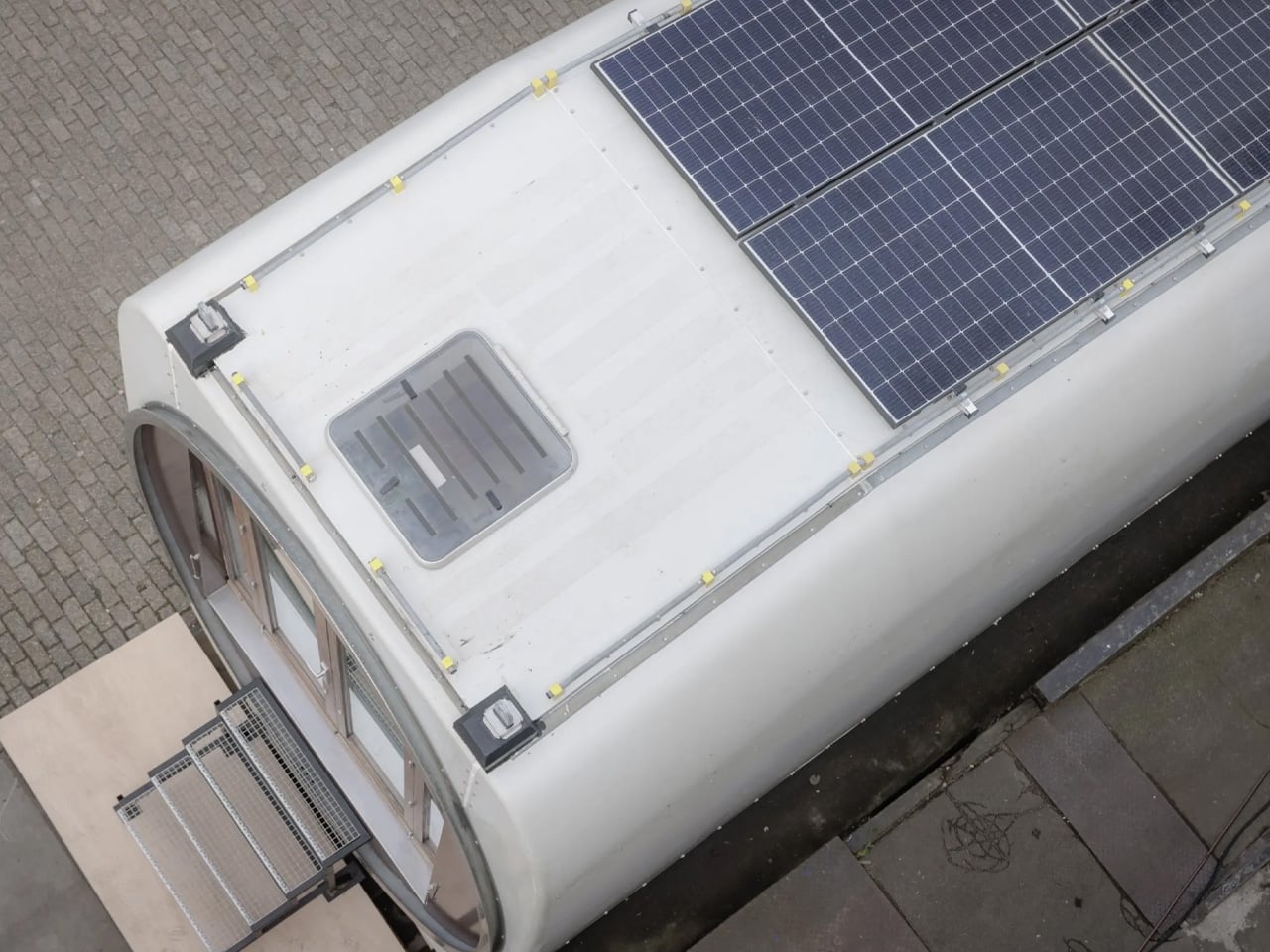
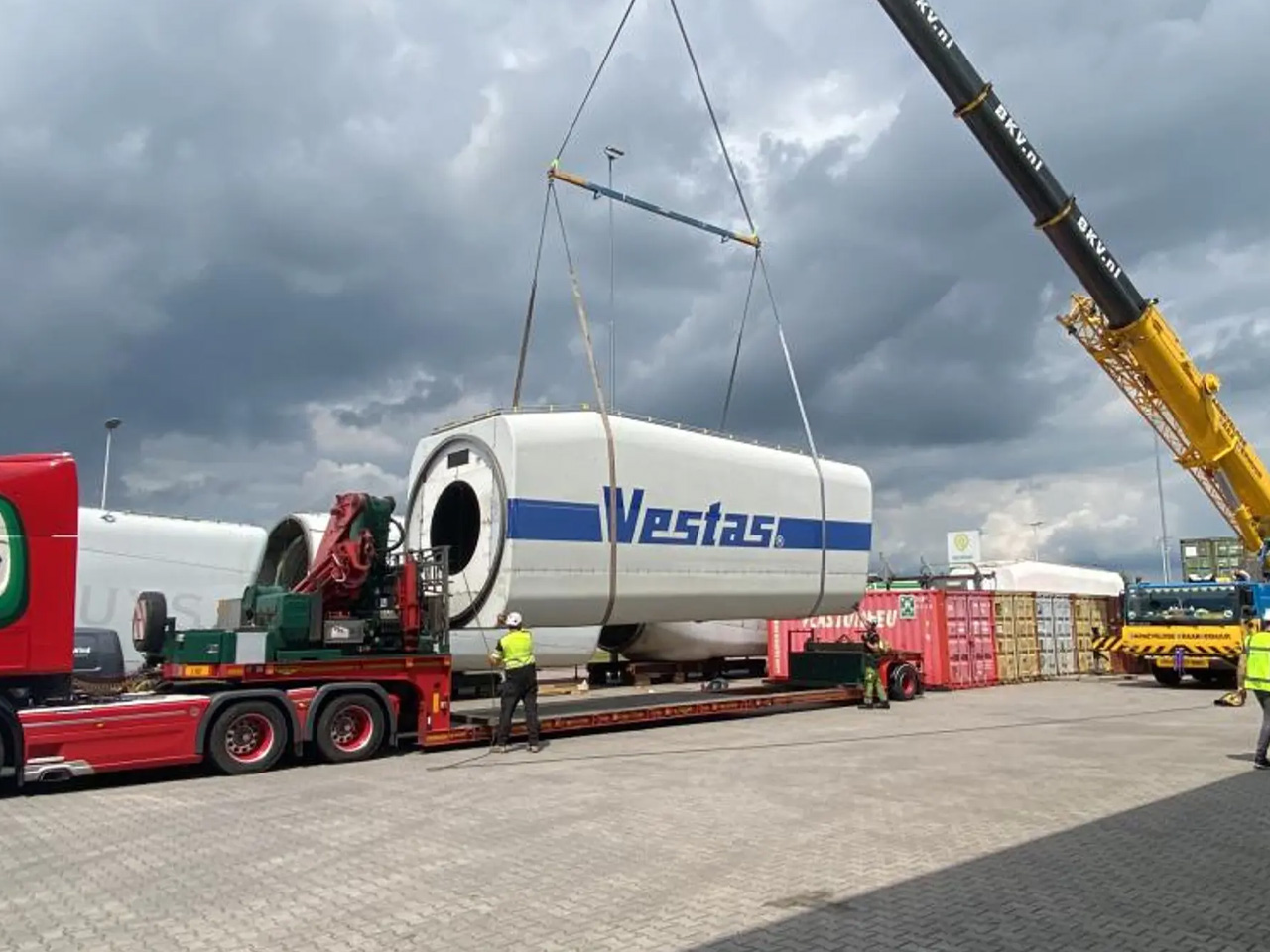
They chose a nacelle from a Vestas V80 2-MW turbine that was running at the Austria Gols wind farm for almost twenty years. It was brought to the ground from its height of 328 ft. The nacelle is 13 ft wide, 32 ft long, and 10 ft high. It includes almost 376 sq ft of living space and is one of the smaller nacelles found today. If they pick a nacelle from a newer turbine, it will be larger, providing more living space. Superuse teamed up with a bunch of partner firms to outfit Nestle with electricity, plumbing, and insulation.

The shell is built from glass fiber-reinforced plastics, which makes it durable but not the most recyclable material, hence repurposing it was a good move. The roof is topped with four solar panels that provide 1,800-W peak power, which is sufficient for the home. The little house also includes a solar-powered water boiler for showering and washing, as well as a heat pump for the AC. A decentralized ventilation system with wall-mounted panels and an EV charging point has been integrated as well.

The interior is warm and wooden, equipped with a bathroom, kitchenette, and a combined sleeping and living area. For the Dutch Design Week 2024, the home has been incorporated with second-hand furniture, although it is sustainably produced. A table built from recycled material obtained from an old wind turbine blade is included in the space as well.

Jos de Krieger, partner at Superuse said. “At least ten thousand of this generation of nacelles are available, spread around the world. Most of them have yet to be decommissioned. This offers perspective and a challenge for owners and decommissioners. If such a complex structure as a house is possible, then numerous simpler solutions are also feasible and scalable.”

The post A Wind Turbine Is Repurposed Into A Sustainable Tiny Home Of The Future first appeared on Yanko Design.
Stay Cool Anywhere With the Ultimate Portable Air Duster Fan for Any Adventure

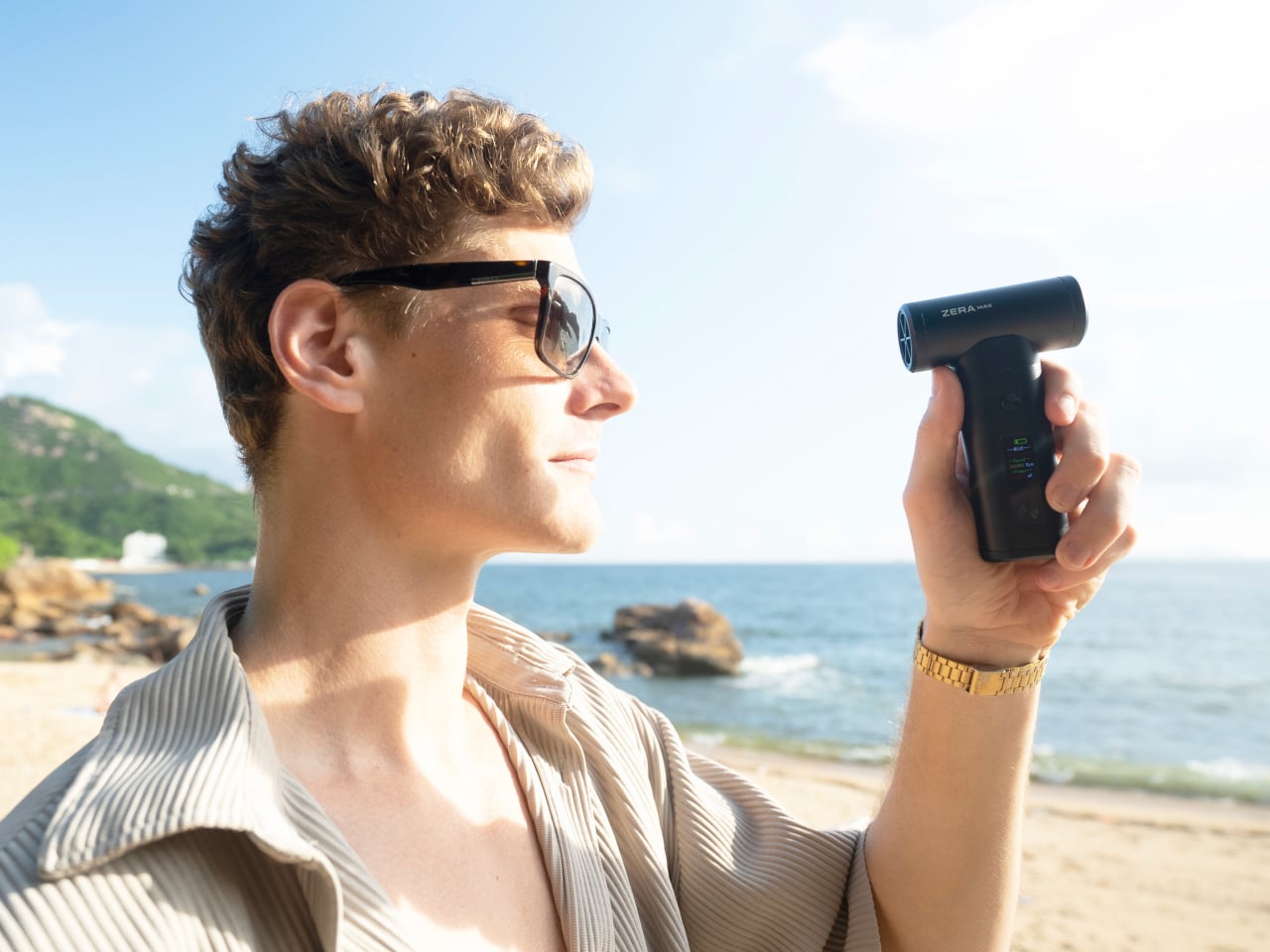
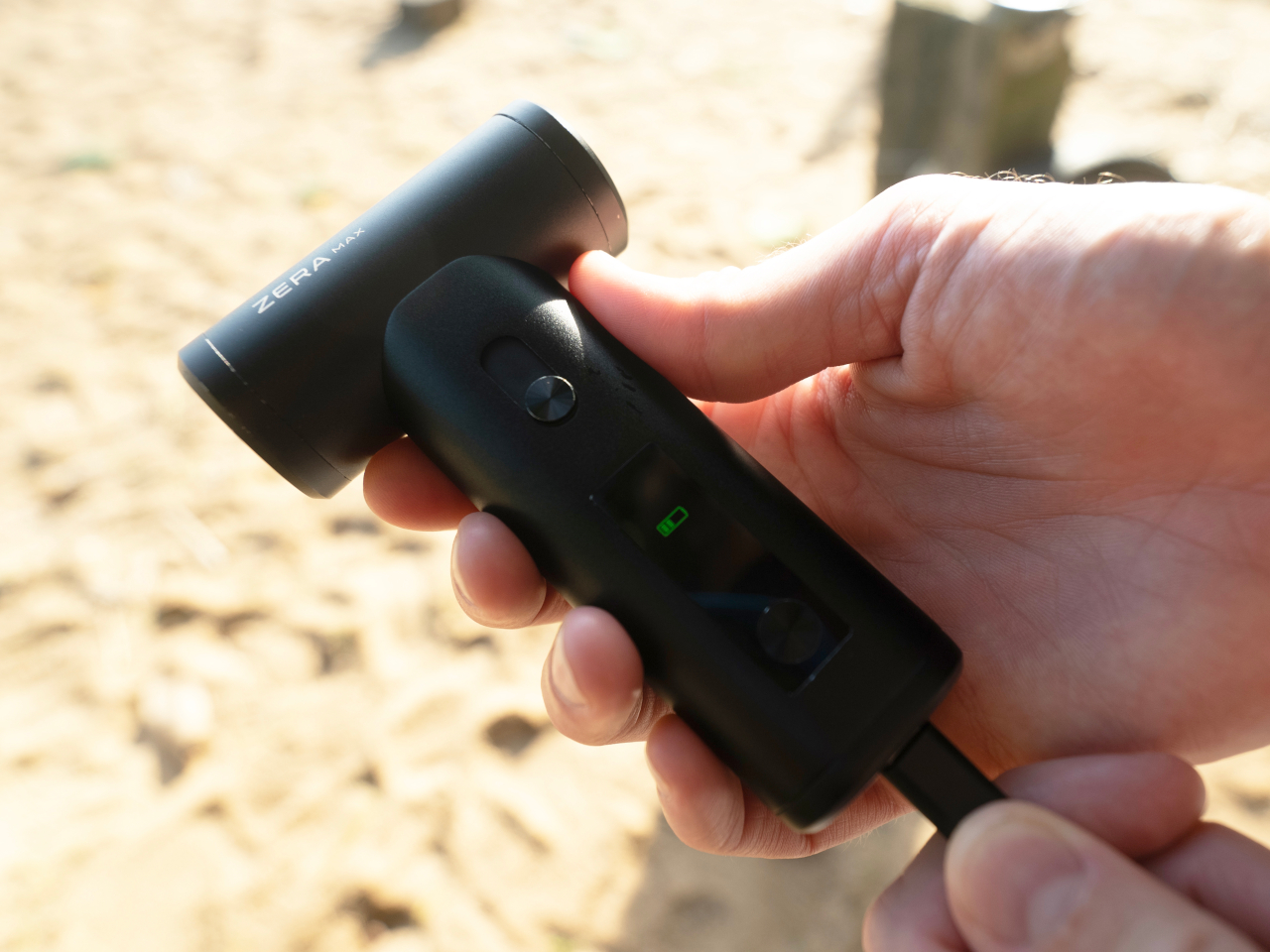
Imagine being in the great outdoors, basking in nature’s beauty, but also sweating profusely and feeling sluggish under the oppressive sun. You might not believe it, but your body definitely feels both days and nights getting hotter. Portable fans are the rage these days, but many of them require you to carry large bottle-sized contraptions that sacrifice your comfort just to beat the heat. That’s where ZERA MAX comes in, a revolutionary portable air duster fan designed to keep you cool and comfortable no matter where your adventures take you. Meticulously crafted to seamlessly combine power, portability, and stunning design, this handheld turbine delivers the wind you need to keep cool and look cool anytime. Whether you’re an avid camper, a dedicated hiker, or someone just looking to conquer the summer heat, the ZERA MAX promises to bring indoor comfort to your outdoor experiences.

Designer: ZERA

Click Here to Buy Now: $89 $159 (44% off). Hurry, deal ends soon! Raised over $106,000.

1

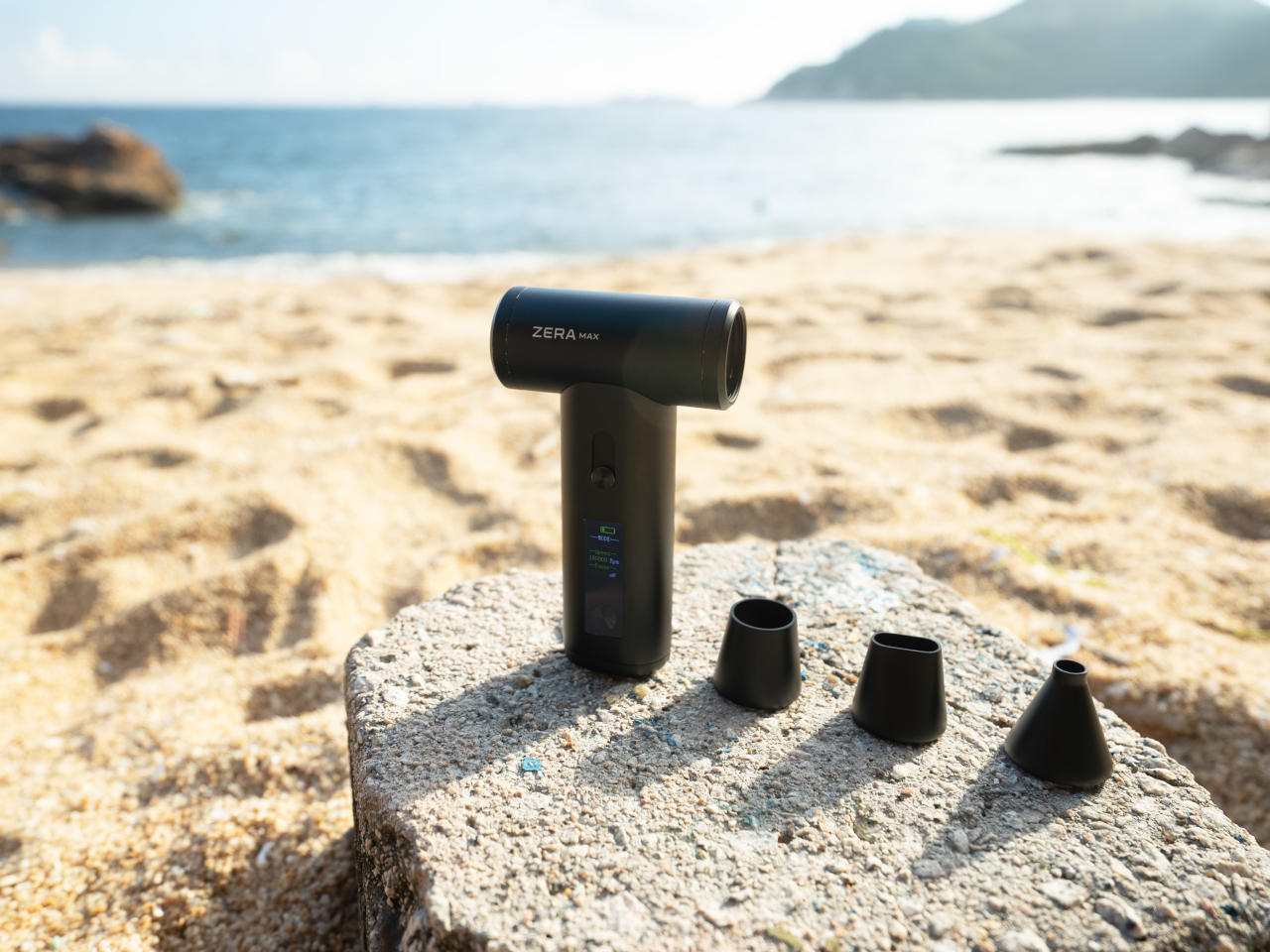
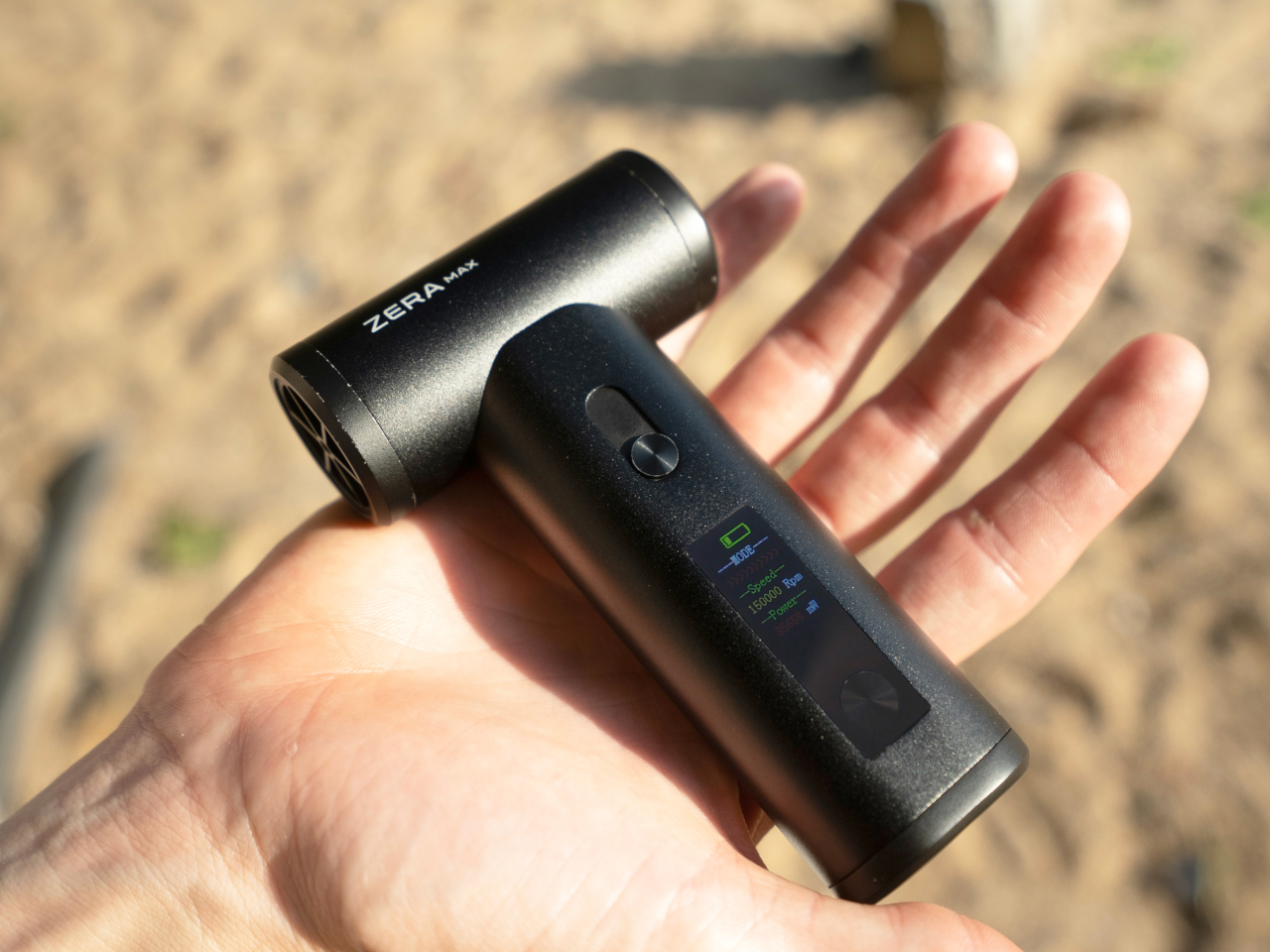
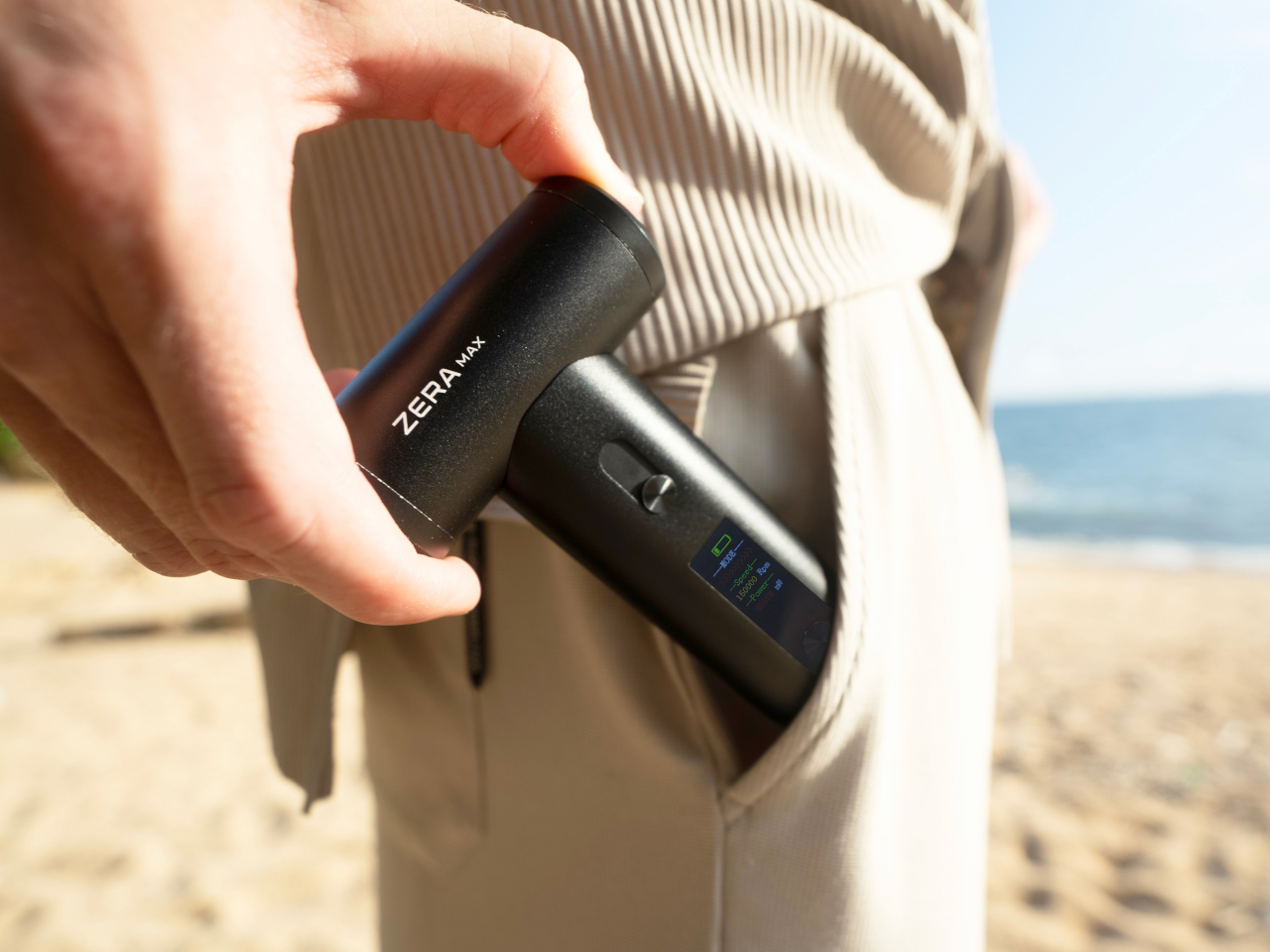
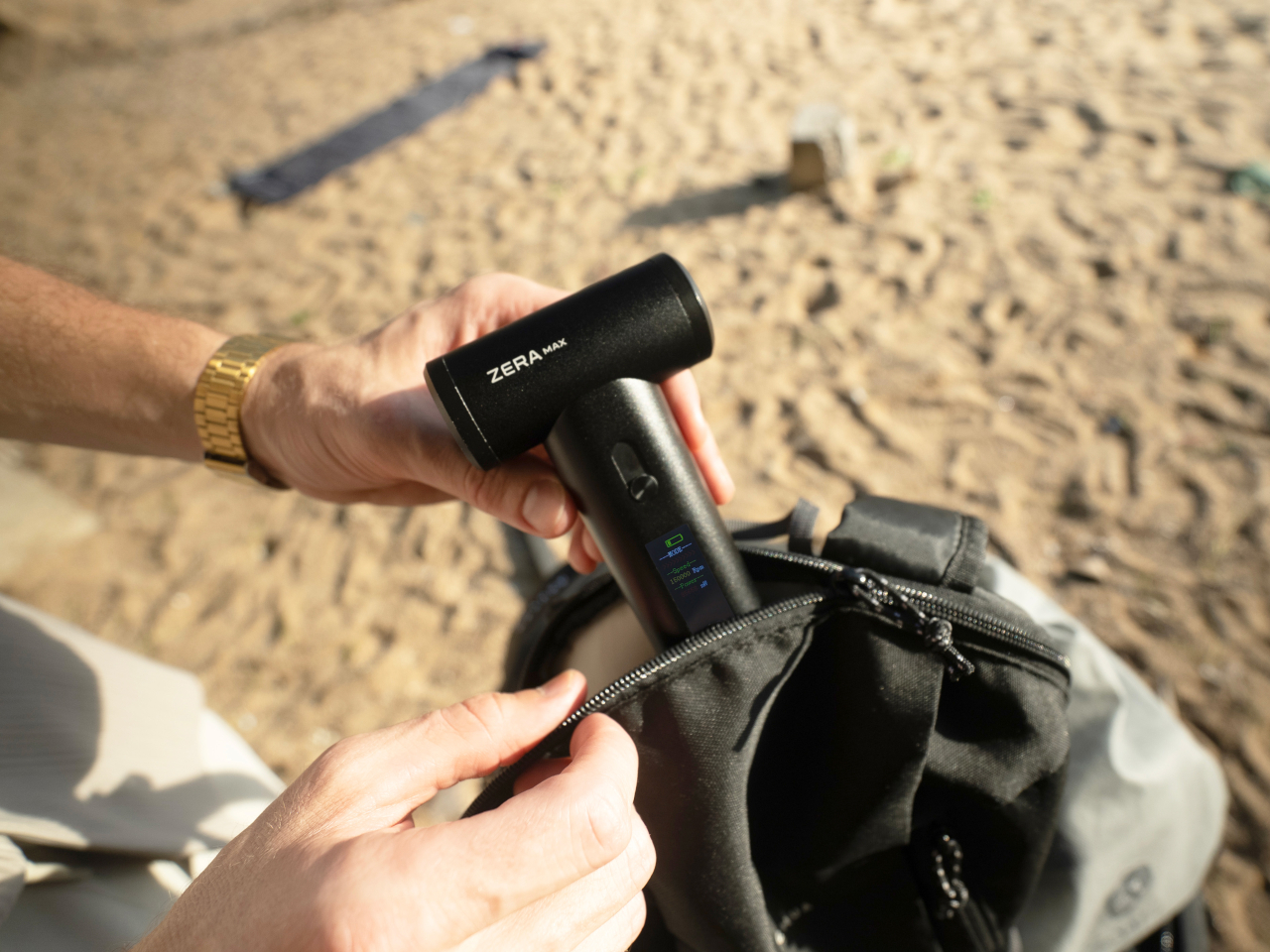
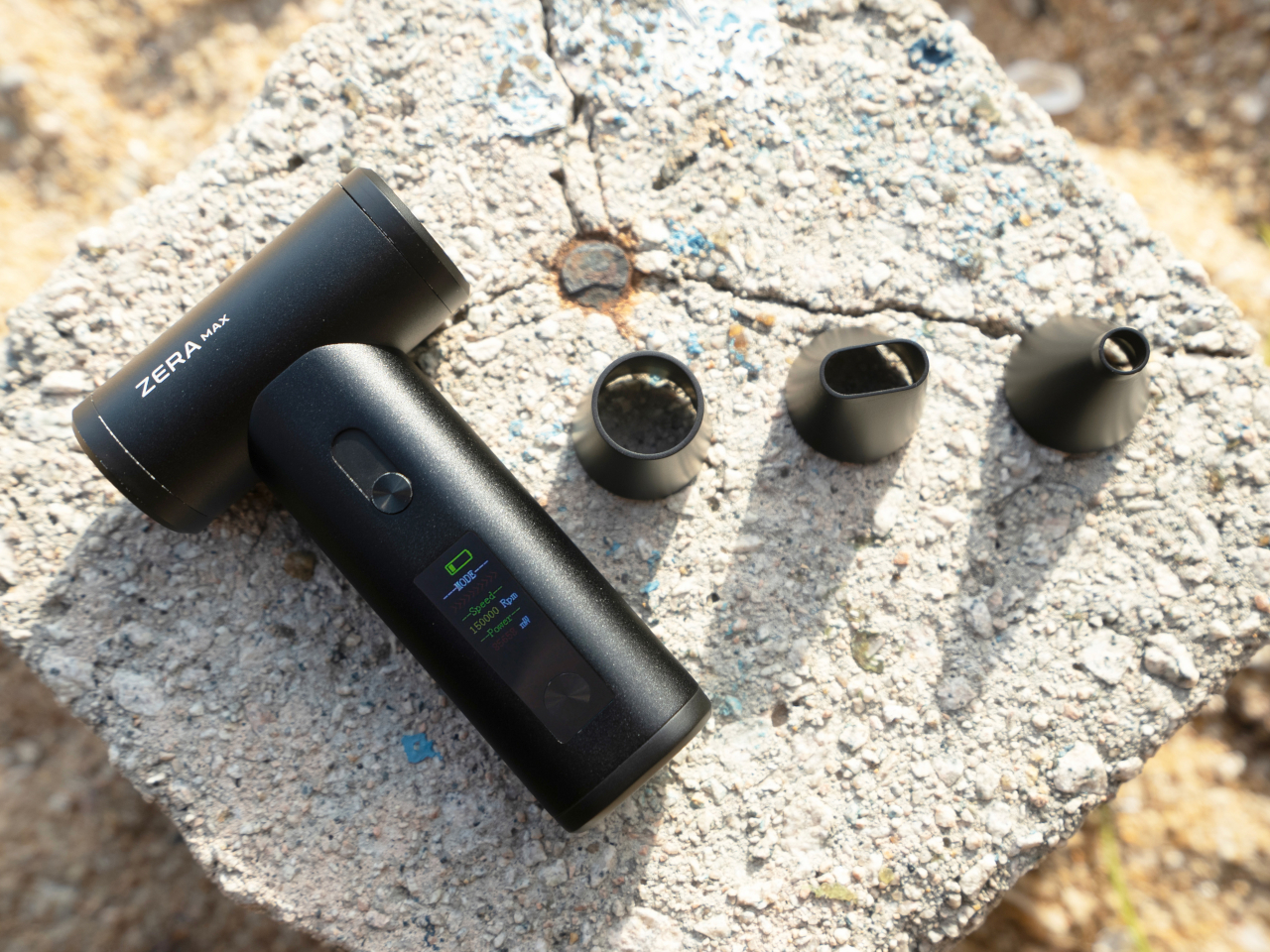
What sets the ZERA MAX apart at first glance is its sleek, ergonomic, and pocket-sized design. Crafted from aluminum alloy, this fan is lightweight yet incredibly durable, making it an indispensable companion for any outdoor activity. Its modern and minimalist aesthetic is a visual delight, ensuring it doesn’t just function well but looks good doing it. The convenience of its compact build cannot be overstated – you can effortlessly slip it into your backpack, hiking gear, or beach bag, giving you the freedom to carry it wherever you go, unlike other fans that are as large as water bottles. This blend of style and practicality ensures that relief from the heat is always within arm’s reach.

1

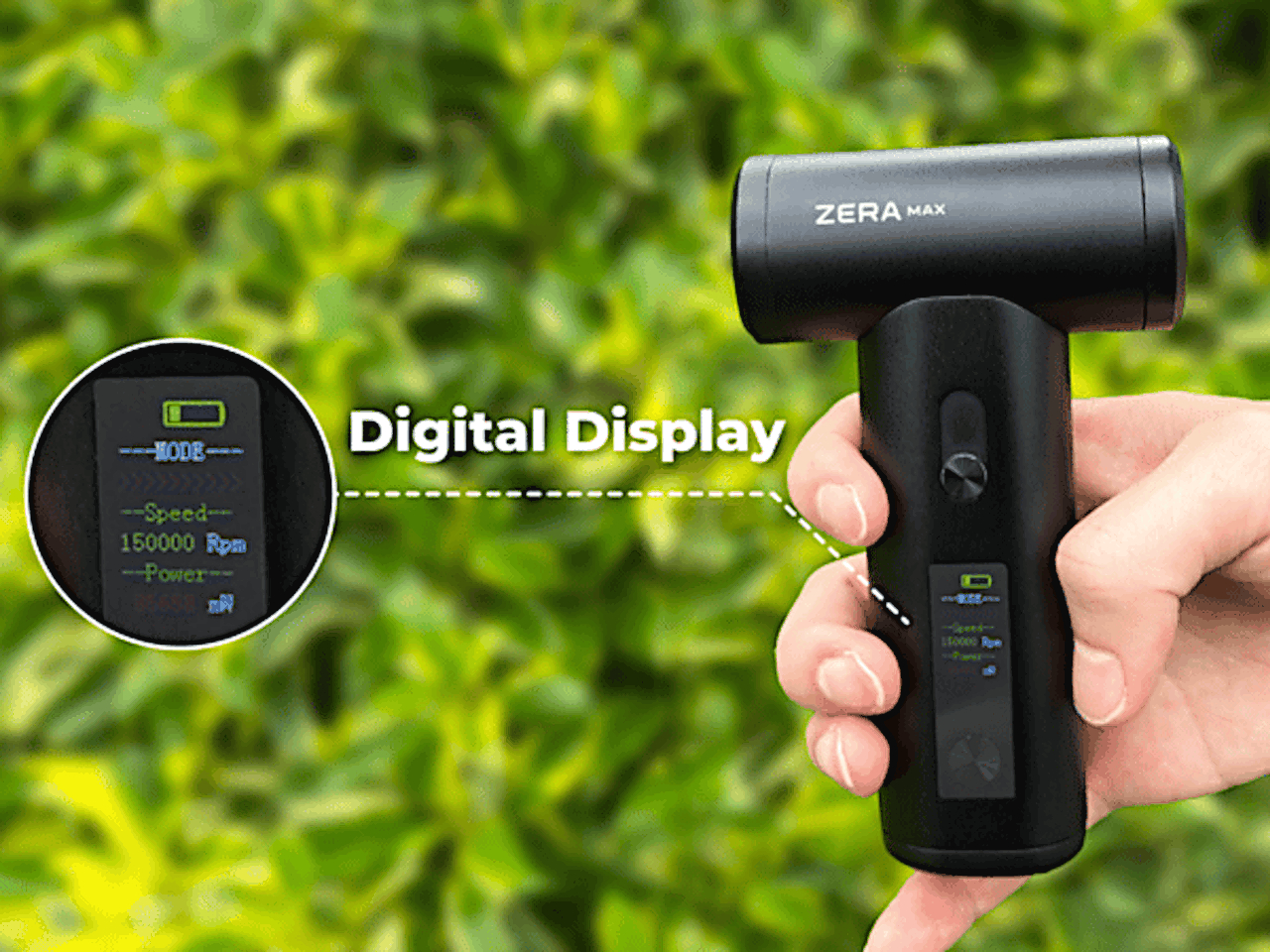
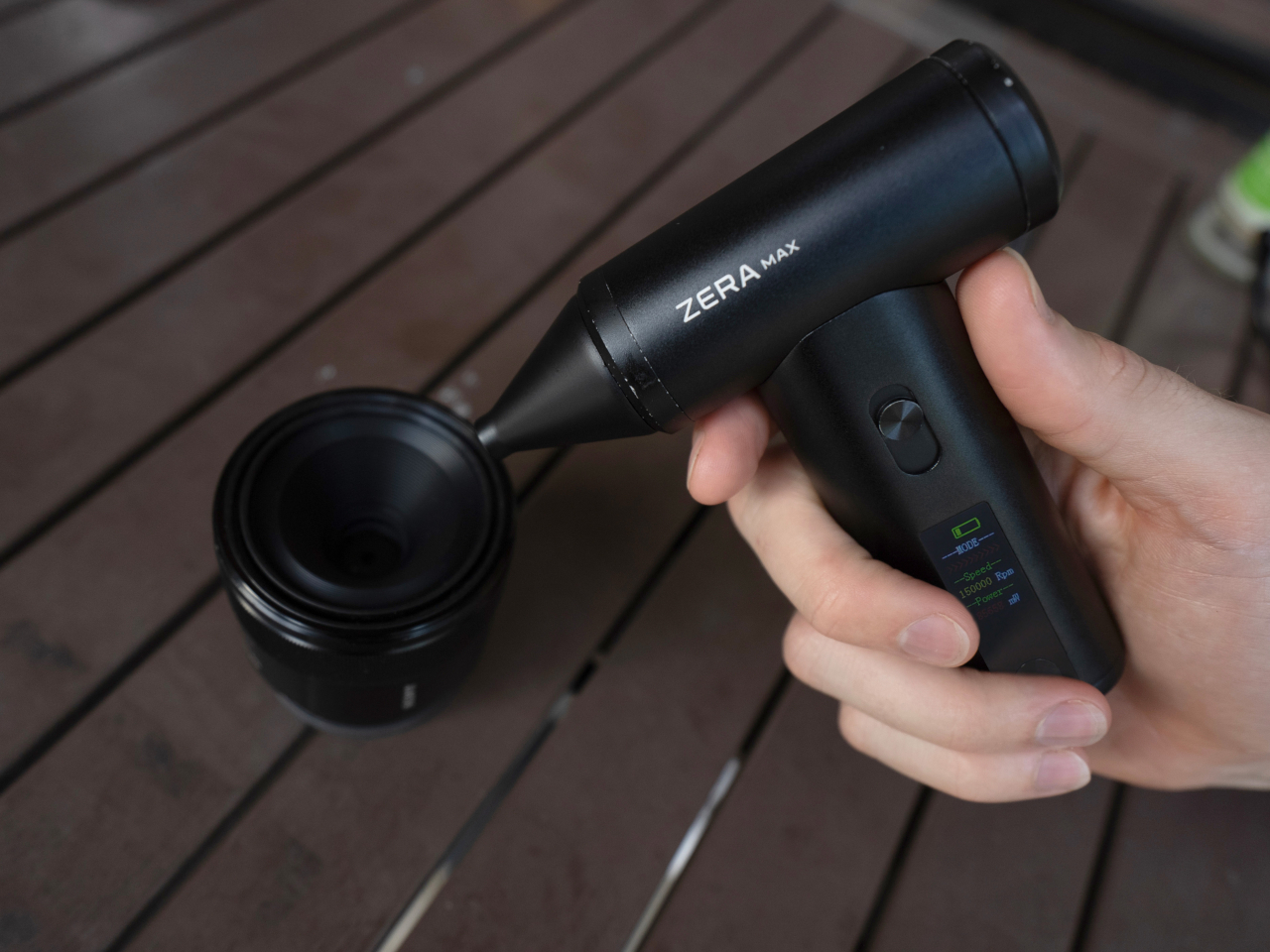
The relief is delivered by a small yet powerful wind turbine with a top speed of 150,000 rpm. With a simple sliding button, you can customize the speed that you need, whether it’s a gentle breeze for a mellow afternoon or a strong gust to keep the sweltering midday heat at bay. All the information you need is available at a glance on the handle’s digital display, whether it’s battery charge or speed. It’s these thoughtful features that distinguish the ZERA MAX as a versatile tool, perfect for any situation you might find yourself in.

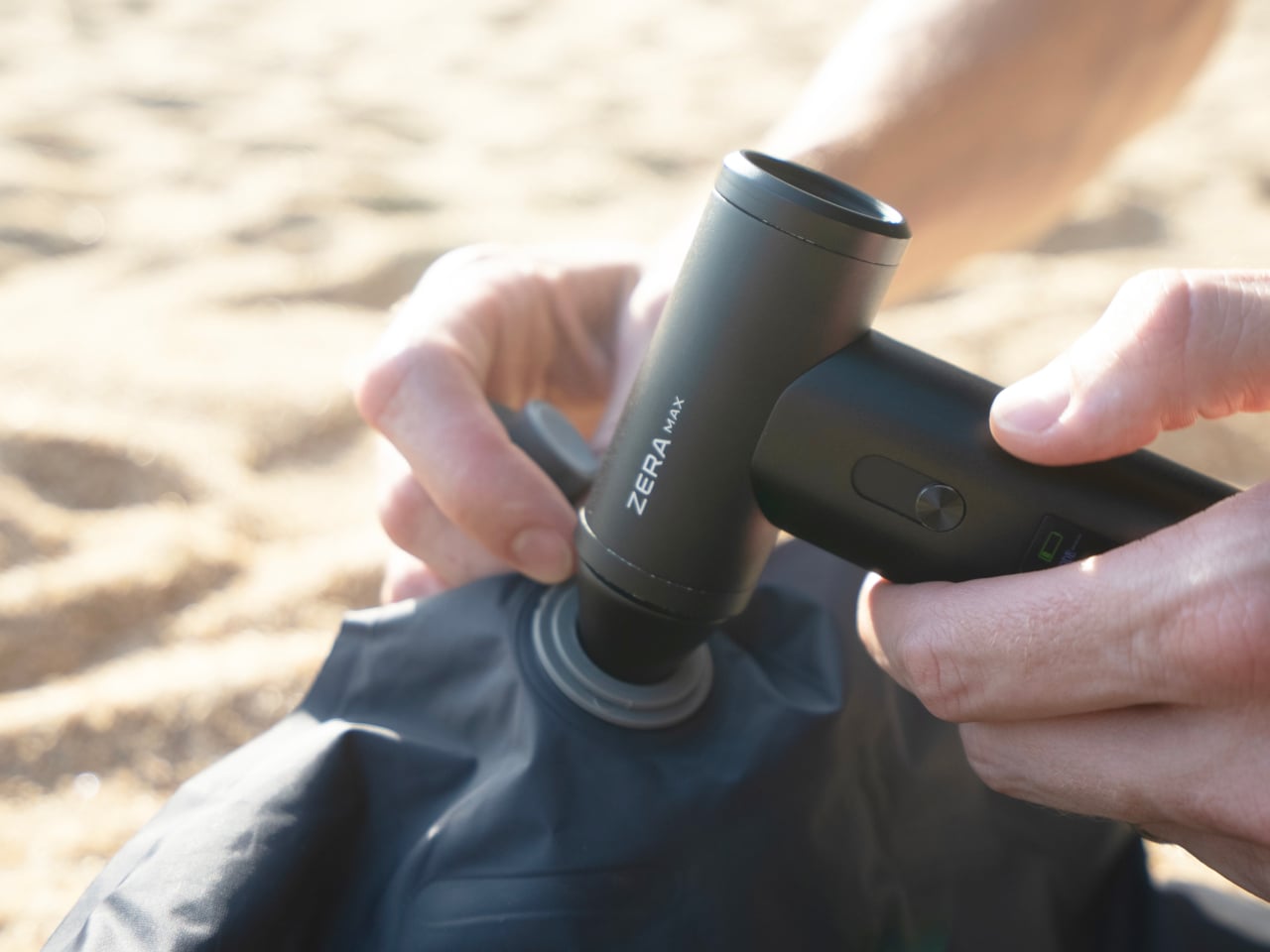
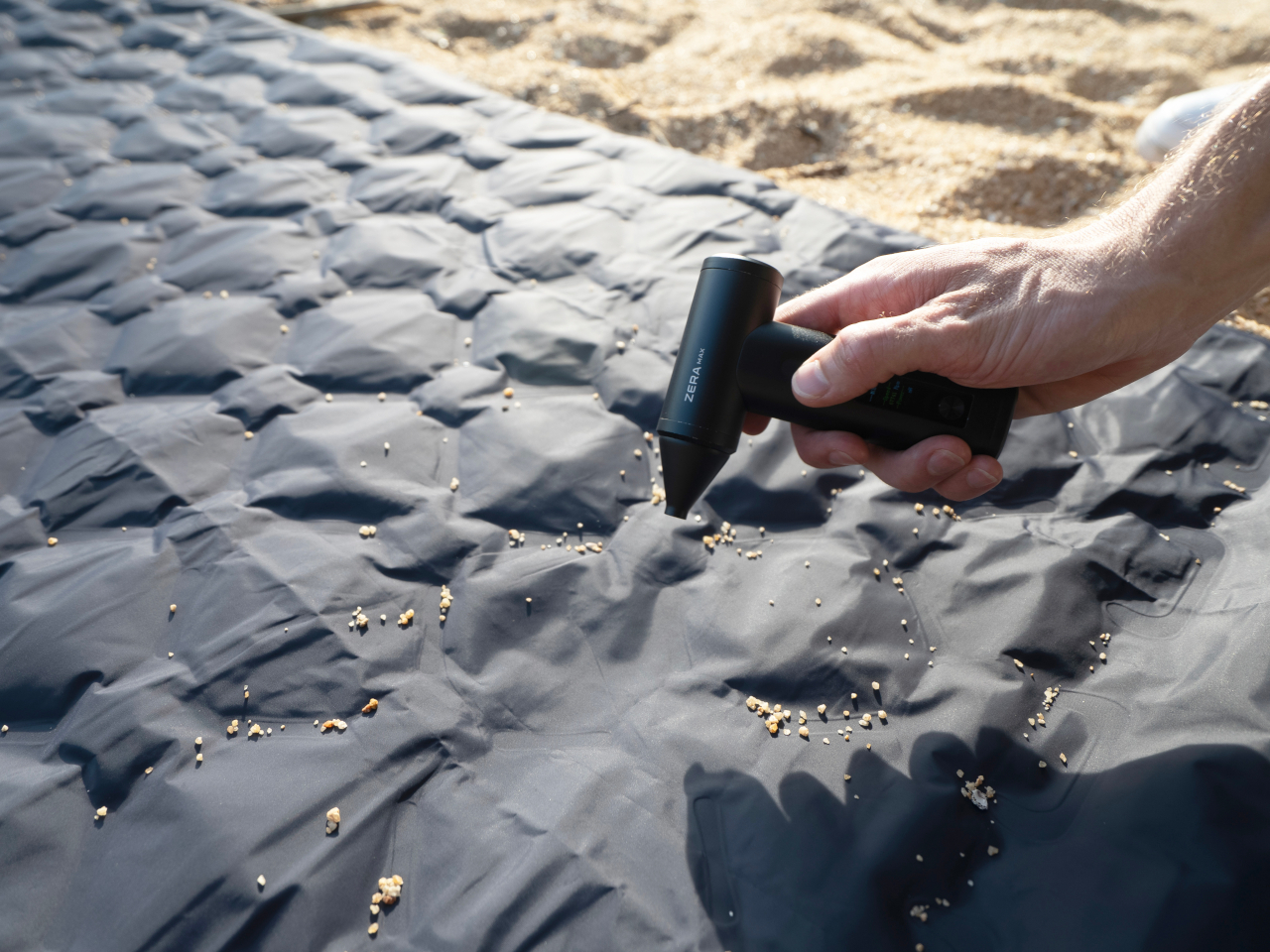
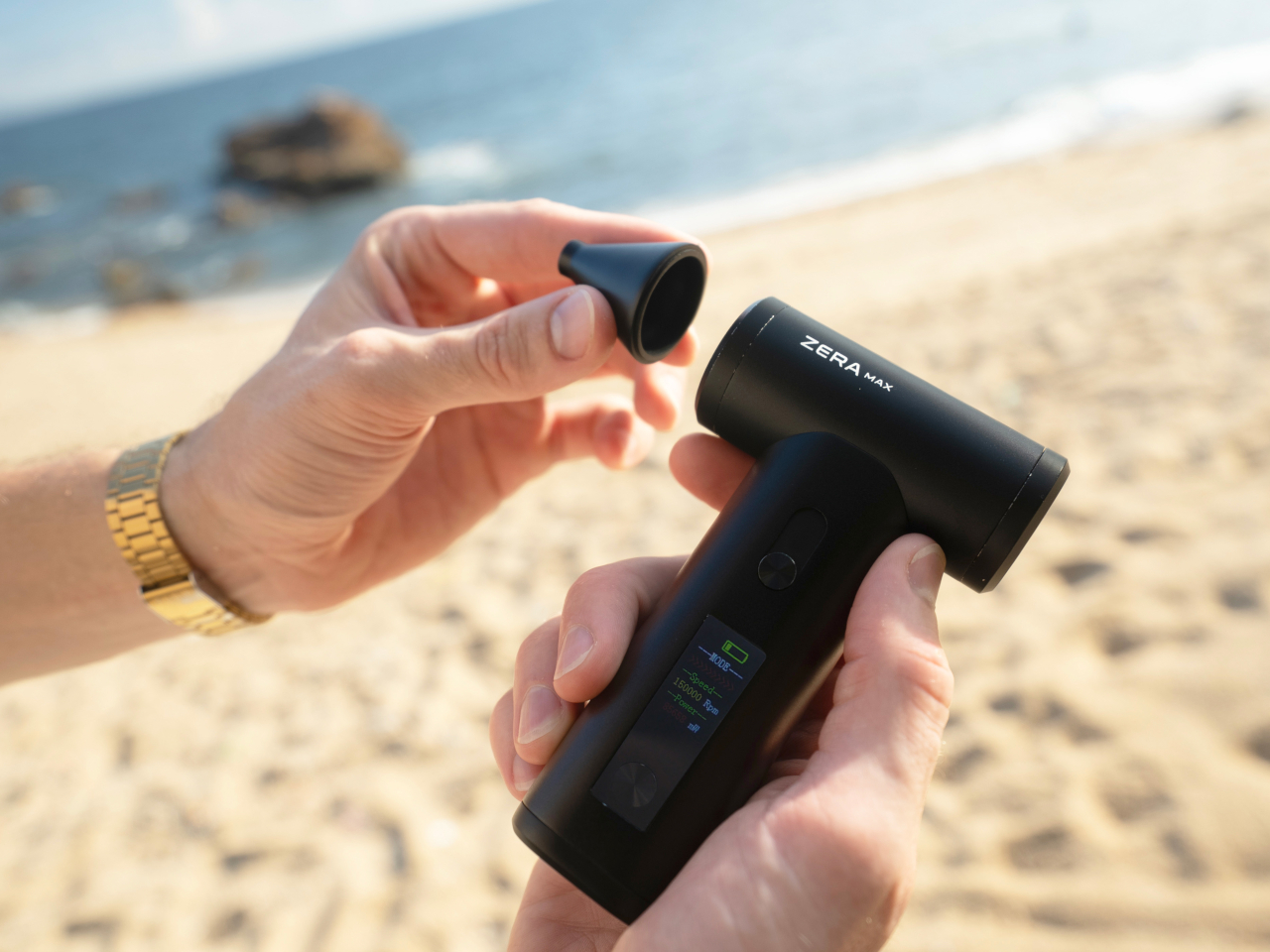
But the ZERA MAX isn’t just a fan – it’s a powerhouse of functionality. Picture this: you’ve just reached your camping spot, and with a quick switch, your fan doubles as an air duster to swiftly blow away dirt from your equipment. It’s a dream come true for outdoor enthusiasts who often have to deal with dusty environments and gear. It can also function as a vacuum, an air mattress and ball inflator, an eyeglasses cleaner, and more. All these functions are made possible with a variety of interchangeable nozzles that quickly snap and stay on thanks to a strong rare-earth magnet on the fan’s nose. These features are not just convenient but essential, ensuring your gear stays clean and functional, allowing you to focus on enjoying your adventure.

1

With such a powerful wind turbine in your pocket, the last thing you’d want is for your portable air duster fan to die after just half an hour of use. Thanks to a large 4,000mAh battery in the handle, that’s never a worry and you can enjoy a comfortable breeze for up to 3 hours. And when it does come to juice up the ZERA MAX, its fast USB-C charging makes sure you’ll be up and ready again in no time. It is designed to keep up with your energetic lifestyle, providing uninterrupted comfort throughout your outdoor excursions. With its harmonious fusion of innovative design, exceptional functionality, and versatile adaptability, this handheld wind turbine redefines what a portable fan can be. Whether you’re embracing the outdoors, trying to survive a hot day, setting up a mattress, or simply cleaning your laptop, the ZERA MAX is ready to revolutionize your adventures, wherever the wind blows, especially if the wind isn’t blowing at all.

Click Here to Buy Now: $89 $159 (44% off). Hurry, deal ends soon! Raised over $106,000.

The post Stay Cool Anywhere With the Ultimate Portable Air Duster Fan for Any Adventure first appeared on Yanko Design.
Ultra-Portable Wind Turbine Generator Lets You Fast-Charge Your Devices Anywhere with Green Energy

We have become so dependent on our electronic appliances and devices that we start to panic when the grid suddenly goes down. While solar power generators now offer a more sustainable alternative to the gasoline-chugging relics of the past, it’s a different story when you’re out in the wild with the sun nowhere to be seen. Of course, we can’t control the weather, but we can be prepared for any situation, including when things don’t go according to our perfect plans. Just because the sun isn’t around doesn’t mean you have to stress over the lack of power. With this ultra-portable 50W power generator, you can have the confidence and peace of mind to stay outdoors longer, thanks to the power of the all-present wind.

Designer: Aurea Technologies Inc.

Click Here to Buy Now: $356 $571 ($215 off). Hurry, only 6/74 left! Raised over $273,000.

Solar energy isn’t the only renewable energy source available. In fact, while solar panels are more popular for residential or personal uses, wind power is considered to be more reliable for wide-scale industrial use. Unfortunately, conventional wind turbines are neither small nor portable, making them inconvenient to use in more common, everyday scenarios. That is exactly what Shine 2.0 fixes, harnessing the power of the wind to power your outdoor adventures while enjoying the conveniences of modern technologies in a compact package that’s just the size of a large water bottle.

Shine 2.0 can generate up to 50W of power day or night, whether it’s sunny, cloudy, foggy, or even rainy. Its USB-C PD port outputs up to 75W to fast charge, smartphones, eReaders, tablets, and more. It can also power 12V devices, including laptops, and drones. Worried about a dry spell ruining your outdoor fun? The Shine 2.0 can generate as well as store power in its internal 12,000 mAh battery so you can use the oblong-shaped power generator as a power bank even after the wind has died down. And because of the wind’s cubic relationship with power, when the wind is twice as strong, the Shine 2.0 can generate eight times more power as well.

Shine 2.0 is designed for versatility. Are some low structures getting in the way of your wind? Shine 2.0’s 6-foot mount accessory raises it high above potential obstructions to capture more wind and maximize power generation. By using Shine 2.0’s custom adapter accessory, you can even charge power stations from EcoFlow, Bluetti, Jackery, and others. Sealed and weatherproof with an IP54 rating, Shine 2.0 is ready to face any condition to help you enjoy the great outdoors or even provide emergency backup power during an outage.

New to this second-gen wind turbine generator is a Bluetooth-connected app that lets you see all the critical stats like wind speed and power output without even having to get close. Weighing only 3 lbs and small enough to be stashed in a backpack water bottle compartment, Shine 2.0 offers unbeatable value in providing power on the go, wherever and whenever you need it. With this sleek, compact, and ultra-portable wind turbine, you no longer need to stress over surviving a few days away from power outlets, allowing you to enjoy the liberating experience of generating power from the wind.

Click Here to Buy Now: $356 $571 ($215 off). Hurry, only 6/74 left! Raised over $273,000.

The post Ultra-Portable Wind Turbine Generator Lets You Fast-Charge Your Devices Anywhere with Green Energy first appeared on Yanko Design.
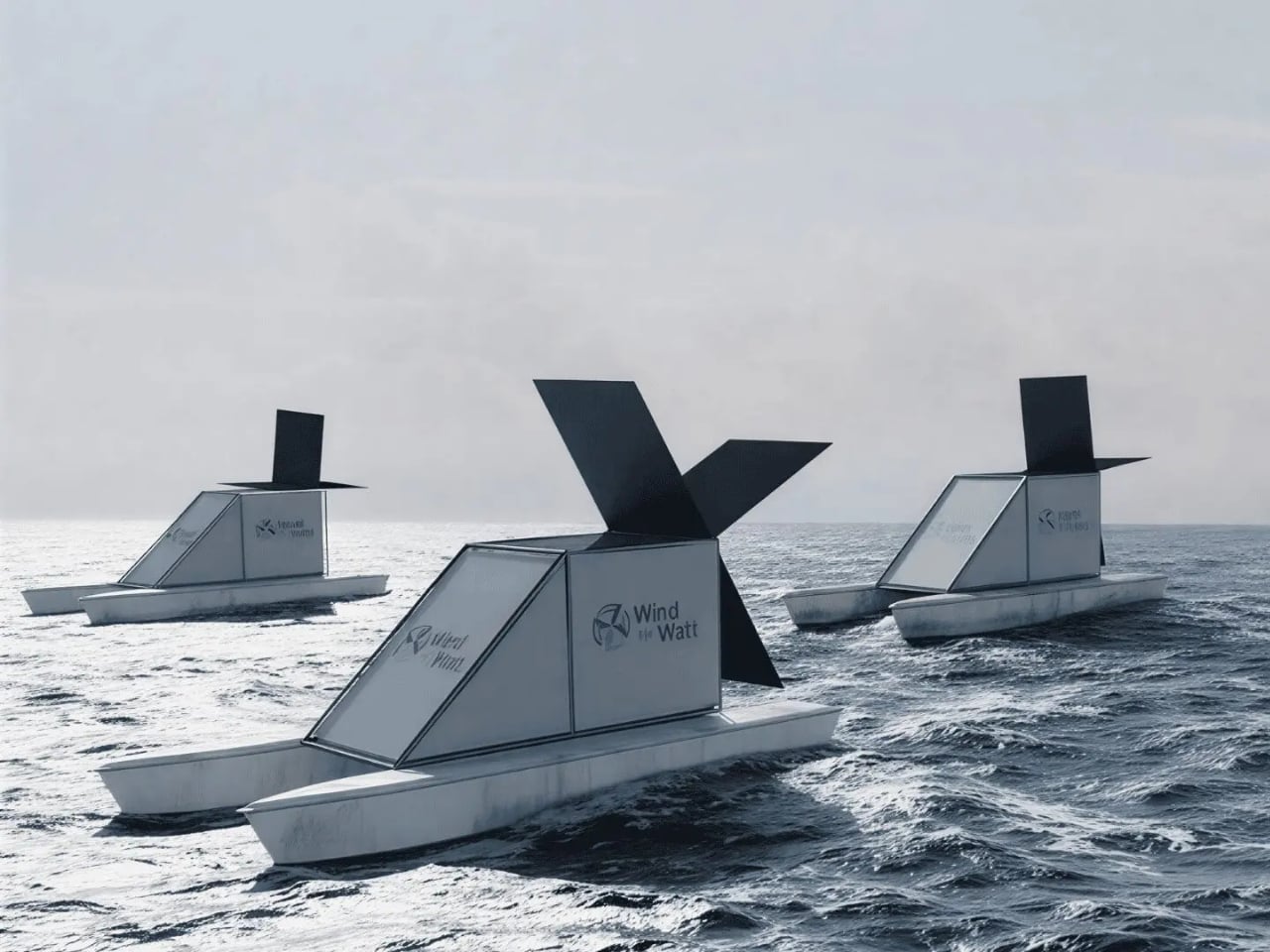
Largest floating wind platform sets on voyage to offshore destination

The past few decades we’ve seen a lot of countries look for more sustainable (and safer) sources of energy as large parts of their respective populations continue to use a lot of power for various purposes. Wind energy have been an option for some and so we continue to see a lot of companies developing various types of wind turbines to help power their respective places.

Designer: Mingyang Smart Energy

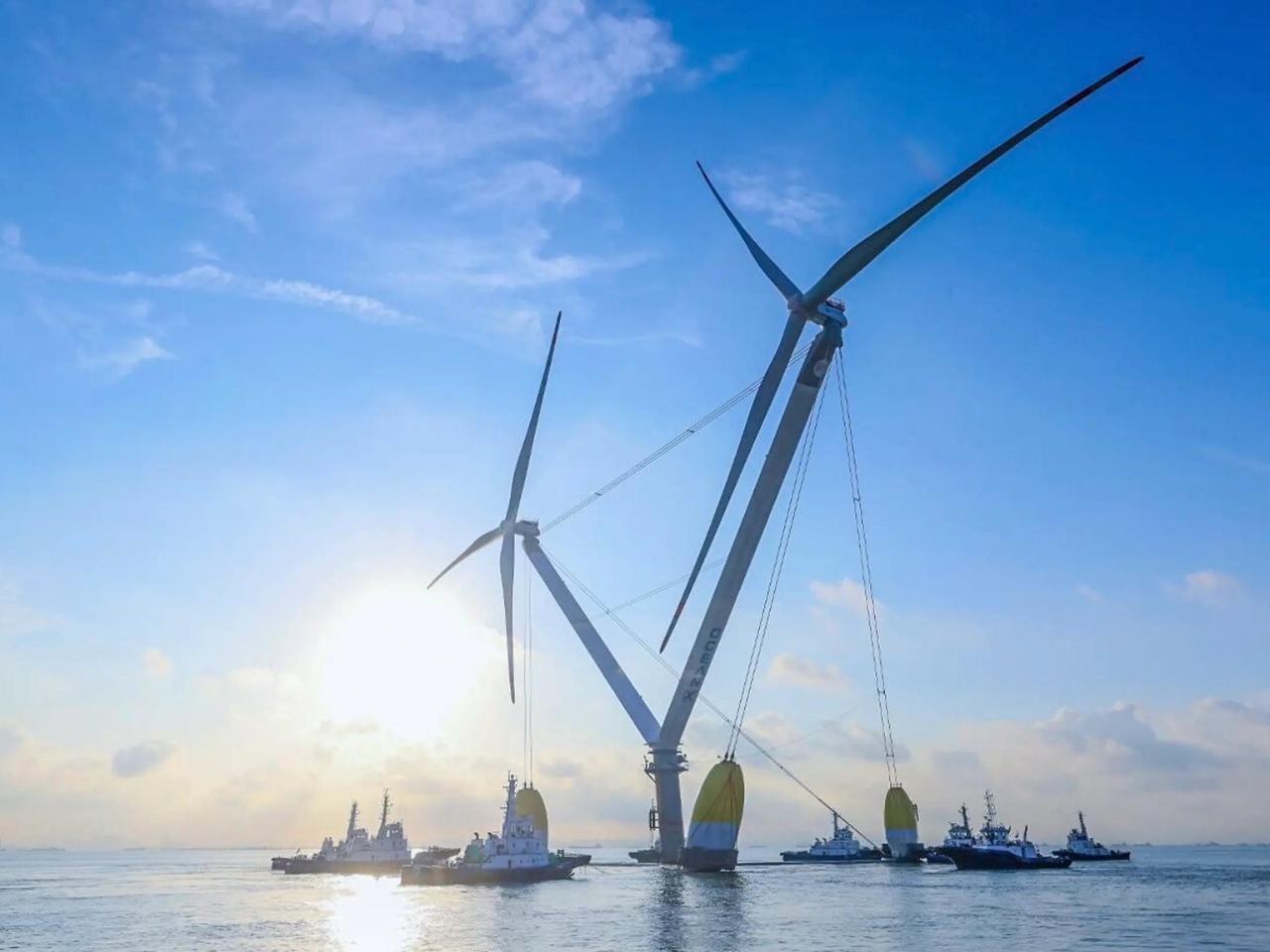
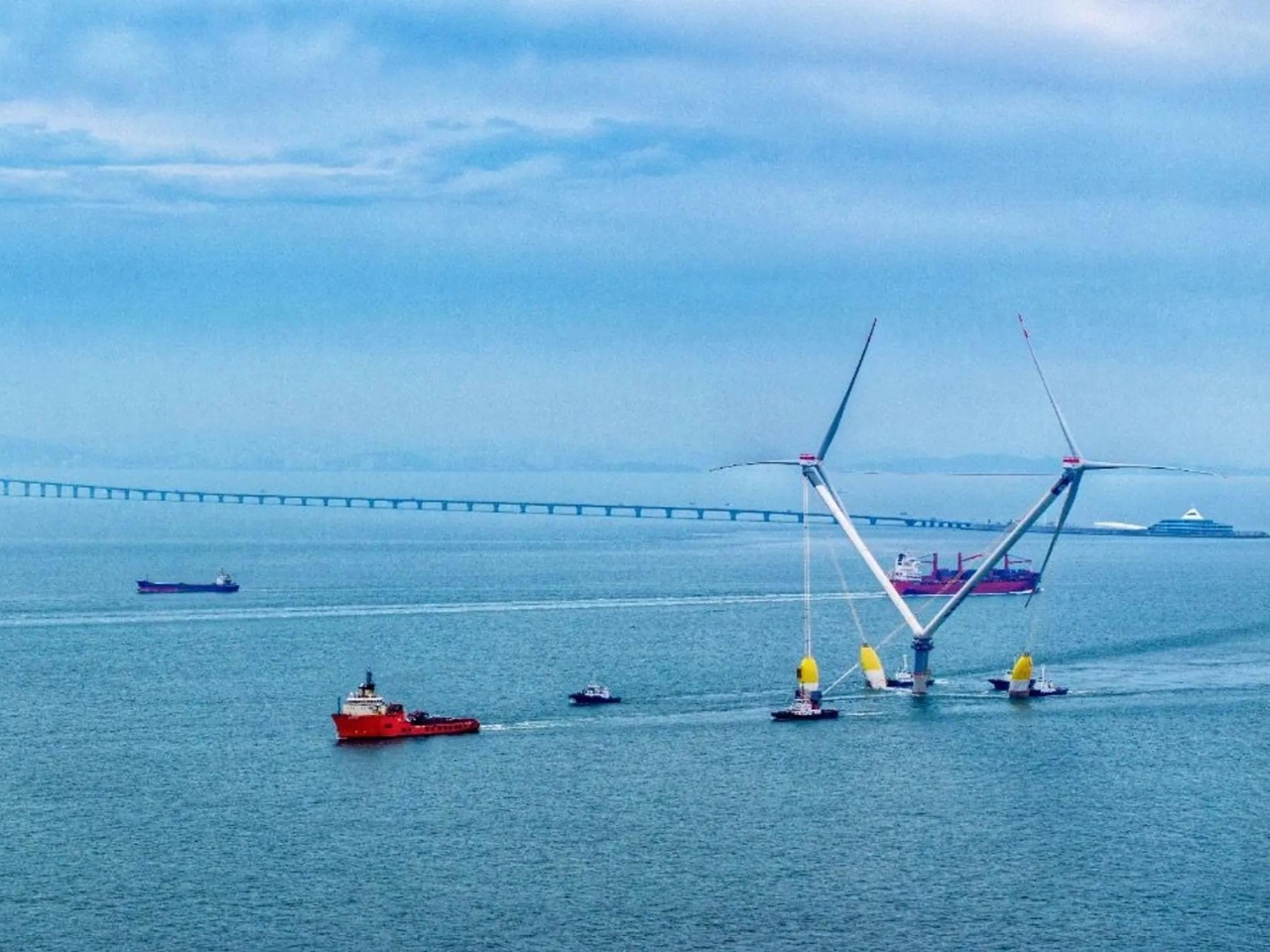
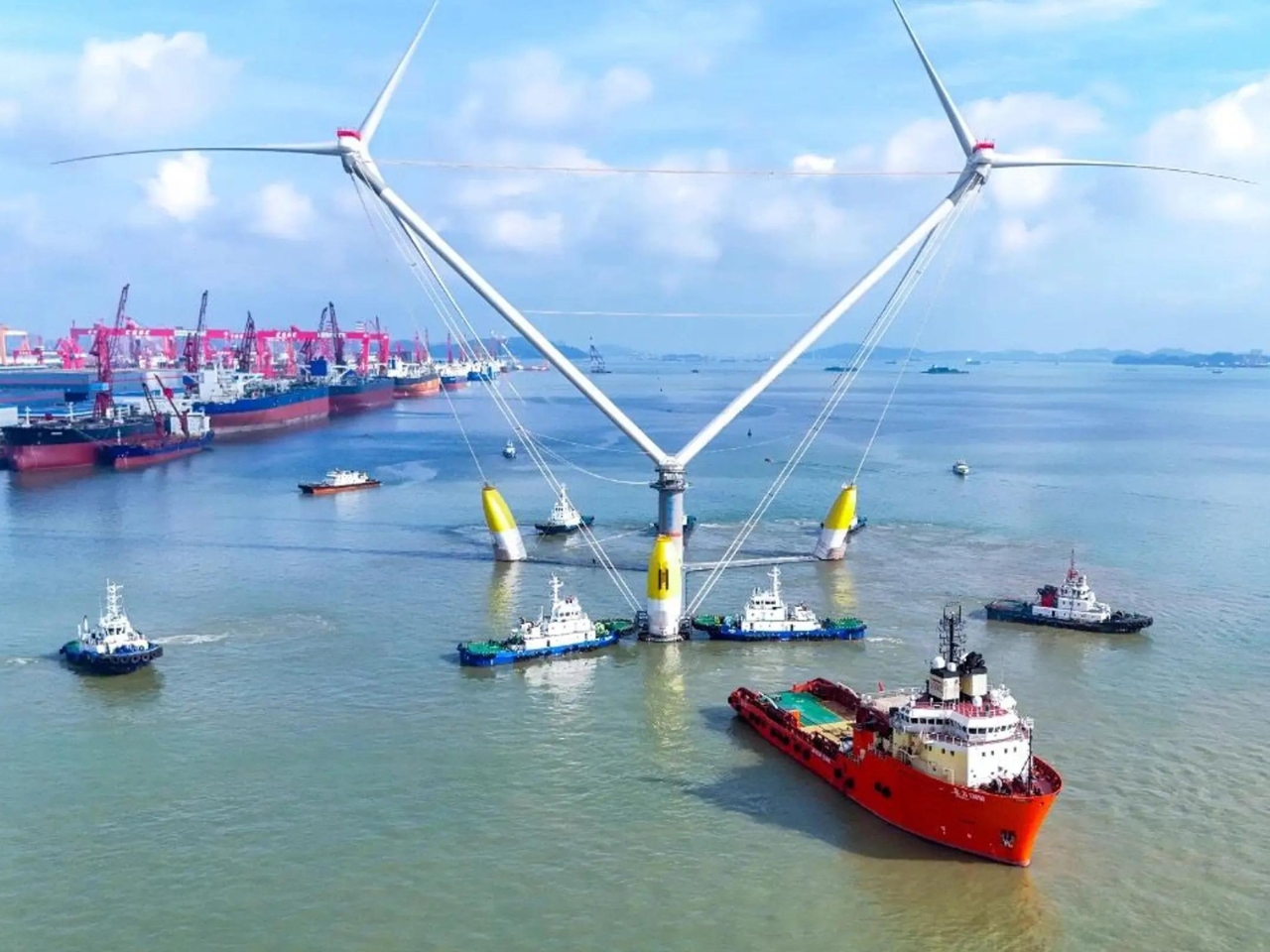
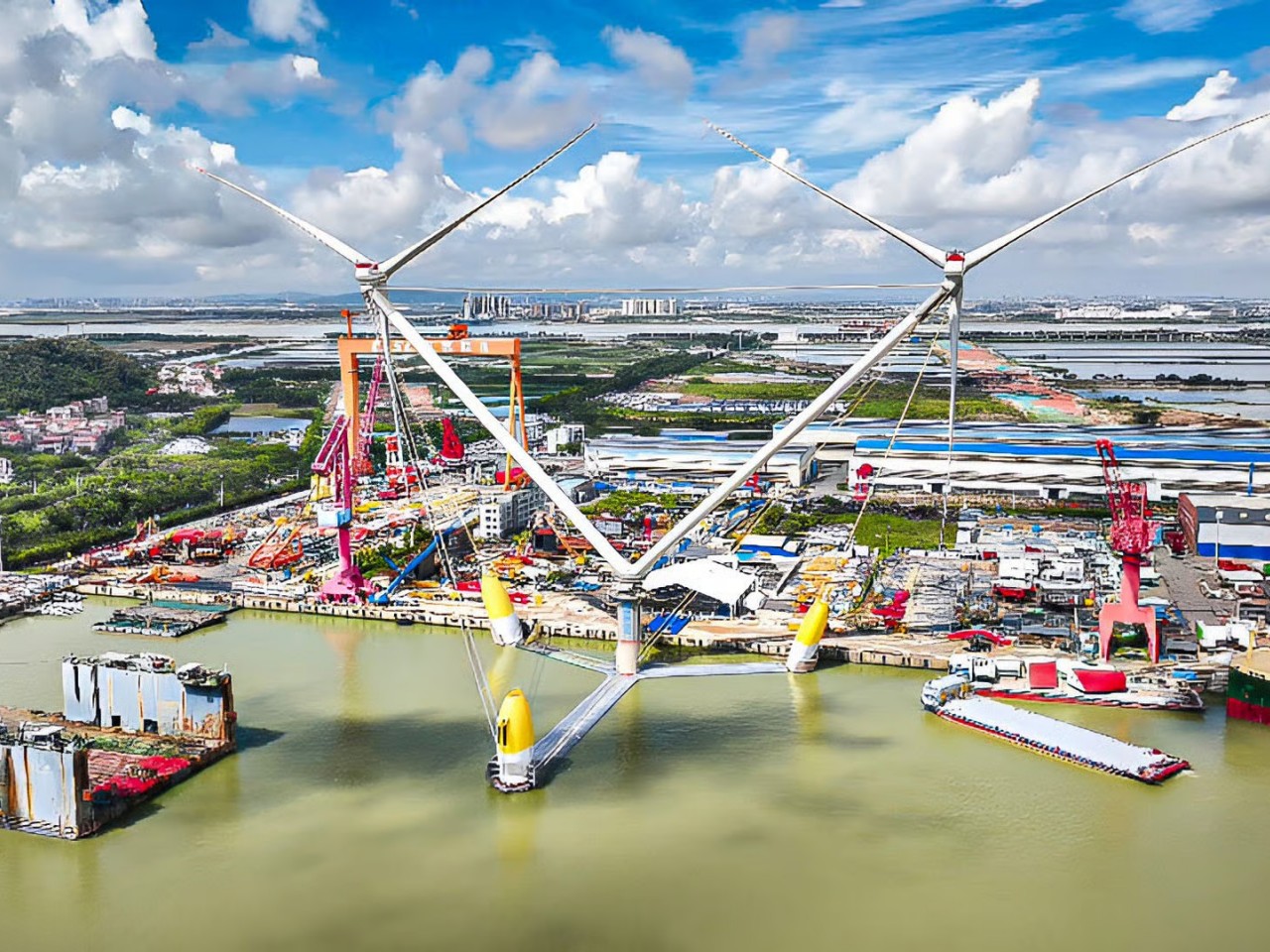
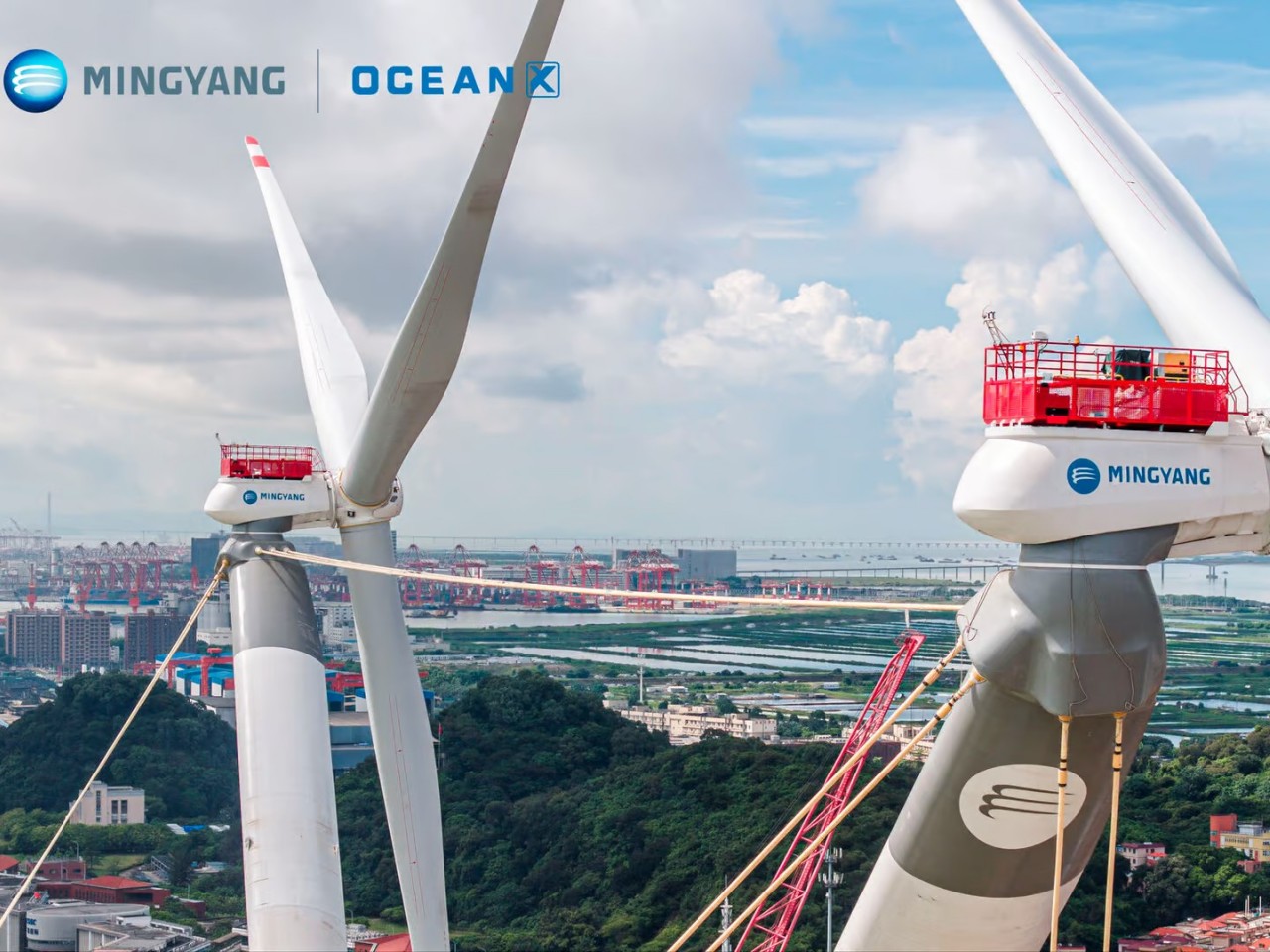
OceanX is one of the wind turbines that has been making a lot of noise lately as it is now the world’s largest single-capacity floating wind platform. It has finally started its voyage from Guangzhou, China and is expected to reach its final destination of the Qingzhou IV Offshore Wind Farm in Yangjiang, Gangdong by August 14, traveling at 191 nautical miles. Aside from its sheer size, the dual-rotor design and its other technological powers has been catching the attention of those interested in sustainable energy.

The Y-shaped floating platform is made up of two MySE16.6 wind turbines on its upper V-shaped structure, with the entire thing weighing 15,000 tonnes. The blade diameters of the wind turbines are at 597 feet and it can withstand wind of up to 161 mph. Since it has a downward poster and a single-point mooring, the rotors can bend without damaging the supporting structure so it can stand up against extreme conditions like harsh winds and heavy waves.

While there are some reports saying that the OceanX will be able to generate power even in a hurricane, that remains to be seen as formulas of wind turbines in general would say otherwise. The company says that it is expected to generate 54 million kWh annually which would be enough to power 30,000 families (those with 3 members each) for an entire year.

The post Largest floating wind platform sets on voyage to offshore destination first appeared on Yanko Design.
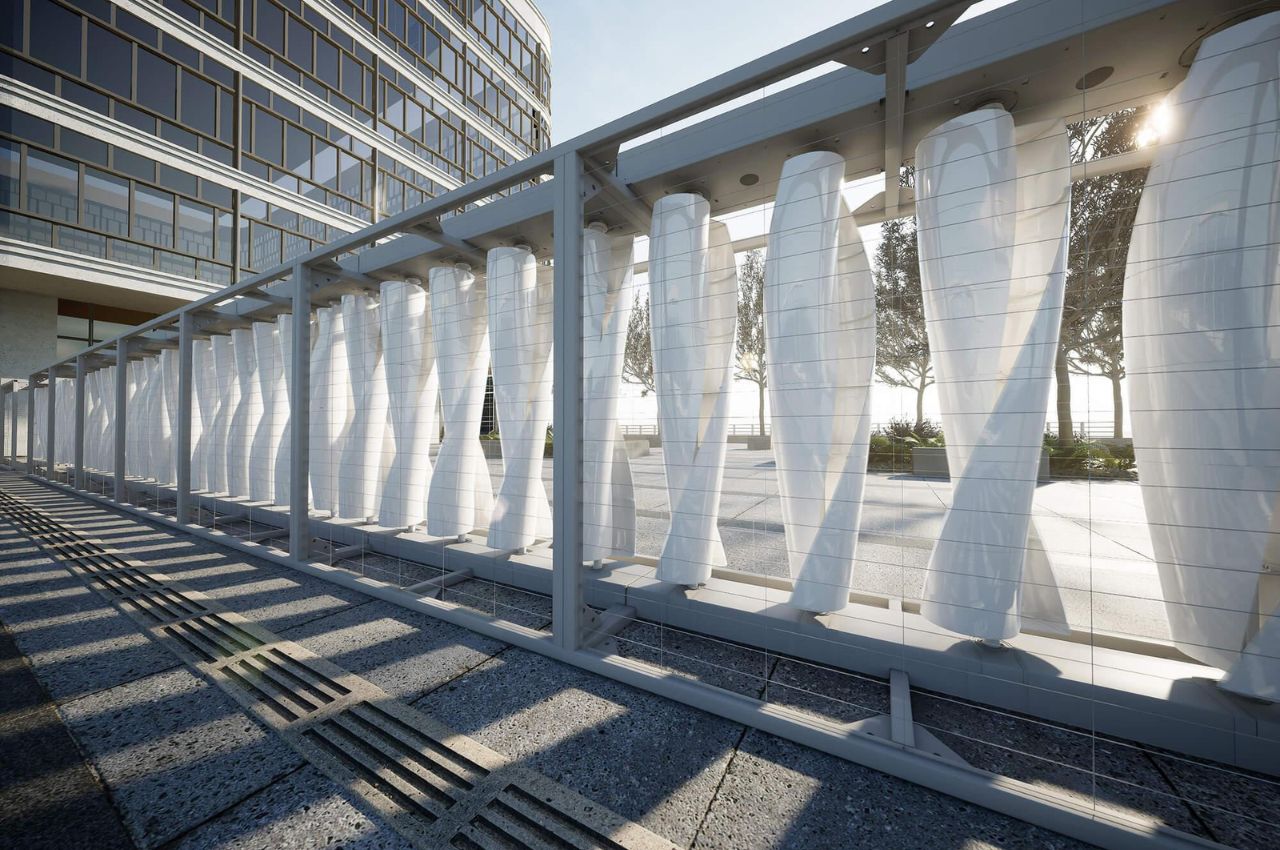
Airiva: Modular Rotary Turbine Walls Revolutionize Urban Wind Energy

Since introducing the concept for an energy-generating wall in 2021, designer Joe Doucet has been tirelessly working to turn this innovative idea into reality. Now, with the launch of Airiva, a modular rotary wind turbine wall designed for urban installations, this vision is closer than ever to being realized. Airiva promises to revolutionize how cities and infrastructures harness wind energy, bringing sustainable power generation directly to the places where people live and work.

Designer: Joe Daucet

Wind energy has been instrumental in reducing global dependence on fossil fuels. However, the adoption of wind turbines for residential and commercial use has been slow, largely due to their intrusive designs. Airiva addresses this challenge by combining functionality with aesthetic appeal.

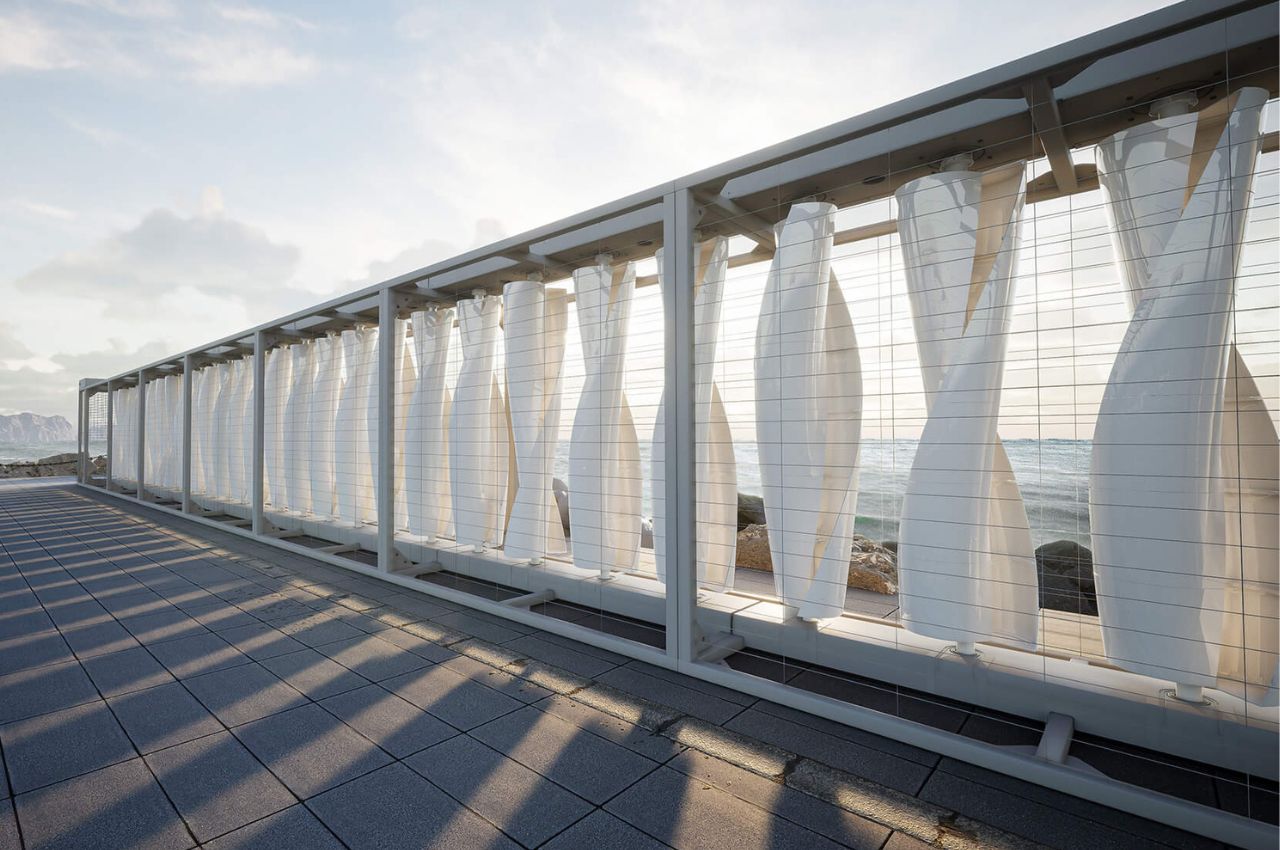
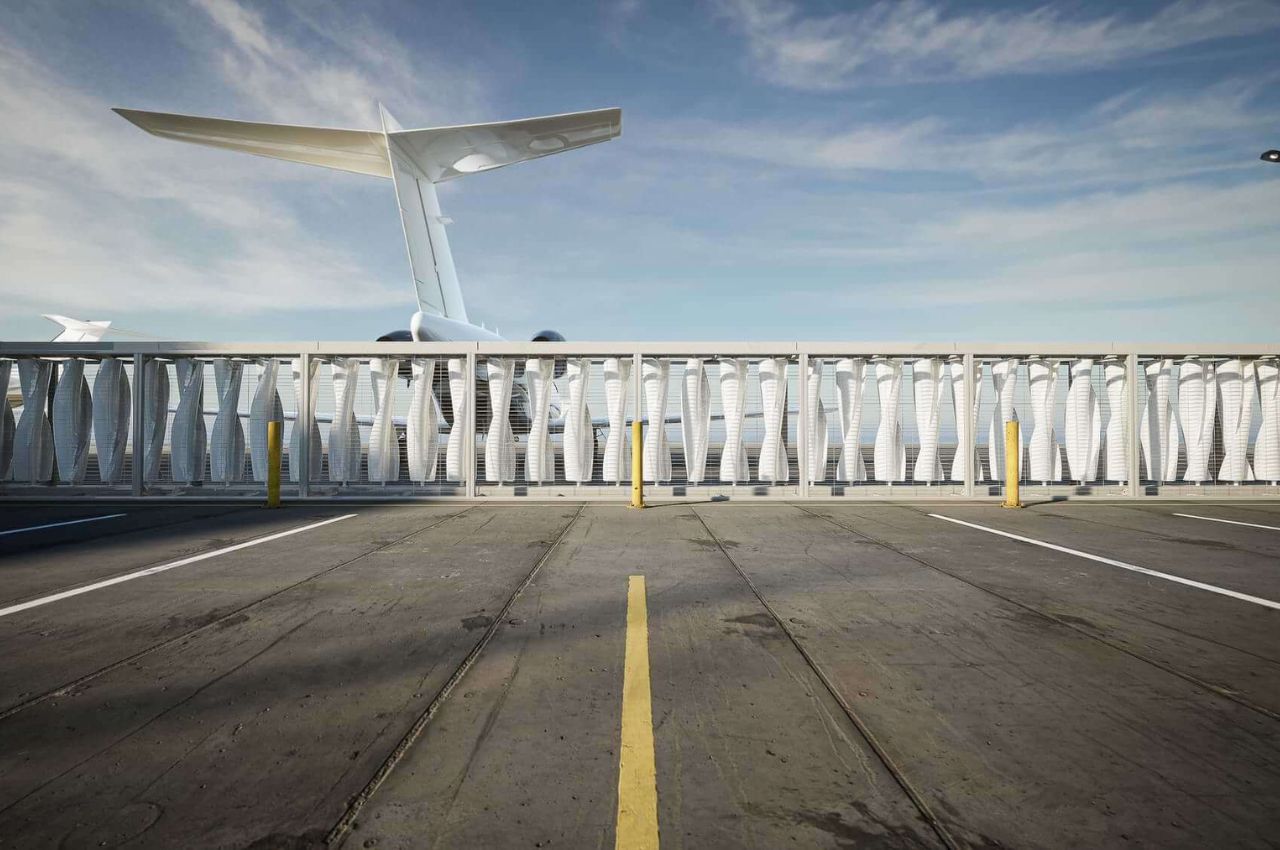
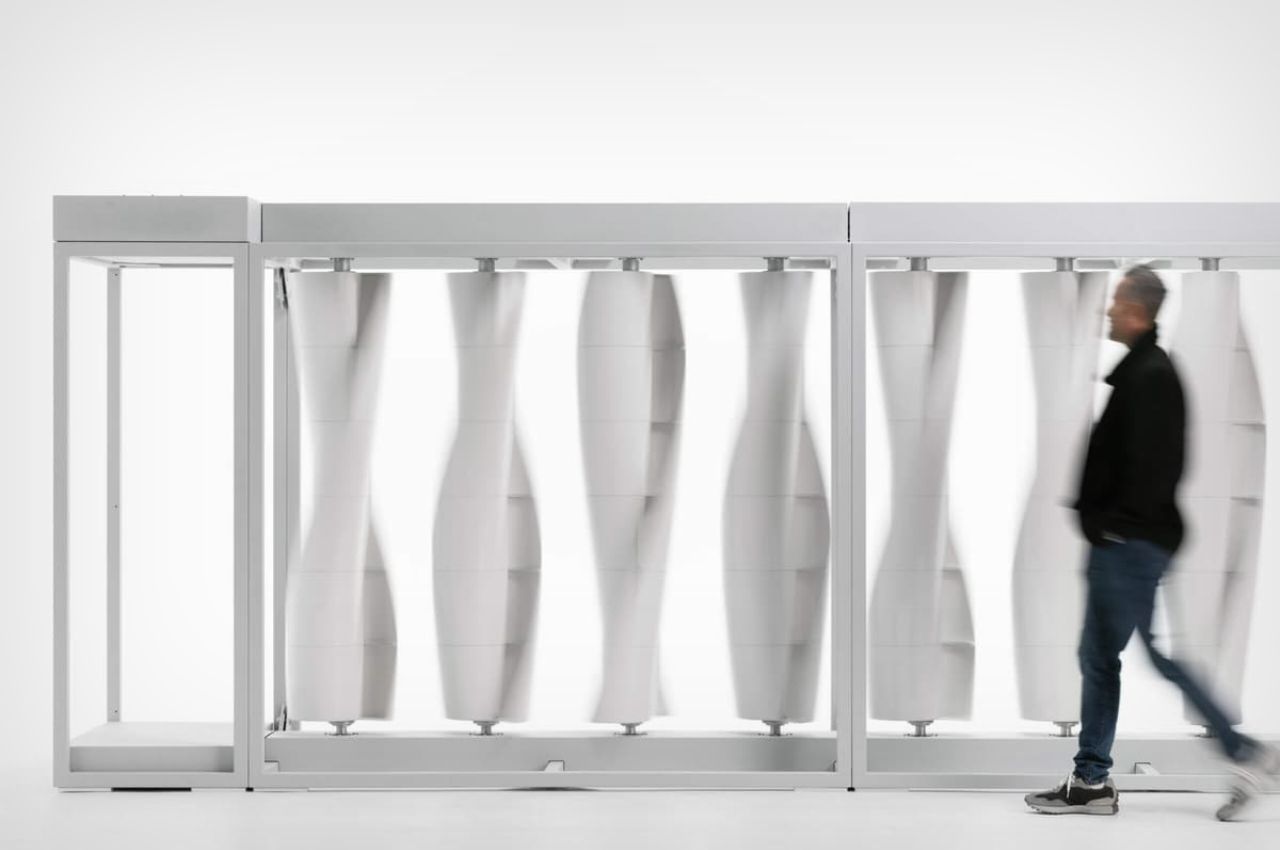
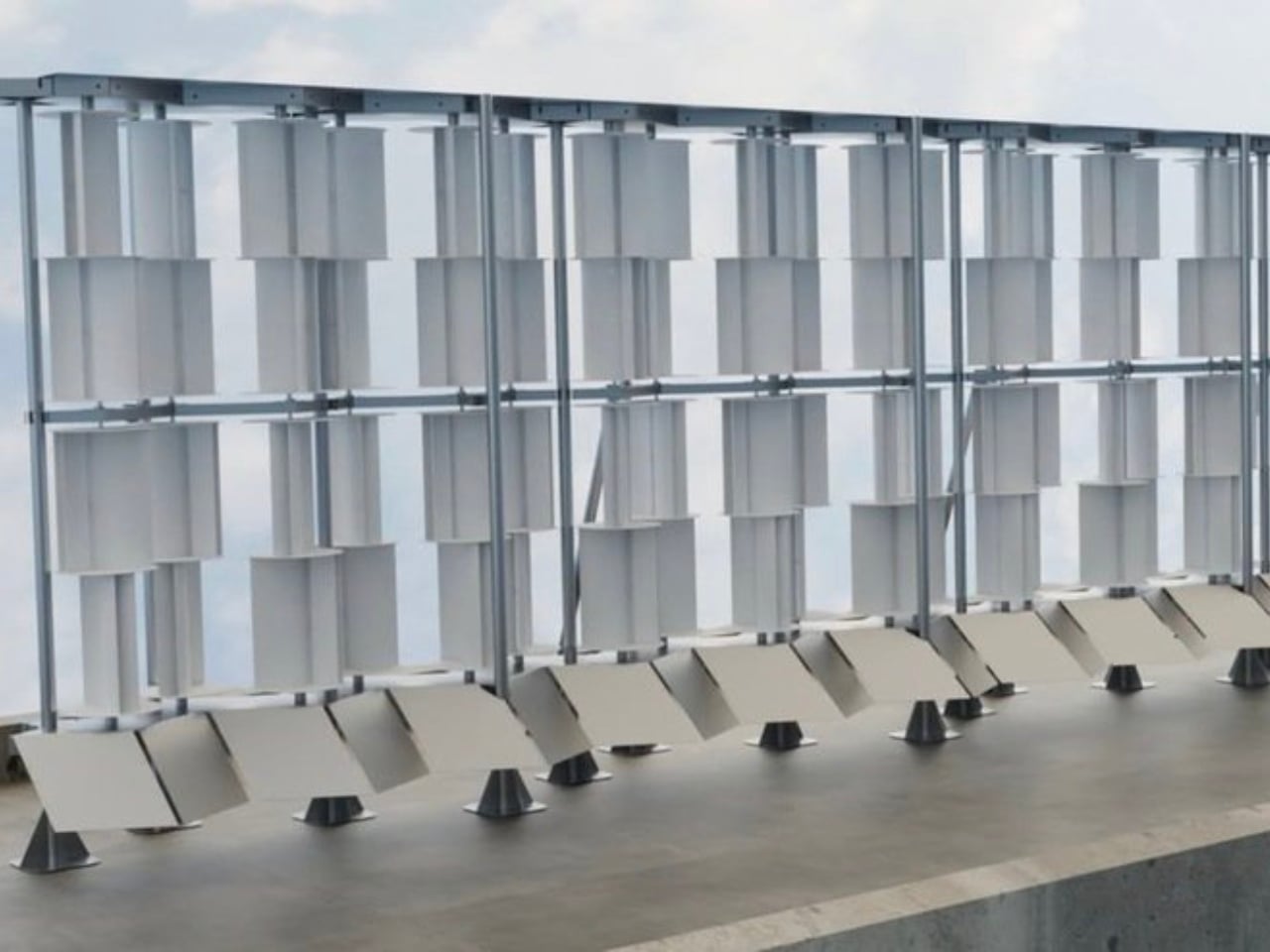
The wind turbine wall is composed of multiple rotary blades that spin independently, driving a generator to produce clean, renewable electricity. This modular and scalable solution is tailored for urban and suburban environments, allowing it to augment or coexist with other power generation methods. The electricity generated can be used on-site, stored, or fed back into the grid. The system is not only efficient but also quiet and safe, making it suitable for a wide range of environments. Potential installation sites include municipal and public facilities, commercial buildings, transportation networks, and coastal areas, among others.

Airiva places a strong emphasis on sustainability. The manufacturing process aims to use at least 80% post-consumer and recycled materials, aligning with circular economy principles and minimizing environmental impact. This commitment to sustainability is a fundamental aspect of Airiva’s design and manufacturing strategy.

One of Airiva’s key strengths is its flexibility. The system’s modular design allows it to be easily transported and scaled to meet specific site requirements. Multiple units can be networked together, creating a flexible, clean energy system that can adapt to various use cases. Additionally, Airiva is designed to complement other distributed energy technologies, providing a versatile alternative that can enhance existing installations.

Airiva’s smart technology enables remote monitoring of system and site information, offering visibility and control over geographically dispersed installations. Each unit consists of two segments, each measuring 2100mm in length and height and 1050mm in depth, along with an end hub unit for controls, communications, and power management. This design facilitates global transport and distribution, ensuring that the system can be deployed wherever it is needed.

The initial idea in 2021 envisioned a wall of 25 vertical-axis turbines with a total peak power output of 10 kilowatts. While the intermittent nature of wind means that actual energy production can vary, the refined Airiva system is expected to produce approximately 2,200 kWh annually per unit. While this may not cover the entire energy needs of an average home, it can significantly reduce energy bills. Larger installations, such as those on commercial campuses or transportation hubs, can harness more power, demonstrating the system’s scalability.

Currently in the prototyping stage, Airiva plans to begin customer pilots in the latter half of this year, with orders expected to open in 2025. Although specific figures have yet to be disclosed, Airiva’s targeted Levelized Cost of Energy (LCOE) aims to be competitive both domestically and internationally against other small-scale distributed energy resources. Upcoming pilots will be crucial in validating these claims and demonstrating the system’s effectiveness in real-world conditions.

The post Airiva: Modular Rotary Turbine Walls Revolutionize Urban Wind Energy first appeared on Yanko Design.
Bladeless wind turbines could be the future for wind-energy, bringing them to homes

Imagine a wind turbine, but not as you know it. Instead of the familiar towering structures with rotating blades, picture a compact, hexagonal grid resembling a honeycomb, perched atop urban buildings or integrated into existing structures. This is the essence of Katrick’s design – a radical departure from traditional wind turbines, both in form and function. These turbines harness the power of wind through oscillating aerofoils, a far cry from the spinning blades we’re used to.

Designer: Katrick Technologies

As companies rush to figure out better and more effective solutions for harnessing sustainable energy (while the world grapples with the migration to these energies), the Glasgow-based startup, is making waves (or should I say, catching them?) with their innovative bladeless honeycomb wind turbines. Unlike the towering, rotary-blade turbines that dominate our landscapes, Katrick Technologies’ creation is a breath of fresh air in both design and functionality.

At the heart of this technology are the aerofoils, the unsung heroes of Katrick’s design. They work by capturing wind energy and converting it into mechanical oscillations. These oscillations are then transformed into electricity, providing a greener energy solution. This method not only captures lower levels of wind, making it more efficient in less windy conditions, but also makes the turbines more suited for urban environments, where space is at a premium and wind levels can be lower.
The design philosophy of Katrick Technologies is rooted in creating eco-friendly, innovative engineering solutions. While the firm is relatively new, it’s already carving a niche for itself in the renewable energy sector. Traditional wind turbines, with their considerable land and maintenance requirements, often pose logistical and financial challenges. In contrast, Katrick’s honeycomb turbines offer a more sustainable and cost-effective alternative, especially in urban landscapes where space is limited.

But it’s not all sunshine and breezes. Bladeless turbines, including Katrick’s design, have faced some skepticism. Critics, including those from the MIT Technology Review, have pointed out that despite their lower cost and environmental footprint, bladeless turbines might not be as efficient in energy generation as their traditional counterparts. However, Katrick’s innovative approach might just tip the scales. According to the company, just 1 kilometer of their roadside panels could charge a significant number of electric vehicles or power hundreds of homes annually.

Moreover, the design’s safety and environmental features can’t be overlooked. The slower-moving aerofoils in the honeycomb structure are likely less hazardous to birds than traditional turbines. Plus, their unobtrusive design, small footprint, and minimal environmental impact make them an attractive option for urban settings.

Katrick’s wind turbines being tested at Glasgow Airport.

The post Bladeless wind turbines could be the future for wind-energy, bringing them to homes first appeared on Yanko Design.