37-Inch Tires, Body-On-Frame, No Touchscreen: Hyundai’s Boulder Concept Should Make Jeep Nervous

The midsize truck and off-road SUV segment is the most brand-loyal territory in the American automotive market. Bronco buyers bleed blue oval. Wrangler owners have a hand wave. Fourth-generation 4Runner devotees treat the truck’s stubborn resistance to modernity as a feature. Breaking into that world requires something that goes beyond competitive specs, because specs are table stakes and loyalty is emotional. Hyundai has spent forty years earning American trust one rational purchase at a time, and with the Boulder Concept, the brand is making its first bet on something less rational: the idea that a Korean automaker can build an object with genuine off-road soul.

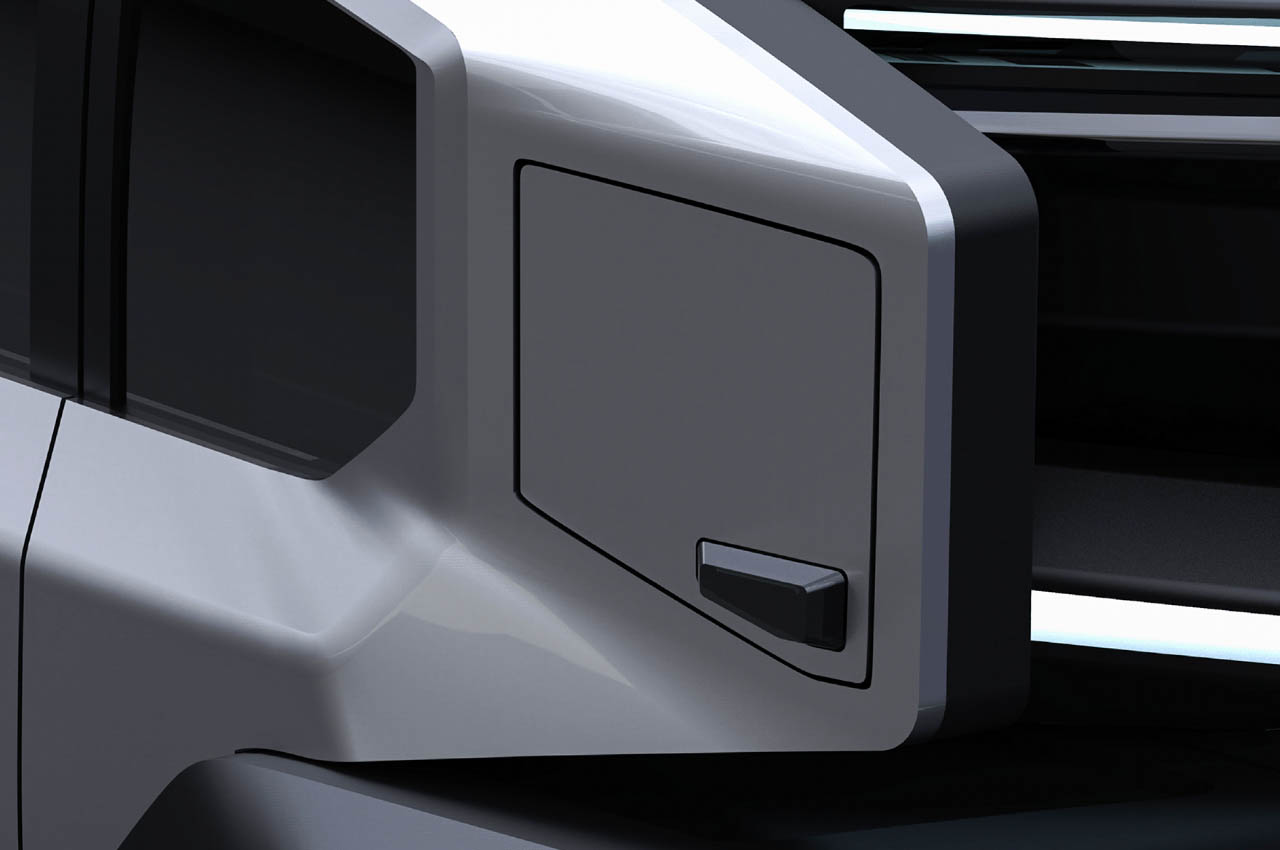
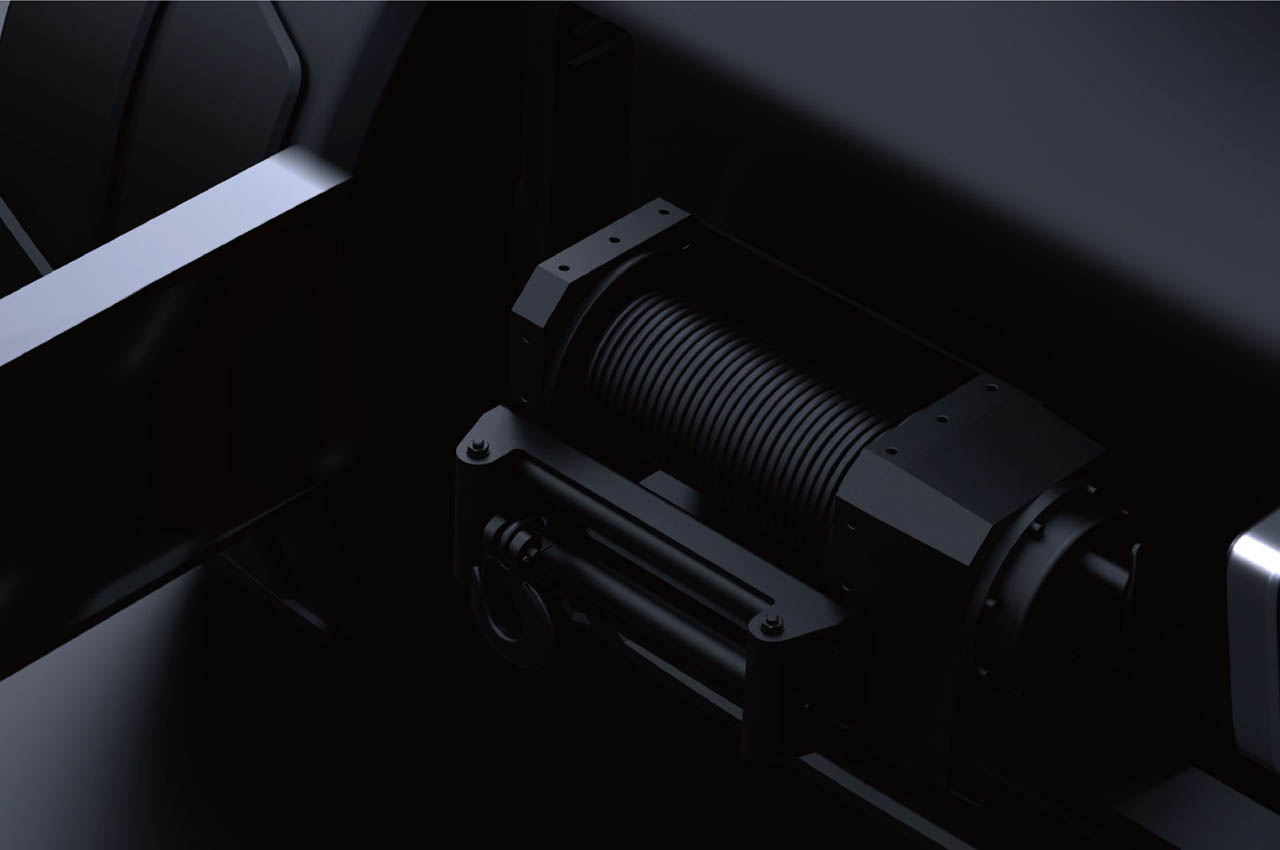
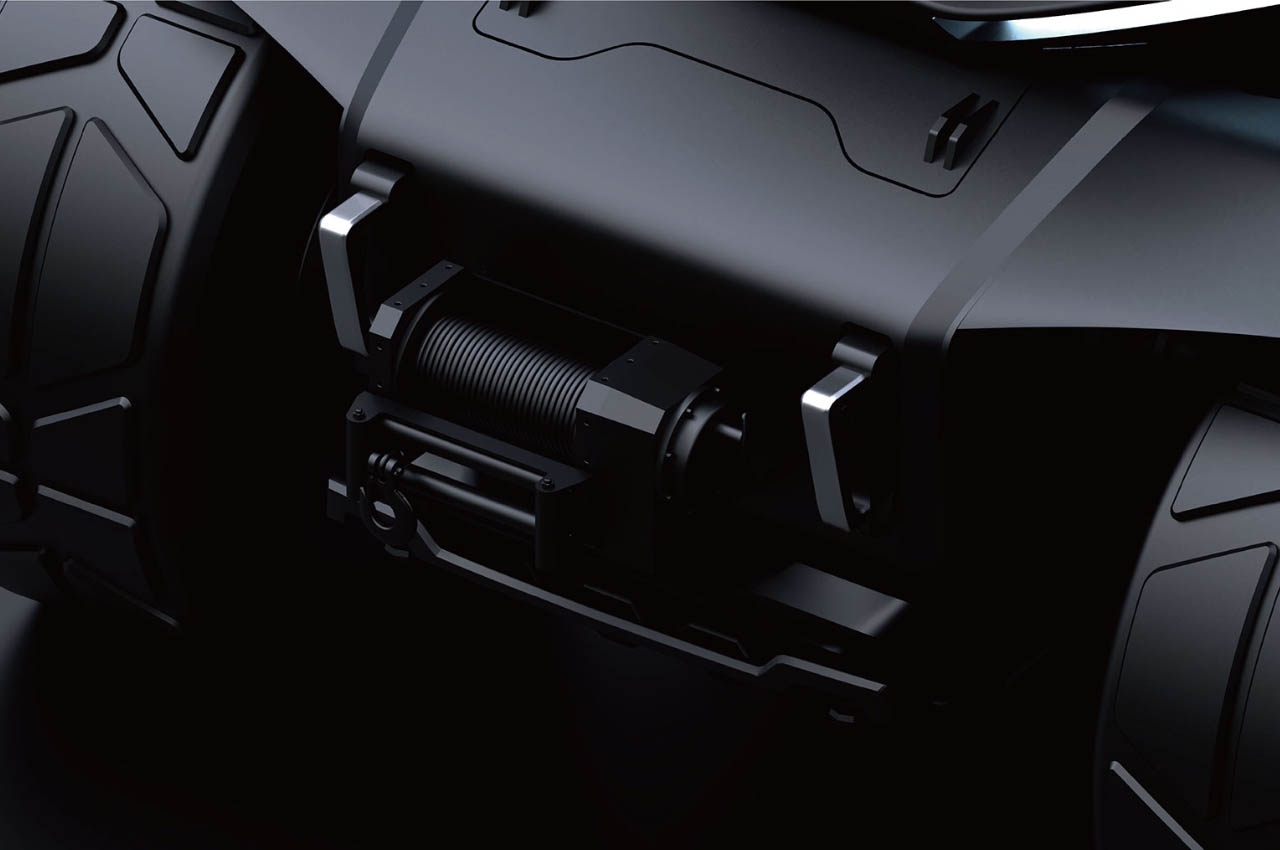
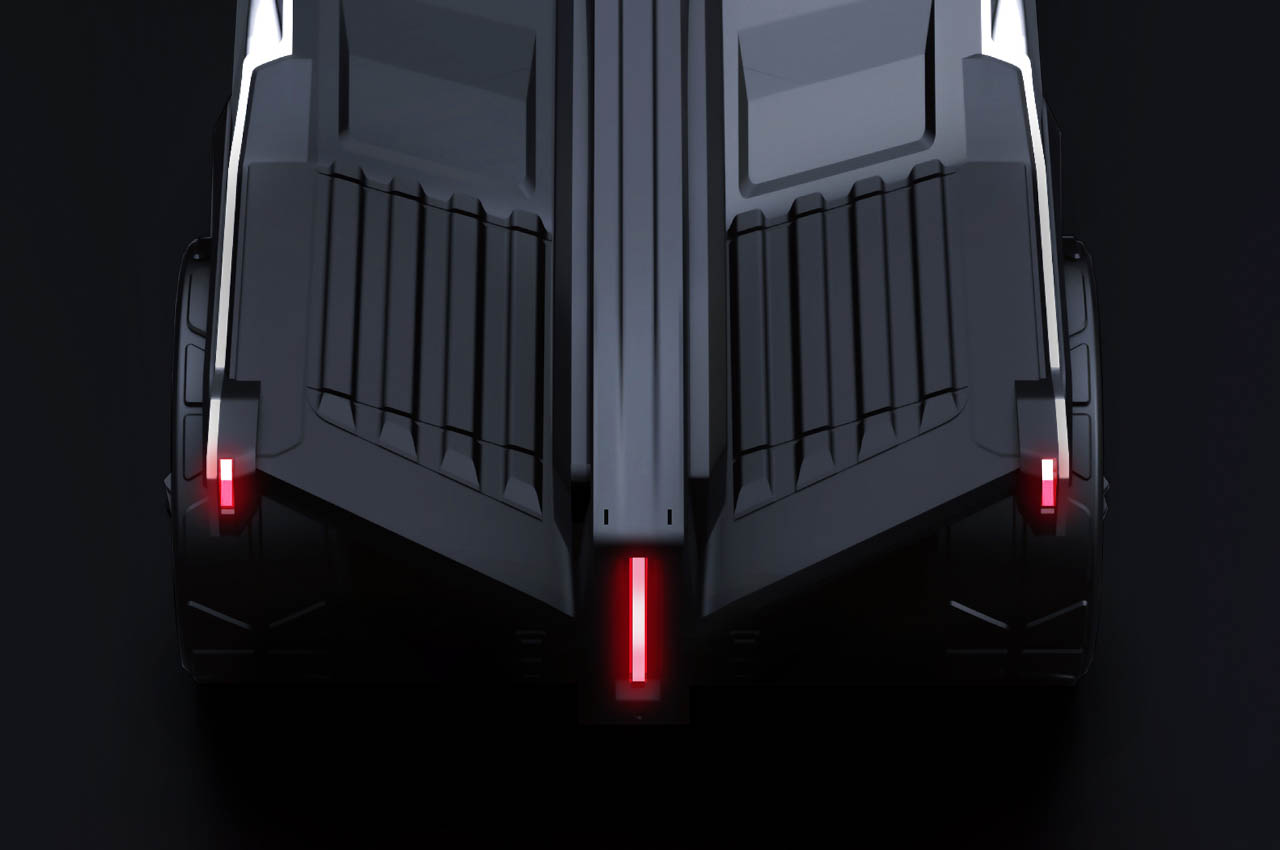
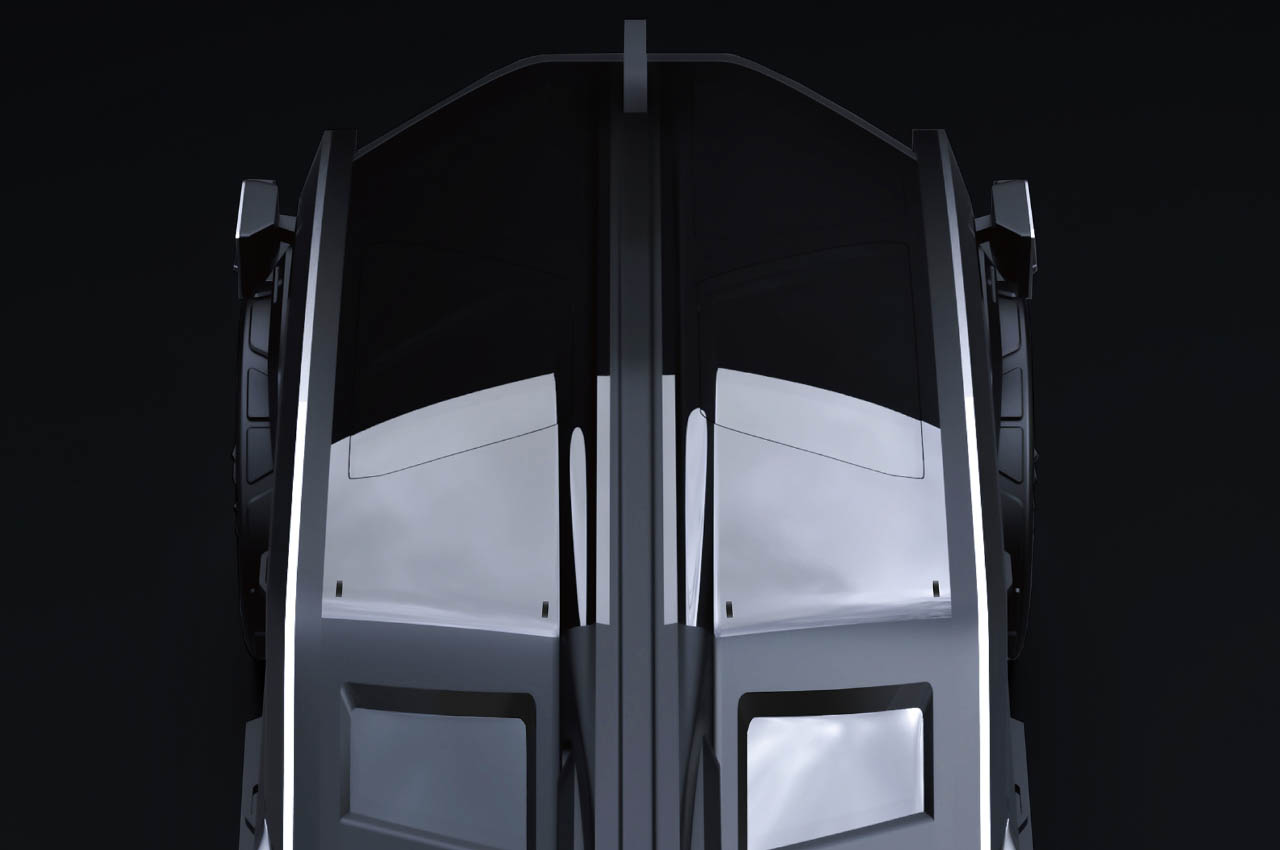
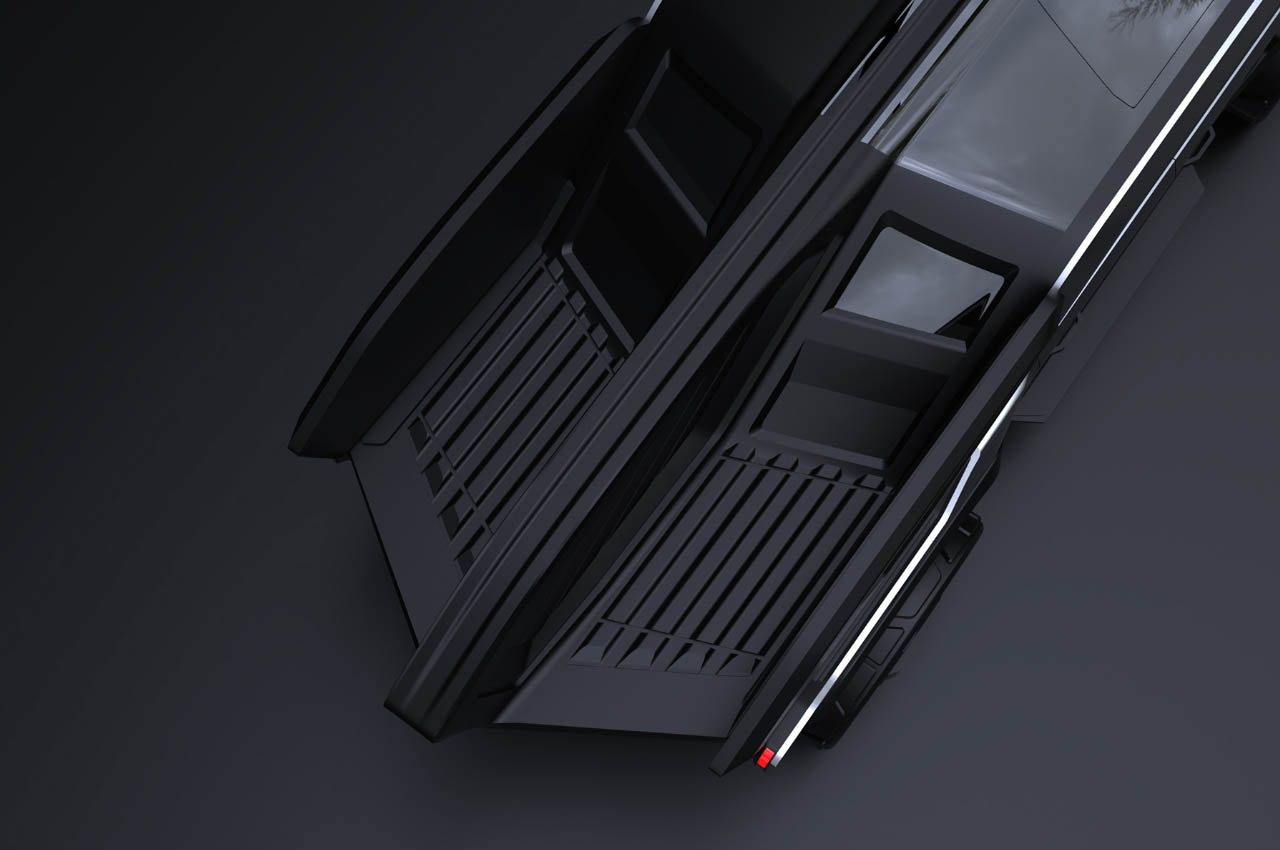
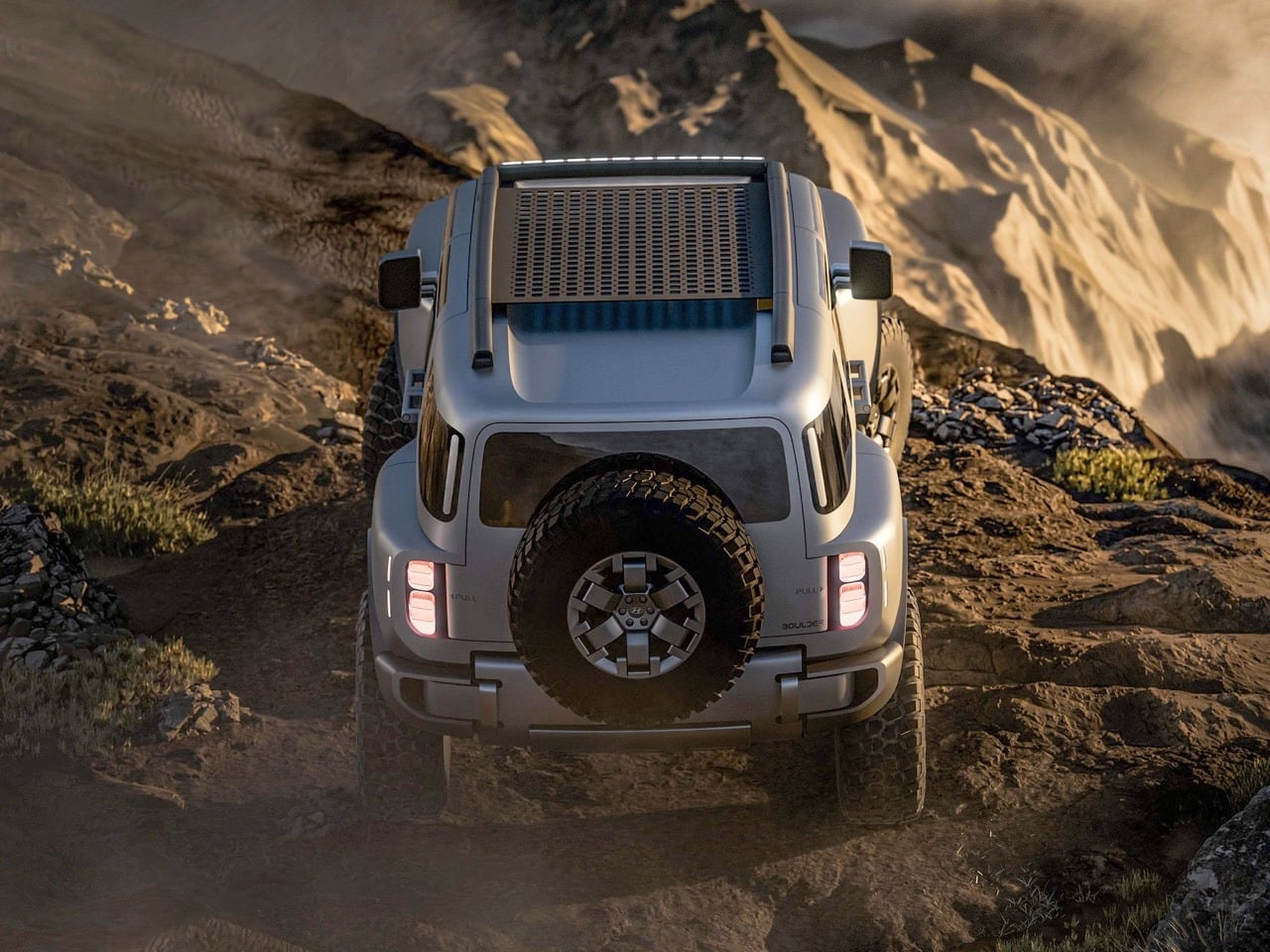
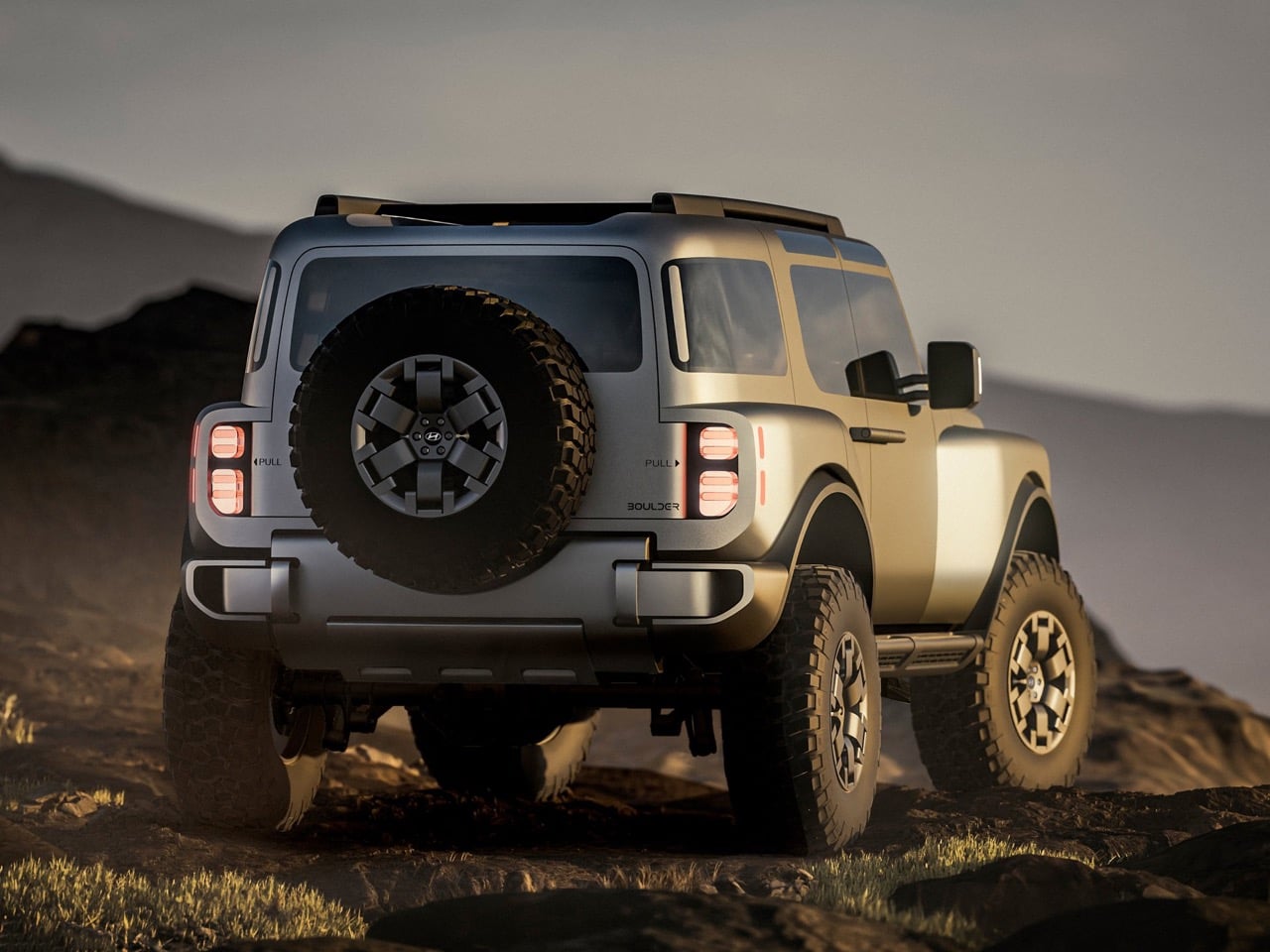
The Boulder debuted as a surprise at the 2026 New York International Auto Show, carrying Hyundai’s first fully-boxed ladder-frame platform and a confirmed production midsize pickup by 2030 as its subtext. The design language is “Art of Steel,” a philosophy connecting the Southern California design team’s decisions directly to the material science of Hyundai’s own steel division. The concept wears 37-inch mud-terrain tires, coach-style rear doors, dual safari windows, and a double-hinged tailgate across a Liquid Titanium body that looks less like a design study and more like a declaration of intent.

Designer: Hyundai Design North America
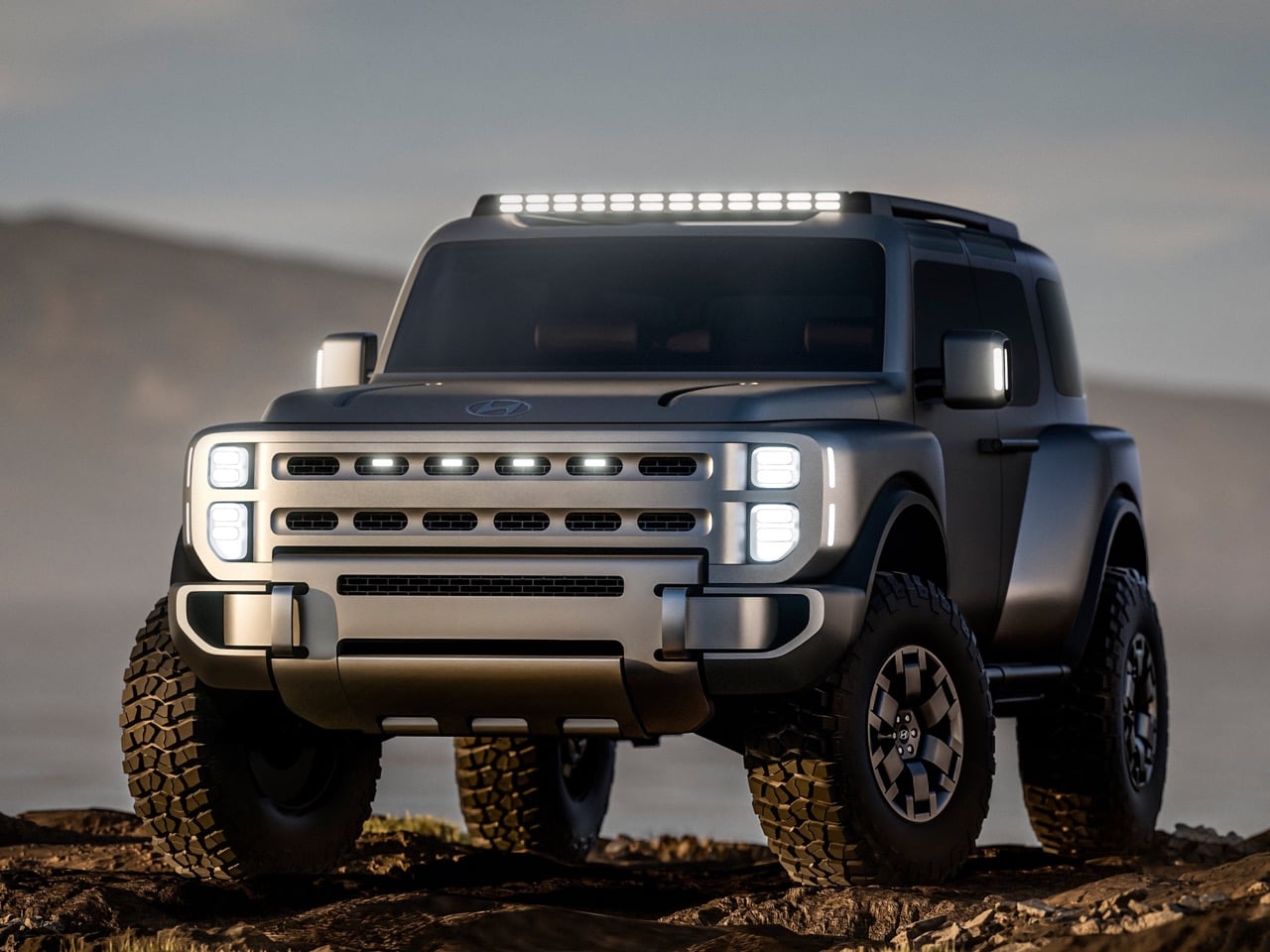
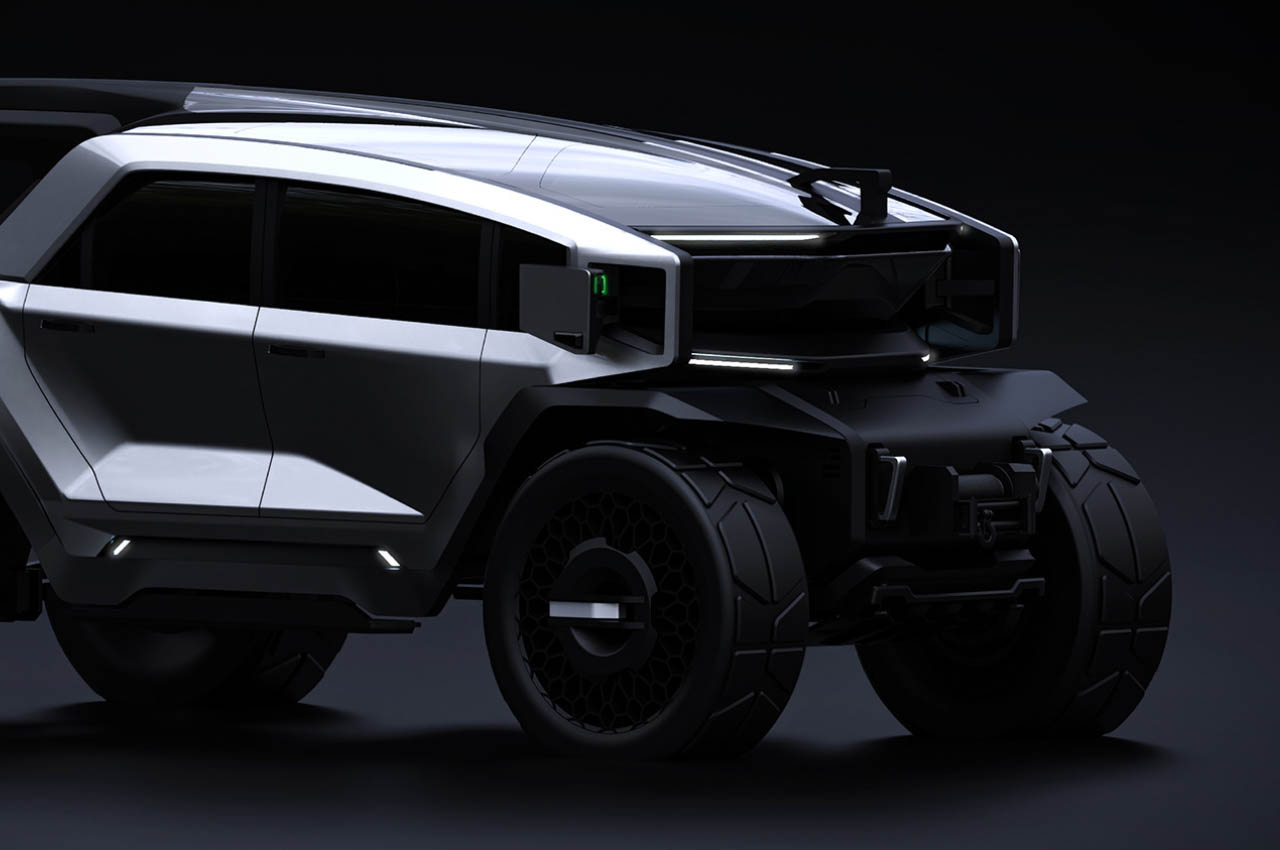
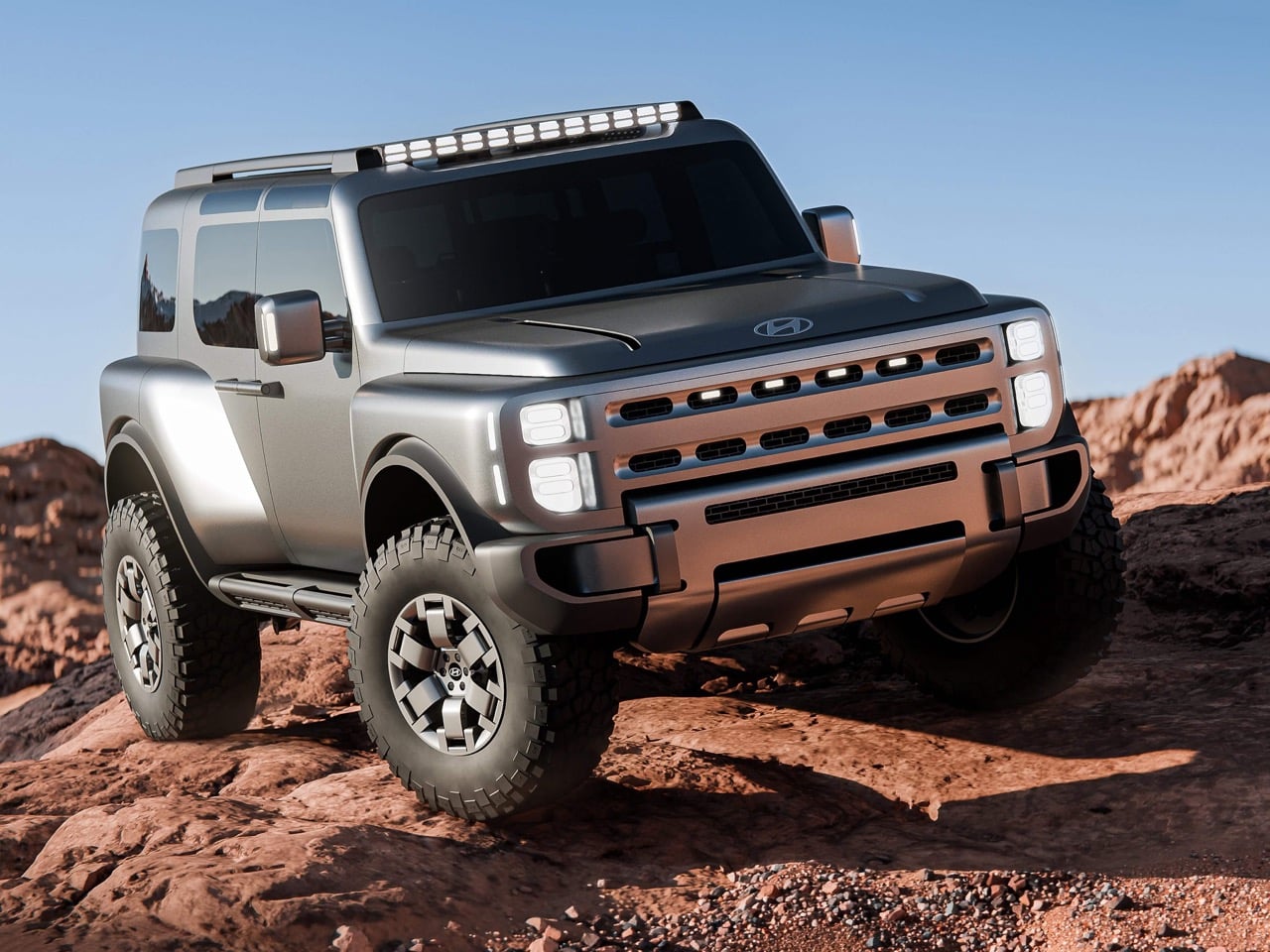
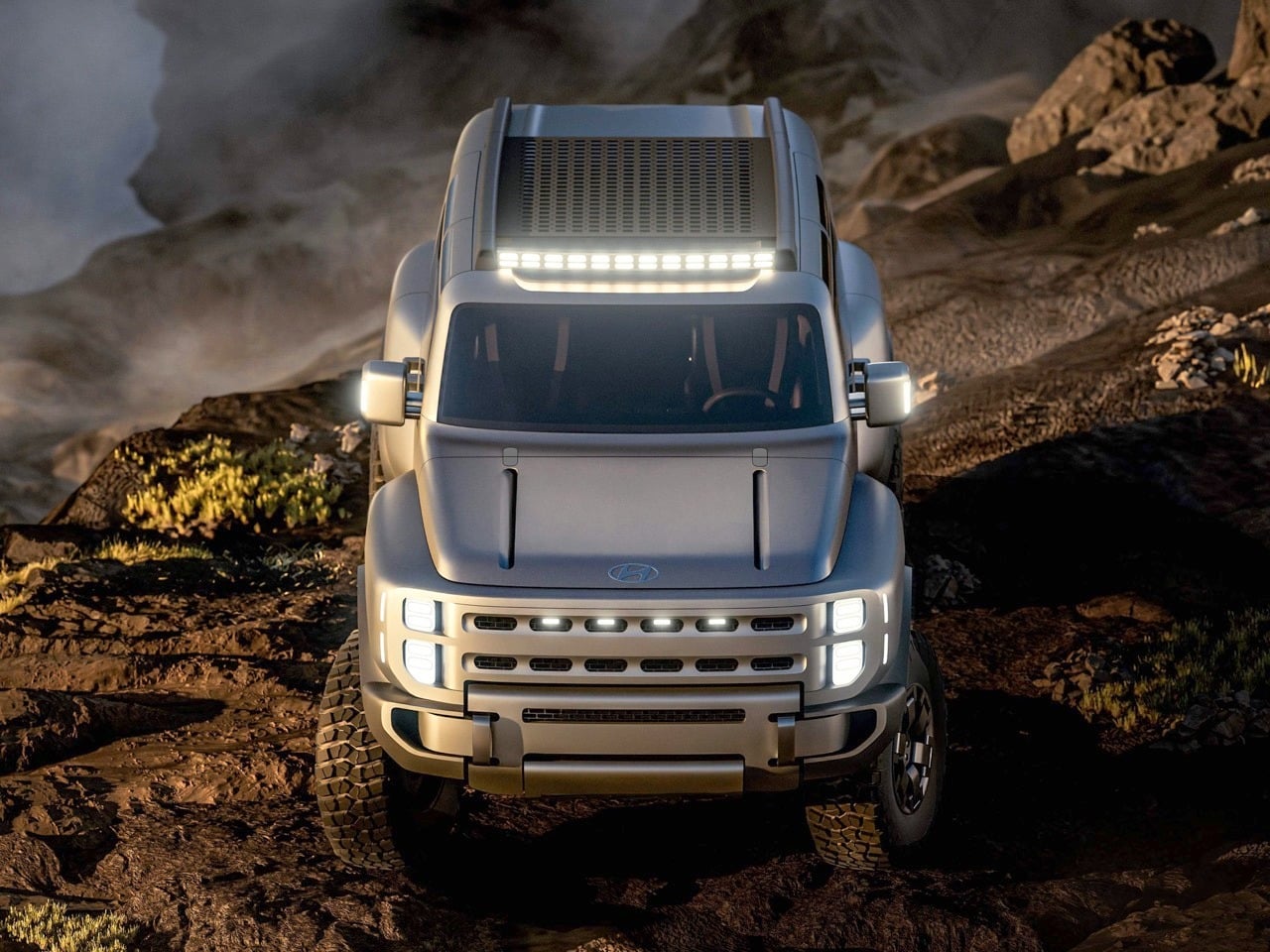
From the front, the Boulder looks like it was designed by someone who spent more time on trails than in trend reports. The headlights are stacked in two rectangular modules, recessed deep into the bodywork so the surrounding steel reads as structure first and styling second. That bronze-toned horizontal slat grille sits between them like the face of something that has already decided it doesn’t need your approval. The hood carries a pronounced power dome, and the roof-mounted light bar integrates into the low-profile rack with steel webbing between the rails rather than getting bolted on as an afterthought. Design chief SangYup Lee described the approach as one that “celebrates the gaps,” treating the deliberate negative space between panels as a feature that exposes the construction logic rather than disguising it beneath flowing bodywork. Every recess, every shadow line, every recessed lamp housing is doing exactly that.
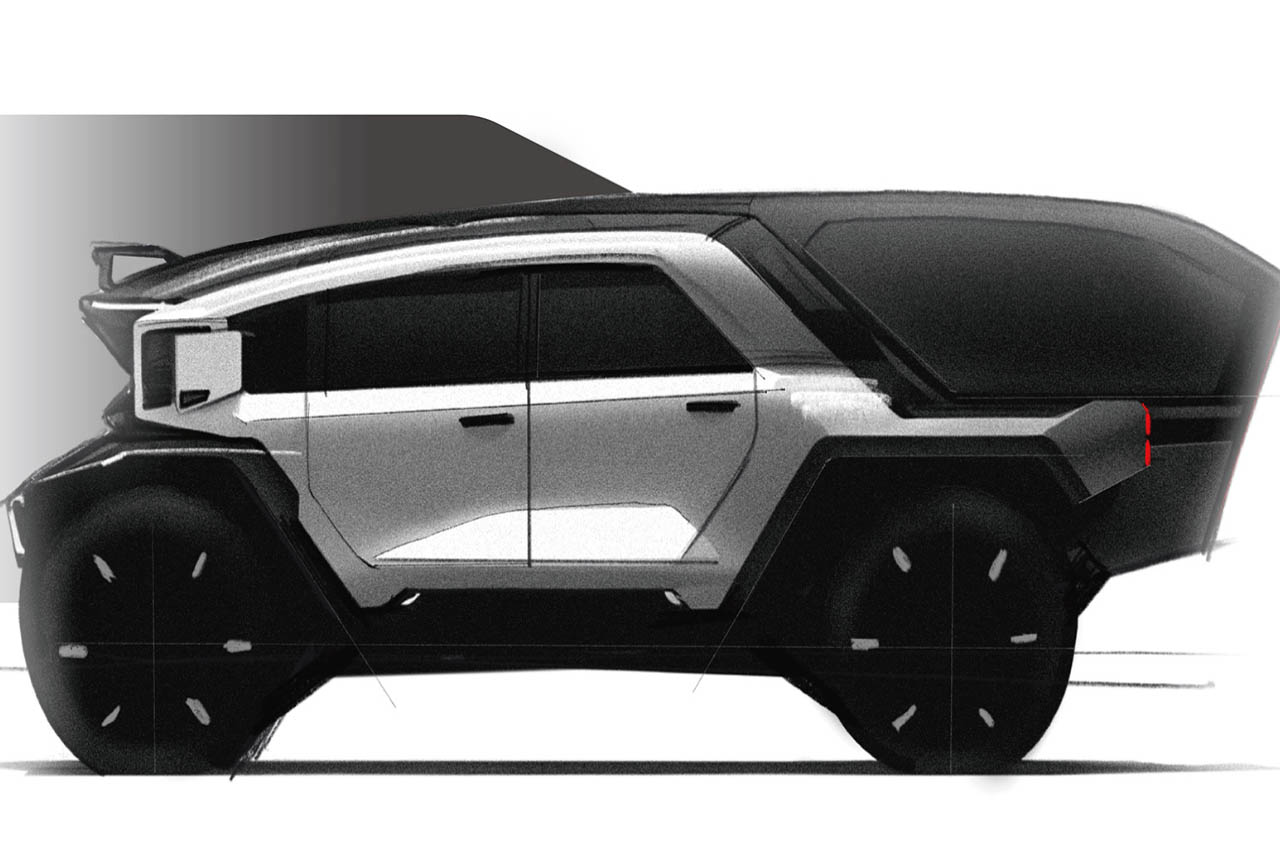
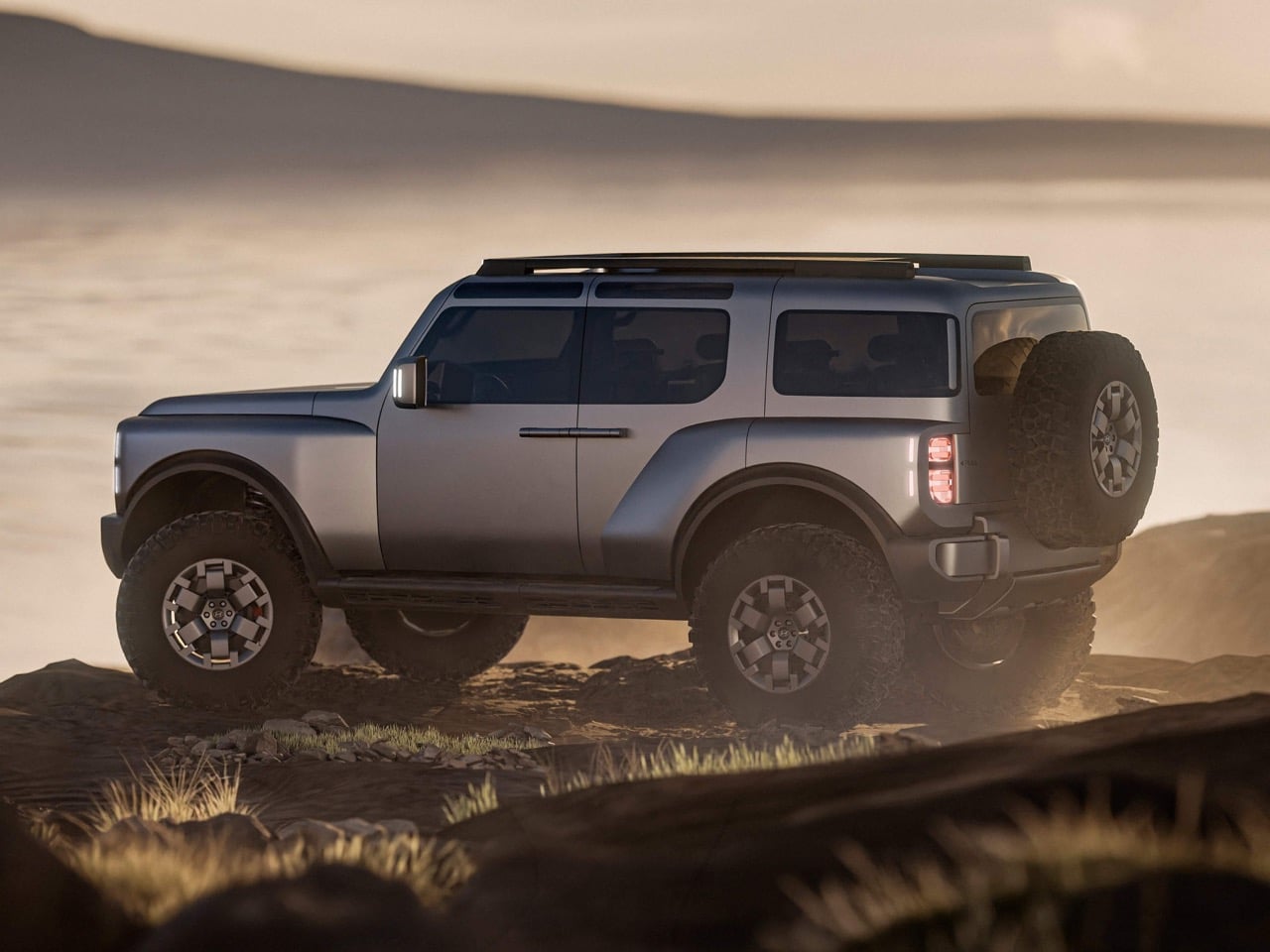
The side profile is where the Boulder’s proportions really land. The roofline is ruler-flat, the greenhouse is upright and nearly square, and the body sides are almost completely clean of character lines. Hyundai is generating all the visual mass through wheel arch geometry alone, with those flared cutouts punching hard against the otherwise minimal sheetmetal. Brad Arnold, Head of Hyundai Design North America, framed the whole project around restraint: “It’s a tool for getting to that sunset, to have that experience, not for distracting you from that moment.” That philosophy reads clearly in the silhouette. The short-wheelbase four-door proportion feels closer to a Defender 90 than anything in Hyundai’s current lineup, which is either a coincidence or the most confident piece of product positioning the brand has ever attempted.
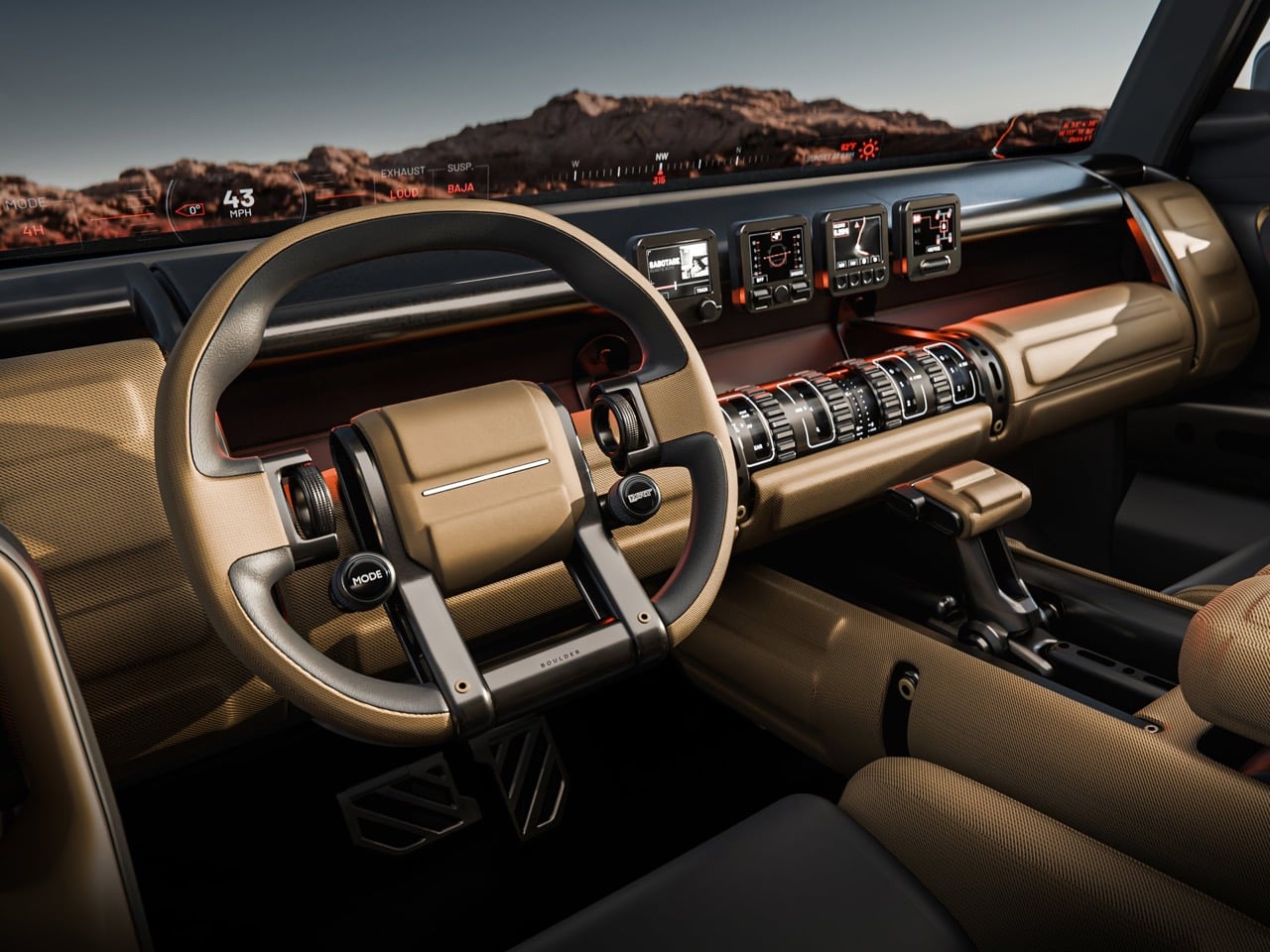
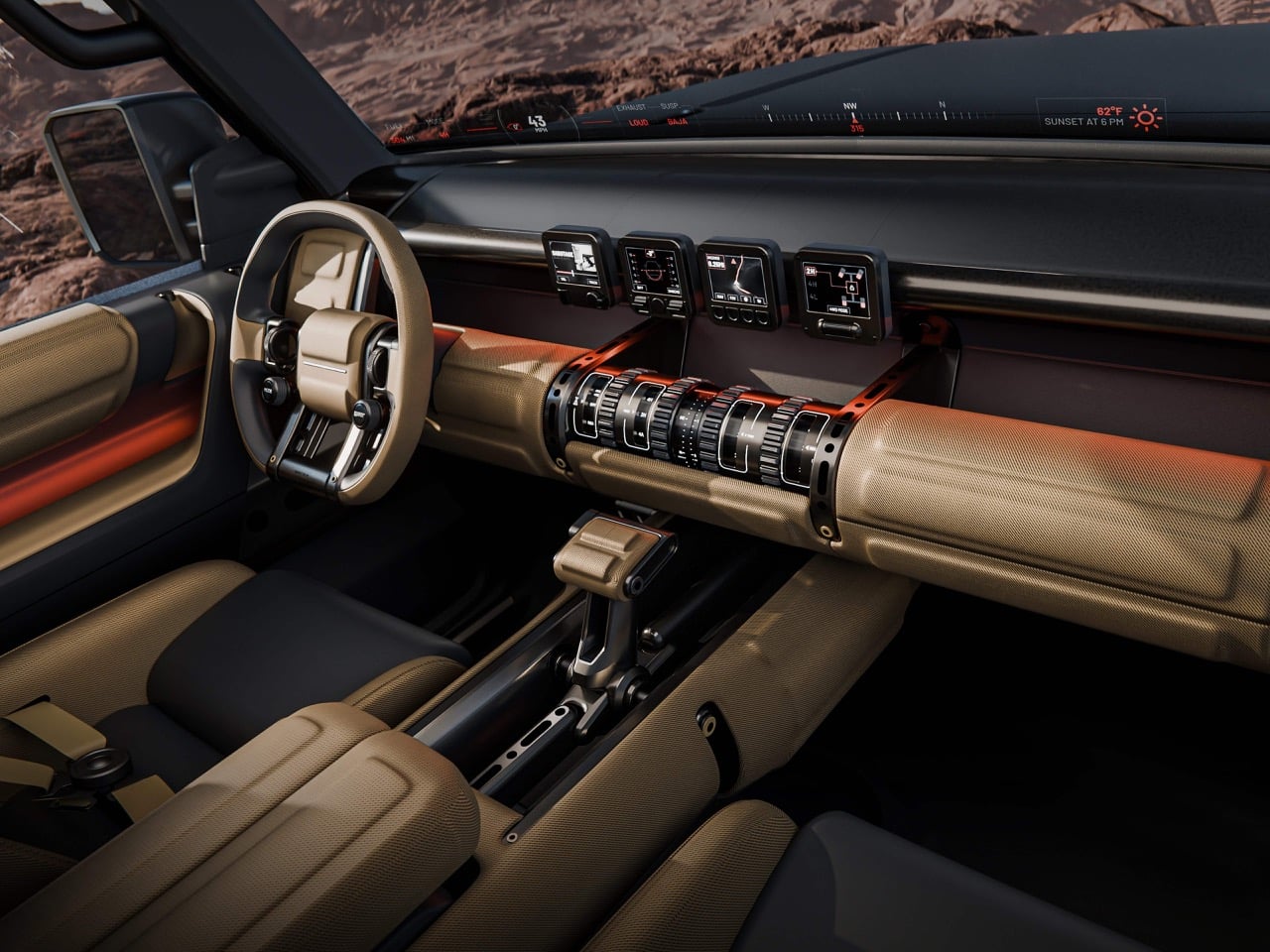
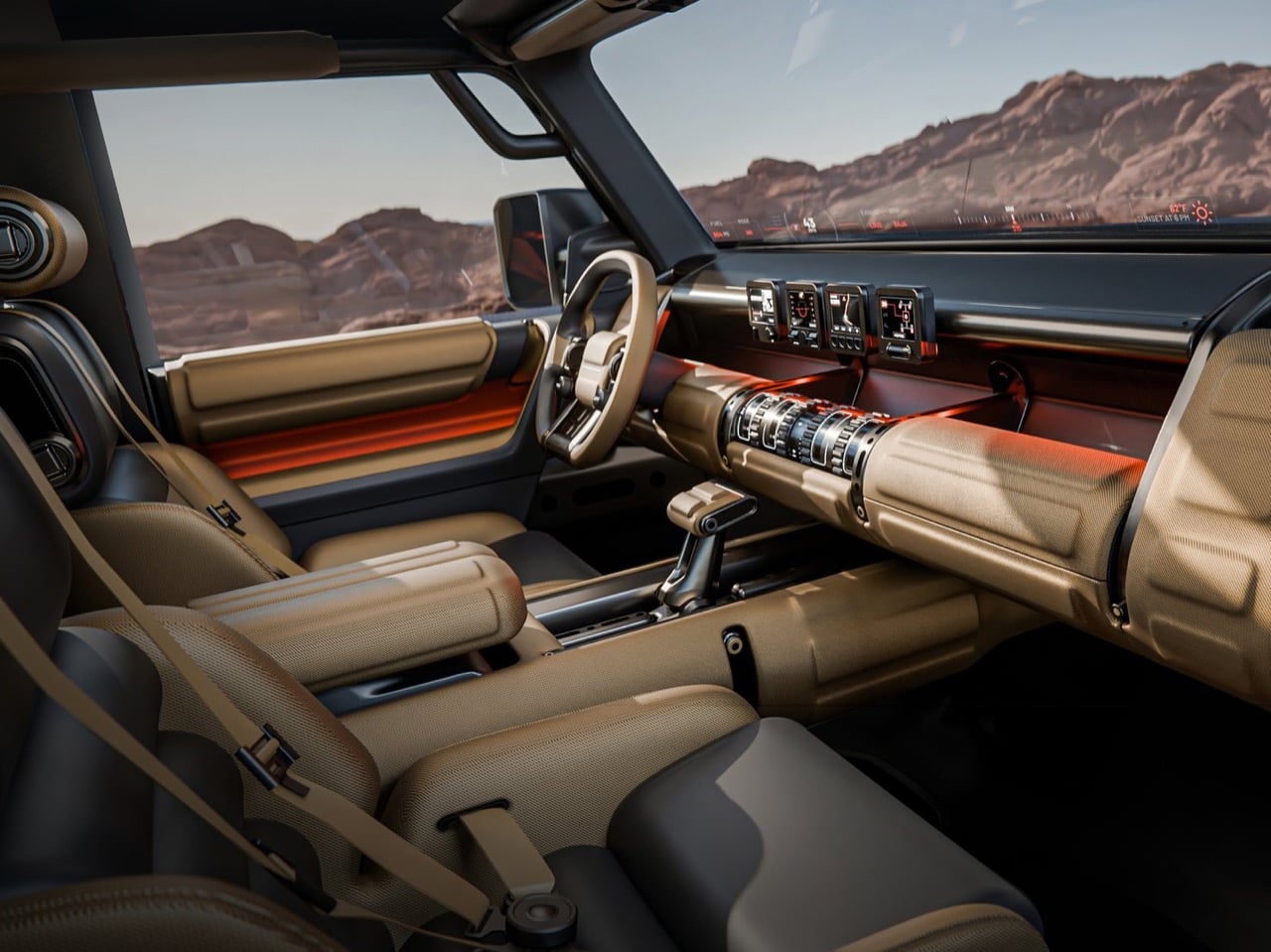
Inside, Hyundai eliminated the conventional instrument cluster and center touchscreen entirely, replacing them with a pillar-to-pillar head-up display integrated across the base of the windshield, complemented by smaller dashboard-mounted screens and a modular “Bring Your Own Device” rail system for customizable digital interfaces. Physical knobs and grab bars handle the high-frequency controls, fold-out tray tables serve field lunches and laptop sessions equally, and a software-driven off-road guidance system acts as what Hyundai calls a digital spotter riding shotgun. The cabin avoids the trap of over-digitization without tipping into retro nostalgia theater. That balance is harder to strike than it looks.
The body-on-frame platform is engineered to accept pure electric, internal combustion, and hybrid configurations, giving Hyundai maximum flexibility to match market conditions when production begins. Industry signals point toward an extended-range electric setup pairing electric drive with a gasoline generator, a configuration that Scout Motors and Ram are both pursuing for similar reasons: EV torque on the rocks, combustion range in the backcountry. No horsepower figures, no confirmed engine lineup, no price. Hyundai is keeping the powertrain conversation deliberately vague, and given that production is four years out, that restraint is as strategic as it is honest.
The Boulder arrives backed by an $18.4 billion US manufacturing commitment, with the production truck confirmed to be designed and built in America. That context matters for a brand entering a segment where provenance and identity carry weight that no press release can manufacture. The Wrangler’s tribal loyalty was built over decades and through genuine capability. Hyundai knows the Boulder has to earn that the same way, one trail at a time. If the production truck keeps even half of this concept’s architectural confidence and design clarity, that process has a very credible starting point.

The post 37-Inch Tires, Body-On-Frame, No Touchscreen: Hyundai’s Boulder Concept Should Make Jeep Nervous first appeared on Yanko Design.
Nissan’s Frontier TARMAC Concept: A 440 Horsepower Muscle Truck Built for the Track

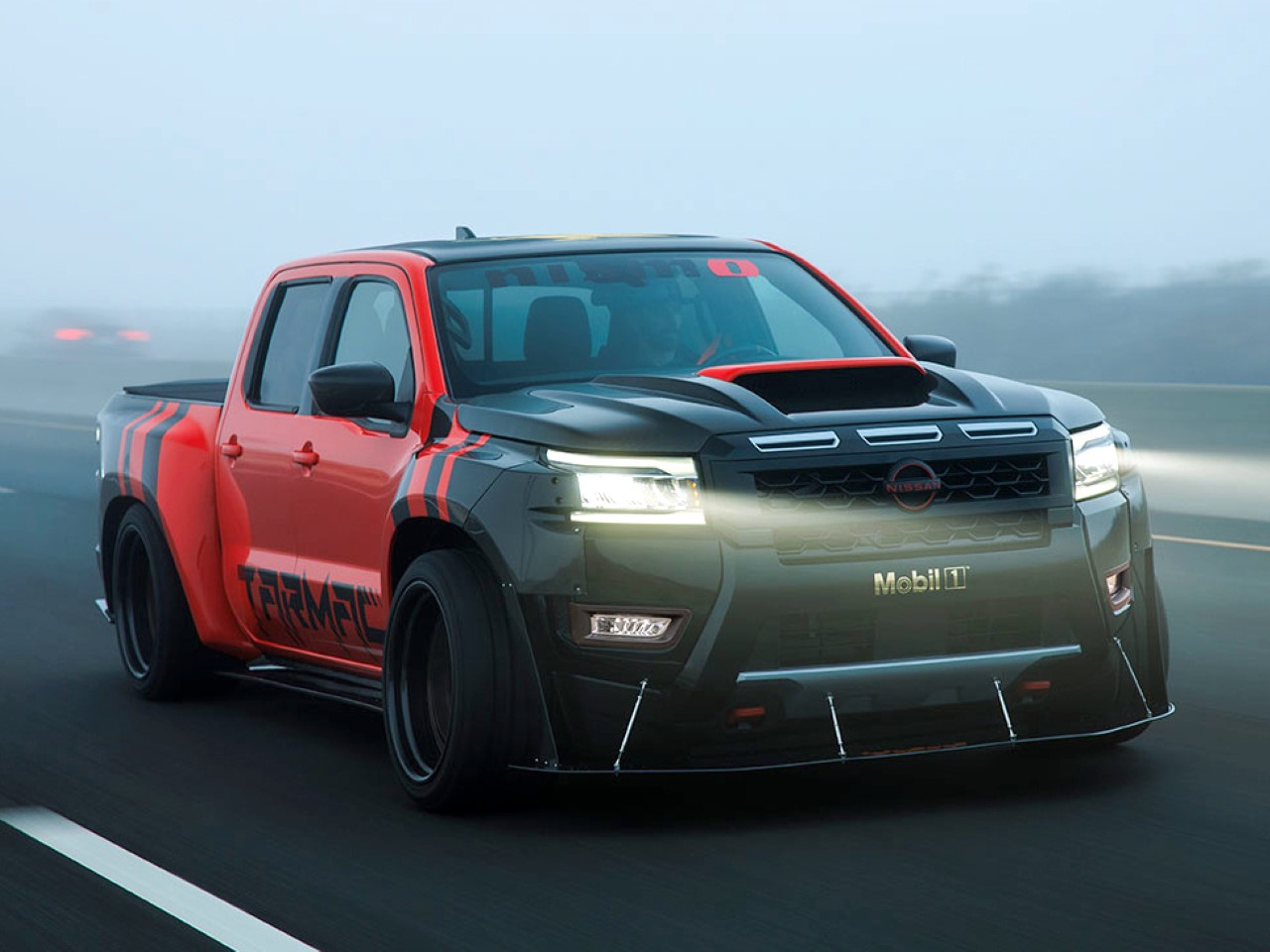
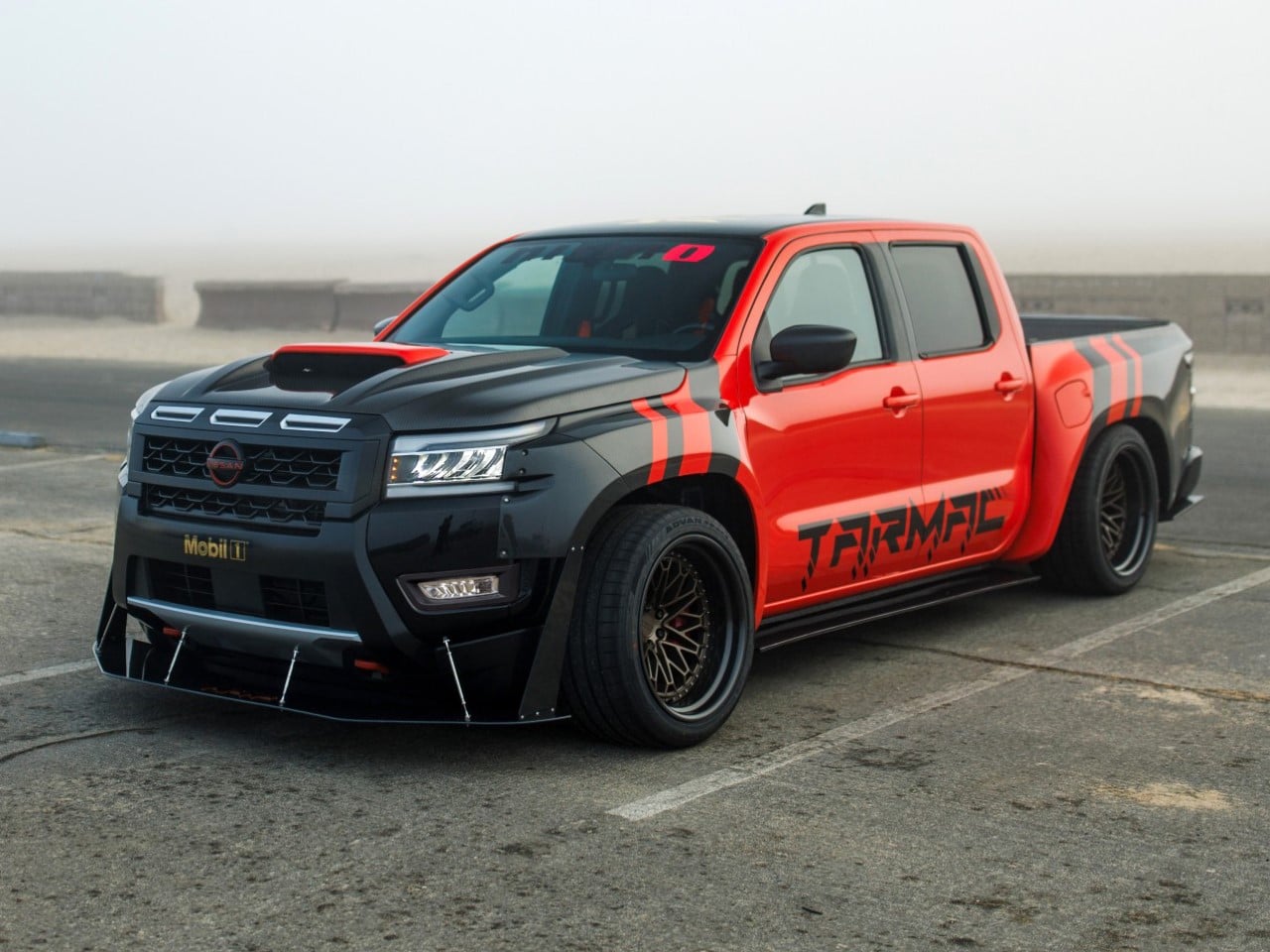
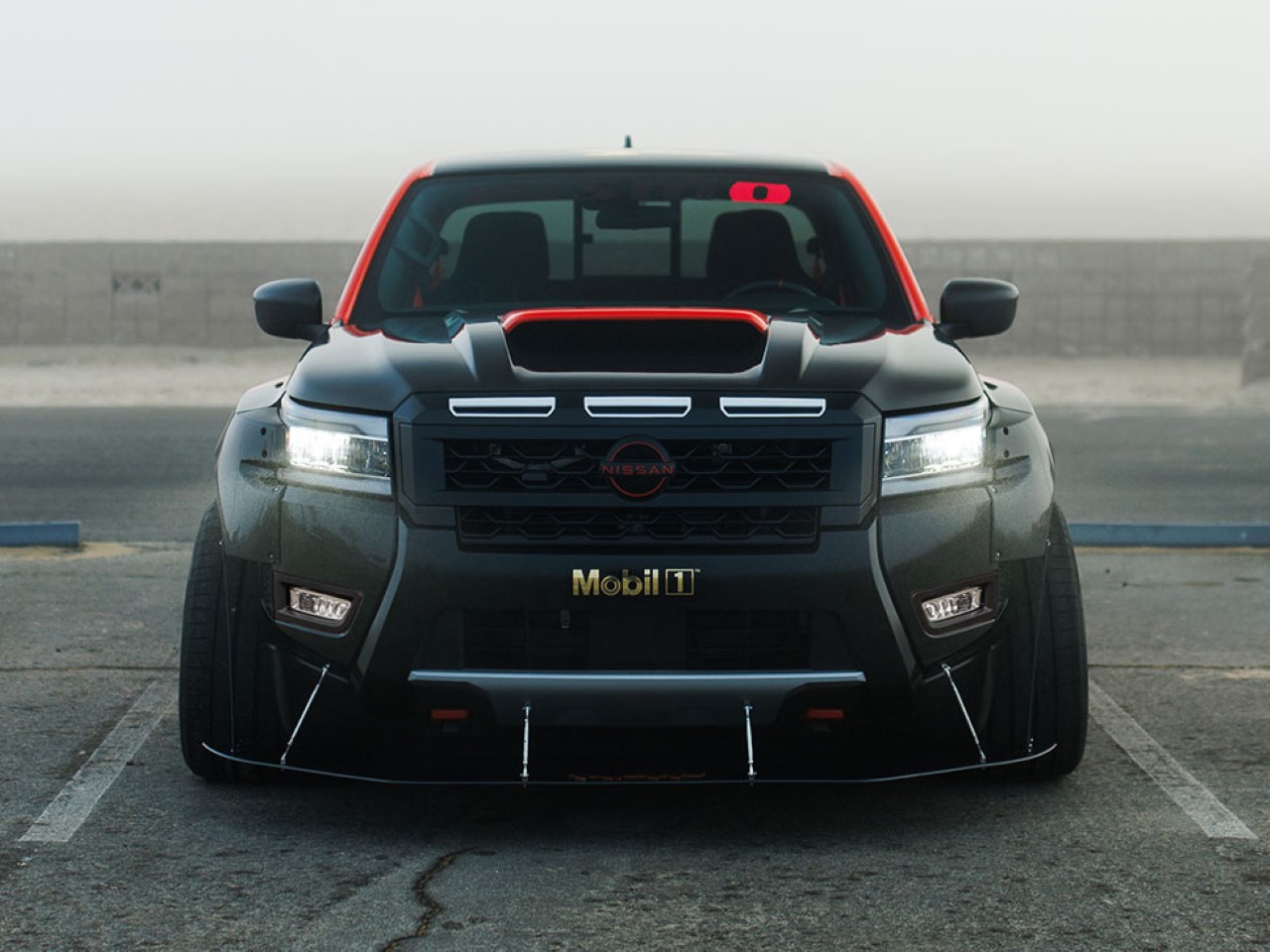
The Nissan Frontier TARMAC concept isn’t here to haul lumber or rocks. This one’s about making a statement. Designed by Nissan Motorsports (NISMO), Forsberg Racing, and Nissan Design America, this bold concept takes the classic work truck idea and supercharges it—literally and figuratively. Think of it as a track-ready muscle truck, complete with a 3.8-liter V6 that churns out a hefty 440 horsepower and 400 lb-ft of torque. And if you’re already picturing burnouts, you’ll be glad to know that a custom handbrake was added just for that purpose.

Designer: Chris Forsberg & Nissan

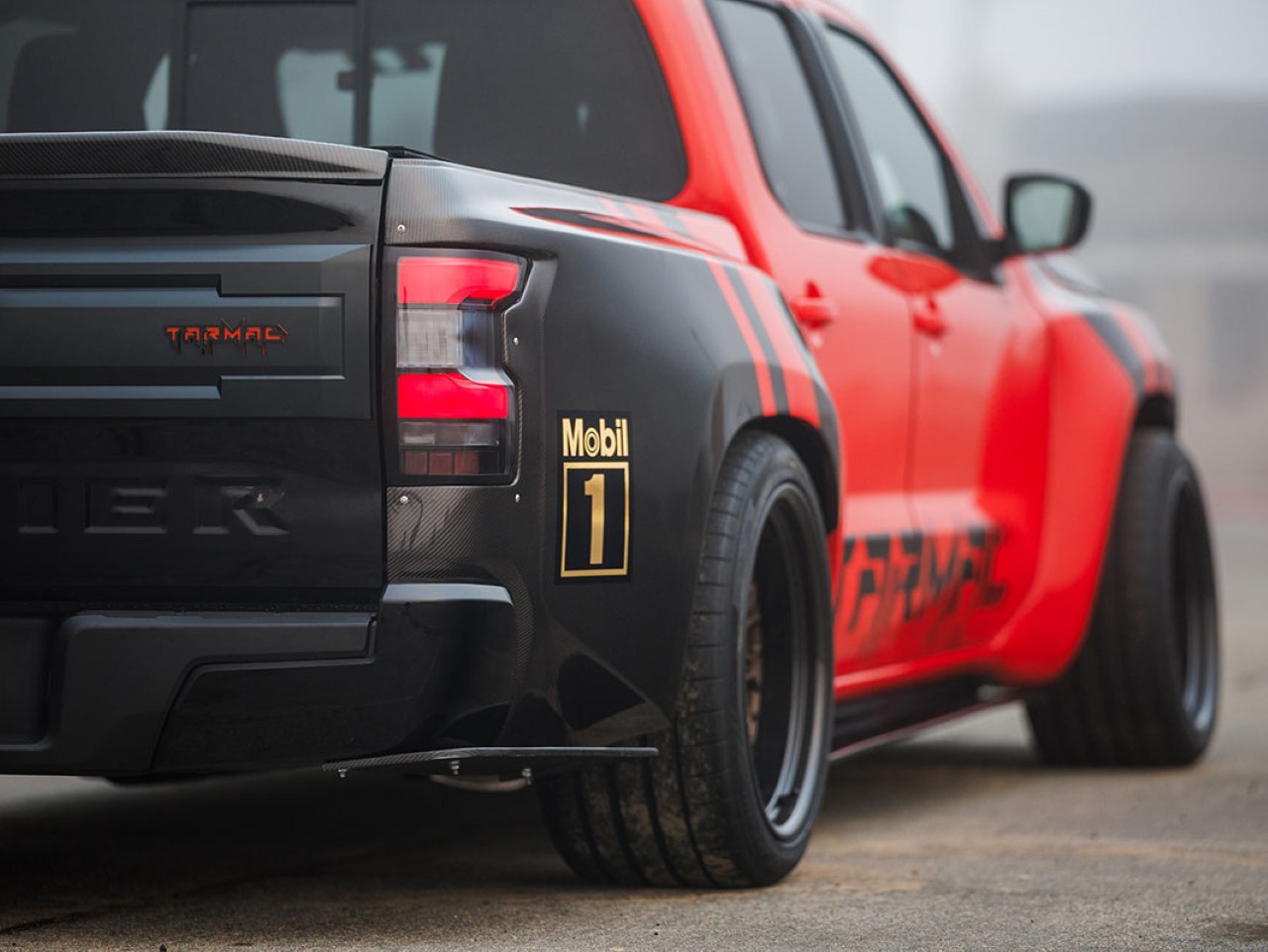
This is no standard Frontier, not by a mile. The Frontier TARMAC’s heart is a supercharged engine with carbon fiber accents that reflect its performance-driven personality. The NISMO air intake and performance exhaust deliver power on demand, while custom NISMO brakes ensure it can actually stop when it needs to. This setup isn’t just about big numbers; it’s about delivering a refined level of control that’s engineered for precision on the track.

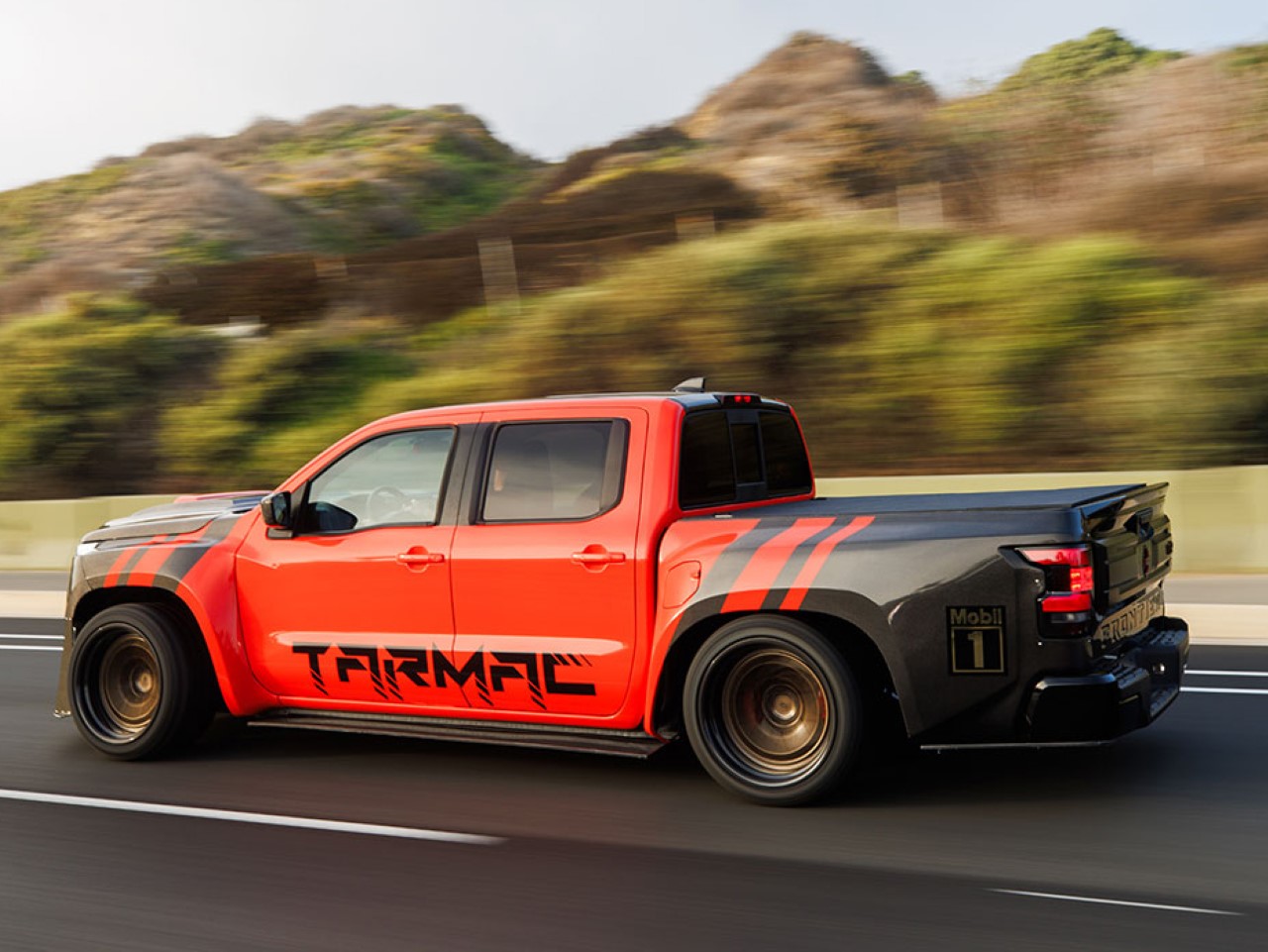
The Frontier TARMAC’s Afterburn Orange paint—a new hue for the 2025 Frontier lineup—brings a bold aesthetic that turns heads. Carbon fiber fender flares add to the truck’s aggressive stance, giving it a sleek but dominant appearance. Those wide carbon fiber accents aren’t just for show either; they’re there to add strength and reduce weight. And then there are the wheels—custom 20-inch NISMO wheels wrapped in Yokohama Advan tires—adding yet another layer of performance and visual appeal. From top to bottom, the Frontier TARMAC looks ready to handle the asphalt with all the confidence of a sports car.

If you’re wondering how they pulled off that low-riding look, the answer is in the suspension. This truck sits improbably low, thanks to a prototype NISMO coil-over setup in the front, with a rear flip kit and C-notch to make sure it stays close to the ground without compromising structural integrity. This custom suspension, paired with those beefy tires, gives the truck a “slammed” stance, as described by Chris Forsberg himself. Just one look tells you this vehicle isn’t meant for off-road adventuring—think racetrack, not mountain trails.

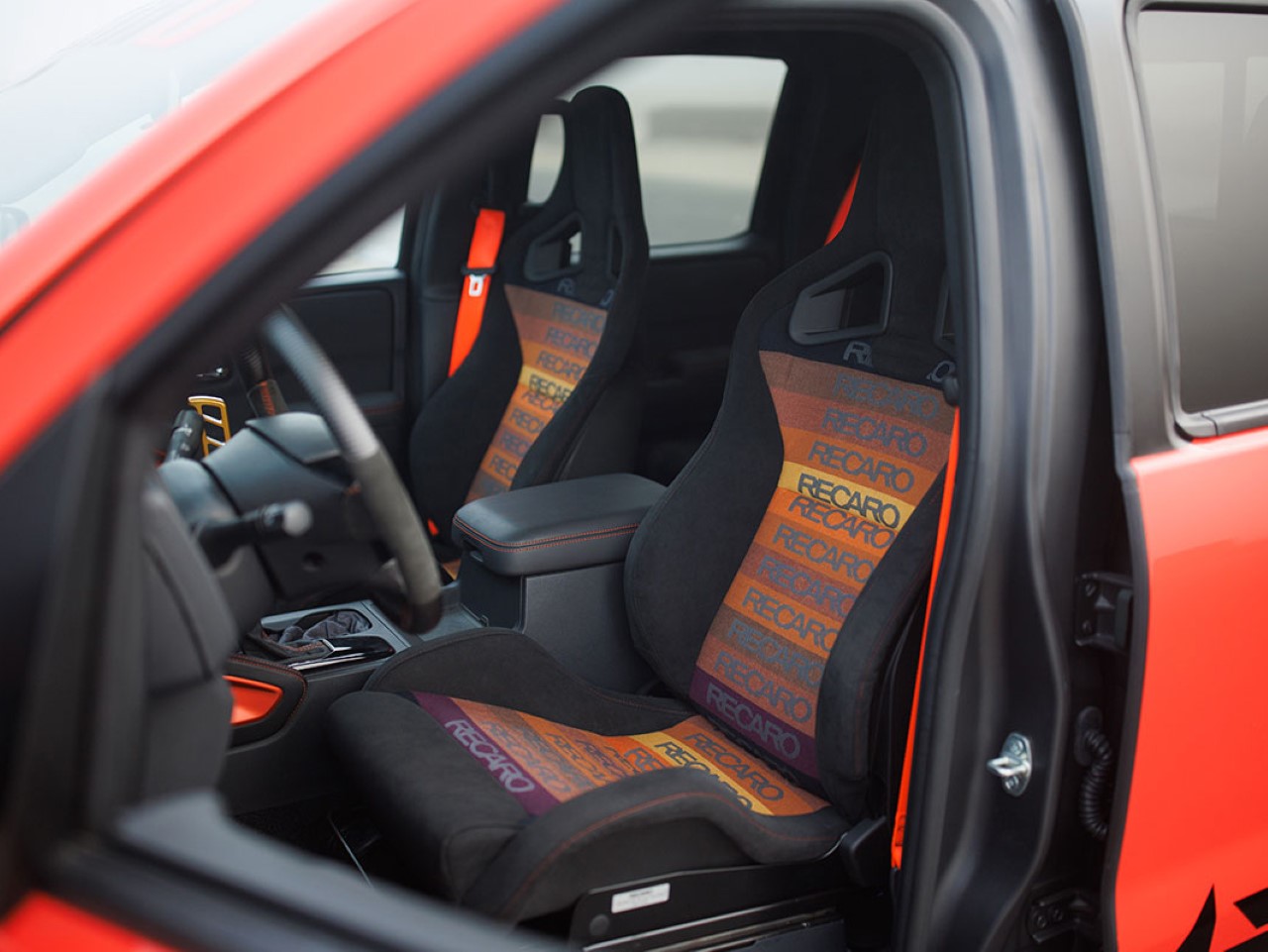
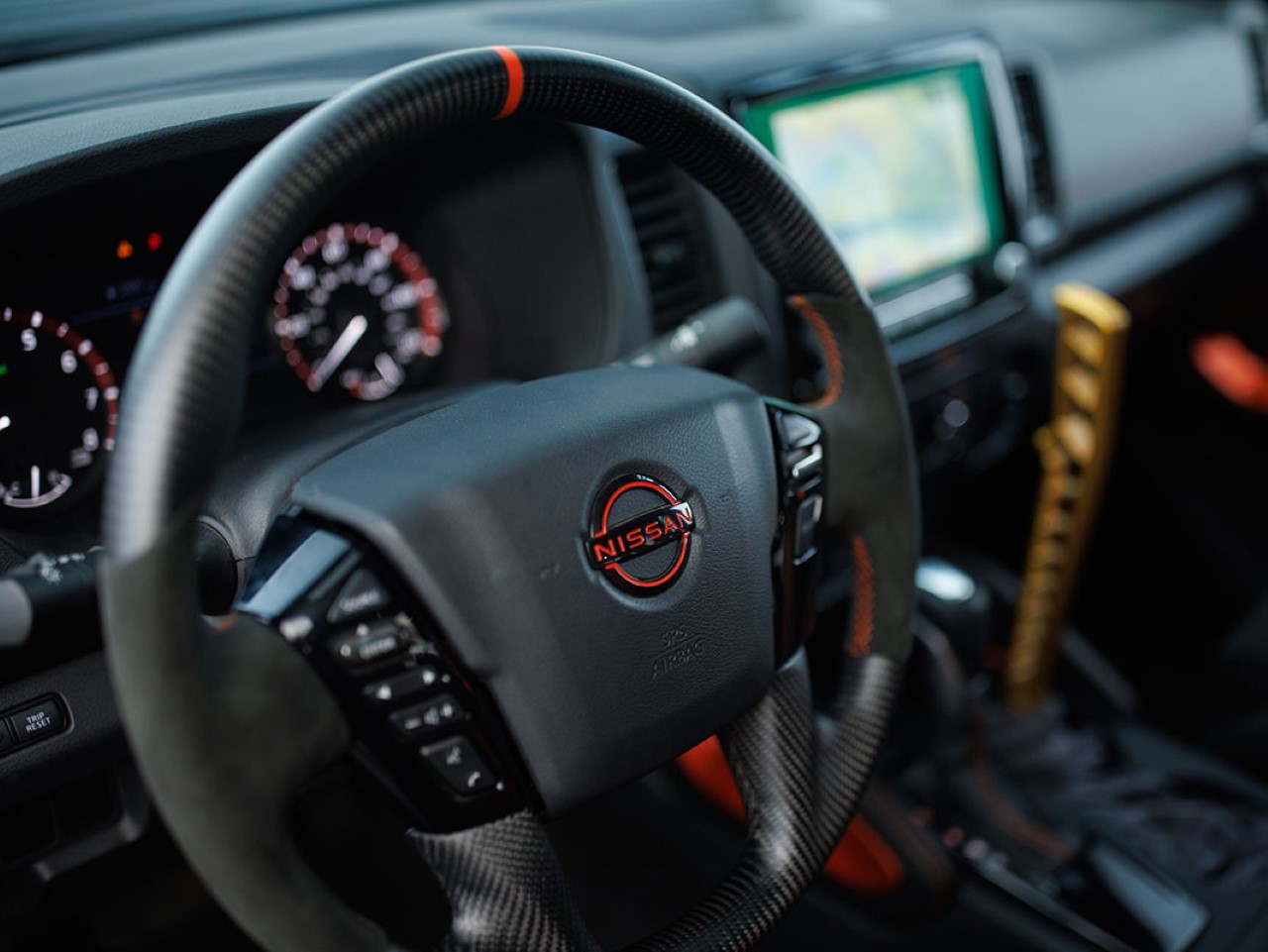
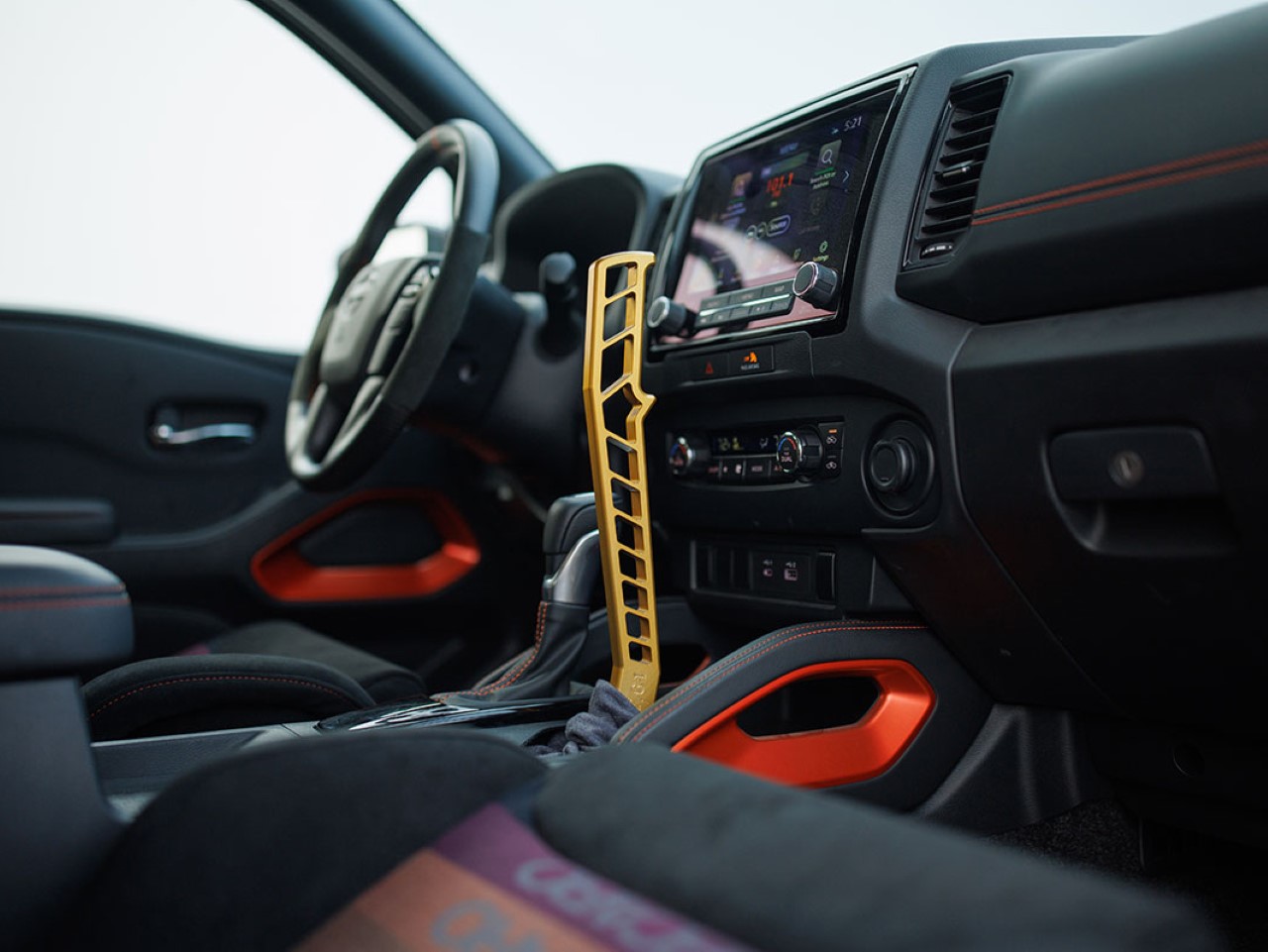
Inside, the TARMAC concept doesn’t skimp on comfort or style. You’ll find Recaro seats that offer the perfect balance of support and sportiness, making every drive feel like a track day. The carbon fiber steering wheel and handbrake, both track-inspired, give drivers full control, emphasizing that this truck is built for those who value a more hands-on driving experience. Nissan clearly wasn’t aiming for “rugged” here—this is all about precision and speed.

Even though the Nissan Frontier TARMAC is just a concept, it’s a fascinating nod to the muscle truck era, when power and performance were the only metrics that mattered. Nissan is showing off the TARMAC at SEMA this year, where it’s sharing the spotlight with other concepts like the “Project Trailgater” for tailgating fans, and the Kicks Beach Patrol for coastal explorers. Each concept represents a different aspect of Nissan’s vision for the future, but the Frontier TARMAC is easily one of the standouts.

For anyone who’s ever wanted a pickup with muscle car roots, the Frontier TARMAC might be exactly the kind of “truck fantasy” they didn’t know they needed. It’s the answer to a question nobody asked: What if a work truck had a double life as a track star? In the end, the Nissan Frontier TARMAC might be one for the show floor, but it’s proof that Nissan isn’t afraid to play around with tradition and take its designs into bold new territory.

The post Nissan’s Frontier TARMAC Concept: A 440 Horsepower Muscle Truck Built for the Track first appeared on Yanko Design.
This scorpion-inspired pickup truck has flexible bed configuration for hauling cargo

Pick-up trucks with cargo beds are great for hauling stuff, be it your adventure trips or city needs. That said, they are not one of the most fuel-efficient or range-efficient vehicles on the planet. Over the years the design of trucks with cargo beds has not changed. There are some problems with this under-evolved design lacking innovation, like load accessibility and damage induced due to shaking. Not to mention the limited space for the rear seat space due to the trunk size.

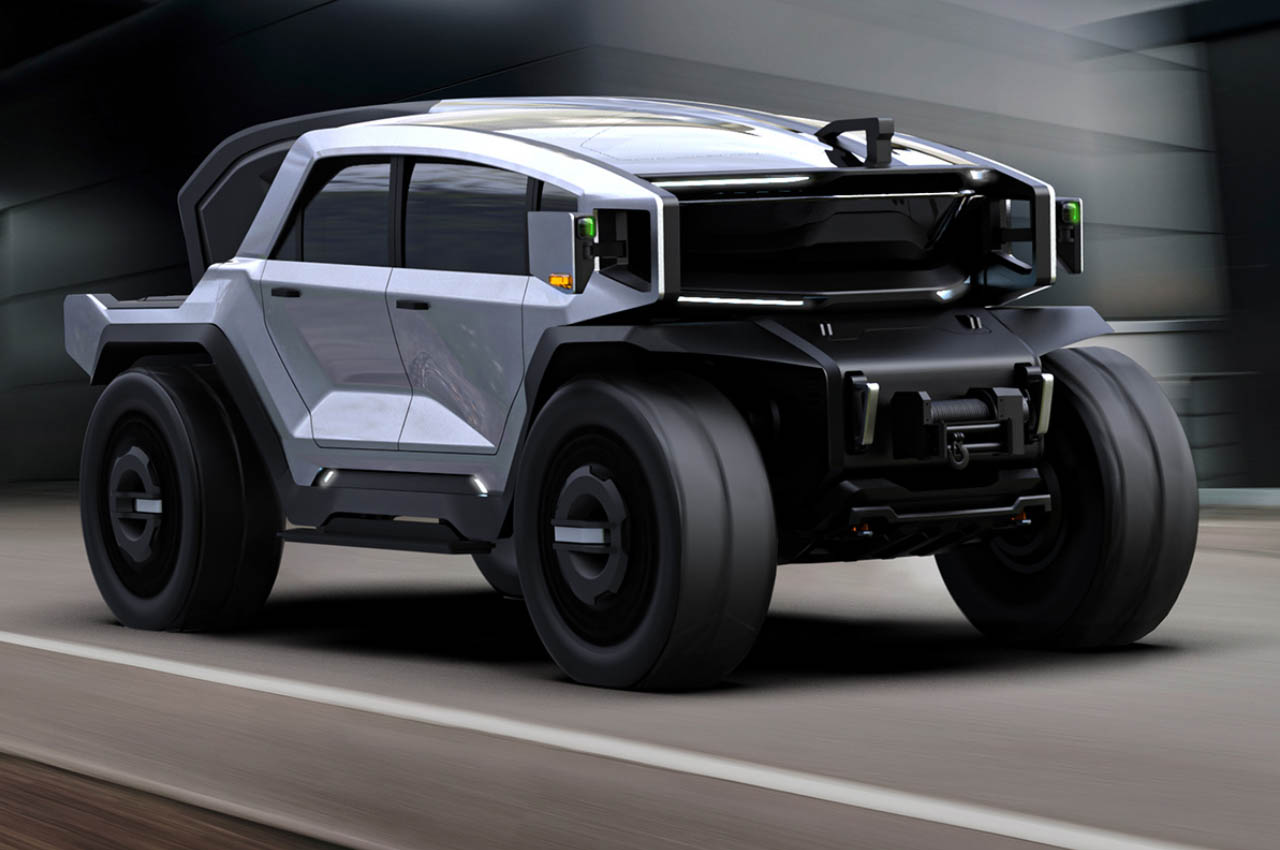
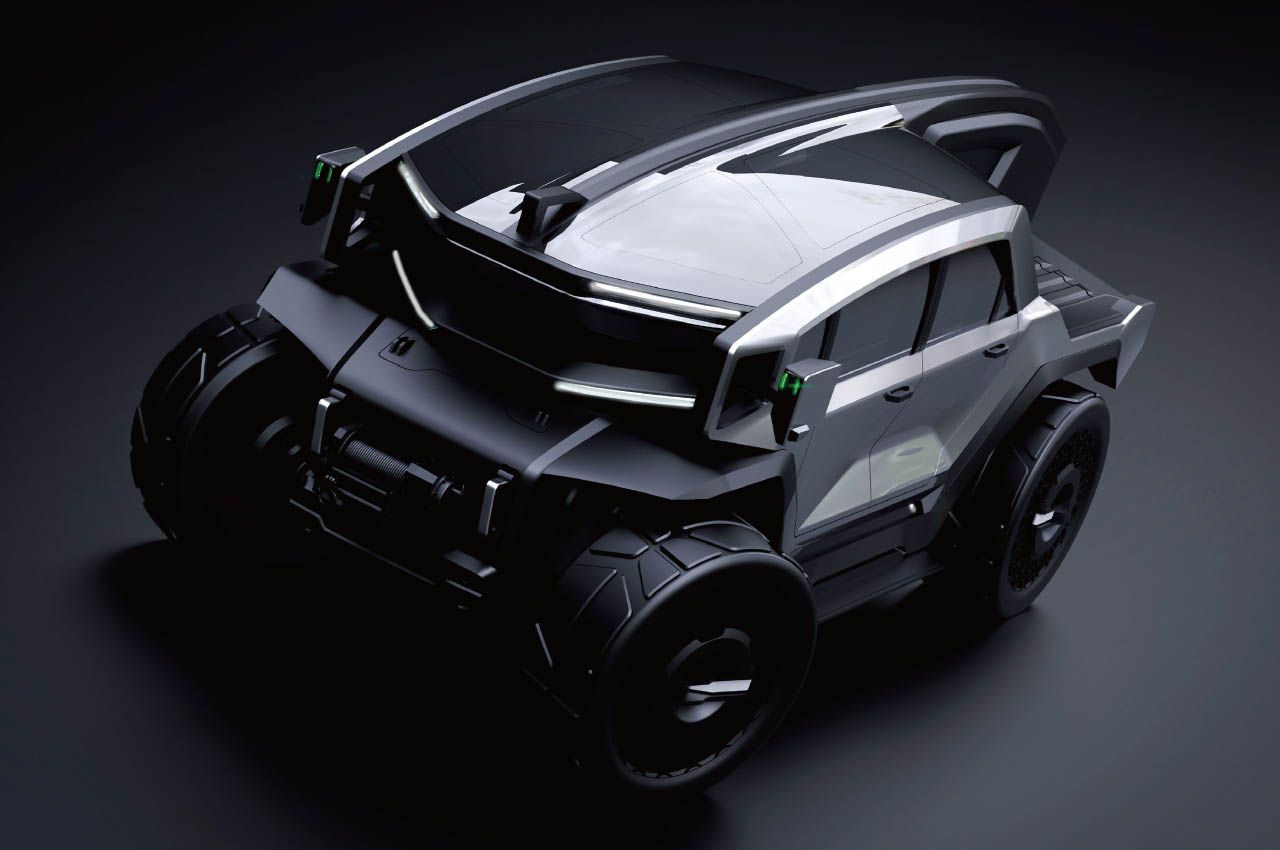
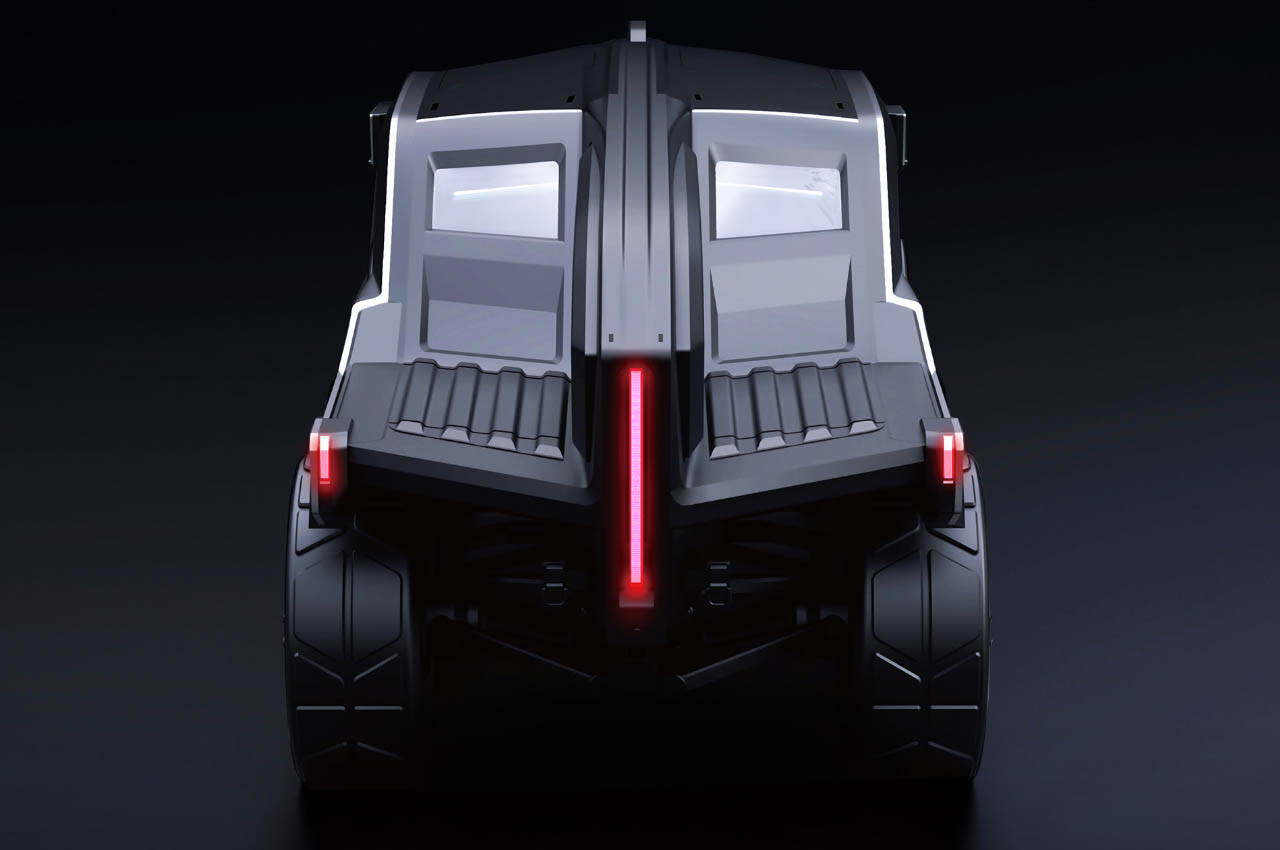
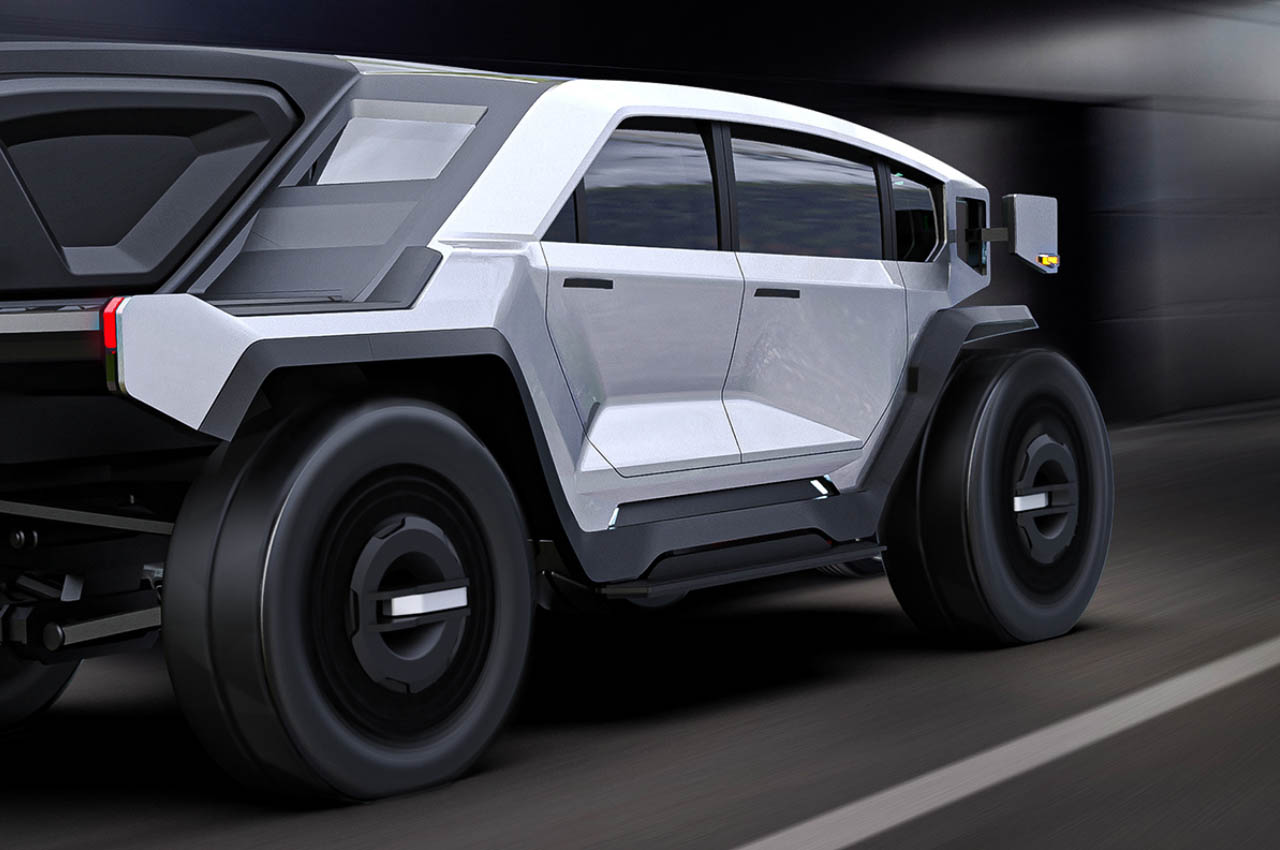
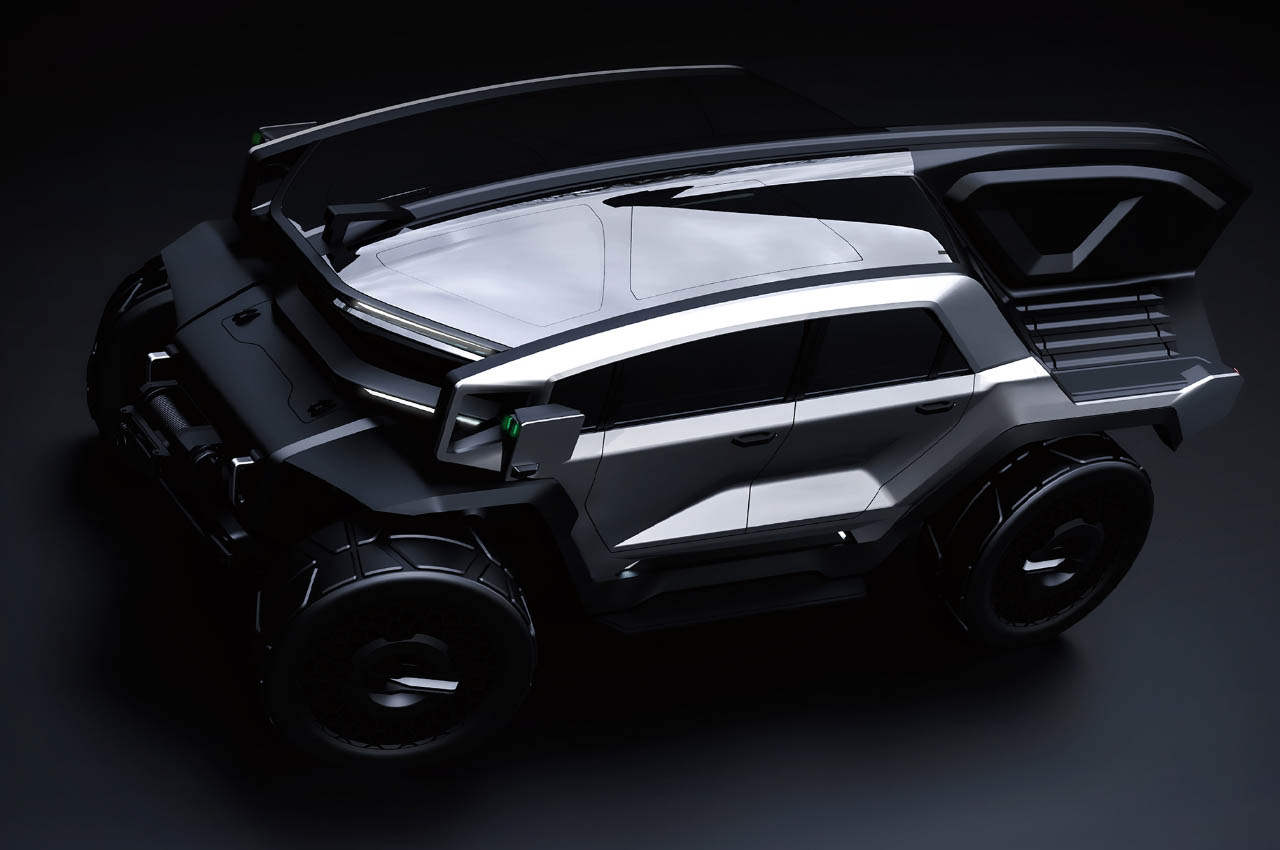
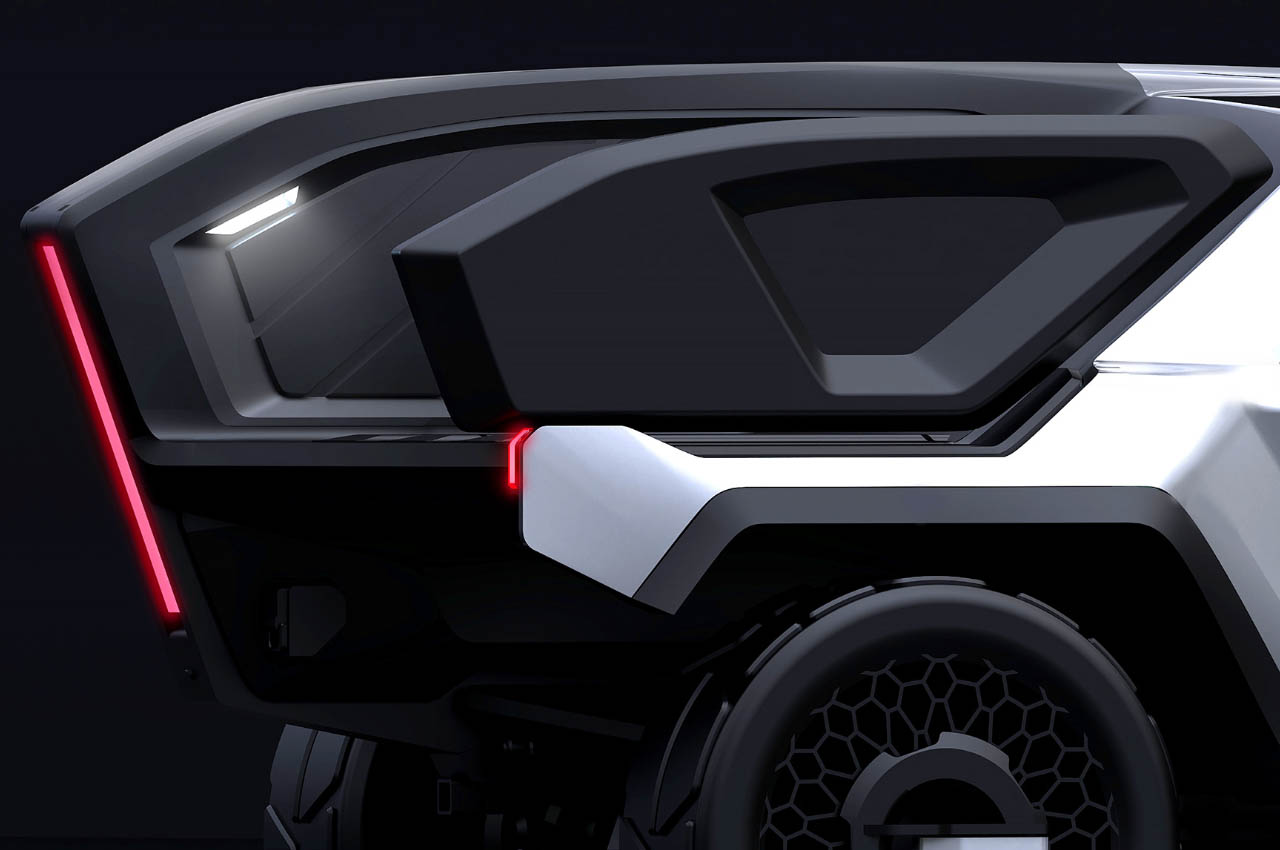
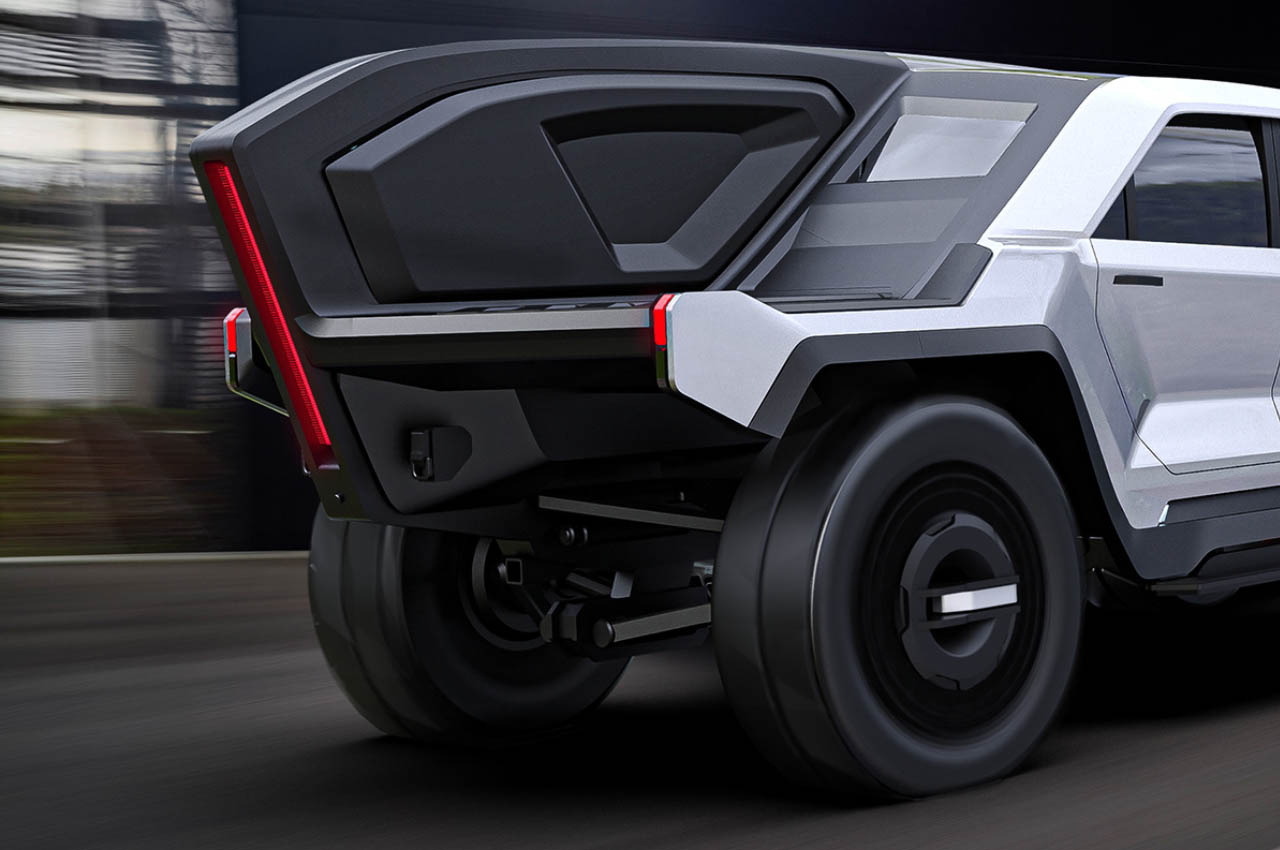
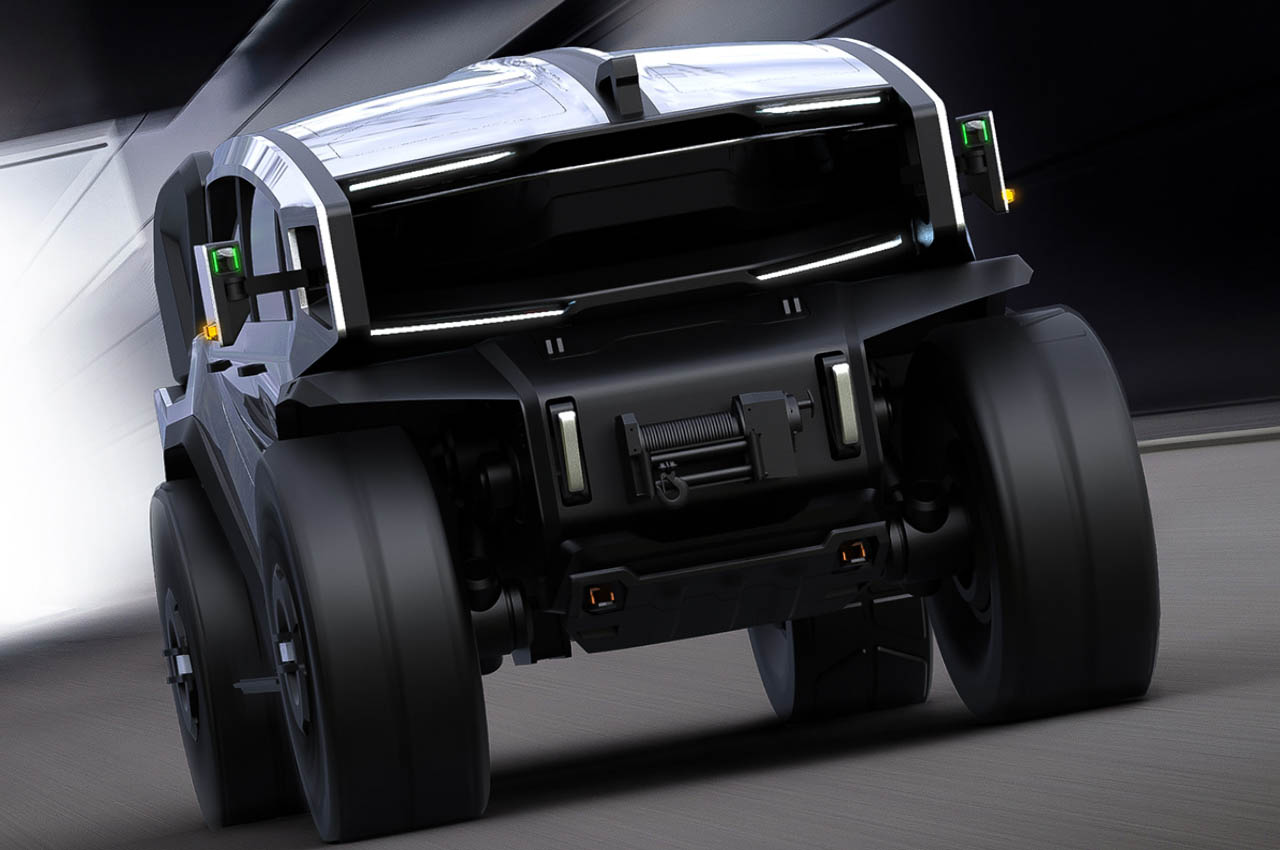
The 2030 Scorpion concept aims to solve this problem with an expansion form that proposes a new pickup truck frame design. Shaped like a scorpion or a mountain bike helmet, the vehicle has an optimized ratio of the overall lump, so that there is ample cargo space without any compromises in the rear seating configuration. The high ride height of the vehicle makes sure it can navigate any challenging terrain with ease. For me, this vehicle looks heavily inspired by the Rezvani Motors Vengeance bullet-proof vehicle.

Designer: Changhyun Lee

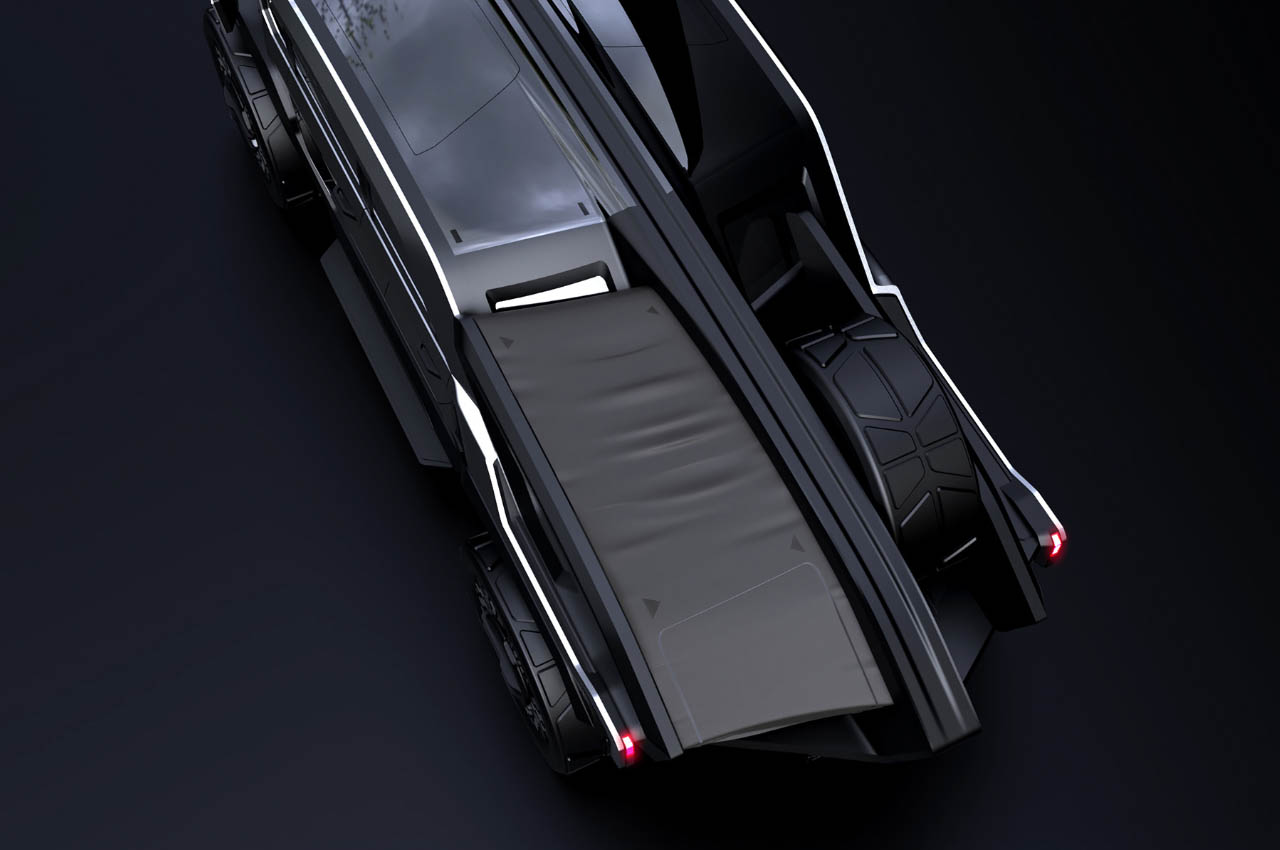
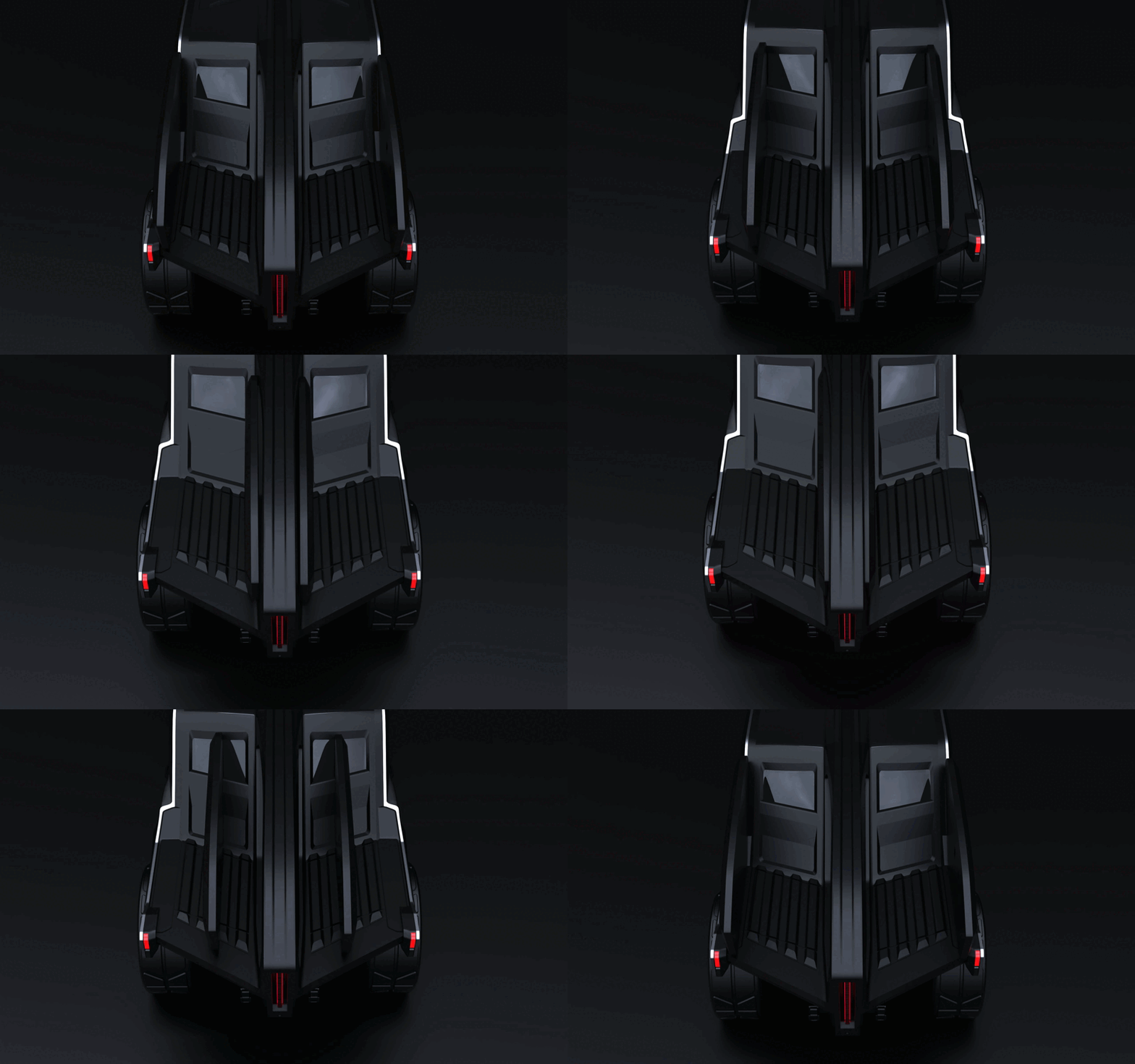
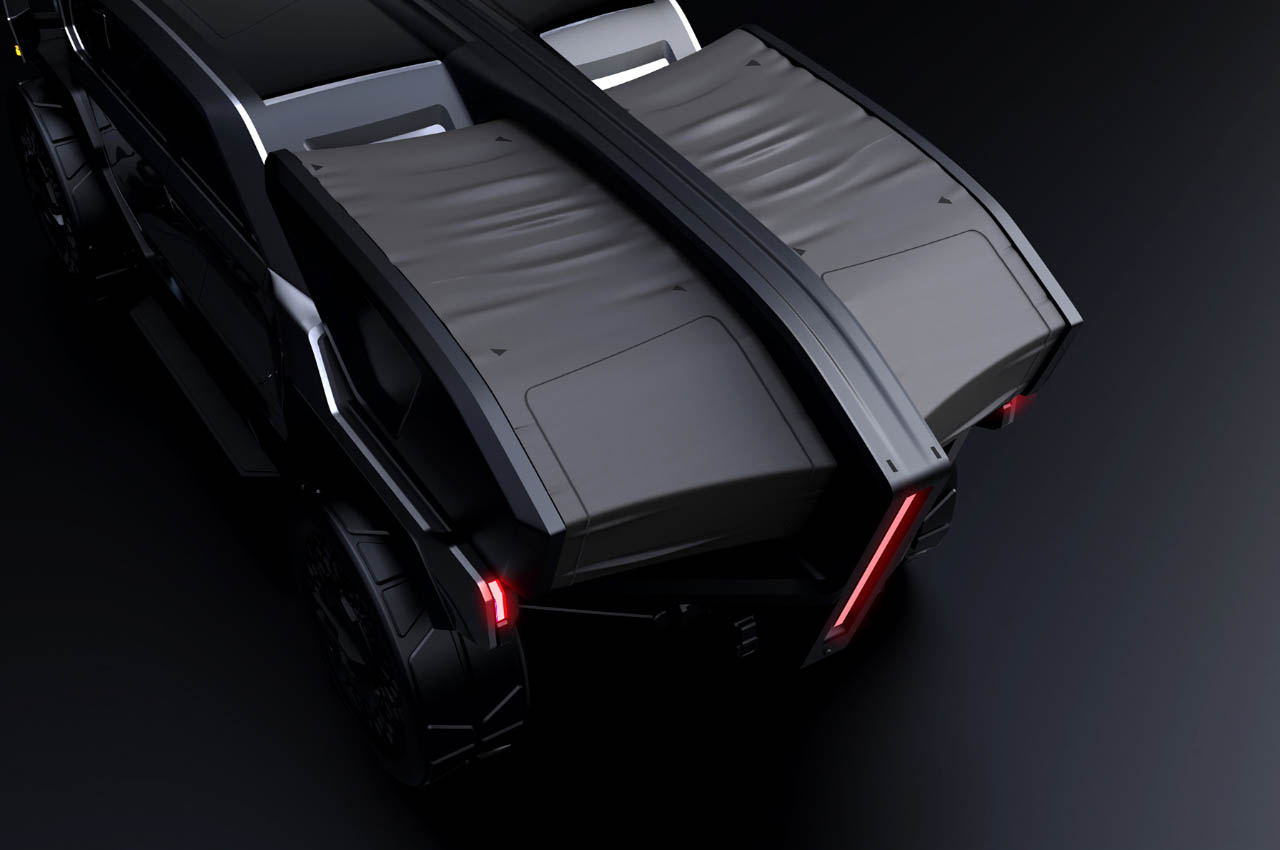
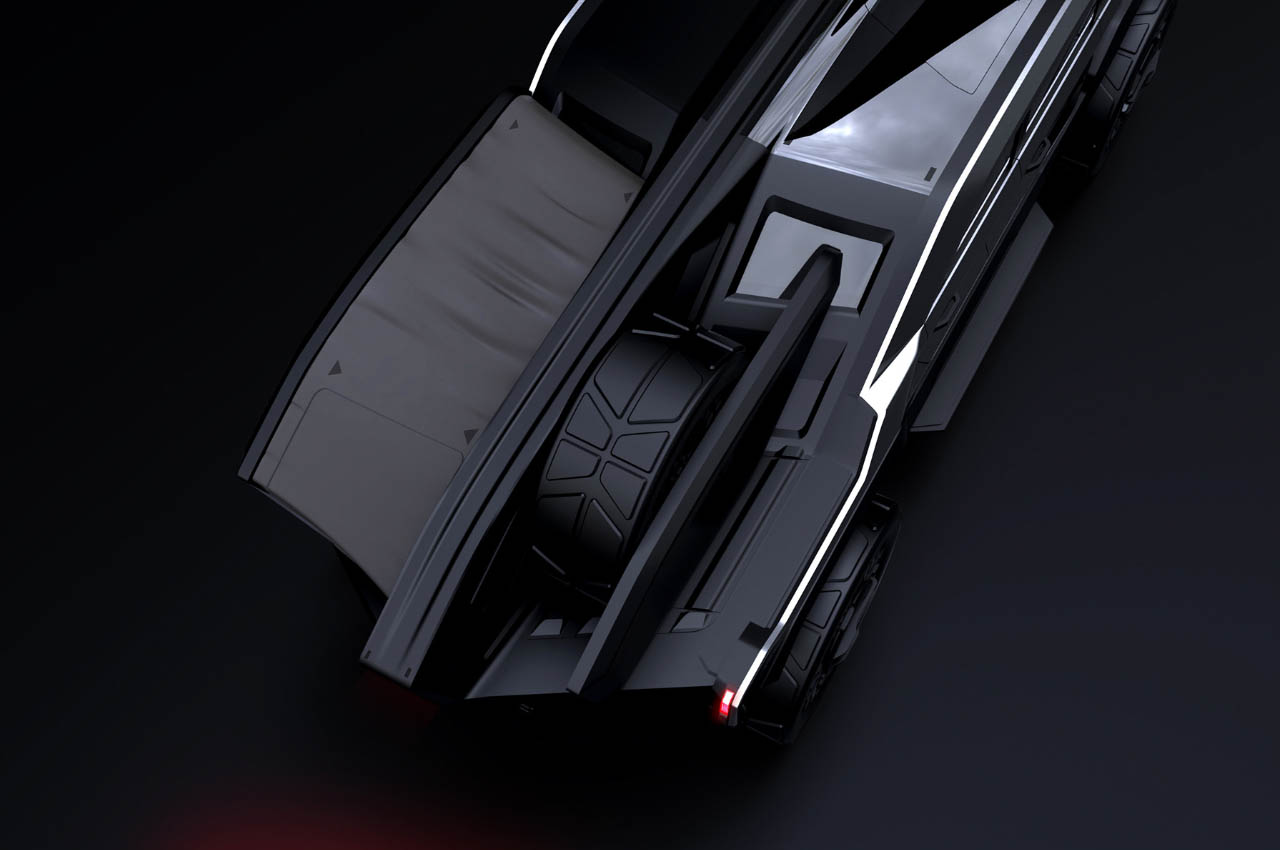
The bed of the ultra-futuristic yet monstrous truck is divided into two sections to make space for small cargo (or fit the divider depending on the size of the item) and can be laid flat down for a bigger configuration to haul larger cargo. The cover connected to the rail automatically moves depending on the size of the cargo to keep it snug in place, thus preventing any shaking.

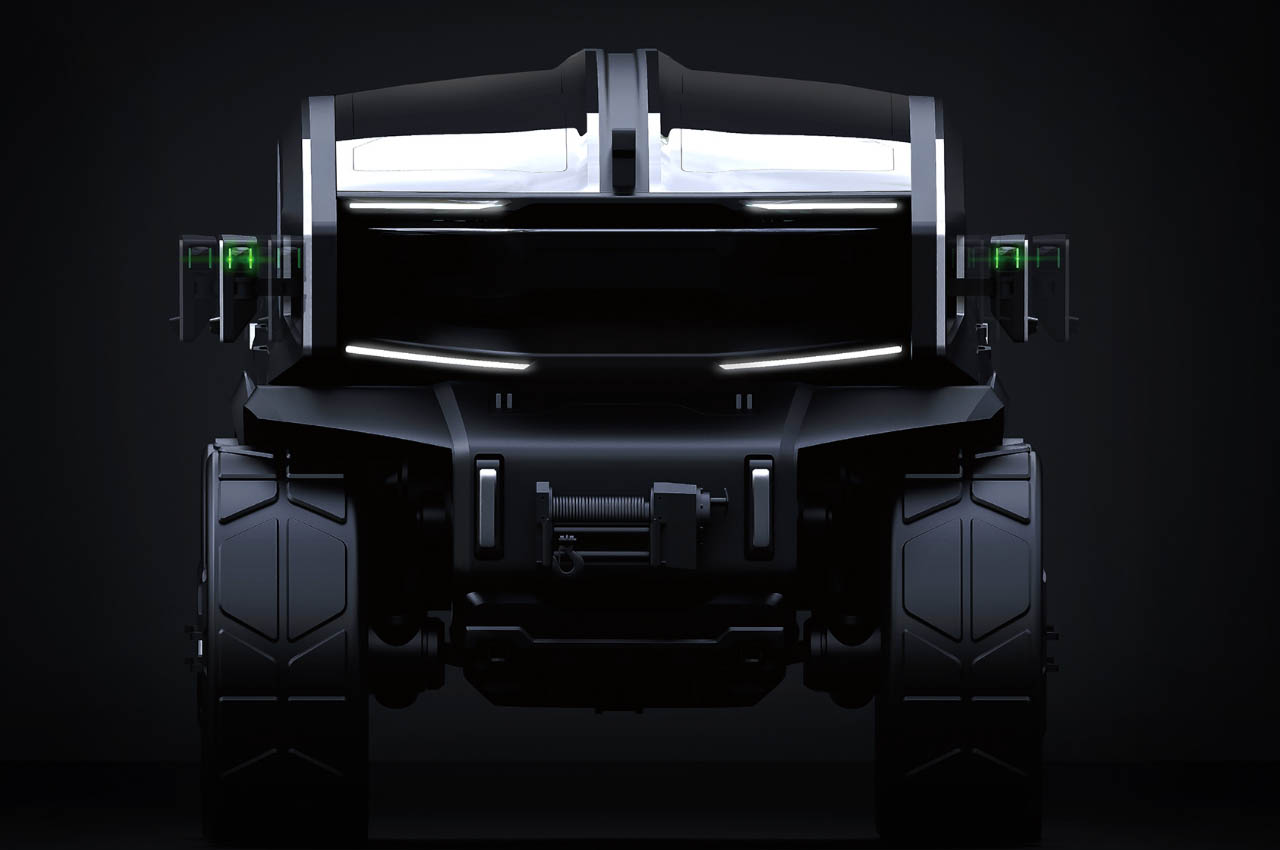
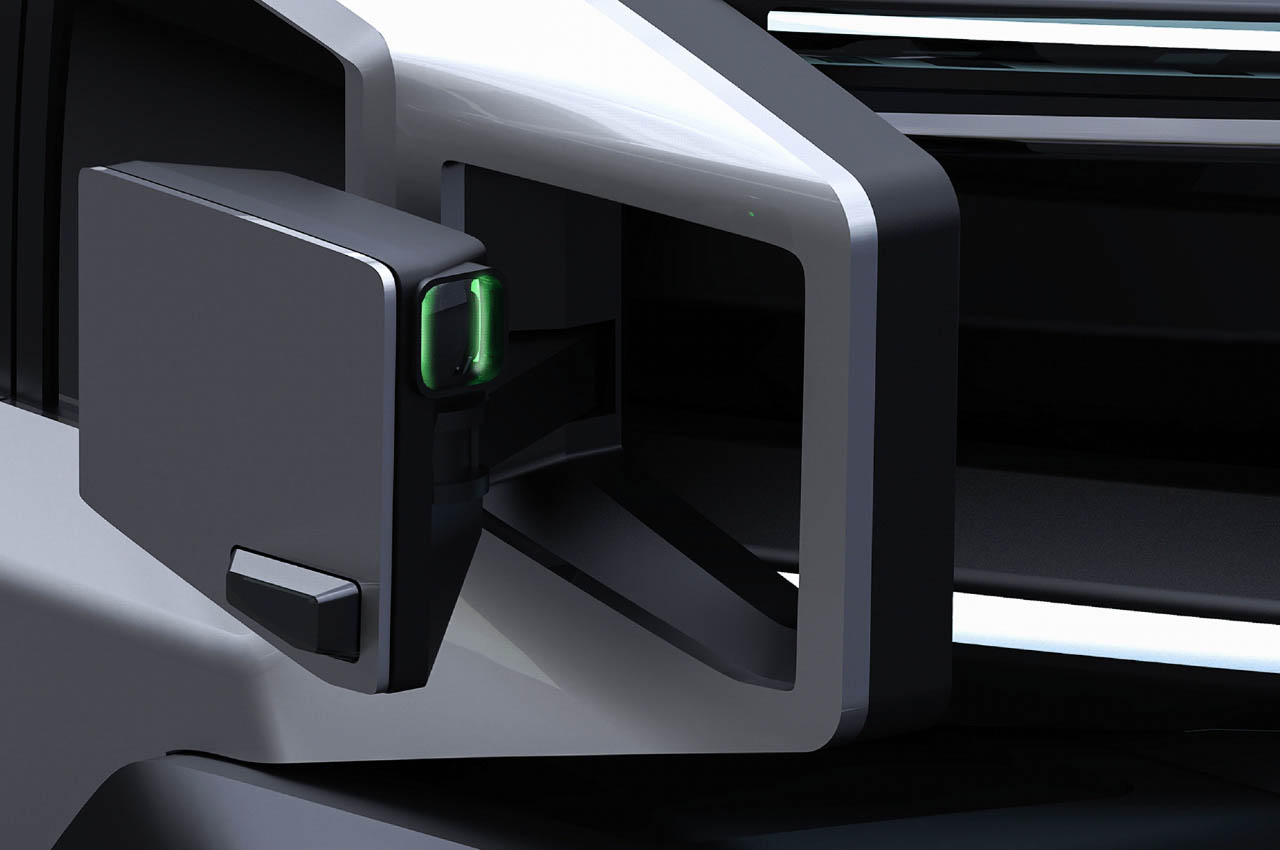
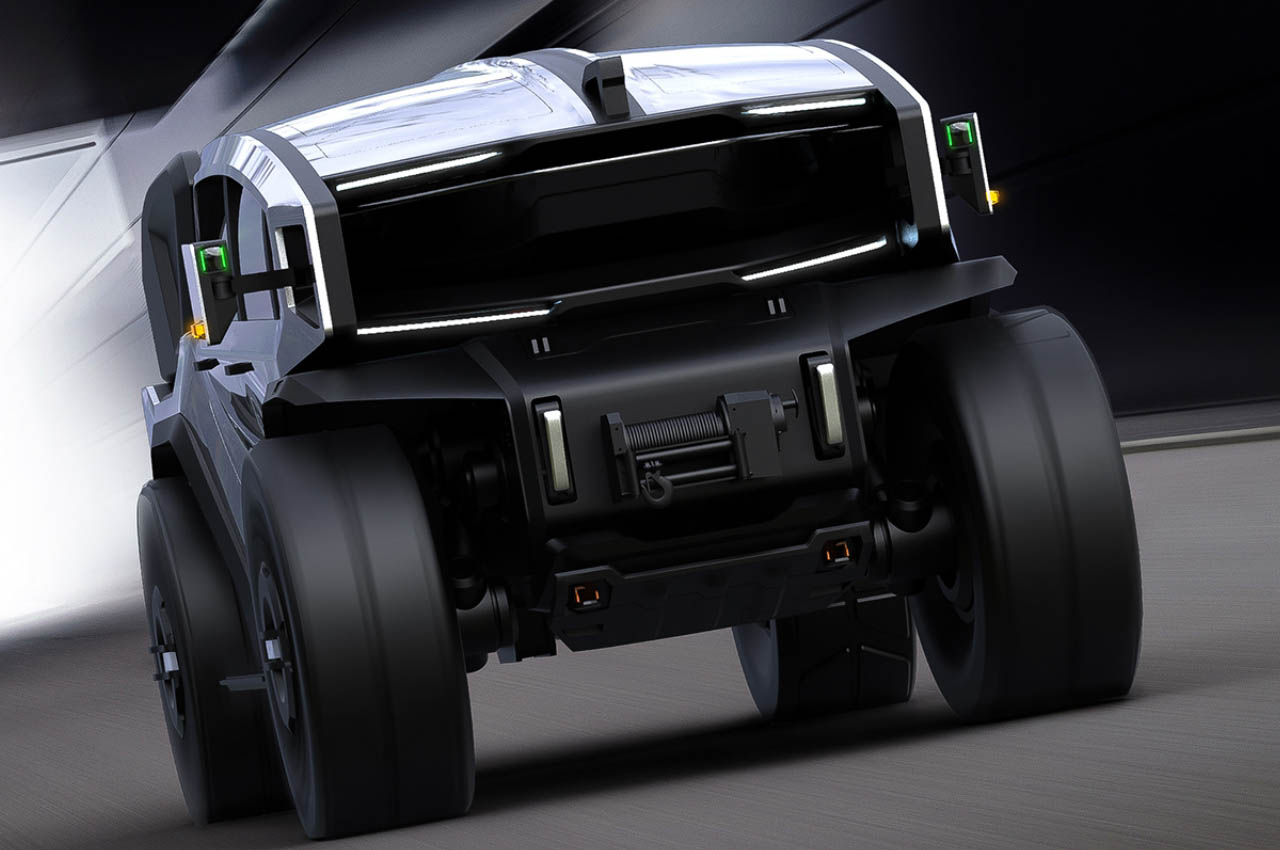
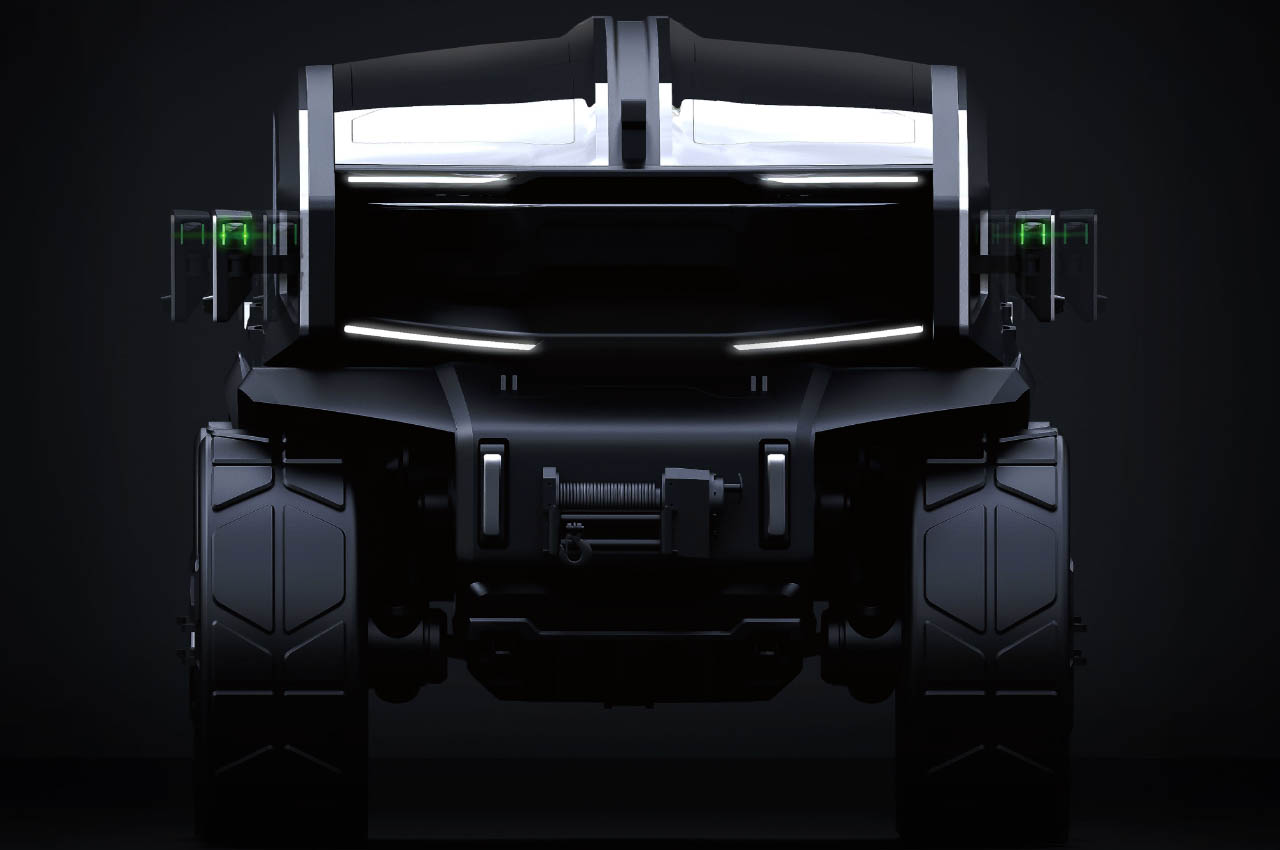
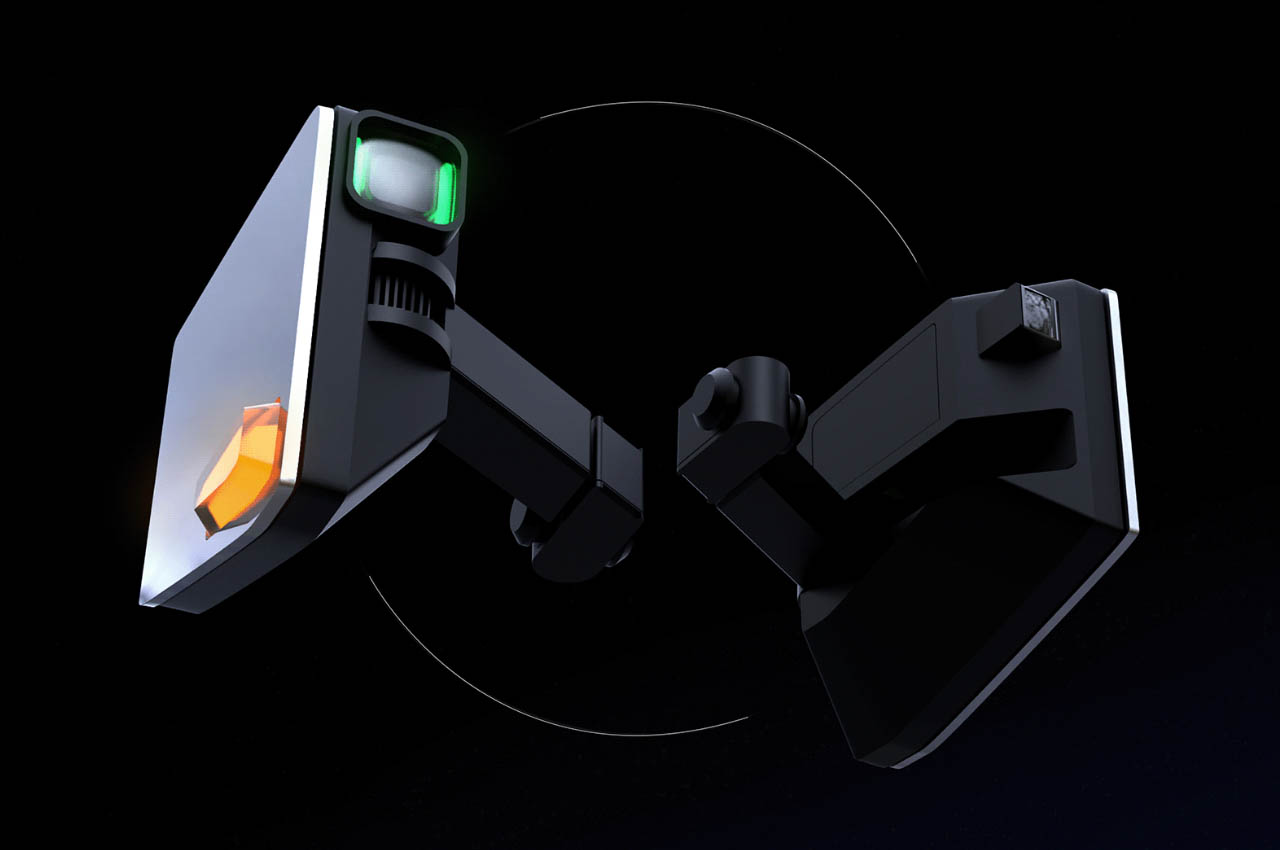
2030 Scorpion has a unique front shape that narrows from the top to the bottom for a wider field of view and has a quadra lamp structure for a more direct driving experience. The rear-view mirrors double as radar sensors and the camera on the front identifies obstacles during off-roading or navigating tight urban spaces. The designer has also proposed a portable battery pack that can provide hybrid power to the vehicle or act as a power source for all the necessary gadgets during long trips.

The post This scorpion-inspired pickup truck has flexible bed configuration for hauling cargo first appeared on Yanko Design.