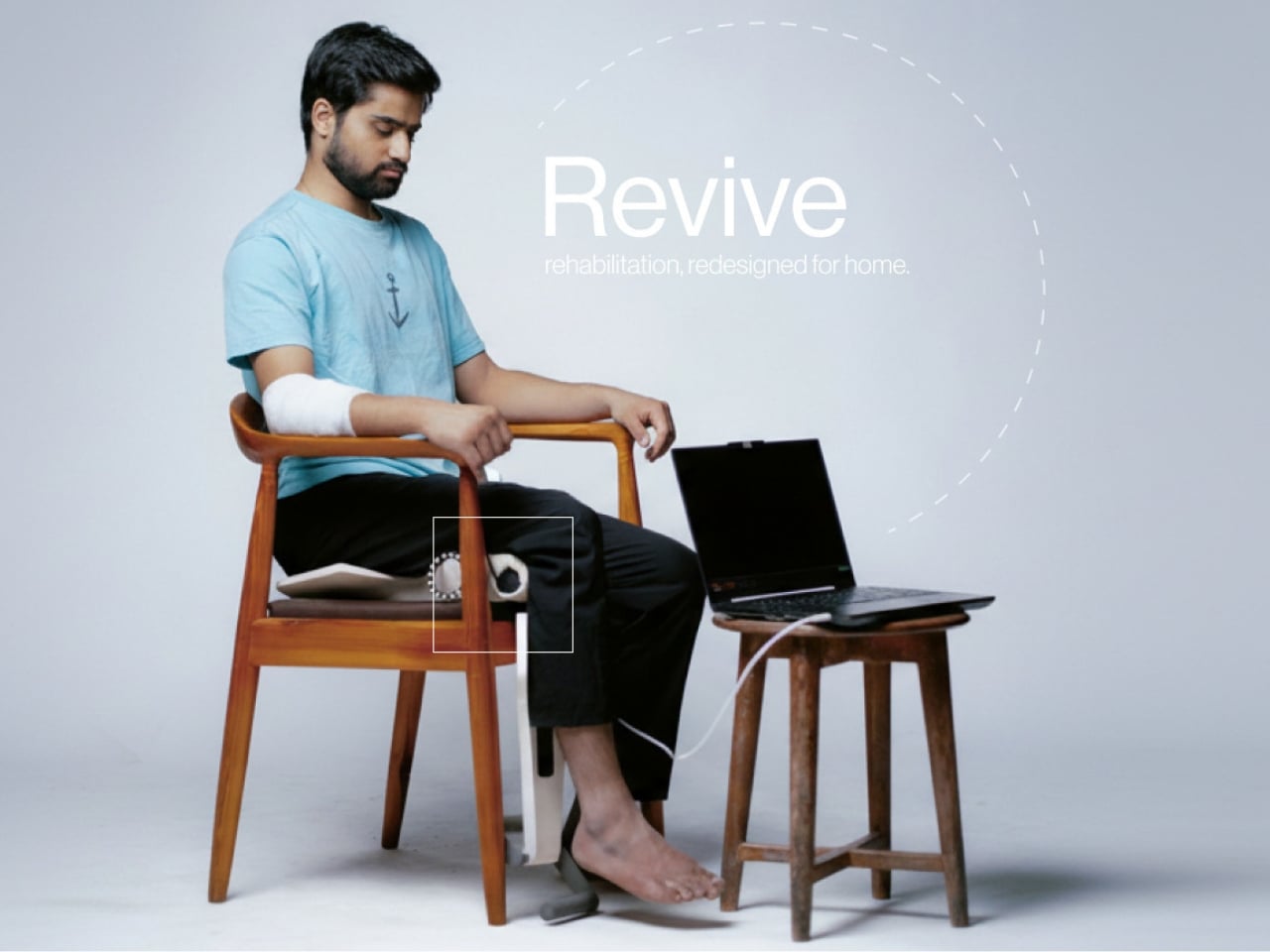
There’s something quietly radical about designing for pain. Not the dramatic, cinematic kind, but the daily grind of chronic discomfort that shapes how millions of people move through their lives. That’s exactly what Madhav Binu, Kriti V, and Himvall Sindhu set out to tackle with Revive, a home-based rehabilitation device for knee osteoarthritis patients.
The numbers tell a sobering story. Forty percent of India’s elderly population lives with knee osteoarthritis, a condition that doesn’t just hurt but fundamentally changes how people interact with their own bodies. Between 1990 and 2019, cases in India jumped from 23.46 million to 62.35 million. Even more striking? The prevalence is 15 times higher than in Western nations, driven by lifestyle and genetic factors that make this a uniquely urgent problem.
Designers: Madhav Binu, Kriti V, Himvall Sindhu
What really caught my attention about this project isn’t just the statistics, though. It’s how the design team approached the psychology of recovery. When you dig into their research, you see they identified three core issues: limited mobility, fear of movement, and reduced independence. That fear piece is crucial. When your knee hurts, your instinct is to protect it, to move less, to withdraw. But that’s exactly what makes recovery harder.
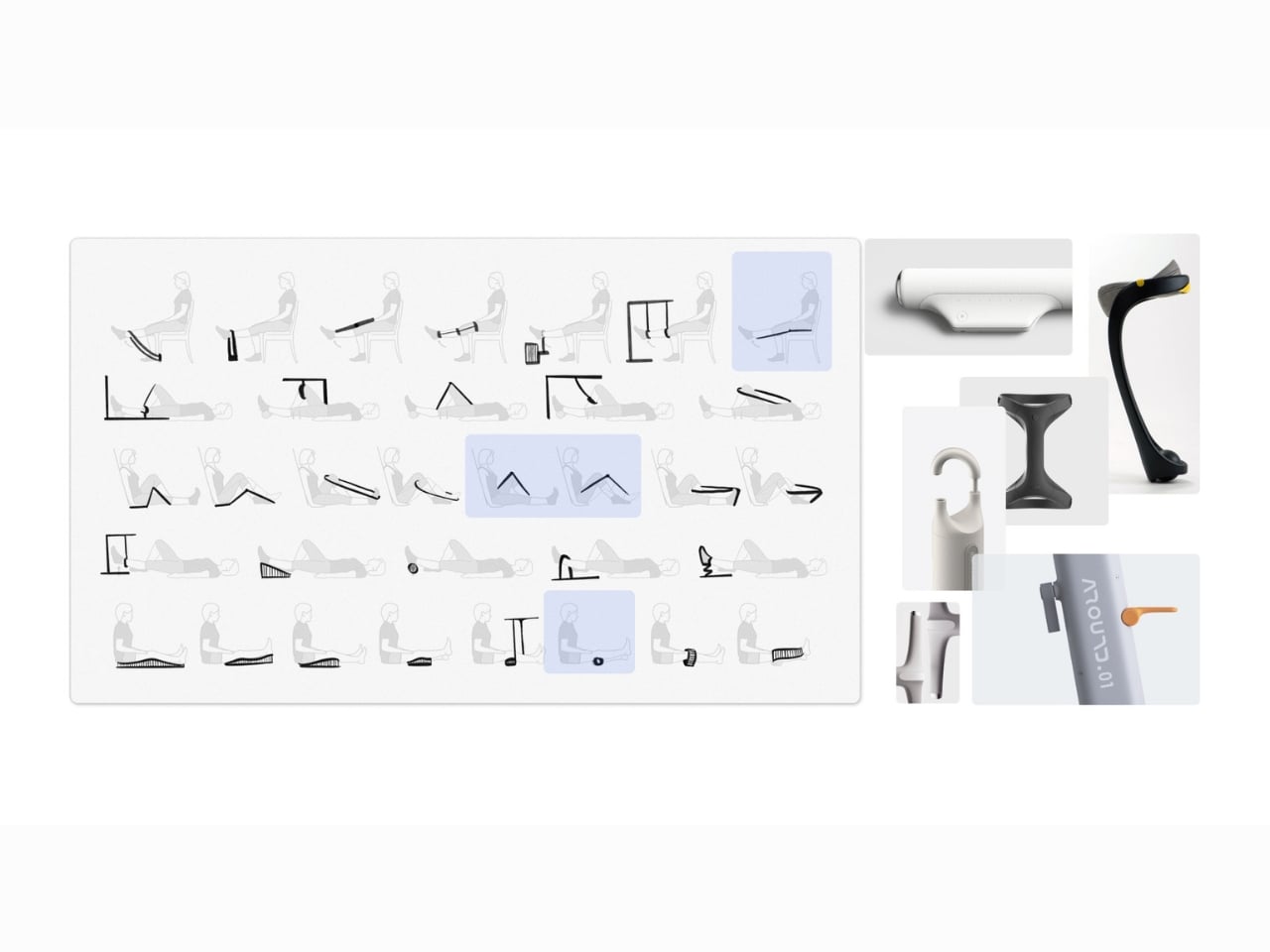
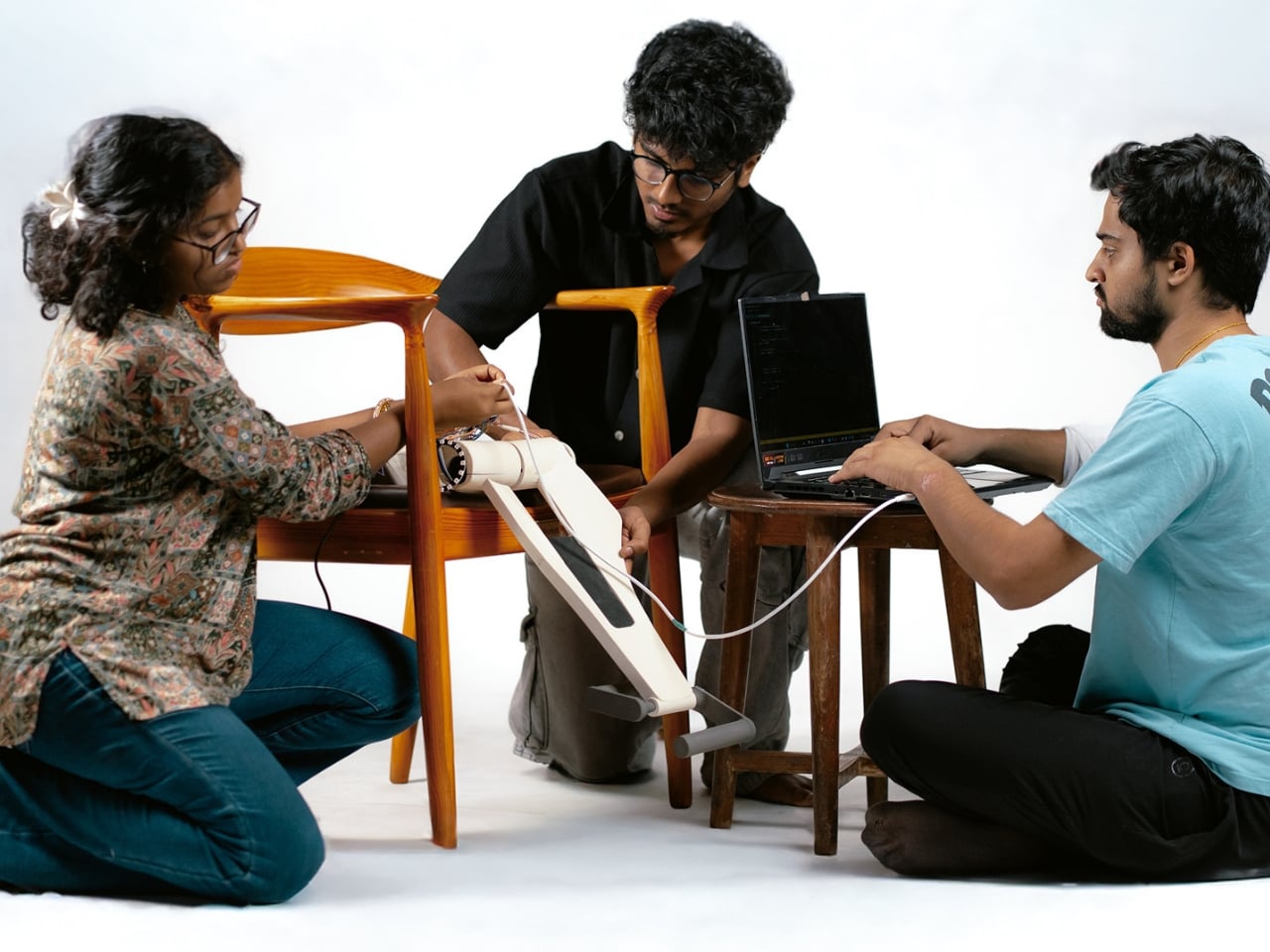
The team didn’t just sketch concepts in a studio and call it a day. They conducted hands-on primary research, interviewing patients, observing clinical sessions, and spending time with physiotherapists. This grounded approach shows in every aspect of the final design. You can see the wall of sketched ideas in their process documentation, hundreds of concepts systematically mapped and filtered based on technical feasibility, user practicality, and rehabilitation relevance. It’s the kind of rigorous ideation that separates student work from genuinely thoughtful design.
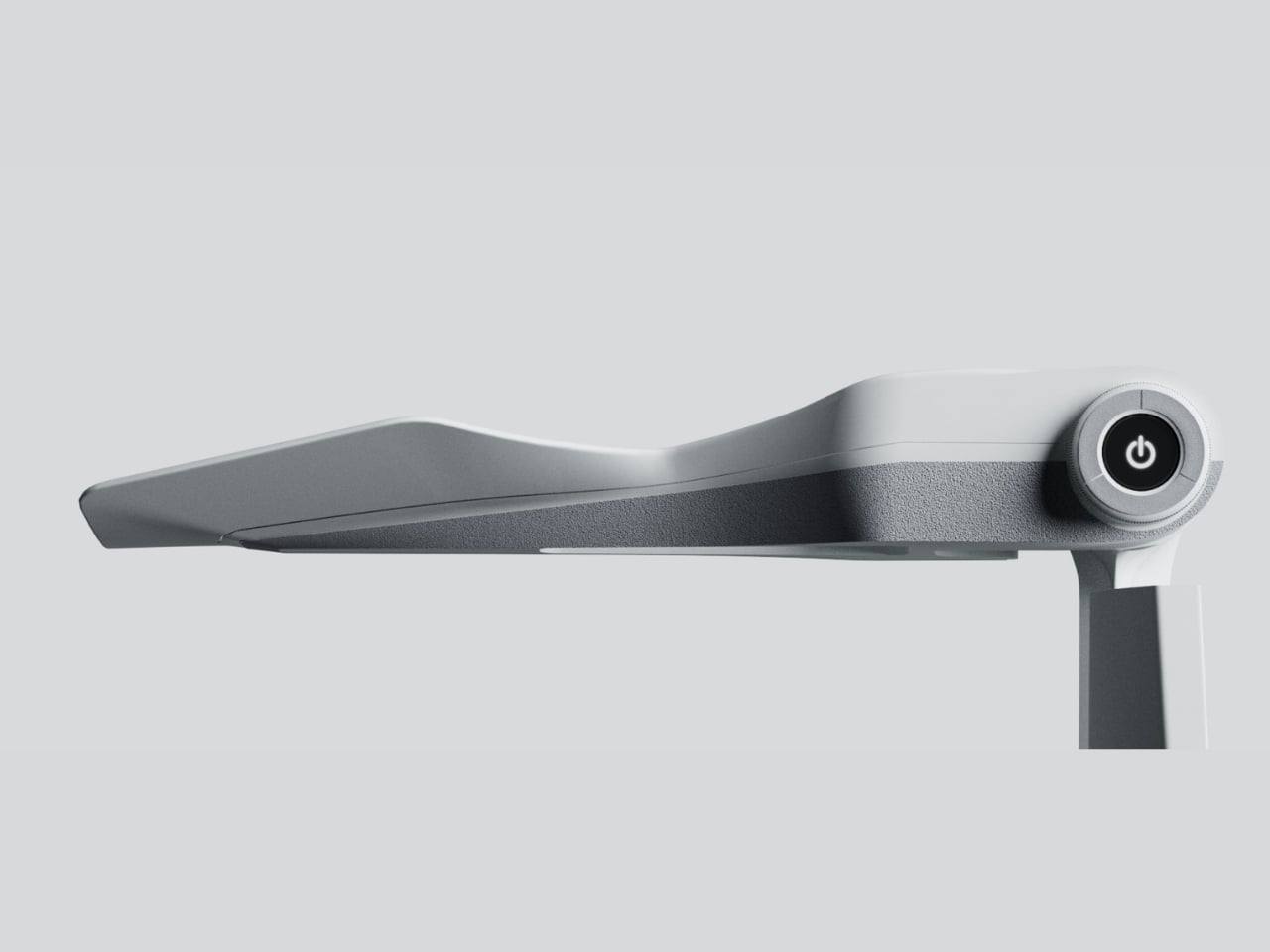
What emerged from all that research is a sleek, minimalist device that looks more like a piece of modern home tech than medical equipment. The form factor matters here. Recovery is already mentally taxing without having intimidating, clinical-looking equipment staring at you from the corner of your bedroom. Revive’s understated aesthetic makes it feel less like a constant reminder of limitation and more like a tool for progress.
The real intelligence of the project lies in how it positions itself within the rehabilitation landscape. The team’s market research revealed a clear gap: most existing solutions are either completely automatic (requiring minimal user effort but offering less engagement) or fully manual (demanding too much from people already dealing with pain). Revive sits in the guided category, balancing lower operational effort with higher product intelligence. It’s smart enough to direct your recovery without making you feel like a passive participant in your own healing.
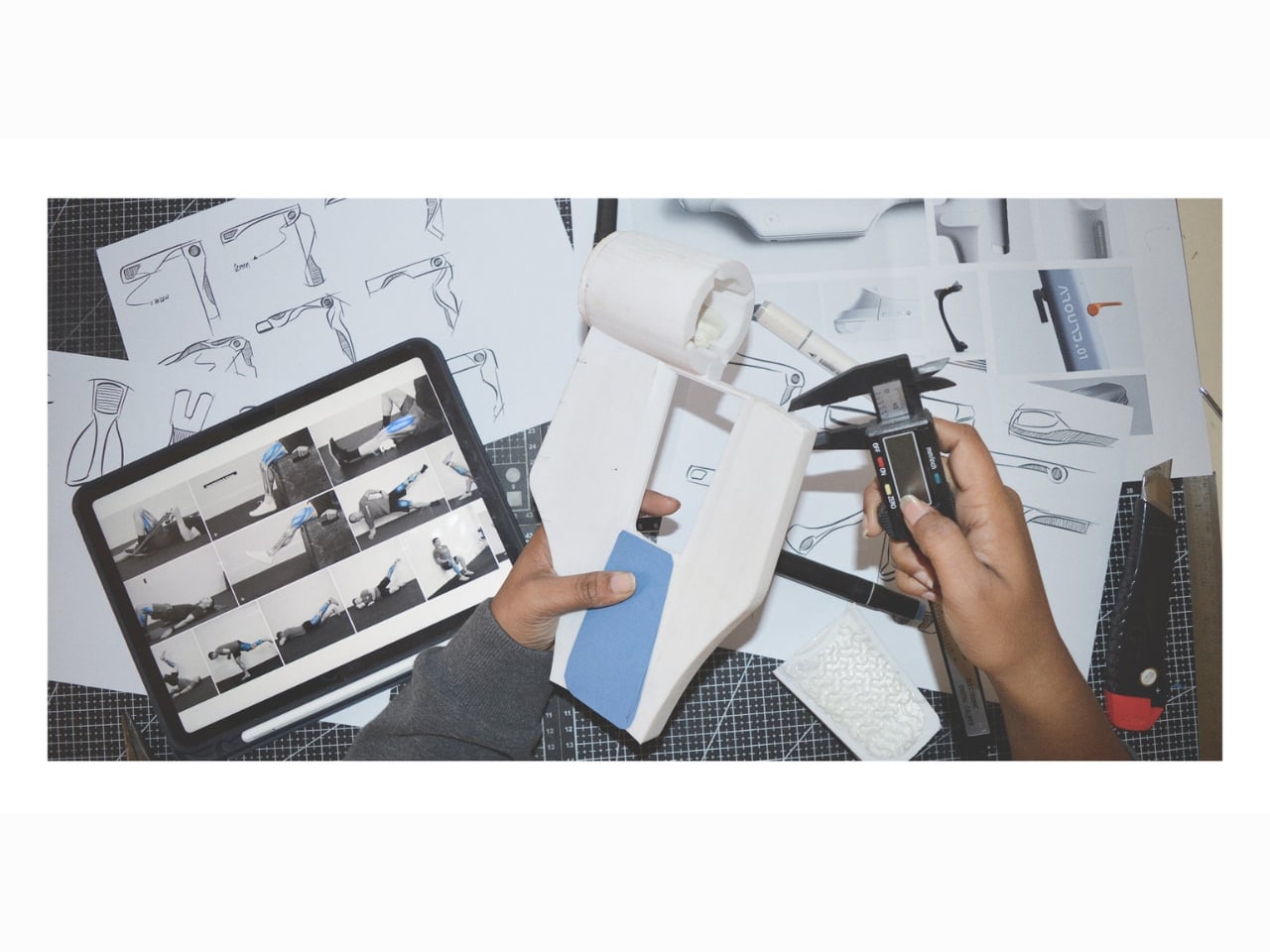
Working with physiotherapists Dr. Ankit Patel and Dr. Hetal Patel from Ahmedabad, the designers refined the concept through multiple iterations. The collaboration brought professional credibility to the project while keeping it grounded in real therapeutic needs. As Dr. Hetal Patel noted, the strength of the product lies in its flexibility for different stages of therapy. That adaptability is key for a four-week rehabilitation program where needs change as patients progress.
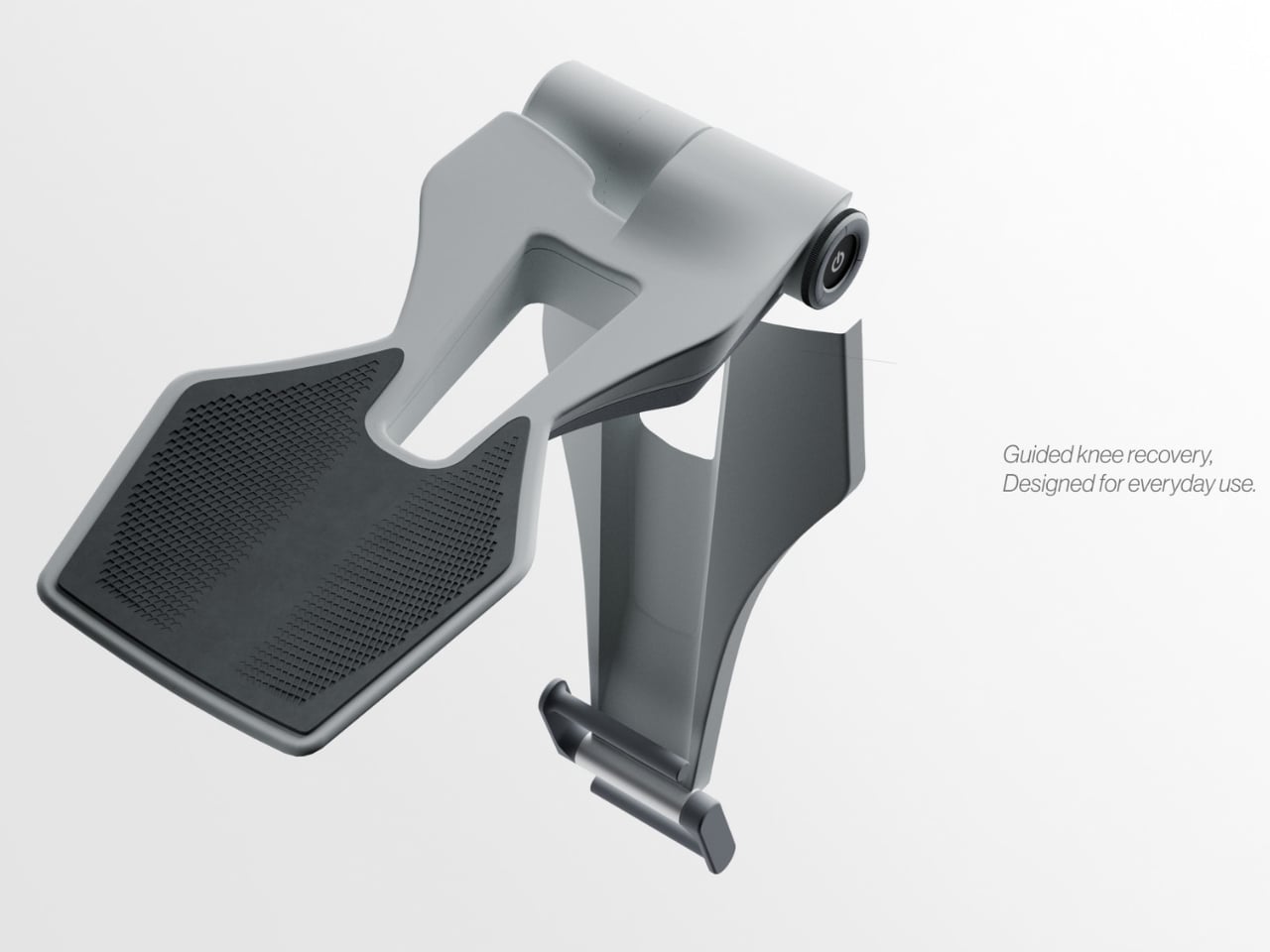
The core insight driving Revive is deceptively simple: recovery happens when users relearn movement by starting small, increasing load gradually, and engaging consistently in daily life. Long-term improvement depends on integrating these movements into everyday routines. It’s not about heroic physiotherapy sessions twice a week. It’s about making rehabilitation feel manageable enough that people actually do it.
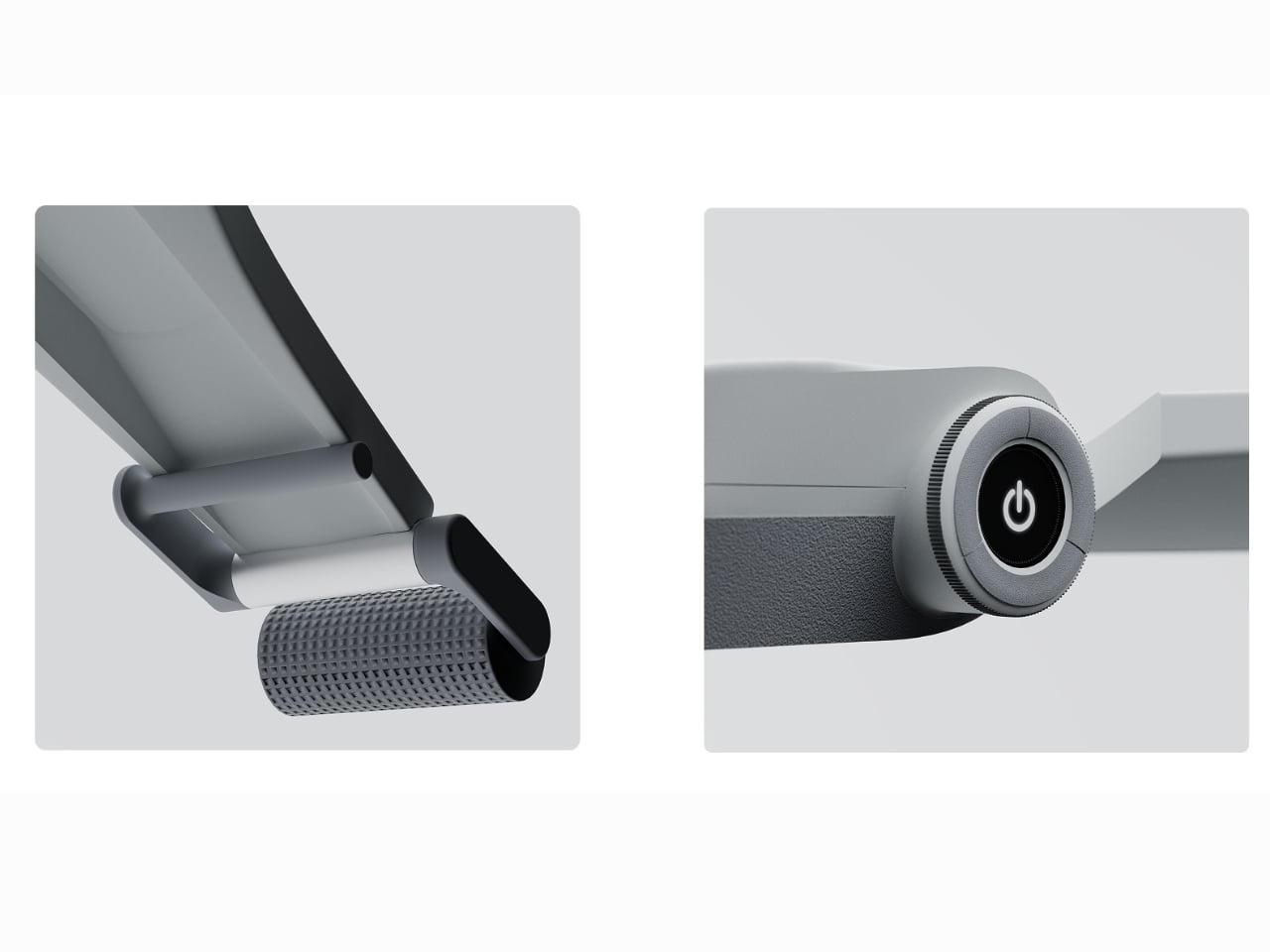
The design process itself reflects contemporary product development at its best. Prototype, share, gather feedback, refine, repeat. Ideas were continuously tested against real use, refined through iteration, and grounded in feasibility. The final form exploration shows dozens of variations, each tweaking the relationship between the device and the human body it’s meant to support. What makes this project particularly relevant right now is how it addresses home healthcare. As medical care increasingly shifts toward decentralized, patient-directed models, products like Revive become essential infrastructure. The device offers intelligent guidance while allowing people to maintain independence and dignity in their own space.
Revive represents the kind of design work that doesn’t just solve problems but fundamentally reframes them. Instead of asking how to make physiotherapy more effective in clinical settings, the team asked how to make recovery feel less isolating and more integrated into normal life. That shift in perspective, backed by rigorous research and thoughtful iteration, is what transforms a good concept into genuinely impactful design.
The post 3 Designers Built the Knee Recovery Tool 40% of Seniors Need first appeared on Yanko Design.