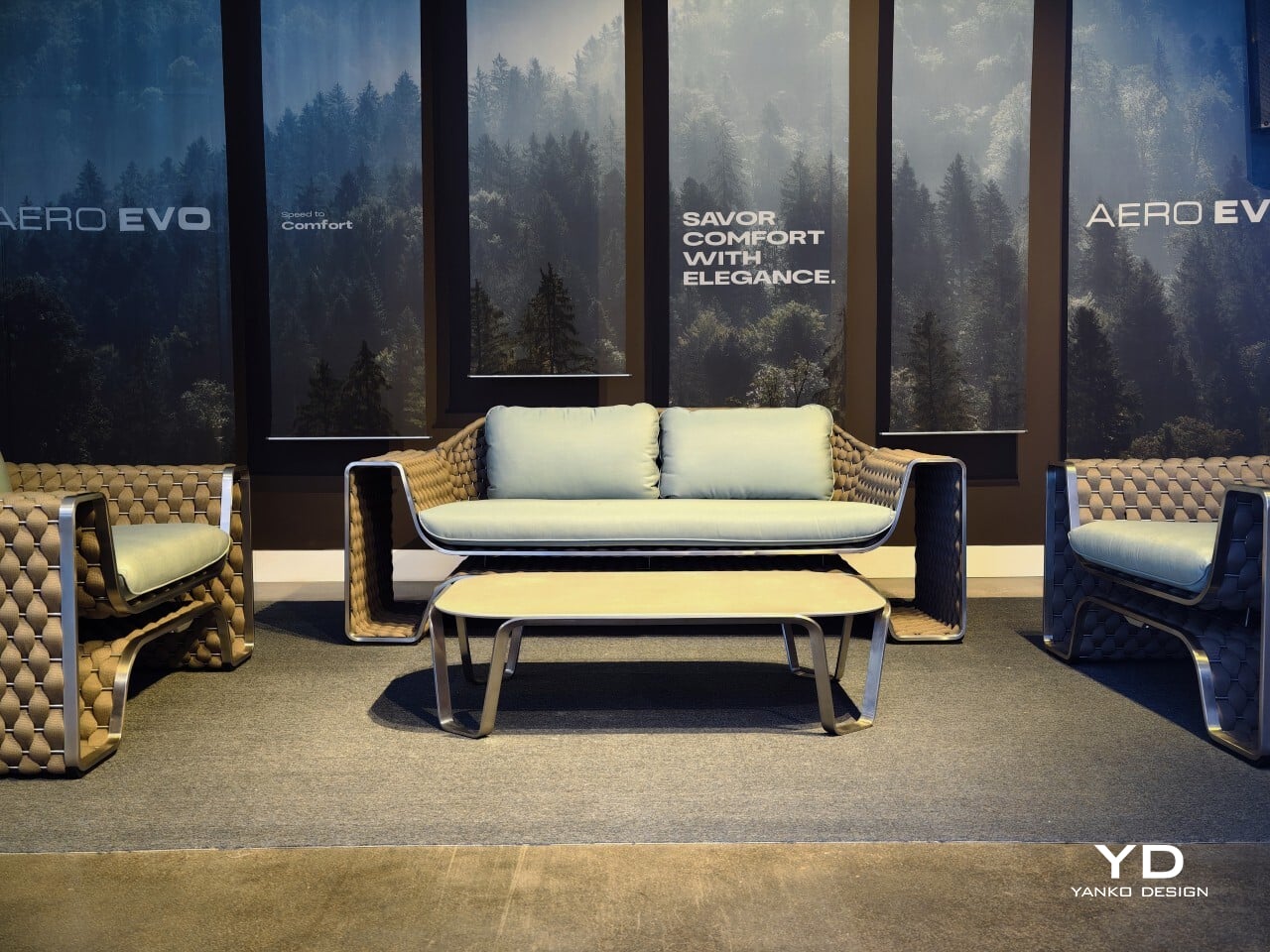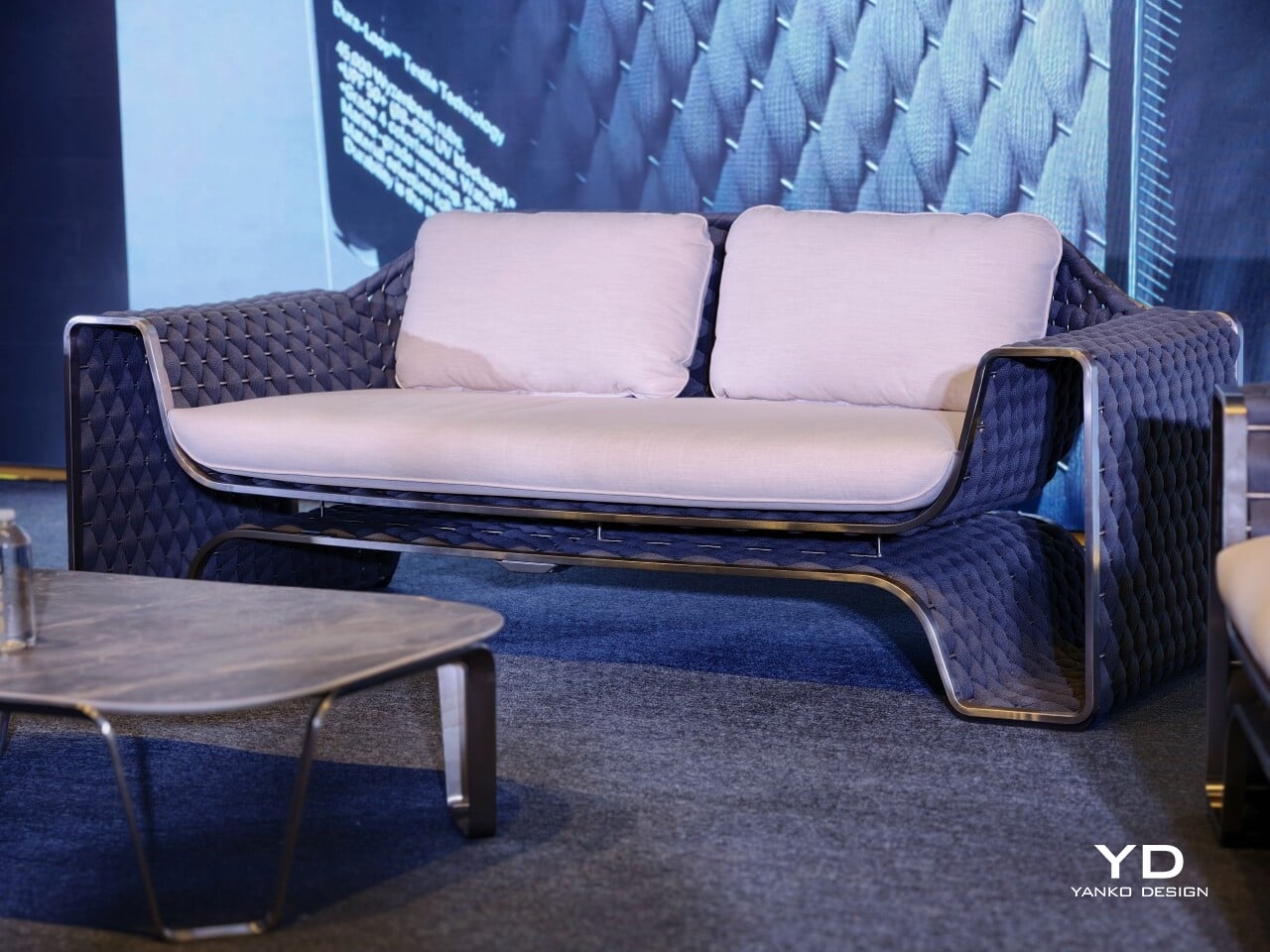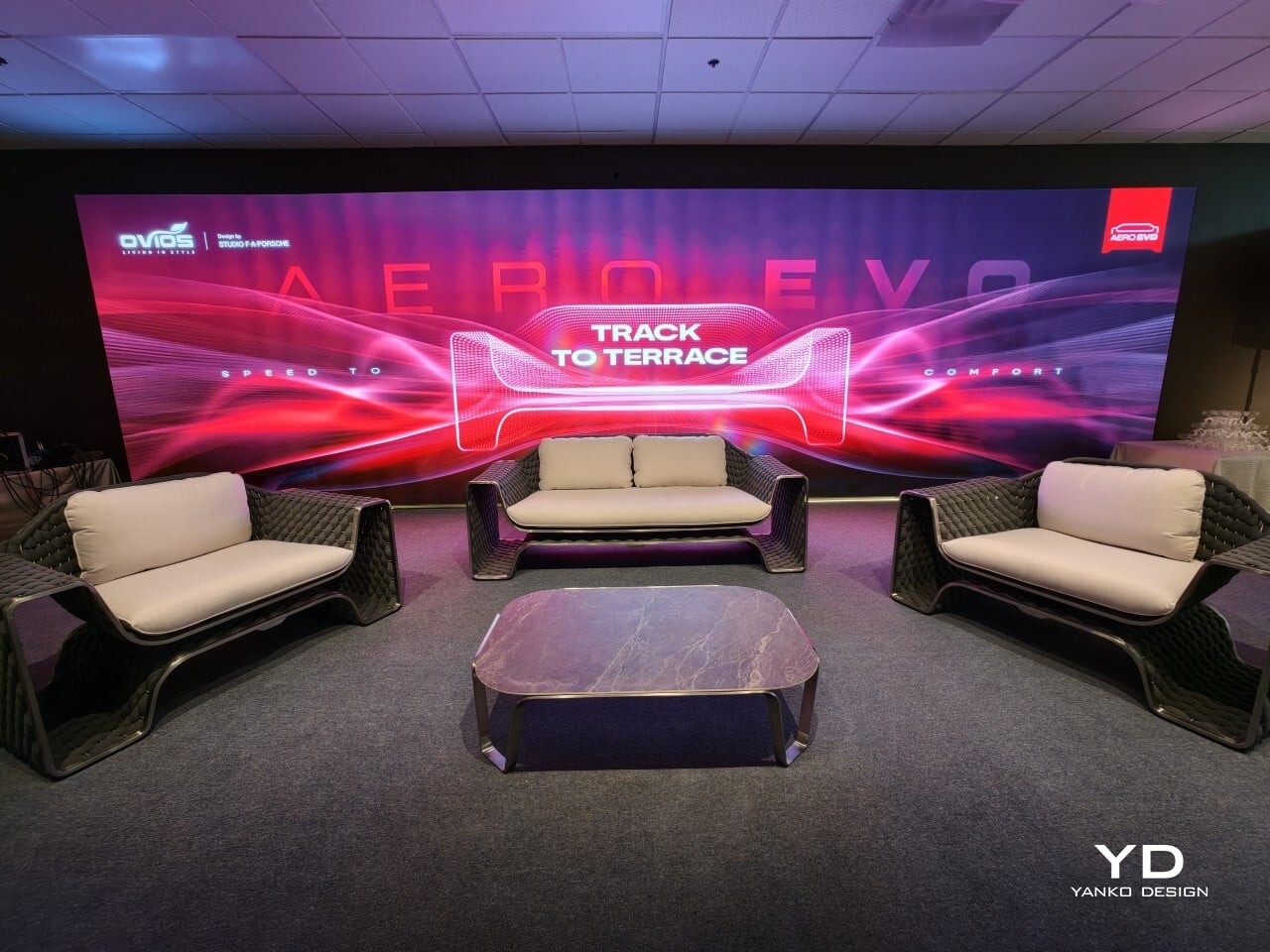
VIBRYX Is the Furniture Collection That Treats Sound as a Material

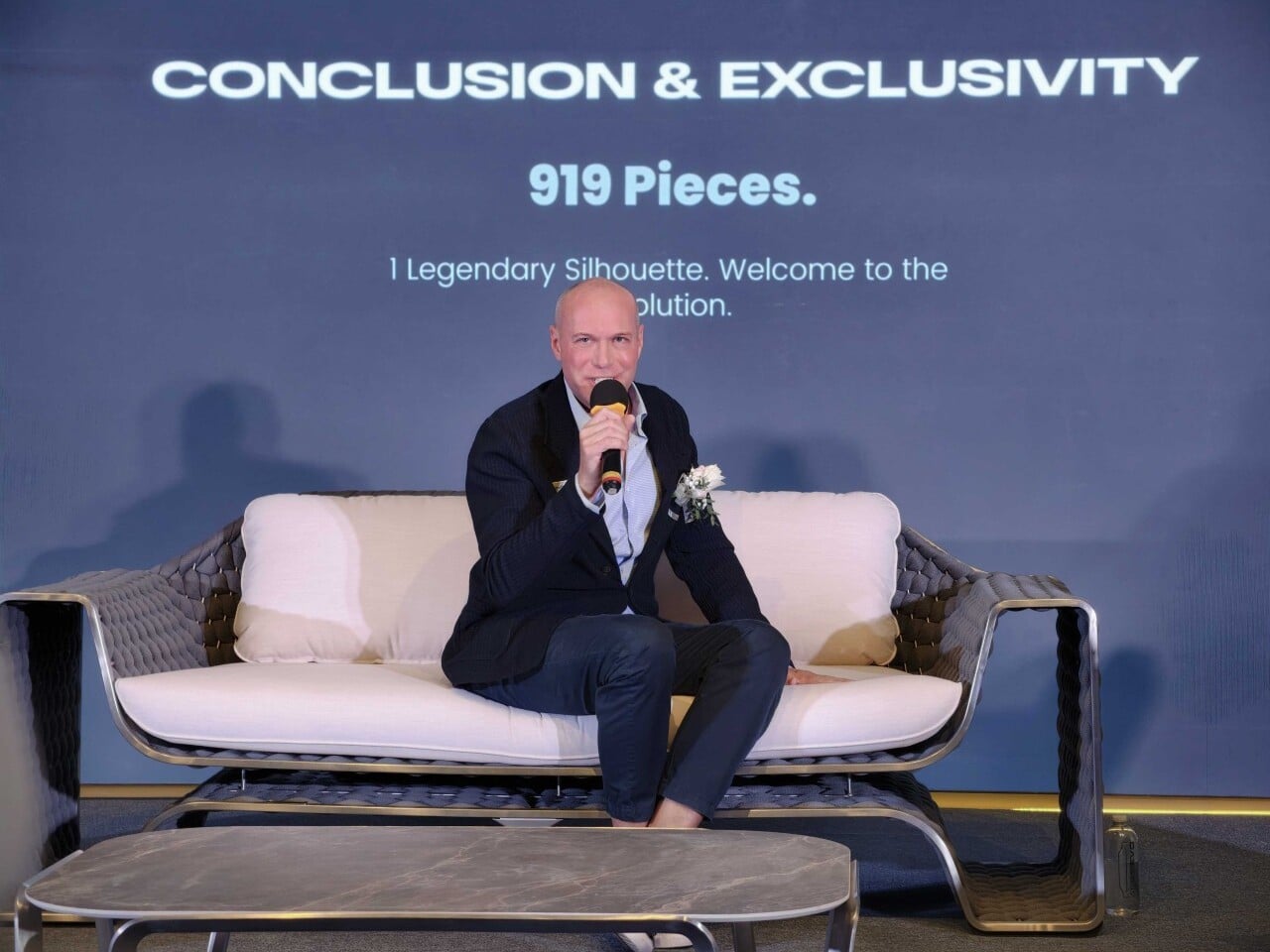
I’ve looked at a lot of furniture collections over the years. Most of them ask the same question: how do you make a sofa or a coffee table feel special? Trueba Studio, the Madrid-based architecture and design firm founded by Marcos Trueba, decided to ask a completely different one: what if sound itself was a material you could actually build with?

VIBRYX, the studio’s latest furniture drop, is the answer. And it’s one of those releases that makes you stop scrolling and actually look. The name alone is doing a lot of work before you even see the pieces. Trueba Studio built it from vibr- for vibration, the physical origin of sound, and the letter X as a symbol of crossover: design meeting sound meeting the future of how we live at home. It reads like a new periodic element, or the codename for something that doesn’t exist yet but probably should. Precise. Energetic. Engineered. For a collection that treats vibration as a design material rather than an afterthought, the name earns its keep.

Designer: Trueba Studio

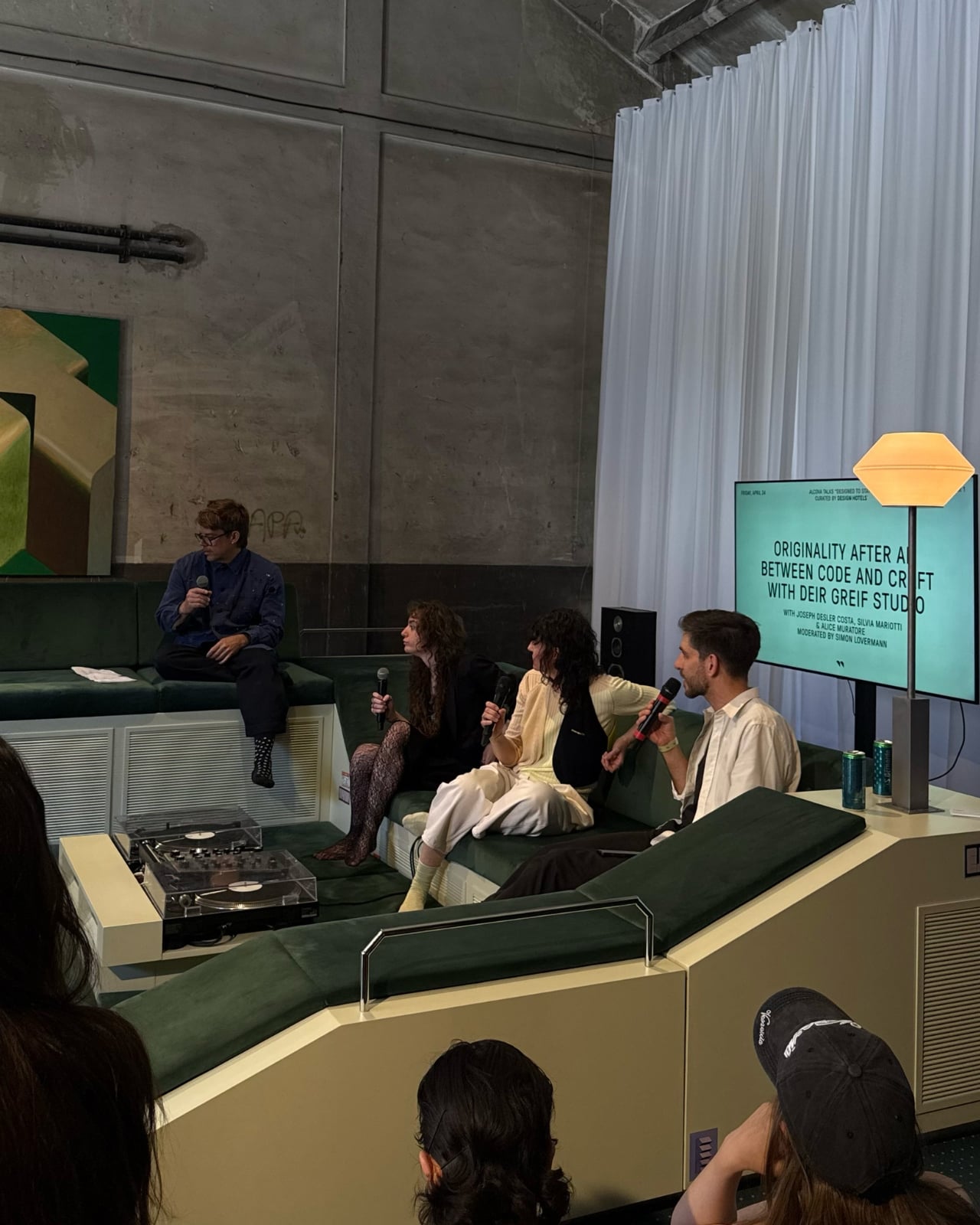
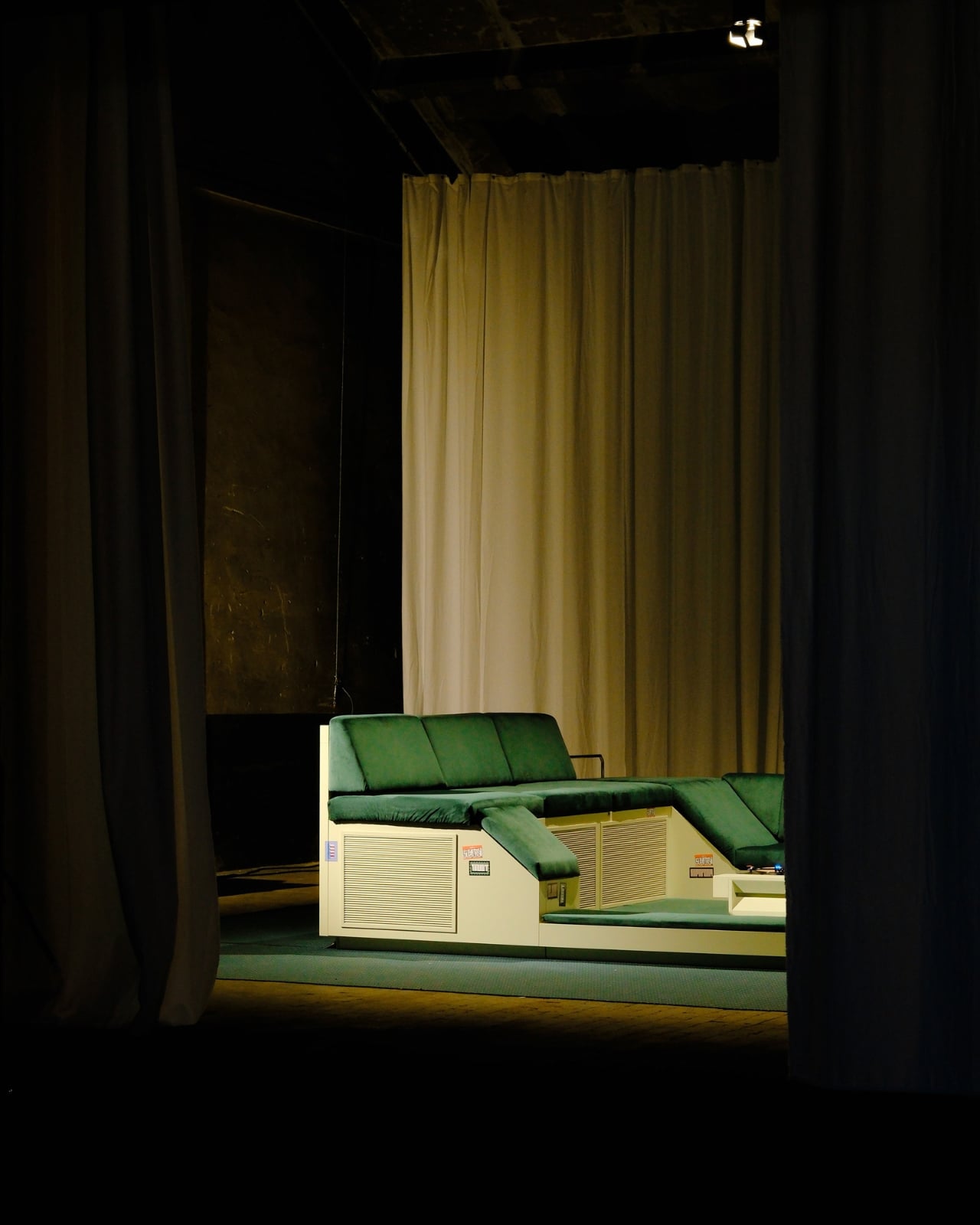
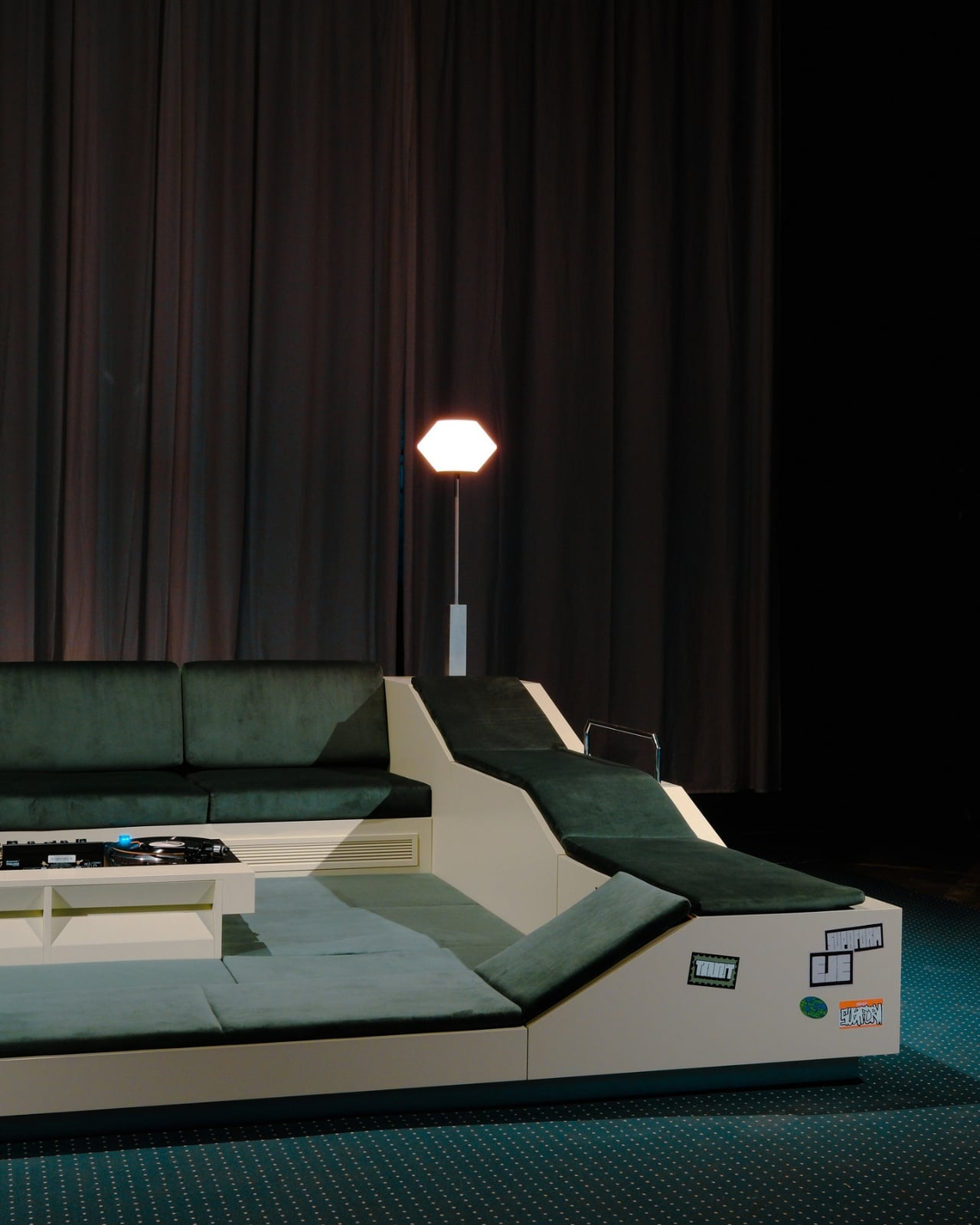
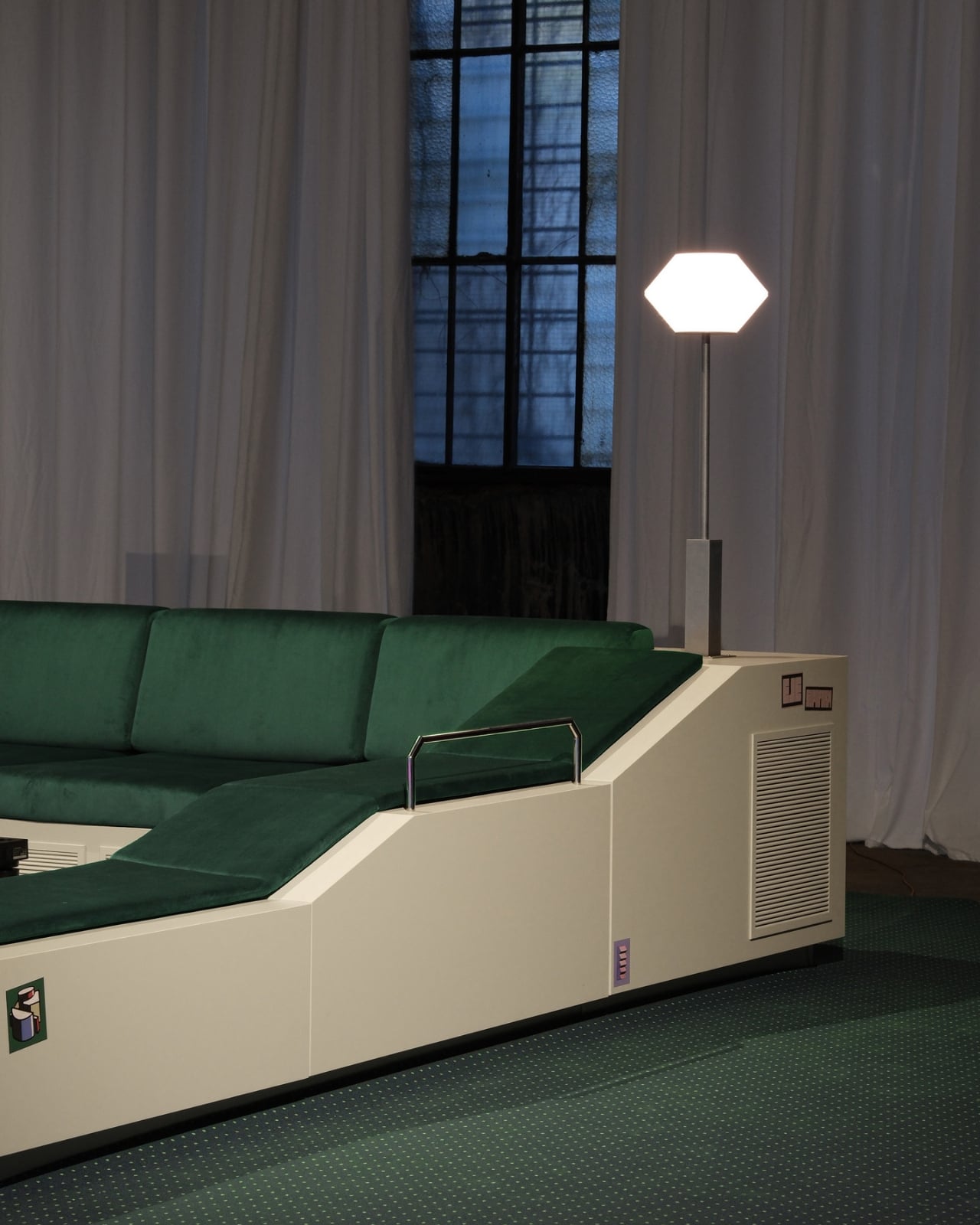
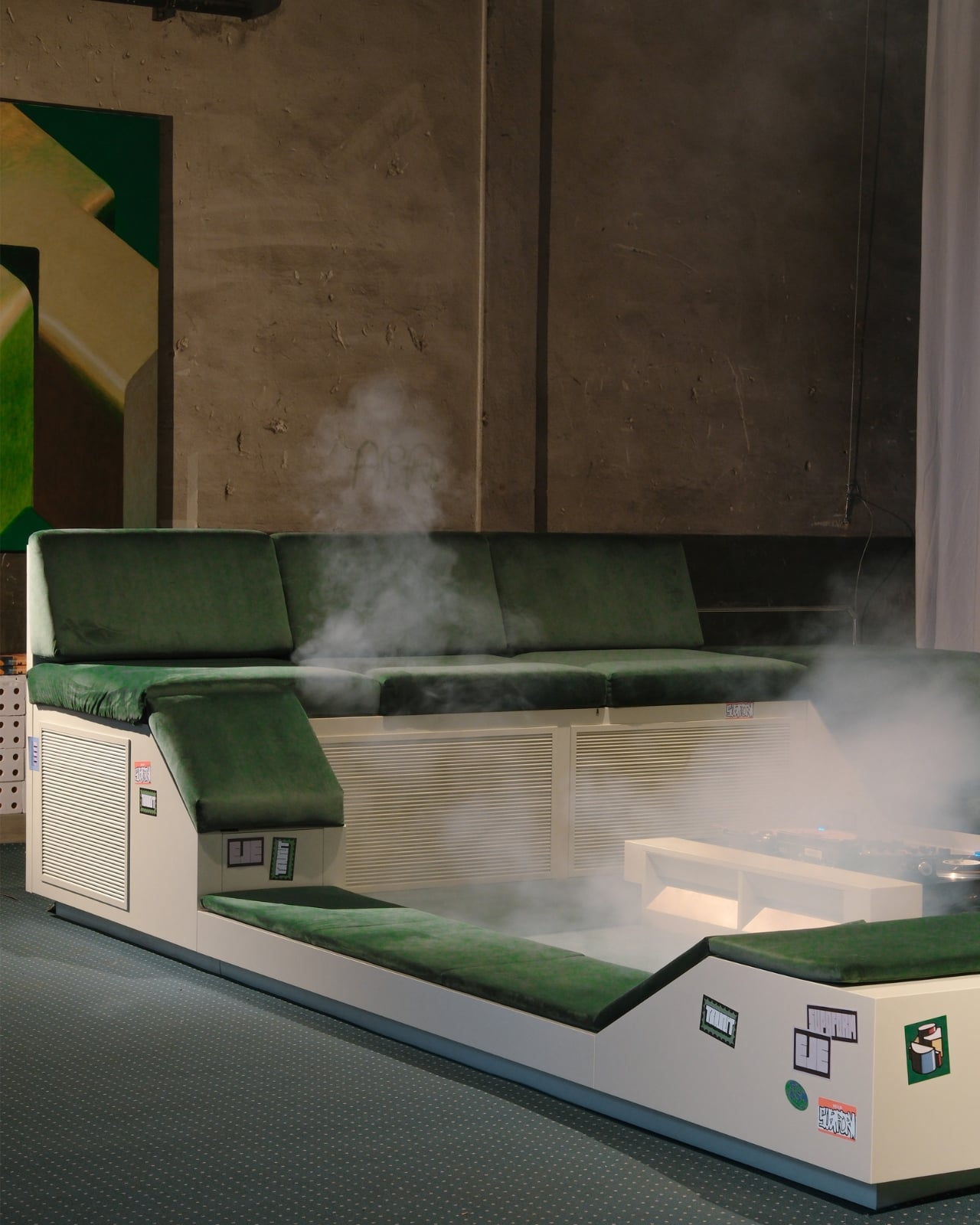
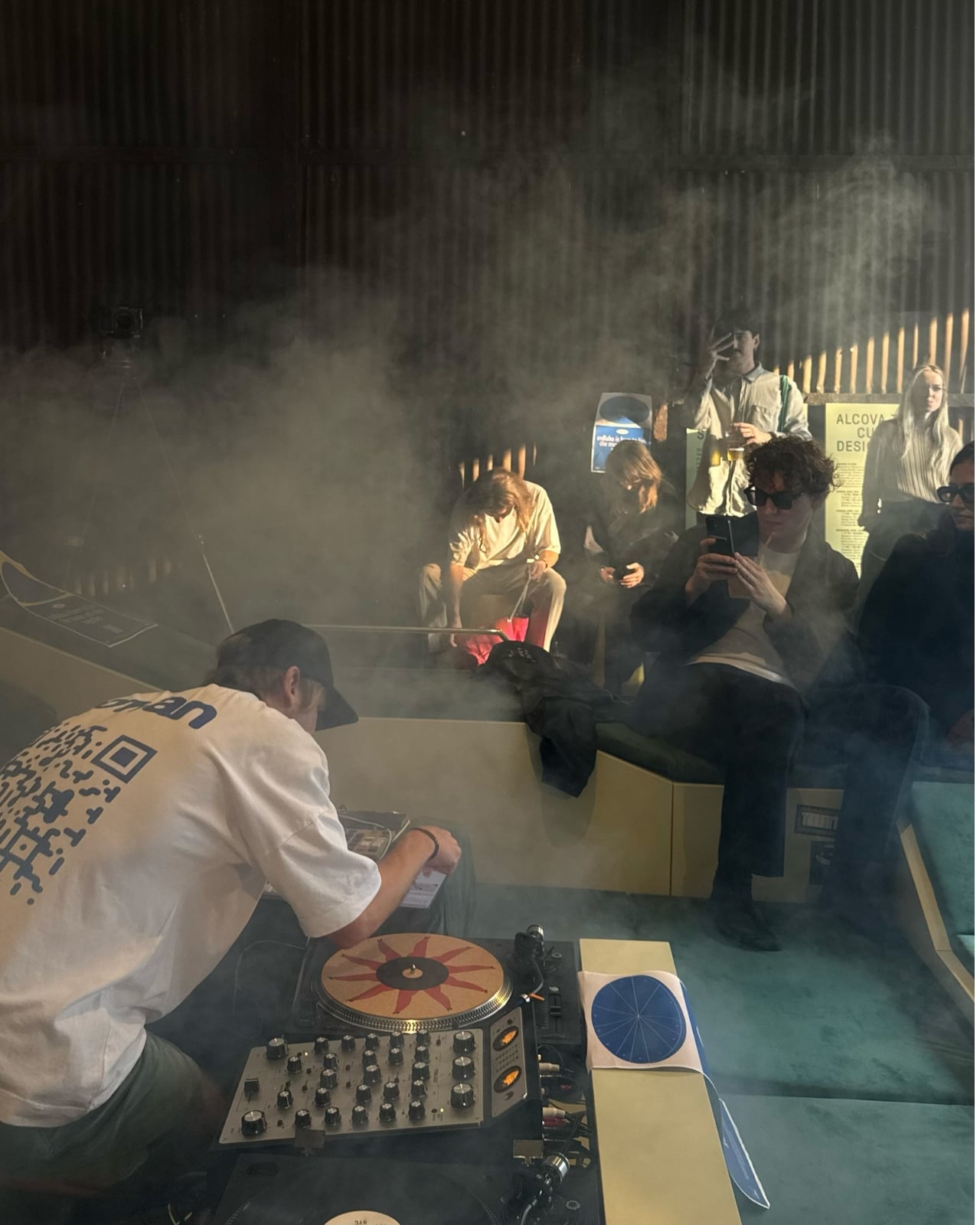
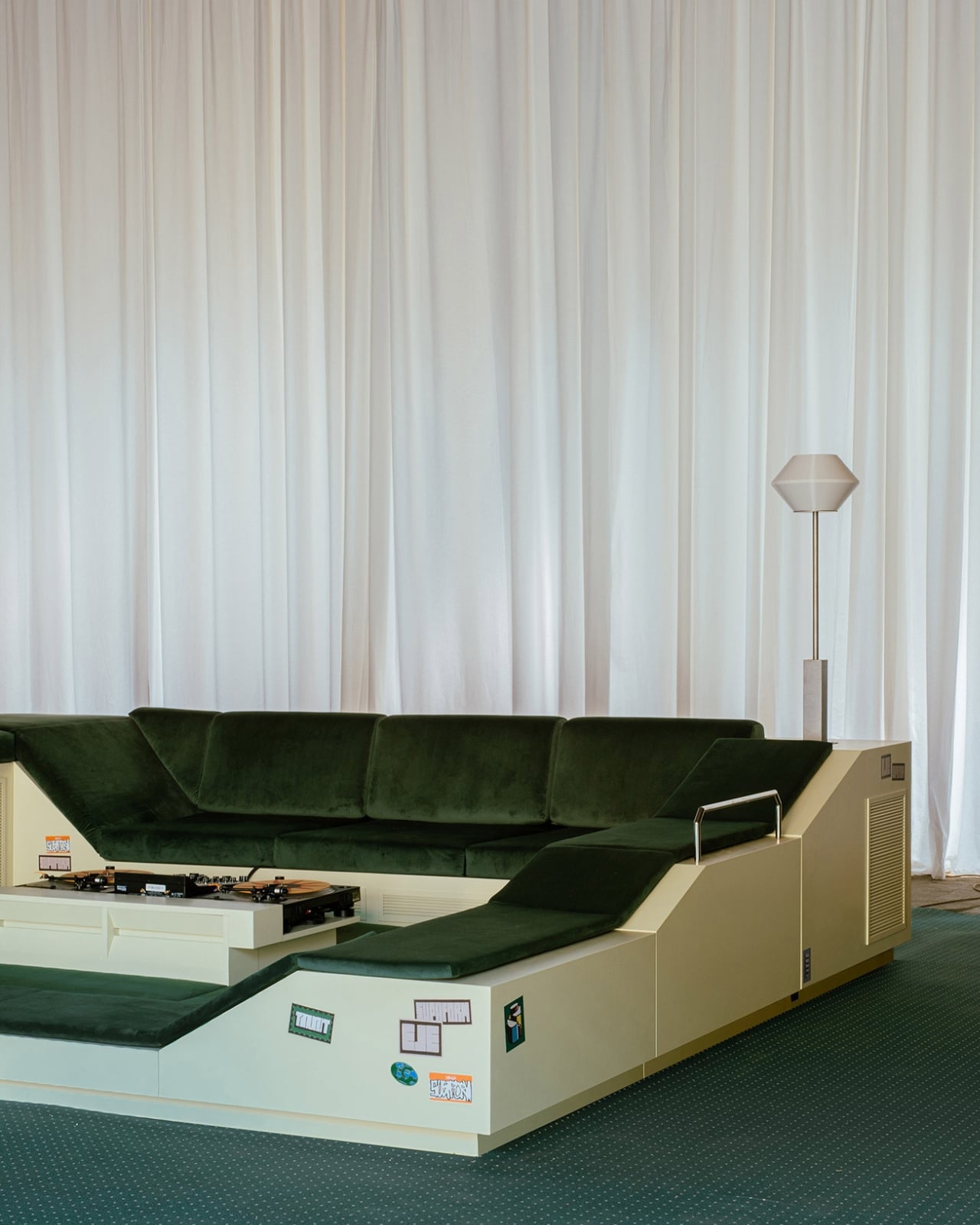
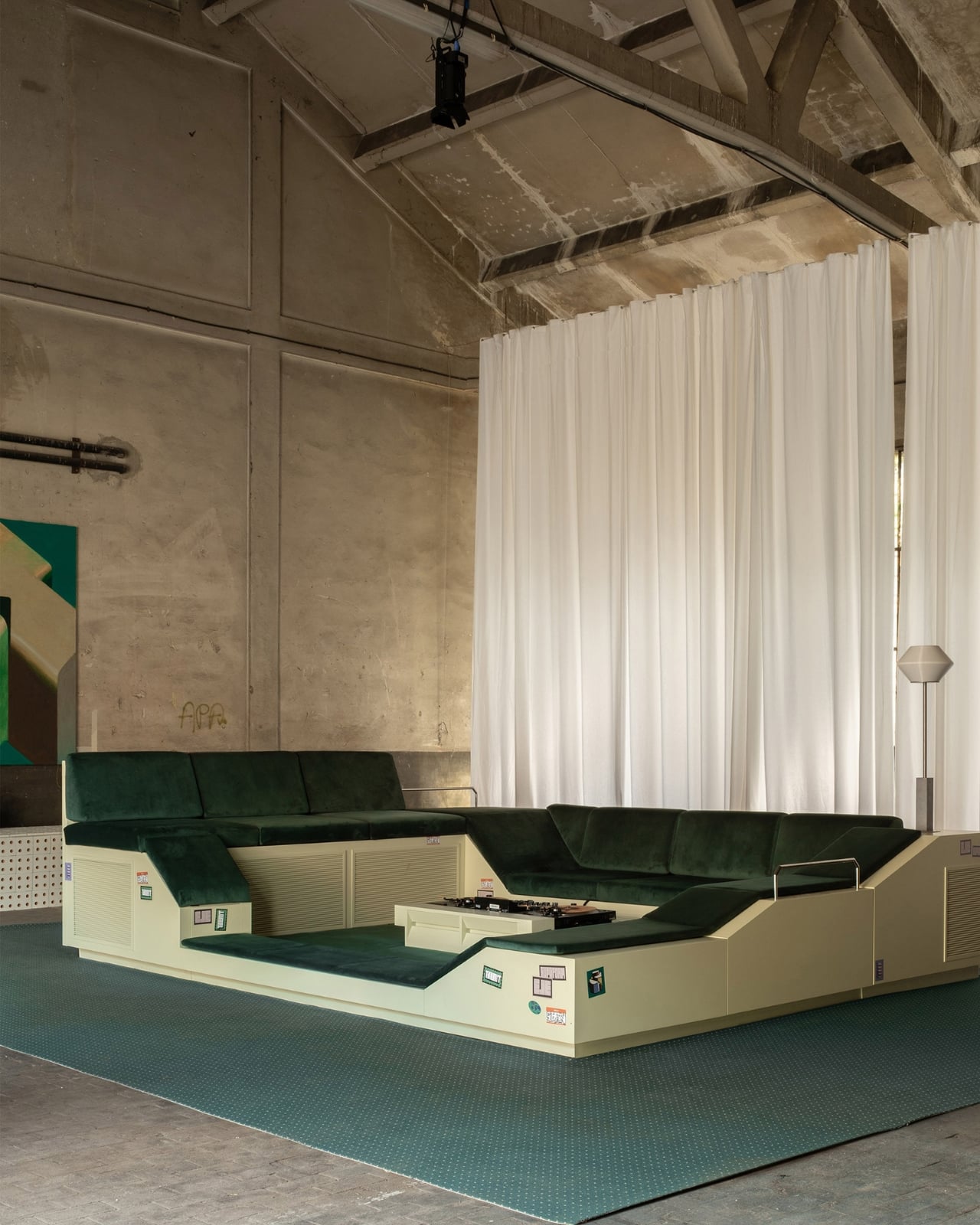
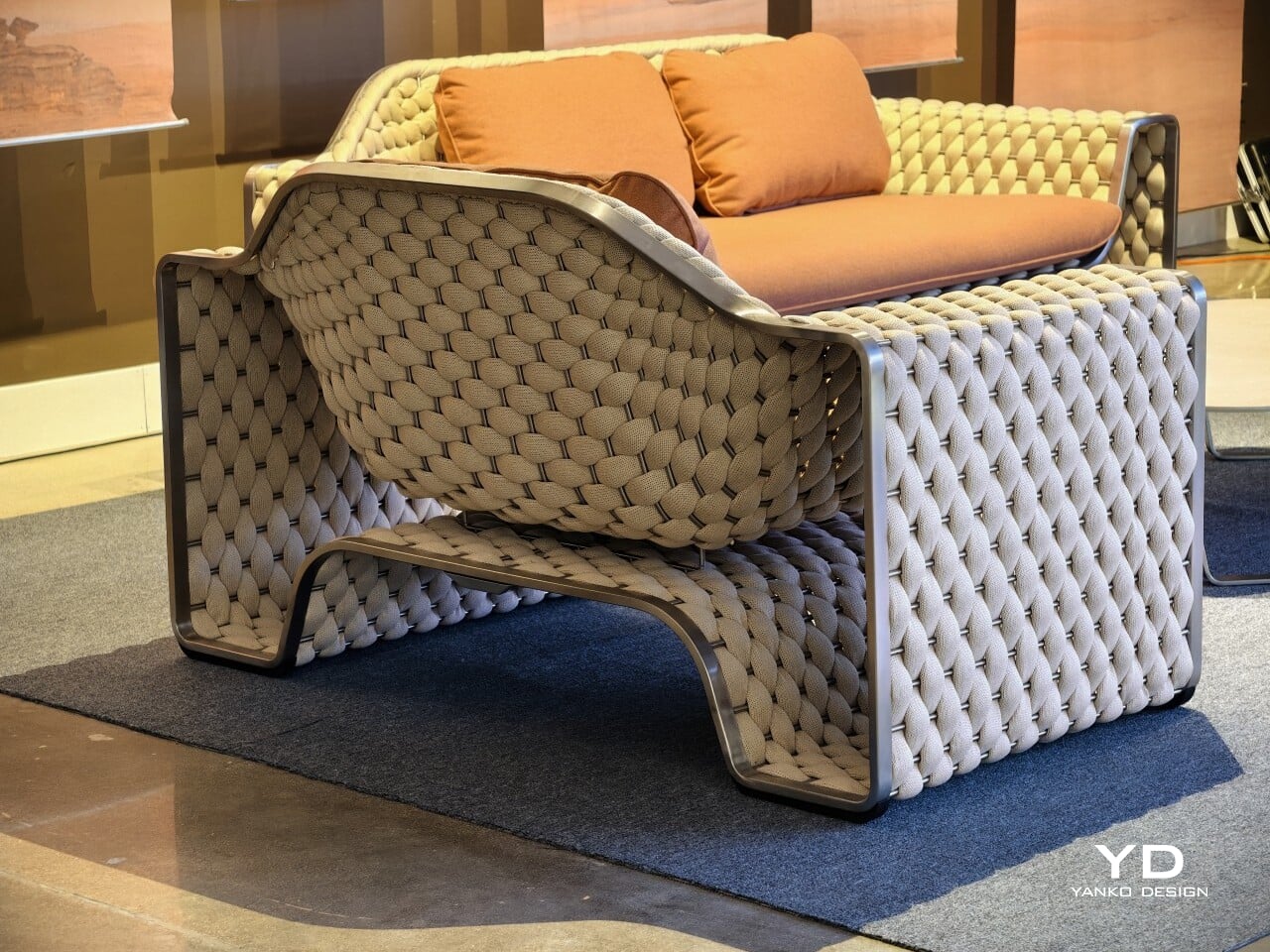
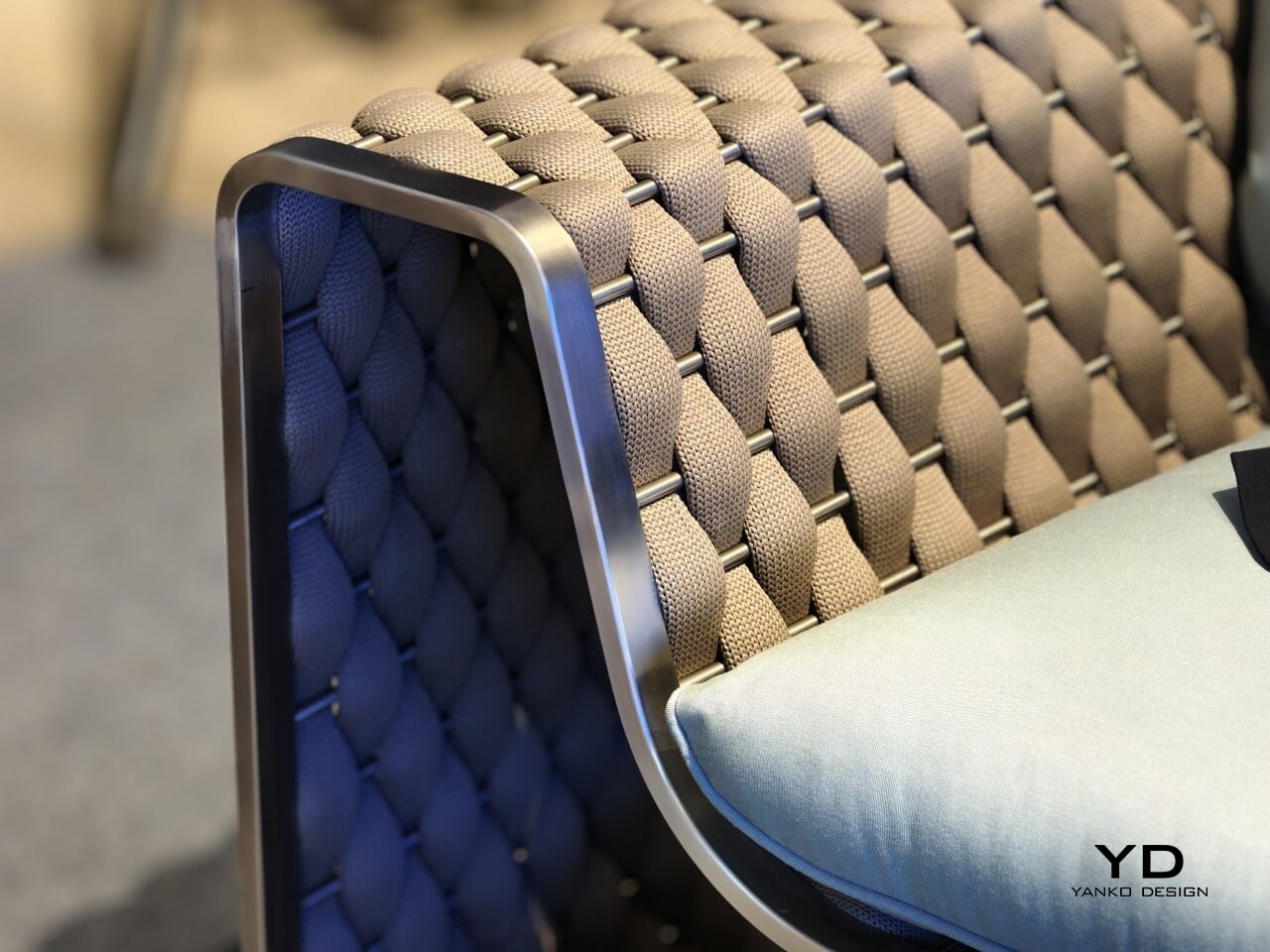
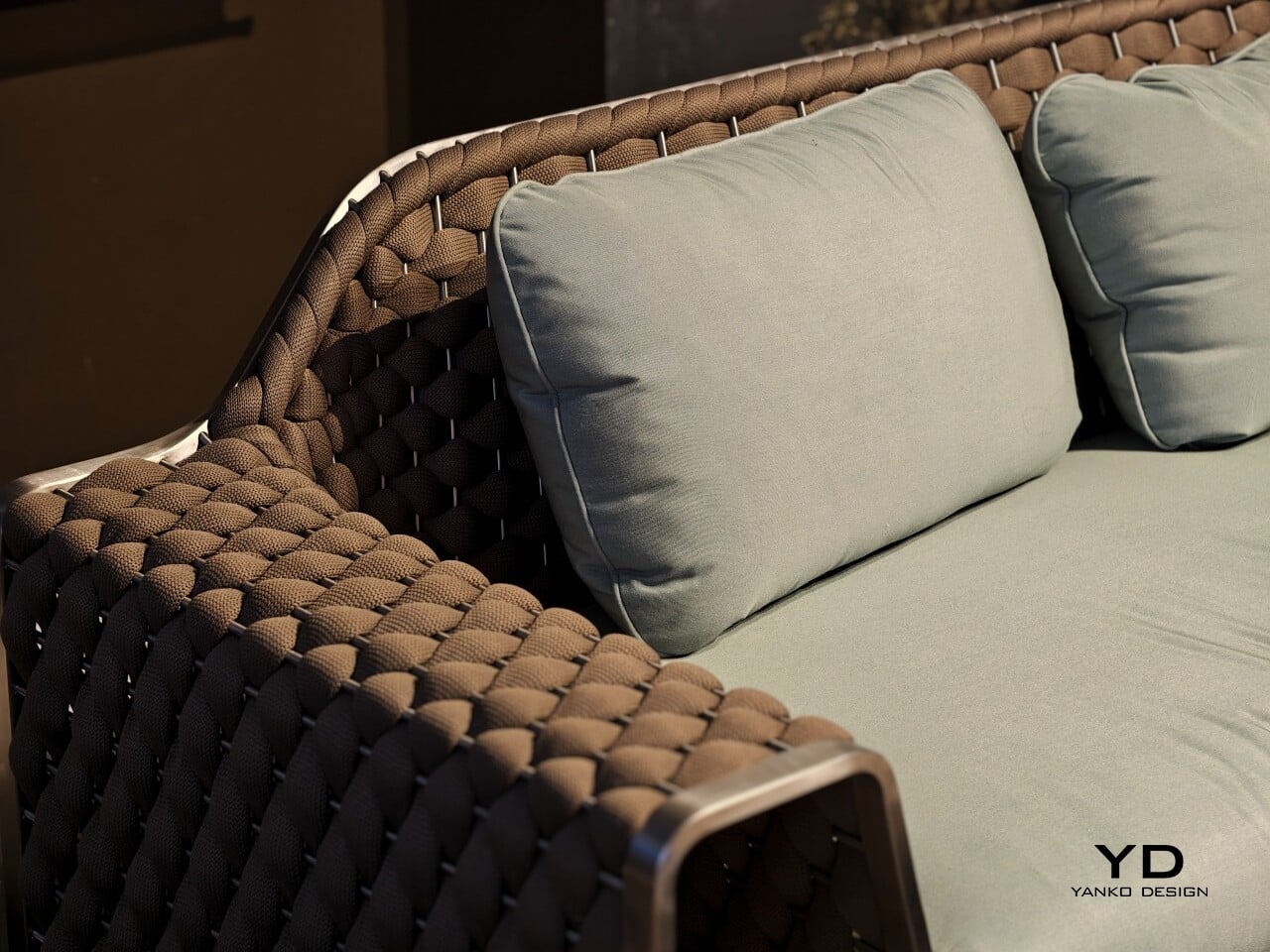
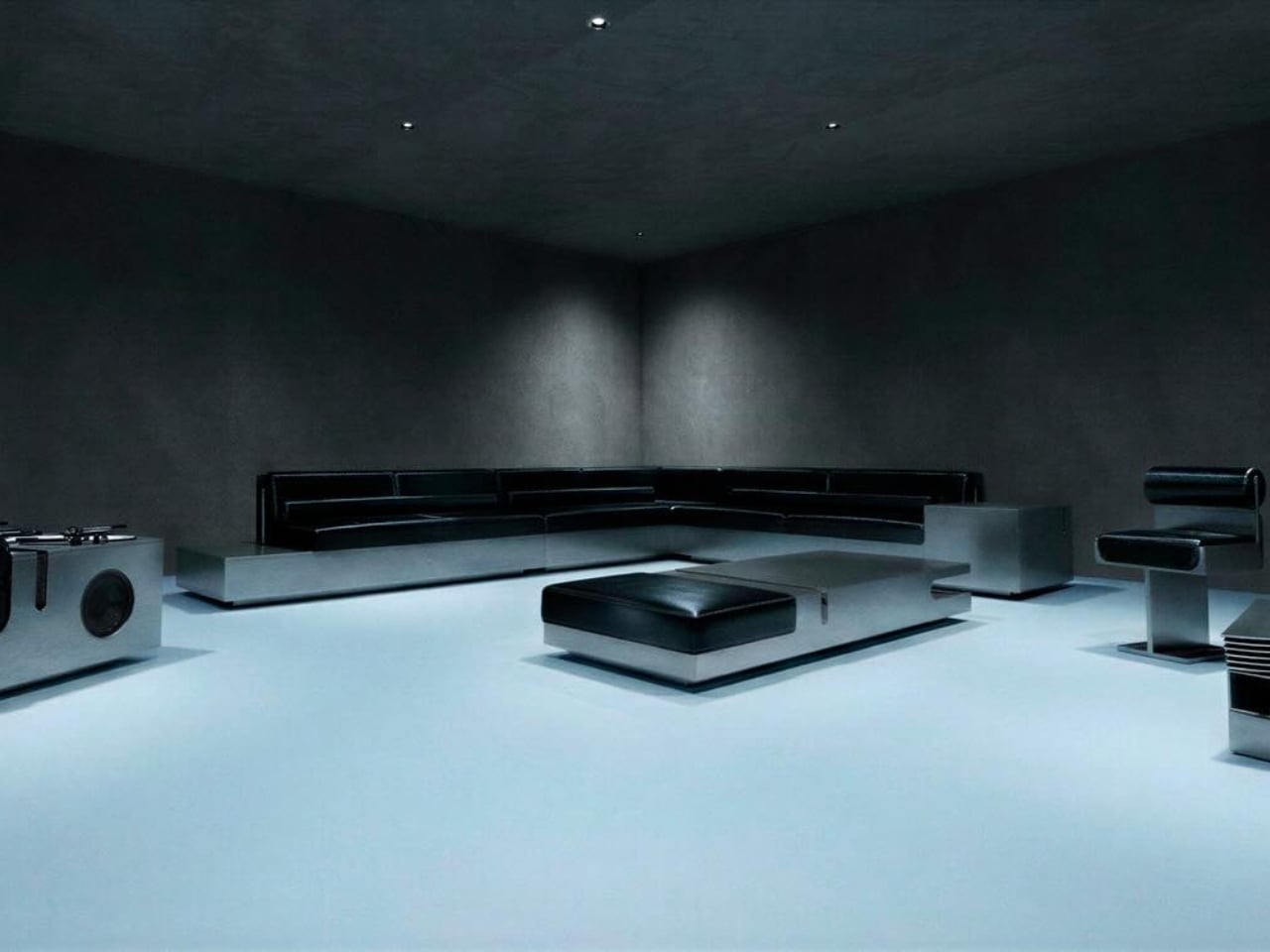
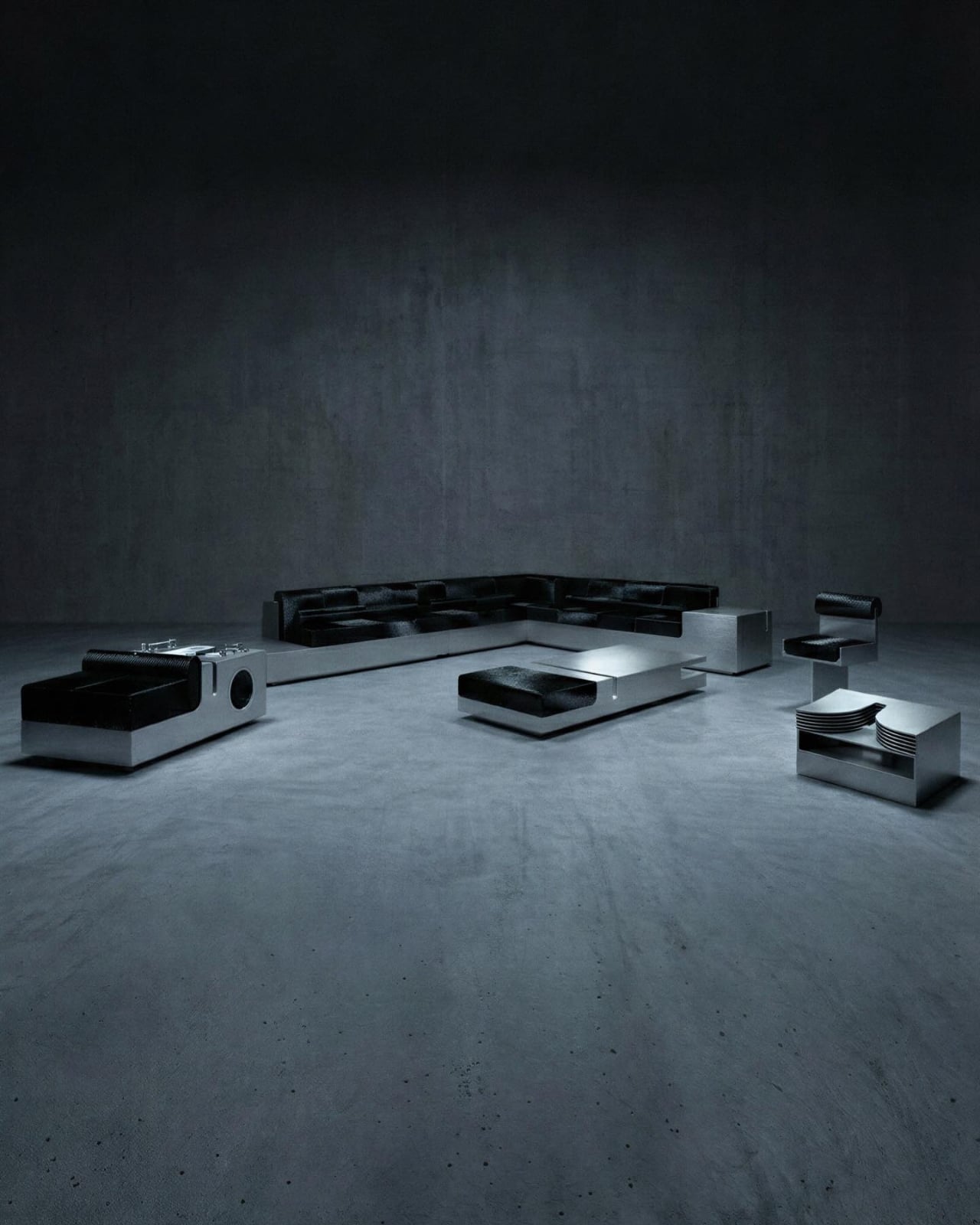
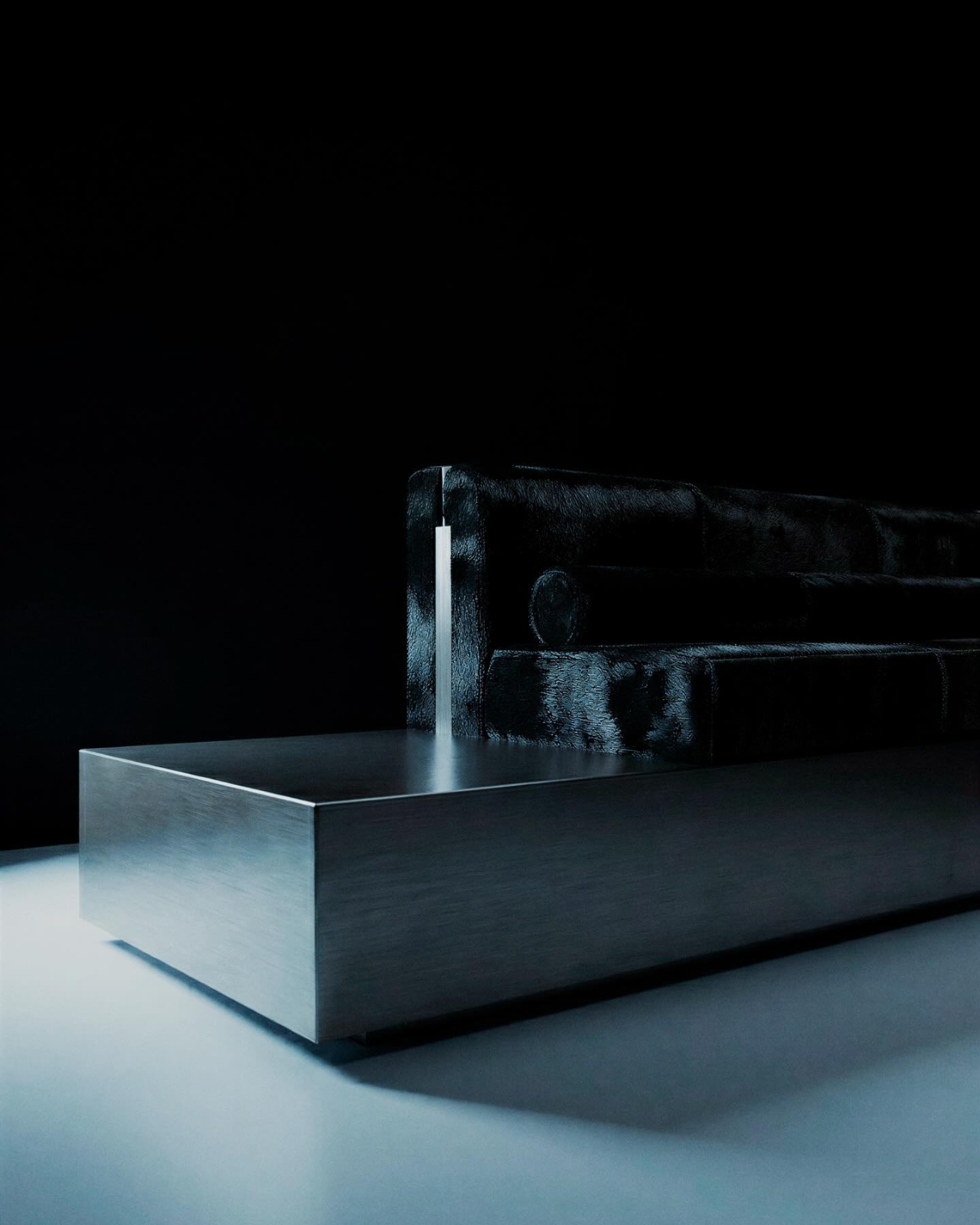
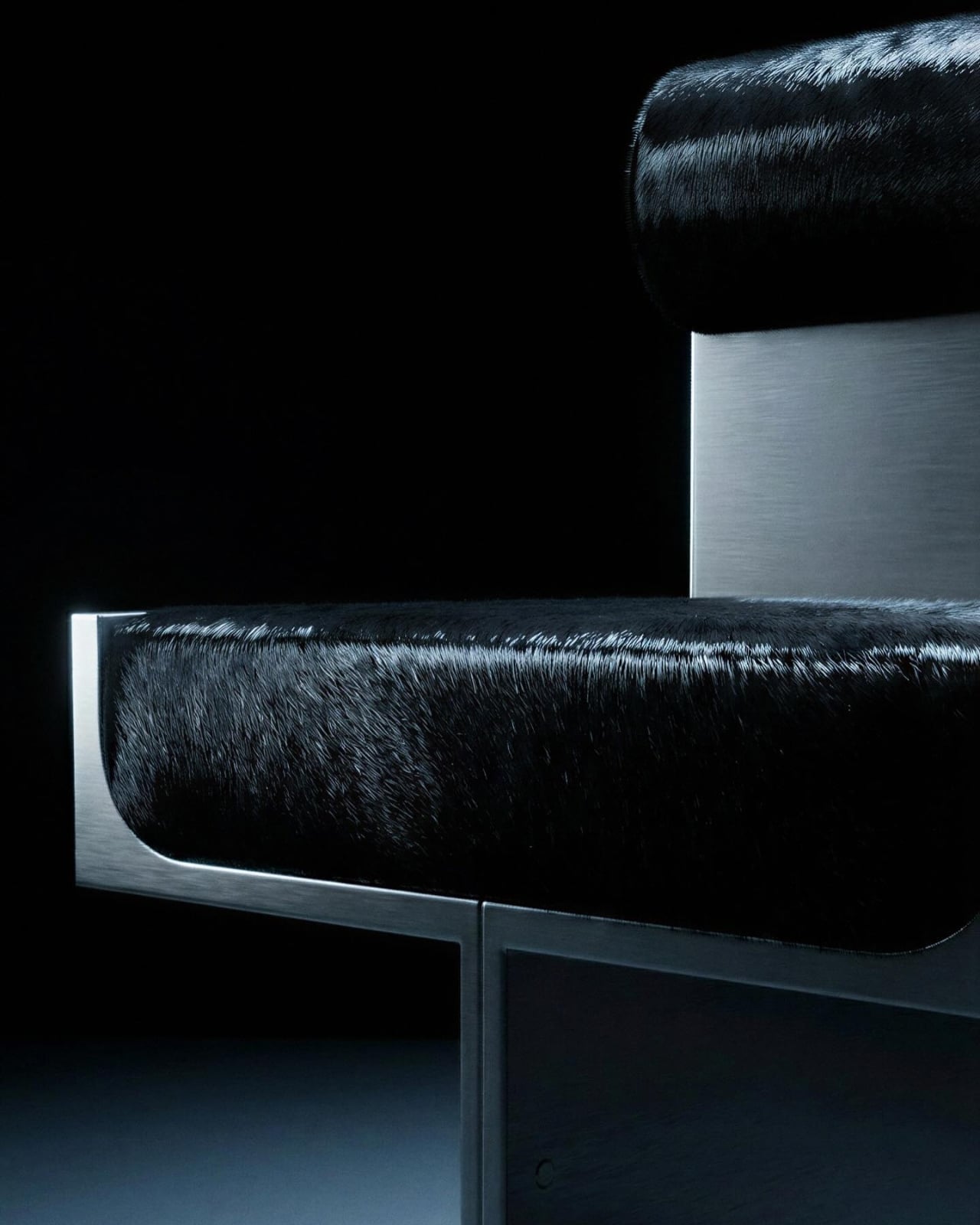
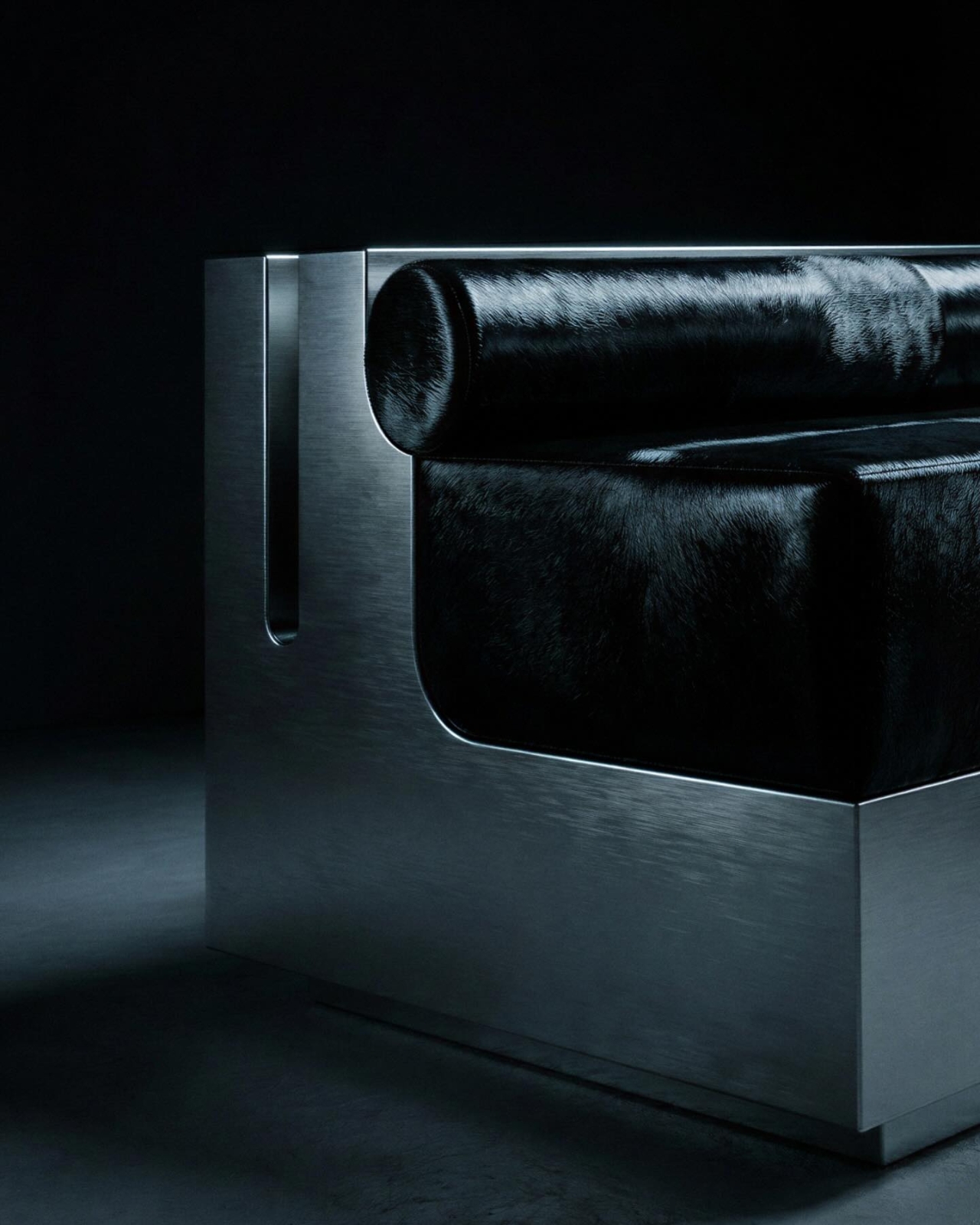
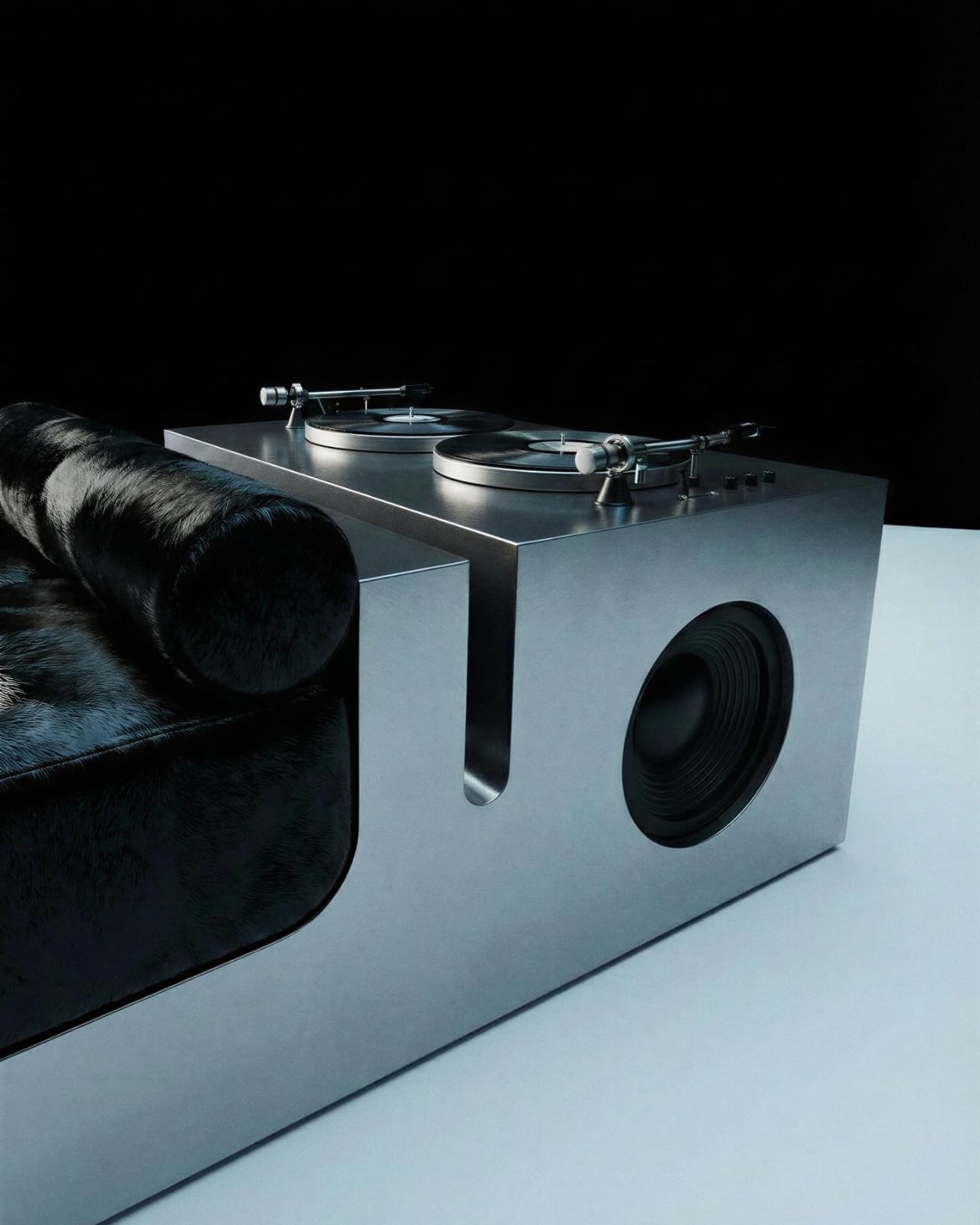
What the photographs reveal is a room that feels more like a score than a showroom. The collection spans sofas, seating, and tables, all rendered in brushed stainless steel with upholstery in deep black hair-on hide. The contrast is deliberate and sharp: the warmth and texture of the hide set against the cold, architectural precision of the metal. One sofa sits low to the floor with a stainless steel base that doubles as a speaker housing, a woofer set flush into the body as if it always belonged there. On top, a turntable rests in its own integrated cradle. The whole piece looks less like a living room setup and more like an instrument you happen to be able to sit on.

That is, I think, entirely the point. Trueba Studio isn’t positioning VIBRYX as “speaker furniture,” a phrase that tends to conjure images of branded Bluetooth boxes dressed up with upholstery. The language they use is more interesting than that. The collection is described as furniture with a sound presence, one that holds the room visually and activates it emotionally. It’s a quiet but confident distinction. The difference between a room that plays music and a room that is musical.

The aesthetic speaks to a very specific kind of person, and I mean that as a compliment. Someone who owns vinyl but also cares deeply about the chair they listen to it in. Someone whose living room is a curated environment, not just a set of furniture. The VIBRYX world is dark, focused, and deliberately stripped of decoration for decoration’s sake. There are no ornamental details here, no flourishes that don’t earn their place. The geometry is clean and the edges are softened just enough to keep the pieces from feeling cold. It walks a careful line between industrial and intimate, and it mostly lands on the right side of it.

Madrid has been producing some quietly compelling design work in recent years, and Trueba Studio is consistently one of the studios worth paying attention to. Their previous collectible pieces, including the Pol Ann sofa and the PL4 chair series, showed a consistent aesthetic vocabulary: architectural framing, considered proportions, materials chosen for character rather than trend. VIBRYX extends that vocabulary into new territory. It asks what happens when the room itself becomes the speaker, when the furniture isn’t staging a performance but is the performance.

My honest take? The collection is ambitious in the best way, and the execution looks like it matches the concept. Whether it translates into something that actually sounds as good as it looks is a question only a listening session could answer. But as a design statement, as a proposition about how we might live with music rather than just near it, VIBRYX makes a compelling case. Not every furniture collection needs to have something to say. This one does.

The post VIBRYX Is the Furniture Collection That Treats Sound as a Material first appeared on Yanko Design.

10 Modular Sofas That Rearrange Like Furniture-Grade Lego

The sofa has always been the most consequential decision in a living room. It’s the largest piece, the one that dictates traffic flow, color direction, and whether guests feel welcome or squeezed. For a long time, it also came with a kind of finality: once it was in the room, that was that. One shape, one configuration, and very little room for second thoughts.

That’s changed considerably. The best modular sofas today don’t ask you to commit to a single layout. They expand, split apart, hide extra surfaces, wrap around awkward corners, or grow alongside a family over the years. Curved modular sectionals are tracking as one of the clearest furniture directions of 2026, and this list pulls together ten designs that show just how far the category has come.

Aura Sofa
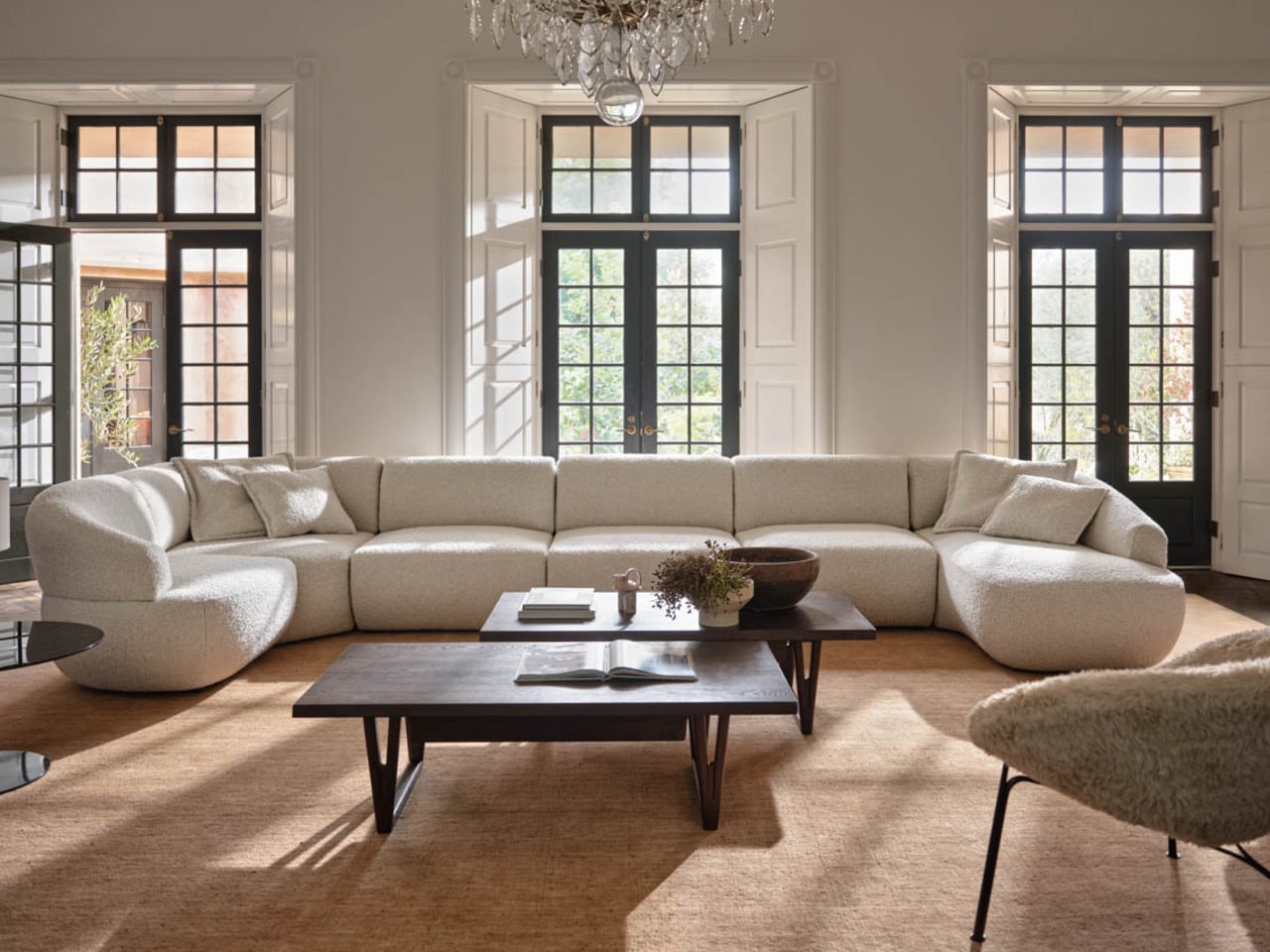
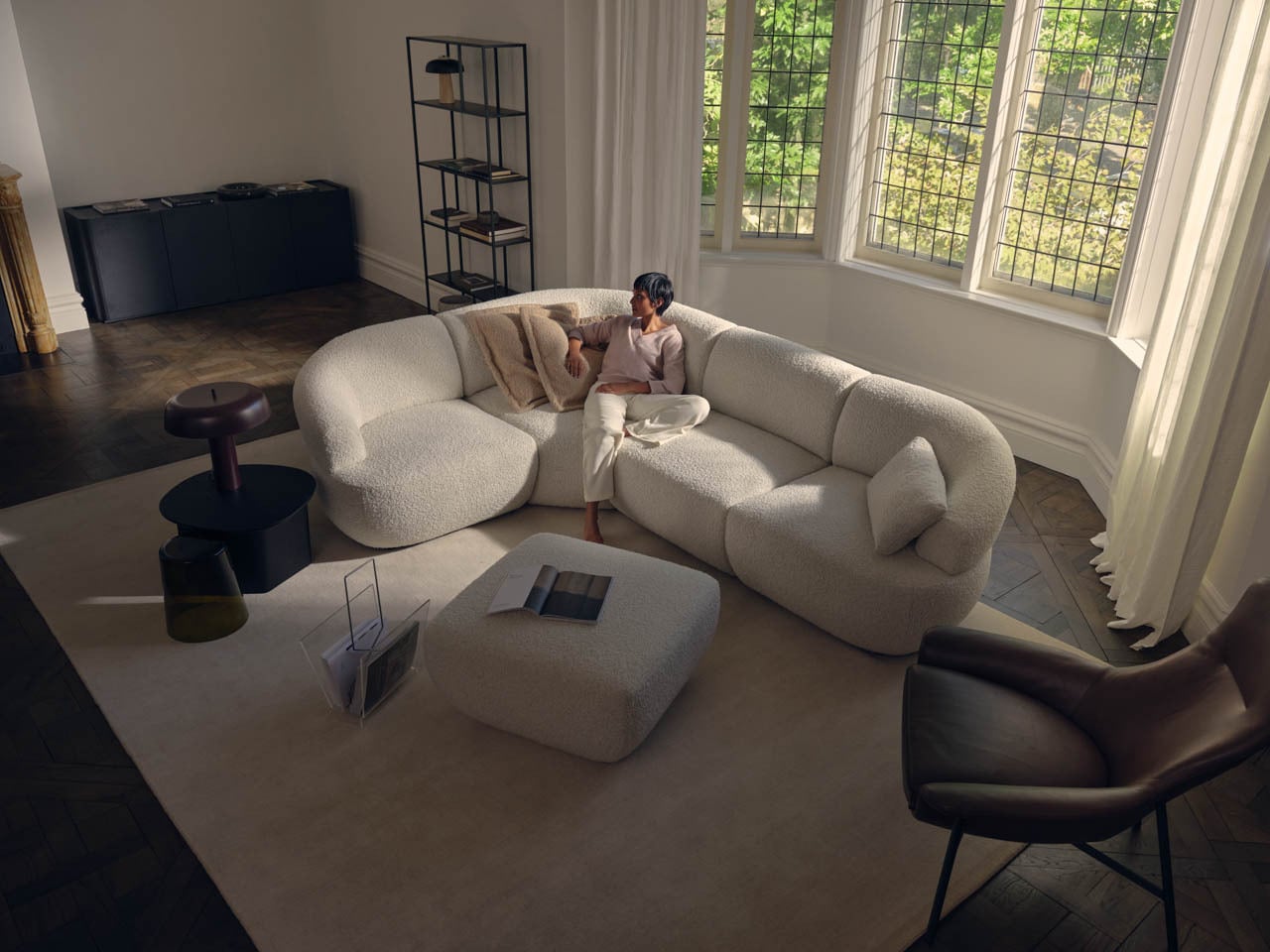
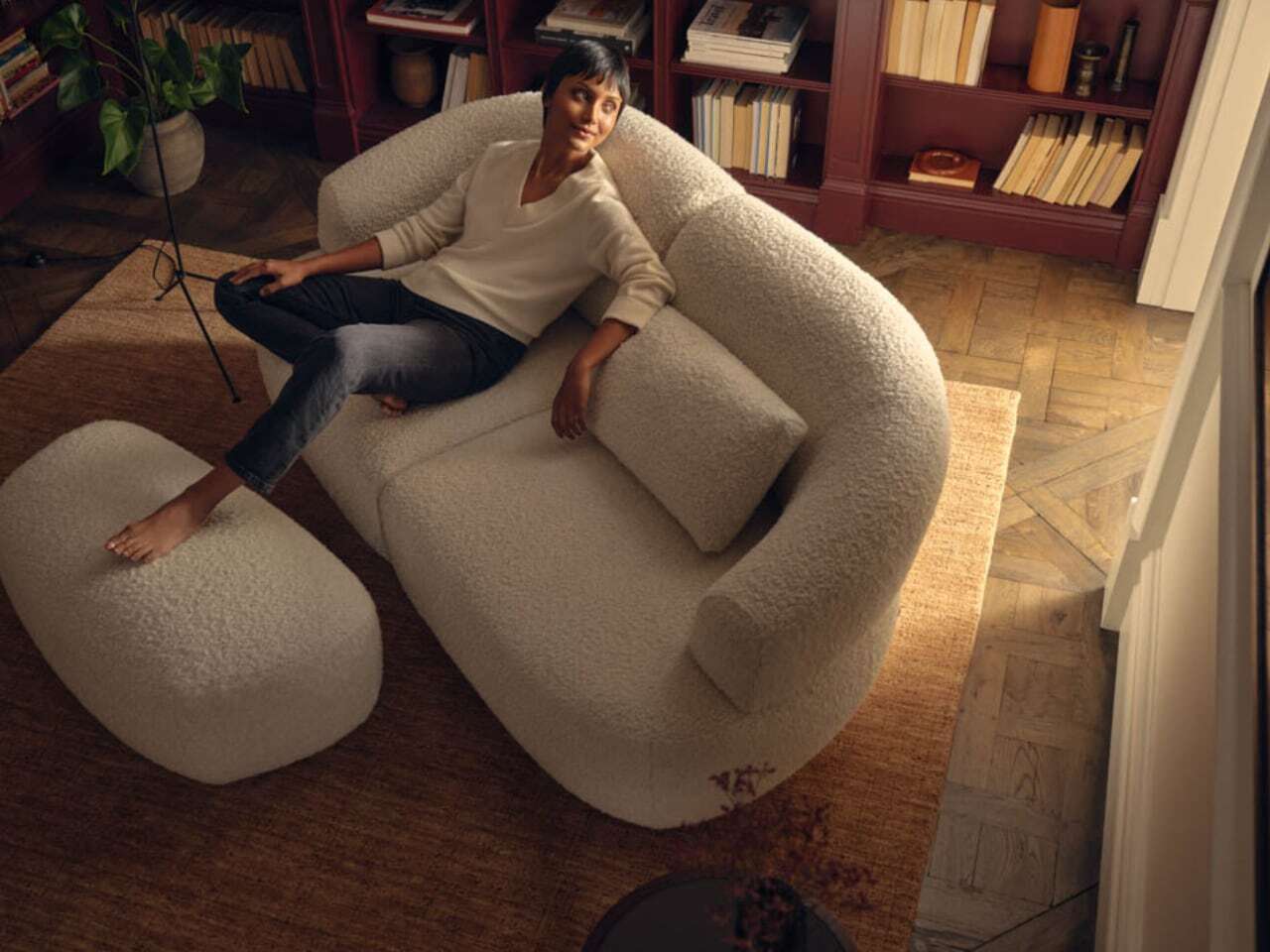
Most modular sofas make their flexibility obvious, which isn’t always a compliment. The Aura Matrix Sofa by King Living is the exception, a curved modular sectional that looks less like a configurable system and more like a single, sculpted object. The pieces flow into each other so naturally that the seating arrangement feels designed rather than assembled, which is a harder thing to pull off than it sounds.
Designer: King Living

What makes it genuinely useful is that the same fluidity works in your favor when the room changes. The modules can follow a bay window, open up for a larger gathering, or pull inward for something more intimate, without ever looking like you just rearranged the furniture. For a room where aesthetics and flexibility both matter, this is the kind of modular sofa that doesn’t force a compromise.

Modular Sofa for Small Spaces, and Small Pets
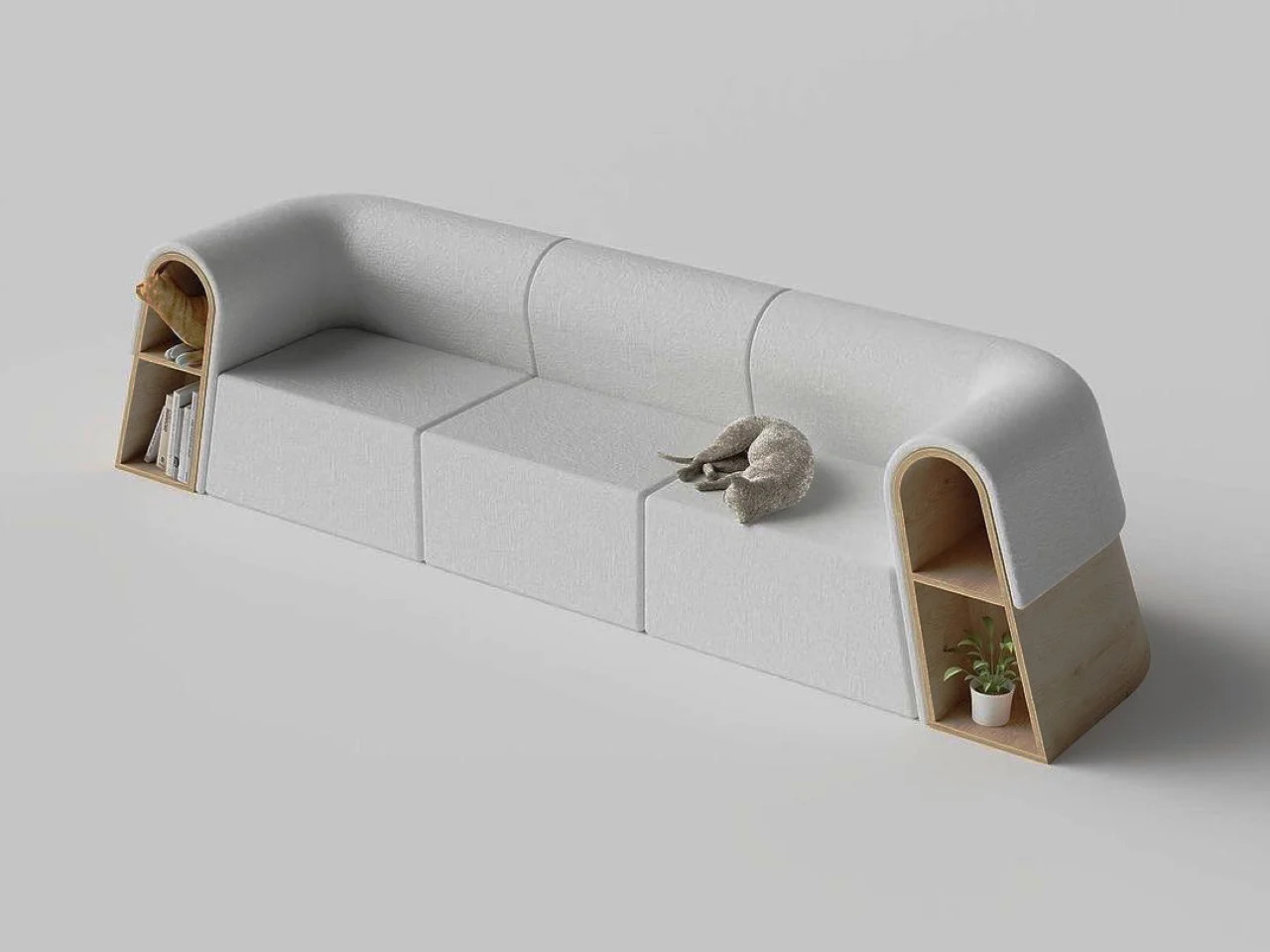
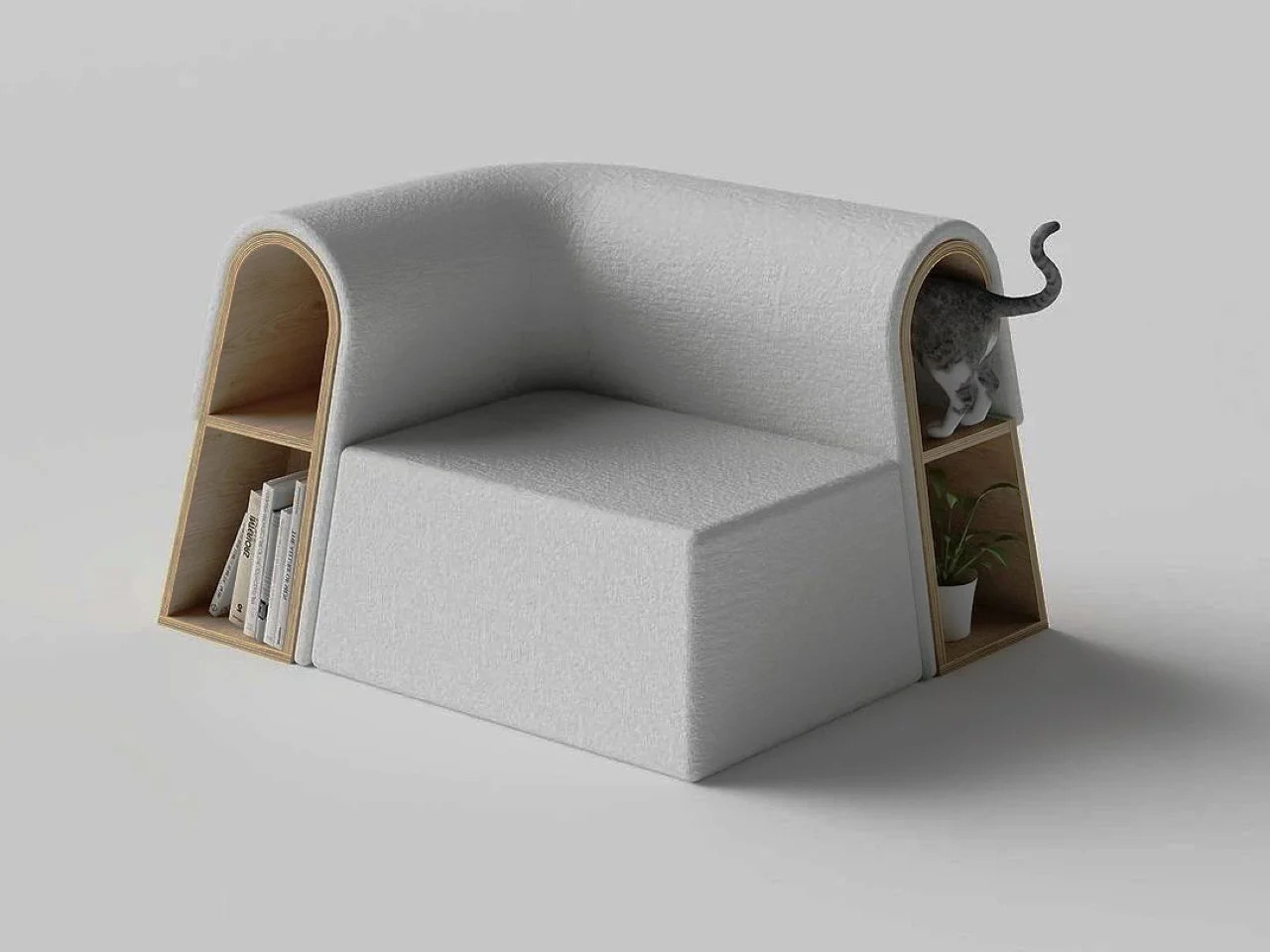
Apartment living comes with constraints that most furniture brands still treat as the buyer’s problem. This modular sofa takes the opposite approach, designed specifically with compact floor plans and the reality of pet ownership in mind. The sections are scaled to fit tighter rooms without making the space feel overrun, and the layout includes thoughtful allowances for small animals that usually end up on the furniture anyway.
Designer: Sunriu

In a small apartment, furniture that serves more than one purpose without looking like it’s trying too hard earns its keep quickly. This modular sectional sofa manages that by being genuinely comfortable for people while still carving out a spot that a small dog or cat can claim. It’s a small distinction, but one that changes the dynamic of sharing a compact space with a pet considerably.

Silky
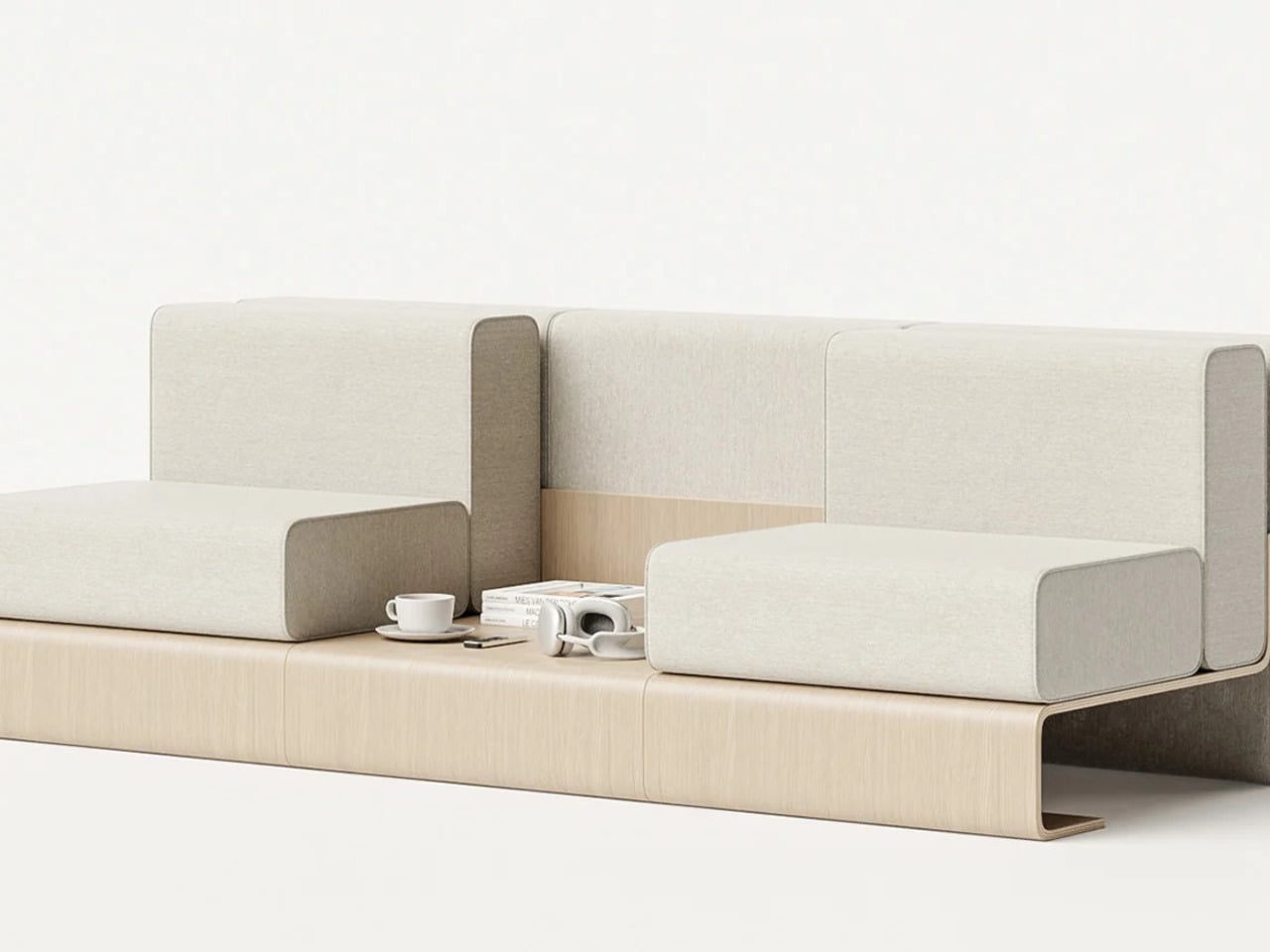
A modular sofa that brings its own coffee table along sounds like the kind of feature that gets mentioned once and forgotten in production. The Silky sofa takes it seriously, integrating the table directly into the sectional layout so it becomes part of the arrangement rather than an afterthought. The result is a modular sectional that does the work of two pieces without doubling the footprint.
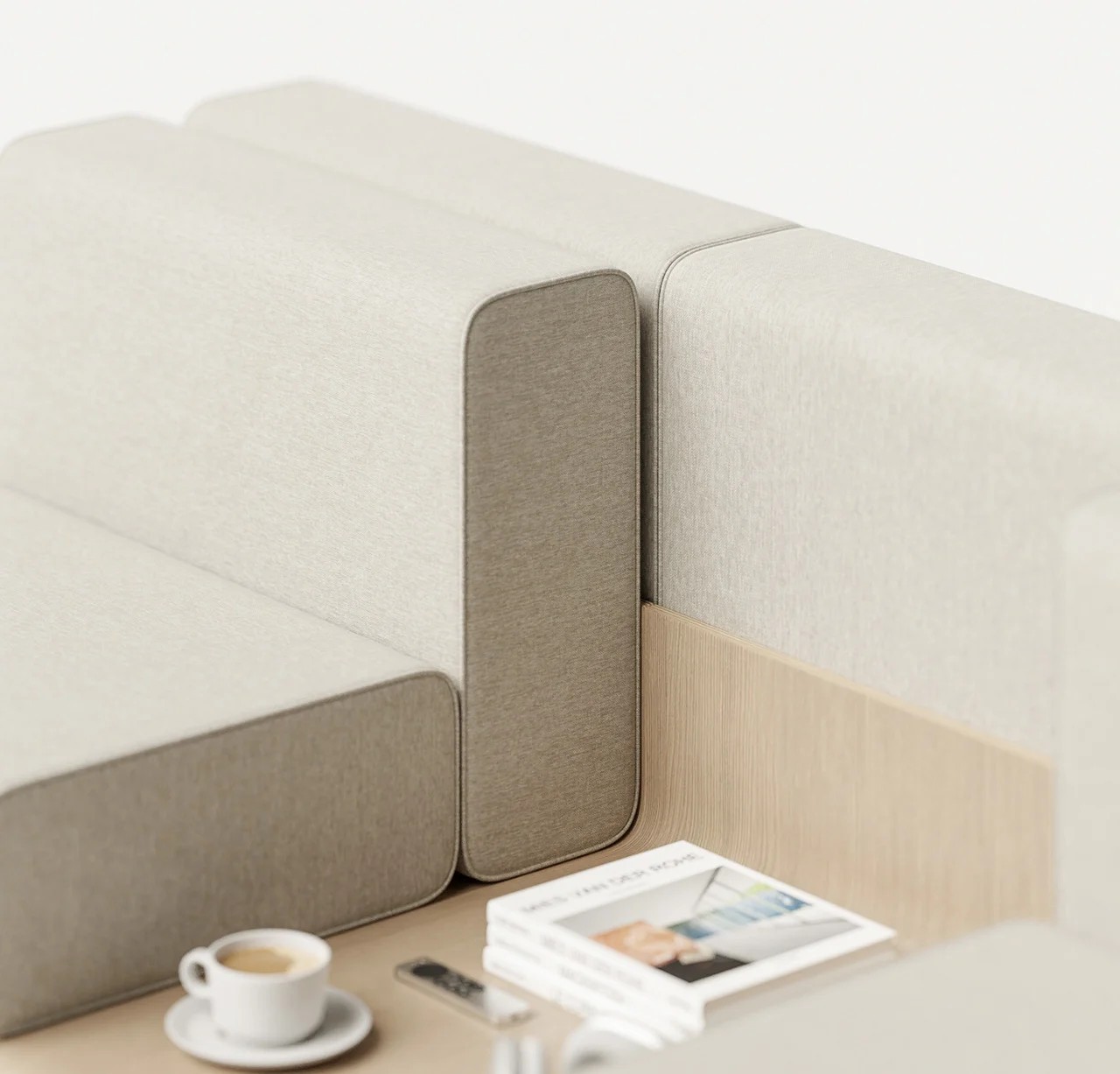
Designer: Teixeira Design Studio

What that means in practice is a room that feels more composed and less cluttered with competing furniture. Drinks, books, remotes, and phones have somewhere to go without requiring a separate surface to be dragged over and moved again. For smaller living rooms, especially, reducing the number of objects you need to manage without sacrificing comfort is a quietly valuable thing.

Twiny
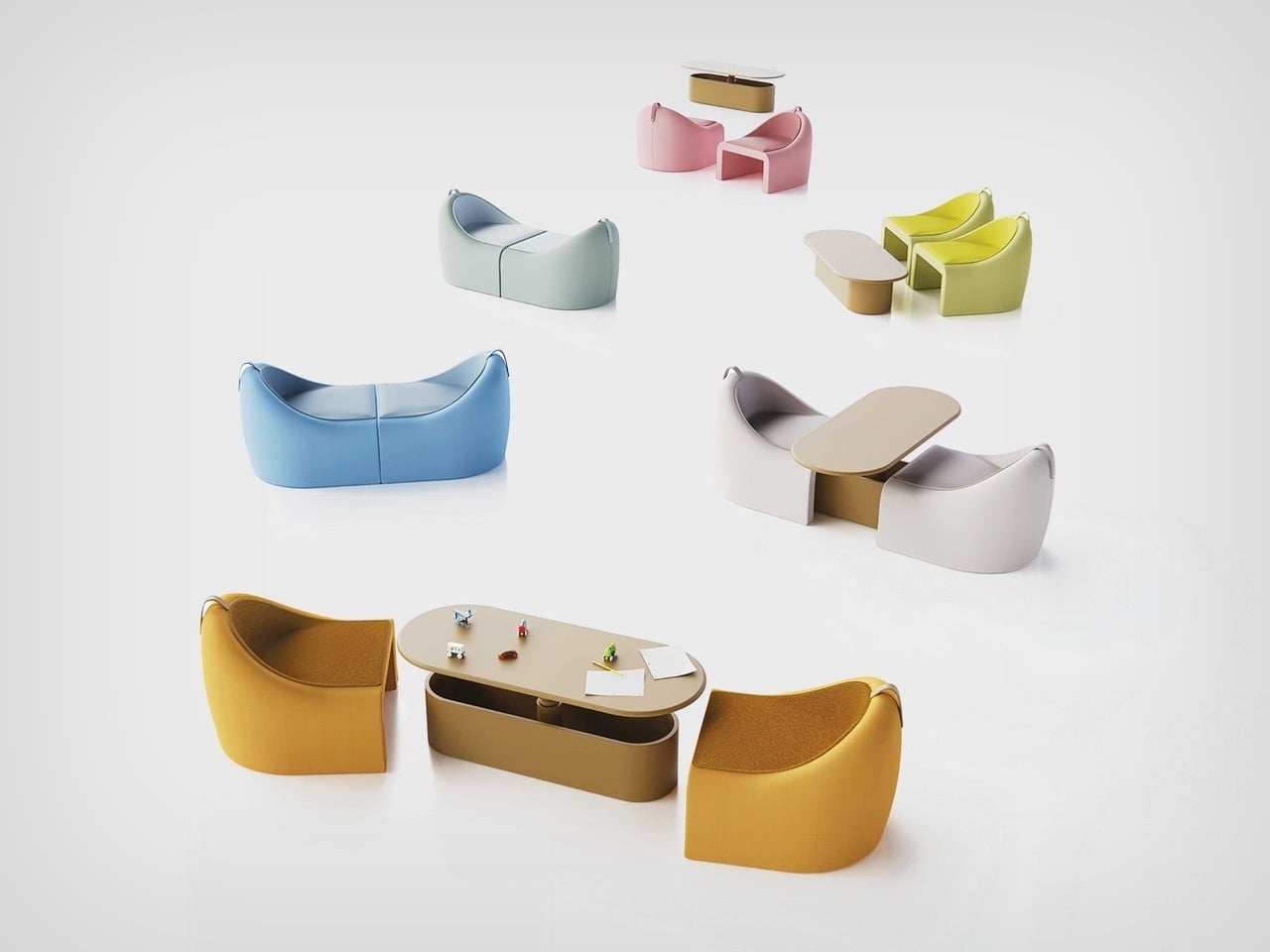
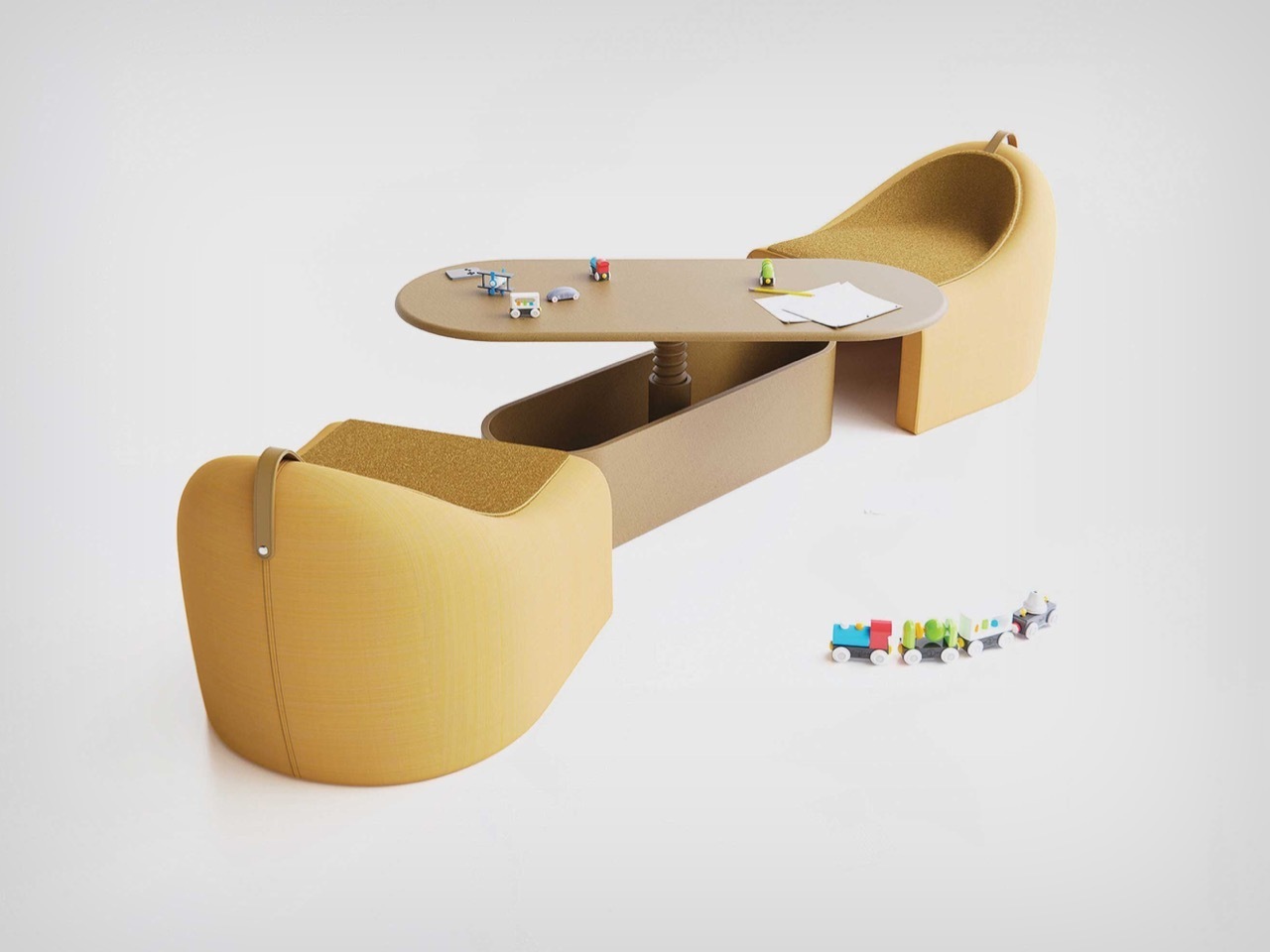
The Twiny sofa carries a similar idea but takes a more playful approach to hidden utility. Instead of making the table a visible part of the sectional layout, it tucks a surface away inside the sofa that can be pulled out when needed, including by kids who tend to find that kind of reveal irresistible. It’s furniture that has a little surprise built into it.
Designer: Nurettin Badur for Ziel Home Furnishing Technology Co., Ltd.

It matters more than it might seem in homes where the living room doubles as a play space, snack zone, and homework corner within the same afternoon. A modular couch that can quietly produce an extra surface without requiring anyone to drag something over from another room changes the flow of those moments in a small but meaningful way. The hidden table isn’t a novelty; it genuinely earns its place.

The Lounge Chair That Becomes a Sofa When Paired
Not everything on this list started out as a modular sofa. This particular design begins as a lounge chair, and it’s only when you put two of them together that they form a convincing two-seater. The premise is clever, not because it’s a novel trick but because it reframes modularity as a compositional question, asking what furniture should look like when you’re not ready to commit to a full sectional.
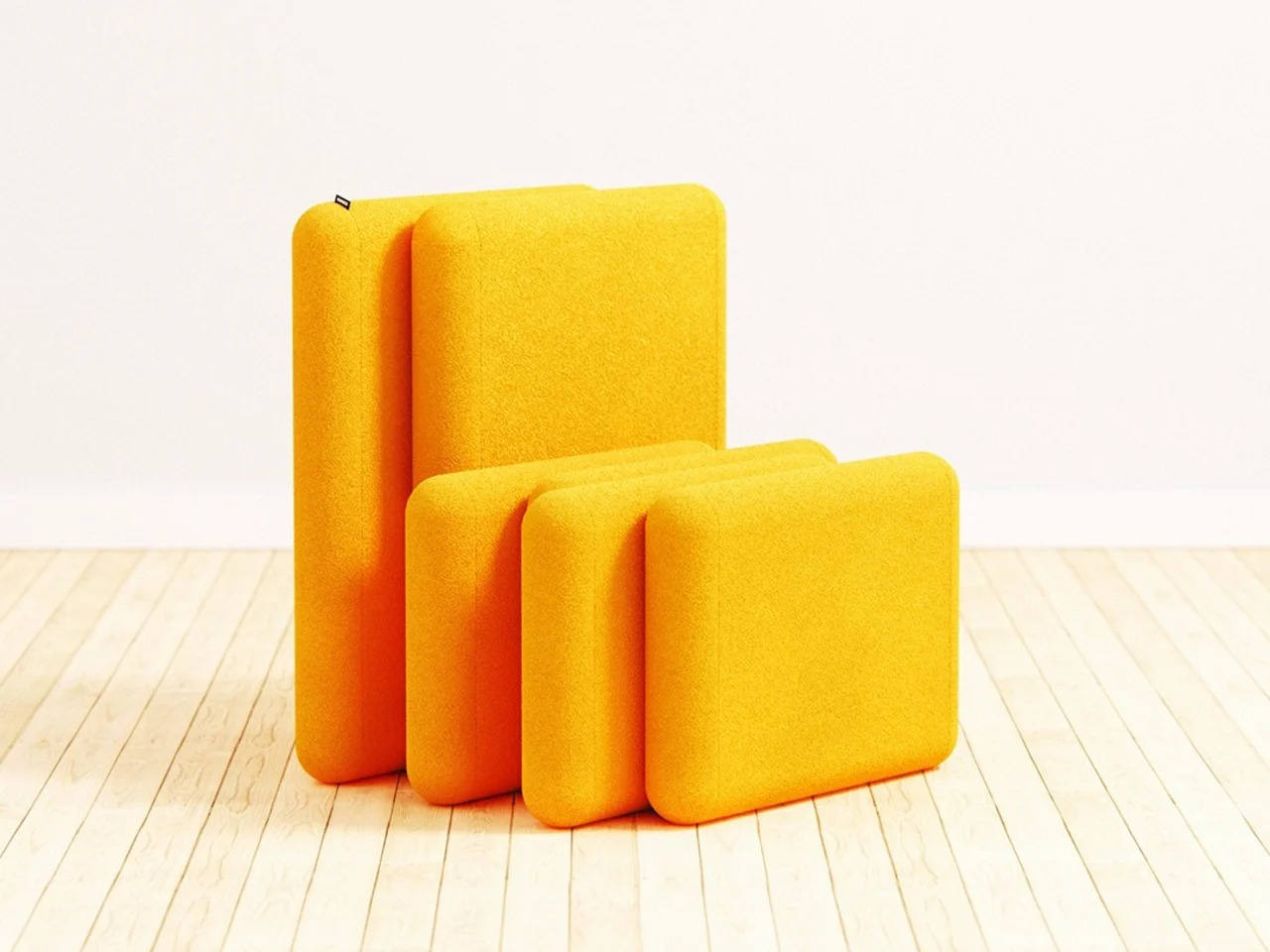
Designer: Liam de la Bedoyere

The option to split the seating into two independent chairs when you need floor space is genuinely useful in a studio or single-bedroom apartment. You can open the room for a workout, a gathering, or a change of scenery, then push them back together when you want more casual seating. It’s a flexible arrangement that doesn’t even look like a modular system.

The Crocs-Meets-Lego Modular Seating System
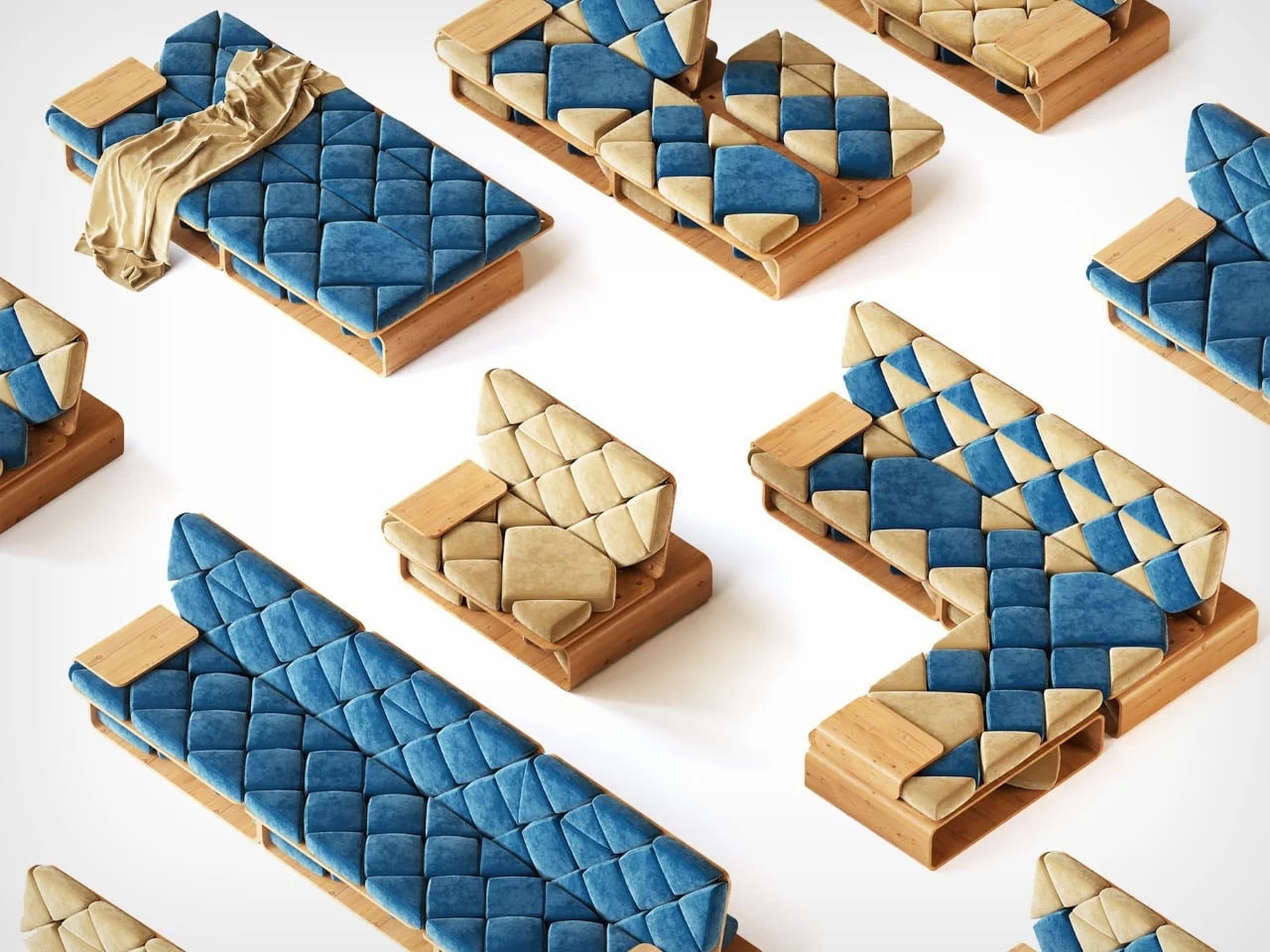
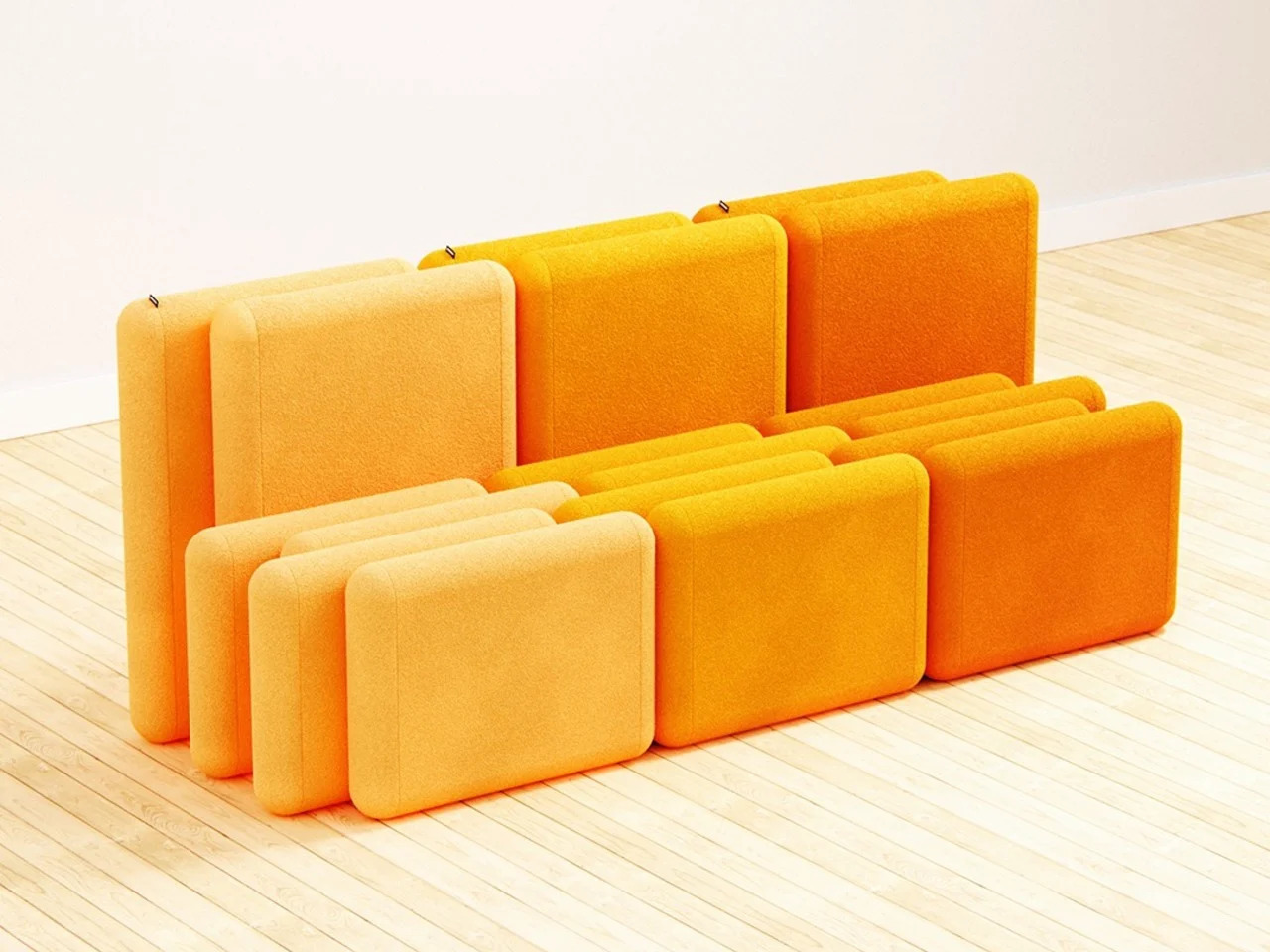
If Lego and Crocs had a furniture design meeting and somehow settled on Japanese minimalism as the shared aesthetic, the result might look something like this modular seating concept. The system is built around interlocking units that snap together in a way that makes rearranging the layout feel low-effort, treating configuration as part of the experience rather than a one-time decision you eventually regret.
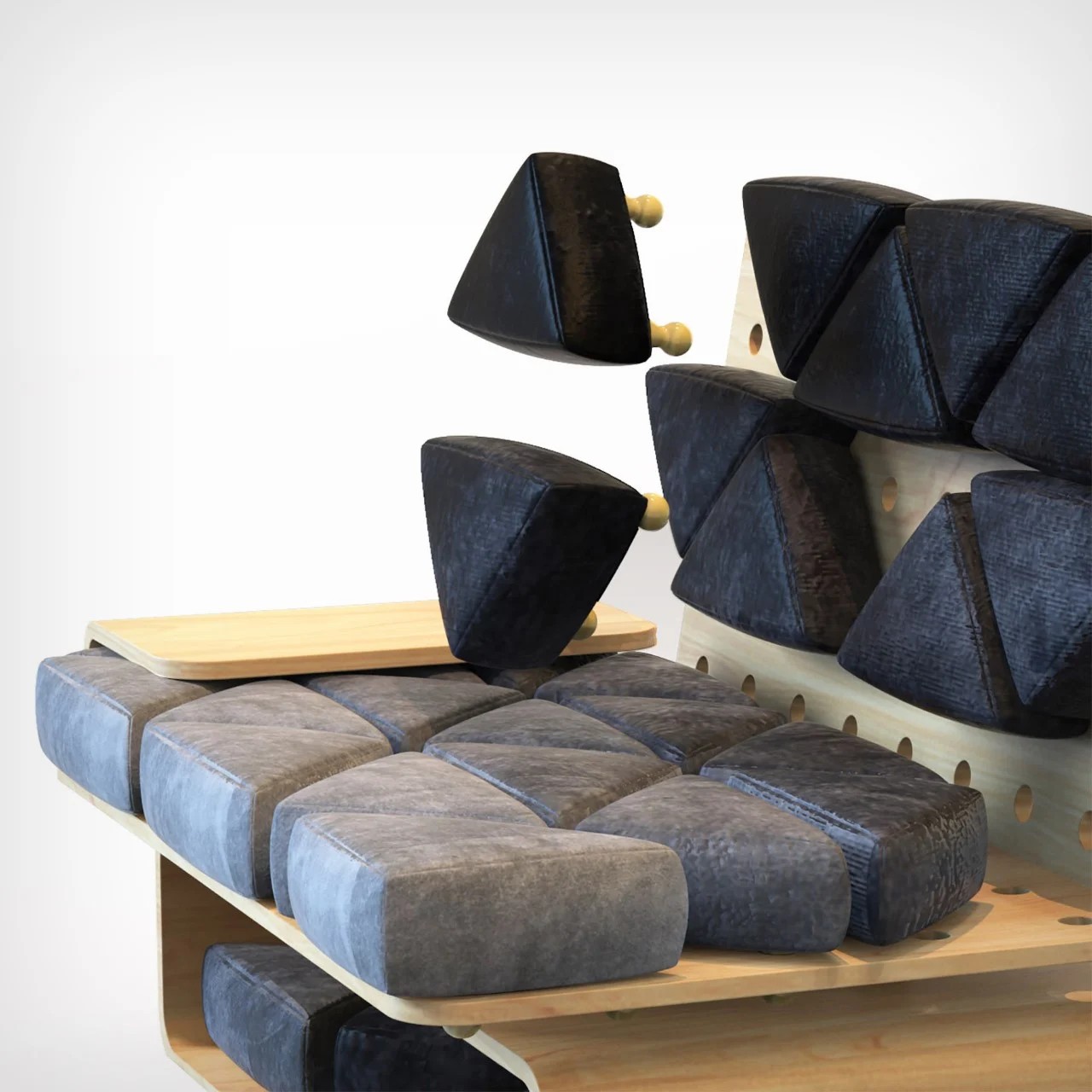
Designer: Arman Farahmand

Furniture that invites rearrangement has a way of making a space feel more alive, especially for renters still figuring out how they want a room to work. The clean lines keep the system from looking like a children’s toy, but the assembly logic is approachable enough that adjusting the layout on a weekend doesn’t feel like a major undertaking. It changes with your mood.

The Accordion Sofa
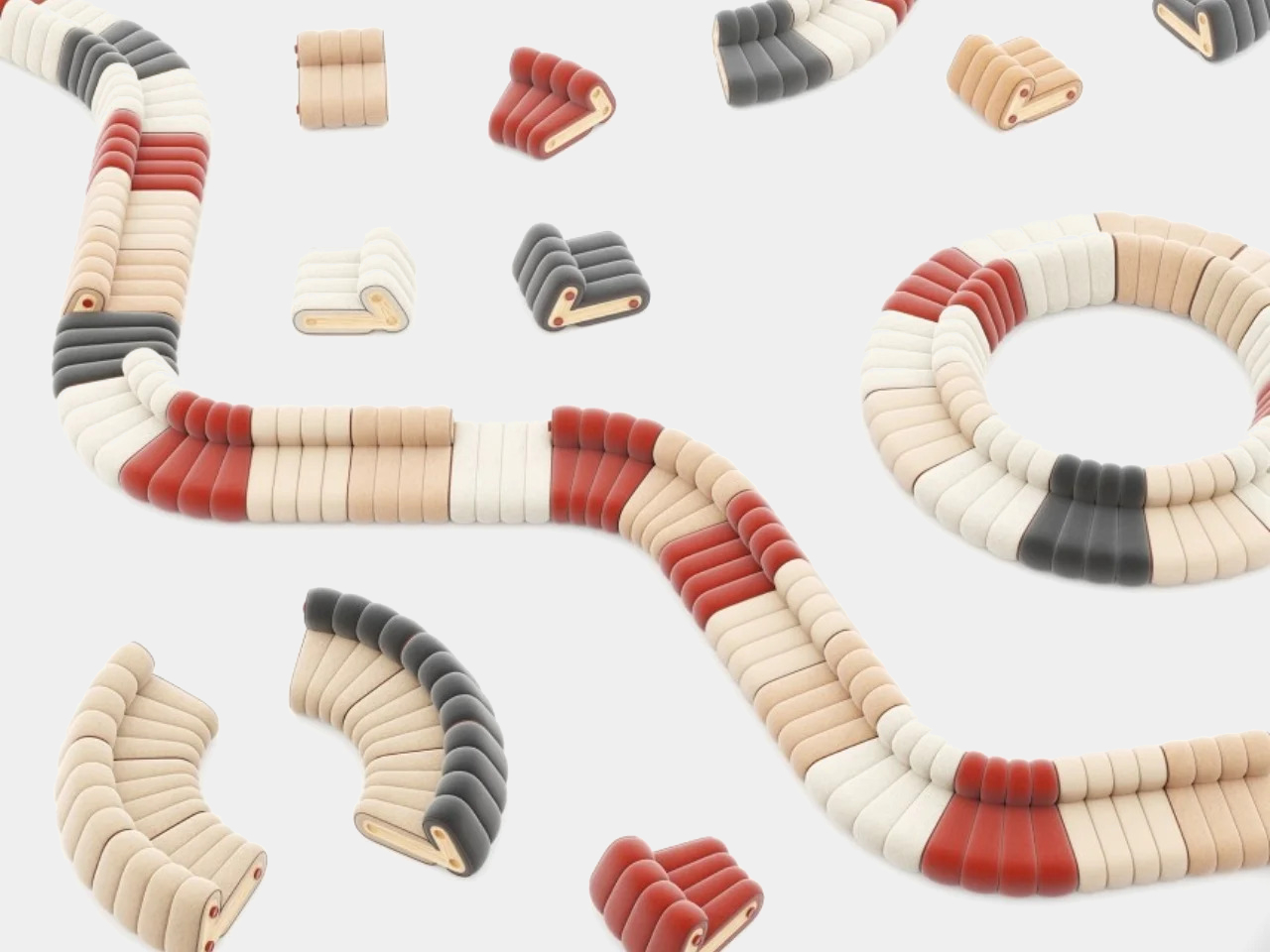
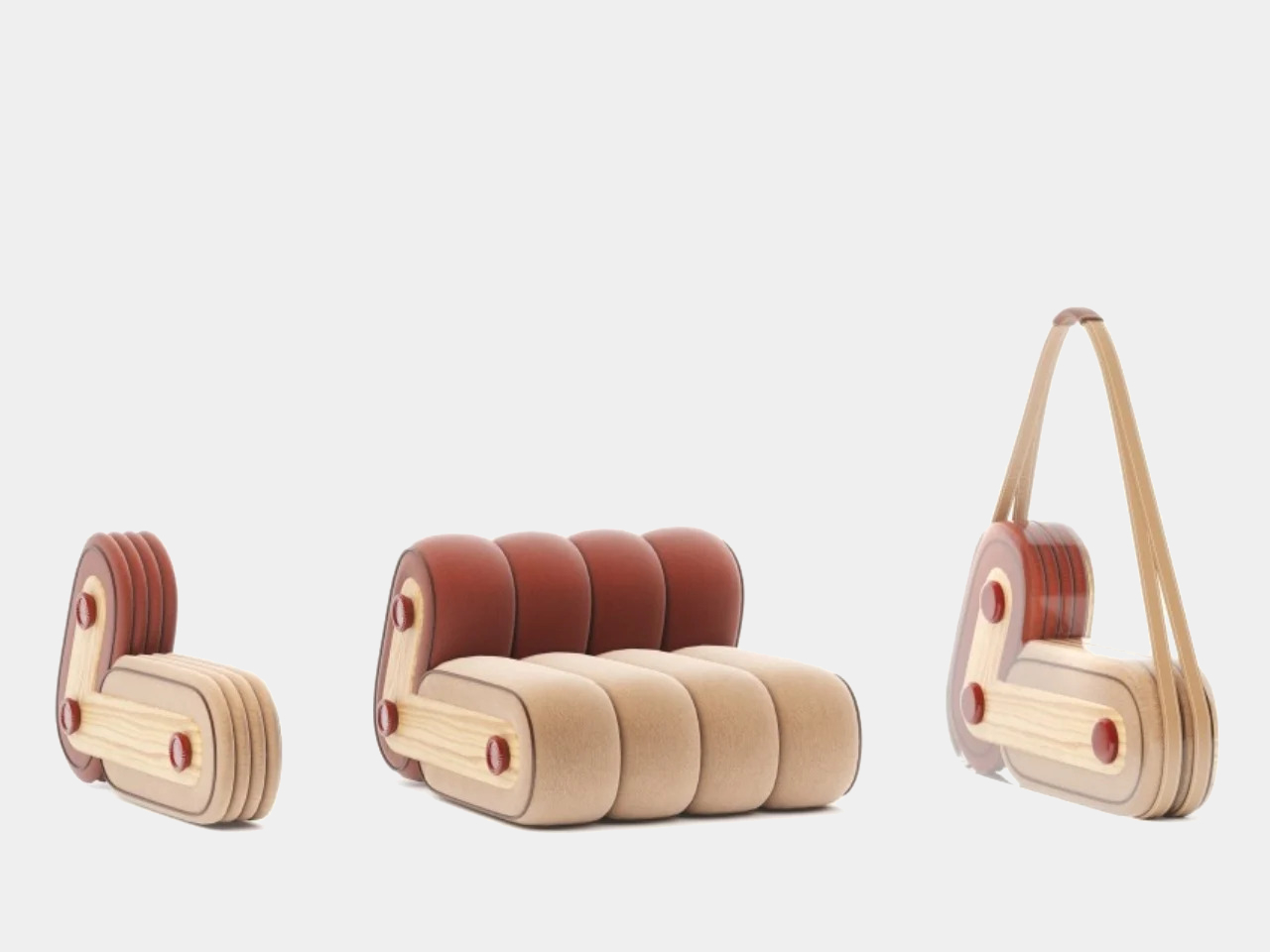
Modularity usually describes what a sofa can do once it’s in the room. This design moves the conversation earlier, to the part that most furniture brands still treat as the buyer’s problem: getting it through the door. The accordion-compression mechanism lets the sofa collapse into a much smaller form for delivery, which sounds like a technical footnote until you’ve tried maneuvering a full sectional through a narrow hallway.
Designer: Yuqi Wang

For renters and frequent movers, a large sofa that can compress for transport removes one of the most consistent headaches that comes with furnished apartment living. There’s no need to wait for a professional delivery team or spend an afternoon dismantling something that wasn’t designed to be taken apart. Once it’s in the room, it opens back up and behaves like a normal sofa, which is the whole point.

Modular Couch for Waiting Spaces
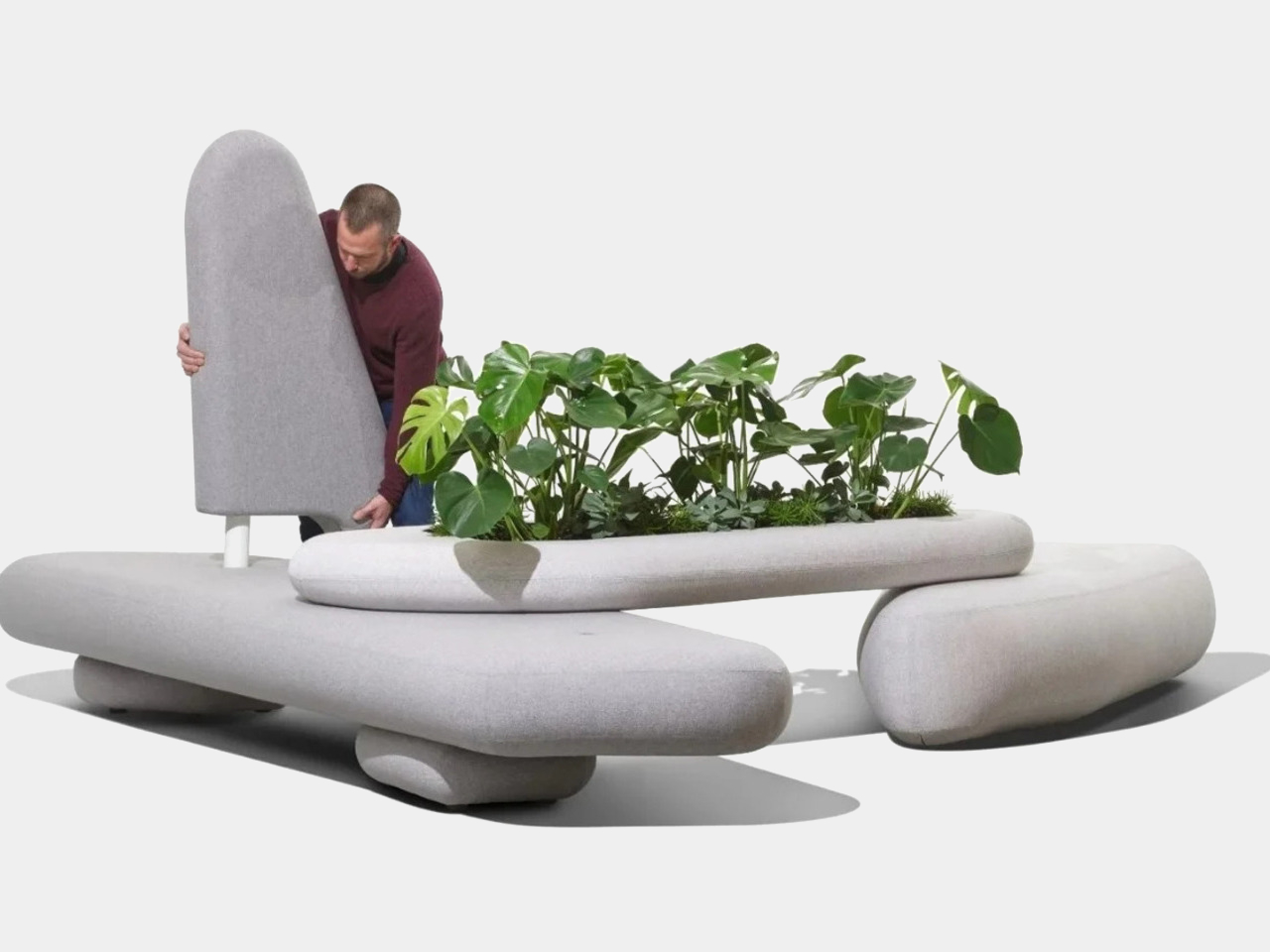
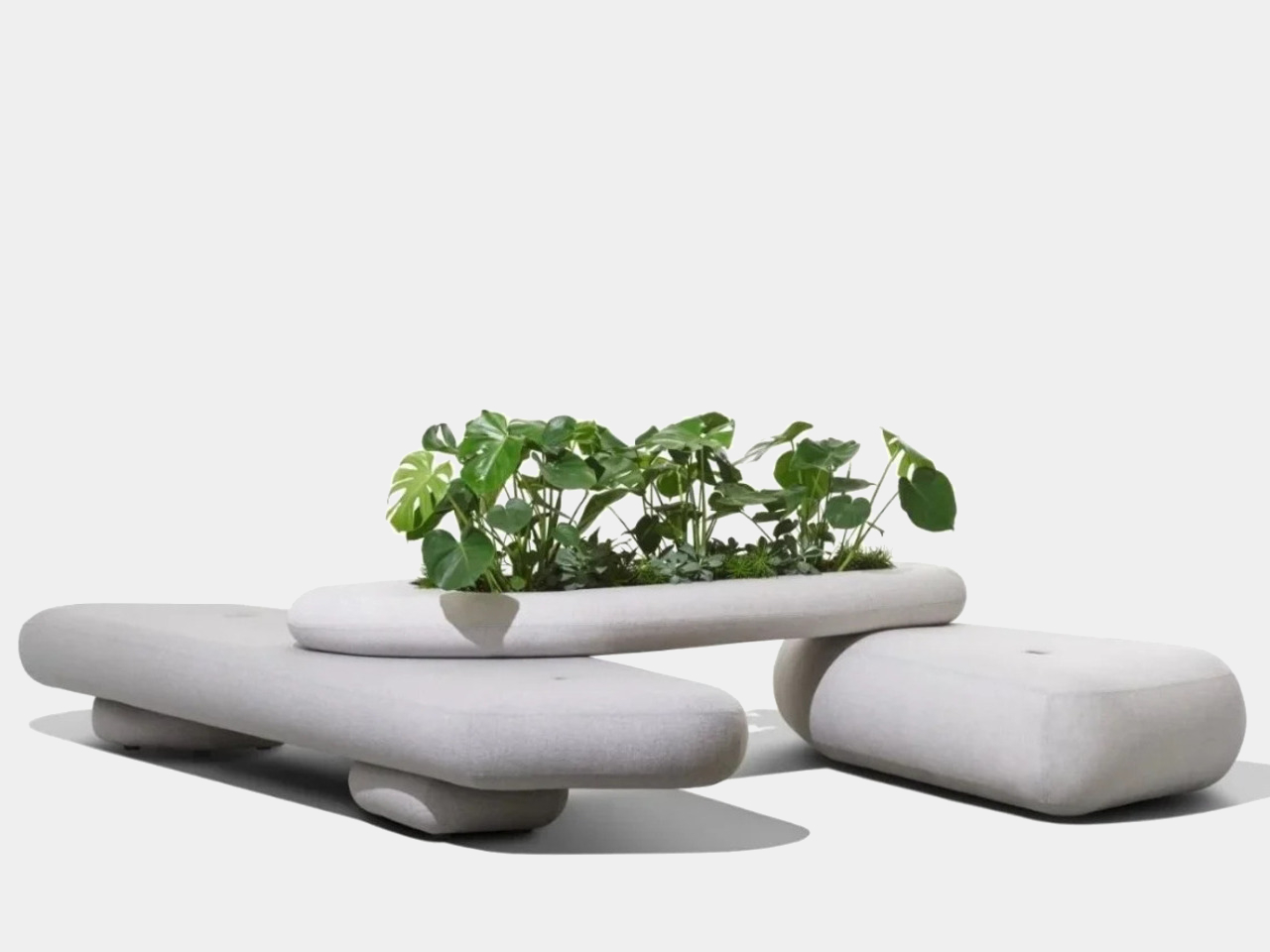
Not every modular sofa belongs in a living room. This design was built for waiting areas, the kind of shared spaces that usually default to rigid rows of institutional seating and very little else. The modular system makes it possible to arrange the furniture into natural clusters, creating smaller pockets of space that feel more considered than the typical lineup of chairs bolted to a wall.
Designer: Sander Mulder

The emotional dimension matters as much as the spatial one here. Waiting rooms are rarely designed with comfort in mind, and the furniture usually makes that obvious. A modular seating system that allows for softer arrangements, varied orientations, and a more human scale changes the experience without requiring a full overhaul. It’s a quiet reminder that shared spaces don’t have to feel punishing to be in.

The Work-from-Home Modular Lounge System
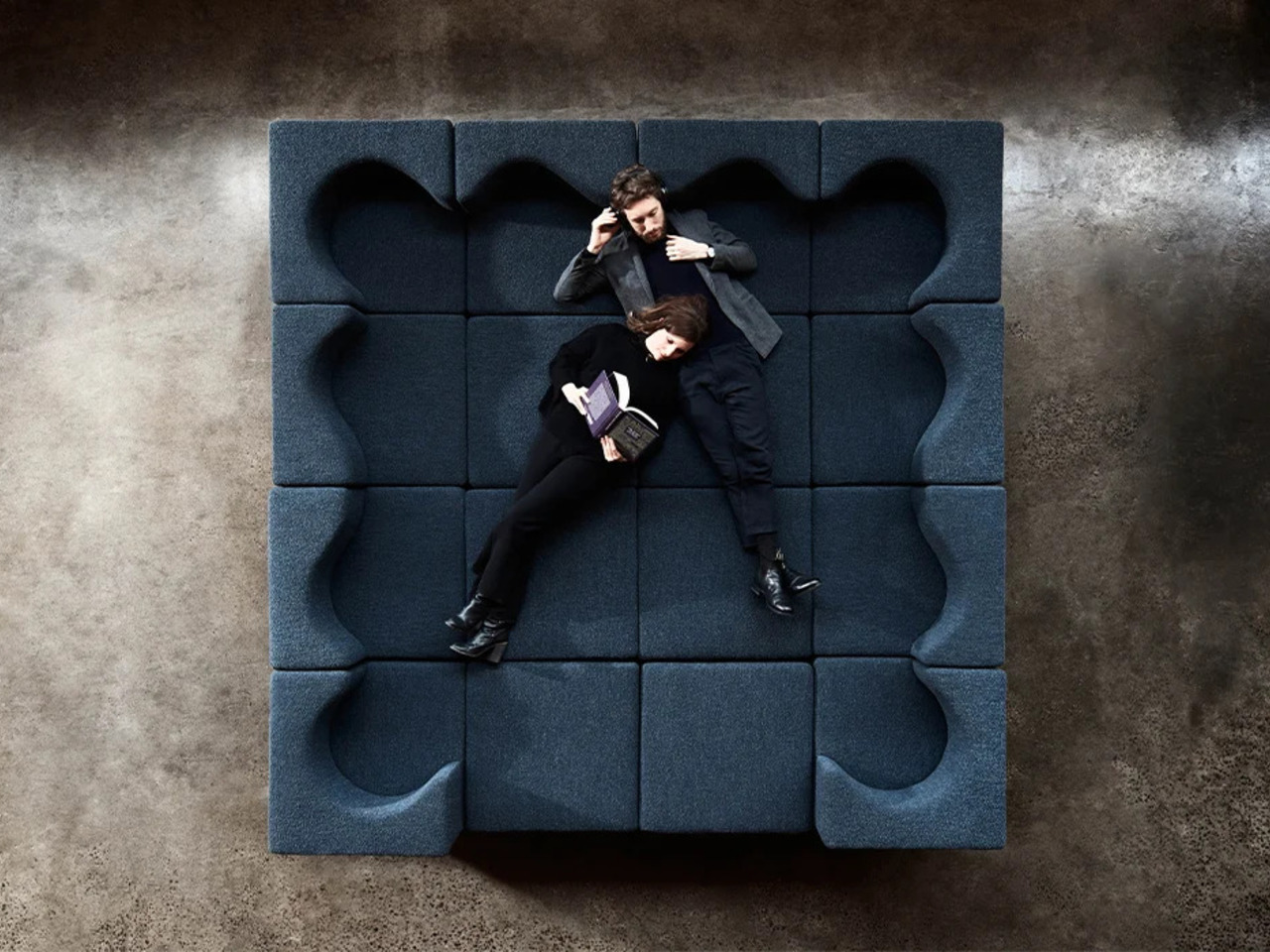
Working from home still means managing the fact that the sofa tends to be many things in the same room: a desk-adjacent perch in the morning, a lunch spot at noon, and a proper lounge space by evening. This modular lounge system was designed around that reality, with sections that support upright sitting for work-mode postures and reconfigure into something more relaxed when the day winds down.
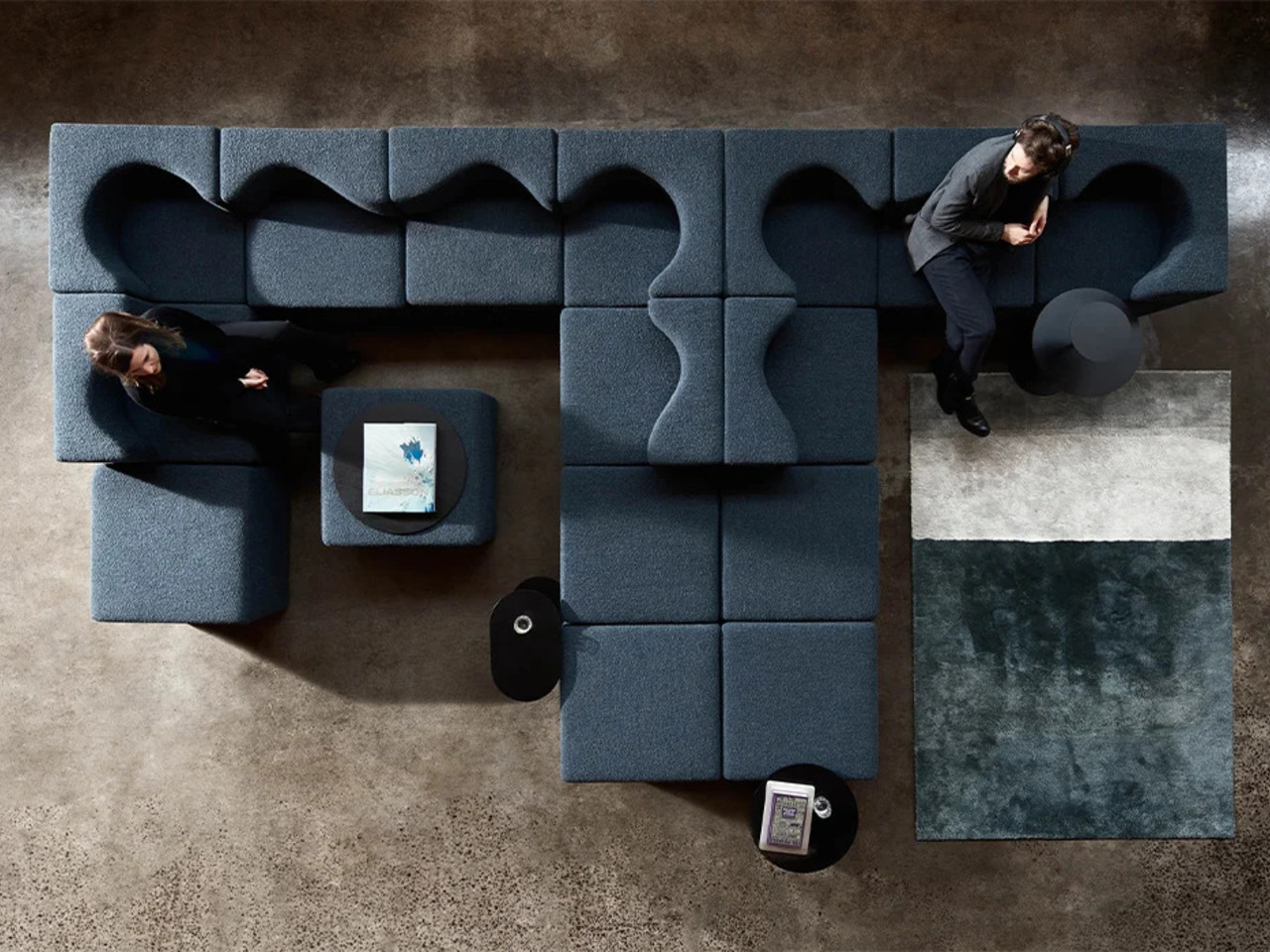
Designer: Foolscap Studio

The flexibility here doesn’t require the room to look like an office. The modular sections shift without dismantling anything, so moving between a work posture and a full lounge is quick enough to actually happen. For anyone whose living room has to serve double duty on a daily basis, that kind of seating system starts to feel less like an option and more like a given.

The Crib That Eventually Becomes a Couch
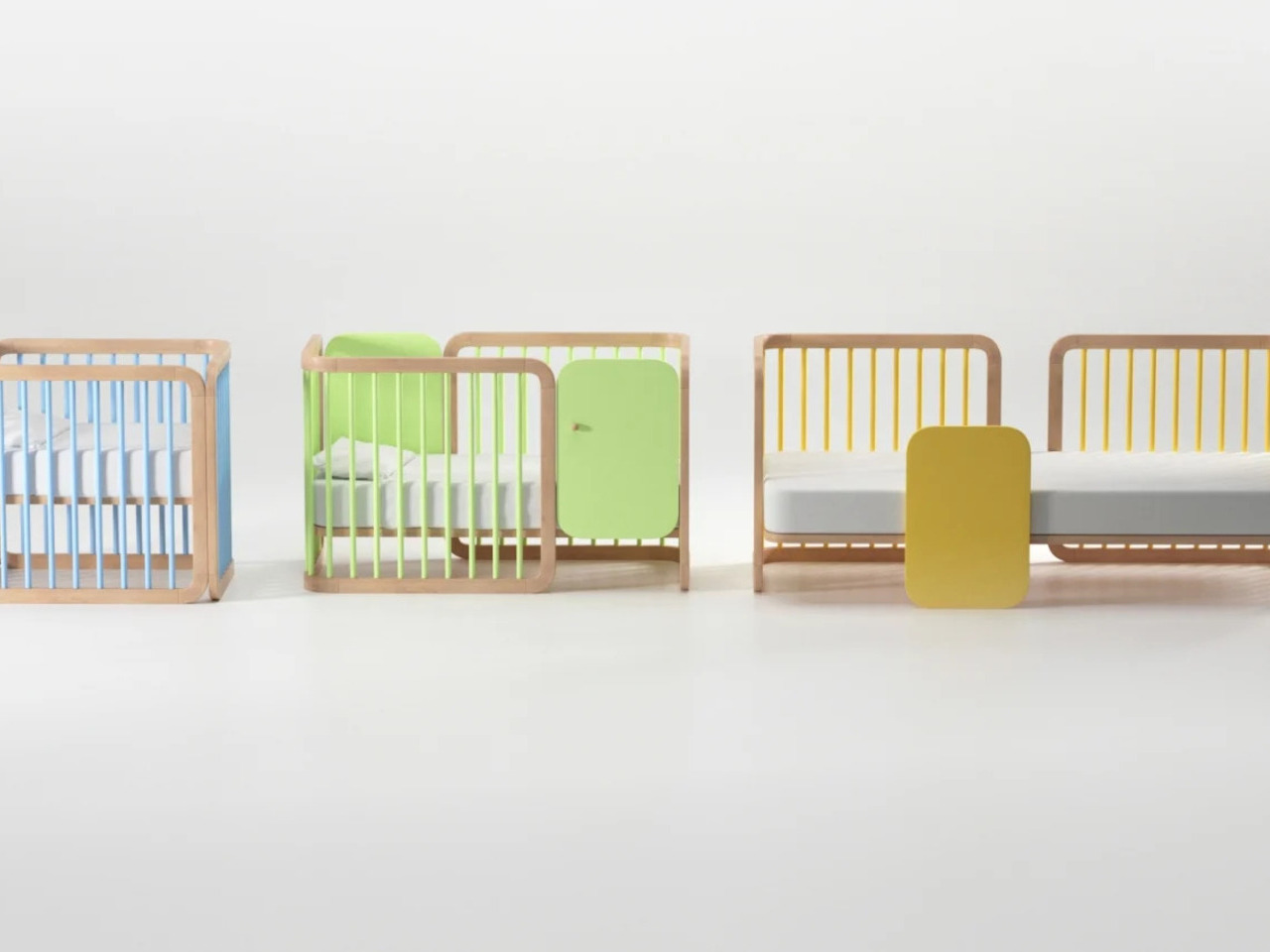
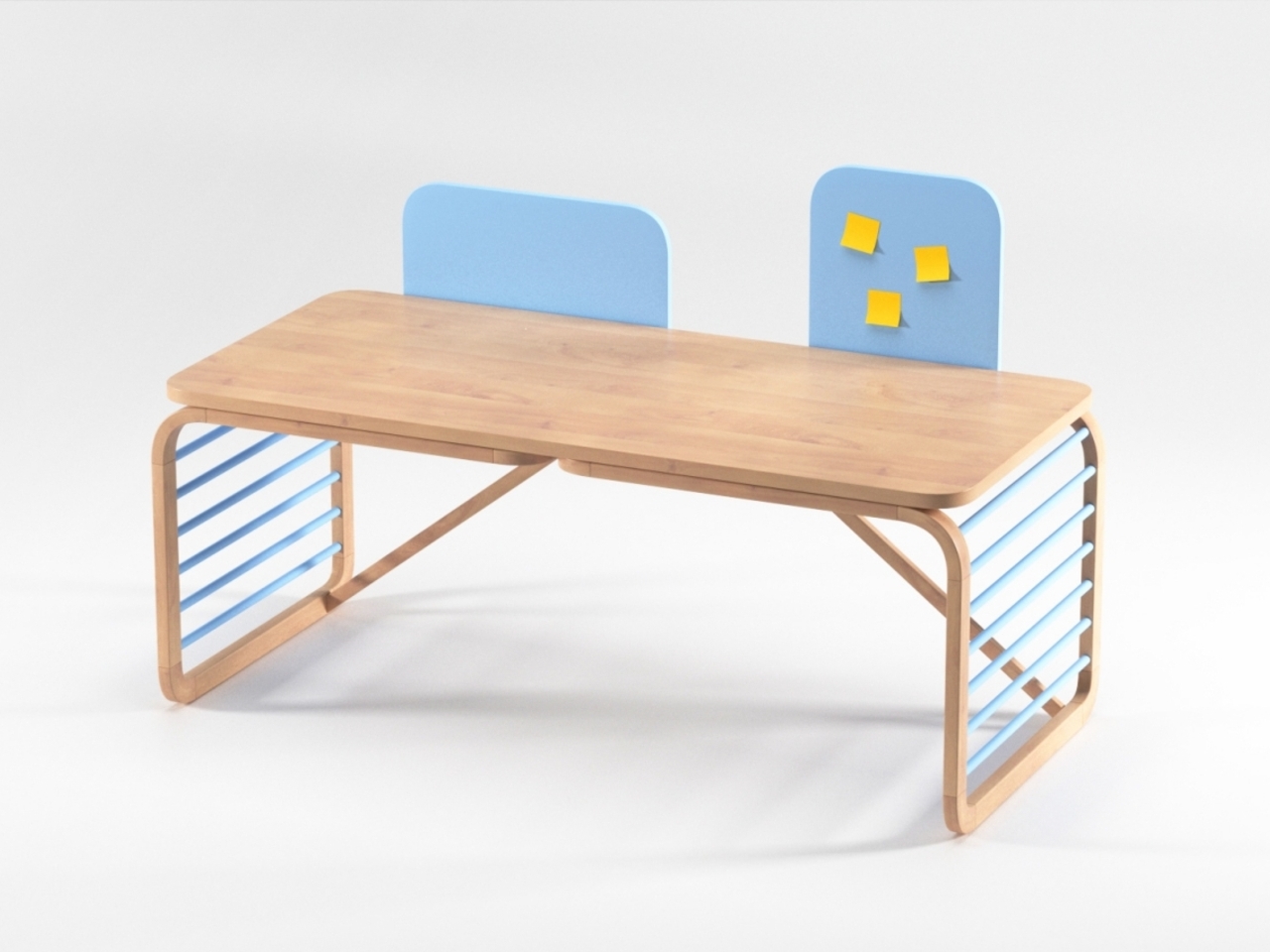
The most dramatic transformation on this list doesn’t involve flipping a sectional into a new shape or pulling a hidden surface out of a compartment. This design changes category entirely, starting as a crib and converting into a couch as the child grows out of it. It’s a long-game approach to furniture that most brands aren’t interested in, largely because selling two separate pieces is the easier model.
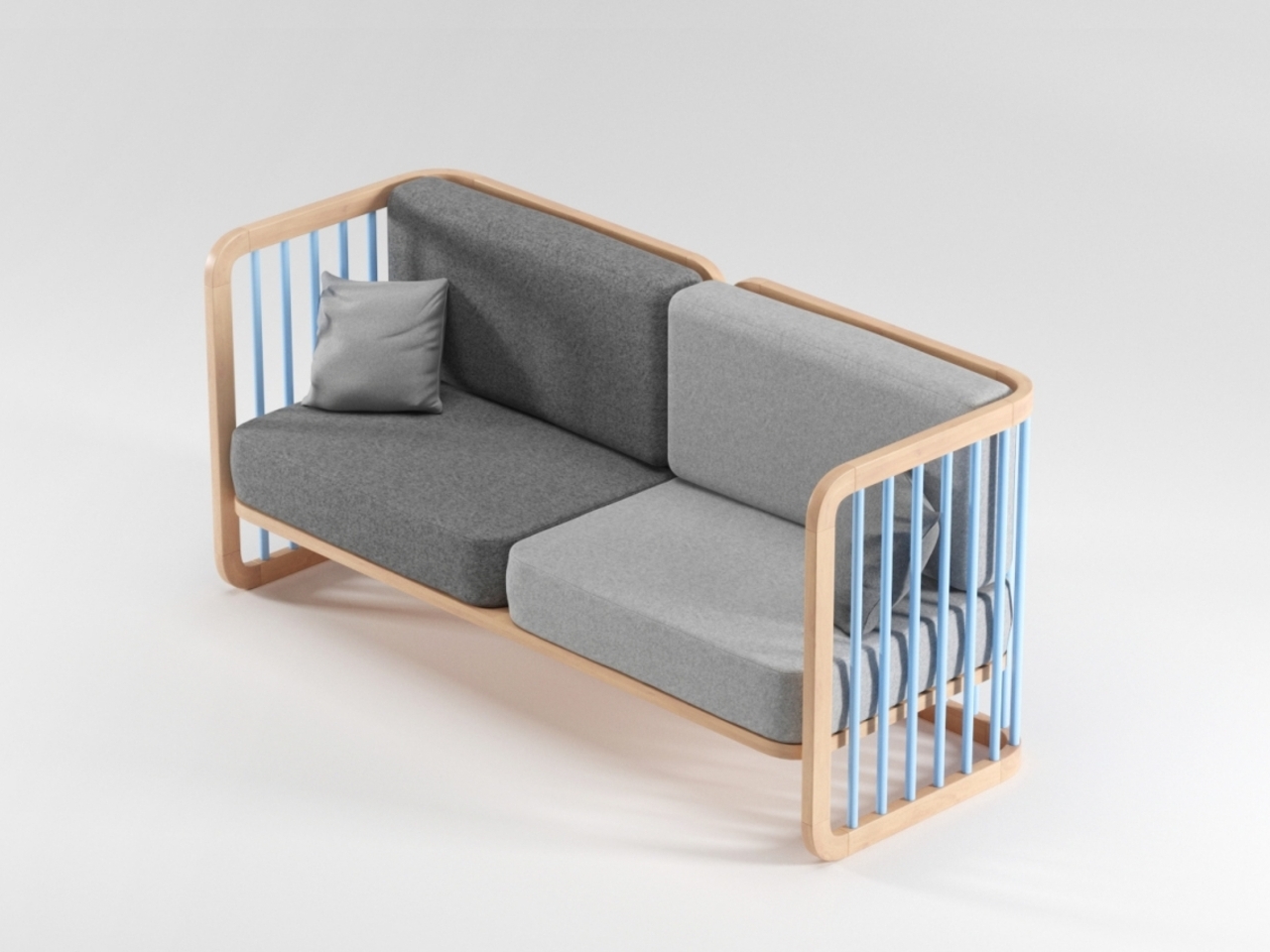
Designer: Vedran Erceg

Children outgrow nursery furniture fast, and most of it ends up in storage or a garage sale before it’s had much chance to earn its keep. A piece that moves from one stage of family life to another sidesteps that cycle almost entirely, which makes it more sustainable, more economical, and a smarter way to think about what furniture should actually do over the long run.
The post 10 Modular Sofas That Rearrange Like Furniture-Grade Lego first appeared on Yanko Design.
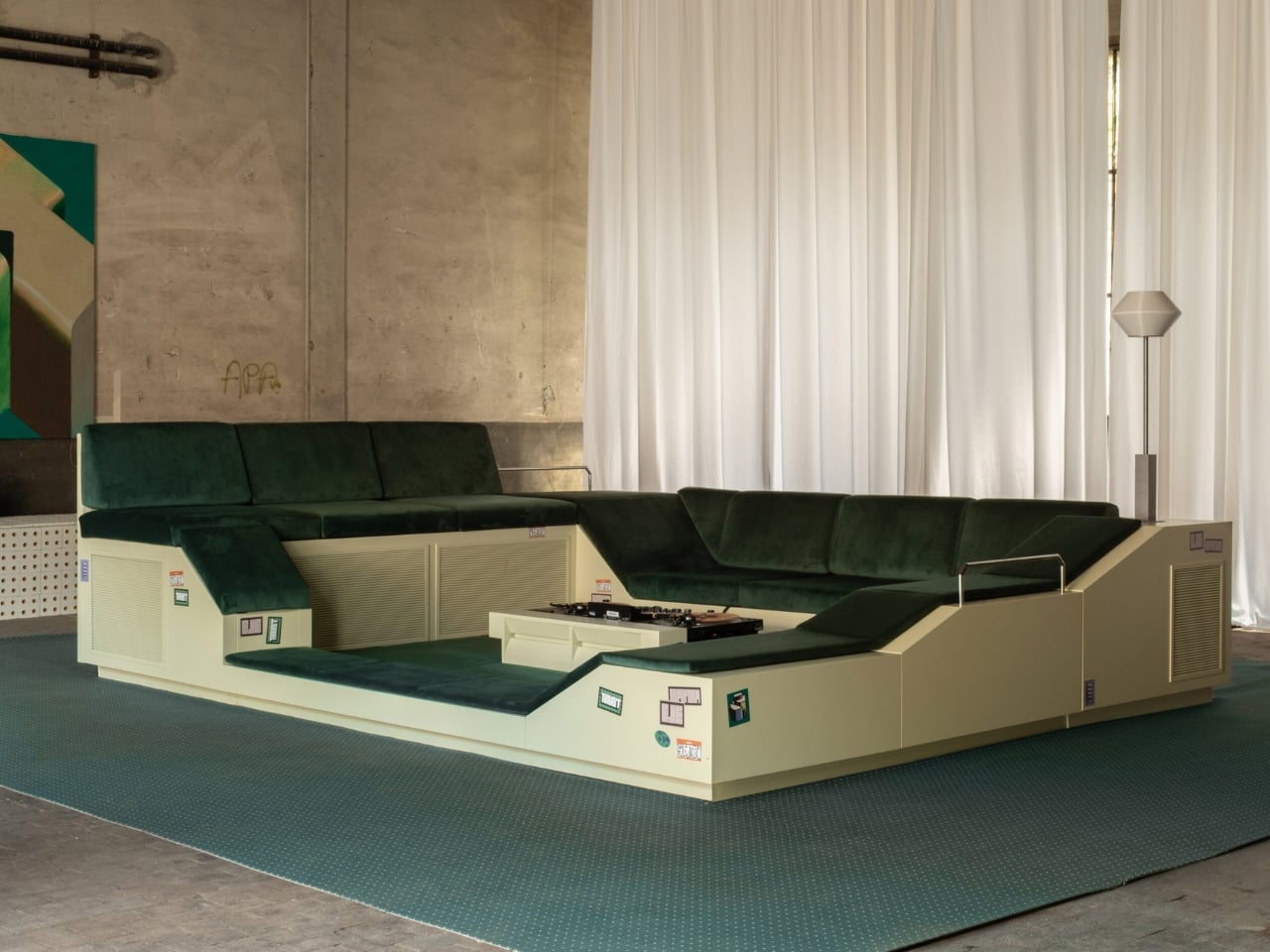
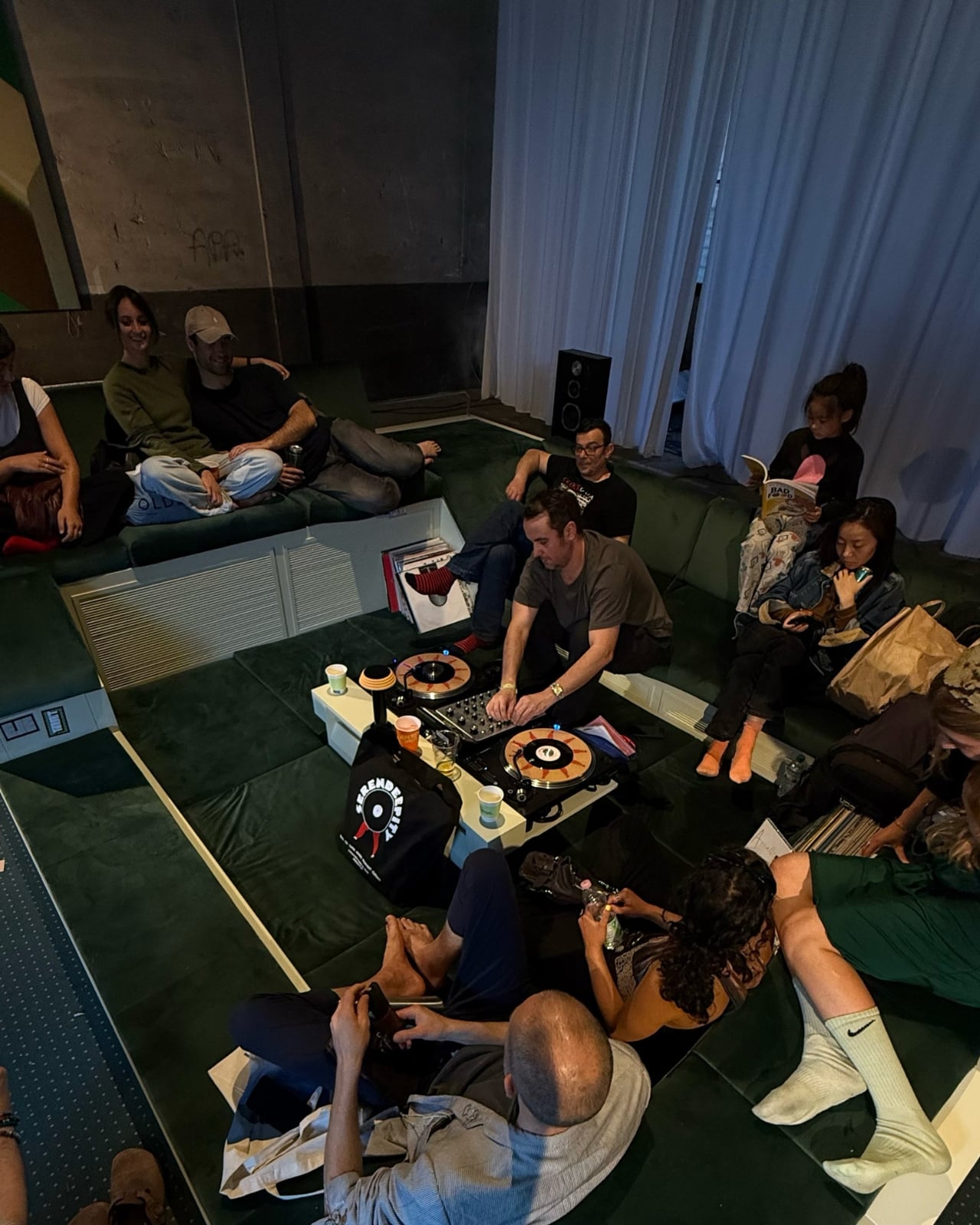
This Inflatable Sofa Packs Into a Bag and Still Sits Like Real Furniture

There’s a quiet tension in how most furniture is still designed. Sofas are built to stay put, claiming floor space indefinitely, whether you need them there or not. Meanwhile, the way people actually use their homes has shifted considerably, moving between indoors and outdoors, hosting spontaneously, clearing space for workouts or kids, and treating balconies and terraces as proper extensions of their living areas.

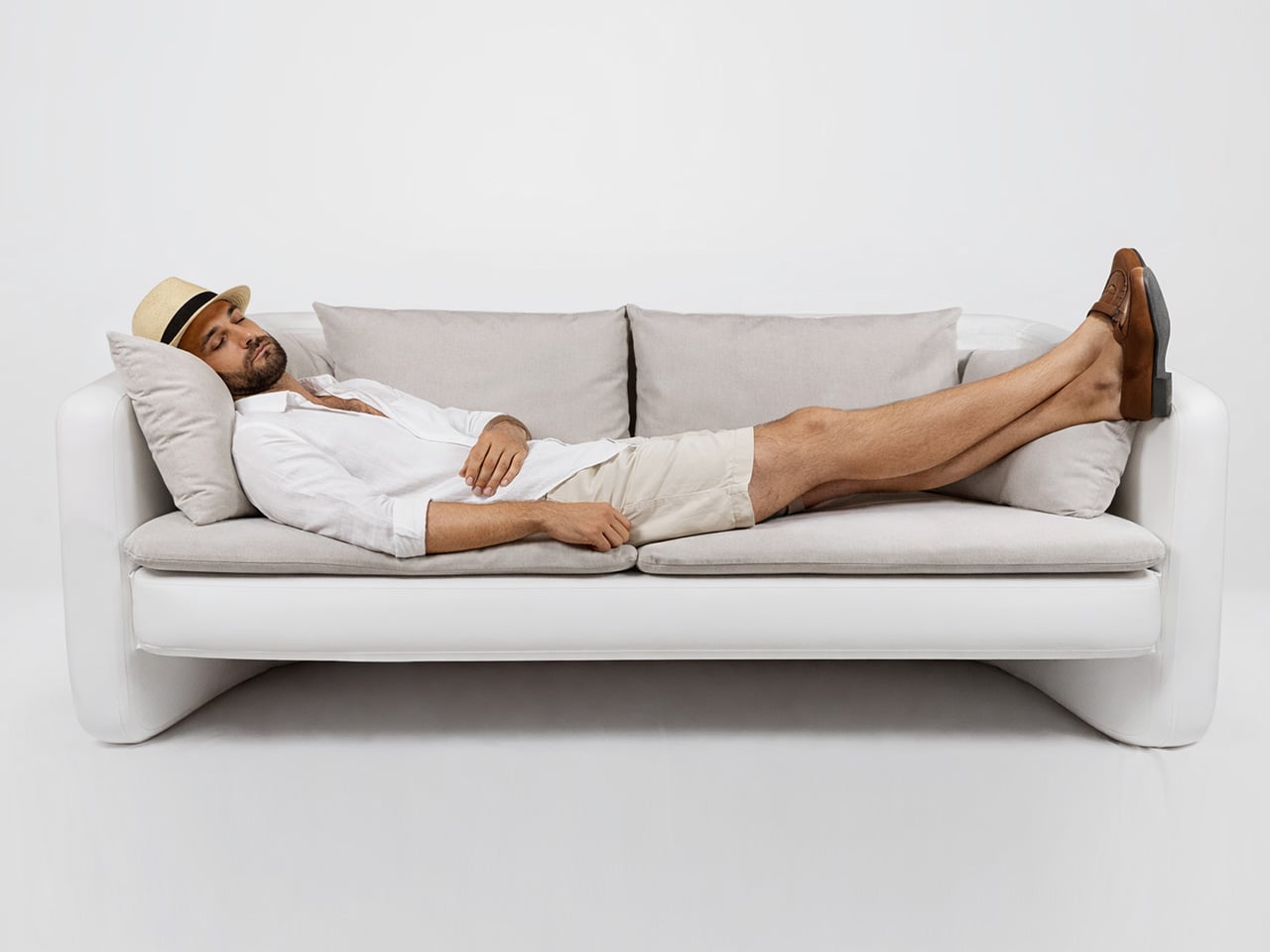
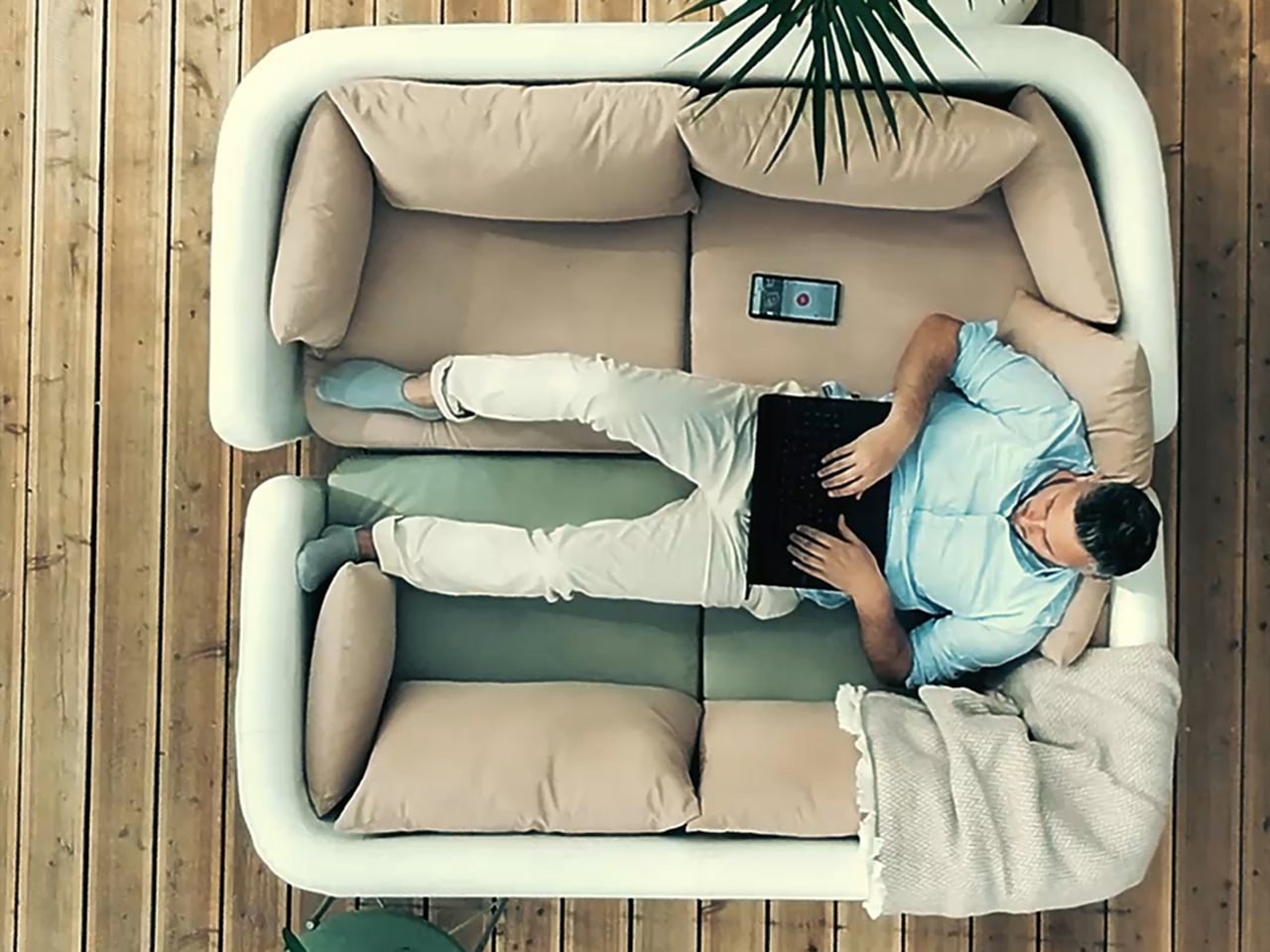
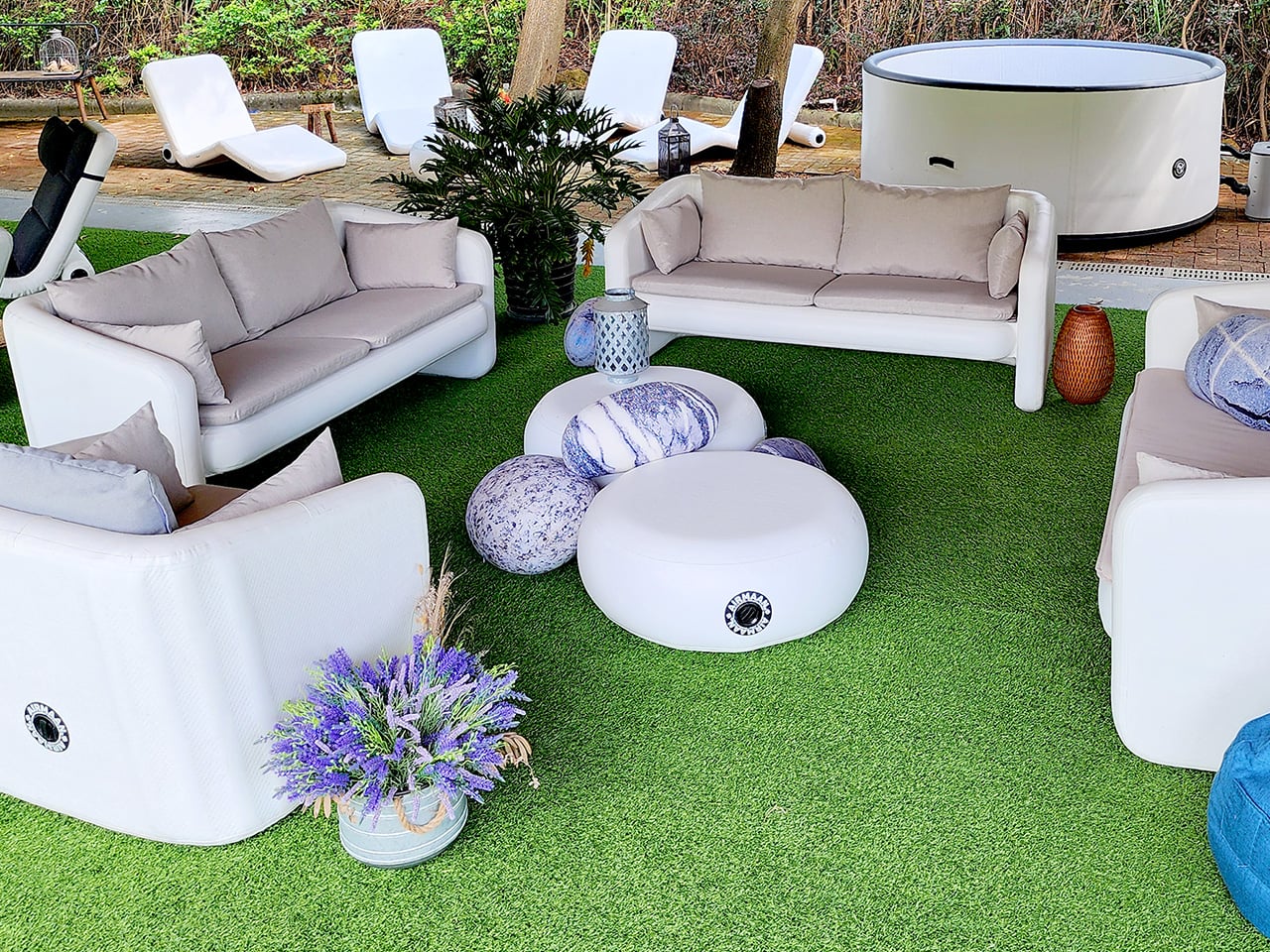
That’s the gap Airmaan’s M Sofa is designed to fill. Rather than asking you to choose between comfort, portability, and design, the M Sofa brings all three together in an inflatable sofa that looks and sits like proper furniture. It can serve as your primary home setup year-round and then disappear into a bag the moment you need the space cleared or want to take it somewhere else entirely.

Designer: Airmaan

Click Here to Buy Now: $233 $466 (50% off). Hurry, only 38/50 left! Raised over $118,000.

One of the more underrated things it does is give space back. Fixed furniture occupies a room all the time, even when you’d rather use that area for something else. With M Sofa, a terrace can be a lounge one afternoon and completely open the next morning. The same goes for living rooms and balconies. You can deflate it, pack it away, and reset the space in minutes.

Of course, an innovative sofa would be pointless if it didn’t offer comfort, and thankfully, the M Sofa delivers. The seat and backrest are set at a natural resting angle, with smooth, rounded edges and no pressure points, giving you enough support for extended stretches. There’s a subtle firmness to the inflated structure that feels more like a well-tuned mattress than a balloon, and you can adjust it simply by changing the air pressure.

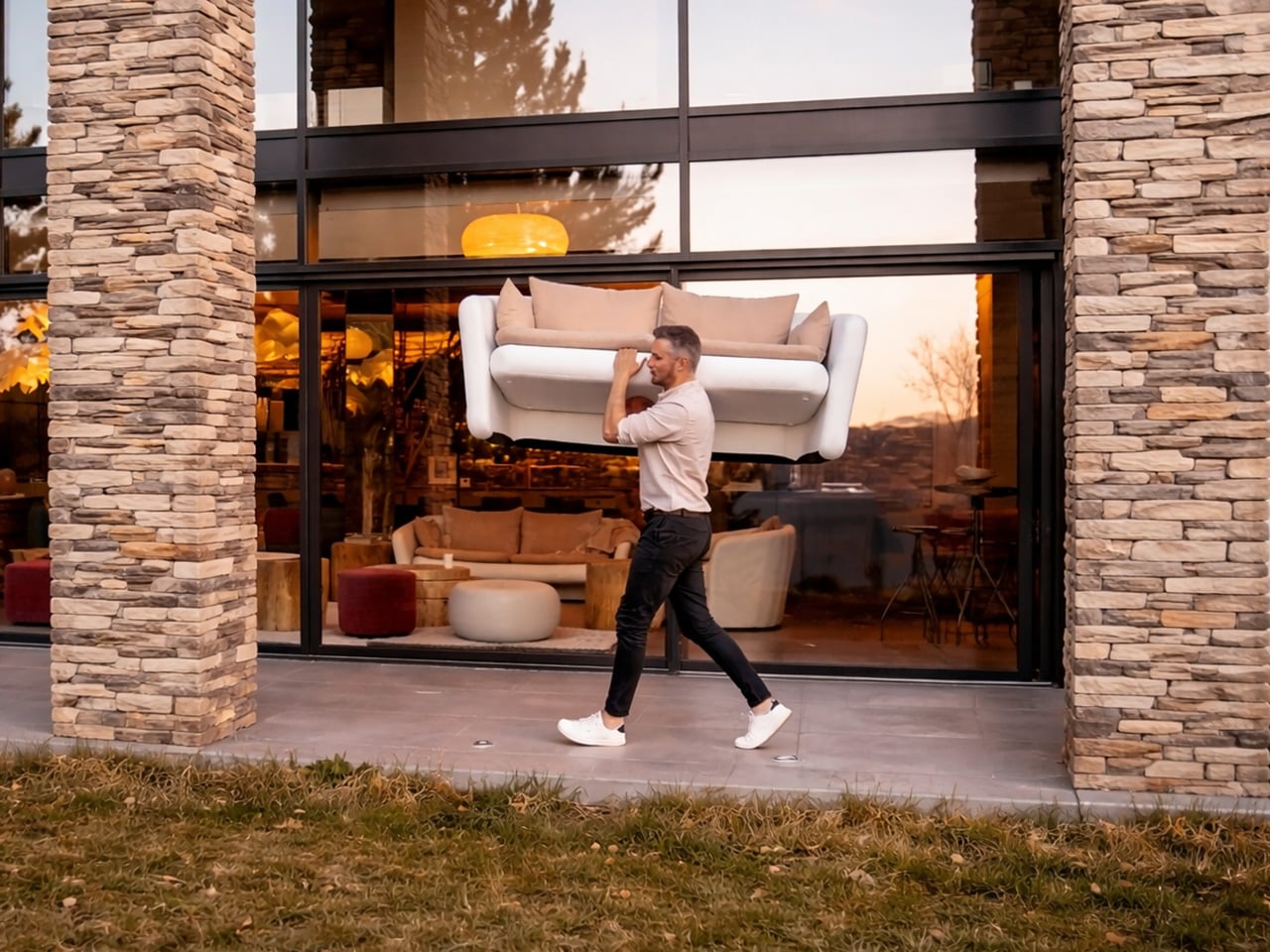
Man carrying a white sofa with beige cushions past a glass storefront at sunset.

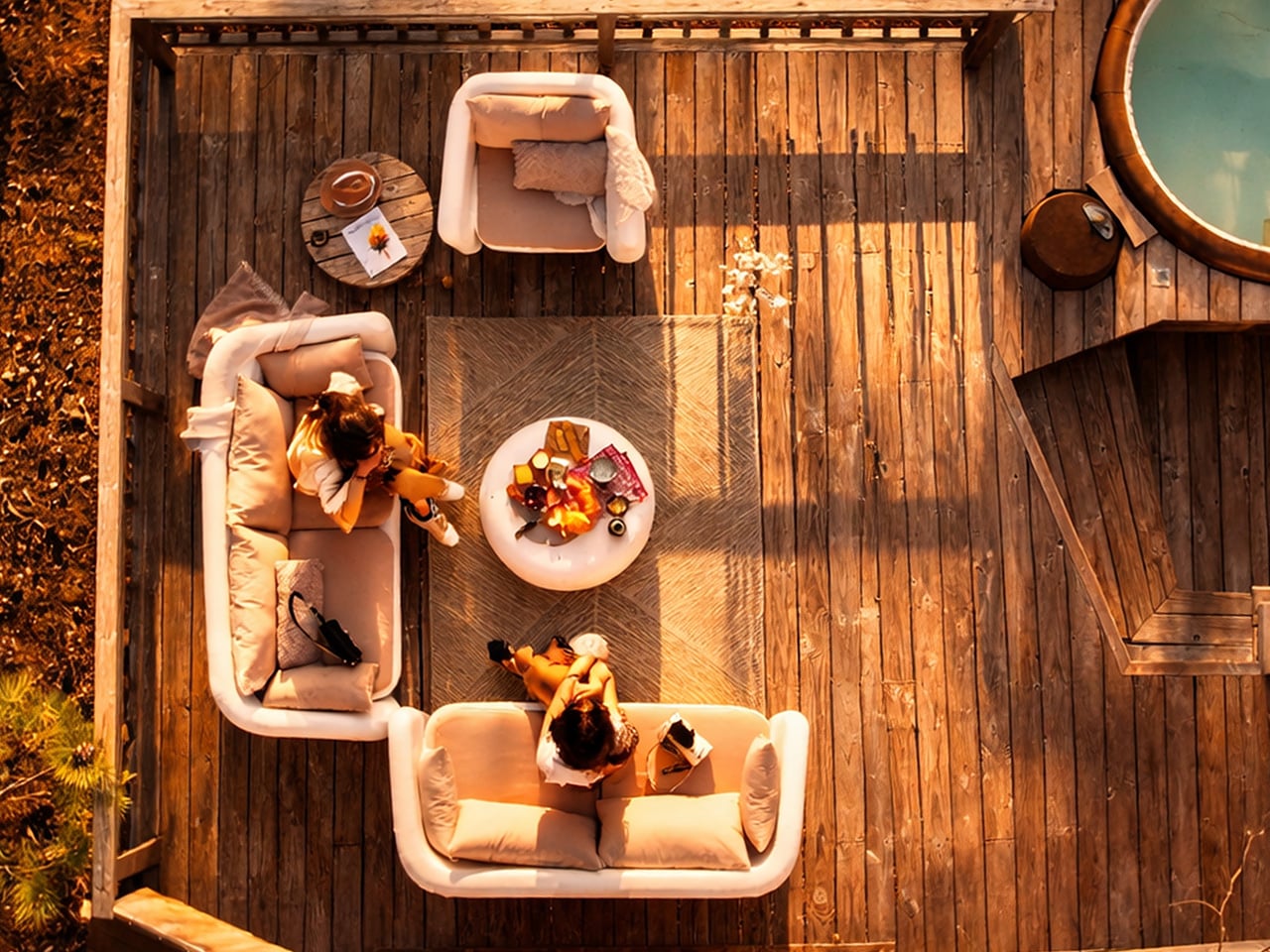
Despite preconceived notions about inflatable sofas, the M Sofar is at home indoors and outdoors. In fact, it thrives on moving between spaces. It can sit on a garden terrace for a lazy morning, get moved poolside for the afternoon, and come back indoors for the evening without any real effort. That kind of fluidity isn’t something traditional outdoor furniture can offer, especially not without the weight, bulk, and maintenance that come with most permanent garden setups.

With inflatable furniture, durability is naturally a major cause for concern. To that end, the M Sofa was designed around a high-strength inflatable structure rooted in dropstitch technology, the same kind used in marine and aerospace applications. Its outer shell is fully waterproof, resistant to UV exposure, salt, sand, and temperature extremes, and the bonded, airtight construction keeps the air in for weeks at a time rather than days.

M Sofa’s portability also goes beyond deflating and rolling up some heavy and cumbersome material. It packs down into a bag compact enough to carry by hand or throw in a car trunk, which means it can go to the beach, a mountain setting, or a camping spot just as easily as it moves from your garden to your living room.

The M Sofa is part of a broader collection that includes the N Club Chair and a matching side table, so you can put together a proper lounge arrangement rather than a single seat. That modular nature means you can expand for a gathering or pare things down for a quieter setup, without having to own separate furniture for separate occasions.

What makes the M Sofa worth paying attention to has less to do with the inflation angle and more with what it says about furniture design broadly. The more interesting question isn’t whether an inflatable sofa can look good; it’s whether furniture should still be the heaviest, most permanent object in a room. For a growing number of people, the honest answer is that it probably doesn’t need to be, and the M Sofa proves it.

Click Here to Buy Now: $233 $466 (50% off). Hurry, only 38/50 left! Raised over $118,000.

The post This Inflatable Sofa Packs Into a Bag and Still Sits Like Real Furniture first appeared on Yanko Design.
Elanco Made Dog-Shaped Furniture Because Your Sofa Has a Flea Problem

Pet ownership and interior design have always had an uneasy relationship. You pick out a sofa carefully, and within months, it’s covered in fur, scratch marks, or the lingering evidence of a bad flea season. Design spaces rarely acknowledge the animal that shares the room, and pet health brands rarely think to communicate through furniture. Most of the time, these two worlds simply don’t talk to each other.

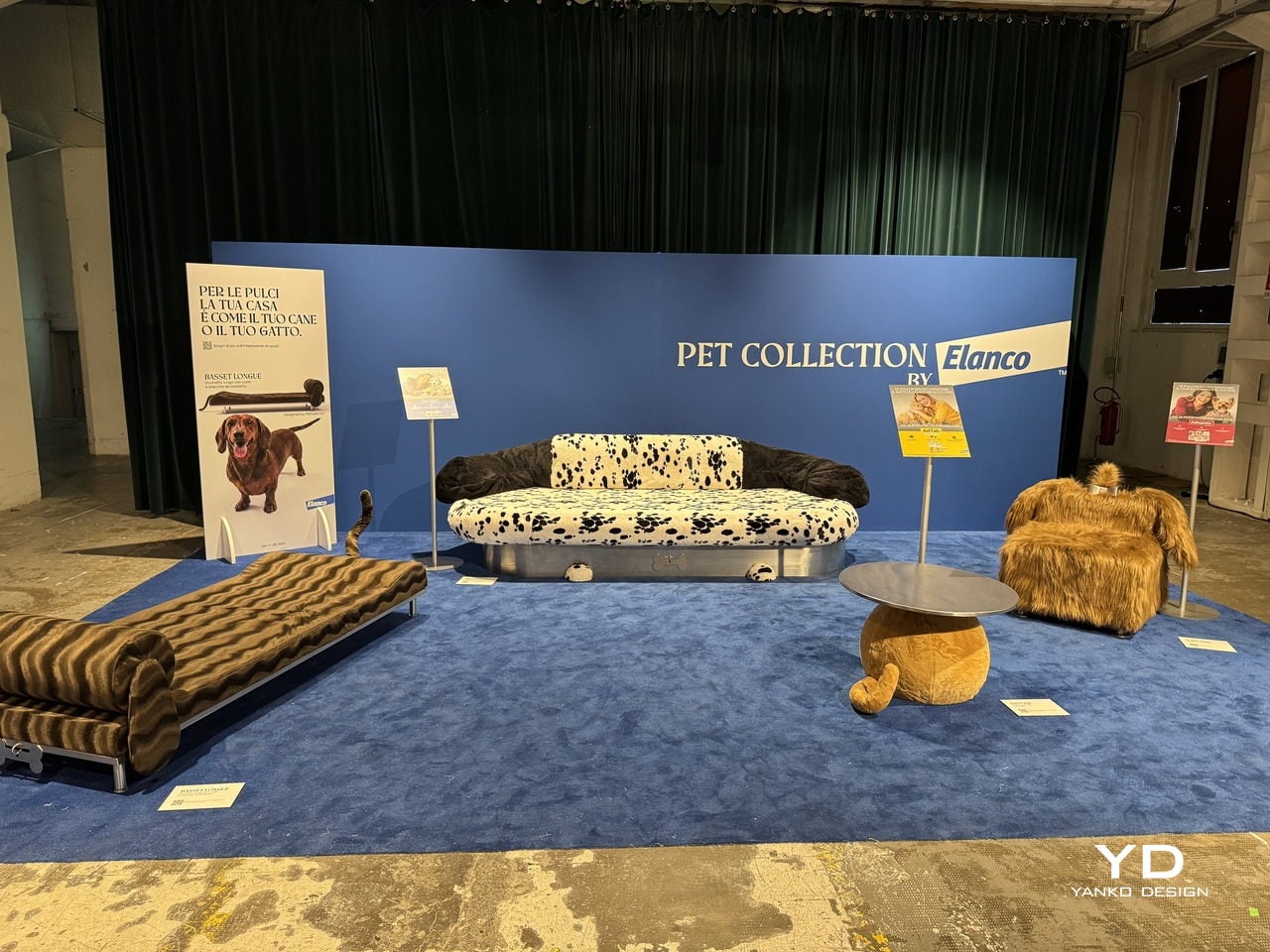
Elanco, a global animal health company, had other ideas. For the 2026 Fuorisalone, it partnered with Milan-based architecture and design studio Parasite 2.0 to bring the Pet Collection to BASE Milano. The result is a limited-edition series of four pet-inspired furniture pieces that are equal parts campaign, design statement, and visual joke, all presented at one of Milan’s most forward-thinking creative venues.

Designers: Elanco, Parasite 2.0

The whole thing starts from a simple but uncomfortable truth. Fleas don’t just live on pets; they infest homes too, spreading through the furniture and floors that pets and people share. Elanco’s point is that your sofa and your dog aren’t as different as you think, at least not from a flea’s perspective. The collection makes that idea impossible to ignore.

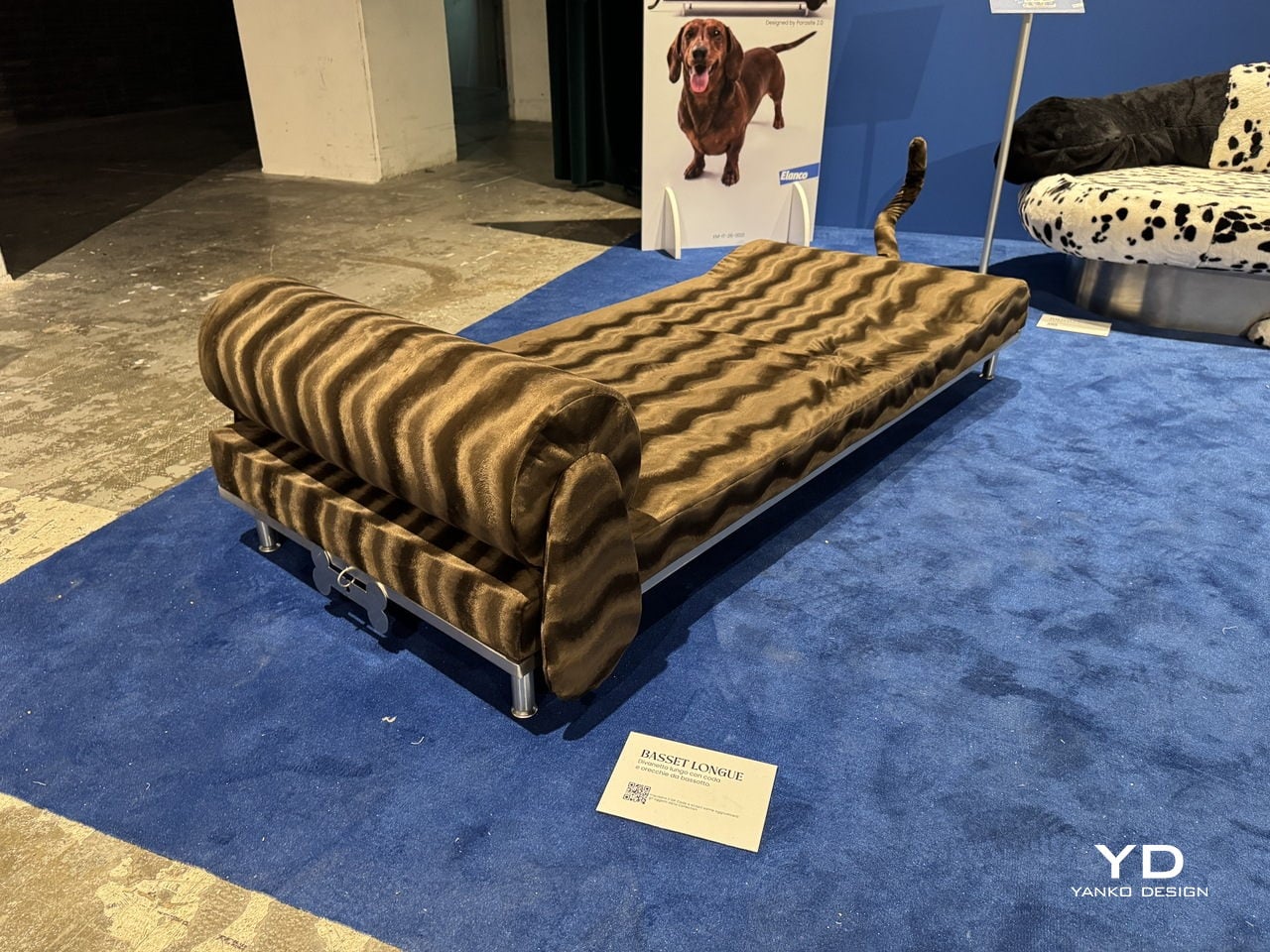
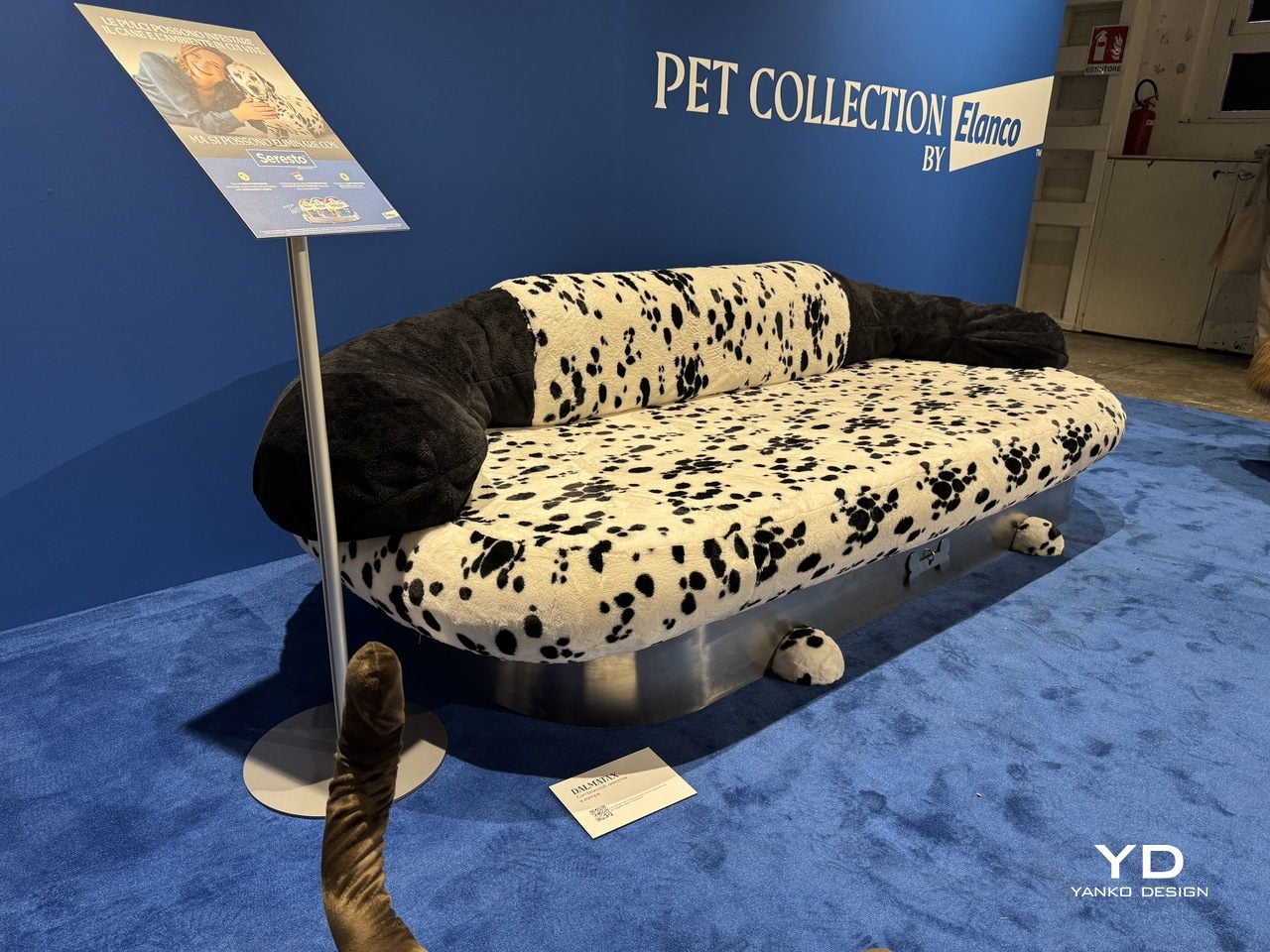
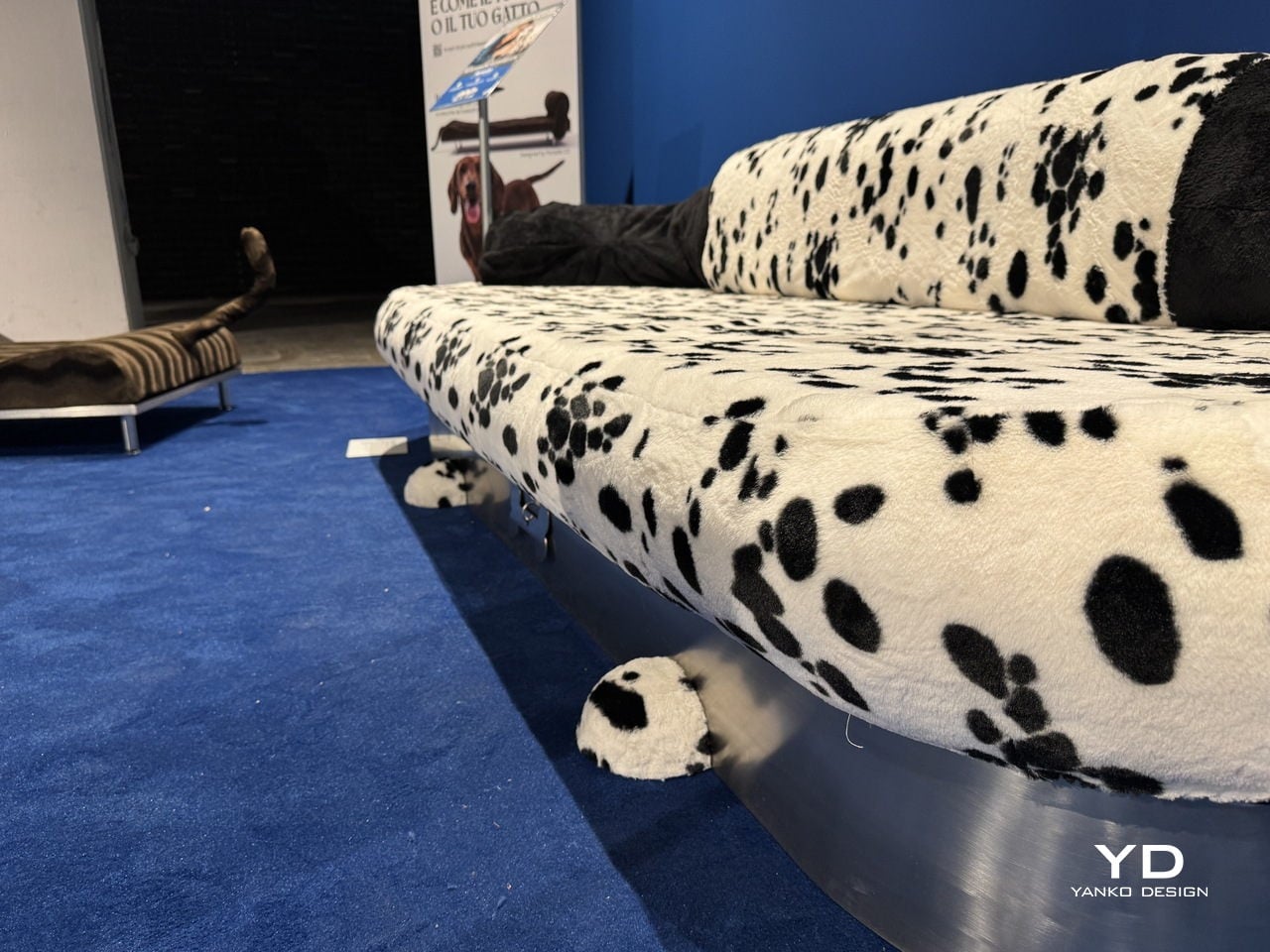
Each piece is a pun on both a breed and a furniture type. The Basset Longue is a chaise longue upholstered in wavy, brown-striped faux fur, shaped after a Basset Hound, and mounted on chrome legs with a tail detail at one end. The Dalmatian is a wide sofa in black-spotted white plush with dark, rounded backrests that look like a dog curled up in place.

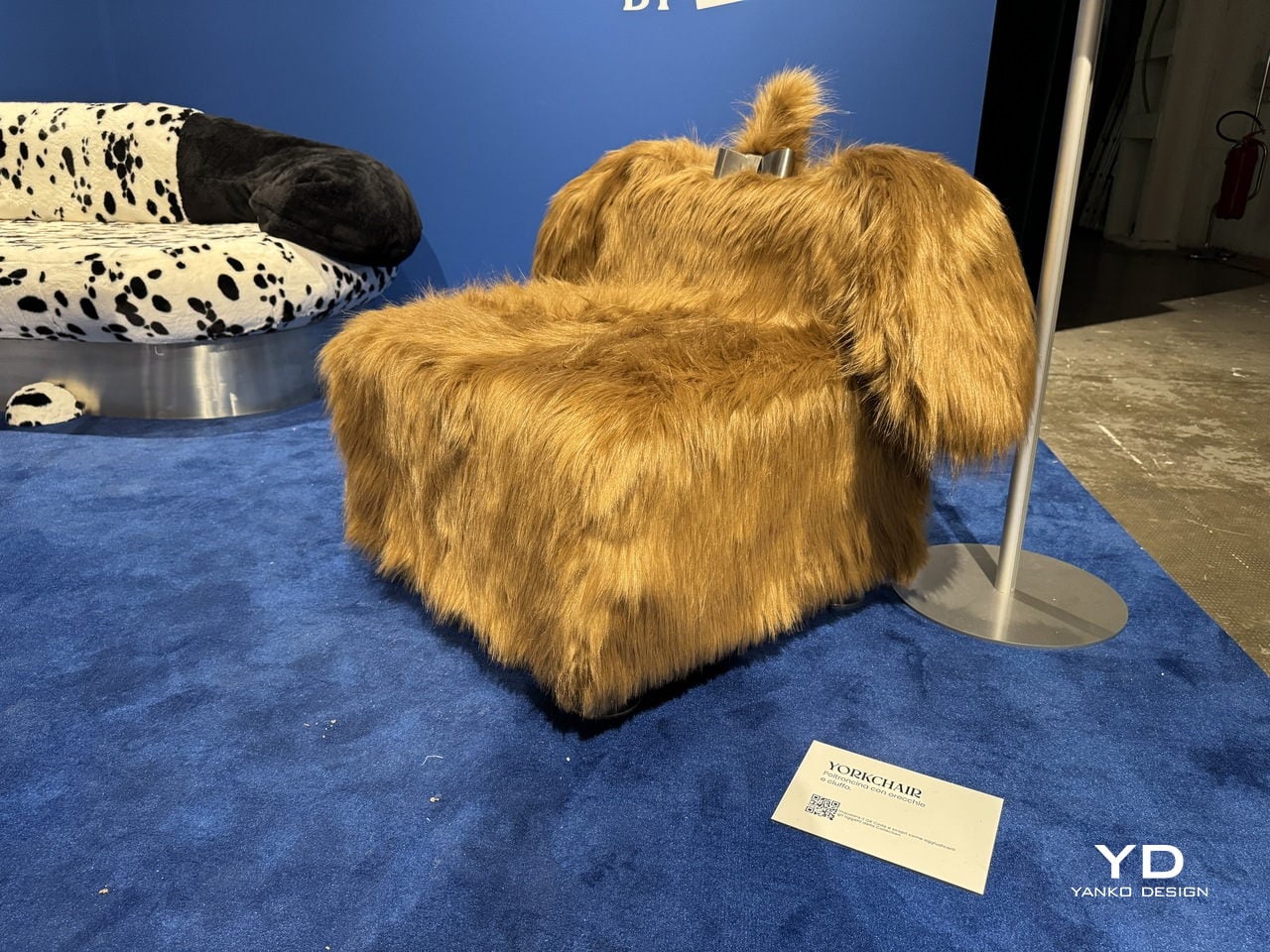
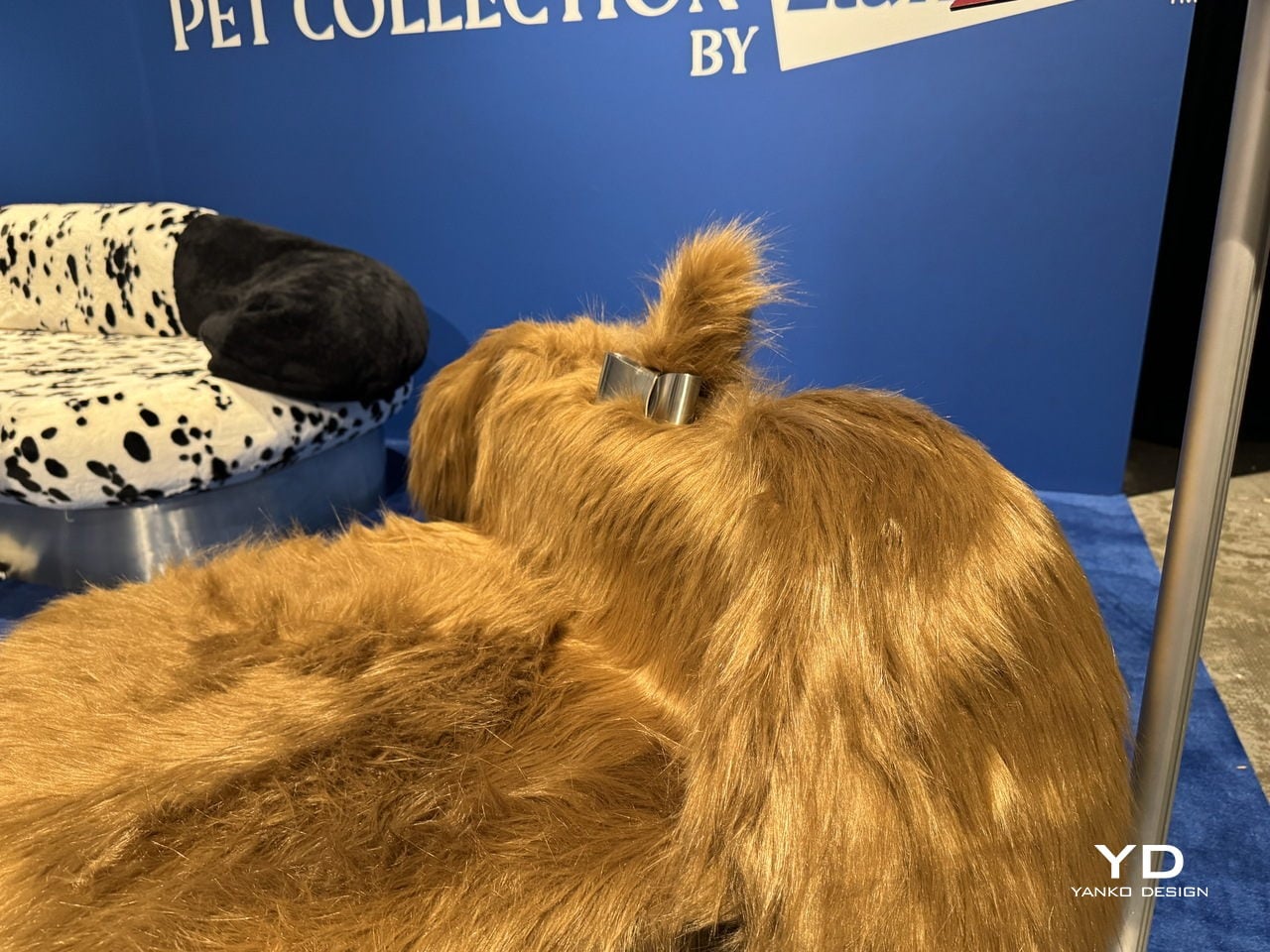
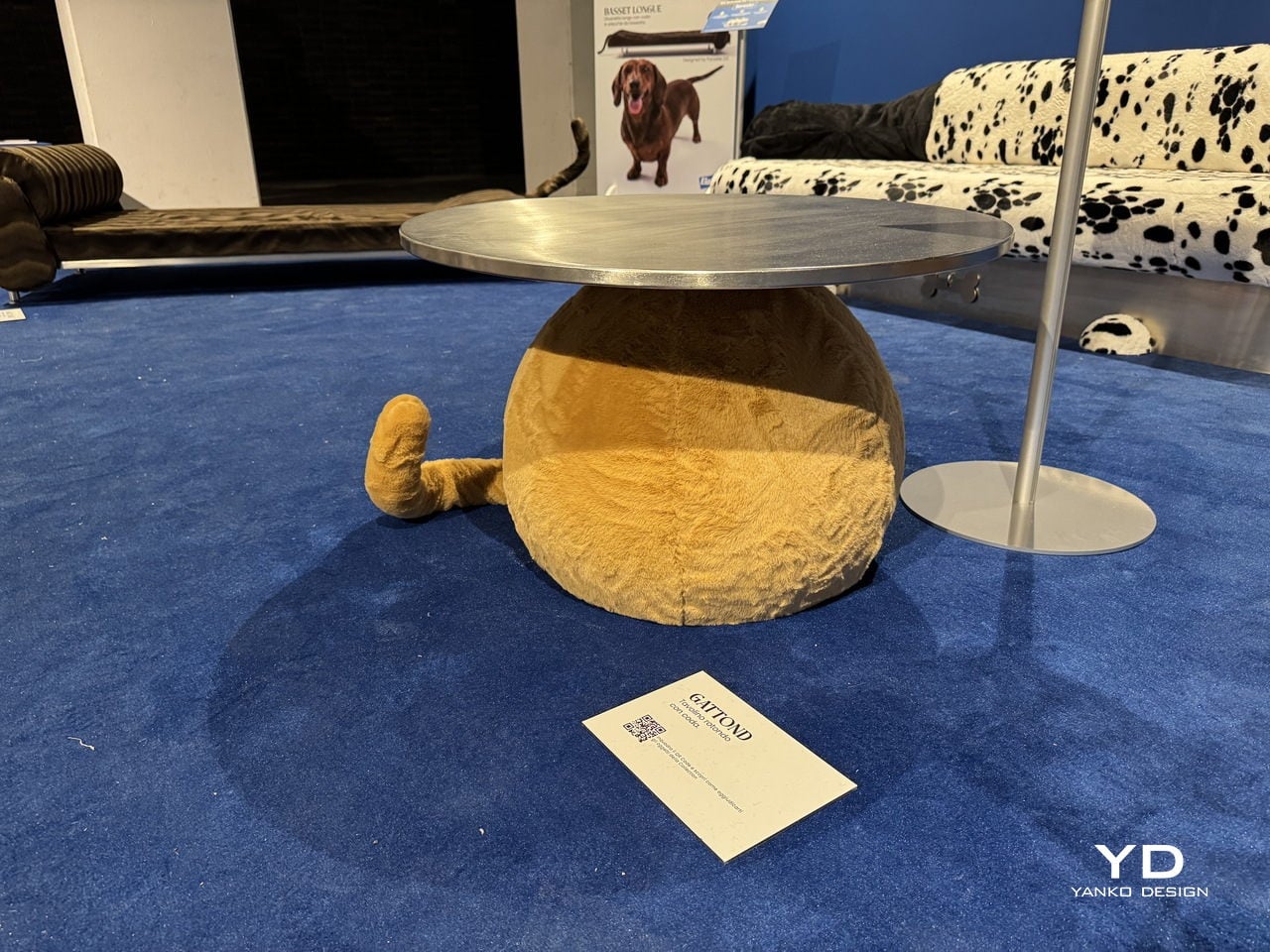
The Yorkchair is a chunky armchair draped entirely in long, golden faux fur with a small chrome detail on the back, very much like a Yorkshire Terrier wearing a collar. Then there’s the Gattond, which departs from the canine theme and becomes a feline-inspired coffee table, its polished metal top sitting on a rounded, fuzzy golden base with a tail sticking out from the side.

The Pet Collection is on view at BASE Milano as part of the 2026 Fuorisalone, and it’s the kind of exhibit that sticks with you long after you’ve left the room. Not because the furniture is particularly comfortable, mind you, but because the message is hard to unsee once you’ve seen it. Your sofa and your dog are, apparently, not so different after all.

The post Elanco Made Dog-Shaped Furniture Because Your Sofa Has a Flea Problem first appeared on Yanko Design.
This Lounge Chair’s Shape Is Precisely Why Two of Them Make a Sofa

Modular seating tends to be either complicated or a compromise. The sectional sofa has never really solved the fundamental problem that living situations change, people move, and the enormous L-shaped configuration that worked in your last apartment probably doesn’t fit your new one. Furniture that adapts to circumstance sounds like an obvious idea, but the designs that actually pull it off cleanly remain surprisingly rare.

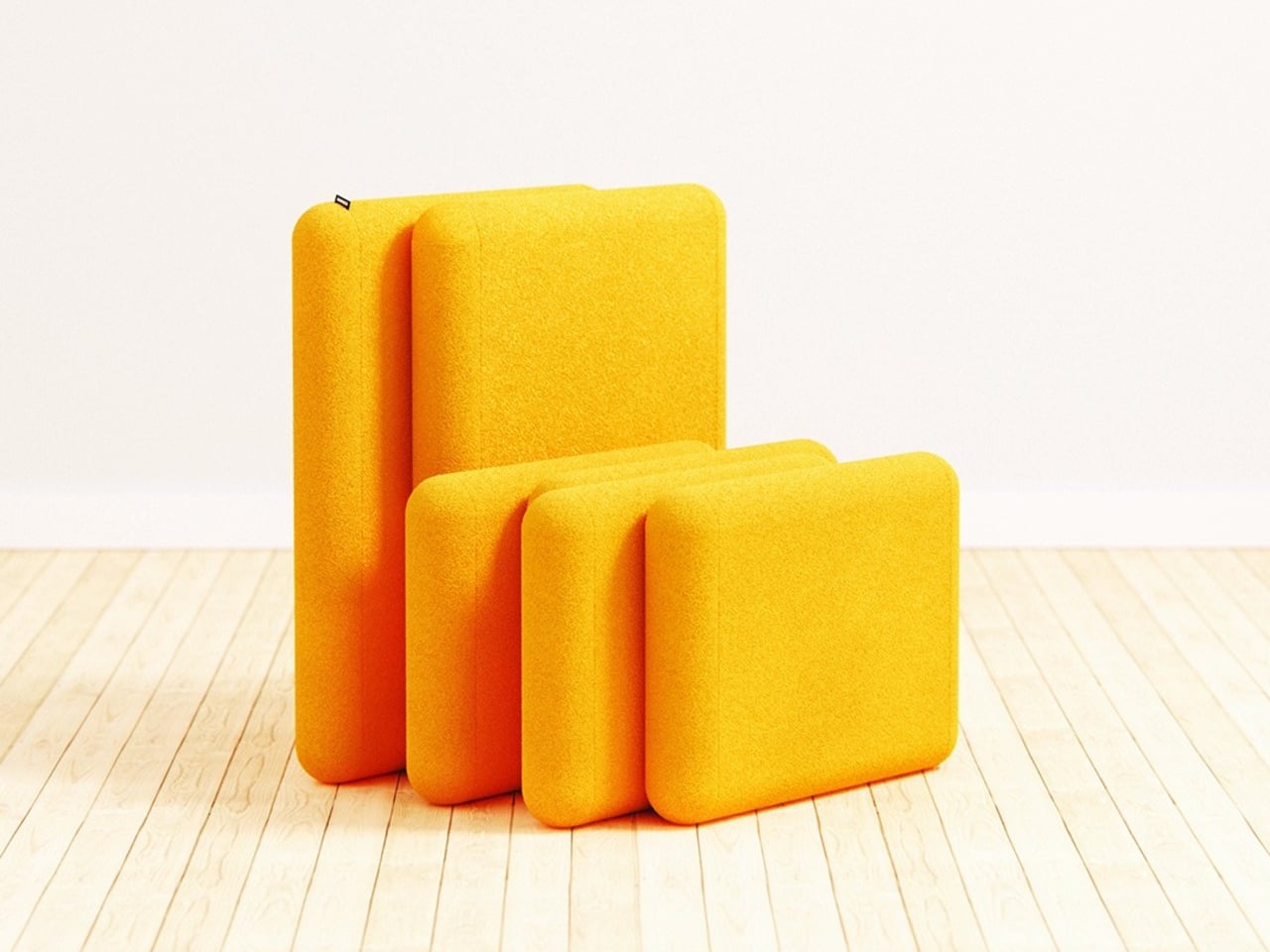
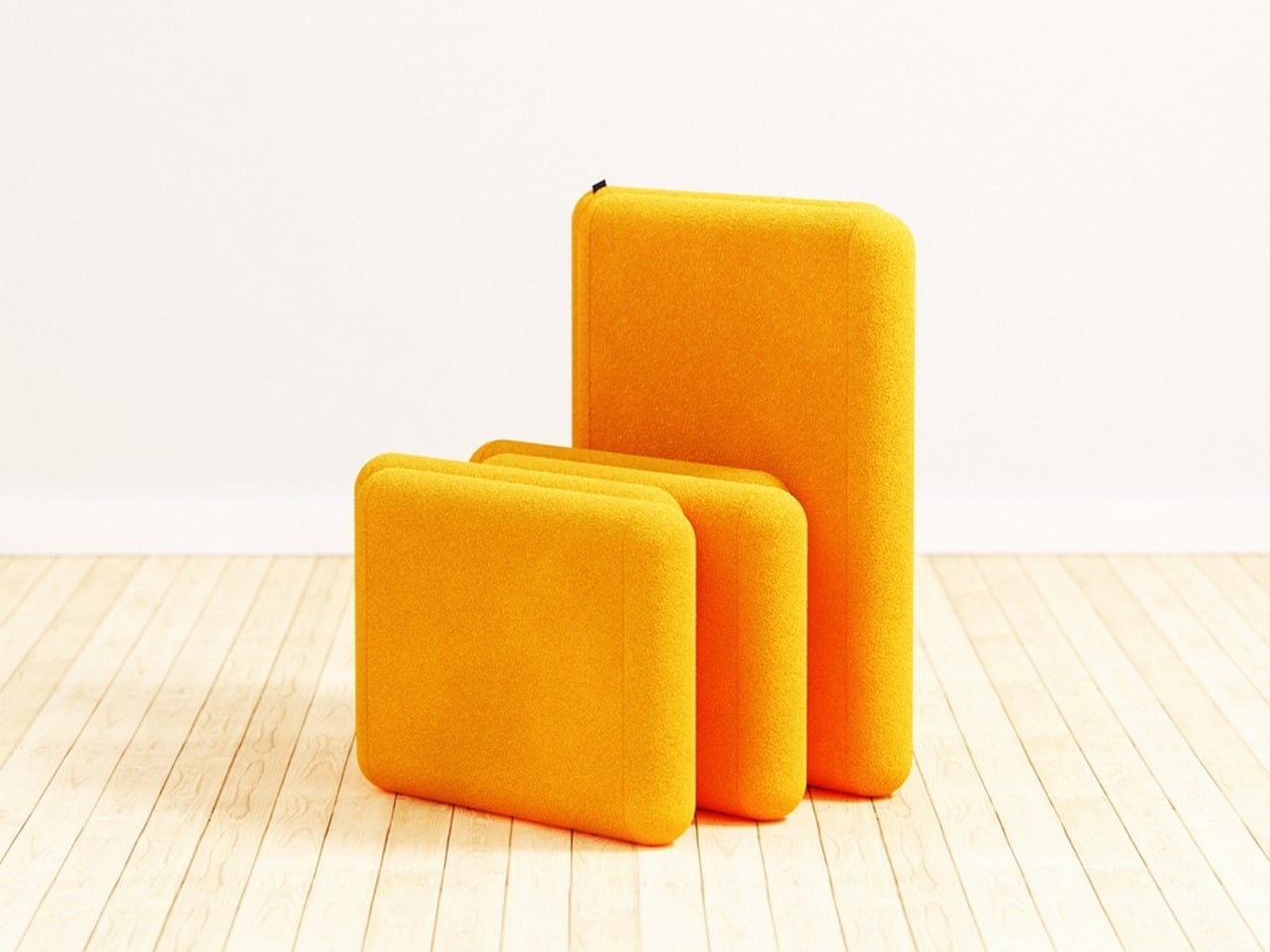
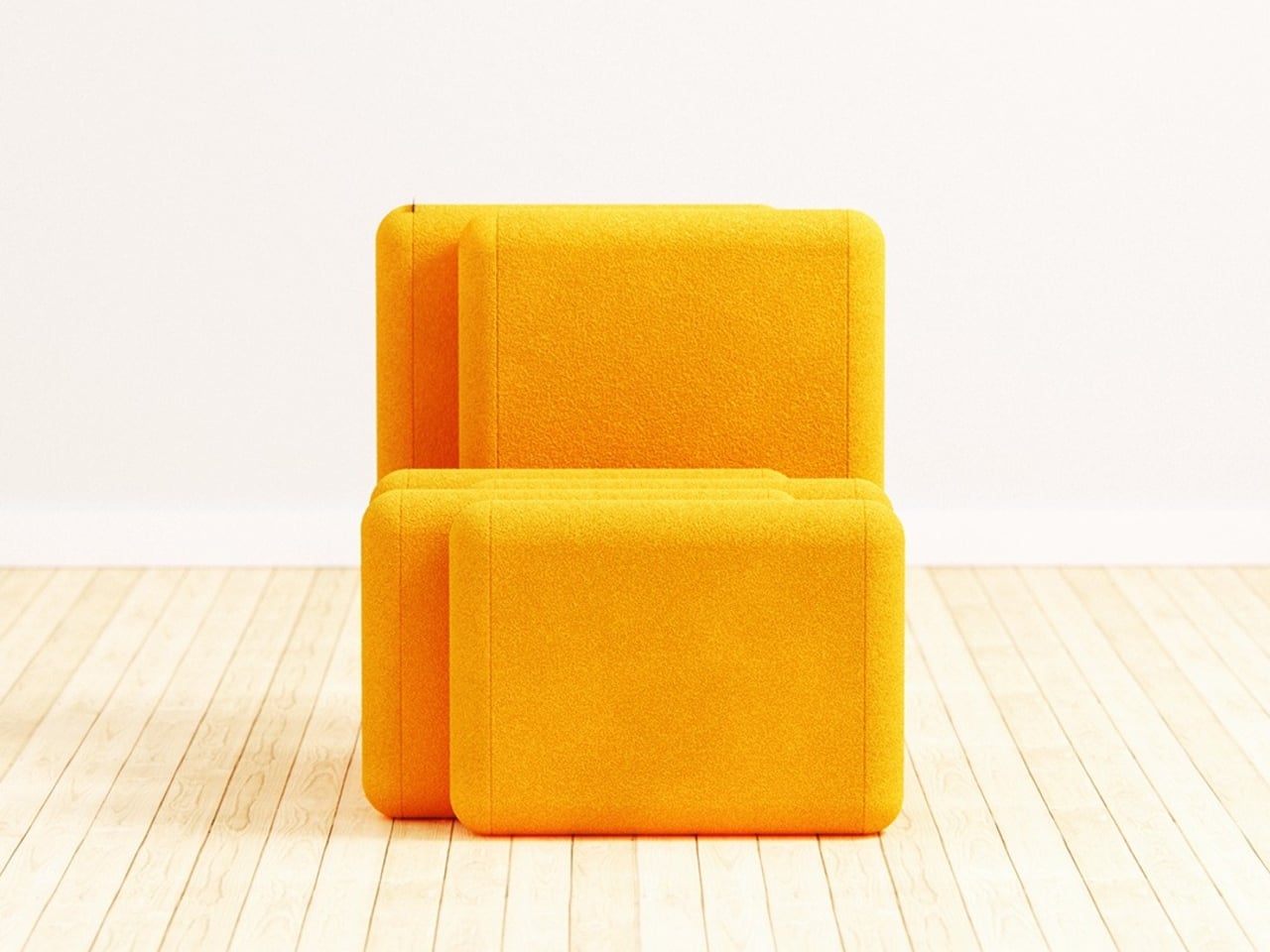
Liam de la Bedoyere, the designer behind Bored Eye Design, takes a direct approach to the problem with Bunch, a modular seating concept that begins from a deceptively simple premise. Each unit is a fully functional lounge chair on its own. The idea, however, is that it was designed from the beginning to combine with others, and the way it does that is where the concept gets genuinely interesting.

Designer: Liam de la Bedoyere

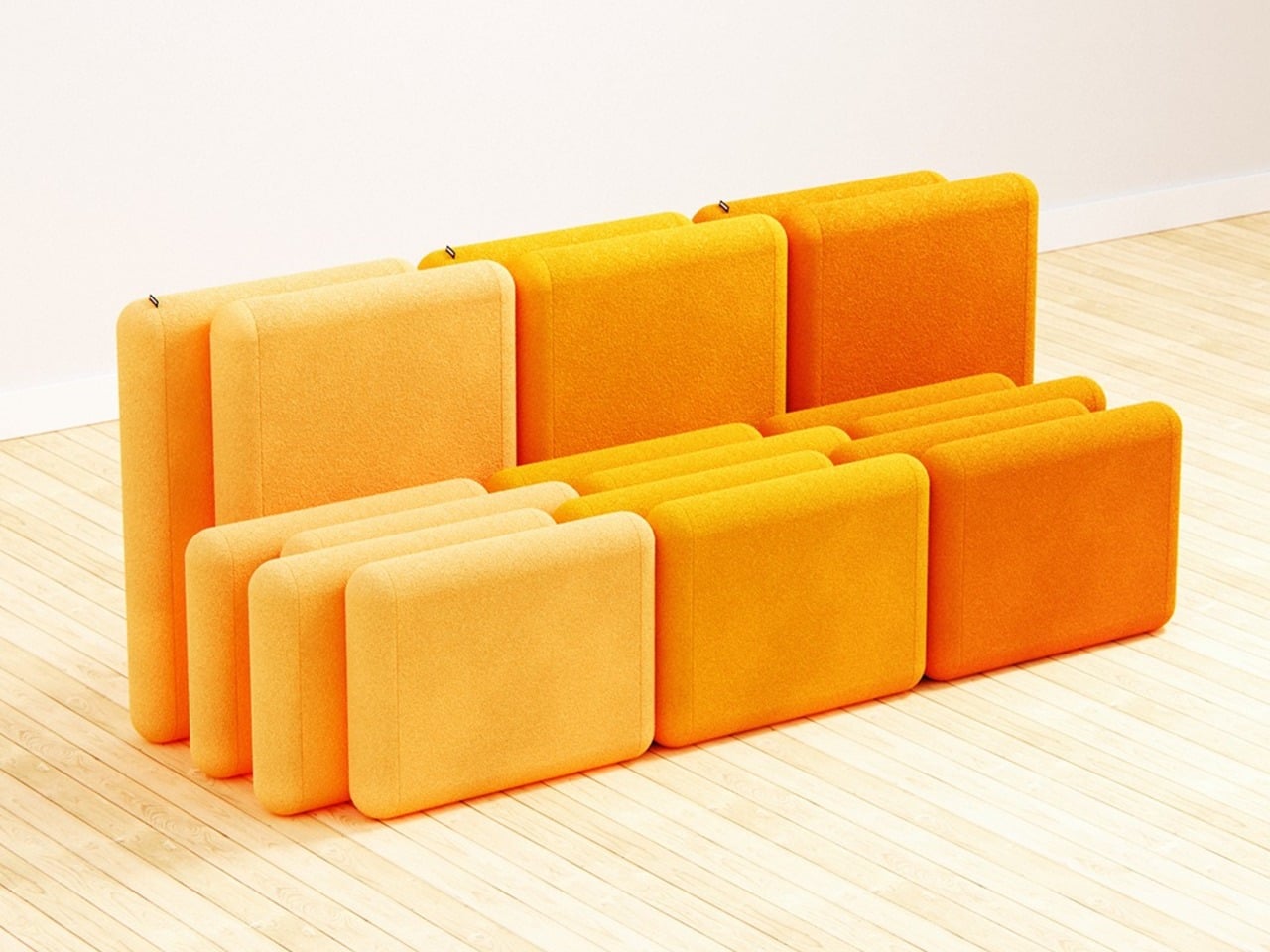
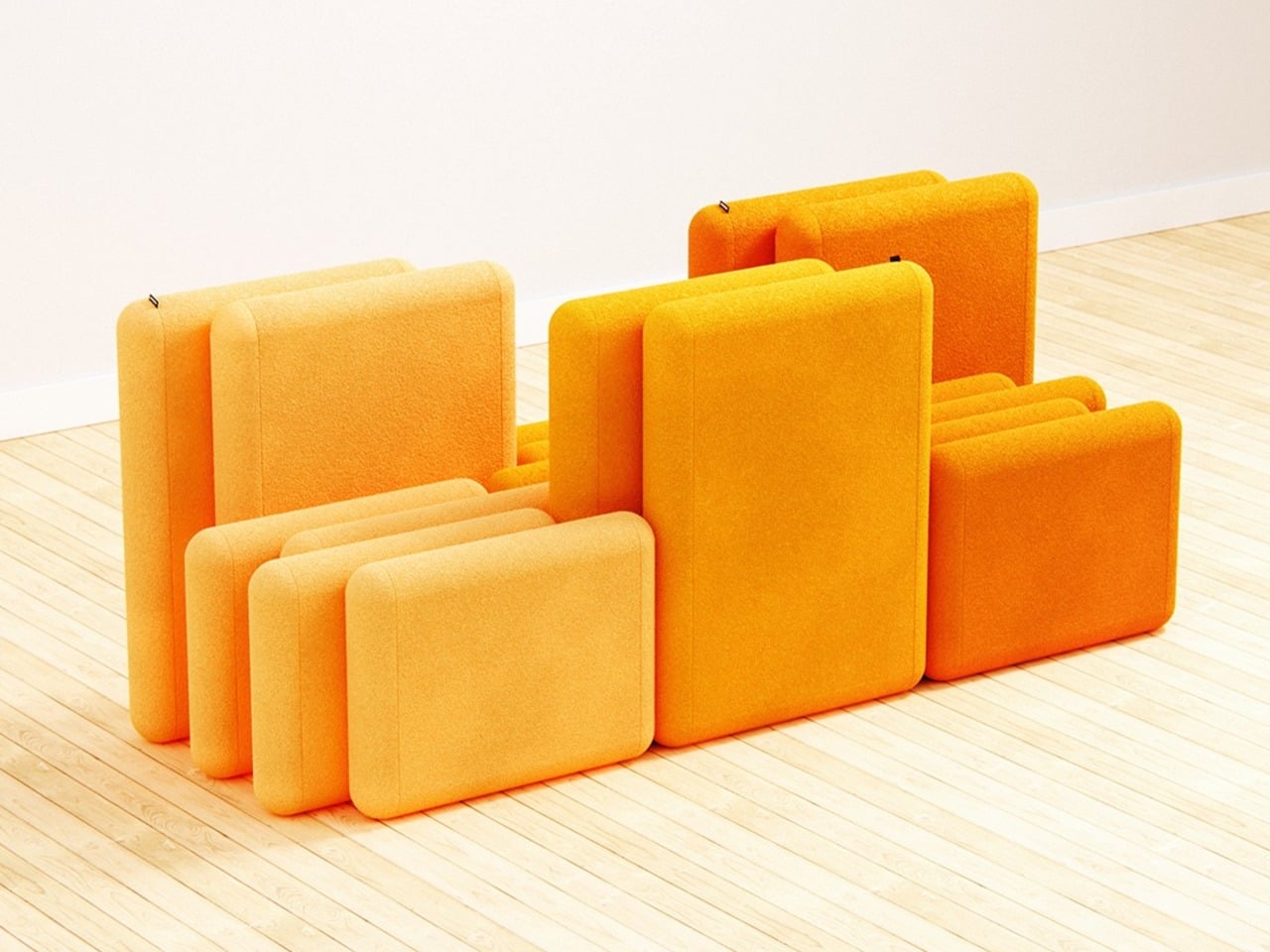
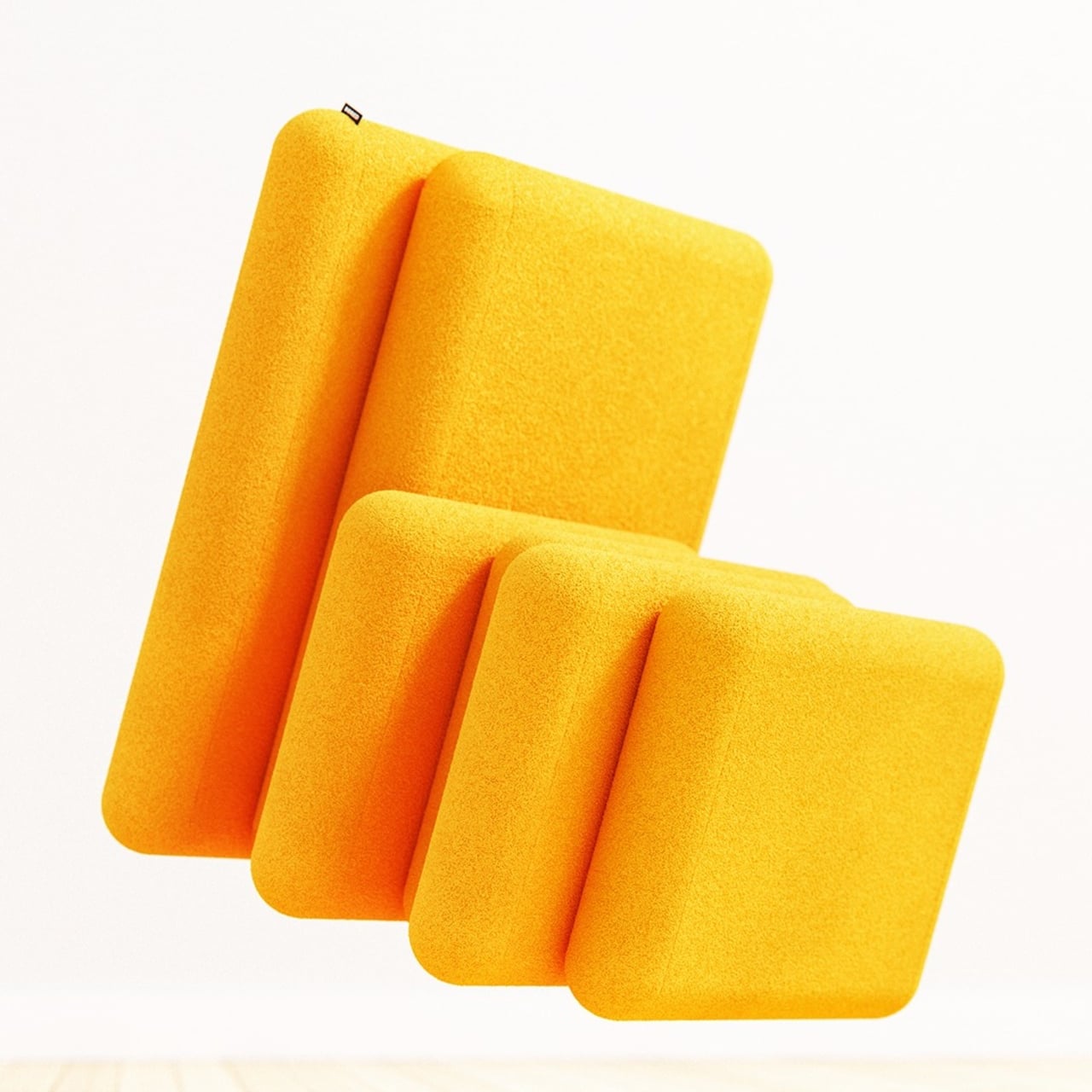
The mechanism is in the staggered relationship between the two parts of each chair. The backrest sits elevated and set back, while the seat extends forward, creating a stepped profile from the side. That offset is precise enough that when a second chair is placed alongside it, the seat of one slides naturally into the space left open by the recessed back of the other. No connectors, no assembly, just geometry.

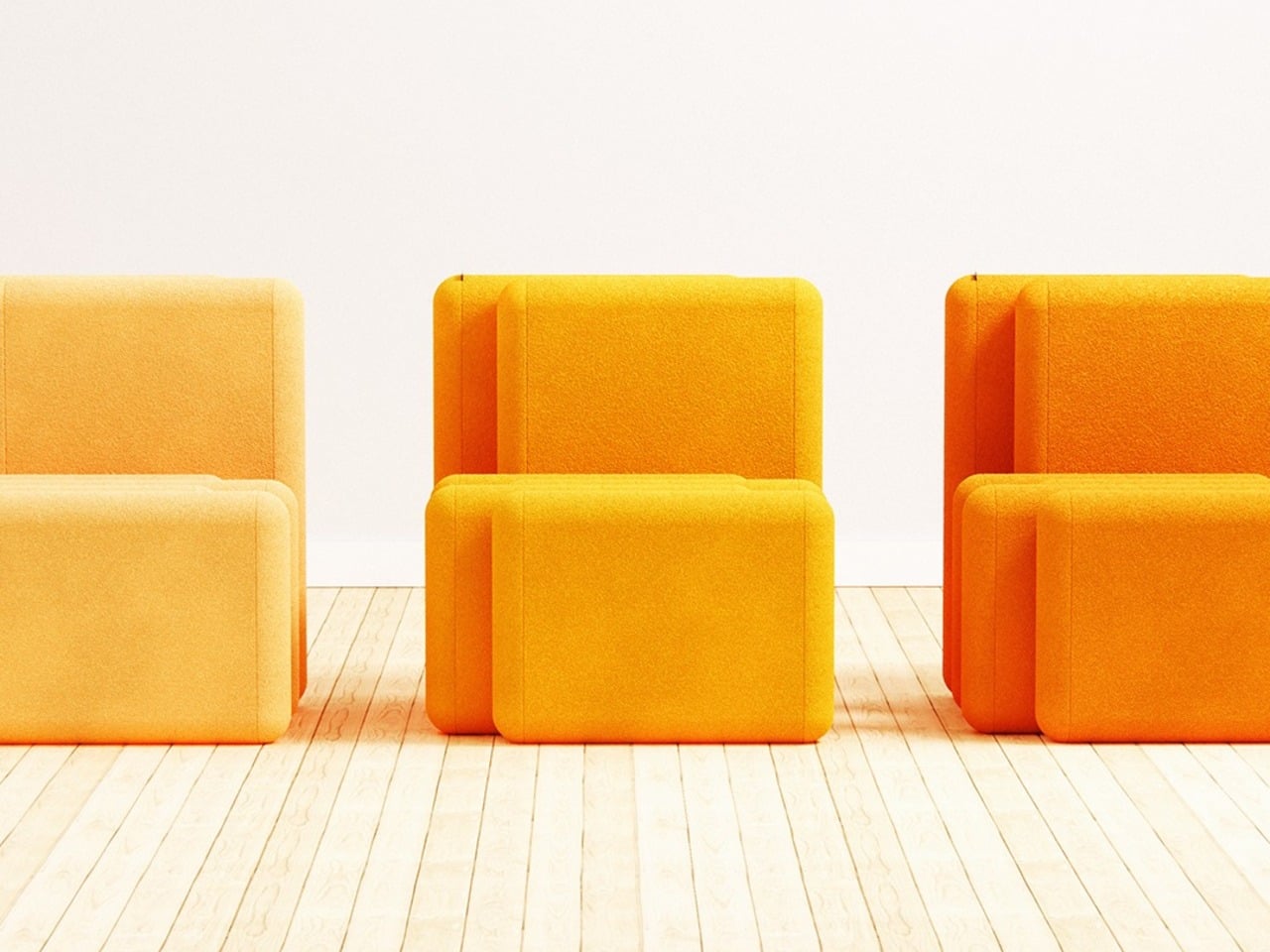
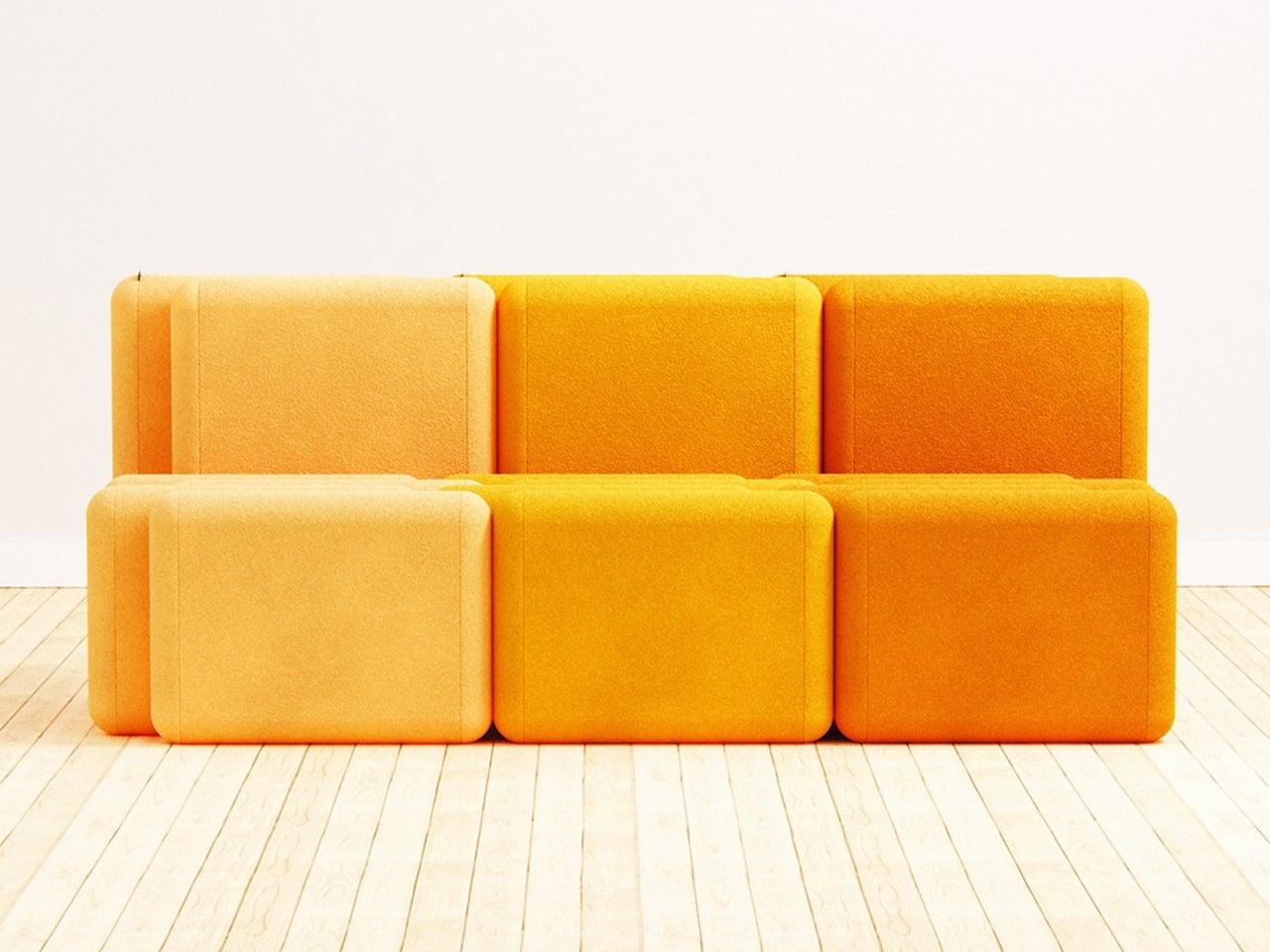
The result, when two or more units are pushed together, is a sofa that reads as a continuous and intentional piece rather than a row of chairs touching each other. The staggered rhythm carries across the joined units, producing a silhouette that looks considered rather than accidental. It’s the kind of configuration that takes a moment to understand, but once you do, it feels like it couldn’t have worked any other way.

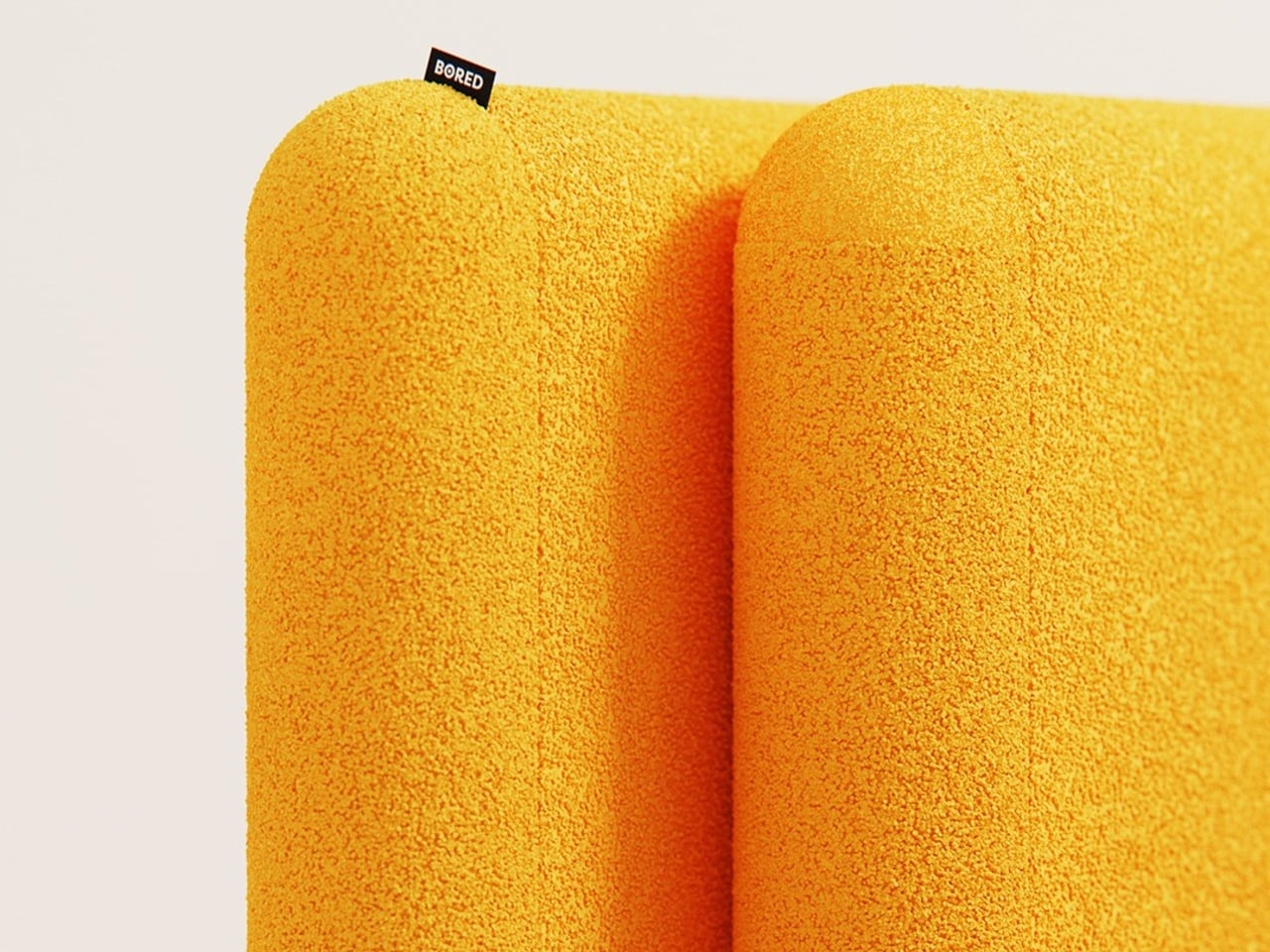
The standalone chair holds up on its own terms, too, and isn’t just a sofa segment that happens to function independently. It sits directly on the floor with no visible legs, giving it a relaxed lounge quality. The proportions keep the form compact enough to live in smaller spaces, which matters when the concept is something you might realistically buy gradually, one unit at a time.

Both the backrest and the seat share the same rounded-rectangle silhouette, upholstered in a thick, textured fabric with the warmth of bouclé. That material, combined with the legless, floor-hugging profile, gives the chair a deliberately unhurried quality, the kind of object that makes a room feel slightly slower and more settled than it did before.

The scalability is part of the appeal. Two units make a small sofa, three make a longer one, and the concept seems to extend indefinitely. When units in different tones are combined side by side, the color contrast adds a visual layer that a single chair doesn’t have. There’s also something honest about a design whose best version requires more than one, an admission that’s built directly into the name.

The post This Lounge Chair’s Shape Is Precisely Why Two of Them Make a Sofa first appeared on Yanko Design.
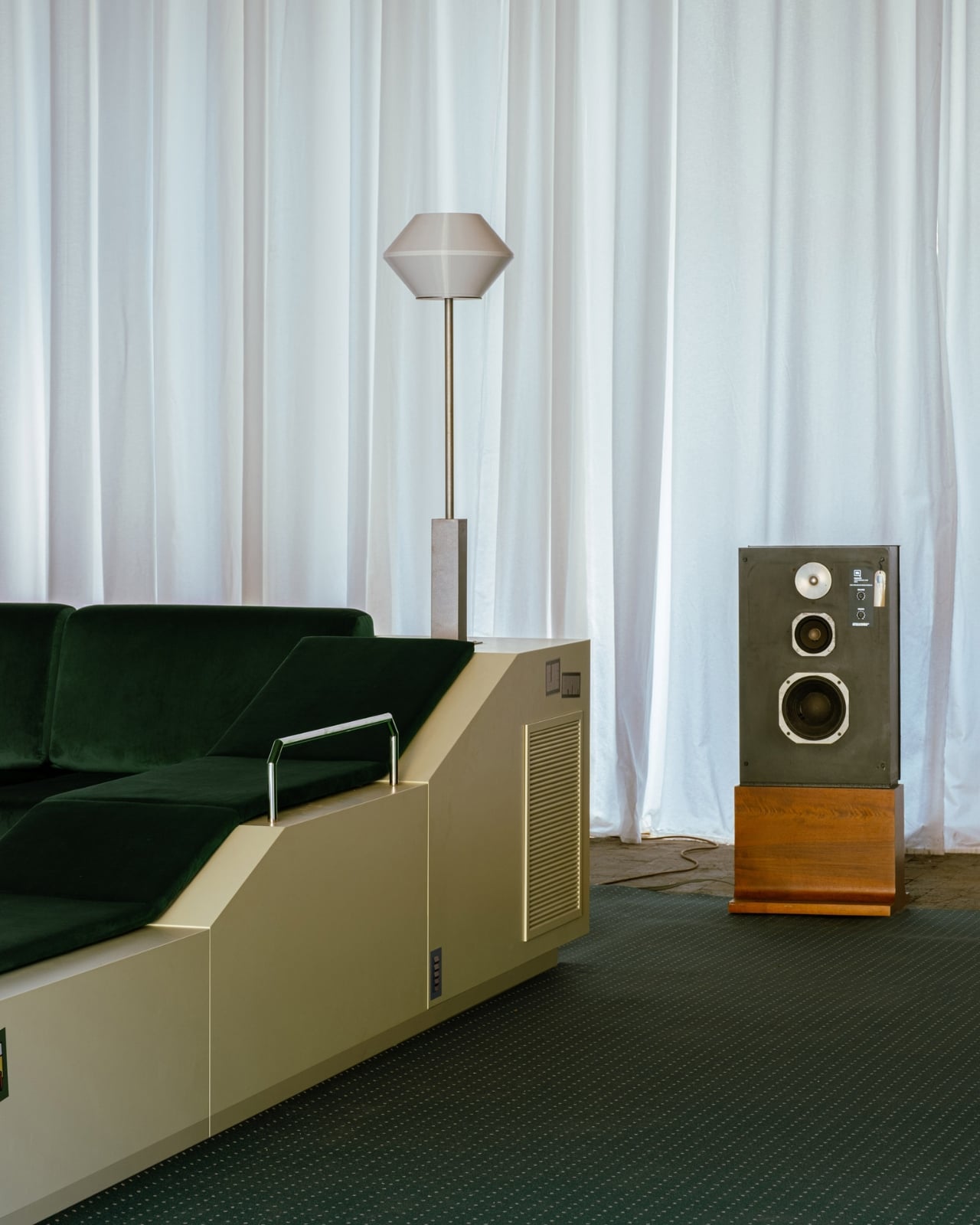
Low, Linear, and Deeply Considered: The Osolo Long Seating Unit

Most furniture asks you to adapt to it. You locate the armrests, figure out where your back is supposed to land, and quietly accept that the cushions are more decorative than functional. The Osolo Long Seating Unit by Turkish designer Gökçe Nafak doesn’t work that way. It hands you the structure and invites you to decide the rest. That’s not vagueness. It’s a very deliberate design stance, and once you see it, it’s hard to unsee.

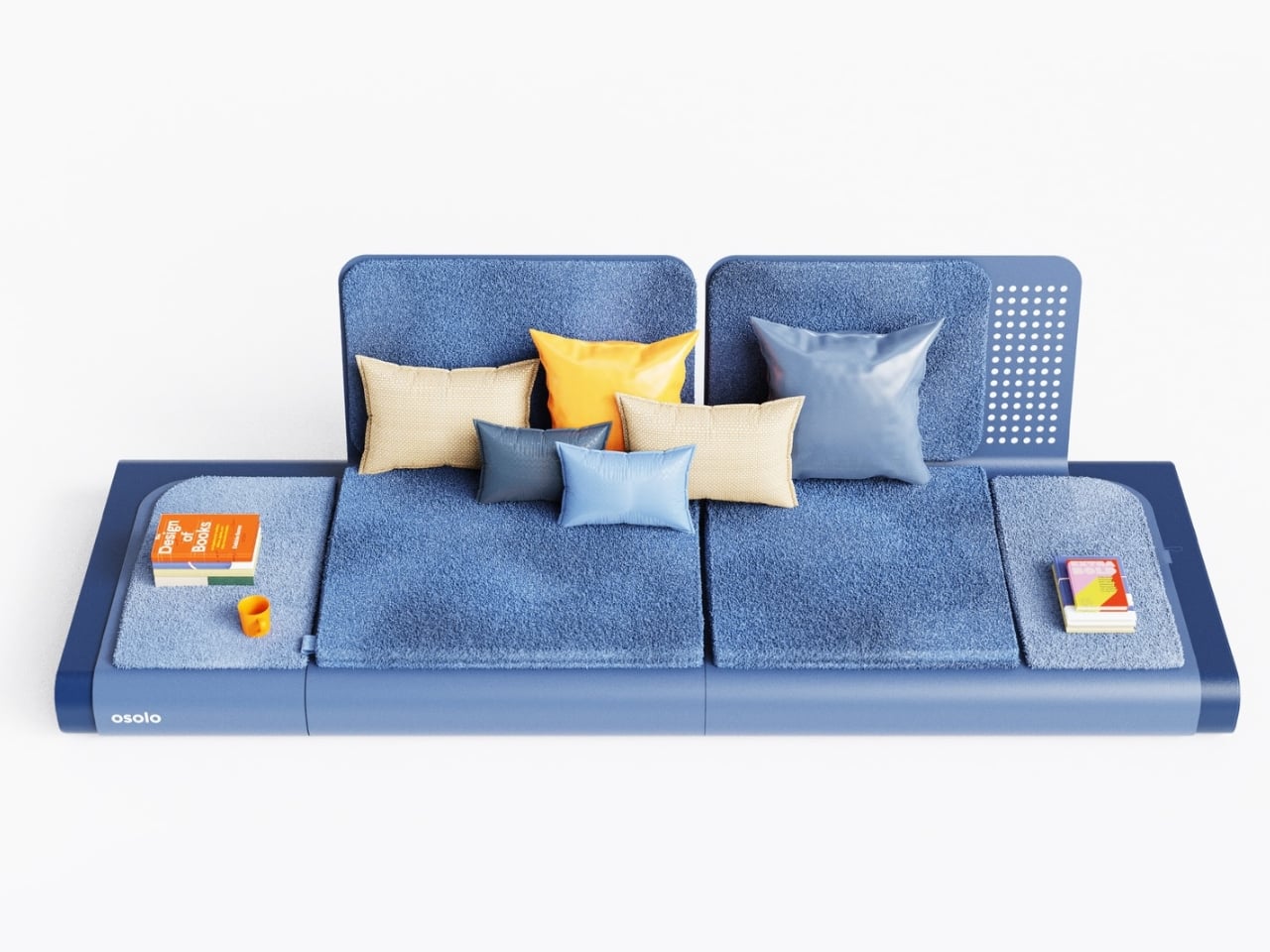
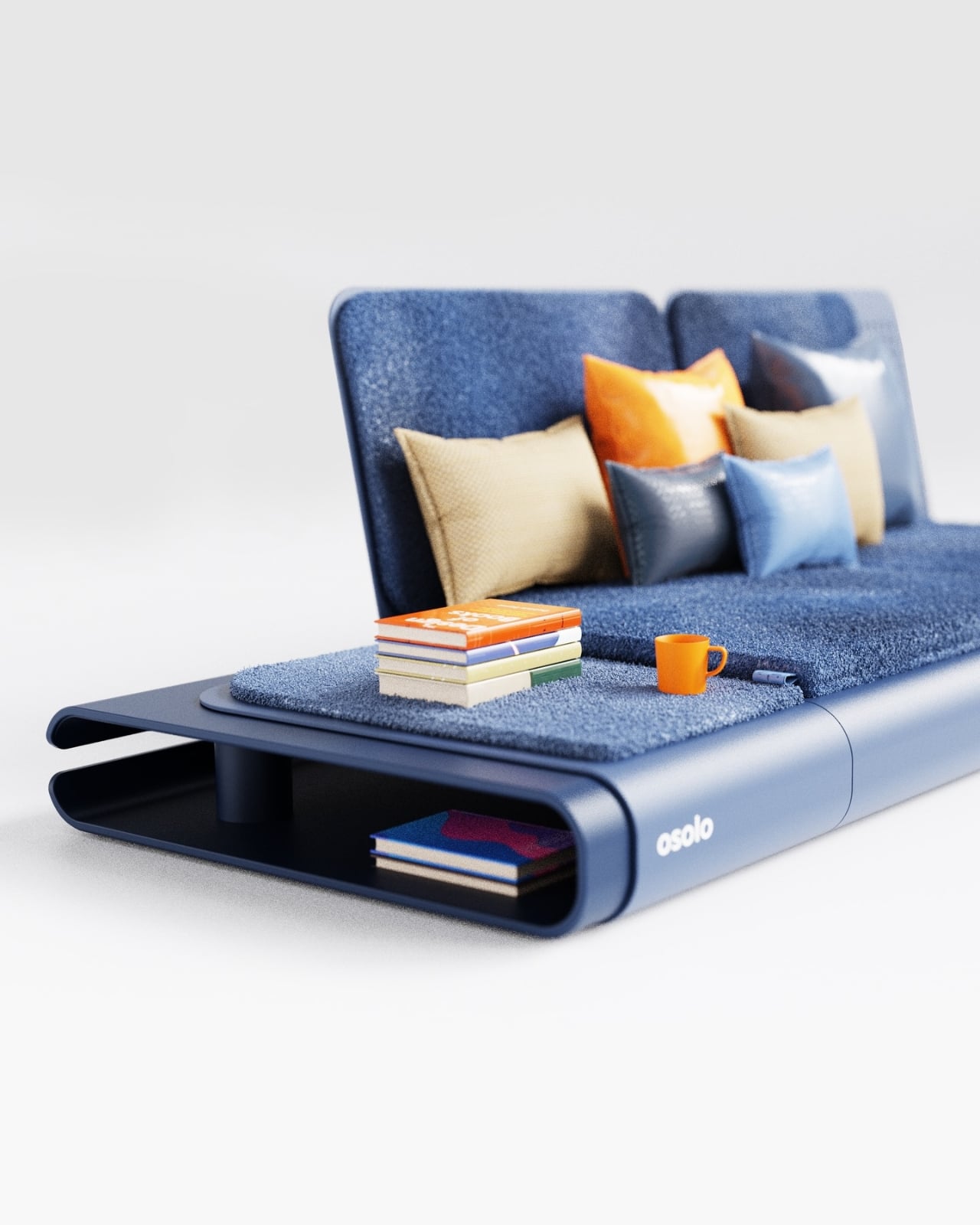
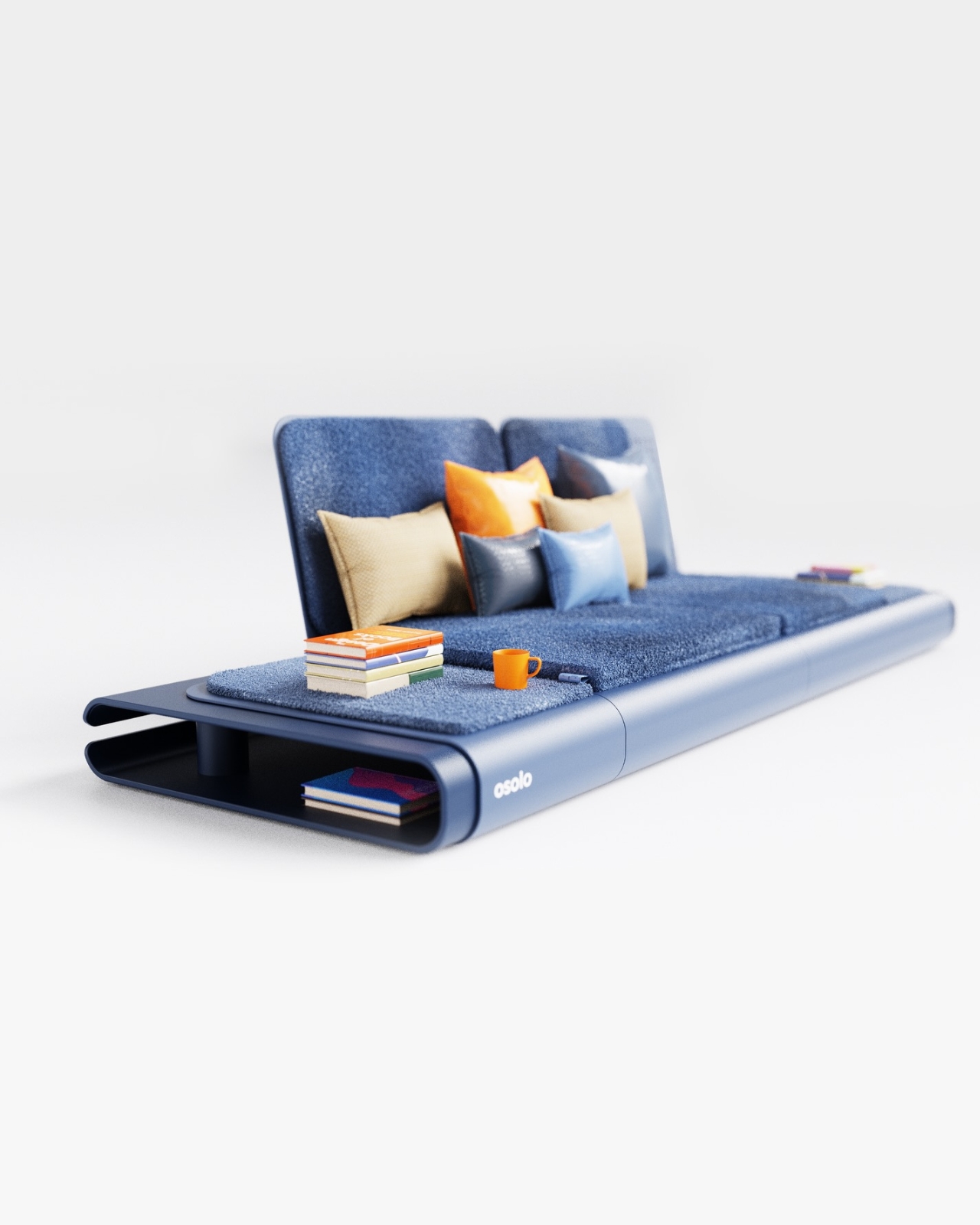
The Osolo Long Seating Unit is part of a broader series that Nafak has been developing, all of which share one defining characteristic: a single-piece folded metal body that functions as both the structural frame and the visual foundation of the entire piece. That single decision is doing enormous work here. The folded metal isn’t just holding the cushions up. It defines the silhouette, creates an open cavity underneath for books, magazines, or small objects, and gives the piece a kind of architectural confidence that most upholstered furniture simply doesn’t have. When you look at it from the side, the curve of metal bending upward from the floor reads more like a building detail than a furniture leg. That’s not a coincidence.

Designer: Gökçe Nafak

The low-to-the-ground profile is where the cultural reference kicks in. The Osolo series draws from the tradition of the sedir, a built-in seating form that was central to the traditional Turkish home. The sedir was placed along the walls of a room, built directly into the architecture, and upholstered with cushions and bolsters. It was low, linear, and multifunctional long before multifunctional furniture became a trend. What’s worth noting is that the sedir was largely displaced during the 19th century as Western furniture styles, including sofas, armchairs, and dining sets, moved into Ottoman homes and reshaped the way interiors were organized and experienced. Nafak seems to be making a quiet argument that something worth having was lost in that exchange. I happen to agree.

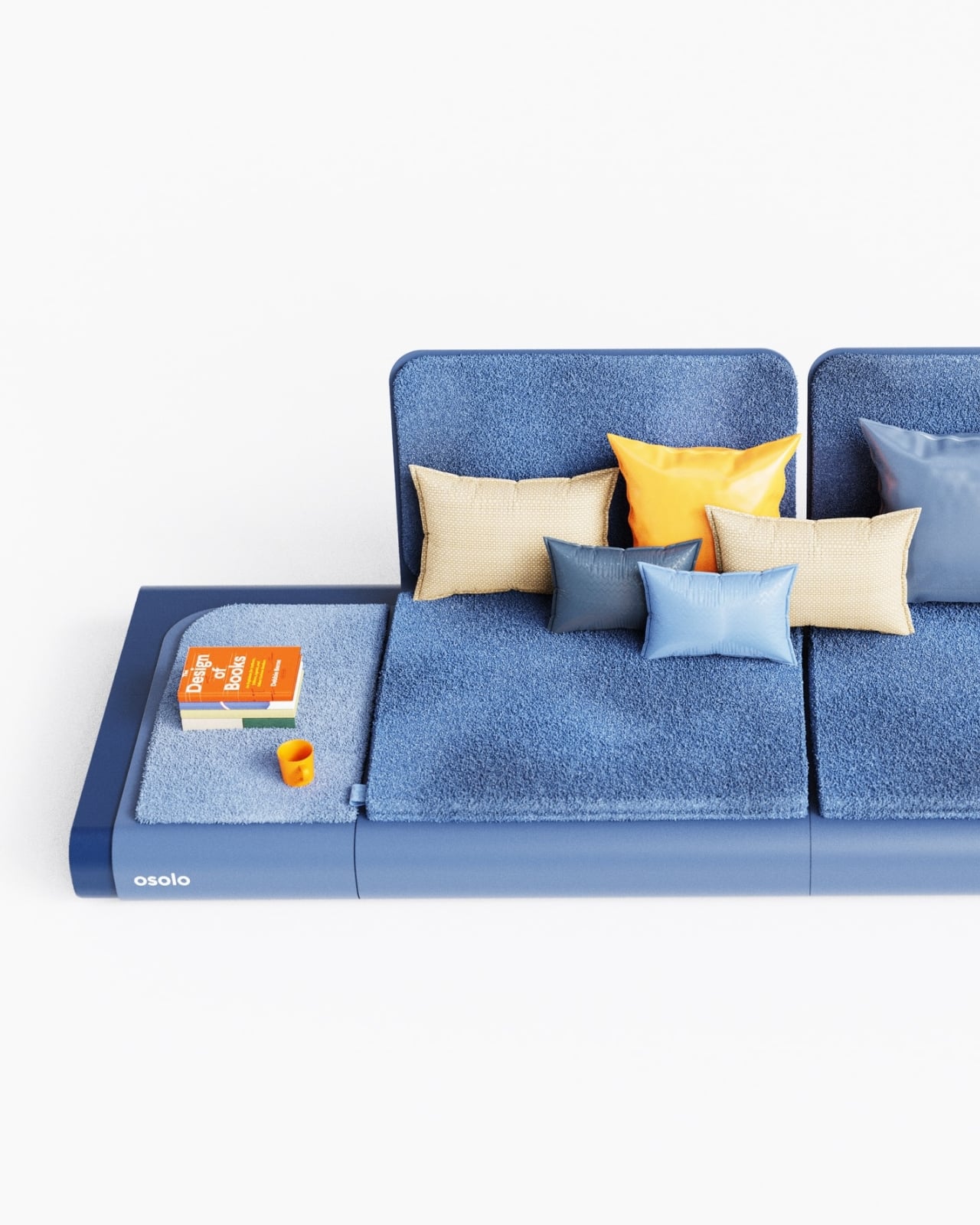
The modular structure of the Osolo unit reinforces that idea of flexibility and communal use that the sedir originally embodied. Independent backrest elements can be positioned wherever they’re needed. Modular cushions tile the platform in varying configurations. You can run a single unit in a compact space or connect multiple modules into one continuous seating arrangement that stretches the full length of a wall. The piece adapts to its context rather than demanding that the room adapt to it, which is exactly what good furniture should do and rarely does.

My honest opinion is that the real achievement here is visual restraint. The renderings show a deep blue finish, a sharp choice because it amplifies how clean and resolved the geometry actually is. The folded metal edges are smooth without being fussy. The modular backrests carry just enough surface texture to break up what could have easily tipped into something flat and institutional. The scattered cushions in orange, tan, and silvery blue add warmth without softening the structural clarity underneath them. There’s a stack of books and a coffee mug sitting on the platform, and they look completely at home there. That might be the most honest thing a product render can show you.

What I keep coming back to is how the Osolo Long Seating Unit manages to feel both familiar and entirely new at the same time. Culturally, it connects to a seating tradition that is centuries old. Formally, it looks like something from a studio that hasn’t made peace with anything conventional yet. That combination is genuinely rare. Most furniture that reaches back into cultural history for inspiration ends up producing a romanticized version of the past. The Osolo doesn’t do that. The folded metal body grounds it firmly in contemporary manufacturing and contemporary aesthetics. The inspiration is present, but it isn’t wearing a costume.

Whether the Osolo Long Seating Unit makes it from concept to production is something worth keeping an eye on. Right now it reads as a very confident, very resolved piece of design thinking. Gökçe Nafak is building a coherent design language with this series, and the long seating unit makes a strong case that language has something real to say.

The post Low, Linear, and Deeply Considered: The Osolo Long Seating Unit first appeared on Yanko Design.
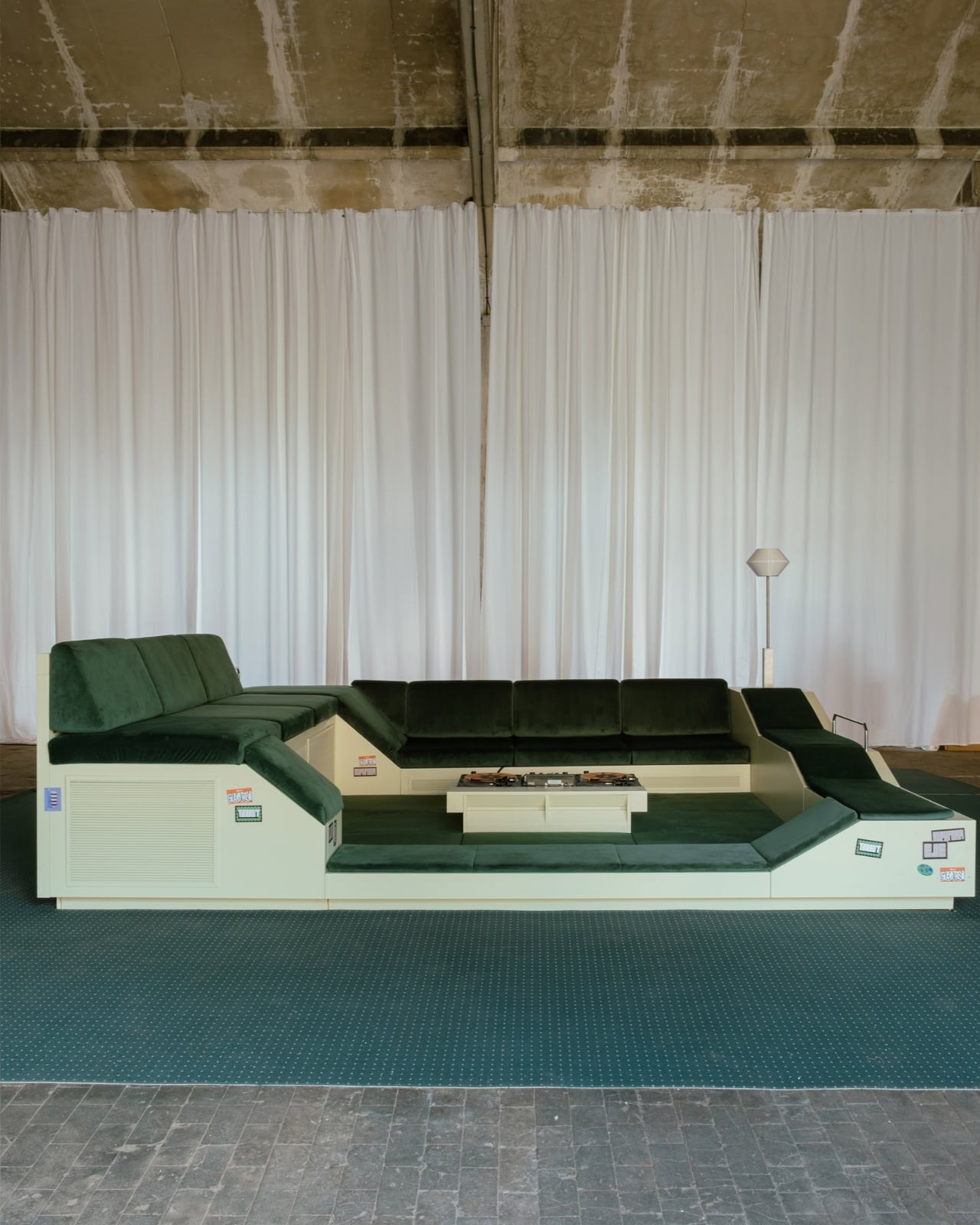
This New Sofa Compresses Like an Accordion (Fits in Your Cart)

Remember when buying a sofa meant measuring doorways, hoping it would fit in the elevator, and bribing friends with pizza to help you haul it up three flights of stairs? Designer Yuqi Wang just made all of that obsolete with the Accordion Modular Sofa, and the concept is as brilliant as it sounds.

The whole design centers on one genius idea: what if you only needed one type of module to create any sofa configuration you could imagine? The Accordion does exactly that with a single base unit that compresses and expands like its musical namesake. Through an internal structure made from high-resilience foam, wooden side panels, climbing ropes, and adjustable knobs, each module can change its size and curvature to fit whatever space you’re working with.

Designer: Yuqi Wang

What makes this really clever is how it solves multiple problems at once. Traditional modular sofas usually require you to buy different shaped pieces (corner units, armrests, middle sections) and hope you’ve guessed right about what you need. With the Accordion system, you’re working with identical modules that transform as needed. Want a compact loveseat for your apartment? Use two modules. Need a sprawling sectional for your living room? Add more units and configure them however you like. The possibilities aren’t just numerous, they’re practically endless.

But here’s where it gets even better. Because these modules compress, the whole thing ships flat-packed in a way that actually makes sense. We’re talking small enough to literally place in a shopping cart and carry out yourself. No more waiting weeks for delivery windows or paying outrageous shipping fees. The compression feature dramatically cuts down on packaging waste, storage costs, and the carbon footprint of transportation. It’s the kind of sustainable design choice that doesn’t require you to sacrifice anything in return.

The inspiration came from watching an accordion player perform, where Wang noticed how the instrument’s bellows compress and expand with such fluidity. That rhythmic movement translated into furniture creates something that feels almost alive, like the sofa adapts to you rather than the other way around. The technical execution involved studying compression mechanisms from various industrial applications before landing on a prototype that was both simple and effective.

For anyone who’s moved apartments multiple times or likes to rearrange furniture seasonally, this is a game changer. Your sofa can literally grow or shrink with your needs. Hosting a party? Expand it. Need more floor space for a home workout? Compress it down. The adjustable knobs make reconfiguring straightforward enough that you won’t need tools or an engineering degree.

The design world has taken notice. The Accordion Modular Sofa won the Golden A’ Design Award in Furniture Design for 2025, one of the most prestigious recognitions in the field. This isn’t just a participation trophy either. The Golden award represents first-rate, outstanding design that genuinely advances the intersection of art, science, and technology. What’s exciting is that this isn’t some far-off concept. The sofa is scheduled to hit the market in October 2025, which means you could actually have one of these in your home soon. It represents a shift in how we think about furniture ownership, moving away from bulky investments that lock you into one configuration toward adaptable pieces that evolve with your lifestyle.

The Accordion Modular Sofa proves that innovative design doesn’t have to be complicated or precious. Sometimes the best ideas are the ones that make you wonder why nobody thought of them sooner. A sofa that compresses for transport, expands for comfort, and reconfigures endlessly from a single module type? That’s the kind of practical magic that makes design truly great.

The post This New Sofa Compresses Like an Accordion (Fits in Your Cart) first appeared on Yanko Design.
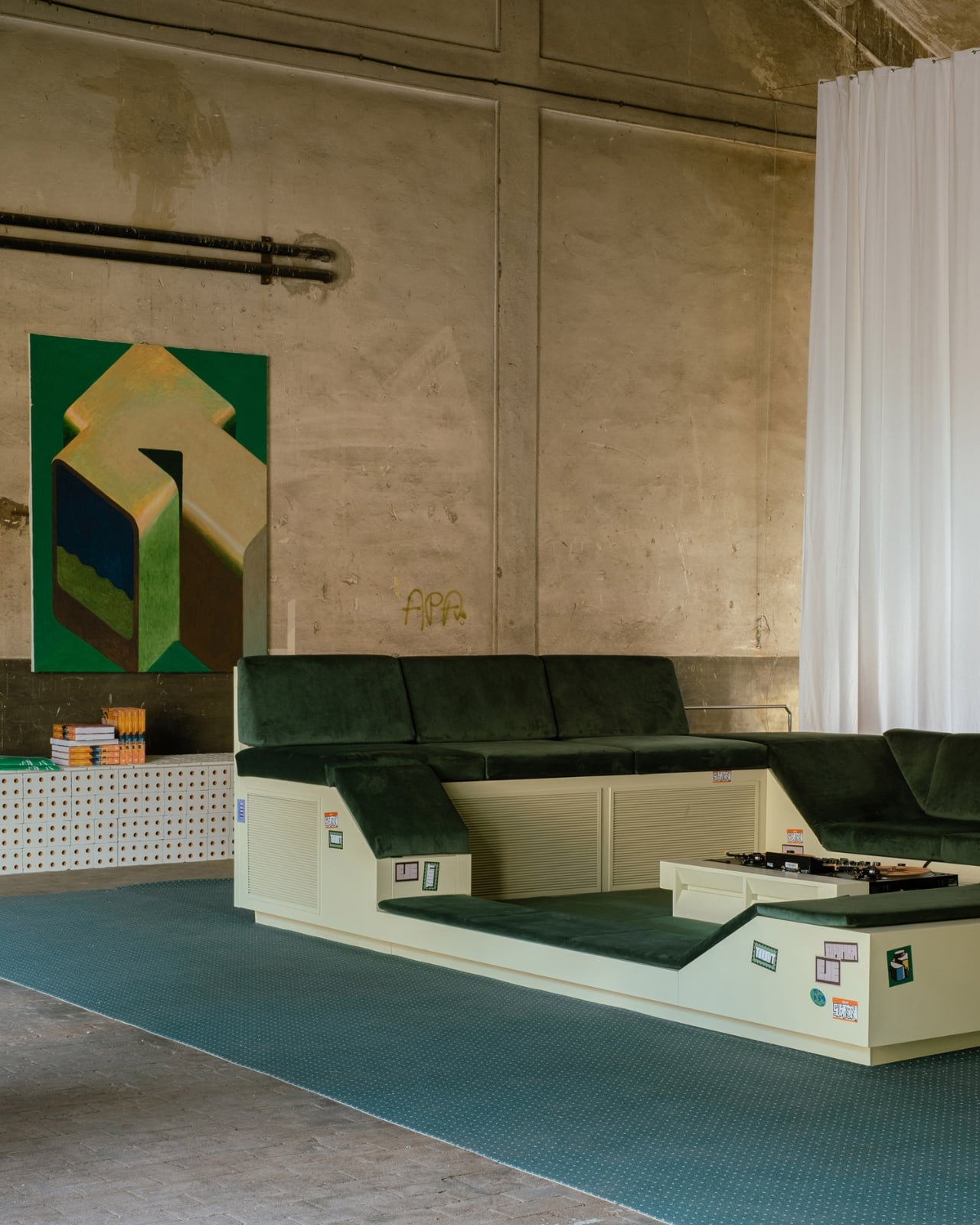
This Sofa Looks Like Stone Boulders But Feels Like Clouds

There’s something beautifully contradictory about furniture that looks hard as stone but promises cloud-like comfort. That’s exactly what Mudu Studio has achieved with the Rokko Sofa, a design concept that takes inspiration from massive geological formations and transforms them into something you’d actually want to sink into after a long day.

Look at the Rokko series and you’ll immediately see the resemblance to smooth river stones or ancient boulders shaped by centuries of wind and water. But instead of cold, unyielding rock, these sculptural forms are generously upholstered cushions that capture the visual weight and monumentality of stone while offering the kind of comfort that makes you want to stay put for hours. The genius here is in that tension between appearance and reality, between what looks solid and immovable and what actually cradles your body.

Designer: Mudu Studio

The design plays with scale in an interesting way. These aren’t your typical sleek, minimalist cushions. They’re voluminous and bold, each one reading as a distinct sculptural element. Yet despite their substantial presence, the pieces don’t feel heavy or overwhelming in a space. That’s largely thanks to the contrast Mudu Studio creates with the base structure.

The frame options are where things get really interesting. The main collection features processed aluminum bases that are remarkably slender and airy. It’s almost like the massive cushions are floating, held aloft by these delicate metal structures. The visual lightness of the aluminum creates this wonderful illusion of defying gravity. You’ve got these boulder-sized forms that appear to hover just above the ground, supported by what looks like nothing more than bent wire (though obviously it’s engineered to be far sturdier than that).

For those who prefer a different aesthetic, there’s an alternative version with a podium base wrapped in stainless steel. This option grounds the piece more firmly, adding a sense of refined solidity that complements the cushions in a different way. Instead of floating stones, you get something more architecturally grounded, like sculptures placed on pedestals in a gallery.

The modularity of the system is another smart move. From the images, you can see everything from compact single-seaters to generous three-seater configurations. Some versions include wraparound armrests that echo the cushions’ rounded forms, while others keep things more open and flexible. The textiles shown range from earthy, tweedy textures that emphasize the geological inspiration to rich solid colors that take the design in a more contemporary direction.

What makes the Rokko particularly relevant right now is how it bridges multiple design movements. There’s definitely some postmodern playfulness in the exaggerated forms and the way different materials and aesthetics collide. But there’s also a nod to biophilic design, that growing interest in bringing natural forms and textures into our interiors. And the modular, configurable nature speaks to contemporary needs for flexible, adaptable furniture that can evolve with how we actually use our spaces.

The fabric choices visible in the renderings are particularly thoughtful. Those speckled, textured options genuinely evoke stone surfaces without being literal about it. They give the cushions visual depth and interest up close while reading as solid, substantial forms from a distance. It’s the kind of detail that elevates a concept from clever idea to genuinely covetable piece.

Right now, the Rokko exists as a concept looking for a manufacturer, which means these gorgeous renderings represent potential rather than reality. But that’s often how the most interesting furniture begins. Designers push boundaries with bold ideas, and the right manufacturing partner helps figure out how to translate vision into something people can actually purchase and live with.

For anyone who appreciates furniture that makes a statement without shouting, that brings sculptural presence without sacrificing comfort, the Rokko Sofa is definitely one to watch. It’s the kind of design that could easily become an icon if it finds its way to production. Those cushions that look like they were carved by ancient forces but actually cradle you in modern comfort? That’s the kind of paradox that makes design fascinating.

The post This Sofa Looks Like Stone Boulders But Feels Like Clouds first appeared on Yanko Design.
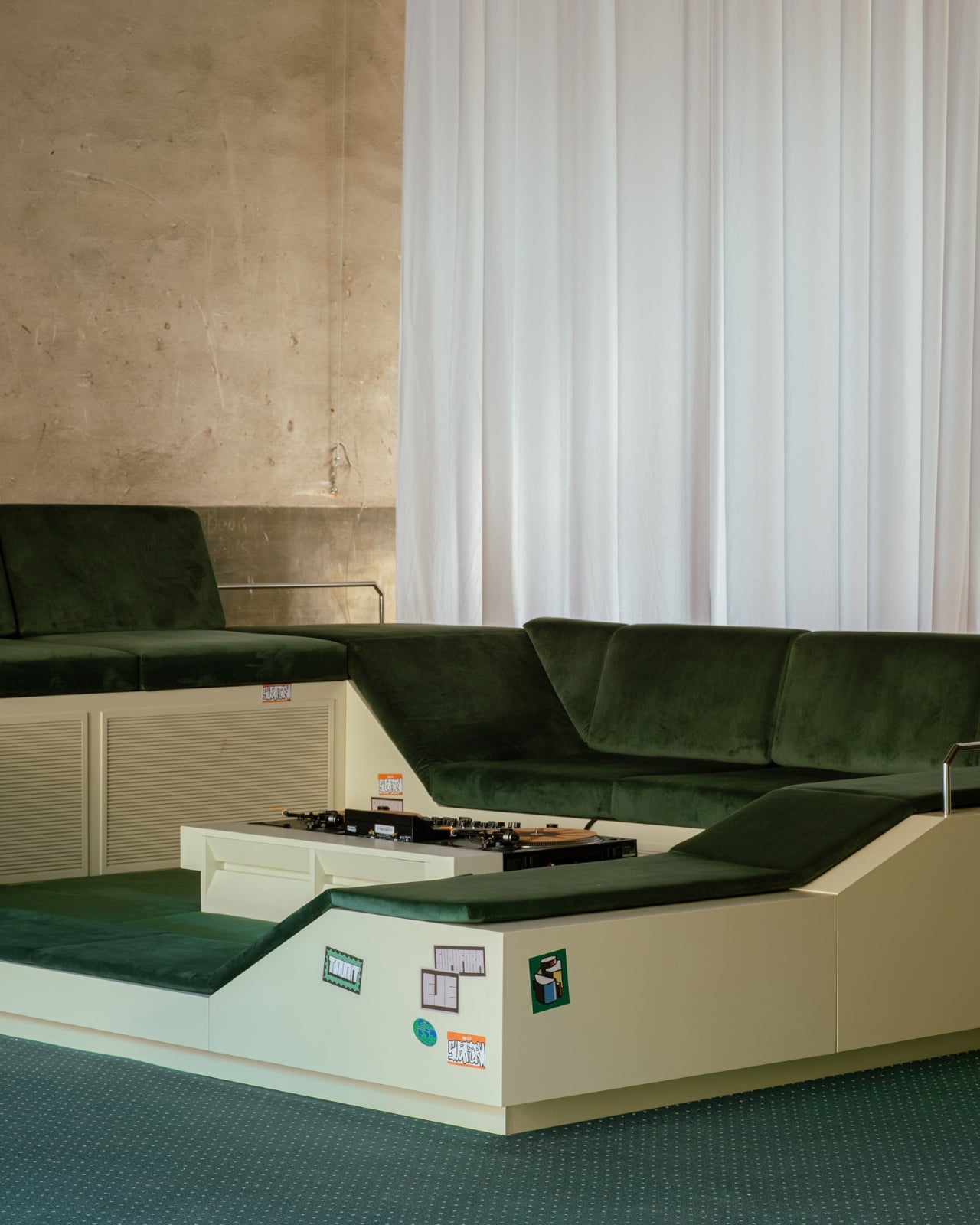
Iconic Female Designer Patricia Urquiola Upgrades Her Lowland Sofa With A Softer Composition

Spanish designer and architect Patricia Urquiola is known for her eye-catching creations which are usually characterized by stained-glass panels or entire interior redesigns. She heavily focuses on modern style accentuated with feminine accents and intriguing elements. She is also known for her strong support of female designers. “Where women differ from males is in their flexibility, adaptability, and ability to multitask,” Urquiola said to Elle Decor in 2010. “We must be capable of surviving and even those two qualities—flexibility and adaptability—are extremely important to me in design.” And, she recently updated her Lowland Sofa for the Italian brand Moroso, giving it the name Loveland.

Designer: Patricia Urquiola for Moroso

Patricia Urqouila upgraded her Lowland sofa for the Italian brand Moroso, imparting it with a softer composition, and adorning it with a new name – Loveland. The three-seater sofa design adapts the previous design which was created in 2000. It features lower-positioned armrests, and a rounded backrest shape, which gives the sofa a gentler and more pebble-like appearance.

“The new design choices enhance the architectural qualities of the series while maintaining the sophisticated rationalist mood of this sofa, as a stand-alone piece or in a composition,” said Moroso. The Loveland sofa features a modernist steel base, which is paired up with warm and contemporary wood, and arranged at interesting sculptural angles.

Lowland was upgraded to Loveland to implement “a different approach to sustainability”. With Loveland, they eliminated developing a whole new product, and instead, they jazzed up a beloved classic to create an eternal and evergreen piece. There isn’t any unnecessary production or any additional waste. Resources are saved and minimized, as a pre-existing furniture piece is transformed and elevated. The Loveland sofa is available with or without armrests and can be upholstered in fabric or leather. You can choose between Honey, Tropical Wood, or Coffee finishes for the sofa’s wooden base.

The post Iconic Female Designer Patricia Urquiola Upgrades Her Lowland Sofa With A Softer Composition first appeared on Yanko Design.
This Bold & Bulky Sofa Is Available In A Bauhaus Edition Referencing The Modernist Art School

A beautiful piece of furniture can complete a room. It can be the final piece that makes a space come full circle, building a comfortable and cohesive haven, rather than a random area. Furniture pieces make or break a home, they add to the essence or soul of a home, hence one needs to be extremely picky while choosing a furniture design. The design should be a reflection of you, and what you want your home to be. When you place a piece of furniture in a room, it should instantly integrate with the space, creating a wholesome and organic environment. And, there’s something about unique, stunning, and well-done furniture design that completely wins my heart – for example the Cocoon sofa by Jens Juul Eilersen.
Designer: Jens Juul Eilersen for Eilersen

Designed by third-generation designer Jens Juul Eilersen for the Danish brand Eilersen in 2008, the Cocoon sofa is a comfortable and cozy seating design amped with all kinds of cushions to create an immersive nest-like space for users. The sofa was designed to imitate the feeling of retreating into a pupa. Recently, the brand launched three new multicolor variants of the Cocoon sofa, including an exciting Bauhaus edition that is a wonderful interplay of primary colors and geometric forms.
“As I played around with the idea of what it must feel like to be a caterpillar spinning silk, the image of a gigantic toy box arose,” said Jens Juul Eilersen. “A giant toy box with triangular cushions, lumbar cushions, head cushions, armrests, neck cushions – in fact, cushions of all shapes and sizes. It allows you to choose your own level of comfort while also having fun building and sitting on the sofa.”

The Bauhaus edition really caught my eye as it is pretty urban and cool. It combines a bunch of pastel and jewel shades of red, yellow, and blue which makes an interesting and strong reference to the modernist art school. An emphasis is also laid on the diverse shapes and sizes of the cushions. Besides the Bauhas edition, the sofa is also available in Bloom and Blues variants. The Bloom iteration uses shades such as green, pink, and yellow, while the Blues version is inspired by coastlines and calmness.

The post This Bold & Bulky Sofa Is Available In A Bauhaus Edition Referencing The Modernist Art School first appeared on Yanko Design.