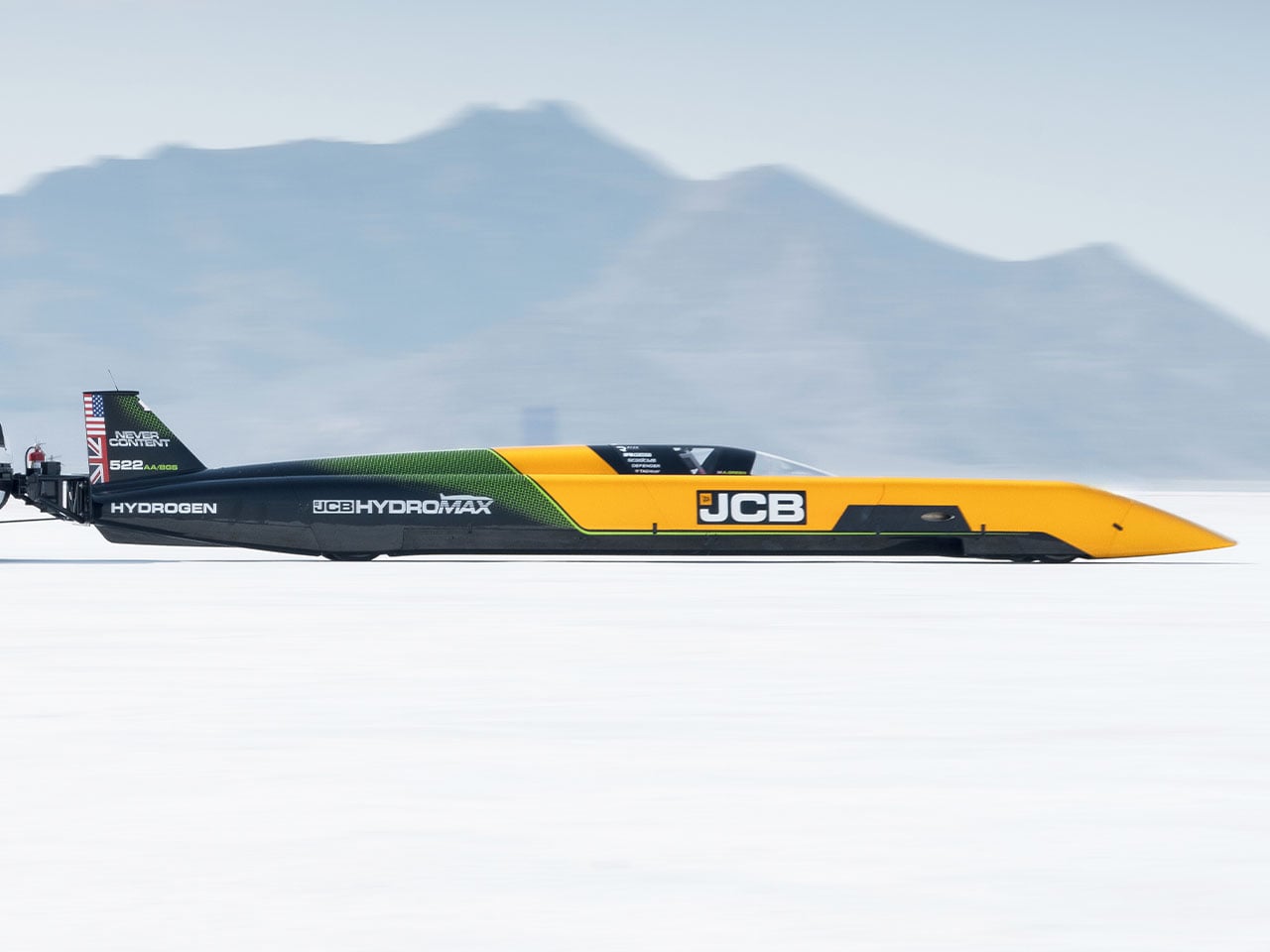
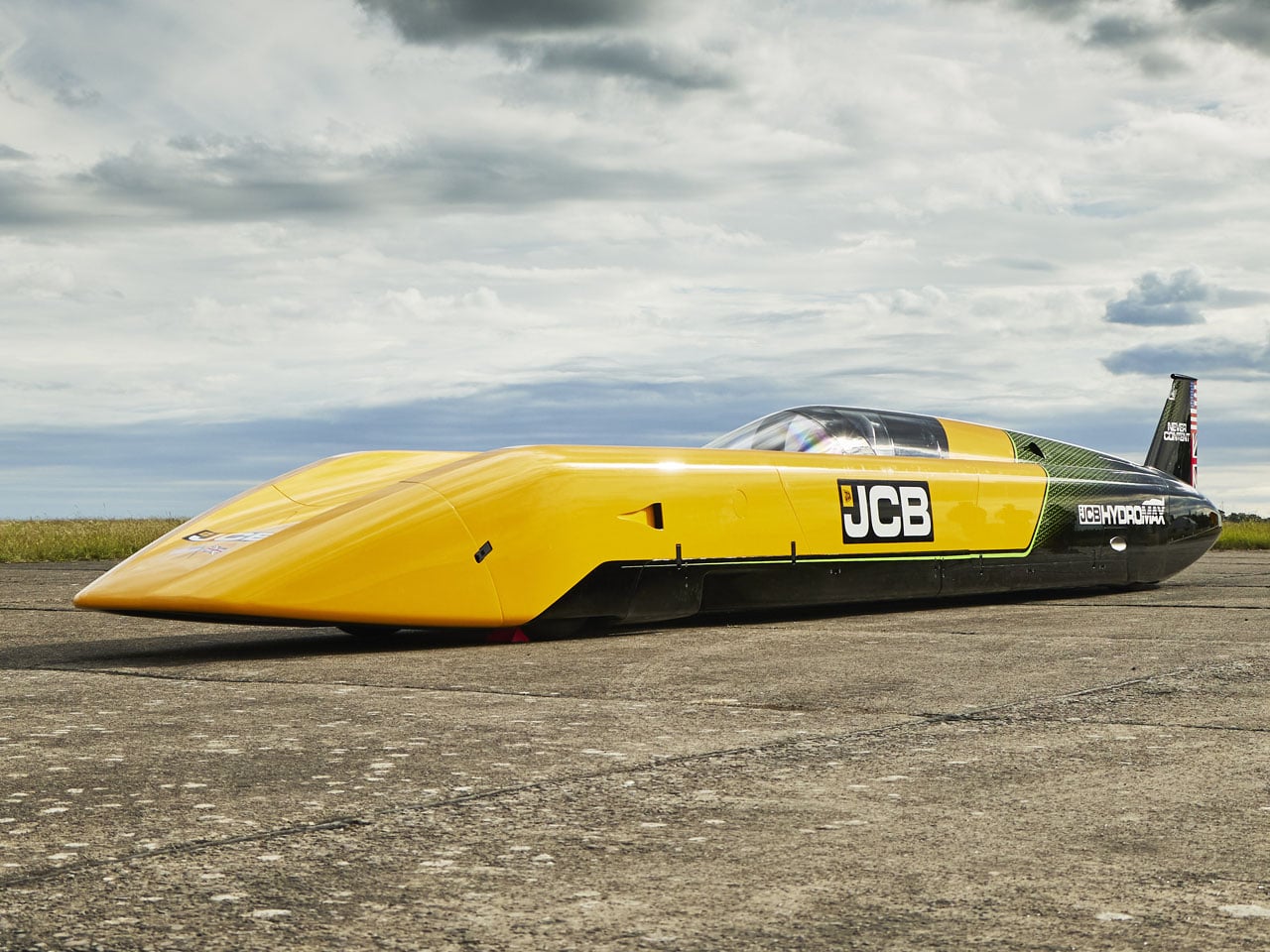
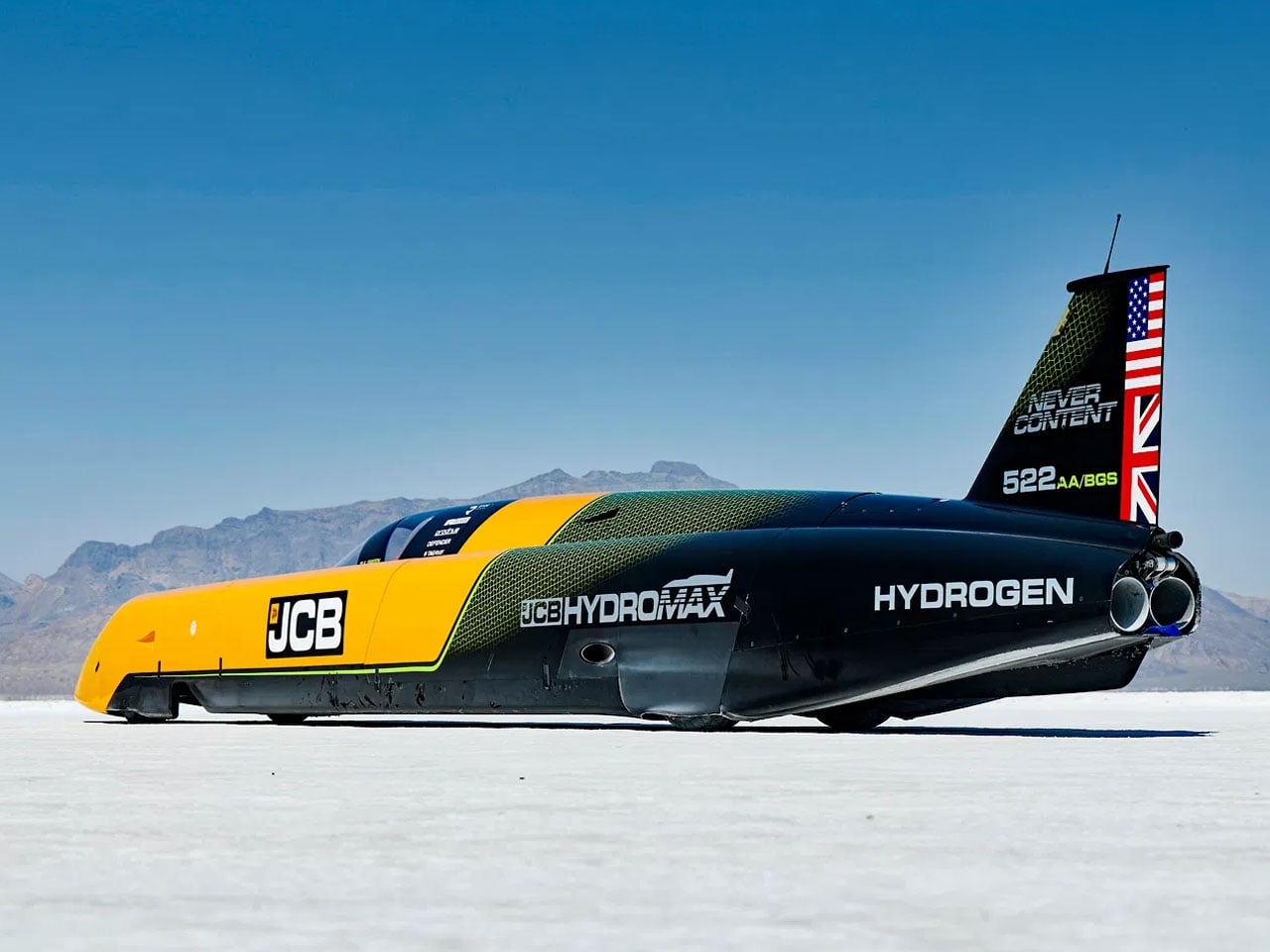
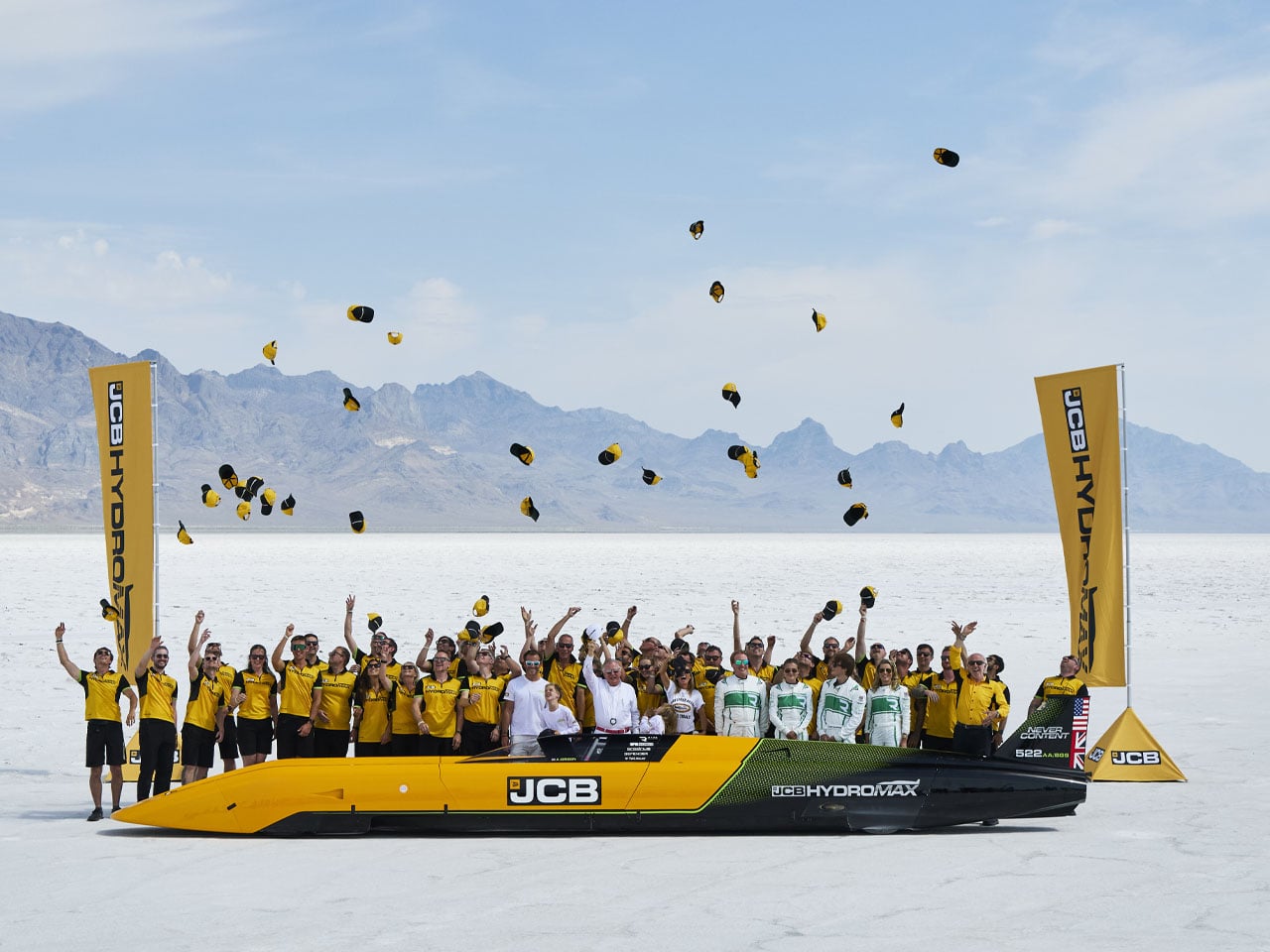
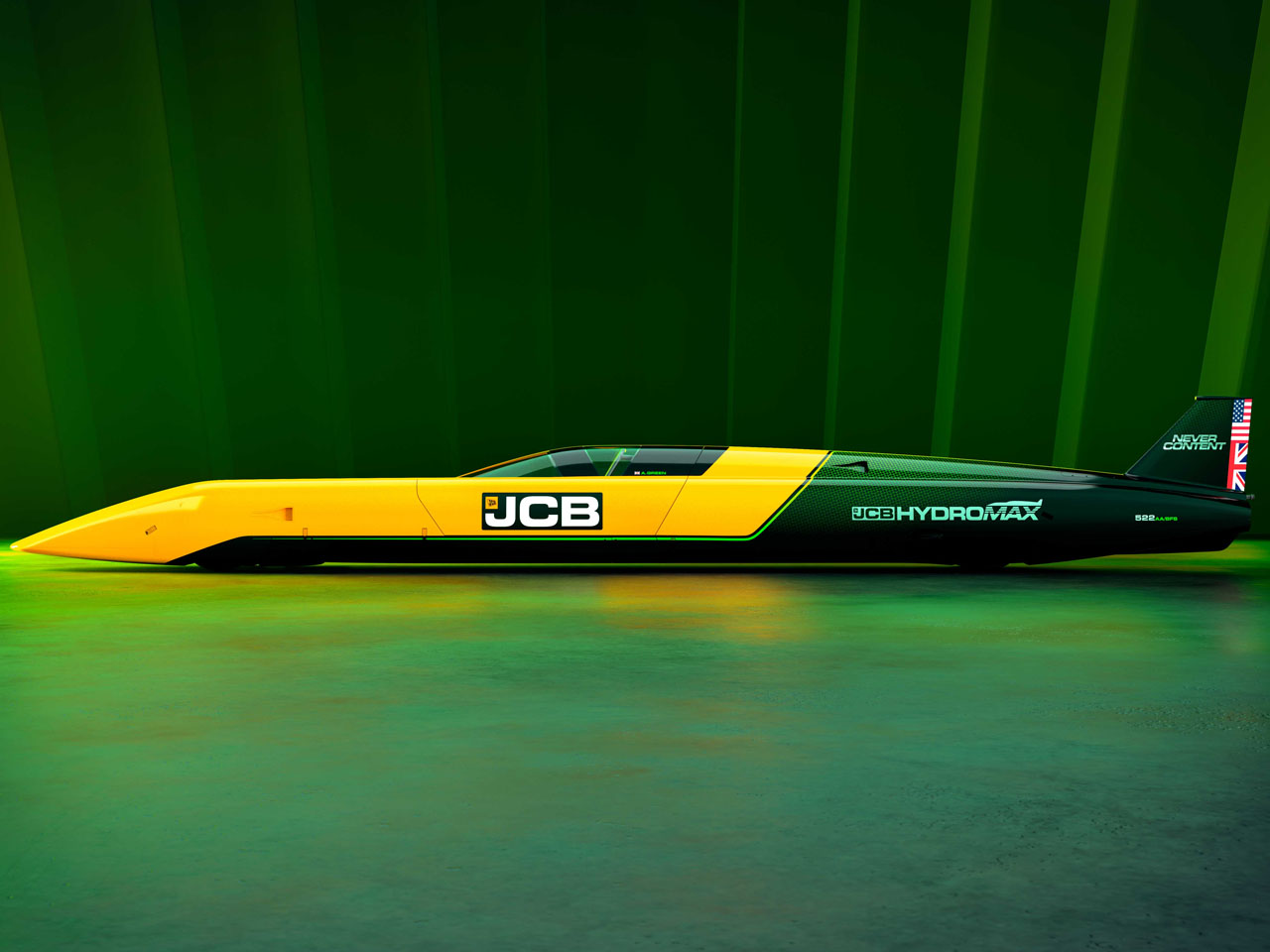
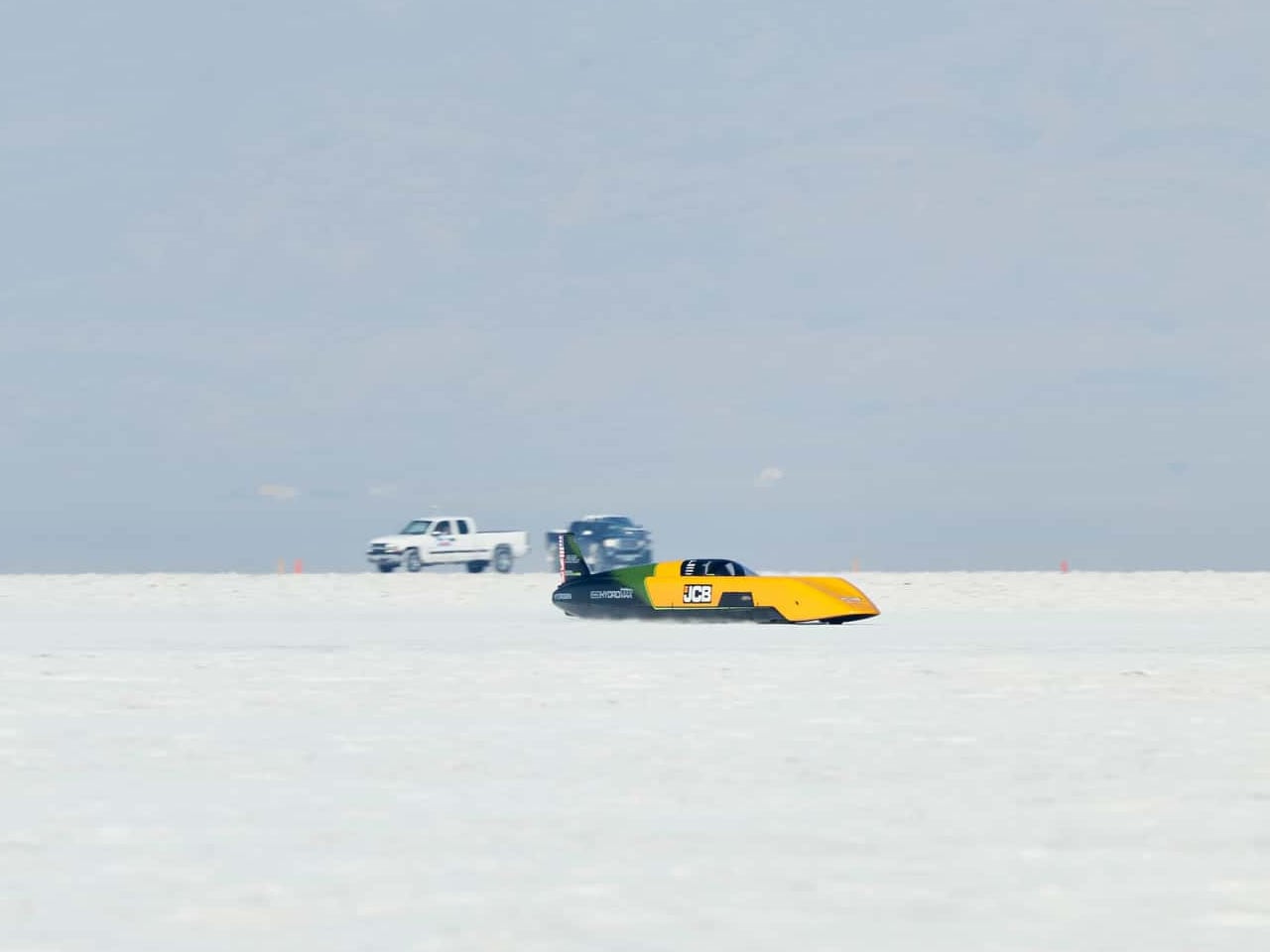
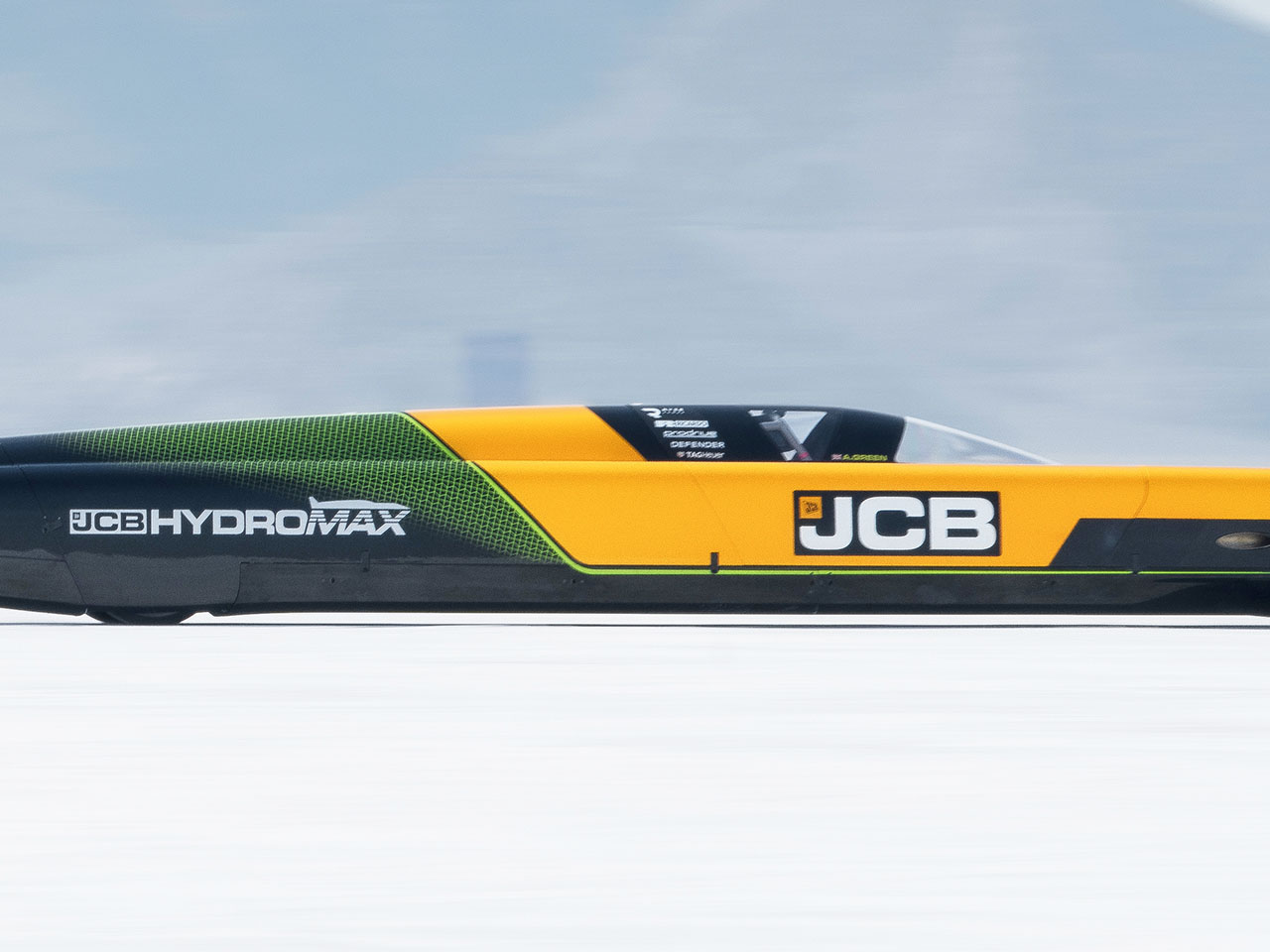
A pair of hydrogen-powered engines developed for construction machinery has just been pushed into territory normally reserved for purpose-built speed machines. JCB’s Hydromax has reached an astonishing 406.320 mph (653.6 km/h) at Utah’s Bonneville Salt Flats, becoming the fastest hydrogen-powered vehicle of any kind and setting a new world land speed record for a hydrogen internal-combustion car.
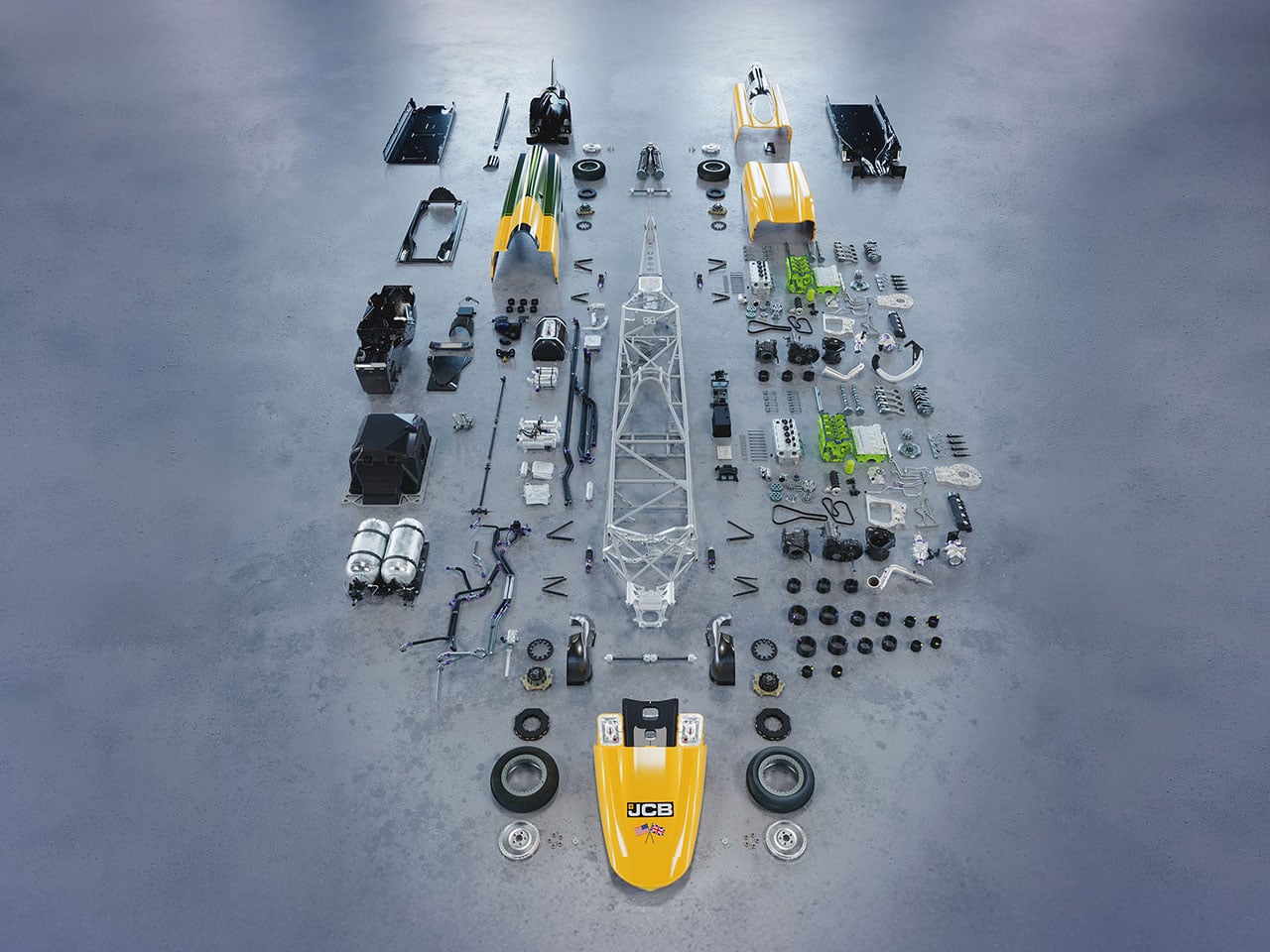
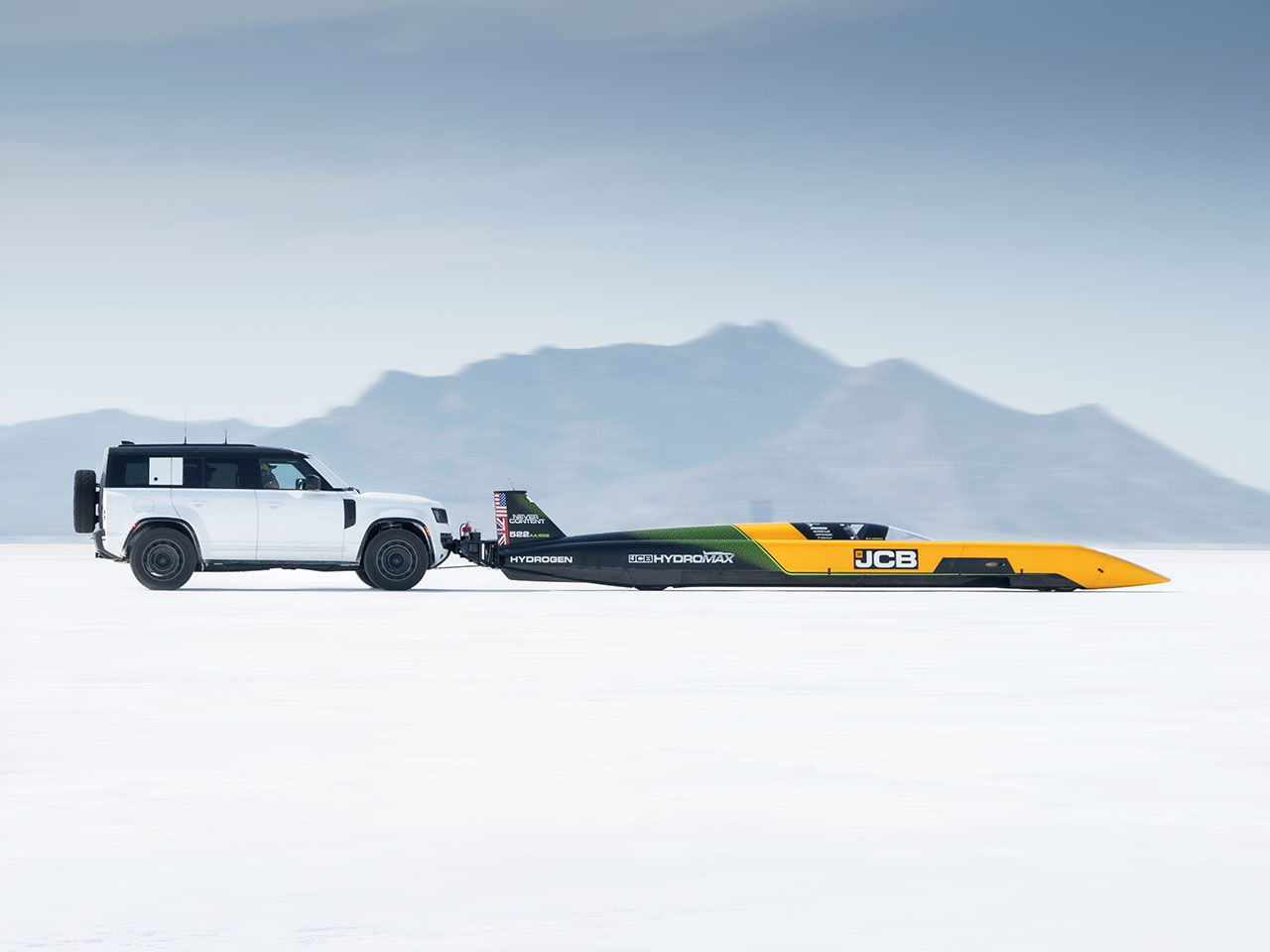
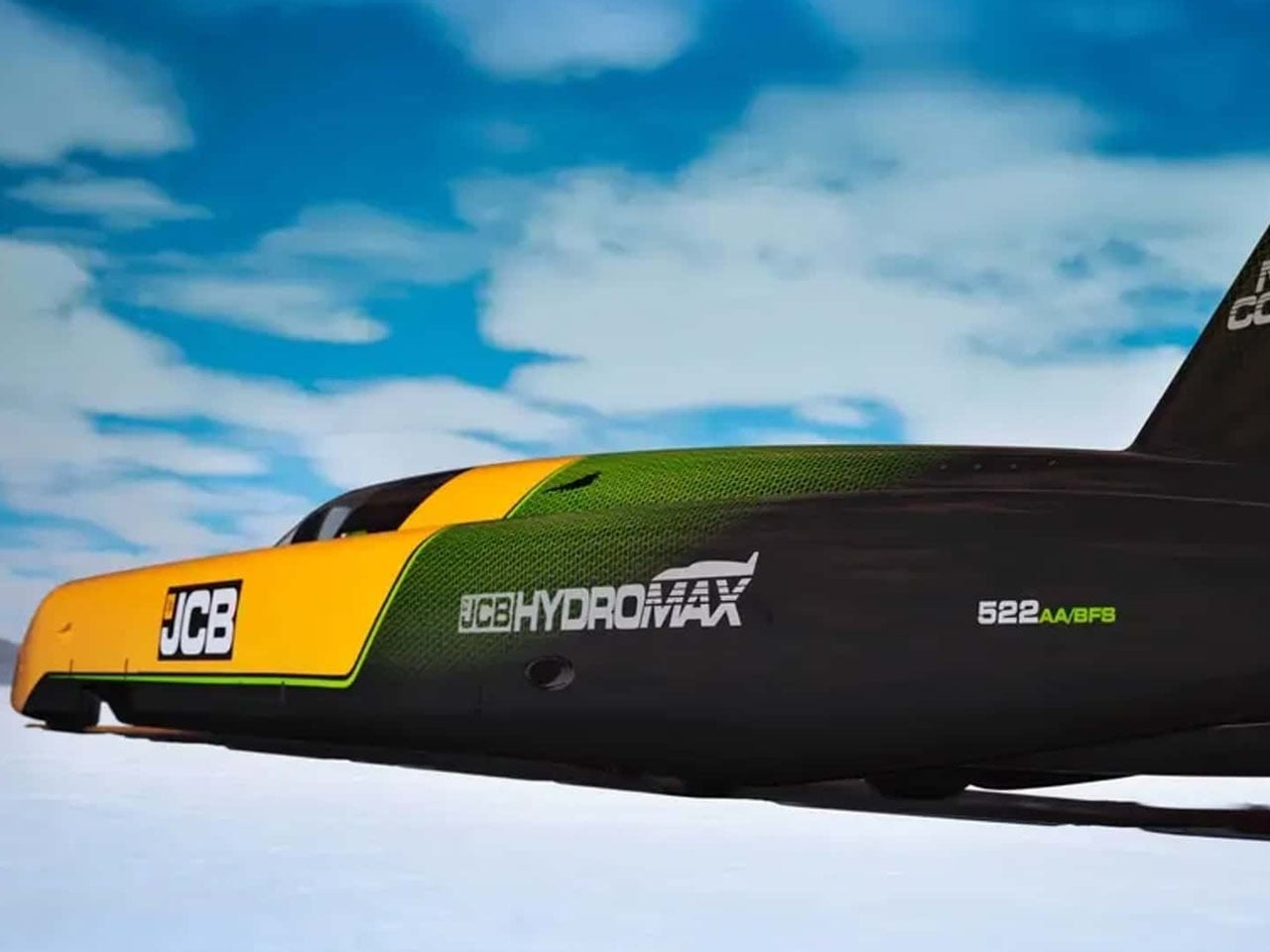
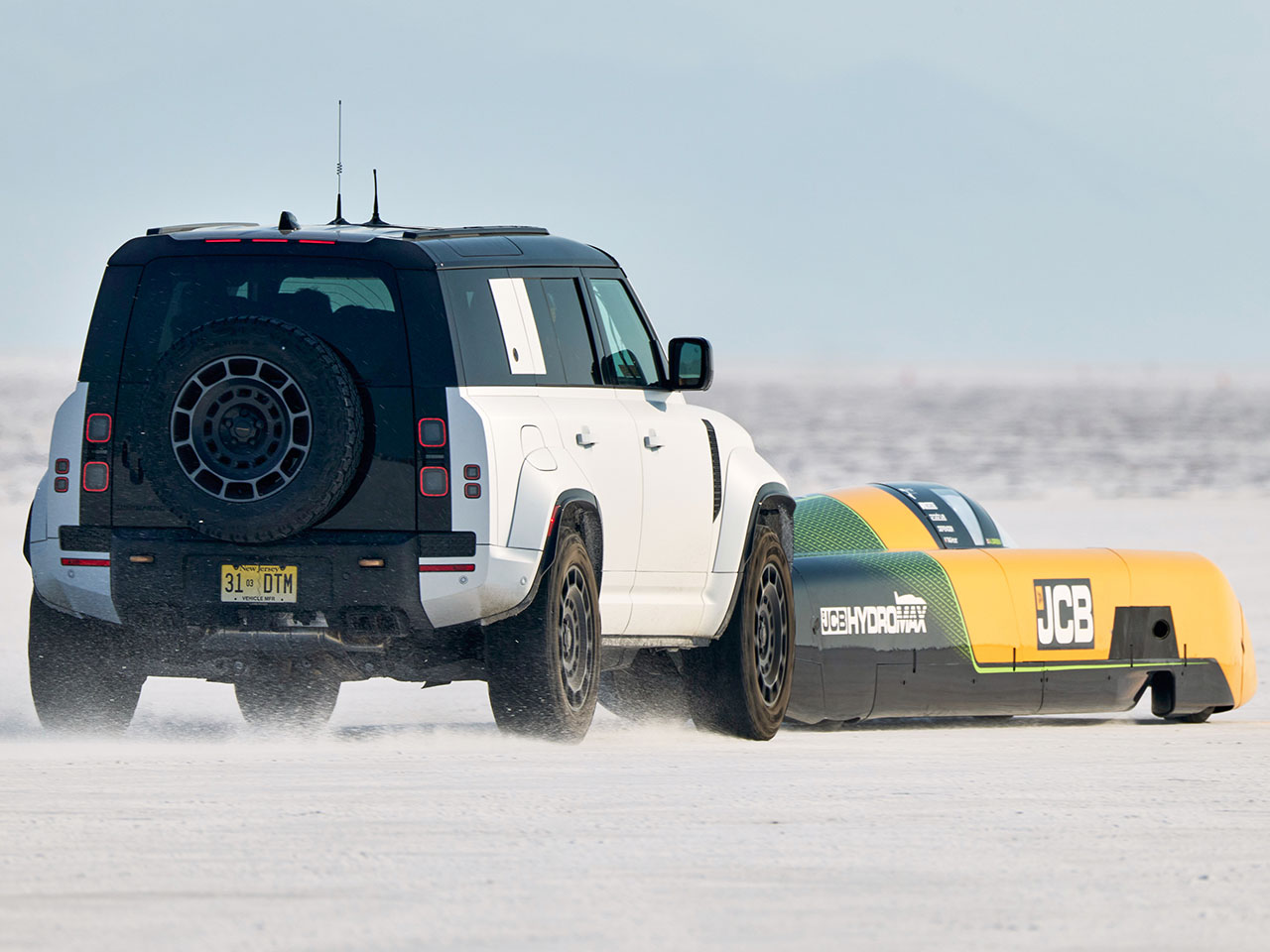
The 32-foot-long streamliner is powered by two production-based JCB hydrogen combustion engines, each tuned to produce 800 horsepower for a combined 1,600 bhp. Rather than using hydrogen in a fuel cell to generate electricity, Hydromax burns hydrogen directly in its internal-combustion engines. The engines are manufactured at JCB’s factory in Foston, Derbyshire, and are based on the same production engines powering JCB machines in the UK.
Designer: JCB
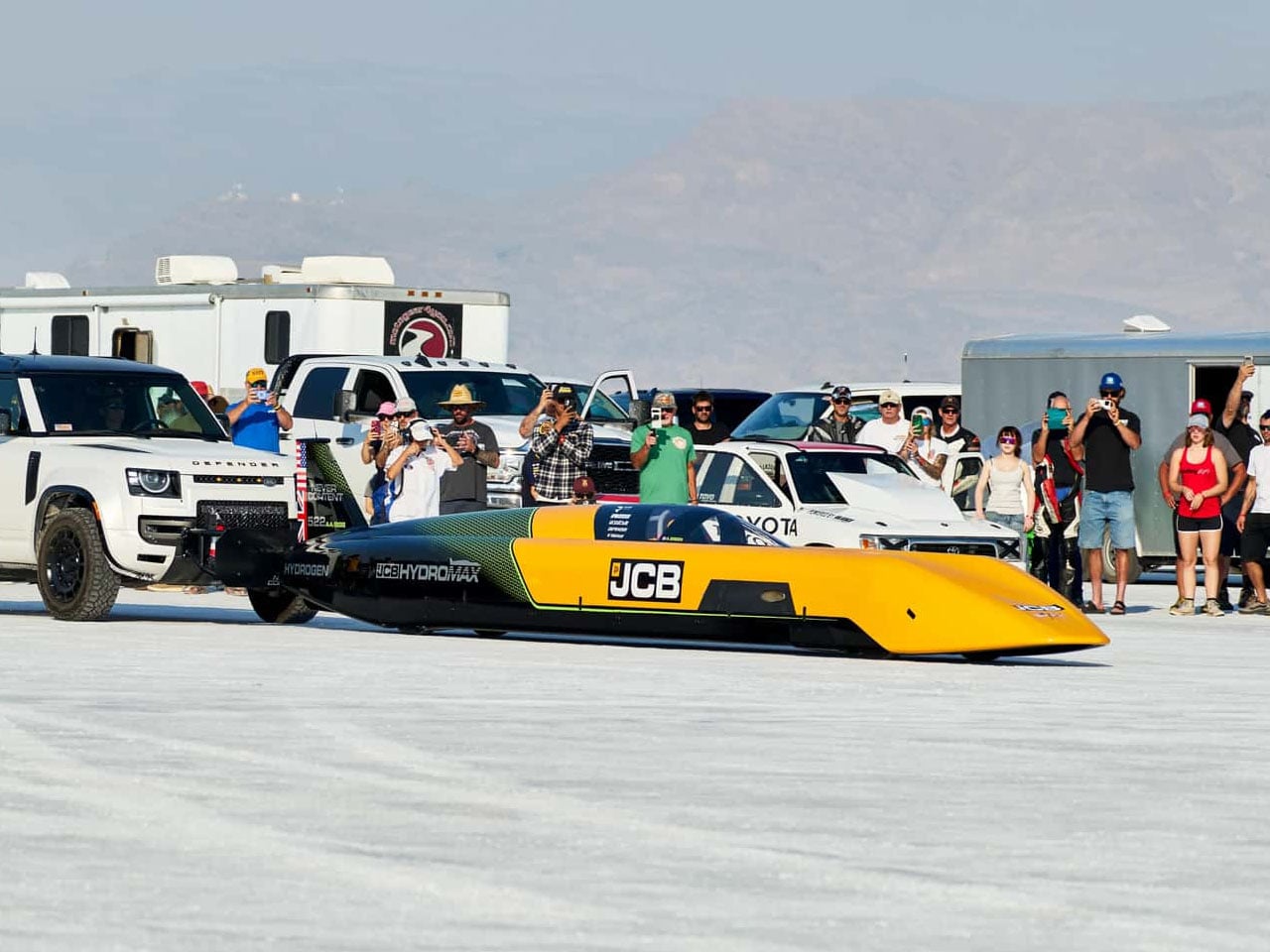
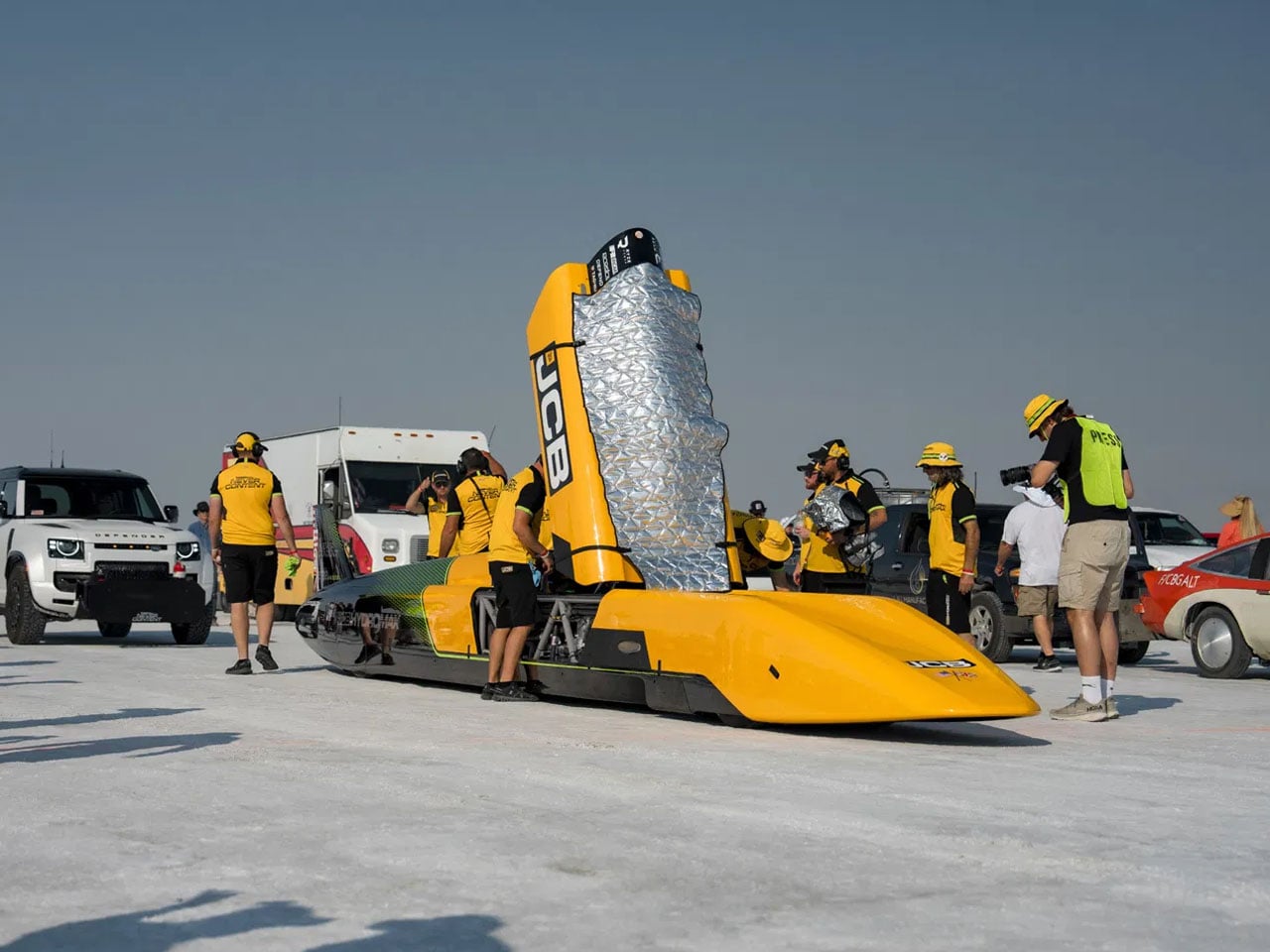
Its record-setting run was completed under FIA rules, requiring two passes in opposite directions within an hour. Driven by Wing Commander Andy Green OBE, Hydromax recorded 400.623 mph on its first run and 412.135 mph on the return, producing the official average of 406.320 mph. The result comfortably surpassed the previous FIA-officiated hydrogen internal-combustion record of 185.5 mph, set by the BMW H2R in 2004. It also moved beyond the 303 mph hydrogen fuel-cell record, making Hydromax the fastest hydrogen-powered vehicle in history. The record remains subject to formal FIA ratification.
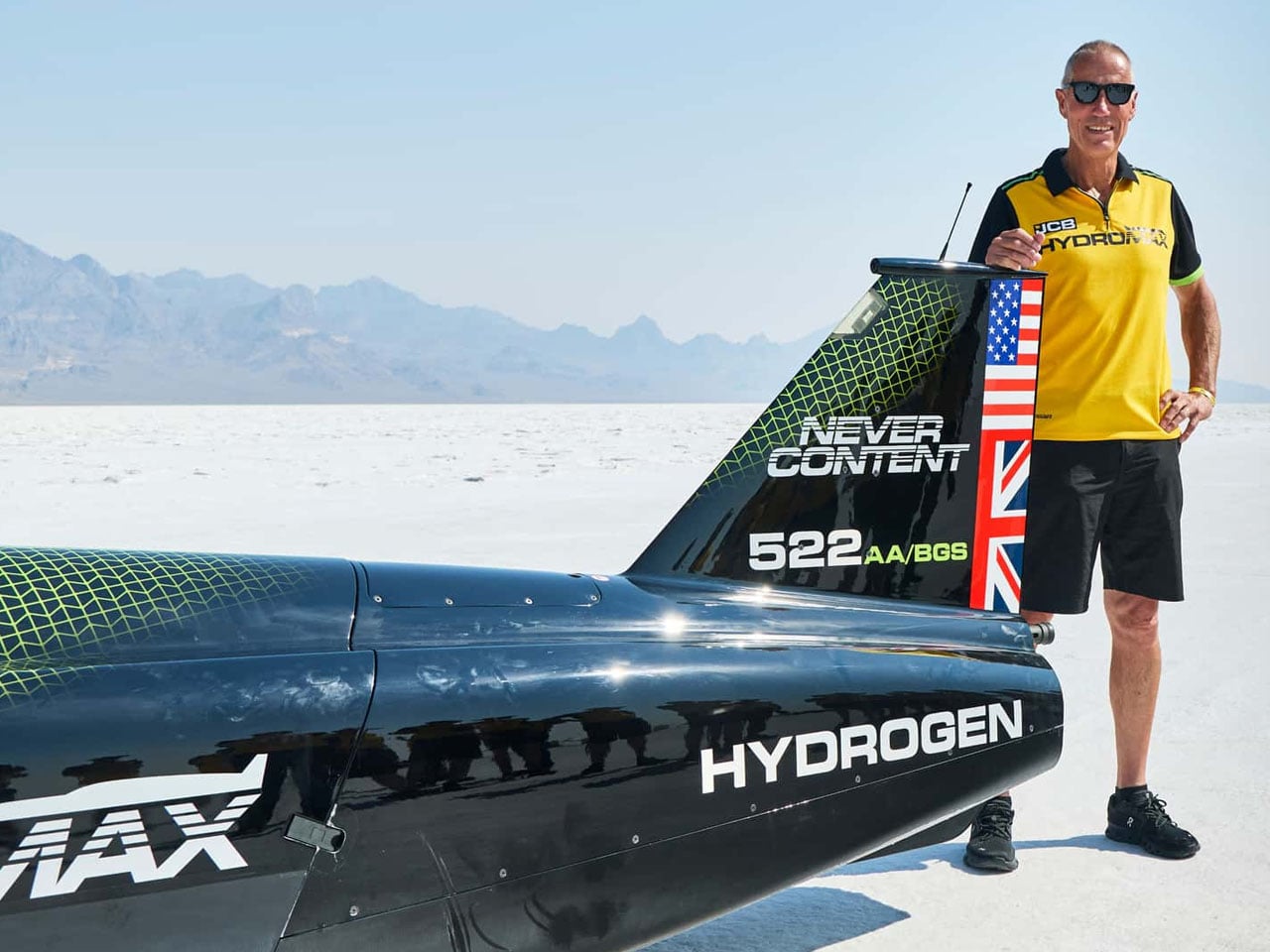
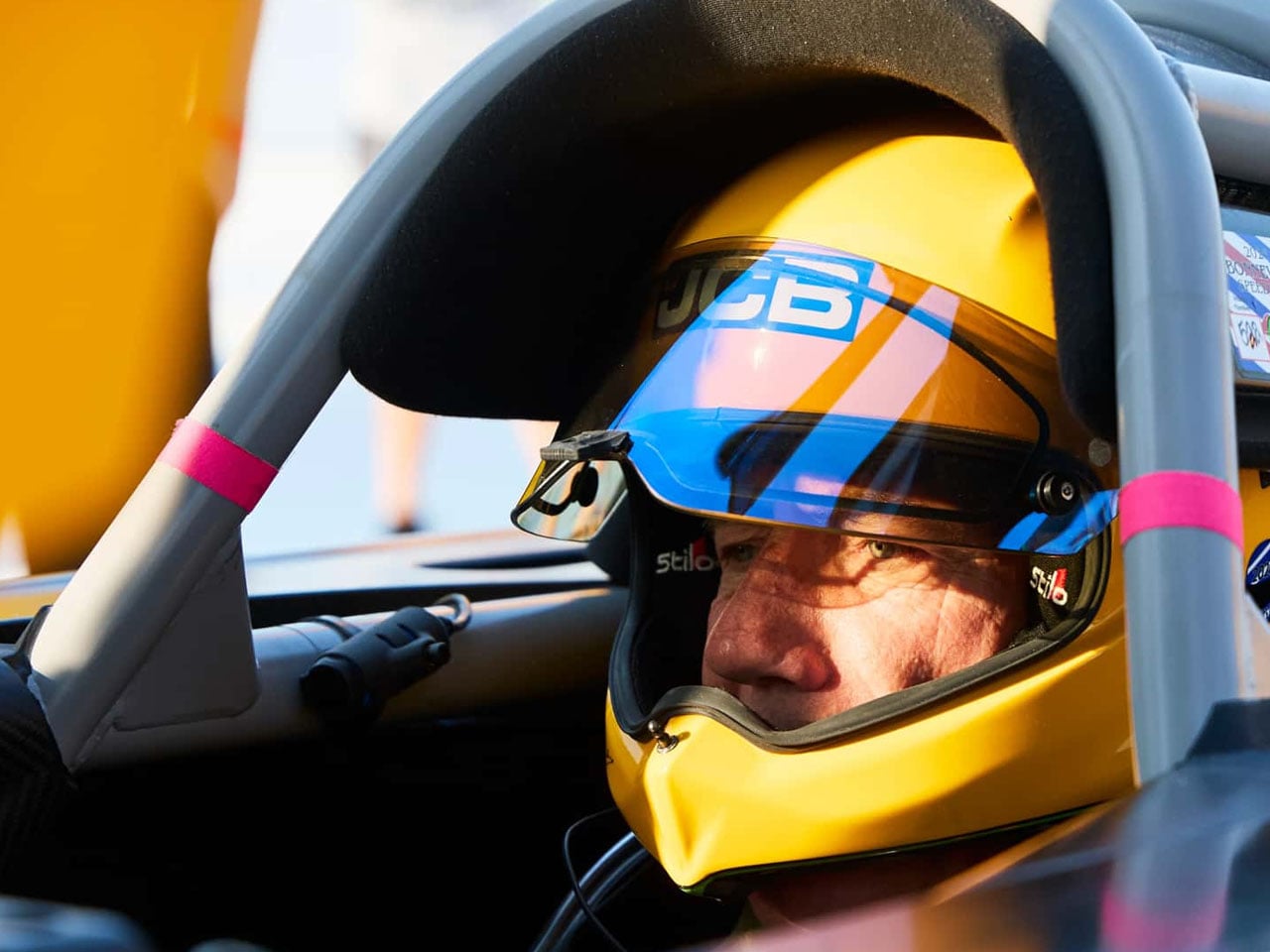
According to project lead, JCB Engineering Director Ryan Ballard, “This record belongs to the engineering team which took a hydrogen digger engine and made it the fastest of its kind on earth. This has been an amazing challenge from the outset, with it being set in February last year. We came here fully prepared, and the car delivered.”
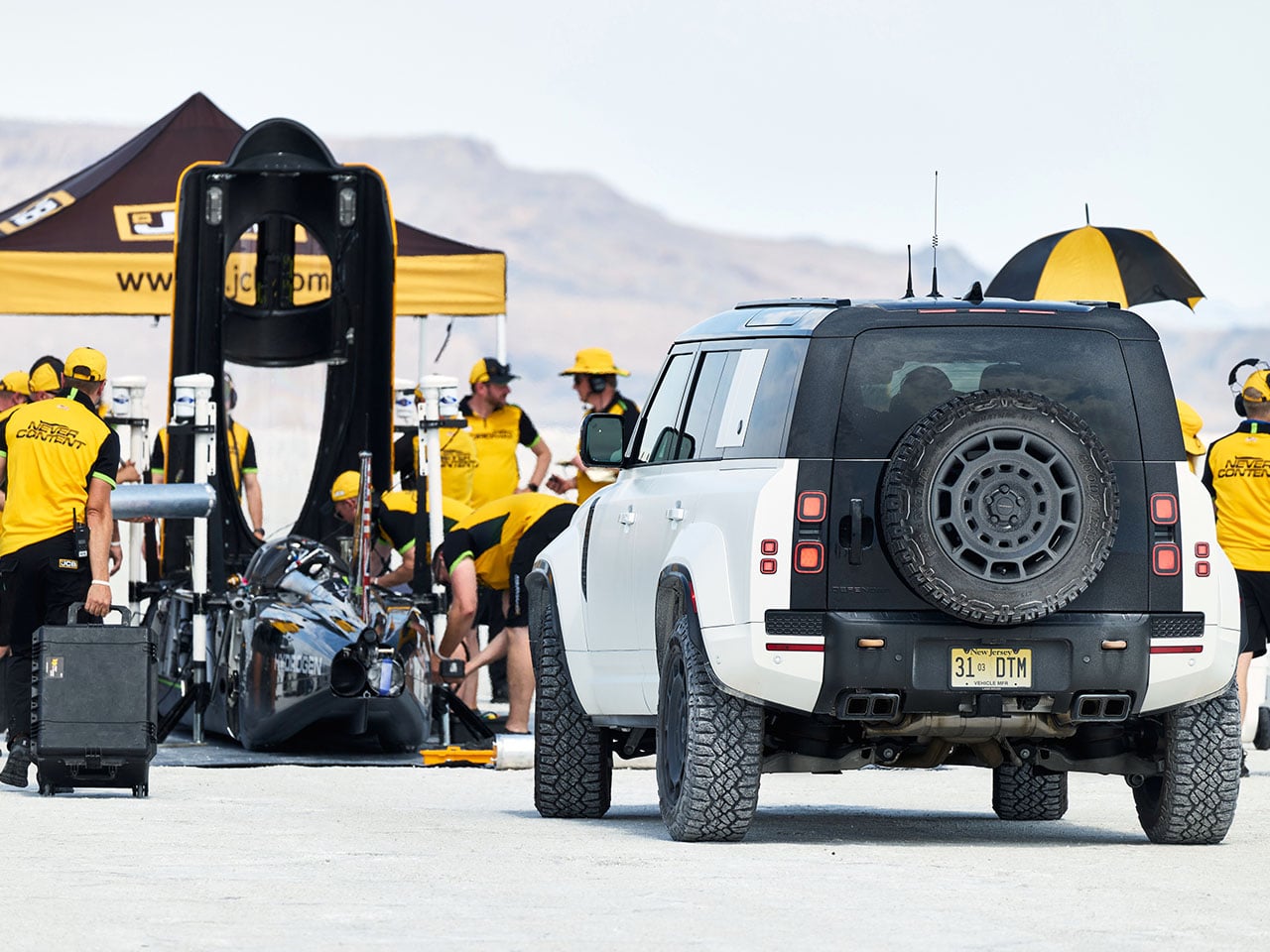
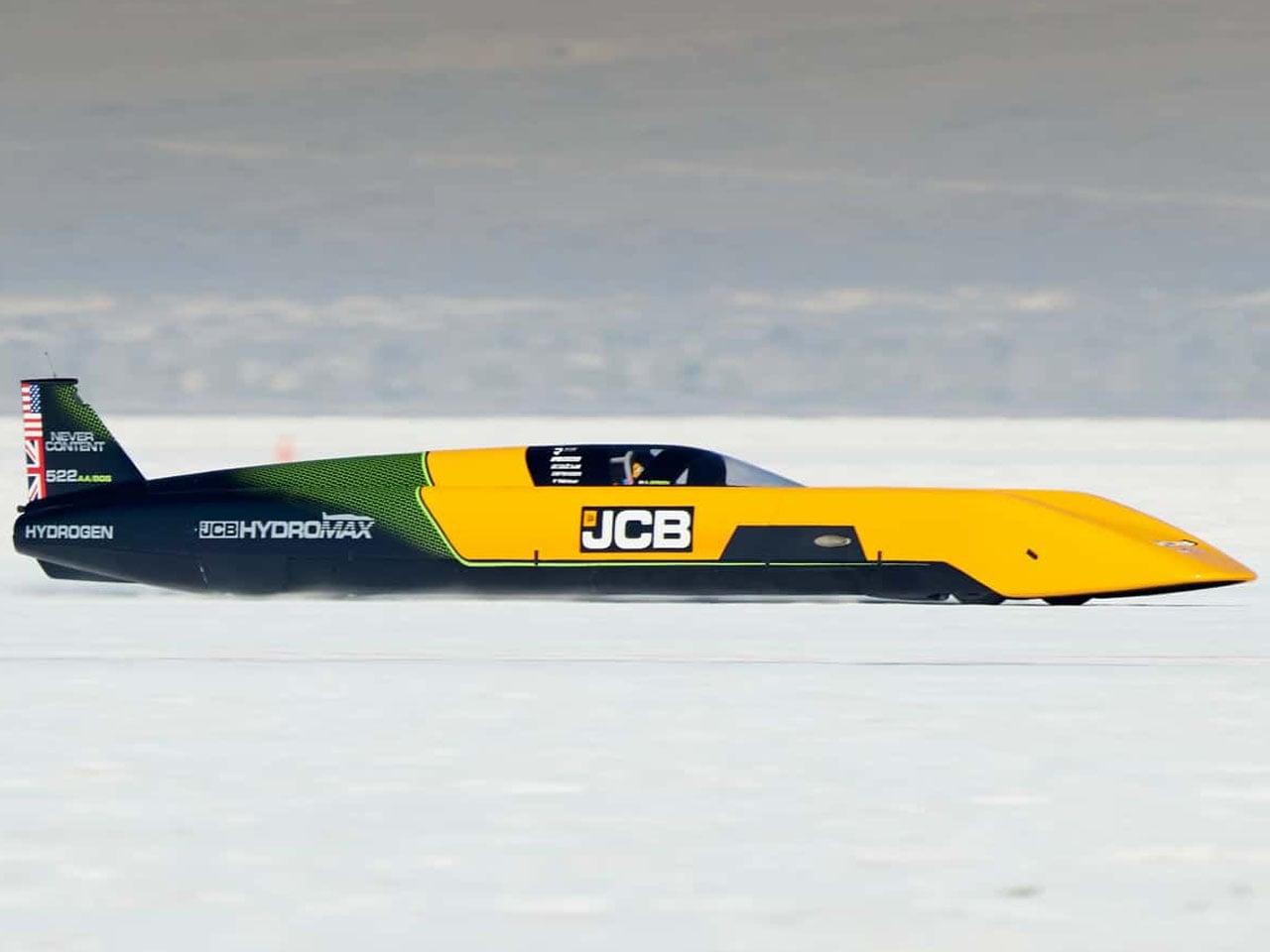
The achievement follows an earlier milestone at the 2026 Bonneville Speed Week, where Hydromax averaged 368.347 mph over two runs to establish an SCTA record in the Blown Gas Streamliner class. Its first run reached 367.141 mph, followed by 369.554 mph on the return. That result surpassed the previous 348.342 mph class benchmark, while giving JCB an important test of the car before its FIA attempt.
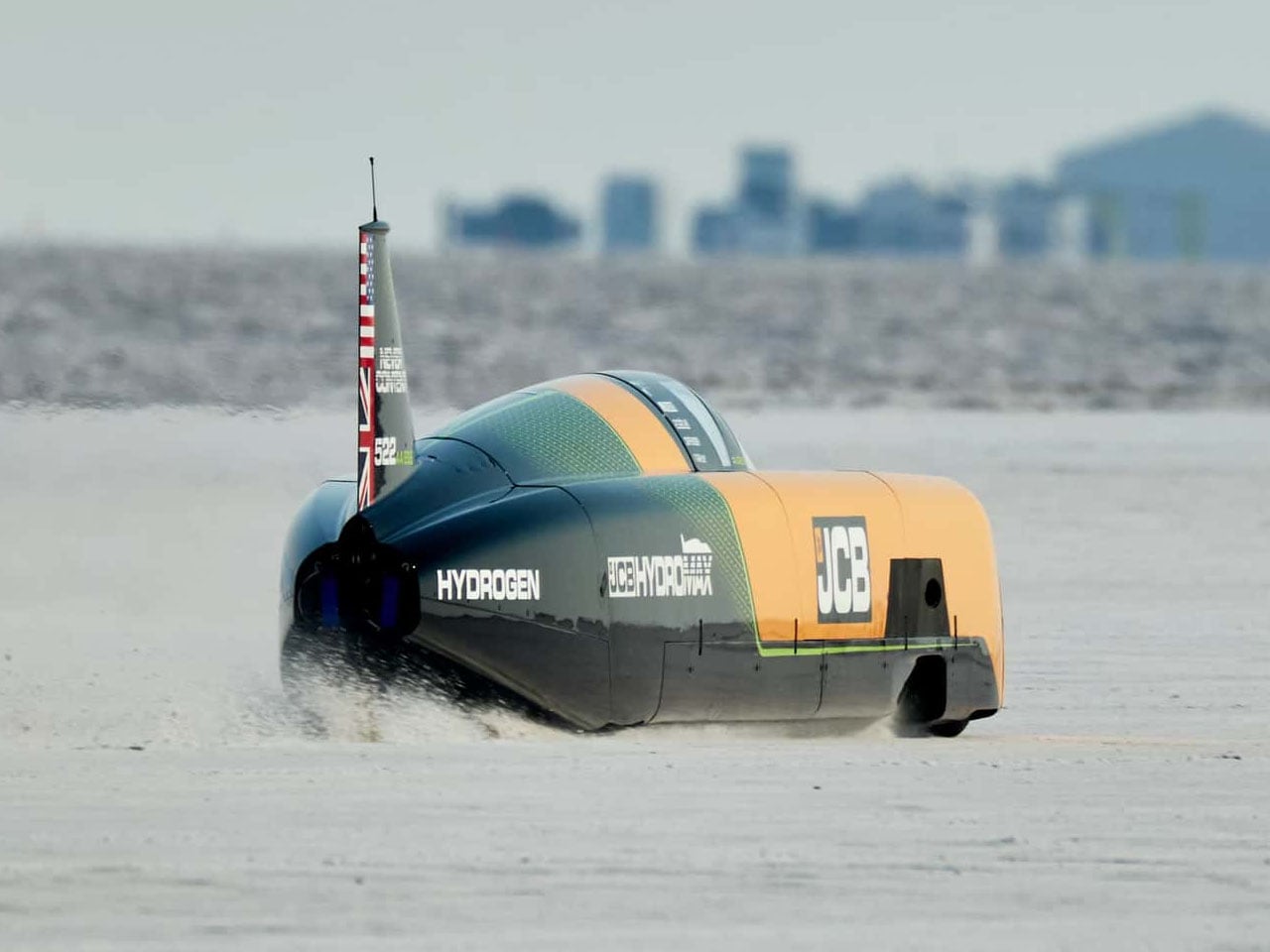
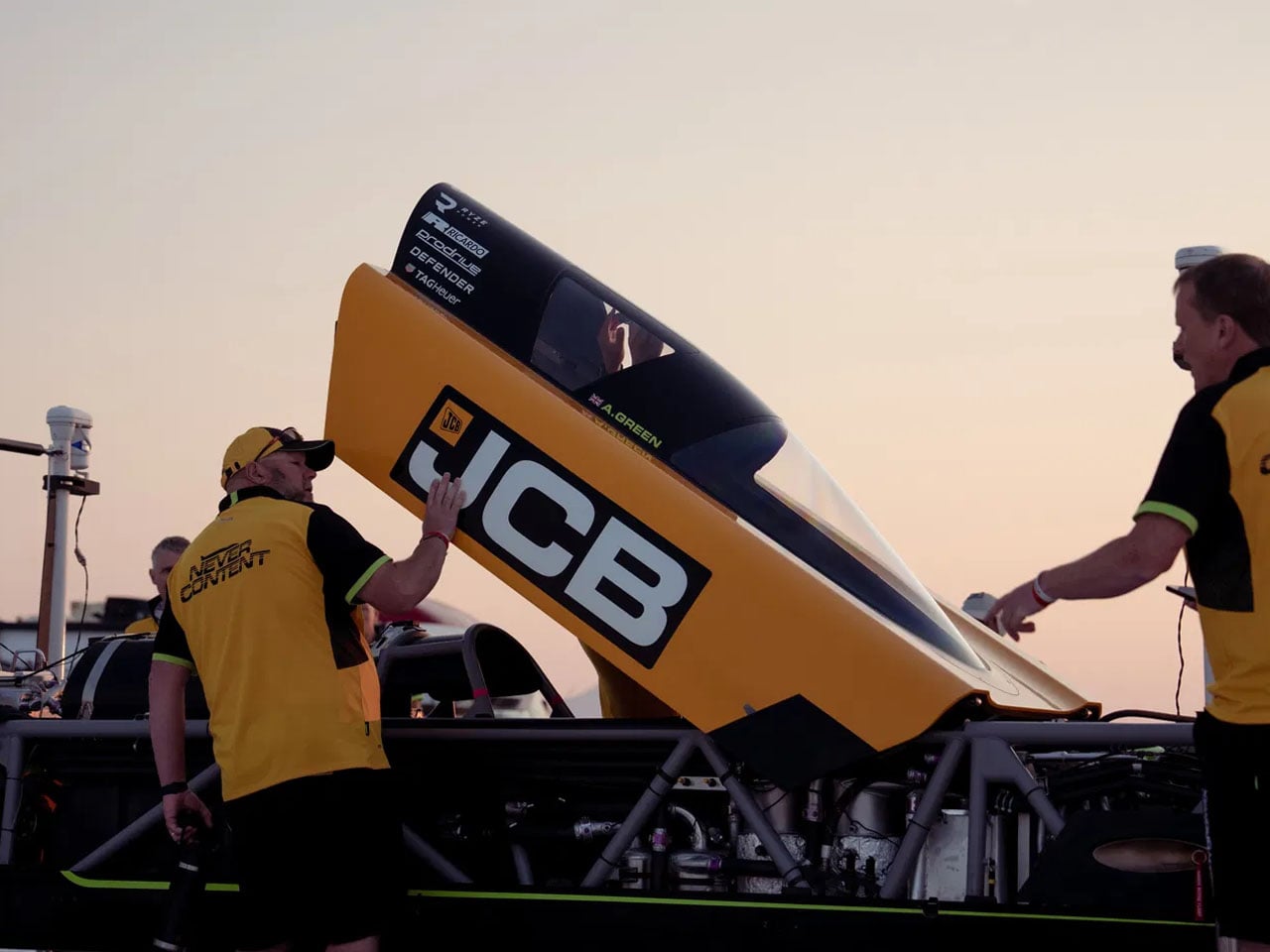
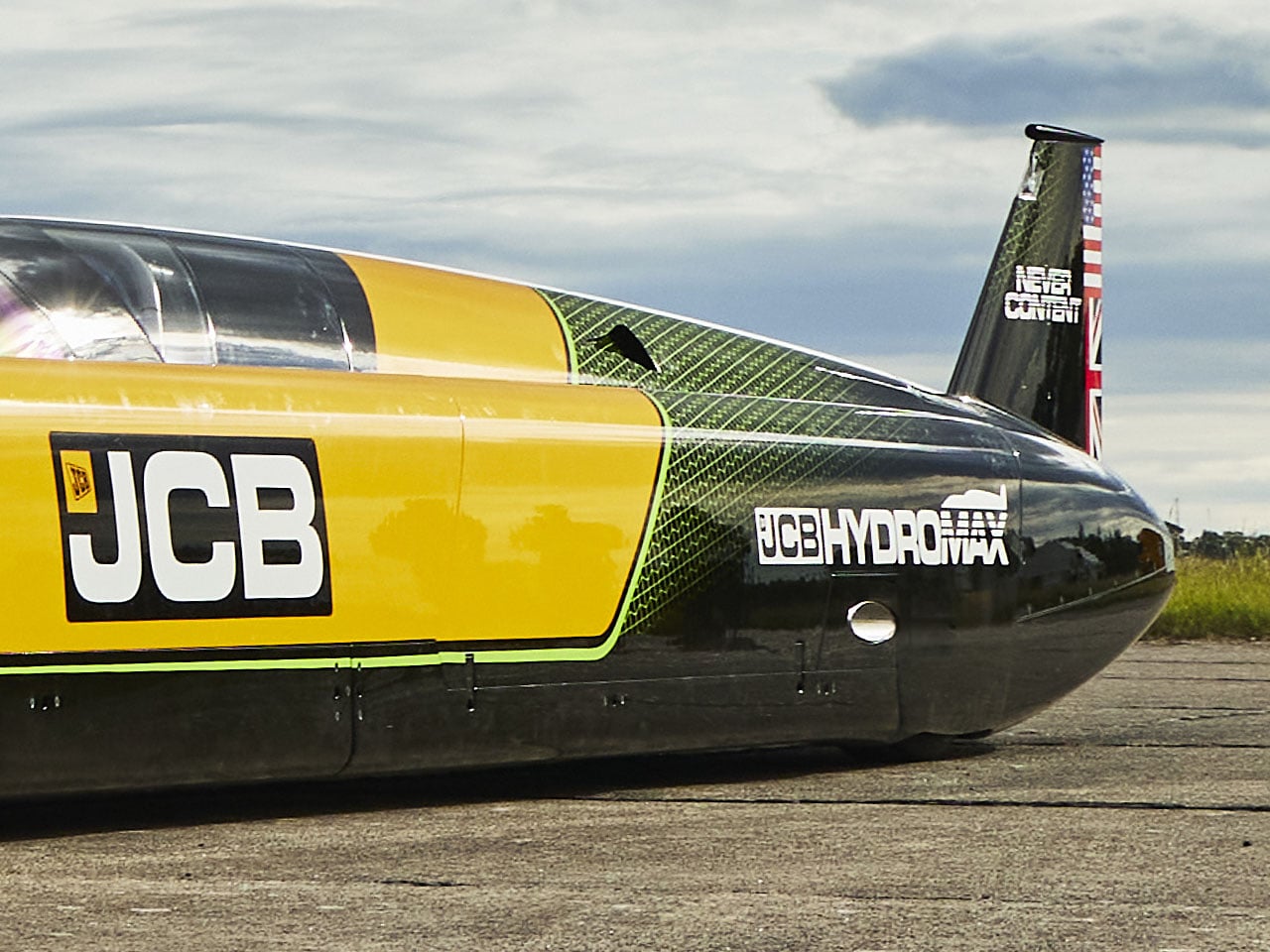
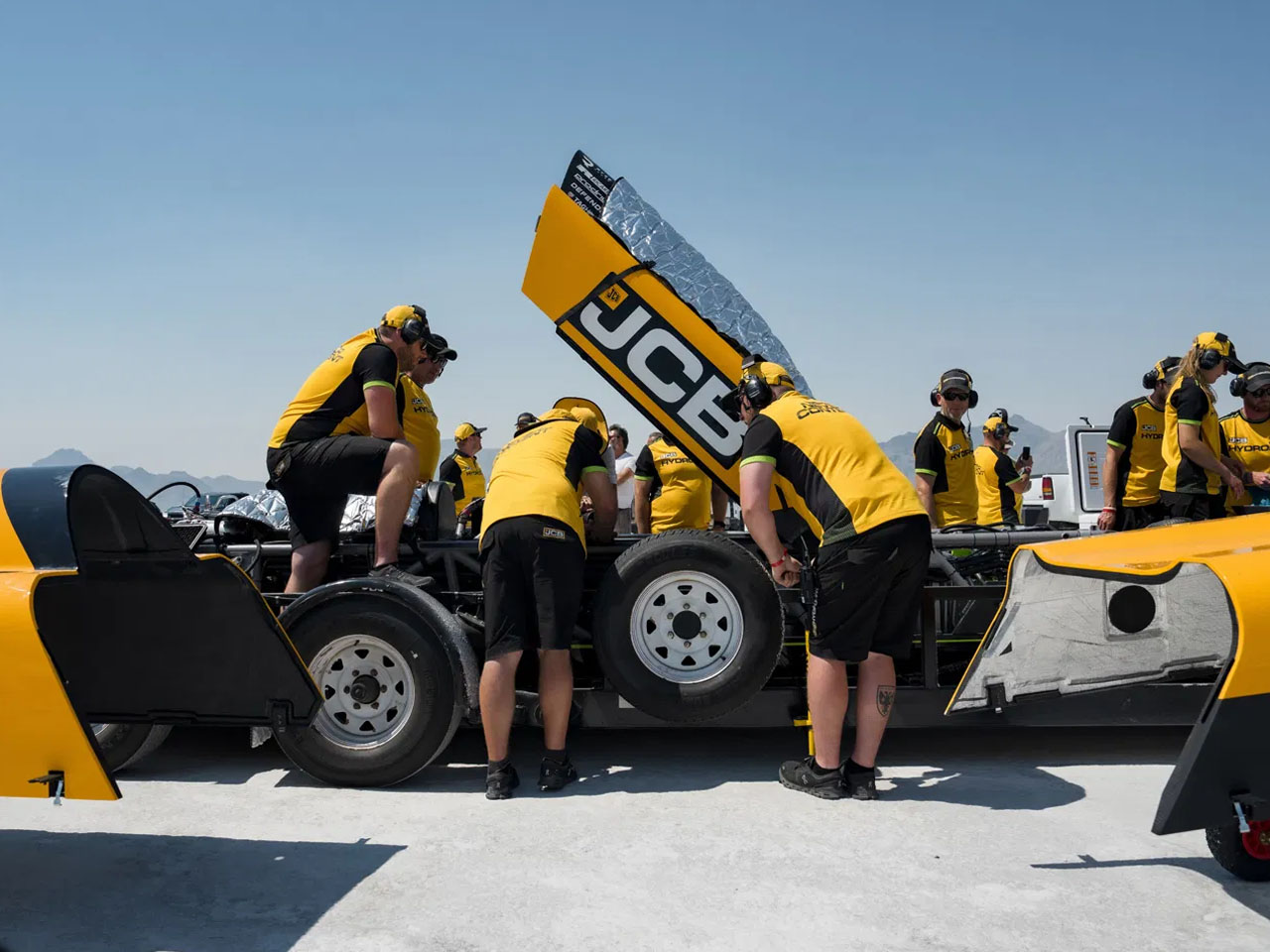
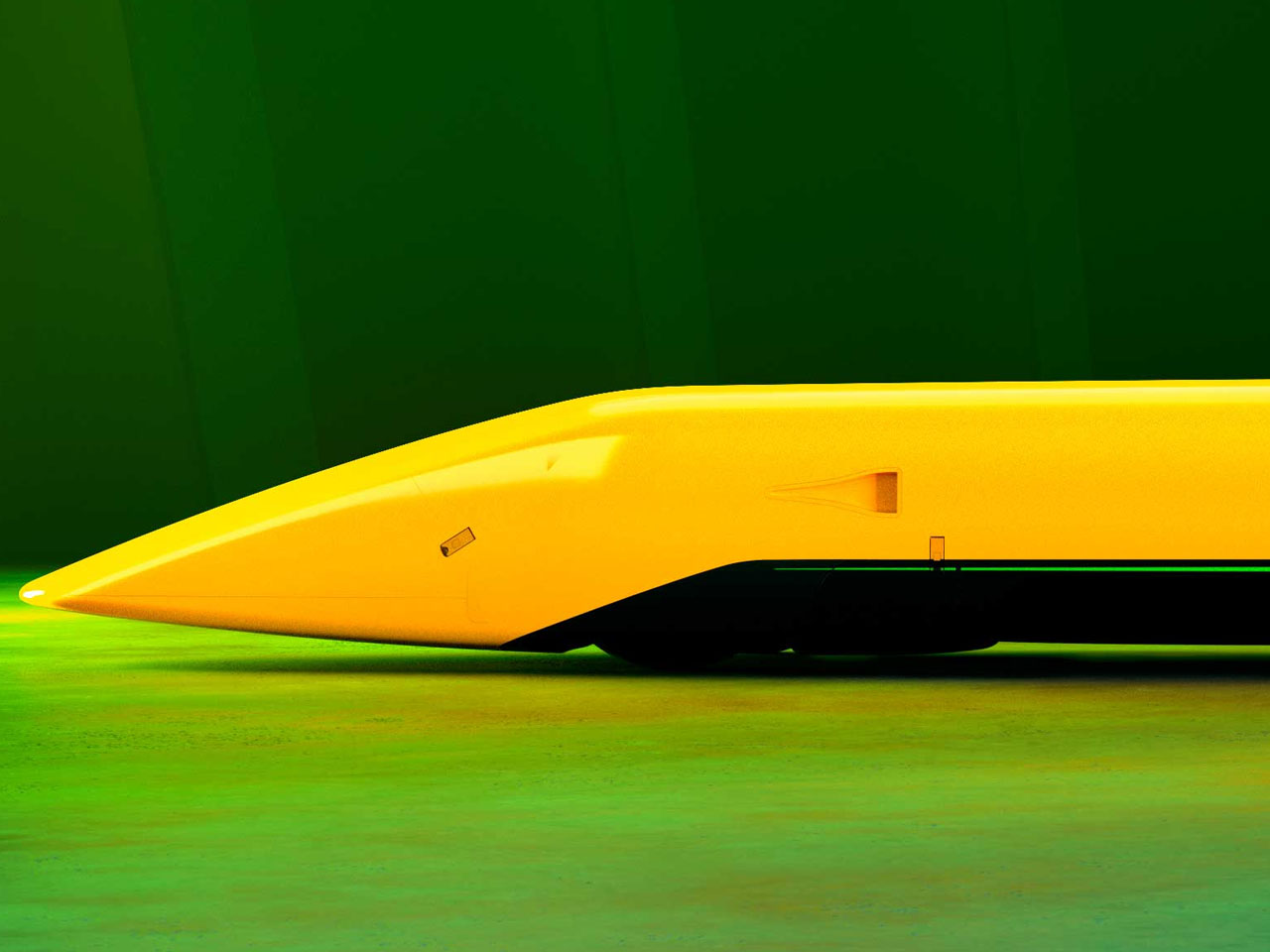
Much of the car’s engineering focuses on making extreme speed controllable. Hydromax drives all four wheels through twin transmissions and clutches, while its body was shaped around aerodynamic efficiency and stability. JCB says the suspension, traction control, aerodynamics and camera placement were all stress- and simulation-tested before the attempt. Prodrive handled the car build, Ricardo worked on engine tuning and Xtrac supplied the transmission expertise.
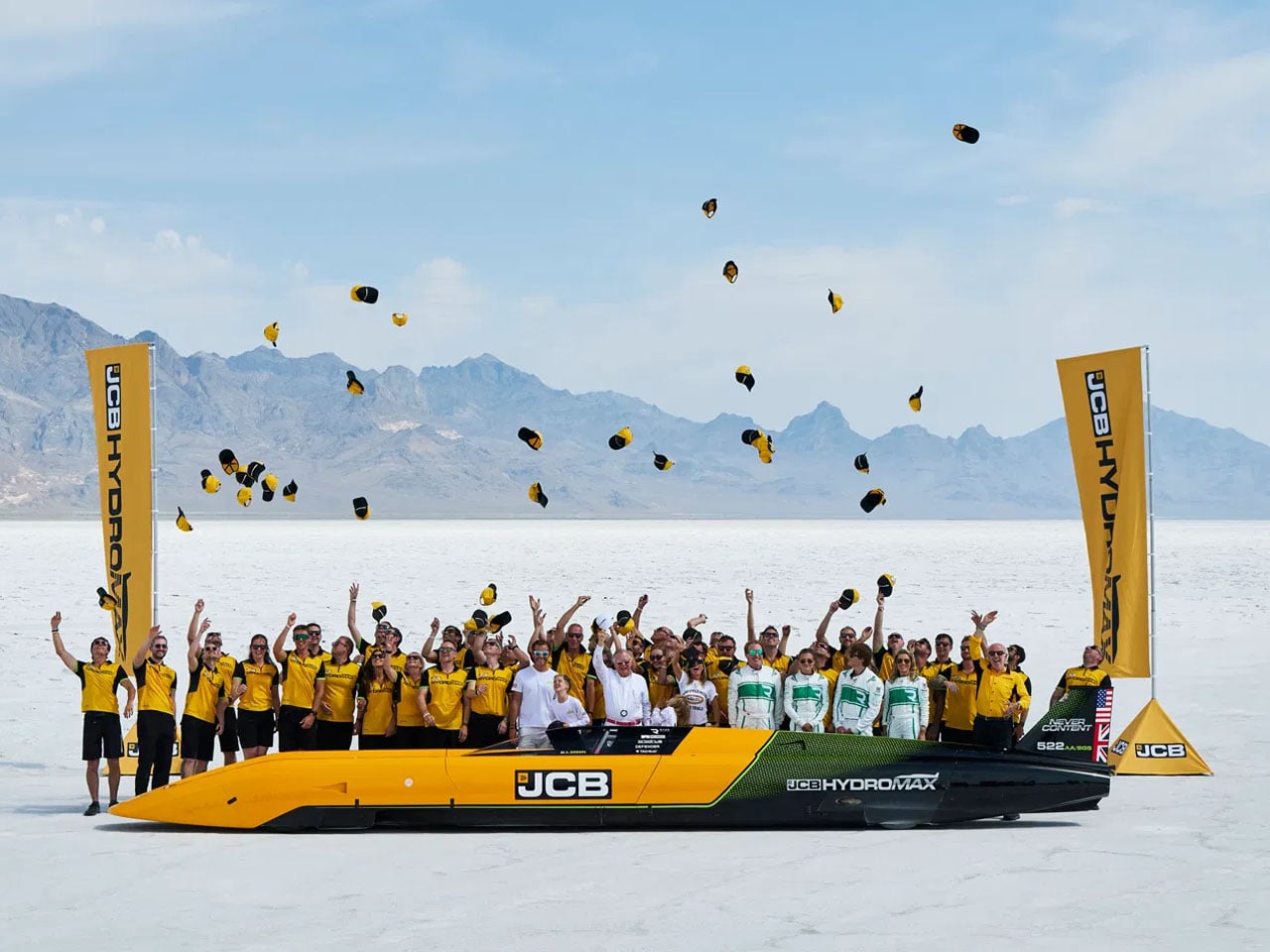
The record also carries a strong sense of continuity for JCB. Exactly 20 years after Andy Green drove the JCB Dieselmax to a 350.092 mph diesel land speed record at Bonneville, he has returned to the same salt flats to establish an even faster mark using hydrogen. The Hydromax project was conceived in 2025 as a demonstration of JCB’s hydrogen combustion technology, turning engines developed for working machines into a record-breaking powertrain.
The post JCB Hydromax sets a new hydrogen land speed record at 406.320 mph first appeared on Yanko Design.