Your Mac Has Hidden VRAM : Learn How to Unlock It in 2026

Your Mac Has Hidden VRAM : Learn How to Unlock It in 2026 LM Studio screen displaying RAM use, VRAM allocation, and memory pressure while a local model loads.

Apple silicon devices, such as MacBooks and Mac Minis, are equipped with a unified memory architecture (UMA) that allows the CPU and GPU to share the same pool of RAM. While this design enhances efficiency, it also means that memory allocation for GPU-intensive tasks can be limited by default. Alex Ziskind explores how adjusting VRAM […]

The post Your Mac Has Hidden VRAM : Learn How to Unlock It in 2026 appeared first on Geeky Gadgets.

Posted in Uncategorized

40 Hours of Battery? How the iPhone 18 Pro Max could Break Records

40 Hours of Battery? How the iPhone 18 Pro Max could Break Records Calendar view showing Apple’s rumored iPhone 18 split launch, with Pro models in Fall 2026 and others in Spring 2027.

The iPhone 18 Pro Max is poised to become one of Apple’s most significant advancements in recent years. With a combination of innovative features, refined aesthetics, and a bold release strategy, this flagship device could reshape expectations for what an iPhone can deliver. Alongside it, the rumored foldable iPhone hints at a new era of […]

The post 40 Hours of Battery? How the iPhone 18 Pro Max could Break Records appeared first on Geeky Gadgets.

Posted in Uncategorized

Easy to Setup Excel Automations to Save Time Everyday

Easy to Setup Excel Automations to Save Time Everyday Microsoft 365 Copilot suggests fixes for inconsistent names, dates, and outliers in an imported spreadsheet.

Excel’s versatility makes it an essential part of many workflows, but repetitive tasks can quickly become a drain on time and accuracy. My Online Training Hub highlights practical automations that simplify everyday processes, such as using Ctrl+T to convert data ranges into tables. This small adjustment ensures that charts automatically update as new data is […]

The post Easy to Setup Excel Automations to Save Time Everyday appeared first on Geeky Gadgets.

Posted in Uncategorized

iPad Air M4: Why 12GB of RAM is the Most Important "Invisible” Upgrade in Years

iPad Air M4: Why 12GB of RAM is the Most Important Chart showing iPad Air M4 multi-core CPU up to 30% faster compared with the prior generation.

Apple has officially launched the latest version of its iPad Air, now powered by the advanced M4 chip. This update introduces notable improvements in performance and connectivity, making it a more capable device for demanding tasks. However, other aspects, such as the design, display, and base storage, remain largely unchanged. If you’re considering upgrading or […]

The post iPad Air M4: Why 12GB of RAM is the Most Important “Invisible” Upgrade in Years appeared first on Geeky Gadgets.

Posted in Uncategorized

Gemini 3.1 Flash-Lite vs Gemini 2.5 Flash: Speed Gains & Output Quality Tested

Gemini 3.1 Flash-Lite vs Gemini 2.5 Flash: Speed Gains & Output Quality Tested Performance chart showing Gemini 3.1 Flash-Lite processing 363 tokens per second during a developer workload test.

The Gemini 3.1 Flash Lite, as explored by World of AI, represents a focused effort to enhance AI performance for developers managing demanding workloads. With a processing speed of 363 tokens per second and a 2.5x faster time-to-first-token compared to its predecessor, this model is tailored for real-time applications and high-throughput tasks. Its design prioritizes […]

The post Gemini 3.1 Flash-Lite vs Gemini 2.5 Flash: Speed Gains & Output Quality Tested appeared first on Geeky Gadgets.

Posted in Uncategorized

Budget Used ROG Ally Buying Guide : Common Faults & Upgrade Costs To Watch For

Budget Used ROG Ally Buying Guide : Common Faults & Upgrade Costs To Watch For Side-by-side comparison of ROG Ally and Steam Deck showing game settings menus and frame rate counters.

The ROG Ally with the Z1 Extreme processor stands out as a compelling option for gamers seeking a budget-friendly handheld console without sacrificing performance. Powered by AMD’s RDNA3-based GPU, the Z1 Extreme variant delivers smooth gameplay across demanding titles like Cyberpunk 2077 and Elden Ring. As highlighted by ETA Prime, this model balances affordability with […]

The post Budget Used ROG Ally Buying Guide : Common Faults & Upgrade Costs To Watch For appeared first on Geeky Gadgets.

Posted in Uncategorized

Apple Just Released iOS 26.3.1—Here is Every New Change and Fix

Apple Just Released iOS 26.3.1—Here is Every New Change and Fix Apple Studio Display 2026 connected to a Mac, highlighting display support added in iOS 26.3.1.

Apple has officially rolled out iOS 26.3.1, a minor yet significant update for all devices running iOS 26. This release is part of a broader update cycle that also includes iPadOS, macOS, and Studio Display firmware. The primary focus of this update is on hardware compatibility, bug fixes, and performance refinements. While it doesn’t introduce […]

The post Apple Just Released iOS 26.3.1—Here is Every New Change and Fix appeared first on Geeky Gadgets.

Posted in Uncategorized

iPad Air M4 vs. M3: The Game-Changing Features You Need to Know

iPad Air M4 vs. M3: The Game-Changing Features You Need to Know Comparison of iPad Air M4 and M3 performance upgrades

The iPad Air M4 introduces a range of notable advancements in performance, connectivity, and multitasking, distinguishing itself from its predecessor, the M3. While the design and display remain largely consistent with the previous generation, the M4’s upgrades cater to users seeking enhanced speed, efficiency, and productivity. However, the absence of OLED or mini-LED display technology […]

The post iPad Air M4 vs. M3: The Game-Changing Features You Need to Know appeared first on Geeky Gadgets.

Posted in Uncategorized

6 Camping Mugs From Japan That Make Coffee Taste Better (Science Says So)

You know that first sip of coffee in the morning, the one where everything just clicks? Turns out, the mug you’re drinking from has more to do with that feeling than you might think. Research has shown that ceramic mugs maintain temperature better, have a neutral flavor profile that won’t interfere with your brew, and even influence how your brain perceives taste. Studies suggest that the shape, material, and even the color of a cup can shift how sweet, intense, or satisfying a coffee actually tastes. In short, your vessel is not just a vessel. It is part of the experience.

And when it comes to vessels, Japanese ceramics have been quietly setting the standard for centuries. Right now, Japanese design is having a well-deserved moment in the spotlight, with hot beverage lovers drawn to its philosophy of wabi-sabi, finding grace in imperfection, and a deep respect for intentional, handcrafted beauty. A Japanese ceramic mug is not mass-produced or cookie-cutter. It carries the marks of its maker, the character of its kiln, and a quiet soul that only deepens with use. Bring one to your next camping trip, and that early morning brew by the fire? It just became a whole experience. These six Japanese camping mugs are proof of that.

1. Ceramic Cup

Japan’s relationship with coffee is a serious one, and the objects surrounding that ritual tend to reflect it. This Ceramic Cup is a product of that culture: a 350ml vessel crafted from Japanese ceramic with a smooth, refined finish and a natural wood handle, designed to slow the act of drinking down into something closer to meditation. It’s the kind of cup you buy because you’ve decided your daily coffee deserves better than whatever was left in the cabinet.

The pairing of ceramic and wood isn’t accidental. The ceramic body holds heat beautifully, keeping your pour at temperature while you linger over it, while the wood handle stays cool and grounded in your grip. At $60, the Ceramic Cup sits in that satisfying range of objects that feel like a genuine investment in small daily pleasures, the kind you notice every single morning and never quite get tired of.

Click Here to Buy Now: $60.00. Hurry, only a few left!

Why do we love this mug?

Bring it camping and it becomes something else entirely. Picture a particular kind of morning: cold air, slow light, the sound of a stove clicking to life. That morning deserves a proper cup. The sturdy ceramic and warm wood handle make that ritual feel intentional, even deliberate. It’s not just a mug. It’s a reason to wake up a few minutes earlier.

2. Haori Cup

When designer Tomoya Nasuda set out to revive the 400-year-old Japanese craft of Hakata Magemono, the painstaking art of hand-bending thin cedar wood plates into curved forms, the world took notice. The response was a resounding answer to the question of whether people still care about objects made with genuine cultural depth and human skill. Named after the haori, the traditional Japanese garment that wraps itself around the body, the cup follows the same principle: a single wooden plate, coaxed by hand into a form that feels both ancient and entirely new.

What elevates the Haori Cup from beautiful object to exceptional mug is how it actually performs. The bentwood construction provides natural insulation, keeping your coffee comfortable to hold whether it’s steaming hot or poured over ice, with no burning fingers and no sweating cup. The cedar wood lends a subtle, clean fragrance to each sip: a whisper of forest, not a shout. Available in several colorways including the delicate “Sakura,” every cup is handmade and genuinely one of a kind, shaped by the same grain patterns and hands that define any true craft object.

Why do we love this mug?

Bring the Haori Cup camping and something clicks into place. Holding warm coffee in a vessel bent from a single piece of Japanese cedar, sitting among trees that look not so different from the ones that made it, that’s the kind of moment you came outside for. It’s lightweight, it’s alive with history, and it makes your first cup of the morning feel less like a caffeine delivery system and more like a ceremony worth showing up for.

3. Earth Friendly Tumbler

There’s something poetic about a vessel that eventually gives itself back to the earth. The Earth Friendly Tumbler from Japan’s EcoCraft line is made from a biodegradable resin derived from paper and corn, meaning that when its long life finally ends, it quietly decomposes into water and CO₂ through natural microbial action. It’s a cup that carries the philosophy of the country that made it: thoughtful, restrained, and deeply intentional about its place in the world.

What keeps you reaching for it, though, is how it feels. The surface has a distinctive texture that sits somewhere between ceramic and wood, warm to the touch, satisfying in the palm, and nothing like the cold uniformity of plastic. Its minimalist design is clean enough for a city desk but earthy enough for the forest, and starting at just $25, it’s an easy yes. Because each tumbler’s material is shaped naturally through the biodegradable process, no two are exactly alike, a quiet nod to the Japanese ideal of wabi-sabi.

Click Here to Buy Now: $25.00. Hurry, only a few left!

Why do we love this mug?

For the camper who takes their environmental footprint as seriously as their coffee, this tumbler is a natural match. It’s light enough for a day hike, beautiful enough to sit on a camp table at sunrise, and carries with it the rare satisfaction of knowing the mug in your hand is doing the planet a quiet favor.

4. Titanium Mug

Titanium has always been the material of people who won’t compromise, and Japan’s precision metalworkers know how to honor that reputation. This mug is engineered from pure titanium, a material roughly 45% lighter than stainless steel yet equal to it in strength, which means the first time you pick it up, the lightness will catch you off guard. It feels almost implausibly slight in your hand for something this solid.

But the real story is what titanium does for your coffee. Unlike stainless steel, titanium imparts zero metallic taste or odor to your drink, so your coffee arrives exactly as it was brewed, nothing added, nothing taken away. Its lower thermal conductivity also means heat moves through the walls more slowly, keeping your drink warmer for longer on cold mornings. And with use, the titanium surface develops a gradual oxide film, a deepening, iridescent patina that makes each mug grow more beautiful and personal over time.

Why do we love this mug?

This is gear built for the outdoors without apology. It can be placed directly over a camp stove, it’s impervious to rust even in wet conditions, and its ultralight profile makes every gram-counting backpacker smile. It’s the mug you bring on every trip and eventually can’t imagine leaving behind.

5. T-Go Mini

The premise of the T-Go Mini is a simple one: great coffee shouldn’t require you to leave your standards at the trailhead. This compact travel mug was designed for people who refuse to accept that “outdoor coffee” has to mean bad coffee. Small enough to disappear into any pack, it strips the camping mug back to its most essential form and then gets every detail of that form exactly right.

“Mini” here means refined, not reduced. The T-Go Mini is shaped by the Japanese design principle of doing more with less: a tighter footprint, a secure seal, heat retention that punches above its size, and a construction that speaks of deliberate craft rather than cost-cutting. It’s the kind of object that reveals itself slowly. The more you use it, the more you appreciate what its designers chose not to include, and why.

Why do we love this mug?

For the hiker, the trail runner, or the minimalist camper who’s already decided every gram matters, the T-Go Mini is an easy decision. Slip it into a chest pocket, a jacket pouch, or a side sleeve, and let it quietly prove that the best outdoor gear doesn’t ask you to compromise. It just asks you to pay attention.

6. Pilmoa Mug

The Pilmoa Mug is a second-generation design refined through real-world feedback and use. It represents something increasingly rare in the outdoor gear market: a mug designed by people who actually think carefully about what it means to drink coffee well, not just to drink it conveniently.

The Pilmoa is built around the small details that most camping mugs overlook: the feel of the rim against your lips, the balance of the cup in a cold hand, the way heat distributes through its walls on a slow morning. These are the quiet, almost invisible considerations that separate a mug you tolerate from one you genuinely look forward to. It’s not trying to do everything, just trying to do one thing with the kind of focus that Japanese product design consistently brings to the table.

Why do we love this mug?

Compact and carefully conceived, the Pilmoa earns its place in any outdoor kit. Whether you’re setting it beside a stove in the backcountry or pulling it from a hip pack mid-hike, it holds its ground. It’s the kind of mug that reminds you, every time you use it, that good mornings outdoors are worth planning for.

Six mugs, six philosophies, one shared conviction: that how you drink matters as much as what you drink. Whether you reach for the biodegradable quiet of the Earth Friendly Tumbler, the handcrafted soul of the Haori Cup, or the no-compromise precision of the Titanium Mug, each of these objects carries the same Japanese understanding that a well-made vessel is never just a vessel. It is an argument, made in clay or cedar or titanium, that ordinary moments deserve extraordinary attention. Science already told us that the cup shapes the experience. Japan has known that for centuries. So the next time you find yourself at a campsite with cold air in your lungs and a stove hissing to life, think carefully about what you pour your coffee into. The right mug won’t just hold your drink. It will hold the whole morning.

The post 6 Camping Mugs From Japan That Make Coffee Taste Better (Science Says So) first appeared on Yanko Design.
This Miniature Chair Is Jonathan Anderson’s Smartest Dior Move

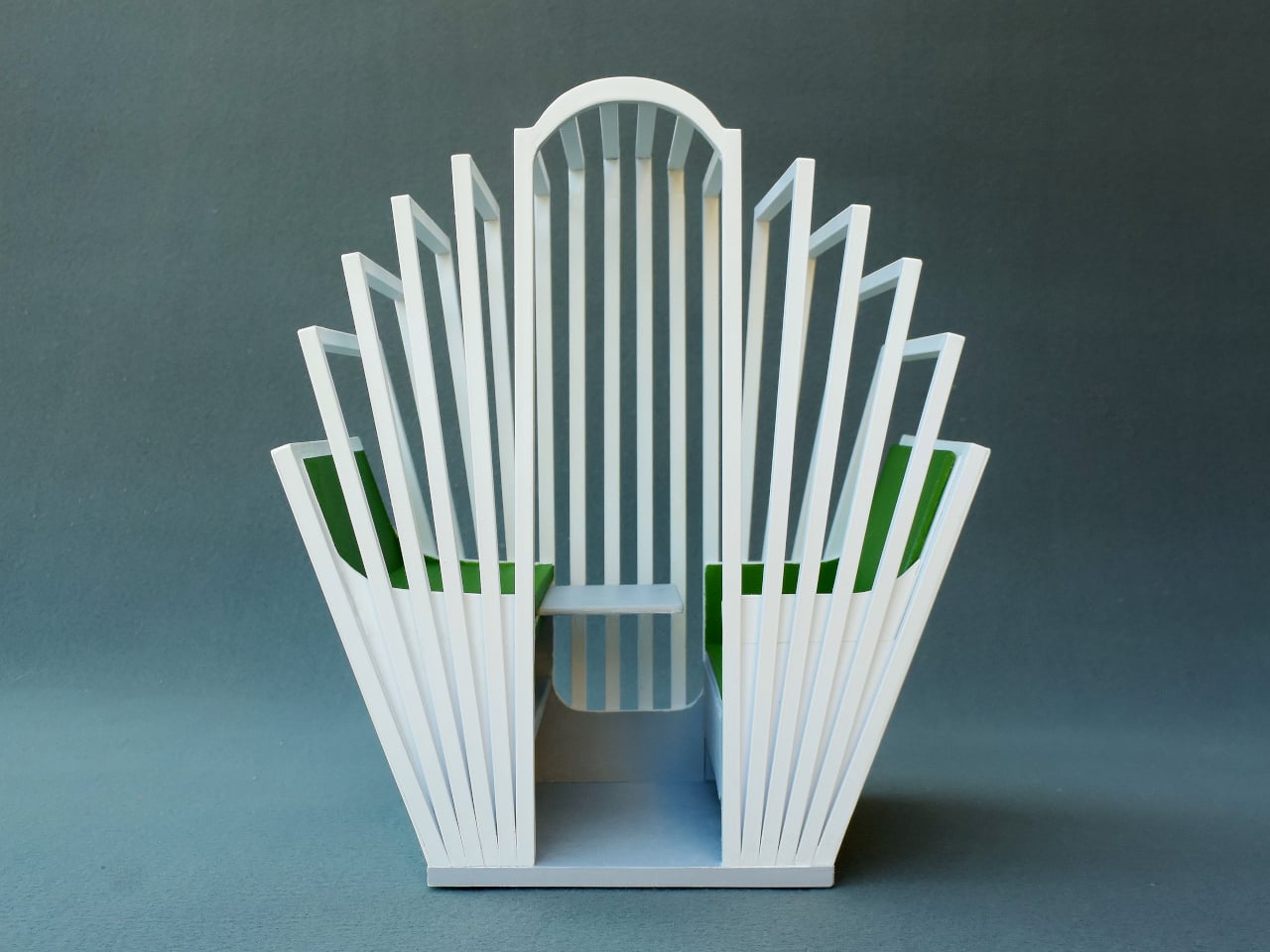
The fashion show invitation has been quietly dying for years. What was once a piece of paper, then a gilded box, then a USB drive shaped like a perfume bottle, has steadily been reduced to an email attachment with an RSVP link and a virtual front row. So when Jonathan Anderson sent physical invitations for his Spring/Summer 2026 Dior debut, that alone was already worth noting. That the invitation turned out to be a miniature replica of the iconic green metal chairs from the Jardin des Tuileries made it something else entirely.

If you’ve been to Paris, you know the chair. That specific shade of green, the wrought iron frame, the slightly uncomfortable curve of the seat that you’d still happily sit on for hours just to watch pigeons and people drift by. The chairs of the Tuileries aren’t precious objects. They’re not behind glass. They’re public furniture, casually scattered across one of the most photographed gardens in the world, and anyone can pull one up. That’s precisely the point Anderson seems to be making.

Designer: Jonathan Anderson

Fashion invitations, at their best, are previews. They’re a designer’s handshake, the first line of the story they want to tell. At their worst, they’re just complicated garbage. Anderson’s chair manages to be neither. It sits somewhere far more interesting: a symbol loaded with Parisian identity but freed from elitism. The Tuileries chair belongs to everyone. Tourists sit in it, locals nap in it, lovers drag two of them together and angle them toward the Seine. For Anderson to choose this as his introductory gesture for one of fashion’s most storied houses reads as a very clear statement of intent.

Anderson is, by now, well-established as a designer who treats objects with the seriousness of a curator. His years at Loewe were defined by a fascination with craft, provenance, and the weight of things. He built a house culture around the idea that what surrounds us matters, that design exists at every scale, from the cut of a coat to the shape of a vase. That sensibility didn’t stay at Loewe when he left. It packed its bags and followed him to the Avenue Montaigne.

What I find genuinely compelling about this invitation is the restraint of it. Anderson could have arrived at Dior with something maximalist and declaratory. He is, after all, the first designer since Christian Dior himself to oversee all of the house’s fashion lines, a pressure point that would send most people reaching for something grand and unmistakable. Instead, he picked a chair. A chair that says: I see Paris clearly. I know what it actually is, not just what it looks like in campaign shots. And I’m asking you to sit down.

The Spring/Summer 2026 ready-to-wear show itself was held at the Tuileries, the very garden where those chairs live, which is a detail worth pausing on. That circularity feels entirely deliberate. The invitation wasn’t just a keepsake or a branding exercise. It was a spatial cue, a way of pulling guests into the landscape before they ever arrived. By the time editors and buyers took their seats in the show space, the chair in their mailbox had already done its work. The object had already oriented them toward something.

There’s a broader conversation happening right now about what fashion shows are for, who they’re for, and whether the spectacle has eclipsed the clothes. Anderson seems to be navigating that tension with real purpose. His debut was notable for beginning with a documentary short by Adam Curtis recapping the entire history of the house, an act that felt less like tribute and more like confidence: here is everything that came before me, and now watch what I do with it.

The chair invitation belongs to that same mode of thinking. It’s not a gimmick. It’s a gesture that understands the difference between noise and meaning. Fashion has plenty of the former. Anderson, at Dior, looks committed to the latter.

The post This Miniature Chair Is Jonathan Anderson’s Smartest Dior Move first appeared on Yanko Design.