iPad Air M4 vs. M3: The Game-Changing Features You Need to Know

iPad Air M4 vs. M3: The Game-Changing Features You Need to Know Comparison of iPad Air M4 and M3 performance upgrades

The iPad Air M4 introduces a range of notable advancements in performance, connectivity, and multitasking, distinguishing itself from its predecessor, the M3. While the design and display remain largely consistent with the previous generation, the M4’s upgrades cater to users seeking enhanced speed, efficiency, and productivity. However, the absence of OLED or mini-LED display technology […]

The post iPad Air M4 vs. M3: The Game-Changing Features You Need to Know appeared first on Geeky Gadgets.

Posted in Uncategorized

6 Camping Mugs From Japan That Make Coffee Taste Better (Science Says So)

You know that first sip of coffee in the morning, the one where everything just clicks? Turns out, the mug you’re drinking from has more to do with that feeling than you might think. Research has shown that ceramic mugs maintain temperature better, have a neutral flavor profile that won’t interfere with your brew, and even influence how your brain perceives taste. Studies suggest that the shape, material, and even the color of a cup can shift how sweet, intense, or satisfying a coffee actually tastes. In short, your vessel is not just a vessel. It is part of the experience.

And when it comes to vessels, Japanese ceramics have been quietly setting the standard for centuries. Right now, Japanese design is having a well-deserved moment in the spotlight, with hot beverage lovers drawn to its philosophy of wabi-sabi, finding grace in imperfection, and a deep respect for intentional, handcrafted beauty. A Japanese ceramic mug is not mass-produced or cookie-cutter. It carries the marks of its maker, the character of its kiln, and a quiet soul that only deepens with use. Bring one to your next camping trip, and that early morning brew by the fire? It just became a whole experience. These six Japanese camping mugs are proof of that.

1. Ceramic Cup

Japan’s relationship with coffee is a serious one, and the objects surrounding that ritual tend to reflect it. This Ceramic Cup is a product of that culture: a 350ml vessel crafted from Japanese ceramic with a smooth, refined finish and a natural wood handle, designed to slow the act of drinking down into something closer to meditation. It’s the kind of cup you buy because you’ve decided your daily coffee deserves better than whatever was left in the cabinet.

The pairing of ceramic and wood isn’t accidental. The ceramic body holds heat beautifully, keeping your pour at temperature while you linger over it, while the wood handle stays cool and grounded in your grip. At $60, the Ceramic Cup sits in that satisfying range of objects that feel like a genuine investment in small daily pleasures, the kind you notice every single morning and never quite get tired of.

Click Here to Buy Now: $60.00. Hurry, only a few left!

Why do we love this mug?

Bring it camping and it becomes something else entirely. Picture a particular kind of morning: cold air, slow light, the sound of a stove clicking to life. That morning deserves a proper cup. The sturdy ceramic and warm wood handle make that ritual feel intentional, even deliberate. It’s not just a mug. It’s a reason to wake up a few minutes earlier.

2. Haori Cup

When designer Tomoya Nasuda set out to revive the 400-year-old Japanese craft of Hakata Magemono, the painstaking art of hand-bending thin cedar wood plates into curved forms, the world took notice. The response was a resounding answer to the question of whether people still care about objects made with genuine cultural depth and human skill. Named after the haori, the traditional Japanese garment that wraps itself around the body, the cup follows the same principle: a single wooden plate, coaxed by hand into a form that feels both ancient and entirely new.

What elevates the Haori Cup from beautiful object to exceptional mug is how it actually performs. The bentwood construction provides natural insulation, keeping your coffee comfortable to hold whether it’s steaming hot or poured over ice, with no burning fingers and no sweating cup. The cedar wood lends a subtle, clean fragrance to each sip: a whisper of forest, not a shout. Available in several colorways including the delicate “Sakura,” every cup is handmade and genuinely one of a kind, shaped by the same grain patterns and hands that define any true craft object.

Why do we love this mug?

Bring the Haori Cup camping and something clicks into place. Holding warm coffee in a vessel bent from a single piece of Japanese cedar, sitting among trees that look not so different from the ones that made it, that’s the kind of moment you came outside for. It’s lightweight, it’s alive with history, and it makes your first cup of the morning feel less like a caffeine delivery system and more like a ceremony worth showing up for.

3. Earth Friendly Tumbler

There’s something poetic about a vessel that eventually gives itself back to the earth. The Earth Friendly Tumbler from Japan’s EcoCraft line is made from a biodegradable resin derived from paper and corn, meaning that when its long life finally ends, it quietly decomposes into water and CO₂ through natural microbial action. It’s a cup that carries the philosophy of the country that made it: thoughtful, restrained, and deeply intentional about its place in the world.

What keeps you reaching for it, though, is how it feels. The surface has a distinctive texture that sits somewhere between ceramic and wood, warm to the touch, satisfying in the palm, and nothing like the cold uniformity of plastic. Its minimalist design is clean enough for a city desk but earthy enough for the forest, and starting at just $25, it’s an easy yes. Because each tumbler’s material is shaped naturally through the biodegradable process, no two are exactly alike, a quiet nod to the Japanese ideal of wabi-sabi.

Click Here to Buy Now: $25.00. Hurry, only a few left!

Why do we love this mug?

For the camper who takes their environmental footprint as seriously as their coffee, this tumbler is a natural match. It’s light enough for a day hike, beautiful enough to sit on a camp table at sunrise, and carries with it the rare satisfaction of knowing the mug in your hand is doing the planet a quiet favor.

4. Titanium Mug

Titanium has always been the material of people who won’t compromise, and Japan’s precision metalworkers know how to honor that reputation. This mug is engineered from pure titanium, a material roughly 45% lighter than stainless steel yet equal to it in strength, which means the first time you pick it up, the lightness will catch you off guard. It feels almost implausibly slight in your hand for something this solid.

But the real story is what titanium does for your coffee. Unlike stainless steel, titanium imparts zero metallic taste or odor to your drink, so your coffee arrives exactly as it was brewed, nothing added, nothing taken away. Its lower thermal conductivity also means heat moves through the walls more slowly, keeping your drink warmer for longer on cold mornings. And with use, the titanium surface develops a gradual oxide film, a deepening, iridescent patina that makes each mug grow more beautiful and personal over time.

Why do we love this mug?

This is gear built for the outdoors without apology. It can be placed directly over a camp stove, it’s impervious to rust even in wet conditions, and its ultralight profile makes every gram-counting backpacker smile. It’s the mug you bring on every trip and eventually can’t imagine leaving behind.

5. T-Go Mini

The premise of the T-Go Mini is a simple one: great coffee shouldn’t require you to leave your standards at the trailhead. This compact travel mug was designed for people who refuse to accept that “outdoor coffee” has to mean bad coffee. Small enough to disappear into any pack, it strips the camping mug back to its most essential form and then gets every detail of that form exactly right.

“Mini” here means refined, not reduced. The T-Go Mini is shaped by the Japanese design principle of doing more with less: a tighter footprint, a secure seal, heat retention that punches above its size, and a construction that speaks of deliberate craft rather than cost-cutting. It’s the kind of object that reveals itself slowly. The more you use it, the more you appreciate what its designers chose not to include, and why.

Why do we love this mug?

For the hiker, the trail runner, or the minimalist camper who’s already decided every gram matters, the T-Go Mini is an easy decision. Slip it into a chest pocket, a jacket pouch, or a side sleeve, and let it quietly prove that the best outdoor gear doesn’t ask you to compromise. It just asks you to pay attention.

6. Pilmoa Mug

The Pilmoa Mug is a second-generation design refined through real-world feedback and use. It represents something increasingly rare in the outdoor gear market: a mug designed by people who actually think carefully about what it means to drink coffee well, not just to drink it conveniently.

The Pilmoa is built around the small details that most camping mugs overlook: the feel of the rim against your lips, the balance of the cup in a cold hand, the way heat distributes through its walls on a slow morning. These are the quiet, almost invisible considerations that separate a mug you tolerate from one you genuinely look forward to. It’s not trying to do everything, just trying to do one thing with the kind of focus that Japanese product design consistently brings to the table.

Why do we love this mug?

Compact and carefully conceived, the Pilmoa earns its place in any outdoor kit. Whether you’re setting it beside a stove in the backcountry or pulling it from a hip pack mid-hike, it holds its ground. It’s the kind of mug that reminds you, every time you use it, that good mornings outdoors are worth planning for.

Six mugs, six philosophies, one shared conviction: that how you drink matters as much as what you drink. Whether you reach for the biodegradable quiet of the Earth Friendly Tumbler, the handcrafted soul of the Haori Cup, or the no-compromise precision of the Titanium Mug, each of these objects carries the same Japanese understanding that a well-made vessel is never just a vessel. It is an argument, made in clay or cedar or titanium, that ordinary moments deserve extraordinary attention. Science already told us that the cup shapes the experience. Japan has known that for centuries. So the next time you find yourself at a campsite with cold air in your lungs and a stove hissing to life, think carefully about what you pour your coffee into. The right mug won’t just hold your drink. It will hold the whole morning.

The post 6 Camping Mugs From Japan That Make Coffee Taste Better (Science Says So) first appeared on Yanko Design.

This Miniature Chair Is Jonathan Anderson’s Smartest Dior Move

The fashion show invitation has been quietly dying for years. What was once a piece of paper, then a gilded box, then a USB drive shaped like a perfume bottle, has steadily been reduced to an email attachment with an RSVP link and a virtual front row. So when Jonathan Anderson sent physical invitations for his Spring/Summer 2026 Dior debut, that alone was already worth noting. That the invitation turned out to be a miniature replica of the iconic green metal chairs from the Jardin des Tuileries made it something else entirely.

If you’ve been to Paris, you know the chair. That specific shade of green, the wrought iron frame, the slightly uncomfortable curve of the seat that you’d still happily sit on for hours just to watch pigeons and people drift by. The chairs of the Tuileries aren’t precious objects. They’re not behind glass. They’re public furniture, casually scattered across one of the most photographed gardens in the world, and anyone can pull one up. That’s precisely the point Anderson seems to be making.

Designer: Jonathan Anderson

Fashion invitations, at their best, are previews. They’re a designer’s handshake, the first line of the story they want to tell. At their worst, they’re just complicated garbage. Anderson’s chair manages to be neither. It sits somewhere far more interesting: a symbol loaded with Parisian identity but freed from elitism. The Tuileries chair belongs to everyone. Tourists sit in it, locals nap in it, lovers drag two of them together and angle them toward the Seine. For Anderson to choose this as his introductory gesture for one of fashion’s most storied houses reads as a very clear statement of intent.

Anderson is, by now, well-established as a designer who treats objects with the seriousness of a curator. His years at Loewe were defined by a fascination with craft, provenance, and the weight of things. He built a house culture around the idea that what surrounds us matters, that design exists at every scale, from the cut of a coat to the shape of a vase. That sensibility didn’t stay at Loewe when he left. It packed its bags and followed him to the Avenue Montaigne.

What I find genuinely compelling about this invitation is the restraint of it. Anderson could have arrived at Dior with something maximalist and declaratory. He is, after all, the first designer since Christian Dior himself to oversee all of the house’s fashion lines, a pressure point that would send most people reaching for something grand and unmistakable. Instead, he picked a chair. A chair that says: I see Paris clearly. I know what it actually is, not just what it looks like in campaign shots. And I’m asking you to sit down.

The Spring/Summer 2026 ready-to-wear show itself was held at the Tuileries, the very garden where those chairs live, which is a detail worth pausing on. That circularity feels entirely deliberate. The invitation wasn’t just a keepsake or a branding exercise. It was a spatial cue, a way of pulling guests into the landscape before they ever arrived. By the time editors and buyers took their seats in the show space, the chair in their mailbox had already done its work. The object had already oriented them toward something.

There’s a broader conversation happening right now about what fashion shows are for, who they’re for, and whether the spectacle has eclipsed the clothes. Anderson seems to be navigating that tension with real purpose. His debut was notable for beginning with a documentary short by Adam Curtis recapping the entire history of the house, an act that felt less like tribute and more like confidence: here is everything that came before me, and now watch what I do with it.

The chair invitation belongs to that same mode of thinking. It’s not a gimmick. It’s a gesture that understands the difference between noise and meaning. Fashion has plenty of the former. Anderson, at Dior, looks committed to the latter.

The post This Miniature Chair Is Jonathan Anderson’s Smartest Dior Move first appeared on Yanko Design.

I Ran Android On A MacBook And Even Airdropped Files To iPhone at MWC 2026… And You Can Too

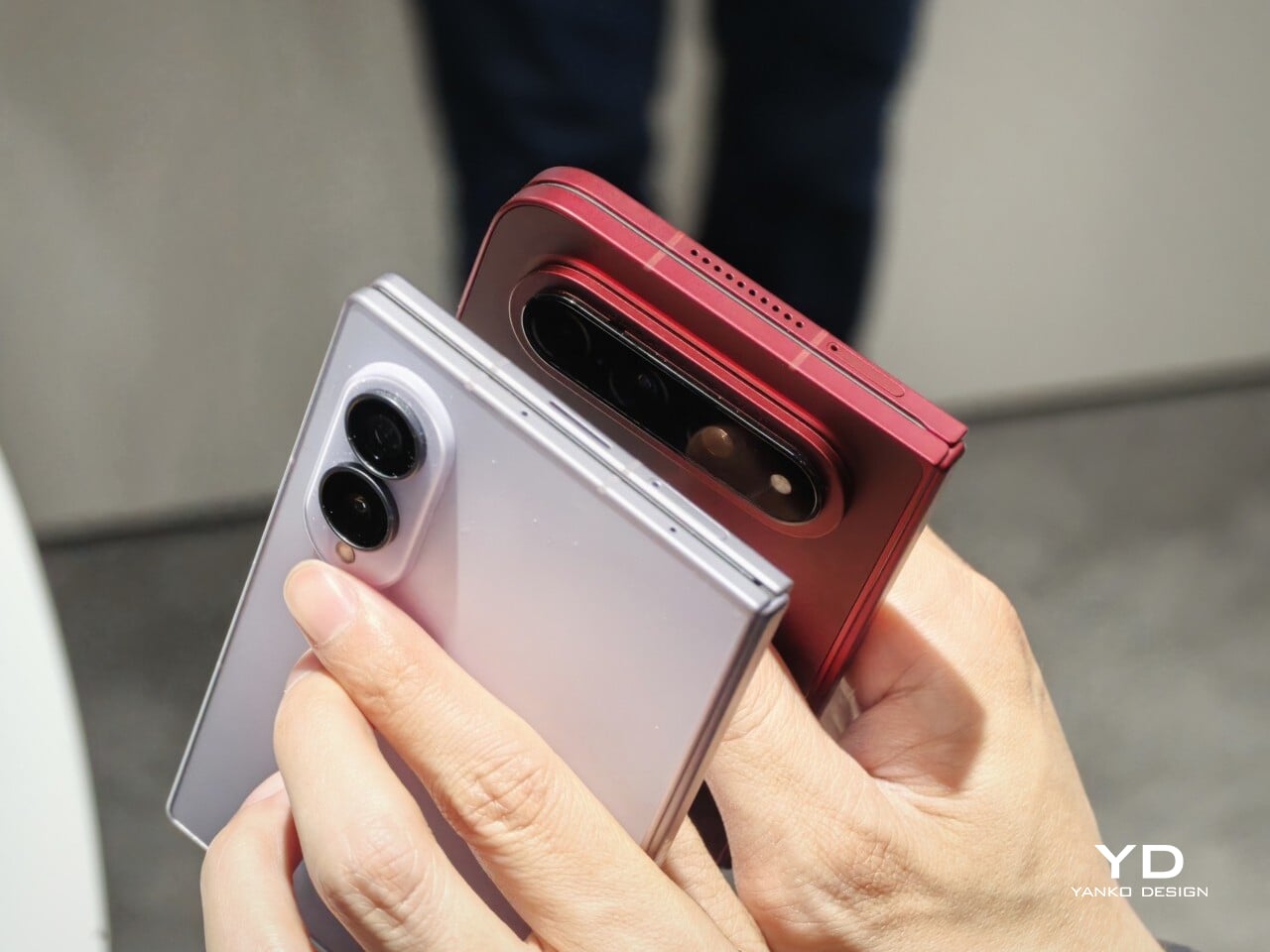
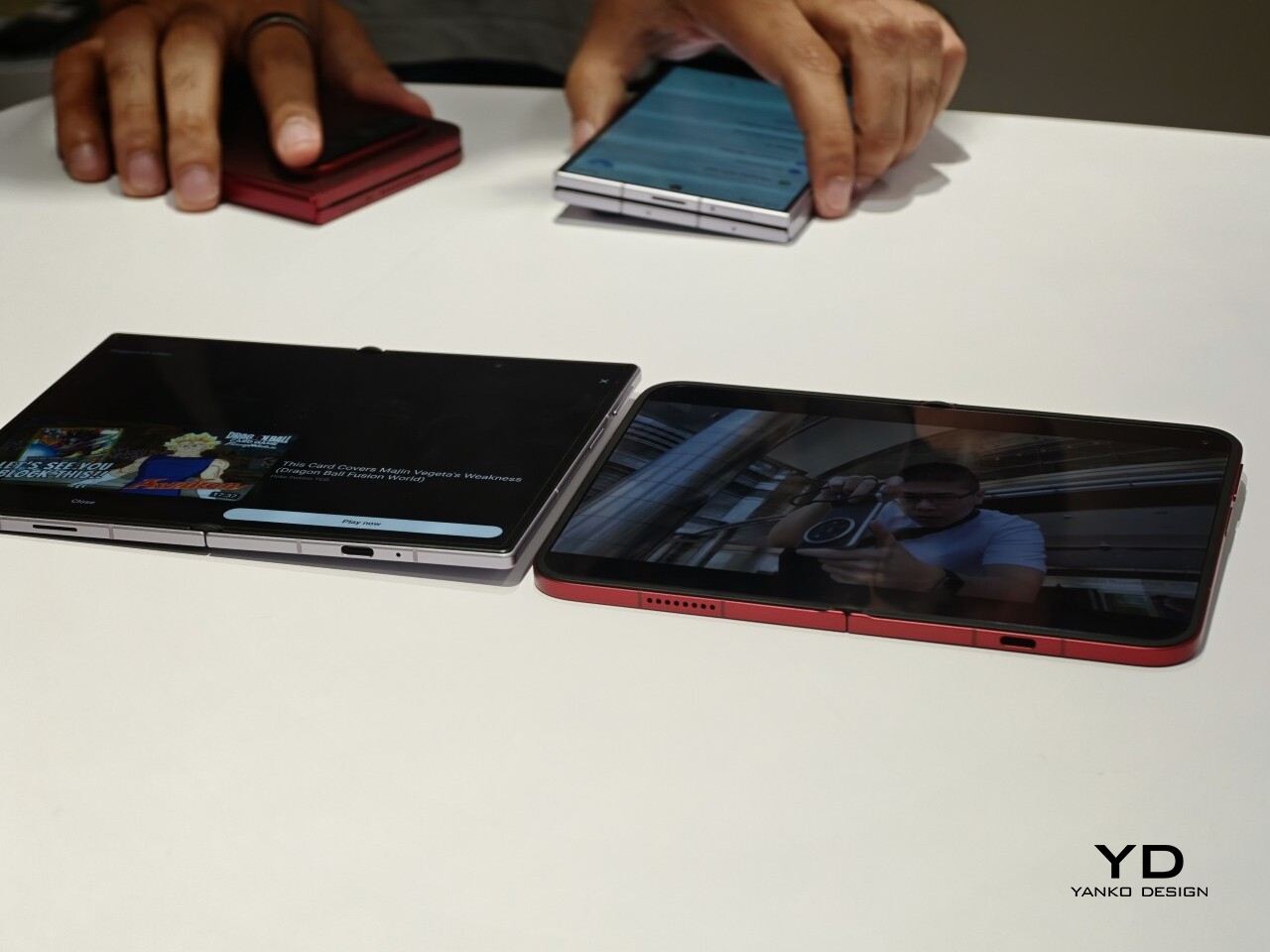
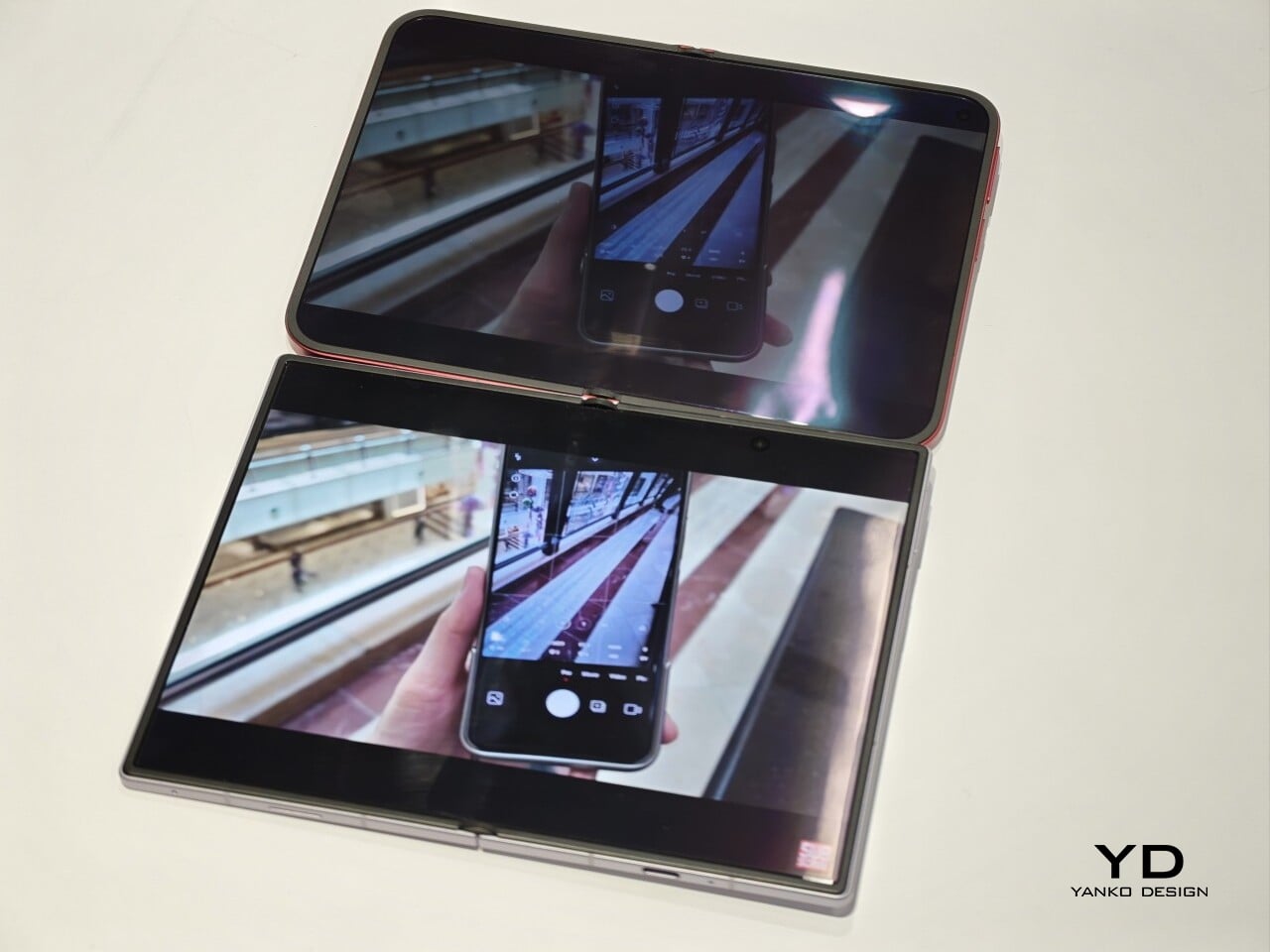
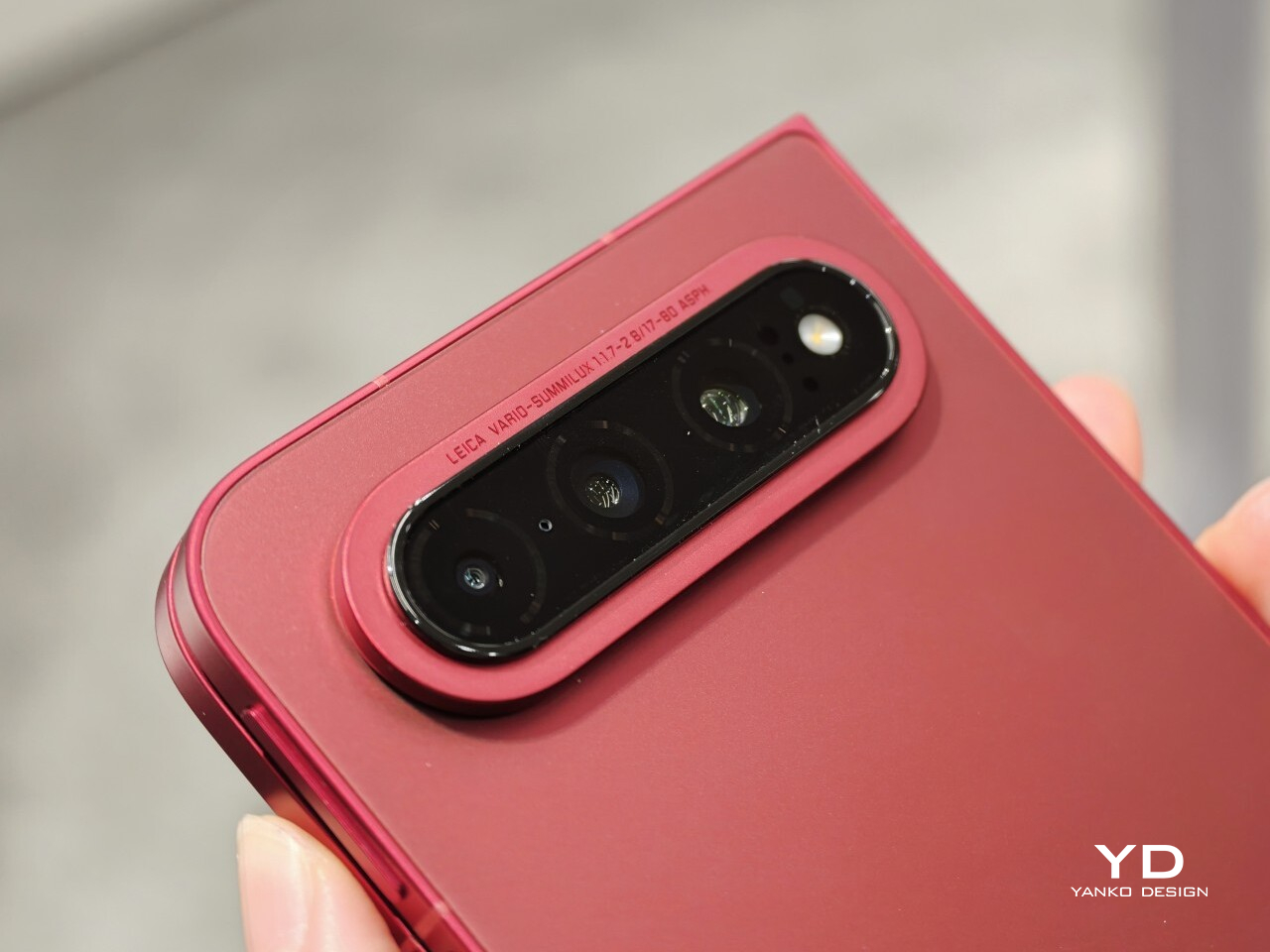
Mirroring a MacBook screen onto an Android phone is not something you expect to work, let alone work fluidly with smooth animations. At HONOR’s MWC 2026 booth, it did exactly that, and then went further by letting you mirror the Magic V6’s display back onto the MacBook, turning the interaction into a genuine two-way street. Tap your HONOR device near an iPhone and files transfer between them, photos, videos, documents, the whole lot, with the kind of animated polish you associate with Apple’s own AirDrop. The same trick works with iPads. HONOR calls the system HONOR Share, and the cross-platform angle is just one layer of a much deeper ecosystem play the company quietly walked in and demonstrated on final, shipping hardware at one of the world’s biggest tech shows.

This cross-platform handshake is part of a broader upgrade to HONOR Share, and it extends well beyond just sending a photo to your friend’s iPhone. The company is positioning its new flagship trio, the Magic V6, MagicPad 4, and MagicBook Pro 14, as an open bridge rather than another walled garden. For the Magic V6, a feature called OneTap transfer allows it to push files directly to a Mac with a single touch, a claim that seems to hold up based on the MWC demos. It’s a direct, pointed solution to a daily friction point for anyone living with a foot in both ecosystems. While Google is still in the process of rolling out its own Quick Share-AirDrop interoperability to the wider Android world in 2026, HONOR just went ahead and shipped a finished product.

Designer: HONOR

The MagicRing integration goes several layers deeper than the Apple-facing features (FYI, it’s a software feature, not an actual ring). Within the HONOR ecosystem, the Magic V6, MagicPad 4, and MagicBook Pro 14 all communicate through HONOR Connect, and any screen can project onto any device bidirectionally, something Apple’s Sidecar only partially replicates within its own hardware range. The mechanics are drag-based: open HONOR Connect, find your target device, drag the screen sharing icon over to it, and projection starts. Bidirectional means both directions work, the MacBook’s display mirroring onto the foldable, the foldable mirroring onto the laptop, same process either way. Dropping files and folders between devices with continuity-style drag behavior runs natively on the MagicPad 4, without a companion app or cloud relay.

At 4.8mm thick with a 12.3-inch 3K OLED running at 165Hz, the MagicPad 4 is a serious piece of hardware to run a MacBook’s extended display onto. The Snapdragon 8 Gen 5 inside means you’re not compromising on the secondary screen, which matters when you’re doing real creative or coding work. Used as a real-time extended display for a MacBook, it eliminates the need for additional hardware, and for mixed-ecosystem users that’s already a compelling argument on its own. Cross-device drag-and-drop turns it into a productivity node rather than a conventional Android tablet, a designation very few Android tablets have earned. Xiaomi’s iOS Bridge in HyperOS 3.1 gestures at something similar but still relies on companion apps and hasn’t been demonstrated on final shipping hardware.

Apple’s Continuity framework has set the benchmark for multi-device workflows since 2014, and the gap between what Apple offers and what Android could offer was real enough to function as a legitimate reason to stay in Apple’s ecosystem. That gap is narrowing. The Magic V6’s foldable form factor already does things no iPhone can, and layering genuine Apple interoperability on top removes the last practical friction for anyone straddling both worlds. The MWC demo landed on execution: working software on final hardware, smooth animations, no companion apps required. For a certain kind of user, the question of whether to stay full-Apple or go mixed just got significantly harder.

HONOR’s AI Connect Platform, projected to integrate over 20,000 AI services by end of 2026, is the infrastructure underneath all of this, and the MWC demos are its first serious public proof of concept. The company has been repositioning from a budget device manufacturer into what it now calls a global AI device ecosystem company, and this is the first time that framing has been backed by something you could touch and test on a show floor. The Magic V6, running the Snapdragon 8 Elite Gen 5, is the first foldable to carry that chip and the anchor device pulling the whole network together. Google’s Quick Share-AirDrop interoperability is confirmed for broader rollout this year, but it carries sharing mode caveats that HONOR has already cleared. The demo in Barcelona was an answer, not a preview.

The post I Ran Android On A MacBook And Even Airdropped Files To iPhone at MWC 2026… And You Can Too first appeared on Yanko Design.

Did Apple’s $599 MacBook Neo just paint a target on the Google Chromebook’s back?

The cheapest MacBook now costs exactly the same as the cheapest iPhone. That’s not a punchline; it’s a price list. For $599, you can get a phone, or you can get a laptop that runs on a phone’s chip, specifically the A18 Pro that powered the iPhone 16 Pro a couple of years back. Apple looked at its vast bin of perfectly good, massively over-engineered mobile silicon and made the most logical leap imaginable. They put it in a beautifully milled aluminum chassis with a keyboard and a 13-inch Liquid Retina display, creating a machine that is, for all intents and purposes, a grown-up iPhone that doesn’t make calls. It’s a wildly clever, almost cynical, piece of product engineering that redefines the entry point to the entire Mac ecosystem.

This move wasn’t about inventing new technology, but about finding the perfect home for existing tech that had become inexpensive through sheer scale. The A18 Pro, with its 6-core CPU and 5-core GPU, is more than capable of handling the daily workload of the average student or web-browser warrior. Paired with a baseline of 8GB of unified memory and a 256GB SSD, the MacBook Neo is engineered to be just enough computer for a massive audience that was previously priced out. Apple’s genius here is recognizing that the performance floor of their mobile chips has risen so high that it now meets the “good enough” ceiling for a huge segment of the laptop market. This is an exercise in masterful cost management, not a race for benchmark glory.

Designer: Apple

That brings us to the real target of this colorful little machine: the classroom. The MacBook Neo isn’t for the video editor or the traveling professional; it’s a precision-guided missile aimed directly at the heart of Google’s Chromebook empire. With an education price of just $499, Apple has officially entered a knife fight with a very sharp, very shiny knife. For years, schools have defaulted to fleets of cheap, functional, and ultimately disposable Chromebooks. Apple is betting that for a small premium, school districts will jump at the chance to give students a device that feels premium, integrates with their iPhones, and carries the weight of the Apple brand. It’s a compelling argument that repositions the Mac from an aspirational product to a practical, attainable one.

It’s not that Google completely fumbled its lead, but it certainly grew complacent. The Chromebook ecosystem won on price and dead-simple IT management, not on user experience. Google’s Auto Update Expiration policy, which effectively gives every device a software death sentence, has been a constant source of friction for budget-strapped schools that need hardware to last. This created an opening for a company known for its long-term software support. Apple can now walk into a school administrator’s office and offer a more durable, better-feeling machine with a clear software roadmap, making the slightly higher initial cost seem like a smarter long-term investment. Google sold schools a cheap solution, and Apple is countering with a cost-effective one.

Of course, a $599 Mac comes with an asterisk, and the MacBook Neo has a few big ones. The most glaring omission is the lack of a backlit keyboard, a feature that has been standard on laptops for over a decade and feels almost punitive to remove. There’s also no support for fast charging, so topping up the battery will be a leisurely affair. These aren’t accidents; they are carefully calculated sacrifices made to protect the profit margin and create clear feature differentiation from the more expensive MacBook Air. Apple is using the vibrant new color options, like Citrus and Indigo, to distract from the spec sheet compromises, but to be honest, nothing is more of a distraction than that price point.

The post Did Apple’s $599 MacBook Neo just paint a target on the Google Chromebook’s back? first appeared on Yanko Design.

Big tech companies agree to not ruin your electric bill with AI data centers

Today the White House announced that several major players in tech and AI have agreed to steps that will keep electricity costs from rising due to data centers. Under this Ratepayer Protection Pledge, companies are agreeing to practices that are intended to protect residents from seeing higher electricity costs as more and more businesses create power-hungry data centers. Amazon, Google, Meta, Microsoft, OpenAI, Oracle and xAI have all apparently signed on. A few of the participants — Amazon, Google and Meta — had conveniently timed press releases patting themselves on the back for their participation and touting whatever other policies they have for mitigating the negative impacts of data center construction.

The main provisions of the federal pledge have tech companies agreeing to "build, bring, or buy the new generation resources and electricity needed to satisfy their new energy demands, paying the full cost of those resources." It also claims they will pay for any needed power infrastructure upgrades and operate under separate rate structures for power that will see payments made whether or not the business uses that electricity.

The pledge doesn't appear to be any form of binding agreement and there's no discussion of enforcement or a penalty for companies that don't honor the stipulated provisions. It also doesn't address any of the other impacts data centers and AI development might be having, either on local communities, on other utilities and resources, or on access to critical computing elements like RAM.

This article originally appeared on Engadget at https://www.engadget.com/ai/big-tech-companies-agree-to-not-ruin-your-electric-bill-with-ai-data-centers-230102956.html?src=rss

Big tech companies agree to not ruin your electric bill with AI data centers

Today the White House announced that several major players in tech and AI have agreed to steps that will keep electricity costs from rising due to data centers. Under this Ratepayer Protection Pledge, companies are agreeing to practices that are intended to protect residents from seeing higher electricity costs as more and more businesses create power-hungry data centers. Amazon, Google, Meta, Microsoft, OpenAI, Oracle and xAI have all apparently signed on. A few of the participants — Amazon, Google and Meta — had conveniently timed press releases patting themselves on the back for their participation and touting whatever other policies they have for mitigating the negative impacts of data center construction.

The main provisions of the federal pledge have tech companies agreeing to "build, bring, or buy the new generation resources and electricity needed to satisfy their new energy demands, paying the full cost of those resources." It also claims they will pay for any needed power infrastructure upgrades and operate under separate rate structures for power that will see payments made whether or not the business uses that electricity.

The pledge doesn't appear to be any form of binding agreement and there's no discussion of enforcement or a penalty for companies that don't honor the stipulated provisions. It also doesn't address any of the other impacts data centers and AI development might be having, either on local communities, on other utilities and resources, or on access to critical computing elements like RAM.

This article originally appeared on Engadget at https://www.engadget.com/ai/big-tech-companies-agree-to-not-ruin-your-electric-bill-with-ai-data-centers-230102956.html?src=rss

Mark Zuckerberg downplays Meta’s own research in New Mexico child safety trial

Jurors in a New Mexico child safety trial heard testimony from Meta CEO Mark Zuckerberg today. During pre-recorded testimony, Zuckerberg was repeatedly asked about the company's understanding of social media addiction and other issues that had been studied by its researchers. 

During the deposition, which was recorded last March, Zuckerberg was asked about numerous findings from researchers at Meta who studied how the company's apps affect users and teens. The CEO downplayed the significance of many of these documents.

Early in the testimony, which was viewed by Engadget on Courtroom View Network, Zuckerberg was questioned about a document on the effect of feedback on Facebook users. The document stated that "contributors on Facebook are likely to learn to associate the act of posting with feedback" which will "lead contributors to seek rewards by visiting the site more often.” Zuckerberg said he wasn’t “sure if that's actually how it works in practice, but I agree that you're summarizing what they appear to be saying.”

Later, the CEO was questioned about a document that graphed the proportion of 11 and 12-year-olds who were monthly active users on Instagram. The chart indicated that at the time, around 20 percent of 11-year-olds were monthly users of the service. "I agree that the graph says that, I am not familiar with what methodology we were using to estimate this," Zuckerberg said. "I assume that if we had direct knowledge that any given person was under the age of 13, that we would have them removed from our services."

New Mexico's attorney general sued the company in 2023 for alleged lapses in child safety, including facilitating predators' access to minors and building features it knew were addictive. In court, Meta's lawyers and executives have disputed the idea that social media should be considered an "addiction." In public statements, the company has said that lawsuits have relied on "cherry-picked quotes and snippets of conversations taken out of context" and that it "has consistently put teen safety ahead of growth for over a decade."

As with his recent testimony in a separate trial over social media addiction in Los Angeles, Zuckerberg repeatedly rejected the "characterization" of questions that were posed to him. And he said that Meta's goal was to make its apps "useful" rather than to increase the amount of time people spend with them. 

Zuckerberg was also questioned about a document written by a company researcher that stated "there is increasing scientific evidence, particularly in the US, … that the average net effect of Facebook on people's well being is slightly negative." The CEO said that "my understanding is that the general consensus view is not that."

It's not the first time a Meta executive has tried to downplay the significance of internal research. The company used a similar strategy in 2021 after former employee turned whistleblower Frances Haugen disclosed documents showing that Facebook's researchers had found that Instagram made some teen girls feel worse about themselves.

Zuckerberg's testimony was played one day after jurors heard recorded testimony from Instagram chief Adam Mosseri. The exec was also asked about Haugen's disclosures and Meta's response to them. Some of those disclosures were based on "problematic research," he said. "Most research is surveys. We run hundreds of surveys every month."

This article originally appeared on Engadget at https://www.engadget.com/social-media/mark-zuckerberg-downplays-metas-own-research-in-new-mexico-child-safety-trial-222924340.html?src=rss

Bill Gates-backed TerraPower begins nuclear reactor construction

The Nuclear Regulatory Commission has granted approval to TerraPower to begin construction of a reactor in Wyoming. The project is the first new US commercial nuclear reactor in about a decade, according to The New York Times. TerraPower was founded by Bill Gates, and it took years for the business to receive regulatory approval for this construction effort.

TerraPower is part of a push to create more efficient and less expensive nuclear facilities as an alternative power source, particularly as AI companies and data center construction places more demands on the US' current infrastructure. TerraPower's project involves tech it has dubbed Natrium in its planned reactor. Using this liquid sodium approach rather than a traditional light-water reactor is part of how the company aims to reduce costs and time frames.

Advocates see nuclear reactors as a way to generate power without the climate impact of coal or gas plants. Critics point to the safety risks as a severe downside to this approach, while others question whether the creation and disposal of nuclear waste counter the environmental gains. The Gates-backed operation still isn't coming in cheap. The proposed facility could cost at least $4 billion and still faces logistical challenges before coming online as planned in 2031.

This article originally appeared on Engadget at https://www.engadget.com/big-tech/bill-gates-backed-terrapower-begins-nuclear-reactor-construction-221132639.html?src=rss

This New London Café Has a Ceiling Inspired by St Paul’s Dome, and It Sits Right on the Thames

The stretch of the Thames running between Tate Modern and St Paul’s is one of those London views that never quite loses its effect — and London studio Cake Architecture made that exact backdrop the entire design brief for WatchHouse’s newest café, a 60-seat riverside space that absorbs some of the city’s most iconic architecture and folds it into something intimate and grounded.

The project sits directly beside the Thames, though it never leans on the view as a crutch. The design operates at a more atmospheric level, rooted in the tension between the monumental permanence of London’s skyline and the restless, shifting energy of the river running past it. It’s a conceptual starting point that could easily stay theoretical. Here, it doesn’t.

Designer: Cake Architecture

That thinking earns its keep through specific, well-resolved gestures. The most arresting is a dramatic circular void carved into the ceiling, a spatial echo of St Paul’s dome, translated from the sacred to the everyday. Below it, a monolithic espresso counter holds the room together, its weight and material language borrowed from Tate Modern’s industrial character and the infrastructural logic of the riverbanks themselves. Neither move is decorative. Both shift the room into territory that most café designs never reach.

The palette is handled with the same restraint. Colour is drawn from the immediate surroundings: the tonal range of the river at different hours, the bleached stone of the embankment walls, the open and often overcast London sky. Back-painted finishes introduce a soft iridescence to the surfaces, so the room doesn’t read as a fixed thing. It responds to the time of day, softening in morning light and warming as the afternoon settles in.

WatchHouse has always been deliberate about place; each of its London locations takes its visual cues from the neighbourhood it occupies, but this Thames-side outpost feels like one of the most fully resolved in the portfolio. The 60-seat space will serve rare and special coffees alongside breakfast, viennoiserie, and bakery options, giving the room both the footfall and the menu to justify the ambition behind its design. For Cake Architecture, it’s another assured project from a studio building a reputation for spaces that think carefully about where they are. Here, the scale is modest, and the mood is quiet, and it’s all the stronger for it.

The post This New London Café Has a Ceiling Inspired by St Paul’s Dome, and It Sits Right on the Thames first appeared on Yanko Design.