Creators getting paid to post on Threads don’t understand its algorithm either

An artist who was able to pay off credit card debt, a photographer making extra cash by replying to the most polarizing posts she can find, a food blogger trying to start interesting conversations. These are some of the creators Meta is paying to post on Threads.

Meta introduced the invitation-only program in April, but has only shared limited details about how it works. Engadget spoke with half a dozen creators who have joined the program over the last few months. They described their strategies for reaching the required engagement metrics, and the sometimes confusing nature of Threads’ recommendation algorithm.

Creators are sorted into different tiers of the program which determines how much their bonuses can be and what kinds of metrics their posts need to hit. None of the creators who spoke with Engadget knew how or why they had been selected for the bonus program, though they all had an established following on Instagram. (One of the known requirements is a professional account on Instagram.)

Audrey Woulard is a photographer with more than 25,000 followers on Instagram and about 5,500 followers on Threads. She uses her Facebook and Instagram accounts to promote her portrait photography business. But when she was invited to the Threads bonus program, she saw an opportunity to experiment with different types of content.

Her strategy, she says, is all about replies. She exclusively focuses on replying to other users’ posts rather than creating her own. “I'm not necessarily generating content on my own,” she explains. “I'm kind of activating other people's content.” By focusing on replies, she says she’s able to reach the required 60 Threads with at least 750 views each to qualify for a $500 monthly bonus.

This has helped her become particularly attuned to the types of subjects that are likely to attract a lot of views. “Polarizing content, anything that keeps people talking,” she explains. Specifically, she looks for topics that people tend to have strong opinions about, like marriage, parenting, aging and politics, though she tries to avoid replying to obvious engagement bait.

Woulard’s experience isn’t unique. Threads defaults to a “for you” timeline that relies heavily on recommended posts rather than posts from accounts you already follow. Meta has also said it doesn’t want to “encourage” users to post about news and politics. Perhaps as a consequence of this, Threads’ “for you” feed often feels a lot slower and less focused on current events than on X.

What the algorithm does prioritize, though, is posts that get a lot of replies, even if they are about a seemingly mundane topic. This has led to a bizarrely random quality to the feed, what blogger Max Read dubbed “the gas leak social network.” It’s not uncommon to see a recommended post from someone you’re totally unconnected to talking about a trivial inconvenience, or a medical condition or some other anodyne anecdote. What these posts do have in common, though, is lots of replies.

It’s also created an opportunity for people looking to game the app’s algorithm by posting spammy content, generic questions or polarizing takes meant to attract as many replies as possible. (Meta execs have said they’re trying to fix this issue after a surge in such posts, even as they acknowledge that posts with replies are most likely to be recommended.)

But for Woulard, Meta’s emphasis on “public conversations” has worked in her favor. She says that so far she’s been able to max out three months worth of bonuses simply by replying to Threads. Woulard generates more income from her Facebook page, but enjoys the simplicity of the Threads bonus program. “It's so easy for me to make this money, I can literally sit in my room and reply to a bunch in 30 minutes.”

For Meta, offering bonuses to Instagram creators to post on Threads is part of its strategy to use Instagram to grow the year-old service. The company has leaned heavily on Instagram to grow Threads, which has already drawn 200 million users. But there were also bound to be some growing pains, says social media consultant Matt Navarra.

“I think people find it harder to create for platforms like Threads,” Navarra tells Engadget. “Writing interesting, engaging posts for a text-based platform, like X, Twitter or Threads is a different set of skills. And I think it's slightly tricky for some sorts of creators.”

Josh Kirkham, an artist who specializes in Bob Ross-style painting videos, has experienced this firsthand. With nearly 800,000 followers on Instagram, he’s in the highest tier of the bonus program, which makes him eligible to earn up to $5,000 a month from his posts on Threads. He’s been able to max out his bonus by sharing painting videos clipped from his livestreams on Instagram and TikTok.

Despite the success, he hasn’t been able to detect any patterns about what types of videos are likely to take off. He has more than 150,000 followers on Threads but, like other creators in the bonus program, relies on the app’s recommendation algorithm for his posts to get noticed. “Initially, I was posting mountain videos, and those were doing the best compared to everything else,” he says, “And then a week later, every mountain video was just getting like, nothing. Some of the times the videos that I think are going to do well don't do well at all, and vice versa.”

Kirkham says that he almost never replies to Threads posts when he’s trying to hit a bonus because he worries it will dilute his chances of getting the 5,000 views per post necessary to earn the max payout. Still, he says he’s grateful for the program as a full-time artist and creator. “It’s enabled me to pay off my credit card debt and then raise my credit score immensely,” he says. “I’m hoping for at least a few more.”

Nearly all of the creators who spoke to Engadget also expressed some skepticism that Meta would continue the bonus program at its current level for very long. In the past, the company has offered creators generous bonuses when it’s trying to boost a new format like Instagram Reels or Facebook Live only for those payments to eventually dwindle as more people join and Meta inevitably shifts its strategy — and funds for creators — somewhere else.

Logan Reavis is a photographer with nearly 50,000 followers on Instagram and about 8,500 on Threads. Though she has a bigger following on Instagram, she says Threads’ algorithm feels more favorable to creators. “The [Threads] algorithm works entirely different, especially as a photographer,” she says. “I feel like it's been hard to share my photography on Instagram, but it's encouraged on Threads. I actually reach an entirely different audience.”

Even so, she says she’s had to grapple with the quirks of the Threads algorithm and its penchant for highlighting engagement bait. “Responding to threads that have a lot of comments or conversation is what brings in my bonus views more, which is frustrating too because there's a lot of clickbait,” she says. Reavis so far hasn’t been able to reach her maximum potential $500 monthly bonus on Threads.

While creators are part of Meta’s strategy to make Threads its next billion-person app, the company hasn’t always been able to explain what its newest app is actually for. So it shouldn’t be surprising that even the creators it’s paying to post there view it as something of an experiment.

“I still don't think it has its own unique place in the social media ecosystem,” says Navarra. “It doesn't really have much of its own identity or personality, and I think that's one of its many problems at the moment.”

This article originally appeared on Engadget at https://www.engadget.com/social-media/creators-getting-paid-to-post-on-threads-dont-understand-its-algorithm-either-065736099.html?src=rss

Meta ‘found mistakes and made changes’ to address Threads moderation issues

Meta will fix “mistakes” in how Threads enforces its rules after days of complaints about the company’s handling of content moderation on the service. In an update, Threads head Adam Mosseri said the company had already made some changes to address issues that have cropped up.

Mosseri’s comments come as Threads users have been increasingly vocal about Threads’ seemingly aggressive, and sometimes bizarre, moderation decisions. In one prominent example, a number of users reported that their accounts had been penalized for using the word “cracker” or “saltines.” Mosseri didn’t explain exactly why these types of mistakes occurred, but said that one of the company’s internal tools “broke,” which prevented human reviewers from seeing “sufficient context” about the posts they were moderating.

“For those of you who've shared concerns about enforcement issues: we're looking into it and have already found mistakes and made changes,” Mosseri wrote. “Most prominently, our reviewers (people) were making calls without being provided the context on how conversations played out, which was a miss. We’re fixing this so they can make the better calls and we can make fewer mistakes. We're trying to provide a safer experience, and we need to do better.”

Content moderation isn’t the only issue that’s rankled Threads users in recent days. Earlier this week, Mosseri also promised that Threads was working on a fix to bring engagement bait “under control” on the service, following widespread complaints.

This article originally appeared on Engadget at https://www.engadget.com/social-media/meta-found-mistakes-and-made-changes-to-address-threads-moderation-issues-175734448.html?src=rss

Bluesky is having a moment… on Threads

Bluesky seems to have a bold new strategy to entice potential new users: posting on Threads. The rival social media service joined Threads amid a surge in complaints from users who are increasingly frustrated with Meta’s policies.

While complaints about Meta’s policies aren’t a new topic, they’ve gained new prominence over the last week amid complaints about the surge in engagement bait on the platform, as well as Threads’ sometimes inexplicable content moderation decisions. Meta exec Adam Mosseri, who runs the Threads app, has said the company is looking into both issues. But in the meantime, there’s been an increase in discussions about Bluesky, the decentralized service that has a very different philosophy when it comes to algorithms and moderation.

On Wednesday, Bluesky created an account on Threads, and promptly began pitching itself as an alternative platform for those frustrated with Meta. The strategy seems to be having an effect. “Bluesky” has been a trending topic on Threads for two days in a row and, at the time of this writing “Bluesky vs Meta moderation” was trending on the platform.

“We're not like the other girls... we're not owned by a billionaire,” Bluesky wrote in a post Thursday. “Your social experience should be yours to customize, not bent to the whims of whoever the owner of the platform is.”

While not the first time Bluesky has lightly trolled a rival (see its X post from earlier this week), the company is seizing on genuine frustration among Threads users. Besides the complaints about blatant engagement bait in their feeds, users have been questioning Meta’s seemingly aggressive moderation tactics on Threads. The company already throttles political content on the app, has taken a heavy handed approach to moderation of the service, according to many users. A number of people have reported having posts actioned by Meta for using the word “cracker” or “saltines,” as The Verge points out. Social media consultant Matt Navarra shared that he was penalized for sharing a BBC article about the viral “goodbye Meta AI” hoax on his Threads account.

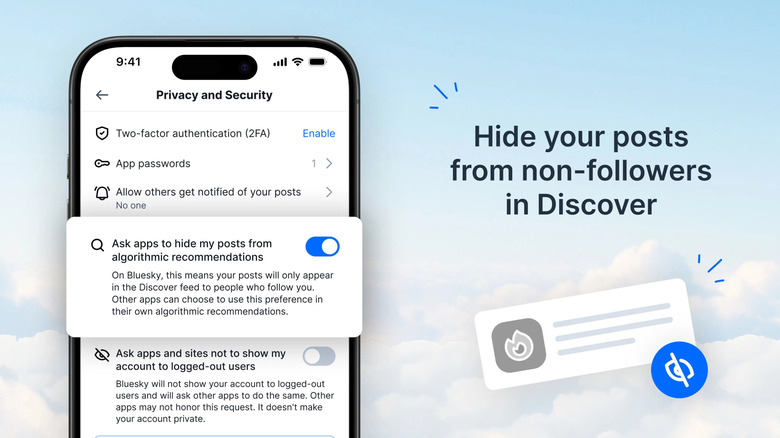
Bluesky, on the other hand, has taken a much more flexible approach to content moderation. It puts most decisions in the hands of users, who are able to decide what kind of content they want to see or not, and allows users to run their own moderation services. “We're always doing baseline moderation, meaning that we are providing you with a default moderated experience when you come in [to Bluesky],” Bluesky CEO jay Graber told Engadget earlier this year. “And then on top of that, you can customize things.”

Whether the new attention on Bluesky will result in a significant number of departures to the service is so far unclear. Bluesky currently has about 10.8 million users, according to a dashboard tracking its growth. And while it’s not clear how many new people arrived in the last couple days, it suggests there’s been a bit of a surge over the past month as Bluesky previously grew to about 8.8 million users immediately following the shutdown of X in Brazil last month.

This article originally appeared on Engadget at https://www.engadget.com/social-media/bluesky-is-having-a-moment-on-threads-222404971.html?src=rss

X is back in Brazil after a five-week ban

X is coming back online in Brazil after officials lifted a ban that took the service offline for five weeks. Supreme Court Justice Alexandre de Moraes said Tuesday that regulators could “take steps to resume the platform's service” as the company had complied with the court’s demands.

The order for now ends a long-running dispute between Elon Musk’s X and Moraes. Moraes had demanded X block certain accounts in Brazil, which the company had described as “censorship orders.” The dispute also ensnared Starlink, which had its Brazilian bank accounts frozen after X initially refused to cooperate with the Supreme Court’s demands. The company eventually relented by blocking the accounts in question and paying close to $5 million in fines.

“X is proud to return to Brazil. Giving tens of millions of Brazilians access to our indispensable platform was paramount throughout this entire process,” the company wrote in a statement. “We will continue to defend freedom of speech, within the boundaries of the law, everywhere we operate.”

While the standoff is now over, X’s outage in Brazil helped boost at least one rival: Bluesky. The service, which began as a project at Twitter under former CEO Jack Dorsey, said it added more than 2 million new users in the days immediately following the ban.

This article originally appeared on Engadget at https://www.engadget.com/social-media/x-is-back-in-brazil-after-a-five-week-ban-231406758.html?src=rss

EU residents will have a new way to dispute content moderation decisions by Facebook, YouTube and TikTok

European Union residents will have a new place to turn to settle disputes with Facebook, TikTok and YouTube. A new Appeals Centre, certified by Irish regulators, will soon begin accepting complaints about content moderation decisions.

The concept is similar to Meta’s Oversight Board, which weighs in on content moderation decisions across Facebook, Instagram and Threads. Meta has long suggested that other social media companies should use its Oversight Board, though there’s been little incentive for them to do so. Europe’s Digital Services Act (DSA) changed that calculation somewhat, as it enabled the creation of Out-of-Court Dispute Settlement (ODS) bodies that have the ability to help resolve user complaints.

And while the Appeals Centre is a separate entity, there are some notable links between the two organizations. The new Appeals Centre will be led by Thomas Hughes, who was previously the CEO of the Oversight Board Administration. The Oversight Board Trust, which oversees the board's budget, also helped fund the new Appeals Centre with a “one-time grant,” according to a statement from its chair of trustees, Stephen Neal. And, the first non-executive trustees of the Appeals Centre are also trustees on the Oversight Board.

The Appeals Centre says it expects to be up and running “in late 2024,” at which time individuals and organizations will be able to request appeals through its website. Users wishing to appeal a moderation decision from Facebook, YouTube or TikTok will be required to pay a “nominal fee” that will be refunded if the group rules in their favor, according to information posted on its website.

However, it’s not clear exactly how this process will work or how many cases the group will be able to take on. Meta’s Oversight Board, which has been up and running for years, received nearly 400,000 appeals and issued just 53 decisions in 2023. The Appeals Centre may also end up being less influential than the Oversight Board. A press release from Ireland's media regulator notes that “the decisions of ODS bodies are not binding.” Still, it could increase the visibility of the kinds of content moderation issues that often frustrate users and give some hope that their situation may be reconsidered.

This article originally appeared on Engadget at https://www.engadget.com/social-media/eu-residents-will-have-a-new-way-to-dispute-content-moderation-decisions-by-facebook-youtube-and-tiktok-190221606.html?src=rss

Most US TikTok users aren’t following political accounts, study says

As TikTok faces the possibility of a ban in the United States, a new study sheds light on the type of accounts US adults follow on the platform. According to the report, published by Pew Research, political content and news are only a small fraction of the accounts US adults follow in the app.

The report is based on an analysis of 227,946 accounts followed by 664 TikTok users who participated in the study. Of those accounts, less than one percent were “politicians, civic actors or traditional media outlets and journalists,” Pew found, noting that “the typical U.S. adult on TikTok follows no accounts in each of these categories.”

Instead, people were more likely to follow accounts that posted about entertainment and pop culture, humor and viral dance clips. “To the extent Americans’ followed accounts discuss politics, it tends to be mixed with other topics,” Pew writes. “Some 43% of all followed accounts that discussed politics or current events during the study period also discussed entertainment and pop culture.”

Pew's findings show that news and political accounts are a tiny fraction of what US adults follow on TikTok.
Pew Research Center

The content of users' following feeds doesn't offer a complete picture of what people see on TikTok. The app defaults to the algorithmic “for you” feed, which is made up mainly of recommendations. And even though most users may not choose to follow explicitly political accounts, previous research from Pew found that 45 percent of US TikTok users report seeing “at least some” content about politics or political issues in the app.

The question of what US users see on TikTok has been more closely scrutinized over the last year. Some lawmakers stepped up calls for a ban of the app last fall after TikTok critics used hashtag data to suggest that the app was disproportionately recommending pro-Palestinian content. The company said such takes were the result of “unsound analysis.” TikTok stopped showing view counts for specific hashtags earlier this year.

While Pew’s report doesn’t touch on TikTok’s algorithmic recommendations, the authors note that follows are an important signal for the app. “User interactions with posts from the accounts they follow play a nontrivial role in shaping their For You page,’” the report says. “And studying these followed accounts can give us a better understanding on the content that users actively choose to look for on the platform.”

This article originally appeared on Engadget at https://www.engadget.com/social-media/most-us-tiktok-users-arent-following-political-accounts-study-says-140053492.html?src=rss

Meta is working to fix Threads’ engagement bait problem

If you’re active on Meta’s Threads app, then you’ve probably encountered some amount of engagement bait in your “for you”” feed. Now, Instagram chief Adam Mosseri has acknowledged the issue, saying that the company is “working to get it under control" after a spike in such posts.

“We’ve seen an increase in engagement-bait on Threads and we’re working to get it under control,” Mosseri said in a post on Threads. He didn’t say what steps the company is taking but said there would be “more to come” on the issue.

Mosseri’s comments are the first time the Meta executive has acknowledged the problem that’s become an increasingly prominent topic of discussion on Threads. Because the app defaults to the algorithmic “for you” feed, engagement bait style posts that attract a lot of replies often go viral on the app even if it’s the type of content many users say they don’t want to see.

But addressing the issue could be tricky because what people often refer to as “engagement bait” takes many forms in the app. There are downright spammy posts that lift the kind of copypasta content that’s shared widely on Facebook (here’s a particularly egregious recent example). There are accounts that post open-ended AskReddit-style questions. And then there’s the rage-bait posts, as recently documented by Business Insider’s Katie Notopoulos.

Those posts, which often touch on polarizing topics, seem like they’re only meant to elicit angry responses from other users who have a controversial opinion from someone they don’t know thrust into their timeline. For example, I’ve seen dozens of posts with hundreds of replies about whether young children should be allowed on airplanes. In her experiment, Notopoulos got more than 1 million views and 5,000 replies on a post — heavily inspired from a two-year-old viral tweet and Reddit post — about not feeding children who come over for playdates.

And while Mosseri and Meta haven’t explained why it’s proved so easy to game Threads’ algorithm to go viral with this kind of content, it seems to be related to how the app has prioritized replies in deciding what to surface to users. “Not all comments or replies are good,” Mosseri said.

This article originally appeared on Engadget at https://www.engadget.com/social-media/meta-is-working-to-fix-threads-engagement-bait-problem-173135011.html?src=rss

X lost a court battle after trying to claim ‘Twitter ceased to exist’

X has lost a legal fight in Australia in which the company tried to avoid a $400,000 fine by claiming that Twitter no longer exists. The creative legal argument, first spotted by ArsTechnica, came amid a more than year-long dispute with Australia’s eSafety Commission.

The commission had asked the company, then known as Twitter, to provide details about its handling of child sexual exploitation on the platform last February. In its response, X failed to answer a number of questions and left “some sections entirely blank,” the commission said in a statement last year. As a result, the eSafety Commission slapped the company with a more than $415,000 fine for non-compliance.

It was an attempt to fight that fine that led to X’s claim that it shouldn’t be responsible since Twitter had “ceased to exist.” From the court filing:

X Corp submitted that, on and from 15 March 2023, Twitter Inc ceased to be a person, and therefore ceased to be a provider of a social media service. It was submitted that Twitter Inc therefore lacked capacity to comply with the notice, and that X Corp was not obliged to prepare any report in Twitter Inc’s place, as X Corp was not the same person as the provider to whom the notice was issued.

The argument isn’t exactly new for the Elon Musk-owned entity. CEO Linda Yaccarino has also repeatedly claimed that X is a “brand new company” in a bid to avoid scrutiny. She repeated the line multiple times earlier this year while testifying at a Senate hearing on child safety issues.

Australia federal Judge Michael Wheelahan, however, found the claim unconvincing, saying that X’s argument required “leaps in logic that were not supported by adequate explanation.” X didn’t immediately respond to a request for comment.

In a statement, eSafety Commissioner Inman Grant cheered the decision. “Had X Corp’s argument been accepted by the Court it could have set the concerning precedent that a foreign company’s merger with another foreign company might enable it to avoid regulatory obligations in Australia,” Grant said.

This article originally appeared on Engadget at https://www.engadget.com/social-media/x-lost-a-court-battle-after-trying-to-claim-twitter-ceased-to-exist-203030765.html?src=rss

Facebook is pushing ‘local’ content and events to try to win back young adults

Meta has spent the last few years saying that “young adults” are crucial to the future of Facebook. Now, the company is introducing a number of changes to its 20-year-old social network in an effort to get younger users to spend more time in the app.

The updates include a new “local” section in the Facebook app that aims to surface information relevant to your local community, a renewed focus on events planned on the service and a new “Communities” feature for Messenger. The changes, Meta claims, will help young adults “explore their interests and connect with the world beyond their close friends.”

Emphasizing events isn’t an entirely new strategy for the company. It launched a standalone events app in 2016 and then rebranded it a year later to focus on “local” businesses and happenings. It quietly killed the app in 2021.

Meta is taking a slightly different approach this time. The new “local” section will surface Marketplace listings, Reels and posts from Facebook groups alongside event listings from your community. Local news, which Meta has also previously boosted, is notably absent Meta’s announcement.

In addition to the local tab, the company is also trying to make events more prominent in Facebook. Facebook will now provide personalized event recommendations in the form of a weekly and weekend digest that will be pushed to users via in-app notifications. The company is also changing how invitations to Facebook events work so users can send invites to their connections on Instagram and via SMS and email.

Groups on Facebook, which Meta has said is among the most-used features by young adults, is also getting attention in this update. Meta is experimenting with a “a customizable Group AI” that allows admins to create a bot that can chat with members to answer questions based on posts that have been shared in the group. Elsewhere in the app, Meta is starting to test an Instagram-like Explore section and a dedicated space for Reels inside of Facebook.

On Messenger, Meta is adding a new “Communities” feature, a concept it previously introduced on WhatsApp. Communities allows “small to medium-sized” groups to organize their conversations and interact in a way that’s more like a Facebook group. Members can create topic-based chats and there are built in moderation and admin tools for controlling who can join.

The changes are part of a broader effort by Meta to bring younger people back to its app with features tailored around how they use social media. “Facebook is still for everyone, but in order to build for the next generation of social media consumers, we’ve made significant changes with young adults in mind,” the Facebook app’s head, Tom Alison, wrote in May.

Whether Meta’s latest efforts will be successful, though, is unclear. The company says there are more than 40 million young adults on Facebook in the US and Canada, a number that’s “the highest it’s been in more than 3 years.” But that’s still a relatively small percentage of its total users in the region and an even tinier slice of its users overall.

This article originally appeared on Engadget at https://www.engadget.com/social-media/facebook-is-pushing-local-content-and-events-to-try-to-win-back-young-adults-161742961.html?src=rss

Texas is suing TikTok for allegedly violating its new child privacy law

Texas Attorney General Ken Paxton has filed a lawsuit against TikTok claiming the company violated a new child privacy law in the state. It's set to be the first test of Texas’ Securing Children Online Through Parental Empowerment (SCOPE) Act since it went into effect just over a month ago.

Under the law, parts of which were struck down by a federal judge, social media platforms are required to verify the ages of younger users and offer parental control features, including the ability for parents to opt their children out of data collection.

Paxton alleges that TikTok’s existing parental control features are insufficient. "However, Defendants do not provide the parents or guardians of users known to be 13 to 17 years old with parental tools that allow them to control or limit most of a known minor’s privacy and account settings,” the lawsuit states. “For example, parents or guardians do not have the ability to control Defendants’ sharing, disclosing, and selling of a known minor’s personal identifying information, nor control Defendants’ ability to display targeted advertising to a known minor."

The lawsuit also argues that the app’s “Family Pairing” tool isn’t “commercially reasonable” because it requires parents to make their own TikTok account and because teens are free to deny their parents’ requests to set up the monitoring tool. TikTok didn’t immediately respond to a request for comment. The app already prohibits most targeted advertising to anyone younger than 18.

"We strongly disagree with these allegations and, in fact, we offer robust safeguards for teens and parents, including family pairing, all of which are publicly available," the company said in a statement shared on X. "We stand by the protections we provide families."

The lawsuit adds to TikTok’s growing legal challenges in the United States. The company is currently fighting a law that could result in a total ban of the app in the United States. It’s also facing a separate Justice Department lawsuit related to child privacy.

Update, October 3, 2024, 8:05 PM ET: This story has been updated to add a statement from TikTok. 

This article originally appeared on Engadget at https://www.engadget.com/big-tech/texas-is-suing-tiktok-for-allegedly-violating-its-new-child-privacy-law-235432146.html?src=rss