instax mini Evo 2 vs WIDE Evo: Which Print Size?
Compare Fujifilm instax mini Evo 2 and WIDE Evo by print size, screen, framing, controls, and weight before choosing a hybrid instant camera.
If you’ve ever emailed a CAD file to a machine shop, you know the wait. You wait for the quote, then the revised quote, then two weeks for the part, which arrives just in time for you to notice a mistake in the CAD. Rownd Precision would like to cut out the middleman (pun fully intended) with the Rownd 5X, a fully enclosed desktop CNC mill designed for simultaneous 5-axis machining. It tilts and rotates the part while cutting, allowing it to machine curved, complex components in aluminum, brass, and engineering plastics with fewer setups. The pitch for studios, labs, classrooms, and small workshops is straightforward: make metal parts in-house, on your own schedule.
Rownd previously developed a desktop CNC lathe around an approachable interface and beginner-friendly setup, and the 5X takes that approach into more complex territory. A 13.3-inch touchscreen handles setup and monitoring, while an automatic tool length setter takes care of the fiddly measuring. Under the enclosure sits a single-piece cast aluminum chassis, a 2.2 kW water-cooled spindle rated to 24,000 rpm, and a rotating table supported at both ends for stiffness. Rownd lists a 5-axis work zone for parts up to 7.9 inches across and 7.1 inches tall (200 x 180mm), enough for many enclosure prototypes and other small components. Pricing starts at $5,999, with shipping planned for Q2 2027.
Designer: Rownd Precision
Click Here to Buy Now: $5999 $9999 ($2000 off). Hurry, only 40/50 left! Raised over $775,000.
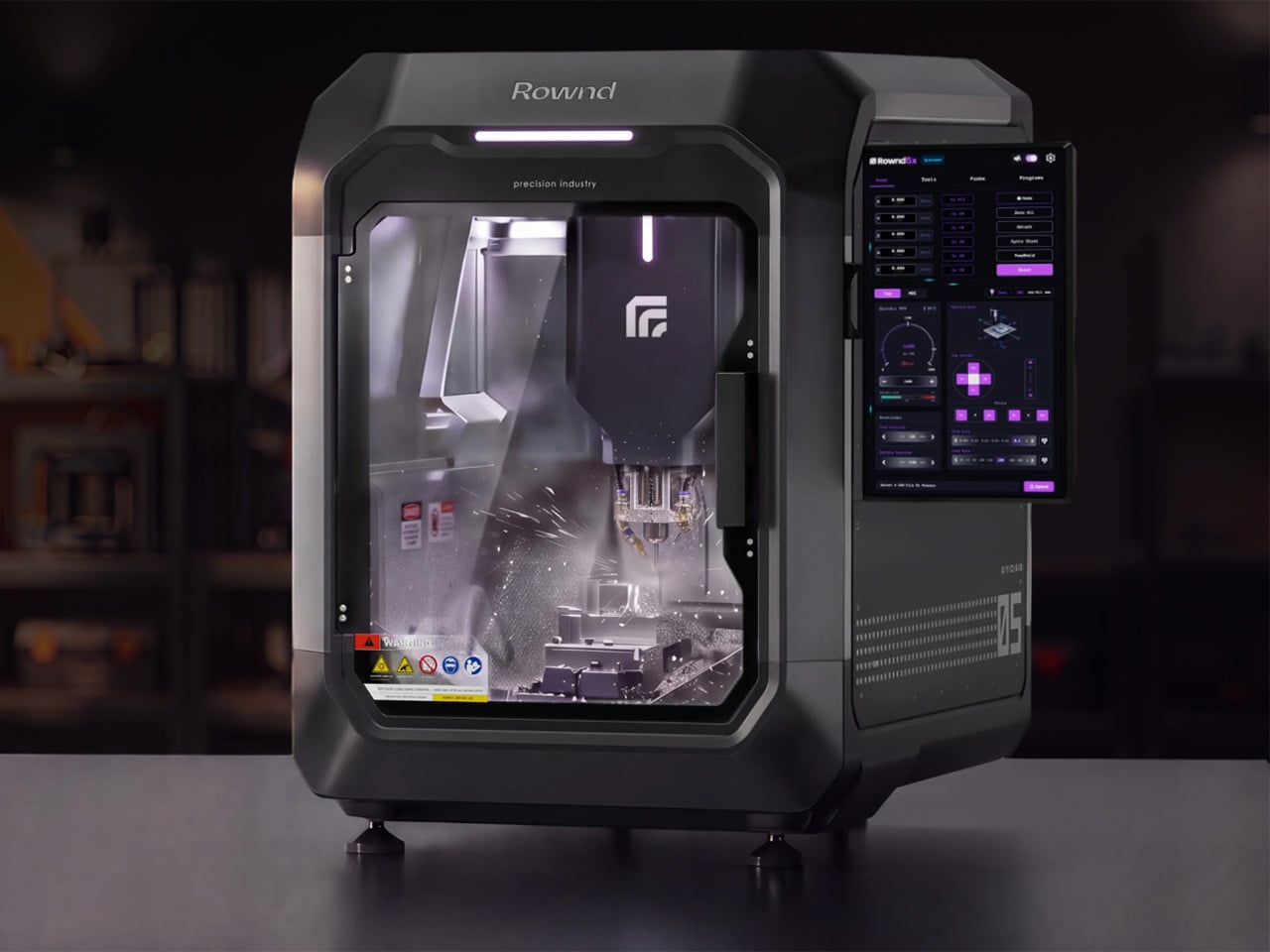
A conventional 3-axis mill moves its cutter along three straight lines: left-right, front-back, and up-down. The 5X adds two rotary axes underneath the part: a C-axis that spins a full 360 degrees and an A-axis that tilts from -45 to +90 degrees. Coordinating all five axes lets the cutter follow contours on parts such as turbine blades and curved handles. The machine also runs 3+2 indexed jobs, where it tilts the part to a fixed angle and then cuts it like a regular 3-axis mill. Plain 3-axis mode is there too, with a listed working area of 10.4 x 9.4 x 7.1 inches (265 x 240 x 180mm).
Keeping the cutter on its programmed path while the part tilts and spins falls to RTCP, short for rotational tool center point, built into the 5X’s LinuxCNC-based controller. RTCP compensates for those rotations in real time, coordinating the machine’s movements to maintain the intended tool-tip position relative to the part. That supports continuous machining of curved surfaces, though the finish still depends on the tooling, toolpaths, and cutting conditions. Reaching multiple faces in one clamping also reduces alignment errors between setups, so less depends on how carefully you re-clamped at 6 p.m. on a Friday.

Cutting metal demands stiffness, and the 5X starts with a single-piece cast aluminum chassis. A monoblock casting reduces the number of bolted joints that could loosen or flex. The rotating table, called a trunnion, is supported at both ends, a layout intended to improve rigidity under cutting loads. Motion runs on roller linear guides and ball screws, and Rownd rates positioning repeatability at ±0.0008 inches (±0.02mm). That’s a repeatability specification, rather than a guarantee of finished-part accuracy, but it’s a useful figure for designers making prototypes and mating components.
Water cooling is intended to manage spindle temperature during long jobs and limit thermal growth that can affect accuracy. A mist cooling system directs coolant toward the cutter to help with cooling and chip evacuation. Rownd lists 6061 and 7075 aluminum, brass, copper, Delrin (POM), PEEK, and composites as supported materials. That covers plenty of product design work, from enclosure prototypes and heat sinks to tiny brass knobs that feel ridiculously good to turn.

An optional 10-tool automatic tool changer lets the 5X run multi-tool jobs without manual swaps. It uses ISO20 tool holders, a tapered standard designed to locate tools repeatably in the spindle. A typical part might need a roughing end mill, a finishing ball mill, a drill, and a chamfer tool, and the changer swaps between them mid-program. There’s no stopping at each change to fumble with collet wrenches. The tool length setter measures each cutter automatically, giving the controller the offsets it needs to position the tool tip.
The 13.3-inch touchscreen is mounted on the side of the machine and puts setup, job monitoring, and manual control in one place. The interface aims to make a complex machine more manageable for newcomers. Rownd lists compatibility with Fusion 360, SolidCAM, Mastercam, Siemens NX, and other CAM packages that output standard G-code, with free post-processors provided. Those post-processors translate toolpaths into instructions for this specific machine, an important part of getting a 5-axis job running correctly. The fully enclosed cabinet is designed to contain chips and coolant mist while keeping hands away from moving parts.


Rownd specifies 110 to 220V power and an estimated total draw of 2.8 kW, positioning the 5X for garages, studios, and classrooms without industrial three-phase wiring. Product designers could bring metal prototyping in-house for fit tests and client meetings. Jewelry makers and sculptors could machine flowing forms in brass and copper that would be difficult to fixture on a 3-axis machine. Engineering programs would have 3-axis, 3+2, and simultaneous 5-axis machining in one cabinet, while small shops could use it for short-run parts and custom components they currently subcontract.
The Rownd 5X starts at $5,999 through Rownd’s Kickstarter campaign, with shipments planned to begin in Q2 2027 in heavy-duty crates. The appeal is easy to understand if you’ve ever spotted a CAD mistake the moment a machined part arrived. Bringing the work in-house won’t eliminate those mistakes, but it could make the next revision less dependent on someone else’s production queue.
Click Here to Buy Now: $5999 $9999 ($2000 off). Hurry, only 40/50 left! Raised over $775,000.
The post A 5-axis Metal Fabrication Center on your desk: Meet the Rownd 5X CNC Machine first appeared on Yanko Design.

Chopsticks have a way of turning a pleasant dinner into a tiny game of retrieval. You set them down to pour a drink or reach for a serving bowl, and one rolls across the table. Leave them on the edge of your plate and they can slide into the sauce. Neither mishap ruins a meal, but both leave you looking for a clean, reliable place to put them.
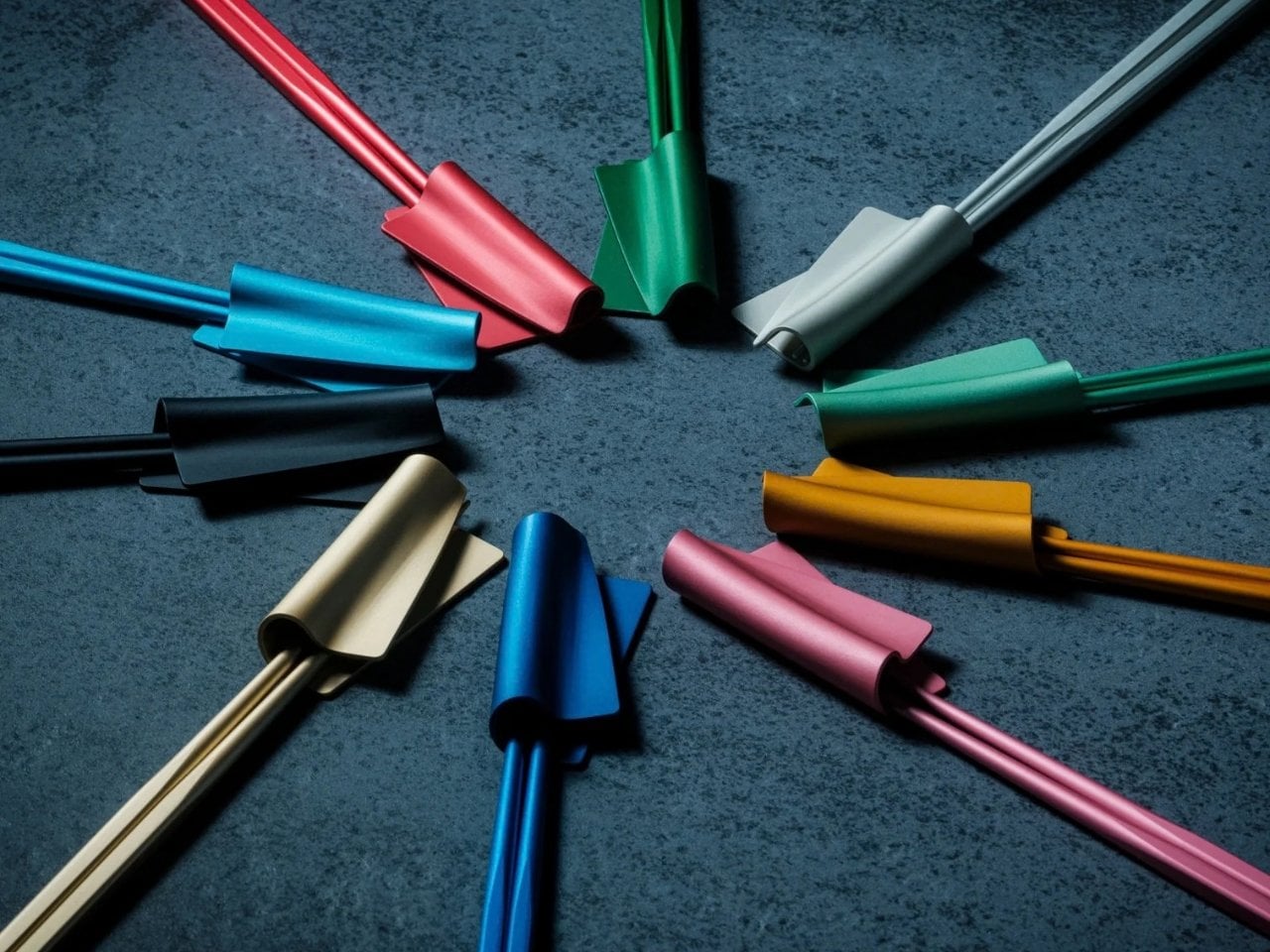
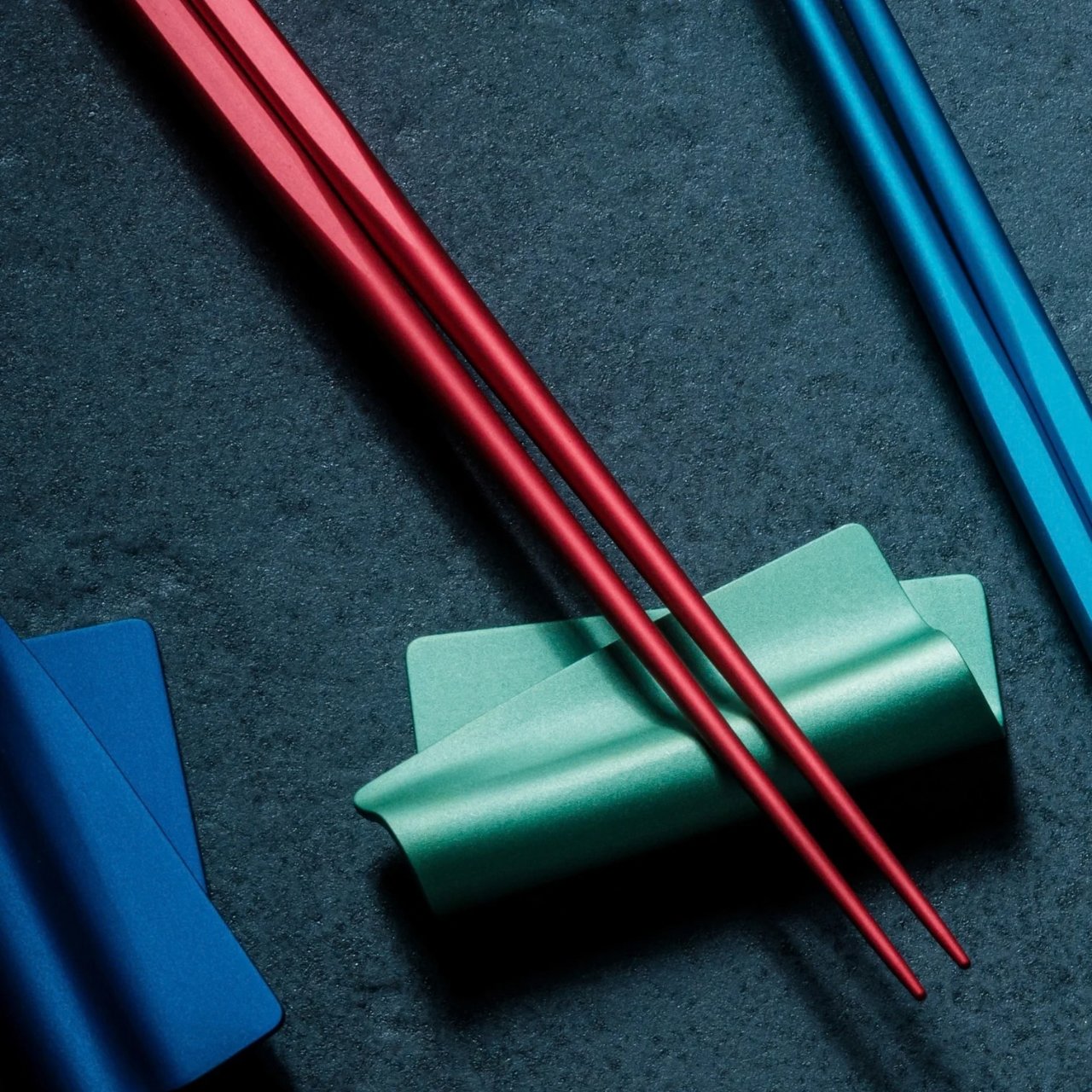
The FineLine Chopstick Rest gives them one. Its central recess keeps chopsticks from rolling, while its shape guides them back into place when you set them down. That sounds straightforward because it is. The appeal, to me, is that it solves the practical problem without looking like a practical solution that had to be hidden behind the salt shaker. It earns its spot on the table even when dinner is over.
Click Here to Buy Now: $20 for FineLine Chopstick Rest. $50 for the Chopstick + Rest Combo.

I tend to notice a dining table most when someone gets up from it. A glass is half full, a napkin has slipped from a lap, and the utensils are wherever their owners last put them. A chopstick rest brings a little order to that scene. It marks a place for a pause, which is a more interesting job than simply keeping the table clean. You can see how the meal is meant to resume.
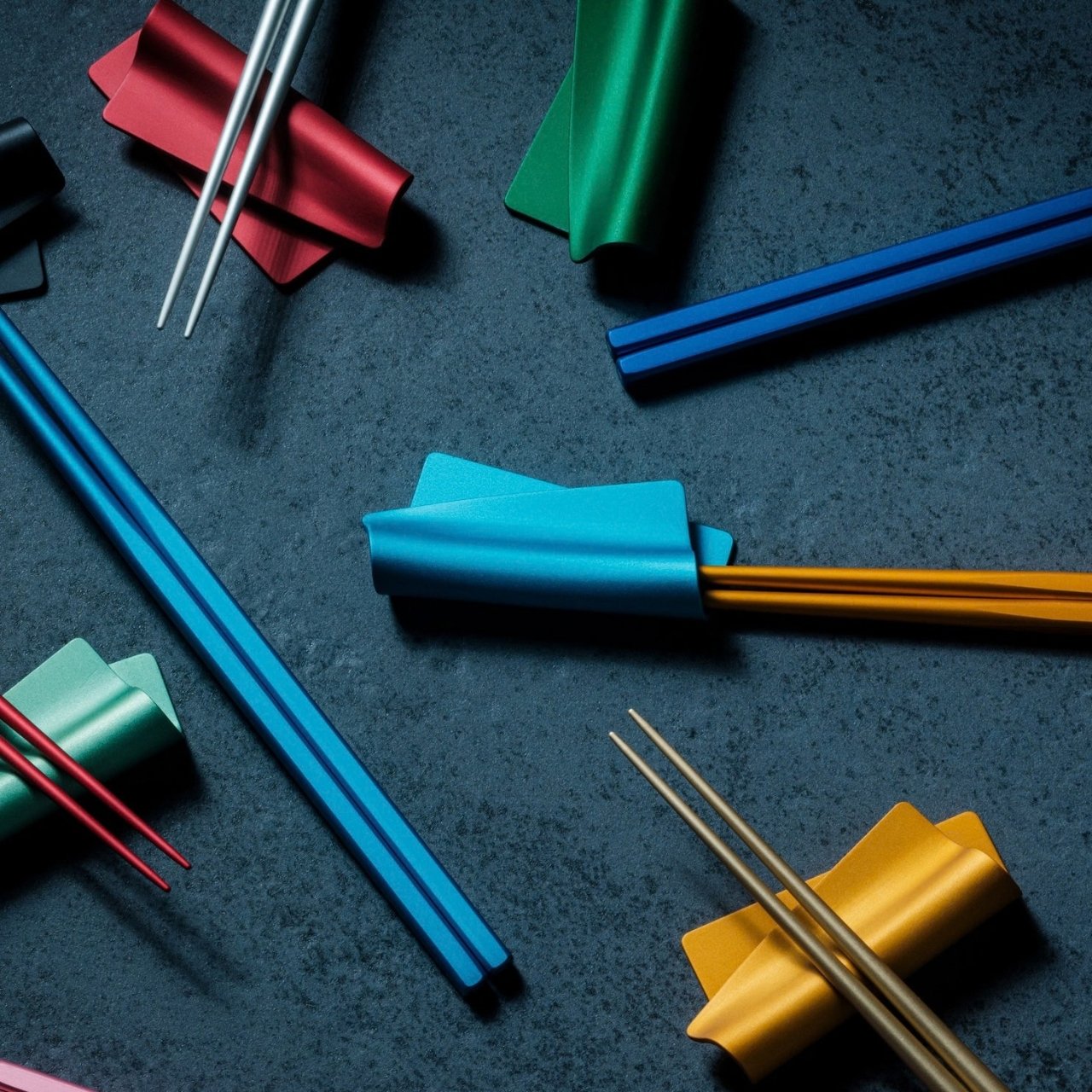
The matching FineLine Aluminum Chopsticks make that idea feel complete. They’re 23 centimeters long, with a slim profile and anodized finish that matches the rest. Set together, the two pieces read as a pair rather than a utensil plus an accessory someone remembered to buy later. I would still choose the rest as the more interesting design. Chopsticks are supposed to be in your hand; the rest has to make sense of where they go when they aren’t.
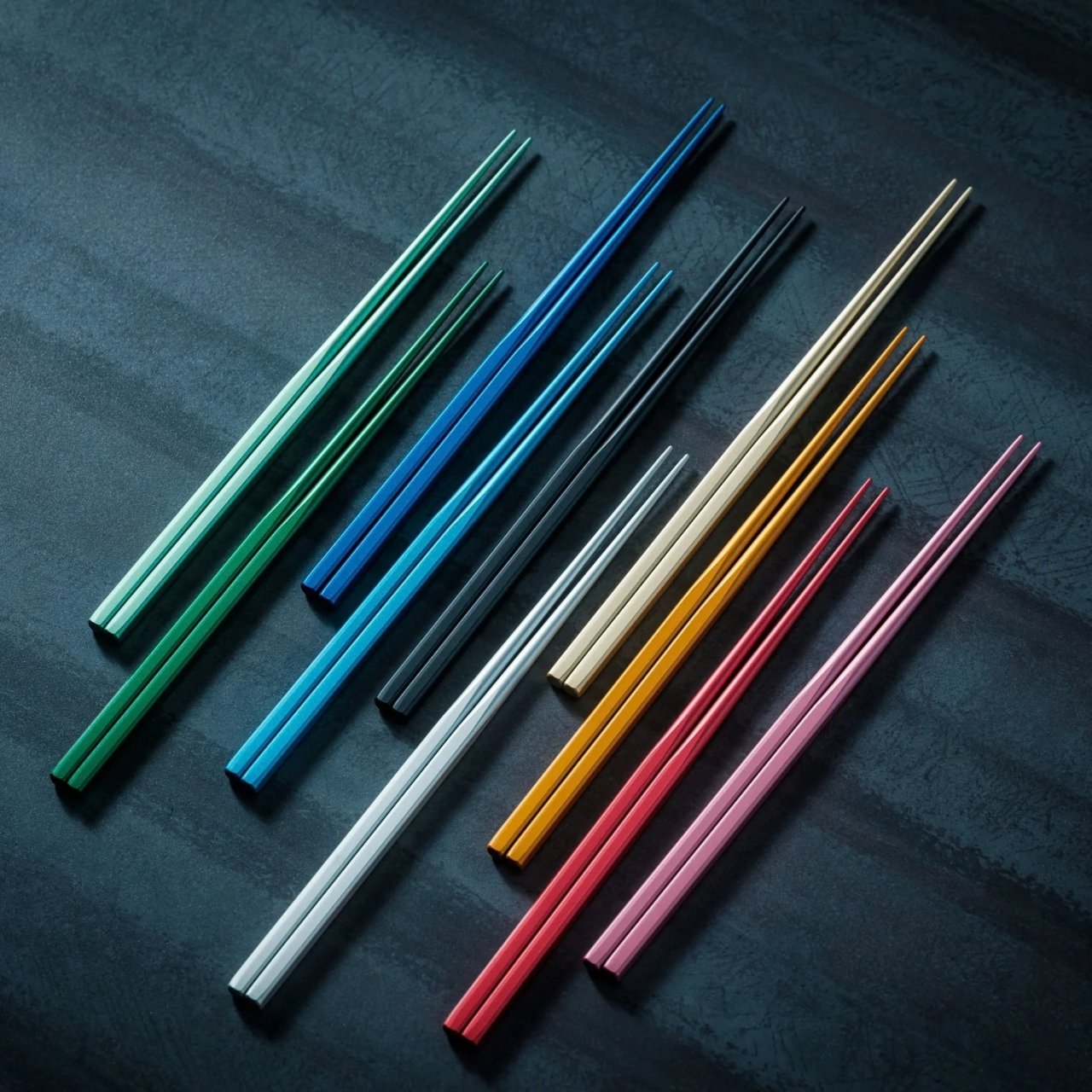
Color helps it do that visually. The chopsticks come in ten anodized finishes, with a soft sheen that doesn’t compete with dinner. Pairing them with a rest in the same finish creates a clean little line across a place setting. Or you could mix colors if a coordinated table feels too predictable. Either way, it’s a chance to make a choice about the table without buying a new set of dishes or rearranging the entire kitchen.
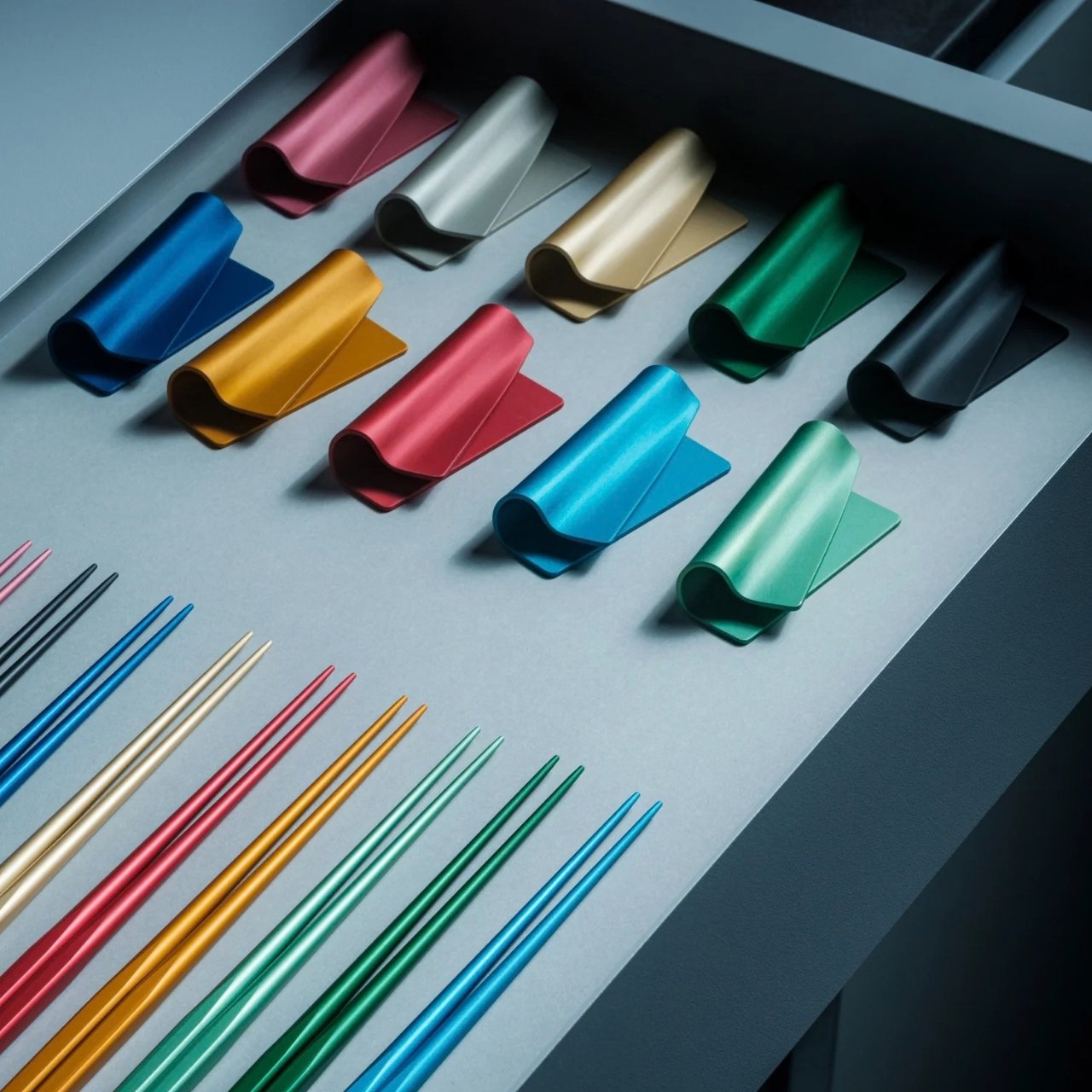
Fiesta is an obvious reference point for anyone who likes color in tableware. Its plates and bowls can set the tone before food even arrives. FineLine works at almost the opposite scale. The rest is small enough to miss at first glance, but the finish gives your eye a place to land once you sit down. I like that approach more than a decorative rest shaped like a fish or a flower. Those can be charming; this one lets the food and the company keep most of the attention.
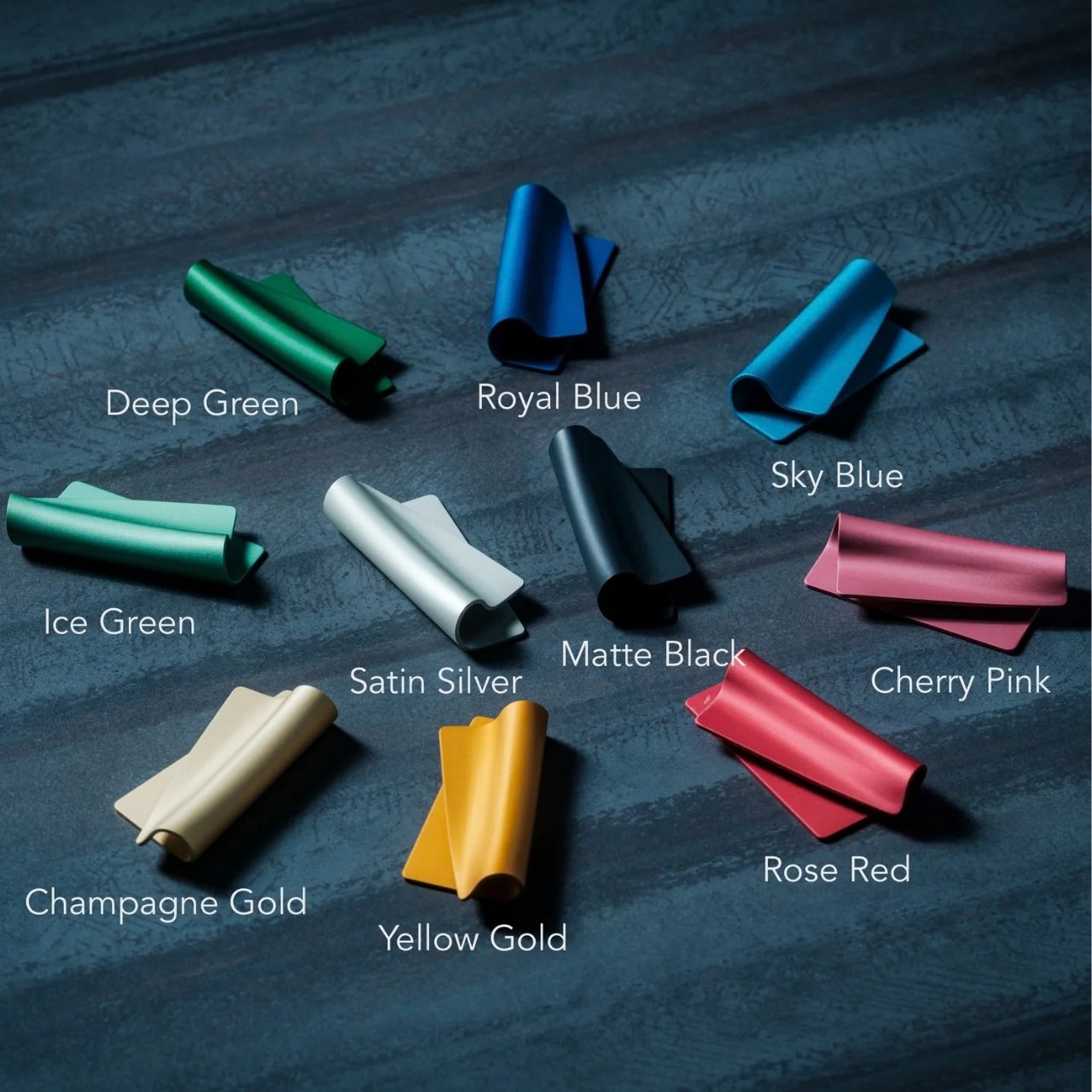
It also makes the chopsticks easier to appreciate as part of a setting, not just as tools. Pick one color for both pieces and they look calm against a busy patterned plate. Put contrasting finishes beside plain white dishes and they provide the bit of color the table needs. I can imagine choosing a combination because it suits the bowls already in my cupboard, then leaving it out for a week because it makes even a quick lunch feel a little more considered.
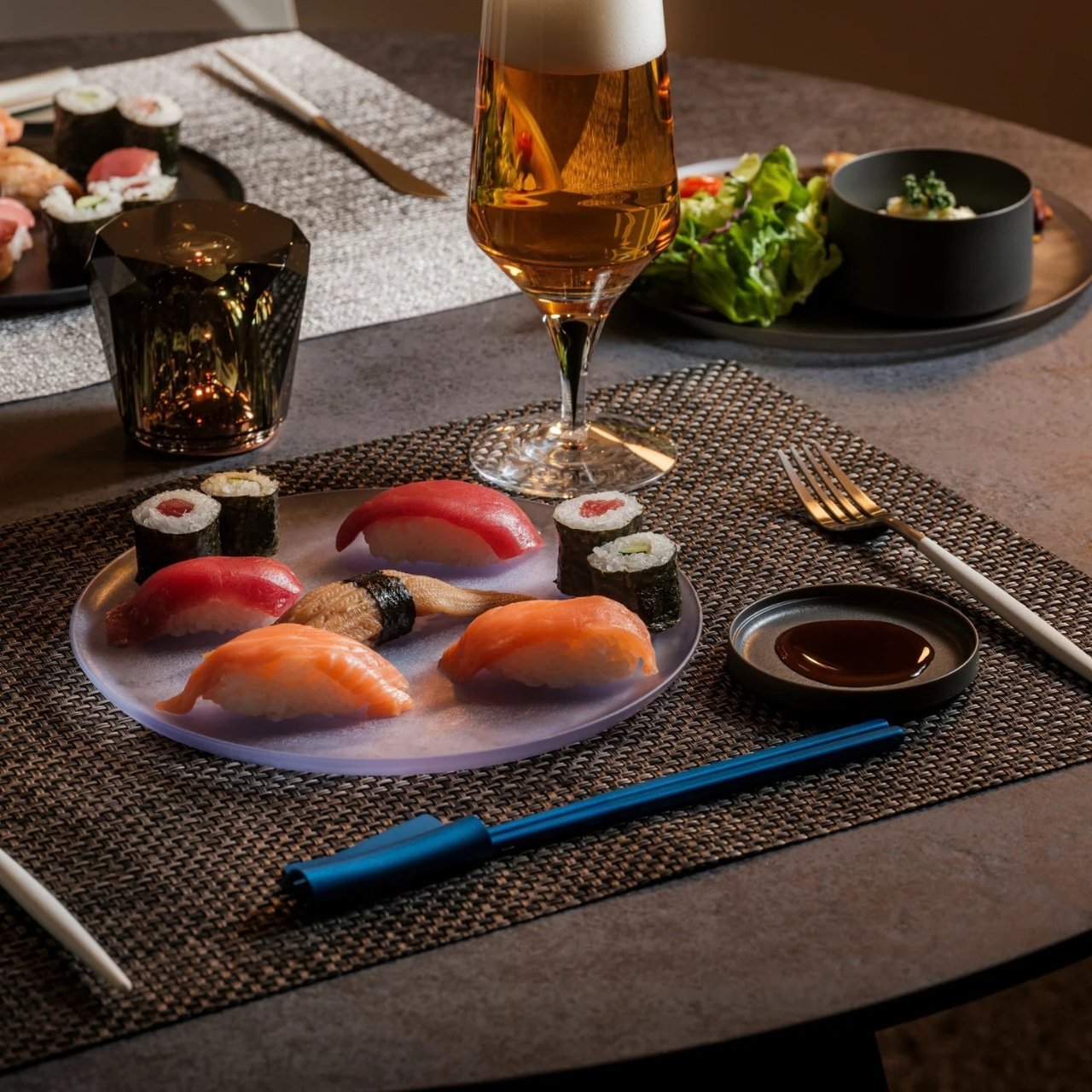
Of course, a chopstick rest isn’t essential. A folded napkin or the side of a plate will do in a pinch. And if you rarely use chopsticks at home, matching accessories probably won’t change that. FineLine ChopStick Rest makes more sense for someone who already reaches for them often and would enjoy giving them a proper place to land. Its case is modest: keep the chopsticks where you put them, and look good doing it.
That modesty is why the rest deserves the lead role. The chopsticks complete the picture, especially when their colors line up, but the rest changes the moment between bites. It keeps a small section of the table tidy and ready for you to come back to it. For an object you could cover with two fingers, that’s plenty.
The post This Aluminum Chopstick Set Brings a Little Color to the Table first appeared on Yanko Design.



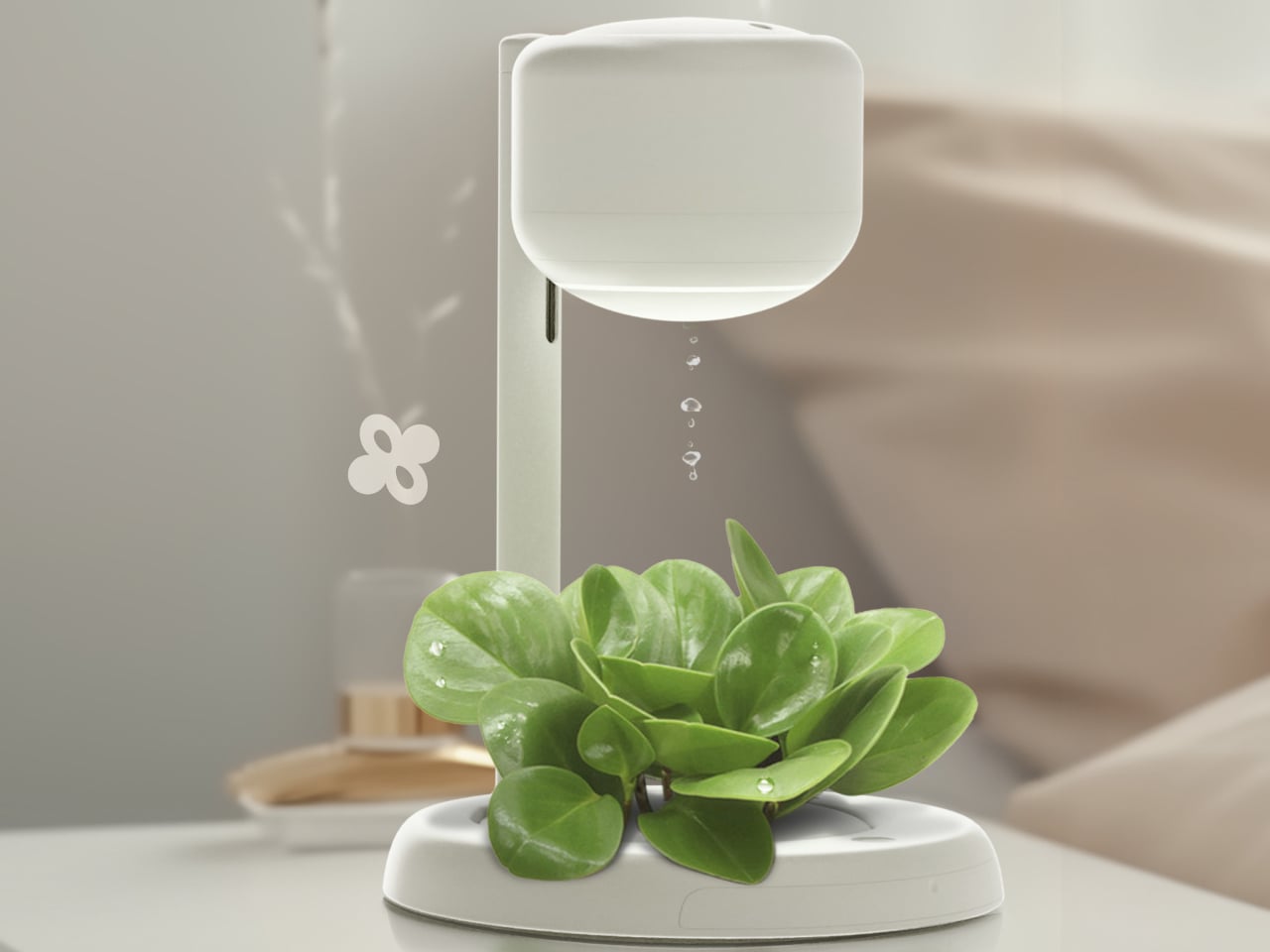
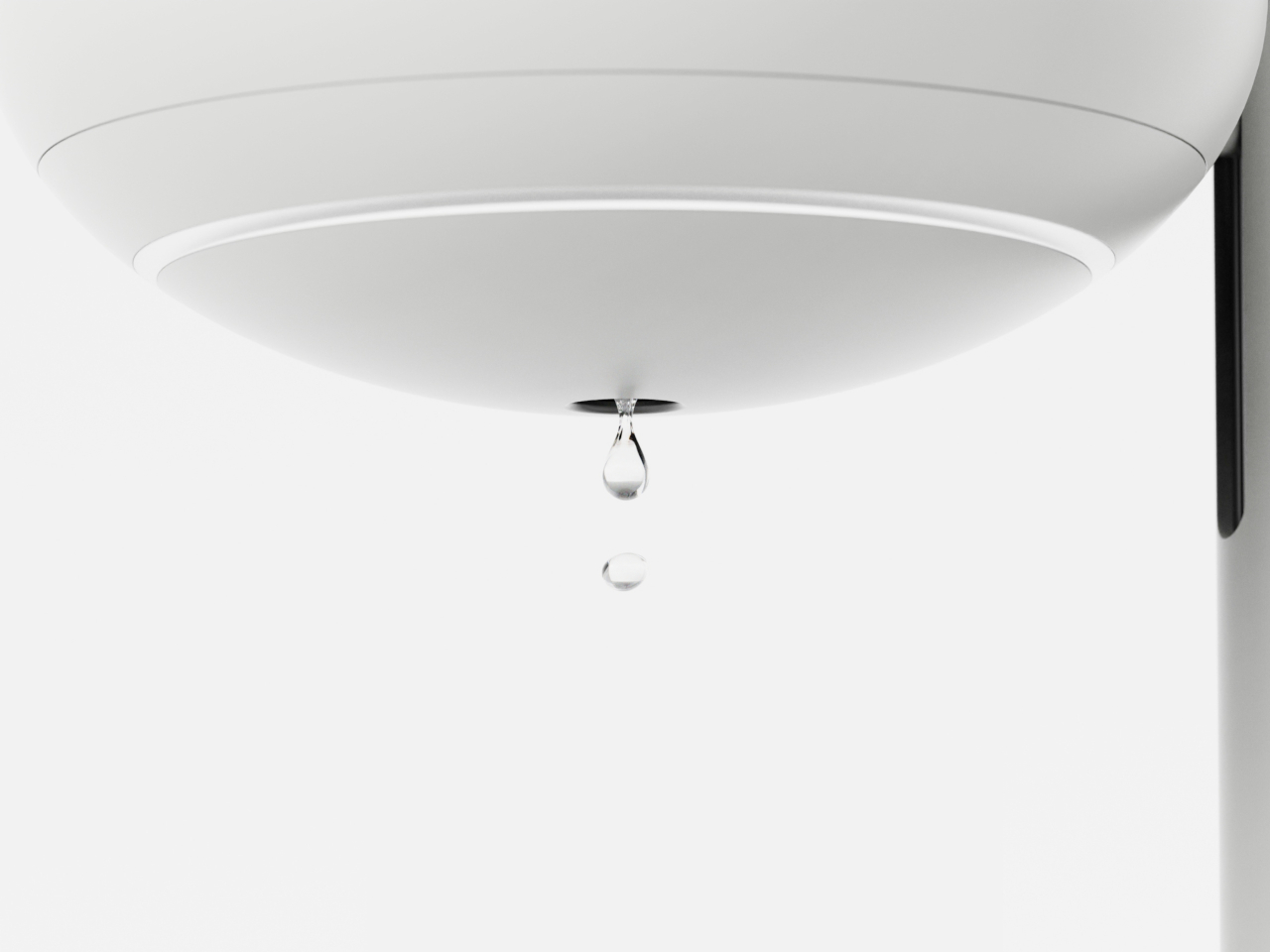
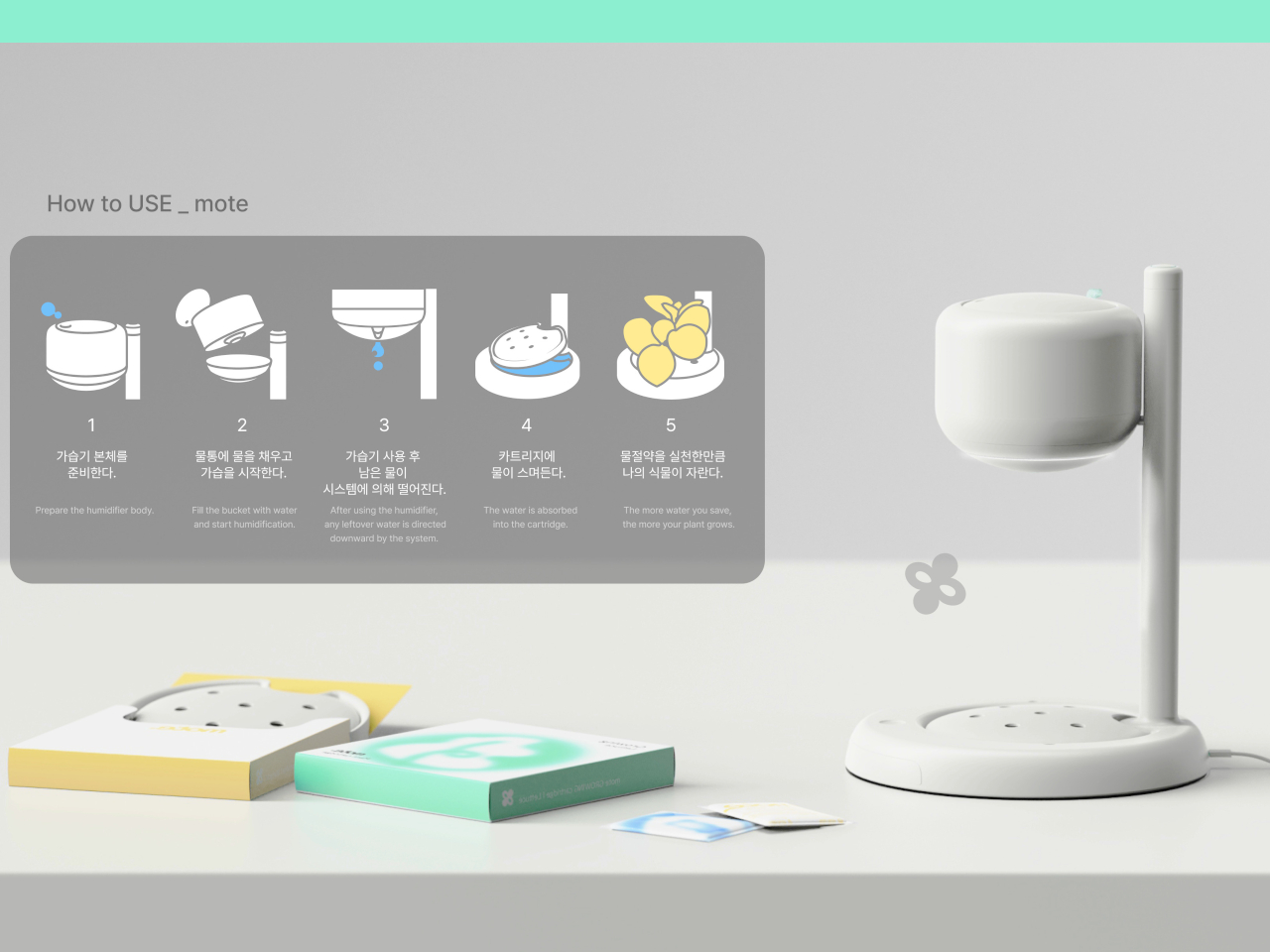
Emptying a humidifier usually sends the water you didn’t use straight down the drain. The mote gardening humidifier concept proposes giving it somewhere closer to go, placing a small growing bed beneath the tank. Water left after humidifying would drip into a plant cartridge below, bringing two household routines together without adding a separate watering can to an already crowded bedside table.
The arrangement has more in common with a desk lamp than a conventional humidifier. A rounded white reservoir sits high on a slim upright, leaving an open space for foliage between it and the circular base. Mist exits above, while a separate outlet underneath delivers water downward. That vertical separation makes the two destinations easy to understand without covering the body in instructions.
Designers: Minju Kang, Seunghun Lee, Hojin Ryo, Yejin Lee
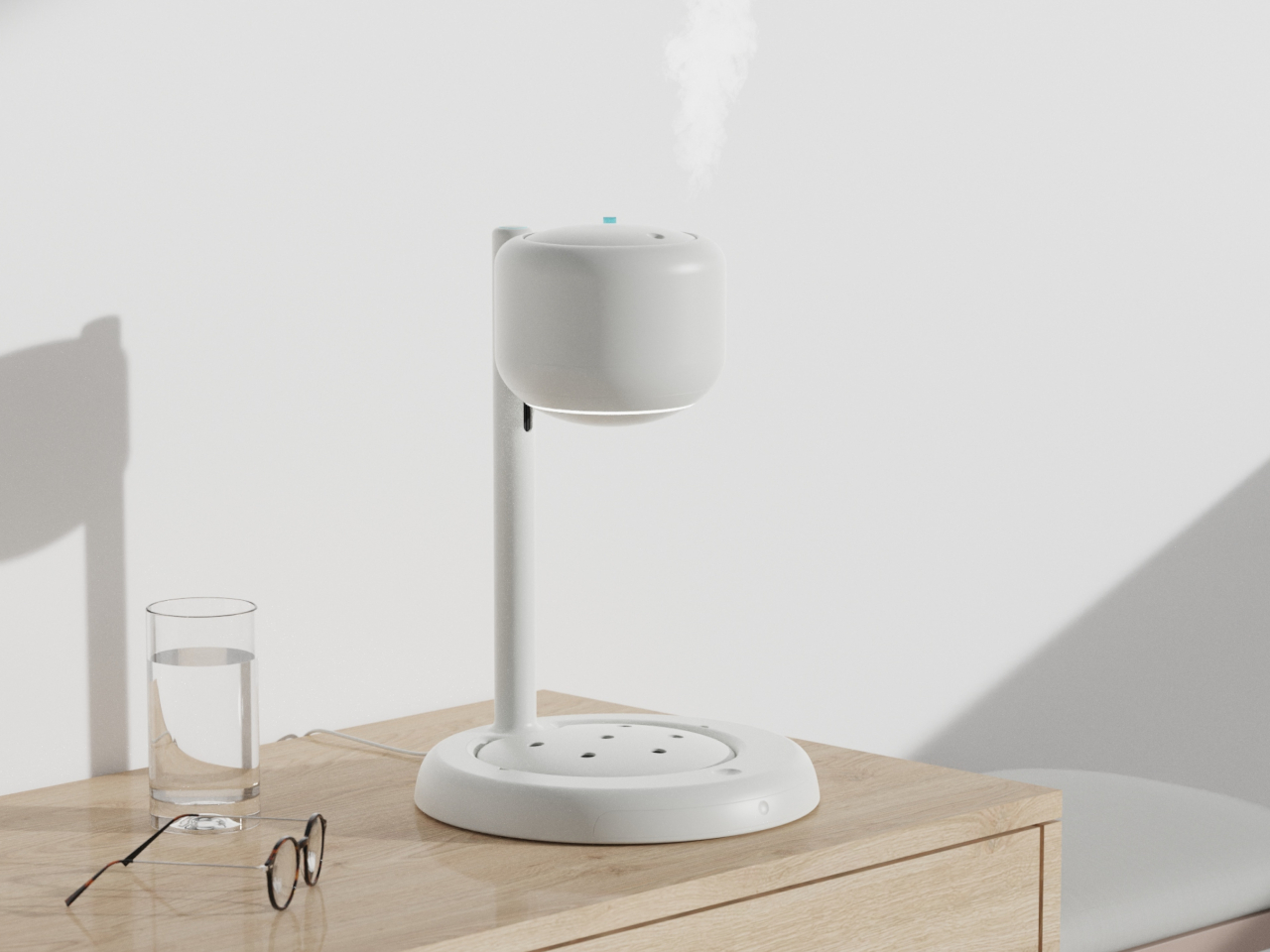
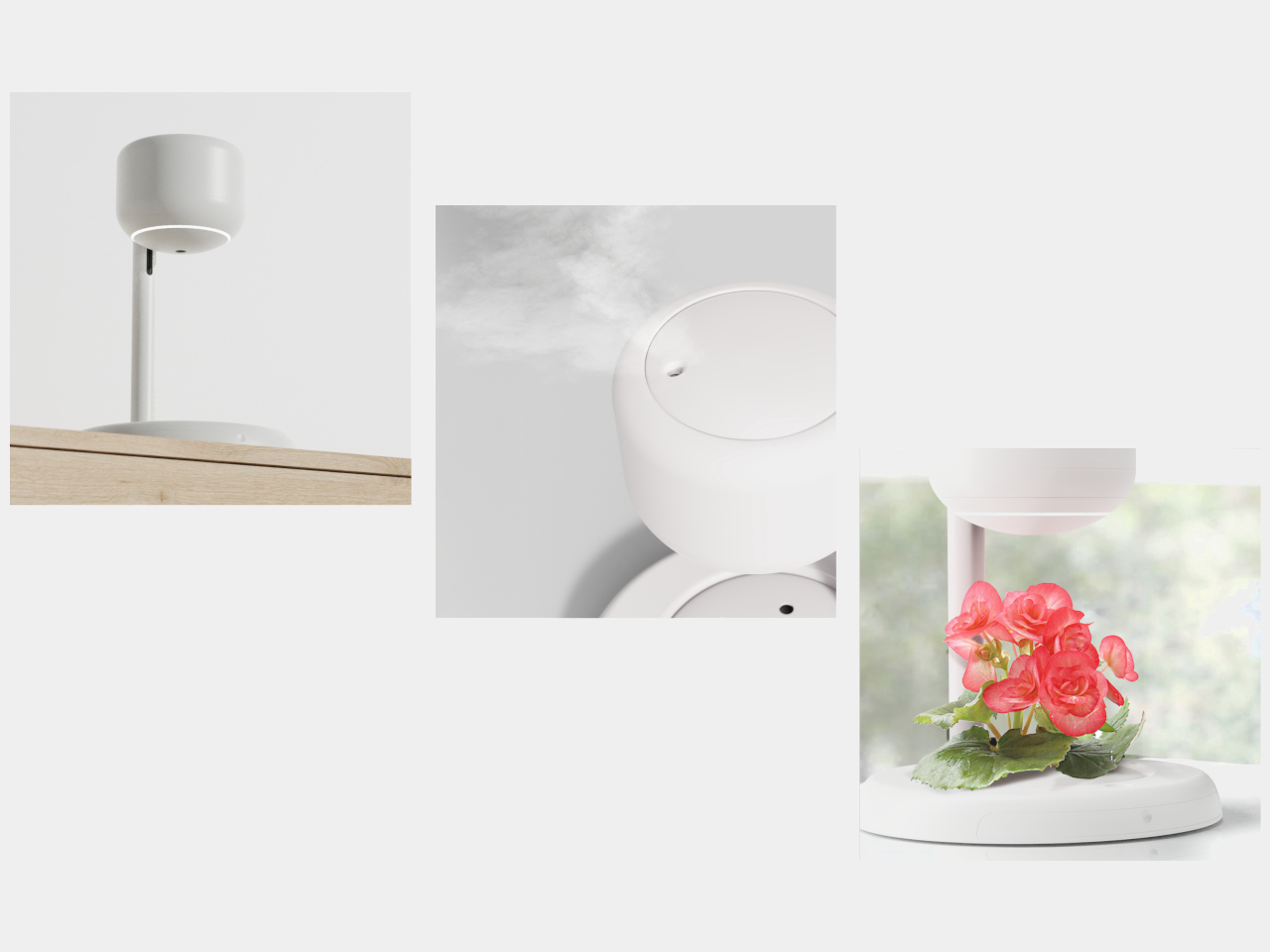
There’s a lamp involved, too, although it’s meant for the leaves rather than your reading. An LED beneath the reservoir would supplement natural light, making the suspended head useful beyond holding water. Height adjustment lets that head move along the upright, creating room as the plant grows. The rounded housing and pale finish keep the combined appliance from looking like countertop laboratory equipment.
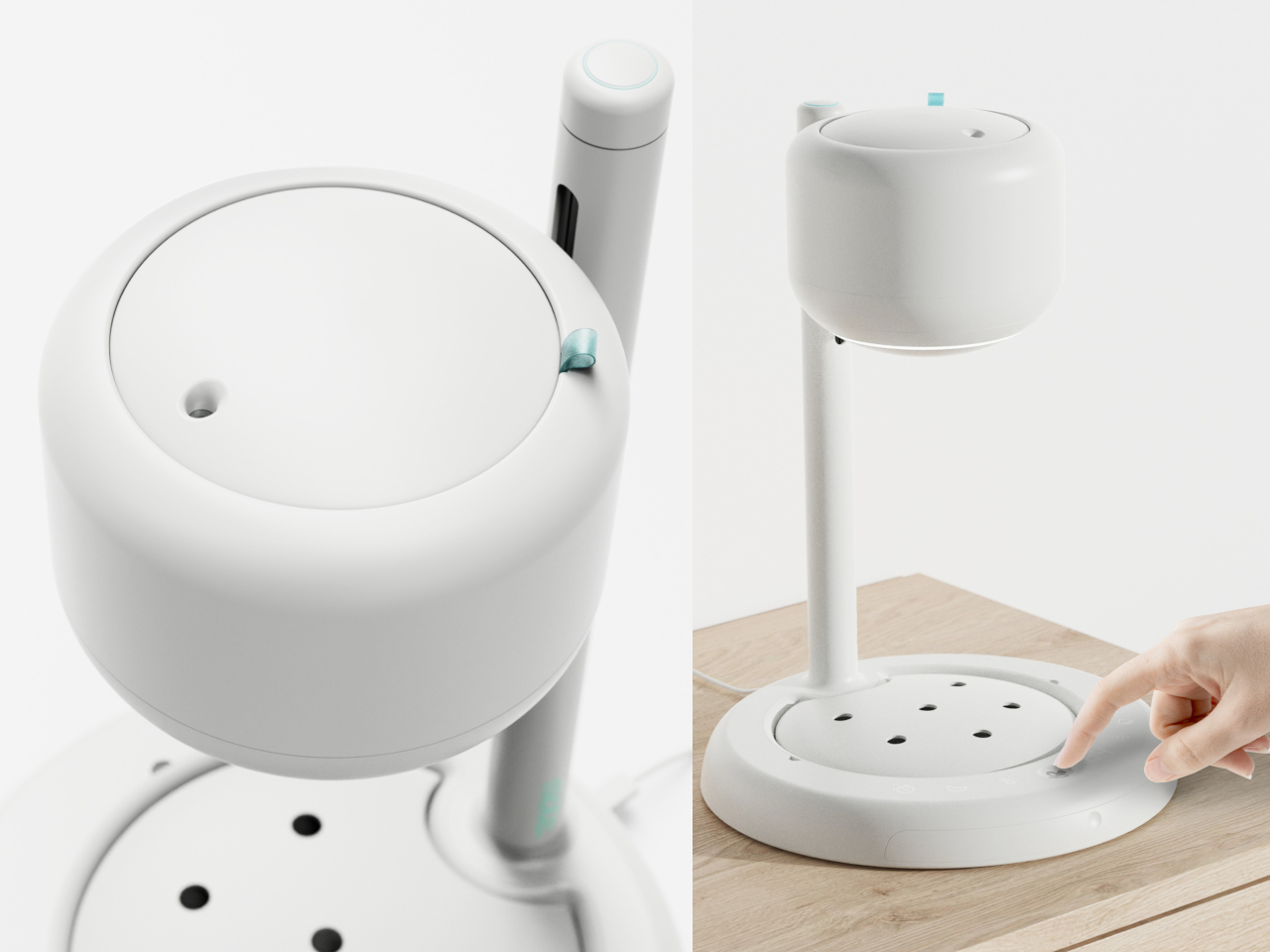
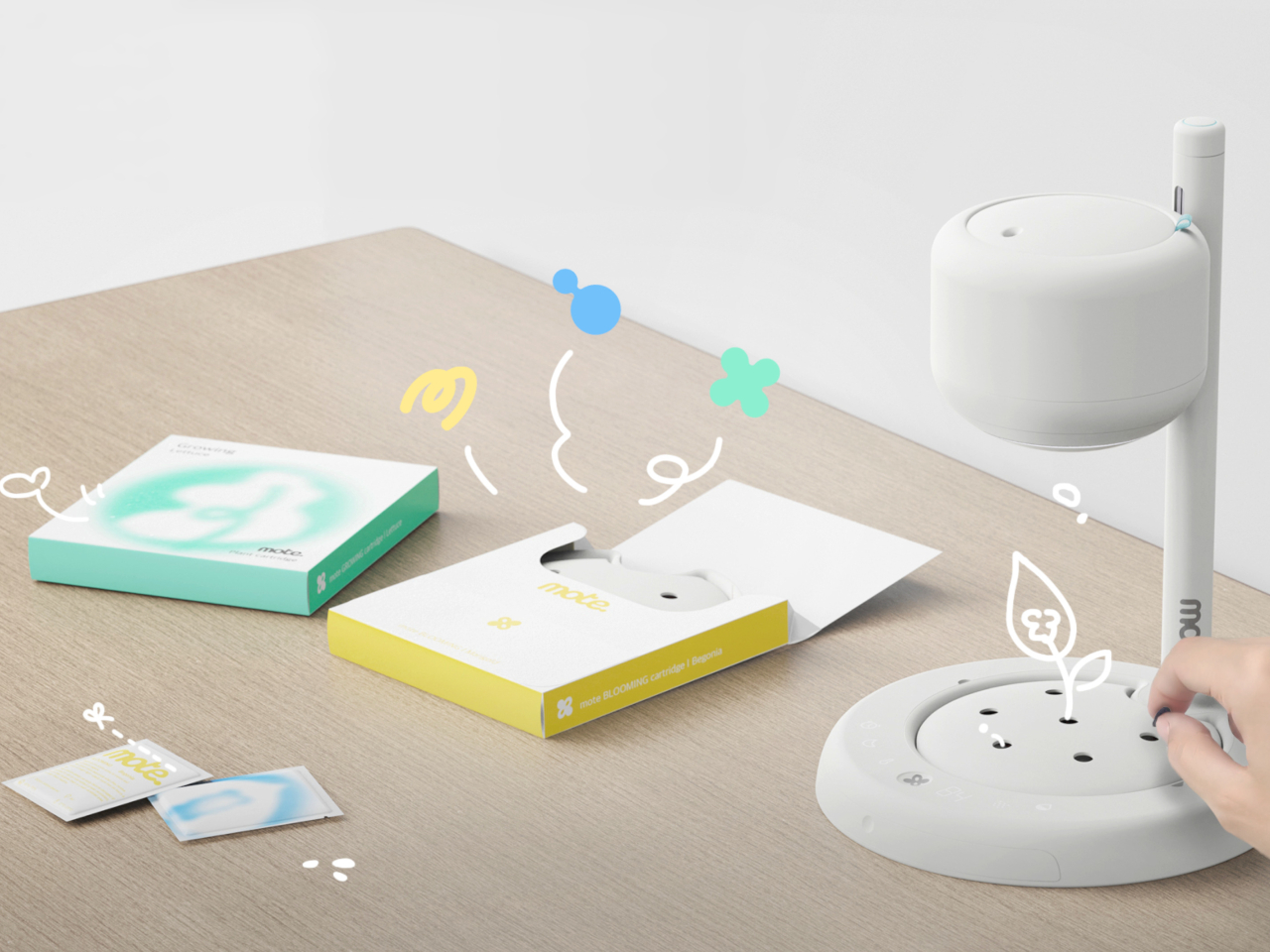
Planting starts with a removable cartridge that fits around the upright and drops into the base. Seeds go into its openings, and the material inside is intended to absorb the falling water. The proposed selection includes lettuce, bok choy, marigolds, and begonias, giving the same footprint different personalities. A small flowering patch would feel rather different from a bedside crop of salad greens.
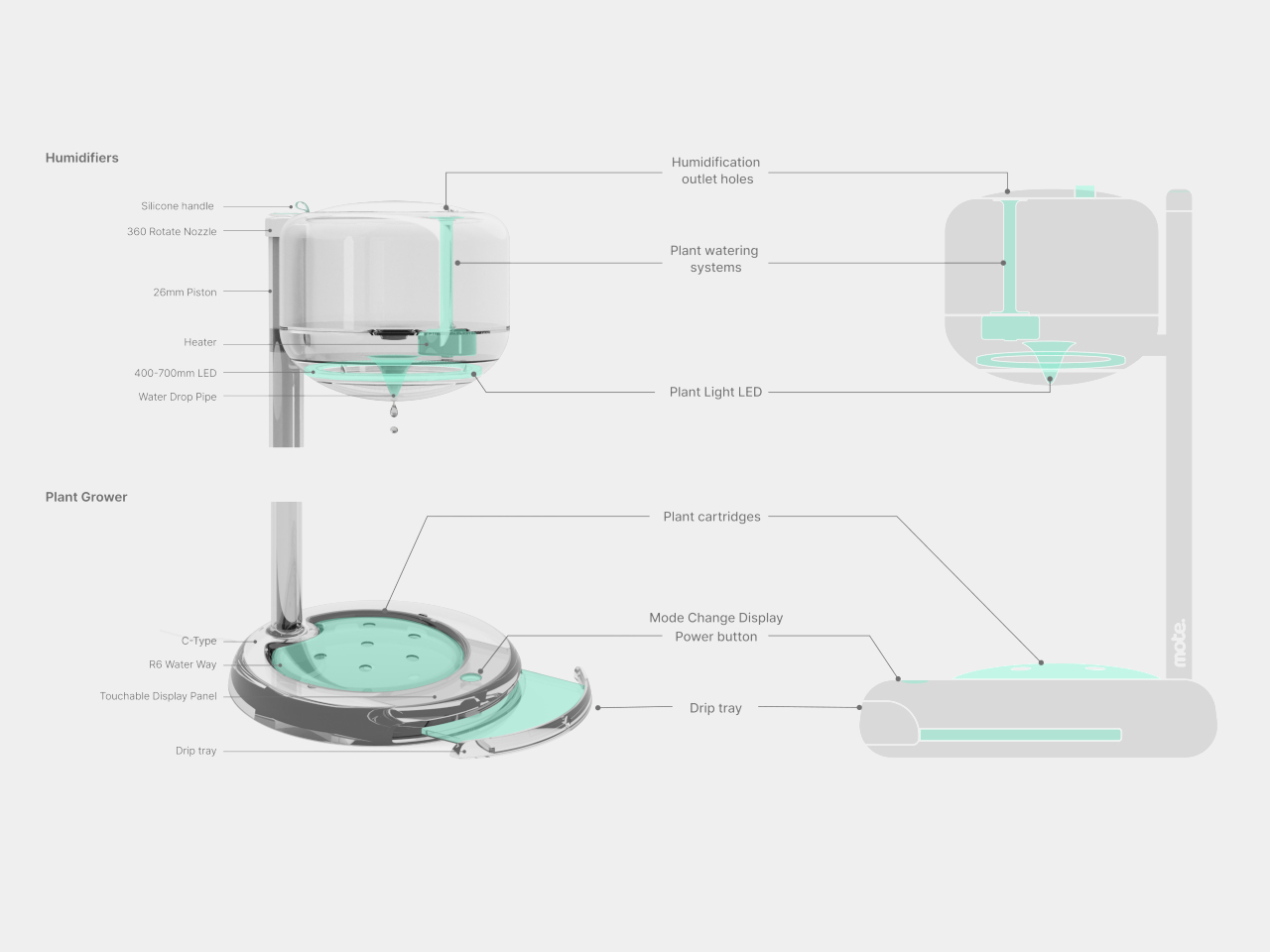
Those cartridges give the concept a routine beyond tapping through an app. You open a packet, place the seeds, and install the growing insert, with a drip tray below for collecting excess water. The reservoir has a lift-off lid with a small pull tab for access. Refilling and tending the planting area would remain visible parts of ownership, rather than disappearing behind automation.
The proposed app would handle humidity settings, operating schedules, grow-light controls, and watering records. Blue, mint, and yellow graphics extend the playful branding onto your phone, with separate views for the room and the plant. You could check the watering history before leaving for work, or change a humidifying schedule without reaching across the leaves to press physical controls on the base.
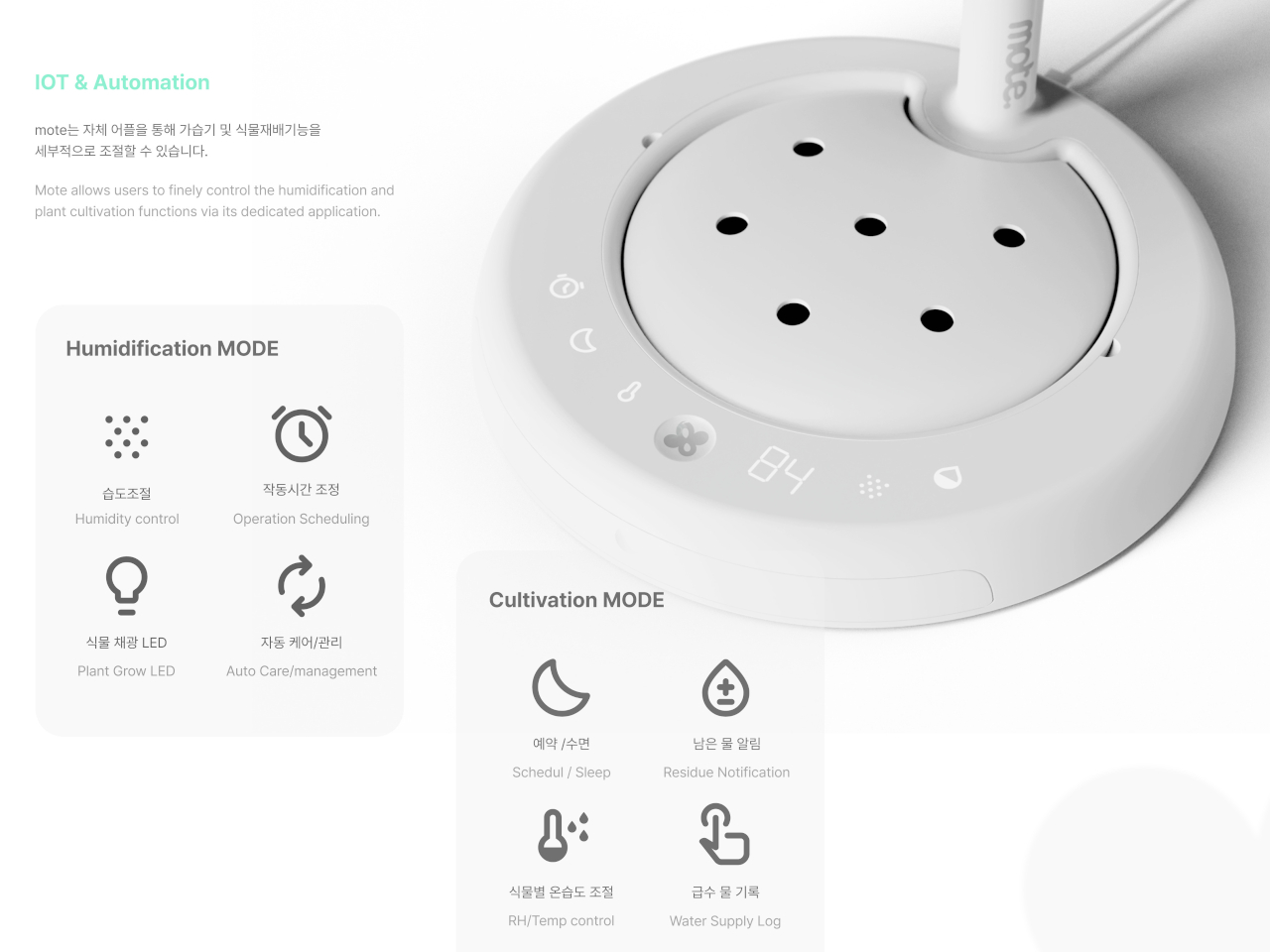
Water reuse doesn’t remove the less picturesque part of owning a humidifier, of course. The tank still needs emptying, drying, and cleaning; sending its contents toward a plant wouldn’t make it sanitary. Its app includes a UV-sterilization label, but there’s no documented treatment or testing to support a safety claim. A garden below isn’t a substitute for looking after the reservoir above.
The more interesting challenge is matching the plant’s thirst to the humidifier’s leftovers. A dry room doesn’t necessarily mean thirsty roots, and more water isn’t always better. The designers propose automatic management, but don’t document how watering would adapt to a cartridge that already has enough. That small growing bed needs a limit, even when there’s plenty left in the tank above it.
The post mote Humidifier Concept Waters a Tiny Garden With Leftover Tank Water first appeared on Yanko Design.