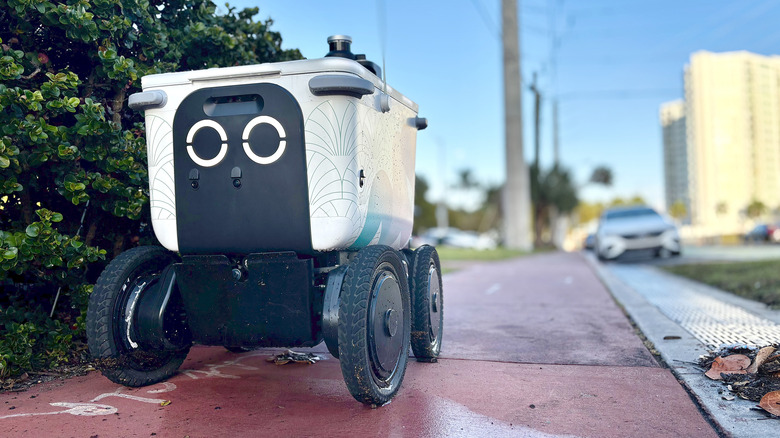
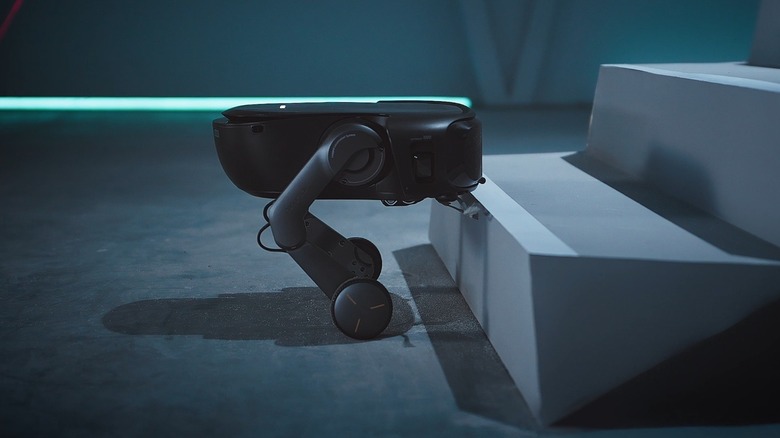
Hyundai debuts a fully autonomous, production-ready droid engineered to tackle real-world tasks

Hyundai Motor Group Robotics LAB has been working on wheeled autonomous robots for some years now, with a gradual development timeline. They revealed the vision of a metamobility bot at CES 2022, which would be better than Boston Dynamics’ Spot the dog robot. The idea was just in the concept stage at the time, and coming from the South Korean giant, we knew it would be substantial when it finally arrived.

Finally, they’ve revealed the Mobile Eccentric Droid, a.k.a. MobED, a mobility robot platform tailored for a diverse range of industrial and everyday-use applications. The bot was shown off at the International Robot Exhibition 2025 (iREX 2025) in Tokyo. According to Dong Jin Hyun, Vice President and Head of Hyundai Motor Group Robotics LAB, the new robot will help “accelerate a future where humans and robots coexist.” The most exciting bit, it’ll be up for sale in the first half of 2026.

Designer: Hyundai

MobED thrives on three main pillars, which refresh our approach towards robotics. These are the Adaptive Mobility (hardware), Intuitive Autonomy (software), and Infinite Journey (applications). This makes the production-ready autonomous bot poised to reboot how robots move, navigate, and ultimately perform tasks in any setup, be it in an industrial location, unknown outdoor terrain, or narrow corridors of your home. Thereby making it perfect for a range of tasks, right from delivering your groceries and carrying gear up a mountain to acting as a golf caddy and being used for creative movie direction.

The wheeled workhorse is equipped with Hyundai’s drive-and-life (DnL) modules, which integrate steering, driving, and height adjustment into one portable unit. TI is integrated with adaptive motion technology, which eliminates any constraints that are environment-specific. All these innovations result in precise posture control to adapt to different terrains, performing difficult tasks in any kind of environment, and that too while carrying a heavy load. The modular nature of the platform makes it ultra-versatile and well worth investing in, compared to other robotics solutions that can do only a limited number of tasks owing to their form factor.

For starters, MobED will be offered in two versions: one will be a basic model that has the mobility capabilities of a current-generation bot, while the other comes with full AI autonomy and advanced navigation sensors. The latter is a pro version, and it is equipped with full AI autonomy, upgraded sensors, LiDAR, and a camera system. You’ll get a follow-me mode, so that the bot stays by your side when you are busy doing multiple tasks. Riding on four wheels doesn’t mean it is an autonomous vehicle of sorts, as it can swivel and articulate the wheels. Just like a four-legged personal bot, it can wave by cogging up its wheel. Fit on top a robotic arm, and the bot functions as warehouse personnel.

The robot is as easy to control as an RC car, since it’s equipped with a touchscreen controller. Hyundai’s robotic division has been quite serious about the future of its rolling droid development that’s been going on for quite a few years now, and the MobED Pro is now poised to change the dynamics of the robotics landscape in the near future.

The post Hyundai debuts a fully autonomous, production-ready droid engineered to tackle real-world tasks first appeared on Yanko Design.

This Interstellar-Inspired Robot Actually Walks and Rolls

Remember that sarcastic rectangular robot from Interstellar that somehow managed to walk, roll, and save humanity while delivering deadpan one-liners? Yeah, turns out someone actually built a working version of TARS, and it’s just as mesmerizing as you’d hope.

Meet TARS3D, the brainchild of roboticist Aditya Sripada and his longtime collaborator Abhishek Warrier. What started as what Sripada calls “a desire to reconnect with the simple joy of building robots” has turned into something that looks like a collapsing sculpture decided to get up and move across your living room floor. It’s weird, it’s wonderful, and it’s earning serious academic recognition.

Designers: Aditya Sripada and Abhishek Warrier

If you’ve seen Christopher Nolan’s Interstellar, you know TARS. That blocky, impossibly versatile assistant robot that accompanied astronauts across alien landscapes, morphing from a walking tower of metal rectangles into a rolling wheel when speed was needed. The movie version was actually a human-sized puppet with operators digitally erased from scenes, and its wheel form was attached to a motorized dolly. Movie magic, not actual robotics. But Sripada, who holds a master’s degree from Carnegie Mellon University’s Robotics Institute and works as a senior robotics engineer at Nimble.ai, wasn’t satisfied with movie illusions. He wanted the real deal.

TARS3D features four independently articulated telescopic pillars that transform into an X-shape faster than you can say “Cooper, this is no time for caution.” Pillars one and three rotate forward while pillars two and four swing back, and curved pads extend from the tops and bottoms of each pillar to serve as feet. The result? An eight-spoke double rimless wheel that actually rolls. According to Sripada, this is the only recreation of TARS that can genuinely both walk and roll.

What makes this even cooler is the tech behind the transformation. Sripada and Warrier wrote an entire research paper titled “Walking, Rolling, and Beyond: First-Principles and RL Locomotion on a TARS-Inspired Robot,” which explores reinforcement learning-based control for the robot’s gait. They’re combining first-principles physics with modern learning techniques, a hybrid approach that opens new possibilities for adaptable locomotion in robotics. The paper was named a finalist for the Mike Stilman Award at the 24th IEEE RAS Humanoids Conference in Seoul, which is essentially the Olympics of humanoid robotics research. Pretty impressive for what started as a curiosity project.

Here’s the thing that makes TARS3D particularly fascinating: it challenges our assumptions about what robots should look like. Most robotic locomotion research focuses on biomimicry, trying to recreate how animals and humans move. But Sripada and Warrier note in their research that robots operating in human-engineered environments might actually benefit from non-anthropomorphic forms. Why make a robot look like a person when you can make it look like an alien geometry problem that somehow solves itself?

The implications reach beyond just being a really awesome tribute to a beloved sci-fi film. This kind of adaptable, multi-terrain locomotion could have real applications for space exploration. NASA and planetary robotics programs are always looking for designs that can handle unpredictable alien landscapes. A robot that can walk carefully across rough terrain, then transform into a wheel to speed across flat surfaces? That’s the kind of versatility you want on Mars or the Moon.

There’s something refreshing about TARS3D’s existence in our current robotics landscape dominated by humanoid bots trying to walk like people or dog-like machines trotting around warehouses. This project reminds us that inspiration can come from anywhere, even a fictional robot from a movie about wormholes and time dilation. And sometimes the best solutions don’t look like anything nature ever designed.

What Sripada and Warrier have created proves that with enough engineering know-how, determination, and probably more than a few late nights, you can turn movie magic into reality. TARS3D might not crack jokes about its humor setting being at 75%, but watching it transform from walker to roller is its own kind of entertainment. Science fiction has a way of becoming science fact when the right people decide to make it happen.

The post This Interstellar-Inspired Robot Actually Walks and Rolls first appeared on Yanko Design.

Cute fluffy robot pet is designed to provide emotional support

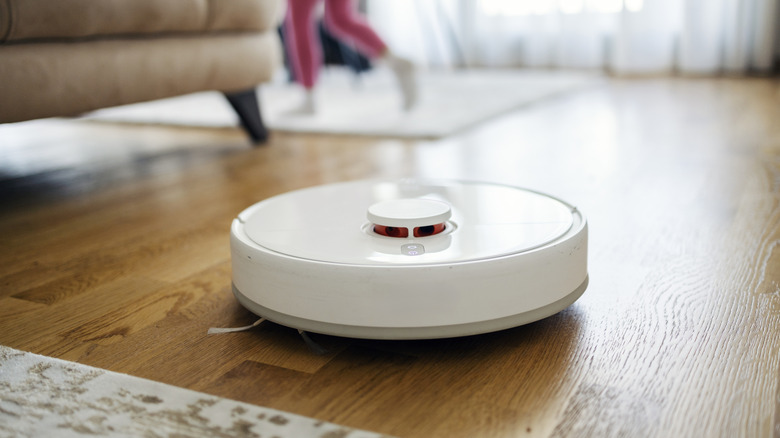
Most of us probably think of robots as industrial arms that assemble cars, rolling discs that clean up floors, or menacing skeletal figures out to destroy humanity. Of course, there are also a growing number of robots that would normally be classified as toys but can actually behave like mechanical pets, down to their adorable and sometimes mischievous behaviors as well. Robot dogs like Sony’s Aibo have made headlines before, and there are some like robot cats recently as well. This particular furry robot, however, eschews typical animal forms to offer a simpler but cuddlier robot that can’t really do much other than make you feel warm and fuzzy inside.

Designer: Casio, Vanguard Industries

Truth be told, not everyone will find Moflin cute and cuddly. It’s definitely a furry critter, one that’s like a very fat and big hairy caterpillar with two beady eyes or a rodent so fat you can’t even see its legs, which could trigger some people. It even wiggles and curls around like a worm. On the upside, it won’t be going around and tripping up like a dog or cat, so maintenance is simpler as well.

Unlike robot dogs and cats that try to mimic their flesh and blood counterparts, Moflin is meant to just provide joy and comfort with the feeling of something (subjectively) cute and furry cuddling up to you and seemingly responding to your love and care. It’s pretty much similar to having a stuffed toy, except it’s more dynamic and feels a bit more alive, which could actually make some people feel a bit uneasy.

Of course, Moflin has a smidgen of everyone’s favorite AI, and each robot is supposed to have its own unique personality developed through your daily interactions. It also has the semblance of emotions expressed through movement and sounds, such as trembling when stressed or whistling when happy. That said, the actual emotions the robot is “feeling” can only be read through the companion smartphone app. For the sake of immersion, Moflin’s charger isn’t just some cable or wireless charging pad but an oval bowl that looks like a bed made especially for it.

Moflin actually went on crowdfunding back in 2020, but Casio is now making it more generally available for around $400. The catch is that, at least for now, it’s only available in Japan, and there is no word yet on whether it will be wiggling its way into people’s arms globally.

The post Cute fluffy robot pet is designed to provide emotional support first appeared on Yanko Design.

Motorskins’ SELK Technology Is Bringing Textiles To Life For A Smarter Future

MotorSkins is revolutionizing the way we interact with technology with their cutting-edge SELK technology. This innovative system exemplifies the powerful fusion of ambient computing and programmable matter, promising to profoundly transform our relationship with both the digital and physical worlds.

Designer: Motorskins

SELK technology is the flagship innovation from MotorSkins. It integrates soft robotics, fluid logic, and software/API into a cohesive and intelligent system. This sophisticated multilayered textile structure, known as programmable matter, has the ability to sense, react, and adapt to its surroundings. This makes SELK not just a piece of technology, but a dynamic and interactive material.

In today’s rapidly evolving tech landscape, ambient computing is emerging as a visionary concept for the future. It imagines a world where technology is seamlessly integrated into our environment, working effortlessly and becoming an inherent part of our daily lives. Complementing this vision is the field of programmable matter, which involves engineering materials to dynamically change their properties, such as shape or function, in response to user input or environmental changes.

1

MotorSkins’ SELK technology sits at the intersection of ambient computing and programmable matter. This technology transcends traditional interfaces, offering a tactile, responsive medium that not only coexists harmoniously with its environment but actively enhances it. By incorporating SELK’s smart textile actuators into everyday products, MotorSkins showcases a forward-thinking approach to material science. These actuators transform static objects into interactive, adaptable interfaces, allowing materials to respond intuitively to user inputs and environmental changes.

The company is applying SELK technology to create dynamic orthoses in the healthcare sector. These orthoses, made from SELK’s versatile material, combine simplicity in design with enhanced functionality and performance. This wearable interface adapts to the user’s movements, providing support and flexibility where needed.

In the automotive industry, SELK technology is set to revolutionize car interiors. Imagine a car cabin that adjusts to your needs, with buttons, comfort features, and haptic feedback appearing only when required. This leads to safer and more intuitive interactions between drivers and their vehicles.

MotorSkins is also exploring how SELK can improve human-machine interfaces, creating more ergonomic workspaces and interactive, responsive environments. By merging programmable matter with the principles of ambient computing, MotorSkins is not just developing advanced tech interfaces; they are fundamentally reshaping the way we interact with technology.

These efforts predict a future where technology seamlessly integrates into our daily lives, enhancing our experiences in natural and unobtrusive ways. Motorskins’ innovative work demonstrates how design and technology can synergistically improve human life, making our interactions with the world more intuitive and connected.

The post Motorskins’ SELK Technology Is Bringing Textiles To Life For A Smarter Future first appeared on Yanko Design.

Robot dog with wheels for feet can climb stairs and fences, do tricks

Boston Dynamics’ nightmarish BigDog is finally behind us, but that doesn’t mean we’re past seeing visually headless robot dogs every now and then. Spot has become the blueprint for these smaller and more agile quadruped machines and, to be fair, it has led to quite a few interesting designs and useful applications. Despite that, there are still a few design issues that need to be addressed, particularly when it comes to the robot’s mobility on any terrain or elevation, especially stairs and fences. That’s the kind of puzzle that this new quadruped robot is solving, ironically with wheels instead of flat feet, and it’s starting to behave almost like a stereotypical dog when it comes to climbing over things it probably shouldn’t.

Designer: Unitree

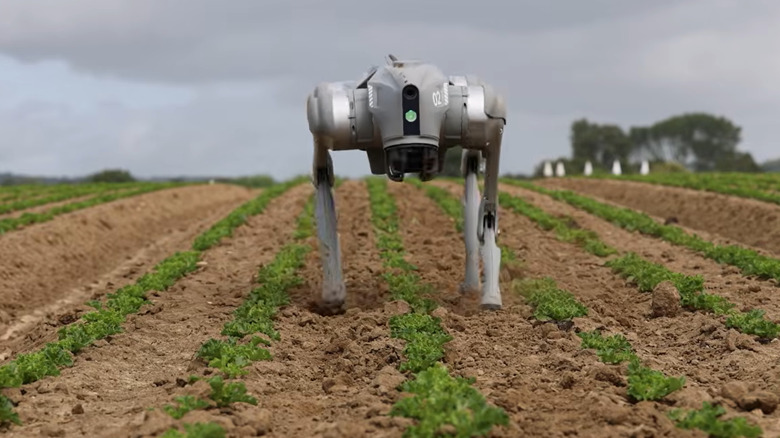
It sounds almost counter-intuitive to put wheels on a robot’s feet to help it move better, but that’s exactly what will make the Unitree Go2-W a head-turner. Technically, those wheels allow it to move anywhere, practically like an all-terrain four-wheel drive, rolling over smooth floors, rough roads, or inclined surfaces like ramps with precision and agility. But if you think those wheels will give it trouble on stairs, you definitely haven’t been paying attention.

Going up any stairs is no sweat off its non-existent brow, as not only can it lift its feet like a normal (robot) dog, but the wheels actually give it a leg up, pardon the pun. The wheels not only give it a bit more grip but also help boost it up by rolling up on the vertical edge of the stairs. Like with organic dogs, going down stairs or from high places is naturally easier, just rolling off the steps or simply falling off the edge and bouncing back up.

What makes the Go2-W even more special is its ability to climb over fences, almost like a real, naughty dog. It stands on its two hind feet to prop itself on top of the ledge with its front legs. It then uses those rear wheels to hoist itself up, and it’s quite cute to watch it struggle a bit, again like a real dog.

The Unitree Go2-W can do one other trick that almost no other robot dog can. It can do “handstands” and, of course, roll around upside down on its front “feet.” These are definitely impressive abilities, though some will question their practical use. The proper accessories could help the headless dog explore places that are too dangerous for humans to deliver payloads or simply analyze the area. And no one will probably mind being able to teach the dog new tricks, presuming you don’t get too uneasy with such robot dog designs.

The post Robot dog with wheels for feet can climb stairs and fences, do tricks first appeared on Yanko Design.

Quadruped robot can pick up cigarette butts on beaches

You’re walking along a beautiful beach when your senses are suddenly marred by cigarette butts just lying along the sand. Anyone who has ever visited the beach has probably had that experience as these are among the most common trash we see lying around. Using humans to clean it up is of course the most practical but it can be a tedious and slow process.

Designer: Dynamic Legged Systems at the Italian Institute of Technology

In this age of robotics, we can of course get them to clean this up. VERO or Vacuum-cleaner Equipped Robot is one such device that has been developed for this very purpose. It is a dog-like quadruped robot that uses vacuum nozzles on its feet and is equipped with depth cameras and uses a neural network. It is based around the the AlienGo robot from Unitree.

The vacuum is mounted on the back of the robot with hoses going down the legs and with 3D-printed nozzles that can suck the butts as near the ground as possible without the robot toppling over. It is able to use the depth camera mounted on the robot’s chin and the neural network to not only detect the butts but also to chart a path towards and around it.

The VERO is tested not just on sand but also on stairs and uneven surfaces in Genova where the lab is located. It is not that quick yet but is still better than humans manually picking up butts since the latter will eventually get tired and fed up. There may be other potential use cases for a robot like this like inspecting cracks in buildings and bridges, placing nails and rivets, and even spraying weeds in crop fields.

The post Quadruped robot can pick up cigarette butts on beaches first appeared on Yanko Design.

Sparkles is the Spot cosplay version to show off the Choreographer software

Aside from actual dancing people, one of the things that we love to see on the Internet is dancing animals. From penguins to monkeys to cats and dogs, we love seeing these cute animals bust a move. Of course some of these are computer-generated but if they’re cute enough, we’d still watch it. So when a furry blue dog started dancing on our screens, we probably stopped scrolling and watched, even though it was obviously not a real dog but a robotic dog.

Designer: Boston Dynamics

We thought that this was a new robot dog from Boston Dynamics but it was actually their trusty ole Spot but with a fluffy, blue skin. Sparkles was unleashed on the internet to celebrate International Dance day last April 29. We got a dancing duet from both Spot and Sparkles but the latter was just the former but in a costume just to make things a little more fun. This custom costume was designed so Spot the original robot dog can “explore the intersections of robotcs, art, and entertainment.”

The reason why these robot dogs danced so well is because of the Choreographer software and API that they launched a few years ago. It was created specifically for the media and entertainment customers who needed a tool that could let them train the robot dog with high-level instructions. It also allows Spot to adapt to its physical limitations and its environment when executing the moves while still prioritizing its balance.

We don’t know if Boston Dynamics plans to create even more costumes for Spot for future special occasions. Can you imagine a Halloween or Christmas themed robot dog outfit or even various pop culture cosplay setups? Of course the main point would still be to showcase Spot and the Choreographer software so it should be something cute but not too elaborate so as to hinder the robot dog’s movements.

The post Sparkles is the Spot cosplay version to show off the Choreographer software first appeared on Yanko Design.

Monocycle robot with legs may be last-mile delivery helper in the future

When we think of robots, more of then than not, we think of them in their humanoid design or at the very least in a dog-like form. But if you’re really experimenting with this kind of technology, you can get inspired from sci-fi and futuristic movies or TV shows. You can even be inspired by something “old” that can be adapted into a high-tech design. I’m fine with more experimental kinds of robots as long as they don’t overthrow the human race.

Designer: Joohyung Kim

A professor from the Electrical & Computer Engineering department at the University of Illinois Urbana-Champaign has come up with a robot that is inspired by the monocycle and some of those fast-moving circular robots you see in sci-fi films. The Ringbot is basically a monocycle robot that has two legs inside of it that looks like someone lying inside a ring and pedaling away. While there have been wheel-leg designs previously, this is the first one that was probably inspired by monocycles and General Grievous from Star Wars’ Clone Wars series.

The large wheel is the frame of the robot itself while the legs actually help the robot to balance itself and avoid toppling over. There are actually two indepent driving modules inside of it and each one controls its velocity so it can track a desired orientation. It can go around with the legs in the air steering and balancing it. When it does fall down, the legs will enable it to stand back up. It is also able to move and turn when stuck in tight spaces. It is able to make full rotations inside the wheel and drive it up to 5km/hour.

For now the Ringbot seems to just be something they are experimenting with. But in the future, they are looking at this robot to do autonomous last-mile deliveries in congested environments. They will be adding two additional limbs so it can carry packages and even go up and down stairs and rough terrains. Who knows, in the future you’ll get your package delivered by this monocyle robot with legs.

The post Monocycle robot with legs may be last-mile delivery helper in the future first appeared on Yanko Design.

Humanoid robot can make you coffee and eventually more

It’s no secret that I’m still afraid that in the far future, robots will rise up against humans when they gain their own intelligence and realize that we’ve been treating them unfairly all these years. That probably comes from watching too much science fiction movies and series where robot overlords rule over the earth. But for now, we’re seeing amazing (sometimes scary) advancements when it comes to robotics and how they will eventually be able to work alongside humans.

Designer: Brett Adcock

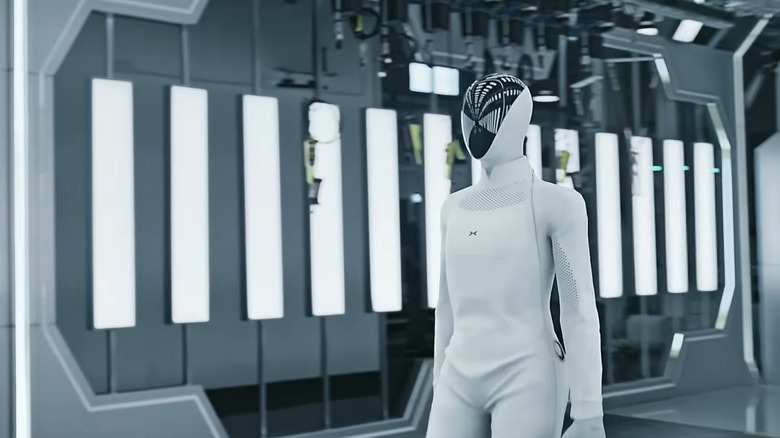
The Figure-01 Humanoid Robot has been designed to help you handle some of the simple daily chores, powered by artificial intelligence. Aside from being able to do automated tasks, it is trained to be able to think, learn, and interact within human environments. It is also able to improve on its capabilities by learning from the previous tasks it is able to perform.

The humanoid robot uses some pretty powerful graphic processing units (GPU) to drive the AI learning and system, letting it process some of the complex algorithms needed to train them. The idea is for these robots to eventually fill in the gap in the labor market when it comes to things like warehouses, transportation, and retail. Of course the aim is not to replace humans but to be able to work alongside people and work within an environment with both other robots and humans.

They were able to demonstrate the current capabilities of the Figure-01 Humanoid Robot by showing how it was able to make coffee after 10 hours of training using end-to-end neural networks. I wouldn’t mind having someone else get my coffee ready in the morning by the time I wake up although I’d probably have nightmares of this humanoid robot eventually taking over my life.

The post Humanoid robot can make you coffee and eventually more first appeared on Yanko Design.

Wheeled quadruped robot can stand up to chuck boxes into bins

While the fear that our robot overlords will eventually take over the planet is still real, we’ve seen advances in robotics that are more helpful for humanity. There are tasks that we would much rather a robot will do for us like carrying heavy things (although that may be one of the reasons why the revolution will start) to avoid injuries. We’re seeing experiments on how to train them to do even more advanced skills so they can eventually take over the world, I mean these heavy, menial tasks.

Designer: Swiss Mile

The ANYmal robot is one such robot experiment that can get around either as a dog-like quadruped or mimic a human when it stands up on its hind legs, hence its name. Last year, it learned to squat back and stand up with its motorized wheels and now they’re experimenting with it to do heavier tasks through something called “curiosity-driven learning”. Basically it gets rewarded when it is able to complete the task it’s given by figuring out how to do it by itself.

In the video they posted showing how the ANYmal robot completed the task of putting a package into a bin, it was able to actually lift the box up and then put it where it’s supposed to go. However, it seemed to just throw it into that bin like how some baggage handlers supposedly do their task if they think no one is looking. The robot is probably thinking, “Hey, they just told me to put the box into the bin, not really to do it carefully and precisely.”

For now, the robot is still a robotics research project for things like Reinforcement Learning and Random Network Distillation. But if they do decide to actually manufacture the robots for industrial and commercial use, it would be interesting to see how the wheeled quadruped with the humanoid form can actually reduce heavy grunt work for humans.

The post Wheeled quadruped robot can stand up to chuck boxes into bins first appeared on Yanko Design.