This Titan Grandmaster Watch Hides a Chessboard Inside It, and Only 500 People Can Own One

Magnus Carlsen banging the table. That image alone tells you everything about what Gukesh Dommaraju means to the world of chess right now. At Norway Chess in June 2025, the reigning World Champion, a 19-year-old from Chennai, sat across from the greatest player the game has ever seen and dismantled him in classical format. Carlsen, a man who has made a career out of psychological composure, was so rattled he slapped the table before collecting himself and patting Gukesh on the back. That moment, quiet and electric all at once, was the clearest signal yet that the throne had genuinely changed hands, and that its new occupant had no intention of warming it for anyone else.

Titan was paying attention. The Indian watchmaker’s “Titan of the Year” platform exists precisely to freeze moments like this in metal and mineral, and for 2026 they had an obvious, irresistible choice. The result is the Grandmaster X Gukesh Dommaraju Special Edition, a 500-piece limited run that takes the geometry, hierarchy, and quiet intensity of chess and presses it into one of the most thoughtfully designed Indian watches in recent memory.

Designer: Titan

The centerpiece of the watch, quite literally, is the dial. Titan’s design team went well beyond printing a chessboard pattern on a disc and calling it a day. The dial is a hand-crafted stone marquetry composition in tiger eye and black agate, two minerals with very different personalities that together produce the warm amber-and-dark-grid texture of a real wooden chess board. Closer inspection rewards patience, and the design team clearly understood that a chess player’s watch should reveal itself the same way a brilliant move does: slowly, deliberately, with growing appreciation.

The hour indices follow the movement logic of chess pieces. The Queen sits at 12, the Rook at 9, the Bishop at 3, and the King at 6, while the remaining markers take the shape of pawns. The red seconds hand carries a Knight counterpoise, a nod to Gukesh’s favorite piece on the board. Every glance at the time becomes a subtle re-engagement with the game. Then the lights go out, and the watch transforms entirely. The lume application on this dial is genuinely dramatic. The chess piece indices, rendered as sculpted rose-gold markers with lume fills, blaze a vivid green against the dark textured chapter ring. The hands, with their open-worked cutouts, carry the same green charge.

The case is 316L stainless steel with a rose-gold finish, warm and contemporary without being flashy, much like the man it honors. A sapphire crystal sits over the dial, and the whole thing rides on a calf leather strap with a butterfly clasp. Flip it over and the caseback gives you the real collector’s moment: a rotor embossed with the Grandmaster Knight motif, personally signed by Gukesh, alongside the inscription marking his achievement as the youngest World Chess Champion at 18.

Inside, Titan’s in-house calibre 7A20 automatic movement does the work, 22 jewels, 40-hour power reserve, and entirely built without outsourcing the mechanical heart of the watch. That’s a point of pride for Titan, and rightly so.

The watch ships in specially designed packaging with a personal note from Gukesh, and it’s priced at Rs. 69,995 (roughly $840). With only 500 pieces in existence, each one numbered, this is a watch that exists at the intersection of cultural moment and material craft. Whether you’re a chess obsessive, a collector of Indian design milestones, or someone who appreciates a dial that rewards long, careful attention, the Grandmaster X Gukesh is already playing its own quiet, masterful game.

The post This Titan Grandmaster Watch Hides a Chessboard Inside It, and Only 500 People Can Own One first appeared on Yanko Design.
5 Products Made from Cardboard: The Bench Supports 300 Pounds

Cardboard was once seen as just packaging, but it is now becoming a design hero. As sustainability and cost efficiency drive modern innovation, this humble material is being reimagined for far more than shipping boxes. Lightweight, strong, and easily recyclable, it inspires designers to create accessible, eco-friendly products without compromising on aesthetics or performance.

From furniture to sleek electronic casings, corrugated fiberboard is proving its versatility and value. This shift marks more than a passing trend. It represents a lasting transformation toward renewable, low-impact materials that are redefining how we think about design and environmental responsibility.

1. Sustainable by Nature

Cardboard’s greatest strength lies in its sustainability. Unlike plastics or materials that demand heavy mining and energy use, it’s made mostly from recycled paper and can be recycled repeatedly. Choosing cardboard means supporting a circular economy where resources are reused instead of wasted, a vital step toward protecting the planet’s future.

Its end-of-life journey is equally impressive. Rather than lingering in landfills, cardboard quickly breaks down and returns to the pulp stream within weeks, ready for reuse. This natural, non-toxic cycle makes it an ideal material for brands aiming to cut waste and attract eco-conscious consumers.

Imagine a sustainable construction material made from just soil, water, and cardboard. Researchers at RMIT University in Australia have turned this simple idea into reality with cardboard-confined rammed earth, or CCRE. By replacing traditional concrete and cement with cardboard tubes as permanent casings, they compact moistened soil inside these tubes to create strong, load-bearing structures. This method drastically reduces the carbon footprint, producing only one quarter of the emissions of conventional concrete while costing less than a third. It also repurposes cardboard waste, addressing both environmental and construction challenges simultaneously.

The process is accessible and adaptable, allowing construction teams to work on-site using local soils and lightweight cardboard. CCRE achieves comparable strength to cement-stabilized rammed earth after 28 days of drying, making it suitable for low-rise buildings. Its high thermal mass naturally regulates indoor climate, reducing energy needs.

2. Engineered for Strength

Cardboard’s reputation for weakness is outdated. Modern design has transformed it through advanced corrugation, folding, and layering methods that turn flat sheets into strong, load-bearing structures. By combining principles of origami with structural engineering, designers now produce interlocking components with impressive compressive strength that can rival lightweight wood composites.

This innovation enables the creation of durable, practical items like shelves, exhibition displays, and even temporary shelters. Lightweight and tool-free to assemble, these designs cut shipping costs, reduce fuel use, and store flat for convenience. It’s a perfect example of achieving maximum strength and function with minimal material.

The Cardboard Chair Process Book is a design concept that creates custom cardboard chairs based on client interviews and anthropometric studies. Lissette Romero emphasizes that comfort depends on the chair’s intended use—a lounge chair for watching movies differs greatly from a desk chair for studying or gaming. Her process ensures that each chair is tailored to the sitter’s body, tasks, and personal aesthetic. By considering function, ergonomics, and context, Romero crafts designs that feel both practical and inviting, making comfort a personalized experience rather than a one-size-fits-all solution.

Each chair is constructed from five 4′ x 4’ sheets of single-ply corrugated cardboard and requires no adhesives, fasteners, or hardware. Romero begins by observing seated tasks and conducting detailed interviews, then develops three conceptual prototypes exploring different design languages. This method enables iterative refinement, resulting in chairs that are not only functional and structurally sound but also uniquely tailored to the client’s lifestyle and preferences.

3. Crafted with Character

Cardboard introduces a clean, tactile aesthetic defined by its matte texture and understated appeal. Its natural tones, warm brown or crisp white, reflect honesty and simplicity, resonating with today’s love for raw, authentic materials. Designers are embracing it as a symbol of mindful minimalism, where beauty lies in restraint and function blends seamlessly with form.

Beyond looks, cardboard is highly adaptable. Its surface welcomes printing, laser cutting, and embossing, allowing endless customization. Picture a lamp or storage box embossed with a brand’s logo, elegant yet eco-conscious. This flexibility makes cardboard ideal for small businesses, creative branding, and rapid prototyping.

The Paper Tube Chair reframes design as a democratic act rather than a luxury pursuit. Conceived by the Dhammada Collective in Bhopal, founded by Nipun Prabhakar, it echoes Pierre Jeanneret’s library chairs yet replaces teak with discarded cardboard tubes. The studio advocates “joyful frugality”, applying strong design principles using overlooked materials so good furniture need not remain a metropolitan privilege. Cardboard cores from a print shop, destined for landfill due to glue layers that prevent recycling, are intercepted and cut like bamboo. Surplus vermilion rope from weaving workshops binds the tubes in a continuous figure-eight lashing that tightens under load and allows later repair.

Early collapse of prototypes informed a tension-based system with nested tubes at stress points. A light varnish preserves handling marks as a visible record of origin. The chair assembles and disassembles with simple tools, making replication viable in low-resource contexts. Released as open-source, it invites adaptation using local waste streams. Modernist geometry softened by vernacular craft creates an object that feels both contemporary and culturally rooted.

4. Flat-Pack Advantage

Cardboard is reshaping how products are shipped and stored. Structural designs like flat-pack furniture and packaging inserts can be transported completely flat, reducing shipment volume and cutting costs. This efficient approach lowers carbon emissions and benefits manufacturers and consumers by making logistics more sustainable and affordable.

Designing for disassembly and flat-packing also helps reduce clutter at home. Products become easier to move, store, and recycle once their use is over. This blend of practicality and sustainability highlights cardboard’s brilliance as a material that simplifies life while promoting conscious, eco-friendly living.

Innovative design often starts with a simple problem, and the Cuna furniture collection is a smart response to one we all recognise, and that is excess cardboard. Designed by Valeria Coello, Cuna turns ordinary packaging material into a functional, eco-friendly bench. Made from just two sheets of sturdy cardboard supported by five interlocking pieces, it requires no screws or glue, relying instead on joinery principles that make it both lightweight and structurally sound. The result is a sustainable piece that proves what is usually discarded can become useful, attractive, and durable.

Cuna’s appeal lies in its versatility. When set upright, it offers a curved, single-seat bench with side portions that act as armrests or holding space. Flip it over and it becomes a flat bench or a low table; two units together create a complete seating set. Comfortable, adaptable, and affordable, it is ideal for students, renters, and anyone seeking practical, responsible design.

5. Rapid Prototyping Power

Cardboard’s affordability and flexibility make it a designer’s dream for fast prototyping. With simple tools, complex ideas can be cut, folded, and tested within hours, enabling quick exploration of structure, form, and usability. This hands-on approach encourages creativity without the expense or delay of specialized machinery.

Such rapid iteration dramatically shortens the path from concept to market. Businesses can respond swiftly to shifting trends and consumer needs, while everyday users benefit from faster access to innovative, affordable products. Cardboard has become the quiet driving force behind a more agile, democratic era of design and development.

Furniture must work before it pleases the eye; otherwise, it is just a decorative object taking up space. Most pieces today rely on metal, wood, or plastic because these materials are familiar and sturdy, but they are not the only possible choices, and they are not always the most sustainable. With growing waste, reusing discarded materials can be a more responsible path. When designers think beyond convention, even unlikely resources can become viable solutions, as seen in this modular furniture system made from cardboard.

HIDDEN: PAPERS reimagines cardboard, typically discarded after packaging use, as a structural core. Thick tubes form the main frame, wrapped in removable linoleum sheets that are stitched rather than glued, so they can be replaced without damage. Recycled plastic nodes and a simple hex key allow the tubes to be assembled into shelves, side tables, or chairs finished with wood or metal surfaces. The result conceals its humble origins and proves cardboard can anchor refined, durable design.

Cardboard’s evolution from utility to design essential shows how simplicity fuels innovation. With its strength, affordability, recyclability, and natural charm, it empowers creators to craft sustainable, beautiful products that respect both people and the planet. This shift reminds us that true progress lies in simple, conscious design and is a blueprint for a smarter, greener future.

The post 5 Products Made from Cardboard: The Bench Supports 300 Pounds first appeared on Yanko Design.
The Sculptural Stand That Curates Jewelry Like a Miniature Modernist Gallery

Most jewelry stands are passive objects. They sit quietly on dressers, functioning as background tools for storage. But jewelry stand challenges that expectation by repositioning the humble organizer as an active curator, one that stages jewelry the way a gallery stages art. Designed exclusively for the MoMA Design Store and distributed internationally, the piece reframes what a daily-use object can be: not just a holder, but a display system, a sculpture, and a small architectural experiment.

Instead of approaching the project as a decorative accessory, Arora treated it as a spatial design problem. The stand consists of two powder-coated iron panels that interlock to form a stable three-dimensional structure. This construction method eliminates fasteners entirely, allowing the object to assemble intuitively while maintaining structural strength. The gesture feels architectural, like slotting together planes in a scale model, suggesting that the designer is thinking less like a stylist and more like a builder of systems.

Designer: Nihaarika Arora

What makes the object particularly compelling is how it transforms jewelry into part of its visual composition. A rhythmic field of geometric perforations allows stud earrings to pass directly through the surface, effectively turning the panel into a customizable exhibition wall. Integrated hooks accommodate necklaces and bracelets, suspending them in clean vertical lines. Rather than hiding accessories, the stand frames them, making everyday items feel intentional and composed. When empty, it still retains a sculptural presence; when filled, it becomes collaborative, co-designed by the wearer’s collection.

This sense of precision did not emerge accidentally. The project evolved through an iterative prototyping process that included cardboard mockups, laser-cut tests, and extensive material trials. Arora adjusted metal thickness, balance, and joint tolerances repeatedly to achieve an equilibrium between stability and visual lightness. Early prototypes were reviewed with MoMA’s editorial and buying teams, whose feedback informed refinements to perforation spacing, detailing, and color direction. The process reflects a designer committed to testing assumptions and refining decisions through interaction rather than relying solely on intuition.

Historically, the design draws subtle influence from early modernist thinking. The interlocking planes recall Bauhaus experiments in structural clarity, while the perforation patterns nod to Josef Hoffmann’s explorations in metalwork geometry. Yet the stand never feels retro. Instead, these references are distilled into a contemporary language defined by restraint, proportion, and disciplined form. Color selection developed through trend and material study leans toward cool, playful tones that complement the iron substrate while allowing the piece to integrate into a wide range of interiors.

Arora has described her practice as driven by a desire to design with purpose and to imagine equitable and sustainable futures through collaboration. In this context, the jewelry stand becomes more than a product. It becomes a manifesto in miniature. It demonstrates that even the smallest domestic object can embody architectural logic, historical awareness, and user-centered thinking. By elevating storage into display and function into form, the Modern Geometry Jewelry Stand does not just organize belongings. It reorganizes expectations of what everyday design can be.

The post The Sculptural Stand That Curates Jewelry Like a Miniature Modernist Gallery first appeared on Yanko Design.
Would you pay over $10K for Caviar’s Valentine-special iPhone 17 Pro with 24K Gold and Mother of Pearl?

What’s the ultimate declaration of love? Sometimes it’s breakfast in bed, other times it’s a $10,000 splurge on a gold-plated iPhone with inlay work. Each to their own, I guess. Me, I’ll stick to avocado toast and OJ served in bed, along with a poem co-authored by ChatGPT.

The Dubai-based luxury customization house, famous for slapping Rolex movements and 24K gold onto iPhones and calling it a Tuesday, has just unveiled the Wings of Love, the latest piece from their Garden of Eden collection. The price? Upwards of three Vision Pros. (And that’s just for the base 256GB variant)

Designer: Caviar

Where most Caviar creations lean into black or stark white as a base, Wings of Love goes with a soft slate blue-grey leather that sits somewhere between storm cloud and morning mist. It’s an unusual, almost painterly choice, and it works brilliantly as a canvas for what’s layered on top: a full scene of swallows in flight, rendered in raised 24K rose gold with mother-of-pearl inlays catching the light at every angle. The birds weave through branching vines and leaves, each leaf tipped with its own iridescent shell inlay. Up close, the craftsmanship looks less like phone customization and more like a miniature Art Nouveau panel that belongs behind museum glass.

The symbolism isn’t arbitrary either. The swallow has carried meaning across cultures for centuries, representing loyalty, return, and love that survives distance. Sailors tattooed them as talismans for safe passage home. In folklore, spotting a swallow was a sign that someone who loved you was thinking of you. Caviar leans into all of that intentionally, positioning Wings of Love as a phone designed specifically for women who, as they put it, treat love as a direction.

The camera plateau, normally the awkward protruding bump that makes every modern iPhone beg for a case, has been fully absorbed and integrated into the decorative overlay. The upper portion of the back is completely redesigned, with the camera module sitting flush within an ornate gold and mother-of-pearl composition featuring a blooming rose motif. The result is a phone that’s slightly thicker overall, yes, but dramatically more coherent as an object. You’re not staring at a camera bump that disrupts the design. The camera IS the design, framed and intentional, like a window in an illuminated manuscript. And because the whole back is already a sculpted, protective structure, you’d be committing a small crime putting a case over it anyway.

The side profile is engraved with “Garden of Eden” and an individual edition number on each unit, and hallmark stamps on the bottom edge certify the 24K gold content, treating the phone with the same seriousness as fine jewelry. Which is exactly what it is.

The whole thing is built for exactly 14 people on Earth. That’s the edition size, 14 pieces, full stop. Which means this isn’t really a phone. It’s a wearable heirloom that happens to run iOS. Pricing starts at $10,340 for the iPhone 17 Pro in 256GB, climbing up to $12,270 for the Pro Max in 2TB. And yes, you can commission just the customization on a device you already own, which is a small mercy for anyone who doesn’t want to explain to their accountant why they bought two iPhones at once. The packaging, naturally, is interactive and comes with a Caviar key finished in 24K gold. Because when your phone costs ten grand, the box has to keep up.

Is it excessive? Absolutely. Is it for everyone? With 14 units in existence, mathematically, it’s for almost no one. But that’s kind of the point. The Wings of Love isn’t trying to be practical. It’s trying to be meaningful, a declaration that sometimes, love deserves to be made in gold. Oh, while you’re at it, close this tab once you’re done just in case your partner happens to glance over your shoulder and ask you for this phone.

The post Would you pay over $10K for Caviar’s Valentine-special iPhone 17 Pro with 24K Gold and Mother of Pearl? first appeared on Yanko Design.
This Wi-Fi Router Looks Like an Incense Burner and Scents Your Room

Most home routers live behind books or plants, blinking away in corners, only noticed when the connection drops. There’s so much quiet faith placed in that invisible box every time we ask it for directions, answers, or late-night comfort while scrolling. If we already treat Wi-Fi like a kind of everyday oracle, maybe the hardware could look and behave more like an object we actually care about instead of just tolerating it.

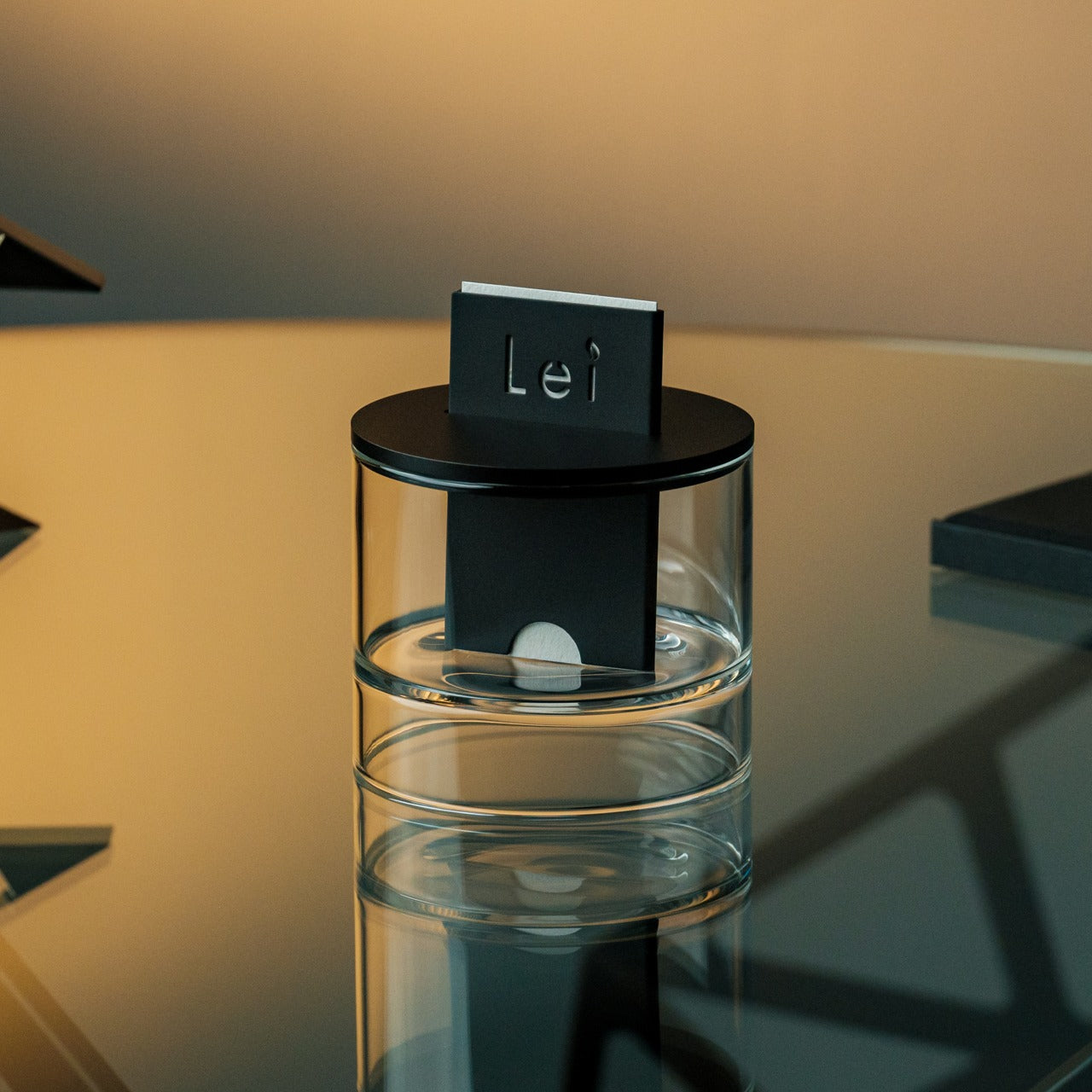
innrou is a Wi-Fi router concept that resembles an incense burner and incorporates fragrance. It’s designed to go beyond spec sheets and become a small storytelling object, imagining the future form of electronic products. The name and form hint at traditional incense rituals, but the function is pure 21st century, keeping your devices online while quietly scenting the room with swappable essential-oil sticks.

Designer: Yuan Chen

The designer’s starting point is a neat cultural parallel. In traditional Chinese society, people would ask gods for guidance and answers, often by lighting incense at a burner. Today, many of us scroll the internet for the same things, from practical fixes to something closer to spiritual reassurance. innrou deliberately combines those two behaviors, using a router as the carrier for a story about how we now seek help.

The essential oil system reinterprets incense as modern fragrance sticks. You replace a spent stick by sliding in a new one, the same simple vertical gesture used at a temple. That motion deepens the narrative and adds a bit of playfulness, turning maintenance into a small ritual instead of an annoying chore, while the router quietly keeps doing its job underneath without asking for attention.

innrou is a small, rounded block that can sit openly on a desk, bedside table, or shelf without screaming “network gear.” The antennas are hidden, the front shows only a few status dots and a subtle logo, and the body comes in soft colors that match interiors. Instead of being something you hide, it becomes part of the atmosphere, both visually and through scent, which is a surprisingly big shift for a product category that usually defaults to black plastic.

Under the incense metaphor, this is still a proper router. There’s a row of Ethernet ports at the back, a power connection, and internal antennas doing the heavy lifting. The essential oil sticks are designed as replaceable cartridges with their own packaging, so the ecosystem feels thought through. It isn’t about chasing the highest throughput number but about making the necessary hardware less of an eyesore and maybe a bit nicer to live with.

A concept like innrou suggests that if a router can borrow the form and gestures of an incense burner, other invisible boxes could also become objects we actually want in the room, not just tolerate. Blending connectivity with scent and story reframes a forgettable device as a small daily ritual, which feels oddly appropriate when you already treat it like a modern oracle that knows where everything is and when everyone is awake.

The post This Wi-Fi Router Looks Like an Incense Burner and Scents Your Room first appeared on Yanko Design.
These Coffee Tables Have Up to 9 Clocks Showing Different Time Zones

Coffee tables quietly witness mornings, late-night emails, and weekend calls with people in other cities. Time passes on screens and clocks on walls, but the table itself usually pretends it has nothing to do with any of it. It just holds mugs and magazines while the hours slip by unnoticed. There’s something interesting about furniture that builds time into its structure instead of ignoring it completely.

Michael Jantzen’s Timetables are a series of functional art furniture pieces designed to “celebrate the passage of time.” Four are coffee tables, and one is an end table, all made of wood, metal, and glass, with battery-powered clocks that you can access to change batteries and set the time. They’re meant to be used, not just looked at, even as they behave like small time sculptures.

Designer: Michael Jantzen

The cylindrical coffee table called Local Time has a single large clock embedded at its center under a glass top. It celebrates the local time of wherever it sits, turning the table into a kind of domestic sundial. Every mug, book, or laptop you set down hovers over that one reference point, a quiet reminder that this particular moment is anchored to this particular place.

Two pieces stretch awareness across a country. Four Times is a circular coffee table that carries four clocks, each set to Pacific, Mountain, Central, and Eastern time. Timeline takes the same four zones and arranges them in a long rectangle, like a horizontal strip of the US Both tables make sense in homes or studios that constantly juggle calls and deadlines across those zones.

The square end table called Clock Tower has a disc top and a central rectangular column that holds four clocks, one on each face, again set to the four U.S. time zones. It behaves like a miniature city clock tower pulled into the living room. Walk around it, and you see different times, a small physical reminder that even within one country, the day is staggered in four slices.

International Time is where the series goes global. A larger central clock is surrounded by eight smaller ones, all supported by a cone-shaped column. The center shows local time, while each smaller clock is set to a different major city around the world and labeled accordingly. Sit at this table, and you’re always aware that somewhere else it’s morning, or late at night, or already tomorrow.

Timetables shift clocks from wall-mounted afterthoughts into part of the surfaces you actually use. The restrained white forms, black clock faces, and clear glass tops keep the pieces calm enough for daily life, while the multiple time references quietly expand your sense of where you are in the day. It’s furniture that does what tables do, but also keeps you gently tuned to a wider, ticking world.

The post These Coffee Tables Have Up to 9 Clocks Showing Different Time Zones first appeared on Yanko Design.
5 Best Travel Essentials to Buy Before Spring 2026 Airport Chaos

Spring 2026 promises record-breaking travel numbers as airports worldwide brace for unprecedented passenger volumes. The post-pandemic wanderlust shows no signs of slowing, and savvy travelers know that the right gear makes the difference between smooth sailing and terminal meltdown. Smart packing isn’t about cramming more into your carry-on; it’s about selecting tools that adapt to chaos, keep you powered up, and maintain your sanity when delays inevitably occur.

The travel essentials market has exploded with innovation, but not all gear deserves a spot in your carefully curated kit. These five products represent the intersection of thoughtful design and genuine utility. They’re built for people who move through airports like seasoned nomads, who understand that durability matters more than aesthetics, and who refuse to compromise on the small comforts that transform grueling journeys into manageable adventures. This spring, pack smarter.

1. Nothing Power Bank

Airport terminals have become battlegrounds for electrical outlets, with travelers camping near charging stations like prospectors staking claims. The Nothing Power Bank eliminates that desperate scramble, keeping your devices alive through security delays, gate changes, and those dreaded tarmac holds that test every passenger’s patience. Nothing’s design philosophy of transparent aesthetics translates beautifully to a power bank, transforming a purely functional device into something worth pulling out of your bag.

The transparent casing reveals the entire internal architecture, with circuit boards and battery cells visible beneath the shell like a museum exhibit of modern electronics. Warm-toned LEDs distributed throughout the interior create ambient lighting that gives the power bank a cyberpunk sensibility without tipping into gimmick territory. This visual identity makes perfect sense for Nothing’s expanding ecosystem, offering loyal users another perfectly matched accessory that shares the same design language as their phones and earbuds while delivering straightforward, reliable power when flights get rescheduled and charging time disappears.

What We Like

  • The transparent design makes the power bank instantly recognizable in crowded bags and distinguishes it from generic alternatives
  • The integrated LED lighting serves dual purposes by indicating charge status while adding atmospheric illumination during evening flights
  • Nothing’s ecosystem compatibility means the power bank meshes seamlessly with existing devices for users already invested in the brand
  • The straightforward functionality strips away unnecessary features that complicate other portable chargers

What We Dislike

  • The transparent aesthetic might not appeal to travelers who prefer minimalist, understated gear
  • LED lighting, while attractive, potentially drains battery capacity faster than non-illuminated alternatives
  • The power bank lacks weatherproofing details that would make it suitable for adventure travel beyond airports
  • Pricing sits higher than budget options, making it a premium choice for brand loyalists rather than value seekers

2. AERIONN Forma Titanium Travel Case

Luxury luggage brands have long relied on aluminum to signal premium quality; however, aluminum’s reputation often exceeds its actual durability under the relentless punishment of baggage handlers and conveyor belt systems. The AERIONN Forma deploys Grade 1 commercially pure titanium as its shell material, the same strategic upgrade Apple makes when distinguishing iPhone Pro models from standard versions. This isn’t about superficial luxury; titanium fundamentally changes how luggage responds to impact, transforming a case from something that degrades into something that ages with character.

The single continuous titanium body flexes under stress and returns to its original shape rather than permanently deforming. AERIONN subjected the shell to thousands of drop tests, bending cycles, ultrasonic inspections, and dimensional verifications to ensure the material performs as promised. Titanium’s tensile strength ranges from 290 to 310 MPa under ASTM B265-15 certification standards, significantly outperforming aluminum alloys used in competing luxury cases. The material shows wear over time with rough handling, but those marks become patina rather than damage. For travelers who spend more time in airport lounges than their own living rooms, Forma represents luggage that keeps pace with their lifestyle.

Click Here to Buy Now: $499 $1799 (72%). Hurry, only 8/970 left! Raised over $978,000.

What We Like

  • Grade 1 titanium construction offers genuine durability that justifies the premium positioning
  • The material flexes and rebounds rather than denting permanently like aluminum competitors
  • Extensive testing protocols ensure reliability under real-world travel conditions that destroy lesser luggage
  • The single continuous body design eliminates weak points where traditional cases typically fail first

What We Dislike

  • Titanium construction places this case in a luxury price bracket that excludes budget-conscious travelers
  • The weight savings over aluminum, while present, remain modest compared to the substantial cost increase
  • Titanium’s natural patina develops with use, which some travelers might perceive as damage rather than character
  • Limited color options restrict personalization compared to brands offering extensive customization

3. MokaMax Portable Coffee Maker

Airport coffee represents one of travel’s most reliable disappointments, with overpriced, underwhelming brews served in establishments that exploit captive audiences. MokaMax eliminates that compromise by functioning as both a pressure brewer and an insulated travel mug in a single rigid stainless-steel cylinder. This portable coffee maker positions itself as Pipamoka’s spiritual successor, promising espresso-style extraction quality anywhere your journey takes you, from terminal gates to mountaintop campsites, without requiring a separate bag of accessories.

The distinctive ridged exterior provides a secure grip while helping MokaMax blend naturally with other rugged travel gear. Those ridges emerged from multiple design iterations that balanced tactile comfort against visual appeal, avoiding sharp edges or overly complicated profiles that would catch on other items. A flexible rope threads through the top, creating attachment points for carabiners or hooks so MokaMax can clip directly to backpack straps or dangle from campsite setups. The integrated pressure-brewing system occupies space inside the cylinder that would typically sit empty in conventional travel mugs, maximizing functionality within a compact footprint that fits standard cup holders.

What We Like

  • The dual functionality combines brewing capability and travel mug features in one compact unit
  • Pressure-brewing system produces espresso-style coffee that exceeds typical portable brewer quality
  • Ridged stainless-steel construction offers durability and a secure grip during use
  • The integrated rope attachment transforms the mug into genuinely portable gear that clips to bags and packs

What We Dislike

  • The brewing system requires learning and practice to achieve optimal extraction consistently
  • Cleaning the internal components demands more attention than standard travel mugs after each use
  • The stainless-steel construction, while durable, adds weight compared to lighter insulated bottles
  • Single-serve capacity means brewing multiple cups requires repetition rather than batch preparation

4. Peak Design Travel Tripod

Conventional tripods sacrifice portability for stability, forcing photographers to haul bulky equipment or compromise on shot quality when traveling light. Peak Design’s Travel Tripod reimagines the fundamental architecture by eliminating the hollow channel running through traditional center columns, creating a design that achieves greater strength and dramatically reduced packed dimensions simultaneously. This engineering approach transforms the tripod from awkward luggage into a legitimate travel essential that slides into carry-on bags without consuming precious space.

Carbon fiber construction keeps weight under three pounds while supporting up to twenty pounds of camera equipment, a ratio that serves both casual smartphone photographers and professionals carrying full-frame setups with telephoto lenses. Precisely machined dials and knobs make adjustments intuitive even in challenging conditions, while the aluminum ball head enables smooth positioning across all axes. The legs extend to five feet at maximum height and open to full ninety-degree angles for ground-level perspectives, offering shooting flexibility that matches stationary studio tripods. For photographers who refuse to sacrifice image quality to travel logistics, this tripod represents the rare product that genuinely improves both.

What We Like

  • The innovative center column design eliminates wasted space for unprecedented compactness when packed
  • Carbon fiber construction achieves remarkable strength-to-weight ratios that suit serious photography equipment
  • Precisely engineered adjustment mechanisms make setup and positioning genuinely intuitive
  • The ninety-degree leg spread enables low-angle compositions impossible with conventional tripods

What We Dislike

  • Premium materials and engineering place this tripod in a high price category that excludes casual users
  • The compact design requires slightly more setup time compared to quick-deploy alternatives
  • Carbon fiber, while strong, can be more fragile than aluminum under certain impact scenarios
  • The minimalist design omits accessories like smartphone mounts that some travelers expect as standard inclusions

5. LARQ Bottle

Reusable water bottles rank among travel’s most essential items, yet they’re also among the most neglected when it comes to proper cleaning and maintenance. The LARQ Bottle addresses this universal problem through integrated UVC LED technology built directly into the cap, creating the world’s first portable mercury-free purification system that keeps both bottle and water pristine without manual scrubbing. While other innovative bottles focus on features like smartphone integration, LARQ prioritizes the fundamental concern that matters most during travel: consistently clean, safe drinking water.

A simple tap activates the UVC LED light, which begins the cleaning cycle immediately and completes the process in just sixty seconds. The stainless-steel interior reflects UV light throughout the bottle’s volume, eliminating 99.9999 percent of bacteria and 99.99 percent of viruses according to independent testing. This technology transforms water quality wherever you fill up, whether from airport fountains, hotel taps, or questionable sources during backcountry adventures. The bottle requires minimal effort to maintain peak performance, automatically running cleaning cycles every two hours to prevent biofilm buildup and odor development that plague conventional bottles after days of continuous use.

What We Like

  • UVC LED technology provides genuine purification that kills bacteria and viruses in sixty seconds
  • The self-cleaning capability eliminates manual scrubbing and maintenance requirements
  • Stainless-steel construction reflects UV light for thorough interior coverage
  • Automatic cleaning cycles every two hours prevent odor and biofilm buildup without user intervention

What We Dislike

  • The integrated technology increases the cost significantly compared to standard insulated bottles
  • Battery requirements for the UVC system add charging obligations to travel routines
  • The electronic cap components require careful handling and cannot be fully submerged
  • Replacement parts for the UVC system create long-term dependency on manufacturer support

Gear Up, Stress Down

Spring 2026 will test even the most experienced travelers as airports strain under capacity and delays ripple across entire continents. The right travel essentials don’t just add convenience; they create resilience against the inevitable chaos. These five products represent thoughtful solutions to genuine problems that emerge when you spend hours navigating terminals, sleeping in departure lounges, and adapting to constantly changing circumstances that define modern travel.

The best gear fades into your routine until you need it, then performs exactly as promised without drama or disappointment. Power that keeps devices alive through marathon delays, luggage that survives baggage handler brutality, coffee that doesn’t require hunting down terrible airport cafes, photography equipment that packs impossibly small, and water that stays clean regardless of source. These aren’t luxury purchases; they’re infrastructure for anyone serious about traveling well. Pack accordingly.

The post 5 Best Travel Essentials to Buy Before Spring 2026 Airport Chaos first appeared on Yanko Design.
This Owl-Shaped Controller Splits Into Two Pieces for Relaxed Gaming

Late-night gaming sessions have a familiar rhythm. Shoulders creep up, wrists lock around a rigid gamepad, and the clock slides past midnight while you chase one more match or level. Gamers are stereotypically seen as night owls, but the controllers they use are still built like daytime office tools, fixed in shape and posture, demanding that your hands adapt to them instead of the other way around.

HELIX is a biomorphic controller concept that borrows its overall stance from an owl, symmetrical, balanced, and ready to move. It’s designed to come apart and fit back together easily, working as a single controller or as two separate pieces. The flexible shape is meant to follow how players actually sit and shift during long sessions instead of forcing one rigid grip that starts to ache after the third hour.

Designer: Radhika Shirode

In its unified form, both halves are joined by a small central bridge. The layout is familiar, analog sticks, face buttons, and directional controls where you expect them, but the wing-like grips curve down and out instead of forming a flat bar. That biomorphic curve lets your hands rest in a more natural position, which matters when you’re chasing one more match at two in the morning and don’t want to wake up with sore thumbs.

When HELIX comes apart, each half becomes its own lightweight controller, complete with stick, buttons, and triggers. You can lean back, drop your arms to your sides, or rest them on the sofa back, each hand holding a separate piece. That freedom to spread out reduces tension in shoulders and wrists, which is when night-owl sessions stop feeling like work and start feeling comfortable again.

The split design also makes it easier to share. Two people on a couch can each take a half for simpler games or asymmetric roles, without digging for a second controller. Passing one wing across the room feels more casual than handing over a full gamepad, and the shape encourages interaction instead of everyone hunching over their own device in separate corners of the room.

The focus on balance and lightness means each half is shaped to feel stable on its own, not like a broken piece of a larger object. The designer explored many silhouettes before landing on this owl-inspired form, where the grips echo wings, and the center reads like a small body. It’s a softer, more organic take on a category that often leans into sharp, aggressive lines and tactical branding.

The post This Owl-Shaped Controller Splits Into Two Pieces for Relaxed Gaming first appeared on Yanko Design.
200-Inch Dolby Vision Gaming With 1ms Latency: Inside The Aetherion 4K RGB Laser UST Projector

Gaming displays speak in hertz and milliseconds, while most projectors still talk like it’s Blu-ray season. AWOL Vision’s Aetherion series tries to bridge that gap with something ultra-short-throws have simply never had: true Variable Refresh Rate. It negotiates frame timing from 0.1Hz up to 240Hz, syncing its output to whatever your console or PC is throwing at it. Paired with Auto Low Latency Mode and a claimed 1ms-class response, this is a projector that stands as a legitimate contender to high-end gaming monitors, not just a living room appliance for Netflix and chilling.

The rest of the stack backs that ambition. Dolby Vision Gaming support pushes scene-by-scene tone mapping, while an RGB triple-laser light engine and anti-RBE system tackle motion and color artifacts that usually show up the moment you swing a camera in a fast-paced title. Under the hood, a MT9655 chipset with 8 GB of RAM and 2.5G Ethernet handling 1000 Mbps throughput signals that this is not a token “game mode” toggle. It is an attempt to make the projector a first-class citizen in the modern gaming ecosystem.

Designer: AWOL Vision Aetherion

Click Here to Buy Now: $1999 $3499 ($1500 off). Hurry, only 223/300 off! Raised over $13.2 million!

This whole approach feels like a direct response to years of compromise. For too long, you had to choose: the immersive scale of a projector or the responsive precision of a gaming monitor. Aetherion’s spec sheet suggests that choice is becoming obsolete. The VRR implementation alone is a statement, acknowledging that game frame rates are not a static 60fps target anymore. They dip, they spike, and a display that cannot follow that cadence will produce tearing and judder. By building a system that can track that chaotic dance, AWOL is demonstrating a fundamental understanding of what interactive content actually demands from a display.

The underlying hardware seems robust enough to support these claims. The MT9655 is a capable flagship SoC, and pairing it with 8GB of RAM is generous for a projector. That 2.5G Ethernet port is another one of those quiet tells; it signals an understanding that streaming high-bitrate 4K content, or cloud gaming, requires serious bandwidth that standard 100Mbps ports just cannot handle reliably. This is future-proofing, but it is also a practical necessity for the kind of high-performance use cases Aetherion is built for. The entire platform is engineered to remove bottlenecks between the source and the screen.

Of course, a fast projector with poor color is just a fast way to see a bad image. That is where the triple-laser RGB light engine comes in. By ditching the spinning color wheel found in most DLP projectors, AWOL hit an impressive 110% of the Rec. 2020 color gamut, delivering the kind of vivid, saturated colors that single-laser systems struggle to reproduce. To push the boundaries of visual performance, Aetherion adopts the company’s proprietary Anti-RBE (Rainbow Effect) technology, eliminating the rainbow effect that distracts many viewers during fast motion. Their anti-RBE technology claims to cut these artifacts by 99.99% in both 2D and 3D content.

That obsession with image fidelity extends to how the Aetherion handles darkness. Instead of just blasting lumens, the projector uses a 7-level mechanical IRIS to achieve a 6000:1 native contrast ratio. Its proprietary EBL algorithm analyzes every single frame in real time, tweaking the laser output and image parameters to deepen blacks and pull out shadow detail, boosting the contrast ratio to 60,000:1. This dynamic, scene-adaptive approach is far more sophisticated than a simple brightness setting. It is the difference between a flat, washed-out night scene and one with genuine depth and texture.

From a user experience perspective, running on Google Android TV 14.0 is a significant and welcome choice. It brings a 4K user interface and broad app support without needing an external streaming stick. The integration with Apple HomeKit, Google Home, and Alexa ecosystems also positions the Aetherion as a proper smart home device, not just an isolated piece of AV hardware. Little touches, like the motorized lens cover that protects the optics from dust, show a thoughtful approach to the daily realities of owning a high-end piece of equipment.

AWOL is also building out the world around the projector, offering a curated ecosystem to support their tech. The launch includes a new 150-inch Fresnel Daylight ALR screen, a seamless one-piece design with a 1.5 gain for brighter images in ambient light. There is also a redesigned Vanish Cabinet made with stainless steel and leather, featuring integrated cooling fans and a hidden bay for a soundbar. This ecosystem approach recognizes that a projector’s performance is heavily dependent on the screen and its placement, offering a complete, aesthetically coherent solution.

The Aetherion is available in two versions on its Kickstarter campaign. The Aetherion Pro offers 2,600 ISO lumens, while the Aetherion Max boosts that to 3,300 ISO lumens for rooms with more ambient light; both share the same 6000:1 contrast ratio and core technologies. Super Early Bird pricing puts the Pro at $1,999 and the Max at $2,199, which is a substantial 42-51% discount from their eventual MSRPs. If you’re committed to the entire kit, $3,999 gets you the Ultimate Cinematic Immersion Bundle, which includes the Max projector along with a 132″ cinematic ALR screen, and a 4.1.2 ThunderBeat audio system to give the projector its audio oomph. Each projector ships globally with a 2-year hassle-free warranty starting April 2026.

Click Here to Buy Now: $1999 $3499 ($1500 off). Hurry, only 223/300 off! Raised over $13.2 million!

The post 200-Inch Dolby Vision Gaming With 1ms Latency: Inside The Aetherion 4K RGB Laser UST Projector first appeared on Yanko Design.
These Lace-Shade Lamps Transform Family Heirlooms Into Memorable Floor Lighting

In Lana Launay’s Kinship series, light does more than illuminate space. It acts as a living archivist, revealing, preserving, and narrating stories embedded within inherited textiles. Through works such as Kinship I and Kinship II, the artist transforms antique doilies, lace fragments, and stockings passed down through generations into sculptural lighting forms that do not simply display history but actively project it into the present.

At a distance, the sculptures appear softly abstract, glowing with fluid patterns that seem almost atmospheric. As viewers move closer, those patterns resolve into delicate lace surfaces. The forms are constructed by stretching and wrapping textile fragments across stainless steel frameworks, which are then illuminated from within using LED elements housed in aluminum structures. This meeting of industrial material and fragile cloth establishes a compelling tension between permanence and delicacy, between manufactured precision and inherited memory.

Designer: Lana Launay

Each textile used in the works carries its own lineage. These are not fabrics chosen for decoration, but heirlooms gathered from families who preserved them across generations. Once domestic objects that quietly occupied tables, drawers, or cabinets, the doilies and fabrics are repositioned as visible ancestral surfaces. In their new form, they shift from private keepsakes to shared visual artifacts, allowing personal histories to exist within public space.

The transformation becomes most evident when light passes through the textiles. When unlit, the sculptures appear restrained, their patterns subtle and quiet. When illuminated, the surfaces come alive. Light filters through each stitch and fiber, projecting intricate webs of shadow across surrounding walls. The negative spaces within the lace become as expressive as the threads themselves, creating an interplay in which absence holds as much presence as material.

Stockings layered across the frameworks introduce an additional dimension. Their woven fibers soften and diffuse the light, allowing it to seep gently outward rather than shine directly. Overlapping fabrics create layered visual grids in which lines intersect and reconnect, resembling maps or diagrams. These networks evoke relationships and generational links, suggesting that the textiles themselves chart histories of connection, care, and continuity.

Every sculpture is assembled by hand, ensuring that each piece remains unique. The steel frame adapts to the dimensions of the textile rather than forcing the fabric into a predetermined shape. Signs of age, such as fading, discoloration, and repair, remain visible, reinforcing the idea that time is not erased but honored. The inherited material determines the structure, allowing memory to guide design.
Through the Kinship series, Launay proposes that preservation does not require stillness. Instead, history can be animated. Light becomes a tool that activates memory rather than simply revealing form. These sculptures function as living archives where ancestry is not stored away but made visible, where inherited textiles continue to participate in the present. In this way, the works suggest that memory, like light, does not disappear. It travels, expands, and quietly illuminates everything it touches.
The post These Lace-Shade Lamps Transform Family Heirlooms Into Memorable Floor Lighting first appeared on Yanko Design.