If you think compact discs are a thing of the past, you probably haven’t been around a K-pop fan or a hoarder who still has their CDs from decades ago. Then there are people like me who have a stack of CDs collected over the years but no actual CD player to enjoy them on, since options that are strong on both quality and design are hard to come by.
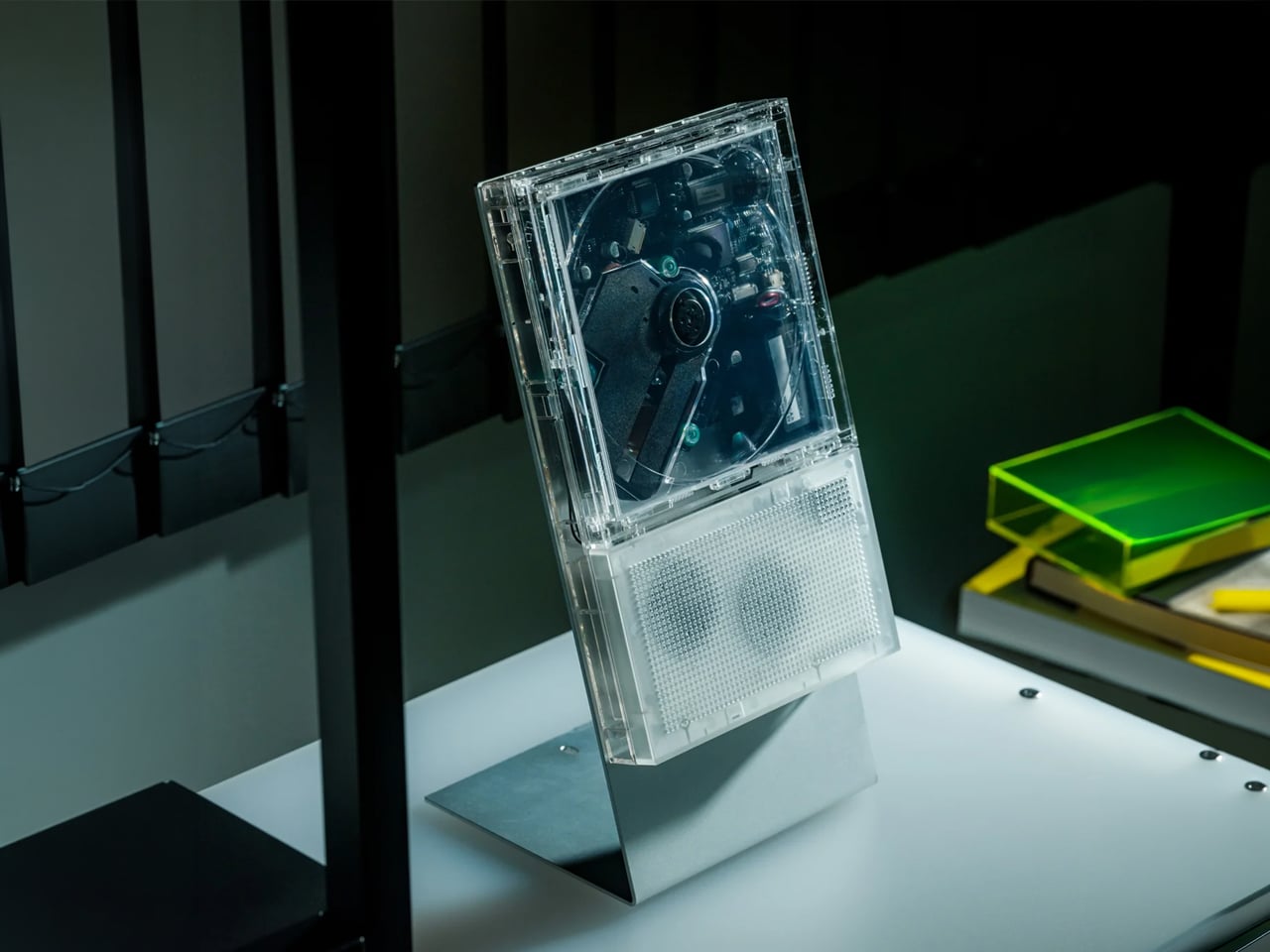
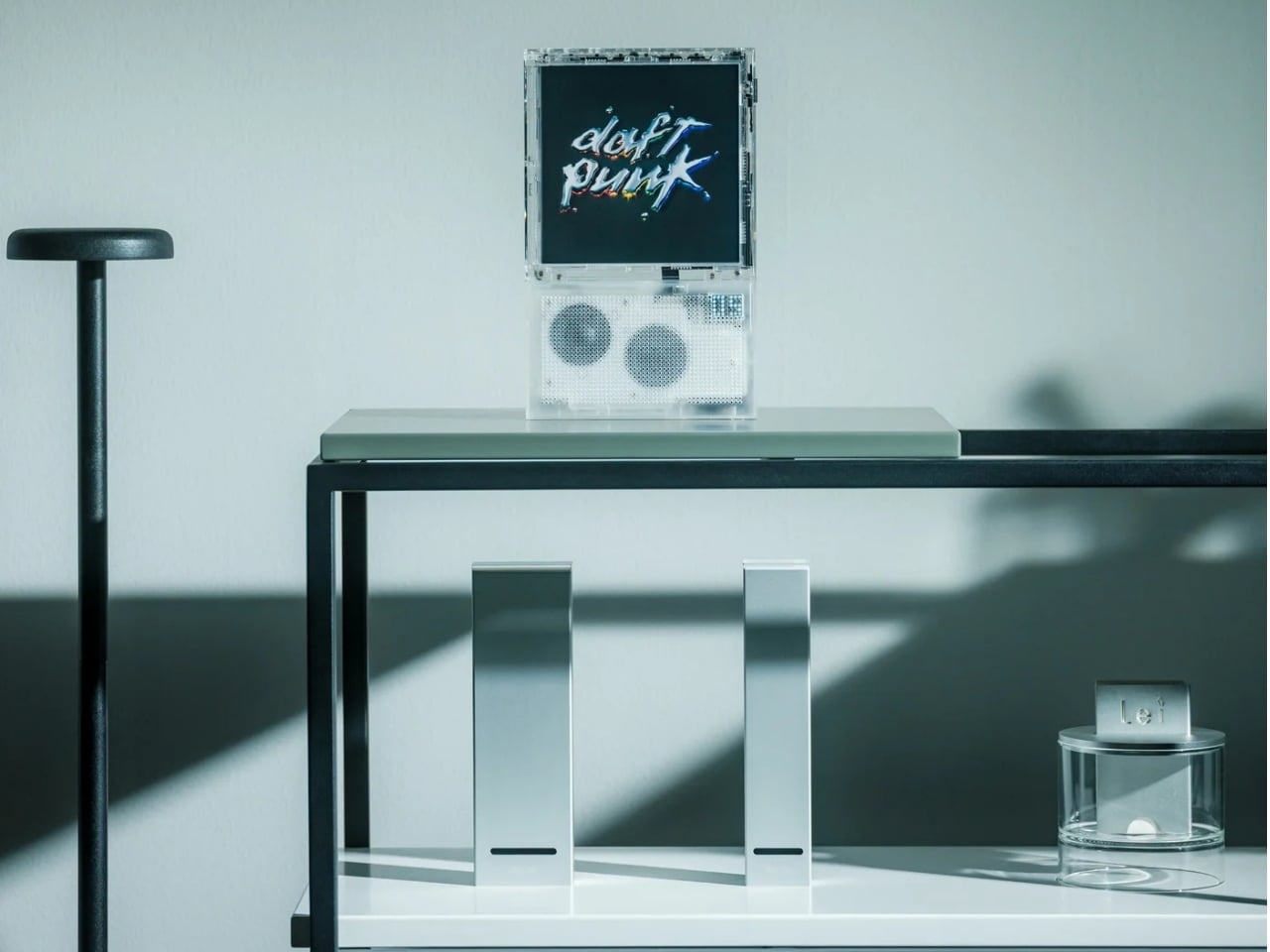
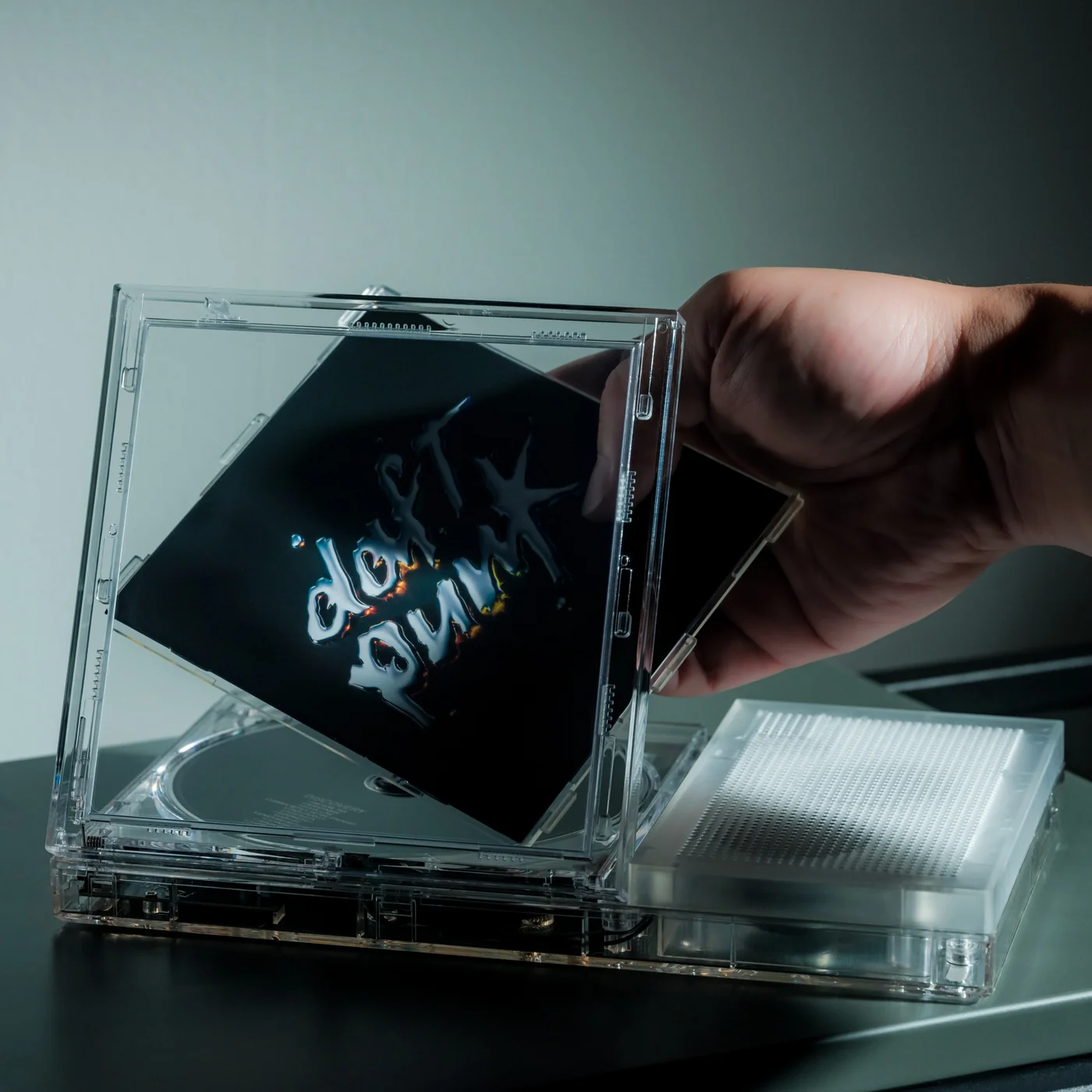
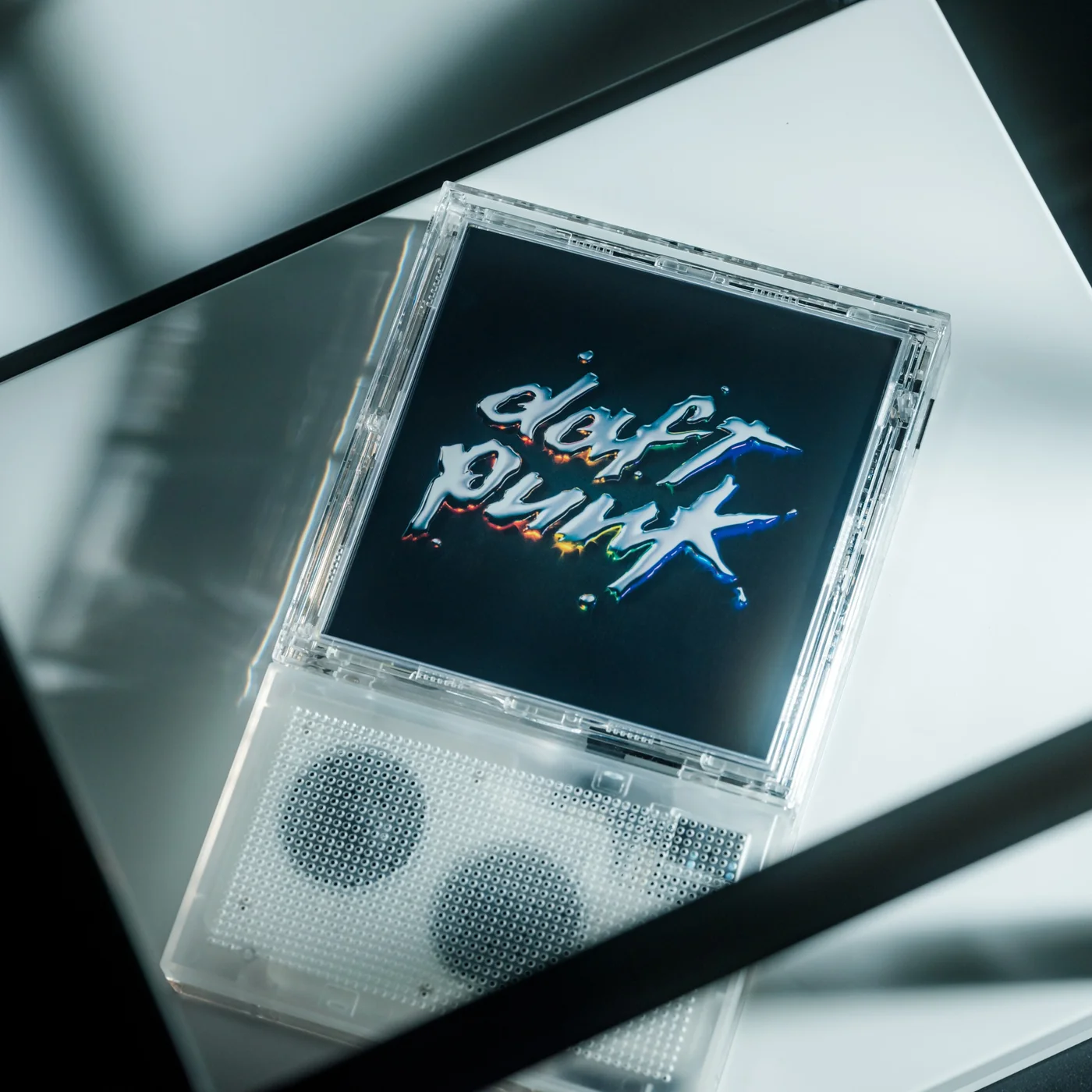
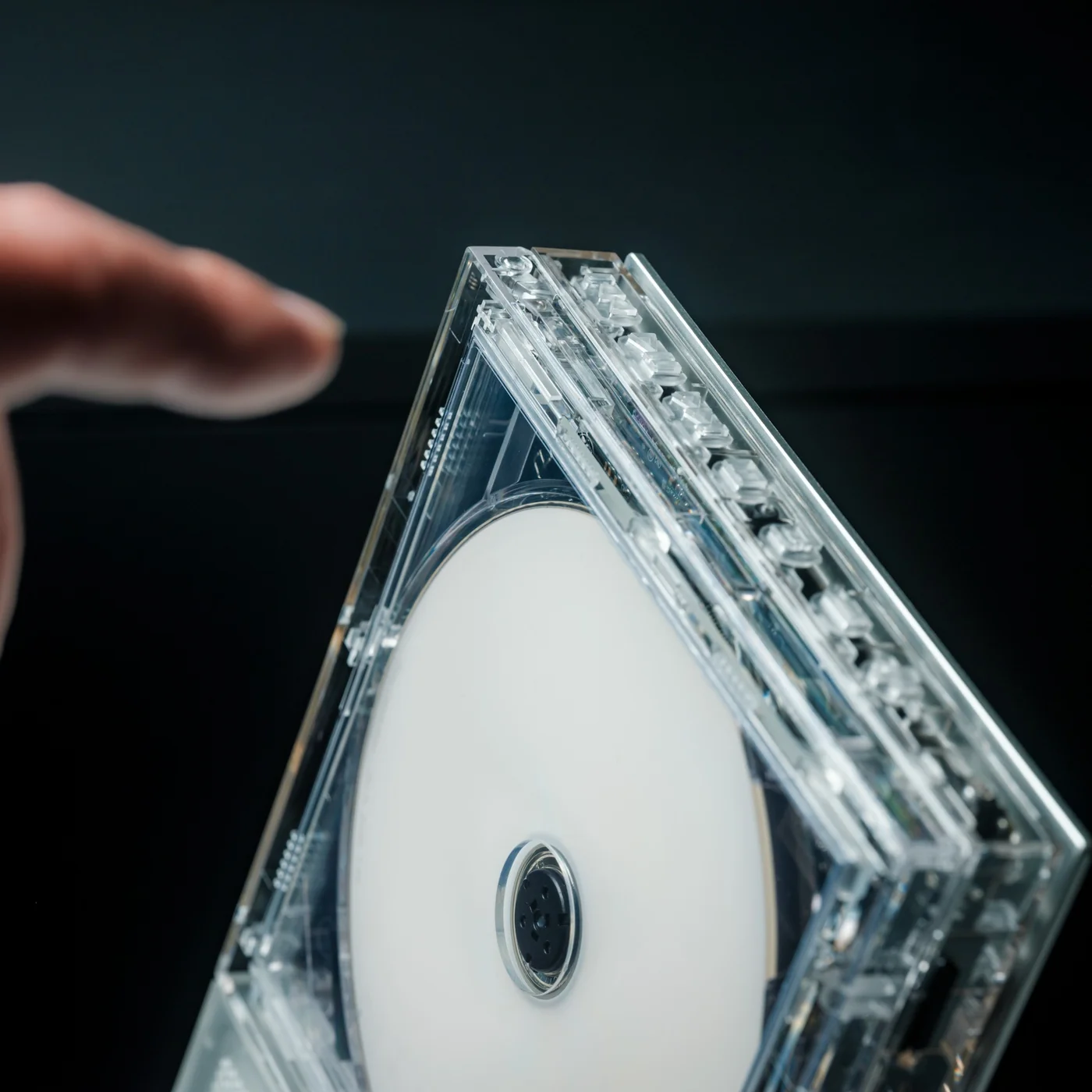
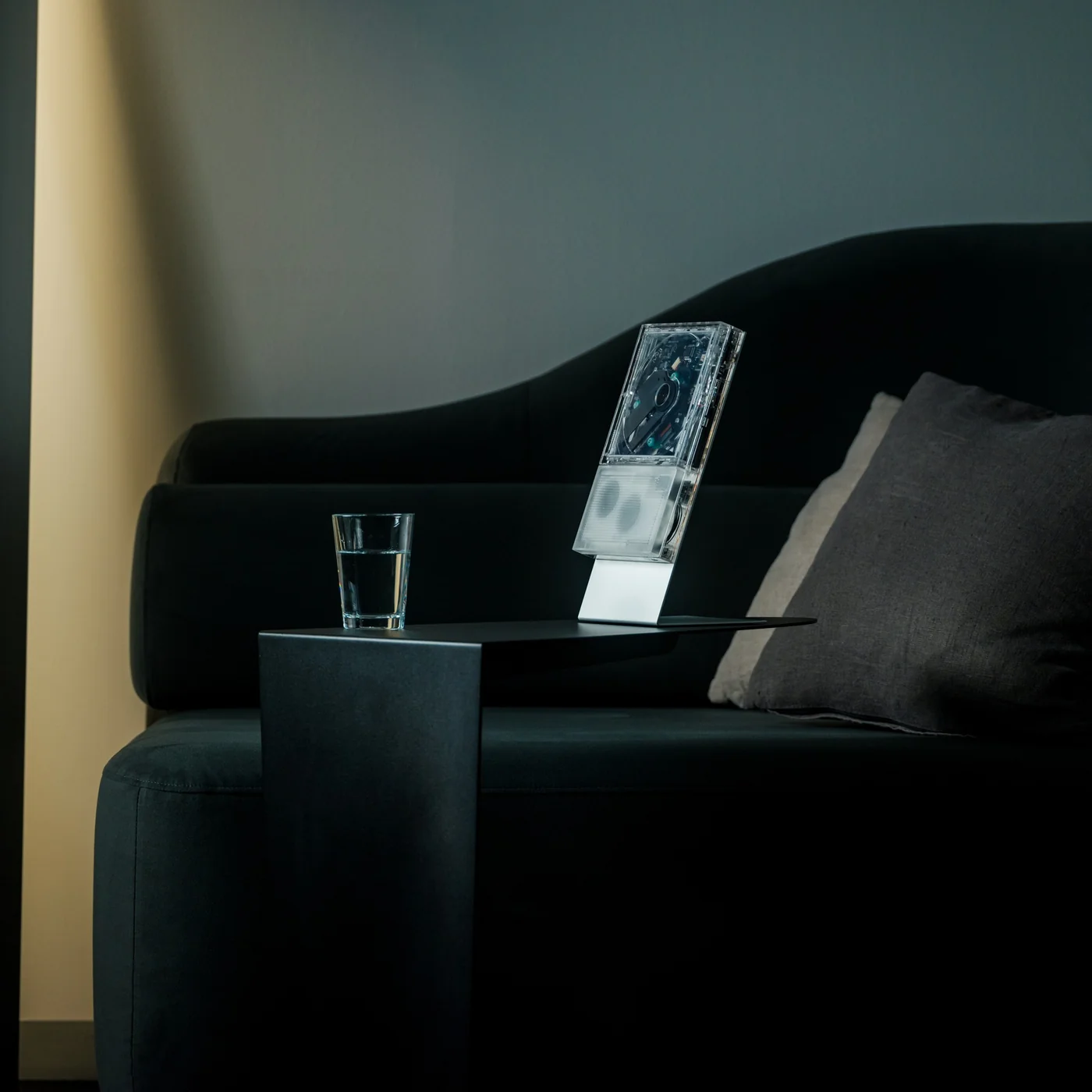
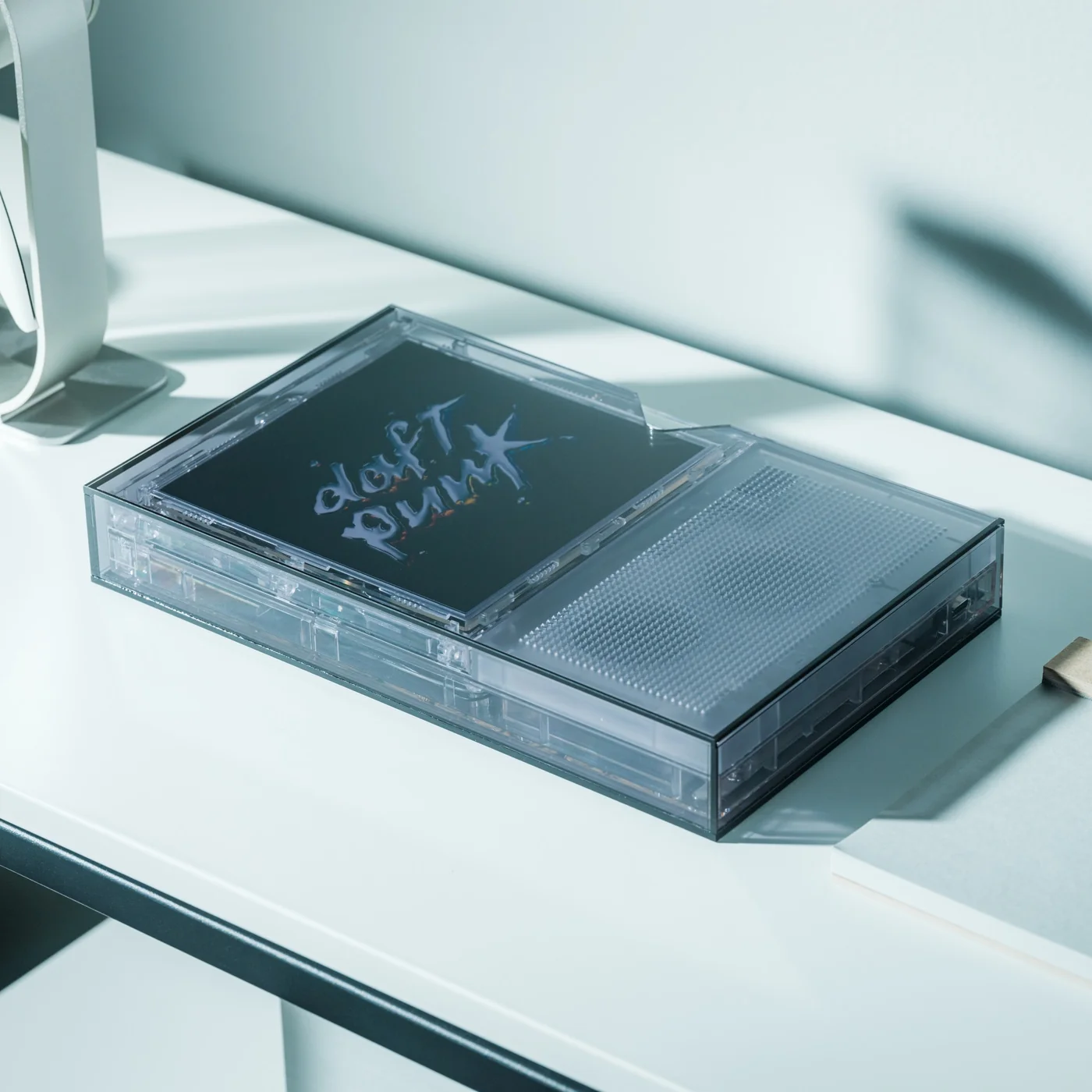
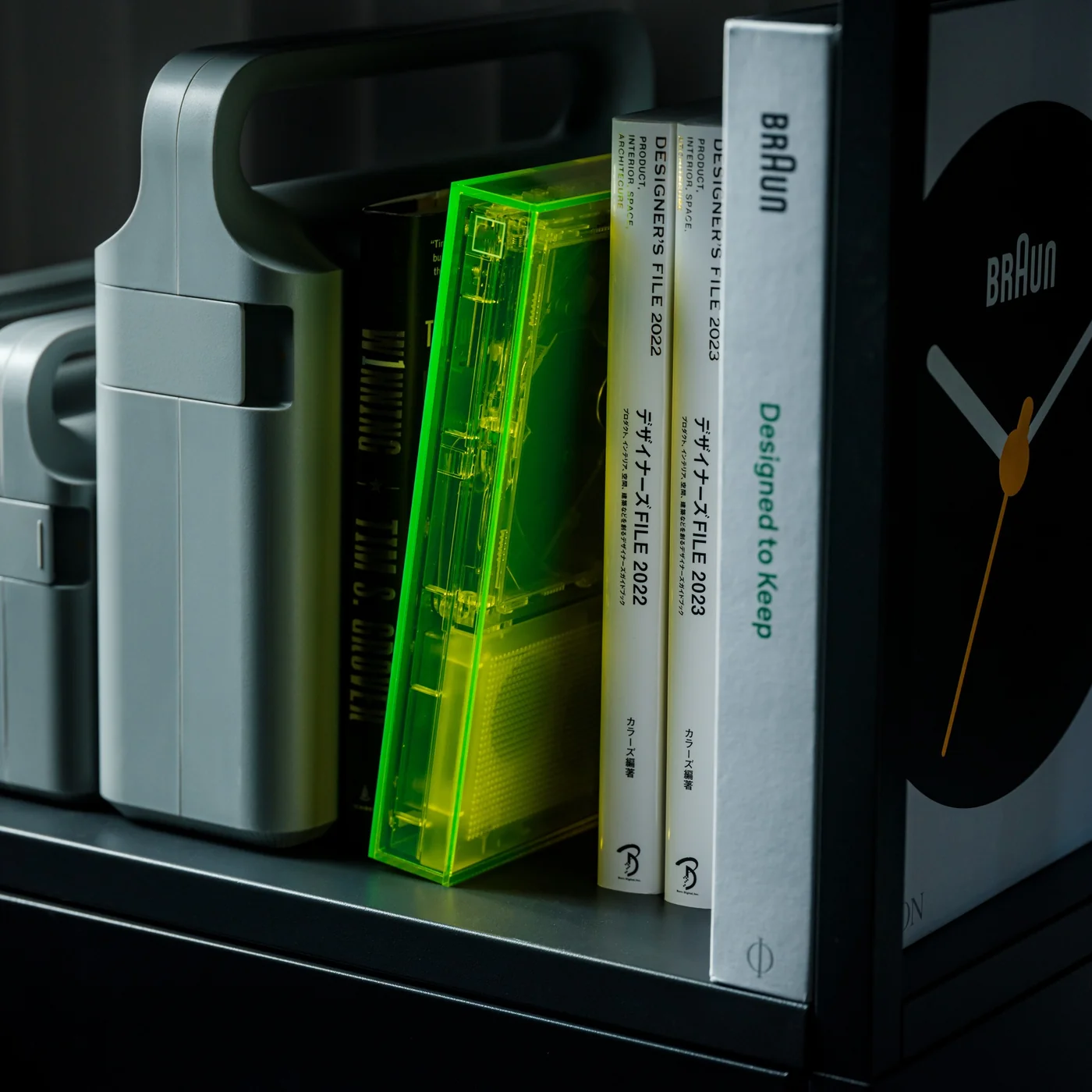
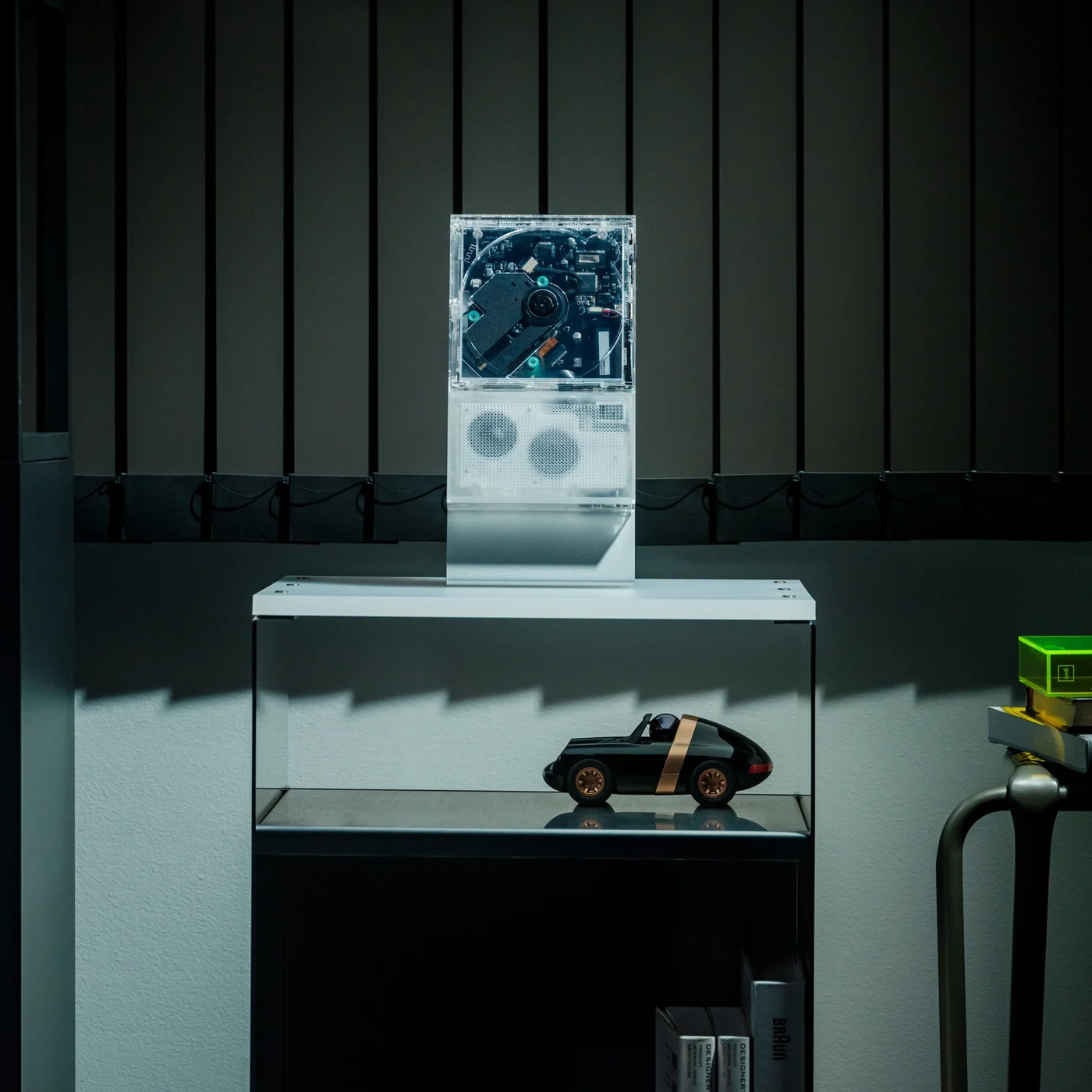
The ClearFrame Speaker CD Player is a solid choice for anyone looking for a visually stunning player that won’t let a CD’s album art go to waste. It lets you slot the jacket art onto the front of the player so it becomes a rotating piece of wall or shelf art. Or, if you’d rather show off the mechanics, you can leave the artwork out and display the transparent body itself, watching your CD spin with all its moving (and non-moving) parts in full view.
Whenever I come across beautiful album art, I can’t help but think it’s wasted if it only ever gets seen as a tiny digital thumbnail on a streaming app. A player like the ClearFrame Speaker CD Player lets you put that kind of artwork on full display while you’re enjoying the music in your room. Seeing something that the artist, and the album art designer, worked hard on come to life while it spins gives it the justice it deserves. And if you’d rather see the clear, polycarbonate-style body become a piece of art in its own right, just take out the album cover and let it shine in all its transparent glory.
This is also an upgraded version of the original, and already popular, ClearFrame CD Player, since it now comes with a built-in speaker. That means you no longer need to hook it up to an external Bluetooth speaker or wired setup, which makes it even more flexible to display anywhere in your home. You actually have three ways to listen to your favorite CDs: through the built-in 40mm speaker, with wired headphones through the 3.5mm jack, or over Bluetooth 5.3 to external speakers or headphones if you already have a better setup you’d like to use.
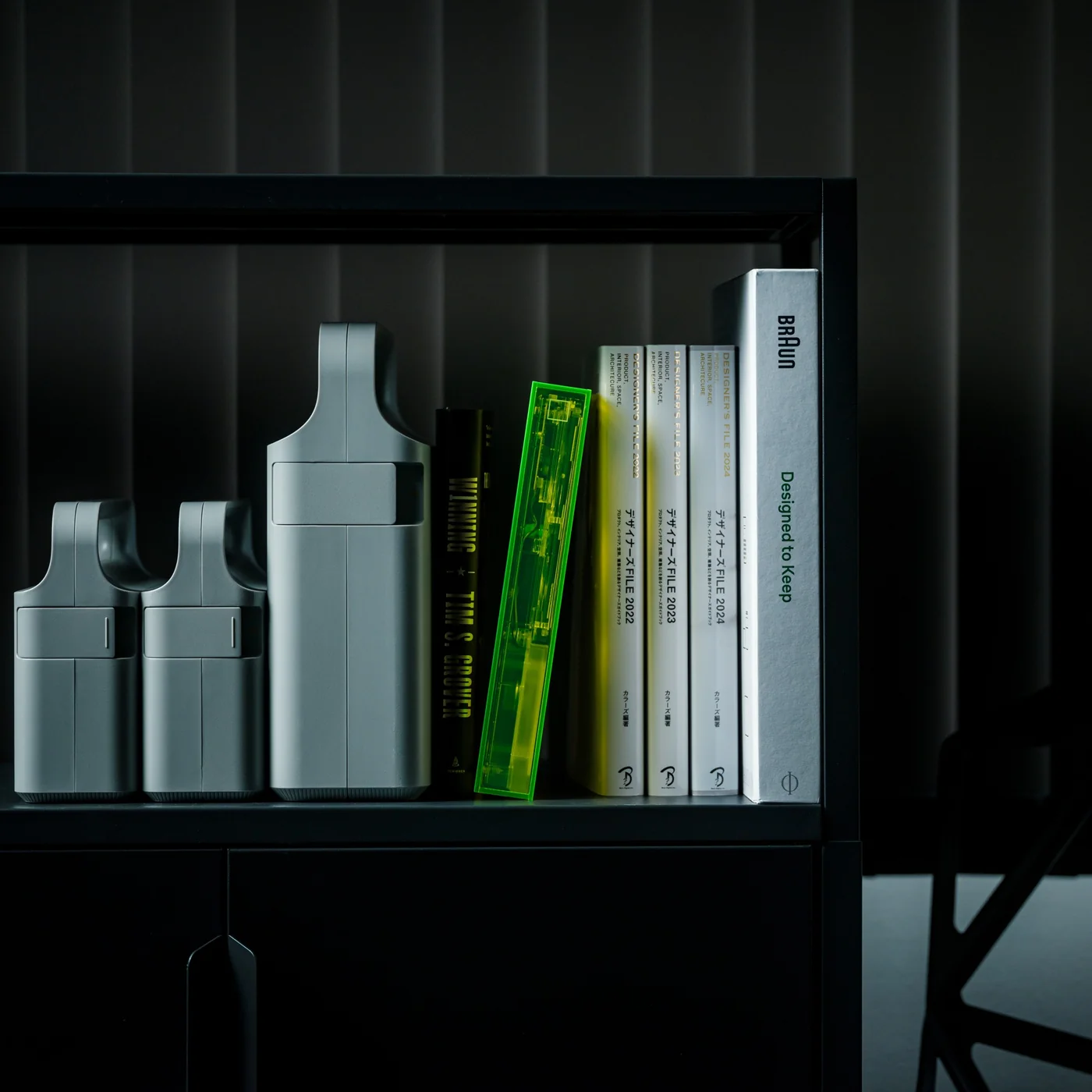
Beyond the listening options, the ClearFrame Speaker CD Player was clearly designed with portability in mind. At just 454 grams (about a pound) and roughly the size of a hardcover book, it’s light enough to carry from your bedroom to your living room without a second thought. Its 1,800mAh battery gives you around six to seven hours of playback through the built-in speaker, or seven to eight hours if you’re streaming over Bluetooth, so you can enjoy a few albums back-to-back before needing to recharge via USB-C. There’s even a retro-style LED Nixie tube display that adds a warm, nostalgic touch to the whole experience, plus a 2MB SDRAM anti-shock buffer so accidental bumps won’t make your music skip.
For collectors, this player also solves a real problem: what to do with all the CDs sitting untouched in a drawer somewhere. Instead of treating them like outdated clutter, the ClearFrame gives them a reason to come back out, whether that’s a K-pop photocard-era album, a mix your best friend burned for you in high school, or a boxed set you’ve been meaning to revisit. It turns “old technology” into a genuine decor piece you’d be proud to leave out on a shelf.
If you’re looking to gift this to someone (or, let’s be honest, treat yourself), the ClearFrame Speaker CD Player comes in a few configurations depending on how you plan to display it. You can pick it up on its own, or add a wall mount, book case, or display stand, so it fits neatly into whatever corner of your home you have in mind. It isn’t the cheapest CD player on the market, but if you have a stack of CDs with nowhere to go and album art too good to keep hidden, this one earns its price tag by turning something you already own into something worth looking at every single day.
Multi-color FDM printing has always had a hidden cost that most users simply accept. Every time a single-nozzle machine switches filaments, it has to push the previous color out of the hotend before laying down the next one. That costs time, and the wasted material accumulates into a tower on the build plate that nobody actually wanted there. The LightMake L4 was designed to make that trade-off unnecessary.
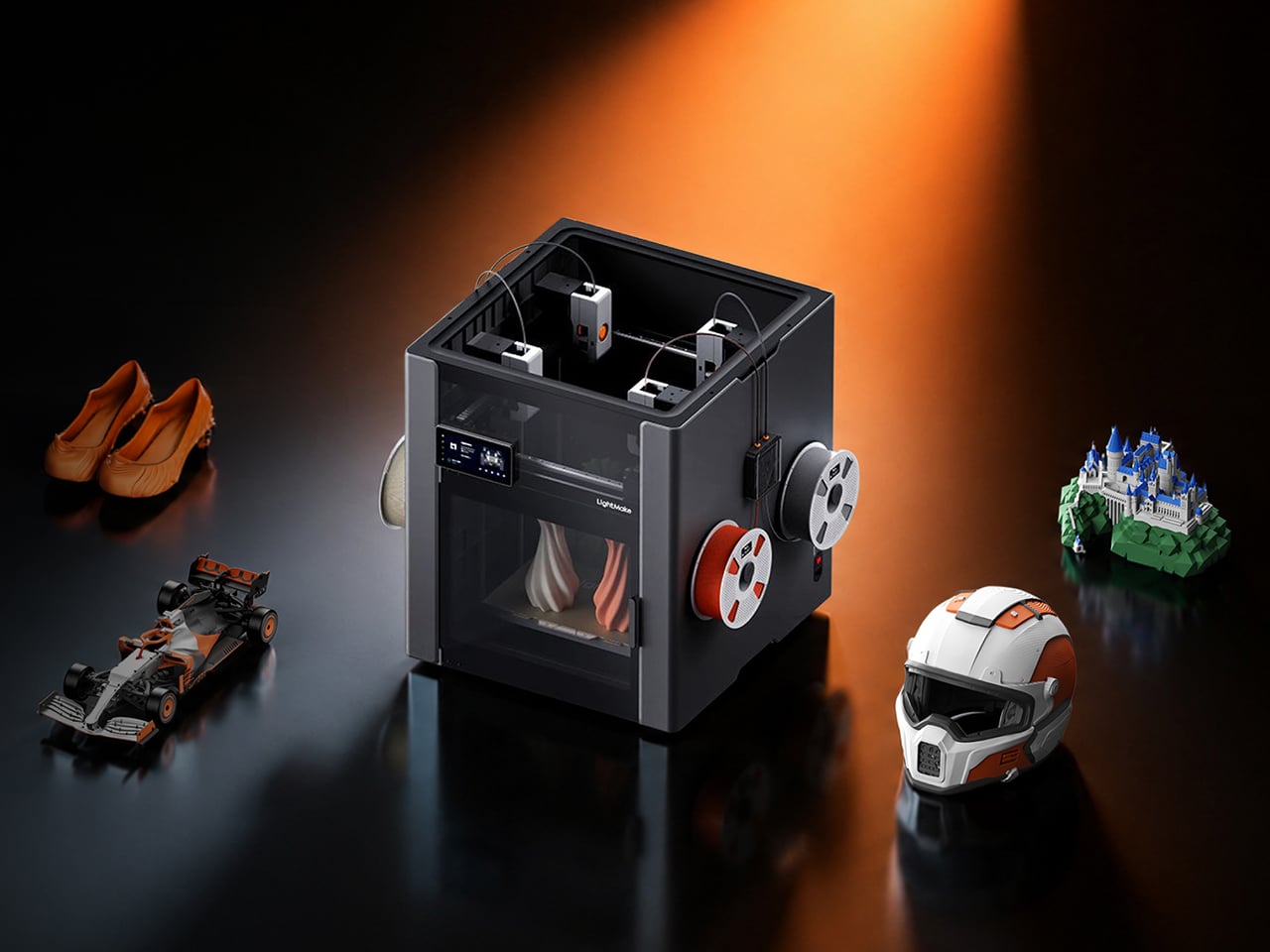
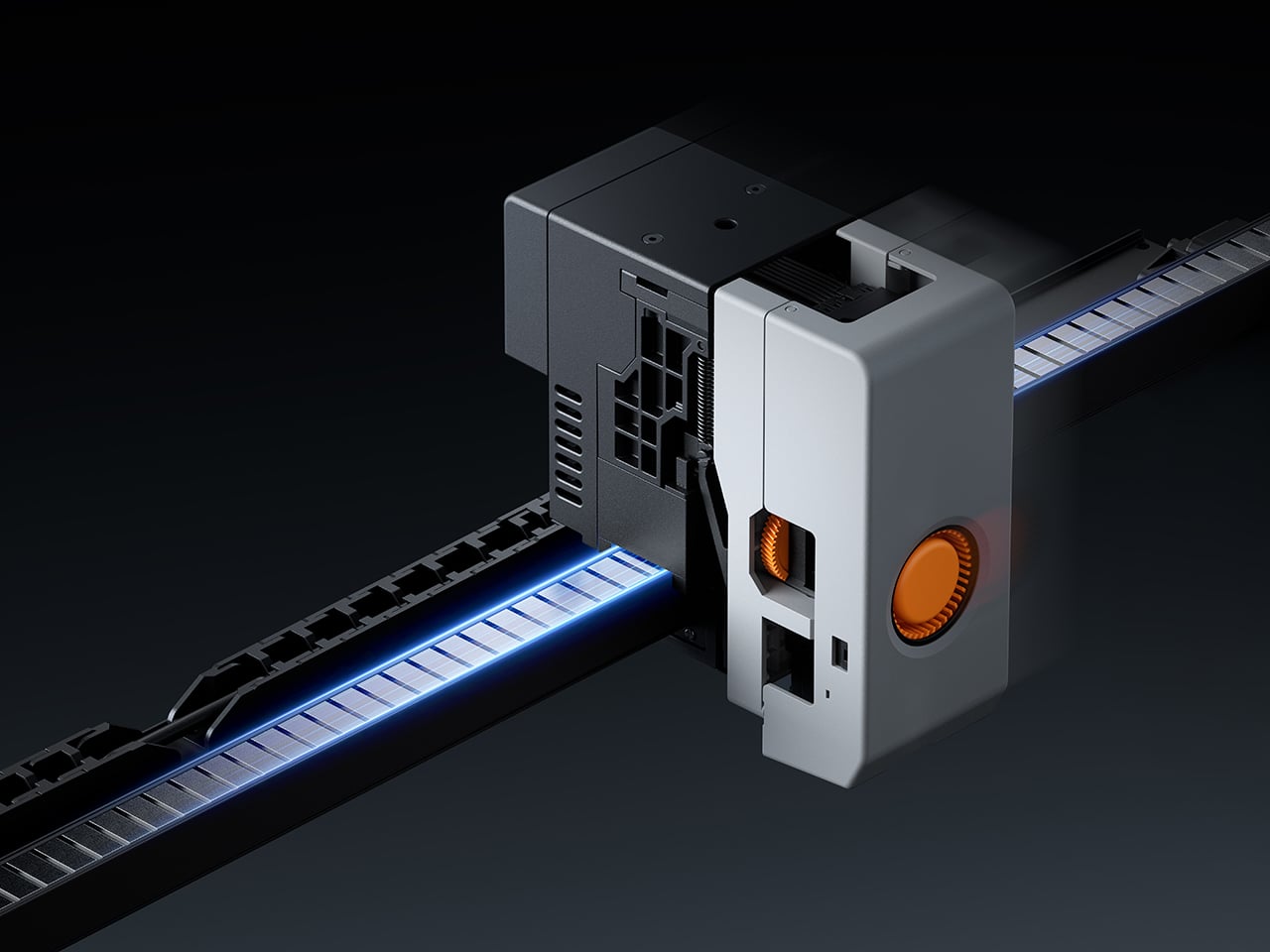
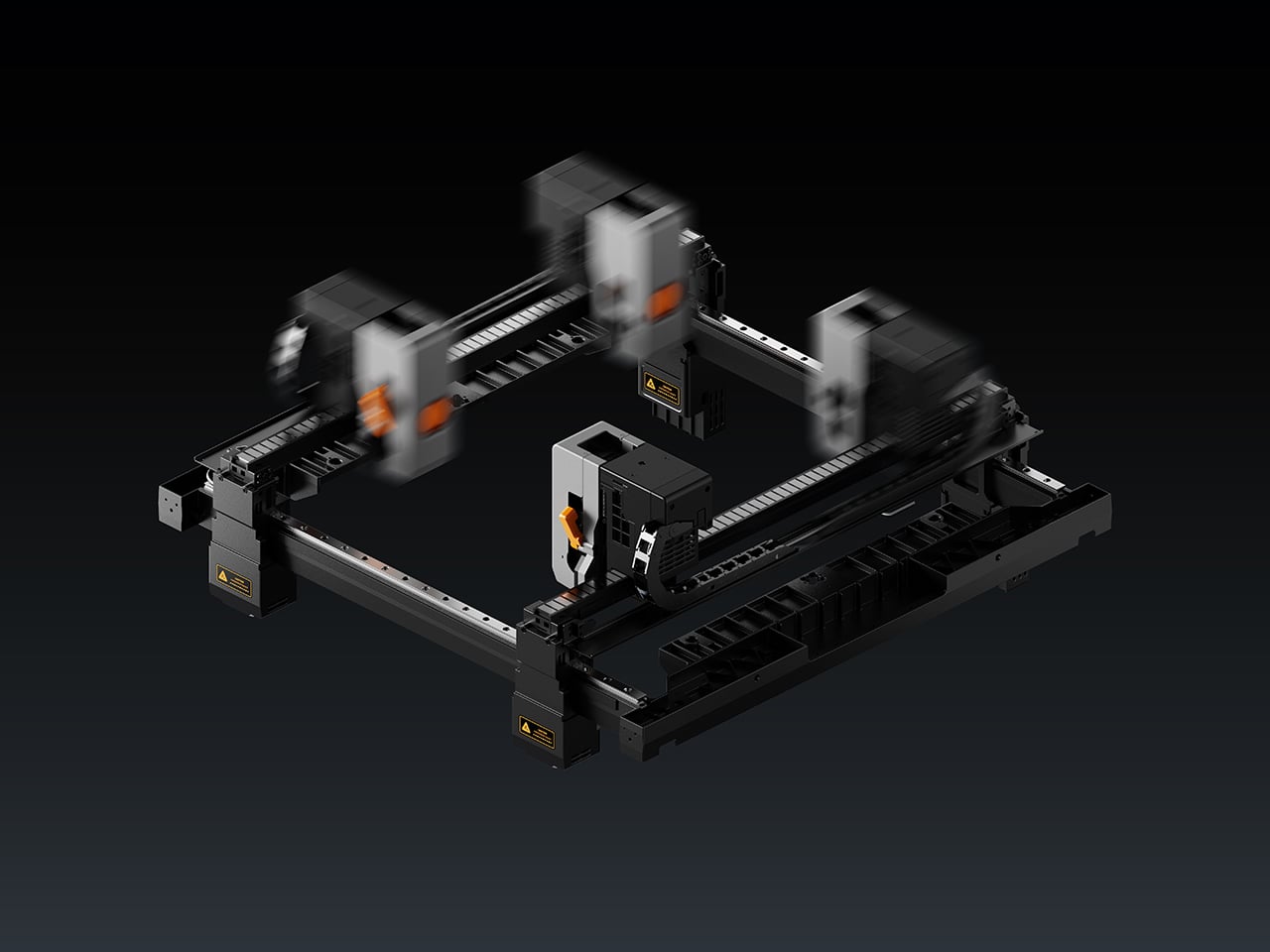
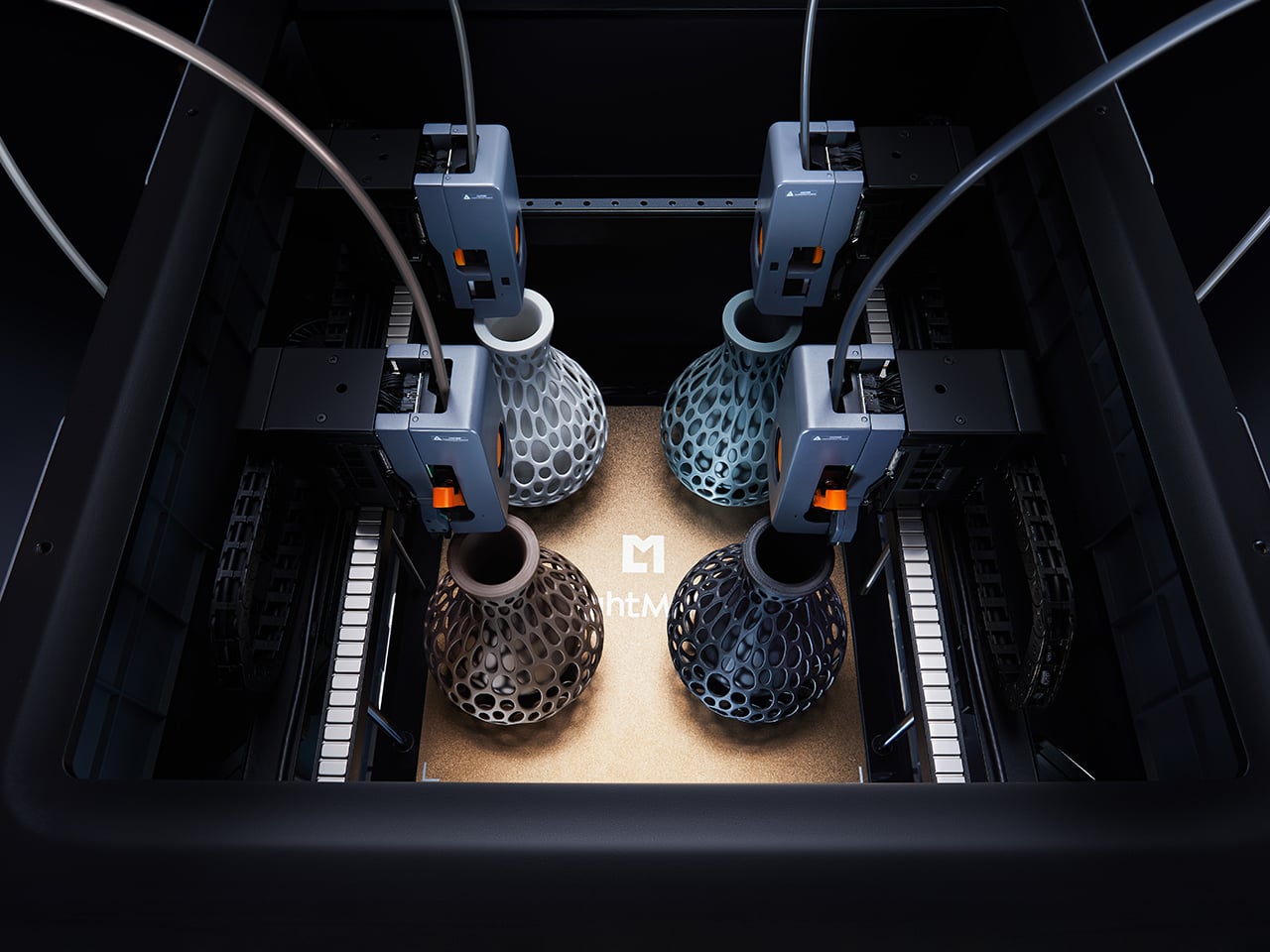
LightMake is a company with roots in precision engineering and high-speed motion control. Its L4 desktop 3D printer is built around four independent, always-preheated print heads, each dedicated to its own color or material. Think of it less as a printer wearing multiple hats and more as a small, dedicated team, each member already at their station when the job starts.
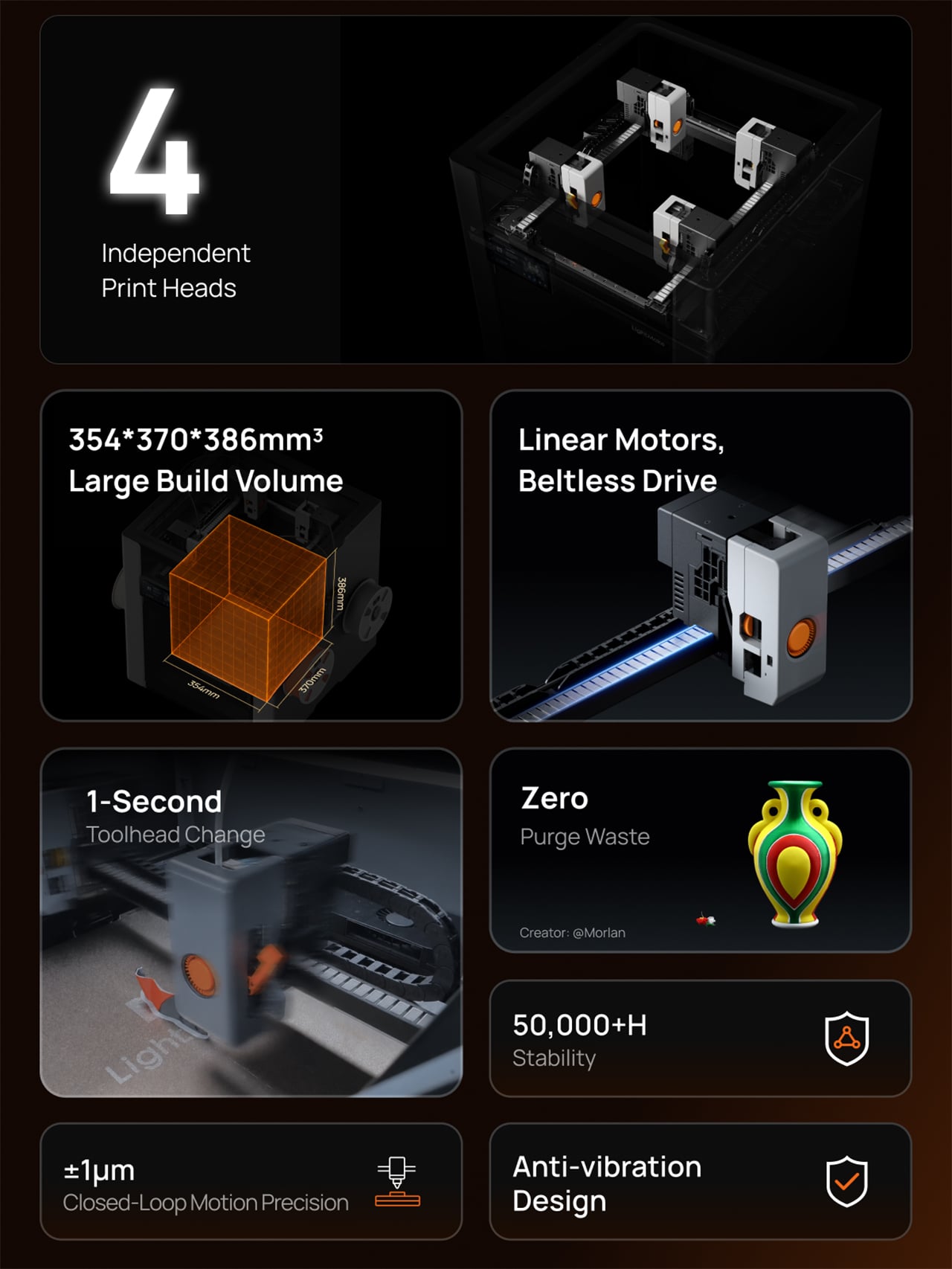
That dedicated-head setup kills the purge problem at its source. Because each nozzle handles only one filament, the L4 replaces massive purge towers with a minimal nozzle prime at the start of a job, with no purge waste during subsequent color changes. LightMake’s own testing puts material loss at under one gram, compared to the more than 237 grams for conventional multi-color setups. For anyone producing prints for clients, that recovered filament adds up quickly.
Speed is the other half of the multi-color problem, and the L4’s approach is just as direct. Because all four heads are always preheated and ready, the machine’s real-time coordination cuts toolhead switching to one second. LightMake says that can boost multi-color print speed by up to 79%, though that’s based on internal testing and will vary with job complexity and color count.
Beyond switching speeds, the L4 doesn’t shortchange on space. In single-color mode, the build volume stretches to 354 × 370 × 386 mm, large enough to produce full-size objects in a single continuous run, no splitting or post-assembly required. Multi-color jobs work within a slightly reduced 354 × 350 × 386 mm footprint, still generous enough that most projects won’t need to be scaled down or broken into parts.
Multiply that advantage by four, and you get the L4’s batch production mode. In that configuration, the workspace splits into four zones of 177mm x 195mm x 386mm each, allowing four complete identical or mirrored models to print simultaneously. For a maker selling finished pieces or a studio on a deadline, that’s the kind of output math that changes what you think a single desktop machine can do.
All of that output only matters if the machine stays accurate over time, and that’s where the L4 makes a longer-term argument. It uses 8 sets of industrial-grade direct-drive linear motors on the XY axes, replacing rubber belts and pulleys with non-contact magnetic propulsion. There’s no belt to stretch and no tension to adjust. LightMake rates the architecture at more than 50,000 hours, though the rails do need periodic lubrication.
Beyond longevity, the system enables what LightMake calls closed-loop control, where the motor actively monitors and corrects its position in real time. That continuous correction also keeps layer shifts from creeping in mid-print, which is good news for anyone who’s ever come back to a long job only to find it ruined somewhere around hour three. The ±1 µm figure the company quotes refers strictly to motion precision, not final print accuracy, which matters. Optical sensors achieve 30 µm absolute alignment between heads, so material transitions land exactly where intended, and parts meant to fit together actually do.
Running four moving heads at speed creates its own structural challenges, which the L4 addresses with a monolithic die-cast frame paired with vibration compensation algorithms. Together, they absorb the kinetic energy of rapid toolhead transitions and keep surface quality consistent from the first layer to the last. When a head parks between turns, it retracts automatically by 5mm, so idle nozzles never drag across already-printed surfaces.
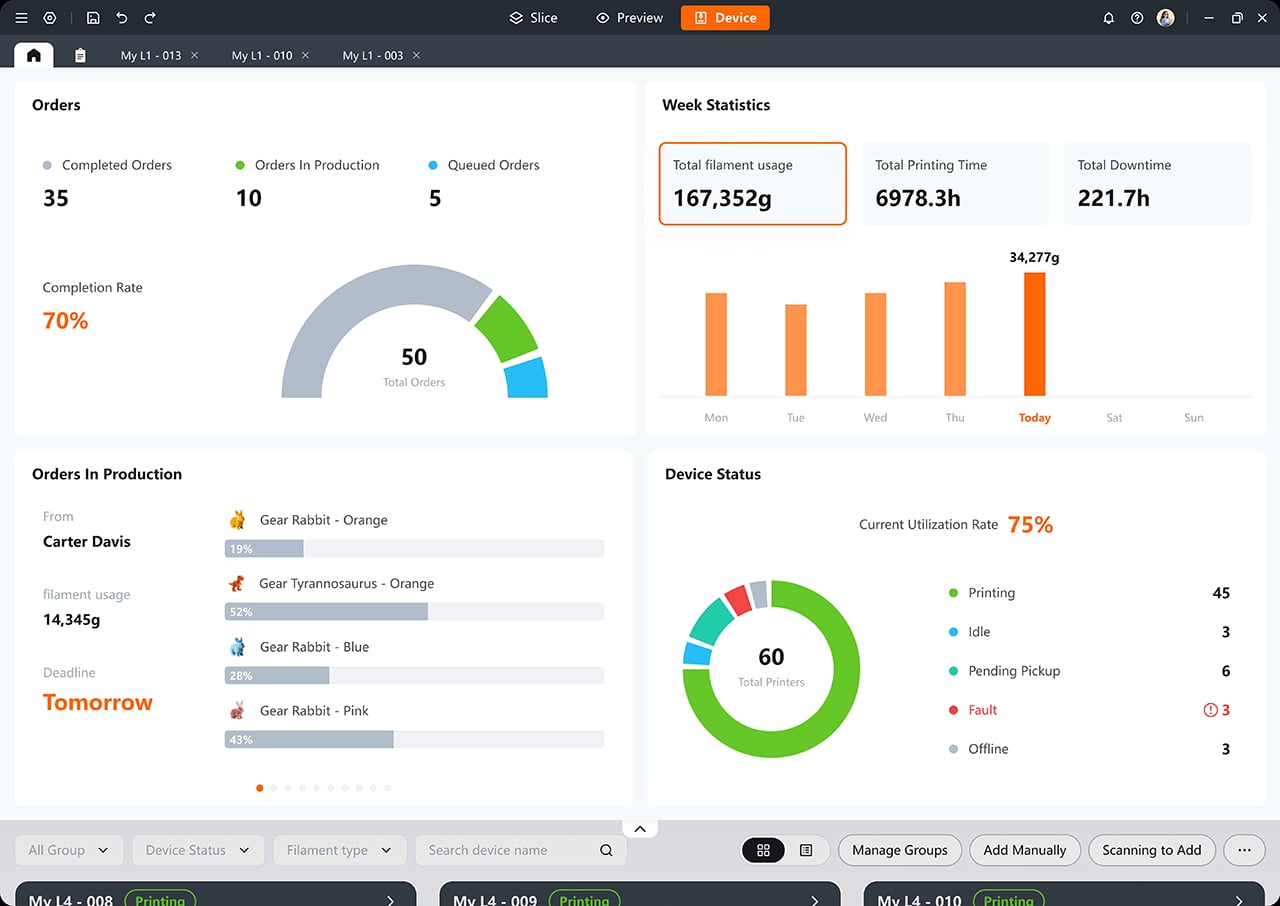
On the software side, the L4 works with LightMake’s own slicing tool, which handles automatic model arrangement for multi-head jobs and includes a farm management dashboard that connects multiple printers in one place. It’s free and open-source, unlike most paid alternatives. The machine also comes with a 6.5-inch full-color touchscreen, dual HD cameras with AI-powered failure detection, and RFID material recognition that adjusts print parameters automatically.
The L4’s reach can grow beyond its four built-in toolheads, too. LightMake’s optional Auto Filament Expansion and Dry System, or FEDS, pairs each head with additional filament inputs, pushing the total color count from four up to 16. For makers working on more ambitious multi-color designs, that’s a considerable expansion of creative range without requiring an entirely different machine to get there.
The L4 is positioned as a machine for makers who want to turn their output into something that actually generates income, whether that means selling finished pieces, producing prototypes, or running a compact print operation. What it ultimately argues is that the familiar trade-offs of multi-color desktop printing, such as speed against quality and ambition against material waste, were always choices rather than fixed limits, and the LightMake L4 helps your designs break free of those constraints.
Your regular carry works fine at a desk, as it should. But it falls apart at a tailgate, where the lot is loud, the light is going, and someone just handed you a warm can with nothing to open it. The gear sitting in your drawer was designed for a controlled environment, and surprisingly, a parking lot in early September is not that. These five products fix the gap before it has a chance to ruin your afternoon.
This list is not for gear collectors or EDC forum regulars. It is for the person who wants to show up to a game-day tailgate with five things in their bag that actually earn their spot. A blade, a light, a radio, a screwdriver, and a can opener. Each one handles a specific moment that goes sideways without the right tool. Read this before Saturday, and you will be the person other people walk over to ask for help.
1. The Cubik
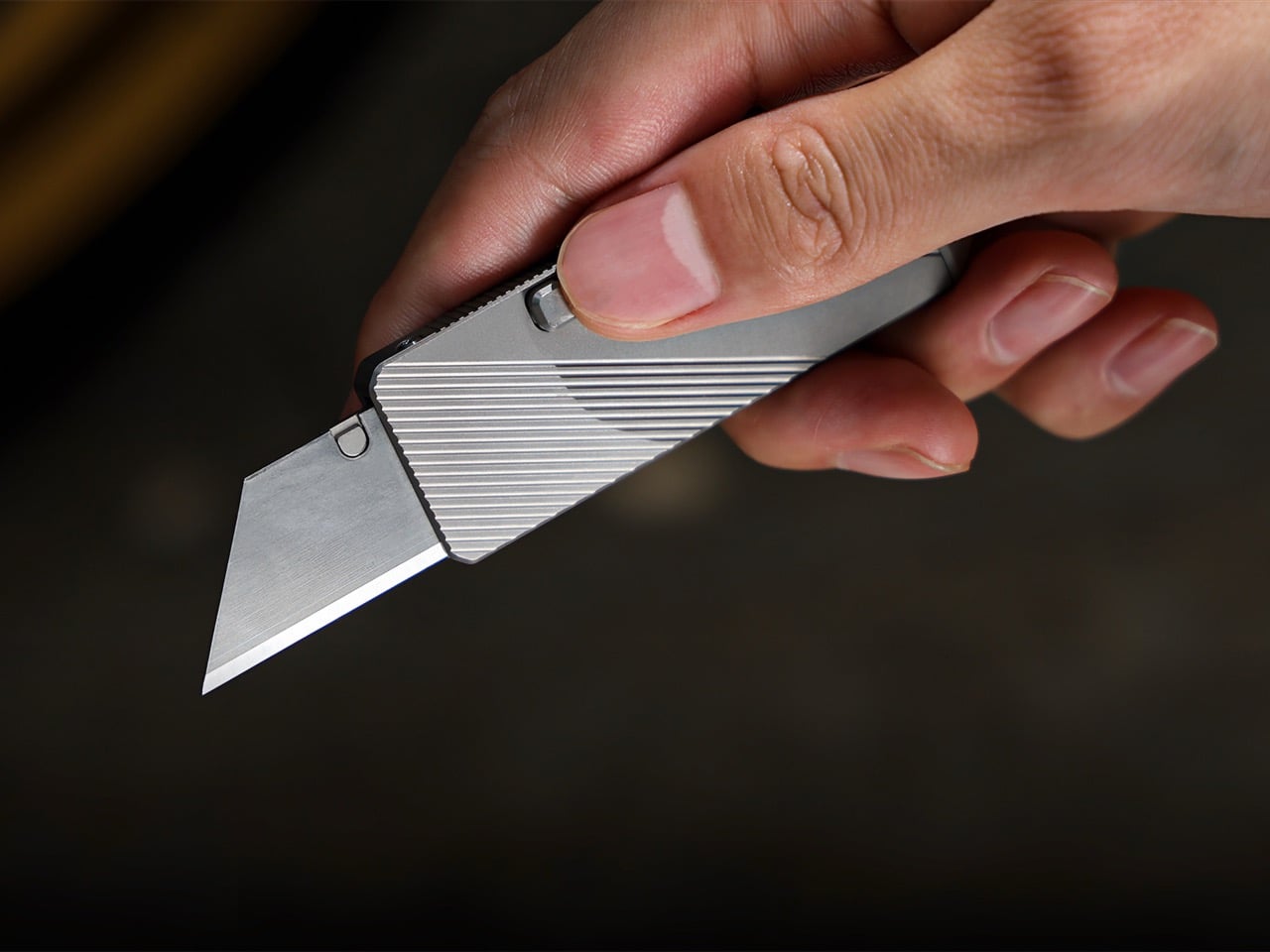
The most embarrassing tailgate moment nobody talks about is trying to open a bag of chips with a car key because your knife is buried somewhere in a bag. The Cubik removes that problem with a deployment mechanism you genuinely have not seen on a folding knife before. You tilt it, and gravity swings the blade out. No two-handed fumbling, no thumb stud digging into your nail, no moment of frustration while your other hand is already full.
At a tailgate, you are almost always holding something. A drink, a plate, your phone. The Cubik is built for exactly that situation. The blade deploys fast, locks securely, and the whole package stays compact enough to live in a front pocket without printing through your jeans. The gravity mechanism is clever design, not a gimmick, and IF has the industrial design credentials to back it up. This is the knife you reach for when the moment already counts.
What we like:
One-handed gravity deployment is faster and more natural than any thumb stud
The minimal form means you will actually carry it instead of leaving it in the bag
What we dislike:
Keep the lock engaged in a coat pocket. The same gravity activation that works for you will work against you if the knife is loose around other gear
2. Clip&Go Radio
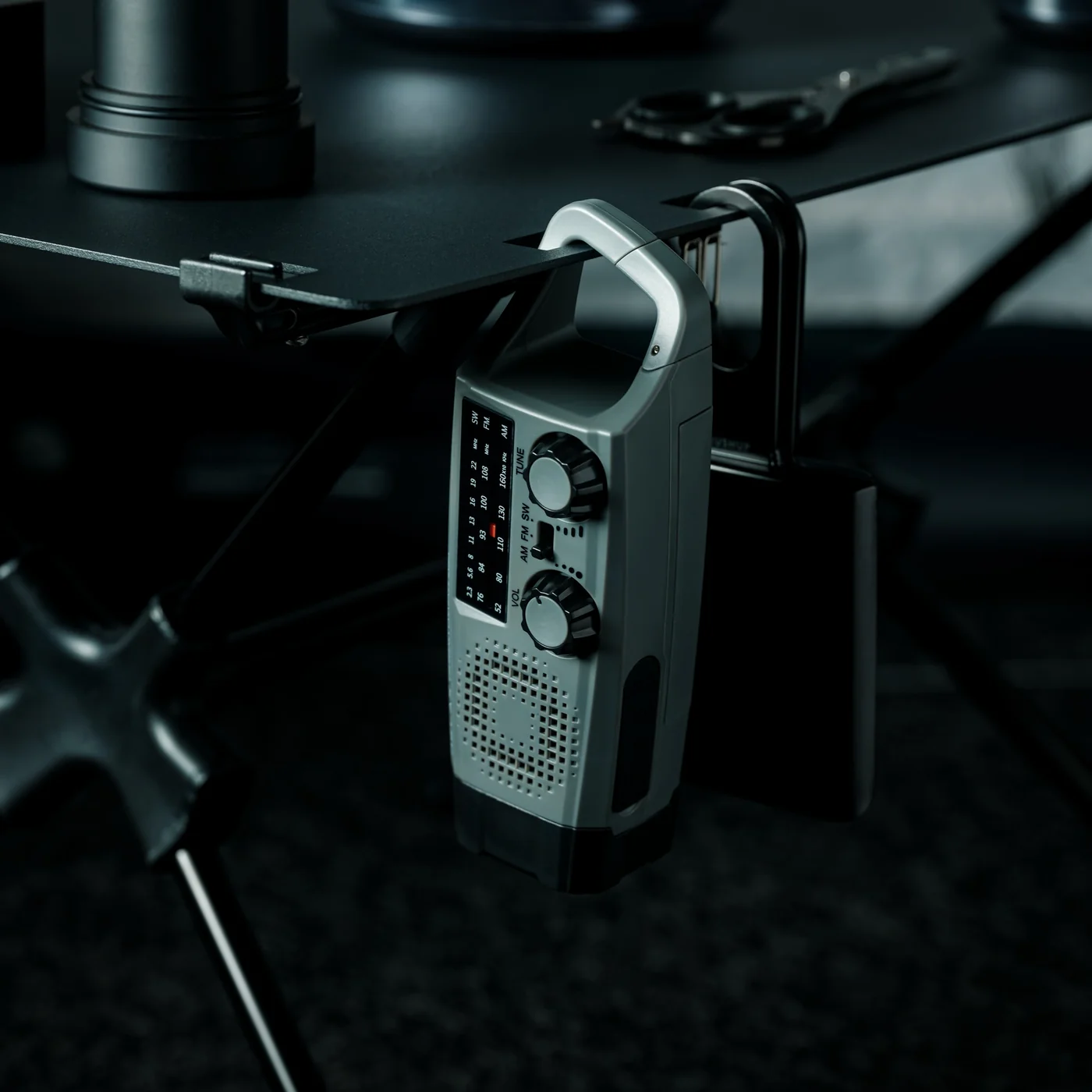
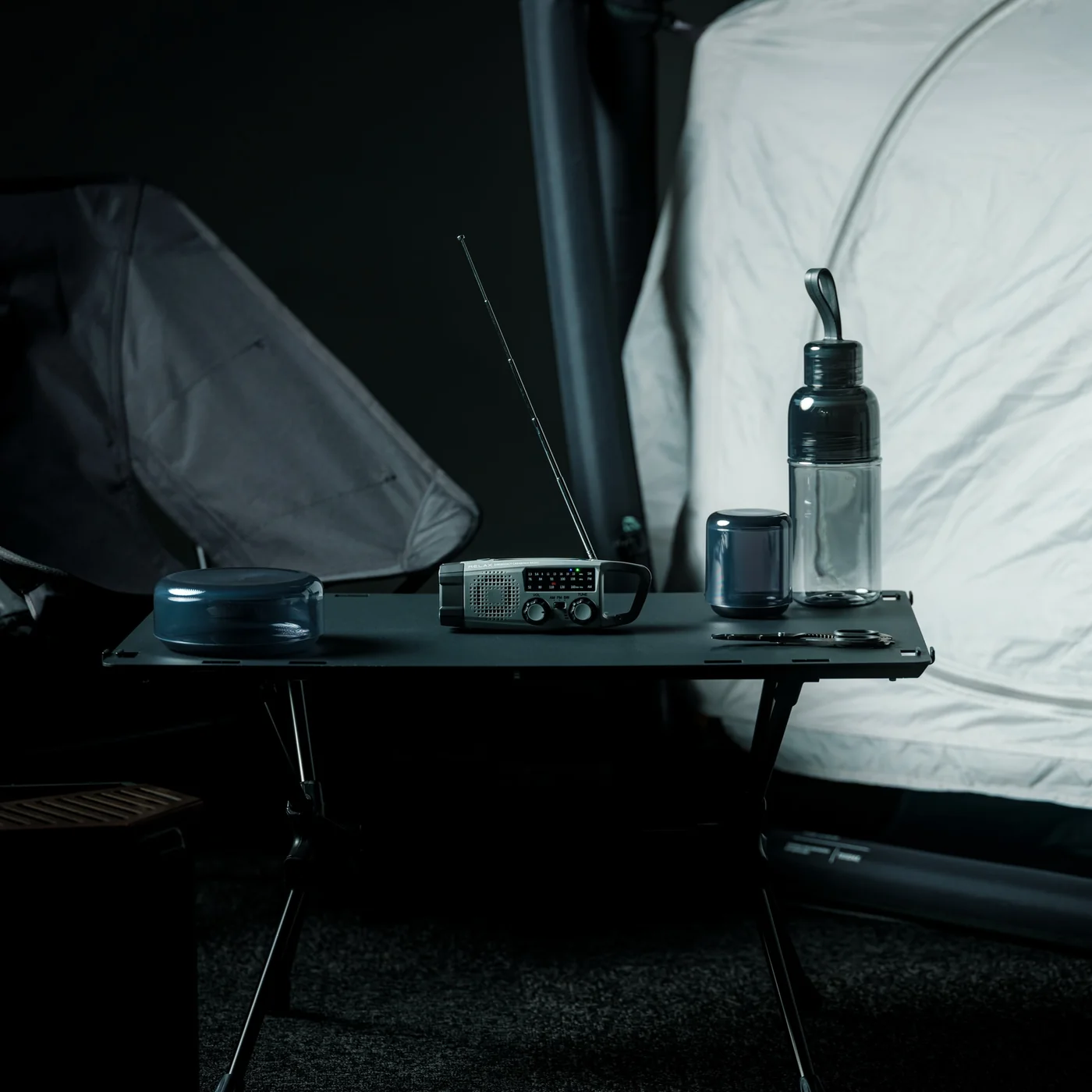
You have been to a tailgate where someone’s Bluetooth speaker died two hours before kickoff and took the whole energy of the group with it. The Clip&Go Radio is the fix that costs you nothing in phone battery. It clips to a bag strap, a belt loop, or a cooler handle, pulls in an FM signal, and runs on its own. No pairing, no app, no connection to babysit.
At a tailgate, radio matters in a way it does not anywhere else. You want the pregame show in the background while the playlist stays on the speaker. The Clip&Go lets you run both at once. It clips where you put it and stays there while you move around the lot. The form factor is the whole point here. It has no right to be this portable. It is the item on this list that the people around you will notice and immediately ask about.
The clip mount keeps it on your person hands-free with nothing to set up
What we dislike:
FM signal depends entirely on your location. Dense urban lots with a lot of concrete and steel can break up reception
3. Titanium Multifunctional Magnetic Screwdriver
Nobody brings a screwdriver to a tailgate, and everybody eventually needs one. The folding table wobbles, the chair arm is loose, the grill leg will not sit flat on the asphalt. The Titanium Multifunctional Magnetic Screwdriver lives in your pocket like it is not there until exactly that moment arrives. Titanium keeps the weight down to the point where you forget you are carrying a screwdriver at all. The magnetic bit retention means a dropped bit stays findable rather than disappearing into the grass.
The multifunctional build covers the range of small fixes that come up in any outdoor group setting. You are not pulling out a toolkit. You are pulling out something that fits next to your keys and handles the job cleanly. Titanium construction is not marketing language here. It genuinely changes the weight-to-durability ratio in a way that makes you stop thinking of this as optional carry. That is the whole game with EDC tools. The best ones disappear until they matter.
What we like:
Titanium keeps it genuinely light in the pocket, not just marketed as slim
Magnetic bit retention eliminates a real frustration every time you use it outdoors
What we dislike:
The bit selection covers most standard fasteners but probably not every specialty head on older folding furniture
4. DraftPro Top Can Opener
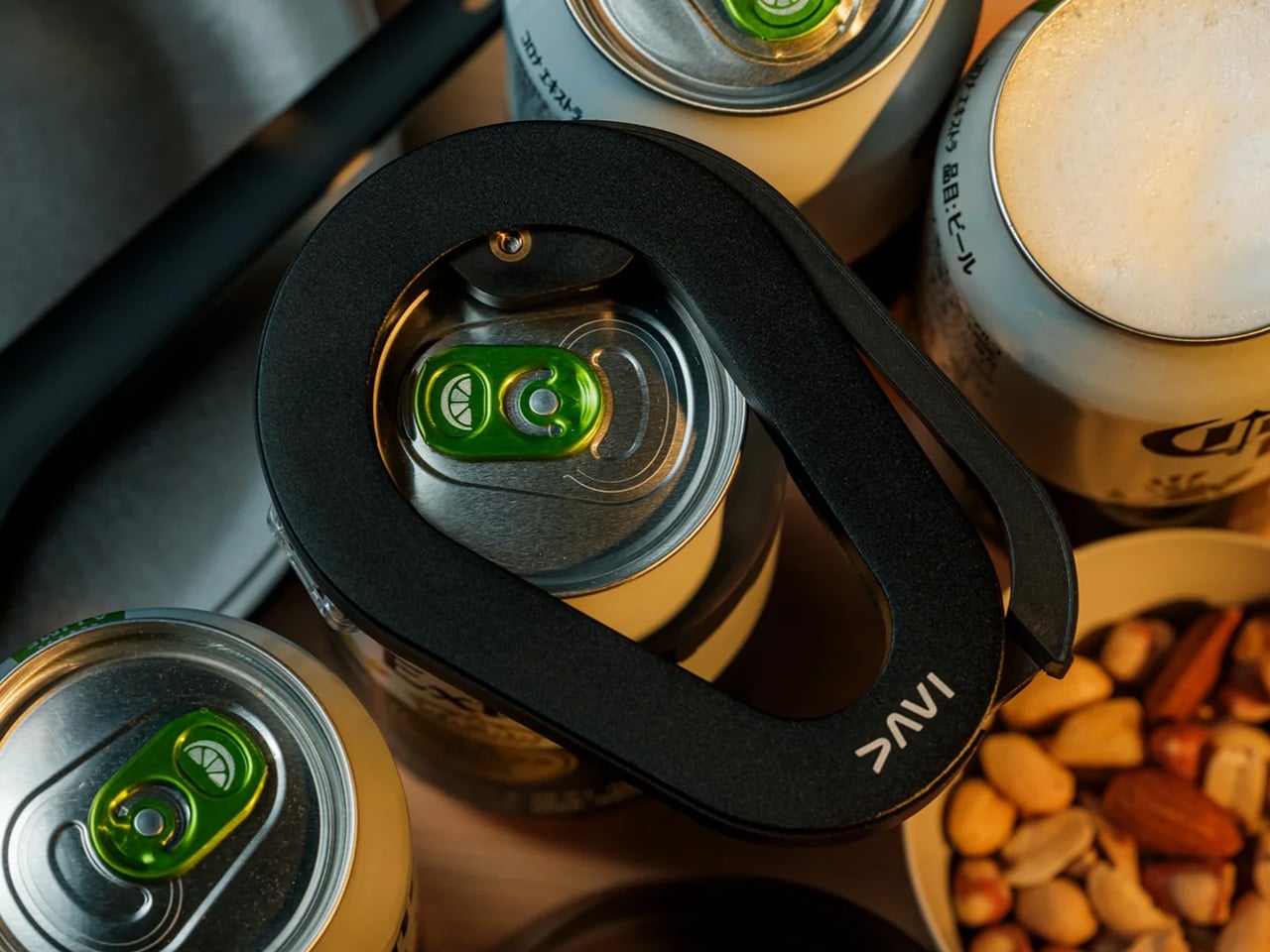
You are standing in a parking lot with a can of beans, a can of corn, or a can of anything, and the pull tab just snapped flush with the lid. The DraftPro Top Can Opener was built for exactly this situation. The top-opening mechanism keeps the lid controlled rather than dropping it into your food, and it was designed for outdoor use from the start rather than borrowed from someone’s kitchen drawer. That difference shows up every single time you use it.
The DraftPro is small enough to sit in a bag pocket without taking up real estate, and it performs the same way on the tenth can as it did on the first. At a tailgate where you are opening multiple cans across an afternoon, that consistency matters more than you would expect. You do not muscle it through. The mechanism does the work. It is a single-function tool, and it does not pretend otherwise, which is a kind of honesty you appreciate when you are standing outside and just need the can open.
The top-opening design keeps the lid contained and your food clean
Built specifically for outdoor use, and that intentionality shows in how reliably it performs
What we dislike:
It opens cans and nothing else. That is the right call, but know it earns exactly one slot in your kit
5. Nitecore EDC37
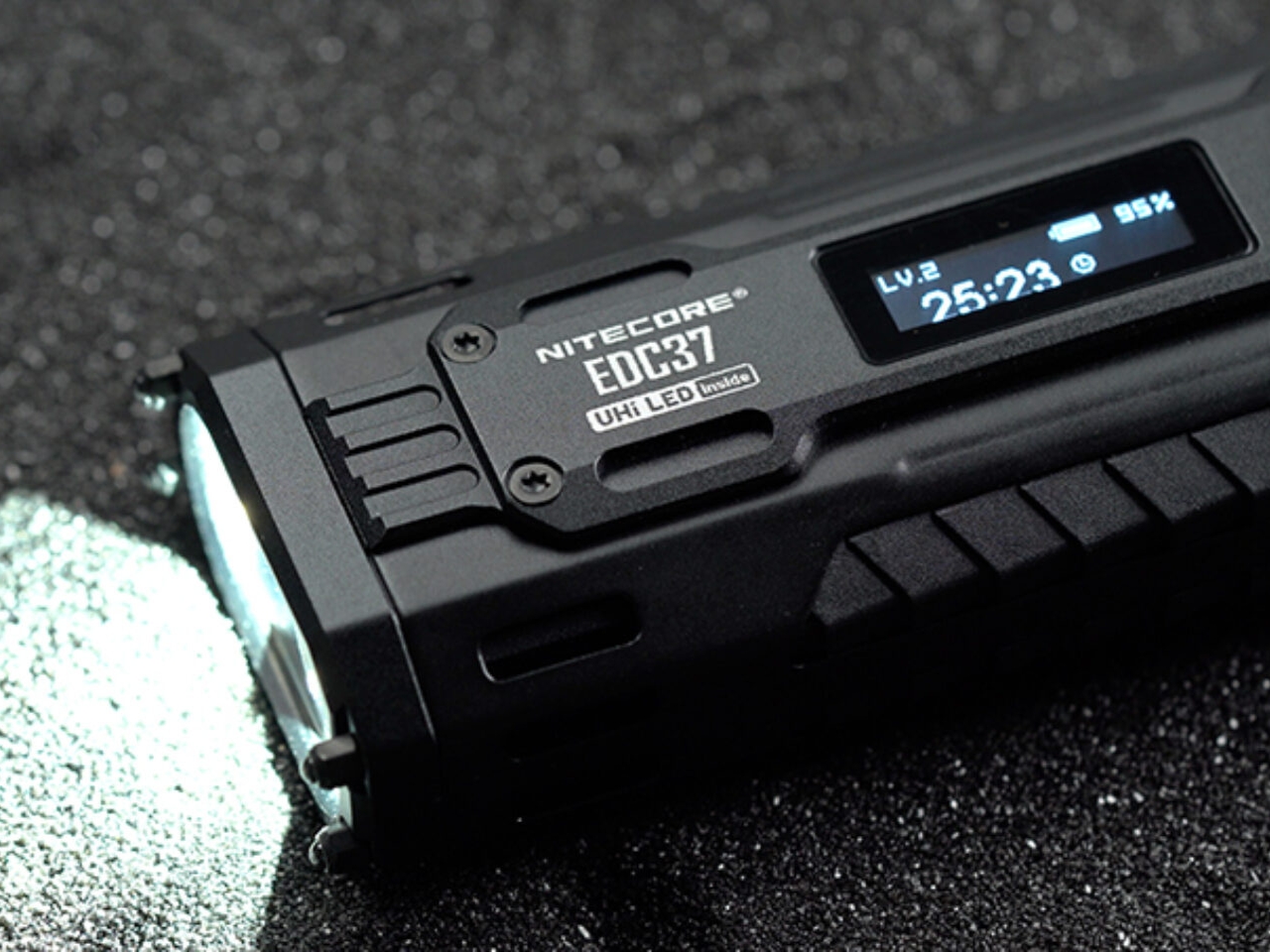
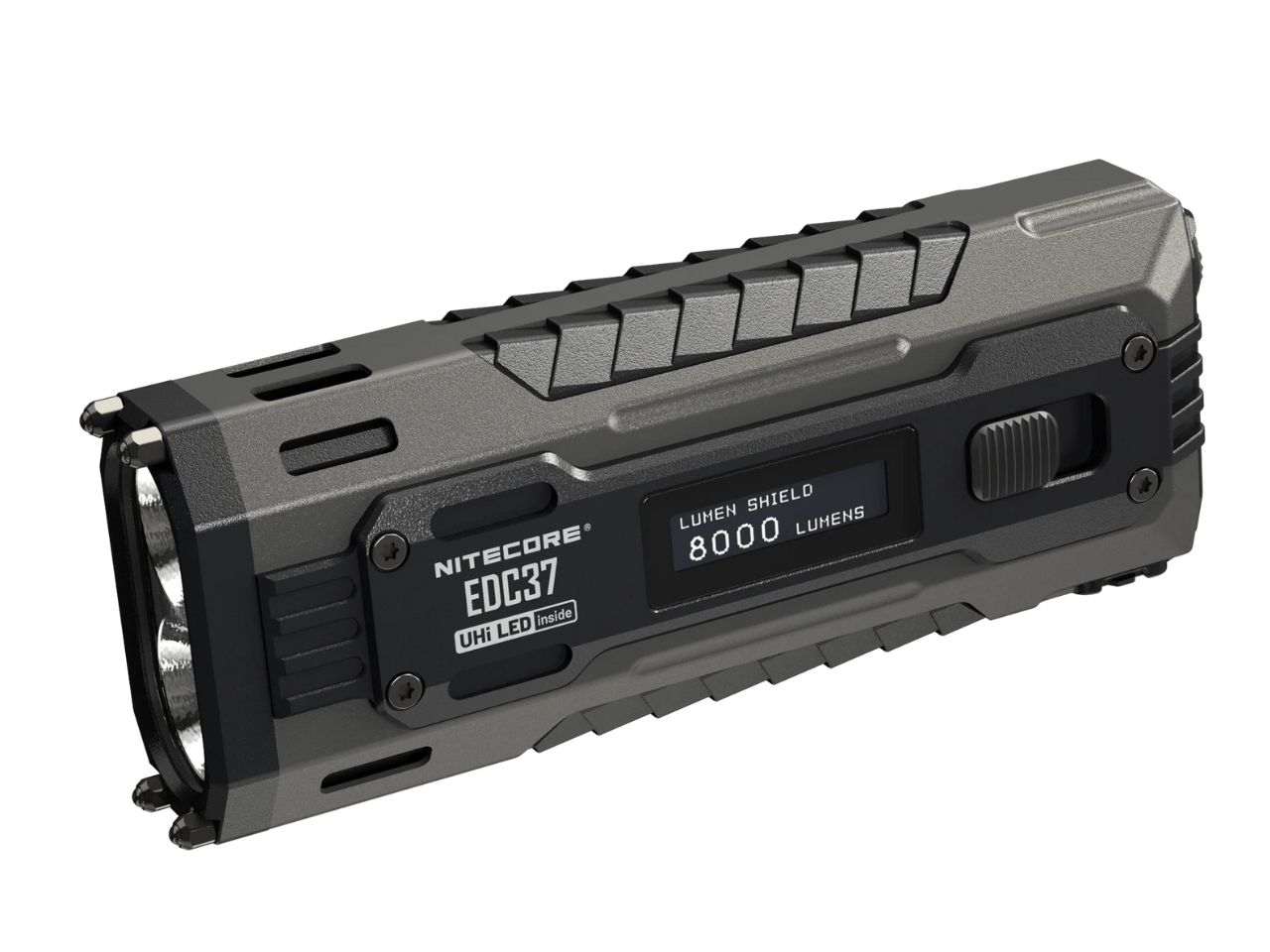
The moment a tailgate becomes a night tailgate, your phone flashlight reveals exactly what it is: a screen that pretends to be a light. The Nitecore EDC37 is an actual flashlight. It outputs 8,000 lumens from a body that fits in a jacket pocket and charges via USB-C, which means you top it up in the car on the way to the stadium. That combination makes it the right choice for a season that starts in daylight and ends in the dark parking lot an hour later.
You do not need 8,000 lumens to find something in a cooler. That is the point. The EDC37 runs on lower modes through most of the afternoon without touching the battery, and when the sun goes down, you dial it up. Signaling to your group across a dark lot, finding a dropped key in the grass, lighting up the tailgate table during setup. USB-C charging removes the last reasonable objection to carrying a real flashlight. At this point, you are out of excuses.
What we like:
8,000 lumens in a genuinely pocket-sized body is a real achievement
USB-C charging means no proprietary cables to hunt down before the season opens
What we dislike:
Max brightness burns through the battery fast. Use the lower modes for most of the evening and save the top end for when it counts
Build Your Carry Before You Hit the Lot
These five products solve the specific problems that show up the moment you leave a controlled environment and spend an afternoon outside with a group. None of them need a special occasion to earn their spot in your bag. A blade, a light, a radio, a screwdriver, and a can opener. Five covered gaps, five fewer moments where you are the person asking around for something basic.
The DraftPro Top Can Opener is my personal favorite on this list because it solves the problem nobody plans for and solves it more cleanly than anything else in its category. The rest of the kit holds up across the board. Build your carry around what your tailgate actually demands, start before Saturday, and show up ready before kickoff.
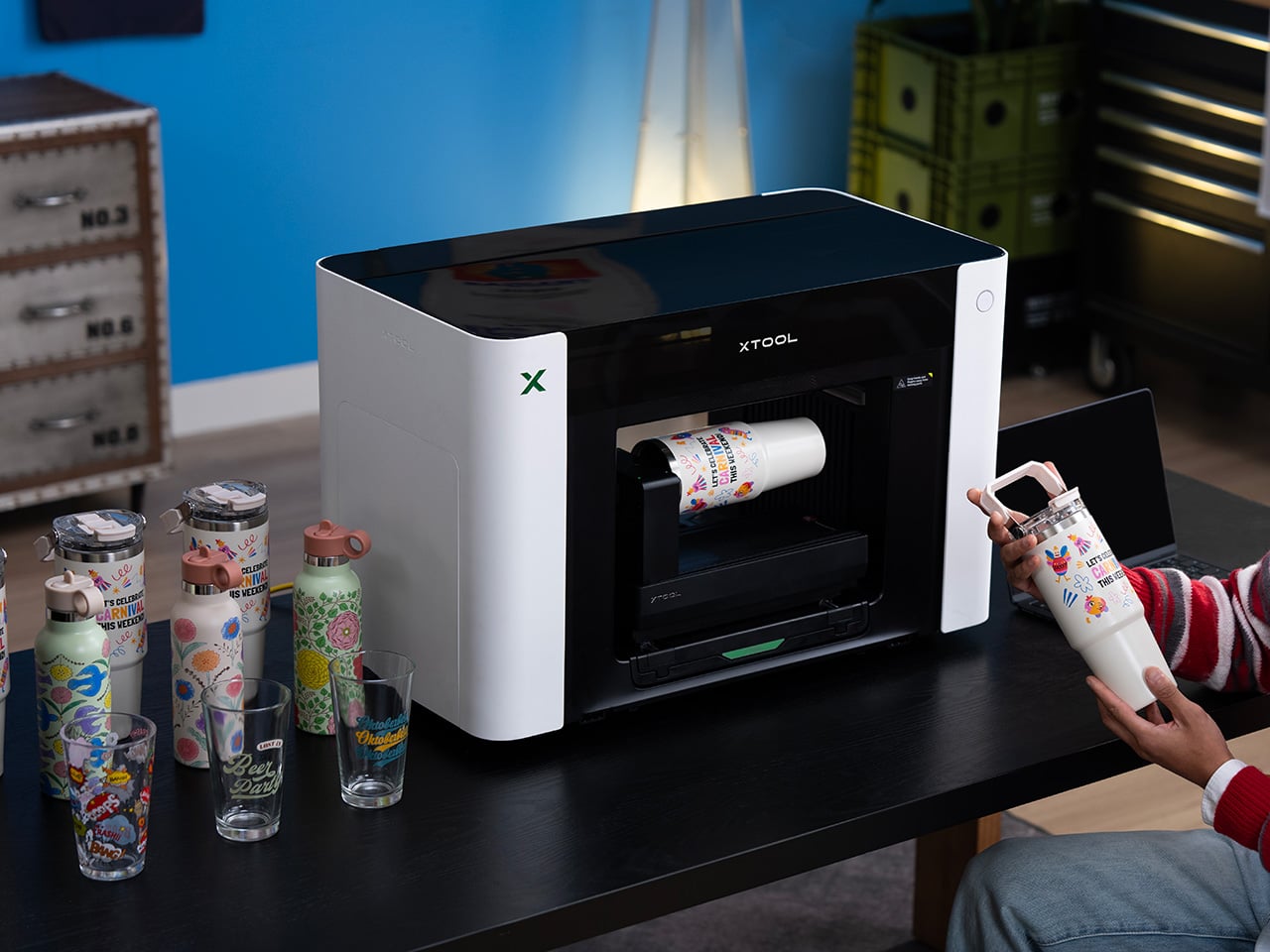
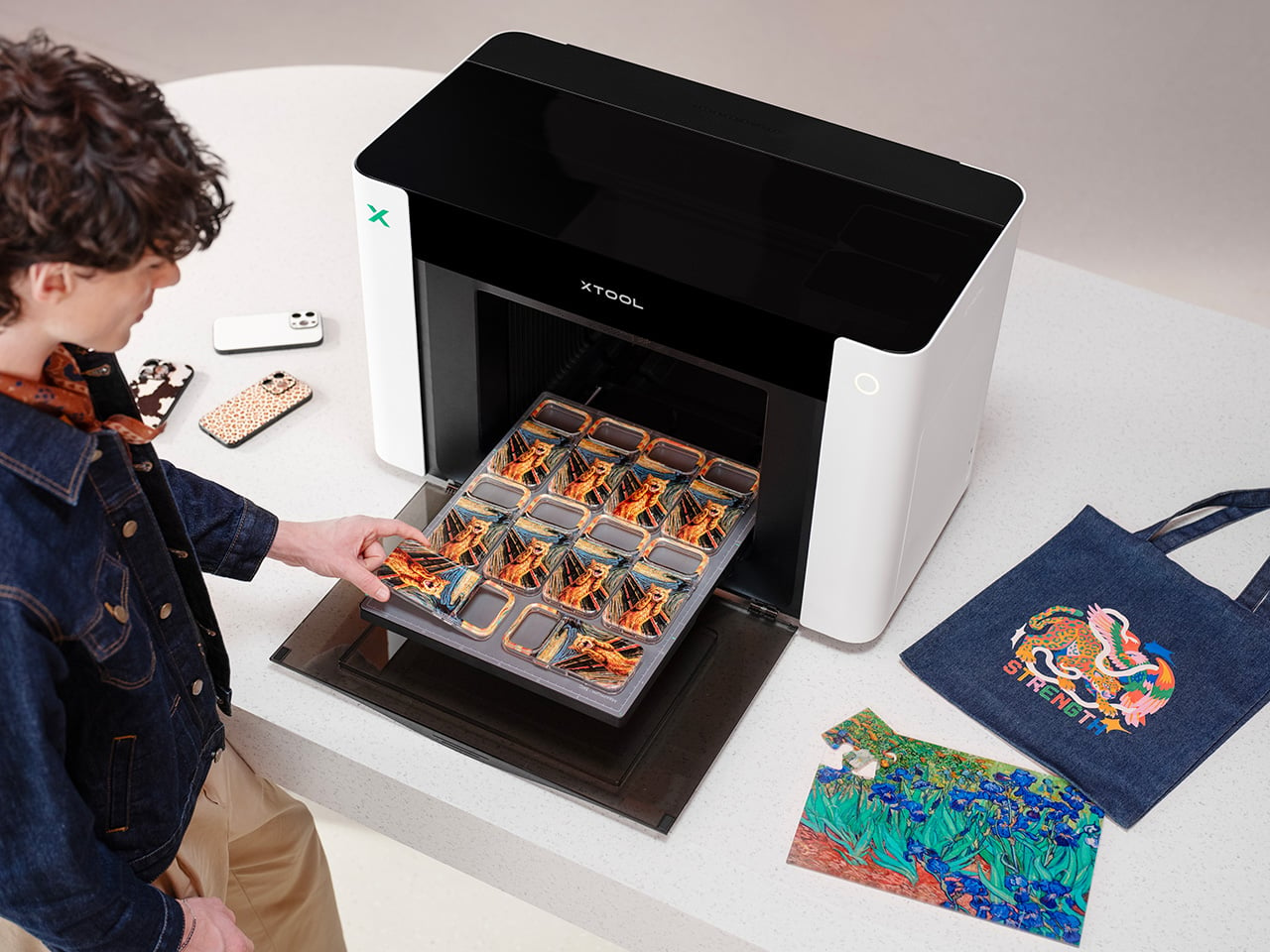
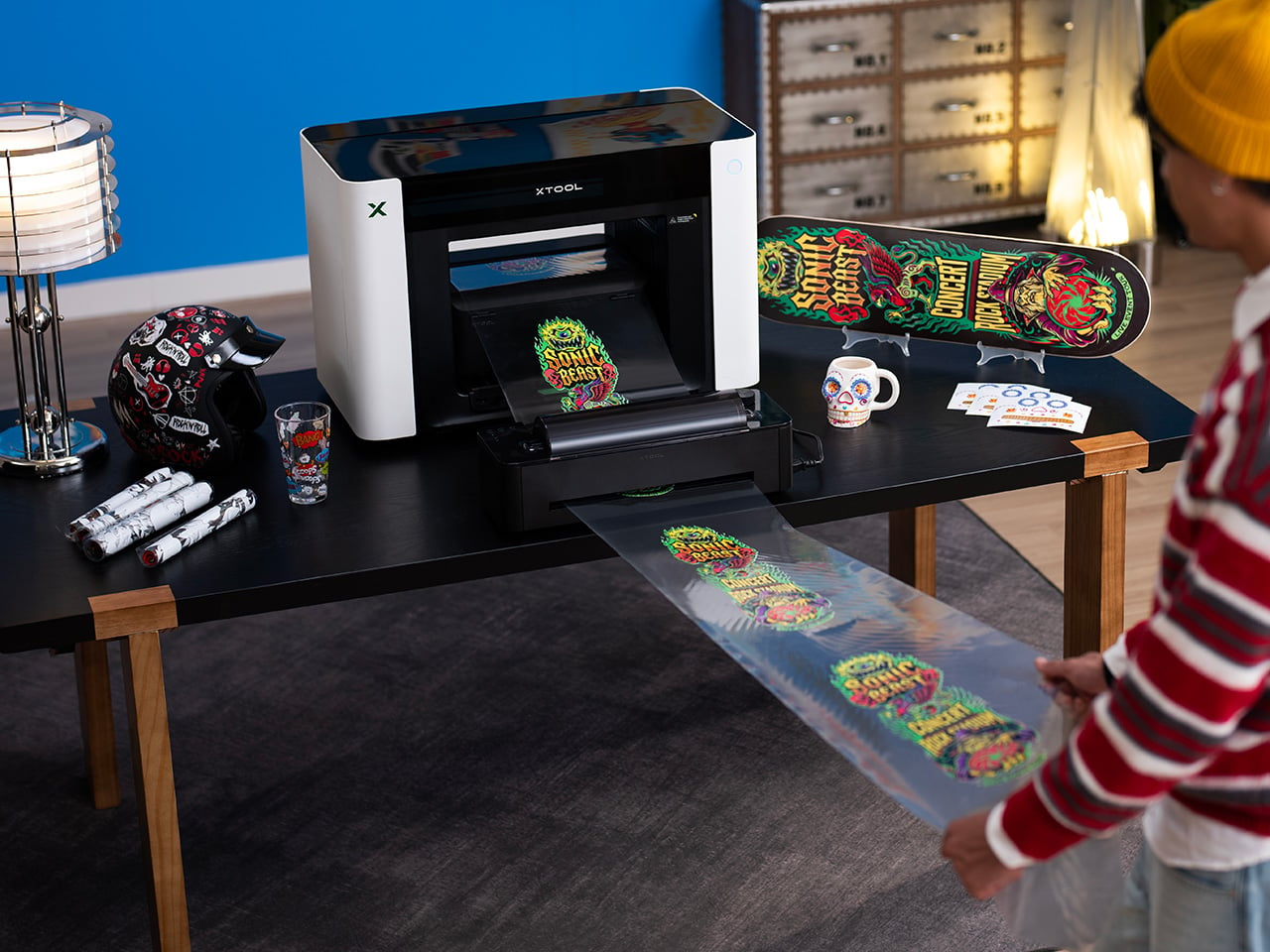
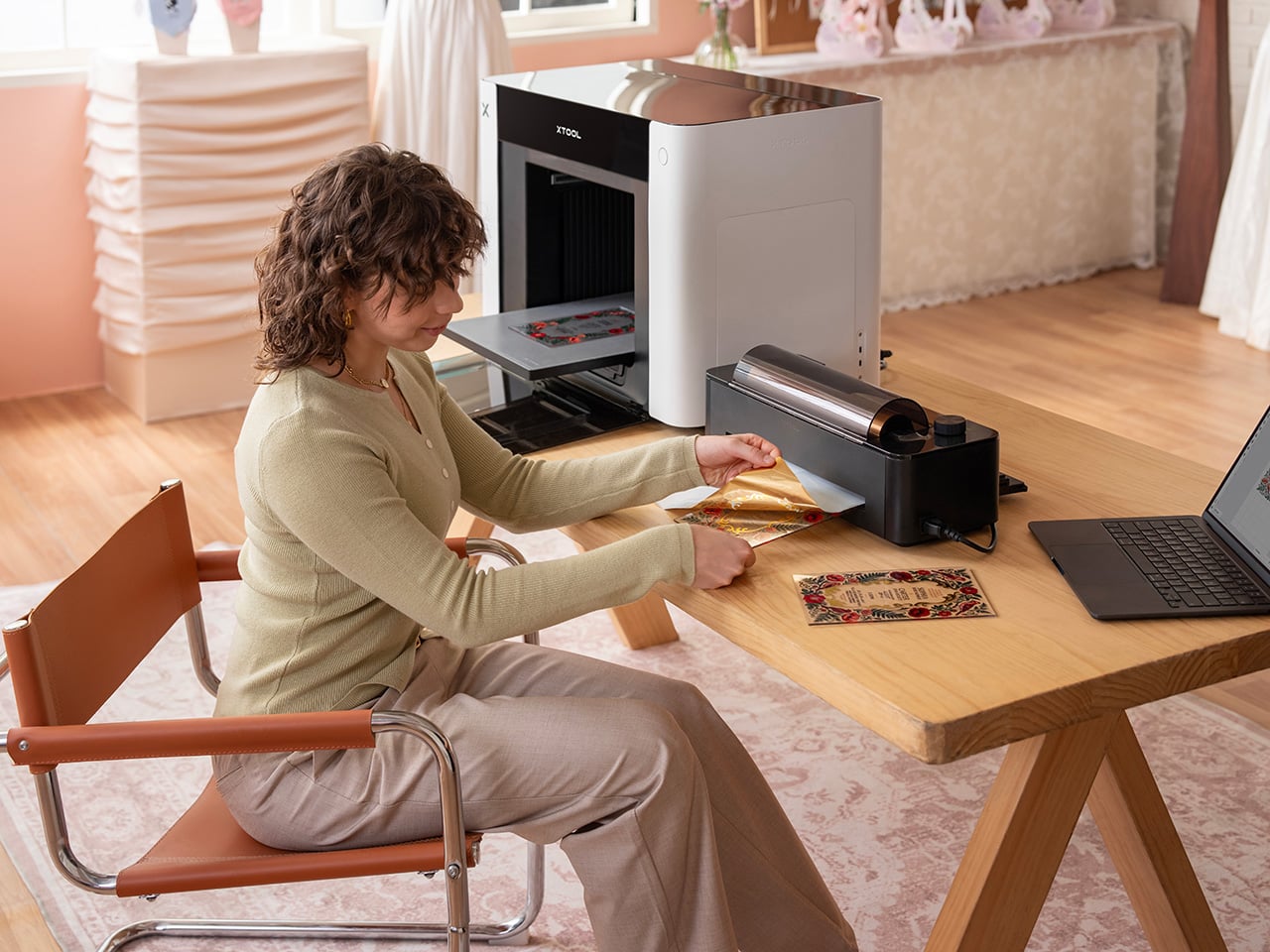
When a desktop printer moves 6,000 units and clears $20 million in revenue on day one, something is clearly going on beyond the usual pre-launch hype cycle. The xTool O1 Omni Printer is a 4-in-1 desktop system merging UV, DTG, DTF, and UV DTF printing in one modular machine, a combination that previously required four separate devices and considerable floor space. For years, creators have been burdened by fragmented workflows, forced to buy separate, single-purpose machines for rigid substrates and textiles. Desktop UV printing has been one of the more notable maker-market stories of 2026, and the O1 is making a clear bid for category leadership. The central design proposition is capability consolidation, and day-one sales suggest it landed with the right people.
Units have already begun shipping, turning pre-order momentum into machines arriving at actual studios and workshops. On August 27, the first offline debut of the O1 Embroidery happened at the Next Level Conference x xTool SMB Summit, where live demos will give attendees their first hands-on encounter with the platform’s textile and dimensional output. That event was a deliberate venue choice: the Summit brings together the small business creative community the O1 is built for, and debuting the embroidery capability there sends a clear signal about where xTool sees the product’s core application. Three editions run from $1,899 for the Single UV configuration to $2,999 for the full UV + Fabric hybrid. The modular dual-printhead system is the engineering decision that holds the entire consolidation promise together.
The dual-printhead architecture is what separates the O1 from every desktop printer in its class, operating more like a configurable platform than a fixed device. Users can run dual UV printheads for layered effects and accelerated throughput, or swap in a fabric printhead to shift between hard goods and garment workflows on the same machine. UV output covers wood, acrylic, glass, and metal with raised 3D texture effects up to 7mm deep, supported by a 2,000-plus texture library. The fabric side handles DTG and DTF workflows, including on curved and irregular surfaces, with an OEKO-TEX certified system that survives 50-plus washes without fading. A Rotary Attachment extends the platform to cylindrical objects like tumblers, with Automated 3D Modeling covering 90% of mainstream shapes for a 1:1 design preview before printing.
Positioning accuracy is delivered by xTool’s Pixel-Scan Vision System, combining Line Laser Altimetry and CIS Scanning. A Laser-Guided Auto-Focus detects each object’s highest point before printing, eliminating printhead collisions on uneven surfaces. Unlike traditional distorted fish-eye cameras, the 1:1 Distortion-Free CIS Scanning offers close-range, high-definition scans with zero dead zones, powering a jigless “Drop & Print” workflow that removes alignment jigs from the equation, which is a more meaningful time-saver than it sounds in an actual production environment. xTool Studio’s AI Contour Recognition instantly identifies irregular shapes to fill designs perfectly while automatically avoiding holes like camera cutouts. The Laser + UV Seamless Workflow lets users laser-cut a workpiece and move it to the O1, where the software automatically recognizes and aligns the print with zero manual recalibration.
Three editions cover the full range from single-mode UV to full hybrid, priced between $1,899 and $2,999, with each tier differentiated by workflow rather than arbitrary specs. The entry-level UV Edition at $1,899 targets rigid material personalization across wood, acrylic, glass, and metal. The Dual-Head UV Edition at $2,899 adds fluorescent neon inks for blacklight effects and specialized soft and hard white inks for materials like leather. The UV + Fabric Edition at $2,999 is the full cross-category hybrid, covering both hard goods and garment workflows through the OEKO-TEX certified fabric system. All three share the Pixel-Scan Vision System and xTool Studio, keeping the intelligence layer consistent across the lineup.
UV printing at the studio scale has historically required dedicated ventilation and careful ink handling, which kept the workflow inside commercial print shops. The O1 uses GREENGUARD-certified, non-reprotoxic inks and an advanced built-in air filtration system to eliminate odors in home studios. SmartCycle 2.0 automates routine care to prevent clogging, offering 14-day vacation-ready support that lets users step away with confidence and return to a machine that is ready to run. The Dual-Head UV Edition adds specialized flexible white inks, expanding the material list to leather goods and flexible substrates. Taken together, these decisions position the O1 as a machine built to live in a real creative workspace, not parked in the back corner of a commercial print shop.
The O1 Embroidery made its first public hands-on appearance at the Next Level Conference x xTool SMB Summit on August 27, putting the platform’s most dimensional textile output in front of the small business creators it is built for. Desktop UV printing has heated up considerably in 2026, with machines like the eufyMake E1 generating real market attention, and the O1 is making a clear bid for the consolidation position in that category. The 6,000-unit, $20 million day-one performance signals the market was ready for this hardware category long before the product arrived. Explore the full xTool O1 Omni Printer lineup and configure your edition at xTool’s website.
Late August has a particular texture. The mornings cool by a degree, the light shifts without announcing itself, and the desk that went mostly untouched all summer starts to look like a place worth returning to. Japanese stationery has always understood this moment. The objects it produces are not exciting in the way a gadget is. They are exciting in the way a good chair is — once you find the right one, everything before it starts to feel like a placeholder.
The three picks here share a quality that is easy to recognize once you know to look for it. Each attends to the part of the tool that most manufacturers have already decided is resolved. A pair of scissors built with the precision of a professional instrument. A stapler that removes the staple from the concept of stapling. A notebook that asks nothing of you beyond showing up. Together, they change what returning to a desk in late summer actually feels like.
1. Stellar Edge Scissors
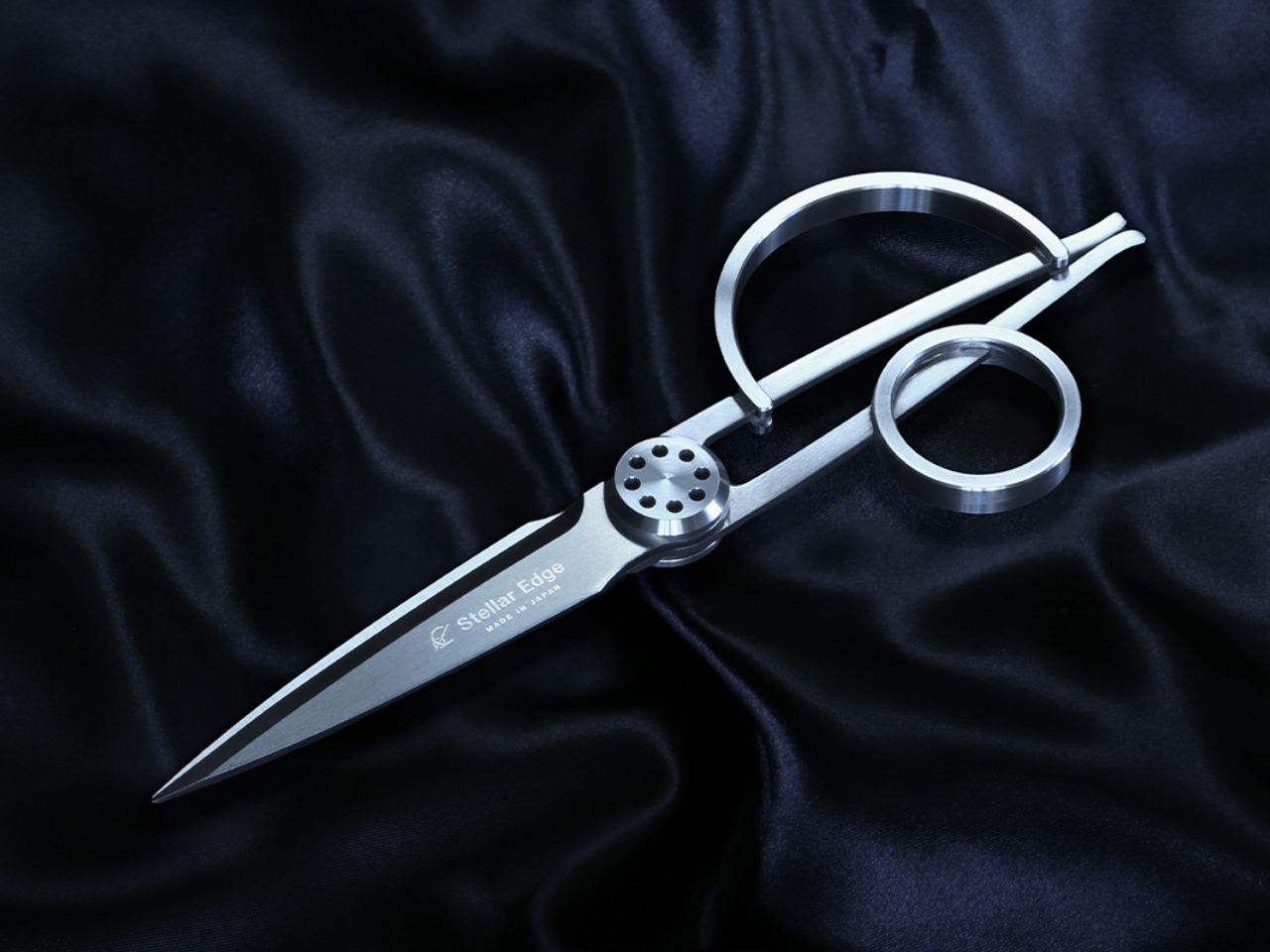
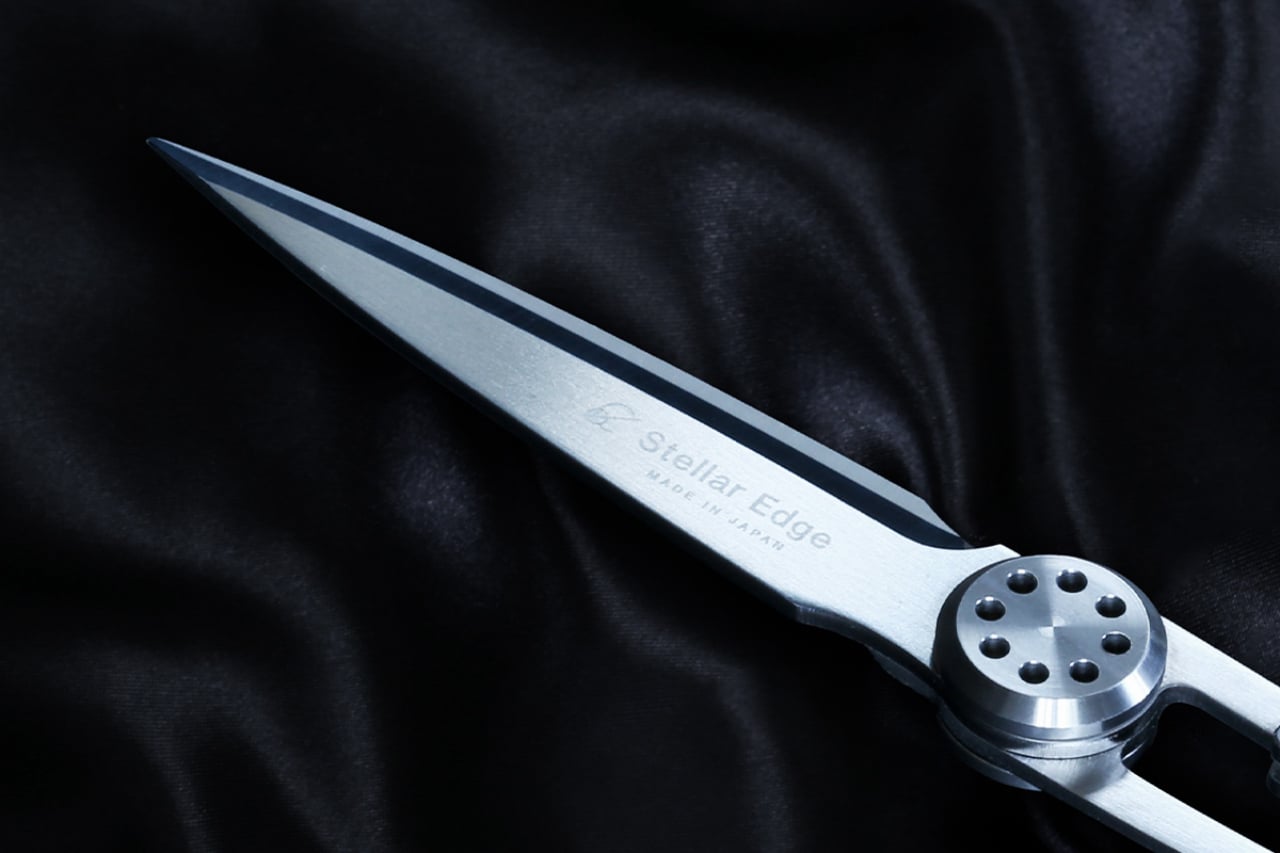
Most scissors are bought once and forgotten. The Stellar Edge Scissors, crafted from Japanese stainless steel, propose a different relationship with the category. Seamless, polished handles and a weight distribution that shifts the blade toward the hand make cutting feel less like holding something and more like extending your reach across the page. Every angle in the design is considered. The result is a pair of scissors that earns a permanent place on the desk rather than disappearing into a drawer the week they arrive.
Each snip registers with the kind of clean resistance that confirms the blade is doing exactly what it was built for. The polished finish elevates the tactile experience without making the scissors feel fragile or precious. Extended cutting sessions don’t build the fatigue that cheaper alternatives accumulate across an afternoon, and the grip sits naturally regardless of hand size with no adjustment required. For anyone who works with paper regularly, these are the scissors that make the pair you owned before feel like it was never really doing the job.
What we like
Japanese stainless steel construction holds its edge through sustained use rather than dulling after a few weeks of regular cutting
The seamless, polished handles and considered weight distribution make these genuinely display-worthy objects on a desk surface
What we dislike
The precision manufacturing and material quality place these at a higher price point than most people are used to spending on scissors
No rubber grip inserts means those who prefer a softer handle feel on longer cutting sessions will notice the absence
2. PaperLock Stapler
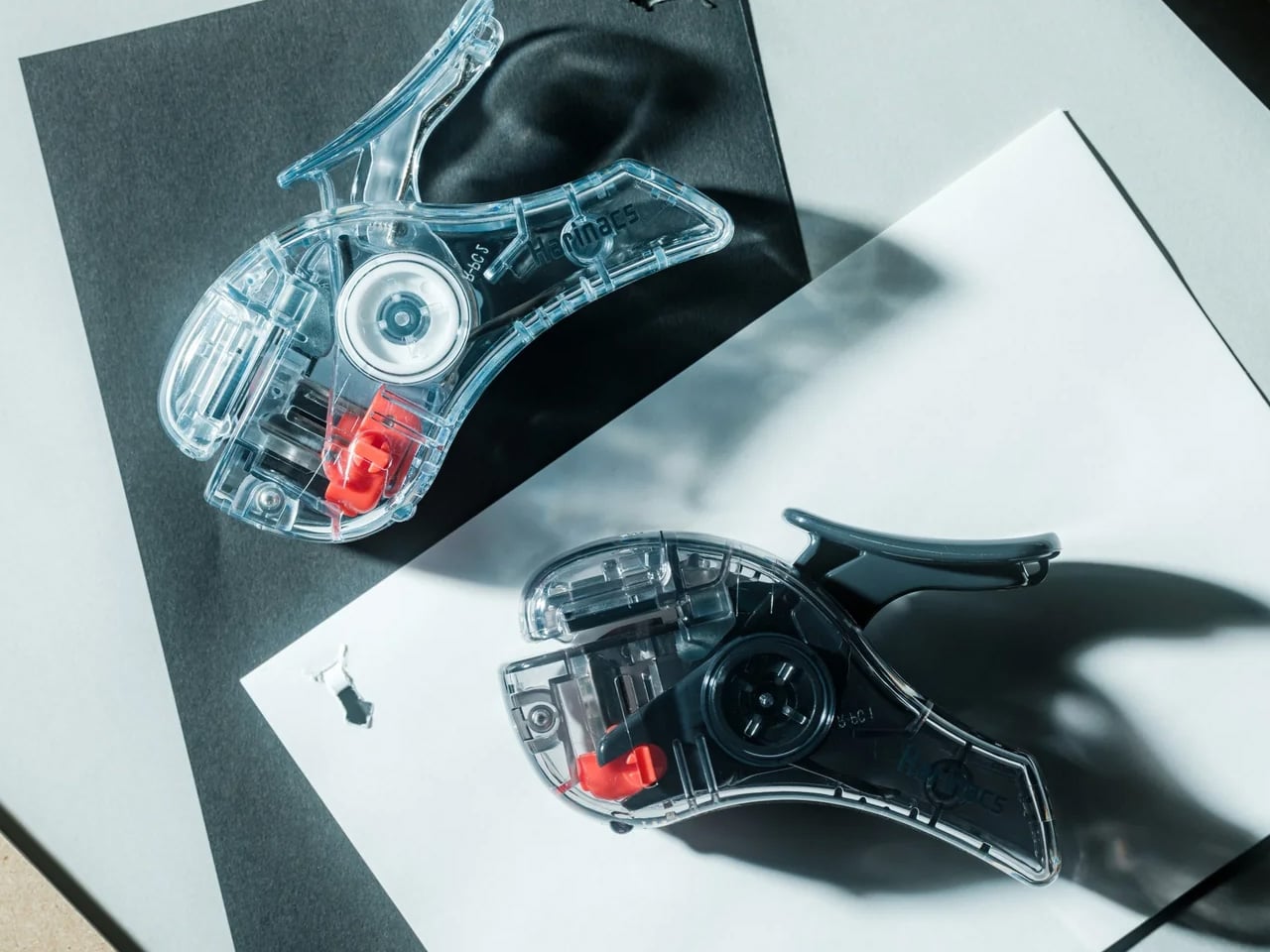
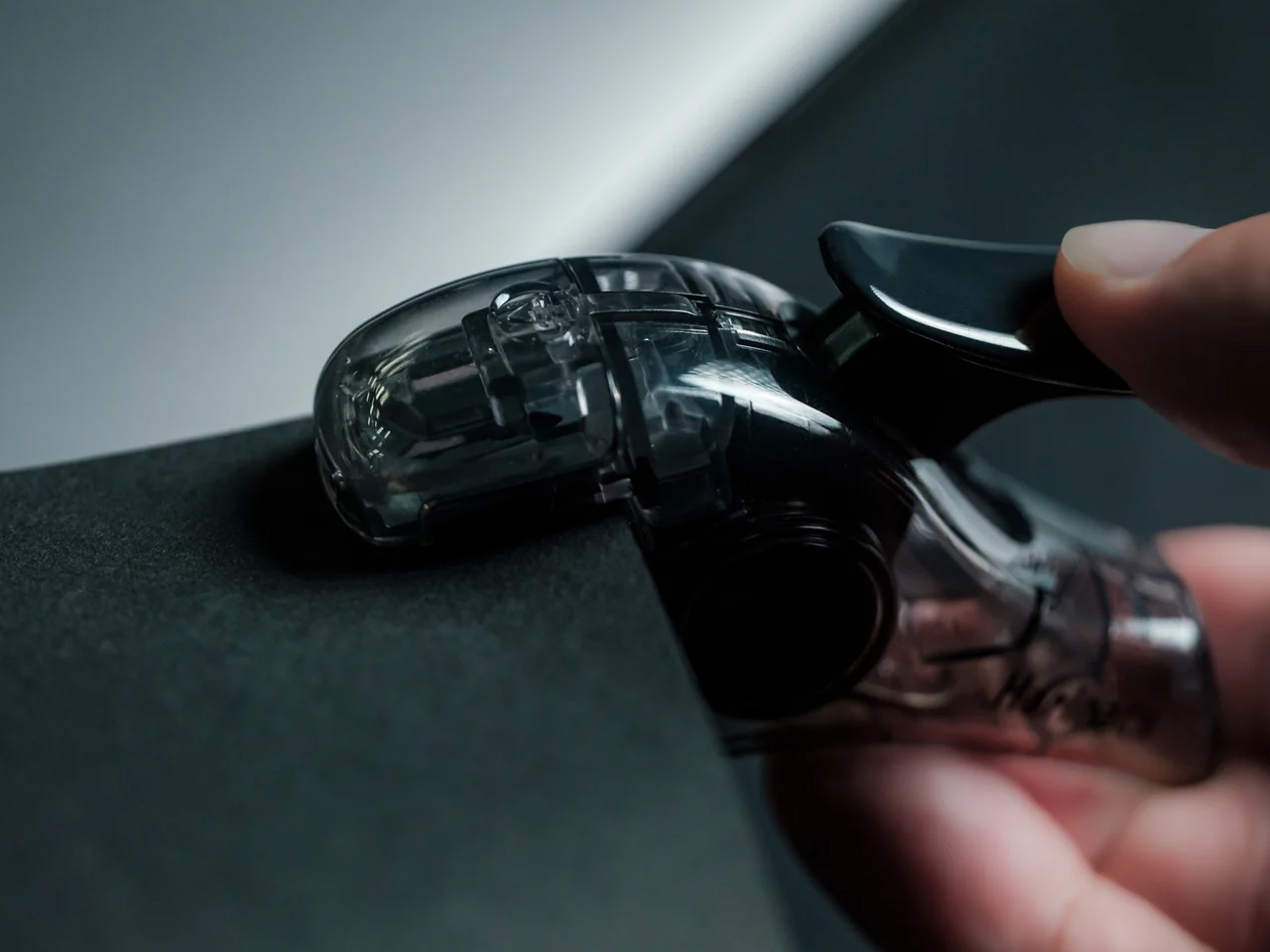
The mechanism behind PaperLock is simple in the way good design is simple. Press the lever and a small cutting element punches through the stack, folding the paper back through itself to create an interlocked join. No metal passes through the page. No staple is added. The paper becomes its own fastener, which means nothing catches against other sheets in a stack, nothing needs removing before a document reaches the recycling bin, and nothing can run out at the moment you most need it to work.
Most desk tools keep their mechanisms out of sight, usually because there is nothing worth showing. PaperLock does the opposite. The transparent body puts the internal parts on full display, and pressing the lever becomes something closer to watching a small machine operate than completing a piece of office admin. A viewing window shows exactly where the join will land before you commit, a corner guide keeps placement consistent across an entire stack, and the lever works pressed against a surface or squeezed in the palm with no adjustment required between the two.
The staple-free mechanism cuts and interlocks the paper itself, leaving nothing to load, manage, or run out of at an inconvenient moment
The transparent body puts the internal mechanism in full view with every press, turning a routine desk task into something worth watching
What we dislike
Five-sheet capacity handles everyday stacks cleanly, but anything thicker requires a different tool, which limits its range for larger document sets
Separating paper-locked sheets without tearing requires more care than pulling a metal staple free, which matters when a binding error needs to be corrected quickly
3. Stalogy Editor’s Series 365 Days Notebook A6
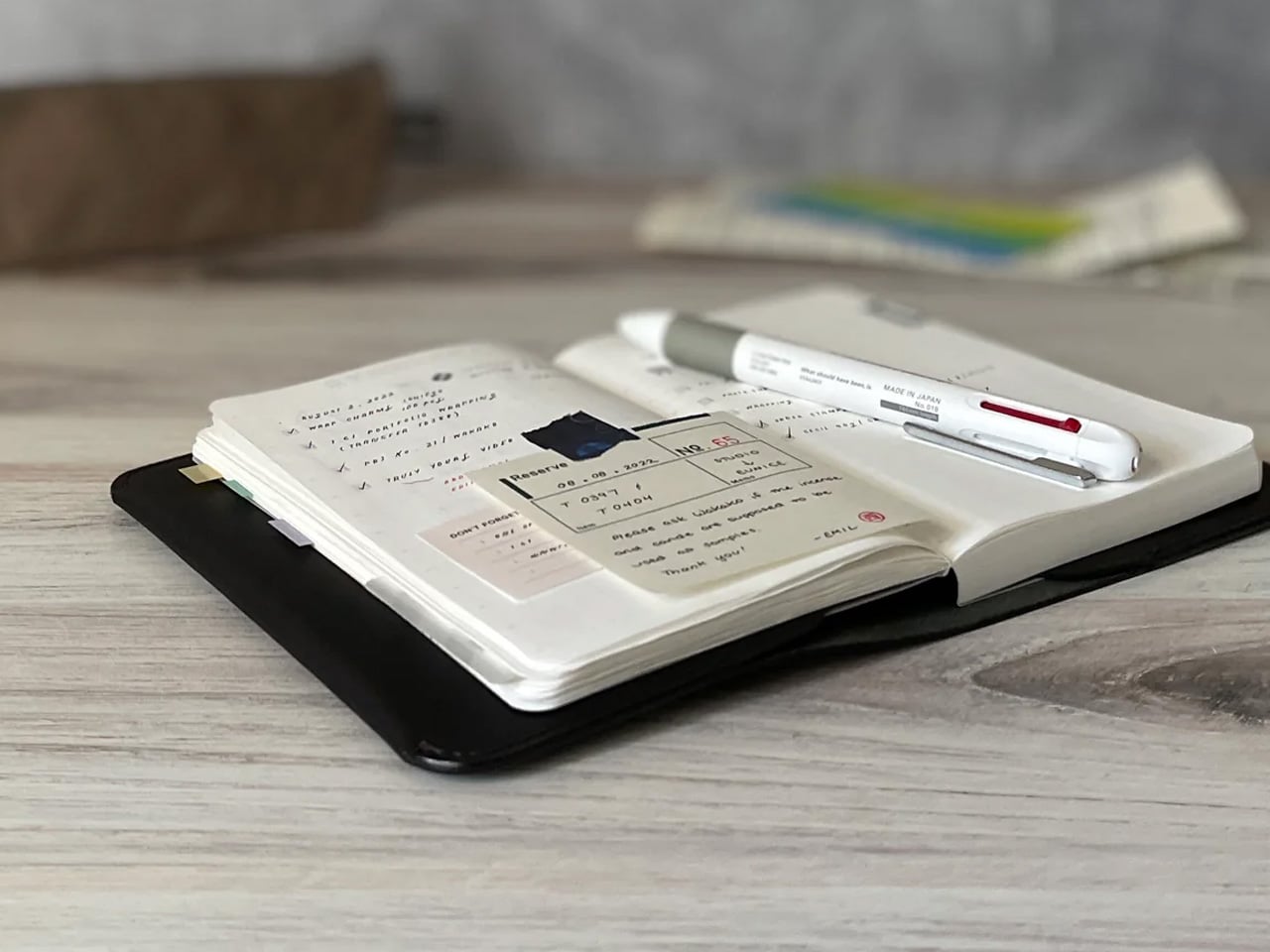
The Stalogy Editor’s Series 365 Days Notebook carries no branding on its exterior. That is a design decision, not an economy. Inside, 368 pages of cream-toned dot grid paper sit light enough that the notebook never feels precious, yet substantial enough to hold a full year of daily writing without any sense of running out. At A6, it fits a coat pocket without folding. The dot grid recedes under handwriting without disappearing, present enough to keep lines honest across a full page of notes.
Nothing about the Stalogy insists on a particular way of working. There are no monthly spreads pre-printed inside, no prompts in the margins, no year assigned to the cover before you open it. Bullet journaling, daily planning, freeform writing, and quick sketches all sit comfortably within its pages without any of those uses feeling like a compromise. Most stationery at this level quietly pushes a method. The Stalogy provides the space and steps aside, which turns out to be the more useful and respectful approach any notebook can take toward the person using it.
What we like
The bare cover carries no visual identity, making it entirely the user’s object from the moment it is opened rather than the manufacturer’s
368 pages at A6 gives a full year of writing without adding meaningful bulk to a coat pocket or daily carry
What we dislike
Date and time markings are printed at a small scale, making them difficult to read in low light or at a glance during a busy session
Heavier fountain pen inks will ghost through the thin paper, which limits compatibility for dedicated nib users
The Right Objects Make Coming Back Feel Like a Choice
There is a version of returning to a desk in late August that feels like a small defeat. The difference between that version and the other one is almost always the objects on the desk. When the scissors cut cleanly and feel right in the hand, when the stapler is always ready without refills to think about, when the notebook asks nothing beyond showing up, the desk becomes a different kind of place. The tools stop being obstacles and start being part of the reason to sit down.
These three earn their place not because they are impressive to look at but because they are right to use. The Stellar Edge Scissors bring precision to a category most people never think to question. The PaperLock removes a material from a process that never needed it. The Stalogy removes every obstacle between writing and the page. None of them asks for your attention. That absence of noise is the design principle Japan has been working toward for the better part of a century, and it is why coming back to the desk in September can feel entirely different from the September before.
Your laptop has two USB-C ports. Your desk needs dual monitors, wired internet, an external drive, a charger, and somewhere to plug in your SD card. So you have a dongle for the monitors, a second dongle for Ethernet, a third one that lives in your bag and migrates to the wrong bag constantly, and a power brick sitting on the floor because there is nowhere else for it to go. The setup works. It looks like a tech garage sale.
These five products fix that. Not by adding more stuff to your desk, but by replacing the specific things that cost you time and attention every single workday. Each one earns its footprint with a clear answer to a real problem. The HubKey handles your dongle situation and your physical controls. The OrigamiSwift handles your mouse. The Logitech MX Brio Ultra handles your camera. The Rocketbook handles your notes. The Rolling Clock handles your time zones.
1. HubKey Gen2
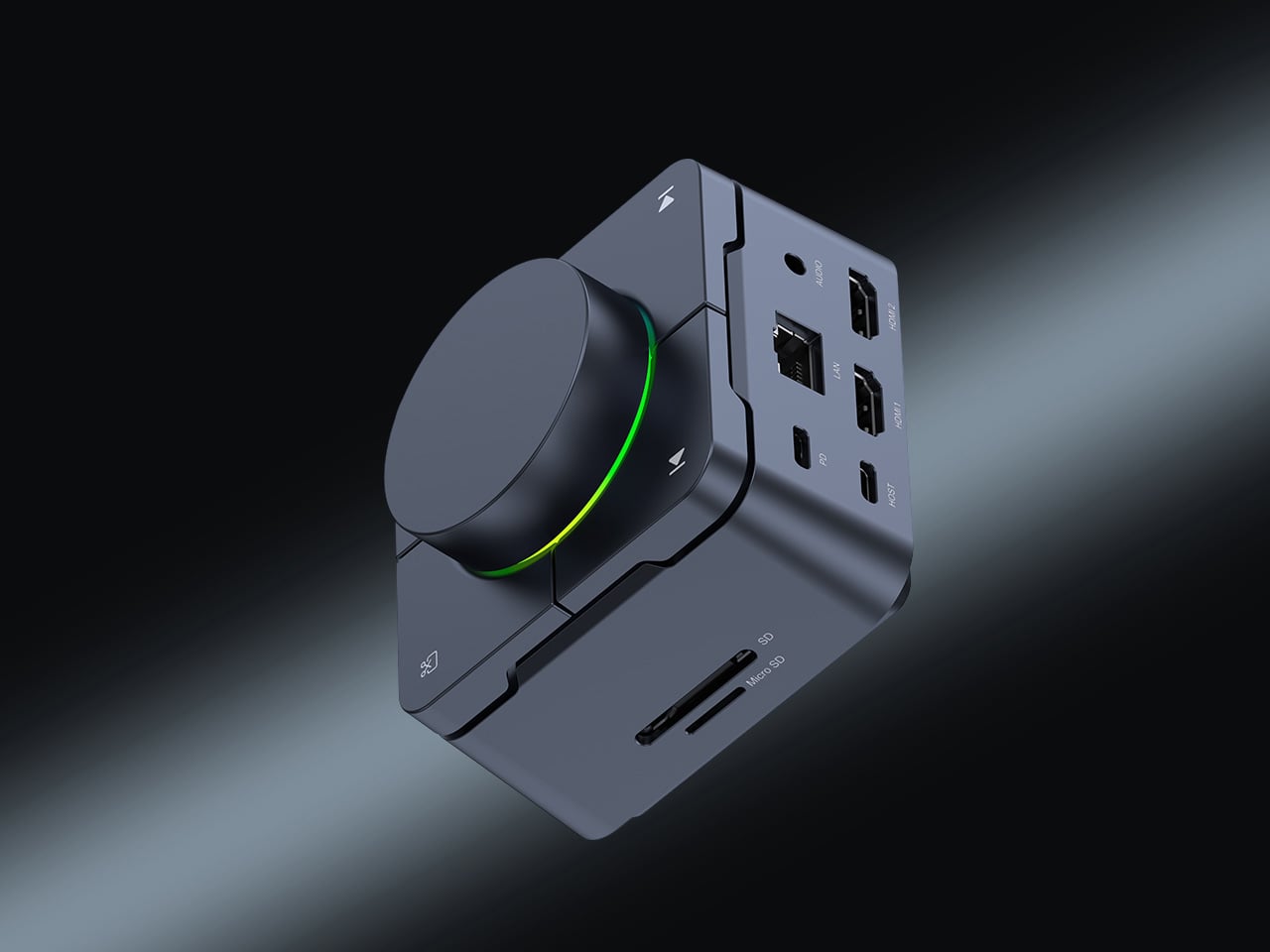
Count the adapters on your desk right now. There is a display dongle, a USB-A hub, an Ethernet adapter, and a charging brick that has lived on the floor for six months. The HubKey Gen2 replaces all of it with one cable back to your laptop. Dual 4K 60Hz HDMI outputs, 100W PD charging, 2.5 Gbps Ethernet, 10 Gbps data, SD and TF slots, and a 3.5mm jack — simultaneously, without throttling. Most hubs make you choose between charging and full performance. The HubKey does not.
What actually separates it is the top panel. Four shortcut keys and a central knob handle volume, mute, screen lock, and screenshots without touching your keyboard. It runs plug-and-play on Windows, macOS, Linux, and Steam Deck out of the box, with an optional driver that unlocks 170 preset combinations and a fully custom mode when you want it. Simple and immediate on day one. Deeper when you need it.
What we like:
Dual 4K 60Hz from a single cable to your laptop is the feature that ends the one-monitor compromise for anyone who has been putting off a second display.
The physical knob and shortcut keys turn volume adjustment and screen privacy into a hand gesture instead of a keyboard hunt. Once you have a physical mute button, software mute buttons feel like a step backward.
What we dislike:
The shortcut customization is deep enough to be worth exploring and slightly too deep to set up quickly. Budget 20 minutes before your first real workday with it.
2. OrigamiSwift Folding Mouse
If you travel with a laptop, you own two mice. The real one on your home desk. And the compact, slightly uncomfortable one in your bag that you use everywhere else and quietly resent by 2 pm. The OrigamiSwift folds flat to 4.5mm, which is thin enough to slip between notebook pages without leaving a visible bump. It unfolds in under half a second into a full-sized ergonomic shape that sits naturally in your hand. At 40 grams, it weighs less than your wallet.
The tracking precision has nothing to do with its size. The Bluetooth connection is reliable. The fold mechanism feels deliberate rather than fragile, which matters because it is the interaction you repeat every time you sit down. At $85, it costs less than most dedicated desktop mice and does something none of them can: it works equally well in your carry-on and at your home desk without asking you to choose between comfort and portability. The folding mouse has been a category of compromises for years. This one is not.
The ergonomic angle on deployment feels solid and settled, not provisional. It does not flex or wobble under a firm grip the way folding products tend to when they meet any real resistance.
The sub-half-second flip is the kind of interaction that registers the first time and then disappears into muscle memory by day three.
What we dislike:
The 40-gram weight takes a few days to stop noticing if you are coming from a heavier desktop mouse. It is not uncomfortable, just different, and your hand knows it before your brain stops caring.
Bluetooth only means no wired fallback, which matters on the rare occasion your connection cuts out mid-deadline.
3. Logitech MX Brio Ultra
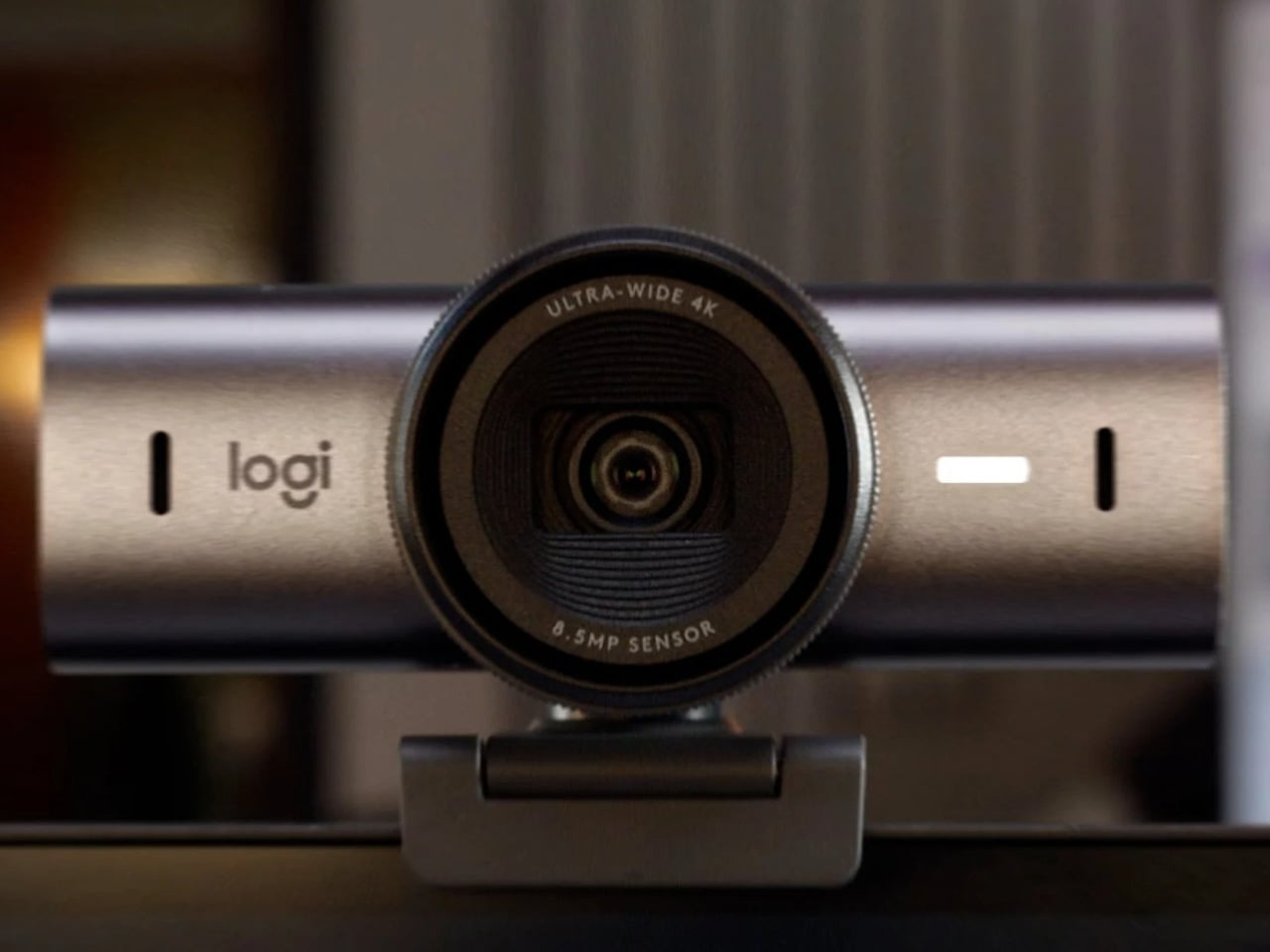
At some point this year, you saw your own face in the corner of a video call, and it looked like you were dialing in from a parking structure. Flat, gray, slightly soft around the edges. That is your built-in laptop webcam doing its best with a sensor roughly the size of a fingernail. The Logitech MX Brio Ultra runs a 4K sensor with AI-powered auto-framing, and the gap between what it produces and what your laptop camera produces is not subtle. It is the difference between looking like you prepared for the call and looking like you rolled in from the hallway.
Logitech is the default answer for a reason. The MX Brio Ultra is what Wirecutter recommends, what the r/homeoffice community lands on after every comparison thread, and what most people in a serious remote setup are already running. The AI framing tracks you as you move and keeps the shot composed without any input from you. At $200, it sits at the top of the mainstream webcam market, and it earns that position by being the camera you set up once, forget about, and still look good on every call six months later. No fiddling with tracking zones, no hour in settings. It works the way a Logitech product always works: immediately and without drama.
What we like:
4K output with AI auto-framing is the combination that covers every remote work scenario, from a one-on-one call to a presentation with 50 people watching your frame.
The setup experience is genuinely plug-and-play. If you have spent time configuring other AI webcams before a call, the MX Brio Ultra will feel like a relief.
What we dislike:
At $200, it is the most expensive item on this list, and the price is harder to justify if your calls are mostly audio-only or your desk faces a window with no lighting control.
The design is competent rather than interesting. It sits on your monitor and disappears, which is fine, but it does not add anything to how your desk looks the way some of the other picks here do.
4. Rocketbook Reusable Sticky Notes
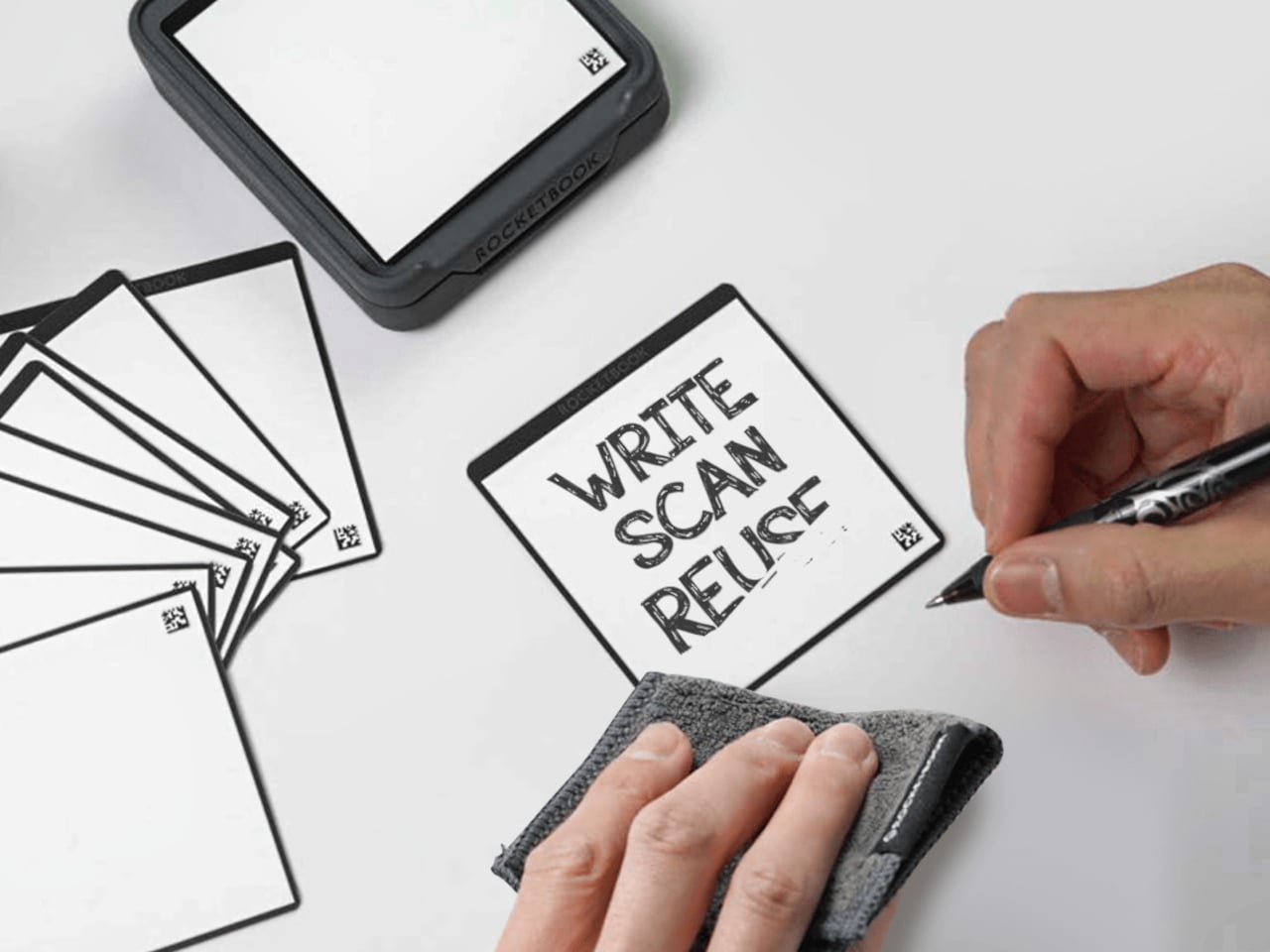
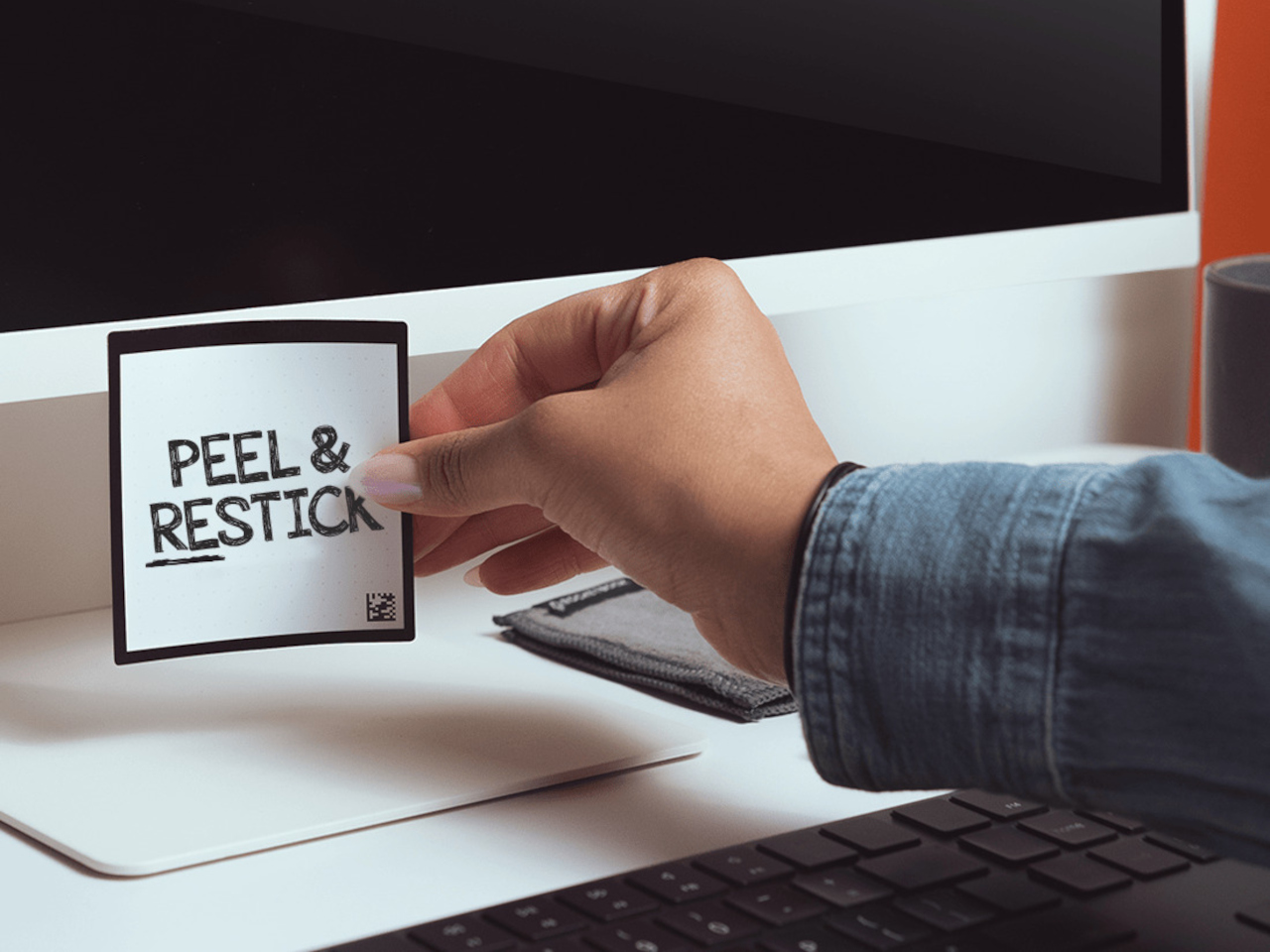
You have a stack of Post-its on your desk right now that you bought six months ago, used about a third of, and will eventually throw away when they stop sticking. Then you will buy another stack. Then another. The Rocketbook Reusable Sticky Notes break that cycle by doing something Post-its never could: you wipe them clean with a damp cloth and start over. Same note. Indefinitely.
The material feels like real paper, which matters more than it sounds. Other reusable note products go rigid and plastic and remind you every time you pick one up that you are using something weird. The Rocketbook version is thin and flexible, and the writing experience with a Pilot FriXion pen is close enough to a regular sticky note that the novelty wears off quickly and the habit takes over. The adhesive strip rinses clean and resticks the same way, so the note goes back on the monitor, the cabinet, or the edge of your desk exactly where you left it. The Rocketbook app photographs each note, transcribes your handwriting, and sends it to whatever cloud storage you already use, which means the thought is archived before you wipe the surface. You get the speed of analog and the permanence of digital without running an AI meeting bot or opening another productivity app.
What we like:
The paper-like feel is the detail that makes this a daily habit rather than a novelty. It does not feel like writing on a whiteboard, and that distinction is what separates it from every competing reusable note product.
The app’s automatic transcription and cloud sync mean wiping the note clean is not losing the note. That confidence changes how freely you actually use them.
What we dislike:
You are locked into Pilot FriXion pens, full stop. Your favorite pen does not work here, and if Pilot ever discontinues the FriXion line, the notes become decorative squares.
The wipe-to-erase process requires a damp cloth nearby, which is one more thing your desk needs to accommodate. In a dry climate or a cold office, the cloth dries out faster than you expect.
5. Rolling World Clock
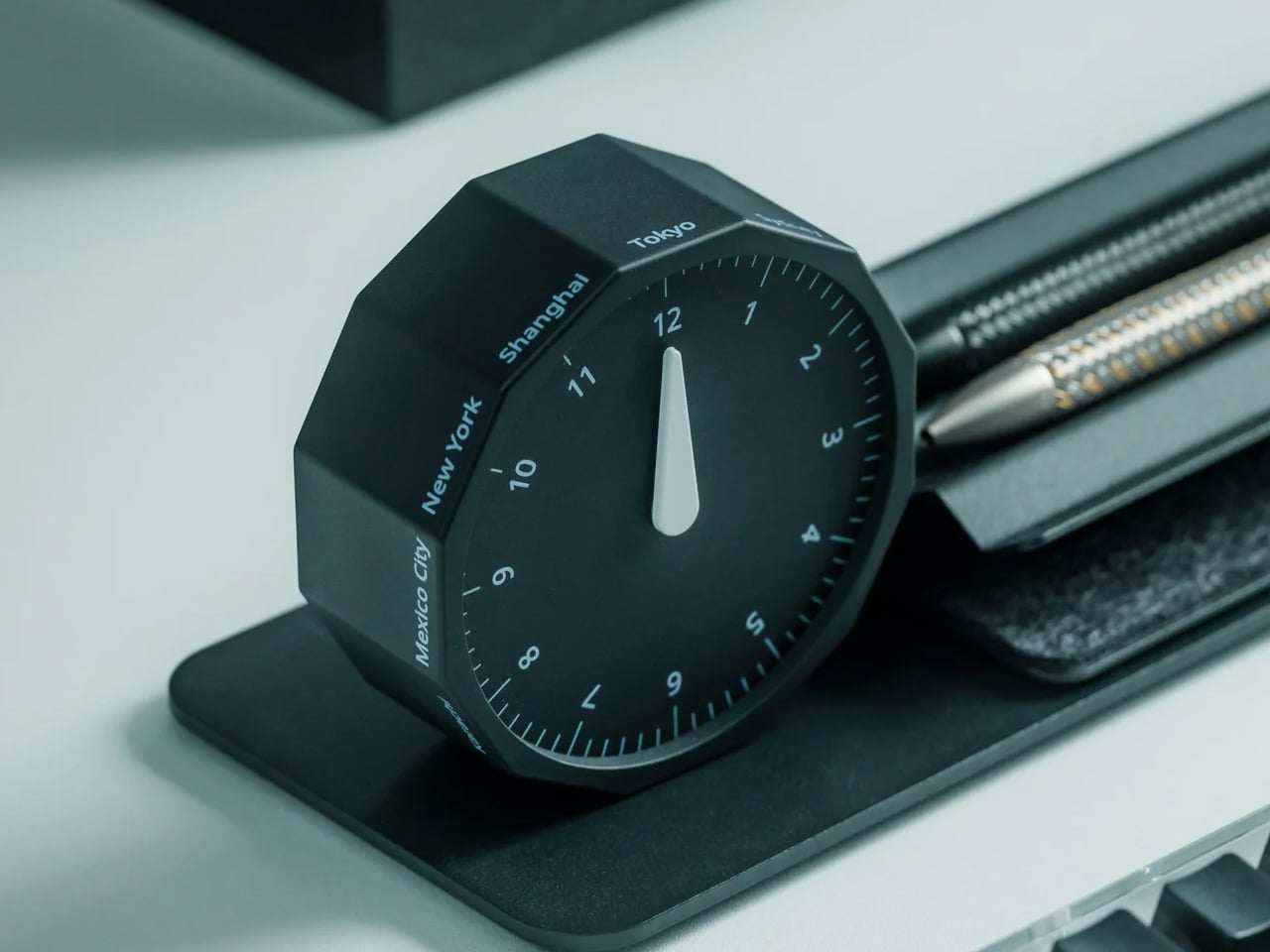
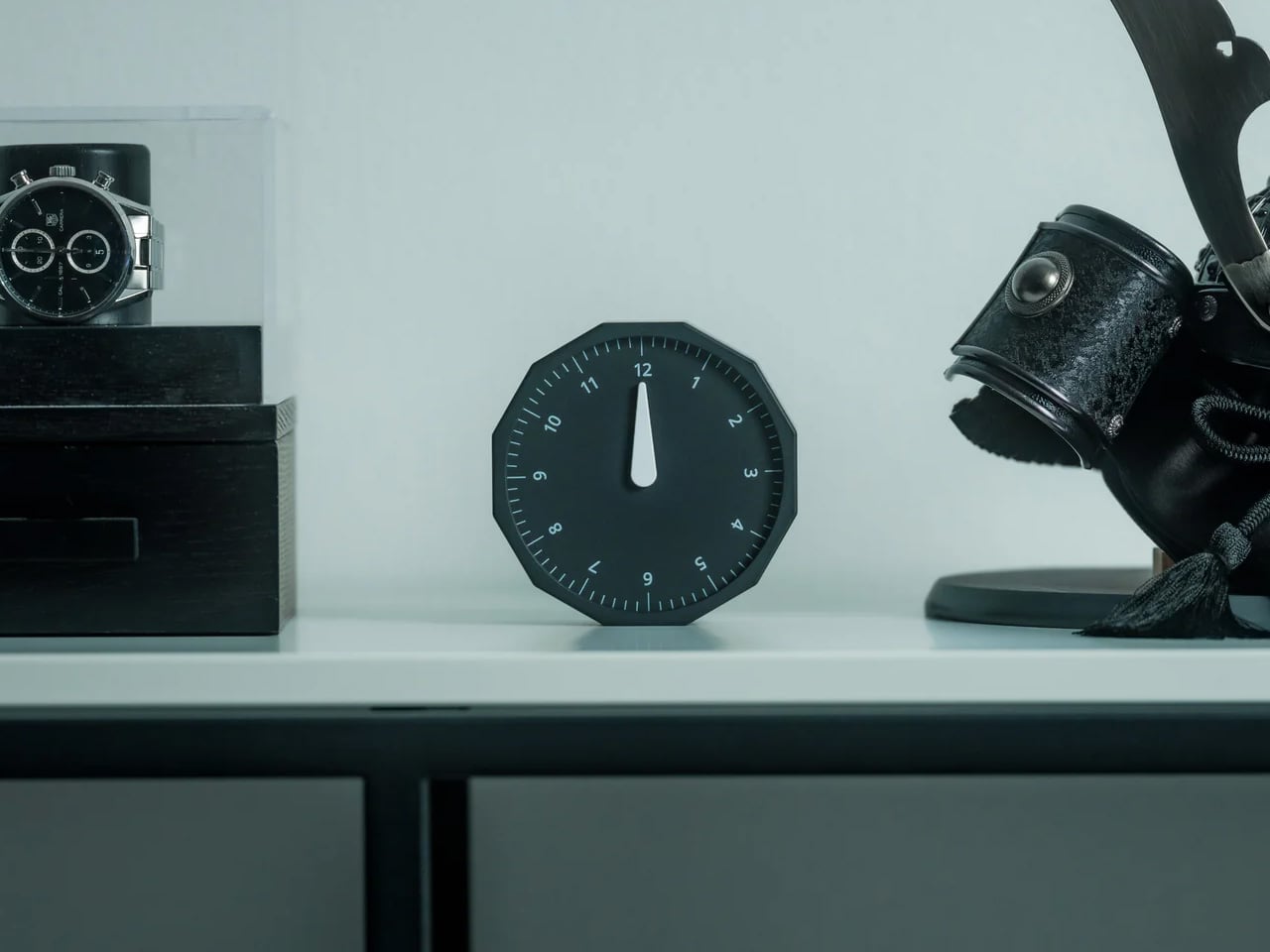
Before every Slack message you send to someone on another continent, you do the math in your head. Or you switch tabs. Or you pull up a world clock widget and then forget what you were doing before you opened it. The Rolling World Clock removes that entirely. It sits on your desk and shows you the time in every zone you track, physically, without touching a screen. You glance at it the way you glance at your coffee cup. No context switch, no arithmetic, no interruption.
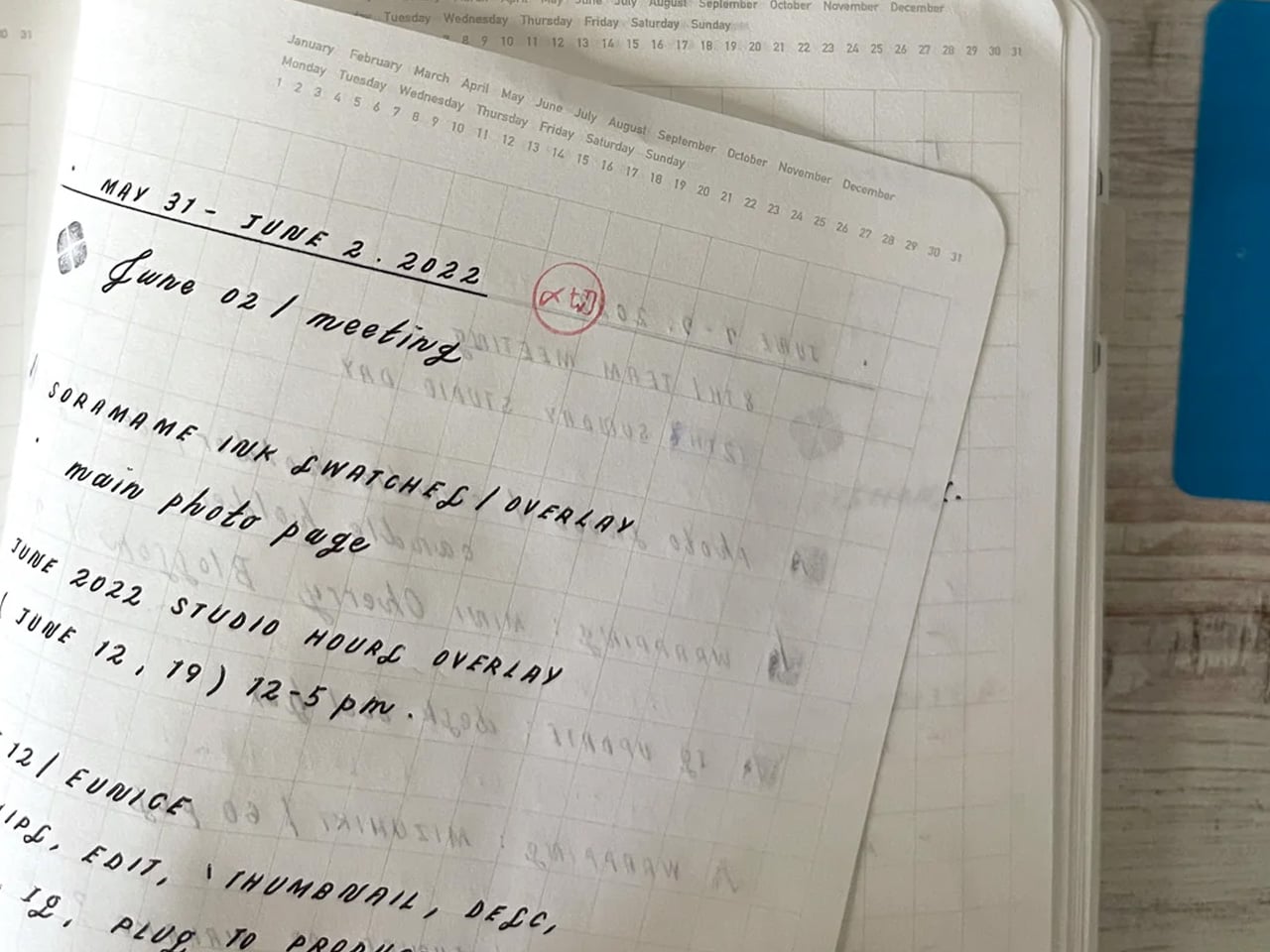
At $49, this is the least expensive thing on this list and the one with the fastest daily return. The rolling display mechanism is considered, the design language sits cleanly next to other deliberate desk objects, and a physical clock requires no charge, no connection, and no subscription to do its job. That combination is rarer than it should be in 2026. The only maintenance it asks for is a manual adjustment twice a year for daylight saving time, which you were going to forget anyway, but at least now you have something specific to blame.
The physical format makes world time a peripheral-vision experience rather than an active one. You absorb the information without choosing to look for it, which is how a good desk tool should work.
It reads as chosen rather than defaulted to, and that changes how the rest of your desk looks by association.
What we dislike:
Manual daylight saving adjustment is a real inconvenience that arrives twice a year and catches you off guard both times. A clock that is an hour off is worse than no clock.
Works best when you are tracking two or three time zones. If your work spans more than that, a digital solution handles the volume more honestly.
Five Products. One Decision Each.
Most home offices are assembled rather than designed. You know this because you built yours one order at a time, and the result is a surface full of things that coexist without quite agreeing. These five products are not a redecoration. They are five specific decisions: what your desk connects to and how you control it, how your mouse travels, how you look on a call, where your thoughts actually go, and how you read time without leaving a screen.
Together they cost less than most standing desks and do considerably more. The HubKey alone replaces a pile of adapters and adds physical controls your keyboard never had. The Logitech MX Brio Ultra makes your next video call the last time anyone asks if your connection is bad. The OrigamiSwift, the Rocketbook, and the Rolling Clock handle the small frictions that accumulate across a full workday without ever announcing themselves. That is what justifying every dollar actually looks like. Of everything on this list, the OrigamiSwift is the one I reach for first every single morning — not because it is the most impressive spec on paper, but because it removed a daily annoyance I had accepted as permanent. Turns out the right mouse for your desk and your bag was always the same mouse; it just needed someone to fold it properly.
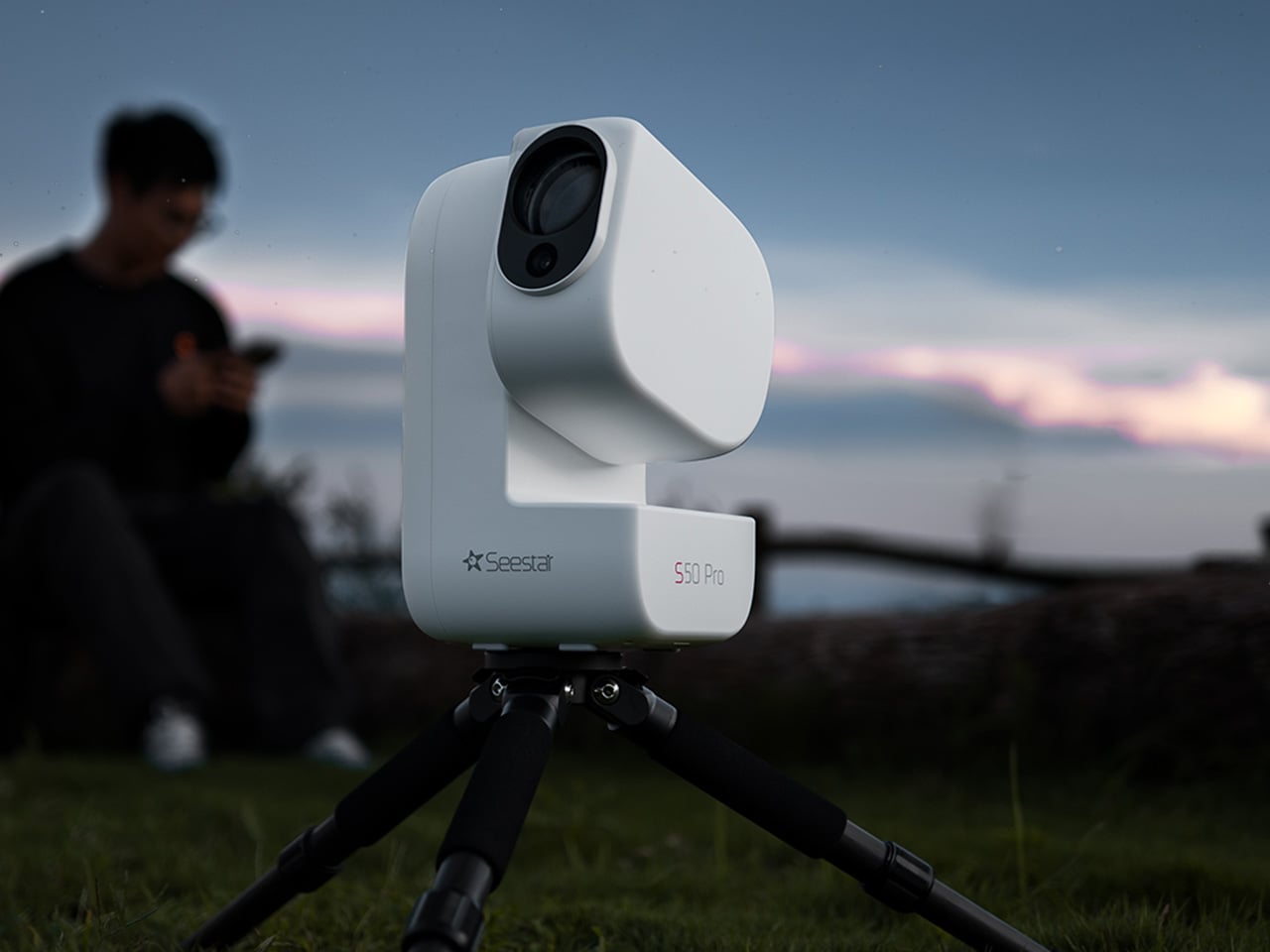
Astrophotography has always had a bit of a reputation problem. Getting a decent image of a nebula or galaxy typically means wrestling with a telescope, an equatorial mount, a dedicated camera, and enough cables to open a small hardware store. The ZWO Seestar S50 Pro changes that entirely, packing all of it into one tidy package you can carry out on a clear night.
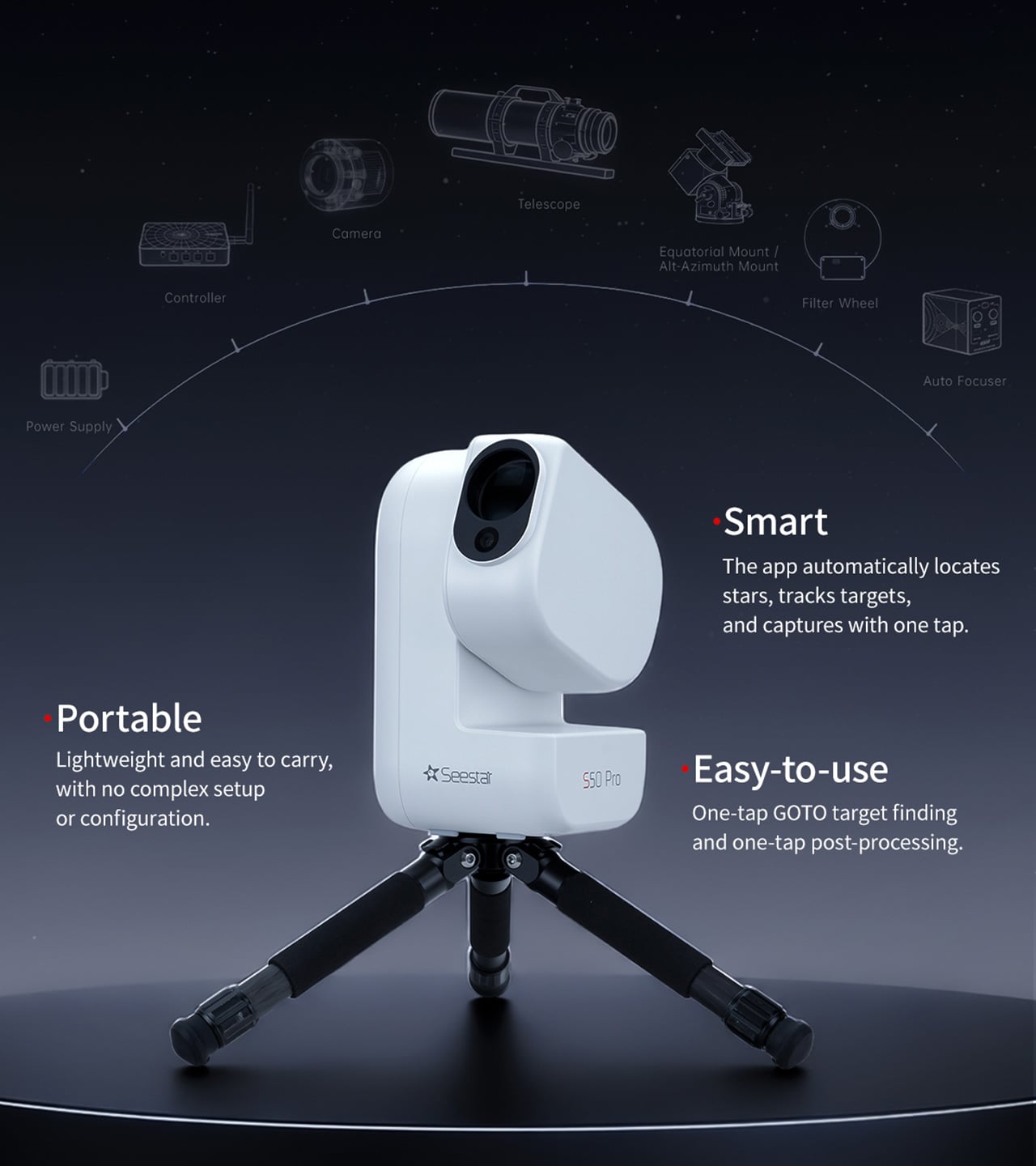
At 2.8kg and folded down to roughly the size of a small camera bag, the S50 Pro is genuinely portable in a way that traditional astronomy rigs aren’t. There are no power cables to run, no separate computer to boot up, and no star alignment ritual to sit through. You just set it down on a tripod, open the app, and you’re already looking at the sky.
The optical heart of the Seestar S50 Pro is a four-element apochromatic lens built with extra-low dispersion glass, which is a meaningful upgrade that most beginner telescopes skip entirely. That 50mm aperture gathers substantially more light than the 30mm systems typically found at this price range, which means fainter structures become visible, and star shapes stay clean and round rather than bleeding into soft halos at the edges.
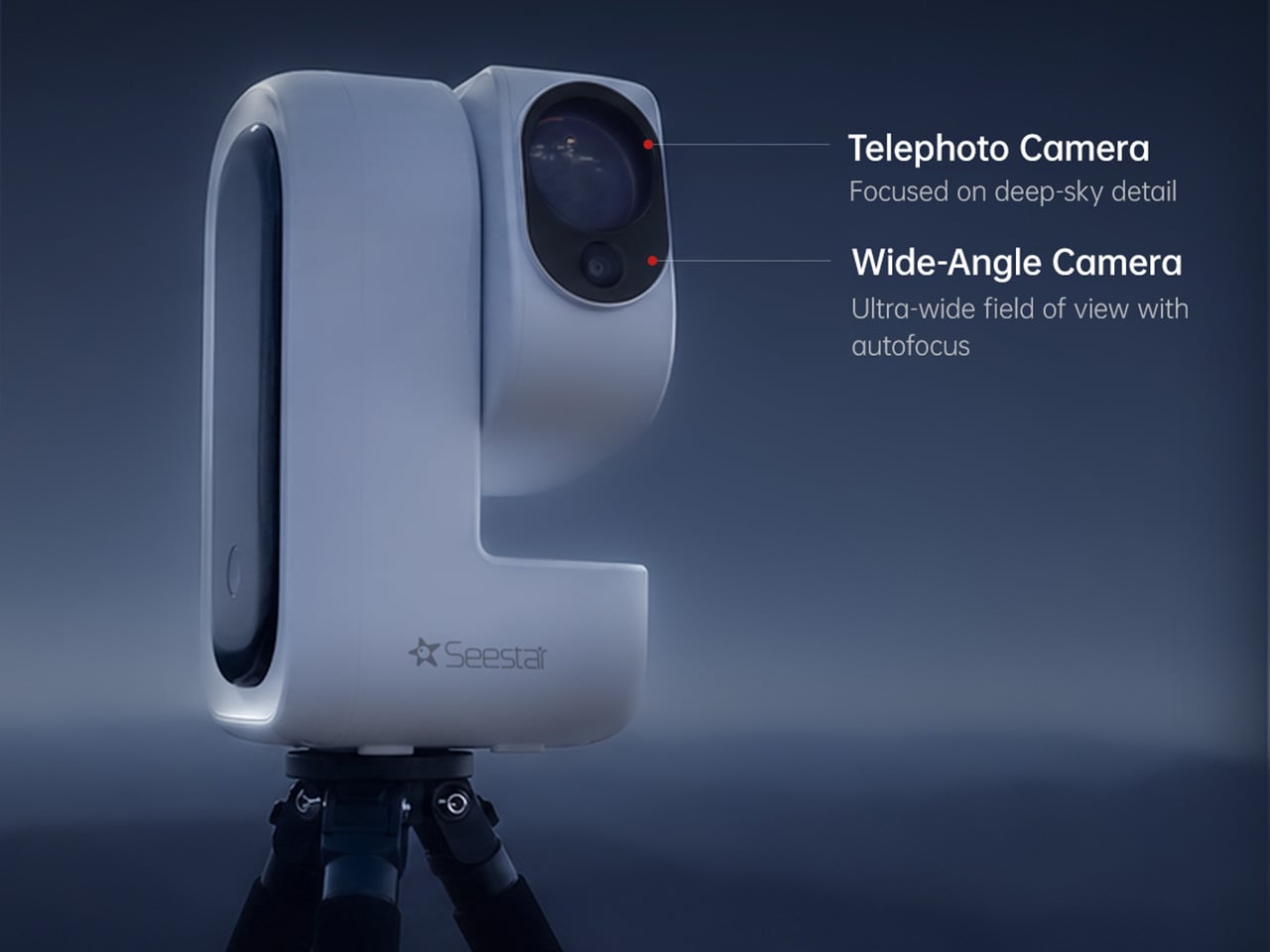
What makes the Seestar S50 Pro genuinely different from its predecessor is the dual-camera system. A telephoto camera with an 880mm-equivalent focal length sits alongside a wide-angle unit with a 63-degree field of view, and both cameras shoot at 4K resolution. The telephoto hunts for deep-sky details, while the wide-angle takes in the full sweep of the night sky above it.
That’s also where the Seestar S50 Pro makes a compelling case for shooting from cities or suburbs. A built-in triple filter system, including a dual-band light pollution filter targeting wavelengths specific to nebulae, pulls usable detail from skies that would otherwise wash everything out. A dark frame filter handles noise in longer exposures, and a magnetic solar filter handles the daytime shift.
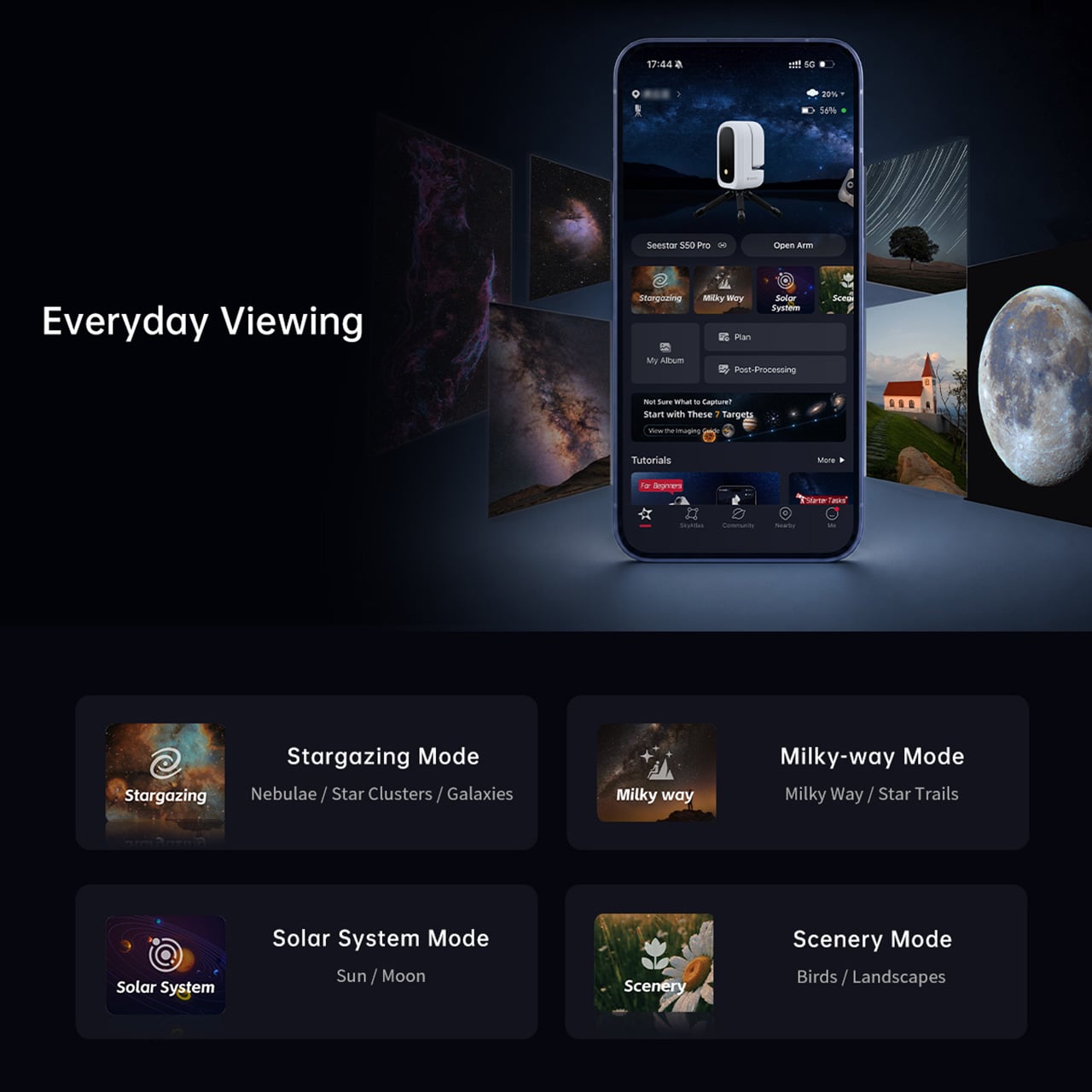
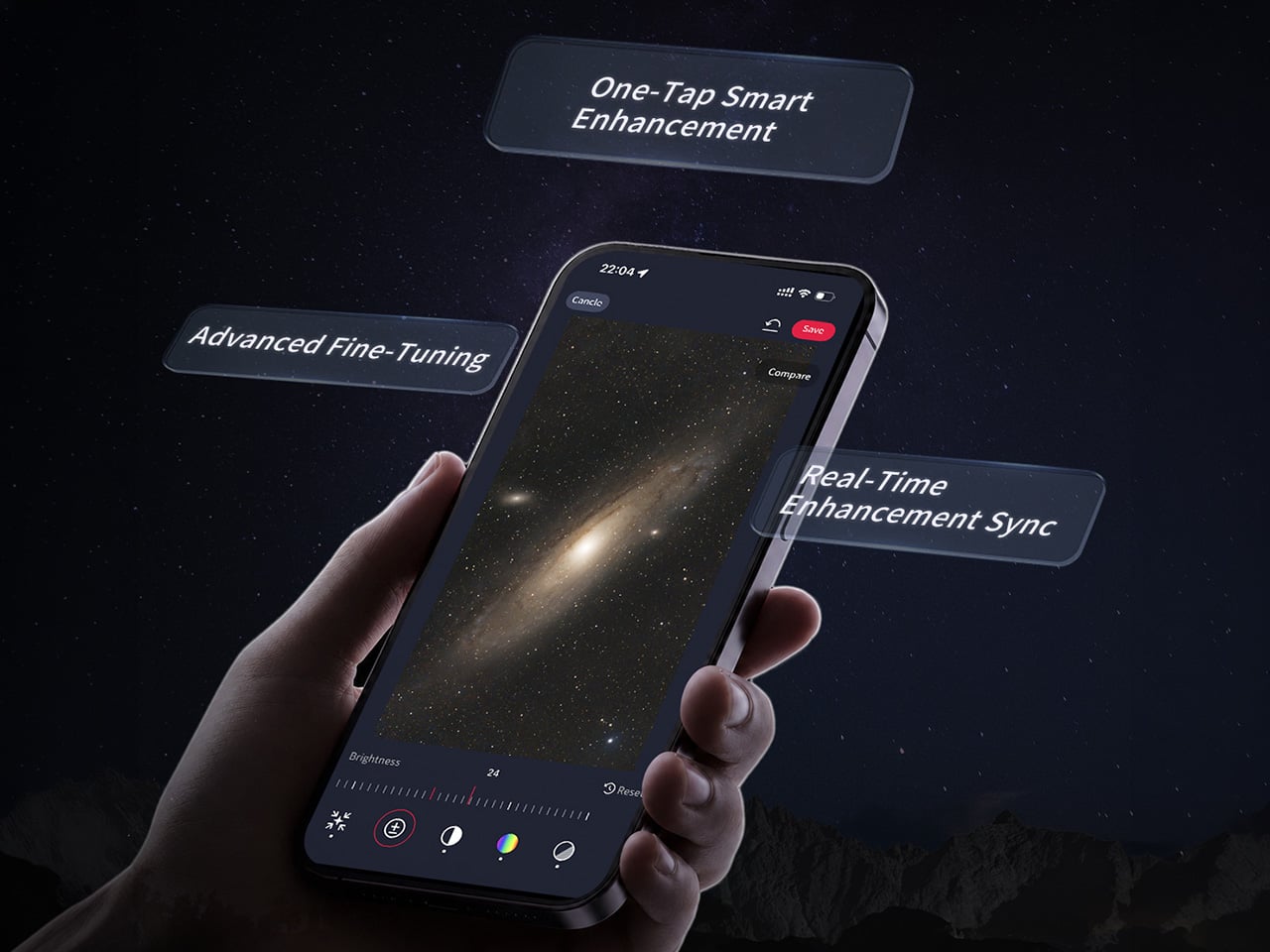
The Seestar app, which runs the whole operation, doesn’t ask you to know much astronomy to get started. You tap a target, and the telescope finds it, locks on, and begins stacking exposures automatically. There’s also an AI assistant you can simply talk to, naming the object you want to see, and it handles positioning and capture without any further input from you.
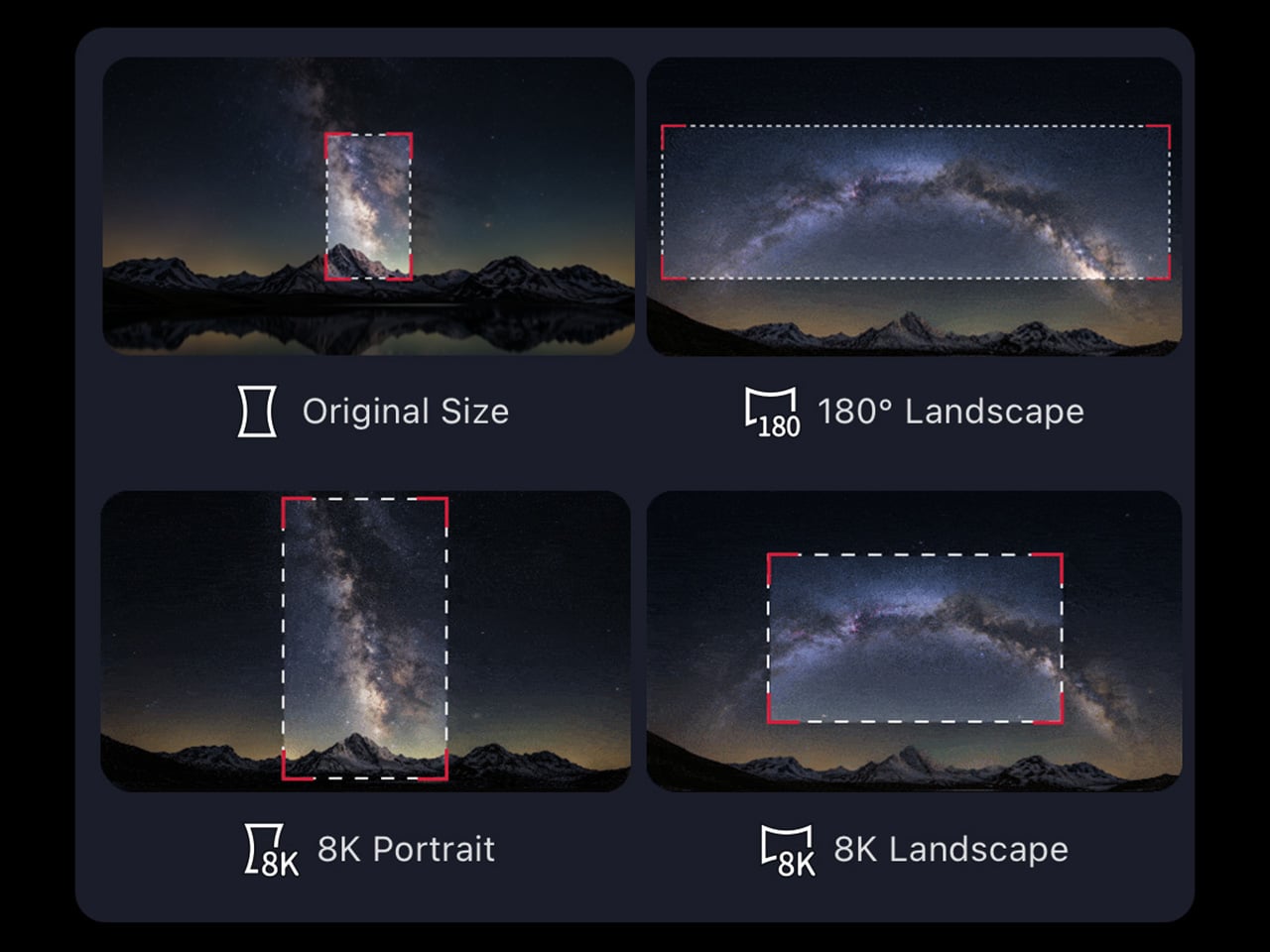
The wide-angle camera is where the more visible creative benefits live. A single tap is all it takes to stitch a complete Milky Way arch, with the device planning and capturing every frame on its own. Star trail sessions convert automatically into videos showing the sky in motion over time, and telephoto mosaic stitching can push images all the way to 8K resolution.
The S50 Pro doesn’t put itself away when the sun comes up, either. The telephoto camera, with its 880mm-equivalent reach, works just as well for birdwatching, distant landscapes, or capturing rare solar events with the included magnetic solar filter. It’s a surprisingly capable long-range daylight imaging device that transitions naturally into a serious astrophotography rig once the sky goes dark.
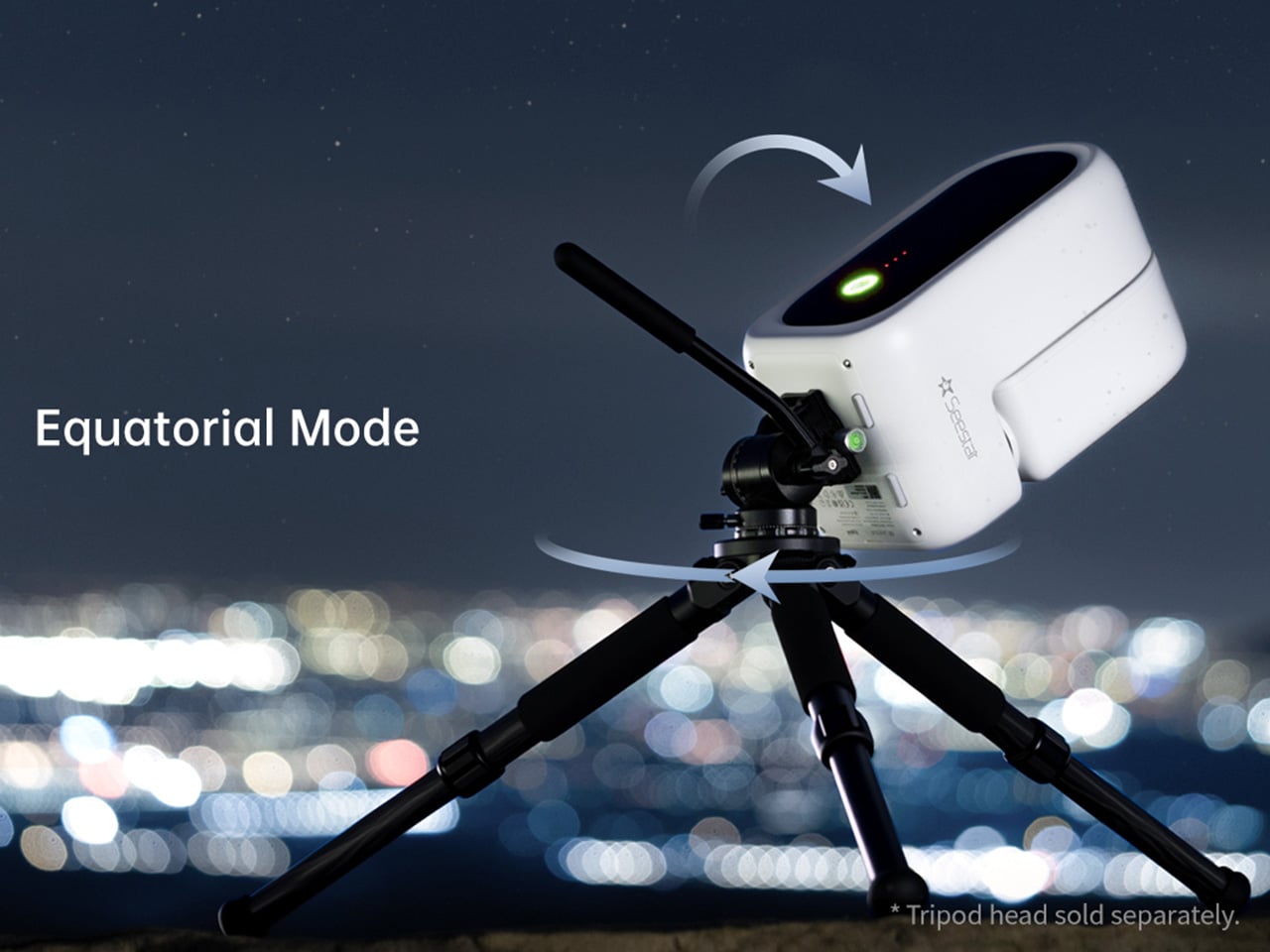
The 10,000mAh battery keeps the S50 Pro running for up to nine hours, enough to outlast most late-night sessions without a power bank nearby. Underpinning the whole tracking system is a zero-backlash precision drive that holds steady even when the wind gets involved, which is particularly useful in equatorial mode, where individual exposures can stretch to 60 seconds. The Telescope Network feature lets you control the device remotely, which means a cloudy local sky doesn’t have to end a session if the telescope is stationed somewhere clearer.
Nine hours of battery, a footprint that fits in a backpack, and no manual alignment to wrestle with before you can start shooting. That’s the version of astrophotography the Seestar S50 Pro is making a case for, and it’s a convincing one. The sky has always been worth looking at. The S50 Pro just makes it considerably harder to run out of excuses not to.
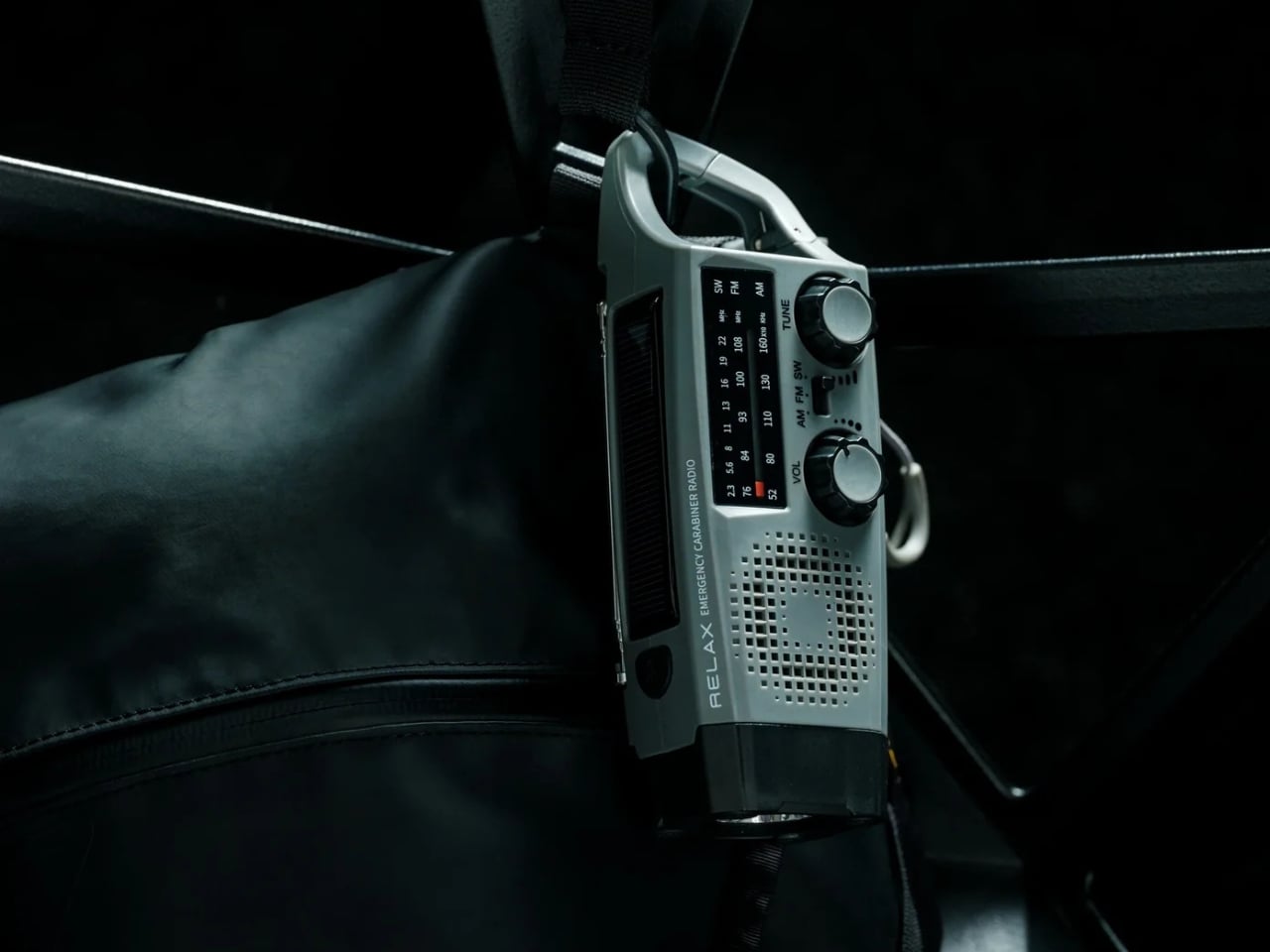
We’ve gotten so used to having our smartphones as our companions for everyday life that we don’t think of having other devices attached to our person. But what if you’re in an area where your phone is basically useless due to lack of cellular signal? Or what if you’re in an emergency situation where your phone is out of juice and you need to stay informed? The Clip&Go Radio will be very handy in such situations.
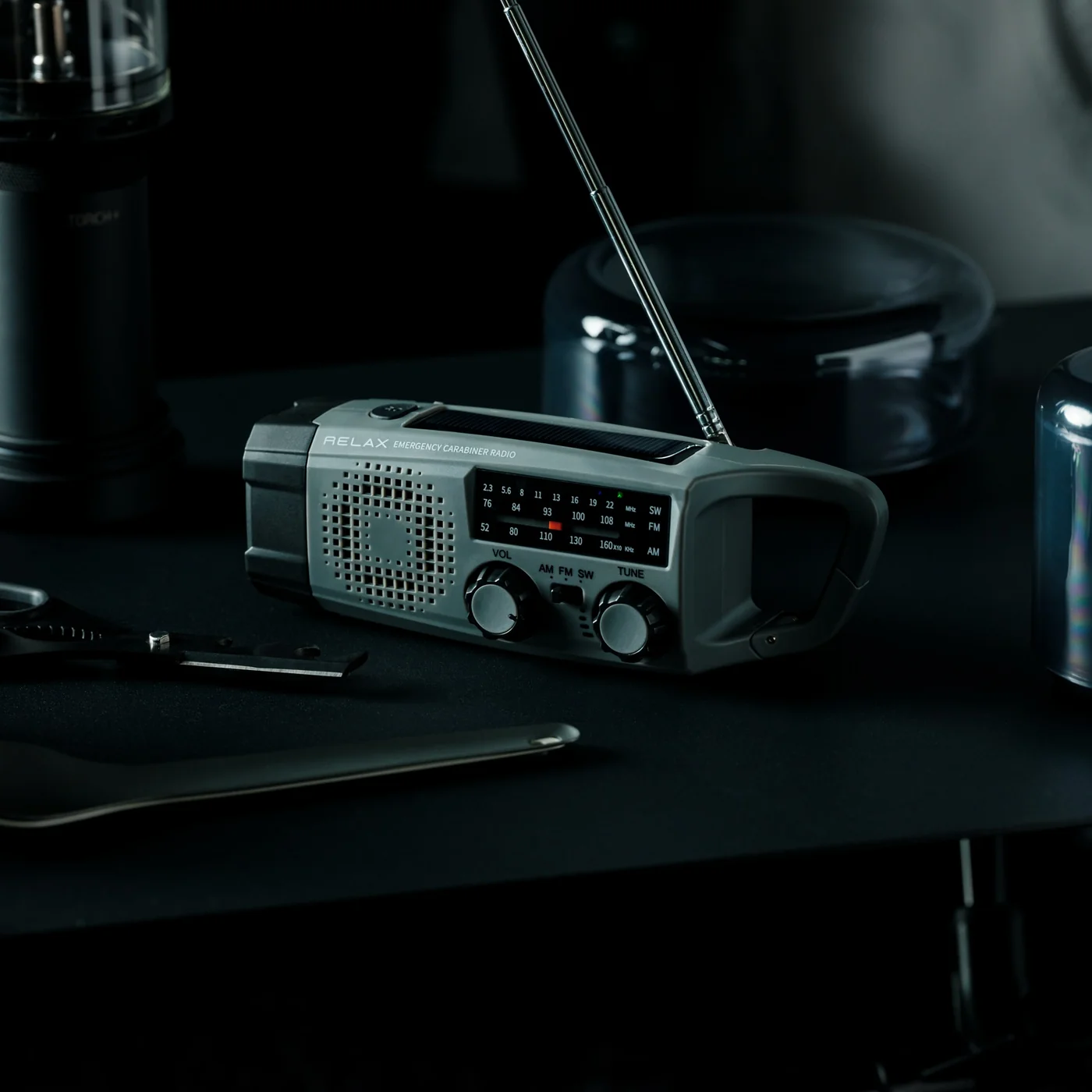
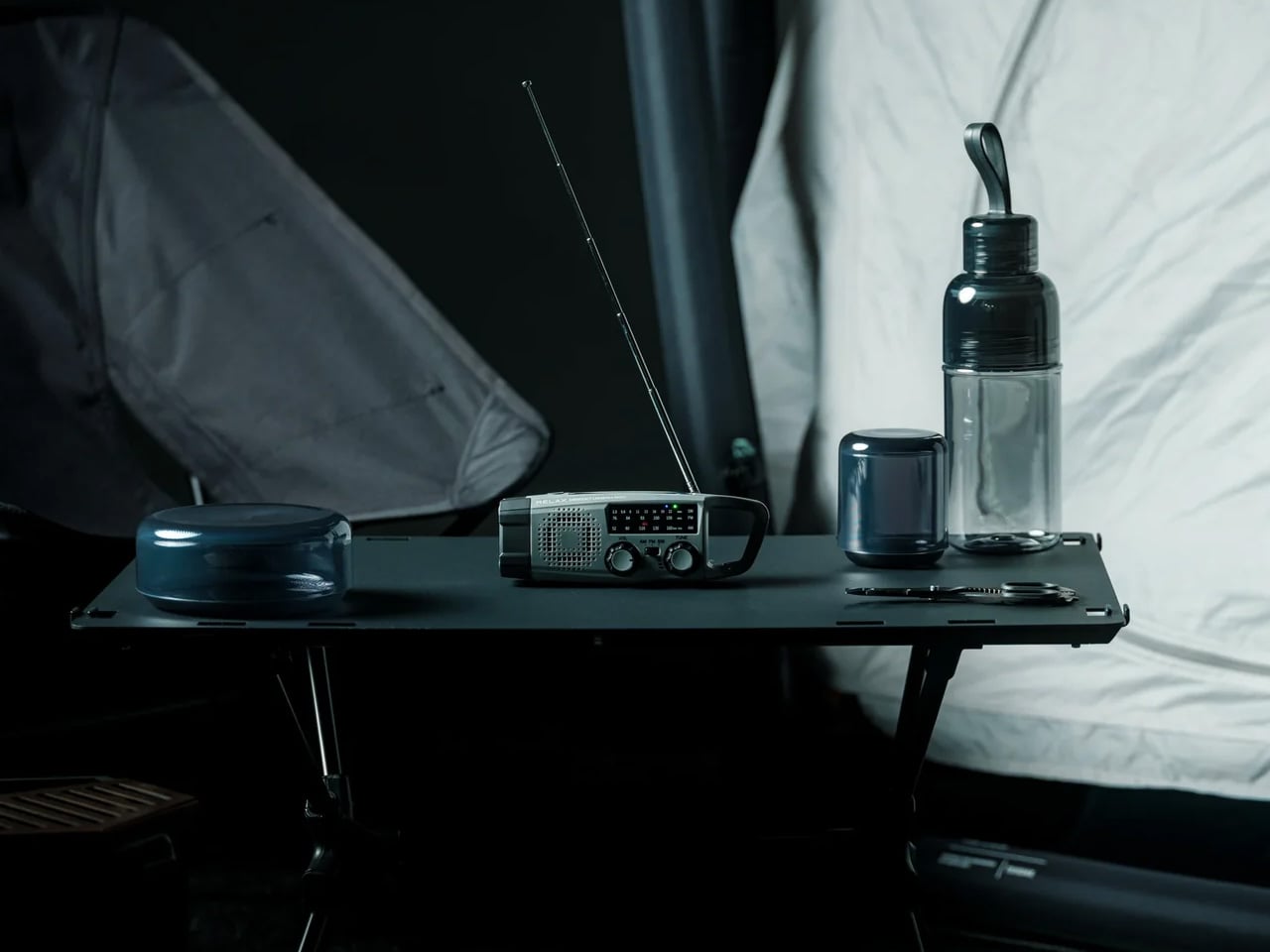
This 5-in-1 tool can be clipped to your bag or to your pants or shirt, and it’s ready to do its job whenever you suddenly need it. It mainly serves as a radio for your music and your news, but it’s also a power bank to charge your phone, a flashlight to light up the way, and an SOS alarm for those emergencies when you need to catch others’ attention.
Emergency radios have been around for some time, especially for those who live in areas where emergency situations like wildfires, hurricanes, and tornadoes can pop up occasionally. But over the years, many have stopped using them because they’re too heavy or inconvenient to bring around. The Clip&Go Radio wants to solve that problem by having a design that lets it live on your backpack or in your pocket, close enough to grab at a moment’s notice.
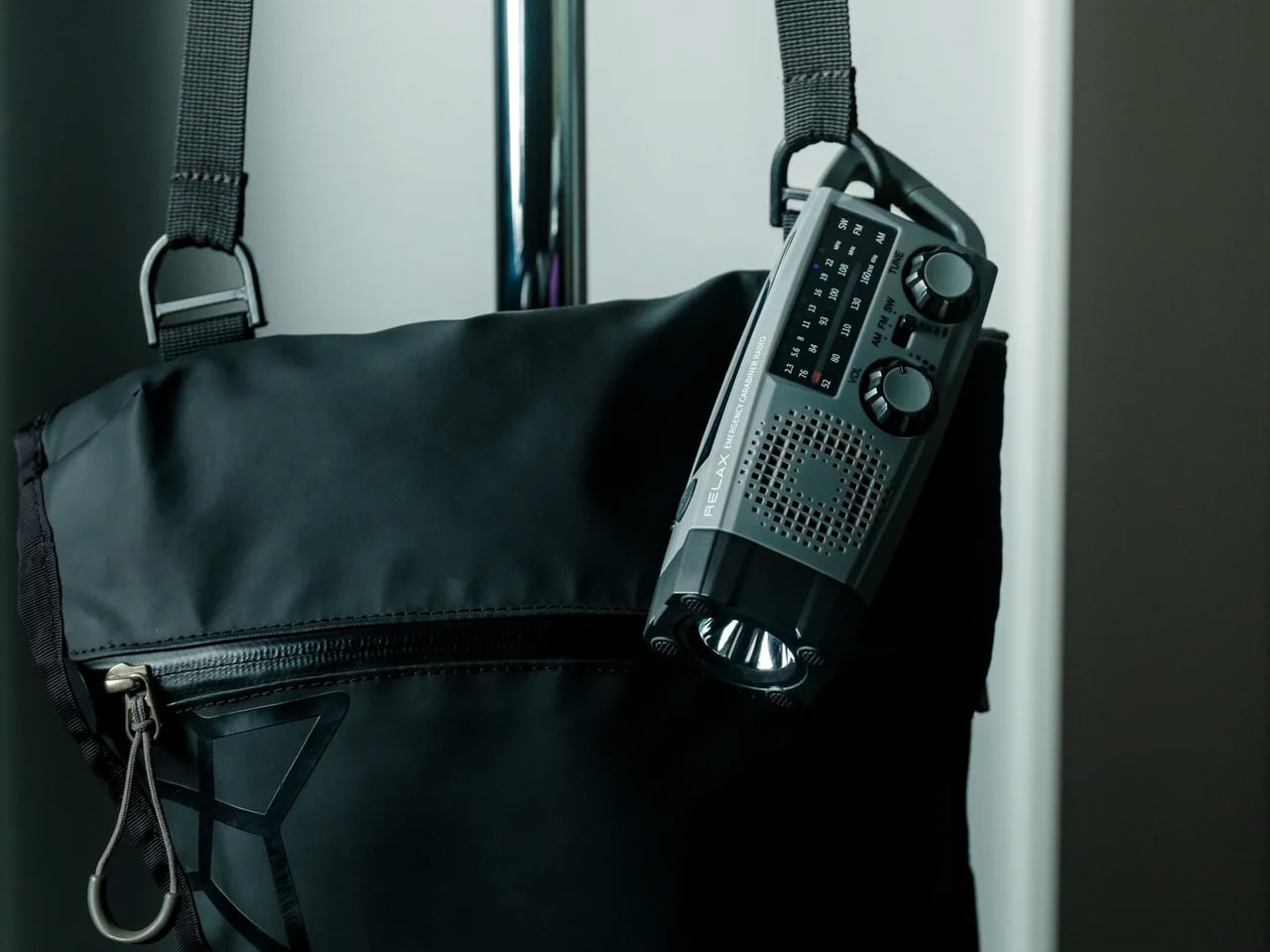
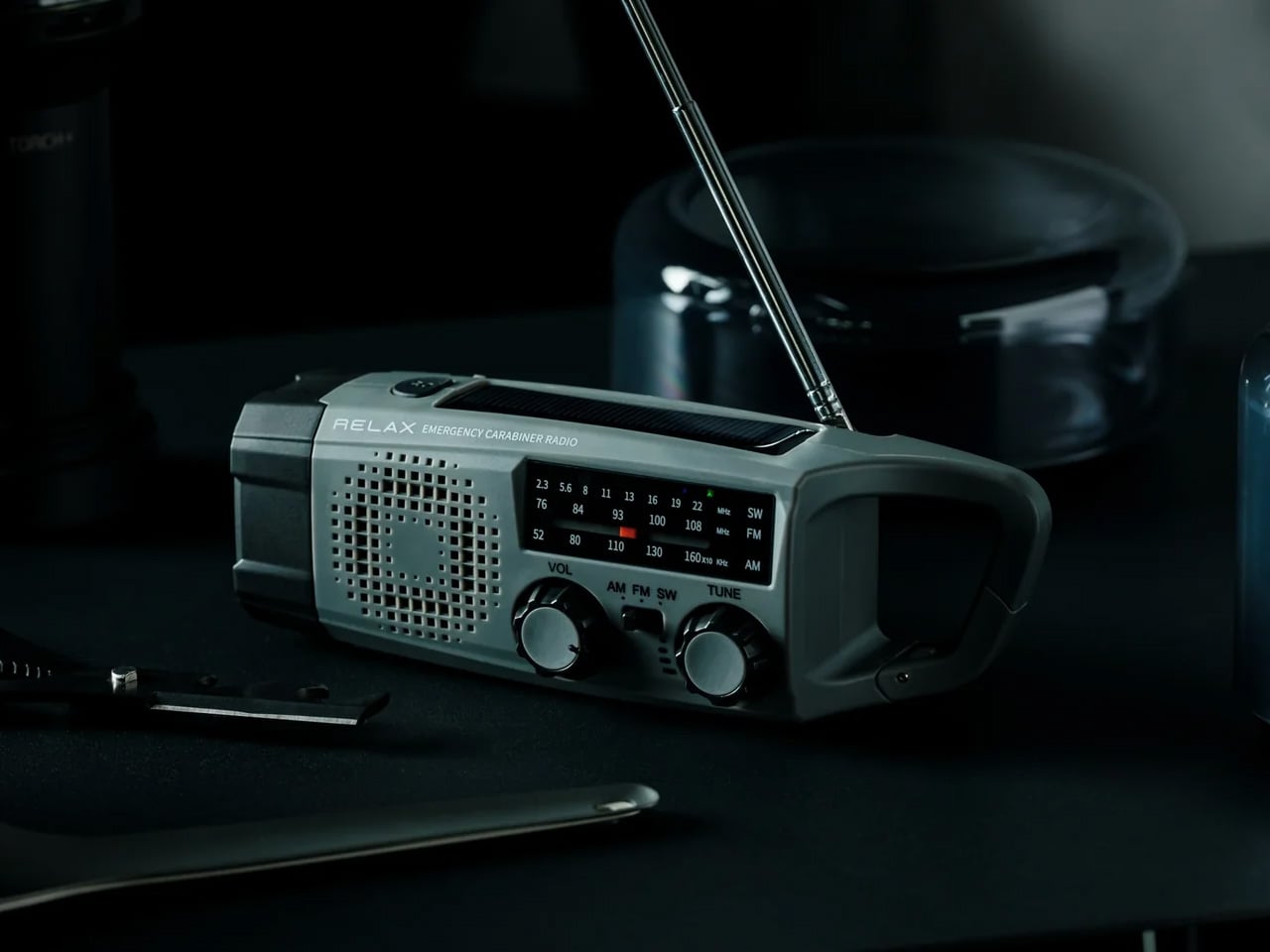
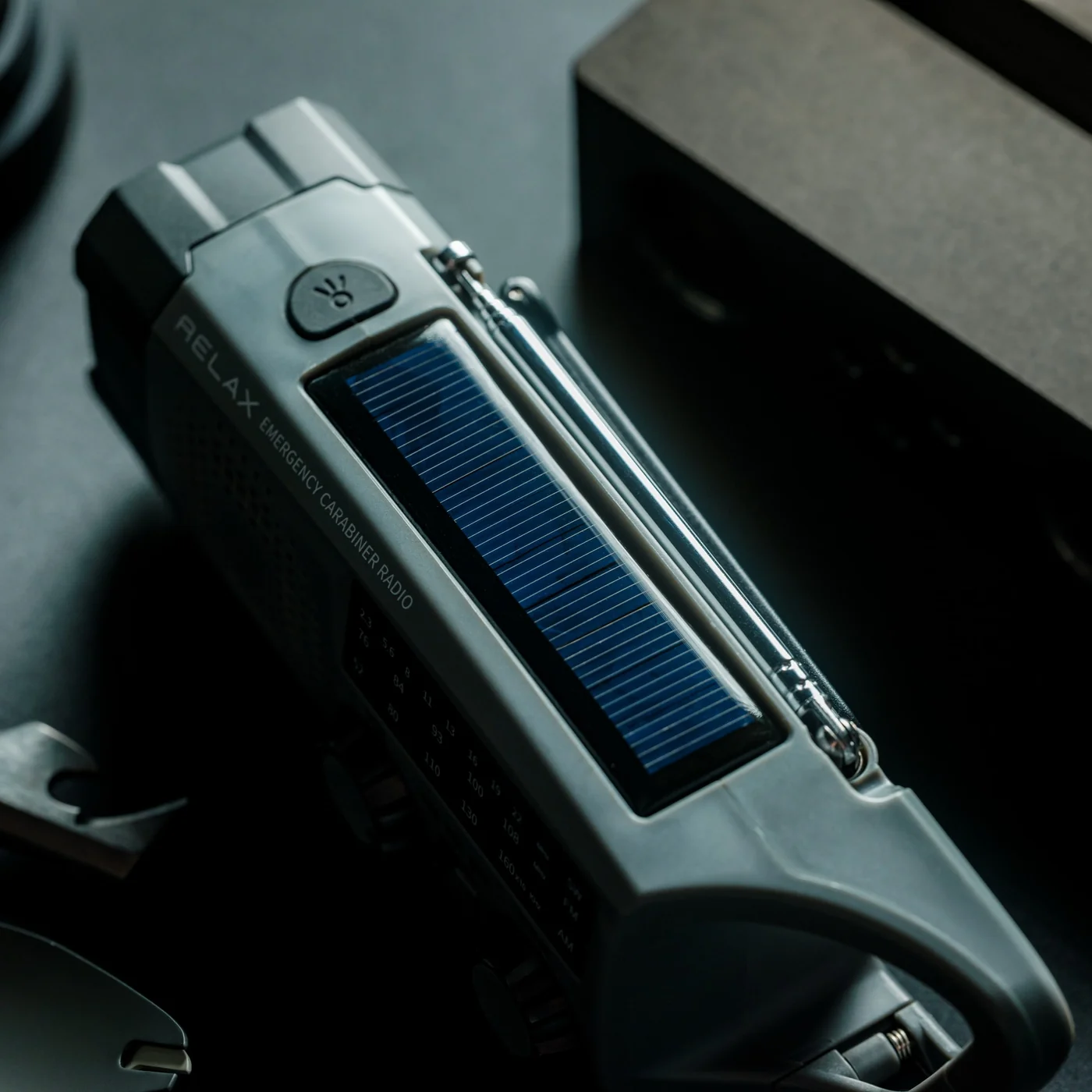
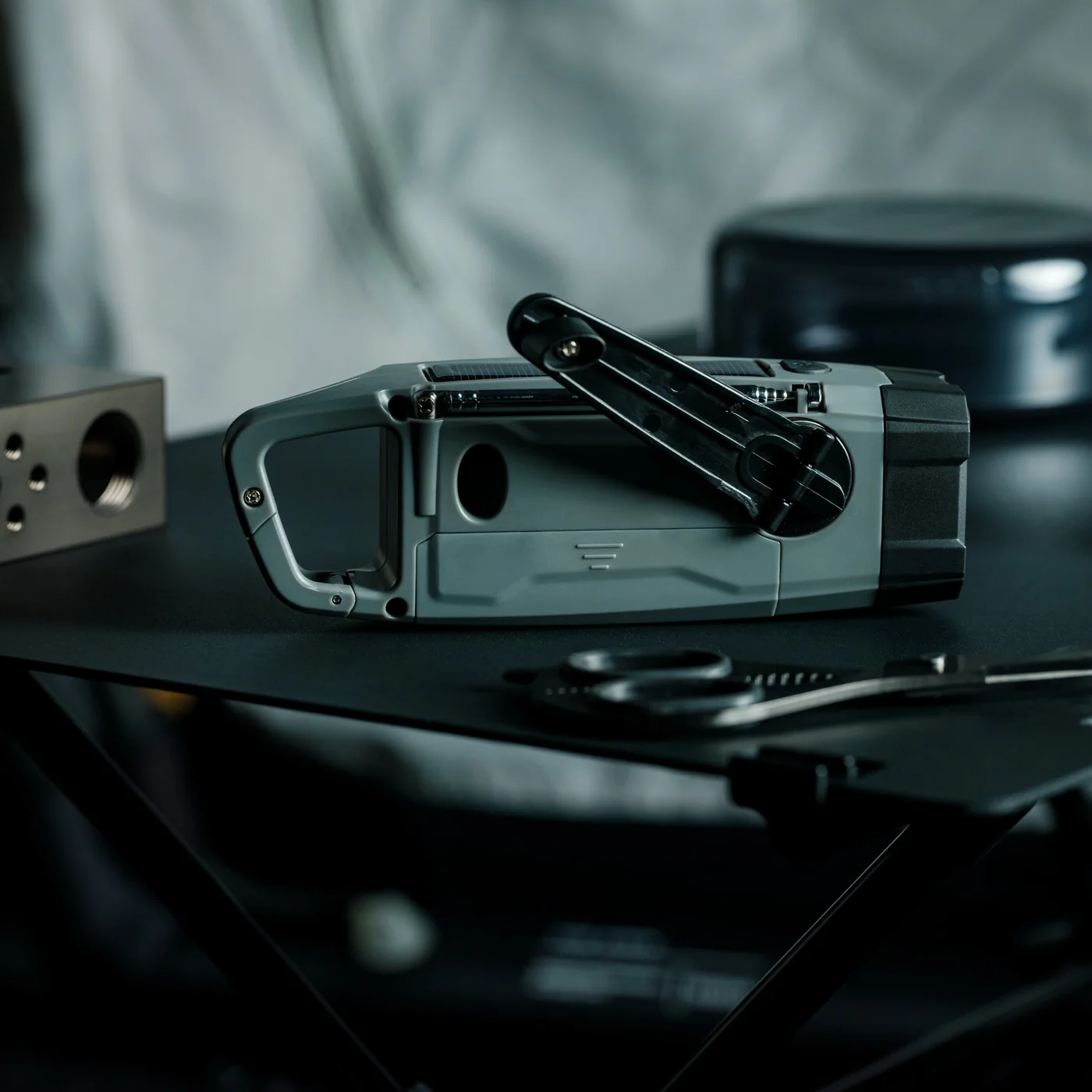
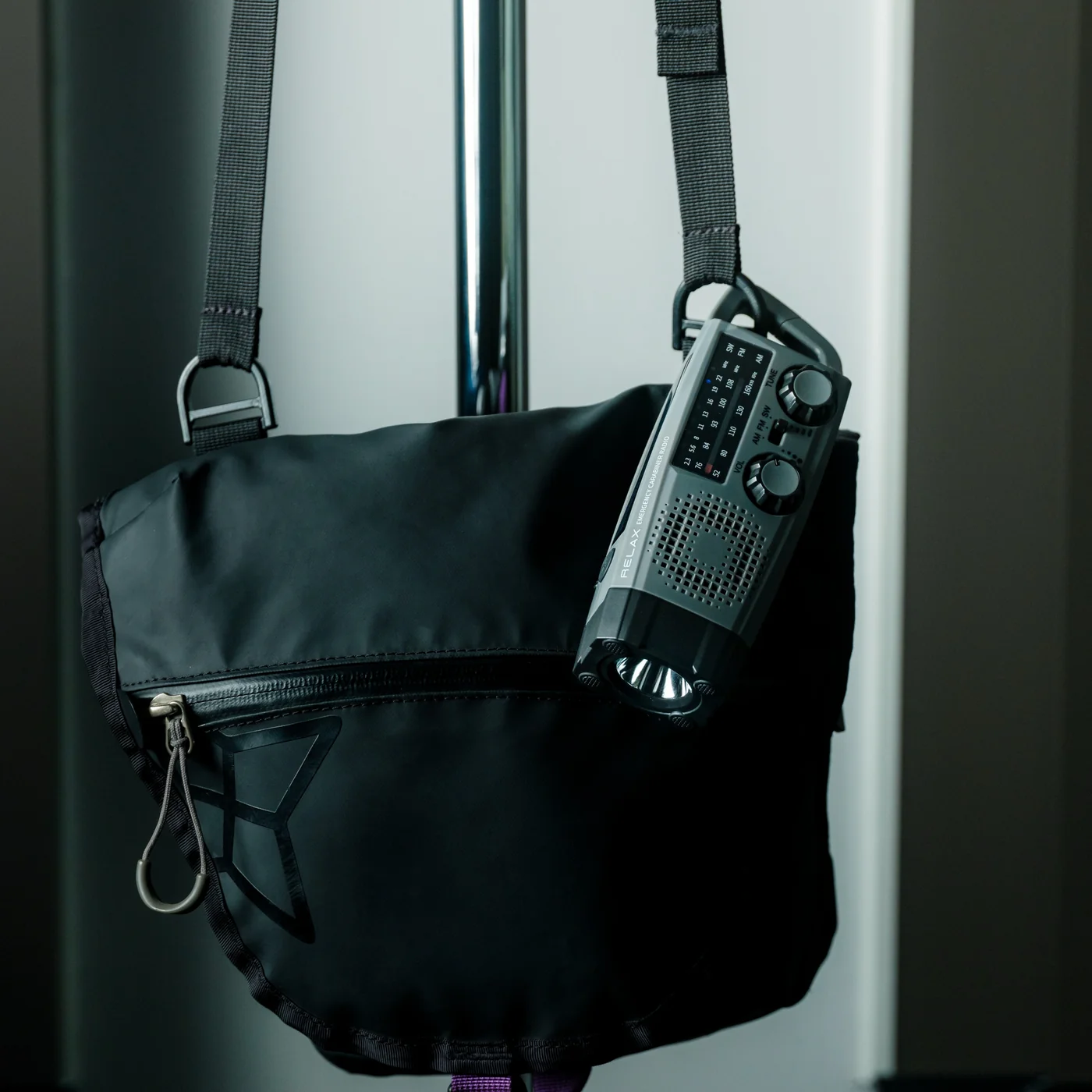
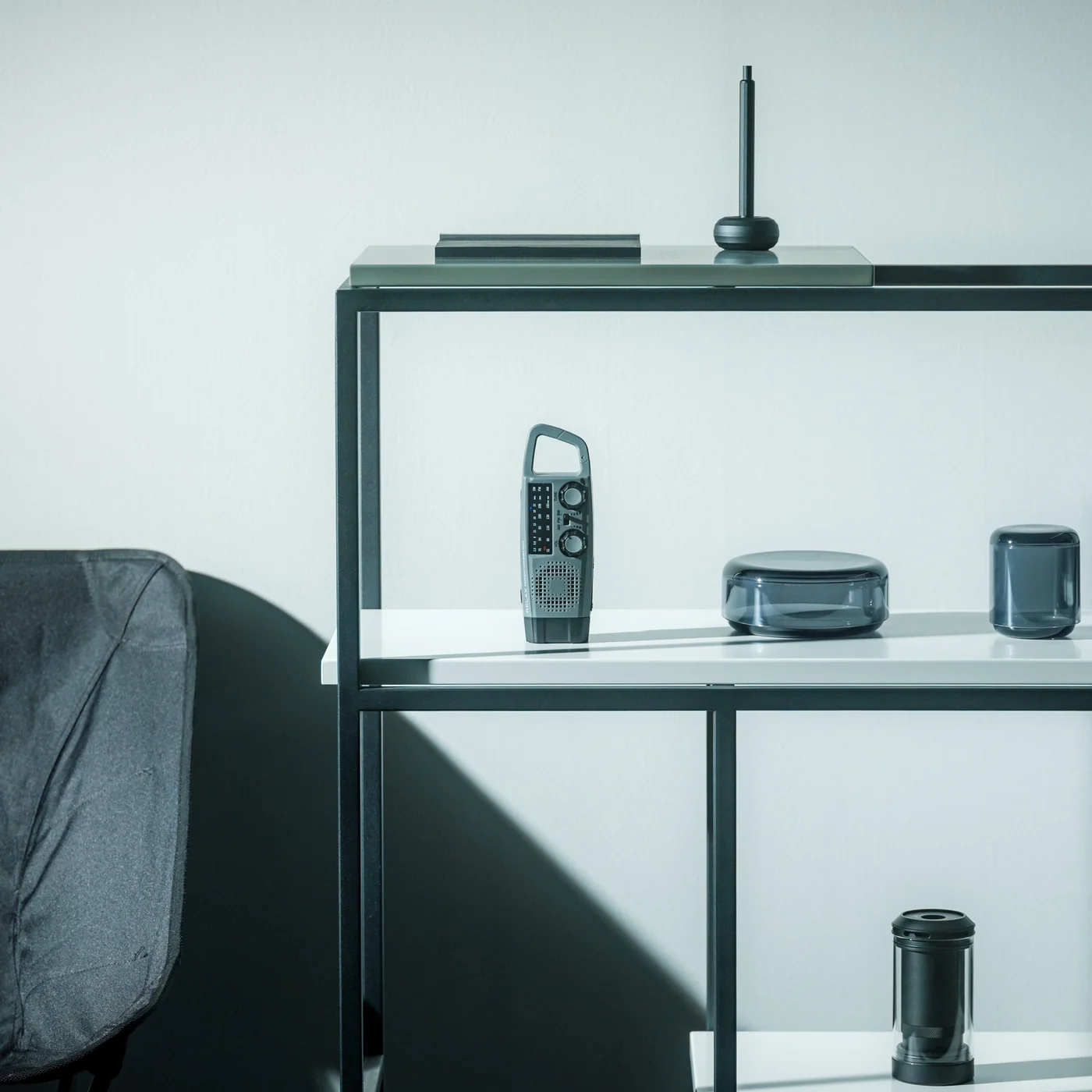
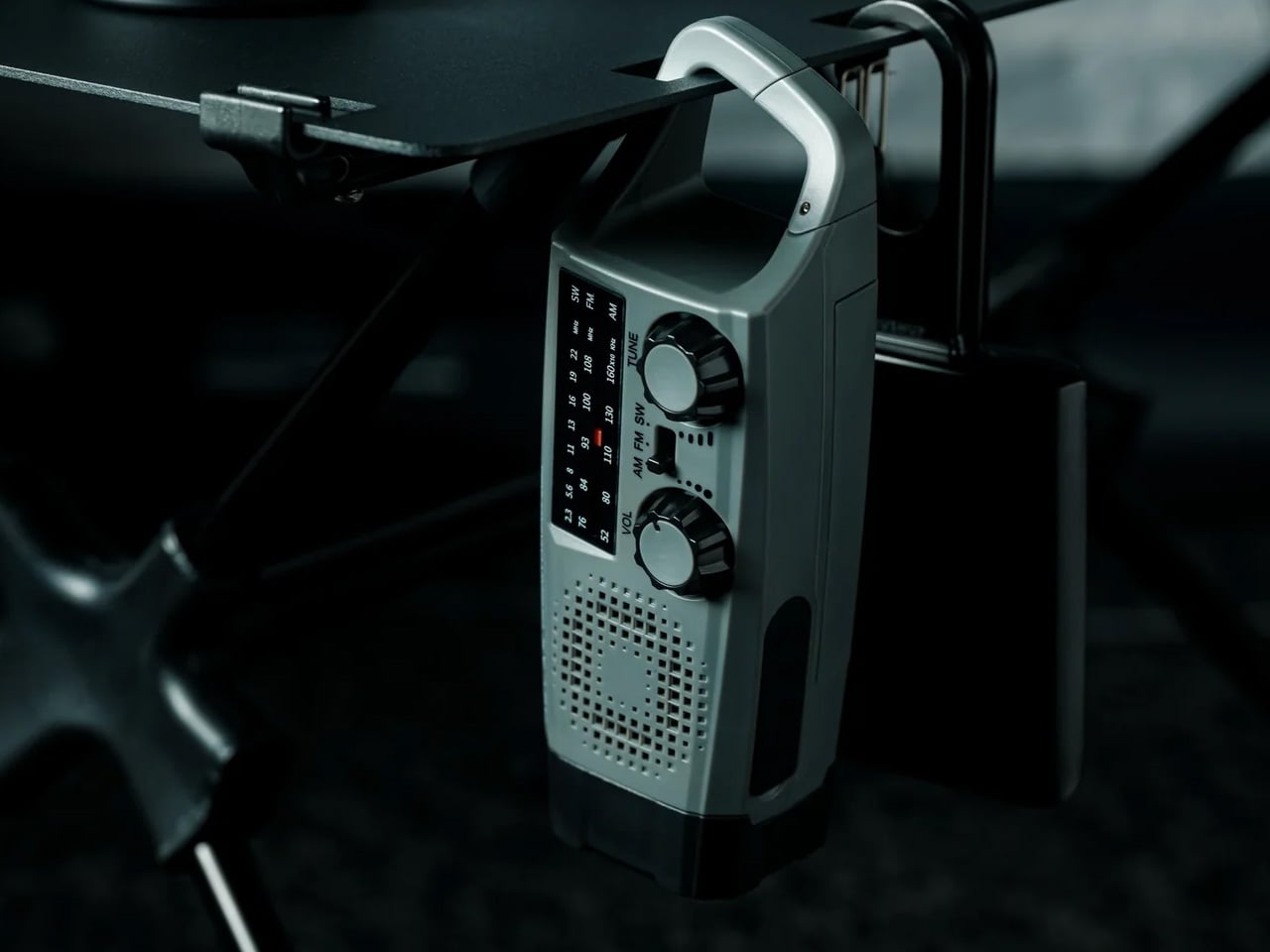
Despite its impressive list of features, the Clip&Go doesn’t look or feel like a bulky survival gadget. It measures just 6.2 x 1.9 x 2.1 inches and weighs a mere 220 grams, light enough that you’ll barely notice it on your pack. The body is built from ABS resin, polycarbonate, and silicone rubber, giving it a durable yet lightweight construction that can handle the bumps and knocks of outdoor life. What really sets its form apart, though, is the built-in carabiner that clips directly onto a backpack strap, a belt loop, or any piece of gear, keeping the radio accessible without taking up precious space inside your bag.
Most clip-on radios only offer AM/FM reception, but this one also has shortwave, which can broadcast emergency channels, international stations, and long-range signals. This means you can still get what may very well be life-saving information even when your phone has no power or there’s no regular cellular signal.
It can also serve as a power bank for your phone, in case that’s really what you need at that moment. It has a triple charging function for true off-grid readiness: USB-C, solar panel, and hand-crank, with the hand-crank serving as a true emergency backup when no power source is available. As a bonus, its 18650 lithium-ion cell is user-replaceable, so you can simply swap it out when it reaches the end of its life without having to replace the entire device. That’s a rare and thoughtful touch in a category where most products are simply thrown away.
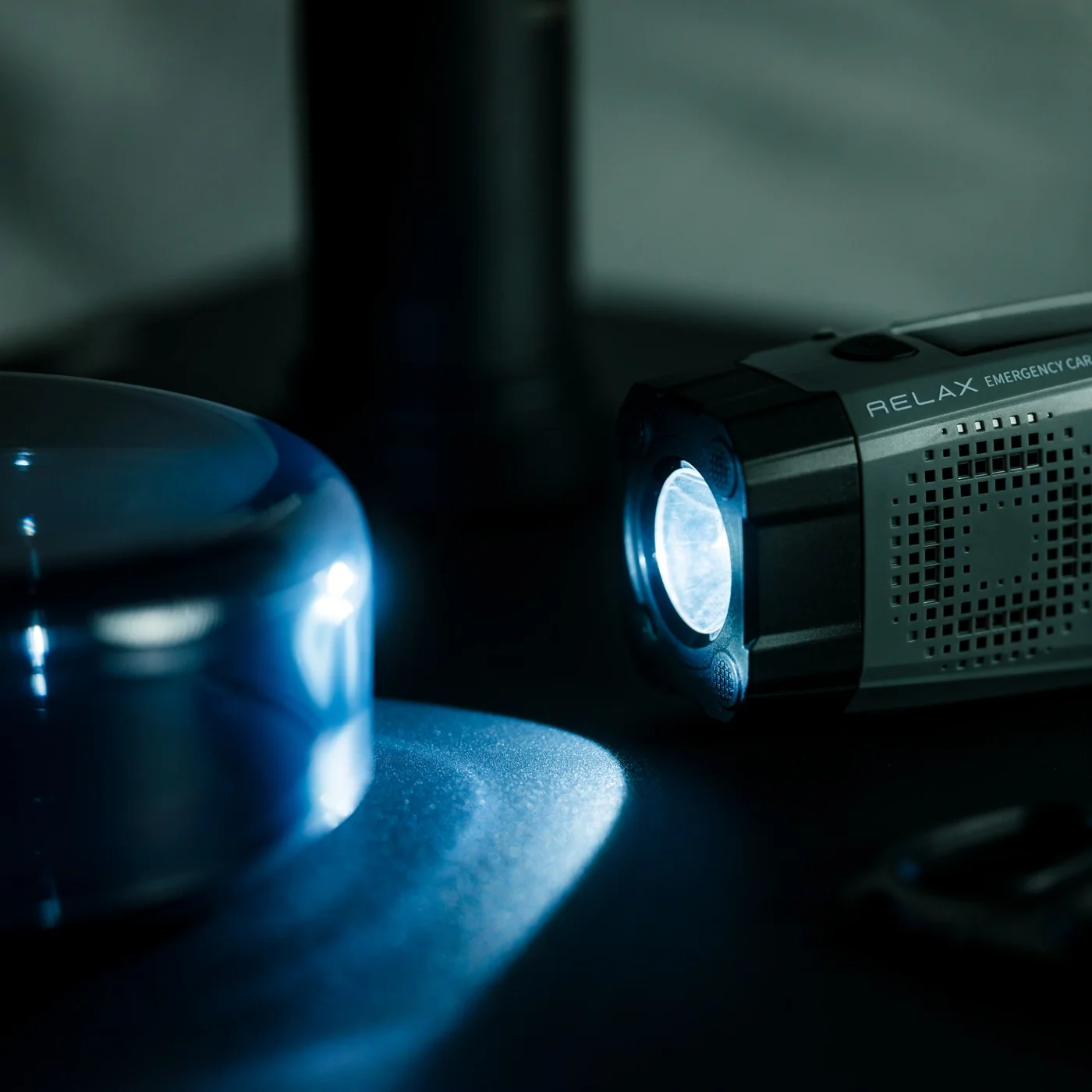
The built-in flashlight can run for approximately seven hours on a full charge, more than enough to get you through a power outage or an unexpected night outdoors. And when you truly need to signal for help, pressing and holding the SOS button triggers both an audible alarm and a flashing light, making it far easier for rescuers or fellow campers to locate you even in low-visibility conditions.
For American users in particular, the Clip&Go Radio makes a lot of sense. FEMA has long recommended hand-crank or battery-powered radios as a household essential, but most people never bother because standard emergency radios feel useless on a perfectly ordinary day. The Clip&Go flips that entirely. It’s a device you actually want to bring on a camping trip, a hike, or a day at the festival grounds, and it just happens to be ready for an emergency if one comes along. Whether you’re in hurricane territory, wildfire country, or tornado alley, having a device that functions completely independently of cell towers and internet is simply smart thinking. At $60, it’s a small price to pay for that kind of peace of mind.
You have booked the hotel on the last night of every camping trip you have ever taken. Not because you are soft. Because your sleeping pad deflated at 2 a.m., your camp pillow was a balled-up fleece jacket, and the only working flashlight in the group was someone’s phone at eleven percent battery. That’s a gear problem. Not a character flaw. And the gear, finally, has caught up to every excuse you’ve been making.
These seven picks exist to solve the specific failures that send otherwise willing people to the front desk. A Damascus knife that looks nothing like a survival tool. A radio that doubles as your emergency kit without feeling like one. A fire pit that assembles without tools. A solar purifier that serves a real shower. A flashlight that throws light 1.2 miles. A grill plate that packs flat as a paperback. A pillow engineered from plant biology. All seven. This Labor Day.
1. Spectre Hammock Tent
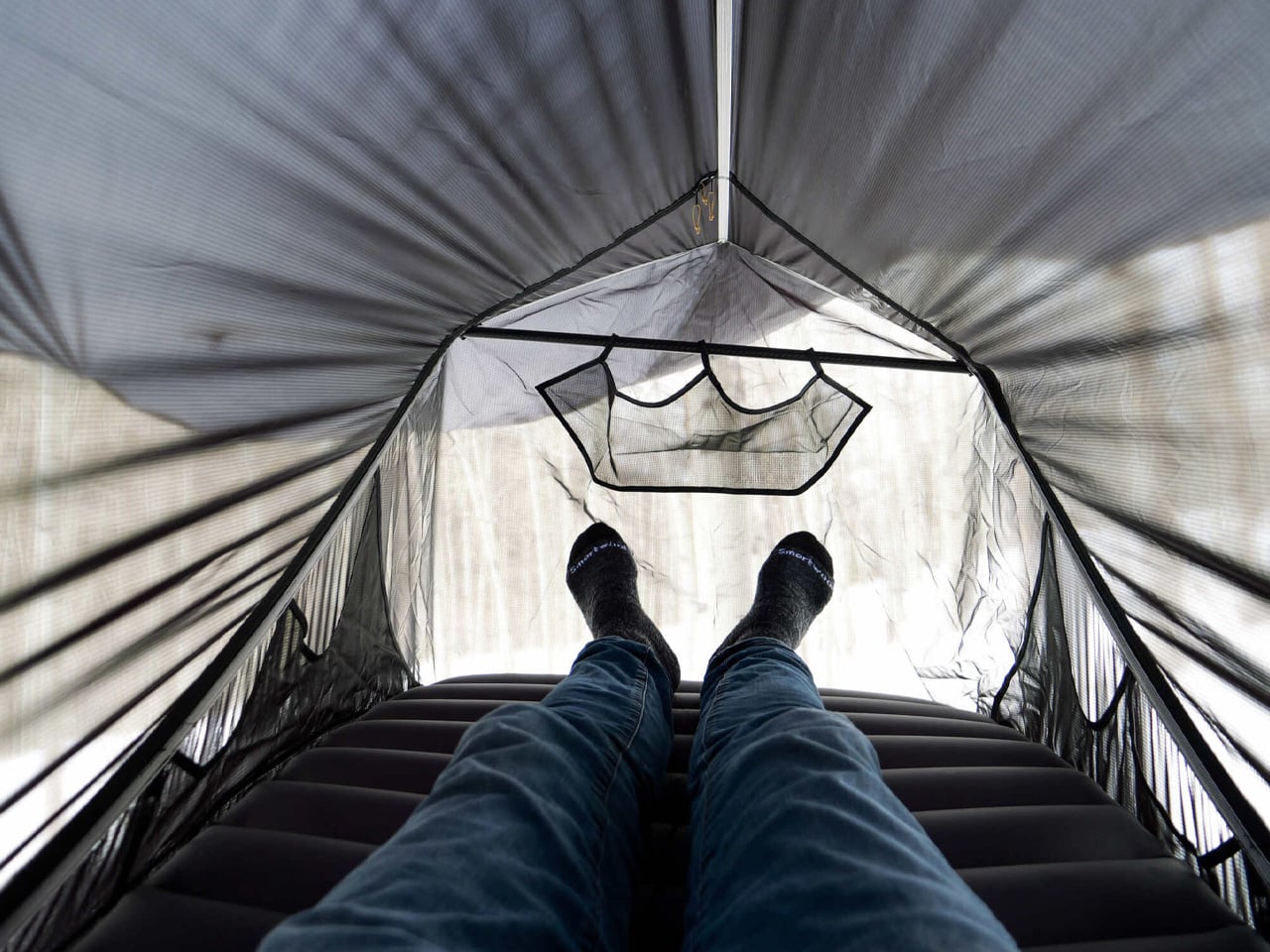
You avoid hammocks not because you’re lazy. It is the banana. Every conventional hammock folds your body into a curve that feels fine for twenty minutes and becomes a spinal argument by hour three. You wake up stiff, which is the one thing a night outside should not do to you. Haven Tents, based in Sandy, Utah, has spent five years specifically fixing this. The Spectre is their most refined answer: a hammock tent built around a patented lay-flat system that creates a genuinely horizontal sleeping surface. You can sleep on your back, your side, or your stomach. That sentence should not be remarkable for a hammock. It is anyway.
The materials are Dyneema fabric and MONOLITE mesh, both chosen for strength-to-weight ratios that most outdoor gear only talks about in marketing copy. The whole system comes in under 4.5 lbs and packs to 15x6x6 inches, small enough to strap to the outside of your pack without rethinking your load. Hang it from two trees in a few minutes. No trees available? A Bivy Mode lets you set it up using trekking poles instead. Internal mesh pockets, a gear sling, and a ridgeline for your backpack handle storage without making you climb out in the dark. A translucent mesh shell gives you a 360-degree view of where you are. The detachable rainfly closes it down when the weather decides otherwise.
What we like
The lay-flat system is patented for a reason. Most people don’t believe side sleeping in a hammock is possible until they’ve done it in the Spectre. It changes the entire argument for camping over booking a room.
Dyneema and MONOLITE mesh deliver the kind of durability that justifies keeping a piece of gear for a decade, not replacing it after two seasons because the fabric wore through.
What we dislike
Bivy Mode requires trekking poles, which are sold separately. If you don’t own them, add that to your pre-trip budget.
The 15x6x6 inch packed size is genuinely compact but still needs to live somewhere on or in your pack. This is not a stuff-it-in-a-pocket situation.
2. Clip&Go Radio
The version of you who would buy a dedicated emergency radio is the same version who bought a first-aid kit and left it under the bathroom sink. The Clip&Go works because it refuses to be emergency equipment. It is a radio first. AM, FM, and shortwave in a 7.8 oz body with a built-in carabiner that clips to your backpack strap and stays there. You bring it because you want music around the fire. The SOS button, the hand-crank, and the backup phone charging are already in the same clip you grabbed for the playlist.
The flashlight runs approximately 7 hours on a full charge. The radio runs for 13 hours. The 2,000mAh battery is a replaceable 18650 lithium-ion cell, which is the most thoughtful spec on this product. When the battery eventually degrades after years of use, you swap the cell. You do not replace the radio. USB-C charges it in about 2 hours. The hand-crank is there when USB is not. Press and hold the SOS control, and you get an audible alarm and a flashing light simultaneously. It is 6.2 x 1.9 x 2.1 inches and costs $60. Only 4 units remain in stock at the time of writing.
The replaceable 18650 battery is the single smartest spec on this list. Every other emergency radio becomes landfill the moment its sealed internal battery dies.
13 hours of radio runtime is longer than any realistic campsite evening. You will not outlast this thing.
What we dislike
Solar charging takes approximately 67 hours to reach a full charge. That is a genuine last resort, not a charging method.
Four units remaining is the actual inventory count. This is not a sales tactic.
3. Portable Fire Pit Stand
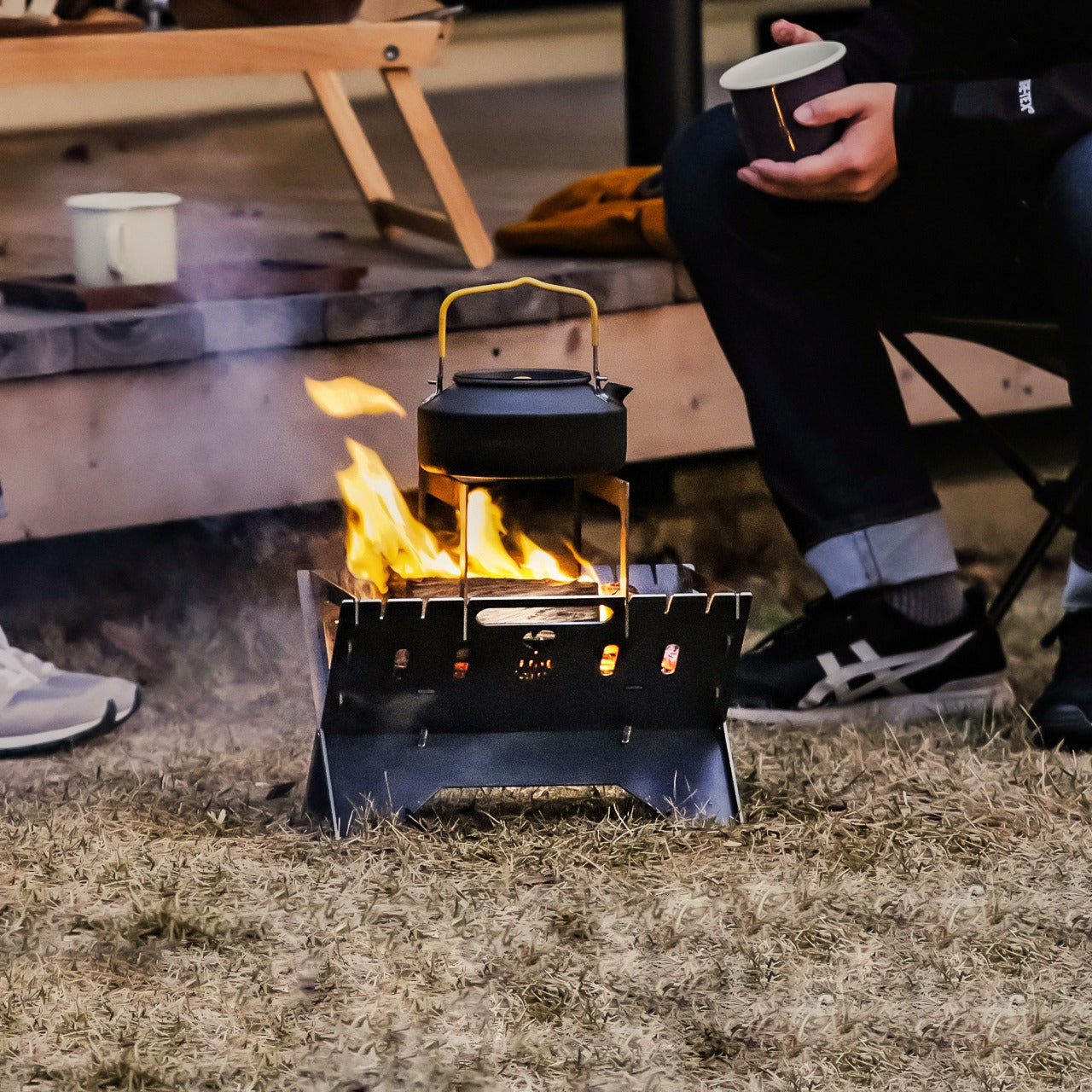
More campgrounds restrict ground fires than they did five years ago. Dry meadows, wooden deck platforms, national park sites with leave-no-trace rules. You will find out about the restriction after you’ve already gathered the wood. The Portable Fire Pit Stand is five black steel pieces that slot into each other like puzzle pieces, lift your fire off the surface below it, and meet the ground-fire restrictions at most sites that prohibit direct contact. Setup requires zero tools. Nothing to thread, nothing to tighten, nothing to forget at home.
The airflow holes cut into the panels are not decorative. They pull oxygen under the fire and produce a cleaner, more consistent burn than anything sitting on compressed dirt. Slot in the optional trivets and you have a legitimate surface for cookware. The steel is manufactured with a sheet metal process that resists warping under sustained heat. It will discolor over time. That discoloration becomes a patina that is unique to your unit. Every Portable Fire Pit Stand ends up looking different from every other one.
Five-piece no-tool assembly is exactly the design restraint that makes gear worth keeping in the truck permanently rather than reassessing each trip.
The airflow under the fire produces a noticeably more even burn. On a three-day trip, that difference compounds across every cook and every evening.
What we dislike
No integrated grill grate. The trivets hold cookware over the fire, but you’re supplying your own grate if you want to grill directly over the coals.
4. GoSun Flow
There is a specific moment at the end of day two of most camping trips. Someone asks where they’re supposed to shower tomorrow. That is the moment your group starts looking up hotels. The GoSun Flow is the answer to that question before it gets asked. It’s a solar-powered water purifier and portable shower system that compresses into a backpack. It eliminates 99.99% of waterborne pathogens and delivers one liter of clean drinking water per minute from any freshwater source you can access. A flexible faucet clamps to a branch, a table, or your truck tailgate. You’ve built a working outdoor sink from what’s already there.
The solar heater delivers a warm five-minute shower after 30 minutes of sun exposure. That’s a real shower, not a wet-wipe situation. USB power backs it up when clouds intervene. The filter handles 1,000 liters before it needs replacing, which covers multiple seasons for most groups. For a three-day Labor Day weekend, this system removes the only hygiene argument that sends your group to the checkout desk on day three. It does not make camping feel like a hotel. It makes camping feel like something you can actually finish.
What we like
Combined purifier, sink, and shower in a single backpack-compatible system is the most complete camping hygiene solution available without requiring dedicated infrastructure.
1,000-liter filter life means you are not thinking about replacement costs for multiple seasons of regular use.
What we dislike
The system cannot process saltwater. If your Labor Day trip is coastal, you need to source freshwater separately before the purifier becomes useful.
Multiple components mean multiple things to organize. Run a full checklist the night before you leave.
5. Lumitwin DL700
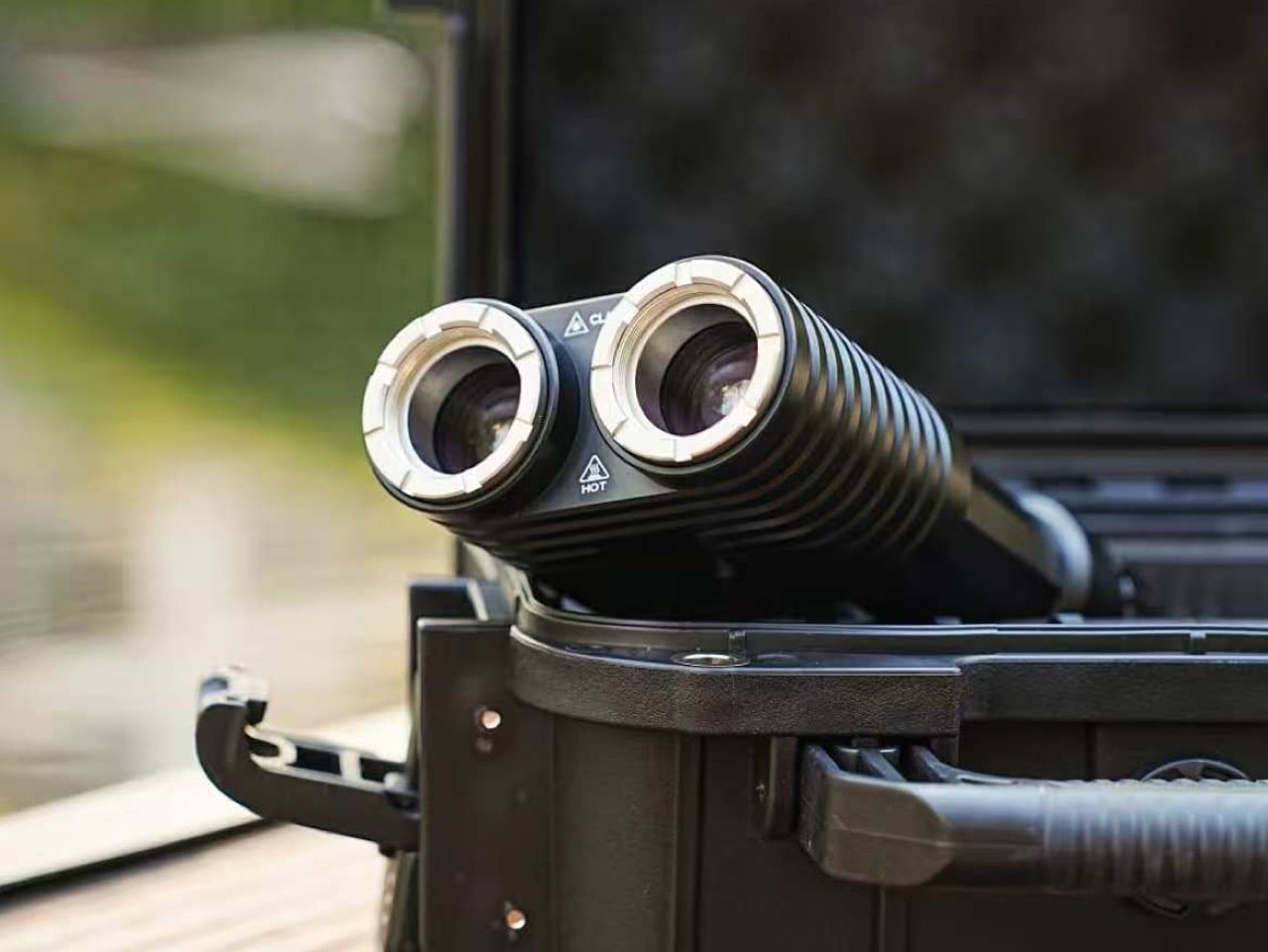
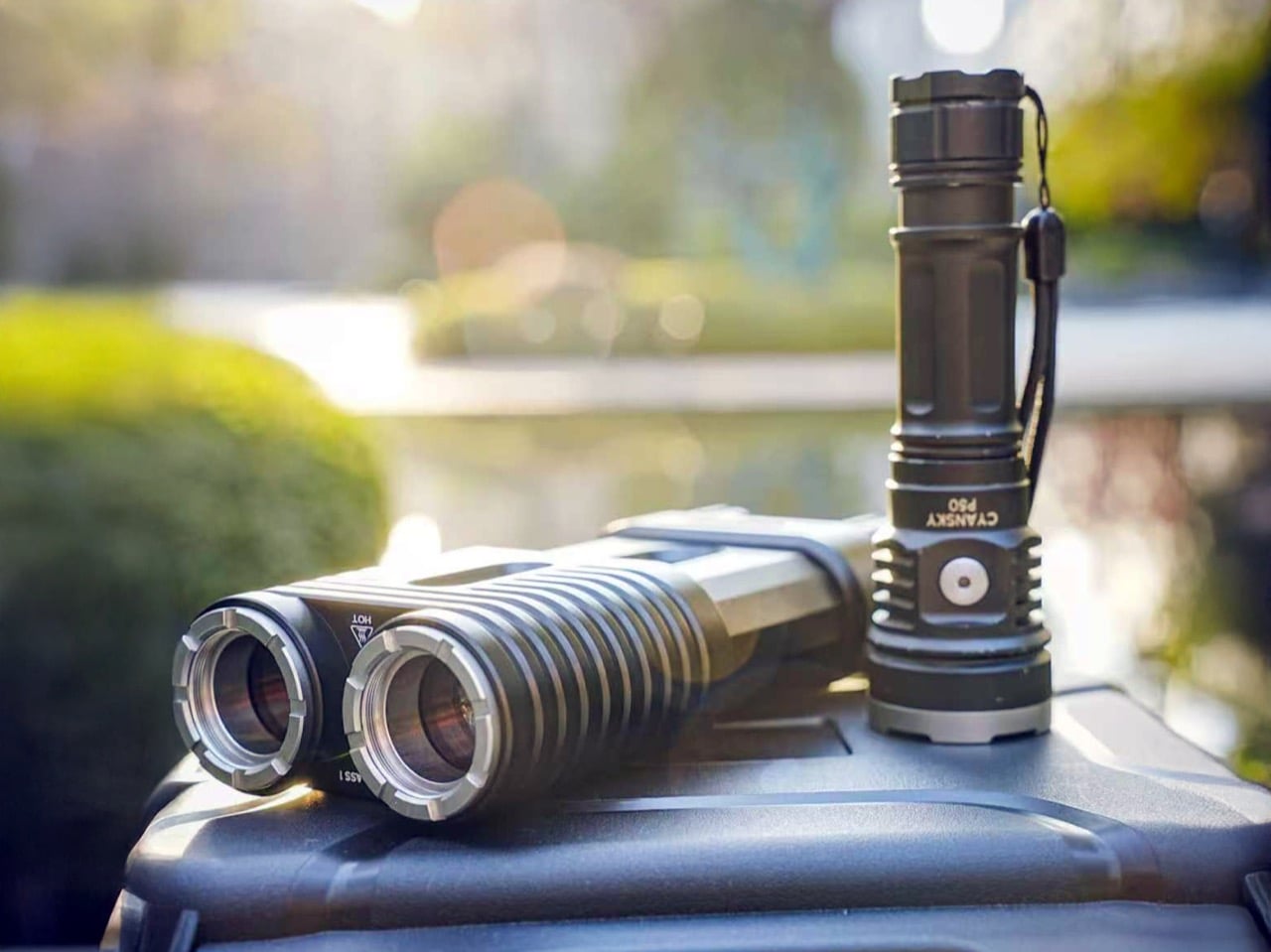
You have been in this situation. It is 9 p.m., you are trying to read a trail marker 200 yards out, and every flashlight your group has is essentially a pointed candle. The Lumitwin DL700 throws light 1.2 miles. Both barrels firing together produce 1,100 lumens and 958,000 candela using laser-excited phosphor technology, the same light source found in high-end automotive laser headlights. This is not an LED with a better reflector. The beam stays coherent across distance instead of scattering into a useless cone. At 2 kilometers of throw, you are seeing things your campsite neighbors cannot.
Each barrel runs independently with its own switch and brightness control. Swap in the included red filter for night-vision preservation. Green for cutting through fog and dense vegetation. The flood filter widens the beam for close-range camp work. Run different filters on each barrel simultaneously. The whole unit is machined from a single block of 6061 aerospace aluminum, IP68 rated for submersion to 1.5 meters, and survives a 10-foot drop. Total weight is 1,032 grams. You feel that weight. That is the trade for what the DL700 does.
What we like
Independent barrel control with swappable filters gives you six effective flashlight configurations in one unit. Red on one barrel for navigation, white on the other for distance spotting, simultaneously.
IP68 plus 10-foot drop resistance on a $329 light means you are not replacing this for years of serious outdoor use.
What we dislike
1,032 grams is a commitment. This lives on a belt clip or inside a bag. It does not disappear into a jacket pocket like an everyday carry light.
6. Compact Modular Grill Plate
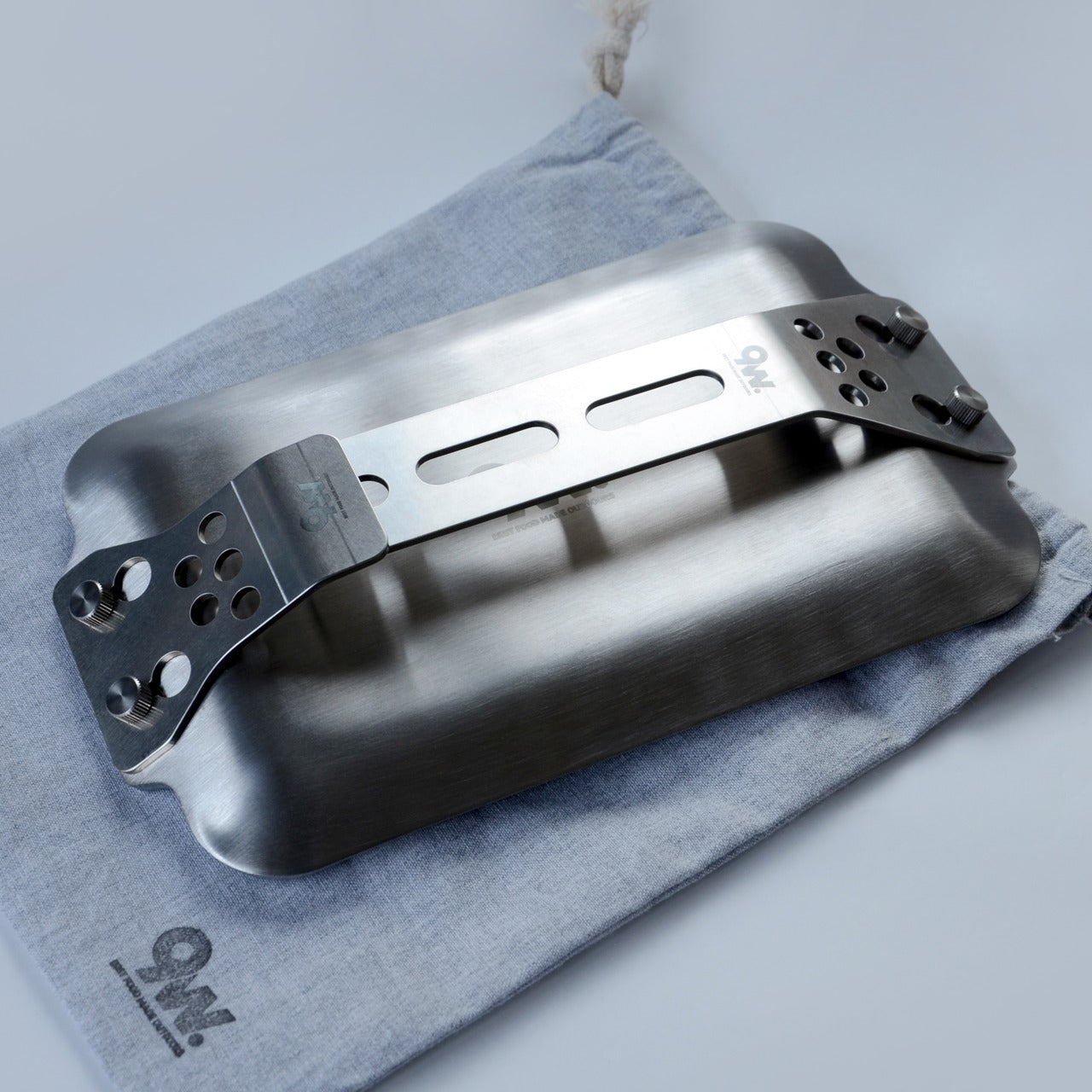
Your campsite cooking situation right now is one of two things. Either you’re eating food that doesn’t require heat, or you’re attempting to balance a pan on a grate that came welded to the fire ring and hasn’t been cleaned since a previous administration. The Compact Modular Grill Plate is a flat, modular steel cooking surface that packs to roughly the thickness of a paperback and configures around what you’re actually cooking. You stop adapting your meal to your gear. The gear adapts to the meal.
It works over an open fire or a camp stove without a conversion kit or a second piece of equipment. The flat surface cleans significantly faster than any bar grate. One wipe, or a quick rinse, and it’s done. That difference matters most on the third morning when no one wants to deal with last night’s situation. The compact form is the decision that earns this plate a permanent spot in your kit. When cooking gear is bulky, it gets left at home. When it packs this flat, it gets packed every time.
Modular configuration adapts to different heat sources and meal types without adding a second surface, a second bag, or meaningful additional weight.
Flat surface cleans in a fraction of the time any traditional bar grate requires. On a multi-day trip, that is a real, compounding gain.
What we dislike
Surface area works cleanly for two people. Cooking for four or more means staggering meals, which adds real time to every camp dinner.
No integrated heat source. This is a cooking surface. You still need a fire or a stove under it.
7. Camp Napper
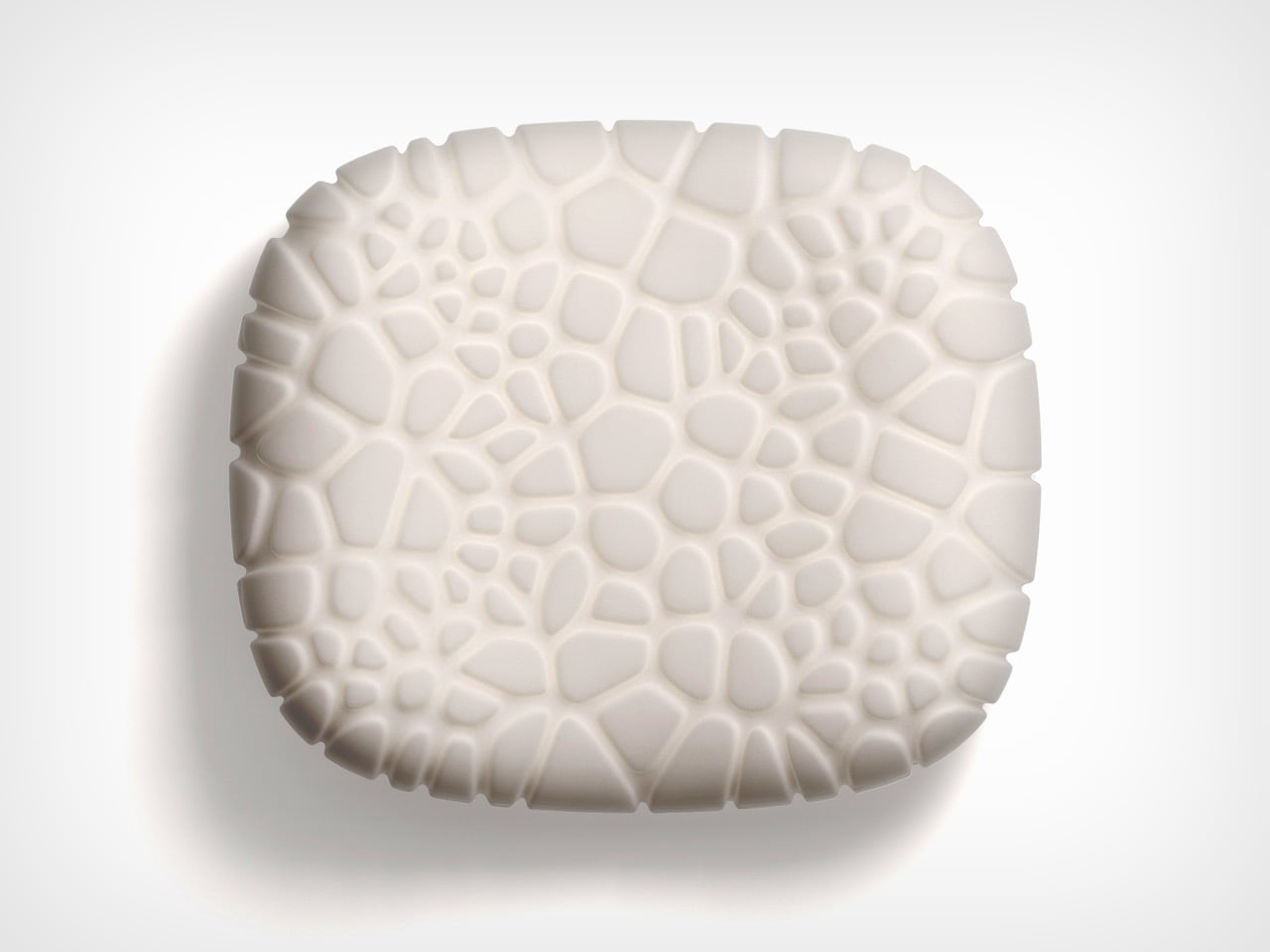
Your inflatable camping pillow has betrayed you at least once. It sounds like a pool float every time you shift your head, loses pressure by 3 a.m., and packs into a shape that somehow takes up more bag space than it deserves. The Camp Napper is what happens when a designer named Chen Xu stops treating the camping pillow as an afterthought and starts treating it as an engineering problem. The surface geometry is derived from the texture of fungal spores. The internal structure mirrors the hollow vascular channels found in plant stems. This is Voronoi polygon modeling applied to where your face actually rests.
The raised cellular structures on the front face increase contact area and channel airflow simultaneously, so your skin stays cool instead of clammy through the night. Flip it, and the back face offers four distinct tactile zones depending on your orientation. Memory foam holds the bionic geometry under repeated compression without losing its shape by morning. The whole pillow weighs around 14 oz and compresses to roughly the size of a water cup, no inflation valve required. Anti-slip rubber on the base keeps it planted on your sleeping pad. This is a hotel pillow argument made entirely in materials and geometry.
What we like
Airflow channels built into the contact surface actually keep the pillow cooler than standard foam options, which matters on any night above 65°F.
Compresses to water-cup dimensions with no inflation valve to leak, fail, or wake you up at 3 a.m.
What we dislike
The raised cellular texture can be a genuine trypophobia trigger.
The Gear Makes the Decision
Every hotel booking after a camping trip is a gear verdict. The sleeping surface failed. The light died. The fire went out. The shower question didn’t have an answer. These seven picks close each of those gaps before the trip starts, so the hotel down the road stays a choice rather than a rescue. Comfortable outside is a design problem. It has design solutions.
My personal pick is the Clip&Go Radio. Not because of the SOS button. Because it is the only product on this list I would grab for an ordinary Tuesday hike without thinking about it twice. It clips to the bag, plays music, and carries every emergency feature in the same body I reached for anyway. That is the version of preparedness that actually travels with you: useful before anything goes wrong.
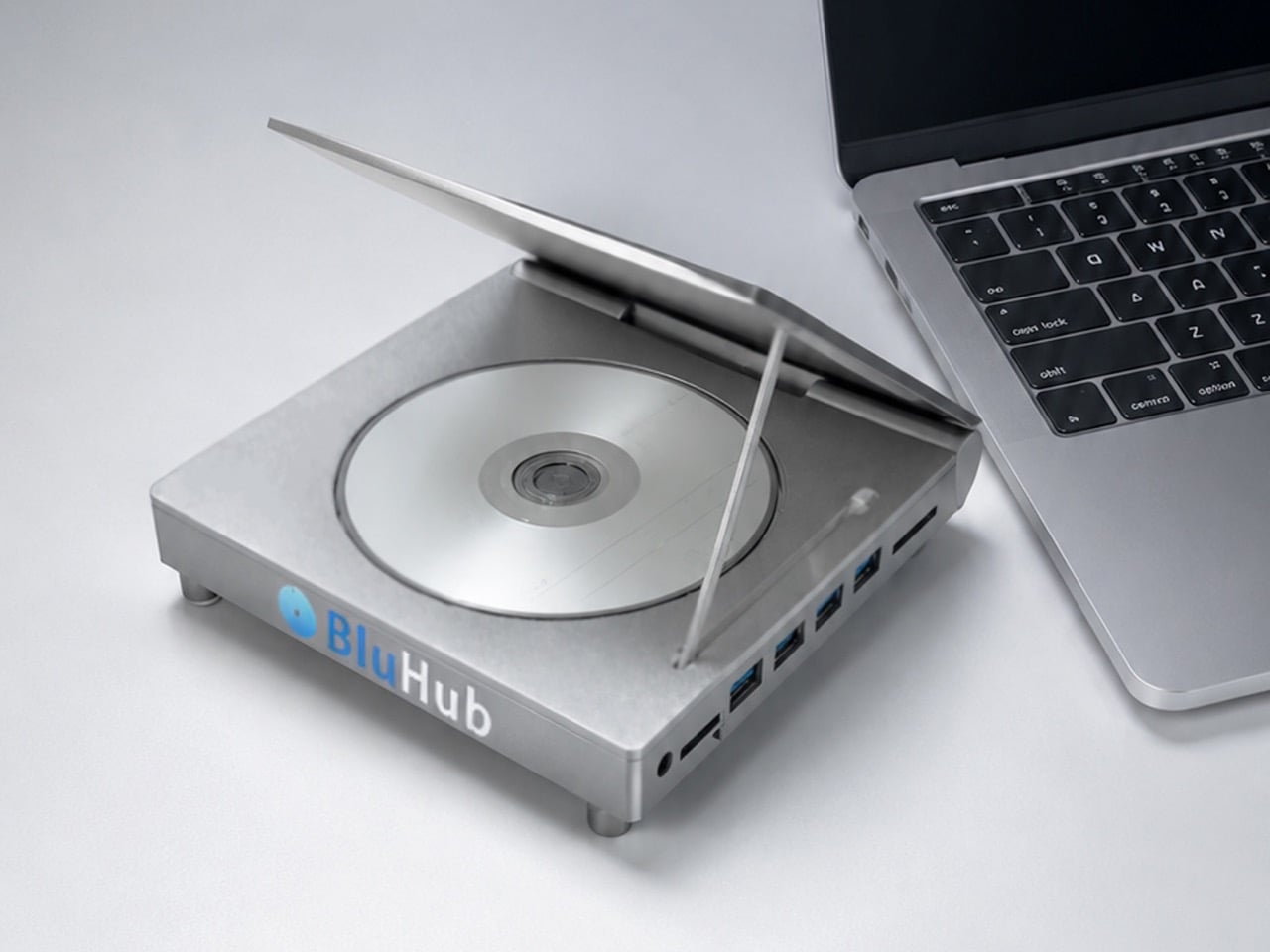
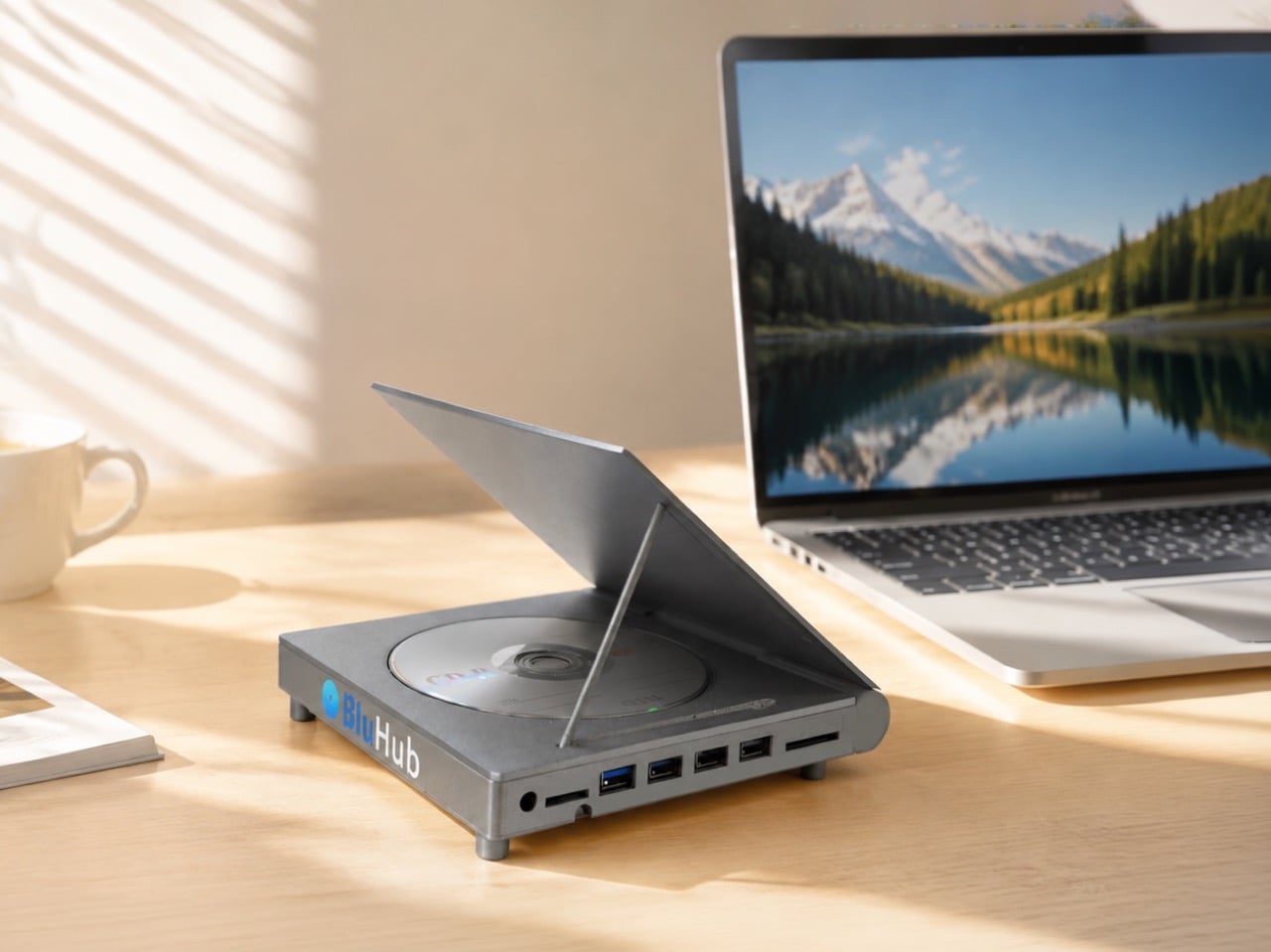
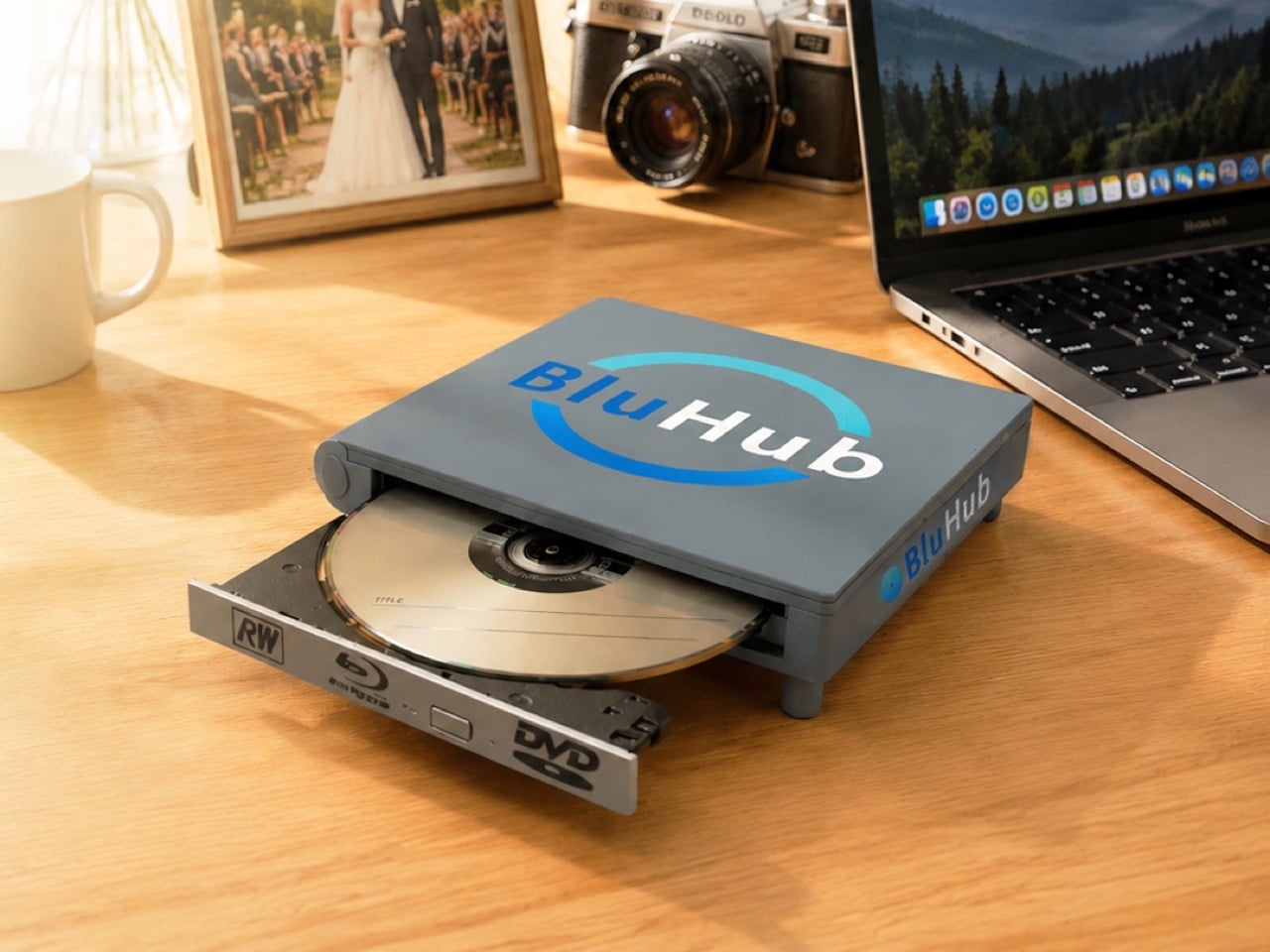
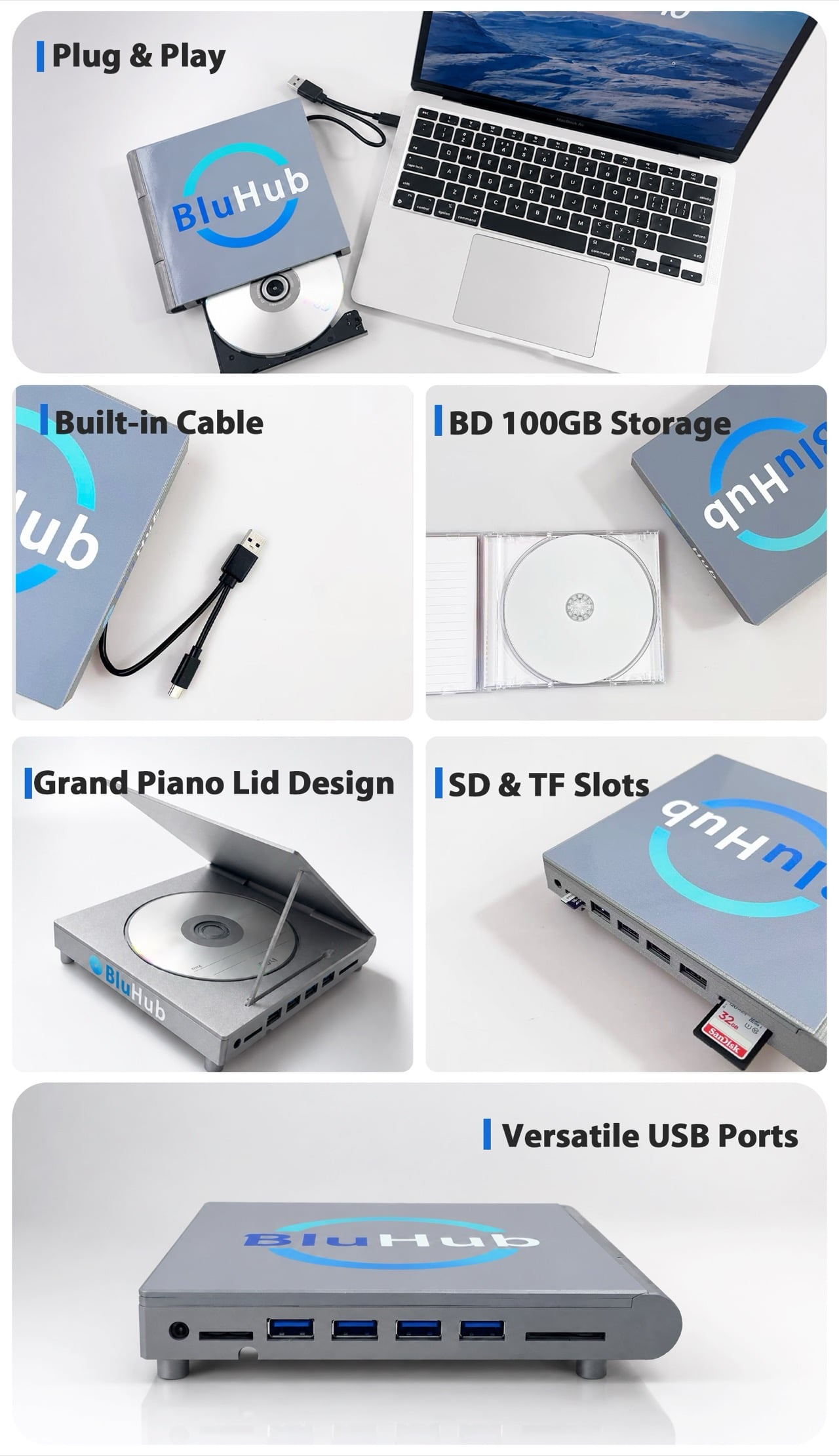
There was a window, roughly 1998 to 2006, when you could walk into a shop, buy a disc, and own the thing forever. No login, no region check, no email explaining that your library is migrating to a new tier. We traded that for the cloud and got monthly bills and films that quietly vanish from the catalog. BluHub is a 9-in-1 external Blu-ray drive built for people who want their files back on a shelf, with an aluminum lid that props open like a grand piano so a spare disc sits on display while the drive burns another. It is a strange, slightly stubborn object, and I like it.
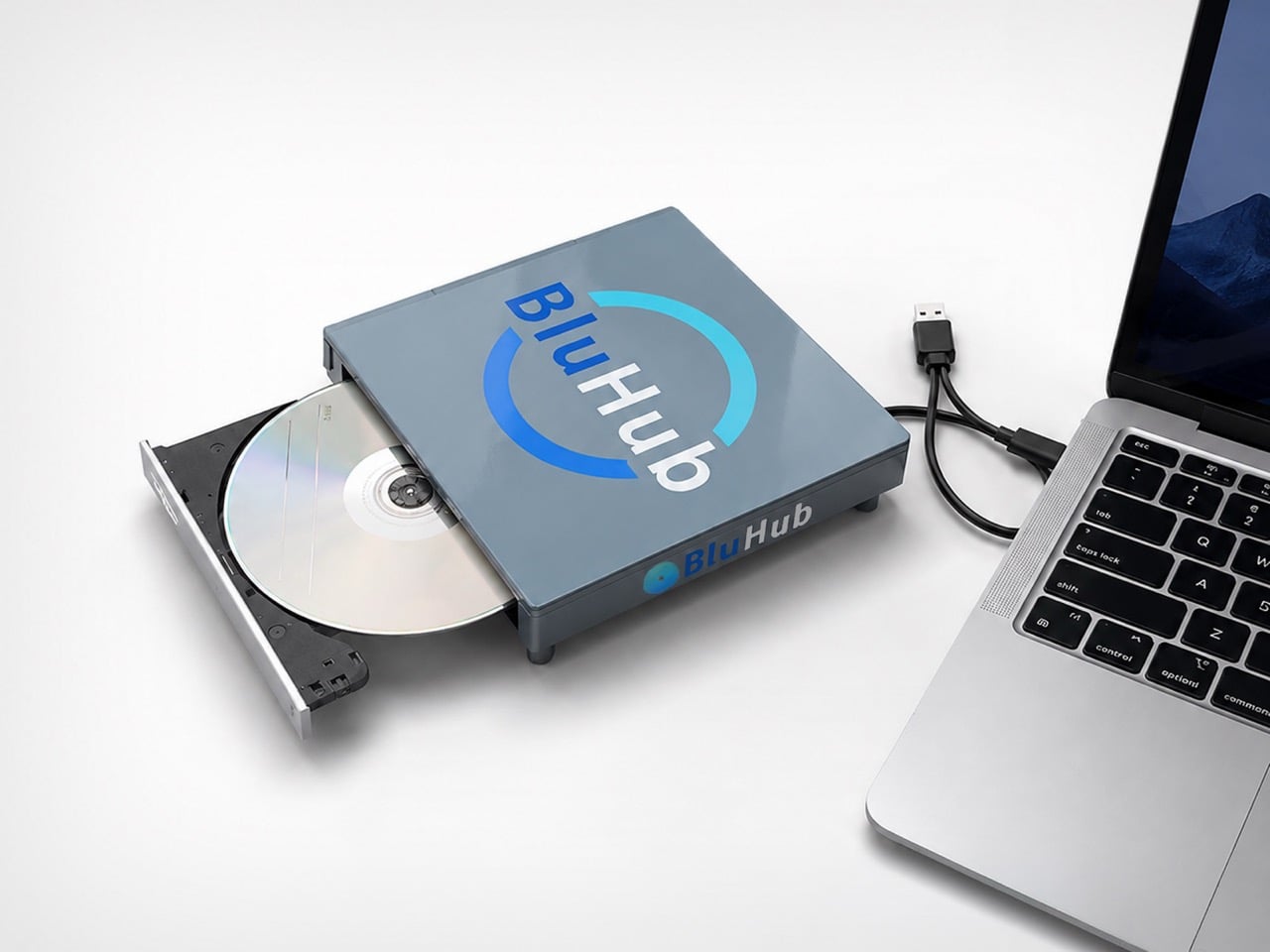
Under the styling it reads and writes Blu-ray, DVD and CD, burns BD-R at 6x onto 100GB discs, and adds four USB 3.0 ports, SD and microSD slots and captive USB-C and USB-A cables, all in a 409g aluminum body running on bus power. Early pricing is $59 against $129 retail, with units due in November 2026. Sony ended production of all recordable Blu-ray media in February 2025, and Pioneer’s US arm has since stopped selling optical drives entirely. A three-person Los Angeles team looked at that and decided it was the perfect moment to build a nicer one.
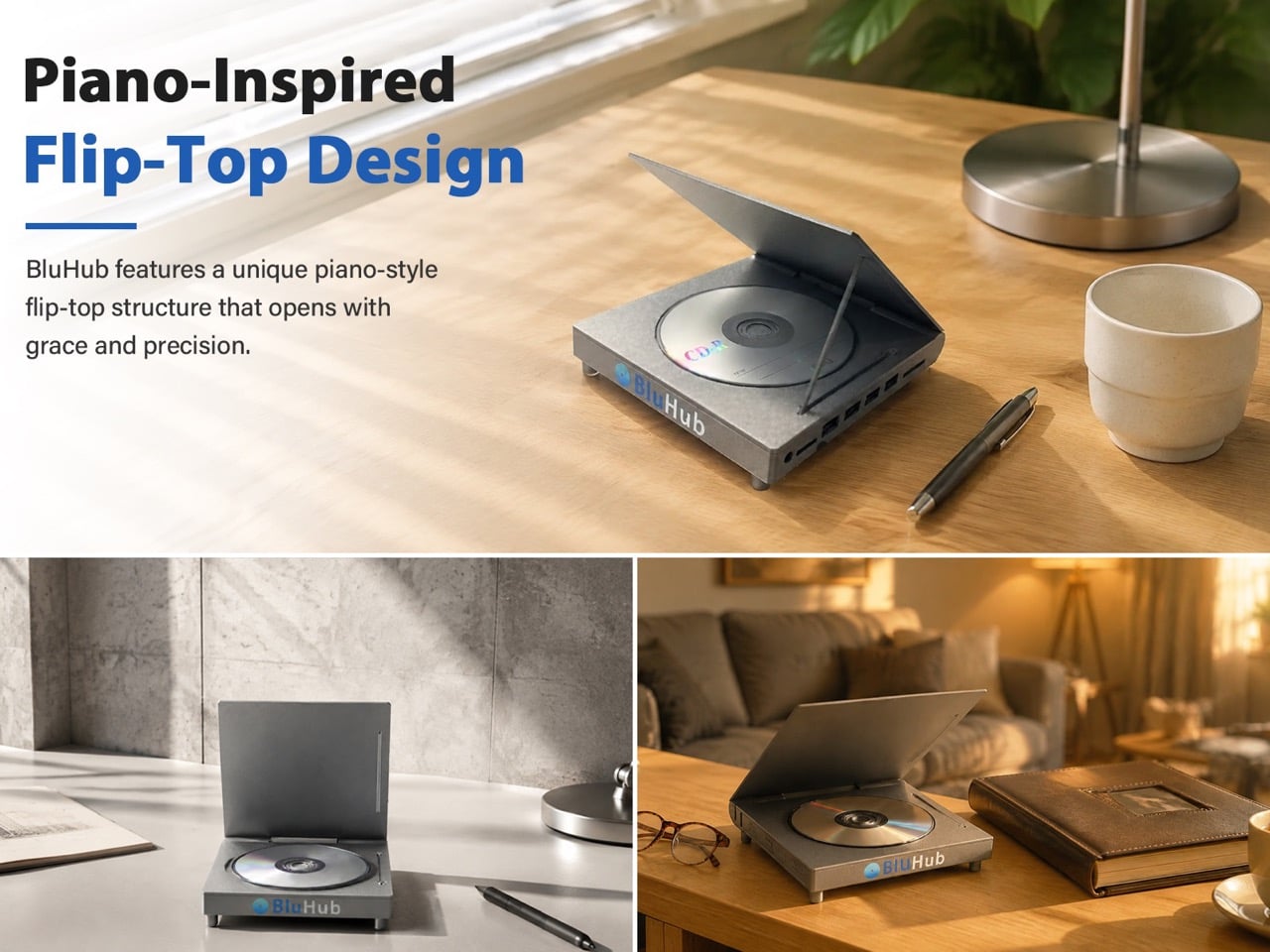
Lift the aluminum lid and it locks upright on a thin strut, holding a second disc in plain view while the internal tray reads or burns another underneath. Wang gets the credit for pushing that flip-top through, and it is the one decision here with real design lineage behind it. Dieter Rams and Hans Gugelot put a clear acrylic cover on the Braun SK4 in 1956 and people nicknamed it Snow White’s Coffin, because for the first time a machine let you watch it think. Naoto Fukasawa did the same trick differently in 2000, hanging a Muji CD player on the wall so the spinning disc became the whole point of looking at it. Laptops spent the two decades after that hiding the mechanism, then removing it. BluHub just quietly puts it back where you can see it.
Apple pulled the optical drive from the MacBook Pro in 2012 and called it progress, and every Windows manufacturer followed within a few years, chasing thinner chassis and lighter shipping weights. That trade made sense for a while, streaming was cheap, storage was cheap, and nobody missed the disc tray. It also happened to be the moment computing quietly stopped selling you a machine that could read what you owned outright and started renting you access instead. The optical drive was the last piece of hardware standing between a consumer and a library they fully controlled, no account required, no revocation possible. Bringing it back as an external accessory does not undo that shift, but it does hand the option back to anyone who wants it.
Aluminum alloy covers a 165 x 160 x 34mm footprint, sitting on four anti-vibration feet with a claimed sub-30dB noise floor while burning. A captive USB-C and USB-A cable stows in a channel underneath, so there is nothing loose to lose in a drawer. Every USB hub I have ever owned has shed its cable within a year, and building the cord into the chassis is the kind of unglamorous fix that never makes a keynote but genuinely improves daily use. Four USB 3.0 ports, an SD slot and a microSD slot round out the connectivity, all riding a shared USB 3.2 Gen2 pipe rated at 10Gbps rather than 10Gbps per port, worth knowing before a card dump and a disc burn compete for bandwidth at the same time. Compatibility spans Windows, macOS, Linux and ChromeOS, plus iPadOS and Android over OTG.
A 1TB SSD costs roughly double what it did in late 2025, chased there by an AI-driven NAND shortage that shows no sign of easing before 2027. RAM prices are climbing for the same reason. Sony confirmed this July that PlayStation physical discs stop being produced altogether by 2028, one more signal that game ownership is headed the way of movie ownership already went. Against that backdrop, a $55 hub that turns a five dollar disc into 100GB of storage nobody can revoke reads less like nostalgia and more like a hedge. The piano lid is what got me. The timing is what makes the argument.
BluHub is available through its Kickstarter campaign, with the early bird sitting at $59 against a stated $129 retail price. Multi-unit bundles run $109 for two, $159 for three and $259 for five. Shipping is estimated for November 2026, with delivery fees of $6 to $7 in the US and comparable rates internationally.