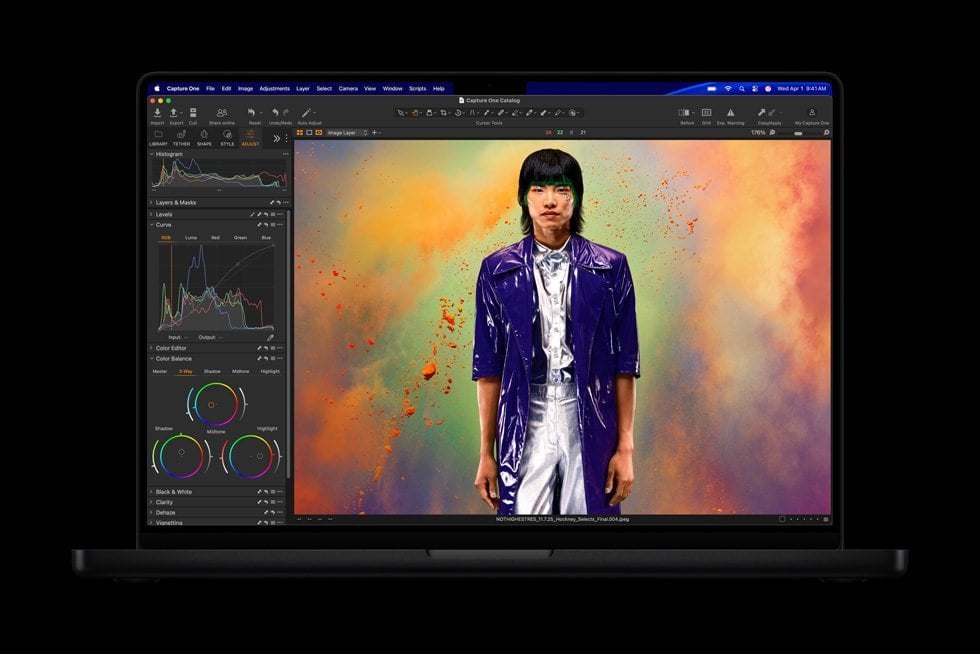
Apple has officially introduced the M5 Pro and M5 Max MacBook Pro models, available in 14-inch and 16-inch sizes. These laptops are powered by the M5 Pro and M5 Max chips, which deliver up to 8x faster AI performance compared to the M1 series. Notable hardware upgrades include embedded Neural Accelerators and an enhanced GPU […]
The rivalry between Qwen 3.5 and Sonnet 4.5 highlights the shifting priorities in large language model development. Qwen 3.5, created by Alibaba, prioritizes offline deployment, allowing it to operate locally on modern hardware without internet access. This design is particularly relevant for developers seeking to lower operational costs or work in restricted environments. However, as […]
Let’s deal with the bad news first: Apple is reverting a price cut from last year. It dropped the M4-powered MBA’s starting price down to $999, but for the M5-equipped model, you’ll need to shell out at least $1,099.
The company claimed the M5 MacBook Air will be able to deliver four times faster performance in AI tasks than the M4 MBA. Compared with the M1 MacBook Air, you’ll get up to 9.5 times faster performance, the company said.
Along with swapping in a more powerful chip, Apple has upgraded the starting storage by doubling it from 256GB to 512GB. The company says the SSD has “2x faster read/write performance compared to the previous generation.” You can kit out the MacBook Air with 4TB of internal storage if you have the will and the means.
You’ll also get 16GB of RAM for starters. The memory has 153GB/s of bandwidth, which Apple said is a 28 percent improvement over the M4 MBA. The latest MacBook Air can be equipped with up to 32GB of memory.
Just like it did with the latest iPad Air, Apple has upgraded the connectivity hardware. Thanks to the inclusion of the company’s N1 wireless chip, the M5 MacBook Air supports Wi-Fi 7 and Bluetooth 6.
As you’d imagine, the M5 MacBook Air runs on macOS Tahoe and it supports Apple Intelligence features. It has a Liquid Retina display, 12MP Center Stage camera, a sound system with Spatial Audio support and a pair of Thunderbolt 4 ports, which allows the laptop to support up to two external displays. Apple claims the M5 MacBook Air will run for up 18 hours on a single charge.
The M5 MacBook Air is available in 13-inch and 15-inch models, with the latter starting at $1,299. It’s available in sky blue, midnight, starlight and silver. Pre-orders start on March 4 at 9:15AM ET. The laptops will be available in stores in 33 countries and regions on March 11.
This article originally appeared on Engadget at https://www.engadget.com/computing/laptops/the-macbook-air-m5-starts-at-1099-up-100-from-the-m4-141612909.html?src=rss
As part of its big week of announcements, Apple has unveiled a new pair of M5 chips alongside two new MacBooks. The new M5 Pro and M5 Max chips will power the new MacBook Pro that was just announced today, while the new MacBook Air comes with the base M5. According to the company’s press release, the M5 Pro and M5 Max come with an “advanced GPU with Neural Accelerators and higher unified memory bandwidth for a massive increase in AI compute.”
At the heart of the M5 Pro and M5 Max are what Apple is calling a new “Fusion Architecture” that “combines two dies into a single system on a chip (SoC).” The chips both feature a new 18-core CPU, six of which Apple is now calling “super cores, that are the word’s fastest CPU core.”
The other 12 are “all-new performance cores, optimized for power-efficient, multithreaded workloads.” Altogether, Apple says these CPU changes improve performance by “up to 30 percent for pro workloads.” Meanwhile, the GPU is a jump over the next-gen design we saw in the M5, as it goes to up to 40 cores. Each GPU core has a Neural Accelerator in it, and together with the higher unified memory bandwidth, the company says the M5 Pro and M5 Max offer “over 4x the peak GPU compute for AI compared to the previous generation.”
Apple added that graphics performance is also getting a substantial boost, by up to “35 percent for apps using ray tracing” compared to the M4 Pro and M4 Max.
To be clear, this isn’t the first time Apple has claimed it has the “world’s fastest” core. According to our resident Apple Silicon expert Devindra Hardawar, the benchmarks have proven the company’s claims true. It’s also worth noting that the two-die design isn’t novel or unique, as companies like Intel and AMD have been doing similar.
The M5 Pro and M5 Max will first show up in the new MacBook Pro, which is available for pre-order starting March 4, and will arrive on Wednesday, March 11.
This article originally appeared on Engadget at https://www.engadget.com/computing/apple-unveils-the-m5-pro-and-m5-max-chips-which-feature-new-faster-super-cores-141533420.html?src=rss
It happened much later than we expected, but Apple's announcement of MacBook Pros with its M5 Pro and M5 Max chips has finally arrived. These more powerful variants on Apple's silicon will be available in the 14-inch and 16-inch models of the laptops. Pre-orders will open on March 4 with an expected ship date of March 11. You’ll want to save some extra coin this time, though, as prices have gone up compared to the prior generation.
The new 14-inch MacBook Pro can be kitted out with either an M5 Pro or M5 Max. The Pro option for the chip boasts a CPU with 15 or 18 CPU cores and 16 or 20 GPU cores. For the M5 Max, users will have 18 CPU cores along with 32 or 40 GPU cores. The base model with an M5 Pro has either 24 or 48GB of RAM and now starts with 1TB of storage, up from 512GB as was standard before.
If you're eyeing the 16-inch MacBook Pro, it starts with the M5 Pro with 18 CPU cores and 20 GPU cores. You can also get the same two M5 Max configurations as you can on the 14-inch model.
Perhaps most significantly, Apple has raised prices on its entire MacBook Pro lineup. The 14-inch M5 model previously started at $1,599; it’s now priced at $1,699. At least you’re getting something for that cash, as Apple has doubled its base storage to 1TB.
The same goes for the new M5 Pro and Max options. The 14-inch with the M5 Pro now starts at $2,199 instead of $1,999, while the 16-inch starts at a whopping $2,699 instead of $2,499. That 16-inch model comes with 24GB of RAM and 1TB of storage now as standard; that’s again double the storage space from the prior model. The M5 Max model starts with 2TB of storage and 36GB of RAM for $3,599 (14-inch) or $3,899 (16-inch).
Running down the rest of the specs: Apple says the storage in the new MacBook Pro is twice as fast as the prior generation — so you’re getting more, faster storage than before for the extra cash. The laptops also include the Apple-designed N1 chip for Wi-Fi 7 and Bluetooth 6 connectivity, and Apple says the MacBook Pro is rated for up to 24 hours of battery life. It has the same excellent Liquid Retina XDR display as we’ve seen for multiple years now, as well as a 12-megapixel “Center Stage” front-facing camera.
It's a little unusual for these heavy-duty upgrades to Apple's MacBook Pros to be announced so much later from the news of its latest silicon updates. The company debuted the M5 chip last fall as usual, but spent several months before it revealed these major hardware additions for housing it. And the M5 MacBook Pro that was announced in October shortly after the M5 chip news came with zero fanfare.
This article originally appeared on Engadget at https://www.engadget.com/computing/laptops/apple-brings-its-m5-pro-and-max-silicon-to-the-next-macbook-pro-generation-141553279.html?src=rss
Long before today’s ultra-powerful handheld PCs began chasing console-grade performance in a portable shell, there was something undeniably charming about simpler gaming machines. The kind that fit easily into your pocket, turned on instantly, and transported you straight back to pixelated worlds without menus, downloads, or updates getting in the way. Honoring that era, the HyperMegaTech Super Pocket Rare Edition is here to bring cartridge-ready gaming to your pocket.
Developed by HyperMegaTech (who surprised us with the Micro Keychain Gamer) in collaboration with the British game developer Rare, the original Super Pocket is designed to make retro gaming accessible and refreshingly straightforward. Its vertical layout echoes classic handheld silhouettes, pairing nostalgia with modern practicality. A 2.8-inch IPS display with a 320 × 240 resolution sits at the center, offering sharp visuals suited to 8-bit and 16-bit titles.
What distinguishes the Super Pocket from many low-cost retro handhelds is its hybrid approach. Each edition ships with a curated lineup of pre-installed games, typically centered around a specific publisher or theme. Earlier versions celebrated arcade and console heavyweights such as Capcom, NEOGEO, Taito, Atari, and Data East, giving players immediate access to recognizable classics straight out of the box. The console runs on a 1.2GHz processor and is powered by a rechargeable battery that delivers roughly four hours of gameplay per charge. USB-C charging and a 3.5mm headphone jack round out the essentials, keeping the device practical for everyday use.
The upcoming Rare Edition expands that idea a step further. The Super Pocket Rare Edition, launching in June 2026, includes 14 classic titles from the legendary British developer Rare. The selection spans decades of the studio’s catalog, bringing fan-favorite experiences like Banjo-Kazooie, Battletoads, and Conker’s Pocket Tales into a compact, dedicated handheld format. For many players, this built-in lineup alone justifies the device.
Beyond the preloaded games, the Super Pocket is fully compatible with Evercade cartridges, significantly expanding its potential library. With more than 75 cartridge collections available and access to over 650 officially licensed retro games, users are not limited to the internal storage. This physical-media ecosystem adds a collector-friendly dimension rarely seen in modern budget hardware. If you are already in the Evercade ecosystem, this cross-compatible compact handheld is a no-brainer.
The Super Pocket does not attempt to rival high-end emulation handhelds or modern gaming consoles. Instead, it is a compact machine built purely for classic titles, free from distractions. For those who value tactile buttons, curated libraries, and the satisfaction of slotting in a physical cartridge, nothing gets better than this. In fact, the bright yellow shoulder buttons bring functional clarity and seamless sync with the design.
Despite the retro focus, the Super Pocket Rare Edition, in its signature vibrant blue, red, and yellow theme, remains competitively priced. It is expected to retail for around $69 in the United States, £49 in the United Kingdom, and €59 across Europe, keeping it within reach of casual players and seasoned collectors alike.
Apple continues its gradual unveiling of new products this week with the launch of the Studio Display and an all-new 27-inch Studio Display XDR. The latter is a higher-end model aimed at content creators with a 27-inch 5K Retina XDR display that features a mini-LED display with 2,000-plus dimming zones, up to 2,000 nits of peak HDR brightness and a wider color gamut for improved accuracy. It looks like a replacement for the expensive, nearly seven-year-old 32-inch 6K Pro XDR Display, which is no longer for sale on Apple's website.
The Studio Display XDR also has a 120Hz refresh rate, addressing complaints about the relatively anemic 60Hz refresh rate of previous models. At the same time, it comes standard with a new tilt- and height-adjustable stand, with a height range of 105mm.
Apple
Apple calls the Studio Display XDR the "world's best pro display" for things like HDR video editing and medical displays. Brightness levels are certainly outstanding at 1,000 nits SDR and 2,000 nits HDR, and the 1,000,000:1 contrast ratio and 80 percent Rec.2020 coverage are also top-notch. The new model should even be fine for some light gaming thanks to the 120Hz refresh rate and Adaptive Sync support, though many buyers may want a 32-inch or larger display like the now-discontinued Pro XDR model.
Other features include a 12MP Center Stage camera with Desk View support and Thunderbolt 5 connectivity with a second port for downstream high-speed accessories or additional daisy-chained displays. It can also act as a Thunderbolt hub, while offering up to 140W of charging power through the included Thunderbolt 5 Pro cable, enough to fast-charge a 16-inch MacBook Pro.
Apple
Along with the Display XDR, Apple also announced a new version of the standard Studio Display. As before, it comes with a 27-inch 5K Retina display with up to 600 nits of brightness and P3 wide color, either with standard or optional nano-texture glass (a $300 option). However, it now includes an improved 12MP Center Stage camera along with Desk View to show your face and an overhead view of your desk at the same time. You also get a studio-quality three-microphone array and six speaker sound system with Spatial Audio.
That display now supports Thunderbolt 5 connectivity as well, providing higher-speed connections for accessories and the ability to daisy-chain displays. However, max charging power on this model is limited to 96W, still enough to fast-charge a 14-inch MacBook Pro. The Studio Display comes standard with a tilt-adjustable stand, but you can get it with a tilt- and height-adjustable standard for $400 more as before.
The Studio Display XDR will be available tomorrow for pre-order starting at $3,299, while the new Studio Display also goes on pre-order on March 4 starting at $1,599 without the nano-texture display or heigh-adjustable stand.
This article originally appeared on Engadget at https://www.engadget.com/computing/accessories/apple-reveals-its-new-5k-mini-led-studio-display-xdr-141515587.html?src=rss
Nested Claude code, when paired with Tmux terminals, introduces a structured approach to managing parallel task execution in development workflows. As highlighted by All About AI, this system relies on a central controller to coordinate multiple Tmux terminals, each assigned to a specific task. For example, tasks are dynamically allocated based on their complexity and […]
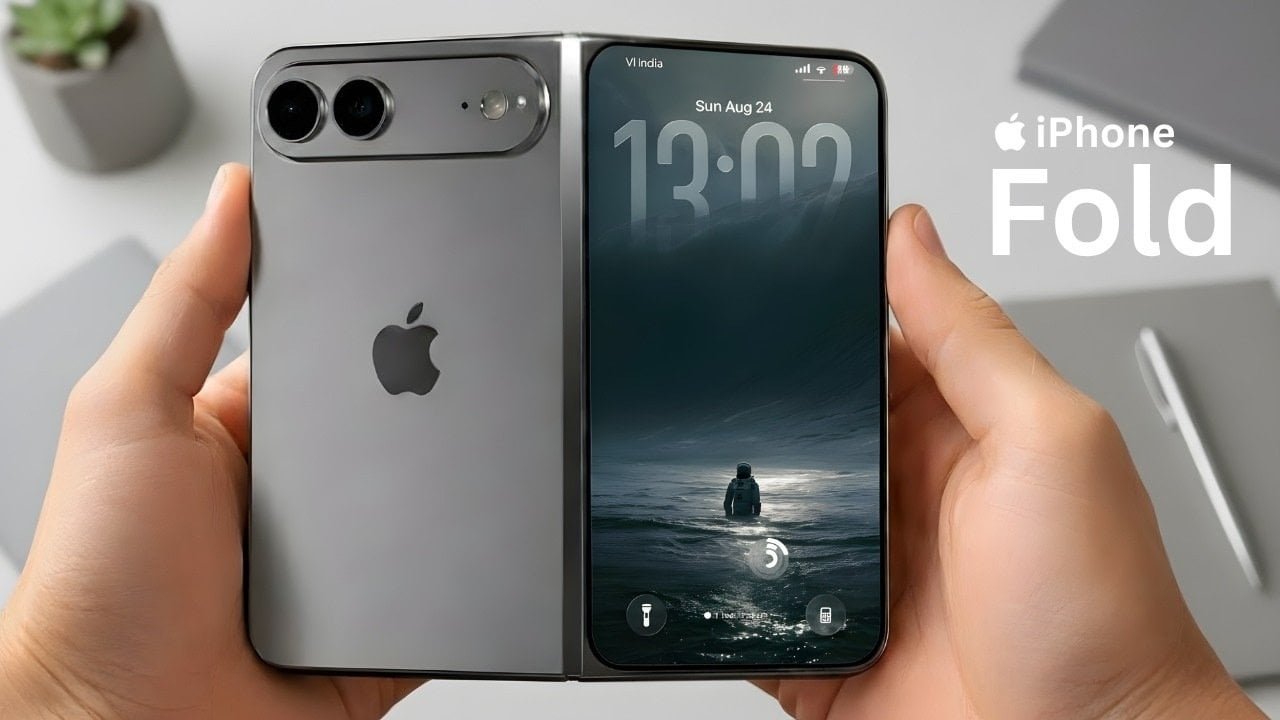
Apple is reportedly preparing to unveil its first foldable iPhone, a highly anticipated device that could reshape the foldable smartphone market. Expected to debut in September 2026 as part of the iPhone 18 Pro lineup, this innovative product is rumored to combine advanced technology with a sleek, user-centric design. With a projected price range of […]
XLR microphone owners, rejoice: Shure's successor to the MVX2U Digital Audio Interface (DAI) brings the adapter into the mobile era. The compact MVX2U Gen 2 adds more advanced onboard audio processing. But its most notable upgrade is mobile device compatibility, so you're no longer limited to desktop use.
The single-channel MVX2U Gen 2 provides up to +60dB of gain and 48V phantom power. On the processing front, the adapter includes an auto-level mode. There’s also a real-time denoiser to minimize background noise and a pop filter ("Popper Stopper" in Shure marketing-speak) to soften those harsh plosive sounds. Shure says the new model improves the noise floor, headphone amp and DAC.
The adapter stores your last-used audio processing settings. That way, you don't have to worry about your settings getting wiped out when switching between devices or software.
The Shure MVX2U Gen 2 includes a 1m (3.3 ft) USB-C to USB-C cable, so you can get it up and running quickly on your phone, tablet or PC. The adapter is now available for $139 from the company website.
This article originally appeared on Engadget at https://www.engadget.com/audio/shures-next-gen-dai-adds-mobile-support-140000205.html?src=rss