Burning Man 2026 Built a 300-Ring Light Tower You Have to Earn

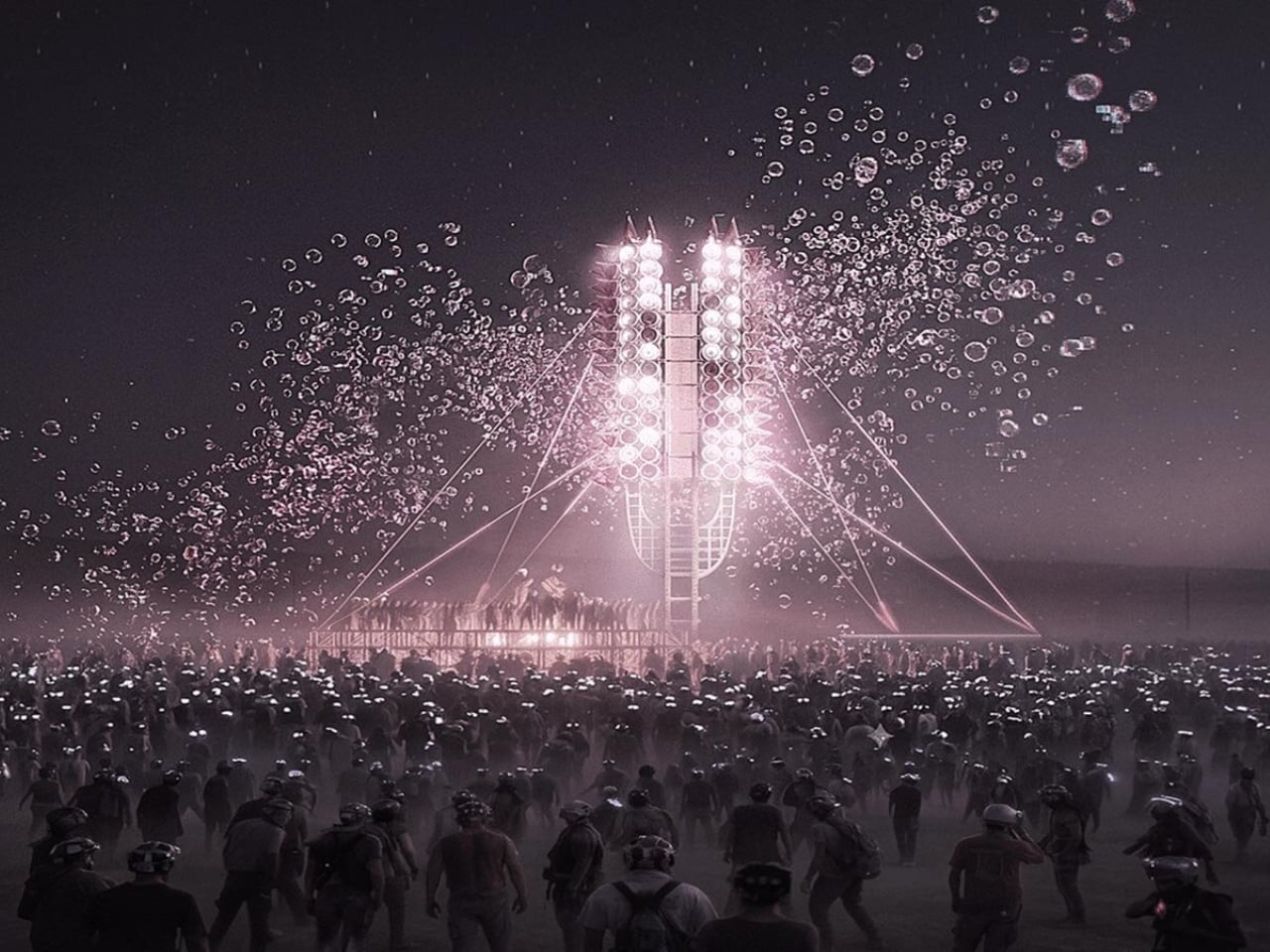
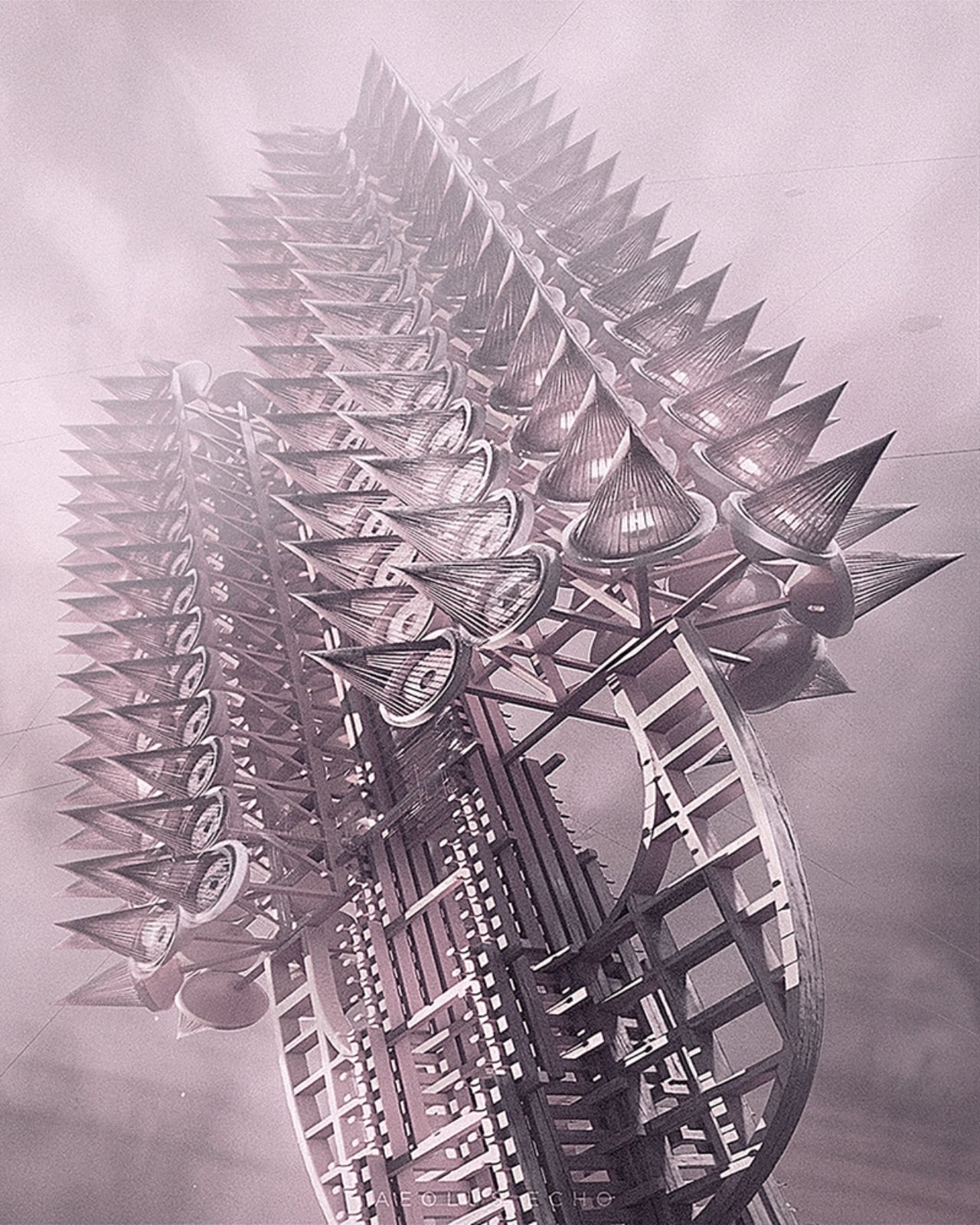
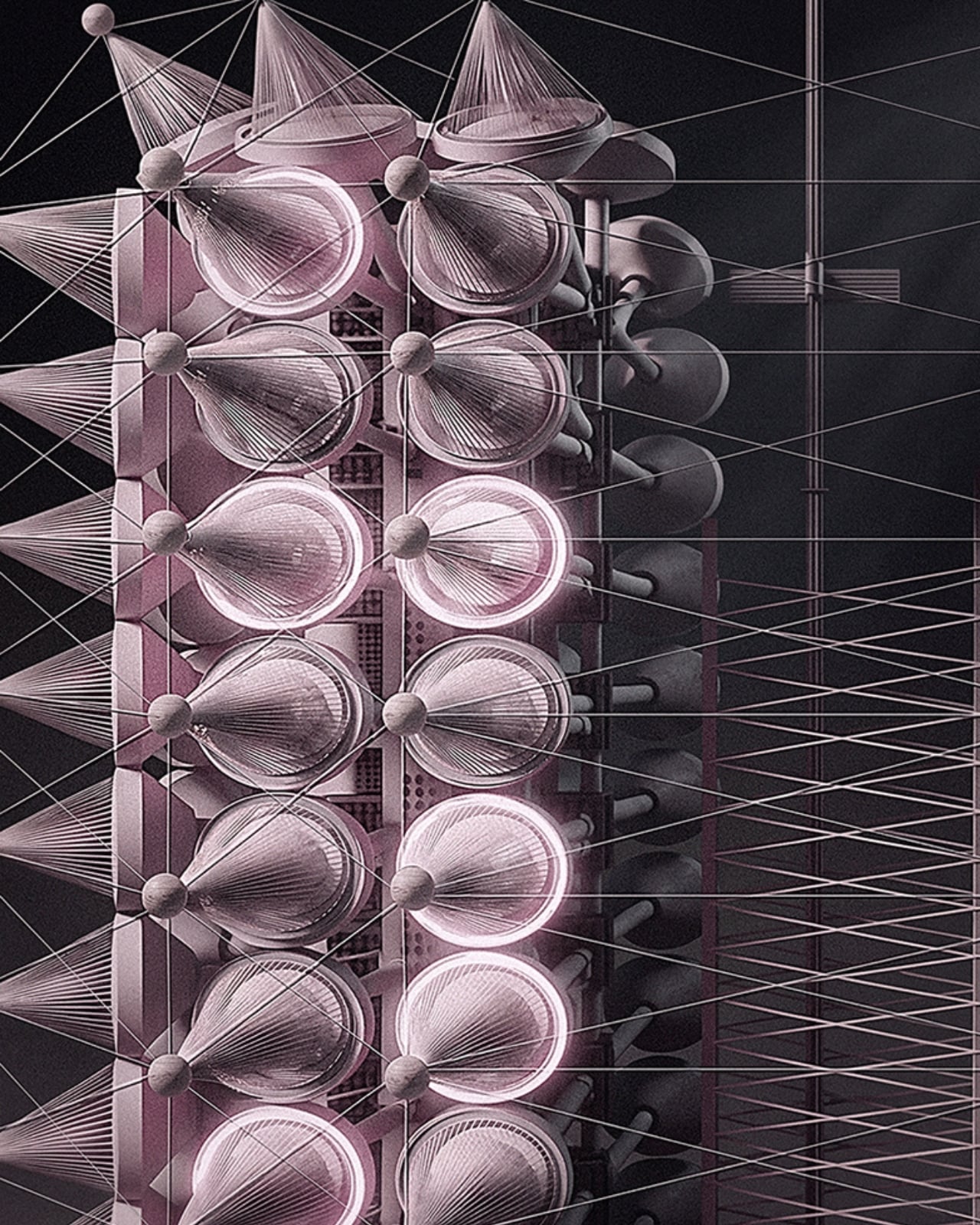
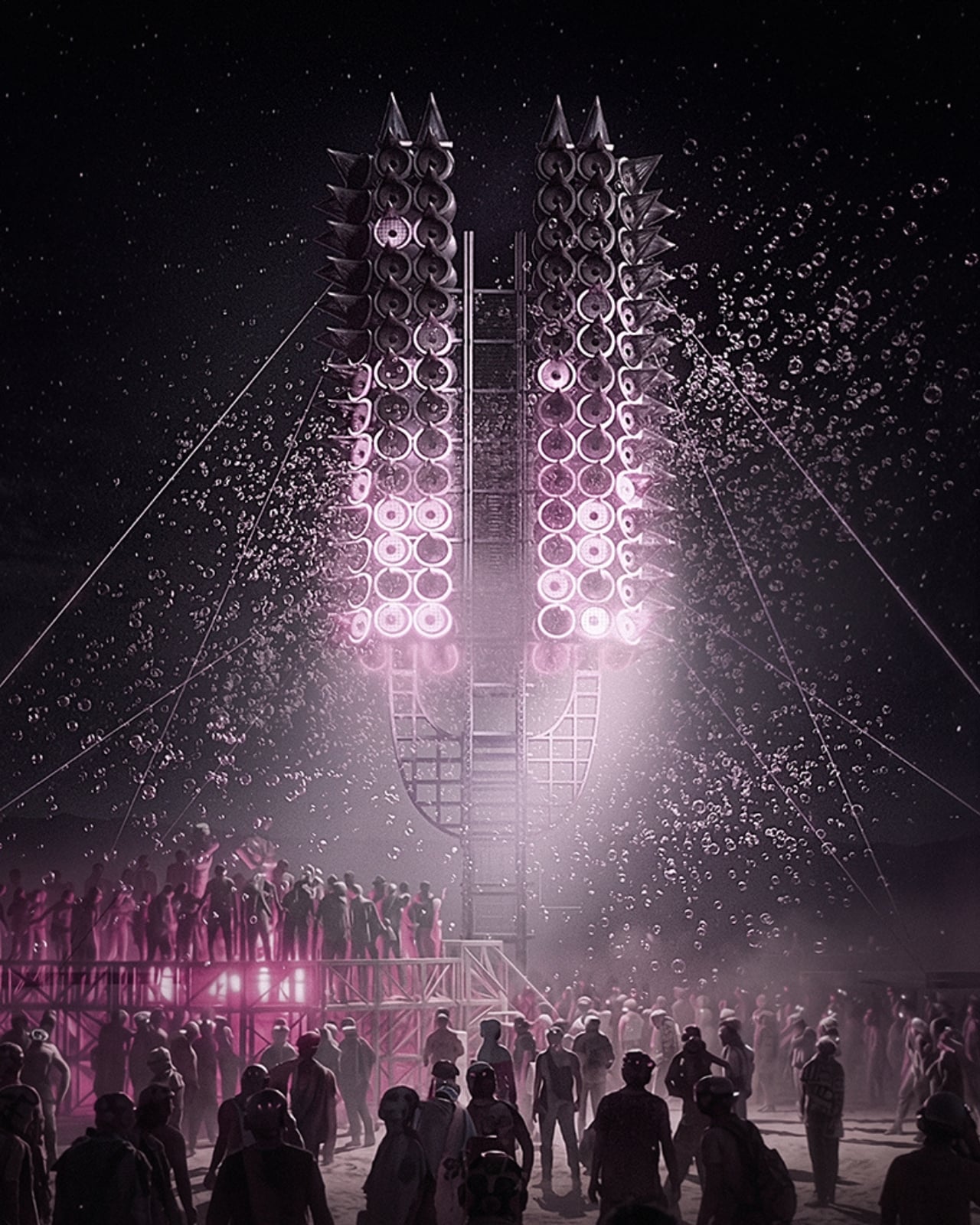
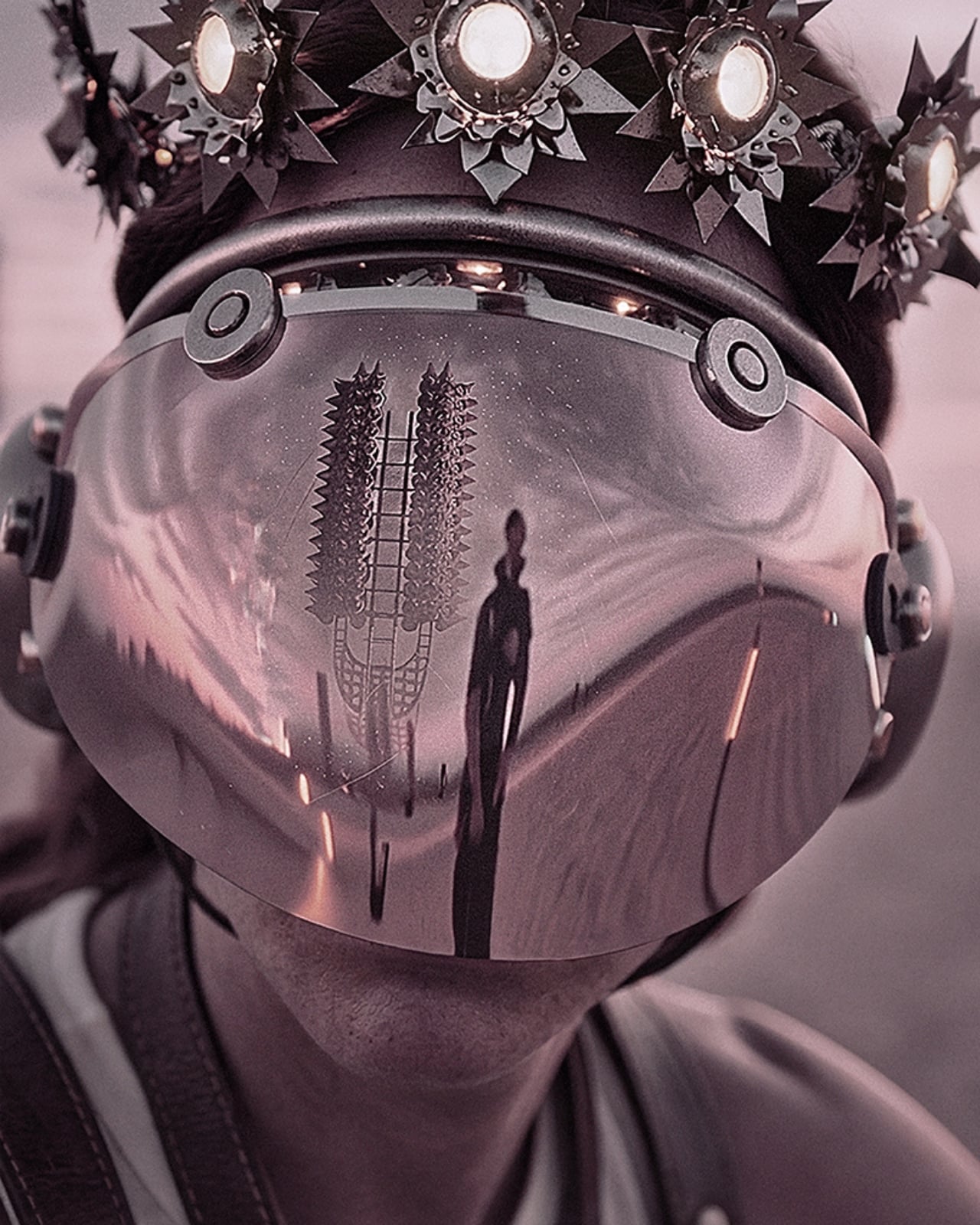
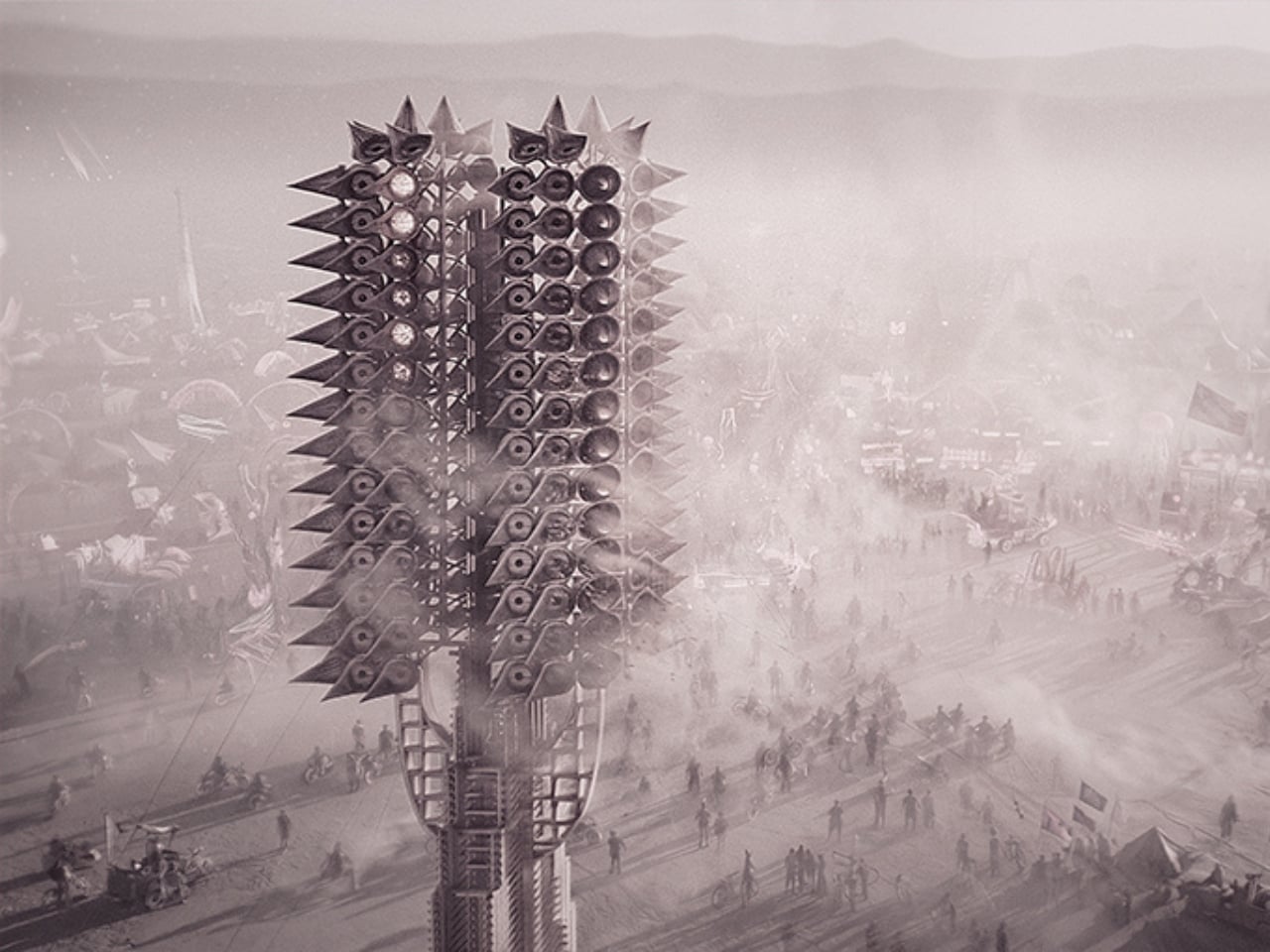
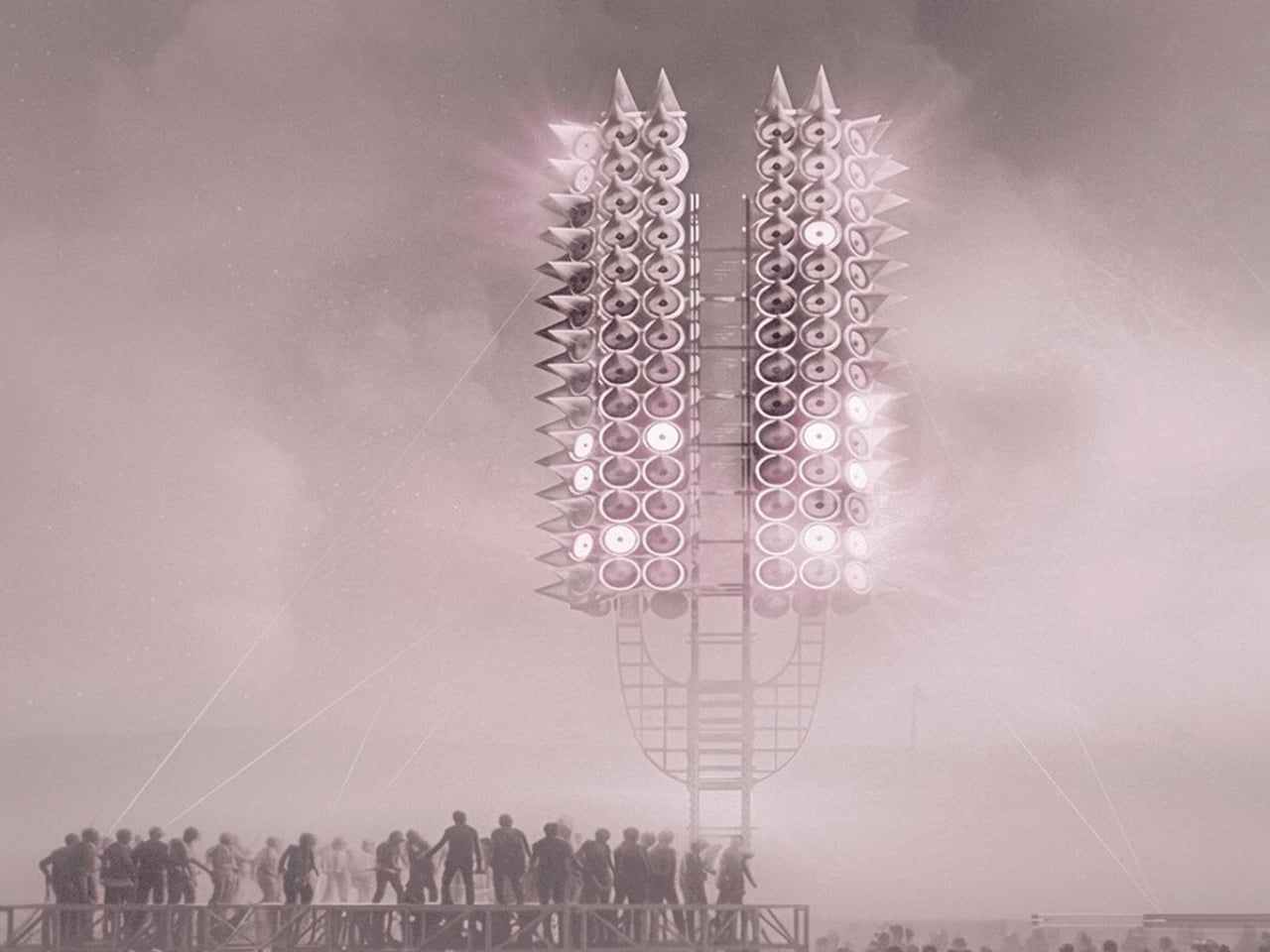
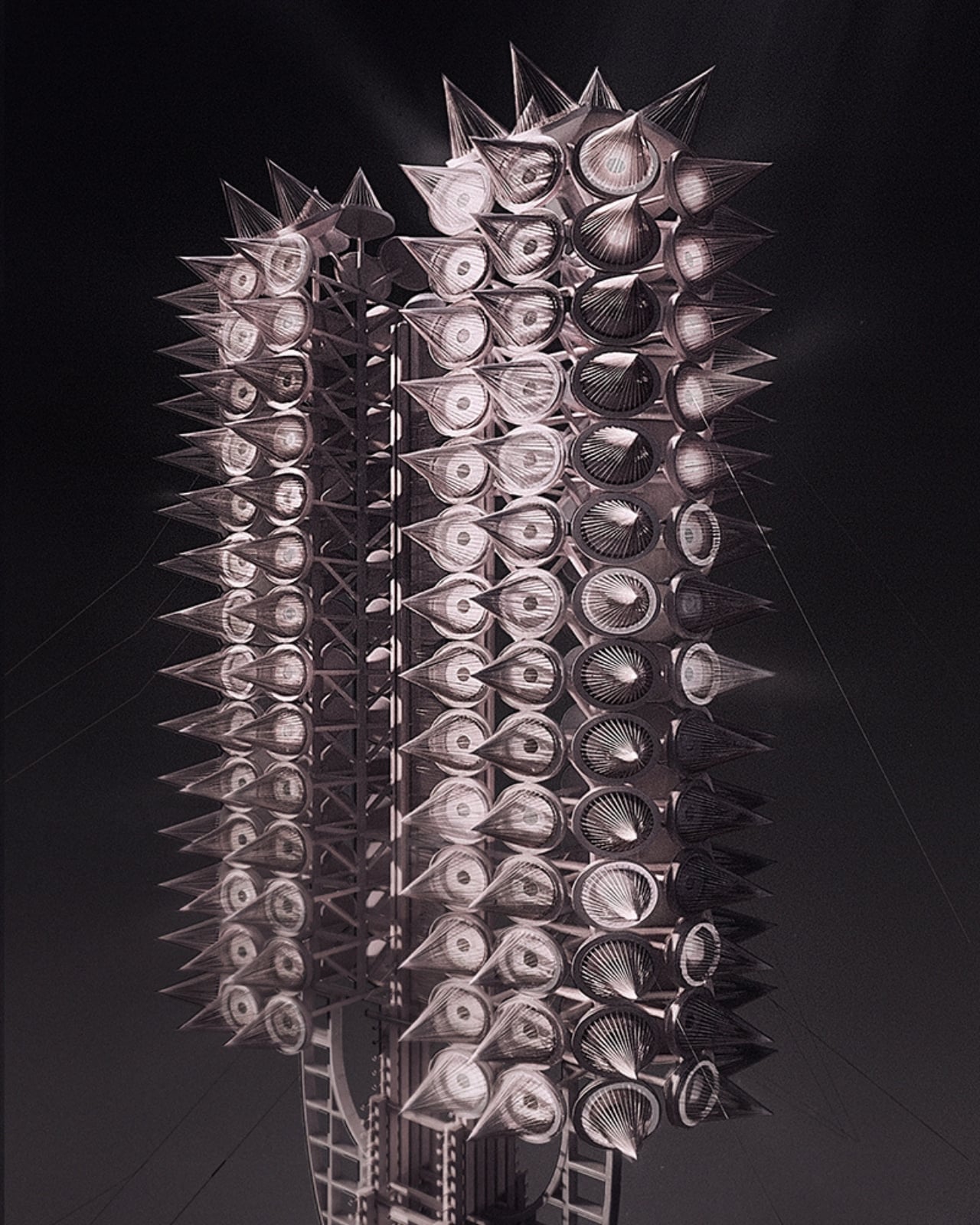
One person shouting into an empty desert doesn’t build much of anything. But what happens when thousands of voices gather around a 12-meter tower made of 300 programmable rings of light, and the structure itself begins to respond? That’s the premise behind Axis Mundi: Resonant Spire, Sergei Konchekov’s installation selected for the 2026 Burning Man Honoraria program, and it might be the most genuinely interesting piece of architecture to emerge this year. Not because it’s the biggest or the most technically complex, but because it actually has something to say.

The concept is both technically precise and philosophically loaded. Konchekov built the tower to translate human voice into a vertical system of light and sound. Speak toward it, and the rings light up. Walk away, and the activation fades. The structure doesn’t generate its own spectacle. It borrows yours. Which sounds like a gimmick when you type it out flat like that, but when you sit with it, it starts to feel like one of those rare design ideas that actually earns its concept.

Designer: Sergei Konchekov

What makes it more than just an interactive light show is the accumulation logic built into its architecture. The 300 rings function as a kind of vertical archive. Lower rings hold stabilized states built up over time, while the upper rings stay live and reactive to current input. So the tower, in a real and structural sense, carries memory. What a crowd did an hour ago is still visible at the base, while what’s happening right now lives near the top. Light doesn’t disappear here. It accumulates. Time, quite literally, becomes physical form.

Konchekov developed the project through a methodology he calls COLLIZIUM, which frames architectural form through conflict-based computational processes and collective social input. That might sound like a design school thesis, but the output is something more immediate and tactile than the language around it suggests. The architecture doesn’t exist independently of its participants. It is generated through them. Without the crowd, there is no form. Burning Man’s own listings describe it as “neither monument nor machine, but a living signal,” and that description genuinely holds.

The broader conversation Konchekov is entering with this work feels particularly timely. Digital communication is at an all-time volume and an all-time low for meaning. We post, we broadcast, we react, and somehow the cumulative noise produces very little that resembles actual connection. Resonant Spire offers a different model: collective input that actually converges, that creates something legible and shared and visible. A crowd becomes a coherent structure only because they showed up together. That is not a small idea dressed in a large installation.

It’s also worth noting that Burning Man is arguably the right venue for this, not just for the obvious reasons of scale and spectacle, but because the event itself is predicated on temporary community. The playa is a place where the usual rules about permanence and individual credit get set aside. A tower that only works when people gather around it and offer their voices is not a metaphor at Burning Man. It’s just a description of what’s happening there already. Konchekov is, in some ways, building architecture that matches the culture it inhabits.

The visual language of the spire draws from ancient and spiritual references, the axis mundi being a cosmological concept found across many cultures, a central pillar connecting earth and sky. Konchekov takes that idea and routes it through a live data feed. The cone-stacked structure rises with phased waves of light traveling upward, in the project’s own words, “like a visible breath.” It is striking, undeniably, but the aesthetic isn’t really the point. The refusal to be passive is. Most architecture asks you to look at it. This one asks you to mean something together before it shows you what you’ve made.

The post Burning Man 2026 Built a 300-Ring Light Tower You Have to Earn first appeared on Yanko Design.
This Burning Man Temple Blooms for One Night, Then Burns Forever

Every year, Burning Man erects a temple on the playa, and every year, it burns. That ritual of building and releasing has been part of the festival’s identity for over two decades, and yet each new design still manages to find a fresh way to make the whole thing hit differently. The 2026 edition, called the Temple of the Moon, might be the most quietly devastating one yet.

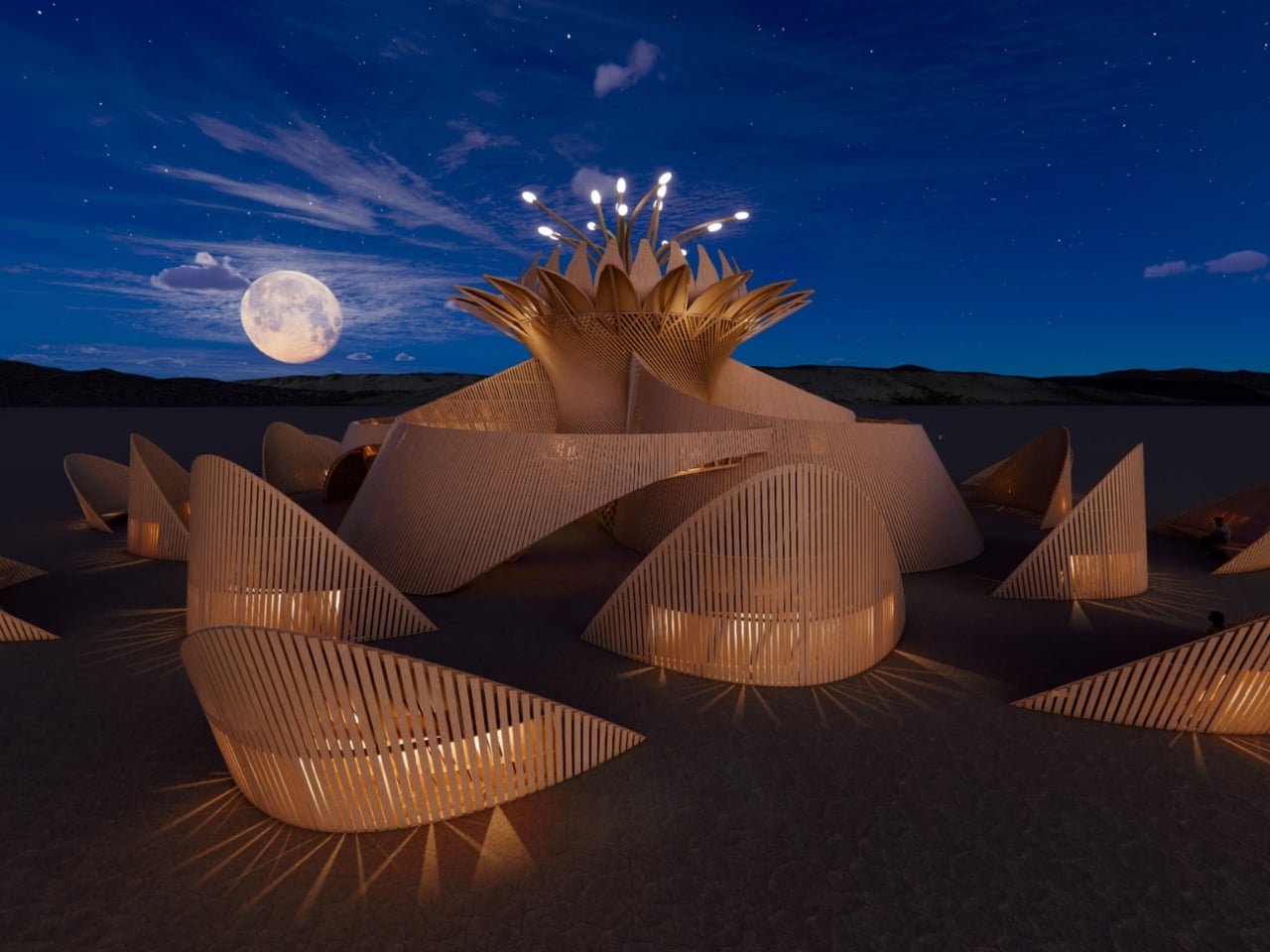
Designed by artist James Gwertzman, the structure takes its inspiration from the epiphyllum oxypetalum, better known as the Queen of the Night, a cactus flower that blooms exactly once a year, only at night, releasing its fragrance before wilting by morning. It’s the kind of plant that demands you pay attention, because if you’re not watching, you’ll miss it entirely. As a metaphor for grief, for presence, for what it means to witness something you know won’t last, it’s almost uncomfortably perfect.

Designer: James Gwertzman

Gwertzman came to this design through a deeply personal place. He spent years walking alongside a friend as she lost her partner to pancreatic cancer, learning what it means to simply be present in someone else’s pain without trying to fix it. Before all of this, he was trained in theater as a set and lighting designer, then spent decades in the video game industry building interactive worlds. Now he’s building something you can actually stand inside, and then watch burn.

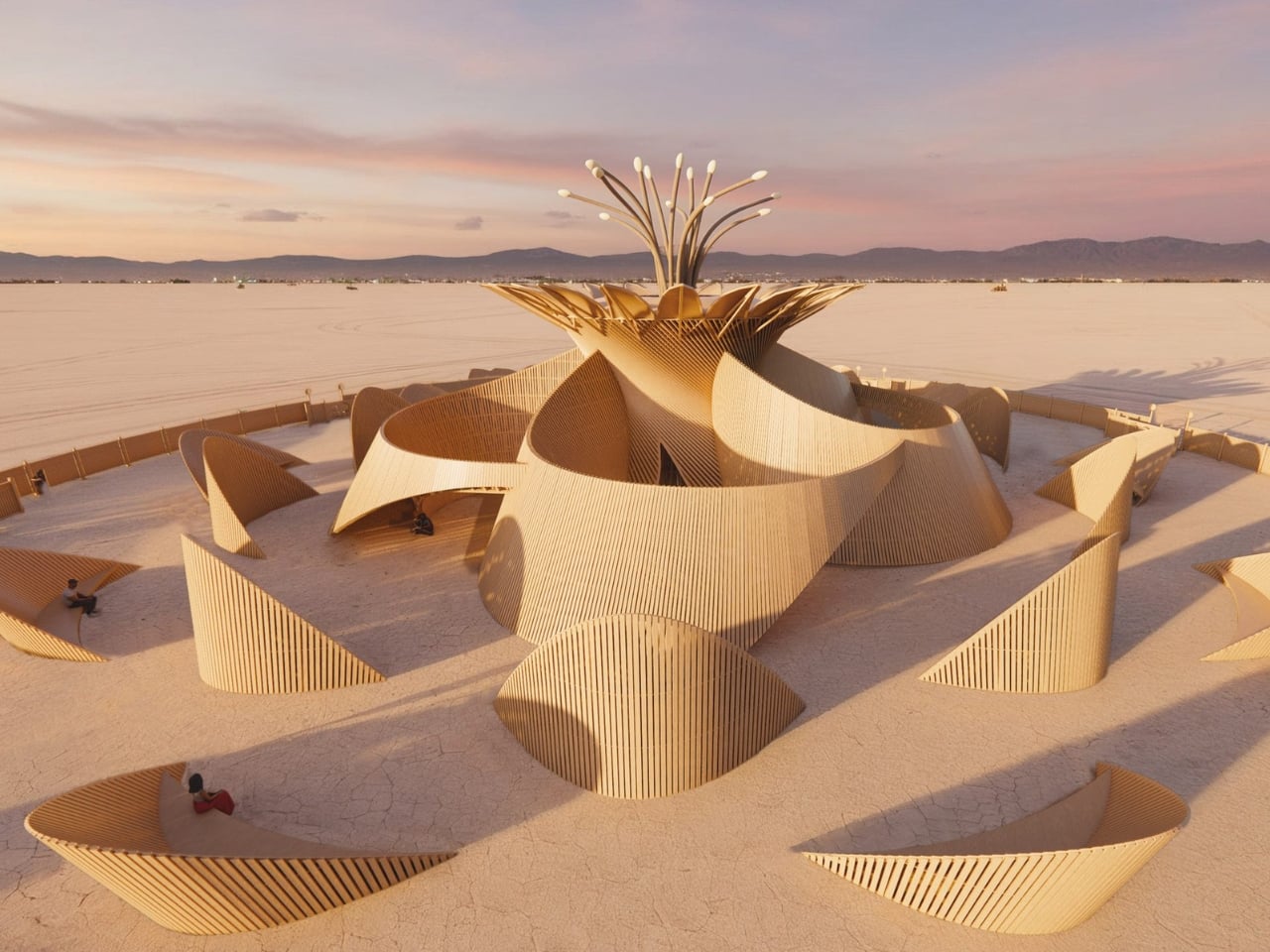
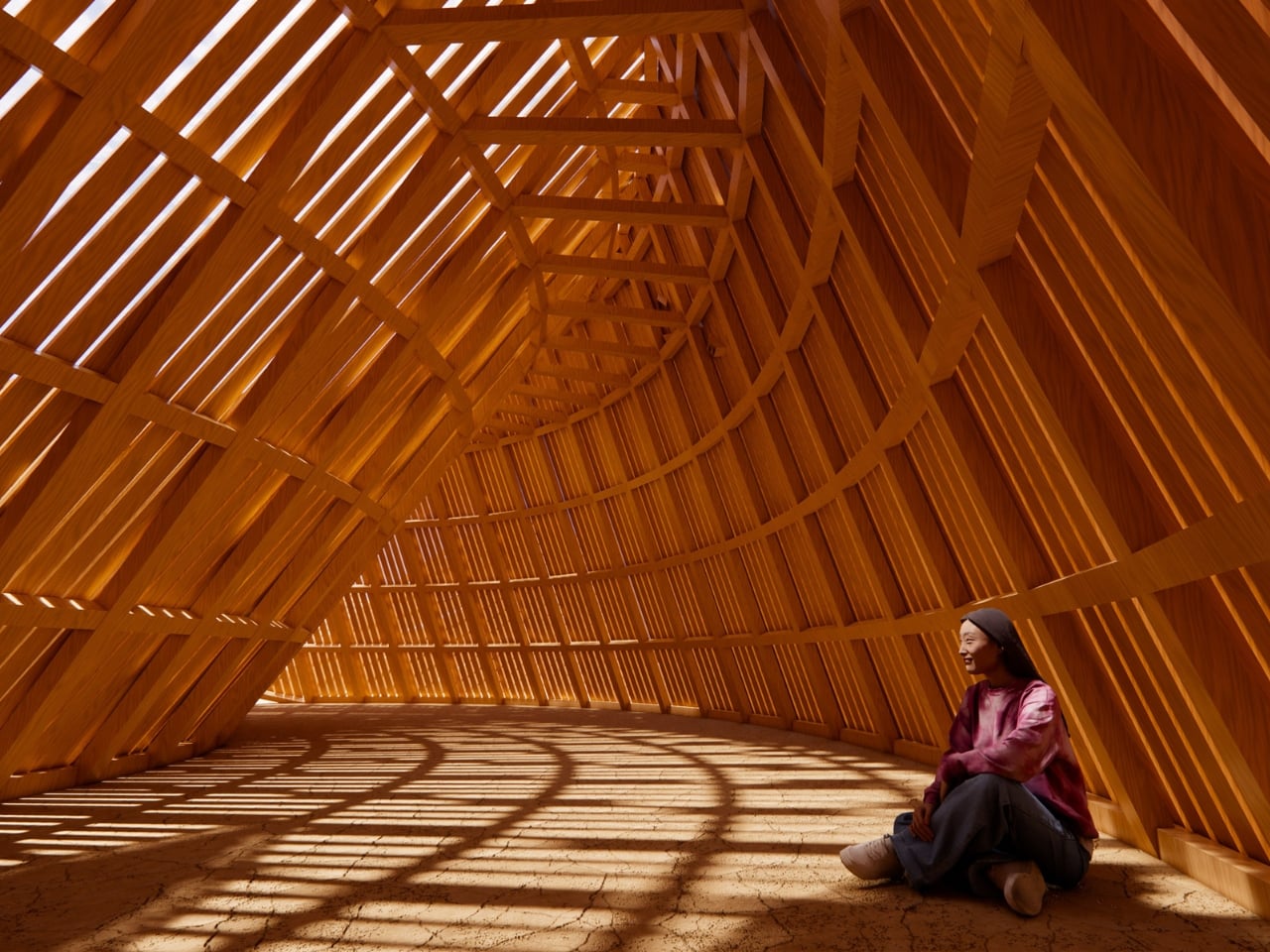
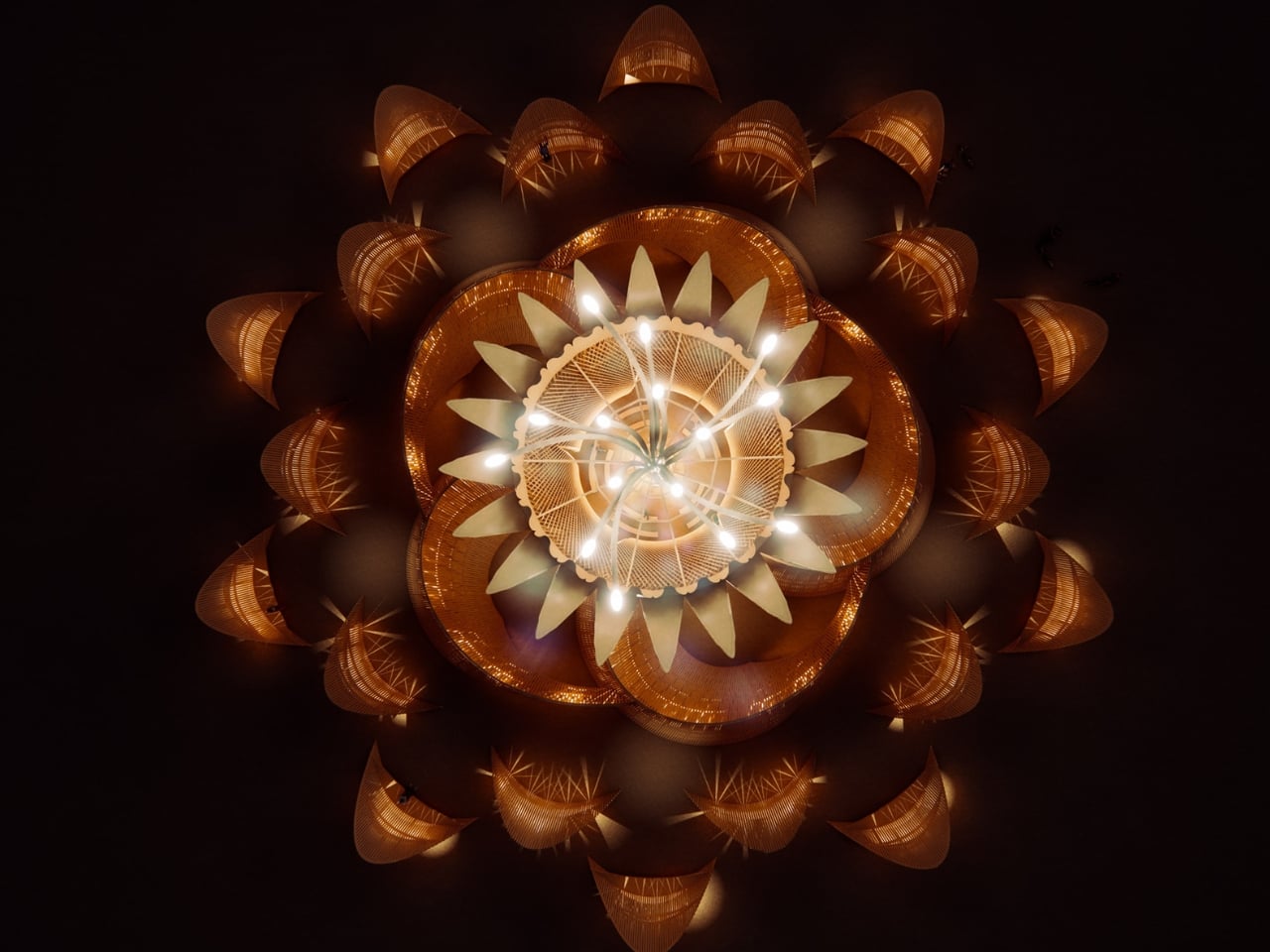
The architectural approach is where things get genuinely fascinating from a design perspective. Gwertzman and his team used a parametric design method, essentially algorithmic generation, to create complex organic curves out of straight pieces of timber. It’s the kind of technical problem-solving that sounds counterintuitive: using math to fake nature. But the result, at least from the renderings, is stunning. From above, the structure looks like a fully bloomed flower, with slatted wooden petals radiating outward from a central chamber.

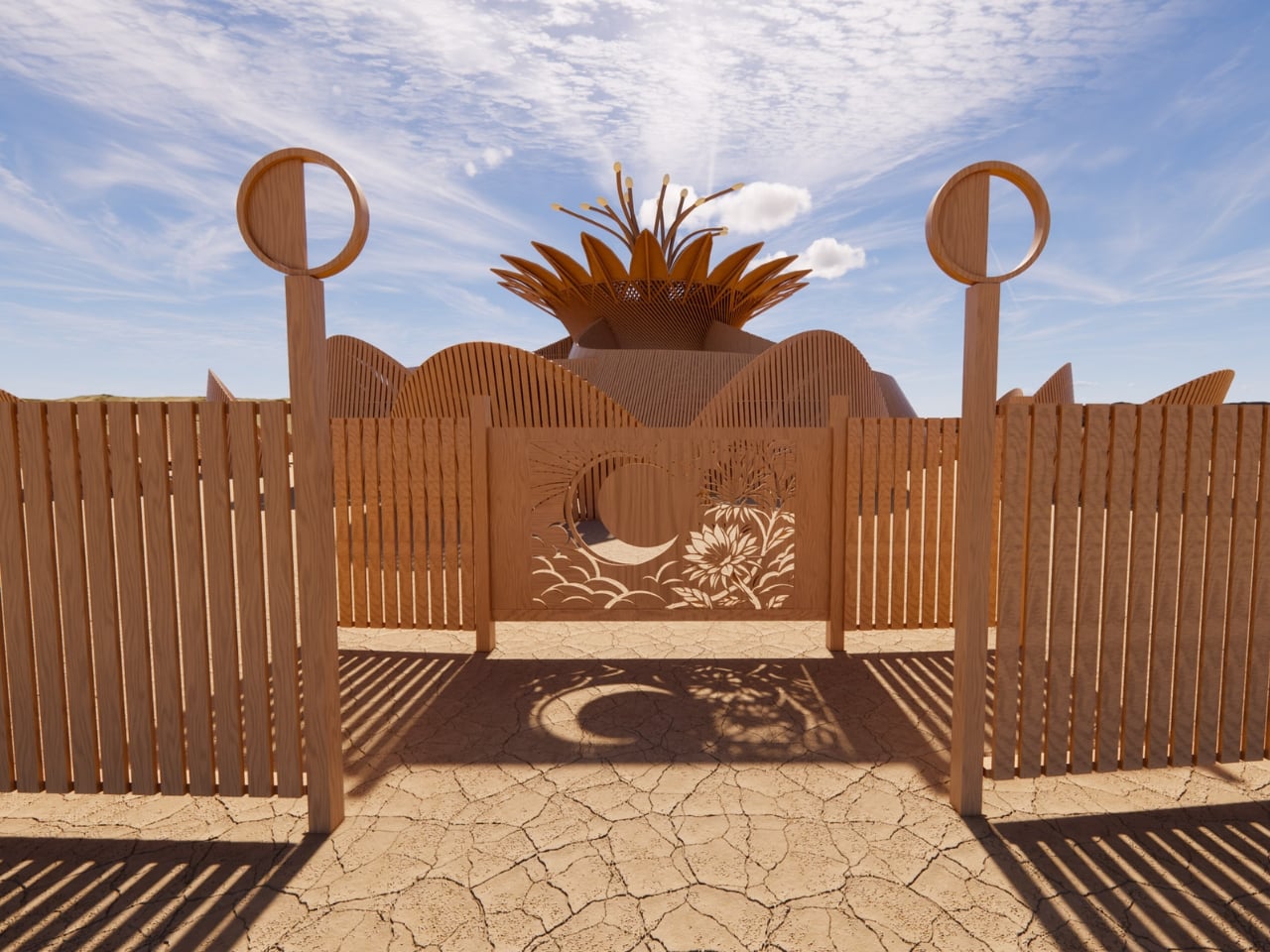
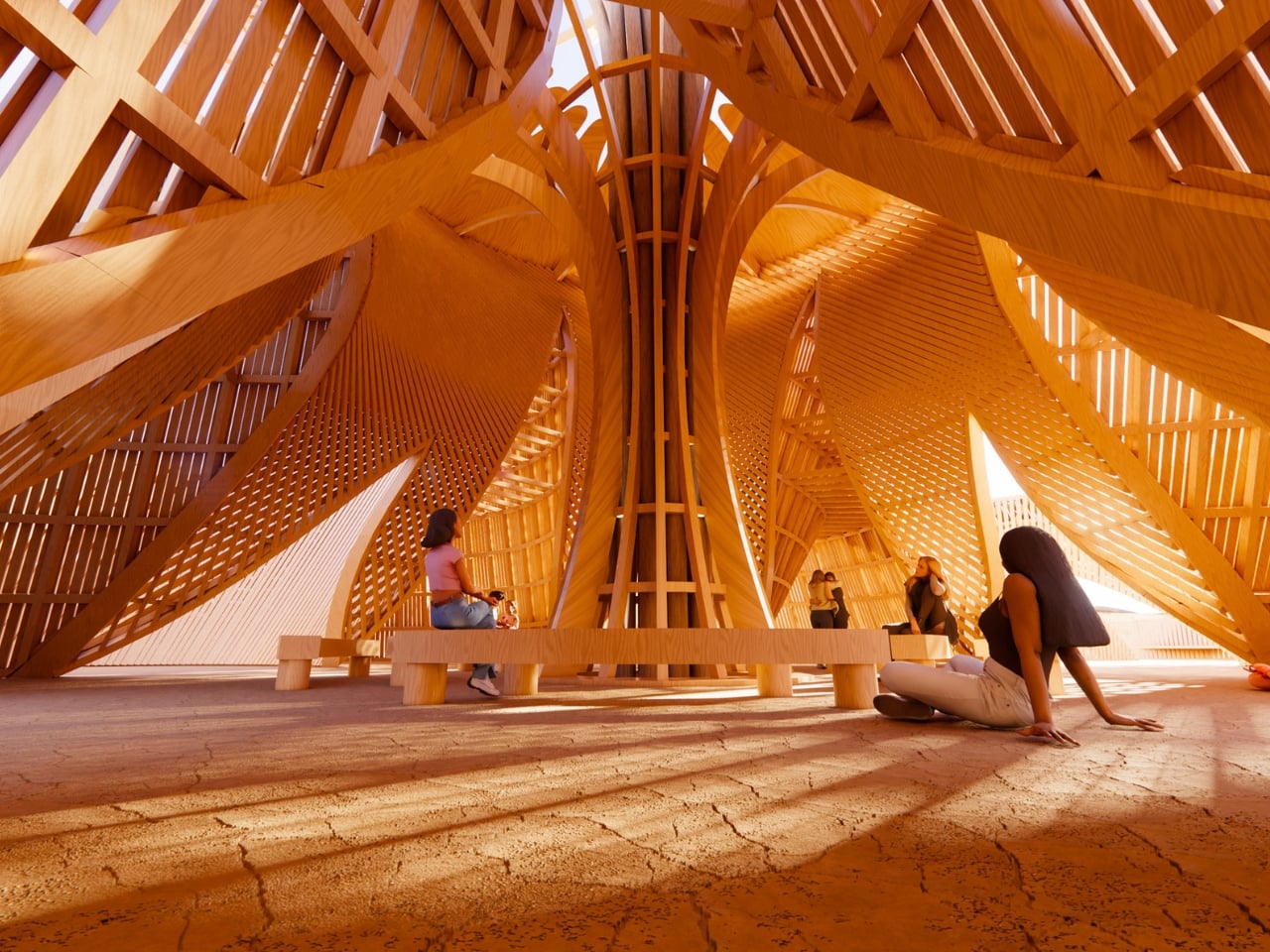
The center of the temple is built around a hyperboloid structure, a column that flares outward at the top, edged with sharp petals and light-topped wooden pieces that echo the look of a flower’s stamen. Fan-like wooden forms provide shelter and mark the entryways into the mostly enclosed inner space. The renderings feel alive in a way that strictly geometric architecture rarely does, and I think that has everything to do with the fact that the form was borrowed from something real.

What I find most considered about this design is that it doesn’t try to be monumental in the traditional sense. Yes, it’s large, and yes, it will be visible from a distance across the Black Rock Desert. But the experience is designed to be intimate, with petal-like seating areas and an approach path built as a journey rather than a straight line toward the entrance. Eight gateways mark the perimeter fence, each one corresponding to a phase of the moon. The fence panels will feature CNC-cut designs submitted by the community around moon and flower motifs, making the very border of the temple a kind of collective artwork.

That detail matters more than it might seem. Burning Man’s Temple has always been a communal space, a place where people leave names, photos, and notes for loved ones who have died. But designing the threshold of that space to carry the marks of many hands is a meaningful gesture. It says the temple doesn’t belong only to the artist. It belongs to whoever needs it.

The whole structure is scheduled to burn on September 6th, 2026. Everything about it, from the flower that wilts at dawn to the lunar cycle that keeps starting over, points toward that moment. The 2026 Burning Man theme is “Axis Mundi,” meaning the center of the world. It’s a heavy framework to design inside of, but the Temple of the Moon seems to hold it without strain. It’s not trying to be the center of everything. It’s trying to be a place where you can stand still for a moment, feel the weight of what you’re carrying, and let it go.

The post This Burning Man Temple Blooms for One Night, Then Burns Forever first appeared on Yanko Design.