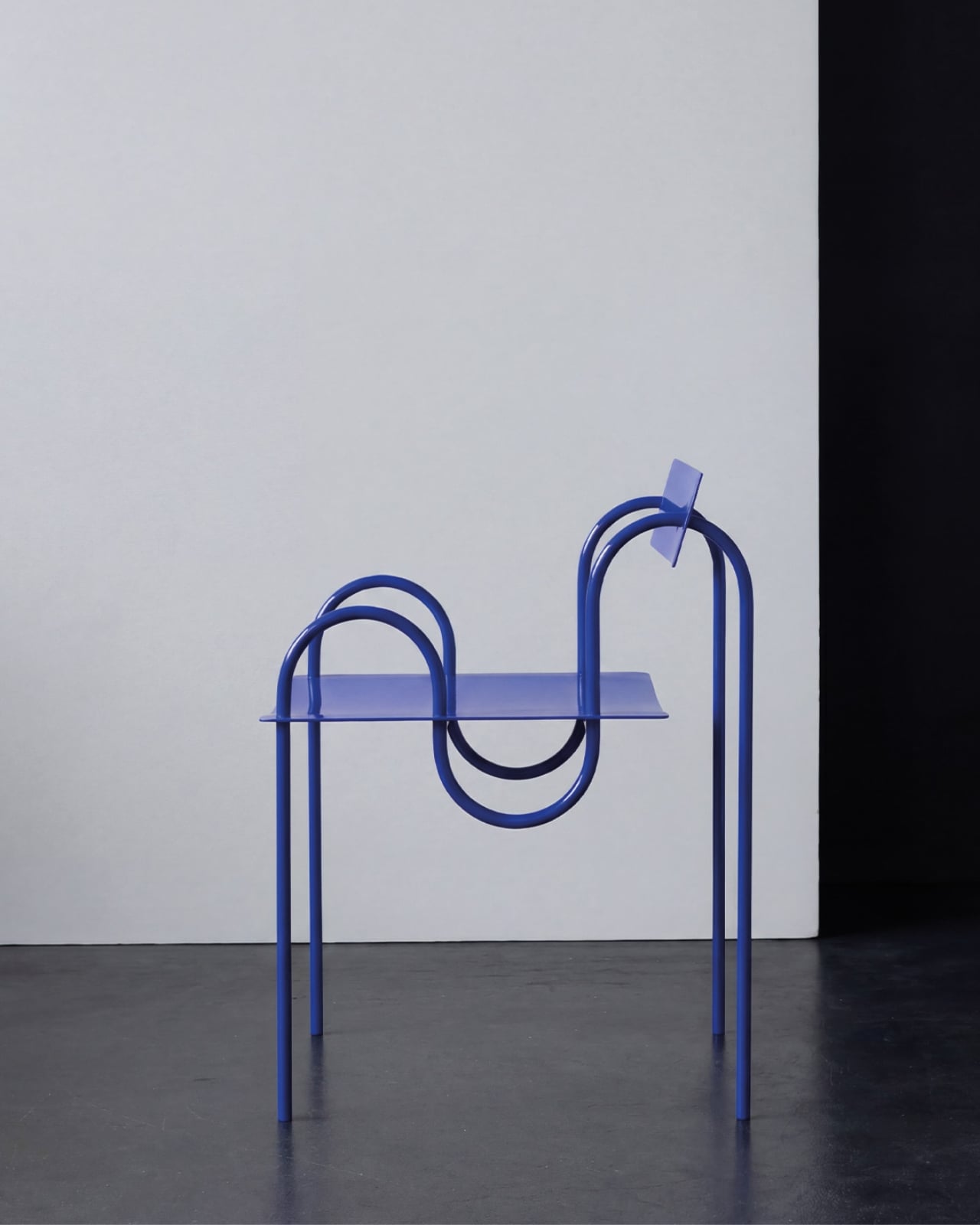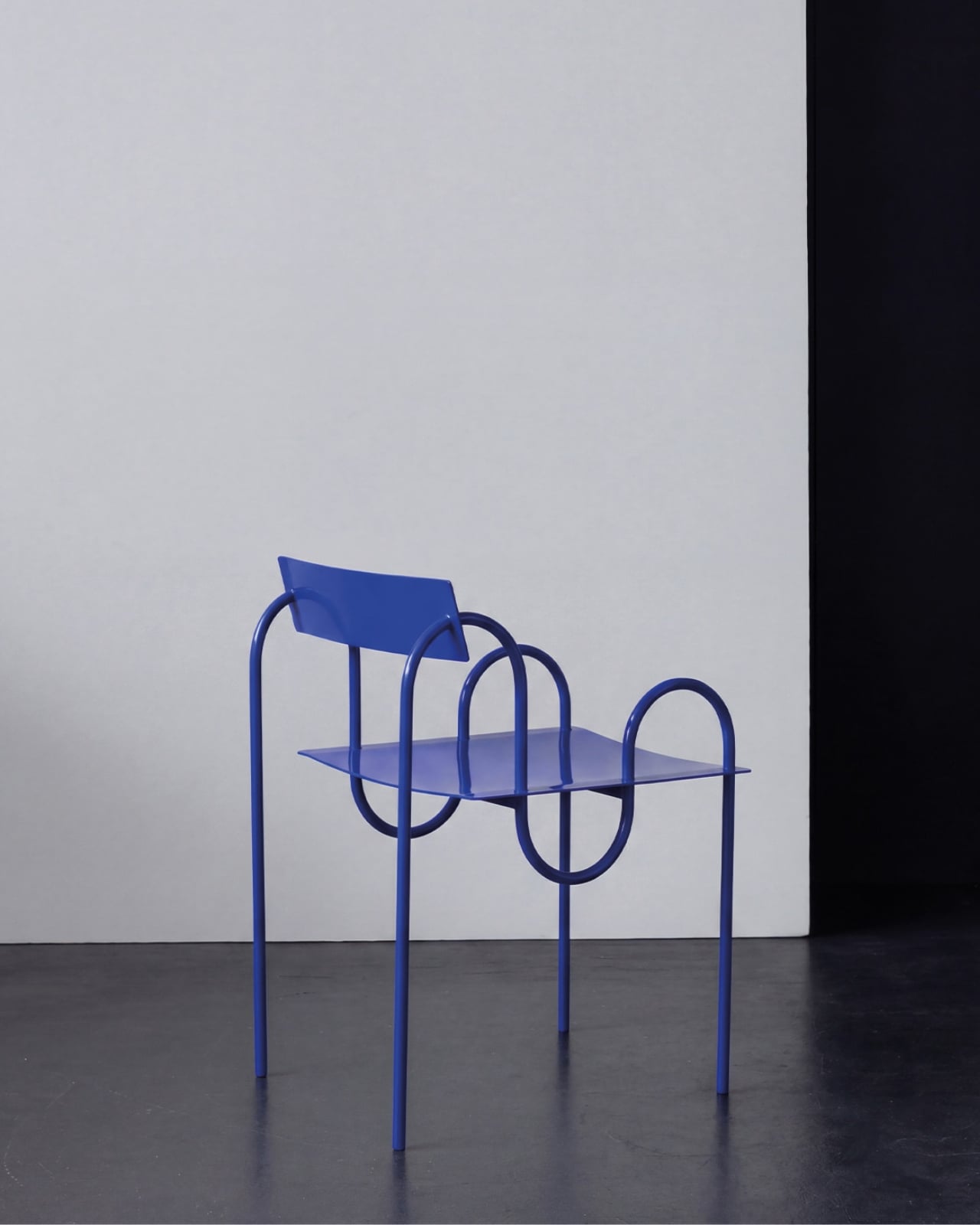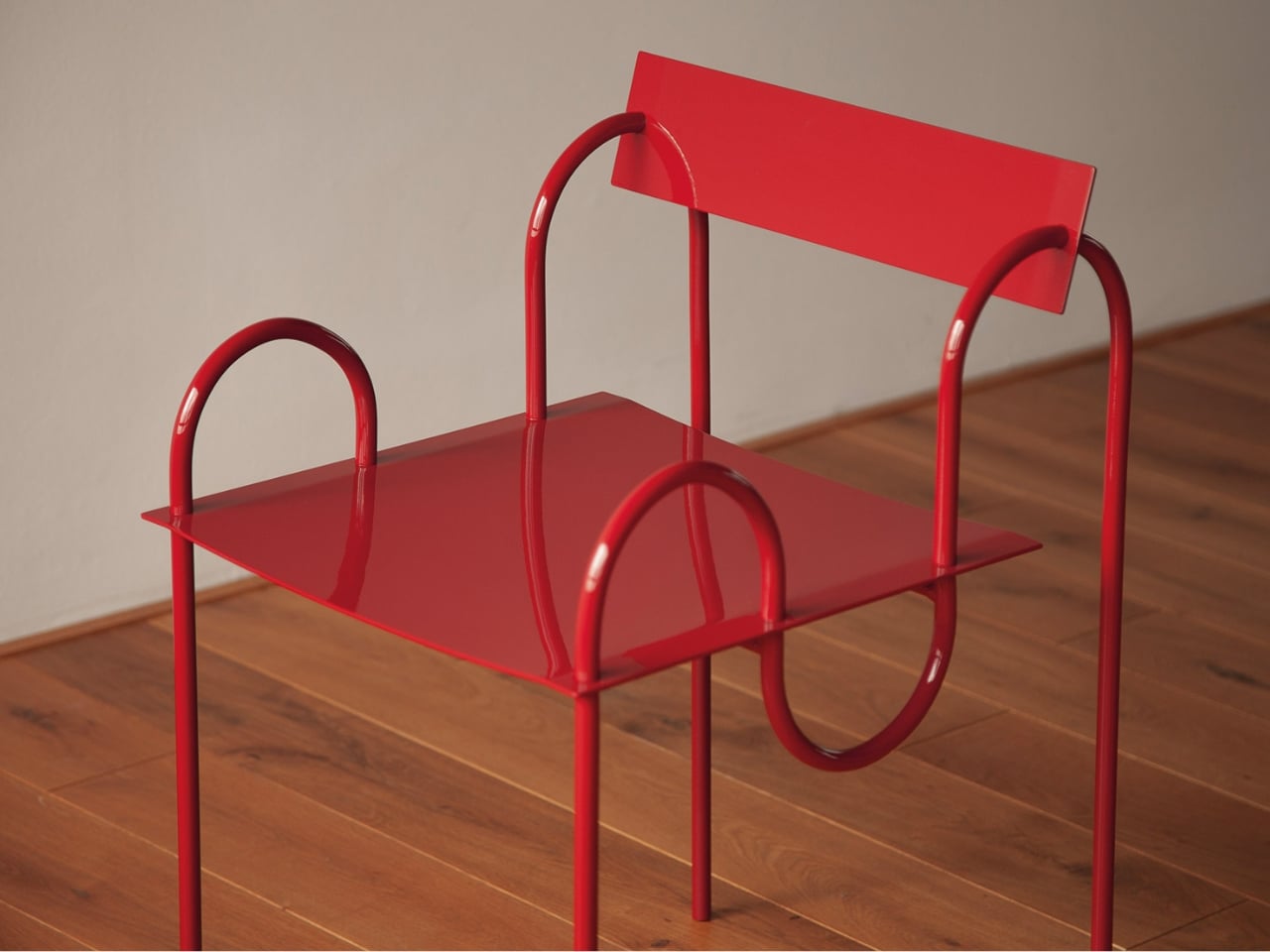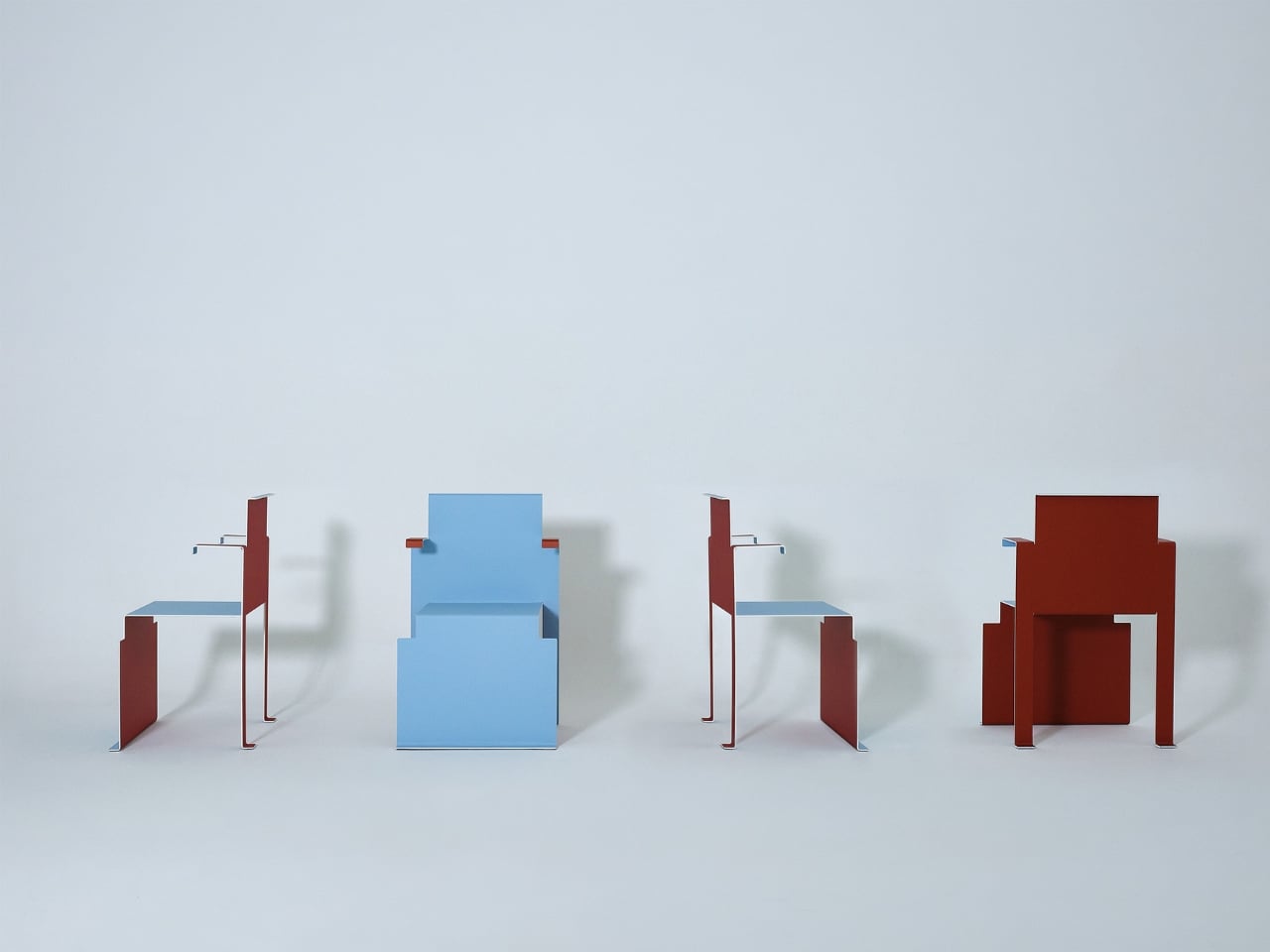
The ZERO Chair Has No Welds, No Joints, No Apologies

Most chairs are built on compromise. You stack the legs, screw the seat, bolt the back, and somewhere in that assembly, a little bit of the original idea gets lost to the necessity of structure. Davide Bozzo’s ZERO Chair refuses to play that game entirely.

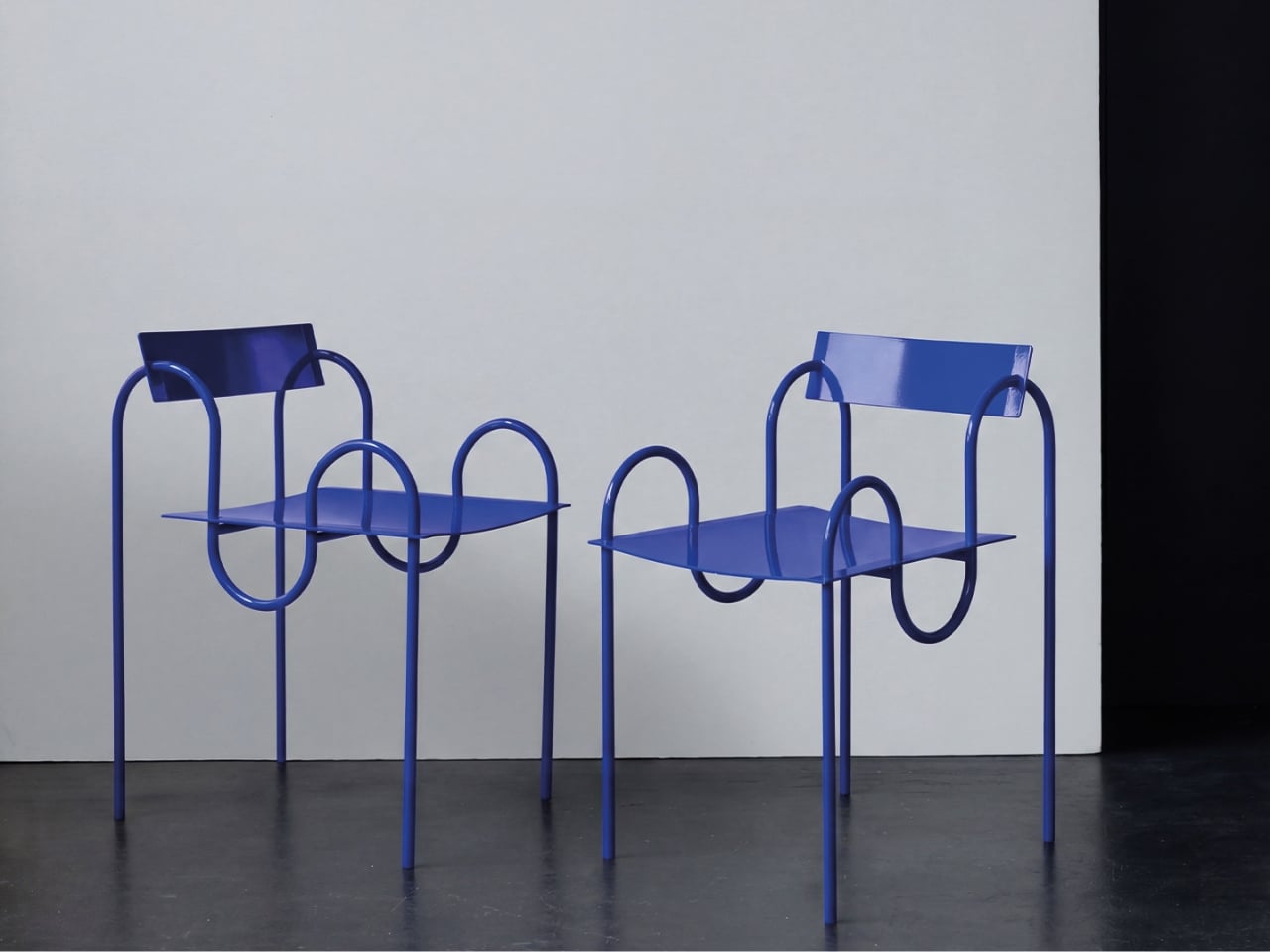
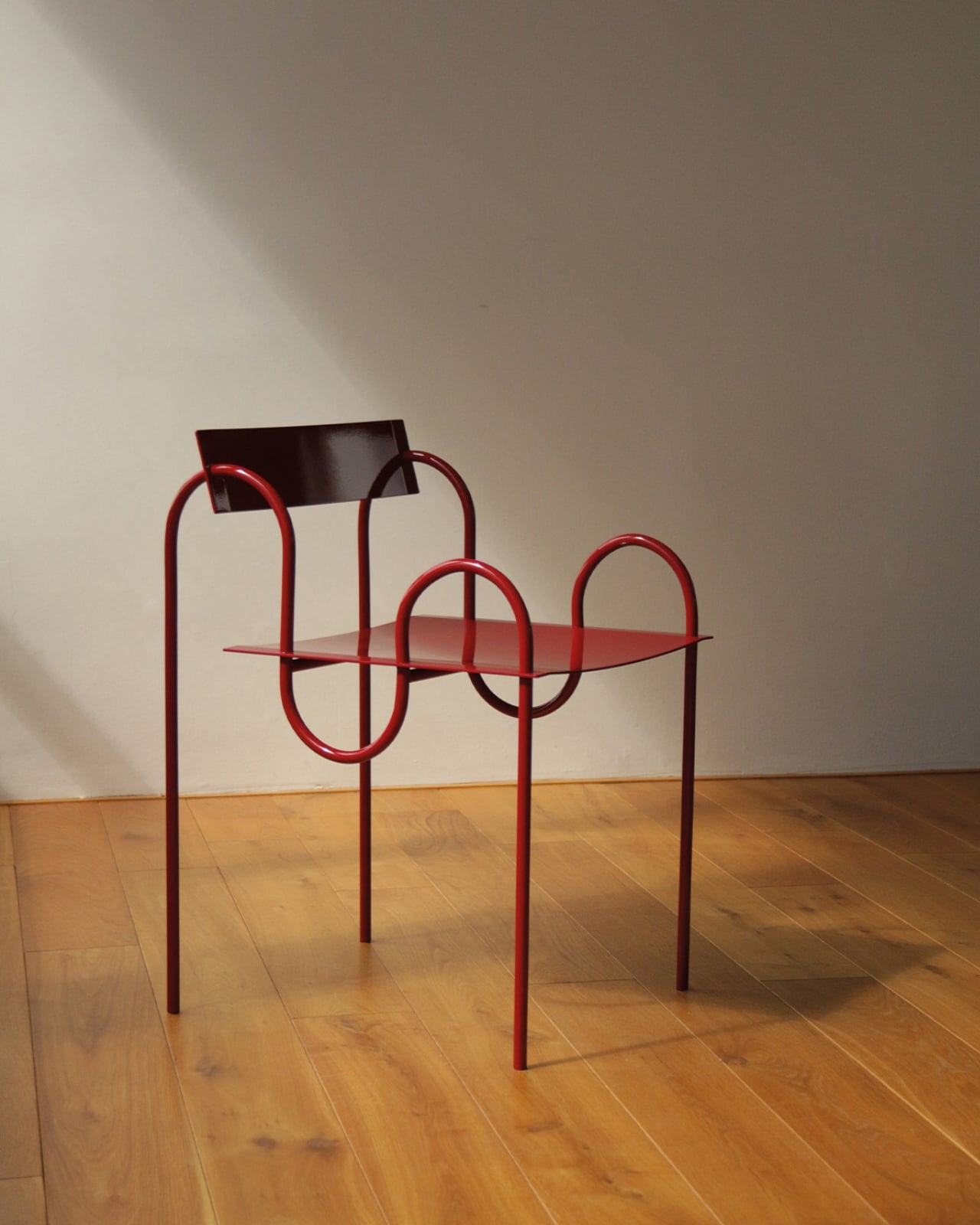
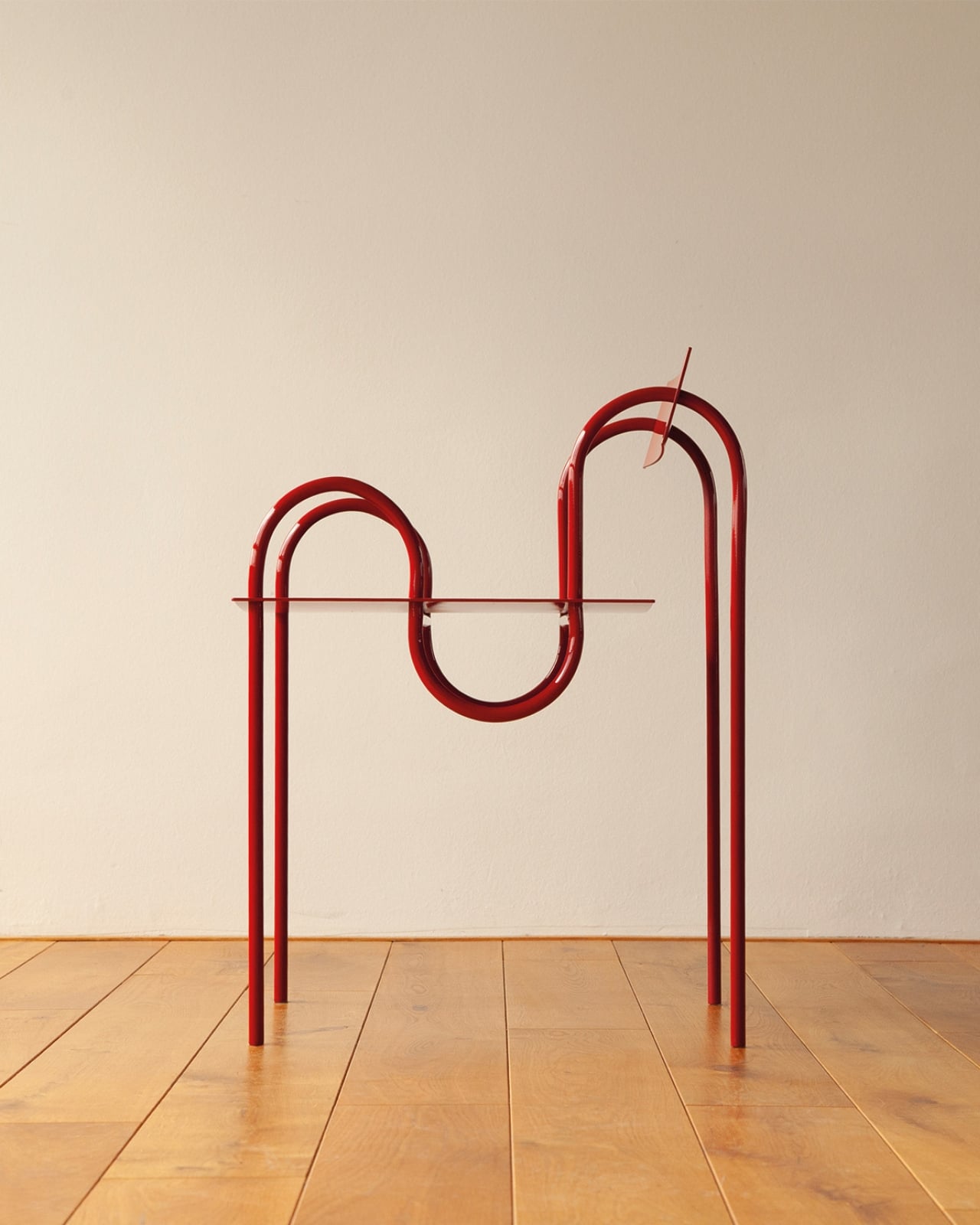
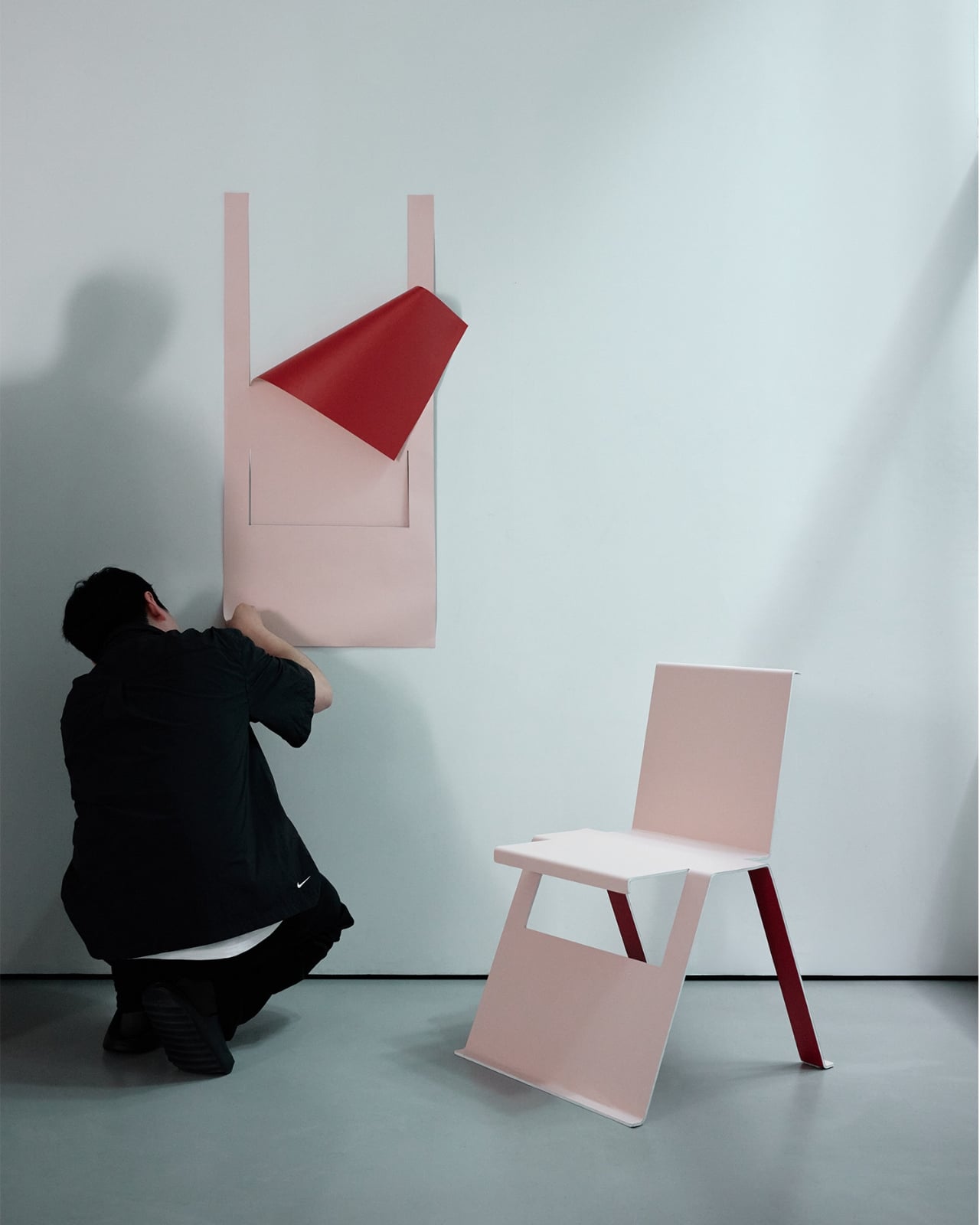
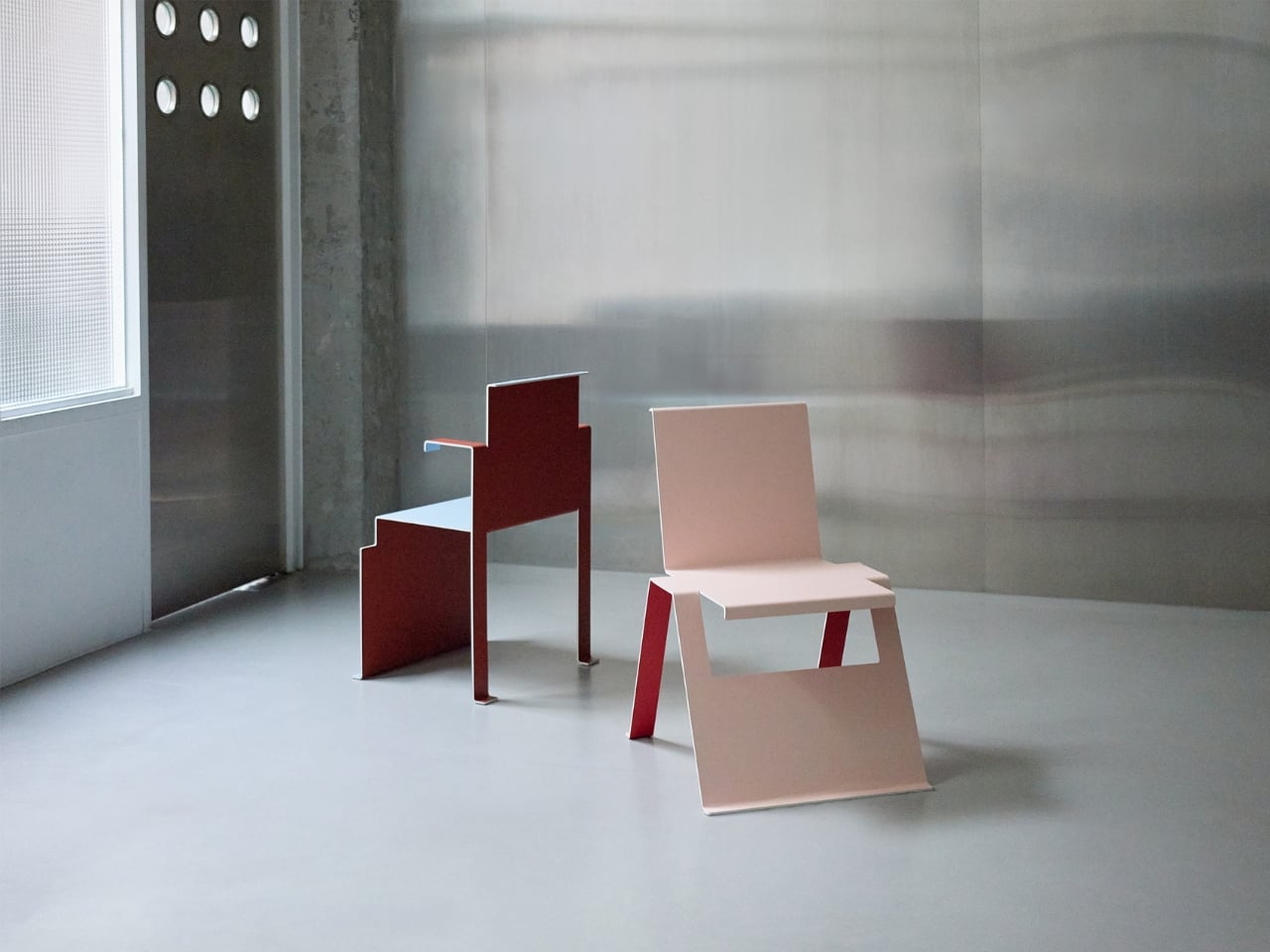
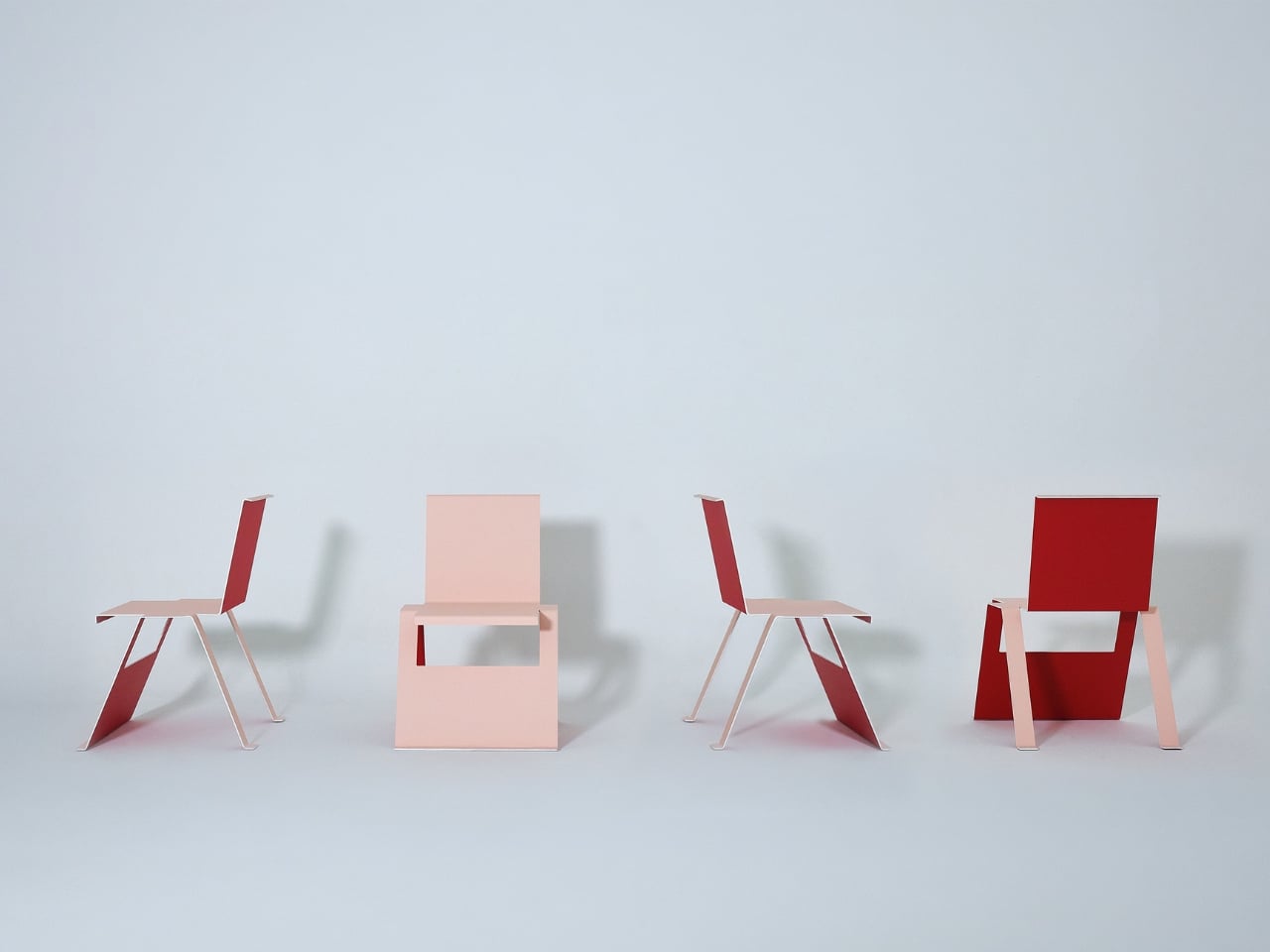
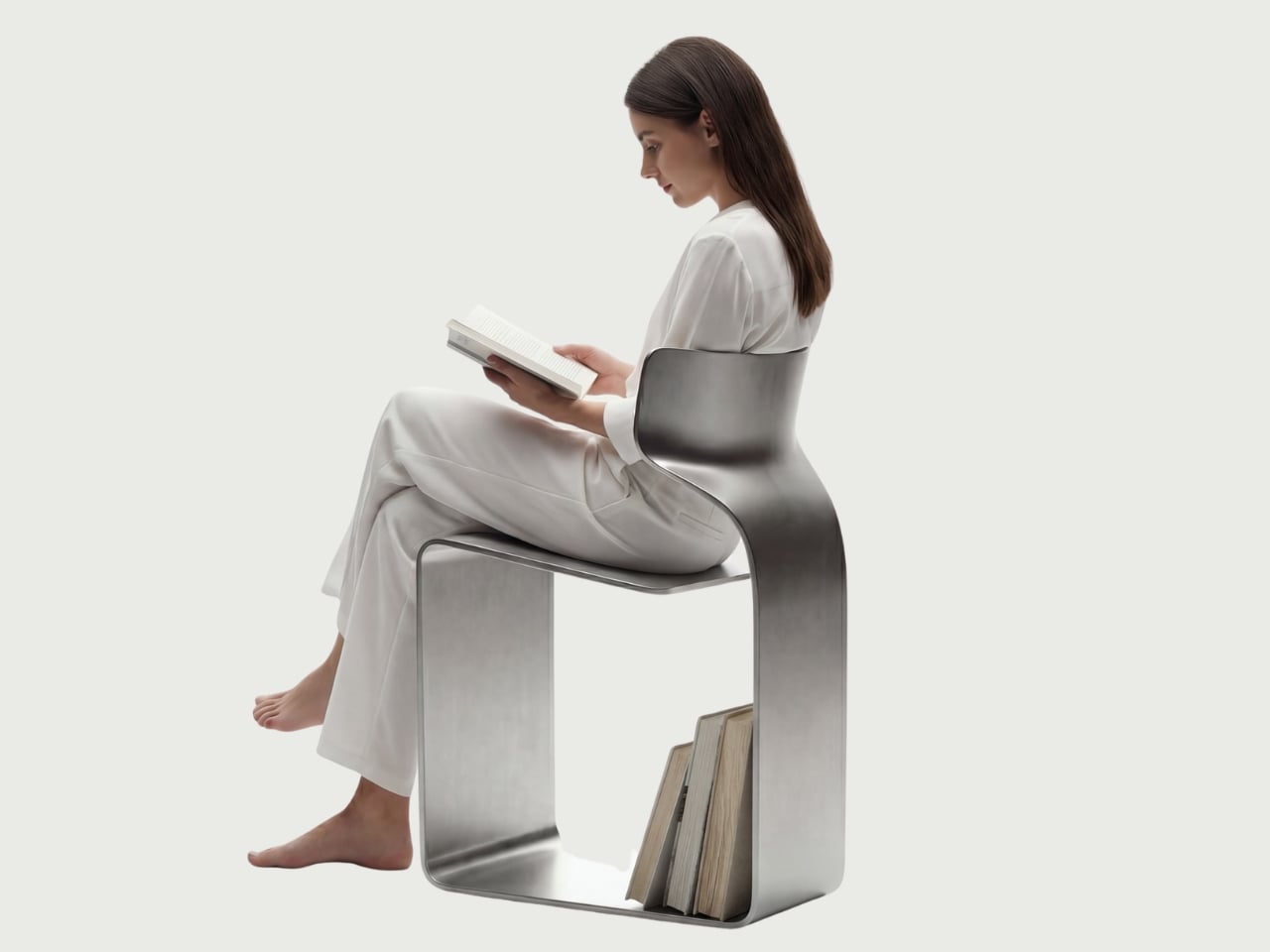
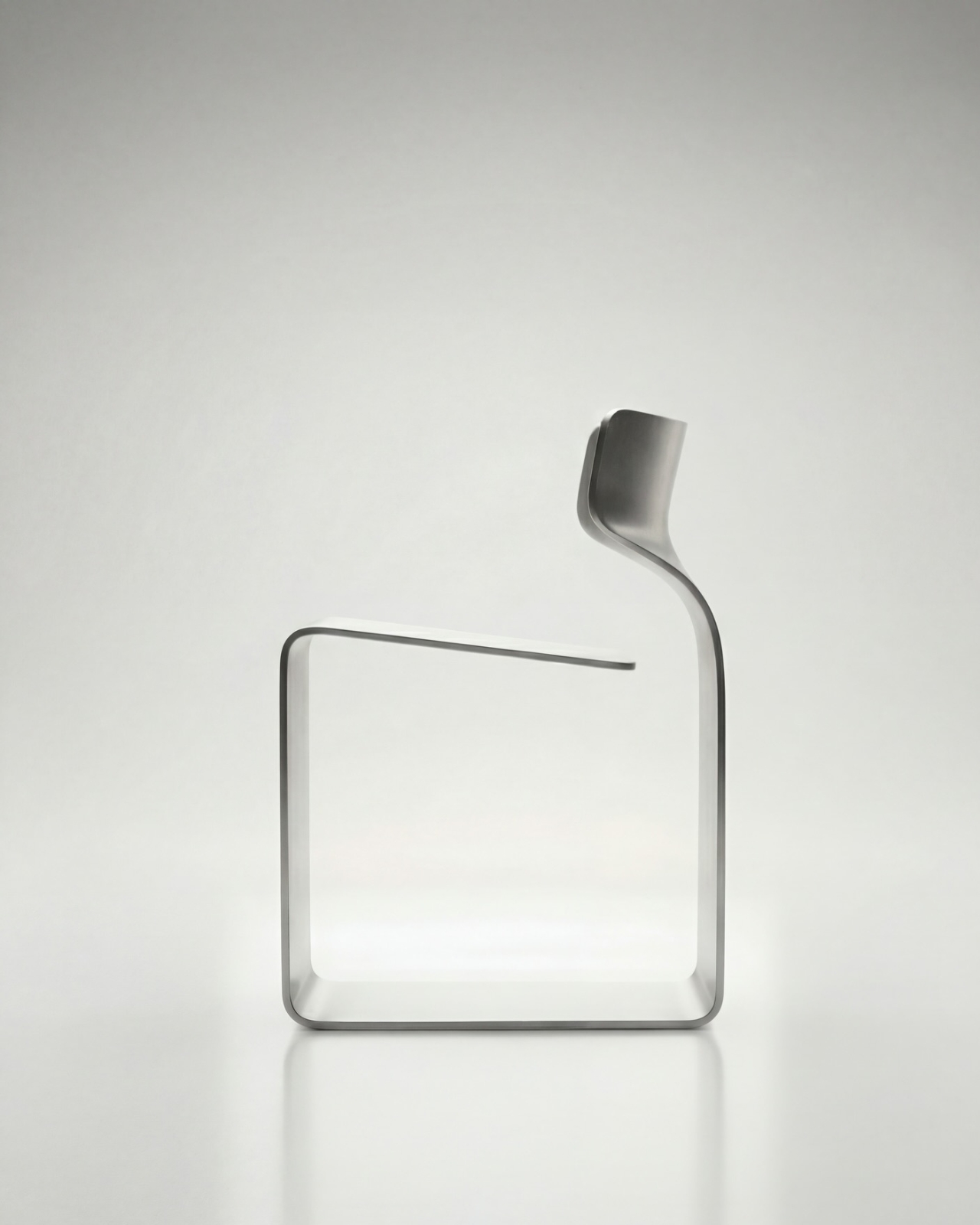
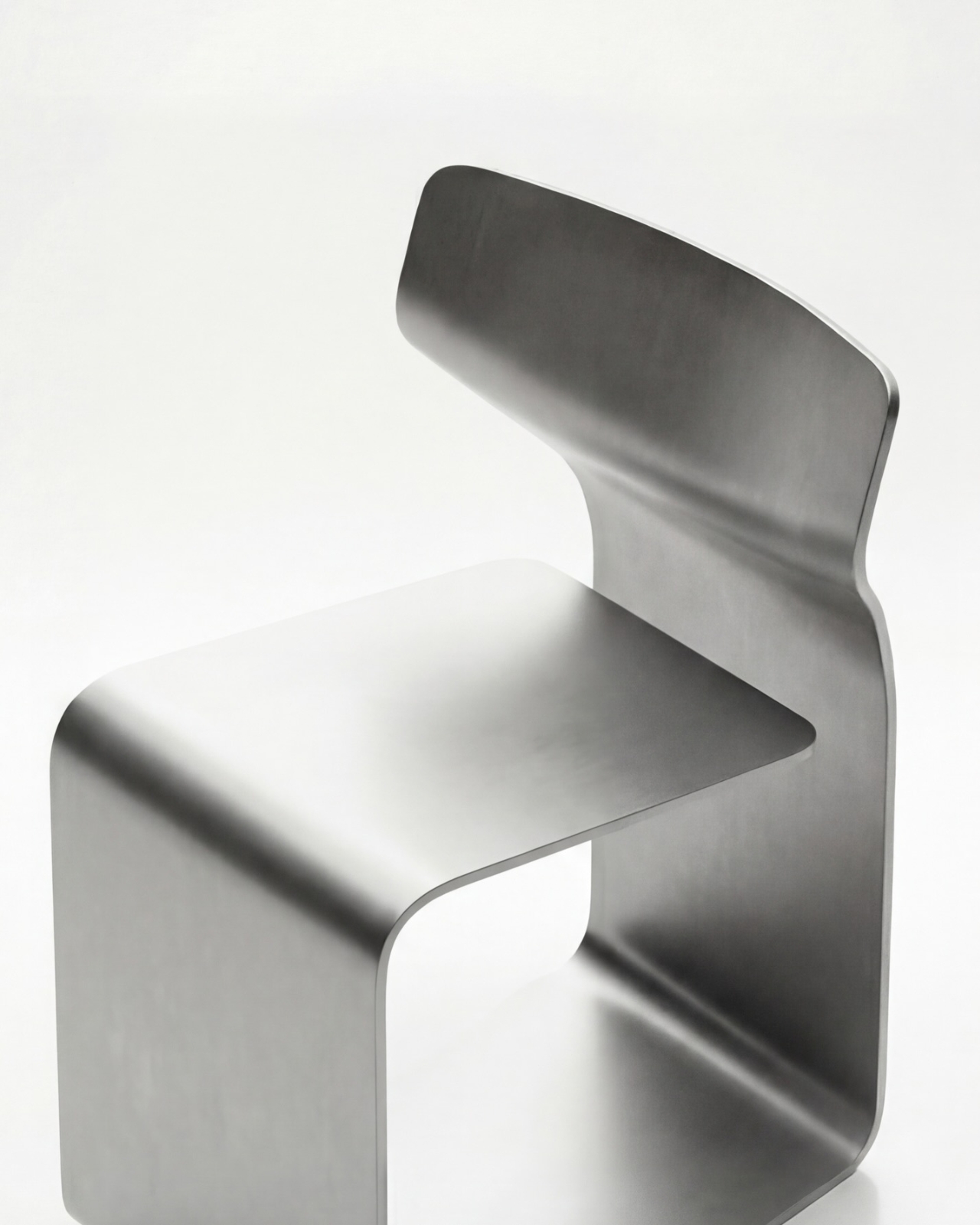
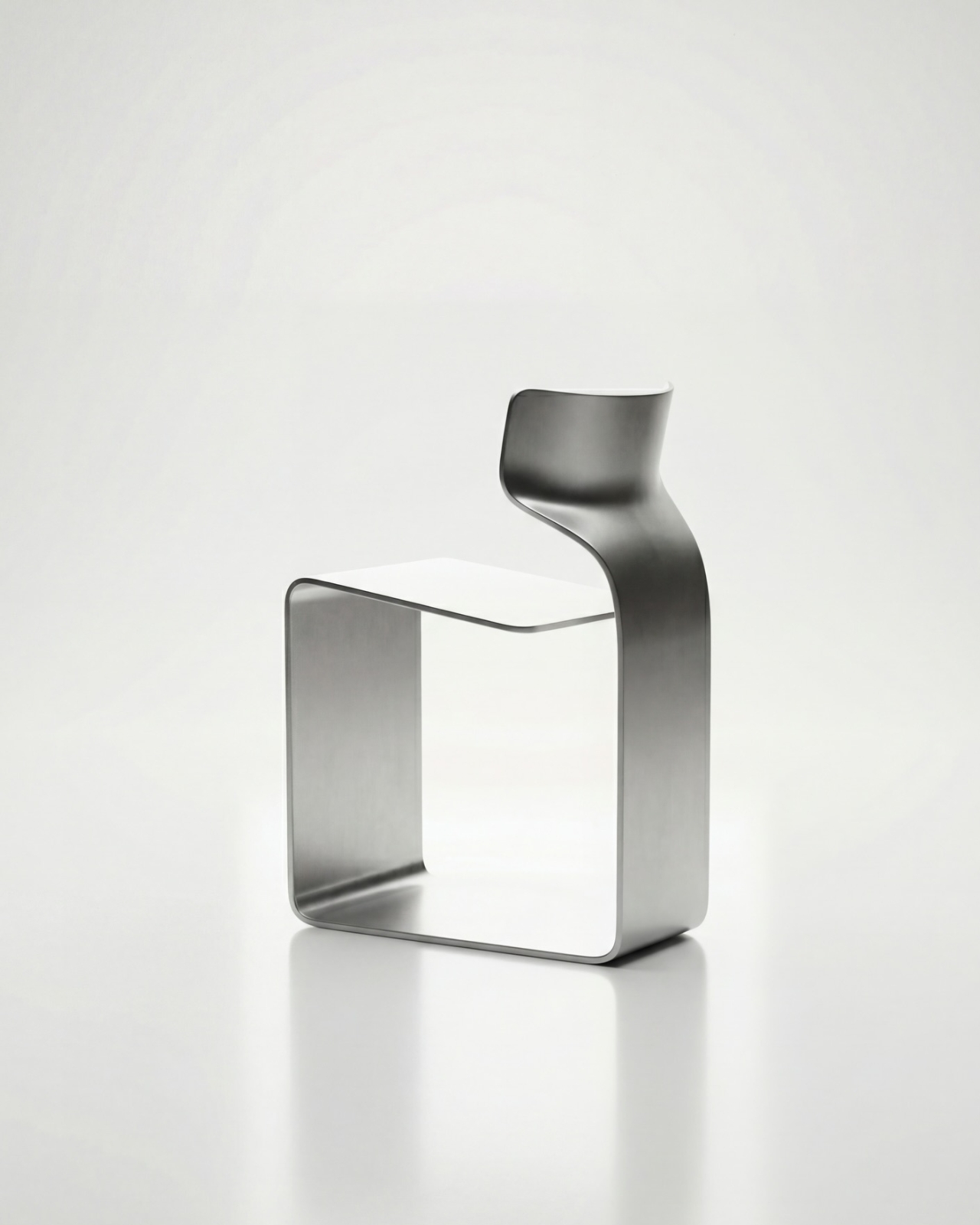
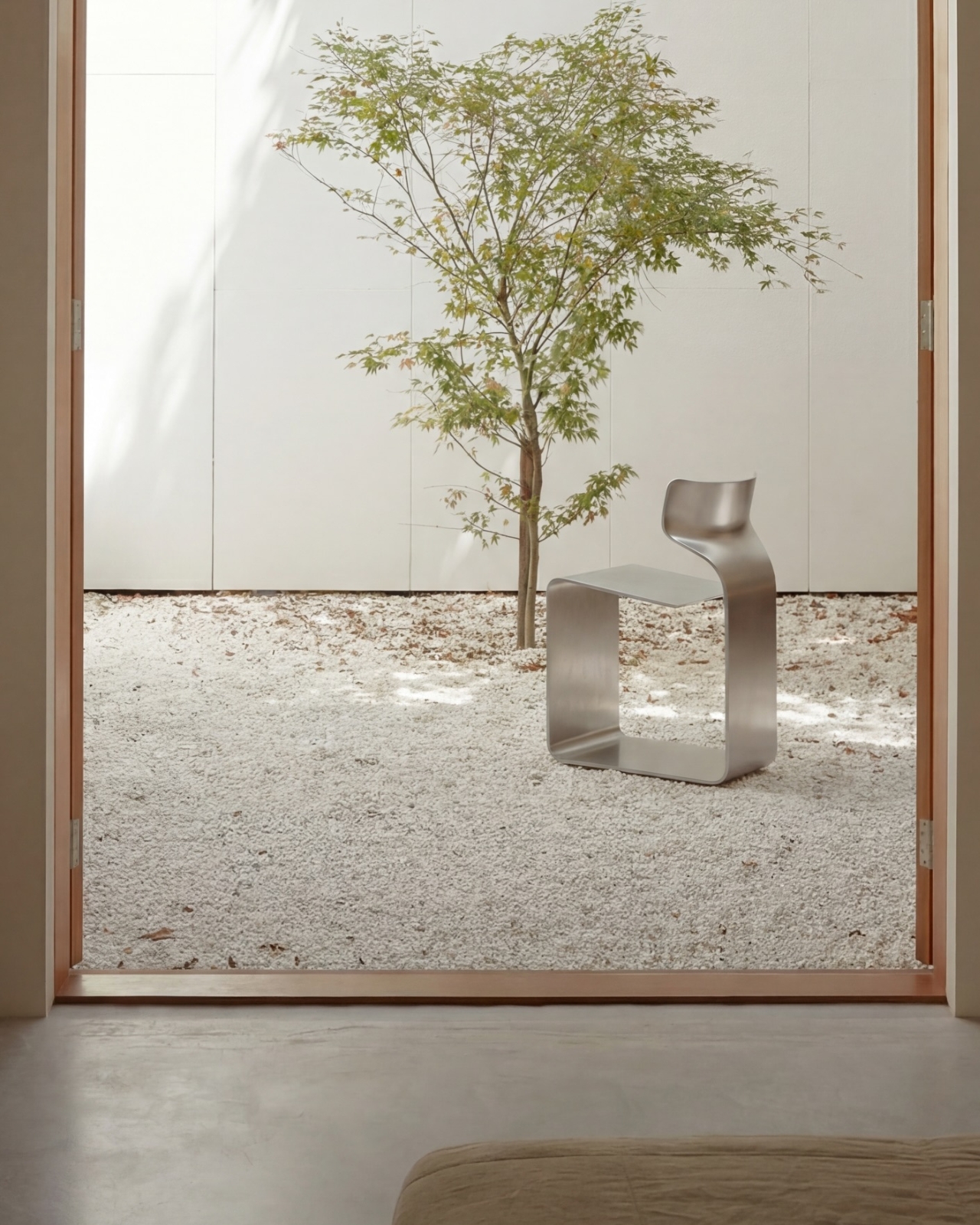
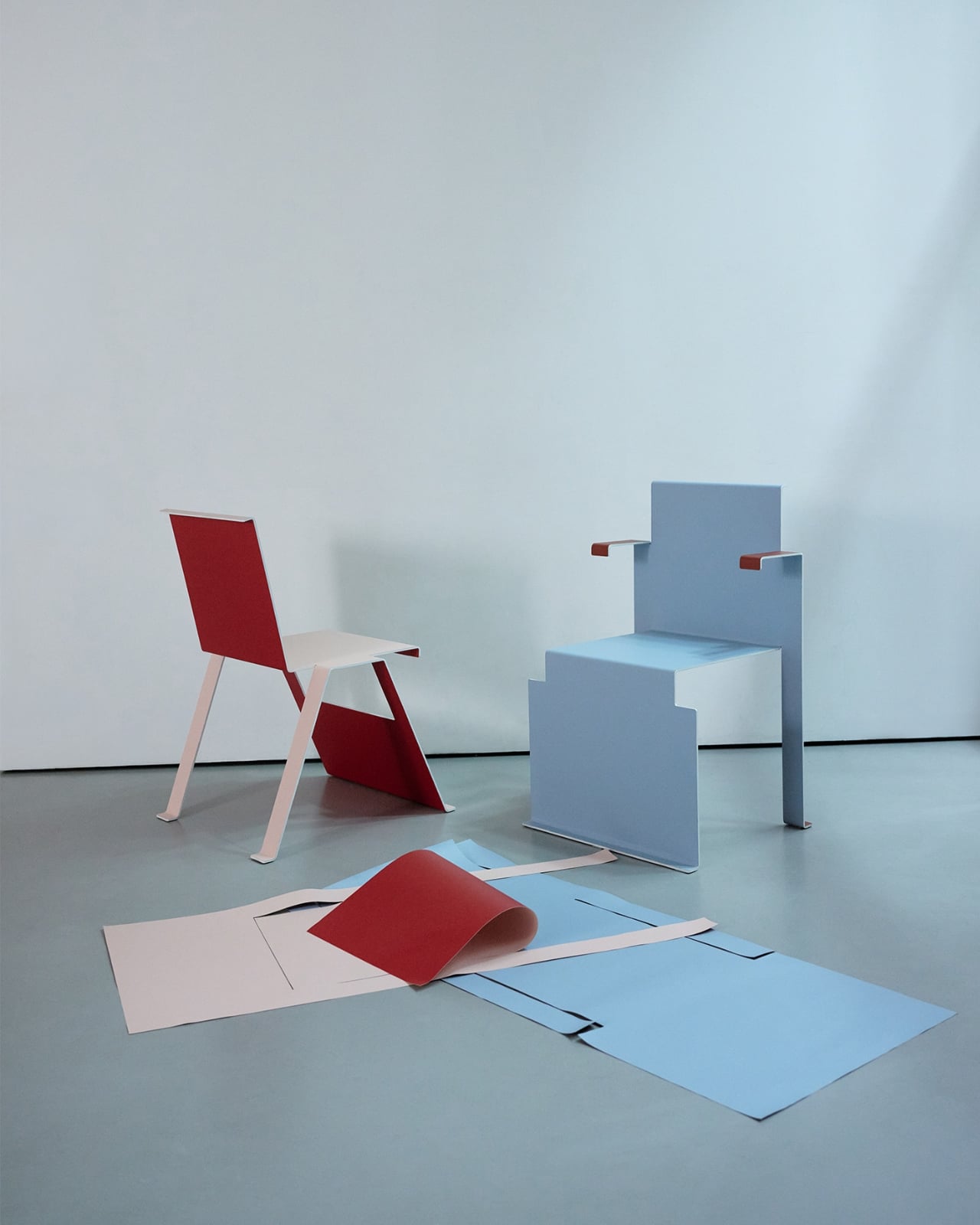
The concept is almost confrontationally simple: one single ribbon of metal, bent and curved into a complete chair. No welds holding two pieces together. No joints disguised under upholstery. No hardware quietly doing the heavy lifting behind the scenes. Just one continuous piece of material pushed into a form that includes the base, the cantilevered seat, and the backrest all at once. The name isn’t branding. It’s a philosophy.

Designer: Davide Bozzo

Looking at the photographs, the first thing I kept circling back to was the sheer audacity of the backrest. It doesn’t connect to the base through hidden brackets or clever joinery. It simply rises from the same ribbon, curving upward and backward in a motion that looks more like a wave caught mid-break than anything you’d typically call furniture. It’s graceful in a way that makes you slightly suspicious of it. How is this thing holding anyone’s weight?

The answer lies in what Bozzo describes as structural tension. Form doesn’t just follow function here. It is the function. The material itself carries the engineering logic. Every curve has a reason, and every bend is calculated to distribute load through the continuity of the form rather than through added components. It’s the same principle behind suspension bridge cables or the way a curved shell is structurally stronger than a flat panel. Applied to a chair, it feels almost radical.

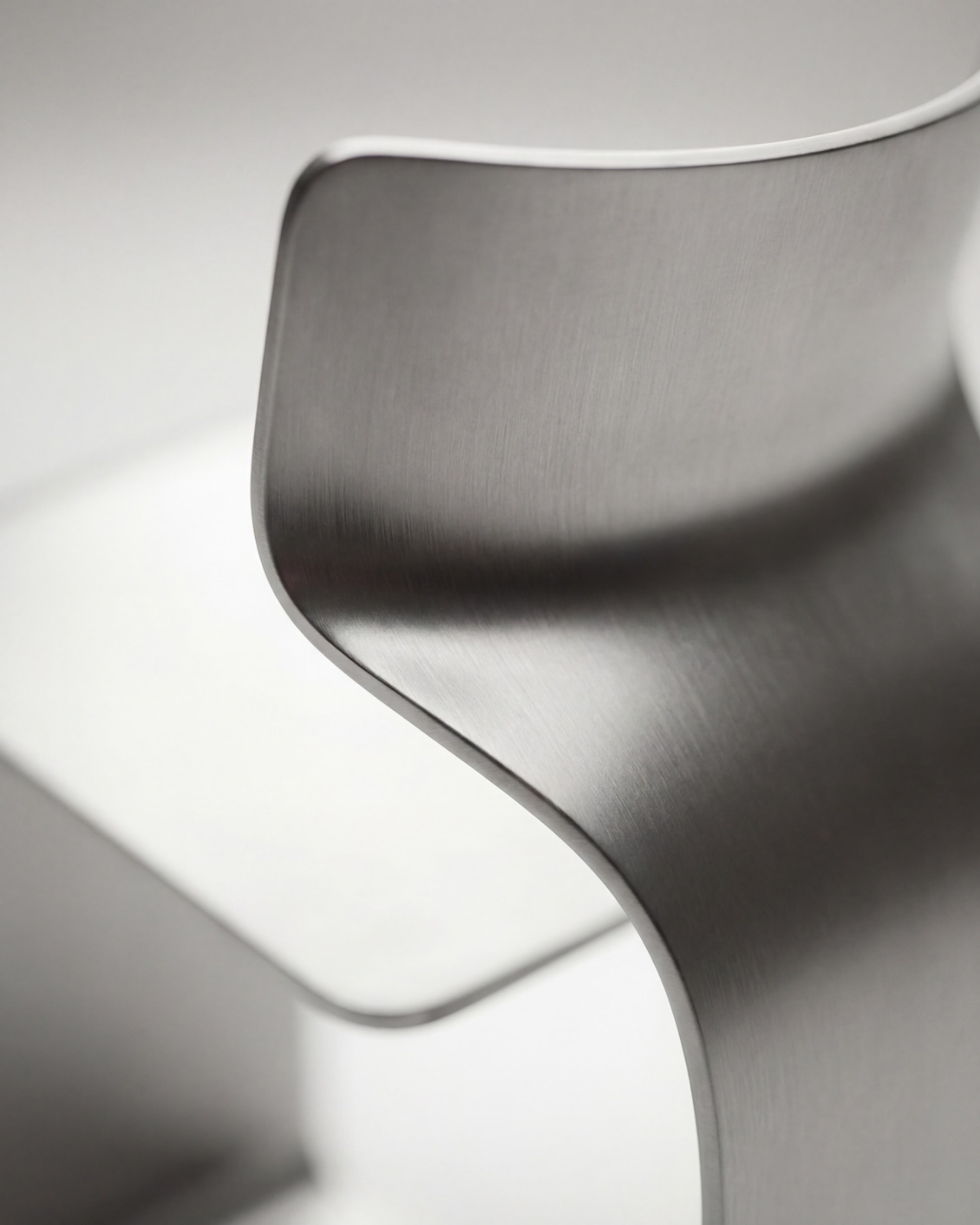
I’ll be honest. My first instinct was skepticism. A single-piece metal chair sounds like one of those design school exercises that makes for great renderings but falls apart under real scrutiny. But looking at the close-up photographs, especially the one capturing the S-curve where the seat meets the backrest, you start to believe it. The brushed metal finish shows actual material depth and actual intentionality in how the surface was treated. This isn’t a concept render floating in a void. It has weight and presence.

That said, I do have questions. Comfort is conspicuously absent from the conversation. Metal, even beautifully formed metal, is hard. The cantilevered seat gives some flexibility, which should help, but a chair without cushioning asks something significant of the person sitting in it. Bozzo’s design makes a statement about material honesty and structural purity, which I respect deeply, but at some point a chair has to be sat in. That’s the tension that makes it interesting rather than just pretty.

The piece also reads as a quiet counterargument to the current era of maximalist furniture. We’ve spent years surrounded by bouclé armchairs, curved velvet sofas, and furniture dressed up in layers of texture and warmth. Bozzo’s chair strips all of that away and asks whether furniture can earn your attention through restraint and engineering alone. My honest opinion? It can. Whether it earns a place in your living room is a different question entirely.

The chair also does something that doesn’t get discussed enough in design coverage: it makes the negative space part of the design. The open rectangle formed by the base creates a void that’s almost as deliberate as the metal itself. In the lifestyle image set against a Japanese garden backdrop, that void frames the gravel and ground beyond it. The chair becomes a viewfinder. That’s not accidental. That’s a designer who understands that what you leave out is just as powerful as what you put in.

Bozzo has been building a reputation for material-forward work. His stainless steel pet bowl Dune explored similar ideas around fluid curves in a single medium, but the ZERO Chair feels like a significant step up in ambition. It’s the kind of piece that stops you mid-scroll, makes you set your phone down, and actually think. That, more than any material specification, is probably the point.

The post The ZERO Chair Has No Welds, No Joints, No Apologies first appeared on Yanko Design.
The Hidden Step in Chair Design Nobody Ever Shows You

If you follow design at all, you’ve probably seen hundreds of polished chair photos. The perfect angle, the right lighting, a finished product posed against a white backdrop or styled in a beautiful room. What you almost never see is what came before any of that. Not the sketches, not the CAD renders, but the actual physical thinking that happens in a studio before a chair even has a name.

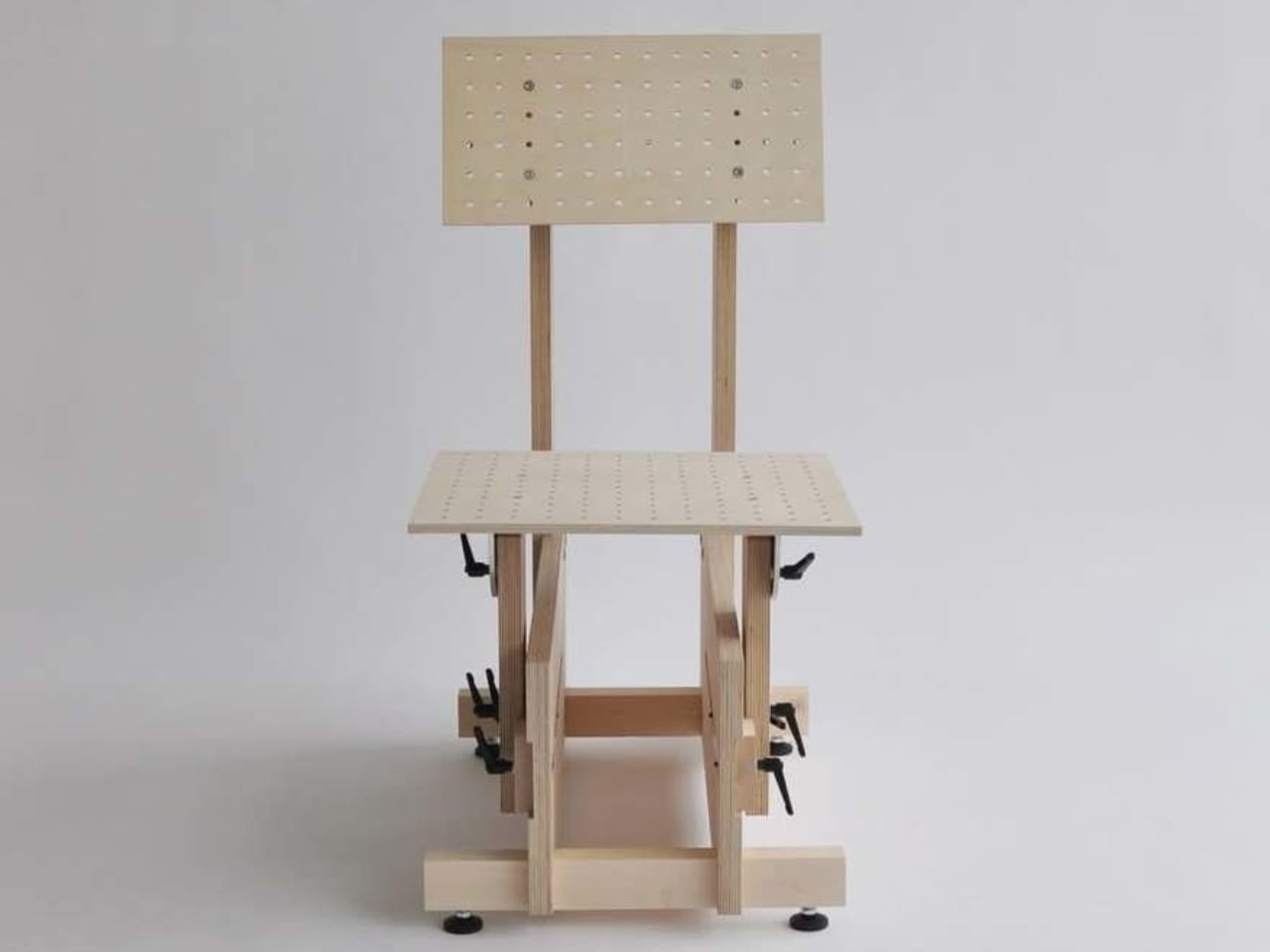
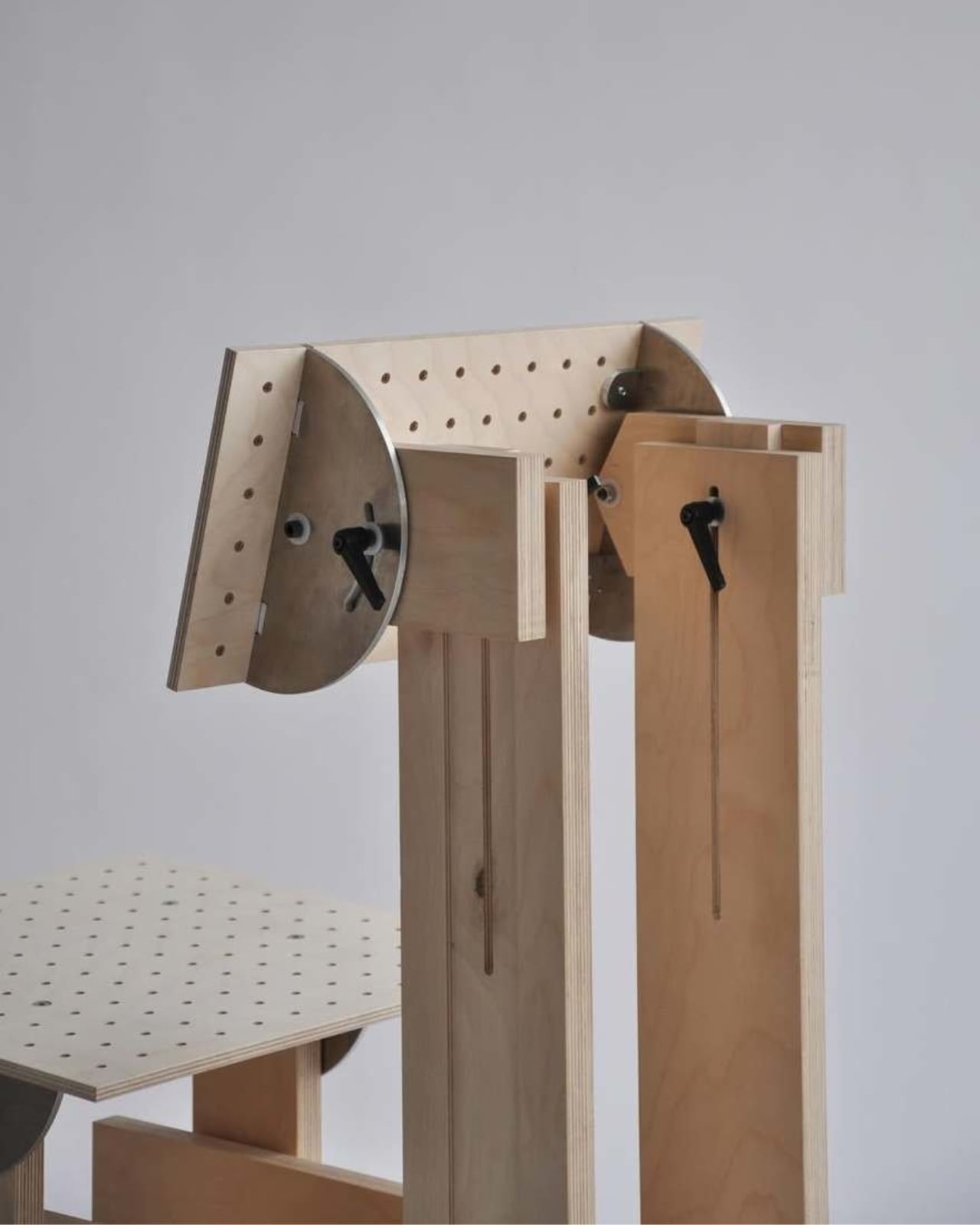
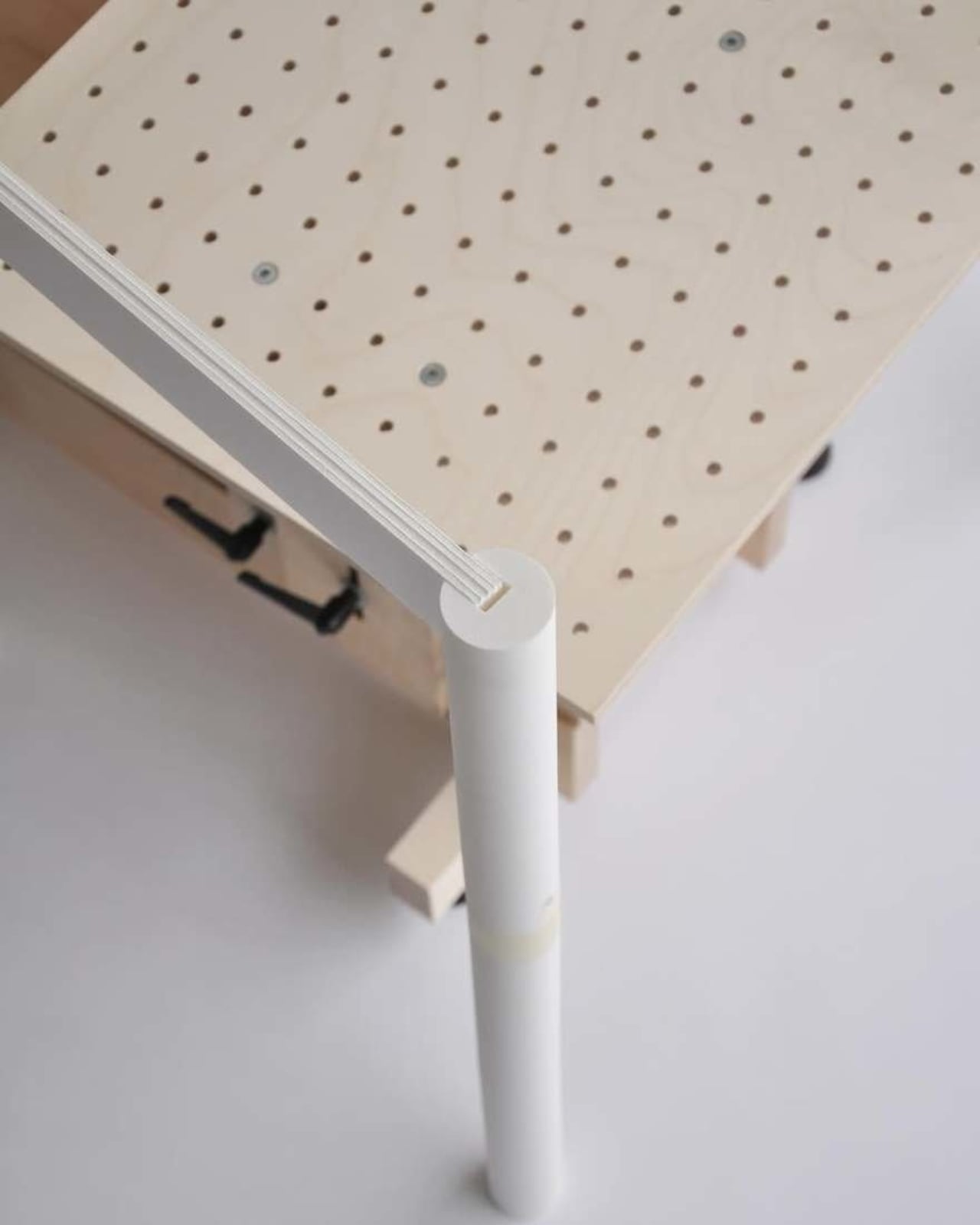
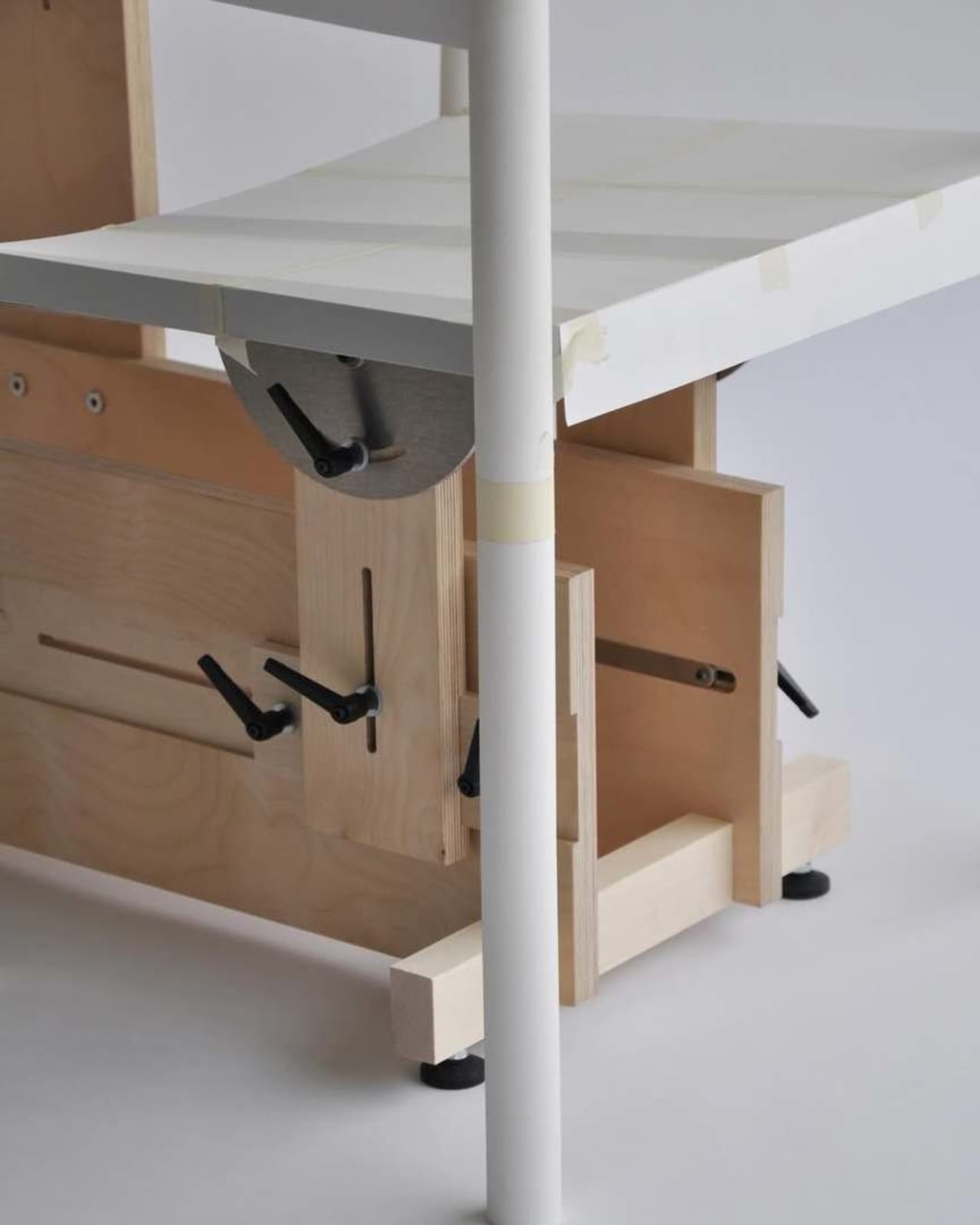
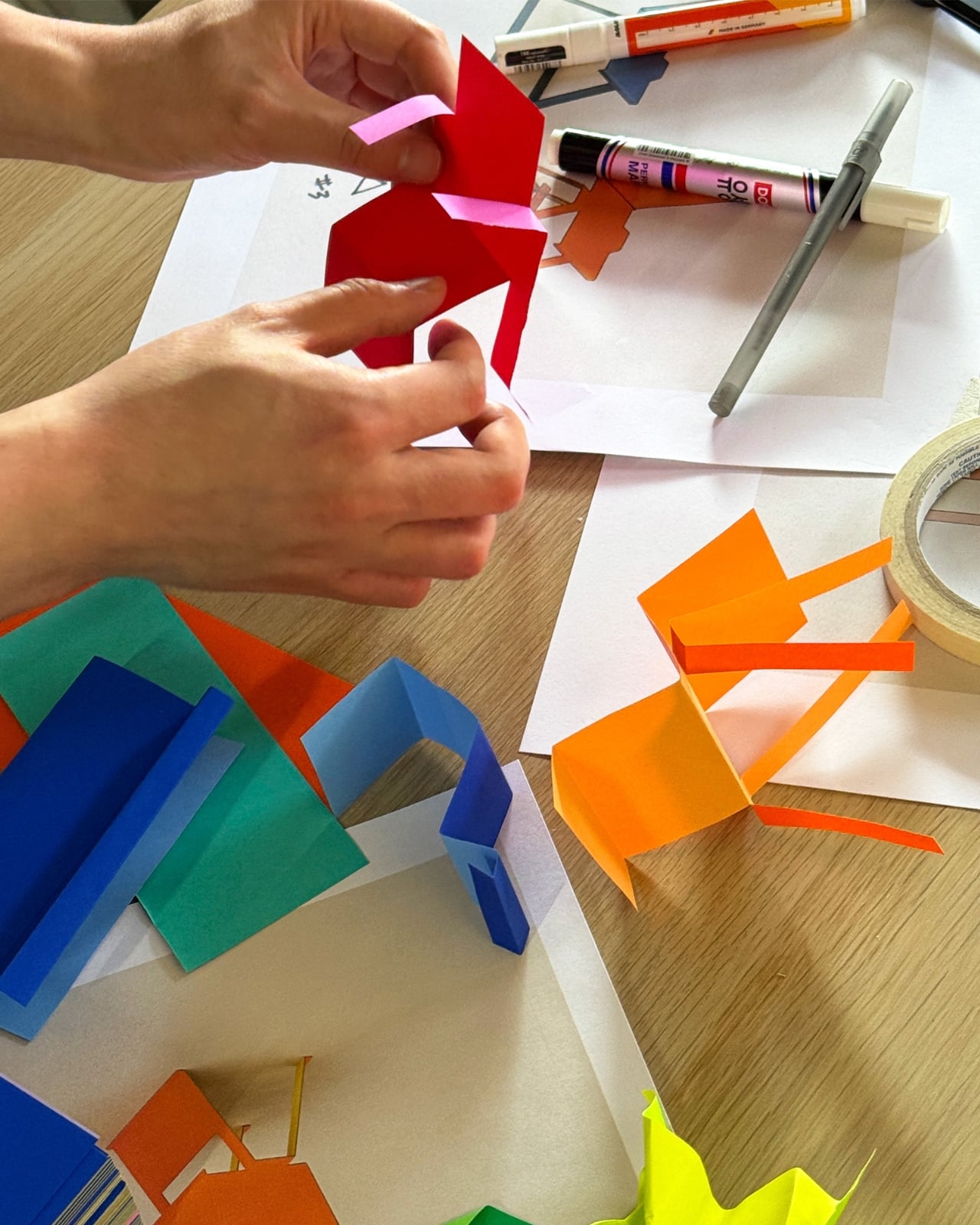
That’s what makes Paris-based industrial designer Timothée Mion’s chair buck such a compelling thing to stumble across. A chair buck, for the uninitiated, is an adjustable rig used to map out the geometry of a chair before committing to any final form. Seat height, seat angle, backrest tilt, all of it gets dialed in on this contraption before a single joint is cut. Mion uses his to work out the exact heights and angles of contact points, then physically sketches in hypothetical supports to see how they feel in real space.

Designer: Timothée Mion

It sounds deceptively simple, but the implications of that process are worth sitting with. We live in an era where the default assumption is that better design tools mean more screen time. Better software, better renders, better simulations. And those tools matter enormously. But Mion’s chair buck is a reminder that some problems still require a body. You can render a chair at any angle and tweak dimensions to the millimeter, but you cannot feel it through a monitor.

This is part of why the chair buck feels quietly radical. It’s an analog tool being used at the front end of a very intentional design practice. Mion studied at Central Saint Martins, trained at studios like Barber & Osgerby, and worked with Hermès before completing his master’s at ECAL in Switzerland. He received the Design Guild Mark award in 2016 for excellence in the British furniture industry. His work is precise, thoughtful, and deeply rooted in materials and craft. The chair buck isn’t a workaround; it’s a deliberate choice to test ideas in the physical world before formalizing them.

Core77, which featured Mion’s buck earlier this month, noted that these rigs are used widely among industrial designers but are rarely shared publicly. That scarcity feels telling. Design culture tends to celebrate the final object and occasionally the sketch, but the awkward in-between stages? Those usually stay in the studio. There’s a vulnerability to showing a contraption of adjustable parts and raw materials. It doesn’t look polished. It looks like problem-solving, and apparently, we’re more comfortable with the solved version.

But the messy middle is often the most interesting part. Mion describes the process as one where “the act of making becomes part of the design itself.” The proportions get explored in real space. The angles get tested by an actual body. The design doesn’t just live on a screen; it gets inhabited before it’s finished. That reframes the chair buck not as a preliminary step but as a core part of the creative act.

This approach isn’t exactly new, but it is becoming rarer, and that’s worth paying attention to. Before software like CAD put ergonomic data at everyone’s fingertips, chair bucks were a standard part of the furniture design process. They were how you figured out if something would actually feel good to sit in. Now that information largely lives in databases and simulation tools, and the physical prototype often comes much later in the process, if at all.

Mion’s chair buck feels like a quiet argument for slowing down. Not in any nostalgic sense, and not a rejection of digital tools, but a genuine belief that physical intuition belongs in the process too. It’s the kind of design thinking that doesn’t make headlines, but tends to produce chairs that are genuinely good to sit in. And at the end of the day, that might be the most honest benchmark there is.

The post The Hidden Step in Chair Design Nobody Ever Shows You first appeared on Yanko Design.
The Anello Chair Is 3 Design Eras in One Piece of Wood

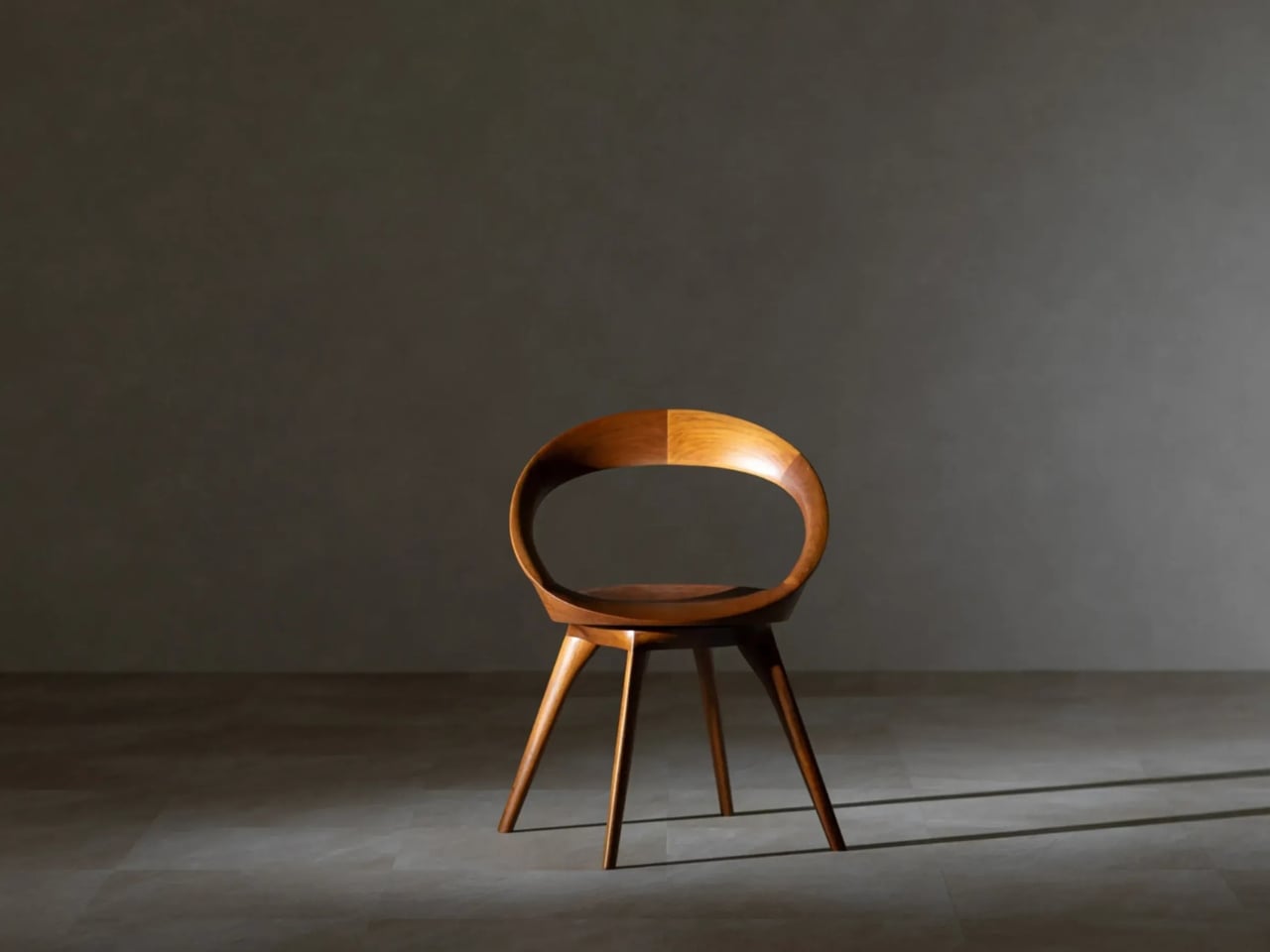
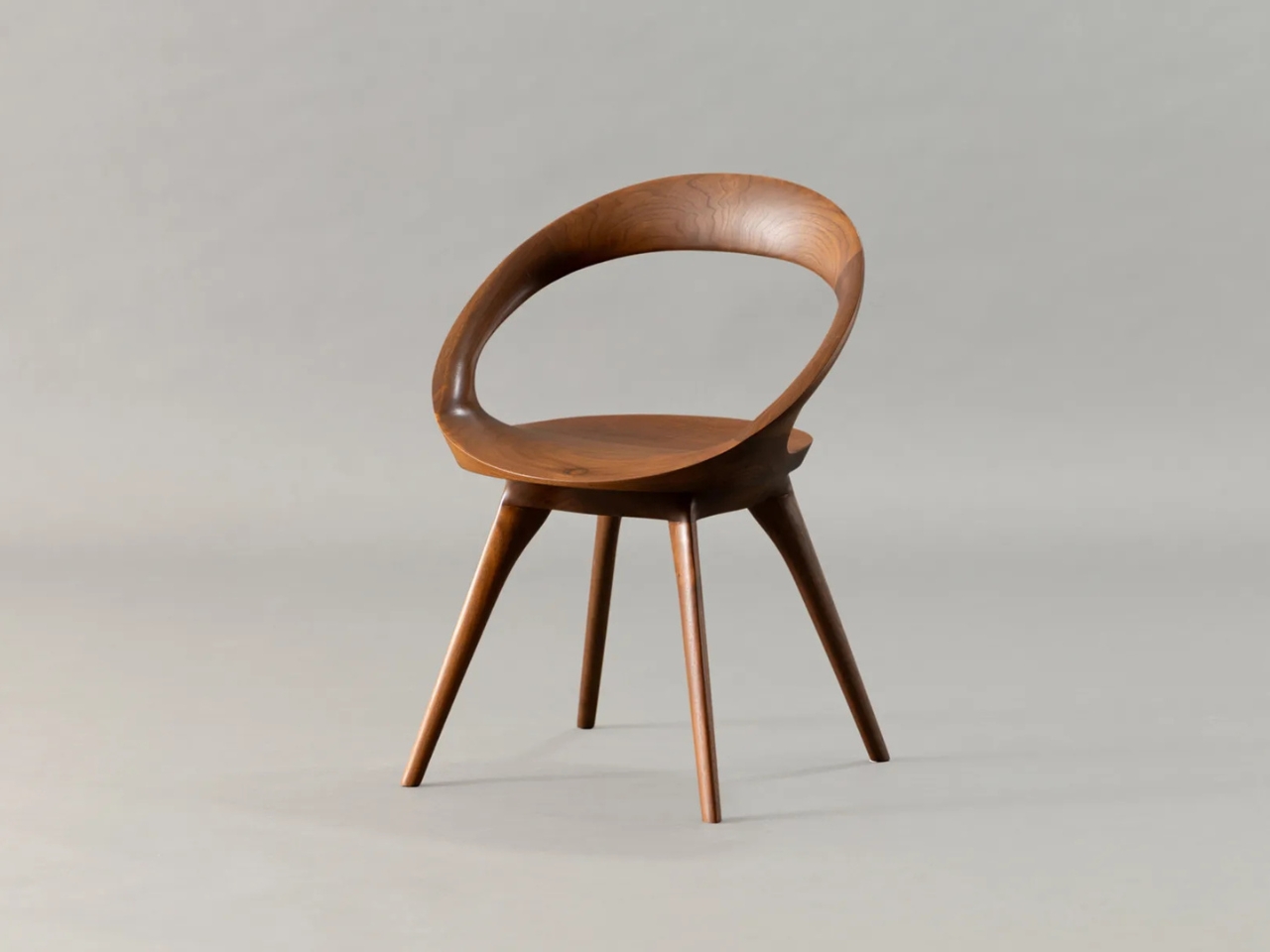
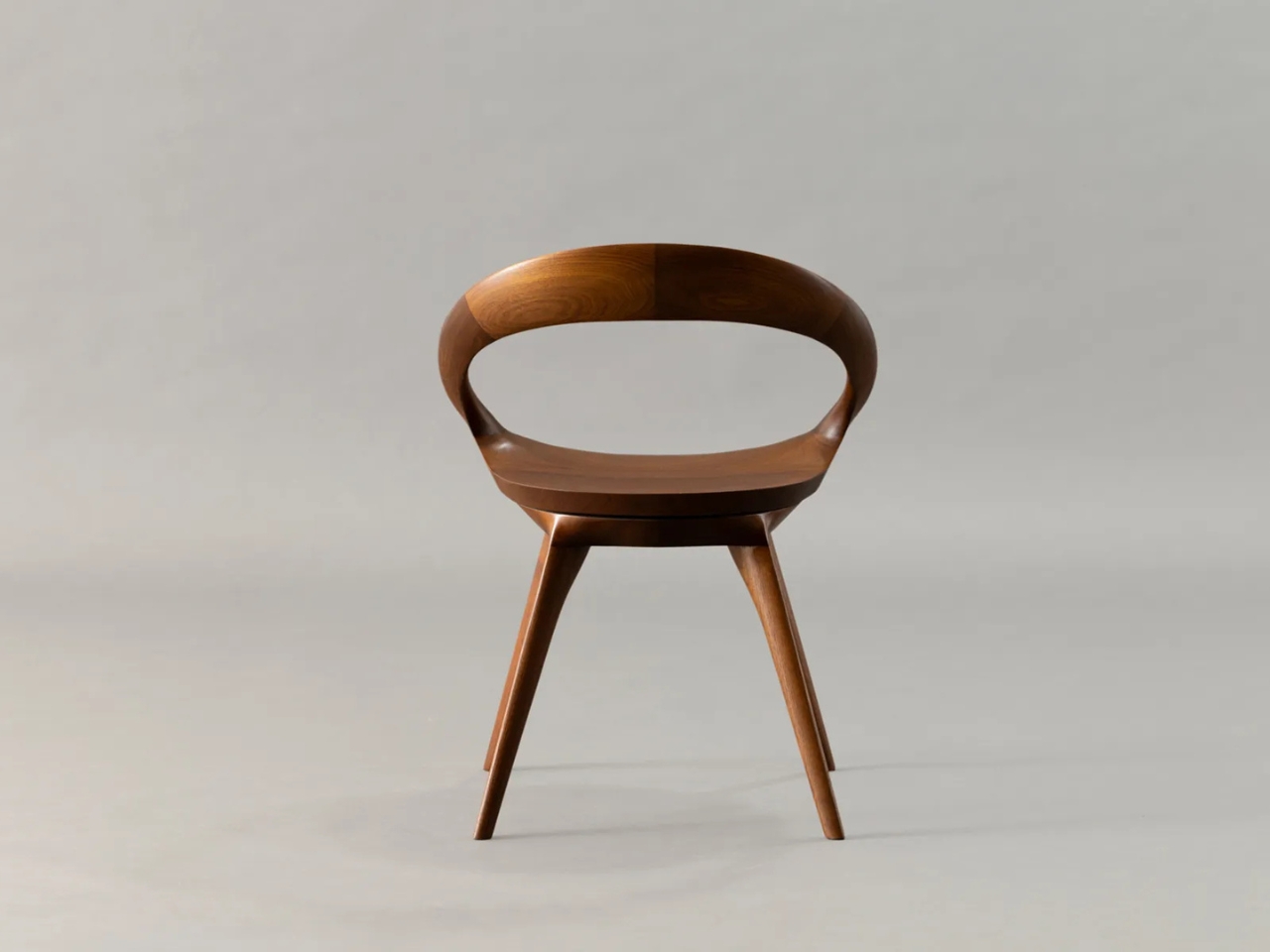
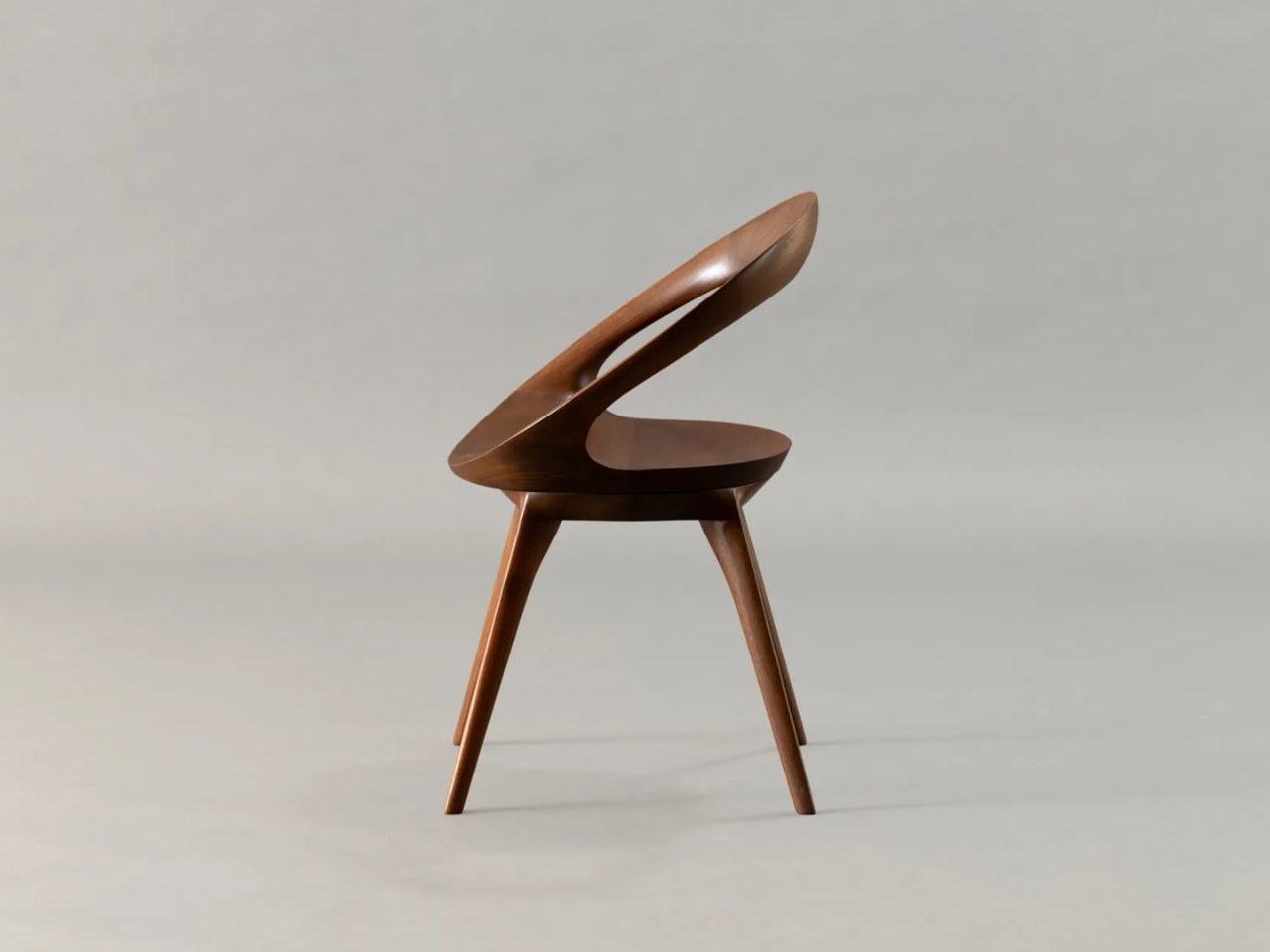
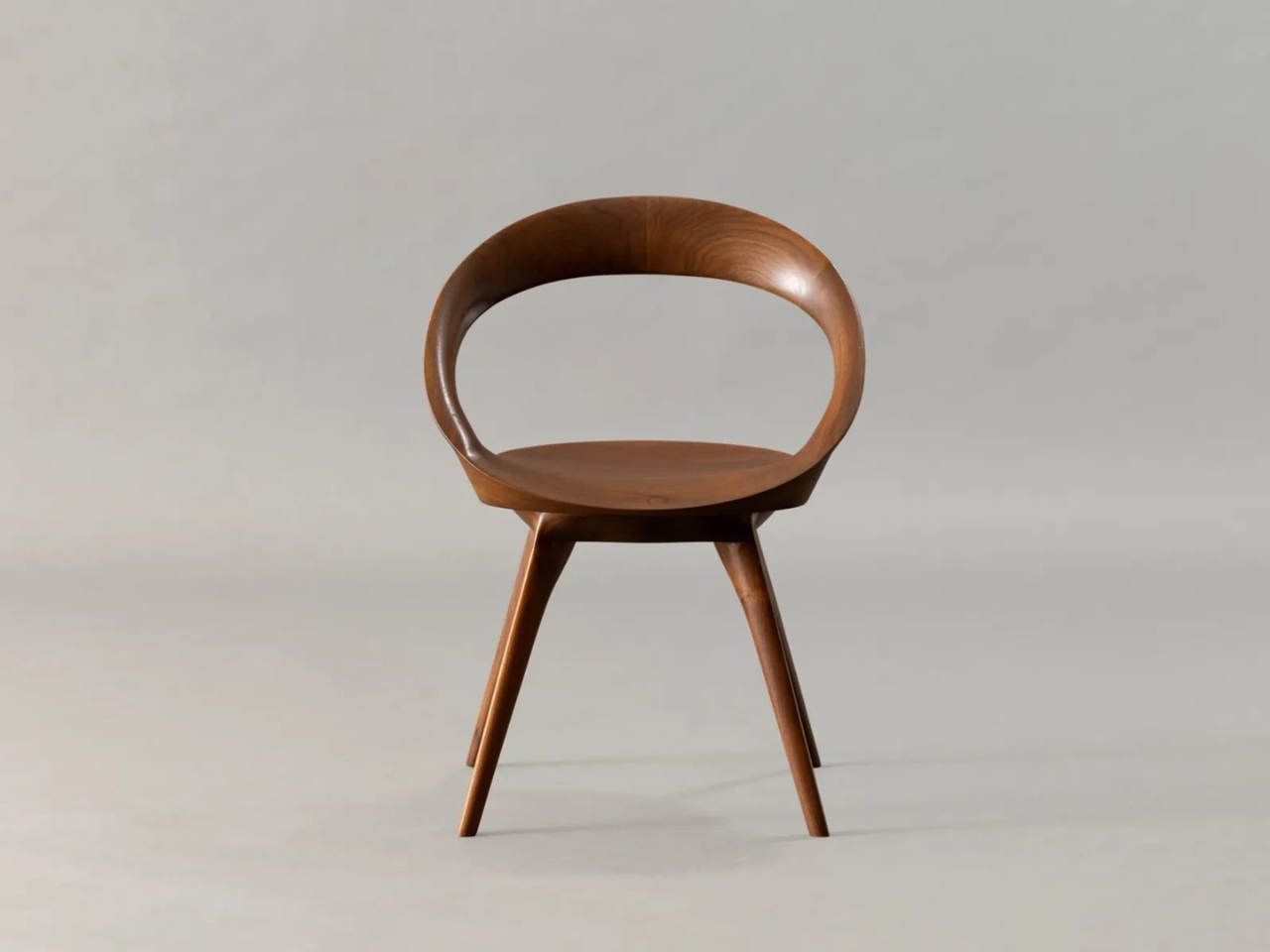
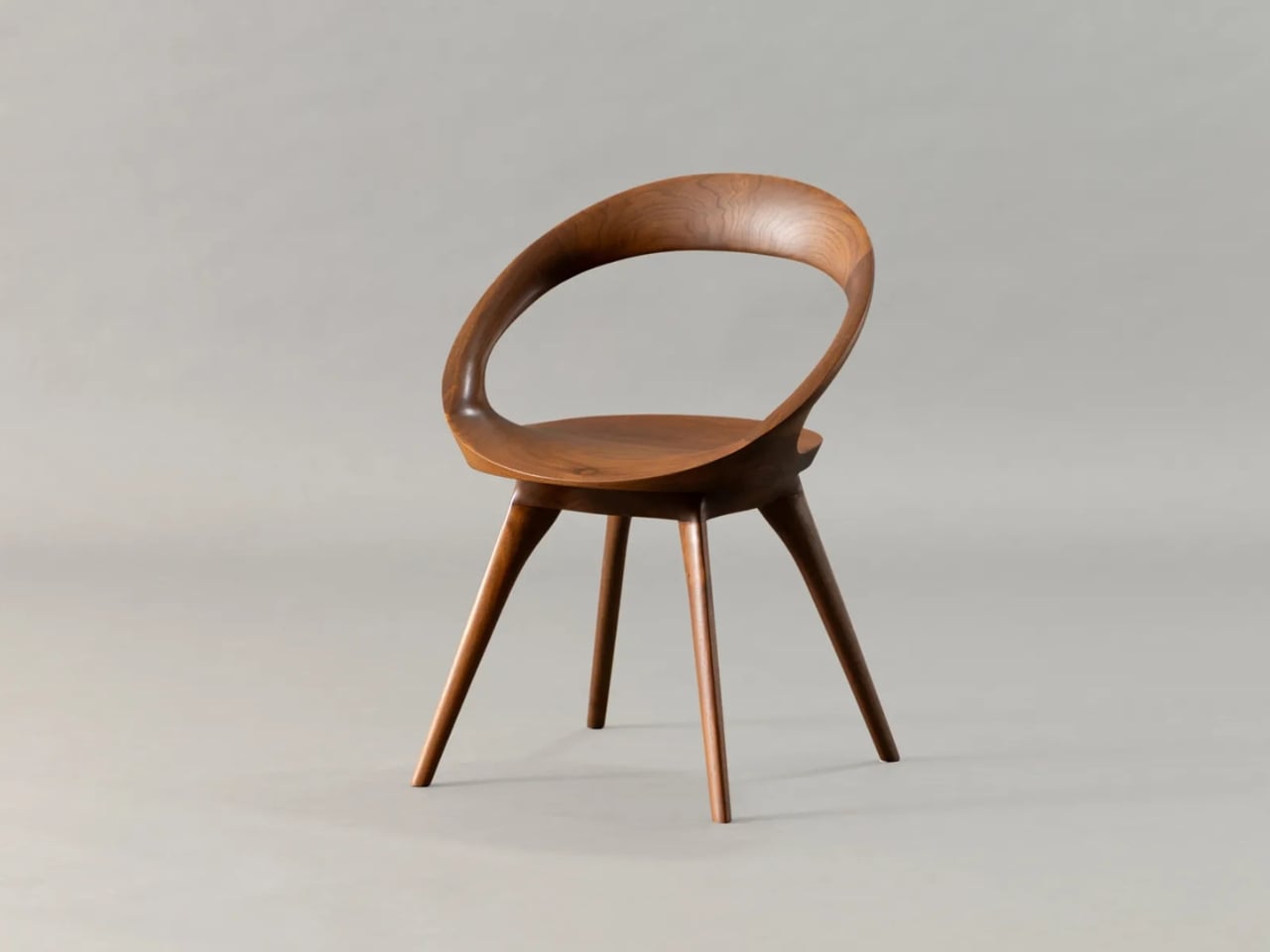
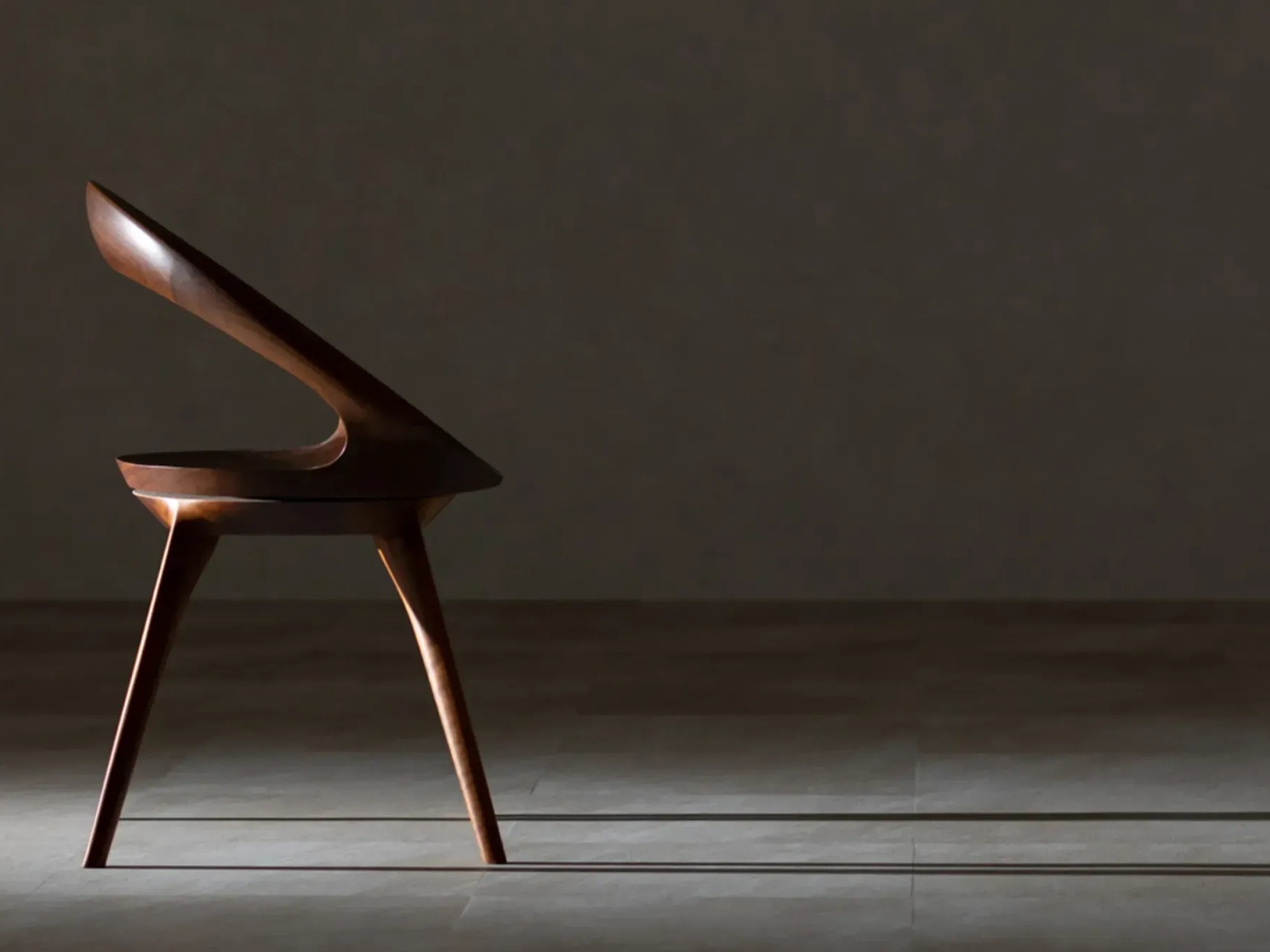
The Anello chair by Kiritsu Mokko does not shout for attention. It sits quietly with a circular backrest that seems to float around a sculpted wooden seat, looking like a piece slightly out of time. Not in a dated way. More like it arrived from a place where three very different design traditions decided, once and for all, to stop competing and just become one thing.

Kiritsu Mokko has been making furniture in Shizuoka Prefecture, Japan, since 1949. That is a long time to study wood. And the Anello, which loosely translates to “ring” in Italian, is a direct expression of that accumulated knowledge. The circular back is not a simple ring slapped onto a base. It is constructed by carefully joining pieces of solid wood, with the grain matched so deliberately that the joints nearly disappear into the form. The result is a curve that looks almost impossible in wood, as though someone forgot to tell the material what it could and could not do.

Designer: Kiritsu Mokko

The design language is genuinely hard to place, and I think that is the entire point. From certain angles, the Anello looks like it belongs in a 1960s living room, all rounded forms and quiet futurism, the kind of chair Kubrick might have placed in a scene just for its shape. From another angle, it reads as straightforwardly Danish Modern, with clean proportions, warm wood tones, and that particular kind of seated elegance that Scandinavian design spent decades perfecting. And then you look at the joinery, the patience baked into every curve, and it becomes unmistakably Japanese. Not Japanese in a superficial, “inspired by” way, but in the deeper sense of a culture that treats materials with a respect that borders on reverence.

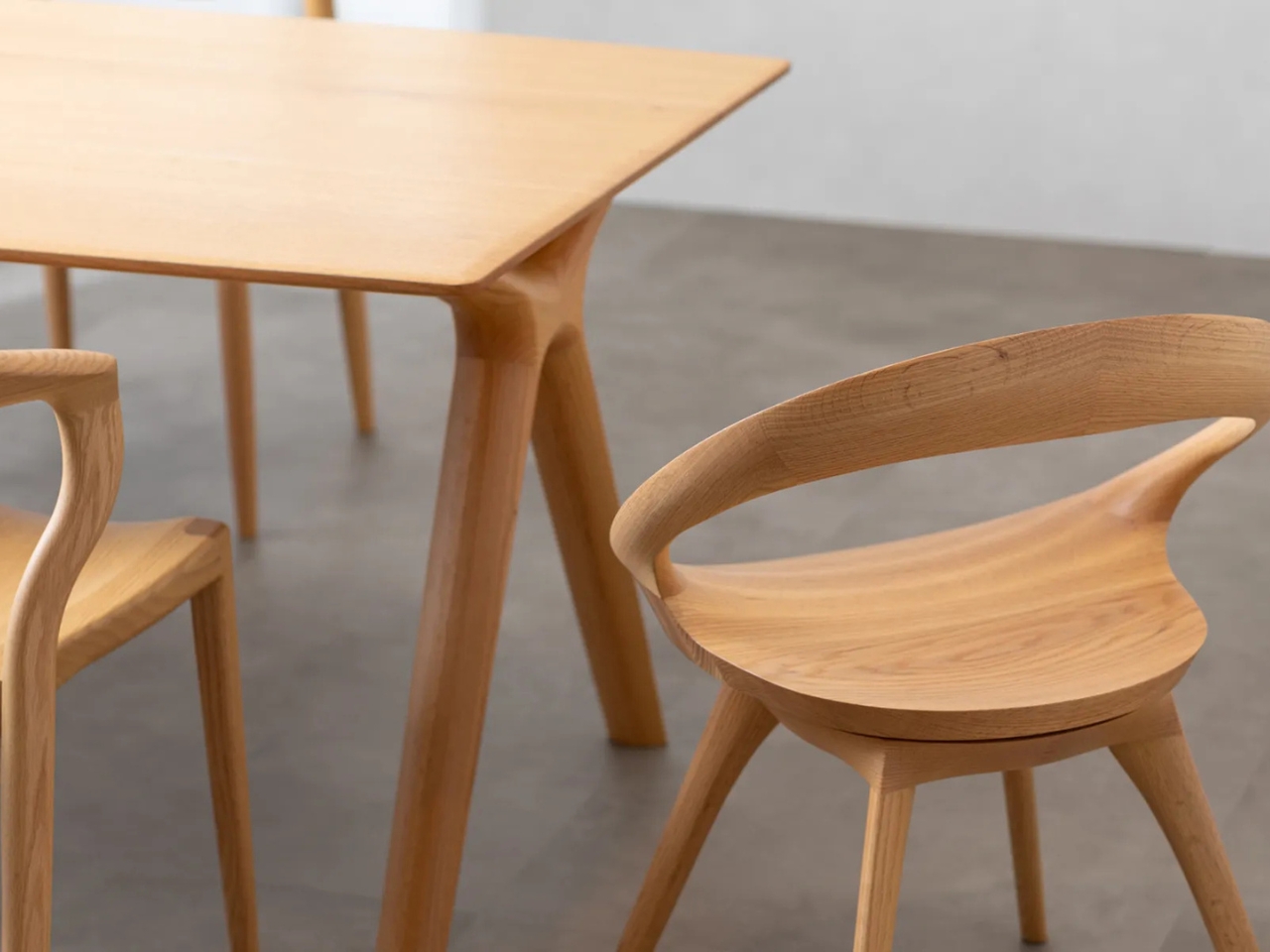
The seat swivels. That detail is easy to miss because Kiritsu Mokko was careful to hide the mechanism, keeping the chair’s silhouette completely uninterrupted. No visible hardware, no break in the form. You can rotate in place and the chair still reads as a single, continuous object. That kind of restraint is its own design philosophy, the idea that if a feature does not serve the visual integrity of a piece, it should be invisible. This is not a new concept in Japanese design, but seeing it executed this cleanly is always a reminder of how much the rest of the furniture world is leaving on the table.

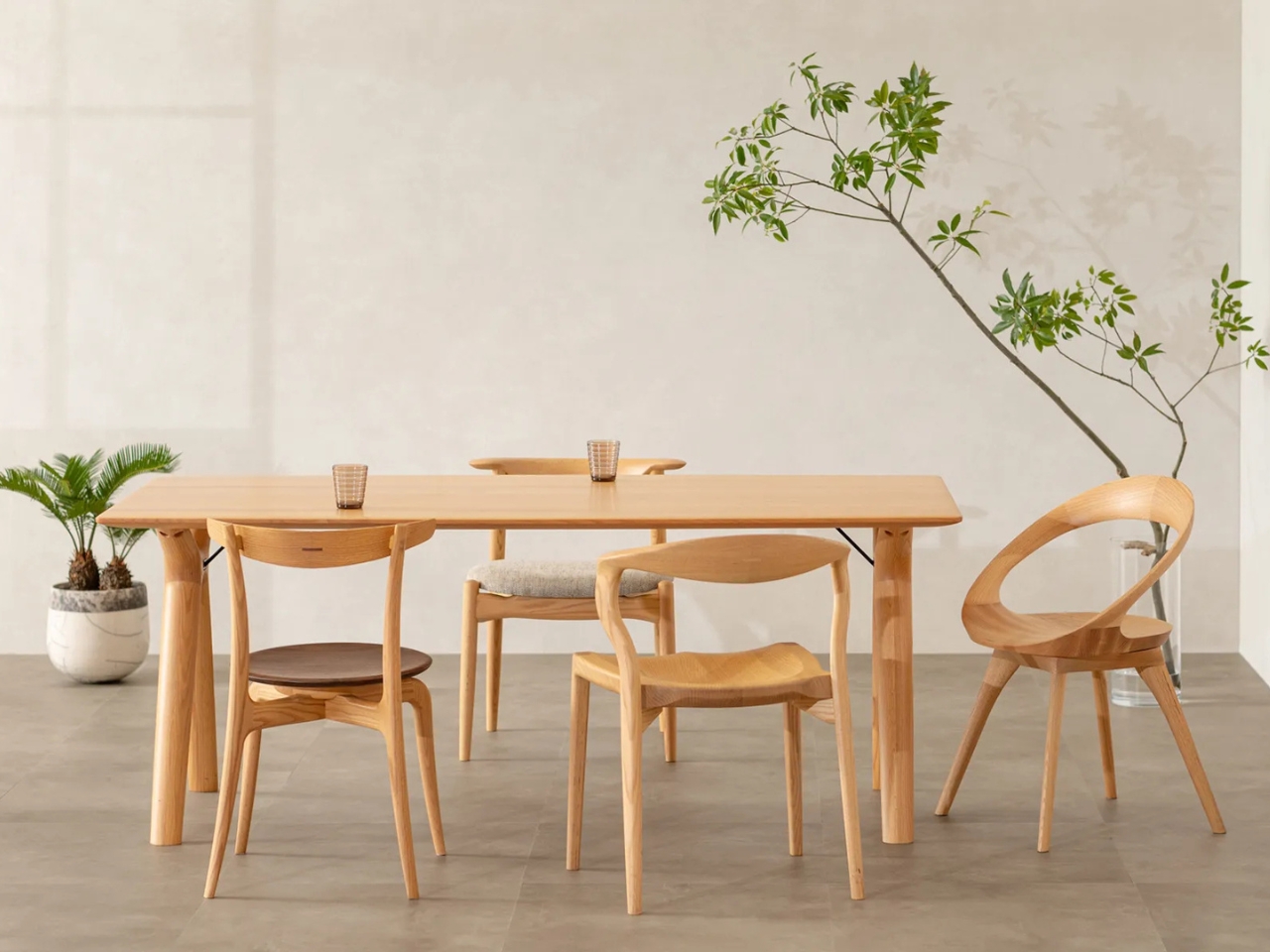
It comes in walnut and oak, which matters more than it might seem. These are not just material options. They are two entirely different emotional experiences of the same chair. The walnut version has a richness that pulls the Anello toward something more intimate and sculptural. The oak reads lighter, more architectural, almost Scandinavian by default. Either way, the solid wood construction means this is not a piece designed to be replaced in five years. It is made with the assumption that you will still have it in thirty.

I will admit that the Anello is the kind of chair that makes me think about how little faith the mainstream furniture market has in its customers. Most of what fills showrooms today operates on a kind of planned impermanence, pieces designed to look good in a photograph before you buy them and mediocre in a room after you do. The Anello is the opposite of that. It is a chair that probably photographs well but is genuinely intended to be lived with.

A piece of furniture that synthesizes Space Age optimism, Scandinavian warmth, and Japanese precision without feeling like a design school exercise is genuinely rare. The Anello pulls it off not because it was trying to be three things at once, but because Kiritsu Mokko has been doing this long enough to trust the materials to speak for themselves.

The post The Anello Chair Is 3 Design Eras in One Piece of Wood first appeared on Yanko Design.
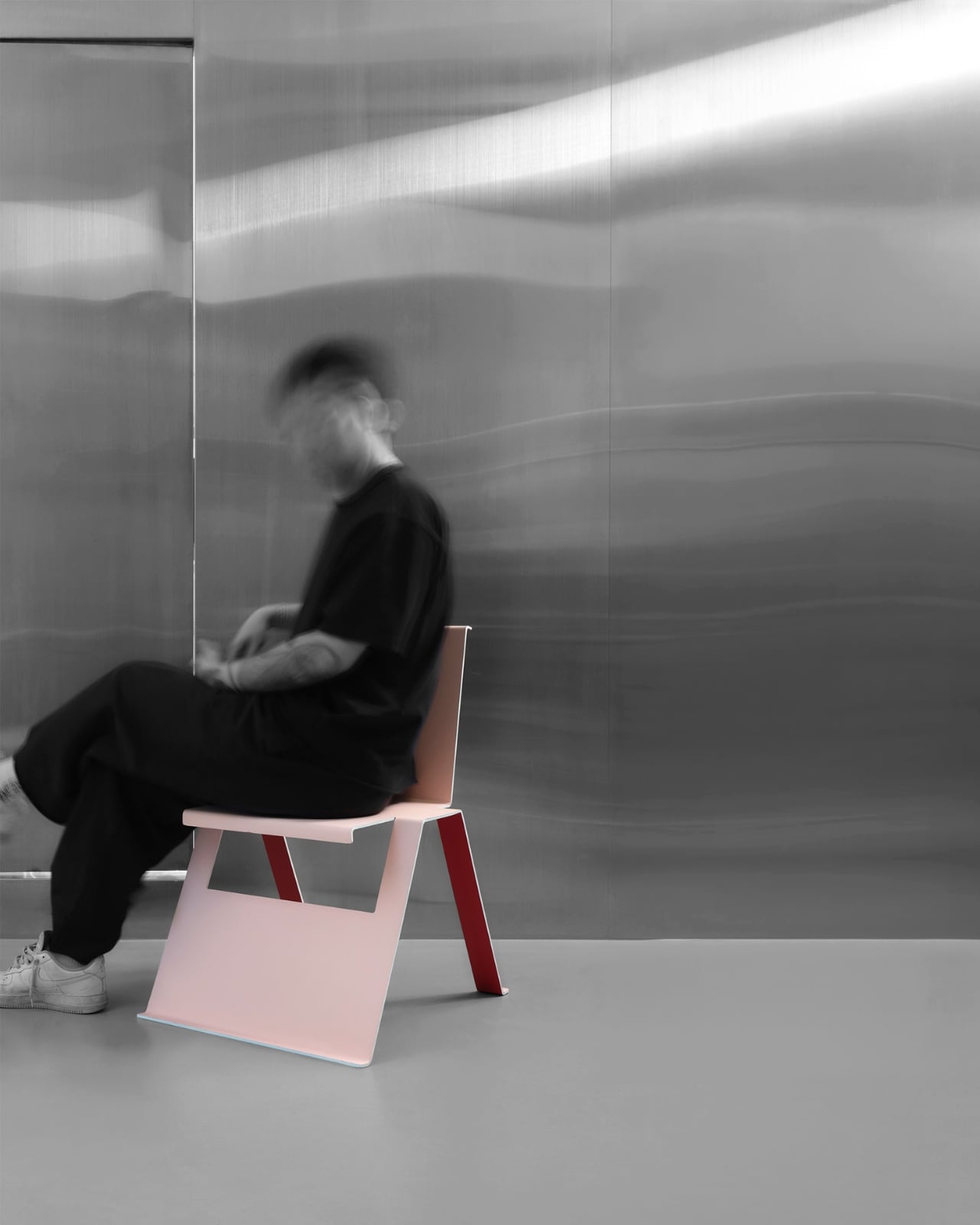
Furniture That Dances: The Moon Series Reimagines Seating

There’s something almost poetic about furniture that moves. Not in the literal sense, but in the way it invites you to play, rearrange, and reimagine your space. The Moon Series from Craft of Both and MADE does exactly that, and honestly, it’s one of the most captivating furniture concepts I’ve seen in a while.

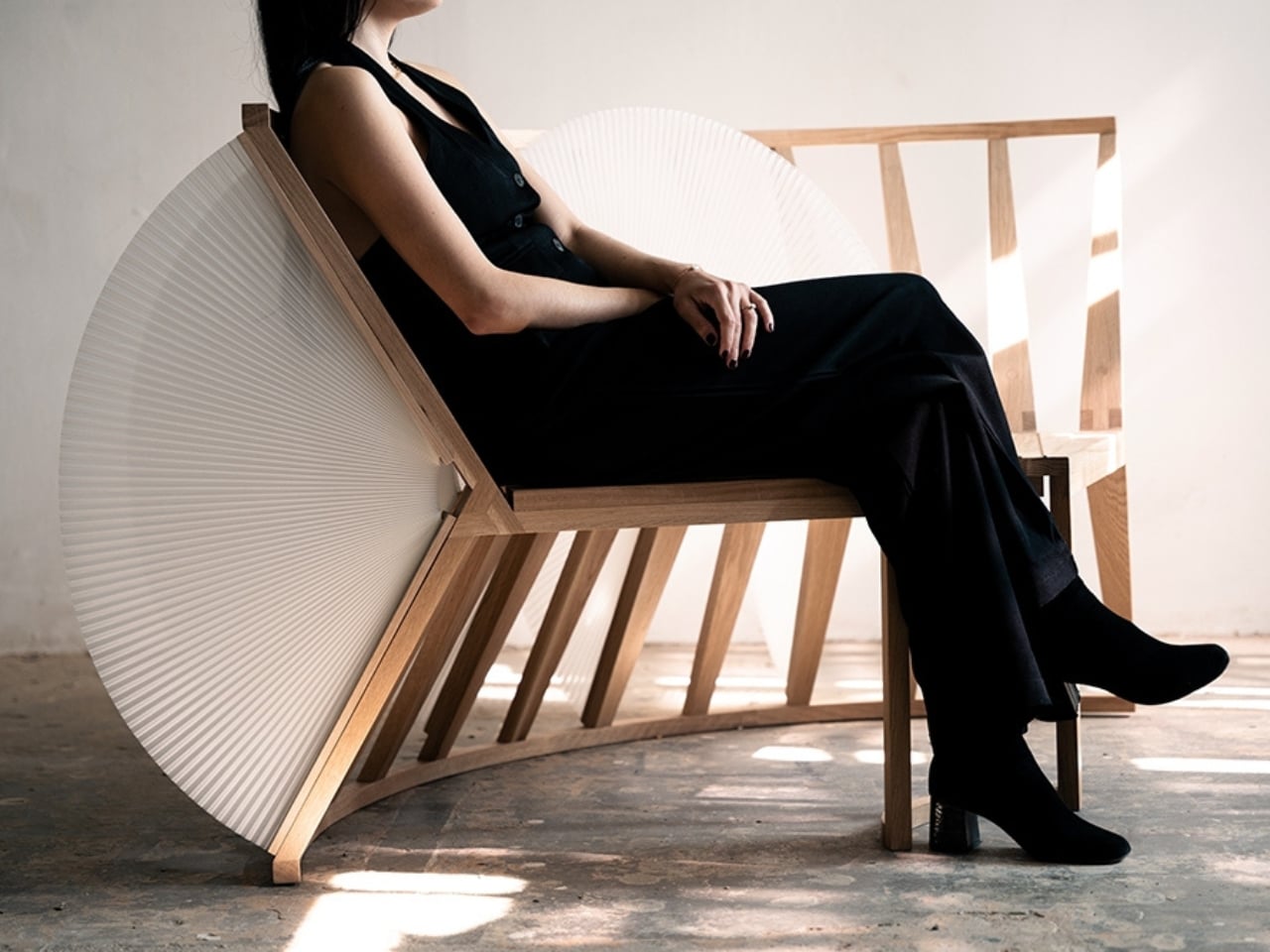
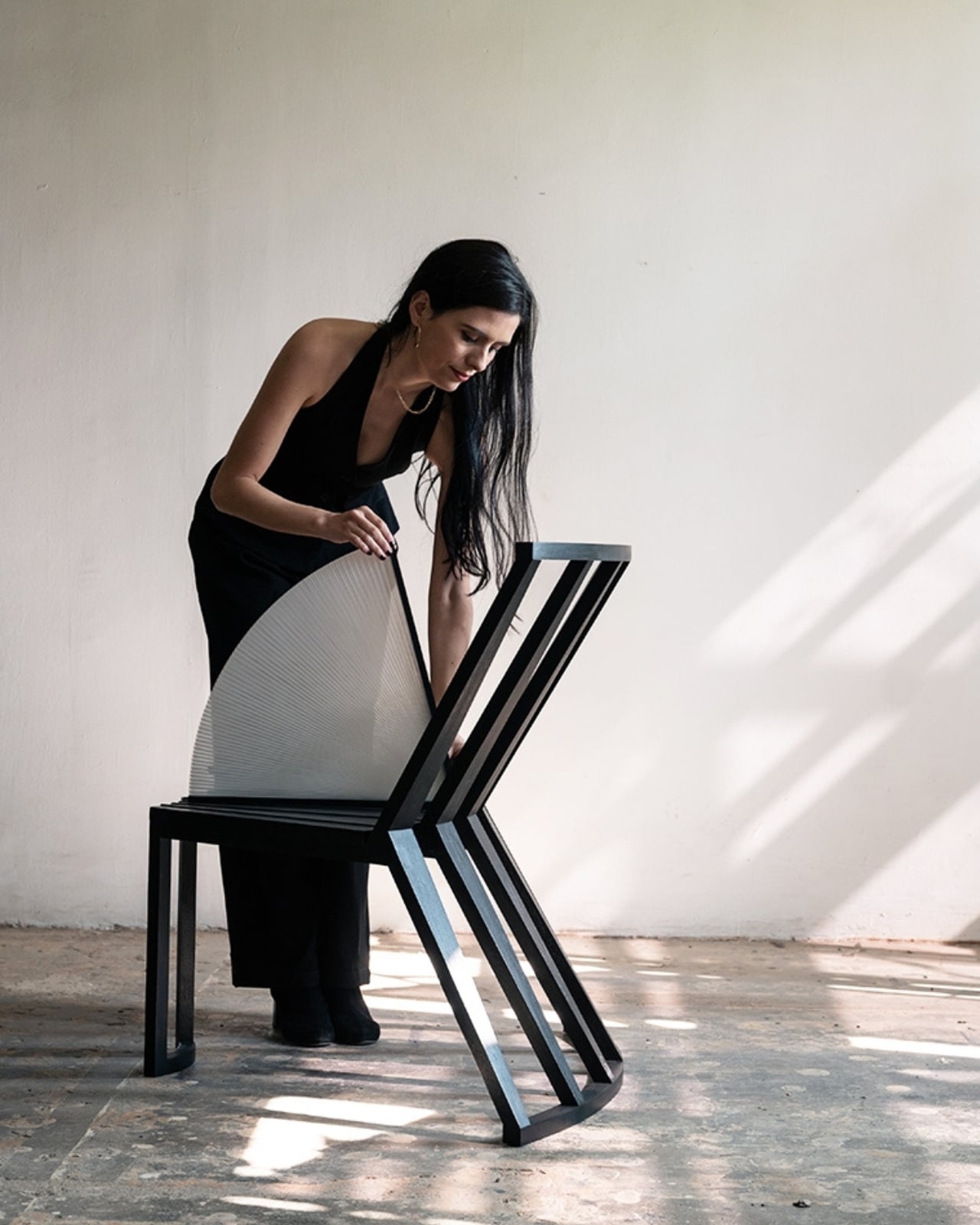
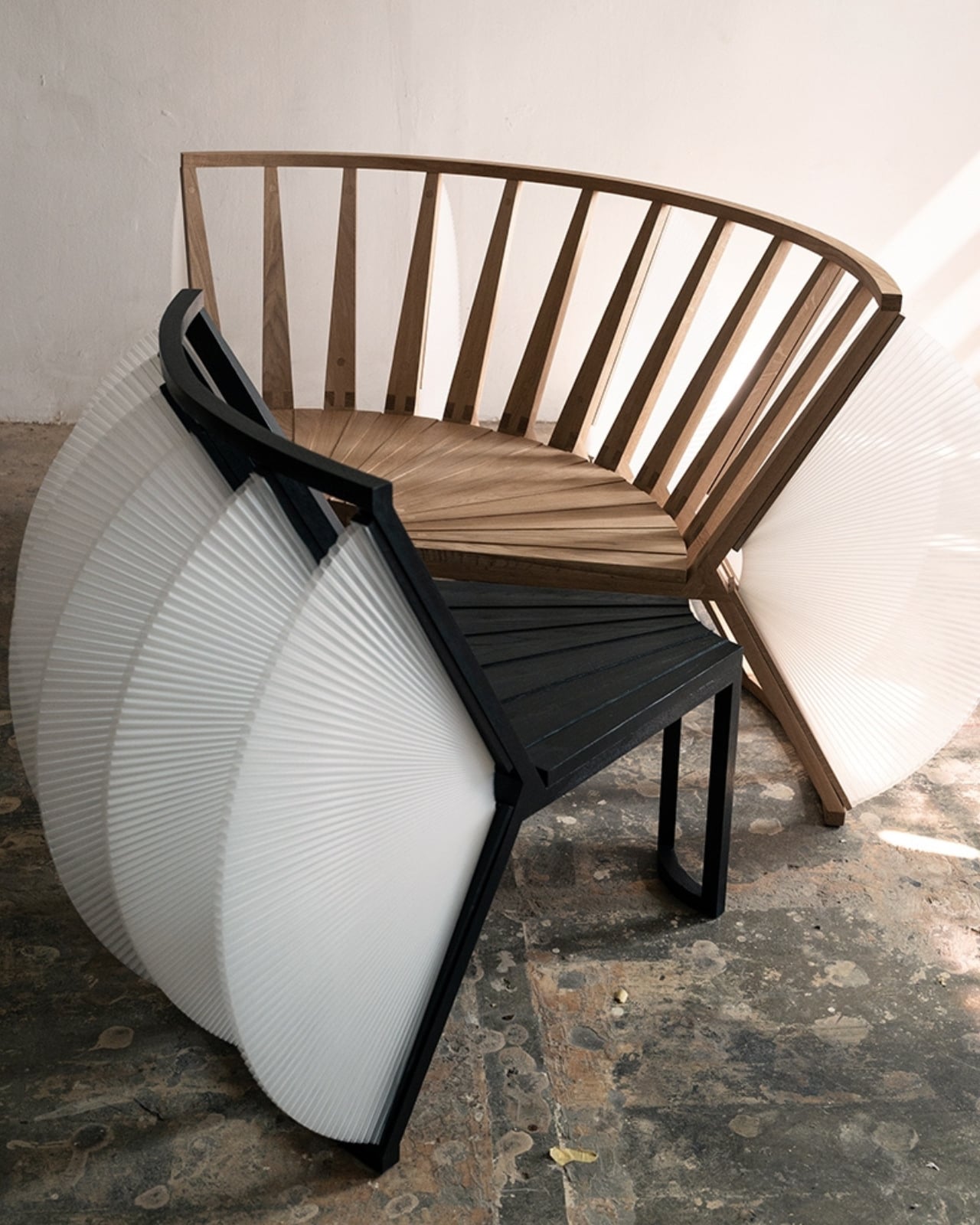
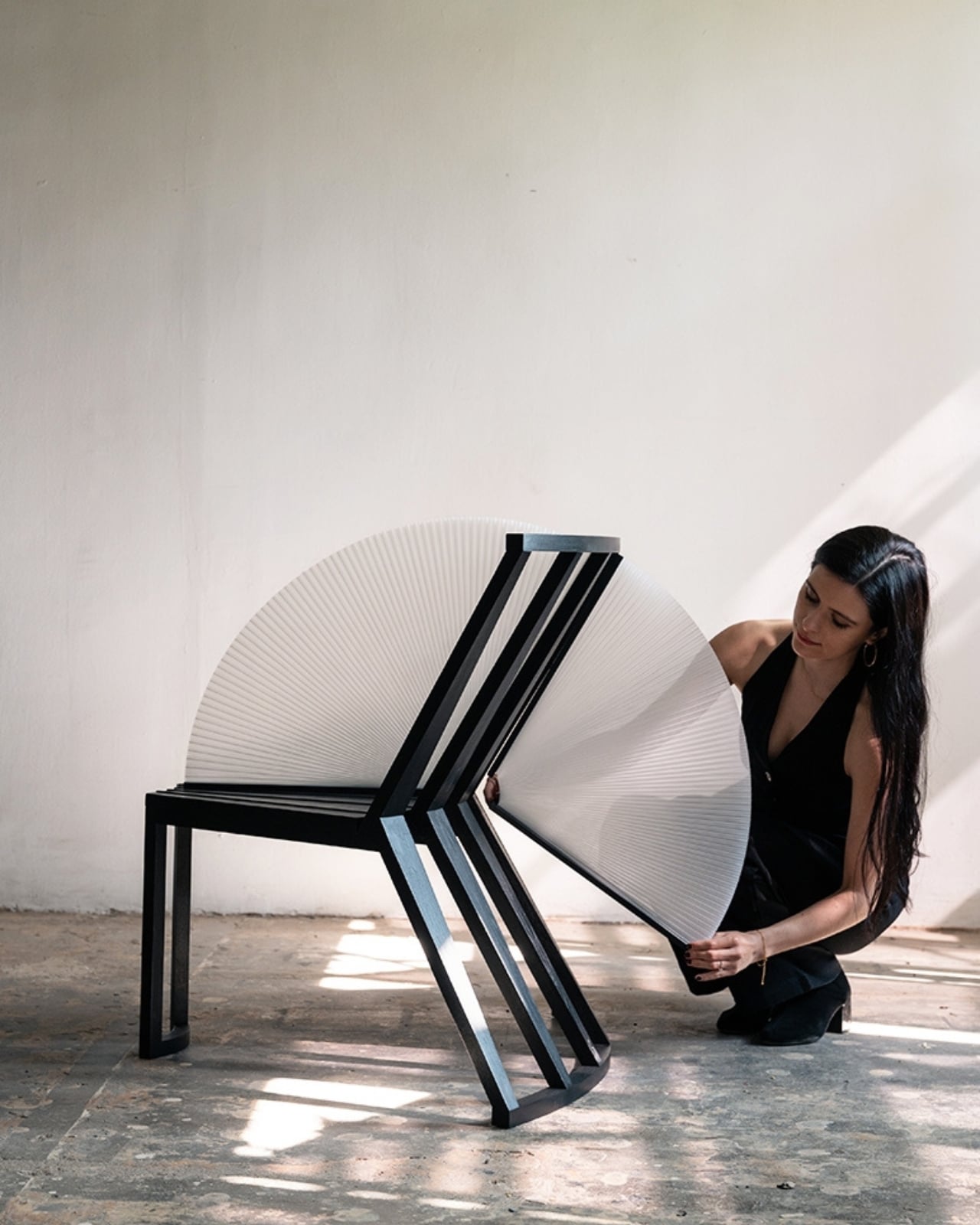
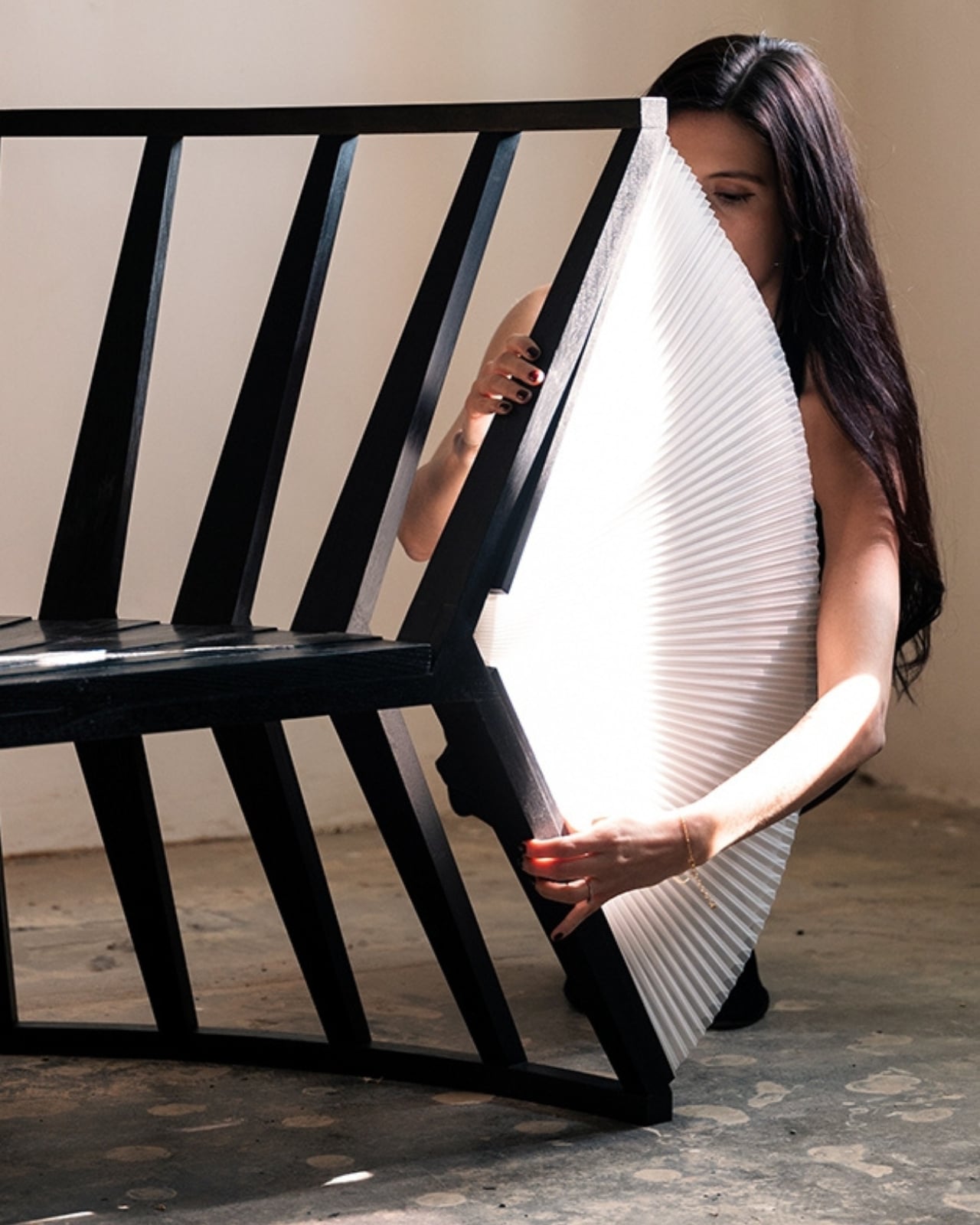
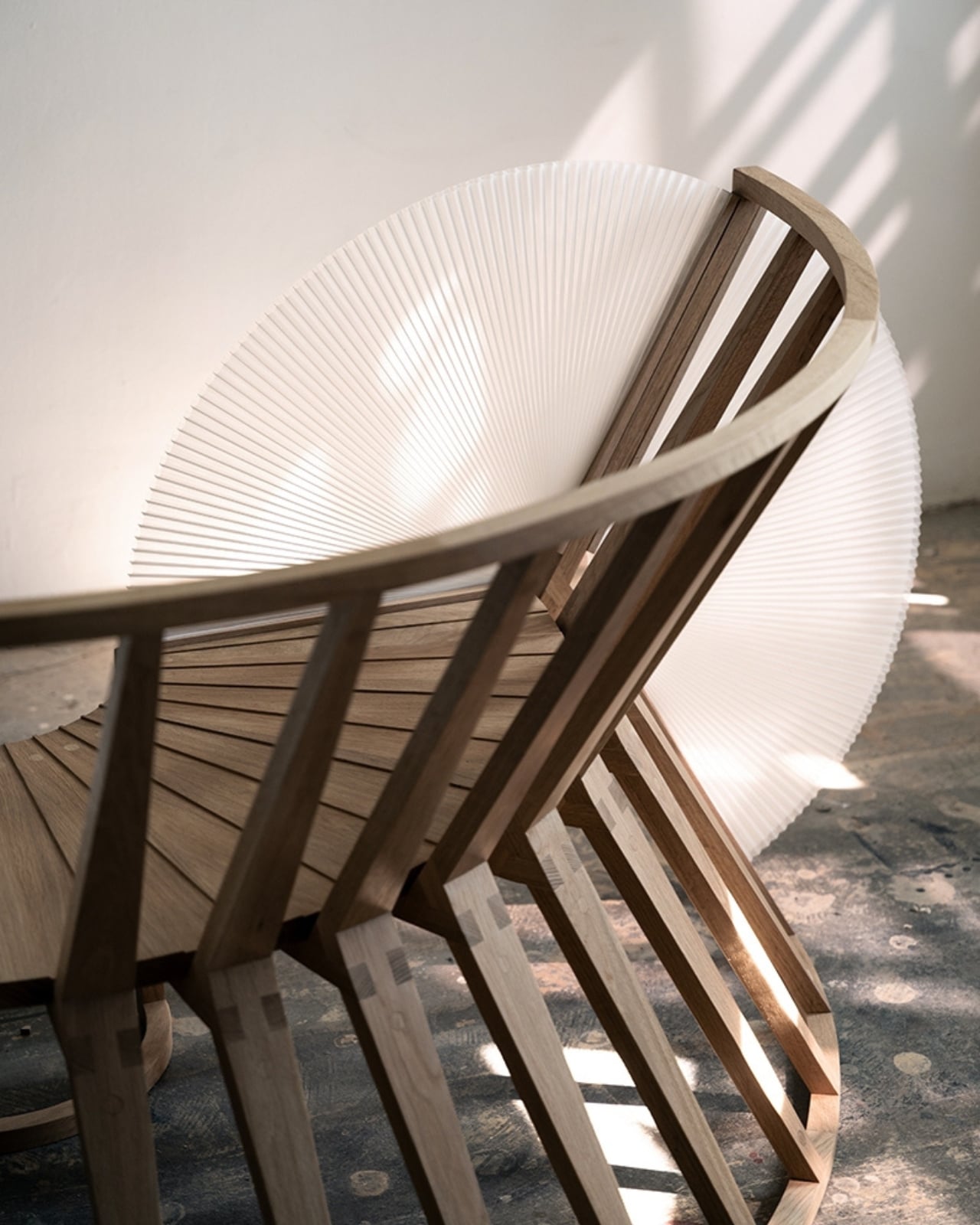
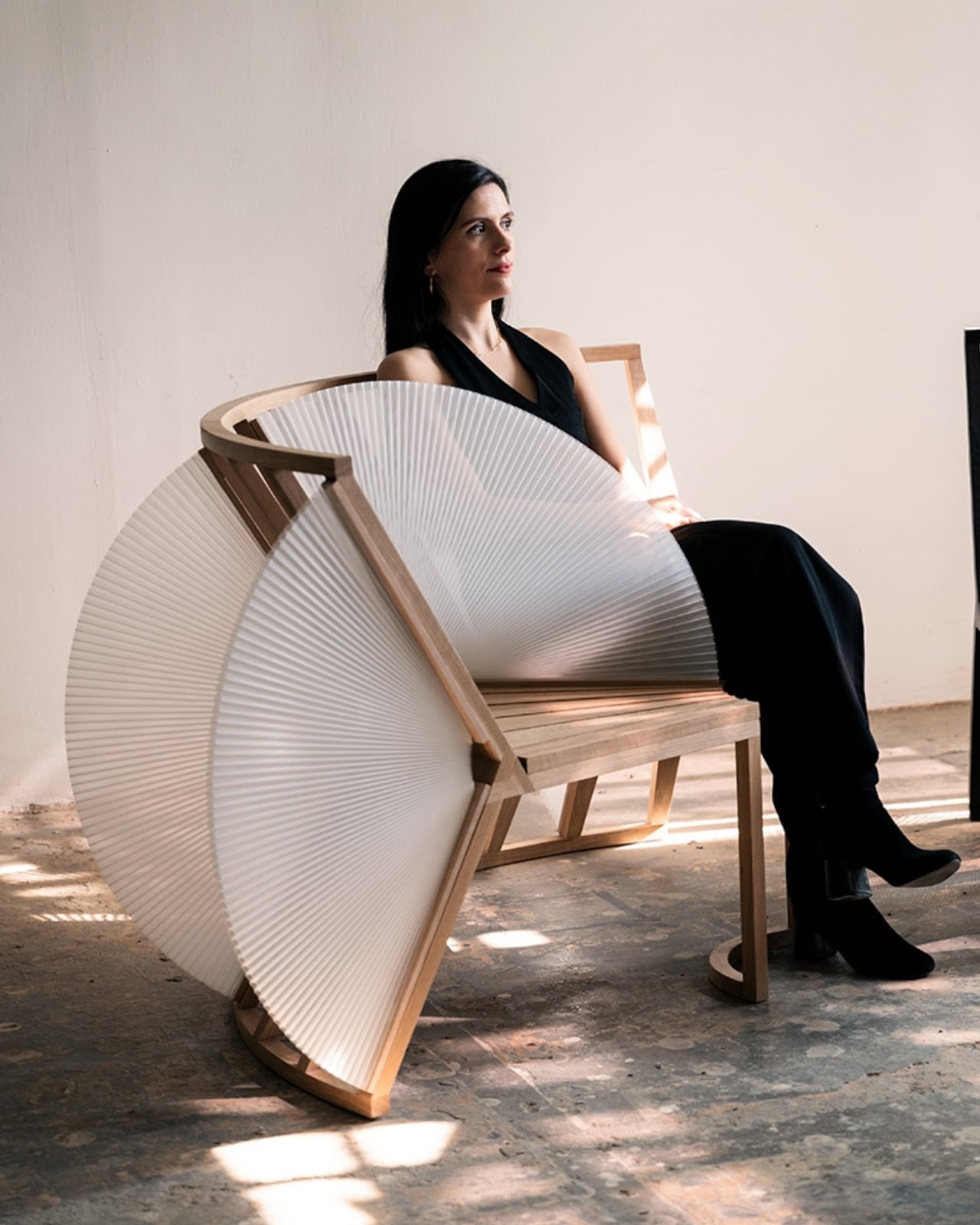
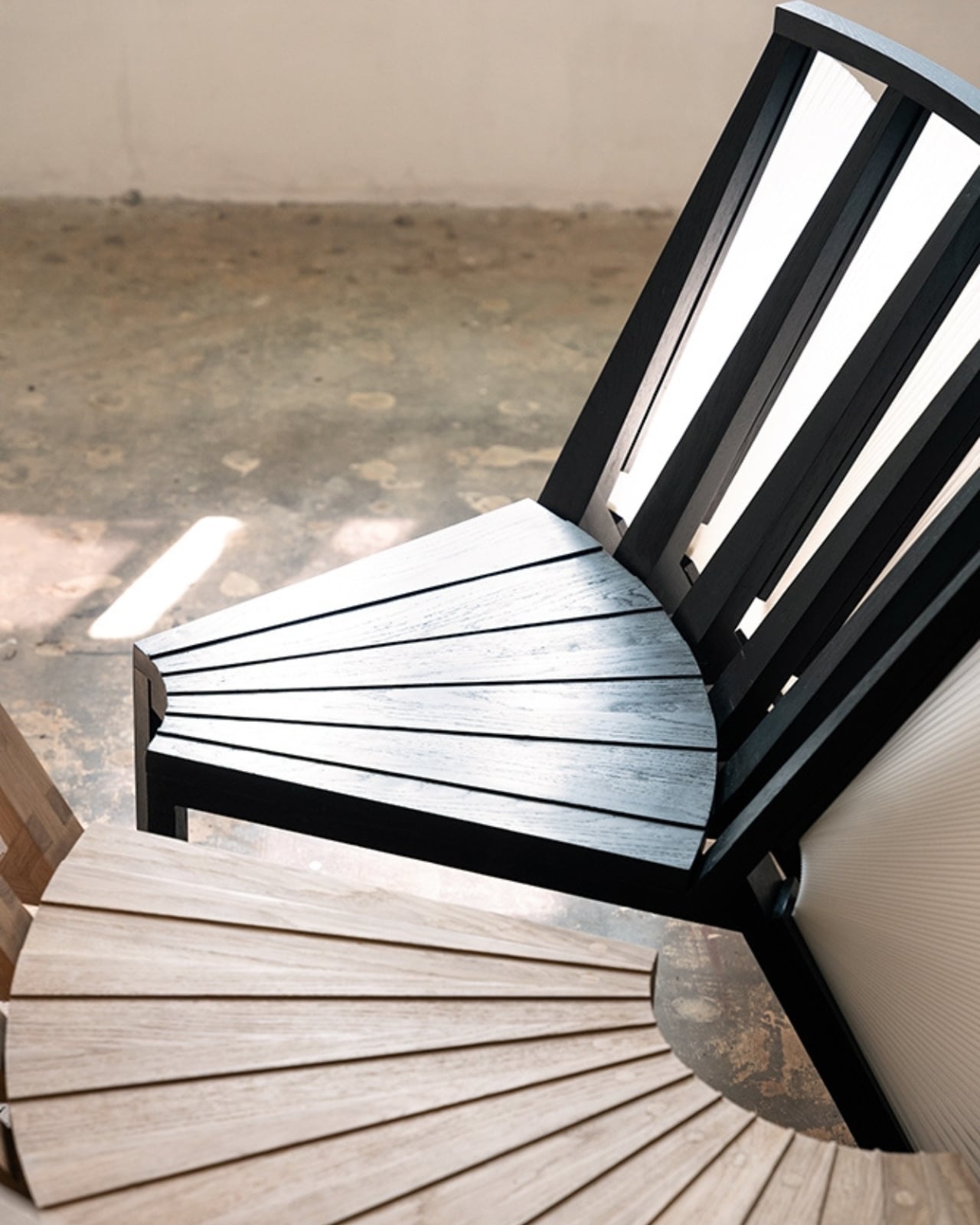
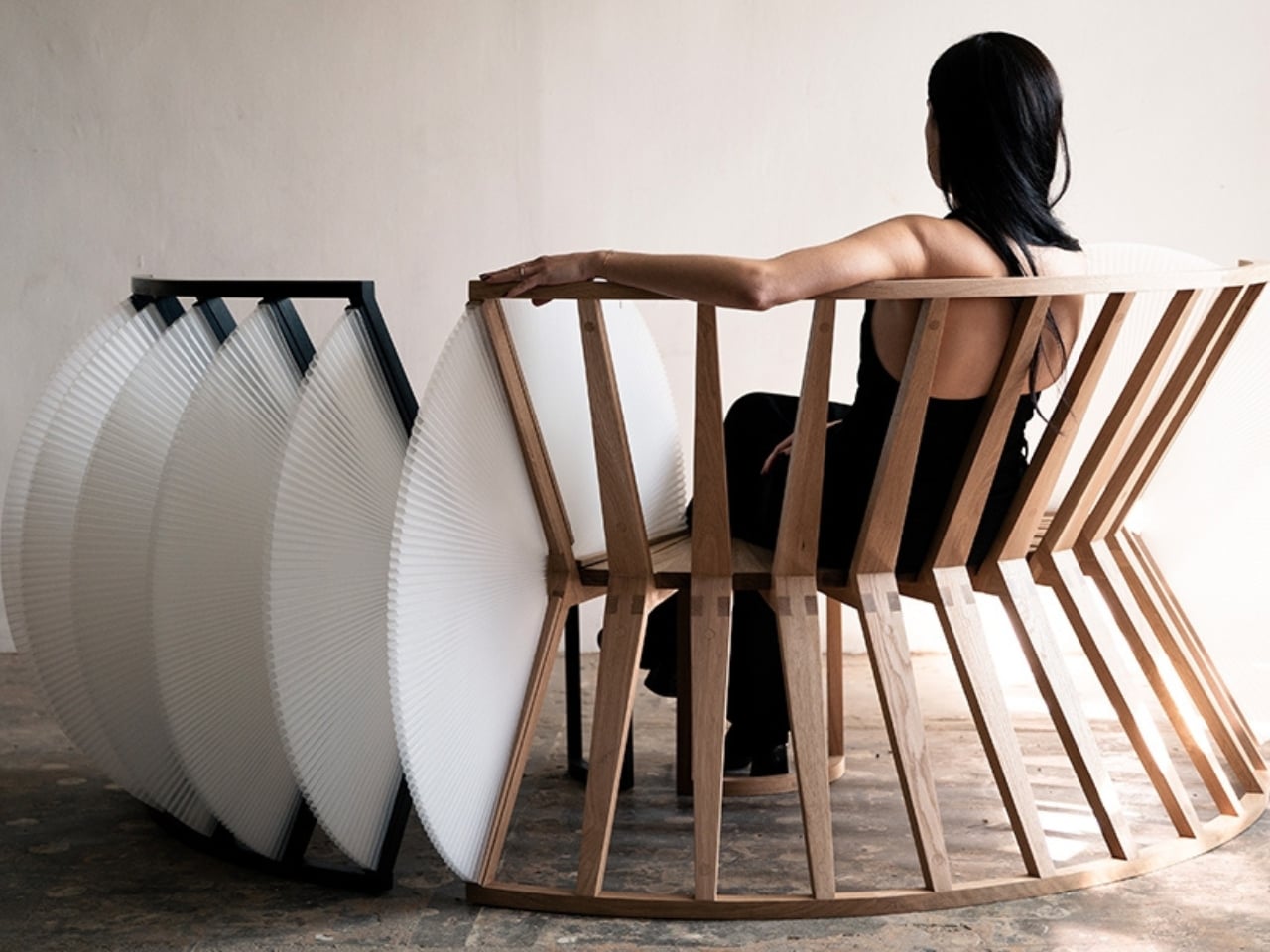
Picture this: a chair that unfolds like a Chinese paper fan, its pleated form spreading out in a graceful arc. That’s the essence of the Moon Series, designed by Christina Standaloft and Jay Jordan. The collection features two core pieces, the Moon Chair at 60 degrees and the Moon Bench at 120 degrees, both built on radial geometry that gives them this incredibly sculptural quality.

Designers: Christina Standaloft, Jay Jordan

What makes these pieces special isn’t just how they look (though they’re absolutely stunning). It’s how they work. The designers describe the interaction as a “meditative fan dance,” which might sound a bit flowery until you actually see someone adjusting the modules. There’s something genuinely calming about sliding those pleated panels along the wooden framework, customizing the backrest to exactly how you want it. It’s tactile design at its finest.

The modularity here goes way beyond what we usually see in flexible furniture. Each piece can be constantly redefined, changing both its physical form and the amount of space it occupies. Want more privacy? Add modules. Need a more open feel? Remove some. The radial structure means every adjustment changes not just comfort but the entire aesthetic of the piece.

But here’s where it gets really interesting. When you start combining multiple Moon Chairs or Benches together, you’re essentially creating sculptural landscapes in your living space. The arrangement of those fan-like elements determines everything: how the pieces orient toward each other, how much privacy each seating area has, the comfort level, and the overall visual impact. It’s like being handed a set of beautiful building blocks and being told to go wild.

The technical execution is impressive too. Those 60-degree and 120-degree angles aren’t arbitrary. They’re precisely calculated to allow the pieces to connect and configure in multiple ways. A full circle is 360 degrees, so you could theoretically arrange six Moon Chairs or three Moon Benches to create a complete circular seating area. Mix and match them, and the possibilities multiply exponentially.

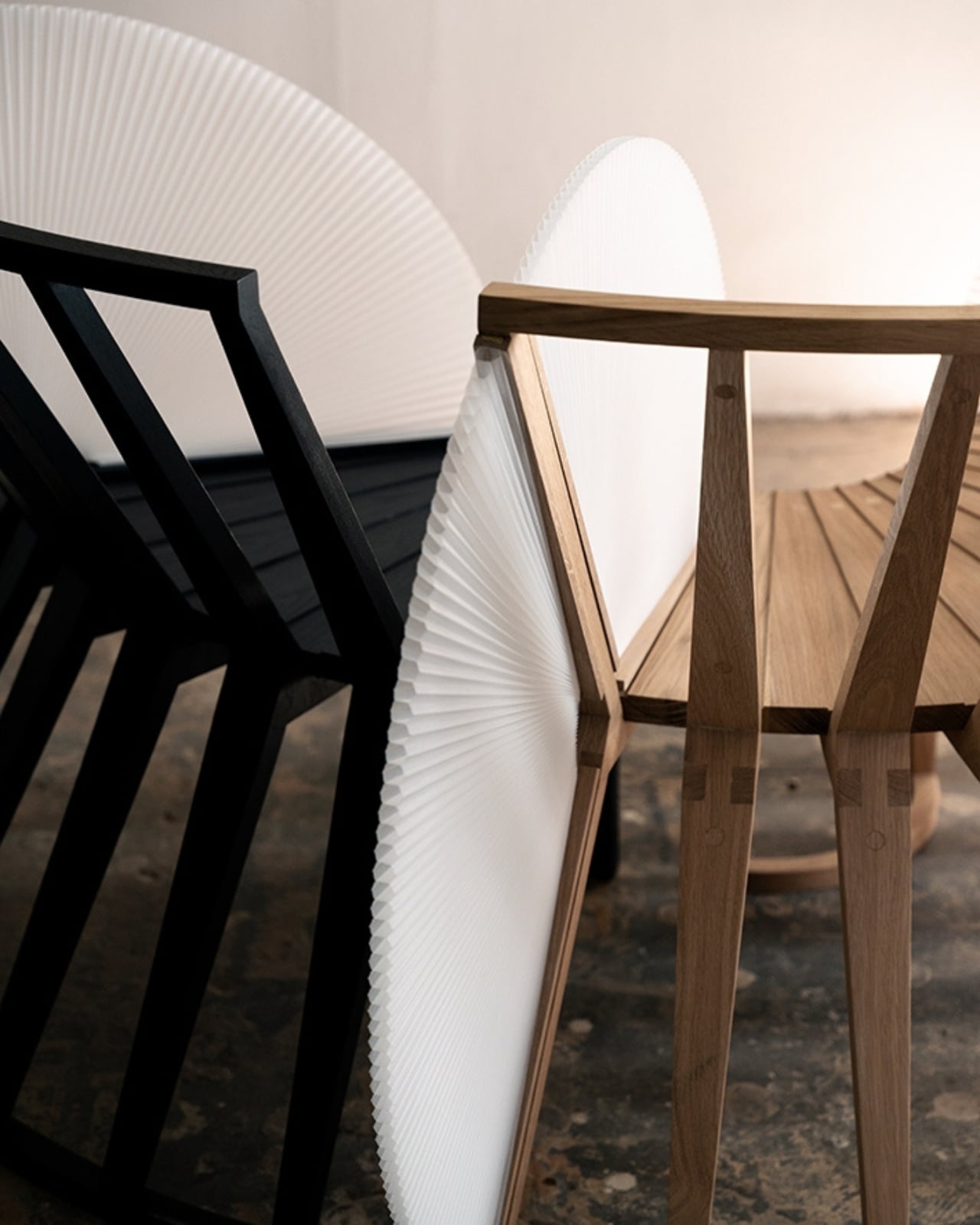
What strikes me most about the Moon Series is how it bridges Eastern and Western design sensibilities. The inspiration from Chinese paper fans brings this delicate, almost ceremonial quality to the pieces. Yet the execution feels very contemporary, with clean lines and that minimalist aesthetic we’ve come to associate with modern Scandinavian or Japanese design. The wooden slats radiate outward like sunbeams, and those pleated paper or fabric panels catch the light beautifully.

There’s also something refreshingly honest about the design. You can see exactly how it works. The structure is exposed, the modularity is obvious, and the craftsmanship is on full display. In an era where so much furniture hides its mechanics behind upholstery and veneers, this transparency feels almost rebellious. From a practical standpoint, this kind of modular system makes a lot of sense for how we actually live today. Smaller spaces, frequent moves, evolving needs… furniture that can adapt alongside us isn’t just clever, it’s necessary. But the Moon Series doesn’t sacrifice beauty for function. If anything, the functionality enhances the beauty.

The partnership between Craft of Both and MADE brings together thoughtful design philosophy with production expertise, and it shows. These aren’t concept pieces that will never make it past the design blog circuit. They’re real, functional furniture that you could actually live with. I keep coming back to those images of someone adjusting the fan modules, their hands gently pulling the pleated material into place. There’s an intimacy there, a personal relationship between user and object that most furniture just doesn’t offer. Your Moon Chair becomes uniquely yours through how you configure it, day by day, mood by mood.
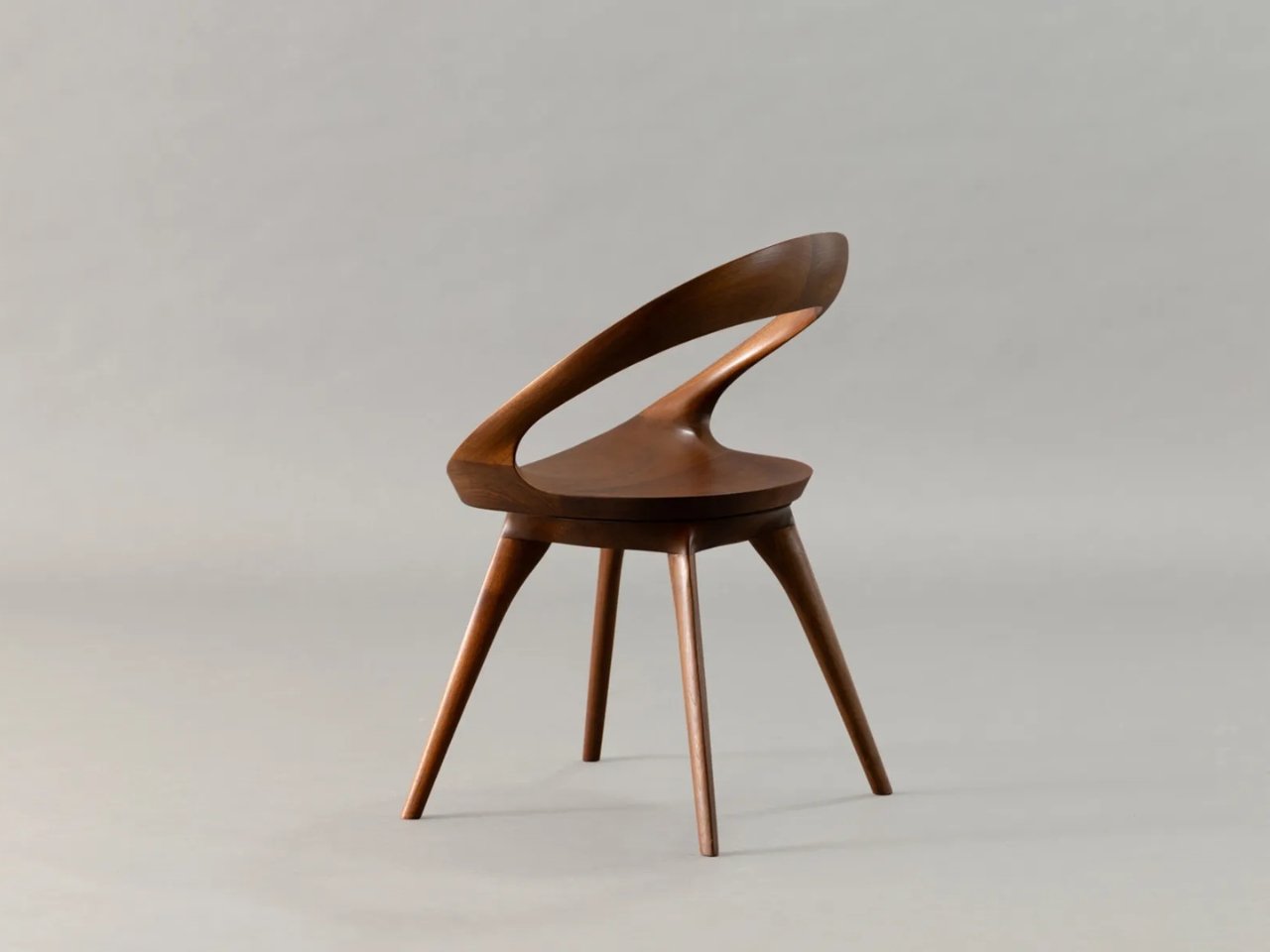
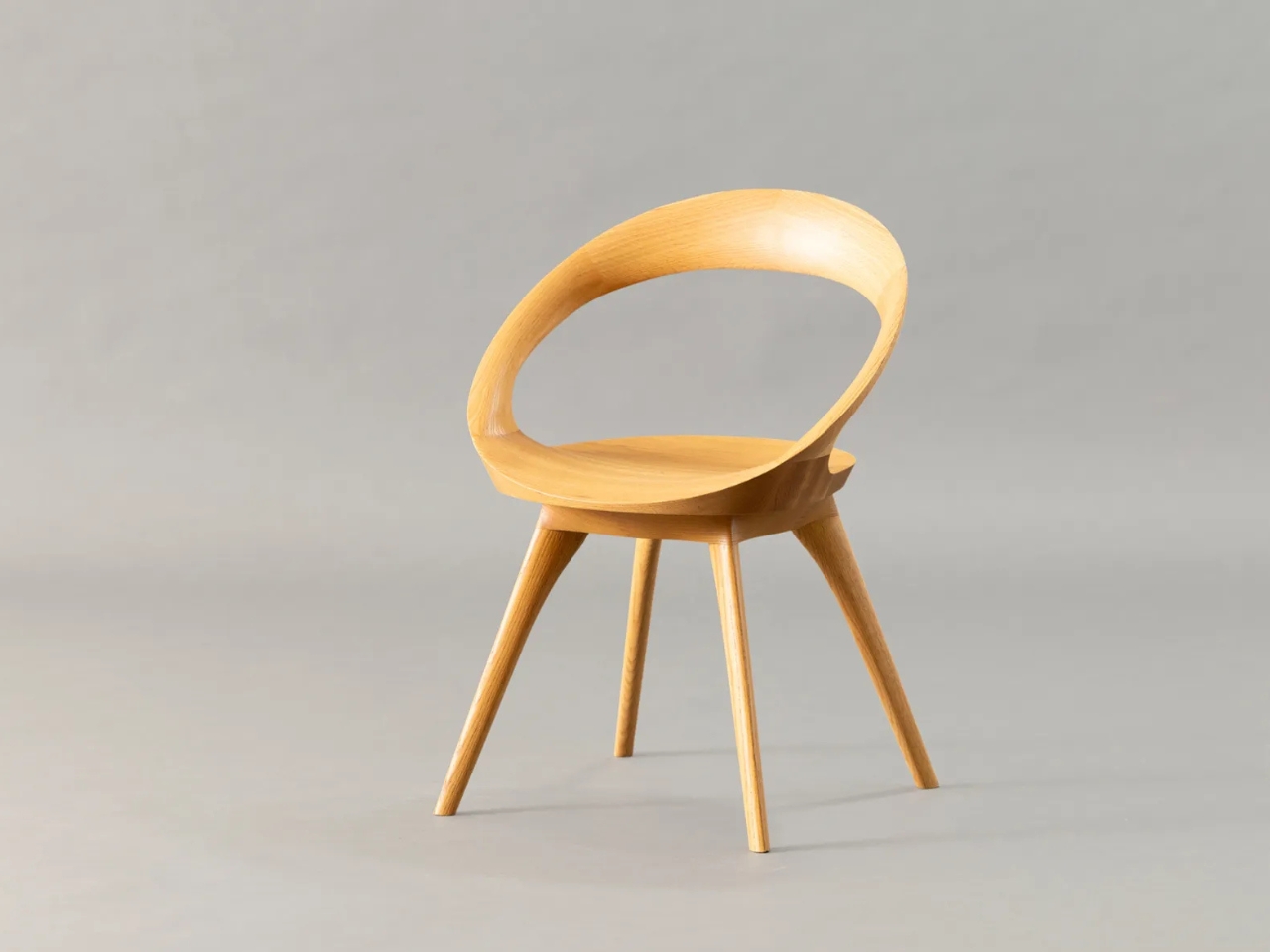
The Moon Series offers something different when we’re used to flat-pack sameness. It’s furniture that invites participation, rewards creativity, and somehow manages to be both statement piece and practical seating. That’s not an easy balance to strike, but Standaloft and Jordan have done it with grace.

The post Furniture That Dances: The Moon Series Reimagines Seating first appeared on Yanko Design.