Segway Adds S2 Kids, C2 Go and C2 SE Scooters
Segway expands its kids lineup with the S2 Kids, C2 Go and C2 SE, offering self-balancing and electric mobility for younger riders.
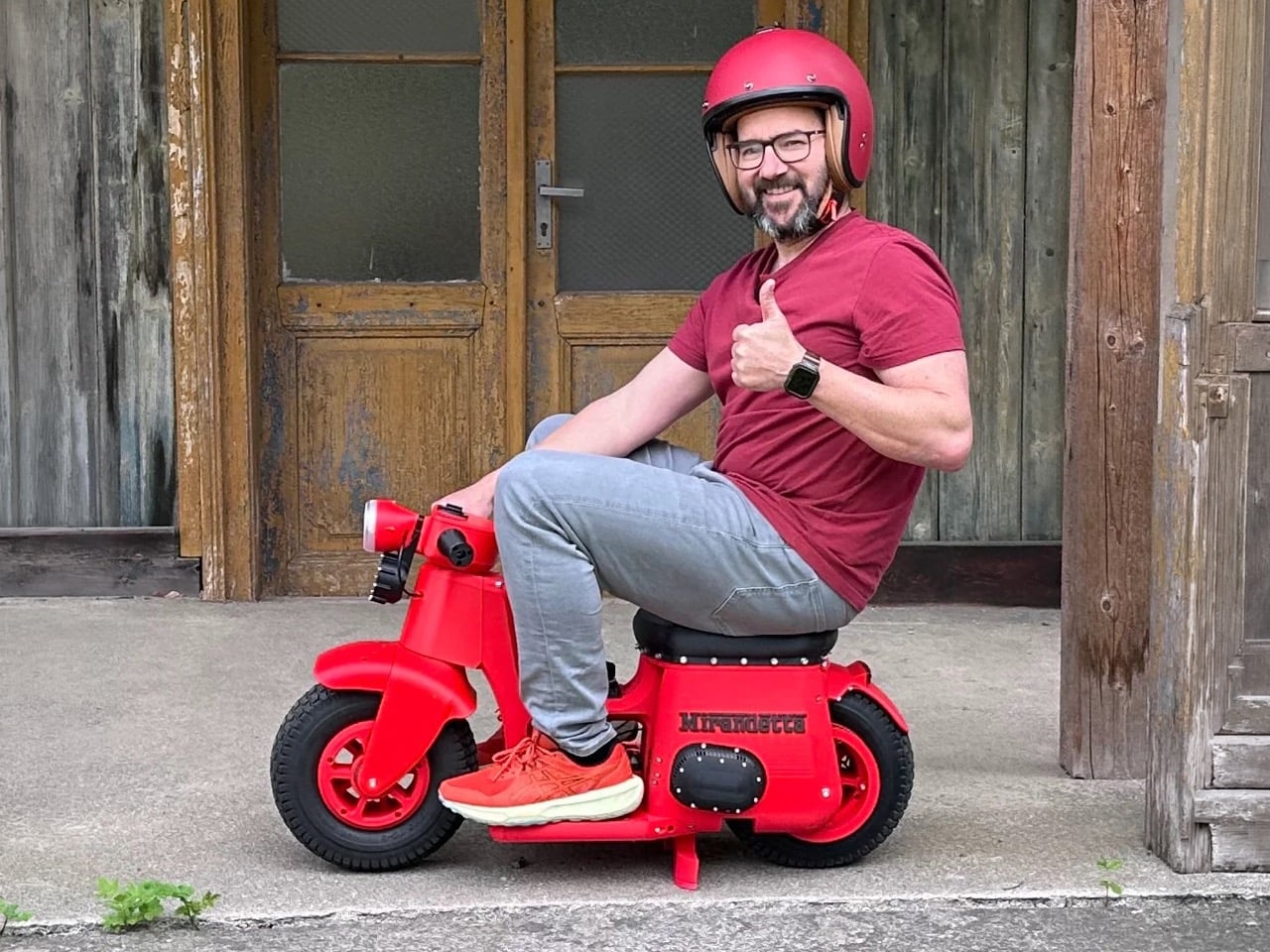
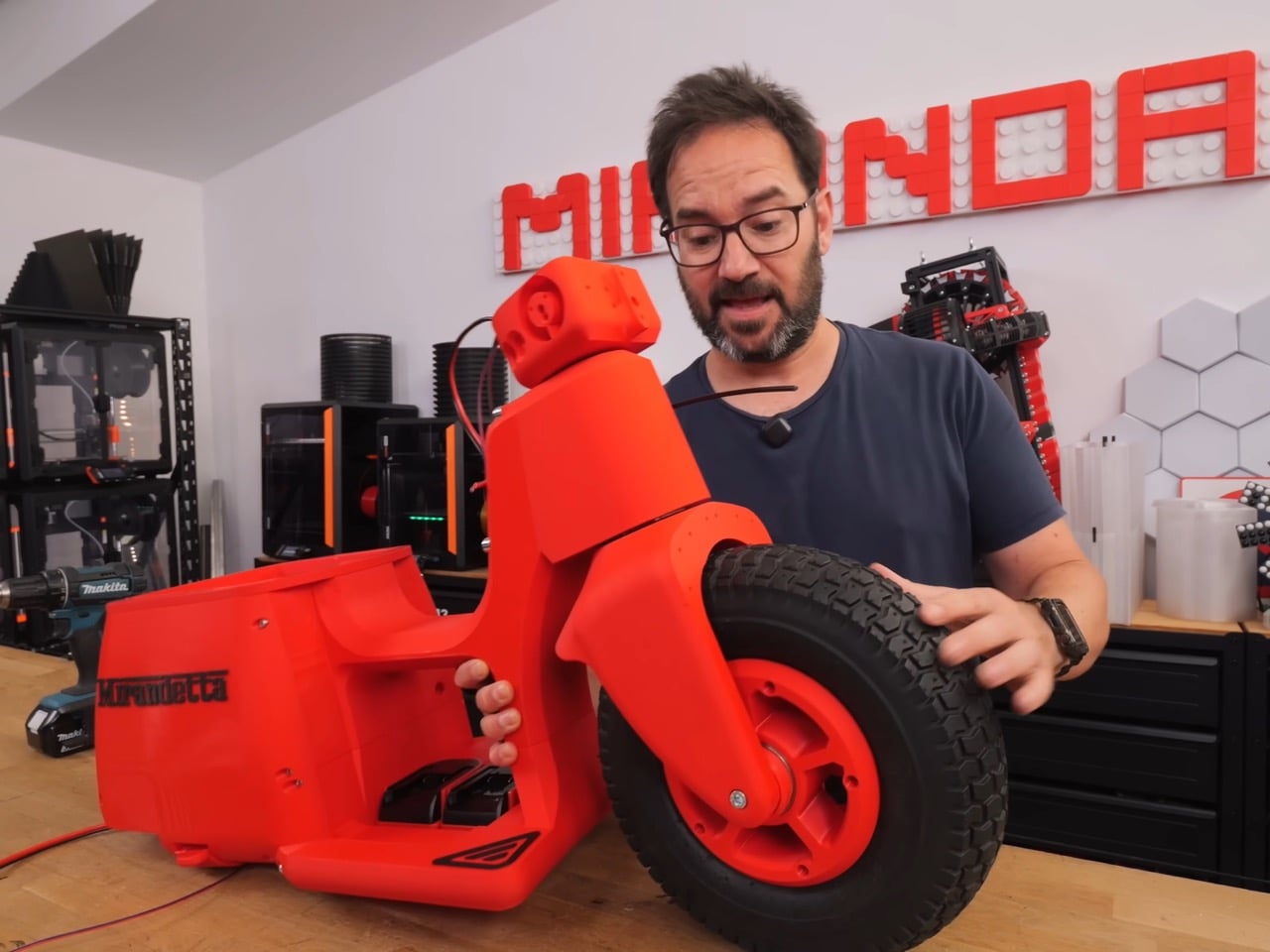
Print a phone case, sure. Print a desk organizer, fine. But print a scooter, one with wheels, brakes, a motor, and enough structural gumption to carry an actual adult human being down a street, and you have crossed into a different category of insane entirely. Ivan Miranda crossed that line without blinking, treating a 3D printer less like a hobbyist gadget and more like a small scale factory capable of manufacturing an entire vehicle from the ground up.
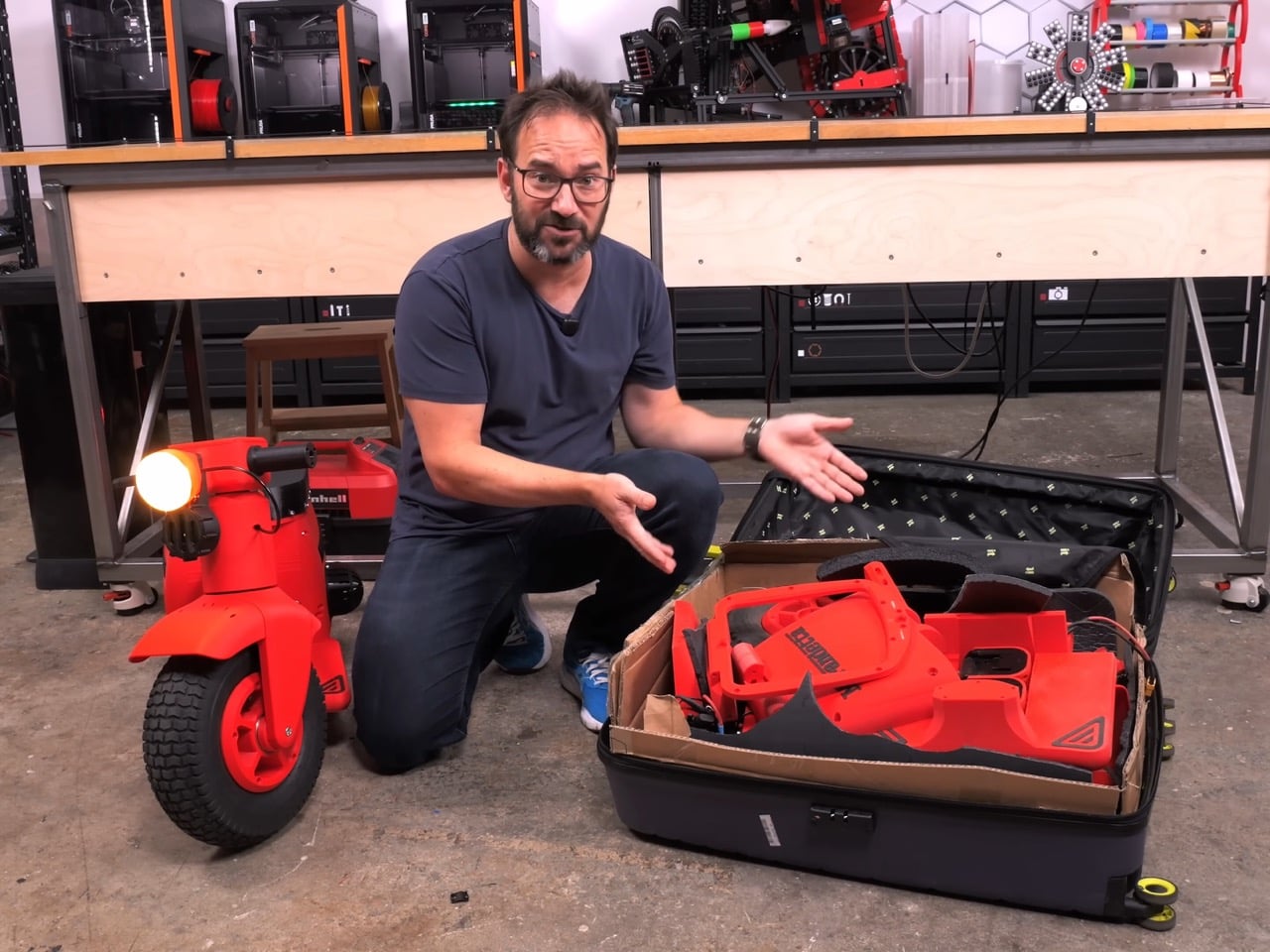
What makes it properly deranged is not just that the scooter exists. It is that the scooter fits in a suitcase. Every panel, every bracket, every printed part was designed to break down small enough to check onto a flight, then get reassembled on the other side into a machine that actually rides, brakes, and turns corners like it means it. Somewhere over Europe on the way to Prague, there was a scooter sitting quietly in cargo, waiting to become a scooter again the moment it landed.
Designer: Ivan Miranda
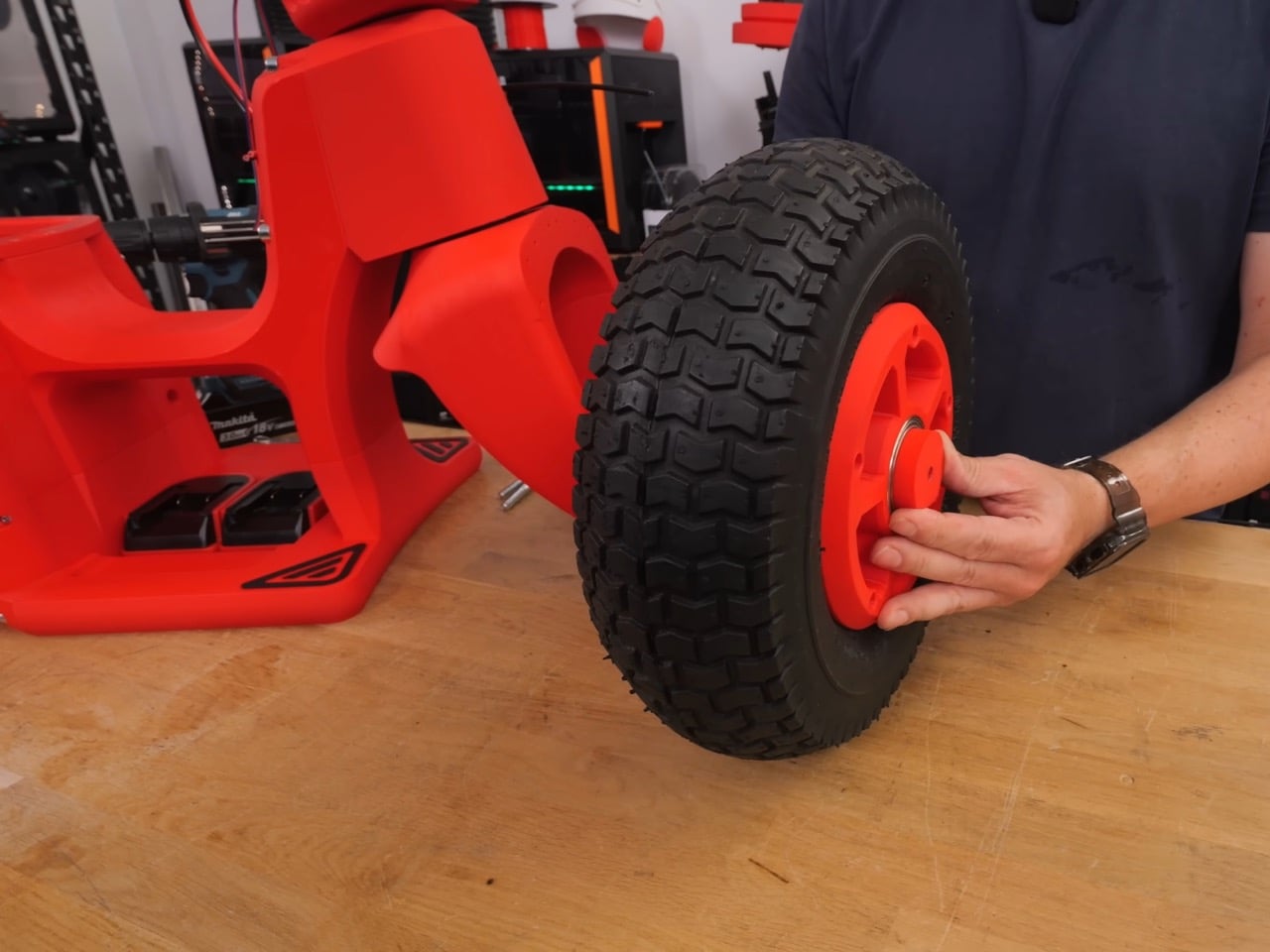
Miranda started by building his rims out of repurposed lawn mower tires, which are naturally too flat sided for anything that needs to lean into a corner. His fix was to print the rims narrower than usual, so the two internal rings sit closer together, which stops the tire sidewalls from bowing outward once inflated. The result rounds over just enough to behave like an actual motorbike tire rather than a garden tool accessory. It is a small trick, but it is the kind of trick that separates a scooter that rides from one that just sits there looking like a scooter.
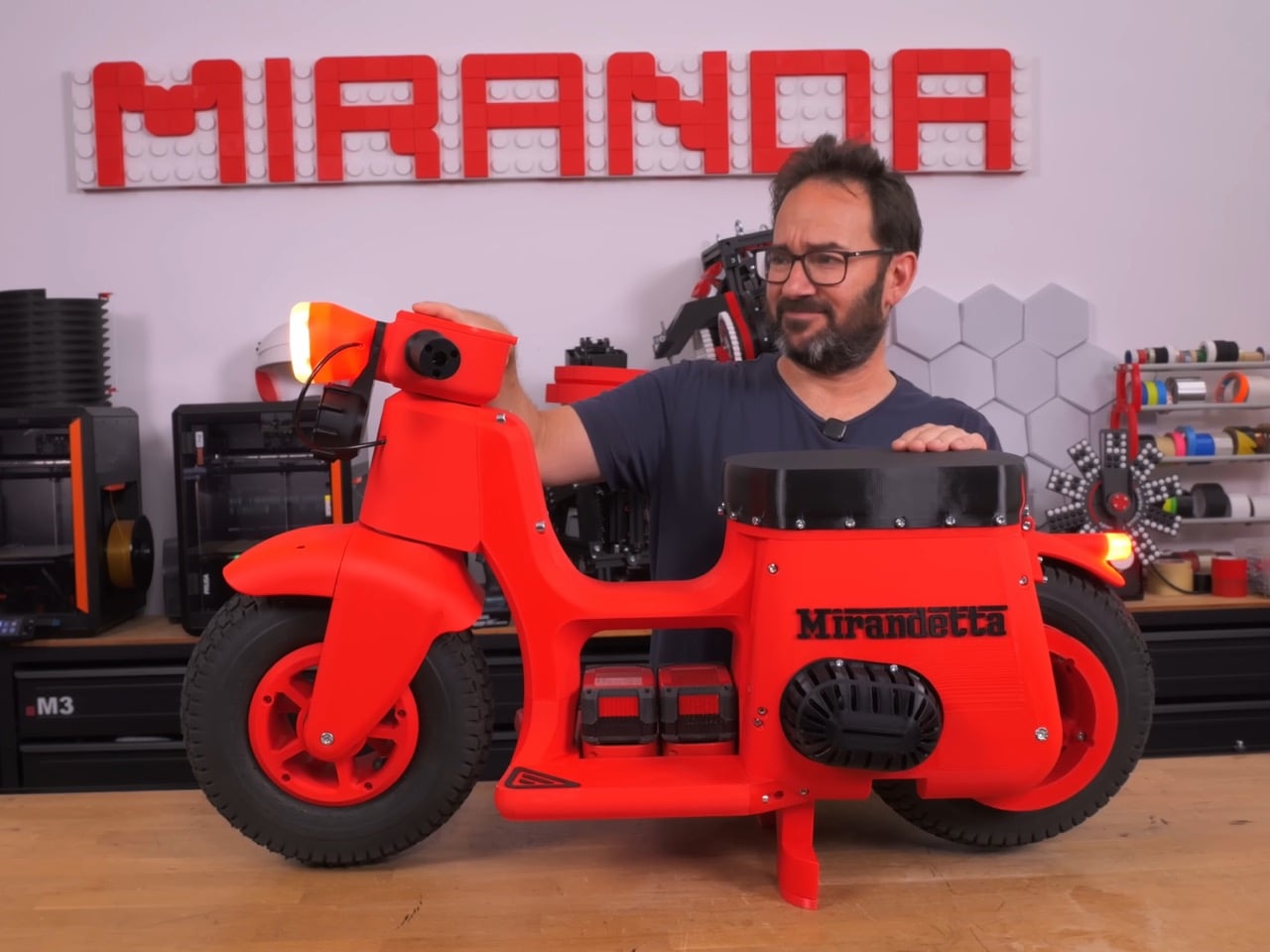
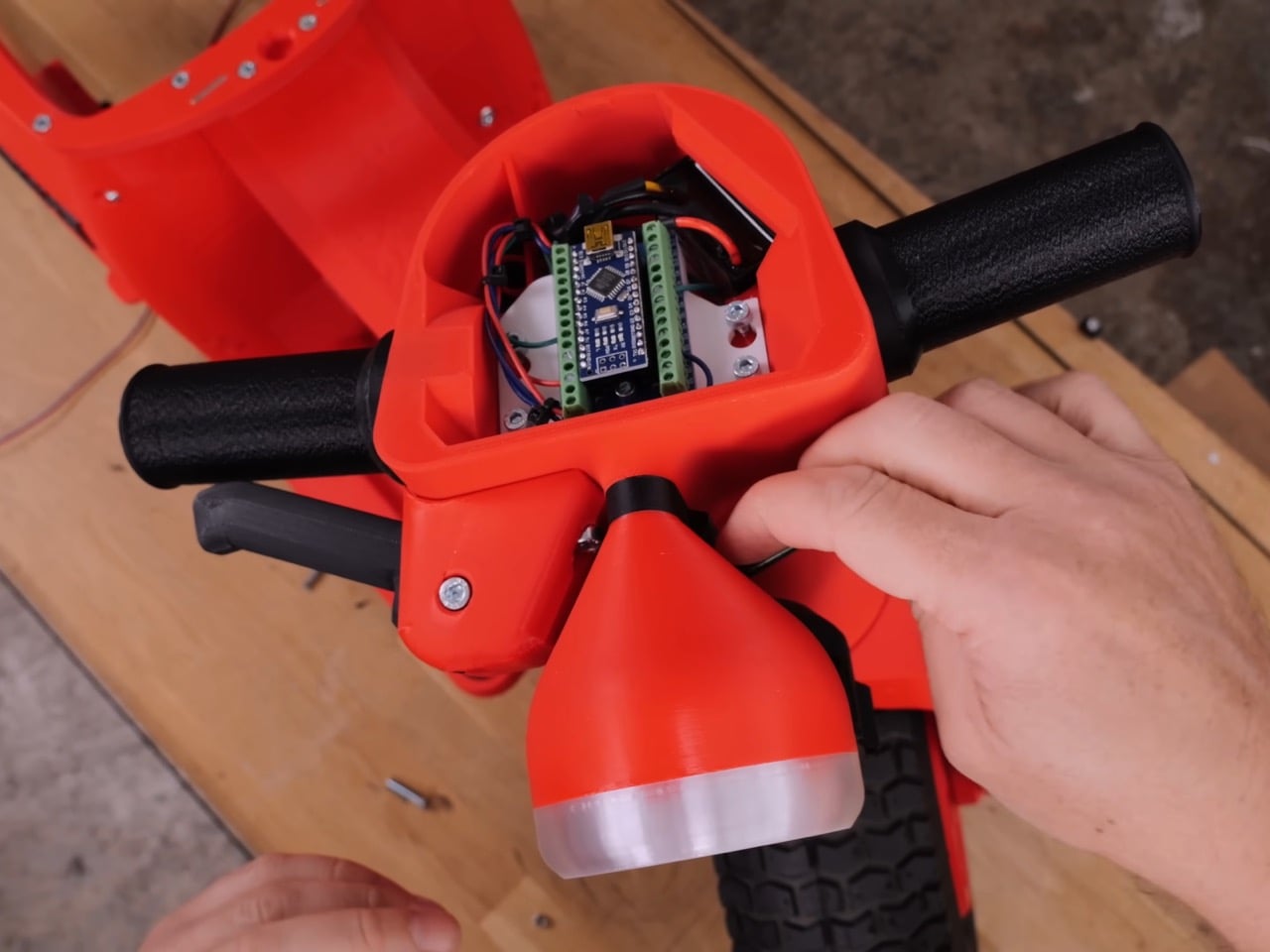
Power comes from two 36 volt tool batteries wired into a belt driven hub motor, stepped down through a DC to DC converter to run the lights and horn at 12 volts. An Arduino handles the accelerator signal, translated from a modified potentiometer hidden inside the right handlebar. The one part Miranda refused to trust to plastic was the front fork shaft, which carries the combined forces of his body weight, the bike’s size, and the stresses of actual riding. That piece was machined in aluminum instead, a rare concession from a builder otherwise committed to printing nearly everything else on the machine.
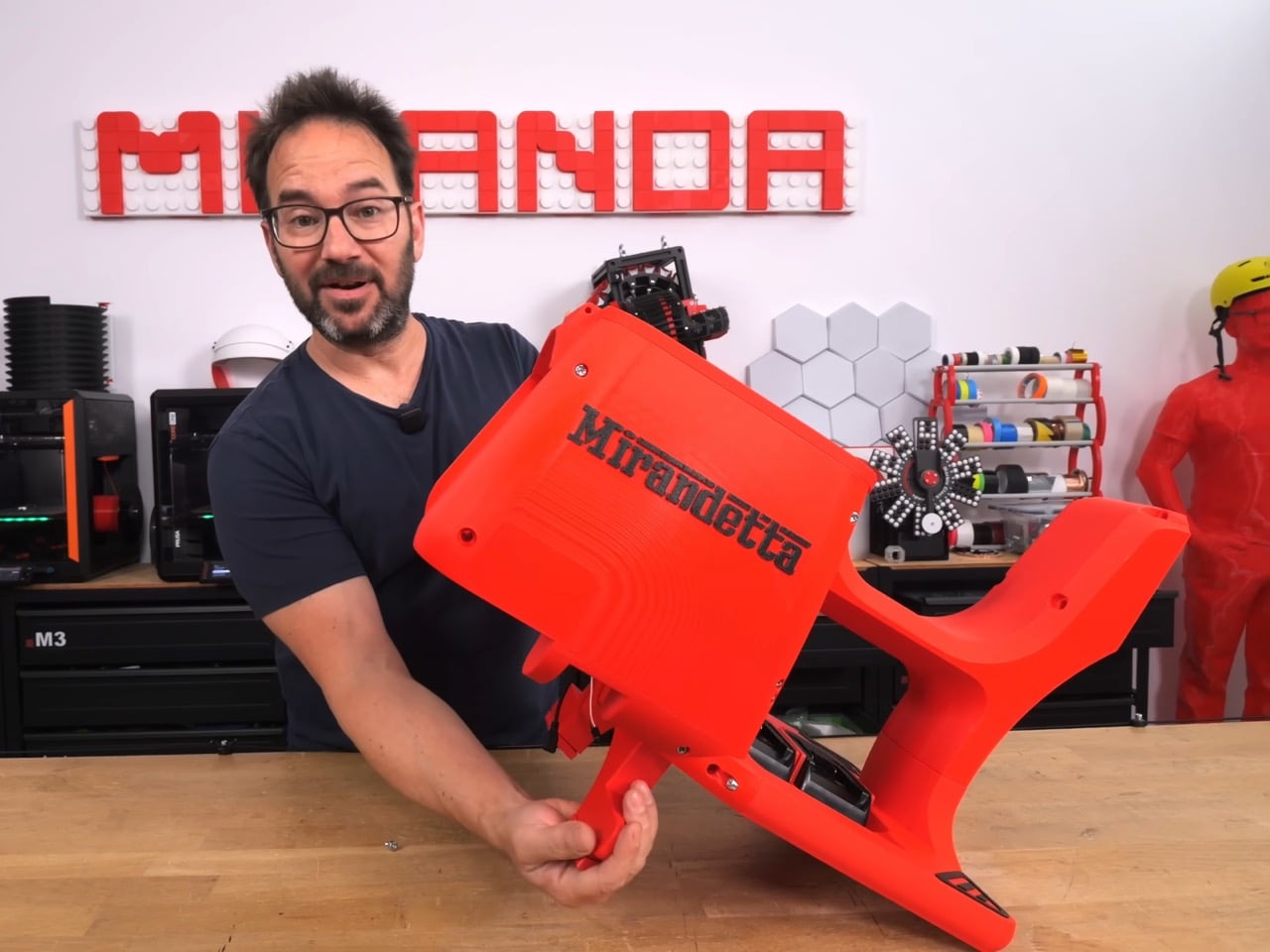
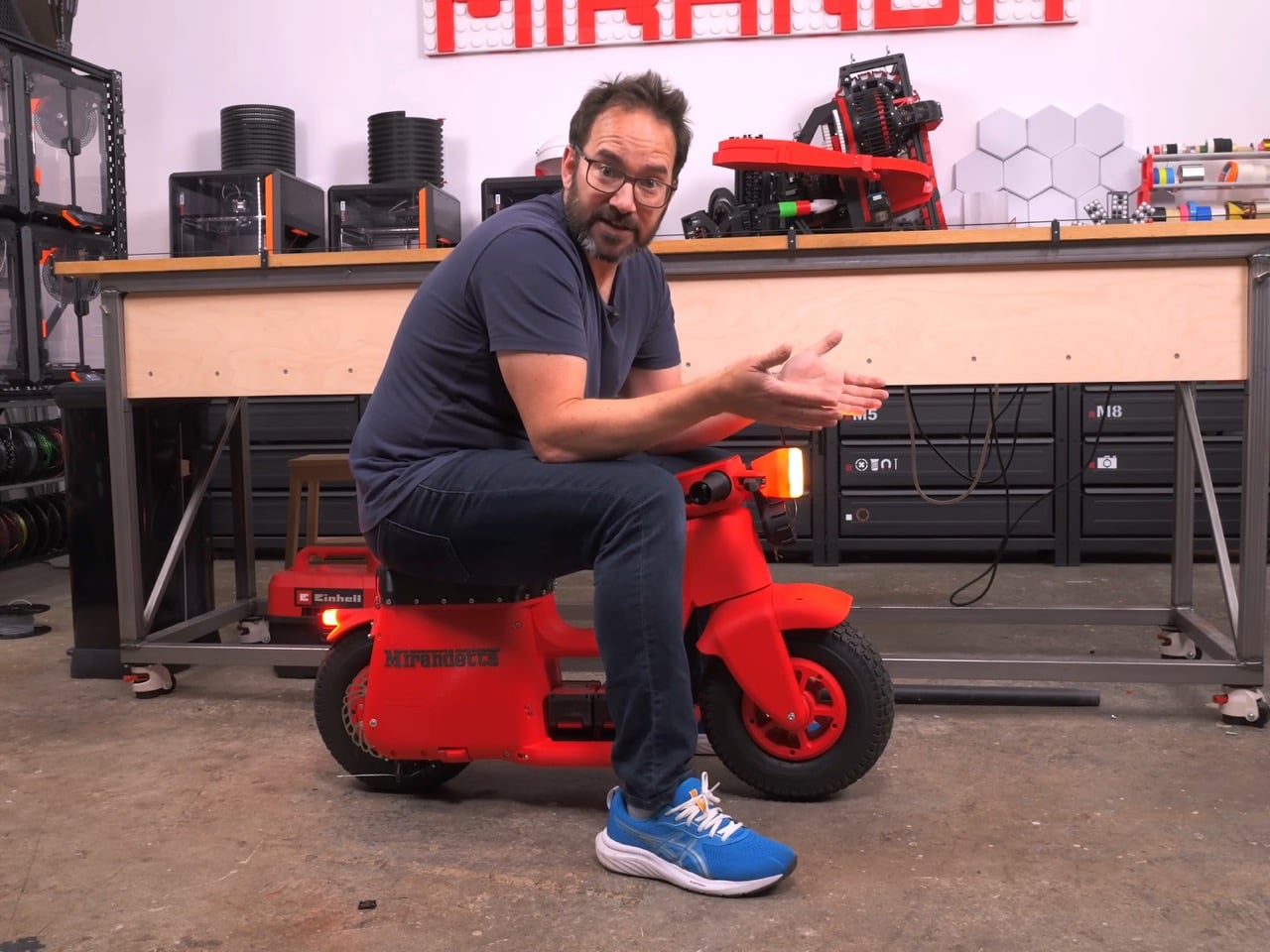
The kickstand uses a bi-stable mechanism, a bearing riding over a cam bump that snaps it firmly into either the stored or deployed position without any wobble. The seat, printed in flexible filament, sits on a hinge that doubles as hidden storage underneath. Braking comes from a modified bicycle disc setup, with the disc’s center hole enlarged to accept a printed axle, and the caliper mounted loosely enough to self-align during use. None of it reads like a shortcut. All of it reads like someone who genuinely enjoys solving problems most people would rather buy a solution for.
The whole point of the build was travel, and it delivered. Miranda flew the disassembled scooter to Maker Faire Prague, packed into an ordinary suitcase, and reassembled it on site well enough to win the event’s suitcase sized project contest. Hackaday picked up the story shortly after, noting that what Miranda calls a motorbike looks, by most definitions, closer to a scooter, a distinction that promptly spiraled into a comment section argument about vehicle taxonomy nobody asked for. The finished machine weighs a little over 14 kilograms without its batteries, light enough to make the whole suitcase premise plausible rather than theoretical.
Miranda has since gone back and refined the design, swapping more of the metal components for printed equivalents and simplifying the hardware for anyone determined to attempt their own build. The updated files are now sold through his site, complete with a bill of materials and a heavy dose of legal disclaimers reminding buyers this is a hobby project, not a certified vehicle. Whether anyone else actually manages to pull a working scooter out of a suitcase remains to be seen, but the fact that Miranda proved it possible at all says something about where 3D printing has quietly ended up.
The post Someone 3D-Printed A Scooter Small Enough To Fit Into Cabin Luggage first appeared on Yanko Design.
Two-wheelers have always demanded a certain level of skill and balance from riders, especially at low speeds or when navigating crowded city streets. OMO X by Omoway attempts to change that equation by introducing what the company describes as the world’s first mass-produced self-balancing electric motorcycle. Designed around advanced robotics and artificial intelligence, the new age electric bike blends traditional scooter convenience with autonomous technology that aims to make urban mobility easier and safer.
At the core of the two-wheeler is Omoway’s newly introduced OMO-ROBOT architecture, a full-stack control platform that integrates sensors, perception systems, decision-making software, and mechanical actuation into a unified framework. The system combines aerospace-grade gyroscope technology with reinforcement-learning models to continuously stabilize the motorcycle. This architecture allows the OMO X to maintain balance on its own, even when stationary, eliminating one of the biggest challenges riders face on two-wheeled vehicles.
Designer: Omoway
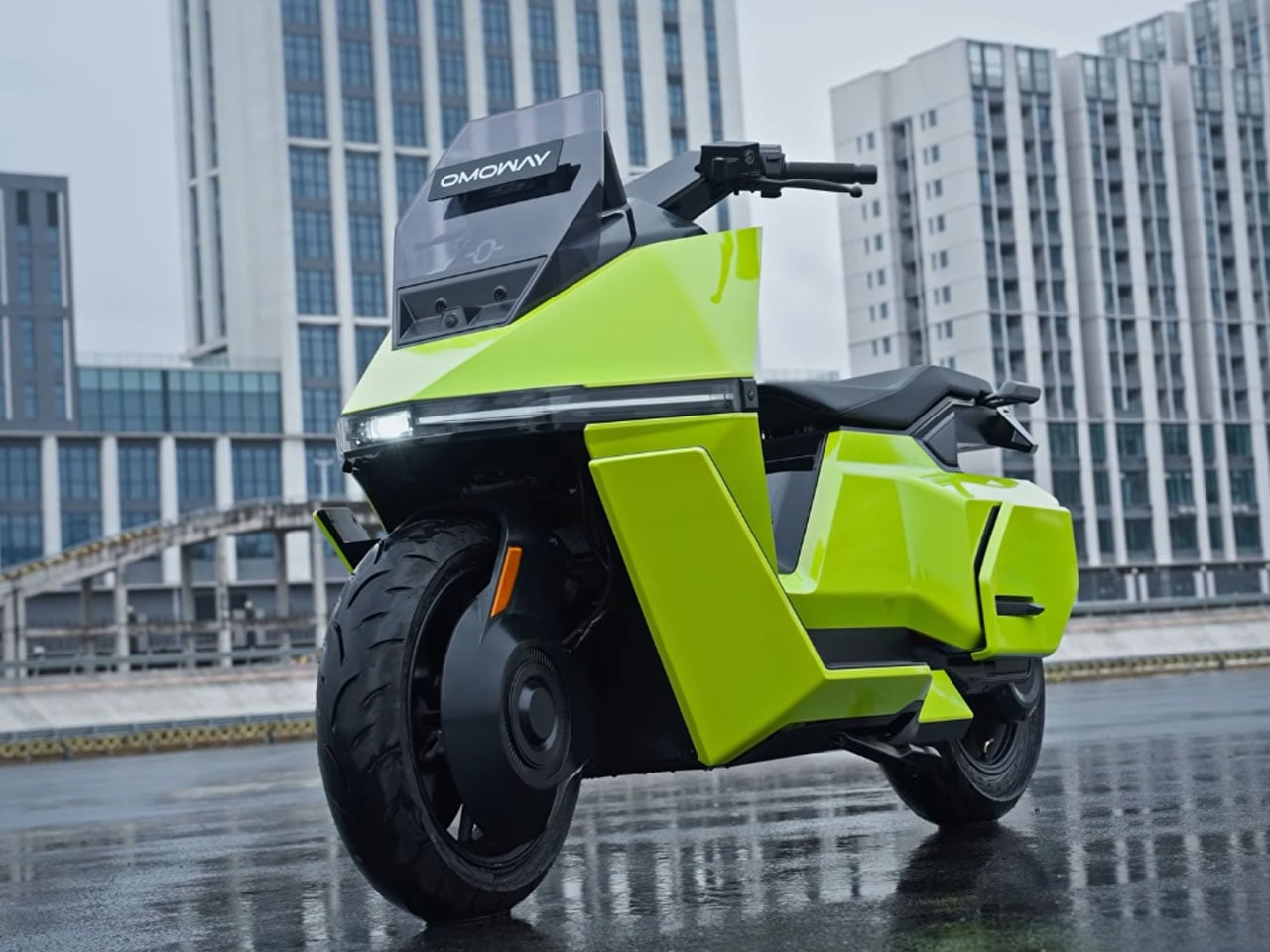
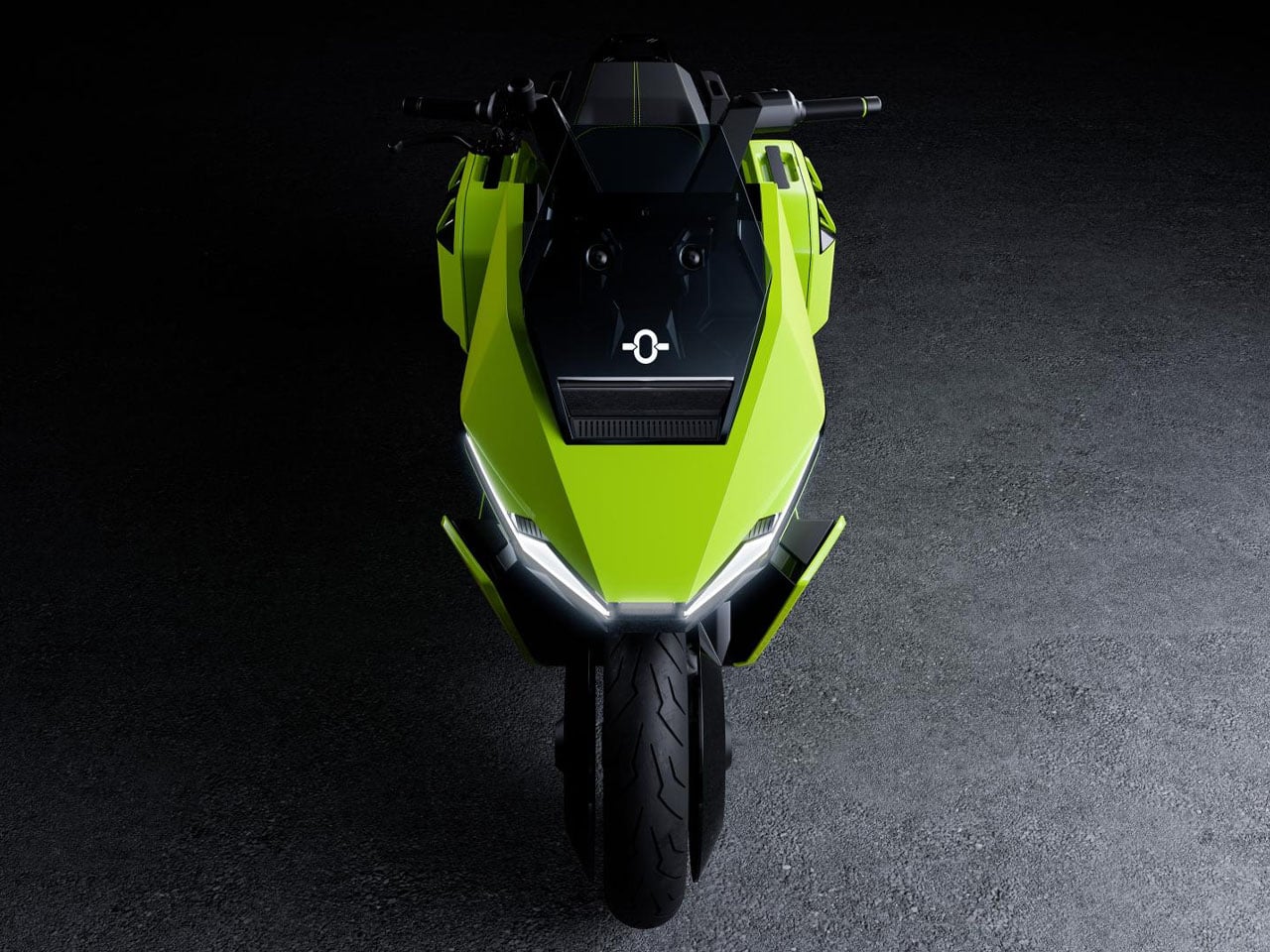
The balancing capability is achieved through a Control Moment Gyroscope (CMG) module. Using the principle of angular momentum, the spinning gyroscope actively stabilizes the vehicle, keeping it upright without rider input. Beyond simply preventing tip-overs, the system also supports a range of riding assistance features. These include slip prevention on wet surfaces, assistance while cornering, and obstacle-avoidance capabilities designed to enhance safety during everyday riding.
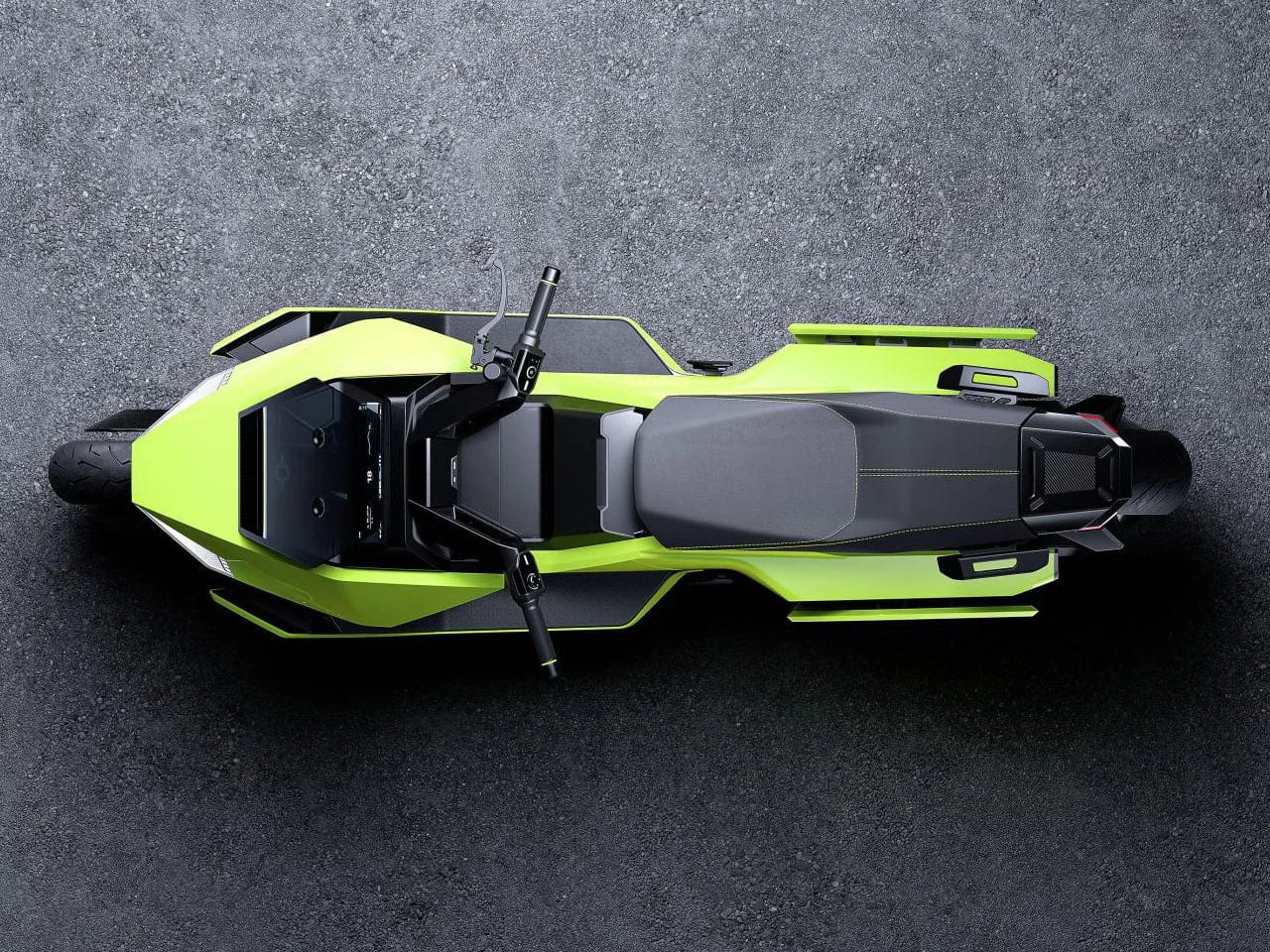
Omoway is also positioning the OMO X as a highly intelligent mobility device. The scooter incorporates a network of sensors and cameras that continuously monitor the surrounding environment and feed data into an AI-based riding system. This enables features such as adaptive speed adjustments, hazard detection, and automated safety responses if the system identifies a potential risk. Some demonstrations have even shown the scooter maneuvering on its own, driving onto a stage without a rider, and responding to remote commands through a smartphone app.
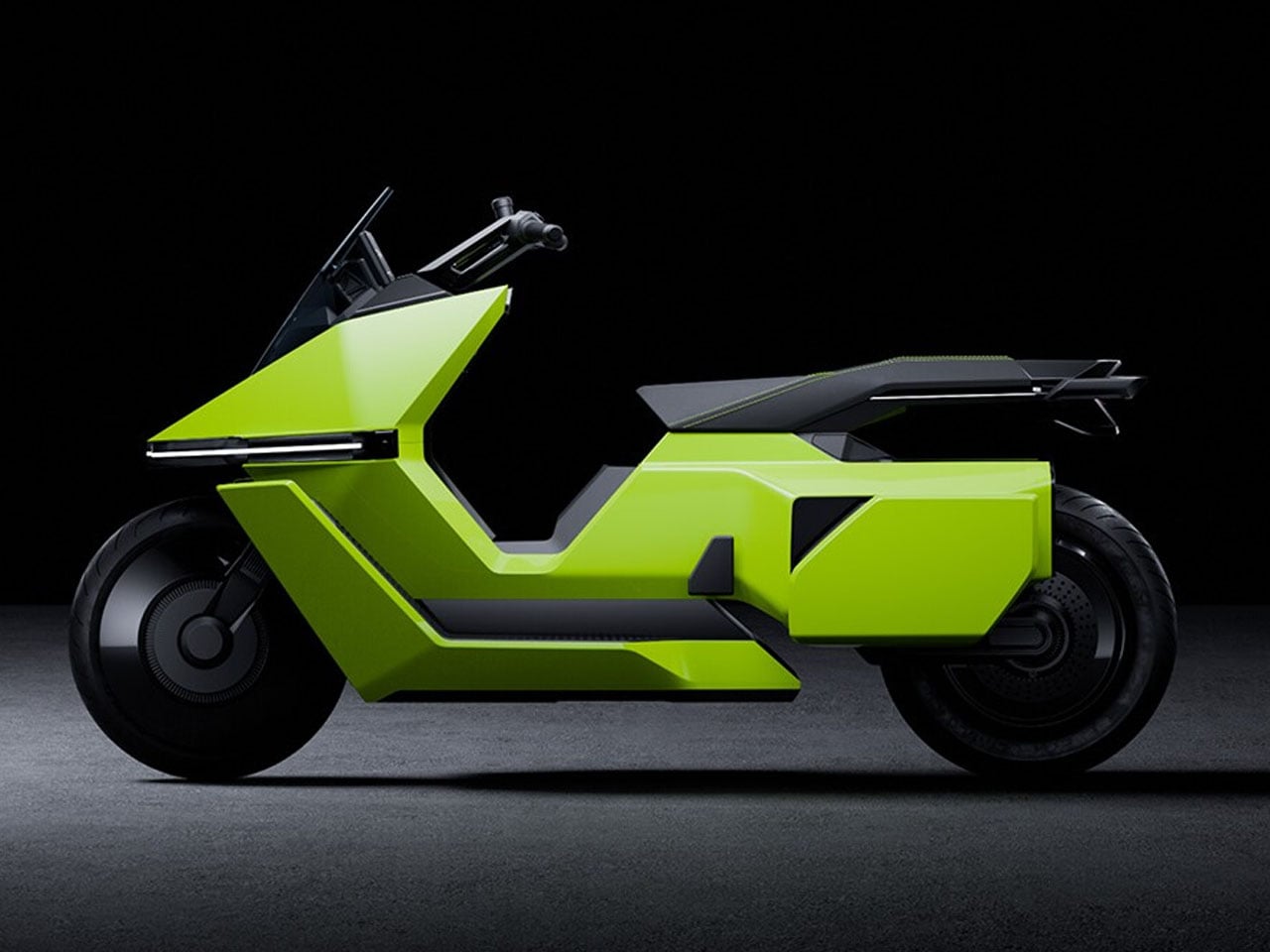
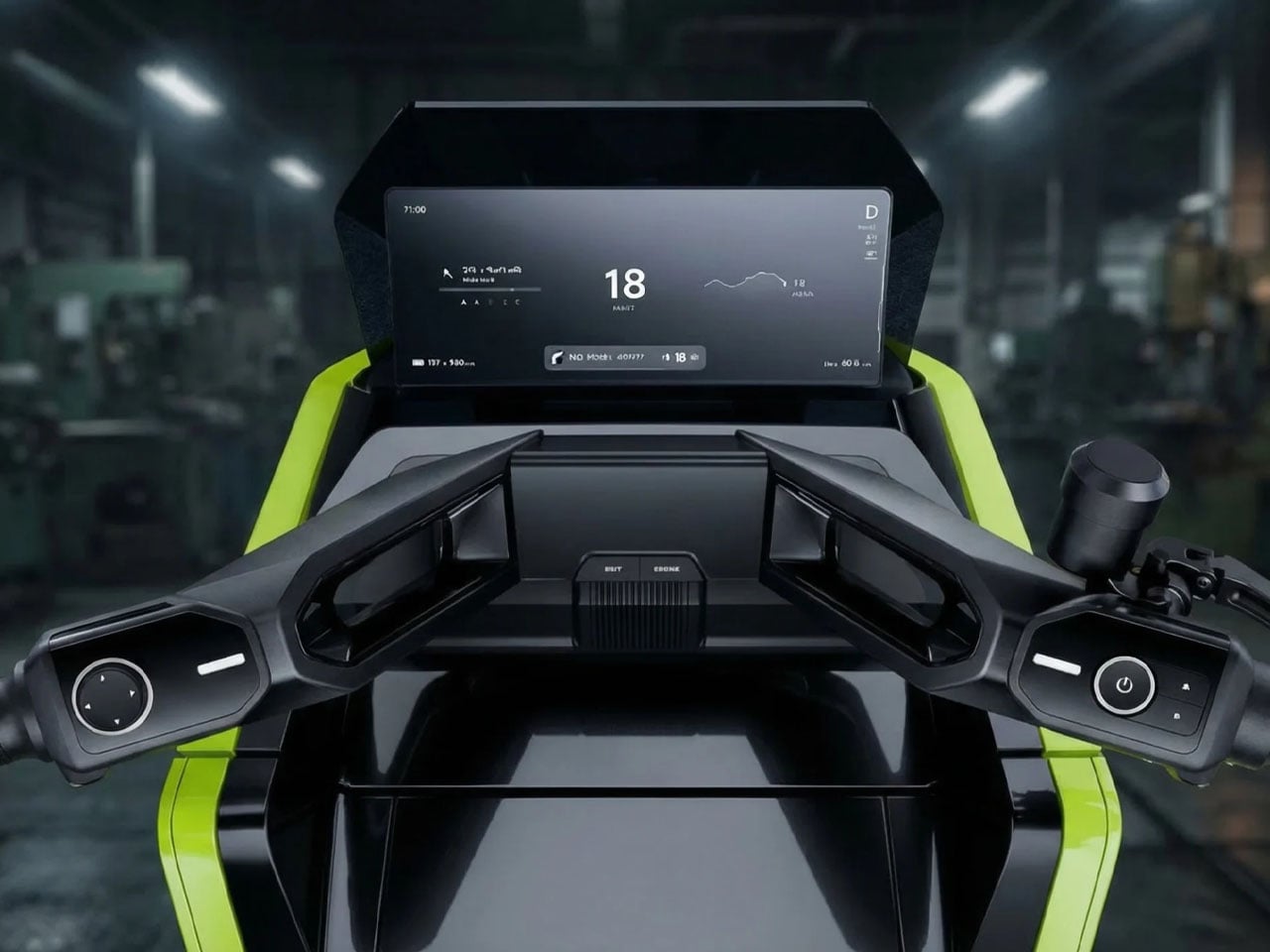
Another notable capability is automated parking. Instead of requiring riders to maneuver the bike into tight urban spaces manually, the OMO X can guide itself into a parking spot once a location is selected. The system relies on its self-balancing capability and onboard sensors to navigate safely, a feature that reflects the growing overlap between robotics and personal transportation.
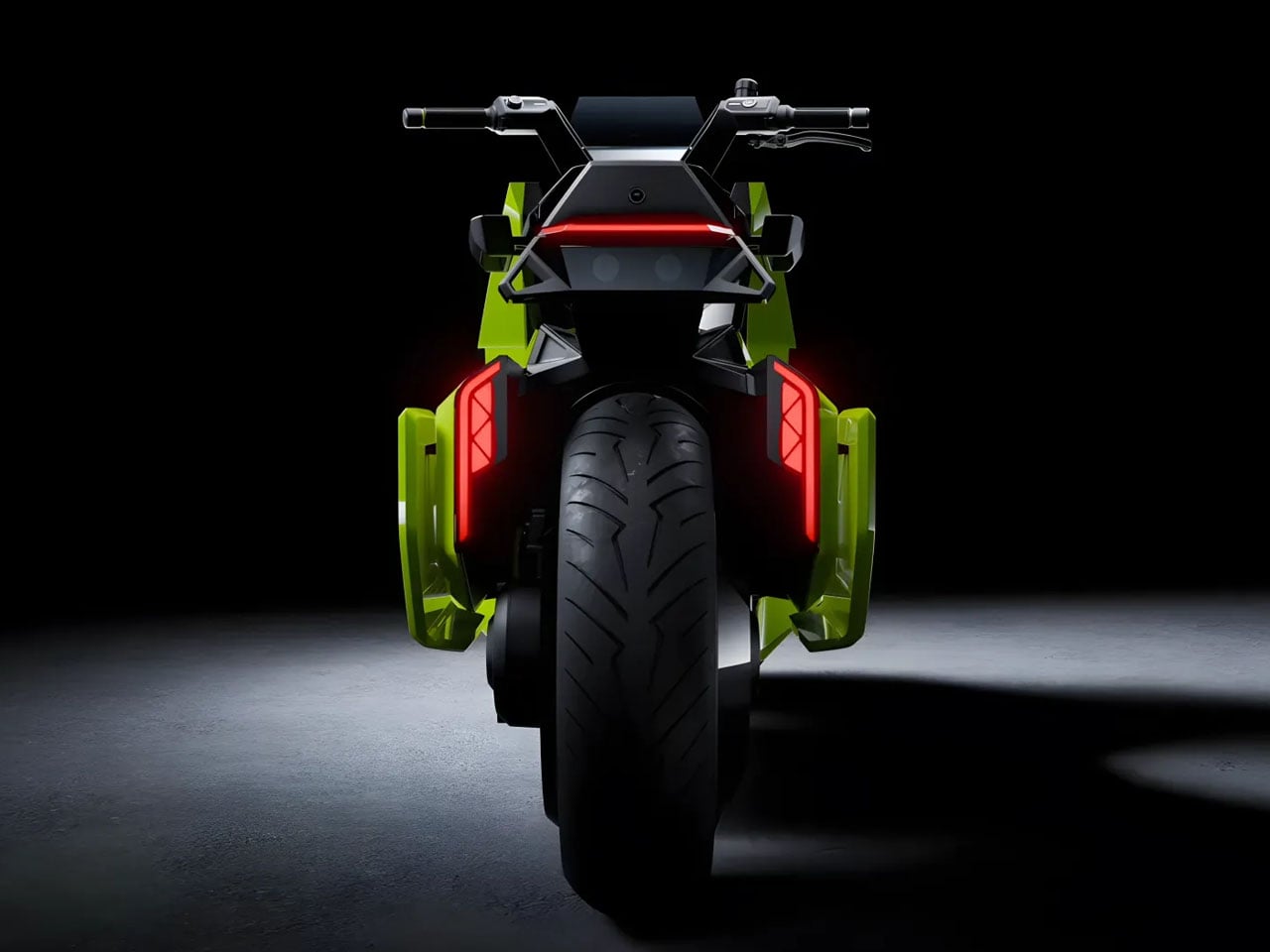
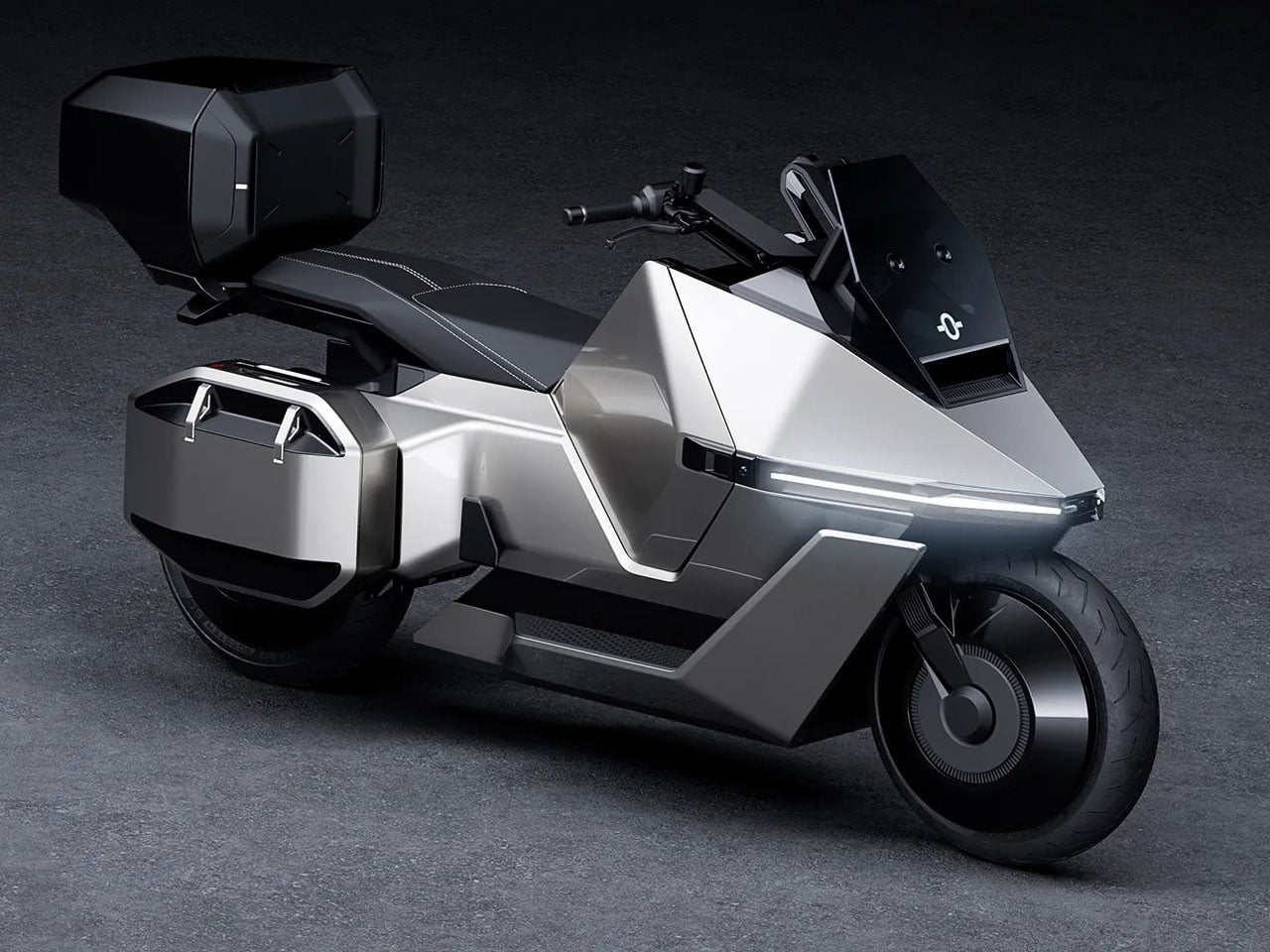
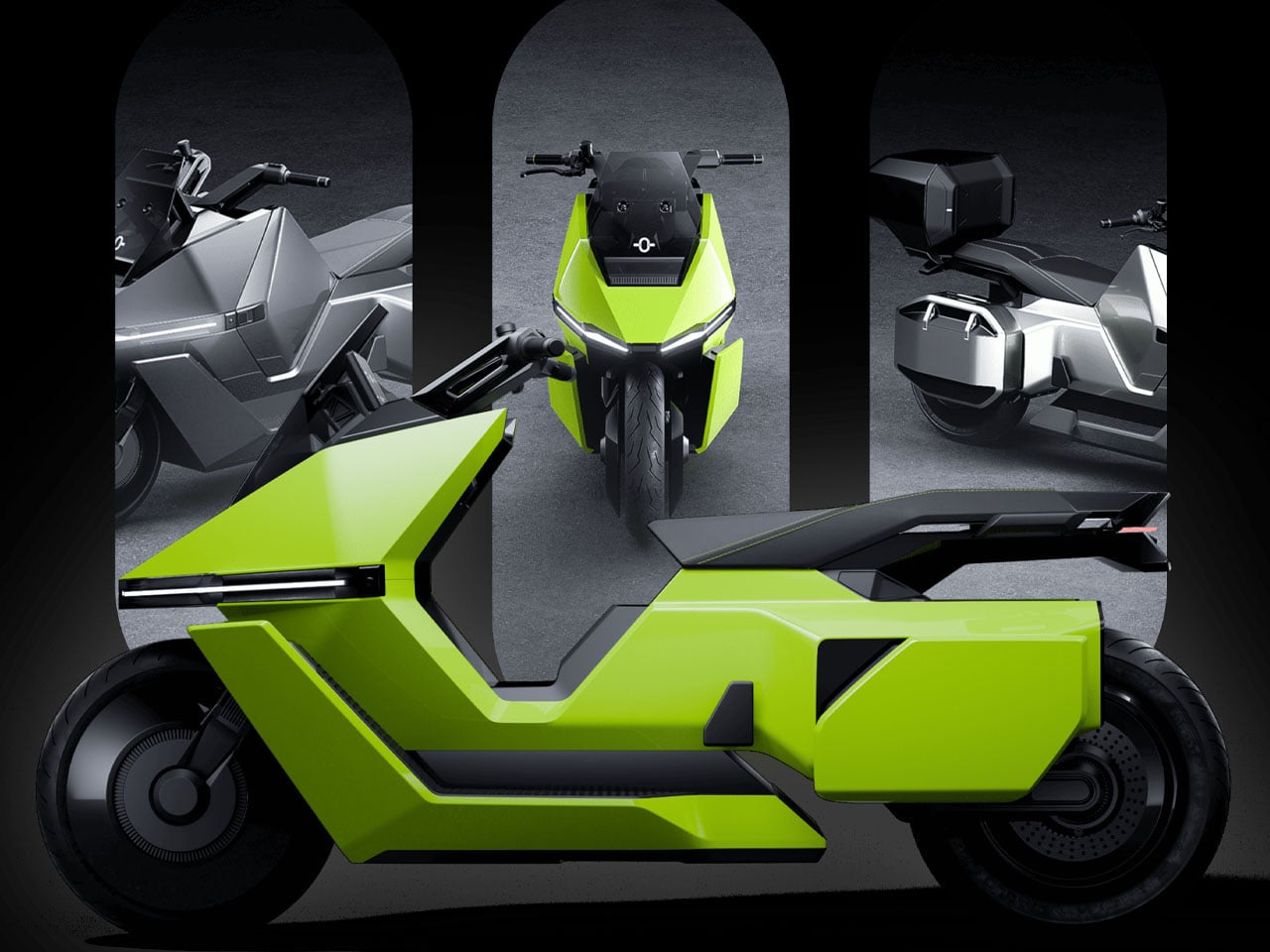
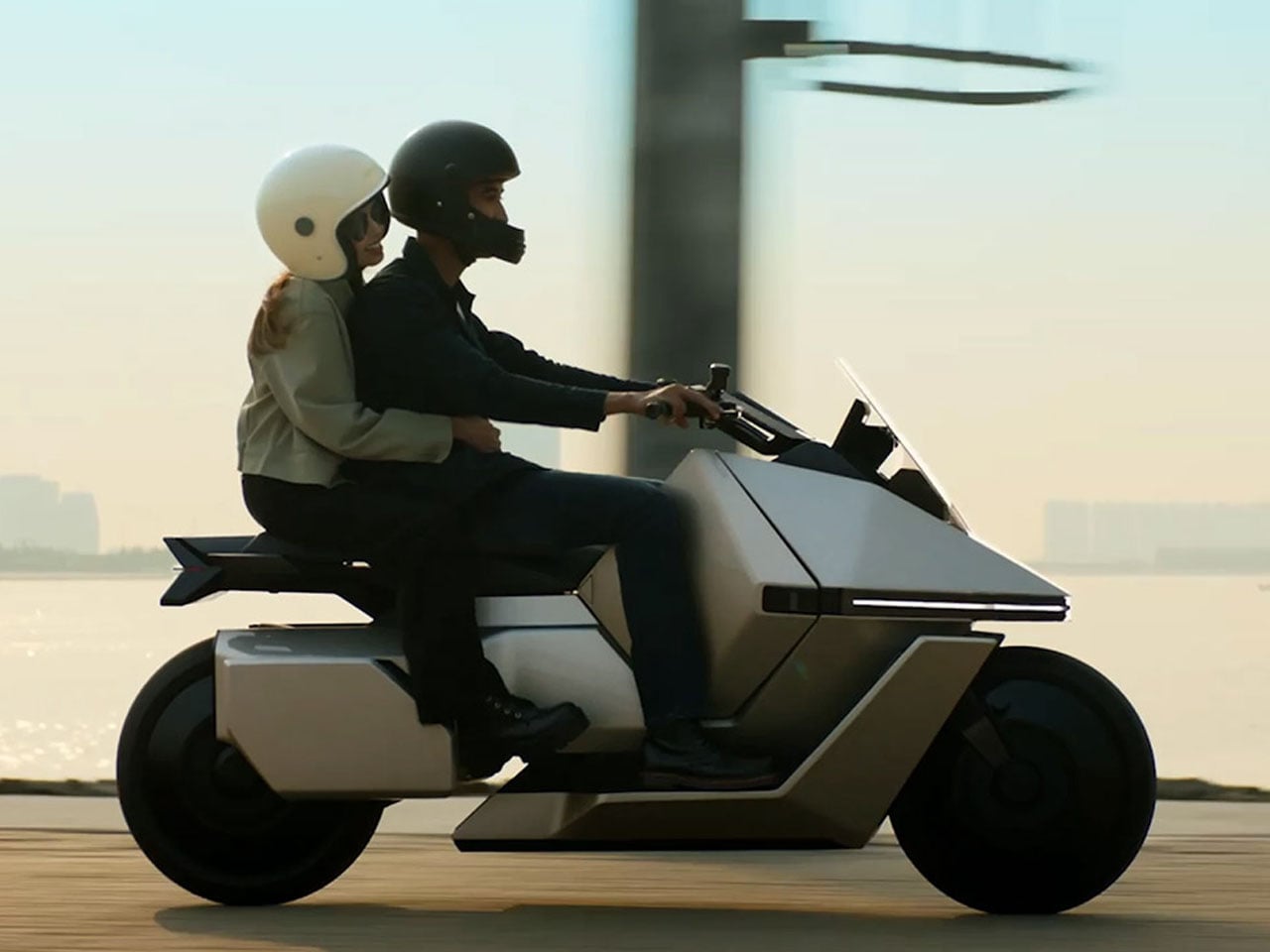
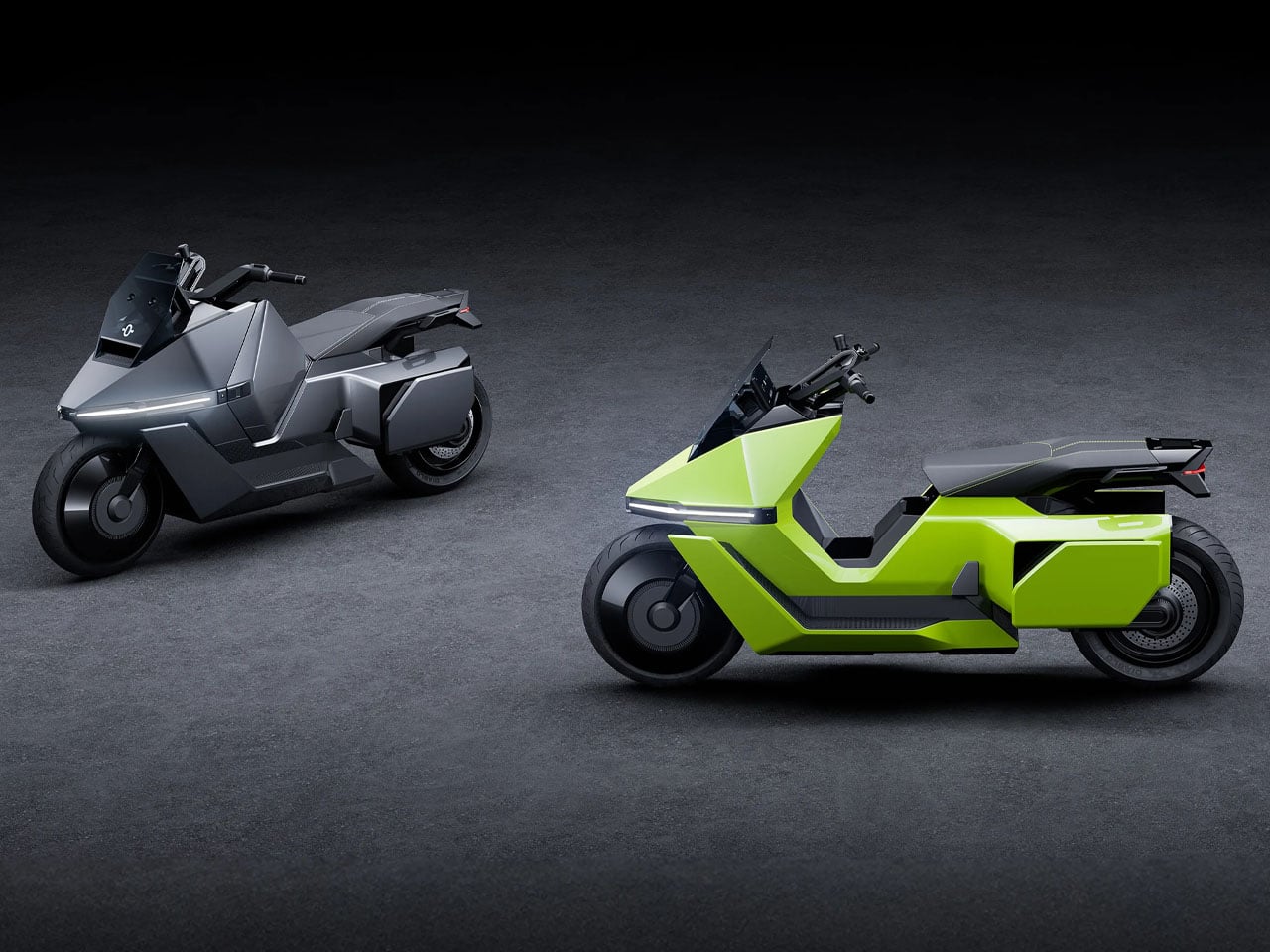
The electric scooter’s futuristic design further reinforces its technological identity. Its sharp, angular styling and distinctive lighting signature give it a modern aesthetic that stands apart from traditional scooters. In a way, it carries the Tesla Cybertruck aesthetic, with a continuous front light bar replacing a conventional headlamp and creating a visually striking presence on the road.
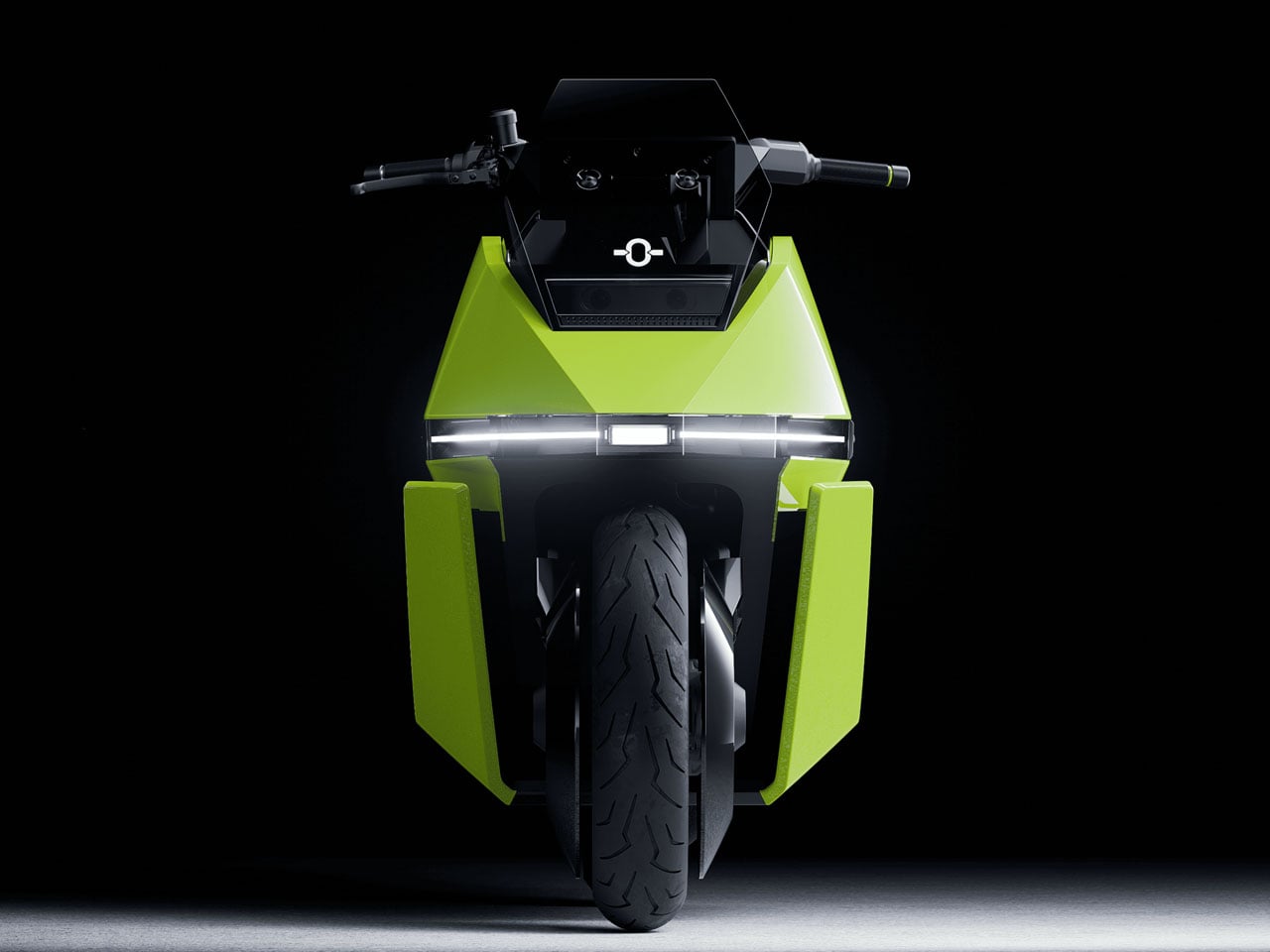
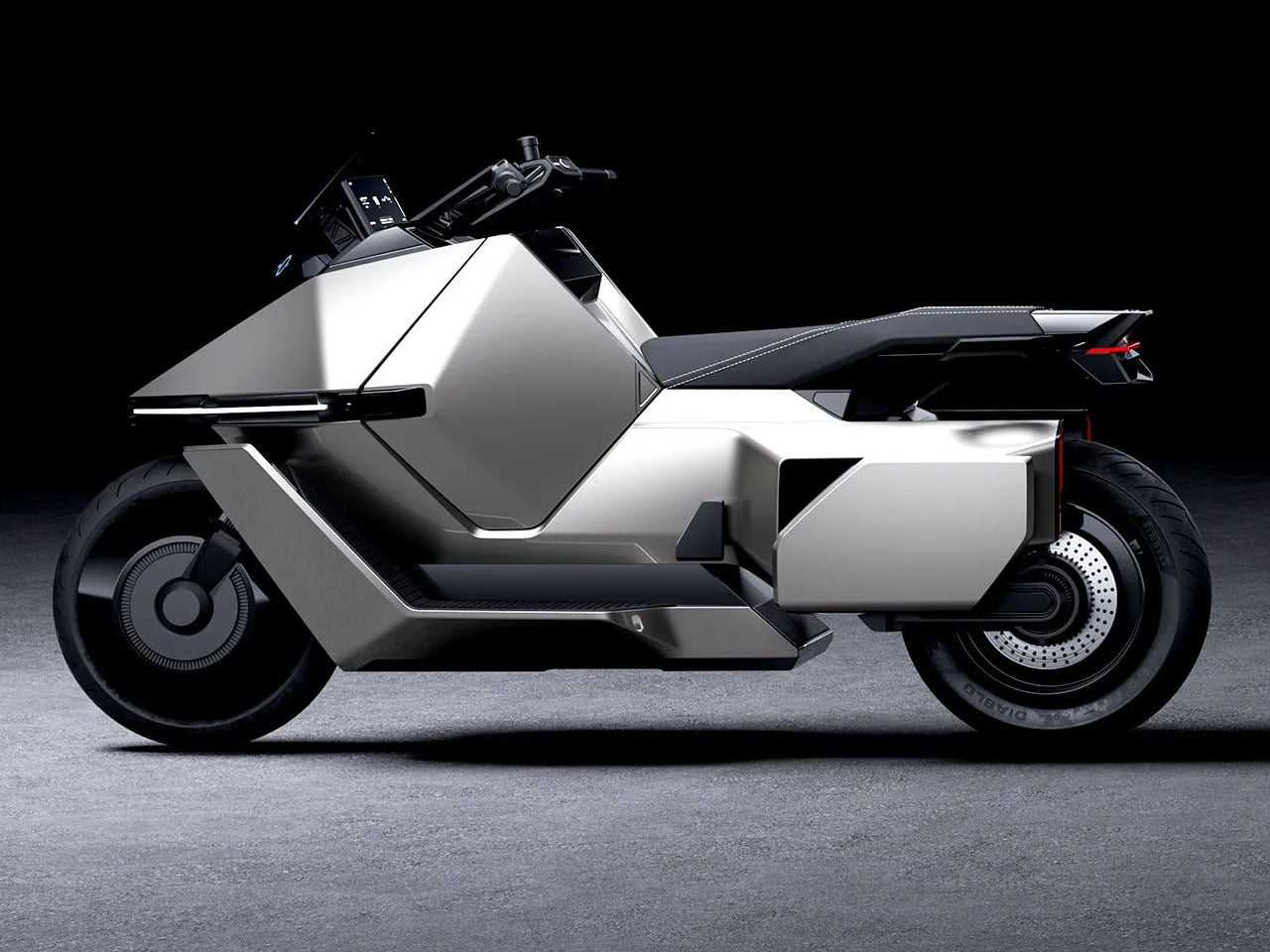
Production plans for the OMO X are already underway. The company announced that the model has entered mass production following its global launch event in Singapore, with pre-orders expected to open in April 2026. Indonesia has been selected as the first launch market, where the electric scooter will debut commercially in Jakarta shortly afterward. Omoway is reportedly working with multiple regional distributors and plans to establish a dealer network of more than 100 locations in the country.
The post OMO X self-balancing electric scooter employs AI and Robotics to refresh urban riding experience first appeared on Yanko Design.
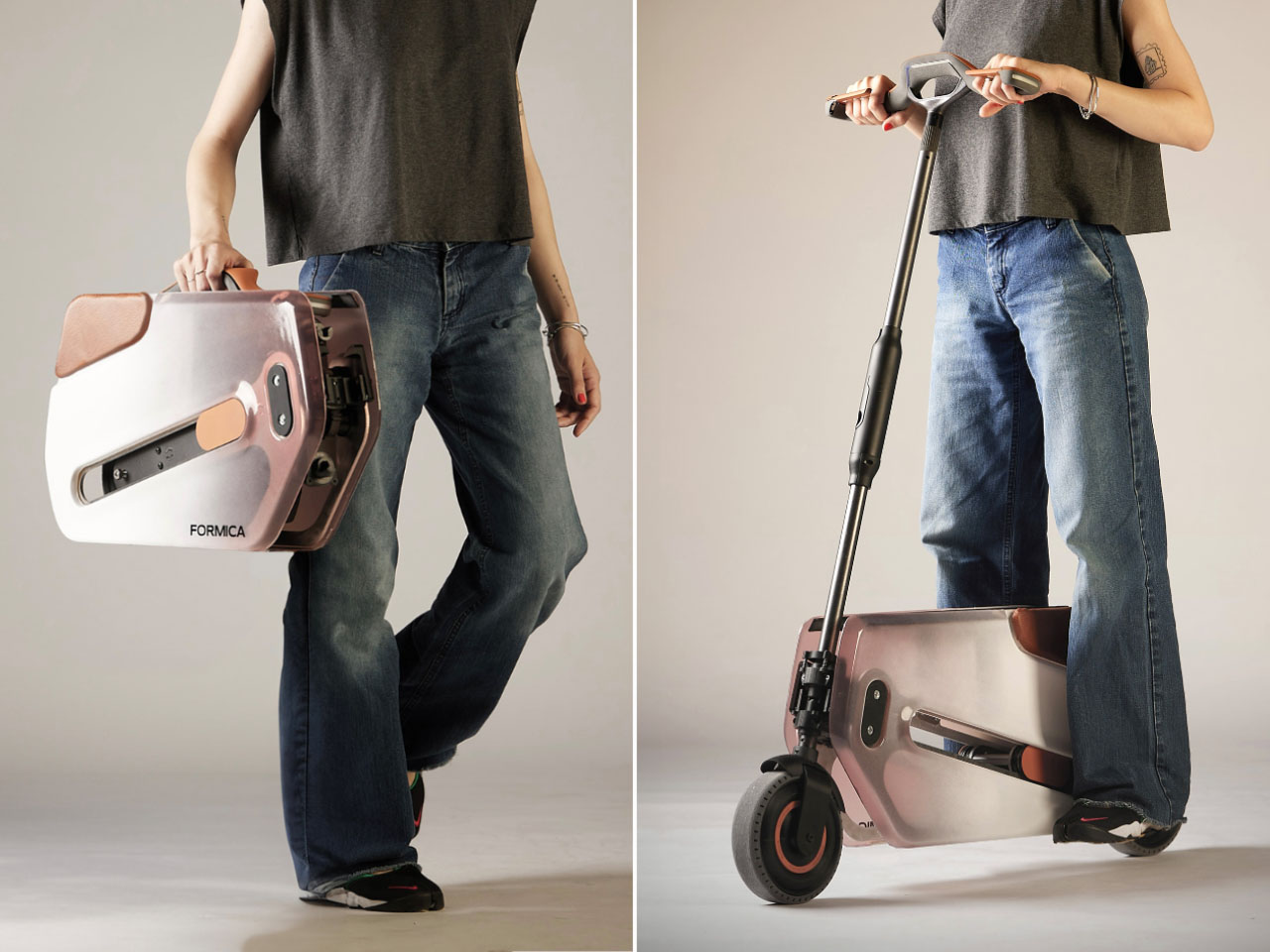
Nano mobility is all about getting from one place to the other (especially in cities) with the minimum footprint to avoid traffic congestion or maneuver your way around tight spots. The idea of personal mobility has kicked off in the last couple of years with rising strain on global city traffic.
Such personal commuters are majorly electric to be in line with the idea of lowering carbon emissions. They can be anything from an e-bike or an electric scooter to something much bigger for more than a couple of people to travel. Slotted somewhere in this domain are the highly practical foldable e-scooters that can fit easily in your car’s boot for ease of portability.
Designer: Eugenio Costa, Edoardo Graci, Nicolò Tallone and Bonshe Design
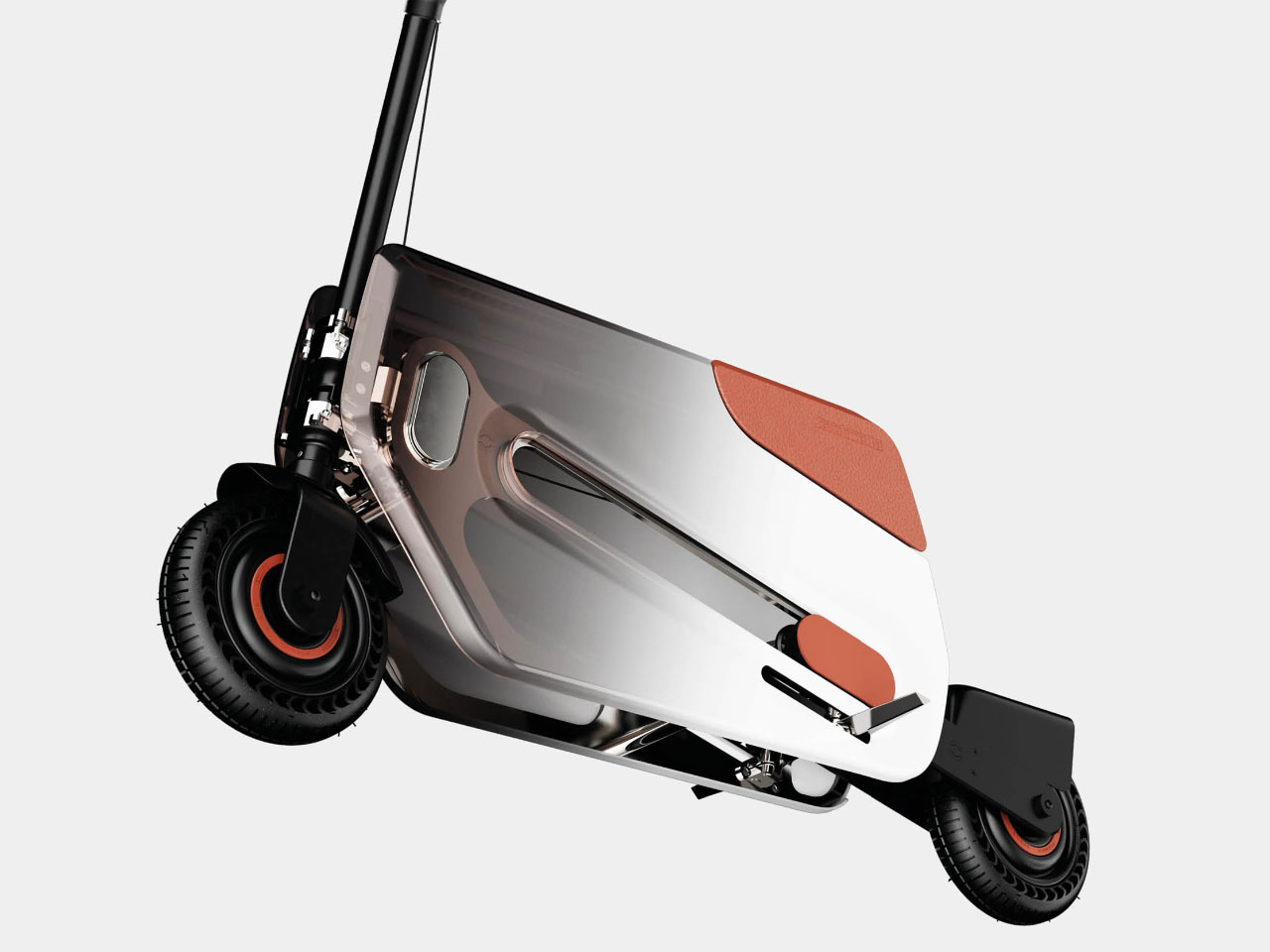
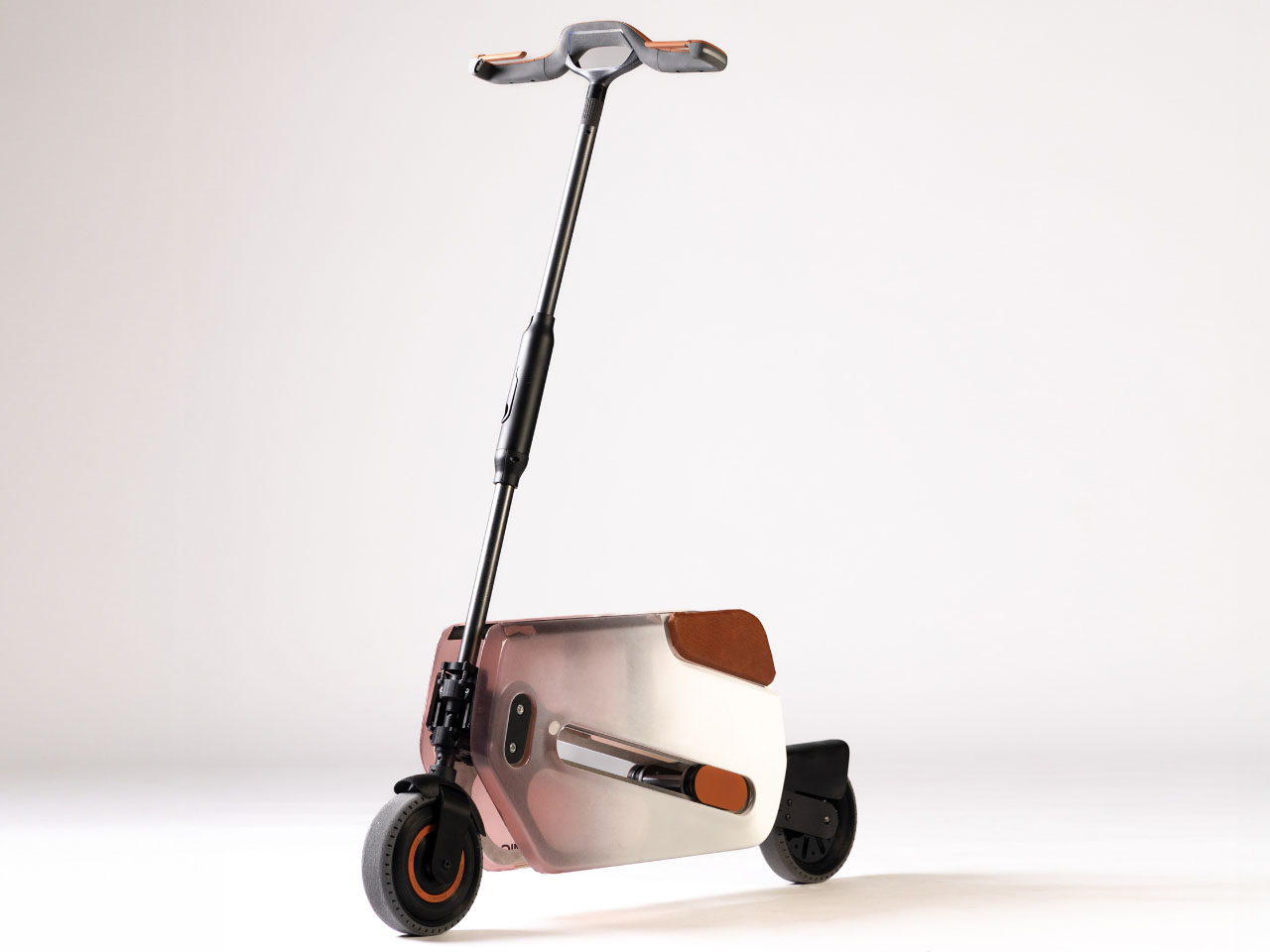
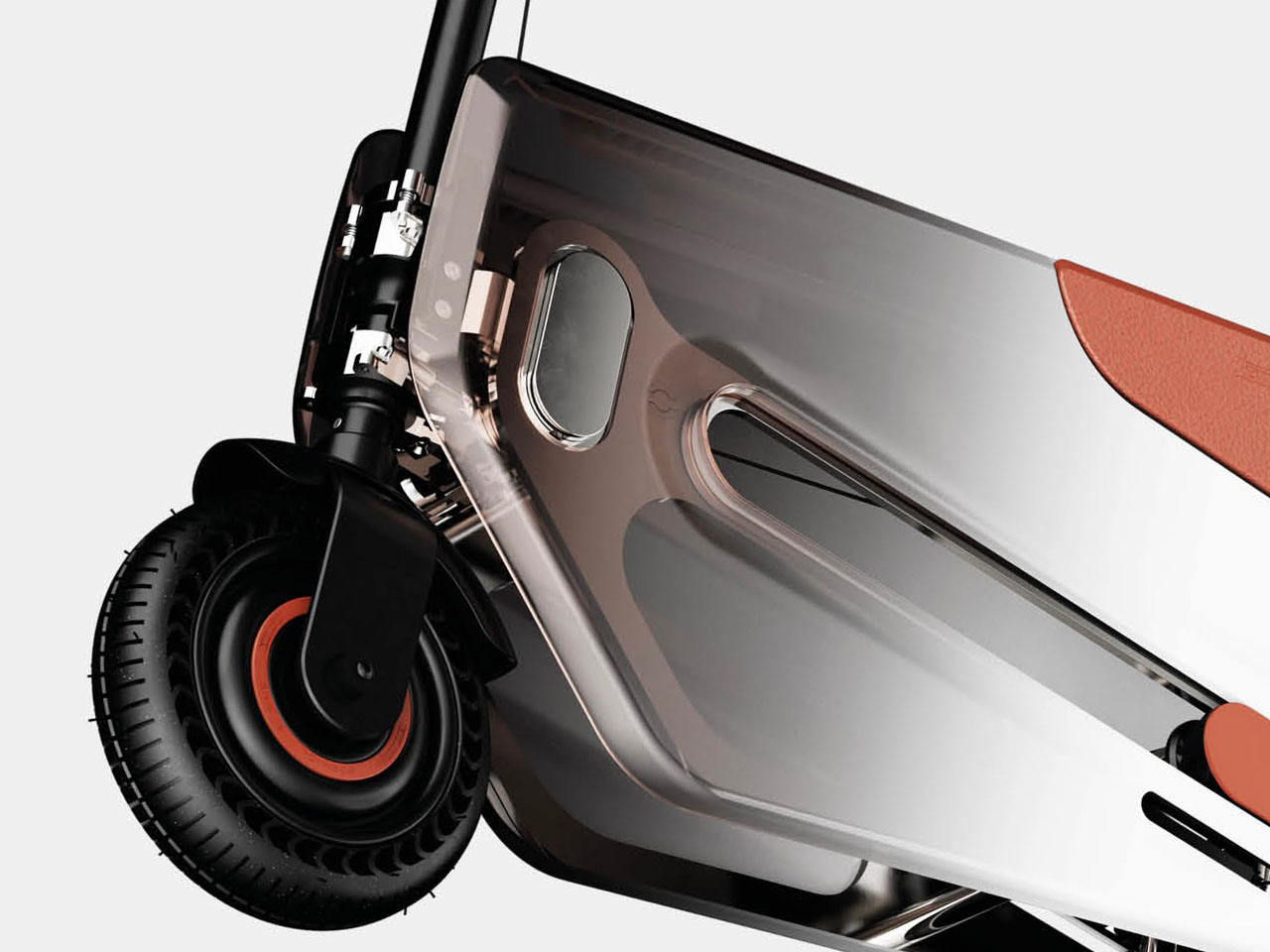
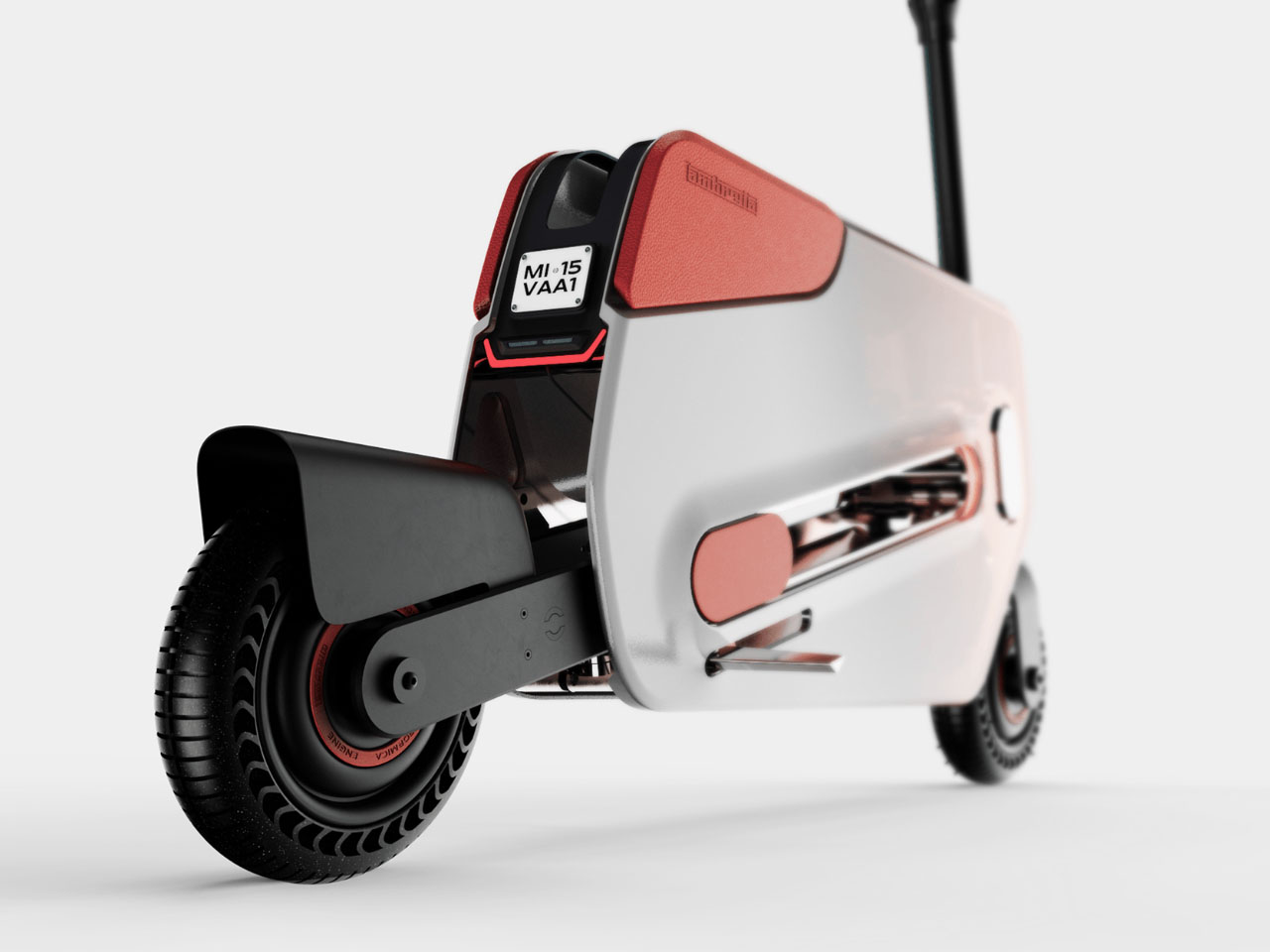
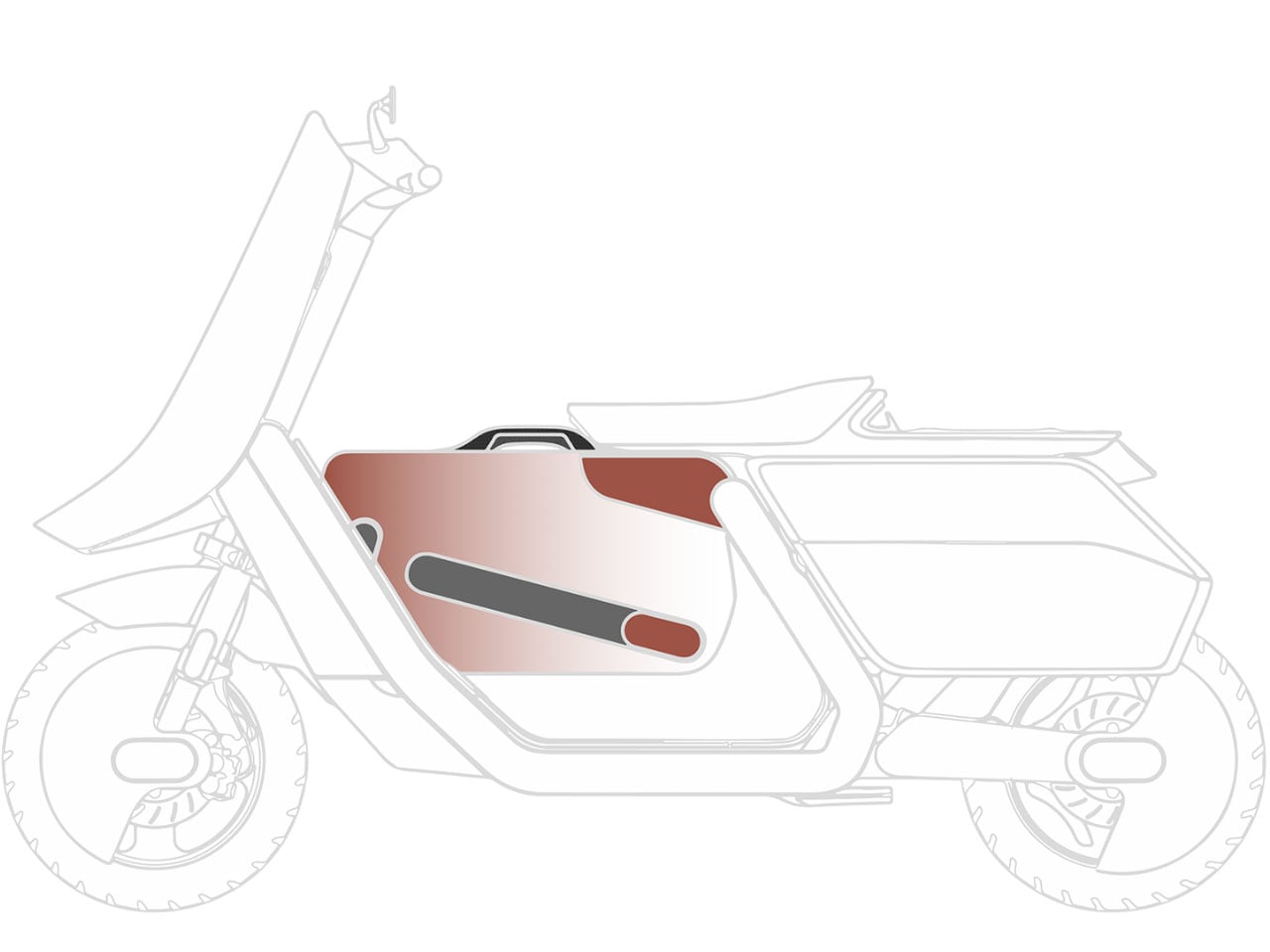
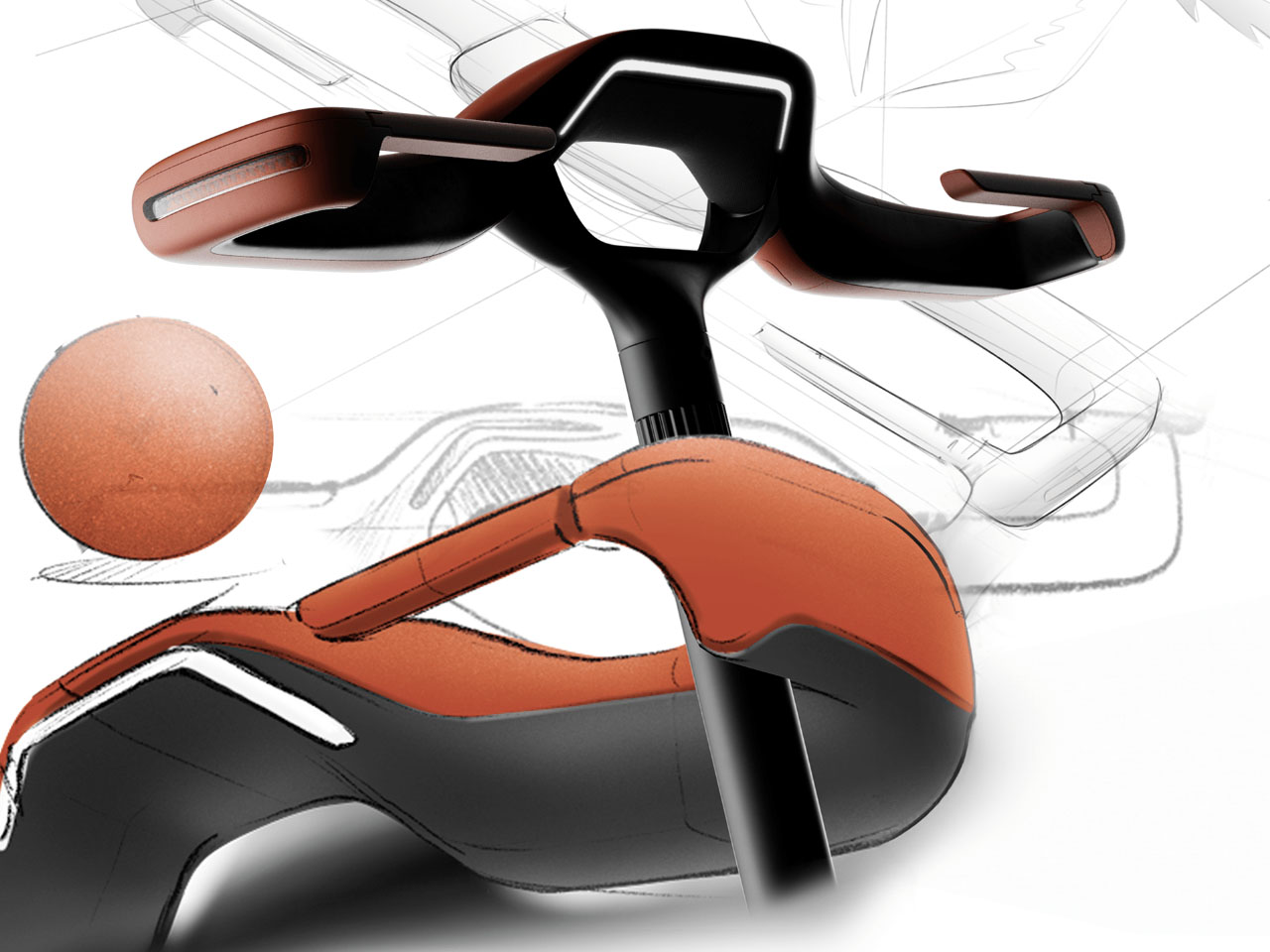
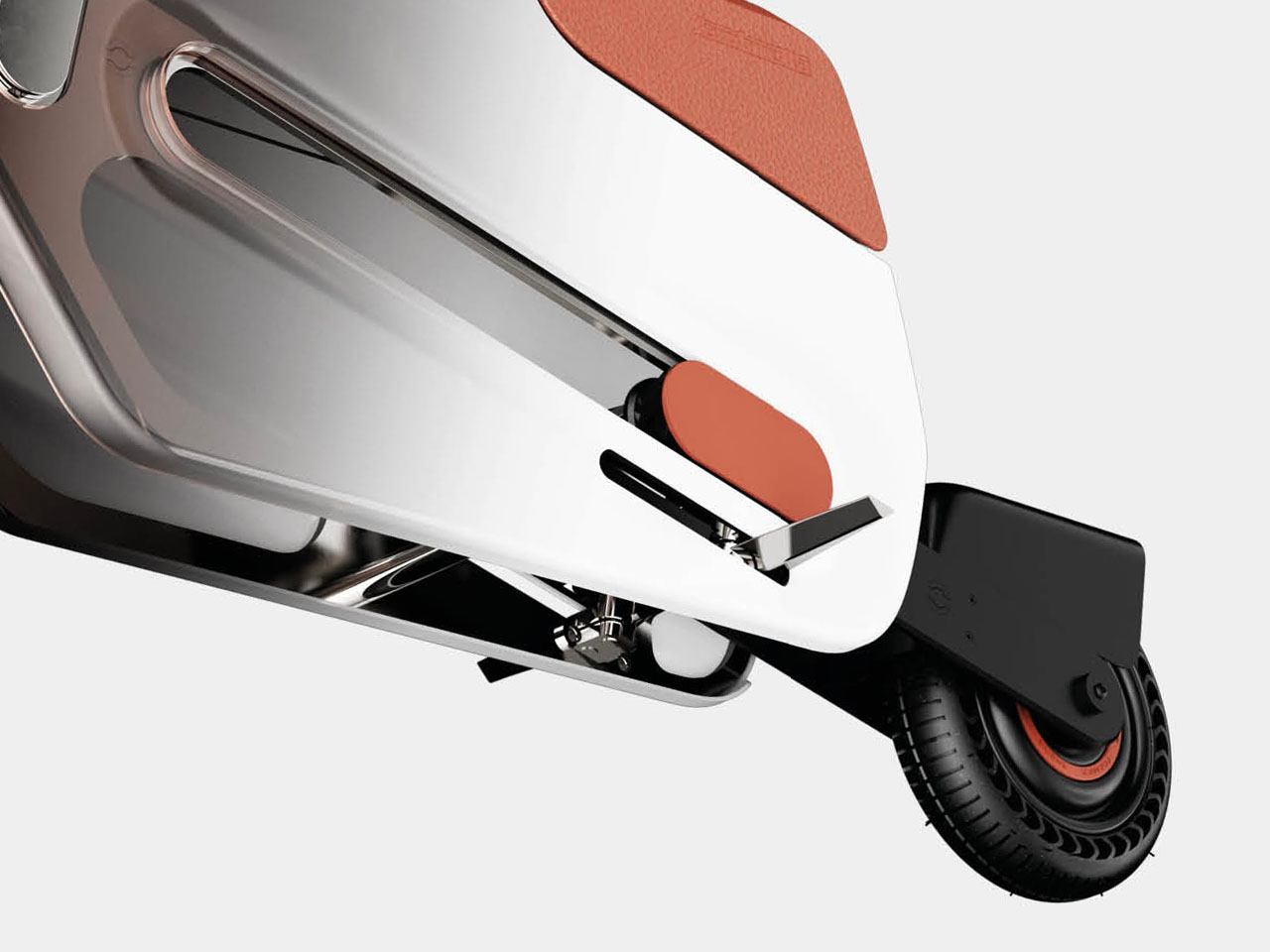
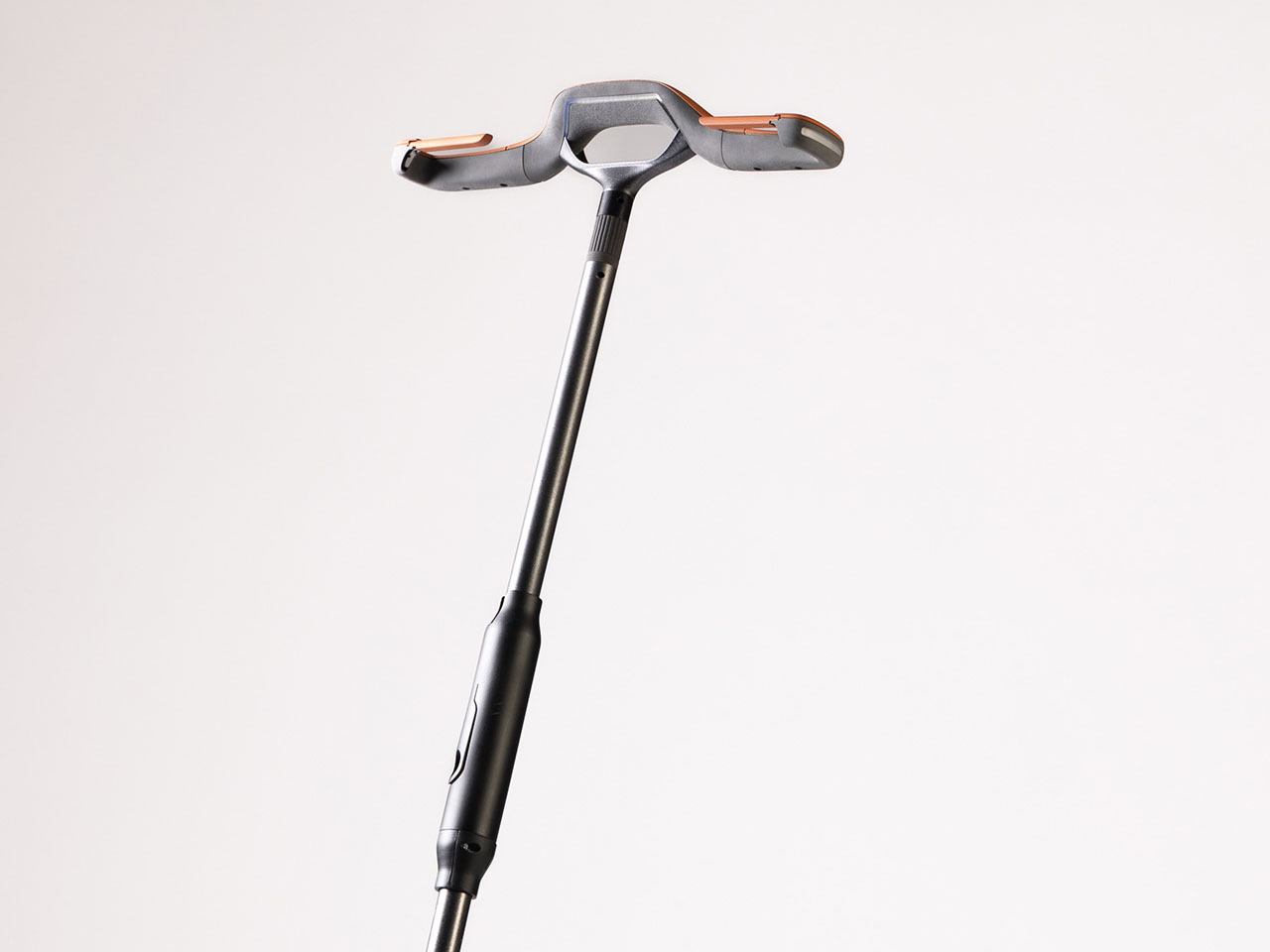
The portability of a personal commuter is the primary feature that aligns it with the user’s needs. ANT Formica is one practical last-mile travel solution tailored for city life and versatile enough for indoor spaces when not in use. In the folded configuration the e-scooter looks like a high-end CPU mod or powerful new gaming console on the horizon. The wheels, pedals, and steering column retract back into the exterior frame of the scooter, making it an ultra-compact personal vehicle for quick intercity travel.
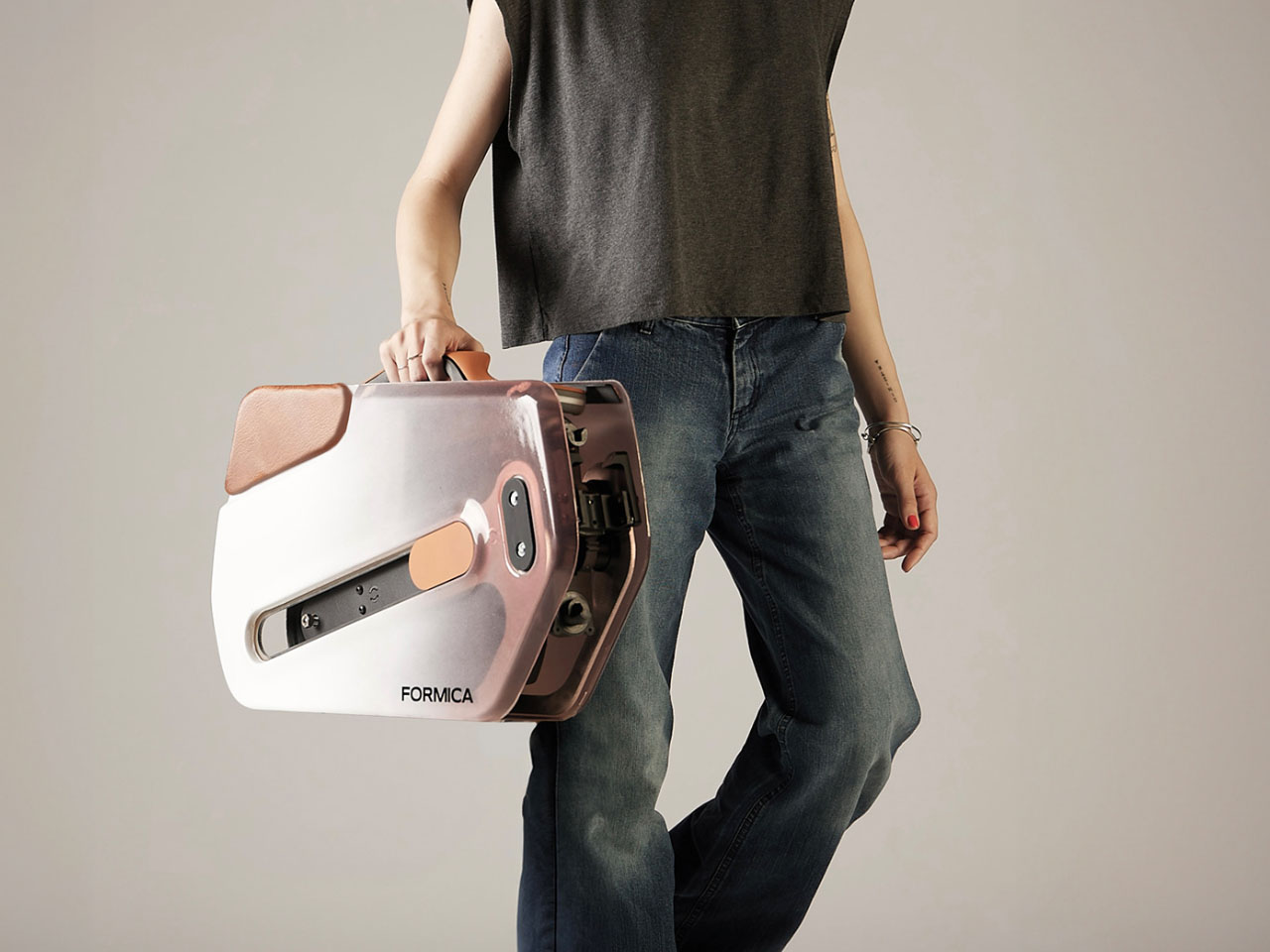
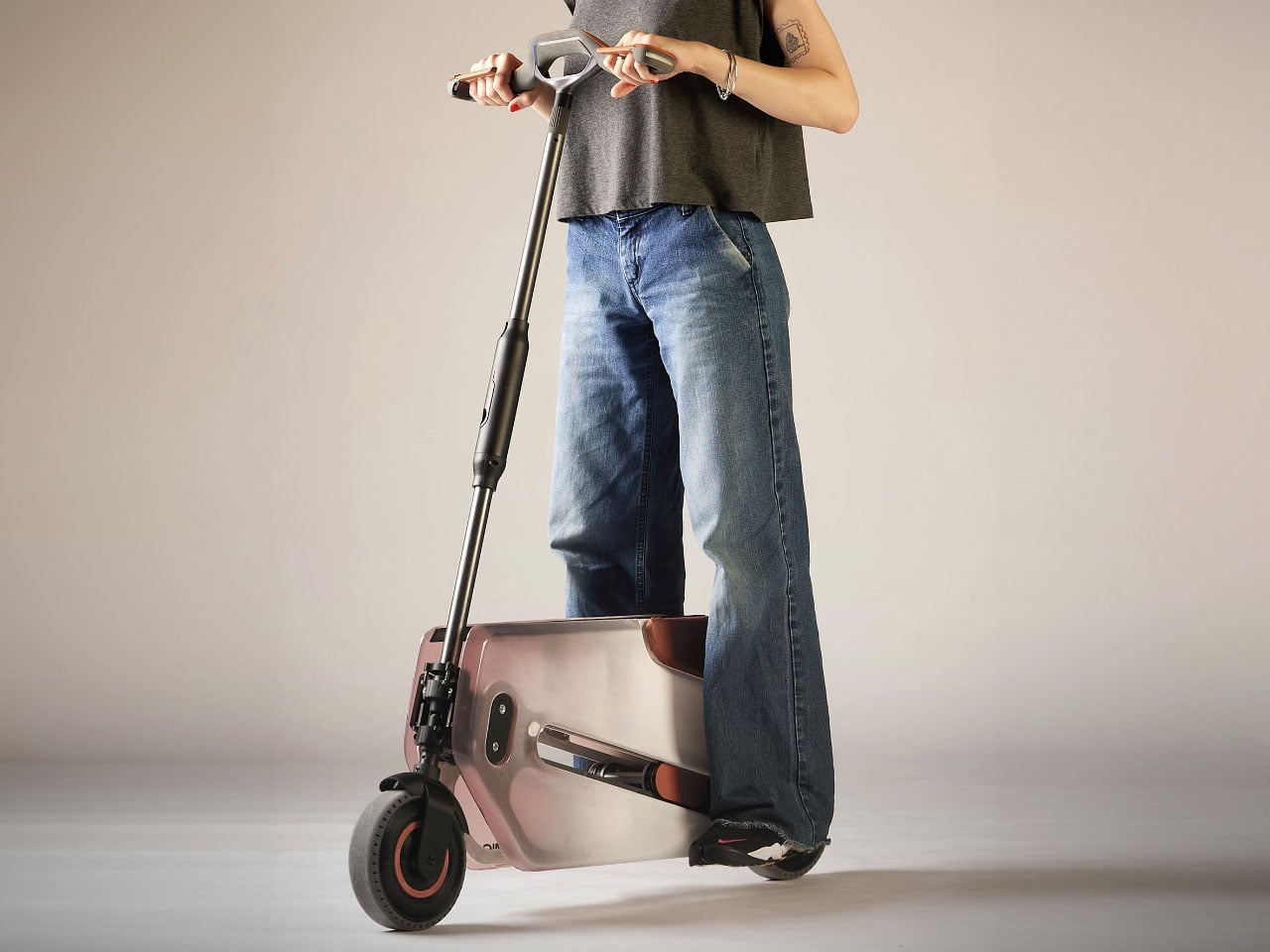
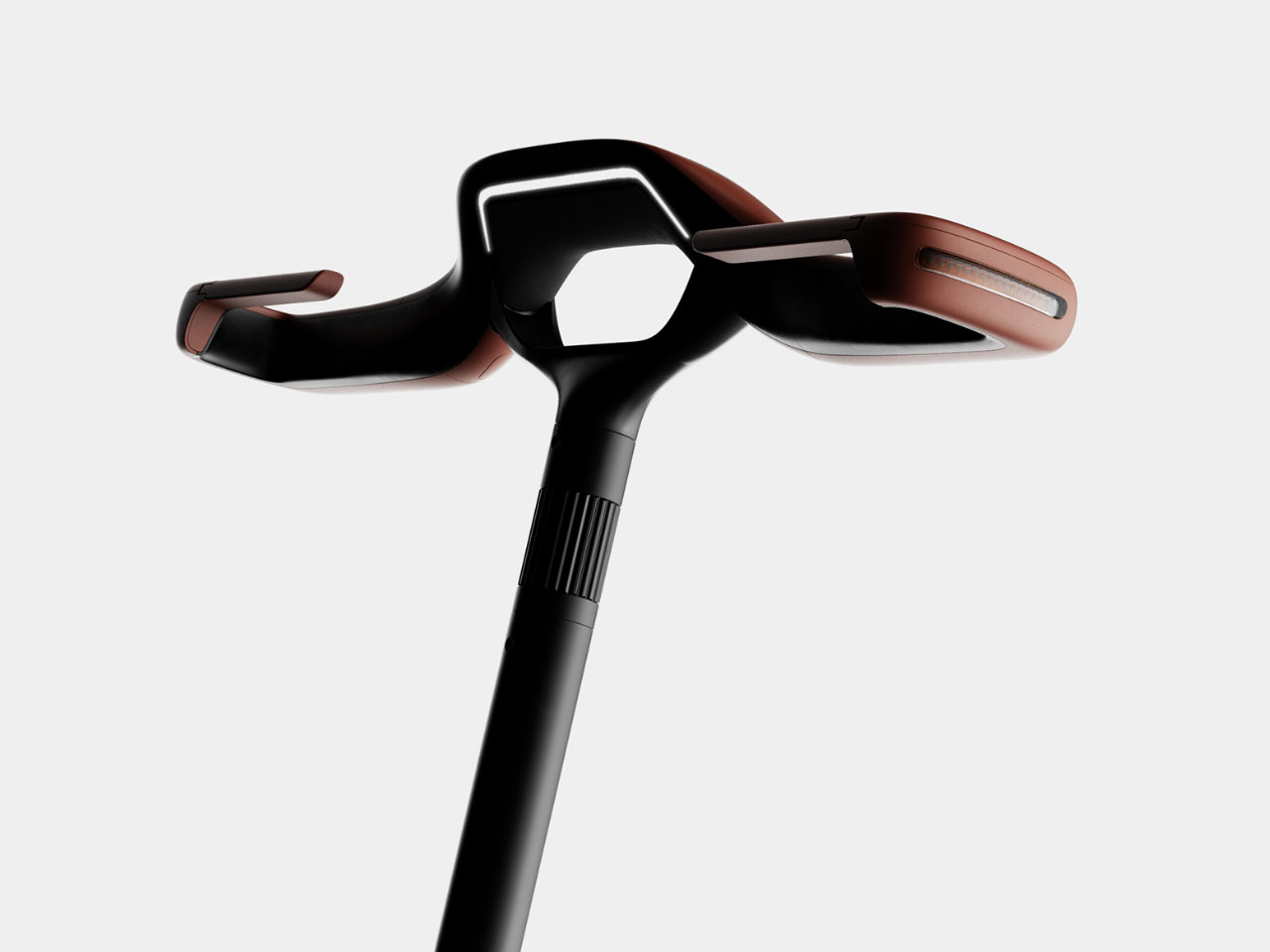
If one looks closely at the folding mechanism, it is a mechanical treat to watch in action. The whole process takes no more than a minute – both in the opened configuration and the closed one. The ease of use is the king here which most commuters will love. The electric motor resides in the rear section of the e-scooter which can be topped with a quick dart of charge for short trips to the supermarket. The handlebar positioning is fully adjustable and the absence of a saddle means you’ll have complete freedom to scoot around in the city.


The post Foldable e-scooter for last-mile travel within city limits is a futureproof nano mobility solution first appeared on Yanko Design.
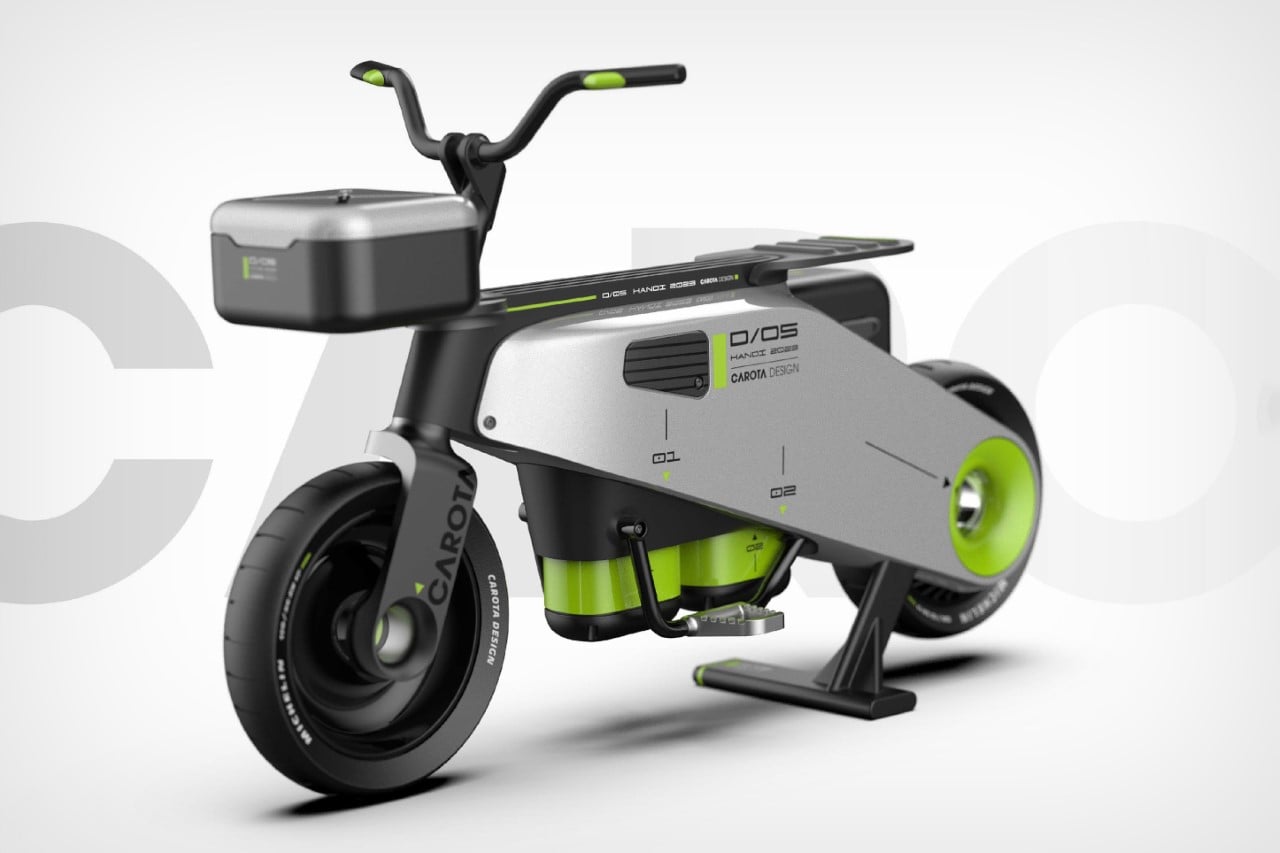
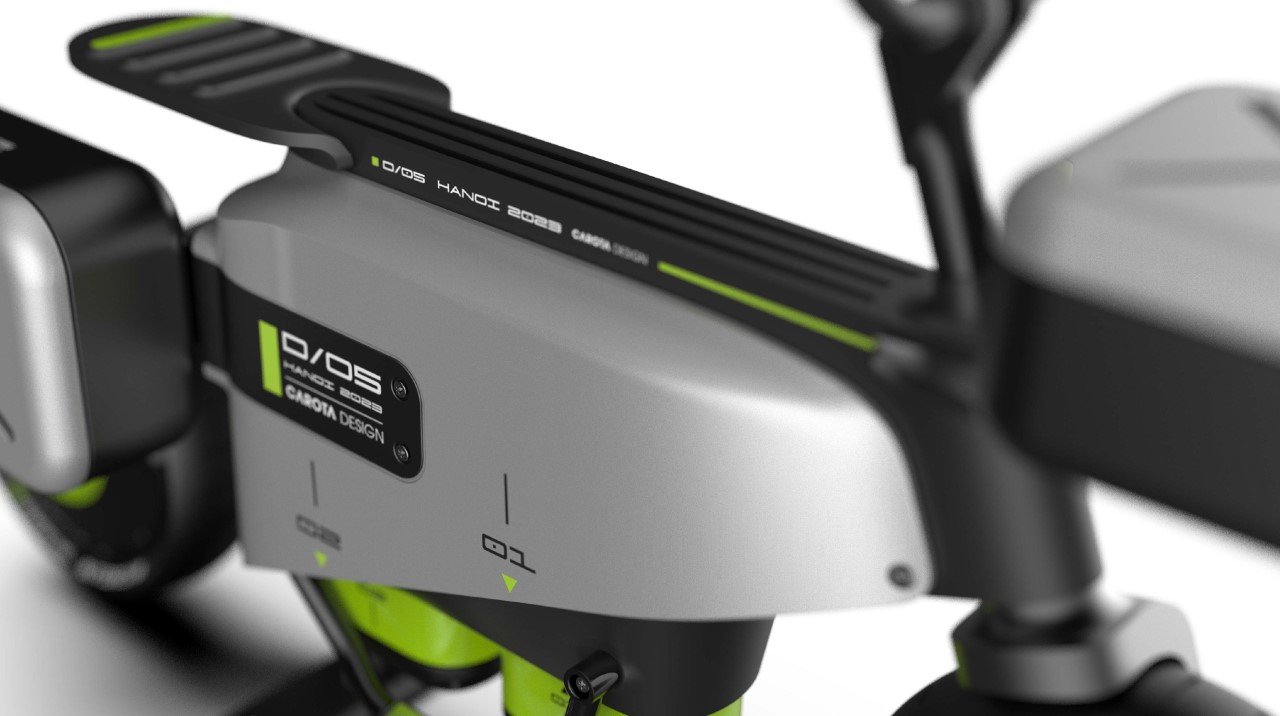
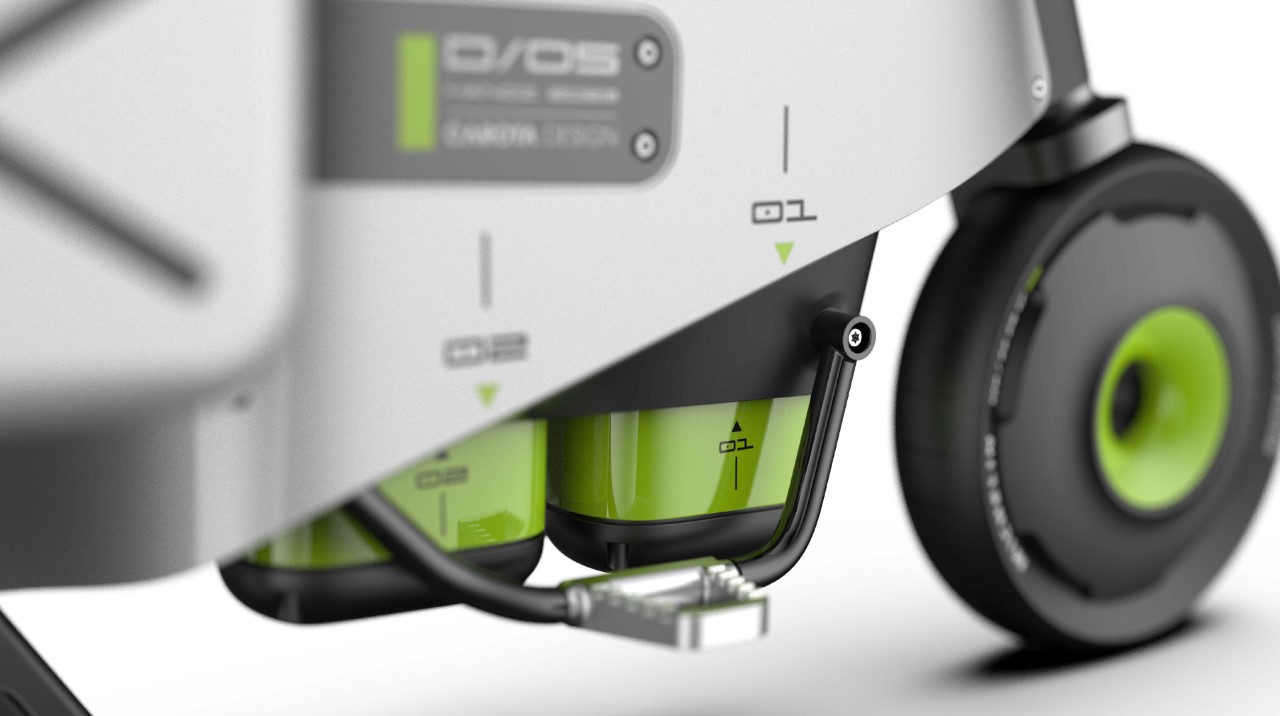
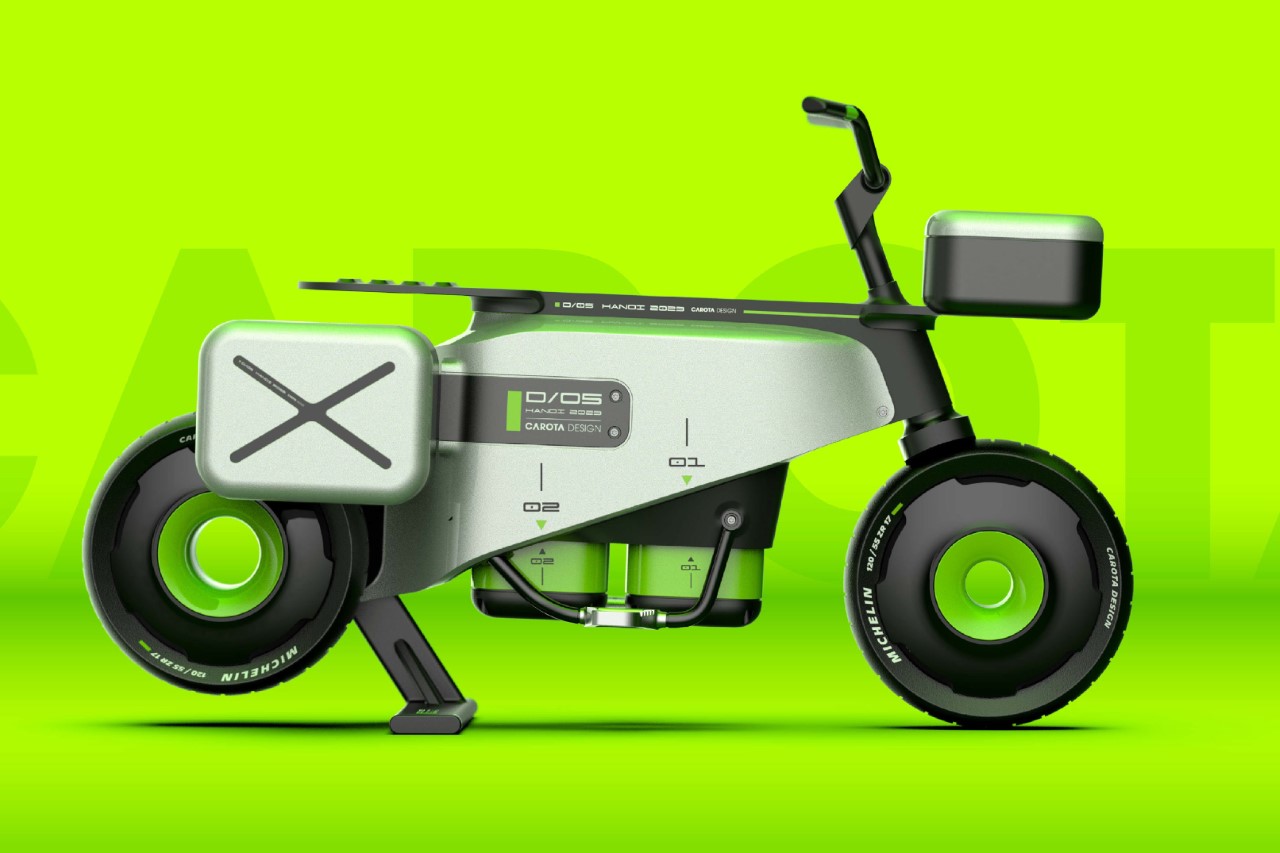
Electric vehicles are increasingly becoming preferred over gas-driven vehicles, but that doesn’t take away from the fact that EVs still have two psychological barriers they need to overcome – range anxiety, and long charging periods. Even with supercharging networks, you still need to wait multiple minutes to boost your batteries as compared to a gas station where you’ve filled your tank in probably under a minute. Electric cars and bikes are still working around trying to find a more tenable solution, but Hanoi-based Carota Design has a clever alternative. The D05 Electric Delivery Scooter concept comes with batteries located in the bottom, but what’s interesting is that they’re only detachable from the bottom too (you can’t lift them out through the top). As a result, the D05 also comes with a unique servicing platform that automatically detaches and replaces battery packs. All you need to do is drive onto the platform and park your electric scooter and an automated setup in the platform takes over the rest, detaching your old battery and inputting a new one, quite like a factory line. The process takes under a minute, is much safer than having humans remove and replace batteries, and is virtually theft and tamper-proof too, since you’d have to tip the entire scooter over onto its side if you wanted to manually take the battery out yourself. Sure, it’s just a concept for the time-being, but even on paper, it completely checks out.
Designer: Carota Design
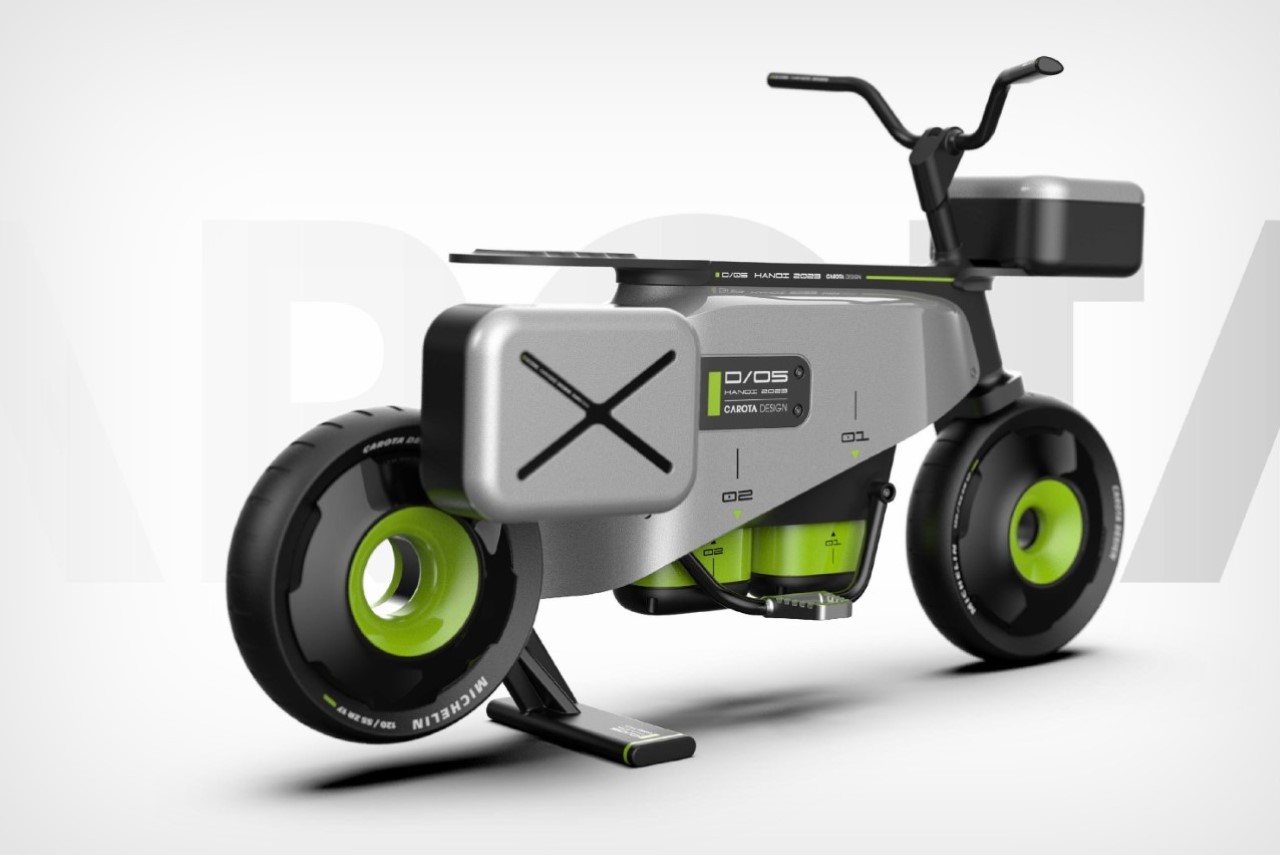
The e-scooter has a rather utilitarian design, given its function. Made for last-mile commutes for deliveries, the scooter adopts a blockish form factor, highlighting its inner components and the two storage areas (one on the front, and one on the side). The D05 seats just one, has a low-hanging form factor that’s made further stable by the base-mounted heavy Li-ion batteries, and even though it’s fairly utilitarian, comes with a rather slick design featuring an interplay between silver and black parts, a clever use of lime green giving the e-scooter a splash of color, and hubless wheels that contribute to the D05’s future-forward design.
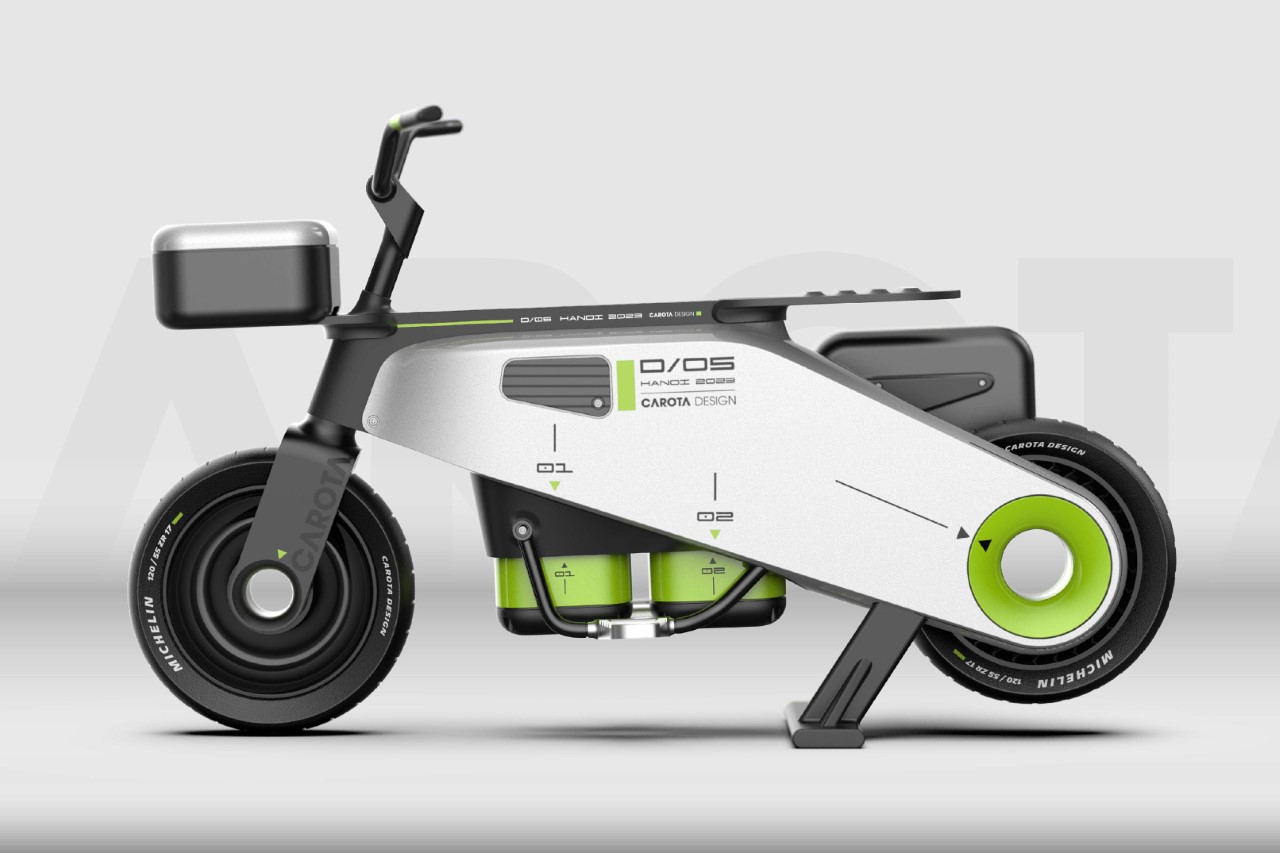
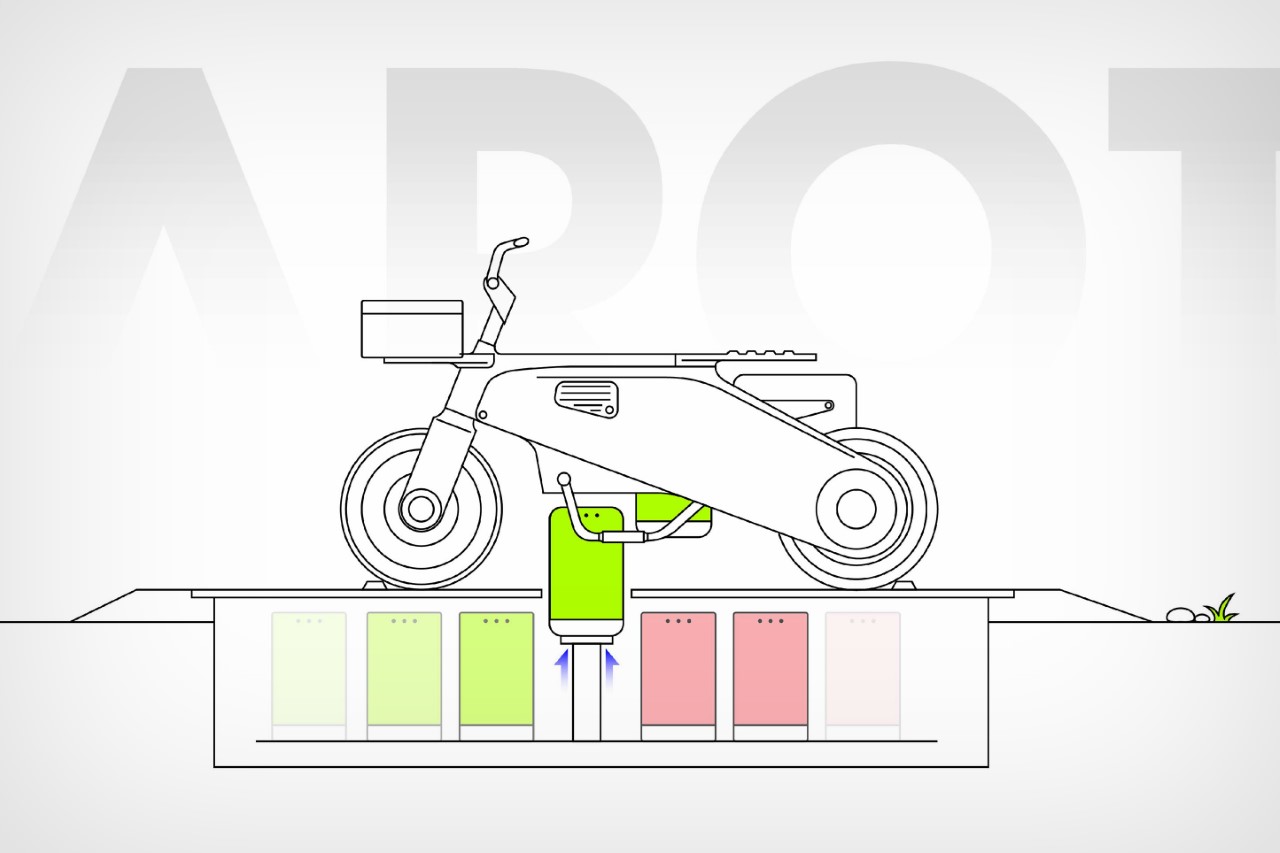
The battery-changing platform is pretty simple schematically, but does require a fair bit of technical expertise. The scooter needs to be parked perfectly on the platform for the arm to extend outwards, grab the old battery, disengage it, and replace it with a new battery. It’s rather similar to Tesla’s self-plugging charging snake from nearly a decade ago (2015 to be precise) but doesn’t require to be that calibrated. The battery modules move upwards and downwards, and one single platform can store as many as 7 battery packs (as per the schematic shown above), or even more if you detail it further. The process takes roughly a minute, quite like changing batteries on a TV remote, and once your new batteries are in, the scooter is ready to go.
That being said, having a replaceable battery system, no matter how convenient, does have its concerns. For starters, you need to produce MANY more batteries than EVs, since your battery network will have to account for availability, shortages, etc. That itself is a strain on the environment, but more so, the consumer faces a unique problem too – you don’t know whether the new, charged battery being put in your EV has 100% battery health. The freshly charged battery being added to your e-scooter at the charging platform could be 5-10 years old and therefore offer less range than a brand-new one. Moreover, older batteries could offer vulnerabilities, making the overall system slightly unsafe if they’re not monitored and taken out of circulation. In the broader scheme of things, having a charging network makes more sense because you can simply plug your e-scooter into any power outlet to be on the safe side instead of swapping out your batteries. Hopefully, EV companies could design a hybrid system of charging and battery replacement, making the adoption of EVs much smoother. Older batteries could eventually be recycled too, reducing strain on the environment in the longer run.
The post This Electric Delivery Scooter’s base-mounted batteries can be automatically changed by robots first appeared on Yanko Design.