
We are all carrying more than just our belongings these days. The mental load, the relentless calendar, the low-grade hum of stress that follows you from your morning commute to your desk to your couch at night. Wearable tech was supposed to help with that. Instead, most of it just gives you more numbers to feel bad about, more data to scroll through while your cortisol levels do exactly what they want anyway.
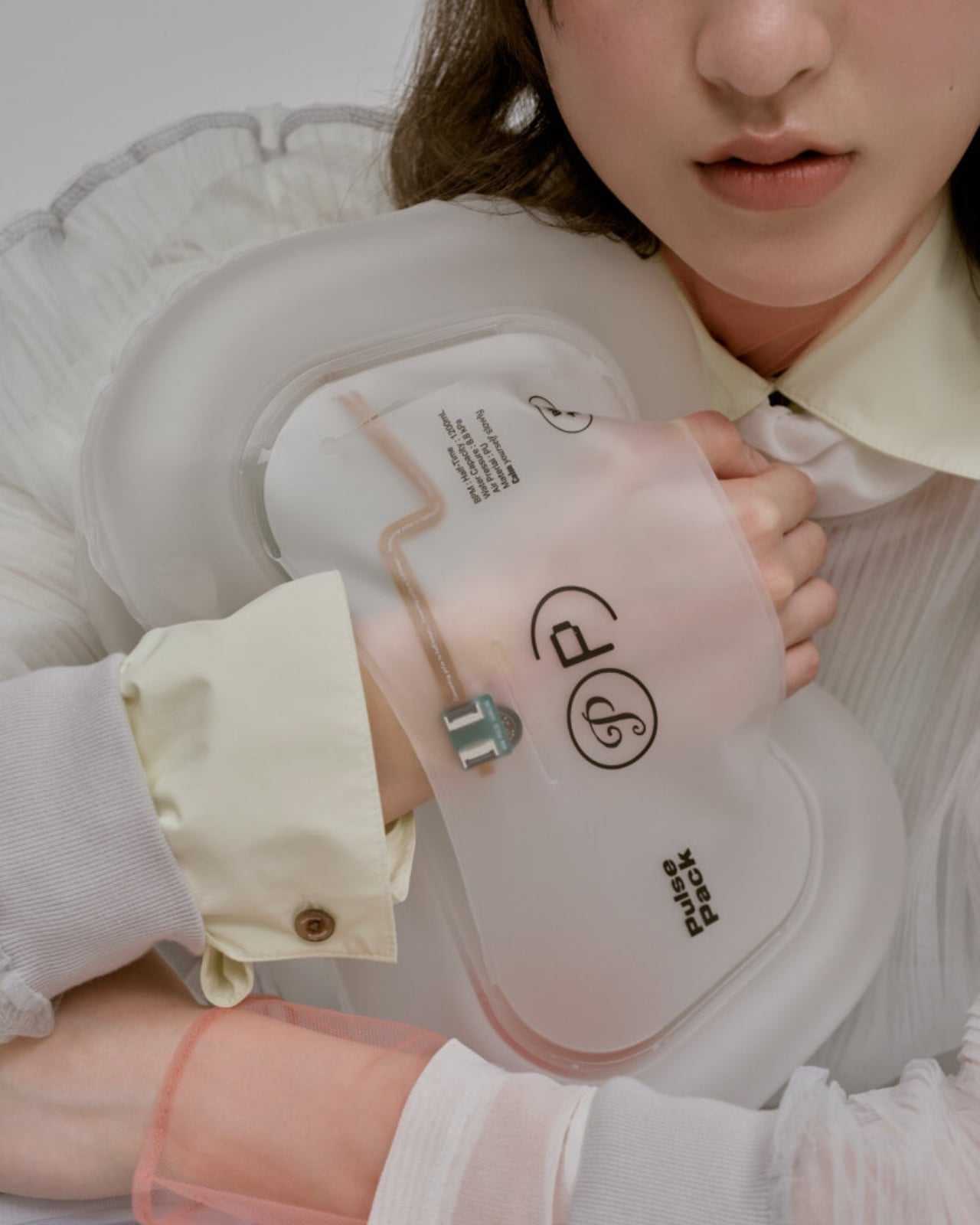
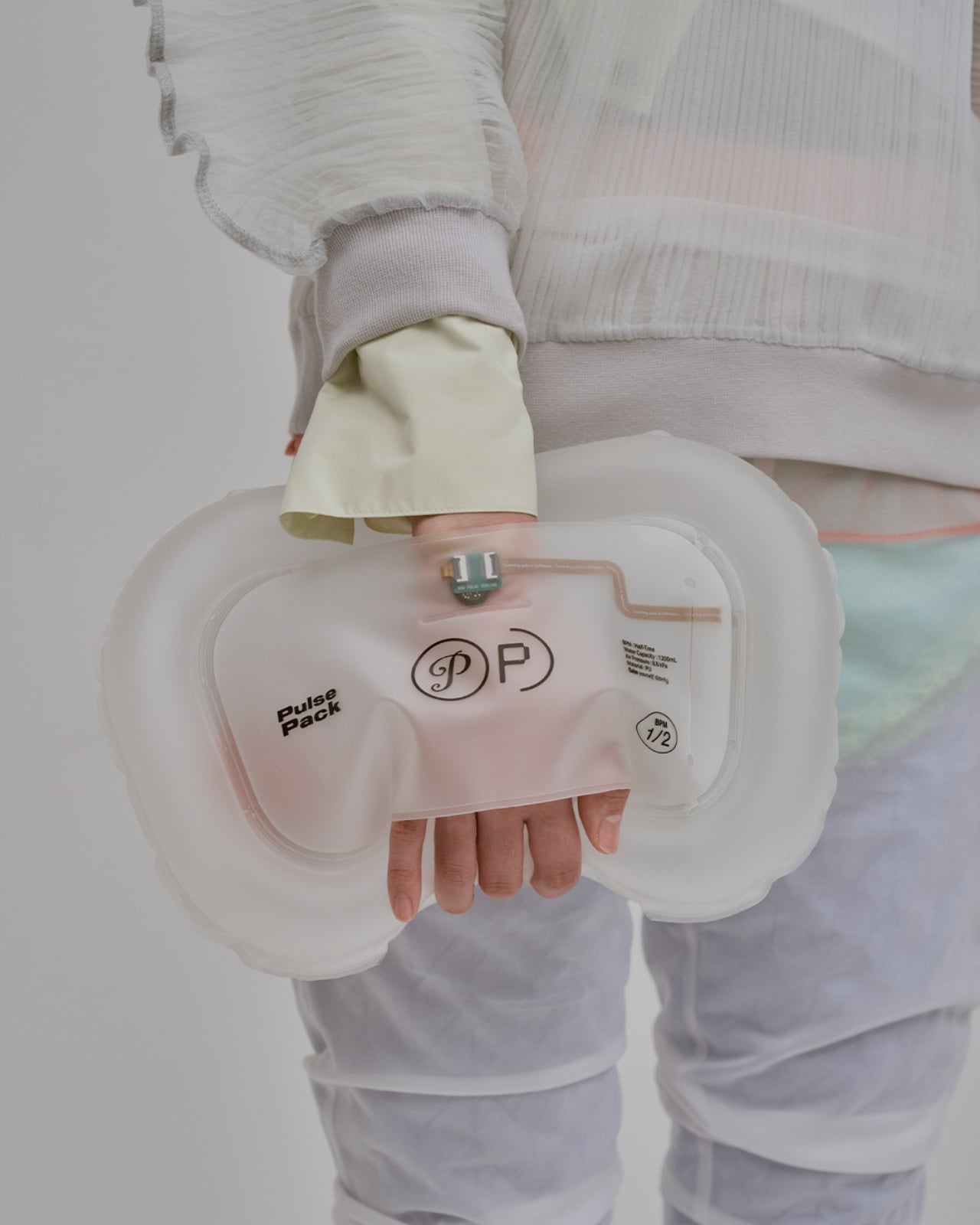
That’s what makes the Pulse Pack, a translucent wearable bag by Japanese creative company Konel, feel like such a refreshing left turn. It debuted at Milan Design Week 2026, and the concept alone is worth pausing on. The bag measures your heartbeat in real time and then responds with a physical pulse of its own, timed at exactly half the frequency of what it detects. When your heart is racing, it hums back at you slowly and steadily. And over time, your body follows.
Designer: Konel
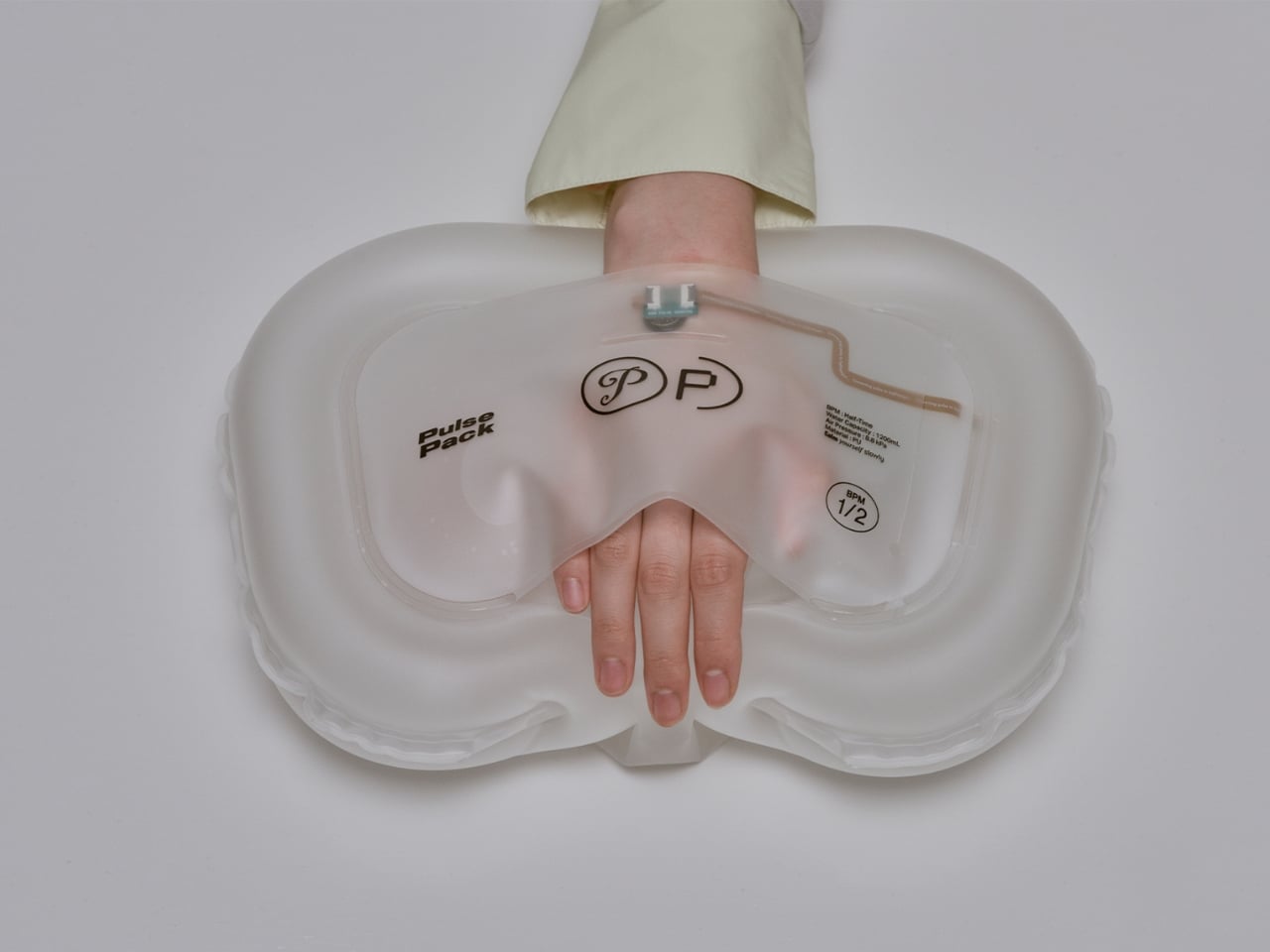
The science behind it is called entrainment, the process by which the nervous system synchronizes with a steady external rhythm when that rhythm is slower and more regular than its own. You’ve probably experienced it without realizing it. A slow drumbeat at a concert that settles you into your seat. A rocking motion on a long train ride. A repeated vibration against your palm. These things pull you down, not because they distract you from stress, but because the body literally adjusts its own pace to match them. Konel built the Pulse Pack around that mechanism entirely, and it’s a smarter premise than most wellness gadgets can claim.
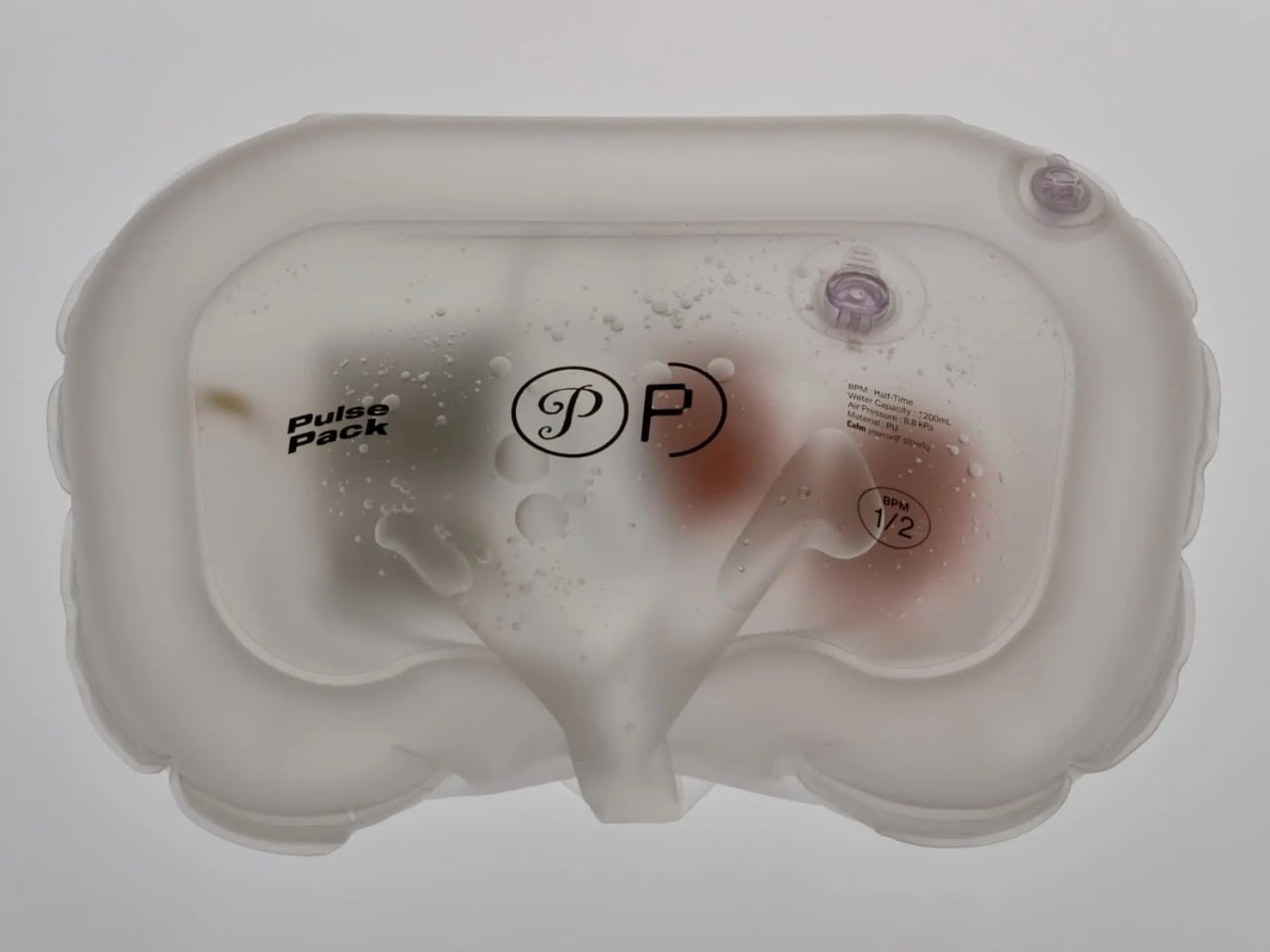
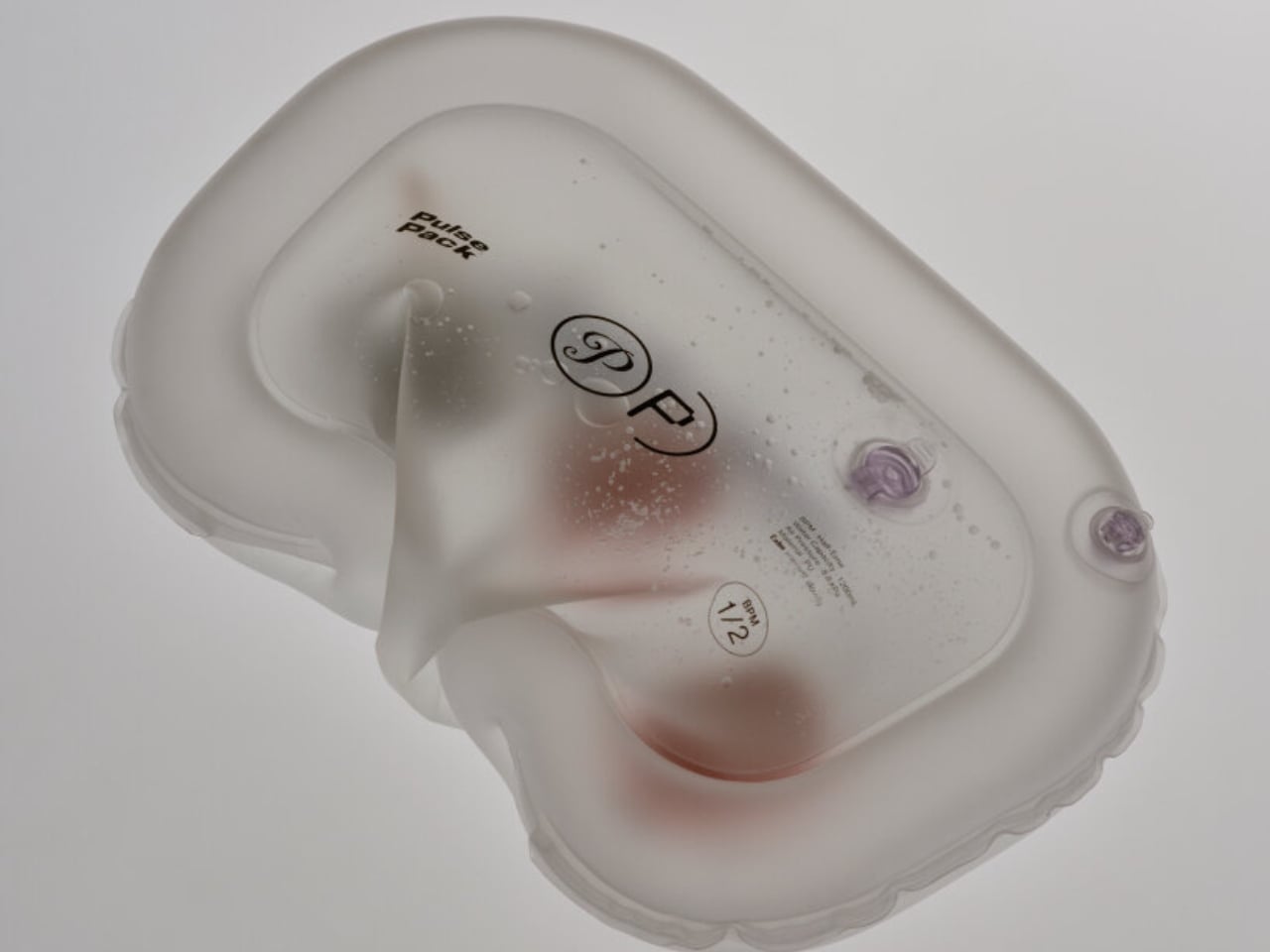
What makes the design clever, beyond the concept itself, is where the haptic pulse actually lands on the body. Most wearable devices place their feedback at the wrist or fingertips, the places we are constantly paying attention to. The Pulse Pack positions its pulse against the spine and shoulder blades instead, areas that are far less consciously monitored. That feels intentional in the best possible way. Konel suggests that contact with the back is less intrusive and more grounding than stimulation at the extremities, and that logic holds up when you think about how a hand placed firmly on someone’s back can calm them in a way that a tap on the wrist rarely does.
Konel is also the company behind the ZZZN, a puffer jacket that doubles as a sleeping system with a built-in headpiece and red light therapy, designed for napping pretty much anywhere. So if you’re sensing a theme, you’re reading it correctly. This is a studio genuinely interested in designing objects that support the body’s quieter needs: rest, calm, recovery, rather than feeding the dopamine loop that most consumer tech seems structurally incapable of resisting. It’s an interesting design niche, and a necessary one.

The Pulse Pack is still a prototype. The version on display at Via Palermo 11 during Milan Design Week is not something you can order yet, and it’s fair to wonder how the technology translates into an actual production piece. The translucent material is striking in photos, beautiful and a little otherworldly, but bags live a rough life. The gap between a design week prototype and a durable everyday object is real and wide, and that’s a challenge Konel will have to solve if this ever ships.
Still, I keep coming back to the core premise. We have spent years watching tech companies try to solve stress by throwing more information at us. More graphs, more scores, more nudges, more optimizations. The Pulse Pack takes the opposite approach completely. It doesn’t tell you anything. It doesn’t suggest anything. It just slows itself down and quietly invites your body to do the same. Whether or not the Pulse Pack ever makes it to your back, it shifts the conversation about what wearable technology could actually be doing. Not louder. Not smarter. Just calmer. That’s a design philosophy I’d like to see a lot more studios take seriously.

The post Konel Just Built a Bag That Slows Your Heart Rate While You Wear It first appeared on Yanko Design.