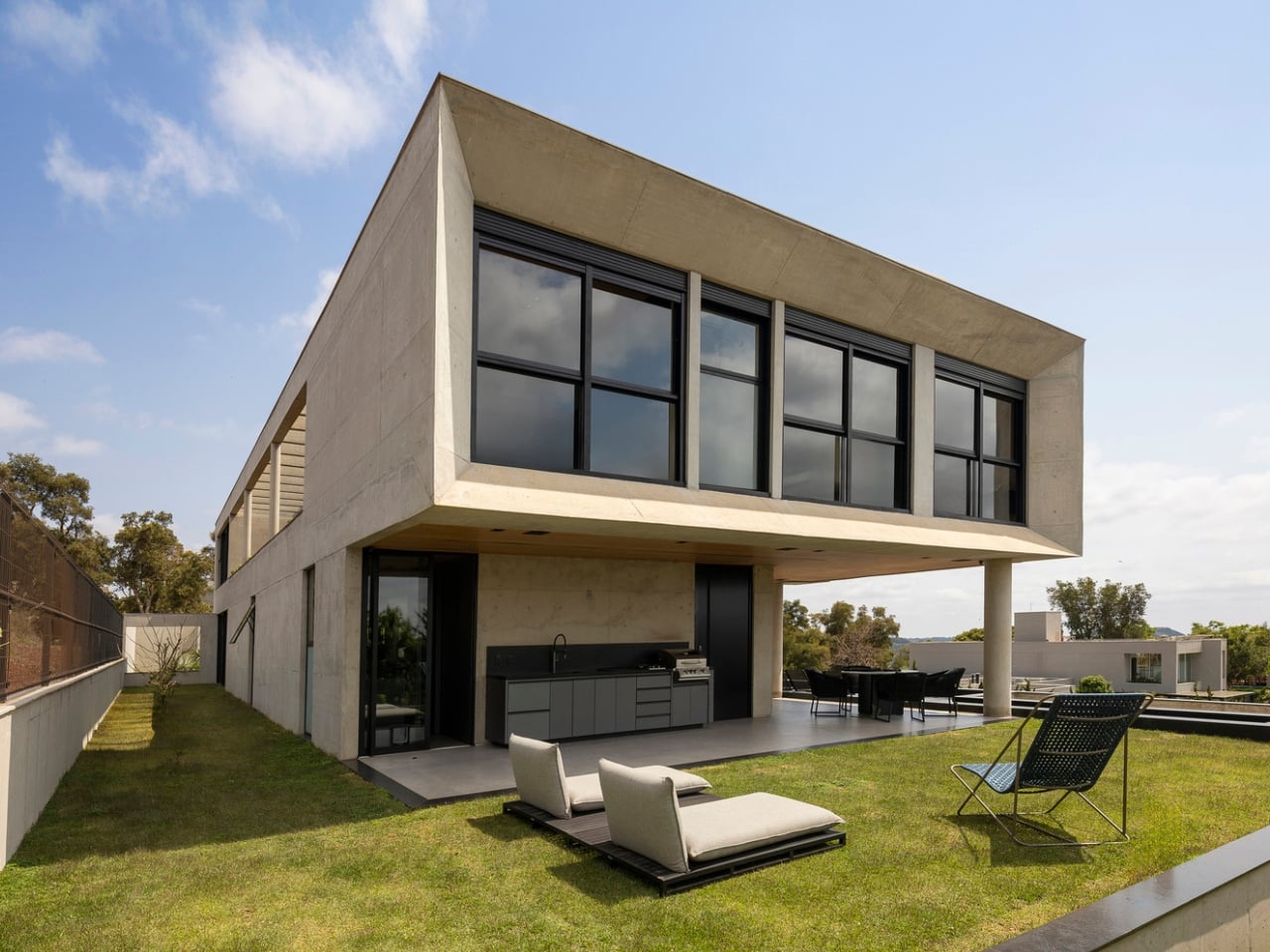
Most architects, when faced with a steeply sloping lot, treat the terrain like a problem to solve. Something to flatten, fill, or work around. Frederico Bicalho Arquitetura did the opposite with GM House, a private residence tucked into the Condomínio Serra dos Manacás in Minas Gerais, Brazil. They treated the hillside not as an obstacle but as the entire point. The result is a home that feels like it was always meant to be here, even though the site itself is anything but straightforward.
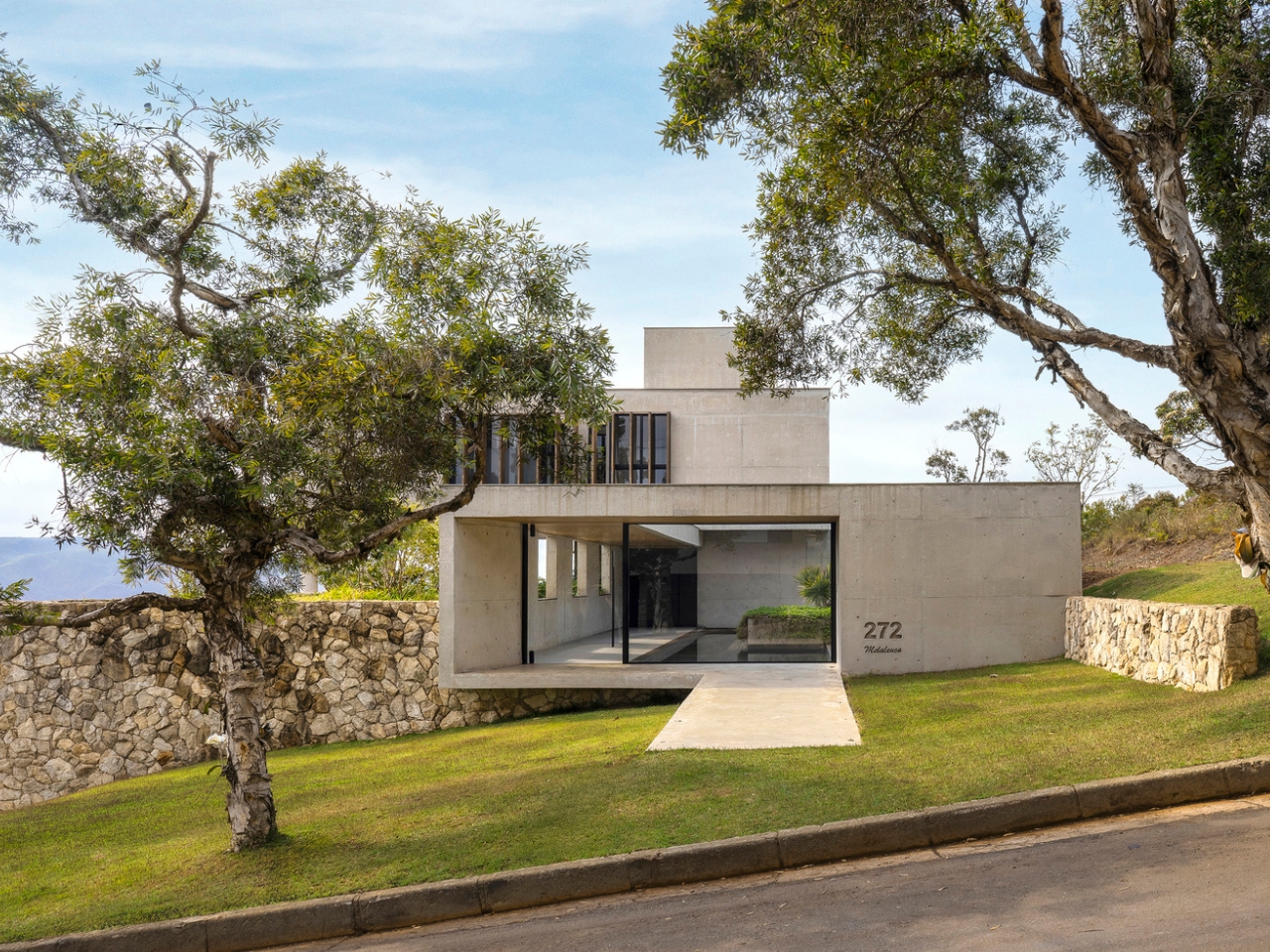
The design follows a longitudinal layout, which makes complete sense once you understand what the architects were trying to accomplish. By stretching the house along the slope rather than fighting it, the building naturally orients itself toward the mountain views in the valley below. Privacy from neighboring constructions is built right into the plan, not bolted on as an afterthought. The higher terrain works as a natural back wall, shielding the house from the afternoon western sun and any visual intrusion from that side. Meanwhile, the valley-facing side opens up completely, taking advantage of the best light and natural cross-ventilation. It’s the kind of thinking that’s so logical it almost seems obvious, until you realize how rarely anyone actually does it.
Designer: Frederico Bicalho Arquitetura (photos by Jomar Bragança)
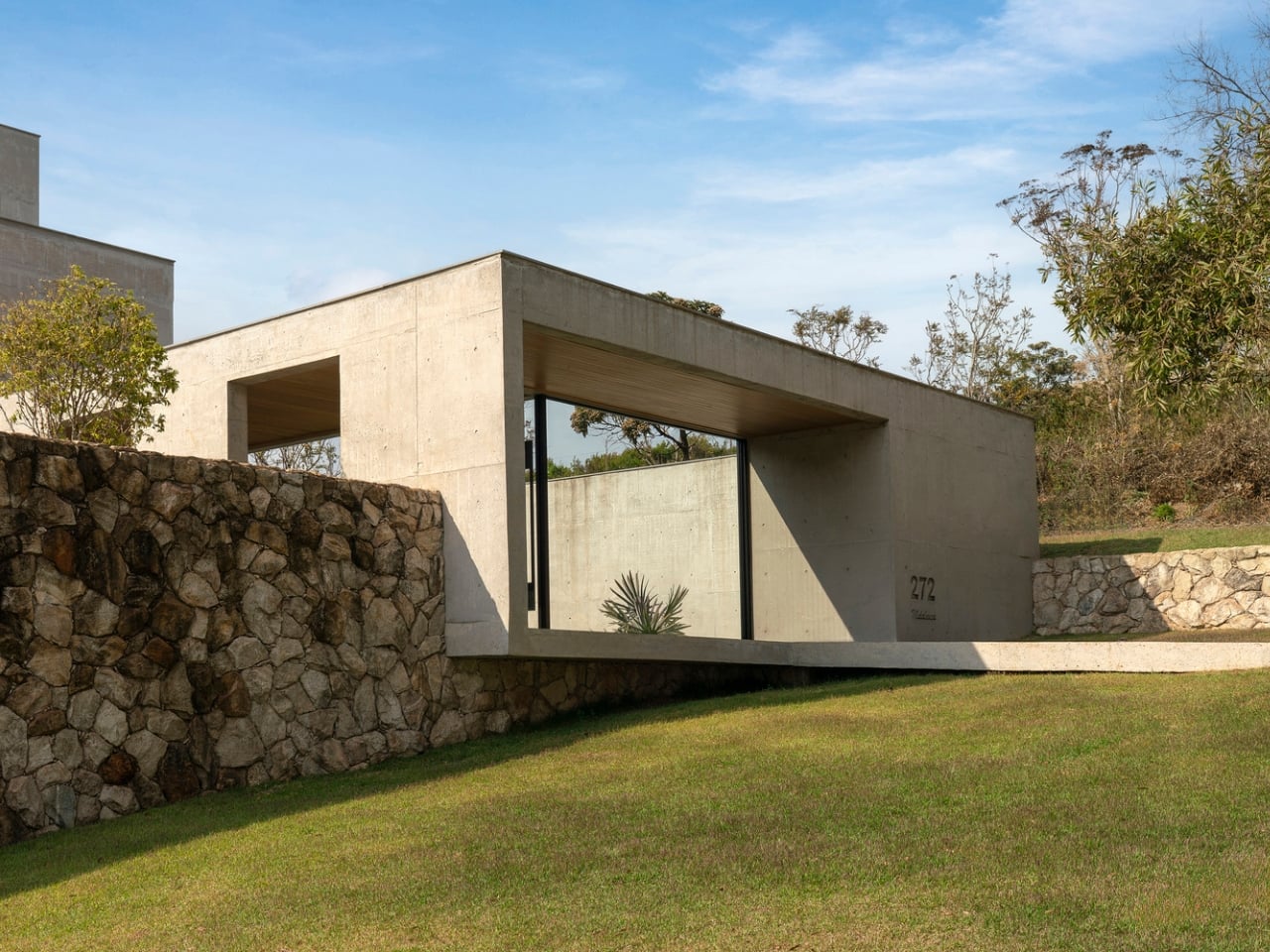
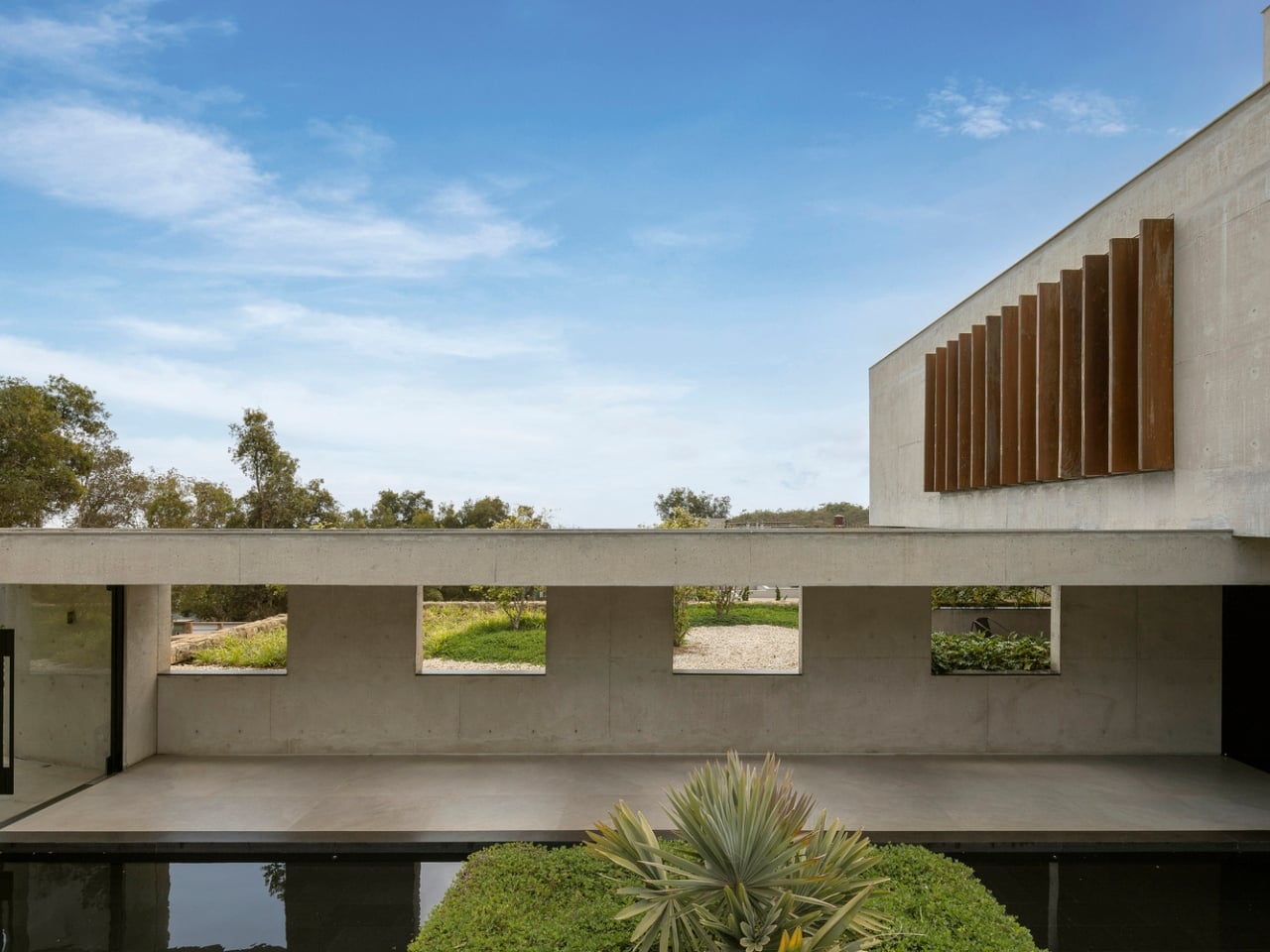
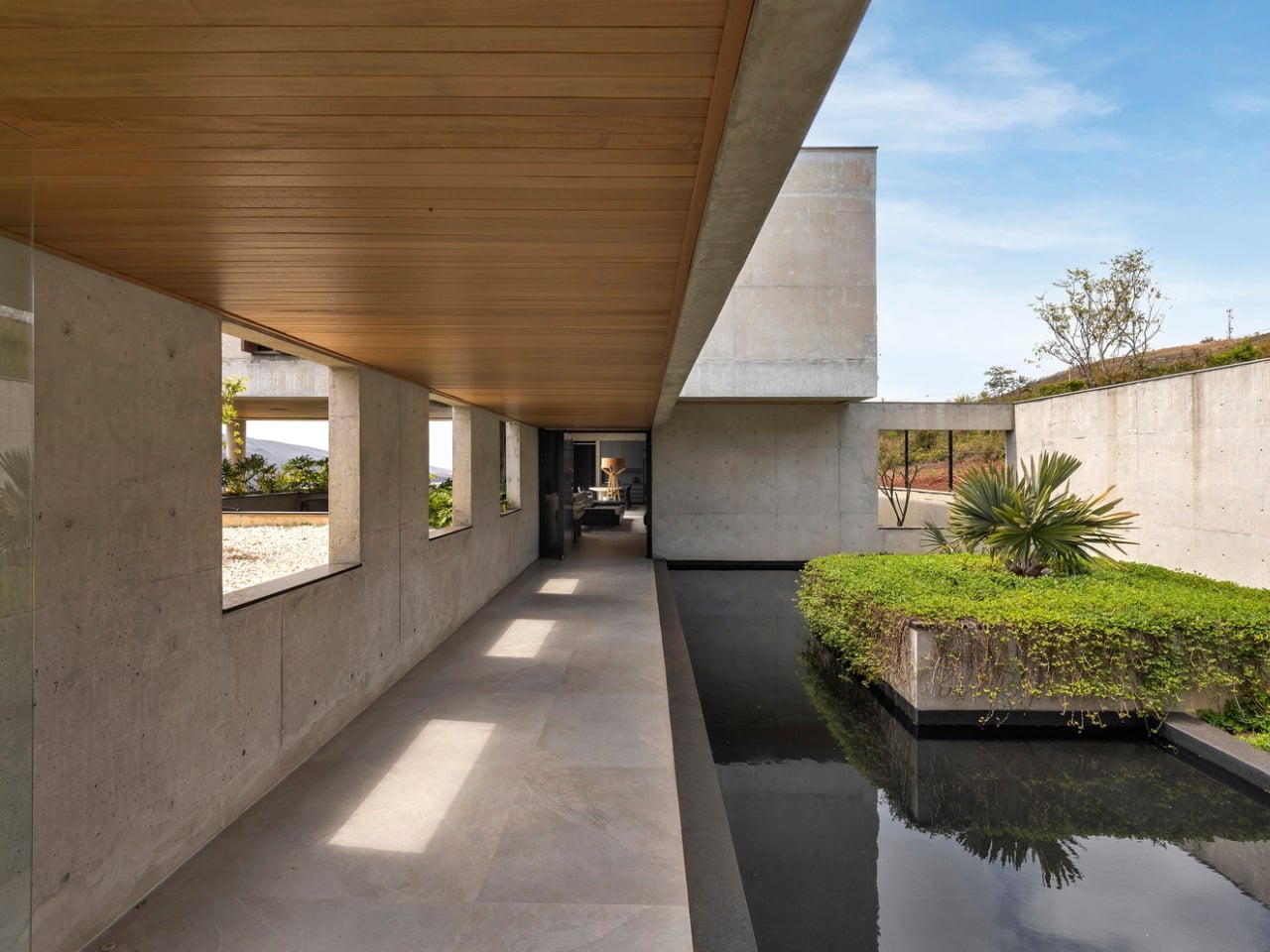
You arrive at GM House via a path that runs directly over a reflecting pool. That’s a genuinely theatrical choice, and one that immediately signals how much this project cares about sequence and experience. Walking toward your own front door over a body of water sets a tone. It slows you down. It makes you look. And it tells you, before you’ve even stepped inside, that this is a house designed with intention.
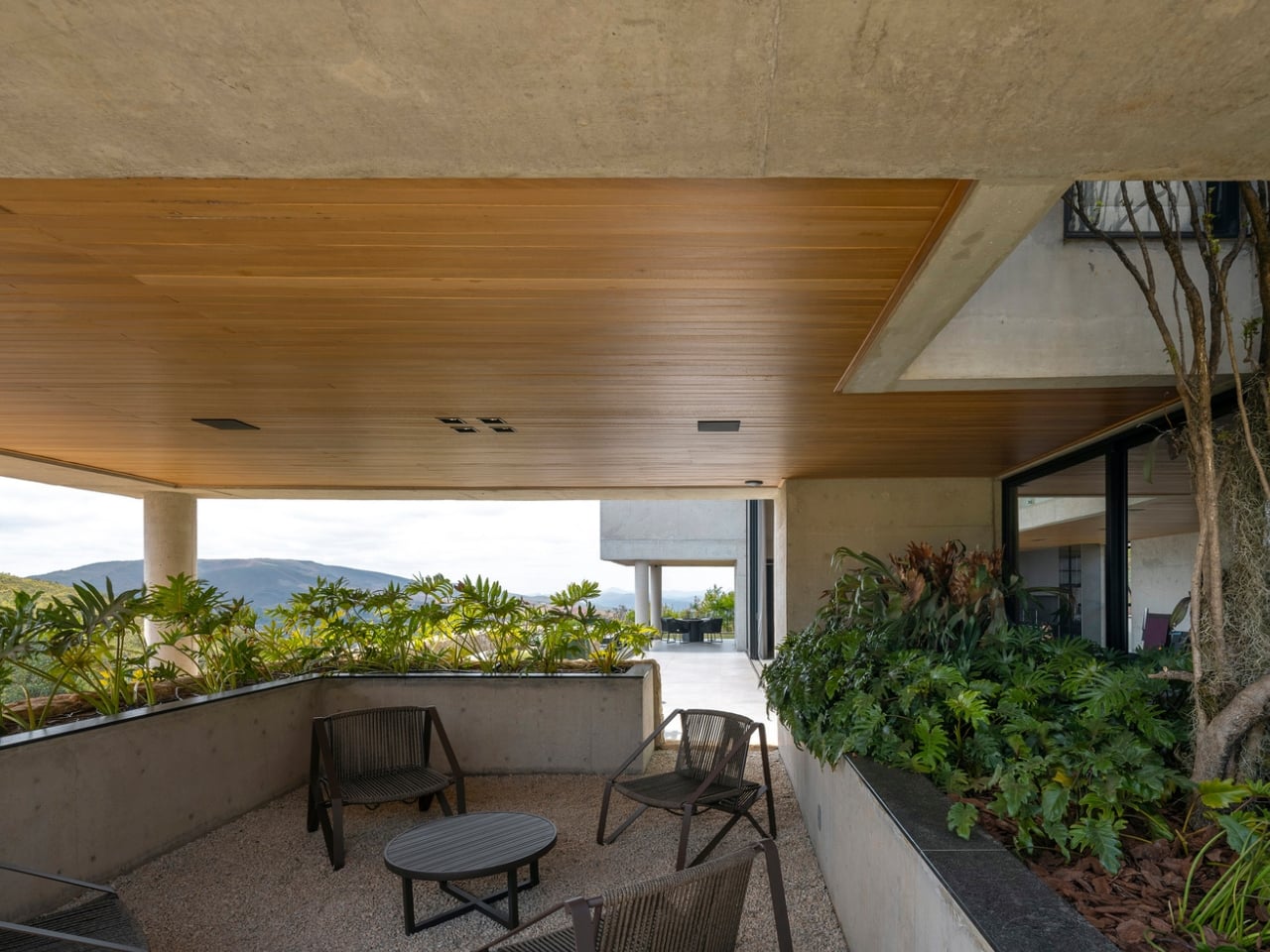
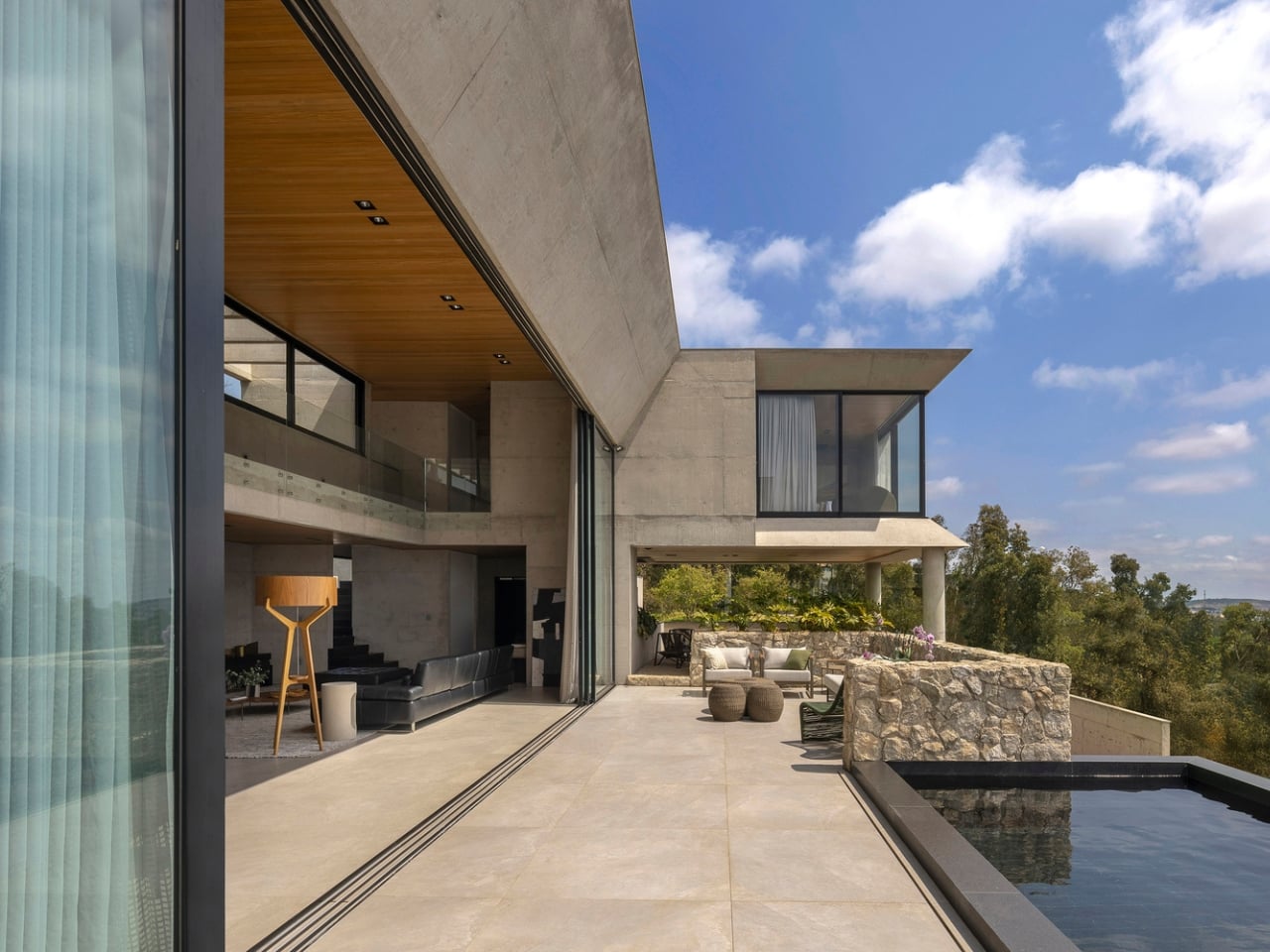
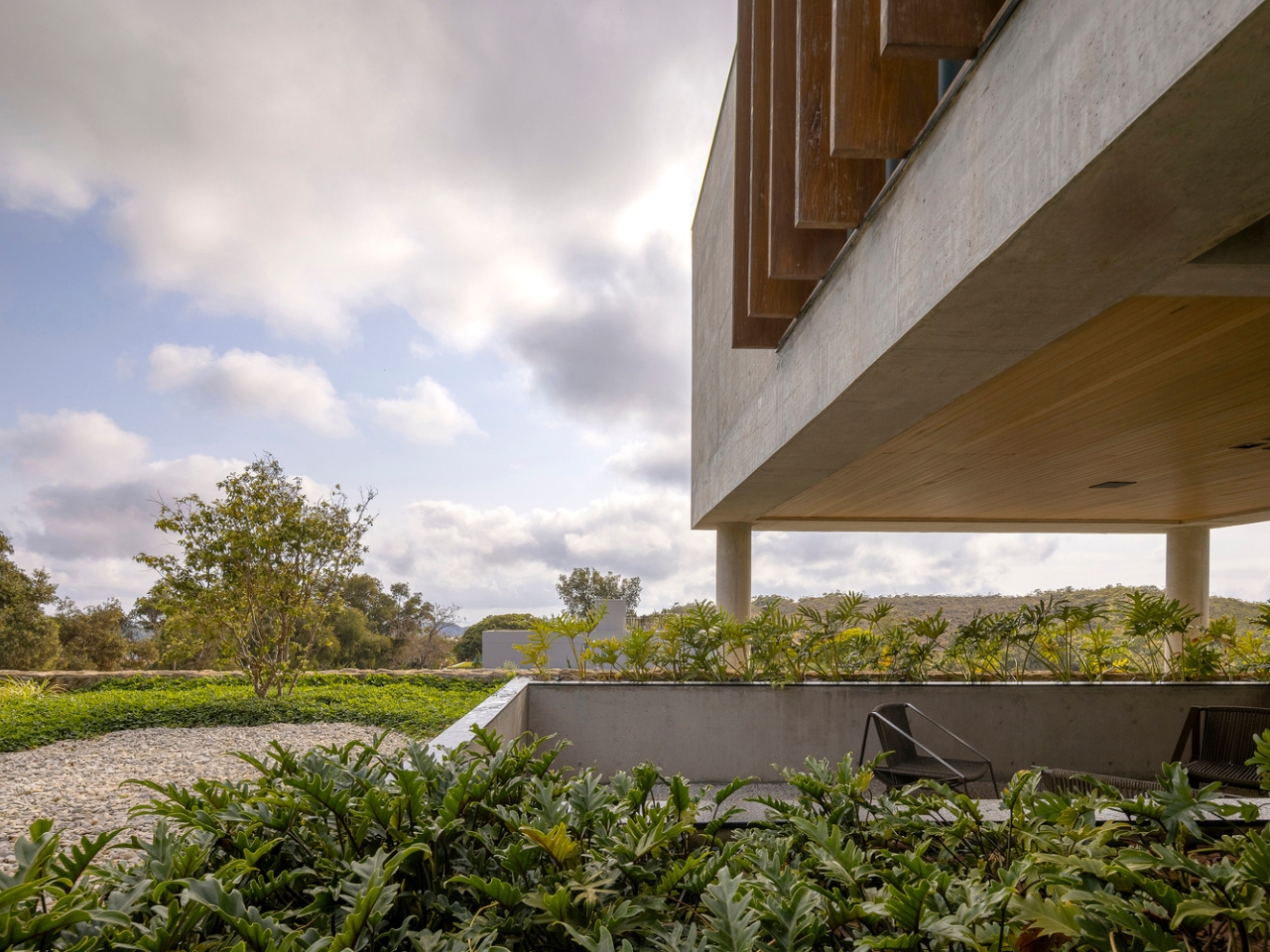
Once you’re in, the layout works in levels. The social areas sit on an intermediate floor, connecting directly to a covered veranda and the pool through large expanses of glass. The interior and exterior don’t just coexist here, they blur into each other. On the upper floor, the bedrooms are arranged in two separate blocks linked by a walkway, every single one of them oriented toward the horizon. Waking up to a mountain view is not incidental in this house. It’s the whole brief.
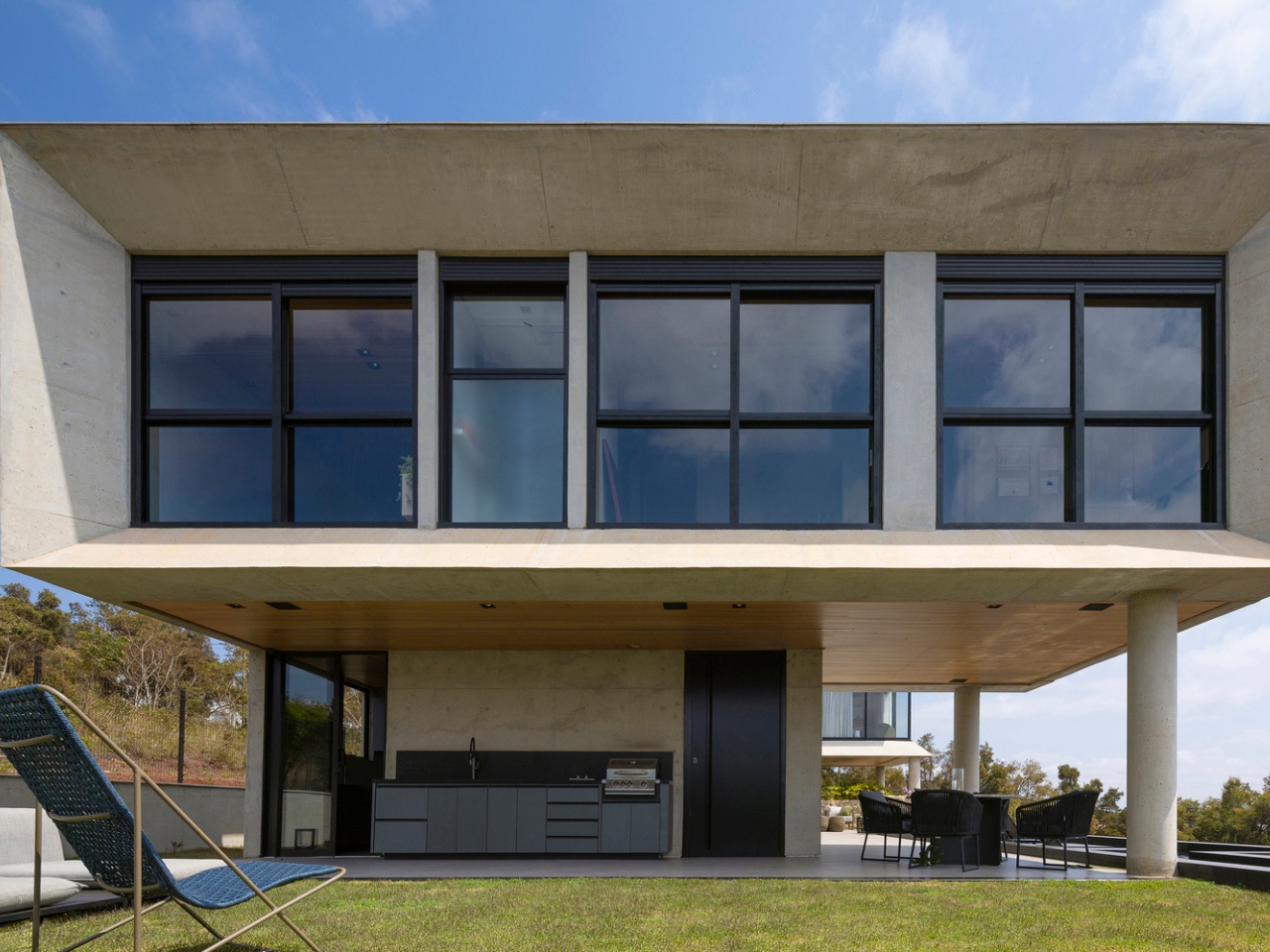
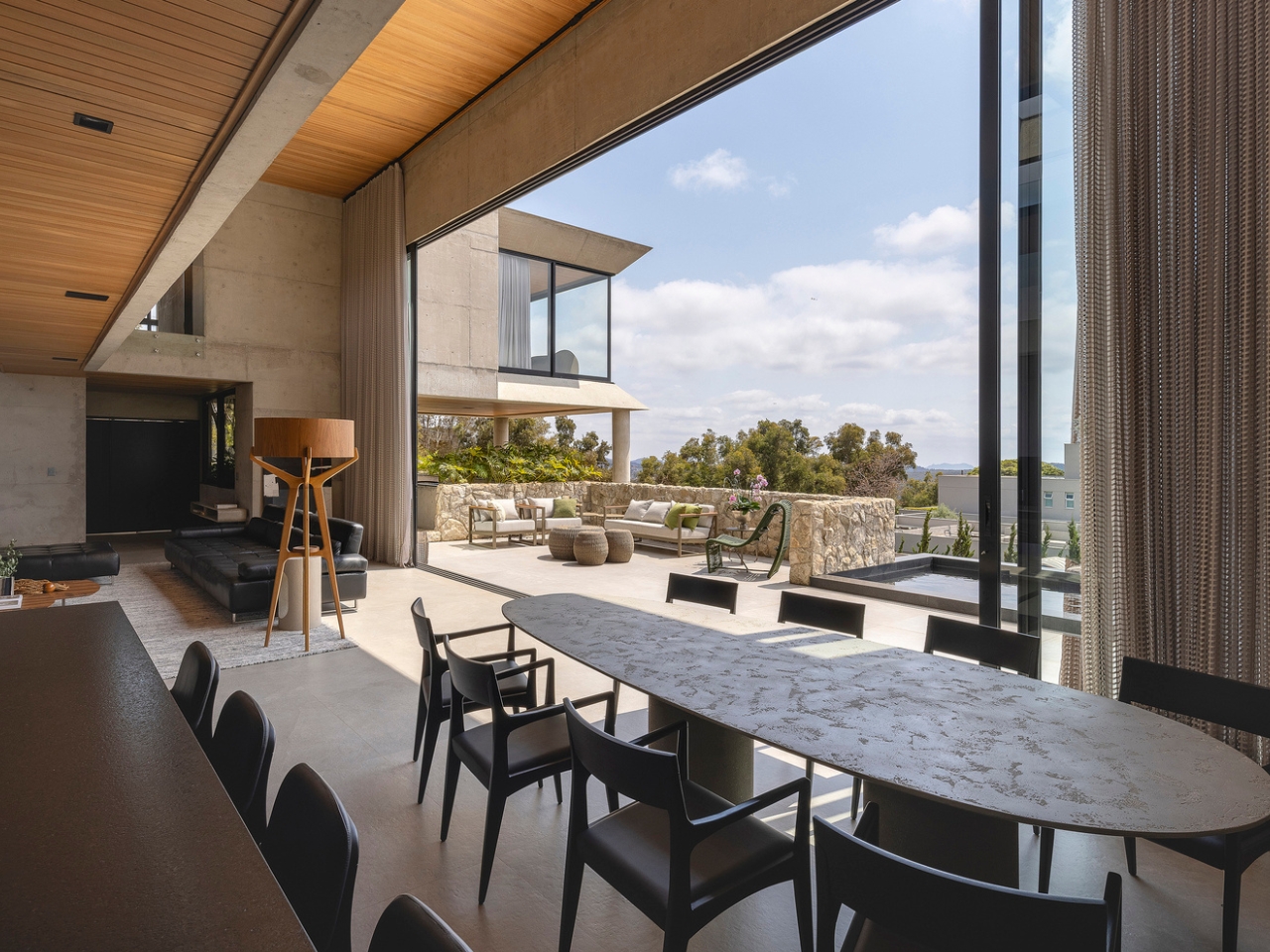
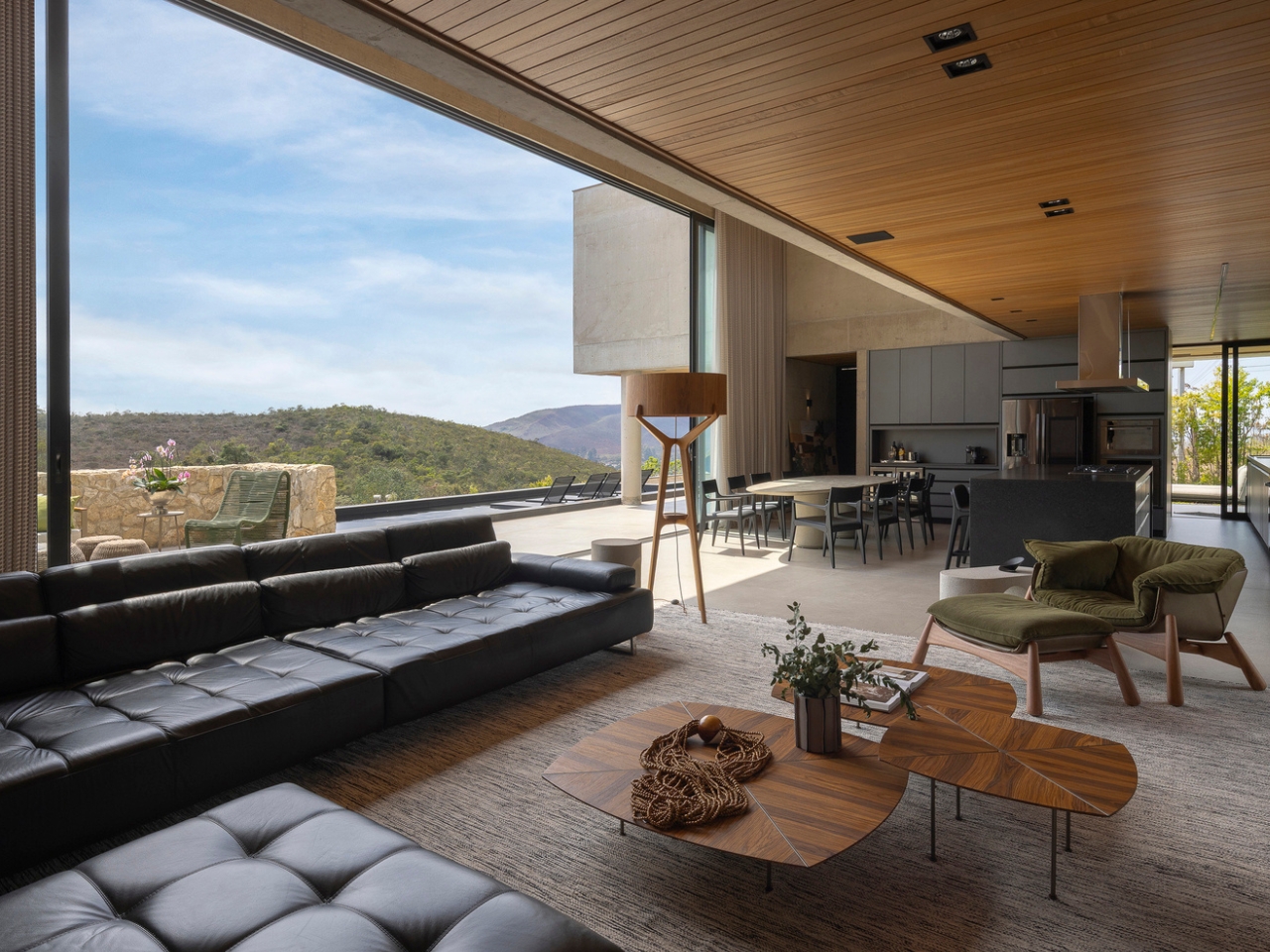
The material palette is deliberately restrained and, I’d argue, quite brave for a private home. Exposed concrete is the primary element throughout, chosen for its texture and durability against the bright red earth that’s characteristic of this part of Brazil. Concrete has a complicated reputation in residential design. It tends to read as cold or institutional when it’s done without care. Here, it reads as something else entirely. The rawness of the material feels honest in this landscape. It doesn’t try to mimic anything softer or warmer. It trusts itself.
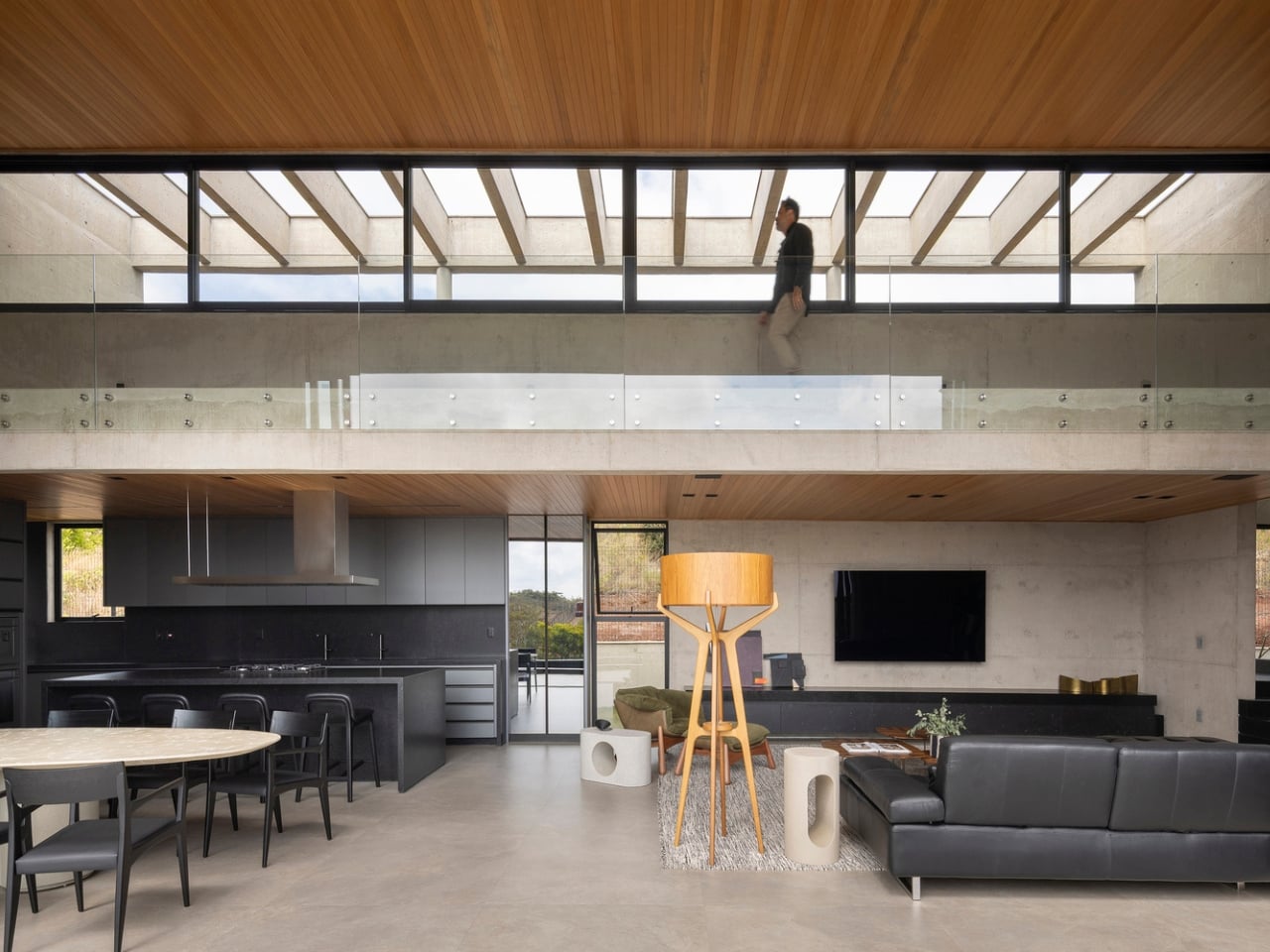
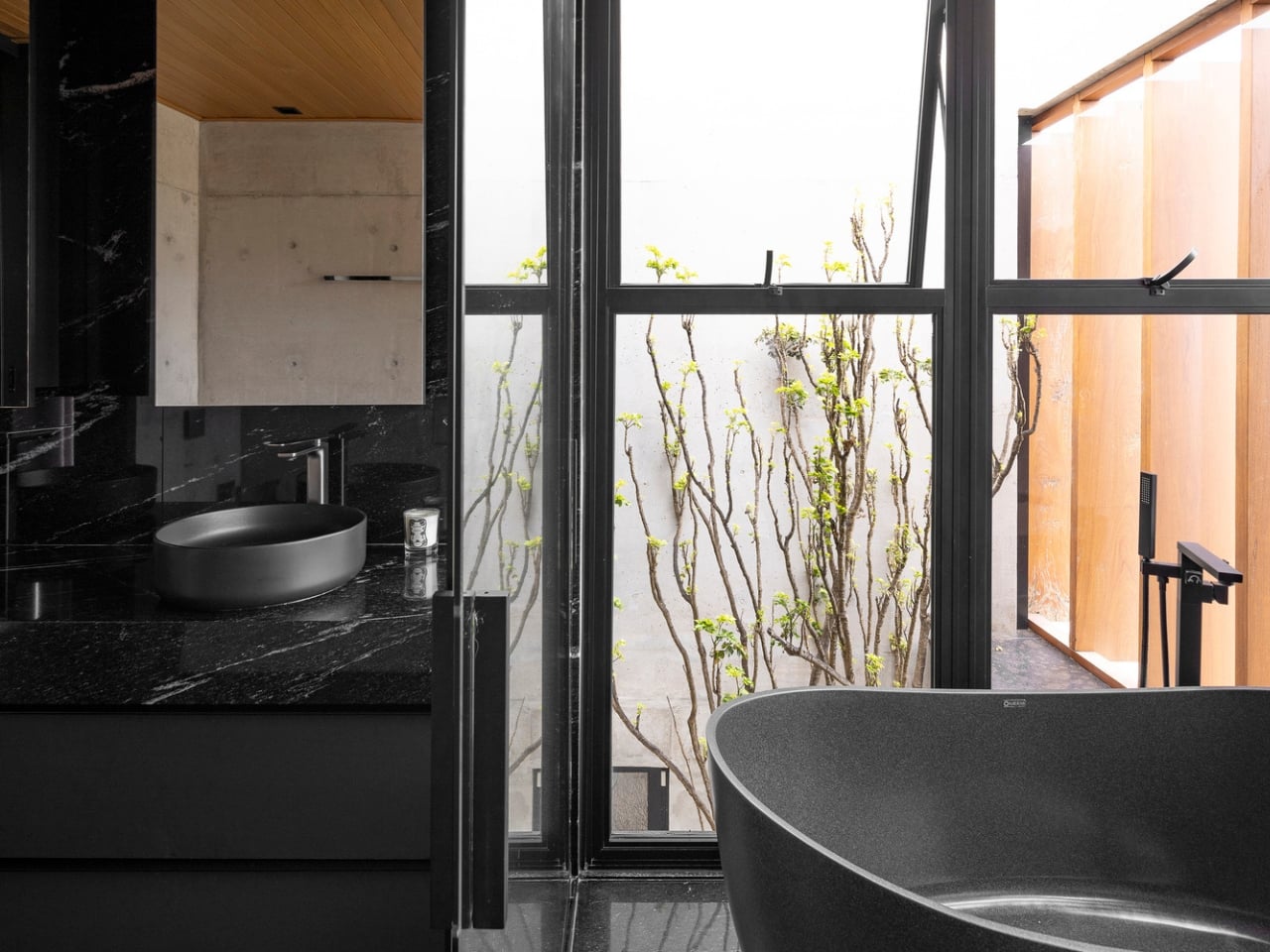
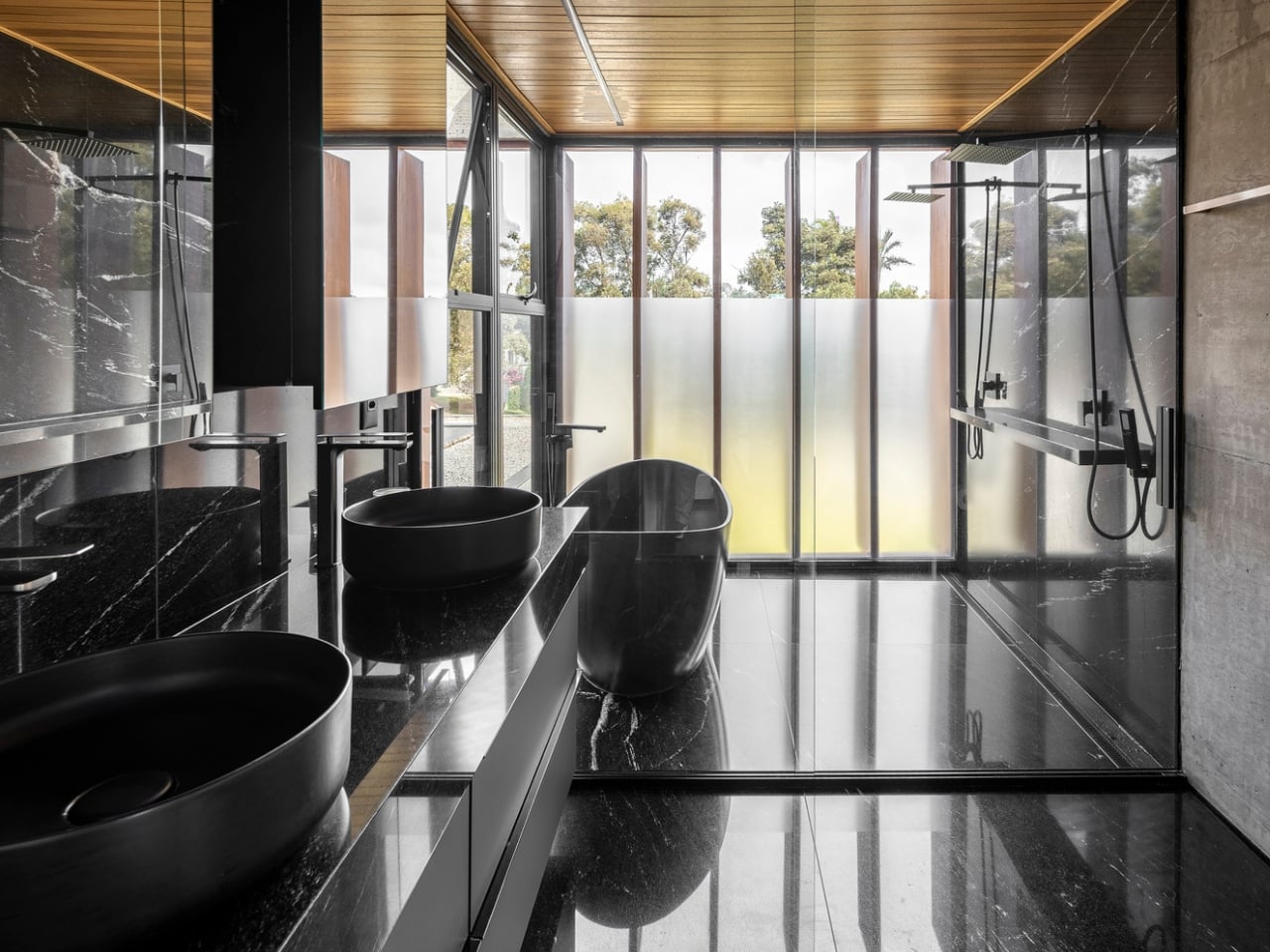
That confidence is really what defines this project. Frederico Bicalho Arquitetura didn’t reach for novelty or spectacle. They made a series of clear decisions rooted in climate, topography, and the experience of moving through a space. The reflecting pool at the entrance. The closed upper back wall. The glass-opened lower front. The walkway connecting the bedroom blocks. Each move is precise and purposeful, and the cumulative effect is a house that feels simultaneously monumental and quietly livable.
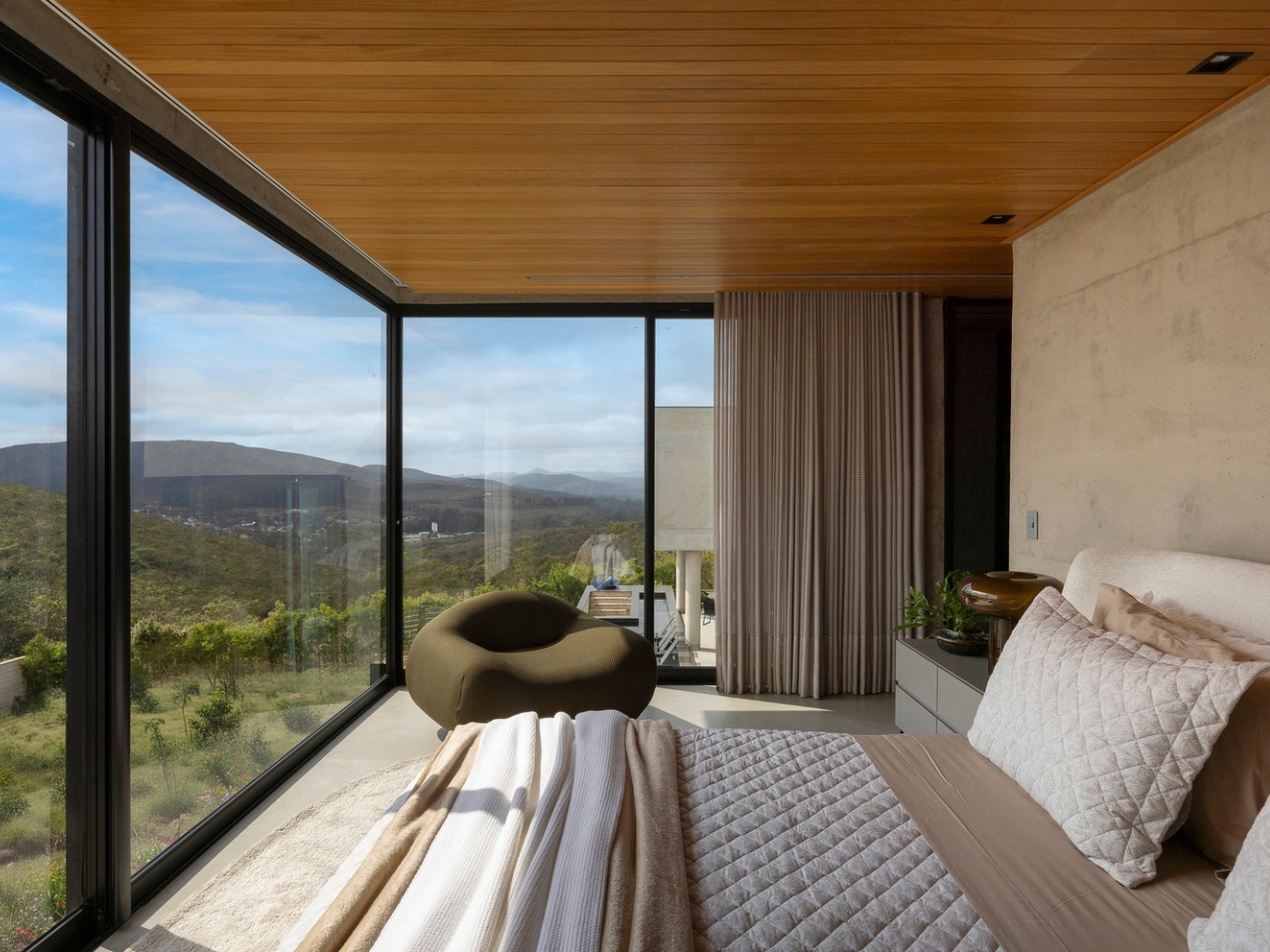
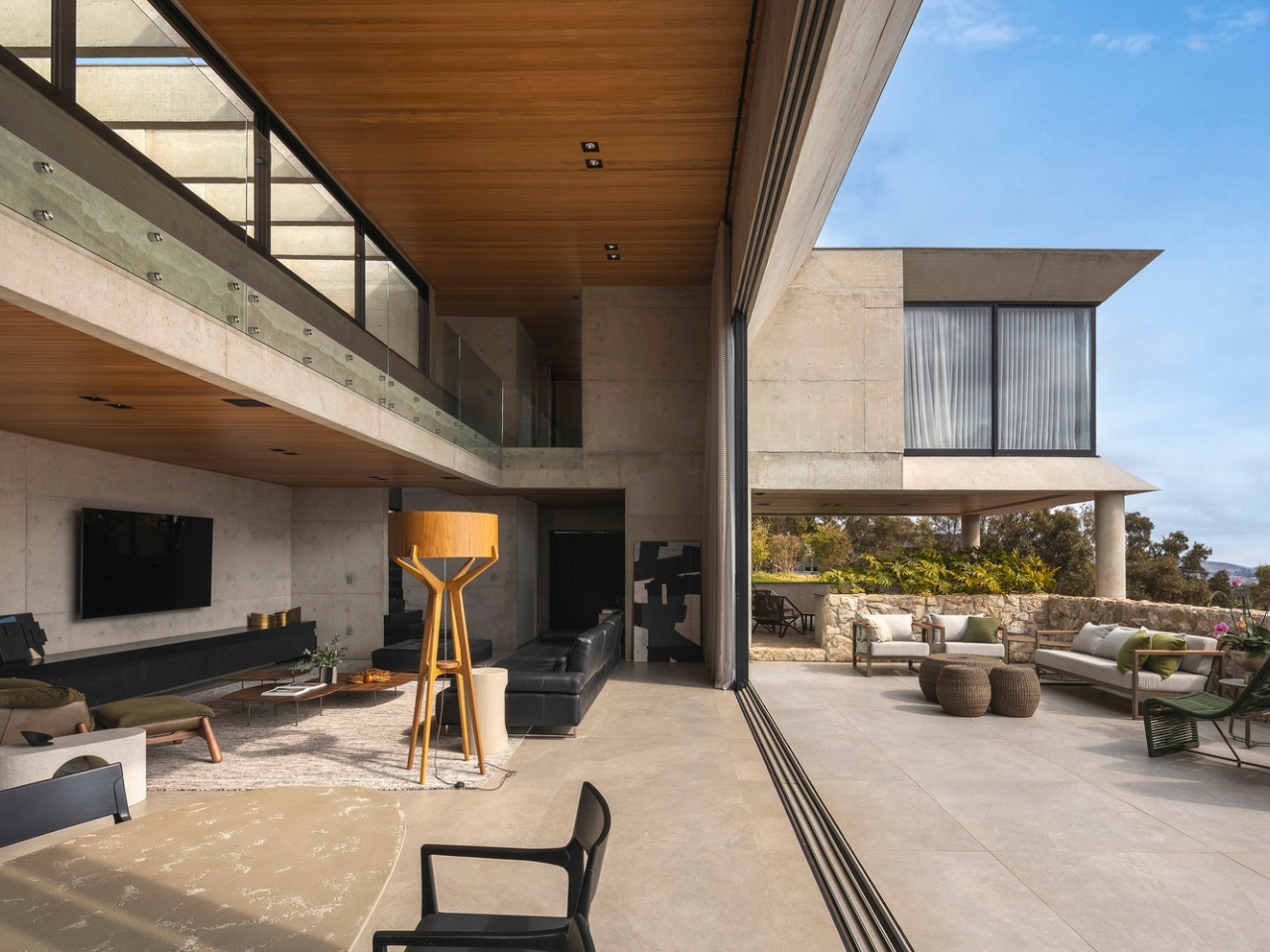
I keep returning to the photographs by Jomar Bragança, because they do something that’s surprisingly hard to do with architecture photography: they make you feel the site. You understand the slope, the heat, the red earth, the valley stretching out below. The light in these images isn’t just flattering, it’s narrative. You get a real sense of why this house sits exactly where it does and why it faces exactly the way it faces.
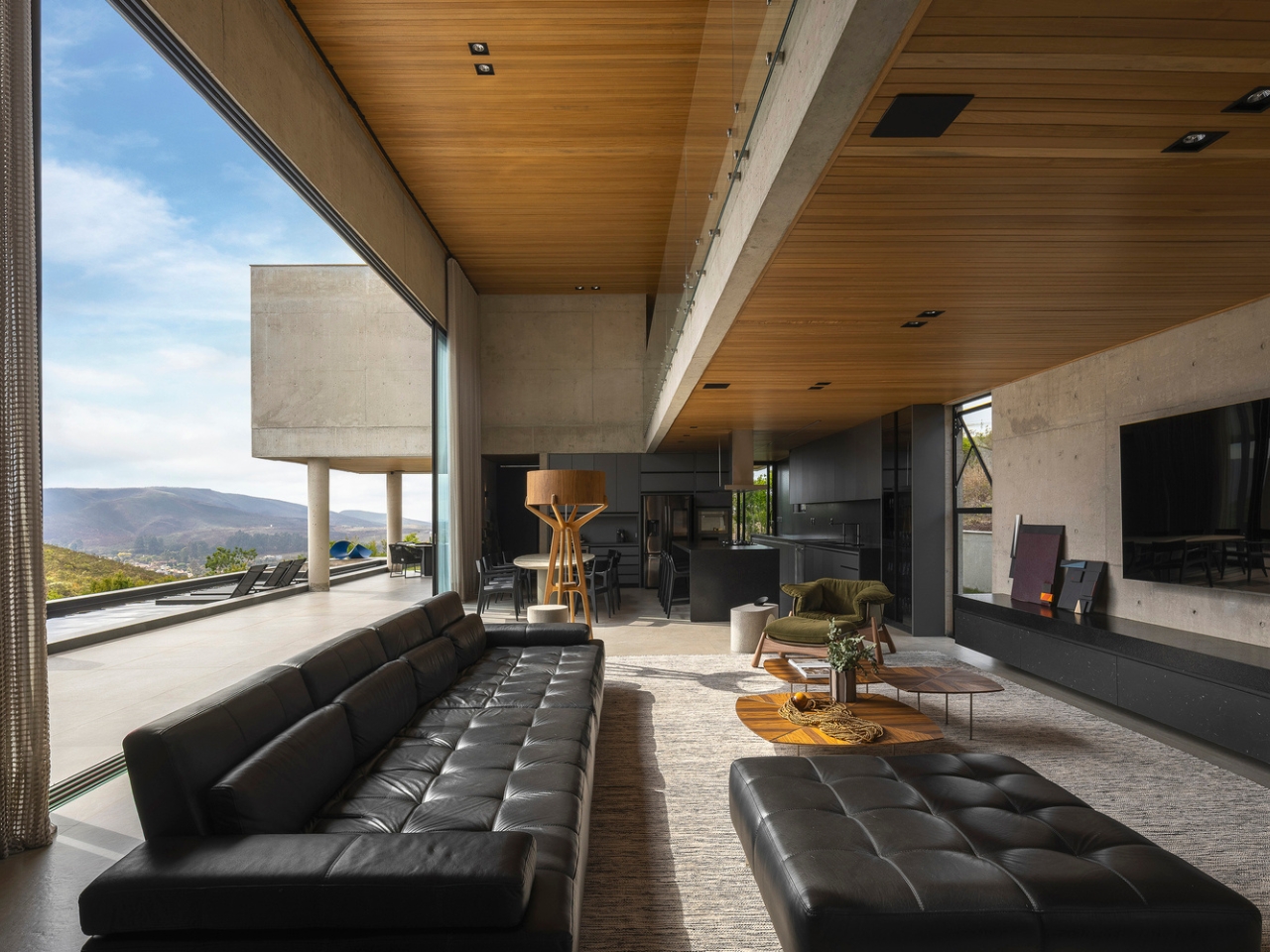
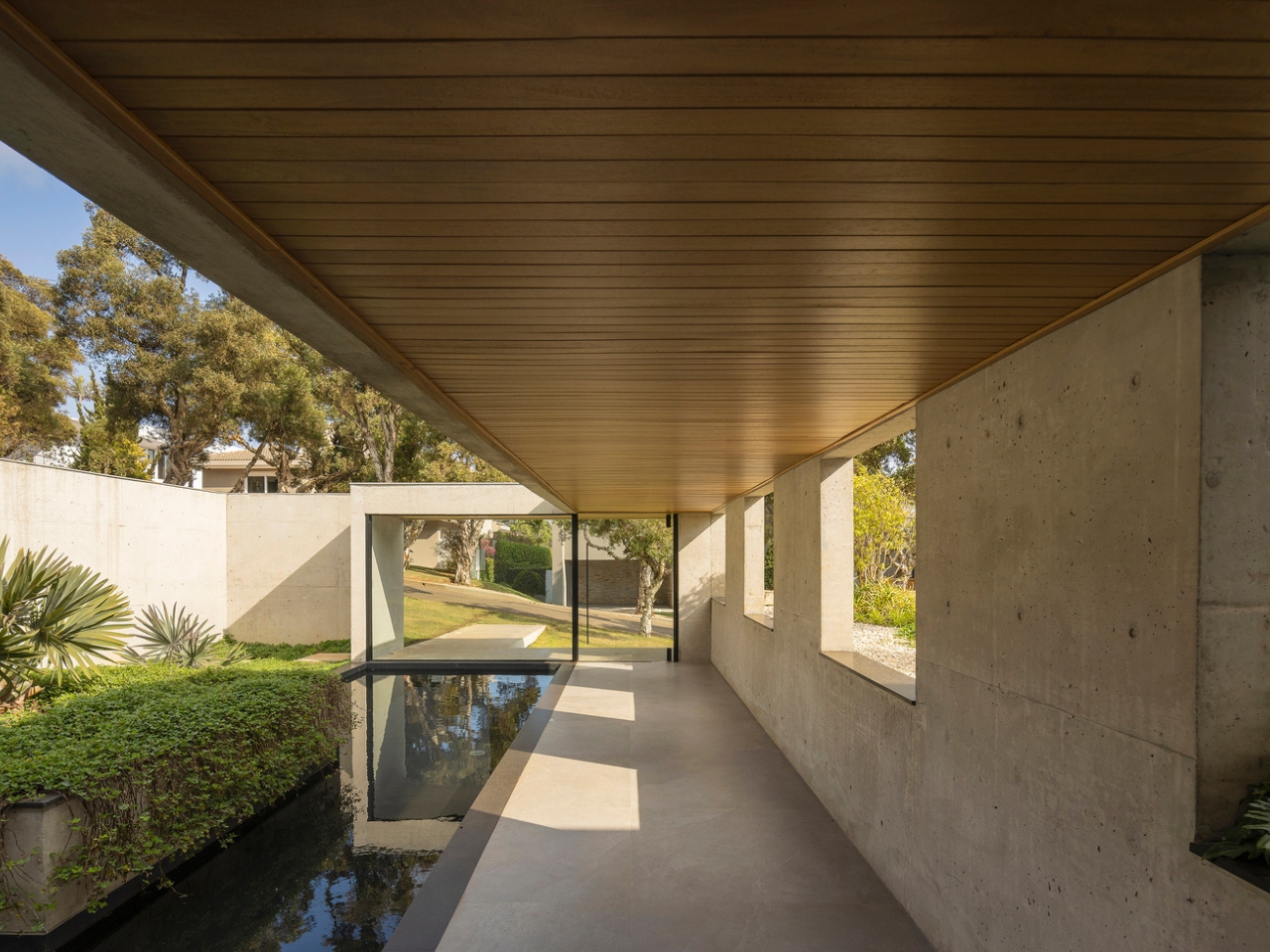
Brazilian contemporary architecture has been having a genuine moment internationally, and projects like GM House make it easy to understand why. It’s not about following a global trend or speaking a universal modernist language. It’s about reading a specific piece of land and responding to it with clarity and confidence. That’s harder than it looks. And when it’s done right, it’s very hard to look away.
The post The Brazilian House That Turns a Hillside Into a Feature first appeared on Yanko Design.