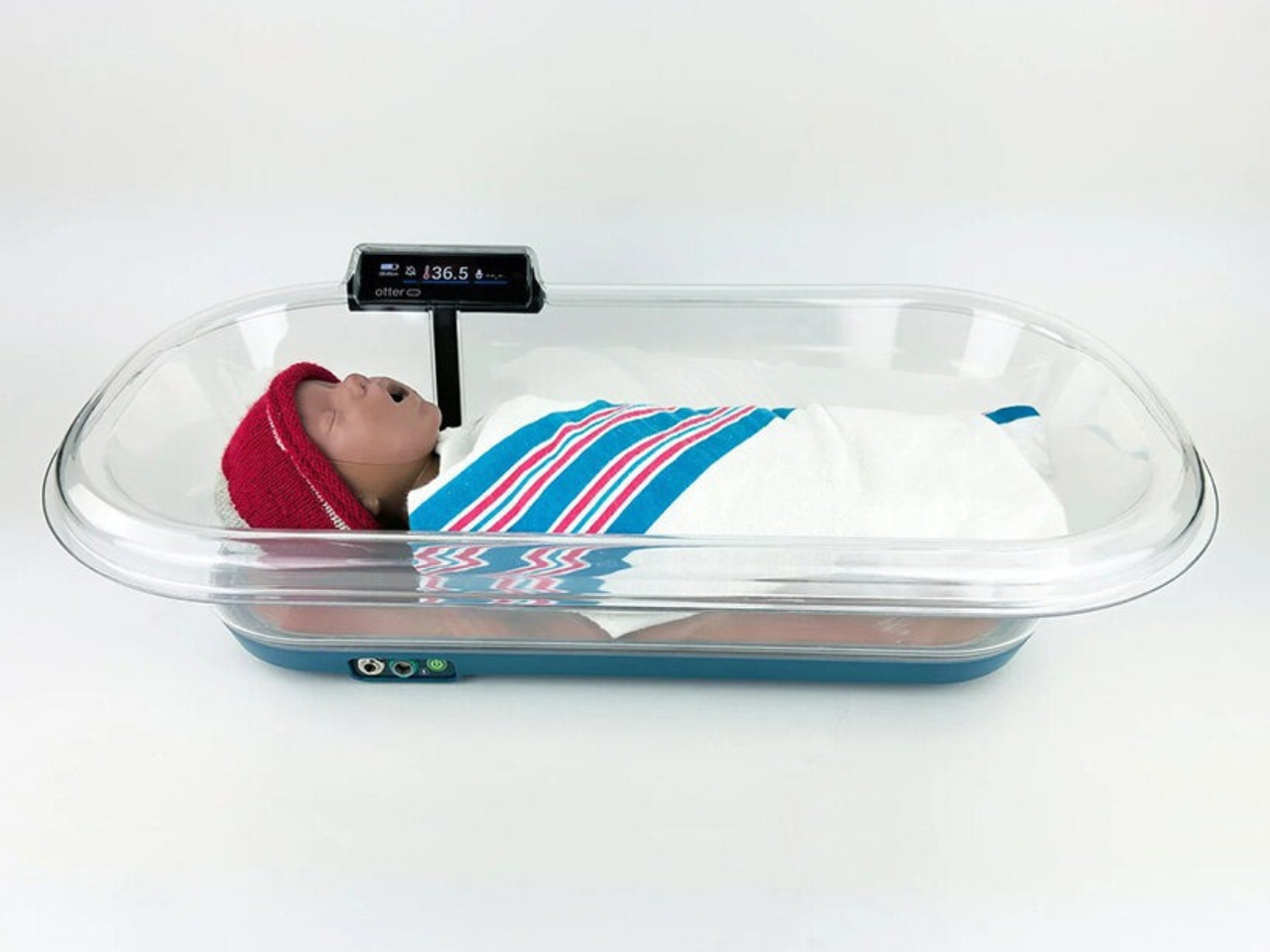
Keeping a newborn warm is a medical necessity, not simply a matter of comfort. In hospitals with unreliable electricity, a power outage can interrupt the equipment meant to provide that warmth. Keeping those devices clean and working adds another challenge when replacement parts are difficult to get. It’s easy to admire sophisticated medical technology, but I’m more interested in a basic question here: how well does it work when the hospital can’t count on the infrastructure around it?
The missing mattress is the detail that makes Otter worth a closer look. Developed by US nonprofit Design that Matters and Vietnamese medical device manufacturer MTTS, this portable newborn warmer is designed for hospitals where electricity is unreliable and maintaining equipment can be difficult. Its job is to help keep newborns warm when the infrastructure supporting their care can’t be counted on.
Designers: Design that Matters and MTTS
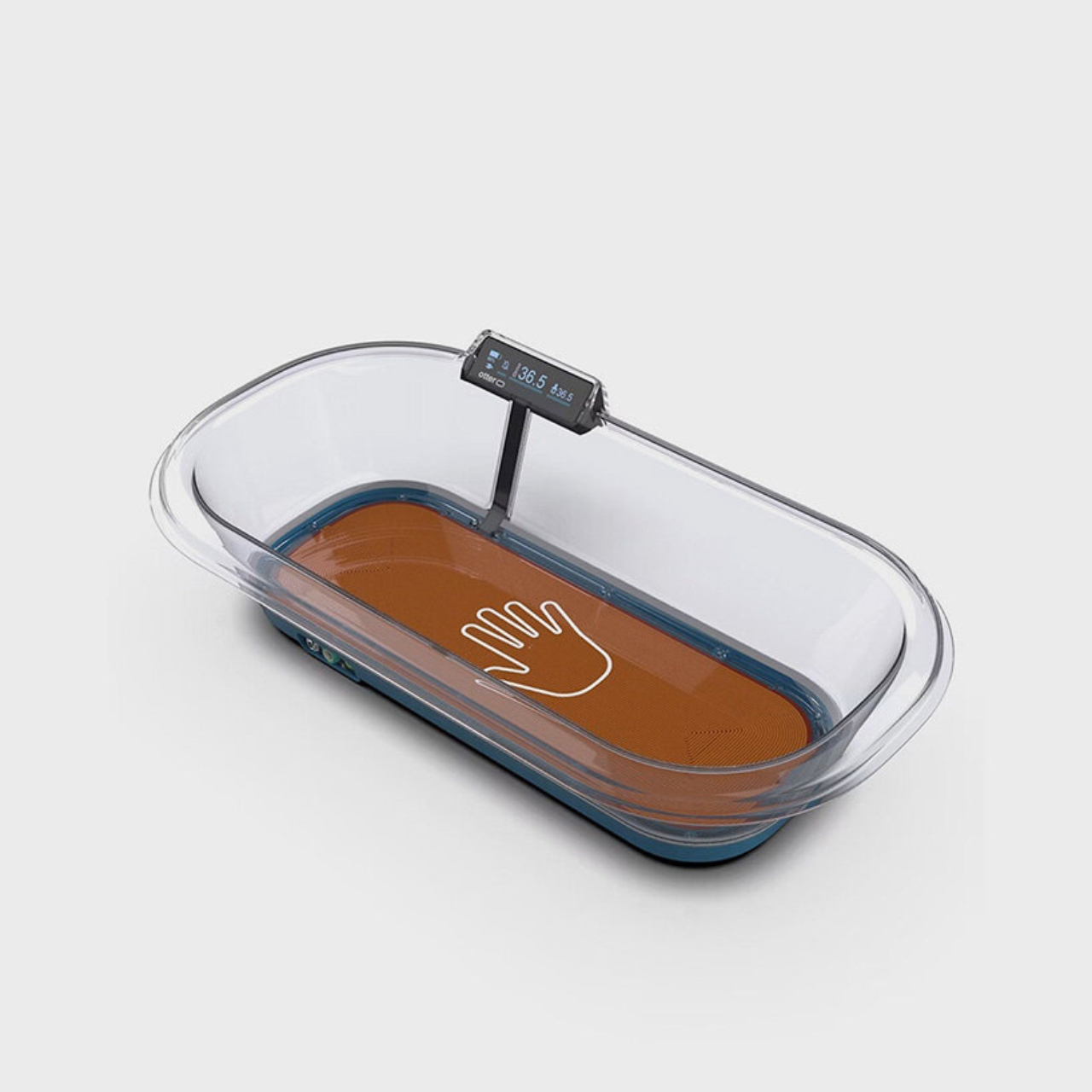
At first glance, Otter looks closer to a clear hospital bassinet than a complicated piece of medical equipment. Rounded transparent walls sit above a dark base, with a compact display perched along the rim. I like that restraint. A caregiver can see the baby and reach inside without a large enclosure getting in the way, a practical consequence of the open design.
The unusual decision is underneath the baby. Many conductive warmers use a removable water or gel mattress to transfer heat. Otter replaces that component with an integrated, heat-conducting polycarbonate bassinet. According to its Seoul Design Award project description, that removes the problem of replacing torn mattresses and reduces opportunities for exposed heating elements and bacteria in seams. It’s a thoughtful piece of editing: change one component, and several maintenance and hygiene problems become easier to manage.
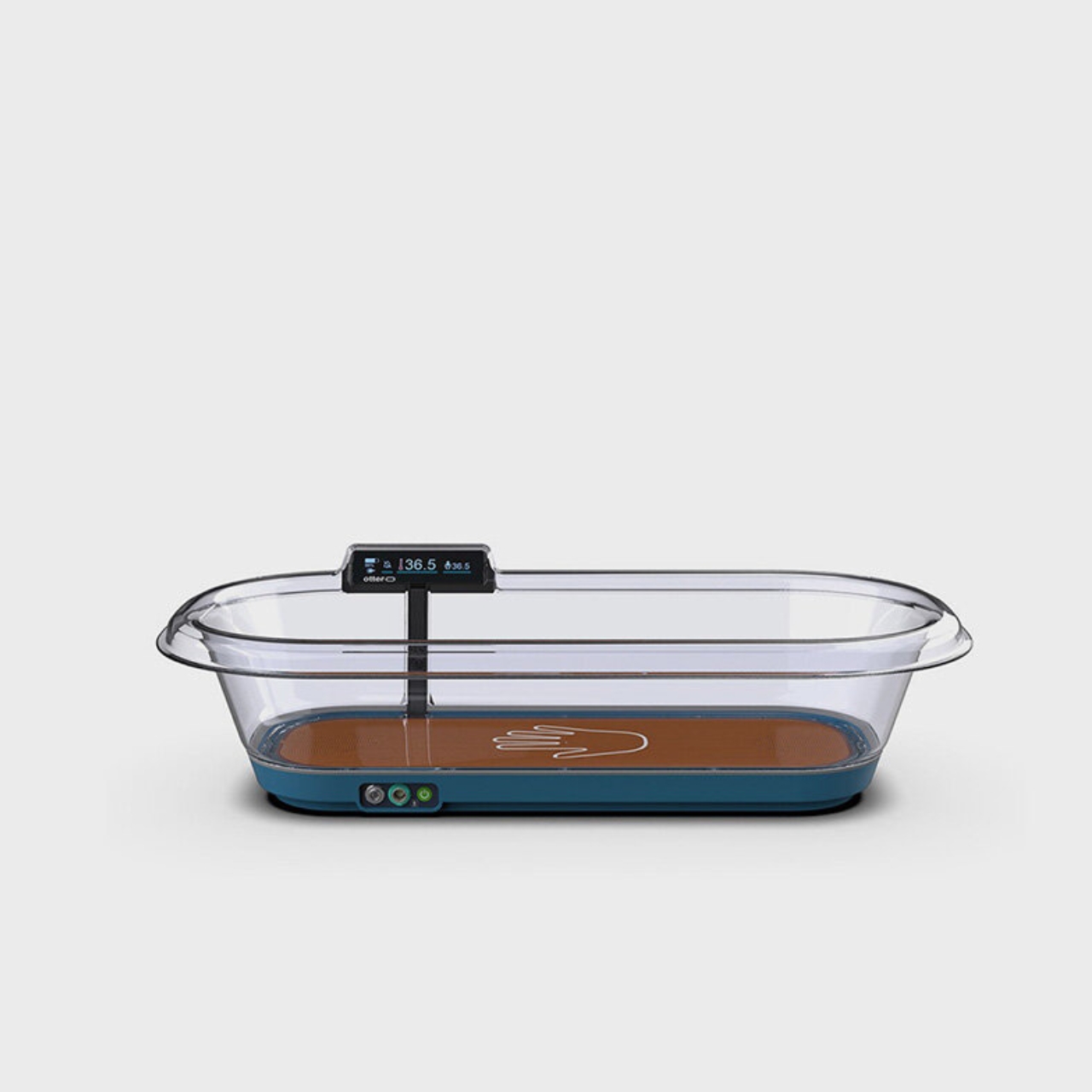
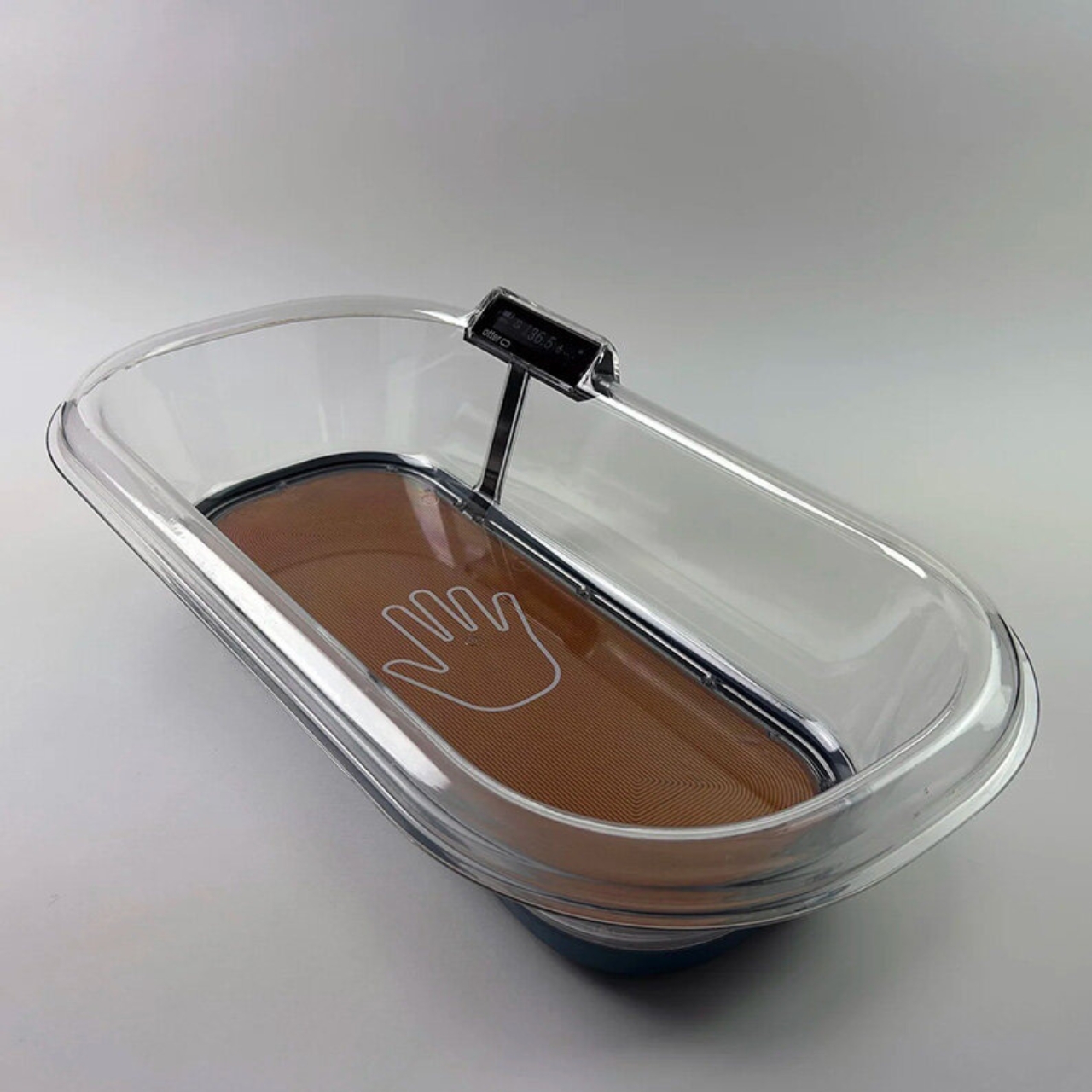
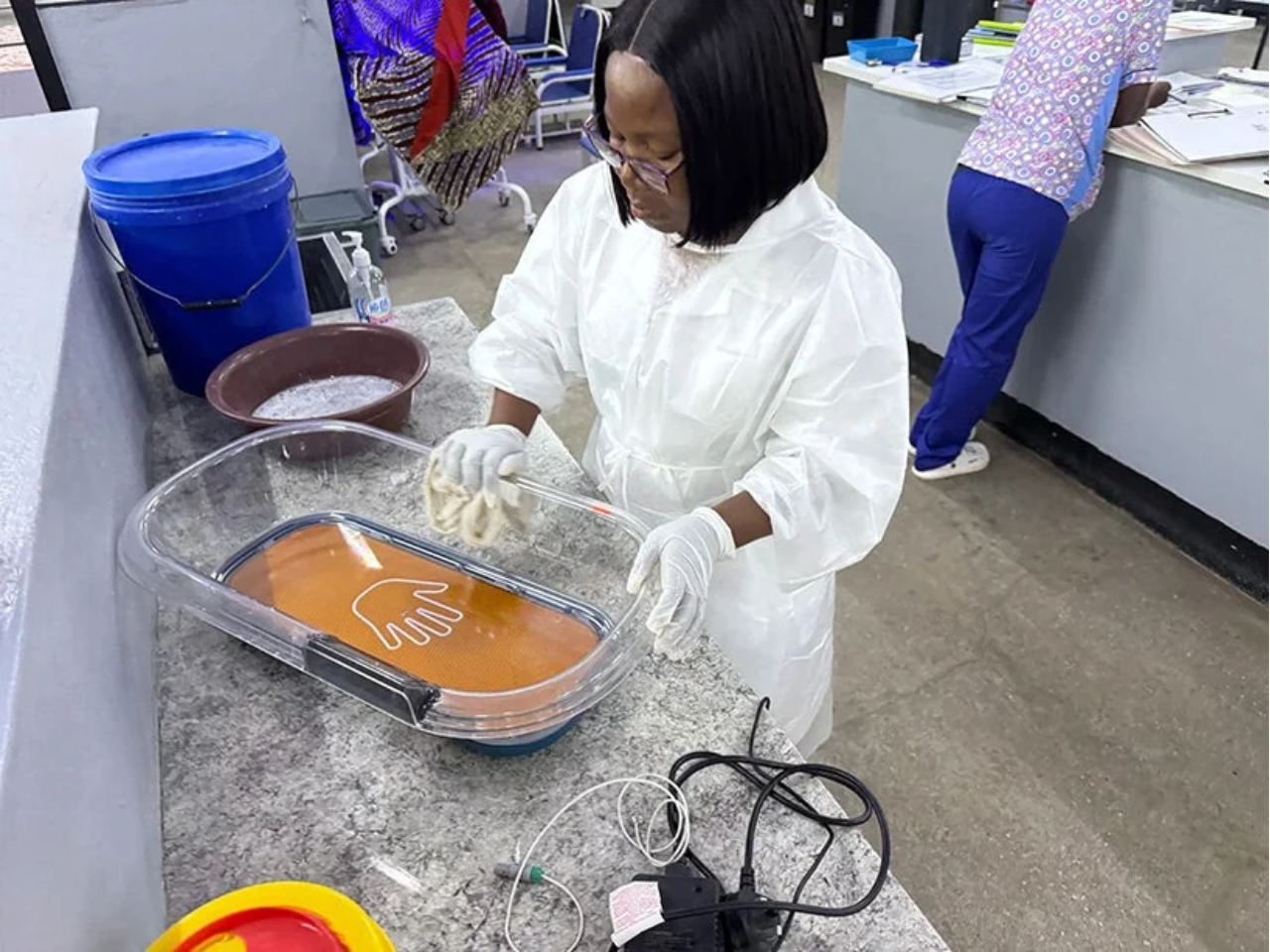
A firm surface might initially seem like an odd choice for a product intended for newborns. Here, though, the reasoning deserves attention. Design that Matters describes a smooth interior without fabric, seams, or gaps, intended to make disinfection easier between patients. That doesn’t prove fewer infections, and cleaning still has to happen. But designing a surface around the person responsible for cleaning it feels like a particularly useful kind of empathy.
The battery addresses another interruption: losing power. MTTS’s manual says backup power activates automatically when the AC supply stops, with operating time dependent on the number of battery cells installed. That automatic handover matters because it removes a task at an already disruptive moment. Otter still needs recharging, so this is temporary independence from the outlet, not an indefinitely off-grid system. The manufacturer lists its weight with batteries at about 11 pounds.
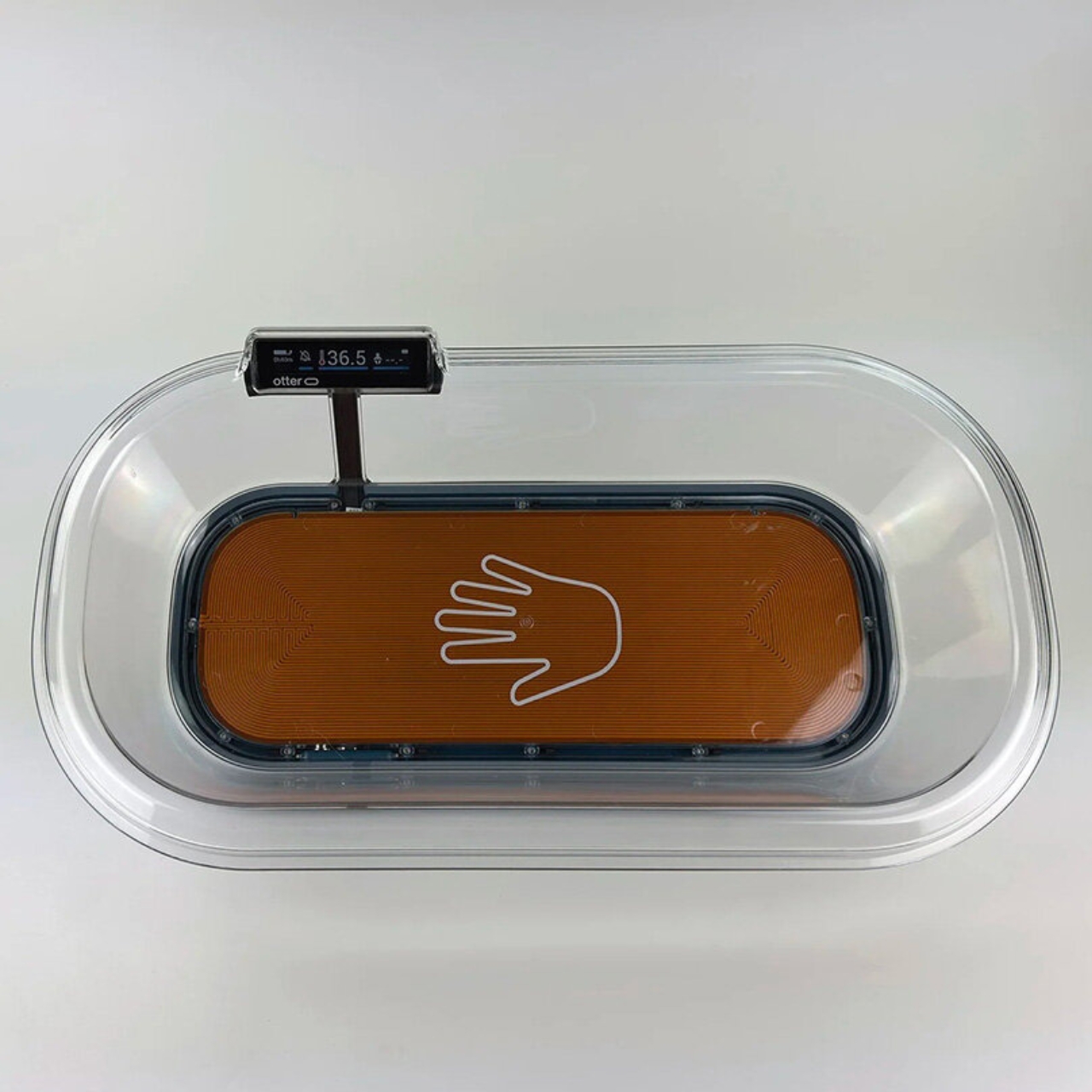
The controls follow a similarly practical logic. The display provides temperature information and battery status, while an optional skin probe adds patient skin-temperature monitoring. MTTS also lists alarms for heater, sensor, and power failures. I’m more interested in that information being available than in how sophisticated the interface looks. A screen earns its space here by helping staff understand whether the warmer is doing its job and when attention is needed.
Otter also has a role alongside skin-to-skin care. Design that Matters documents its use in Zambia to provide supplemental warming while a mother takes a break from kangaroo mother care. That context makes the product feel more considered to me. A mother needs time to wash, use the bathroom, or rest, and those ordinary needs belong in the design brief. Equipment should accommodate the people providing care as well as the patient receiving it.
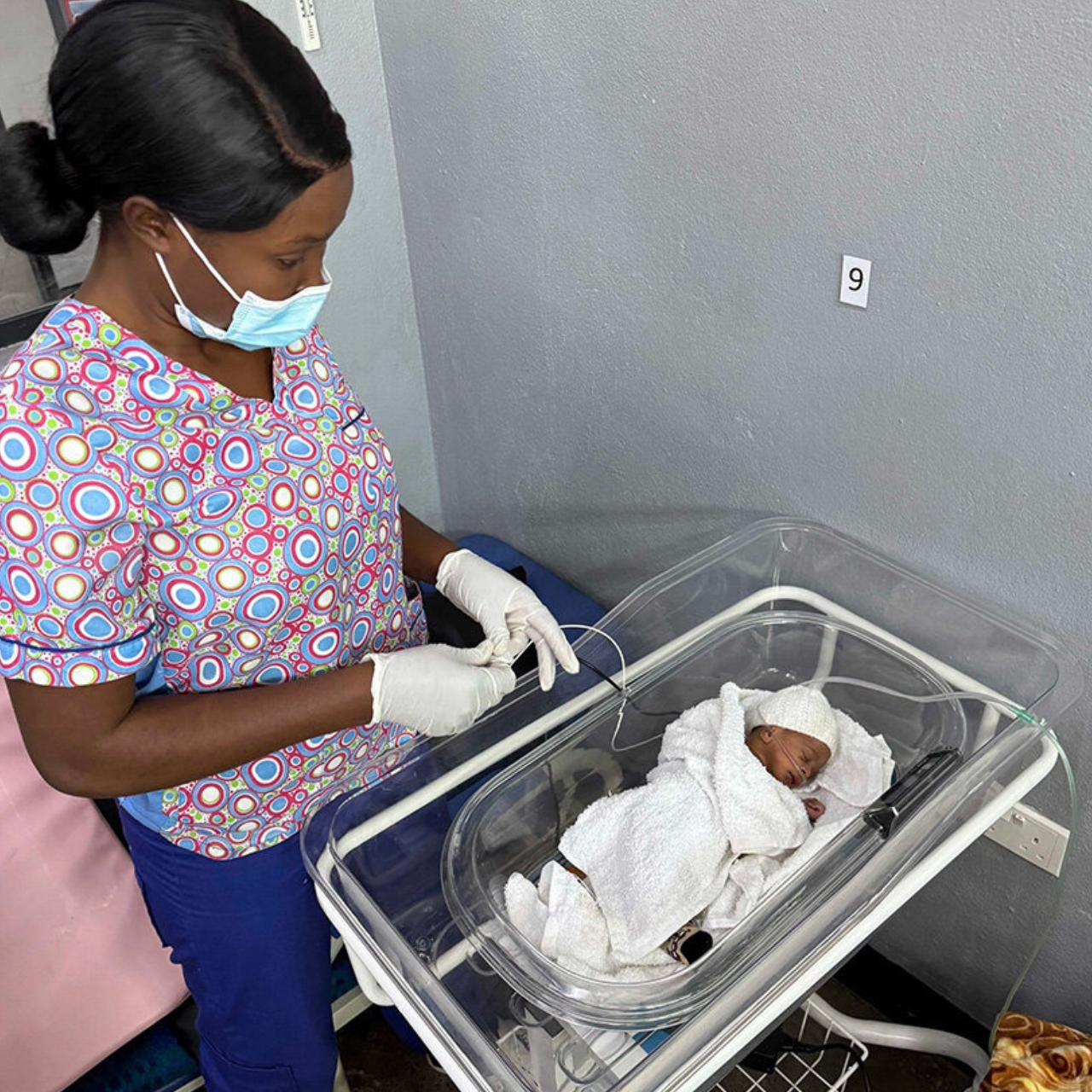
None of this makes Otter a home nursery accessory or a substitute for clinical judgment. Its manual specifies operation by qualified personnel, regular checks of the baby’s temperature, and precautions against overheating and burns. Those limits are important precisely because the object looks so approachable. Simpler equipment can make a task easier to perform, but it doesn’t make newborn care a simple task.
Otter is already beyond the concept stage. Design that Matters reports deployment in Vietnam, Zambia, and the Philippines, with more than 800 newborns treated as of January 2026. It also received the 2026 Seoul Design Award Grand Prize. The recognition is welcome, but the more persuasive design argument is in the details: a mattress that doesn’t need replacing, a surface made for cleaning, and backup power that takes over automatically. I’d rather see ingenuity spent on those interruptions than on another feature a busy caregiver has to learn.
The post Otter Keeps Newborns Warm Without a Reliable Power Supply first appeared on Yanko Design.