Most parks follow a familiar formula: some benches, a jogging path, maybe a playground, and if you’re lucky, a fountain. They’re functional, sure, but they rarely feel like they were designed with any real conviction. Orchestra Park in Kunshan, China, by local studio SoBA, is a different kind of project altogether. It’s one of those rare public spaces that actually earns its name.
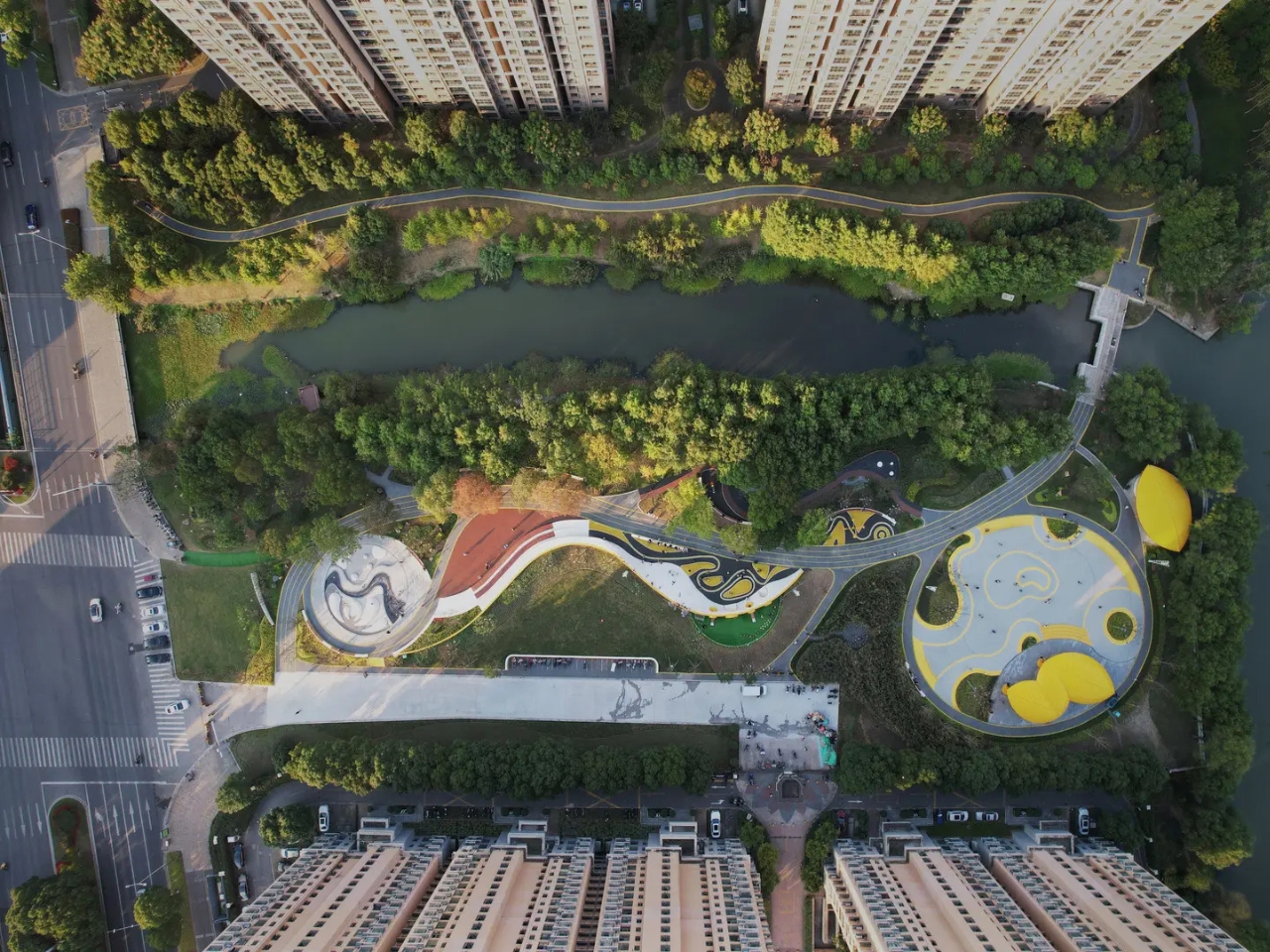
The park sits in the Huaqiao Economic Development Zone, tucked between two high-density residential neighborhoods at the confluence of two rivers, covering 8,500 square meters. On paper, it sounds modest. In reality, it’s the kind of project that makes you wonder why more cities aren’t doing this.
Designer: SoBA
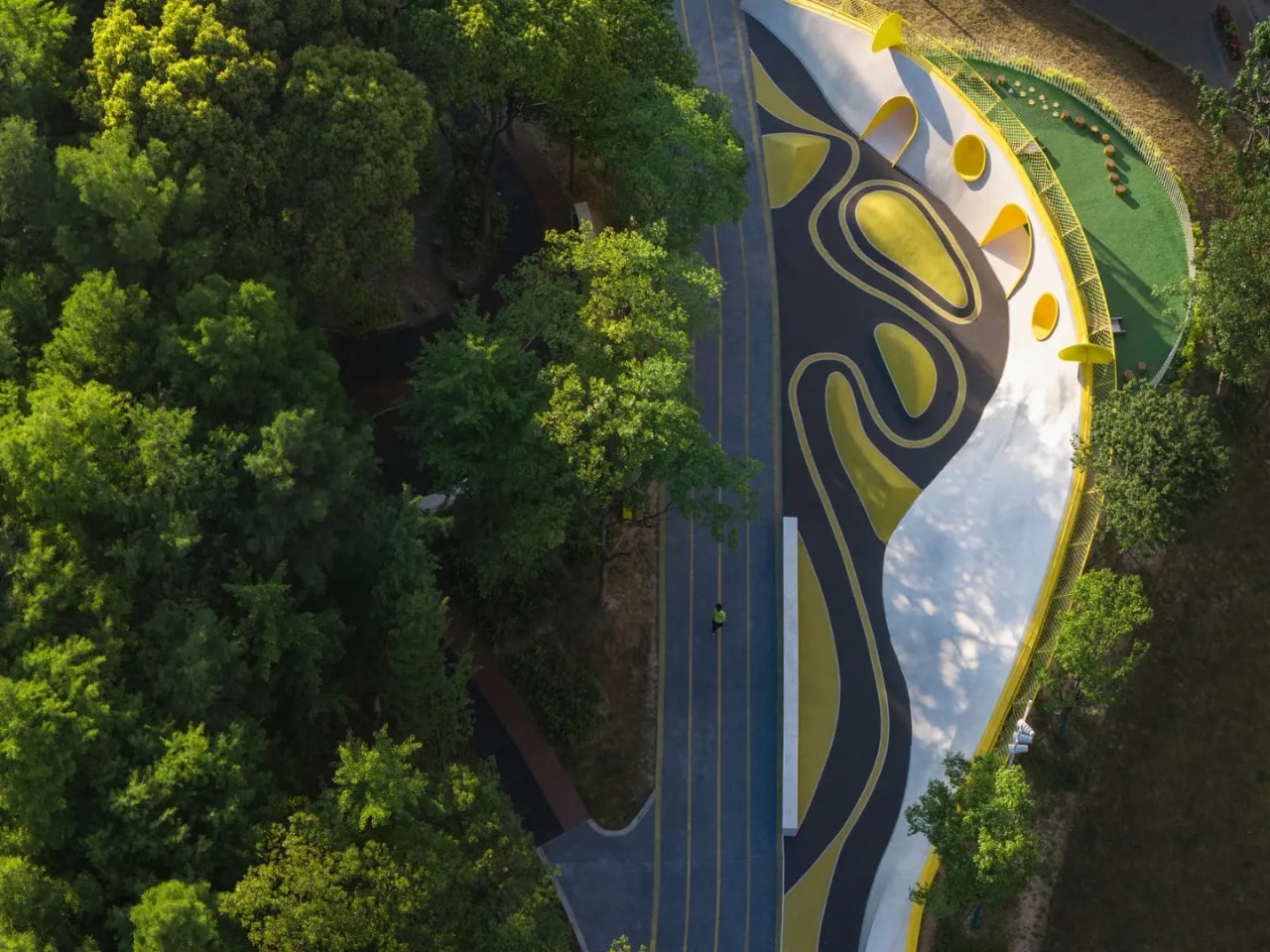
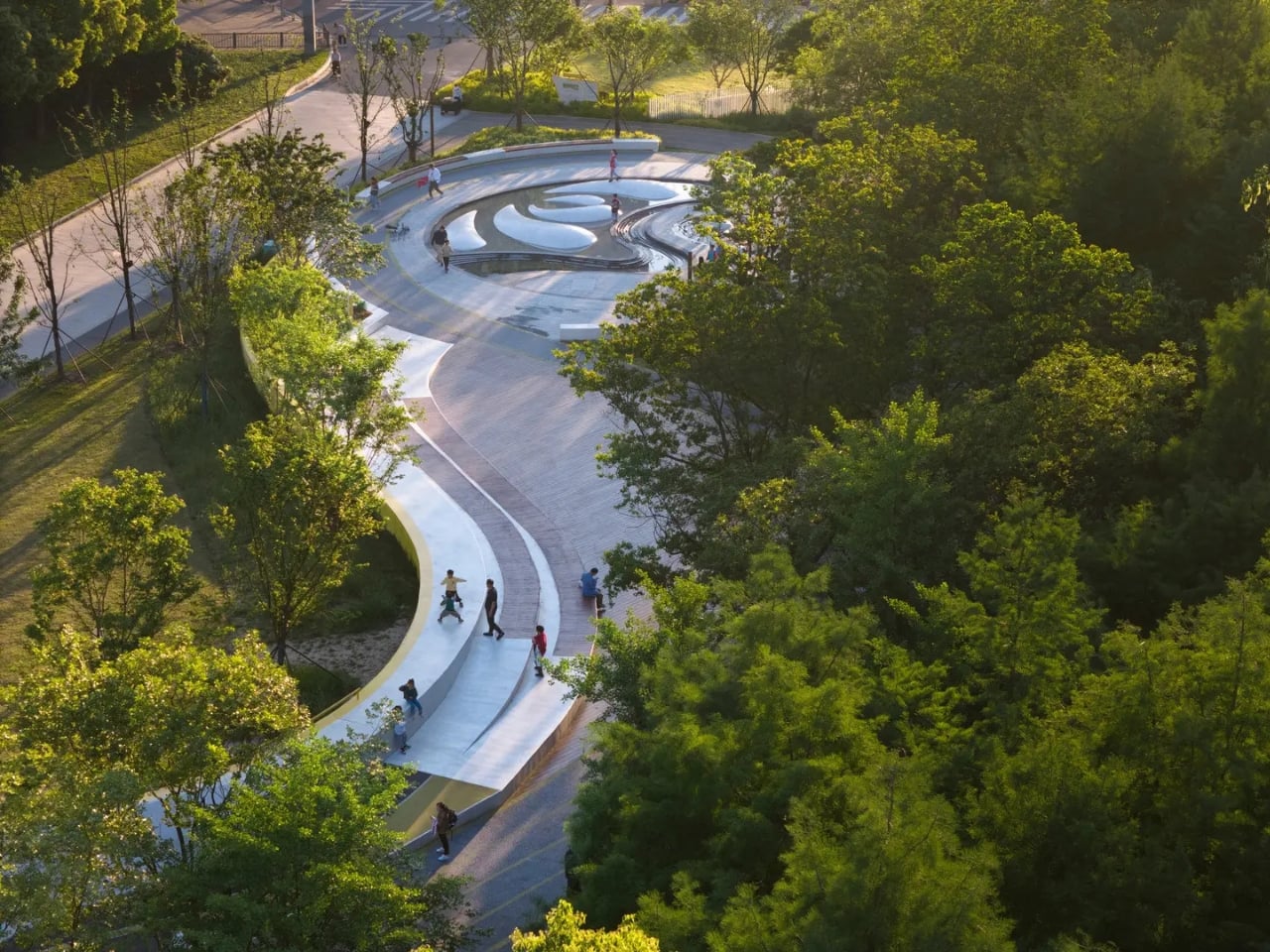
The entire design draws from sizhu music, a traditional form of Jiangnan Silk and Bamboo music recognized as part of the area’s intangible cultural heritage. Played on instruments like the bamboo flute and erhu, sizhu is known for its graceful, flowing melodies. SoBA took that quality literally, translating the music’s “curves and rhythm” directly into the park’s physical forms. The jogging path follows the curves of musical instruments. The layout flows rather than divides. Scattered throughout are interactive, trumpet-like music installations that double as sculptural features. It’s the kind of design move that could easily feel gimmicky, but here it reads as genuinely considered.
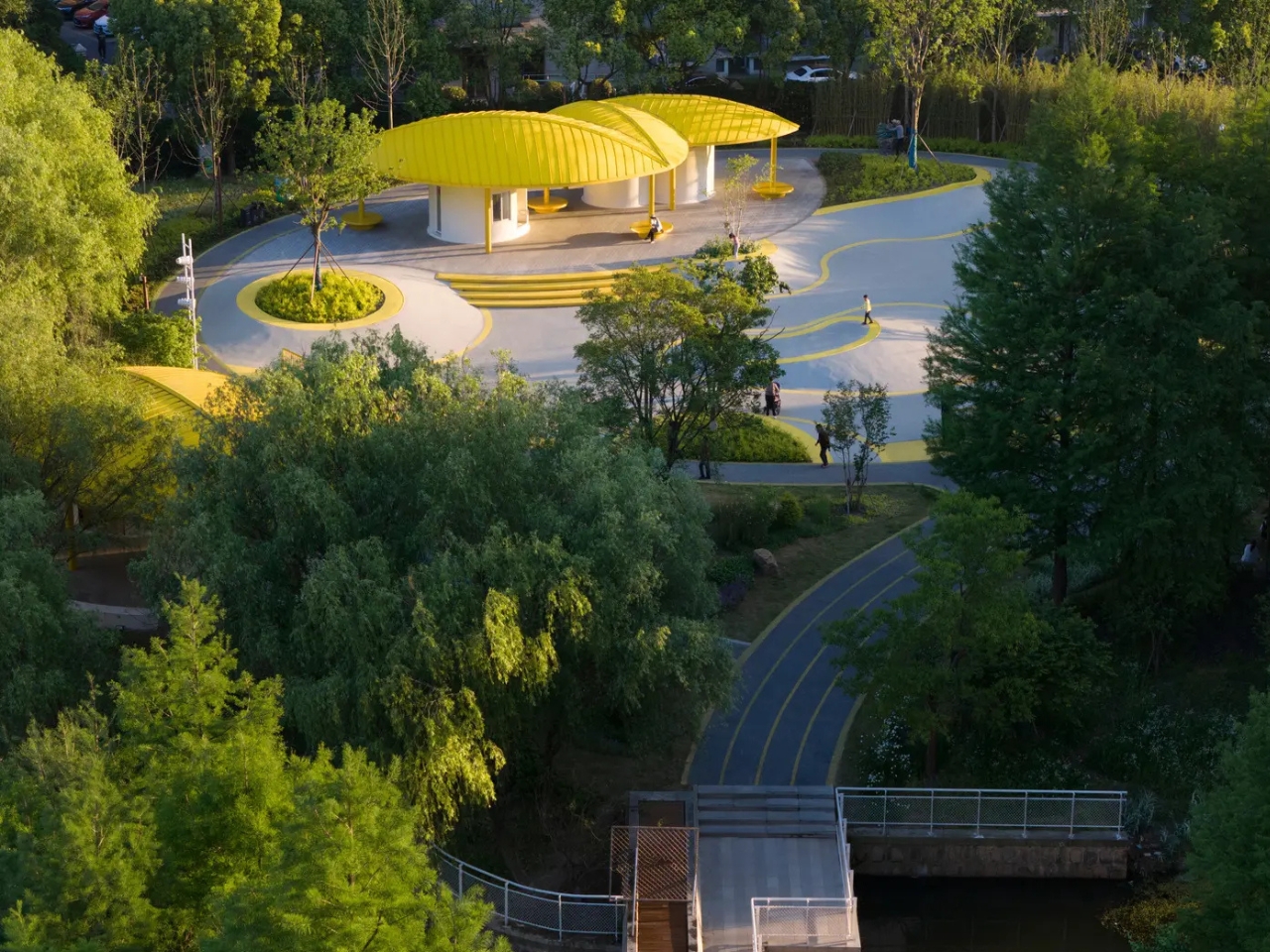
What makes it work, I think, is the restraint. SoBA’s founding partner Ruo Wang described the challenge as integrating park facilities “without disrupting the ecological balance.” The site already had mature camphor and dawn redwood trees, as well as nearby wetlands, and the team made a deliberate choice to keep those elements intact rather than clearing the slate for something new and shiny. That’s not a small thing. That decision alone separates Orchestra Park from a lot of contemporary public projects that bulldoze their context in the name of design.
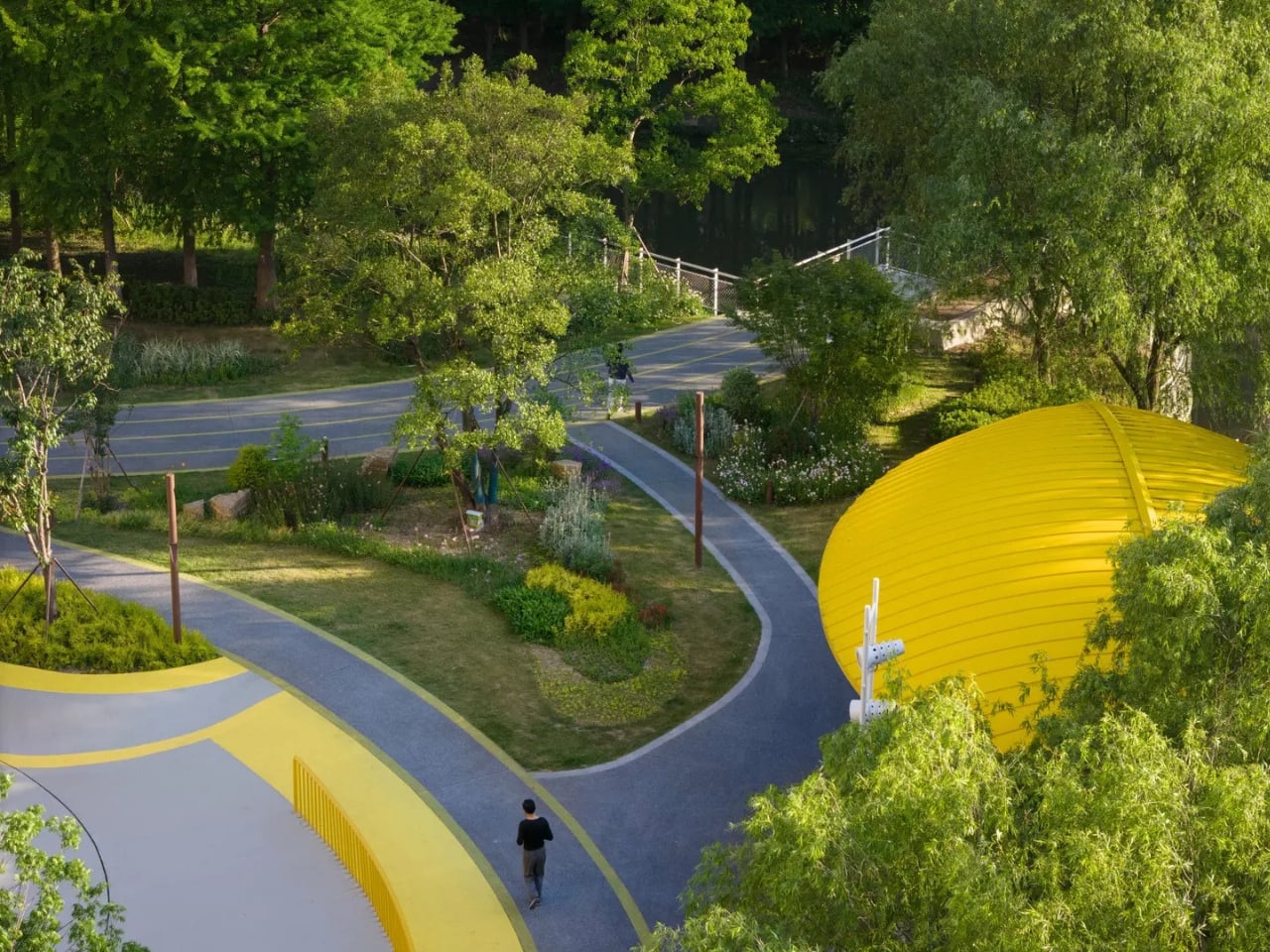
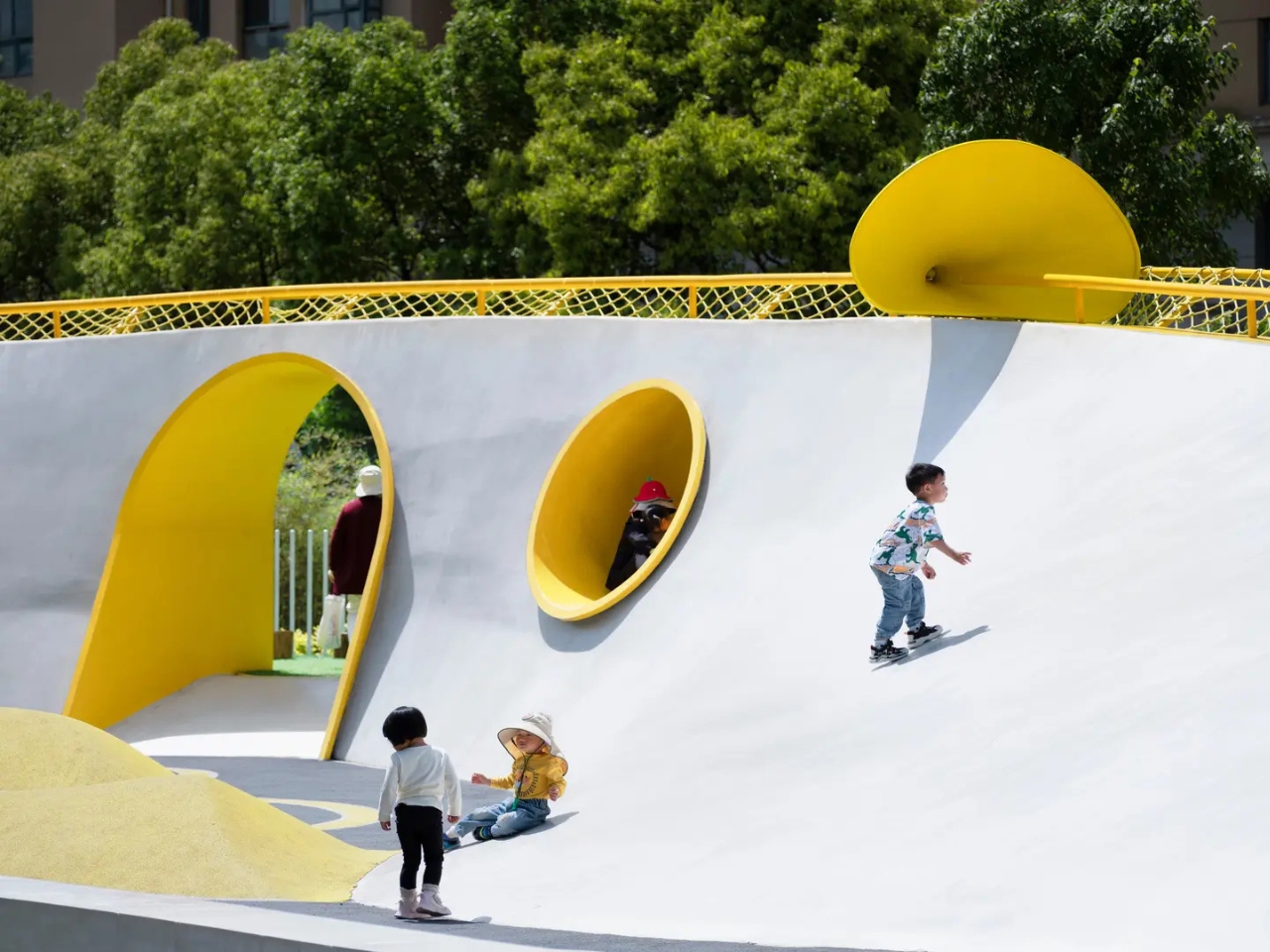
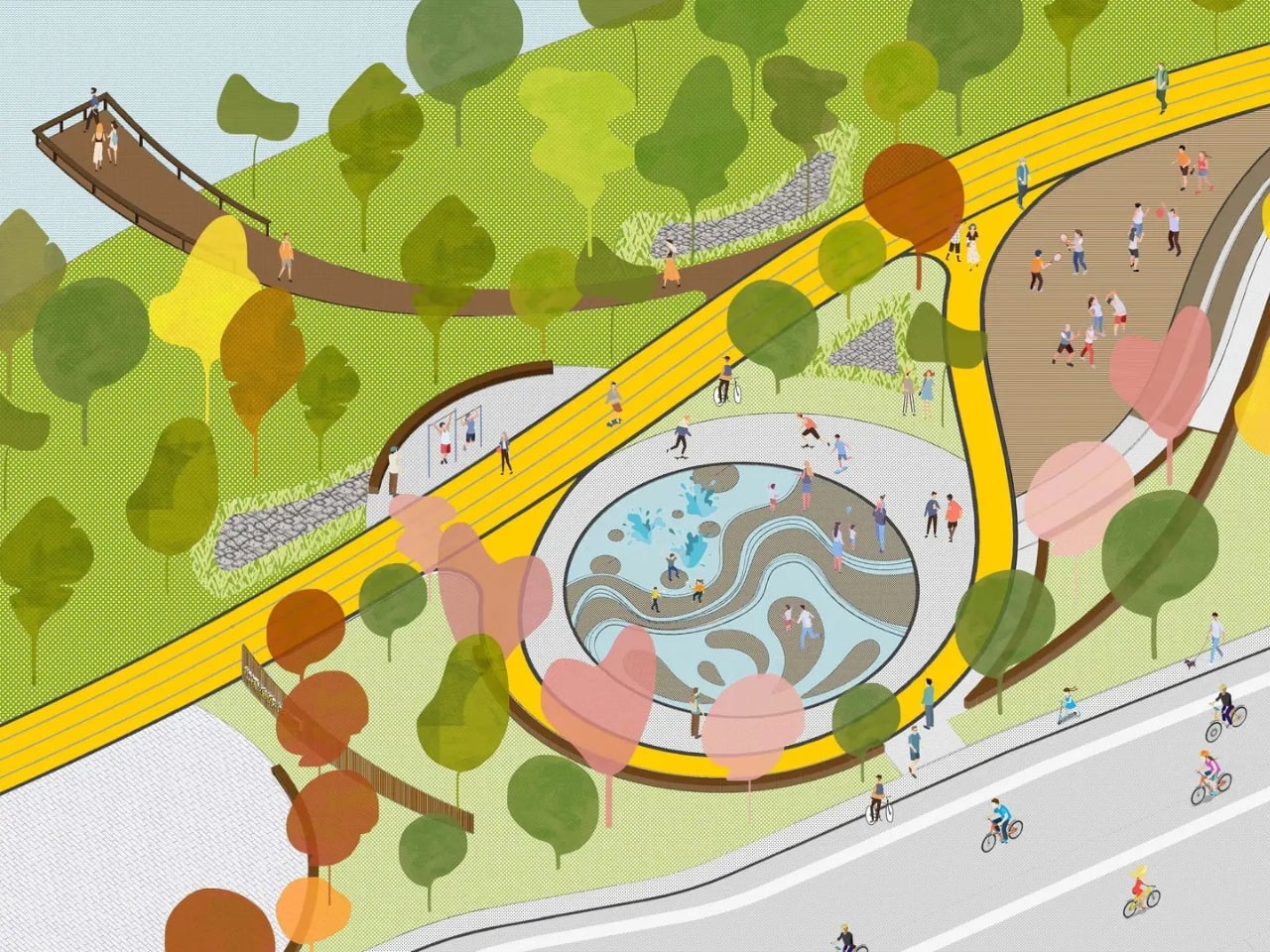
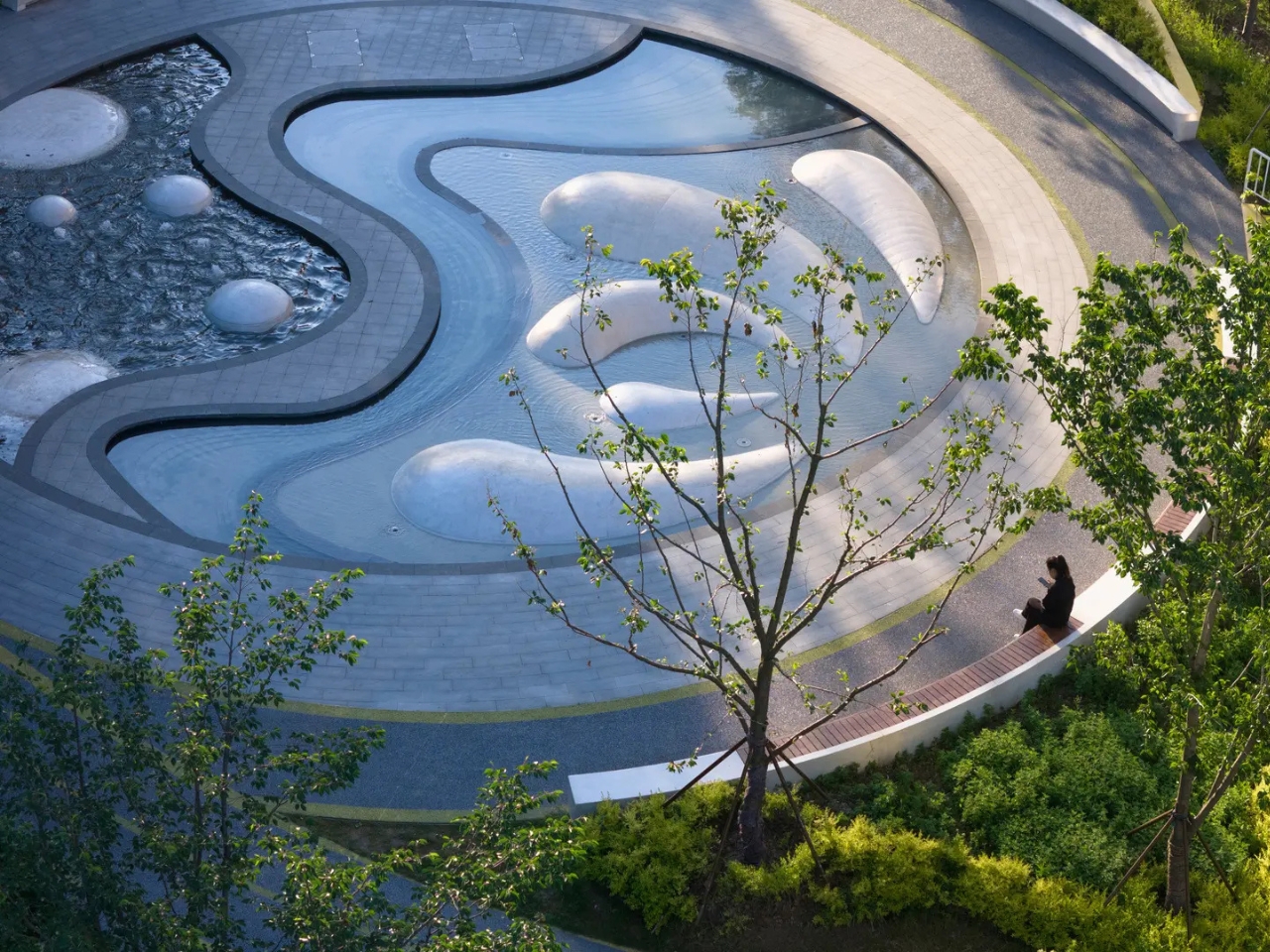
The spatial program is surprisingly layered for something under a hectare. There’s a skatepark, a climbing area, a fitness playground, an open-air theater, bamboo grove pathways, a musical fountain plaza, and a small music classroom. A viewing platform extends out over the wetland at the northwest corner, and a small bridge leads to a winding path that loops the entire park and connects back to the surrounding neighborhoods. It’s a lot to pack in, and yet nothing about the space feels cluttered. The geometry is precise, combining straight lines and tangent arcs to create what the team describes as a “fluid yet rational form.”
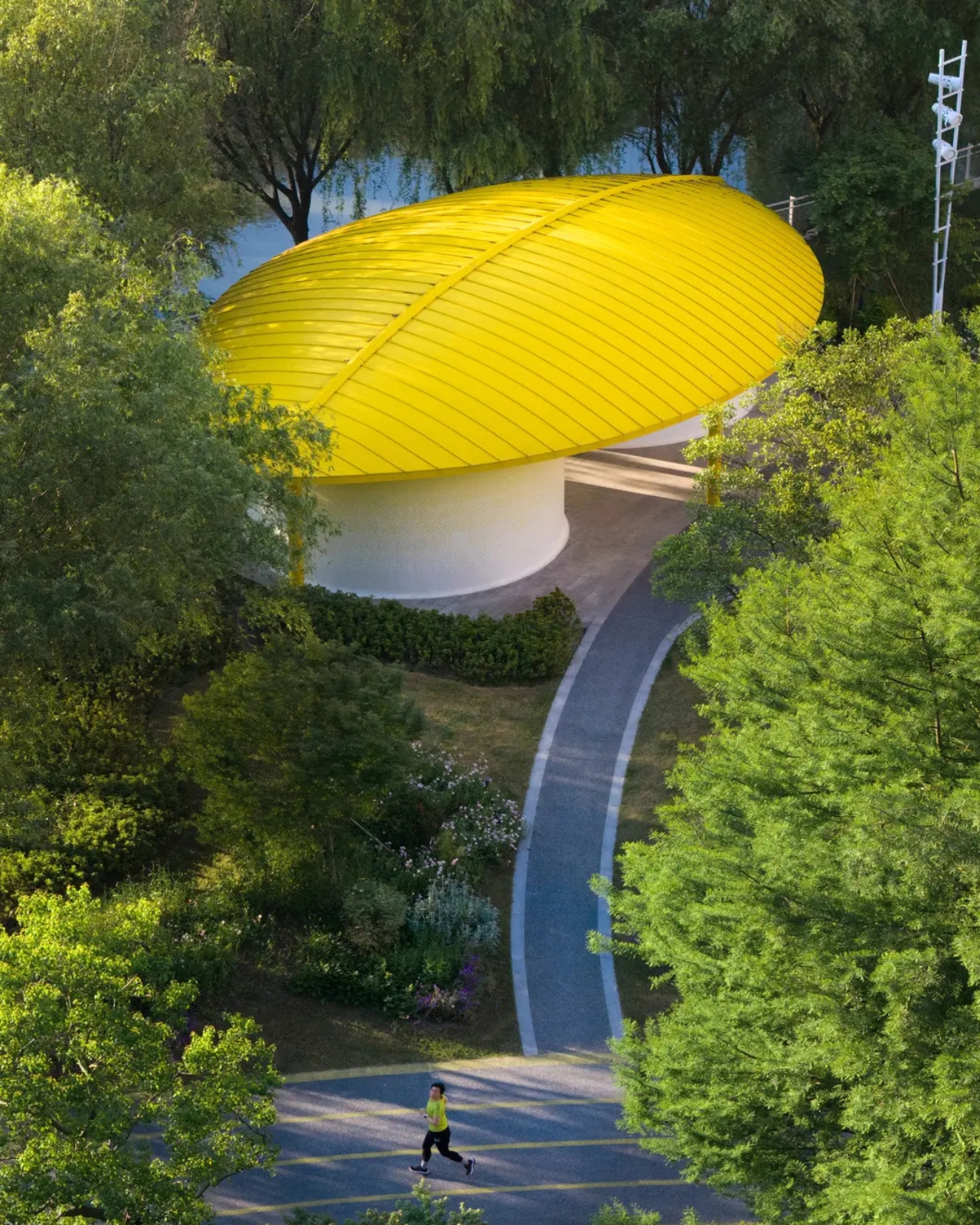
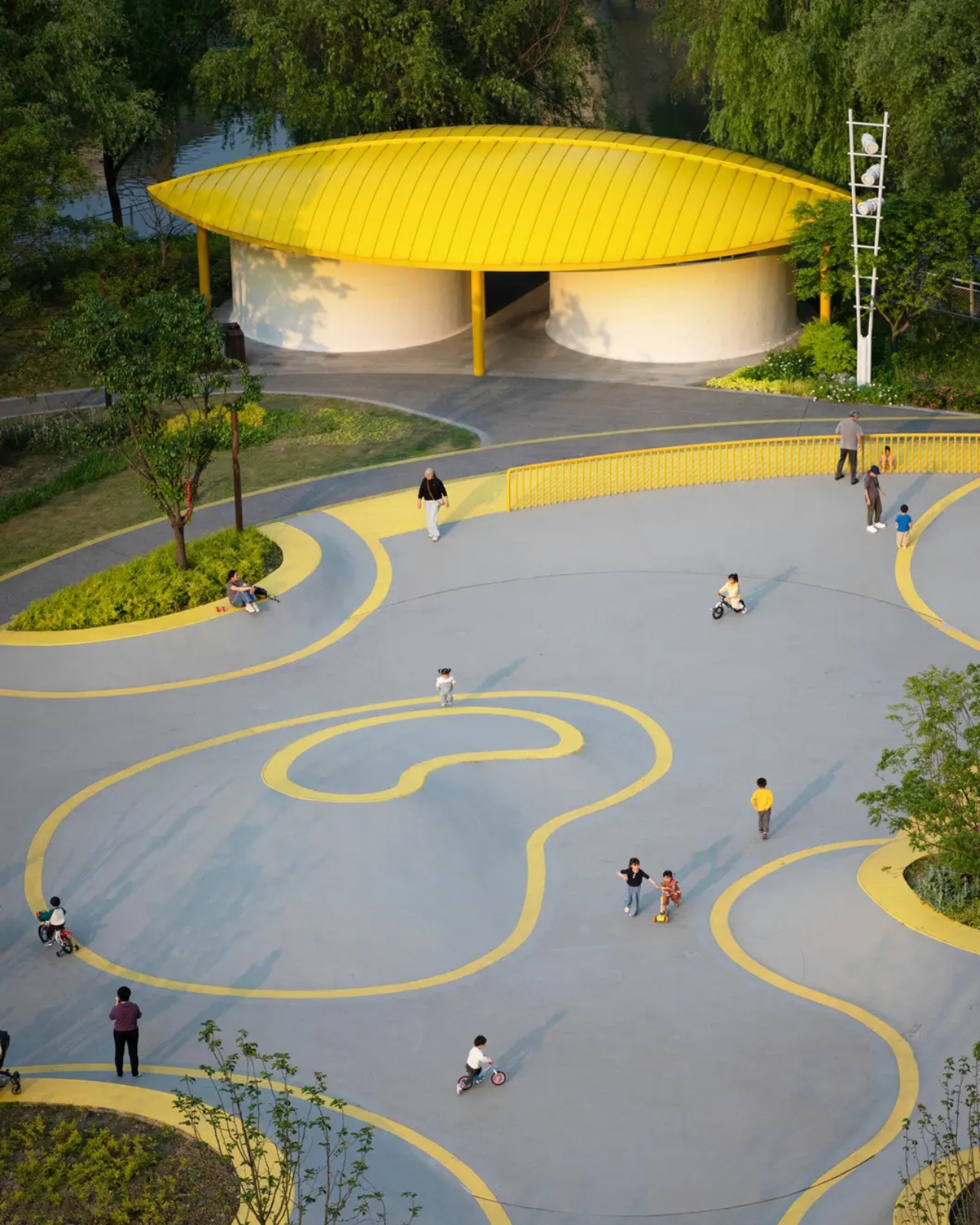
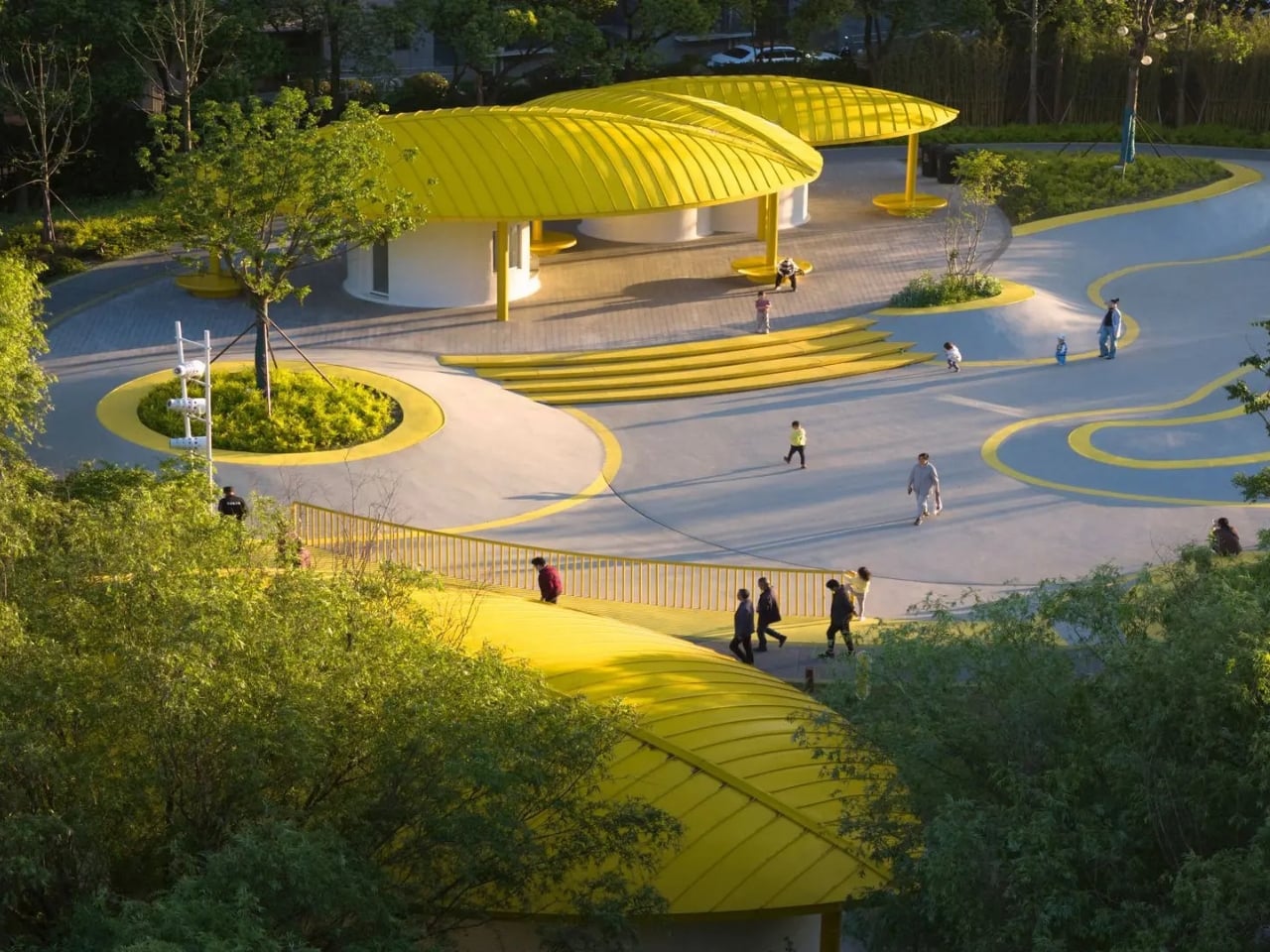
And then there’s the yellow. Bright, saturated, impossible to ignore. SoBA used it as an accent throughout: on the music installations, balustrades, planters, the lines of the running track, and a series of tunnels punched through a curved wall. It’s an unapologetically bold choice in a project that otherwise prioritizes softness and nature, and it works precisely because of that contrast. The yellow pulls you through the park like a visual thread, giving the space both coherence and energy. At the eastern end, cylindrical restroom structures are topped with leaf-shaped aluminum canopies, also yellow. Even the infrastructure has a personality here.
SoBA operates under a philosophy they call “Soft Build,” which emphasizes agility, sensitivity, and inclusiveness. That framing might sound like the kind of thing you’d read in an architecture brief and promptly forget, but Orchestra Park genuinely backs it up. The space serves children, skaters, fitness enthusiasts, music lovers, and people who just want to sit near trees. It doesn’t force a single narrative onto its users. That kind of openness is harder to design than it looks.
Public parks are often where design ambition goes to die, buried under budget constraints, committee approvals, and the pressure to please everyone at once. Orchestra Park sidesteps that fate by doing something deceptively simple: it starts with a cultural idea, commits to it fully, and lets everything else follow. The result is a park that doesn’t just serve its community. It reflects it.
The post How a Park in China Made Public Space Feel Human first appeared on Yanko Design.