The robotics industry has a curious reputation problem. The machines getting the most attention, walking bipeds that do backflips, aren’t the ones driving real business value. By 2030, professional service robots are projected to account for $90 billion of a $161 billion global market, growing at 24.6% annually. That makes them the fastest-growing segment in robotics, which is a fact that barely makes the news.
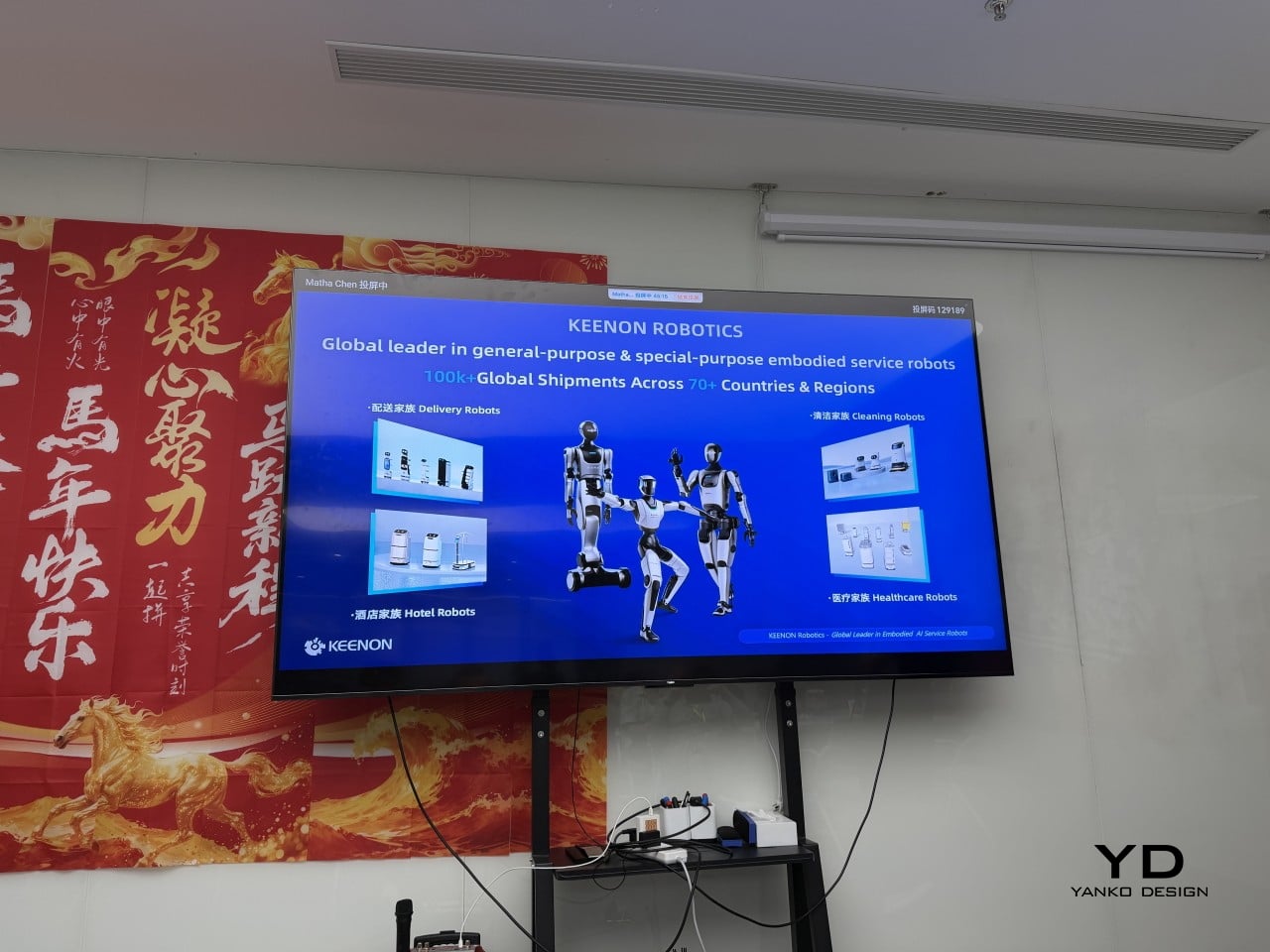
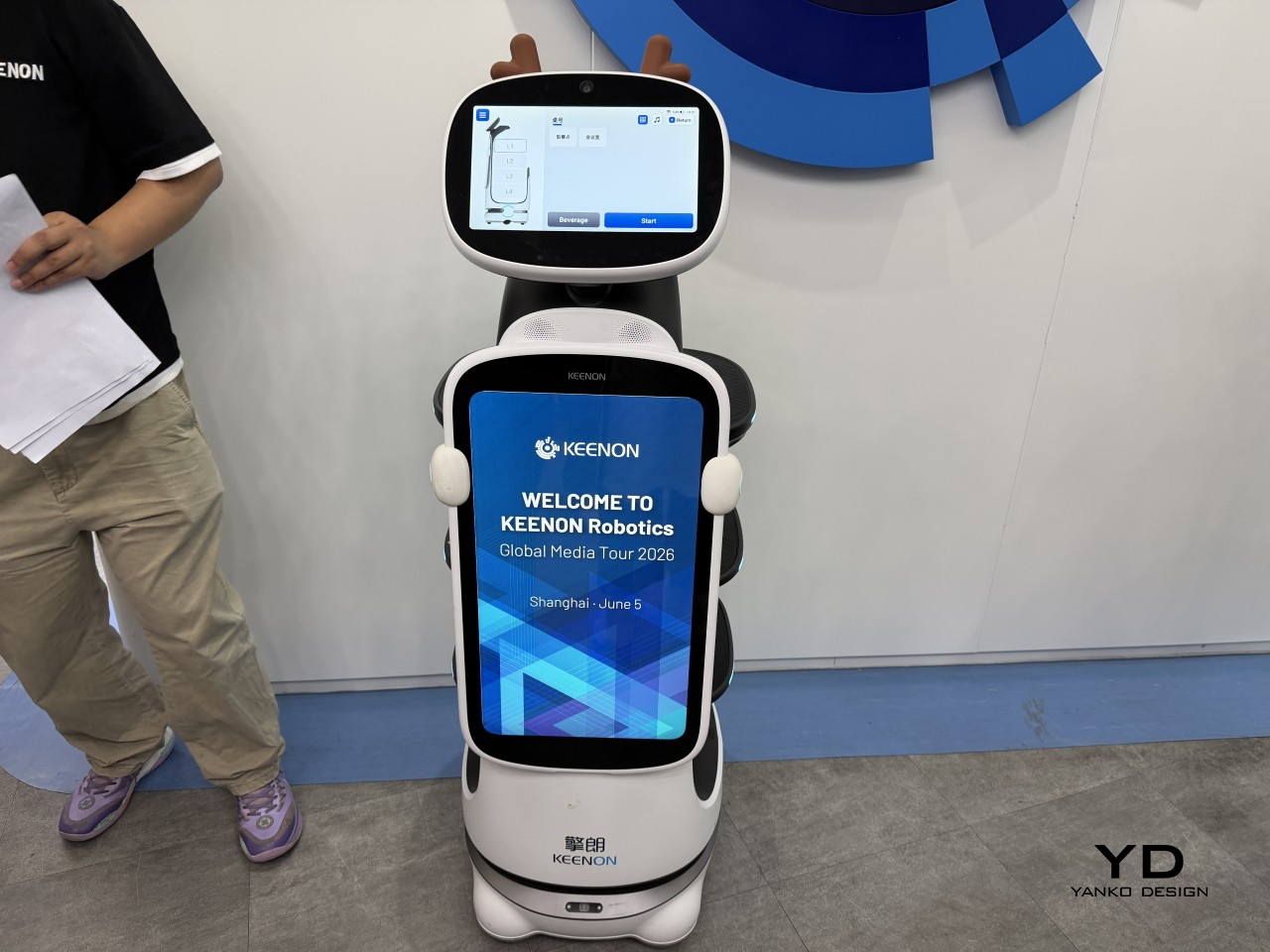
KEENON Robotics has known this for a while. Founded in 2010, the Shanghai-based company didn’t wait for the hype cycle; it built the service delivery robot category from the ground up. Today, with over 100,000 units shipped across more than 60 countries, KEENON holds the number-one global market share in commercial service robots for the third consecutive year, according to IDC 2025.
Designer: KEENON Robotics
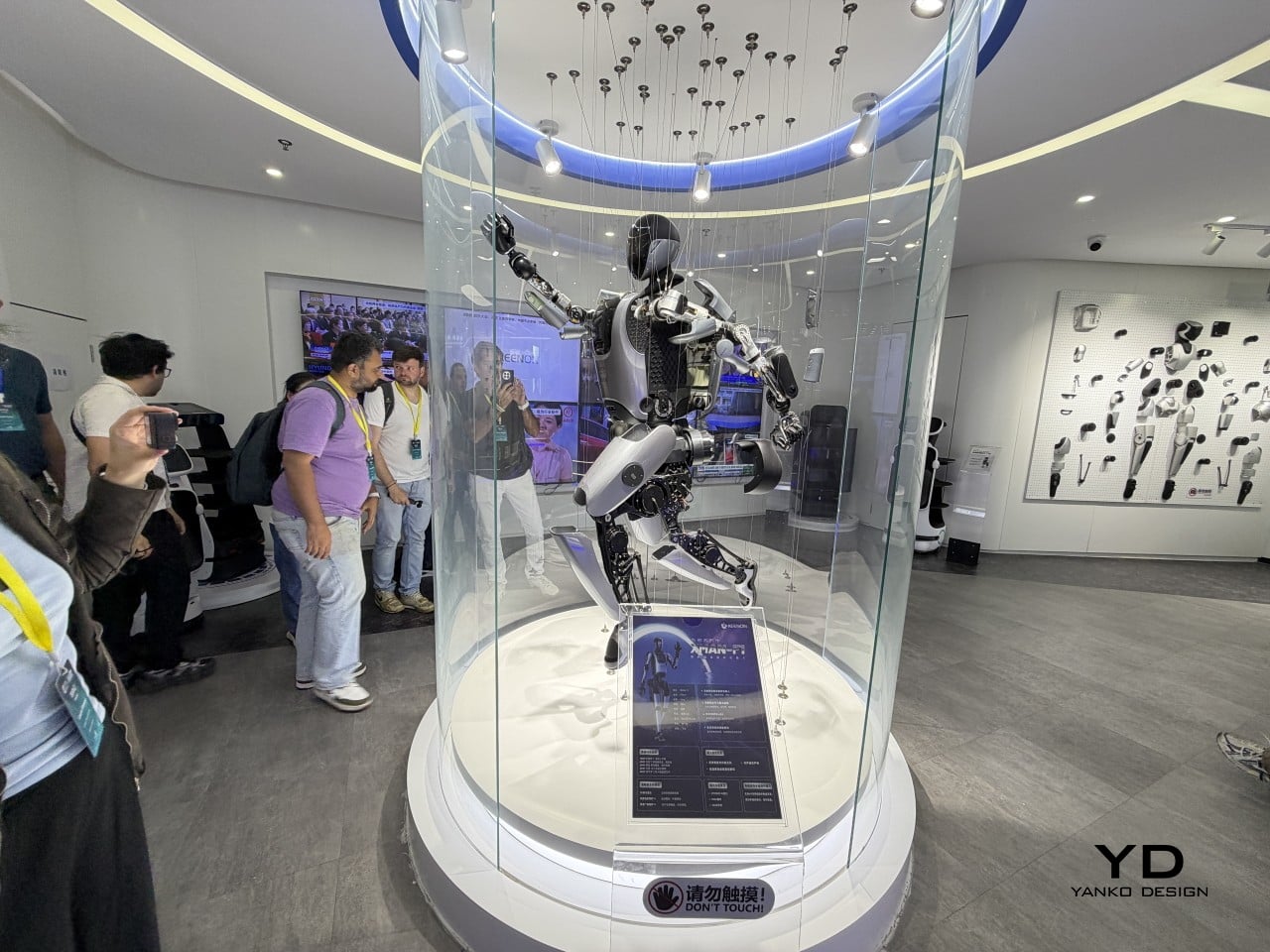
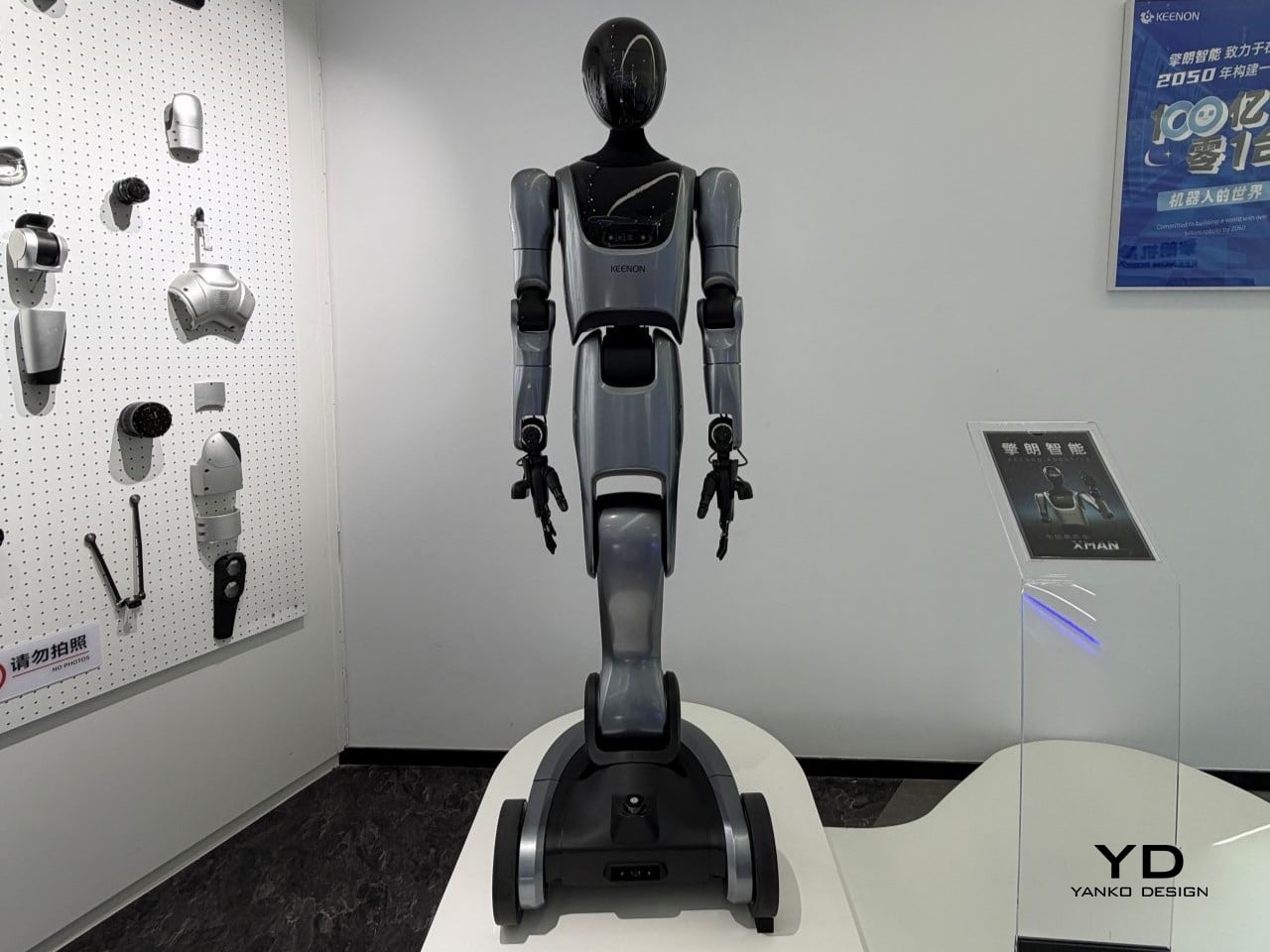
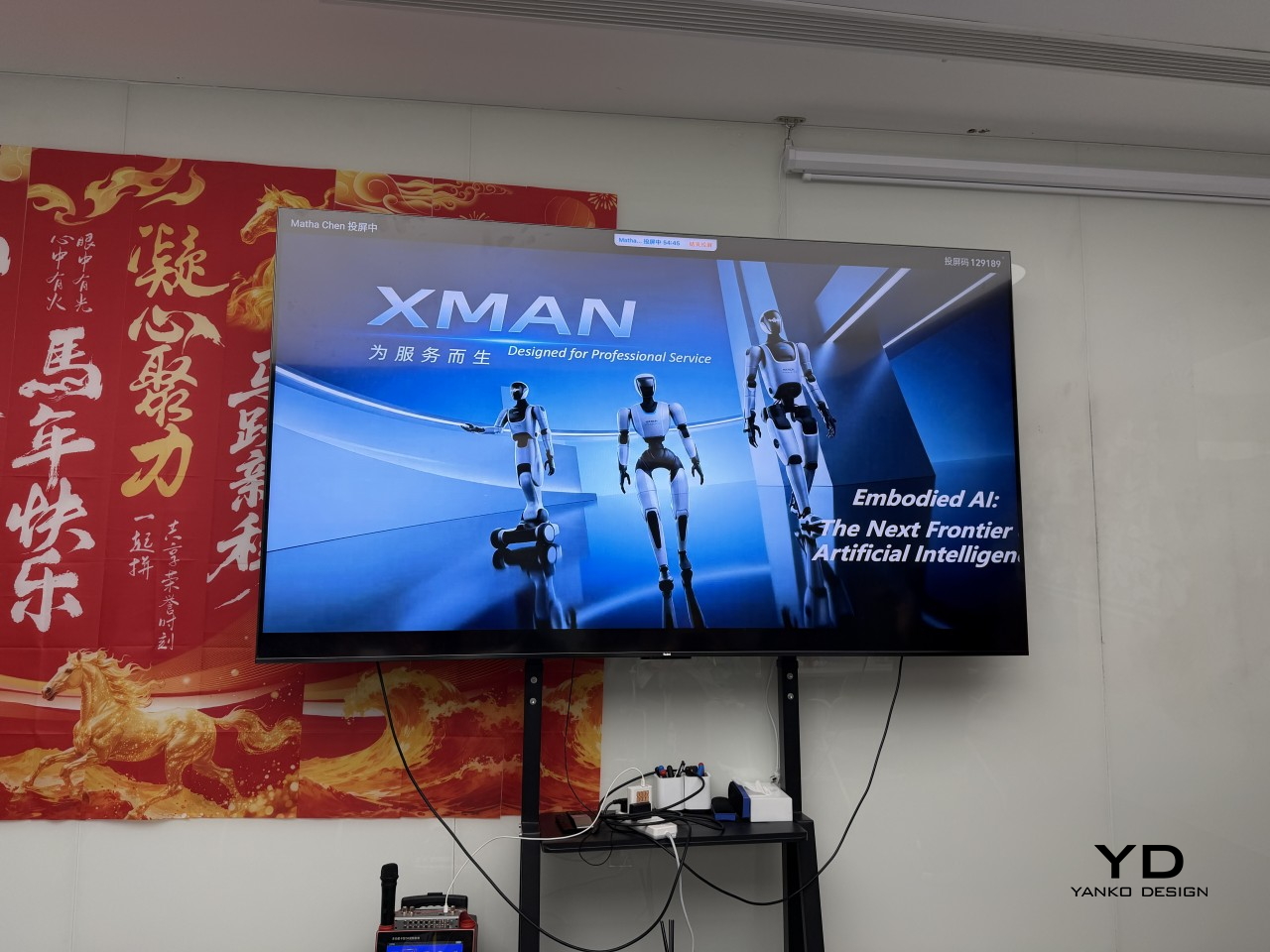
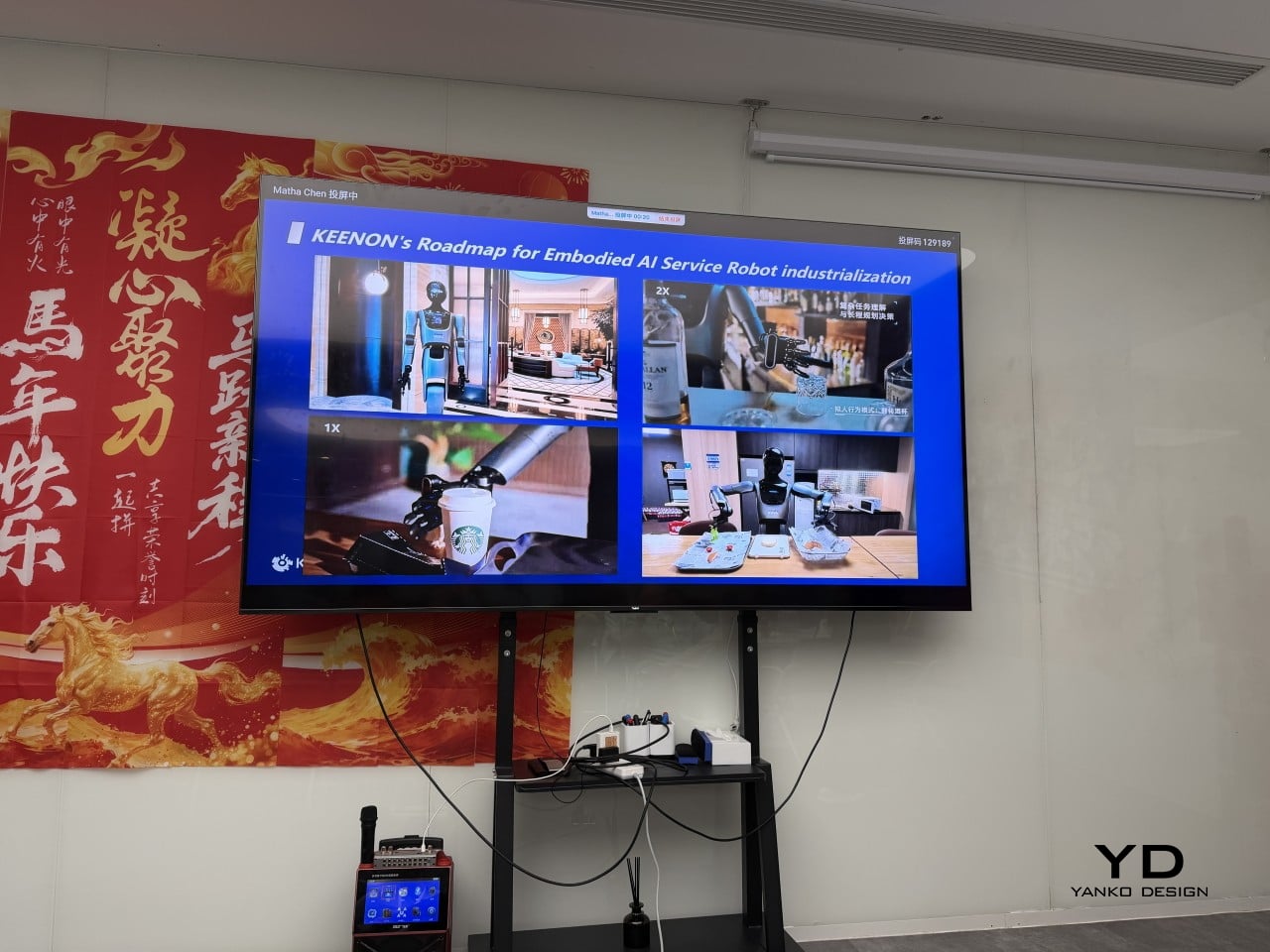
At Global Connect Show 2026, the star of KEENON’s booth was the XMAN-R1, a wheeled humanoid robot that makes popcorn, pours drinks, and hands out snacks. It’s the kind of demo that stops foot traffic, and it’s meant to. Underneath the theatrics, though, is a robot packing 275 TOPS of AI processing power, dual 7-DoF arms, and precision dexterous hands built for human-level manipulation.
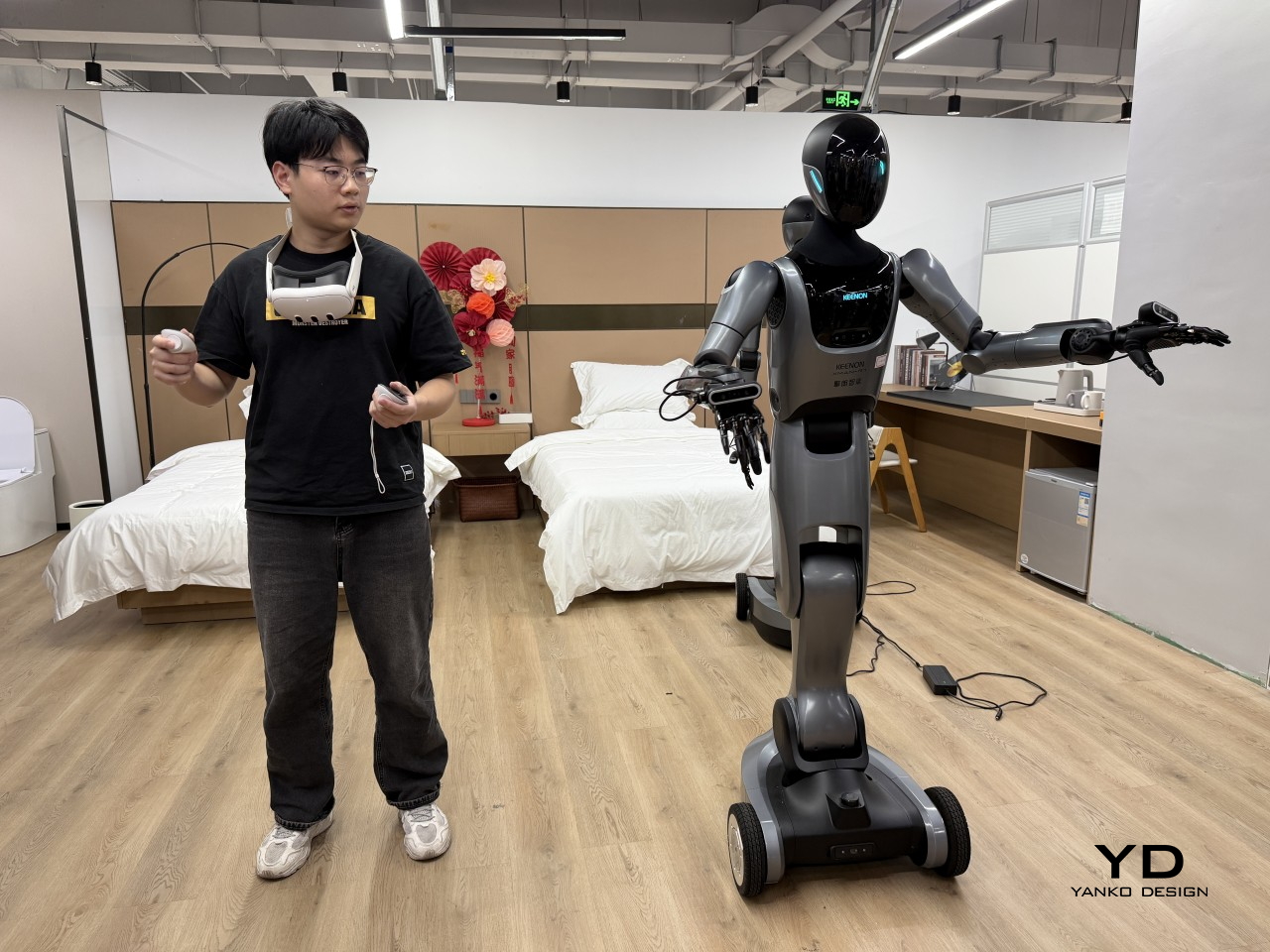
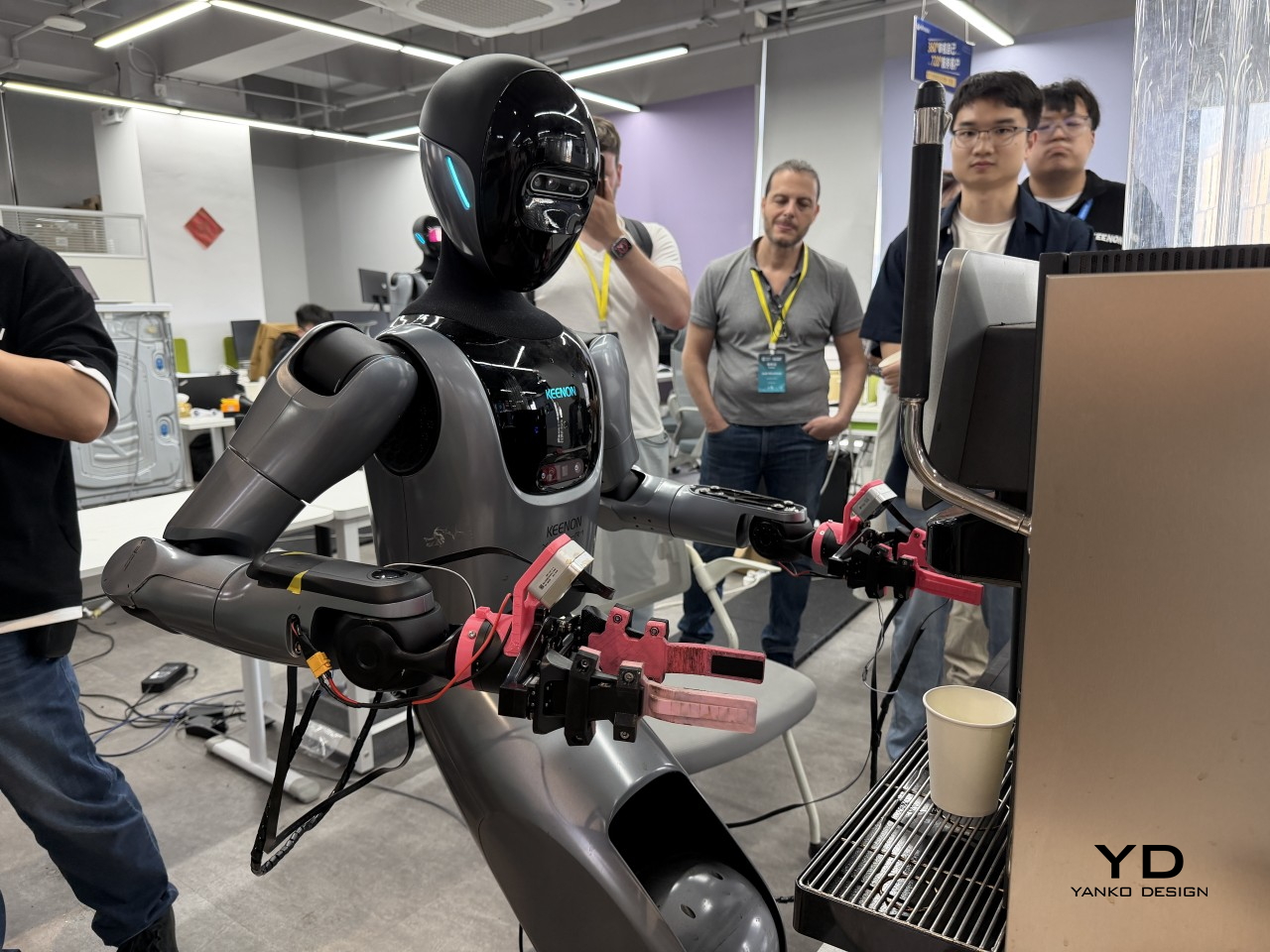
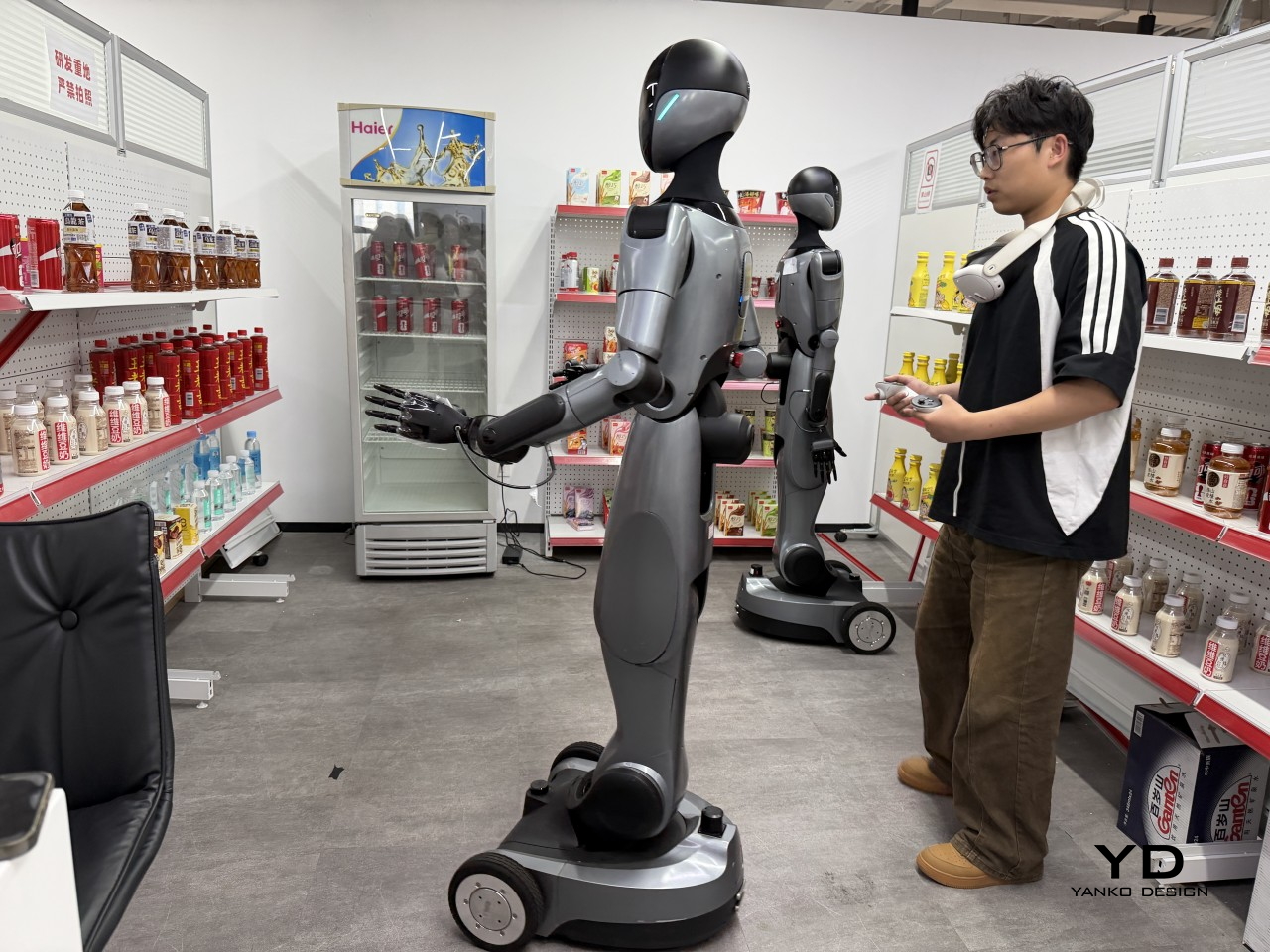
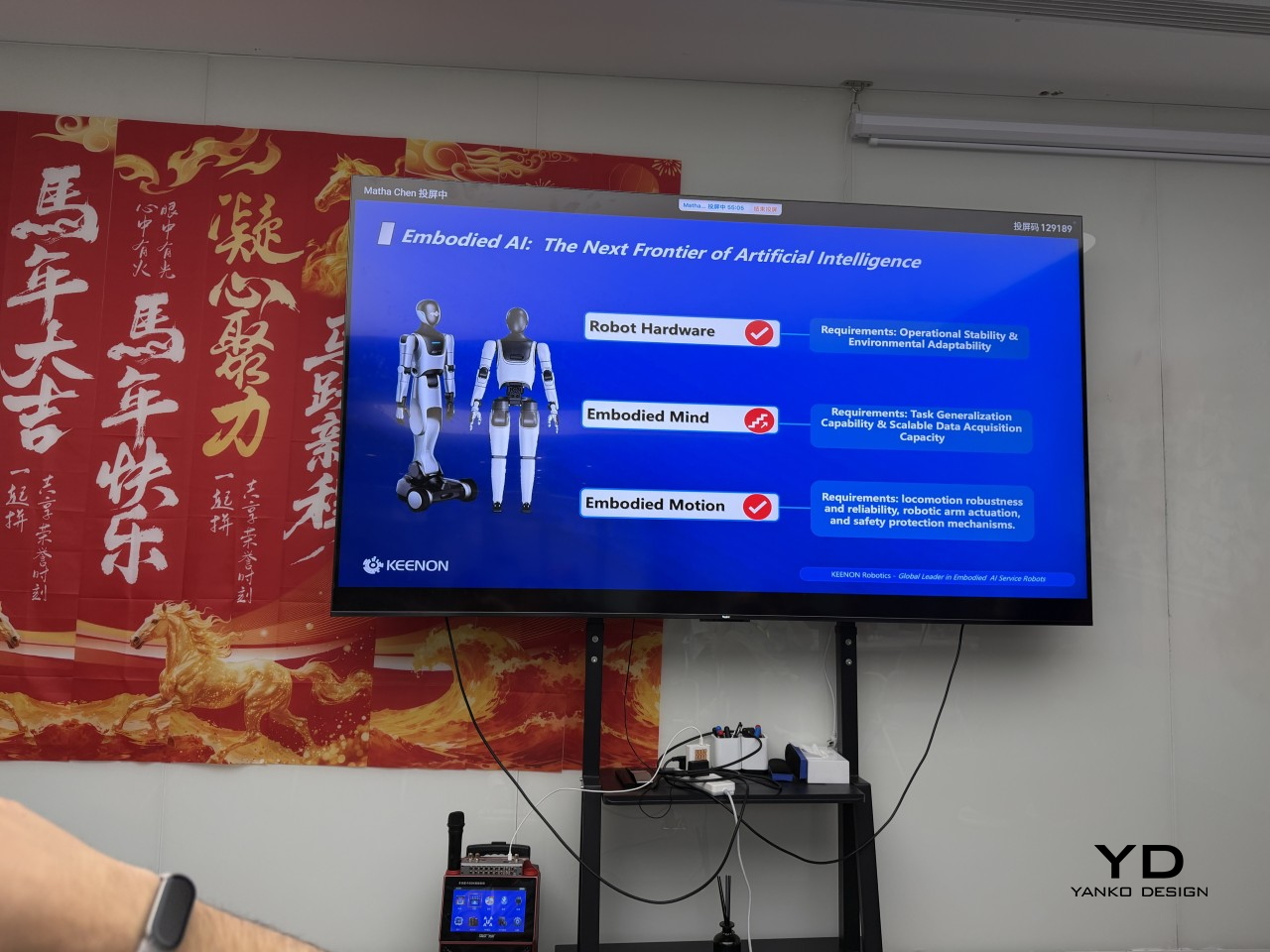
What the demo doesn’t show is how much work went into teaching a robot to grab a cup. KEENON estimates that a single action of that kind requires at least 1,000 data points. A full coffee-making sequence demands over 20,000. That gap between what looks effortless and what it actually costs computationally is one of the clearest explanations of where physical AI sits right now.
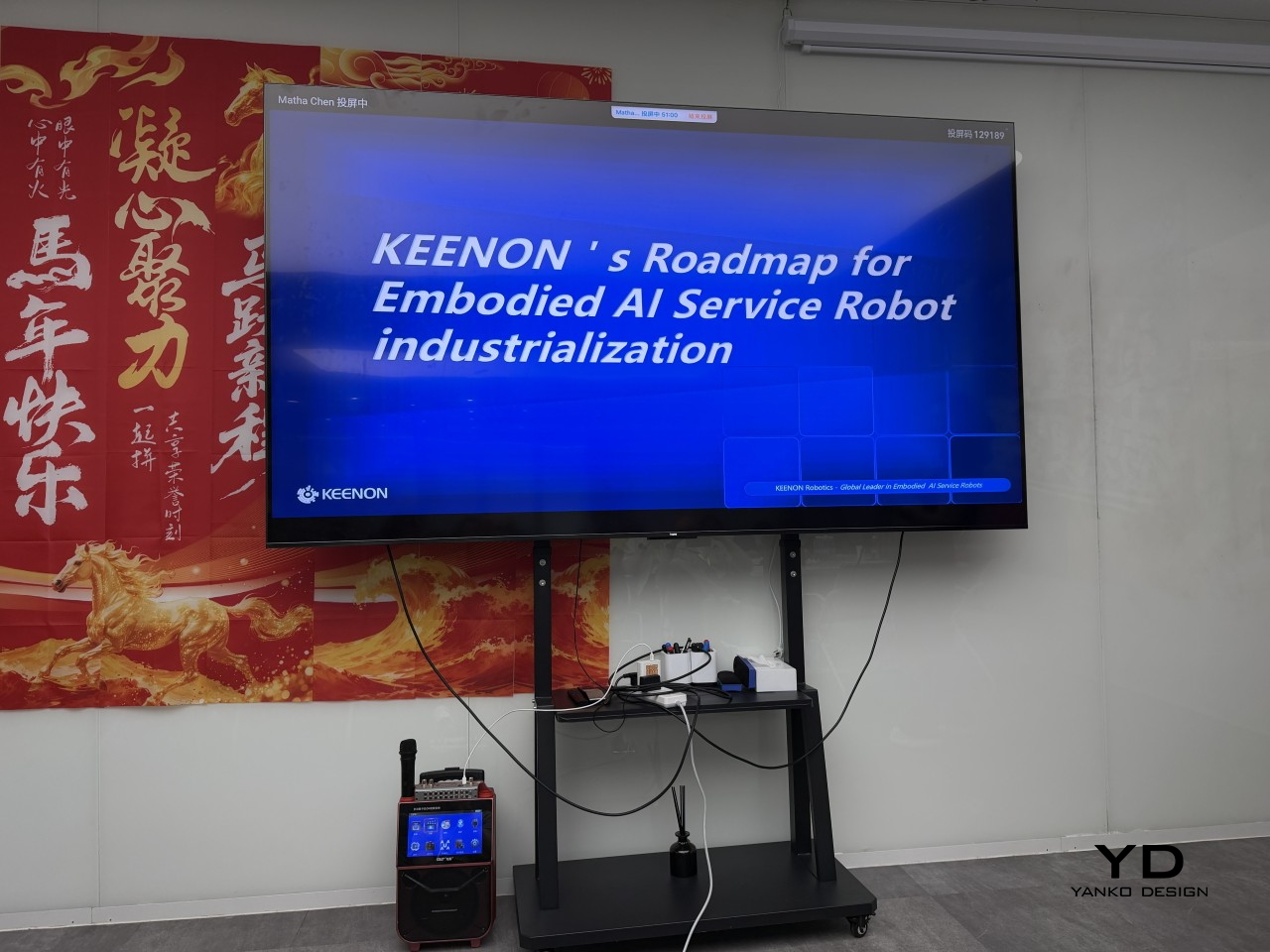
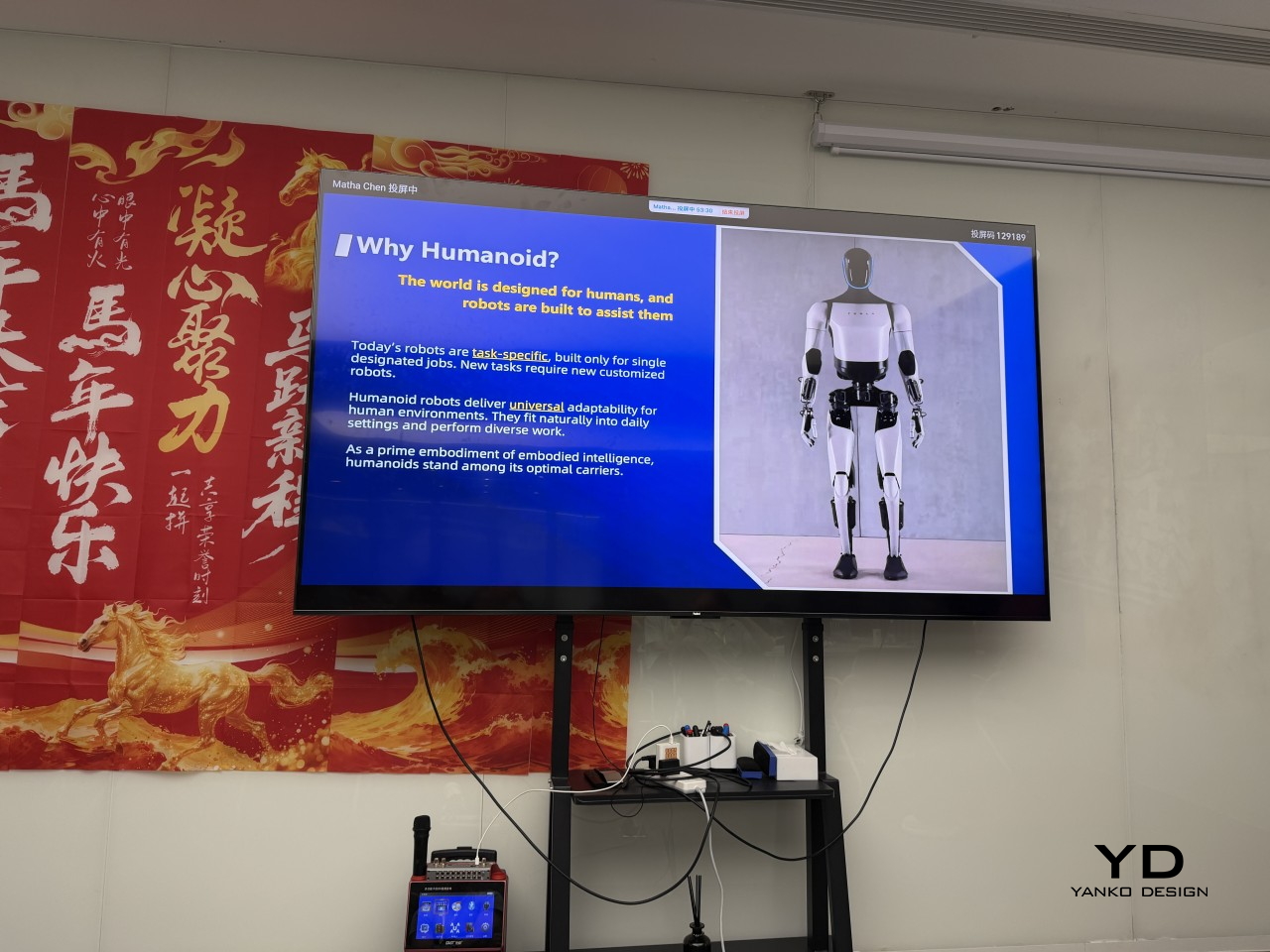
KEENON is remarkably candid about this. Their own assessment puts the current “mind age” of humanoid robots at roughly three years old, which, if you think about it, explains a lot about why they move so deliberately. True general-purpose humanoid deployment is still at least five years out by their estimation. The “Model T” framing they use is apt; these are early machines, not finished ones.
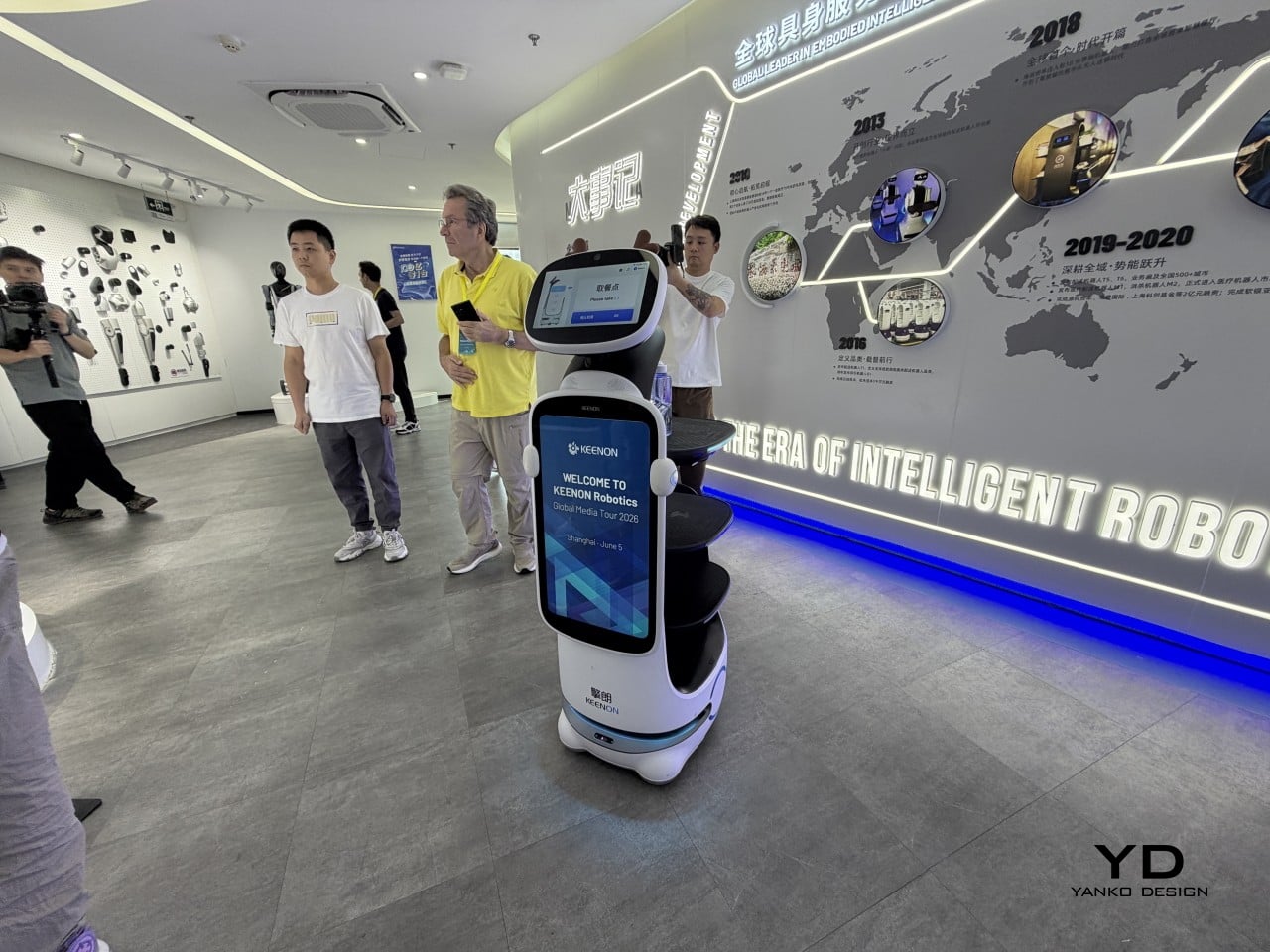
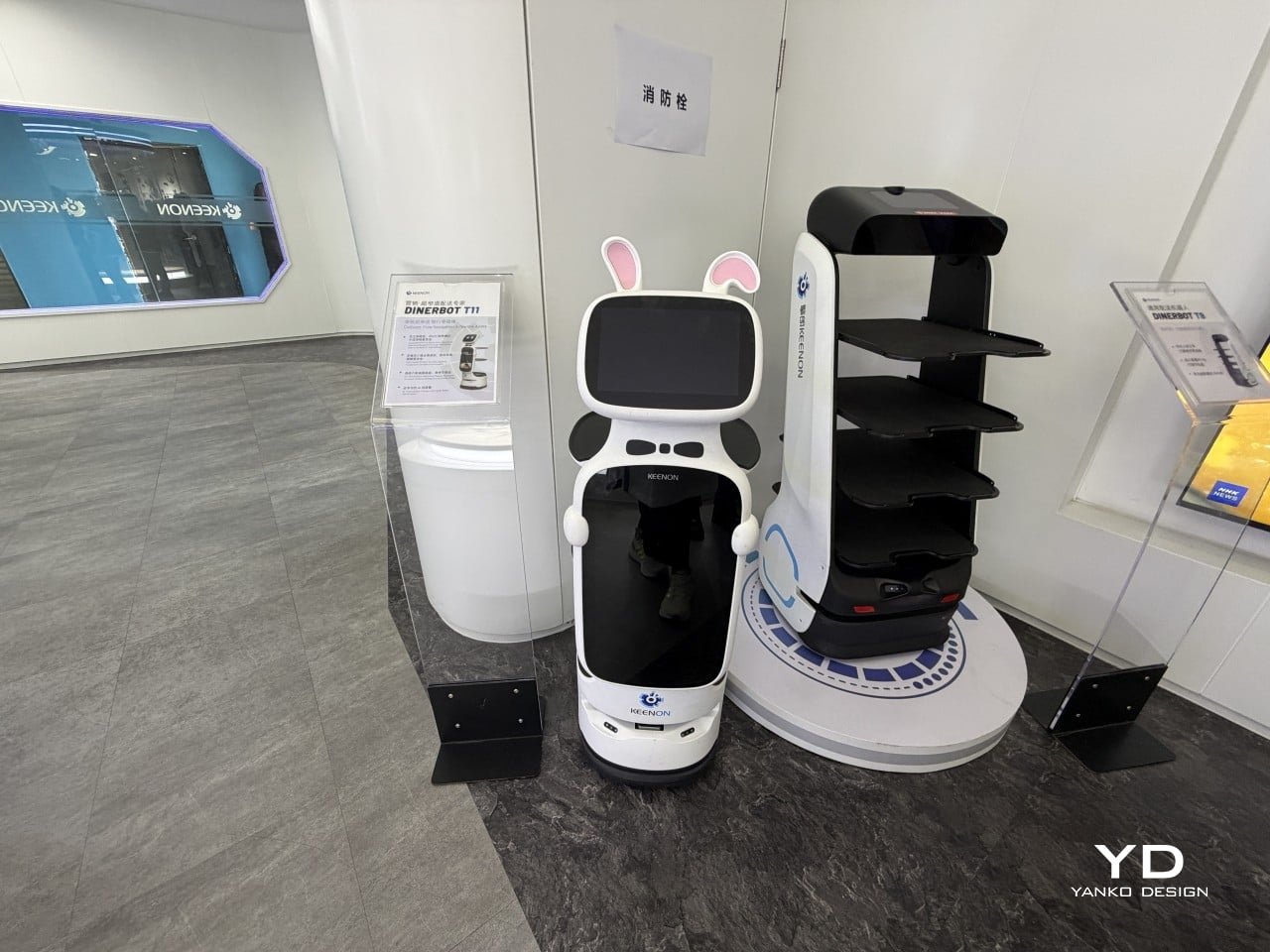
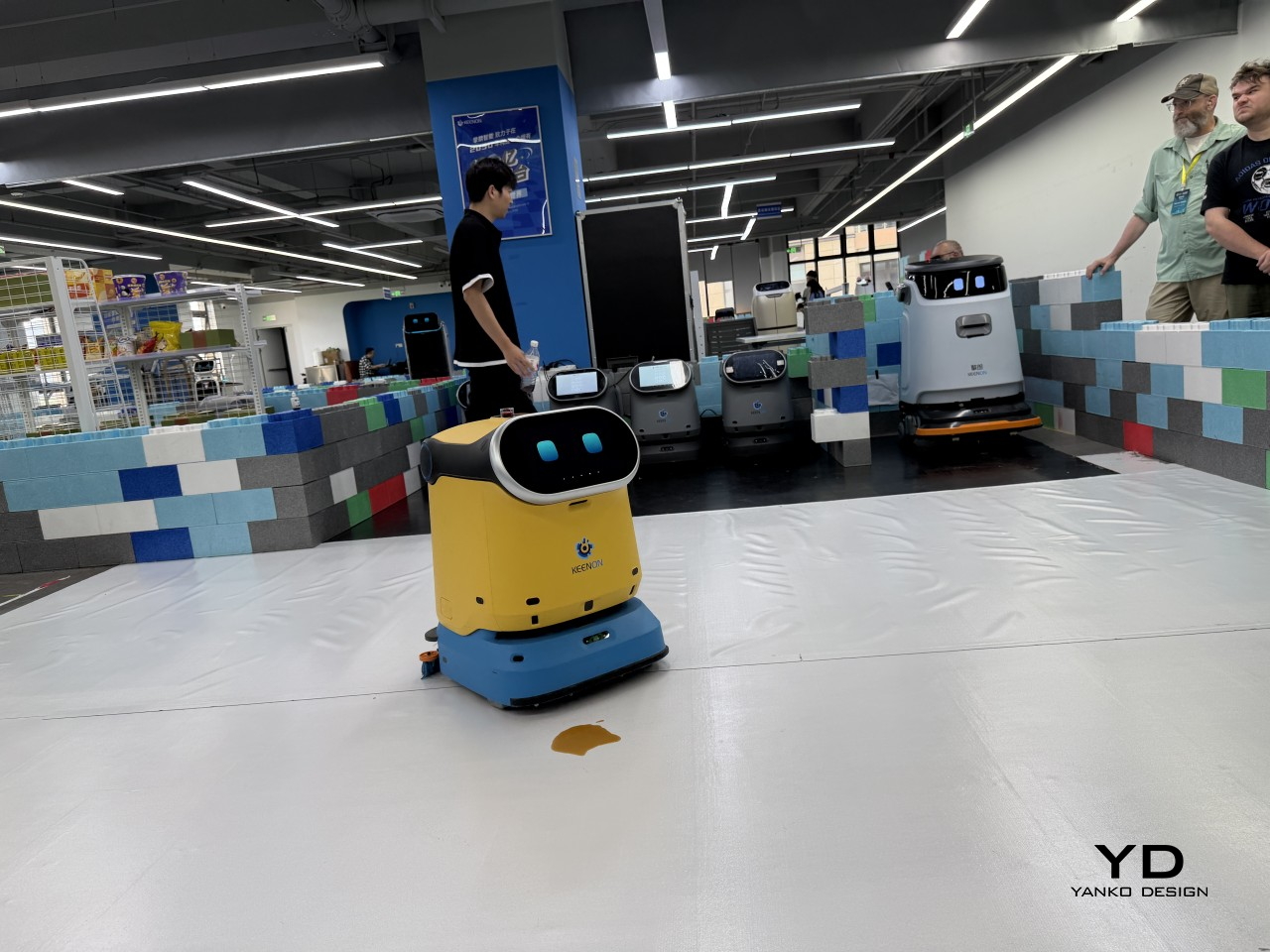
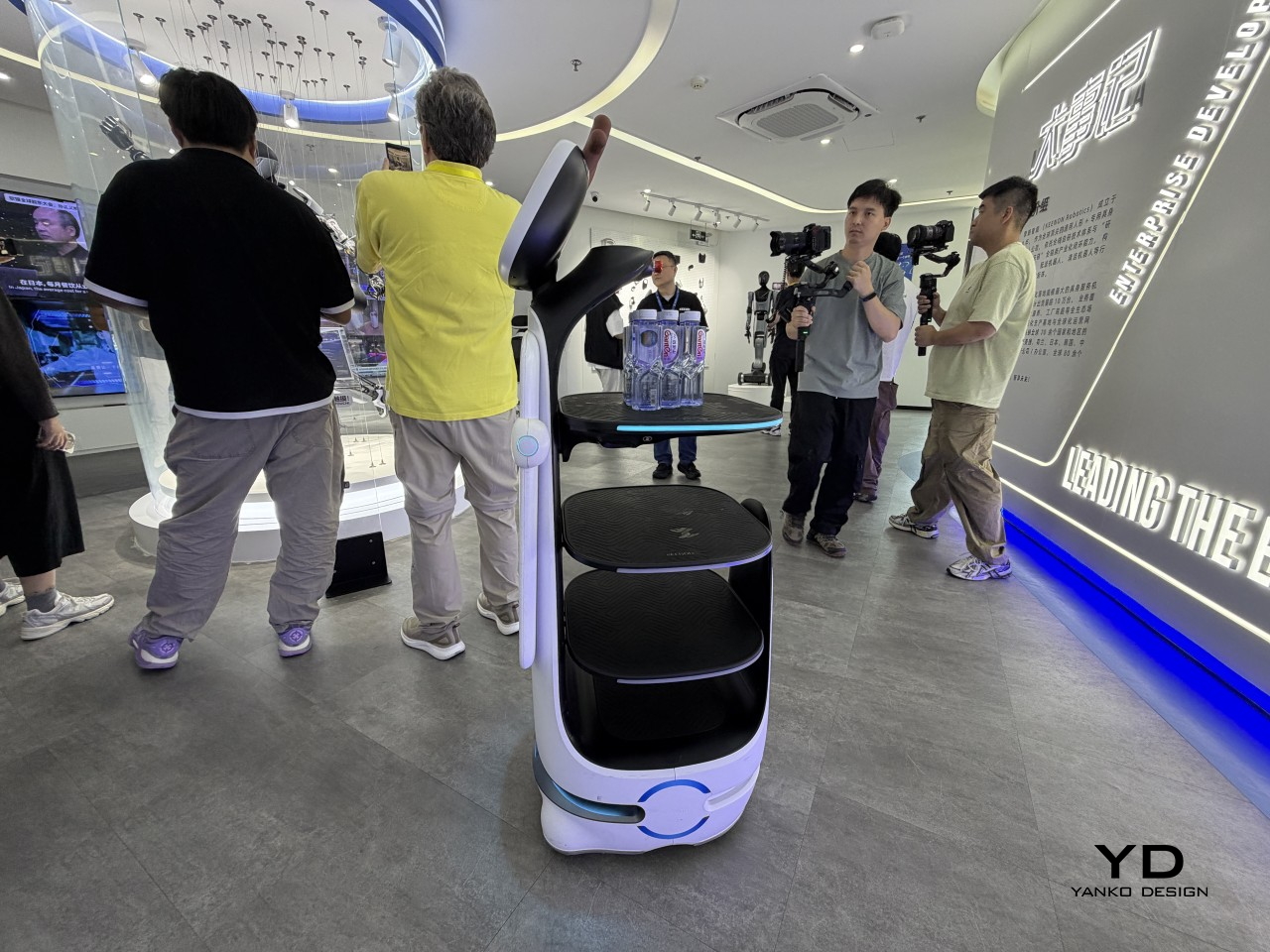
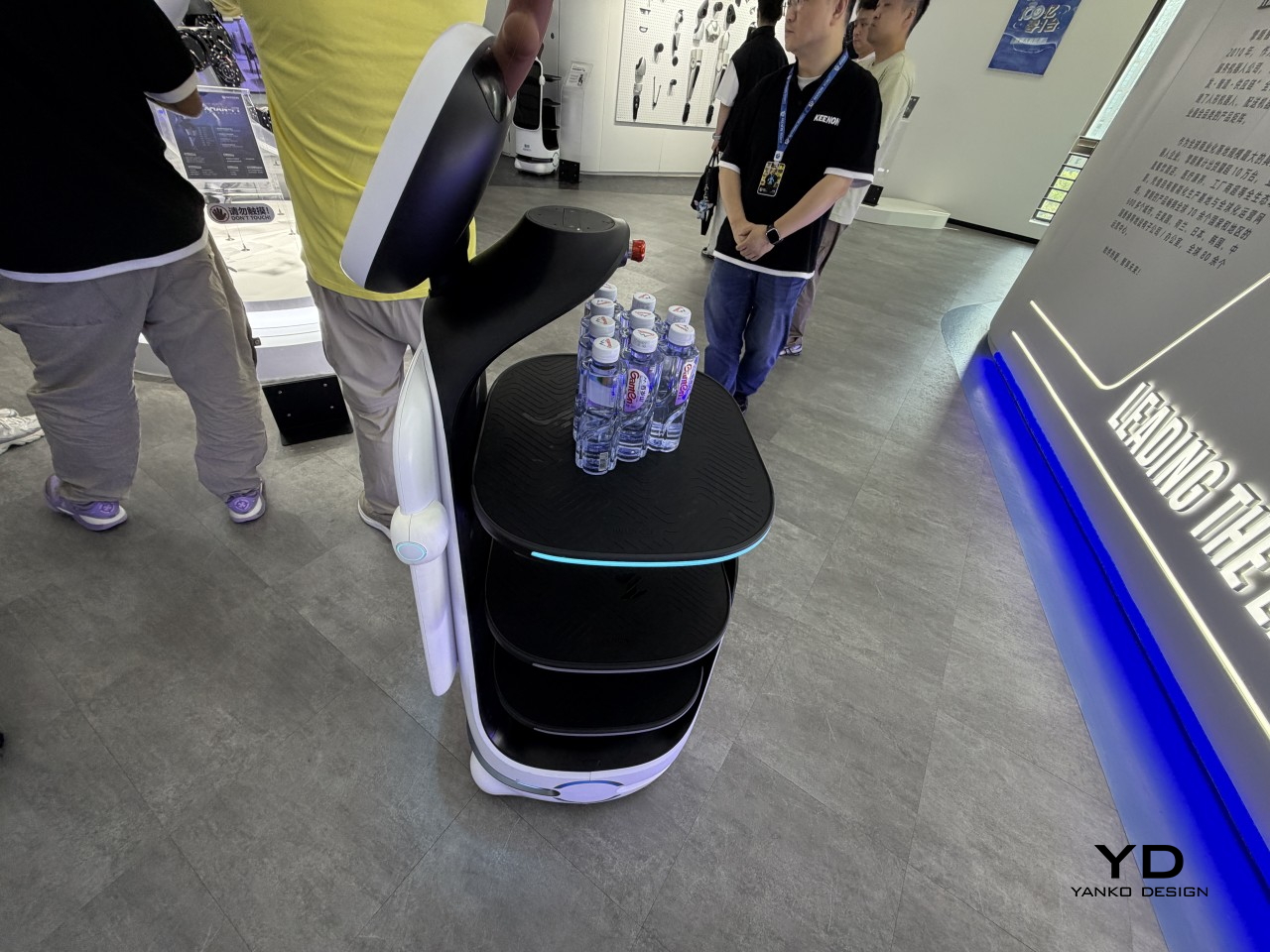
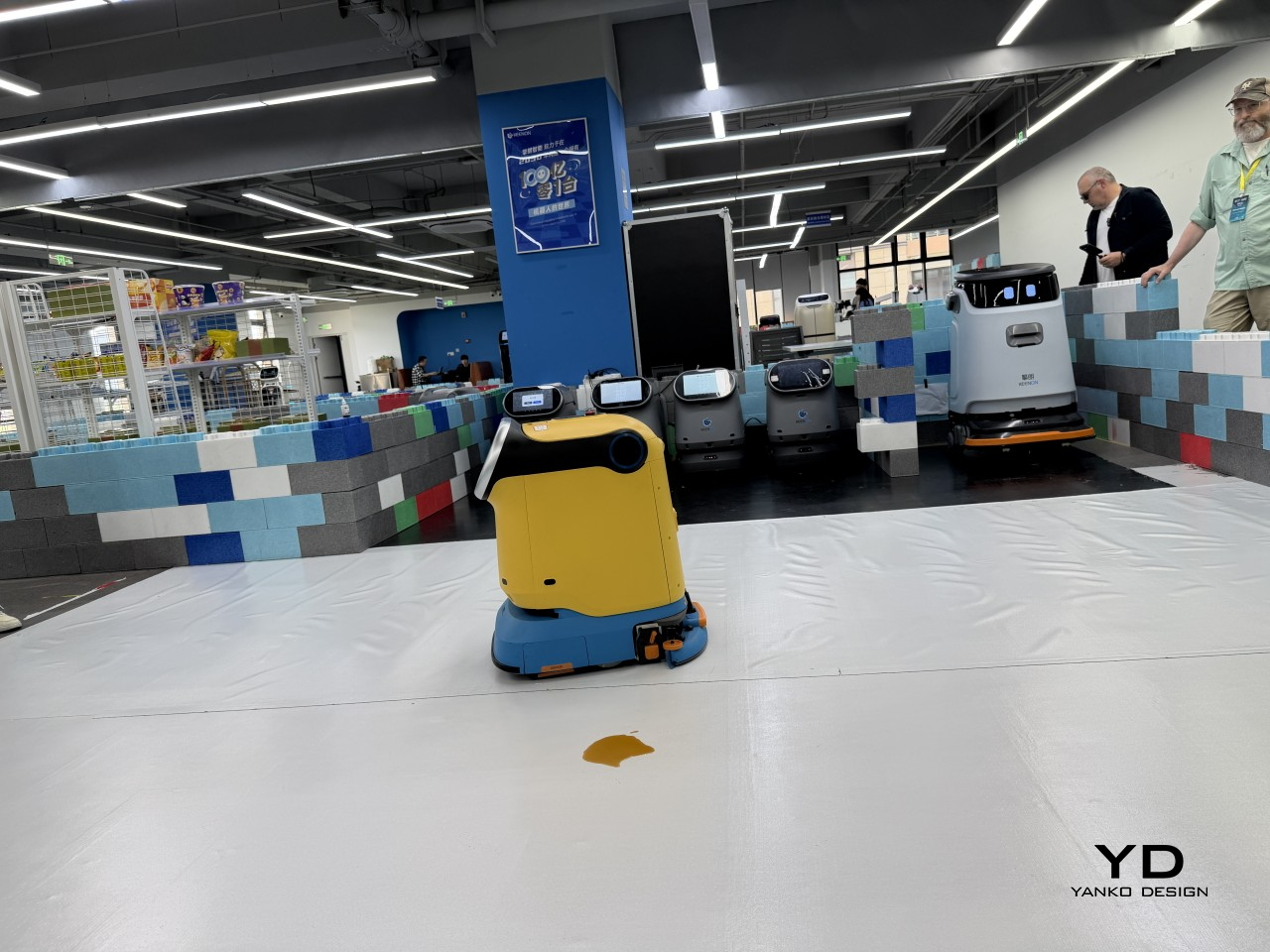
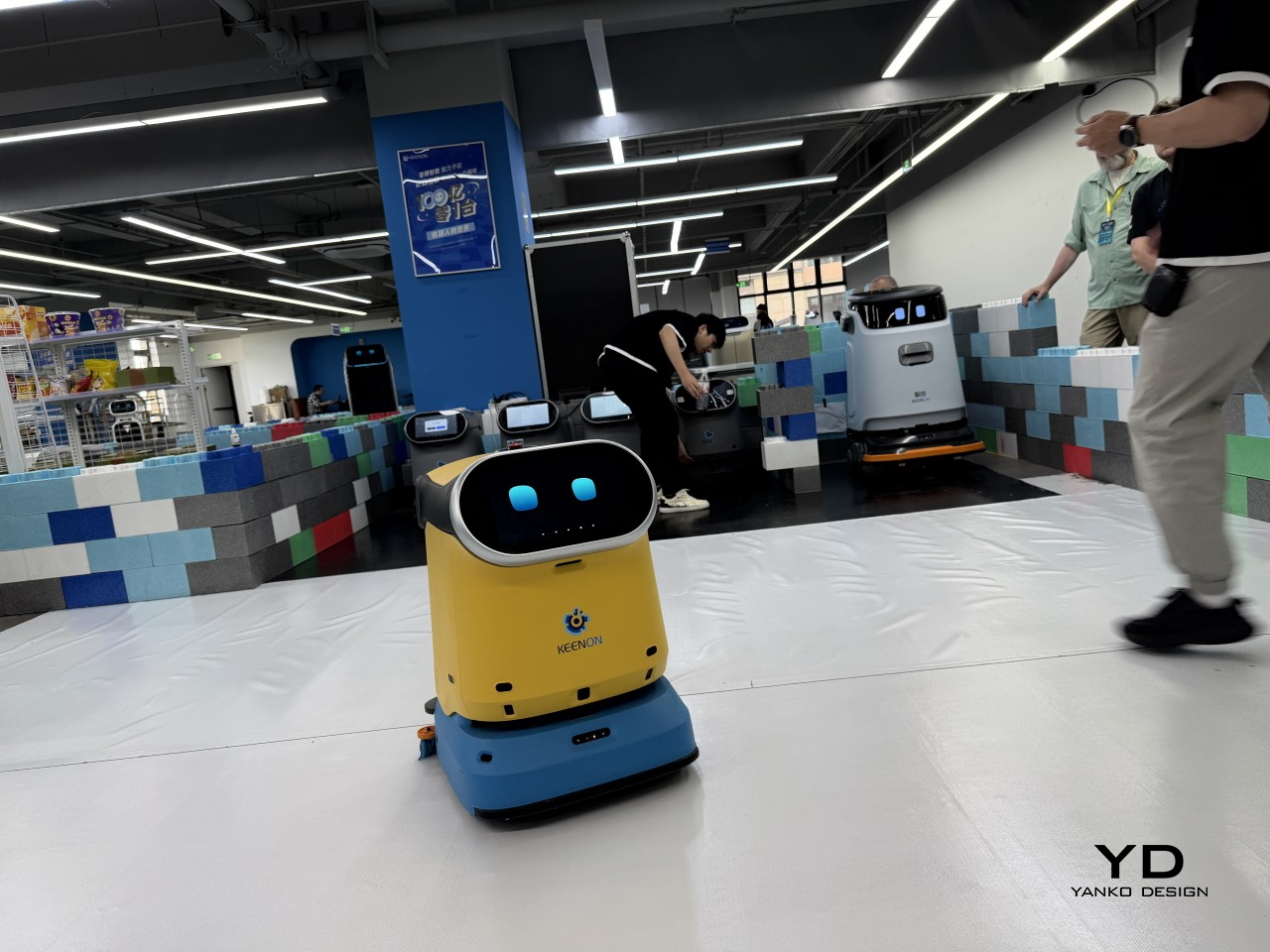
That candor is also what makes KEENON’s established product line feel more credible. While the XMAN-R1 gets the headlines, KEENON’s delivery and cleaning robots have been running inside hotels, restaurants, hospitals, airports, and casinos across more than 600 cities globally. Their DINERBOT T10 can carry up to 40 kg, fits through a 59 cm passage, and operates for up to eight hours on a single charge.
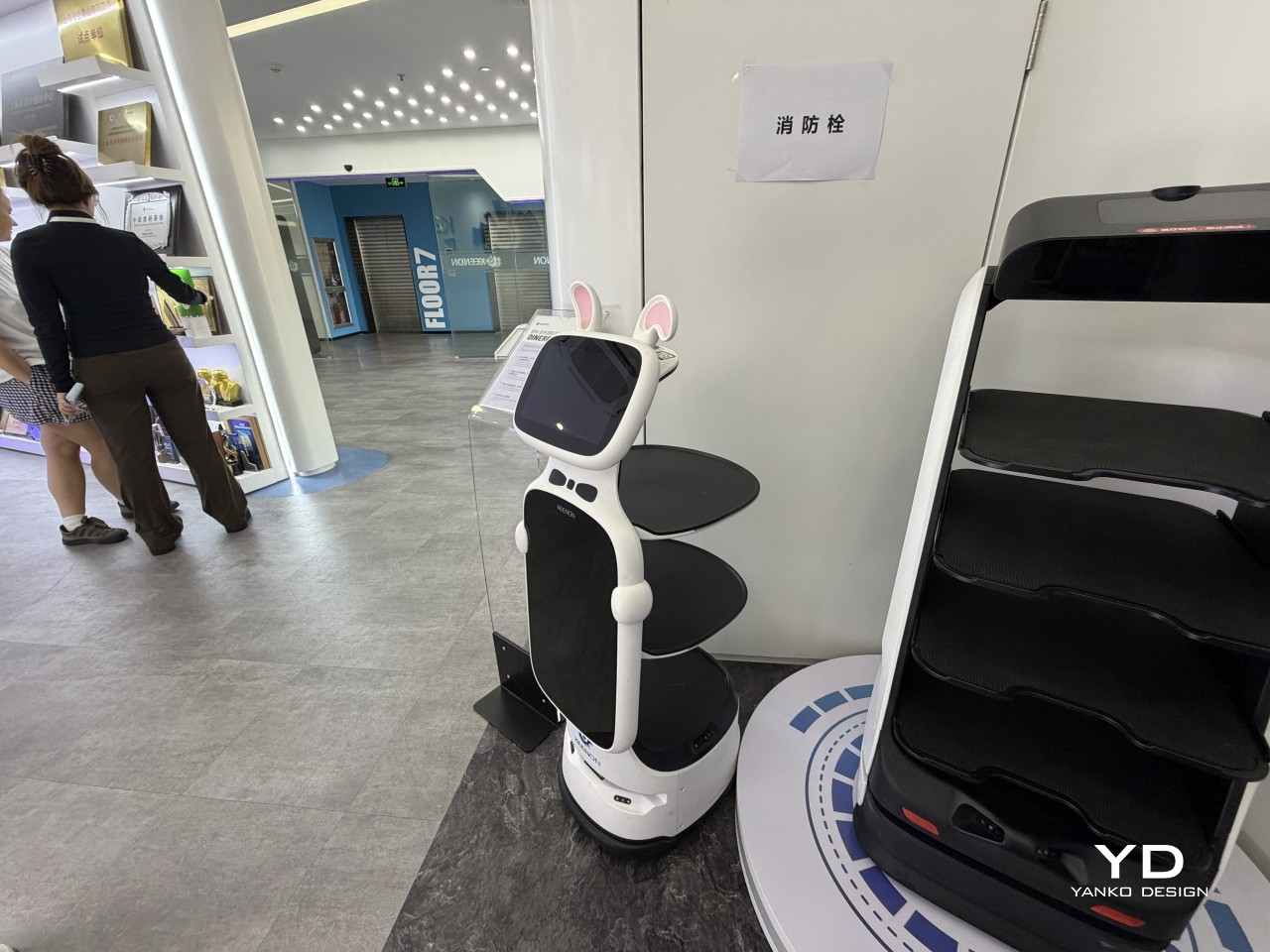
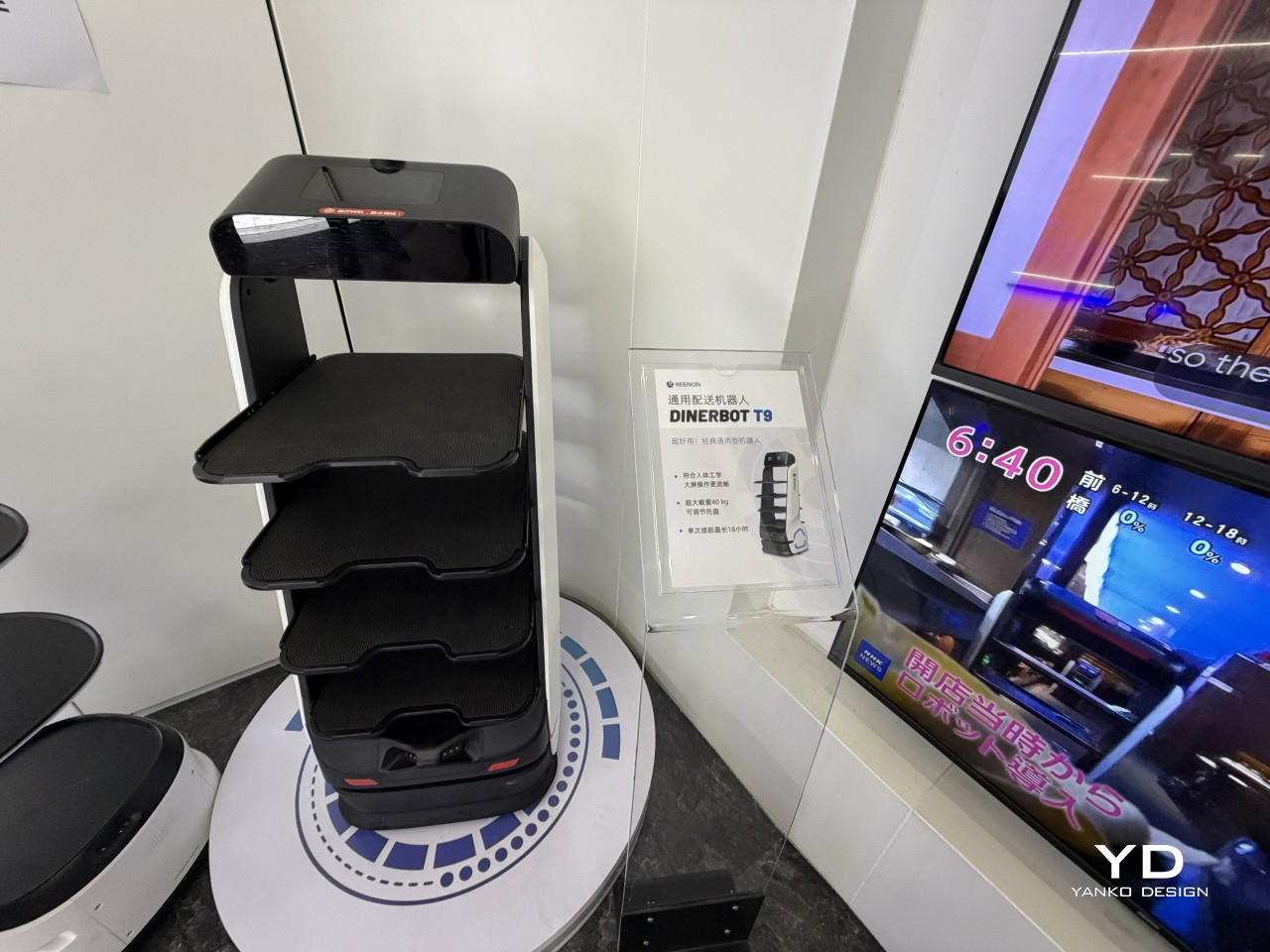
A good example of what that looks like in practice is Shangri-La Hong Kong, where KEENON runs six different robot types across eight units within a single hotel. Delivery bots handle contactless room service; cleaning robots run scheduled cycles through lobbies and corridors; logistics carriers shuttle linens and supplies behind the scenes. None of this required the hotel to restructure its operations around the robots.
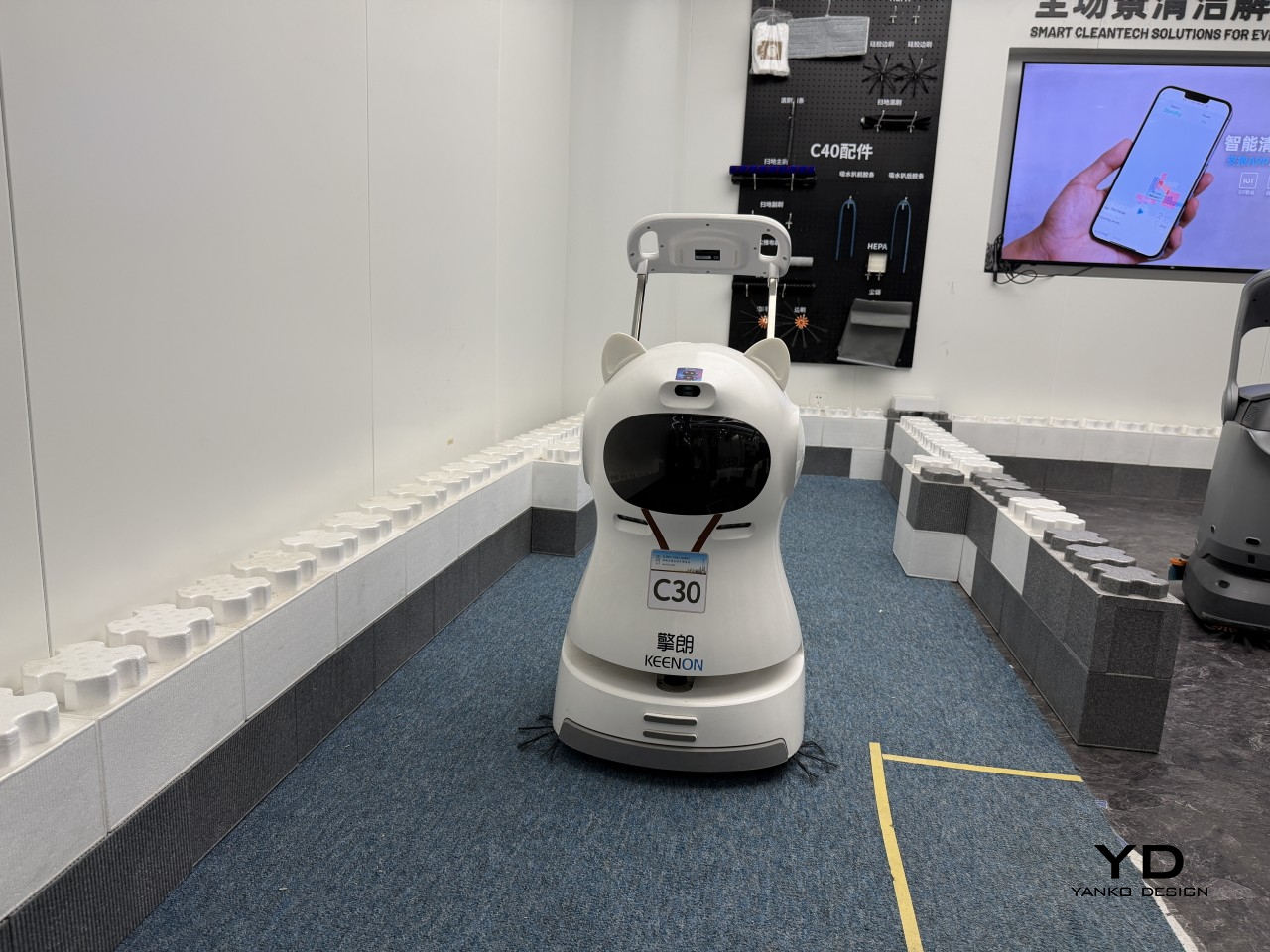
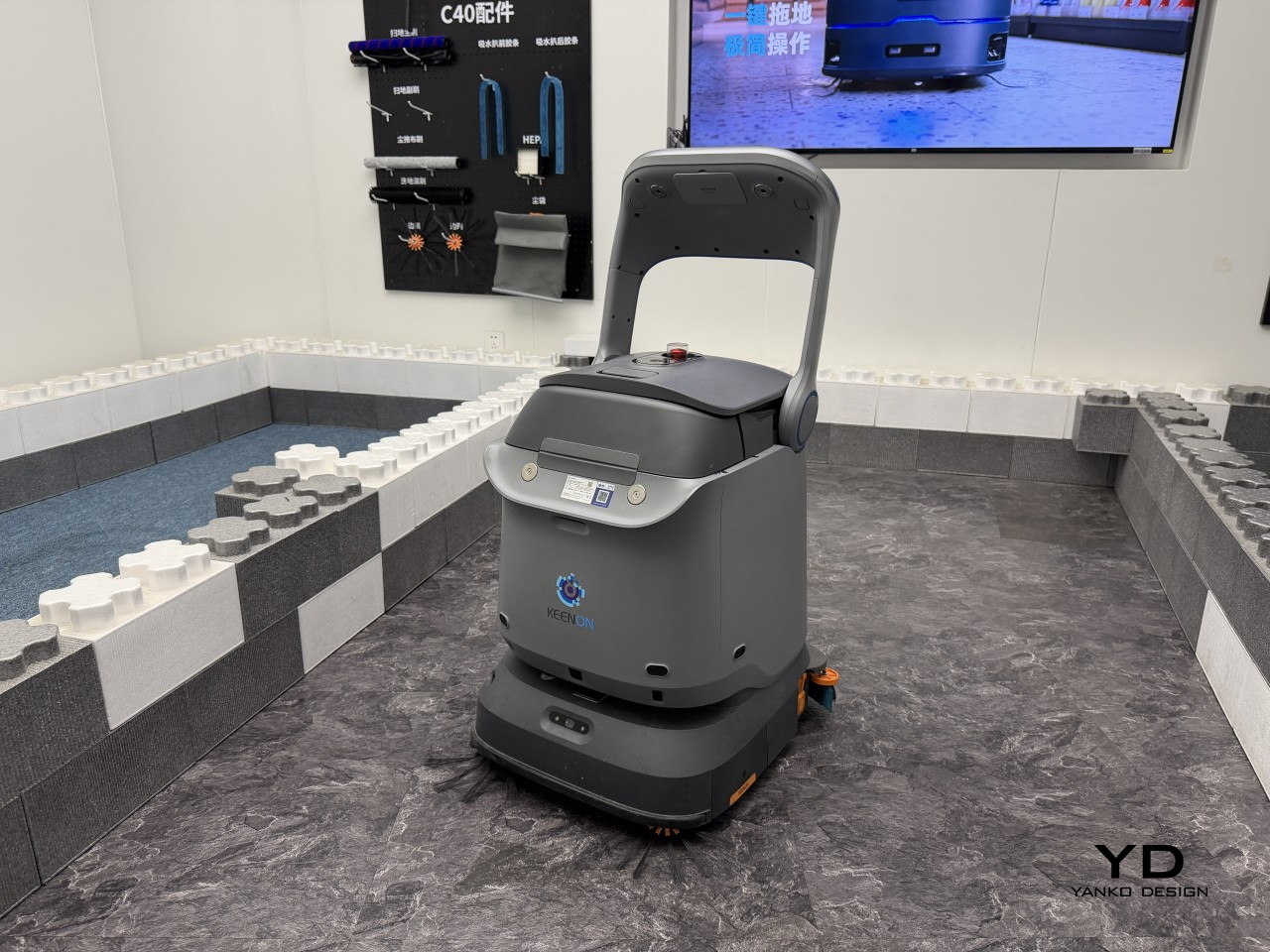
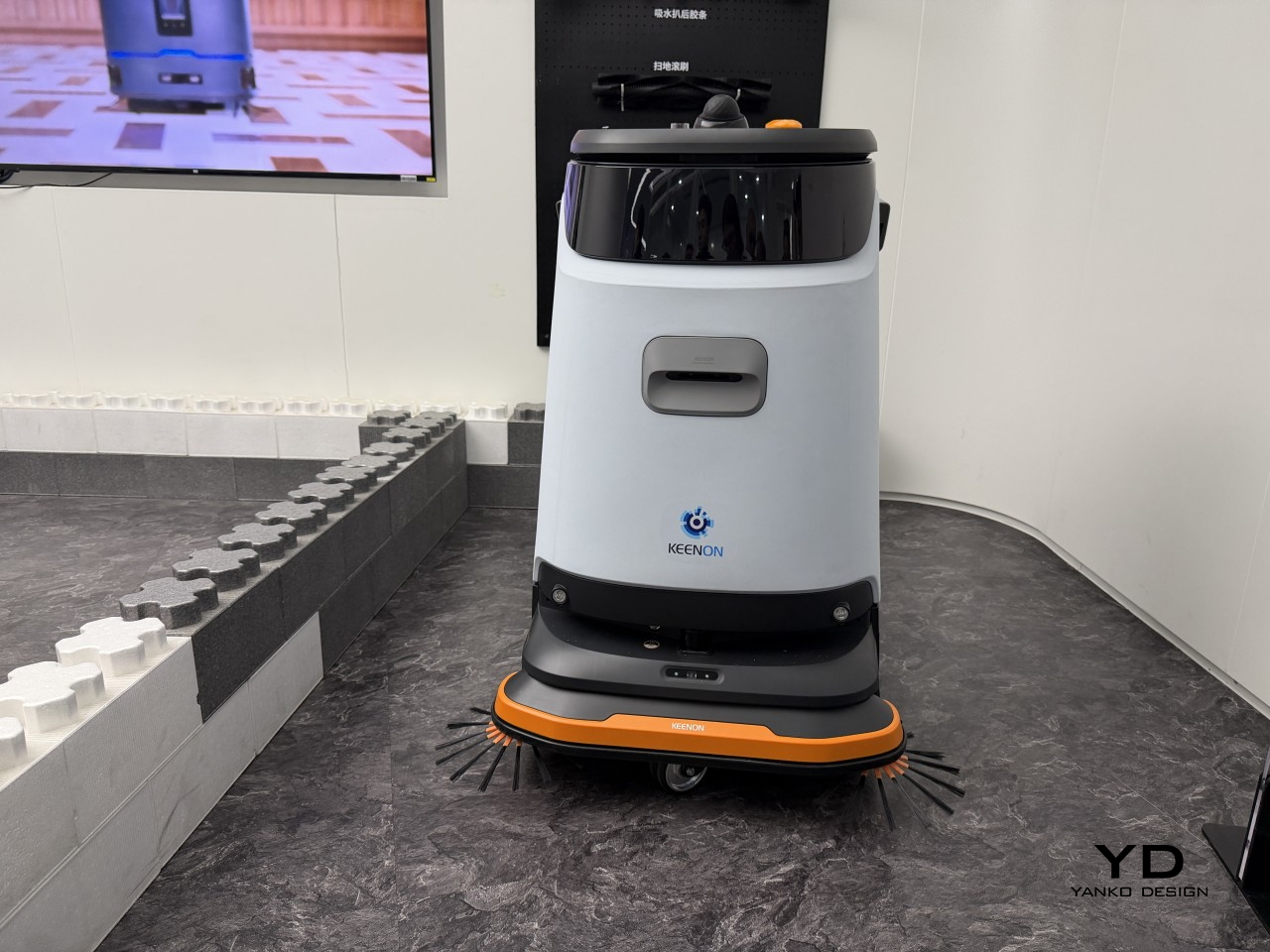
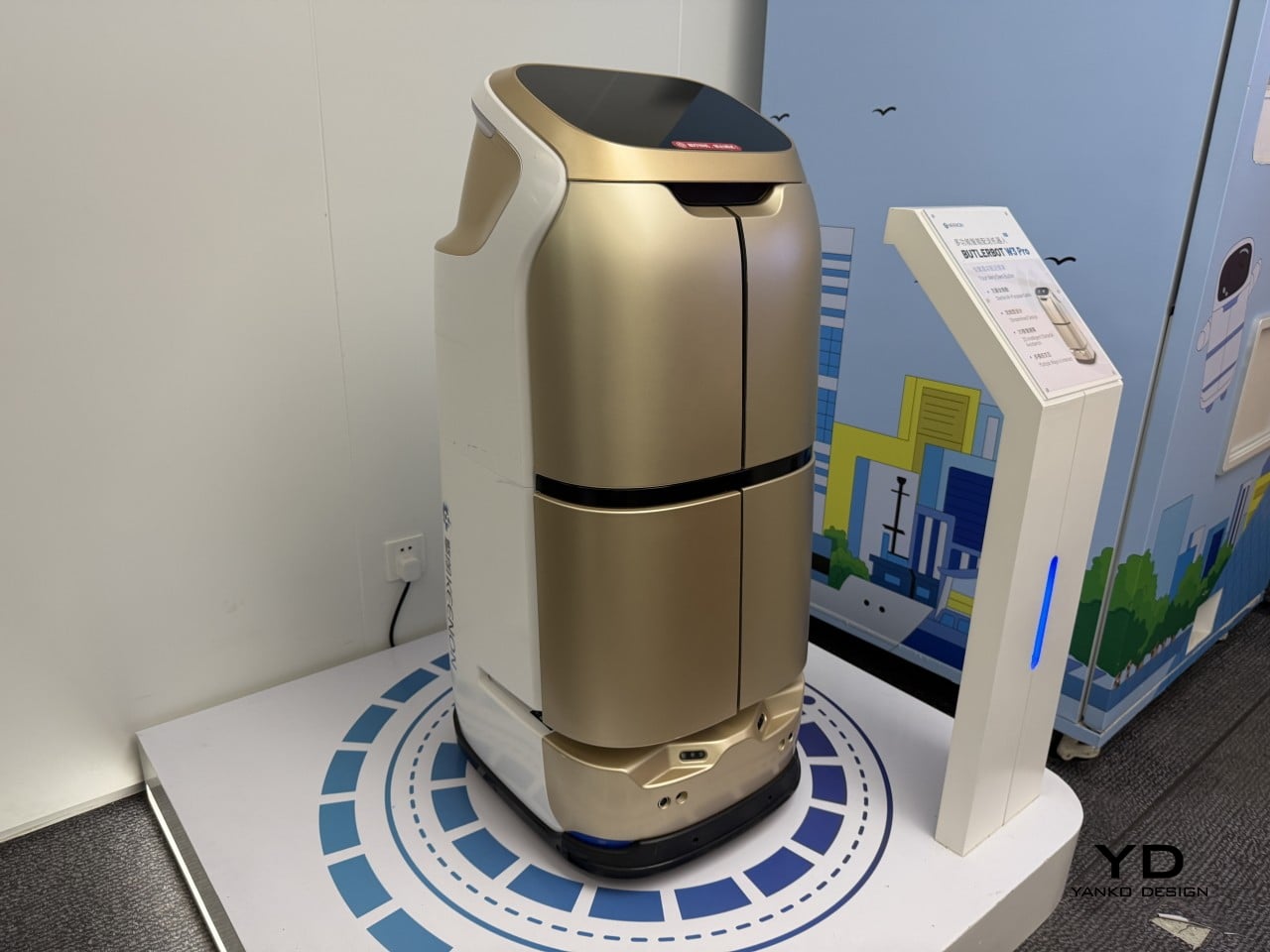
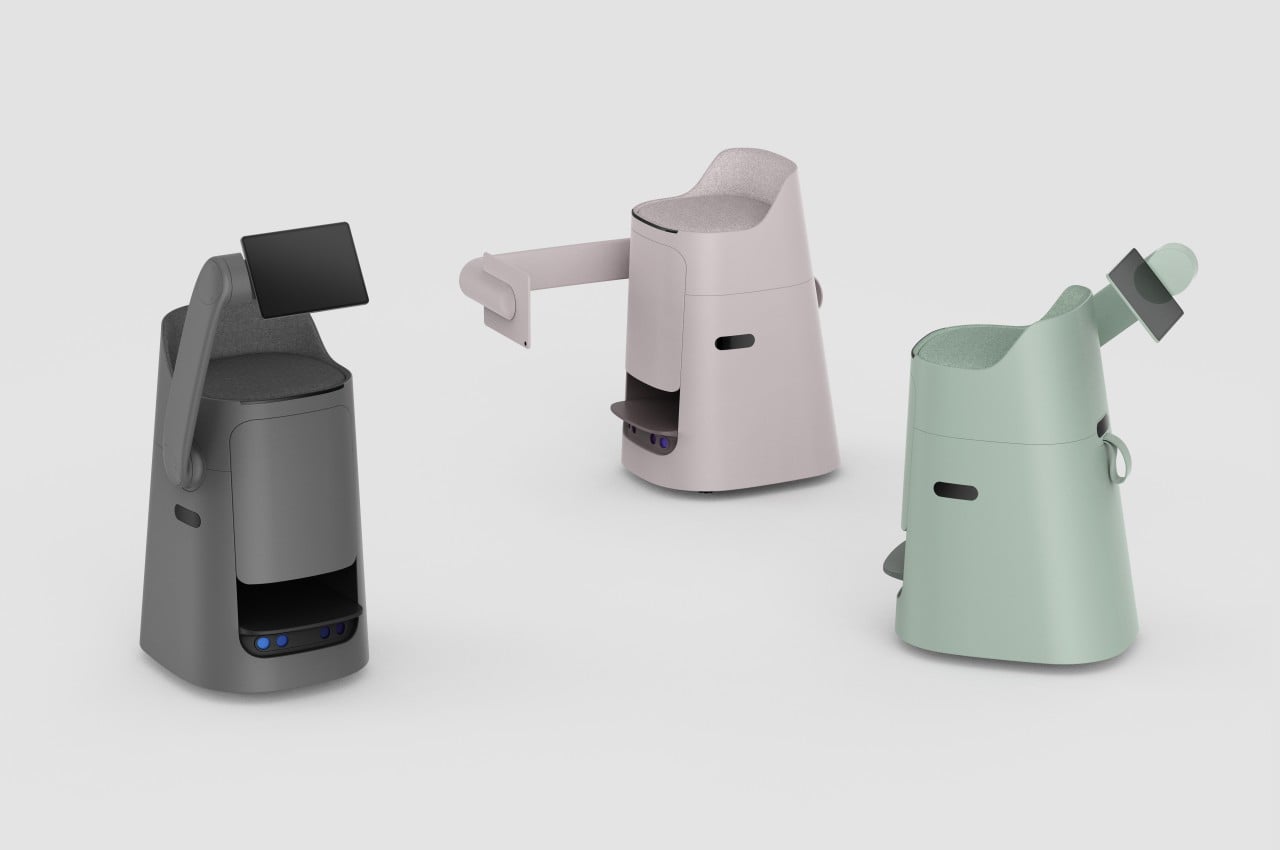
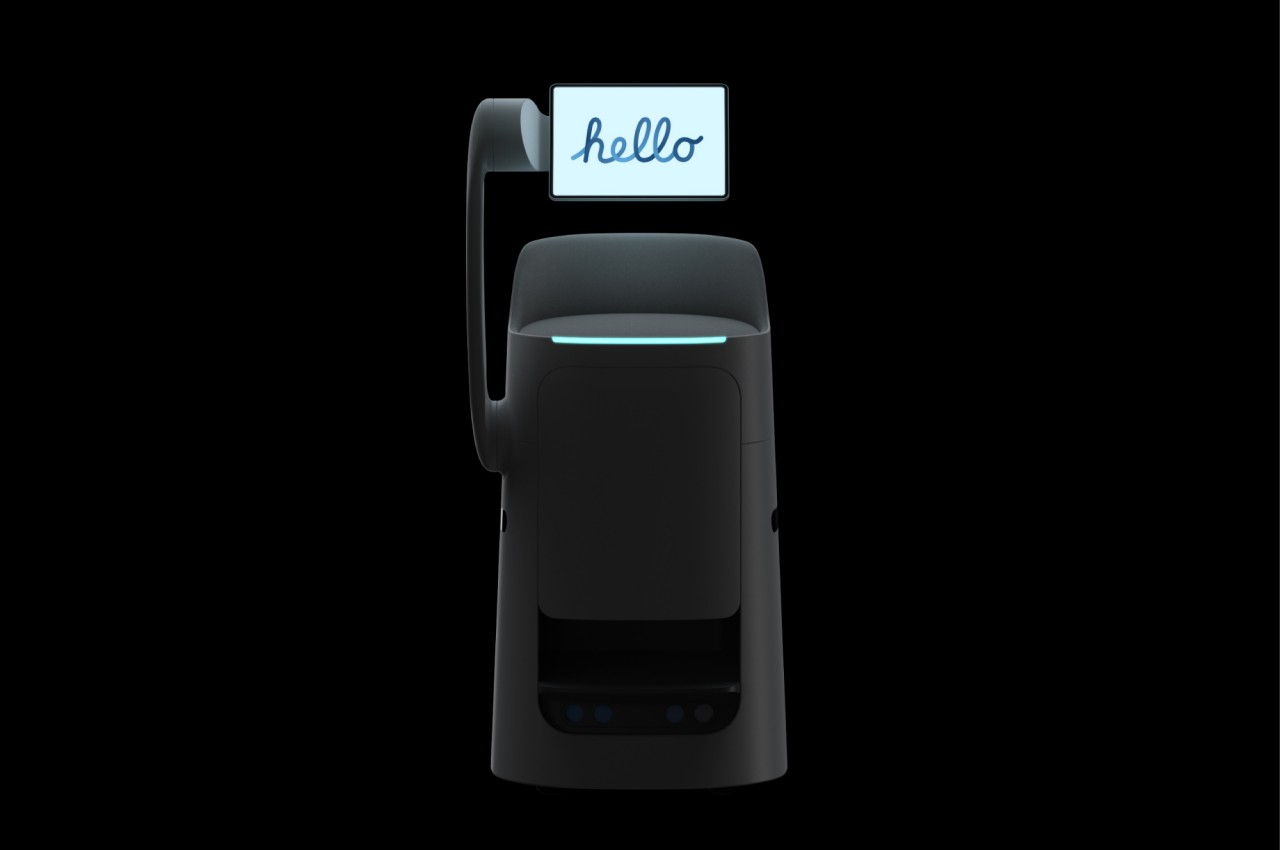
Part of why that integration works comes down to a deliberate design choice. KEENON chose not to make its service robots look human. The compact, rounded bodies, soft voices, and animated screen faces are intentional, because how a robot looks determines whether people trust it. Western audiences carry Terminator-shaped anxieties; Asian audiences grew up with characters like Doraemon. The design has to work for both.
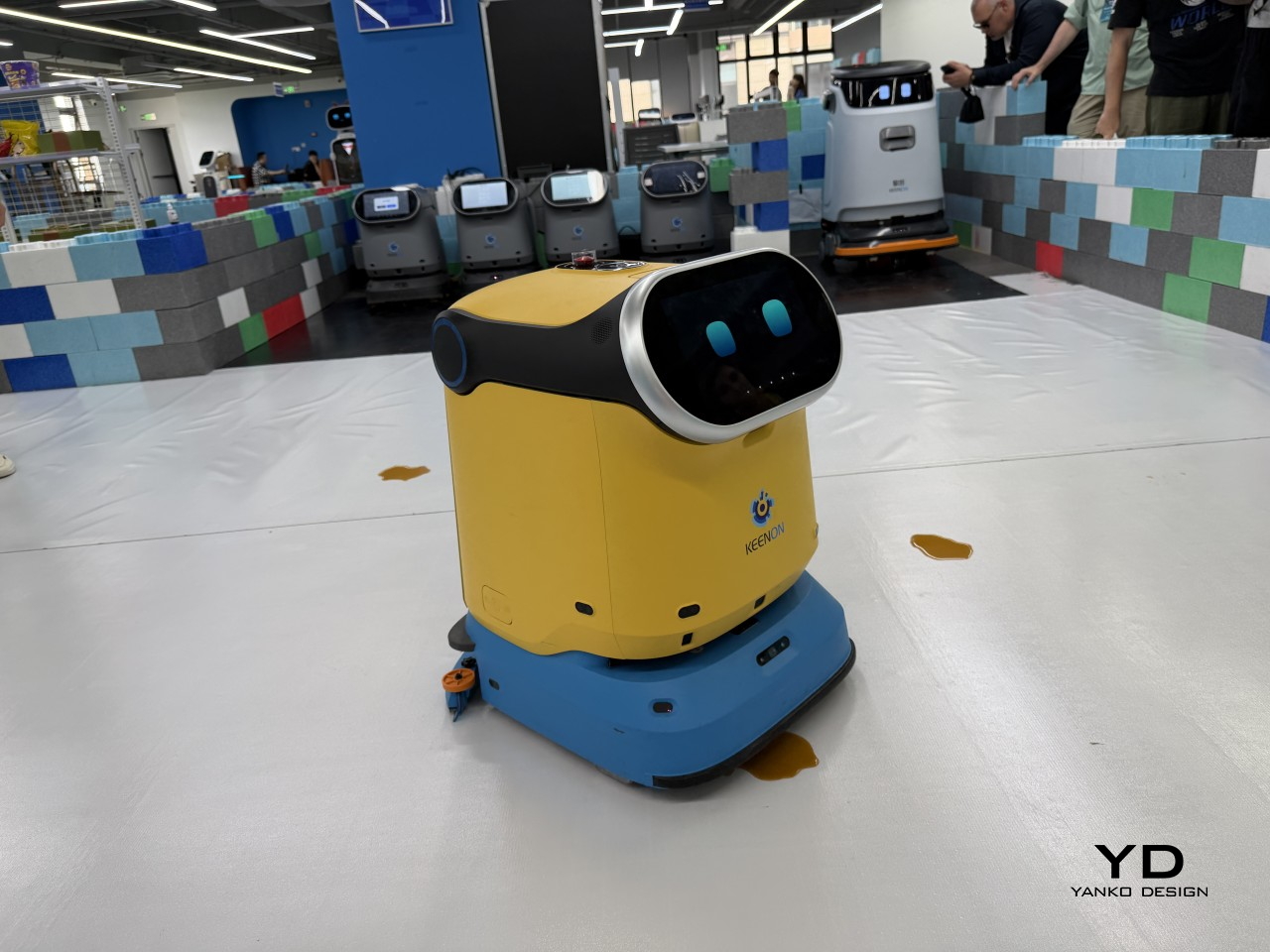
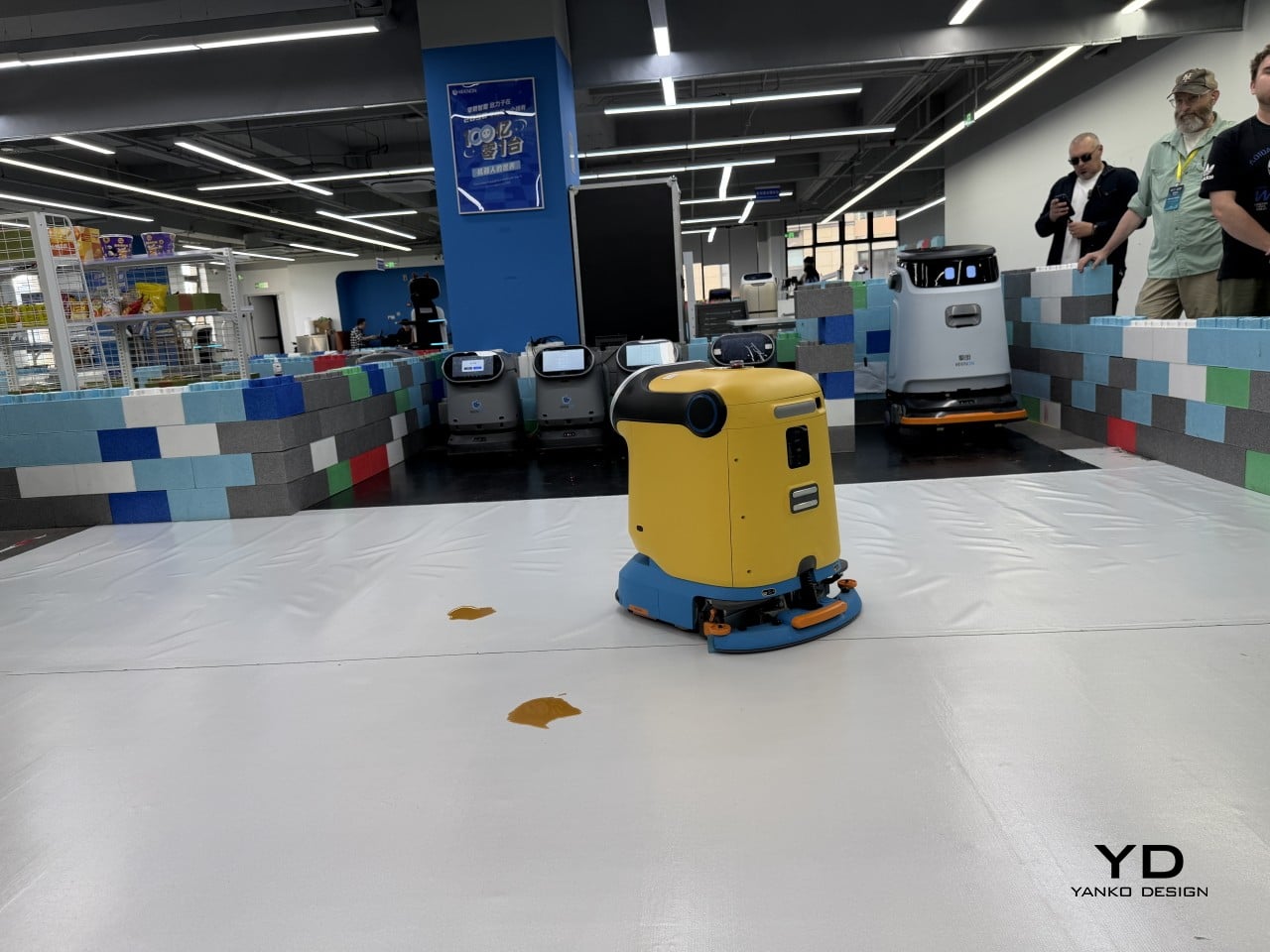
The XMAN-R1 at the Global Connect Show is KEENON’s way of signaling where the product line is heading. Alongside it, the company also offers the bipedal XMAN-F1, a full-body humanoid with 43 degrees of freedom that takes the same task-driven approach. Both run on KEENON’s KOM 2.0 platform and are designed to work alongside existing robots like the DINERBOT T10 rather than replace them.
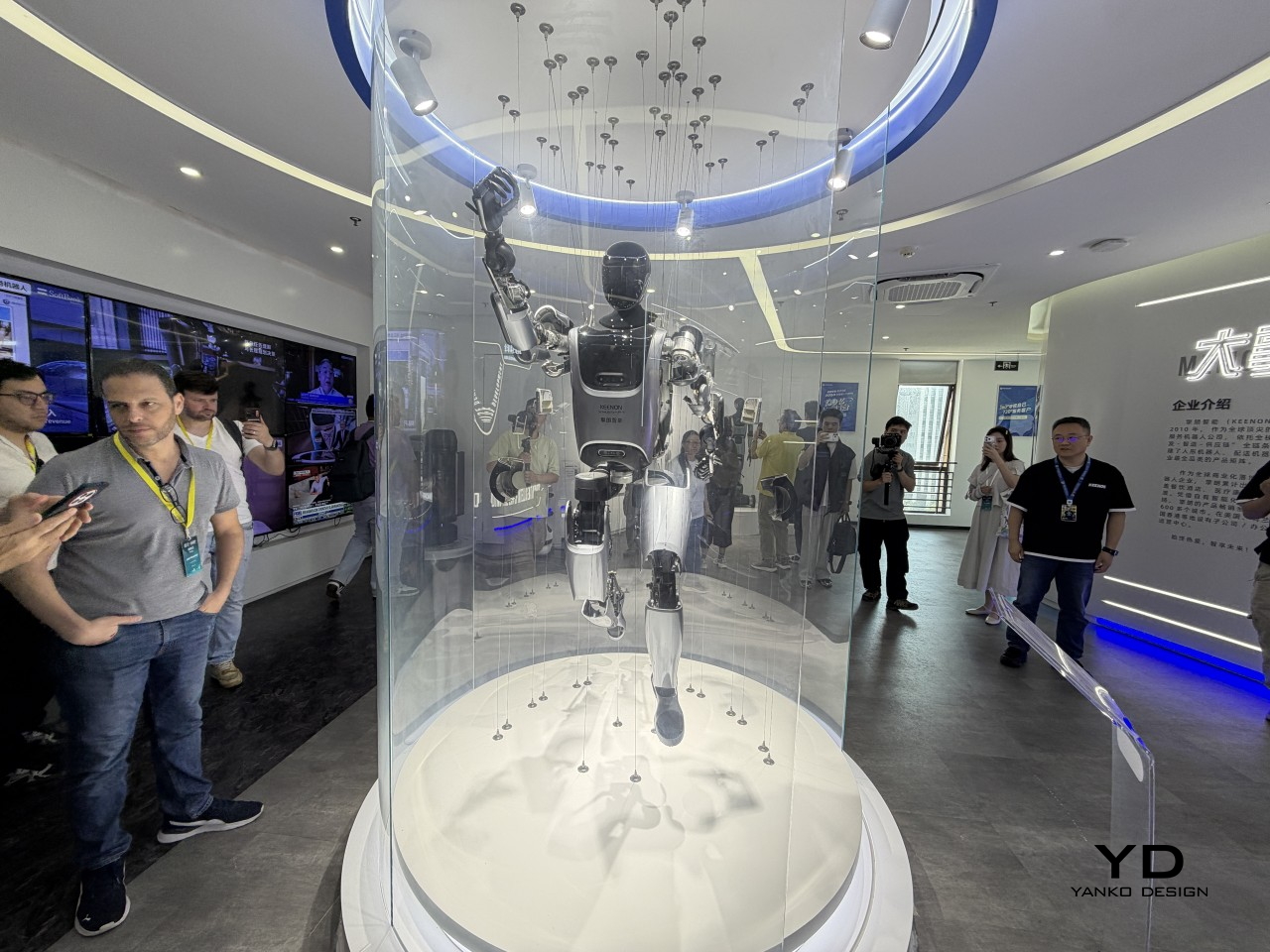
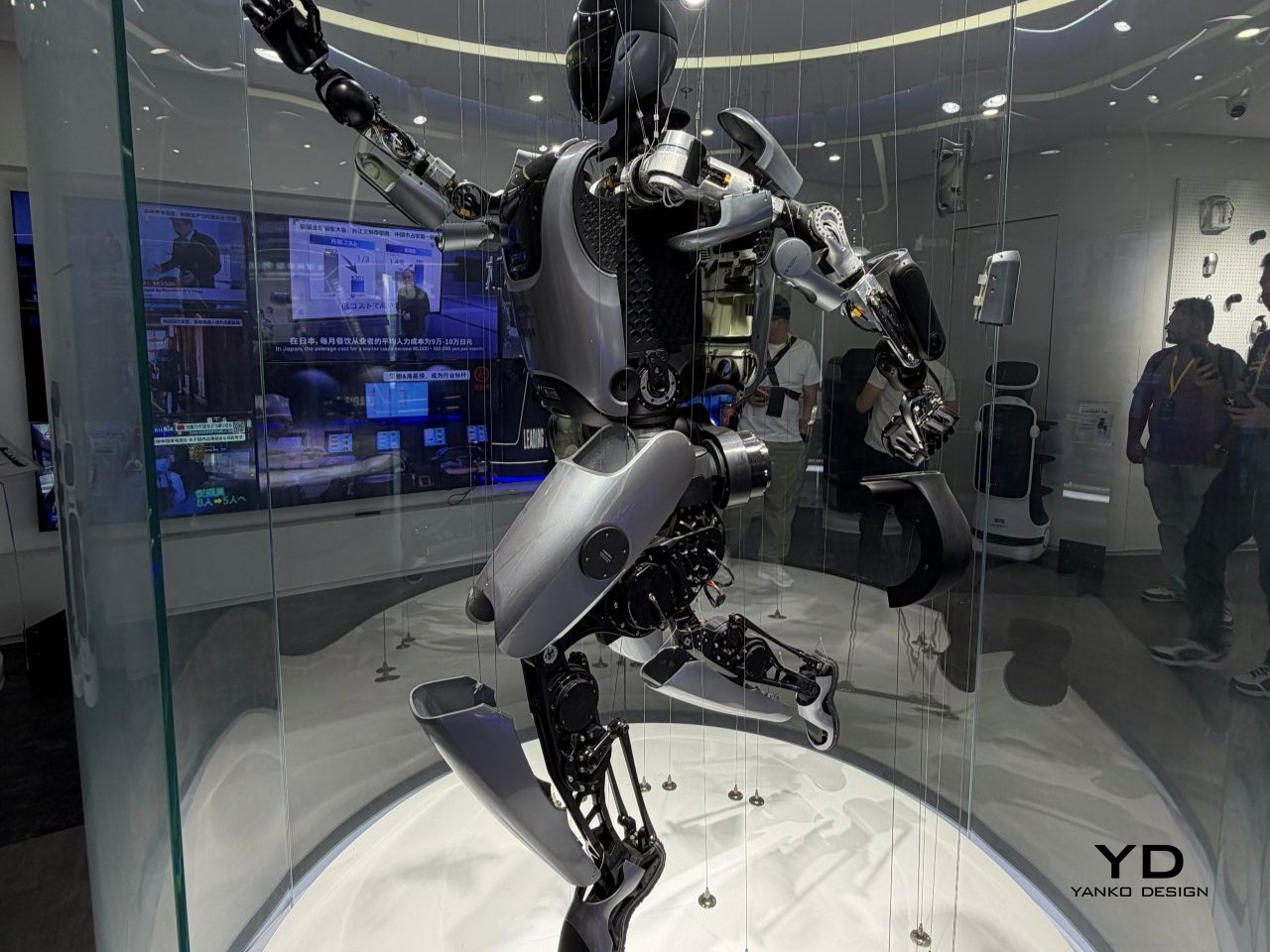
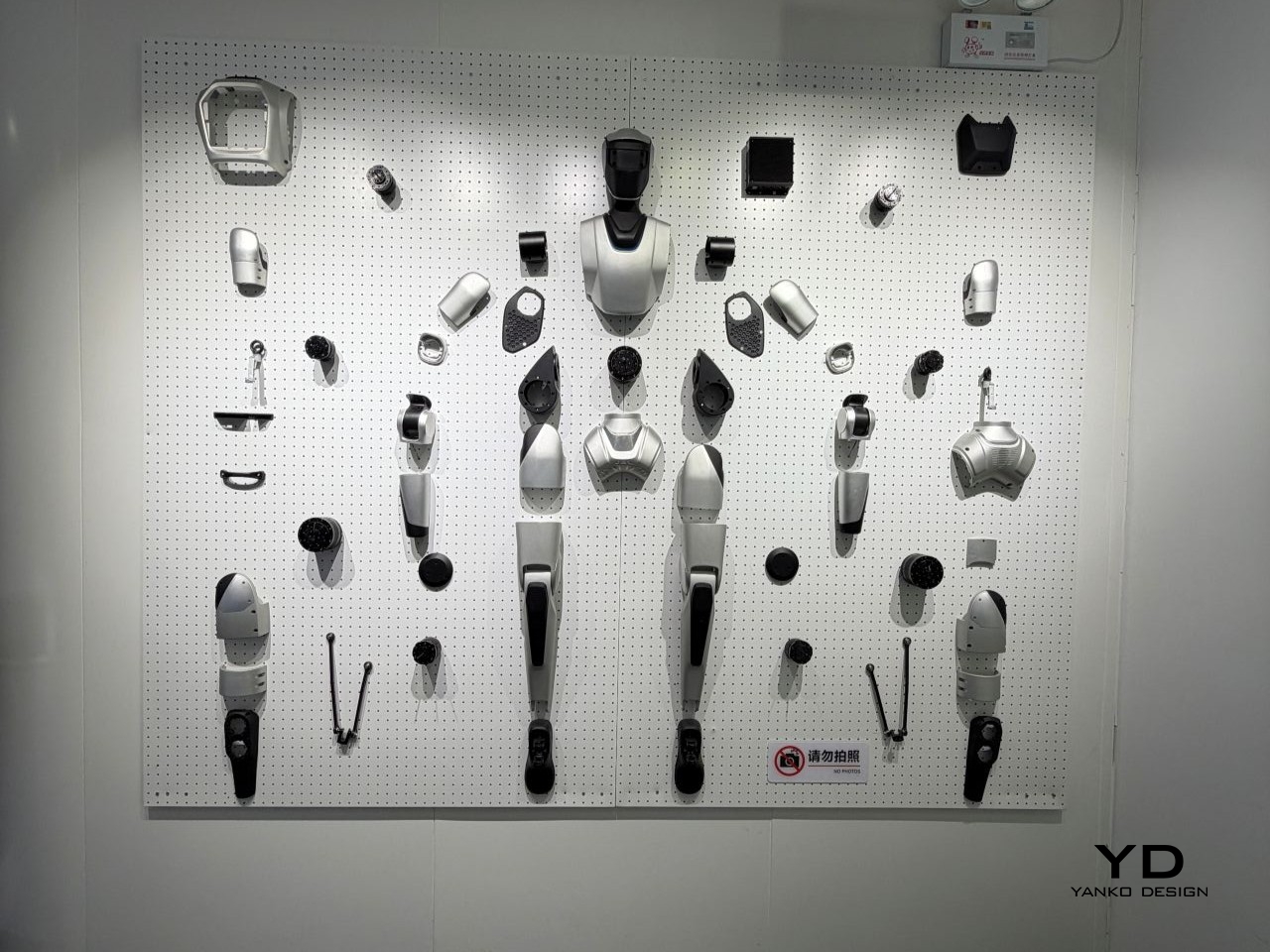
What KEENON actually has over the wave of humanoid startups entering the market is something harder to replicate than a robot body. With 100,000 units running across 70+ countries, the company has been accumulating proprietary operational data at a scale most competitors haven’t even started to approach. Every delivery, every corridor, every cup poured feeds back into that picture, one data point at a time.
The post KEENON Humanoid Pours Drinks at GCS 2026, 100,000 Others Run Hotels first appeared on Yanko Design.