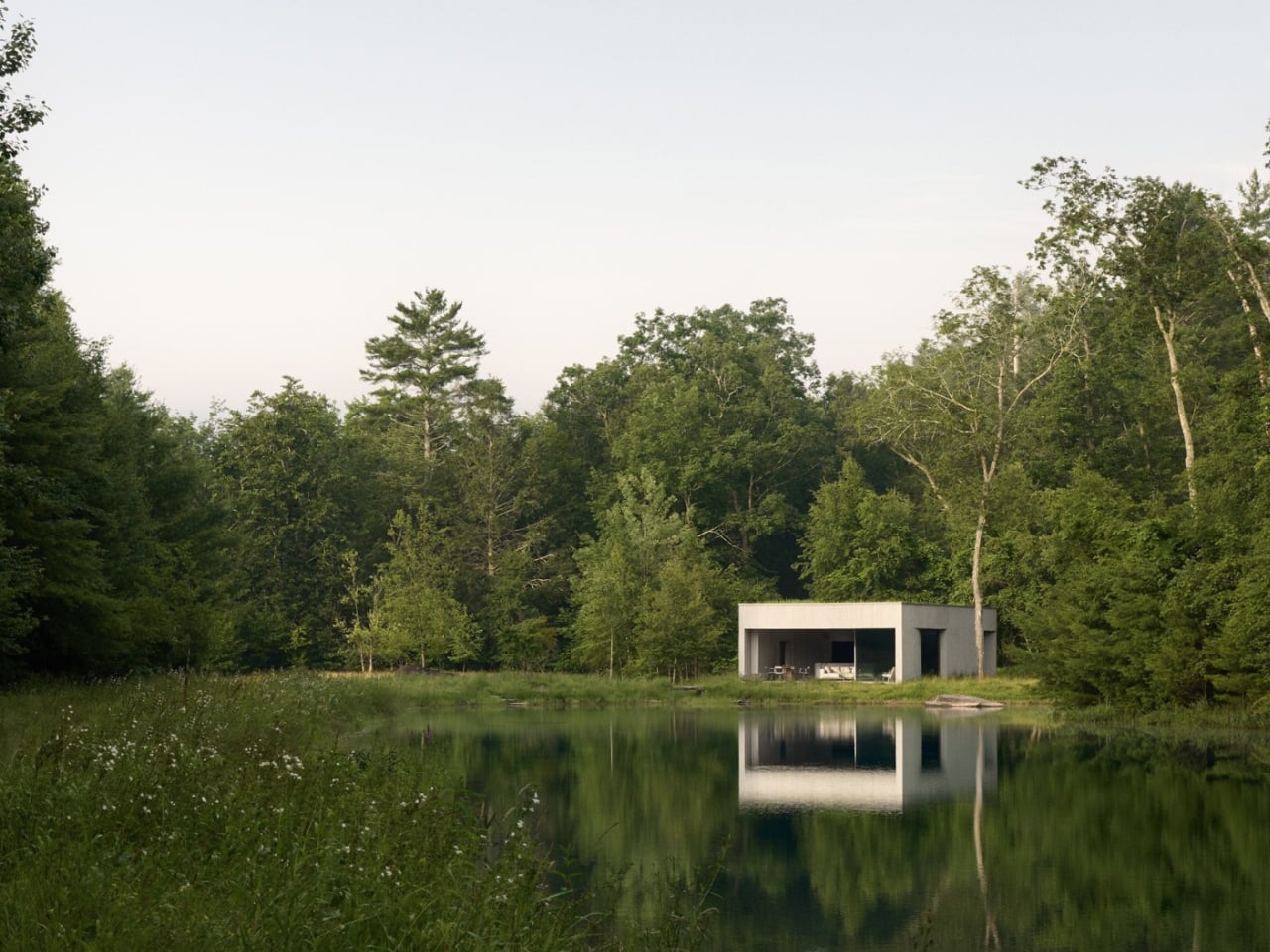
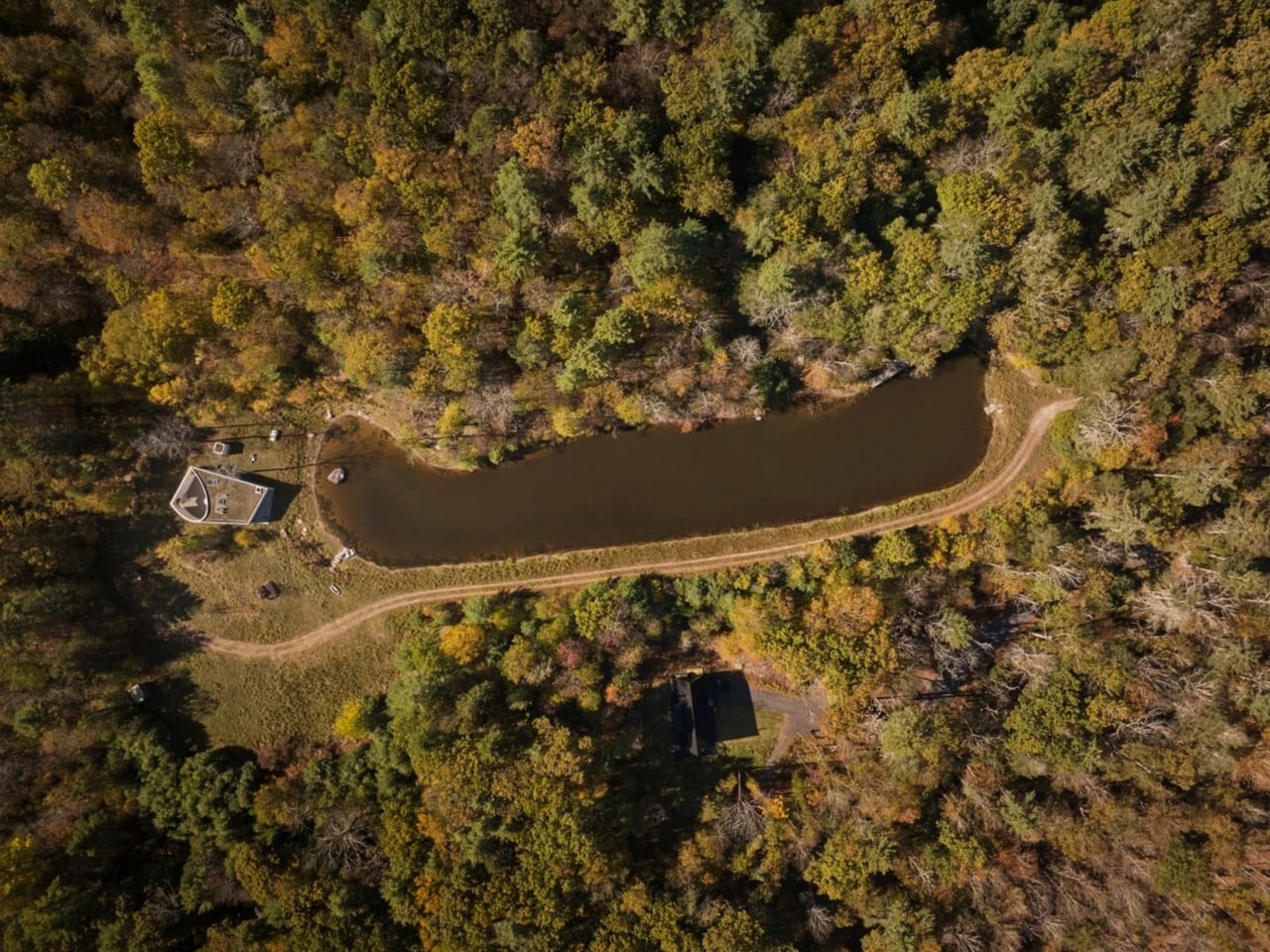
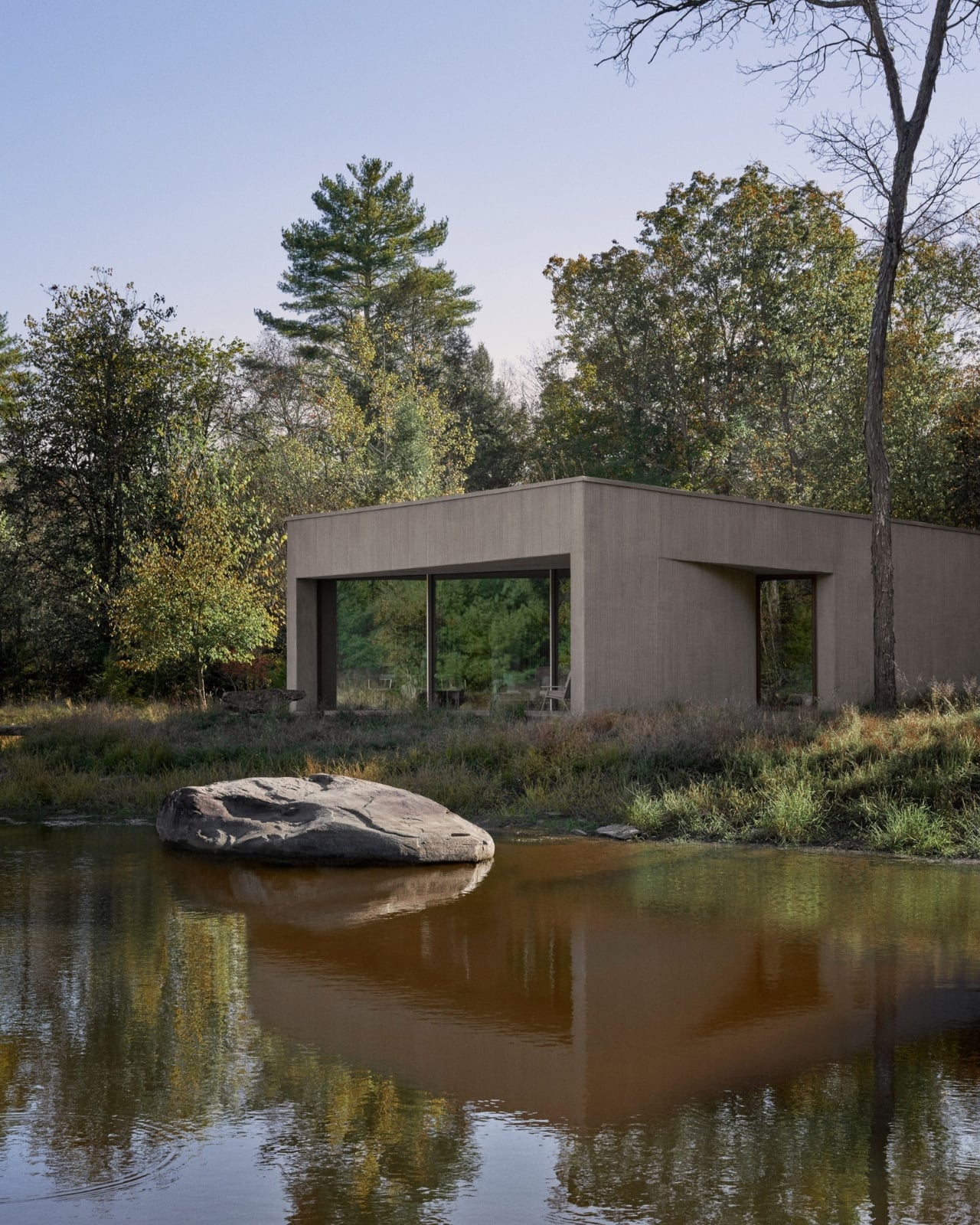
Not every building earns the word “sculptural” without some heavy editorial lifting, but the Vipp Pavilion in Upstate New York is the rare case where that description actually holds up. Completed earlier this year, the project is Vipp’s first ground-up build in the United States and their fifteenth bookable guesthouse globally. It sits on sixteen acres of meadow in Lumberland, New York, two hours outside of the city, on the edge of a reflective pond. And from the outside, it looks less like a place you’d stay in and more like a deliberate act.
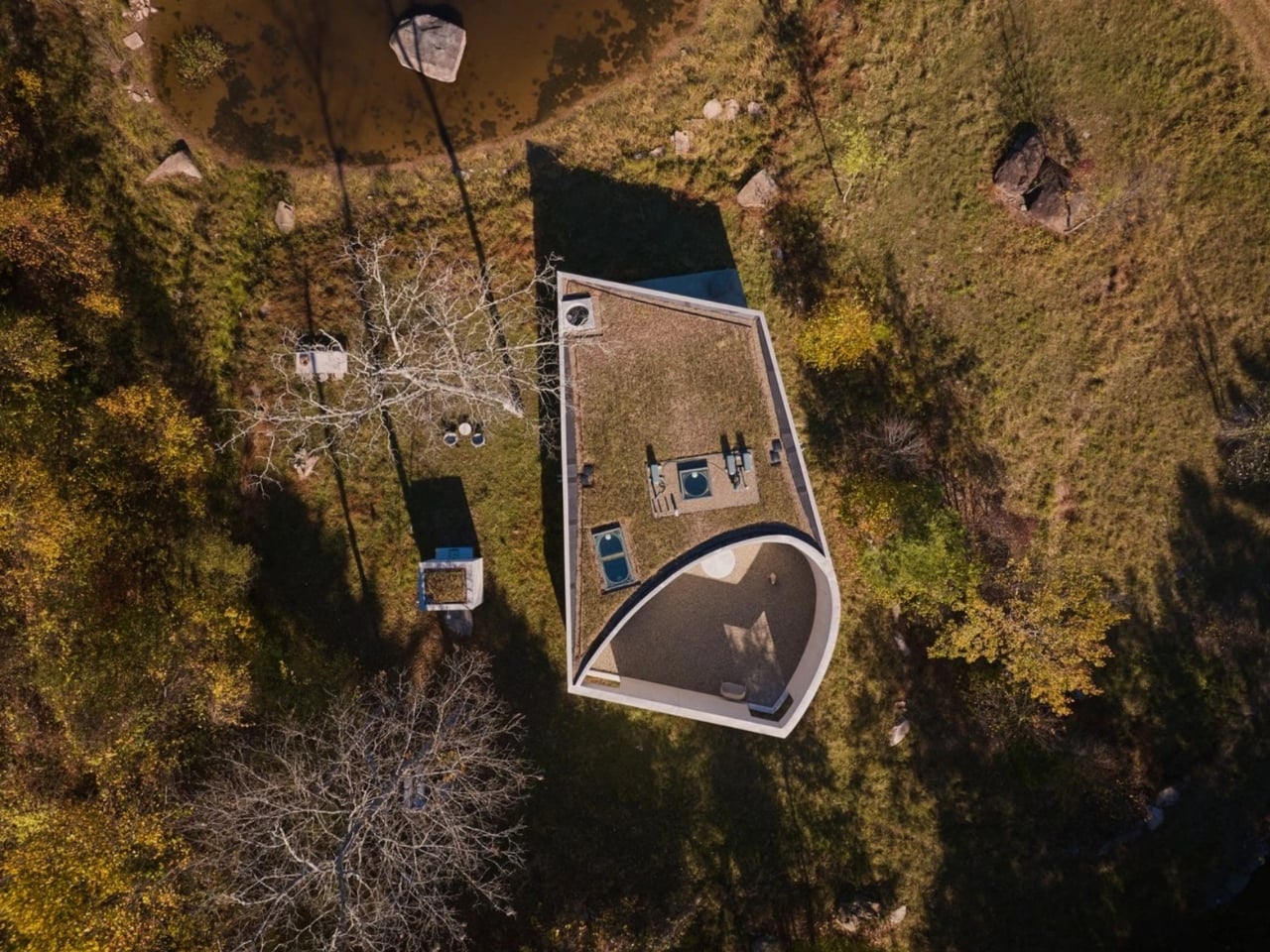
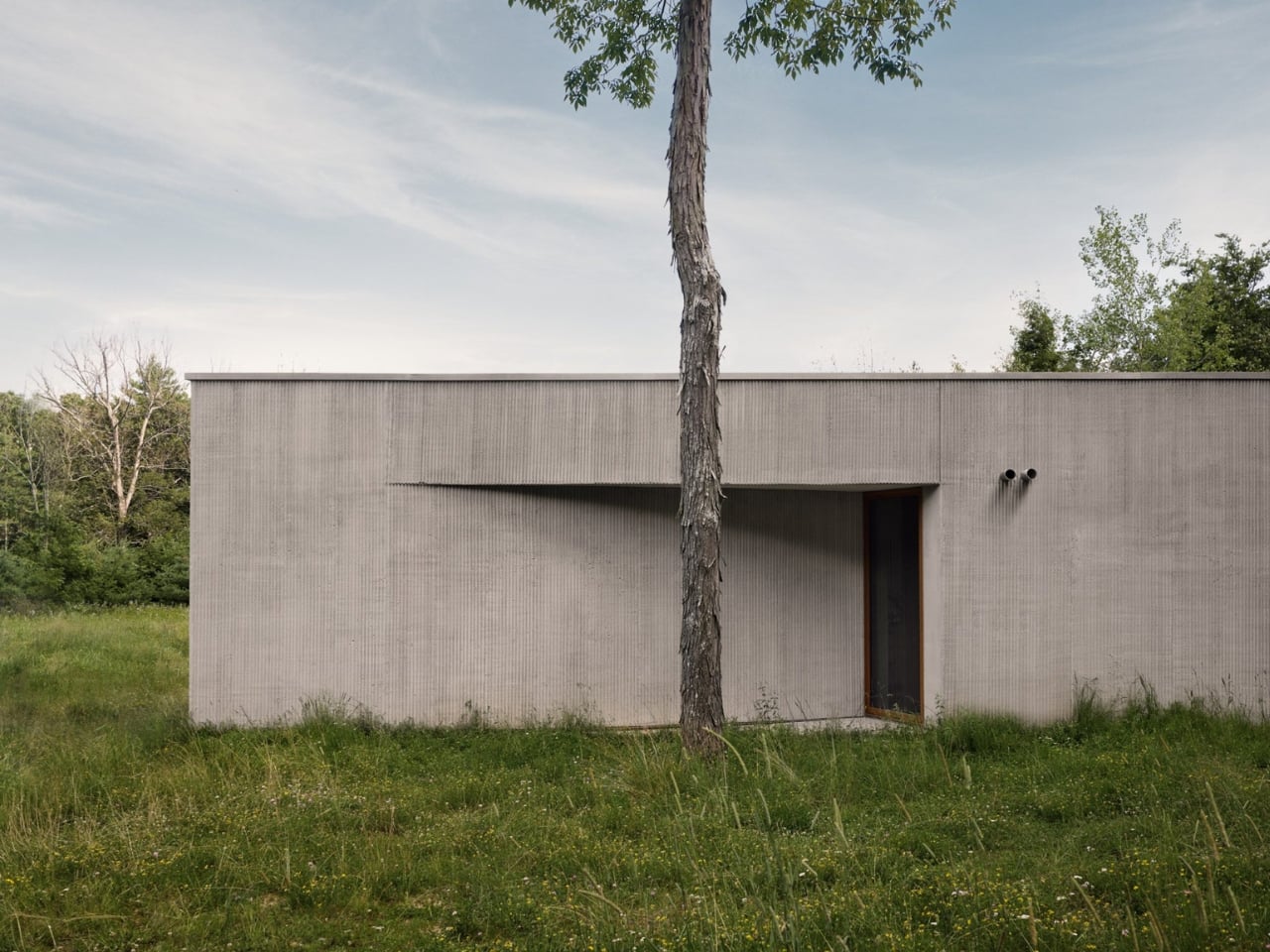
The structure was designed by Johnston Marklee, the Los Angeles-based firm behind some of the more quietly radical architecture of the past two decades. Their work has always been about geometry as experience rather than spectacle, and the Vipp Pavilion is exactly that. The form is based on two tangent ellipses that mirror the curve of the adjacent pond. Built with a combination of smooth and ribbed stucco, it’s rectangular in envelope but sculpted in feeling, with semi-circular cutouts that carve into the exterior and draw the eye inward. Sharon Johnston described the approach as designing something that “masks a sense of scale, form, or function,” which is a beautifully honest way of saying the building refuses to be immediately read.
Designer: Johnston Marklee
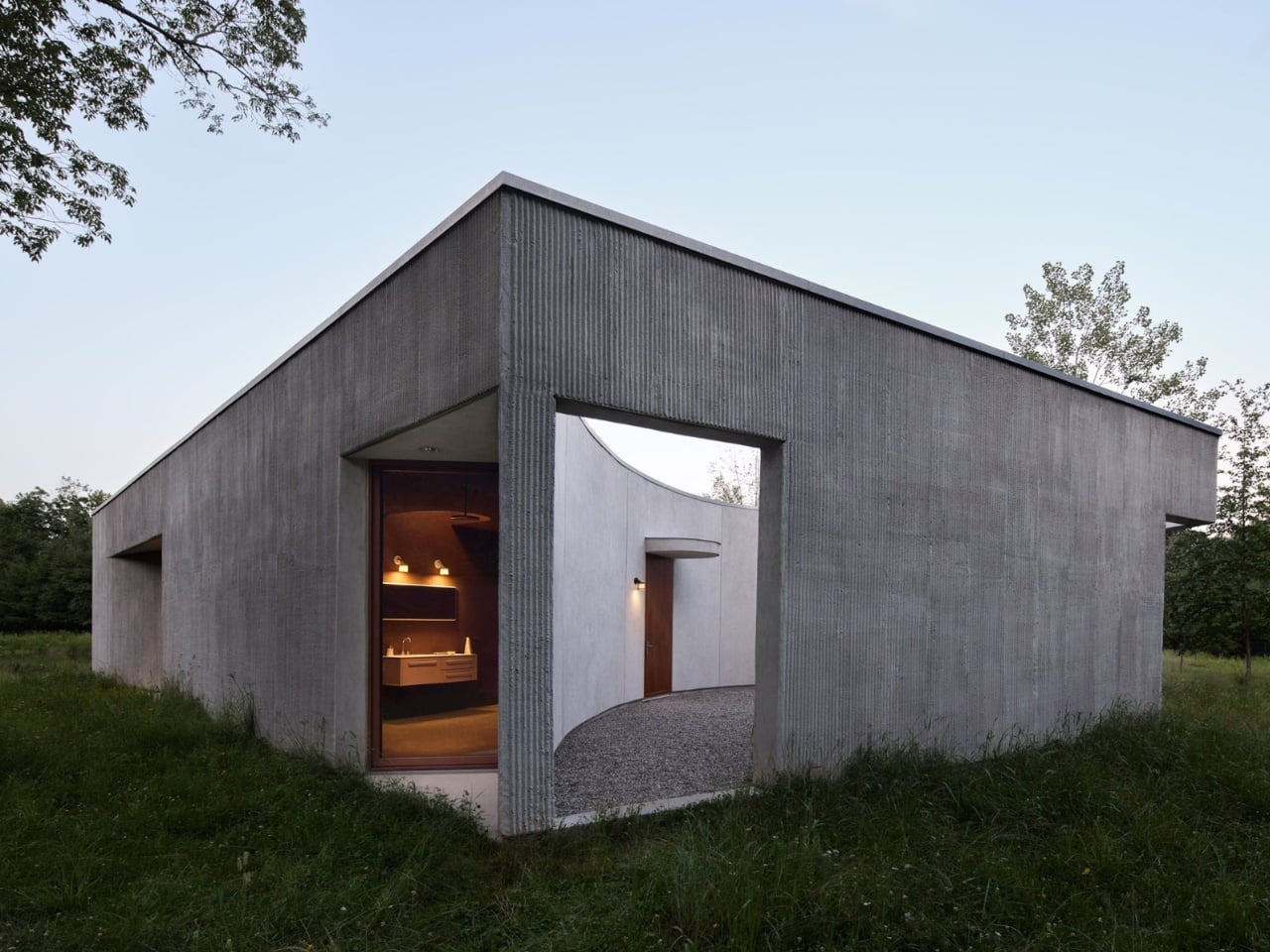
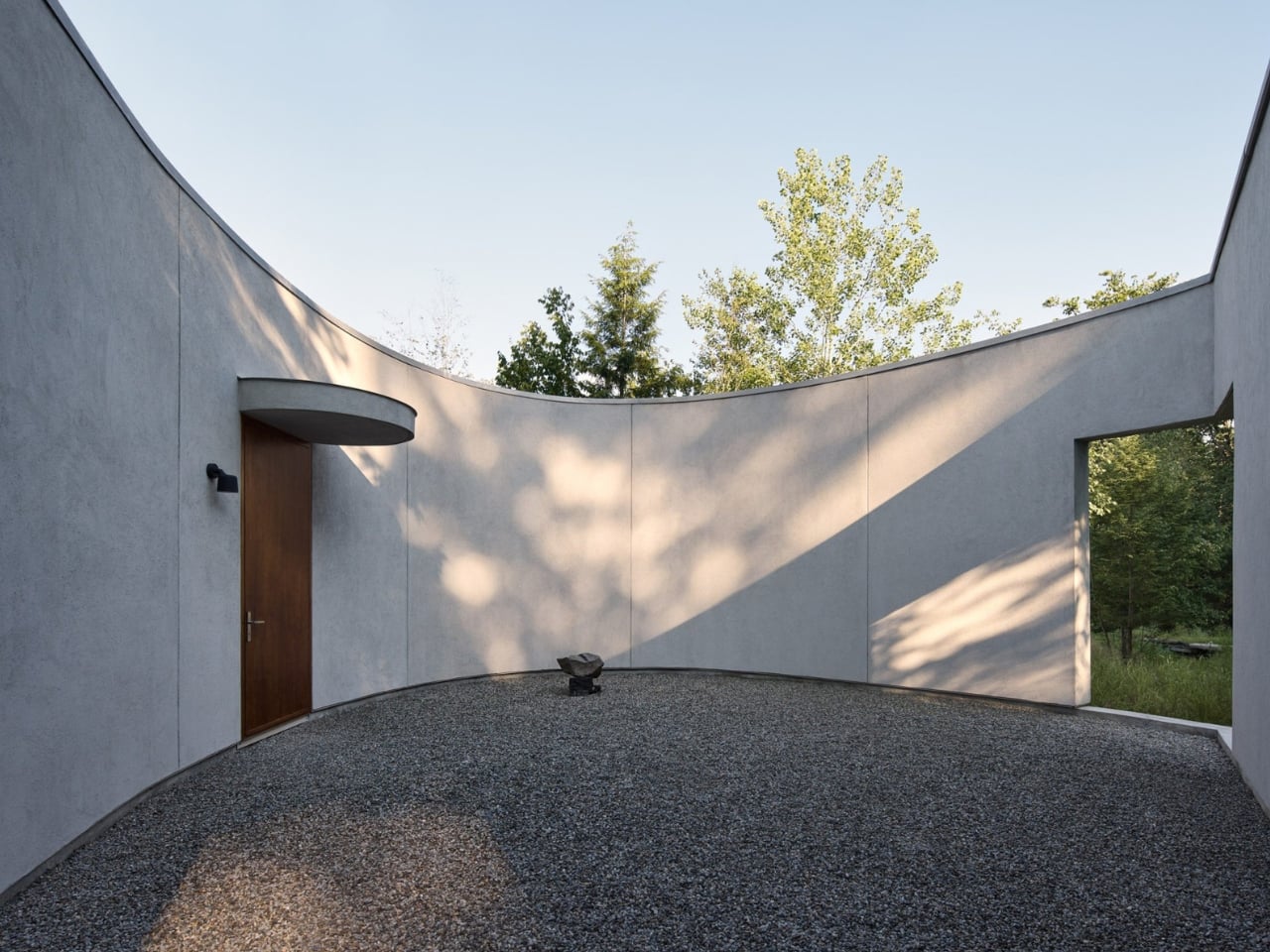
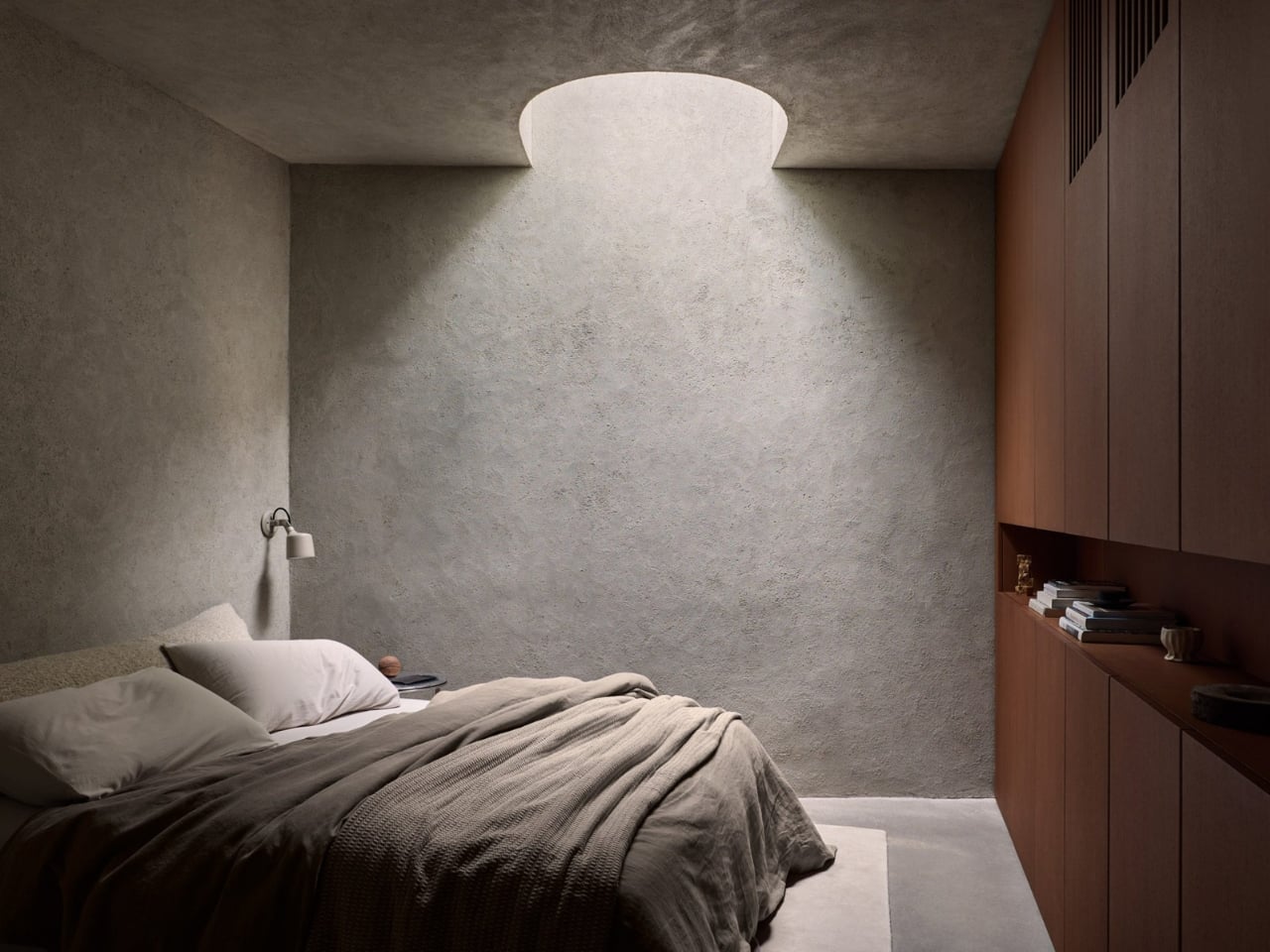
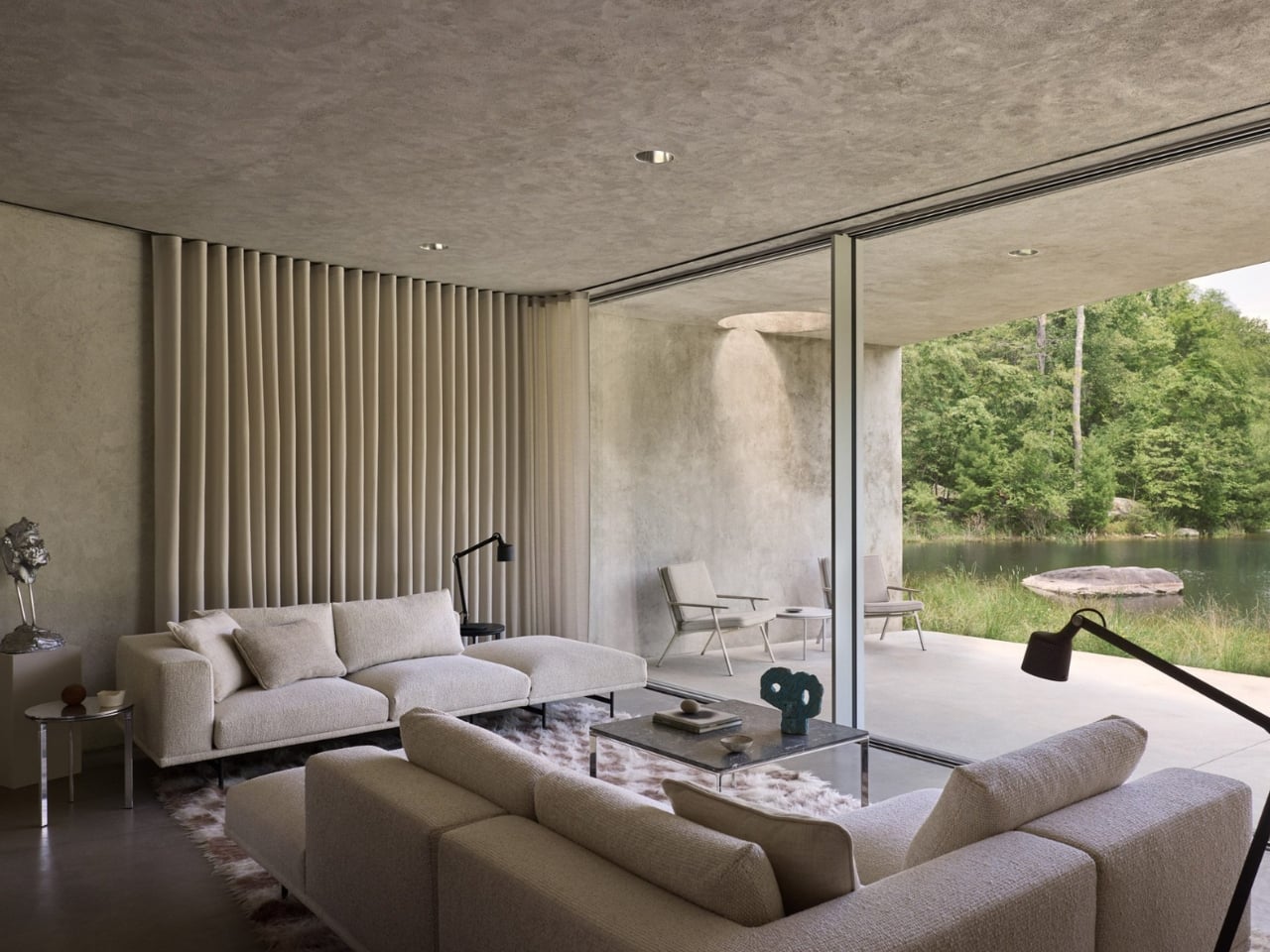
Four years went into getting this right, and you can tell. This isn’t the kind of project that was rushed to fill a destination travel gap or capitalize on a trend cycle. The care shows in the details: the green roof planted by landscape firm Larry Weaner Landscape Associates, which connects the meadow to the architecture itself rather than interrupting it. The interior courtyard slows your arrival down and redirects your gaze upward before you even enter the main space. The floor-to-ceiling window wall lines up perfectly with the water, creating what the architects call a telescopic effect.
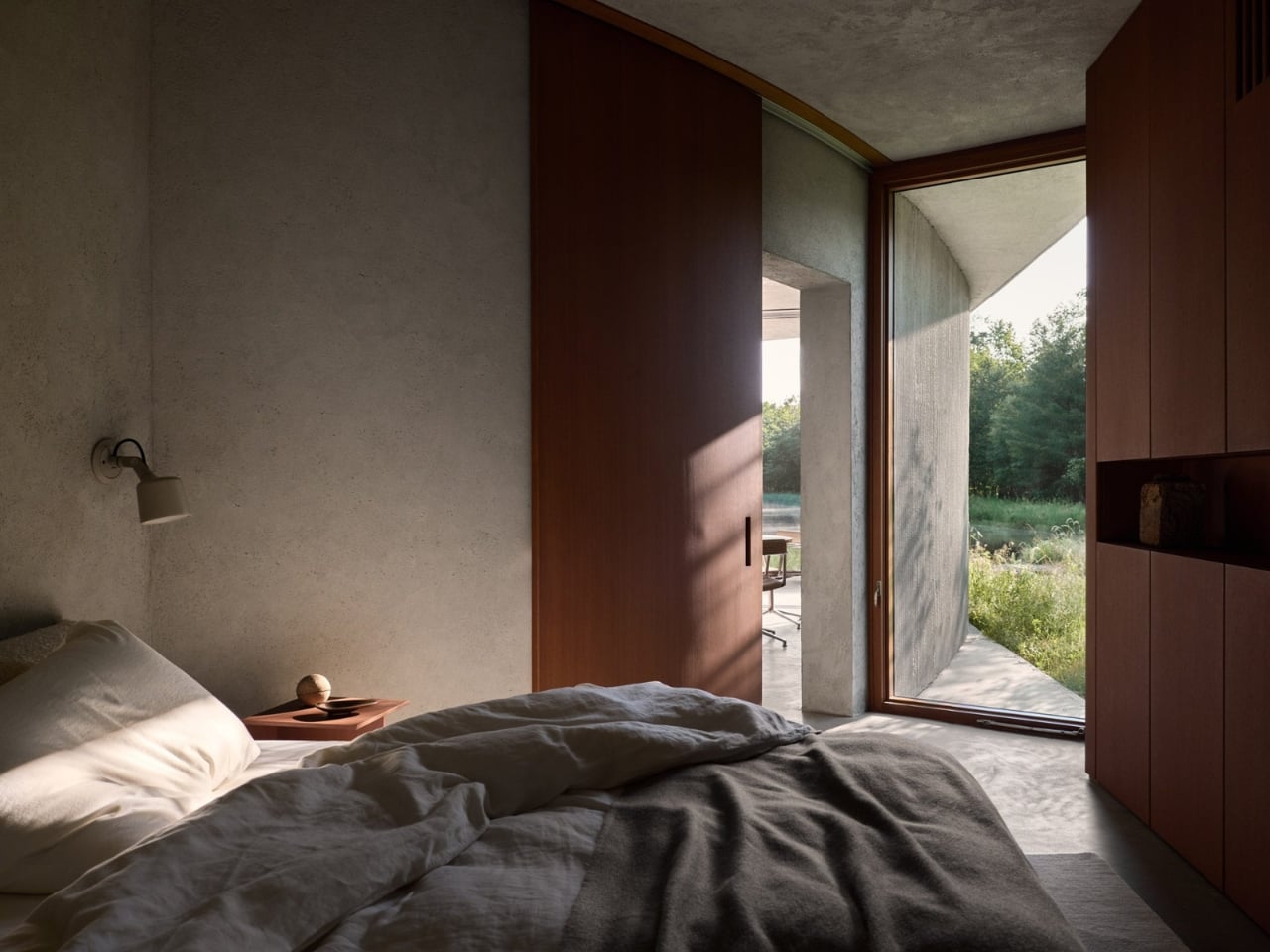
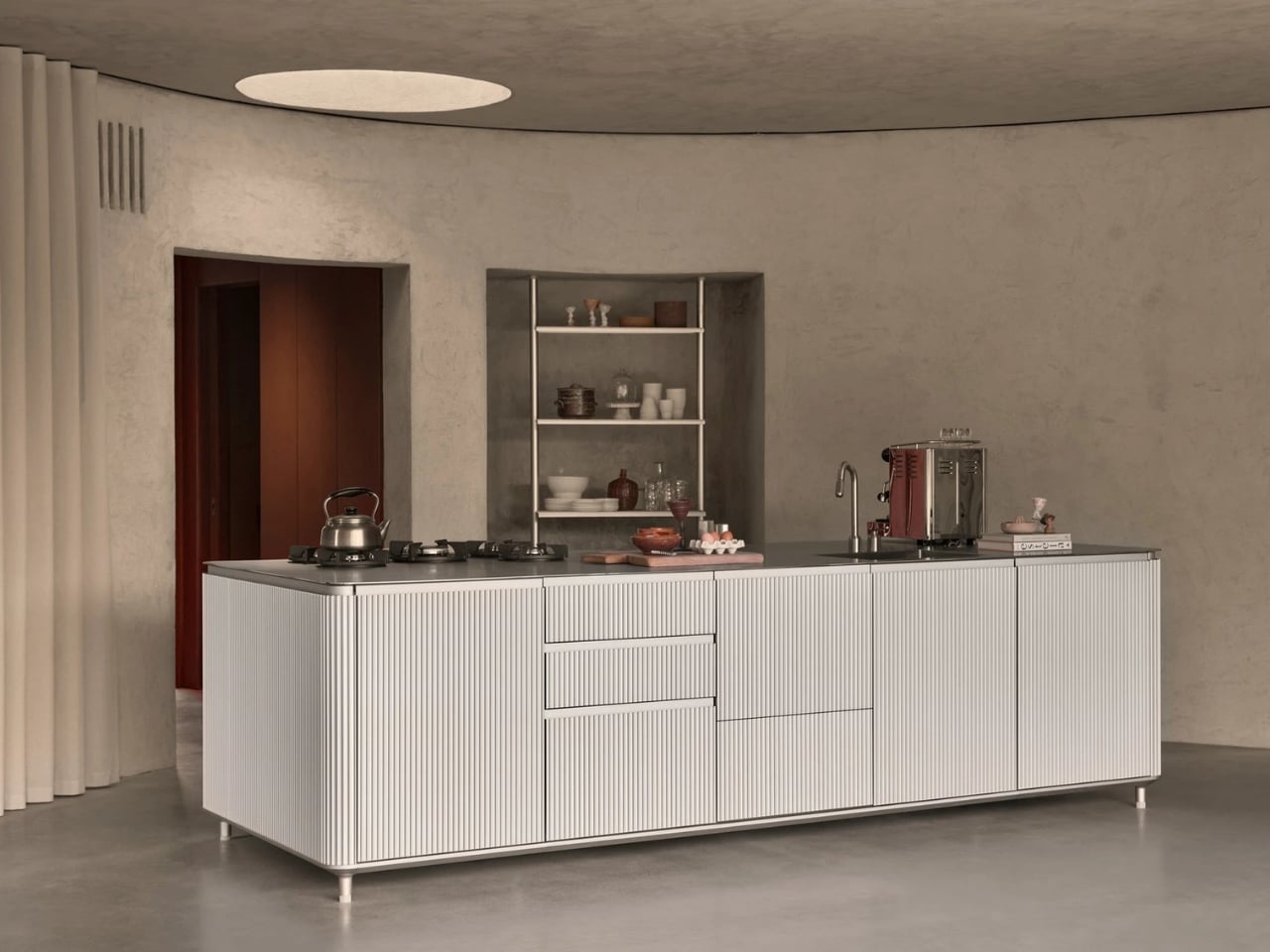
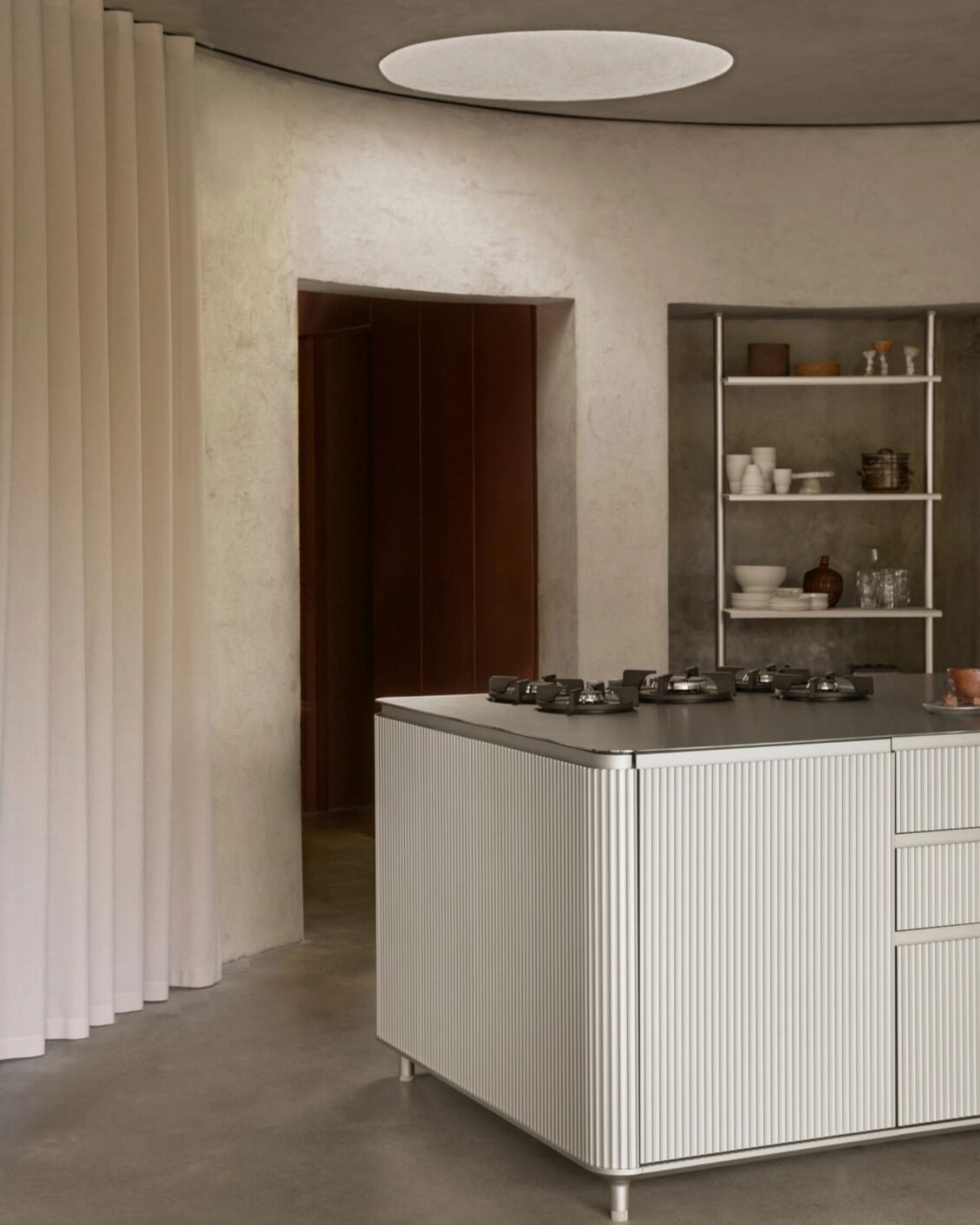
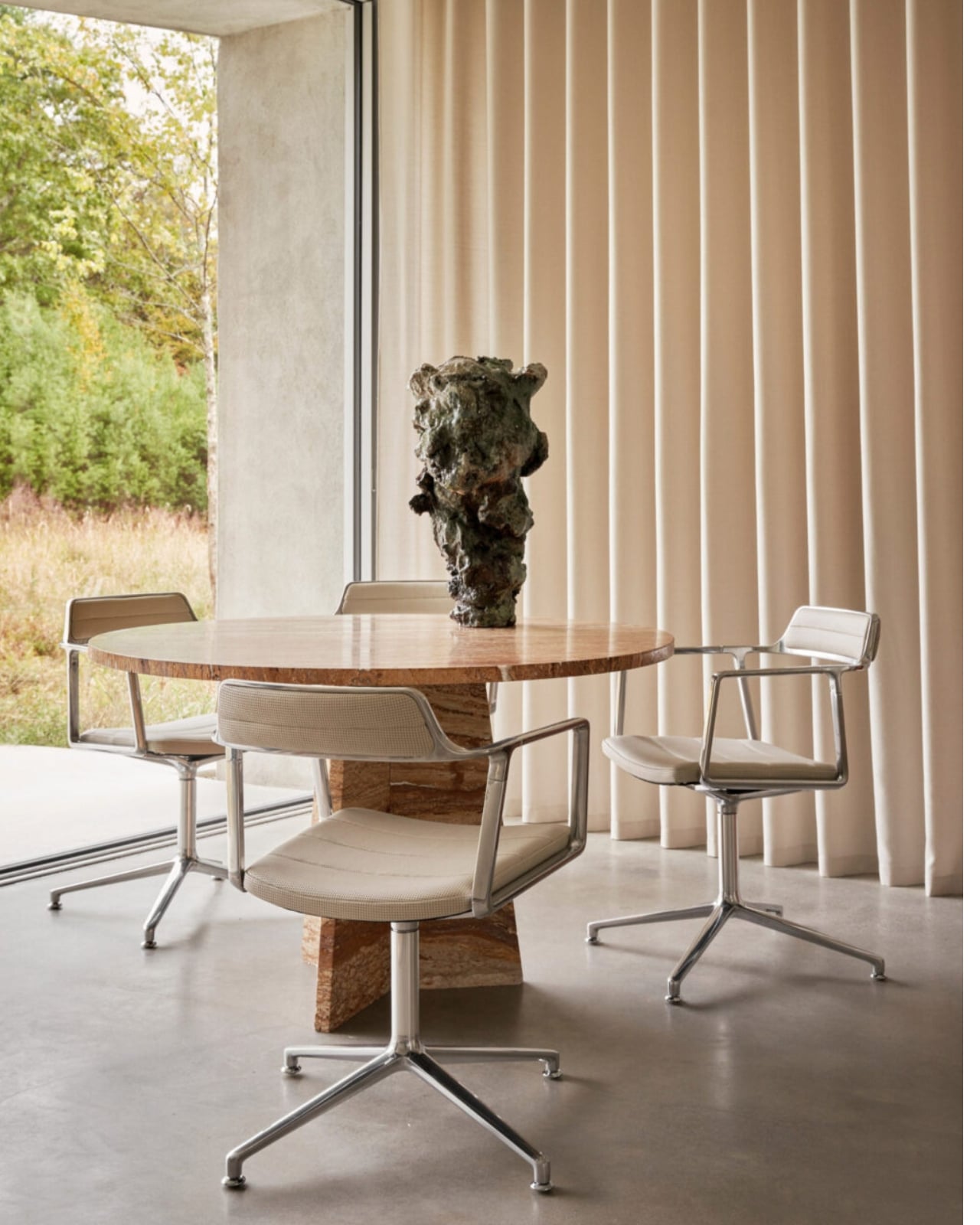
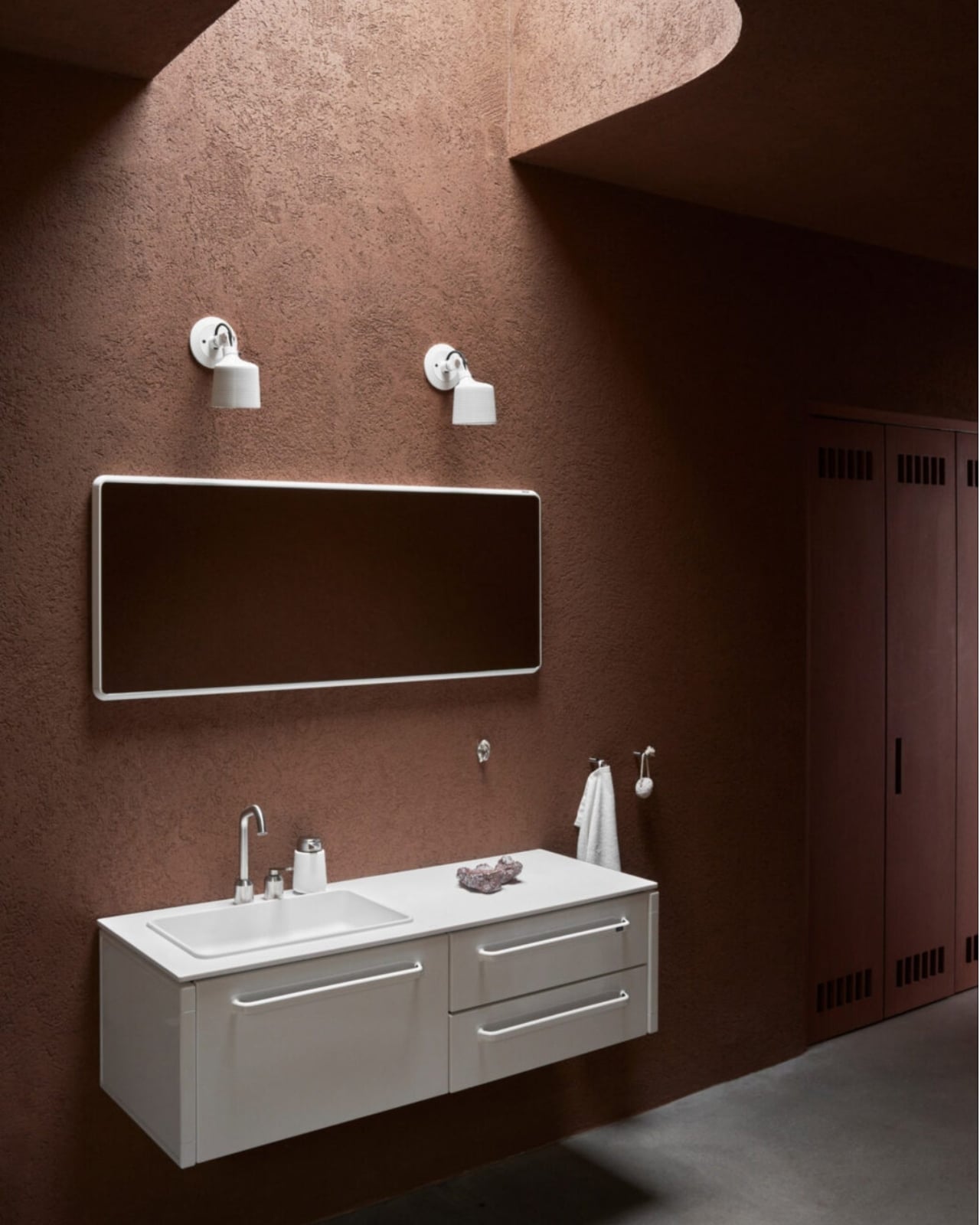
Inside, Vipp outfitted the 1,200-square-foot space with their own furniture, and the choices feel considered rather than commercial. There’s a travertine table surrounded by swivel chairs, a sectional sofa in cream positioned to catch the view, and the V3 kitchen, whose polished aluminum ribs subtly echo the ribbed stucco on the exterior walls. It’s the kind of interior that doesn’t announce itself, which is exactly the right call in a space where the architecture is already doing a lot of talking.
The two bedrooms, one bathroom, covered porch, and exterior courtyard layout keeps the program deliberately simple. That restraint reads as confidence, not limitation. When you’re offering sixteen acres of Catskills landscape and a building that looks like a smooth stone half-emerged from a pond, you don’t need to fill every corner. The landscape does what interior design cannot.
I think Vipp has been building something genuinely interesting with this guesthouse series, one that most people overlook precisely because the brand started with trash cans. But this pavilion, maybe more than any of their previous projects, makes the case that design continuity is a real thing. The same rigor that goes into their hardware goes into the architecture they commission. That’s not a given in the design world. A lot of brands treat objects and spaces as separate categories, and the work suffers for it.
The Pavilion is bookable, meaning you can actually stay there, which is one of those pieces of information that shifts the whole conversation. This is not just a concept project or an awards-season submission. It exists, it functions, and it sits two hours from Manhattan in a landscape that will do most of the work of making you feel genuinely away.
Whether or not you ever book a night there, the Vipp Pavilion is worth paying attention to. It’s a well-argued case for how geometry, landscape, and material can coexist without any one of them shouting over the others. And frankly, that kind of restraint is harder to pull off than it looks.
The post Vipp’s New Catskills Pavilion Is a Sculpture You Can Sleep In first appeared on Yanko Design.