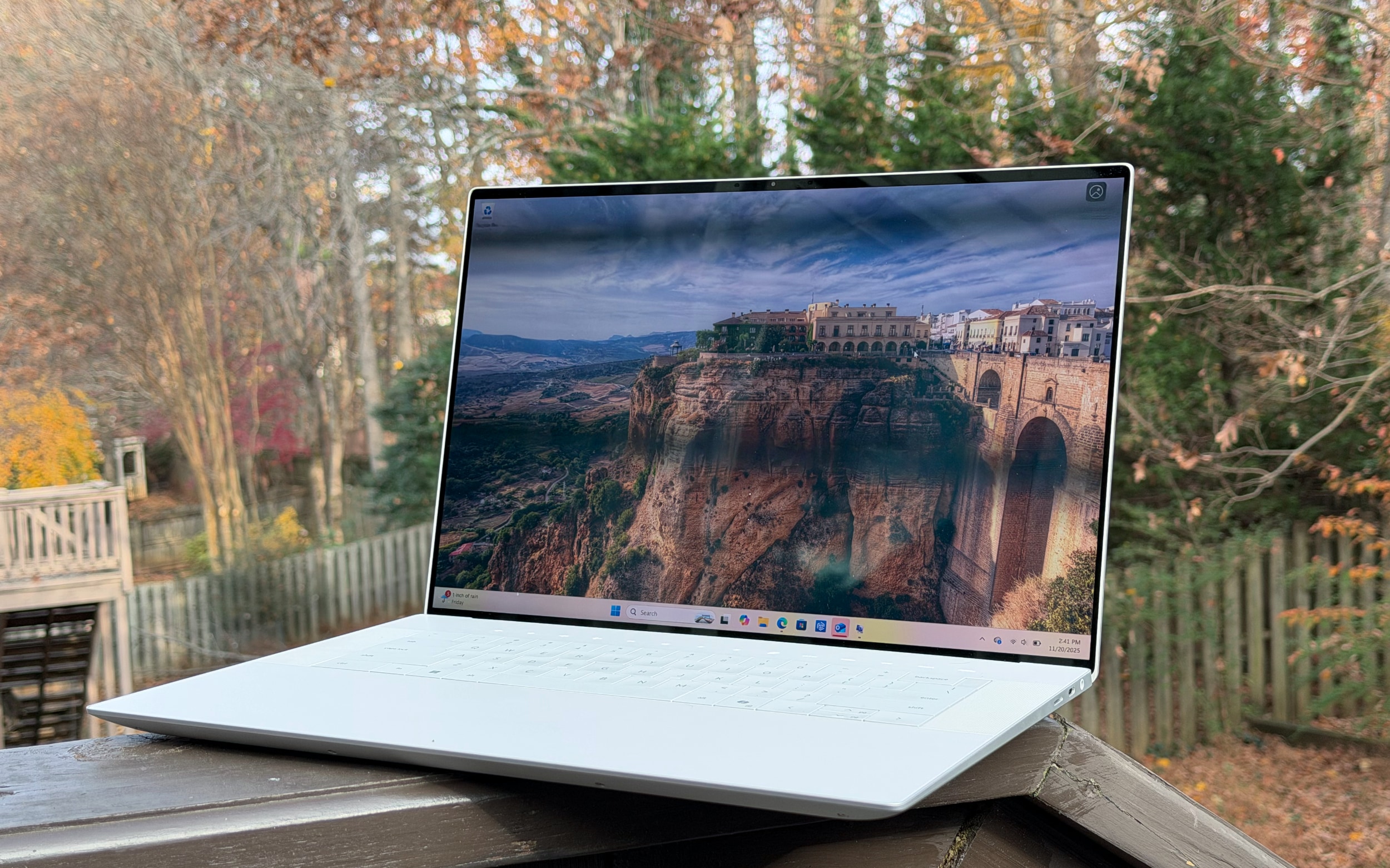
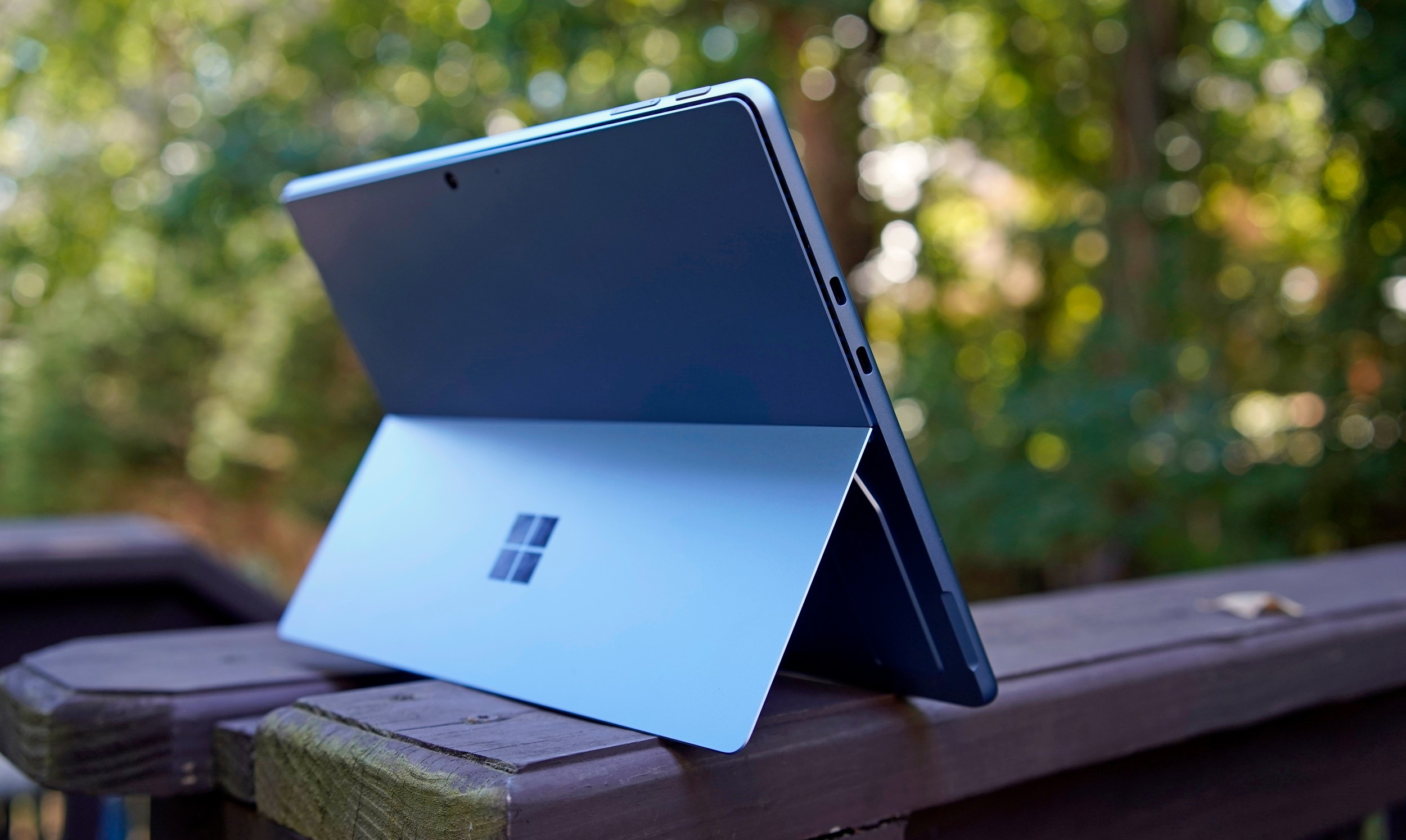
What if you could take the benefits of solid-state speaker drivers — specifically, their extreme thinness and lack of moving parts — and bring them to cooling fans? That's what xMEMS aims to do with its new XMC-2400 µCooling (microcooling) chip. It's a 1mm-tall solid-state fan on a chip that can actively cool extremely thin devices like smartphones and tablets. Based on the same MEMS (Micro-electromechanical systems) technology as the company's upcoming ultrasonic driver inside headphones, the micro-cooling chip could lead to slim devices that are less prone to overheating and capable of better sustained performance.
Consider this real-world example: If my fan-less M2 MacBook Air had xMEMS' XMC-2400 chips installed, it wouldn't have died on me while I was working in the sun at Apple's WWDC last year. It's not hard to imagine other potential solutions: Headphones that can cool down your ears; gaming controllers that can keep your paws from getting sweaty; tablets that can eke out even more speed from their hardware.
xMEMS
In earbuds like Creative's Aurvana Ace, xMEMS' solid-state drivers excelled at reproducing mid- and high-range, but they were paired together with a traditional bass driver to handle low-end frequencies. xMEMS' next-generation solid-state driver, dubbed Cypress, holds its own across all frequencies—-and it's that same air-pushing power that the new micro-cooling chip relies on.
According to Mike Housholder, xMEMS VP Marketing and Business Development, the XMC-2400 µCooling chip uses ultrasonic modulation to create pressure pulses for air movement. It weighs less than 150 milligrams and can move "up to 39 cubic centimeters of air per second with 1,000 Pascals of back pressure," xMEMS says. Since it's a solid-state device, there aren't any moving parts like rotors or fins to fail, and its thin design means it can be placed directly atop heat-generating components like APUs and GPUs. It's also resistant to dust and water damage with an IP58 rating.
xMEMS isn't the only company pursuing ultra-thin, solid-state cooling. Frore's AirJet Mini and Mini Slim can both generate 1,750 Pascals of back pressure, but they're also larger and thicker than the XMC-2400, measuring 2.8mm and 2.5mm thick, respectively. Frore showed off its technology by hacking it into a MacBook Air, and according to The Verge, it pushed out heat and led to improved sustained performance.
xMEMS
As Housholder puts it, xMEMS' technology is more flexible since its far thinner, and manufacturers can also choose from side- and top-venting options. He expects the XMC-2400 to cost under $10 per chip, and that "four to five" existing partners will get their hands on it by the end of the year. Other manufacturers can snag it in the first quarter of 2025. xMEMS' fabrication partners, TSMC and Bosch, can easily switch from building its speakers today to constructing micro-cooling chips tomorrow, Housholder says. There's no need to change equipment or production lines.
As devices like the iPad Pro juggle extreme thinness with powerful performance, the need for some sort of ultra-thin active cooling solution is clear. We can't escape physics, after all—that's something I learned when my MacBook Air died on Apple's own campus. While we still need to see the xMEMS micro-cooling chip in action to form any sort of judgment, theoretically, it could end up being indispensable in the future.
This article originally appeared on Engadget at https://www.engadget.com/mobile/this-1mm-fan-on-a-chip-could-put-active-cooling-inside-ultra-thin-gadgets-130014002.html?src=rss
Is the second time the charm for Google's foldable? In this episode, Devindra chats with Senior Writer Sam Rutherford about his hands-on impressions of the new Pixel 9 Pro Fold. It has bigger screens and a sleeker design than its predecessor, but how does it compare to the other foldables out there? And why isn't it called the Pixel Fold 2?!
Listen below or subscribe on your podcast app of choice. If you've got suggestions or topics you'd like covered on the show, be sure to email us or drop a note in the comments! And be sure to check out our other podcast, Engadget News!
Topics
Thoughts on Google’s Pixel 9 Pro Fold and the rest of Google’s event – 1:39
Eric Schmidt blames work from home and work-life balance for Google’s loss of AI advantage – 31:07
U.S. Department of Justice considering breaking up Google after monopoly ruling – 33:32
Hackers may have leaked every American’s Social Security Number – 38:04
Meta officially shuts down CrowdTangle, a critical tool for monitoring misinformation on Facebook – 40:50
Apple is opening up its NFC to third-party developers – 43:12
Hosts: Devindra Hardawar and Sam Rutherford Producer: Ben Ellman Music: Dale North and Terrence O'Brien
Transcript
Devindra: What's up, Internet, and welcome back to the Engadget Podcast. I'm Senior Editor Devindra Hardawar. This week I'm joined by scene writer Sam Rutherford. Hey, Sam. Hey, how you doing? Doing okay. And we got you here to talk more about, the Google devices, but specifically the new Pixel 9 Pro Fold, a name that I hate.
I know you hate it, too. We'll talk about why. That's kind of messy. And also, some of your, you know, further thoughts from the Google event, Sam. Cherlynn and I did do, a post event. Chat that went for an hour that there's a live stream. There's an episode on the podcast feed about that too. So if you want to hear broader thoughts about the pixel nine event, the made by Google event, go check it out there.
How do you think it went overall, Sam?
Sam: I think Google is not already really great about protecting its leaks. and you know, they even got to the point where you know, Hey, we're just going to tease the new stuff, you know, months ahead of time, because. Hey, if we release it, then it's not a leak.
A lot of people may be getting a little tired of this at this point, but obviously the big focus again was on AI. So we got, you know, some new AI features, some new AI camera features and some other stuff. And on one hand, like I can see the fatigue setting in, but on the other hand, it's you know, Hey, Google is you know, the more, every, every time they have one of these events and they add new AI features, they're really kind of filling out that like suite of AI powered software features tools.
And it's okay. And it's after a while, it's wow, there's just so many things. And obviously it can be difficult because. Yeah. There's a lot of things for the consumer or, you know, new buyers to like sort through, but at the same time, there's just, there's a lot of different, you know, versatility there to talk about.
Devindra: It's a, it was a pretty big event. we'll talk about what worked and what didn't. I will say upfront folks, be sure to subscribe to us on iTunes or your podcast of choice. Leave us a review on iTunes, drop us an email at podcast@engadget.com. I want to hear your feedback and join us Thursdays, typically around 1045 AM Eastern on our YouTube channel where we do the live stream.
sometimes we'll have devices, but we'll always do Q and A with people. So if you want to chat directly with us and if you've got questions about the latest news, that's a good thing to join in for. It was kind of a wild event, Sam, but I think one thing that was interesting is that it was actually a live event, right?
It was not just a pre recorded video like Apple does. Samsung is still doing live events now too, but Samsung doesn't typically do like onstage demos of new software. And that's something Google tried to do and it didn't work out all the time. There, there's good and bad to that, right? Like the, the first demo we saw, which was something of a, you know, capturing information, comparing it to your calendar.
Basically, somebody took a photo of something at was asking the, you know, Gemini, am I free for this? Can you add this to my calendar? It failed three times. It took 60 seconds. What did you think about just that demo? Because it seemed like a big failure of the whole idea of AI assistance.
Sam: There's the pros and cons. Obviously, you know, anytime it's like the curse of live demos, right. That, that, that struck Google again, this kind of always happens anytime someone gets bold enough to try to do a live demo, but at the same time, after that initial flub, they did a lot more live demos throughout the live stream.
And they all ran pretty smooth except for one issue with the reimagined feature, which kind of, you know, uses prompts to replace backgrounds or foregrounds and subjects, you know, they had one example of look kind of wonky, but you know, because they had multiple choices, multiple results for that feature.
They were just able to swipe to the next one. And it's Oh, Hey, that looks pretty good. and so I think, you know, once again, you're seeing the fallibility of AI. Just a, sometimes it doesn't work. Sometimes it times out. I mean, it's also hard to know. That's you know, was that, you know, a pre production software thing?
Was that just a simple bug? Was it a connection issue? So it's hard to tell. but at the same time, I think once they kind of, you know, got on board with everything, it did show you that Hey, a lot of these things are happening on device and they're pretty fast. It just sucks that I guess for them that it was kind of marred by the initial flub of, you know, You know, the live bug demo.
Devindra: Yeah, there was like a multiple attempt flub to and it took a while and it was a little awkward. So that's not the best way to kick off a live event, right? It's
Sam: just, you know, it's hard to deal with when you're just sitting there waiting for something to happen. Then it kind of comes out.
Devindra: It's a nightmare.
I felt, I felt embarrassed for that person, but also listen, it would have been also pretty easy if you just looked at your calendar and used your brain to match the information on that picture. yeah, they're trying to sell us ways that AI could make our lives easier. And it still seems like in some ways, just doing, looking at your calendar, doing something manually could be easier and faster.
So I guess we'll, we'll see where all this goes. I really want to talk about the Pixel 9 Pro Fold, Sam. So you did the hands on, go check out the Sam's coverage of that and the video of that, I really got stuck, held up just with the name of this thing because we were all expecting a pixel fold to or something like that.
Clean, simple, a sequel to the pixel fold. I think it's not a great name for a device like this. It may not matter in the long run, but what do you think, Sam?
Sam: No, I completely agree. It's not a great name, but at least from Google's perspective, here's the rationale. The rationale is that. They just announced a whole bunch of pixel nine phones.
We got the pixel nine, the pixel nine pro, which is a new size. It's the smaller version of the pro, but you still get that, you know, optical zoom camera. And then you have the pixel nine pro XL, which is the big flagship that we've had before, but just kind of get us tweaked XL name on that. And so they really wanted the pixel nine pro fold for people to know that it's part of the rest of the pixel family.
So it still has the same tensor G4 chip. All the same AI features, you know, very similar display specs, similar design language. And so really that's the whole from their rationale. They want people to know that the pro fold is part of the pixel 9 family and that's why you can't get that convoluted name.
Devindra: I totally get it. But it also seems like Google brain stuff to you and we're seeing responses in the chat. hey, just get over the name. Yeah, ultimately probably doesn't matter, but we're asking you to think a little deeper here. And it does seem endemic of the way Google handles consumer products in general.
It's not a clean name. I don't think it really matters if people know if it's part of the Pixel 9 family or not, because it is a foldable. It's the newest foldable. A lot of people would assume it'll have the latest Hardaware, calling it Pixel. And then you can't just call it the Pixel 9 fold.
Because it's more than the pixel line. It's pro. So then you're just adding all these things. It feels like big engineer brain mistake to be like, we got to make sure it all fits into the product family rather than the way human may. Yeah, it's one of those things where I think someone
Sam: could have just been at Google be like, Hey, let's just keep it simple and land on something a little cleaner.
But I think this is actually maybe an overcorrection from last year. Because if you remember last year, the pixel fold came out before the pixelate family. Right. And it had a worse chip, you know, had the tensor G2. and so I think that's, I think it's really kind of an overcorrection on that kind of unforced error from the previous year.
and so I guess that's where we're at. you know, for me, I'm just going to call it the pro folds. Maybe hopefully we get You know, a pro fold 10, and then maybe they kind of rearranged that, next year we'll see, but yeah, that's, that's kind of where we're at the whole
Devindra: thing. So what is new this year?
you had a really great write up, Sam, where it basically looks like this thing is a lot more polished. The screens are bigger and it seems like they solved a lot of the problems from the original pixel fold, right?
Sam: Yeah. I mean, I, I kind of love the shape of the original pixel fold just because it's, it's so unique.
It has that you know, almost passport shaped. Dimensions. But for the pro fold, Google actually did something really clever is like their whole goal with the original pixel fold was to make the outside screen more usable. And they did that by making it a little bit wider, a little bit shorter, a little, kind of a little bit squattier.
But this year, what they did is basically took an outside screen. That's almost exactly the same size as the standard pixel nine. And it looks like
Devindra: exactly the same screen, which would be easier to build
Sam: too. I think in the video, I hold it up and you can see it's almost exactly the same size. And so if you're talking about an outside screen, that's usable.
Well, there you go. You can't like, no, one's ever going to say that the pixel nine screen is not usable and that's exactly pretty much what you're getting on the pro fold. And then, that also sidesteps another issue, small issue, that you had on the original pixelfold, is that because when you open it up, The flexible main screen was a, in landscape mode, there were some sites and some apps that just, they kind of freak out because they don't understand a phone.
That's default landscape mode because everything else is portrait mode. And so you would sometimes have to rotate the phone into portrait mode and then you'd get a landscape view. And it was just a weird experience. It didn't happen very often, but when it did, you're like, well, that's just unusual. And so you'd have to get over that.
So by having that main display now in the pro fold in portrait mode, by default, it's pretty much like all the other foldables on the net. So it's from a developer's perspective, it's a lot easier for, you know, compatibility thing.
Devindra: Developers hate awkward or different screen sizes, right? They do
Sam: not updating their apps just for a single device.
Devindra: So, yeah, so it's like more in line. Now, what is interesting about the pixel nine pro fold is that, Yeah, that outside screen, you could just live on that all the time. And then occasionally pop it open and do the big screen. Whereas I think the argument for a lot of foldables before was you've got basic information on the front screen, but you really want to always be open most of the time.
I feel like Google has struck an interesting balance here. Yeah, it's sort of a subtle design shift where
Sam: they're kind of acknowledging that. I think people, it's more of a 50 50 scenario where like you're using the outside screen 50 percent of the time and using that main screen 50 percent of the time or some somewhere in that ballpark.
And so both the screen sizes and aspect ratios of both displays are super important. Some other small design changes is that Google is claiming that it's the thinnest foldable on the market at about 5. 1 millimeters. That's not actually true. because both the Xiaomi Mix Fold 4 and the Honor Magic V3.
Are slightly thinner, like less than a millimeter thinner. So you're, you're really hedging. I think, you know, that they mean us market,
Devindra: right? Yeah. In the
Sam: U S market, that claim still holds true. And then the main display is now also eight inches from corner to corner, which is up from about 7. 6 ish. so it's bigger than the Z fold six, and bigger than, you know, the one plus open and stuff like that.
Although I think there is a. Maybe one Chinese foldable or two that is slightly bigger. So once again, they're kind of just talking about us, availability in terms of like biggest screen, thinnest foldable, and whatnot.
Devindra: And eight inch internal screen is pretty massive. that's just, yeah, you are fully a tablet at that point.
I think, how is the screen crease? Cause that is the thing that always gets me about a full I mean, it's still there.
Sam: No, no company has completely gotten rid of it. there, there's some arguments on the laptop side where, you know, Maybe they have done it, but it's to me, especially like I'm, I'm, you know, I'm a little biased because I've been using foldables for so long.
It's like the whole matrix thing. I do not even see the crease there. It's does not exist to me. so I guess that's where it's at. If you are the kind of person, it's, it's one of those things where like you have to try it and then you realize. Oh, the crease does not actually matter at all, but you know, from an outspite perspective, if that thing bugs you, it's going to still bug you now because it is visible.
Technically.
Devindra: I've got to actually, when it comes to like video watching, I'm, I imagine if I'm full screening a video on that, it's good. It's going right to the middle of the screen, like with the screen, with the crease in between, but I guess you could conceivably. Yeah. Have the video running at the top of the screen and have stuff at the bottom and maybe avoid you honestly
Sam: only really notice it when you're viewing it from a really acute angle, anything close to like head on where like you're holding the phone in front of your face like you normally would, you won't really see it and it's even less noticeable in like darker environments like inside You know, if you're outside doors, you know, you're going to use that, but you're probably using the exterior screen when you're outdoors, walking around anyways.
Devindra: Yeah. I imagine it's more I think about how I use devices with kids now. Right. And having something like that, like juggling a, a thicker device, like I will, if I'm running around with the kids outside, I could never open that phone and use it as a tablet, but I want it to be durable.
I want it to feel like a typical phone. How is the design otherwise? Cause I feel like the pixel nine design this year for Google is a little Is a big step up. Like the camera bar is less ugly. It's less prominent. It's almost like a pill. I mean, yeah, there's a lot of stuff on
Sam: that are, are so divided because it's some people really love the camera bar and they kind of got rid of that now, now it's just like a It's a pill shaped module and, you know, I kind of likened it to the, you know, now it really looks like an among us character, but Hey, there's, you know, that's whatever.
but you know, Google is saying that it's twice as durable as before. you're getting Gorilla Glass Victus 2 front and back. you know, and you can argue, almost argue that they're kind of borrowing a little bit of Apple's styling because it has, you know, kind of flat boxy sides. less, you know, it doesn't have the tapered rounded edges like we've gotten on the, you know, Past, Pixel Pro versions at least.
and so I think I personally, I kind of like it. but beauty is in the eye of the beholder as always.
Devindra: I think there's some objective things you can point to be like, well, this is a little more polished than before. Even if you, even if you love the camera bar, I pixel nine because I ended up writing up that news.
It does seem like the sleekest pixel ever made. Google has finally figured out some material issues and some like design elements to. Make something that looks a lot more modern than the old pixel six design, which we've kind of been iterating on for the past several years, just with the camera bar and everything.
Sam: Yeah. And I think, I think this is a good evolution of right, of the pixel six design, which they have been kind of iterating on for three generations. And now we're kind of getting something new. So. I think this is a nice kind of bridge in between those two kind of the directions.
Devindra: Yeah. And you play with a lot of foldables, Sam.
You use a lot of foldables or don't you mean, the latest galaxy fold?
Sam: or I, I just wrote, a kind of one year durability on the pixel fold. So if, you know, go check out the site for that. How does
Devindra: this compare? you know, what, is it that much better? Does it feel better? Does it look better? Cause that screen looks great too.
Yeah. And one of
Sam: those things, like I said, I originally, I was like, really, I really liked the shape of the pixel fold, but the new, design of the pro fold is definitely growing on me. The one thing that I'm still trying to figure out, nail down, confirm for sure is that it doesn't look like they changed the sensors, the camera sensors on, from the pixel fold to the pro fold.
and I, I just really wish they did that because even though you know, when I recently reviewed the Z fold six, the pixel fold is already a better camera offers better image quality than Samsung's foldable. But I really don't, you know, I don't want Google to do the thing where like. They're kind of, passing the buck between generations on the foldable because it's like, Oh, we don't want to update the sensors.
We did it last year. And then you're waiting two years, between, you know, sensor upgrade.
Devindra: Has Google confirmed that? Cause I know you guys reached out to them.
Sam: About we're still, you know, we're still waiting on review devices and confirmation on that. So, you know, by the time a review is out, we'll know for sure.
Devindra: It's one of those things. I feel like Google has been really cagey about this release in general, right? these devices aren't shipping with Android 15. That feels like a pretty big, big thing, right? I guess they're just coming too early for the release of Android 15. And this, this event is basically two months earlier than when they typically do it.
We typically get pixel stuff in October, right? So it feels like they want to preempt Apple, but how do you feel about running older Android at this point?
Sam: I think that might also be a kind of like correction from previous last year and the year before we, there was kind of some like software bugginess that, you know, popped up around, you know, at the rollout of previous Android versions, especially on the pixel.
And then you know, we saw in like last year on November, December and into the new year, like they had to release some extra patches to kind of shore up the bugs. And so if this means that we're going to get less buggy releases of Android, especially when they come to the pixel. I'm kind of okay with it.
And especially for this year where there weren't any like groundbreaking overhauls to Android itself. I'm, you know, I'm not, I'm not too upset.
Devindra: I feel like they're also more interested in the upgrades coming through Gemini and a lot of that will be on Android 14 and eventually in Android 15, but you don't need Android 15 to get a lot of the AI stuff they're hyping up.
So it's almost like a weird separation between the AI software and the base software and the base software will matter less and less, I guess.
Sam: Yeah, and I think all the mobile OS's are so mature at this point that you're, you're looking for better stability and, you know, can you get new feature drops, you know, Google's been really good about doing regular feature drops.
And so I think that isn't going to change. And so that I think it, they're kind of striking, maybe a better balance. And in some ways, this puts more of the focus on the Hardaware and the new features on the phones. And so if you're really interested in that, that's great. And then, Hey, you get kind of like a second present later when Android 15 arrives.
Devindra: Yeah, definitely. we saw the news about, AT& T is not going to be carrying the pixel nine pro fold. Is that, do you feel like that's surprising or does this, I think it just kind of makes sense for like a big carrier where many people won't be buying a super a 1799 foldable.
Sam: Yeah. I think when we're talking about foldables, I think it makes sense because AT& T doesn't release, you know, sales numbers, per device, but I can't imagine they were selling through that many and when you, you know, talking about, you know, a company that has thousands of retail locations and suddenly they have to train their, you know, their salespeople and their technicians on, you know, how to educate the customer about these phones.
And they have to get, you know, by display units to put in a certain number of stores. I think it kind of makes sense that like for a foldable, most foldable people, at least me in the past, you know, if I'm going to buy a foldable, I'm going to buy directly from the manufacturer. And so I think a lot of foldable people are like that.
And so it's not really a huge loss. And then, you know, AT& T might actually be saving money by not carrying the fold. That one thing is that this also sort of suggests that, you know, overall market share of foldables isn't super hot and that's a little disappointing, but like you said, that kind of goes back to the pricing issue where.
You know, the pro fold cost the same as the last one, 1, 800. It is a hundred dollars less than the Z fold six. I'm not sure how much that is going to matter ultimately. Cause they're both really expensive. Yeah. Yeah. but we'll, we'll see. I, I'm actually, you know, a little bit more positive on how, you know, the pixel, nine pro fold stacks up against the Z fold six.
even though the Z fold does have a few features like style support and Dex mode that aren't really available on, you know, Google's version.
Devindra: You know, I've, I've spent a lot of money on smartphones. Like I ended up getting the 15 pro max with a decent amount of storage, but I still like close to 2, 000 for foldable is like a killer thing.
And, you know, when Apple does it too, it's not going to be, they're going to look at the competition may even be more expensive than everybody else. we've talked about the Z flip and how the sort of like. Portrait style foldables that flip down like the razor as well. Those are getting more inexpensive.
You know, those are under a thousand dollars now and seem like approachable, like a typical smartphone. Do you think that style of foldable is just catching on better because of the price?
Sam: I definitely think there's a way more runway just simply because like you said, the price, and I think it also taps into a slightly different kind of maybe less techie audience because both Samsung and Motorola are, You know, kind of making more stylish, fashionable plays with both of those phones.
Motorola even has a thing where you can hold the phone up to like your, your shirt or your pants or whatever, and it will take a picture. And then I'll make the background of your phone match the pattern on your clothes, which is just like completely unnecessary. But Hey, if you're really into styling out and going full matchy matchy, that's kind of cool.
And he's in, especially on Motorola's case, you can get. The lower tier, a new razor for, I think, 800 wild. And then you get a thousand for the razor plus, and then the Z flip six is that I think 1100. so yeah, those are a lot more affordable, but like you said, I really wish that we would get a kind of a similar price reduction on the big foldables because 1, 800, it's just out of reach for a lot of people.
And I think I've been noticing more people like out in the world using foldables. And so I think there's is an untapped market, but not until they get the prices down
Devindra: at probably at least under 1500 because Apple basically helped push smartphone prices beyond 1, 000 with the their max phones. I think we were all like, Oh man, are we getting to that point?
Because for a while it felt like we were at a really good spot where 500 phones could be pretty good and do everything you want them. Apple just had to push the price up. And one plus was
Sam: kind of scratching that itch with the open last year where it was 1, 800, but you could trade in any phone. Like even broken ones and bring the price down to 1, 500.
And so that is it's not the true retail price, but at least it's a little bit more affordable, approachable, because at this point, you know, most people are not most people, a lot of people might have, you know, an old like buster sitting in a drawer somewhere that they can get rid of and then. Hey, that's a free 300 discount.
What's the magic price you think for the bigger foldables? if getting under 1, 500, I feel like like 1, 500 retail price. And then if you have incentives on that, and maybe the incentives aren't quite as steep as what's available because there are some, a fair amount of pre order bonuses that Samsung and Google are doing for their foldables, but you got to get like the base retail price, at least down to 1, 500 before.
There's going to be any sort of like major traction.
Devindra: Do you ever think this is going to be like a major category for smartphones or will it always just be the elites, the super, like the people who have more money to spend because functionally it gets you a tablet and a phone, which is nice, but that premium is rough, especially when you could get a typical smartphone plus a separate tablet that has separate battery, you know, like you have to worry less about your main device losing charge throughout the day.
For a lot of people, I feel like that's still the better option and probably will be for a very long time. Do you, I don't know, you've been using this, could you live without a big foldable at this point, Sam?
Sam: I would have a hard time switching away permanently because I'm sort of on the opposite end.
I like the fact that a foldable combines a smartphone and a tablet into one device, which means there's one less device that I need to worry about keeping charged up, keeping updated, whatever. and then but in terms of like overall, like future market share, I kind of equate this to like how you have convertible cars, right?
Convertible cars are never going to be the mainstream car. You know, you're always going to have your hard tops and your, you know, regular coupes with, you know, glass roofs or whatever for a certain section of the market that really loves convertibles. I think it's just kind of the same situation for smartphone people, where there's going to be a certain section who really love that flexibility or offer a car
Devindra: is something more, more than the mainstream, I
Sam: guess.
And maybe if it's only five or 10 percent of the market, I think that's okay. but we're gonna, yeah, we're still kind of in that kind of finding out period.
Devindra: Yeah, definitely. everyone's asking, I see in the chat, people are being like, well, at least Google has, you know, foldable where's Apple in all this.
Do you think Apple even cares about the idea of a foldable smartphone or. To me, the rumors of the foldable iPad mini, because the iPad mini is this really interesting device right now where it's expensive, but still pretty powerful, as powerful as the iPad air basically, and not a huge price difference.
So I almost wonder if Apple's well, if we push that, forget about the mini. What if we had a thing that costs the same as the iPad air, but it folded in half to be smaller when you need it to, I feel like functionally that's what Apple would lean on rather than the smartphone itself. But what's your thinking?
Sam: Yeah. I mean, there's been rumors about Apple has been working on, you know, at least been testing it in the background of what a foldable iPhone would look like, and I think, you know, there's maybe a chance we see that probably not next year, maybe 2026. but you know, Apple with most things is really so hesitant that they want to make sure that it's like.
Quote unquote, perfect. Nothing's ever perfect, but it's, you know, it has that Apple polish on it before it gets released to the world.
Devindra: It's not perfect, but better than everybody else, which is what I think, like even the vision pro, like for all of its fault, it is a better headset than so many others. Like they have solved a lot of like functional issues.
So no, I don't know anything special. I see people in the chat saying, I don't know anything special about Apple's plans. But I do look at the iPad mini. I'm like, that is a really interesting device. And I just can't justify the cost. And also I think I would want a bigger screen most of the time, but what if that mini could be folded in half?
What if that mini had GPS, you know, had cellular access to what if you just didn't call it a phone, but maybe some people would buy it and actually end up using it as a big phone, I don't know. I could see that being a thing Apple would try to pursue, but then it wouldn't be the same price. I'm sure the mini will still stick around, but that thing would be, how do you get the iPad mini to cost, 1, 500 to turn it into a foldable, I guess.
Yeah, yeah.
Sam: I honestly wouldn't be surprised if Apple goes the other way and they come out with a flip style foldable first, and they don't even do a z fold competitor. just because I think It would kind of fit in with Apple's design chops and they, you know, they would be able to kind of flex on, it was like, Hey, we made this really cool pocket friendly thing that you can just throw around and it's super compact and cute.
And I think Apple hasn't had a cute phone in a while. The, the SE is they've kind of languished. And so I think, you know, going back to the, you know, remember the colorful iPhone five C like people love that thing. And so maybe this could be like a modern kind of replacement to that.
Devindra: I think the latest German rumors with the, is the next SC will probably be more like it will have the home button and everything.
Like it'll be a little more modern. So maybe that'll be a thing, but yeah, now that you bring it up, Sam, I do think an Apple flip style foldable could be good, but we've also seen the rumors of Apple also wants to be like, let's go impossibly thin, like they did with the, the latest iPad pros. If you combine the impossibly thin.
That could also fold like I feel like that's that would be the mind blowing part for a lot of people You
Sam: know like it like we we've seen that you know flip style foldables are getting really thin you know 4. 2 4. 3 millimeters and so Hey, maybe, maybe there's some truth into you know, a combination of those, those rumors, but who knows?
Devindra: Yeah, cool. Well, anything else you want to mention about the Galaxy Pro The Galaxy, not the Galaxy, the Pixel 9 Pro Fold. Anything else you want to mention about this or Google's event, Sam?
Sam: Yeah, I think the kind of the last kind of follow up is that Like you said before, Google moved its, you know, annual fall lunch up to August, but if we look at the actual rollouts of the various devices, we can see that, it almost is like they weren't fully committed to that because, you know, to kind of explain that why we don't have devices in hand yet is that.
the Pixel 9 family, Pixel 9, Pixel 9 Pro, Pixel 9 Pro XL. Those are officially on sale on August 22nd. So coming up pretty soon. However, the Pixel 9 Pro Fold isn't going to be available until September 4th. Then the Pixel Watch 3, which is now available in two sizes. Finally, thank goodness. is coming out September 10th and then September 10th is right around when Apple normally has their big, you know, annual iPhone event.
And then all the way in September 26, we get the pixel buds pro two. And so this staggered launch thing is if you're going to have the event this early, you should have all the events ready to go right
Devindra: after the
Sam: event.
Devindra: It's so it's, it feels like it's all it's all FUD against Apple, right?
You have the event early. You then trickle out the devices. So people are, Oh yeah, we're totally thinking about Google and not whatever Apple's cooking next. And that may be a little presumptuous. remember when somebody found a, an early, what was it? An early pixel phone in a bar, like almost replicating the iPhone thing and nobody cared.
Sam: Yeah,
Devindra: I think that was the like testament to like how excited people are for pixel Hardaware in general. So that's just funny. Anything else you want to mention about the other devices? Like we got the pixel watch three, any of the AI features?
Sam: I think one really positive thing for the pixel watch three is that Google is moving more features out of the Fitbit subscription that you need to get like You know, daily readiness scores and, fitness metrics and some of the coaching and like personal, you know, they're really leaning into the running and training aspect, especially kind of like, you know, planning your routes and stuff like that.
And so this is something that like, I'm sure Lynn has definitely been on that bandwagon about You need to provide all the features that Apple and Samsung offer without the Fitbit subscription. And then if you want to have you know, really specialized coaching or stuff like that, that's what the Fitbit subscription is for.
But all the base like health metrics and you know, the new loss of pulse feature, which is You know, can, is a really good emergency service. You got to have that baseline. And then if you want to have subscription, you have to make that subscription really compelling, but without kind of cannibalizing the, you know, standard feature set of the device, but like I said, really happy to see the pixel watch three, get a new 45 millimeter version.
I think I've been in, you know, especially if you want, you know, people, larger people, men primarily, I think to get on board with that design, you just kind of need to offer a bigger version. and then quickly on the pixel buds pro two. I was so happy to see them decrease the size. They're I think about 20 percent smaller and lighter than the previous Pixel Buds Pro versus, you know, if you go back and look at what Samsung did to the Galaxy Buds, three line, they just kind of got rid of like the small compactness and went for more of a, you know, AirPods design with the big stem.
And so I'm really happy to see at least Google kind of double down on the Hey, we want it to be super light, super comfortable and not very obtrusive. So at least we have one of the big earbud manufacturers kind of sticking to that mantra. so I'm very happy to see that.
Devindra: I will say this about the pixel watch three.
It looks really cool. Like it looks very sleek. This does seem like the year where Google is like out there pumping sleek, modern looking Hardaware. I almost, I kind of sort of wish like I had an option of a smartwatch like that for iPhone. I'll probably I have a Apple watch series four, so I'll probably upgrade into whatever they do this year, but around the round design can look good, it looks, it can look good.
And I don't mind sacrificing a bit of screen space for that stuff. So anyway, we will be looking at all these devices soon. Keep an eye out for more coverage on our reviews over the next few weeks. Let's move on to some other news and. You know what? Something similarly related to Google, by the way, is Eric Schmidt, former Google CEO, had a talk at Stanford where he said a lot of things.
I don't think people really wanted to publicize, or at least he didn't want to publicize. There was a chat at Stanford. The video that has been pulled down right now, but all the news reports about it is out there. he basically, he essentially blamed remote work Google's lagging behind on AI compared to other companies.
So. Okay. You're like, yeah, people aren't grinding enough to him. also the really, the really gross thing where he was basically like, AI startups can totally just steal IP. Does matter when you're successful, you can hire lawyers to just clean up that mess. really just saying the quiet part out loud.
I think that a lot of people assume about AI. Give me any thoughts on this, Sam. I'm not going to give him credit for this because
Sam: to blame you, like your lunch getting eaten by chat GPT on work from home.
Devindra: Yeah. It's
Sam: come on now.
Devindra: that was a deliberate choice because Google held it back because they felt it wasn't productized from all the reporting we've seen.
And then we
Sam: had that whole situation where Bard came out and then I was like, Oh, wait, Bard's not quite there yet. And then they kind of pulled back on that. And then Gemini showed up a little bit after and it's do not, you cannot blame this on work from home. This was, if anything, this was people at the top, not prioritizing or not having the correct vision on seeing where AI technology was Was going, which just feels really weird for Google because of, you know, how much time they've invested into the Google assistant and, you know, they've been crowing about AI for longer than pretty much any company out there.
And to blame that on the workers and work from home just seems kind of tone deaf to me.
Devindra: Just absolutely. I've never liked Eric Schmidt as a businessman. Like he was sort of like just the adult in a room for Google for the longest time, when, you know, posts Larry Page and Sergey Brin. But still this is how a lot of the business people think, right?
Like they, they will be the sharks about this, IP, who cares? A little legal issues. We will deal with that when we have billions of dollars. So just funny to see somebody say it out loud. And then immediately his response was he asked Stanford to take down the video and he's saying, he misspoke. He's saying, yeah, he, he did not actually mean the things he's saying.
just hilarious stuff. Don't trust the businessman. Don't trust the rich folks. Similarly related to this too. there are reports that because of, the whole Google monopoly ruling, US judge ruled that Google is officially a search monopoly. there are reports that the US government could force Google to break up.
And we don't know what that means yet, but it could mean, Hey, maybe Chrome. Becomes a separate company. Maybe Android becomes a separate company. This has been done before. the whole AT& T breakup from Ma Bell to all several different subsidiaries.
Sam: And this is similar to what Microsoft was facing as well.
And it didn't ultimately happen, but even the threat of breaking up the company, if you go and read the Past, you know, or go, go look at documentaries on bill Gates. They said that when that ruling came down and they didn't weren't forced to break up, but they had to have regulators come in and read all their emails.
It really, you know, took a lot of the wind out of Microsoft sales at that point in the company's development. And so it's right, you know, to be clear, the GOJ is, they're just mulling this. They have not even proposed this. They have not, you know, put in any legal filings. It's just something they're considering the, the issue.
The core issue to me is that for Google, the big thing is search, right? They kind of have a monopoly on search. But the thing is, is that it's not because there's, you know, they're hurting competition. People just don't want to use Bing. And, you know, there are other competitors like DuckDuckGo and whatnot, but it's you know, it's hard to say that like Google's Android business or Google's Hardaware business is thriving because of search, and so that seems like a very interesting, kind of dilemma.
Every
Devindra: Android device does make money for Google because they all have Google search by default, right? that's. Google, they're all vessels for Google ads, and I
Sam: believe there was a story that recently came out. It is you know, what could Microsoft do for Apple to make them put being as the default search thing?
And Apple was just like, Nope, no, no amount of money would, would like, cause us to do this. So I think that statement right there, it's like, it's not Google. and then it's just breaking up the company is say you break out the Android business and then you, or you break out the Hardaware business.
I know that like Apple doesn't have their own, you know, search alternative, but it seems really weird to me that especially in the U. S. where Apple has a lead in market share on, you know, On iOS, and smartphones in general that you're going to have to force Google to break up when Apple has a lot of the similar issues, just
Devindra: maybe not related to search.
Well, they're not, not like monopoly dominance is the thing. Like that's, that's where it really, where it comes down to. We're definitely gonna be talking to like legal experts about this particular story, especially as like we can, we hear more. The thing about what the US government is saying is that Google search, yes, it is, it may be technically the best search.
It may be the one people go to, but by paying competitors to make Google the default, it also just kills any, it basically kills a tadpole or kills like a competitor before they can even, even break out and be really useful because there's just no chance of anybody really getting market share. So it's sort of like market, Market share manipulation almost.
I think that's what they're really railing against. And the thing about Microsoft is that, you know, way back in the nineties, the Microsoft antitrust stuff was about Internet Explorer being a part of windows and people being forced to choose Internet Explorer. Internet Explorer was not like dominating the browser market back then.
It was still like mostly Netscape for a while. It was just that Internet Explorer was like rising very quickly. And. The thing about Google is you can look and see Oh no, like Google owns search, nobody else wants to use anything, but Google search being search is still a joke, even with chat GPT.
Like there, there are alternatives. You could pay for a slightly better search engine, but Google is just such a dominating force that nobody can really compete. I guess the question is like, what will you do to help? What can you do to help? Yeah. I mean, if you
Sam: want to put in a law to ban Google from paying other companies to use their search.
I'm, I'm okay with that and it's not like even on iPhone, you can choose a different search provider if you want, but no one does, for a good reason. Yeah.
Devindra: So I don't know. It's a, it's a messy situation. It's also going to be the legal arguments going to be like, people love Google. Google is the best search engine.
What's the problem? And I think a lot of that is a little specious because it's yeah, well, yes, you are the best. You're not, you're not fully
Sam: addressing the issue.
Devindra: Exactly.
Sam: Right.
Devindra: Exactly. Also in other news, scary news that hackers may have leaked the social security numbers of every single American.
basically according to bleeping computer, there's a data dump of 2. 7 billion records of personal info for people in the U S that includes names through social security numbers, aliases, and physical addressive, that people are known to have lived at. From what I've seen, like some people have confirmed, like it does have their information.
you, there was no, you can't go to, have I been pwned to be, to look up this database yet? Cause it's not that fully open. some people have said that the social security numbers in the databases are incorrect. In terms of who they're linking to, but still there's a lot of data out there. so I would say, go check out our posts on this whole thing.
There's a lot of, tips on what you could do if you're worried about this data being out there. Check your credit reports. That's a big thing. there are multiple services that can clean up your information. is it delete me? There are a bunch that can clean up your information online. You have to pay for it, but if you're worried and you start to notice weird stuff, It may be worth it and watch your passwords.
Everybody like use the password manager. We've got a guide on that.
Sam: I was going to say this sort of reminds me, like how back in the two thousands, everyone was like, everybody has to have an antivirus software. And so it was kind of an extra tax that you had to just deal with to exist on their internet and make yourself a little bit safer.
And now security breaches have become so commonplace that it feels like you're almost required just as a human to have some sort of You know, service like ID watch guard or delete me or whatever, just constantly monitoring your, you know, credentials or your, you know, credit history and stuff like that, and it really sucks.
and this kind of, you know, tags onto like a bigger issue of, like I said, security breaches are so commonplace. And then now we're getting into the point where there are entire, Hacker protocols where their whole goal is to gather a bunch of leaked data or breaches, and then decrypt it later once quantum computing becomes more available in some, like a lot of the current security practices.
That's a whole other scary
Devindra: thing we have to worry about to like what quantum computing will enable it. Right? And so,
Sam: NIST encryption standard to kind of sidestep this in the future. It's still very early right now, but this is, you know, something that we were going to have to follow, you know, as, as things develop.
Devindra: It's, that's, we, we've talked a bit about quantum computing before, but we, it's we're just getting around to the idea of what an AI system can do and what an NPU does and how that works compared to CPU quantum is just A whole nother level where you can't even, you can't even understand the data that's coming out of it.
It's just, it's just kind of wild. let me see here. Also, Chris Bell at Engadget wrote a really good piece about meta shutting down CrowdTangle. We've reported on this before. That was the research tool that they acquired, I think around 2016, that gave people a lot of data about what was happening on Facebook and all their services.
they killed it. They have offered an alternative service that is not as good. The thing about CrowdTangle is that everybody could have used it. Journalists, academics, researchers, everybody, the data was just out there. There's a new thing that Facebook is doing that, that Meta is doing that people have to apply for.
And from what we've seen, it's just not nearly as good. So check out Chris's report and. Think about this, like when everybody's talking about Mark Zuckerberg's glow up, Oh man, like his hair is kind of, he's trendier. He seems chiller. He's wearing cool necklaces. He's more like a bro rather than a nerd trying to mimic a Roman Emperor, almost more like a human, almost more like a human.
And I can't help but think like how much of a distraction, a lot of that stuff is like, what, what life coaching is he getting to be like, don't worry about the global consequences of your actions from your companies. Just be chill, Mark Zuckerberg. because in the
Sam: timing of this This seems a little bit weird because Zuckerberg himself has been talking about, we want to be more transparent and, you know, be, give people more insight into how meta works.
But then you go and shut this down. Granted, there is a replacement, but like you said, it's not quite as good. So it's That have just kept that thing going.
Devindra: There's a lot of criticism that they're also doing this before, like months before an election, when we really need a good service to help people figure out like where, where is the spam data?
Where is the bad stuff? Where are the bad operators? What's trending on your social network? Just to have this gone at this key moment is ridiculous. So, yeah. And the only data we're going to have stuff coming from whatever the new meta program is now, which people have to apply for. Journalists can't apply for that, by the way.
So only researchers at some institutions, not everybody's getting in. Yeah. Little, little weird. They almost don't want journalists to have all the info. all we have to rely on is the info then that meta is releasing on itself. And that is always a recipe for failure. So check out Chris's report. I think it's worth reading and we're thinking about, and maybe don't give Mark Zuckerberg too much credit for having a cooler hairdo and more style and more human interactions now, because I think a lot of it just means he's not as concerned about the problems from his own companies.
final story for us is that Apple is opening up NFC functionality to third party developers and iOS 18. 1. this was a thing that was going to be coming to the EU, but now it's coming to everybody looks and. People can use it to do tap to pay functions, functions that rely on the secure element, Sam, like you, you're the mobile guy.
What do you think about this? are you excited about more NFC stuff happening on iPhones? I'm more of just it's about time
Sam: because for, if you look at it, this is how Apple grew Apple pay by Apple pay uses NFC, but it was the only app that was allowed to use NFC on the iPhone. And so, you know, we were just talking about monopolistic practices.
It's well, that is right there, a very clear sign. And I don't think it's a coincidence that after the EU was forcing Apple to open it up, in, in Europe that now they're kind of opening it up globally to maybe sign kind of sidestep some scrutiny. Now that like they notice, Oh, DOJ is kind of given a hard look at Google.
Let's kind of get out of the spotlight for a second. So Google can step in and take the
Devindra: hit. I could almost see me more of an Apple secure thing because it's like digital payments is tough. You don't want to have any app getting access to the secure element and everything. So now developers can apply to be a part of it.
There may be additional fees to use the secure element, of course, because it's Apple, but also we took so long to get tap to pay stuff. Like other countries have had pre, I think even pre smartphones, like Japan has had like tap to pay elements for a while. or at least tap NFC sort of like tapping functionality.
It's going to be like a bigger security risk for Apple to do this. But yeah, it's, it's a good thing. I, I love tapping NFC stuff. Like I feel like I'm in the future when I can just tap my phone on something and just pay for groceries. Yeah.
Sam: Yeah. We finally got tapped to pay at the, like in the subway in New York city.
And so it's Oh, Hey, this is kind of nice. That said, you know, I just want to point out some of the sort of similarities is that the security risk is the same kind of argument that Apple used for not opening up the app store to third party, programs. And so it's it is always, there's always you know, a core thing that like Apple can point back to.
It's Oh, we're making ourselves more vulnerable, but at the same time, like it's also kind of a monopolistic practice. And so, you know, how do you, I guess the trick is, you know, how do you In terms of yeah,
Devindra: it kind of goes back to what Schmidt was talking to Eric Schmidt, basically do the thing that may be bad until, you know, somebody yells at you for, and then you deal with the repercussions.
I cannot blame Apple for being like, listen, we built this thing for our products. And this is what we're going to start with. you look at the Android. App store and like what, the Google store is a, is a disaster, like a mess of like really messy software. Not like always polished apps and a lot of malware just floating around the app store.
So it is like a balance that we definitely have to think about. I'm glad people are. Yelling at Apple about this stuff to, also kind of semi related to this. Apple is finally allowing Spotify to display pricing in the EU. Spotify is not going to be direct linking to its website. You still have to go
Sam: to the website on a different device just to, you know, sign up for your subscription.
Devindra: But now at least, at least Spotify can show their pricing in the EU within their app without making Apple mad. So that's, to me, this is the more, this is just petty. You know, this whole thing is so petty. And in terms of Apple also making people pay, if you click through an app link to buy something on a website, Apple will still take a cut because Apple saying Hey, we, we enabled that, you know, our, our platform.
No, I don't know about that. So these are the things I'm more annoyed that Apple does. And when it just seems petty, when it's not really about security, it's just about you, like almost punishing developers for going outside of your ecosystem, I think that's a big problem. But yeah, we'll be following all these stories, folks.
So keep an eye out.
Let's move on to what we're working on. On my end, I've, I'm still like in the process of testing a few new co pilot PCs, and things with AI chip. So there are a bunch of movie reviews up, and it, you know, I reviewed Borderlands, I reviewed the movie I'm going to be talking about soon and also industry season three.
So check out all that coverage on the site. Sam, what are you working on? Borderlands still makes me sad.
Sam: obviously a lot of Google stuff coming, coming up shortly. we're also starting to prep for IFA, which is, you know, the big European consumer tech show. and then recently, I just published a review for the, ACES ROG ally X, which is their kind of big refresh to their handheld gaming PC.
It's really good. It's, you know, you'll go, go read the review, but it's kind of what I wanted the original ally to be from the start. And so I think just real quickly, if you are looking for a handheld gaming PC. Your two choices are the ally X or the steam deck OLED. And so those are the kind of the two different front runners.
there are some rumors out Lenovo might have an answer to that, but not immediately, maybe closer to CES. I would also
Devindra: never hold your breath for Lenovo Hardaware. How about that? Just as a rule. Don't get too excited. See, let's see how that turns out. Anything else, Sam?
Sam: no, I mean, I'm, I should probably say that, I'm gonna be out starting for a few months.
just because, I have a new addition to the family. Yay, congrats! So, I, I'm planning to be on paternity leave for a few months, Obviously depends when the baby actually arrives.
Devindra: Yeah. Yeah. Congrats, Sam. two babies, two kids is, is this is, this is a second one. You, yeah, one is tough. One was tough for us, but two is just okay, you feel like you've got it, but then like new things arise.
So good luck. Enter the chaos zone. Enter the chaos zone. Everybody sends Sam your well wishes and everything. Let's move on to some, some pop culture picks for the week. Sam, what do you want to shout out? There's a new TFT
Sam: set, team fight tactics. This is the game that I've been playing a long time. I play the double up the two person mode with my wife.
We actually recently hit Emerald, which is like the highest we've done in terms of you know, duo gameplay. And then there's all, Riot is also releasing a new experimental PVE mode for TFT, which is like, Seems really weird because the whole, idea of the game is to beat the other people that are in your lobby.
so they, you know, right. It's very, been very clear about this. It's there's this kind of a test. It's very experimental. I'm kind of excited for it and it comes out in a couple of weeks. So if you're into auto battlers, maybe check that out. And then, the last season of Umbrella Academy is finally out.
And so I think it's kind of, kind of, I like it. I've enjoyed it when I watched it. And so I want to, you know, I want to see that series through. So I'll probably be checking that out real soon.
Devindra: Awesome. Yeah. I, I did a like last quick catch up with the boys to watch this season. And I feel like I am so many seasons behind on Umbrella Academy, but I really liked the first season.
So, yeah, good luck with that, Sam. Some things from my end, something good and something terrible. Alien Romulus, I think is fantastic. I have a review up on the site. this is a Fede Alvarez film set between Alien 1 and Aliens. And it has the like cool retro tech and style of the original films. it feels like very much an old school alien movie.
I've seen criticisms that it's trading too much on nostalgia bait and like it's doing things we've seen before. And that's also true, but I think it's also really well made. I like Fede Alvarez as a, as a director, like he has a good eye. He can construct set pieces really well. And this is basically a setup for like maybe films that feel more traditionally alien, not something like Prometheus or Alien Covenant, which were just like weird philosophical discourses by, by Ridley Scott.
Basically, these are just like proper tight. This one is a proper tight, like alien horror film. Kaylee Spaney, who's been in a bunch of movies this year, is fantastic. David Johnson, who I love, who is in industry, he's also great in this. So I think it's fantastic. See it on the biggest screen you can.
I freaking loved it. And the movie I did not love is Borderlands, which I also reviewed on Engadget and is one of the worst movies I've seen this past decade. It's just really bad. It's just a complete disaster. And I kind of felt that from the trailer. maybe catch it at home if you want to hate watch something, but good God.
I don't think Eli Roth can make good movies. I think that's where I come down. Don't spend a lot of money going to see this, whatever. Don't spend any money. Like maybe buy a ticket for a better movie and sneak into Borderlands. If you really want to see Borderlands, maybe that, maybe that's the thing.
I'm so sad because I think the look
Sam: of the movie was like,
Devindra: It seems like it
Sam: was interesting, but then everything else kind of, they dropped the ball. I mean,
Devindra: it's not even because Borderlands, the look of Borderlands, the games is like cool cel shaded stuff and the idea was always sort of like Mad Max y vibes.
the movie's trying to be both Mad Max and something else. Something else similar to Mad Max. What's in metal? Twisted Metal, maybe. Oh no, Mad Max meets Guardians of the Galaxy. That is kind of what the movie is going for with the ragtag group of anti heroes and whatnot. It's not good. Badly written. One of the screenwriters took their name off of it because they didn't want to be fully embarrassed by this thing, so.
Yeah, it's a complete disaster, and I hate it. I
Sam: should also mention, I'm getting very worried about the upcoming Transformers 1 animated movie. I've heard good
Devindra: things
Sam: about that. I hope you're right, because it looks like It looks silly. It looks like This looks like the Transformers people are trying to make a Marvel movie and that including the casting.
And I'm not very excited about that as a longtime Transformers fan, but it's also like reserve judgment. Yeah,
Devindra: it is also a prequel set on, their robot planet, but also where Optimus and Megatron were friends.
Sam: I mean, so that actually, yeah, that was a thing going back to the original, not necessarily friends, but they have a long history.
I'm aware of a long history, but not like bros, you know? Yeah, it's like almost touching on like the whole buddy cop thing and then like they, you know, start betraying each other and stuff. Like you guys got to do better.
Devindra: I've heard good things. That movie also has a good director. So yeah, hope to be checking it out.
Sam, if you're, I don't know if you're around, maybe you can help us review that one. Okay. Cause it sounds like you're into transformers. Anyway, that's what we've been watching. That's the episode for this week, folks. As always, our theme music is by game composer, Dale North. Our outro music is by our former managing editor, Terrence O'Brien.
Podcast is produced by Ben Elman. You can find me online and at Devindra on Twitter, BlueSky, Mastodon, all the fun places. Where can we find you, Sam? Find me at Sam Rutherford, on X and then as always on Engadget. com. Awesome. Email us at podcasts at Engadget. com. Leave us a review on iTunes and subscribe on anything that gets podcasts.
And be sure to check out the other episodes we dropped this week. we had, the post Google event chat with me and Sherlynn, and I also talked with some AMD executives about their thoughts on AIPC. So don't miss that. Thanks folks. We're out.
This article originally appeared on Engadget at https://www.engadget.com/mobile/smartphones/engadget-podcast-pixel-9-pro-fold-hands-on-thoughts-113024736.html?src=rss
Set between the original Alien and its more bombastic sequel, Aliens, Fede Alvarez's Alien: Romulus echoes the the greatest elements of those films, while also delivering his own spin on the 45-year-old franchise. There's the elegant interplay of light and shadow from Alien, along with nods to Ridley Scott's artful aesthetic. And there are finely crafted set pieces evoking the horror and sheer badassery of James Cameron's Aliens. But Alvarez also expands the Alien universe by focusing on a group of twenty-somethings who were raised in a decrepit Weyland-Yutani colony, and whose main goal is to escape the bureaucratic clutches of their corporate overlords.
While it's easy to dismiss Alien: Romulus as a mere rehash meant to appeal to younger audiences, it's hard to deny the sheer level of craft on display. Alvarez's eye for composition was clearly influenced by the series auteurs, from the opening shot of a field of stars that reveals a crashed ship rendered invisible by the blackness of space, to later sequences set alongside a planet's ice-filled rings. And he can masterfully orchestrate tension for both action and horror, another skill borrowed from Scott and Cameron. Just like Alvarez's hyper violent (and excellent!) Evil Dead remake, he’s able to put his own spin on an iconic horror franchise without being a slavishly devoted fanboy.
Murray Close
Our Ripley counterpart for Alien: Romulus is Rain (Cailee Spaeny), a young woman who recently lost both of her parents to a Weyland-Yutani mining operation. The only family she has left at a sun-less backwater colony is her brother Andy (David Jonsson), a malfunctioning android who's directed to care for her.
After Rain's request to leave her colony is denied and her mandatory work commitment is unjustifiably extended by several years, she joins a group of friends to covertly head off-world. The plan involves stealing cryostasis pods from a decommissioned space station — which, as you might expect, houses untold horrors. As Rain and her friends explore the station, they encounter facehuggers, get a quick lesson in Xenomorph biology and find themselves being hunted down one by one.
Spaeny is effortlessly believable as an empathetic-yet-tough heroine (a notable accomplishment as she's practically a full foot shorter than the original Alien lead, Sigourney Weaver), and Jonsson makes for a compelling and sympathetic android. It's somewhat troubling that the film heaps a ton of abuse on its only black character, though, and he doesn't get much motivation outside of his programming. Still, Jonsson, who was incredible on the first few seasons of Industry, manages to bring a bit of soul into Andy.
20th Century Studios
Admittedly, we've seen much of this before, but I still think there's value in introducing an entirely new generation to the Alien franchise. Scott's Prometheus and Alien: Covenant were intriguing for longtime fans, but they were also bogged down by the director's own fascination with androids and Weyland-Yutani backstory. They weren't exactly the best entry-point into the series. And sure, Alien and Aliens are easy to find and remain fantastic films, but I’ve personally found it tough to get some younger audiences to engage with older films.
By focusing on a twenty-something crew instead of older, world-weary space truckers or colonists, Alien: Romulus also better captures the viewpoint of a new generation of viewers. But Millennials and Gen Z are well aware the Earth is dying, and they've seen how global corporations got us into this mess.
20th Century Studios
It’s not hard to see the parallels between Weyland-Yutani sending workers to their doom to unearth the secrets of the Xenomorphs – creatures that could potentially wipe out all of humanity – to the fossil fuel companies ignoring the climate crisis they helped create. The human cost doesn’t matter, not when there’s massive profit potential and shareholder value on the horizon.
This article originally appeared on Engadget at https://www.engadget.com/entertainment/tv-movies/alien-romulus-is-a-magnificent-return-to-form-193025453.html?src=rss
Google has officially dropped its major 2024 devices a few months earlier than usual. At its Made By Google event this week, the company unveiled the Pixel 9 and 9 Pro, as well as its foldable follow-up, the Pixel 9 Pro Fold. As for new accessories, we got the Pixel Watch 3 and Pixel Buds Pro 2. In this bonus episode, Cherlynn and Devindra chat about everything from this event, and why the heck we didn't hear more about Android 15.
(Apologies for any audio issues in this episode, it was partially recorded in a noisy hotel room.)
Listen below or subscribe on your podcast app of choice. If you've got suggestions or topics you'd like covered on the show, be sure to email us or drop a note in the comments! And be sure to check out our other podcast, Engadget News!
Hosts: Devindra Hardawar and Cherlynn Low Producer: Devindra Hardawar Music: Dale North and Terrence O'Brien
This article originally appeared on Engadget at https://www.engadget.com/mobile/smartphones/engadget-podcast-breaking-down-googles-pixel-9-launch-event-131925200.html?src=rss
Practical. Functional. Different. Those are the ways we've typically described Google's Pixel smartphones since they debuted in 2016. Google was always less concerned about making its phones look as cool as competitors — instead, its focus has been on unique camera tech and early AI capabilities. Since 2021's Pixel 6, their cases have also been dominated by a massive rear camera bar, something that allows for large sensors but is undoubtedly polarizing. You either love it as an example of Google going against the grain, or you hate it.
Photo by Google
Now with the Pixel 9, which debuted today at the company's 2024 Made By Google event, the company is finally trying to make the camera bar a bit less ugly. You could dare call it stylish. The new camera bar loses the edges of the old rectangular iterations and looks more like a wide pill box (it's almost as if Google is trolling Apple for its Magic Island). Together with a thinner design, a glass rear cover and satin metal edges, the Pixel 9 finally looks like a phone that can sit beside Samsung's latest Galaxy devices or an iPhone without shame. Those good looks will cost you though: The Pixel 9 starts at $799, $100 more than the Pixel 8.
Photo by Google
Beyond the facelift, the Pixel 9 also includes a slew of hardware upgrades that should make it more capable for AI tasks. There's Google's new Tensor G4 chip and 12GB of RAM, up from 8GB on the Pixel 8. The battery is slightly larger than before, and it can charge up to 55 percent in 30 minutes. And the screen has been upgraded as well: Google's 6.3-inch Actua OLED display is slightly larger than before as well as 35 percent brighter, reaching up to 2,700 nits.
The Pixel 9's cameras have also been totally revamped. In addition to the 50 megapixel main lens, there's also a new 48 megapixel ultrawide (up from a 12MP ultrawide last year) that can take Macro Focus shots. The 10.5MP front camera also gets auto focus this year — something that was surprisingly left out in the past. At least you won't have to worry about blurry selfies as much.
Photo by Google
As you'd expect, Google is touting the Pixel 9 as the perfect vessel for its Gemini AI. In addition to generating images or text on demand, the Pixel 9 will also be able to remember information via Pixel Screenshots. It's an on-device AI feature that sounds similar to Microsoft's Recall, but instead of relying on constant monitoring of your device, it's only going off of the screenshots you take. You could, for example, take a picture of a party invitation and then ask Gemini to recall it for you. Add Me, another on-device AI feature, will let you take a picture of friends and add yourself in later.
The Pixel 9 starts at $799 with 128GB of storage, but you can also upgrade to 256GB for $899. It'll be available on August 22, and it's coming in a slew of colors: Porcelain, Wintergreen, Peony and Obsidian.
This article originally appeared on Engadget at https://www.engadget.com/mobile/smartphones/googles-pixel-9-is-a-sleeker-and-more-powerful-flagship-built-for-gemini-ai-170026004.html?src=rss
On paper, Eli Roth's Borderlands adaptation sounds like a recipe for a solid sci-fi romp: Oscar-winner Cate Blanchett as the wise-cracking gunslinger Lilith; Jack Black, fresh off of voicing Bowser, as the quippy/annoying Claptrap; and freaking Jamie Lee Curtis back in the genre fray after Everything Everywhere, All At Once. And yet the film is a lifeless slog better suited to an episode of Mystery Science Theater, completely squandering the potential of those elements.
Like the original game, Borderlands is mostly set on the wild alien planet of Pandora — a name that clearly should have been changed since audiences now associate it mostly with the Avatar films. Roth's adaptation makes significant changes to the game's plot and characters: It begins with Tiny Tina (Ariana Greenblatt) being rescued from a space prison by the former soldier Roland (Kevin Hart [?!]). Inexplicably, they run into the former Psycho, Kriege (Florian Munteanu), and together they all escape to find a legendary vault on Pandora, which holds untold alien treasures.
Meanwhile, in a nondescript city on another planet, Lilith gets recruited by the head of the Atlas Corporation (a scenery-chewing Edgar Ramirez) to rescue Tina, who he claims is her daughter. Like a maze hastily created for a kids menu, you can easily predict the path the film will take. Lilith reluctantly heads back to Pandora, she teams up with the other characters, and plot points are checked off with the excitement of a DMV visit
There are obligatory action scenes, as you'd expect, but it all feels routine — CG explosions, half-hearted choreography and minimal stakes.
Blanchett is an actress who has proven herself to have an enormous amount of range. She can play an awesome/terrifying Galadriel in The Lord of the Rings, and a pompous conductor in Tár. But while there are some base pleasures in seeing her rolling around with futuristic guns, she just never feels comfortable in the skin of an action heroine. There's none of the ferocity of Charlize Theron's most physical roles, or even Angelina Jolie in a middling thriller like Salt (a movie that, I assure you, is far more fun than Borderlands). Blanchett just seems too cool for this shit.
Photo by Lionsgate
And unlike other films featuring a rag-tag group of heroes, like Guardians of the Galaxy or the excellent Dungeons and Dragons: Honor Among Thieves, there’s little time spent building up relationships in Borderlands. Roland seems noble, but we never really learn who he is and what’s driving him to save Tina. (I also question the wisdom of casting a comedian like Hart in a mostly straight role.) Krieg is a shell of a character who gets only a few lines of stunted dialog and no actual development. Jamie Lee Curtis’s role as the “xenoarcheologist” Tannis makes no sense at all.
What you have, ultimately, is a boring film filled with empty characters and actors who would be better off being in literally anything else. If Cate Blanchett sold out for a corny commercial campaign — if she reenacted Pacino’s Dunkaccino song for real — it would still be less embarrassing than starring in this failure. In an era where many game adaptations have been surprisingly watchable, like the Sonic and Super Mario Bros. movies, and a masterpiece of a show like The Last of Us exists, Borderlands feels like a unforced error.
Photo by Lionsgate
Instead of being a big-budget film, it could have been better off as a streaming series like Fallout. Perhaps it didn’t need two Oscar winnersand a well-known comedian like Kevin Hart. They probably should have stuck with the screenplay from the Chernobyl and Last of Us showrunnner Craig Mazin, instead of bringing in more writers. (One of the listed screenwriters is "Joe Crombie," a pseudonym for someone who didn’t want their name attached to this film.)
As it is, though, Borderlands is pure wasted potential. Go replay the games — hell, go watch some of the Borderlands fan films — instead of sitting through this atrocity.
This article originally appeared on Engadget at https://www.engadget.com/entertainment/tv-movies/the-borderlands-movie-is-an-astounding-waste-of-potential-160032875.html?src=rss
Google is officially a monopoly, according to a US court. But what does that really mean? This week, Devindra and Senior Editor Karissa Bell dive into the landmark Google antitrust case to explore how it could affect the future of search. Google claims it's simply delivering the best product, but clearly the court thinks otherwise. Also, we chat about X/Twitter's desperate lawsuit against advertisers who boycotted the social network.
Stay tuned to the end of this episode for an interview with the creators of HBO Max's Industry, Mickey Down and Konrad Kay. We discuss season three of the series, which recently premiered, and how they plan to deconstruct the excesses of overhyped tech startups.
Listen below or subscribe on your podcast app of choice. If you've got suggestions or topics you'd like covered on the show, be sure to email us or drop a note in the comments! And be sure to check out our other podcast, Engadget News!
Topics
A U.S. court declared Google a monopoly, now what? – 1:22
X (formerly Twitter) sues advertisers for “illegal boycott” of their platform – 19:15
Meet Chromecast’s successor, the Google TV Streamer – 33:49
Less than a year after SAG strike, Meta is offering actors millions to use their voice in AI – 41:01
Where does all the Facebook AI slop come from? 404Media found out – 44:30
People are returning Humane’s AI Pin faster than they can sell them – 50:23
Working on – 53:43
Pop culture picks – 53:58
Industry interview with Mickey Down and Konrad Kay - 1:02:00
Hosts: Devindra Hardawar and Ben Ellman Guest: Karissa Bell Producer: Ben Ellman Music: Dale North and Terrence O'Brien
This article originally appeared on Engadget at https://www.engadget.com/big-tech/engadget-podcast-the-google-search-monopoly--industry-creator-interview-113028361.html?src=rss
If you miss the colorfully profane world of Succession, a show where most characters would gladly sell their souls for power and money, then you should be watching HBO Max's Industry. While they share some similarities — both come from British creators and follow a cadre of anti-heroic characters into a world of hyperwealth — Industry is even more focused on the inhuman ambition that drives its characters.
While Succession follows a family that's already wealthy and striving to hold onto its relevance, Industry centers on a group of twenty-somethings who are (mostly) not rich and are all desperate to prove themselves at London's renowned investment bank Pierpoint & Co. Breaking with the rampant nepotism of the Roy family, their workplace could charitably be described as meritocratic — who you are doesn't matter as much as the money you bring in — but it's also an obscenely toxic world devoid of morality.
Our gateway to the world of Pierpoint is Harper Stern (Myha'la Herrold, Bodies Bodies Bodies), a genius trader with a dark secret (she never graduated college). As a young black American woman, she stands out from the sea of mostly white British men on the sales floor. Perhaps that's why her New Yorker boss, Eric Tao (Ken Leung, Lost), sees her as a potential protege. Harper works alongside Yasmin (Marisa Abel), the daughter of a wealthy publishing family; Gus, a gay black conservative trader; and Harry (Robert Spearing), the obligatory high achiever from a working-class background.
In season three, premiering on August 11, Game of Thrones' Kit Harrington joins the cast as Henry Muck, the wealthy CEO of Lumi, a beloved green tech energy startup on the verge of an IPO. (Not to be confused with actual companies like the design studio Lumi, the piano learning gadget Lumi, or the dead packaging firm Lumi.) But, like a cross between Theranos, Solyndra and the slew of failed Obama-era green tech startups, Lumi may not entirely live up to its eco-friendly hype. Some banks would have qualms about pushing a problematic company into the stock market, but not Pierpoint — its job is to make money on the IPO, not judge the long term viability of Lumi.
That sort of amoral viewpoint isn't anything new for Pierpoint or its minions on Industry. From the beginning, series creators Mickey Down and Konrad Kay avoided turning the series into a lecture against the investment banking world. Instead, its characters all reflect the selfish philosophy initially laid down by Wall Street's Gordon Gekko: "Greed, for lack of a better word, is good."
Photo by Simon Ridgway/HBO
While some characters voice their concerns about Lumi, Industry explores the more cynical (and arguably realistic) outcome: Just about everyone finds a way to profit from the company's potential failure — except, of course, for Lumi's customers and early investors.
"We wanted to write about an energy company that had real world stakes that felt like it was scratching the heels a bit of the sort of bigger monopolistic competitors," Down said in an interview on the Engadget Podcast. "And then also we wanted to write about the collapse of a company like that — a company which [has] really been founded to do something really good and what happens when that company goes kaput and leaves a lot of destruction in its wake."
Industry started out as a show focused on interpersonal relationships between a small group of colleagues, their hedonistic night lives and Pierpoint's erosion of their humanity, but now it's scope has expanded to include the wider global economy, Britain's role in propping up failed companies and rival trading outfits.
Photo by Simon Ridgway/HBO
"When we started off, we were very inexperienced writers," Kay said. "We deliberately wrote about a very sealed off hermetic experience, a very universal one, which is people starting in the workplace at a certain time. [now] The stakes are higher. It's more interested in how the training floor intersects with the wider world, politics, newspapers, media, class."
Beyond the inner-workings of finance and the soapy romantic lives of Industry's characters, the real draw of the show is "watching competent people be good at their jobs," as Down says. It doesn't matter if you don't understand all of the financial jargon the characters are spouting off in the first season. Like a cross between Margin Call and Michael Clayton, what makes Industry truly compelling is seeing smart people prove their brilliance repeatedly in a pressure cooker environment.
For a show that seemed like a Succession clone early on, Industry has evolved into something dramatically different. Wealth and success isn’t a given for anyone in the show — it’s something they have to earn with blood, sweat and moral compromise.
This article originally appeared on Engadget at https://www.engadget.com/entertainment/tv-movies/industry-tackles-the-impact-of-overhyped-tech-in-its-ambitious-third-season-170032365.html?src=rss
National Geographic is no stranger to new media. The network has produced a slew of immersive virtual reality experiences,360 degree videos, and even its own "Space Projection Helmets" for its big-budget show One Strange Rock. Today, it's finally delivering its first immersive experience for the Apple Vision Pro: A Disney+ environment featuring Iceland's Thingvellir National Park. Now you can sit back and watch The Avengers in 3D amid pristine white snow, towering rock formations and a clear blue sky (or a star-filled on at night). Alongside that film, Disney+ is also adding 3D versions of TheAge of Ultron and the first two Ant-Man movies today.
While standing in the middle of a snow-filled park isn't as adventurous as, say, rowing a kayak through Arctic waters in VR, the environment shows that Nat Geo isn't completely ignoring the Vision Pro. Apple's headset has sorely lacked truly immersive experiences, outside of the "Encounter Dinosaurs" demo it shipped with, as well as Marvel's What If...?
I'm not holding my breath for a big-budget National Geographic experience only meant for the Vision Pro, but it's not out of the realm of possibility. Nat Geo could reconfigure some of its existing VR projects to work on the Vision Pro, or even adapt One Strange Rock's unique helmet projection view. (I'd bet money only very few people ever saw the footage in that form.)
This article originally appeared on Engadget at https://www.engadget.com/ar-vr/nat-geos-first-vision-pro-immersive-environment-takes-you-to-iceland-190036673.html?src=rss
Samsung's Galaxy Ring is here, and honestly it's just a bit basic. This week, Cherlynn and Devindra dive into what does and doesn't work with Samsung's latest wearable. Also, we discuss Friend's new AI gadget, which listens to your conversations and sends text messages to help you feel less lonely. To get a better sense of the device, Devindra also talks to Friend's CEO, Avi Schiffmann, about why he's leaning away from the productivity side of AI helpers and more towards the vibes of friendly AI. (And yes, we also ask why he spent $1.8 million of Friend's $2.5 million funding just to buy the Friend.com domain.)
In other news, we discuss the potential impact of KOSA (the Kids Online Safety Act) with India McKinney, the EFF’s Director of Federal Affairs. While lawmakers are uniformly positioning KOSA as a way to protect kids on the internet, it could also lead to draconian censorship and destroy free speech on the web as we know it.
Listen below or subscribe on your podcast app of choice. If you've got suggestions or topics you'd like covered on the show, be sure to email us or drop a note in the comments! And be sure to check out our other podcast, Engadget News!
Topics
Cherlynn reviews the Samsung Galaxy Ring: Great sleep tracking, but needs more features – 2:13
Interview with Avi Schiffmann, founder of AI wearable company Friend – 27:27
KOSA passes the senate – we chat with EFF’s India McKinney about why it matters – 48:22
What we’ve learned since the massive 7/19 Crowdstrike outage – 1:12:07
Elon Musk shared an AI altered video of Kamala Harris without labeling, breaking the rules of his own site – 1:18:57
Apple Intelligence arrives in the iOS 18.1 developer beta – 1:21:57
Google makes peace with third-party cookies after years of mixed signals – 1:26:38
Around Engadget: Mat Smith’s Galaxy Flip 6 review – 1:29:36
Hosts: Devindra Hardawar and Cherlynn Low Guests: Friend CEO Avi Schiffman, EFF Director of Federal Affairs India McKinney Producer: Ben Ellman Music: Dale North and Terrence O'Brien
Transcript
Devindra: What's up, Internet? And welcome back to the Engadget Podcast. I'm Senior Editor Devindra
Devindra: Today we are back from a bit of a break, a bit of a summer break. How are you doing, Cherlynn?
Cherlynn: Jet lagged.
Devindra: Oh, man. Yeah, you were in Singapore, right? You came all the way back over.
How long were you in Singapore?
Cherlynn: It was under a week, but including travel, I was gone for about a week and basically missed two days of recording this podcast. So that's why we missed this many episodes. How dare you
Devindra: to see your family, to have good food at the hawker stands. How dare you? That's also a really fast trip for such a long flight, Cherlynn.
You're such a trooper. But this week, folks, we are coming back into the swing of things. Cherlynnn is going to talk about her review of the Samsung Galaxy Ring. We're going to talk about KOSA passing the Senate. This is something we've talked about before, the Kids Online Safety Act. And we're going to talk a bit about the the AI gadget, Friend.
which debuted this week with a really, I don't know, cheesy trailer and had a lot of us laughing, but we also have some interviews with folks too. We have Avi Schiffmann, the CEO friend who talks with me about what he's trying to accomplish with this device and why he moved away from making it like a productivity focused thing, like the Humane AI pin or the Rabbit R1.
And joining us to talk about KOSA is India McKinney, director of federal affairs at the EFF. They're going to talk about why. This bill has a huge amount of privacy concerns. People are worried about censorship online because of this bill and the things that can, it can stop online as always, folks, if you're enjoying the show, please be sure to subscribe to us on iTunes or your podcast of choice, leave us a review on iTunes.
Drop us an email at podcast@engadget.Com. We love your feedback. We love questions and anything you send us can be mentioned on the show. So if you want to be internet famous for an episode or something, just a shout us out. We also typically live stream the show on Thursday mornings around 10 45 AM Eastern on our YouTube channel.
So join us for that. You can talk with the chat crew. You can see us do some Q and a live on camera today. Sheldon's going to show off the the galaxy ring boy. It's round. I don't know what else you can show off with that thing, Cherlynn, but we'll talk a bit about that thing. Let's get right into it, actually.
Cherlynn, you reviewed the Galaxy Ring. This was a device I was not super amped about, but Samsung I feel like Samsung was really leaning on it because Apple hasn't done it yet. There aren't too many other smart rings out there, except for the Oura. How do you feel about this thing?
Cherlynn: Okay, so to your point, on its own, the Ring doesn't do a lot.
And it's, No, it's really basic. Like it's a 400 device. That's got a bunch of sensors on it. It will track your. Heart rate variability, skin temperature, steps, and all that stuff.
Devindra: It's 400? That, that didn't click with me until now. Yeah, it's actually 399. You could get an Apple Watch for that price.
Yeah,
Cherlynn: it is expensive so you have to be okay with the fact that you're paying a lot of money for something that on its own, once again, doesn't do a lot. And the thing is you, with the ring, you leave it there to passively call it, collect data on you. And then you spend most of your time. If you're like me and interested in those, bits of information, you spend most of your time on the Samsung health app on the phone.
And I. I like it. I think it's very comfortable to wear partly because it's so paired down. It doesn't have a lot. It's not as heavy as the aura ring. In fact, it's actually half the weight.
Devindra: The ring is a thick boy. If you look at it, it's chunky, much
Cherlynn: thicker. And in fact, with the Samsung galaxy ring, I felt like so mine is a size seven, which is the third smallest size Samsung offers.
And that's pretty similar to my actual ring size for those who are wondering, but I would find even throughout the day as your body changes, it never gets too tight. In fact, like my, it might actually be too loose at times, which is important because that affects my blood oxygen readings at night.
Which I'll get into later, but first and foremost, the galaxy ring is a passive health. Data tracking device. And that's, if it's right for you and if you have the 400, you want to spend on that, go for it. I think there are people out there that are looking for low key, low profile gadget like this Martha on the chat asked a very good question.
And it's something that is actually crucial in my review, which is. Was or is there any reason to buy or get the smart ring if you have a smart watch? I, for me, I found in my testing that the ideal combination is a ring and a watch. If I had a crap ton of money. I would wear the ring to track passive things like sleeping, low level activities, like neat stuff.
And then the watch, I would use for tracking workouts or when I'm like out and about, and I'm more likely to want to get notifications on a wrist worn screen. That really, like I found that when I was watching, wearing both the watch ultra and the galaxy ring to be like the best combo. And I was out and about Because I don't want to wear that goddamn watch ultra at home.
It's so huge. I hate it.
Devindra: Yeah, that device may not have been meant for you. Just like the Apple watch ultra, right? That is just a big honking thing. I will say
Cherlynn: the watch ultra never felt as big as the Galaxy one because don't forget what Samsung's doing with the Galaxy watch ultra is to stuff a circular screen into a squarish body.
So it just adds bulk. It doesn't need to be as bulky as It is as or it just isn't the Apple Watch Ultra isn't as bulky, but
Devindra: yeah, it's fits the shape of your wrist more by being a little more squarish, that's a good question, though, by the way, from Mark Dell, is that I think the thing facing wearables, I remember when a lot of the wearable stuff, when Fitbit first came out, when Jawbone had their early stuff, people were like, Oh, this is so cool.
I could track my activity. I could do all sorts of stuff. And the constant question was why do I need this in addition to my smartphone? And now the question is, why do you need the smart ring? Likely in addition to an Apple, to a smart watch. And then the, I feel like the I don't know, algebra for that.
Like the equation for that math is too annoying and too difficult for most consumers. It just seems like these things don't fully justify themselves yet.
Cherlynn: I, for one, I think that one thing I said in my review is that this thing doesn't do much, and that's pretty that's okay by me. And I will point out that what it doesn't do is frustrating.
But to that point where if you do have that, you've decided I, I like this setup, right? Wearing a ring and a watch. The Galaxy, the Samsung Health app is actually not bad at parsing and putting together all of your data on the one page. You don't have to keep jumping back and forth between two windows or apps.
To just get all your data, it just all adds up, right? So one of the things that Samsung introduced alongside the galaxy ring and the watch ultra is it's galaxy AI enabled health, features like the energy score, which by the way, Garmin and Fitbit has been doing forever and ever, but the energy
Devindra: score, it's
Cherlynn: based on how much sleep you got the night before and how much activity you did the day before, and it tells you how ready you are to, tackle the next day so every morning you get a new energy score after Samsung's calculated your sleep and your activity from the day before and it's like today you can take it easy or You should take it easy or then like you had a lot of rest and you did basically nothing yesterday you little lazy pig You do more today It doesn't say those words, but like your energy score being high means you can go on and go on a big hike or whatever.
Devindra: I love this idea, by the way, like I wish we had the actual tech to make this biologically like fully accurate, right? That would be like an implant or something. So you would have a little Mega Man, meter on your wrist.
So Oh, I have full hearts today. I have a full life bar. Let's go. Let's take on the world. We're all gaming characters
Cherlynn: now. Yeah. But the thing is, The main issue with this, and we're coming back again to the problem here, which is the Galaxy Watch Ultra, you mother pizza. It's like the Galaxy Watch Ultra is not only a chunky boy, it's like a chunkster on the scale of that we've established in previous episodes of the Engadget podcast, the watch itself, I have confirmed with Samsung last week, does not have wear detection.
It does not know whether it's on your wrist or not. This thing the Apple Watch does, just does, okay? The Apple Watch knows all the watches. It seems
Devindra: like a very basic feature for any smartwatch. Yes, it
Cherlynn: is a basic feature. And here's where the bigger problem with that is, right? Not only is it just chilling, when it's not on your wrist, therefore just draining its own battery.
It's also randomly detecting workouts when you're not wearing it. So if you put it like I did on my purse and I took a cab ride or something, it was like, Oh, you've been biking.
Devindra: We're tumbling.
Cherlynn: No, I haven't. I haven't, bro. No. And the other thing is, It doesn't have word detection so that one of the key features of the Galaxy Watch Ultra is how when you press down that orange quick button for five seconds, the emergency siren will go off.
Yeah. Do you know the number of times in my testing where the siren just going off in my backpack somewhere and I'm like embarrassed in the Singapore airport, I have a video of this. My mom was like, what is that sound sending me off to, by the way, like to go home to the, to us. And we were like, what is that sound?
And it's in my bag. Of course.
at 2 percent battery screaming with the emergency SOS. So that was frustrating, but to back to the point with the energy score, because that info from the Galaxy Watch Ultra was so inaccurate and messing up my entire activity history because of those phantom workouts, that my energy score was like, Oh, you worked out too much yesterday.
You took a lot of bike rides. Just don't work out as much today. I was like, huh? That's weird. It's not a problem if you like, take the time to go in and read and figure out what happened. But if you're just looking at your energy score and that's all you look at, you'll be like getting very inaccurate information.
So that's just. That's just one of like my bad experiences during testing. It's not a galaxy ring issue. It's a galaxy watch. Cause
Devindra: if you had another galaxy watch, not even the ultra, like you would still have the same data like management issue between both of them.
Cherlynn: And Mark, that was like, good to know that I can stick my watch on my cat to try to boost my score.
That's not, I don't want to sure. Boost your activity score, but not your energy score or your readiness score. But do name Charlie in the chat ask a good question, which is something I want to bring up to how good is the sleep tracking? So I like. The sleep tracking it was good. It was like mostly accurate, right?
I think as far as I can tell you how accurate my sleep stages are, right? It'll tell you how many hours you spent in REM, how much time you spent in deep, blah, blah, blah. Very standard stuff by now in the wearables and fitness sleep tracking market. I used to complain that companies like Fitbit, Google, Even Apple didn't do enough of contextualizing the insight you gain from how much time you spend in each sleep stage.
And now I think we're better, but like Samsung's kind of my first experience with this improved data. So not only does it tell me like you spent 11 percent of your sleep cycles in deep, it also will say this is a good amount for, restoring this, restoring that it compares well to other people in this age group.
Ideal number ideal amount of time is this. So like within one page, I can get a better sense of how well I slept, how much recovery I got overnight, which I like. I think that's more important than whether exactly to the minute, was it accurate about tracking how much time I was asleep? The only thing I could
Devindra: comfortable, like sleep device you've had?
Cause it's always been your like complaint with sleep trackers, right?
Cherlynn: Yeah. So this thing, maybe the fact that it's slightly loose helps, right? But that gets in the way of, like I said before, blood oxygen tracking is pretty inaccurate because it's so loose. They say in the app that you have to make sure you have a snug fit for accurate blood ox readings.
And I noticed when, so my index finger is a little meatier than my middle finger. So when I wear it on my middle finger to sleep, my blood ox levels The next day will be like 76 percent is like, as if I was dying of asphyxia. Where's the
Devindra: alarm somewhere to Oh my God. Oh my God. Yeah,
Cherlynn: it did not.
And it also did not really like flag anything huge in front of me the next day on the app. Something for Samson to work on there, but also stopped looking at that variable, right? Because I'm like, I know that it's because it's a little loose. So that is a difficulty For now.
And I think I don't want companies like Samsung or Fitbit to be like, Oh, we're going to make these or we're going to make these tighter. So they get a more accurate blood ox reading. I'd rather it be like slightly loose. And then I'm like, okay, with not getting such an accurate reading.
Devindra: I think that makes sense.
So overall, are you sold on the idea? of a smart ring at this point, or do you still think it needs more time to cook?
Cherlynn: Yeah, I like it. I like the idea of a passive activity tracker when I'm at home, because I spend so much of my time at home nowadays. And I don't like wearing a smartwatch at home, but that's me.
Like it's such a specific use case. I think Samsung will find a market of people. Who are like me, but I don't know that it's for everyone. I think it's just going to be a kind of a niche, but like the foldables it's not going to ever be mainstream, but there are people who are fervent about it that will buy it.
Devindra: It's a, the foldable thing feels like, Oh, that's a premium, cool feature that I think people will aspire to. Whereas I don't know what about the ring stuff feels aspirational. It just feels Hey, this is a cool solution for me. Cause I hate wearing stuff on my wrist, ultimately yeah, go ahead
Cherlynn: to your point about the haptics too.
So here are two things that like, I think are shortcomings, right? One, you don't have haptics. You can't, there's no speaker or haptics. There's very little space on this thing. It's very light. So they don't want to squeeze a lot of components onto it. And I agree with that choice. I will just say that means that if you've misplaced your ring, like I did many times on the plane, I was like 18 hour flight.
Every time I wash my hands, I would take it off and put it in my pocket. I
Devindra: read in your view, you keep taking it off. Even though you're taking it off. Here's the thing.
Cherlynn: Then like you have to be like, yeah, if you like, where is it? You can't ping it. Like you can ping your watch or your phone on find my right.
Samsung offers find my, but you can't ping it. All you can do. It's look at it's the last known location with its GPS and then flash the lights red and green. So that's great. If like you're in a very dark place and then flashing it helps you see it from pretty much anywhere. But if you're in daytime and it's not within eyesight of eyeshot of you good luck.
Not, that's one place where it's lacking. The other thing that was missing for me, and I found out After Samsung finally un ghosted me was to like, they didn't answer this question for a very long time, which is that tends
Devindra: to do that. I've had a bad experience too. Yeah.
Never
Cherlynn: had that experience until recently. Anyway. The galaxy ring has these like double pinch gestures, there are supposed to be recognized and can help you dismiss alarms or launched the camera app that was supposed to be the feature that set Samsung is like apart from Aura Ah didn't work for me and I find out after Some research that it's because this is only available on the Galaxy Z flip 6 or the Z Fold 6 right now Which are the two newest phones that Samsung launched?
So I've been using it with an S24 and it's not working Like this is one of the newest phones that Samsung has why and nothing it does nothing
Devindra: That doesn't make any sense. What is the technical reason for that?
Cherlynn: Did they say? They actually have never answered this question. Unghosted me to answer my question about where detection on the galaxy watch ultra, but they never answered the S 24 versus Z flip six issue or the double pinch feature being missing question.
I found out because. They gave an answer to The Verge that I saw somewhere, yeah.
Devindra: I think you were very generous scoring this thing at an 80, Sherilyn, like 80 for us is because I
Cherlynn: like it. You very much
I like it.
Devindra: But every time I hear about these issues with Samsung or just like the general lack of focus with this thing, I'm like, I don't, this isn't even for crazy people with too much money because it doesn't really do much, sure, the Galaxy Watch Ultra or the Apple Watch Ultra is a ton of money, but you get a big ass screen. You get a lot of stuff. Because of spending that money. Yeah, I would say
Cherlynn: like my score for the galaxy ring, I was thinking between maybe like in the range of 75 to 80, which 75, if you think about it, it's about the same.
If you think of it on a five point scale, like a five star scale, it's like between 3. 75, I think of it like
Devindra: grades, like a 75 is a C, not even a C plus in an 80 is a B, so I think of.
Cherlynn: So I think like there are people I would recommend this to, and that's why I was like 80, it's I would recommend it I would buy it, it works well.
Devindra: More than an Oura ring, by the way, because Oura has been around for, what, five years? And has done a lot more,
Cherlynn: I think part of the issue for me was that I realized that some of the problems I was having is because of that very specific use case of me using the ring with a watch ultra and the watch ultra being problematic.
So I was like, all right, some of the problems here, nothing to do with the ring. I tried to be very focused when I was thinking about the score. But anyway I do want to point out that like the battery life which why in our chat was asking me about It, Samsung rates it for seven days, of use and the size of the ring changes that estimate.
So if you have a bigger ring, it adds one or two days. I have size seven, like I said, it's like one of the smaller sizes. And it definitely like it, if you want to get to seven days, you'd have to get all the way down to zero percent. Like
Devindra: it's
Cherlynn: how do you charge it? By the way, does it go into a little case?
Yeah. So it comes in this pretty little transparent charging case. You're going to lose
Devindra: that sucker immediately. And this is a dead,
Cherlynn: okay. So this case, by the way, it looks like it's about the size of the galaxy watch ultras case. And yeah, it's not, I didn't never, I never lost it.
Cause I just put it at home and you can always just place it, place the ring on it to charge. And it's pretty, it's supposed to be fat. I like, it gets you like what, 30 minutes. We'll get you about 40 percent of the charge. And I found that putting it in the case for five minutes got me about 2%.
I don't know how that tracks really, but I, yeah, I never felt like I was too scared about running out of juice. It was good. A week is good for me.
Devindra: Charging is a tough problem with wearables. Fitbit has this problem too, where you have to use a very specific kind of charger and if you lose it, or if it breaks and you're on vacation, you're just hosed, right?
I think the one thing about the Apple watch being so ubiquitous is at least, Hey, You walk into a crowd of people and you're like I need to charge my Apple watch. You have a cable and this has happened to me multiple times. I'm sure you too. Sure. Like recently at WWDC, somebody will have an Apple watch cable, or somebody will have that type of cable.
So like that,
Cherlynn: I don't, accessibility also seems weird. Yeah. I guess I find that less like common for me. Like the circles I run in the vendor are clearly different. Yeah. Your circles, everyone has an Apple watch. It's just one of
Devindra: those things. Yeah.
Cherlynn: You could say the same for the Aura Ring, right?
Not everyone has a charger. Definitely. And I would say also the Aura Ring's charger is like more of a dock with a little like stand, whereas this is a case and you'd be more likely to maybe misplace the dock because it's smaller.
Devindra: Here's one question I have and I'm going to ask it, we're adults here.
Okay. And we talk about the role of the sex industry and the porn industry when it comes to tech. And I'm thinking you got a ring. We're talking about haptics here. We're talking about something. I do wonder, there is tech out there. We don't have to be explicit, but there's tech out there that has enabled haptics in ring like devices.
Yes, but those are
Cherlynn: hopefully bigger than finger rings.
Devindra: There are all sorts of devices. But I'm just wondering there are on the Apple Watch, you can tap it, right? And have a remote tap to somebody. As we're like, hey friend. Hey, how's it going? There's like a tap. Your brain has gone into
Cherlynn: a very specific space to be aware.
Devindra: Oh, I'm sorry. We're talking about devices that we wear that are shaped like circles. I'm just thinking about where the innovation is going or where it's happening. And it's certainly not in the smartwatch just
Cherlynn: say, I don't generally need vibration on my fingers.
Devindra: But what if you could, I'm just thinking, how can this thing be useful, right?
Like haptics, we're talking about haptics. I do the Apple Watch's little tap, because it's almost like somebody coming next to me and saying, Hey, what's up? And that is easy. You're talking about digital touch or that feature, right? I'm just thinking of ways to make this thing useful. Like, how do you make smart rings useful?
What more could you add to them? I think some sort of haptics, some sort of feedback would be interesting. And that technology does exist, just not in the general category.
Cherlynn: I agree with you in the sense that I would. I've actually been thinking about what tech trend have I been most excited by over the last five or six years?
And it is the miniaturization of a lot of components like health sensors or like probably a haptic motor one day that would be small enough to fit inside a ring of a certain size. I don't know what size you're thinking, but this is very challenging. I will say like a ring for my fingers would be very small.
Someone else's fingers maybe would be bigger and therefore have more room to accommodate. A vibration engine. This is why wrist worn
Devindra: wearables are more useful. I think ultimately even if you're annoyed by the screen or by the size of them, like they are getting smaller. They can just by the sheer size of them, they could do more.
This is all part of my anti smart ring position is just and yet these things are too expensive. You're
Cherlynn: very for a certain type of smart ring. Sure, I'm for
Devindra: tech that's useful and add something to our lives. Come on, we're all grownups here. I'm just putting that out there. Anything else you want to add about the galaxy ring?
I
Cherlynn: think there's potential. I think that like with the galaxy ring and maybe with the galaxy watch, when it's improved, Samsung has like to build more right where the aura ring. Outperforms the galaxy ring right now is that, or has been around for so much longer and knows exactly how to make sense of everything that is like it's collecting and gathering the way Fitbit had an edge over everyone else.
Since the early days Samsung has a lot of room to grow and that's both good and bad thing, right? It's right now at a disadvantage, but in future, it's very easy to implement these things through software updates. Aura also has implemented some things like, okay. By the way the ring is supposed to do cycle tracking too, which in the brief time I had, it just wasn't able to see if it was accurate or not.
But or I can do that too. Or I can do a lot of other things like stress tracking Oh predict when you're, maybe you're feeling sick because of your body temperature, that sort of thing. And Samsung could potentially do that. I just think, I don't think hardware. That is a big problem right now for the Galaxy Ring.
I think it's like the expanse of software room for Samsung to grow right now. That's more interesting.
Devindra: That totally makes sense. Would you, do you think this is something like Apple would even be interested in doing? Because I'm looking at this. I was going to say. Look at the ORM. I don't think Apple would do this.
I think Apple, this is a category where Apple is no, thanks. But let's wait until the tech catch something we can do. Yeah.
Cherlynn: Here's my prediction. I was going to post this on threads. My prediction is that 2026, we see Google come up with the pixel ring. And then 2027 or 2026, we see Apple by.
Aura or higher X Aura executives. And then we see 2030 Apple ring. That's what I think.
Devindra: But why my ultimate question is the why of it. And I don't know why
Cherlynn: of it is. I think that every company in big tech right now, Amazon included, maybe we'll see an echo ring for it. We did actually, we had, we saw an echo ring.
Okay. Anyway.
Devindra: Yeah.
Cherlynn: Anyway, I spazzed for a moment, just very angry. My, my reason for guessing this is because I've seen all these companies invest in health tech and health AI, and they want to make something of it. And I think that this space is very interesting for everyone. I think everyone's paying more attention to their own health and wants to track it while the devices right now are fairly limited.
And while we do have like fairly mature things that do a pretty good job, like the smartwatches, I still think there is room to grow. I think there's a lot of interest and a lot of money pouring into this space. space so
Devindra: I could see that I'm just like we've been through this whole like wearable field so much and I keep going back to man I really miss the jawbone up I really miss the era of when we had like really thin little bands that had sensors and had really cool things so I could more see Apple the little like rubber stretchy bands that you do to like you know break yourself out of bad habits or something some of those little braces I could almost see Apple doing something like that no screen It goes around your wrist, is easy to wear, is, has decent battery life, but can give you maybe some feedback, can track sensitive data.
Like a
Cherlynn: basic tracker.
Devindra: A super basic Apple tracker.
Cherlynn: A ring fits in so nicely with Apple's portfolio. They could make a YSL, LV version, it's very them to go after a premium audience, and ring seems more likely than a bracelet to hit that space for them. Bracelets are easy
Devindra: to wear.
My daughter has recently started loving Claire's. And I walk into that store and my daughter is is now very much like Sophie's very much becoming. I feel like Braceless. Braceless, girly, girl stuff, like rainbows, unicorns, all this stuff. They've been very
Cherlynn: co opted by the Swifty crowd, maybe?
By the Swifty
Devindra: She's not there yet. I hope not. I know she's gone. I'm just saying.
Cherlynn: But.
Devindra: Anyway. Thinking about like things that are easy to wear and relatively inexpensive too. And also parents are like the thing parents are thinking about is I want to put a tracker on my kid.
I want to do something where like I put in a air tag or something in their book bag or in their shoes, which is the thing that's happening. If Apple had made, Apple wristband that tracks a lot of your health data, tracks your sleep is also a fine. My device. Is also can help you. A 100
Cherlynn: wristband?
You're joking. It has to be at least 2. 50 for Apple.
Devindra: Sure, sure. 2. 50. Half the price of the Apple Watch. Let's say at least a hundred dollars less, but even then a hundred to two hundred dollars Something that is flexible easy to wear you don't even really feel it when it's on your wrist But does all this stuff I think would be a useful thing and we have the tech already to do that So that's my pitch.
I guess we'll see what else happens. I just missed the job one up Where are all those designers like they own the market for a while they owned Bluetooth speakers and then the company collapsed because they over invested in health tech and We just weren't there 10 years ago. So we're in an interesting Microsoft
Cherlynn: one, remember,
Devindra: or the Microsoft one.
Let us know what you think, folks. Podcast in gadget. com.
Okay. So speaking of wearables, what if Shirlene, you didn't have to wear anything at all to get some helpful, I don't know, notifications or something from your wearable. That sounds amazing. Don't have to
Cherlynn: wear anything at all. Don't
Devindra: have to wear anything at all. No. So this week we saw the company friend show off its aI listening device. It's basically in the promo video, we see it's a pendant. You can tap it, you can gossip to it, you can tell it your inner thoughts. And when it feels like it will send a text message or something like a message in text to your phone of its own, like feedback about what's happening.
Some examples are like, Oh, you're getting ready for a meeting or something, and then it may know that you're prepping this because it's also always listening. It's an always listening device that you can wear as a pendant or clip onto your shirt. And it will send, it's Hey, don't worry so much.
Don't worry about this interview. You'll be good. It's this weird sort of friendly thing. It was created by Avi Schiffmann, who is the CEO of the company friend. He's also somebody who's in the news for creating that COVID data tracker early on in 2020, and also the Ukraine Ukraine refugee map to get assistance for that.
Both of those projects, by the way. seen a bit of criticism. If you go to Reddit and search his name, like Redditors are pissed because he used some data from their open maps that Reddit was creating crowdsource to put it on his site. And he got a lot of publicity for that, even though he did not create all that data.
Similarly, the Ukrainian website, which is not active anymore, but that website to help people I believe public policy folks were like this is a good intention, but also this could easily be compromised by people who want to like traffic refugees or something. So like it did not. Have all the thoughts in it.
This kid is 21 years old now, so he's grown up, but he's very young. And this project, at least from what he describes it on the website, it's a solution for loneliness. It's like when you're traveling or you're in an airport or in a hotel room alone, like you just feel like isolated from everybody, you have a thing you can tap and talk to, and it'll respond to you.
It is not a productivity device like the humane AI pin or even the rabbit R1. It's not like trying to actively do stuff. I think we've reached the era of like vibes based gadgets, Trillian. Like it is just, you wear it and if it feels like it's going to send you like hey girl, you got this. Don't you're good.
Keep going. How do you feel about this? What's
Cherlynn: with you and vibes, Devindra? You're like vibes, vibrations. Okay.
Devindra: Vibes and vibrations are very different things,
Cherlynn: vibes are vibes.
Devindra: Listen we should probably, we used to have people who were covering sex tech more. Our own Dan Cooper is very popular.
Every time he writes up about Pornhub, we're grownups. We could talk about this stuff. I've covered
Cherlynn: vibrators. Yeah. Foreign gadgets, especially. To Michael Coley's point, it sounds like you still have to wear this pendant, so it's not something you need to wear
Devindra: it like a necklace, wear it like a necklace or have it like.
Clipped to your clothes or something. It has to be like on you so we can hear you.
Cherlynn: And also when you say always listening, is there, is it always listening for a hot word or always listening?
Devindra: It's just like a little device. It's always listening. It's running its own like little, I think it's one of the cloud cloud models for AI.
So one of the like small scale I don't know. What do you call that? And so
Cherlynn: the privacy issues here are huge.
Devindra: Privacy issues are huge. Yeah. It's always listening, but the work it's doing is local. So it's local and sends you a little text. It's not uploading anything to the cloud, at least according to the company.
So it's not backing up. That also means if your little friend dies, if you crush it, if it goes in the wash, your friend is gone for good because there's no backup of this data. So that is the basic concept of this thing. What, just let me know, Cherlynnn, like you were interested in the rabbit because it looked really cute.
You tested and reviewed the Humane AI pin. Does this seem like an AI gadget you would be
Cherlynn: I like that it's a whole different approach, right? But I think it's going to run into the whole thing, the problem that the Amazon Halo band initially have, where it's always listening. And it's not it's this, it's a different approach from Amazon's Halo stuff in the sense that it's not telling you, Hey, your tone sucks.
Cheer up. It's more. You sound stressed, but Amazon tried to do that too. So I'm saying that this is not brand new in terms of the like approach or the idea. I do think it's a little bit
Devindra: That wasn't using AI, like the same, like level of AI models. It was using their own homegrown stuff.
I'm sure.
Cherlynn: Like AI, we've debated the definition. Anyway. Yeah, so it's, yeah, it's a different model of LEMs language models, but I just think it's. A little sad.
Devindra: It is a little sad. Yes. I asked him this directly. So the idea of this was to like stop loneliness, right? What if I had a thing that could keep me company?
Do you think a device that you talk to in lieu of human contact or friends that actually care about you, do you think that does help to solve loneliness or does that make you lonelier?
Cherlynn: I don't know. Like I couldn't tell you
Devindra: Yeah,
Cherlynn: I just think the rationale is sad, right? I think the motivation is well intentioned, but sad, right?
Like it's, it tells me that there are people out there that are lonely that think that something like that will be helpful. It always reminds me of all those people on Reddit that are like talking to bots and talking to bots is not what I see as like a healthy, productive way to connect, right? So I'd rather.
But I see the point of something that will motivate you. I just think it's empty motivation, right? Like it's it's like those people who have girlfriends that are manga characters that are programmed to say, boyfriend, you're so handsome today. But, is it real? Is that a real, does that solve your loneliness issue, or are you better served with something that could maybe help you engage with the world a bit more in a more productive way?
I don't know. I asked Avi
Devindra: this question directly too is this just a cheerleader? Like your super optimistic friend that says yes and you're great for everything. And he says that it's not just trying to be that cheerleader. In the promo video, it shows the friend like shit talking you after you're doing bad in the game.
I don't know. It sends a message to somebody. So that's I don't think that's necessarily like very like critical. I would love to see if Oh, you were really shitty to that person or like your attitude right now is not so great. Maybe you should take a break.
Cherlynn: The definition of friend is not someone that's only rah cheerleading you to your point.
It's, they need to give you real advice too. So it's or give you reality checks sometimes. And if the algorithm's not actually programmed to do that, then. It might not.
Devindra: And is a being that is entirely built to serve you, and has no thoughts or motivations of its own. As it's responding to you, it's just you, it's just you talking back to you.
It's not like actually, you're not actually like working with another like conscious being or something. So I dunno, I think that's the thing. One thing I'll also mention here there's a story at 404 media that found out so friend, But the friend. com domain, how much do you think that domain costs?
What do you think that domain is worth?
Cherlynn: It was like, girl, it's gotta be a lot of money because that's a good URL.
Devindra: That's a good URL. That's a
Cherlynn: really good URL.
Devindra: So friend spent 1. 8 million to buy the friend. com domain. And let me tell you. It was actually useful as I started researching this company. Cause I was like, how do I find this company again?
Oh, friend. com. That's why they spent 1. 8 million to buy it. This company has only raised 2. 5 million so far. So make that, how does that math work out? I don't know. That's like startup math. That's I asked Avi this too. Do you have the actual money to build this thing? Like he has one, he has been using prototypes for months, it seems, but.
They're going to need more money to scale and to actually produce hardware. This is where we are right now. Yeah.
Cherlynn: I'm getting Humane AI PIN vibes. I'm sorry.
Devindra: Yeah, but at least, so Humane AI PIN, before anything happened they had raised hundreds of millions of dollars, right? Based on the, these people are coming from Apple, there's all this.
Cherlynn: They're not 21 years old. Yeah,
Devindra: in the grand scheme of I think a VCE is just hey, you want two million dollars to do what? You're just going to buy the friend domain. He's talking about this device. He also wants to build like a social network of people using friends at friends. com.
I don't know.
Cherlynn: Slightly different if he's doing a social network is different. Like I just, I don't know. It's, it feels like, I don't know.
Devindra: So lots of thoughts are in the air. We have a lot of thoughts and I like, as soon as we saw this, I wanted to reach out to Avi just to hear his side of the, the, this story.
I got to sit down with him. We talked for maybe 15 minutes. It's a short chat because we both had to run to appointments, but I asked him all the pressing questions we had. So here's Avi Schiffmann, CEO of Friend. Avi, thank you so much for joining us on the Engadget podcast.
Avi: Yeah, thank you so much.
Devindra: I think the first question I saw when you announced Friend, which has a really cool promo video, is the question I ask for all AI hardware is why pursue hardware? Why be a separate gadget rather than an app or something like that using the devices we already have?
Avi: Yeah, I think Rabbit and Humane were on the right track with making it easier to talk to an AI.
I just don't think those queries need to be about, like, how many grams of protein there are in some almonds. I think it's more oh, I'm stressed about this interview I'm about to have, and what I'm trying to do is, if you have this pendant that's hanging around your chest with a light on it, it's so easy to just, put your finger on it as soon as a thought comes into your mind and just speak your mind, and there's some haptics there too, and it's just It's a much lower friction way to start talking and because the device itself is always listening as well, you can walk away from a meeting like this and just be like, that was crazy, and it has context over this conversation, which just again makes it even easier to talk to your AI friend.
And that's the gist. Also, I think the embodiment of the hardware itself is very important for the feeling of shared experiences and just really feeling like your companion is there with you.
Devindra: Gotcha, gotcha. Can you tell us how long have you been using your friend device and how has it helped you in that time too?
Avi: Yeah, so I've been working on this for like about a year and a half at this point. And I definitely wipe its brain very often because I'm, engineering it. But it's great. I spend a lot of time traveling and it's probably the most consistent relationship in my life.
And I brainstorm with it. I talk to it about just how I'm feeling. And it's just really day to day stuff. And because it's so easy to talk to, you end up just talking about everything from some random car that just drove by that was interesting to, oh, the sun is, it's really nice outside.
It's it's really just that simple.
Devindra: Can you talk about like how often it's listening? Cause I'm just trying to get a sense of how this thing works, right? It looks like a pendant that you could clip on or wear around your neck. You say it's always listening. It's communicating to your phone or for Bluetooth.
How often is it actually like listening for anything you're saying?
Avi: It's listening, right? Like it's you have, as long as it's connected to Bluetooth, that's all being streamed in the background. And then if you want to directly talk to it, you press your finger on the light and in the background, while it's listening, it's coming up with its own opinionated dire entries based off its own personality about what the experience is currently going through and, we've given it free will on having it reach back out to you and maybe interject in a conversation.
Maybe you're on a design call and it's having a differing perspective on what you're talking about.
Devindra: I, yeah, I noticed the term you use free will in the documentation. I feel I studied philosophy in college. That means a lot to me. When you talk about giving a device free will, what do you, what are you actually saying though?
Like it has free reign to message you whenever it likes. So what are the parameters there?
Avi: It's up to the large language model and the context of your conversation and the personality of your companion to really just decide on whether or not it wants to send a message right now or not.
And I think right now it's. An engineered way to do that. But I really do believe these models will become genuinely sentient not too long from now. And, the tech will improve so much more than an underlying chat based architecture. And right now, at the day I don't think the output you receive from your friend is honestly going to change ever.
And I think that's good enough for a lot of people.
Devindra: Gotcha. Gotcha. Can you talk about yeah, go ahead.
Avi: I think that's one thing I find about Friend that's very different than let's say Rabbit and Humane is we're focusing just on doing one feature that's already proven in the market.
Um, and that's it. I think the hardware, works, I think you can really imagine how this product will function. We're not trying to do custom integrations with 90 different apps and, It just works at the end of the day. We will 100 percent fulfill the promise that we're, yapping on about.
It's honestly far more crazy than the video makes it out to be. So
Devindra: can you tell us like what's powering it? I see you're using a version of cloud. Anything else going into the smarts of friend?
Avi: We're always changing the models right now. I'm playing around a lot with the meta law model as well.
That one sounds pretty great. It's trained on, Facebook messenger conversation. So it's really good at just being something to talk to. I think there should be more benchmarks and AI about is the model just fun to talk to, not just do math problems for you.
Devindra: Gotcha. Can you update the model in the device over time?
It does seem like you guys are trying really hard to not store stuff in the cloud, right? There's none of that happening, which I guess is a good security thing, but how can you update the the friend? Yeah.
Avi: Like the model, the models we'll try and keep it. Where if you started your friend out with this one model, that's not going to change.
I think people will get really, attached to those individual personalities and, we're going to, Try our best efforts to keep that maintained, but yeah, over time again, like these models are going to improve very fast. I'm very keen on large context models. I think that is going to solve a lot of problems with memory recall for the underlying way.
It works and it's an exciting space.
Devindra: Gotcha. It's I guess it's interesting that you're positioning this as a way to combat loneliness, because I could also see the perspective where you're like doesn't this also make you a little more lonely, if your main emotional connection right now is to the device you're wearing around your neck or something, and not to a person with their own thoughts and motivations, like how are you feeling about it?
Having used it. Do you think your initial goal is working out to make you feel less lonely with it?
Avi: I think yeah, it definitely works at the day. It's just, are you happy? Are you not happy? And I'm a very social person. I've got roommates that are buzzing around my house here right now.
Even I'm always traveling though. And I'm always just in fairly specific situations where it's nice to just have this AI friend with me. But I think that just what I'm trying to do is I think if one of your five friends is an AI, that's, this very supportive, fun soundboard that you can talk to at any time.
I think that would be an amazing tool for a lot of people. It's not meant to be a substitution for your existing relationships, but It's yeah, it's a nice, it's a nice addition.
Devindra: Gotcha. Gotcha. You also talked about pursuing like a more productivity focused version of this as tab, right?
That was the initial pitch for this, but you're leaning away from that. And this feels I don't know, it feels more like vibes. Like you just want a cool AI thing to vibe with. Is that, can you talk about like why you leaned away from productivity?
Avi: Yeah, honestly, I think a good friend that supported will increase your productivity more than anything else.
I think my friend saying Oh, good luck on the gadget interview is going to increase my productivity more than it reminding me that it's in five minutes. I think a lot of people might not realize that emotional use cases can be that strong. And I think it's because people are just maybe not used to computers and technology fulfilling those roles.
But the tech has advanced a lot and you don't have to hear from me. There's a lot of objective studies on other products that say replica character, et cetera, where these things really do work. And I think it will be a fantastic, like fun toy for a lot of people.
It's not meant to be so serious. It's not, assistance or. It's just boring.
Devindra: It's, I get that. I get like you want to have fun with it, but also you guys are also talking about like sentient AI eventually, right? It seems like at that point it does become something real legitimate. I guess the question I had, it seems like Friend is trying to be your super supporter, Friend, like your super cheerleader, always optimistic.
Can it ever be critical? Can it ever say something to be like, hey, that's actually not cool what you did? Does it have any moral standing of its own?
Avi: Yeah, all the time. And I think that's what makes it so engaging to talk to, if you're bringing it along to, let's say, a design conversation you're having, and it's able to offer these differing perspectives.
I think that's fantastic. And, no one wants to talk to a yes man all day. And these models do a fantastic job at, pushing back when they need to. And it's, yeah.
Devindra: Gotcha. Can your friend, by the way, the one you're using, can it do everything demonstrated in the the promotional video?
Because one thing seemed like it was watching what somebody was eating, and I know it doesn't have a camera.
Avi: Yeah, it's just listening to conversation that it overhears. In that clip, I think she's watching a video, and it's overhearing that. Honestly, though the later, the first version of Tab slash Friend actually was only a camera, and I think we'll definitely add that later on.
It'd be nice to go to an art museum with your friend and it looks at a piece on the wall and make the comments about that.
Devindra: Gotcha. And also we saw the story yesterday. You've admitted to spending 1. 6 million on the friend. com domain. And you've admitted that you guys have raised 2. 5 million.
So I'm just wondering, do you actually have the money to build these things or is it just
Avi: vaporware? Yeah, for that. It's more of a payment plan, over, over a four year period. So it's not like we dropped 1. 8 million on it, but that is, yeah, that's how it'd be. And, uh. I've been working on this again for a year and a half with some very talented engineers are our same industrial designers, who are the same people behind that thermostat, for example very talented hardware and logistics team behind it all.
And it's very simple. I'm focusing on just doing 1 thing really well. We're only shipping 1 skew initially. And I think people will love it. I think there's a lot of Very controversial opinions people have when they just hear about this for the 1st time, but I've seen people use it 1st hand without the prejudice of it.
1 of the 1st people I ever tested with was this 20 year old indie girl from rural Washington state who went just went upstairs and drew with it for an hour. Just talking about different colors and whatever she's doing. And I think that a lot of people just got to try these things.
They'll end up really loving it, or maybe they won't. But I'm very confident for when we start handing out those review units later this month or next month.
Devindra: I guess the other thing I'm thinking is every I reviewed the rabbit. R1 was not a fan. We also reviewed the human AI pin. Yeah. The rabbit looks really cool.
What I started to realize is, man, our smartphones are amazing. They can do so much right. And a lot of these devices feel like they're just trying to pay attention. Take a piece of what your smartphone does and feed it back to you in a different way. If I'm thinking about like the device, it's my friend.
It is the one that's always on me. That's connected me to the world. Like my smartphone is my friend. I feel like a lot of people may feel that way. And the OS has seemed to be leaning like more like that too with Apple intelligence. So are you guys worried about eventually the actual device makers just building a lot of.
Similar components into their devices rather than needing something standalone.
Avi: I think there's a lot of conversation around AI as a product versus a feature. And I think an AI friend is the one that is just not going to be an OS level thing. Like you just wouldn't want Siri to go and text you first about some more emotional thing.
That's just not what an assistant is focused on doing. And again, like the whole point of friend being a separate piece of hardware is that device really is your friend. If you lose it you've lost your friend and all the memories that Are attached with it and it's that device to is always listening, which is a function that your phone just cannot do.
It's not gonna be able to pick up your voice and other people's voices, et cetera. And it's just it's fun to have a physical embodiment of your AI friend. It's really more of a modern Tamagotchi than anything else, which I know is an extremely overused term in this space. And I think that Rabbit maybe has spoiled that, but this really is a true version of that.
And yeah, I'm definitely, since you reviewed those, I'm very excited to hear what you'll think of this one.
Devindra: Cool. Yeah.
Moving on to other news we saw this week that the Kids Online Safety Act or KOSA, uh, has passed the Senate. It is on the way to the House. We don't know what's going to happen there, but if that happens the President could end up signing it into law. We've talked about this before, and we've talked about a couple bills from lawmakers aimed at, the goal, they say, is to protect kids online.
And there is overwhelming support for this in the Senate. It passed by 91 to 3. It seems just overwhelming support bipartisan support for this thing. The idea is that it's coming off of all these stories we're hearing about terrible things happening to kids because of social media and because of online interaction.
So these are kids committing self harm. There is there are stories of suicide. There's stories of bullying. There's all sorts of things pointing to social media and basically the lack of ability we have to control it. So let's talk about what KOSA. Means, uh, just reading from our report here by Krisa Bell, uh, KOSA requires social media companies like Meta to offer controls to disable algorithmic feeds and other addictive features for kids under the age of 16.
It also requires companies to provide parental supervision features and safeguard minors from content that promotes eating disorders, self-harm, sexual exploitation, and other harmful content. The thing that is really getting people up in arms, and that is people like the ACL U. And the EFF and other privacy advocates, there's an aspect of the bill called duty of care, and it means platforms are required to prevent or mitigate certain harmful effects of their products like addictive features or algorithms that promote dangerous content.
And the FTC would be in charge of enforcing that standard. There are also aspects of this where Basically lawmakers would be able to say this, some of this information could be harmful to kids and it should be blocked on the internet. So that is, that could be resources for LGBTQ students.
It could be all sorts of different resources. Like the free flowing ability of just having information on the internet could be affected. because of this thing. And that is an externality that I don't think lawmakers are fully thinking about right now. Yeah, what do you, first of all, what do you think about the initial goal for the Sherlin?
Are you worried about potential crackdowns on information online and the chilling effects that could have.
Cherlynn: I think there's some important context here for my personal view on this, which is, I just came back from Singapore.
Devindra: Yes.
Cherlynn: And Singapore, the par the place my parents live in right now, they use face recognition to access all of their locked gates and doors, and they have no problem with that.
Singaporeans are very. much less sensitive to this sort of privacy fears, I think than maybe other parts of the world are. Not that they are completely not scared. They're just less sensitive because I think there's a bit more trust in the government.
Devindra: But also because there has never been the sense of free flowing information, right?
Like a full freedom speech and things like that, right? Come on.
Cherlynn: The freedom of speech arguments, not one that's been made in Singapore almost ever, because the government just claims that there is heavy government censorship. Yes. We LGBTQ content on our national media at all, basically. That context laid out, I think The idea of KOSA is good.
I think it's nice to see bipartisan support for something like this when it comes to children, when it comes to teenagers and their mental health. It's good to see people come together for this. And I think that there is, much needed scrutiny of social media and its effect on the younger, more vulnerable parts of our population.
Yeah. But I agree with you that the duty of care part is potentially could be exploited by like bad players. I just don't know. I think it boils down once again to execution, right? Like I think the intention is good. I think in general, the idea is good. I just don't know how it would be executed. And I don't know that you can trust the government bodies that have been like, handed the control here to actually execute it well.
I, as a Singaporean, I don't even fully trust the Singapore government all the time, but yeah, exactly.
Devindra: That's exactly the problem, right? If you sign this thing into law, like it is then a very powerful tool that bad actors could use. And it turns out our government right now, full. Full of plenty of bad actors.
So there is a piece of the FF called the KOSA internet censorship bill just passed the Senate. It's our last chance to stop it by Joe Mullen. It's a short read, but it's a good read because it dives into the things that could that could potentially happen here. So let me see here. Specifically he says KOSA will lead to people who make online content about sex education, LGBTQ plus identity and health being persecuted and shut down as well.
One of the supporters of the bill has said that widely used educational materials that teach about the history of racism in the U S causes depression in kids, therefore we should block that information about the history of racism. In the U S we are in a really weird chilling time right now.
Like we have I live in the state of Georgia and there's this thing, I think it's called the divisive information act or something like that. It is something where like divisive information. The state is not allowing that within schools or something like that. And because partially because of that a state representative recently said that an AP black history course.
Cannot be done in schools. It's not allowed in Georgia schools. This is a state, with a deep history In the history of like slavery. It has a huge african american population It is very important that the people who live here learn about this history and learn about what America has done to African Americans But our state legislation says that history is dangerous It's dangerous to teach that.
And I think this is part of like where we are right now. I don't know if you've seen any of these there's some TikTok videos or articles about this, Cherlynn, about people in like Iowa and Idaho who are just trying to go to the library. There's one I saw from a TikTok mom. Who's just I went to the library today.
It was very weird. I had to present my ID to go upstairs. Her daughter wanted to get a book that was in the under 18 category, but because this woman this mom was traveling with an infant. It does not have an ID. They cannot get access. The mom couldn't go to the floor because the infant didn't have the identification to access the restricted information in this library.
And therefore her child, her kid, who's seven or eight or something could not even go to that section. The library, I think the librarians ended up helping the kid find what they want, but the librarians don't want this. They're like, They are trying to, they exist to give information to people, but these weird draconian laws that we're creating, which in many states, especially red states in America, are about restricting information that they don't want people to know about.
It's scary. It's chilling. So I see this as part of like where we are right now.
Cherlynn: Michael Coley in the chat mentions, if we're banning anything that makes students uncomfortable with them, why is math still taught? Yeah, I think that it just makes me feel like, Yeah, people are bad, and that's why we can't have nice things, but people are going to be bad kind of no matter what, no matter, I'm trying to figure out
Devindra: The question is like who says who is bad?
Who has the power to say who is bad? And so it's
Cherlynn: like there's no, I don't know if there's a perfect solution is I guess what I'm getting at Can we need to be protective for sure of prevent the obvious loopholes from being exploited whenever maybe blocking information,
Devindra: though, I feel is the thing is privacy.
Cherlynn: Yeah, there's a
Devindra: potential problem. So we've talked about this before when we've talked about KOSA and COPPA COPPA 2. 0, by the way, also passed the Senate. And that is a far more I think, straightforward bill. It is that was an expansion of the 19 98 Children and Teens Online Privacy Protection Act.
It would prohibit companies from targeting advertising to children and collecting personal data on teens between 13 and 16. It also requires companies to offer an eraser button for personal data to delete children and teens personal information about a platform when technological technologically feasible.
That's it. It's not like a whole rule to be like, Oh, you can just pull this and we can force this website to take this information down. It is a set of standards of how it treats people's data. Privacy advocates for a long time have been saying what we need is like a widespread actual privacy law. We need data security and we need privacy protections and we're not having that just yet.
So yeah, Cherlynn, I agree. There is no like perfect solution yet. But you know what? I rang up the EFF and I talked to India McKinney, the director of federal There's at the FF about their position on this whole thing. Like the FF is firmly against KOSA. Uh, there was a lot of pushback on earlier versions of this bill as well.
This is even a revised form of it, but let's hear what they have to say. India McKinney, thank you so much for joining us on the Engadget podcast.
India: Thank you so much for having me. I'm excited to talk.
Devindra: It's great. I love the work you guys do at the EFF. I think it's really important, especially as we're still trying to wrangle a lot of these issues around social media companies and privacy online in general.
Can you give us a, just a setup of what the EFF does and what your role is there?
India: Yeah it's really great. One of the things that we talk about a lot at EFF is we get to be on the side of users. So when we're talking about antitrust or privacy or and rights of internet users, we are a member funded organization and so we are on the side of users.
Tech companies are businesses. Facebook is a business. Google is a business. They are here to make money, and they are making a lot of business decisions around the content that they allow or don't allow on their platforms based on those business interests. And That's not where we're coming from. So we get to talk about what we actually think would be best for the internet ecosystem.
And we get to stand up for people who otherwise don't have a voice. And we try to just really make sure that everybody's constitutional rights are protected. Actual constitutional rights, not like my constitutional rights are being violated, but like the constitution actually has some really specific things to say about speech and dissemination of information.
And we want to make sure that the internet reflects that.
Devindra: Gotcha, gotcha. I like the way you're framing the FF's role here because something I tell people a lot, as I do my work, and I used to be an IT guy too, I do feel like I fight for the users, and it's always against, and that's a line from Tron.
So I don't know, maybe that just stuck with me from way back when, but. I feel like that is the goal for a lot of us doing work online when it comes to user centric work. So we have talked about KOSA and COPPA and a bunch of these bills on the Engadget podcast before. From your perspective, what does and doesn't work about KOSA at this point?
India: What doesn't work about KOSA is that KOSA is fundamentally a censorship bill. The big central tenet of the bill talks about a duty of care. The bill would put a duty of care on apps and websites to present, prevent design features from causing harm to minors, including, but not limited to, anxiety, depression, substance use, and eating disorders.
Eating disorders. And so while that sounds like a really good goal, the devil is always going to be in the details for something like that. What does it mean? to prevent harm. What does it mean to have a design feature
Cherlynn: that
India: looks like this? And also you are assuming platforms are able to tell the difference between content or design features that are designed to hurt rather than help.
So when somebody is talking about, their own, just to use the really core example, this bill, a lot of the proponents of this bill have talked about eating disorders and how Instagram plays into some of that. How is Instagram supposed to tell the difference between somebody talking about their recovery from an eating disorder, as opposed to somebody praising eating disorders as a way to do something good?
Like, how are you expecting the platform to know the difference? And one of those is really helpful. And one of them frankly is not. So when the platform can't tell, then that's how we really start to see the censorship piece play out is it's better for the company just to not allow that type of content on their platform, which they're totally allowed to do.
They could do that right now that there's nothing about eating disorder allowed on the platform. And of course as we start to see with anything that the platform is do around That type of thing, the internet gets really creative. So you may not use the dictionary words to talk about that, but then we start using second hand slang and street terms and emojis and other stuff like that to try to get around some of these content moderation filters.
One of my, it took me a little while to figure out what was going on, but one of the things that I've seen on some of the platforms is you're not allowed to talk about guns, so they don't say the word gun, they call it a pew, like pew, and so like my pew is gonna go do, and it's like when you're not really in that world, you don't know what they're talking about, but if you spend any time in that space at all, you're still able to find the content that you want, even though it's supposed to be blocked.
Devindra: Gotcha, gotcha. And I know you've all been, discussing this among elected politicians for a while. This is not the first version of KOSA. There have been multiple iterations before. How have, how has Congress talked about this before from their perspective? I feel like a lot of people think, yeah, we have good intentions here.
We want to protect kids online. But where is the breakdown between those good intentions and these, I think, obvious issues that you all are bringing up and the ACLU has brought up? How is Congress talking about it at this point from your perspective?
India: So the biggest change we've seen in the bill over time is the enforcement of the duty of care.
It used to be that the enforcement of
And you can totally see a world where Ken Paxton wants to make a name for himself and is just taking down a whole bunch of content, including queer content, including reproductive health care, including any of the things that Texas is in the news for right now Trying to block in other ways you could see them finding some research somewhere that says that causes harm to minors, and therefore they're going to sue internet platforms to take it down in Texas.
So that is one of the things that changed. Now the duty of care. Is being enforced by the FTC. And while that makes it more complicated, it doesn't actually make it better. You could see the FTC under a Harris administration enforcing content restrictions very differently than a Trump administration enforcing some differences.
And that's, you don't really want temporary folks who maybe have a name for themselves that they're trying to. They have an agenda. You don't want people with an agenda deciding what content anybody is allowed to see.
Devindra: Gotcha. I've been, following the way government regulations has affected media for a long time.
I can't really think of another example where I can't think of like TV or movies or anything where like it is so specific that there's the potential to censor particular types of content right on TV and movies. We have warnings and there are FCC restrictions and whatnot, but is there anything else comparable to what they're proposing here for the Internet?
India: So we're starting to see some state laws that are really, they're using some similar duty of care features the most comparable not internet version of what we would be talking about are the book bans that various states are talking about, and people are obviously opposed to the book bans, and, as they should be, they're, banning books is not a good idea but, trying to censor content from the internet's not a good idea either.
Devindra: . . We brought this up in this episode of the podcast too, is I've seen more and more coverage of people try and access their public libraries and noticing all the new rules and restrictions. There was a TikTok I saw of a woman who went in with her kids. She couldn't enter a particular section because she couldn't she didn't have an id ID for the infant with her.
For her daughter to enter a particular section like I guess we're seeing we're this is all a symptom of people. I don't trying to lock down information in some respects. Yeah,
India: It's they're doing it in the name of child safety, which sounds like something we should all be in favor of. We are.
It's just going to look very different for very different folks. Age verification is another huge part of KOSA, and it doesn't the bill doesn't explicitly require her. Platforms to verify the age of their users, but they condition a whole lot of other access to information on that identity. Or that the age being verified, the age being the platform having knowledge of how old somebody is.
And so that means that the platform is going to have to verify the age of all of their users. And so the platforms that don't like ESPN doesn't currently collect your identity if you are doing March Madness or you're doing fantasy football, or you're doing any of those other things that would be considered social media under the bill.
And so then all of a sudden, is ESPN going to have different content for people who submit a scan of their driver's license and people who don't? And that's the same with any of these other games that have a social media feature, which is a lot of them. Is there going to be a different experience for people who don't upload their driver's license and people who do?
And then also on the privacy side of that, how are people, how are these platforms going to protect this additional information that they get from people? We know from literally everything else that if you hold a bunch of data, a data breach, you're risking a data breach. At some point, and we've seen it from Experian, we've seen it from Target, we've seen it from the Office of Personnel and Management and the government, the more valuable a database of information is, driver's license with your photo and all of this other personal identifiable information, it's at risk for being Misused or hacked or stolen or just mistakes.
Devindra: Gotcha. On our end, we've talked about what could be potentially better alternatives to a lot of these bills. And the thing that keeps coming up is just better privacy protections, better digital rights, man, or online. Management in general for people from your perspective for the EFF. Is that what you guys are seeing as well?
India: Yes we think a lot of the things that Congress wants to get mad at the internet for are actually legit and if You actually got serious about a consumer facing comprehensive privacy bill at the national level that could go a long way to solving some of these problems, Especially if you pair it with really good antitrust legislation.
So if you have a good privacy foundation and you make it so consumers have more choices about what platforms they want to use and where they want to spend their time. People want privacy. They want control. They want design features. Parents want choices. And, some of the way platforms put parental controls in really just don't work.
And so if you have more platforms trying more things, doing more stuff, the good ideas are going to get more traction in the marketplace. We're going to have more choices than two major companies or three major companies. And that could go a long way into creating consumer demand or making companies listen to consumer demand and fixing some of the problems that way.
Devindra: Gotcha. We also saw the news that a COPPA 2. 0, another bill also passed the Senate this week. And from our perspective, we haven't seen as much criticism around that and just the way it's framed seems more useful, less draconian. How are you, how's the EFF viewing COPPA?
India: Yeah, so COPPA is, it's a very different piece of legislation.
And especially because it was paired with KOSA. Um, There are only 24 hours in the day and KOSA is so bad that we didn't devote a lot of our resources to fighting COPPA. We had some good conversations with the senators who were initially proposing the bill. We'd like to see some changes to the final version of the bill to make it a little bit more privacy protective, but it's not the threat that KOSA is.
Gotcha. Gotcha. That's what we're seeing to you, at least from our reading of it. So for our listeners who are hearing this and maybe are a little worried about what KOSA could mean, what are some actions that they could take?
India: The big action right now is to tell your member of the House of Representatives that you want them to vote no on KOSA, that you want them to oppose KOSA.
So the Senate has passed KOSA, this combined bill, I think it was a three bill combination. There was KOSA, there was COPPA, and then eliminate useless reports is the vehicle of the bill. And so it's passed. So it's gotten sent over to the House. So the House could take it up and put it on the floor at any point, and if the House passes it as the Senate passed it, it gets sent to the President, who was Definitely gonna sign it.
'cause he's been pushing for KOSA as well.
Cherlynn: Yeah.
India: The house has a different version, a slightly different version of KOSA that they've introduced over there. And so there's been talk of doing their own markup, their own process over there. But either way, the house has to take action in order for KOSA to become law.
So if a bunch of people start emailing or calling email is fine. You don't actually have to talk to a person. You can email your representative and just make sure that. That they know that you want them to oppose KOSA, um, we can stop it in the house. And then we'll have to stop it again next Congress, because this is definitely coming back.
So
Devindra: stop it
India: now, but we have to stop it again later too. Don't forget that part. It's a
Devindra: zombie that keeps getting revived. And yeah, I'm hoping like the pushback from you all and from the ACLU is something. that politicians are going to be paying attention to. So India McKinney, thank you so much for chatting with us.
And where can people find your work on the internet these days?
India: So we are at EFF. org. And so there's a bunch of stuff about KOSA. There's a bunch of stuff about privacy. The pieces that I write tend to be really focused on process and Congress since that's what I do. But. There's a lot of really good information about a bunch of the bills that we're working on.
And if you want to take action on, we have a handy tool in our action center that would be ACT, A C T dot E F dot org. And if you go to that website, the first thing that you will see is a big red button that says take action against KOSA.
Devindra: Thank you so much.
Moving on to some other news another story that I missed while I was out on vacation was apparently the entire internet around the world, or at least many PCs and devices ended up being shut down because of the CrowdStrike outage. CrowdStrike is a company that offers like, Online security protections and cloud protections to companies.
Their job is to prevent outages like this. And because of a bug in CrowdStrikes a recent update that they did, it ended up crashing 8. 5 million windows machines around the world, which has affected corporations like Google. Delta a whole bunch of folks. I just saw the news this morning. Delta says that the CrowdStrike issues, which led to delays for days on that, like even after CrowdStrike fixed the problem, people in the Atlanta airport where the major Delta hub were stuck there for three or four days, unable to rebook flights.
People were living in the airport for several days. Delta says this whole issue cost them about half a billion dollars. A big mess. Cherlynn, you had some stories because of because of CrowdStrike. My gosh. Wow.
Cherlynn: I was on a close to 20 hour flight right before CrowdStrike. I think it happened while I was in the air.
And then when I landed, yeah, when I landed, I found out and my friends were all like, Oh my God, you landed. Everyone was like, Oh my God, like good thing you made it right before all the like drama with air travel happened. I was like, what, huh? I truly was unaware. You
Devindra: had it, or did you not go online at all on your flight?
Cherlynn: I did, but I didn't see anything about CrowdStrike. Why was I? Actually, no I actually managed to only keep to like fun and social stuff, not work stuff. That's
Devindra: very brave of you. I was on the beach outside of Savannah, in a little beach house. And I saw this news and the news incoming was like widest internet outage ever.
I'm like, I'm on vacation. Once again, I miss one of the big stories, but let me tell you, Shirlene, do you remember the rise up to to Y2K? And like the potential issues? Yeah, I remember. Yes. You were around. I thought we were all going to die. I was young enough to be The stories, the media was like, Oh yeah, all our computers are going to shut down.
Society will end. Civilization will halt to a stop. And what ended up happening is that people were aware of the bug for a long time and a lot of work behind the scenes by IT workers and engineers went in to preventing that. So Y2K didn't actually end up being a huge problem. This is very close to what people were expecting with the Y2K bug, which is a single bug that affects computer systems globally across multiple corporations.
The problem here, and this is something we talk about sometimes, is like consolidation of the internet. So a lot of companies rely on CrowdStrike for data protection, for online cloud protection, for all sorts of stuff. A lot of companies are using this one company. So if this one company fails, it's like a cascading effect that screws everybody around it.
And that's ultimately it. This is such a, an example of us relying on a handful of companies on the internet. And it's like when AWS goes down, how many companies are affected or, yeah, it's things like that. I think,
Cherlynn: so do you think we learned anything from this? Do you think companies are changing what they do because of this?
Devindra: I don't know. I don't really know. Like the other weird thing is that a lot of companies are incentivized. To use CrowdStrike. So like when you're building up your it operations or something or a startup or something they're like, Oh, everyone's using CrowdStrike. Let's use CrowdStrike.
And I hear from some companies too, that they're like, I think it's like they're the people working on their data side. People. push CrowdStrike because it is the way regulators like it, every, the government knows how it works. So like it ends up being the de facto solution for a lot of people because of that.
So this is another example of where not having a competitive market of solutions ends up biting us in the ass. There is a good story. Southwest everybody's favorite cheap airline ended up avoiding the CrowdStrike outage because it's still running windows 3. 1. Across the systems. Okay. Are you surprised by this?
Cherlynn: I just find it so funny.
Devindra: It's a, they got the last laugh, I guess they got the last laugh.
Cherlynn: They were retaining some customers because of their like very strange and bucking the trend system of non reserve seating and just, you get a assigned a seating timing or a seating order and you go in and grab whatever seat you want so they didn't need.
super sophisticated seating software,
Devindra: don't worry, Chalene. They also, they've also modernized to Windows 95 on some systems. So I gotta say though, I gotta say though so
Cherlynn: some part of my stories around this was I lurk on some airline subreddits and Southwest apparently after all of the CrowdStrike stuff has recently announced that they are changing over to, yes, assigned seating for at least on some level.
And I guess this will say. Change or evolution from all of that. But Delta, like you mentioned in our podcast notes, the, it was royally screwed for most of the week. They were like struggling to keep back up. And I also saw a very interesting post by someone who said they were a pilot on Delta airlines and wanted to share kind of their perspective as a crew member and like the system situation, crowdstrike outage. Also affected them, like in a way that like they wanted to get on flights, they wanted to fly out and help people get on planes and get to their destinations, but they could not because of the issues affecting them as well. Like this person on Reddit was saying that the system due to the CrowdStrike outage thought that one crew member was missing and therefore wasn't able to Let the flight go.
But actually that crew member wasn't even assigned to the flight to begin with or something like that. So it just, it's so deeply entrenched into all parts of a lot of the businesses that it's really important to like fallbacks and more fallbacks, right? Like I think Mark Dell in the chat says, don't just rely on multiple companies for your infrastructure.
If you rely on AWS, Azure clown strike now you're affected by Azure. Every outage. So maybe diversifying has always been like that is exactly it.
Devindra: Yeah, diversify as much as you can. I ran into issues where I would just go to a store and they were like sorry, we can't take credit cards today, or we can't take tap to pay because our entire payment system is down because of CrowdStrike.
You're going to have to swipe your credit card. So that's, it's another also example of like how delicate our modern infrastructure is like one stupid company, one stupid update, a very small update that triggered like all these big changes. Global repercussions. What a mess. But fallbacks all fallbacks alternatives and other solutions Let's run through some of this other news.
Yeah, hey the democratic presidential nominee since we last went live and recorded this podcast is no longer joe biden It's Kamala Harris, shout out to Kamala Harris, who was just here in Atlanta, had a huge thing. Unsurprisingly, Elon Musk, the owner, the, the owner of X slash Twitter is been going insane online because of that.
And one thing he ended up doing is sharing a doctored video, an AI doctored Harris campaign video where she talks about being a DEI hire. She like in this video, the fake Kamala Harris talks badly about Joe Biden and things like that, too. What is interesting about this? Is that I see a list of like community notes under it that are pending to be applied to this video But if you actually look at it without clicking into that And I don't think everybody has the ability like it's only the people who can add community notes can see the pending stuff normal people will see no community notes or Corrections because of that.
There's no label that this is AI information even though I believed X has a policy that you have to clearly label AI produced media. Of course, because it's Elon Musk, he doesn't have to follow his own rules, right? He owns the site.
Cherlynn: He also, by the way, this is even more recent of development took down the Profile or account for WD4H, White Dudes for Harris and then reinstated it after a lot of public outcry.
But yeah, they were having the White Dudes for Harris
Devindra: call. They were raising a lot of money. A lot of people are raising money. And because of that,
Cherlynn: Elon
Devindra: Musk was
Cherlynn: so
Devindra: mad. Magically, That that account was deactivated. This also happened to another account. I forget which one, but another account like tied to raising money and supporting Kamala.
But
Cherlynn: I am echoing commentary on Reddit that I agree with, which is that didn't he totally just buy Twitter because he wanted to enforce free speech for everyone, but then now only for him?
Devindra: Remember when any of these folks, especially like the right wing folks who are all about free speech, they are the first ones to limit speech and censor things and Change speech to their own, like whatever they prefer instead.
So
Cherlynn: I just, yeah.
Devindra: Yeah. I just want to point this out be careful out there on Twitter because I still, I'm still spending time there because that is still where a lot of the conversations are happening, right? And that is where the people I trust and follow are also, I'm also on blue sky, I'm also on mastodon, but I see a lot of people leaving those services and going back to Twitter because that's where the community is.
And part of me is I don't want Elon to just Take that, he can manipulate it. We're gonna be there. But yeah, there's also the story recently that Musk admitted to Jordan Peterson that he bought Twitter to get at the woke mind virus that he thinks made his daughter trans So that is Elon Musk right now.
Not a good fella, unfortunately just a mess, but we will have our Elon updates every week as much as we can. Just pointing out all the crazy things he's into. Did you try out Apple intelligence, Cherlynn? Something smarter than Elon Musk? Every
Cherlynn: week we have Apple updates too, right?
Devindra: Apple intelligence is here in the iOS 18.
1 developer beta, not any other betas, just that specific beta. But like the basic capabilities of Apple intelligence are here. I've been playing around with it for a while. The only thing I've noticed is I really the full screen effect for Siri. I really like it when the screen, when the whole screen border just like lights up and it's all shiny.
This is like the weird, I don't know, tech aesthetic sides of me. It is so much nicer than the little Siri ball. I think I just like to see that, but functionally you can ask Siri multiple questions. Now you can, I think the, some of the text input stuff is a little better. Have you been testing it?
Have you noticed any differences?
Cherlynn: I have been testing iOS 18 the beta, but I haven't gotten the Apple intelligence features just yet. I will say I'm pretty familiar with what's new in this one because. I took the briefing and saw a lot of the demos. So yes, the glowing, oops. The glowing border is very nice.
It's a little bit reminiscent of Google in the sense that like the color scheme is like a rainbow aesthetic. But anyway the, yes, and then a new feature is that you can now type to Siri if you ever want to. Double tap the bottom of your
Devindra: screen to do that. Yeah.
Cherlynn: Which I have seen it get tripped up because tapping the bottom of your screen sometimes triggers reachability, which is where it brings the rest, the top of your screen down to the middle.
It's not a great gesture
Devindra: right now. I think they gotta work on that. Not great. There has to
Cherlynn: be a better way to do this. I get what Apple is trying to achieve because it's putting everything within reach of your thumb, so bottom half of the screen, but there has to be something better. And then I am excited to see Genmoji, but Genmoji is not yet here.
Image Playground is not yet here. We've been hype about Apple intelligence for a bit. There's some writing related features that are here too. I don't know if you've tried them out, but what I have seen, and this is fun, what I've seen around threads, people have been testing out the Apple intelligence update is the summarizing of your notifications in mail and messages.
And that is hilarious because The way, I think it seems really smart, right? Like I saw one before and after where like before it would just be like Groupon deals on blah, blah, blah. It pre summary would just give you a preview, but with Apple intelligence, it would just be like the coupon code for 40 percent off is six or something like, like it's just, it just gets to the point and that's actually pretty useful and smart.
Devindra: That's how I handle my personal mail, by the way. Like I have a personal Gmail that I've had since Gmail came out and I don't go in there and trying to clear that inbox. I just live there and sit and watch a pile up. And in the morning I'm like, Hey, I take a glance at the inbox. Anything interesting?
No. Keep moving. I don't even do Marcus. Yeah, I just like to let it pile up because that's the only way to manage that onslaught of mail, right?
Cherlynn: It's smart. It's nice to see. So anyway right now, because Apple intelligence is still a developer beta, it's not as widely available as a public beta, which in both cases, you'd be running beta software.
So if you were keen to try it out, definitely make sure you back up your https: otter. ai installing or updating anything. But if you have tried it out or if even if you haven't, like what feature are you most intrigued by? Let us know. Podcast at Engadget. com.
Devindra: I will also point out the really cool Apple intelligence glow up thing also happens in CarPlay.
So if you ask to talk to Siri in CarPlay, because CarPlay is just mirroring what is your phone is projecting. So it's cool. It looks good. I just love the effect. It makes me feel like, Oh, we are, these are future assistants. This isn't just like a little visual
Cherlynn: refresh. That's what everyone wants.
Yeah. It feels good. I want to play with the new lock screen and the new grid or your app grid too. So the photo
Devindra: changes are cool too. There's a lot of like in like individual cool stuff here. One question I asked Avi from friend was just like, I feel like everybody is trying to make these AI assistants, that are going to be helpful. And we love and know our AI friends. It's our smartphone. The device we rely on the most, the one that holds all of our memories and is important to our daily lives, it's our smartphone, stupid. So we keep trying to, we keep trying to add things on top of the smartphone to like, I don't know, break out the smartphone experience, but no it's the smartphone.
It's always going to be the smartphone, like as more AI enabled features and personalized features come to the, come to our phones. Like I think that's it. The more we will like our devices. Anyway, let's move on. A couple of quick things from Google. Google's making it easier to remove explicit deep fakes from its search results.
That's a good thing. It's also going to stop them from from even appearing to in the first place, or at least do more work to stop that. So that's something good there. There's some follow up news on Google's third party cookies. Shilin, I'm sure you have I got to laugh at this one. Yeah.
Cherlynn: I've been following Google's decision to deprecate third party cookies from the browser and from the internet at large for a very long time.
For years we've been writing about this, yeah. Remember when we had, oh, they were announcing Flock, which is federated learning of clusters I'm not wrong. Yes. Then they moved to something else, another bird name, and then they did Privacy Sandbox, it was another, and then after all of that hullabaloo, I think that's how you pronounce that word.
Yes. It decided no, we're not getting rid of third party cookies and Chrome after all. And it's like Google graveyard again, I'm
Devindra: not surprised. Like it's Google co towing to advertisers, basically to the ad industry who don't want their lives to be made harder. Ultimately,
Cherlynn: it is that I think the one thing that Apple does better than Google on this is that Yes, sometimes Apple takes a very long time to deliver some new feature that everyone else has been doing, but when Apple does something drastic and makes a statement like that, it tends to stick to it.
And does so seemingly thoughtfully, having thought through the process before implementing something instead of making an announcement, making all of this stuff all of this work happen and giving a lot of people all the anxiety and then pulling back again and yielding to advertiser pressure.
I think one thing also that Apple has been good at doing is to be like, nah, you don't care about letting your apps track users. It's they
Devindra: get part of that business, but it's not the entirety of their core business model, which is, that's what they're not as
Cherlynn: dependent on ad revenue. Yeah. I don't know.
I like Google's approach on some things. I think this is just strange and hilarious. I don't know that I agree or disagree just yet. I think there has to be a better way.
Devindra: I would love to be in the meetings, like I say, talk about all these complicated solutions. Okay, how do we really get rid of third party cookies, but also still keep making life easy for advertisers?
And at the end of the day, somebody comes in and is just like, how about nah? How about we don't? Do anything. How about we just keep going the way we've always been going because it makes us a lot of money That is Google today. They are not the don't be evil company Now they seem like they well, how about evil?
It's okay. How about I don't think it's just not great
Cherlynn: Yeah, I think I'm not as personally invested in the third party hooky sort of Situation whether or not advertisers can certainly personalize ads as well. I am more invested in like the SEO drama and what happens with that and how our AI search results and AI, generated content going to affect publishing because that's my line of work.
I think it's
Devindra: totally all interrelated, right? Like it is another sign that Google is okay, we got you ad industry. We got your back publishing industry. Media editorial industry. What are
Cherlynn: you paying us? Yeah,
Devindra: what how can we take all your money though, please? And you take
Cherlynn: all the money you're making though real quick
Devindra: Let's mention some stories around and gadgets Matt Smith reviewed the galaxy flip six, which looks really cool He digs it, even though he thinks Samsung is playing it safe.
So I agree. It looks really cool. Samsung is also marketing them as body cams for police. So that's I guess that's a talk about like unintended consequences for your technology, but because the screen can flip up, I guess a police officer can put them in a front pocket and that's a body cam. I don't know.
That doesn't seem standardized.
Cherlynn: I just think it's funny because look at Samsung marketing this thing. Okay, I'm at the risk of this episode running longer than it already is running quickly to shout out that basically what apple Samsung to here is show some life pictures and video footage of people dressed in what appeared to be police uniforms.
And then with the galaxy flip six kind of like. Clipped onto the pocket with the camera facing out and therefore like a body cam, right? I guess it's a good use case for affordable. If you notice my pitch going higher is because I don't believe it. I will say I have seen the Surface Duo Microsoft Surface Duo being used by Microsoft employees at who have disabilities as a more like accessibility Friendly piece of tech or device.
So there's something better that you can think about with your product, Samsung. But this doesn't seem to be it.
Devindra: Yeah. Yay police is basically what Samsung is doing. I want to shout out just con that it wrote about Star Wars Outlaws, which is the new open world Star Wars game. I know a lot of people are excited about the title is I really want to like Star Wars Outlaws.
So I think Jess is a bit conflicted on it. Like she, her story is she is not super into Star Wars recently. I really want to get Jess into Star Wars Acolytes. But this game so far, I think she had good impressions with earlier demos and now it just feels big and a little aimless. I've seen other previews that were more hot on it too.
So I think overall it's like a positive look at this game, but Jess has concerns. I have concerns too. I am. Less of a fan of big open world games these days, especially when they don't fill them up with stuff to do. So there's that. Let's move on to what we're working on. On my end, just more AI laptops are coming in.
I'm coming off a vacation, so I'm going to be reviewing some of those. Sherilyn, what's up with you?
Cherlynn: Yeah, still doing a couple of watch related things to Galaxy Watch Ultra. I'm still testing that as well as still spending time with the watchOS 11 beta. And then August in case y'all didn't know is going to be the month of Google.
So that's what I'm, that's what they say.
Devindra: That's what they want it to be before it's the fall of Apple, or Apple's autumn, I guess not fall of Apple. Exactly.
Cherlynn: Apple fall. We'll see.
Devindra: Yeah. So big we're prepping for all that stuff. Let's move on to our pop culture picks for the week.
What you got? All
Cherlynn: right. So this past weekend I saw in theaters, Deadpool and Wolverine, and I loved it. I liked it because I'm a Marvel fan. I watched it with someone who's not a Marvel fan and didn't enjoy it as much. I think that their criticism, I know their criticism is Their criticism is fair.
Sorry, I lost my train of thought when you said that. Their criticism is fair in that they think that the whole movie relied a little too heavily on a lot of these Marvel type tie ins, but that was exactly what made it fun for me. So I will say that it really depends going into this movie, what sort of history you have with the characters.
these franchises if you'd Wolverine you like the X Men you like even the other MCU stuff even you'll have a good time
Devindra: I think what
Cherlynn: pre mcu so much there like
Devindra: I think that's part of the fun of it too like how long have you been on watching marvel movies and how much have you stuck with this company right Not I've been phase one bad times.
There have been good times. I'm talking pre phase one. Pre phase one is where I really doubt that. There was one
Cherlynn: surprise. Yeah, I'm assuming you've seen it that there is one moment that I was like,
Devindra: I shouted and I started a critic screening of multiple points where this is a group of like media. These are movie critics behind me.
People shouting and clapping. I'm like, yes. Yes. Hooray. We're doing this. Hell. Yeah. Yeah. Yeah, I was very
Cherlynn: excited throughout. Yeah. So it was a really good time, but you need to have some like historical knowledge and appreciation for that sort of gag, I think, to be really enjoying this movie as well as I did.
Devindra: Yeah, good time. Good times. I also agree there. A lot of film critics are like there's not much of a plot. It's not much of a story. The actual character motivations are very confusing. There has a good villain. I do the villain is played by Emma Corrin. They were in the show I'd recommended, A Murder at the End of the World, and they were just fantastic and creepy.
Love them because it's They don't look like a typical villain either. Not like a big, muscly dude or a crazy alien. It's just like skinny girl with psychic powers. That's weird. That is something I want to shout out a game. I feel like I've been waiting for a game to really hit me for a while.
I have not been fully into anything, but I started playing Kunitsugami, Path of the Goddess, and gotta say. Frickin love this thing. It's on Game Pass right now. It is a tower defense game. It's a game where you are protecting this I don't know, a priestess who has magical powers, who you're trying to save.
It's very much like old Japanese folklore type stuff too. So this is a game from Capcom. It brings to mind things like Okami and some of their earlier games. But yeah you're a spiritual Samurai trying to Cleanse these areas you control the villagers villages. You give them jobs you set up like where they stand and how they attack oncoming things.
I am really digging it. I just love the systems. I love the game, and I love how weird it is. It feels very much like a PlayStation 2 game, and I just miss that vibe. So I'm digging it. Kanitsugami, Path of the Goddess. We'll probably be writing about it a bit in Gadget 2, so keep an eye out.
And I think that's it for this week's Roulette!
Cherlynn: Yes, that's it for the episode. So this week everyone, thank you as always for listening. Our theme music is by Game Composer Dale North. Our outro music is by our former managing editor, Terence O'Brien. The podcast is produced by Ben Elman. You can find DRA online
Devindra: at dra on Twitter, blue Sky, Mastodon, and I podcast about movies and tv@thefilmcast.com.
Cherlynn: If you want to send me the weirdest health metric you want the galaxy ring to track you can send them to me I'm at shirlynlo on twitter slash x or just email me at shirlyn at engadget. com Email us your thoughts about the show at podcast at engadget. com Leave us a review please on itunes because that helps people discover us And subscribe on anything that you're listening to your podcasts on
baby nephew
This article originally appeared on Engadget at https://www.engadget.com/engadget-podcast-samsung-galaxy-ring-review-eff-on-kosa-and-another-ai-friend-113013886.html?src=rss