Meta’s Orion prototype offers a glimpse into our AR future

If you’re excited, or even just a little curious, about the future of augmented reality, Meta’s Orion prototype makes the most compelling case yet for the technology.

For Meta, Orion is about more than finally making AR glasses a reality. It’s also the company’s best shot at becoming less dependent on Apple and Google’s app stores, and the rules that come with them. If Orion succeeds, then maybe we won’t need smartphones for much at all. Glasses, Zuckerberg has speculated, might eventually become “the main way we do computing.”

At the moment, it’s still way too early to know if Zuckerberg’s bet will actually pay off. Orion is, for now, still a prototype. Meta hasn’t said when it might become widely available or how much it might cost. That's partly because the company, which has already poured tens of billions of dollars into AR and VR research, still needs to figure out how to make Orion significantly more affordable than the $10,000 it reportedly costs to make the current version. It also needs to refine Orion’s hardware and software. And, perhaps most importantly, the company will eventually need to persuade its vast user base that AI-infused, eye-tracking glasses offer a better way to navigate the world.

Still, Meta has been eager to show off Orion since its reveal at Connect. And, after recently getting a chance to try out Orion for myself, it’s easy to see why: Orion is the most impressive AR hardware I’ve seen.

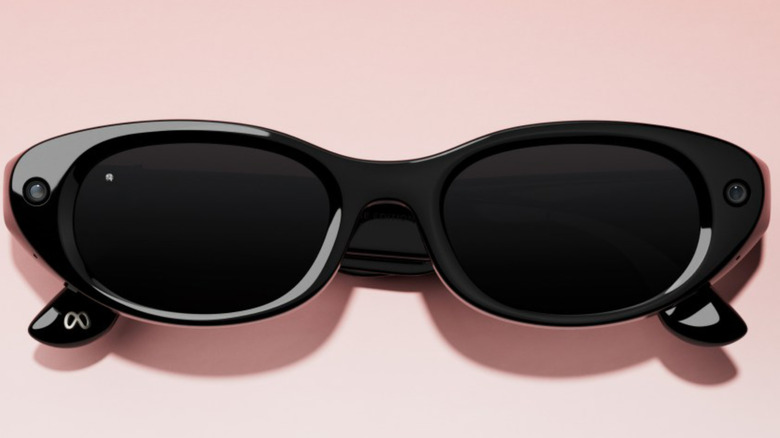
Meta has clearly gone to great lengths to make its AR glasses look, well, normal. While Snap has been mocked for its oversized Spectacles, Orion’s shape and size is closer to a traditional pair of frames.

Even so, they’re still noticeably wide and chunky. The thick black frames, which house an array of cameras, sensors and custom silicon, may work on some face shapes, but I don’t think they are particularly flattering. And while they look less cartoonish than Snap’s AR Spectacles, I’m pretty sure I’d still get some funny looks if I walked around with them in public. At 98 grams, the glasses were noticeably bulkier than my typical prescription lenses, but never felt heavy.

In addition to the actual glasses, Orion relies on two other pieces of kit: a 182-gram “wireless compute puck, which needs to stay near the glasses, and an electromyography (EMG) wristband that allows you to control the AR interface with a series of hand gestures. The puck I saw was equipped with its own cameras and sensors, but Meta told me they’ve since simplified the remote control-shaped device so that it’s mainly used for connectivity and processing.

When I first saw the three-piece Orion setup at Connect, my first thought was that it was an interesting compromise in order to keep the glasses smaller. But after trying it all together, it really doesn’t feel like a compromise at all.

What the Orion glasses look like on.
The glasses were a bit wider than my face.
Karissa Bell for Engadget

You control Orion’s interface through a combination of eye tracking and gestures. After a quick calibration the first time you put the glasses on, you can navigate the AR apps and menus by glancing around the interface and tapping your thumb and index finger together. Meta has been experimenting with wrist-based neural interfaces for years, and Orion’s EMG wristband is the result of that work. The band, which feels like little more than a fabric watch band, uses sensors to detect the electrical signals that occur with even subtle movements of your wrist and fingers. Meta then uses machine learning to decode those signals and send them to the glasses.

That may sound complicated, but I was surprised by how intuitive the navigation felt. The combination of quick gestures and eye tracking felt much more precise than hand tracking controls I’ve used in VR. And while Orion also has hand-tracking abilities, it feels much more natural to quickly tap your fingers together than to extend your hands out in front of your face.

Meta walked me through a number of demos meant to show off Orion’s capabilities. I asked Meta AI to generate an image, and to come up with recipes based on a handful of ingredients on a shelf in front of me. The latter is a trick I’ve also tried with the Ray-Ban Meta Smart Glasses, except with Orion, Meta AI was also able to project the recipe steps onto the wall in front of me.

I also answered a couple of video calls, including one from a surprisingly lifelike Codec Avatar. I watched a YouTube video, scrolled Instagram Reels, and dictated a response to an incoming message. If you’ve used mixed reality headsets, much of this will sound familiar, and a lot of it wasn’t that different from what you can do in VR headsets.

The magic of AR, though, is that everything you see is overlaid onto the world around you and your surroundings are always fully visible. I particularly appreciated this when I got to the gaming portion of the walkthrough. I played a few rounds of a Meta-created game called Stargazer, where players control a retro-looking spacecraft by moving their head to avoid incoming obstacles while shooting enemies with finger tap gestures. Throughout that game, and a subsequent round of AR Pong, I was able to easily keep up a conversation with the people around me while I played. As someone who easily gets motion sick from VR gaming, I appreciated that I never felt disoriented or less aware of my surroundings.

Orion’s displays rely on silicon carbide lenses, micro-LED projectors and waveguides. The actual lenses are clear, though they can dim depending on your environment. One of the most impressive aspects is the 70-degree field of view. It was noticeably wider and more immersive than what I experienced with Snap’s AR Spectacles, which have a 46-degree field of view. At one point, I had three windows open in one multitasking view: Instagram Reels, a video call and a messaging inbox. And while I was definitely aware of the outer limits of the display, I could easily see all three windows without physically moving my head or adjusting my position. It’s still not the all-encompassing AR of sci-fi flicks, but it was wide enough I never struggled to keep the AR content in view.

What was slightly disappointing, though, was the resolution of Orion’s visuals. At 13 pixels per degree, the colors all seemed somewhat muted and projected text was noticeably fuzzy. None of it was difficult to make out, but it was much less vivid than what I saw on Snap’s AR Spectacles, which have a 37 pixels per degree resolution.

Meta’s VP of Wearable Devices, Ming Hua, told me that one of the company’s top priorities is to increase the brightness and resolution of Orion’s displays. She said that there’s already a version of the prototype with twice the pixel density, so there’s good reason to believe this will improve over time. She’s also optimistic that Meta will eventually be able to bring down the costs of its AR tech, eventually reducing it to something “similar to a high end phone.”

Leaving my demo at Meta’s headquarters, I was reminded of the first time I tried out a prototype of the wireless VR headset that would eventually become known as Quest, back in 2016. Called Santa Cruz at the time, it was immediately obvious, even to an infrequent VR user, that the wireless, room-tracking headset was the future of the company’s VR business. Now, it’s almost hard to believe there was a time when Meta’s headsets weren’t fully untethered.

Orion has the potential to be much bigger. Now, Meta isn’t just trying to create a more convenient form factor for mixed reality hobbyists and gamers. It’s offering a glimpse into how it views the future, and what our lives might look like when we’re no longer tethered to our phones.

For now, Orion is still just that: a glimpse. It’s far more complex than anything the company has attempted with VR. Meta still has a lot of work to do before that AR-enabled future can be a reality. But the prototype shows that much of that vision is closer than we think.

This article originally appeared on Engadget at https://www.engadget.com/ar-vr/metas-orion-prototype-offers-a-glimpse-into-our-ar-future-123038066.html?src=rss

Meta’s Orion prototype offers a glimpse into our AR future

If you’re excited, or even just a little curious, about the future of augmented reality, Meta’s Orion prototype makes the most compelling case yet for the technology.

For Meta, Orion is about more than finally making AR glasses a reality. It’s also the company’s best shot at becoming less dependent on Apple and Google’s app stores, and the rules that come with them. If Orion succeeds, then maybe we won’t need smartphones for much at all. Glasses, Zuckerberg has speculated, might eventually become “the main way we do computing.”

At the moment, it’s still way too early to know if Zuckerberg’s bet will actually pay off. Orion is, for now, still a prototype. Meta hasn’t said when it might become widely available or how much it might cost. That's partly because the company, which has already poured tens of billions of dollars into AR and VR research, still needs to figure out how to make Orion significantly more affordable than the $10,000 it reportedly costs to make the current version. It also needs to refine Orion’s hardware and software. And, perhaps most importantly, the company will eventually need to persuade its vast user base that AI-infused, eye-tracking glasses offer a better way to navigate the world.

Still, Meta has been eager to show off Orion since its reveal at Connect. And, after recently getting a chance to try out Orion for myself, it’s easy to see why: Orion is the most impressive AR hardware I’ve seen.

Meta has clearly gone to great lengths to make its AR glasses look, well, normal. While Snap has been mocked for its oversized Spectacles, Orion’s shape and size is closer to a traditional pair of frames.

Even so, they’re still noticeably wide and chunky. The thick black frames, which house an array of cameras, sensors and custom silicon, may work on some face shapes, but I don’t think they are particularly flattering. And while they look less cartoonish than Snap’s AR Spectacles, I’m pretty sure I’d still get some funny looks if I walked around with them in public. At 98 grams, the glasses were noticeably bulkier than my typical prescription lenses, but never felt heavy.

In addition to the actual glasses, Orion relies on two other pieces of kit: a 182-gram “wireless compute puck, which needs to stay near the glasses, and an electromyography (EMG) wristband that allows you to control the AR interface with a series of hand gestures. The puck I saw was equipped with its own cameras and sensors, but Meta told me they’ve since simplified the remote control-shaped device so that it’s mainly used for connectivity and processing.

When I first saw the three-piece Orion setup at Connect, my first thought was that it was an interesting compromise in order to keep the glasses smaller. But after trying it all together, it really doesn’t feel like a compromise at all.

What the Orion glasses look like on.
The glasses were a bit wider than my face.
Karissa Bell for Engadget

You control Orion’s interface through a combination of eye tracking and gestures. After a quick calibration the first time you put the glasses on, you can navigate the AR apps and menus by glancing around the interface and tapping your thumb and index finger together. Meta has been experimenting with wrist-based neural interfaces for years, and Orion’s EMG wristband is the result of that work. The band, which feels like little more than a fabric watch band, uses sensors to detect the electrical signals that occur with even subtle movements of your wrist and fingers. Meta then uses machine learning to decode those signals and send them to the glasses.

That may sound complicated, but I was surprised by how intuitive the navigation felt. The combination of quick gestures and eye tracking felt much more precise than hand tracking controls I’ve used in VR. And while Orion also has hand-tracking abilities, it feels much more natural to quickly tap your fingers together than to extend your hands out in front of your face.

Meta walked me through a number of demos meant to show off Orion’s capabilities. I asked Meta AI to generate an image, and to come up with recipes based on a handful of ingredients on a shelf in front of me. The latter is a trick I’ve also tried with the Ray-Ban Meta Smart Glasses, except with Orion, Meta AI was also able to project the recipe steps onto the wall in front of me.

I also answered a couple of video calls, including one from a surprisingly lifelike Codec Avatar. I watched a YouTube video, scrolled Instagram Reels, and dictated a response to an incoming message. If you’ve used mixed reality headsets, much of this will sound familiar, and a lot of it wasn’t that different from what you can do in VR headsets.

The magic of AR, though, is that everything you see is overlaid onto the world around you and your surroundings are always fully visible. I particularly appreciated this when I got to the gaming portion of the walkthrough. I played a few rounds of a Meta-created game called Stargazer, where players control a retro-looking spacecraft by moving their head to avoid incoming obstacles while shooting enemies with finger tap gestures. Throughout that game, and a subsequent round of AR Pong, I was able to easily keep up a conversation with the people around me while I played. As someone who easily gets motion sick from VR gaming, I appreciated that I never felt disoriented or less aware of my surroundings.

Orion’s displays rely on silicon carbide lenses, micro-LED projectors and waveguides. The actual lenses are clear, though they can dim depending on your environment. One of the most impressive aspects is the 70-degree field of view. It was noticeably wider and more immersive than what I experienced with Snap’s AR Spectacles, which have a 46-degree field of view. At one point, I had three windows open in one multitasking view: Instagram Reels, a video call and a messaging inbox. And while I was definitely aware of the outer limits of the display, I could easily see all three windows without physically moving my head or adjusting my position. It’s still not the all-encompassing AR of sci-fi flicks, but it was wide enough I never struggled to keep the AR content in view.

What was slightly disappointing, though, was the resolution of Orion’s visuals. At 13 pixels per degree, the colors all seemed somewhat muted and projected text was noticeably fuzzy. None of it was difficult to make out, but it was much less vivid than what I saw on Snap’s AR Spectacles, which have a 37 pixels per degree resolution.

Meta’s VP of Wearable Devices, Ming Hua, told me that one of the company’s top priorities is to increase the brightness and resolution of Orion’s displays. She said that there’s already a version of the prototype with twice the pixel density, so there’s good reason to believe this will improve over time. She’s also optimistic that Meta will eventually be able to bring down the costs of its AR tech, eventually reducing it to something “similar to a high end phone.”

Leaving my demo at Meta’s headquarters, I was reminded of the first time I tried out a prototype of the wireless VR headset that would eventually become known as Quest, back in 2016. Called Santa Cruz at the time, it was immediately obvious, even to an infrequent VR user, that the wireless, room-tracking headset was the future of the company’s VR business. Now, it’s almost hard to believe there was a time when Meta’s headsets weren’t fully untethered.

Orion has the potential to be much bigger. Now, Meta isn’t just trying to create a more convenient form factor for mixed reality hobbyists and gamers. It’s offering a glimpse into how it views the future, and what our lives might look like when we’re no longer tethered to our phones.

For now, Orion is still just that: a glimpse. It’s far more complex than anything the company has attempted with VR. Meta still has a lot of work to do before that AR-enabled future can be a reality. But the prototype shows that much of that vision is closer than we think.

This article originally appeared on Engadget at https://www.engadget.com/ar-vr/metas-orion-prototype-offers-a-glimpse-into-our-ar-future-123038066.html?src=rss

Meta AI has more than 500 million users

Last month at Meta Connect, Mark Zuckerberg said that Meta AI was “on track” to become the most-used generative AI assistant in the world. The company has now passed a significant milestone toward that goal, with Meta AI passing the 500 million user mark, Zuckerberg revealed during the company’s latest earnings call.

The half billion user mark comes just barely a year after the social network first launched its AI assistant last fall. Zuckerberg said the company still expects to become the “most-used” assistant by the end of 2024, though he's never specified how the company is measuring that metric. 

Meta’s assistant isn’t the only AI tool that’s boosting the company’s business. Zuckerberg said that AI improvements in its feed and video recommendations have led to an 8 percent increase in time spent on Facebook and a 5 percent increase for Instagram this year. Advertisers are also taking advantage of the company’s AI tools, he said, with more than 15 million ads created with generative AI in the last month alone. “We believe that there's a lot more upside here,” Zuckerberg said.

Outside of AI, Meta’s Threads app also continues to surge. The service now has “almost 275 million” monthly users, according to Zuckerberg. “It's been growing more than a million sign ups per day,” Zuckerberg said, adding that “engagement is growing too.”

This article originally appeared on Engadget at https://www.engadget.com/social-media/meta-ai-has-more-than-500-million-users-220353427.html?src=rss

FBI suspects China-linked hackers accessed officials’ call logs and SMS messages, report says

Late last week, the FBI and Cybersecurity and Infrastructure Security Agency (CISA) confirmed they were investigating “the unauthorized access to commercial telecommunications infrastructure by actors affiliated with the People’s Republic of China.” At the same time, The New York Times reported that phones used by Donald Trump, JD Vance and Kamala Harris’ campaign staff were among the targets, though it was unclear what data the group may have been able to access.

Now, The New York Times has new details about the extent of the hack, which is reportedly linked to a Chinese group known as “Salt Typhoon.” According to The Times, aides to President Joe Biden, as well as Trump’s family members were also targeted, in addition to diplomats and other government officials. Even more concerning, though, is what the hackers may have been able to access. From the report:

F.B.I. investigators think the hackers may have been able to access unencrypted SMS text messages on the targeted devices, as well as call logs, according to people familiar with the investigation. They said there was also evidence indicating that audio communications were captured, though it was not immediately clear whether that meant voice mail or phone call conversations.

CISA didn’t immediately respond to a request for comment The agency said last week in a joint statement with the FBI that the investigation was “ongoing” and that the affected companies and other potential victims had been notified. At least 10 companies, including Verizon and AT&T, were impacted, according to The Washington Post. A spokesperson for AT&T declined to comment. Verizon didn’t immediately respond to questions, but previously told The Times the company was “aware that a highly sophisticated nation-state actor has reportedly targeted several U.S. telecommunications providers to gather intelligence.”

This article originally appeared on Engadget at https://www.engadget.com/cybersecurity/fbi-suspects-china-linked-hackers-accessed-officials-call-logs-and-sms-messages-report-says-000434865.html?src=rss

X is trying to make Community Notes faster with ‘lightning notes’

X is trying to speed up its crowdsourced fact-checking system, Community Notes. In an update, the company says it has “re-architected” the scoring system that powers the feature so that the user-generated notes can now appear less than 20 minutes after a post is published on its platform.

Community Notes, introduced in 2022, relies on other X users to fact-check or add missing context to posts on the platform. Contributors are required to cite their sources, and other users then rate the “helpfulness” of the note. Creators are also penalized for posts that get “community noted” in an effort to discourage them from trying to monetize misinformation. Now, that whole process should be able to move a lot quicker.

According to X, these new “lightning notes” can “go live in as little as 14m33s after being written, and 18m20s after the post itself was written.” The change could help address a long running criticism of the crowdsourced fact checking system: that it moves far too slowly compared with the speed of viral misinformation on the platform. For example, an analysis last year by Bloomberg found that it could take several hours for a Community Note to appear on a viral tweet and that, often, only a fraction of users see the fact check compared with the original post.

The new speedier system could change that, though it’s unclear how often the faster “lightning” version of the process will actually play out. Not all posts with incorrect information, misstated facts or AI-generated imagery are immediately flagged for review, if they are at all. X says it has more than 800,000 contributors to the program globally, but some posts will likely still take much longer to wind their way through the Community Notes process.

This article originally appeared on Engadget at https://www.engadget.com/social-media/x-is-trying-to-make-community-notes-faster-with-lightning-notes-202227151.html?src=rss

Oversight Board says Meta’s handling of a satirical image of Harris and Walz raises ‘serious concerns’

Two weeks before the US presidential election, the Oversight Board says it has “serious concerns” about Meta’s content moderation systems in “electoral contexts,” and that the company risks the “excessive removal of political speech” when it over-enforces its rules. The admonishment came as the board weighed in on a case involving a satirical image of Vice President Kamala Harris and her running mate, Minnesota Governor Tim Walz.

Meta originally removed the post, shared on Facebook in August, that showed an edited version of a movie poster from Dumb and Dumber. The original 1994 movie poster shows the two main characters grabbing each other’s nipples through their shirts. In the altered version, the actors’ faces were replaced by Harris and Walz.

According to the Oversight Board, Meta cited its bullying and harassment rules, which includes a provision barring “derogatory sexualized photoshop or drawings.” The social network later restored the post after it drew attention from the Oversight Board, and the company acknowledged the satirical image didn’t break its rules because it didn’t depict sexual activity.

Despite Meta’s reversal, the board says the case suggests larger issues in how Meta handles posts dealing with election-related content. “This post is nothing more than a commonplace satirical image of prominent politicians and is instantly recognizable as such,” the board wrote. “Nonetheless, the company’s failure to recognize the nature of this post and treat it accordingly raises serious concerns about the systems and resources Meta has in place to effectively make content determinations in such electoral contexts.”

In response to the Oversight Board's take on the situation, a Meta spokesperson gave the following brief statement: "We mistakenly removed this post but restored it after the issue was brought to our attention."

It’s unusually direct criticism from the Oversight Board, which released its analysis of the case in a summary decision, which comes without the group’s typical laundry list of recommendations for the social media company. The board has previously pushed Meta to clarify its rules around satirical content.The latest case highlights another issue that many of the company’s users have also complained about: over-enforcing its rules.

“In this case, however, the Board highlights the overenforcement of Meta’s Bullying and Harassment policy with respect to satire and political speech in the form of a non-sexualized derogatory depiction of political figures,” the board wrote. “It also points to the dangers that overenforcing the Bullying and Harassment policy can have, especially in the context of an election, as it may lead to the excessive removal of political speech and undermine the ability to criticize government officials and political candidates, including in a sarcastic manner.”

Update, October 23 2024, 1:00PM ET: This story has been updated to include a statement from Meta.

This article originally appeared on Engadget at https://www.engadget.com/social-media/oversight-board-says-metas-handling-of-a-satirical-image-of-harris-and-walz-raises-serious-concerns-100046800.html?src=rss

Meta is bringing back facial recognition with new safety features for Facebook and Instagram

Meta is bringing facial recognition tech back to its apps more than three years after it shut down Facebook’s “face recognition” system amid a broader backlash against the technology. Now, the social network will begin to deploy facial recognition tools on Facebook and Instagram to fight scams and help users who have lost access to their accounts, the company said in an update.

The first test will use facial recognition to detect scam ads that use the faces of celebrities and other public figures. “If our systems suspect that an ad may be a scam that contains the image of a public figure at risk for celeb-bait, we will try to use facial recognition technology to compare faces in the ad against the public figure’s Facebook and Instagram profile pictures,” Meta explained in a blog post. “If we confirm a match and that the ad is a scam, we’ll block it.”

The company said that it’s already begun to roll the feature out to a small group of celebs and public figures and that it will begin automatically enrolling more people into the feature “in the coming weeks,” though individuals have the ability to opt out of the protection. While Meta already has systems in place to review ads for potential scams, the company isn’t always able to catch “celeb-bait” ads as many legitimate companies use celebrities and public figures to market their products, Monika Bickert, VP of content policy at Meta, said in a briefing. “This is a real time process,” she said of the new facial recognition feature. “It's faster and it's more accurate than manual review.”

Separately, Meta is also testing facial recognition tools to address another long-running issue on Facebook and Instagram: account recovery. The company is experimenting with a new “video selfie” option that allows users to upload a clip of themselves, which Meta will then match to their profile photos, when users have been locked out of their accounts. The company will also use it in cases of a suspected account compromise to prevent hackers from accessing accounts using stolen credentials.

The tool won’t be able to help everyone who loses access to a Facebook or Instagram account. Many business pages, for example, don’t include a profile photo of a person, so those users would need to use Meta’s existing account recovery options. But Bickert says the new process will make it much more difficult for bad actors to game the company’s support tools “It will be a much higher level of difficulty for them in trying to bypass our systems,” Bickert said.

With both new features, Meta says it will “immediately delete” facial data that’s used for comparisons and that the scans won’t be used for another purpose. The company is also making the features optional, though celebrities will need to opt-out of the scam ad protection rather than opt-ion.

That could draw criticism from privacy advocates, particularly given Meta’s messy history with facial recognition. The company previously used the technology to power automatic photo-tagging, which allowed the company to automatically recognize the faces of users in photos and videos. The feature was discontinued in 2021, with Meta deleting the facial data of more than 1 billion people, citing “growing societal concerns.” The company also faces lawsuits, notably from the Texas and Illinois, over its use of the tech. Meta paid $650 million to settle a lawsuit related to the Illinois law and $1.4 billion to resolve a similar suit in Texas.

It’s notable, then, that the new tools won’t be available in either Illinois or Texas to start. It also won’t roll out to users in the United Kingdom or European Union as the company is “continuing to have conversations there with regulators” in the region, according to Bickert. But the company is “hoping to scale this technology globally sometime in 2025,” according to a Meta spokesperson.

This article originally appeared on Engadget at https://www.engadget.com/social-media/meta-is-bringing-back-facial-recognition-with-new-safety-features-for-facebook-and-instagram-222523426.html?src=rss

Foursquare is killing its city guide app to focus on the check-in app Swarm

It’s the end of an era for one of the App Store’s earliest success stories. Foursquare is shutting down its signature city guide app in order to “focus our efforts on building an even better experience in Swarm,” the company said in an update. The app will shut down December 15, while the web version will stay online until “early 2025.”

The shutdown is a notable reversal of a strategy the company announced a decade ago when it, controversially, opted to split its famed “check-in” service into a separate app. That app became known as Swarm while the Foursquare-branded app became a “city guide” full of user-generated reviews and local recommendations.

Now, Foursquare says its future is, once again, the check-in. “We’re also introducing exciting new features and capabilities into Swarm throughout the year (👀 some of which may look familiar to you) in order to unlock new use cases that may better support your needs,” the company said, adding that additional updates are expected “early next year.”

It’s not clear why the company is changing its strategy to elevate Swarm over its namesake app. The company laid off more than 100 employees earlier this year in an effort to “streamline” operations. Foursquare founder Dennis Crowley, who is currently co-chair of the company’s board of directors, said in a post on Threads that the company is “doing fine,” though he expressed disappointment with the news. “I would be lying if I didn't admit that I have been in a real funk these last few days over this news,” he wrote.

This article originally appeared on Engadget at https://www.engadget.com/social-media/foursquare-is-killing-its-city-guide-app-to-focus-on-the-check-in-app-swarm-191054153.html?src=rss

X updates its privacy policy to allow third parties to train AI models with its data

X is updating its privacy policy with new language that allows it to provide users’ data to third-party “collaborators” in order to train AI models. The new policy, which takes effect November 15, 2024, would seem to open the door to Reddit-like arrangements in which outside companies can pay to license data from X.

The updated policy shared by X includes a new section titled “third-party collaborators.”

Depending on your settings, or if you decide to share your data, we may share or disclose your information with third parties. If you do not opt out, in some instances the recipients of the information may use it for their own independent purposes in addition to those stated in X’s Privacy Policy, including, for example, to train their artificial intelligence models, whether generative or otherwise.

While the policy mentions the ability to opt out, it’s not clear how users would actually do so. As TechCrunch notes, the policy points to users’ settings menu, but there’ doesn’t appear to be an control for opting out of data sharing. The policy doesn’t go into effect until next month, though, so there’s still a chance that could change. X didn’t respond to a request for comment.

If X were to begin licensing its data to other companies, it could open up a significant new revenue stream for the social media company, which has seen waning interest from major advertisers.

In addition to the privacy policy, X is also updating its terms of service with stricter penalties for entities that are caught “scraping” large numbers of tweets. In a section titled “liquidated damages” the company states anyone viewing or accessing more than a million posts a day will be subject to a penalty of $15,000.

Protecting our users’ data and our system resources is important to us. You further agree that, to the extent permitted by applicable law, if you violate the Terms, or you induce or facilitate others to do so, in addition to all other legal remedies available to us, you will be jointly and severally liable to us for liquidated damages as follows for requesting, viewing, or accessing more than 1,000,000 posts (including reply posts, video posts, image posts, and any other posts) in any 24-hour period - $15,000 USD per 1,000,000 posts.

X owner Elon Musk has previously railed against “scraping.” Last year, the company temporarily blocked people from viewing tweets while logged out, in a move Musk attributed to fending off scrapers. He also moved X’s API behind a paywall, which has drastically hindered researchers’ ability to study what’s happening on the platform. He’s also used allegations of “scraping” to justify lawsuits against organizations that have attempted to study hate speech and other issues on the platform.

This article originally appeared on Engadget at https://www.engadget.com/social-media/x-updates-its-privacy-policy-to-allow-third-parties-to-train-ai-models-with-its-data-234207599.html?src=rss

The FBI arrested an Alabama man for allegedly helping hack the SEC’s X account

A 25-year-old Alabama man has been arrested by the FBI for his alleged role in the takeover of the Securities and Exchange Commission's X account earlier this year. The hack resulted in a rogue tweet that falsely claimed bitcoin ETFs had been approved by the regulator, which temporarily juiced bitcoin prices.

Now, the FBI has identified Eric Council Jr. as one of the people allegedly behind the exploit. Council was charged with conspiracy to commit aggravated identity theft and access device fraud, according to the Justice Department. While the SEC had previously confirmed that its X account was compromised via a SIM swap attack, the indictment offers new details about how it was allegedly carried out.

According to the indictment, Council worked with co-conspirators who he coordinated with over SMS and encrypted messaging apps. These unnamed individuals allegedly sent him the personal information of someone, identified only as “C.L,” who had access to the SEC X account. Council then printed a fake ID using the information and used it to buy a new SIM in their name, as well as a new iPhone, according to the DoJ. He then coordinated with the other individuals so they could access the SEC’s X account, change its settings and send the rogue tweet, the indictment says. 

The tweet from @SECGov, which came one day ahead of the SEC’s actual approval of 11 spot bitcoin ETFS, caused bitcoin prices to temporarily spike by more than $1,000. It also raised questions about why the high profile account wasn’t secured with multi-factor authentication at the time of the attack. “Today’s arrest demonstrates our commitment to holding bad actors accountable for undermining the integrity of the financial markets,” SEC Inspector General Jeffrey said in a statement.

The indictment further notes that Council allegedly performed some seemingly incriminating searches on his personal computer. Among his searchers were: "SECGOV hack," "telegram sim swap," "how can I know for sure if I am being investigated by the FBI," "What are the signs that you are under investigation by law enforcement or the FBI even if you have not been contacted by them," "what are some signs that the FBl is after you,” “Verizon store list," "federal identity theft statute," and "how long does it take to delete telegram account," the indictment says.

This article originally appeared on Engadget at https://www.engadget.com/cybersecurity/the-fbi-arrested-an-alabama-man-for-allegedly-helping-hack-the-secs-x-account-193508179.html?src=rss