Meta rolls out new features for scam protection

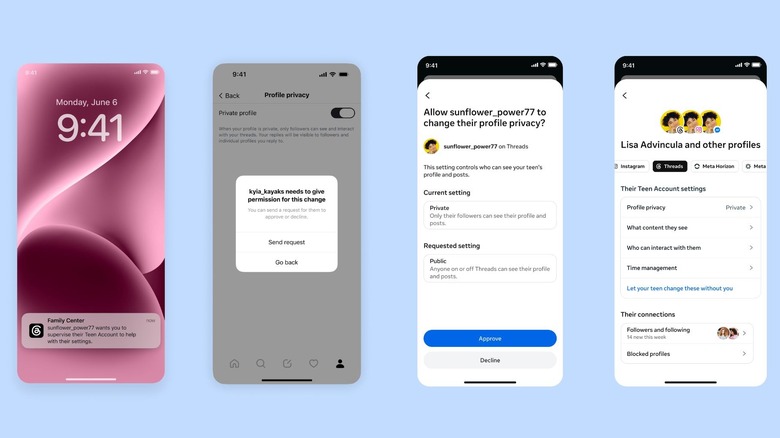
Meta announced new features today aimed at cracking down on scams perpetrated via its platforms. First, Meta is launching AI tools for identifying impersonator of brands and celebrities, as well as for detecting deceptive links, which should help it to quickly take down frauds. Second, it is adding new alerts to caution against interacting with a potentially fraudulent account. Facebook will roll out alerts for suspicious friend requests, WhatsApp is getting warnings for device linking requests, and Messenger will also issue warnings if an account seems suspect.

Finally, Meta is also continuing to expand its processes for advertiser verification. The company said it aims to have verified advertisers account for 90 percent of its ads revenue by the end of the year, up from the current share of 70 percent. Last year, Meta estimated that marketing for scams and banned products could have been responsible for 10 percent of its 2024 revenue. 

The social media company has been ramping up its actions against scams, particularly those known as celeb bait. Last month, it sued three entities from Brazil and China that were behind scams that leveraged images and deepfakes of popular people to promote dubious products and investment schemes. Meta said today that over the course of 2025, it removed 159 million scam ads as well as 10.9 million Facebook and Instagram accounts tied to criminal scam centers.

This article originally appeared on Engadget at https://www.engadget.com/social-media/meta-rolls-out-new-features-for-scam-protection-110000173.html?src=rss

Social Security watchdog investigating claims that DOGE engineer copied its databases

The inspector general's office of the Social Security Administration is investigating allegations of a security breach by a member of the so-called Department of Government Efficiency operation spearheaded by Elon Musk. A whistleblower has claimed that a former software engineer from DOGE said he possessed two databases from the SSA, "Numident" and the "Master Death File." The person reportedly asked for help transferring the databases from a thumb drive "to his personal computer so that he could ‘sanitize’ the data before using it at [the company]," an unnamed government contractor where he is currently employed. Those databases include personal information about more than 500 million living and deceased Americans. 

The Washington Post reported that the whistleblower complaint was filed with the inspector general in January. "When The Post contacted the agency and the company in January, both said they had not heard of the complaint. Both said they subsequently looked into the allegations and did not find evidence to confirm the claims," the publication said. It is unclear why the complaint is now being investigated and neither party offered comment this week for The Post's article. The SSA watchdog informed both members of Congress and the Government Accountability Office of its investigation. 

These allegations follow a different whistleblower complaint filed last August about DOGE access and mishandling of data from the SSA. Charles Borges, former chief data officer at the agency, claimed that a SSA database was stored in an unsecured cloud environment. "This is absolutely the worst-case scenario," Borges told The Post of the latest claims. "There could be one or a million copies of it, and we will never know now."

This article originally appeared on Engadget at https://www.engadget.com/cybersecurity/social-security-watchdog-investigating-claims-that-doge-engineer-copied-its-databases-212722061.html?src=rss

Metadata company Gracenote is the latest to sue OpenAI for copyright infringement

AI companies have been spending a lot of time in court arguing copyright cases over the past year and the latest plaintiff is Gracenote, the metadata company owned by Nielsen. Axios reports that Gracenote is suing OpenAI for the unauthorized and unpaid use of both its metadata and its framework for connecting that information.

Gracenote specializes in entertainment metadata, creating descriptions and identifiers for content that clients such as TV providers use to help their own customers with discovery. Most of the lawsuits against AI businesses have focused on the content used to train LLMs, but the Gracenote case brings an extra layer with the alleged infringement of the structure or sequence for a dataset in addition to the actual data. 

"Defendants could have paid Gracenote to license its valuable Gracenote Data. Or they could have sought to train and ground their models only on information in the public domain. They did neither. Defendants instead improperly copied and used Gracenote Data to create their own commercially valuable AI products, all without paying a dime," the complaint states. The company claims that its previous attempts to work with OpenAI for a licensing agreement were rebuffed or ignored. Gracenote has recently inked deals to back AI ventures from other companies, including Samsung and Google.

This article originally appeared on Engadget at https://www.engadget.com/ai/metadata-company-gracenote-is-the-latest-to-sue-openai-for-copyright-infringement-200347812.html?src=rss

Amazon wins a temporary injunction against Perplexity’s Comet browser

Amazon has secured a temporary win in its fight with Perplexity over the use of AI shopping bots. Bloomberg reported that a San Francisco federal court has determined that Perplexity must stop using its Comet web browser's AI agent to make purchases for users on Amazon's marketplace. The AI company will have a week to appeal the decision, otherwise it has been ordered to stop accessing any password-protected areas of Amazon's systems and destroy its copies of Amazon's data while the two companies continue to argue their cases.  

"Amazon has provided strong evidence that Perplexity, through its Comet browser, accesses with the Amazon user's permission but without authorization by Amazon, the user's password-protected account," District Judge Maxine Chesney wrote in placing the temporary block.

"The preliminary injunction will prevent Perplexity’s unauthorized access to the Amazon store and is an important step in maintaining a trusted shopping experience for Amazon customers," an Amazon spokesperson told Bloomberg.

Amazon sent a cease-and-desist letter to Perplexity over the AI company's shopping bots in November. According to Amazon, use of the Comet agent to make purchases is a violation of its terms of service. "Perplexity will continue to fight for the right of internet users to choose whatever AI they want," a representative from Perplexity said of this week's decision.

This article originally appeared on Engadget at https://www.engadget.com/ai/amazon-wins-a-temporary-injunction-against-perplexitys-comet-browser-184000462.html?src=rss

You can (sort of) block Grok from editing your uploaded photos

People can block the xAI's Grok chatbot from creating modifications of their uploaded images on social network X. Neither X or xAI, both Elon Musk-owned businesses, have made a public announcement about this feature, which users began noticing on the iOS app within the image/video upload menu over the past few days. 

This option is likely a response to Grok's latest scandal, which began at the start of 2026 when the addition of image generation tools to the chatbot saw about 3 million sexualized or nudified images created. An estimated 23,000 of the images made in that 11-day period contained sexualized images of children, according to the Center for Countering Digital Hate. Grok is now facing two separate investigations by regulators in the EU over the issue.

The positive side of the recent feature addition is that X and xAI have taken a step toward limiting inappropriate uses of Grok. This block is a simple toggle and it hasn't been buried in the UI. So that's nice.

The negative side, however, is that this token gesture that doesn't amount to any serious improvement to how Grok works or can be used. It's great that the chatbot won't alter the file uploaded by one person, but as reported by The Verge, the block only limits tagging Grok in a reply to create an image edit. There are plenty of workarounds for those dedicated individuals who insist on being able to use generative AI to undress people without their consent or knowledge. 

Hopefully xAI has more powerful protective tools in the works. The limitations Grok on putting real people in scanty clothing that X announced in January seem to have had only partial success at best. If this additional and narrow use case is all the company offers, then the claims of being a zero-tolerance space for nonconsensual nudity are going to ring hollow. Especially since, as we noted at the time, xAI could stop allowing image generation at all until the issue is properly and thoroughly fixed.

This article originally appeared on Engadget at https://www.engadget.com/ai/you-can-sort-of-block-grok-from-editing-your-uploaded-photos-215356117.html?src=rss

Dutch intelligence services warn of Russian hackers targeting Signal and WhatsApp

The Netherlands’ military intelligence service and domestic intelligence agency have issued a join warning claiming that Russian hackers have launched "a large-scale global cyber campaign to gain access to Signal and WhatsApp accounts belonging to dignitaries, military personnel and civil servants." According to the Dutch alert, hackers are imitating support chatbots to trick key targets into revealing their PINs for those communication platforms, which allows the bad actors to access incoming messages.

Last year in the US, the Pentagon advised members not to use Signal after the platform was subjected to similar phishing scams by Russian hackers. (Although the same US military leaders proved capable of creating their own security breaches without foreign interference just days prior.) 

Having another national government raise concerns about Signal and WhatsApp phishing scams offers yet another reminder to never provide security details or click links without a check on who is really asking for your info.

This article originally appeared on Engadget at https://www.engadget.com/cybersecurity/dutch-intelligence-services-warn-of-russian-hackers-targeting-signal-and-whatsapp-203707202.html?src=rss

Apple reportedly delays its planned smart display launch to fall

Mark Gurman at Bloomberg is back with the latest rumors about what's afoot with Apple's future plans, and how its ongoing difficulties with artificial intelligence seem to be creating further delays for its next wave of product launches. His sources say that Apple is expected to postpone the debut of its smart home display until later in 2026, likely September when it often introduces new gadgets. Although the hardware has reportedly been finished for months, this delay is being credited to the company's AI-centric overhaul of Siri still not being complete.

The device, internally known as J490, has been one of Apple's many poorly-kept secrets. Rumors about a HomePod smart speaker coupled with a screen first emerged back in 2022 and have resurfaced from time to time in the interim, often with promises that the device's arrival was imminent. The latest claims anticipated that the official announcement was coming this spring, possibly as soon as this month. However, appears to Apple once again be hamstrung by an AI strategy that has left it scrambling to catch up to other industry leaders.

Apple has been working to incorporate more AI capabilities into Siri for more than a year as part of its Apple Intelligence package. Gurman reports that the new timeline from Apple aims to have the revamp completed for the launch of the iPhone 18 Pro, which is also expected for September. Apple may unveil this long-awaited Siri-as-chatbot during its WWDC keynote in the summer before it shows up in any devices.

This article originally appeared on Engadget at https://www.engadget.com/home/smart-home/apple-reportedly-delays-its-planned-smart-display-launch-to-fall-194539082.html?src=rss

X’s Exclusive Threads feature lets creators paywall the end of tweet threads

Today, X announced some updates to its creator subscriptions platform. The leading change gives participating accounts the option to make part of tweet threads only visible to subscribers. This new Creator Subscriptions feature is called Exclusive Threads, an ironic name choice given X's main text-based social media posting competitor is called Threads.

The new tool allows a creator to tease paywalled content, rather than keeping all of the material behind a subscribers-only gate. A gif shared both by the X Creators account and by the company's head of product, Nikita Bier, show how it will look in practice. Buttons to sign up as a subscriber will be embedded into the post chain, with the hope that the need to see the rest of the thread will be a big enough draw for readers to pay up. X has been making a push to draw content creators, offering other recent features like a 'paid partnership' label for sponsored posts.

This article originally appeared on Engadget at https://www.engadget.com/social-media/xs-exclusive-threads-feature-lets-creators-paywall-the-end-of-tweet-threads-000246204.html?src=rss

COPPA 2.0 passes the Senate again, unanimously this time

Today the US Senate unanimously passed proposed legislation known as COPPA 2.0. This measure, fully named the Children and Teens’ Online Privacy Protection Act, aims to create new protections for younger users online, such as blocking platforms from collecting their personal data without consent. 

COPPA 2.0 is a modernized take on the Children’s Online Privacy Protection Act of 1998, attempting to address recent changes in common online activities, like targeted advertising, that could prove harmful to minors. Lawmakers have made several attempts to get this bipartisan bill through. While it has made varying amounts of headway in the Senate, none of the COPPA 2.0 bills to date have gotten past the House of Representatives. Industry groups such as NetChoice have previously opposed COPPA 2.0 and other measures around minors' online activity such as KOSA, the Kids Online Safety Act. NetChoice members include Google, YouTube, Meta, Reddit, Discord, TikTok and X. Google specifically has since changed its stance to support COPPA 2.0, however.

"This bill expands the current law protecting our kids online to ensure companies cannot collect personal information from anyone under the age of 17," Senate Democratic Leader Chuck Schumer (D-NY) said in a statement about the latest result. "This is a big step forward for protecting our kids. We hope the House can join us. They haven’t thus far."

However, there has been a bigger push both domestically and internationally toward restrictions on when and how younger people engage online. Several states — Utah, California and Washington to name a few — have enacted laws requiring some level of age verification, either to access mature content online or to use social media apps at all. Many of these efforts have raised concerns about privacy regarding where and how people's personal information is stored and protected. COPPA 2.0 might wind up benefitting from the privacy debates since it emphasizes giving teens and parents ways to protect themselves from having their data used against them rather than asking adults to give up data in order to use the internet as usual.

Update, March 6 2026, 11:38AM ET: Article updated with additional context on Google.

This article originally appeared on Engadget at https://www.engadget.com/big-tech/coppa-20-passes-the-senate-again-unanimously-this-time-215044656.html?src=rss

How to watch Frost Fatales 2026, kicking off on March 8

It feels like we could all use a little (or a large) boost of joy and optimism right now, so it's a perfect coincidence that a Games Done Quick event is on the horizon. Frost Fatales 2026 is running from March 8 through March 14. This week-long livestream will be raising money for the National Women's Law Center, a nonprofit working toward gender justice for women and girls. 

GDQ events have been branching out with more ways to tune in for the speedrunning fun. Frost Fatales 2026 will be a streaming on the GDQ Twitch channel as usual, but the organization is also now broadcasting on YouTube, and you can watch the live feed there next week as well. Each day’s pre-show kicks off at 12:30PM ET.

Frost Fatales is the winter charity event from the Frame Fatales, a community for women and femmes in speedrunning that operates under the GDQ banner. The group has raised more than $1 million for philanthropic organizations since its first event in 2019. 

The schedule for next week has a mix of speedrun standards (think Super Mario 64 and Super Metroid) alongside and newer releases, plus some more offbeat categories that promise to be a highly entertaining watch. The event kicks off on Sunday with western flair in Red Dead Redemption 2. Horror fans have a good selection on Tuesday night with Silent Hill f, Resident Evil 3 (2020) and Resident Evil Village. The Kirby Air Riders run on Friday night will highlight a bunch of community members for max wholesome vibes. Peak, a notable new game from 2025, is already getting speedruns, which you can watch Saturday afternoon before a bingo race of recent indie hit UFO 50 in the evening and the final run of Titanfall 2 to close the event. Fatales events aren't a 24/7 affair like Awesome and Summer Games Done Quick, so be sure to check the schedule for all the highlights.

Or, if you simply can’t wait until Sunday to dive into some great speedruns, Games Done Quick recently launched GDQ TV. This dedicated Twitch channel is always on and highlights some notable moments and runs from the entirety of the GDQ archive.

This article originally appeared on Engadget at https://www.engadget.com/gaming/how-to-watch-frost-fatales-2026-kicking-off-on-march-8-201826864.html?src=rss