The Morning After: Amazon finally made a Kindle with a color display

In a barrage of Kindle hardware, Amazon might have something for anyone looking to upgrade from a basic Kindle. The biggest reveal might be the Kindle Colorsoft, its first reader with a color display. Amazon tried to ensure the reader has a good color and black-and-white experience, with high contrast, high resolution and high clarity whether you're looking at a color image or a black-and-white page. Amazon uses nitride LEDs, which work with the company’s algorithm to enhance color and brightness without washing out images.

Judging by the press images (and the demos we went to), these seem primed for graphic novels and comics. If you’re looking for something to digitally house your comics and manga, the Kindle Colorsoft will cost you $280 and start shipping on October 30.

— Mat Smith

Get this delivered daily direct to your inbox. Subscribe right here!

The biggest tech stories you missed

New Pixel updates include AI-powered theft protection

Microsoft removes the $1 Xbox Game Pass trial just before Call of Duty: Black Ops 6

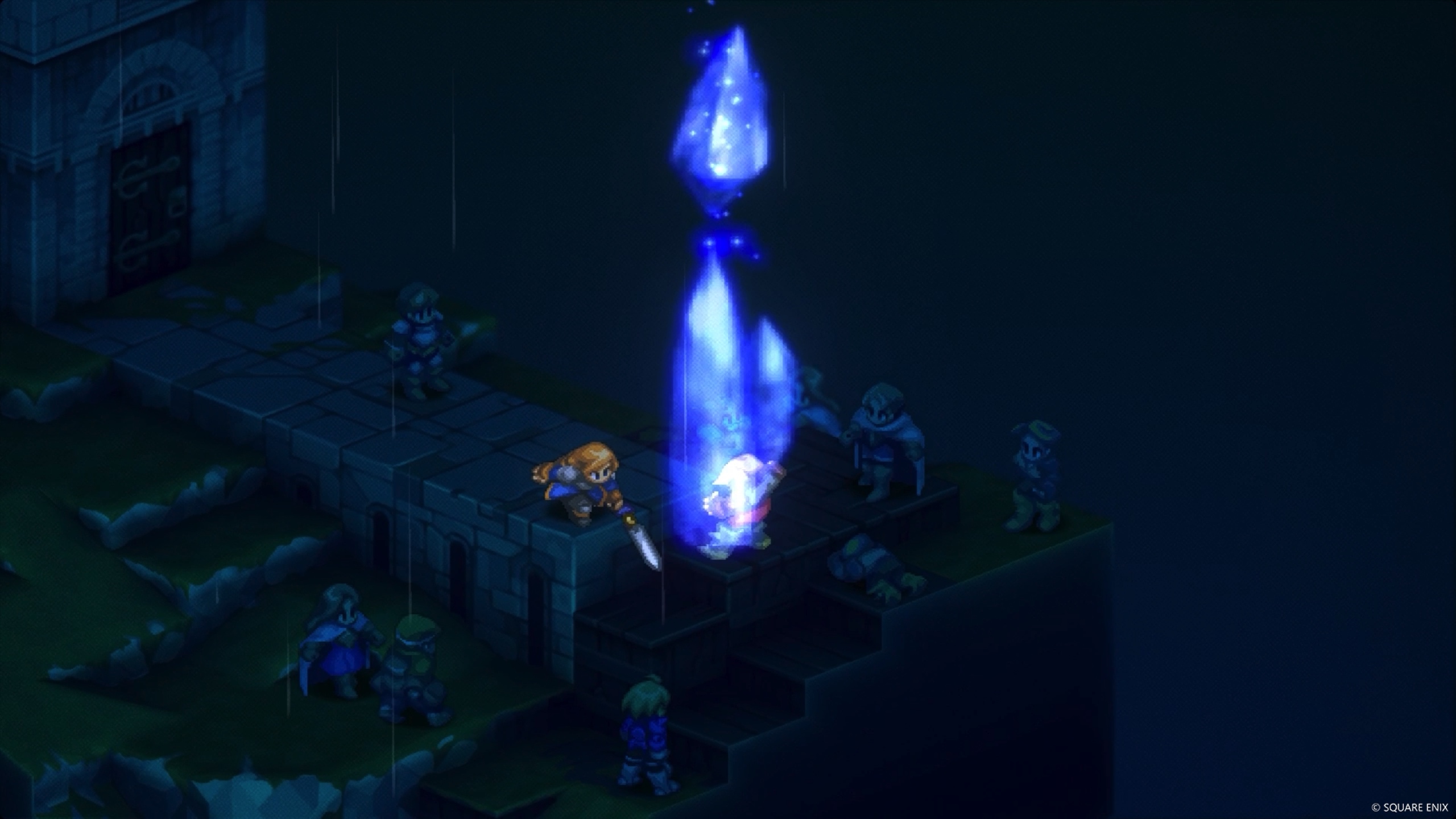
The JRPG-inspired Clair Obscur: Expedition 33 has a stacked voice cast

TMA
Amazon

With the original Scribe, Amazon got a lot of the basics right. It nailed latency and smoothness of the writing experience, but writing notes on your ebooks was a bit janky. Now, when you write on a page, the Scribe will generate a box for your notes. This box is embedded in the text, with the book’s words rearranging and flowing to accommodate it. However, it’s still not a simple ‘draw on the page’ solution. The Kindle Scribe will be available in December, starting at $400.

Continue reading.

TMA
Analogue

Analogue says it’s nailed its most complicated project yet: rebuilding the Nintendo 64 from scratch. Once again, the Analogue 3D has an FPGA (field programmable gate array) chip, coded to emulate the original console on a hardware level. We’re promised support for every official N64 cartridge ever released, across all regions, but with some major upgrades. The Analogue 3D supports 4K output, variable refresh rate displays and PAL and NTSC carts. The company is also making Original Display Modes to emulate your CRT TV of yore.

Continue reading.

TMA
NASA

Prada and Axiom Space teamed up to design a new spacesuit, and NASA is now ready to reveal the look. This is the Axiom Extravehicular Mobility Unit (AxEMU) spacesuit, white with red and gray accents for a bit of color and excitement. The suit is almost finished, having undergone testing and simulations at Axiom Space, SpaceX and NASA facilities. It should enter a final review in 2025.

Continue reading.

This article originally appeared on Engadget at https://www.engadget.com/general/the-morning-after-amazon-finally-made-a-kindle-with-a-color-display-111533015.html?src=rss

The Morning After: Apple’s surprise iPad mini

Apple just announced the seventh-gen iPad mini, three years after its sixth-gen model. It has a faster A17 Pro chip, originally found in the iPhone 15 Pro, which means it’ll be able to handle Apple’s incoming AI features — although it’s not Apple's most powerful mobile chip. There’s more RAM too.

Power aside, it has the same 8.3-inch screen as the previous model and an identical 2,266 x 1,488 resolution at 326 ppi. The refresh rate remains a modest 60Hz, in an era of 90Hz or higher. It’s not any bigger, wider or slimmer than its predecessor either.

It’s been a while since a new iPad mini, so we were overdue an update. However, this is a very mild update with no design changes. Also, while the size is smaller, no M-series chip. The new iPad mini arrives on October 23, starting at $499 for 128GB storage. It’ll arrive in blue, purple, starlight and space gray colors.

– Mat Smith

The biggest tech stories you missed

Creators getting paid to post on Threads don’t understand its algorithm either

The next entry-level Kindle just leaked

Intel and AMD team up to stem the x86 bleeding

Get this delivered daily direct to your inbox. Subscribe right here!

TMA
Sonos

Don’t mention the disastrous app. Sonos announced the Arc Ultra and Sub 4, with the former replacing the $899 Arc as the company’s flagship home theater product.​​ It’s the first Sonos soundbar to include its new Sound Motion technology, which apparently results in a much smaller product. The Arc Ultra can produce up to twice as much bass as its predecessor, according to Sonos. The new Sub 4 ($799) features more processing power, additional RAM, and a new Wi-Fi radio for improved connectivity. It’s also more efficient, with the company claiming an almost 50 percent reduction in idle power consumption. Both will go on sale October 29, so you can upgrade your sound system just before a Halloween movie marathon, I guess.

Continue reading.

TMA
Engadget

DJI’s dual-camera Air 3S drone has some cutting-edge tech in the nose: a LiDAR sensor to provide extra crash protection at night. The Air 3S also has a new main camera with a larger sensor better suited for capturing video in low light. And it now comes with the company’s ActiveTrack 360, which it first introduced in the Mini 4 Pro, allowing the device to zoom all around your subject while tracking and filming them. See how those features fare in our review. (Of course, there’s video too.)

Continue reading.

This article originally appeared on Engadget at https://www.engadget.com/general/the-morning-after-engadget-newsletter-111632292.html?src=rss

The Morning After: Apple’s surprise iPad mini

Apple just announced the seventh-gen iPad mini, three years after its sixth-gen model. It has a faster A17 Pro chip, originally found in the iPhone 15 Pro, which means it’ll be able to handle Apple’s incoming AI features — although it’s not Apple's most powerful mobile chip. There’s more RAM too.

Power aside, it has the same 8.3-inch screen as the previous model and an identical 2,266 x 1,488 resolution at 326 ppi. The refresh rate remains a modest 60Hz, in an era of 90Hz or higher. It’s not any bigger, wider or slimmer than its predecessor either.

It’s been a while since a new iPad mini, so we were overdue an update. However, this is a very mild update with no design changes. Also, while the size is smaller, no M-series chip. The new iPad mini arrives on October 23, starting at $499 for 128GB storage. It’ll arrive in blue, purple, starlight and space gray colors.

– Mat Smith

The biggest tech stories you missed

Creators getting paid to post on Threads don’t understand its algorithm either

The next entry-level Kindle just leaked

Intel and AMD team up to stem the x86 bleeding

Get this delivered daily direct to your inbox. Subscribe right here!

TMA
Sonos

Don’t mention the disastrous app. Sonos announced the Arc Ultra and Sub 4, with the former replacing the $899 Arc as the company’s flagship home theater product.​​ It’s the first Sonos soundbar to include its new Sound Motion technology, which apparently results in a much smaller product. The Arc Ultra can produce up to twice as much bass as its predecessor, according to Sonos. The new Sub 4 ($799) features more processing power, additional RAM, and a new Wi-Fi radio for improved connectivity. It’s also more efficient, with the company claiming an almost 50 percent reduction in idle power consumption. Both will go on sale October 29, so you can upgrade your sound system just before a Halloween movie marathon, I guess.

Continue reading.

TMA
Engadget

DJI’s dual-camera Air 3S drone has some cutting-edge tech in the nose: a LiDAR sensor to provide extra crash protection at night. The Air 3S also has a new main camera with a larger sensor better suited for capturing video in low light. And it now comes with the company’s ActiveTrack 360, which it first introduced in the Mini 4 Pro, allowing the device to zoom all around your subject while tracking and filming them. See how those features fare in our review. (Of course, there’s video too.)

Continue reading.

This article originally appeared on Engadget at https://www.engadget.com/general/the-morning-after-engadget-newsletter-111632292.html?src=rss

The Morning After: Our verdict on the Meta Quest 3S

Meta’s latest play to get you into VR is a cheaper VR headset almost as capable as the $500 Quest 3. The Quest 3S brings some but not all of the top features of the more expensive headset. Compared to the Quest 2, it has a more capable processor, better hand and controller tracking and lets you dip your toes into mixed reality.

Costs have been cut: There are lower-res screens and cheaper Fresnel lenses, but Meta has cleverly cherry picked the right specs to ensure the Quest 3S feels as capable as the more expensive option. You get the same subtle, comfortable controllers and the camera arrays to track your environment.

You can also use the 3S to play Xbox titles and even connect to your PC for VR games like Half Life: Alyx. The Quest 3S starts at $300 with 128GB of storage. If you’re intrigued, check out our full review.

— Mat Smith

The biggest tech stories you missed

Neva review: A platformer so perfect it made me cry

Internet Archive’s Wayback Machine is back online

DJI’s Osmo Mobile 6 smartphone gimbal is cheaper than ever right now

Get this delivered daily direct to your inbox. Subscribe right here!

TMA
Fujifilm

The $799 X-M5 is for photographers on a budget or vloggers stepping up from a smartphone. Fujifilm cut a few features, like a viewfinder (EVF), to get to that price point, but it does have the company’s latest 26-megapixel X-Trans 4 CMOS sensor. There are also handy vlogging features, like a portrait enhancer, background defocus and product priority, much as we’ve seen on Sony’s vlogging Z-series cameras. It’s on presale for $799.

Continue reading.

Google said it will partner with the startup Kairos Power to build seven small nuclear reactors in the US. The deal aims to farm 500 megawatts of nuclear power from the small modular reactors (SMRs) by the decade’s end. The first is expected to be up and running by 2030, with the rest arriving through 2035. It’s the first-ever corporate deal to buy nuclear power from SMRs. Small modular reactors are smaller than existing reactors. Their components are built inside a factory rather than onsite, which can help lower construction costs. It’s not a dead cert: Kairos will need the US Nuclear Regulatory Commission to approve the plans.

Continue reading.

SpaceX’s Super Heavy booster successfully returned to the pad after liftoff, caught by the launch tower’s mechanical arms. It’s rather incredible — you should watch it. The milestone came during the fifth flight of the company’s Starship and is a huge step for the rocket’s planned reusability goals. Where Falcon 9 typically lands on a drone ship in the ocean, Super Heavy returned to its launch site and had to navigate into the narrow opening between the launch tower’s outstretched “chopsticks.” Just watch it!

Continue reading.

This article originally appeared on Engadget at https://www.engadget.com/general/the-morning-after-our-verdict-on-the-meta-quest-3s-111519614.html?src=rss

The Morning After: Pokémon hack exposes future games, beta designs and more

Pokémon developer Game Freak has confirmed its servers were hacked in August. The breach meant internal materials — from source codes to early and even scrapped character designs — were circulating on social media over the weekend.

Leaked documents and images flooded Reddit and X after Centro Leaks began dumping it all on Saturday afternoon. It allegedly includes source codes for past games and codenames for the Switch 2 and the upcoming Gen 10 Pokémon games. There are also references to a Pokémon MMO, future movies and a new anime series. The leak revealed tons of beta character designs and concept art.

— Mat Smith

Get this delivered daily direct to your inbox. Subscribe right here!

The biggest tech stories you missed

TMA
Casio

Casio (of watch and calculator fame) is taking pre-orders in Japan for Moflin, the adorable robotic plushie with AI “emotional capabilities,” which debuted during CES 2021. Moflin, developed in a partnership with the Japanese startup Vanguard Industries, is meant to work like an emotional support pet — and is as fluffy as it looks.

Continue reading.

Last week, robot vacuums across the country were hacked, allowing attackers to not only control the robovacs, but use their speakers to hurl racial slurs and abusive comments at anyone nearby. Specifically, it was the Ecovacs Deebot X2s, which has a reputation for being easy to hack. The company says it’s developed a patch to eliminate the security flaw — but that won’t roll out until November. Maybe October is a messy house kind of a month?

Continue reading.

Redbox is dead, but its cuboid corpses remain in malls and shops nationwide. The machines are heavy and cumbersome, with a former Redbox executive suggesting it costs $500 to remove one kiosk. Note: Some machines are actually embedded in concrete. Some devotees have taken to adopting them regardless. Yet another note: These boxes use massive amounts of energy. Walgreens told a judge it costs the company $184,000 each month to power 5,400 kiosks, roughly $35 per month for a single machine. That was fine 10 years ago, when the company drew in $2 billion in annual revenue.

Continue reading.

This article originally appeared on Engadget at https://www.engadget.com/general/the-morning-after-engadget-newsletter-111103297.html?src=rss

The Morning After: This is Tesla’s robotaxi, the Cybercab

At Tesla’s We, Robot event at Warner Bros. Discovery’s studio in California, the company finally unveiled its robotaxi. The car is expected to go into production before 2027, but even Musk caveated that, saying he was “highly optimistic with timeframes.”

The Cybercab doesn’t have a steering wheel and, according to Elon Musk (so pinch of salt!), could be very cheap to run. The Tesla boss said the operating cost of the robotaxi would be 20 cents a mile, 30 to 40 cents with taxes. He also confirmed people can buy one and that Tesla expects to sell the Cybercab for below $30,000. He still, predictably, said something weird. Musk said he envisions a future where people own several robotaxis and manage a fleet like shepherds. Huh?

The technology is a little different to most of its robotaxi competitors. Tesla has long dropped radars and sensors that other robotaxis, like Waymo’s, use extensively, instead going for cameras and AI object detection. There’s also no charging port, using inductive charging instead, so a completely different infrastructure is needed to keep these vehicles on the roads.

Not one to waste a big event, Musk also briefly introduced the Robovan — an autonomous van that can carry up to 20 people and transport goods, and he marched out a line of Optimus robots, which ended up serving drinks to attendees during the event.

— Mat Smith

Get this delivered daily direct to your inbox. Subscribe right here!

The biggest stories you might have missed

TMA
YouTube

Mubi has secured the rights to Grand Theft Hamlet. In this documentary, two out-of-work actors attempt to stage an entire production of William Shakespeare’s tragedy Hamlet within the game world of Grand Theft Auto Online during the Covid-19 pandemic. The movie comprises more than 300 hours of GTA footage.

Continue reading.

Despite competition everywhere, Intel has broadly maintained its lead on gaming performance. The company’s most recent Core 5/7/9 often outperformed their AMD counterparts. However, that has come at the cost of power efficiency. Until now. According to Intel, the goal was to reduce power consumption by 40 percent and internal package temperatures by as much as 10 degrees Celsius with its 15th-gen chips. When the high-spec Intel Core Ultra 9 285K arrives on October 24, it will cost $589, the 14-core Ultra 5 245KF will be $294 and the 20-core Ultra 7 265K will go on for $394.

Continue reading.

With many devices no longer including a charger in the box, especially the latest smartphones, a fast charger is no longer just a nice-to-have item — it’s arguably a must-have.

We’ve pulled together and tested the best chargers in three power output ranges. We have graphs, we have alternative options, we even tease more powerful chargers coming in the near future. In short, we’ve pulled together everything you need, besides buying one and shipping it to you ourselves.

Continue reading.

This article originally appeared on Engadget at https://www.engadget.com/general/the-morning-after-this-is-teslas-robotaxi-the-cybercab-111546066.html?src=rss

The Morning After: Nintendo’s latest hardware is not the Switch 2

We’ve been waiting and waiting, and Nintendo finally did the right thing and announced an entirely new piece of hardware. Alas, it’s not a new console but a very Nintendo-looking smart alarm clock. The Alarmo has motion sensors that let you snooze it based on your movement. (There is a physical snooze button too.)

You’ll also be able to check how much you move around while you sleep, and the clock has sleeping sounds and music to drift off to.

TMA
Nintendo

You can set the clock’s background with scenes inspired by the likes of Super Mario Odyssey, The Legend of Zelda: Breath of the Wild, Splatoon 3, Pikmin 4 and, er, Ring Fit Adventure. The company says it plans to add more games as updates in the future. And when it’s time to wake you up, Alarmo will use music and sounds from those games.

For now, the curio is only available if you’re a Nintendo Switch Online member in the US and Canada. Other regions will have to wait, although as I finished writing today's TMA, Nintendo's UK site had the clock available to buy. You can order the $100 Alarmo online now, and Nintendo says it will be available at retail early next year.

— Mat Smith

Get this delivered daily direct to your inbox. Subscribe right here!

The biggest stories you might have missed

Former Humble Games staff form new publisher that will work with their old company

Meta AI will launch in six more countries today, including the UK

Zoom’s latest feature update focuses heavily on its AI assistant

TMA
Green Day

While other classic albums often get remasters for big anniversaries, Green Day (with the help of an art studio called Brain) went in a lo-fi direction. It’s re-releasing the music on defunct and/or (very) inconvenient formats in very limited editions. As a result, you can hear what “Basket Case” sounds like through a Big Mouth “Billie” Bass, listen to “Welcome to Paradise” on a Game Boy cartridge. Other formats include an answering machine, toothbrush, animatronic stuffed animal, floppy disc, doorbell, Fisher Price record, HitClip and — this is crazy — MiniDisc.

Continue reading.

If you’re intrigued by what Tesla has planned for its robotaxis, you’ll probably have to pull a late one. At the company’s long-delayed robotaxi event, we’re not expecting to see a fully finished vehicle, but investors and Tesla fans are hoping for a working prototype. The manic-jumping Tesla boss, Elon Musk, began talking about the robotaxi plan years ago. However, it took on greater importance earlier this year when Tesla reportedly shelved its plans for an entry-level EV in favor of the autonomous ridesharing project.

Continue reading.

The Internet Archive has been hit this week with a series of DDoS attacks, which have taken the service offline. The Verge noticed a popup on the site when the online database went down. The popup has since disappeared. This attack apparently came just as the Internet Archive was going to disclose a previous breach of its site that resulted in the theft of more than 31 million records. A DDoS organization known as Blackmeta claimed responsibility for the attacks with a confusing message that the platform “belongs to the USA.” The Internet Archive is headquartered in San Francisco.

Continue reading.

This article originally appeared on Engadget at https://www.engadget.com/general/the-morning-after-nintendos-latest-hardware-is-not-the-switch-2-alarmo-111617400.html?src=rss

The Morning After: Boring Company’s Vegas Loop plagued by lost drivers, trespassers and skateboarders

Elon Musk’s Boring Company pitched that its Vegas Loop, underground tunnels built below Las Vegas, would reduce gridlock in some of the busiest parts of the city, offering a new transport solution that isn’t a monorail. People are transported by ordinary Tesla vehicles in tunnels and terminals that are often difficult to get to. (At least, that was my experience earlier this year.)

It hasn’t been the transport game changer the company promised, though. A report from Fortune elaborated on what’s actually happening in those tunnels, saying there have been at least 67 trespassing reports since 2022 and 22 instances of other vehicles following Teslas into the tunnels and stations.

Boring’s monthly reports to the Las Vegas Convention and Visitors Authority also showed several instances of “property damage, theft, technical issues or injuries, near-misses and trespassing or intrusions.” Some curated highlights include a skateboarder who snuck into the tunnels through a passenger pickup station and two people spotted sleeping in one of the tunnel stations.

And yet (and yet!) county commissioners approved a plan last May to expand the tunnels to 65 miles and add 69 passenger stations.

— Mat Smith

The biggest stories you might have missed

The best deals from Amazon Prime Day 2024

SpaceX Crew-8 astronauts are leaving the ISS on October 13

The best projector for 2024

TMA
Engadget

If you were intrigued by Meta’s continued VR experiments but put off by the price of the Quest 3, then the Quest 3S may be for you. It’s a slightly bulkier, slightly less sharp version of Meta’s last standalone VR headset, but starting at $300, it’s much less than the Quest 3’s $500 launch price. There are compromises with display resolution and lenses, but it packs the same powerful processor as the Quest 3, so it should run games and apps just as quickly. Expect our full review soon, but so far we’re impressed.

Continue reading.

TMA
Engadget

The DJI Neo may be an inexpensive, beginner-friendly drone, but it still has powerful features, like subject tracking and quick shots. Surprisingly, this is a cheap $200 drone arguably worth considering. Just be prepared for the noise it makes.

Continue reading.

Two scientists have been awarded the Nobel Prize in Physics “for foundational discoveries and inventions that enable machine learning with artificial neural networks.” John Hopfield, an emeritus professor of Princeton University, devised an associative kind of memory that can store and reconstruct images and other patterns in data. Geoffrey Hinton, dubbed the Godfather of AI, pioneered a way to autonomously find properties in data, leading to the ability to identify picture elements.

Continue reading.

This article originally appeared on Engadget at https://www.engadget.com/general/the-morning-after-boring-companys-vegas-loop-plagued-by-lost-drivers-trespassers-and-skateboarders-111742611.html?src=rss

The Morning After: The best deals we found on Amazon’s Prime Day 2024

Didn’t we already have a Prime Day? Yes, but that was Amazon’s July Prime Day — this one is in October. While it typically doesn’t offer the same breadth of deals (or deep discounts) as the OG day, if you’ve been keeping your eye on a certain pair of AirPods, Kindle tablet or, randomly this year, a lot of Lego, then you might be in luck.

Some highlights include $154 off AirPods Max (both Lightning and the recent USB-C version), the recently launched Ring pan-and-tilt security camera for $50 and Anker’s travel-friendly MagGo 3-in-1 Charging Station that can charge an Apple Watch, AirPods and smartphone all at once down to $88. Sony’s best headphones, another perennial Prime Day attendee, are on sale too: The WH-1000XM5 are on sale for $298, that’s $101 off.

If you’re shopping for a phone, though, no iPhones are discounted. Boo. However, the Pixel 8a is $100 cheaper ($399) and the OnePlus 12 is down to $650. We’ll be pulling the best deals into a single place, right here.

— Mat Smith

The biggest stories you might have missed

TMA
Anadolu via Getty Images

If you’re using Meta’s Threads, then you’ve probably encountered some engagement bait in your for you feed — if it’s not completely clogging it up. Now, Instagram chief Adam Mosseri says the company is “working to get it under control” after yet another spike in posts. Because the app defaults to the algorithmic for you feed, these engagement bait-style posts that attract a lot of replies often go viral on the app, even if it’s the type of content many don’t want to see. And are low quality. And dumb. And repetitive.

Addressing the issue could be tricky because engagement bait takes many forms. It could be rage-bait, AskReddit-style questions, Facebook copy-paste and more. Mosseri and Meta haven’t explained why it’s proved so easy to game Threads’ algorithm to go viral, either, but it seems the social network prioritizes replies.

Continue reading.

US District Judge James Donato issued a permanent injunction forcing Google to open its storefront to competitors for three years and make Android apps available in alternate stores. The ruling stems from Google’s four-year antitrust battle with Epic Games. Billing changes will also emerge from the injunction. Google can’t require developers to use its own billing system, nor can it stop devs from notifying users about less expensive payment options. Google said it will appeal the injunction.

Continue reading.

This article originally appeared on Engadget at https://www.engadget.com/general/the-morning-after-engadget-newsletter-111630224.html?src=rss

The Morning After: The first Apple Intelligence features should finally arrive on October 28

It's been a wait. Apple Intelligence will start rolling out on October 28, according to Bloomberg’s Mark Gurman. Apple said last month it was targeting October for iOS 18.1, iPadOS 18.1, and macOS Sequoia 15.1 — which will bring some of the first Apple Intelligence features to iPhone 16 and the rest of the Apple family.

The first wave of Apple Intelligence-powered features will include its summarization tool, Writing Tools and smart audio recording and transcriptions for Mail, Notes, Pages and other apps. I’ve been testing the beta, and so far, the most useful feature has been the summarization tool, tackling my forest of notifications and messages and parsing them into glanceable summaries.

— Mat Smith

The biggest stories you might have missed

TMA
Lego

Scammers hijacked the toy brick maker’s website last week. They switched its banner and used it for a crypto scam. A banner with illustrated golden coins bearing the company’s logo claimed the "Lego coin is now officially out." It even promised secret rewards to those who’d buy some. The incident happened overnight at Lego’s headquarters. The company responded relatively quickly, removing the unauthorized banner and links. Lego told Engadget no user accounts were compromised.

Continue reading.

A more immediate update from Apple: It has released two new patches, including iOS 18.0.1 for iPhones and iPadOS 18.0.1. The patch fixes recording issues with all the iPhone 16 models in the Messages app. The iPhone’s microphone would accidentally start recording a few seconds before becoming activated with the orange microphone icon.

Continue reading.

X tried to avoid a $400,000 fine by claiming Twitter (its old name) no longer exists. The … creative legal argument came amid a more-than-year-long dispute with Australia’s eSafety Commission. The commission had asked the company to provide details about its handling of child sexual exploitation on the platform last February. X failed to answer several questions and was slapped with a $415,000-plus fine for non-compliance. The argument isn’t exactly new: CEO Linda Yaccarino has also repeatedly claimed X is a “brand new company” in a bid to avoid scrutiny. She repeated the line multiple times earlier this year while testifying at a Senate hearing on child safety issues. Australia federal judge Michael Wheelahan, however, was not having it.

Continue reading.

This article originally appeared on Engadget at https://www.engadget.com/general/the-morning-after-the-first-apple-intelligence-features-should-finally-arrive-on-october-28-111544744.html?src=rss