Back in March 2021, we wrote about a bicycle tire that would never go flat, ever, for the entire life of your bike. It was called METL, it was built out of a shape memory alloy that NASA had cooked up for Mars rovers, and it was coming to a bike shop near you in early 2022. Then early 2022 came and went. So did 2023, 2024, and 2025. The tire is now, finally, genuinely orderable, five years after we first got excited about it. Which raises an awkward question about the entire airless tire industry: if the technology has been sitting there this whole time, propped up by NASA and Michelin and Bridgestone, why has it taken this long to reach a single bicycle?
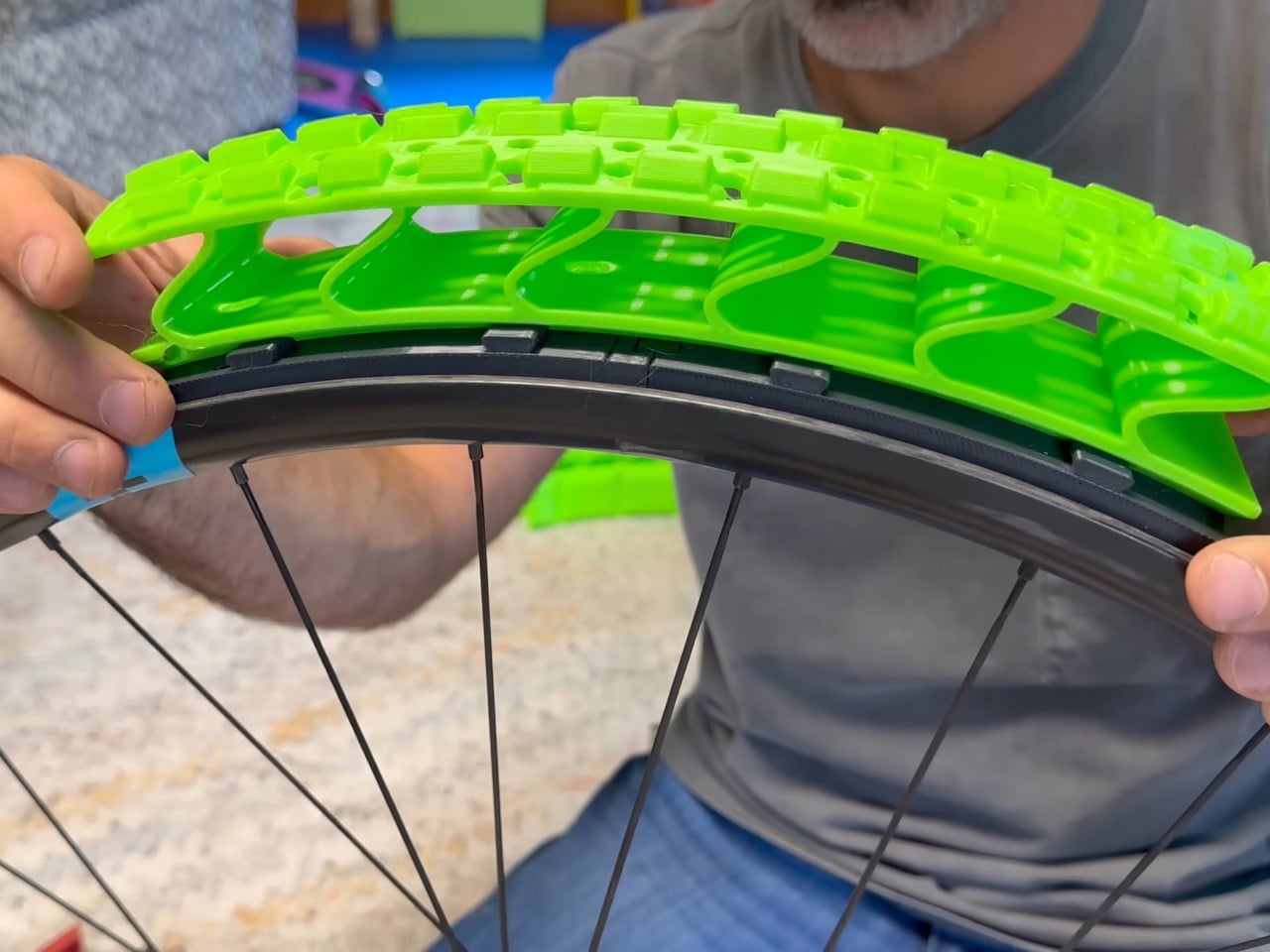
A YouTuber named Berm Peak got tired of waiting and printed his own. The tire comes out in segments, four at a time on a consumer machine, and bolts together into a ring with basic screws and dovetail joints. Flexible TPU for the tread, a stiffer variant for the structure, and eight foot sections to hold the whole thing to the rim. He rode the finished set into a rock garden in a green so loud it counts as a safety feature, and they absorbed bumps like real rubber. Michelin has been showing off airless tires since 2011 and still has not sold you one. A guy with a printer and a garage got there first.
Designer: Berm Peak
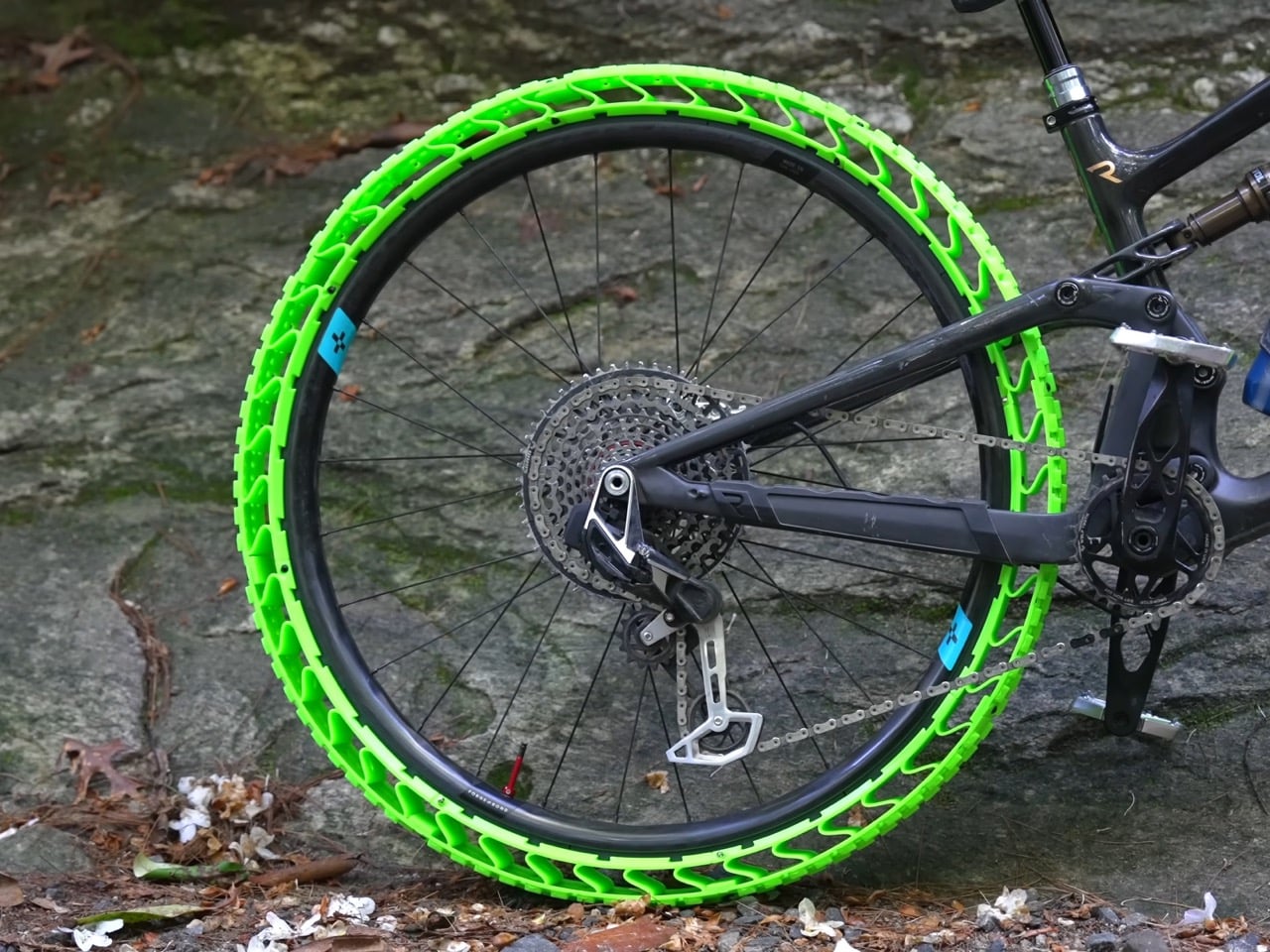
He also had some skin in the game most people wouldn’t. Berm Peak part owns Klik, a valve company, so a viable airless tire flooding the market would technically cost him money too. He didn’t seem too worried about it. He’d already gone through a graveyard of other people’s attempts, including a friend’s genuinely knobby TPU tire that survived real trail abuse, and a completely different build made from sliced up PVC pipe bolted together (which we covered back in 2023). Neither one was quite the science fiction object he had in his head.
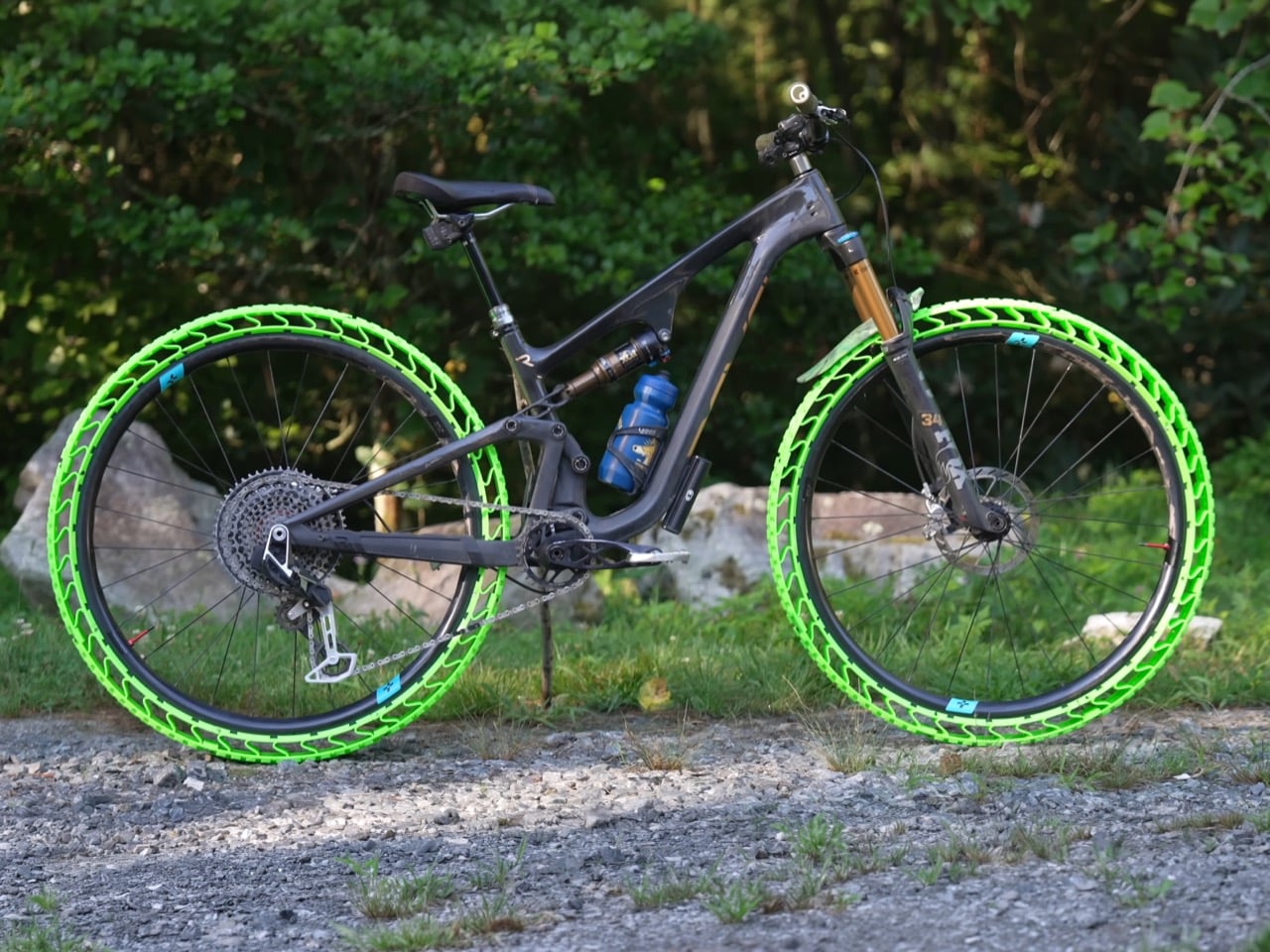
His first working prototype was, in his own words, brutally stiff. He’d used X shapes for the suspension because they were easy to model in CAD, forgetting that X shapes are basically made of triangles, and triangles do not flex. Version two ditched the X’s entirely and dropped the weight in half. That’s the one that ended up on the bike, printed overnight on a Bambu Lab H2D with a support material that peels away clean because it’s chemically allergic to the tire filament sitting right next to it. Genuinely clever trick, and one you’d only think of if you’d already burned a few prototypes finding out the hard way.
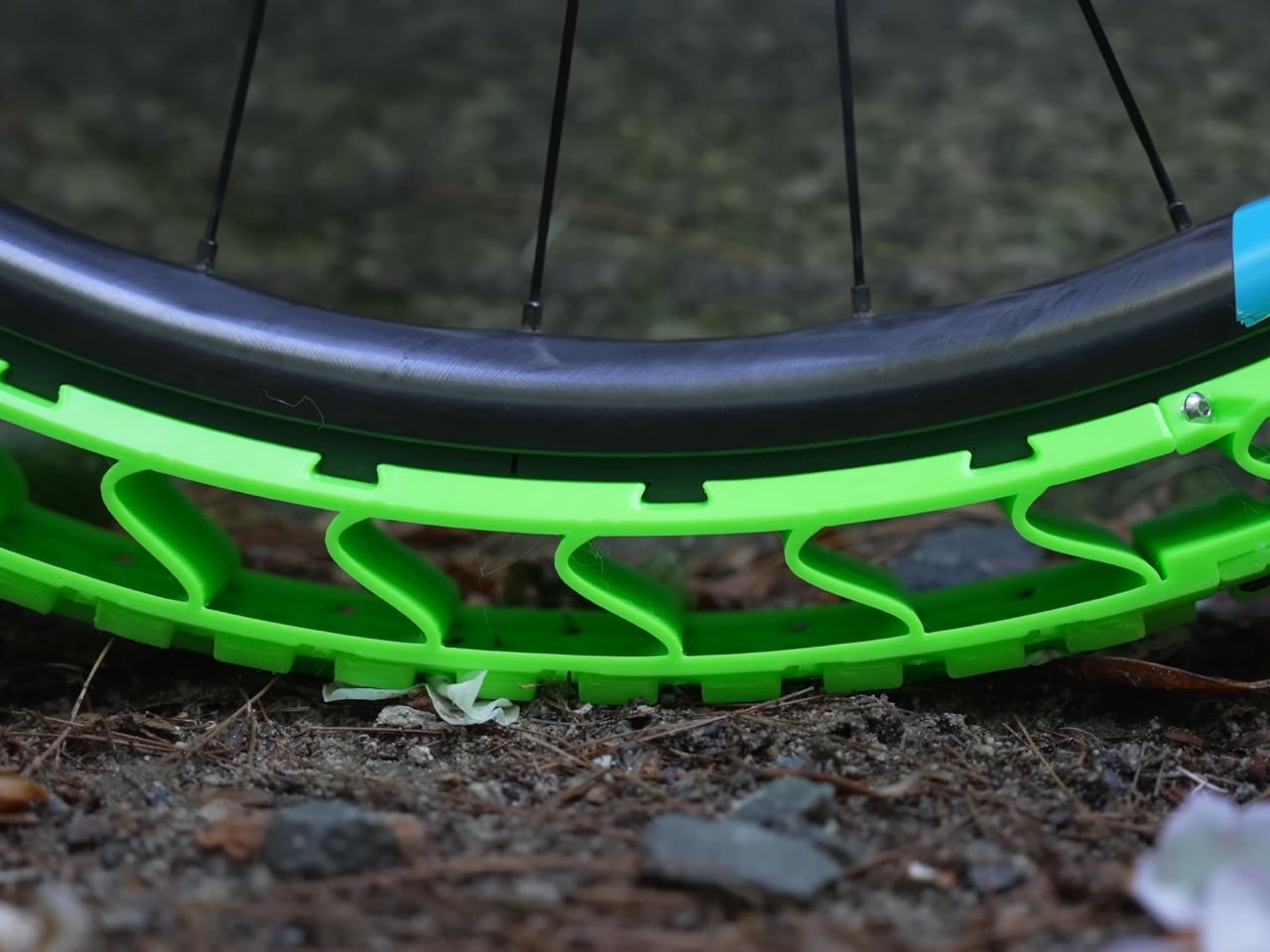
The ride itself proved to be the ultimate trial by fire. Traction was better than expected, especially climbing, to the point where he didn’t feel a single wheel slip on the way up. Then he started pushing harder and the rear wheel began falling apart one segment at a time, cascading into the next joint over, while the front wheel came home completely untouched. That’s not a flaw in the story. That’s the whole story. Rear wheels take more abuse than front wheels on every mountain bike ever made, printed or otherwise, and watching that principle play out in real time on a tire nobody has ever sold you is a pretty satisfying way to spend fifteen minutes.
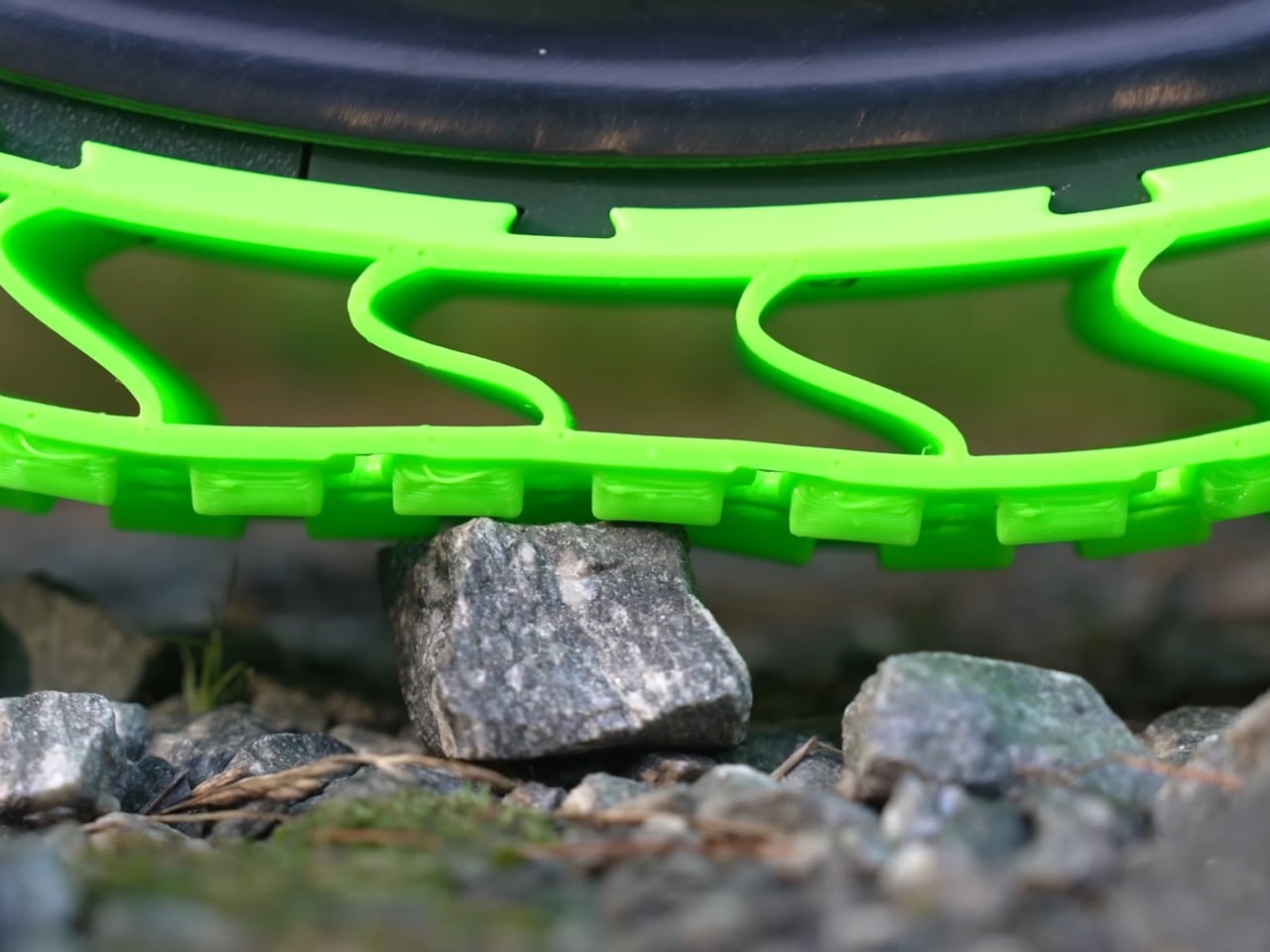
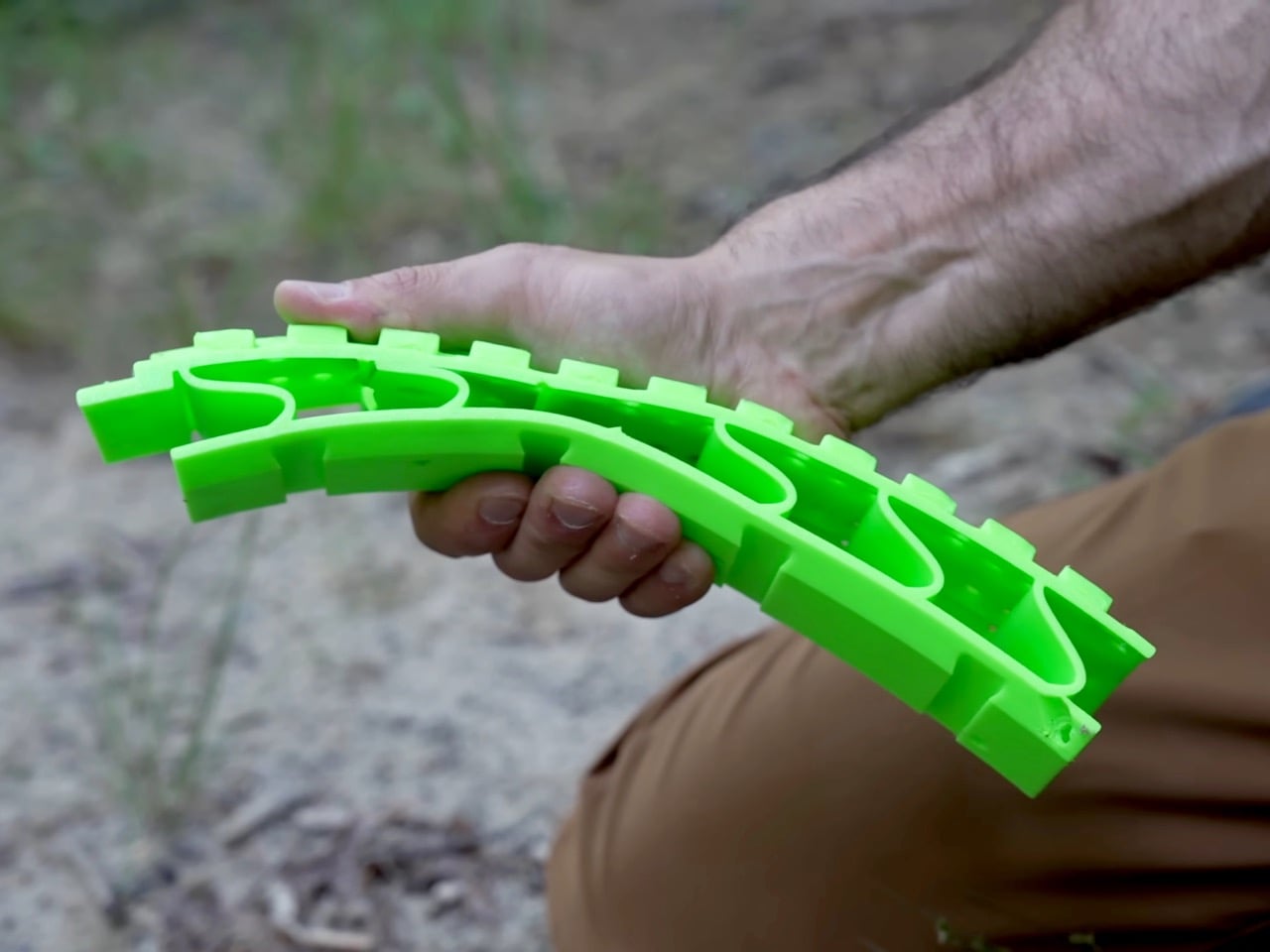
The moral of this story is slightly bleak, but worth knowing if you’re up for the project. Airless tires aren’t the solution, they’re A solution – the problem they’re trying to solve is punctures, and something as stupidly simple as liquid sealant solved that problem years ago. Mountain bikers swear by it, and it sure beats carrying a screw and 3D printed spare parts on your expeditions. There is, however, a certain flair to riding a bike sporting tires as eye-catching as these. Berm doesn’t quite say it outright, but maybe the most obvious solution is to mix and match tires, using airless ones on the front, and something more durable at the back.
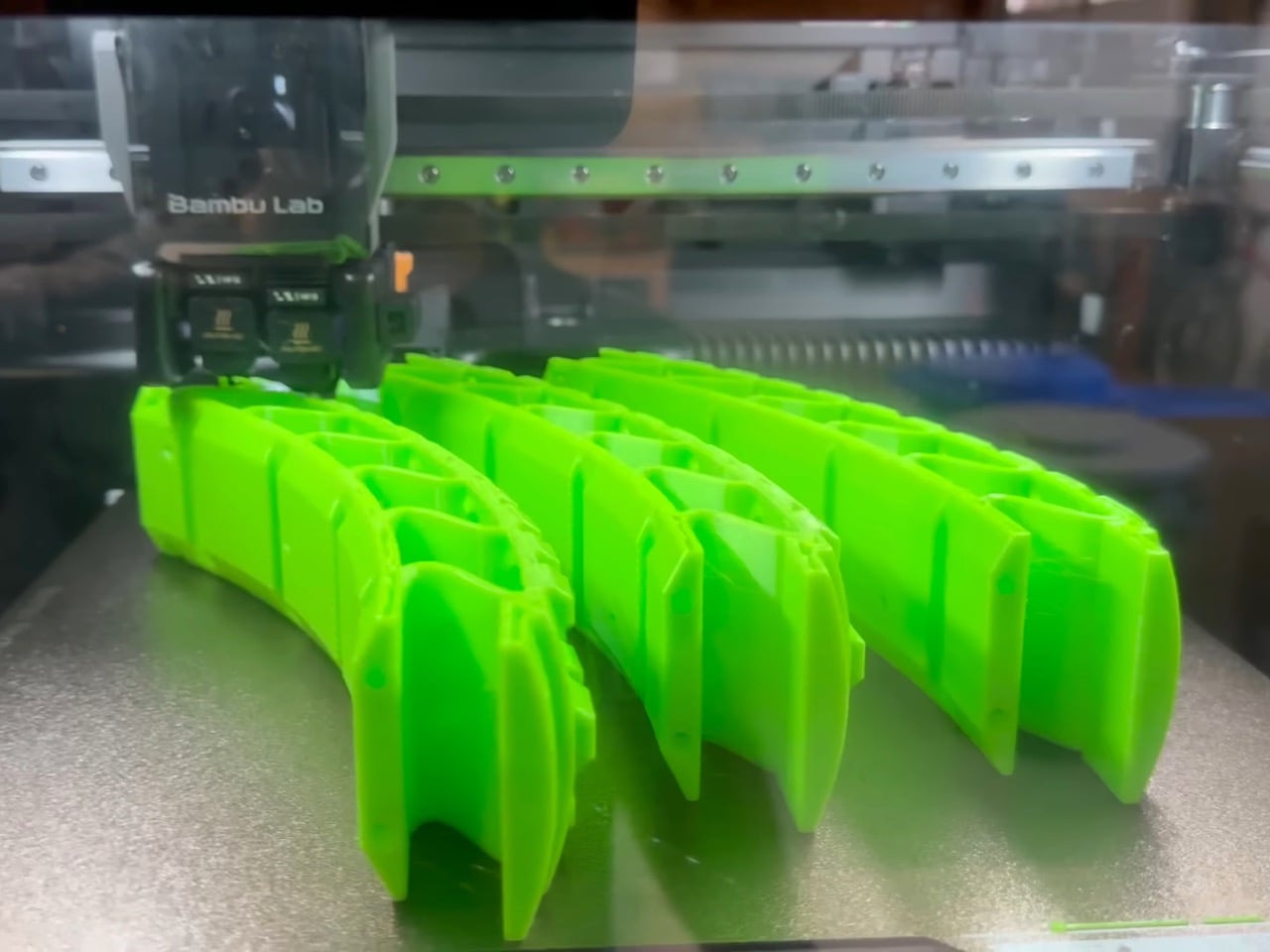
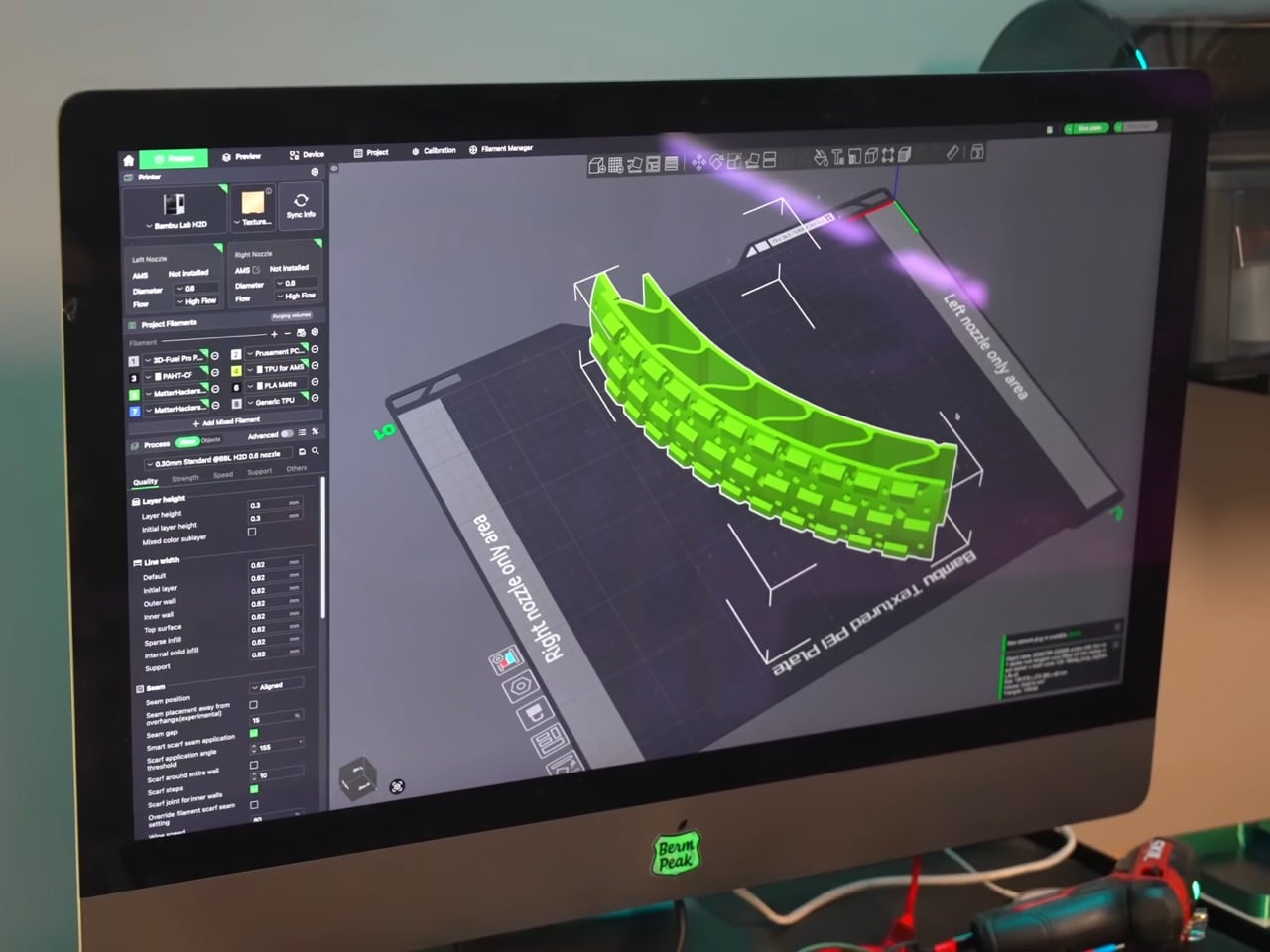
You don’t need a NASA contract to try this yourself, and that’s the part worth sitting with. The file, the printer, and the material all exist right now, sitting in a hobbyist’s garage instead of a corporate lab. Whether that ever turns into something you can buy off a shelf is a separate question. Whether you can print one this weekend is not.
The post You Still Can’t Buy Airless Tires Even After A Decade… But You Can 3D Print One first appeared on Yanko Design.