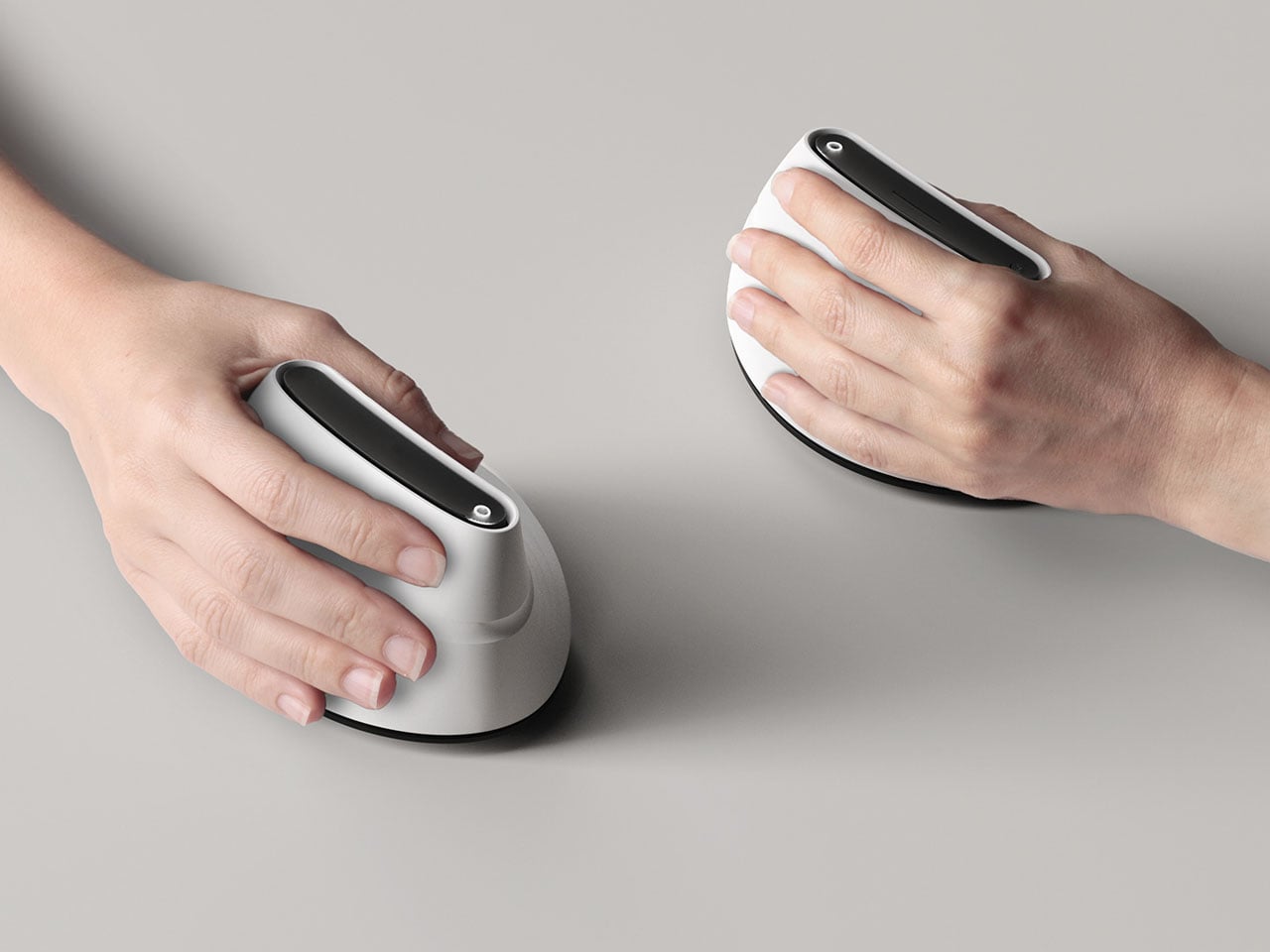
As simple as it might sound, getting a wireless mouse design right is not a simple task. The number of variables involved due to hand shapes, finger sizes, and the preferred hand for operating the accessory makes it impossible to design a mouse that suits all.
Ambidextrous designs do solve a part of this problem, but the major chunk of making the perfect ergonomic mouse still depends on the shape. That led to a design exercise by a designer duo to create the ambidextrous OLOID vertical mouse that’s almost perfect in every way possible when we consider the ergonomics and functionality.
Designer: Josep Pedro and Jorge Paez
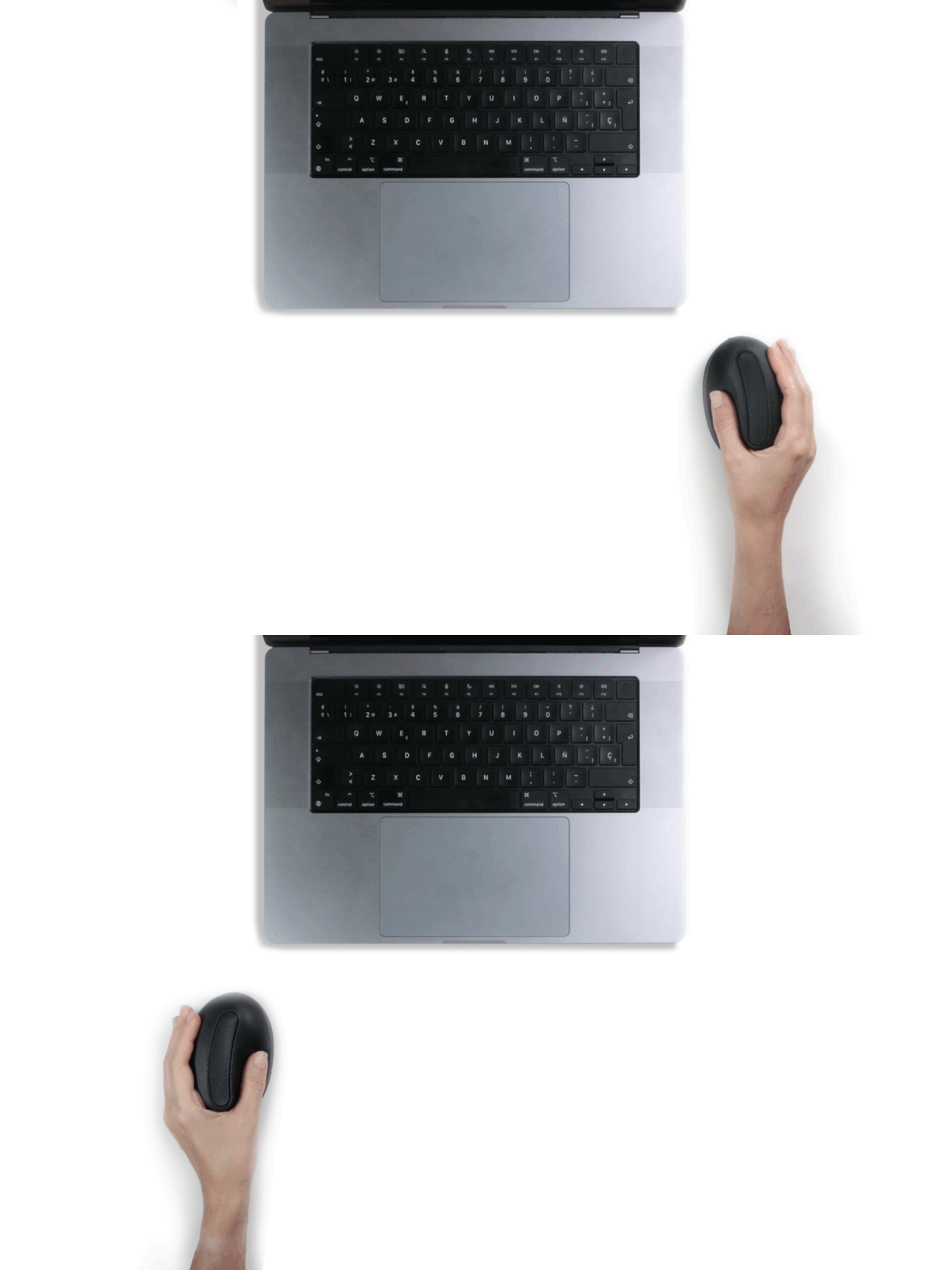
It all began by tearing down popular mouse options available on the market to identify the underlying functionality loopholes and the prospective design that fills the gaps. The major consideration was to create a wireless mouse that works equally well with both hands. Then the next step was to choose from the more popular flat design for simplicity and the more radical vertical design for wrist support. After much contemplation, the vertical configuration turned out to be the one that creates a balance between ergonomics and the primary requirement of the accessory to be ambidextrous.
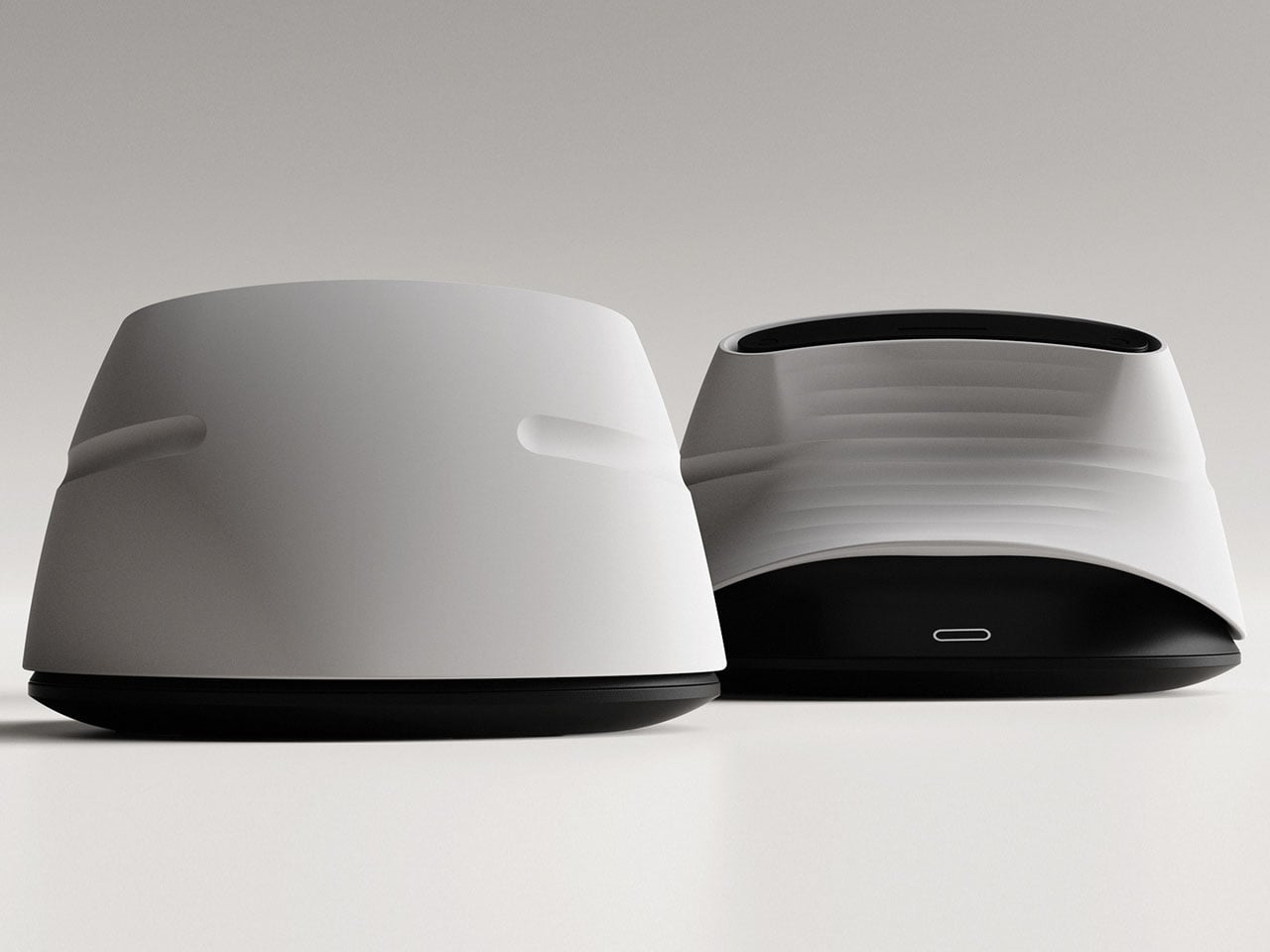
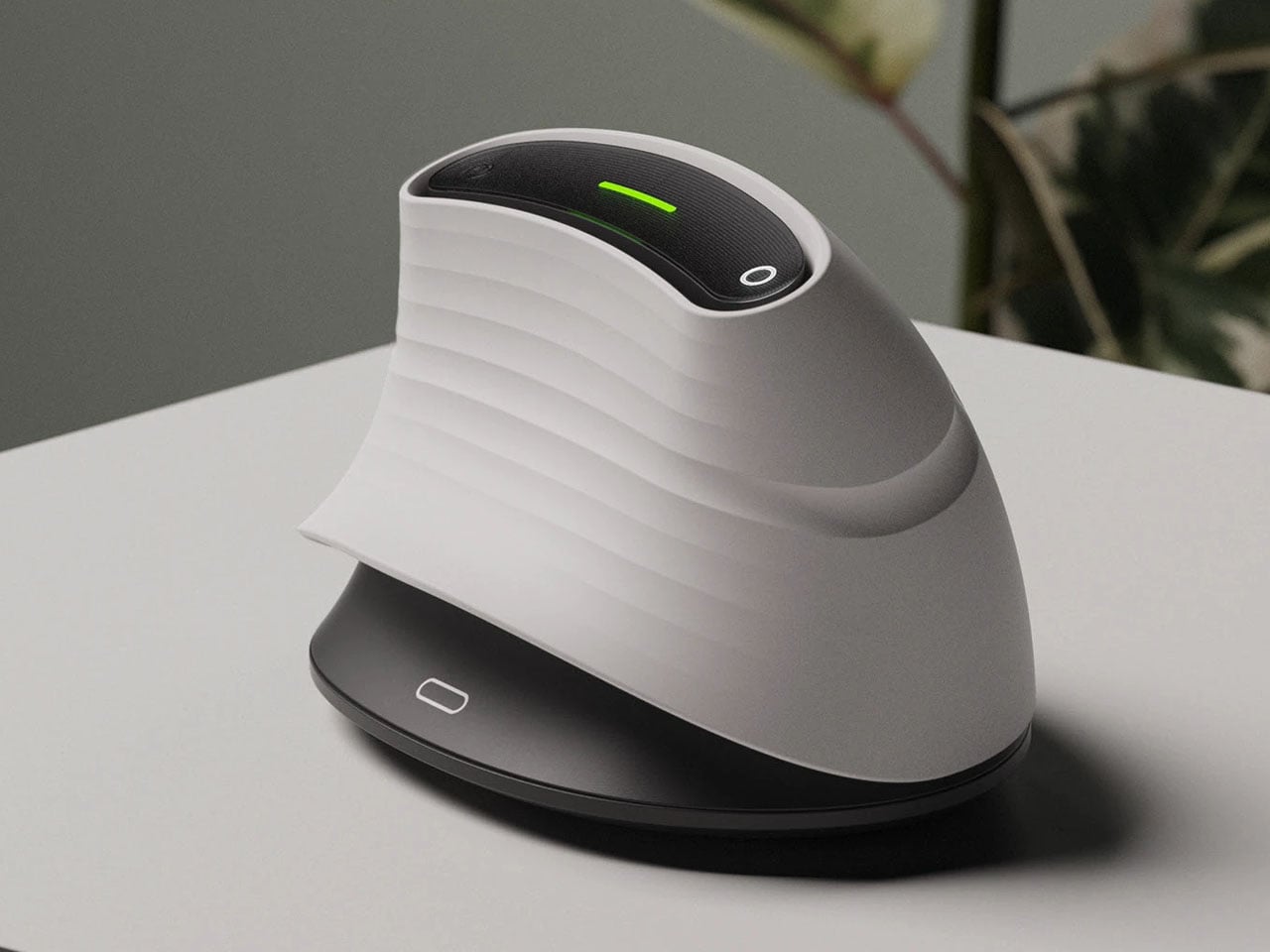
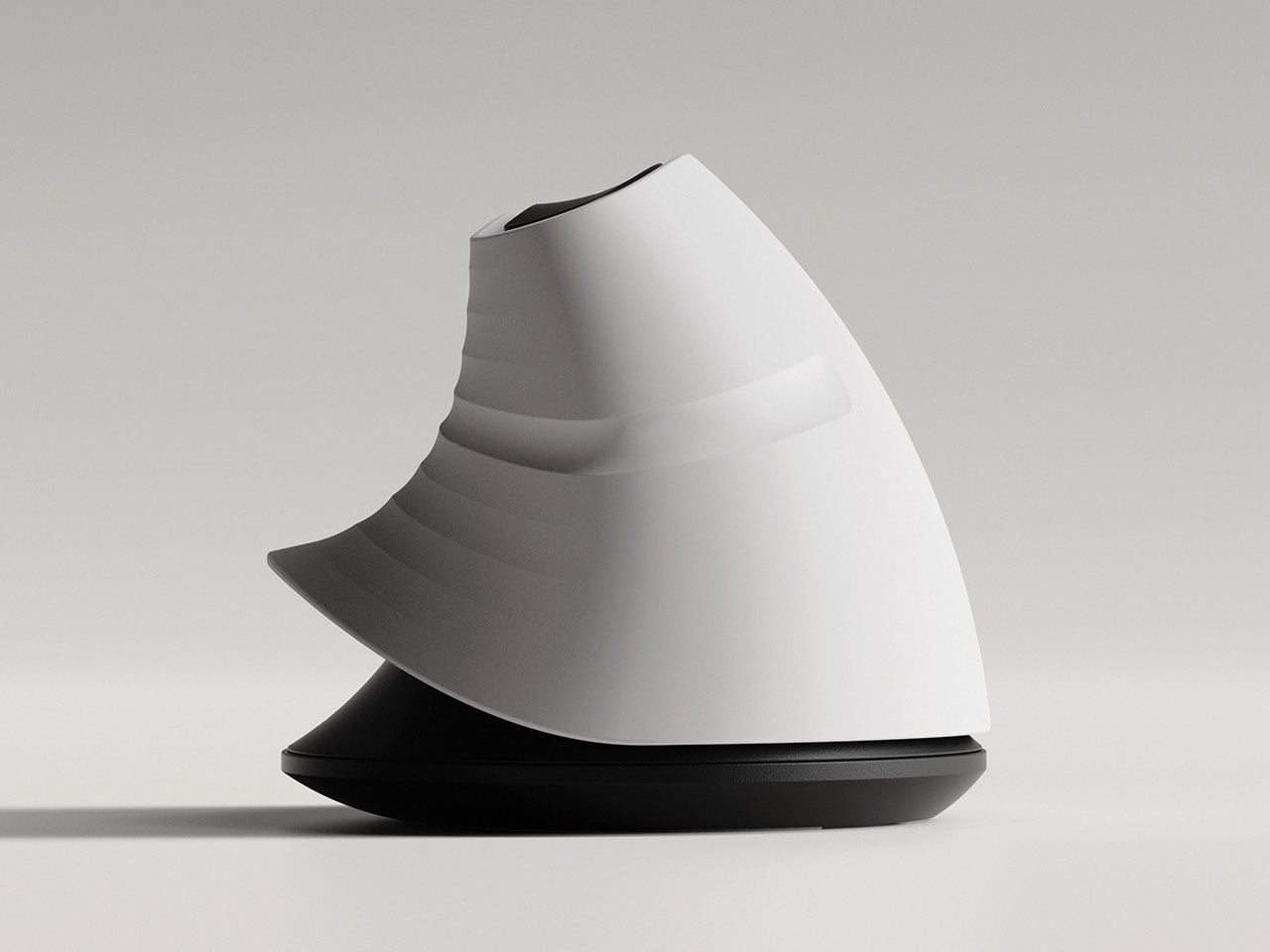
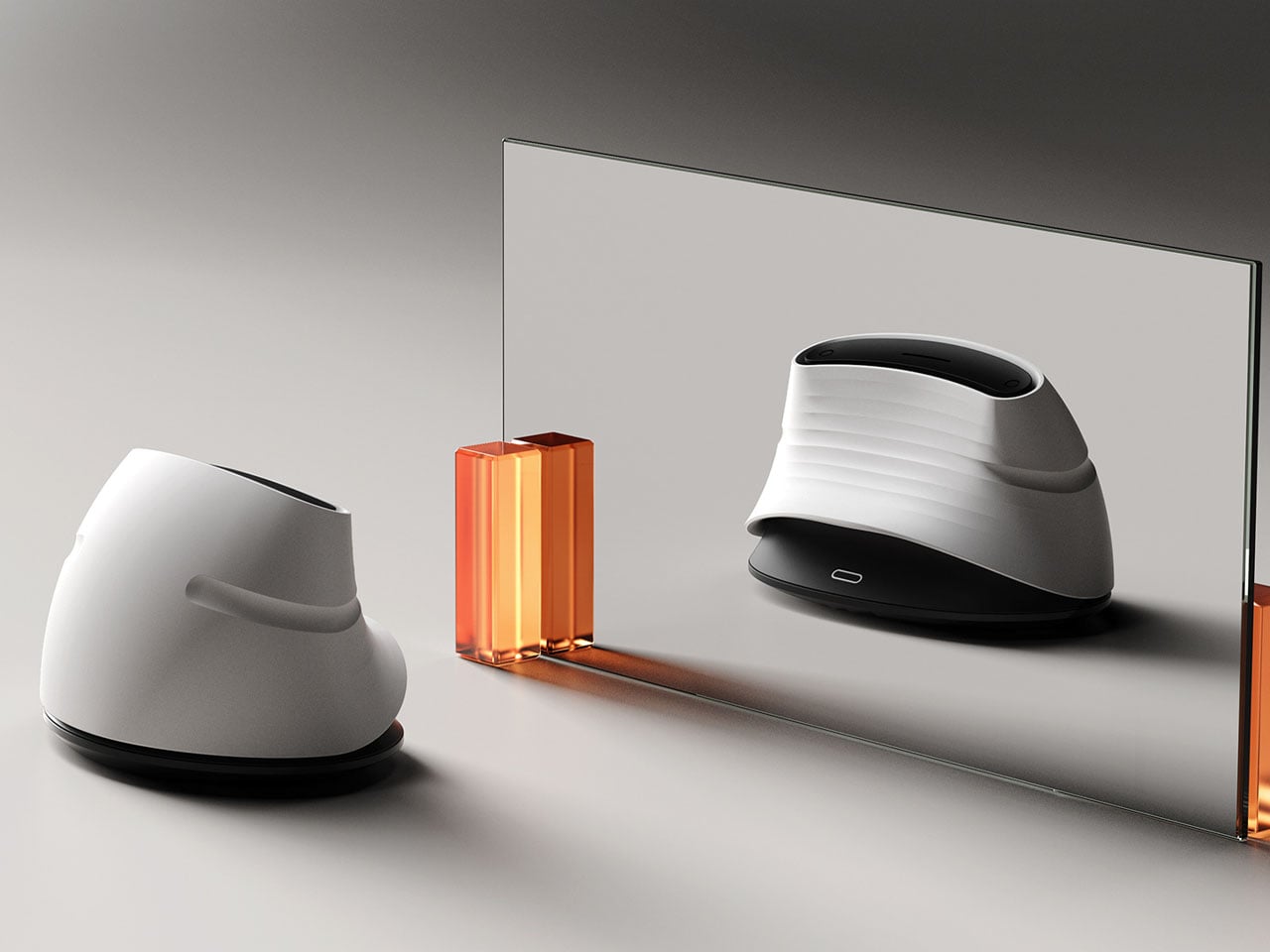
After countless mockups and clay modelling renders, the final mouse design achieved the perfect blend of ergonomic grip and the underlying functionality provided by the optimally placed click buttons. If you look closely, the ergonomic design of the interaction surface is done with an arched pill shape that gradually transforms into an off-centre ellipse. The flared-up section is the resting position of the thumb for comfort. Another subtle element that adds tactile sensation is the wave texture that extends to the front, indicating the position of the index finger scroll sensors.
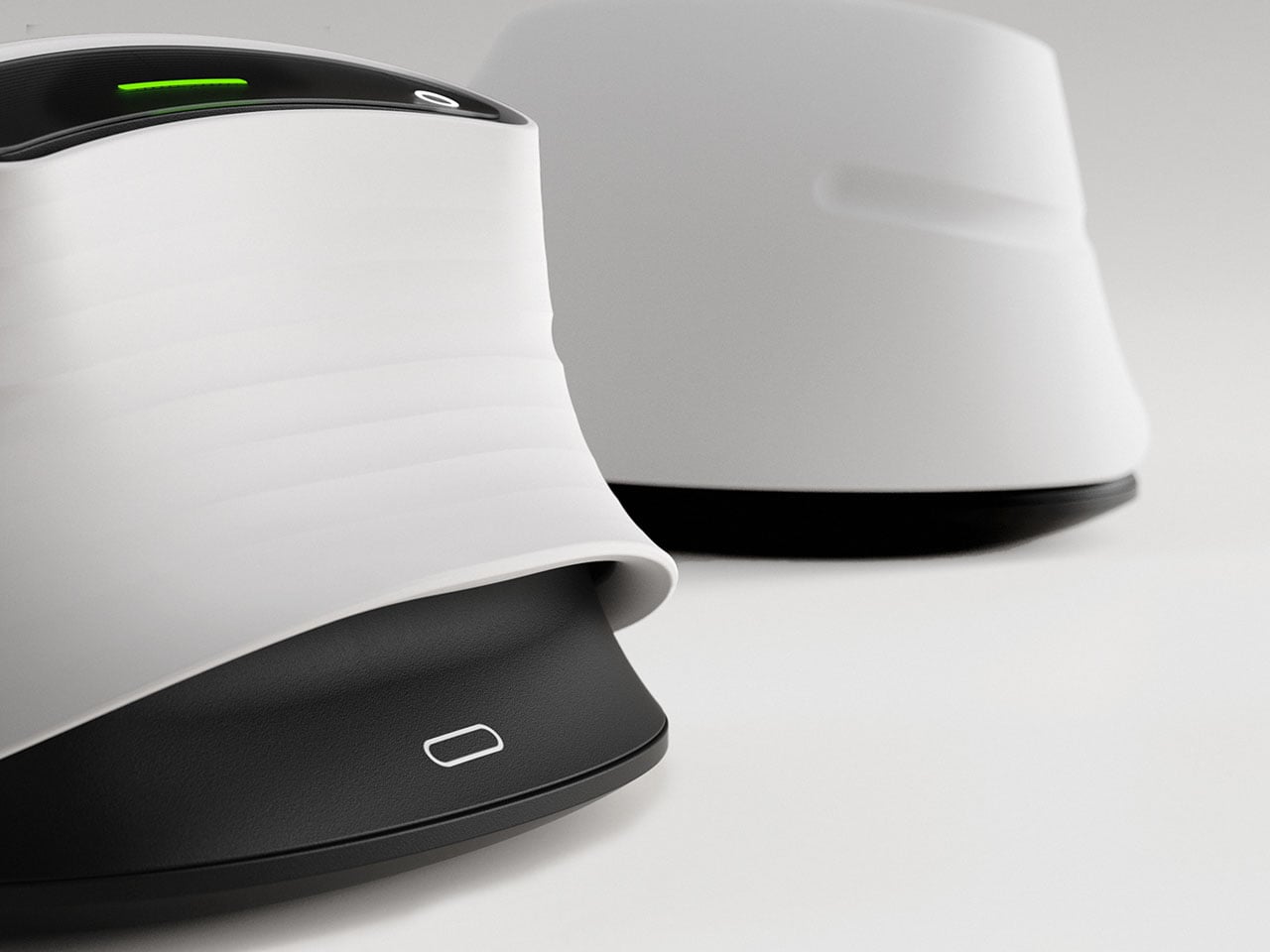
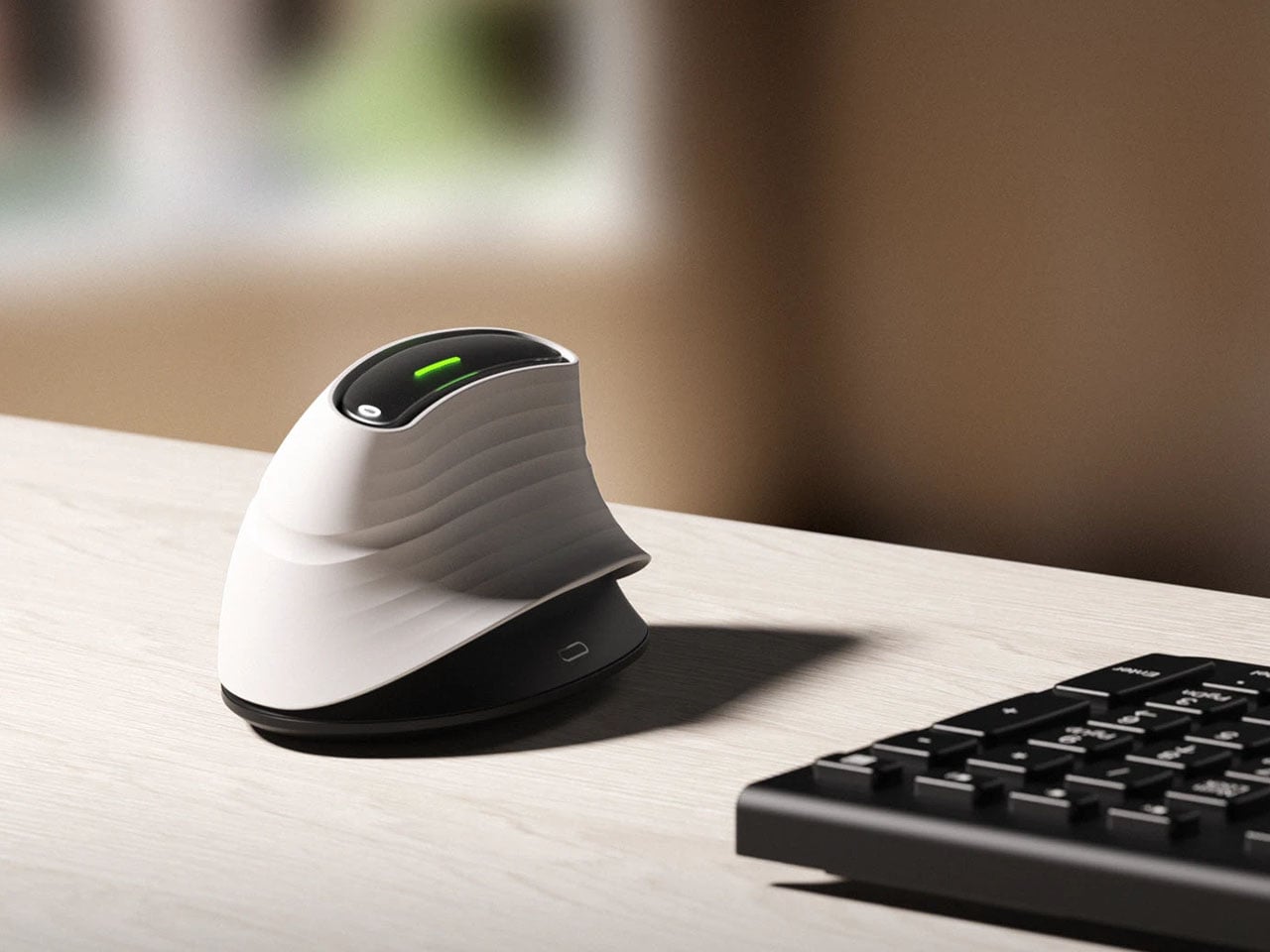
In-built sensors on the OLOID mouse automatically detect right-handed or left-handed use, thereby activating the corresponding electronics and triggering the indicator LED on top. Since this is 2026, the wireless mouse can connect to up to three devices simultaneously for multitaskers who love to switch between devices. Truly, the design of this ambidextrous ergonomic mouse and simplistic functionality is worth appreciating. When are we going to see this accessory on our desk? Well, it’s anybody’s guess right now. At least we can take heart from the fact that OLOID mouse has prototype models on the horizon, and it is not merely a random concept design penned for fun.
The post OLOID ergonomic mouse is designed for hassle-free ambidextrous switching first appeared on Yanko Design.