Apple spent somewhere north of ten billion dollars and nearly a decade trying to build a car. The project, codenamed Titan, employed hundreds of engineers and designers, quietly consumed some of the sharpest automotive minds in the world, and was ultimately cancelled in 2024 without a single vehicle reaching the public. Julian Hoenig was inside that room. As lead designer on Apple Watch and Vision Pro, and a key contributor to the Apple Car programme, he spent years thinking about what a vehicle designed with Apple’s obsessive material intelligence and formal restraint could look like. Then Titan died, and Hoenig went and built one anyway.
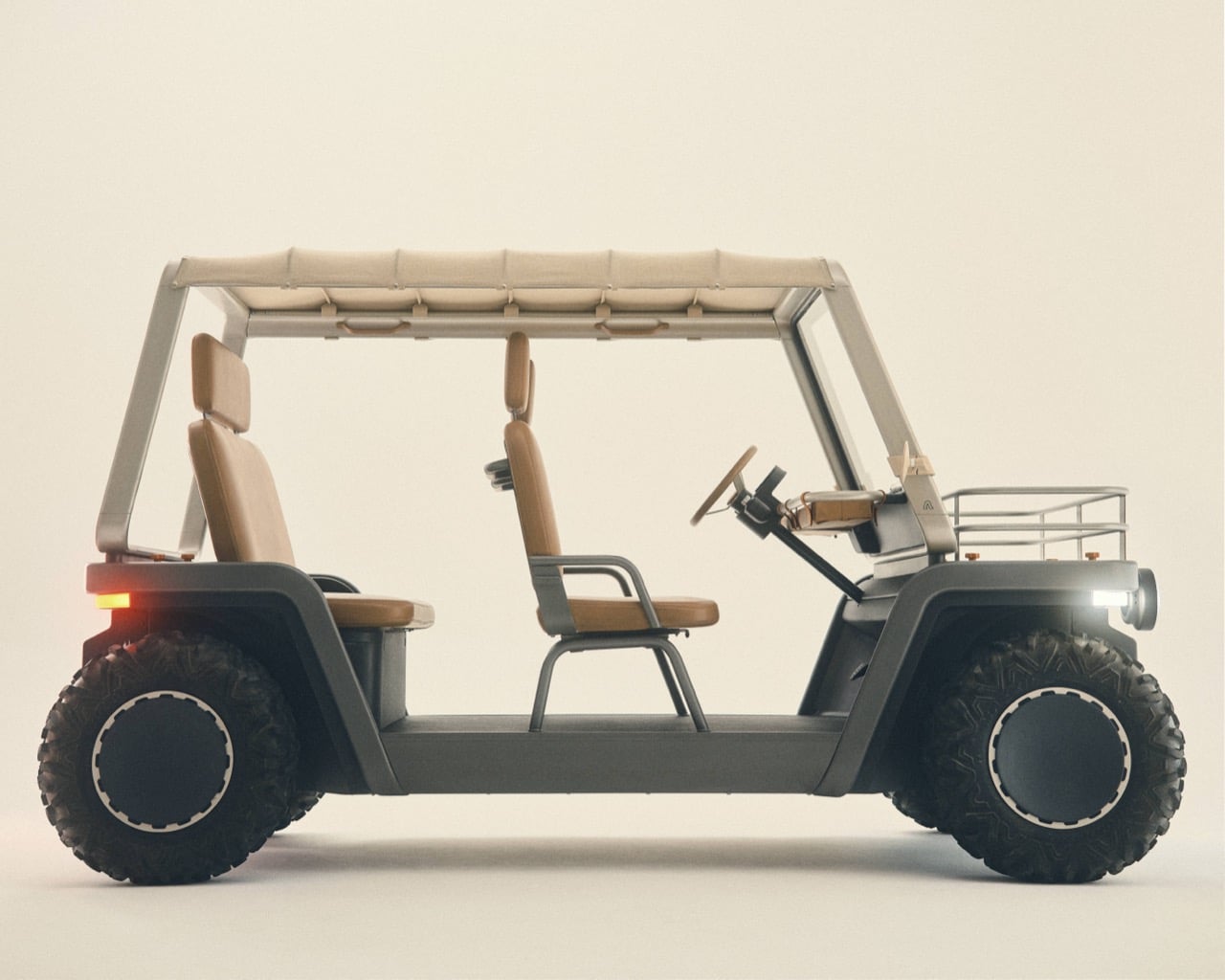
The vehicle he built looks nothing like what Apple would have made. The Amble One is a doorless, screenless, open electric buggy that tops out at 65 kph, weighs 450 kilograms, and is made from aluminum, leather, cotton, and cork. Co-founded with forpeople’s Michael Tropper, Cowboy’s Adrien Roose, and Portuguese hospitality entrepreneur José António Uva, Amble launches today out of Lisbon with a starting price of €20,000 and a waiting list at properties like Amangiri and Six Senses. The design thesis is almost aggressively simple: slow down, open up, and let the place you’re moving through actually reach you.
Designers: Julian Hoenig, Michael Tropper / Amble
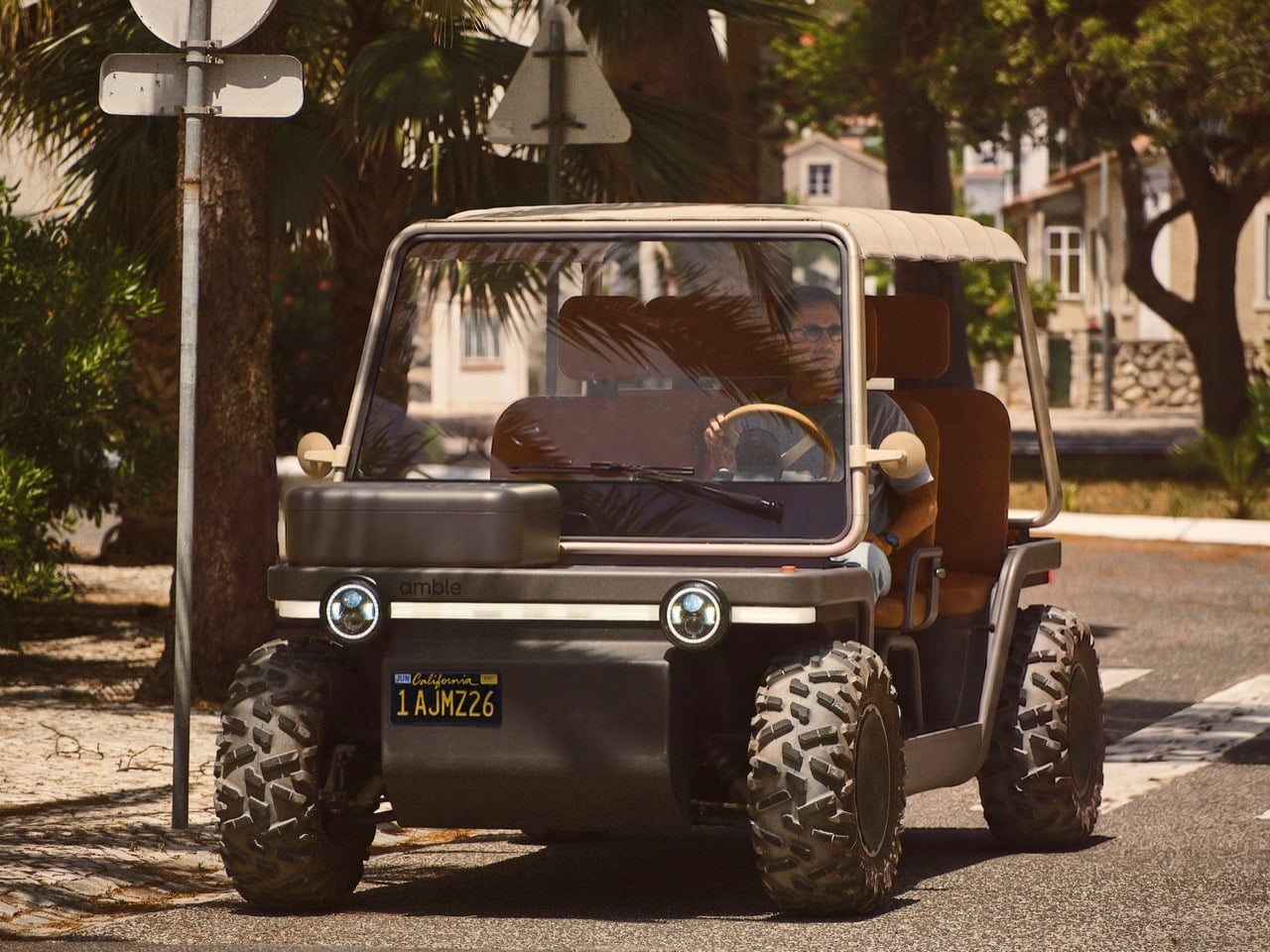
The Amble One sits in a gap in the vehicle landscape that nobody has bothered to properly design for. Golf carts are utilitarian objects engineered for a golf course, not a 780-hectare Alentejo estate. Microcars are city tools dressed up with doors and dashboards. E-bikes put you on two wheels and ask you to negotiate with traffic. The Amble One occupies the space between all three, at 3,200 mm long and 1,480 mm wide, compact enough for coastal paths and private estate roads, but four-wheeled and substantial enough to carry four people with 100 kilometers of range on its 11 kWh lithium-ion battery. The 15 kW motor runs on a 48-volt architecture and charges fully in 5.5 hours on a standard 220/230V supply, the kind of socket you’ll find in every hotel utility room in Europe. The 28-inch wheels and independent suspension are calibrated for the terrain between a manicured lawn and a dusty gravel road, which is precisely where this vehicle was designed to live.
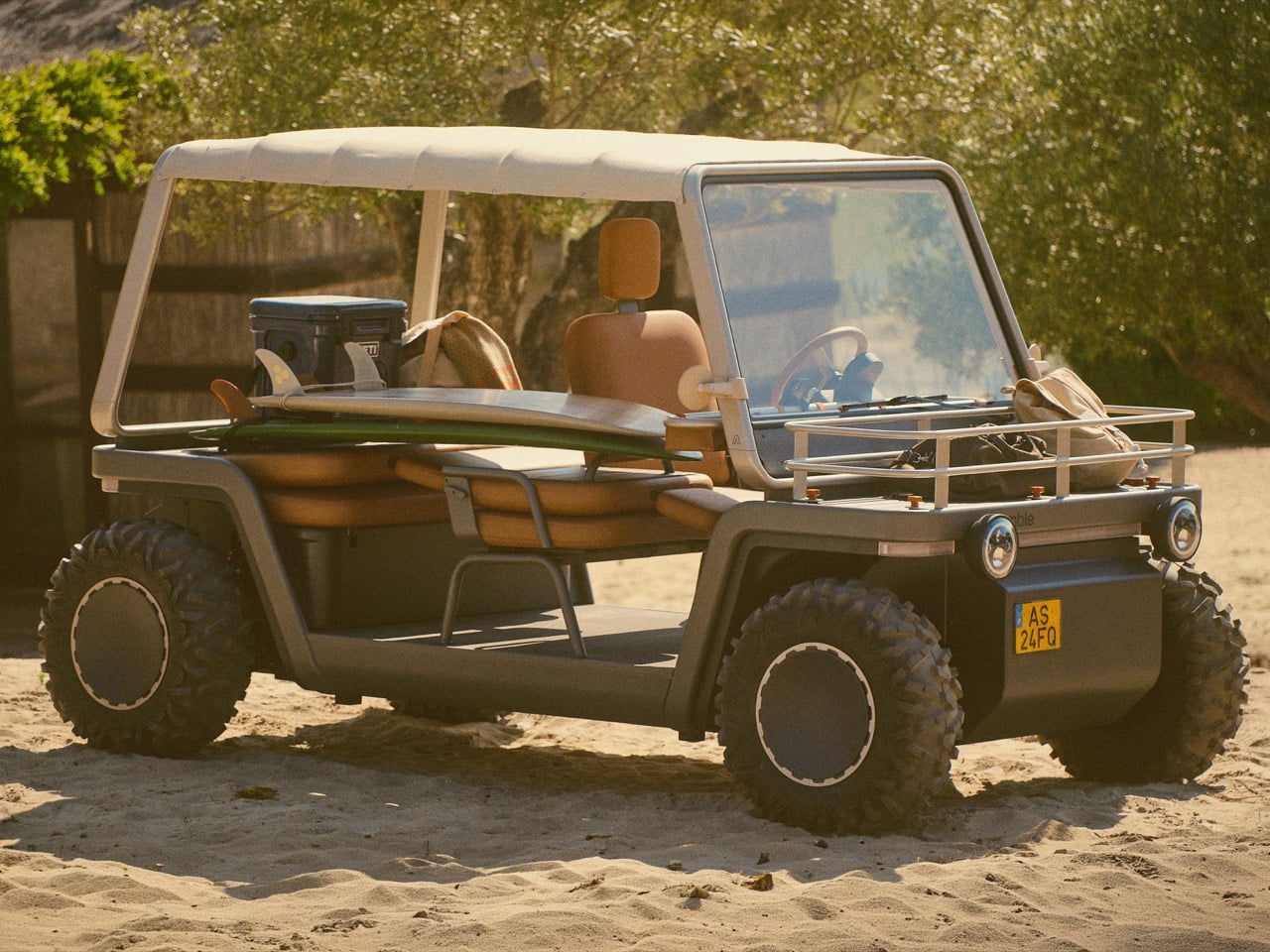
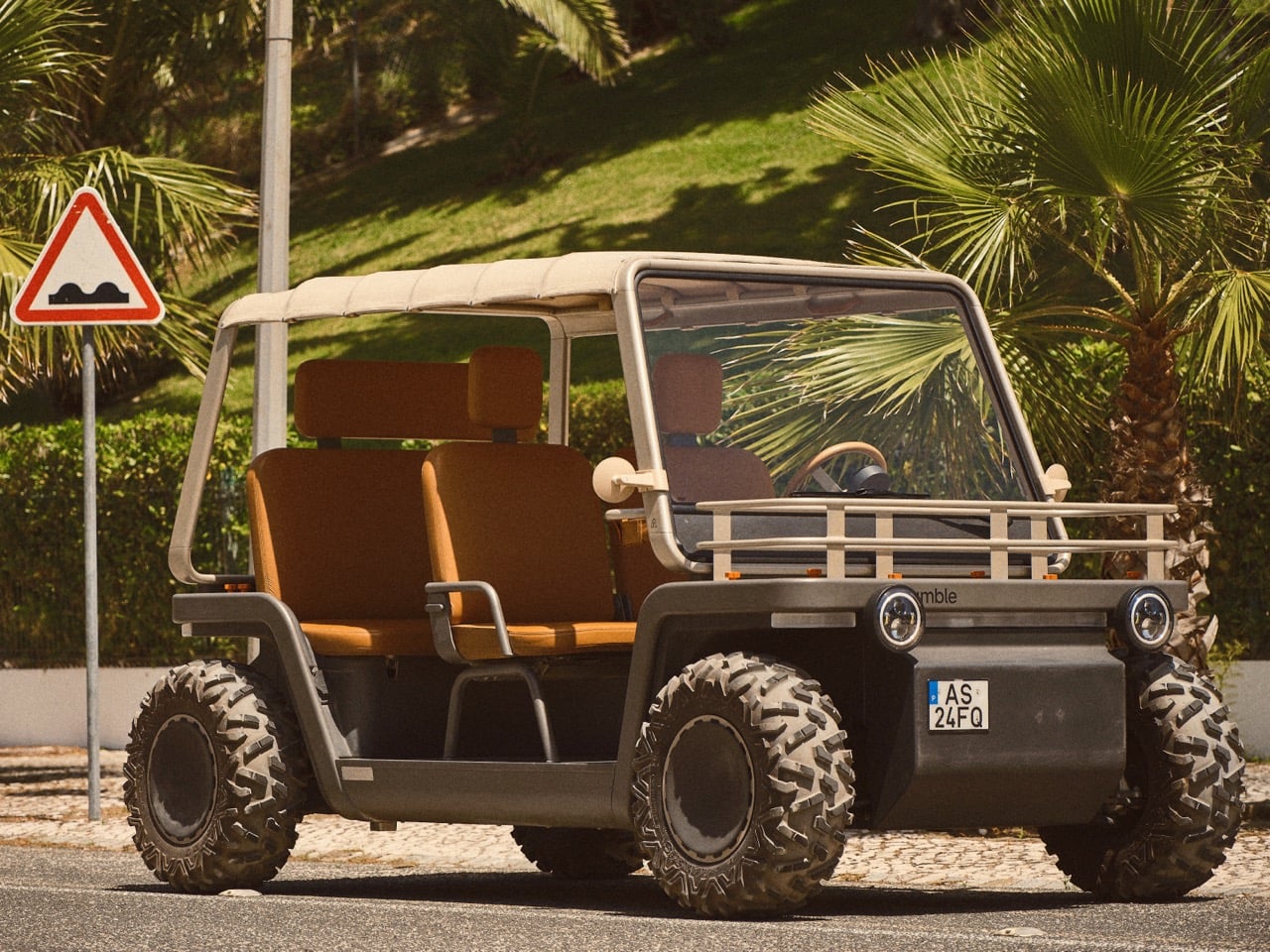
Hoenig’s design philosophy on the Amble One reads as a direct inversion of everything the Apple Car programme represented. Project Titan, at its most ambitious, wanted to create a sealed, autonomous, software-defined pod where the vehicle itself became invisible in service of the passenger experience. Hoenig’s answer here strips the vehicle back to its irreducible minimum: no doors to close you in, no screens pulling your attention inward, no unnecessary separation between the people on board and the environment around them. The material palette of aluminum, leather, cotton, and cork was chosen with aging in mind, materials that develop patina and character rather than scratching and yellowing. Michael Tropper, who shaped the creative direction alongside Hoenig, describes the design as holistic, right down to the sounds the vehicle makes. That level of sensory intentionality is familiar territory for anyone who has watched Apple obsess over the click of a button or the grain of a glass surface.
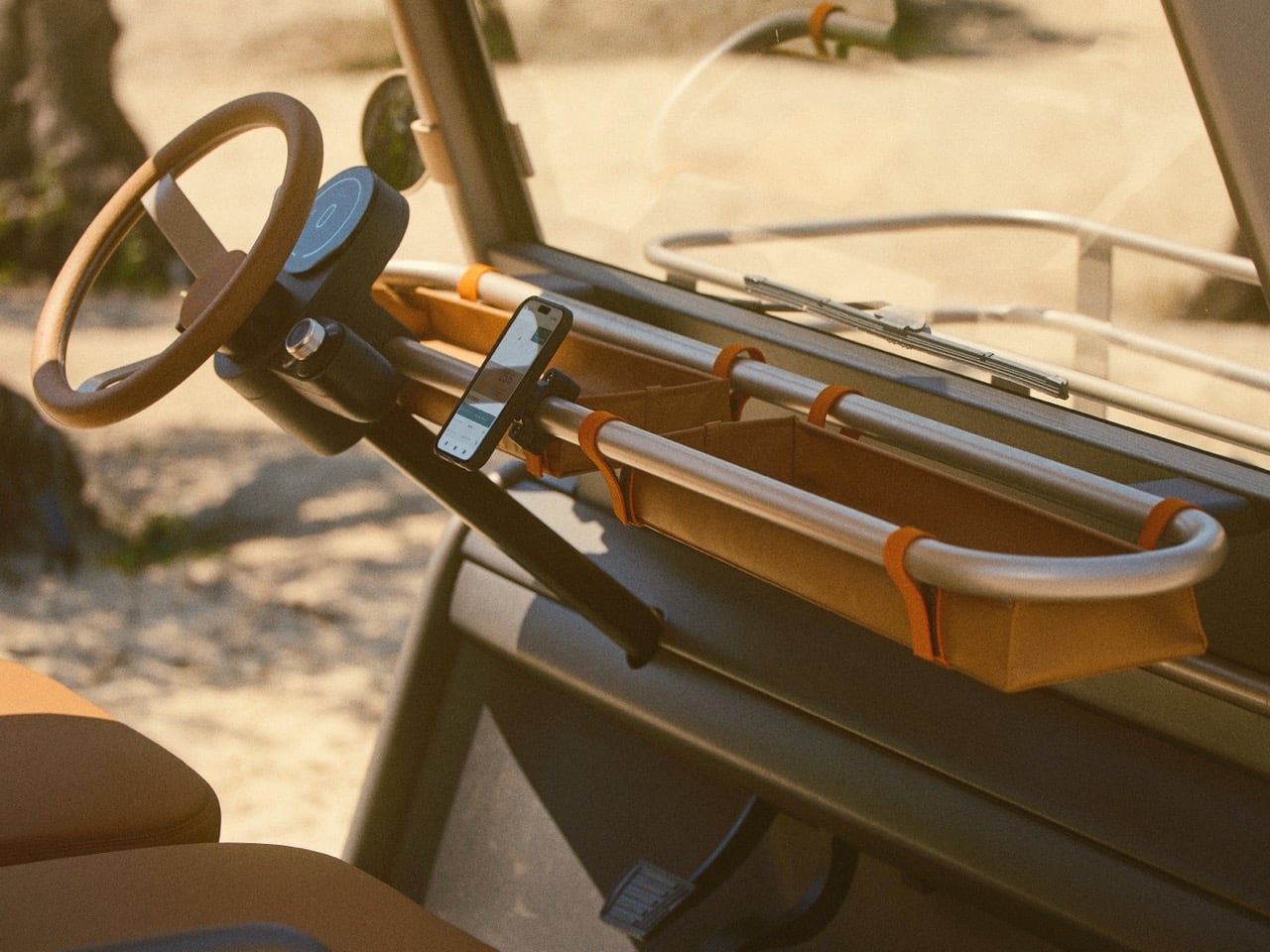
It would be reductive to frame the Amble One purely as Hoenig’s Apple detox, because the founding team around him brings its own formidable design intelligence to the project. Tropper built forpeople into a 120-person agency behind some of the most considered industrial design work of the last decade, including work for NIO, Arc’teryx, and Herman Miller. Adrien Roose took Cowboy from a Belgian startup to one of Europe’s most design-literate electric bike companies, backed by Index Ventures, by applying consumer electronics thinking to a product category that had been stuck in sporting goods logic for decades. José António Uva spent 14 years restoring São Lourenço do Barrocal, transforming a 780-hectare Alentejo family estate into one of Europe’s most celebrated rural retreats, which means he understands, at a granular level, the kind of journeys the Amble One was built for. The investors backing the company, including Peter Rive of SolarCity and Joe Zadeh, former VP Product at Airbnb, suggest the ambition here extends well beyond a niche hospitality toy.


The comparison that everyone’s bound to make, especially given the timing, is with the Ferrari Luce, which debuted last month and represents the other answer to the question of what former Apple designers do with a vehicle brief. Jony Ive and Marc Newson’s LoveFrom studio shaped the Luce’s exterior and interior, with a design language built around a smooth, continuous, shell-like form and floating front and rear aerodynamic wings. The interior features precision-engineered mechanical buttons, dials, toggles, and switches combined with multifunctional digital displays, and the steering wheel is machined from 100% recycled aluminum. Four electric motors produce up to 1,035 horsepower from a 122 kWh battery, and the car starts at €550,000. Ive’s answer to the post-Apple-Car question is a sealed, 310 kph glass house wrapped in aerodynamic sculpture and priced at a level that makes it purely aspirational. Hoenig’s answer is a 65 kph open buggy in cork and cotton that costs €20,000 and is designed to be driven slowly through somewhere beautiful. Both men drew on the same decade of Apple material obsession and arrived at completely opposite conclusions, which tells you something interesting about what each of them actually took away from Cupertino.
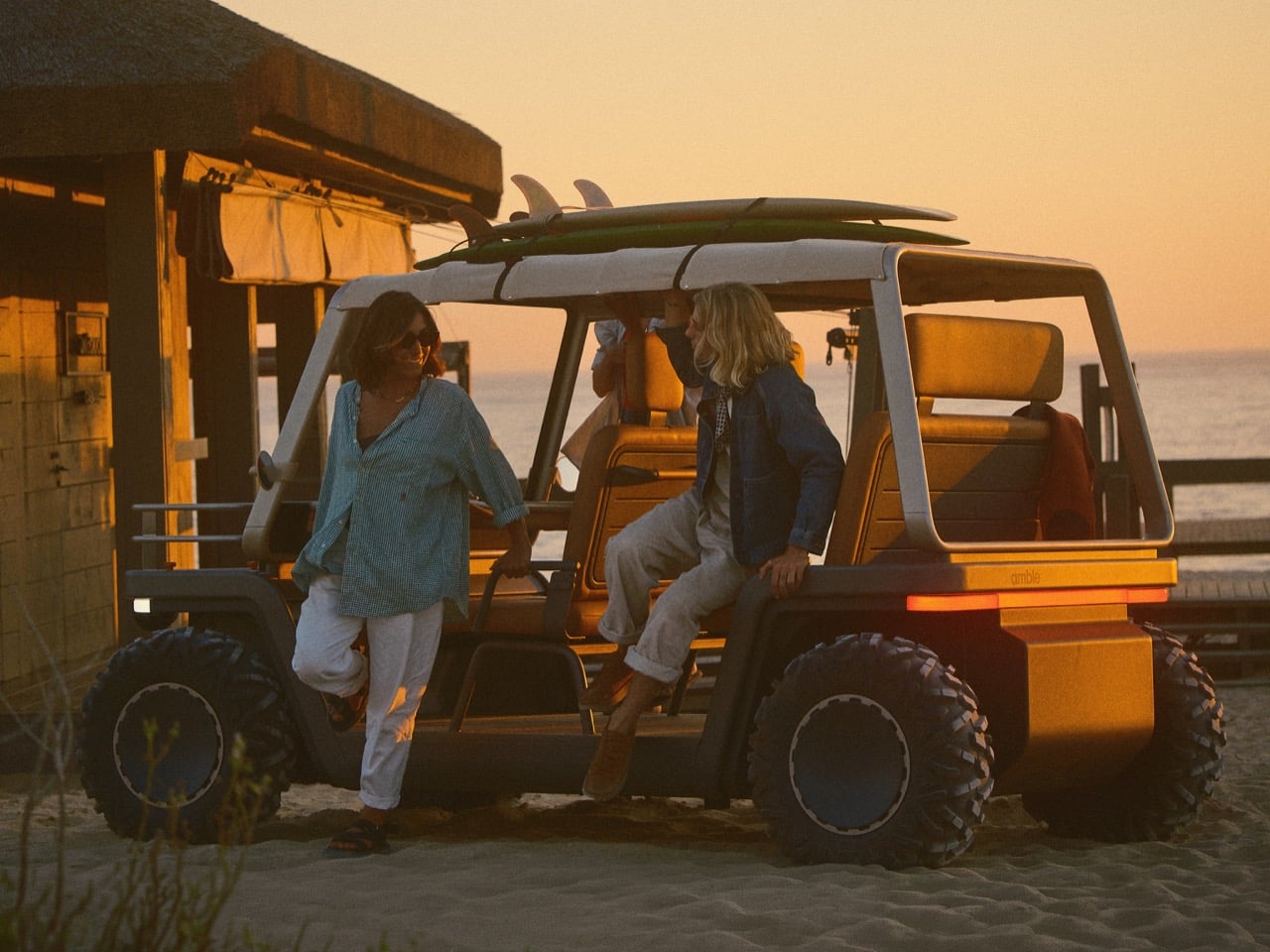
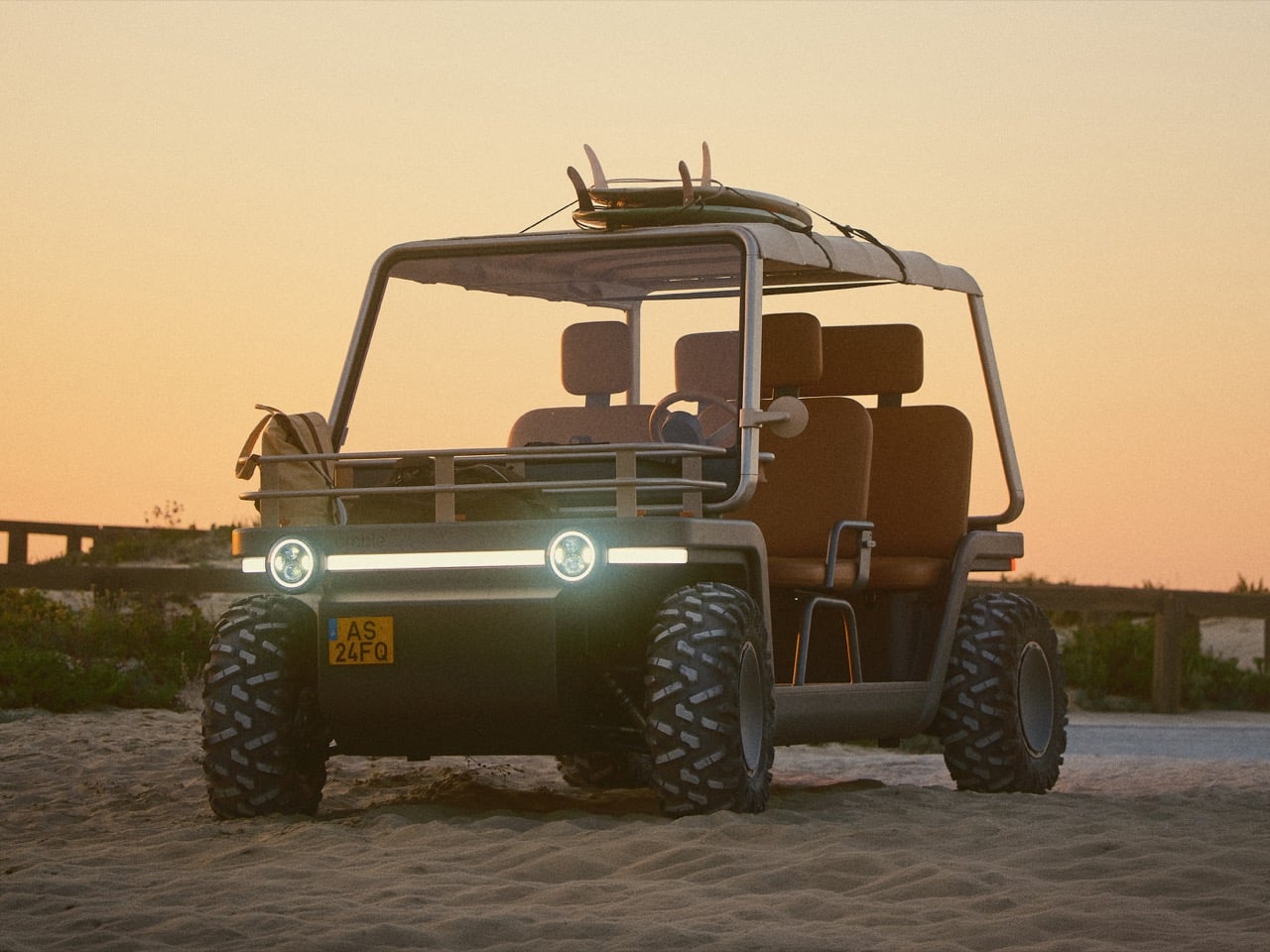
The initial 2027 production run is allocated entirely to leading destinations, with interest confirmed from Amangiri in Canyon Point, Mustique Island, Six Senses Les Bordes in the Loire Valley, and Uva’s own Na Praia in Comporta. These are properties where every guest touchpoint is considered at the same level of intensity that Hoenig would apply to a product surface, which makes the Amble One a natural fit. A golf cart parked outside a Six Senses villa is a minor embarrassment. An Amble One parked there makes a statement about the property’s design values. The consumer-facing 2028 waitlist opens the vehicle to private buyers in Europe and the United States at the same €20,000 / $25,000 price point, which positions it as an accessible second vehicle for a coastal house, a rural property, or a private estate, the kind of context where 100 km of range and a 65 kph top speed are exactly what you need.

The bigger play, the one that makes Amble worth watching beyond the launch story, is that the One is explicitly described as the first expression of a broader platform, with future vehicles planned for more urban environments and new use cases. The Moon Buggy influence Hoenig and Tropper cite is instructive: that 1971 vehicle was purpose-built for a specific terrain and a specific pace, and its design was completely liberated by accepting those constraints rather than fighting them. The Amble One accepts the same bargain, building an entire design philosophy around slowness, openness, and context-specificity rather than chasing the metrics that mainstream automotive culture prizes. Whether that philosophy scales beyond hospitality estates and private communities into something more broadly relevant is the question the next few vehicles will have to answer. For now, the One makes a quietly compelling case that the most interesting vehicle to emerge from the wreckage of the Apple Car programme might be the one that wanted least to be a car.
The post Another Ex-Apple Designer Made An Electric Vehicle (And No, It’s Not The Ferrari Luce) first appeared on Yanko Design.