The name alone stops you. 100 Windows. Not “The Pavilion House” or “House No. 7” or something equally poetic and vague. Just a count. A blunt, almost confrontational declaration of exactly what you’re getting, and yet somehow, the moment you see it, the name feels like the most understated thing about it.
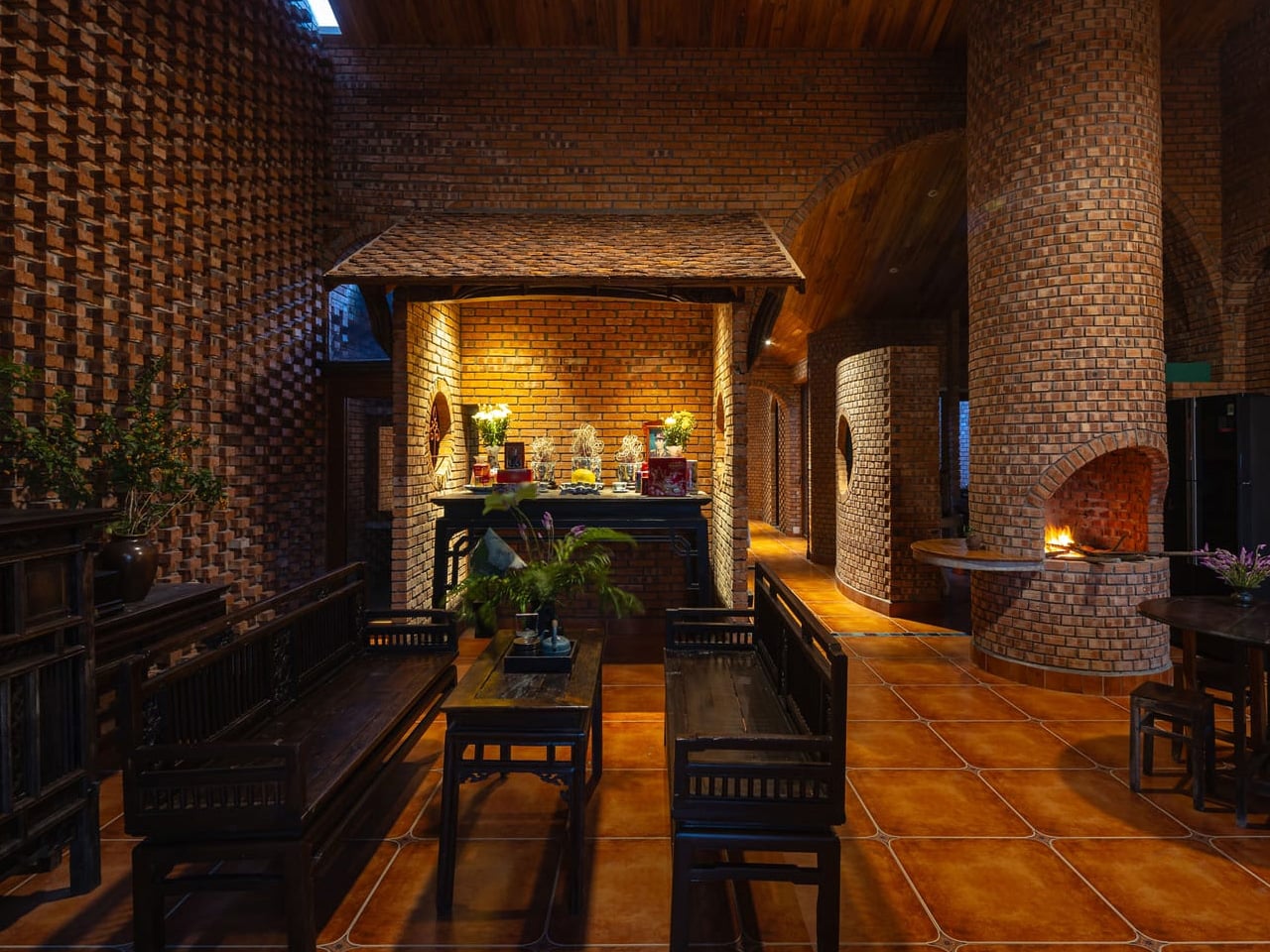
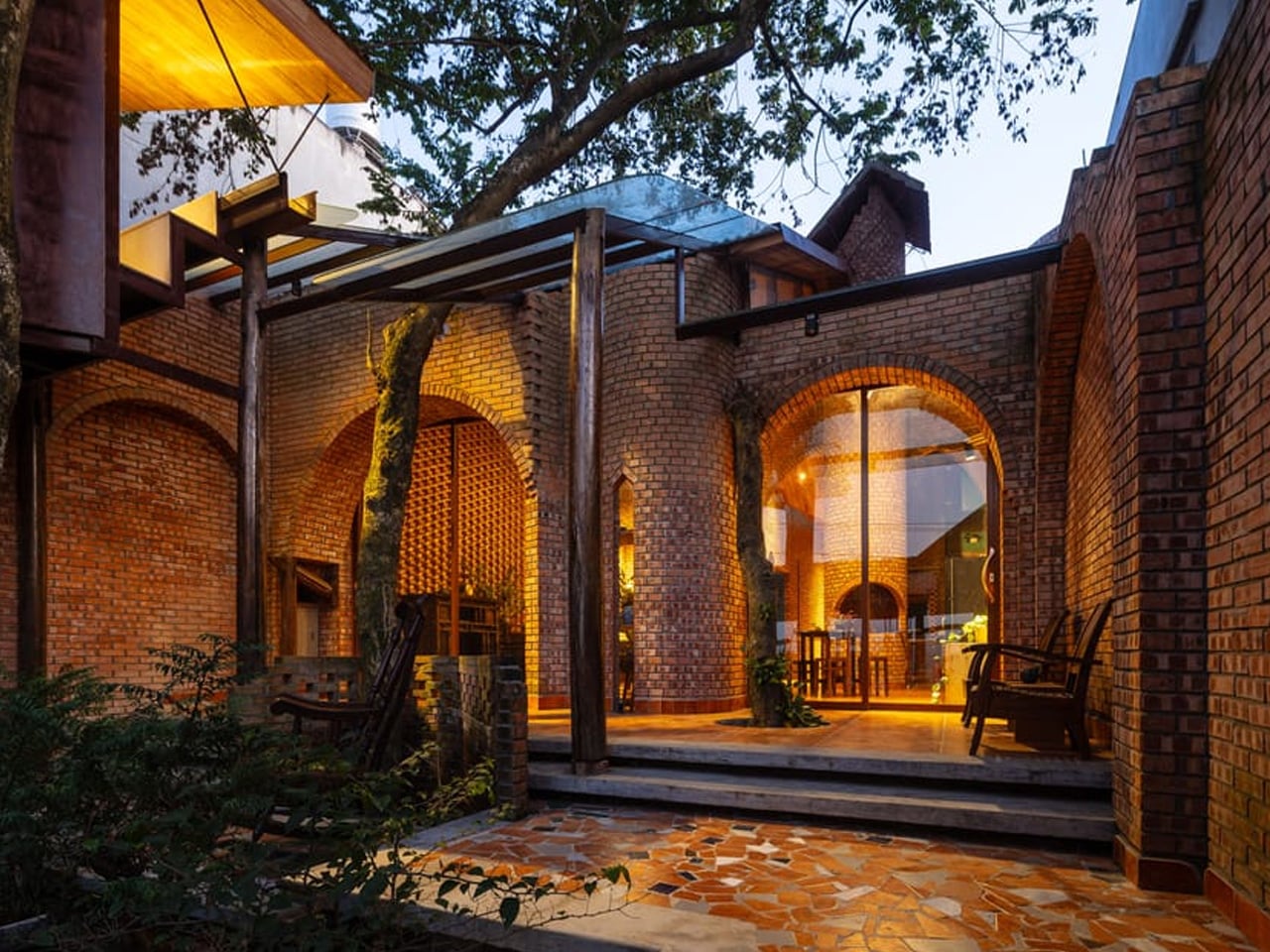
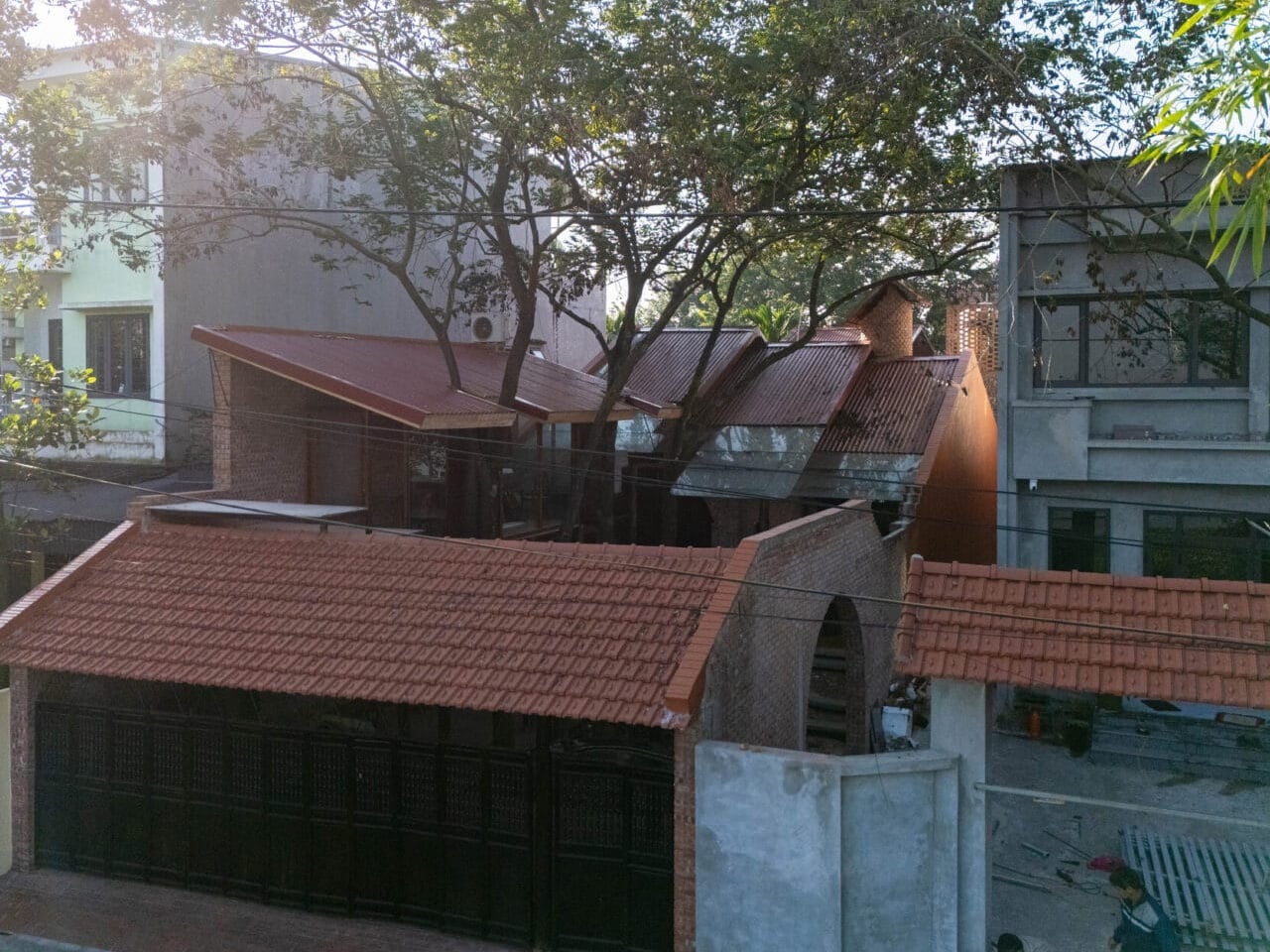
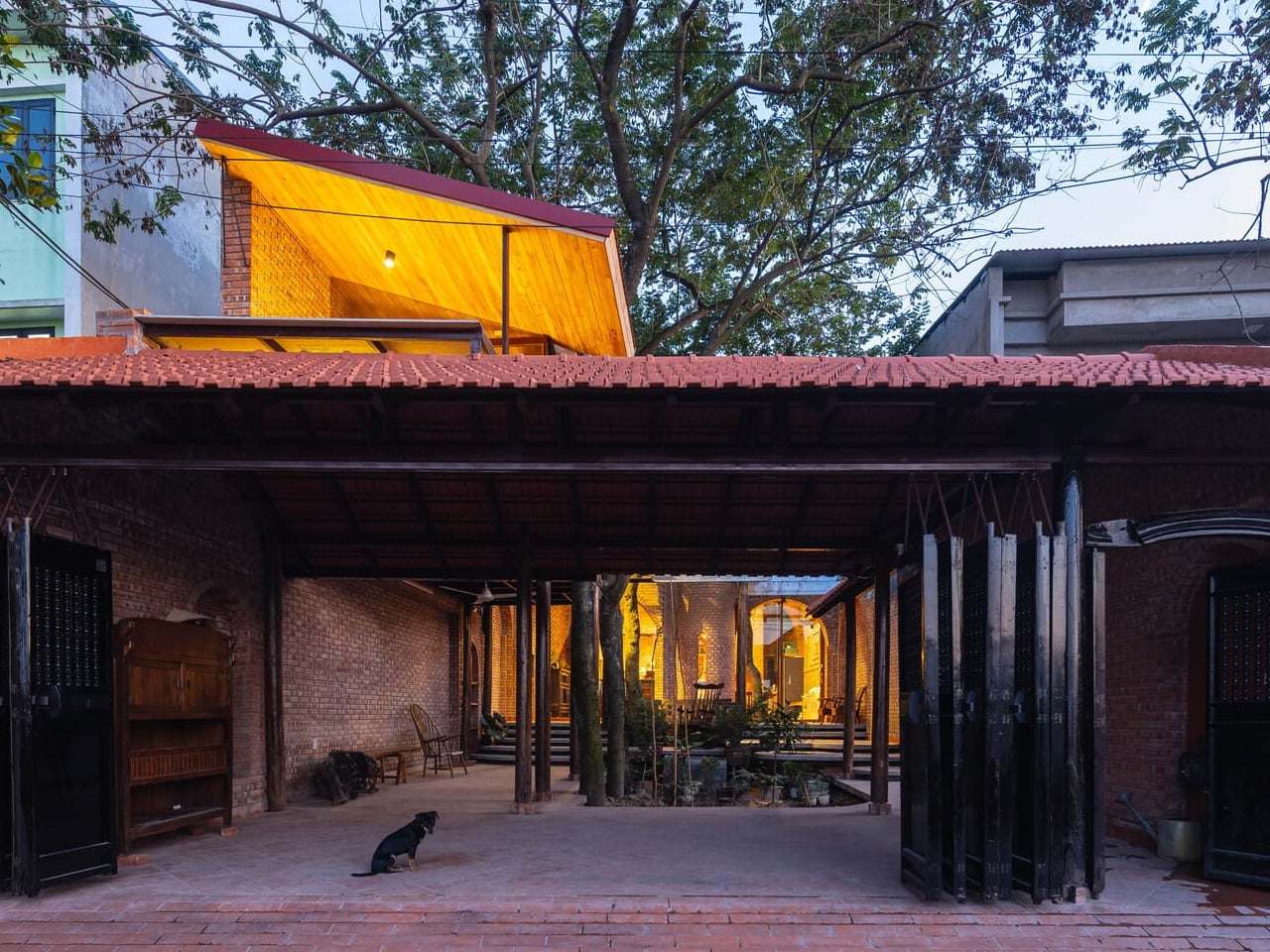
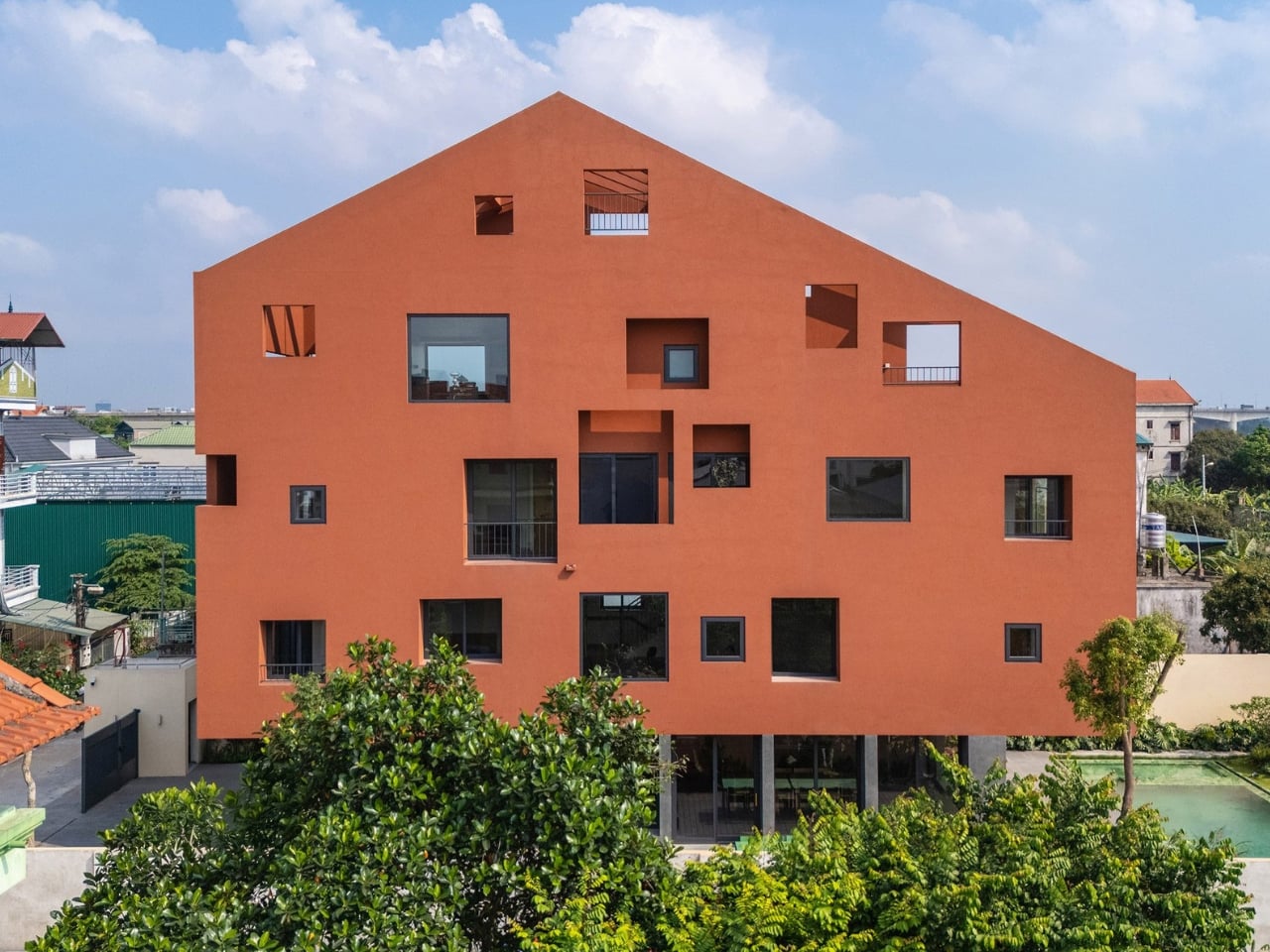
Designed by Hanoi-based architecture practice Inrestudio, this multi-generational home is wrapped in a terracotta-toned, double-layered exterior punctured by irregularly placed, mismatched openings. The windows aren’t uniform. They don’t line up in neat rows or follow a rational grid. They appear across the facade like a scatter of thoughts, some large, some small, some square, some elongated, placed with an intention that reveals itself slowly the longer you look. It’s controlled disorder, the kind that only happens when someone has thought very carefully about where chaos is allowed to go.
Designer: Inrestudio
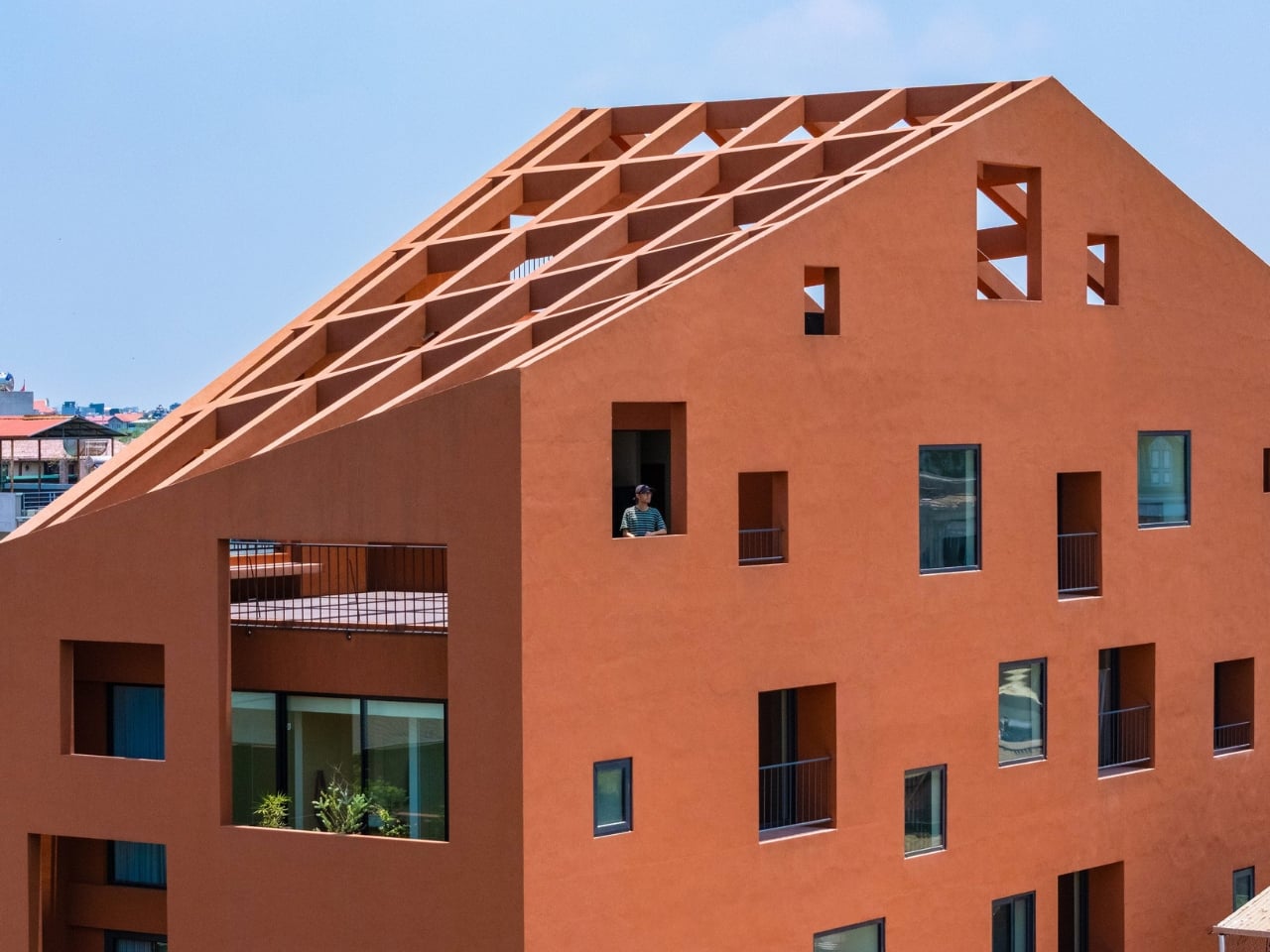
The project sits within one of Vietnam’s most distinctive and genuinely challenging housing typologies: the tube house. These long, narrow urban homes are a product of Hanoi’s history, born from a time when property taxes were levied on street frontage, pushing families to build deep and vertical rather than wide. The tube house is, by nature, a compromise. You work with what the city gives you. What Inrestudio does here is refuse to let that constraint become a ceiling.
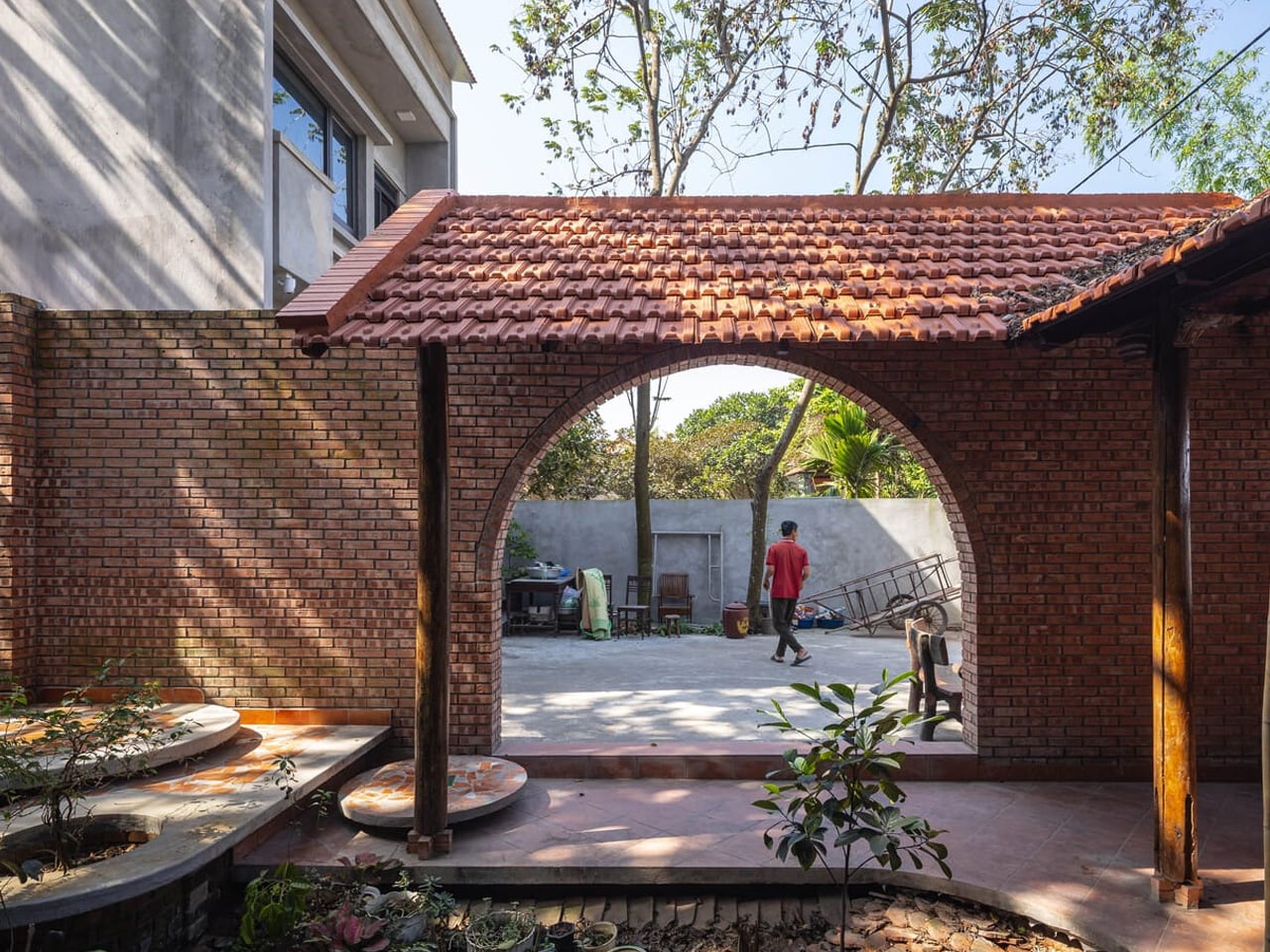
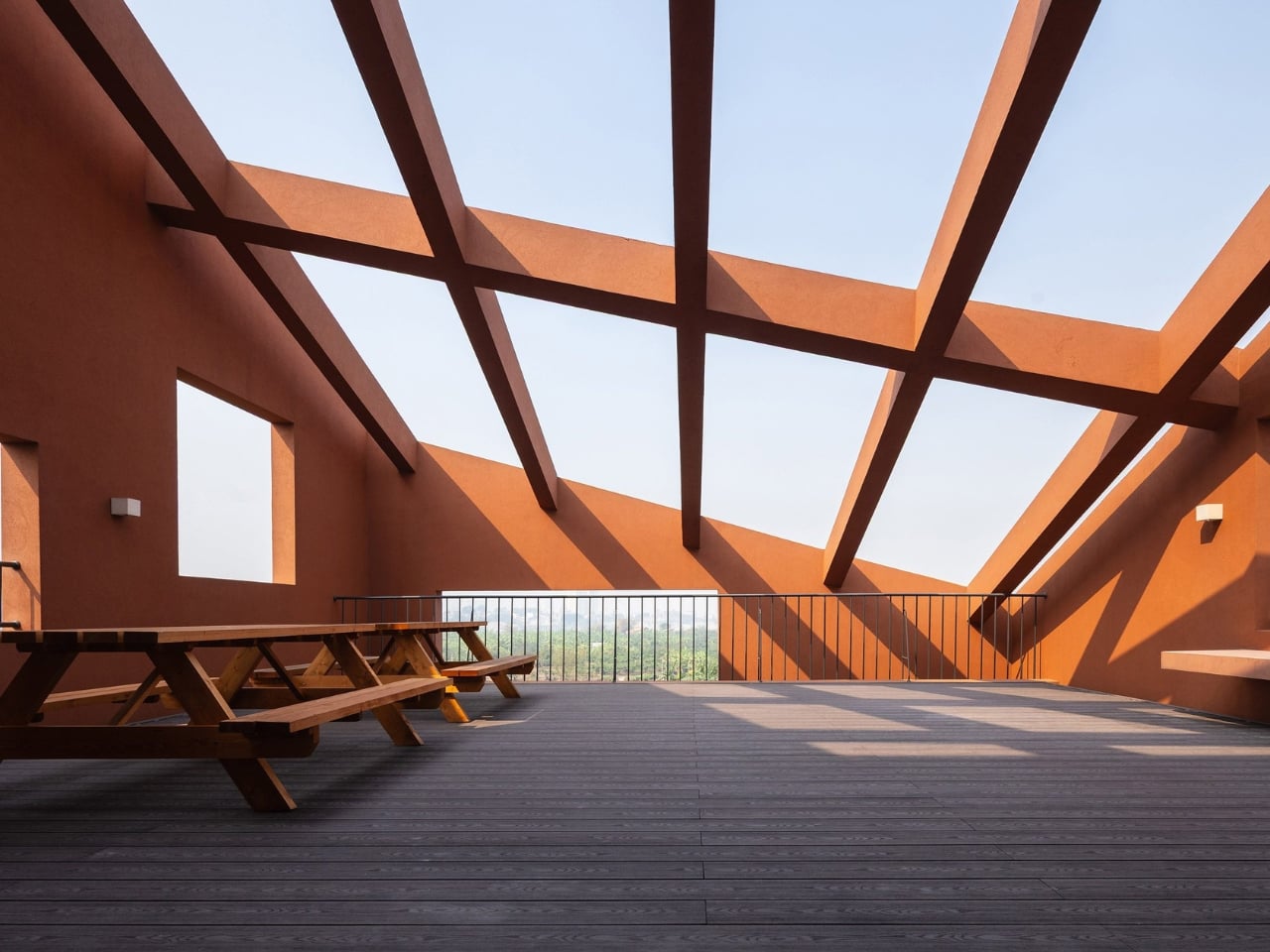
The double-layered envelope is the key move. By wrapping the home in two skins instead of one, the architects create what they call “in-between spaces,” zones that exist between the inner living areas and the outer facade. These aren’t wasted margins or dead air. They’re transitional, purposeful areas where the house breathes, where light filters and shifts through the day, where the rigid boundary between inside and outside softens into something more generous. It’s the kind of spatial thinking that doesn’t photograph easily but completely transforms the experience of actually being in a building.
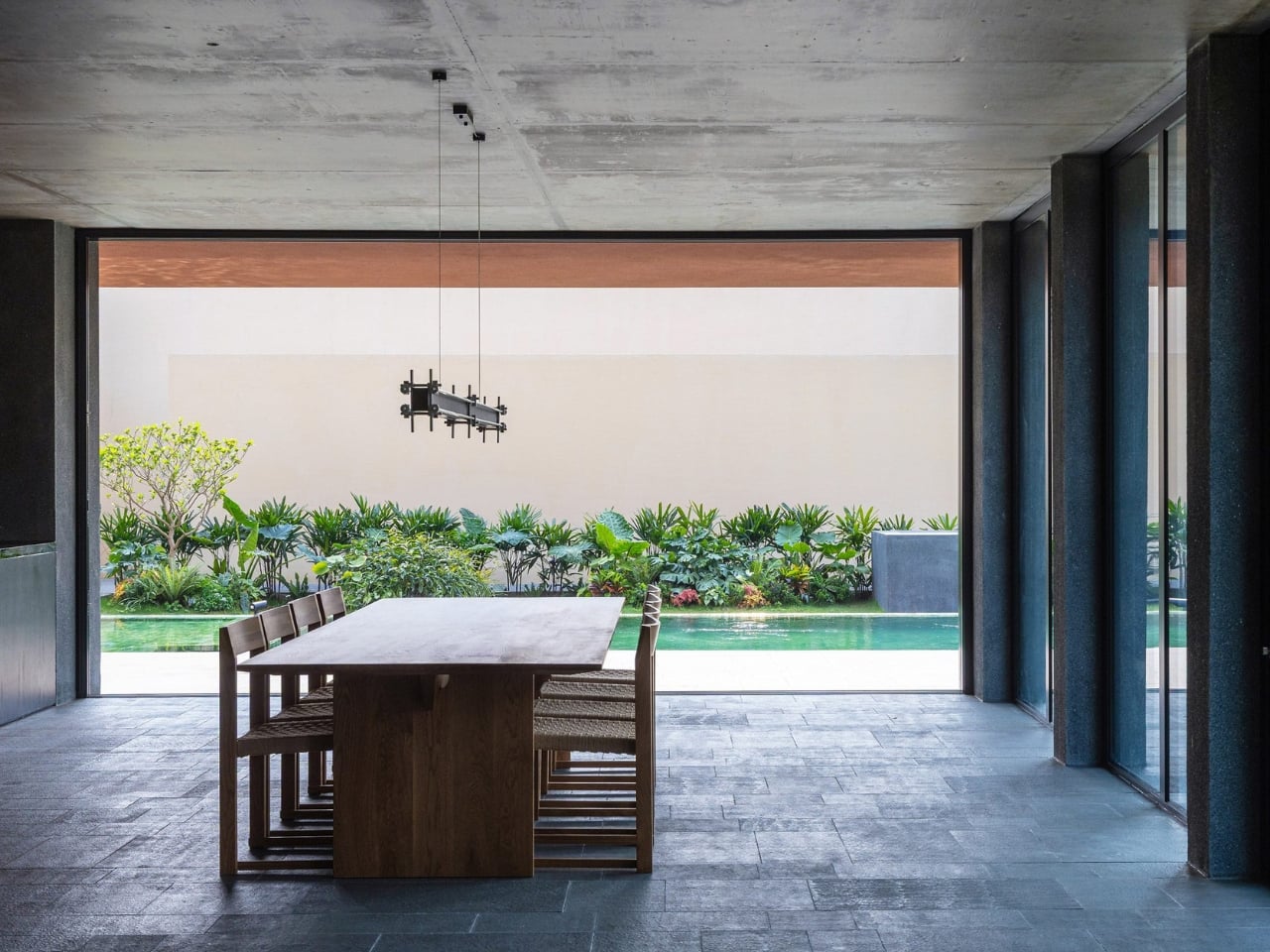
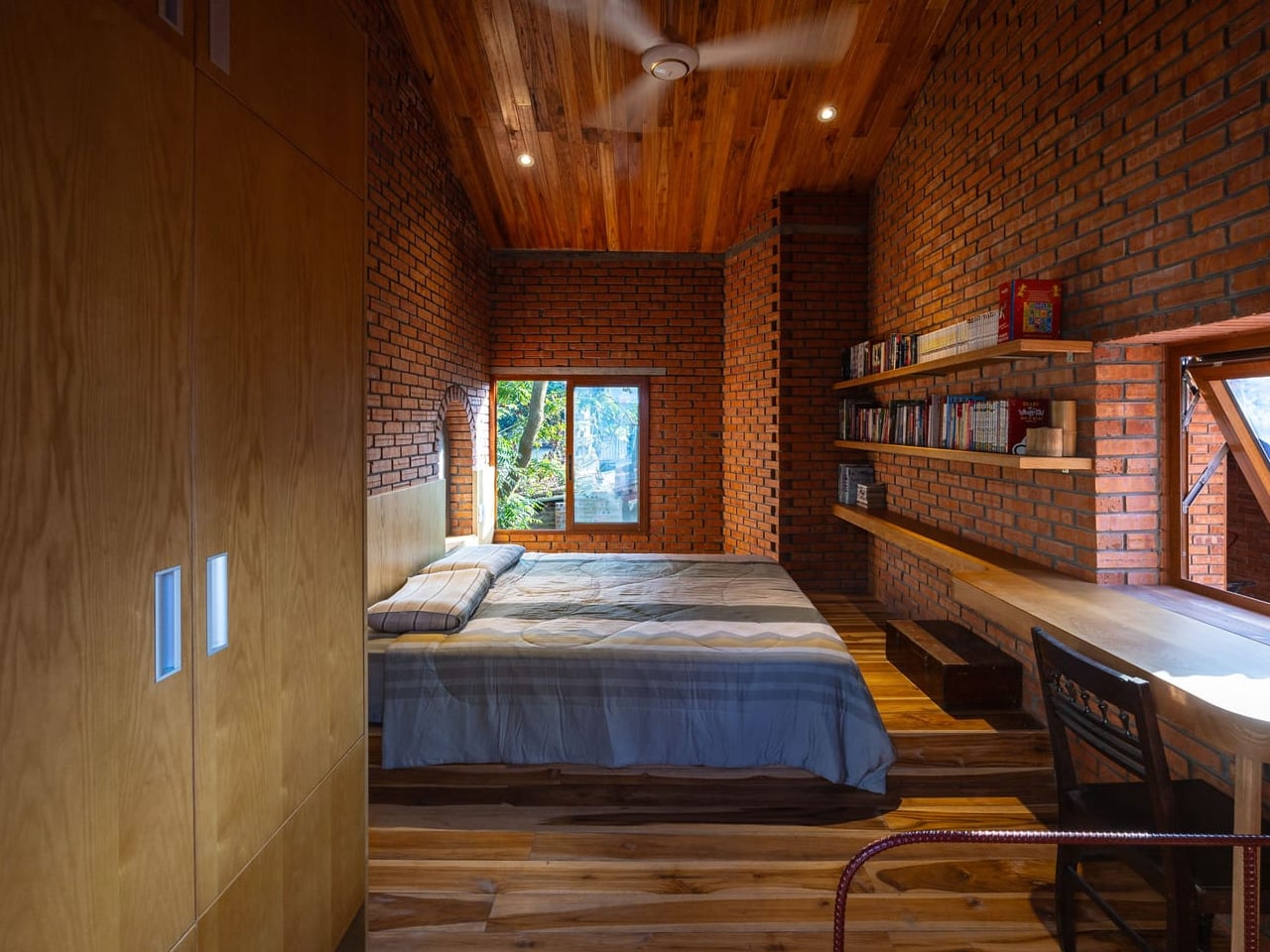
This matters especially because 100 Windows was designed for multiple generations living under one roof, a reality that remains far more common in Vietnam than it does in most Western countries. Designing for multi-generational life is genuinely hard. You’re negotiating different rhythms, different needs for privacy and togetherness, different relationships to noise, light, and air. Architecture that understands this doesn’t just divide a floor plan into labeled rooms. It creates conditions where people can be near each other without being on top of each other, where the house itself does some of the social negotiating.
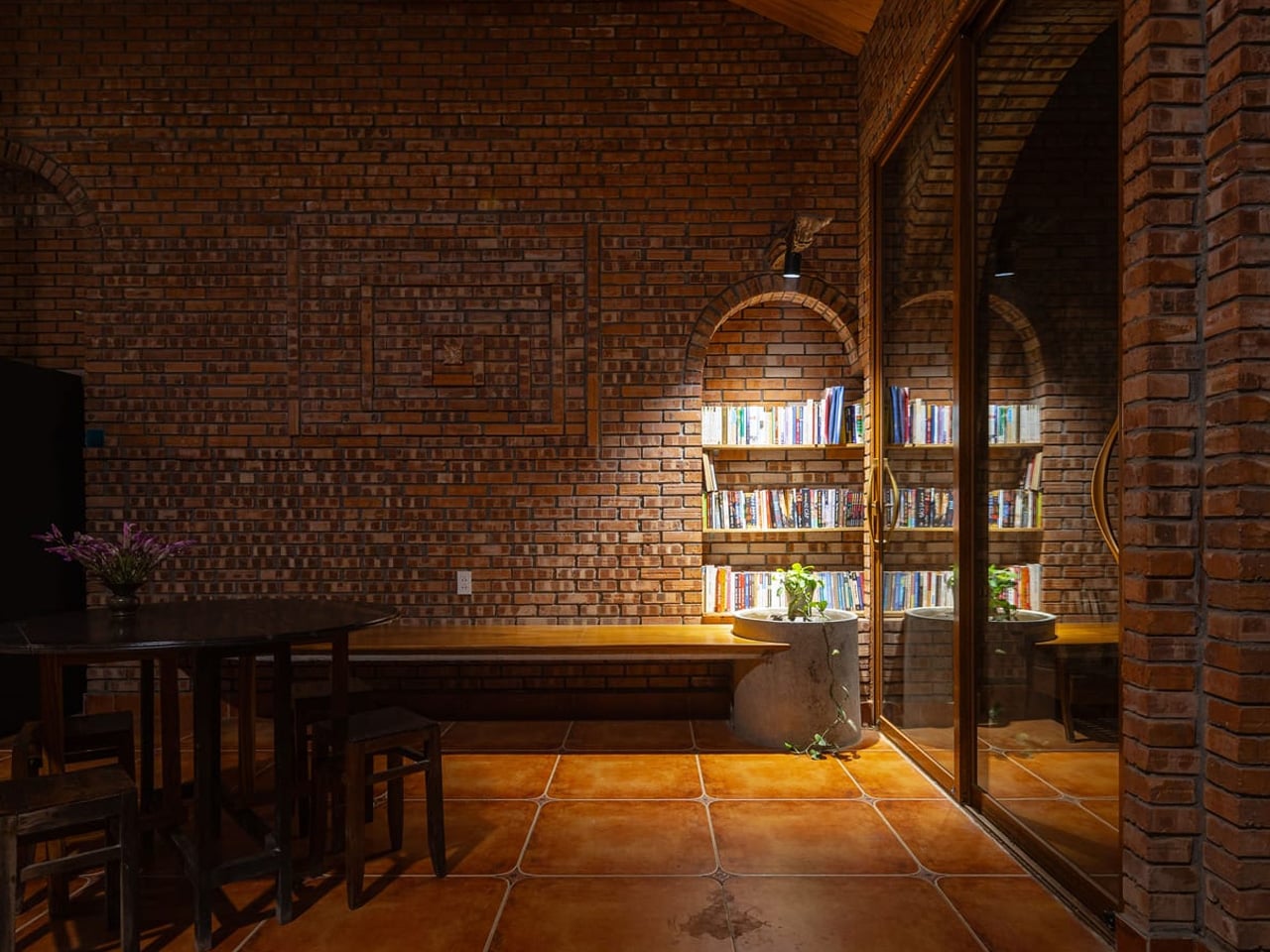
The terracotta tones feel right for this, too. The palette connects the building to its climate, to the warmth and humidity of Hanoi, to the earth tones of traditional Vietnamese buildings without becoming a costume or a nostalgia piece. It reads as contemporary without trying to distance itself from its own context, which is a balance a lot of architecture gets wrong in either direction.
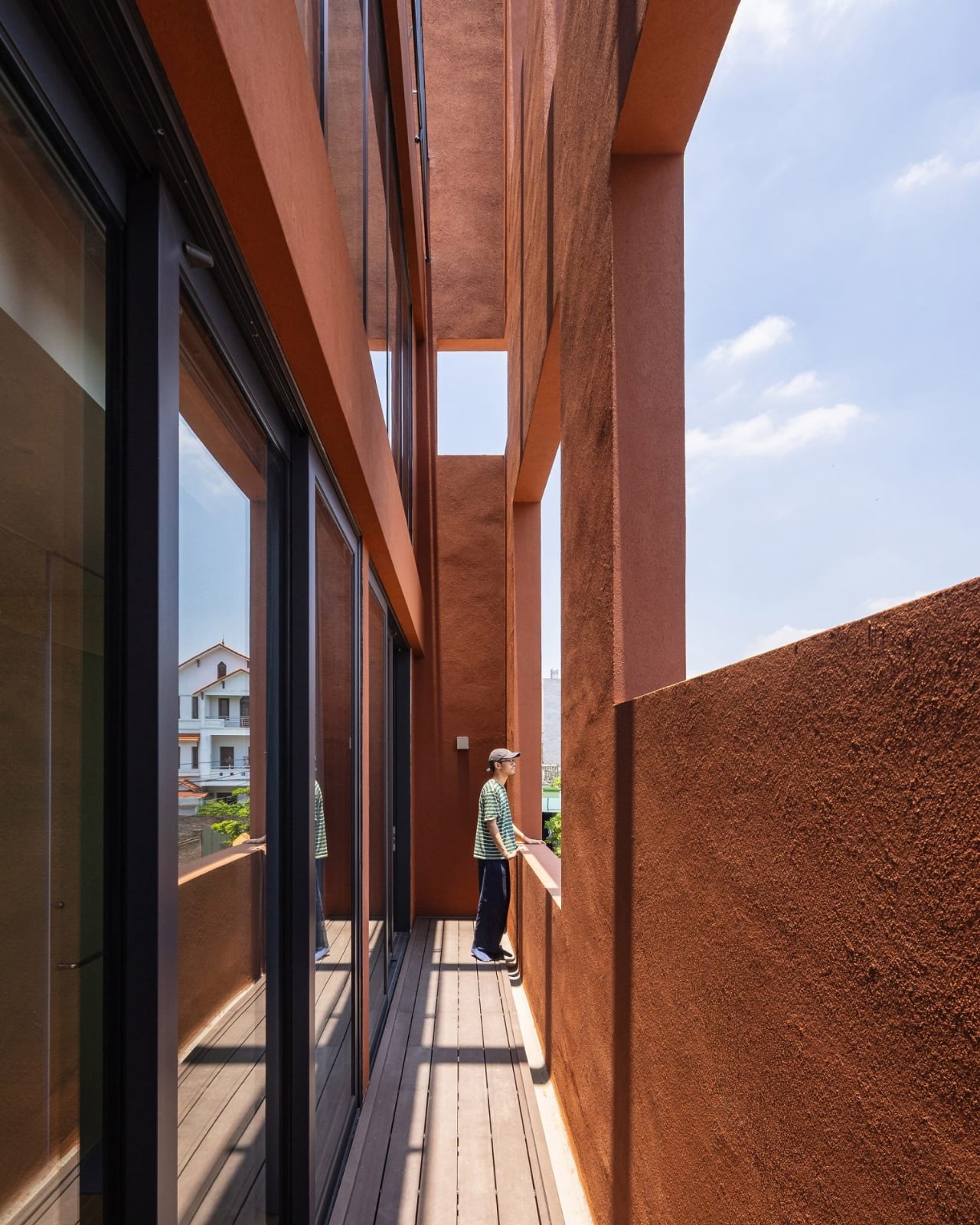
What you take away from 100 Windows isn’t really about the windows, or at least not literally. It’s about the idea that a constraint, whether it’s a narrow plot, a shared family life, or a hundred openings that need to somehow feel cohesive, can become the source of design rather than the obstacle to it. The windows are a by-product of a layered system, not a stylistic decision made in isolation. That’s what earns it attention beyond the aesthetic.
Architecture like this tends to get filed under “interesting regional work” and not looked at as broadly as it deserves. But the conversation 100 Windows is having about density, family, and what a facade actually owes its inhabitants is one that any city grappling with urban housing should be paying attention to. It’s not proposing a universal solution. It’s doing something more useful: showing what happens when designers take the specific conditions of a place seriously enough to build something genuinely shaped by them. The result is a house that looks singular because it is.
The post The Hanoi House With 100 Windows and No Two the Same first appeared on Yanko Design.