Paramount agrees to buy Warner Bros. Discovery, pays Netflix $2.8 billion for breakup

Paramount Skydance and Warner Bros. Discovery are officially merging. The studio paid Netflix the $2.8 billion termination fee it was owed for breaking its original deal to buy Warner Bros. earlier today, and the historic film studio has now formally accepted Paramount’s offer.

Along with the deal, which values Warner Bros. Discovery at $31 per share, Paramount is making several commitments to assuage the fears of regulators and the entertainment community. Those include a guarantee that the new company will produce 30 theatrical films annually, that theatrical releases will have a minimum 45-day window in theaters before they’re brought to video on demand (something Netflix ultimately also agreed to) and that deal itself will close by Q3 2026.

This turnaround in Paramount's fortunes has happened quickly. Warner Bros. Discovery announced that Paramount's offer was superior to Netflix's on Thursday, and not long after the streaming service said that it wouldn't provide a counter offer, effectively abandoning its previous agreement.

Ultimately, Netflix and Paramount were vying for different parts of Warner Bros. Disocvery. Netflix was primarily interested in Warner Bros. proper, while Paramount Skydance wanted the whole company, cable networks and all. Either deal would need to be approved by regulators, which is the hurdle Paramount and Warner Bros. Discovery face now. The general assumption has been that the close relationship Paramount CEO David Ellison and his billionaire father Larry Ellison have with the Trump administration would smooth over any issues, but the deal will receive scrutiny abroad and likely also at the state level, based on a recent post from California Attorney General Rob Bonta.

Paramount Skydance has proven its willingness to comply with President Donald Trump, but delays in closing the deal could be costly. The company is on the hook to pay Warner Bros. Discovery "a daily ticking fee equal to $0.25 per share per quarter beginning after September 30, 2026." The company also has to pay $7 billion to Warner Bros. Discovery if the deal is terminated for regulatory reasons. Netflix lost the battle for Warner Bros. Discovery, but getting a competitor to potentially overpay for the studio might be its own reward.

This article originally appeared on Engadget at https://www.engadget.com/entertainment/paramount-agrees-to-buy-warner-bros-discovery-pays-netflix-28-billion-for-breakup-215936514.html?src=rss

The PS5 Pro is getting upgraded upscaling tech in March

After suggesting a version of AMD's FSR 4 could be ported to the PS5 Pro last year, it looks like Sony is finally rolling out an update with the upscaling tech in March. Mark Cerny, the lead architect of the PS4, PS5 and PS5 Pro, shared via a blog post that the PS5 Pro will be updated with a new version of the company's PSSR (PlayStation Spectral Super Resolution) upscaling tech next month, and Resident Evil Requiem is one of the first games to use it.

PSSR is "an AI library that analyzes game images pixel by pixel as it upscales them," Cerny says, which boosts the visual fidelity of games on the PS5 Pro, while running them at a less demanding resolution. The upgraded version of PSSR "takes a very different approach to not only the neural network but also the overall algorithm," and is now able to keep both framerate and image quality high when it's enabled.

Cerny's blog post includes comparison images if you're curious about the visual differences the new PSSR is able to achieve. Masaru Ijuin, a Senior Manager from Capcom's Engine Development Support Section R&D Foundational Technology Department, also provided comments on how the new upscaling tech improves Resident Evil Requiem:

With Resident Evil Requiem, we focused on enhancing the presentation quality of the protagonist through an upgraded version of RE Engine to deepen the player’s immersion in horror. For example, each individual strand of hair and beard is rendered as a polygon, allowing it to move realistically in response to body motion and wind. The way light passes through his hair changes depending on how the strands of hair are overlapped as well. This detailed expression of texture is one of the many details that we would especially love for our fans to see.

The upgraded PSSR has allowed us to elevate our expressiveness by successfully processing these details and textural particularities, which are traditionally difficult to upscale because of their intricacy. We hope you will experience this unprecedented level of horror and visual fidelity, and the new gameplay feel it delivers.

Sony and AMD formally announced "Project Amethyst," their collaboration to develop machine-learning technology to improve graphics and gameplay, in 2024. The partnership has already benefitted both companies: Cerny says Sony contributed to the development of AMD's FSR 4 and similar improvements are now trickling back to the PS5 Pro. Both companies' plans to improve everything from upscaling performance to energy efficiency could also pay further dividends in future consoles and GPUs. 

The new toggle for the upgraded version of PSSR that's coming to PS5 Pro consoles.
Sony Interactive Entertainment

The upgraded PSSR will roll out to PS5 Pro owners as part of a software update in March, and will be able to be toggled on and off in the console's settings, according to Cerny. Around the same time, multiple PS5 games are also supposed to be updated to support the upscaling tech. While the graphical improvements are still incremental over a normal PS5, the fact that Sony's still squeezing more performance out of its console should at least be reassuring to anyone who spent $700 (or now $750) on a PS5 Pro.

This article originally appeared on Engadget at https://www.engadget.com/gaming/playstation/the-ps5-pro-is-getting-upgraded-upscaling-tech-in-march-200105816.html?src=rss

iFi’s new GO Link 2 DAC is a cheap way to reap the lossless benefits of your Spotify plan

Audio company iFi just introduced a new DAC (digital-to-analogue converter) that's both smaller and lighter than its previous model, and only costs $59. The iFi GO Link 2 connects to a smartphone or other audio-playing device over USB-C and can instantly improve the listening experience on wired headphones.

Wireless earbuds and music streaming services have normalized listening to your favorite songs at a lower quality. For anyone who doesn't consider themselves an audiophile, that might not matter, but now that several streaming services offer higher sample rates and lossless audio, you might consider other ways of listening. In order to experience all the benefits of high-res or lossless audio, you need wired headphones, something that's increasingly difficult when most smartphones only have a USB-C port. That's where the iFi GO Link 2 comes in. The dongle plugs into a USB-C port and lets you connect a pair of wired earbuds while preserving your high quality audio at the same time.

An iFi GO Link 2 DAC laid flat on a white background.
iFi

iFi's new DAC is eight percent smaller than the previous GO Link and 29 percent lighter, approaching the size of Apple's USB-C to 3.5mm Headphone Jack dongle. The GO Link 2's built-in ESS Sabre DAC chipset is supposed to add "6dB of dynamic range between the loudest and quietest moments" and reduce distortion for clearer sound by up to 62 percent when compared to the original GO Link.

Via iFi's companion Nexis app on Android, the GO Link 2 can also be updated on the go and further customized with digital filters. The GO Link 2 supports two digital filters — one hybrid and one linear — so that you can adjust things to your preferred sound profile. You can also use the Nexis app to set volume limits when you're listening with the DAC attached.

The previous GO Link made it on Engadget's list of the best DACs for Apple Music Lossless, and at the same price, the GO Link 2 seems like it could, too. The iFi GO Link 2 is available to purchase now for $59.

This article originally appeared on Engadget at https://www.engadget.com/audio/ifis-new-go-link-2-dac-is-a-cheap-way-to-reap-the-lossless-benefits-of-your-spotify-plan-231535369.html?src=rss

Guitar Hero vets RedOctane reveal their new music game

RedOctane Games, a relaunched version of one of the studios behind the very first Guitar Hero, has shared a first trailer for its new music game, Stage Tour. The original RedOctane was shut down by Activision in 2010, and only recently reformed under Embracer Freemode to create a new music game franchise in August 2025.

Stage Tour is playable solo or with other players in a band, according to RedOctane, and supports inputs from a keyboard and mouse on top of the expected guitar, drums and microphone accessories. The studio plans to primarily offer the game digitally, but hopes to also sell a bundle with a guitar controller and a download code because "that just feels right." As far as ongoing support goes, whereas games like Guitar Hero or Rock Band included a set tracklist and support for song DLC, it sounds like RedOctane could be taking an approach more inspired by Epic's regular updates to Fortnite. "The plan is regular special events that are more than just music drops," RedOctane writes. "Real moments. Real themes. Real updates. We want to evolve the game alongside the fans who support it. Improve it. Expand it. Keep it alive." 

RedOctane and Harmonix created the first Guitar Hero in 2006, before RedOctane was acquired by Activision to continue the franchise in 2006, and Harmonix went on to start the Rock Band series. Development of Stage Tour is currently being led by RedOctane, with Eidos Montréal helping with motion capture and QA, and Third Kind Games providing additional development support. Conveniently, RedOctane’s owner Embracer Freemode also already owns CRKD, a video game accessory maker that has experience building controllers for rhythm games.

Sign-ups to play an alpha of Stage Tour will open soon, and RedOctane plans to "kick off closed alpha testing late spring/early summer." We're long past the peak popularity of games like Guitar Hero, but rhythm and music games never went away. Players have had Clone Hero and more official experiences like Fortnite Festival to get their Guitar Hero or Rock Band fix, but Stage Tour could be a more than welcome third option when it launches later this year.

This article originally appeared on Engadget at https://www.engadget.com/gaming/guitar-hero-vets-redoctane-reveal-their-new-music-game-220809719.html?src=rss

An AI-generated Resident Evil Requiem review briefly made it on Metacritic

Review aggregator Metacritic has removed a review of Resident Evil Requiem because it was AI-generated, Kotaku reports. The review was published by UK gaming site VideoGamer, but appears to be "written" by a fake AI journalist rather than a real person.

While it's unfortunately difficult to confirm with 100 percent accuracy whether a piece of text is AI-generated, you don't have to read VideoGamer's review for long to notice all the ways it feels off. The biggest giveaway, beyond heavy use of contrived metaphors, is a striking lack of detail beyond what you could glean from a trailer for the game. Embargoes covering what parts of a video game can come up in a pre-release review can be strict, but a good critic usually finds a way to describe their experience without being vague. VideoGamer's review, written by one "Brian Merrygold," really doesn't.

As at least one user on X has pointed out, it’s worth` being suspicious of Merrygold, too. The author's profile on VideoGamer is just as awkwardly written as the review, and the profile picture of the account appears to be AI-generated. When you try to save the image locally, its file name, "ChatGPT-Image-Oct-20-2025-11_57_34-AM-300x300," also seems like a dead giveaway. Kotaku looked at the X accounts of several other recent bylines at VideoGamer and found similar results. All their profile pictures appear to be AI-generated, and all the accounts were created around the same time in October 2025.

Metacritic relies on reviews written by real publications to create a score representing the overall critical sentiment towards a game or movie, not unlike Rotten Tomatoes. While there's disagreement whether it's a good thing that a popular site strips out the nuance of written reviews to make a number people can argue over, everyone can probably agree that Metacritic incorporating fake, AI-generated reviews is a bad idea.

In response to the discovery that VideoGamer's review is likely AI-generated, Metacritic has removed it from its Resident Evil Requiem page. "The RE Requiem review and a handful of other VideoGamer reviews from 2026 have been removed from Metacritic,” Marc Doyle, Metacritic's co-founder, told Kotaku. Metacritic has also emailed all games sites and publishers that it aggregates with information on its policy towards AI-generated reviews, according to Alex Donaldson, founder and publisher of RPG Site.

A Bluesky post from Alex Donaldson sharing Metacritic's email to publishers on how it will handle AI-generated reviews.
Alex Donaldson

“Our policy is that we will never include an AI-generated review on Metacritic,” the aggregator says, “and that if we subsequently discover that one has been posted we will remove it immediately and sever ties with that publication upon an investigation.”

A news site publishing an AI-written review is just as dire as Metacritic aggregating it, and that appears to be what VideoGamer is doing. ClickOut Media, the company that owns VideoGamer and a collection of other publications, reportedly laid off the staff of its gaming sites earlier this month to pivot to AI-generated content. Sifting through AI slop, whether on social media or Pinterest, is increasingly necessary online. Now apparently Metacritic is another place where readers should have their guard up.

Update, February 26, 2:58PM ET: Added information about Metacritic’s email to publishers on its policy for AI-generated reviews.

This article originally appeared on Engadget at https://www.engadget.com/ai/an-ai-generated-resident-evil-requiem-review-briefly-made-it-on-metacritic-194414929.html?src=rss

Skate’s developer is laying off staff before the game leaves early access

Full Circle, the developer behind the new Skate game, has announced that it is restructuring and laying off staff. It's not yet clear how many roles will be impacted by the changes, but the restructuring is happening less than six months after skate. launched in early access on September 15, 2025.

"We’re reshaping Full Circle to better support skate.’s long-term future," Full Circle says. "These shifts mean making changes to our team structure, and some roles will be impacted. The teammates affected are talented colleagues and friends who helped build the foundation of skate. Their creativity and dedication are deeply ingrained in what players experience today. This decision is not a reflection of their impact and we’re committed to supporting them through this transition."

Engadget has contacted Full Circle's owner EA for more information about the layoffs. We'll update this article if we hear back.

EA originally formed Full Circle in 2021 with a staff of development talent from the original Skate team. Skate was often positioned as a more realistic competitor to the Tony Hawk's Pro Skater series, but the new studio has ultimately taken the franchise in a slightly different direction than fans may have expected. Previous Skate games were paid experiences with single-player and multiplayer modes, while skate. is a free-to-play live-service game supported with microtransactions.

Recent history, both the failure of Concord and the ongoing struggles of Highguard, serves as a testament to how hard it is to launch a live service game in the 2020s. Full Circle's announcement notes the "tens of millions" of players that have tried the new game, but it's possible a struggle to keep players interested and spending on microtransactions could be why it's restructuring.

This article originally appeared on Engadget at https://www.engadget.com/gaming/skates-developer-is-laying-off-staff-before-the-game-leaves-early-access-220916797.html?src=rss

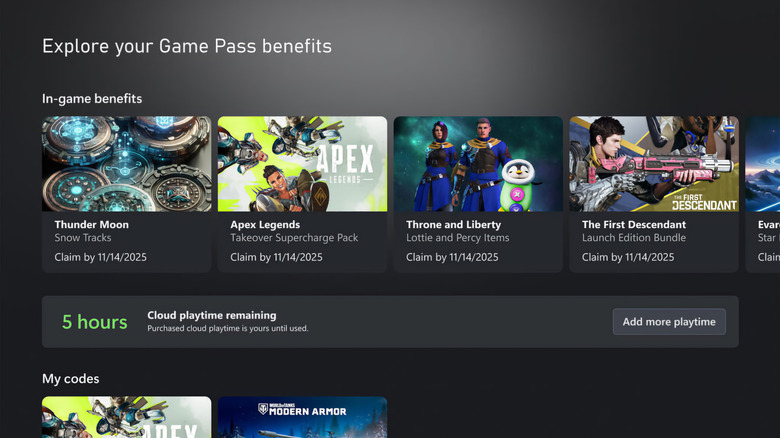
Xbox consoles now support 1440p streaming

Microsoft has announced that its rolling out support for streaming games at 1440p on Xbox consoles. Game streaming is a key benefit of paying for a Game Pass subscription, and as of 2025, now also includes games players own that aren't part of the larger Game Pass library.

The higher bitrate streaming option will let subscribers with an Xbox Series X or S, Xbox One X or Xbox One play their games at a higher resolution, provided the game and their display supports it. Microsoft previously only offered 1440p streams on select Fire TVs, LG TVs, Samsung TVs, web browsers and the Xbox PC app. At least for now, 1440p is only available to Game Pass Ultimate subscribers.

Beyond the new streaming option, Microsoft is also making improvements to the Xbox PC app and the Xbox experience on ROG Xbox Ally handhelds. On PC, the Xbox PC app now includes "navigation sounds" that play when you use the app's interface with a controller. These new sounds are supposed to make controller input feel more responsive and intuitive. On the ASUS ROG Xbox Ally and Xbox Ally X, meanwhile, Microsoft is making it even easier to format removable storage like microSD cards, and updating drivers to improve compatibility on select games.

The last week has been particularly tumultuous for Microsoft's gaming division. Former Microsoft Gaming CEO Phil Spencer announced his retirement on Friday, alongside the appointment of Asha Sharma, the President of Microsoft's CoreAI division, as his replacement. Opinions differ as to whether Sharma's new position will be good or bad for Xbox, but more changes are likely on the way.

This article originally appeared on Engadget at https://www.engadget.com/gaming/xbox/xbox-consoles-now-support-1440p-streaming-204115304.html?src=rss

Kalshi fined a MrBeast editor for insider trading

Kalshi, one of several online prediction markets that have exploded in popularity in the last few years, has suspended one of YouTube MrBeast's video editors for insider trading, NPR reports. Besides being suspended from the platform for two years, Kalshi says the editor will also be required to pay a financial penalty that's five times his initial trade size.

The editor, Artem Kaptur, traded in markets related to YouTube and specifically, MrBeast. Kalshi says his transactions were initially flagged because of his "near-perfect trading success on markets with low odds, which were statistically anomalous." Because trades are public on Kalshi, multiple users also flagged the trades as suspicious. Kalshi learned Kaptur was an employee of MrBeast during its investigation and determined he "likely had access to material non-public information connected to his trading." Perhaps unsurprisingly, trading with insider information violates Kalshi's rules.

Kalshi says that it reported the insider trading to the Commodity Futures Trading Commission (CFTC) and plans to donate the over $20,000 Kaptur has been fined to "a non-profit that provides consumer education on derivatives markets." In a statement provided to NPR, Beast Industries, MrBeast's production company, said it has a zero-tolerance policy for insider trading. "We have a longstanding policy in place against employees using proprietary company information in order to safeguard the highest standards and ethics throughout our organization," Beast Industries said. 

Separately, Kalshi has also suspended and fined a politician who was running to be Governor of California. "In May, our Surveillance Department saw an online video by a candidate for Governor of California that appeared to show him trading on his own candidacy," Kalshi says. "We immediately froze his account and opened an investigation. The candidate was initially cooperative and acknowledged that this violated the exchange rules. As a candidate in a race, you can (and probably should) follow and use Kalshi’s market forecast, but you should not trade on it."

Like other prediction markets, Kalshi lets users make trades based on a variety of different subjects and events. For example, you could participate in a market focused on the results of a basketball game, or something more unusual, like who'll win the current season of Survivor. Despite resembling gambling, online predictive markets aren't currently regulated by state gambling laws, and instead classify bets as a type of futures contract, placing them under the purview of the CFTC. That hasn't stopped states from trying to regulate prediction markets anyway. For example, Nevada sued Kalshi for operating a sports gambling market without a permit earlier in February.

This article originally appeared on Engadget at https://www.engadget.com/big-tech/kalshi-fined-a-mrbeast-editor-for-insider-trading-191027814.html?src=rss

Samsung’s Galaxy S26 Ultra offers a subtle set of hardware improvements

Samsung has announced the latest version of its flagship smartphone, the Samsung Galaxy S26 Ultra, and just like last year, the high-end phone is where the company is making some of its biggest changes. The S26 Ultra includes a new processor, a new privacy-focused display technology, an improved camera system and like Samsung's other phones, a crop of new AI-powered software features.

On first blush, the Galaxy S26 Ultra isn't all that different from the Galaxy S25 Ultra. Samsung is still using a 6.9-inch QHD+ AMOLED screen, with an 120Hz refresh rate and support for an S Pen stylus. The S26 Ultra also features the same flat sides, utter lack of Qi2-compatible magnets and pronounced camera bump. Despite those similarities, the new flagship does have some differences: for one, it's ever so slightly thinner at  0.31-inches than the S25 Ultra was at 0.32-inches. It also comes with an aluminum frame rather than the titanium frame of the previous generation. For stylus fans, the new S Pen has a curved top that lets it better match the curves of the S26 Ultra. Biggest of all, Samsung's new phone includes "Privacy Display," a new technology that lets the phone limit how much of its screen is visible when you're not looking directly at it.

The bottom ports and stylus slot on a Galaxy S26 Ultra.
Sam Rutherford for Engadget

Inside, the Galaxy S26 Ultra uses Qualcomm's new Snapdragon 8 Elite Gen 5 for Galaxy chip, a modified version of the flagship mobile chip it debuted last year, and either 12 or 16GB of RAM. In terms of storage, the Galaxy S26 Ultra can come with either 256GB, 512GB or 1TB of memory. Regardless of which version you pick, you'll get a 5,000mAh battery with support for Samsung's wired and wireless fast charging, and Wireless PowerShare for topping up accessories like wireless earbuds.

The Galaxy S26 Ultra, just like the S25 Ultra before it, includes an array of four cameras on the back and one selfie camera on the front. The phone features a 200MP f/1.4 wide, 50MP f/1.9 ultra-wide, 10MP f/2.4 3x telephoto, 50MP f/2.9 periscope telephoto and 12MP f/2.2 selfie camera. If you were to just look at just the megapixel counts of the phone, they're identical to last year's model. Samsung's major tweaks are to the aperture of both the wide and periscope cameras, which should let them capture more light.

The four main colors of the Galaxy S26 Ultra: Sky Blue, Black, Cobalt Violet and White.
Sam Rutherford for Engadget

Of course, plenty of the flashiest parts of Samsung's new smartphone are software features. The improved photo and video performances of the Galaxy S26 Ultra's cameras is partially driven by software tweaks. Samsung is also adopting Perplexity as a second, system-level AI assistant. The AI can be called with a button press or "Hey Plex," powers improvements to Bixby and can act inside Samsung apps. That doesn't mean Gemini isn't still available, though. Google's AI will gain the ability to handle things like booking a rideshare or filling an online grocery cart in the background on the Galaxy S26 Ultra.

The Galaxy S26 Ultra starts at $1,300 and is available to pre-order today in a purple-ish "Cobalt Violet," light blue "Sky Blue," black, white and exclusively through Samsung's online store, "Silver Shadow" and "Pink Gold." The phone will become generally available on March 11.

This article originally appeared on Engadget at https://www.engadget.com/mobile/smartphones/samsungs-galaxy-s26-ultra-offers-a-subtle-set-of-hardware-improvements-180000725.html?src=rss

Apple’s touchscreen MacBook will reportedly have a dynamic interface

Apple's plan to add touchscreens to its premium MacBook Pros is coming into focus. Bloomberg reports that when the new laptops launch this fall, they'll feature a Dynamic Island, not unlike Apple's iPhones, and an interface that changes depending on where you touch your Macbook's screen.

This "dynamic interface" is reportedly designed to make the transition between mouse input and touch input smoother on Apple's new laptops. Bloomberg says that if users touch an onscreen button, the version of macOS running on these new MacBook Pros will be able to pull up a contextual menu "that provides more relevant options for touch commands." Parts of the interface, like macOS' menu bar, will also be able to enlarge to make menu items easier to select with a finger. Those tweaks are on top of the expected features from touchscreen Apple products, like smooth scrolling and the ability to pinch and zoom into and out of images, files and web pages. The only thing missing from these increasingly iPad-like laptops, per Bloomberg, will be a touchscreen keyboard, because they'll already have a more comfortable physical keyboard attached.

To make these new laptops extra enticing, both the 14-inch and 16-inch touchscreen MacBook Pros will feature OLED screens for the first time, likely the reason Apple will be able to include a Dynamic Island-style webcam in the first place. Up until now, the company has offered OLED screens on its iPhones, Apple Watches and more recently the iPad Pro, but it hasn't brought the display technology to laptops. That could reportedly change with these new MacBook Pros.

Plenty of Windows laptops include touchscreens, and Microsoft and its partners have incorporated dynamic interface elements in the past to make these touchscreens more natural to use with Windows. Apple is late to the party in this respect, but it's also potentially set up to succeed. Much of modern macOS already looks touch-friendly, and Apple's has expended significant effort making it possible to port touch-based iPad apps to macOS and develop applications across platforms. That, paired with the right interface, could make the experience of using a touchscreen MacBook nicer out of the box, even if it doesn't get rid of the awkwardness of reaching over your keyboard to touch a screen.

This article originally appeared on Engadget at https://www.engadget.com/computing/laptops/apples-touchscreen-macbook-will-reportedly-have-a-dynamic-interface-231929456.html?src=rss