
MJ Fraser Just Turned His Childhood Garden Into Living Light

Most lamps get designed around a concept. MJ Fraser designed his around a memory. His Trees From The Garden collection started not with a mood board or a material swatch, but with the actual trees that grew in his childhood garden. He pressed the bark and branches directly into moulds, one section at a time, and the result is a series of lamps that look like they were pulled straight from the forest floor, still carrying the warmth of something lived in.

That personal starting point matters more than it might seem at first. A lot of sustainable design today leans heavily on the idea of nature while keeping a safe aesthetic distance from it. Fraser collapsed that distance entirely. The irregular textures across each piece, the way no two lamps in the series look exactly alike, these aren’t stylistic choices made in a studio. They’re what happens when you let nature do the actual drafting.

Designer Name: MJ Fraser

The material Fraser works with is Worbla, a biodegradable thermoplastic that contains roughly 30 percent waste sawdust. That sawdust detail is worth sitting with for a moment. The material is literally made, in part, from the same kind of organic matter it’s being shaped to resemble. It’s a closed-loop logic that feels almost poetic, and it carries through into the production process as well. Offcuts from fabrication don’t get discarded. They get reheated and folded back into the work as welding material or as internal structural support for the pieces. The heat-activated adhesive properties of the material mean no additional bonding agents are needed, which removes one more synthetic component from the equation. Surfaces are finished with natural mineral paint, keeping the material story clean from start to finish.

All of that restraint shows up in the final objects. These aren’t lamps trying to look rustic, and they’re not performing sustainability for a press release. They carry an honesty that is harder to manufacture than the pieces themselves. Looking at them, you get the sense that Fraser wasn’t chasing recognition for the materials. He just wanted the materials to be right.

I’ll be upfront: I think the design conversation around sustainable materials has grown a little comfortable with congratulating itself. A project announces it uses a bio-based material and that tends to become the whole story. What Fraser is doing here is structurally different. Every decision in the process has a reason, and those reasons loop back into each other. The sawdust in the thermoplastic connects to the trees. The scrap material folds back into the structure. The moulds taken from real bark connect back to the childhood garden where the whole thing began. Nothing in this collection is decorative justification.

The lamps also resist the visual sameness that tends to flatten sustainable design into a single recognizable aesthetic. Because each mould comes from a specific section of a specific tree, each piece in the collection reads differently. The series is unified by process and material, not by uniformity, and that’s a meaningful distinction. It means the collection gets more interesting the more pieces you encounter, rather than feeling like variations on the same idea.

There’s a growing appetite right now for objects with a legible origin, things you can trace back to a source, a decision, a place. Consumers are more skeptical of greenwashing than they’ve ever been, and the visual language of sustainability, the linen textures, the muted tones, the vague nods toward nature, has started to feel hollow when it’s not backed by real process thinking. Trees From The Garden lands as a direct answer to that skepticism, not because Fraser set out to make a statement, but because the work is too specific to be anything other than genuine.

A lamp made from a mould of bark from a childhood garden is, on one level, an incredibly quiet object. On another level, it’s a pretty compelling argument for what design can look like when nostalgia and material rigor are given equal weight.

The post MJ Fraser Just Turned His Childhood Garden Into Living Light first appeared on Yanko Design.

MJ Fraser Just Turned His Childhood Garden Into Living Light

Most lamps get designed around a concept. MJ Fraser designed his around a memory. His Trees From The Garden collection started not with a mood board or a material swatch, but with the actual trees that grew in his childhood garden. He pressed the bark and branches directly into moulds, one section at a time, and the result is a series of lamps that look like they were pulled straight from the forest floor, still carrying the warmth of something lived in.

That personal starting point matters more than it might seem at first. A lot of sustainable design today leans heavily on the idea of nature while keeping a safe aesthetic distance from it. Fraser collapsed that distance entirely. The irregular textures across each piece, the way no two lamps in the series look exactly alike, these aren’t stylistic choices made in a studio. They’re what happens when you let nature do the actual drafting.

Designer Name: MJ Fraser

The material Fraser works with is Worbla, a biodegradable thermoplastic that contains roughly 30 percent waste sawdust. That sawdust detail is worth sitting with for a moment. The material is literally made, in part, from the same kind of organic matter it’s being shaped to resemble. It’s a closed-loop logic that feels almost poetic, and it carries through into the production process as well. Offcuts from fabrication don’t get discarded. They get reheated and folded back into the work as welding material or as internal structural support for the pieces. The heat-activated adhesive properties of the material mean no additional bonding agents are needed, which removes one more synthetic component from the equation. Surfaces are finished with natural mineral paint, keeping the material story clean from start to finish.


All of that restraint shows up in the final objects. These aren’t lamps trying to look rustic, and they’re not performing sustainability for a press release. They carry an honesty that is harder to manufacture than the pieces themselves. Looking at them, you get the sense that Fraser wasn’t chasing recognition for the materials. He just wanted the materials to be right.


I’ll be upfront: I think the design conversation around sustainable materials has grown a little comfortable with congratulating itself. A project announces it uses a bio-based material and that tends to become the whole story. What Fraser is doing here is structurally different. Every decision in the process has a reason, and those reasons loop back into each other. The sawdust in the thermoplastic connects to the trees. The scrap material folds back into the structure. The moulds taken from real bark connect back to the childhood garden where the whole thing began. Nothing in this collection is decorative justification.


The lamps also resist the visual sameness that tends to flatten sustainable design into a single recognizable aesthetic. Because each mould comes from a specific section of a specific tree, each piece in the collection reads differently. The series is unified by process and material, not by uniformity, and that’s a meaningful distinction. It means the collection gets more interesting the more pieces you encounter, rather than feeling like variations on the same idea.


There’s a growing appetite right now for objects with a legible origin, things you can trace back to a source, a decision, a place. Consumers are more skeptical of greenwashing than they’ve ever been, and the visual language of sustainability, the linen textures, the muted tones, the vague nods toward nature, has started to feel hollow when it’s not backed by real process thinking. Trees From The Garden lands as a direct answer to that skepticism, not because Fraser set out to make a statement, but because the work is too specific to be anything other than genuine.


A lamp made from a mould of bark from a childhood garden is, on one level, an incredibly quiet object. On another level, it’s a pretty compelling argument for what design can look like when nostalgia and material rigor are given equal weight.

The post MJ Fraser Just Turned His Childhood Garden Into Living Light first appeared on Yanko Design.
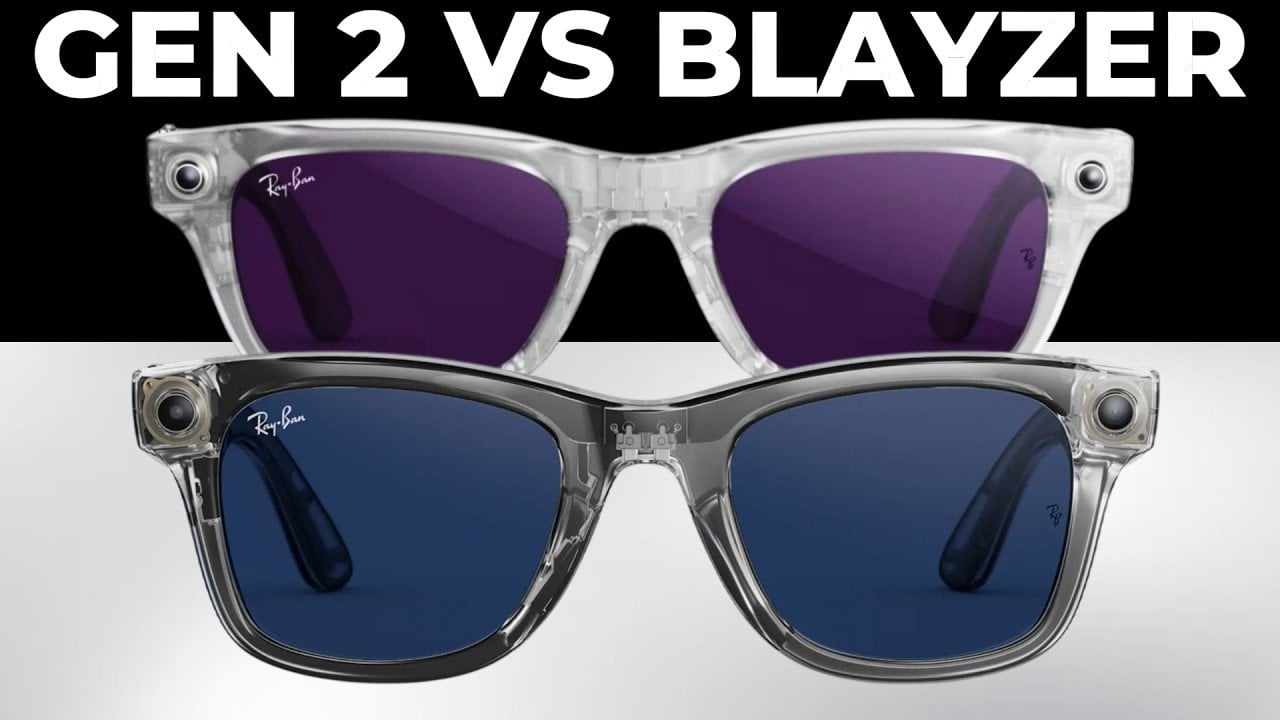

Ray-Ban Meta Blazer vs Gen 2: Is the $499 Upgrade Actually Worth It?

Ray-Ban Meta Blazer vs Gen 2: Is the $499 Upgrade Actually Worth It? Transparent frame option for the Ray-Ban Meta Blayzer smart glasses

Ray-Ban’s latest smart glasses, the Meta Blayzer, bring notable refinements compared to the Gen 2 models, offering updates that cater to both functionality and user comfort. As Steven Sullivan highlights, one key improvement is the addition of a sixth microphone, enhancing noise cancellation and voice command accuracy. This upgrade ensures clearer communication in noisy environments, […]

The post Ray-Ban Meta Blazer vs Gen 2: Is the $499 Upgrade Actually Worth It? appeared first on Geeky Gadgets.

Posted in Uncategorized

Meta is reportedly building an AI clone of Mark Zuckerberg

Picture this: You're a senior Meta employee looking for feedback from the CEO. But, instead of hearing from the real Mark Zuckerberg, you get a response from a Zuckerberg AI character. As absurd as that sounds, it could eventually be a reality. 

Meta is reportedly working on such an AI character, training it on Zuckerberg's mannerisms, tone and publicly available statements, according to the Financial Times. The character is also learning about the CEO's thoughts on recent company strategy, with the idea that it could offer advice to Meta employees. 

The company has reportedly, for some time, been working on creating photorealistic, 3D animated AI characters that can manage interactions. However, it now appears to be focusing on this Zuckerberg AI character, which would interact with employees when the CEO can't or doesn't want to.

This additional AI tool follows last month's news that Zuckerberg is creating an AI agent to help him do his job, first reported by the Wall Street Journal. It would reportedly do things like finding answers for him, but there aren't many details of the still developing AI agent. 

This article originally appeared on Engadget at https://www.engadget.com/ai/meta-is-reportedly-building-an-ai-clone-of-mark-zuckerberg-130242840.html?src=rss

Meta is reportedly building an AI clone of Mark Zuckerberg

Picture this: You're a senior Meta employee looking for feedback from the CEO. But, instead of hearing from the real Mark Zuckerberg, you get a response from a Zuckerberg AI character. As absurd as that sounds, it could eventually be a reality. 

Meta is reportedly working on such an AI character, training it on Zuckerberg's mannerisms, tone and publicly available statements, according to the Financial Times. The character is also learning about the CEO's thoughts on recent company strategy, with the idea that it could offer advice to Meta employees. 

The company has reportedly, for some time, been working on creating photorealistic, 3D animated AI characters that can manage interactions. However, it now appears to be focusing on this Zuckerberg AI character, which would interact with employees when the CEO can't or doesn't want to.

This additional AI tool follows last month's news that Zuckerberg is creating an AI agent to help him do his job, first reported by the Wall Street Journal. It would reportedly do things like finding answers for him, but there aren't many details of the still developing AI agent. 

This article originally appeared on Engadget at https://www.engadget.com/ai/meta-is-reportedly-building-an-ai-clone-of-mark-zuckerberg-130242840.html?src=rss

Meta is reportedly building an AI clone of Mark Zuckerberg

Picture this: You're a senior Meta employee looking for feedback from the CEO. But, instead of hearing from the real Mark Zuckerberg, you get a response from a Zuckerberg AI character. As absurd as that sounds, it could eventually be a reality. 

Meta is reportedly working on such an AI character, training it on Zuckerberg's mannerisms, tone and publicly available statements, according to the Financial Times. The character is also learning about the CEO's thoughts on recent company strategy, with the idea that it could offer advice to Meta employees. 

The company has reportedly, for some time, been working on creating photorealistic, 3D animated AI characters that can manage interactions. However, it now appears to be focusing on this Zuckerberg AI character, which would interact with employees when the CEO can't or doesn't want to.

This additional AI tool follows last month's news that Zuckerberg is creating an AI agent to help him do his job, first reported by the Wall Street Journal. It would reportedly do things like finding answers for him, but there aren't many details of the still developing AI agent. 

This article originally appeared on Engadget at https://www.engadget.com/ai/meta-is-reportedly-building-an-ai-clone-of-mark-zuckerberg-130242840.html?src=rss

Mac Wi-Fi Issues? Why You Should Update to macOS Tahoe 26.4.1 Immediately

Mac Wi-Fi Issues? Why You Should Update to macOS Tahoe 26.4.1 Immediately A Mac running macOS 26.4.1 update screen, highlighting bug fixes, security patches, and a 2.5 GB storage increase.

Apple has rolled out the macOS 26.4.1 update, bringing a blend of system stability, security enhancements, and refinements designed to improve the overall user experience. While the update primarily focuses on addressing existing issues, it also introduces subtle improvements to Apple’s creative tools and system performance. Below is a detailed breakdown of the key changes, […]

The post Mac Wi-Fi Issues? Why You Should Update to macOS Tahoe 26.4.1 Immediately appeared first on Geeky Gadgets.

Posted in Uncategorized

How to Automate CRM & Project Management Using Claude Code

How to Automate CRM & Project Management Using Claude Code Business owner using Claude Code to automate daily workflow tasks on a laptop.

Claude Code provides business owners with a structured approach to managing tasks and improving efficiency. According to Simon Scrapes, this AI-driven system supports activities like content generation, workflow automation and integration with CRMs or project management platforms. A standout feature is the customizable Claude.md file, which allows users to specify preferences such as tone and […]

The post How to Automate CRM & Project Management Using Claude Code appeared first on Geeky Gadgets.

Posted in Uncategorized

The Hidden Difference Between New & Classic Outlook Scheduling

The Hidden Difference Between New & Classic Outlook Scheduling Person working on a laptop with a digital clock graphic representing delayed emails

Scheduling emails in Outlook allows you to send messages at a time that aligns with your needs, whether you’re coordinating across time zones or maintaining professional etiquette. Andy Park explains how this feature operates in both the new and classic versions of Outlook, noting key distinctions such as the new version’s cloud-based functionality. For example, […]

The post The Hidden Difference Between New & Classic Outlook Scheduling appeared first on Geeky Gadgets.

Posted in Uncategorized

Roblox introduces mandatory age-gated account tiers

Roblox is preparing to roll out its biggest change since starting age verification late last year. While that program was initially focused on chat access, today’s news is about age-segregating the games on the massive platform.

Starting in mid-May, users will be pushed into one of three worlds: Roblox Kids, Roblox Select or Roblox. The exact age ranges of these groups will vary by territory, but in the US they are 5-8 for Kids, 9-15 for Select and 16+ for the regular account. These three account types then align with the platform’s current content maturity labels, which divide games into Minimal, Mild, Moderate and Restricted.

Kids accounts will be the most restricted, with chat off by default and only Minimal and Mild experiences available.

Ages 9-15 get to chat with kids in their age group and “trusted friends” that have passed the parent test, and will be able to access Moderate content as well as games for babies.

At 16, teens will automatically be moved to a full-fat Roblox account with all of its features, but not all of the games. Content marked as Restricted will only unlock once they turn 18.

A run-down of the features of the new age-gated Roblox accounts.
Roblox

Roblox says over half of its users are now age checked, whether through ID verification or face scans. With the new account types rolled out globally — which the company says should be done by June — it’ll start forcing users who haven’t completed an age check into a Kids-like experience, with no access to chat or games rated higher than Mild. 

Once age verification is completed, Roblox still faces the task of ensuring that its vast collection of user-created content is actually age-appropriate. Its solution to this is, of course, ID verification, AI and upcharges.

Developers will have to verify their identity and pony up $5 a month for Roblox Plus to show “a long-term commitment to the platform.” The wisdom is that, with these hurdles cleared, a developer will surely apply the correct maturity label to their games. On the off-chance that an experience is mislabeled, Roblox’s AI moderation will keep tabs on game instances to make sure what's happening on-screen and in-chat matches the maturity label. On the surface, this does leave a gap where a toddler could end up playing an incorrectly labeled mature game before the AI catches it. Don’t fret, though, as Roblox says users over 16 “play new games first,” which surely isn’t an overgeneralization and will ensure that no child ever plays a mature game.

Roblox also previewed a pair of new parental control features coming in June. First, parents will be able to block any game and manage direct chat access until a child turns 16. Previously, kids over 13 could unblock experiences by themselves. Second, parents will be able to approve games outside of their child’s age bracket on a case-by-case basis. Roblox gave an example of a younger child wanting to play a game with their older sibling for this feature’s utility.

Of course, the big blocky elephant in the room is the efficacy of automated age verification. Reporting from Wired in January suggested even enterprising toddlers might be able to get past the platform’s age checks, which somewhat undermines everything Roblox is trying to achieve. Speaking to press ahead of today’s announcement, Roblox Chief Safety Officer Matt Kaufman said, “If we get it wrong … we offer users multiple ways to correct that.” He added that the platform is “constantly measuring users’ behavior and comparing that against what their age-check data says. If we see those things divert, then we will just ask people to run through the age process again.”

This article originally appeared on Engadget at https://www.engadget.com/gaming/roblox-introduces-mandatory-age-gated-account-tiers-121535702.html?src=rss