Gen Z Is Obsessed With These 5 Cassette-Era Gadgets & They Just Got a Full Design Upgrade for 2026

Something shifted in how people want to listen to music. Streaming gave everyone access to everything, and somewhere in that abundance, the experience got thinner. You stopped owning albums. You stopped reading liner notes or staring at cover art while the opening track played. The playlist just kept moving forward. That isn’t nostalgia talking. It’s a design problem, and one the cassette era solved without knowing it was solving anything.

The products worth paying attention to in 2026 absorbed the analog era’s lessons and built something genuinely new from them — better components, better battery life, cleaner construction. Cassette-era warmth, fully reengineered for a world that also has Bluetooth and USB-C. From a $49 speaker shaped exactly like a real mixtape to a 104-watt boombox covered by WIRED and Forbes at launch, each one makes a specific case for listening differently.

1. Side A Cassette Speaker

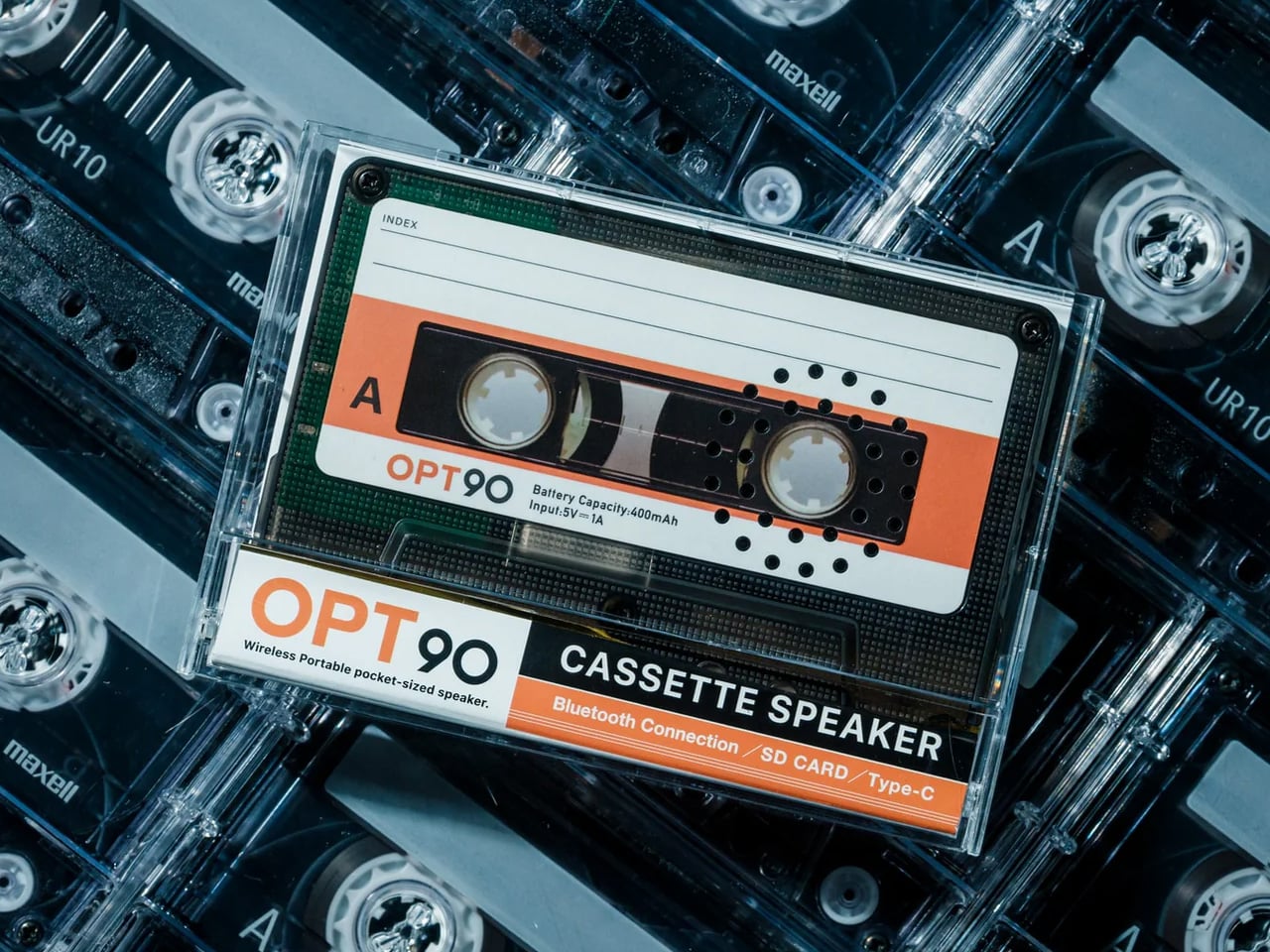
The cassette tape was always more than a format. It was an object you labeled by hand, kept in a glove compartment, or assembled specifically for someone who needed to hear certain songs in a certain order. The Side A Cassette Speaker takes that intimacy and wraps it around a Bluetooth speaker that earns a second look before it plays a note. Shaped faithfully like a real mixtape, transparent shell and Side A label intact, it sits in its clear case-turned-stand like a relic that also connects to your phone. At $49, it is the most honest nostalgia product in this category right now, because it commits to the premise completely rather than gesturing at it from a polite distance.

What keeps it practical day to day is how little it demands from you. Bluetooth 5.3 handles pairing, a microSD slot covers offline listening, and at 80 grams, it disappears into a jacket pocket without thought. Battery life runs six hours at maximum volume, and a full recharge takes two, which means it soundtracks a full workday and refuels overnight. The sound is tuned warm, which suits the object better than raw precision ever could. For anyone who spent time making mixtapes, or anyone who didn’t but understands why people did, this is the version of that feeling you can carry and actually hear in 2026 rather than only remember.

Click Here to Buy Now: $49.00

What We Like

  • Cassette-faithful design works as a display piece when it isn’t playing
  • Bluetooth 5.3 and a microSD slot give you two reliable ways to listen

What We Dislike

  • A single-driver setup won’t satisfy anyone looking for real volume or full-range sound
  • Only three units available at the time of writing

2. RetroWave 7-in-1 Radio

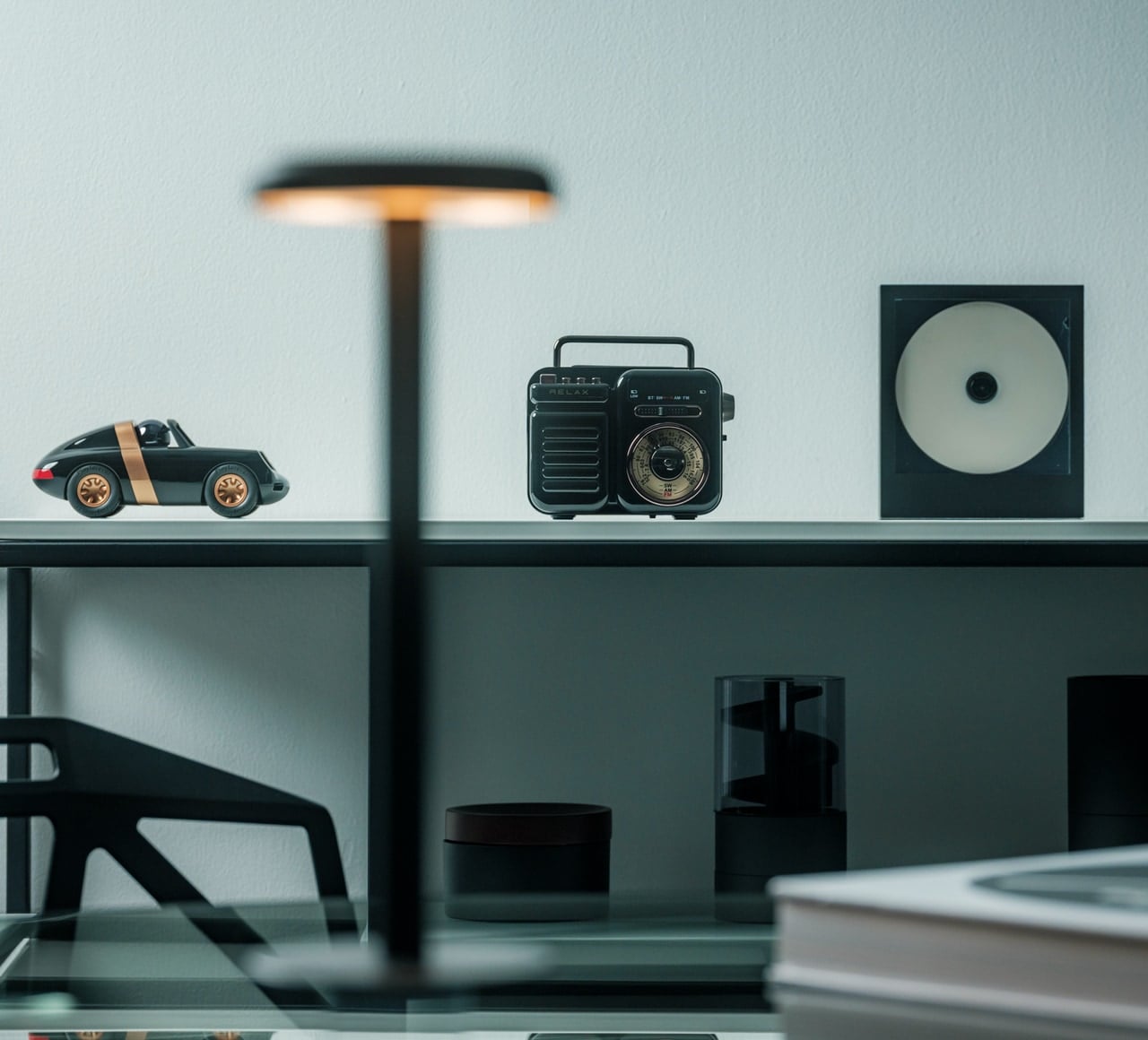
The boombox era was about more than cassette decks. It was about radios you could carry anywhere, tuning dials you could feel through your fingers, and sound that filled a room without asking permission first. The RetroWave 7-in-1 Radio captures that in a compact, Japanese-inspired frame. The tactile tuning dial, the warm retro casing, and AM/FM/shortwave reception give it the presence of something lifted from a 1984 shelf. It also streams Bluetooth, plays MP3s from USB or microSD, runs an LED flashlight, an SOS alarm, a hand-crank and solar charging, and a 2000mAh power bank that charges other devices when yours runs low. Seven functions in one object, packaged inside something that earns its place on a shelf every single day.

The seven functions working together are where the RetroWave earns its position in a 2026 home rather than a nostalgia market. Daily desk companion and off-grid emergency tool are roles that typically live in completely separate product categories, and the RetroWave collapses them into one object without obvious compromise on either side. The battery delivers up to 20 hours of radio time on a single charge. Solar and hand-crank inputs keep it running when the grid fails or the trail goes deeper than expected. At $89, it solves problems you haven’t had yet while looking precisely right sitting on a counter, a shelf, or inside a go-bag. That specific combination is considerably harder to design than it appears.

Click Here to Buy Now: $89.00

What We Like

  • Seven functions cover daily listening, emergency power, and off-grid communication in one device
  • AM/FM/shortwave reception works without any internet connection

What We Dislike

  • 8W speaker output is modest for anyone expecting outdoor or large-space sound
  • Solar charging acts as backup only and cannot fully recharge the battery independently

3. FiiO Echo Mini (Snowsky)

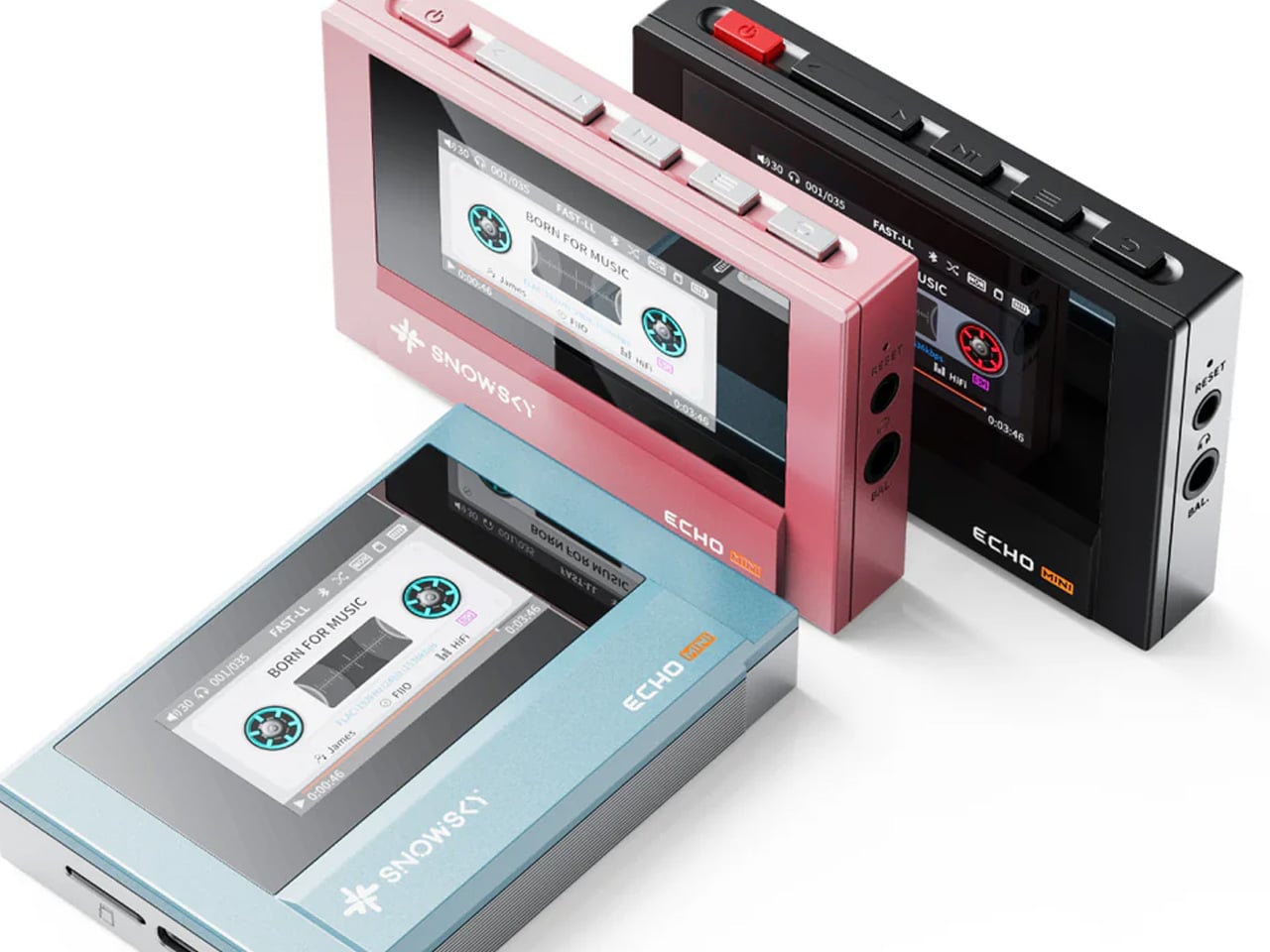
The Walkman moment was never really about audio quality. It was about having your music with you, completely yours, untouched by anyone else’s programming or curation. The FiiO Echo Mini, released under the Snowsky imprint, brings that feeling back in a form that looks exactly like a vintage cassette player from the outside and performs like a current hi-res audio device from the inside. Dual CS43131 DAC chips from Cirrus Logic handle the audio processing, earning it Hi-Res certification from the Japan Audio Society. The retro interface and cassette-player proportions are a direct reference to early Sony and Aiwa portables, down to the tactile controls and the way it sits in the palm of your hand.

Where the Echo Mini separates itself from the nostalgia-only tier is in what it can actually do for your listening. It supports FLAC, DSD, WAV, OGG, and other lossless formats, and accepts microSD cards up to 256GB, which means a library that would have filled an entire shelf of cassette cases in 1988 now fits in a slot smaller than your thumbnail. Dual headphone outputs and Bluetooth connectivity cover both wired and wireless listening from the same device. An independent power supply keeps the audio circuitry isolated from interference, which is the kind of engineering detail that doesn’t show up in the design but surfaces immediately in how it sounds. This is what a Walkman would have become if the engineers had forty more years to keep working on it.

What We Like

  • Dual DAC chips and Hi-Res certification deliver audio quality that the original Walkman never came close to
  • 256GB microSD support with multi-format lossless playback builds a serious portable library

What We Dislike

  • Playback-only with no recording function, which rules it out for anyone who wants to make tapes
  • The deliberate retro cassette aesthetic won’t suit every listener or every room

4. Retrospekt CP-81 Portable Cassette Player
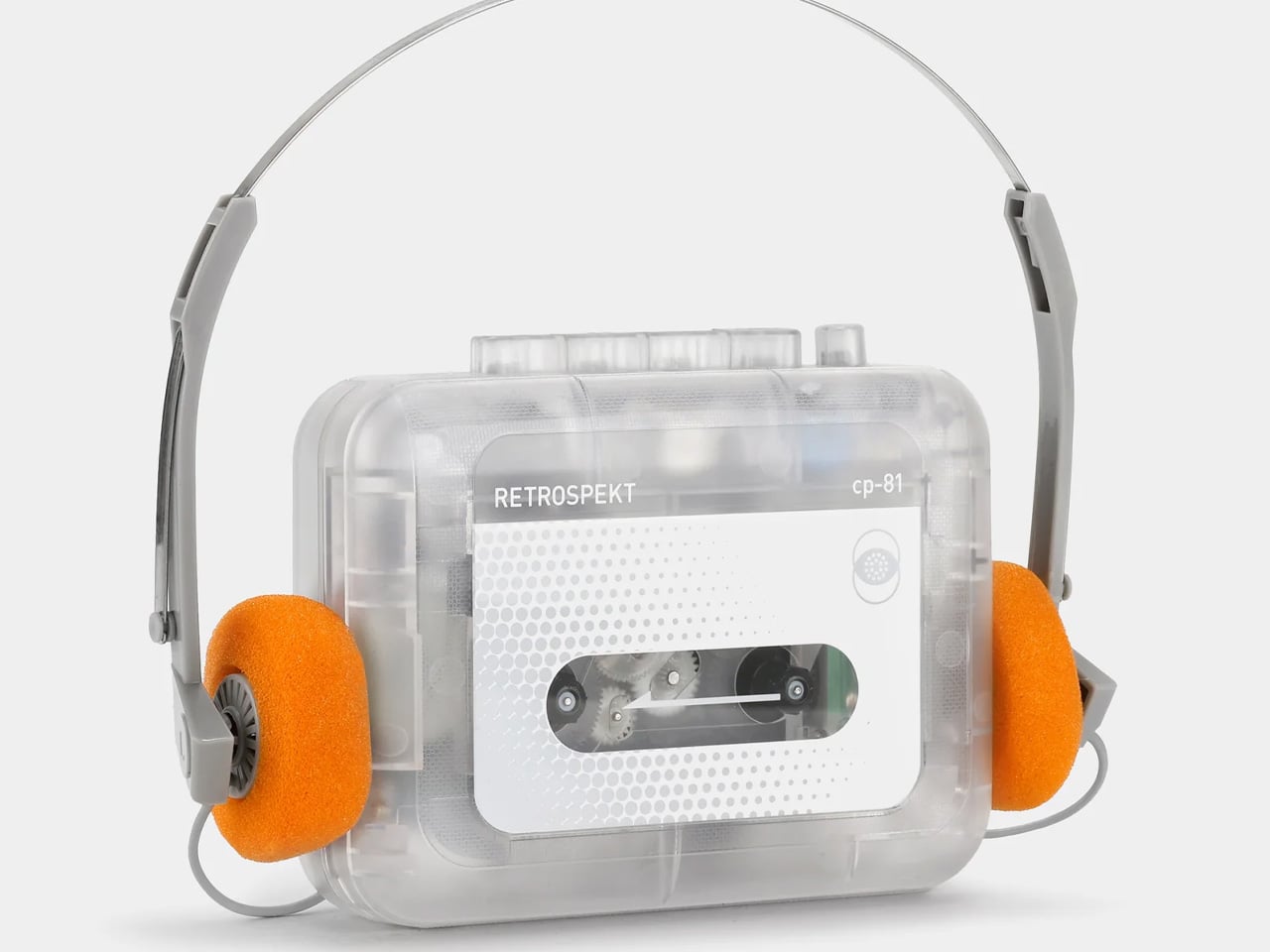
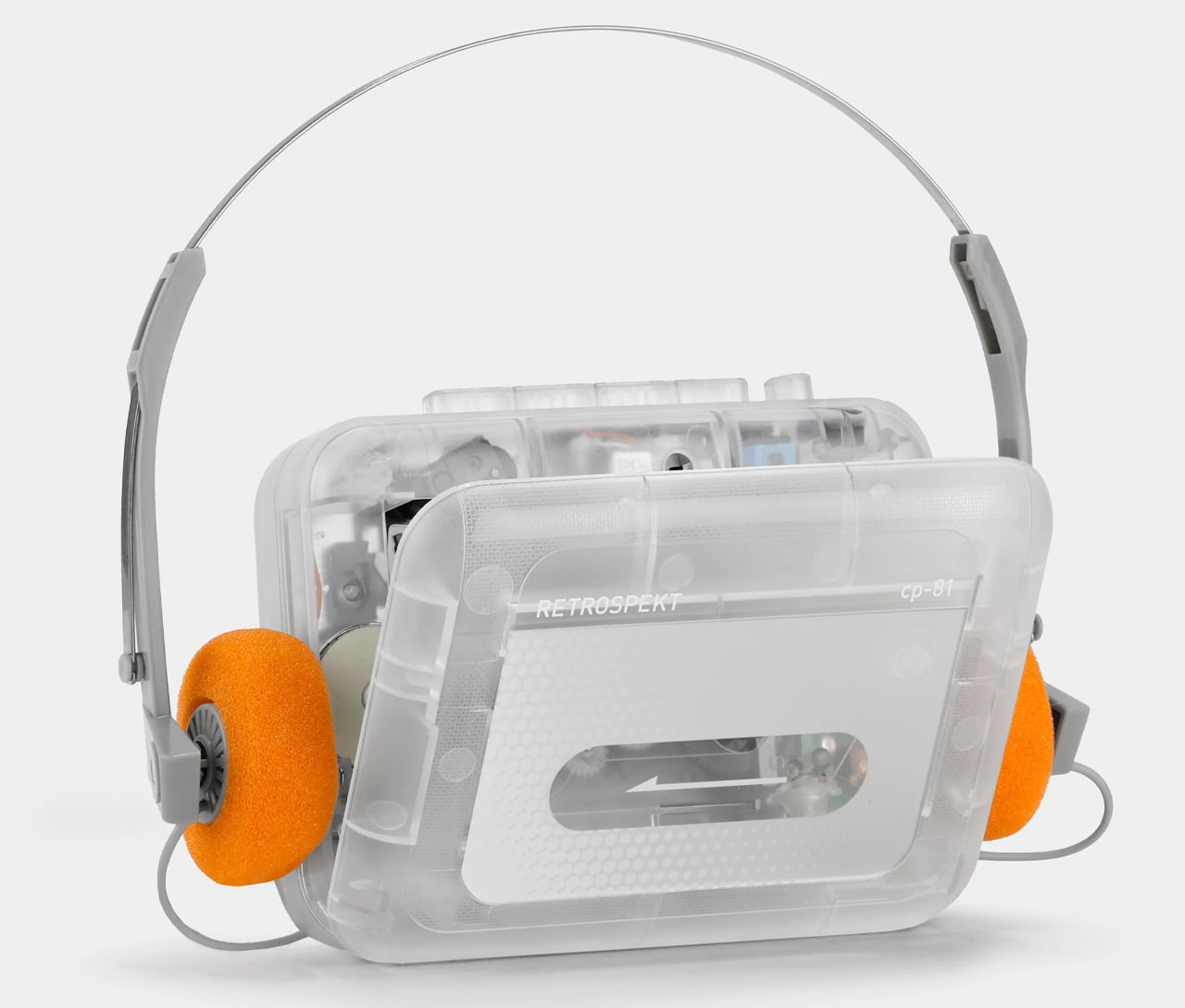
The CP-81 is the cassette player that stopped trying to be a hi-fi device and leaned fully into being a cultural artifact, and somehow that turned out to be exactly right. The clear plastic body shows the mechanism in full, the controls are exactly where you expect them, and the included RFH-01 headphones with their orange foam cushions make the whole package feel like something pulled from a very specific and beloved corner of 1983. Sold at MoMA Design Store, Nordstrom, and Urban Outfitters, it has collaboration editions with Miffy, Peanuts, and Hello Kitty that treat the cassette player as a canvas rather than just a device. It has 4.8 stars across 174 reviews, which is noteworthy.

What grounds it is that it actually works as a cassette player, not just as a shelf piece. The CP-81 plays, fast-forwards, rewinds, and records, with a line-in microphone jack that most modern cassette players quietly dropped from the spec sheet. Power comes from two AA batteries or a USB-C input, so it runs on whatever you have available. The people who buy it tend to keep it out on a desk rather than in a drawer. That’s partly the design doing its job, and partly because a cassette player that looks this considered, at this price, with this many ways to use it, is genuinely hard to put away.

What We Like

  • Records as well as plays, with a microphone jack that makes line-in recording straightforward
  • USB-C and AA battery power options mean it works wherever you need it to

What We Dislike

  • The clear plastic body shows every fingerprint, which matters more than it should for something this tactile
  • Collaboration editions sell out quickly, and availability varies across retailers

5. We Are Rewind Curtis Boombox GB-001
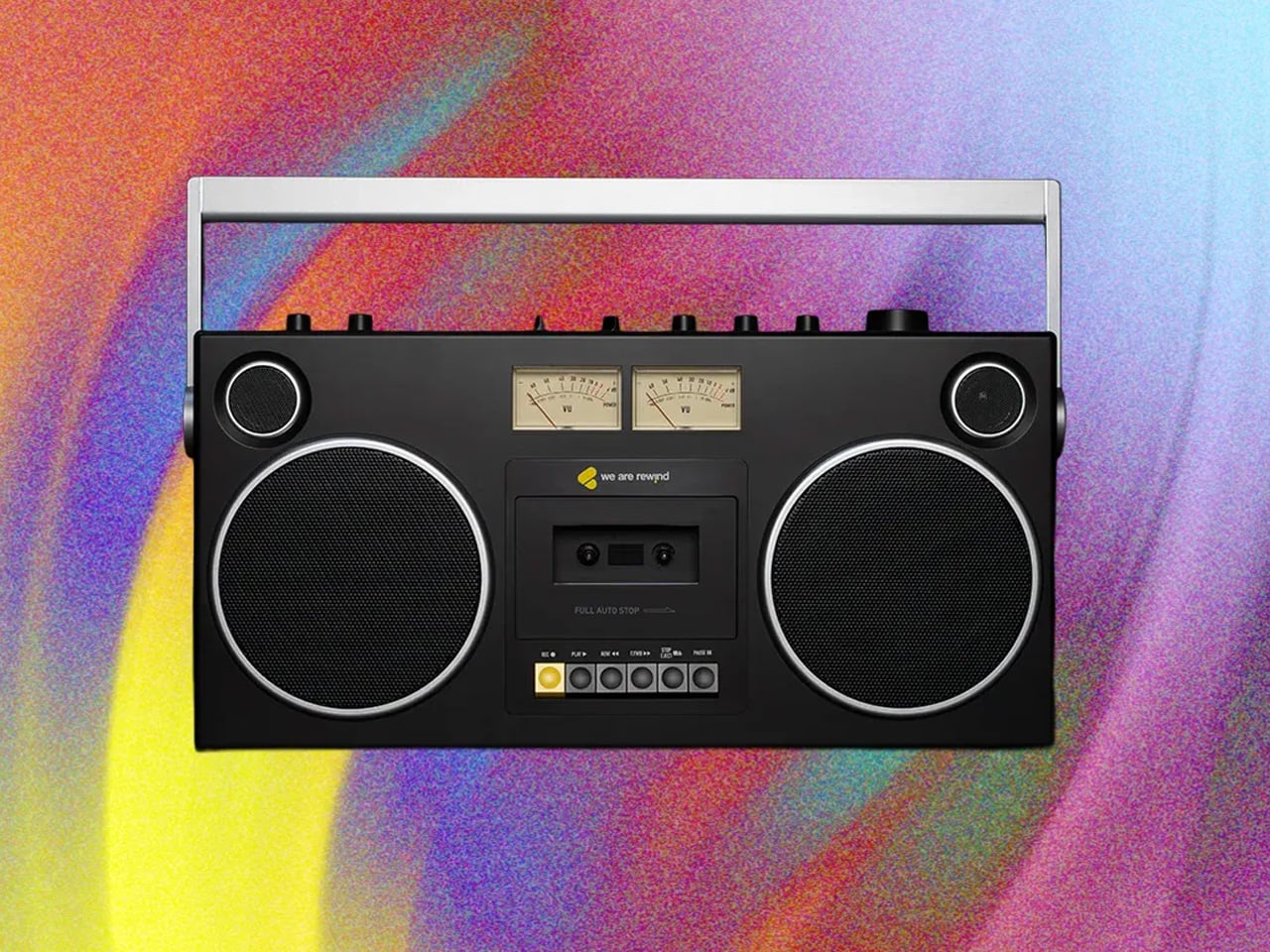
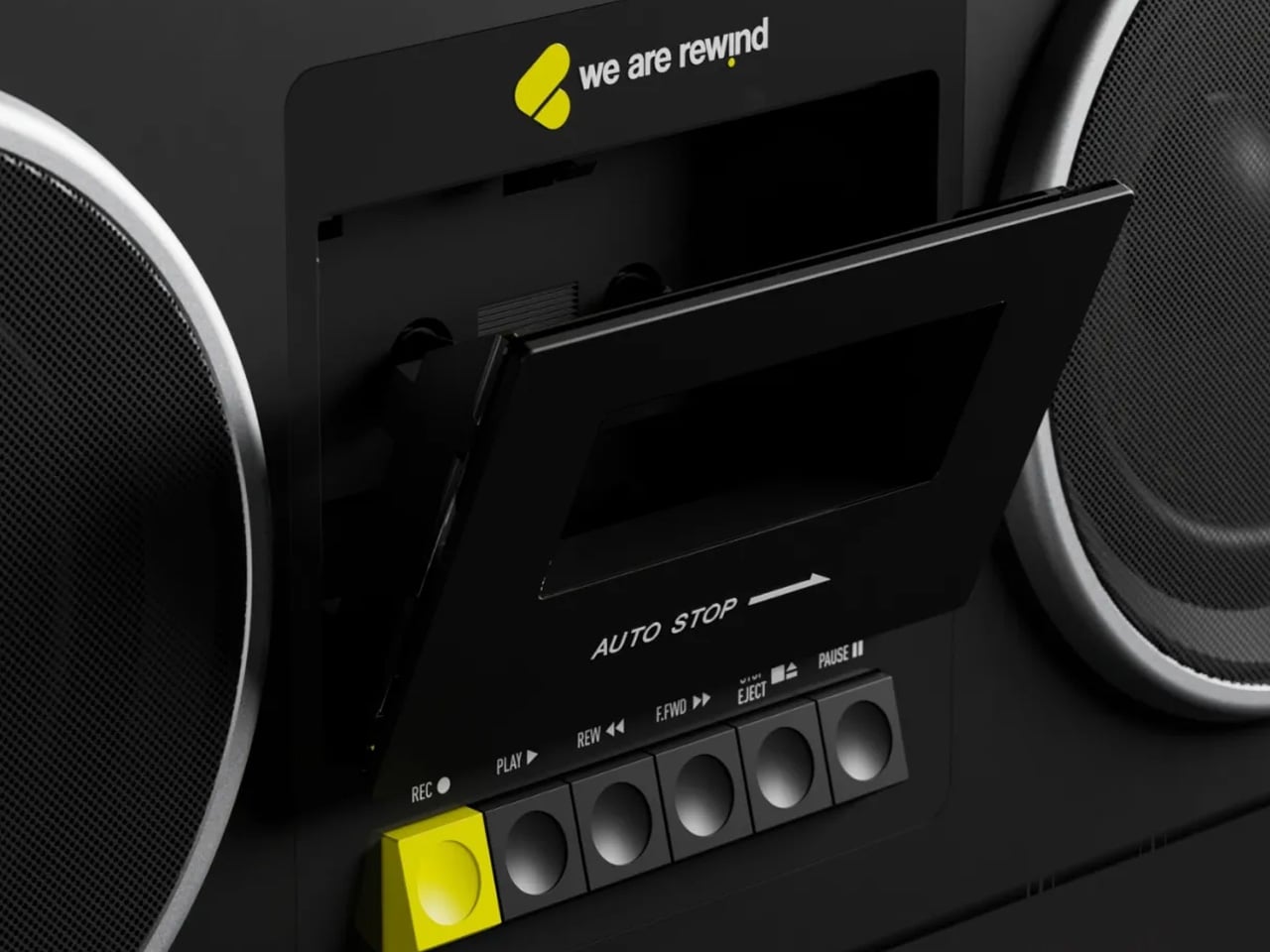
The boombox never fully disappeared. It got quieter, more compact, and less certain of what it was trying to be. The We Are Rewind Curtis GB-001 has none of that uncertainty. At 19 inches wide and 15 pounds, it is a proper boombox in the original meaning of the word: something you carry by its full-width folding handle and set down in a room that then belongs to the music. Four hi-fi speakers, two Class D woofer amplifiers, and two tweeters, push 104 watts across a frequency response of 40 to 20,000Hz. The cassette deck plays and records. The guitar amp input takes a real guitar. These are functional commitments, not marketing features, and they give the GB-001 the same confidence the original boombox had before the category forgot what it was for.

What lifts the GB-001 beyond a premium nostalgia product is how fully it commits to every part of the premise. Bluetooth 5.4 covers streaming when the tapes run out. The backlit VU meters — the detail WIRED noted immediately in its January 2026 review and the first thing every Gen X person in the room points out without being asked — are deliberately and gloriously analog. Forbes covered the North American launch the same week. Techmoan put it on camera in December 2025. The coverage it has earned reflects what the product actually is. At $579, this is the most serious purchase on this list, and also the most direct one: if you want a boombox that means it, this is the only new boombox in 2026 that does.

What We Like

  • 104 watts across four hi-fi speakers produces real, room-filling sound rather than novelty volume
  • Cassette recorder and guitar amp input make it a functional, creative instrument, not only a playback device

What We Dislike

  • At $579, the full value rewards buyers who use the cassette deck regularly, not just Bluetooth
  • Battery life has been flagged across multiple reviews as shorter than expected for a unit of this size and price

The Cassette Era Didn’t Come Back. It Came Back Better.

None of these products asks you to give up modern life for a feeling. The Side A speaker pairs over Bluetooth. The RetroWave runs 20 hours without a socket. The Echo Mini carries a full lossless library on a card smaller than a thumbnail. The CD Cover Player hangs on a wall. The Curtis boombox records. The best version of the cassette era is the one being made right now.

What makes each worth the attention isn’t nostalgia as a pitch. It’s the specific design decision behind each object. A speaker shaped like a tape because that was the only honest form. A radio that belongs in a go-bag as much as on a shelf. A CD player that brings the artwork along. These are for people who want music to feel like something. That instinct is now being answered.

The post Gen Z Is Obsessed With These 5 Cassette-Era Gadgets & They Just Got a Full Design Upgrade for 2026 first appeared on Yanko Design.

Samsung and DOMINNICO made a leather bag that doubles as a Galaxy gadget case

Fashion accessories and tech gadgets have always occupied separate drawers, figuratively and literally. The phone goes in a pocket, the earbuds get buried somewhere in the bag, and the bag itself has nothing to do with either of them. It is a small daily inconvenience that nobody really complains about, mostly because nobody has ever offered a better alternative. Samsung and Spanish fashion brand DOMINNICO have decided that the arrangement is worth rethinking.

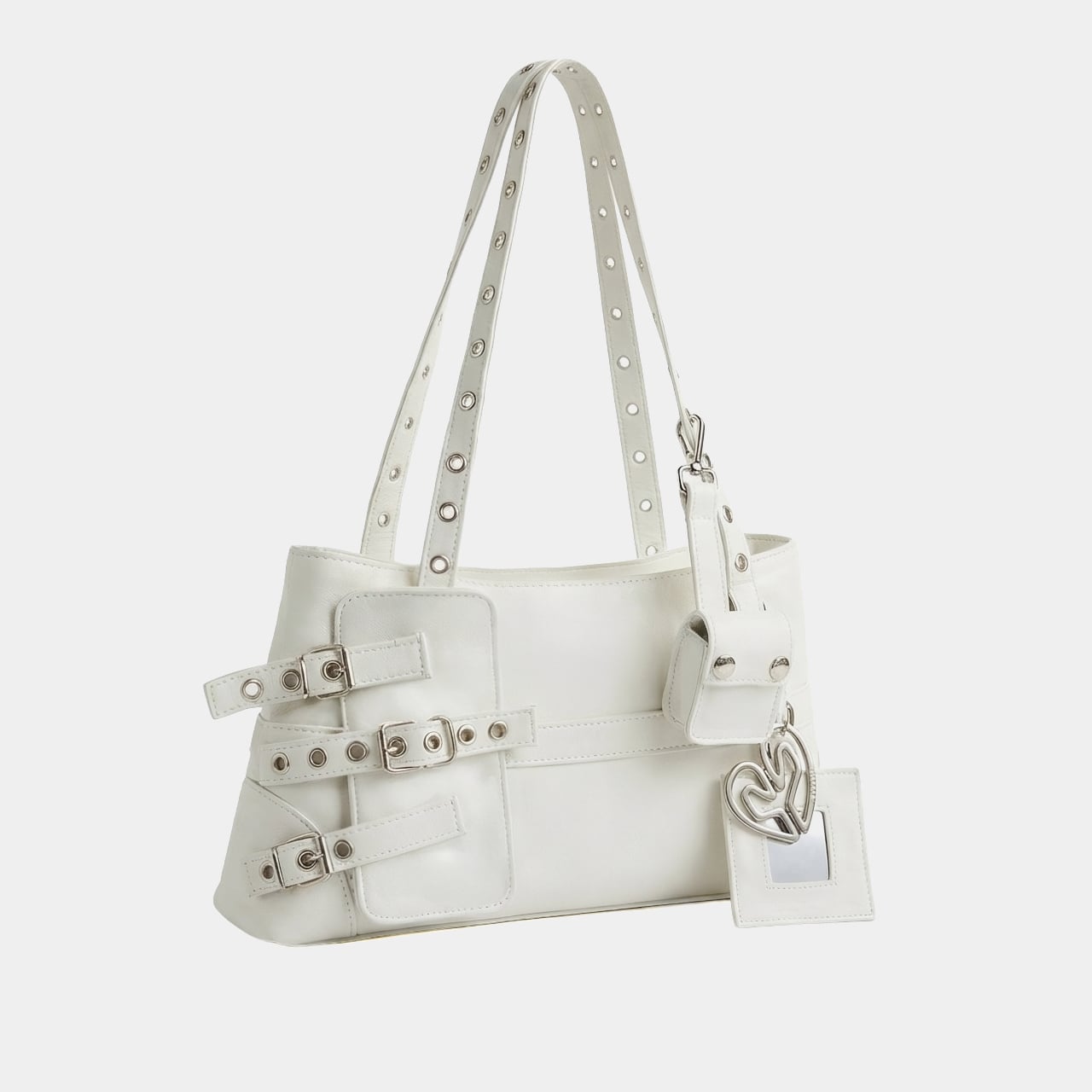
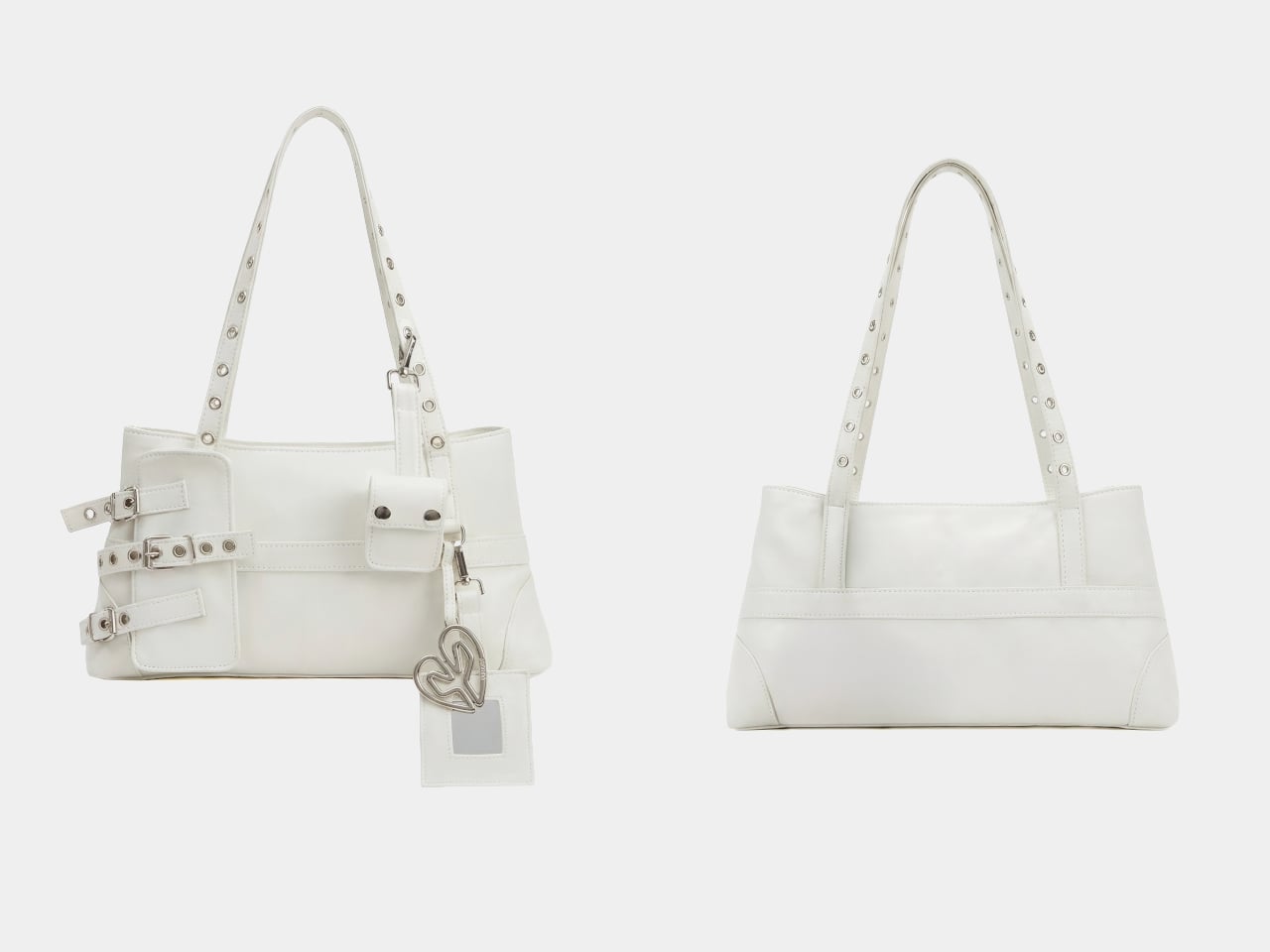
The collaboration produced a handcrafted leather bag that treats the Galaxy S26 Ultra and Galaxy Buds4 Pro as design references rather than just contents. It follows a baguette silhouette in off-white leather, produced in limited quantities under a slow fashion approach. The construction stays deliberately restrained: a zip closure bearing the brand logo, an interior pocket, and silver accents distributed carefully across the piece without overcrowding it.

Designer: DOMINNICO x Samsung

The most direct hardware reference runs along the handles. Silver eyelets line them in a pattern that mirrors the camera module rings on the Galaxy S26 Ultra, pulling one of the phone’s most recognizable physical details into a fashion context. It is the kind of detail that reads as decorative until you recognize where it came from, at which point it becomes something more like a private joke between the bag and the phone sitting inside it.

The exterior front pocket is sized specifically for the Galaxy S26 Ultra, secured with three buckles that make it a visual centerpiece rather than a plain utility slot. The design concept ties back to the phone’s built-in Privacy Display feature: the pocket keeps the device accessible while screening it from view when not needed. Whether that connection feels meaningful or just convenient as a marketing angle is a fair question, though the pocket itself is a genuinely practical addition.

Galaxy Buds4 Pro owners get their own dedicated carry solution through three keyrings attached to the bag. Two are extendable, each fitted with a small mirror that doubles as a functional charm. The third holds a soft pouch sized for the Galaxy Buds4 or Galaxy Buds4 Pro case. A fixed keyring with the DOMINNICO logo in silver completes the set. All three hang visibly from the bag rather than disappearing inside it, which keeps the tech ecosystem part of the aesthetic rather than hidden from it.

The bag was unveiled at CUPRA City Garage in Madrid as part of the Madrid es Moda program, a setting that positioned it squarely within fashion week territory rather than a product launch event. That framing matters because it signals who Samsung is trying to reach here: not the Galaxy power user looking for a rugged carry solution, but the fashion-conscious Galaxy owner who wants their accessories to cohere visually.

Available for preorder through DOMINNICO’s website at €420, the bag sits closer to a fashion collectible than a mass-market accessory. The limited production run and handcrafted construction support that positioning. What remains genuinely open is whether a piece this specific, built around two particular Samsung devices, holds its appeal once the Galaxy S26 Ultra is no longer the current flagship and the collaboration’s novelty has worn off.

The post Samsung and DOMINNICO made a leather bag that doubles as a Galaxy gadget case first appeared on Yanko Design.
Balmuda and Jony Ive’s Firm Built a $373 Clock With No Hands

The phone on the nightstand is one of those design failures nobody talks about. It wakes you with a jolt, it glows through the night, and the first thing it offers each morning is not the time but a backlog of notifications demanding your attention before you’ve even sat up. The bedside clock was supposed to be the simple alternative, but most of them traded the problem of distraction for the problem of mediocrity.

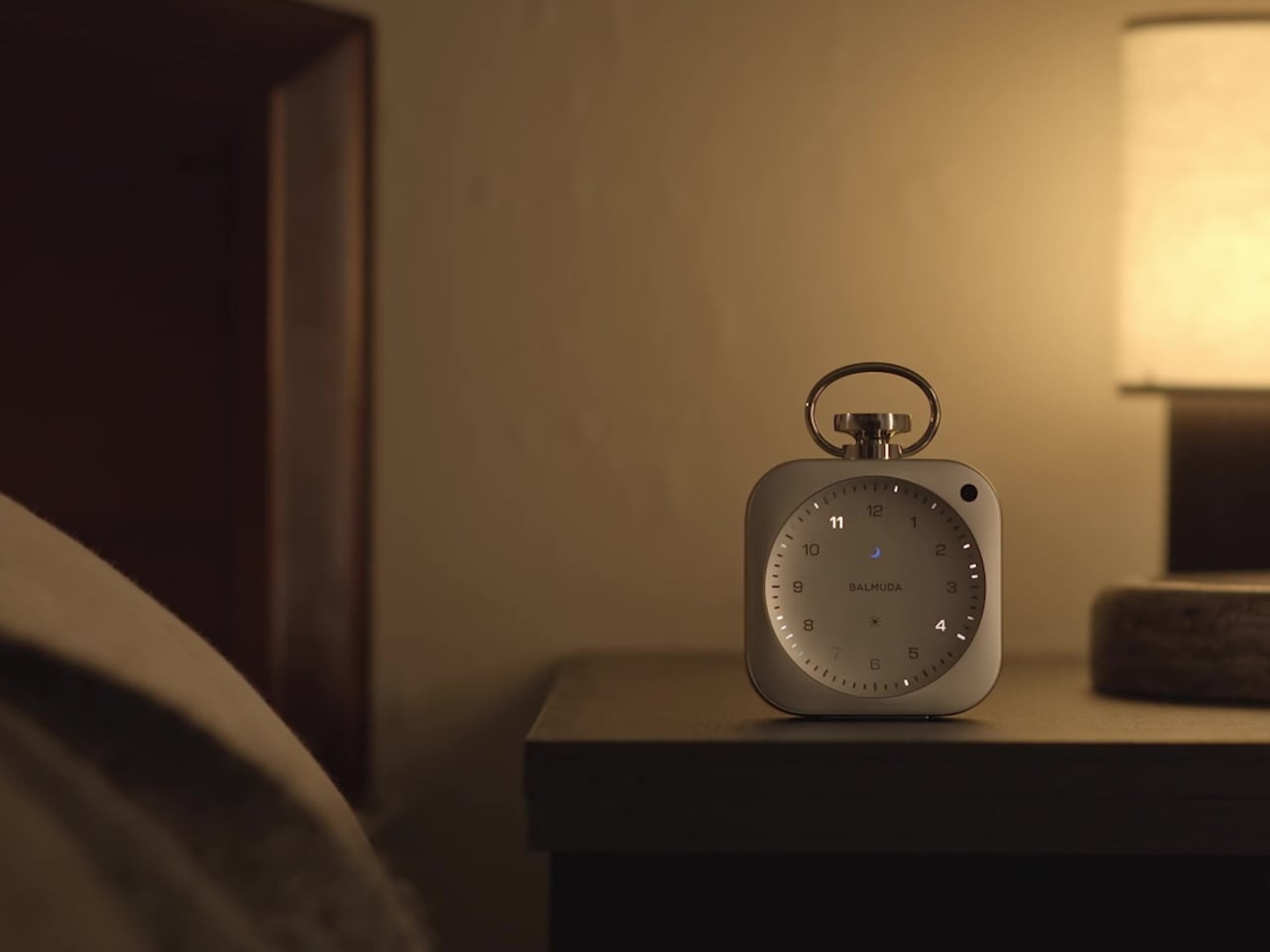
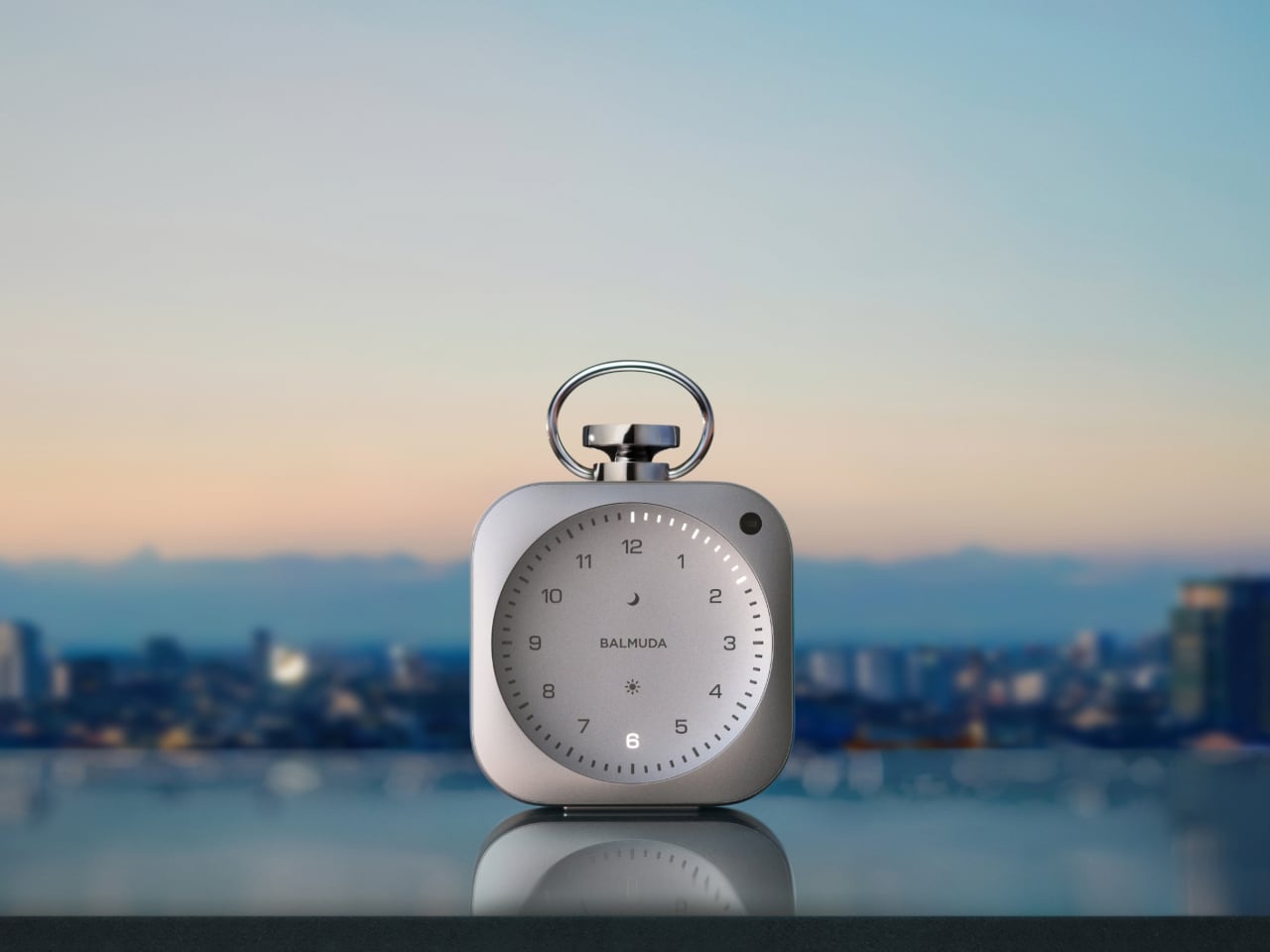
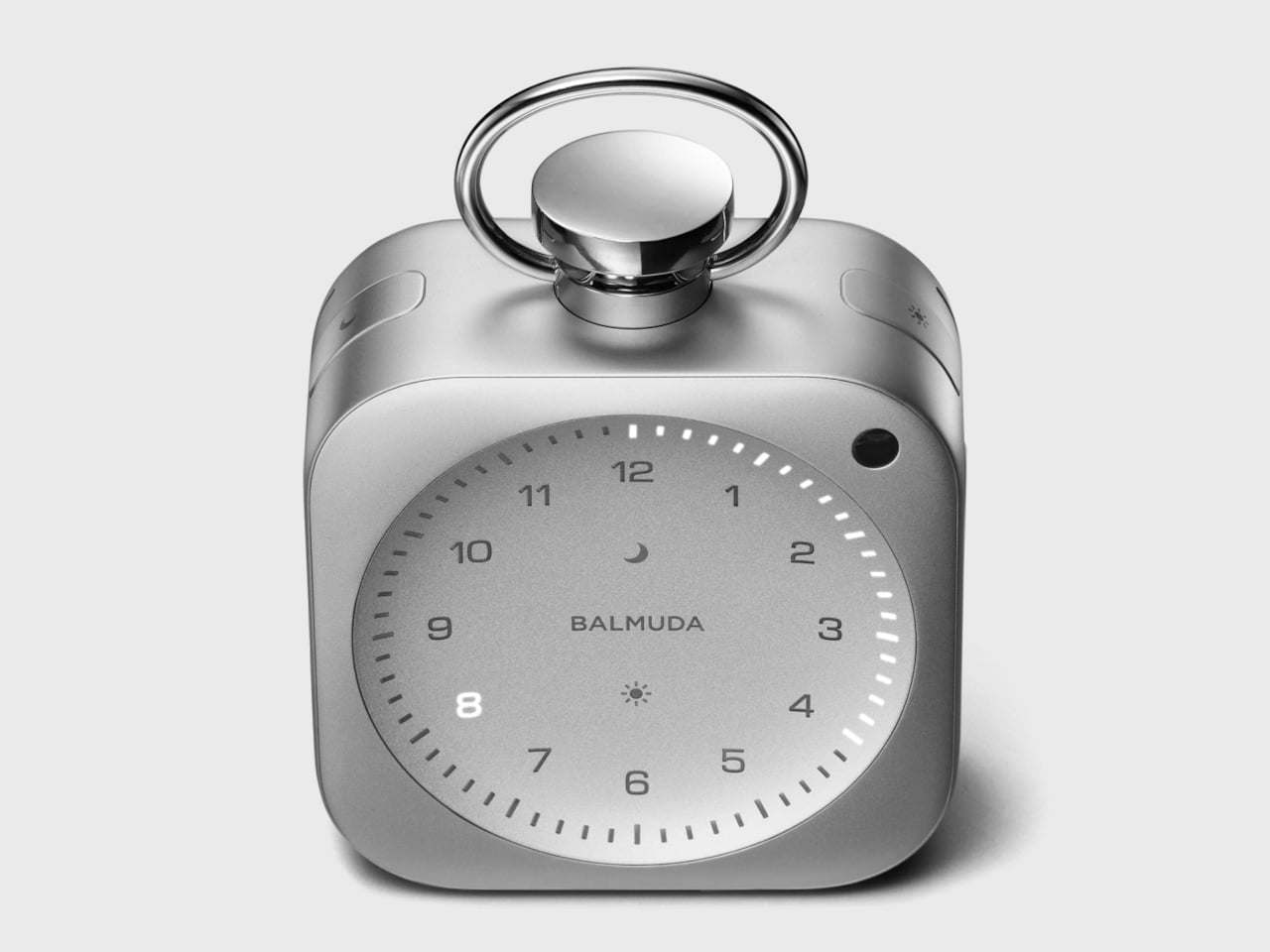
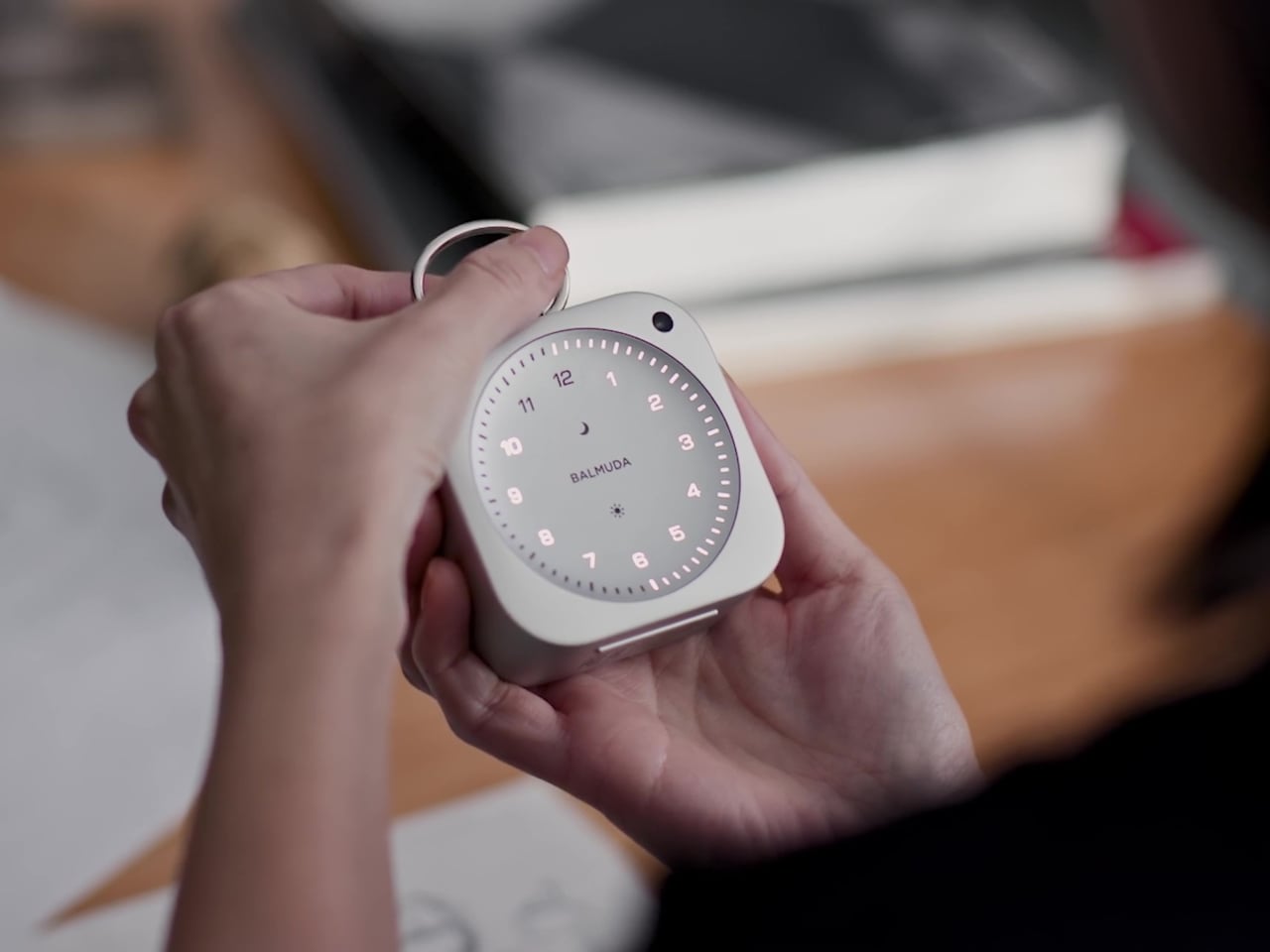
Balmuda, the Tokyo-based maker responsible for a limited-edition sailing lantern and an aesthetic humidifier, built The Clock around a specific frustration. Founder Gen Terao had been playing rain sounds on a tablet at night to help him sleep, then tolerating the screen’s glow from the bedside. The Clock is the object-form answer to that exact problem, designed to handle waking, focusing, and resting without once asking you to reach for your phone.

Designer: BALMUDA x Love From, (Jony Ive Design Firm)

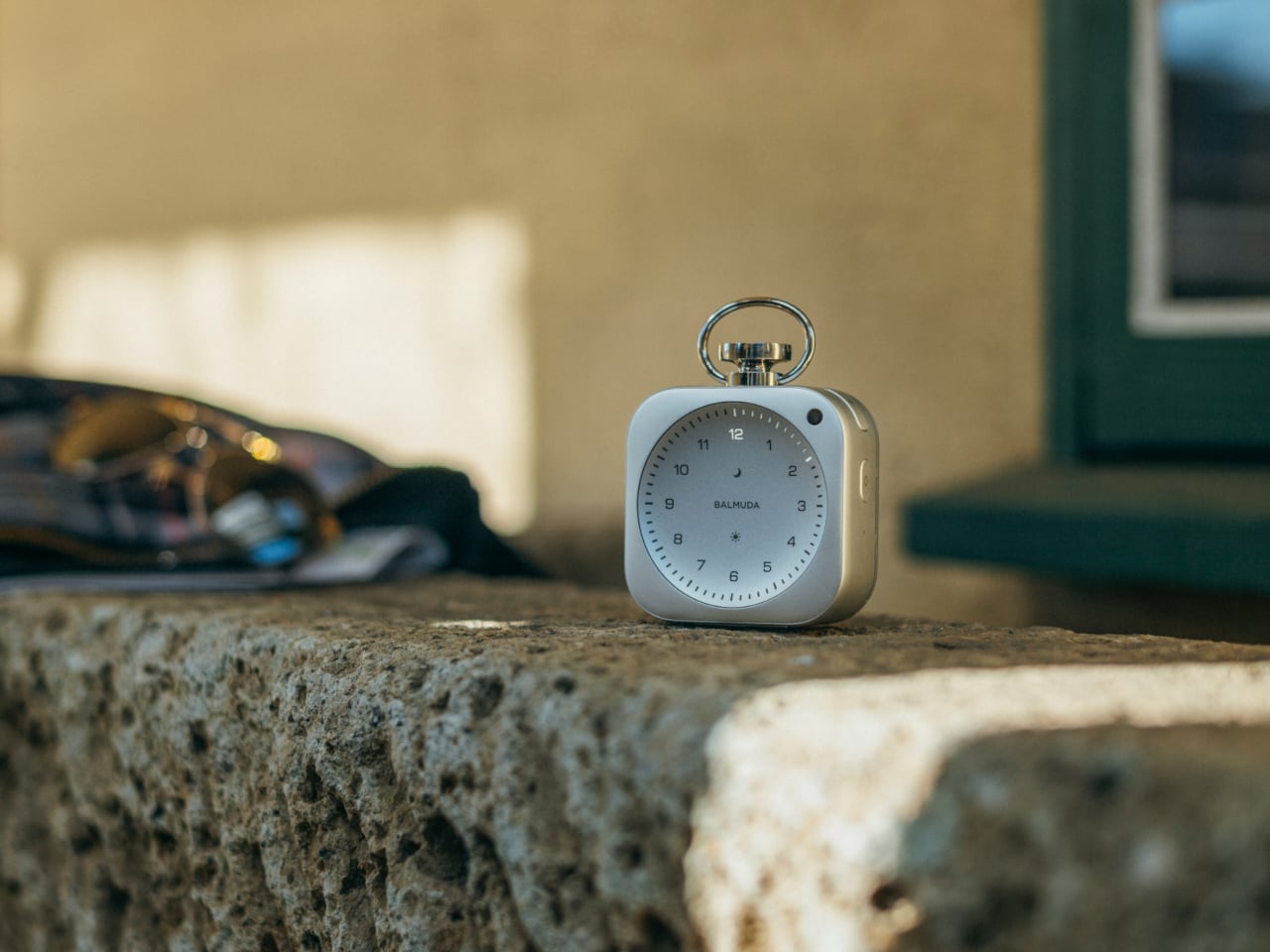
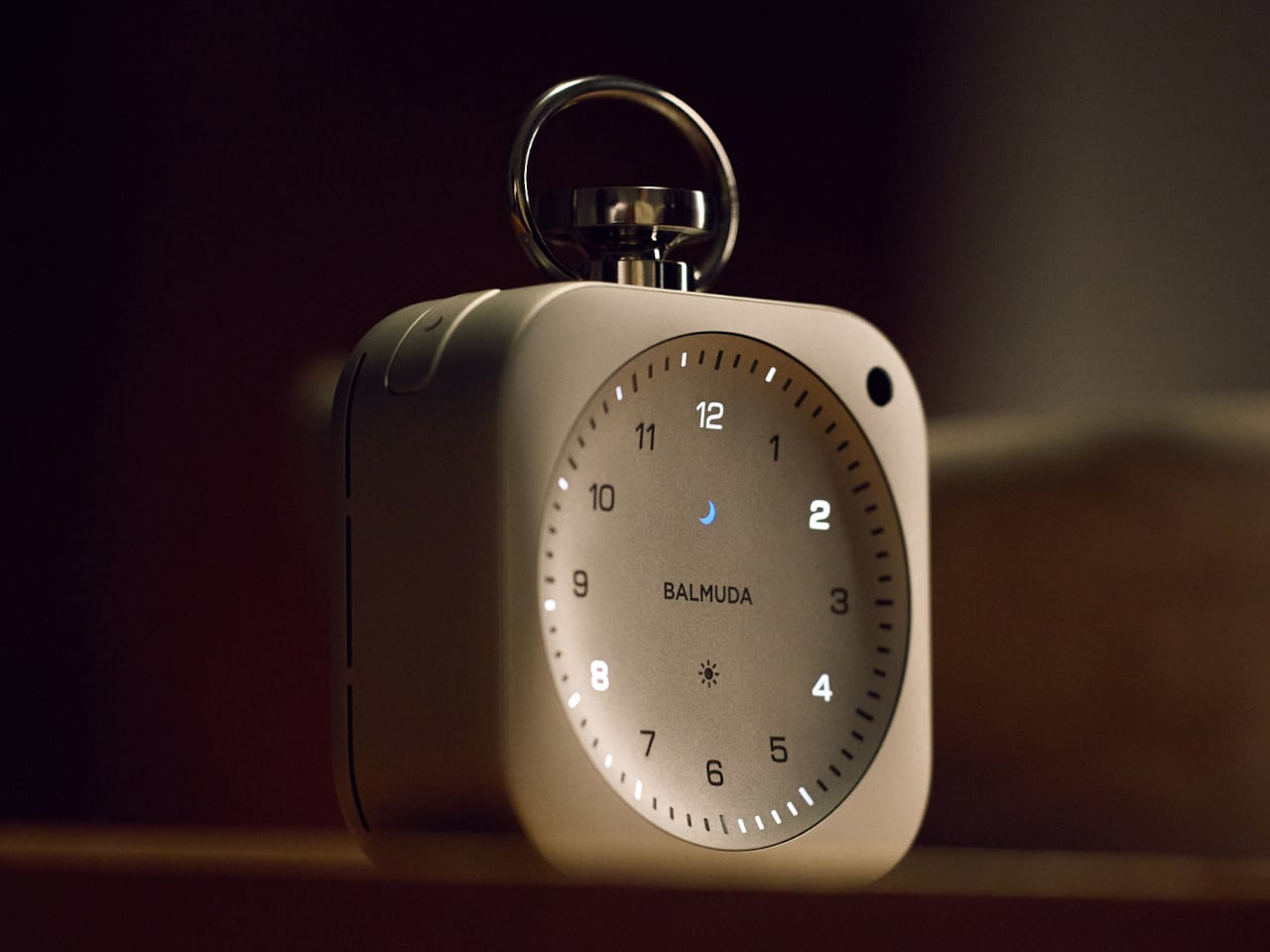
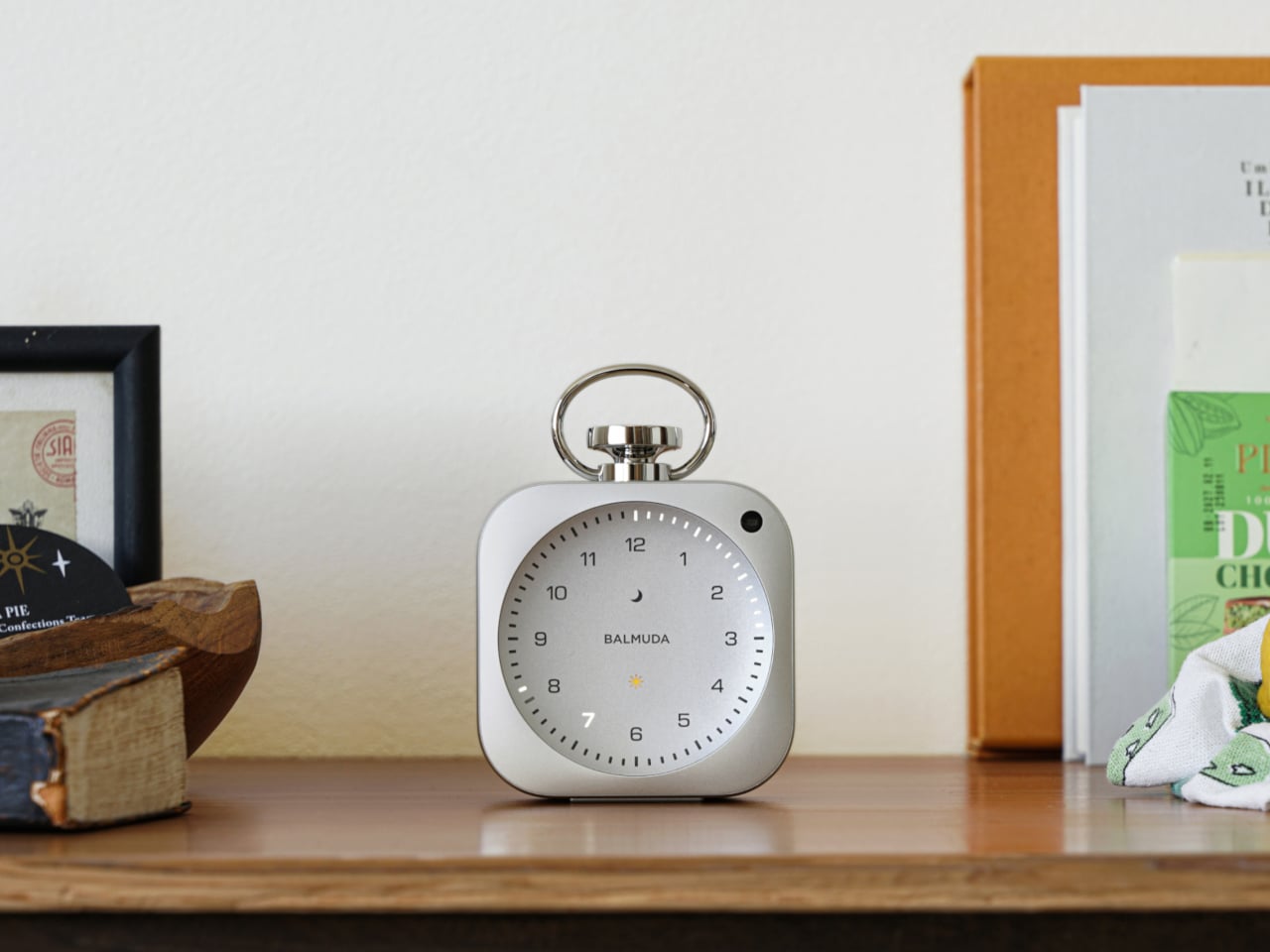
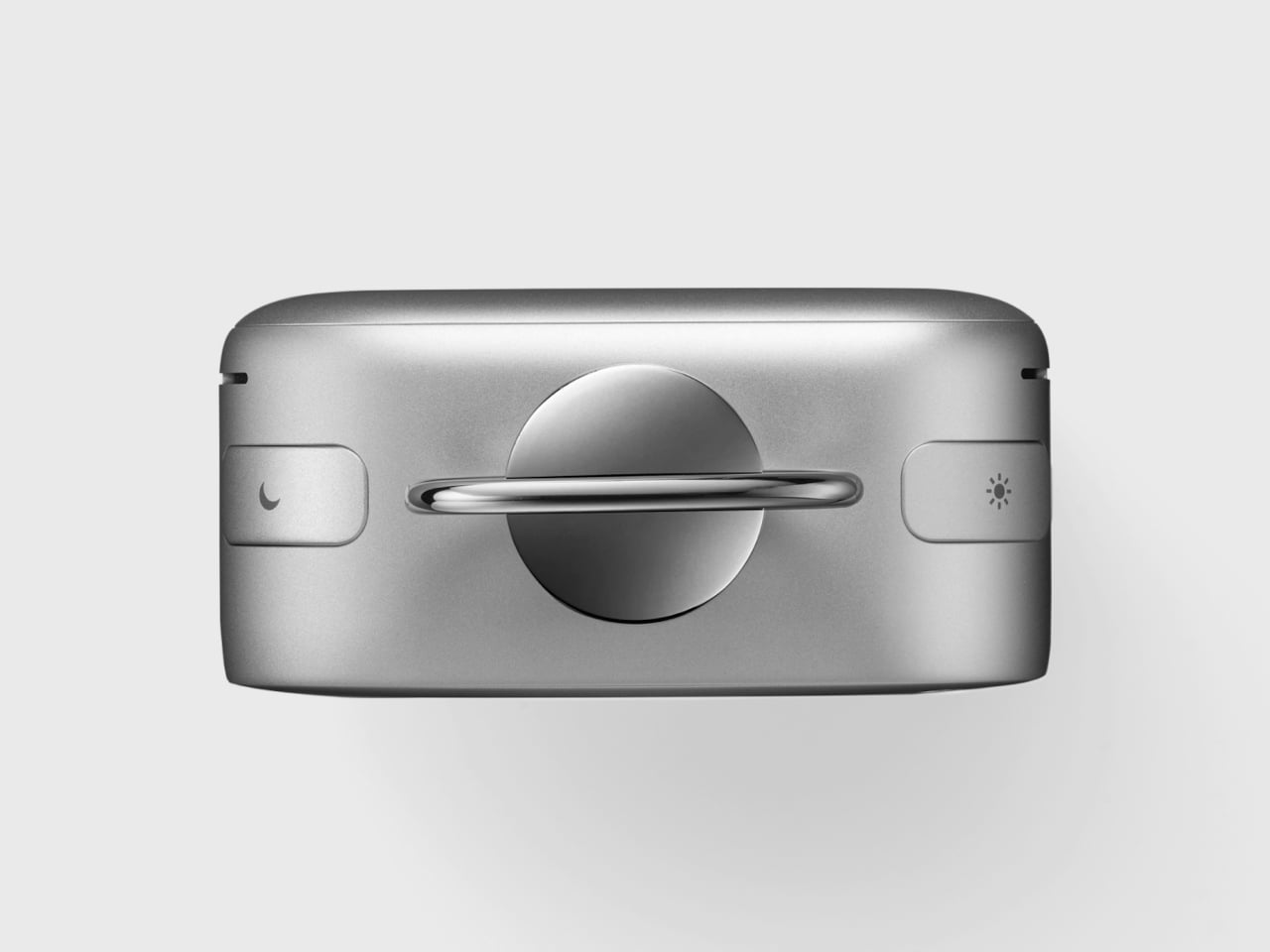
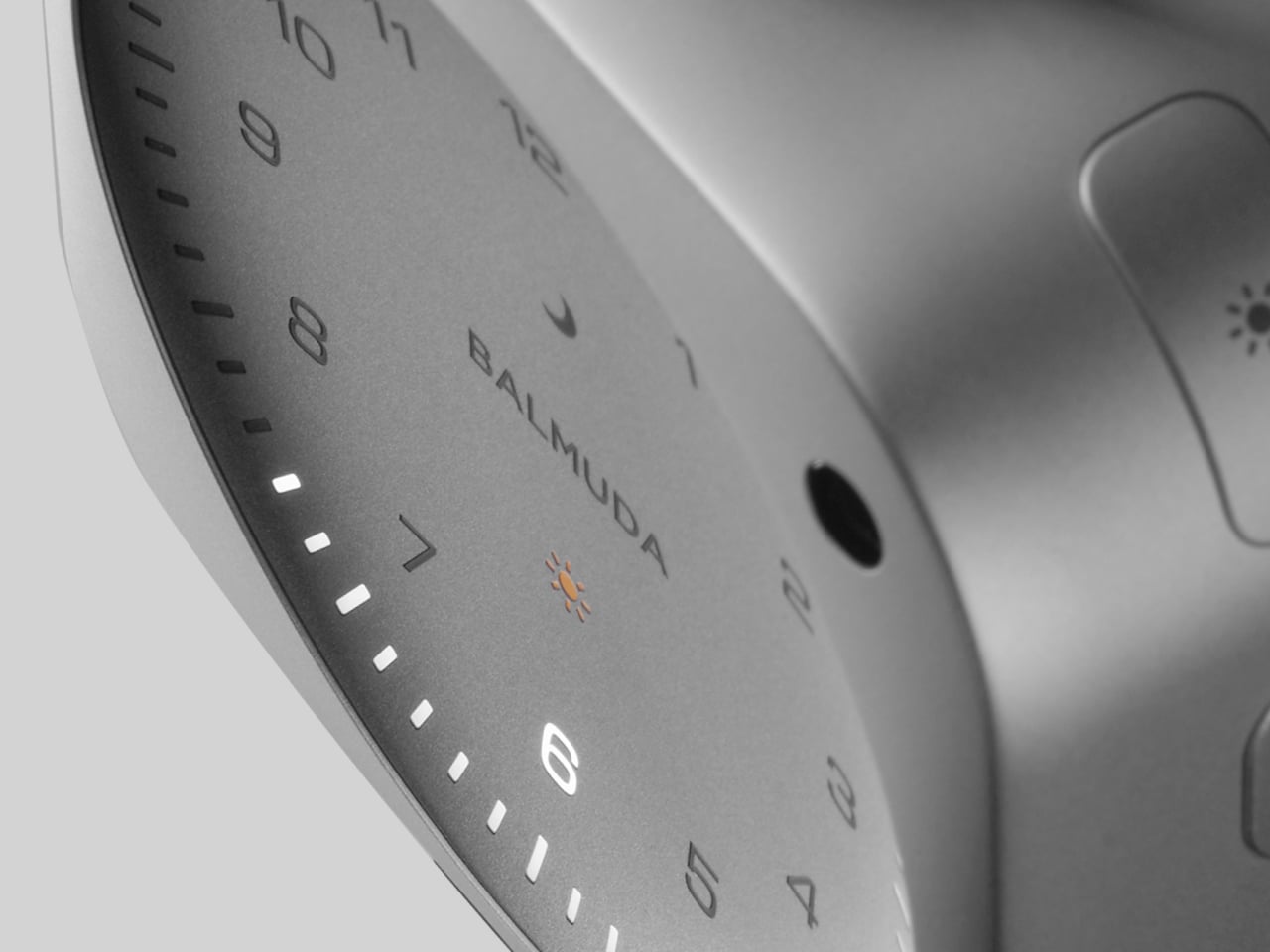
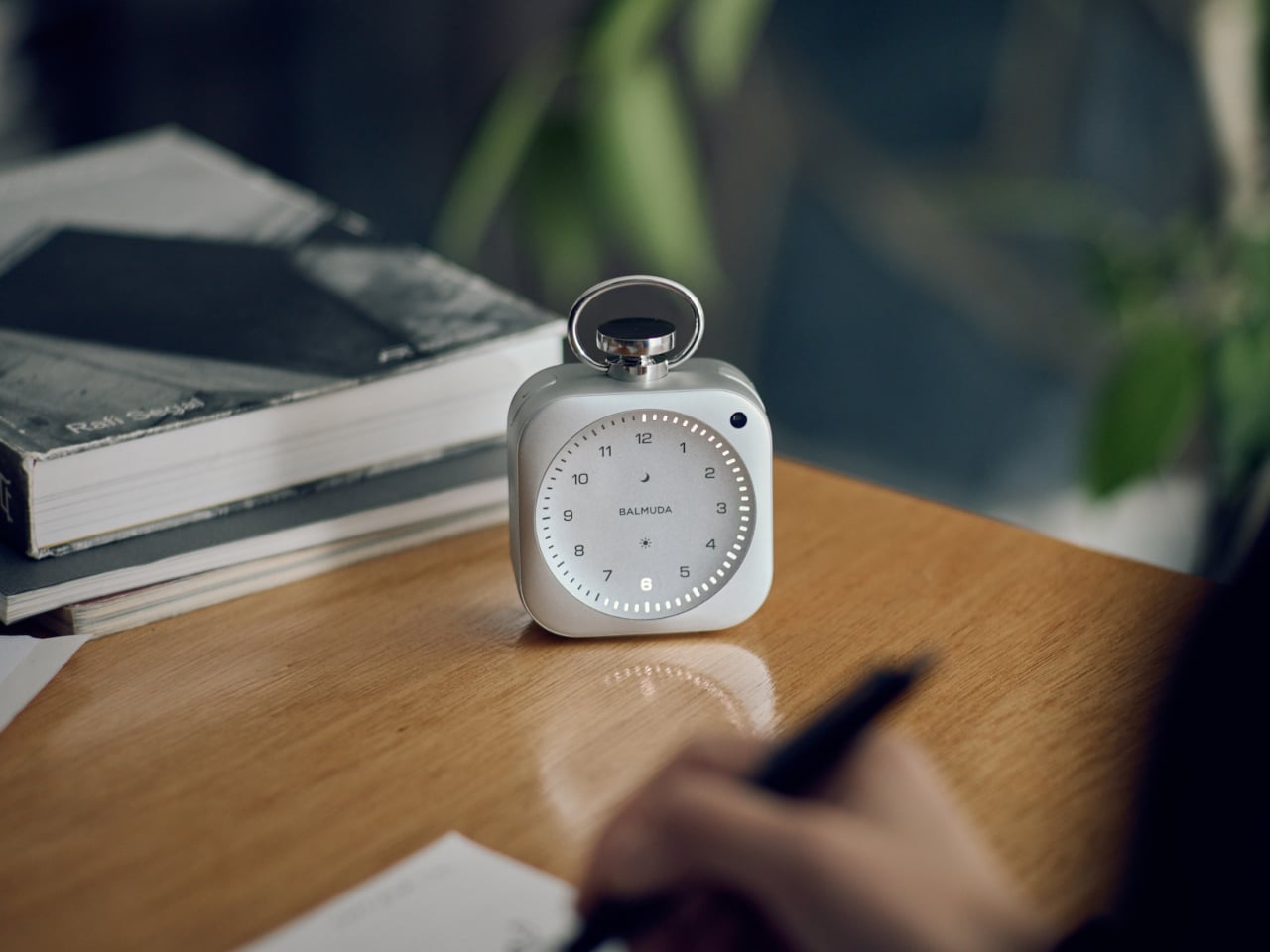
The dial has no physical hands. Balmuda’s “Light Hour” system expresses time through illumination alone, with a glow that reads more like something painted than something lit. The second-hand movement is slow and pendulum-like, and that quality was not accidental. The design team visited the Foucault pendulum at the National Museum of Nature and Science to study the movement before settling on the animation. That level of reference work is unusual for a clock.

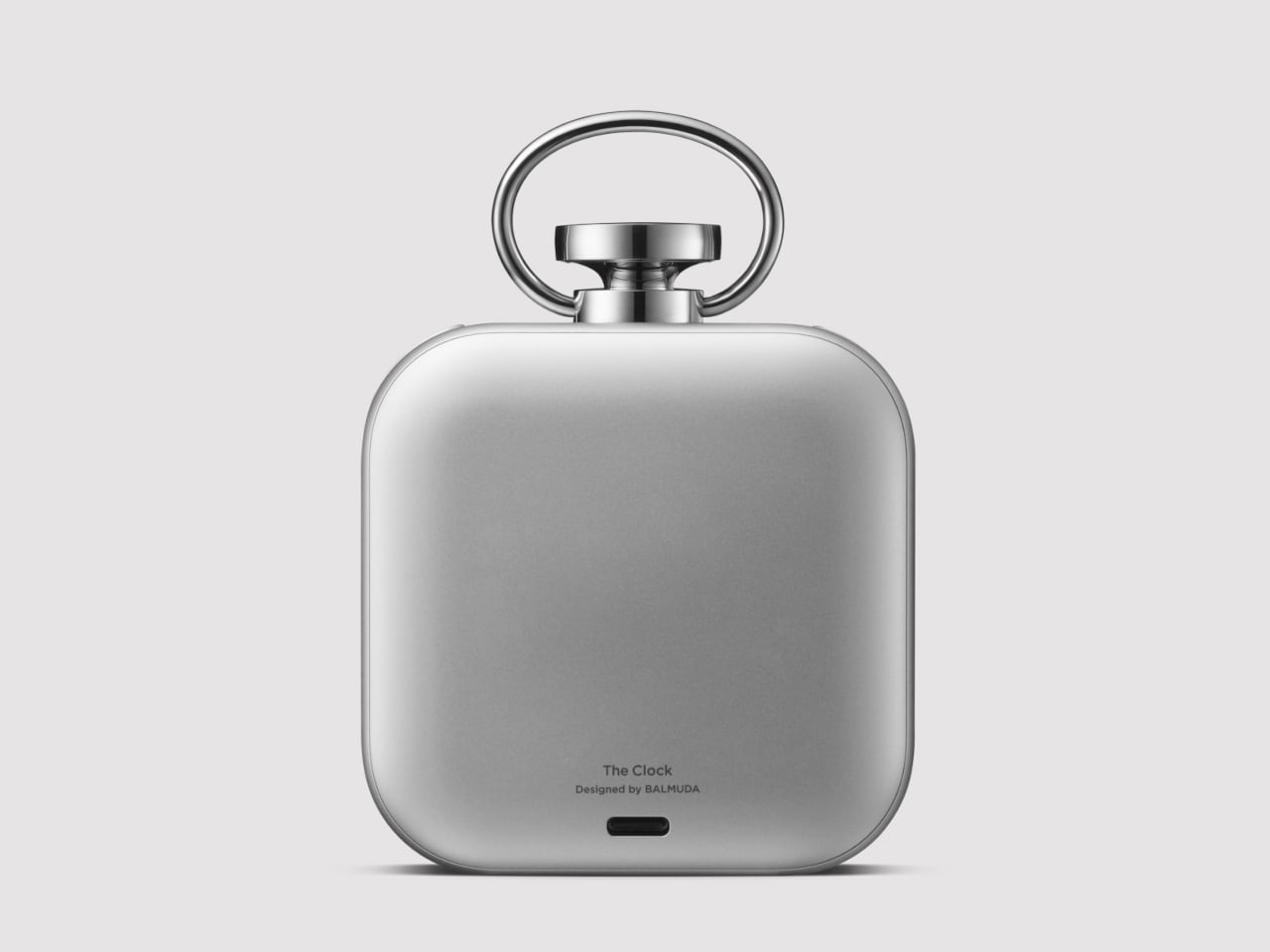
The aluminum body is machined from a solid block, finished to a polish that achieves both structural weight and surface quality in a 75mm square form. Getting there required resources Balmuda did not have independently. The company’s collaboration with Jony Ive’s design firm, LoveFrom, opened access to aluminum processing vendors with capabilities that, according to Terao himself, would not have been available otherwise. The result is a body with a density and finish that the specs alone do not prepare you for.

Three operational modes govern the day from the same pocket-sized object. Relax Time plays original ambient tracks, including rainfall, crickets, and thunder, all produced by an in-house sound team working with outside musicians. The focus timer layers white noise over a countdown. The alarm begins building volume gradually 3 minutes before it fully sounds, a small but considered alternative to the binary silence-then-noise of a standard alarm. Control over all three modes runs through the BALMUDA Connect app via Wi-Fi and Bluetooth 5.0, with options for multiple alarms, dial brightness, and a second time zone for travel.

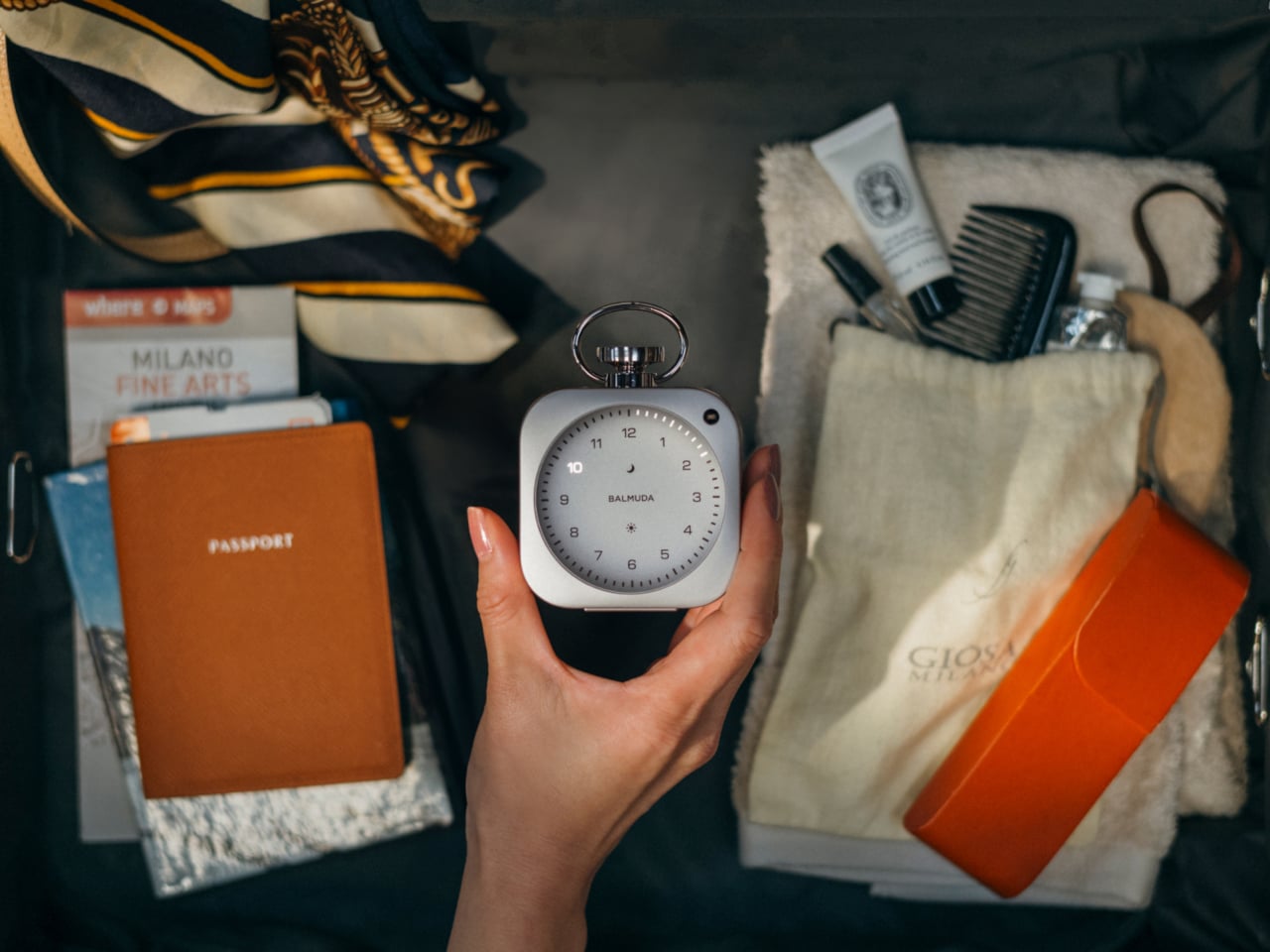
At approximately 259g with a cloth carrying bag included and USB-C charging that restores a full 24-hour battery in about 2.5 hours, The Clock is portable without making portability the point. It is currently available in Japan at ¥59,400 (approximately $373), with no confirmed release date for other markets. At that price, it is asking to be taken seriously as an object rather than a category product, and the manufacturing pedigree behind it gives that ask some grounding.

The post Balmuda and Jony Ive’s Firm Built a $373 Clock With No Hands first appeared on Yanko Design.
Stop Adjusting Your Office Chair. The LiberNovo Omni Adjusts to You Instead

Spring cleaning has a branding problem. Every year, the ritual circles back to the same tired playbook: declutter the shelves, reorganize the desk, maybe splurge on a new monitor arm. What never makes the list is the thing your body has been arguing with for eight hours a day, five days a week. The chair. It sits there, static and indifferent, while you shift and squirm through another afternoon of accumulated spinal resentment. LiberNovo’s Spring Refresh campaign, running now through April 15 across North America, is built on a premise the rest of the furniture industry still hasn’t internalized: the most important thing in your workspace is the one holding your skeleton together.

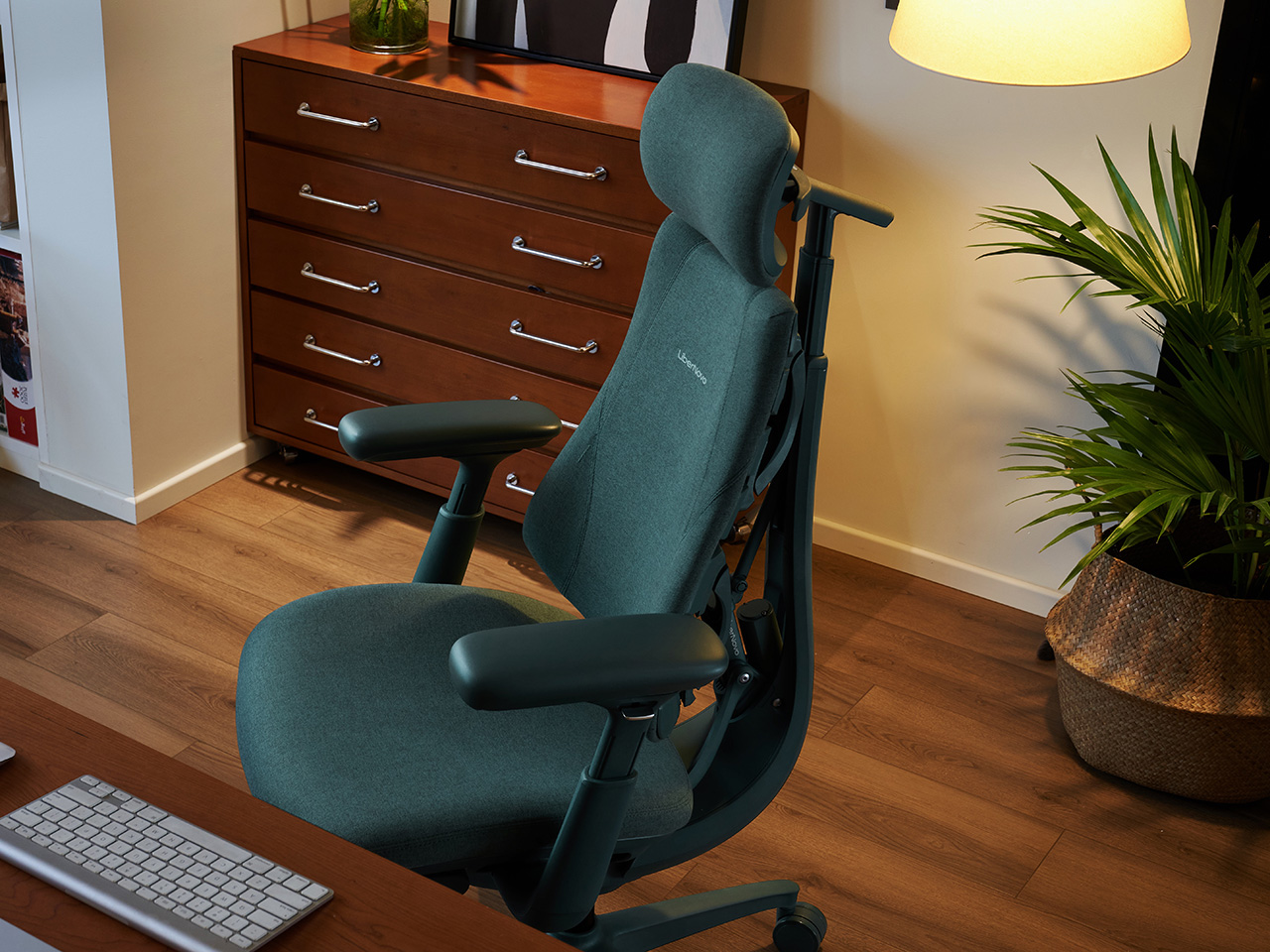
We’ve been fans of the LiberNovo Omni pretty much since day one (and the chair even secured an iF Design Award this year) because it rejected the foundational assumption behind almost every ergonomic seat on the market. Traditional chairs treat sitting as a problem to be solved with the right fixed position. The Omni treats it as a continuous, dynamic event. Its Bionic FlexFit backrest uses 16 spherical joints and eight elastic panels to create a responsive S-curve that maintains full spinal contact as you move, lean, and fidget through your day. Rather than locking you into an ideal posture and hoping for the best, it follows you. LiberNovo calls this “Support by Motion,” and after three rounds of coverage, it remains the most honest description of what the chair actually does.

Designer: LiberNovo

Click Here to Buy Now: $929 $1099 ($170 off). Hurry, deal ends in 48-hours!

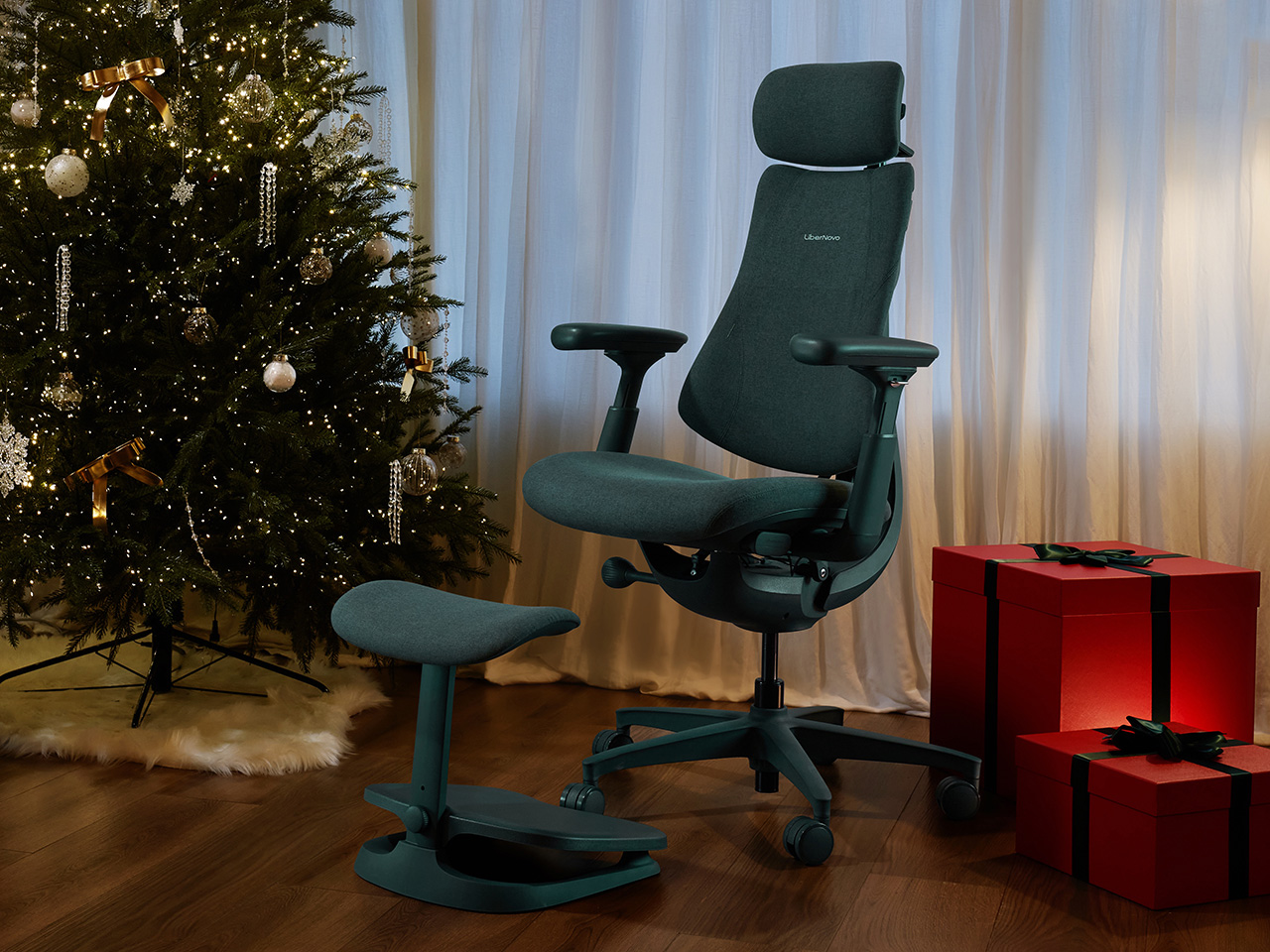
What the Spring Refresh edition brings into focus is the Moss Green colorway, and the design rationale runs deeper than seasonal window dressing. Office furniture has defaulted to clinical grays and matte blacks for decades because they read as serious and professional, but that palette does nothing for the visual fatigue that compounds over a long work session. The Moss Green option is a low-saturation, earth-toned hue informed by biophilic design principles, which connect sustained exposure to natural tones with measurable psychological restoration. The short-pile velvet surface introduced with this variant reinforces that effect tactilely, rated to withstand over 50,000 wear cycles while remaining breathable against skin. It is a quieter, more grounded presence than the existing Midnight Black and Space Grey options, and it suits the growing cohort of professionals who want their workspace to feel less like a server room.

The four recline modes map to distinct cognitive and physiological states that anyone logging long creative or technical sessions will recognize. The 105° Deep Focus position keeps the body alert and slightly forward, suited for concentrated output where posture and attention run in parallel. The 120° Solo Work setting is where most of a professional day actually happens, steady and supported without any sense of being locked in place. At 135°, the chair shifts into active recovery territory, appropriate for long calls or the kind of diffuse thinking that does not look like work but frequently is. The 160° Spine Flow position, combined with the OmniStretch motorized stretch function, delivers a five-minute spinal decompression cycle that reframes the mid-afternoon energy crash as something addressable rather than just inevitable.

The Spring Refresh pricing is tiered across both US and Canadian markets for the duration of the campaign. In the US, the Omni starts at $848, with Spring Refresh bundles discounted up to 30% off. Orders over $800 receive a $15 instant checkout discount, orders above $900 include the Eco Comfort Set comprising a silk eye mask, eco tote bag, and StepSync mat, and orders over $1,000 unlock the Ultimate Perks Pack with a branded cap, sticker set, tote bag, and limited-edition fridge magnet. Canadian pricing starts at CA$1,292, with bundles up to 34% off and parallel tier thresholds at CA$1,200, CA$1,400, and CA$1,500 respectively. The promotion runs through April 15 in both regions.

The broader argument LiberNovo is making this season is worth sitting with. Most workspace upgrades stop at the surface: a new desk pad, better cable management, the kind of organization that photographs well but does not change how your body feels at 4pm. The Omni, particularly in the Moss Green edition, pushes toward a different category of improvement, one that treats the workspace as health infrastructure rather than aesthetic backdrop. That is a less immediately gratifying pitch than a fresh coat of paint on the home office, but for anyone who has spent enough time in a bad chair to understand what a good one actually costs, it is the more compelling one.

Click Here to Buy Now: $929 $1099 ($170 off). Hurry, deal ends in 48-hours!

The post Stop Adjusting Your Office Chair. The LiberNovo Omni Adjusts to You Instead first appeared on Yanko Design.
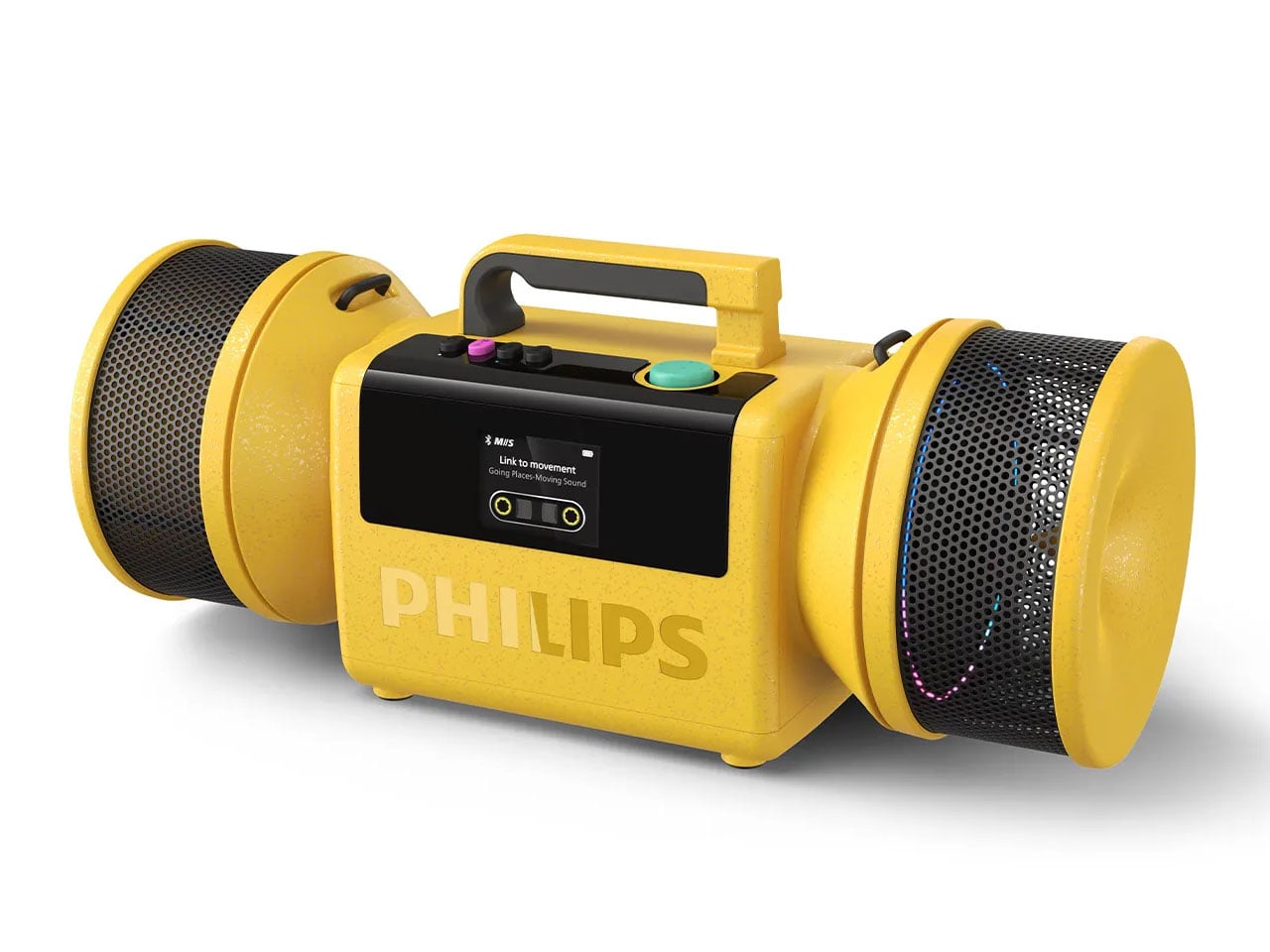
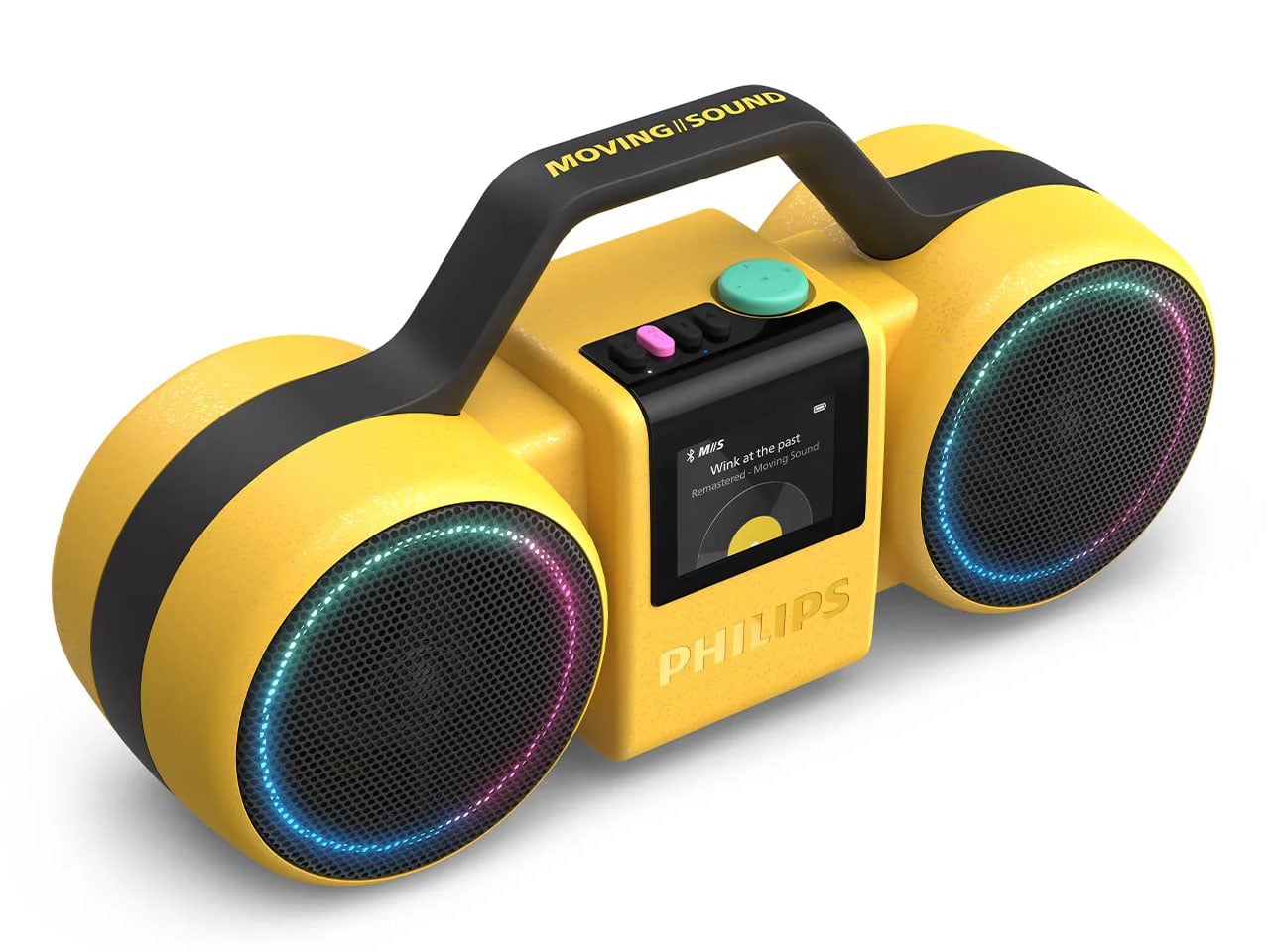
Philips Moving Sound line-up impresses with retro chunky form and peppy colors

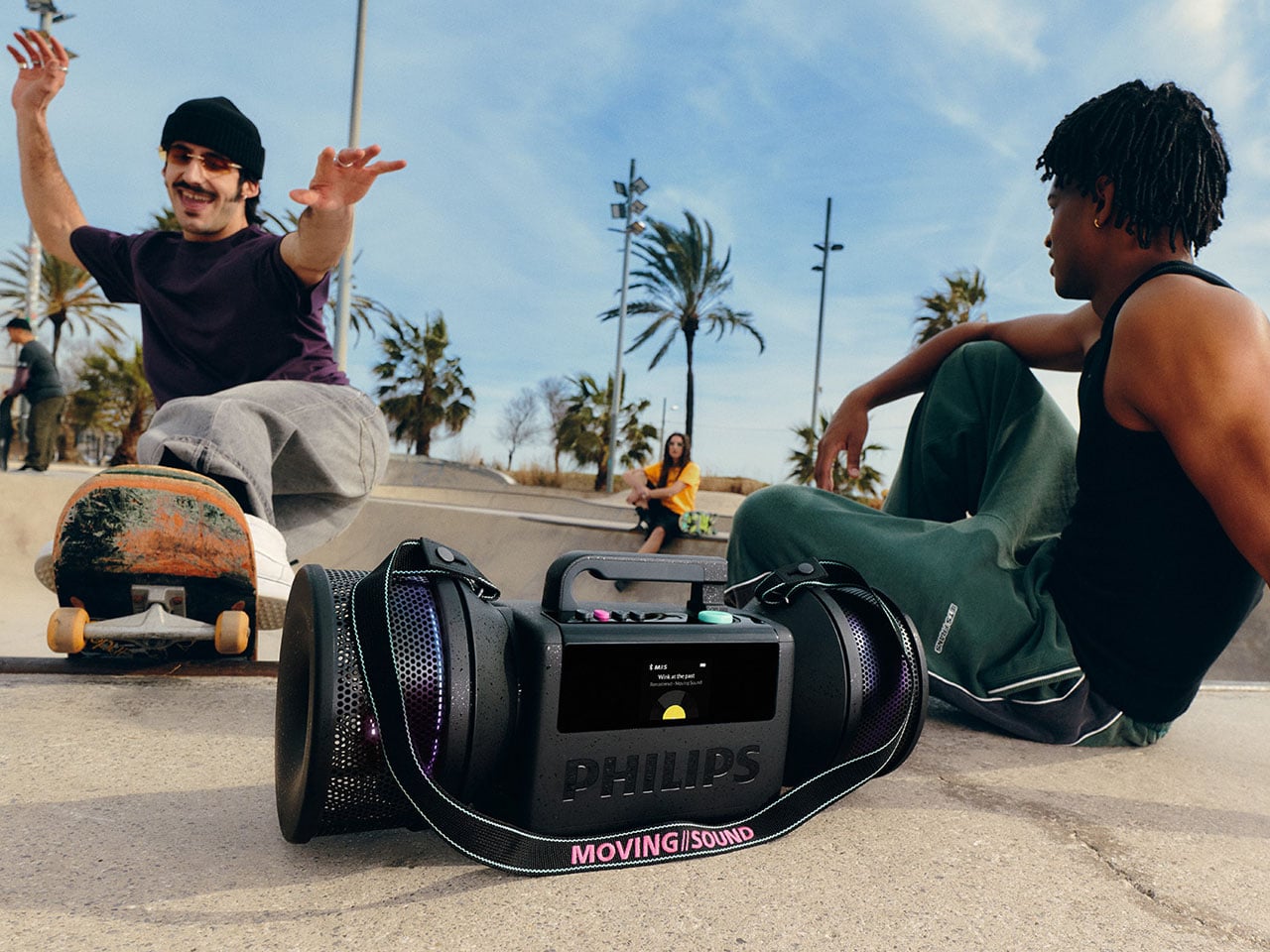
Philips is going all in with the retro vibe of 80s, because why not? The era was signified by bold colors and freedom of expression that somehow got lost in the craving for clean designs. The Dutch multinational wants to bring back that classic feel with its Moving Sound line-up that’ll have you drooling over. That pure magnetism of the retro-futuristic design sense, paired with the bright hues, is enough to get the party started.

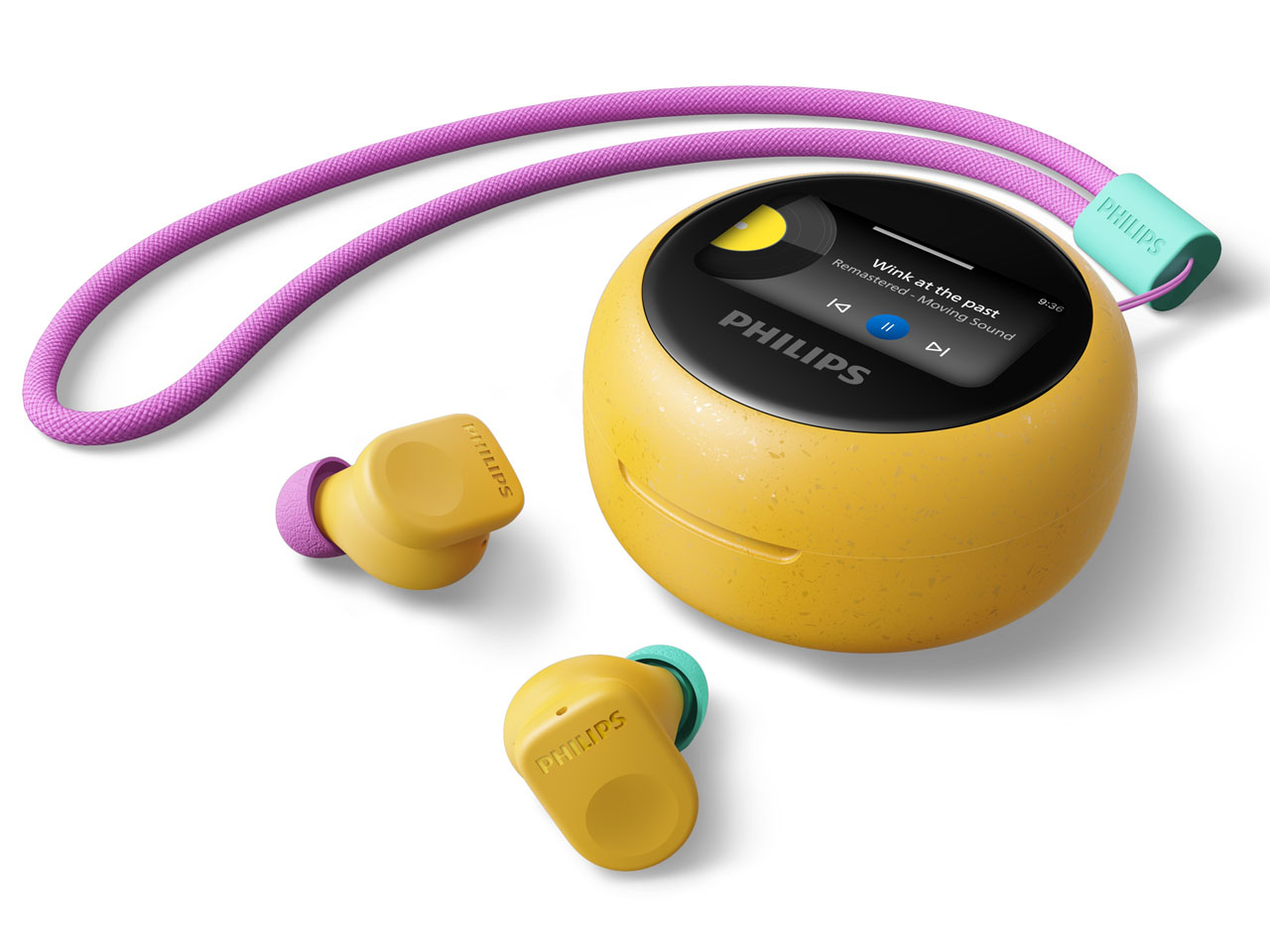
The new range is a modern reinterpretation of the 1980’s Philips Moving Sound design, and on the inside, there is technology of modern times. This audio accessory lineup is headed by two portable Bluetooth speakers, a pair of headphones, and cheeky earbuds that are hard to resist. All of them come in attractive color combinations for a nostalgic feel. Most importantly, sustainability is at the core of the range, featuring replaceable batteries, extensive use of RCS-certified plastics, and FSC-certified plastic-free packaging.

Designer: Philips

The Tube (MS80) and The Roller (MS60) Speaker

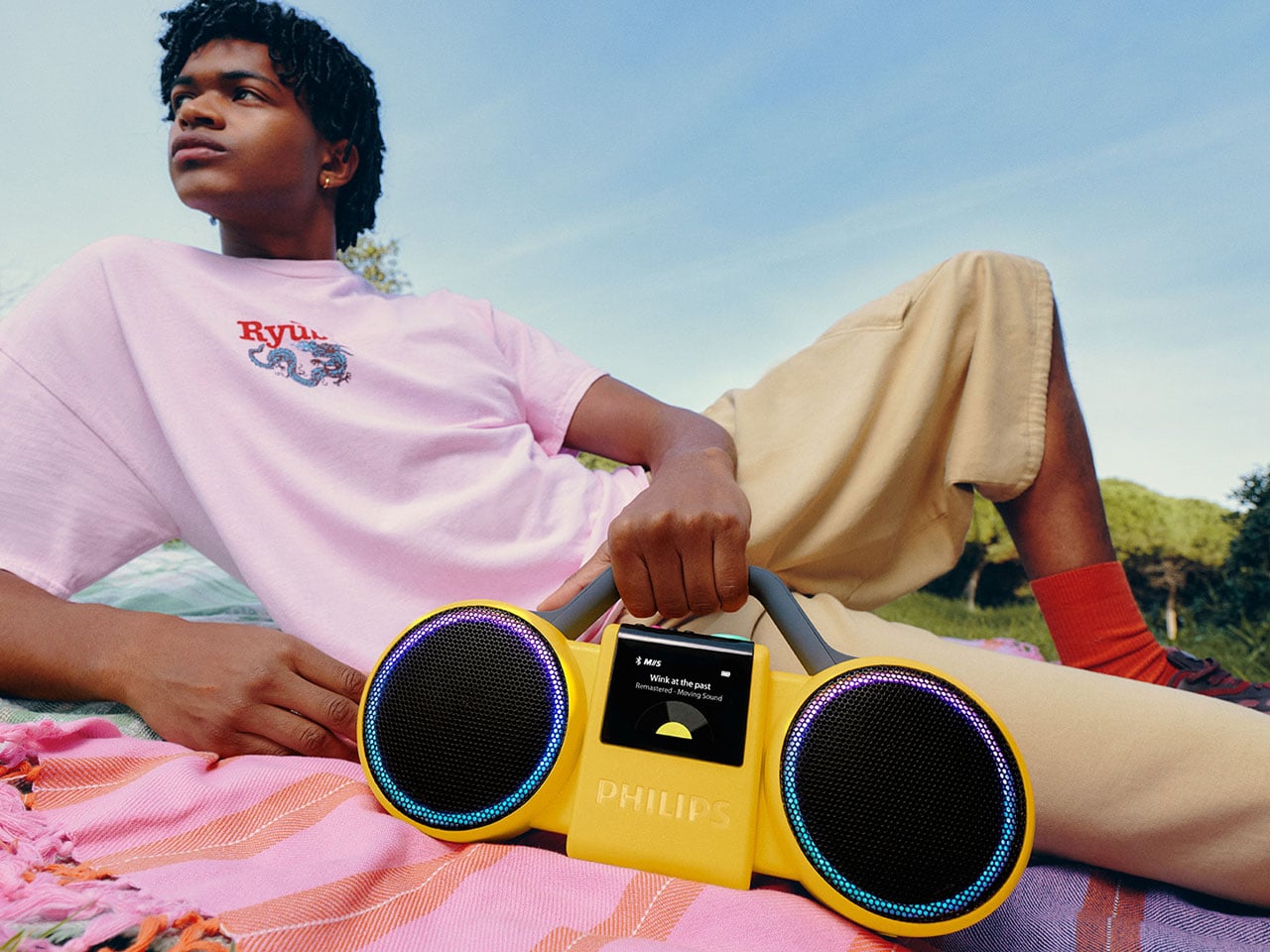
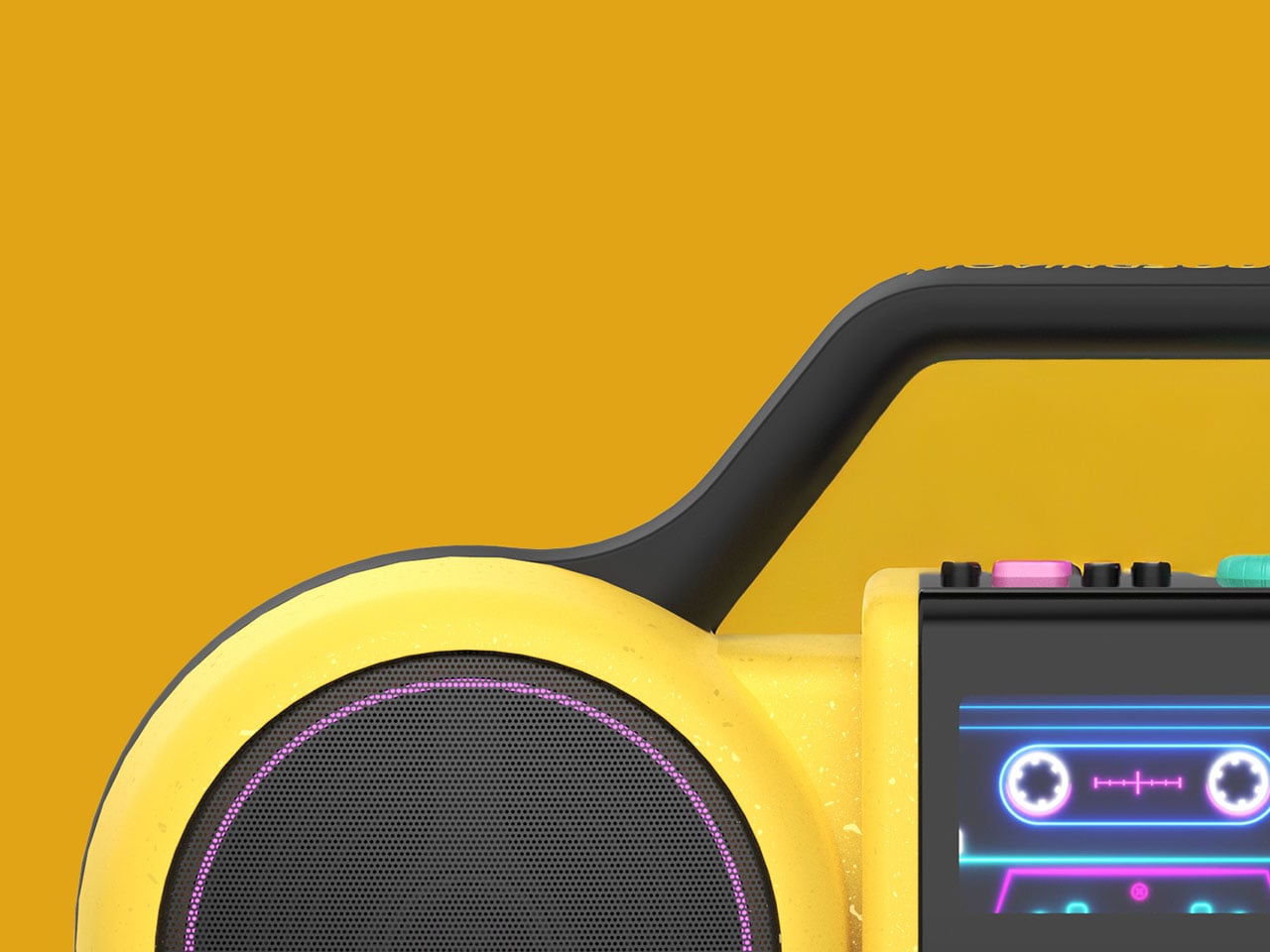
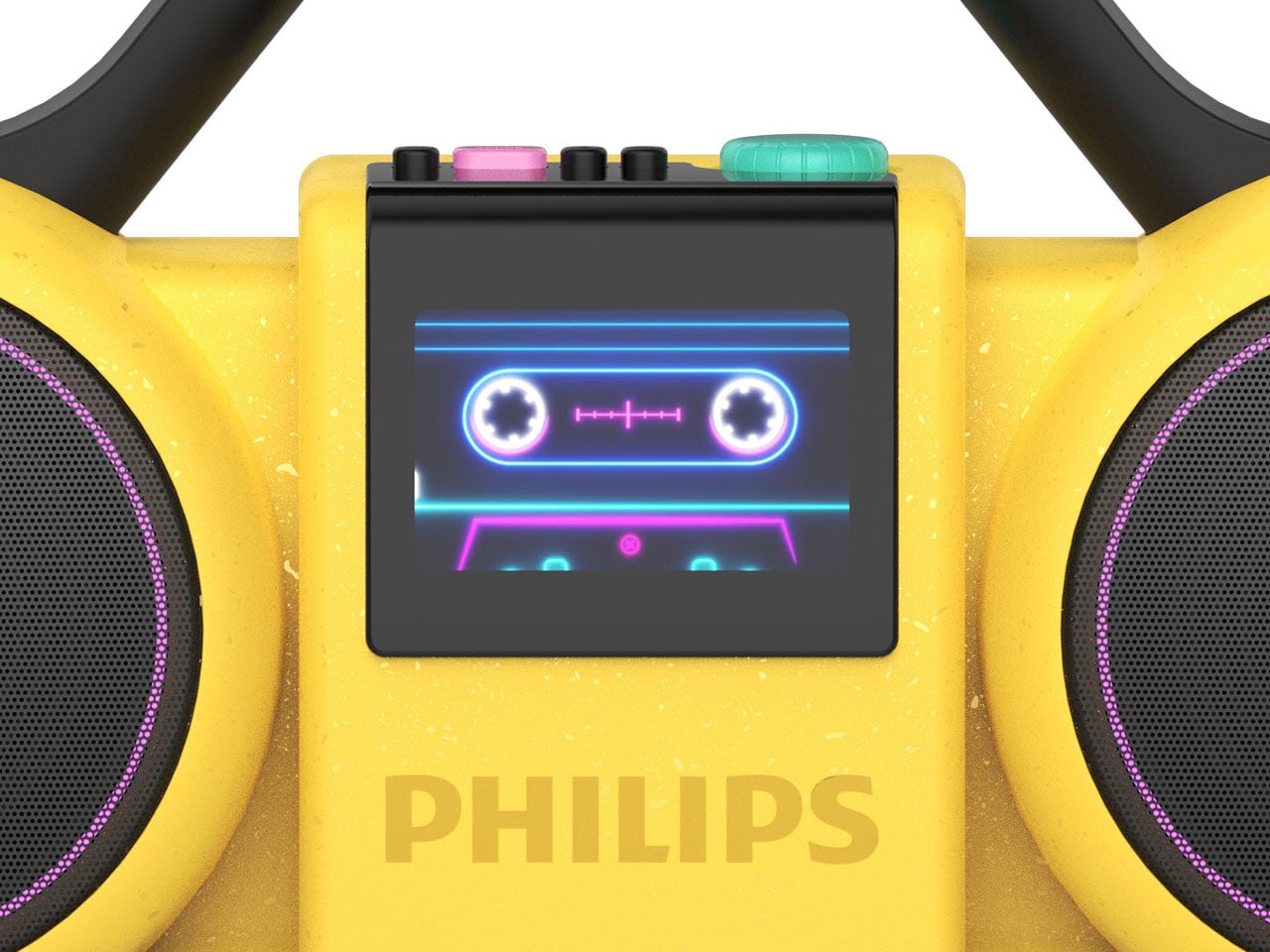
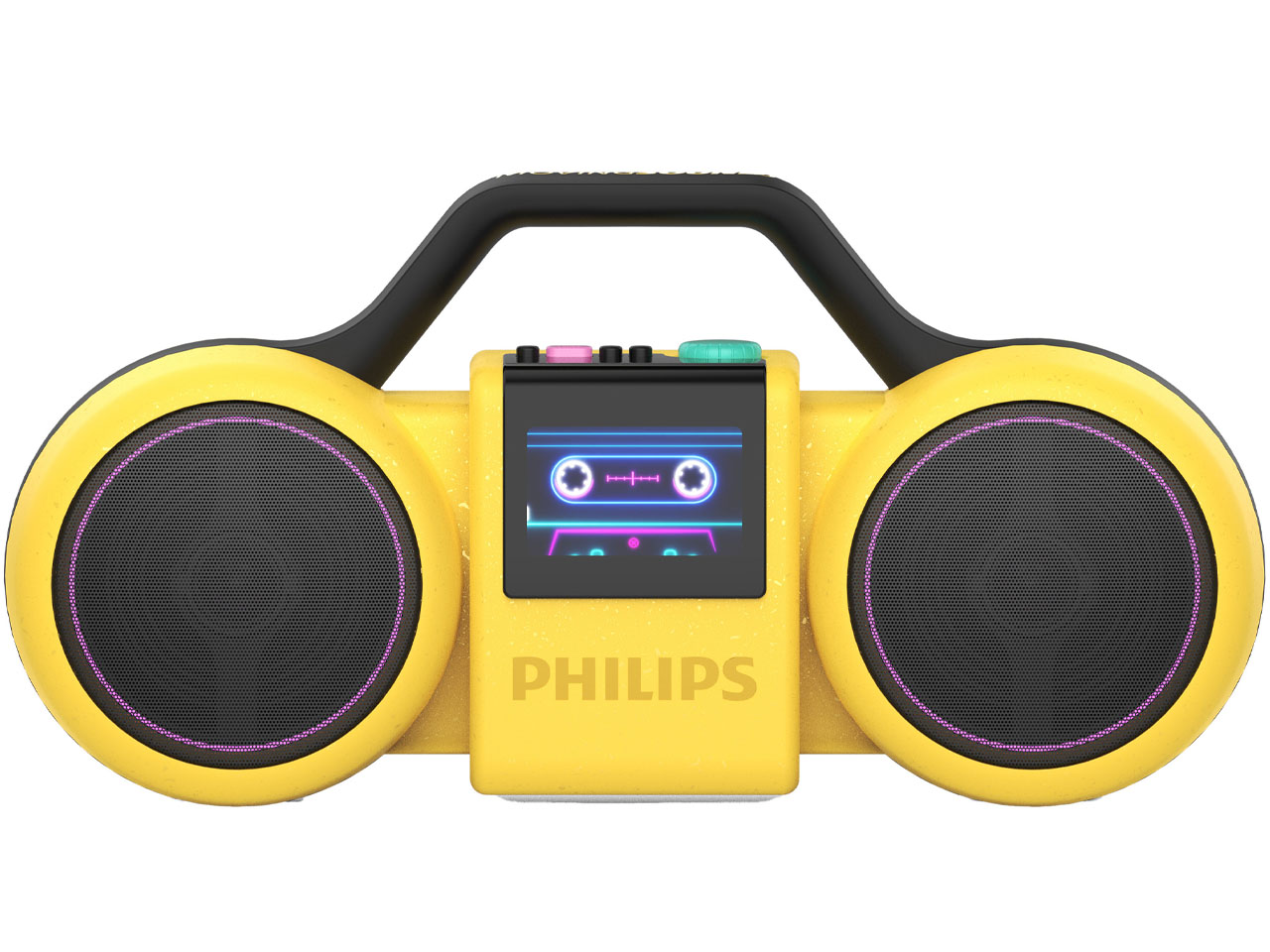
Philips has brought two portable Bluetooth speakers to the fore, which overshadow any other option on the market for their bold retro feel. The €349.99 (approximately $402) Tube (MS80) speaker is a boxy option with the bright yellow hue contrasted well with the matte black and the LED lighting around the speaker ring. It is not all looks as the IP67 rated speaker produces 140W of thumping sound via the two five-inch woofers, two tweeters, and a dual passive radiator setup. The Tube (MS80) retains the nostalgia with a color display showing the looping cassette animation. The speaker has a 24-hour battery life, which will obviously depend on the volume levels at which it is played. Modern connectivity options like Bluetooth 5.5, Auracast, and USB make this a true audio lover’s accessory.

On the other hand, The Roller (MS60), priced at €179.99 (approximately $208), is similar to the Tube (MS80) with a smaller footprint and more contoured look. The stereo layout comprises woofers, tweeters and passive radiators, and for low-end addicts, the bass can be tuned up using the Bass+ feature. The IP67 speaker generates 60W sound and comes with the same modern connectivity options as the big brother. Since it generates less wattage, it is also rated at 24-hour battery life. You can also utilize the speaker as a battery bank for power-hungry gadgets.

The Buds (MS3) Earbuds

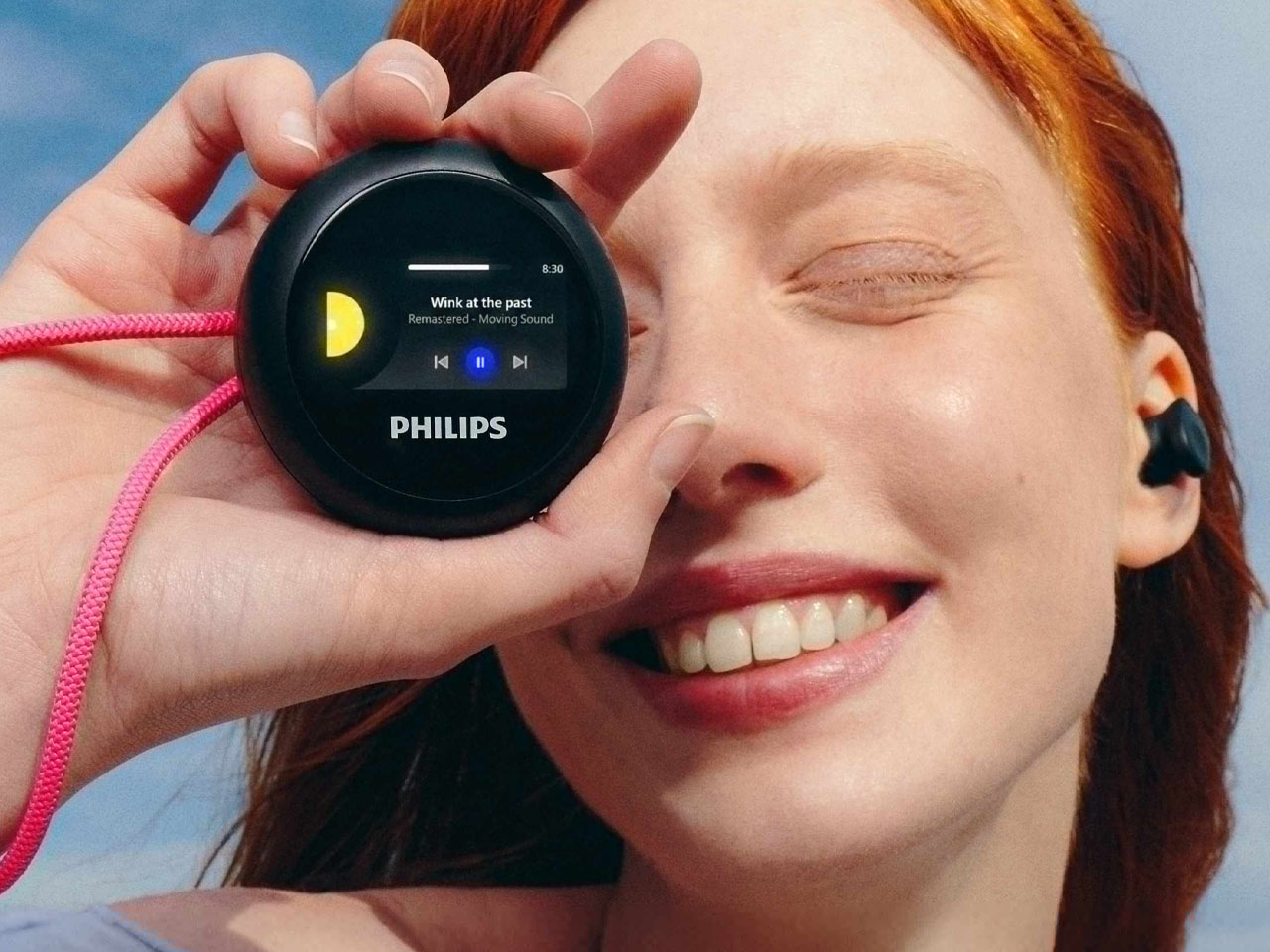
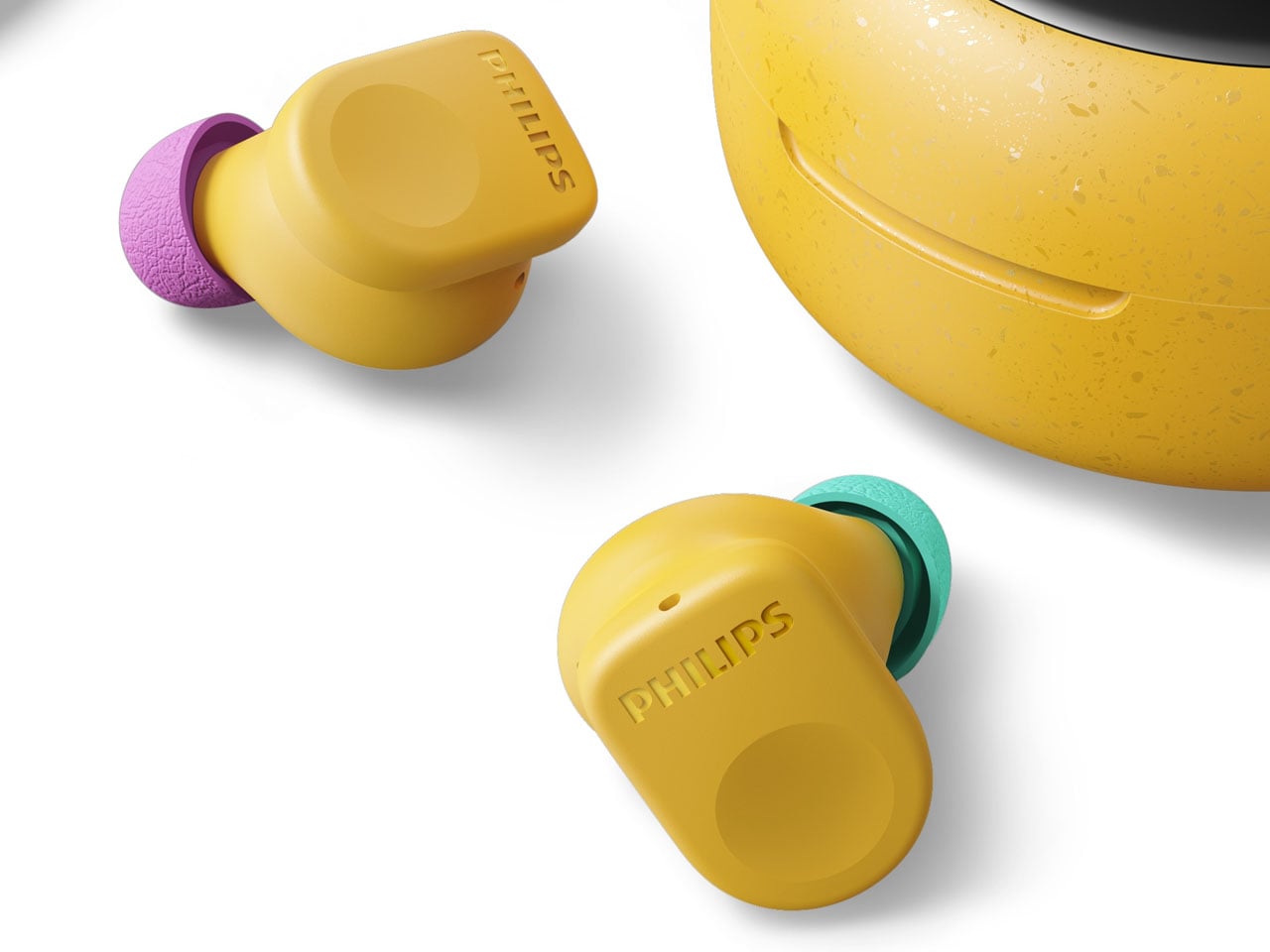
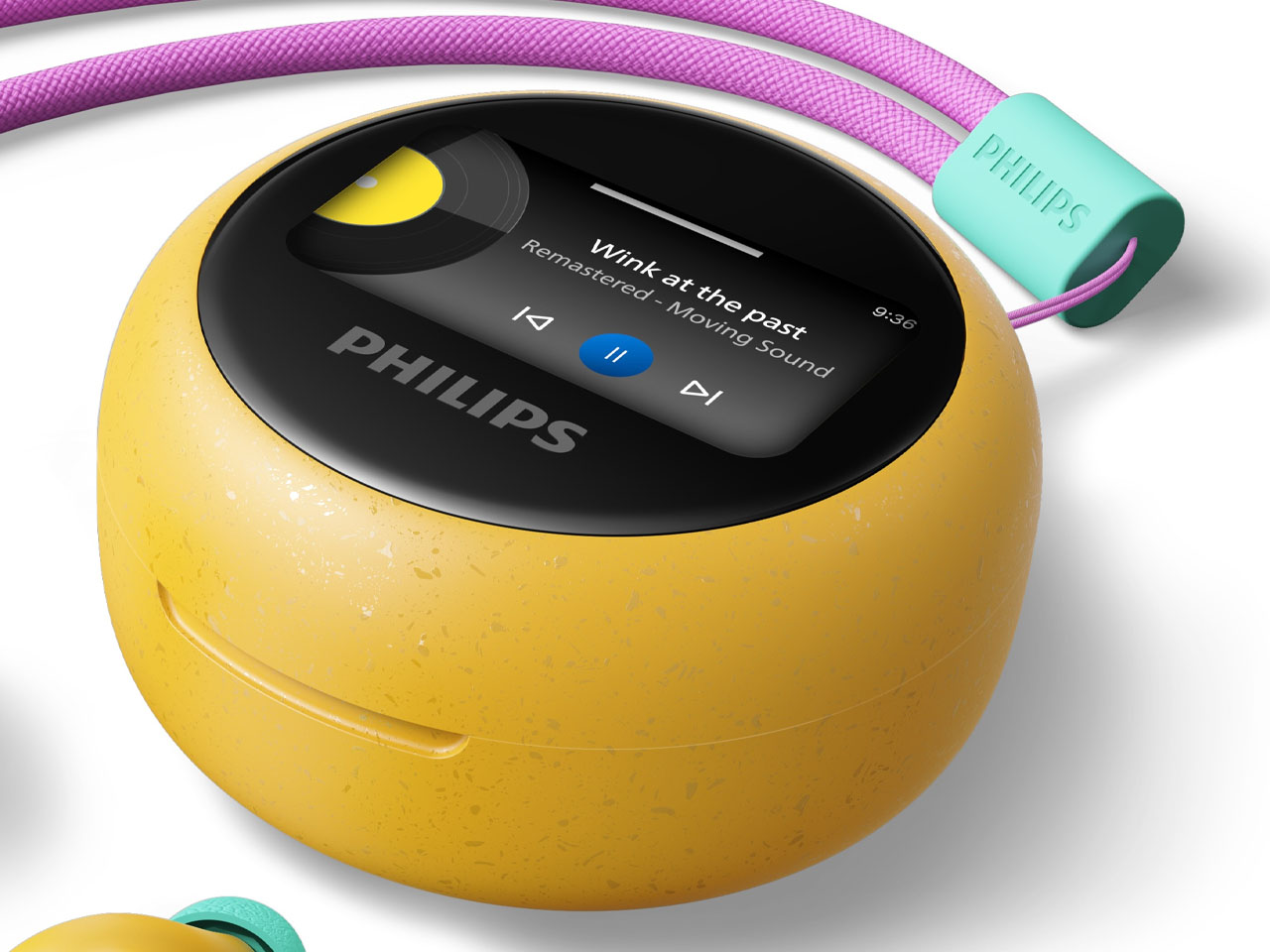
These are one of my favorites in the lineup for their cheesy appeal. The IP54-rated Buds (MS3) wireless earbuds come with a round case that has a touchscreen display on top to show the current playing track and an option to toggle the next or previous tracks. The hues on this are purely magical with the yellow, teal and neon pink splattered in perfect proportions. The buds boast six microphones in total for hybrid ANC, and come with Spatial Audio, multipoint connectivity, Swift Pair support, and Auracast. The promised battery life of 42 hours with ANC off is quite impressive, and a 10-minute quick charge lasts for two hours. For €79.99 (approximately $92) The Buds (MS3) are an absolute steal.

Ringo Duo (MS1) Headphones

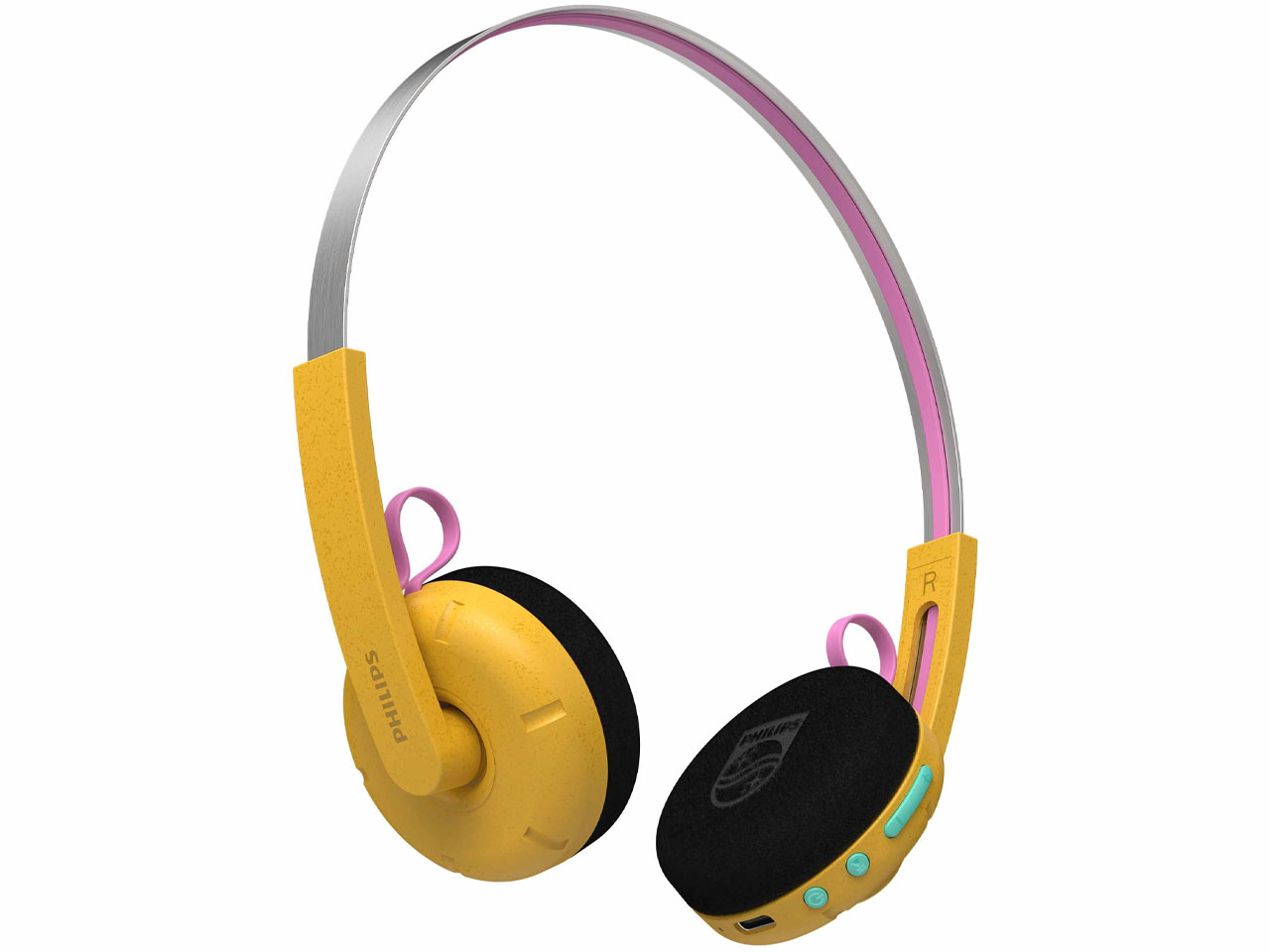
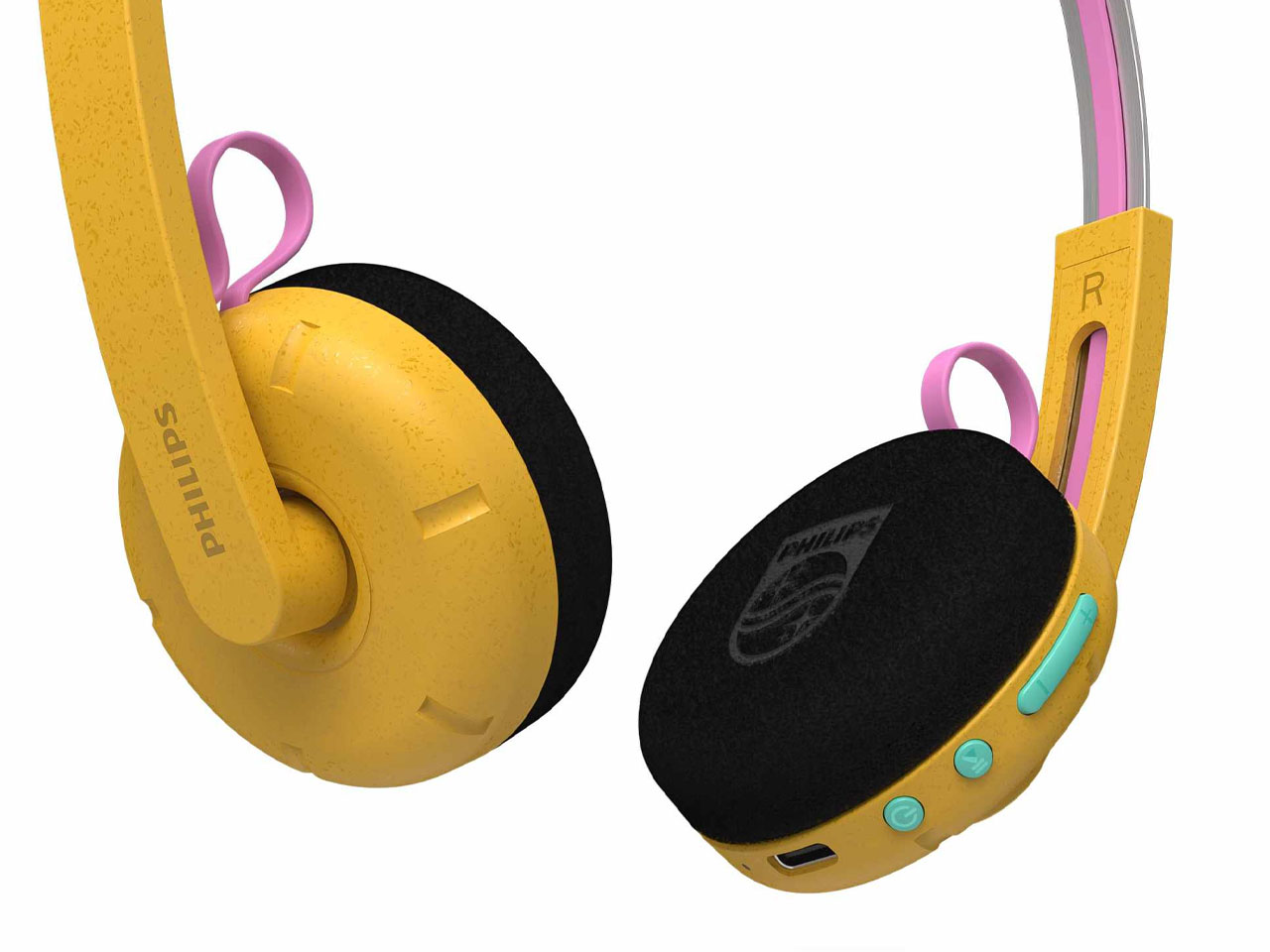
Philips was not going to miss out on the retro feel of on-ear headphones for this line-up. They have the telltale nostalgic look and feel, reminding me of the Back to the Future flick. They are lightweight and will take you back to the golden era if you pair them with music from the 80s. Audio quality from these is impressive courtesy of the 40mm drivers, and the promised 26 hours battery life should last you a couple of days of pure music bliss. You can connect them via Bluetooth or a wired connection, making them well-suited for daily driving. You won’t get anything better than the Ringo Duo (MS1) headphones priced at €34.99 (approximately $40).

The post Philips Moving Sound line-up impresses with retro chunky form and peppy colors first appeared on Yanko Design.
This $130 Mario Kart Racing Wheel for the Switch 2 Has Seven Sensitivity Levels for Throwing Banana Peels

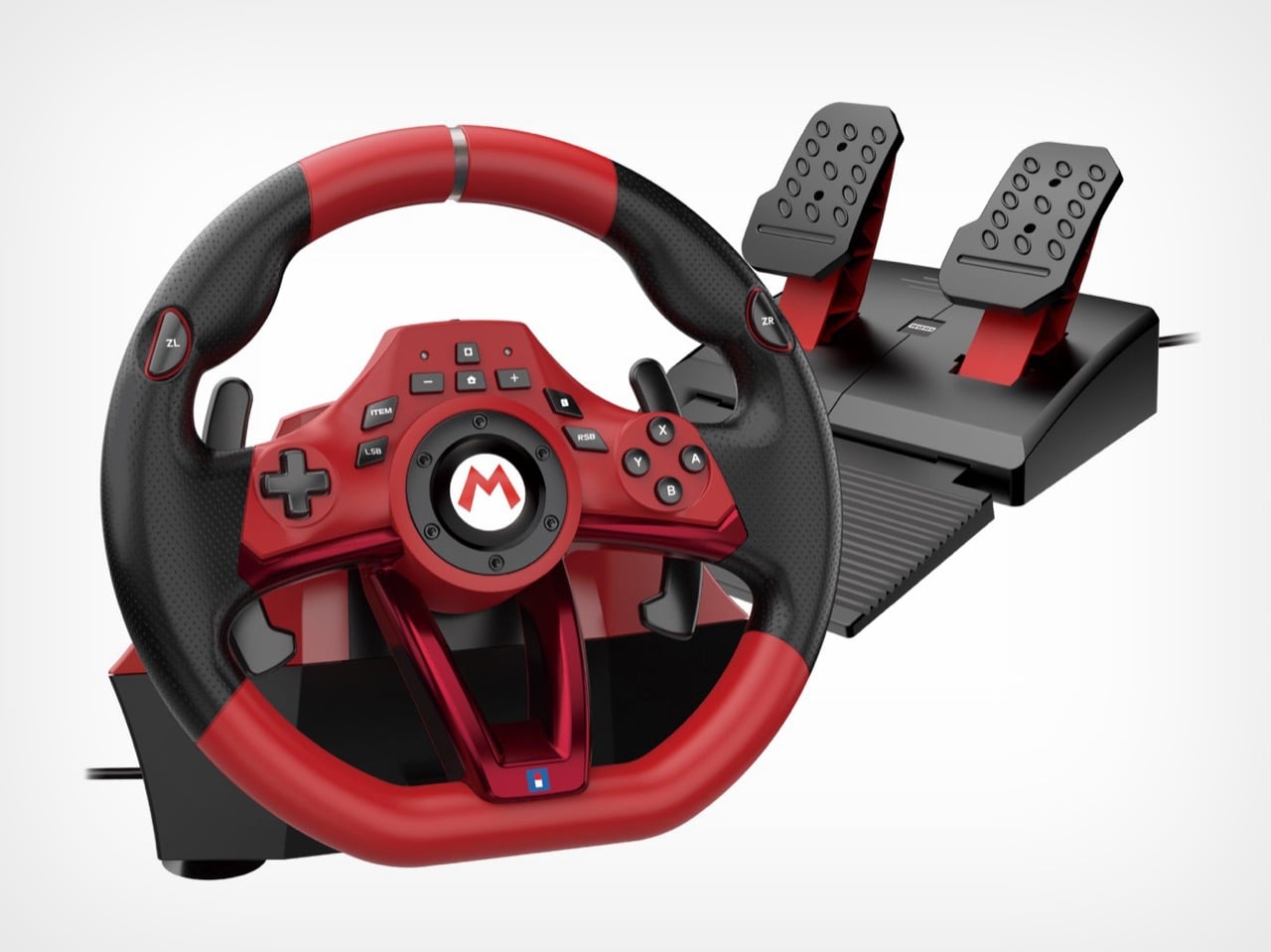
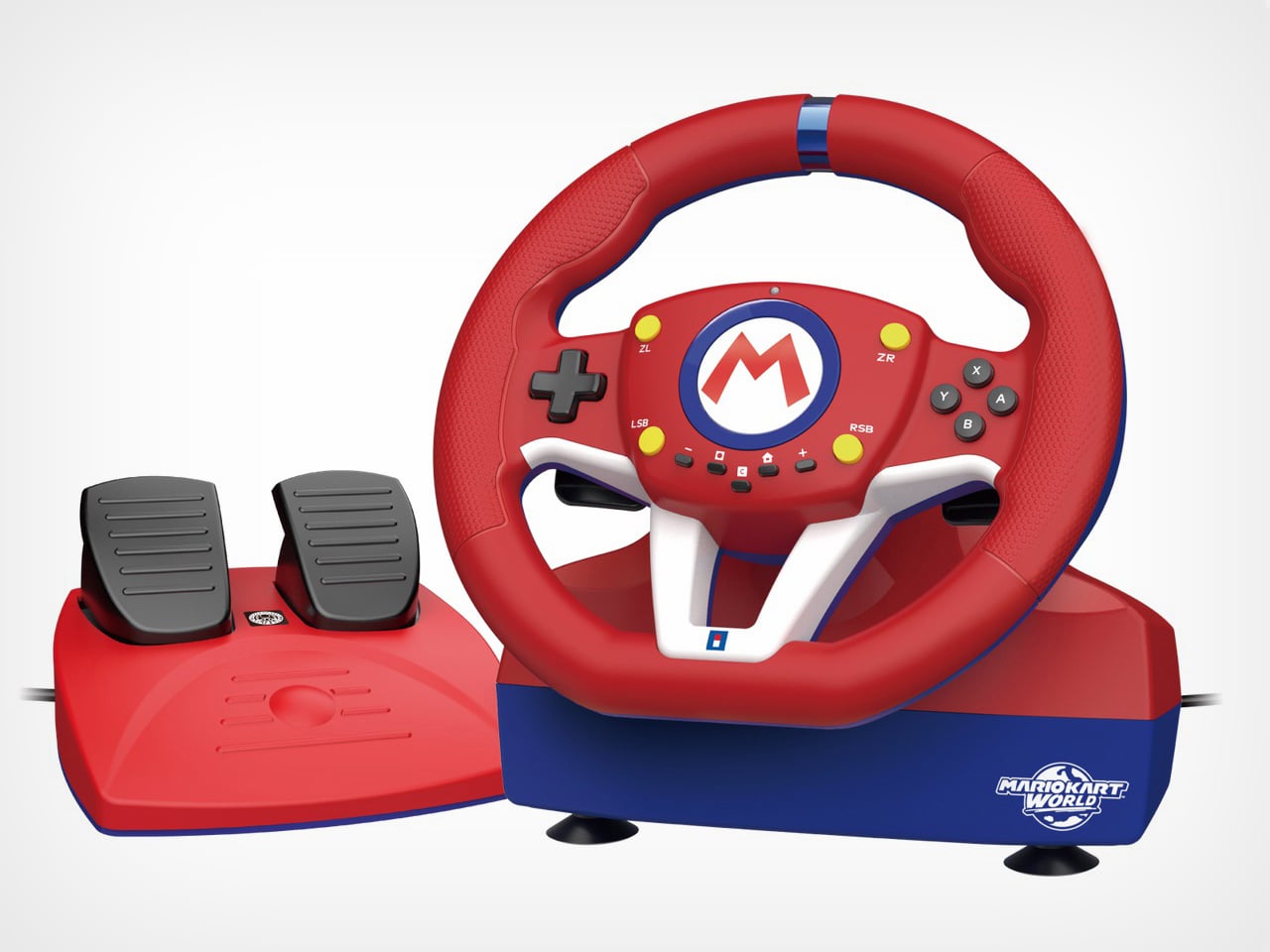
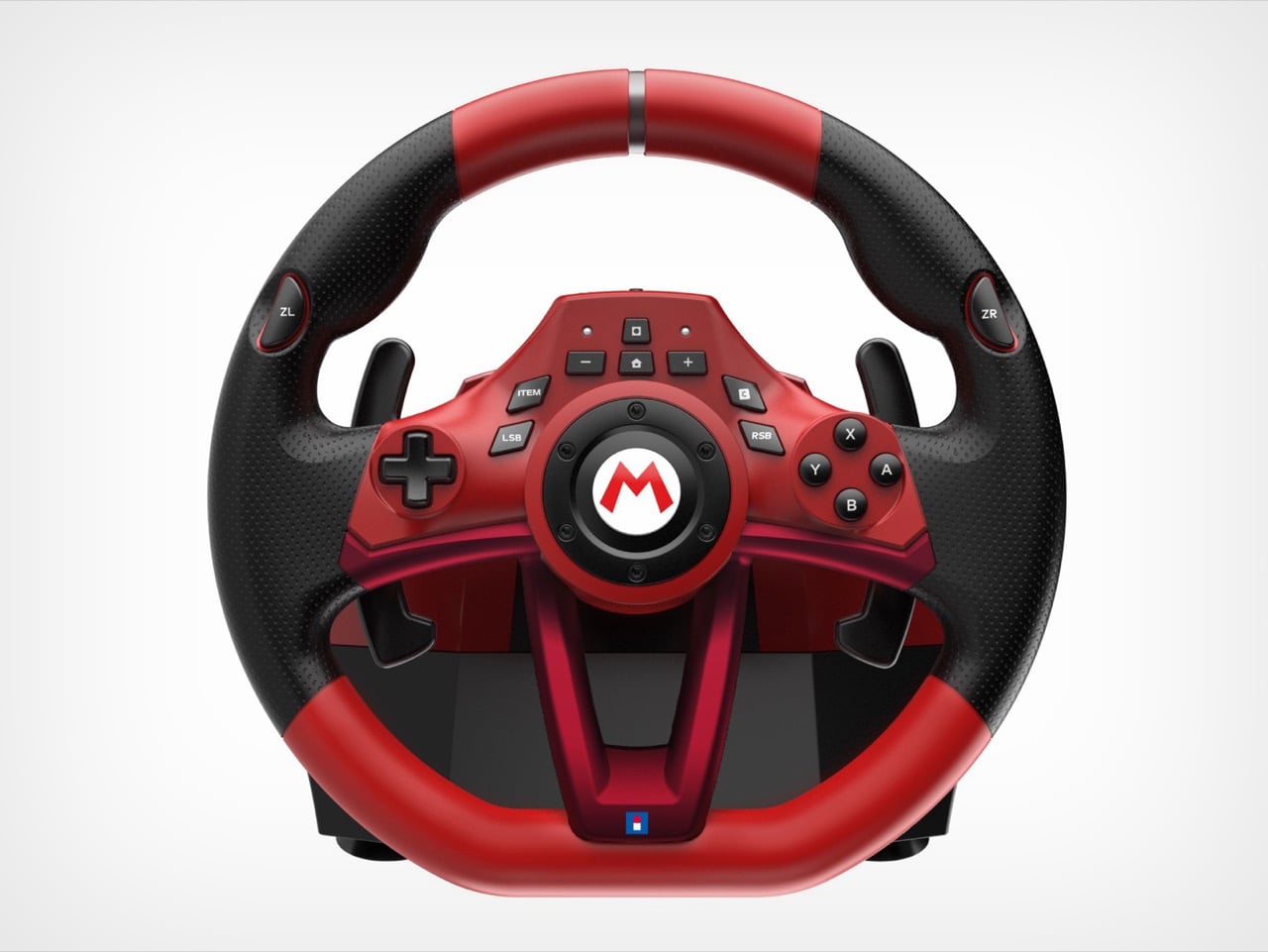
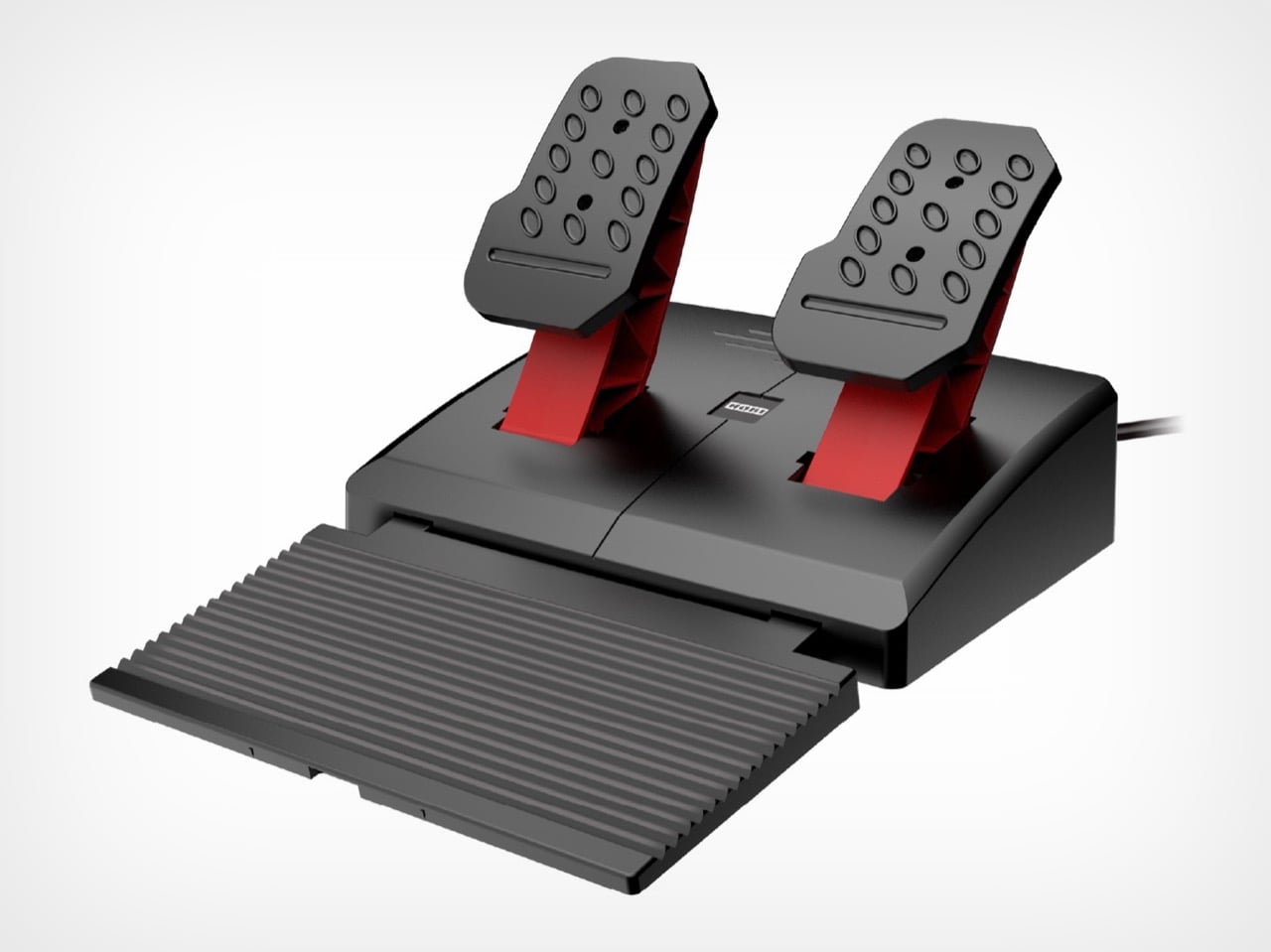
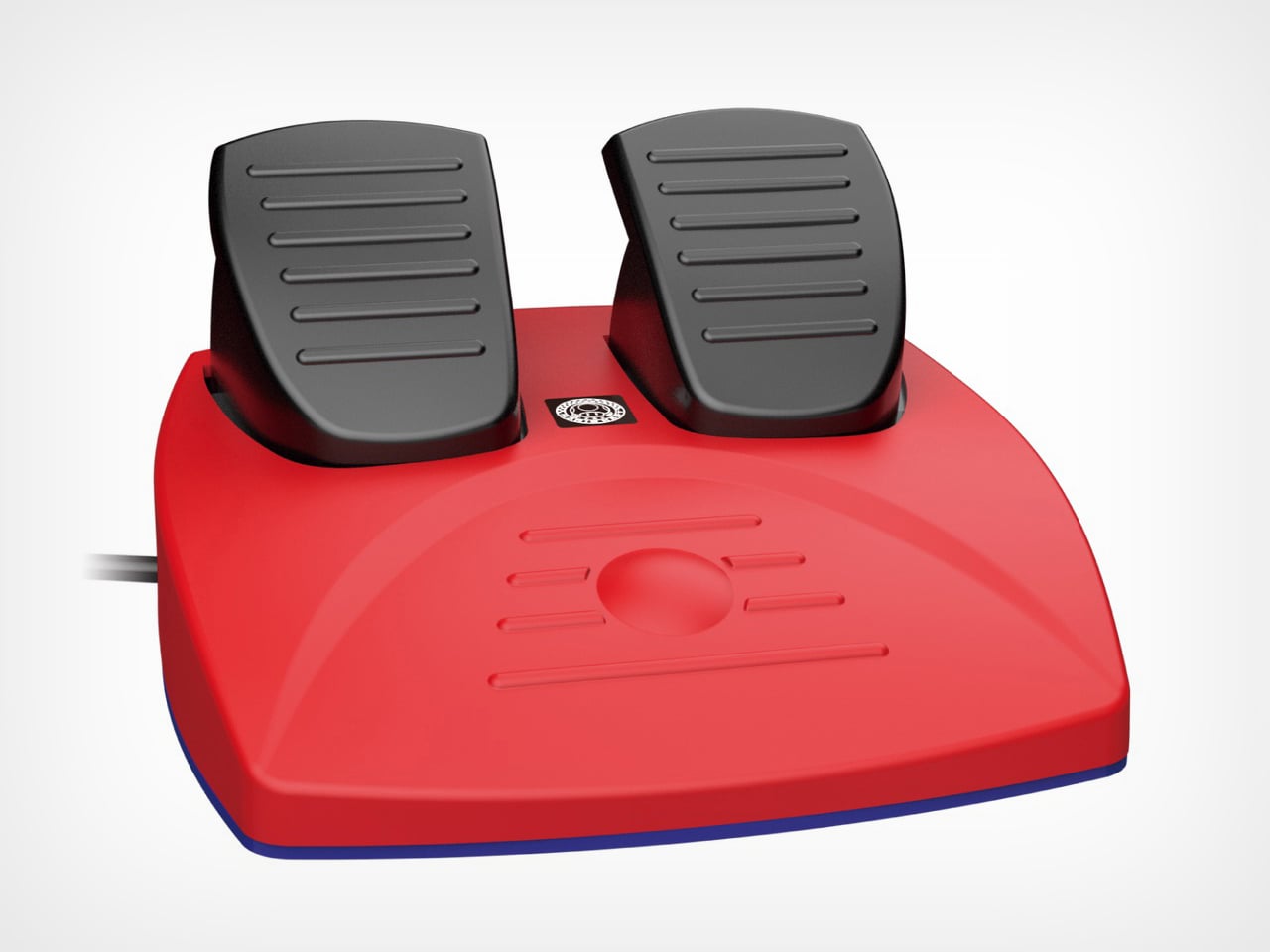
Nobody sits down to play Mario Kart and thinks “what this experience needs is a force feedback wheel, a pedal set, and a clamp-mounted desk rig.” And yet here we are, with Hori releasing two officially licensed racing wheels for the Switch 2, timed to launch alongside Mario Kart World on March 23. The Deluxe has an 11-inch wheel, a full pedal set, seven sensitivity levels, an adjustable dead zone, and a Quick Handling Mode that toggles steering output between 270 and 180 degrees. That last feature exists so you can more precisely navigate a rainbow-colored highway while a cartoon turtle throws a shell at you.

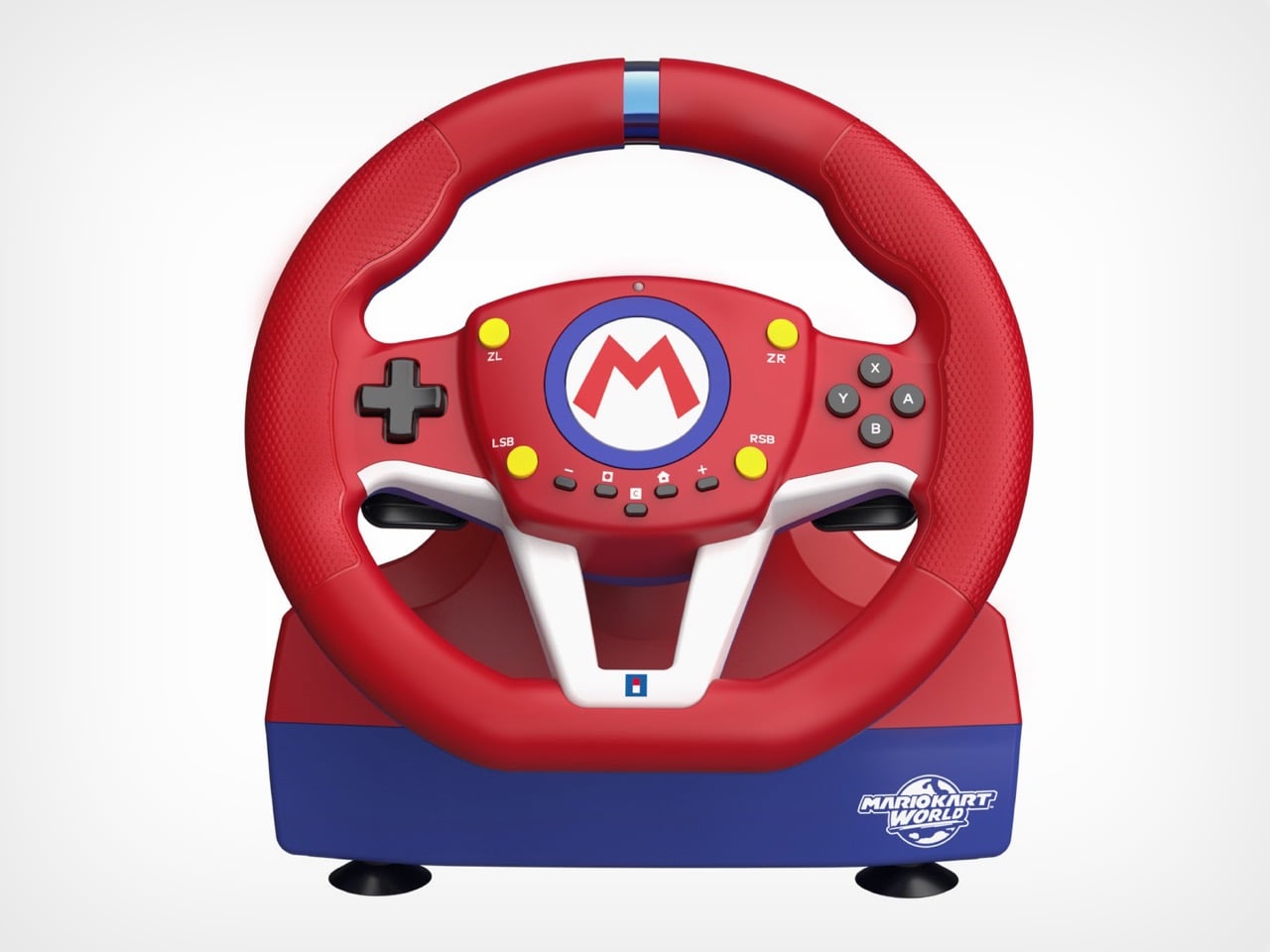
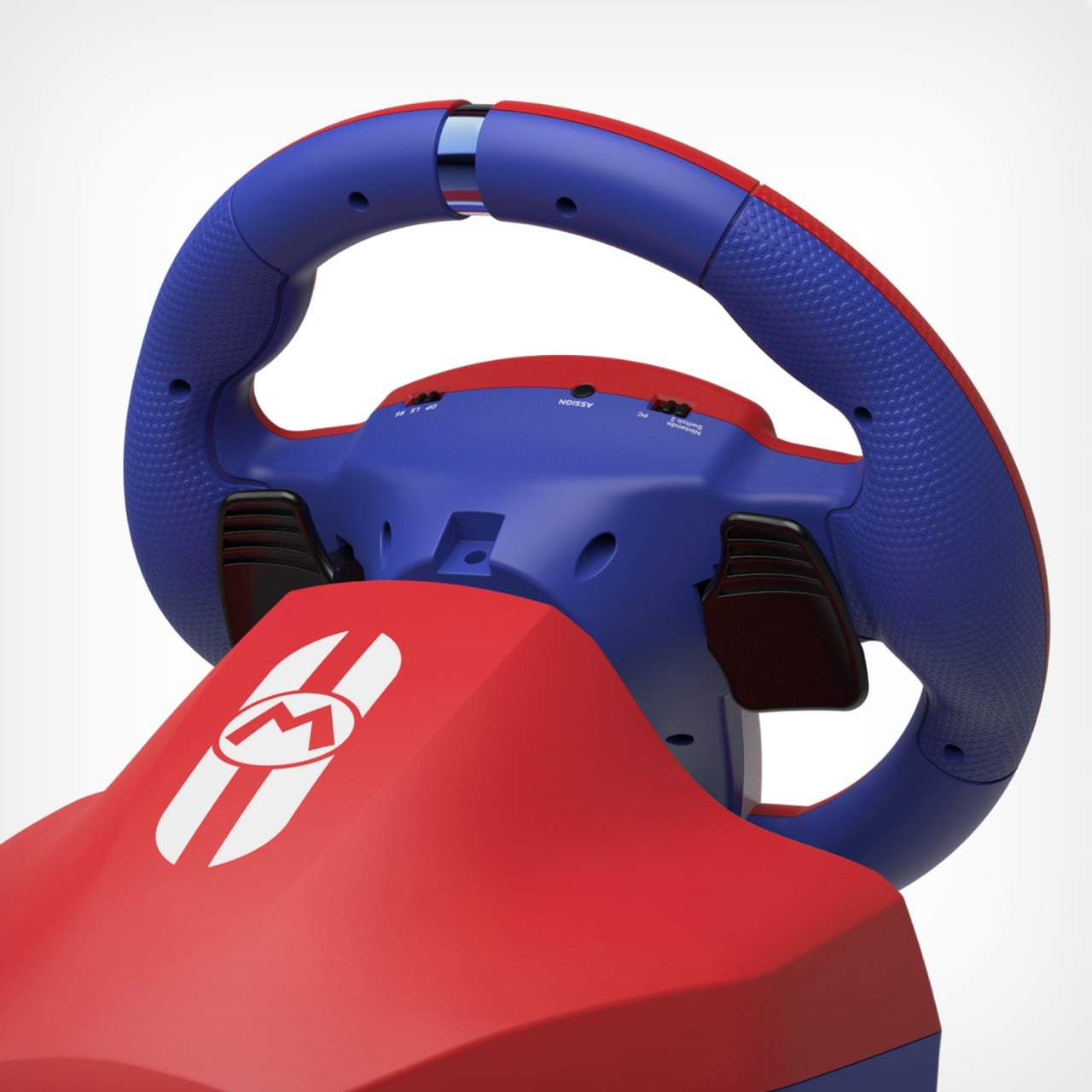
To be fair, the wheels look genuinely good. The Deluxe goes for a dark, almost aggressive red-and-black motorsport aesthetic, while the Mini leans fully into Mario’s red-blue-white color scheme with the Mario Kart World logo stamped on the base. Both add a C button for Switch 2’s GameChat, connect via a 9.8-foot USB-A cable, and work with the original Switch and OLED too. The Deluxe is $129.99, the Mini is $79.99, and both are available for pre-order now.

Designer: Hori

Click Here to Buy Now

The two wheels are closer in spec than the price gap suggests. Both have textured rubber grips, ZL and ZR buttons, racing paddles, programmable buttons, and the same ZL hold function that lets you drag items behind your kart in Mario Kart 8 Deluxe. That hold function is disabled in Mario Kart World, which handles item use differently, so if World is the primary reason you’re buying one of these, that particular feature is decorative. The Mini’s 8.6-inch wheel is smaller but not dramatically so, and for a game where precision steering matters about as much as knowing when to deploy a star, the size difference probably won’t register mid-race. Both also carry the Nintendo/PC toggle on the back, which is new to the Switch 2 versions and means you can run either wheel through a PC racing title if the Mario Kart novelty wears off.

The Mini, with its Fischer-Price aesthetic, attaches via suction cups only, which works fine on a smooth desk but becomes a liability if you’re the type to slam the wheel hard into a corner. The Deluxe, on the other hand, adds a physical clamp mount, a meaningful upgrade for anyone who takes their banana peel delivery system seriously. The dead zone adjustment and the 180/270 degree toggle are also Deluxe-only, and those matter more than they sound: dialing in the dead zone tightens center response considerably, and 180-degree mode makes the wheel feel snappier in arcadey conditions where full-rotation sim behavior would actively work against you.

The Deluxe reads like a peripheral that wants to be taken seriously, with perforated black leather-look grip material, metallic red spokes, and a fairly restrained button cluster around the center M logo. The Mini abandons that restraint completely: solid red rim, blue and white spokes, yellow accent buttons, Mario Kart World branding on the base. They’re aimed at different buyers within the same audience, and the visual split is deliberate enough that you wouldn’t mistake one for the other in a product lineup.

Both wheels connect over USB-A, which is worth flagging because the Switch 2 uses USB-C natively. You will need an adapter or a hub, and Hori ships neither in the box. The 9.8-foot cable is generous in length, but the connector mismatch is a friction point on a product designed specifically for a new console, and it’s the kind of thing that should have been sorted at the design stage rather than left to the buyer.

Hori has been the default answer for Switch racing wheels since the original console launched, and these Switch 2 versions do not reinvent that position. The older Switch wheels already work on the Switch 2, so this is really a product for new Switch 2 buyers rather than existing Hori customers looking to upgrade. For that audience, $79.99 for the Mini is a reasonable ask, $129.99 for the Deluxe is justified by the clamp mount and calibration options alone, and both are about as good as a wired USB wheel built around Mario Kart is ever going to get. Whether you need one is a separate question, but if you’re going to sit down with a dedicated racing rig to hurl banana peels at a go-kart driven by a plumber, at least Hori has given you two good ways to do it.

Click Here to Buy Now

The post This $130 Mario Kart Racing Wheel for the Switch 2 Has Seven Sensitivity Levels for Throwing Banana Peels first appeared on Yanko Design.
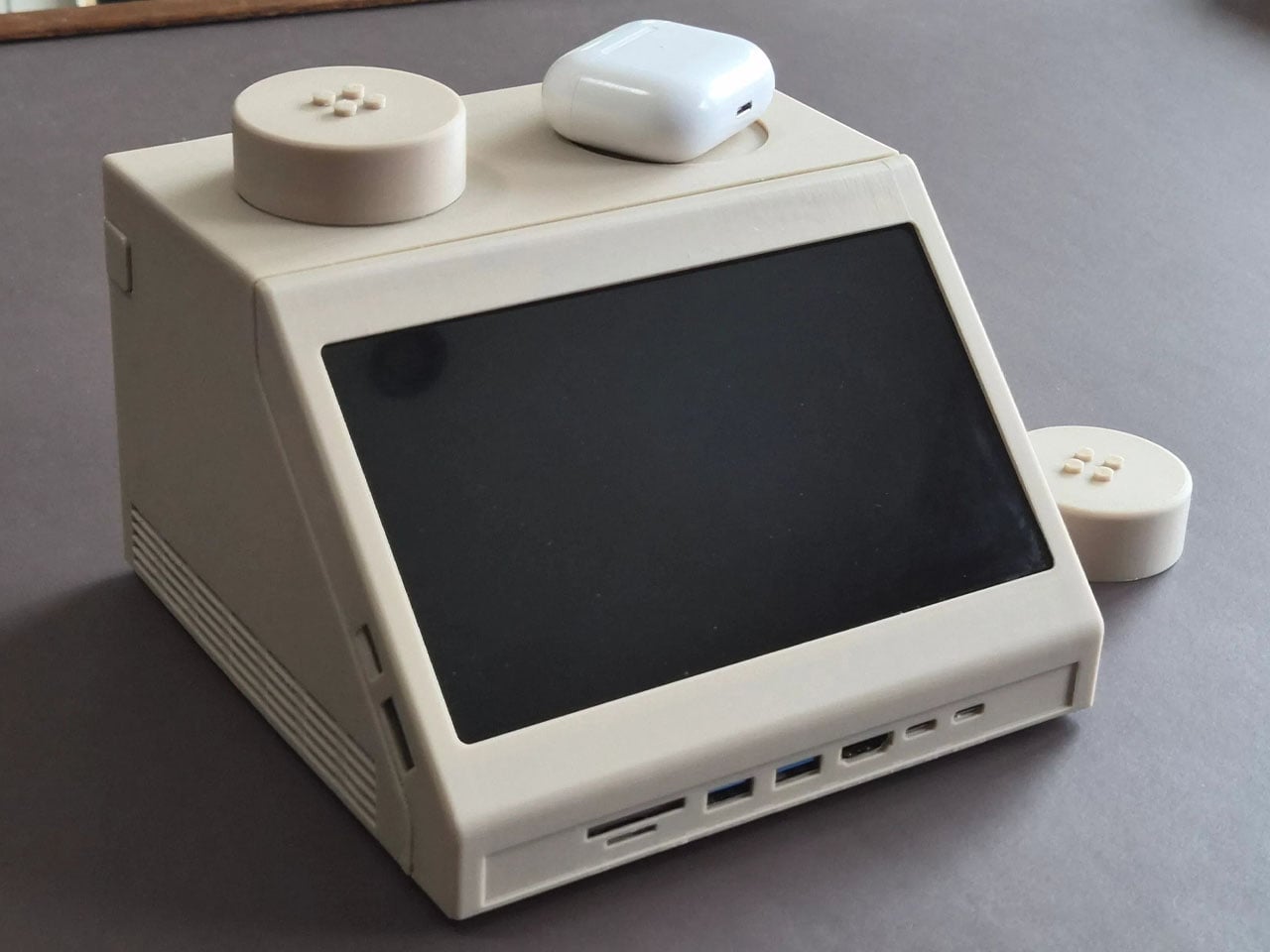
This classic 1979 LEGO computer brick hides a fully functional Mac mini workstation inside

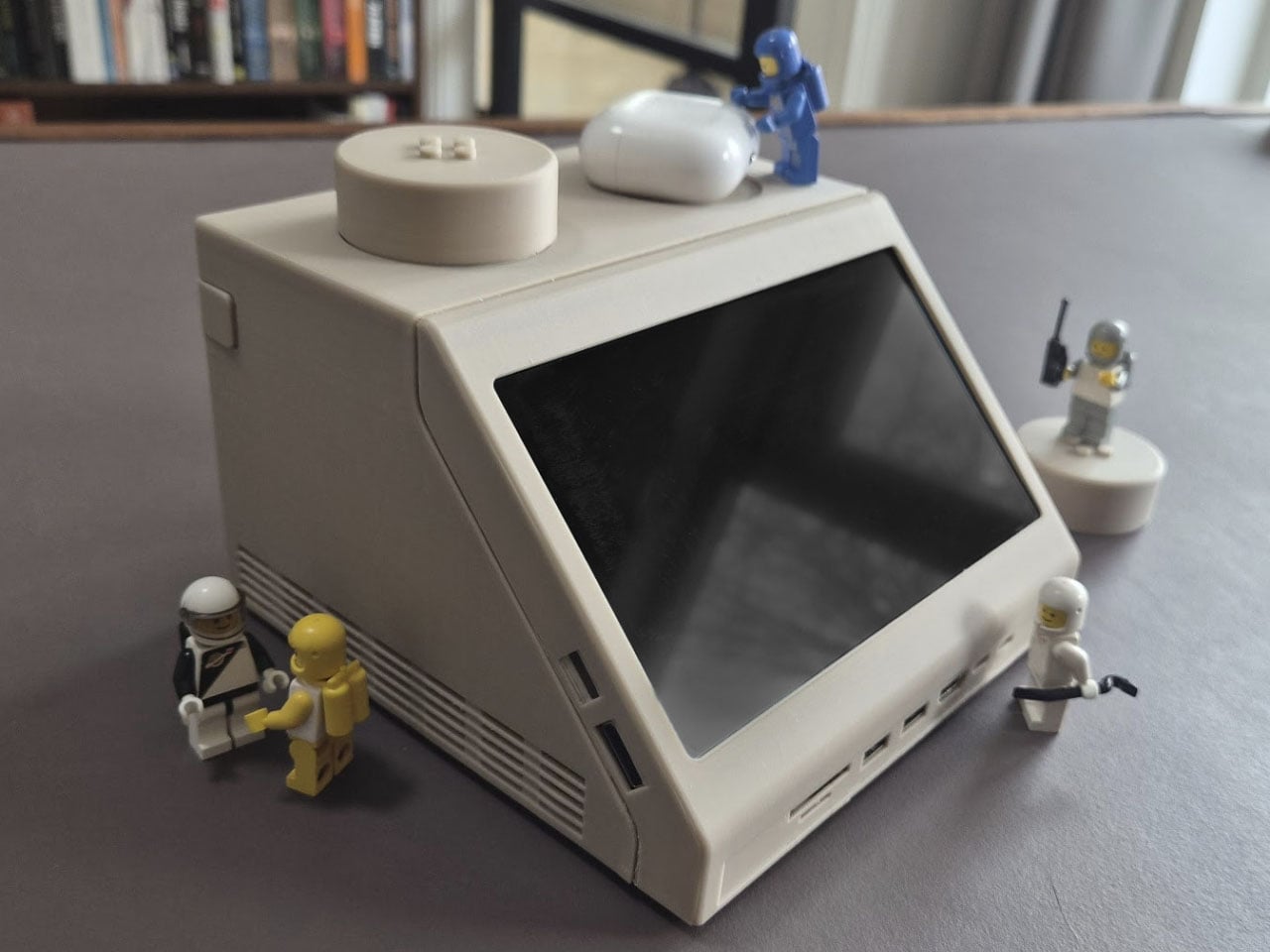

Retro designs often carry a sense of nostalgia, but occasionally they evolve into something more functional and imaginative. The M2x2 workstation by Watt IV is a good example with the inventive reinterpretation of a classic LEGO element transformed into a fully working desktop computer. Created by Dutch designer Paul Staal, the device takes inspiration from the iconic sloped LEGO computer brick introduced in 1979 and scales it up into a practical workstation powered by a modern Mac mini.

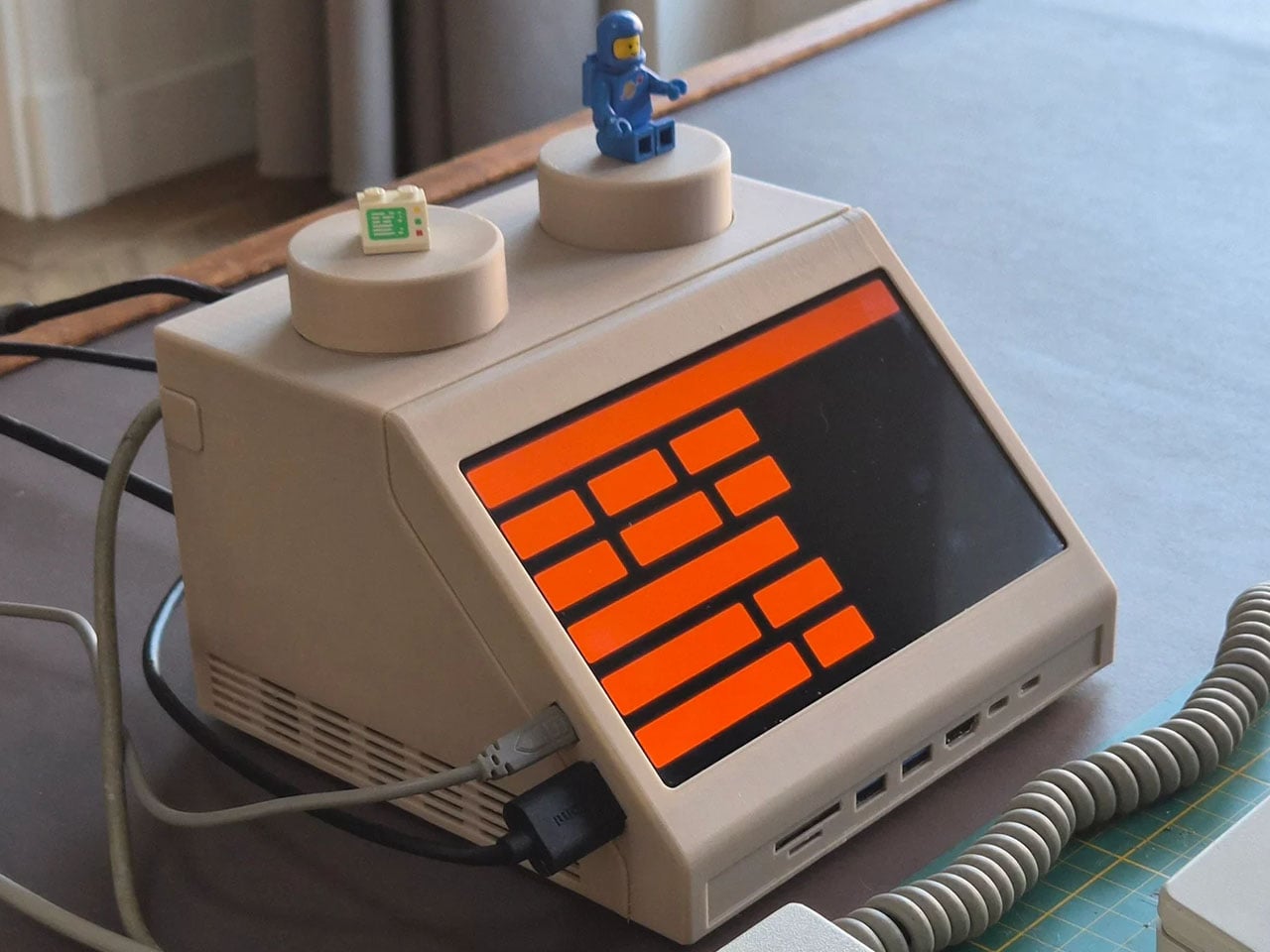
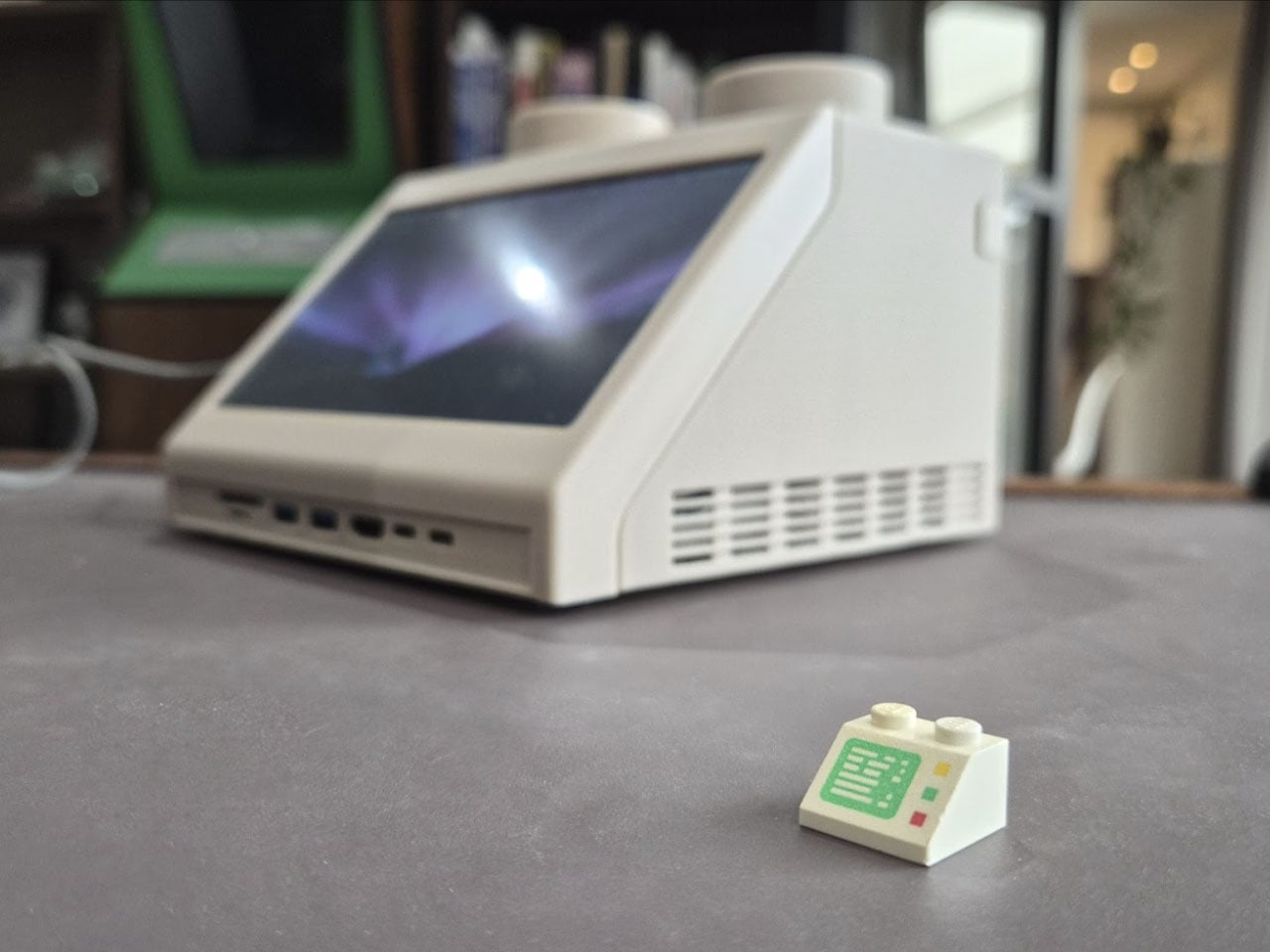
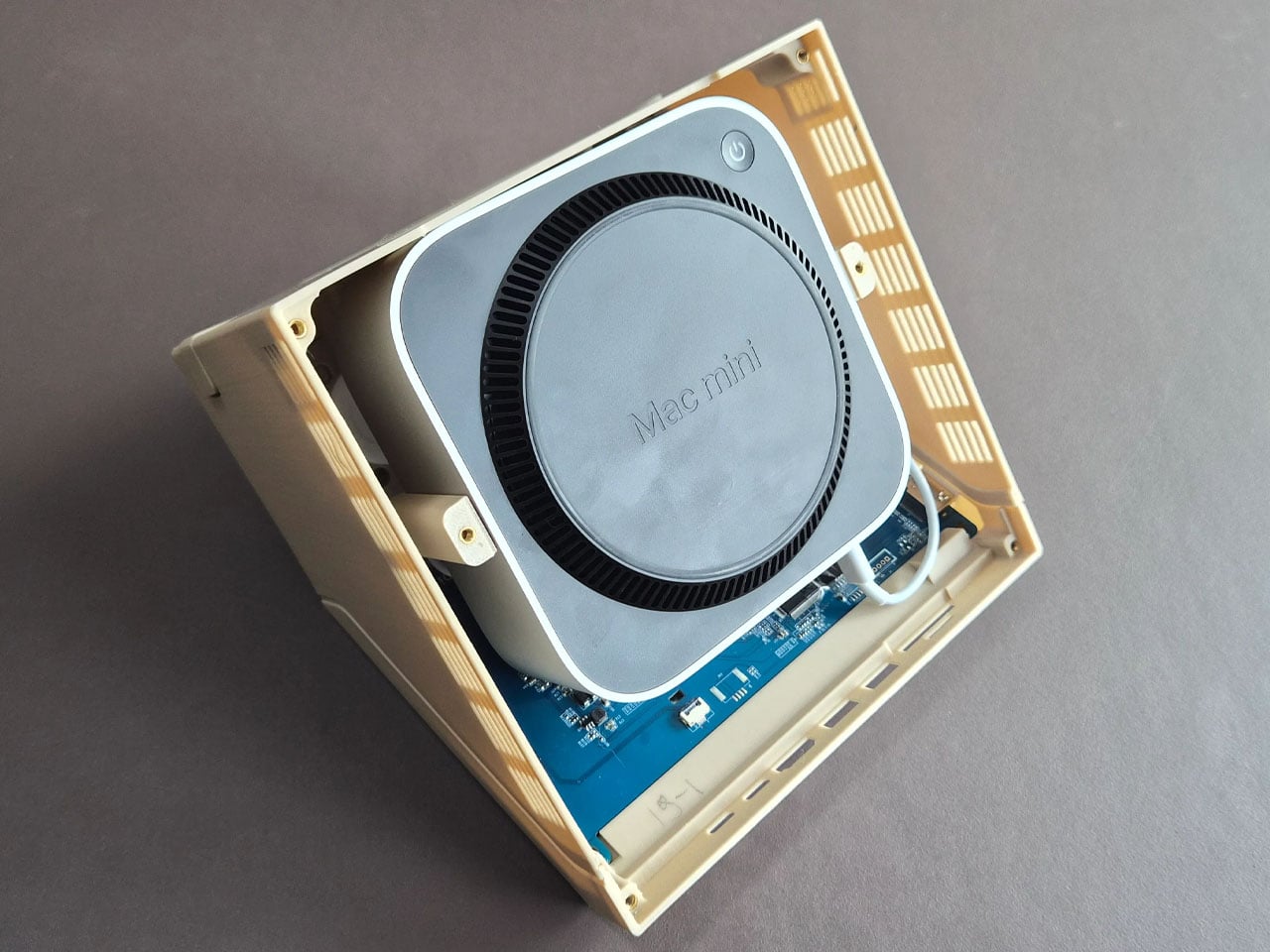
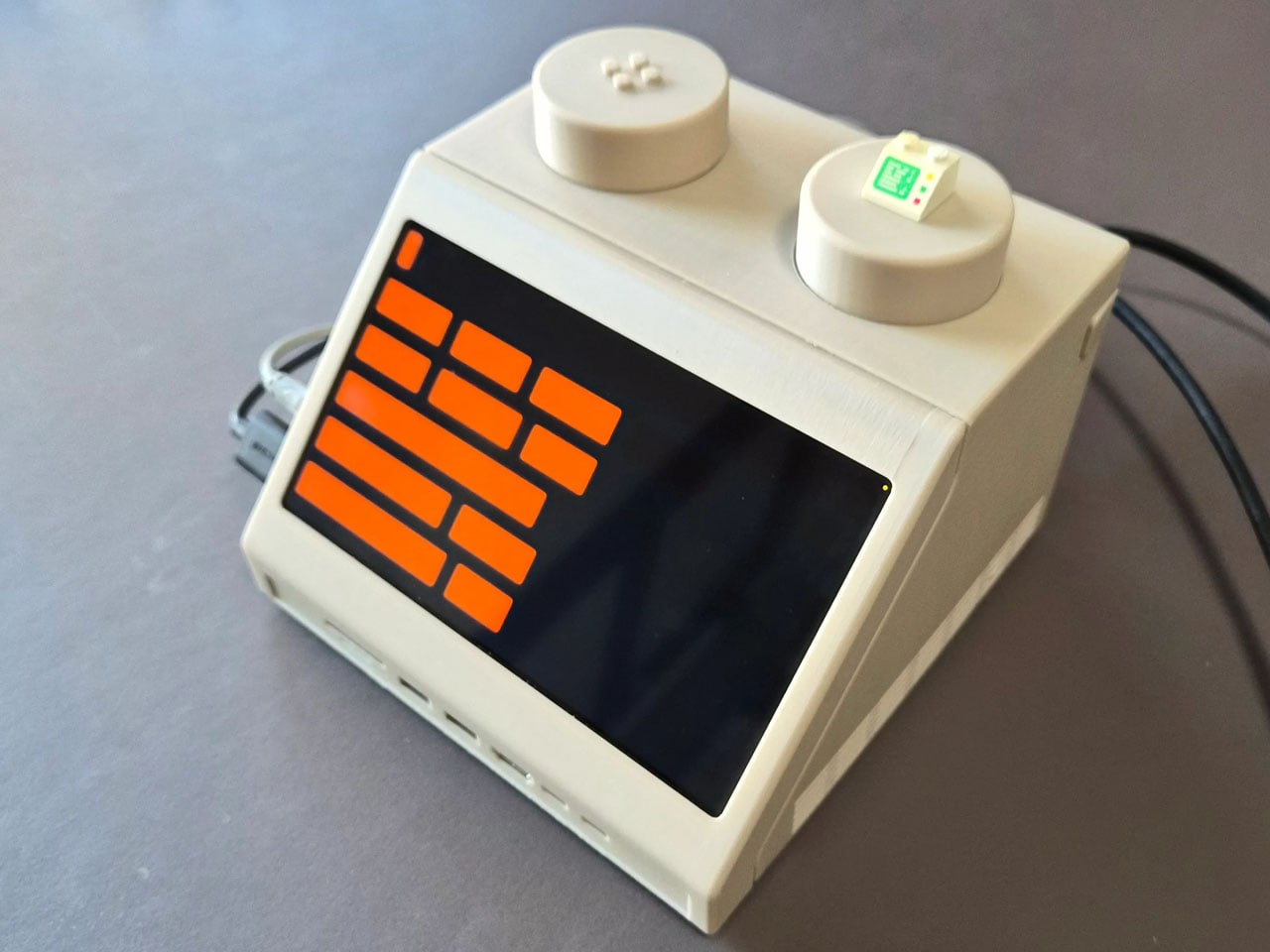
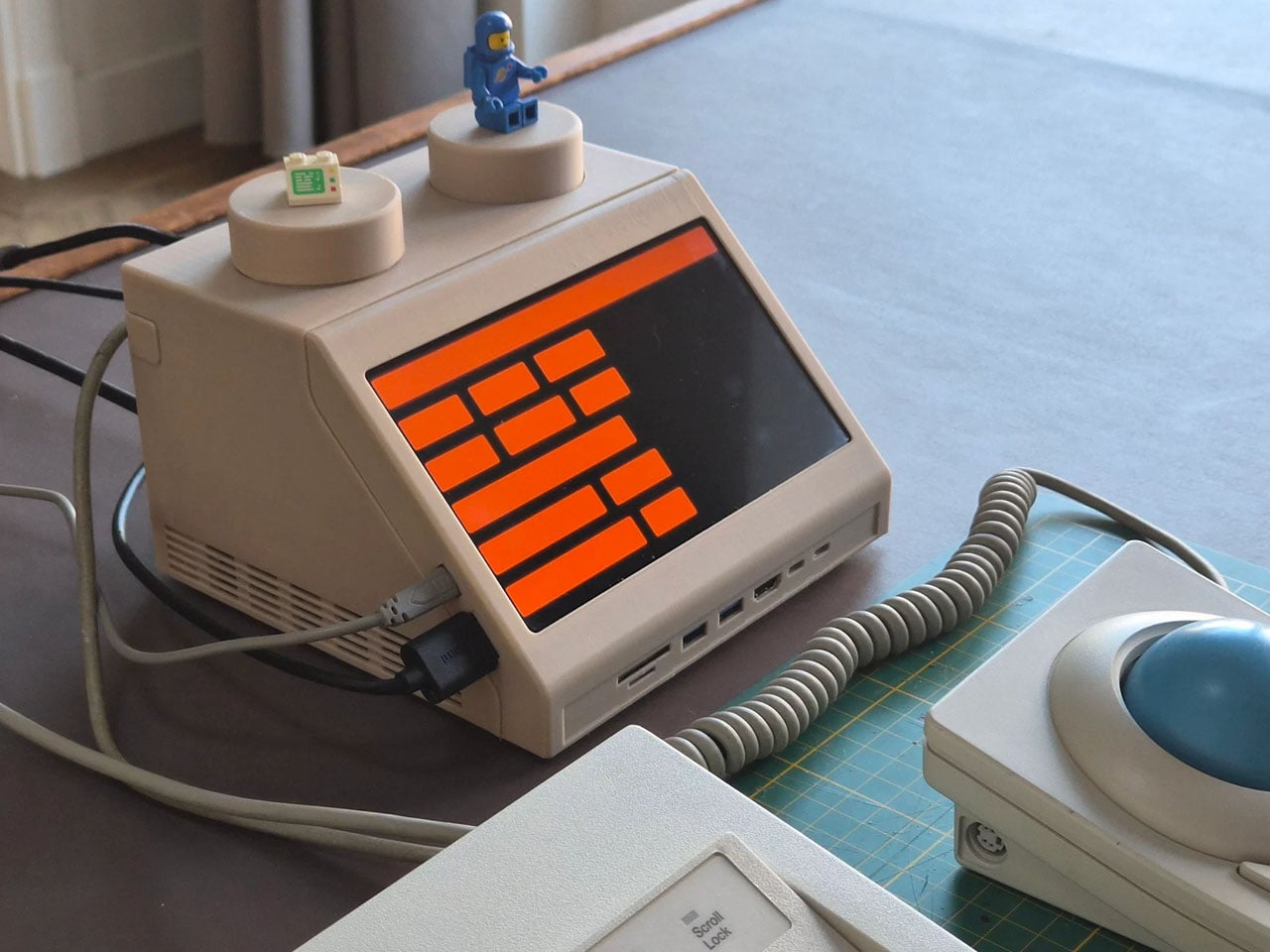
The DIY centers around the familiar wedge-shaped Slope 45 2×2 LEGO piece, a part historically used in LEGO space-themed sets as a representation of computer terminals inside spacecraft cockpits. Staal enlarged this element to roughly ten times its original size, turning it into a functional housing that blends retro toy aesthetics with contemporary computing power. Inside the oversized brick sits an Apple Mac mini equipped with Apple’s M4 chip, transforming the playful concept into a capable desktop system.

Designer: Paul Staal

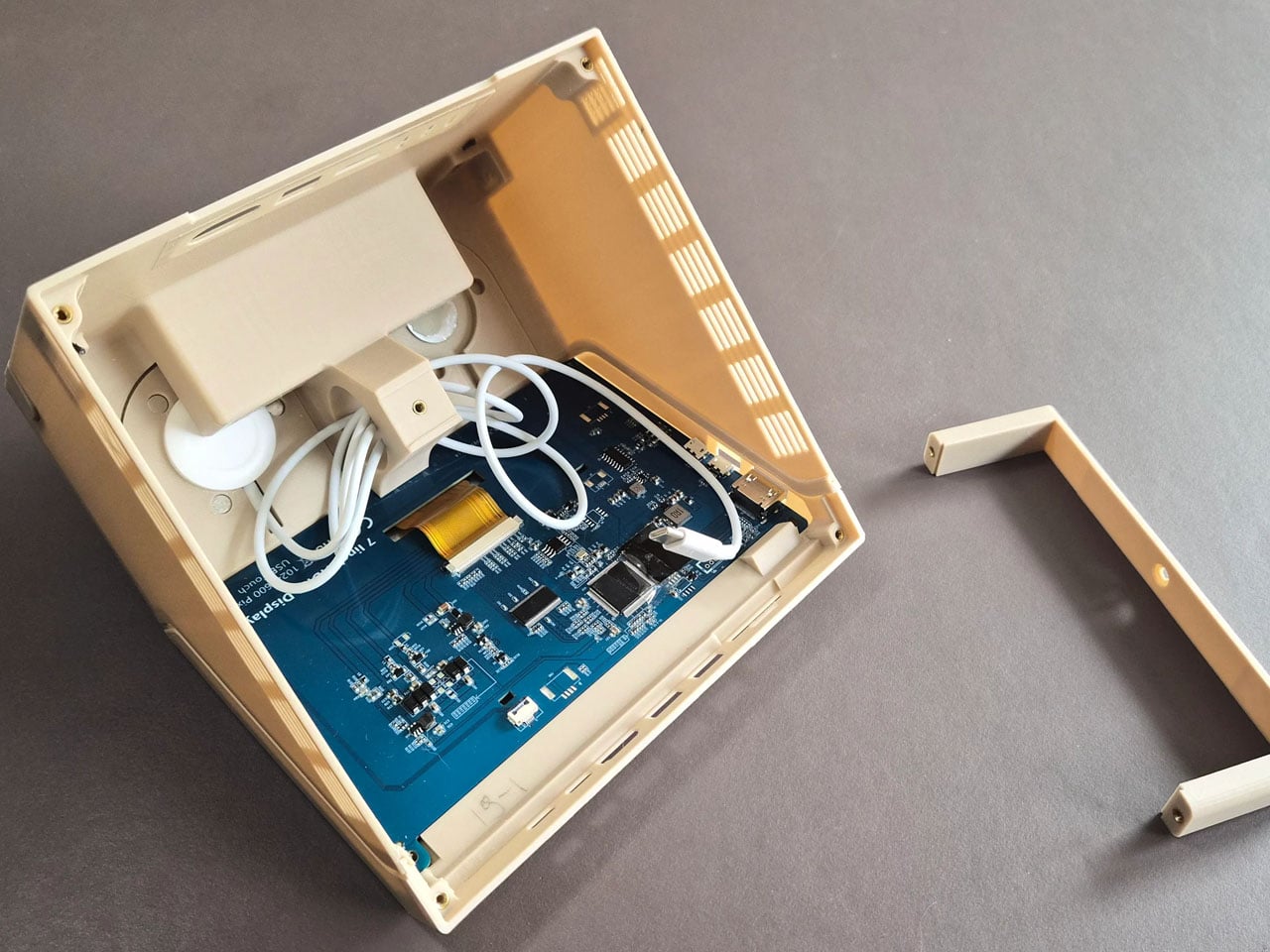

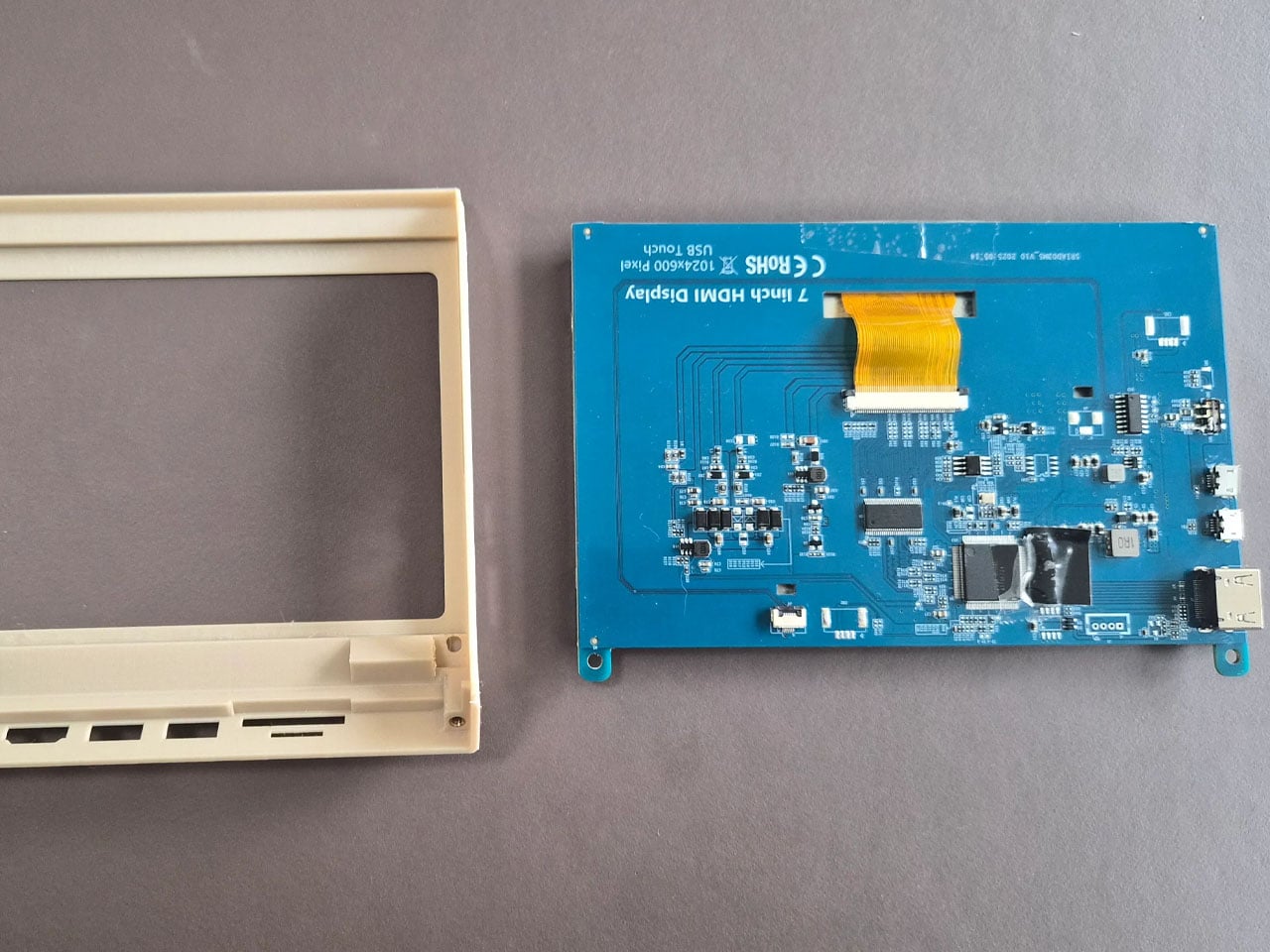
Rather than serving as a simple decorative shell, the M2x2 integrates several practical features that enhance its usability as a workstation. A slanted 7-inch IPS touchscreen is embedded in the front face of the structure, echoing the display graphic printed on the original LEGO piece while providing real functionality. The compact screen acts as a secondary interface, often used for quick system information or dashboards. Staal, for instance, uses it primarily to monitor and control his smart home through a Home Assistant interface while working on a larger external display.

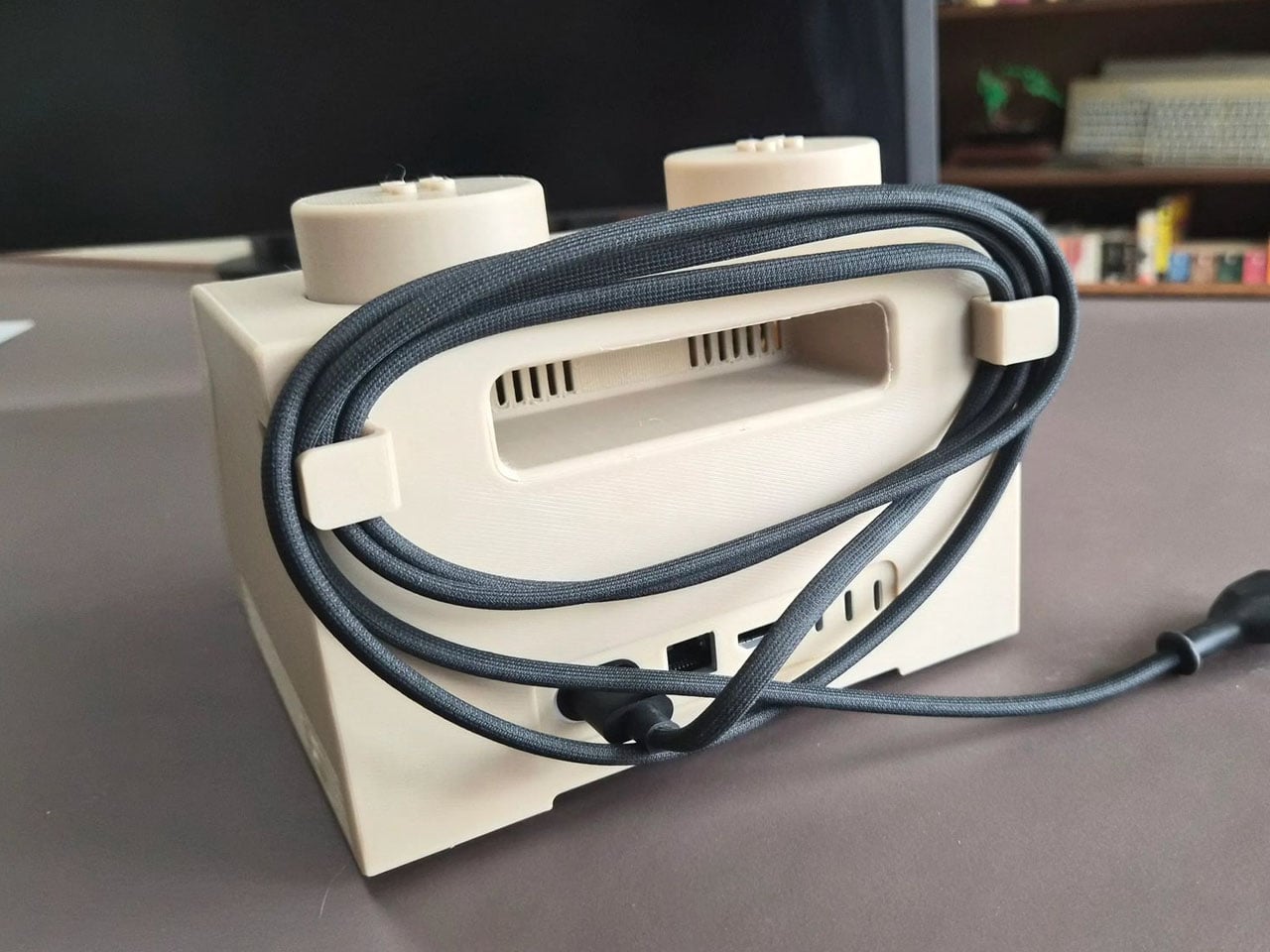
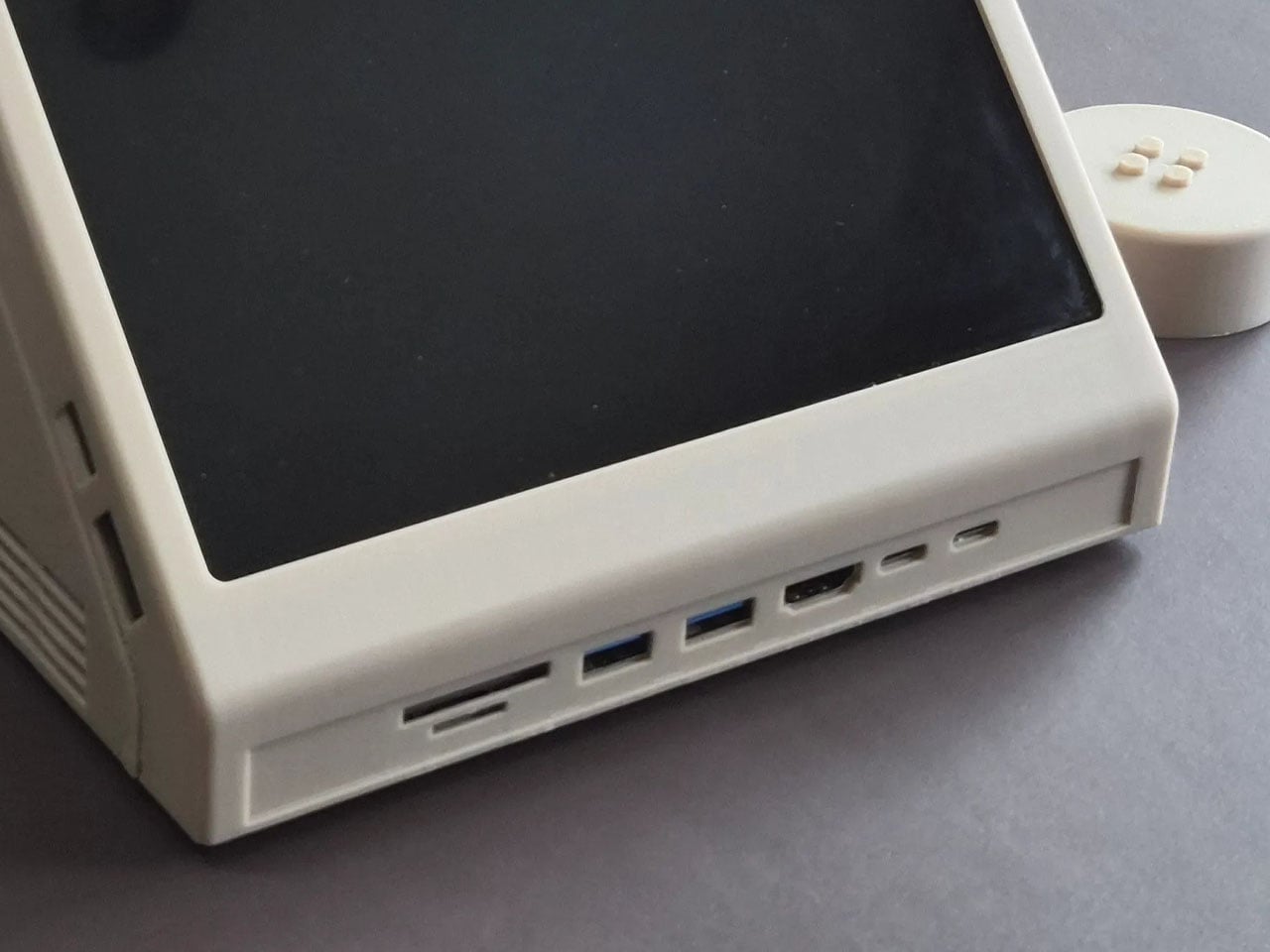
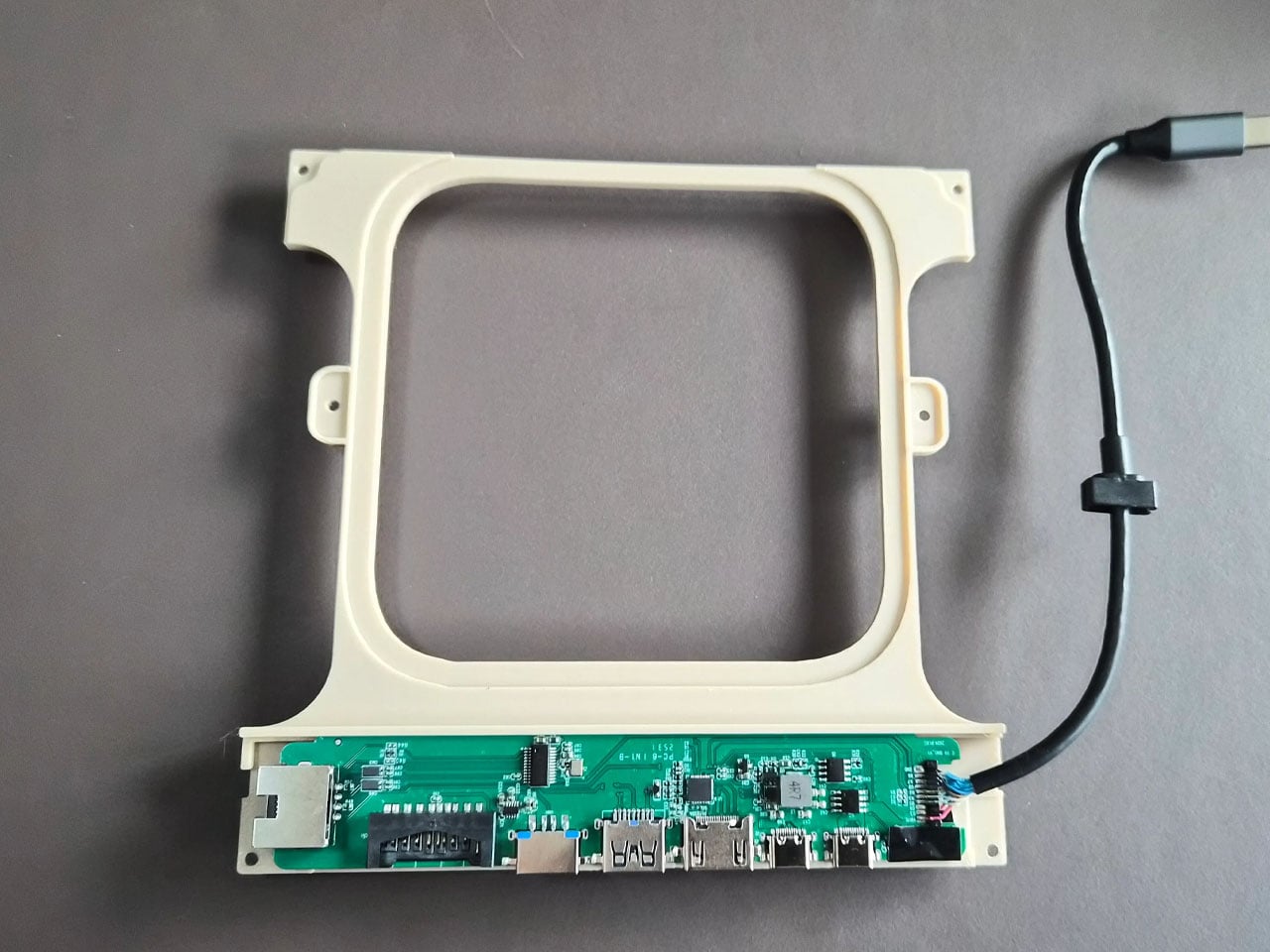
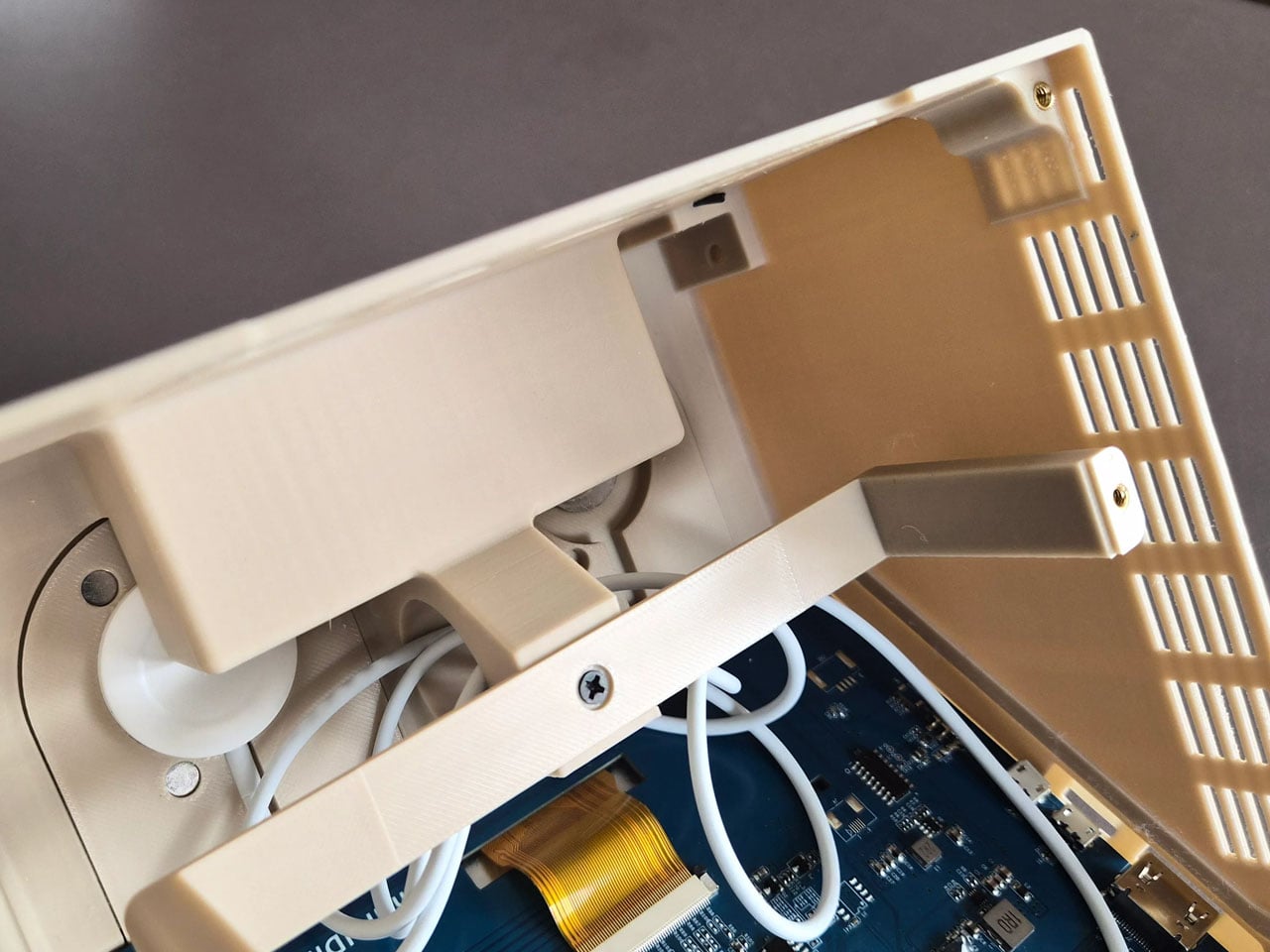
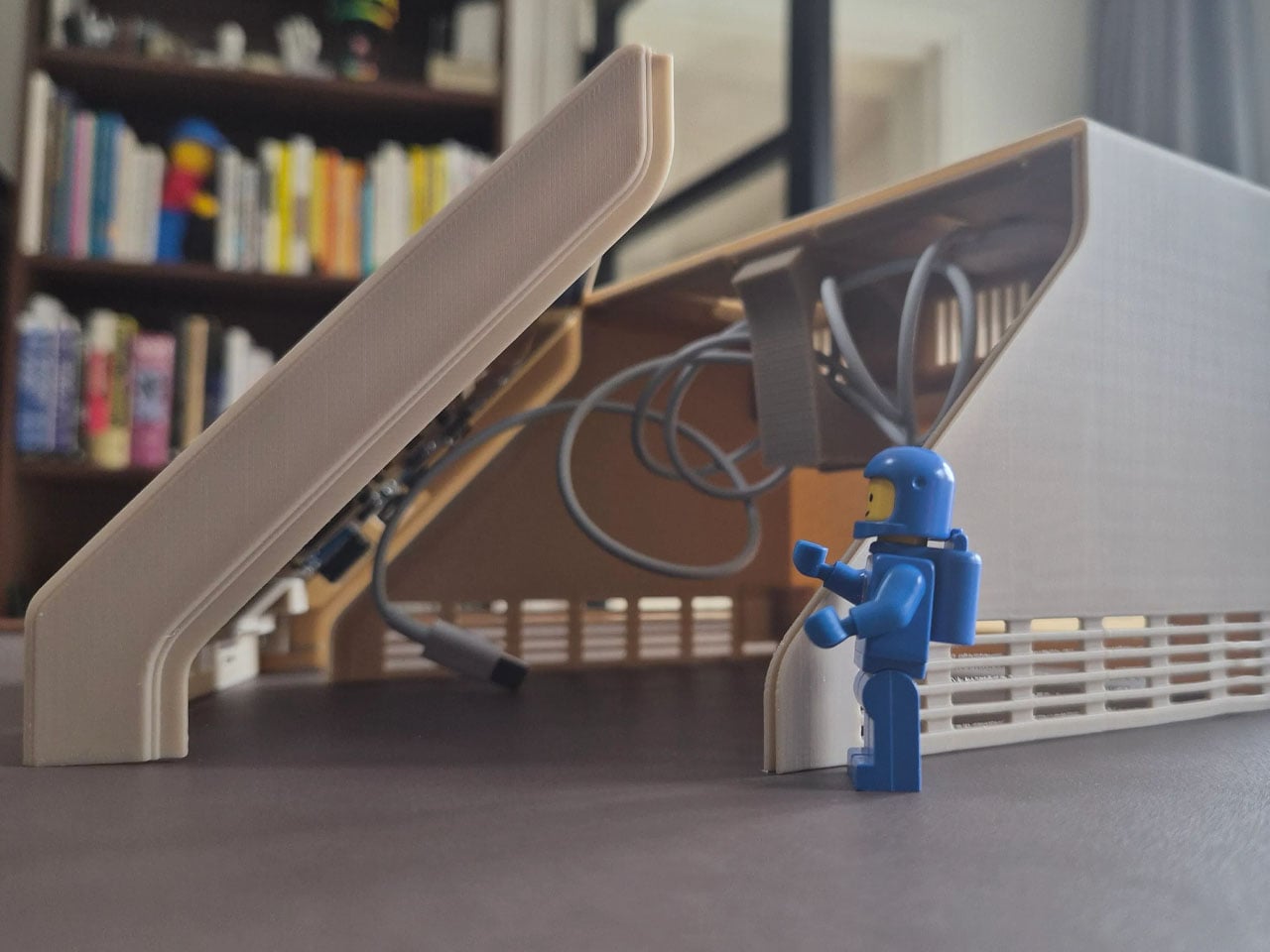
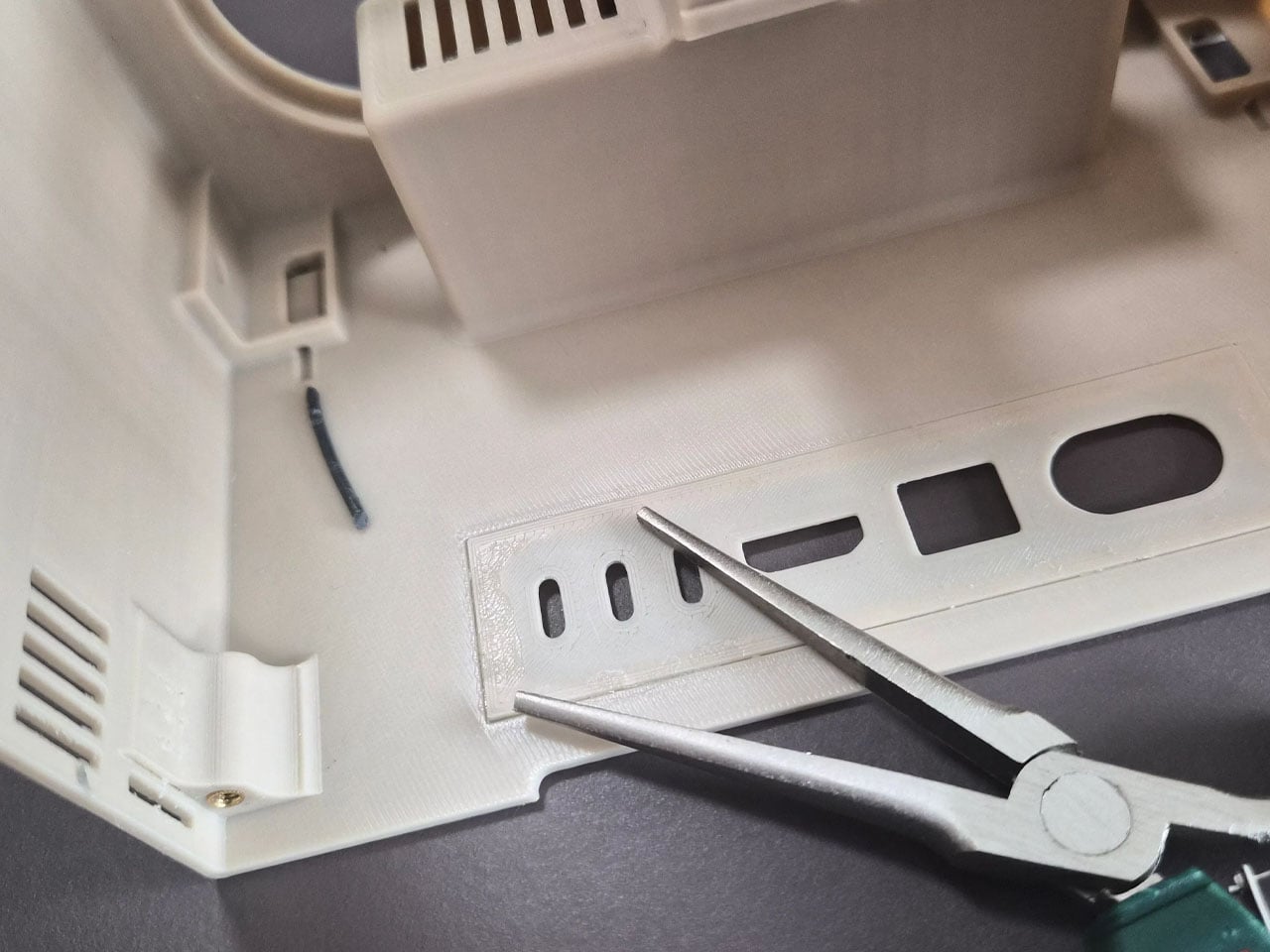
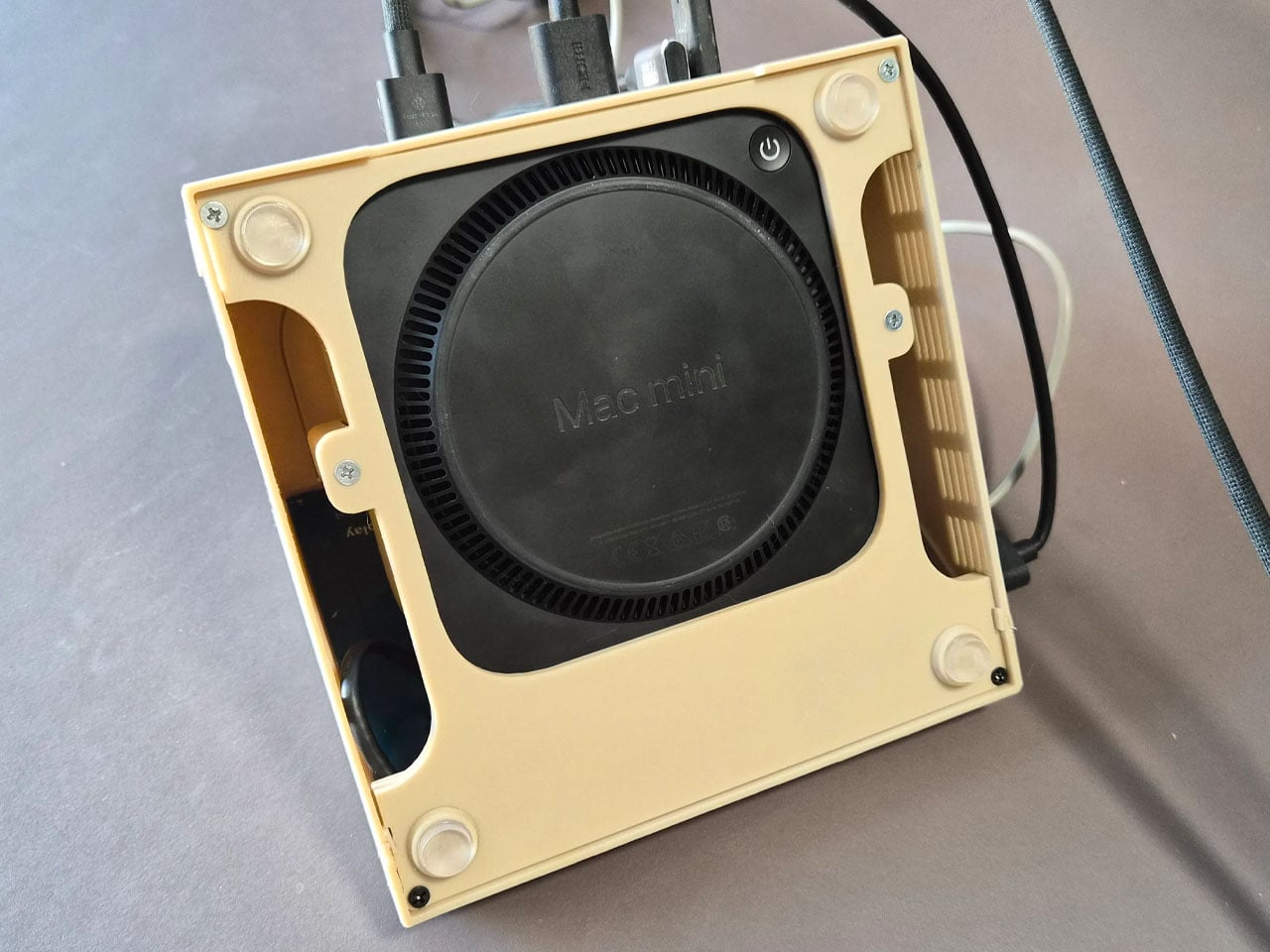
The case includes front-facing ports enabled through a USB-C hub, along with an SD card reader for easy access to external storage and accessories. This arrangement ensures the device remains practical for everyday use despite its playful form factor. The system also retains portability elements inspired by early Apple computers, including a built-in handle at the back that makes the unit easy to move around a desk or workspace. While the M2x2 works as a self-contained computer, it is typically paired with a larger external monitor for full productivity. In everyday use, the Mac mini handles the heavy computing tasks while the built-in display functions as a control panel or status screen.

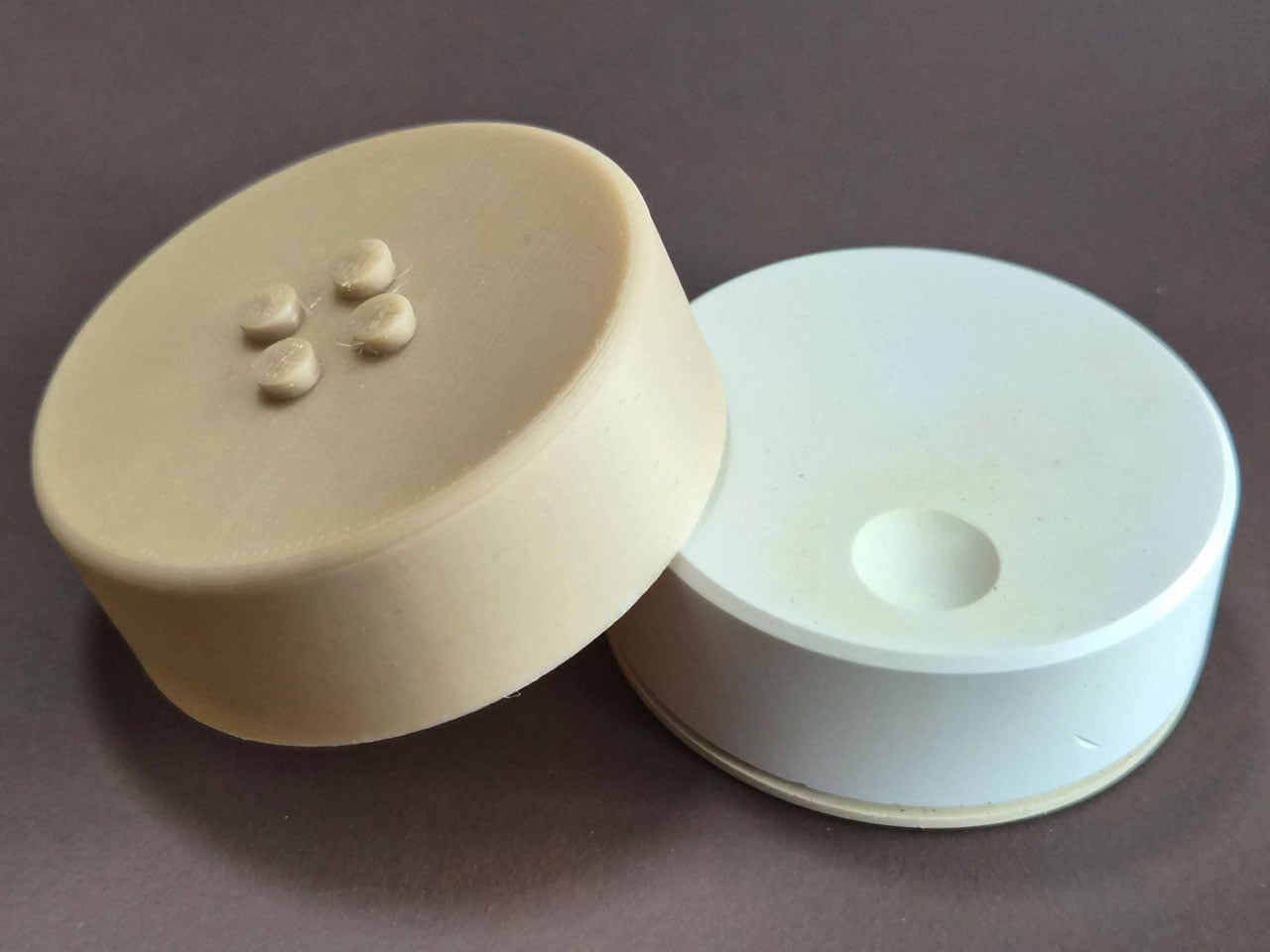
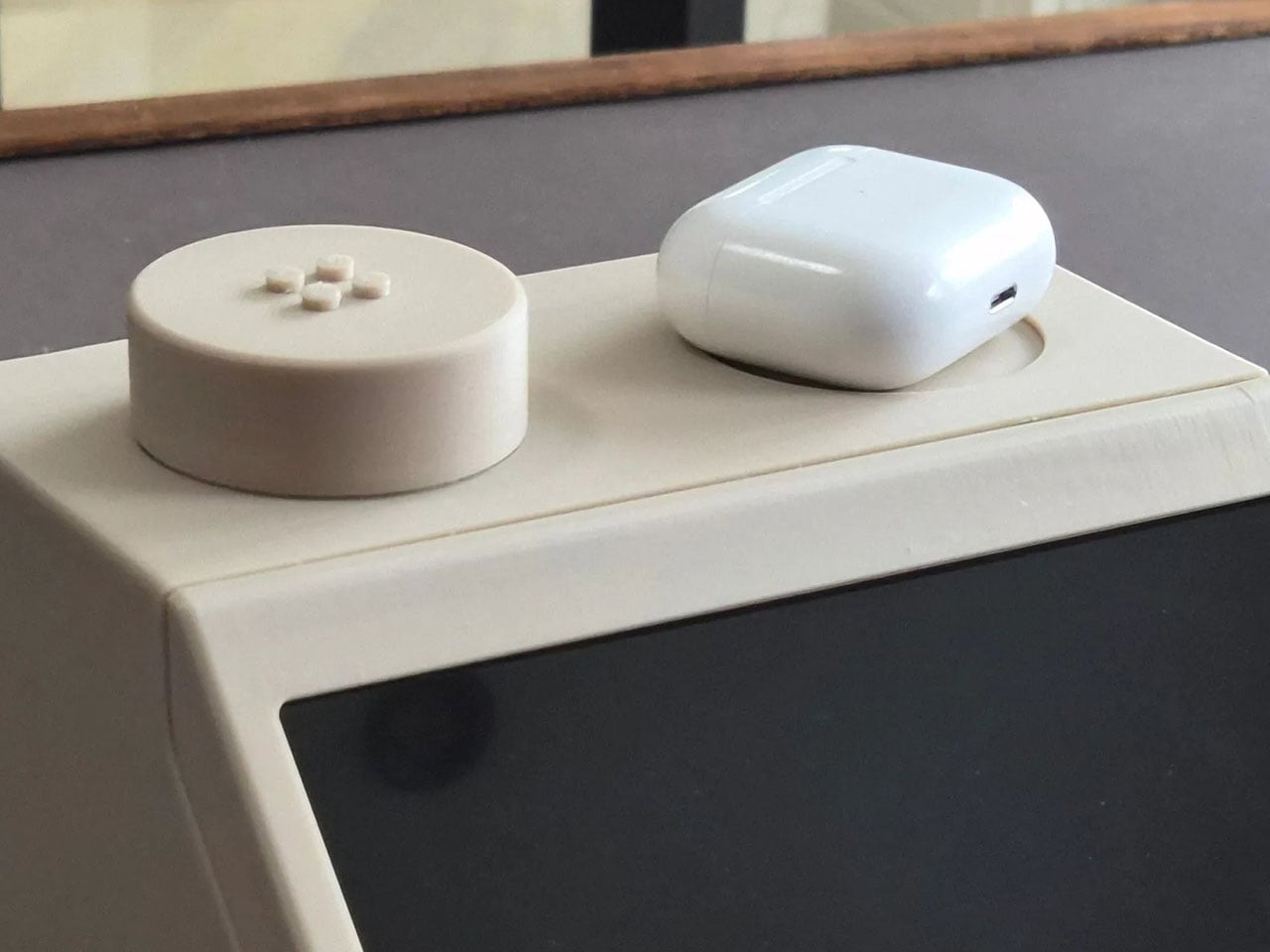
Perhaps the most creative detail lies in the oversized LEGO studs on top of the case. Instead of being purely decorative, these studs are designed to perform useful functions. One of them operates as a rotary control that can adjust volume or media playback, while the other conceals a wireless charging bay capable of powering devices such as AirPods or an Apple Watch. The studs themselves remain compatible with standard LEGO elements, allowing users to attach minifigures or bricks for a playful finishing touch.

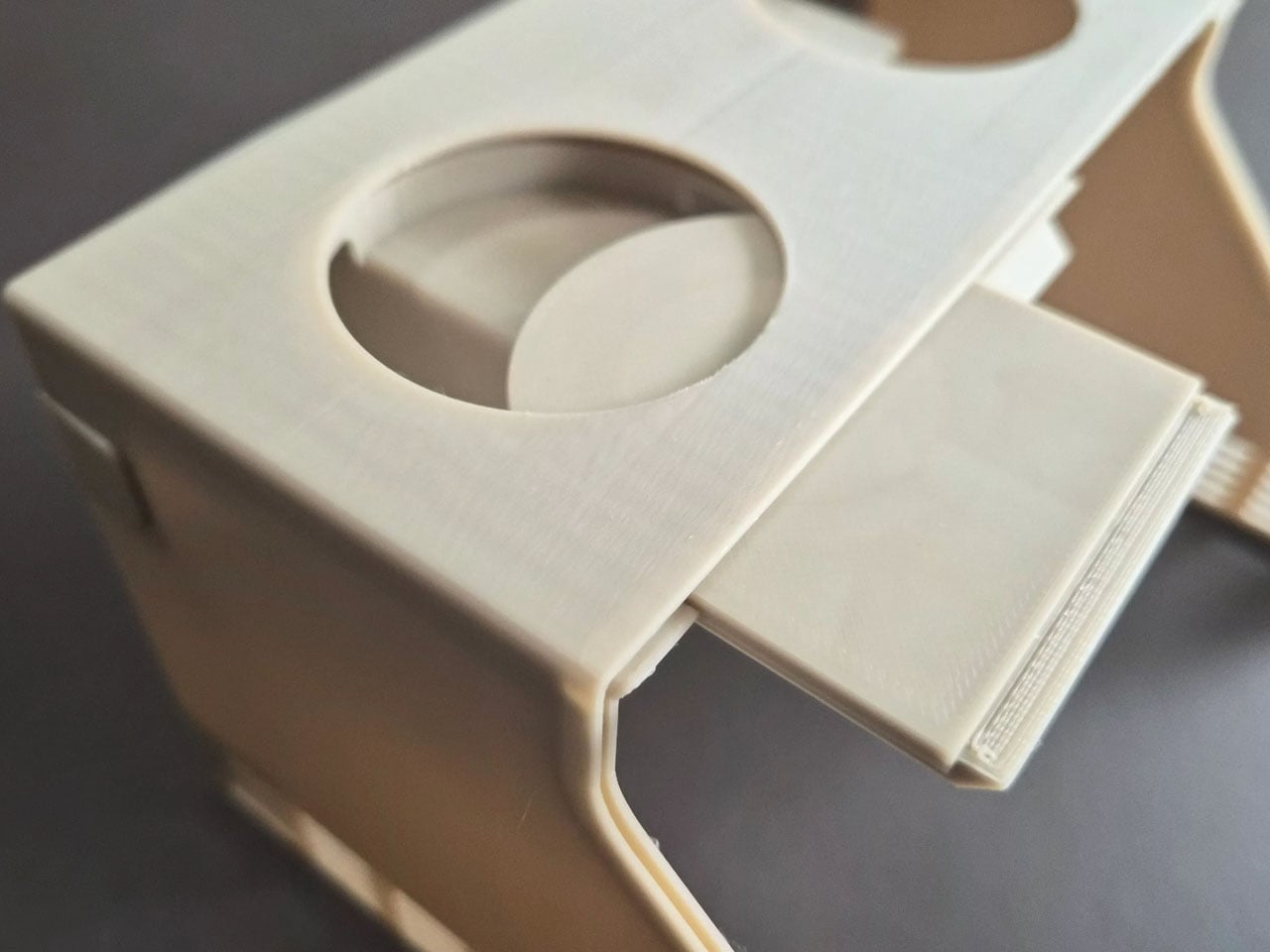
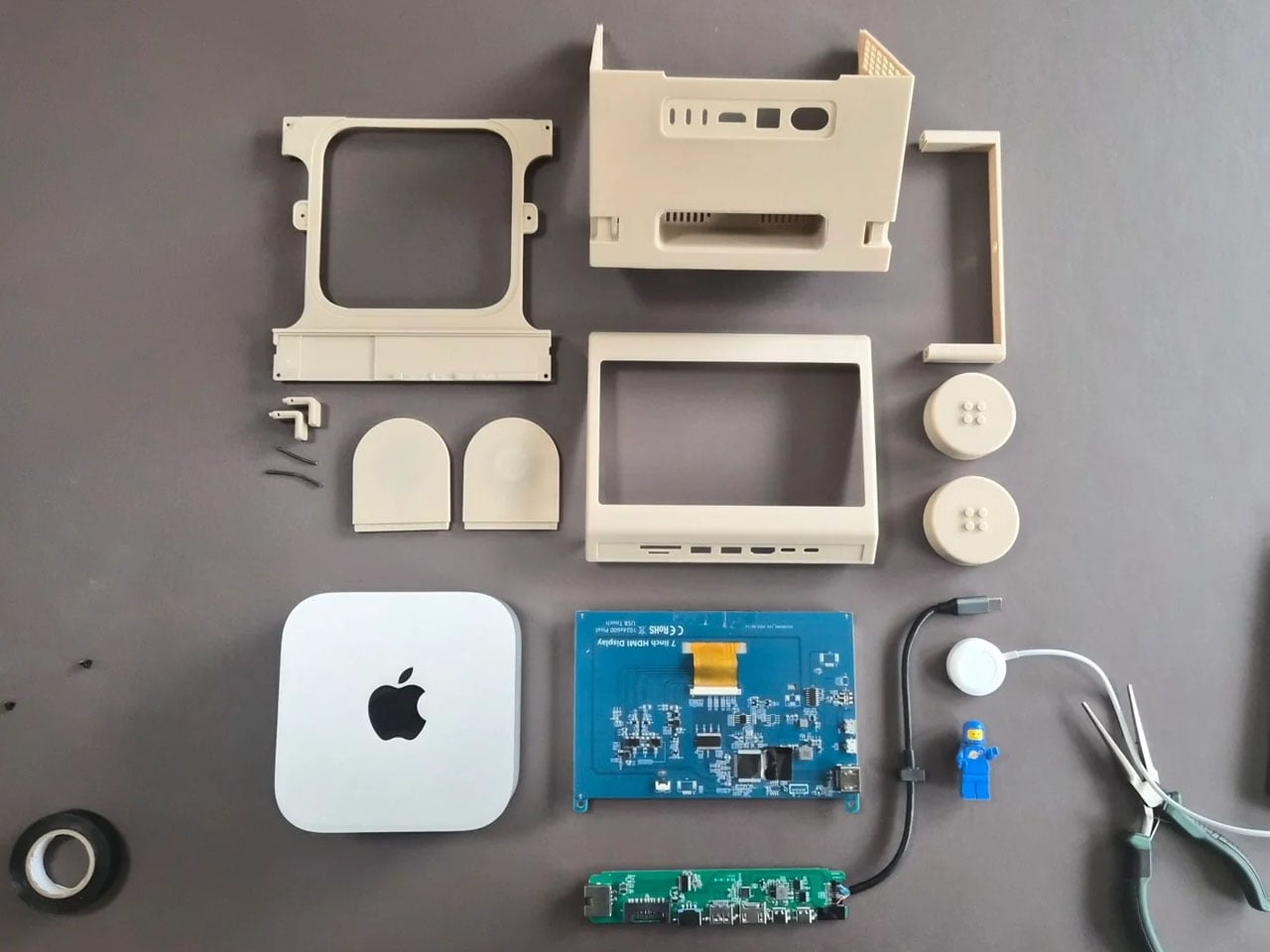
The M2x2 is largely built from 3D-printed components, making it accessible to enthusiasts who want to build their own version. Staal modeled the structure in CAD software and designed it as a modular system consisting of multiple printable parts. Aside from the Mac mini itself, the required materials are relatively simple, including PLA filament, a small touchscreen display, screws, and a USB-C hub. Assembly instructions and downloadable files are available, allowing makers to replicate or modify the design to suit their needs.

The post This classic 1979 LEGO computer brick hides a fully functional Mac mini workstation inside first appeared on Yanko Design.
This Baby Walker Grows With Your Child for 6 Years in 4 Different Ways

Most baby walkers have a shelf life measured in months. A 7-month-old wobbles through the living room gripping the handle, and by the time that same child turns two, the walker is already in a closet somewhere. The furniture cycle in a home with small children tends to follow that rhythm: buy, use briefly, replace with something else entirely.

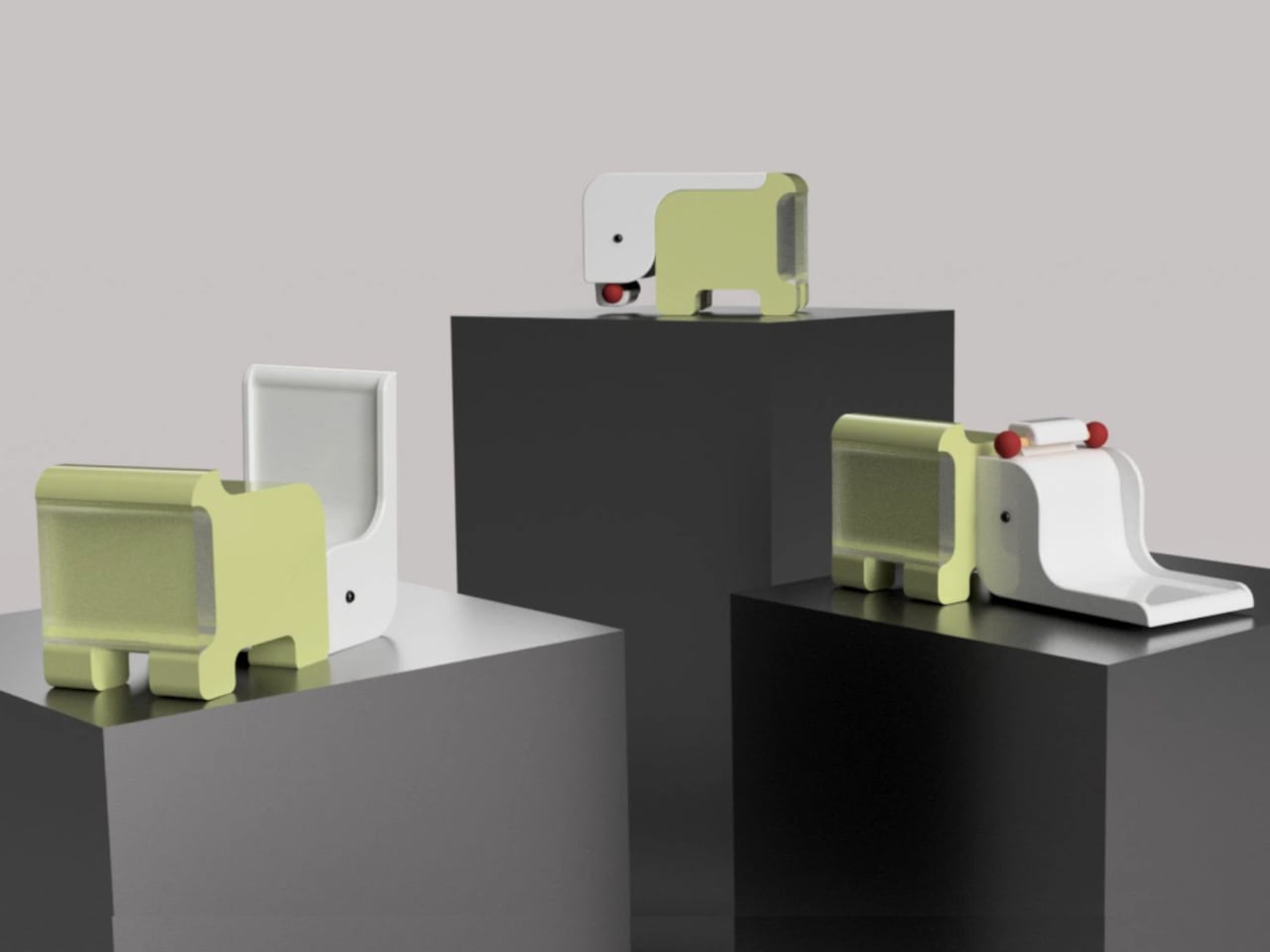
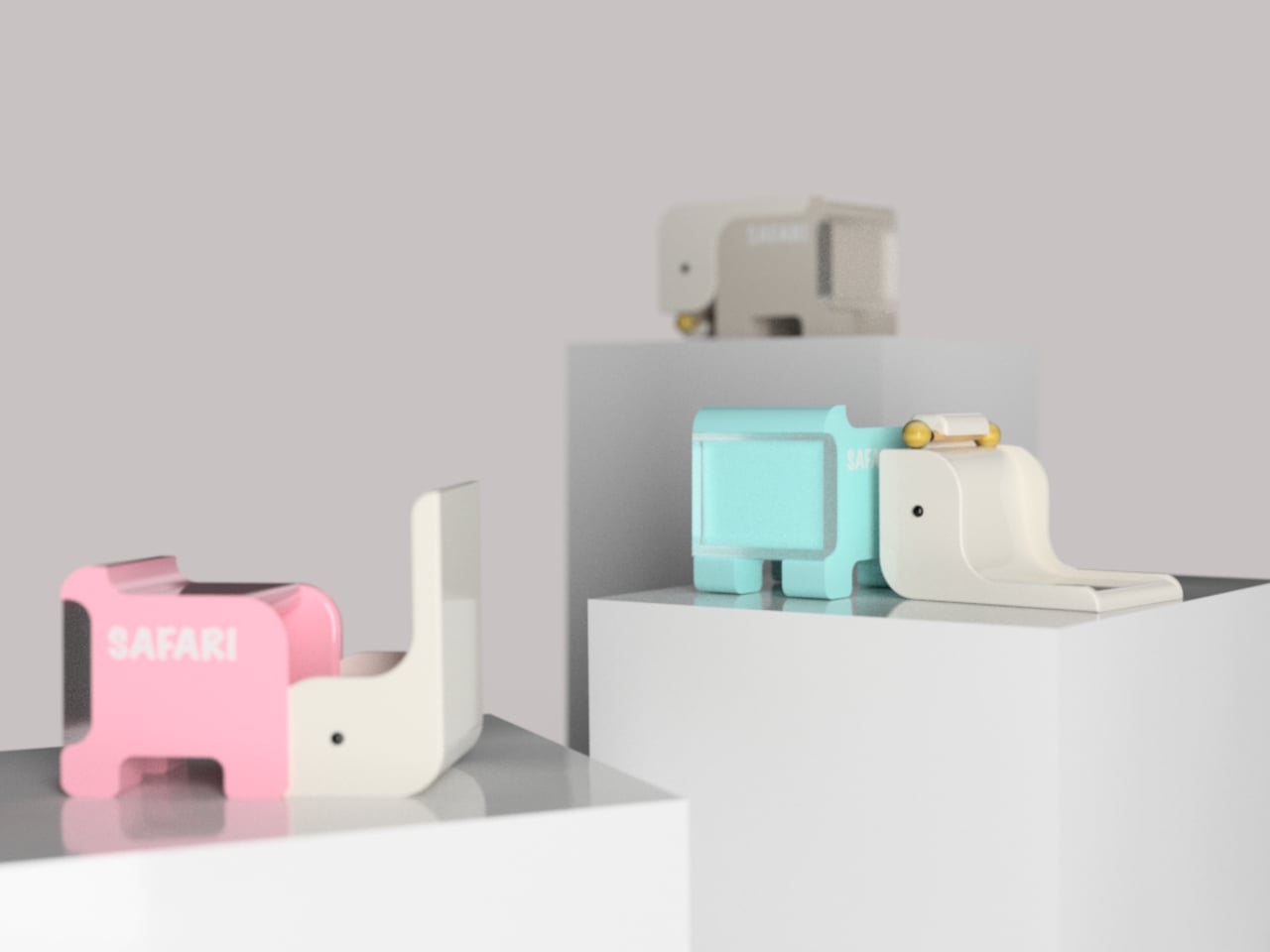
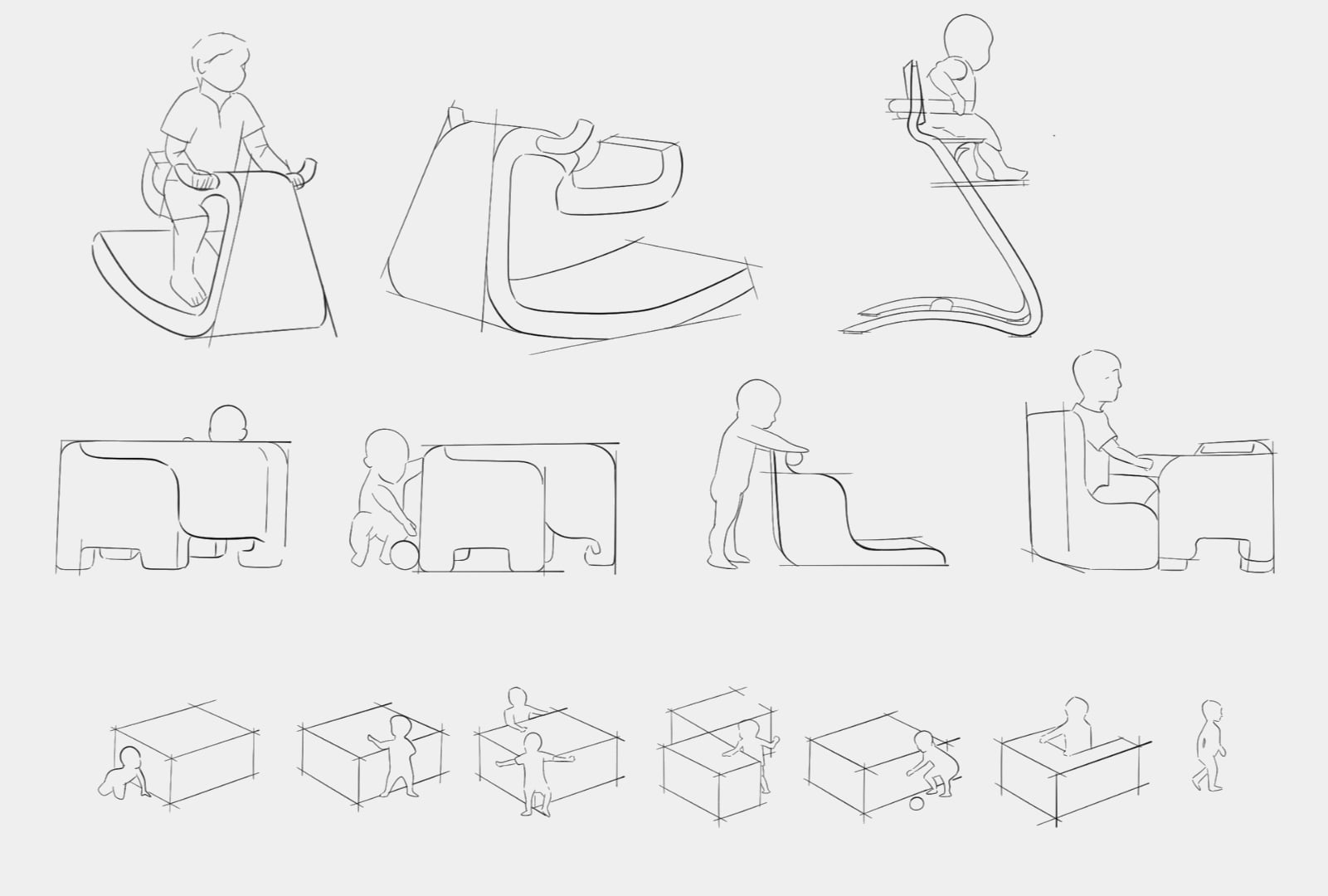
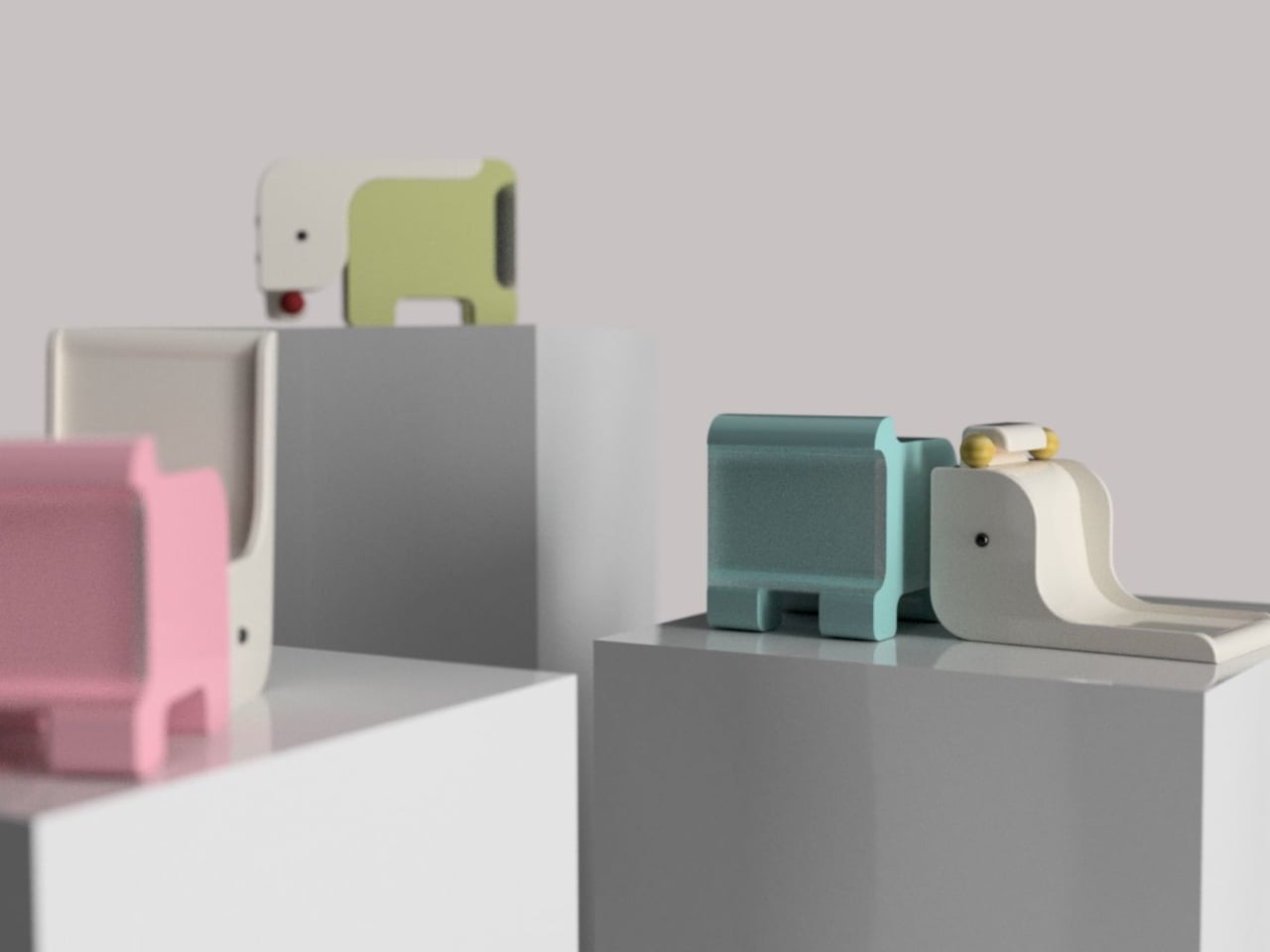
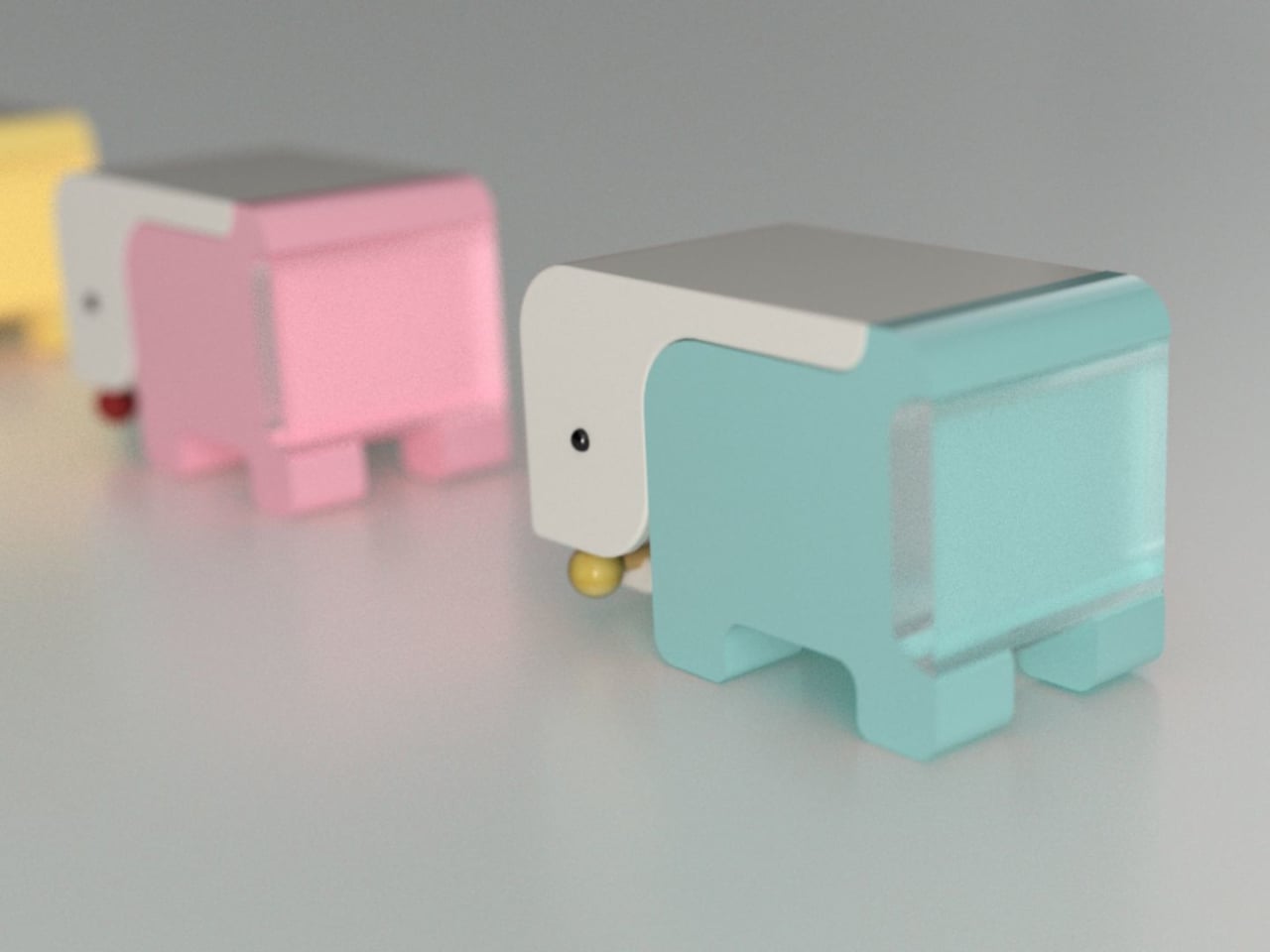
The Safari Multifunctional Kids Furniture concept tries to interrupt that pattern by designing one piece that stays useful across the first six years of a child’s life. The name “Step-N-Play” gives away two of its functions without mentioning the third or fourth. It is, depending on the child’s age and the day’s agenda, a walker, a climbing unit, a play table and chair, and a toy storage solution.

Designer: Bharti Upadhyay

At its earliest stage, the walker is built for children between 6 and 18 months, with a frame measuring approximately 600 x 400 x 500 mm. The structure combines wood, ABS plastic, and soft silicone grips, with a 95-degree backrest angle designed for infants who are not yet seated with full stability. An anti-tip base and anti-pinch safety gaps cover the more obvious hazards of putting a barely mobile child in contact with a moving object.

As the child grows into the 1-to-3 age window, the same structure becomes a climbable stair unit. From ages 2 to 6, it transitions again into a play table and chair. A built-in storage compartment for toys and books operates across all configurations. The manufacturing approach pairs CNC-cut wood with injection-molded ABS plastic, a combination suited to years of contact with small hands and the occasional harder object.

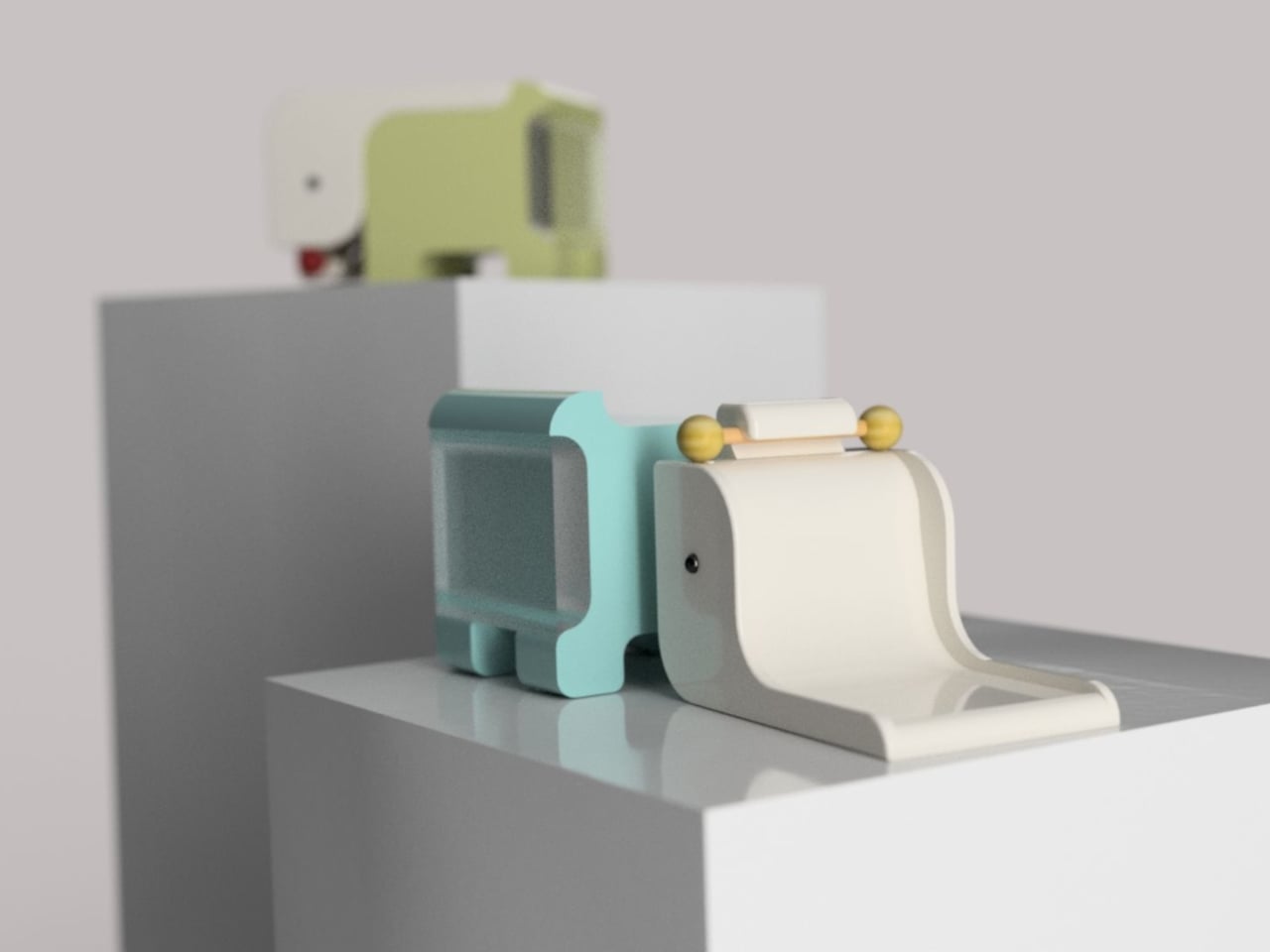
The safari animal inspiration shows up in organic silhouettes and surface language rather than in literal animal sculptures attached to the frame. Smooth curves, generous fillets, and chamfered grooves define the form. The pastel color palette, wooden handles, and textured sensory balls read as a considered aesthetic choice rather than an afterthought, which matters in a living space where parents also have to look at the thing.

Safari is a student concept at this stage, so the harder questions remain open. How the ergonomics hold across such a wide age range, how the mechanical transitions between configurations actually work in practice, and whether a single object can genuinely serve a 7-month-old and a 6-year-old with equal competence rather than adequacy are things a physical prototype would need to answer.

The post This Baby Walker Grows With Your Child for 6 Years in 4 Different Ways first appeared on Yanko Design.
A Student Built a Pocket Planet Tracker That Works Without Your Phone

Most of us have looked up at the night sky at some point and felt that brief, humbling recognition that there is an enormous universe out there, and we have no idea what is happening in it. Then a notification comes in, and the moment passes. Lumen Orbit, a student concept from CEPT University, is a small handheld accessory designed to keep that awareness alive without requiring a telescope, a star chart, or a dedicated app.

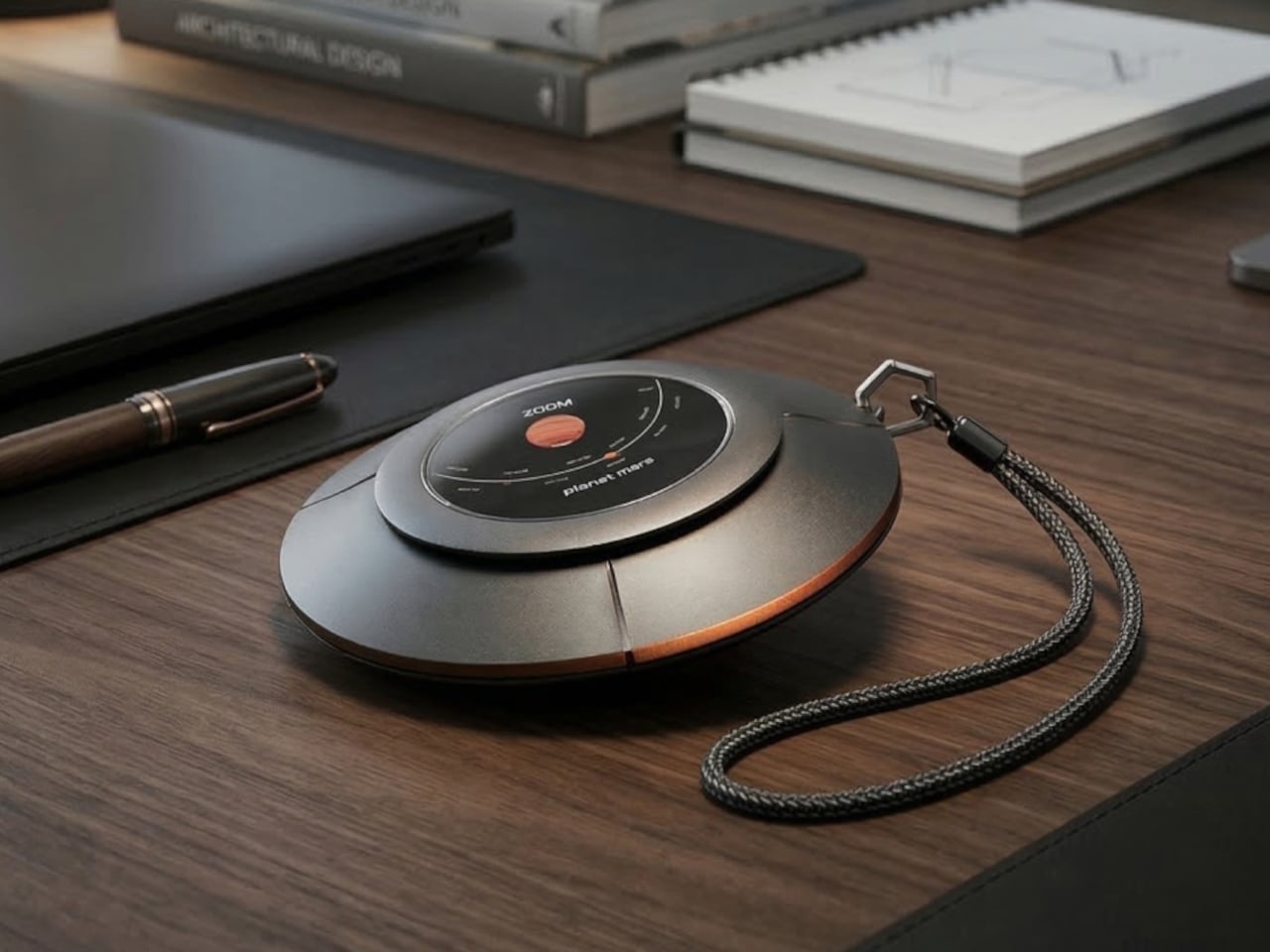
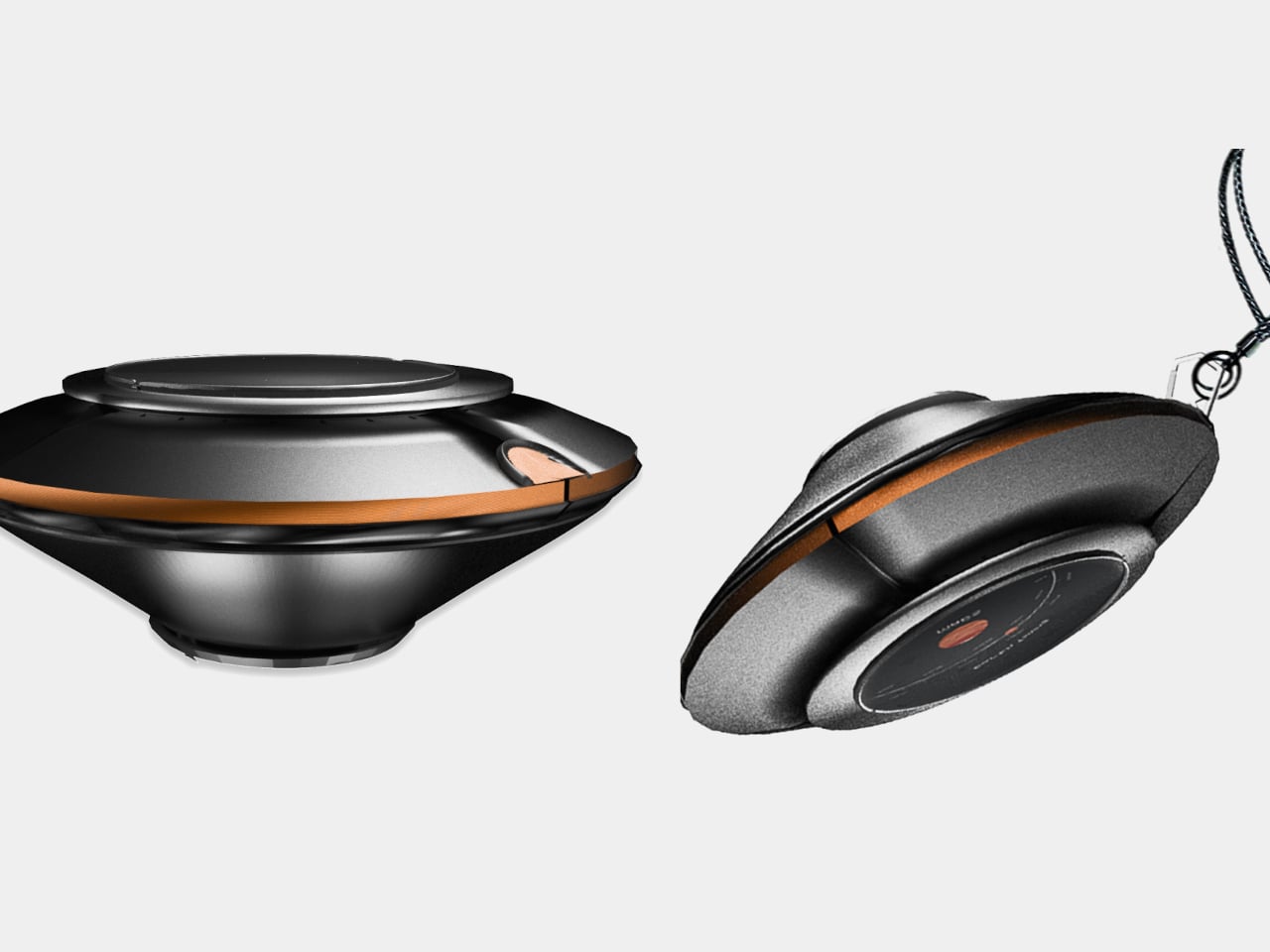
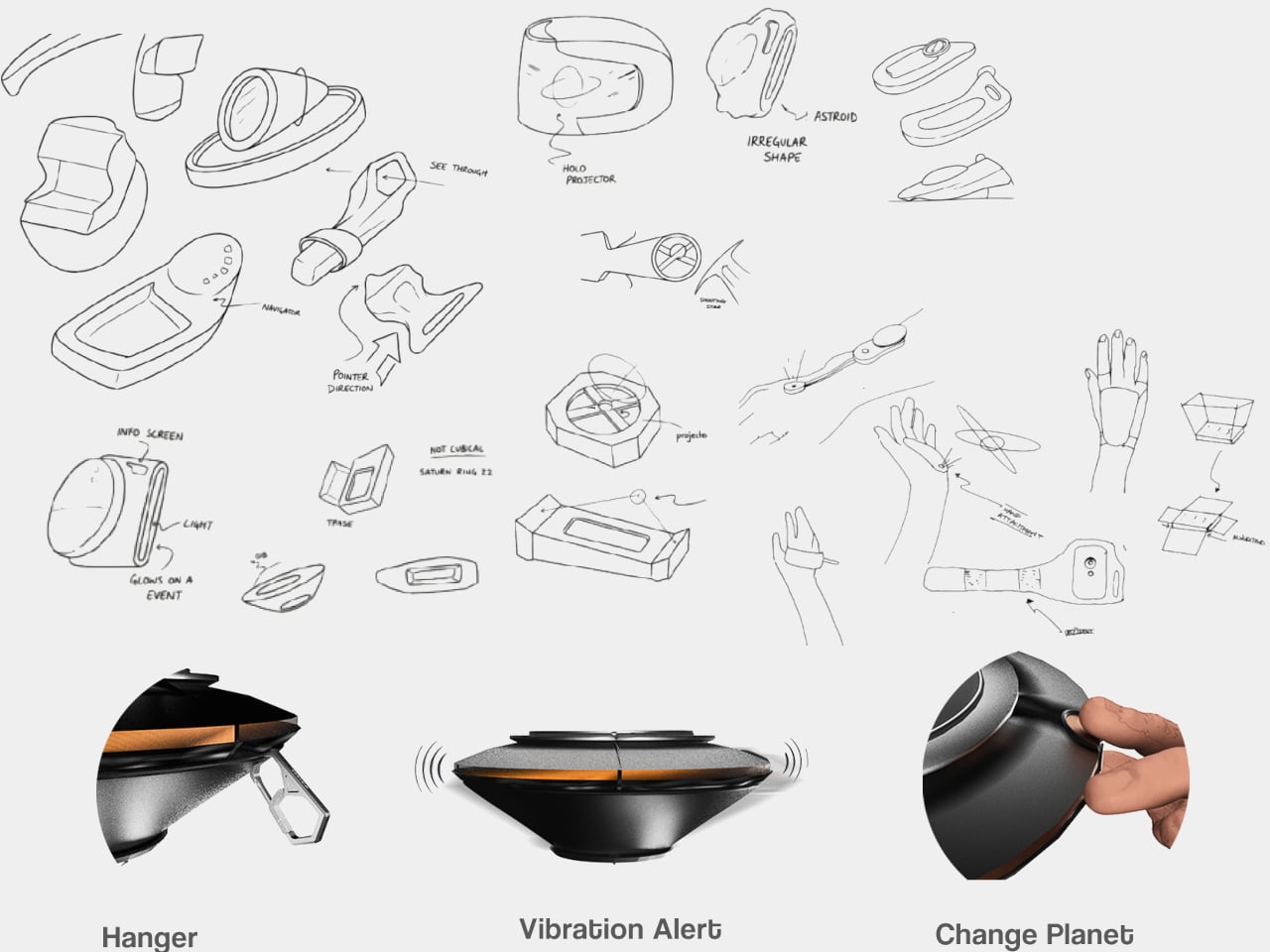
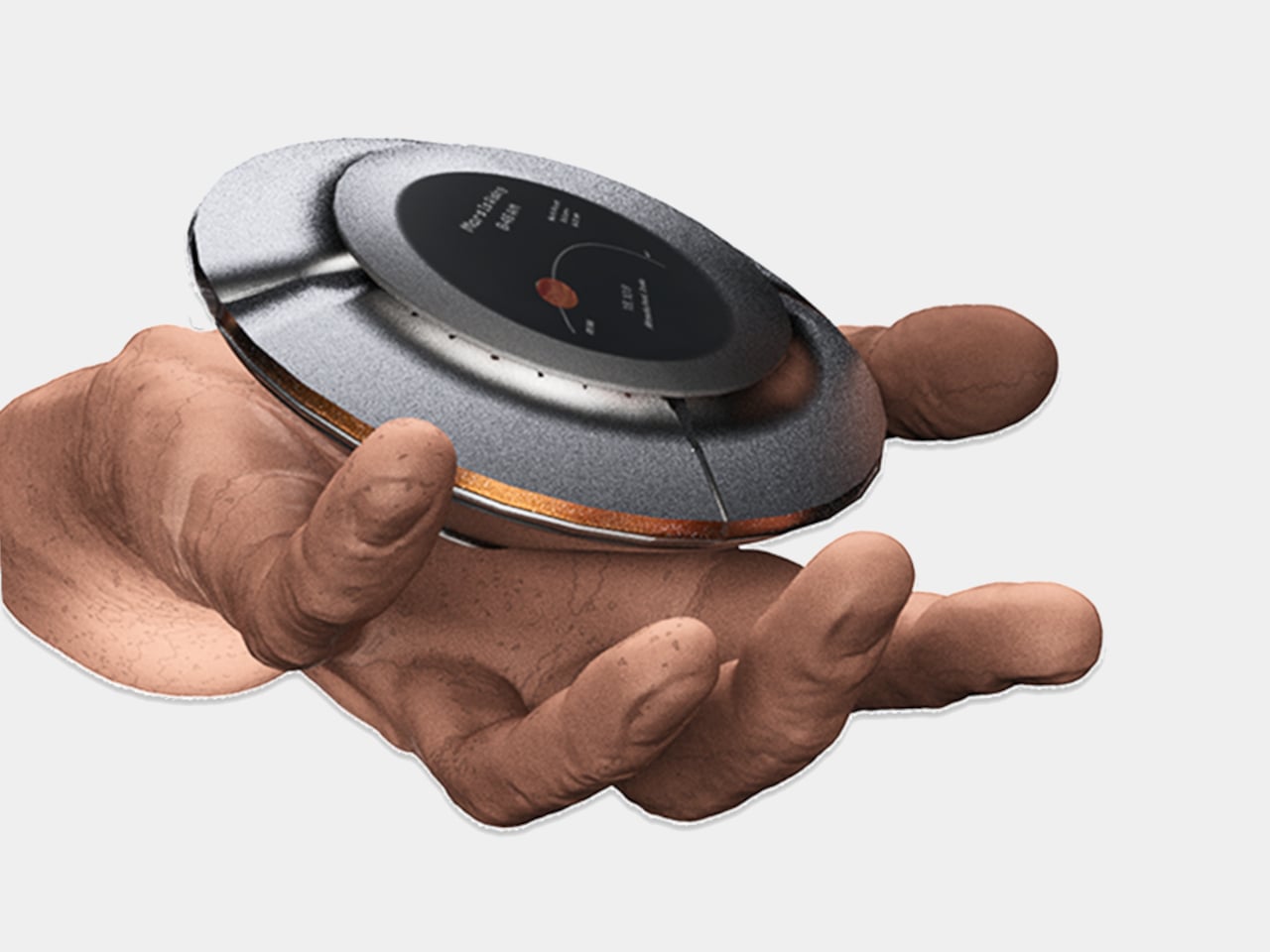
The device is disc-shaped and roughly palm-sized, with a two-part body split along its equator by a copper-toned accent band. The upper half is a polished silver-gray cap; the lower sits wider and shallower in a dark matte gunmetal finish. A woven braided lanyard with a hexagonal metal clasp attaches to the body, making it something you can loop around a wrist, hook to a bag, or hang using a built-in fold-out carabiner.

Designer: Kinshuk Agarwal

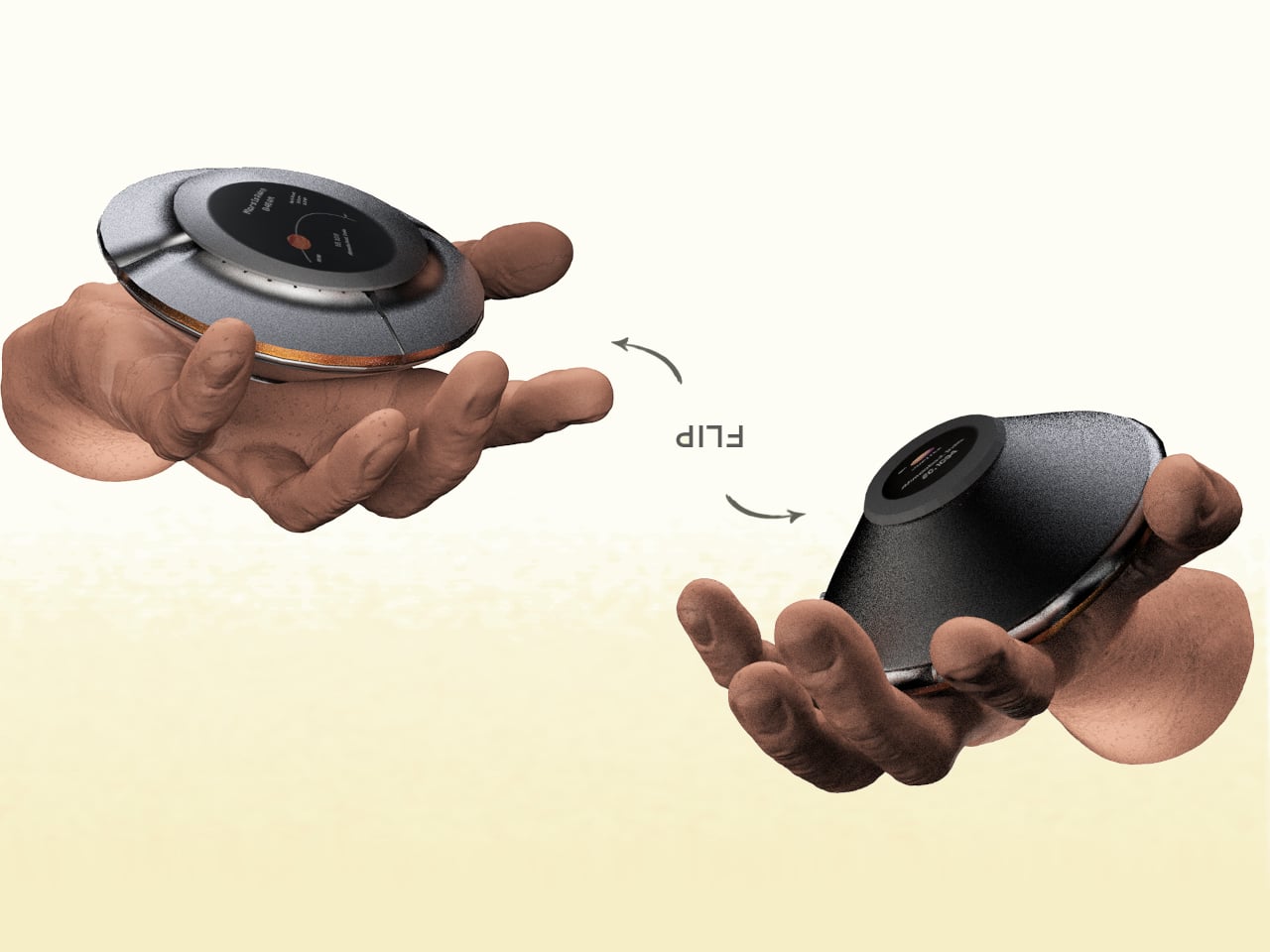
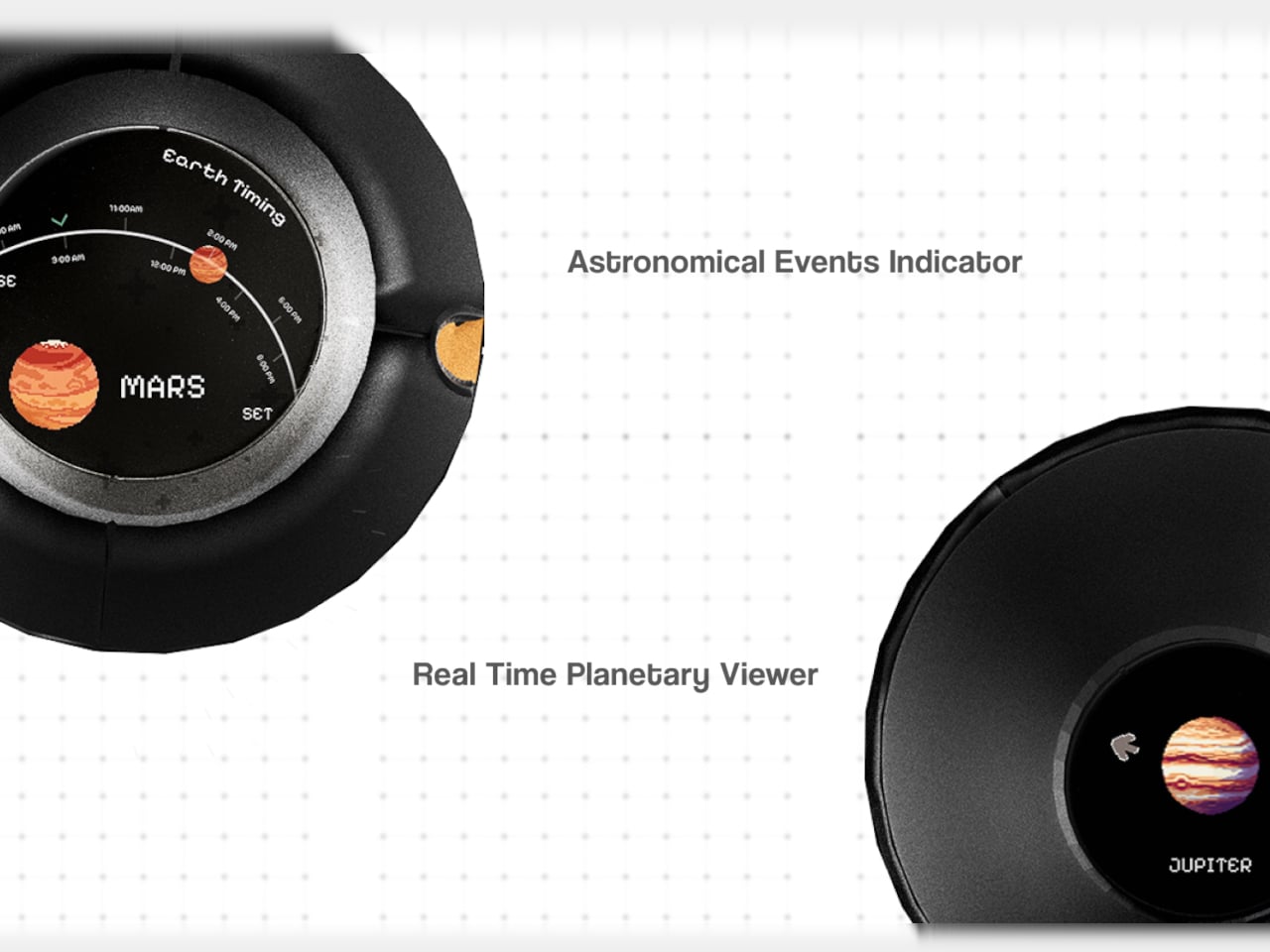
The primary face carries a circular display showing real-time planetary positions: which planet is currently visible, where it sits in the sky relative to your location, and when it rises and sets. Flip the device over, and a second, smaller screen on the reverse offers a close-up planetary render. The UI uses pixel-art-style graphics for its planet illustrations, landing somewhere between retro charm and deliberate restraint.

The interaction model is equally considered. A flip gesture switches between the two display modes, squeezing the body cycles through planets, and haptic vibration signals astronomical events such as meteor showers, eclipses, and alignments. The idea is that information about the cosmos arrives the same way a text message does, as a quiet nudge rather than something you have to actively seek out.

What the concept is really proposing is a dedicated single-purpose ambient device for astronomical awareness. Smartphones can technically do all of this through apps, but a specialized physical object changes the relationship to the information entirely. Carrying something whose only purpose is to connect you to the solar system is a genuinely different proposition than opening an app between emails.

The open questions are substantial. How the real-time tracking handles connectivity, how the device charges, and how positional accuracy works without confirmed GPS integration are things the concept leaves unspecified. The form is confident, and the interaction logic is coherent. The more interesting problem is whether a working version could fit into a jacket pocket for easy access.

The post A Student Built a Pocket Planet Tracker That Works Without Your Phone first appeared on Yanko Design.
Coleman’s $200 Cooler Chills for 2 Days, Folds Flat in 10 Seconds

Coolers are great until the trip ends. Then they become a large, oddly shaped object that takes up the entire trunk on the way home, sits on the garage floor for a month, and eventually gets shoved into whatever corner will take it. For apartment dwellers especially, owning a full-sized hard cooler is less a convenience and more a spatial negotiation that rarely ends well.
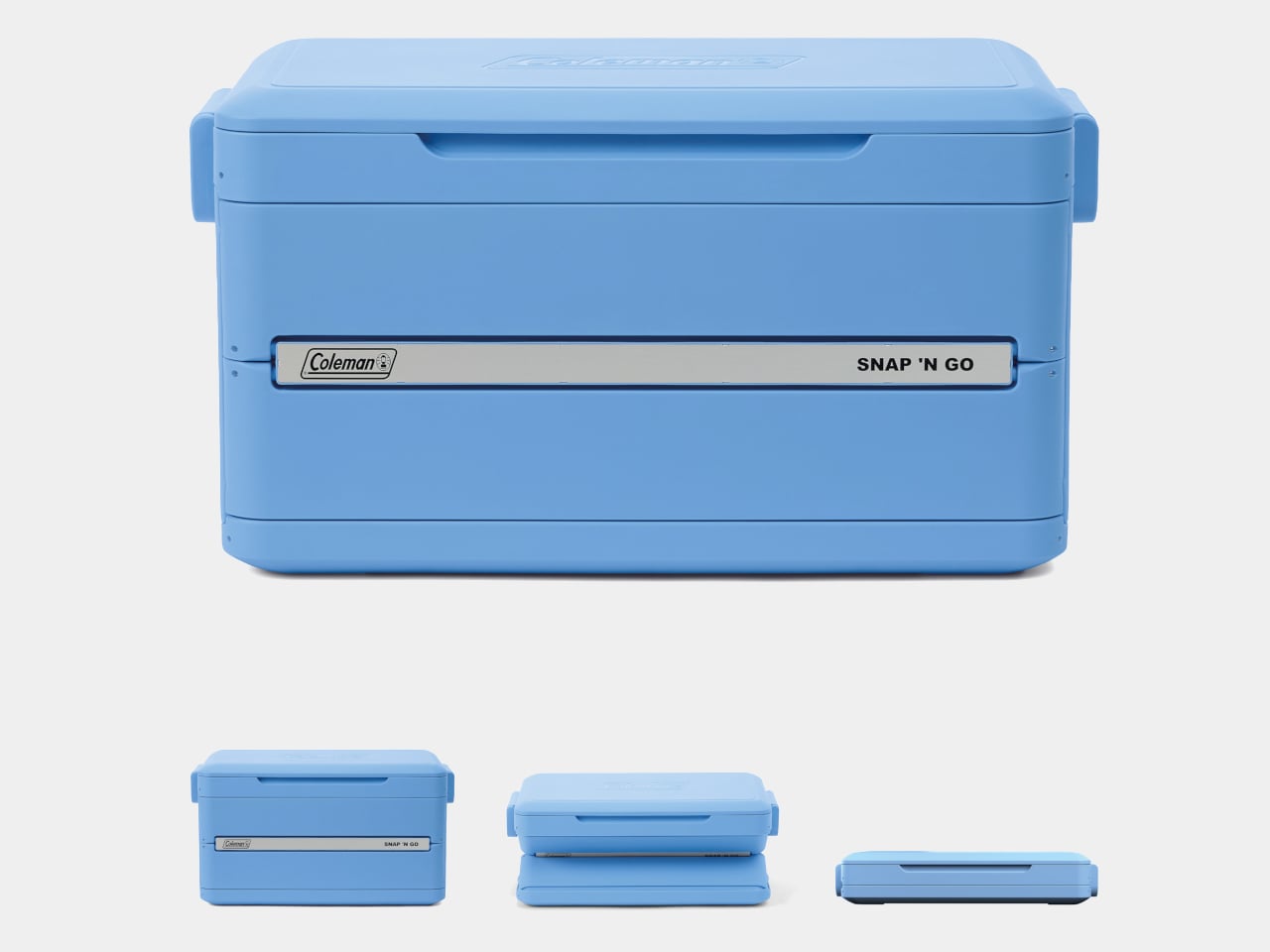
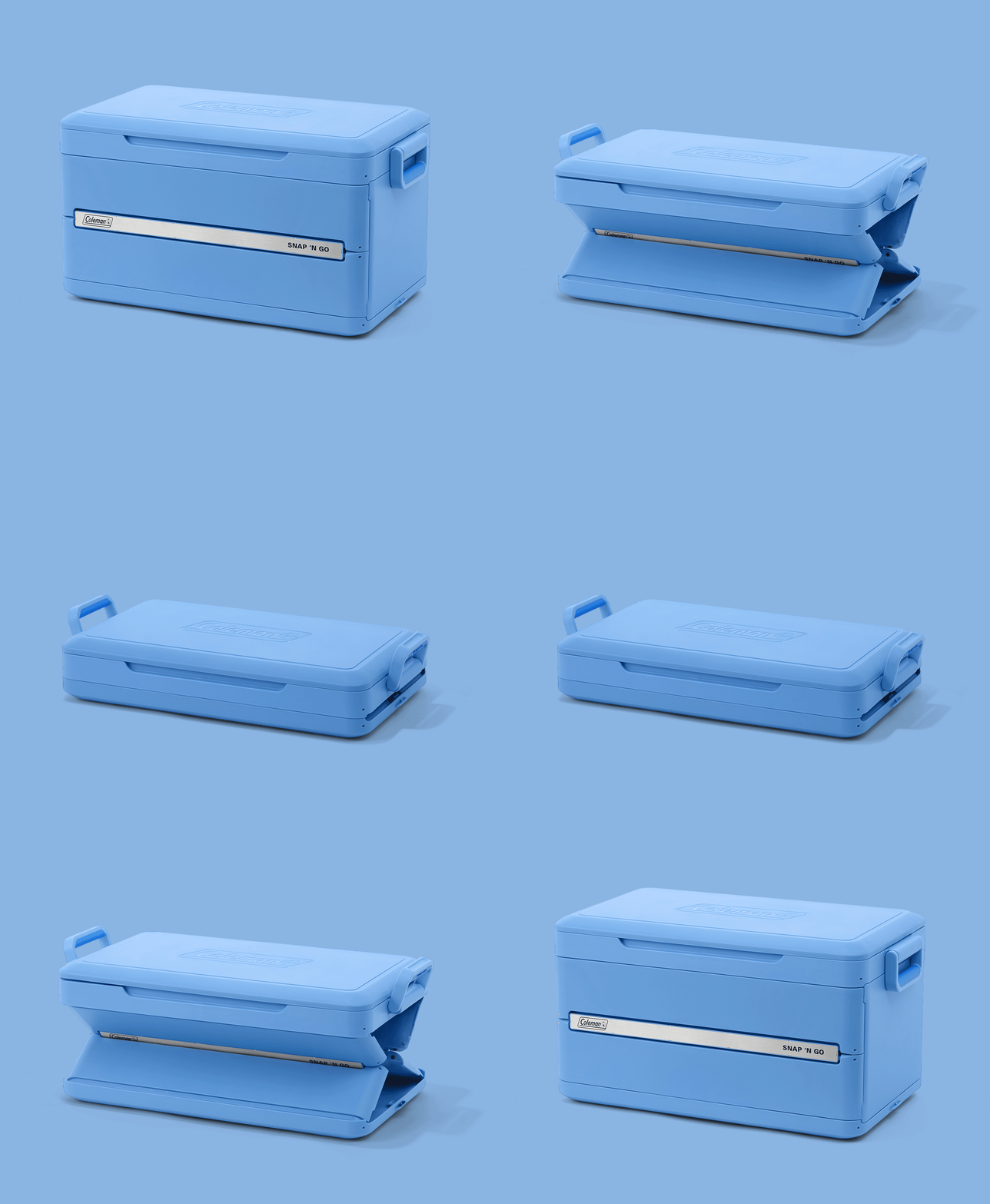
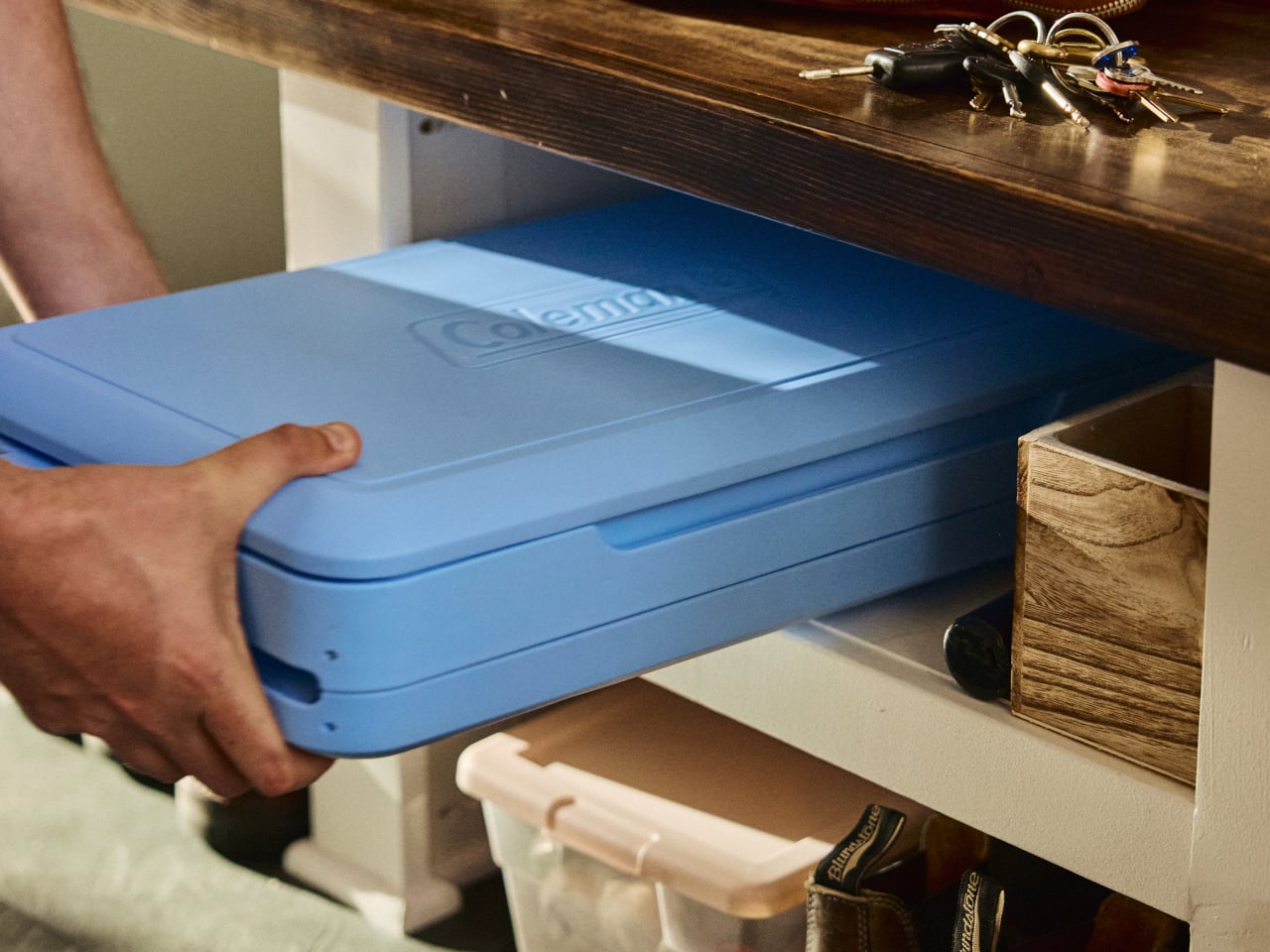
Coleman’s Snap ‘N Go is a hard-sided cooler with a patent-pending collapsible design that compresses to one-third of its open volume in under 10 seconds. The mechanism borrows logic from folding storage crates: the body panels snap down in sequence, and the removable interior liner folds flat and stows inside the lid. What was a full-sized cooler becomes a flat slab thin enough to slide under a bed or stand upright on a shelf between uses.

Designer: Coleman

The construction is hard polypropylene, which matters more than it sounds. Soft collapsible coolers already exist, but they sacrifice insulation to achieve that flexibility. The Snap ‘N Go maintains a fully insulated lid and body, rated to hold ice for up to 64 hours. That’s two full days of cold retention from something that, an hour later, disappears into a closet, which is a combination the soft-sided category has never managed.

1

Setup works in reverse, just as quickly. From flat storage to loaded and latched takes under 10 seconds, and the removable liner handles watertight containment once the body is expanded. The liner also makes post-trip cleanup more manageable, since it pulls out separately rather than requiring the whole cooler to be rinsed out and dried upright somewhere. It’s a small detail, but one that addresses one of the more tedious parts of cooler ownership.

Three sizes cover most group sizes: 35 qt at $200, 45 qt at $220, and 55 qt at $240. The 55-qt model holds up to 93 cans without ice and supports 200 lbs. when expanded, though Coleman is careful to note it isn’t intended as a seat. Handles are designed to accommodate both carry orientations, vertical when the cooler is collapsed flat and horizontal when it’s fully open and loaded.

The one question the design raises, and doesn’t fully answer yet, is how the collapsible mechanism ages. The hinges, panel connections, and liner attachment points are all doing repetitive work that a standard molded cooler body never has to perform. Coleman backs it with a three-year limited warranty, which covers the expected lifespan question in practical terms but doesn’t tell you much about what happens in year four after a few dozen collapse cycles on a tailgate.

The post Coleman’s $200 Cooler Chills for 2 Days, Folds Flat in 10 Seconds first appeared on Yanko Design.