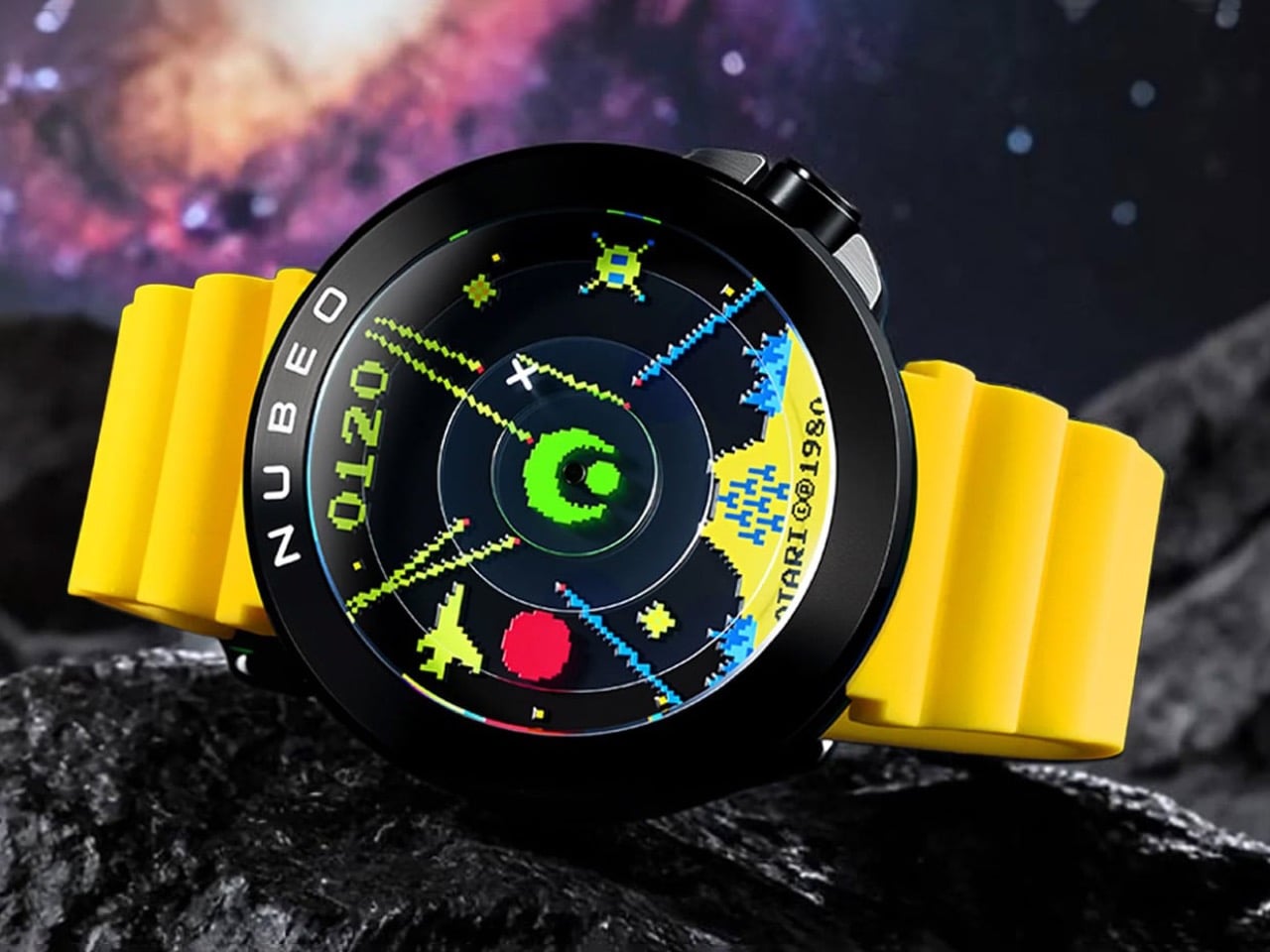
Atari’s 1980 Arcade Classic Just Became a Limited Edition Automatic Watch

Gaming and watchmaking have been circling each other for years, trading collaborations that usually land somewhere between cynical and forgettable. The Hamilton x Call of Duty watch exists. The G-Shock x Street Fighter collection exists. Casio has licensed more IP than most studios at this point. Nubeo looked at all of that and apparently decided the only interesting move was to go deeper, not louder.

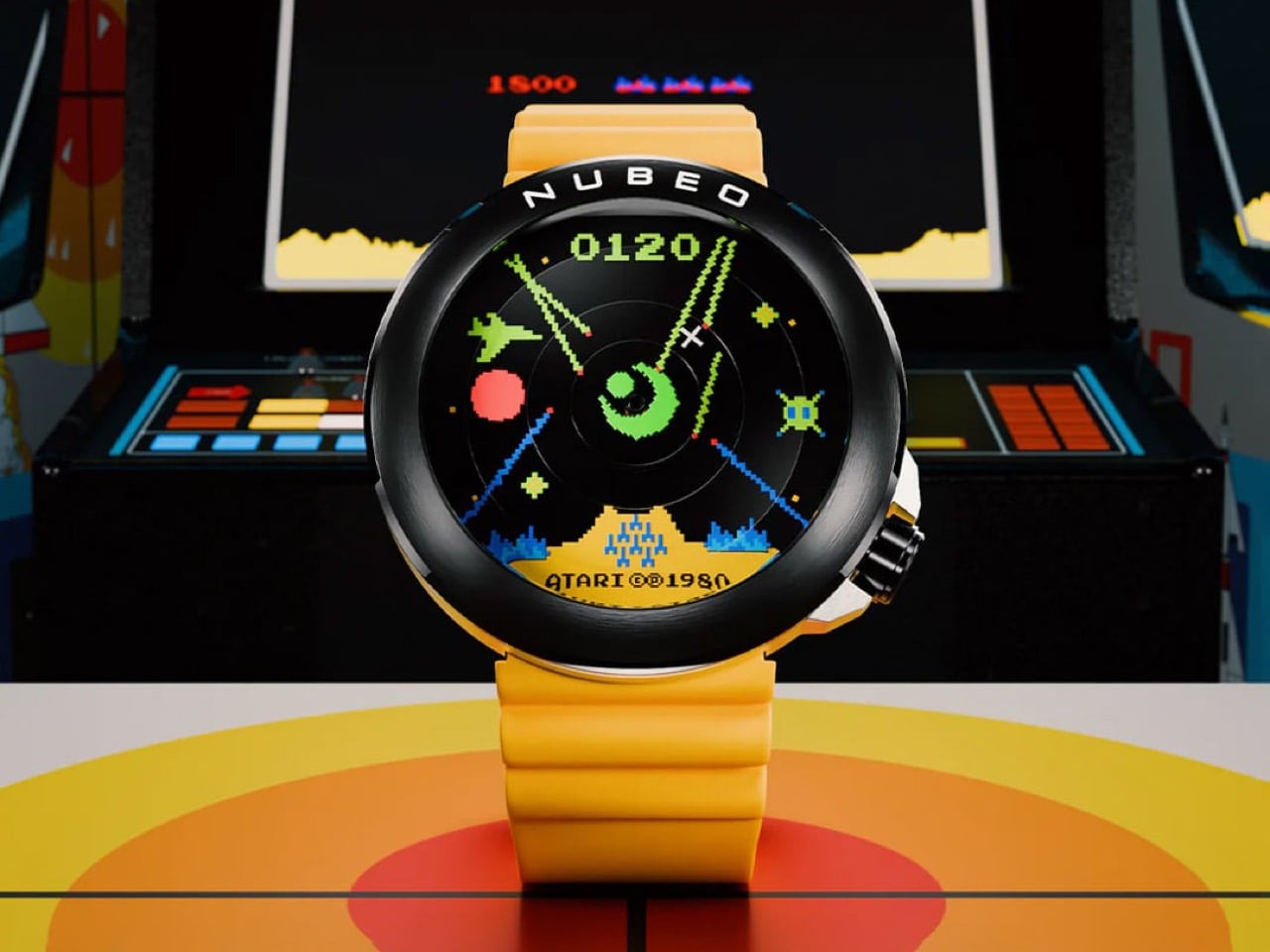
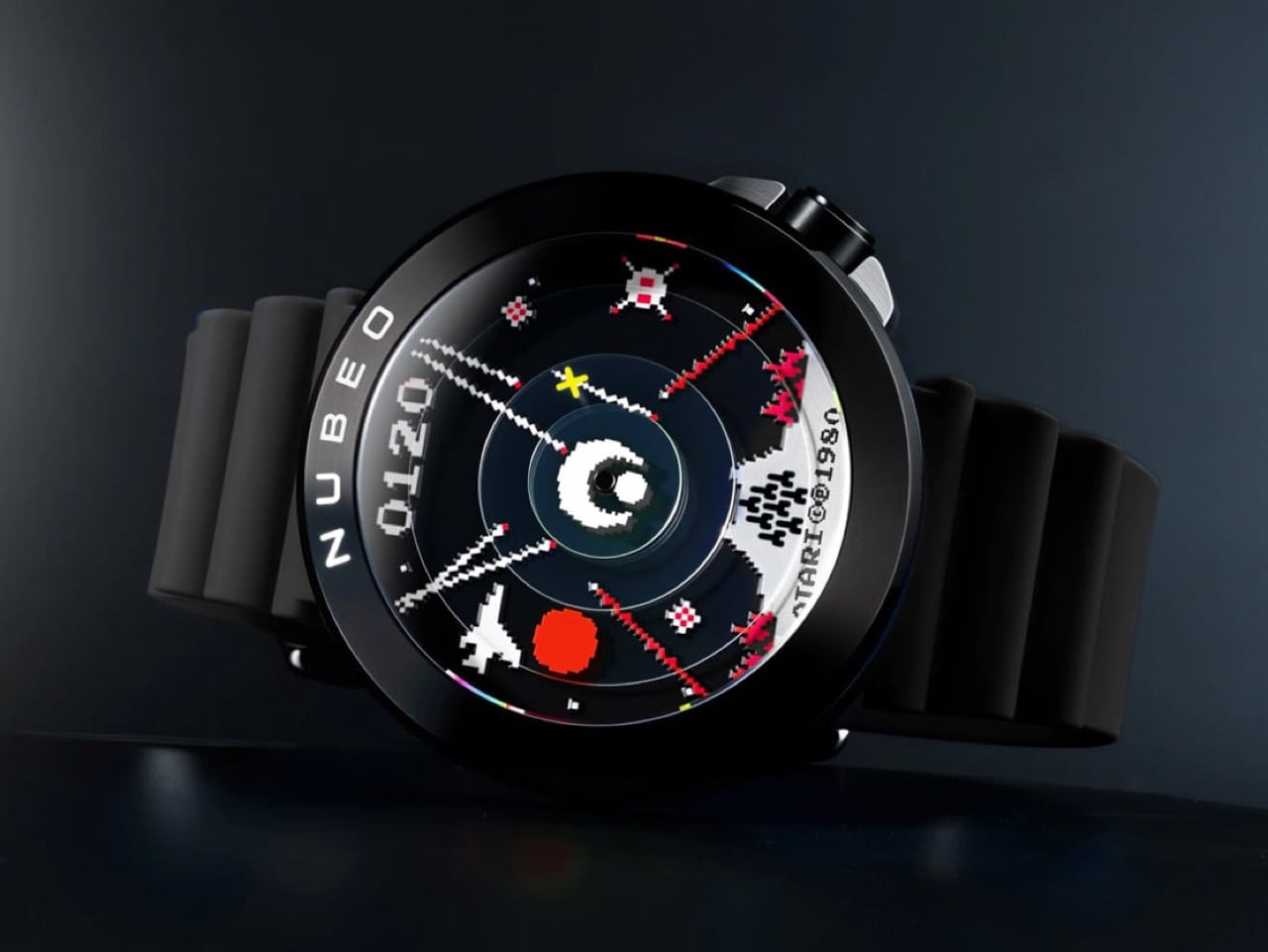
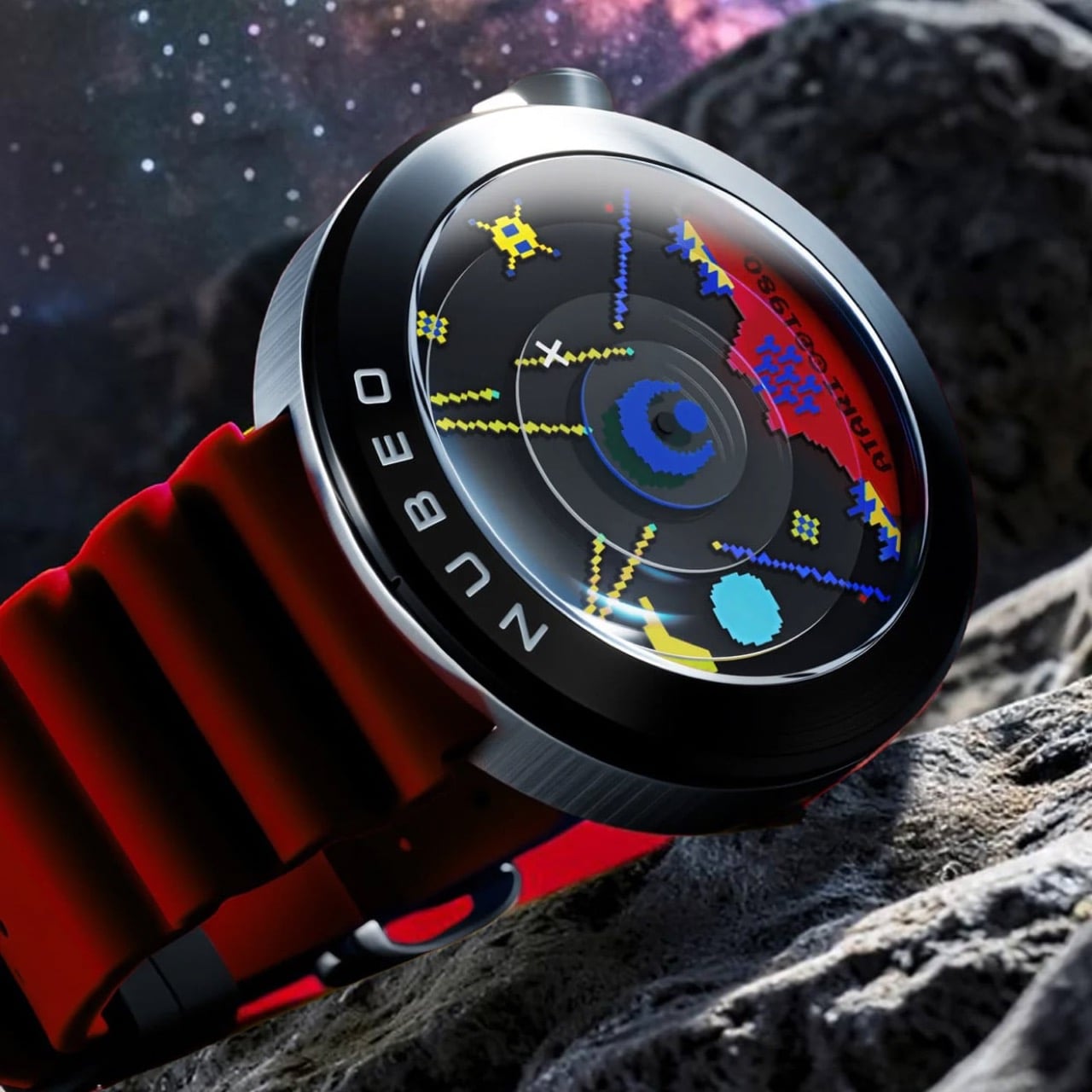
The Ventana Automatic Missile Command takes the full visual grammar of Atari’s 1980 arcade classic and builds it into a 50mm mechanical watch limited to 100 individually numbered pieces per colorway. The dial layers pixelated missile trails, fighter jet sprites, and a concentric radar system over a multi-disc mechanical assembly, with the “0120” score display anchoring 12 o’clock and the “Atari ©1980” copyright stamp sitting at 6. The exhibition caseback frames the Miyota 8215 automatic movement inside the original arcade cabinet artwork, giving the watch a second face as compelling as the first. Kill the lights and the Super-LumiNova does something unexpected: the full-color scene collapses into monochrome green, the exact phosphor glow of a 1980 CRT screen, and suddenly the whole design logic becomes obvious. Nubeo built five colorways at $500 each, Assault Yellow, Strike Green, Vector Red, Command Black, and the Impact Blue exclusive to Atari.com, and every one of them rewards that kind of attention.
Designer: Nubeo x Atari

Designer: Nubeo
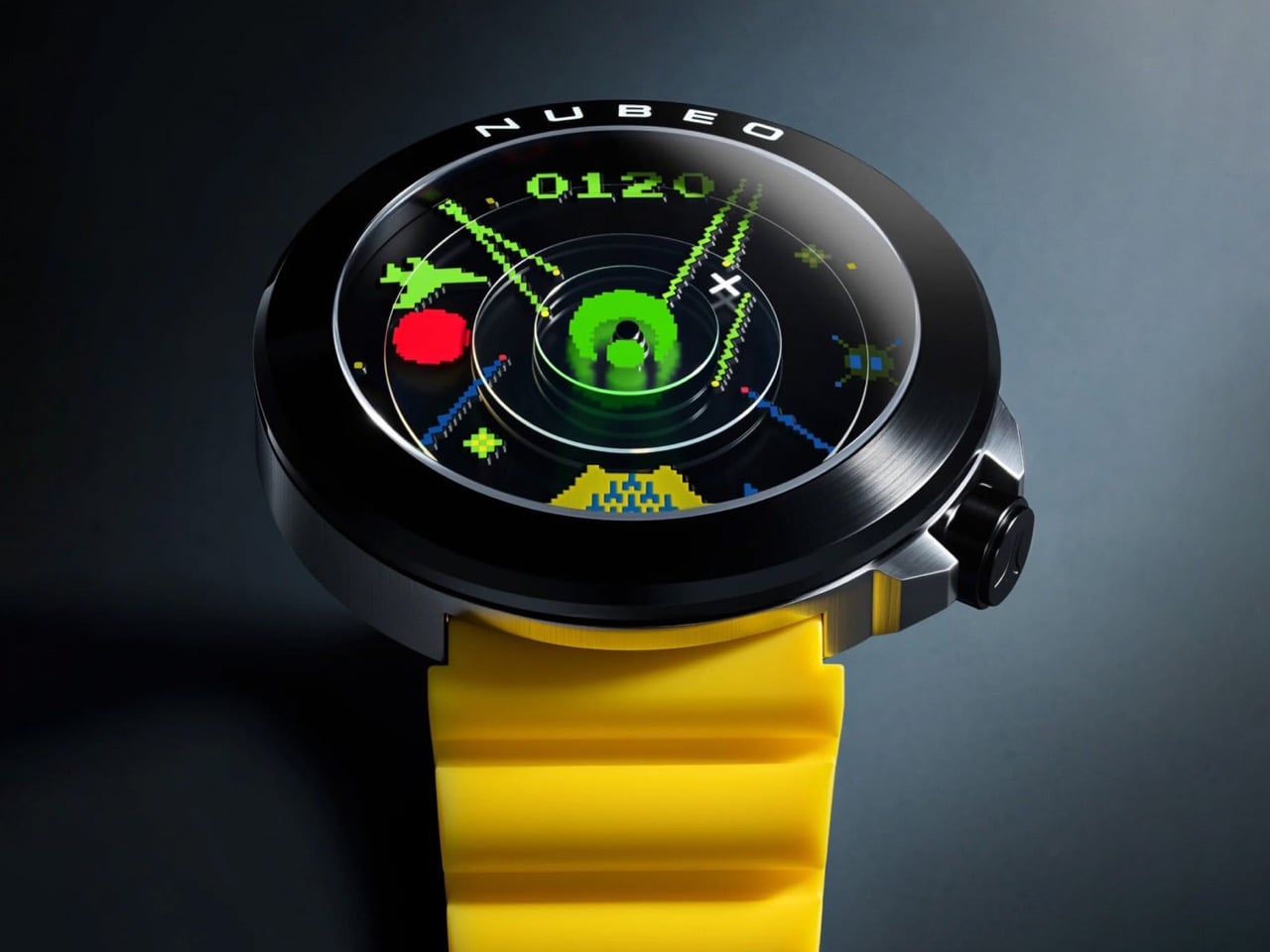
Missile Command arrived in arcades in 1980 carrying a psychological weight that most games of its era never attempted. Designer Dave Theurer has spoken about the nightmares the project gave him during development, because the premise was deliberately unwinnable: nuclear warheads are falling on your cities, you can slow the assault but never stop it, and eventually the screen fills with fire. That Cold War dread, rendered in chunky pixels and trackball physics, made it one of the most culturally loaded games ever put into a cabinet. It migrated to the Atari 2600 and into living rooms across America, and an entire generation grew up memorizing its visual language: the radar rings, the missile trails, the pixelated cityscape at the bottom of the screen waiting to be vaporized. Nubeo clearly grew up with it too, and the Ventana is the design evidence.
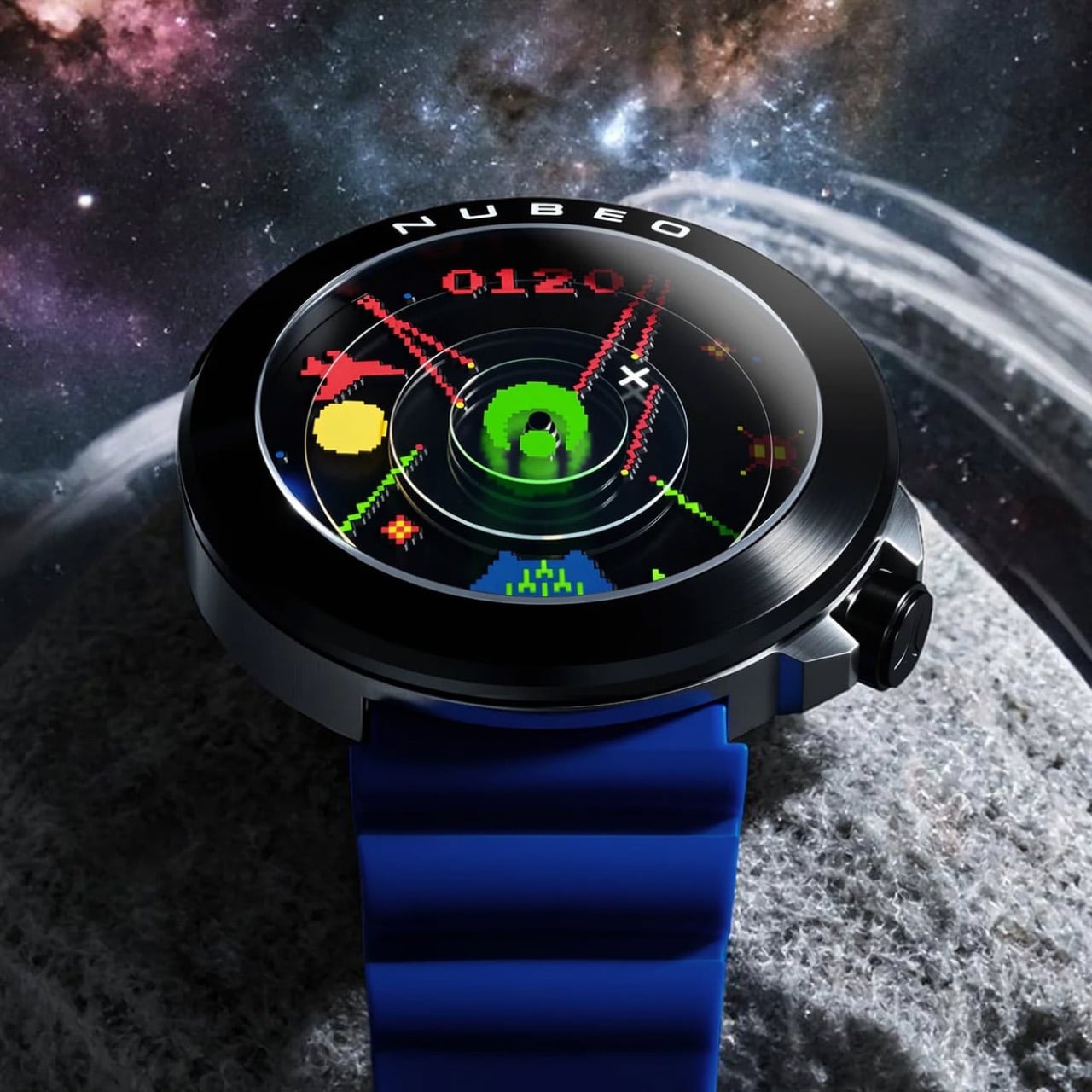
A multi-layered disc system gives the scene genuine physical depth rather than the flat printed look that sinks most licensed watches. The concentric radar rings at center sit on a separate disc plane, catching light differently from the pixelated imagery surrounding them and creating a parallax effect that shifts as you move the watch. The central turret hub anchors the second hand and reads exactly as the game’s targeting reticle, while the minute hand carries an X crosshair and the hour hand a red sun symbol. These are not decorative flourishes bolted onto a standard layout. They are the timekeeping system rebuilt around the game’s iconography from the ground up, which is a fundamentally different design brief than most collaborations ever attempt.
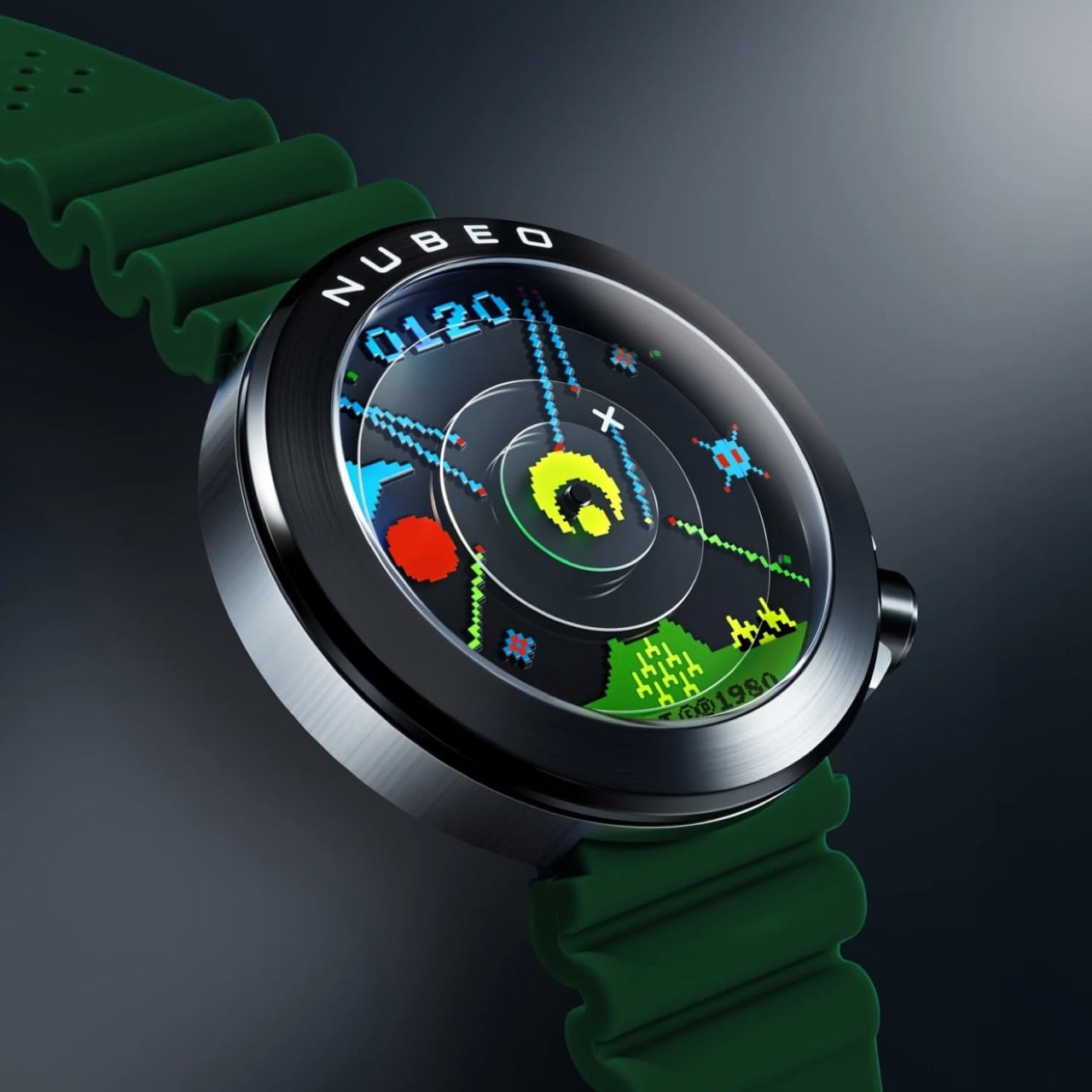
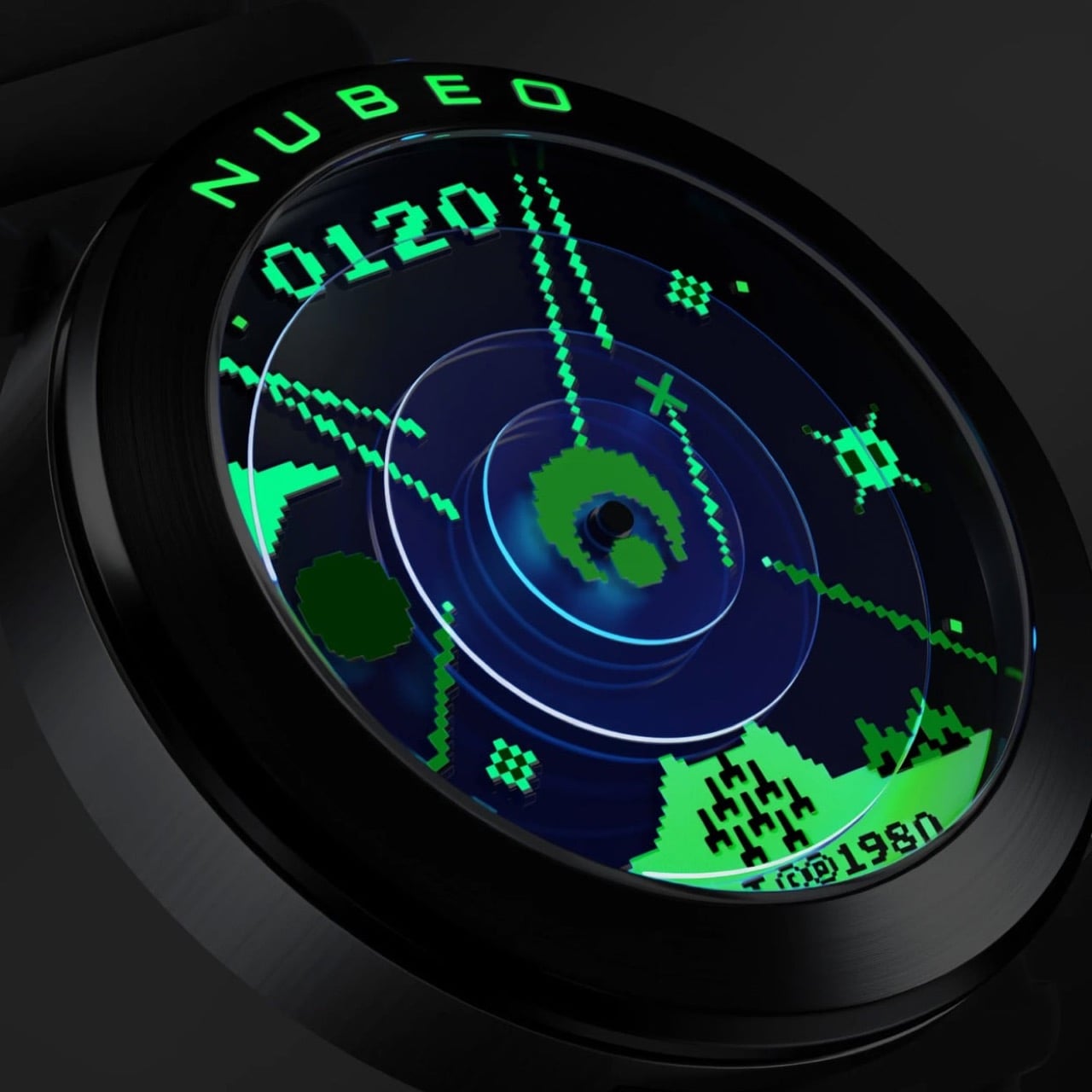
Super-LumiNova was applied across the full dial surface, which means in daylight you are reading a full-color Missile Command scene in vivid greens, yellows, reds, and blues, and in darkness all of that color information drops away into a pure monochrome green glow that is a dead ringer for the phosphor output of a 1980 CRT monitor. The design team understood that the game existed in two visual registers, the color of the arcade cabinet screen and the green-tinted memory of everyone who played it in a darkened room, and encoded both into a single material decision. Every pixel, every missile trail, every sprite glows with the same uniform intensity, uniform in the way that analog phosphor was uniform, which is to say warm and slightly imprecise at the edges. That quality is almost impossible to fake with modern lume application and the fact that Nubeo pulled it off suggests this collaboration went well beyond a licensing agreement into something closer to genuine obsession.
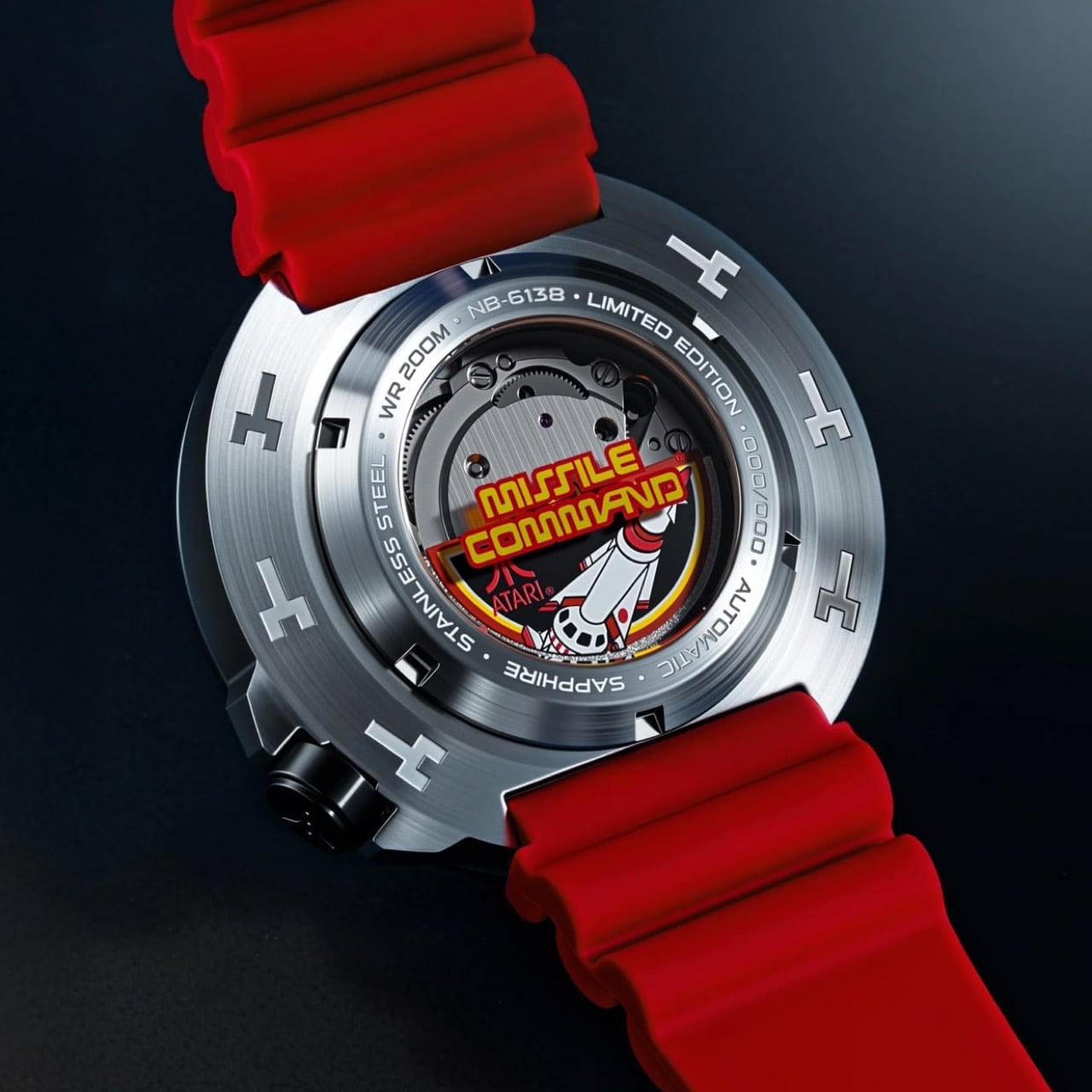
Through the exhibition window you can watch the Miyota 8215 automatic rotor spin, but the real draw is the original Missile Command arcade cabinet artwork surrounding it, complete with the bold red and yellow logo treatment, the rocket imagery, and the Atari mark printed onto the inner caseback disc. The outer ring is engraved with the model reference NB-6138, the water resistance rating, the limited edition designation, and the individual piece number. Wearing this watch means carrying two museum-quality presentations simultaneously, one facing the world and one facing your wrist, which is an unusually generous design decision for a $500 release.
The hardware specifications match the ambition of the concept without overreaching. The 50mm stainless steel case runs 16mm thick, the Miyota 8215 is a Japanese automatic workhorse that stays reliably out of the way of the dial story, sapphire crystal with AR coating protects the scene, and the screwdown crown at 4:30 delivers 200M water resistance. The chunky segmented rubber straps in each colorway add a tactile sportiness that ties the whole package back to the arcade cabinet’s joystick-era aesthetic, and at 179 grams the watch has the kind of presence on the wrist that reminds you it is there. At $500 for a sapphire-crystalled, 200M-rated, individually numbered automatic with this level of dial craft, Nubeo found the third path that the gaming collaboration space rarely bothers looking for: mid-tier pricing with upper-tier design intent. All five colorways are available now at nubeowatches.com, with Impact Blue held exclusively at atari.com, and with production capped at 500 pieces total across all variants, the cities on your dial may be perpetually under attack but the watch defending them is built to outlast every arcade cabinet that ever ran the original game.

The post Atari’s 1980 Arcade Classic Just Became a Limited Edition Automatic Watch first appeared on Yanko Design.
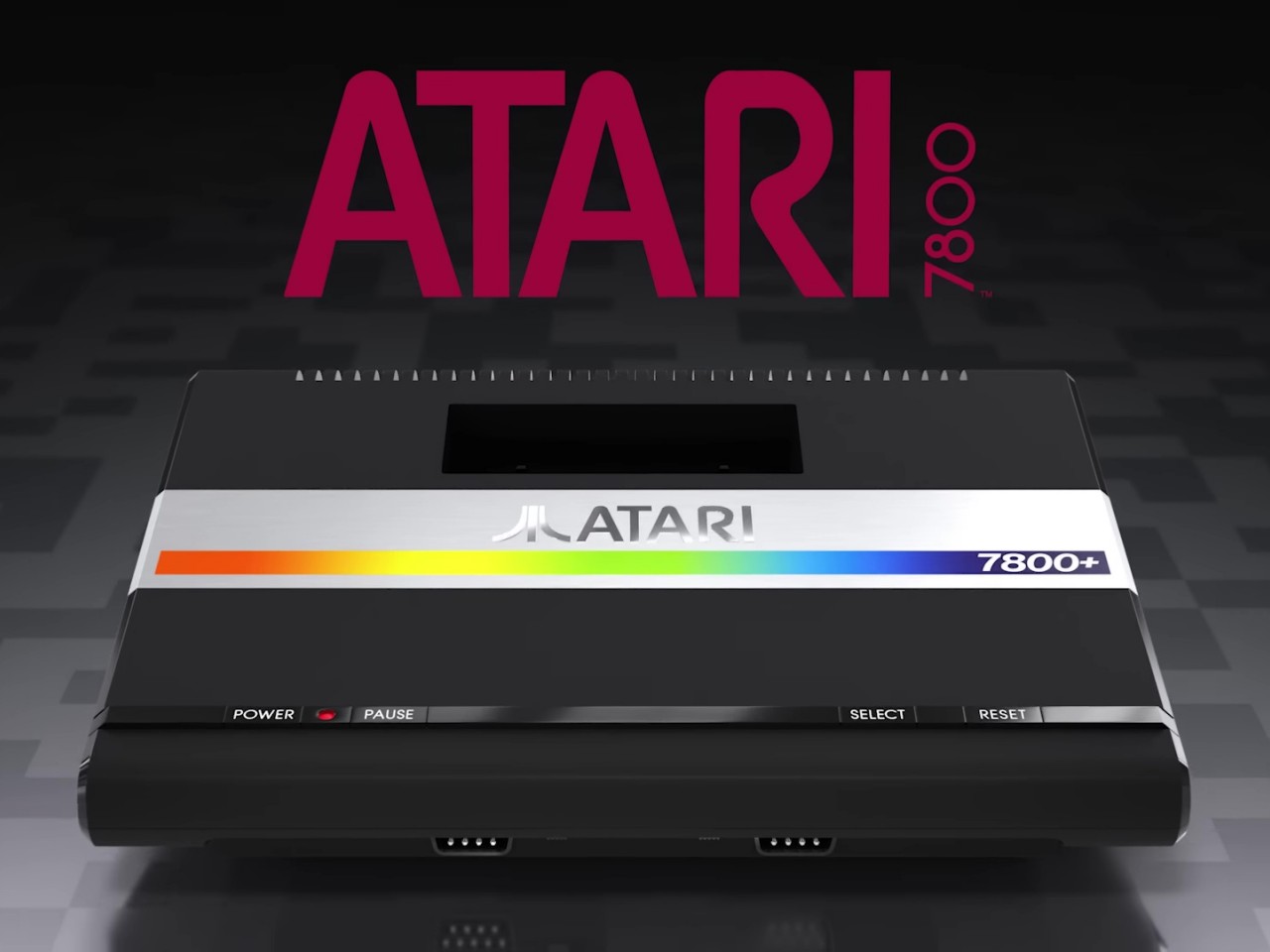
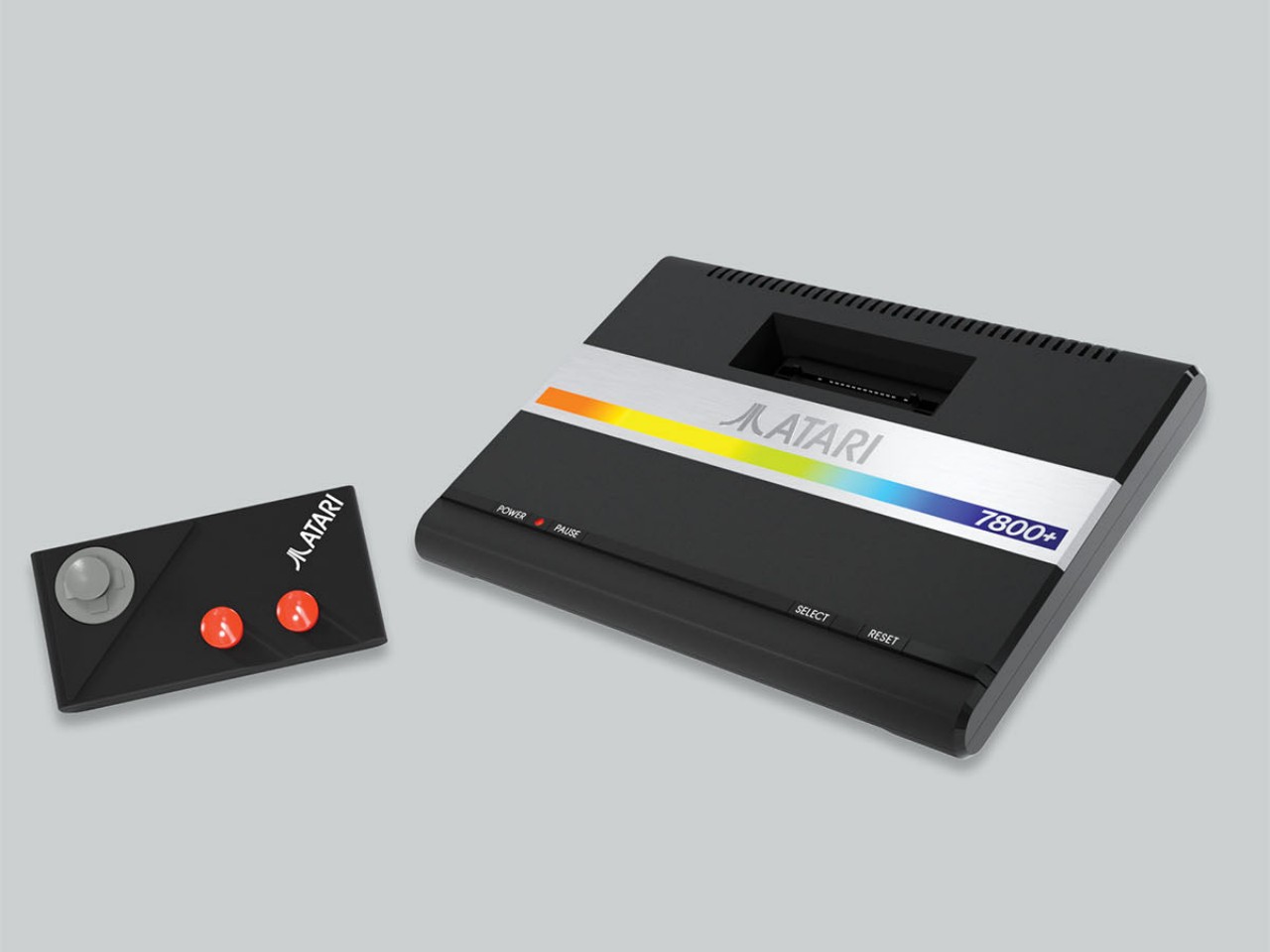
Atari 7800+ is a retro mini console that looks forward and backward

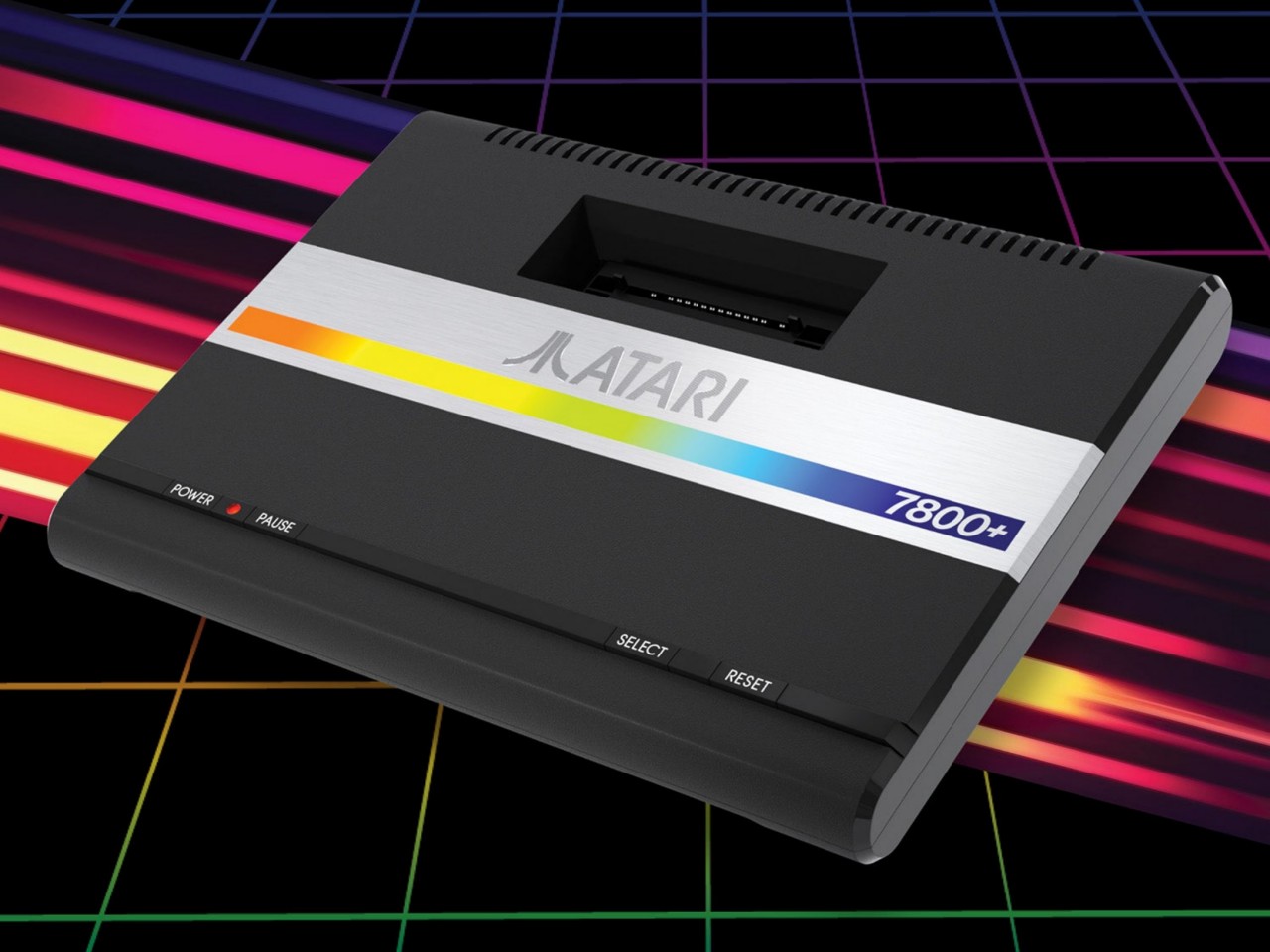
What is old is new again, or at least that’s the slogan for this wave of nostalgia trips washing over multiple industries today. Vinyl is selling again, Polaroid is now spelled “INSTAX,” and consoles that were famous before you were born are landing on shelves in miniature form. Interestingly enough, these retro designs prove just how powerful and lucrative nostalgia can be, especially if you can spin it in a way that makes sense in the present and for the foreseeable future. This recreation of one of Atari’s lesser-known home consoles, for example, doesn’t just pay homage to the past but actually supports the games of that era while also embracing titles that were made in the present for this decades-old platform.

Designer: Atari

Unlike its successful predecessor, the Atari 2600, the Atari 7800 from 1986 just came at the wrong time, just after the video game crash of 1983 and on the same year that the Nintendo Entertainment System, a.k.a. the Nintendo Famicom, launched. Regardless, the home console, which supported Atari 2600 cartridges to fill up its library, managed to make it into the annals of video game history, a chapter that Atari is now trying to revive in an interesting way.

The Atari 7800+, like many retro recreations, is a smaller version of the original, designed to better fit today’s standard housing situation. It sticks closely to the shape and aesthetics of the 7800, down to the color spectrum strip that was the hallmark of the European version of the machine. It supports HDMI out and displaying games in the original 4:3 aspect ratio or switching to widescreen for modern monitors. Rather than coming with pre-installed games like other retro consoles that simply use emulators, the 7800+ offers an almost exact replica of the original to the point that you can run both 2600 and 7800 cartridges, presuming you have those lying around.

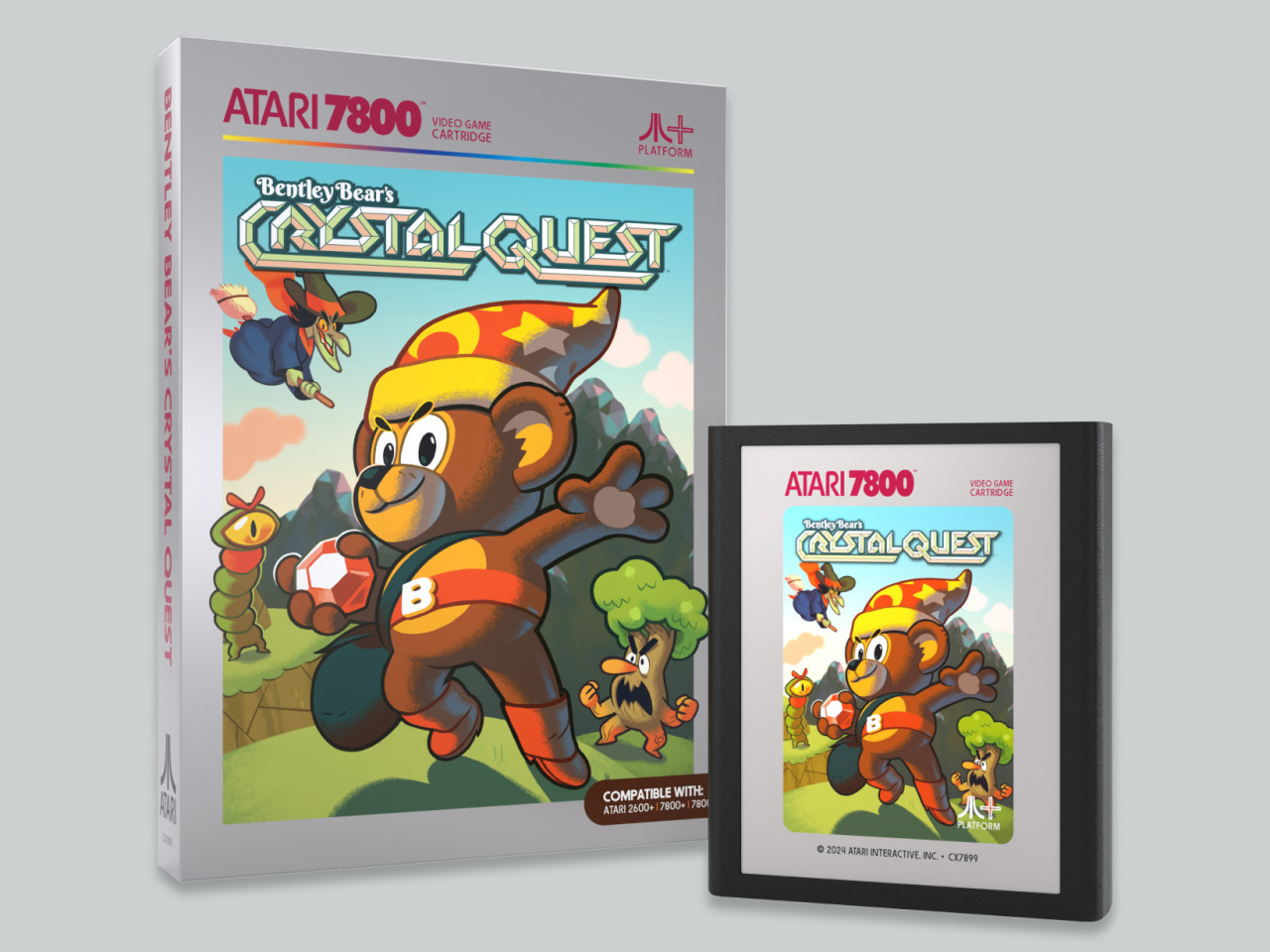
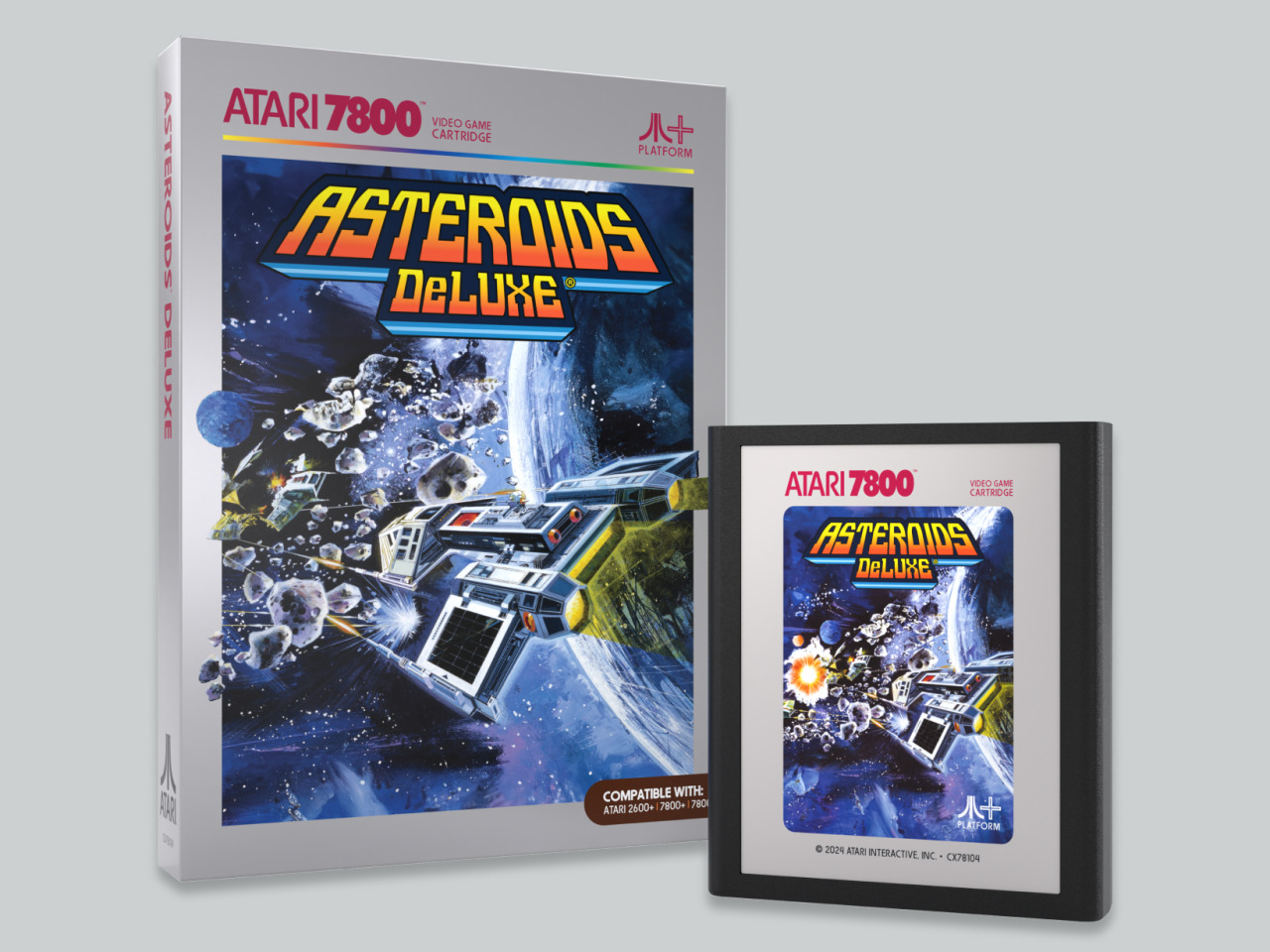
That’s not exactly a large selection of titles, so the Atari 7800+ also supports third-party Atari games as well. The company takes it even further and actually supports the official adaptation of some of these games sold as 7800+ cartridges. That includes Bentley Bear’s Crystal Quest, a homebrew Atari game developed in 2014 as an unofficial successor to the 80s Crystal Quest. This is the only cartridge that comes with the package, and the other nine titles will be sold separately at $29.99 a pop.

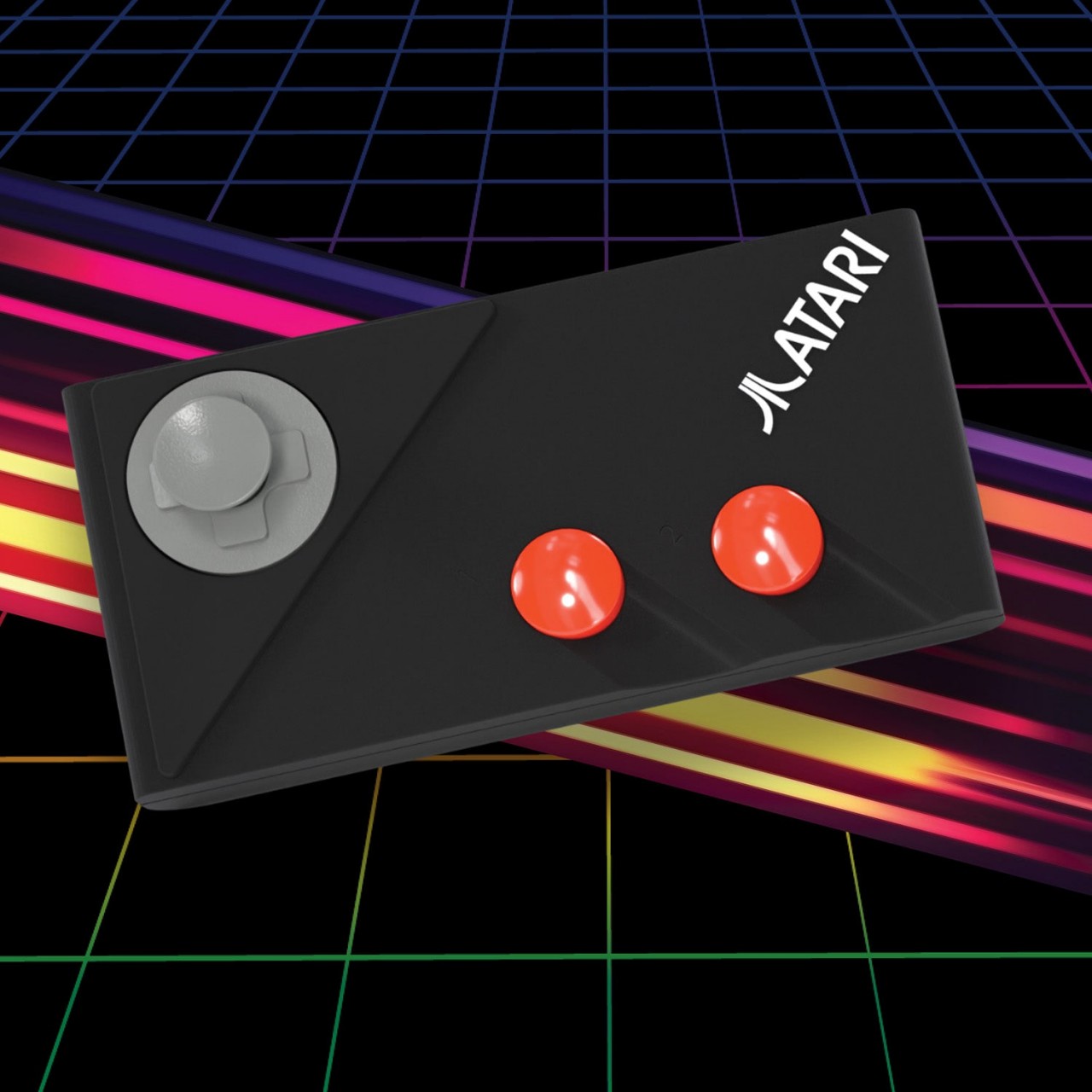
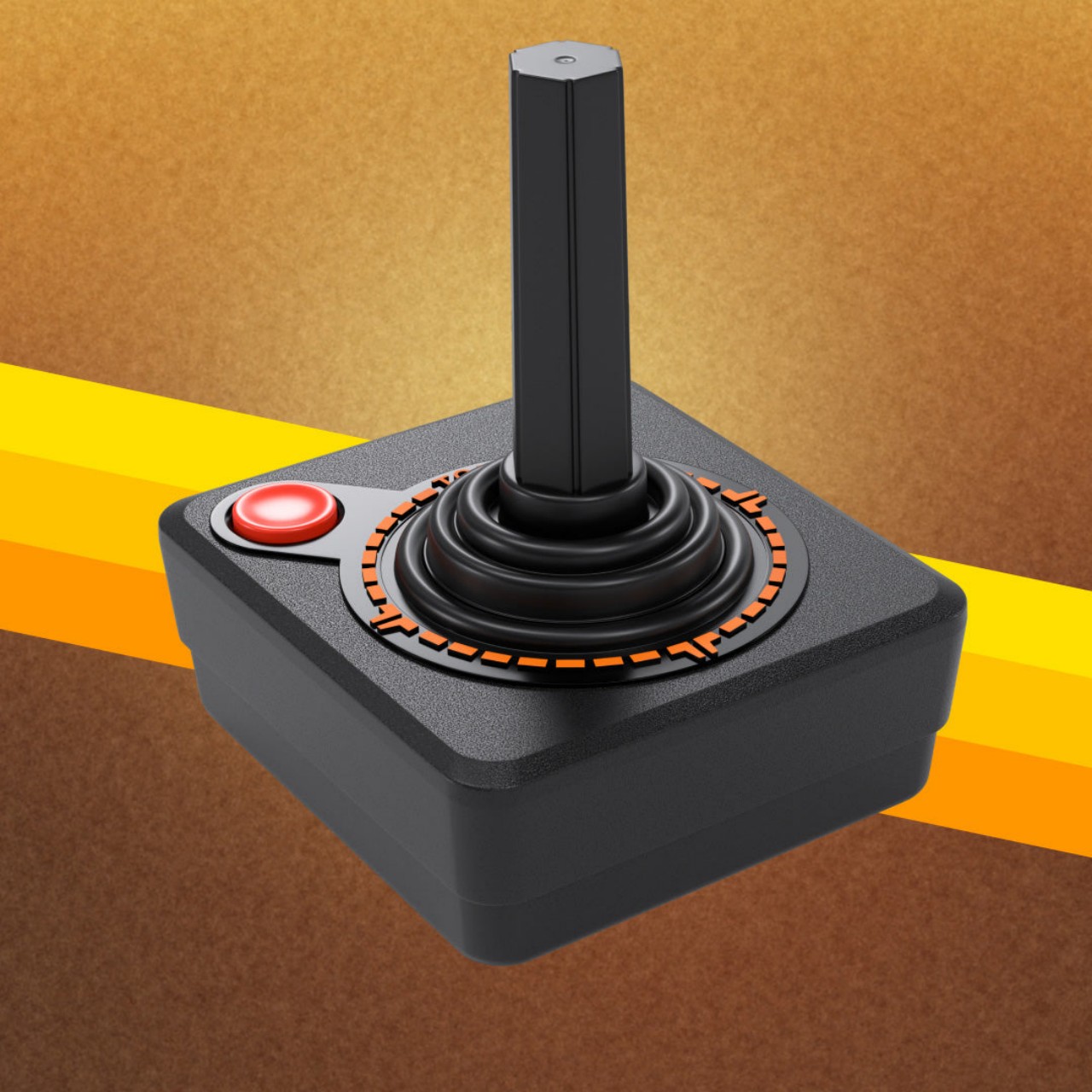
The Atari 7800+ also comes with the CX78+ controller, a wireless remake of the radical two-button control that Atari introduced with the 7800. There’s also a CX40+ wireless joystick available for purchase if you prefer to play that way. Both controllers are compatible with the original 2600 and 7800 and can also be hooked up to any PC via the USB receiver. The Atari 7800+ is available for pre-order now for $129.99 but won’t ship until Winter this year.

The post Atari 7800+ is a retro mini console that looks forward and backward first appeared on Yanko Design.

Atari is entering the handheld gaming space with this gorgeous console that packs 200 iconic games

If as a kid you ever relished the thought of carrying all your change to the nearest arcade to bust out a few games, this one should be the perfect feels trip down nostalgia lane. The MyArcade Atari Gamestation Portable, unveiled at CES 2024, is a vibrant time capsule that transports you straight back to the golden era of gaming. This device promises to deliver a nostalgic yet innovative gaming experience, and here’s what makes it stand out.

Designer: MyArcade

Design and Controllers: A Nostalgic Twist

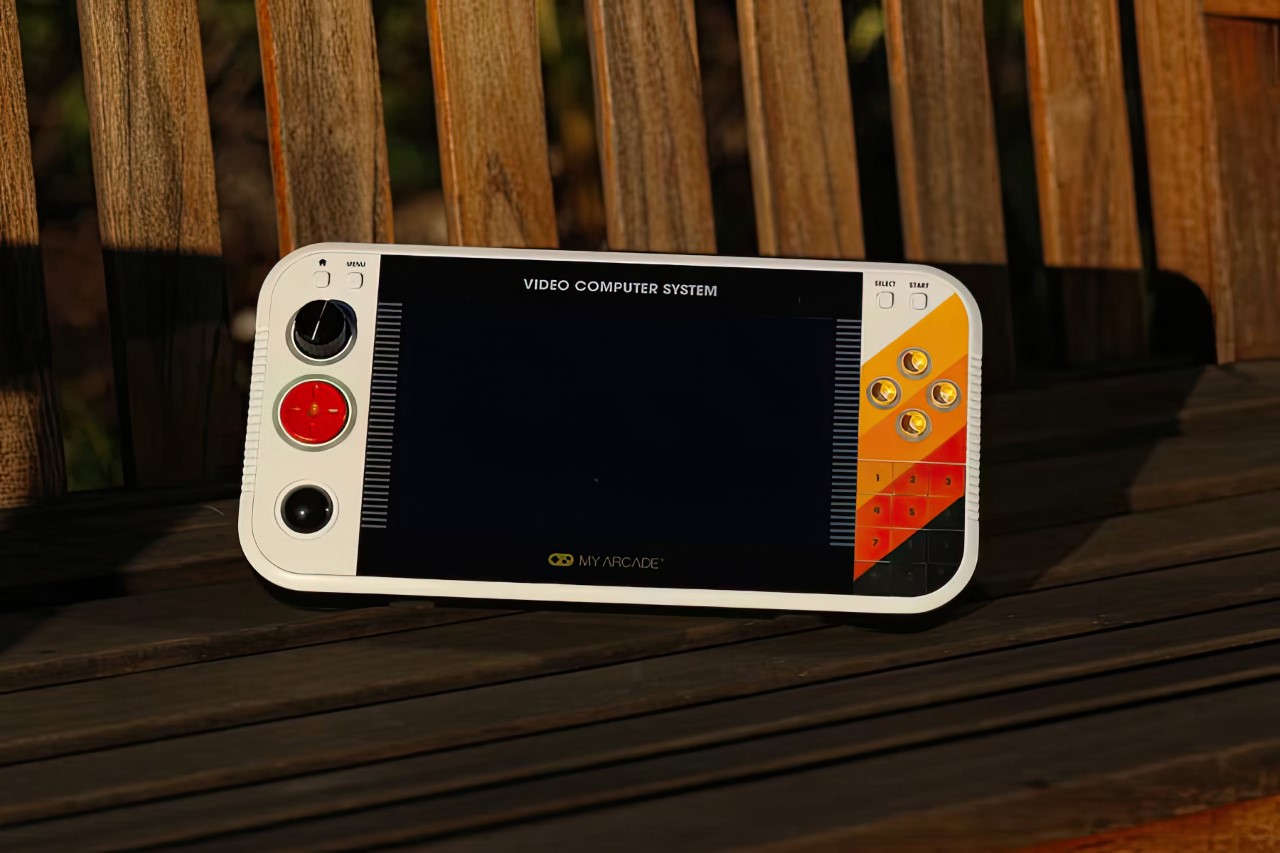
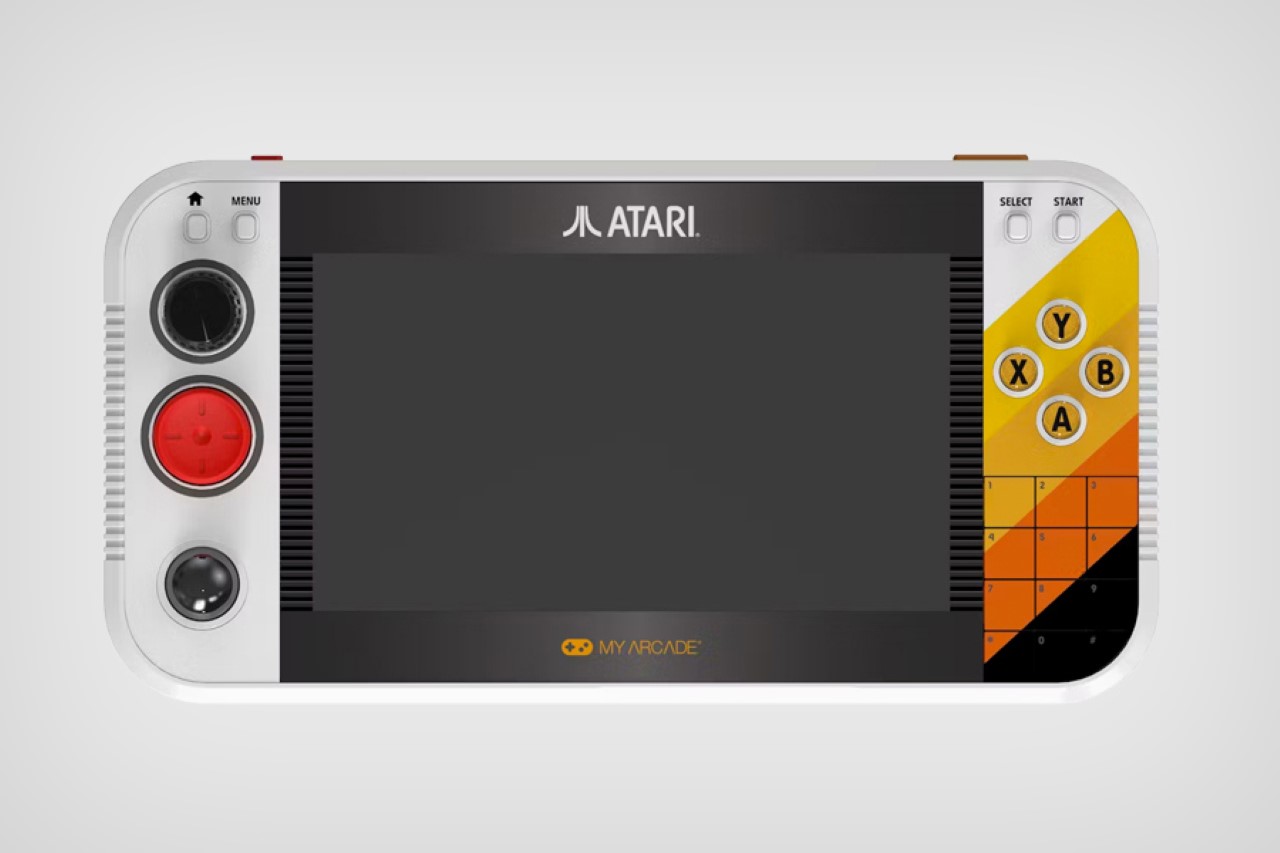
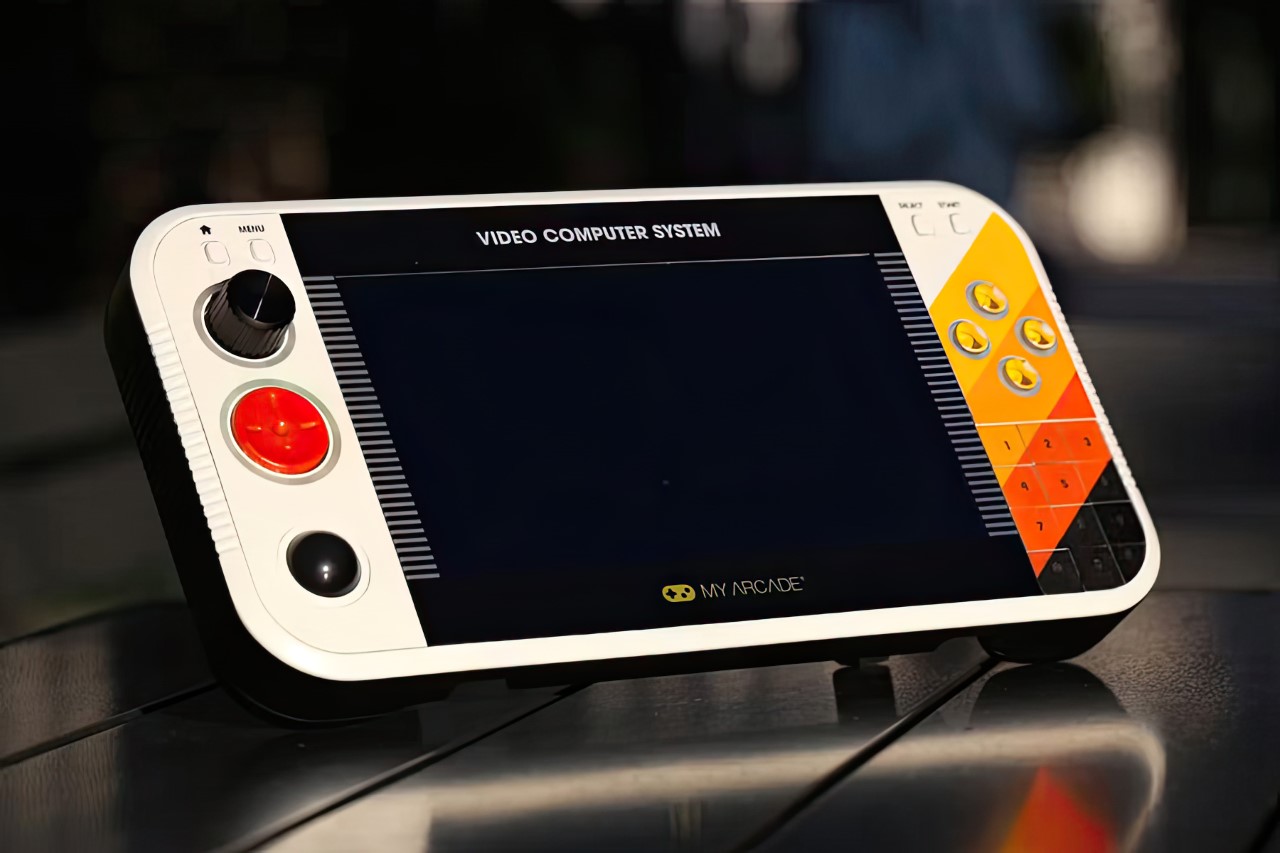
The Atari Gamestation Portable distinguishes itself with a design that’s a respectful nod to the classic Atari era. Licensed by Atari, MyArcade has done more than just slap on a retro label; they’ve integrated elements of the beloved Atari 2600 into a portable format. This isn’t just about playing old games; it’s about reliving the unique experience of them. The inclusion of an Atari Trak ball, paddle, and a keypad, alongside a d-pad and ABXY buttons, ensures that both classic and modern gamers feel at home.

Display and Games: A Feast for Retro Eyes

The Gamestation Portable boasts a 7-inch high-resolution display, significantly larger than MyArcade’s previous handhelds. This size increase enhances the visual experience of the over 200 classic Atari games preloaded onto the device. While the full games list hasn’t been published, the promise of such a vast library is exciting for fans of Atari’s extensive catalog.

Operating System and Connectivity: Tailored for Atari Classics

The device runs on a proprietary operating system, specifically designed to play Atari classic games, eschewing more common systems like SteamOS or Windows. This specialized OS ensures a seamless gaming experience, tailored to the unique requirements of retro games. Additionally, MyArcade has included two rear-mounted USB Type-C ports and a kickstand, adding modern convenience to the retro experience. The system’s LEDs illuminate to indicate which buttons are supported by the game currently being played, adding a helpful, modern touch to the gameplay experience​.

Pricing and Availability: A Trip Down Memory Lane

The Atari Gamestation Portable is expected to hit the market in September or October 2024, with a price tag of $149. This pricing positions it as an affordable entry into the world of retro gaming, making it accessible to a broad audience of gamers and nostalgia enthusiasts alike​.

The post Atari is entering the handheld gaming space with this gorgeous console that packs 200 iconic games first appeared on Yanko Design.
Atari 400 Mini retro console is a charming recreation of a quirky design

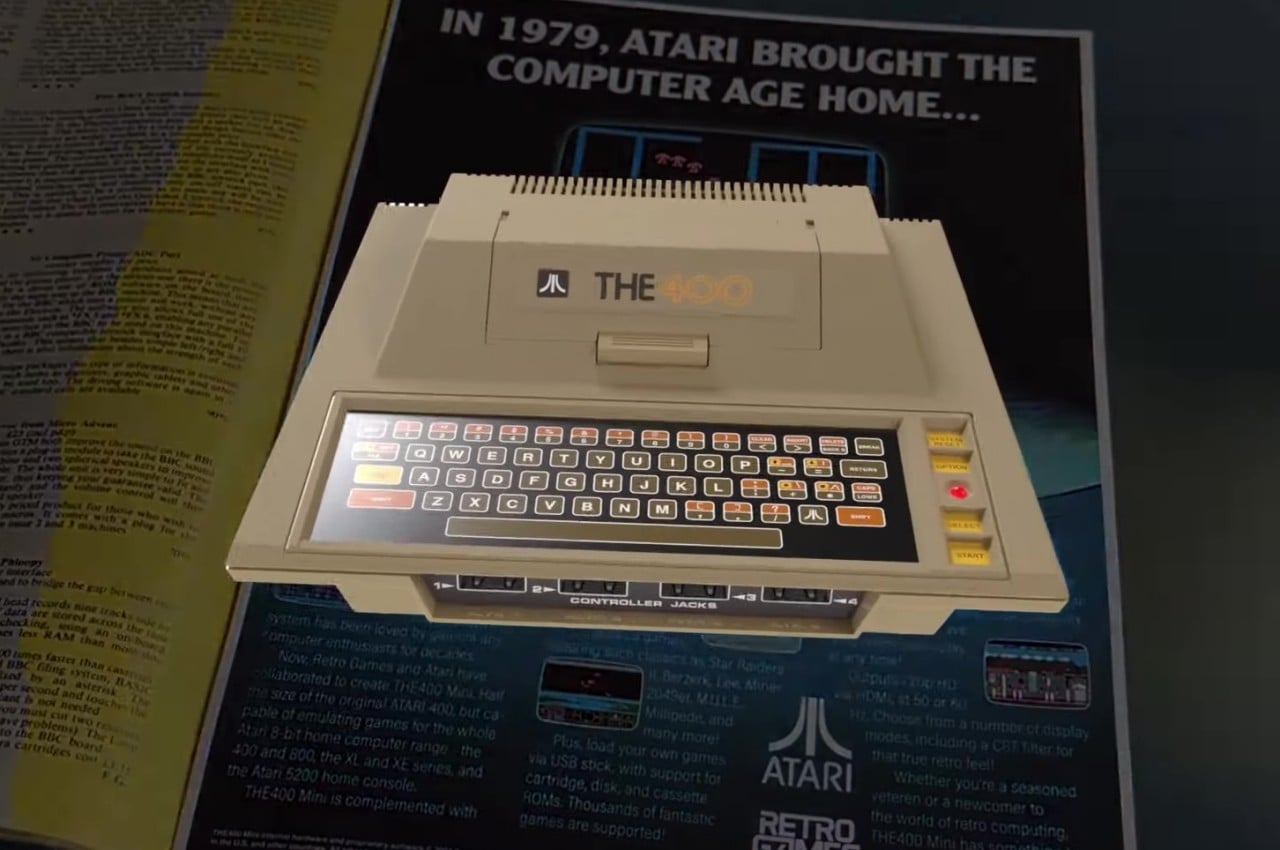
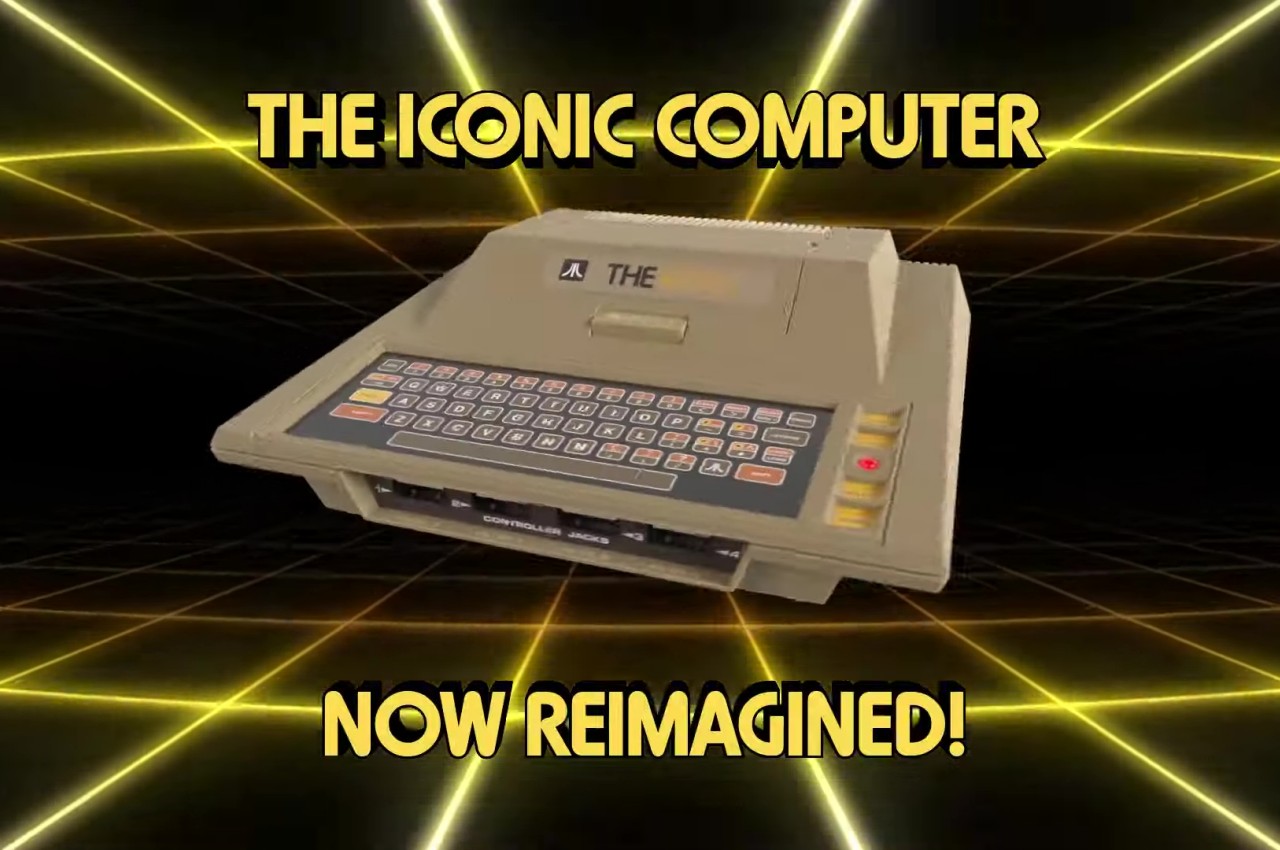
Most people today probably only know of the Xbox, PlayStation, and Nintendo Switch, but there was a time when the market was littered with countless gaming consoles, each with their own distinct designs. Many of them look almost outlandish by today’s standards, but it’s exactly because of these that these old machines have become today’s novelties again. The retro console craze has died down a bit, but it still exists and there are plenty of designs still left untouched. One of those is the rather distinctive Atari 400, which now finally comes in a mini recreation that brings yet another bunch of classic titles from one of gaming history’s biggest giants.

Designer: Retro Games x Atari

You might already be quite tired of hearing about all these classic games being made available to a newer, younger audience, but the console that this batch comes in is definitely worth noting. The Atari 400 and 800, after all, made many firsts in the industry, bringing what is practically a personal computer into homes with a focus on gaming. That objective was what informed the machine’s design, giving it a peculiar appearance even among its peers.

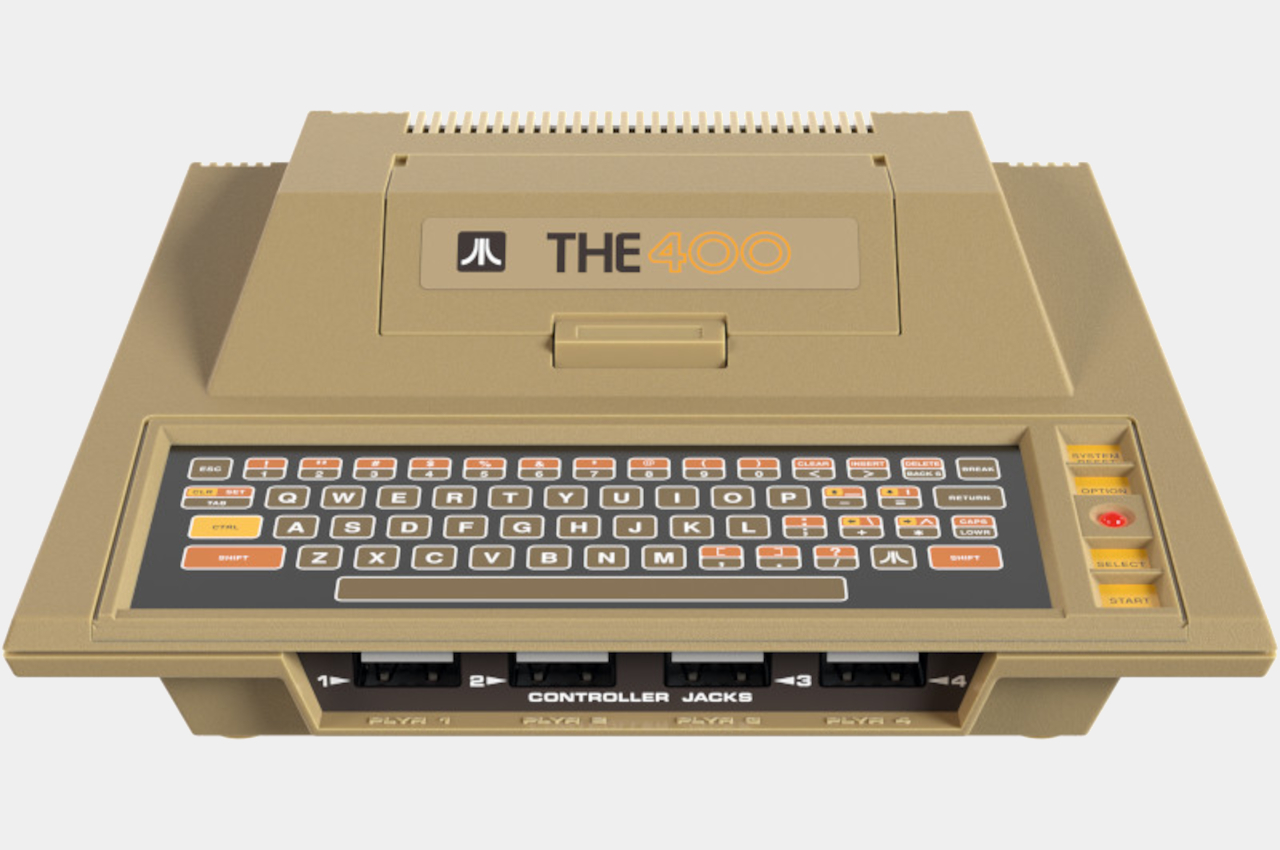
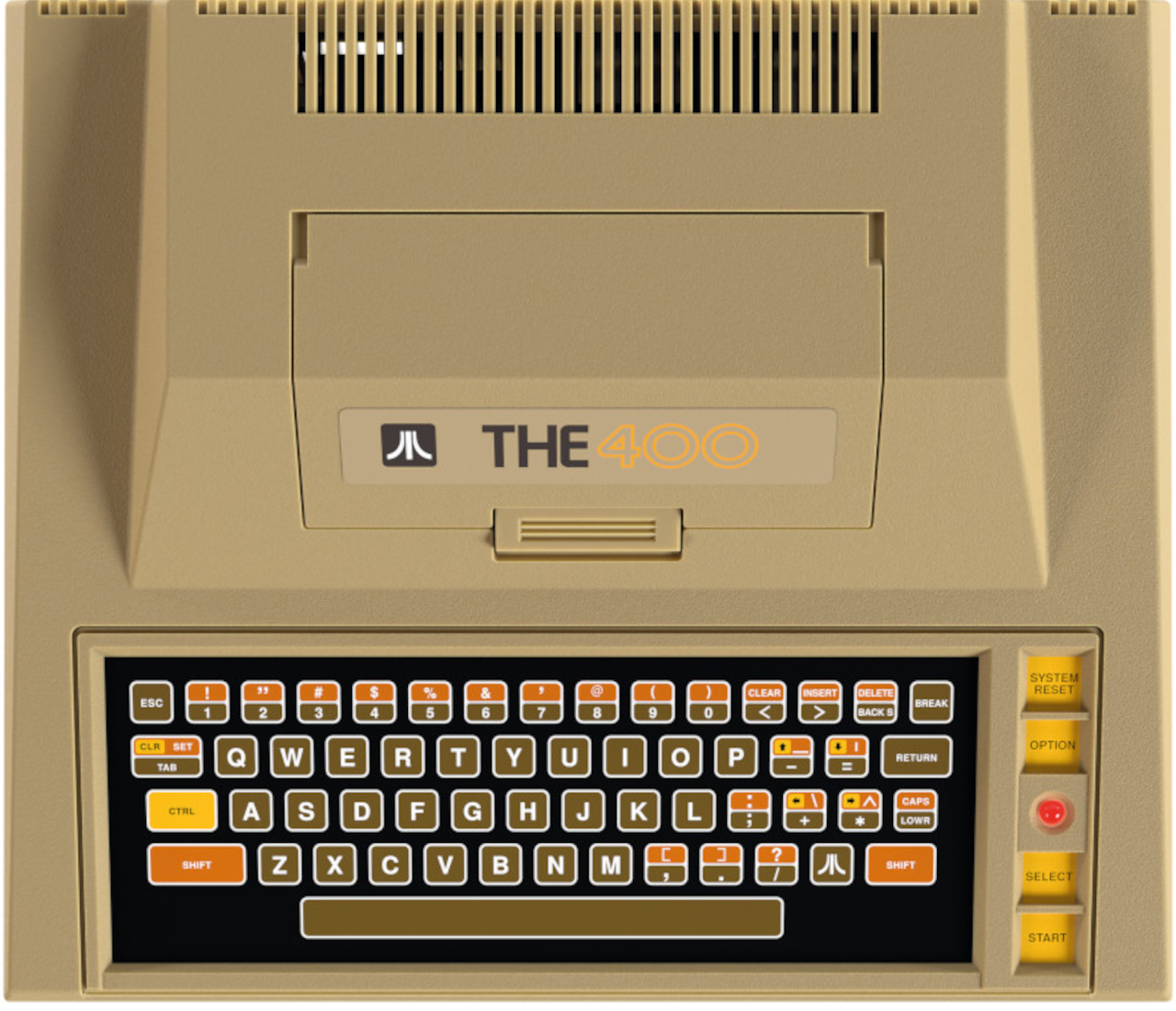
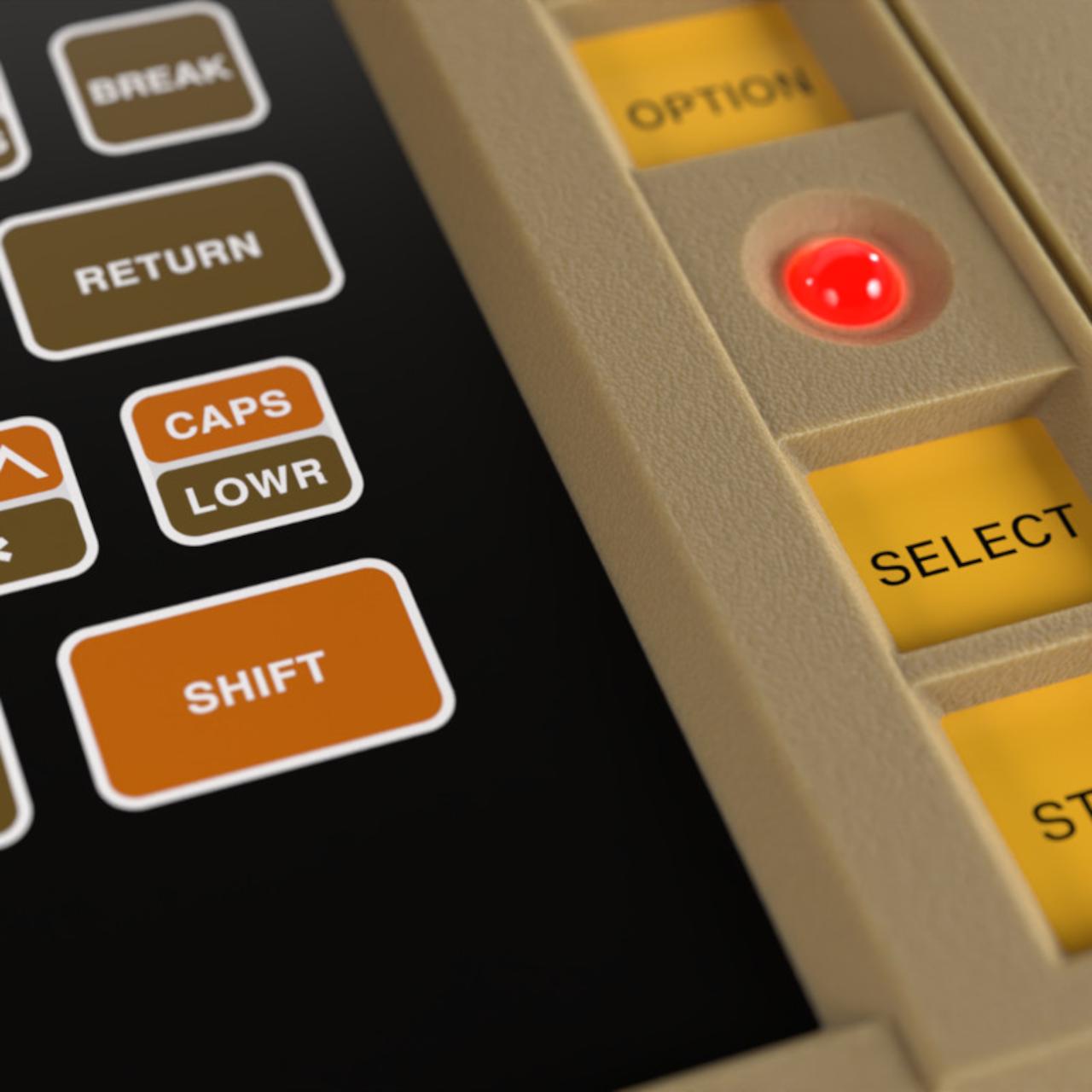
In essence, the Atari 400, or the 800 rather, looked more like a giant typewriter than a computer of any sort. Atari eschewed the typical joysticks and gamepads associated with gaming machines (and its own Atari 2600) and gave its first 8-bit family a keyboard for tasks beyond just playing. The Atari 400 itself was quite peculiar because it didn’t use real keys but a membrane keyboard, basically a seemingly flat, pressure-sensitive surface that could be considered the ancestor of touch-sensitive controls today. Suffice it to say, the typing experience was anything but enjoyable.

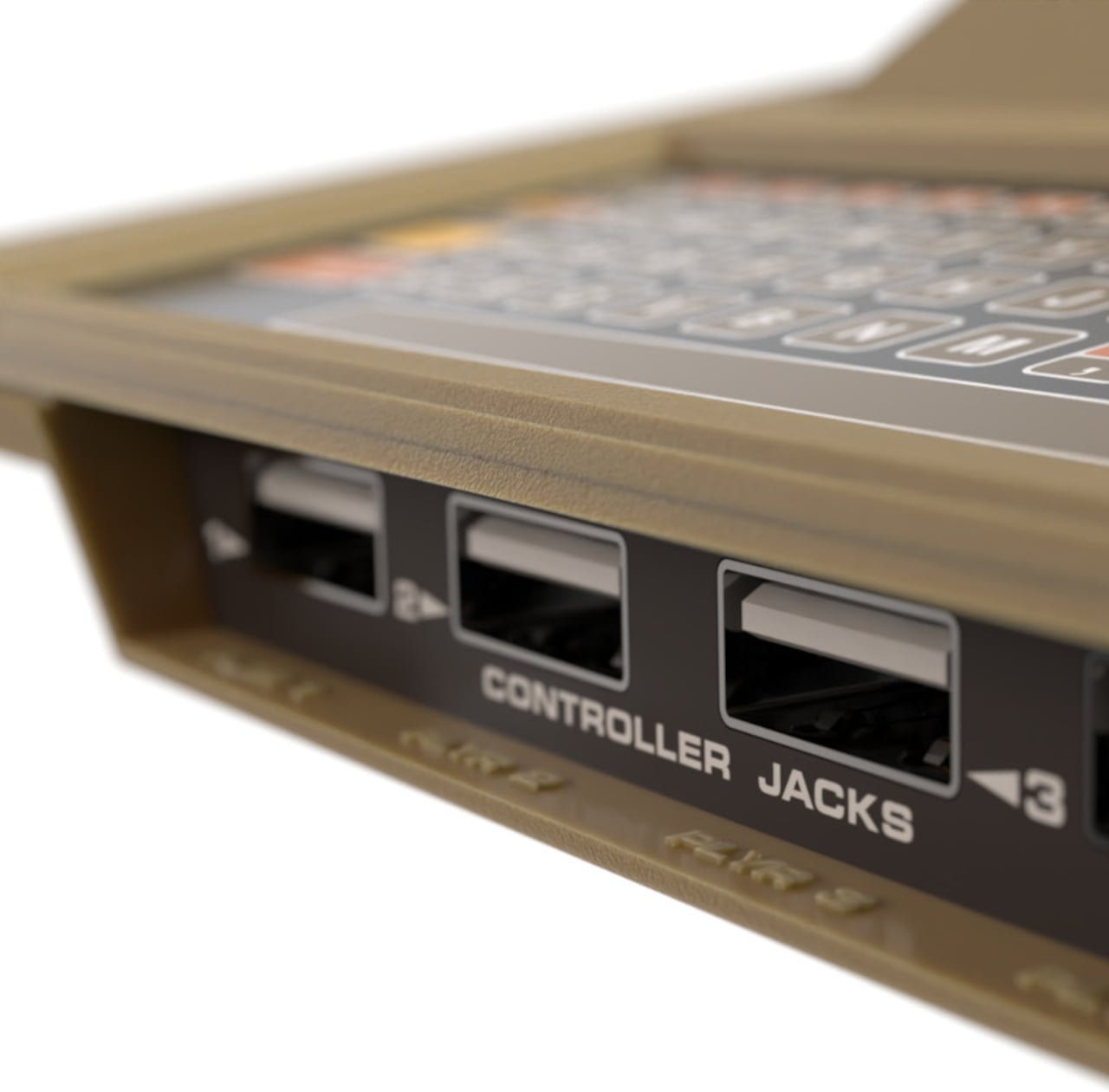
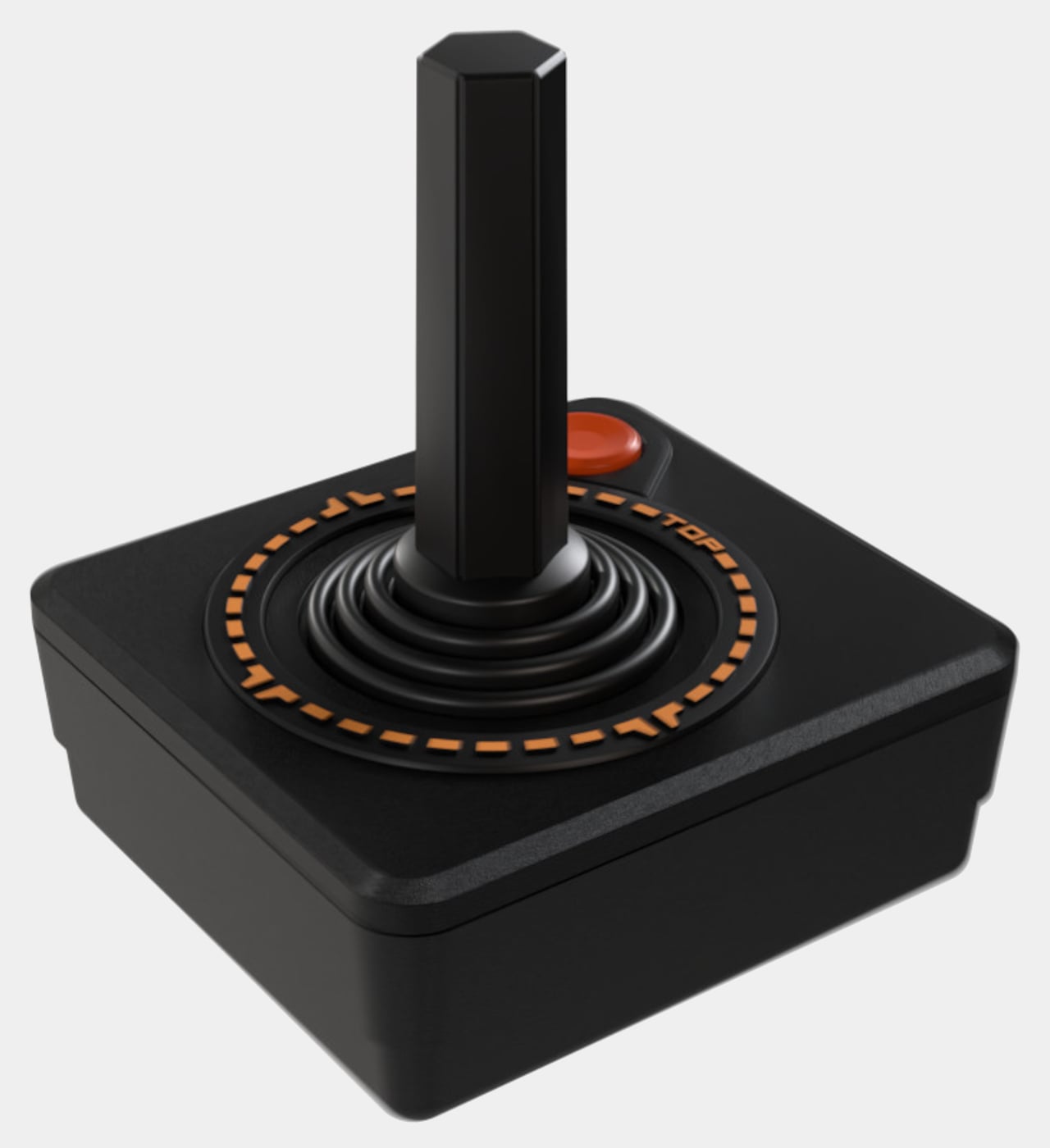
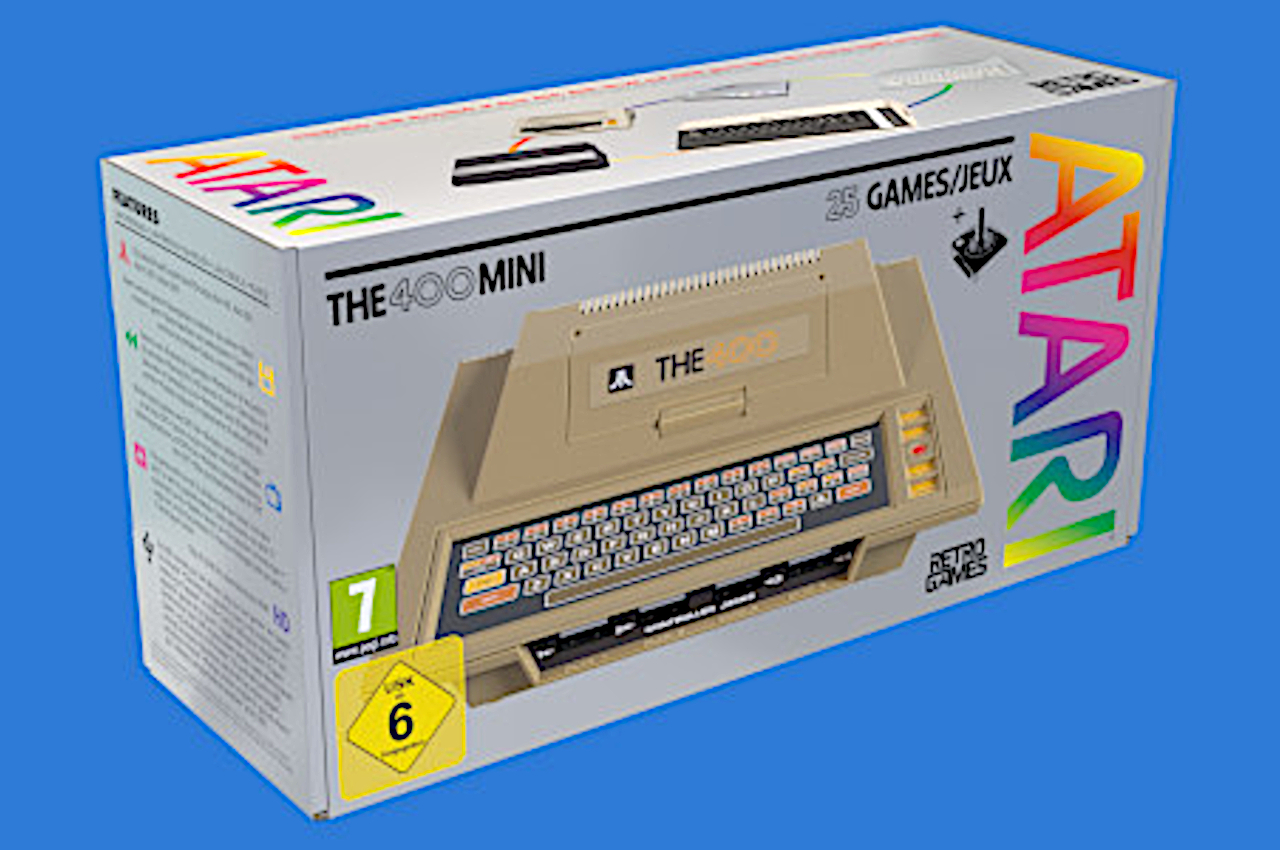
The Atari 400 Mini brings this one-of-a-kind design down to half the size of the 1979 original, which means you get all the looks but none of the quirks or the functionality. Yes, that miniaturized membrane keyboard is just for show, which is probably for the best. Imagine typing not only on a small space but also on a surface you have to press hard to even register a key. Fortunately, you can connect a USB keyboard if you really need to type something. With five USB ports, you can connect almost any controller, though thankfully the package ships one Atari CX-40 joystick for good measure.

The small machine comes with 25 titles from the original already pre-installed, though can also run other Atari classics provided you know how and where to get them. The Atari 400 Mini isn’t available yet, but you can already put down $119.99 to pre-order this recreation of a piece of gaming history before it hits the shelves on March 28th.

The post Atari 400 Mini retro console is a charming recreation of a quirky design first appeared on Yanko Design.