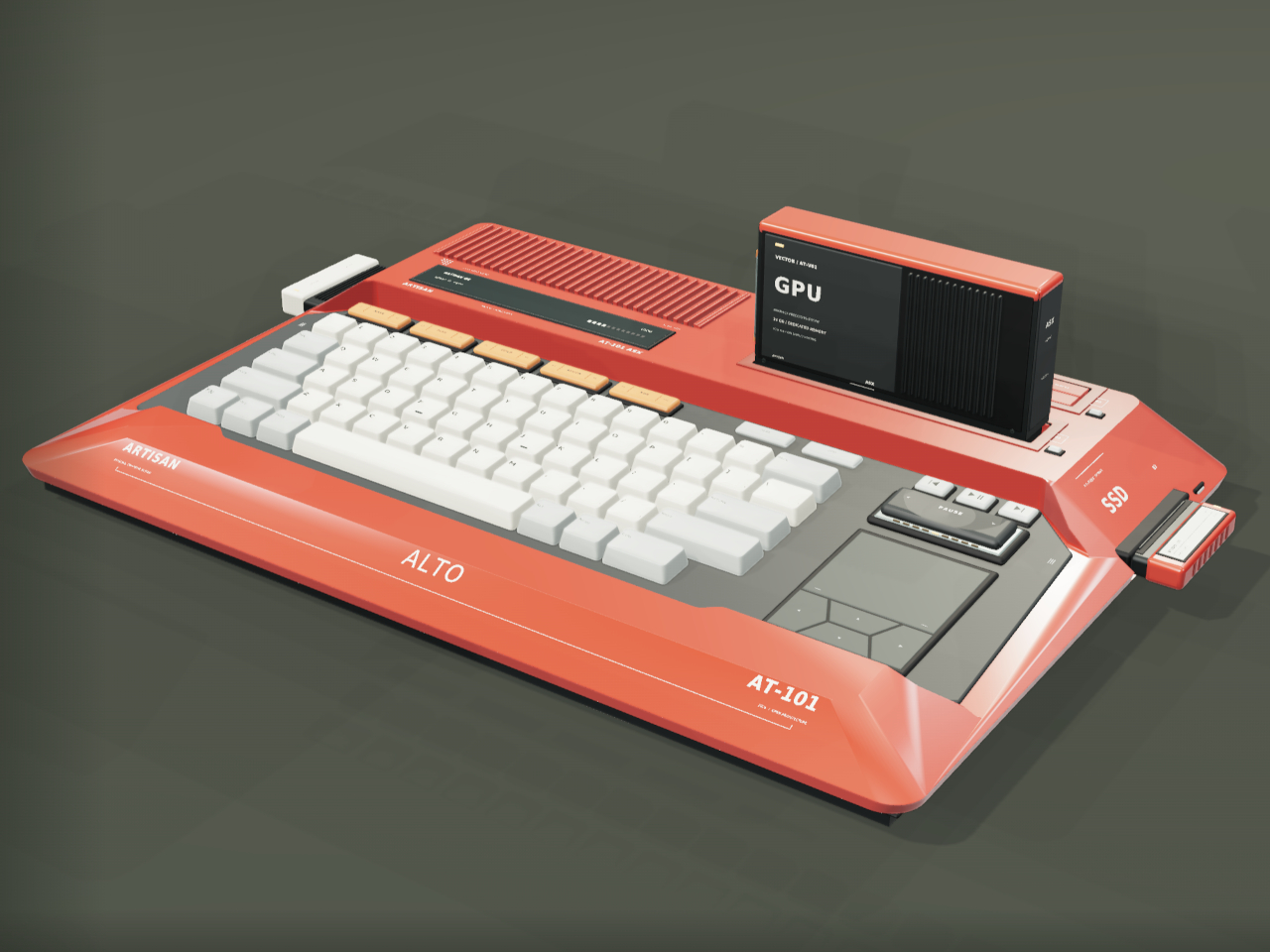
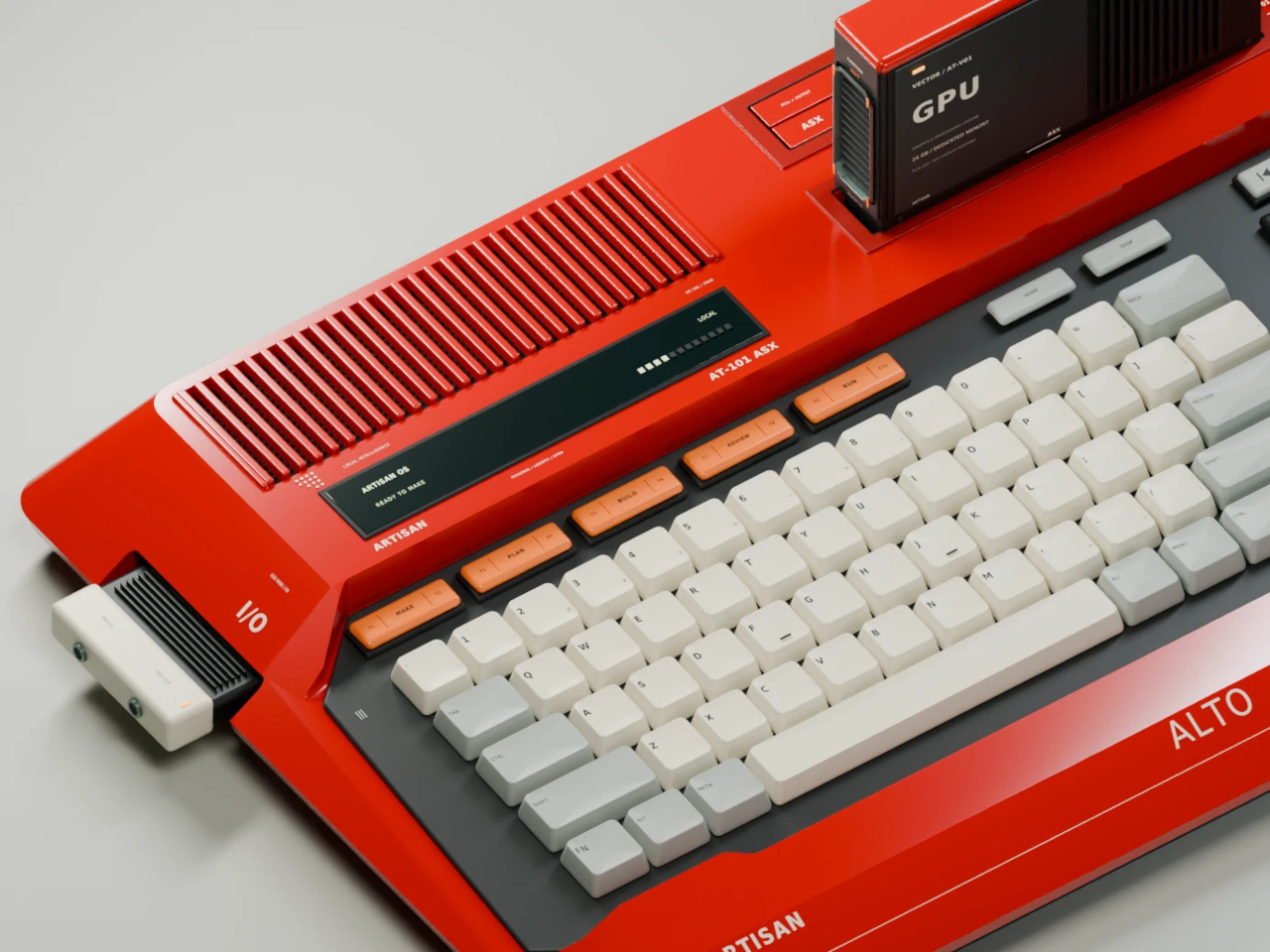
Home computers used to snap open like toolboxes, cartridges sliding in for a new game or a new skill. That idea mostly disappeared once sealed laptops took over, but the ARTISAN ALTO AT-101 brings it back with a vermilion shell that looks like it walked straight out of 1984 and a system built for how people actually tinker today. It’s a machine designed to grow alongside whatever you’re currently obsessed with.
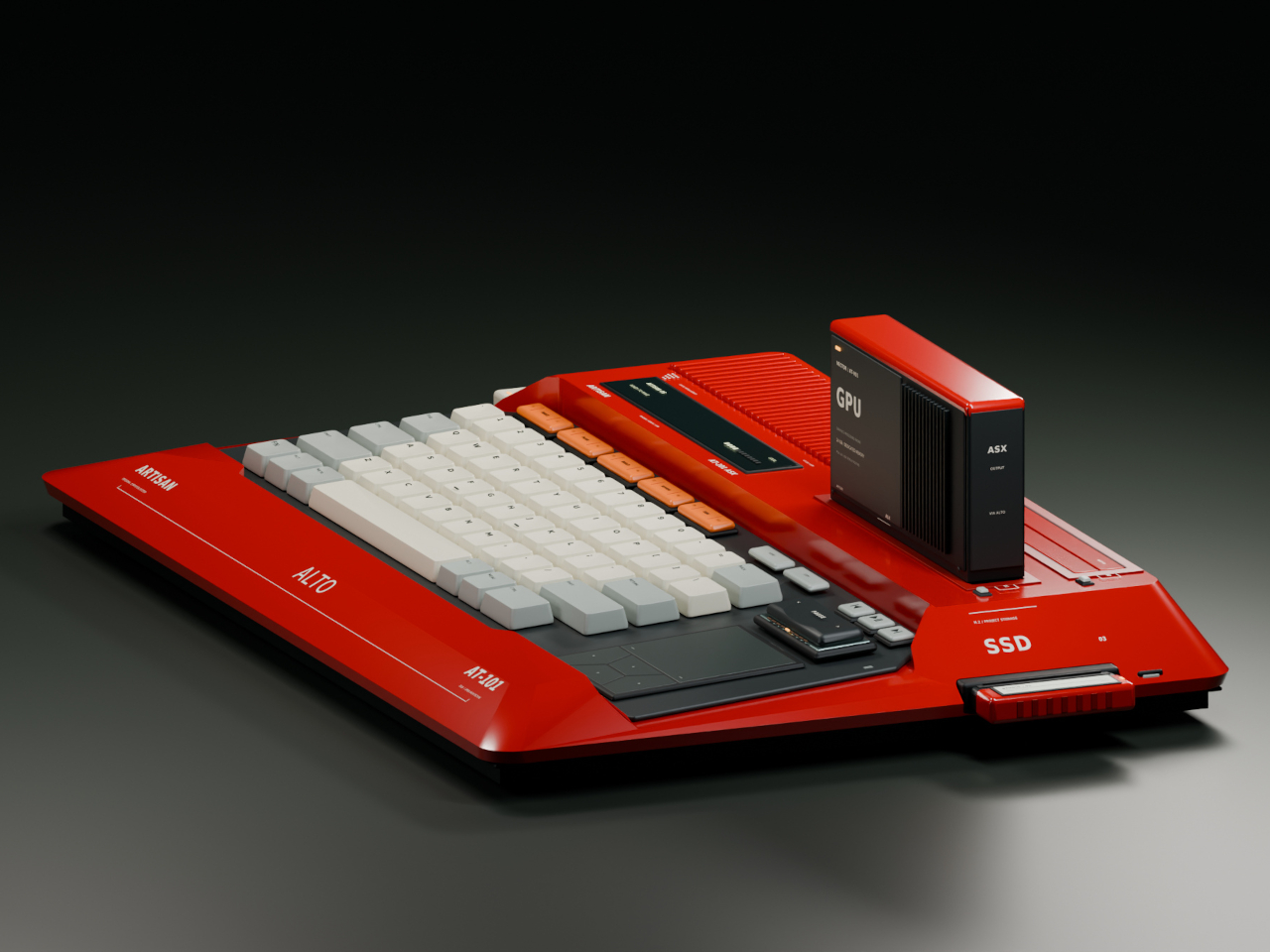
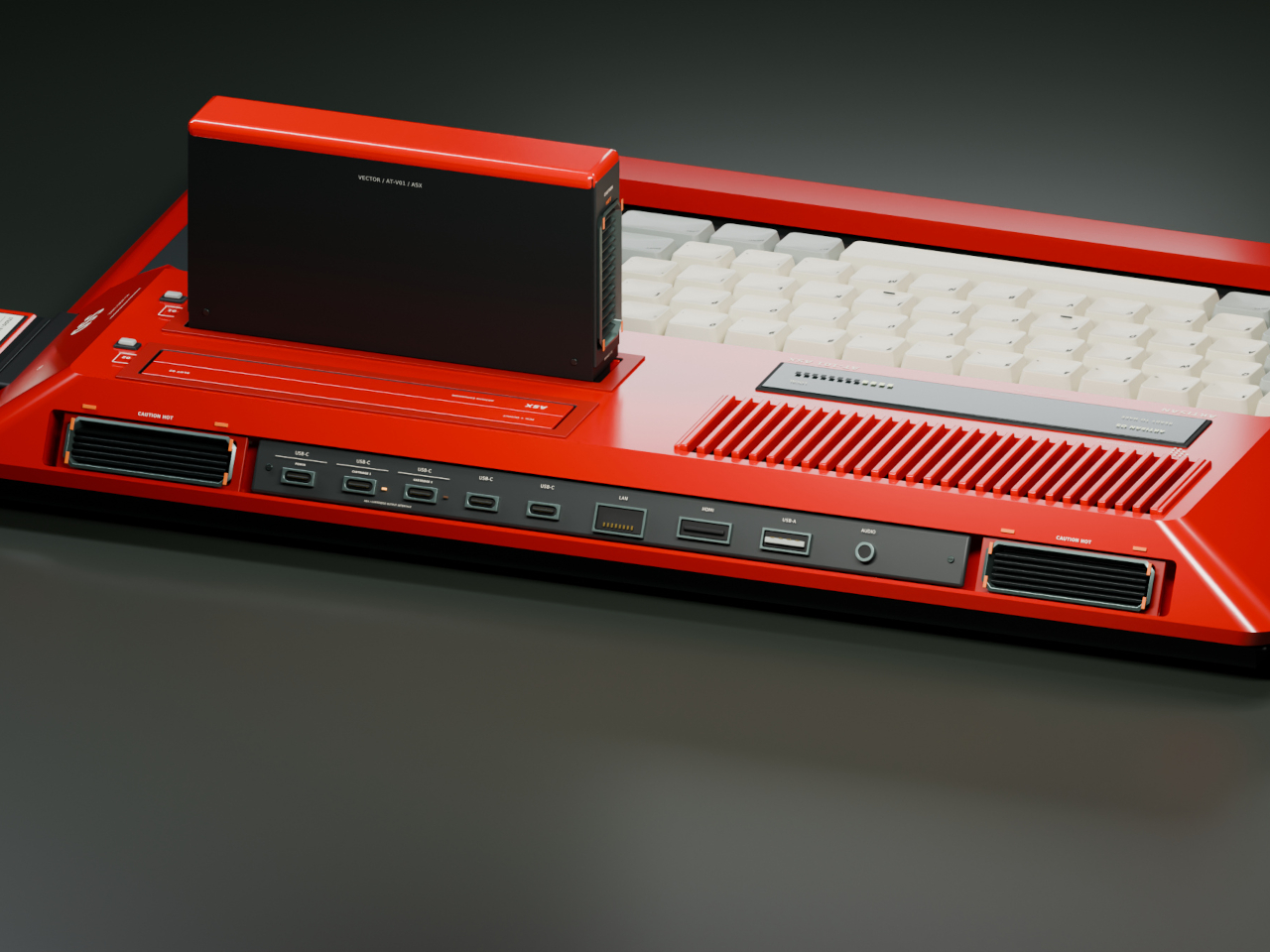
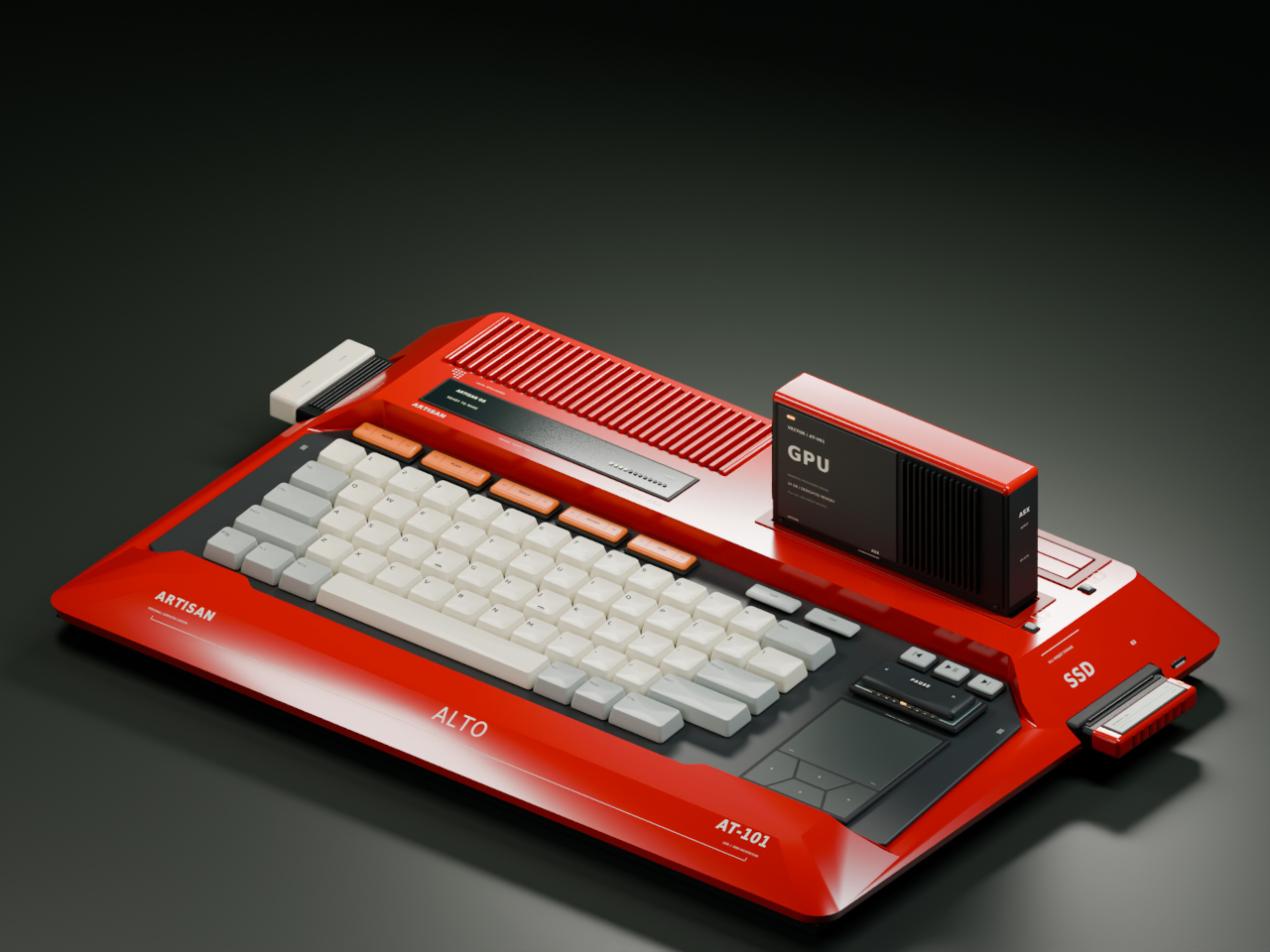
The trapezoidal red housing wastes no time signaling its intentions. Sculpted, concave ivory keycaps sit beside red cooling louvres, and a keyboard opening cuts diagonally through the sloping side, turning what could’ve been a flat slab into something with genuine presence on a desk. This is a machine built to be looked at, not tucked behind a monitor.
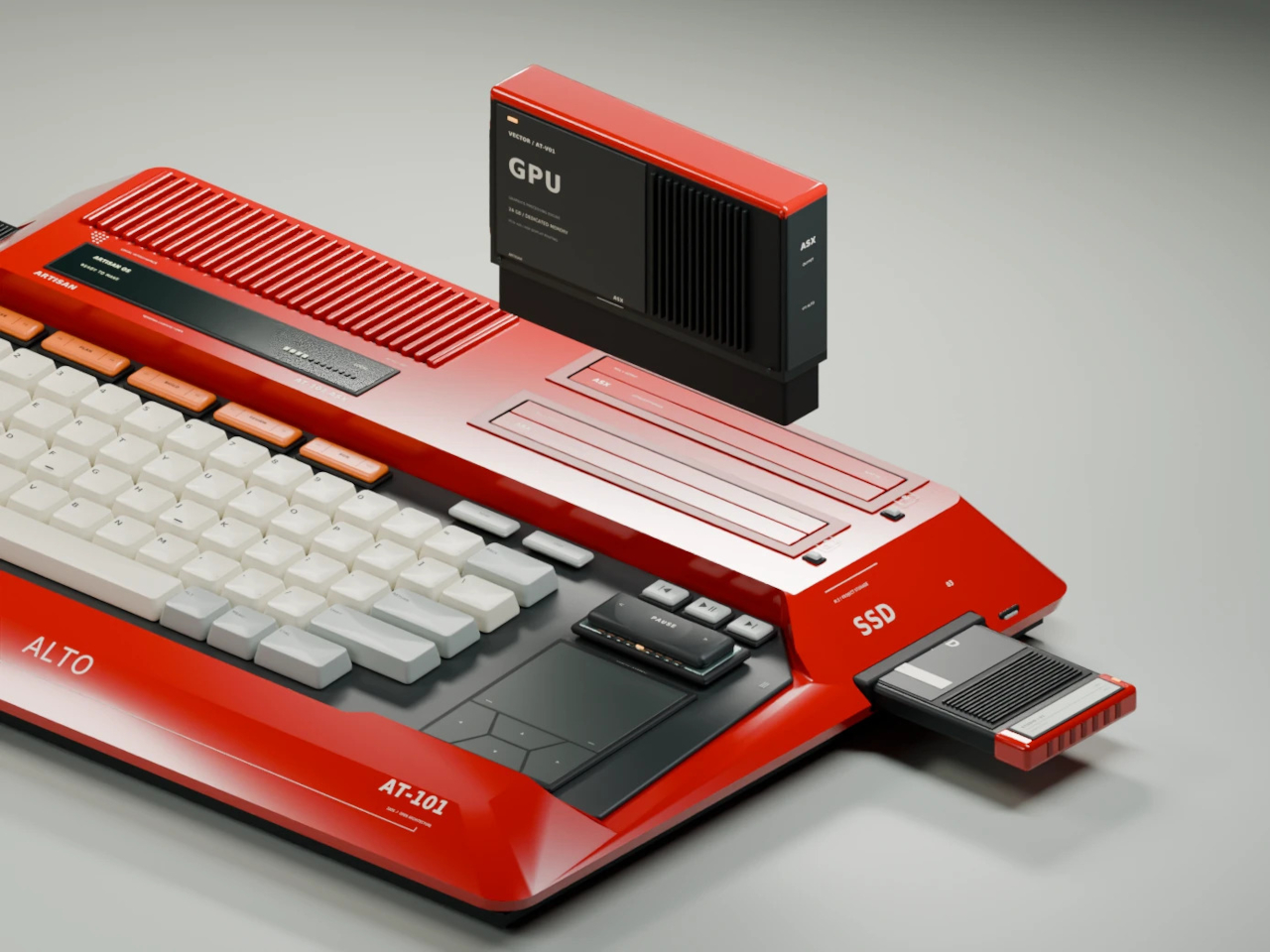
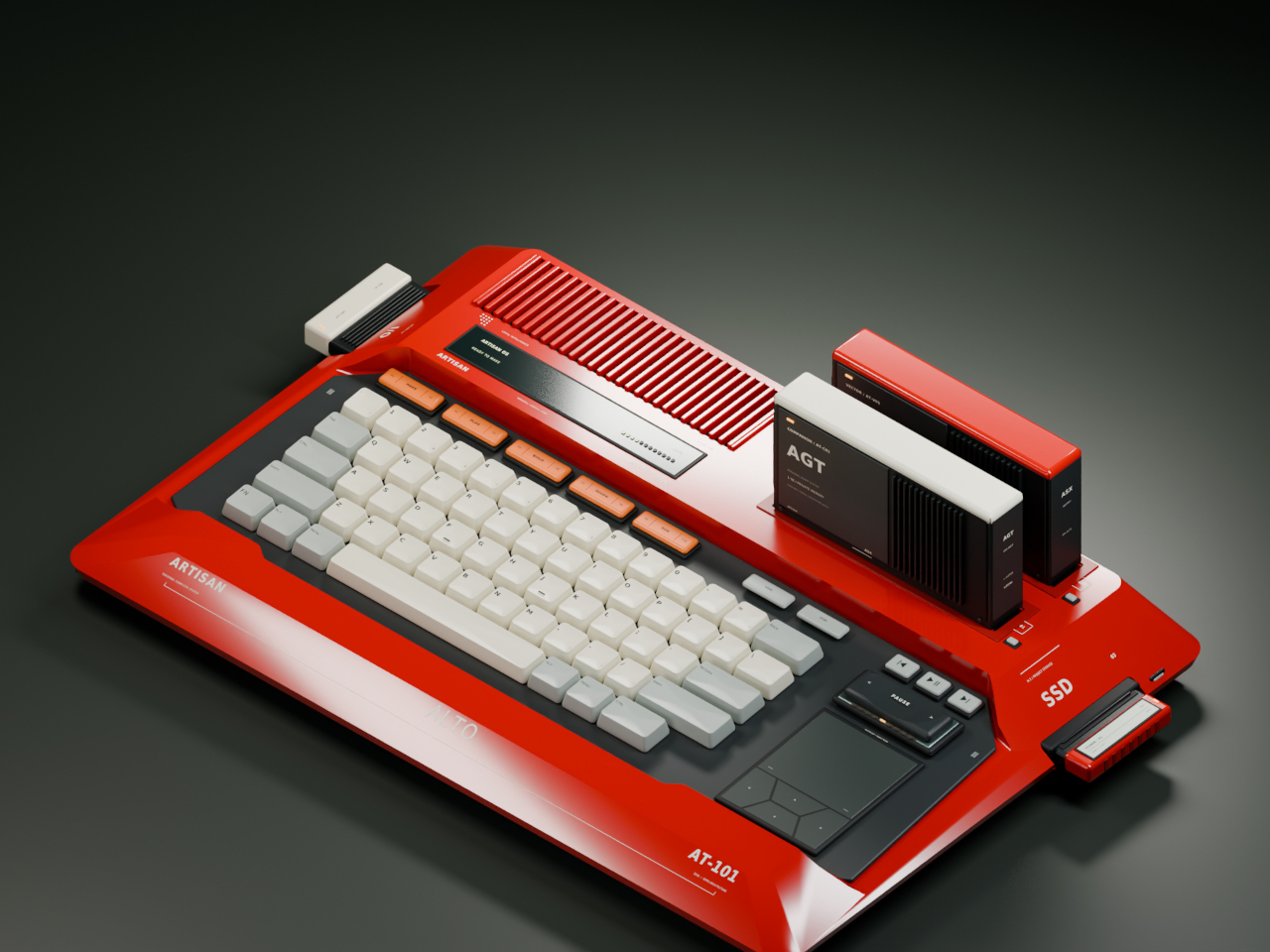
That vintage-inspired shell hides a distinctly modern expansion idea. Upright cartridges slot into place to add graphics power, sound capability, retrocomputing modes, or an AI companion, while smaller side modules handle specialist interfaces and individual projects. Recording a demo, building out a more ambitious scene, or reviving an old favorite game all become a matter of swapping in the right module rather than replacing the whole machine.
The standout pairing puts VECTOR, a compute cartridge, alongside COMPANION, an AI agent module with its own ivory-crowned housing. Together they form what the concept calls a personal cyberdeck, one where your context and your processing power both live in the same two bays. Everything from your conversation history to your working files stays local, an intentional counterpoint to how most AI tools currently function.
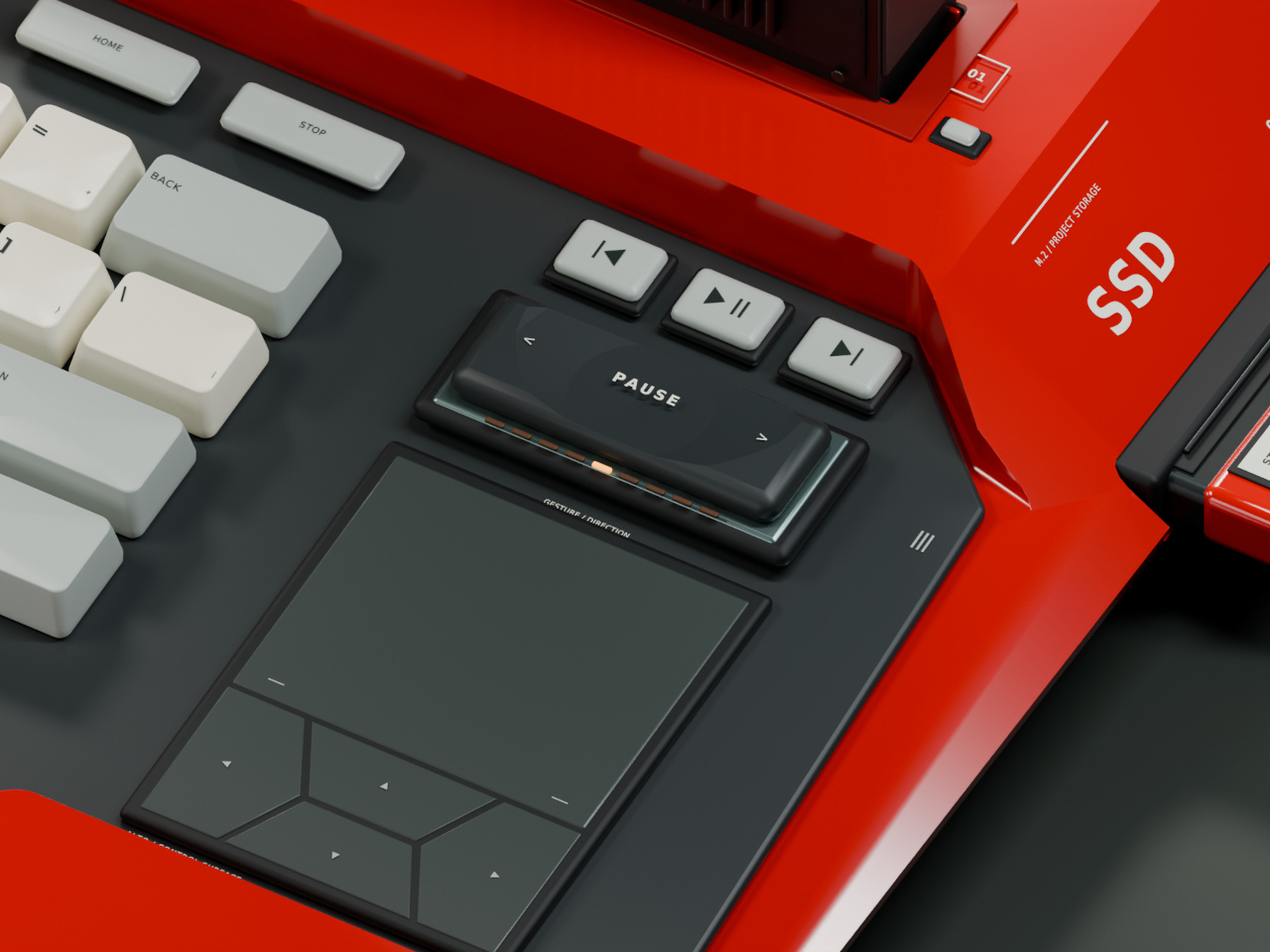
Five multifunction keys handle creative shortcuts without forcing a trip through a menu, while a dedicated PAUSE rocker lets you freeze, rewind, or speed through whatever’s running, treating time itself as something you can grab and adjust mid-task. A touchpad and four flush cursor keys merge into a single continuous surface on the right side, keeping navigation under the same hand that’s already resting there.
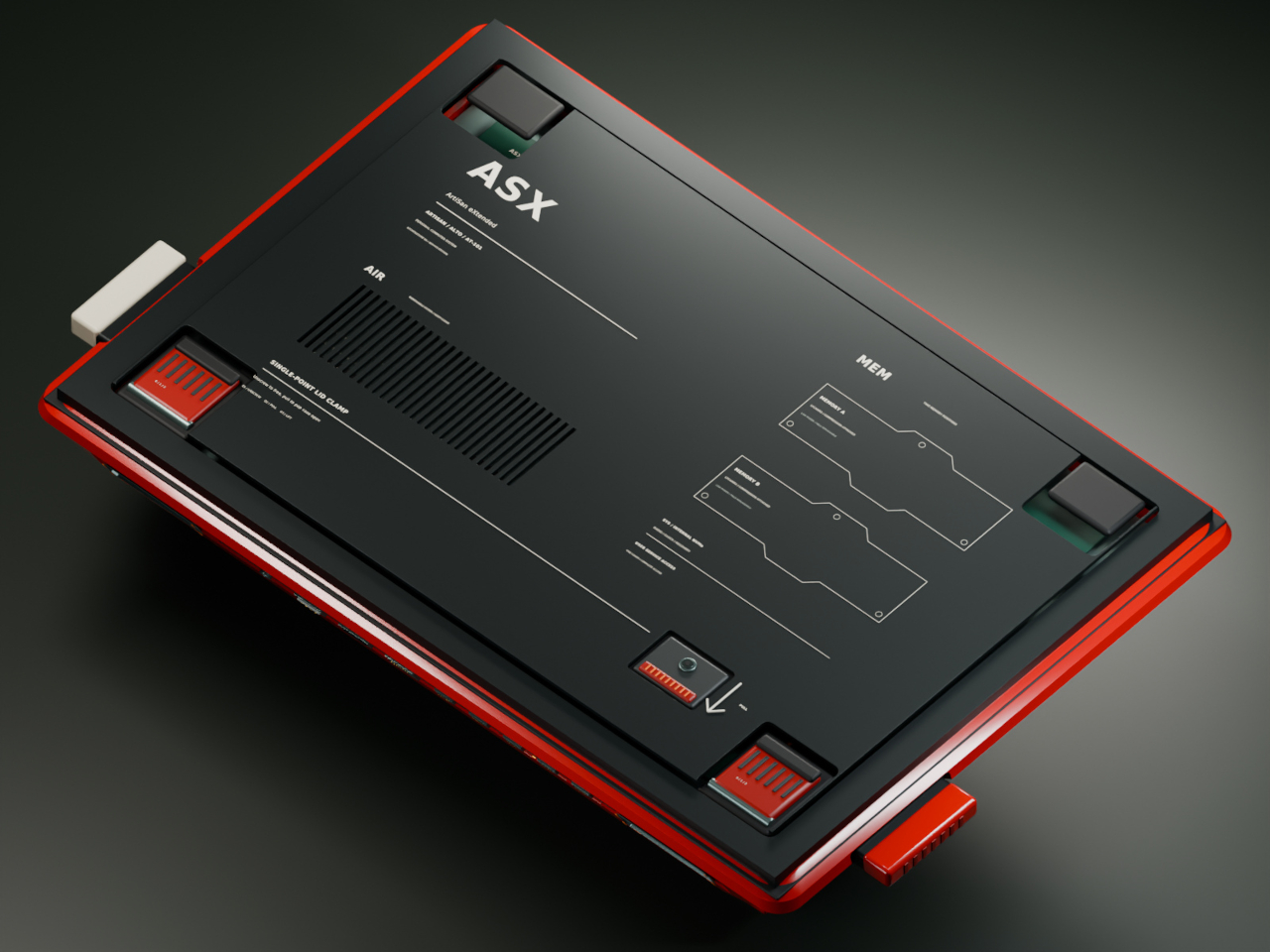
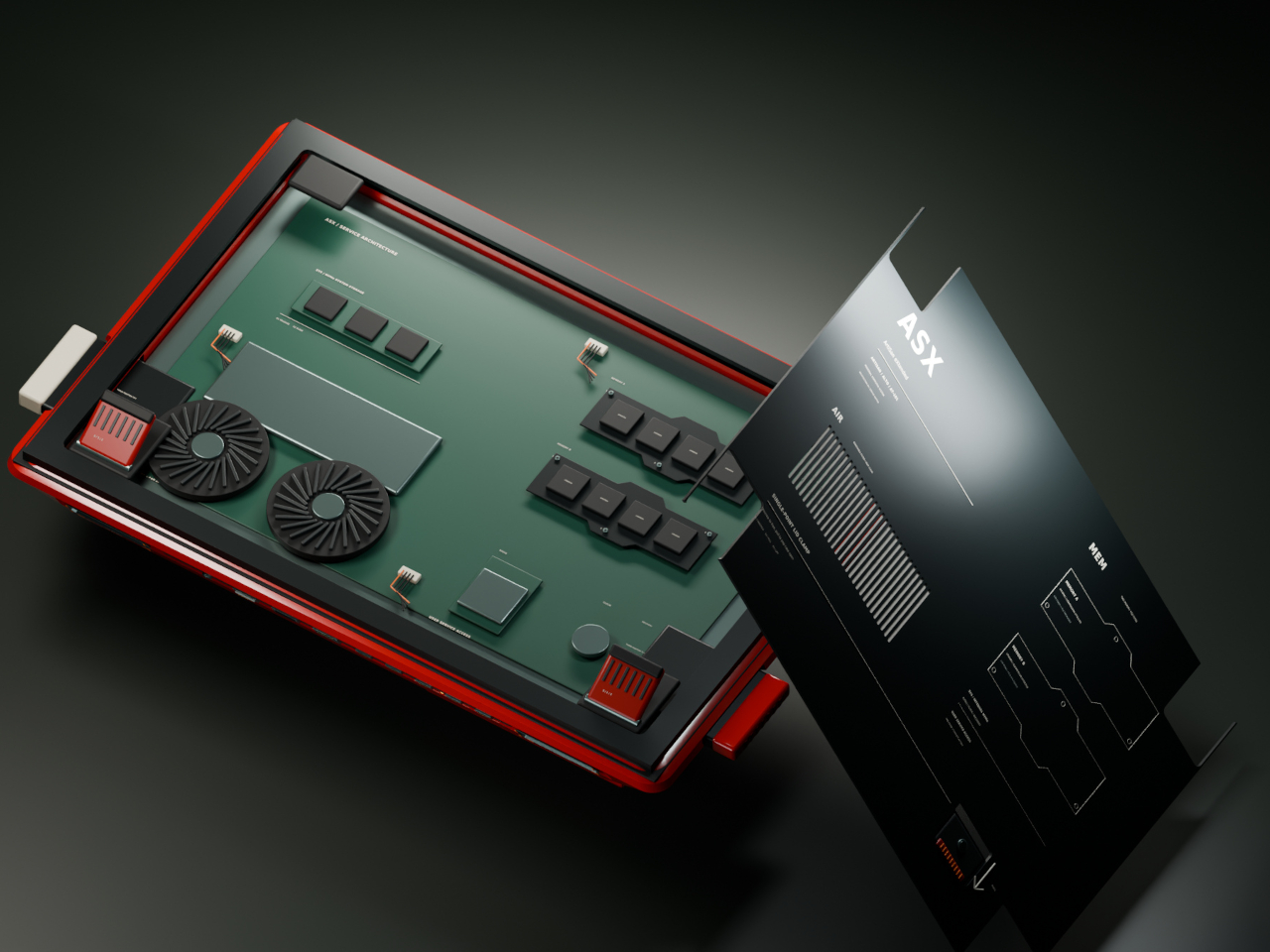
Flip the machine over and the same philosophy continues. Memory access sits in the open rather than buried under layers of casing, rear supports adjust to match your desk setup, and a single screw releases the service clamp entirely. Every one of these choices treats a computer’s insides as something worth respecting, not hiding behind warranty stickers and proprietary screws.
Around back, a compact connector panel handles the practical side of daily use. USB-C power sits alongside labeled ports for two cartridges, additional USB-C connections, LAN, HDMI, USB-A, and audio, all routed cleanly to keep cables from tangling across the front of a desk. Even the exhaust vents get a considered shape, flanking the connector panel like a pair of small turbines venting heat from all that cartridge-driven ambition.
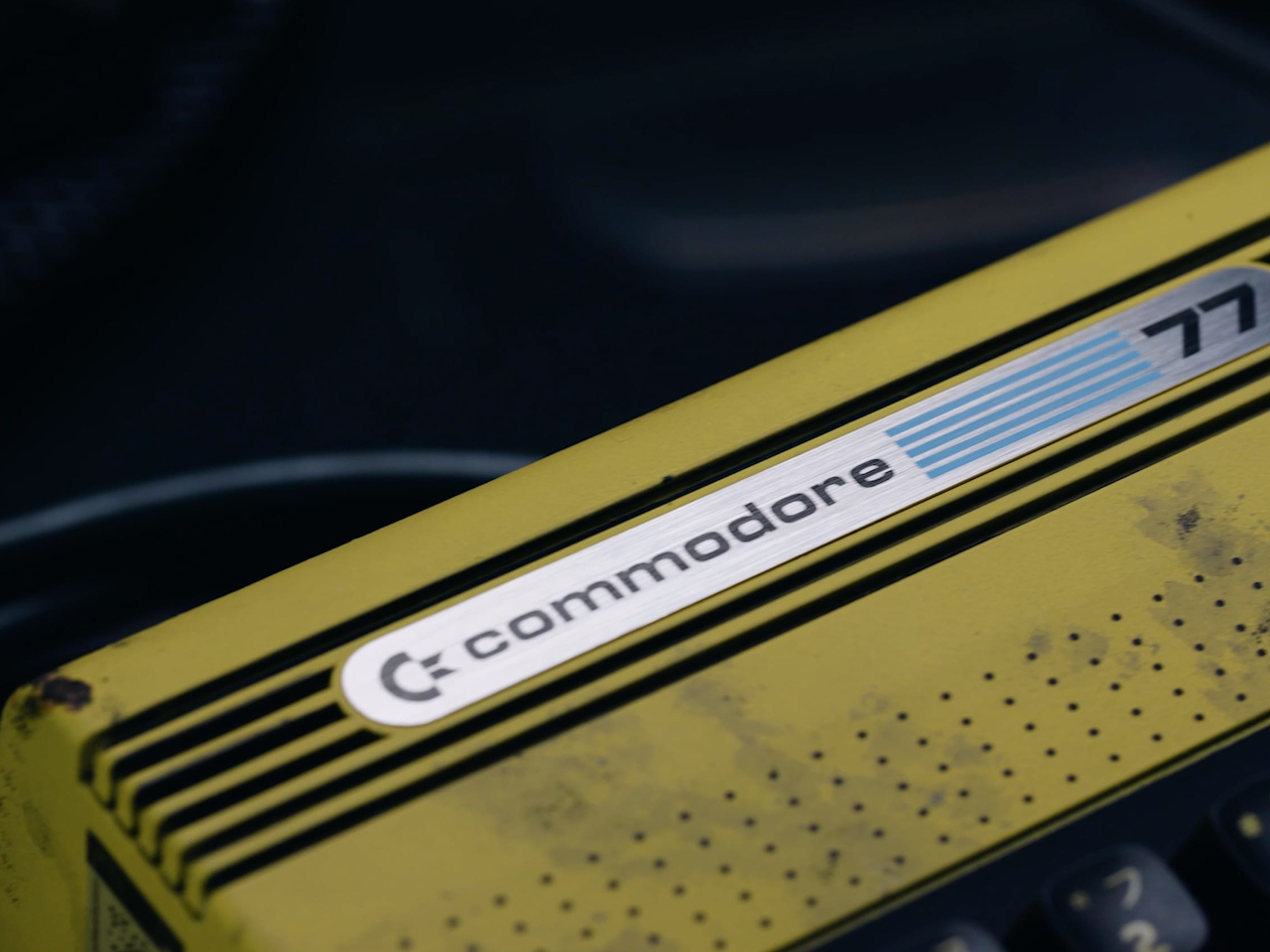
The original Commodore 64 launched in 1982. Cyberpunk 2077, the game, is set in 2077. The gap between those two years is roughly the entire history of the personal computer, which makes the Commodore 77 either the most absurd collaboration in gaming hardware history or the most logical one, depending on how you look at it. At $377, it’s clearly betting on the latter.
The 77 is a special edition of the Commodore 64 Ultimate, the FPGA-based revival that earned a 10/10 from IGN when it launched in 2025. FPGA recreations matter because they reproduce the original hardware’s behavior at the circuit level rather than running it through conventional software emulation. The practical result is compatibility with 99.9% of the 10,000-plus game and peripheral library built up over four decades.
Under the hood, this edition upgrades the processor from the AMD Artix XC7A50T to the more powerful XC7A100T, pushing the ceiling from the Commodore 64 Ultimate’s speed to 77MHz. That’s a long way from the original machine’s 1 MHz, though the number was clearly chosen as much for the name as for the engineering. It also connects to modern TVs via HDMI and supports Wi-Fi and USB, covering the practical bases without compromising what the platform does.
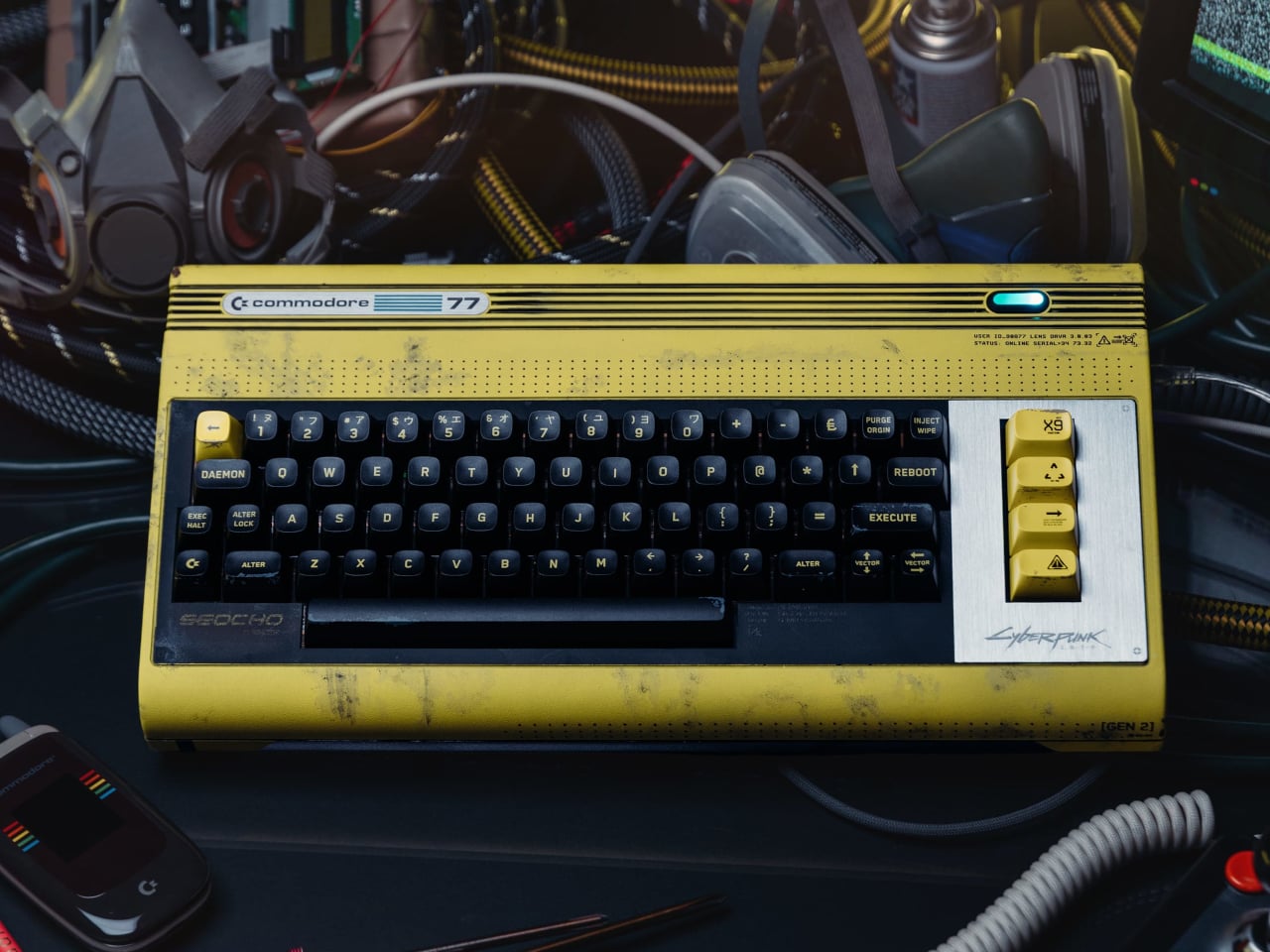
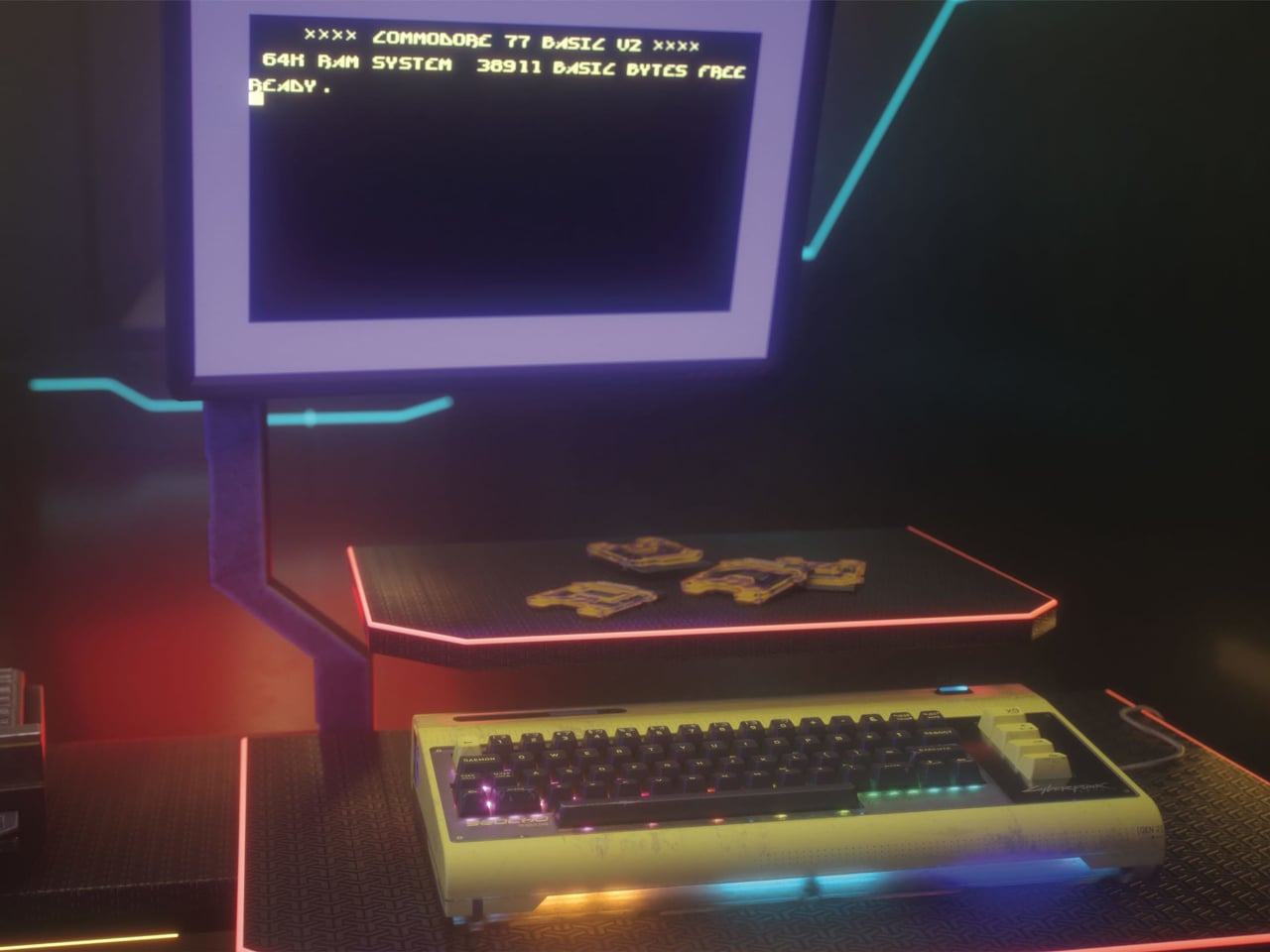
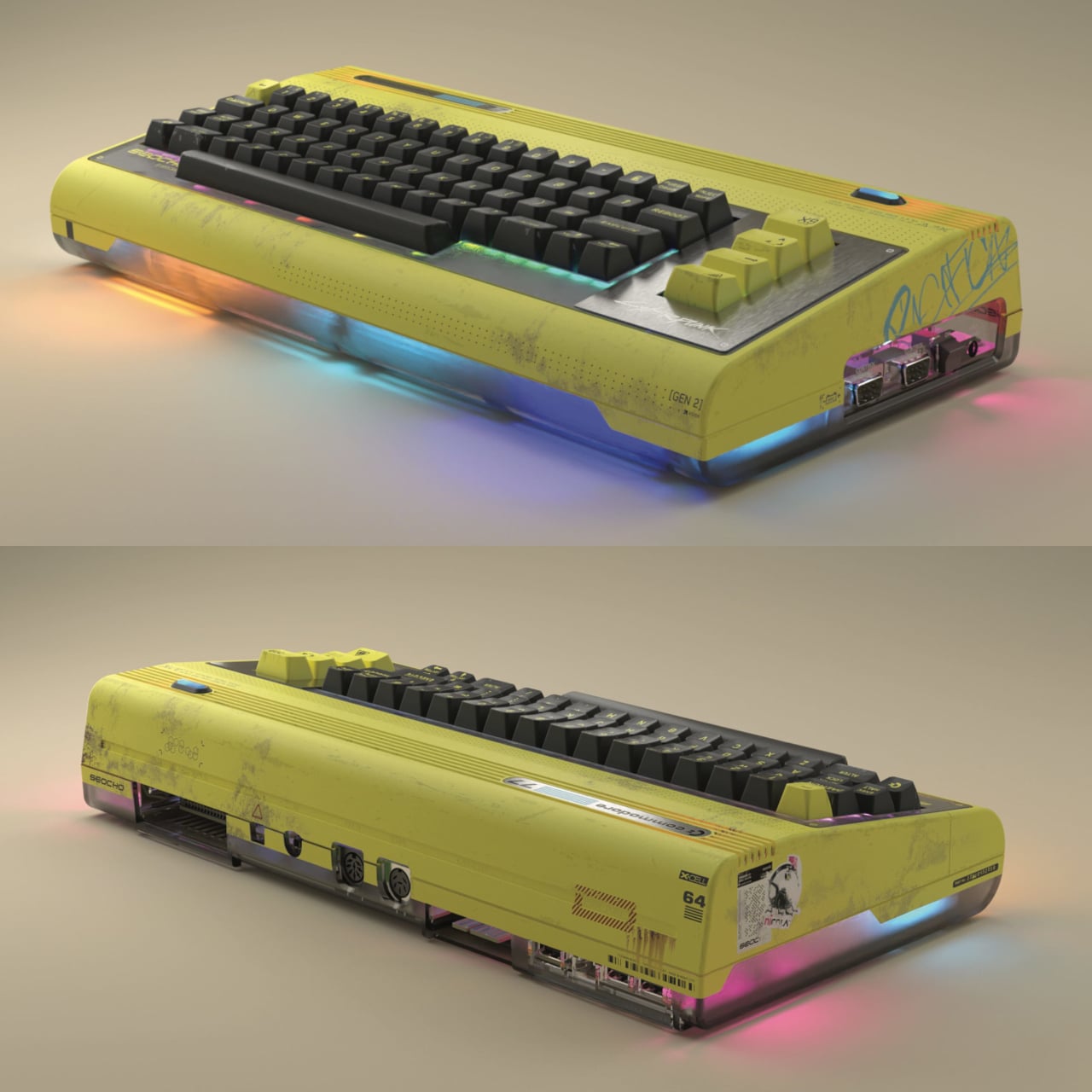
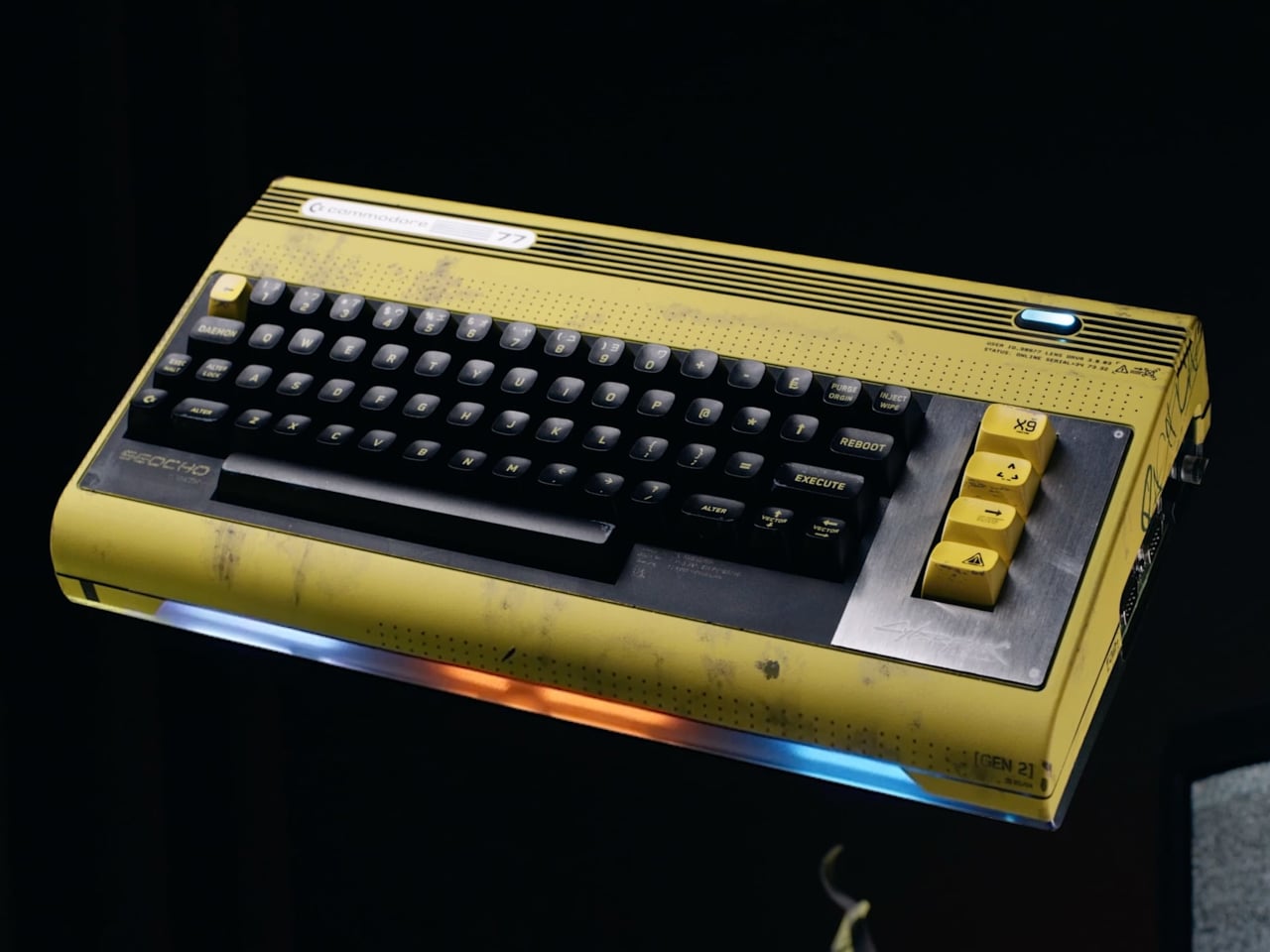
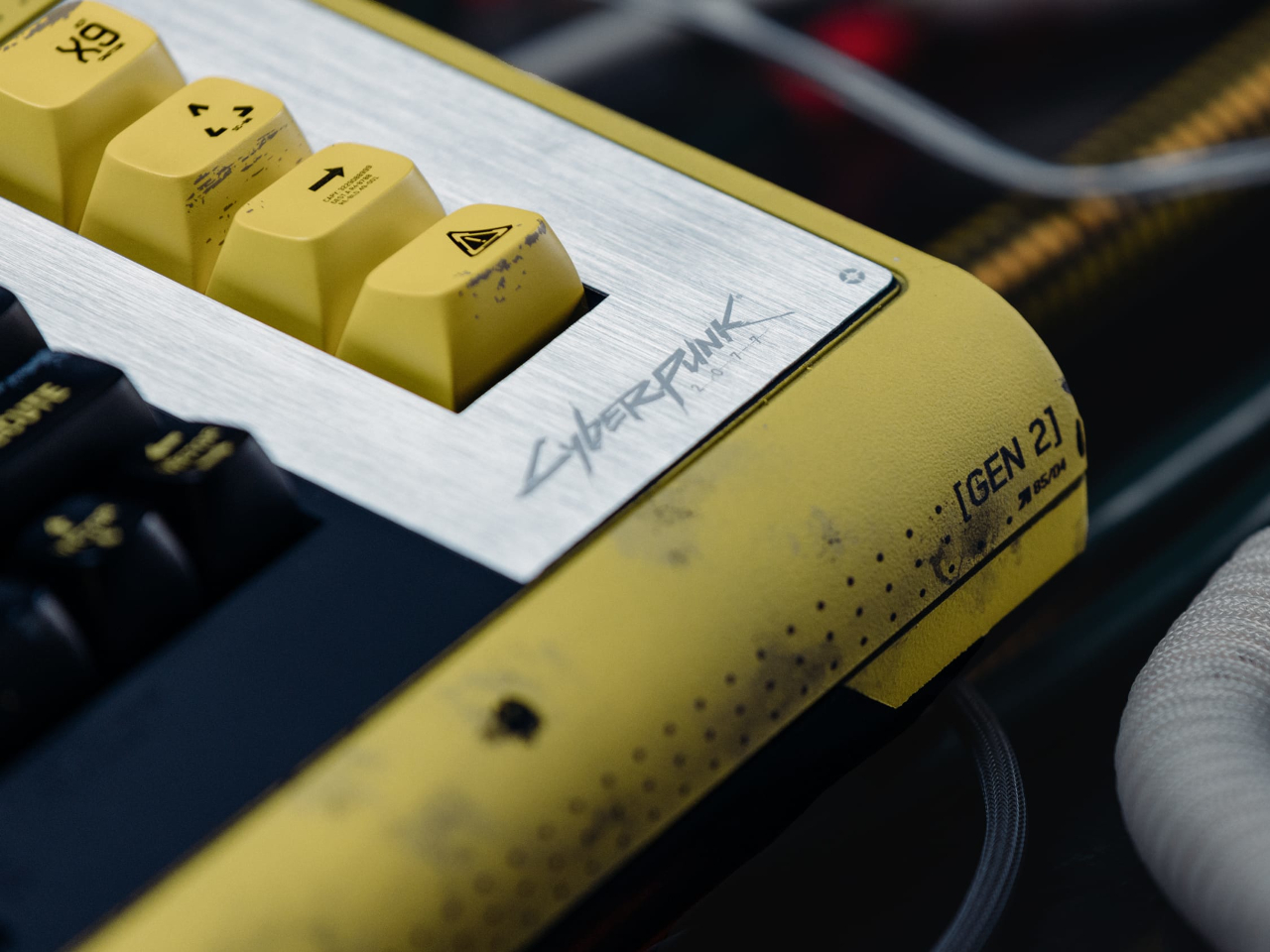
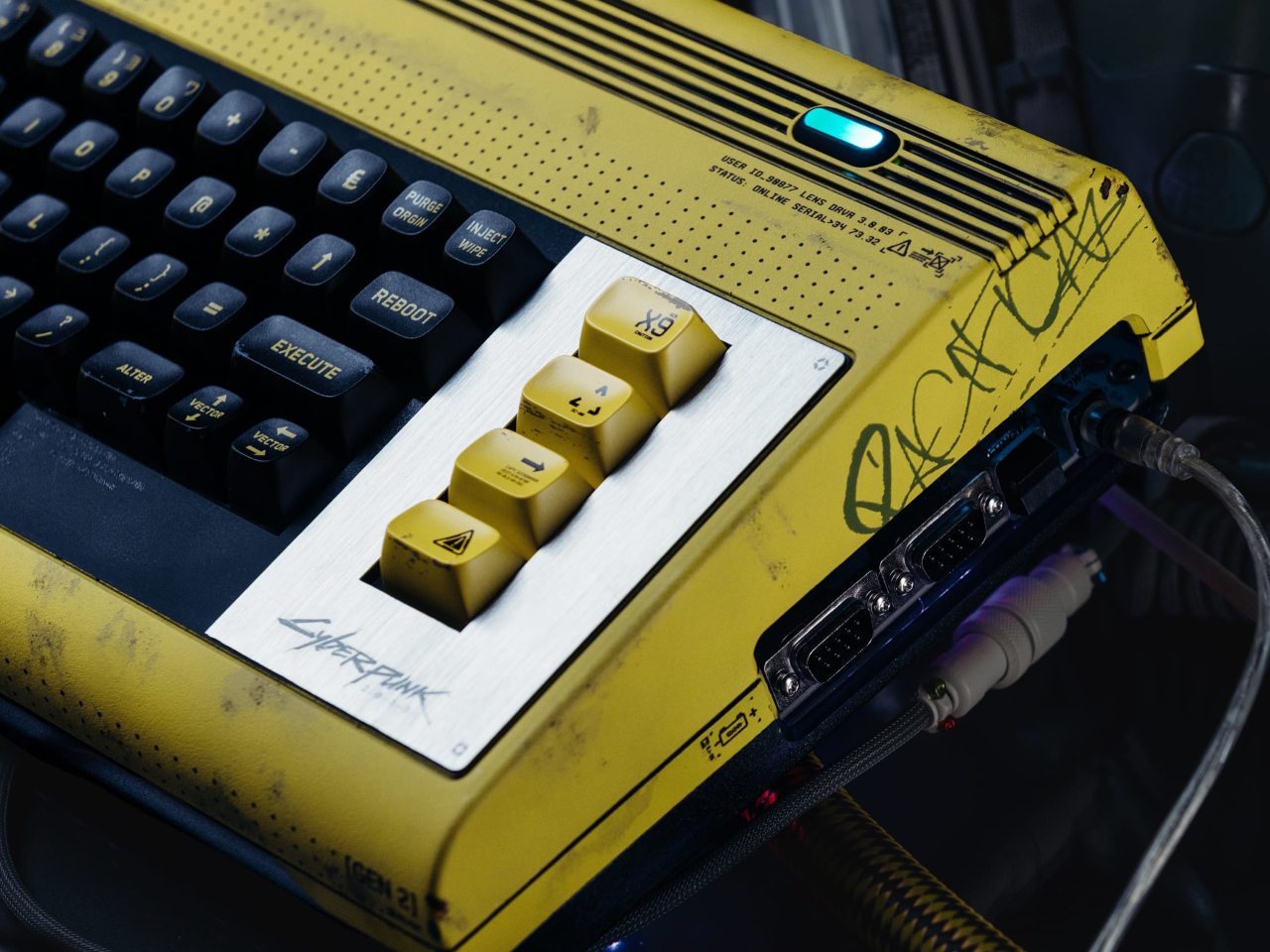
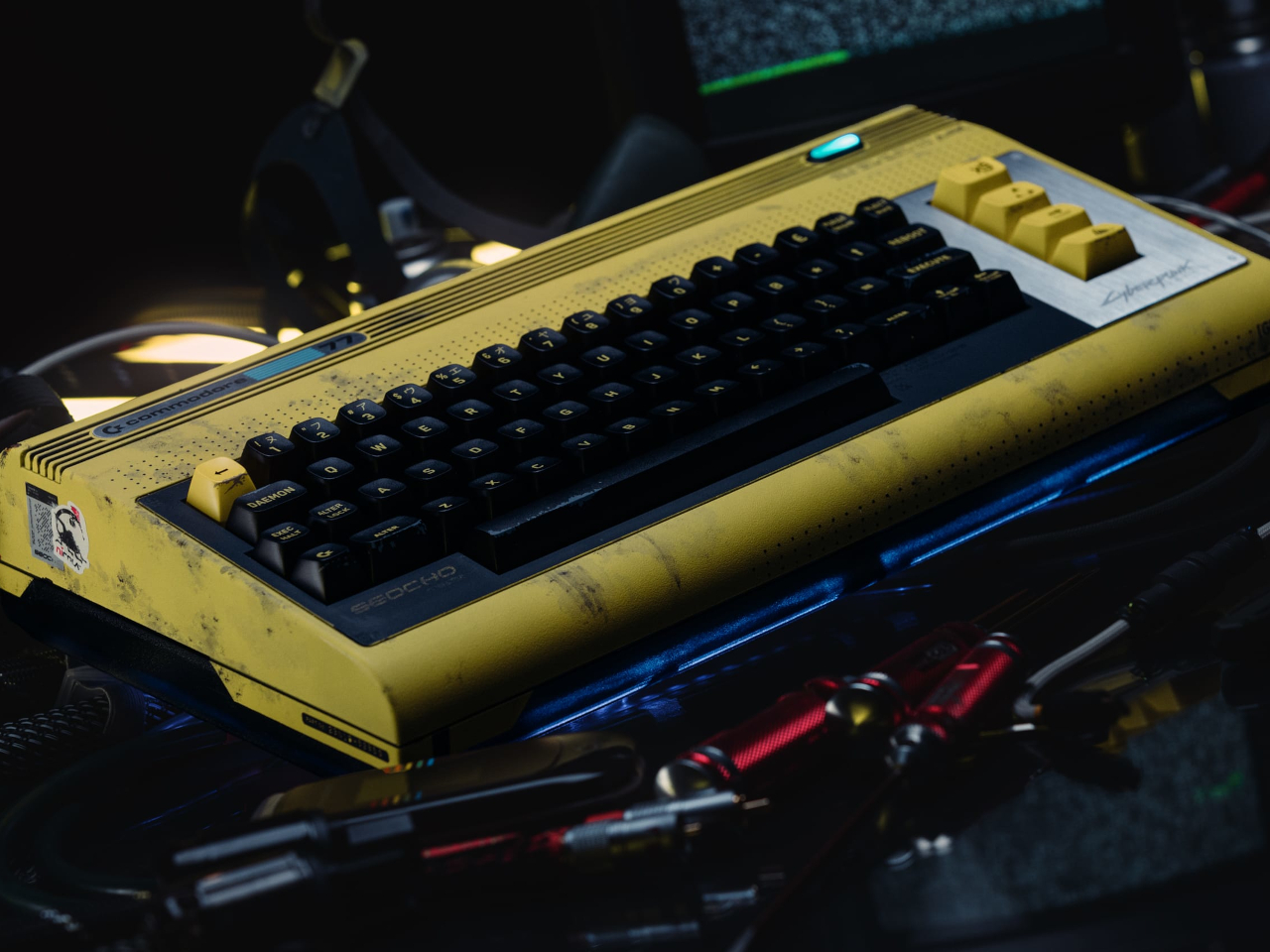
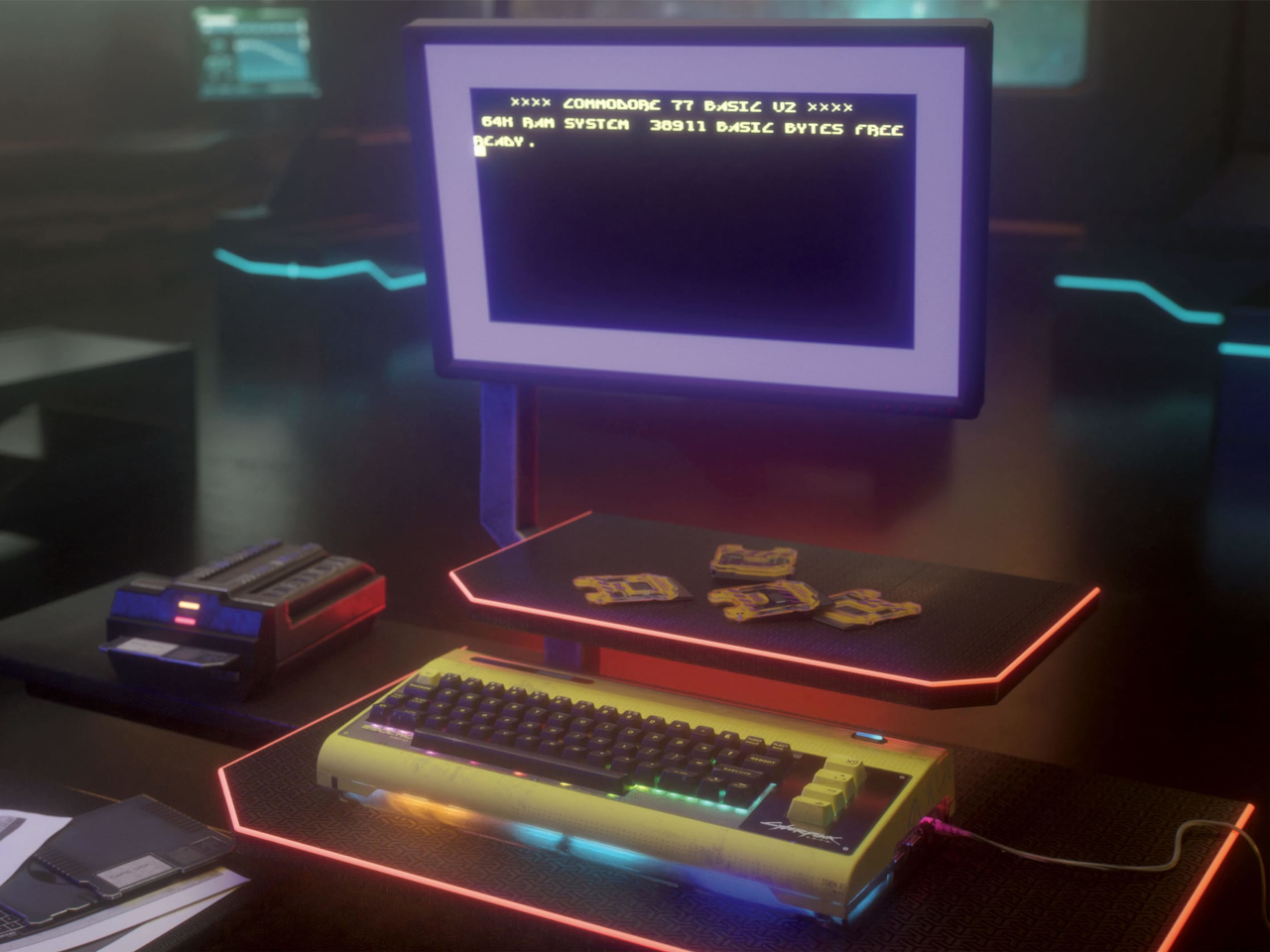
The design is where Cyberpunk 2077 fully takes over. The main body is a distressed, weathered yellow with graffiti tags, a brushed-metal plate, and a teal power indicator. The bottom of the shell is smoked-gray translucent, with multicolor LEDs glowing through from beneath. It boots into a custom BASIC 2.0 startup screen themed around Seocho Electronics, a fictional Night City manufacturer, which separates this from a sticker job.
The most compelling piece of the package is the demo. Called “The Shard,” it ships on an exclusive cartridge designed to look like the data chips from Cyberpunk 2077 and was created by Arise, a long-running Polish C64 demo group with a serious reputation in the scene. It’s a non-interactive 8-bit audiovisual experience, not a playable game, with a 24-channel stereo SID soundtrack by chiptune artist LukHash. For anyone who follows the C64 demo scene, Arise and LukHash together is a meaningful combination.
The spiral-bound user guide is another thing entirely. It comes packed with Cyberpunk 2077 lore alongside type-in BASIC programs that you can key into the machine yourself, which is about as 1982 as anything in the box. It’s the kind of detail that only makes sense if you understand what a Commodore 64 actually meant to the people who grew up with one, and it suggests whoever put this together understood the audience fairly well.
This is Commodore’s first franchise hardware collaboration in 68 years of existence. That’s worth pausing on. The Commodore 64 became a cultural landmark not through corporate restraint but through the things people built on it, the games, the demos, the music, the code. The Commodore 77 is a collector’s object, but the BASIC programs in that guide are an open invitation to do something with it rather than just admire it.
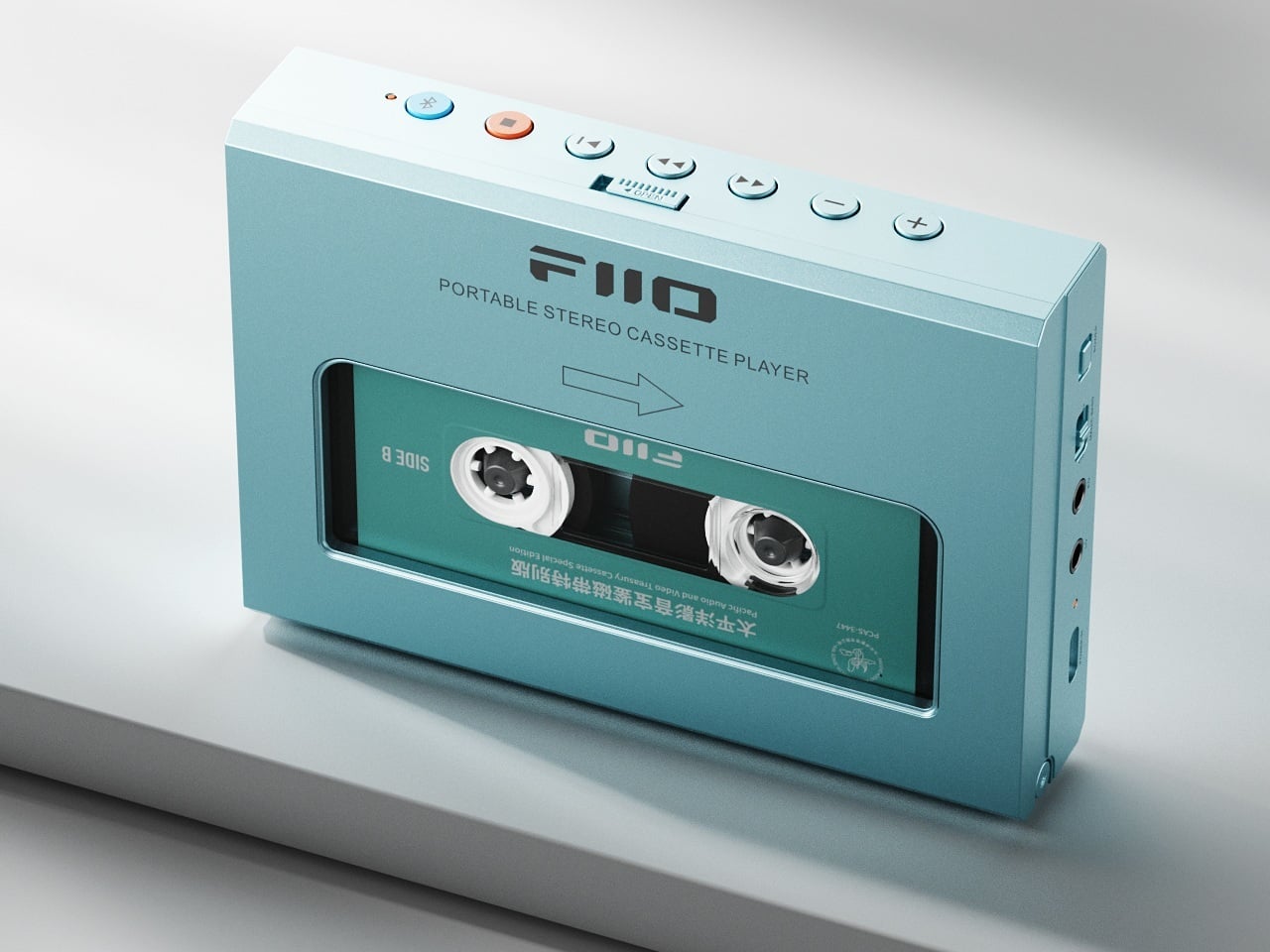
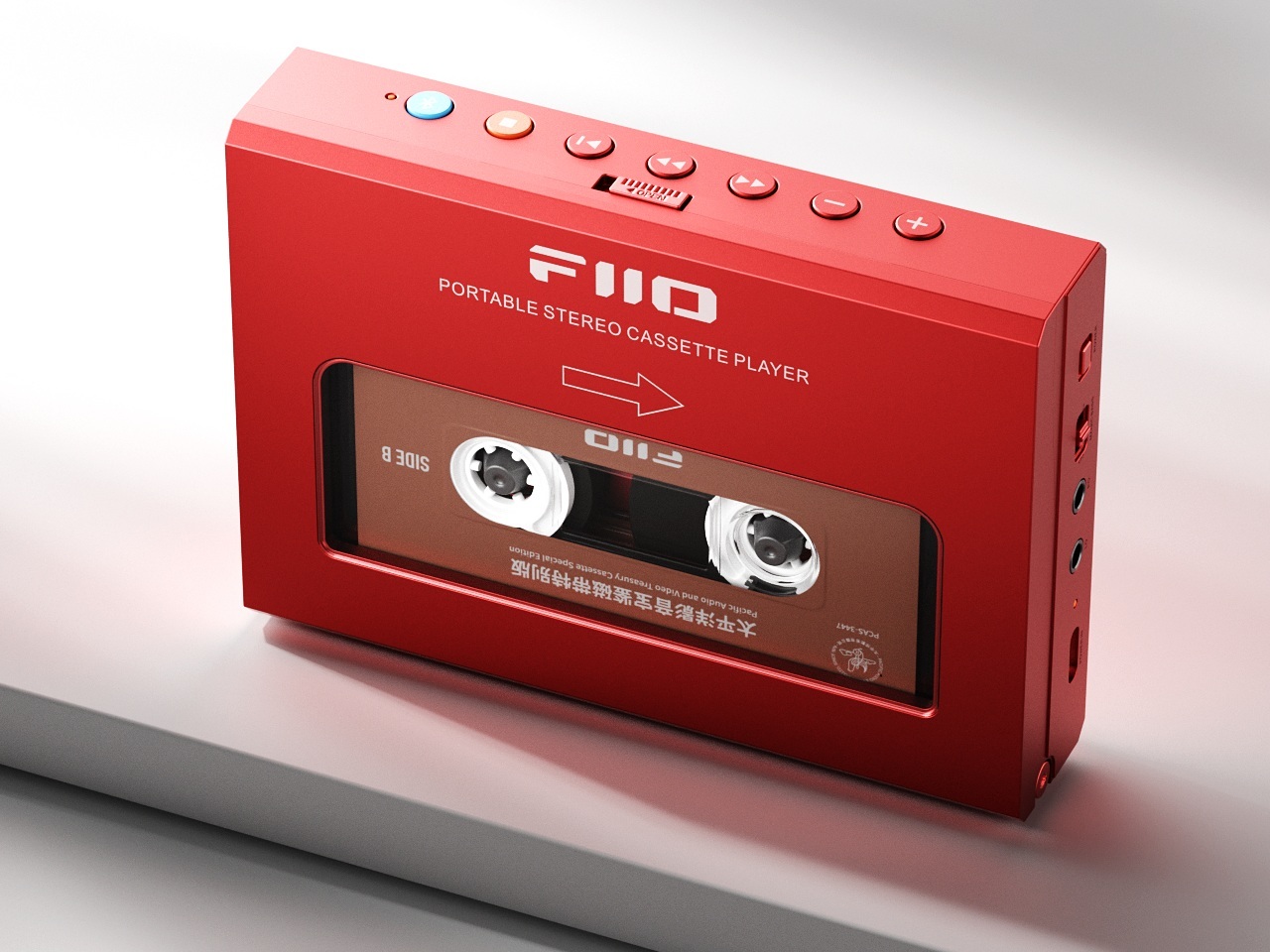
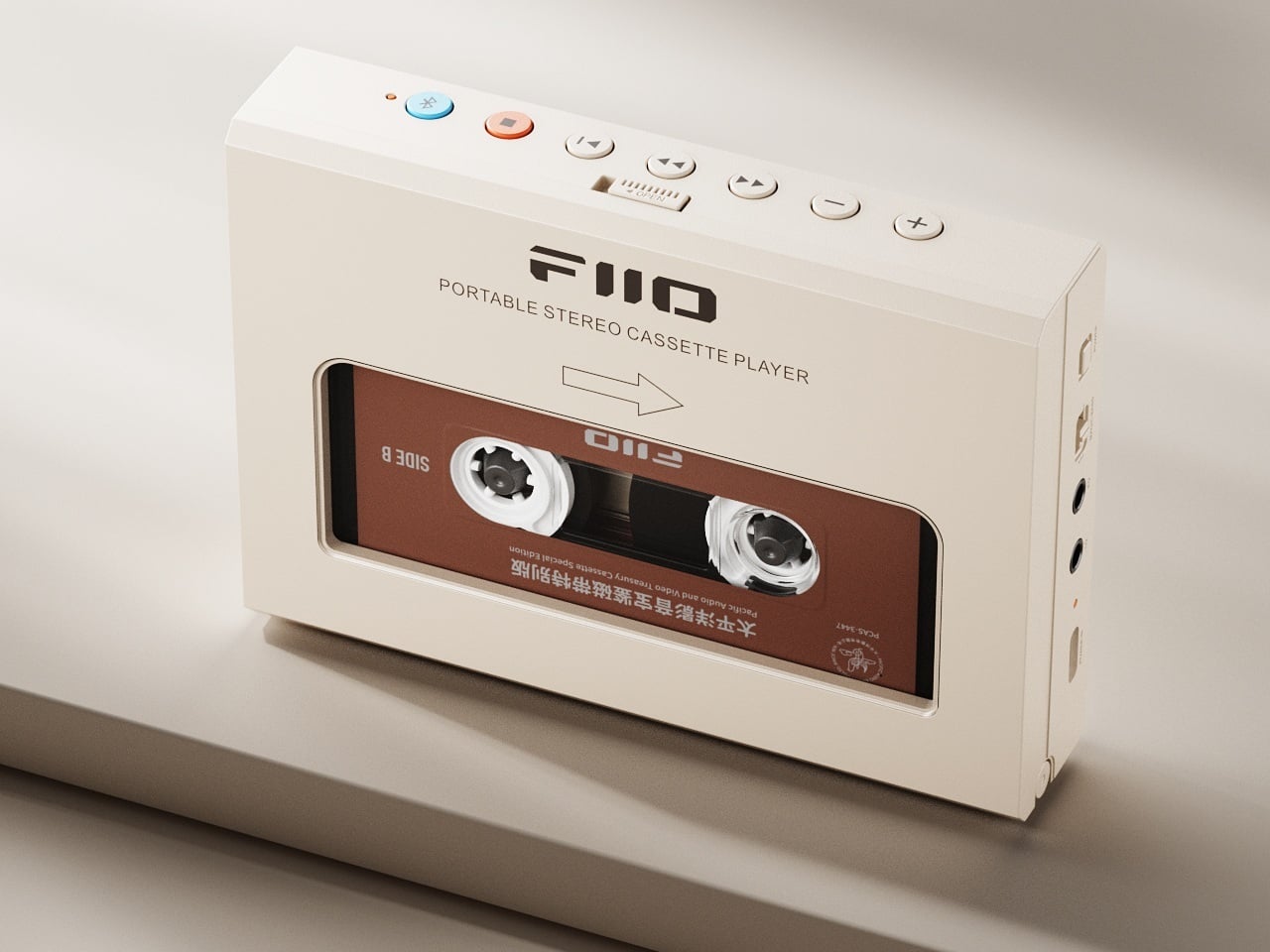
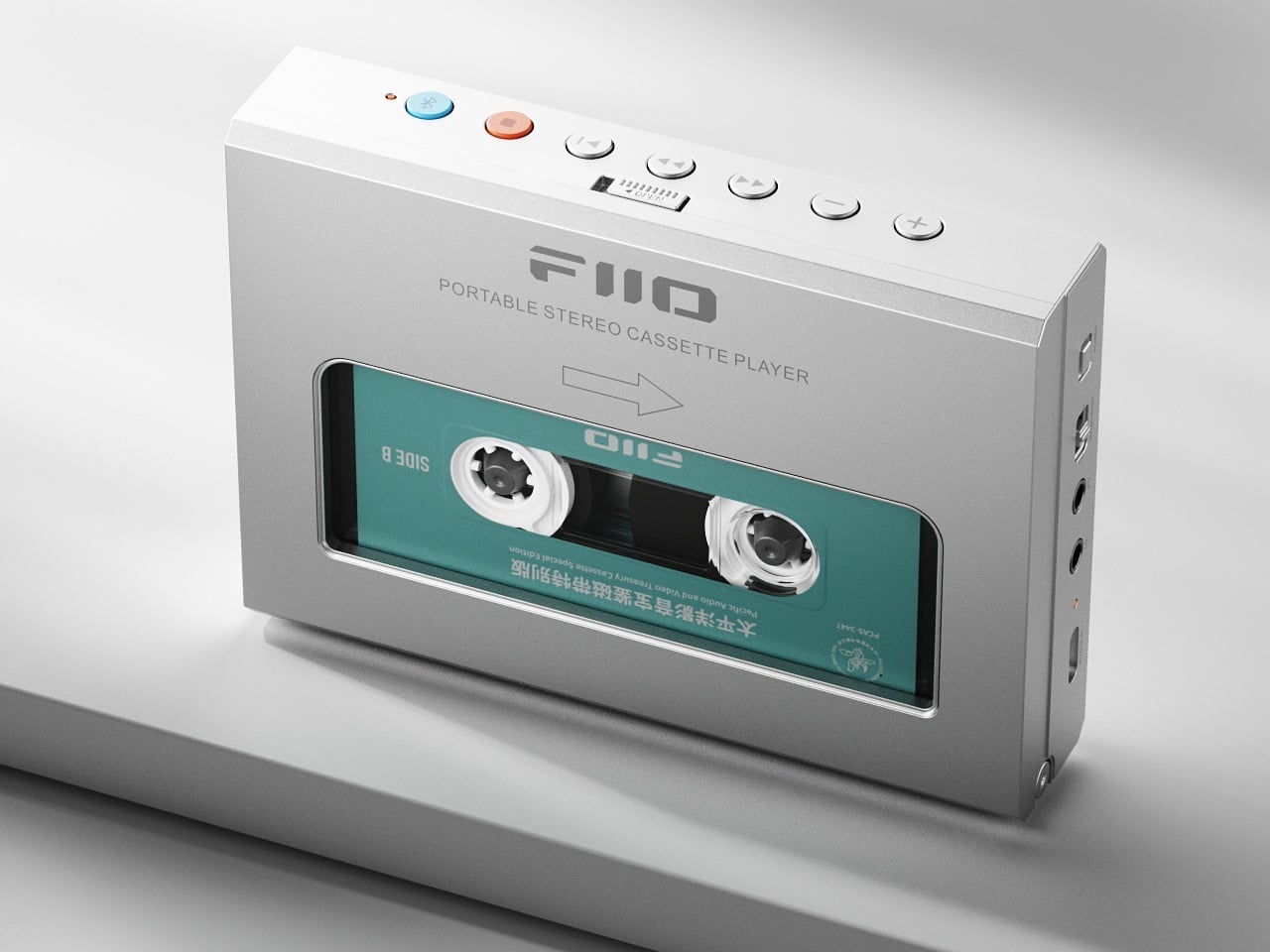
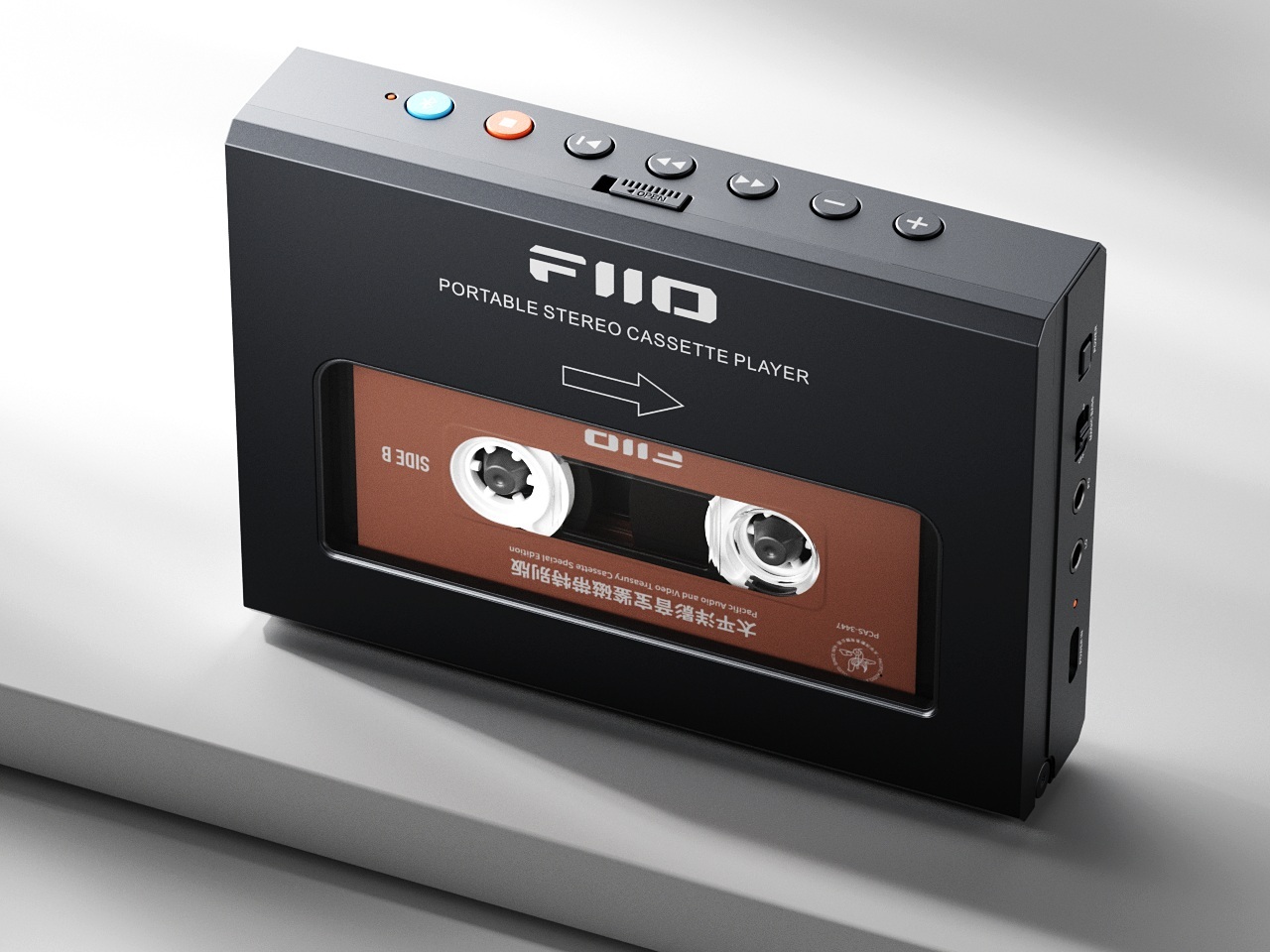
Vinyl already had its big cultural moment, dragging turntables and record stores back into the mainstream. Cassette tapes, quietly and without much fanfare, have been going through the same arc. Sales have been climbing for years, but the revival has lacked a player actually engineered for it. The FiiO CP11 is that player, and it comes with two years of R&D to back it up.
Getting to the CP11 wasn’t a straight line. FiiO originally planned to lead with the higher-end CP15, but as the new ultra-thin mechanism proved far more complex to engineer than expected, from structure and servo coordination to full system integration, the roadmap got reorganized. The CP11 was added earlier in the lineup so the new playback technology could reach people before everything else was perfected.
The size of the thing is worth talking about. FiiO designed the CP11 to be genuinely pocketable, competitive with the Walkmans that defined portable listening decades ago. That’s a different proposition entirely from the thick, ungainly cassette players that have populated the modern revival market. The all-new ultra-thin transport mechanism is what makes that slim profile possible, and getting it right required repeated prototyping and refinement.
Inside, the CP11 moves away from the hardware compromises that hold most modern tape players back. It runs on a brushless motor paired with a new servo drive and revised circuit design, which together are meant to deliver more stable, accurate playback than conventional motors allow. The magnetic head has been upgraded as well, since even the warmest analog sound can only be as good as the head reading it.
Then there’s Bluetooth, which is probably the feature that makes the CP11 most interesting to a broader audience. The fully analog CP13, FiiO’s existing tape player, never had it. Adding wireless transmission here means you can pair the CP11 with any wireless headphones and listen to your mixtapes or favorite vintage tapes without a headphone cord to manage. The 3.5mm jack is still there for people who prefer it that way.
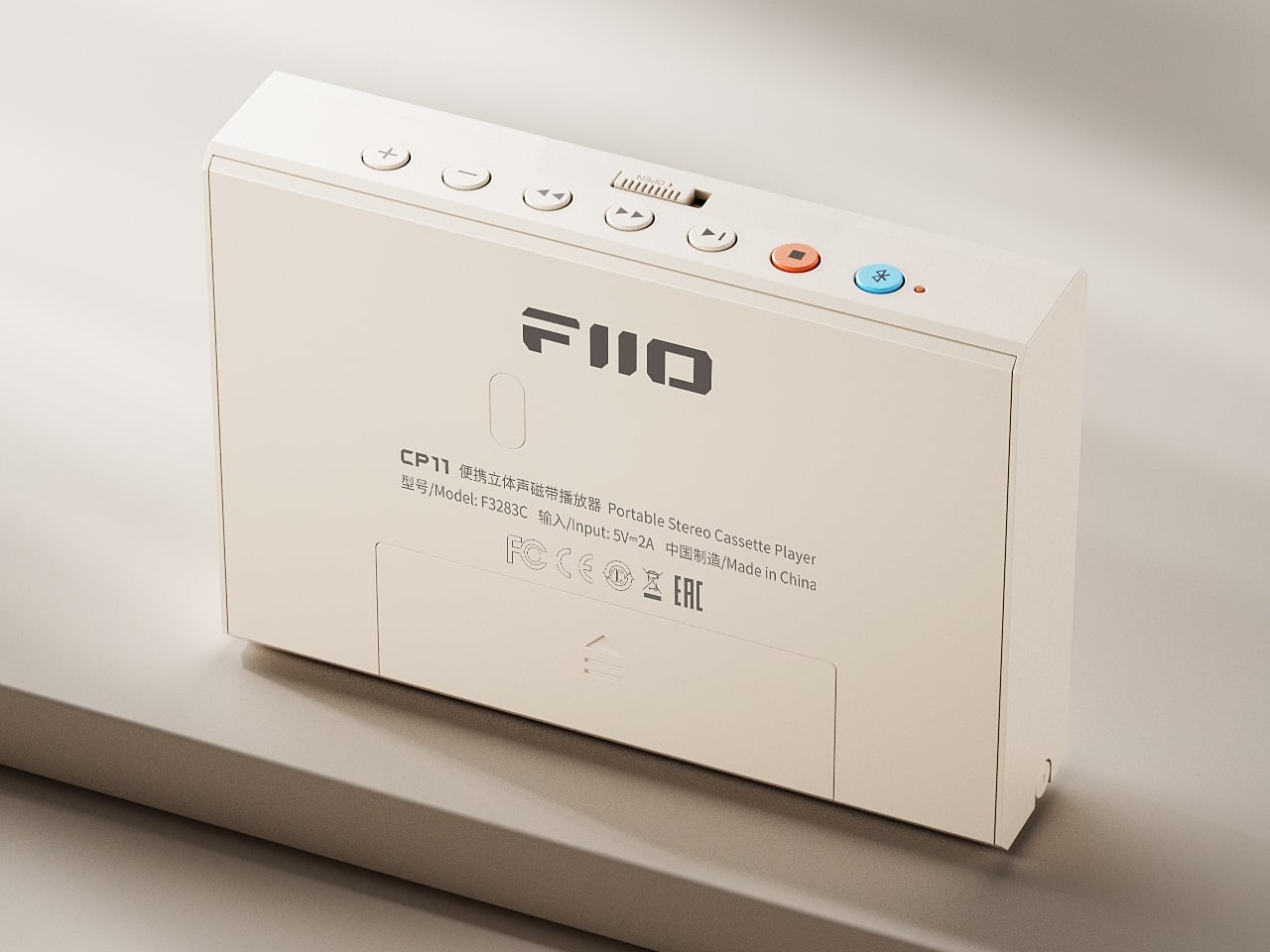
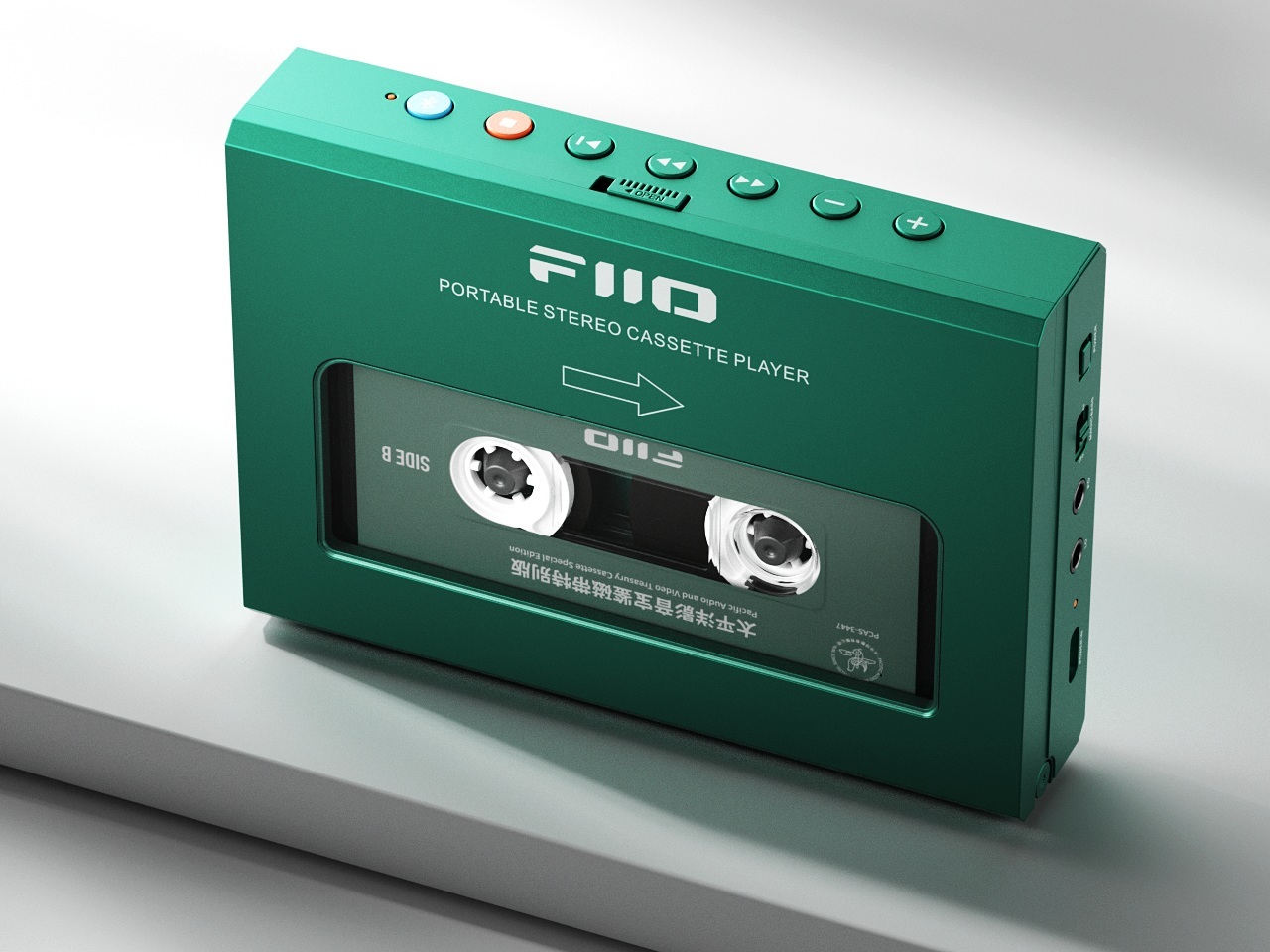
The design doesn’t try to pass off nostalgia as a substitute for intent. The body is clean and minimalist, available in cream, green, and silver colorways that feel more considered than retro-chic. There’s a battery hatch on the back, which suggests the cell might be user-replaceable, a small but meaningful detail for a device built around physical media and the culture of long listening sessions.
USB-C handles charging, which is a small but welcome concession to the present. It charges at 5V/2A, so any standard cable will do, and you won’t need to hunt for a specialized adapter while your tape collection gathers dust. Physical playback controls sit at the top alongside a dedicated Bluetooth button, keeping the experience tactile rather than forcing everything through a touchscreen or an app.
No pricing has been announced yet, though FiiO’s existing CP13 sells in the $99 to $110 range, giving some rough sense of where the CP11 might land. A late 2026 launch is the target, and the higher-end CP15 is progressing simultaneously, with its internals largely completed. The cassette revival doesn’t have a device worthy of leading it yet. The CP11 is making a case for the job.
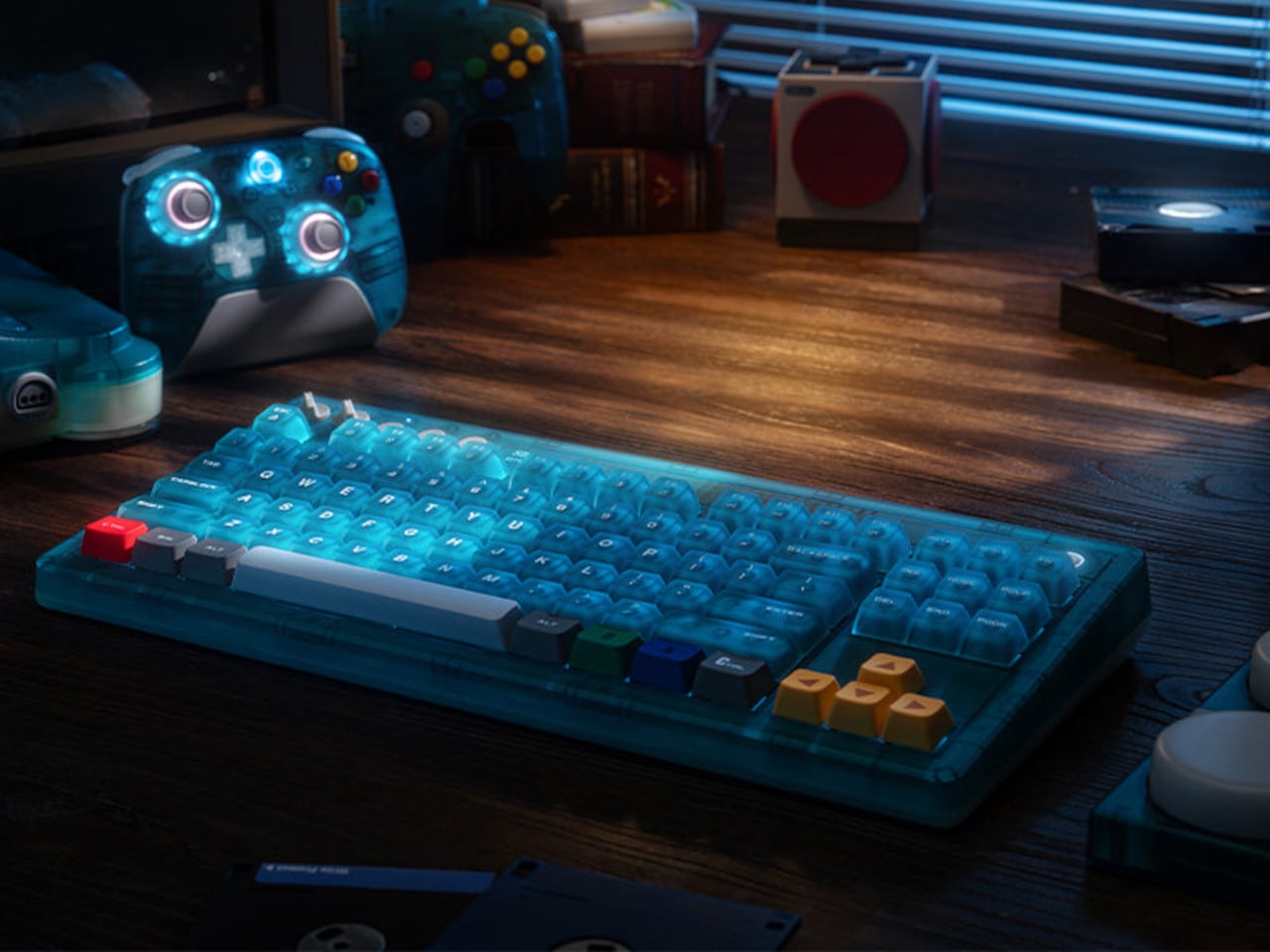
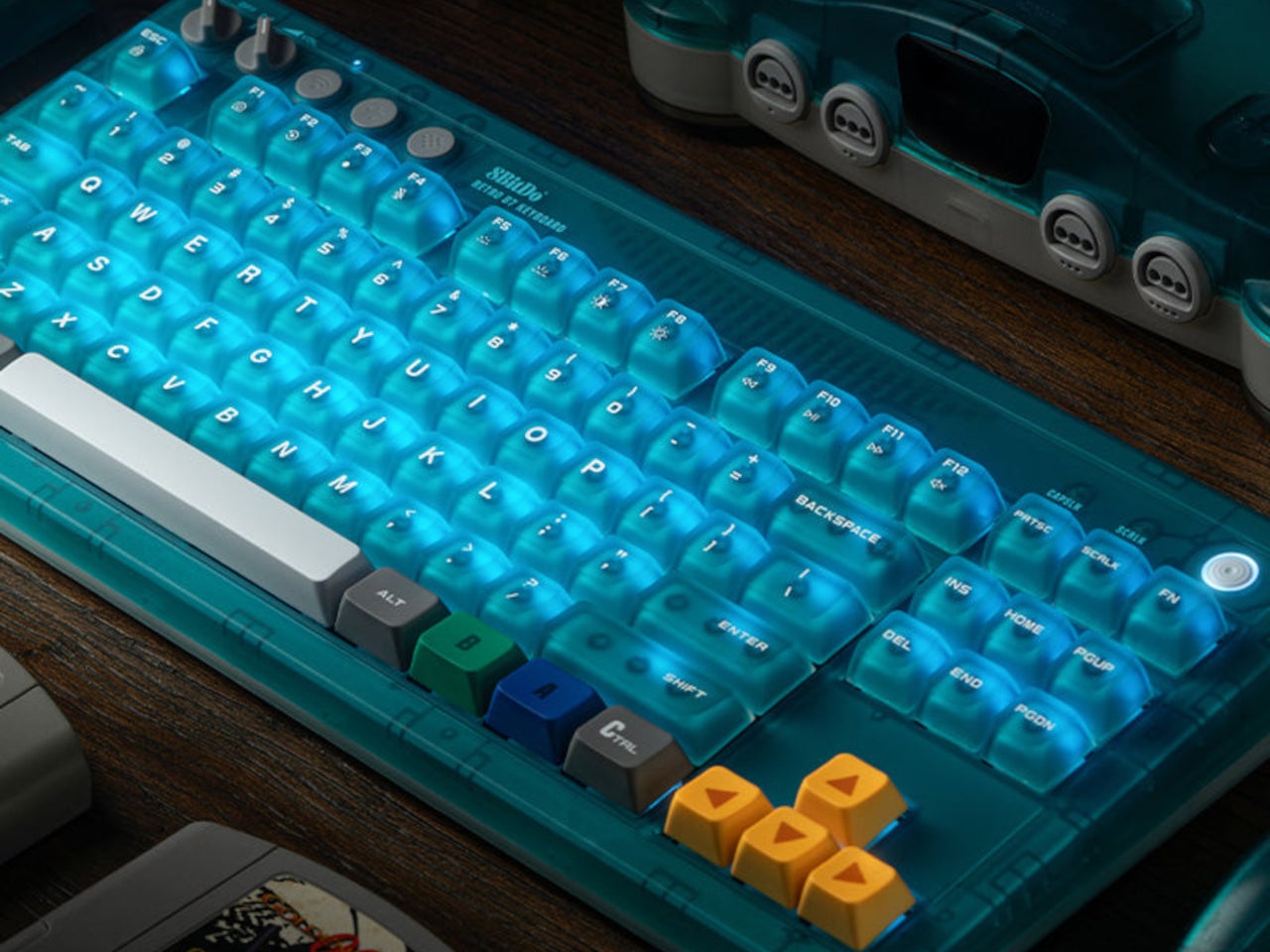
Nintendo’s “Funtastic” translucent plastic era tends to provoke a specific kind of nostalgia. The see-through consoles and controllers from the late 1990s made the hardware itself part of the aesthetic, and the ice blue variant of the N64 in particular developed a cult following that outlasted the console’s commercial run by several decades. The transparency wasn’t a gimmick then, and it still doesn’t feel like one now.
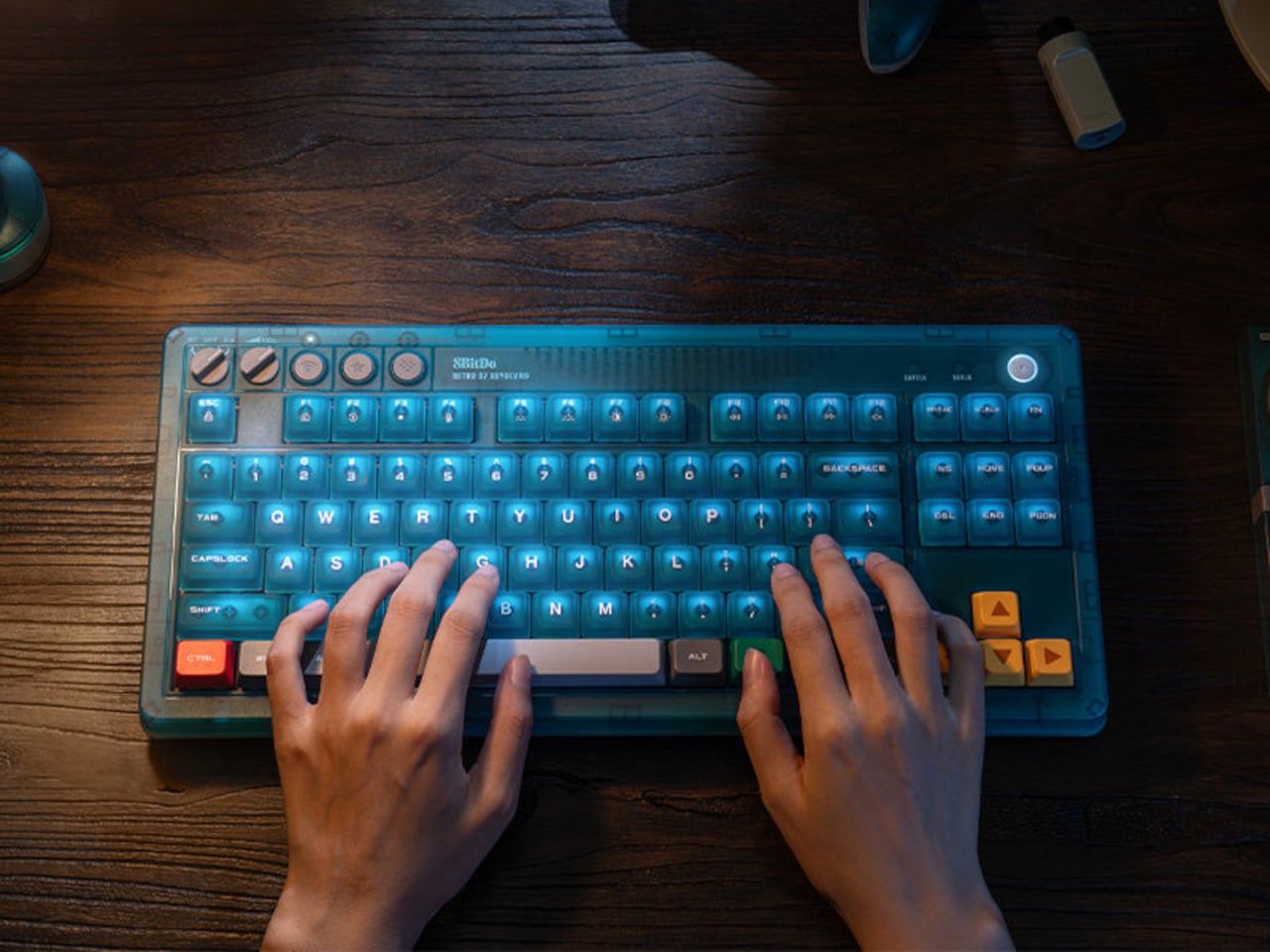
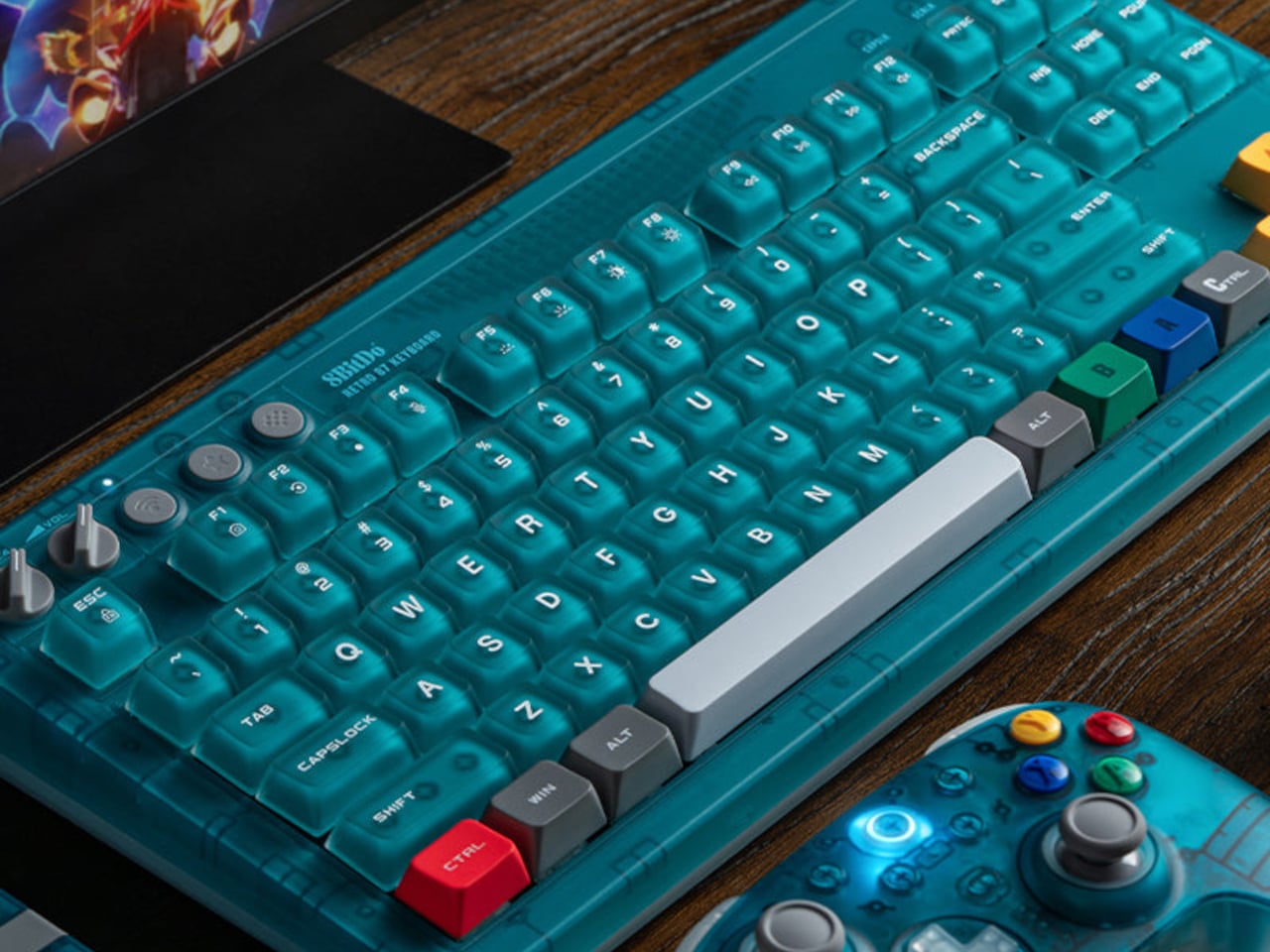
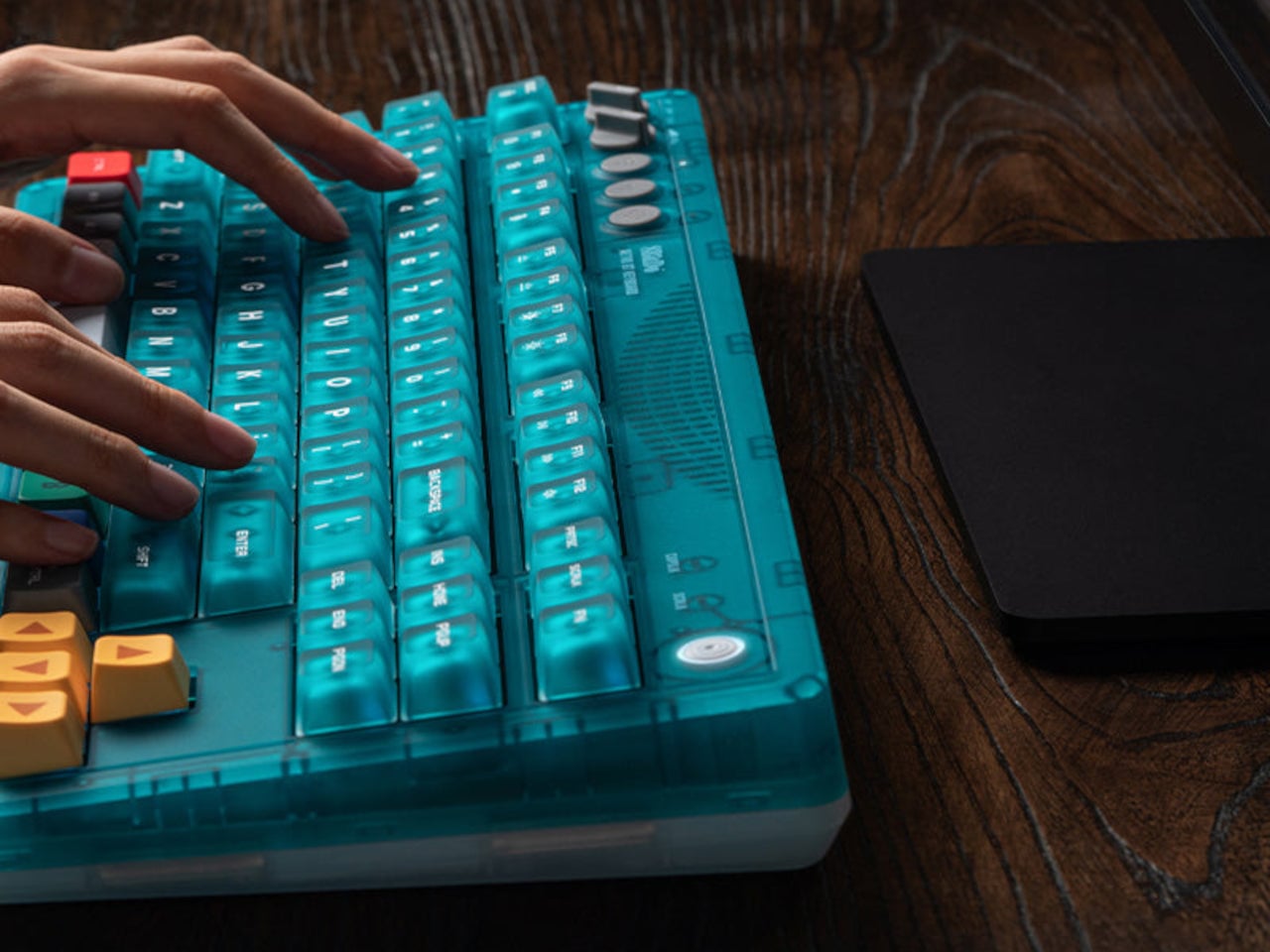
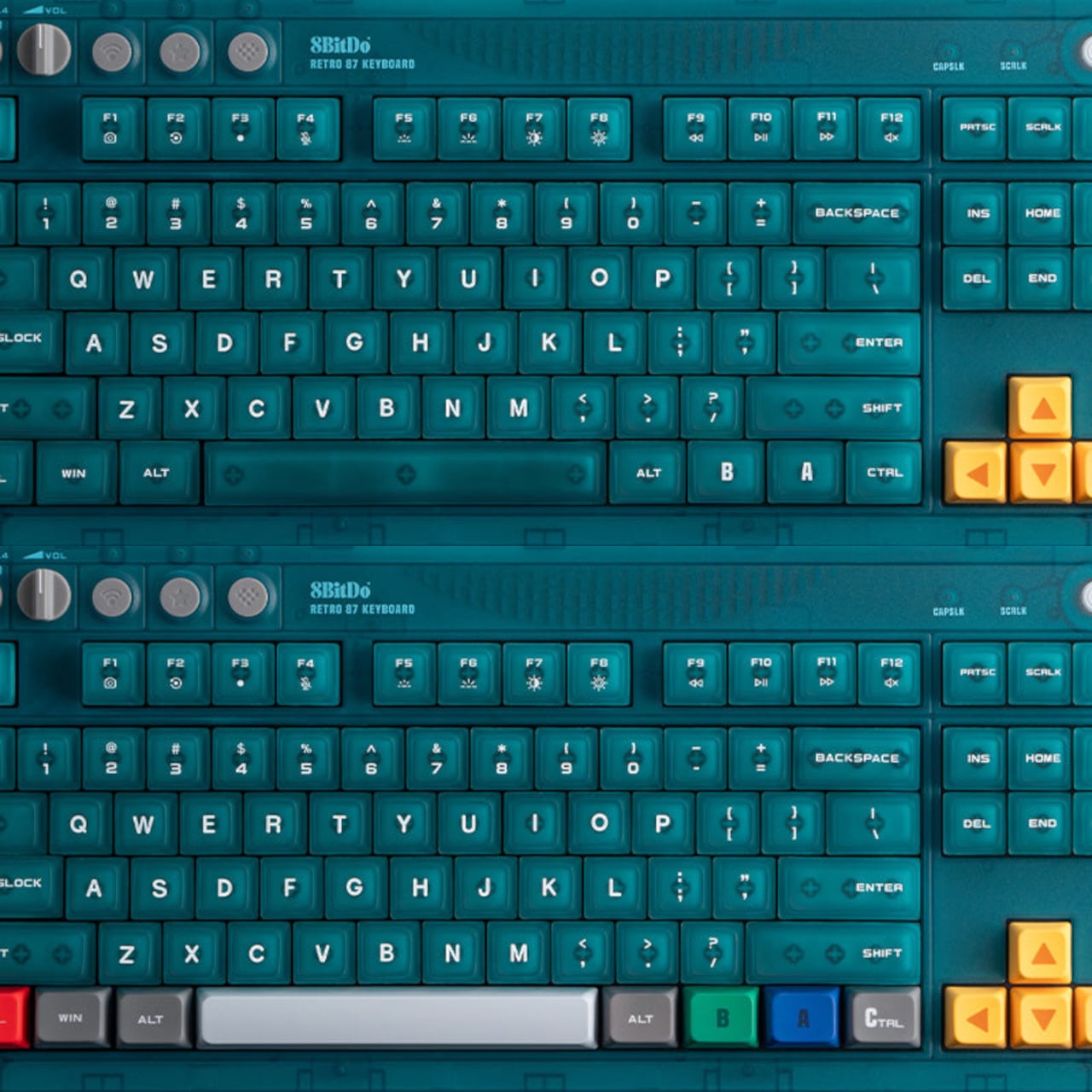
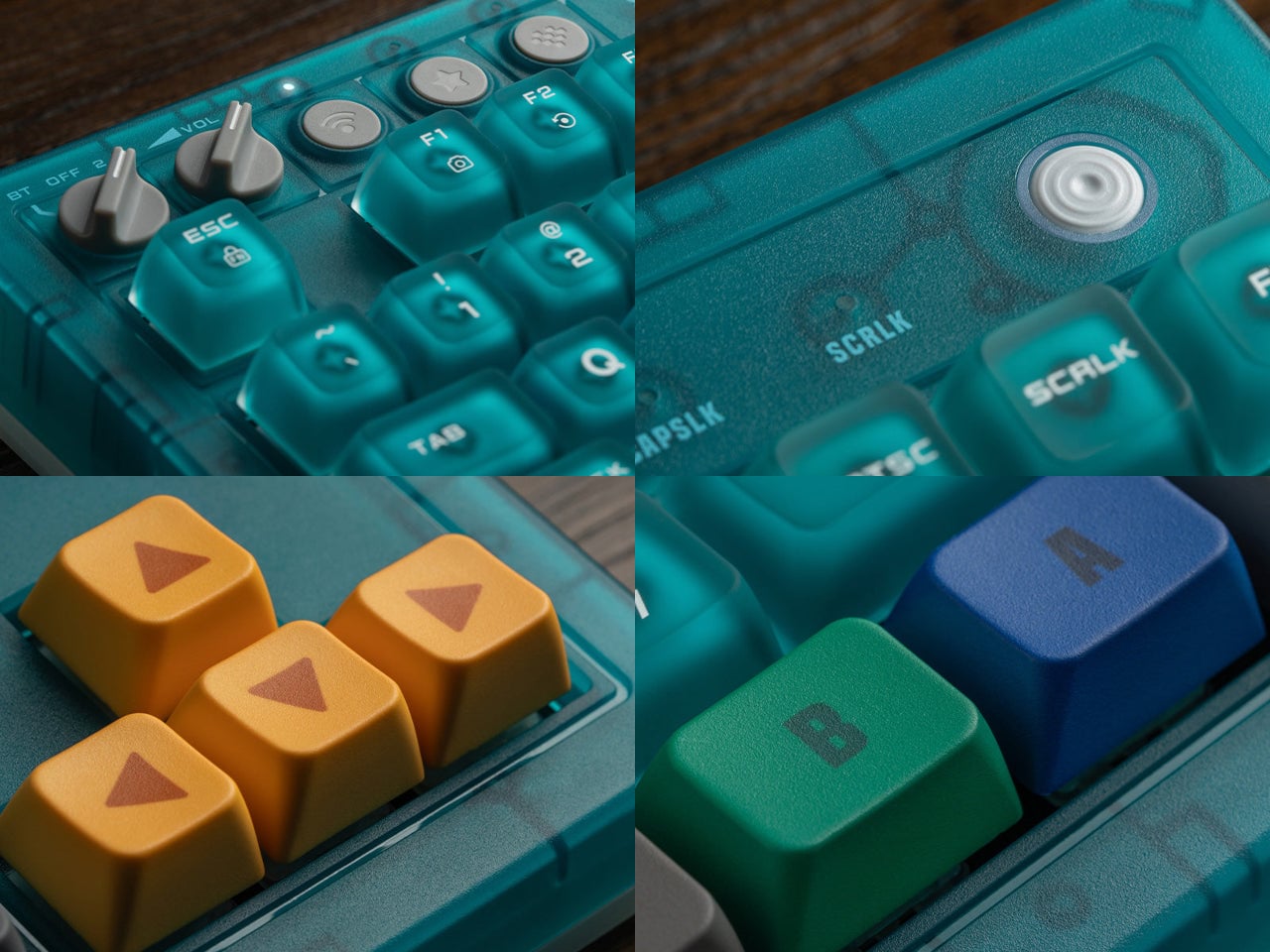
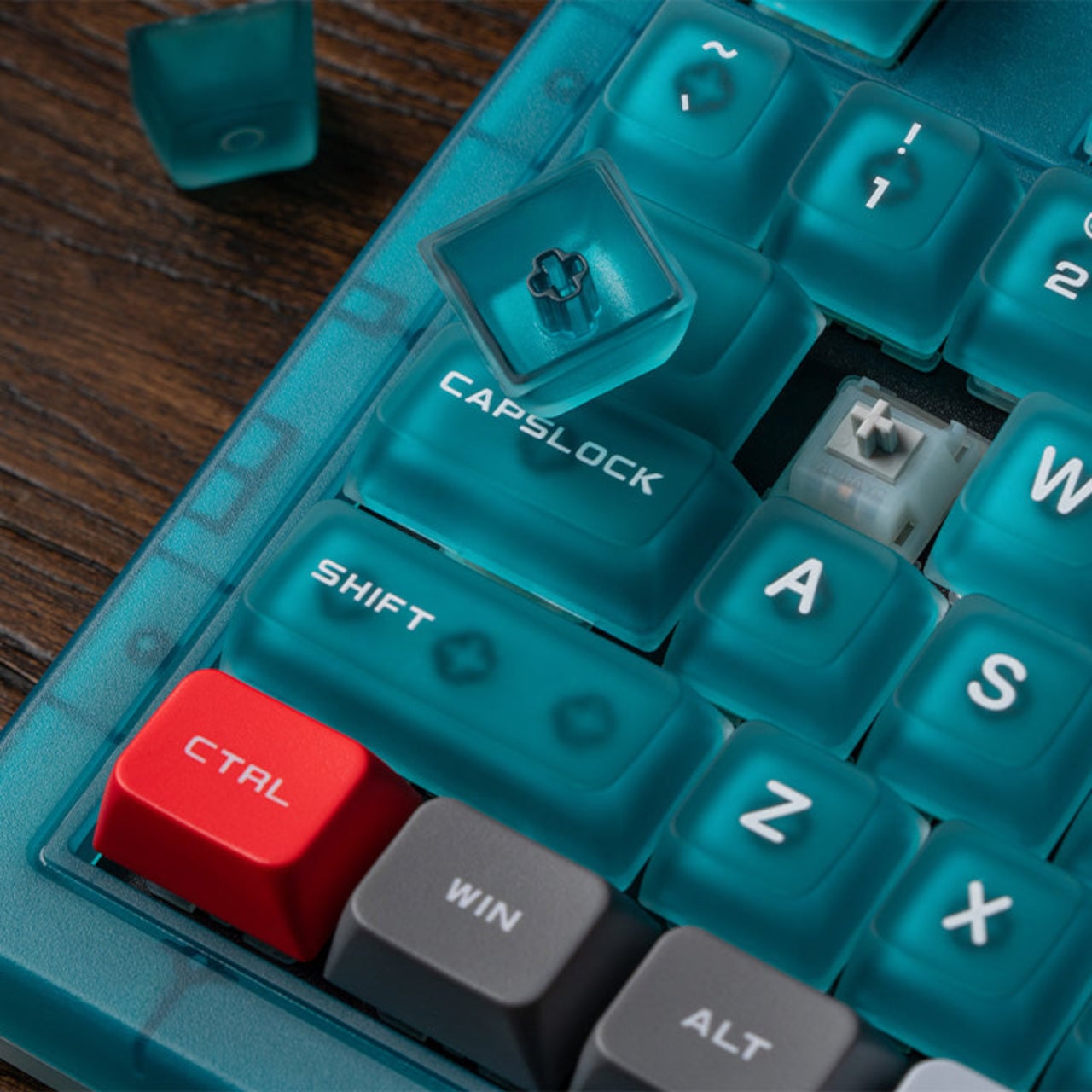
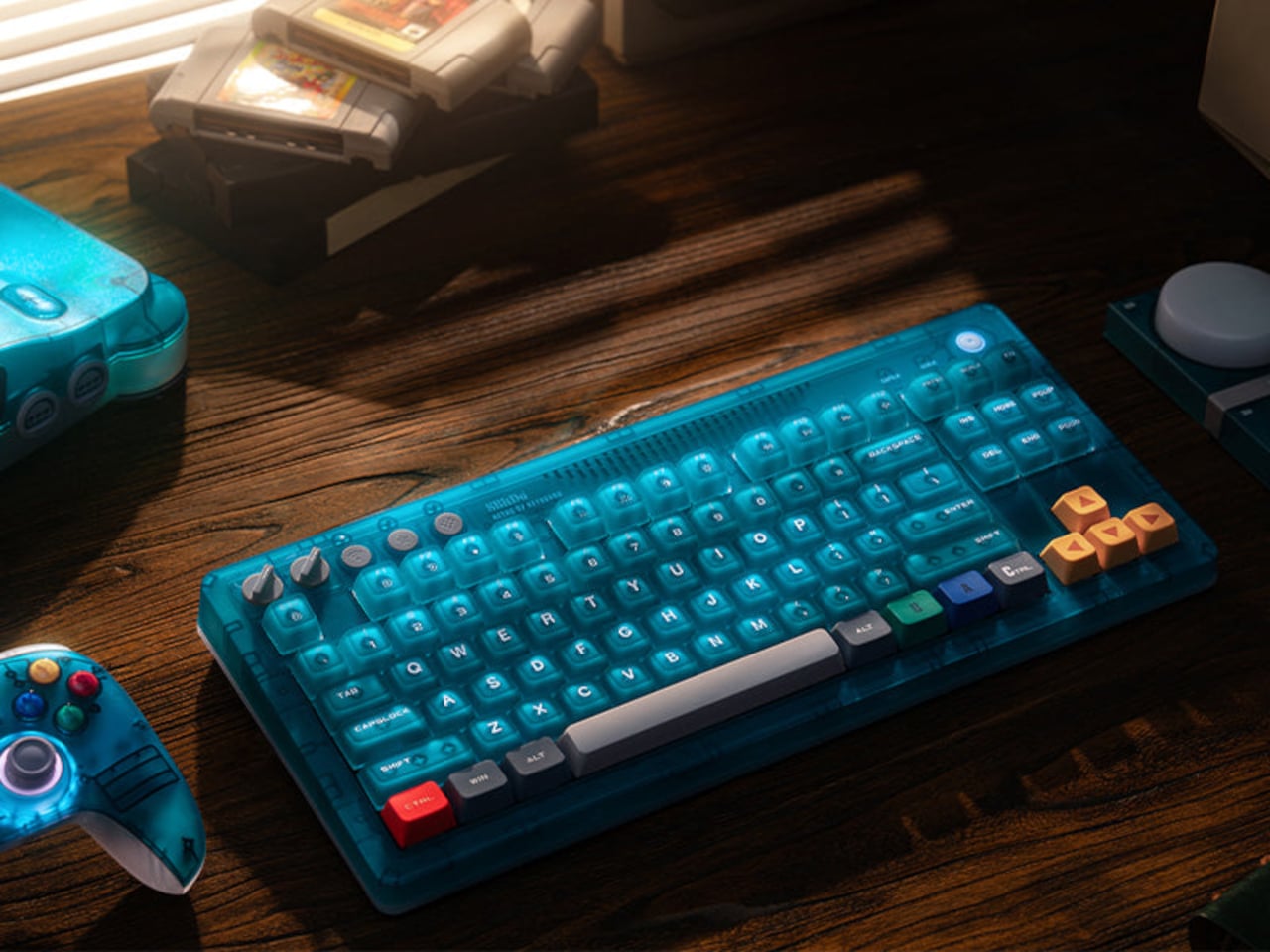
The 8BitDo Retro 87 Keyboard in Clear Blue arrives as part of the N64’s 30th anniversary and borrows that translucent blue finish directly. But the design doesn’t stop at the shell. Specific keys carry the actual color palette of the original N64 controller: yellow arrow keys for the C-buttons, blue and green A and B keys, and a red left Ctrl referencing the Start button. For anyone who logged enough hours with that particular controller, the color map reads immediately.
The Clear Blue edition uses 8BitDo Cloud Gray Linear mechanical switches, co-developed with HUANO specifically for this version and distinct from the Kailh Box White switches in the Fami and N editions. The keycaps combine dye-sublimation PBT and ABS + PC double-shot construction with a matte UV coating, giving the legends both durability and a finish that suits the translucent shell better than a glossy alternative would.
Underneath, the hot-swappable PCB sits in a top mount configuration, which is a construction choice that tends to provide a softer, more cushioned typing feel compared to bottom mount builds. N-key rollover handles simultaneous inputs without dropping keystrokes. Per-key RGB backlighting runs through the whole board, visible through the translucent shell in a way that a standard opaque case would never allow. The 200-hour wireless battery life on a 2,000 mAh cell is rated for the 2.4 GHz wireless mode, with the adapter included in the box.
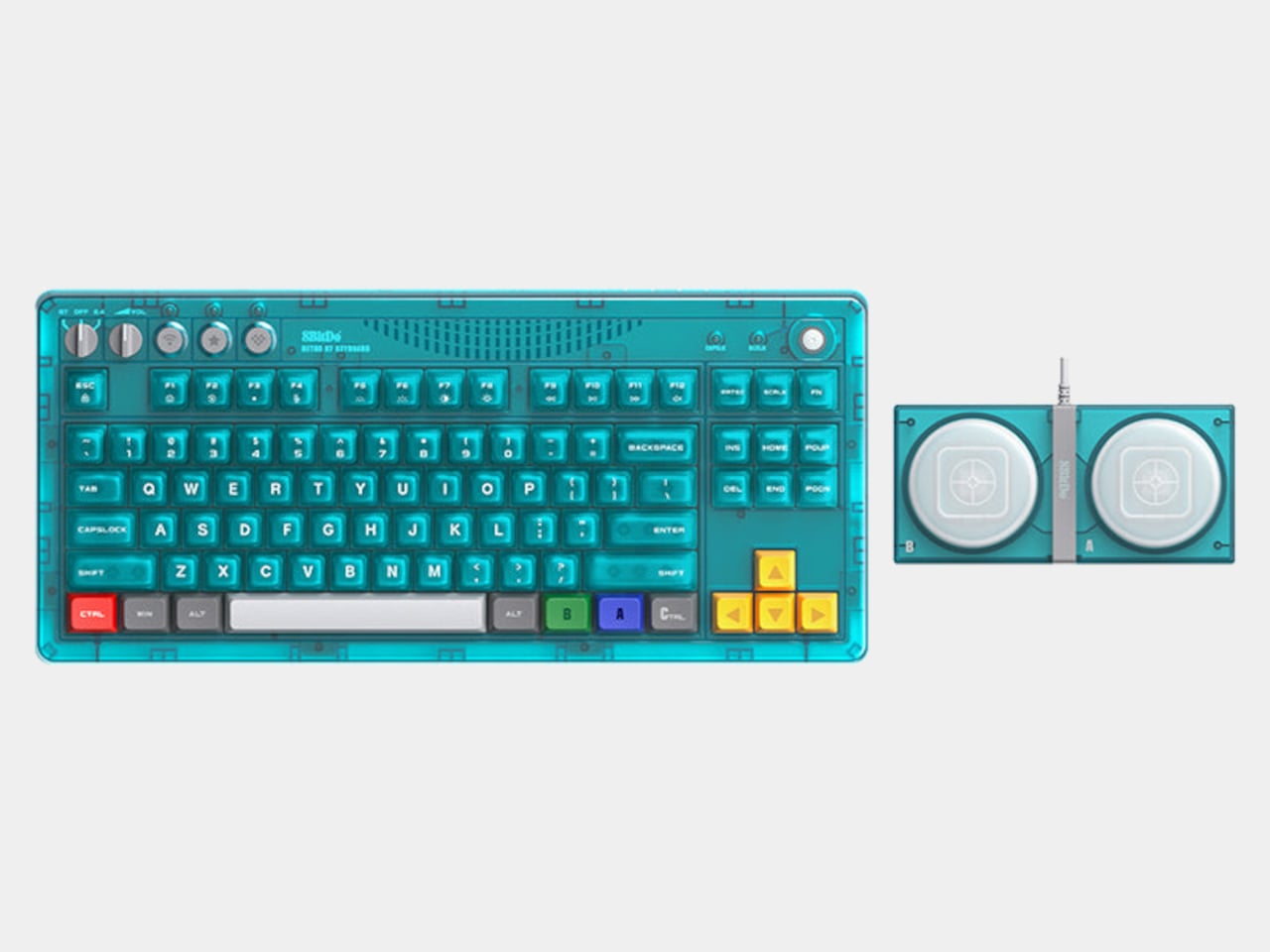
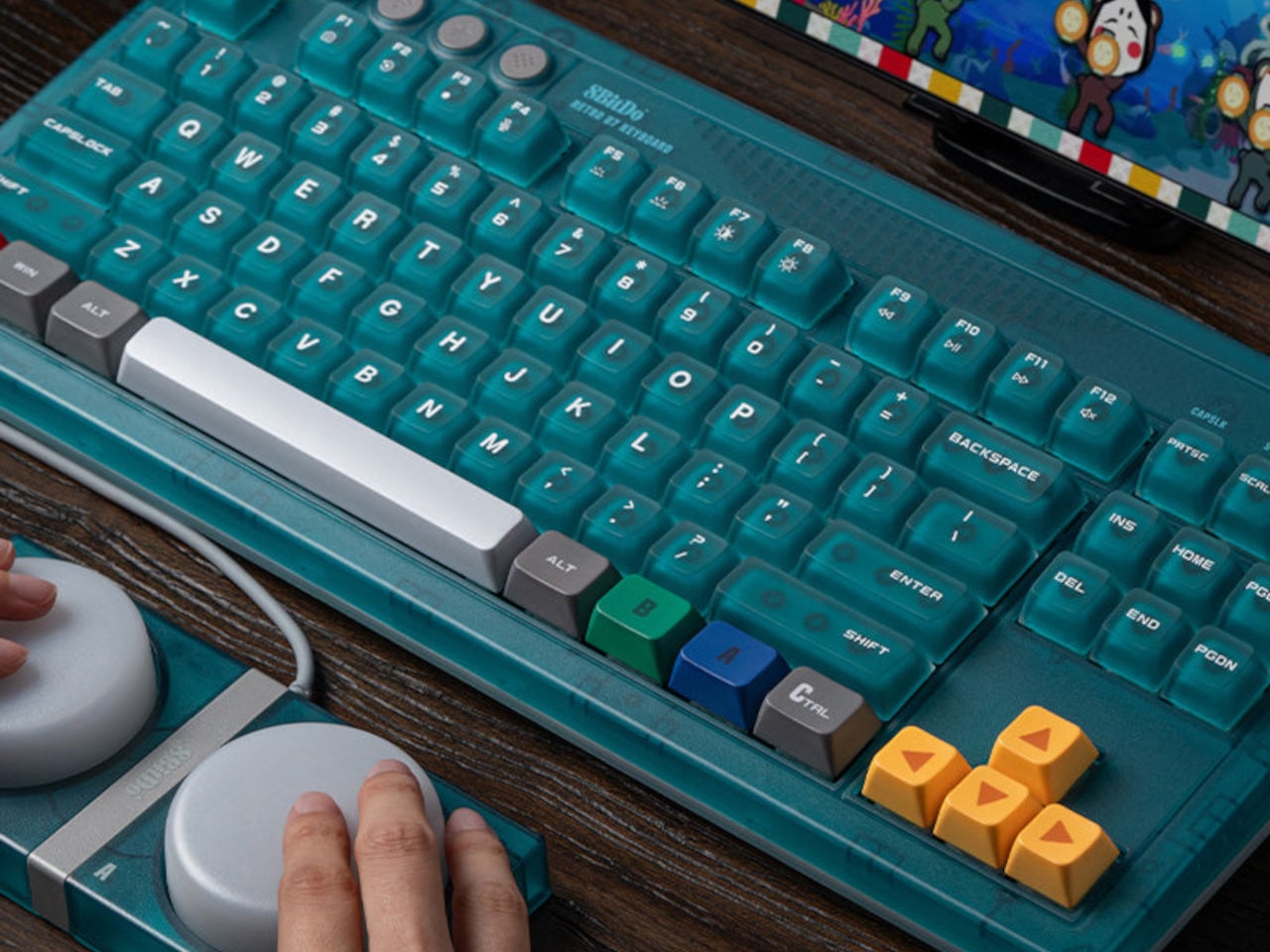
Connectivity covers three modes: Bluetooth, 2.4 GHz wireless, and wired USB, the standard trio for a modern keyboard that needs to move between devices and setups. A pair of programmable Super Buttons ships with the keyboard, matching the Clear Blue finish and assignable through 8BitDo Ultimate Software V2. They sit outside the main typing area and can take on whatever function is needed, from media controls to game inputs.
The 87-key tenkeyless layout drops the number pad but keeps the full navigation cluster, which is the practical choice for a keyboard meant to share desk space with other peripherals. The layout doesn’t commit to being purely a gaming board or purely a productivity tool, which suits a keyboard this visually distinctive rather well. Something that references a 30-year-old console doesn’t need to pretend it’s a neutral office accessory.
There’s a certain honesty to the approach here. The Clear Blue colorway isn’t a subtle nod or a distant reference; it’s an explicit callback to a specific era of hardware design that a generation of players grew up with. The translucent shell shows the PCB and internal components through the blue tint, carrying the same logic those original Funtastic consoles did: the inside of the hardware was worth looking at.
DIY handheld gaming has always had a ceiling for newcomers. Most builds require custom-designed PCBs, hard-to-find specialized connectors, and at least a few evenings spent with a soldering iron before anything turns on. Results from experienced makers can be impressive, but getting there has traditionally demanded an electronics background and a comfort with tools that many people simply don’t have.
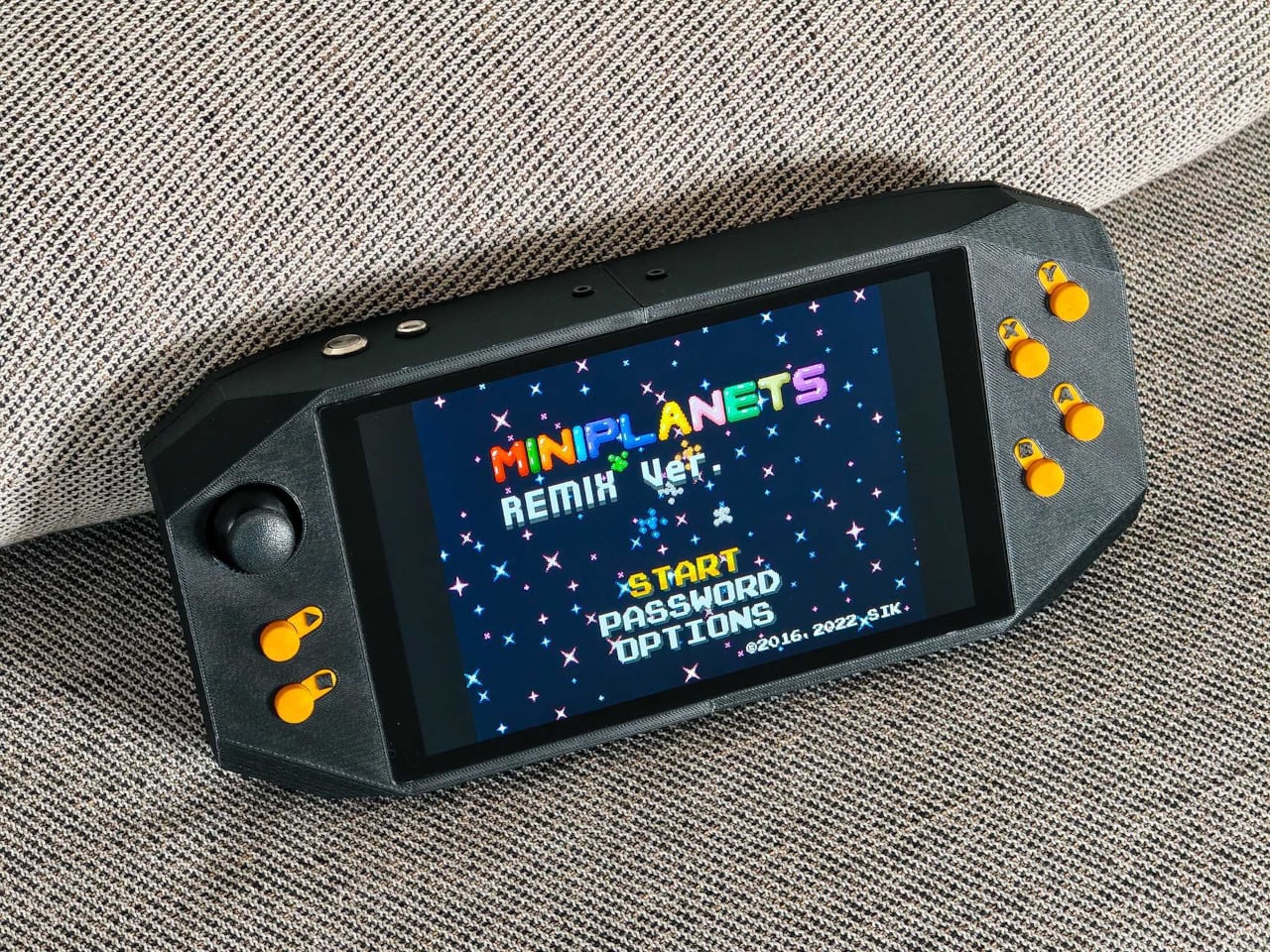
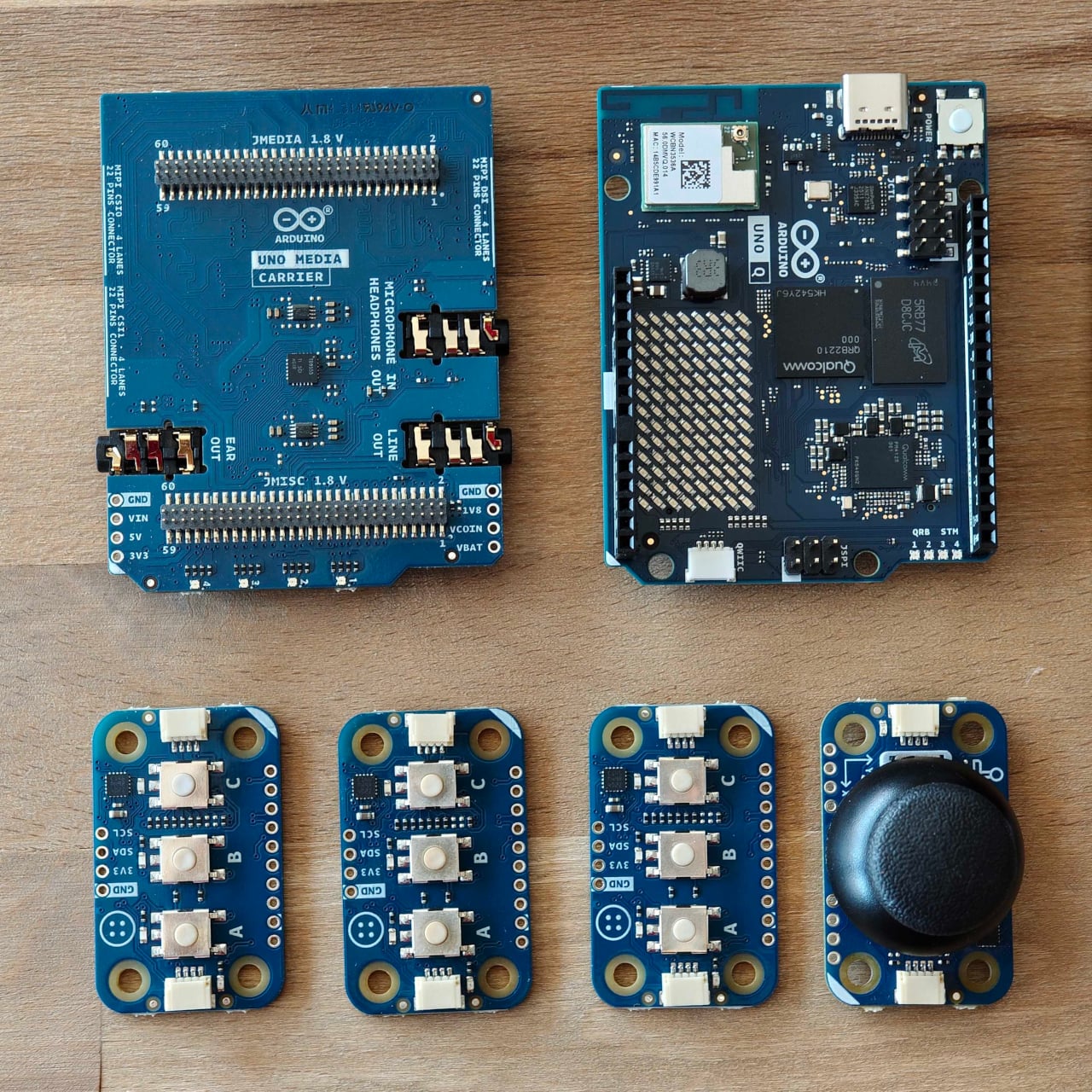
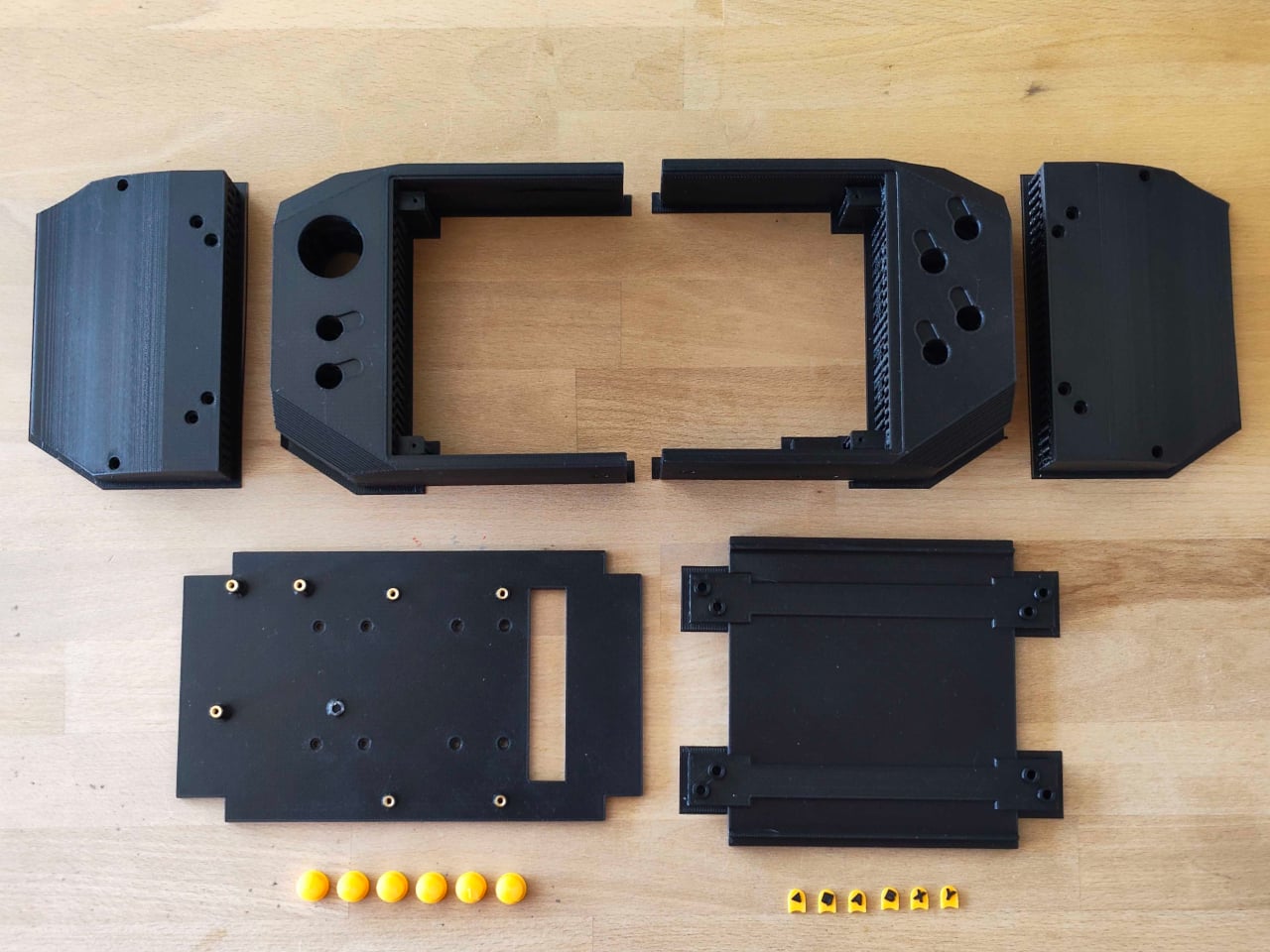
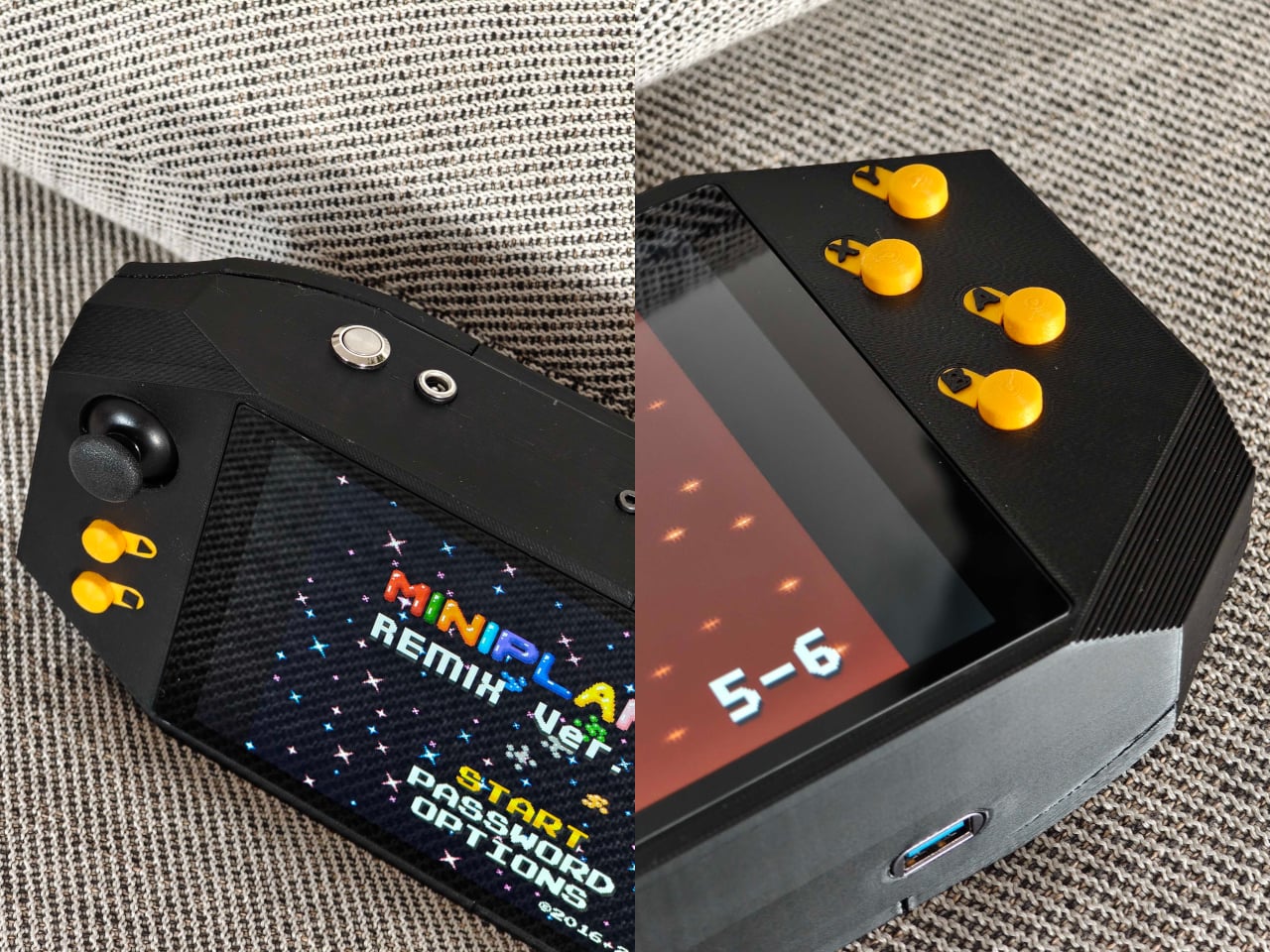
This Arduino UNO Q-based handheld console doesn’t ask for any of that. Every component can be ordered from a standard online retailer and assembled without soldering, making the build about as accessible as a maker project can get. The only parts requiring fabrication are the 3D-printed enclosure and buttons, which come together using heat-set inserts for a clean, professional-looking result that doesn’t betray its module-based origins.
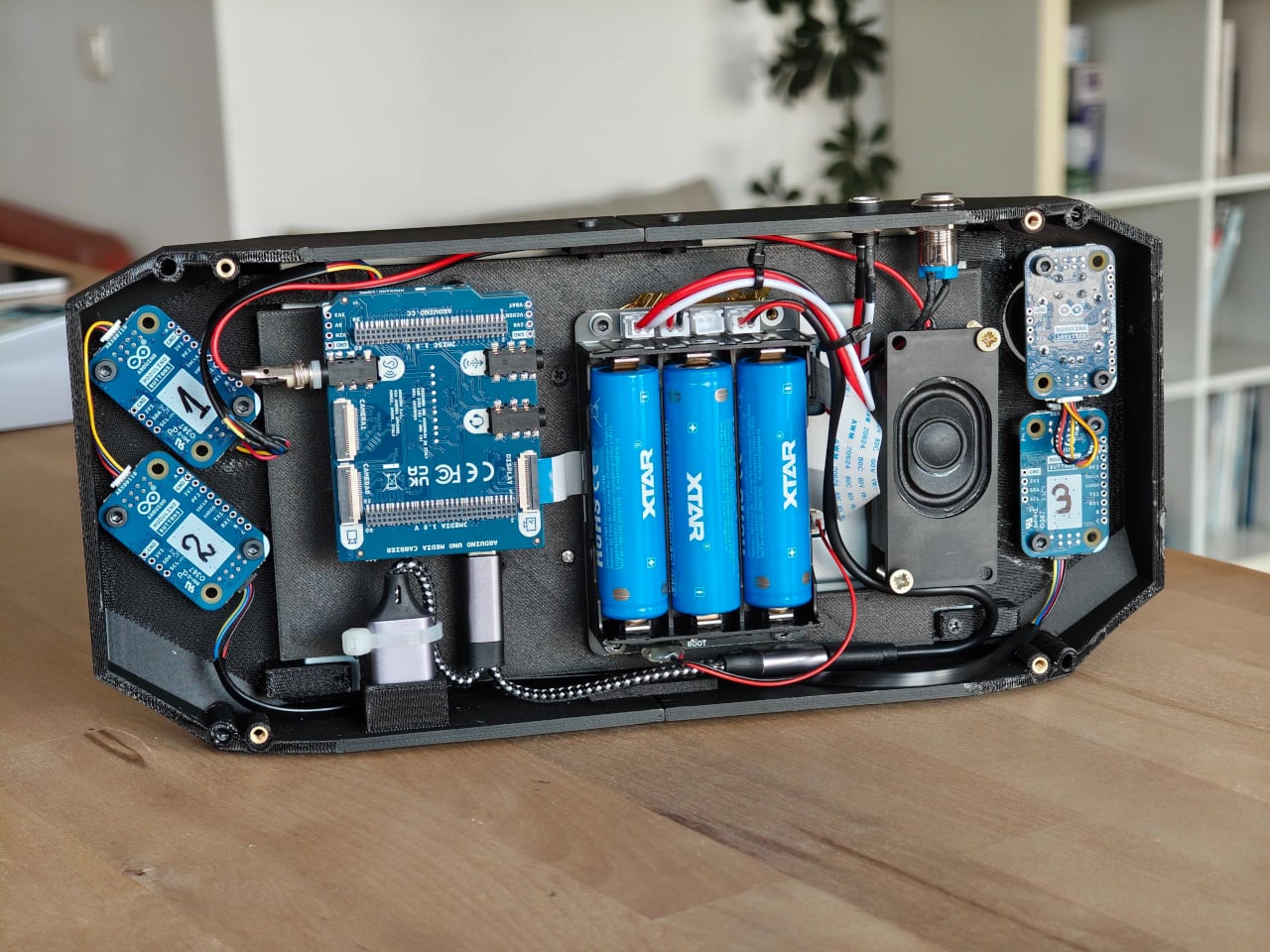
The hardware list reads like an afternoon’s shopping. At the center is the Arduino UNO Q, pairing a Qualcomm Dragonwing QRB2210 processor running Debian Linux with a dedicated STM32 microcontroller for real-time input handling. Modulino Buttons and a Modulino Joystick handle the controls, an Arduino UNO Media Carrier connects an 8-inch Waveshare touchscreen and an Adafruit speaker, and a Waveshare UPS module provides battery support.
The software side is equally well thought out. The STM32 microcontroller monitors button presses and joystick movements, then passes that data to the Linux environment, where a Python daemon converts everything into standard USB gamepad commands. RetroArch handles the emulation without any complicated setup, so loading up a game doesn’t feel different from plugging a USB gamepad into a PC.
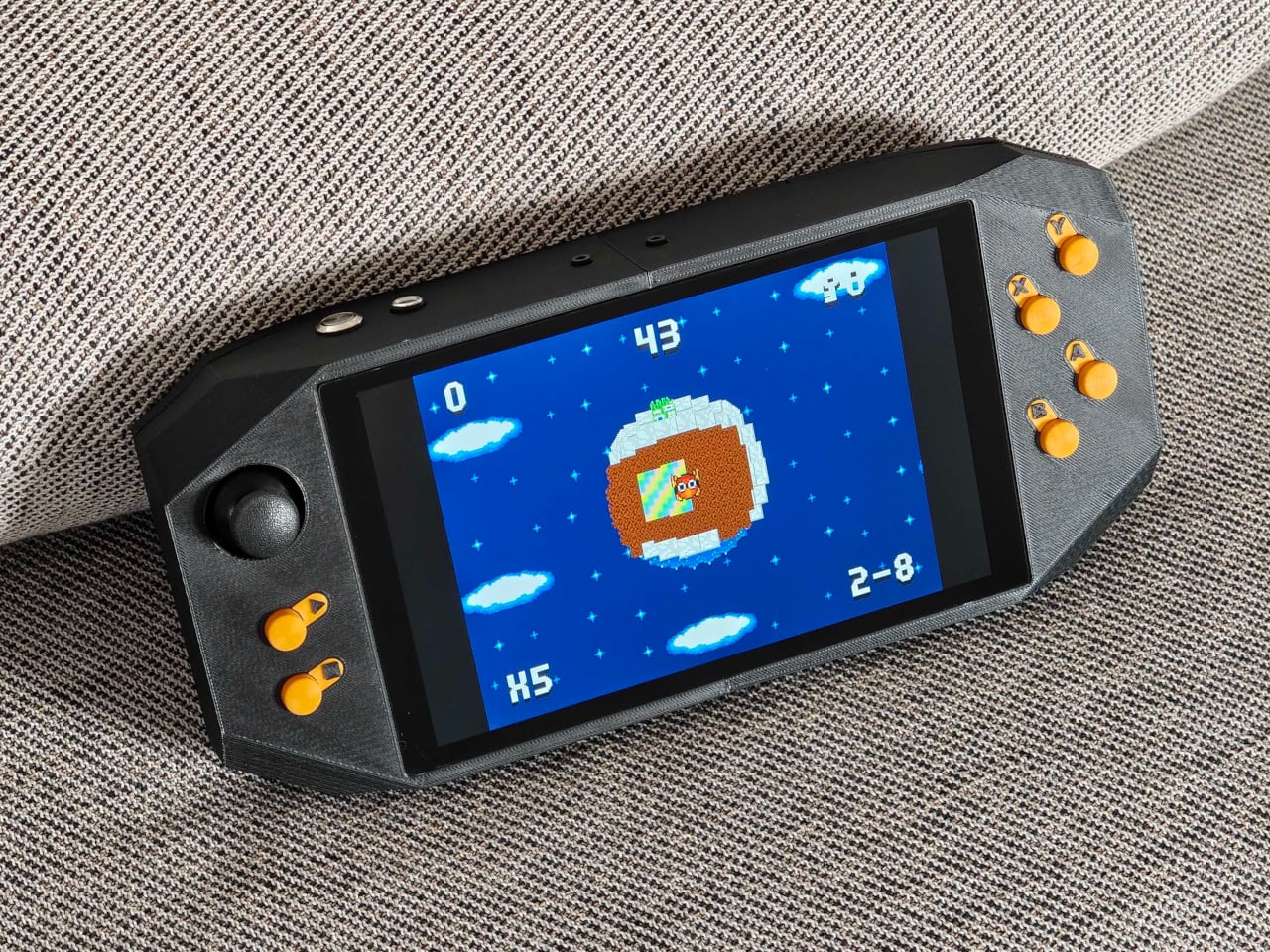
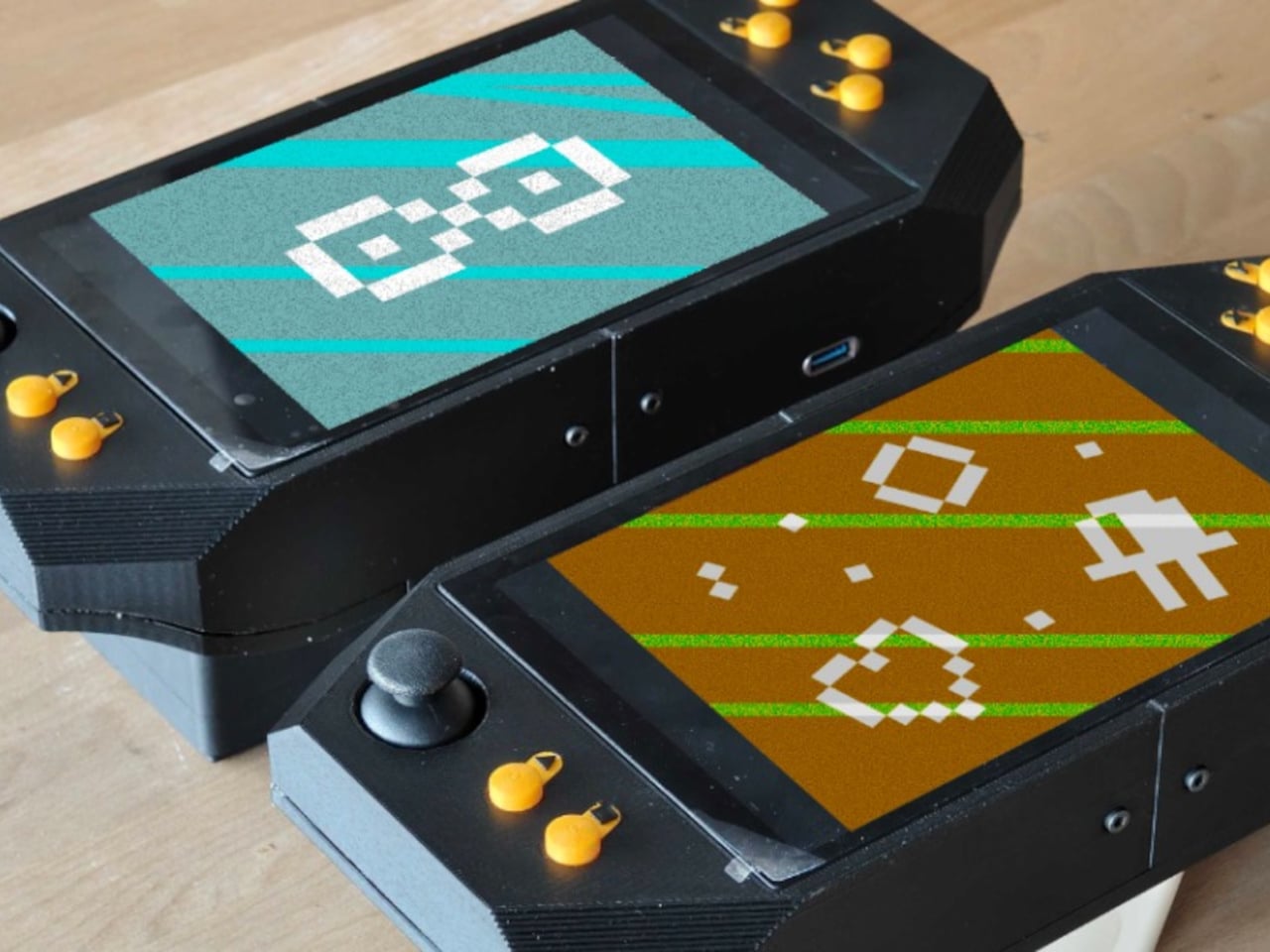
That smoothness pays off in practice. Sitting back with a handheld you built over a weekend and scrolling through titles from systems you grew up with, everything runs cleanly with proper controls and sound. It’s a bit chunkier than a commercial device, given the module-based construction, but the feel is more polished than the trade-off might suggest, especially for a build that skips custom PCBs entirely.
There’s also room to go further than emulation. The UNO Q can run the Godot game engine, which turns the same hardware into a development platform for original games. Between that and RetroArch’s support for a wide range of classic platforms, the console covers both ends of the gaming spectrum without requiring any additional hardware beyond what’s already in the build.
The full hardware list, assembly walkthrough, and complete source code are posted on Arduino Project Hub and GitHub, keeping everything open and reproducible. The documentation also frames the build as a starting point rather than a finished product, with options like swapping the display for a different size, redesigning the enclosure, or adding a Modulino Movement node for motion controls described as natural next directions.
None of that holds together without the right foundation, and the UNO Q’s dual-brain architecture provides it quietly. The STM32 handles time-sensitive inputs without lag while the Qualcomm processor manages the emulation stack, audio, and video at the same time. A software bridge connects the two, and clean communication between them is what keeps the console from feeling like a loose collection of modules.
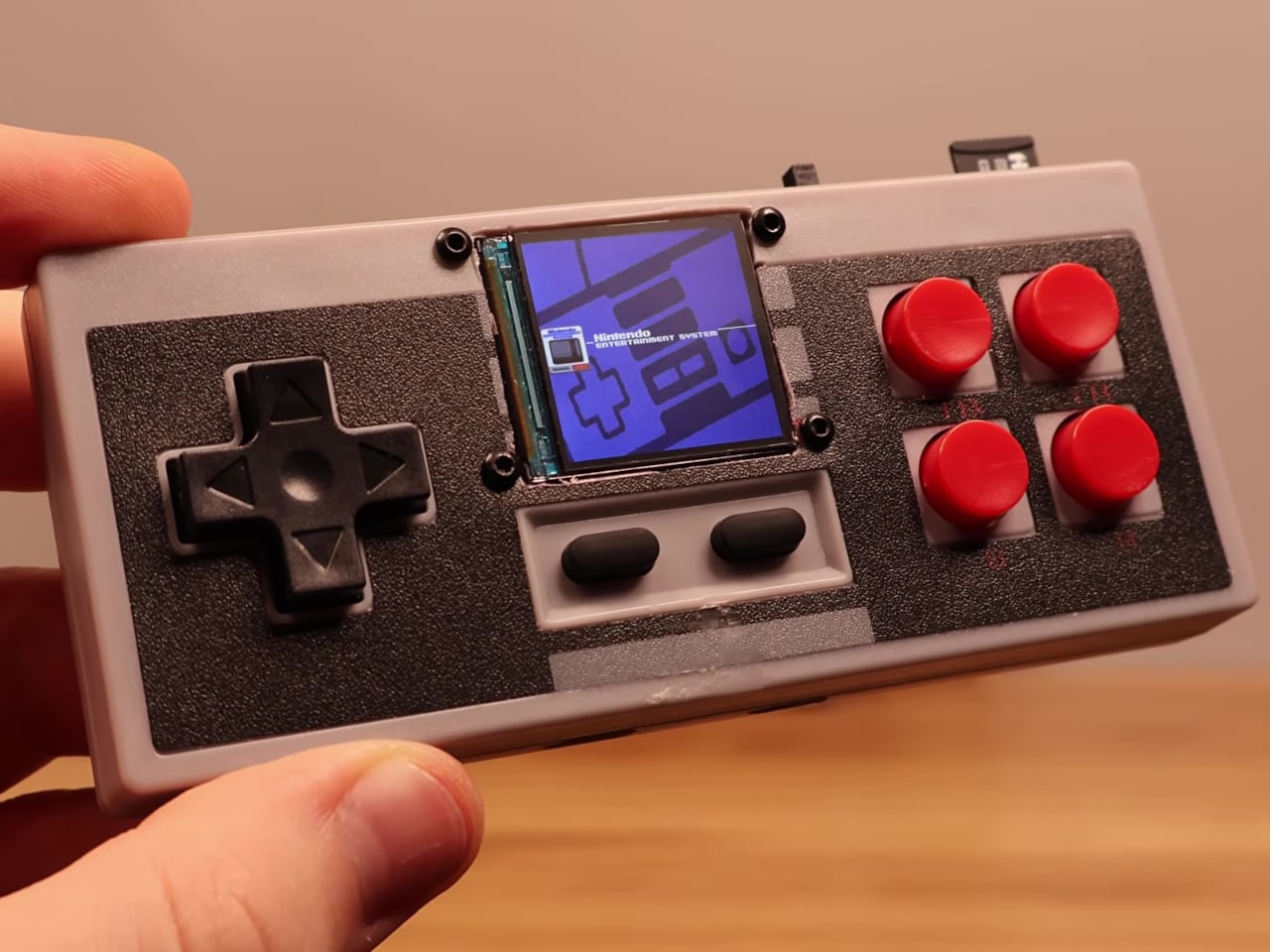
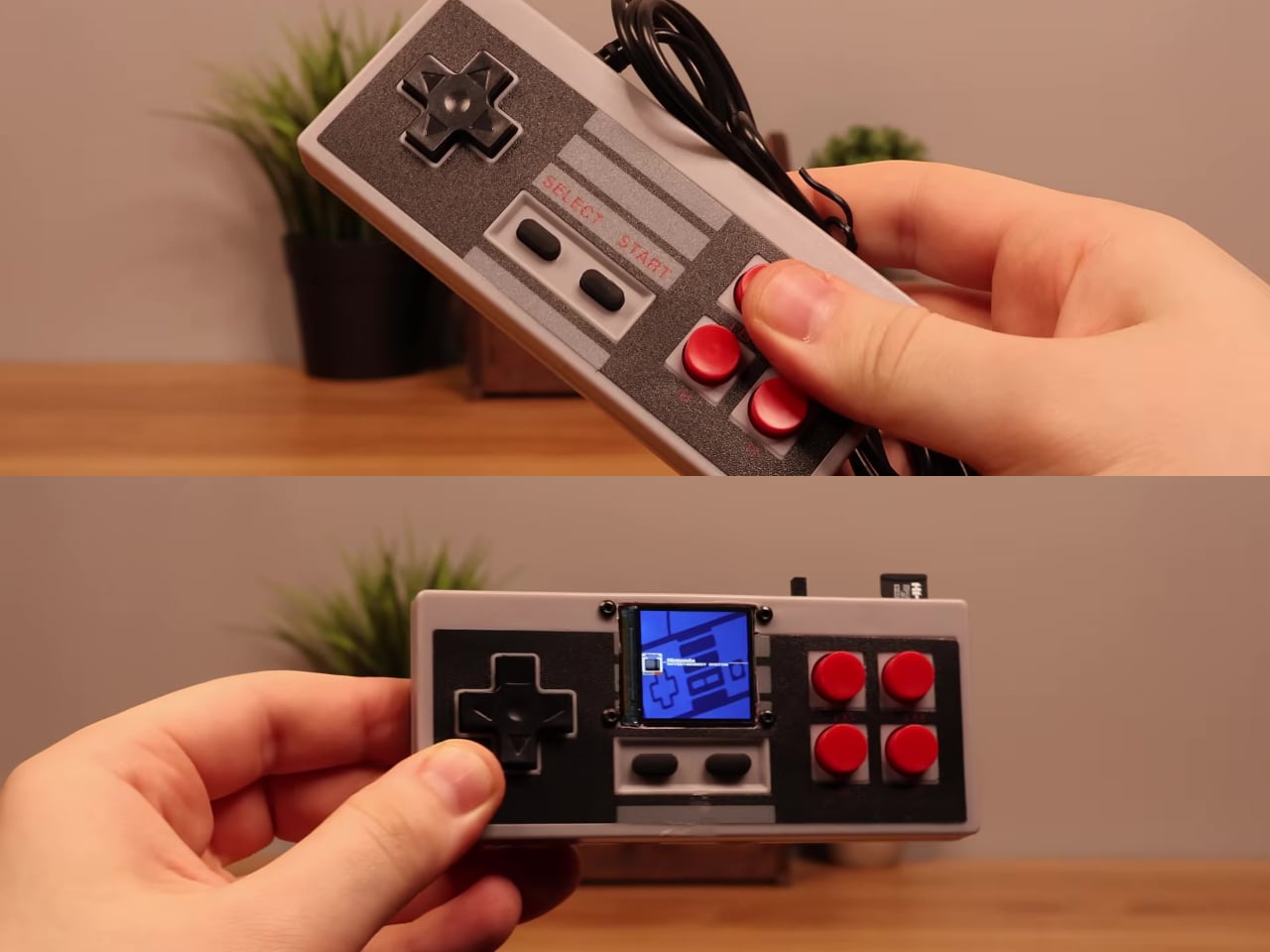
Most original NES controllers haven’t seen active duty in decades. They survive in storage bins and attic boxes, physically intact and perfectly functional as controllers, but with nothing left to plug them into. The consoles they were paired with have long since been replaced or decommissioned. The hardware was always well built, but the form factor has been sitting idle for years.
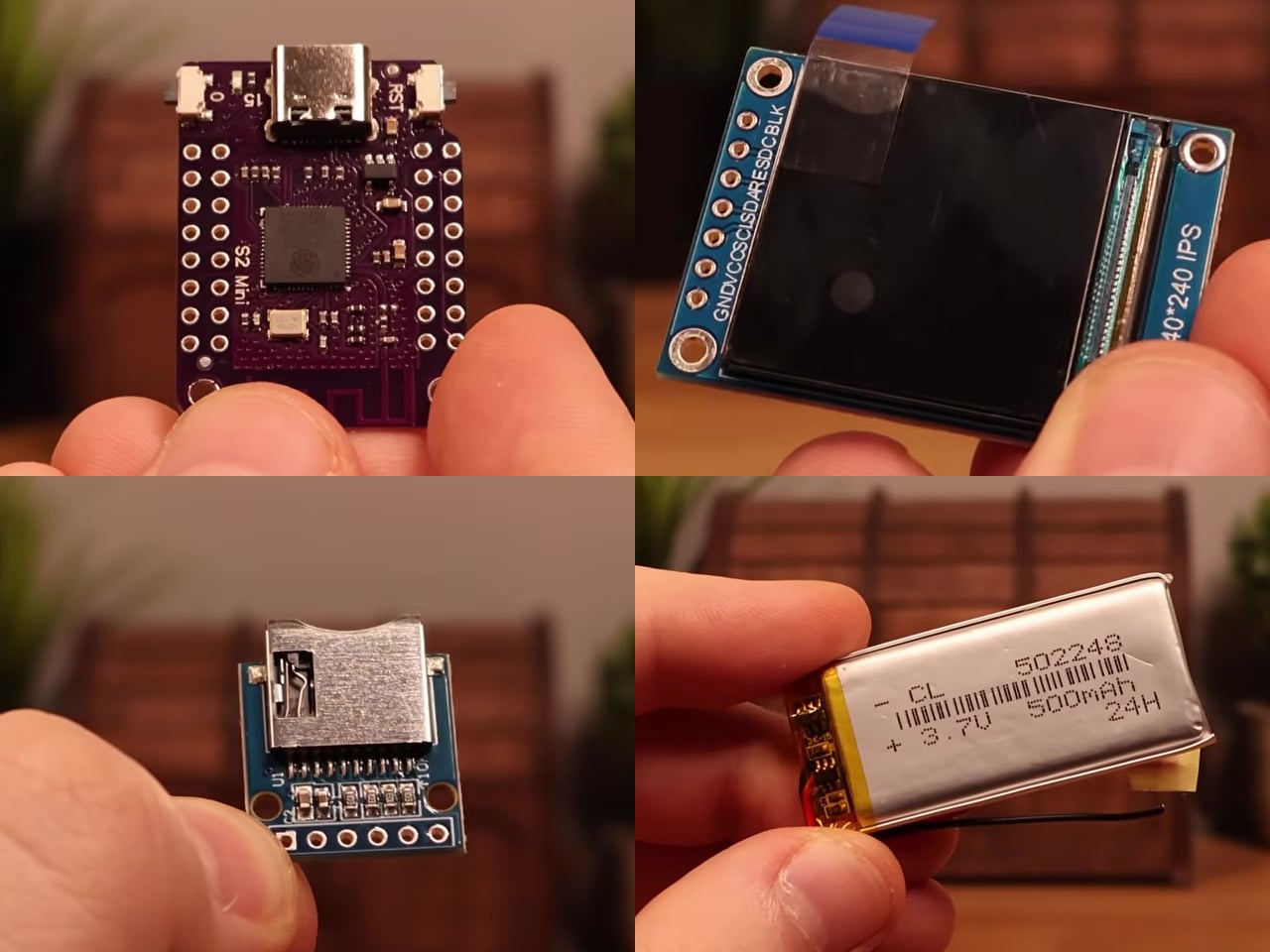
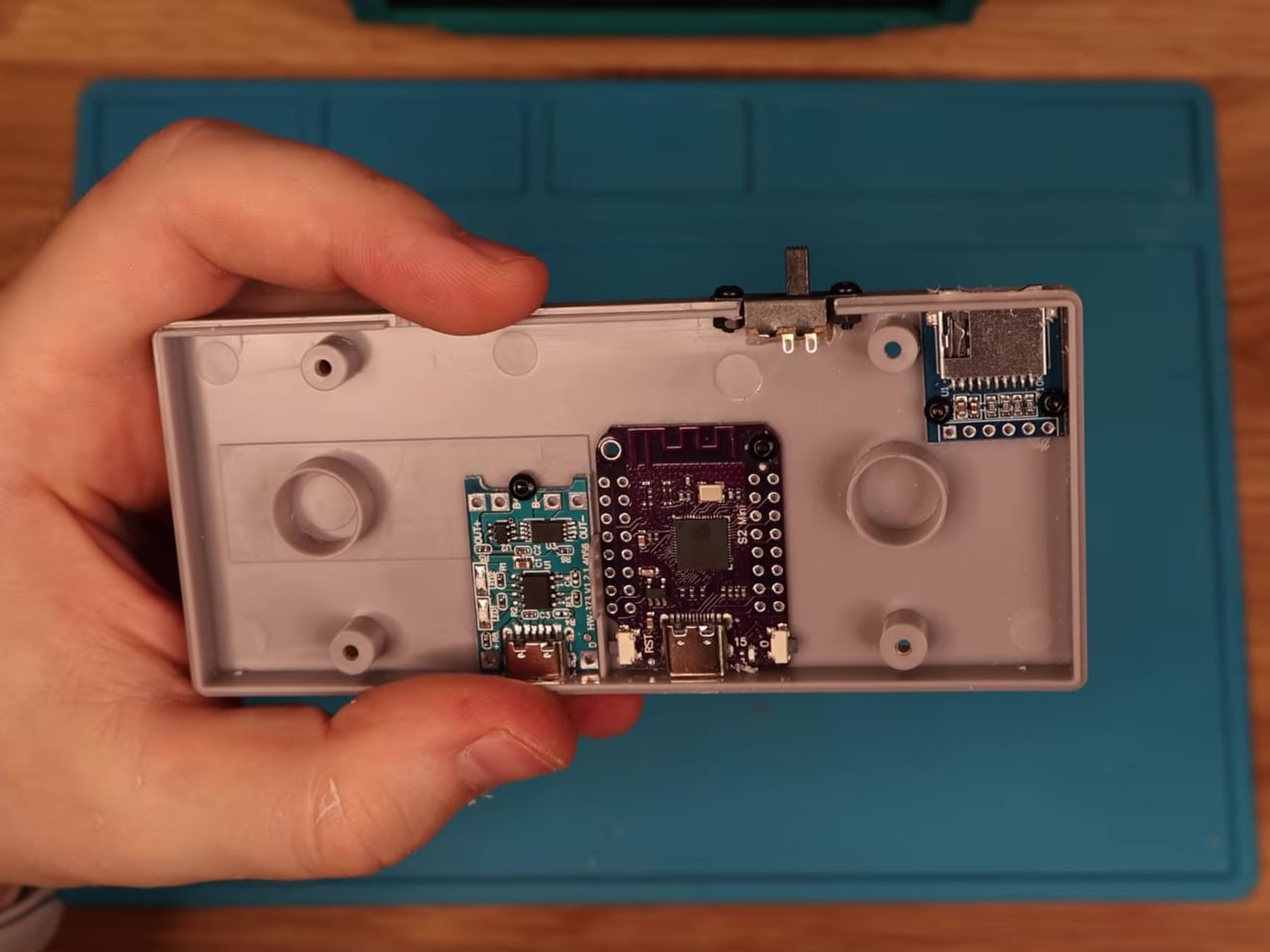
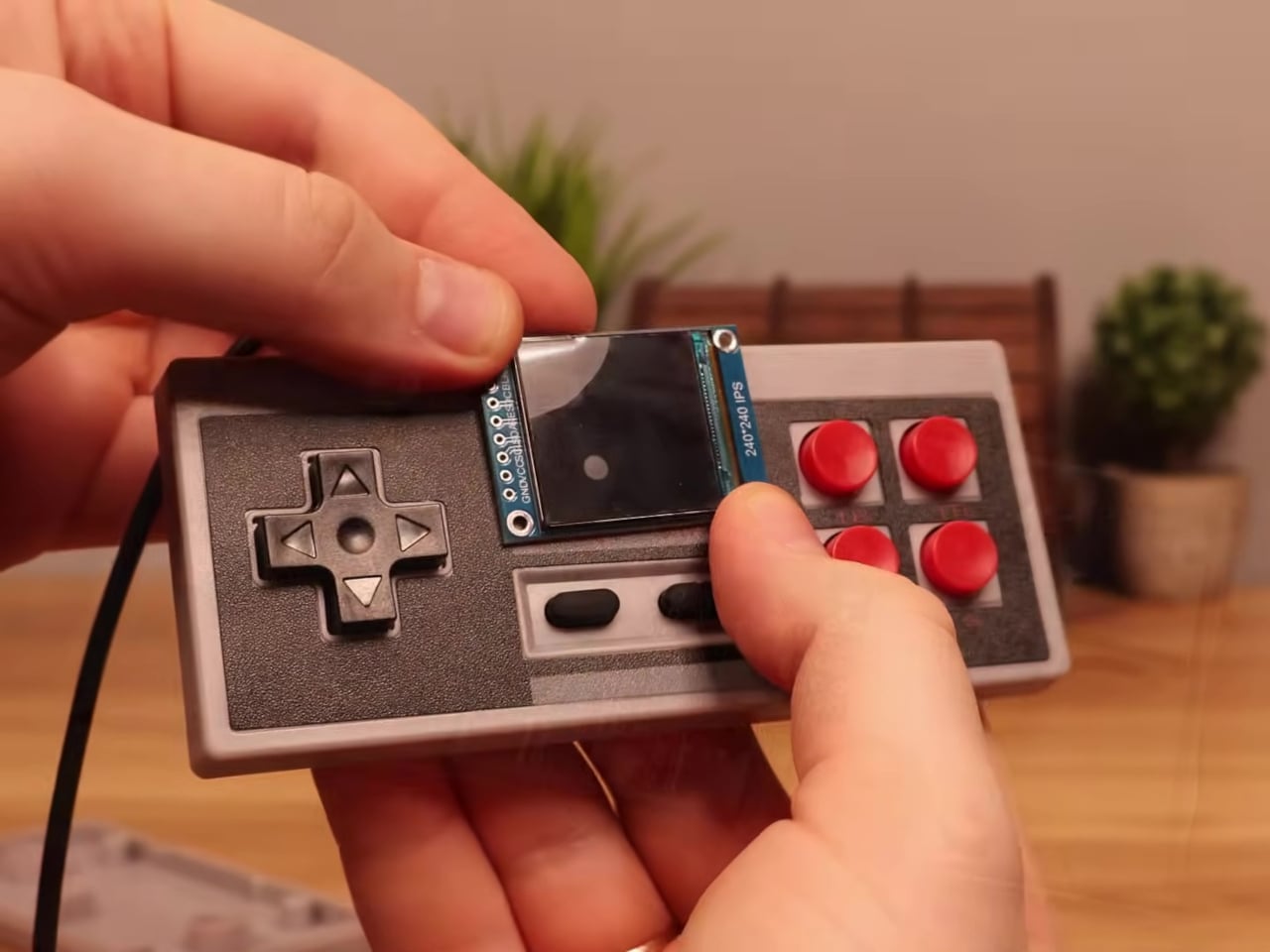
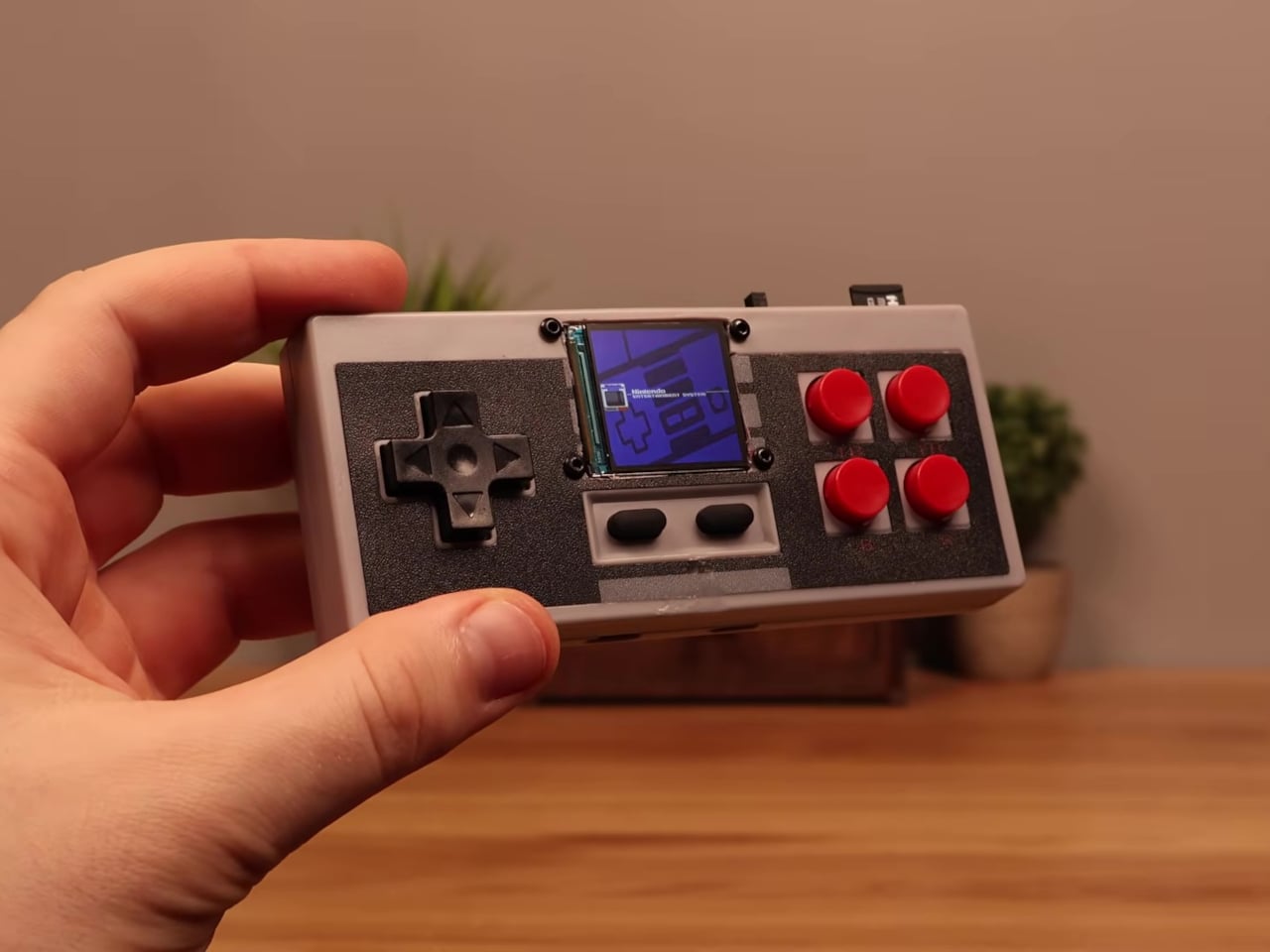
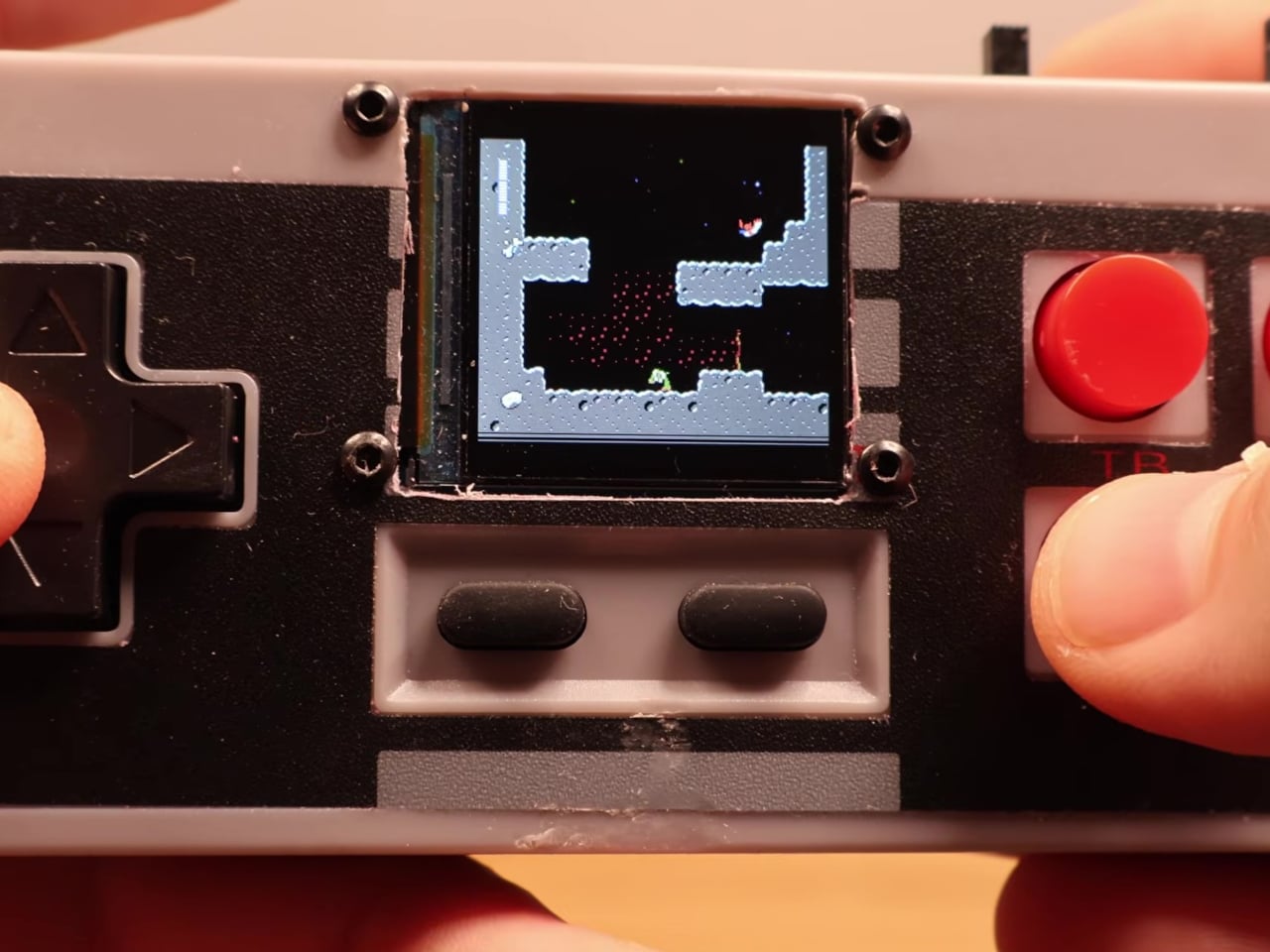
This mod changes the job description of that controller shell entirely. The electronics inside a standard NES-style gamepad were stripped out and replaced with a Wemos ESP32-S2 Mini development board, a 1.54-inch 240×240 TFT display, a MicroSD card module, a 500 mAh lithium-polymer battery, a charging board, a speaker, and a slide power switch. From the outside, it still looks exactly like an NES controller.
Designer: Logic Gate Labs
Choosing the right processor was essentially a geometry problem. A larger ESP32-S3 would have offered dual-core performance and enough PSRAM to keep entire game ROMs in memory, but it was too big to fit inside the housing. Smaller ESP32 variants without PSRAM lacked the memory for smooth emulation. The ESP32-S2 Mini landed in the narrow window between board size and processing capability that the build required.
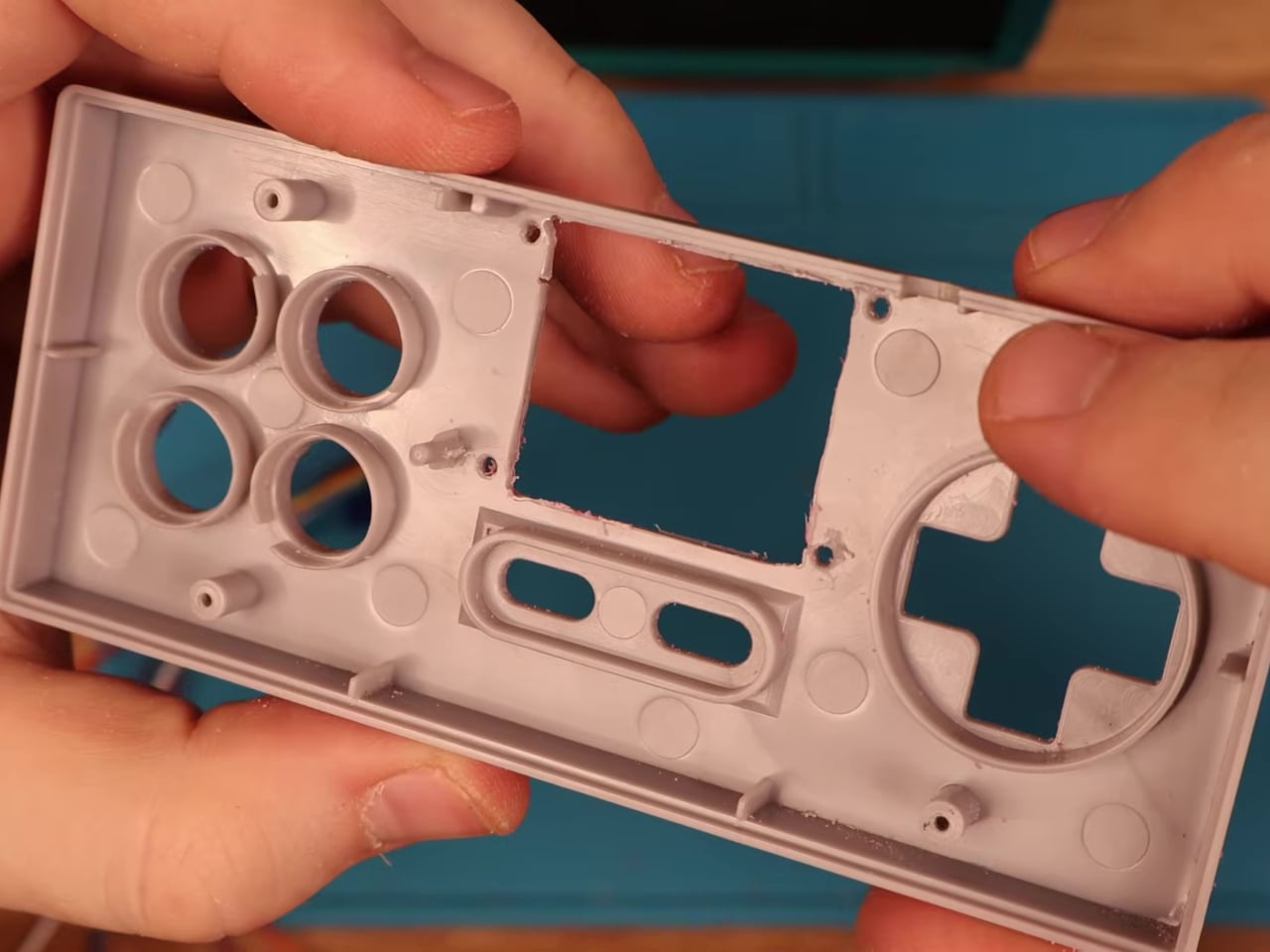
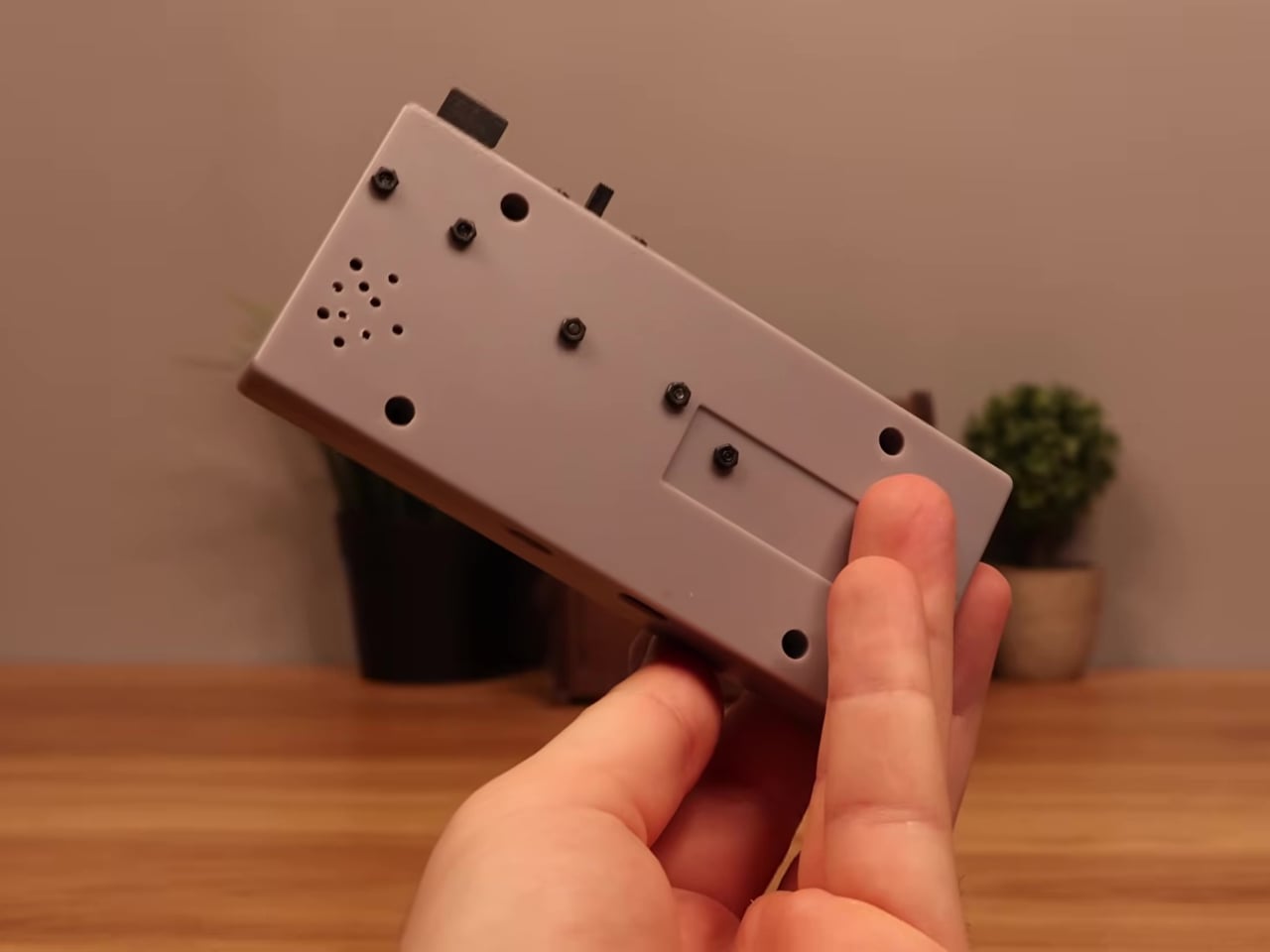
Getting everything to fit required real surgery on the shell. Internal plastic supports had to be trimmed back to make room for the display, and new openings were drilled for the screen, USB charging port, MicroSD slot, speaker, and power switch. A bare copper wire serves as a central ground distribution rail, cutting the number of individual ground wires needed and making it possible to actually close the controller afterward.
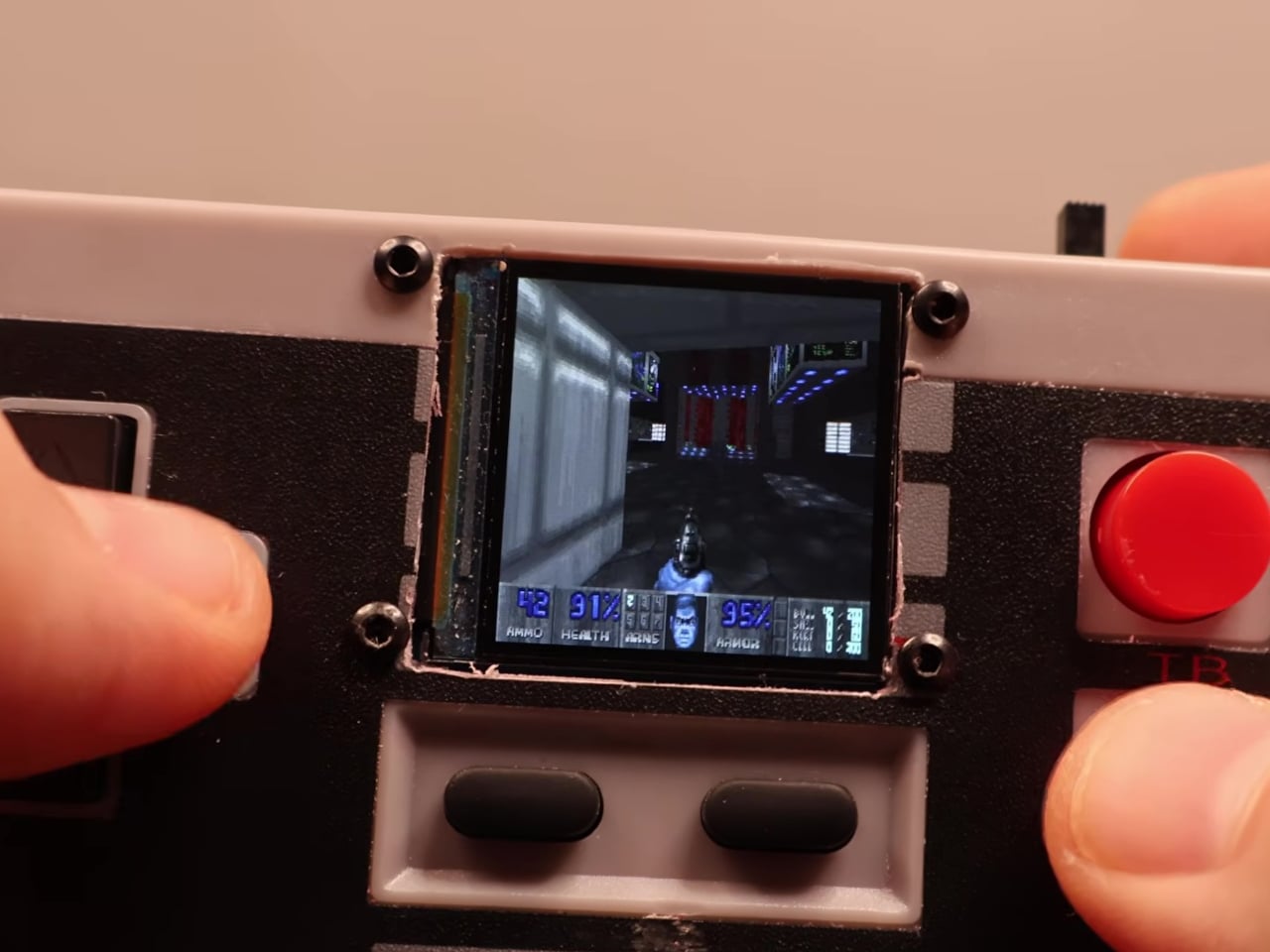
On the software side, the device runs the Retro-Go emulator framework, compiled using ESP-IDF and CMake since the ESP32-S2 isn’t a standard Retro-Go target. The result handles a range of classic 8-bit systems comfortably. As a bonus, Doom runs via PrBoom-Go from a Freedoom WAD file loaded on the MicroSD card, managing somewhere between five and 15 frames per second depending on the scene.
The total build cost runs about $17 using common suppliers, or closer to $8 when sourcing directly from overseas markets. That puts the project well under the price of a single modern game release. Flip the power switch, select a ROM from the MicroSD card, and the screen loads games that once required a dedicated console and television setup. No additional hardware is needed.
What makes this more than a novelty is how it reconsiders a form factor most people already have muscle memory for. The D-pad clicks the same way it always did, and the A and B buttons carry the same spring. What changed is where the signal goes after the press. Instead of traveling to a console that no longer exists, the controller now processes it directly inside its own shell.
The Retro-Go framework is open source, the parts are widely available, and the NES controller shell is one of the most common pieces of vintage hardware still circulating through the secondhand market. Nothing about this build required specialized equipment or proprietary components. The total part list costs less than a single new game on any current platform and fits inside hardware that most people already own.
There is a kind of man who takes longer at the electronics counter, not because he cannot decide, but because he is looking for something worth deciding on. He wants an object with a reason for existing, one designed around a single purpose and built to last beyond a firmware update. These five picks exist for exactly that person. Each one runs on modern technology dressed in a form that knows precisely what it is.
The range here covers the wrist, the desk, the bag, and the wall socket. A Nixie tube watch that glows orange through Soviet-era glass. A camera that passes for a roll of 35mm film. A CD player that makes you want to buy discs again. A seven-function radio that still works when nothing else does. A Mac-shaped charger that smiles back at you from the outlet. This is what considered gifting looks like.
1. Nixoid Next
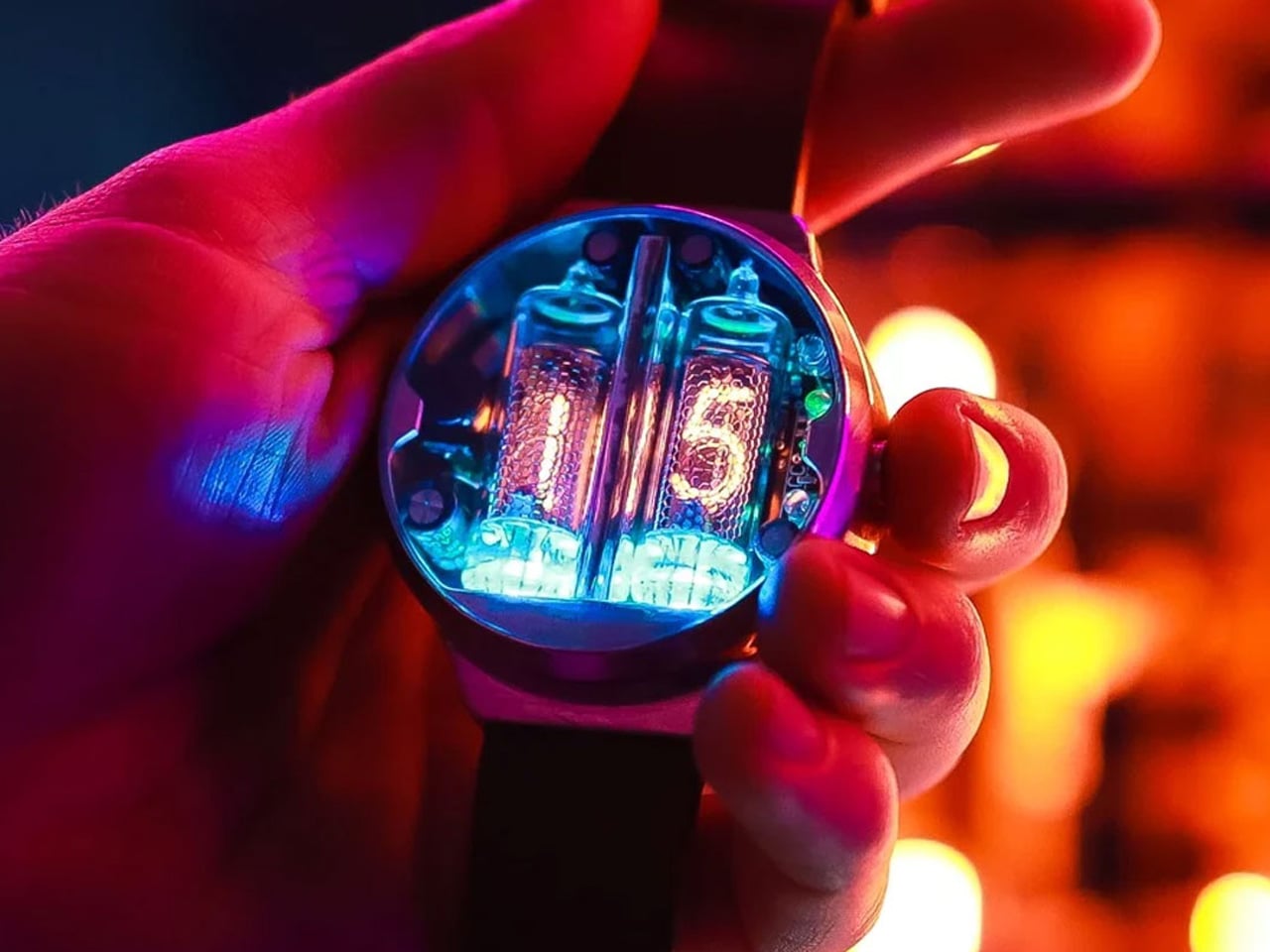
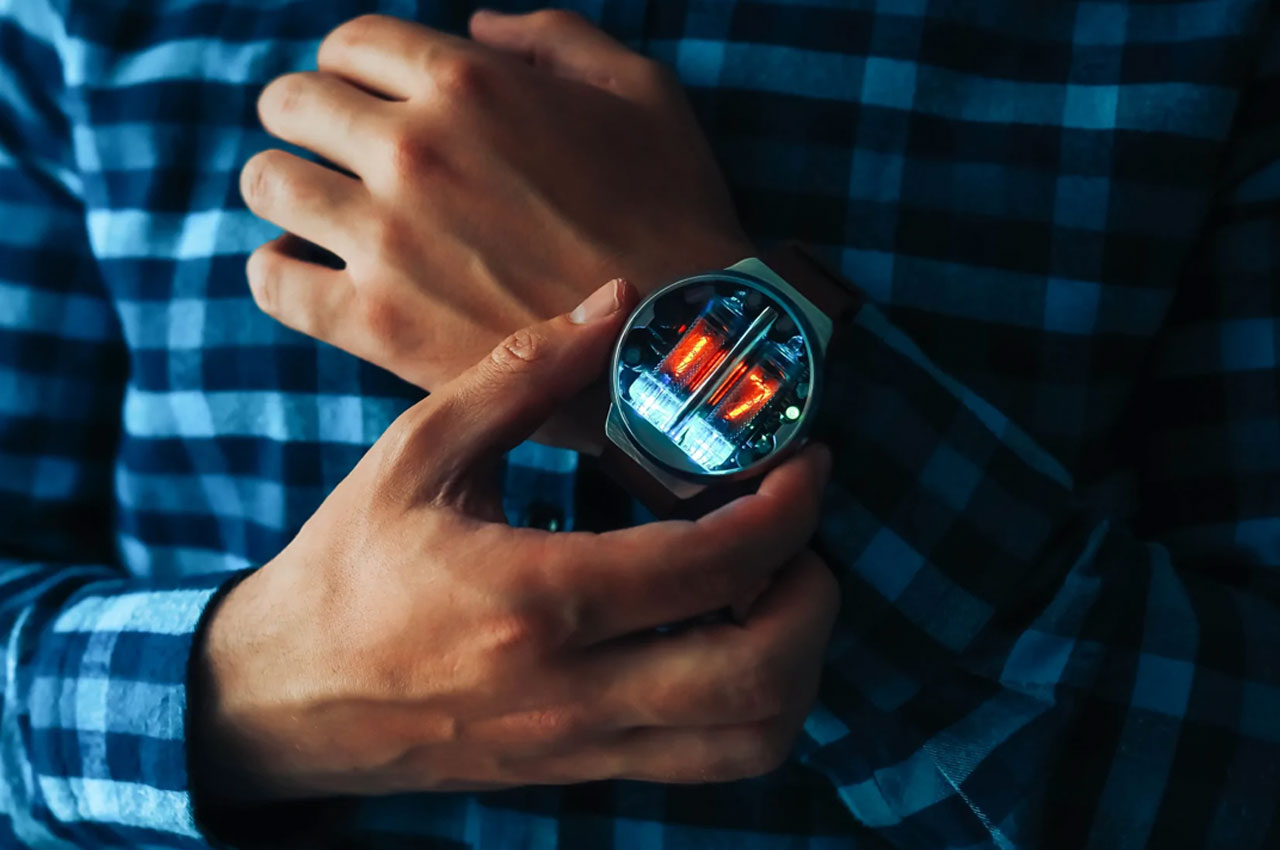
Nixie tubes are glass cylinders filled with neon gas, each one housing a stack of metal numerals that glow orange when current passes through them. They appeared in Soviet laboratory instruments long before the digital display made them obsolete. The Nixoid Next installs two original IN-16 tubes into an aluminium 2026 T4 case with sapphire scratch-resistant glass and puts that history on your wrist. A built-in motion sensor reads the gesture of raising your arm and triggers the display without touching a button.
The watch shows the hour first, holds for a 1.5-second pause, then switches to minutes. A date display is also available at the press of the single knurled button. Battery life runs ten to fifteen days of regular use or up to two months in standby, with a full charge taking around 60 minutes via the included USB cable. The Nixie lamps carry a lifetime warranty. Every time you check the time, someone nearby will stop and ask what you are wearing.
What we like:
Lifetime warranty on the Nixie lamps
Gesture-activated display that turns reading the time into something worth doing
Sapphire scratch-resistant glass on a watch at this price point
What we dislike:
Shipping runs 16 to 25 business days, so plan for any gifting occasion
Splash-resistant but not a swimming watch — water exposure limits apply
2. Analog Capsule Camera
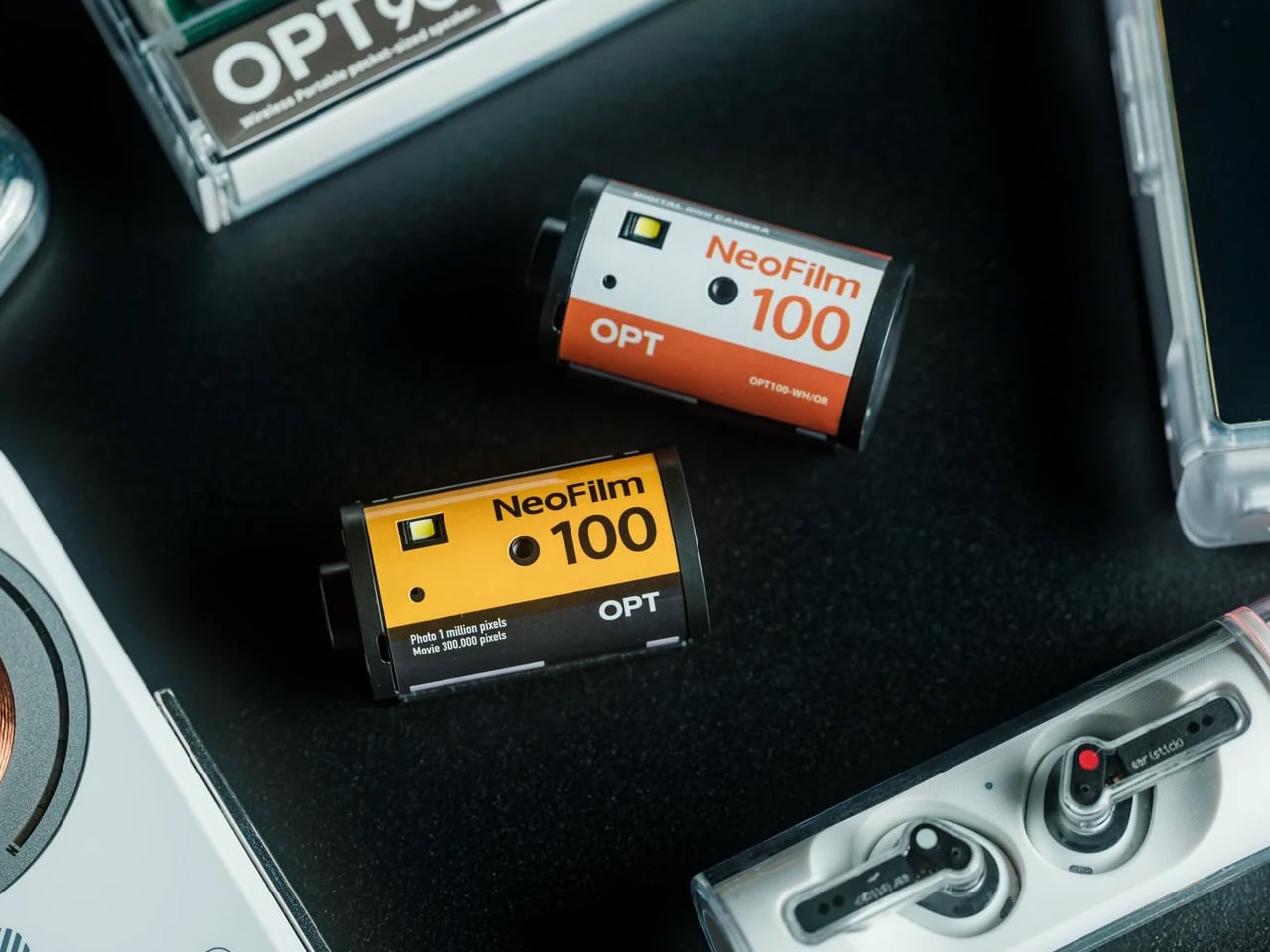
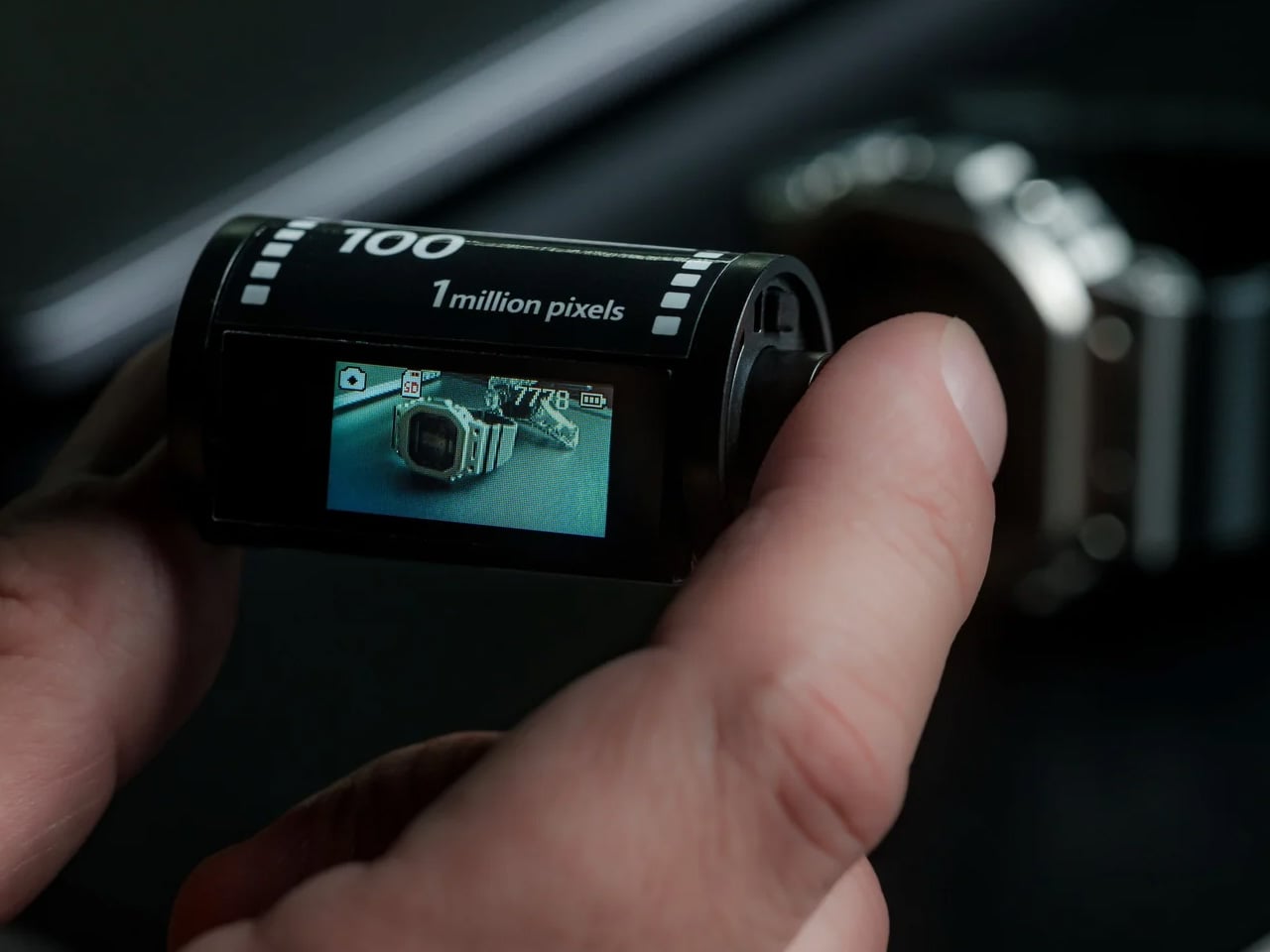
Pick it up, and it reads as a roll of 35mm film. The cylindrical body matches the proportions of a standard film canister exactly, right down to the way it sits in your palm. Inside, a 1-megapixel CMOS sensor has been deliberately tuned to produce grain, blown highlights, and softness. This is not a limitation. It is the design intent. No rolls to buy, no development to arrange. Everything stores to a microSD card the moment you press the shutter.
At 25 grams, the Analog Capsule weighs less than a set of keys. An included strap lets it hang from a bag or belt loop, always within reach when something catches your eye. Digital playback means every shot is reviewable immediately, and USB-C handles both transfers and charging. The packaging arrives looking like a roll of Kodak film, which means the surprise begins before the box is even open. As a gift, it delivers twice over.
The intentional 1MP sensor that treats imperfection as a feature rather than an apology
25g weight means it genuinely disappears into a bag or pocket
The packaging reveal that earns its moment before a single photo is taken
What we dislike:
One megapixel is genuinely low resolution — this is a mood camera, not a documentation tool
The recipient needs to understand the aesthetic intent going in, or it will disappoint
3. SYITREN R300 Portable CD Player
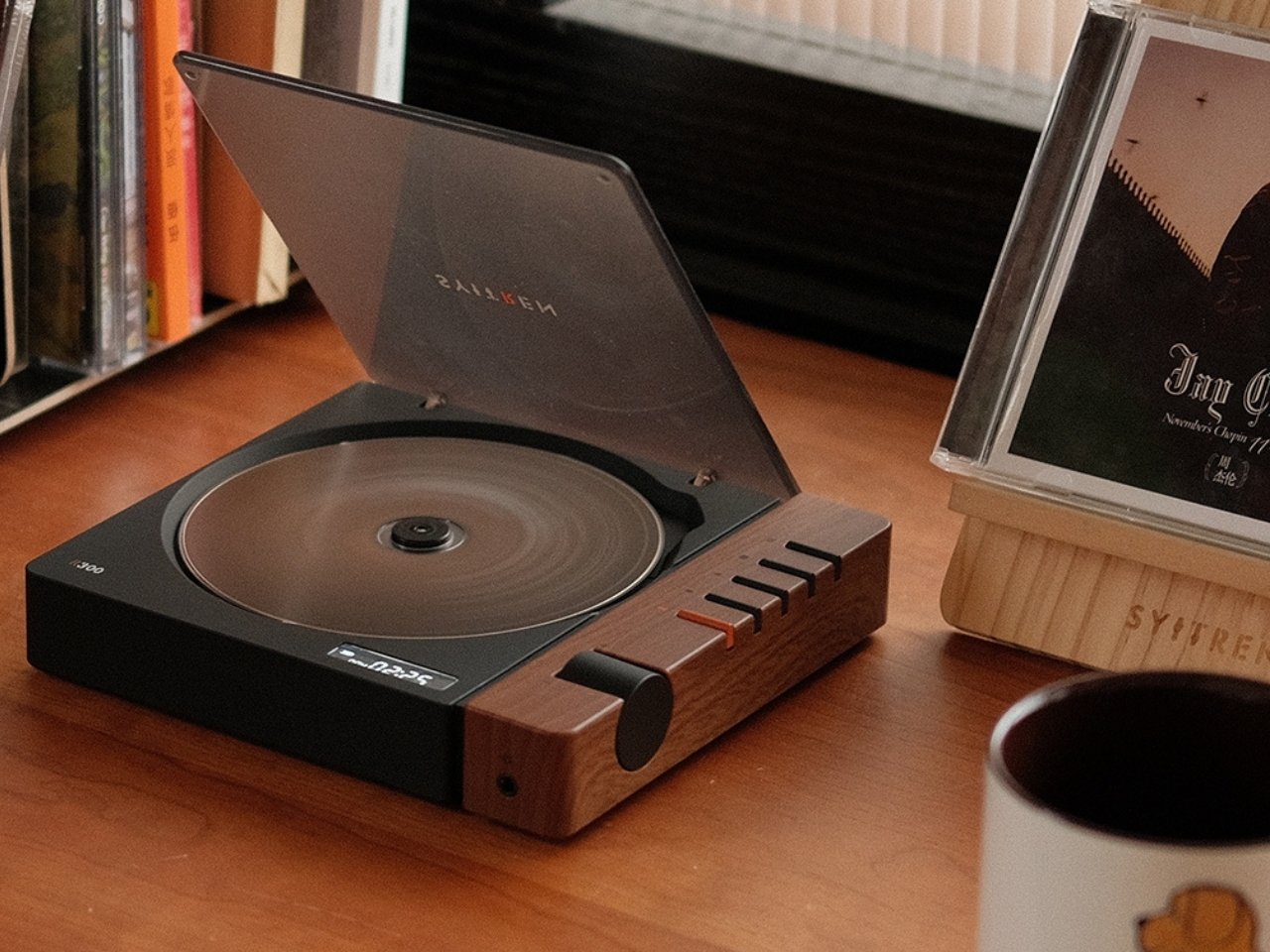
The SYITREN R300 makes the strongest case for the CD player’s return. Available in warm wood, clean white, and fruit green, it carries the proportions of a mid-century audio instrument: low-profile, ordered, designed to sit in view rather than be tucked into a drawer. The flat silhouette reads more like considered furniture than consumer electronics. It supports CD, CD-R, and CD-RW formats, covering virtually every disc in most existing collections without asking anything of the listener in return.
Bluetooth 5.3 removes the last practical objection to using a CD player in 2026. Pair wirelessly to any speaker while the disc spins, or run the SPDIF optical output for audiophile-grade listening. The 2,000mAh battery handles extended sessions without interruption. The R300 has developed a following on social media and Reddit that reads less like tech enthusiasm and more like relief — that someone finally built a CD player as considered as the music it plays back deserves.
What we like:
The wood finish option that makes the player feel like furniture rather than electronics
Bluetooth 5.3 and SPDIF optical output covering both wireless and audiophile use cases
A 2,000mAh battery that handles long listening sessions without interruption
What we dislike:
The price has drifted upward from its original retail point
A working disc collection is required to get full value from it as a gift
4. RetroWave 7-in-1 Radio
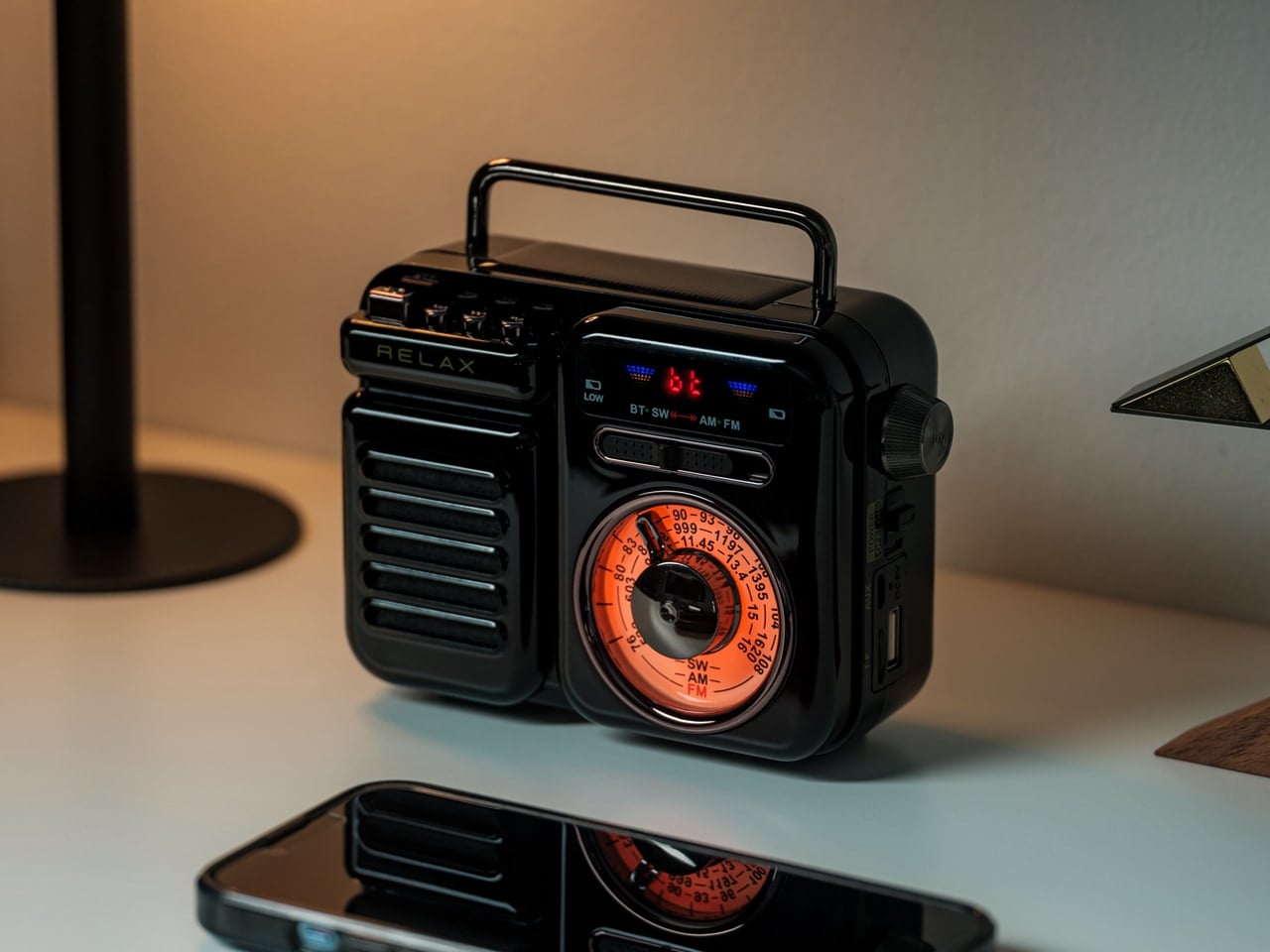
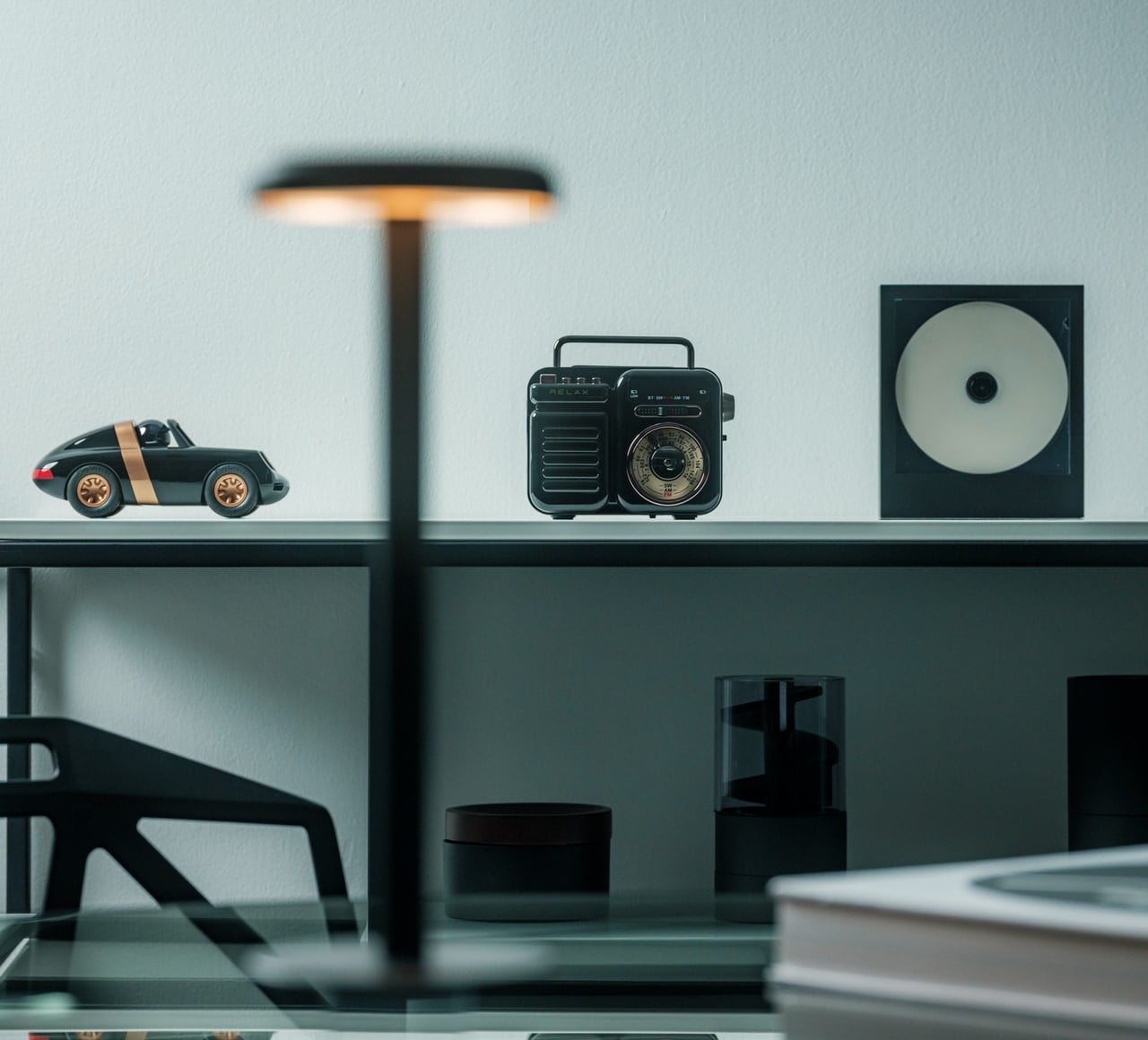
Seven functions inside one compact device: Bluetooth speaker, MP3 player, AM and FM radio, shortwave tuner, LED flashlight, clock, power bank, and SOS siren. The form borrows from mid-century transistor radios, the kind that sat on kitchen counters in the 1960s pulling in baseball games from two states over. The RetroWave is not a direct replica of any single model, which works in its favor. It speaks the visual language of that era without tipping into a museum piece.
The shortwave radio tuner is what separates this from most Bluetooth speakers on the market. When a grid goes down, shortwave is still broadcasting, giving the RetroWave a practical edge that wireless-only devices will never match. Hand-crank power means the battery situation is never fully critical. On a desk it reads as a design object from another decade. Off-grid it functions as serious emergency equipment. Very few products manage both of those things convincingly, and fewer still do it at this price.
Shortwave tuning and hand-crank power as genuine tools, not marketing copy
Earns its shelf placement aesthetically and its field placement practically
SOS siren and power bank functions that justify keeping it out permanently
What we dislike:
Seven functions across one device means no single function is best in class
The form prioritizes aesthetics over raw audio fidelity
5. Shargeek Retro 35W GaN Charger
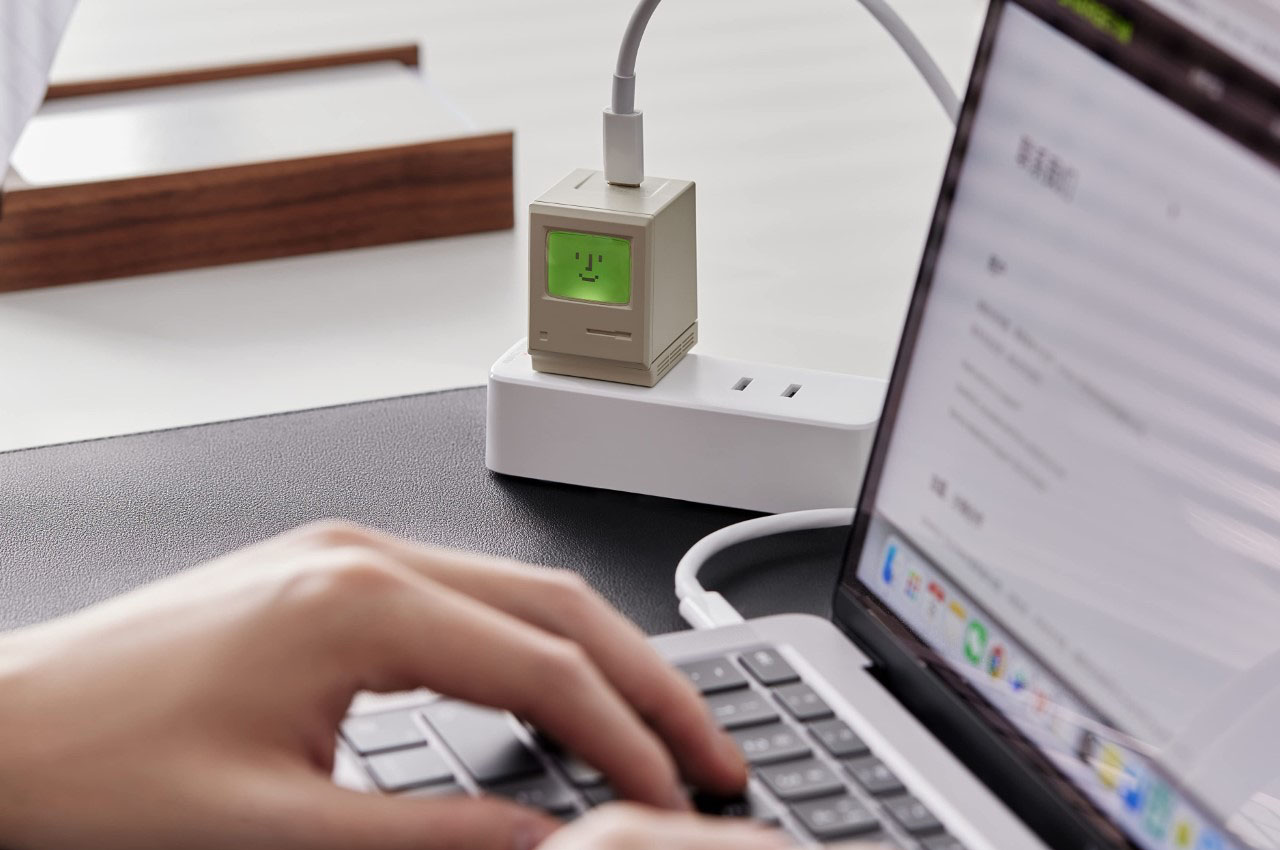
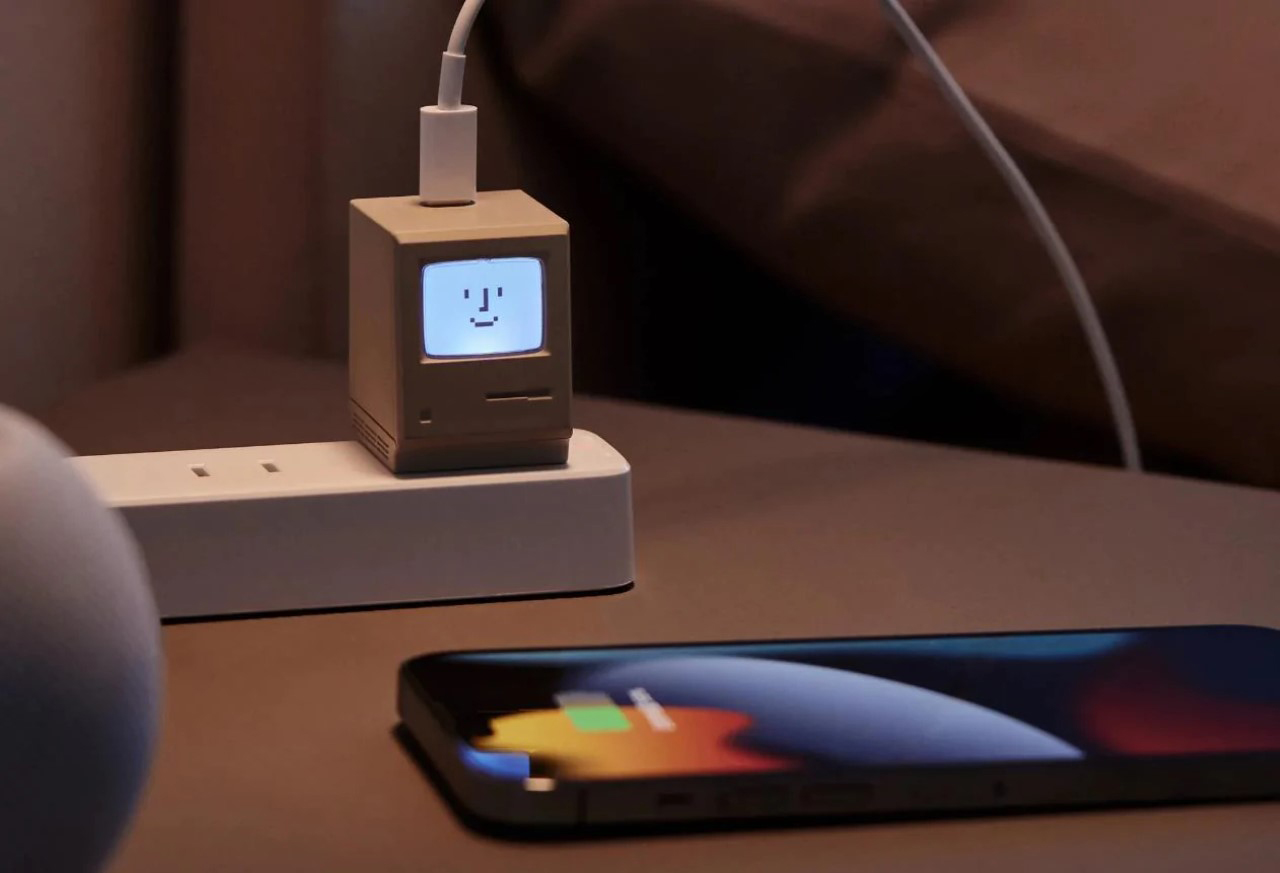
The Shargeek Retro 35W is shaped like a first-generation Macintosh computer, screen and all, and the screen actually works. It lights up to communicate charging status, moving from white when idle through yellow, blue, and green as the rate increases. Inside, GaN III technology delivers up to 35W, enough to take an iPhone from empty to 50 percent in around 30 minutes. The whole unit weighs 55 grams. The original Mac weighed around 7.5 kilograms. Progress clearly has a sense of humor about itself.
A set of DIY stickers ships with every unit, designed to sit over the tiny display and act as changeable wallpaper for the miniature screen. Compatibility runs wide: phones, tablets, earbuds, drones, handheld gaming consoles, and laptops within the wattage range all charge without complaint. This is a charger that belongs on a desk in plain sight, not tucked behind furniture. It has earned its visible placement in a way that almost no other charging brick ever will.
What we like:
The glowing screen that communicates charging status without requiring a connected app
DIY sticker set that adds a layer of personalization to an already distinctive object
55 grams and pocket-sized, so it travels without adding weight
What we dislike:
35W tops out before reaching laptops that need 60W or more
The standout design draws attention on a shared power strip, which is not always welcome in an office setting
The Best Tech Is the Stuff You Never Want to Put Away
Retro done well is not about looking backward. It is about recognizing that some forms were correct the first time and deserve better internals, not a redesign. The Nixoid Next, the Analog Capsule, the SYITREN R300, the RetroWave, and the Shargeek charger each make that argument through the object itself. Nothing here relies on a spec sheet to justify its place in a room.
They earn their spot on a wrist, a desk, a shelf, or a wall socket, and none of them need a software update to stay relevant. The man who receives any one of these will understand immediately why it was chosen. That kind of clarity is what separates a gift from a good one.
Retro gaming has grown into a legitimate market, but the original hardware it celebrates isn’t getting any younger. The Nintendo 64, now nearly 30 years old, runs on aging components that weren’t built to last indefinitely. Cartridge connectors wear out, capacitors degrade, and the console’s AV outputs don’t talk to modern televisions without adapters. Getting those games onto a screen today usually means compromising on something.
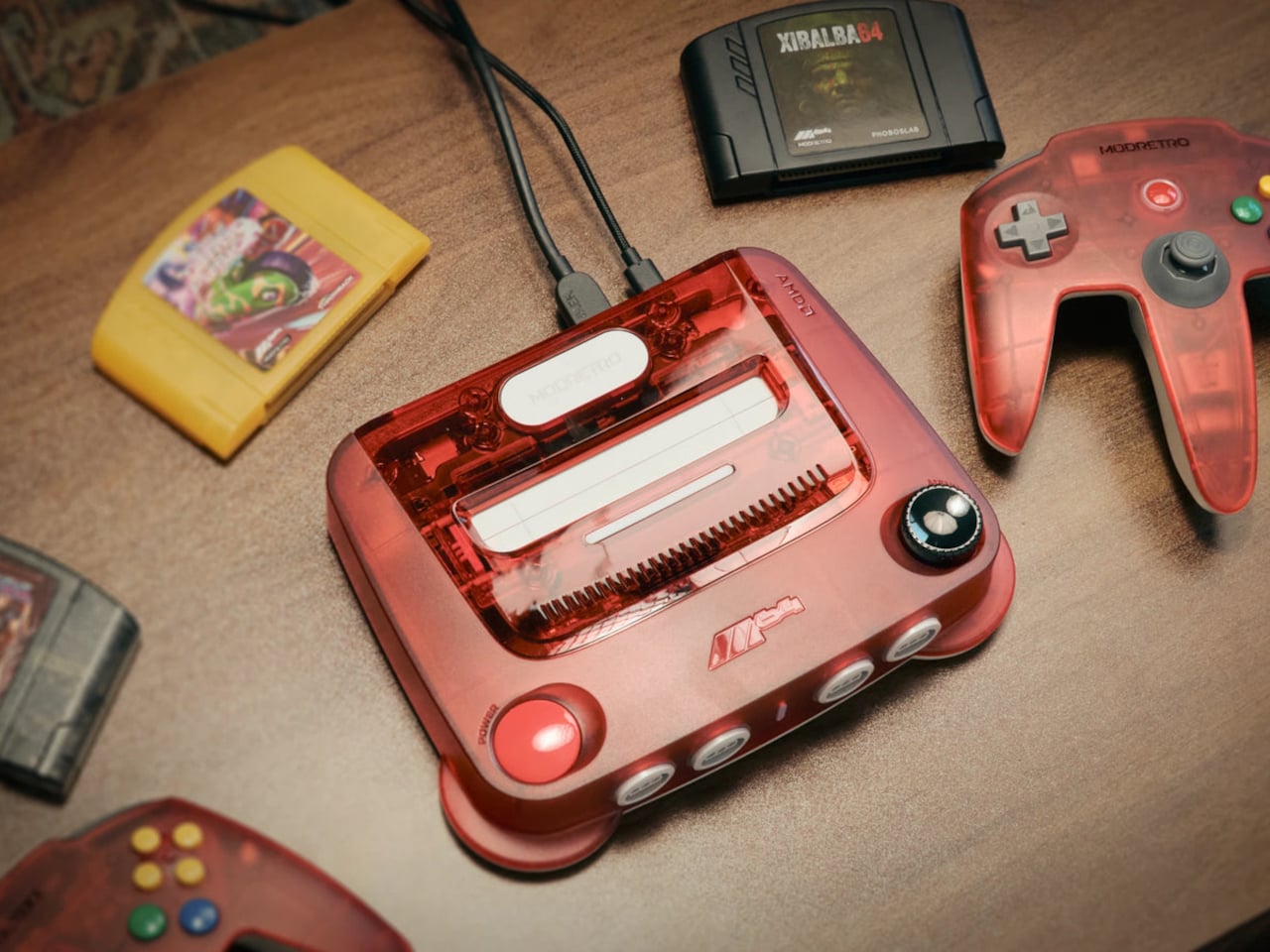
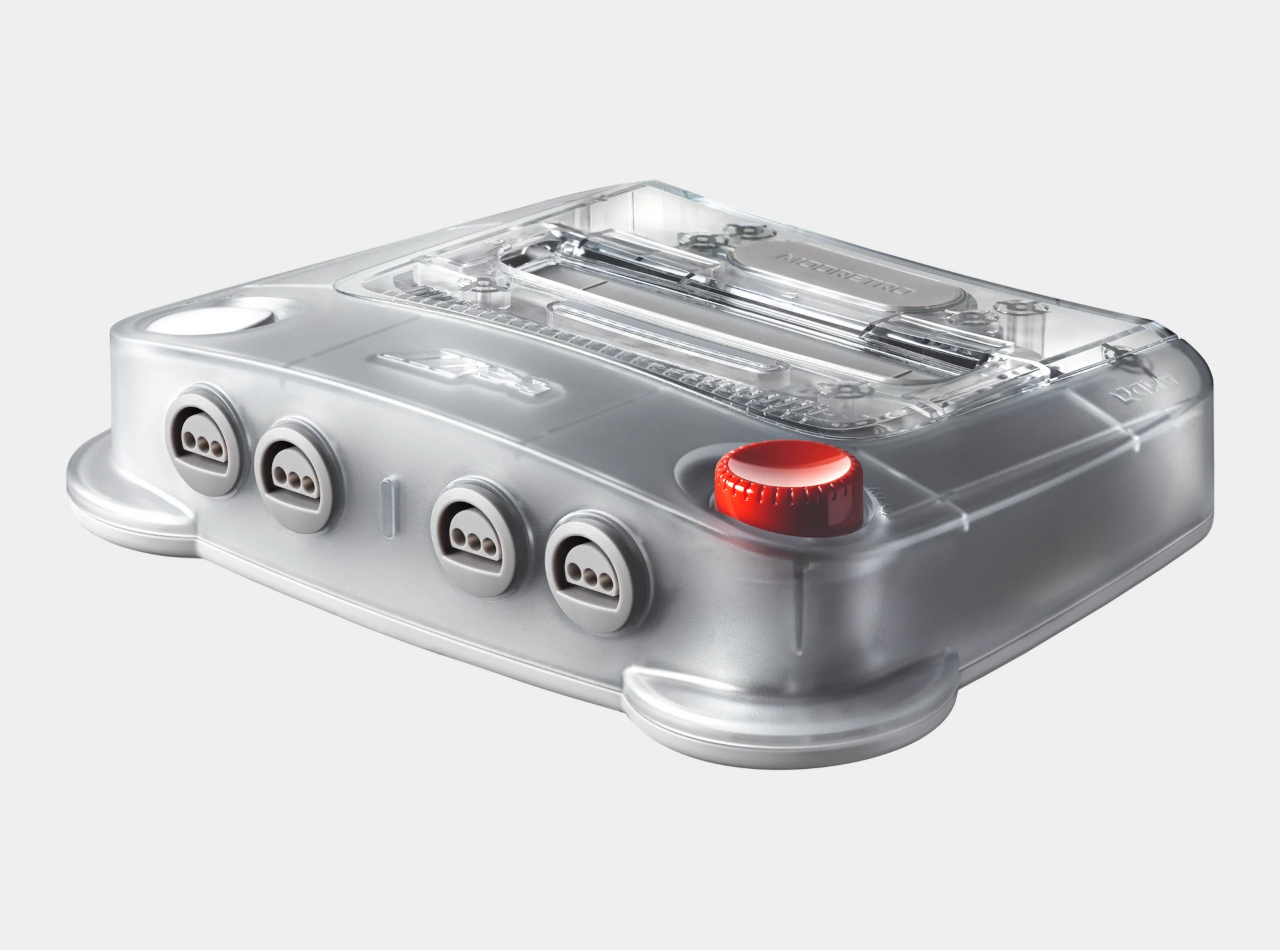
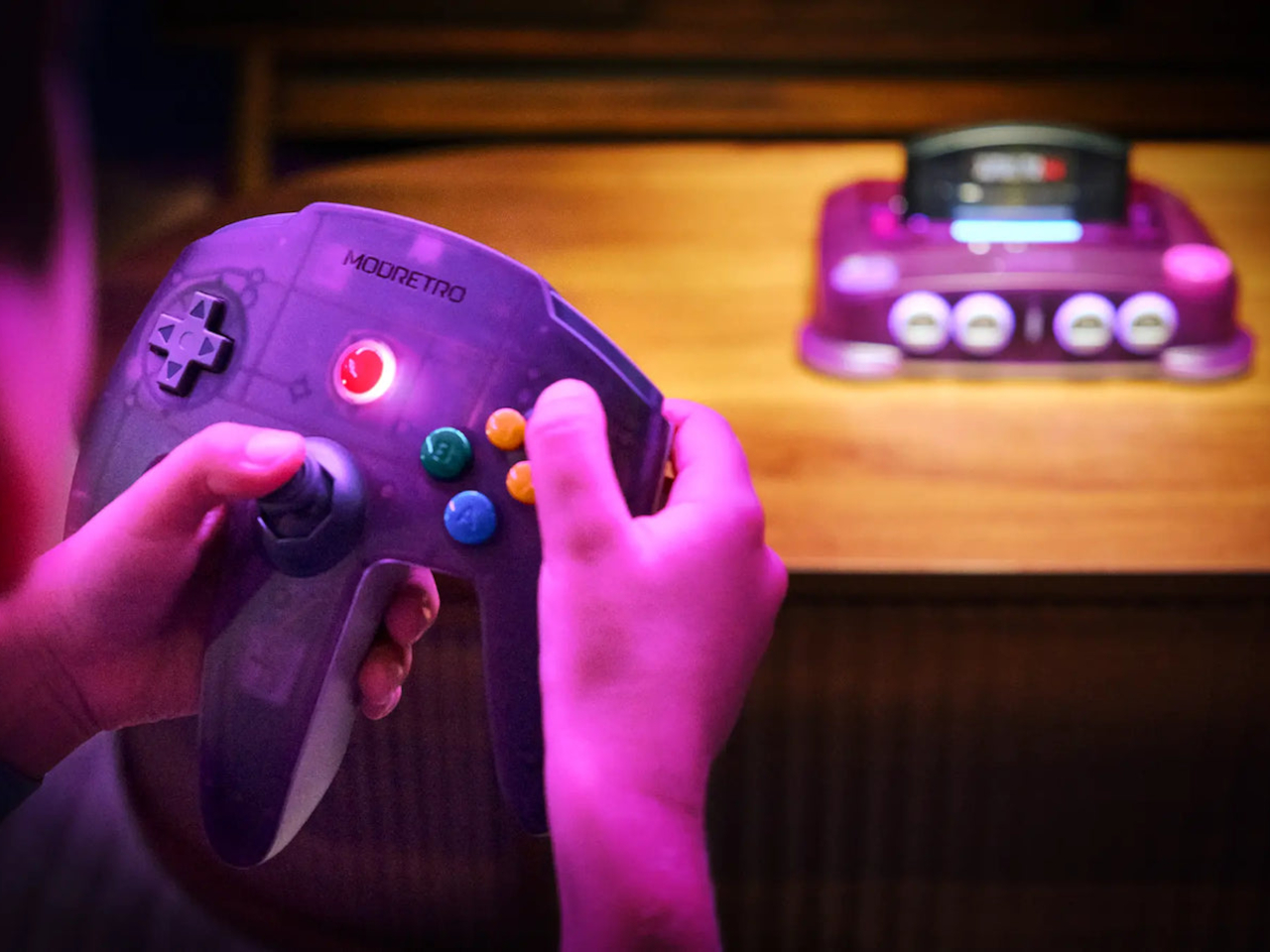
The ModRetro M64 is a new standalone home console designed to play original N64 cartridges on modern TVs, without emulation and without compromise. It doesn’t replicate the exterior of the original machine or rely on nostalgia alone as a design brief. Instead, it rebuilds the N64 experience from scratch, using contemporary hardware to deliver the accuracy that aging original consoles simply can’t guarantee anymore.
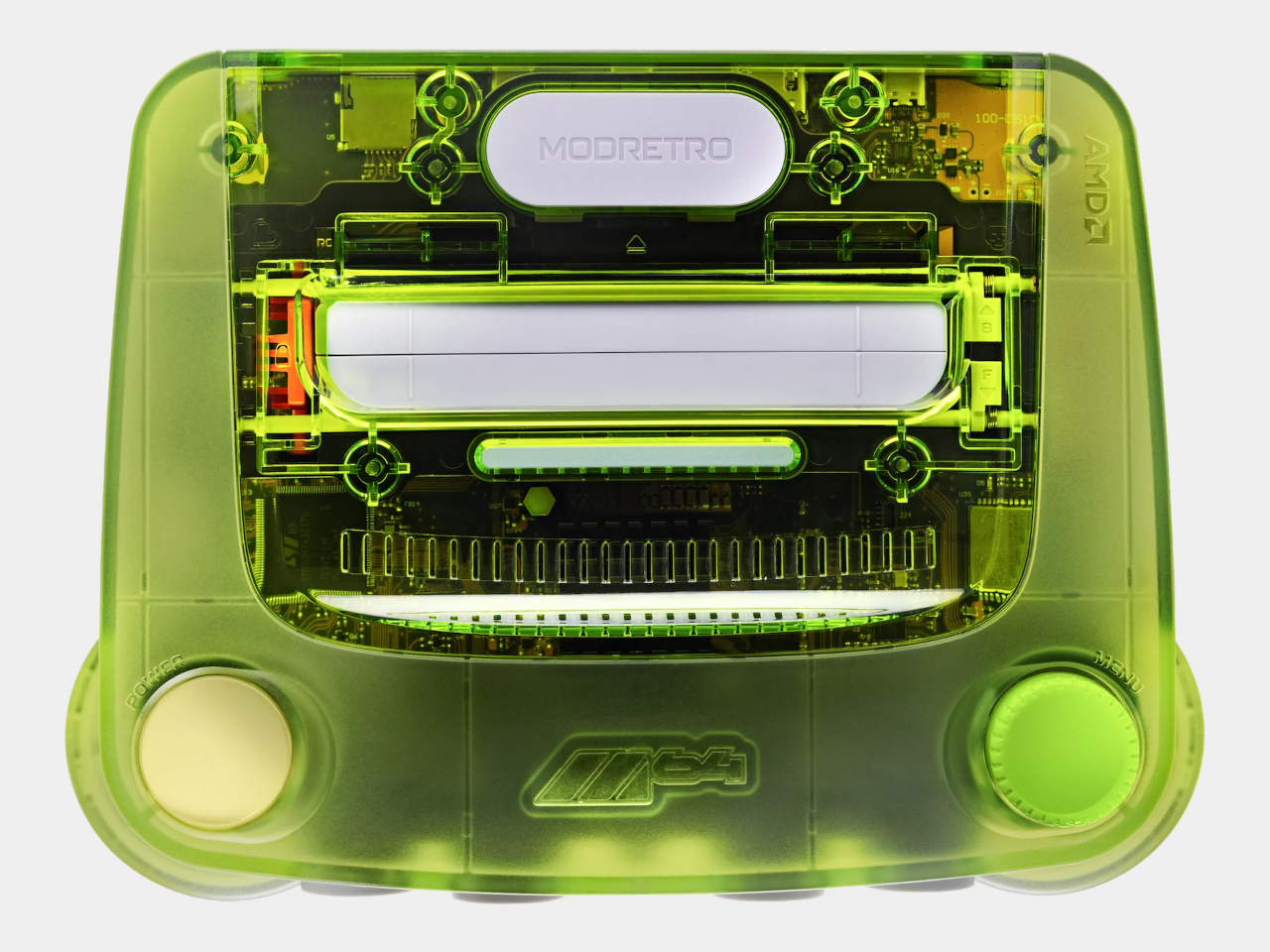
The technology enabling that accuracy is a 16nm AMD Artix UltraScale+ FPGA, which recreates the N64’s hardware at a fundamental level rather than interpreting it through software. Software emulation makes educated guesses about how games should behave, while an FPGA actually rebuilds the circuitry those games were written for. Gameplay timing and audio are identical to the original, and for anyone whose muscle memory is still intact, that precision is the whole point.
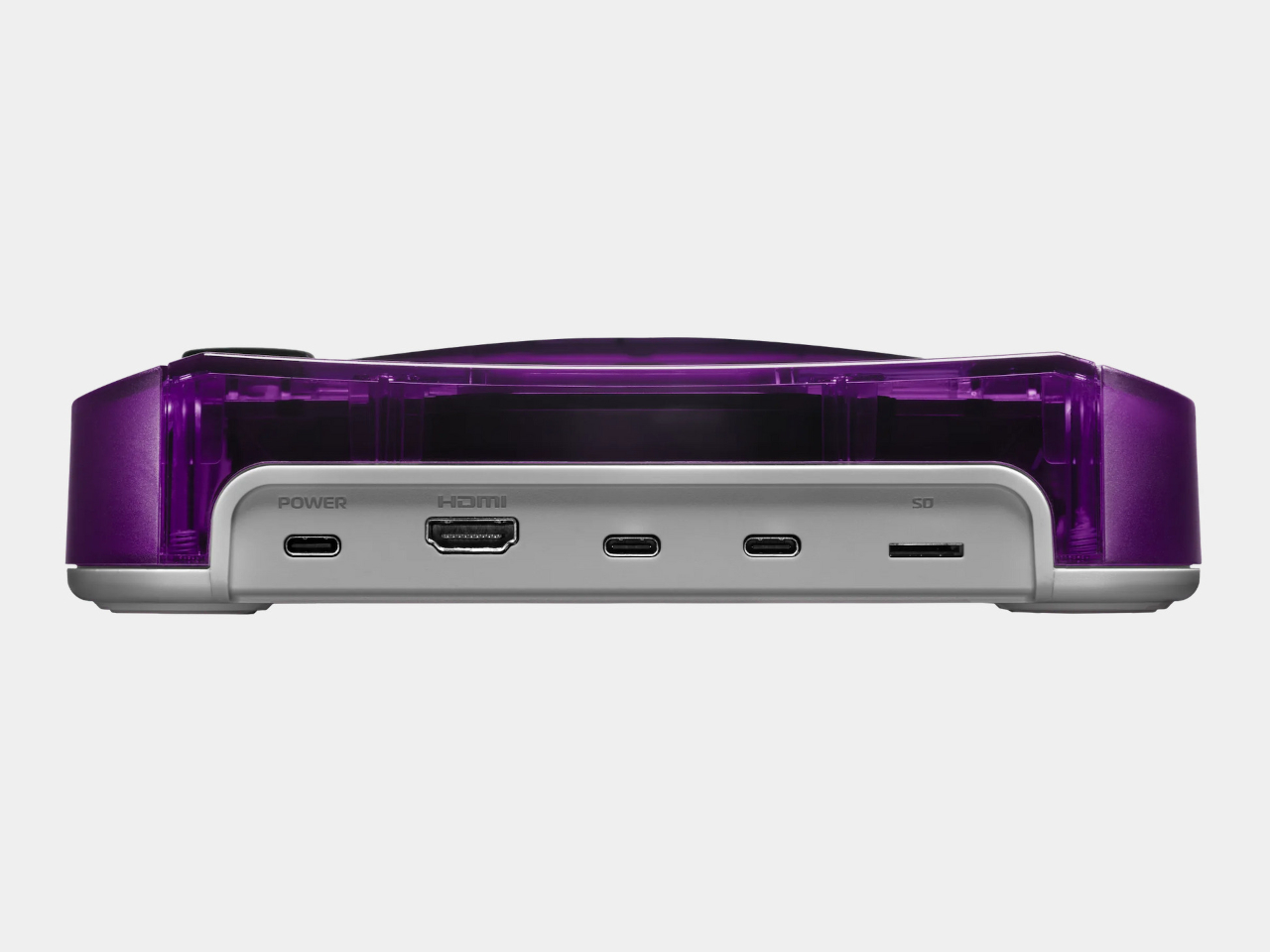
On the output side, the M64 connects via HDMI at 720p, 1080p, 1440p, or 4K, covering every modern display without compromise. Optional CRT filters and scanline effects are available for anyone who’d rather put something closer to the original look back on a flat panel. Overclocking modes are also included, giving certain games a bit more headroom than the original hardware could ever provide.
The console boots in roughly five seconds and gets straight to the game, with no logins or account screens in the way. Up to four controllers can be connected at once, making the split-screen multiplayer games that defined the N64 era immediately playable again. It’s the kind of setup that once required a living room full of people negotiating who got which controller.
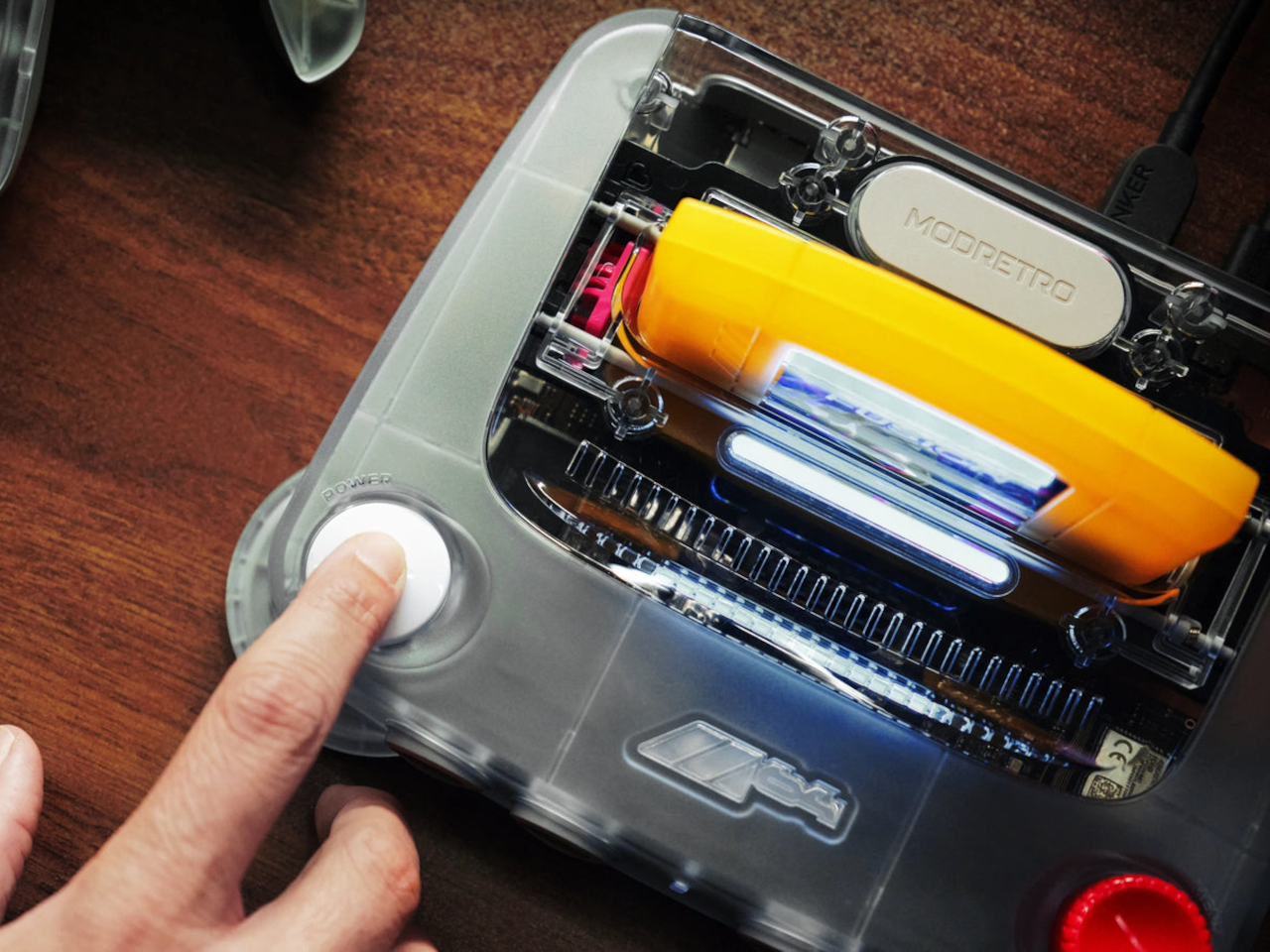
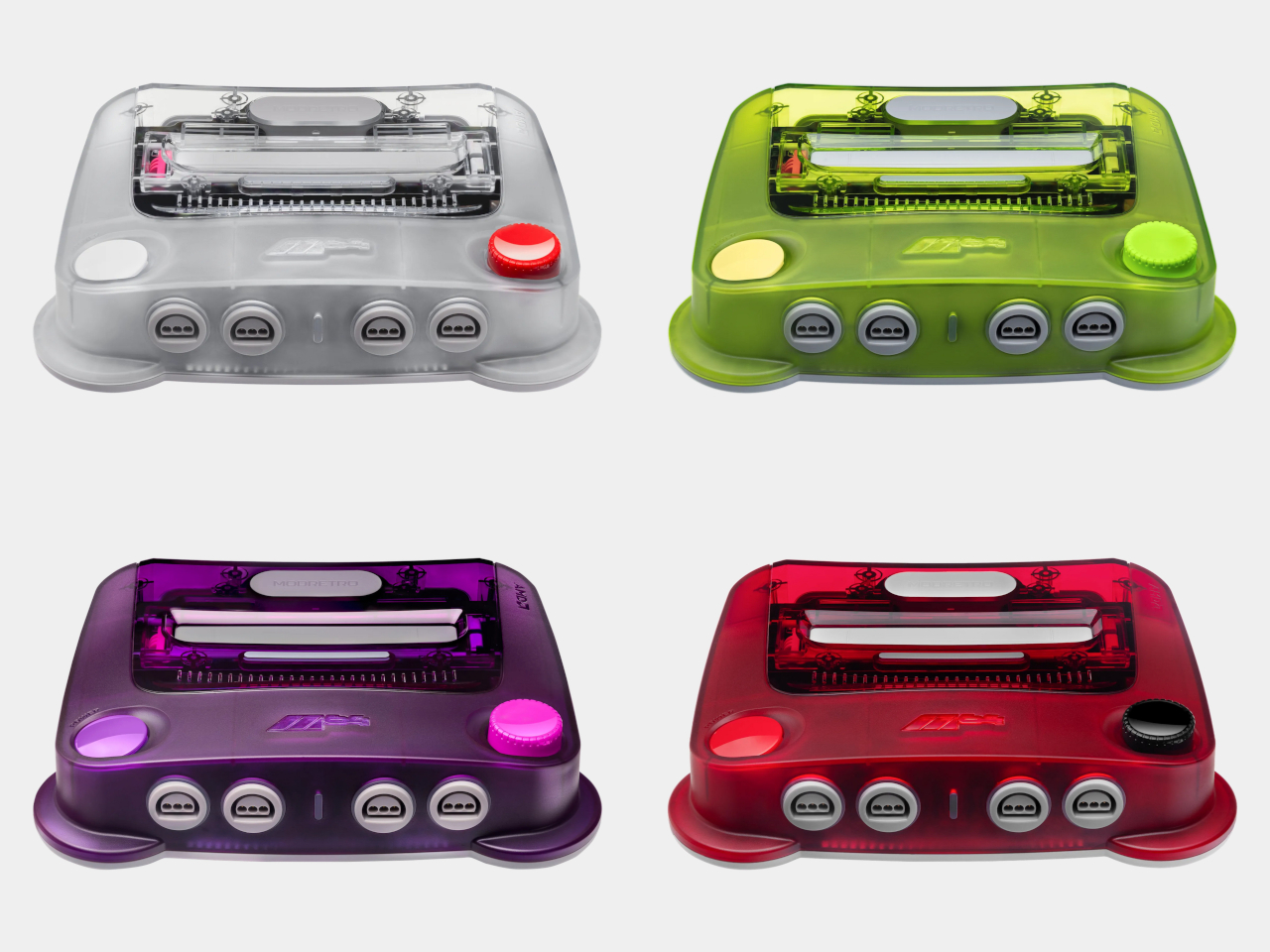
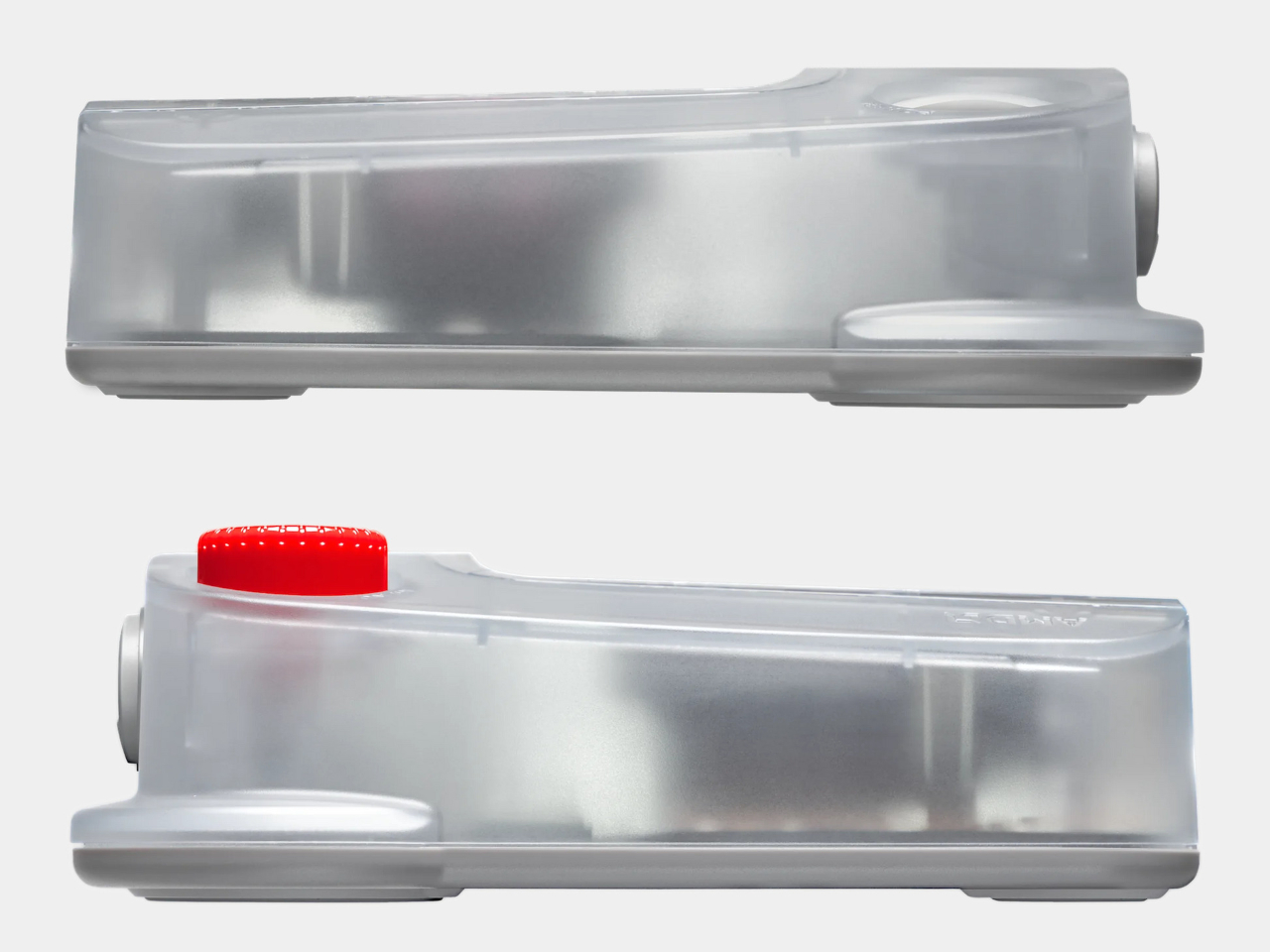
The M64’s design leans into transparency rather than replica styling. The dual-texture transparent shell is a deliberate callback to the translucent plastic era of the late 1990s, when seeing a device’s internals was its own kind of confidence. A built-in LED strip illuminates cartridge artwork from below with adjustable brightness, and a dedicated eject button makes swapping games quick and clean. At 1.6 lbs, it doesn’t demand much shelf space.
Firmware updates arrive over Wi-Fi or USB, meaning the M64 can gain new features and support for upcoming accessories well after purchase. The hardware contains no adhesives and is designed to be opened and repaired, with a fully open-source, mod-friendly architecture. The circuit board uses gold traces to resist corrosion and improve conductivity, a detail that points to a product built for longevity rather than a planned upgrade cycle.
The box includes the M64 console, a pre-installed 16 GB SD card, a multi-region power adapter, and a power cable; no controller is bundled in, but original N64 controllers and several modern third-party options all work through the four controller ports. The M64 is priced at $229, which isn’t an impulse buy, but for anyone with a box of cartridges waiting somewhere, it’s the machine that makes sense of them.
Dedicated music players gradually faded from use once streaming apps turned every smartphone into an on-demand jukebox. Carrying a separate device for audio began to feel redundant. That attitude has slowly changed. Growing numbers of listeners, tired of notifications and algorithm-driven queues, have started reaching for standalone players again, ones that let music be the only thing competing for their attention.
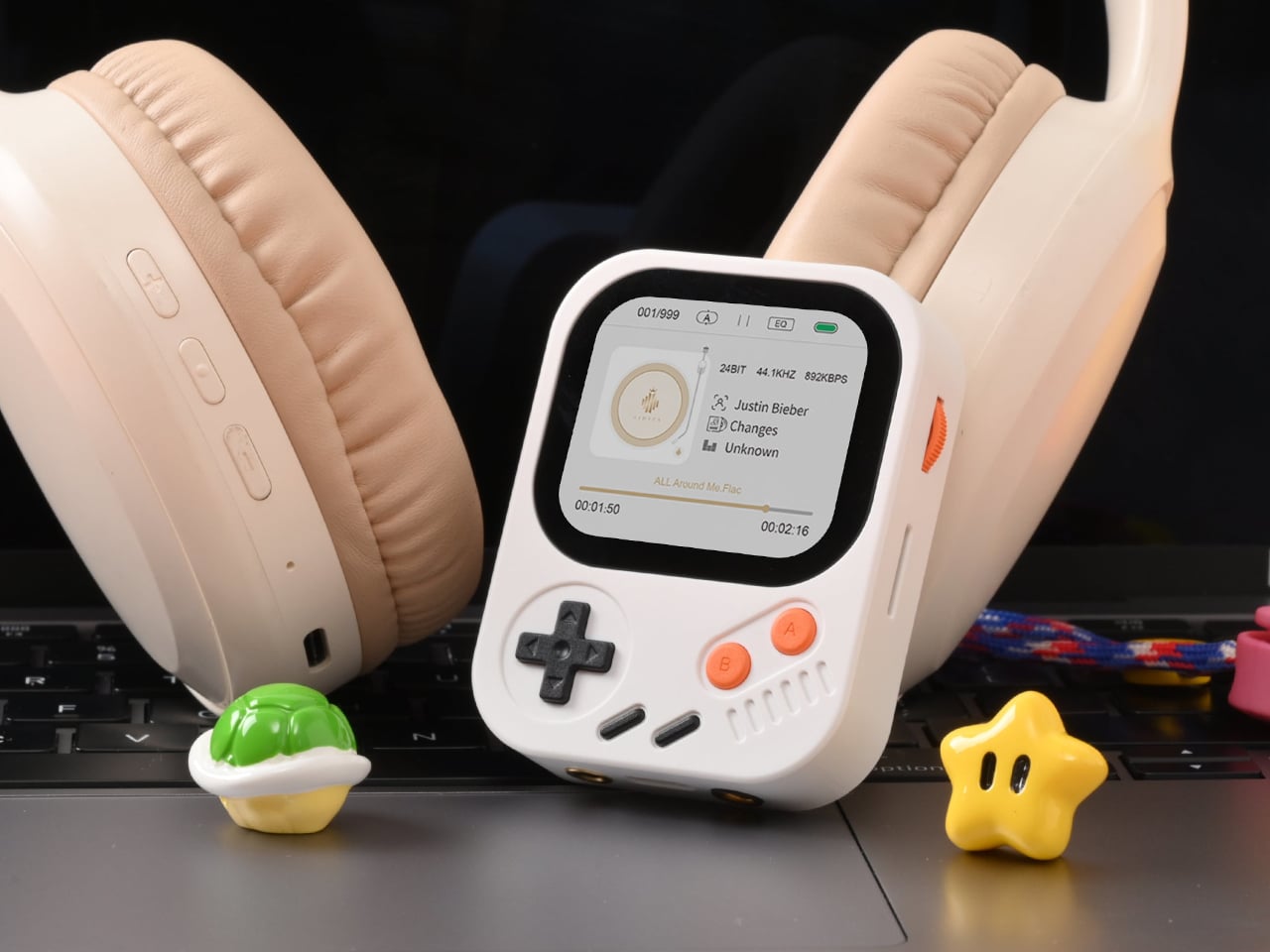
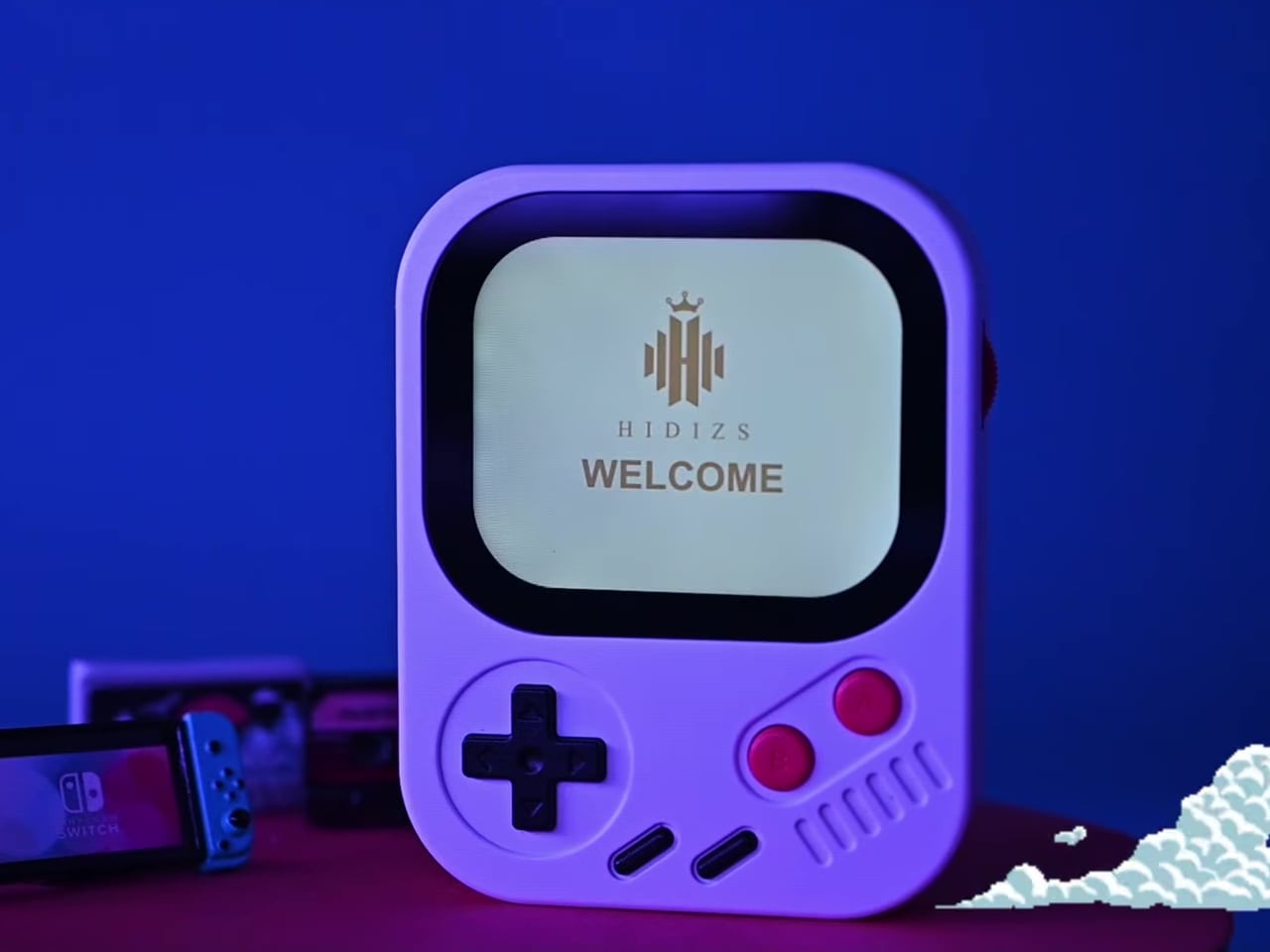
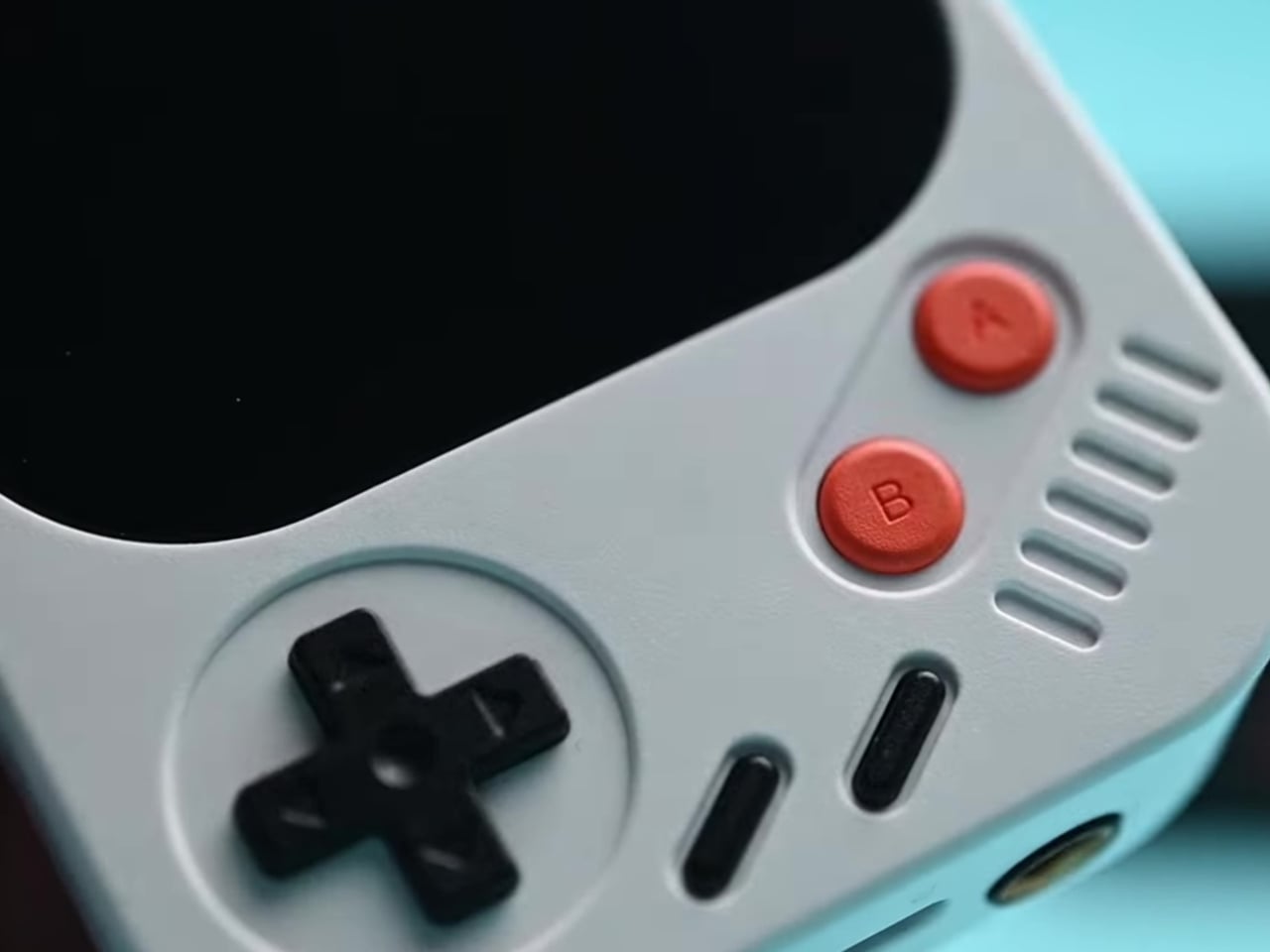
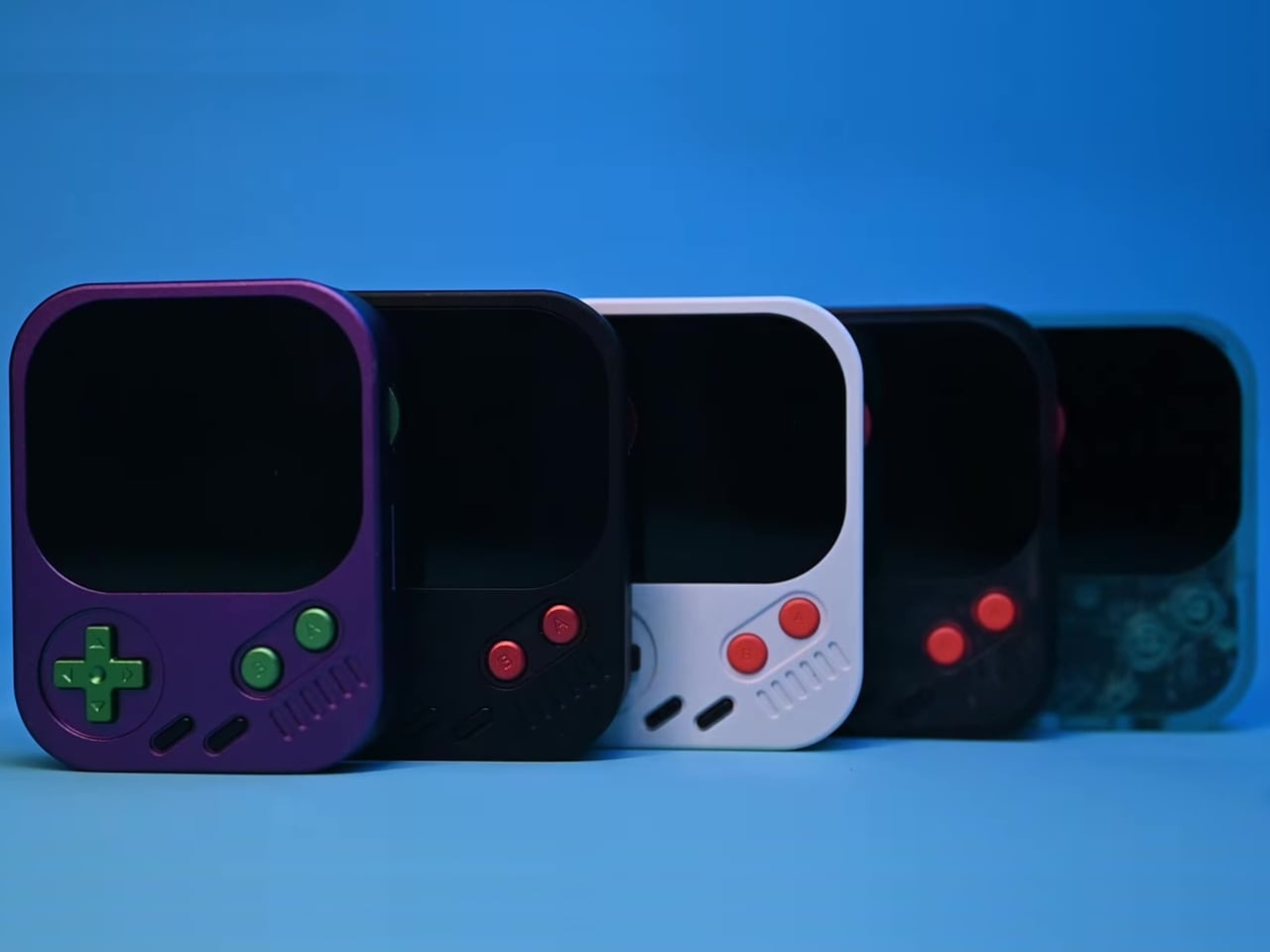
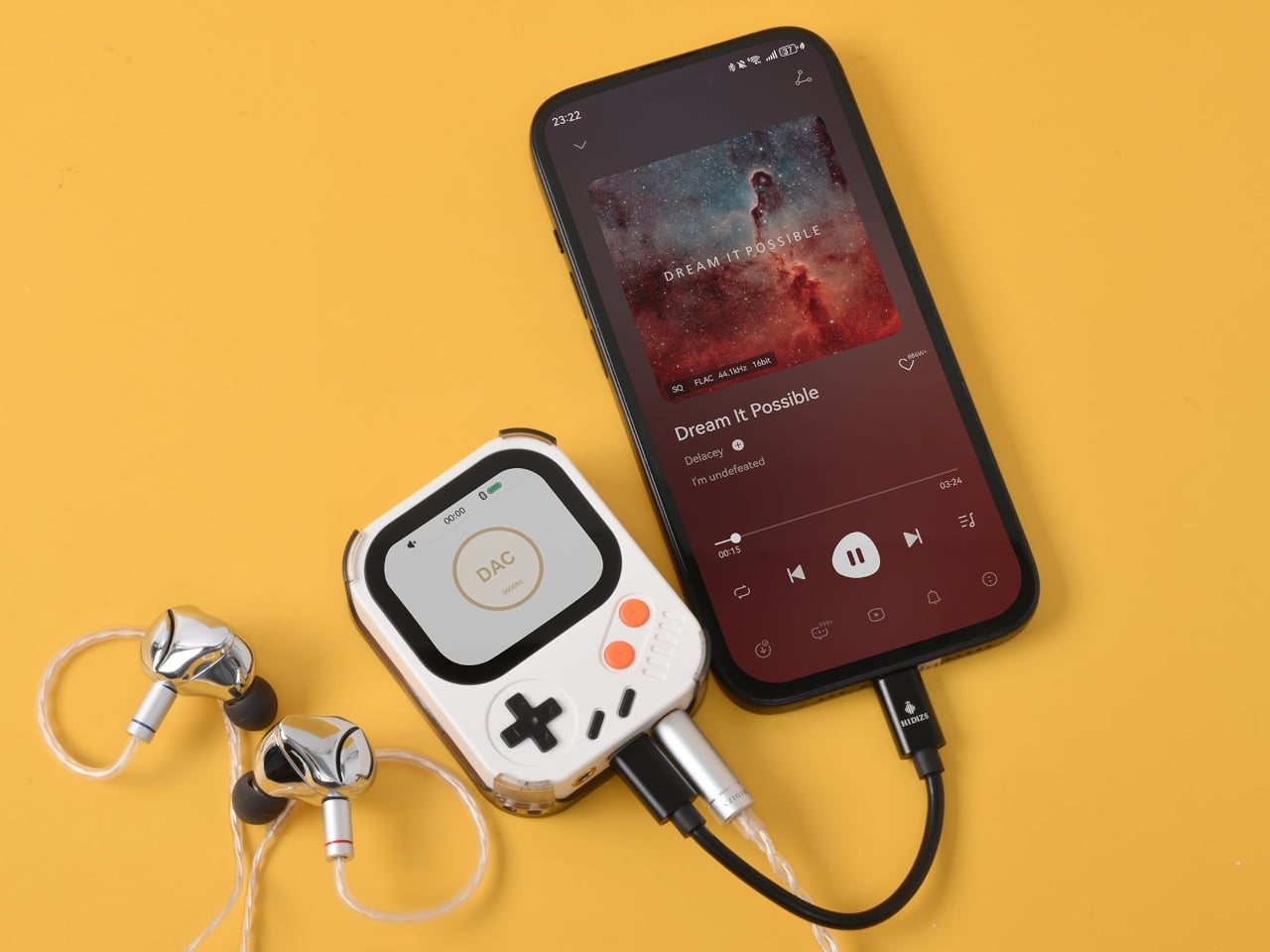
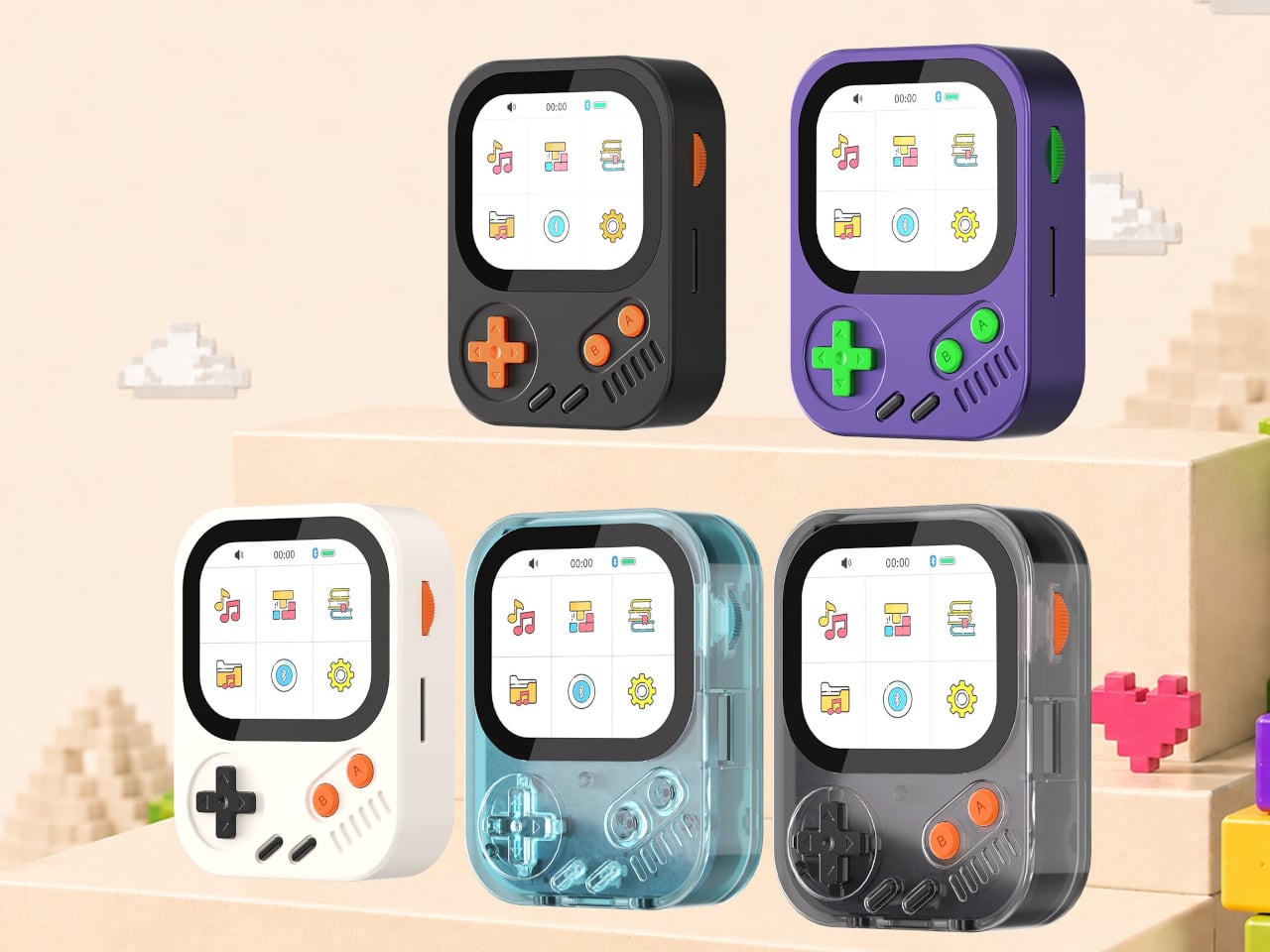
The Hidizs AP30 Music Boy addresses that growing appetite, though it does so in a way that isn’t easy to overlook. Rather than adopting the clean, minimal aesthetic common to most digital audio players, it draws heavily from the visual language of retro handheld gaming. The result is a device that looks playful and compact but carries serious audio hardware inside.
Physical directional buttons and a 2.0-inch IPS display give the AP30 an immediately tactile quality that touchscreen-only devices often lack. The plastic version weighs just 56g, while the CNC aluminum edition comes in at 80g. A small whale motif on the back adds a quiet nod toward environmental awareness, giving the device one more detail that makes it memorable beyond the spec sheet.
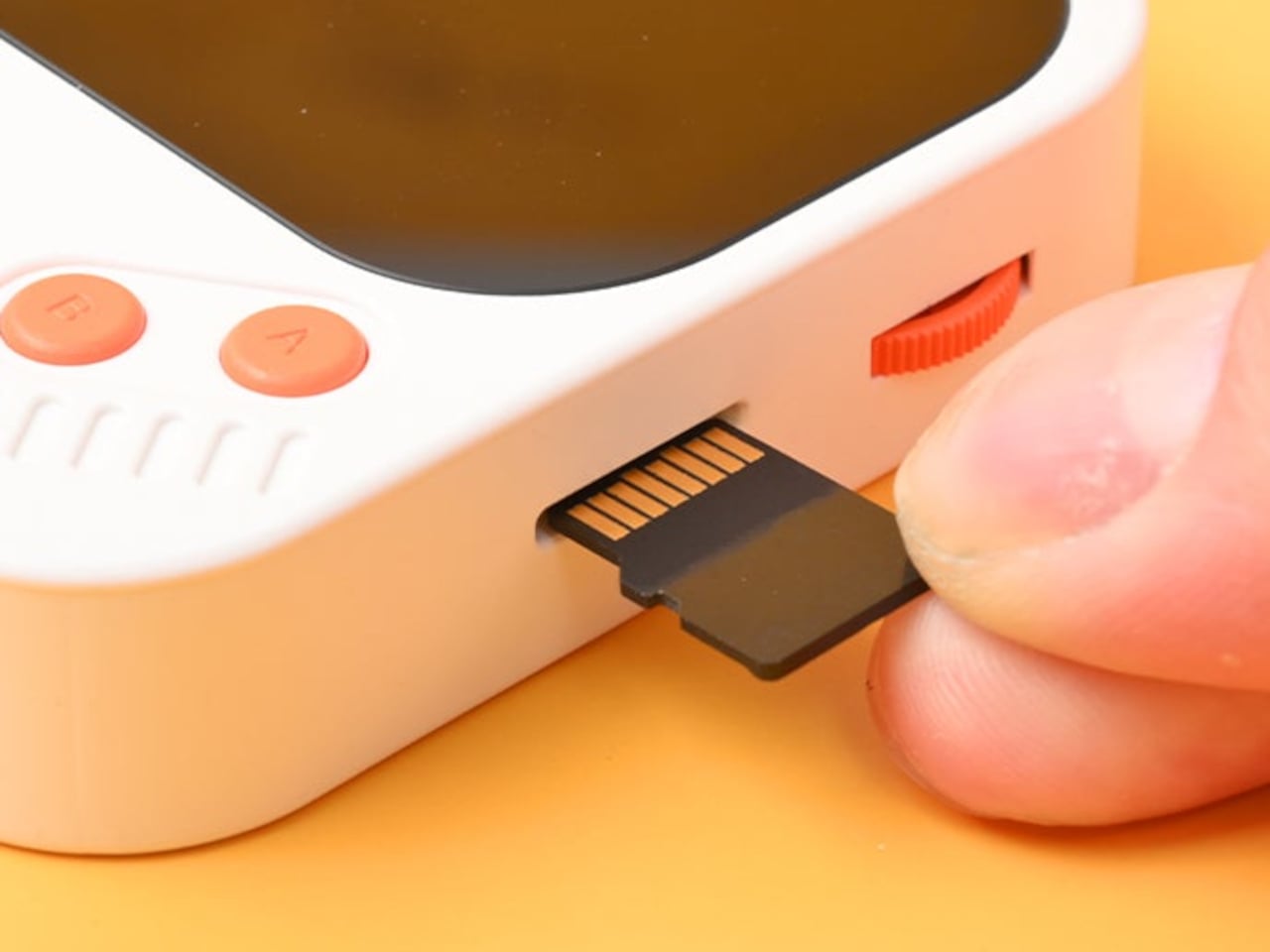
The “wearable” part of the AP30’s pitch has practical implications. It clips to bag straps, hangs from a neck lanyard, or attaches magnetically to the back of a phone via an optional case, keeping it physically accessible during exercise, commutes, or any activity that doesn’t leave a free hand. Storage starts at 128GB built-in and expands to 256GB via a microSD slot.
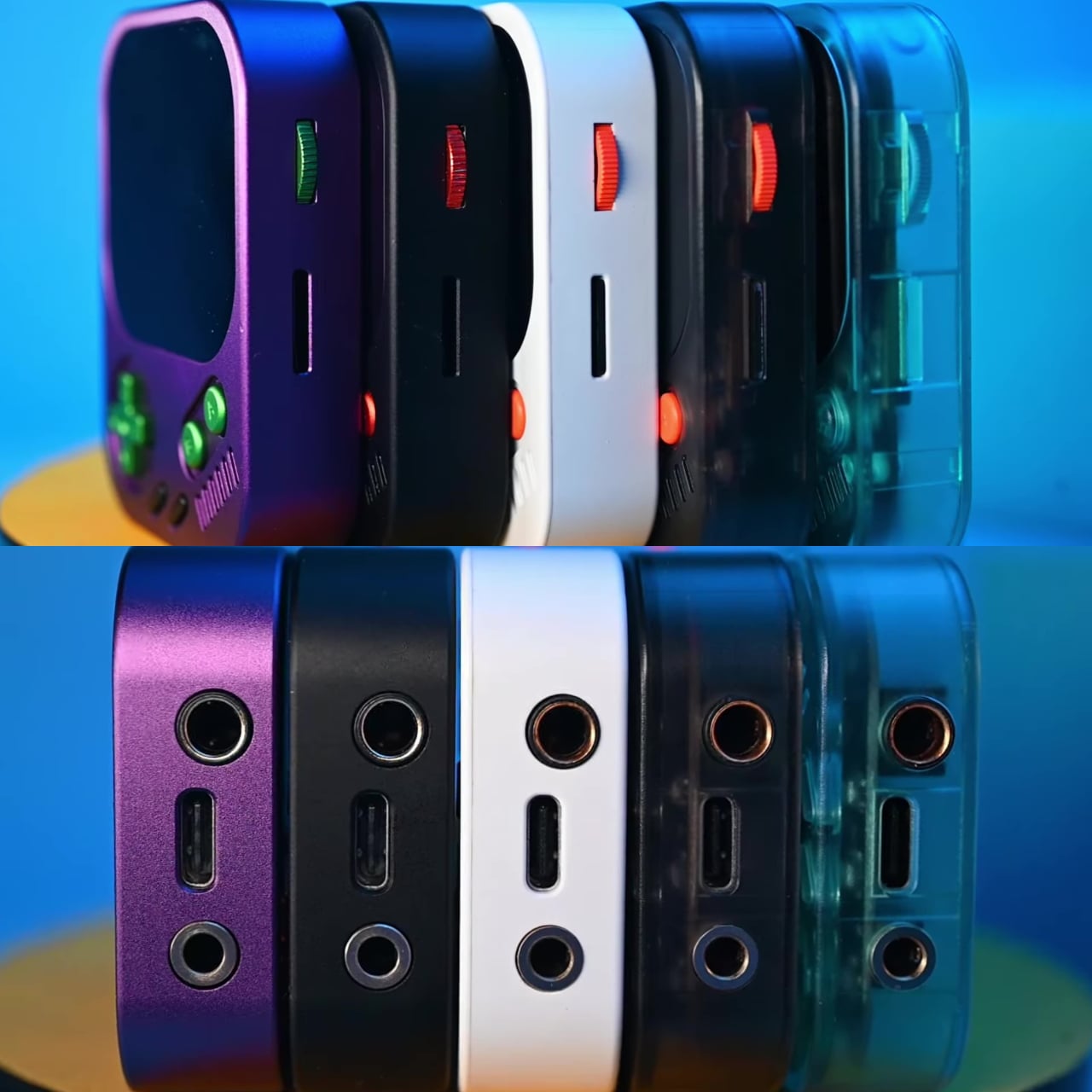
Behind the gaming console’s exterior is a Cirrus Logic CS43198 DAC paired with an RT6863 amplifier, supporting DSD256, PCM at 24-bit/192kHz, and lossless formats including FLAC, WAV, and ALAC. Everyday headphones connect to the 3.5mm single-ended output, while the 4.4mm balanced connection offers meaningfully stronger output for listeners using higher-end in-ear or over-ear monitors, with room to grow as their setup does.
Bluetooth 5.3 with LDAC handles wireless listening without much compromise in audio quality, and the USB-C port doubles as a DAC input for computers and phones. Connect it that way, and the AP30 draws its own power, sparing the host device’s battery. The 1,200mAh cell manages 10 to 12 hours of continuous playback in single-ended mode and charges back to full in about one hour.
HidizsOS, the player’s Linux-based operating system, keeps the interface focused entirely on music rather than apps or streaming services. Customizable EQ presets and switchable digital hardware filters give listeners control over how their music sounds, and a built-in block puzzle game is a fitting Easter egg on a device with this much retro DNA. Both plastic and aluminum editions retail at $129.
There’s no streaming service, no social feed, and no notification waiting to derail the listening session. The AP30 runs on a locally stored library and asks for nothing more than a decent pair of earphones. For anyone who’s ever put a phone on silent just to get an hour of uninterrupted music, it makes a compelling case for carrying two things instead of one.
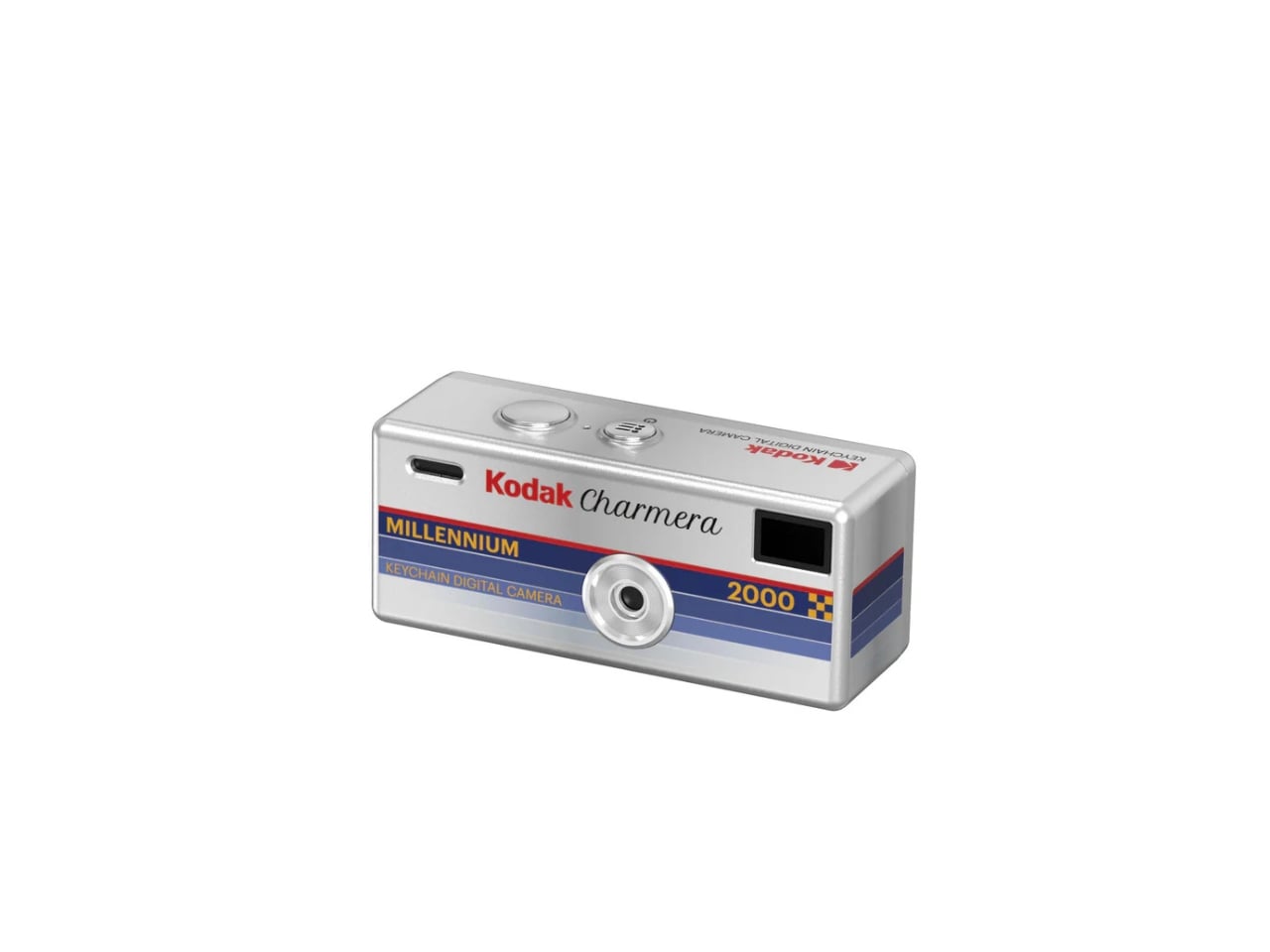
Cutesy analog-inspired cameras that also serve as keychains are probably all over your feed, if it’s anything like mine. And just when you thought you might be satisfied with the one you already have (if you actually have one), they go ahead and release new designs that make you want to replace what you have, or finally succumb and get one.
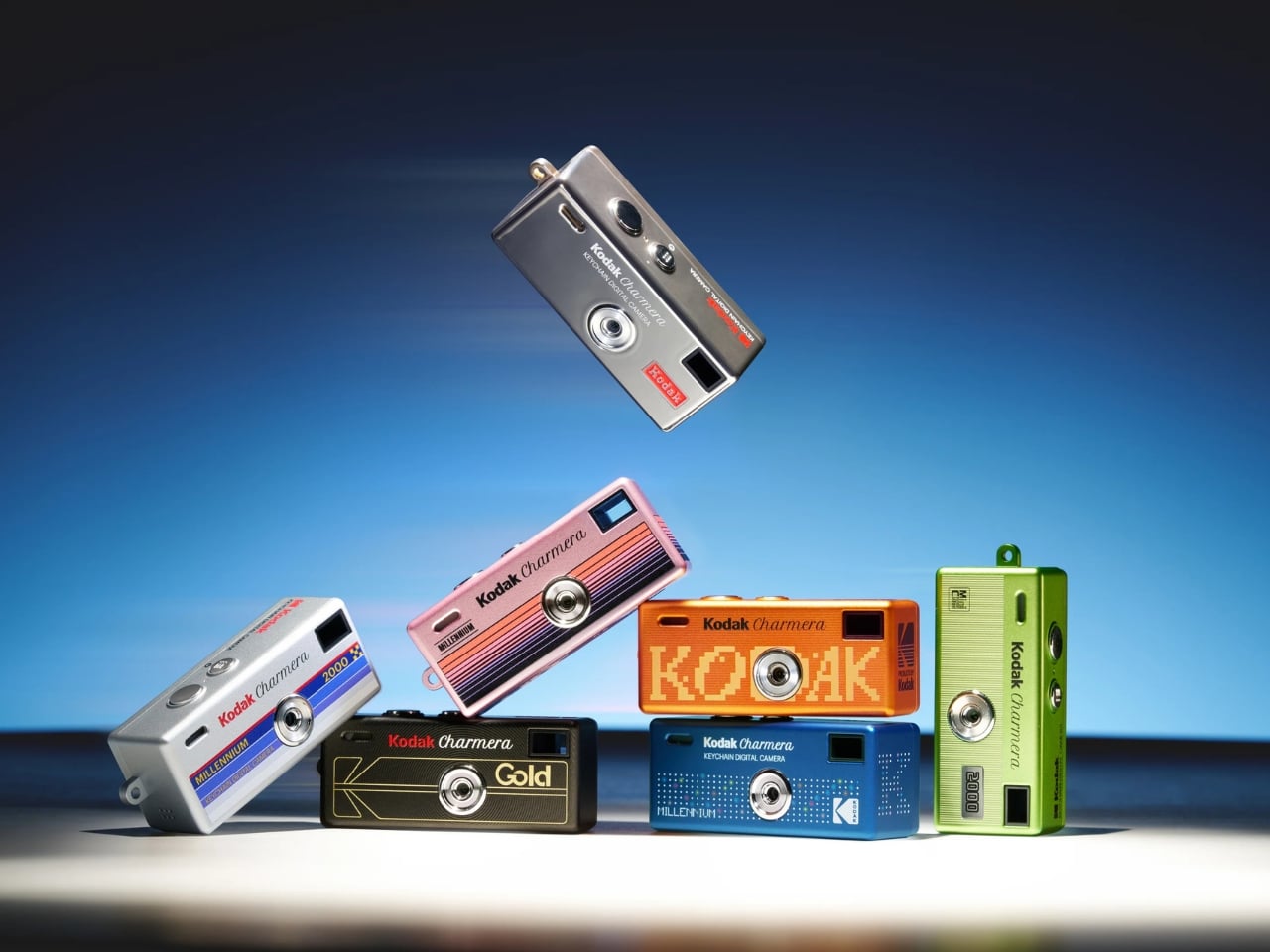
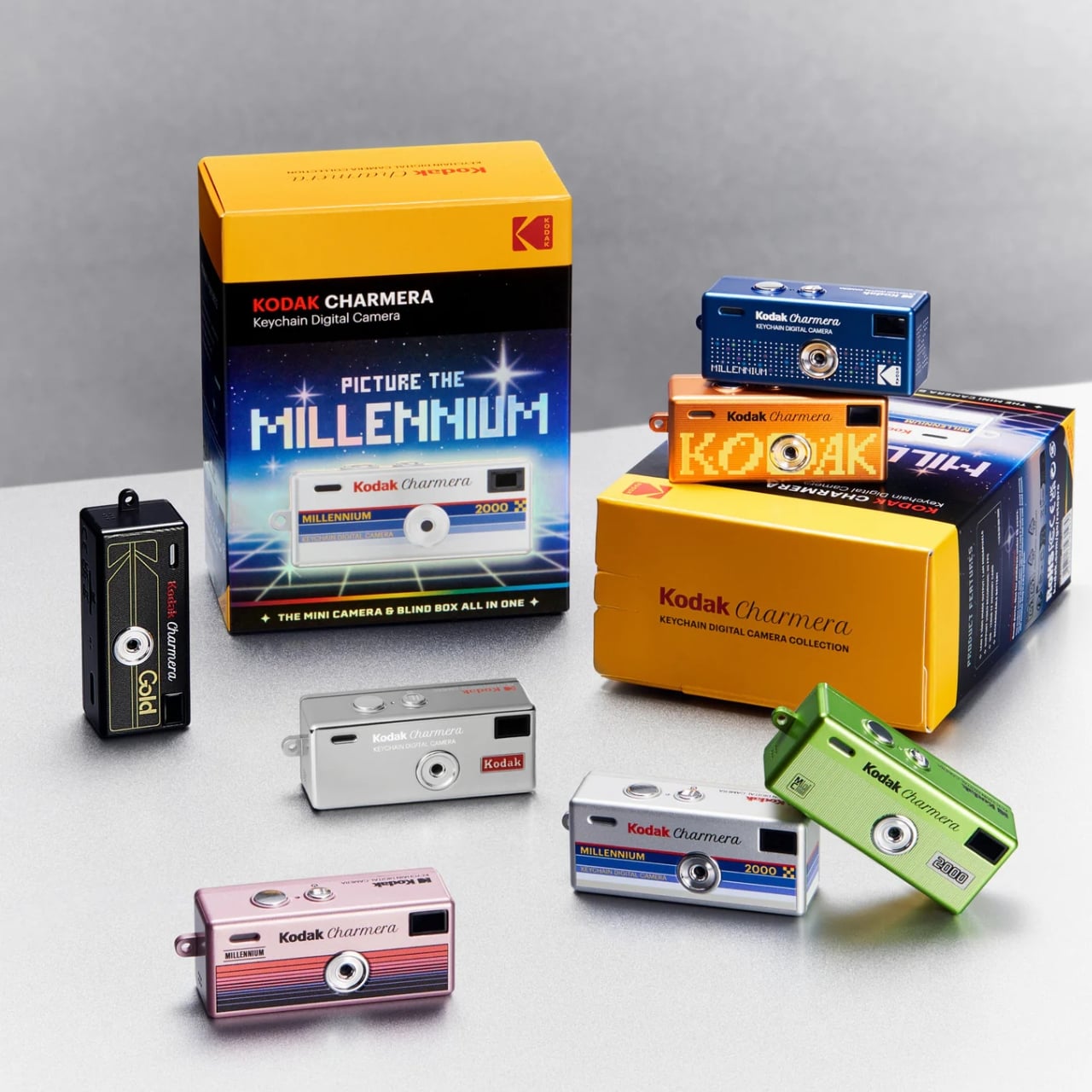
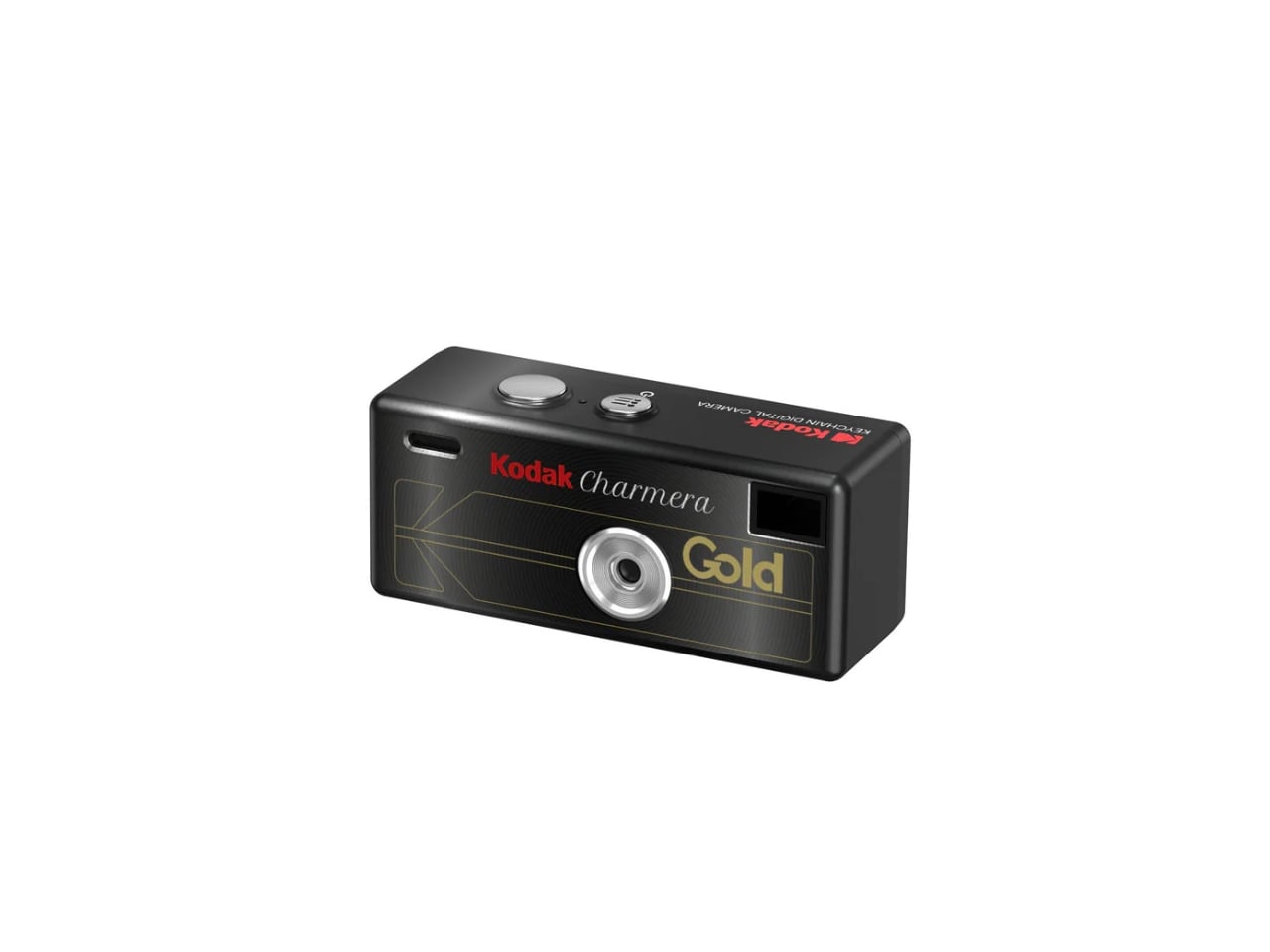
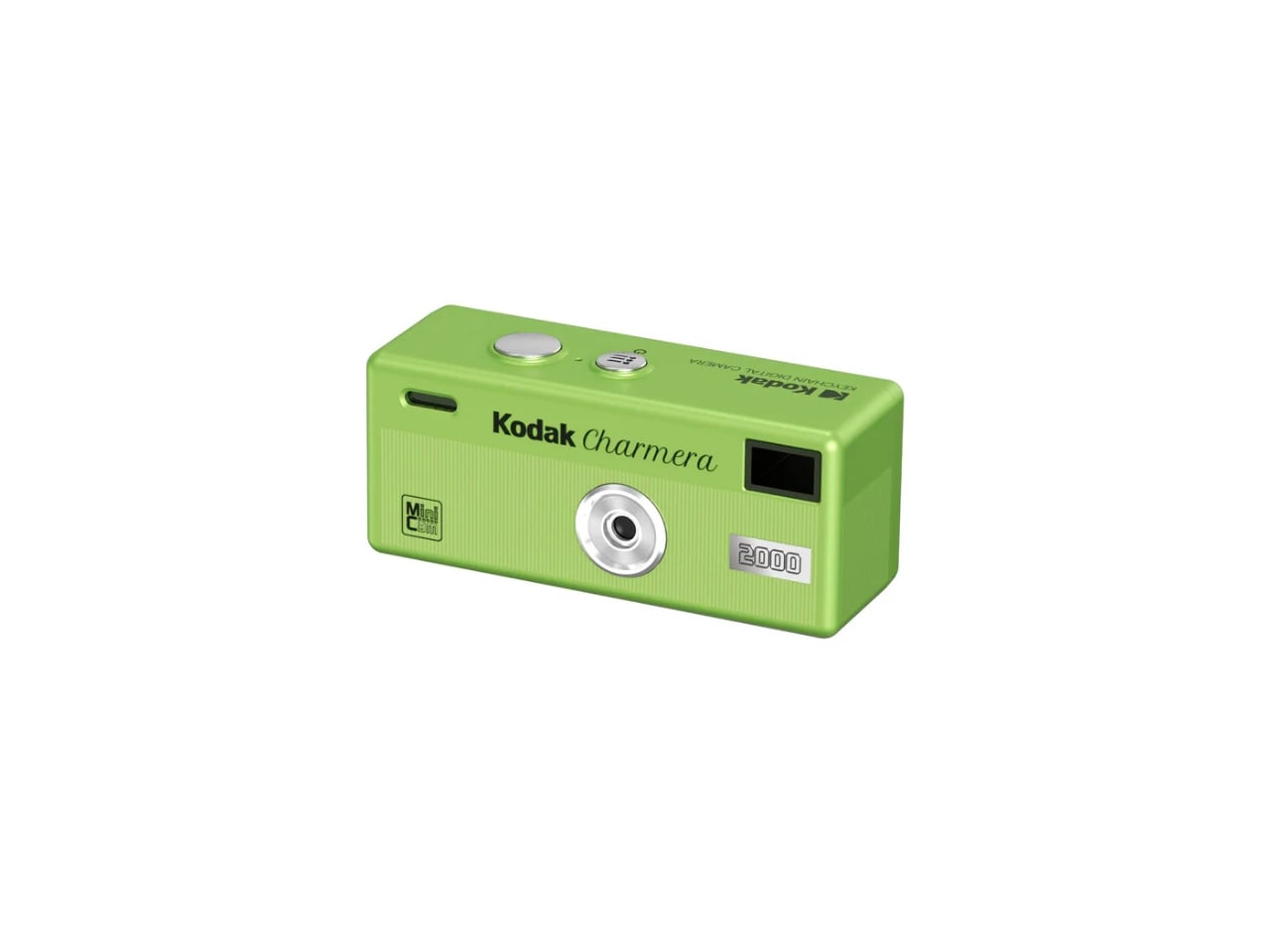
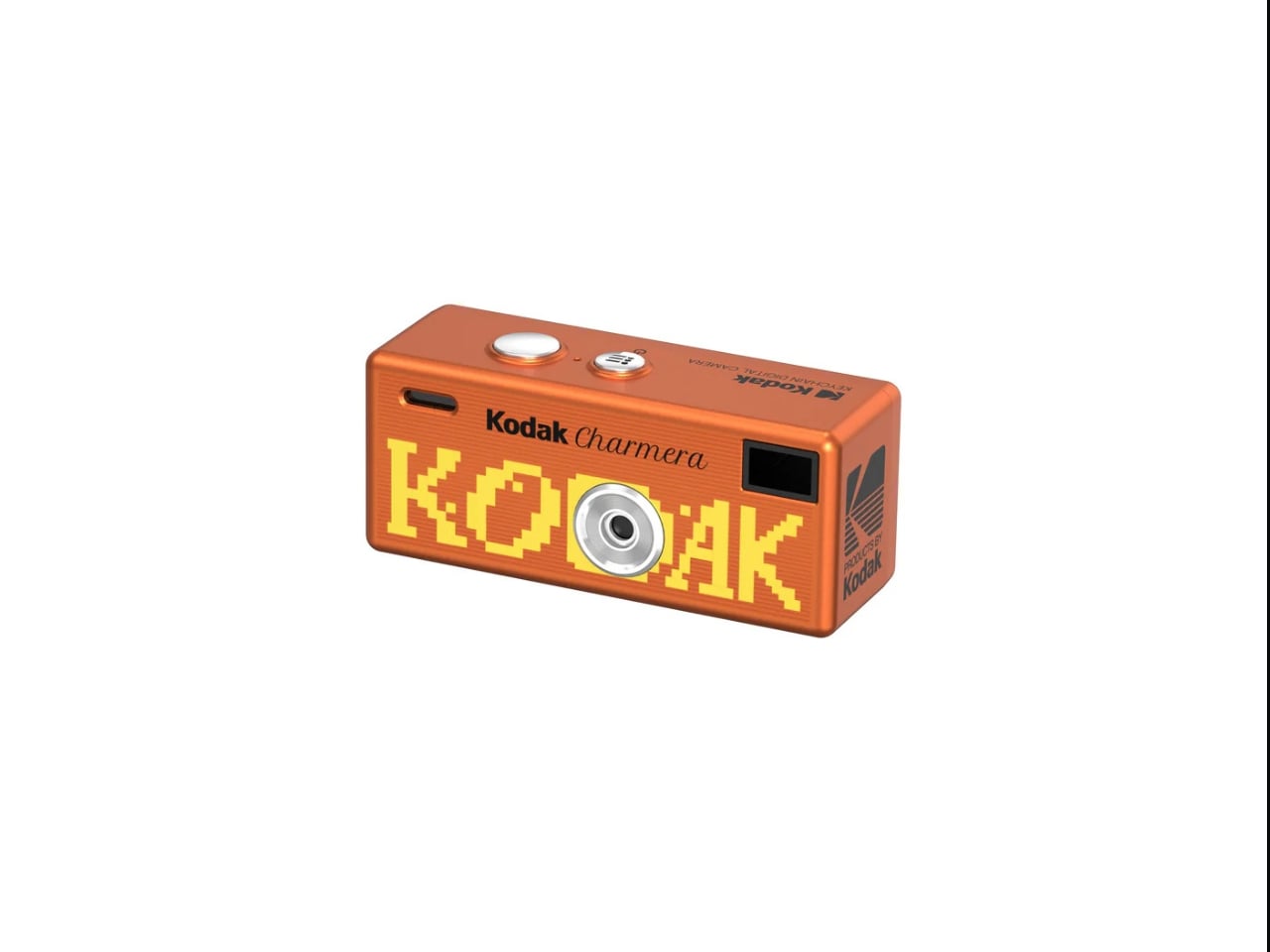
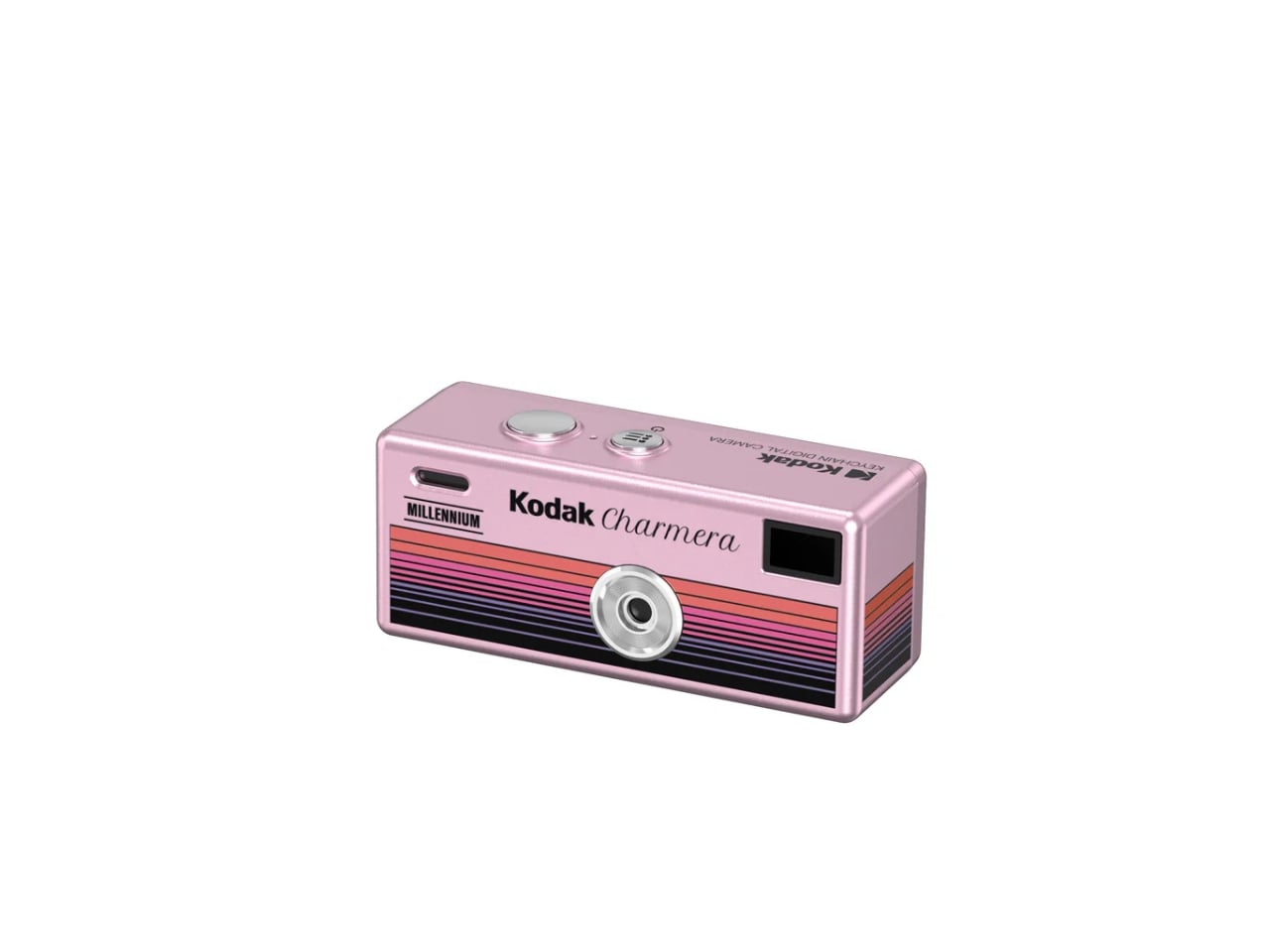
The Kodak Charmera line is one of the most popular devices in this segment, and now they have released a new series that will scratch the Y2K itch within you. The Kodak Charmera Keychain Digital Camera – Millennium Edition brings this line into the future-past, stepping away from the “portable retro” look of the original 1987 Kodak Fling-inspired Charmera. Riding on the current wave of Y2K nostalgia, Kodak is branding this new line as “the ultimate lo-fi futurist accessory.”
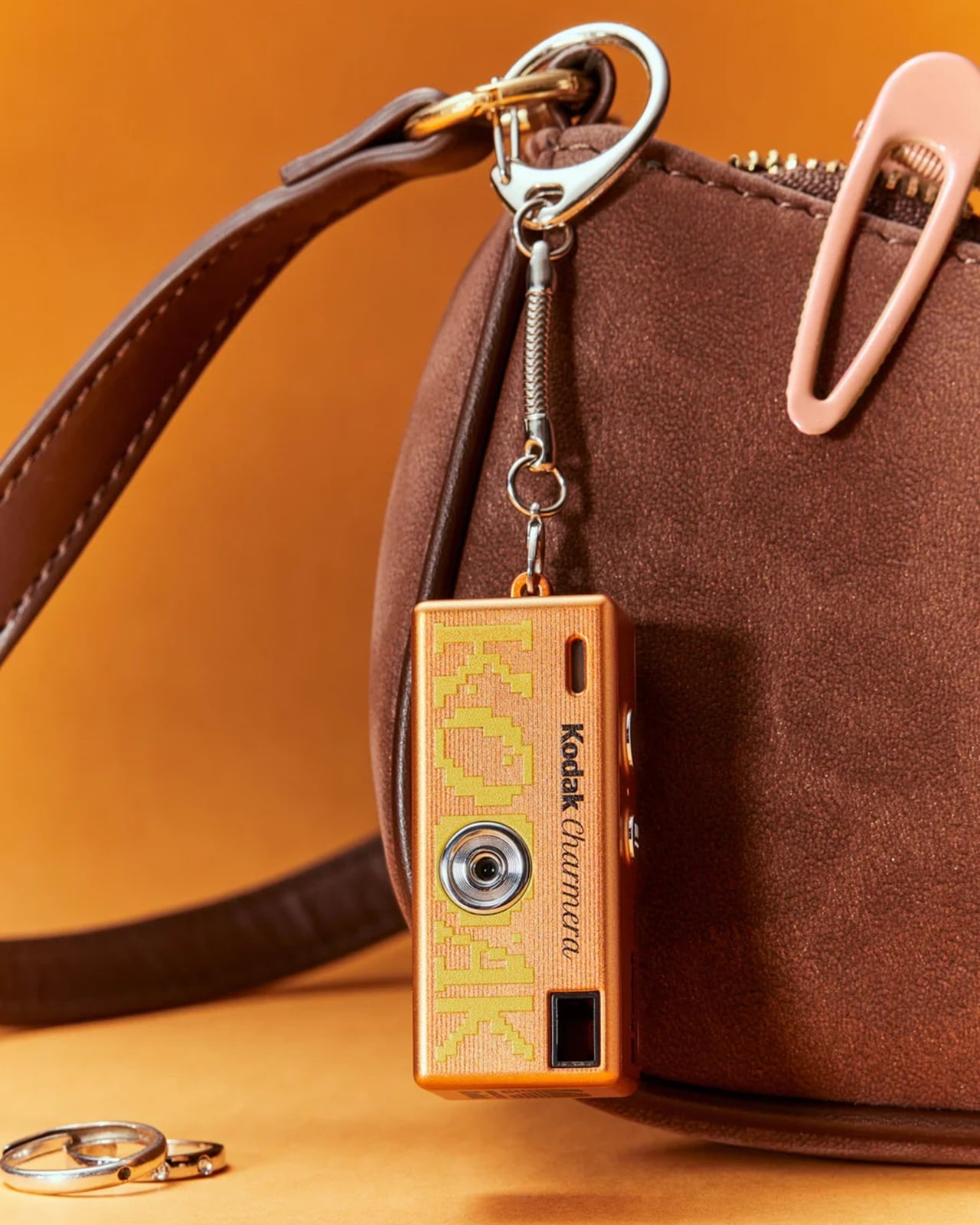
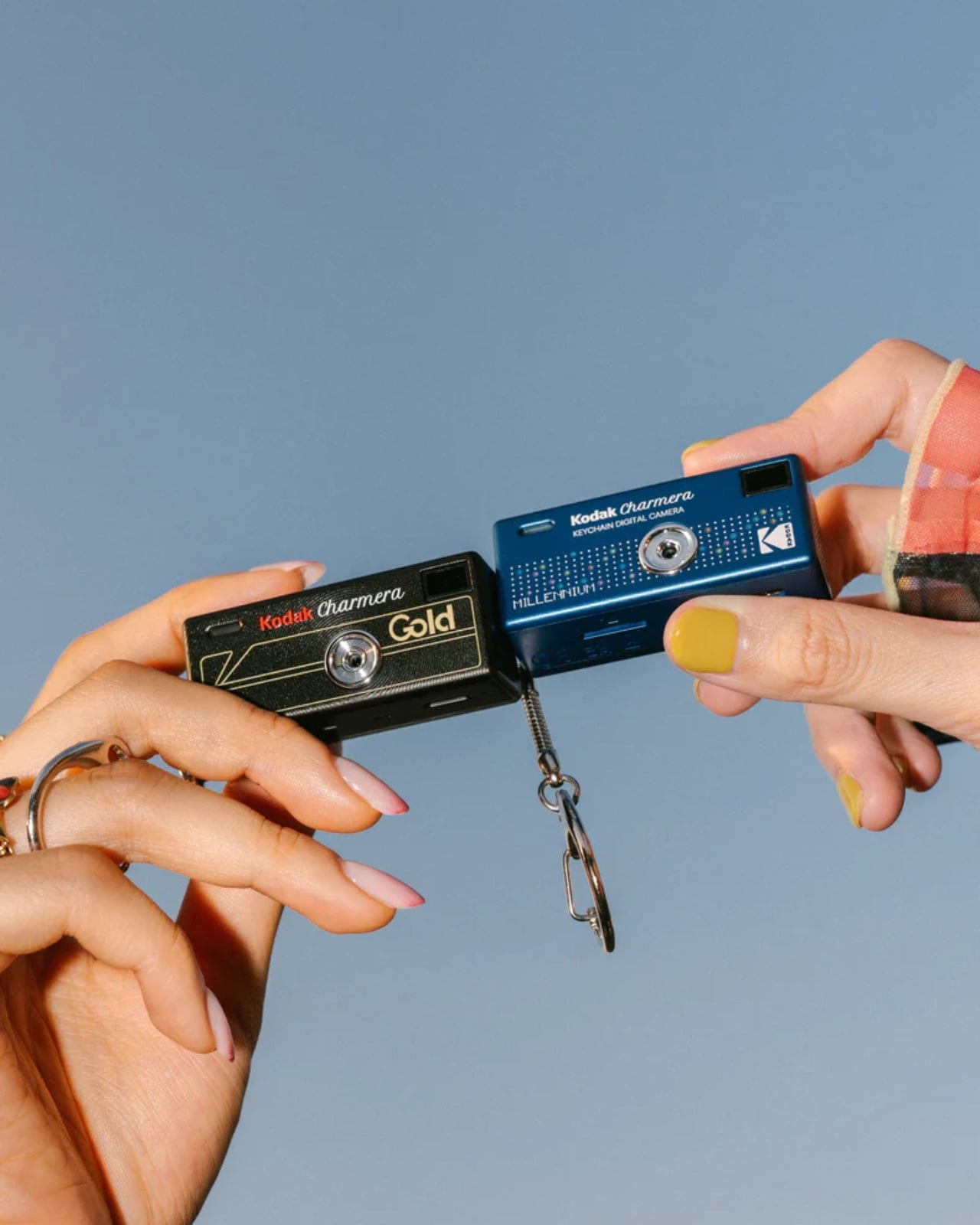
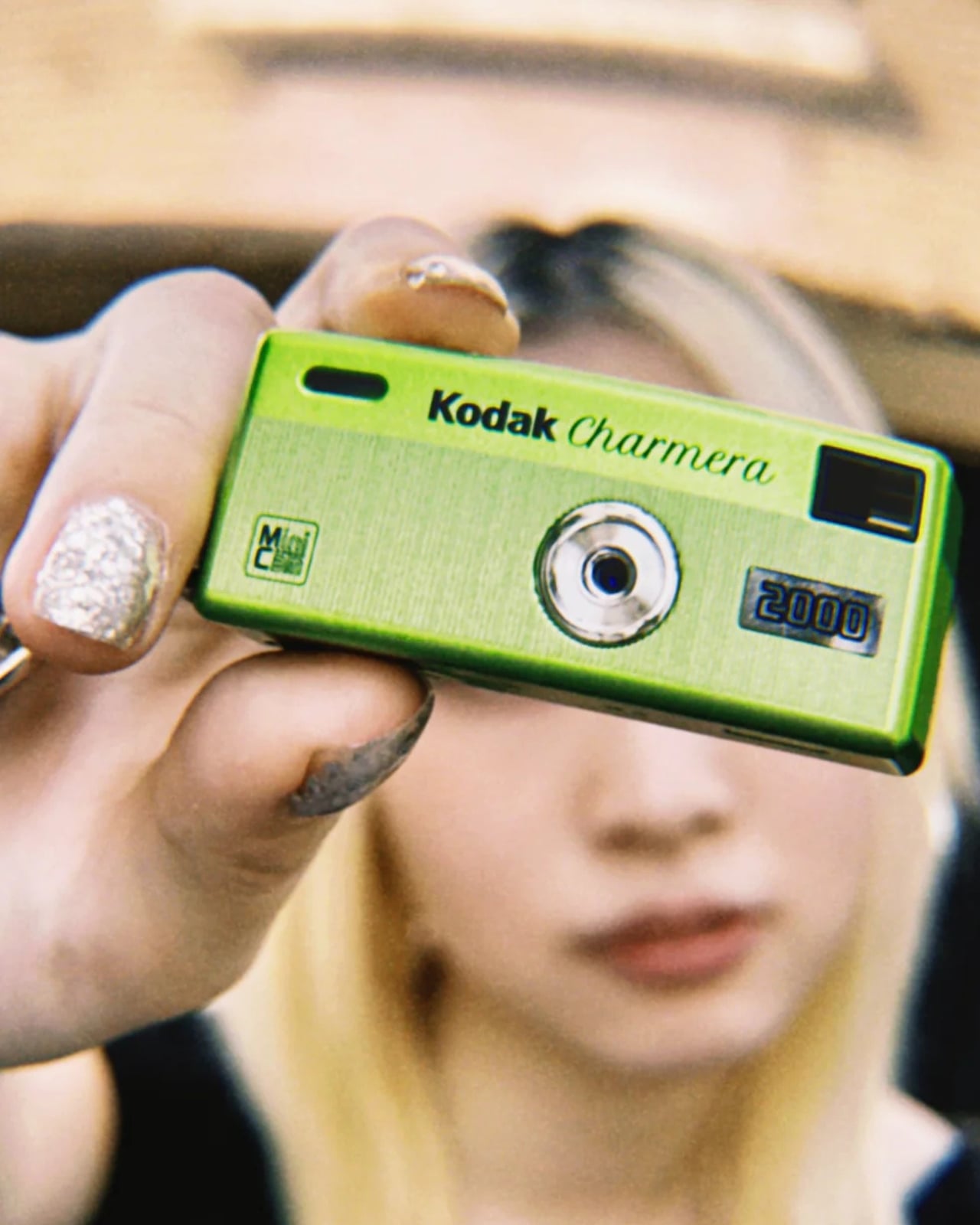
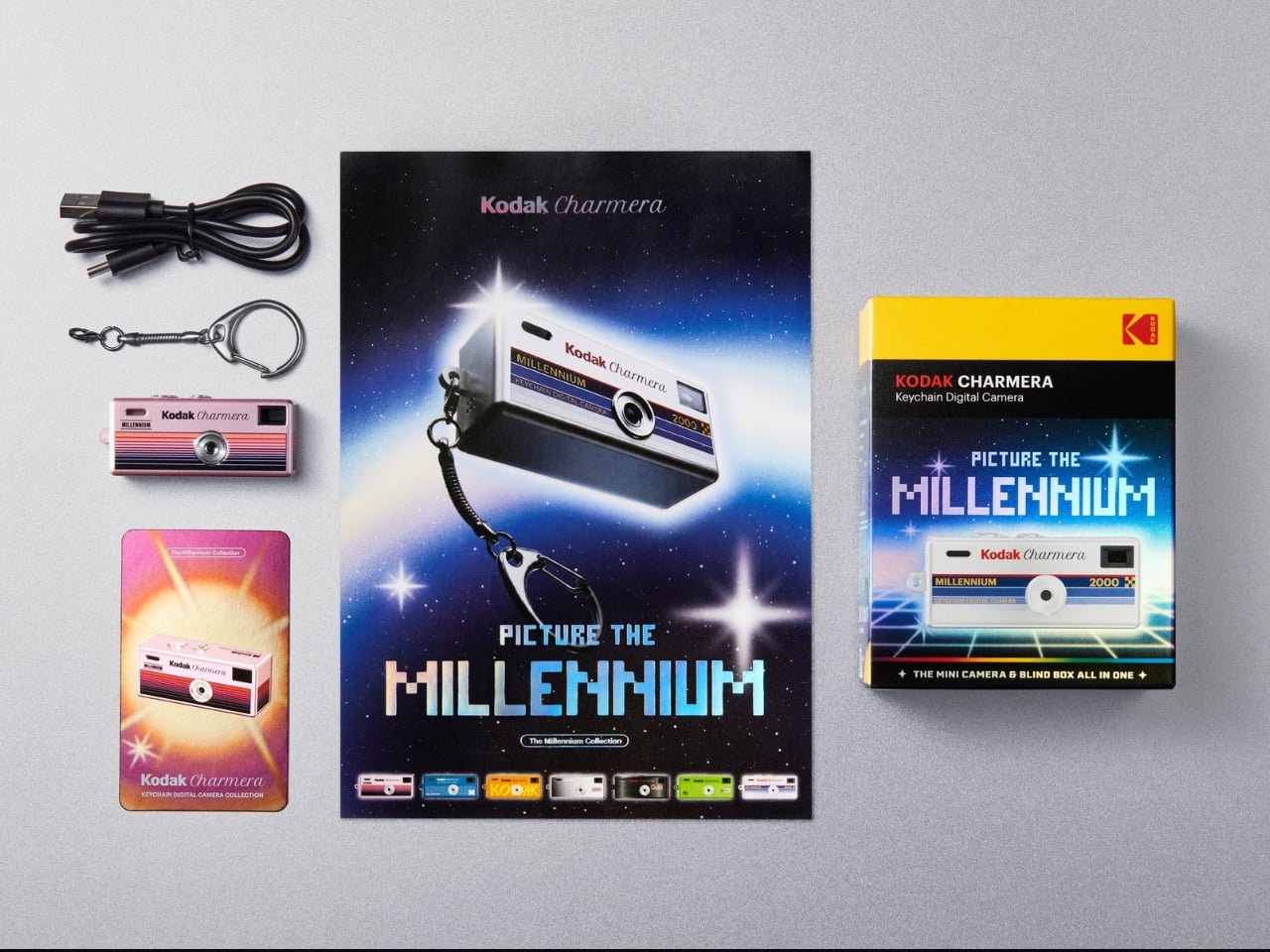
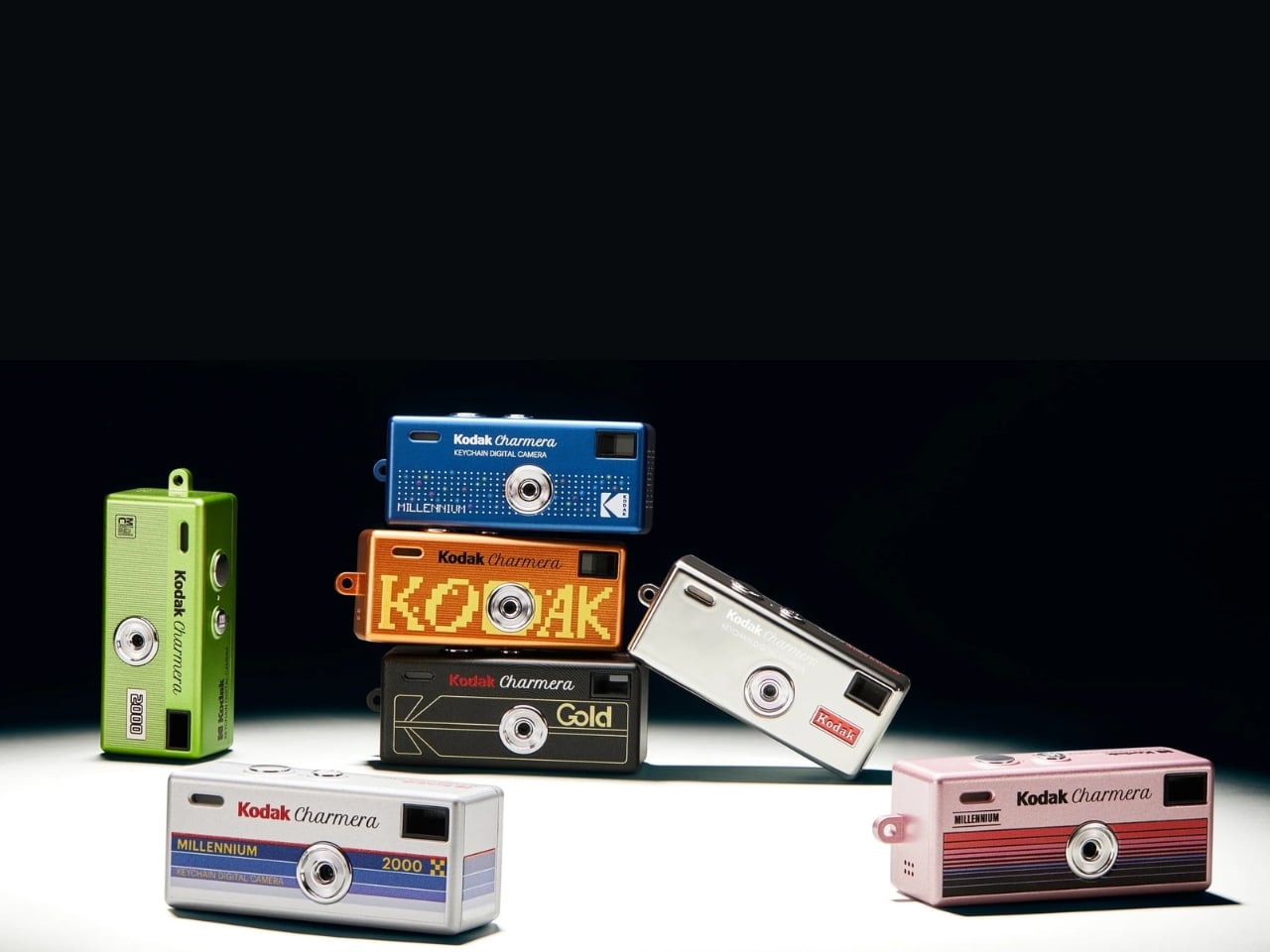
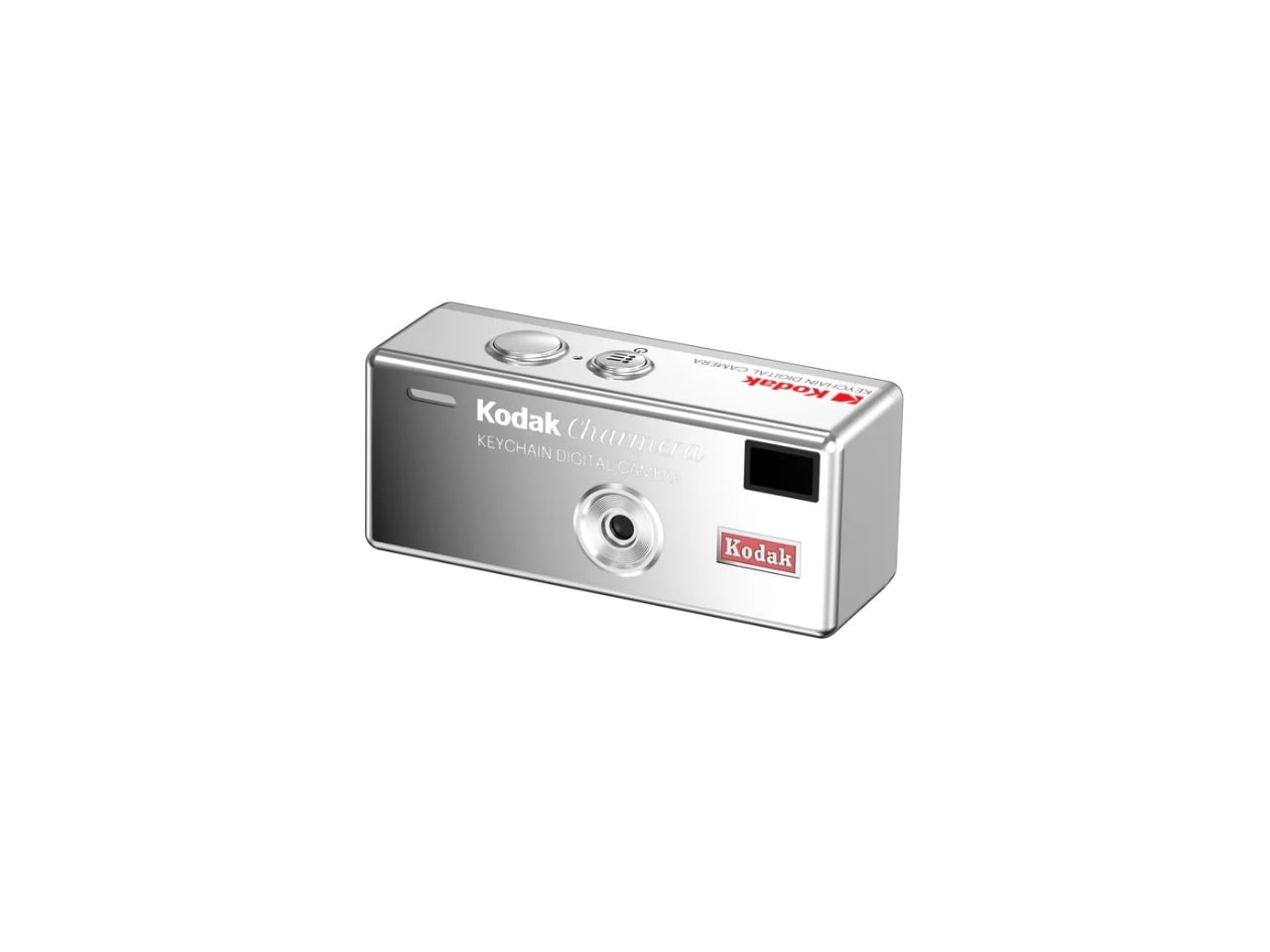
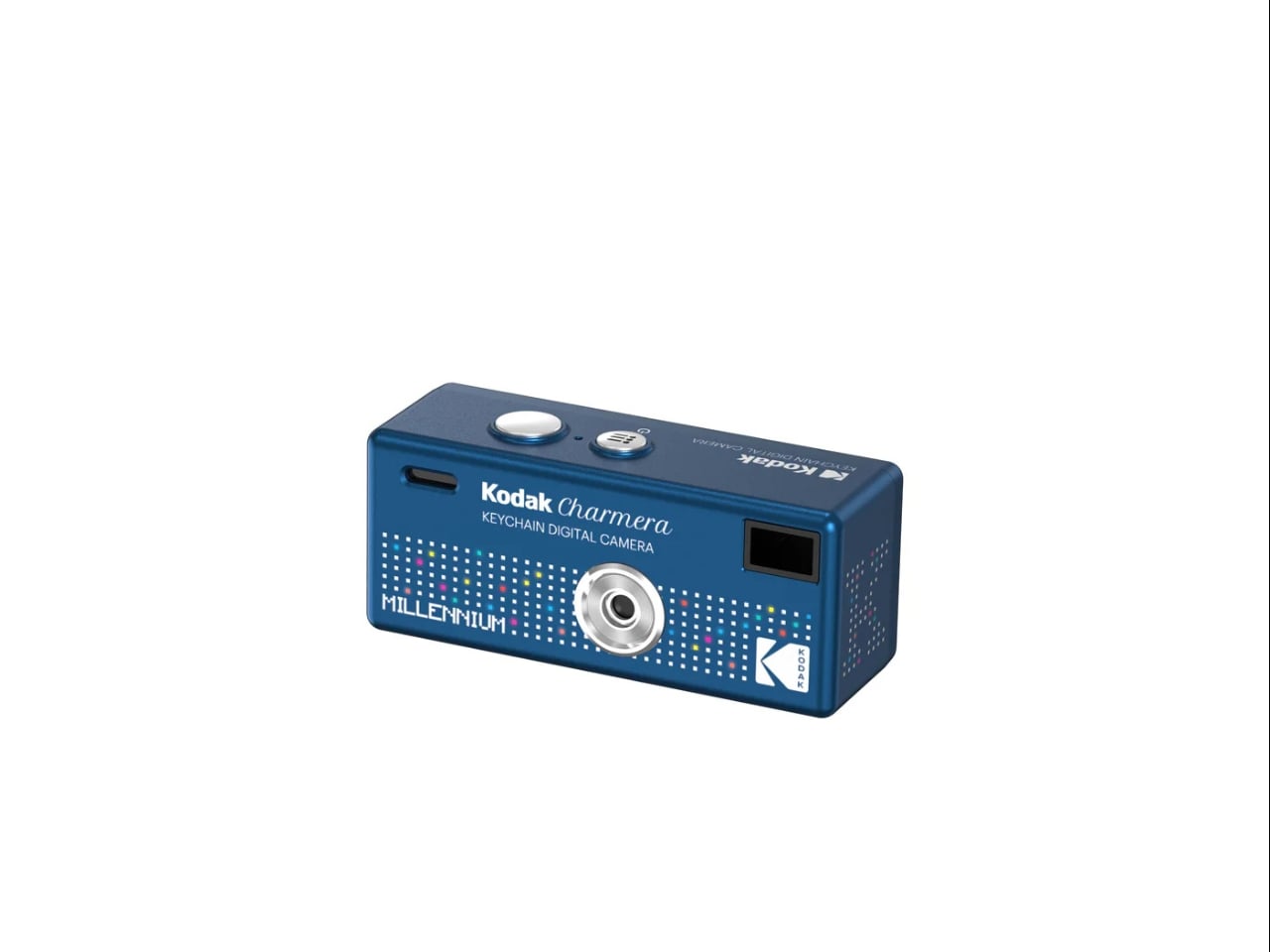
Just like the previous Kodak Charmera cameras, this one is a Blind Box edition, so you never know which of the seven designs you’re going to get. There are six standard colorways: silver, black, green, orange, pink, and metallic, plus a chrome-like secret mirror variant, which you have a one-in-48 chance of getting. The original Charmera features a classic retro look, while this edition gives you a new high-gloss metallic Y2K finish. Think bedazzled flip phones, candy-colored Discmans, and the iMac G3. That’s the exact energy the Millennium Edition is channeling.
In terms of hardware, everything is more or less the same as the original. You have a 1.6MP 1/4-inch CMOS sensor, a 35mm F2.4 fixed lens, an image output of 1440 x 1080, and 30fps video recording. This is still in keeping with the lo-fi nature of what you’ll get from these keychain cameras, so don’t expect sharp or crisp images and videos. The intentionally grainy, pixelated results are all part of the charm. Lo-fi is a feature, not a flaw. After all, you’re not buying this camera to replace your phone. You’re buying it for the vibe.
What is new in this edition is the software and aesthetic overhaul. In photo mode, you get access to 4 retro-futurism frames, 7 color-rich pixelated filters, and a date stamp, all designed to give your shots that unmistakable early-2000s digital soul. The camera also comes with a dual zone focus system that distinguishes between subjects closer than eight feet and those farther away, giving you a little more control over your shots than you might expect from something this tiny.
The Charmera Millennium Edition is pocket-sized, literally. It measures just 58 x 24.5 x 20mm and weighs only 30 grams, making it one of the most carry-friendly cameras around. It charges via USB-C, which is included in the box, and runs on a built-in 200mAh rechargeable battery. You will also need to bring your own microSD card (up to 128GB supported), as one is not included. Each blind box also comes with a keyring, a CHARMERA ID card, and an A5 leaflet.
Now, about that blind box format. It truly is half the fun. You pay $34.99 and get one random design out of seven. For collectors, this is both the thrill and the torment. You might land the silver on your first try, or you might end up with four oranges before you see the one you actually want. Kodak also offers the whole set for those who simply need them all, and yes, you know who you are.
The Kodak Charmera Millennium Edition is available for $34.99 per single blind box on the official RETO Pro website and on Amazon. Whether you are a longtime collector of the Charmera line, a devoted Y2K aesthetic enthusiast, or just looking for the most fun $35 you will spend this year, this tiny camera delivers exactly what it promises. No more, no less, and honestly? That is exactly the point.