Where Sculptural Balconies Meet Mediterranean Light and Coastal Living

Along the Athenian Riviera, balconies are not simply architectural accessories. They are extensions of domestic life—places for shade, conversation, sea air, and long afternoons under the Mediterranean sun. In Voula, 314 Architecture Studio takes this familiar element and transforms it into the defining character of an entire building.

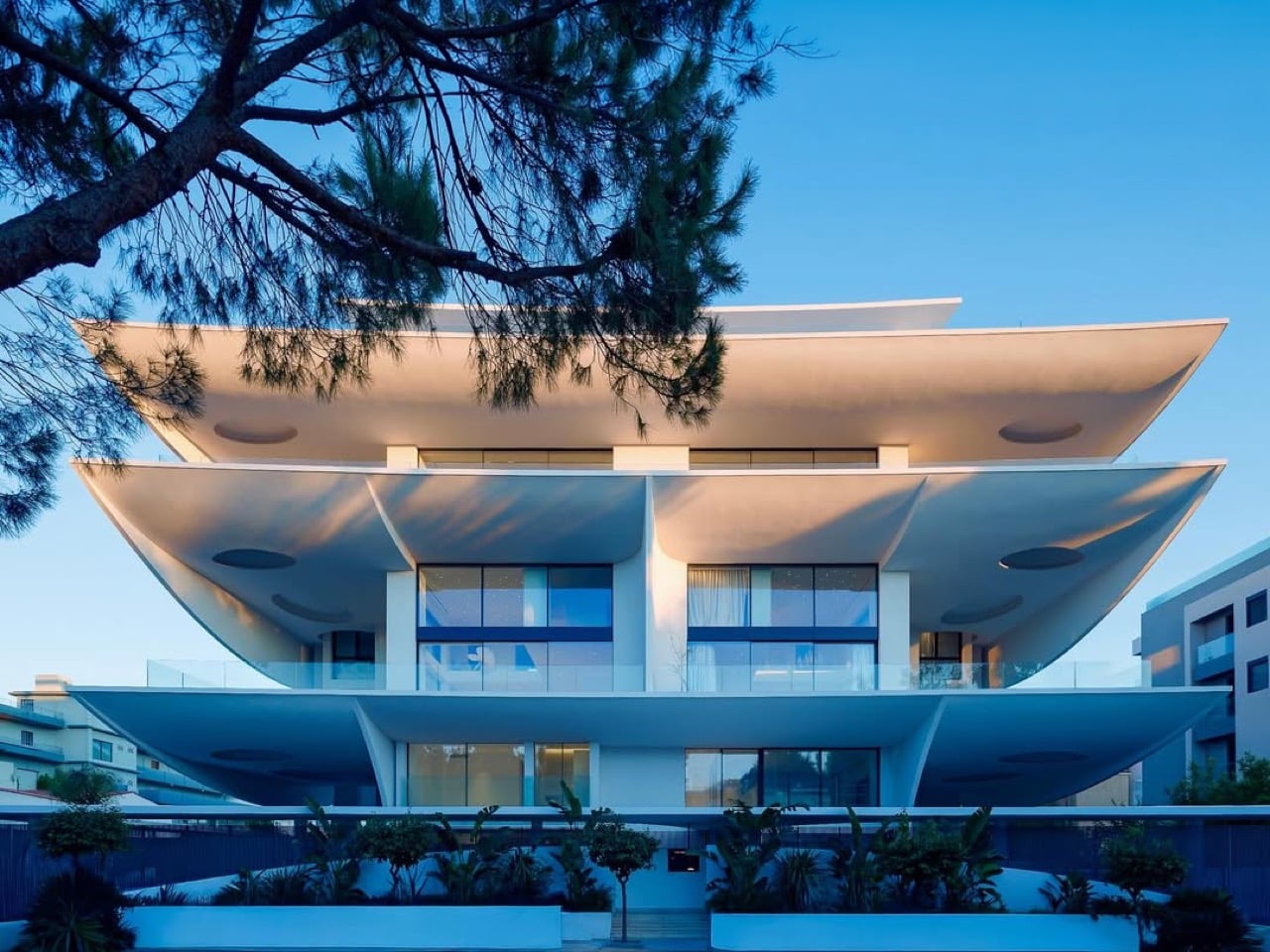
Known as Rêve en suspens, the residential project appears to be caught in a permanent state of bloom. Its layered balconies extend outward in sweeping, petal-like forms, wrapping around the structure and softening the geometry of the urban block. From the street, the building seems less constructed than unfurled.

Designer: 314 architecture studio
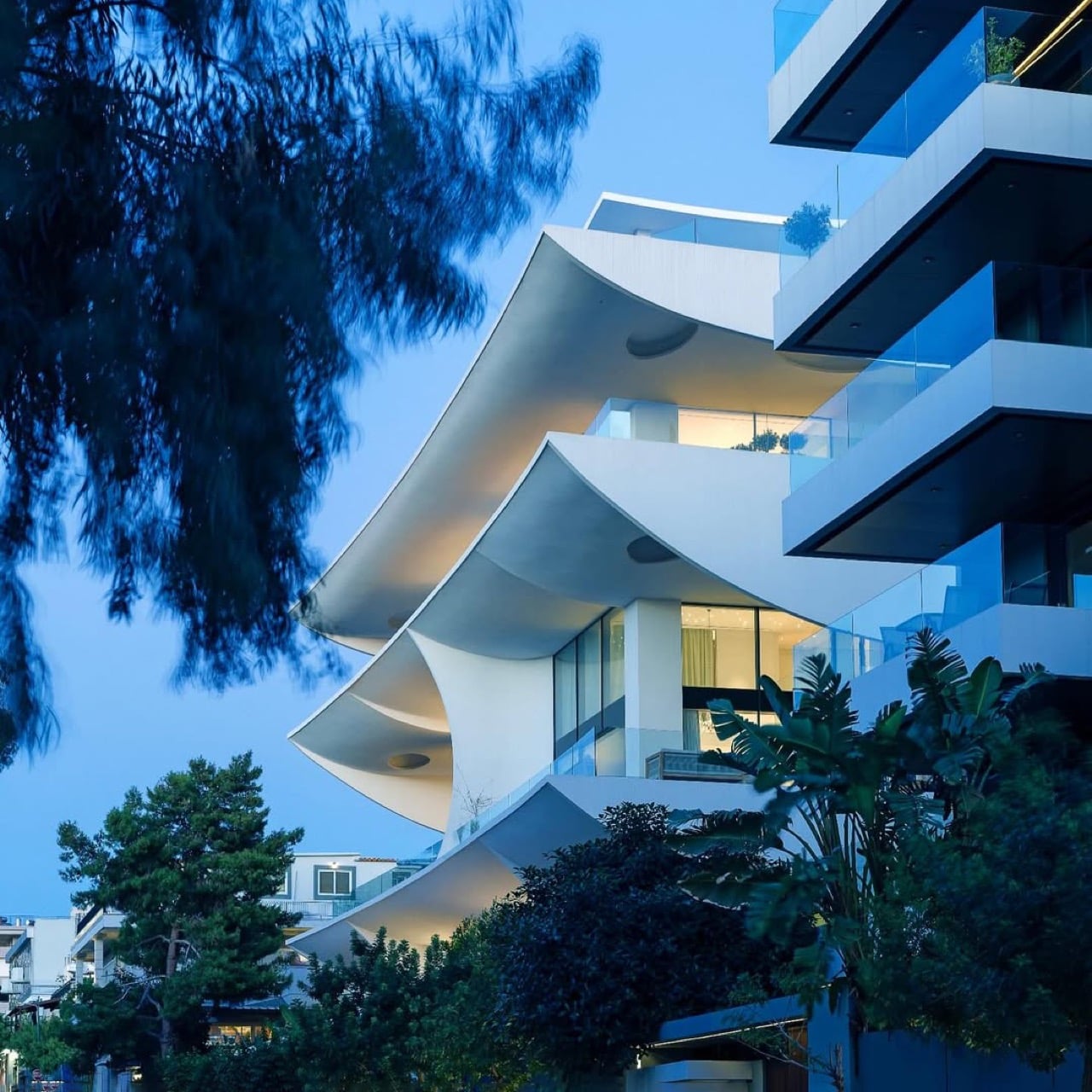
Completed in 2022, the development replaces the conventional stacked façade with a composition defined by curves, repetition, and movement. Each floor becomes part of a larger sculptural rhythm, with the balconies shifting in depth and direction as they rise. The effect is expressive, but never arbitrary. Behind the building’s floral silhouette is a careful response to climate, privacy, and everyday living.

The generous projections shield the glazed interiors from direct sunlight, reducing heat exposure during the brightest hours of the day. Their curved edges create privacy between neighboring apartments while maintaining views toward the surrounding coastal landscape. At the same time, the balconies provide substantial outdoor rooms rather than narrow platforms, allowing life inside the apartments to expand naturally beyond the façade.

This is where the project becomes most compelling: its visual identity is inseparable from its function. The balconies act simultaneously as shading devices, privacy screens, terraces, and architectural structure. Ornament is not applied to the building; it emerges from the way the building performs.
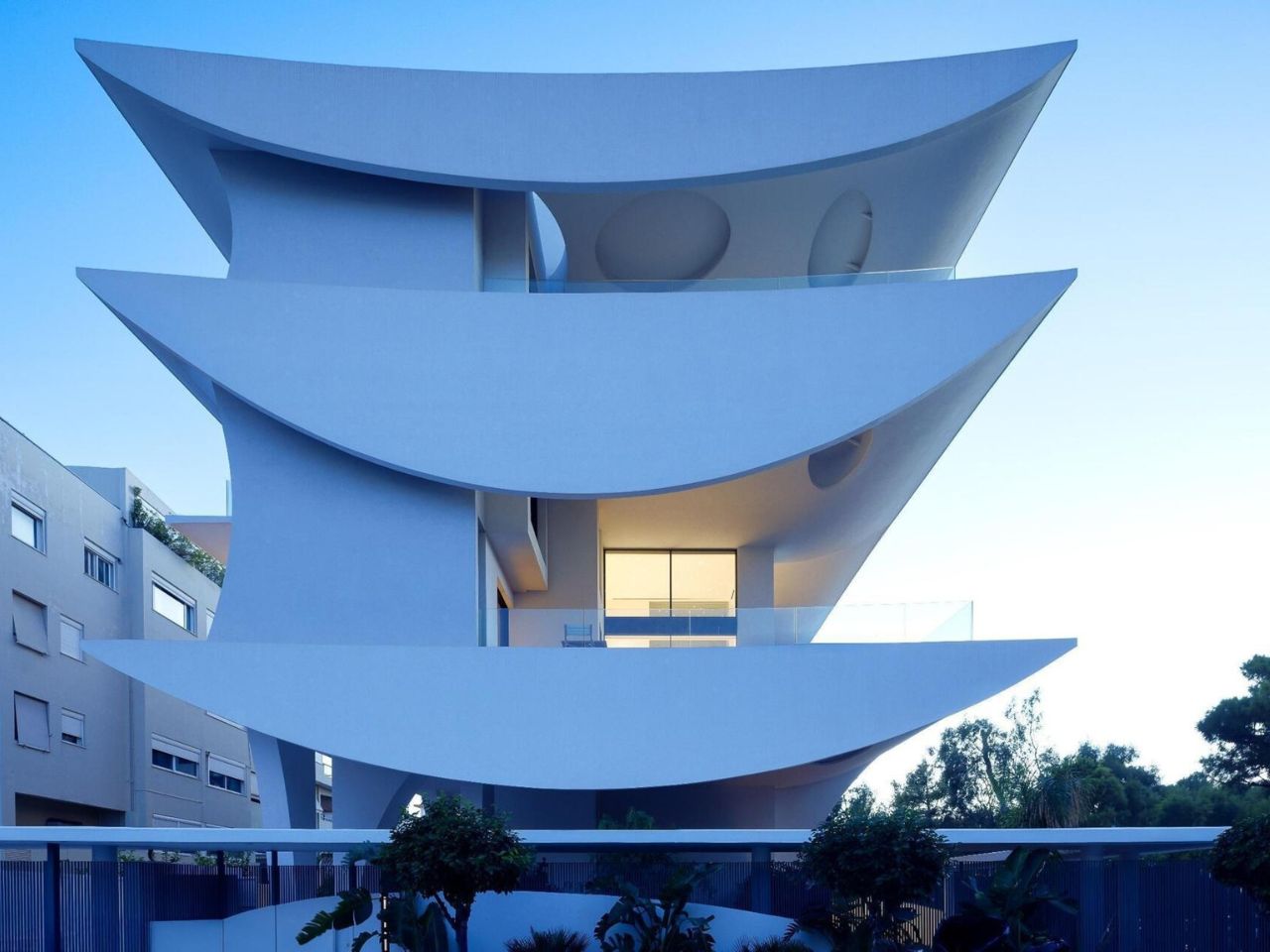
The sense of softness is supported by a considerably more technical framework. A reinforced-concrete structure forms the building’s core, while steel substructures support the more complex cantilevered balcony profiles. Smooth cladding conceals the construction beneath, preserving the illusion of continuous, weightless surfaces.

A predominantly white material palette further sharpens the architectural concept. Rather than competing with the form, the restrained finishes allow light and shadow to animate it. Under the intense Greek sun, the building is constantly changing. Curves appear crisp in direct light, then dissolve into soft gradients as shadows move across the façade.

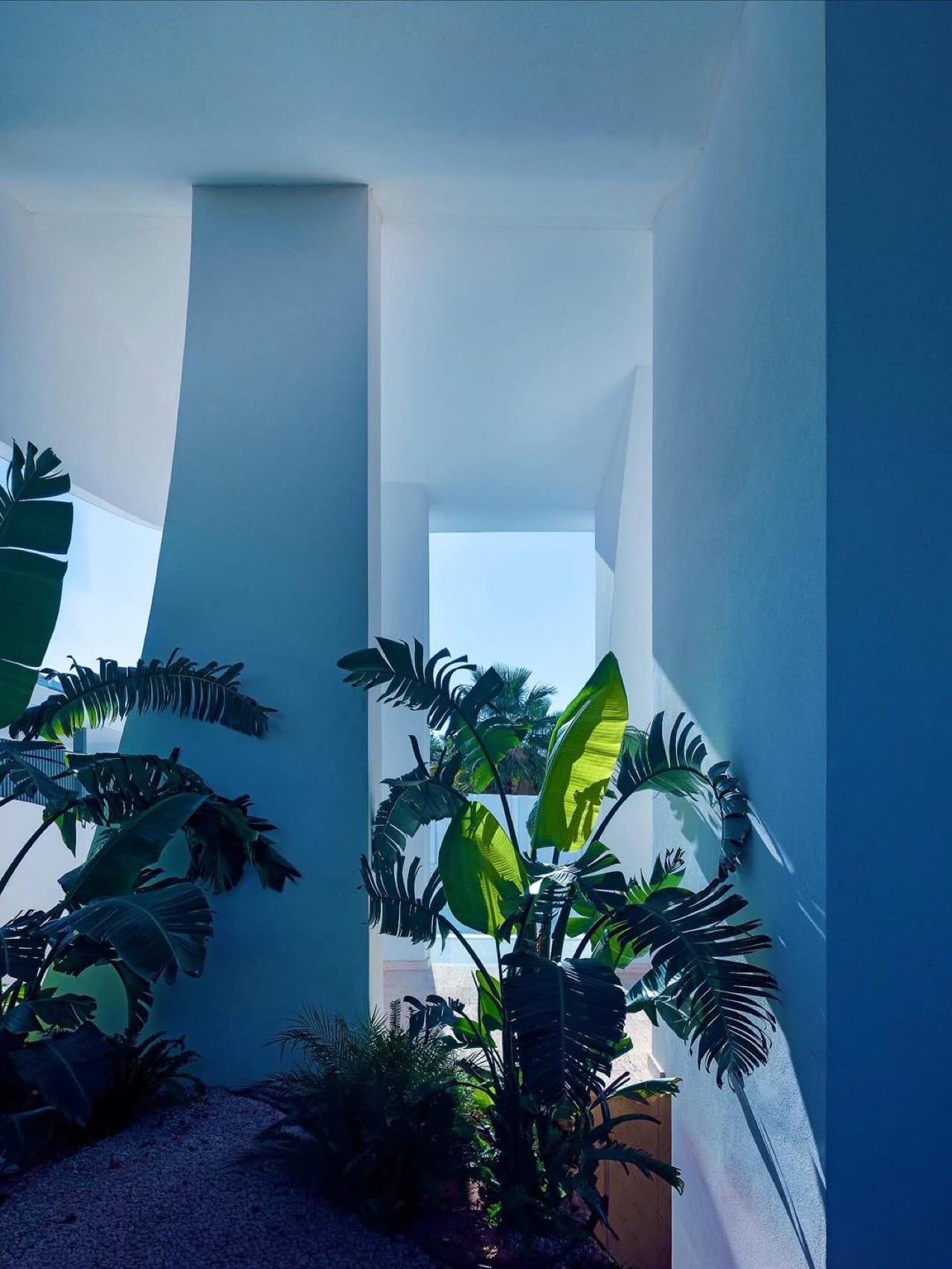
The use of white also creates continuity between interior and exterior. Living spaces appear to flow toward the terraces, while the terraces read as open-air extensions of the rooms behind them. The result is a bright, seamless environment that reflects the rhythms of coastal life.
At ground level, a perforated metal enclosure balances openness with privacy. Light and partial views pass through its surface, while recessed entrances create a gradual transition from the street to the residences within.

With Rêve en suspens, 314 Architecture Studio demonstrates how a single architectural element can shape both image and experience. The building’s petals are striking, but they are more than a visual signature. They frame views, filter sunlight, shelter residents, and redefine the relationship between home and horizon.

In a neighbourhood shaped by the sea, the project does not merely face the landscape. It opens toward it.

The post Where Sculptural Balconies Meet Mediterranean Light and Coastal Living first appeared on Yanko Design.
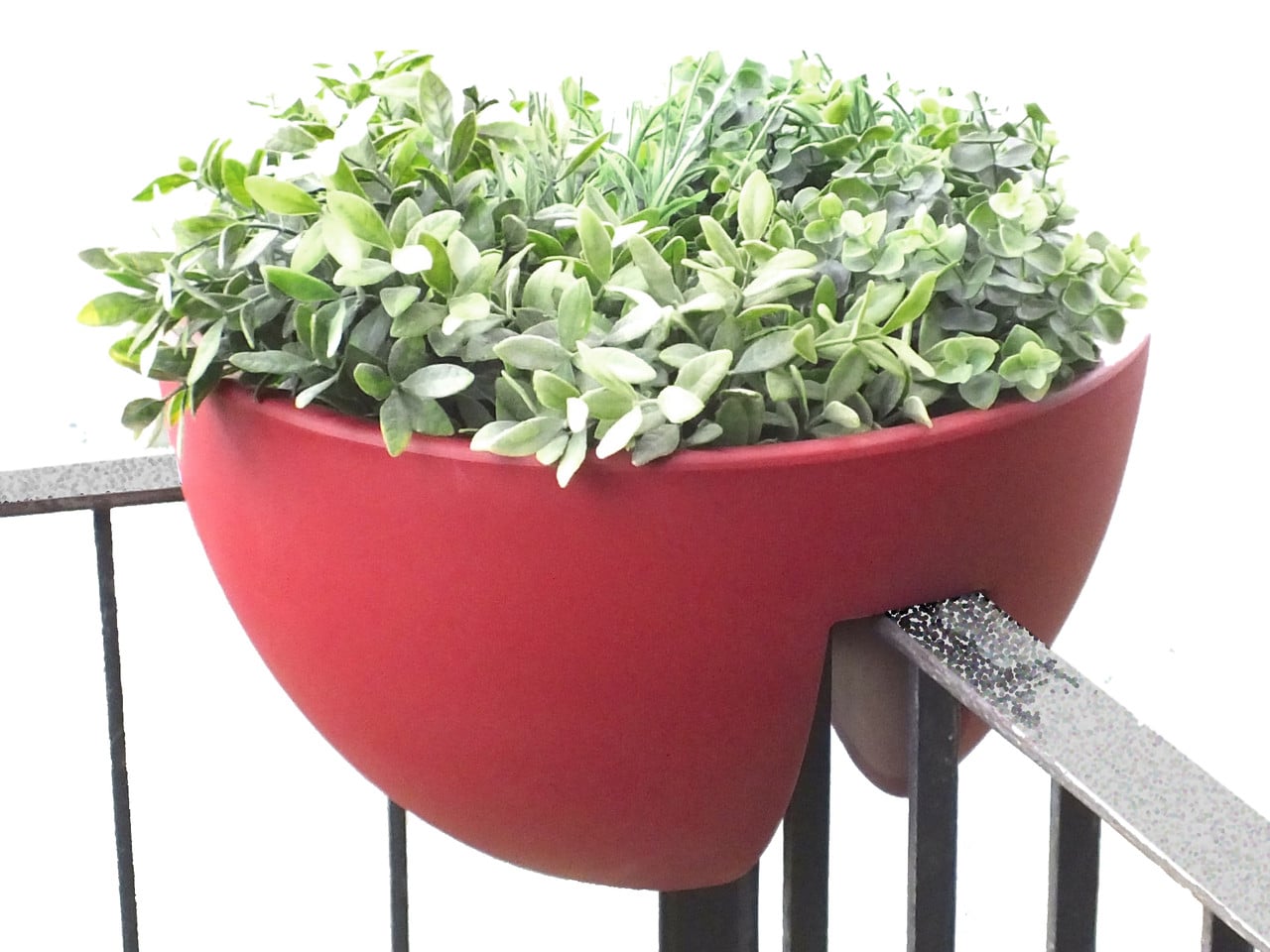
This Planter Fits the One Balcony Spot Every Other Pot Ignores

Most balcony railings do exactly one thing: keep people from falling off. The corners, in particular, tend to collect nothing more useful than rust and pigeons. Rephorm, a Berlin-based furniture brand, has a different idea about what that corner could be doing, and the result is a planter that fits where no standard pot ever has.

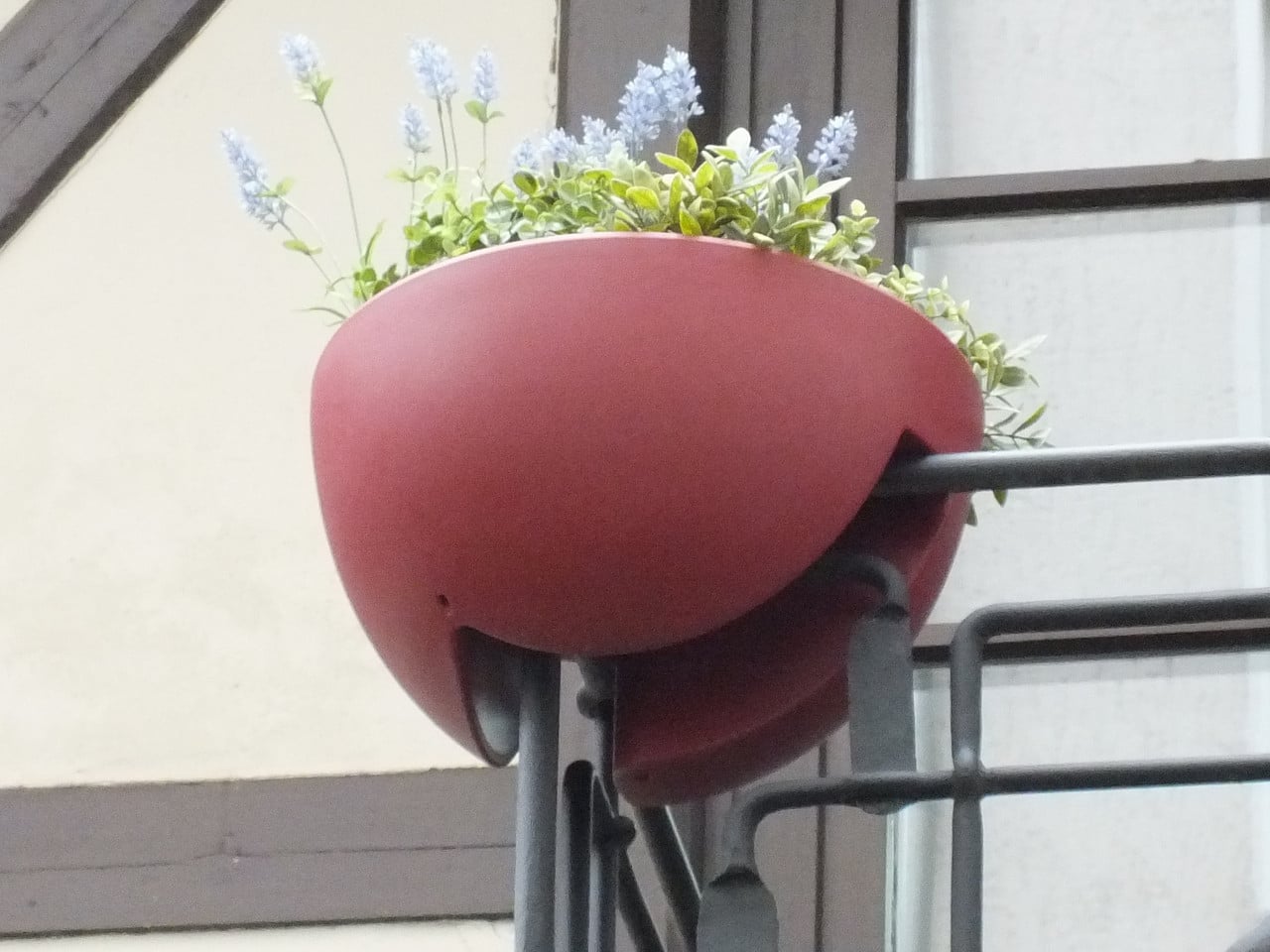
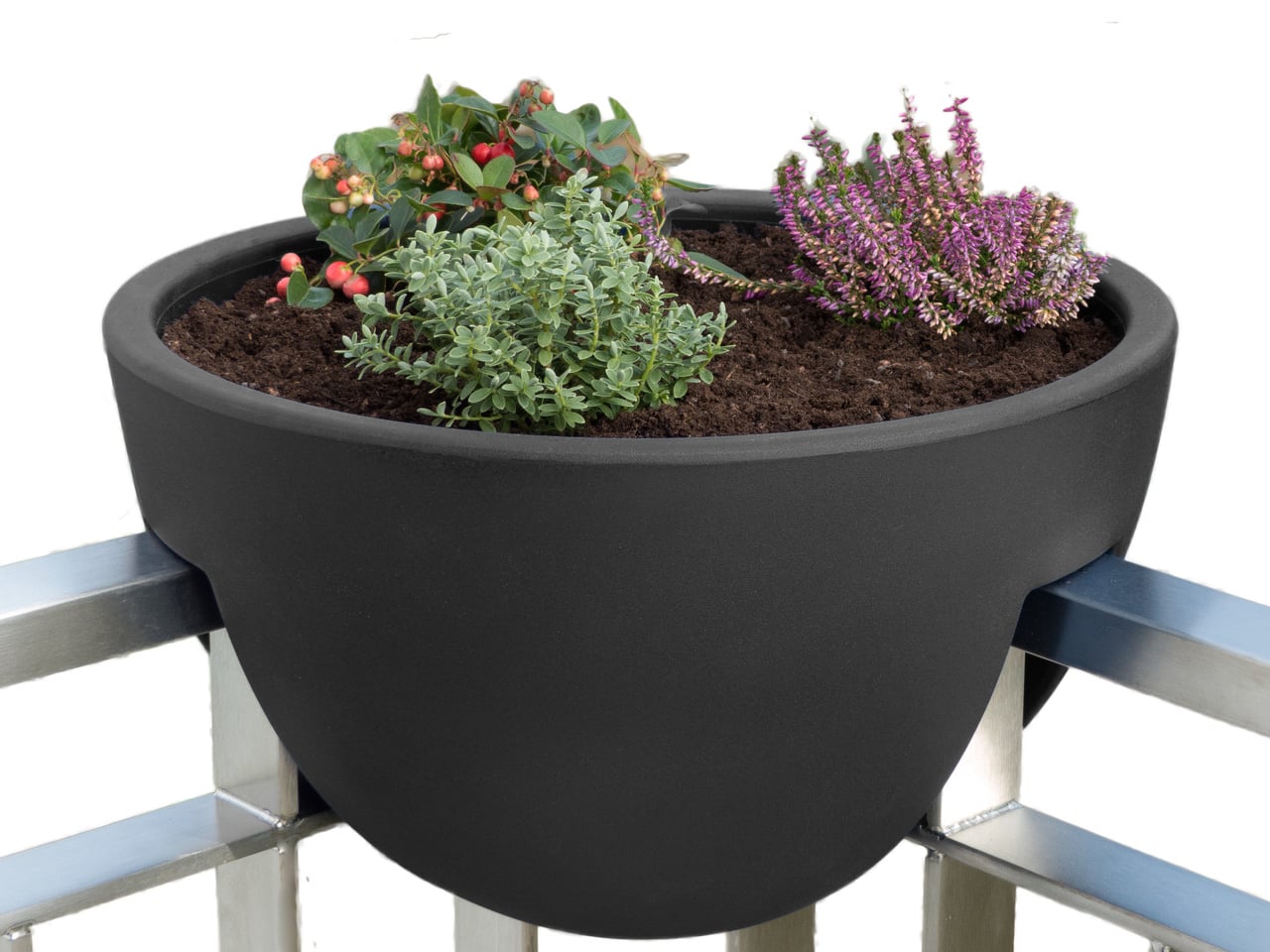
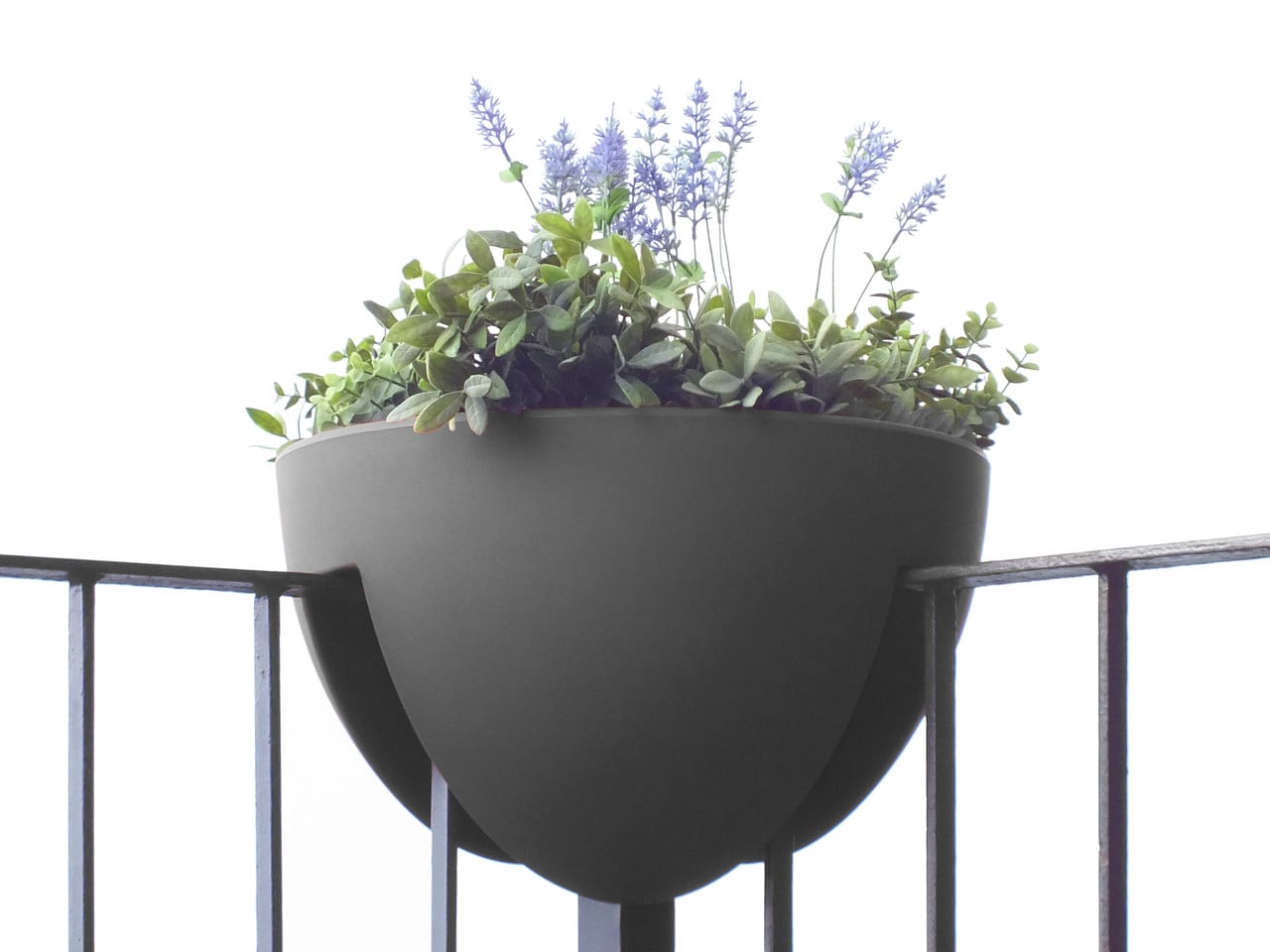
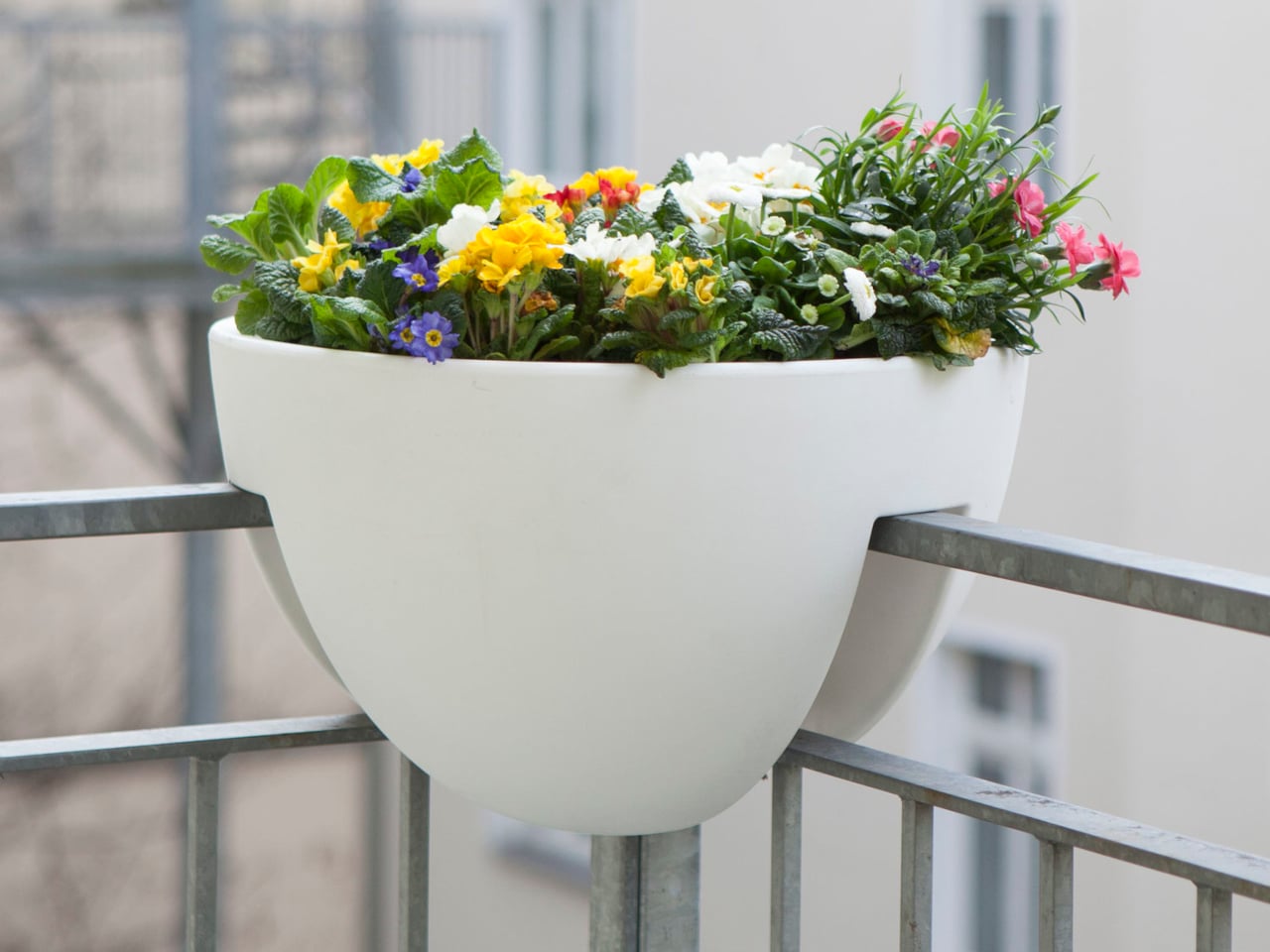
The Eckling is designed specifically for balcony corners, addressing a gap that rectangular window boxes and round hanging pots have never managed to fill. Most railing planters sit along a straight stretch of rail, so corners get skipped entirely. An L-shaped recess cut into the base of the hemispherical bowl allows it to rest squarely on two railing legs at a corner junction, no extra hardware required.

Designer: Michael Hilgers

This is actually the second generation of Rephorm’s thinking on railing planters. The brand’s original Steckling pot, developed in 2006, introduced the idea of a planter that simply drops onto the rail rather than clipping or hanging. The Eckling borrows that logic and extends it to corner placement. Two plastic cable ties hidden beneath the bowl add security in wind, and the design fits railing stock up to 80mm wide across flat steel, round, and rectangular profiles.

At roughly 44cm in diameter, the Eckling offers about double the planting area of a standard round railing pot. The bowl holds approximately 16 liters of soil, nearly three times the capacity of a typical balcony planter. For anyone who has watched a small pot dry out in a single July afternoon, that volume difference matters. More soil means deeper root runs and longer intervals between watering, practical for herbs or compact perennials filling the wide, shallow bowl.

The material is recyclable polyethylene with a wall thickness Rephorm claims is two to three times that of budget planters from hardware stores. At approximately 2.5kg unfilled, the bowl is noticeably heavier than thin-walled alternatives, and that weight is part of the structural argument. Frost resistance is built into the formulation, so the pot stays through winter rather than being hauled inside each autumn. The matte surface reads closer to coated ceramic than the hollow appearance most balcony planters carry.

One real limitation is worth knowing before ordering. If corner posts project above the top rail line, the L-shaped recess cannot seat properly. The geometry only works when corner posts are flush with or below the horizontal rail, common in modern flat-steel and tube railings but less so in older ornamental ironwork, where vertical elements continue past the handrail. That’s a non-starter for a number of older apartment balconies, so it is worth measuring the railing before committing.

The Eckling is made in Germany, and the design is by Berlin-based architect Michael Hilgers, whose broader practice around what he calls “pragmatic design” tends to focus on modest objects that improve existing infrastructure without replacing it. A balcony corner is about as modest a canvas as it gets.

The post This Planter Fits the One Balcony Spot Every Other Pot Ignores first appeared on Yanko Design.

No Balcony Space? This Table Hooks On as a Planter, Bar, or Desk

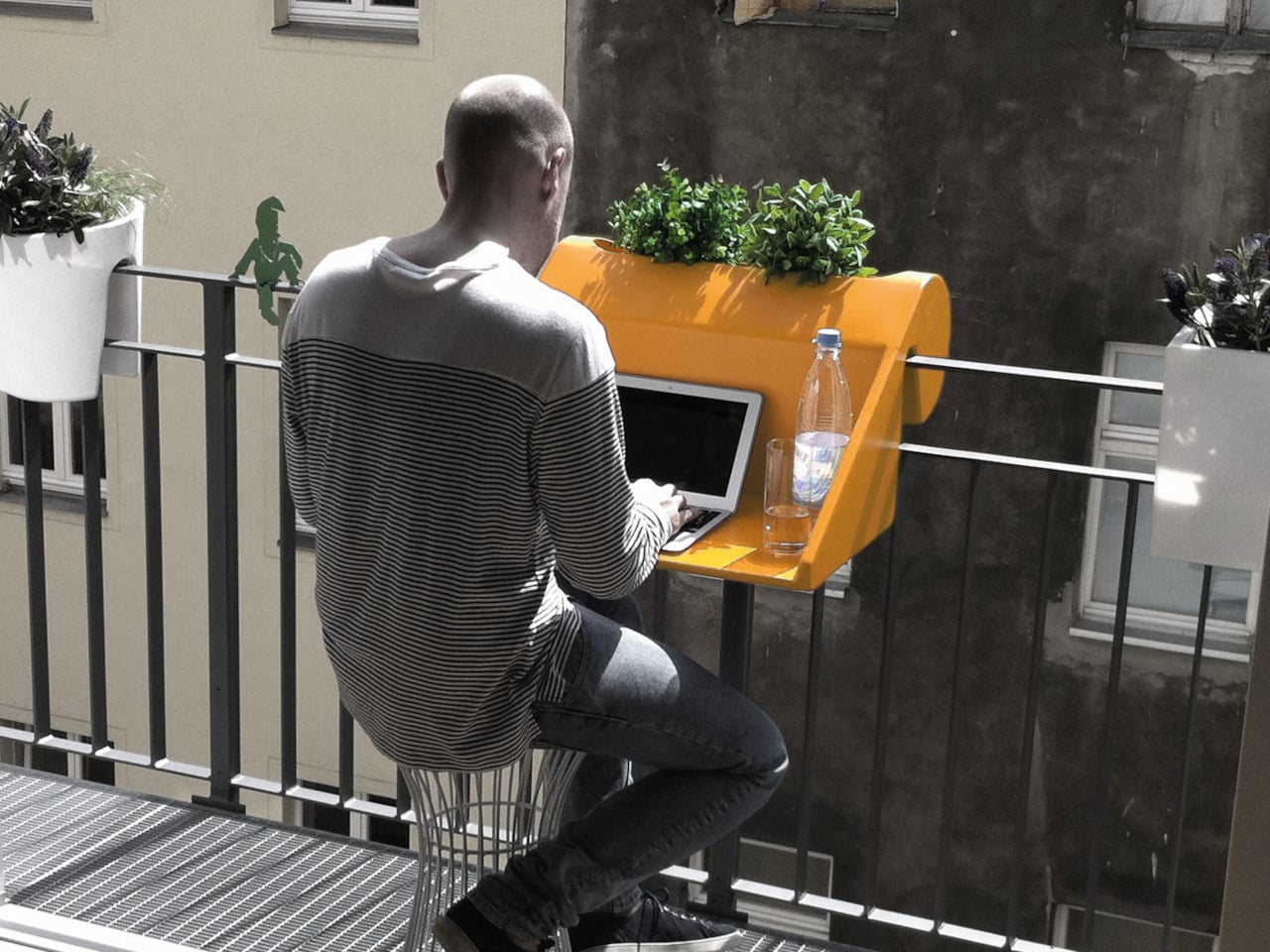
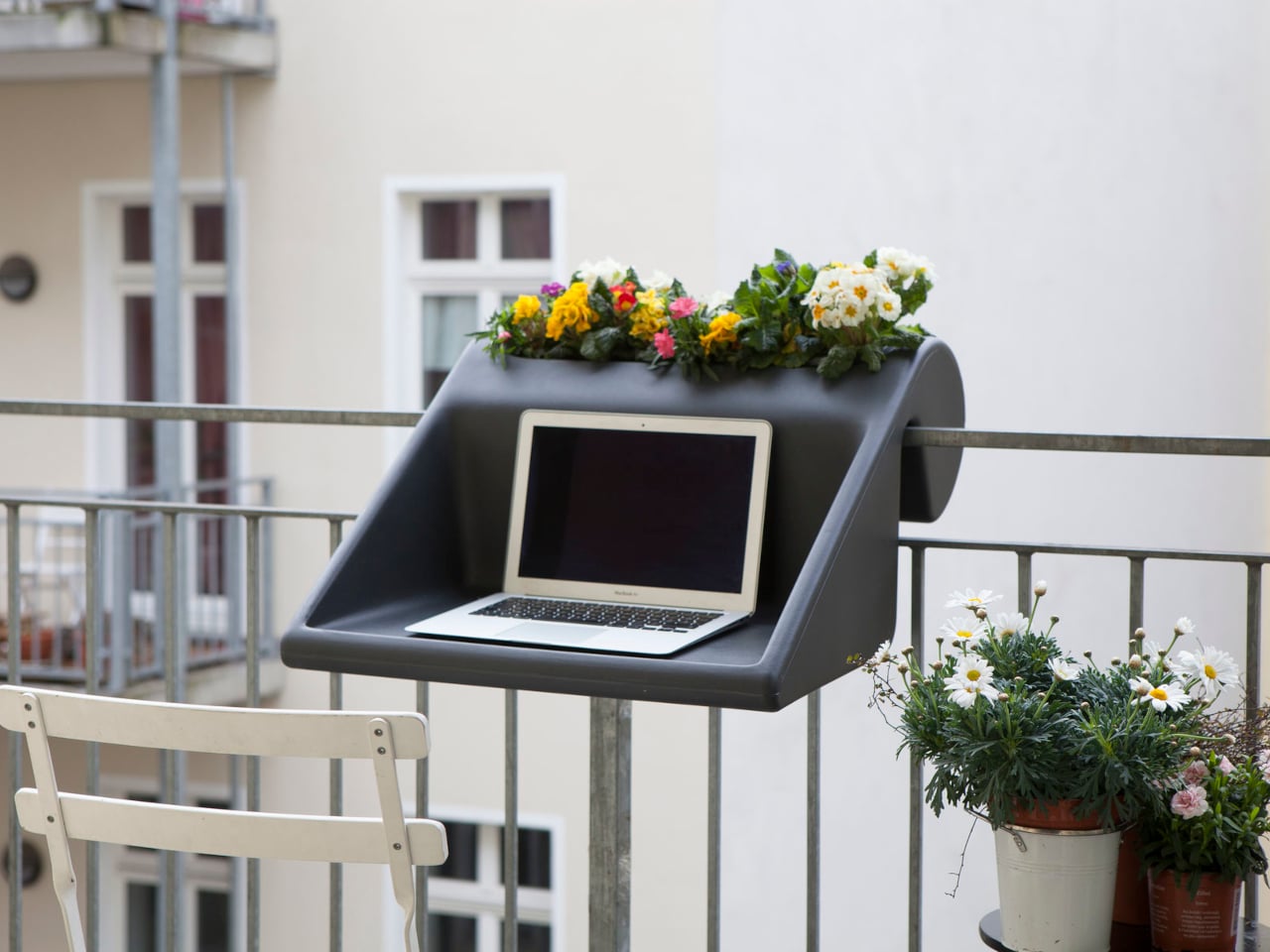
A small city balcony has a way of making every square meter feel personal, just barely. There’s room for a folding chair, maybe a potted plant, and the occasional optimistic thought about al fresco breakfast. What there usually isn’t, though, is any real surface. Designer Michael Hilgers noticed this particular gap, and the balKonzept is his answer: a railing-mounted table that hooks onto the balcony railing with no tools, no hardware, and no permanent commitment.

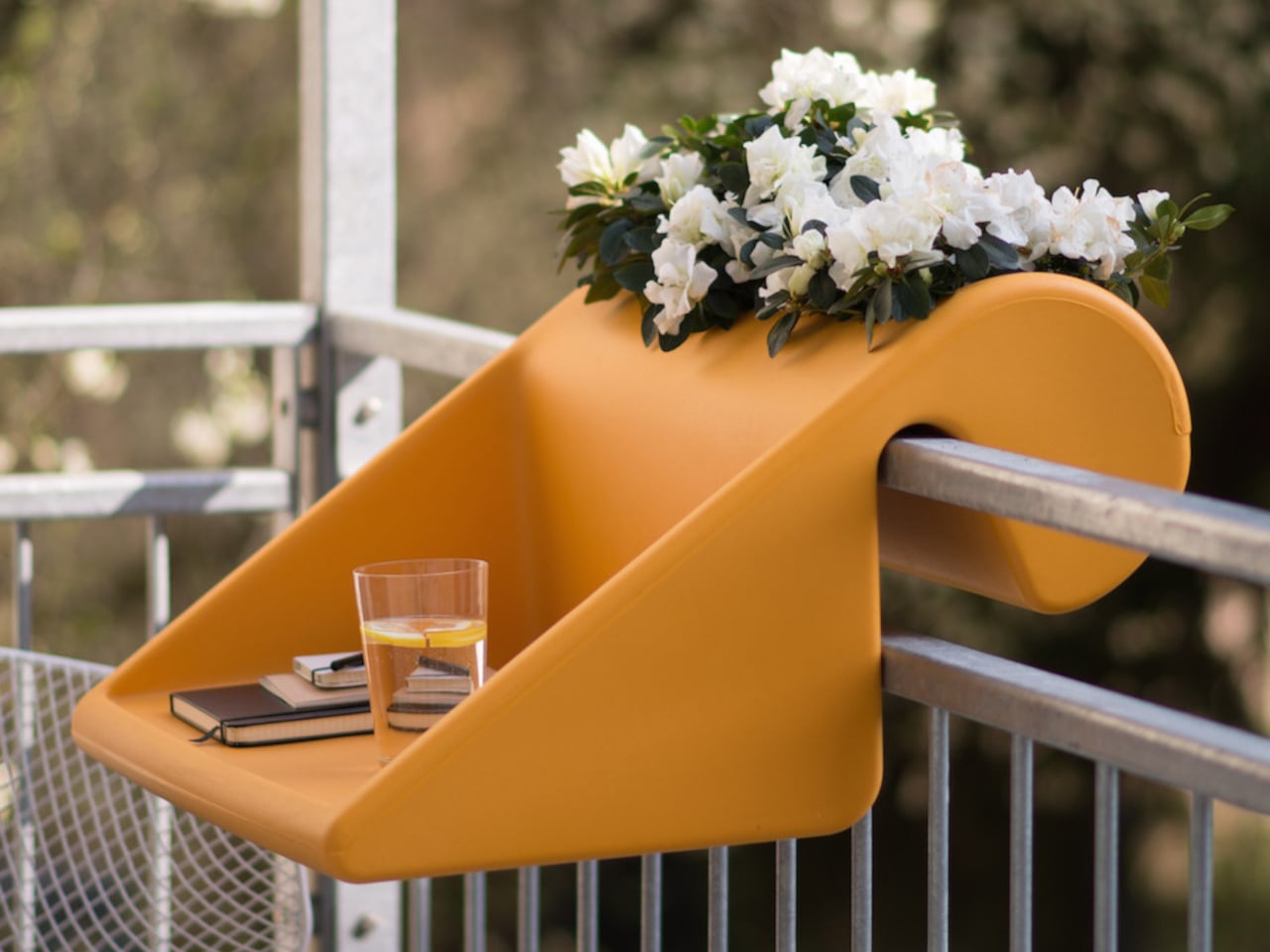
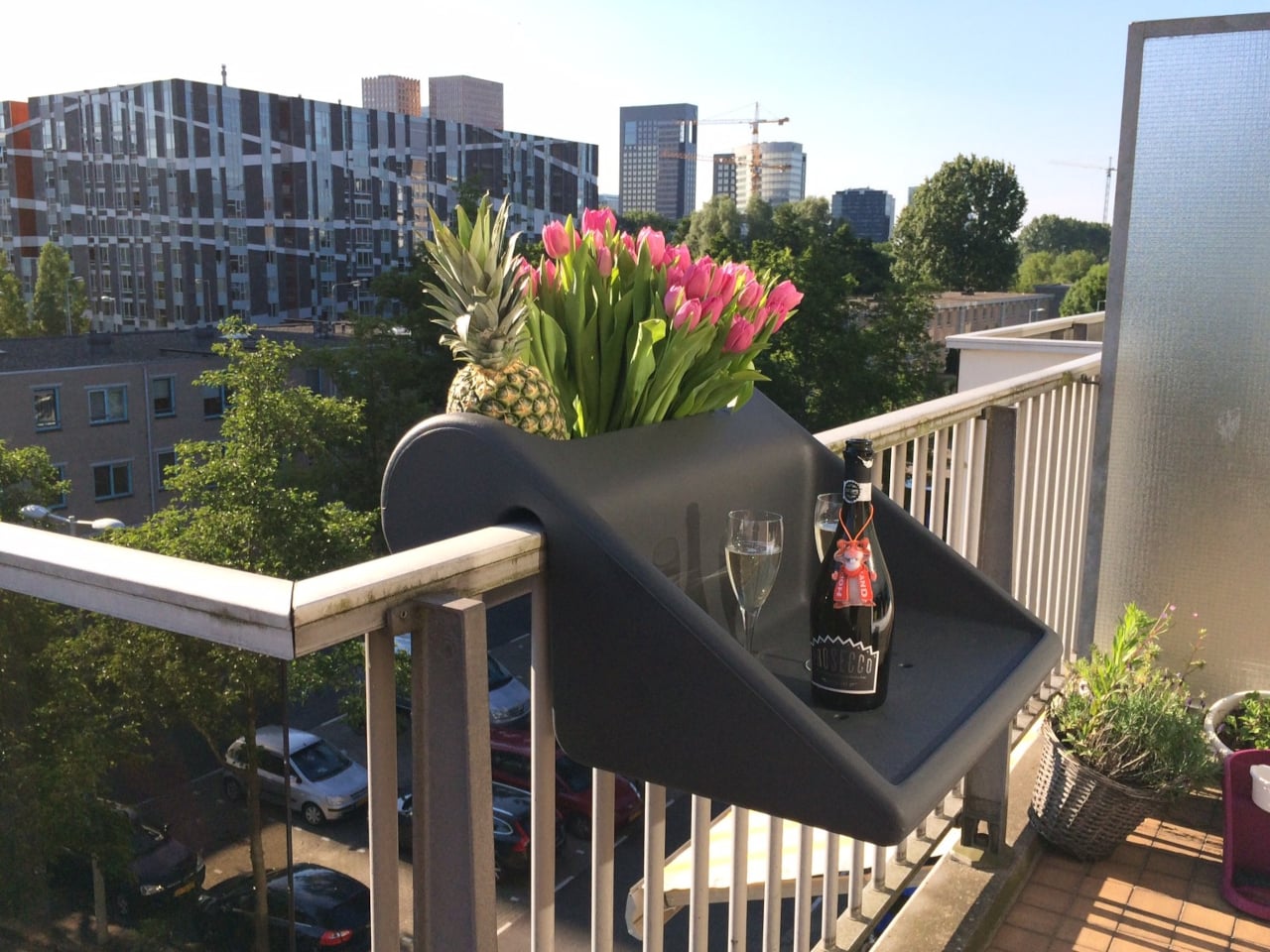
The form is immediately legible. A wedge-shaped body in recyclable polyethylene curves at the rear into a smooth hook, looping over the railing and gripping it via an adjusting screw underneath. That single mechanical gesture is the entire installation. The raised trough at the back sits above the railing line and acts as a windbreak for objects resting on the work surface below. The unit comes in at 60 cm wide and roughly 40 cm deep on the interior side.

Designer: Michael Hilgers (rephorm)

The material choice is worth pausing on. Polyethylene, produced in a Brandenburg plastics factory through rotational molding, is not a glamorous option. It won’t feel precious the way powder-coated steel does. What it does do is survive outdoor life without complaint: frost-resistant, UV-stable, and recyclable at its end of life. Rotational molding also produces hollow, seamless shells with consistent wall thickness, which matters for something exposed to seasonal temperature extremes.

The table height is a fixed function of whatever railing it’s hanging on; subtract 21 cm from the railing height, and that’s the surface level. That means the balKonzept works very differently on a low French-style balcony versus a taller contemporary glass railing, with no way to adjust it beyond moving the piece. For anyone wanting to sit and work at a comfortable height, the railing geometry will decide the experience before any other consideration does.

Where the design earns its keep is in the planter box. Filling it with soil and roots is one option, but the trough is deep enough to function as an improvised cooler, and Rephorm’s own description cheekily acknowledges this, noting it works just as well with ice cubes and sparkling wine as it does with geraniums. That kind of built-in flexibility is the whole point; the balKonzept doesn’t commit to being one thing, which is probably what a small balcony needs most.

The post No Balcony Space? This Table Hooks On as a Planter, Bar, or Desk first appeared on Yanko Design.