Why Cadillac Designed Its F1 Camouflage to Actually Stand Out

Formula 1 teams revealed their 2026 testing plans weeks ago, creating a strange temporal problem. Everyone knows Cadillac will run at Barcelona’s closed-door shakedown on January 26. Everyone knows the real livery reveal happens during the Super Bowl broadcast on February 8. That leaves a two-week gap where the team exists in public view but hasn’t officially launched. Most teams would treat this like dead air.

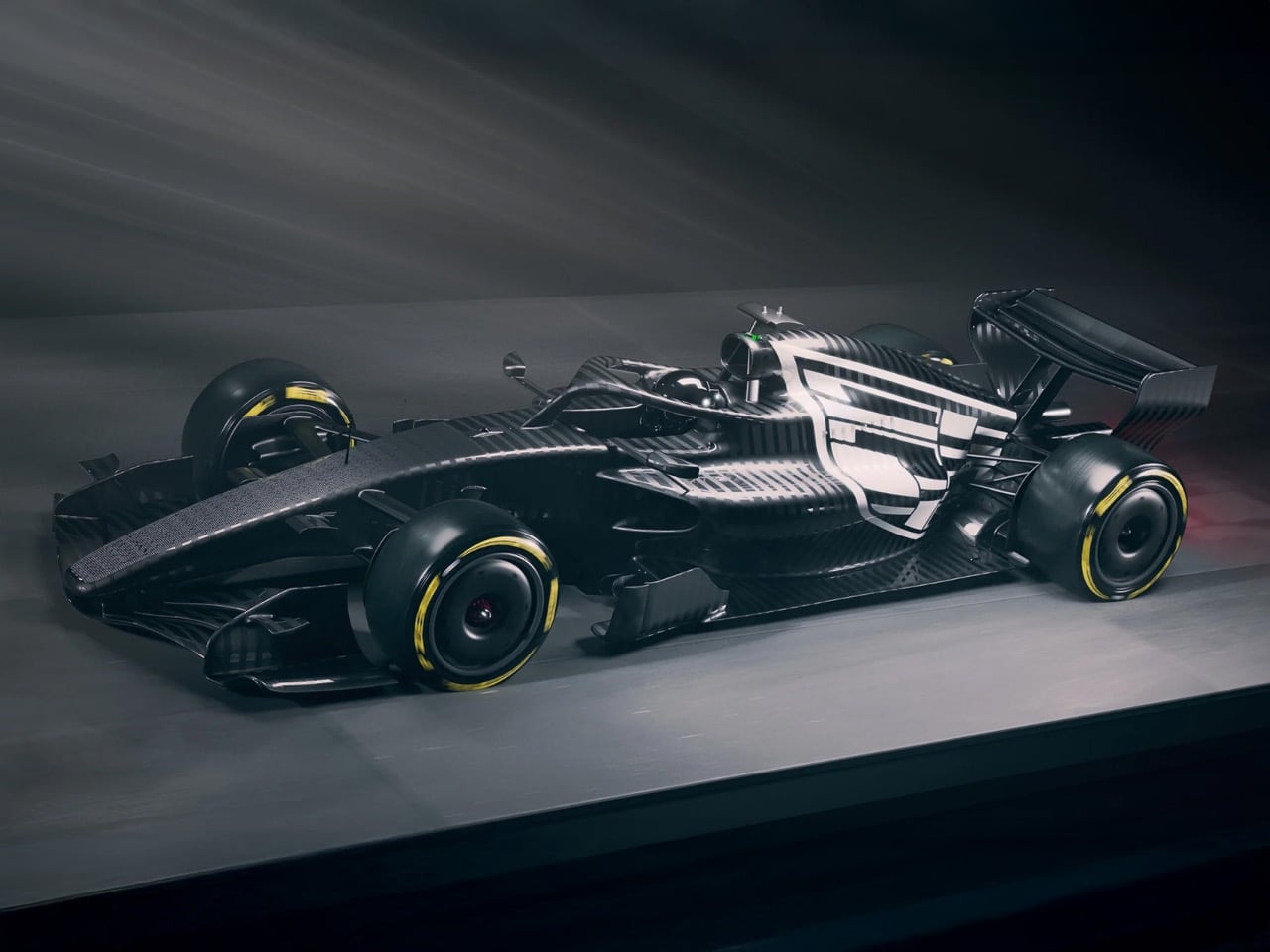
Cadillac’s response was to design specifically for that liminal space. The testing livery features what they call “the Cadillac precision geometric pattern” in gloss and matte sequences, turning functional camouflage into brand vocabulary. They’re using the constraint of secrecy to communicate design philosophy, establishing that their approach blends automotive prototype discipline with motorsport theater. The giant Cadillac crest draped across the engine cover isn’t trying to hide anything. It’s declaring that the space between stealth and spectacle is itself worth designing for.

Camouflage As A Design Language
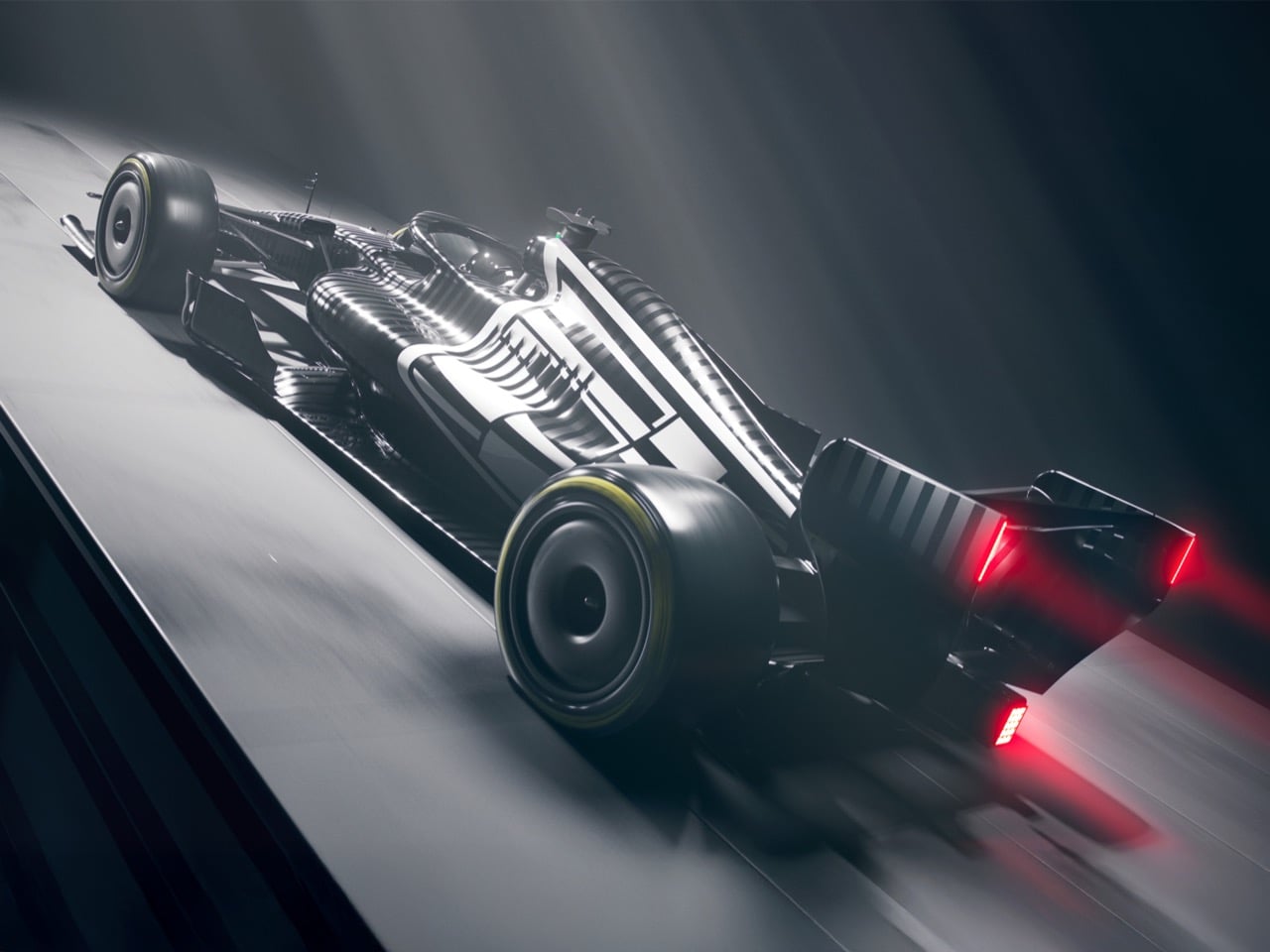
Cadillac didn’t reach for F1’s usual testing camouflage playbook. They reached for Detroit’s. The vertical geometric pattern running front to back uses alternating gloss and matte treatments, which is straight out of automotive prototype testing methodology. When manufacturers test pre-production vehicles on public roads, they use dazzle camouflage patterns to break up body lines and prevent photographers from capturing accurate proportions. The gloss-matte alternation specifically disrupts how light reads surface contours, making it harder to discern where one body panel ends and another begins. Cadillac has imported that exact technique onto their F1 car, establishing a visual link between their production vehicle development and their racing program before anyone sees them turn a wheel.

This matters because F1 test camouflage typically aims for generic obscurity. Teams either run bare carbon fiber (functional, boring) or apply random geometric patterns (functional, slightly less boring). What Cadillac did requires actual design development work. GM’s press release confirms the testing livery came from “a cross-continental collaboration” between their global design office and the F1 team’s operations spanning the US and UK. They committed design resources to a livery that will only exist for four days of closed-door testing in Barcelona between January 26-30. That’s an unusual allocation of effort for something most teams treat as throwaway content.

The monochrome palette reinforces the automotive prototype reference while giving Cadillac room to establish brand identity without committing to race colors. Black and silver create what GM describes as “a striking and premium appearance” linked to “a modern interpretation of the iconic Cadillac crest and shield”. Translation: they want you thinking about Cadillac’s luxury automotive positioning while accepting that you’re looking at operational camouflage. The cognitive dissonance is intentional.

Founder Names as Front-End Real Estate
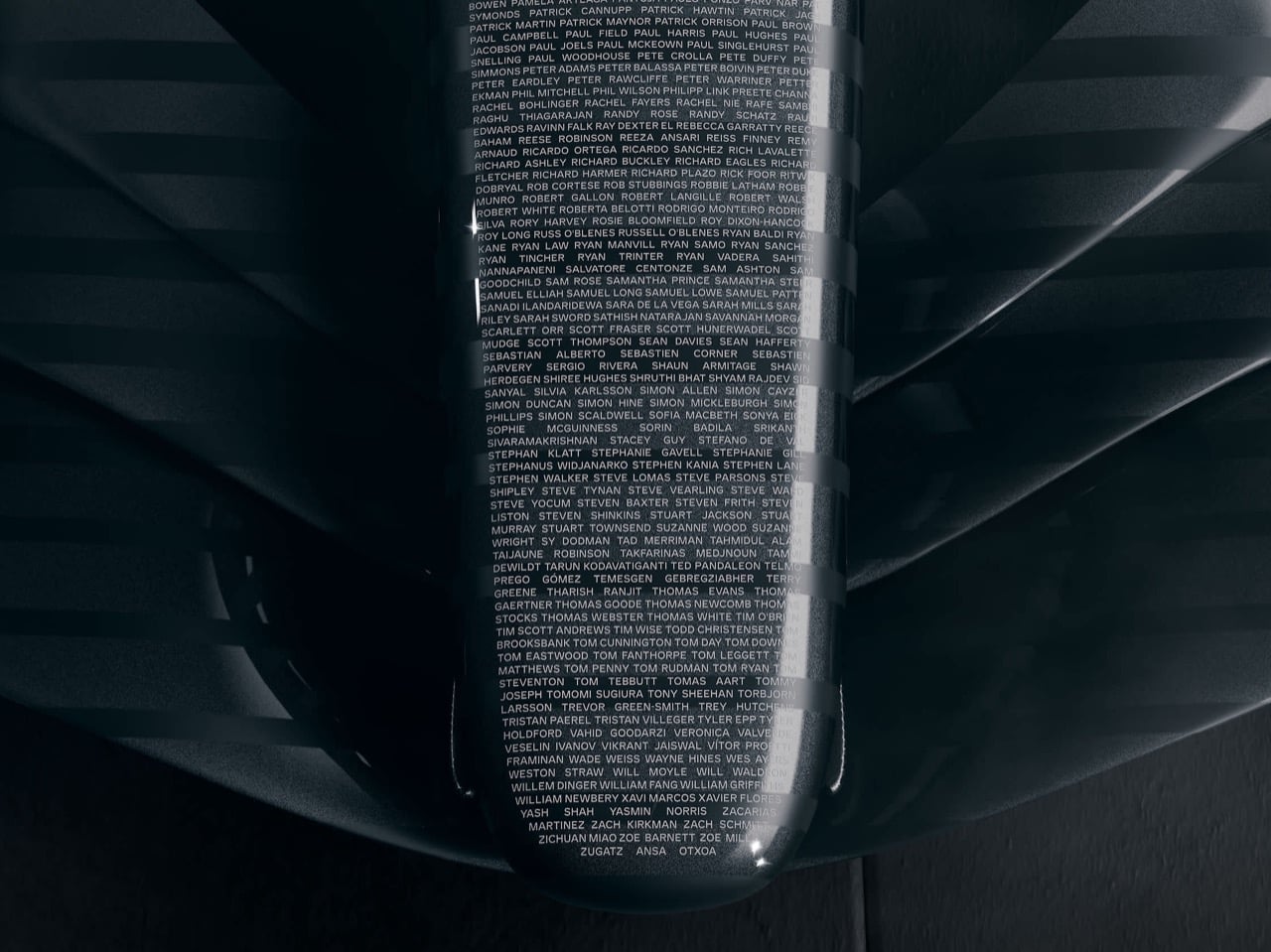
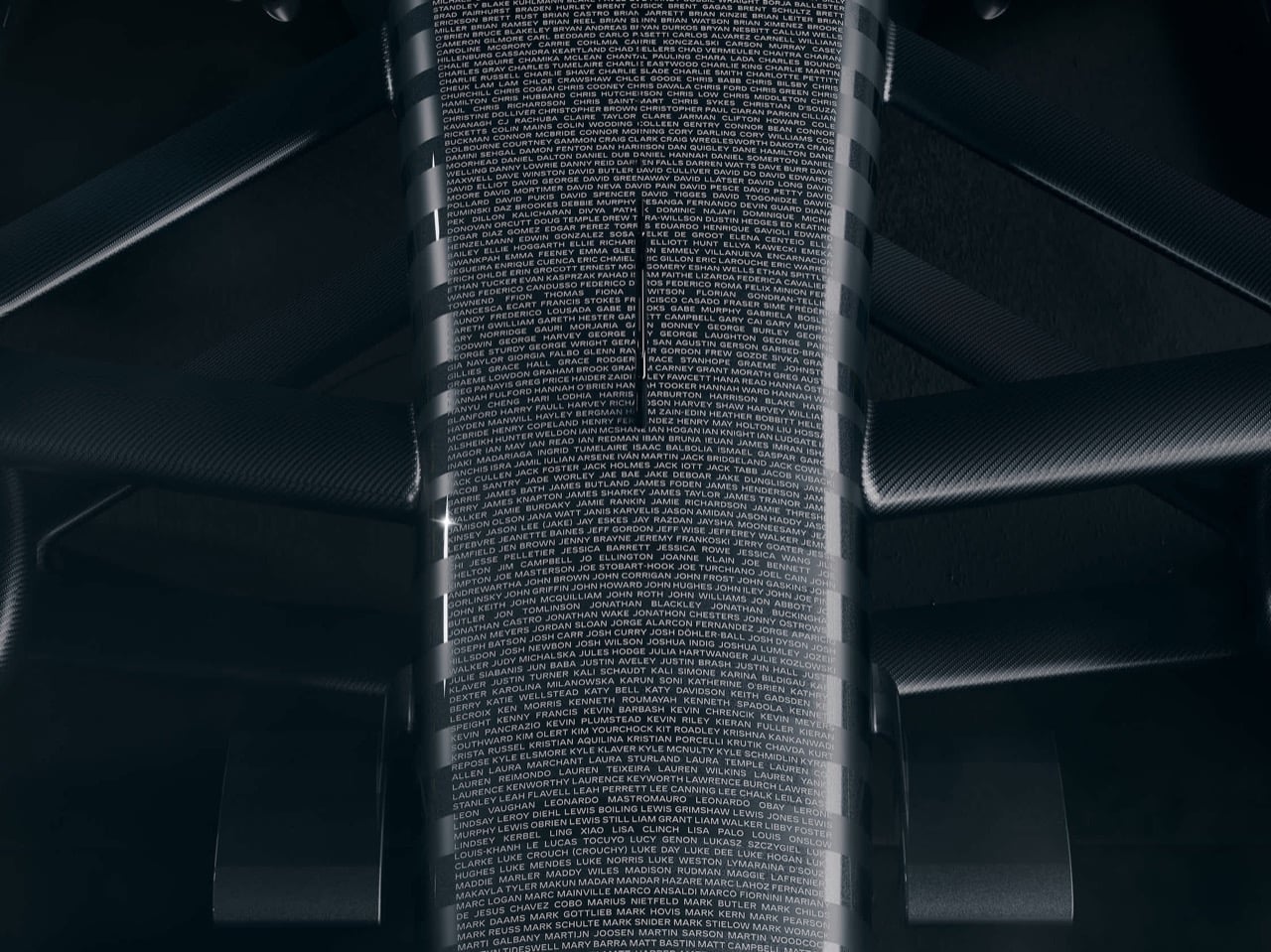
Cadillac embedded the names of their founding team members from both the US and UK facilities onto the nose section. This is where the design brief gets interesting from a messaging perspective. F1 teams occasionally acknowledge personnel on liveries, usually through small decals or subtle typography. Cadillac made founder recognition a primary design element on arguably the most visible part of the car during front-facing photography. The nose gets scrutinized heavily during testing because it’s where teams often trial different aerodynamic configurations. Every photo analyzing nose geometry will also capture those founder names.

The positioning serves dual purposes: it humanizes what could have been pure corporate branding while reinforcing that this program exists because specific people made it happen. Cadillac can’t claim decades of F1 heritage like Ferrari or McLaren, so they’re building a founding mythology in real-time. The test livery becomes the origin story document. When people look back at Cadillac’s first F1 laps, those founder names will be visible in every archive photo. That’s smart long-term brand narrative construction disguised as a nice gesture.

It also signals confidence. Teams worried about looking amateurish during their debut typically minimize branding and keep things conservative. Cadillac put a massive crest across the engine cover and devoted premium nose real estate to personnel acknowledgment. They’re treating Barcelona testing like it matters as a brand moment, which suggests they believe their on-track performance won’t immediately embarrass them. Whether that confidence proves warranted remains speculation until they actually run, but the design choices indicate they’re comfortable being highly visible during the shakedown.

Designing for the Gap Between Testing and Launch
The Barcelona test runs January 26-30. The Super Bowl reveal happens February 8. Official pre-season testing in Bahrain starts February 26, where all teams must appear in their actual race liveries. Cadillac carved out a specific design approach for that middle window when they exist publicly but haven’t officially launched. Most teams would use placeholder graphics or early-reveal their race livery to fill that gap. Cadillac treated it as its own design challenge requiring a distinct solution.

This approach mirrors product launch strategies in consumer tech, where companies often deploy teaser campaigns that reveal design philosophy without showing final products. Apple does this constantly with cryptic event invitations that establish aesthetic direction before unveiling actual devices. Cadillac applied that thinking to F1, using the testing livery as a teaser that communicates brand values (precision, Detroit heritage, automotive development discipline) while maintaining suspense about the race livery. The testing design becomes a prologue rather than a placeholder, giving them two separate moments of visual impact instead of one.

The gamble is whether anyone cares about F1 testing liveries enough for this strategy to matter. Cadillac clearly believes the Barcelona shakedown will generate significant coverage despite being closed to the public, likely because they’re the first new F1 team since Haas in 2016. They’ve got Sergio Perez and Valtteri Bottas driving, both former race winners with existing fan bases. Media attention will be high regardless of access restrictions. By creating a testing livery with actual design intent, Cadillac ensures that coverage focuses on their visual identity and brand positioning rather than just “new team testing in generic camo.”

The Super Bowl Gambit: Two Reveals, Two Audiences
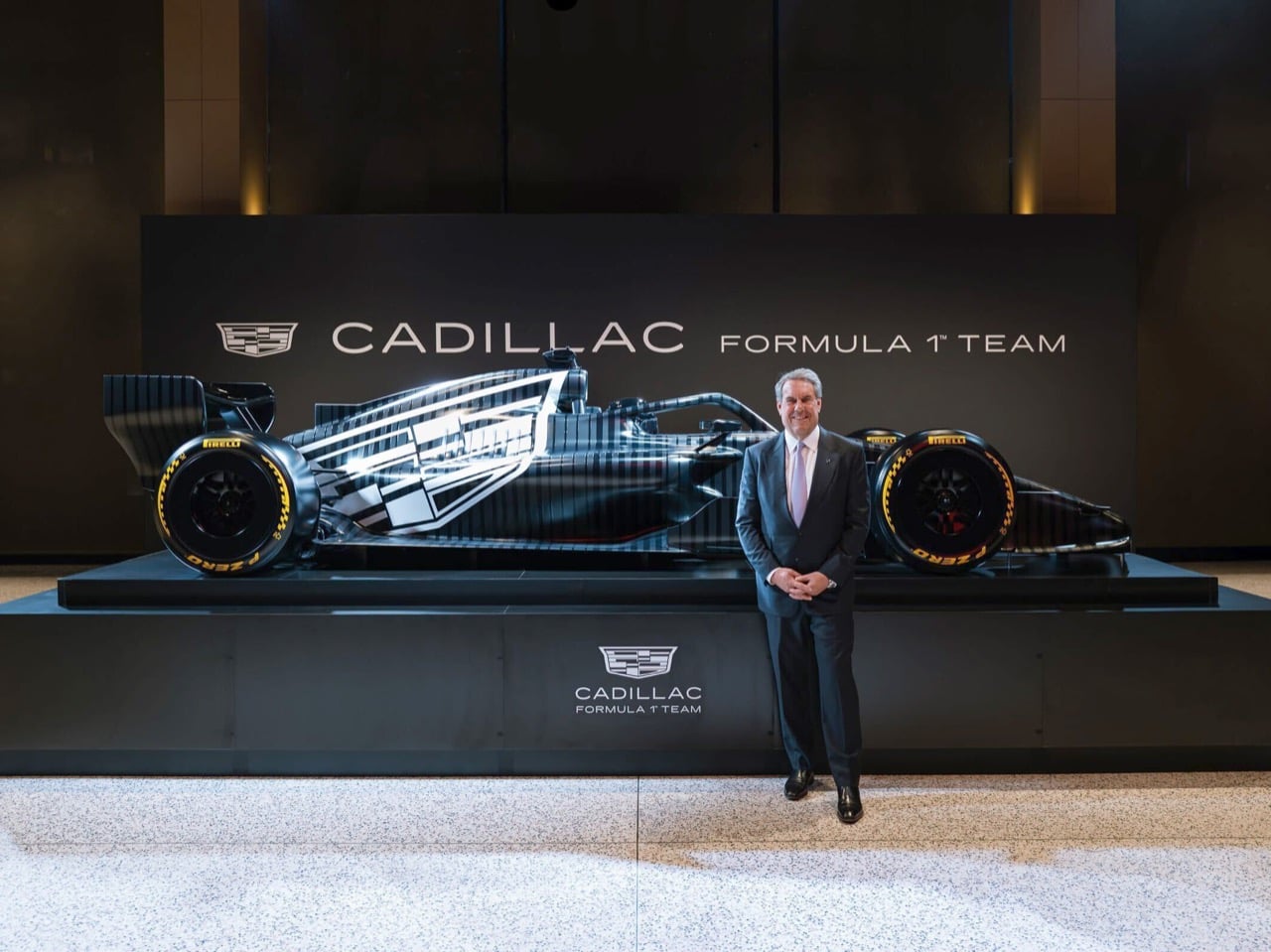
Announcing a February 8 Super Bowl reveal for the race livery turns the testing design into an explicitly temporary statement. Cadillac could have just revealed the race livery now and run it in Barcelona, but separating the reveals creates narrative momentum. The testing livery establishes that Cadillac takes design seriously and imports automotive development discipline into F1. The race livery reveal during America’s biggest television event positions F1 as mass-market entertainment rather than niche European motorsport. Two different messages for two different audiences, with the testing livery handling the credibility building while the Super Bowl moment handles scale and spectacle.

The testing livery will also be on display at the Detroit Auto Show through January 25, giving Detroit-area fans a chance to see it in person before Barcelona. That’s a local market play that reinforces the “Detroit design heritage” messaging GM President Mark Reuss emphasized during the unveiling. Cadillac is working multiple audience segments simultaneously: F1 enthusiasts who’ll scrutinize Barcelona testing, Detroit locals who can visit the auto show, and mainstream American viewers who’ll catch the Super Bowl reveal. The testing livery serves the first two groups while building anticipation for the third.

Whether this layered approach actually moves the needle on Cadillac’s brand perception or F1’s American growth depends on factors beyond livery design. But treating the gap between testing and launch as a design opportunity rather than dead space shows sophisticated thinking about how modern brand reveals work across multiple channels and timelines. The testing livery exists because Cadillac recognized that the waiting room deserves its own design language.

The post Why Cadillac Designed Its F1 Camouflage to Actually Stand Out first appeared on Yanko Design.
2024 Cadillac Lyriq Review

PROS:


  • Premium feel

  • Excellent ride quality

  • Distinctive look

CONS:


  • Premium pricing

  • Disappointing seats

  • Distinctive look

RATINGS:

AESTHETICS
ERGONOMICS
PERFORMANCE
VALUE FOR MONEY

EDITOR'S QUOTE:

The Lyriq stands out in many ways, not the least of which for its unconventional shape and tangible air of refinement about it.

While the fates are falling most strongly against sedans as people trend towards SUVs, station wagons aren’t exactly finding any more favor in the American market. Only a choice few remain available for purchase, stalwarts from Subaru and Volvo appealing to a buyer with a greater desire for practicality than concerns about what’s trendy.

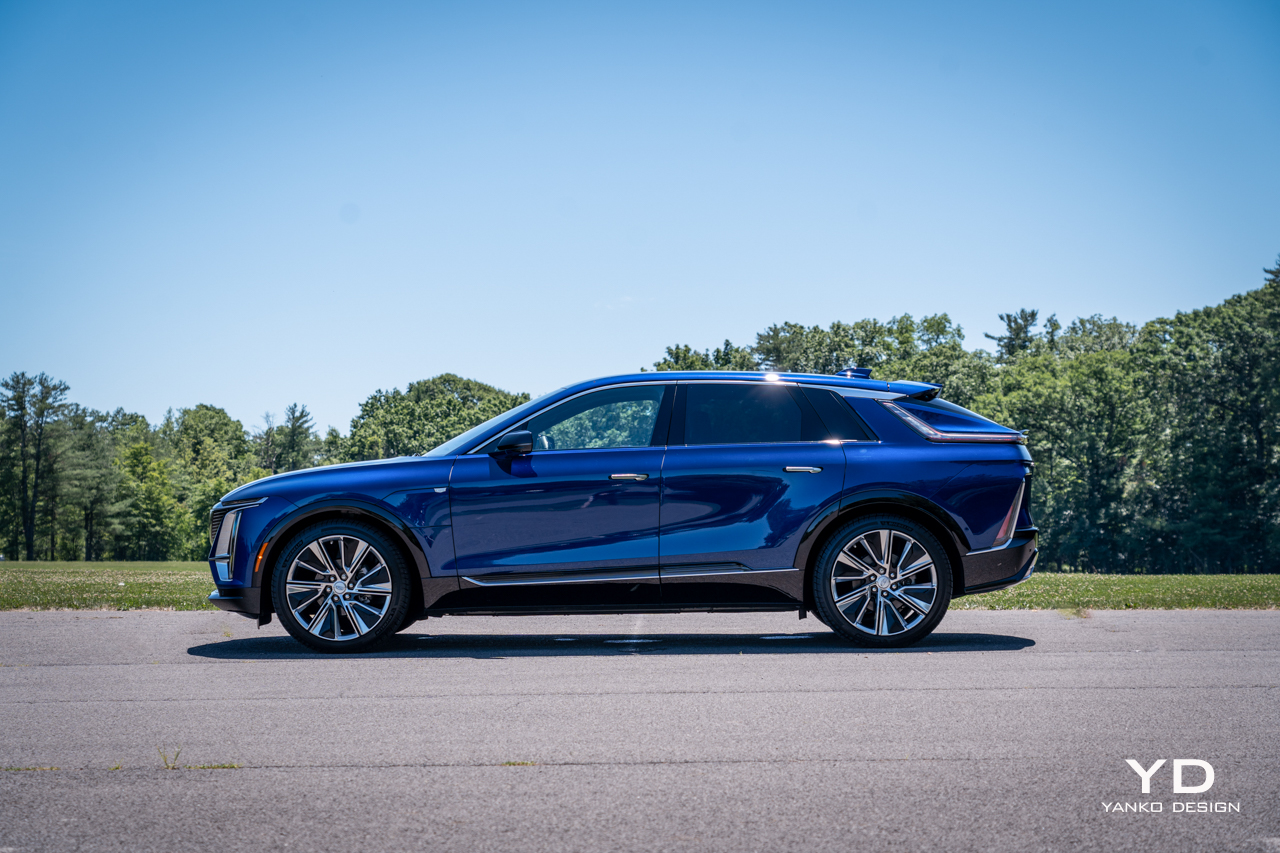
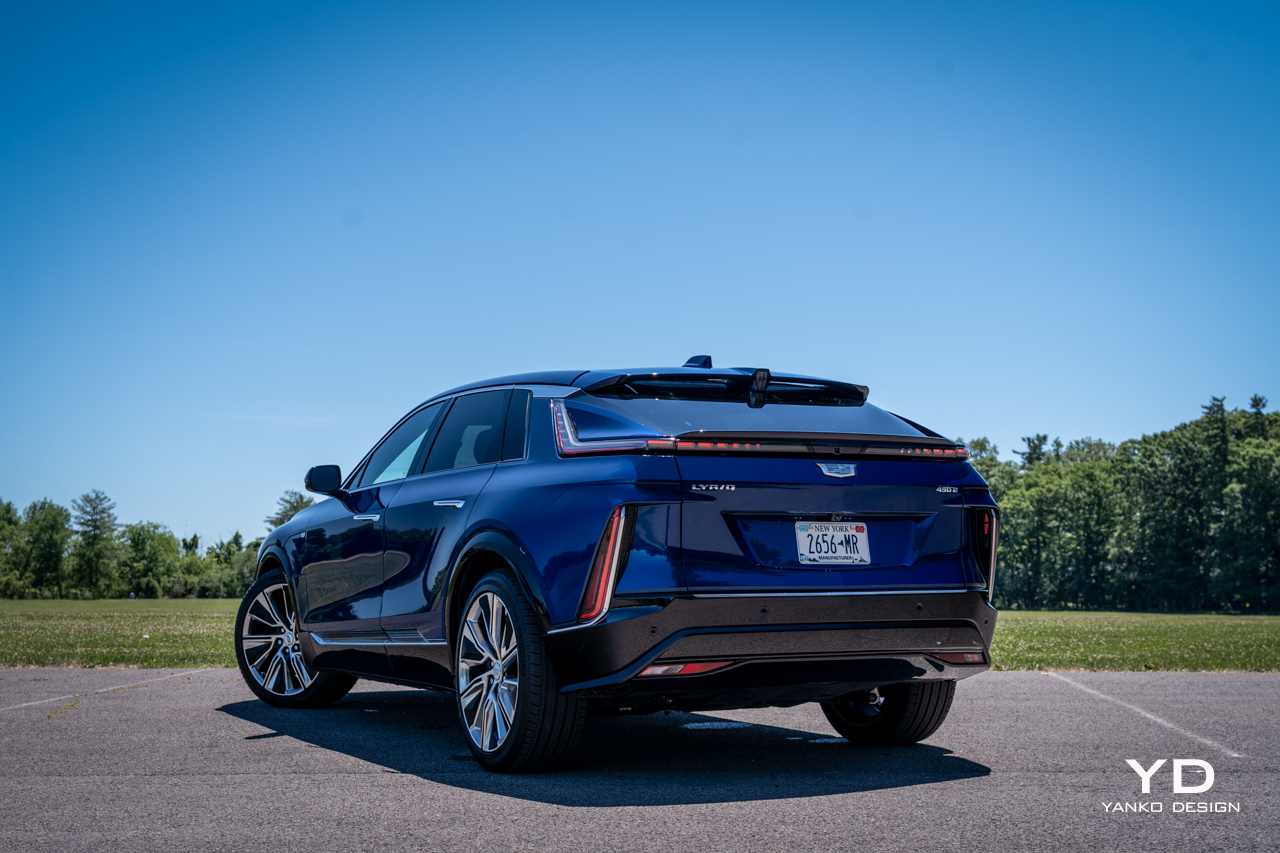
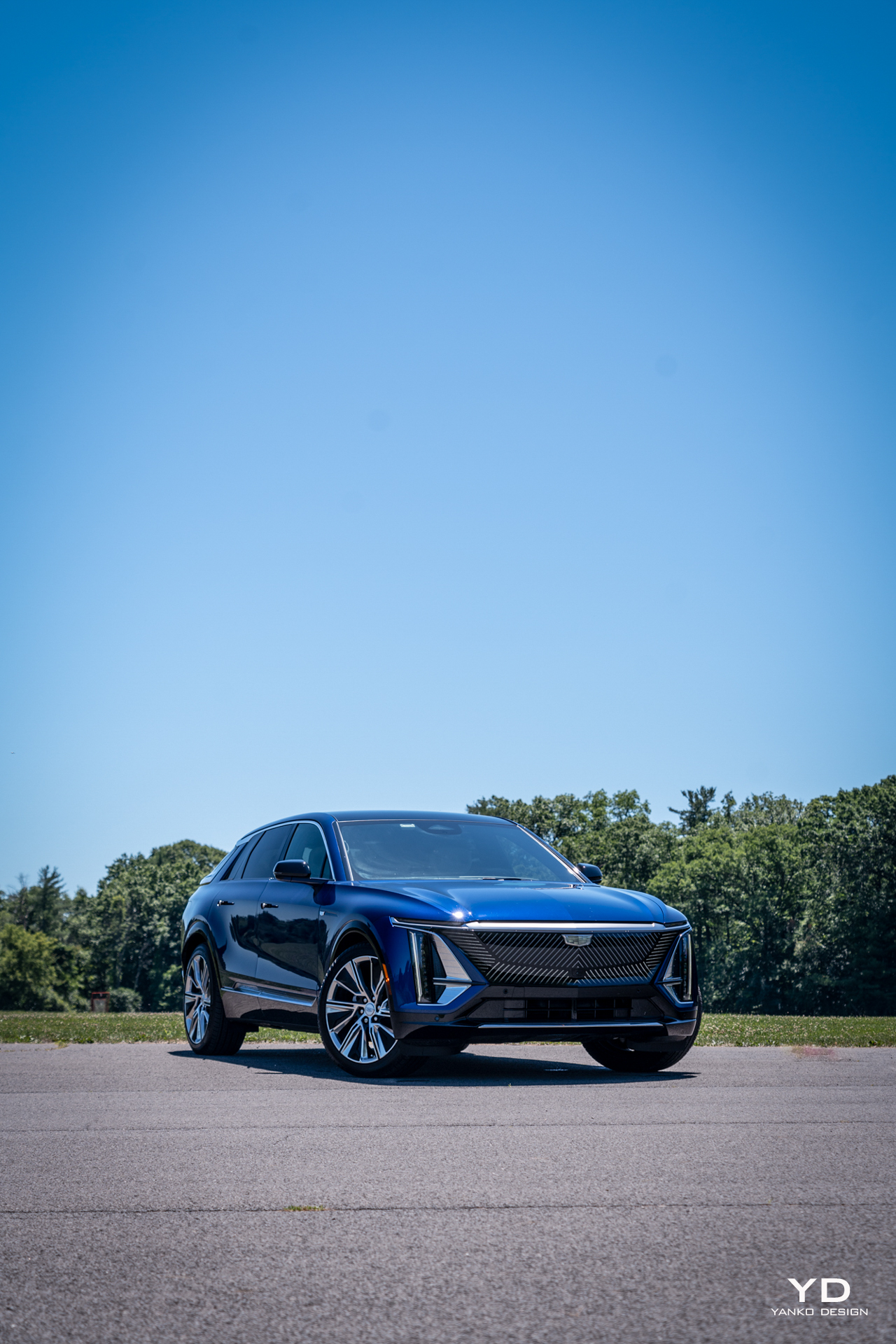
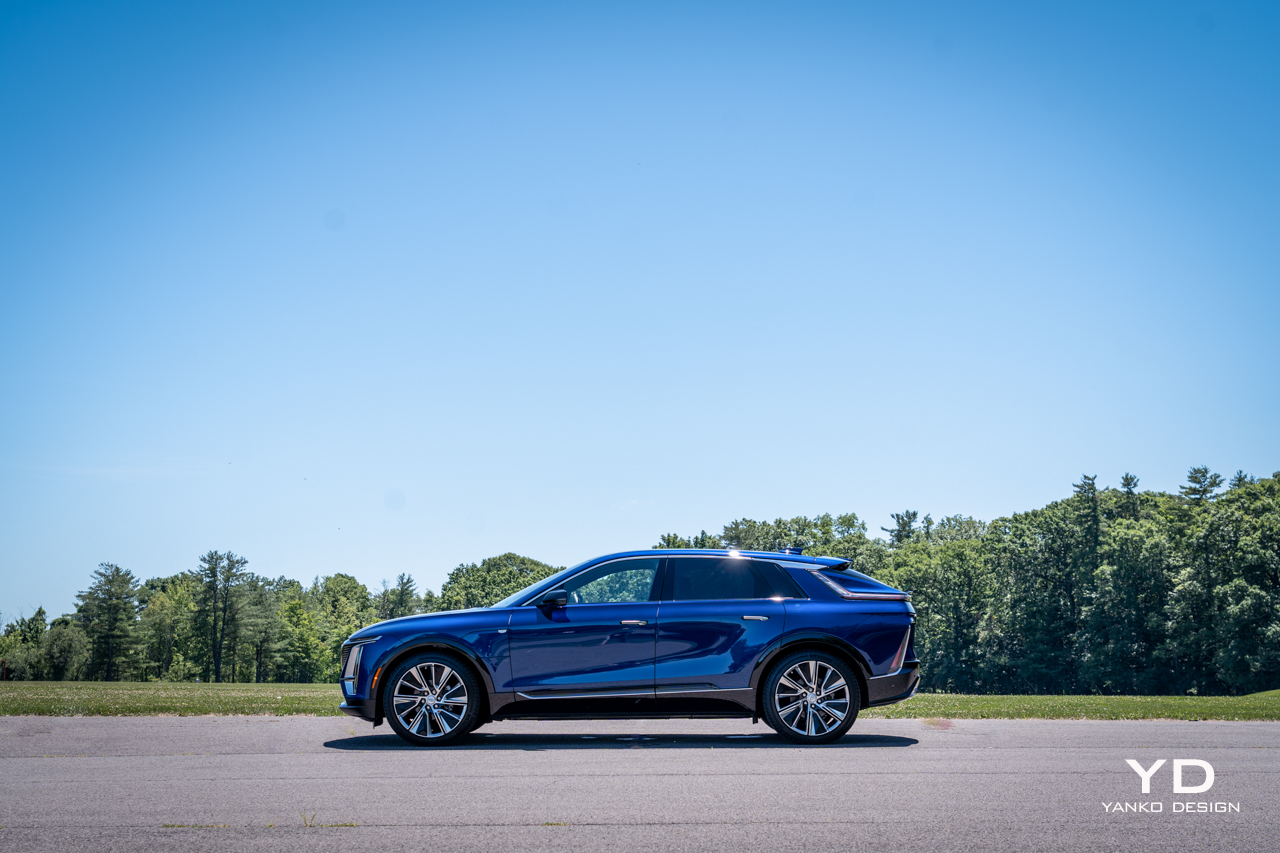
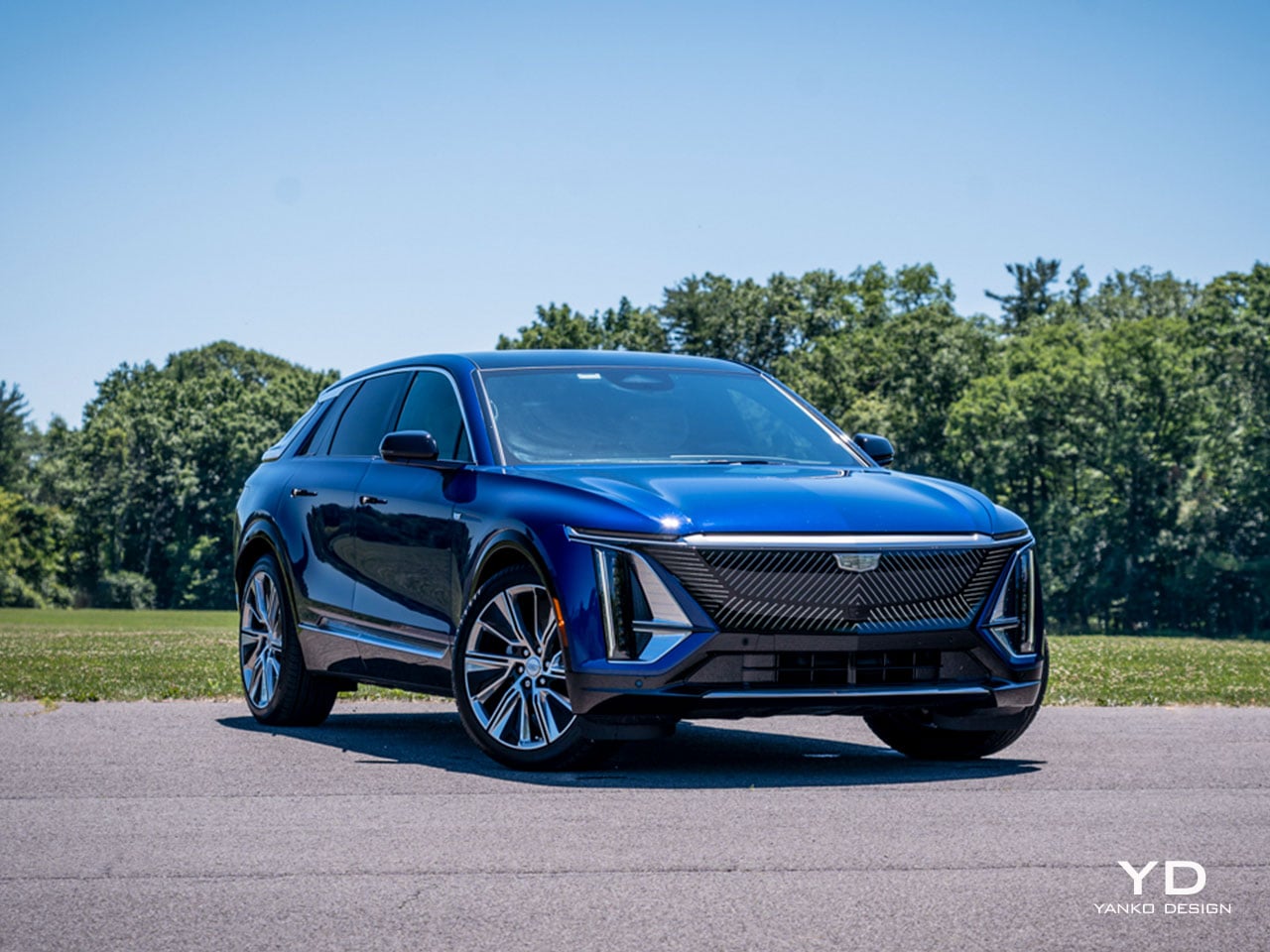
But what’s this from Cadillac? Check the paperwork: The Lyriq is officially listed as an SUV, but ever so slightly lifted proportions can’t hide the fact that this is very much a wagon. And what a wagon at that. Measuring nearly 200 inches long, it has an impressive presence for a design that’s, well, different from anything else on the road.

This is the closest thing Cadillac has to a halo car right now, a statement of intent for the brand’s electrified future. It’s riddled with creative and charming touches and has some serious luxury chops. But does it have the character and the performance to live up to that first impression?

Design

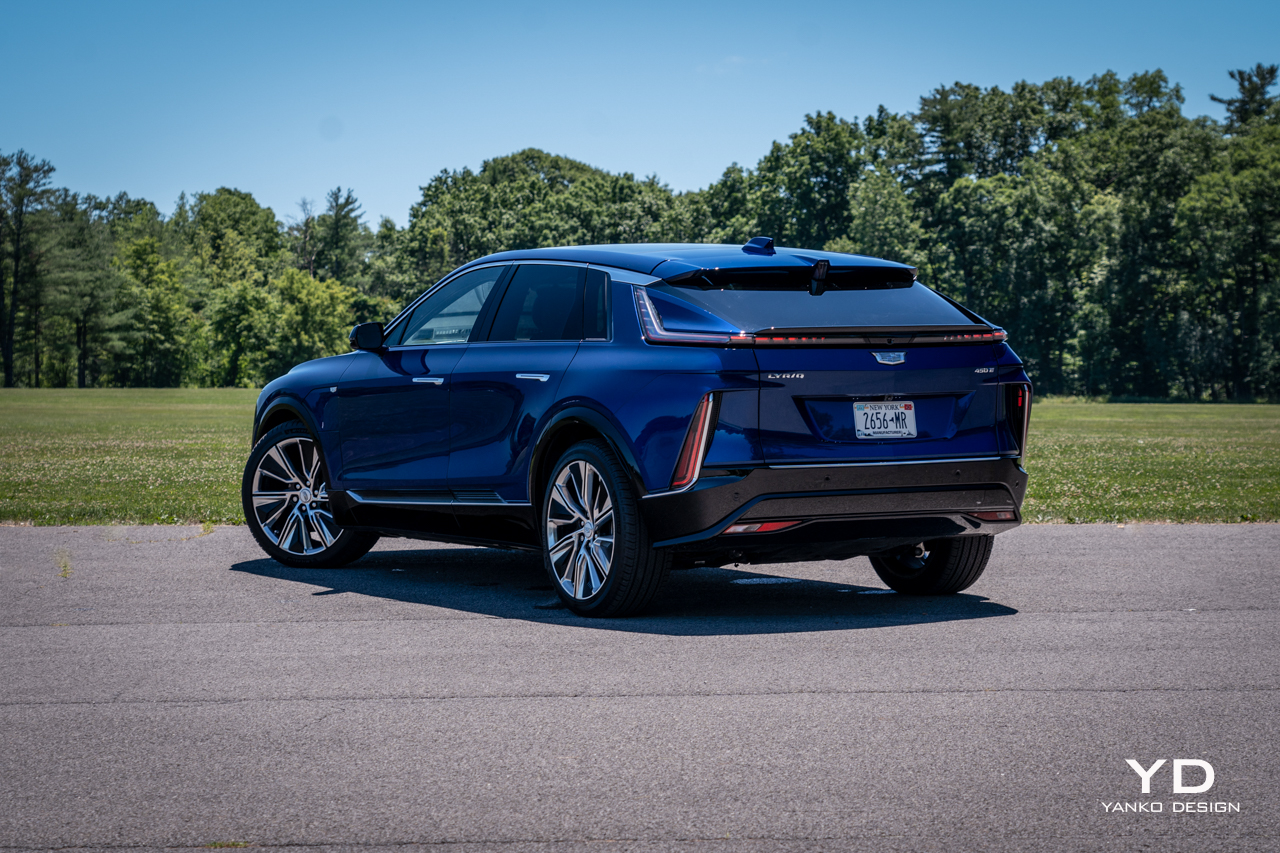
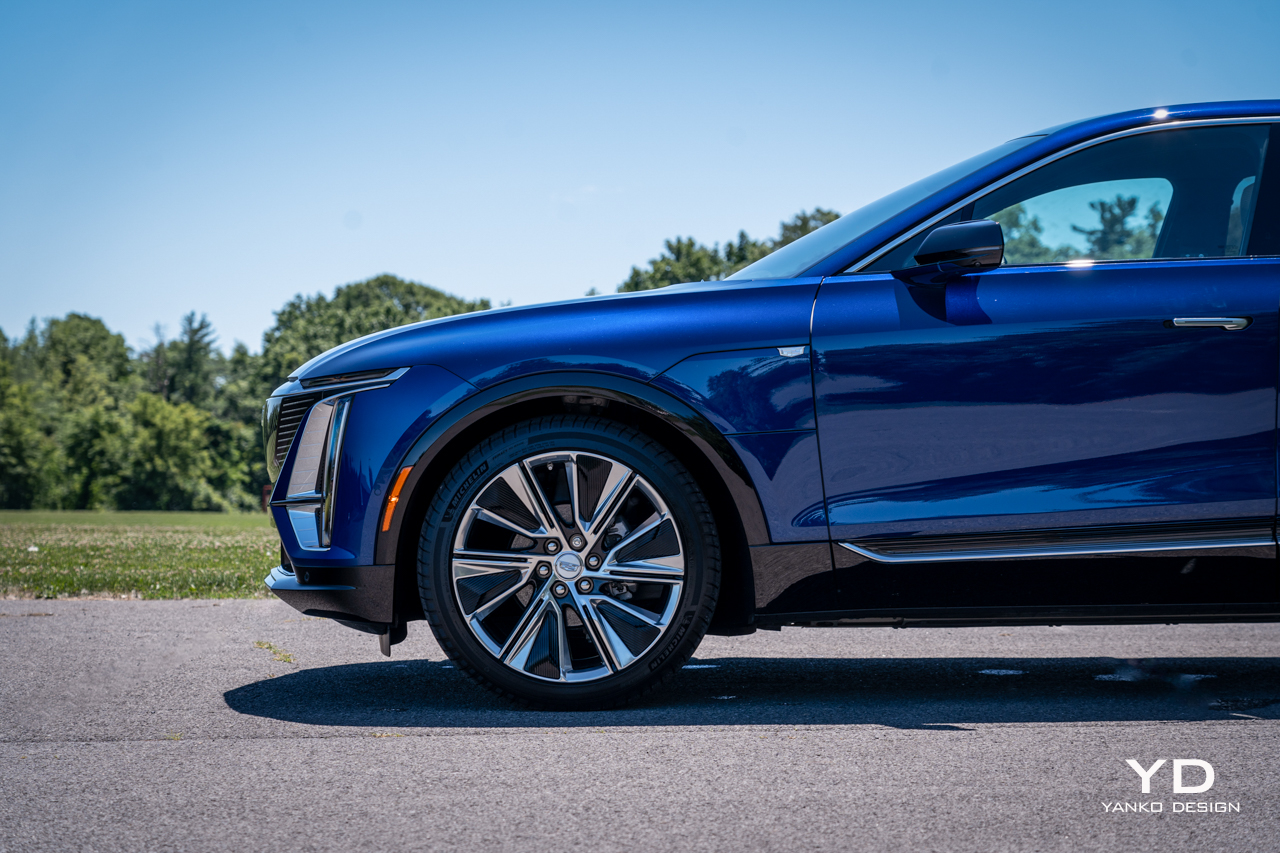
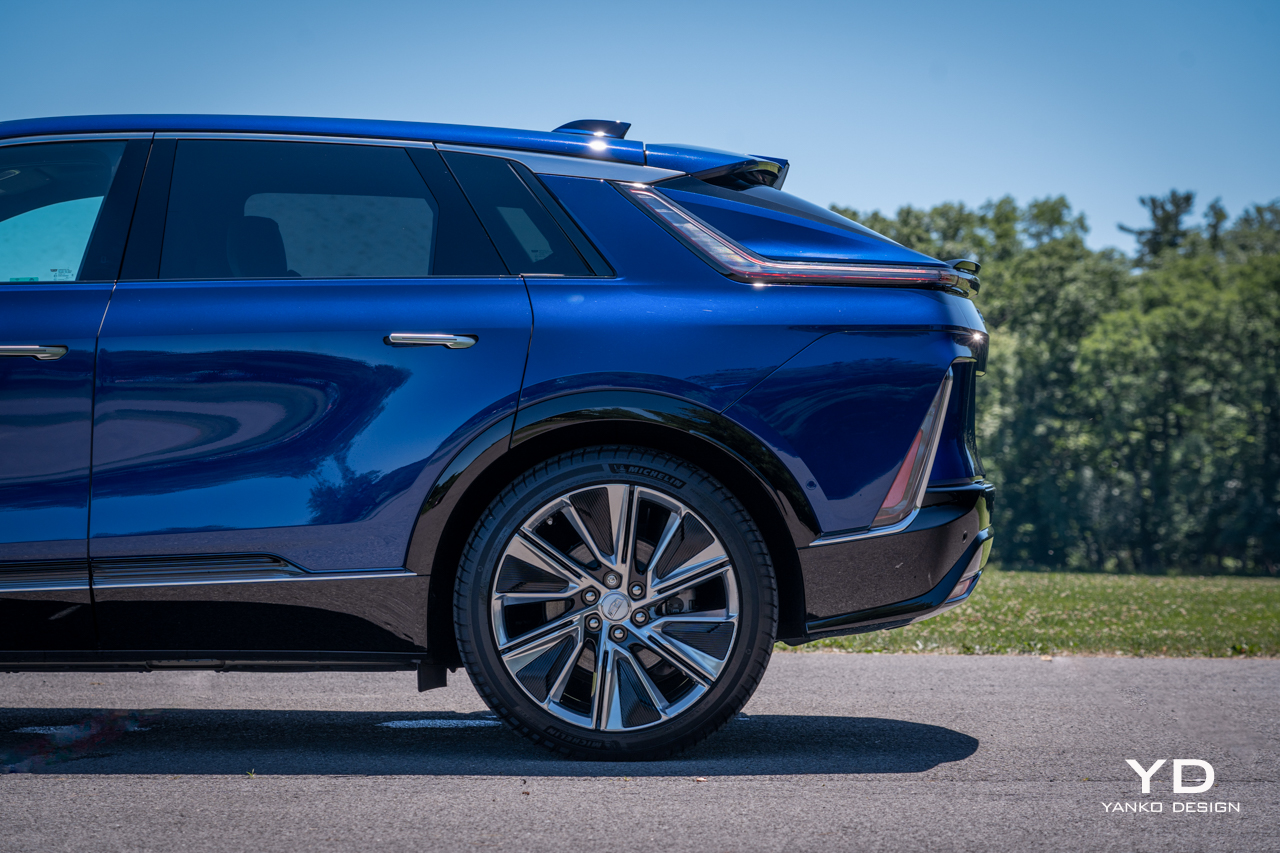
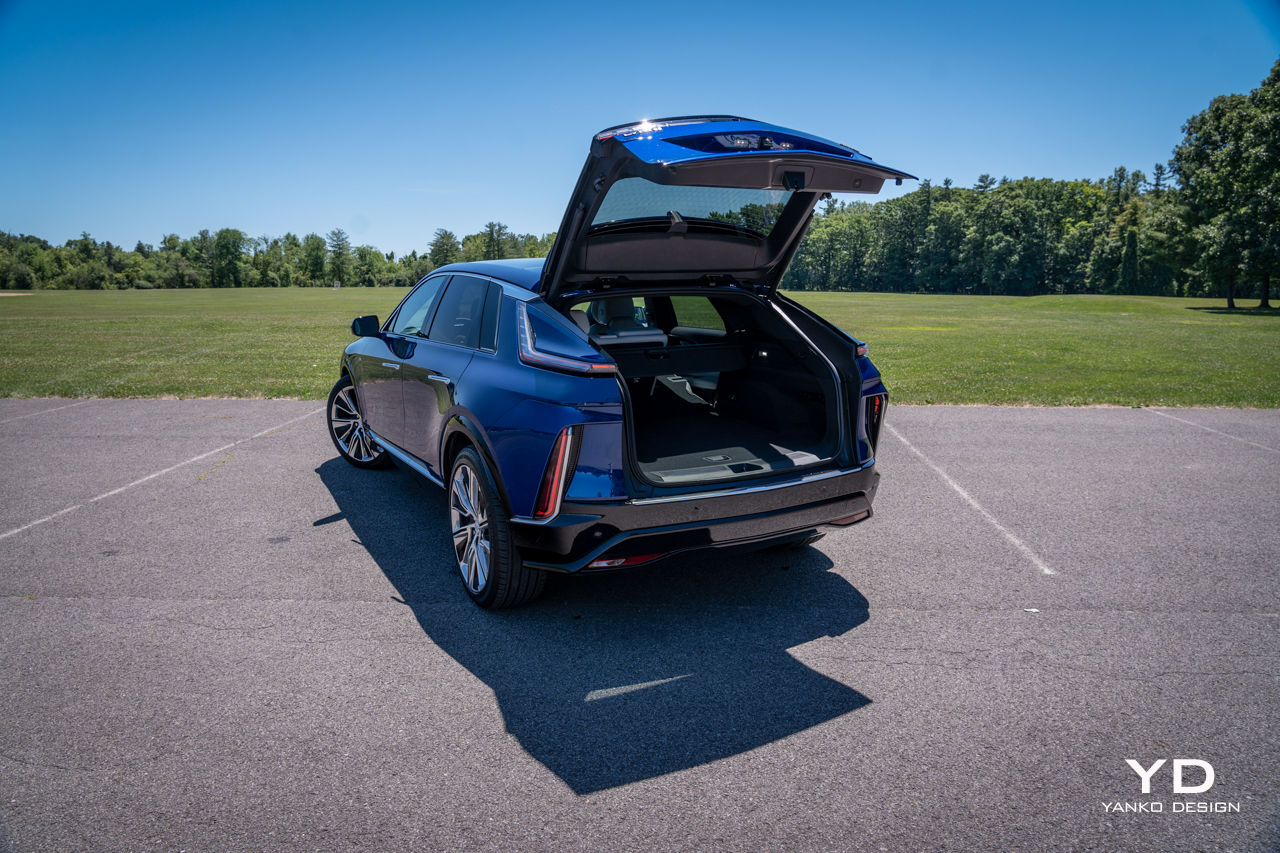
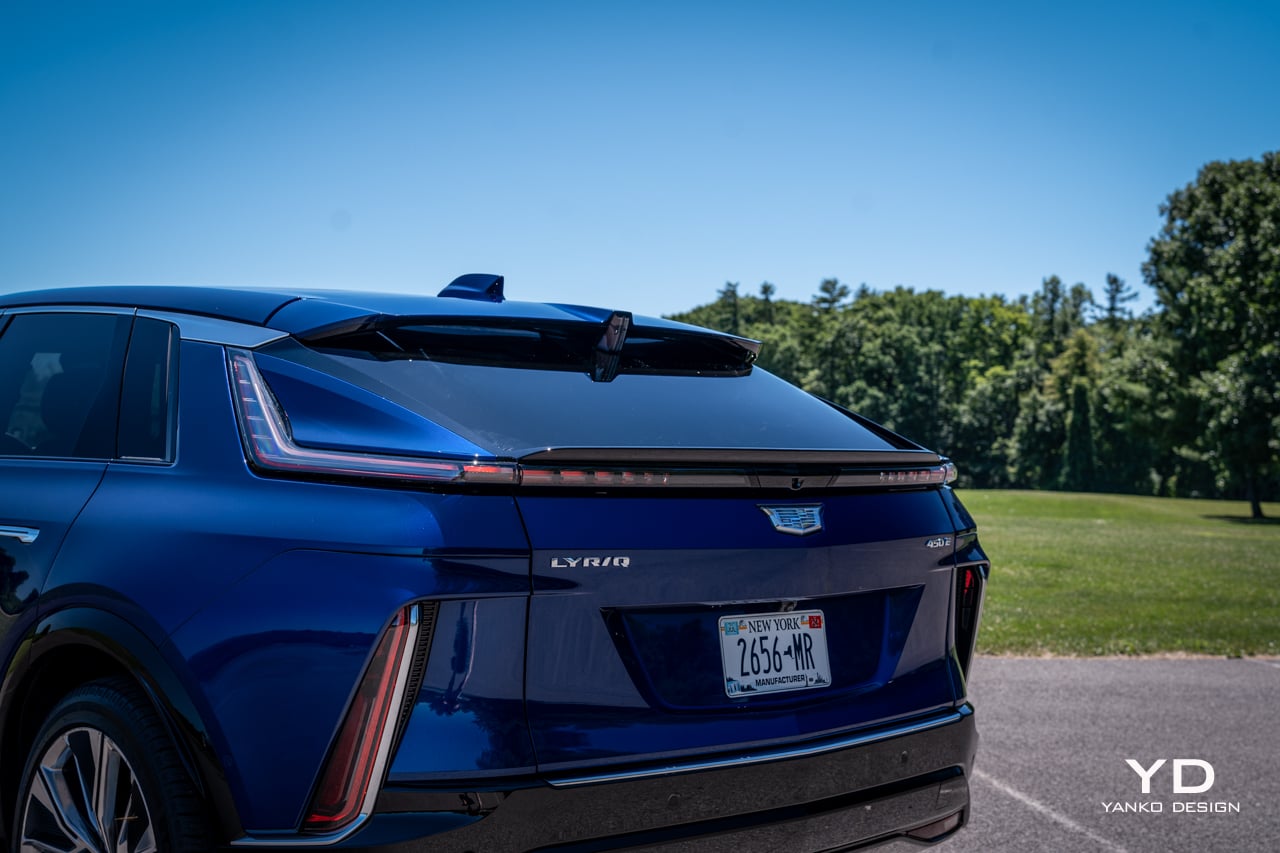
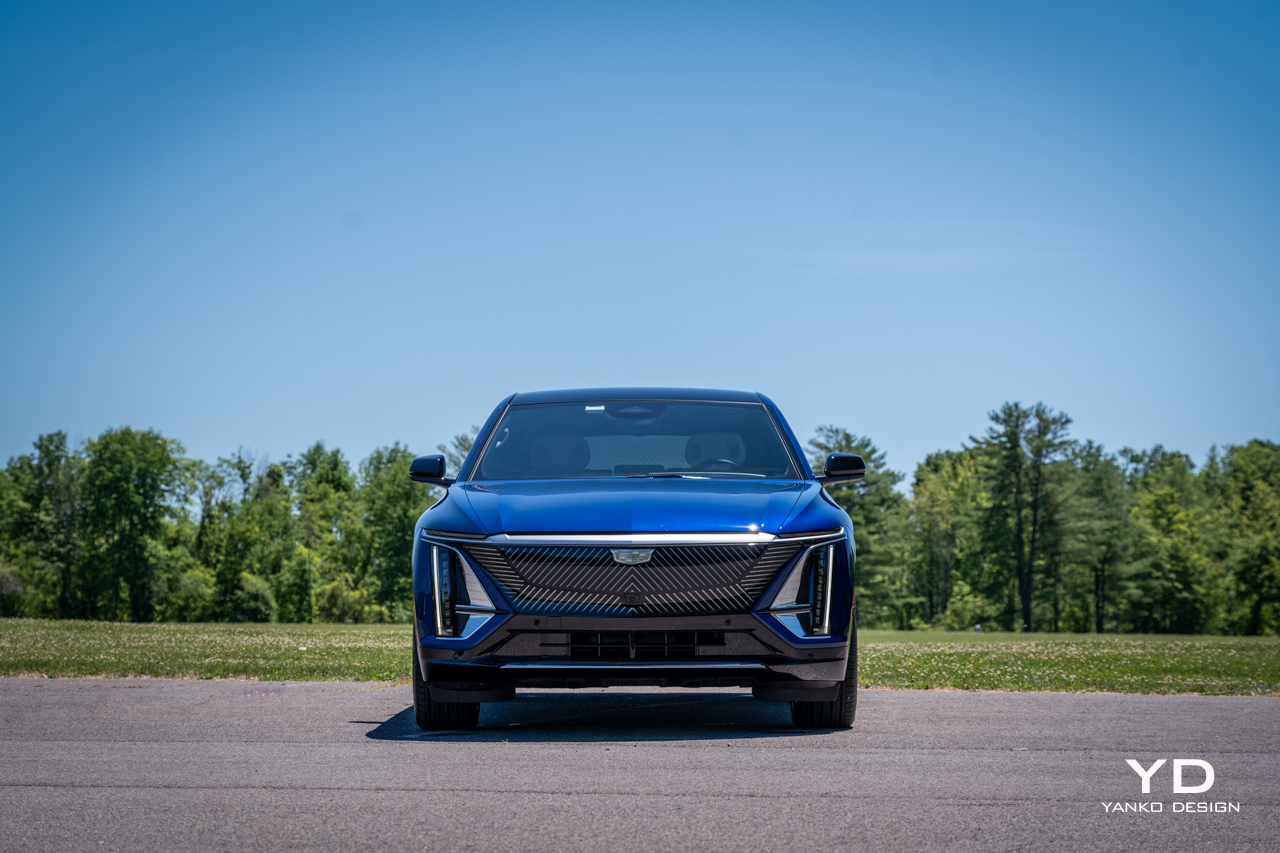
Lyriq is a beautiful name for a car with a shape that is a bit awkward, to put it kindly. Other, less flattering folks would call it ugly. I love a good wagon and have proudly owned them myself, but the somewhat bulbous shape out back of Cadillac’s big EV is just a little ungainly to my eye.

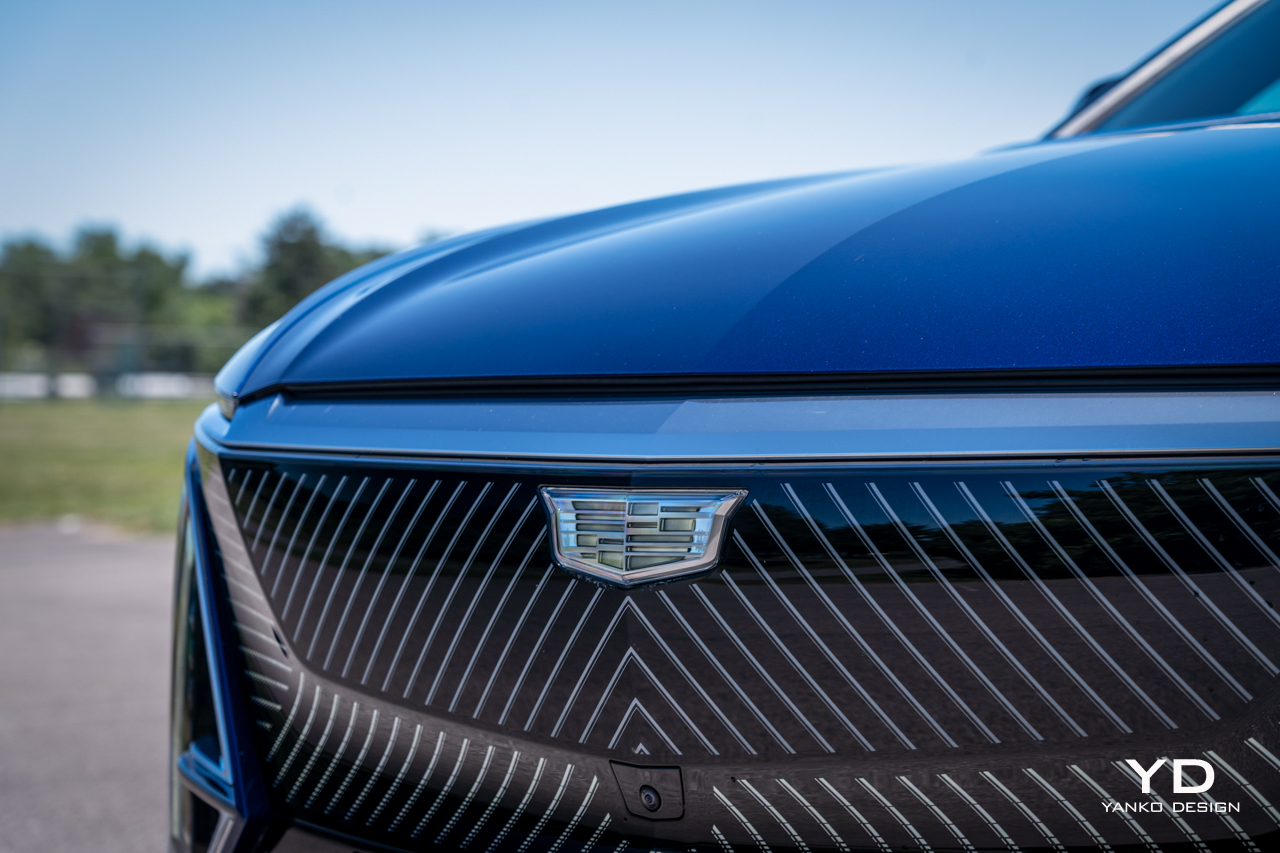
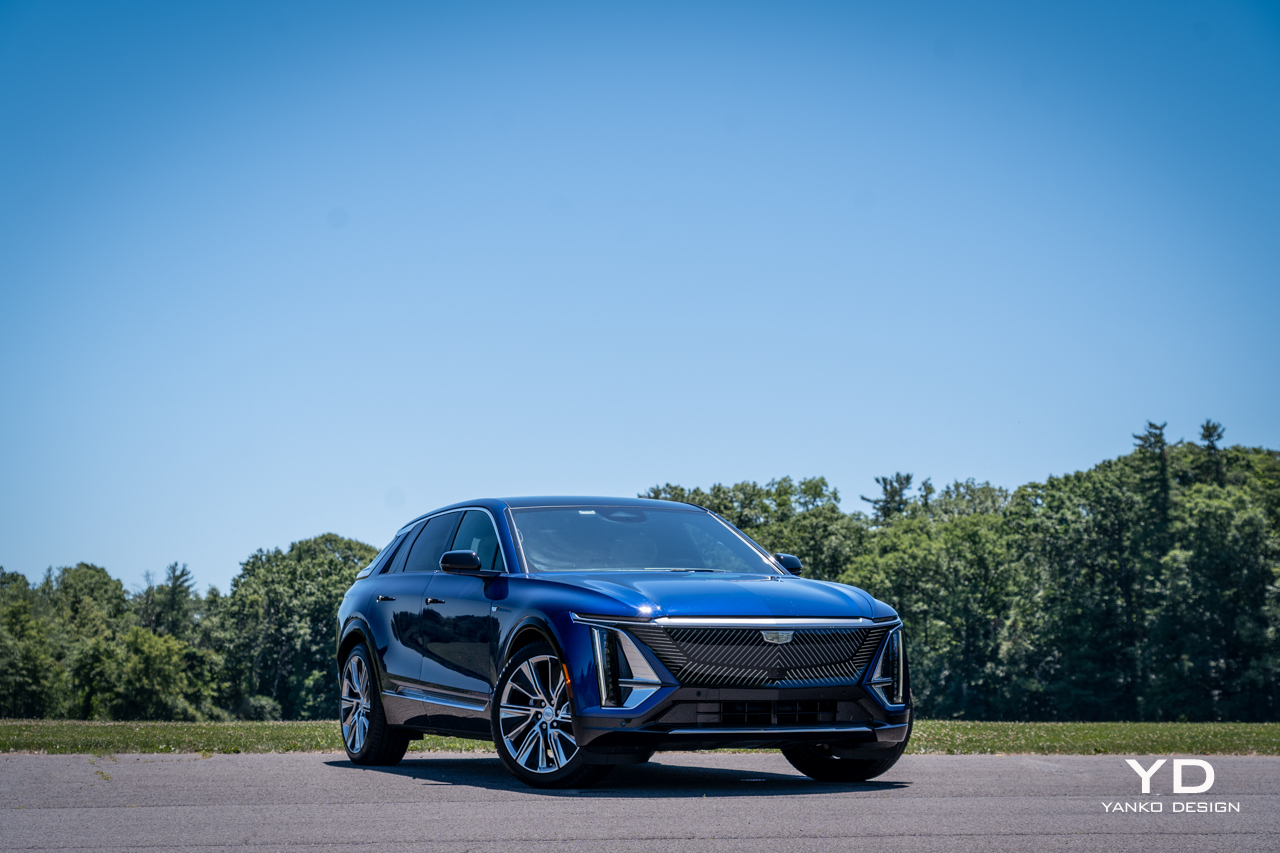
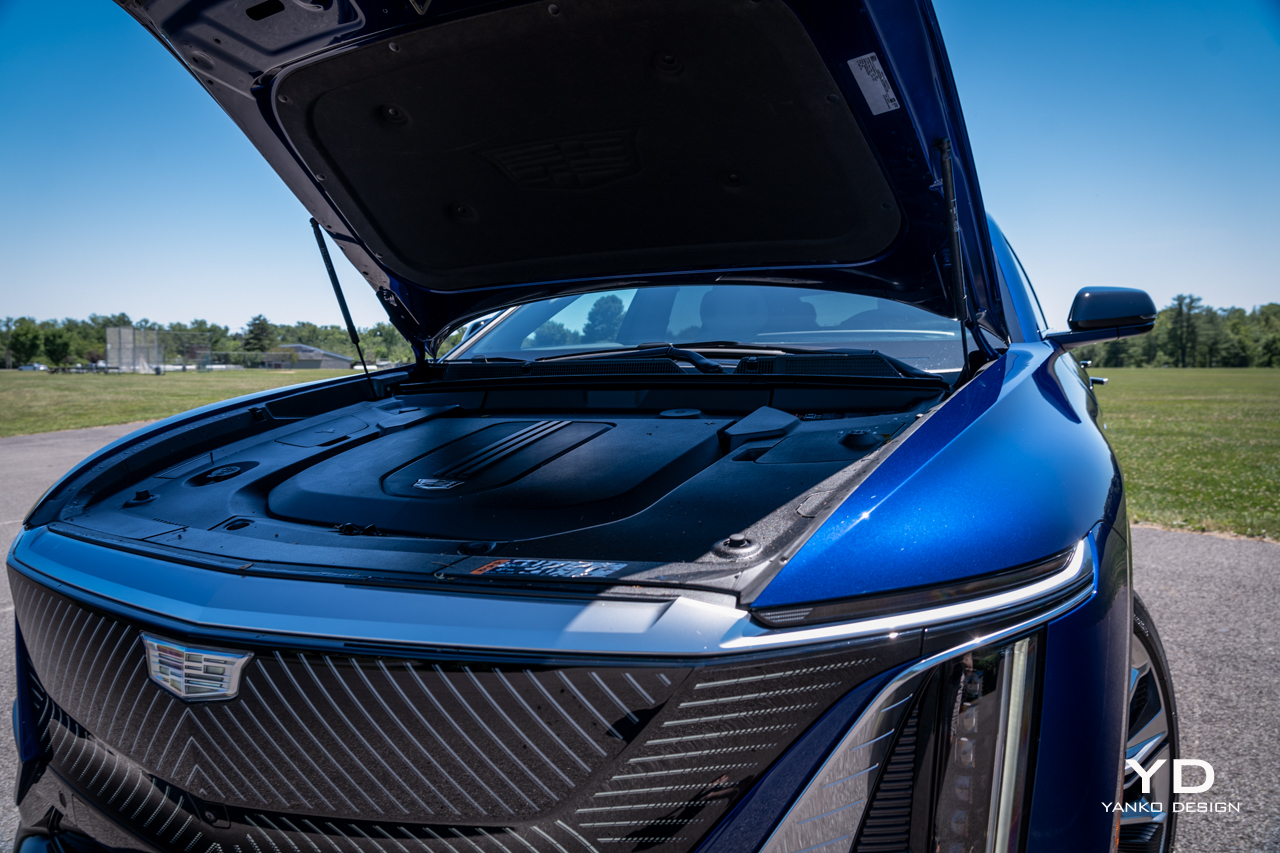
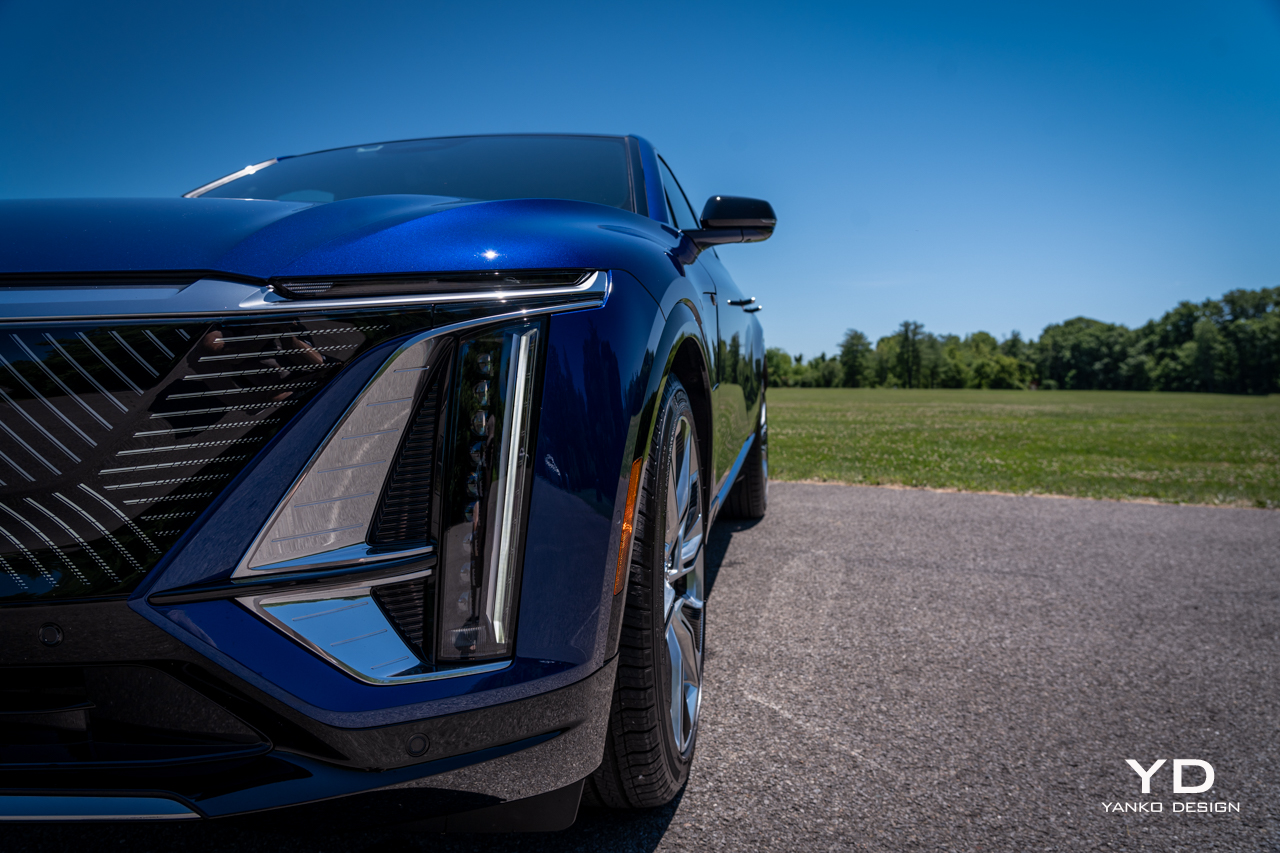
But look beyond the silhouette and you’ll discover endless design touches that conspire to perhaps make the car a bit busy, but interesting. The striking geometric pattern on the grille, framed by chrome-rimmed vertical lighting elements, provide a distinctive look from the front.

That’s echoed at the rear, with vertical strakes of red lighting marking the left and right extents of the rear bumper. A narrow band of illumination bisects the tailgate as well, forming the high beltline and abrupt posterior that defines the shape of the Lyriq.

It’s a distinctive car to say the least. Owners will surely be spotting new touches every time they approach the Lyriq for months after buying, and that’s a rarity these days.

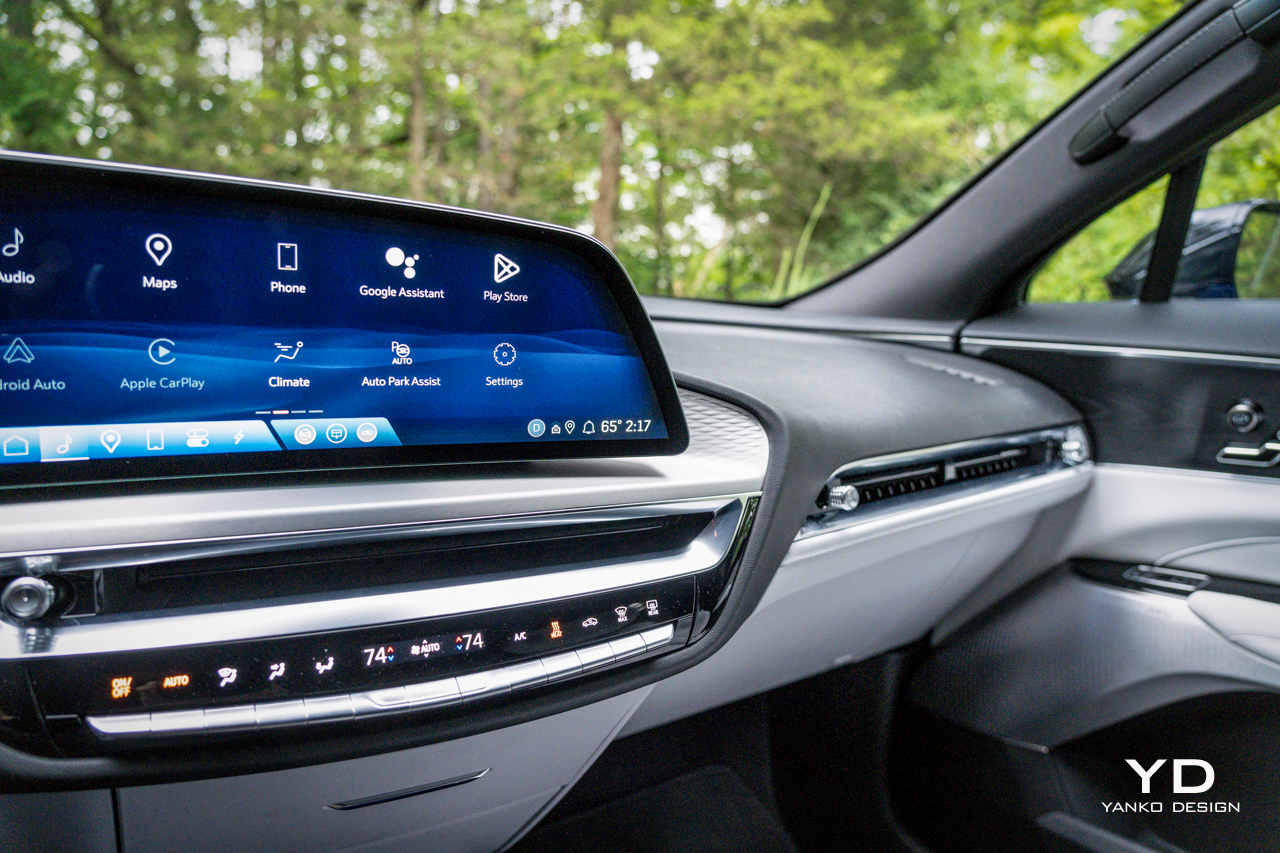
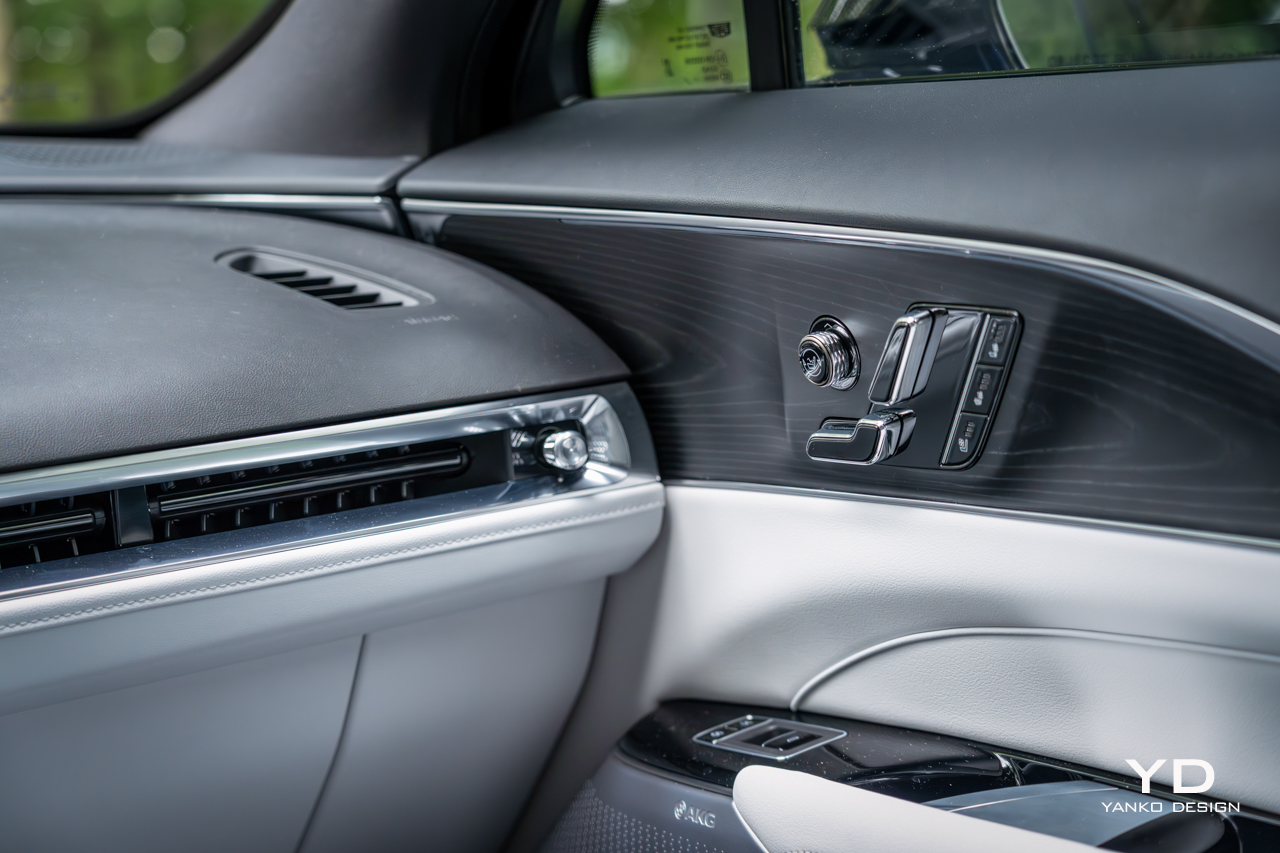
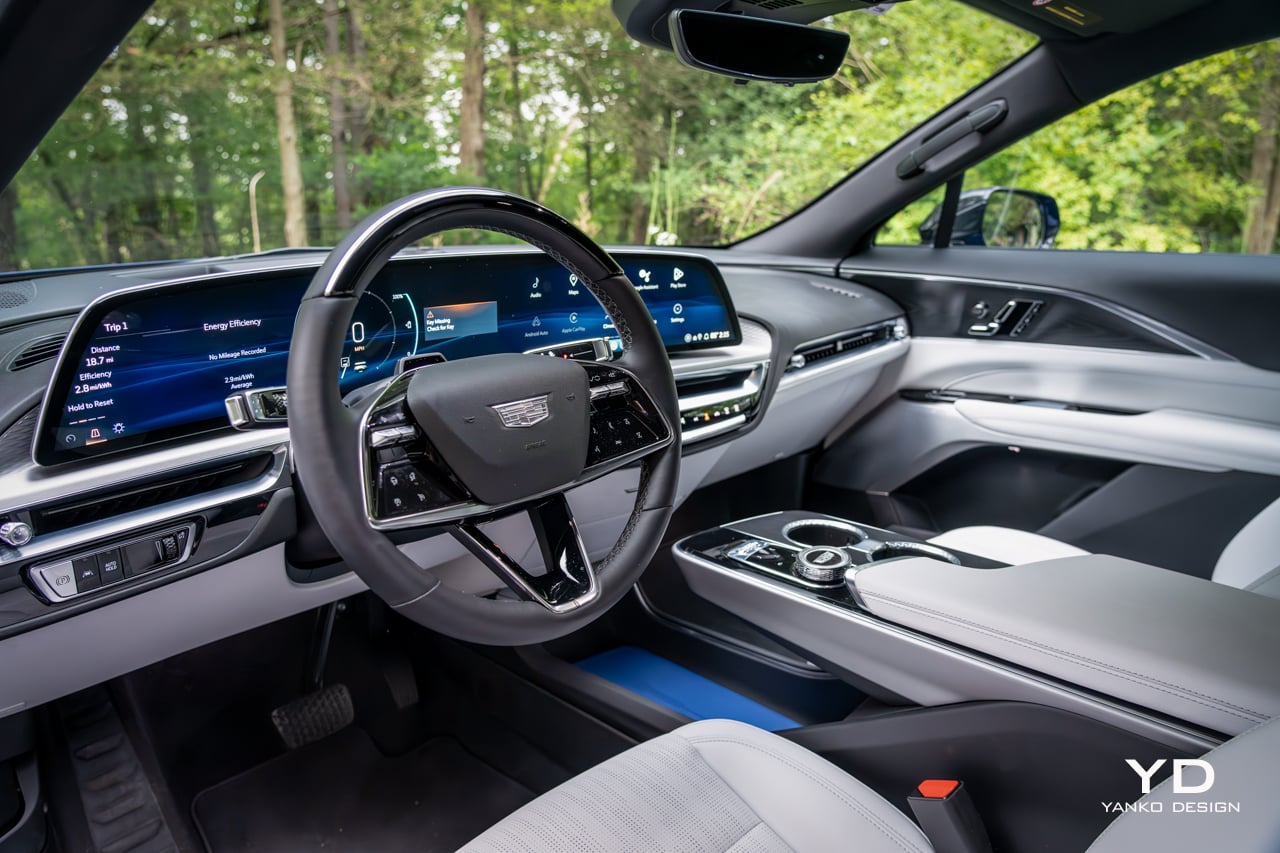
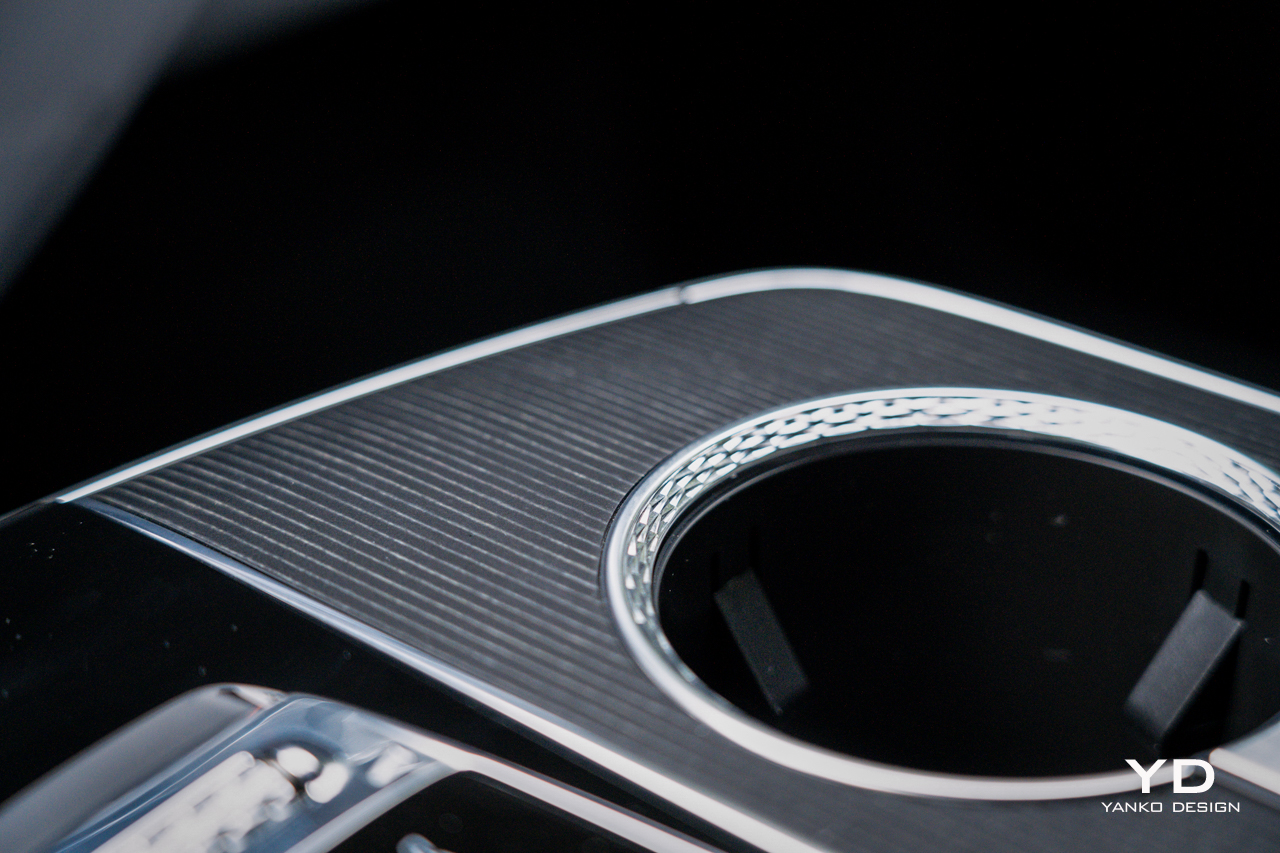
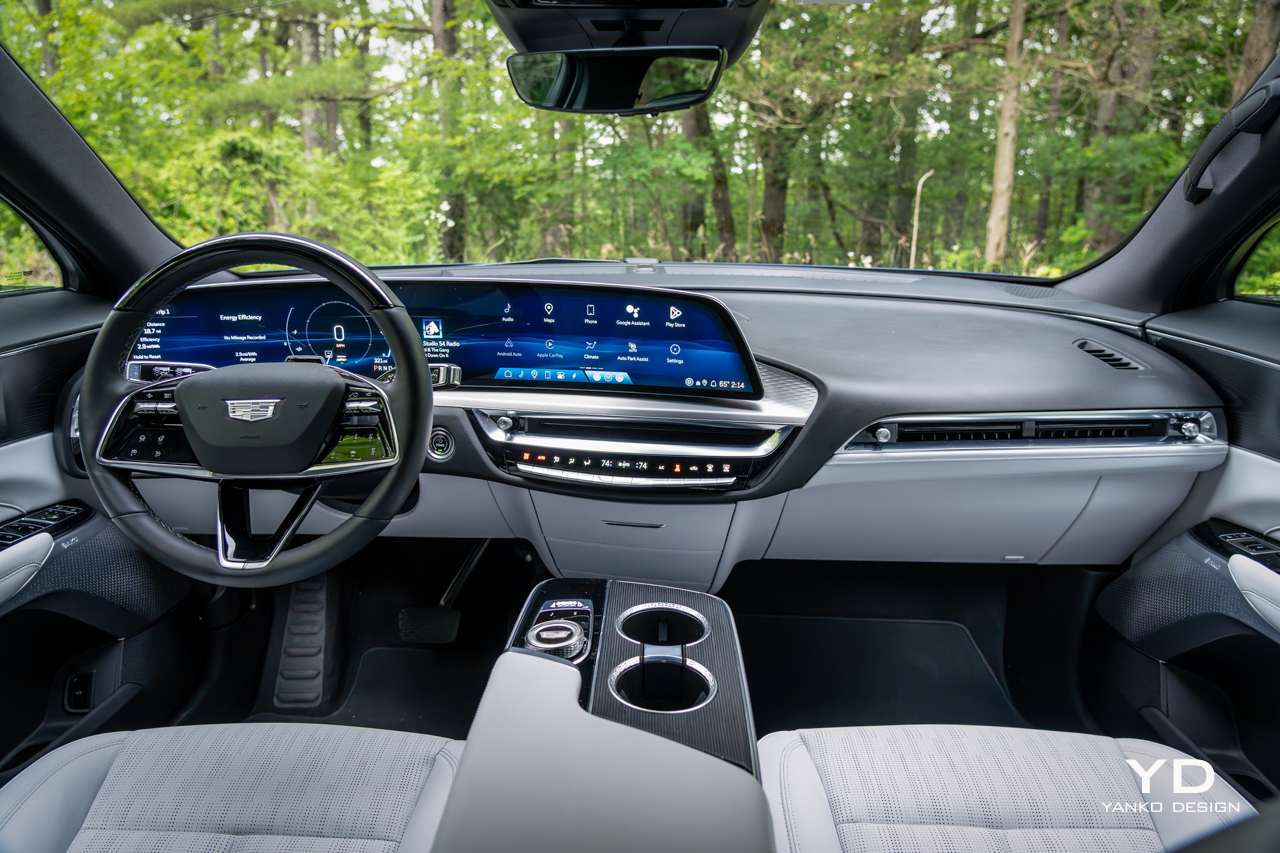
If anything the Lyriq’s interior is even more full of intriguing touches, making it feel a bit busy but, again, far from boring. The low dashboard is a mish-mash of sweeping, interlocking profiles, shapes, and textures. The subtle waffle texturing behind the floating display is a lovely, modern touch, but it’s a shame the bulk of the dashboard is covered with black vinyl imprinted with a dated-looking fake leather texture.

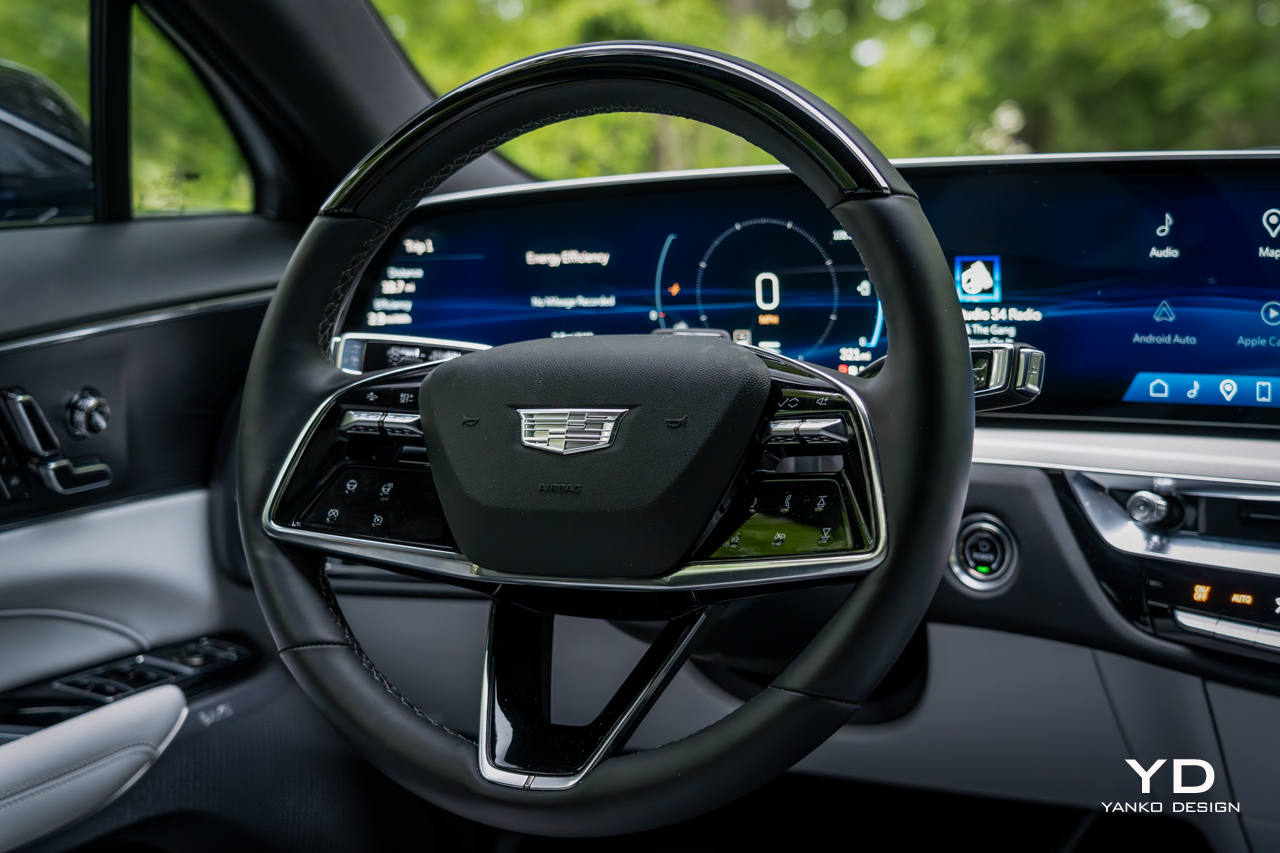
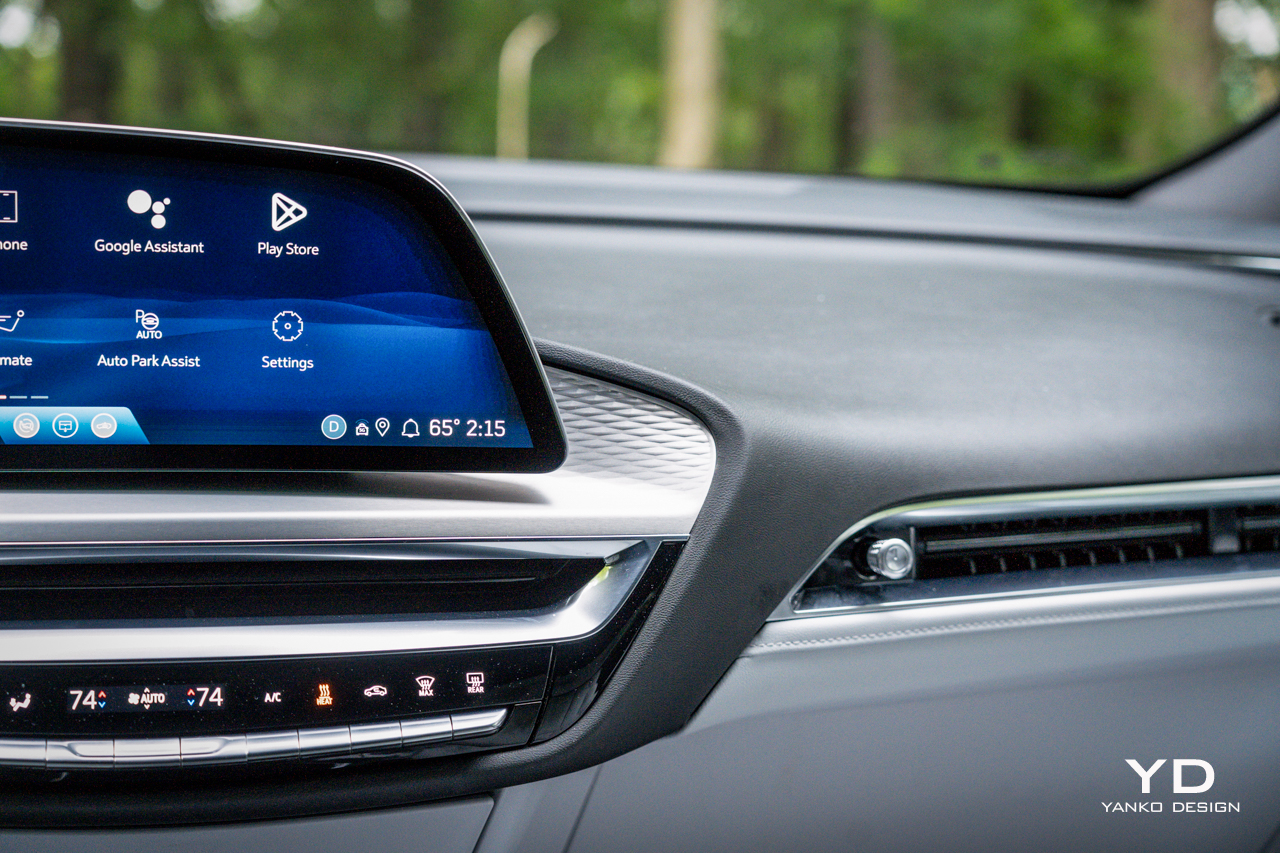
That floating display measures a massive 33 inches wide. It gives an overall look and feel similar to what BMW is doing these days in vehicles like the iX. The roller-style volume knob in the center console is also BMW-like, as is the eight-way rotary controller just behind it. All very iDrive-like, but Cadillac goes a step further by making not only the right side of the display capacitive touch, but the left side as well. Just like on a Lucid, you can touch the left of the gauge cluster to adjust lighting or view trip information.

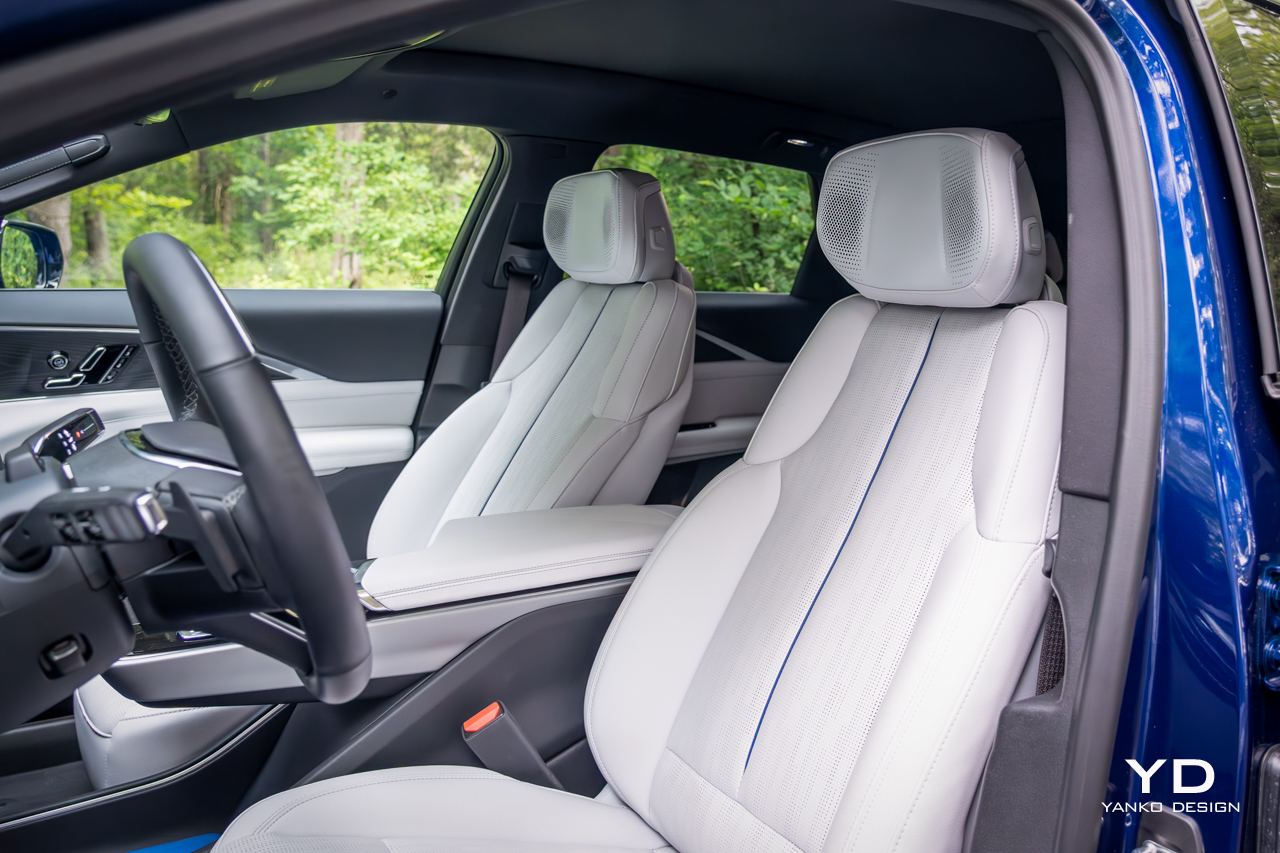
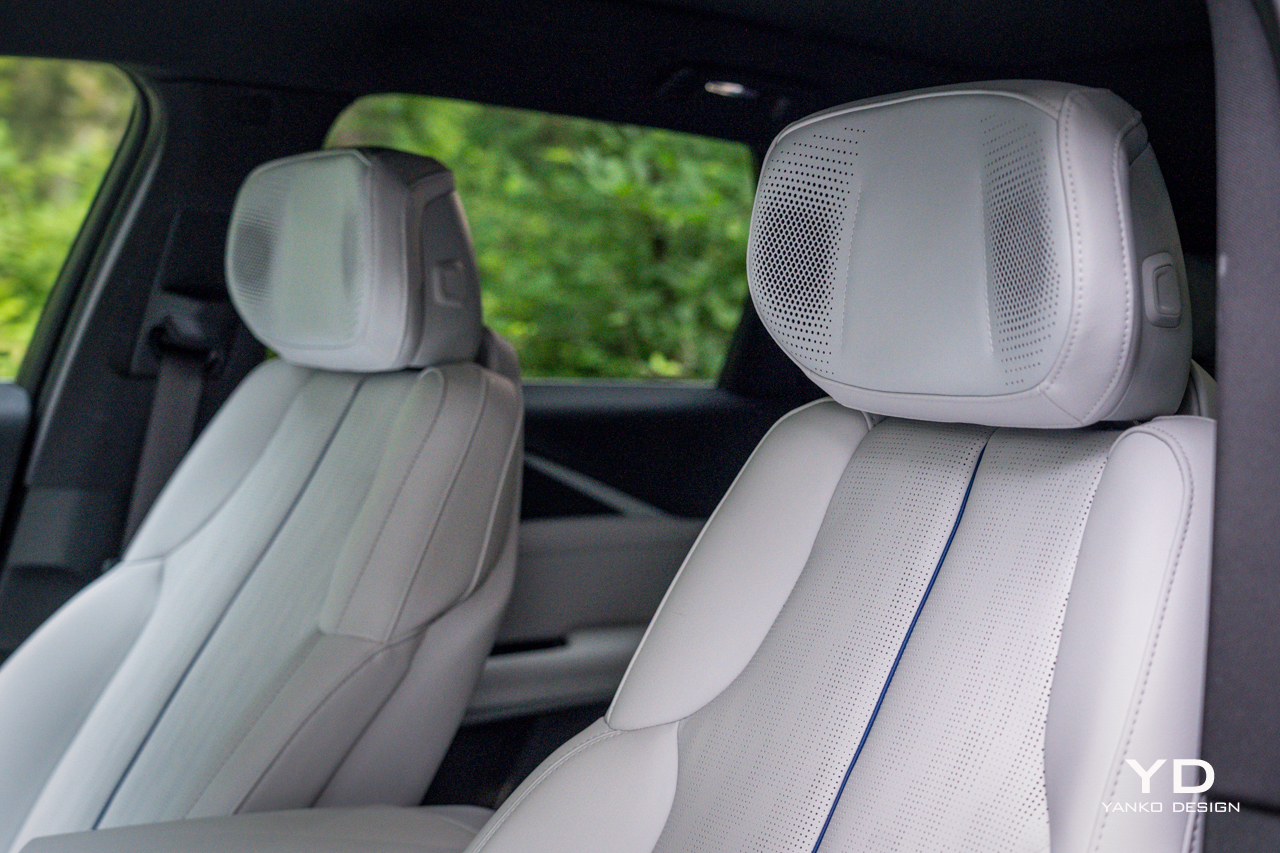
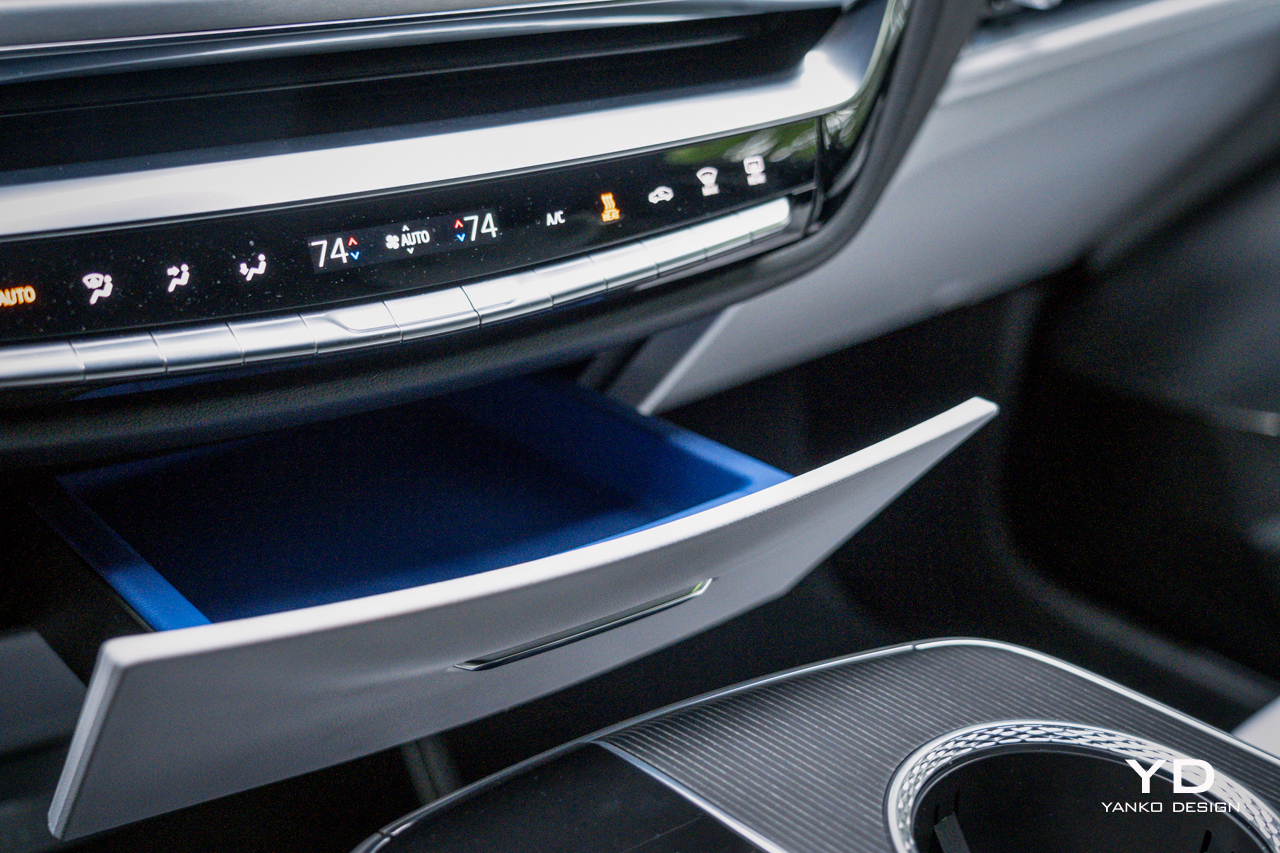
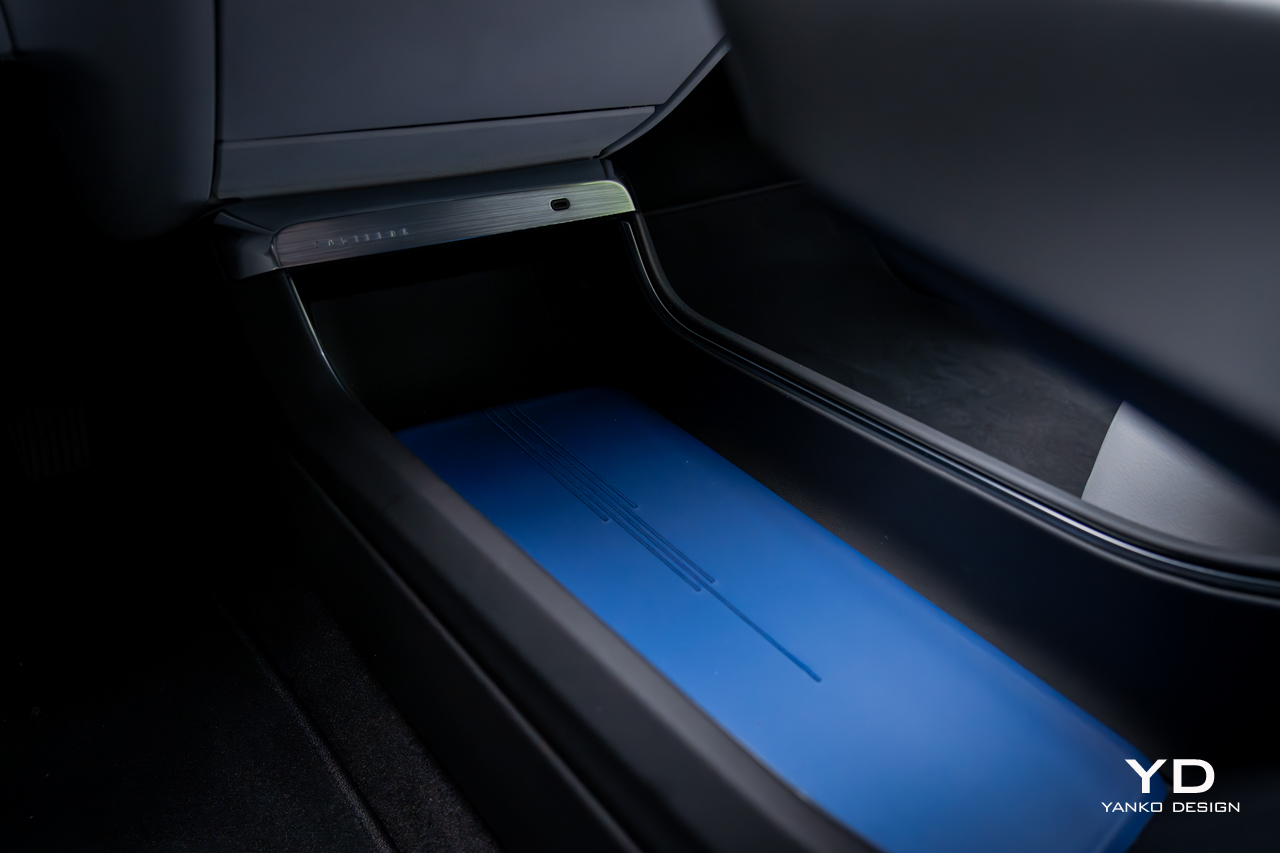
There are plenty of storage areas for front passengers, including a wide bin in the center of the car with a striking blue strip of leather that matches the piping on the stark, white seats. Those seats look pillowy and enveloping, but in practice, they’re a bit flat, and their adjustability is surprisingly limited. They do offer both heating and ventilation, plus massage, but it’s about the weakest massage I’ve ever sampled.

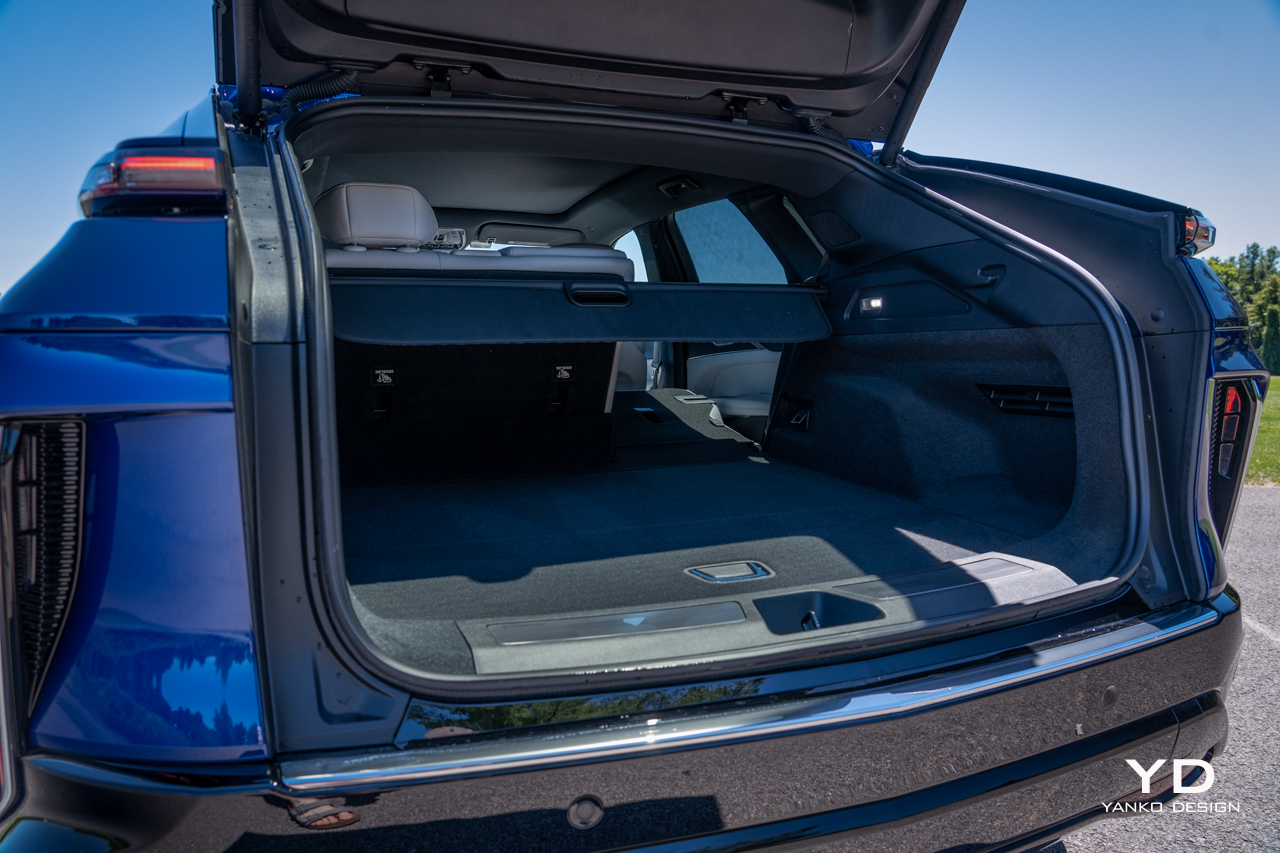
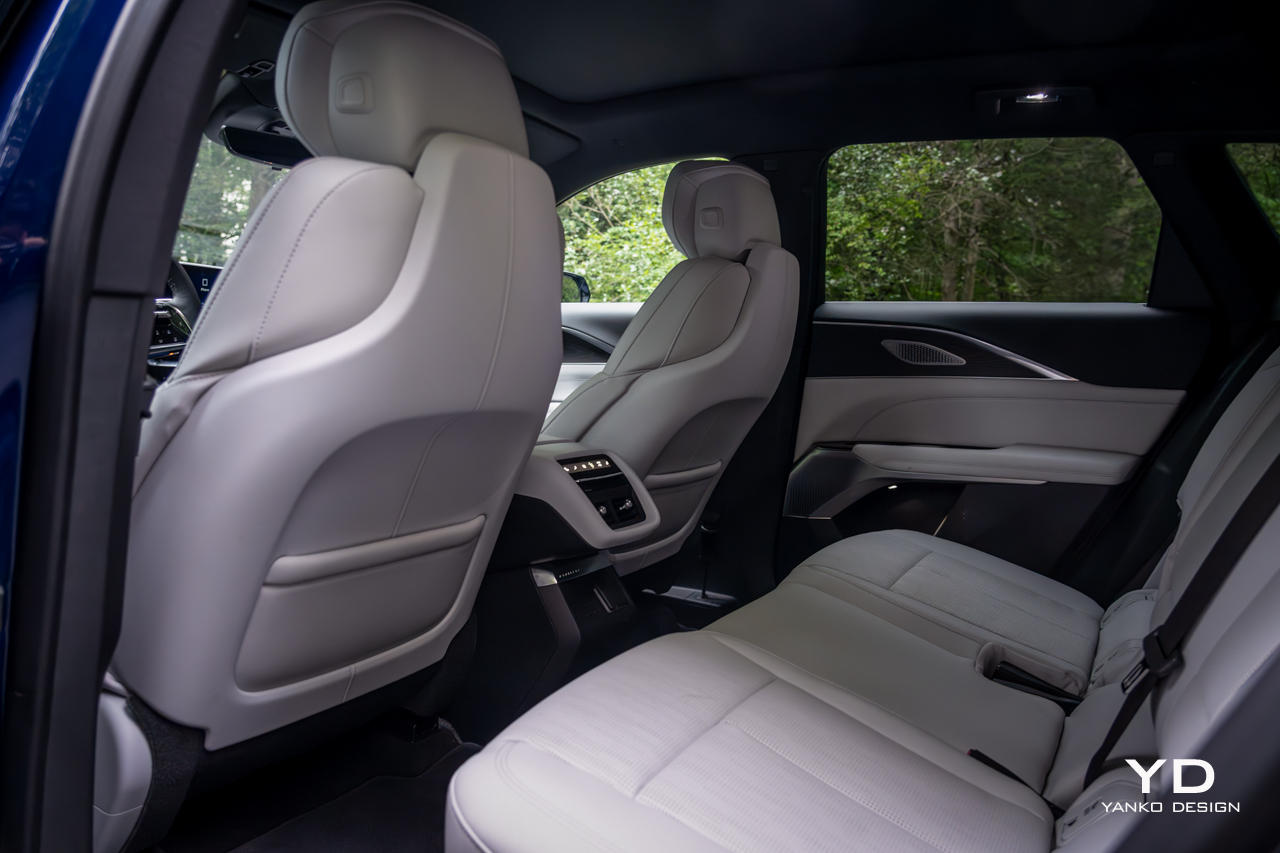
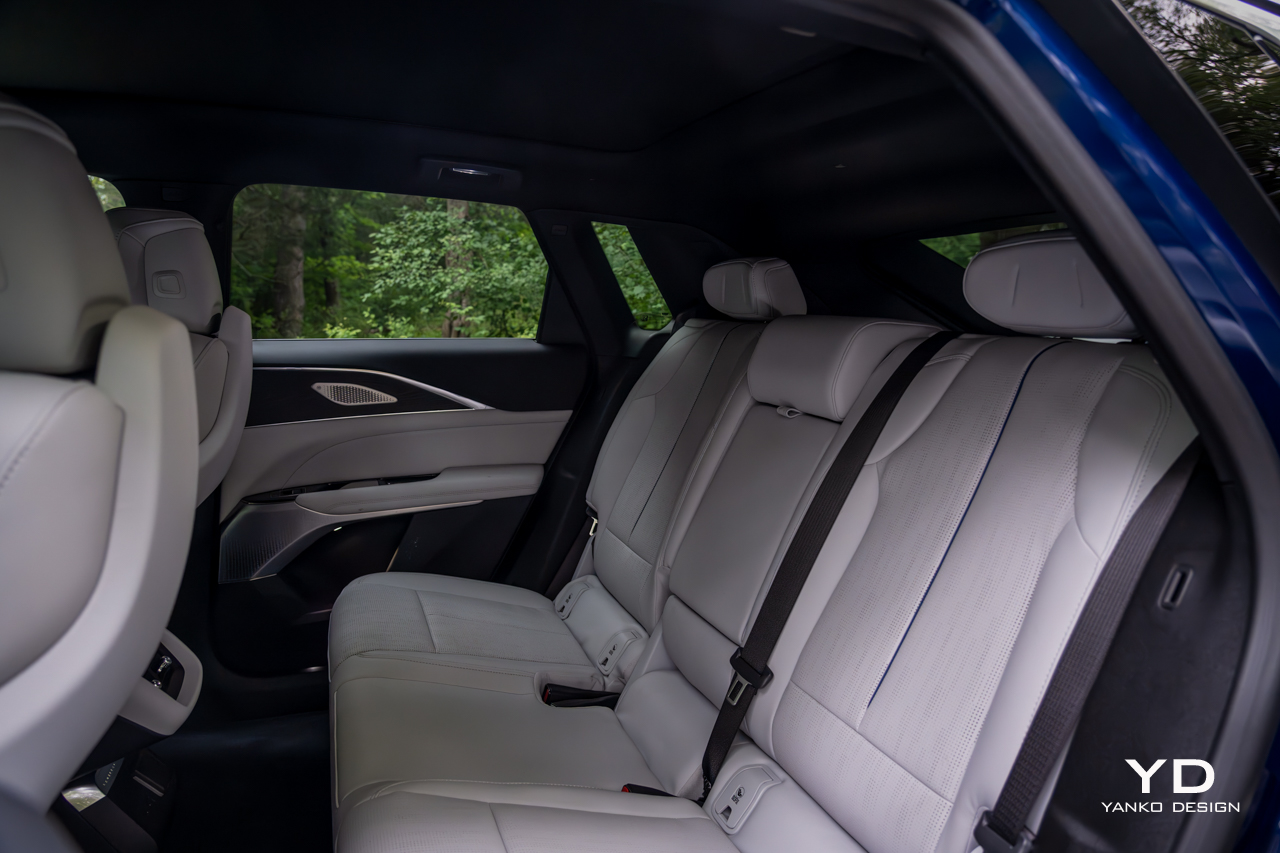
Rear seating is generous for three across, and the flat floor means everyone will have plenty of legroom. Headroom, though, is surprisingly limited, given the shape of these cars. A pair of USB-C ports back there keep small devices charged, while a three-prong outlet is there for bigger ones. Up front, another pair of USB-C connectors offer juice, plus a wireless charging slot.

Cabin Tech

The software controlling that sweeping display is based on Android Automotive. Sign in with your Google account (assuming you have one) and you have instant access to contacts, addresses, and whatever else you’ve entrusted to Alphabet.

You’re just a few taps away from installing most major media apps, including Spotify and YouTube Music, or you can use Android Auto or Apple CarPlay wirelessly from your phone.

All that media plays through a 19-speaker AKG sound system, which even puts speakers in the headrest, a bit of a rarity these days. The system is nicely balanced, offering all the power and bass anyone could want but, more importantly, crisp and clear sound with great separation. It’s standard on the Luxury 2 trim of the Lyriq and above.

The most impressive technology, though, comes in the form of Cadillac’s Super Cruise. The system just gets better and better every time I sample it. Initially restricted only to divided highways, Cadillac has started allowing it on more secondary roads.

Super Cruise offers true, hands-off driver assistance, steering itself and even automatically passing other cars on the highway. I was surprised to be able to let the car steer even on two-lane rural roads. It was perfectly smooth and easy there, just like it is on the highway.

The system relies on an infrared camera integrated into the steering column, so it’s always watching you to ensure you’re watching the road. But that’s a small price to pay for being able to sit back and relax and let the car handle most of the driving. It’s light-years beyond Tesla’s supposed Full Self Driving. You’ll again have to buy at least the Luxury 2 package to get it, starting at $66,990, but between that and the AKG sound system, it’s a worthy splurge.

While Super Cruise is the hallmark driver assistance feature, the Lyriq offers plenty of other safety features, including old-school adaptive cruise control with lane-keep assist, automatic emergency braking, and a surround-view camera. It also features other niceties from General Motors selection of safety features, like Teen Driver Mode, allowing you to set things like maximum speeds and volumes for specific driver profiles.

The Drive

A system like Super Cruise just makes long road trips all the more appealing, and for an EV, the Lyriq is reasonably well-equipped on that front. It’s officially EPA-rated for 314 miles on a charge of its 102-kilowatt-hour battery pack. In my testing around town and on the highway, I did slightly worse: 2.7 miles per kilowatt hour for a theoretical maximum range of 275 miles.

That electricity is consumed by a single, 340-horsepower motor driving the rear wheels, providing 325 pound-feet of torque. But, those wanting more can step up to a dual-motor, all-wheel drive Lyriq making 500 hp and 450 ft-lbs of torque from a pair of motors.

That’s a lot of power, but then this is a lot of car. The Lyriq weighs roughly 5,500 pounds, or nearly as much as an Escalade, and so it’s not exactly a rocket ship with the single-motor configuration. Still, put it into Sport mode (a task that sadly requires reaching up and scrolling through the touchscreen), and it does accelerate aggressively.

The steering is nicely sharp and responsive, which I appreciate. Still, despite Cadillac’s lineage of stellar V-badged driver’s machines, the Lyric is meant more for comfy cruising, and that it does with great aplomb.

Despite the 20-inch wheels wrapped in low-profile tires, ride quality is very good. It hoovered up broken asphalt without issue, feeling poised and pliant in all conditions. Opt for the all-wheel drive version and it should be a stellar winter machine too — assuming you outfit it with a proper set of winter tires.

When it comes to brake regeneration, always a hot topic among EVs, the Lyric’s default regen level is reasonably aggressive, but far from what I’d consider a true one-pedal mode. If you want something closer to that, you need to squeeze the lone paddle on the left behind the steering wheel. At that point the Lyriq will promptly bring itself to a stop. It’s better than nothing, but I’d prefer the option for a proper one-pedal mode.

Pricing and Options

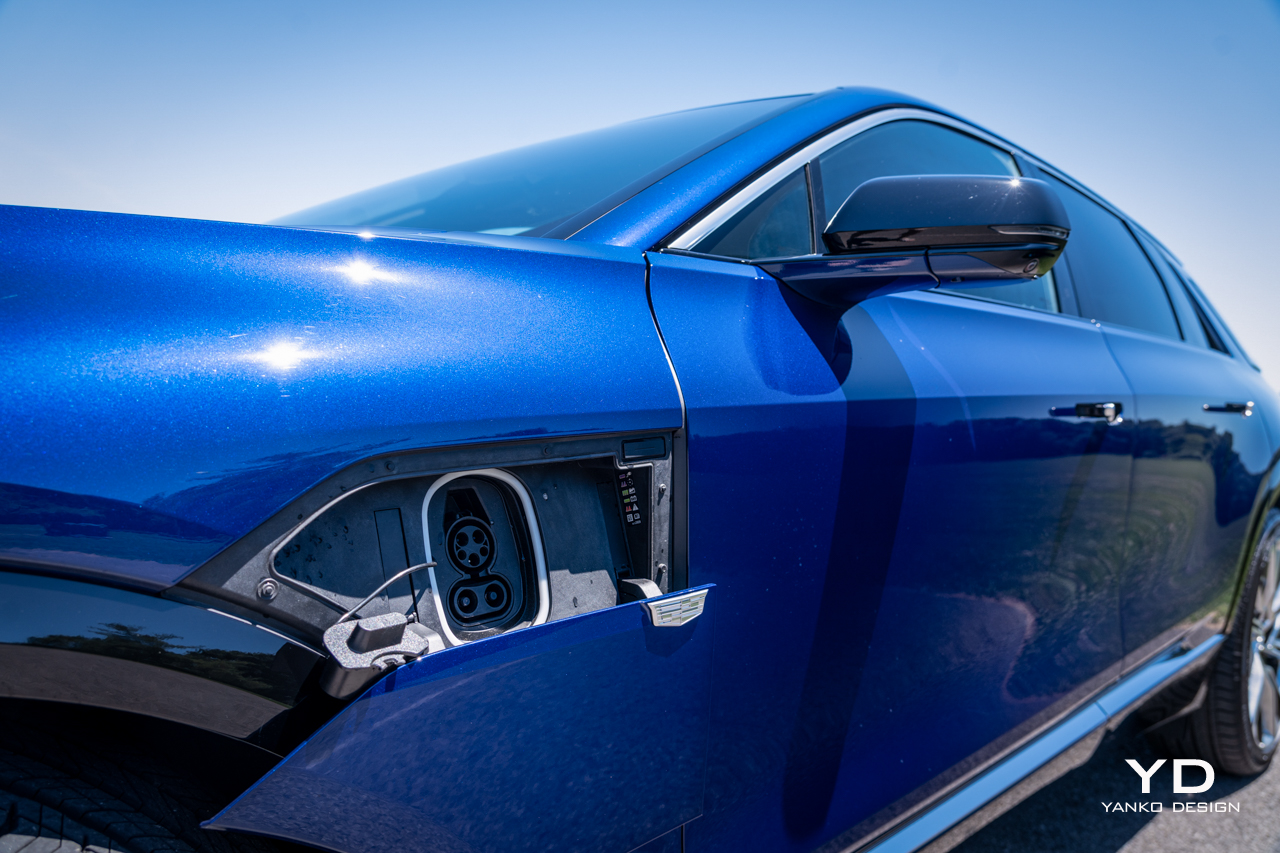
The Cadillac Lyriq starts at $58,590 for a base, Tech trim model with rear-wheel drive. The car you see purchased here was the top Luxury trim, Luxury 3, outfitted with a few options, including $1,480 for a 19.2 kW charging module and $625 for the Opulent Blue metallic paint.

Add on the $1,395 destination charge, and the total vehicle price is $72,695.

That makes it a premium option in an increasingly packed luxury electric SUV market. But the Lyriq stands out in many ways, not the least of which for its unconventional shape and tangible air of refinement about it. It’s lovely to drive, and thanks to Super Cruise, it’s even better to be driven, regardless of which seat you occupy.

The post 2024 Cadillac Lyriq Review first appeared on Yanko Design.
This Cadillac Concept looks like a Wind Tunnel Test brought to life

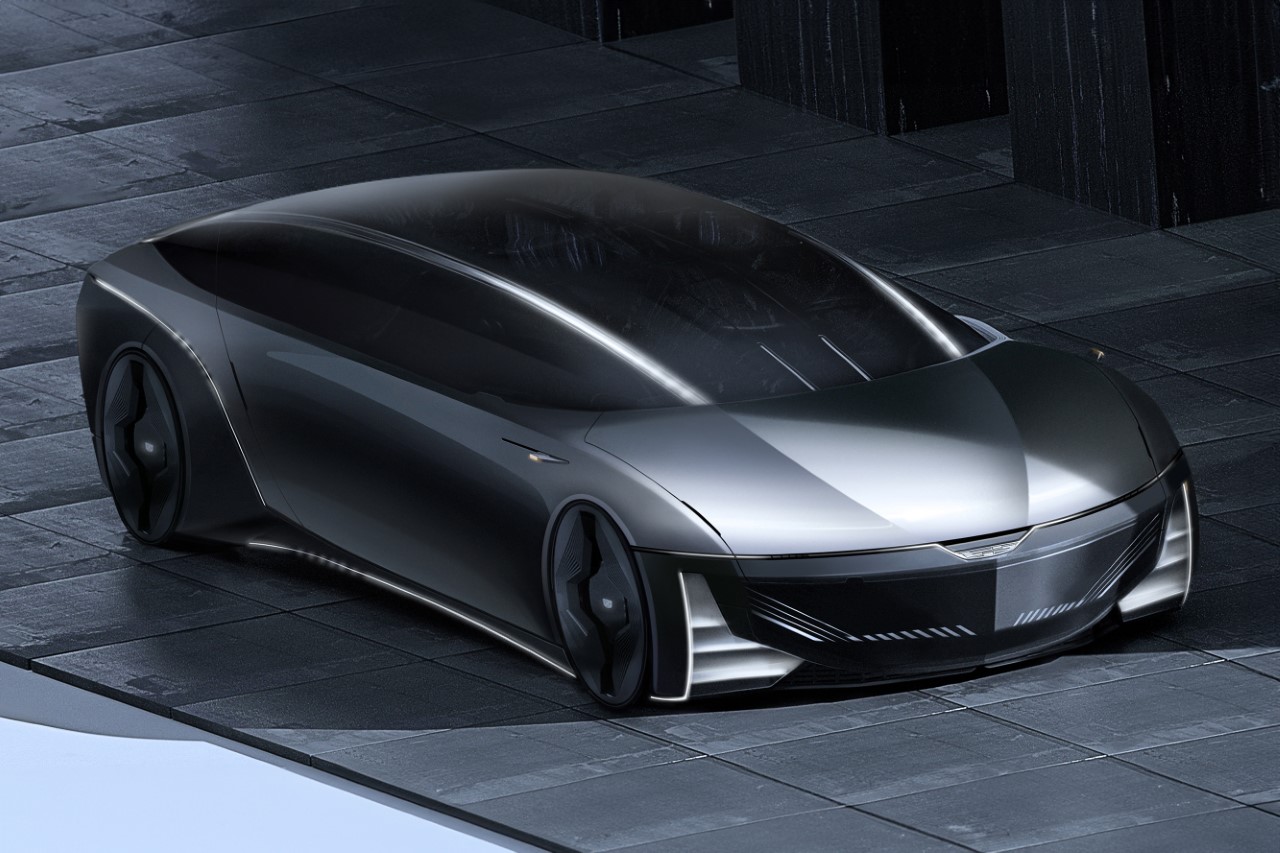
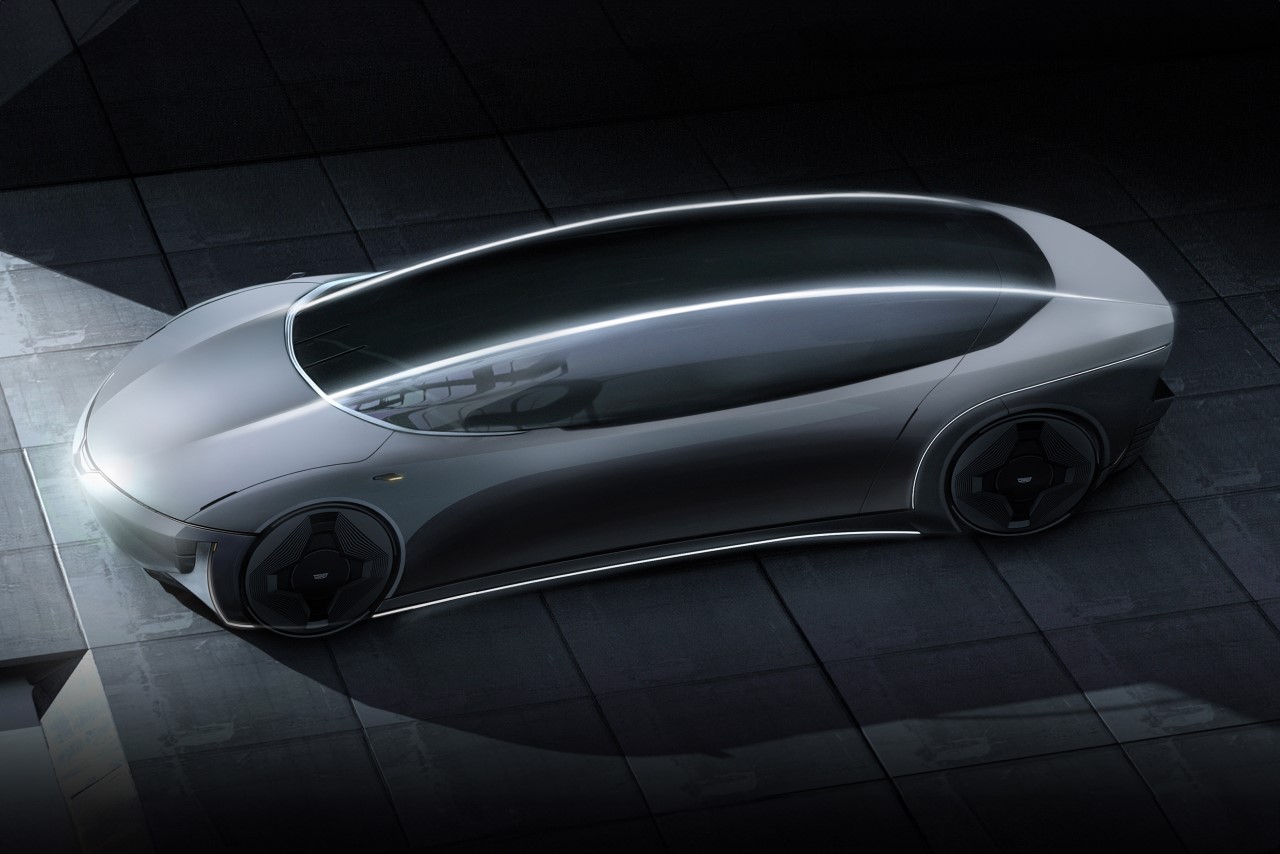
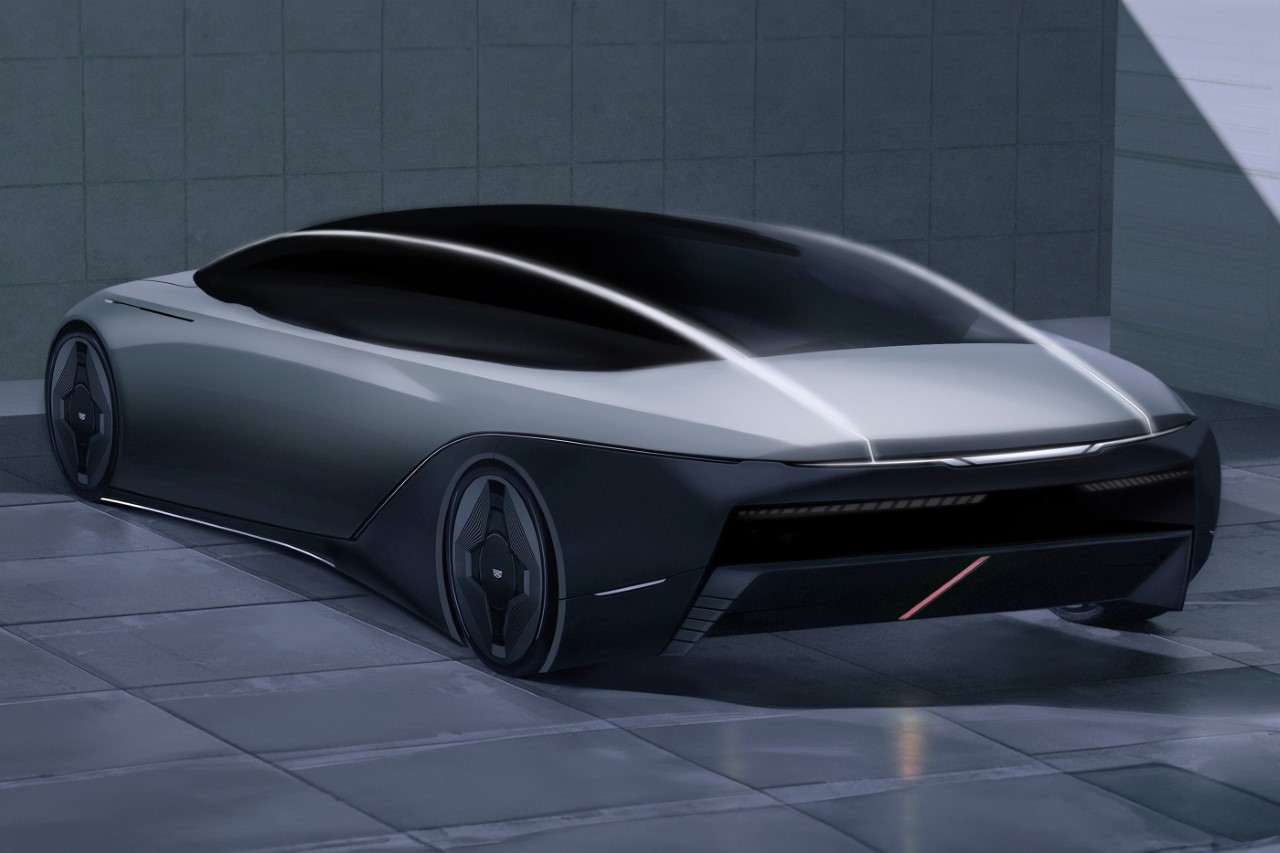
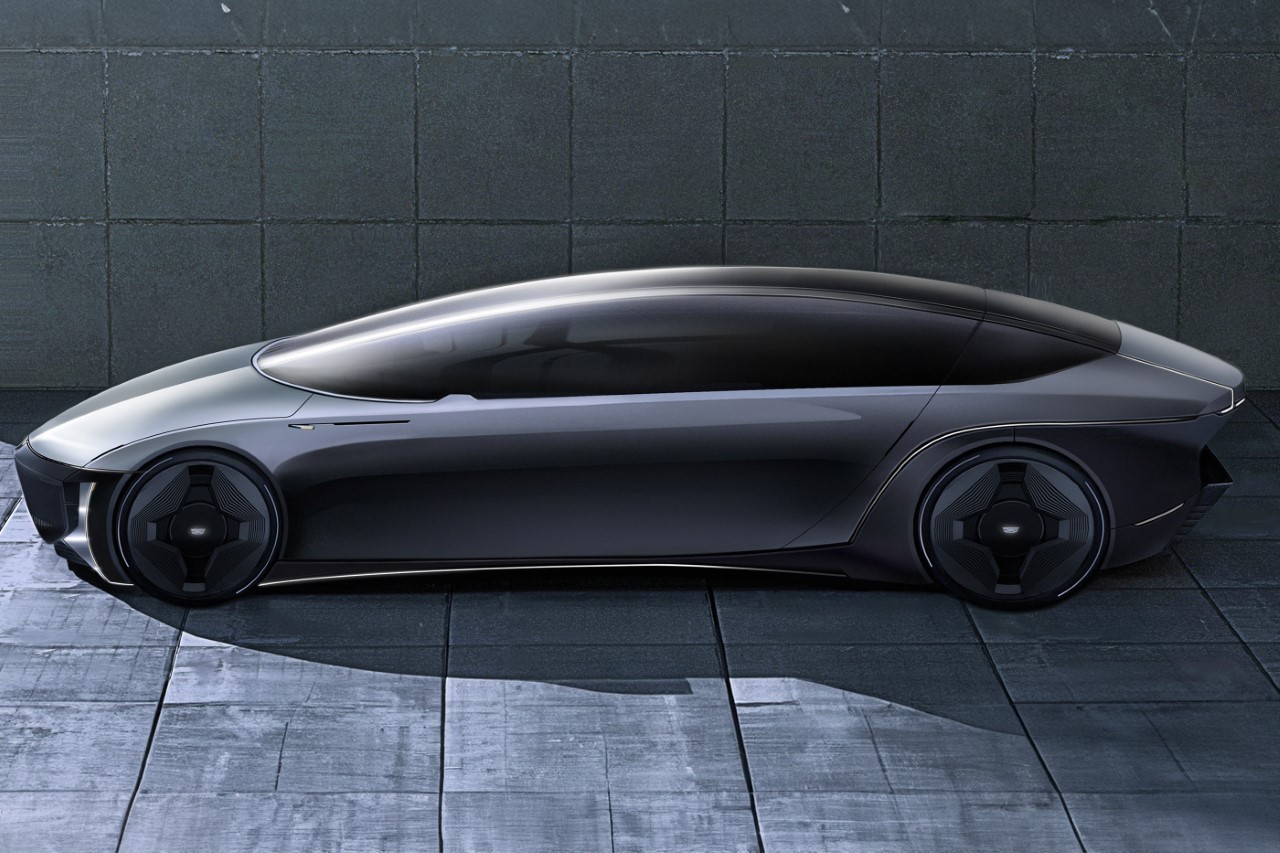
The purpose of the wind tunnel test is to determine how air flows around a speeding object. It’s an indicator of overall aerodynamics, but with the test, you also get to visually plot how air bends to accommodate your moving vehicle, and how it regathers once it gets to the back. Although mainly a function-driven exercise, it’s also rather pretty to look at, and it looks like the kind of aesthetic Seongmin Kim was going for while designing the Cadillac A-RROW, a conceptual car that’s exterior is dominated by continuous lines.

Designer: Seongmin Kim

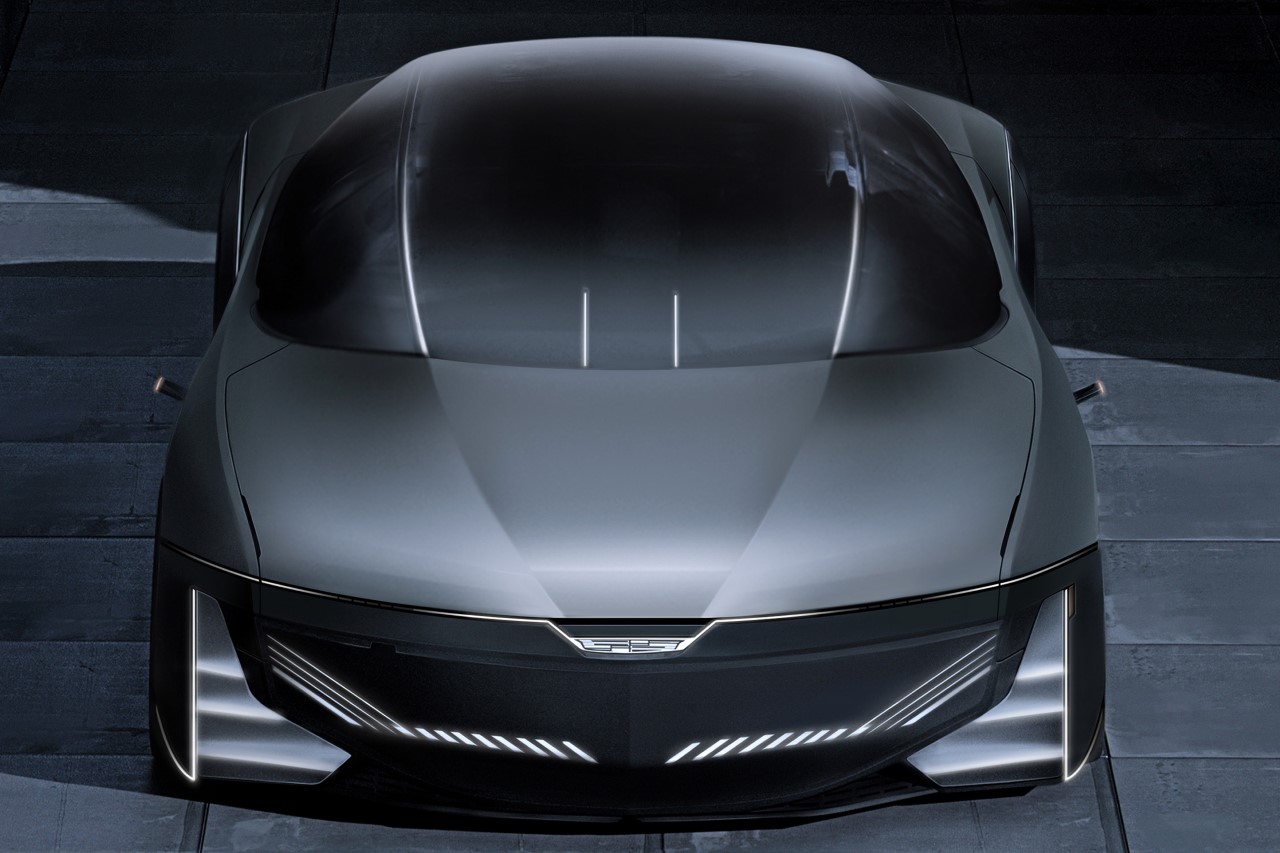
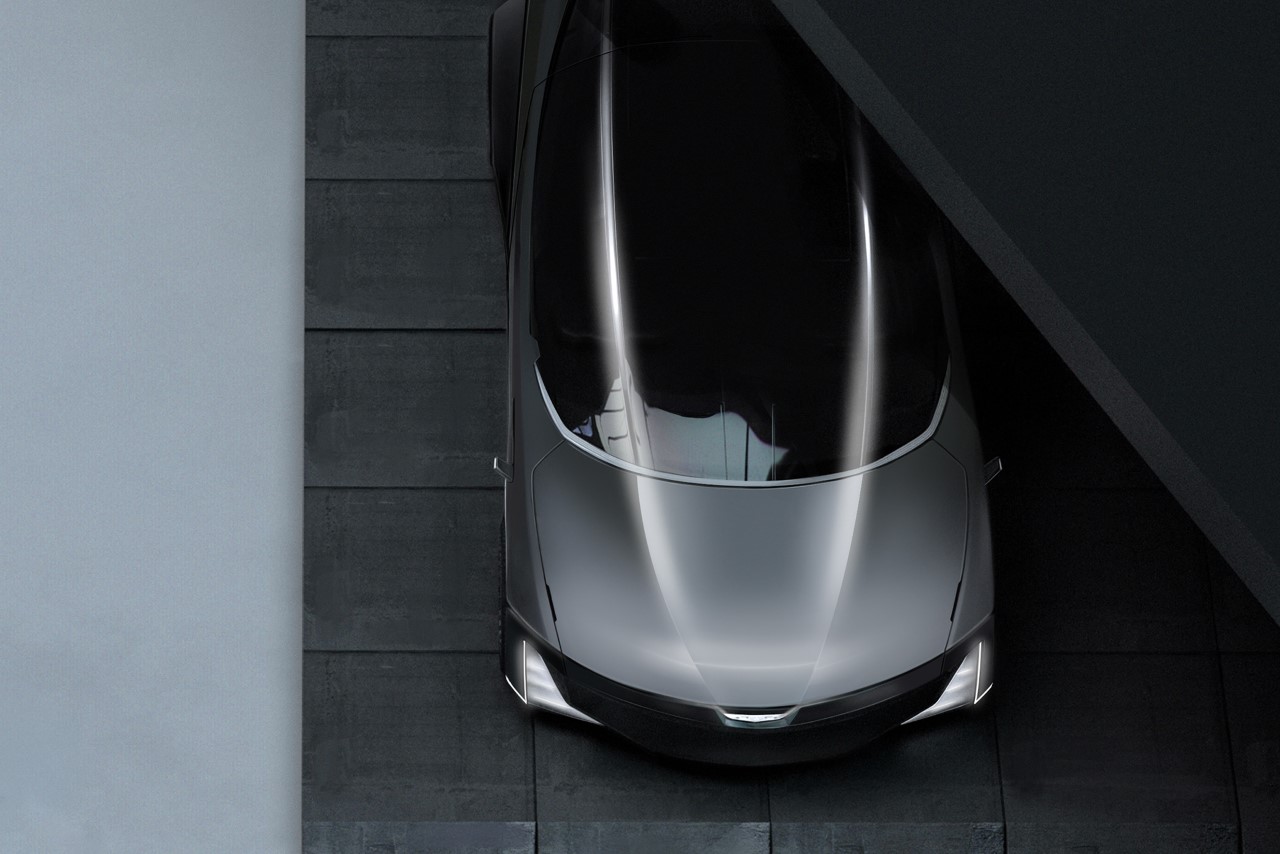
Look at the car and you instantly notice how dominant these straight continuous lines are. They stretch from the front to the back, wrapping the top and sides, but not defining their surfaces entirely. The car still has its own character in between those lines, which looks beautiful, but there’s something exhilarating about the A-RROW’s design, and that probably stems from the fact that it looks like it’s in movement even when it’s standing still, giving it a sense of speed.

“I was deeply moved by the beauty of the continuous line,” mentions Seongmin. “The lines seemed to represent the past and the future, the universe and the flow of existence. They reminded me that they contain the flow and change of time, and that they harbor infinite possibilities.”
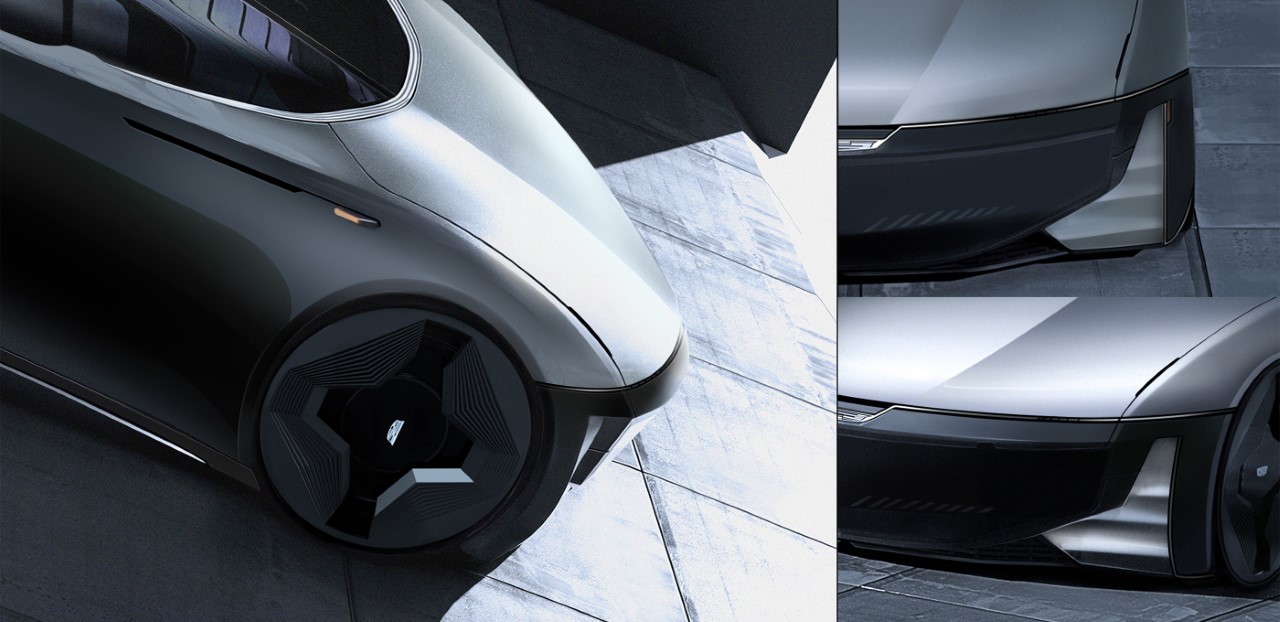
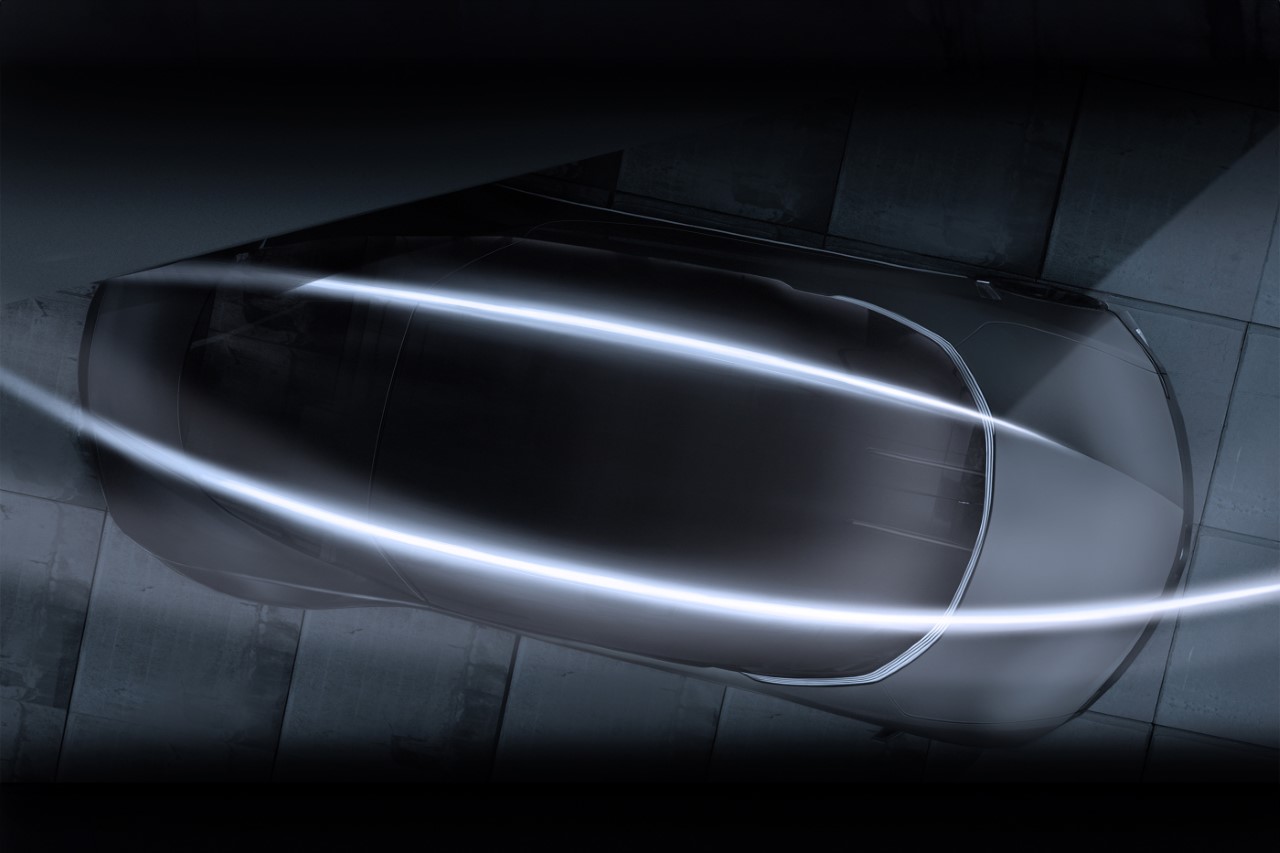
Envisioned as a futuristic EV, the car treads into luxury territory with its gorgeous design and swooping silhouette. It sports a stunning panoramic windscreen that arches all the way from the front to the rear, covering even the sides to create a bubble-like cockpit for the driver and the lucky passenger! The metallic paint job, and LED-strip headlights and taillights enhance the automobile’s futurism, and let’s just say that I wish more car manufacturers turned their branding logos into glowing light patterns!

The post This Cadillac Concept looks like a Wind Tunnel Test brought to life first appeared on Yanko Design.