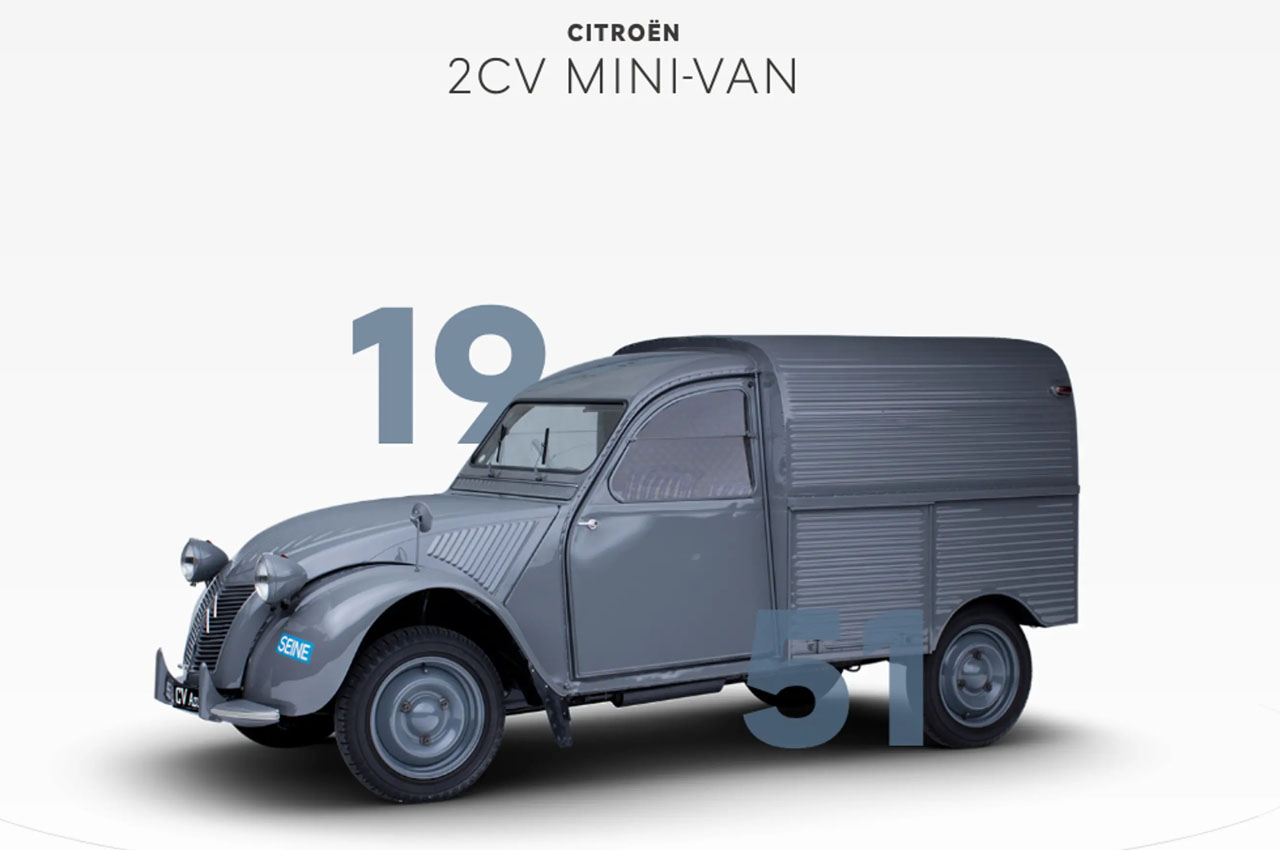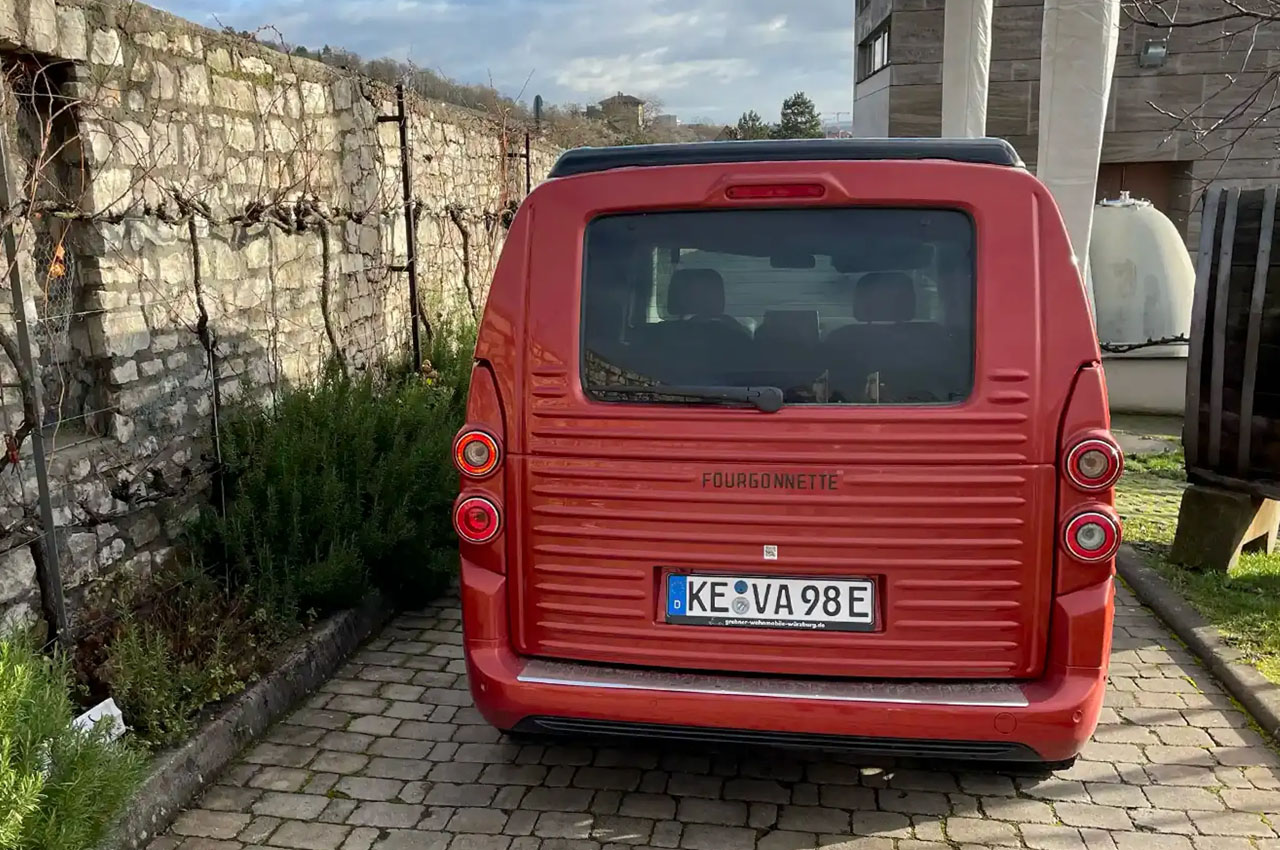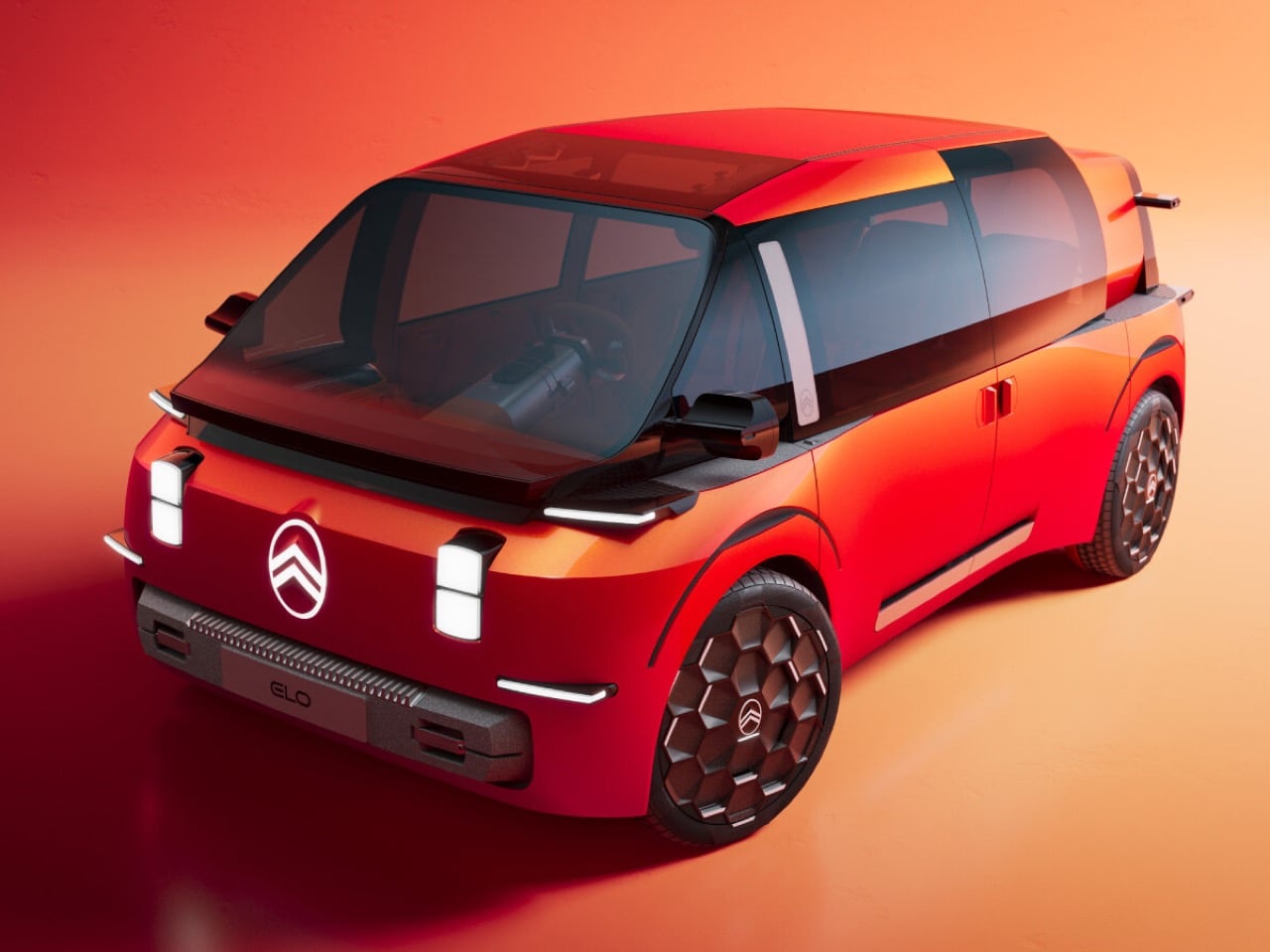
French automaker Citroën just unveiled a concept that treats your car like a Swiss Army knife for modern nomads. The ELO is an electric vehicle that doubles as a bedroom, triples as an office, and moonlights as a power station. We’ve seen plenty of concepts that promise versatility, but most end up being vaporware with a nice press kit. This one actually has me convinced someone at Citroën has spent time living out of their car.
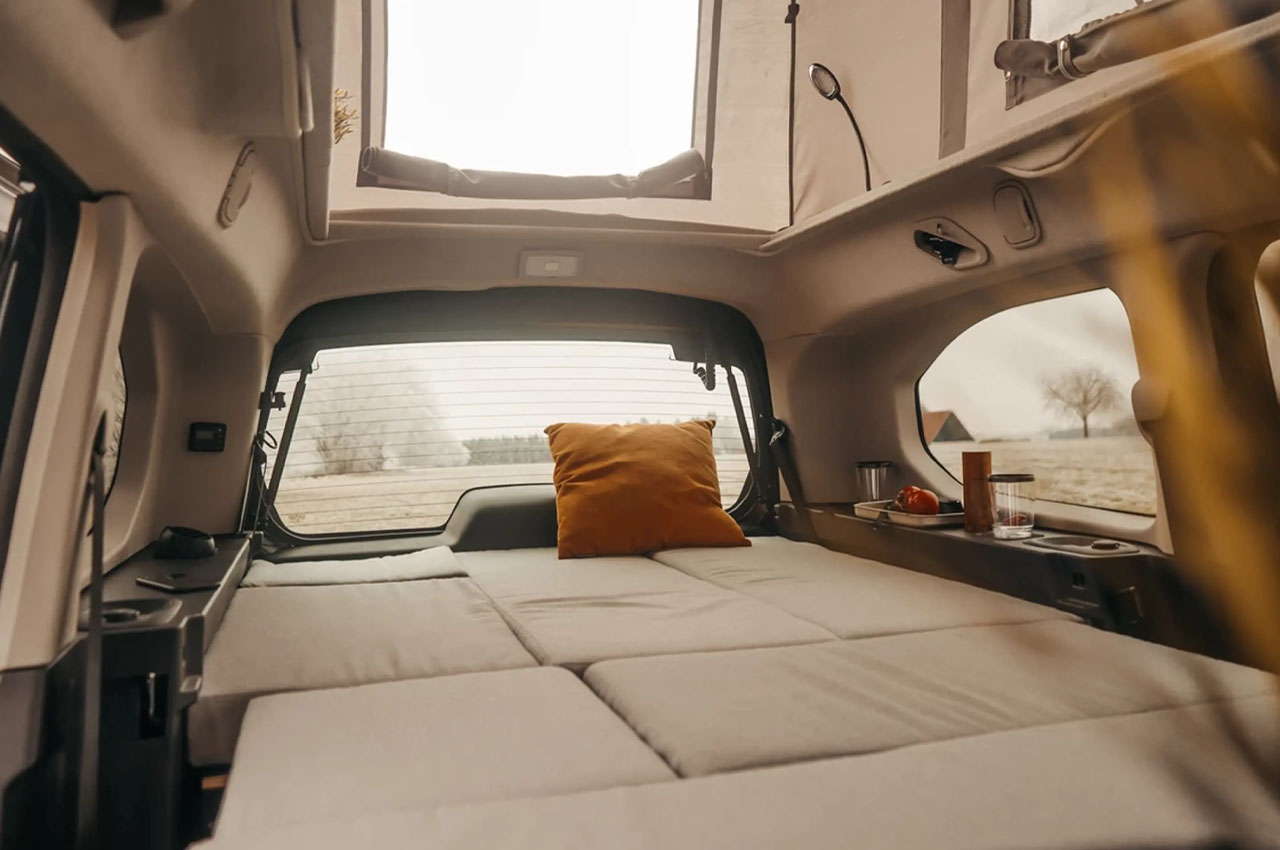
Two inflatable mattresses live in the rear cargo area, and they deploy using the car’s built-in compressed air system. You’re not wrestling with a manual pump or some finicky electric one you bought off Amazon. The mattresses fill the entire rear space to create an actual sleeping area for two adults. The roof slides open so you can stargaze without getting eaten alive by mosquitos, and the side lamps flip into bedside light mode. There’s a projector mounted inside with a pull-out screen for outdoor movies. Citroën partnered with Decathlon for the storage systems, which explains why everything feels less “auto show prop” and more “gear you’d actually use.”
Designer: Citroën
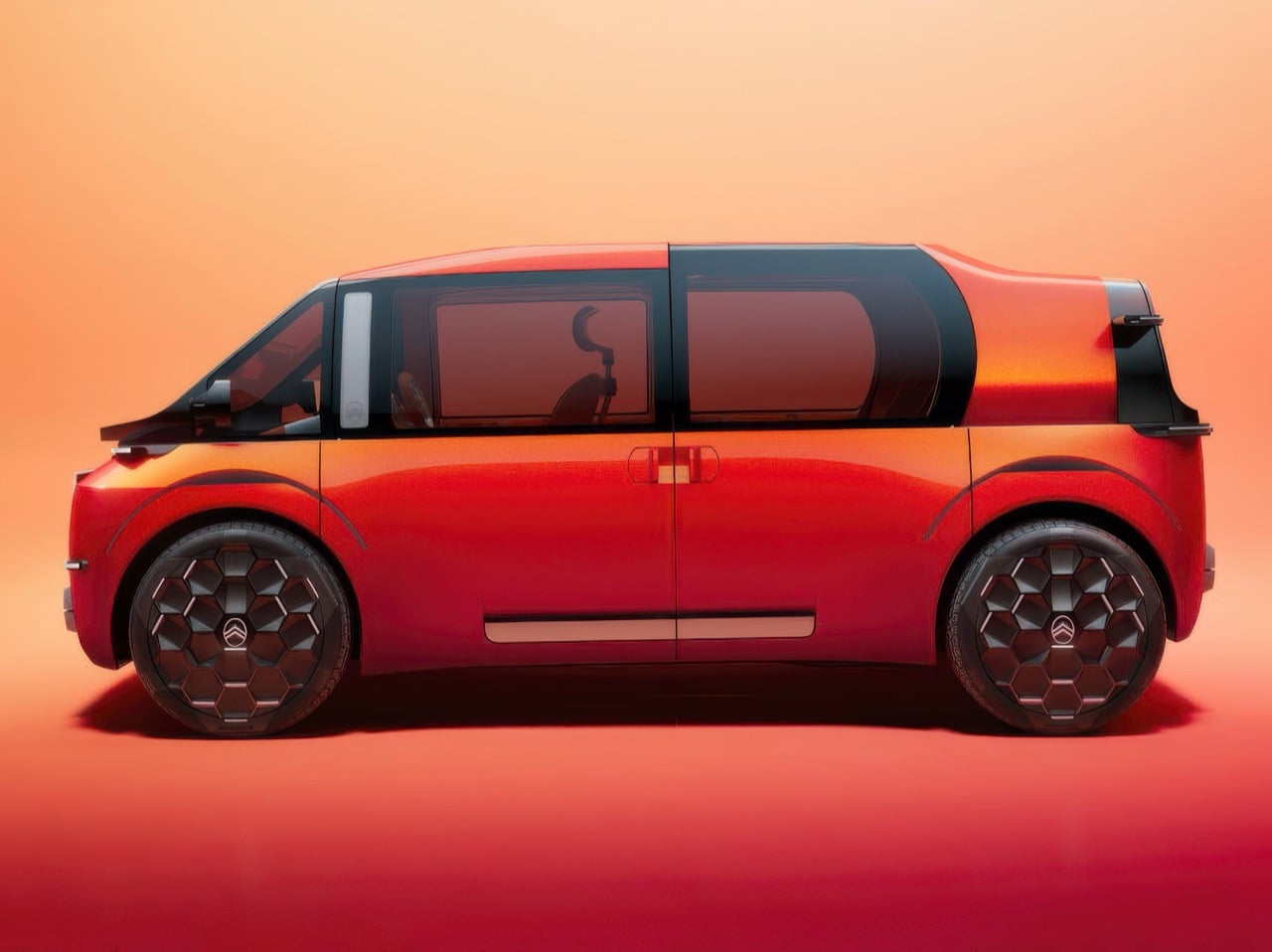
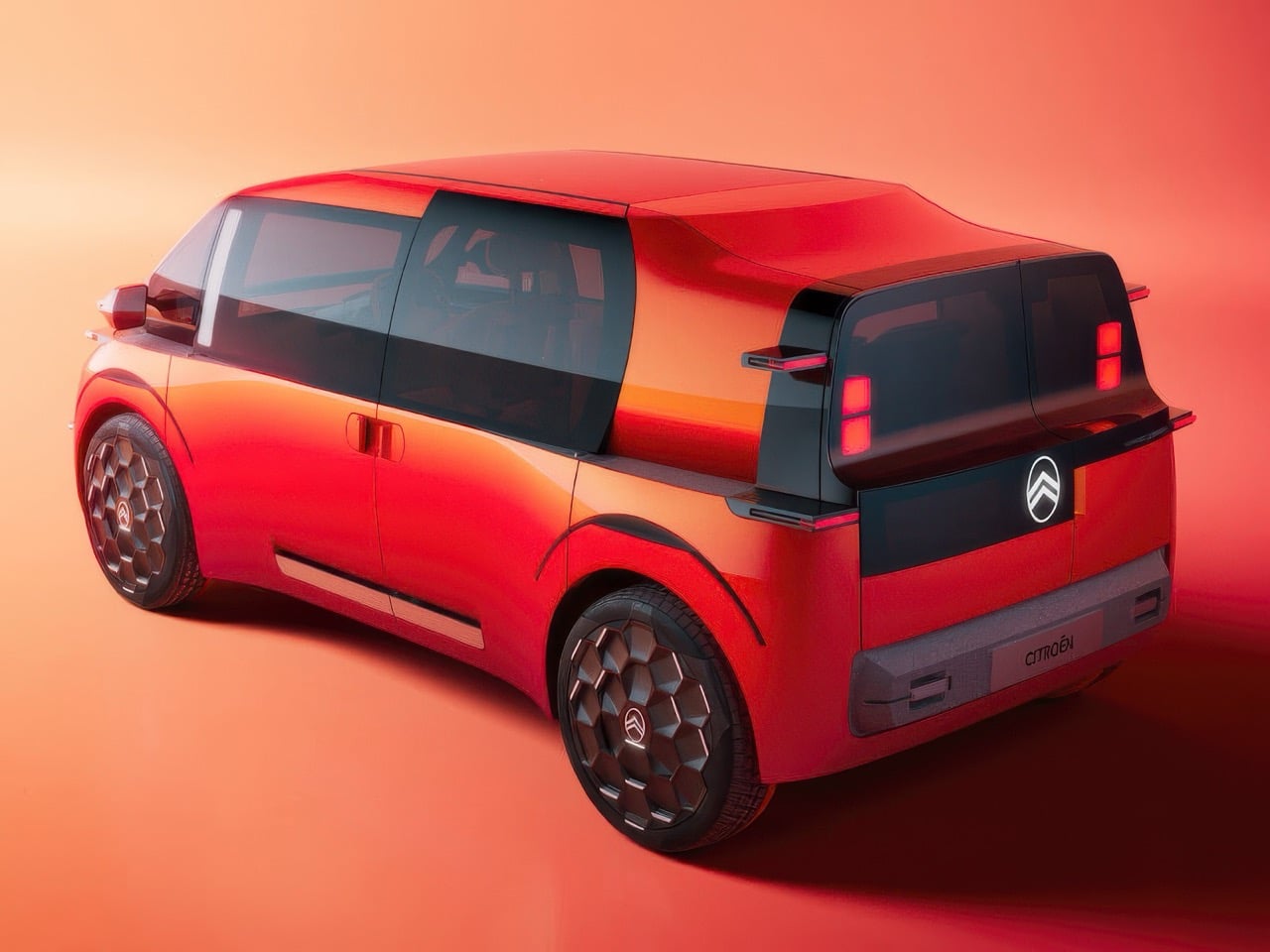
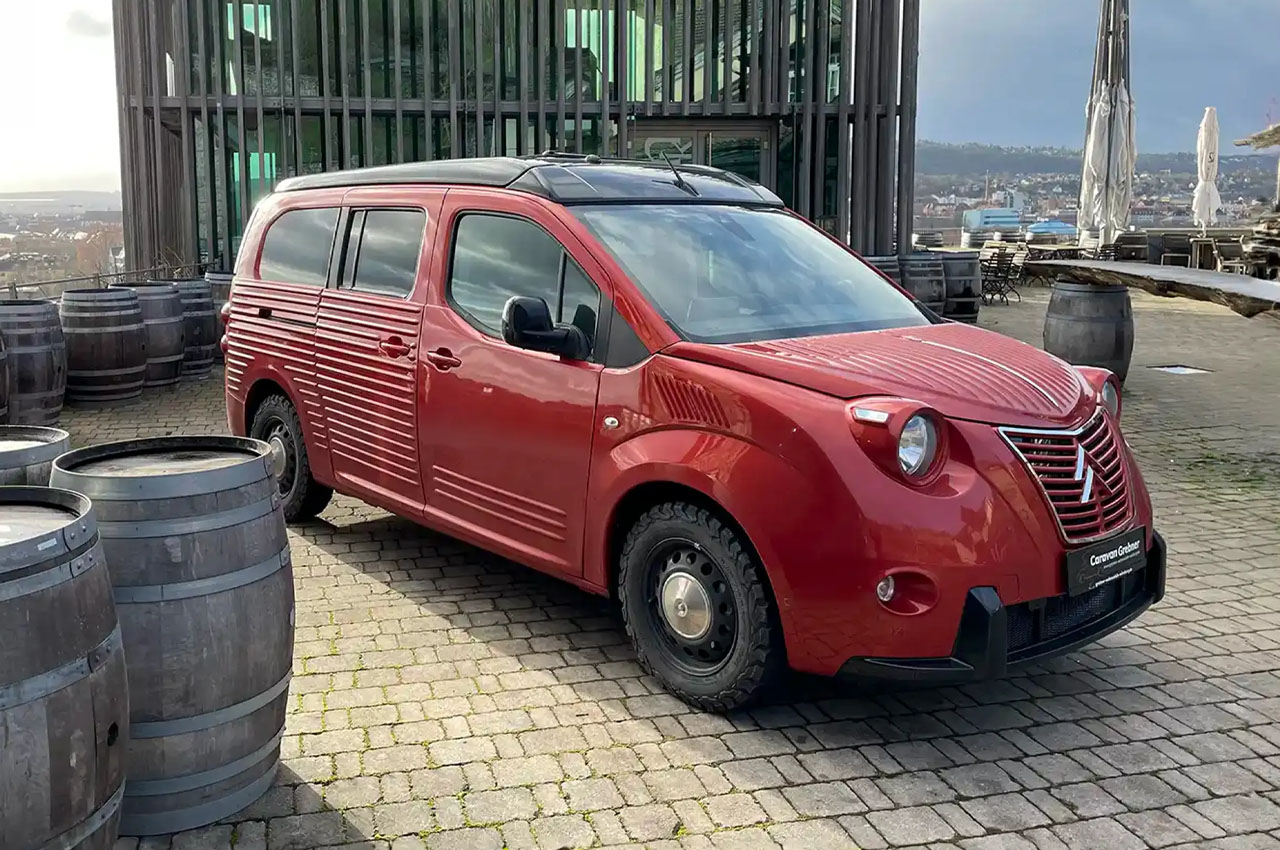
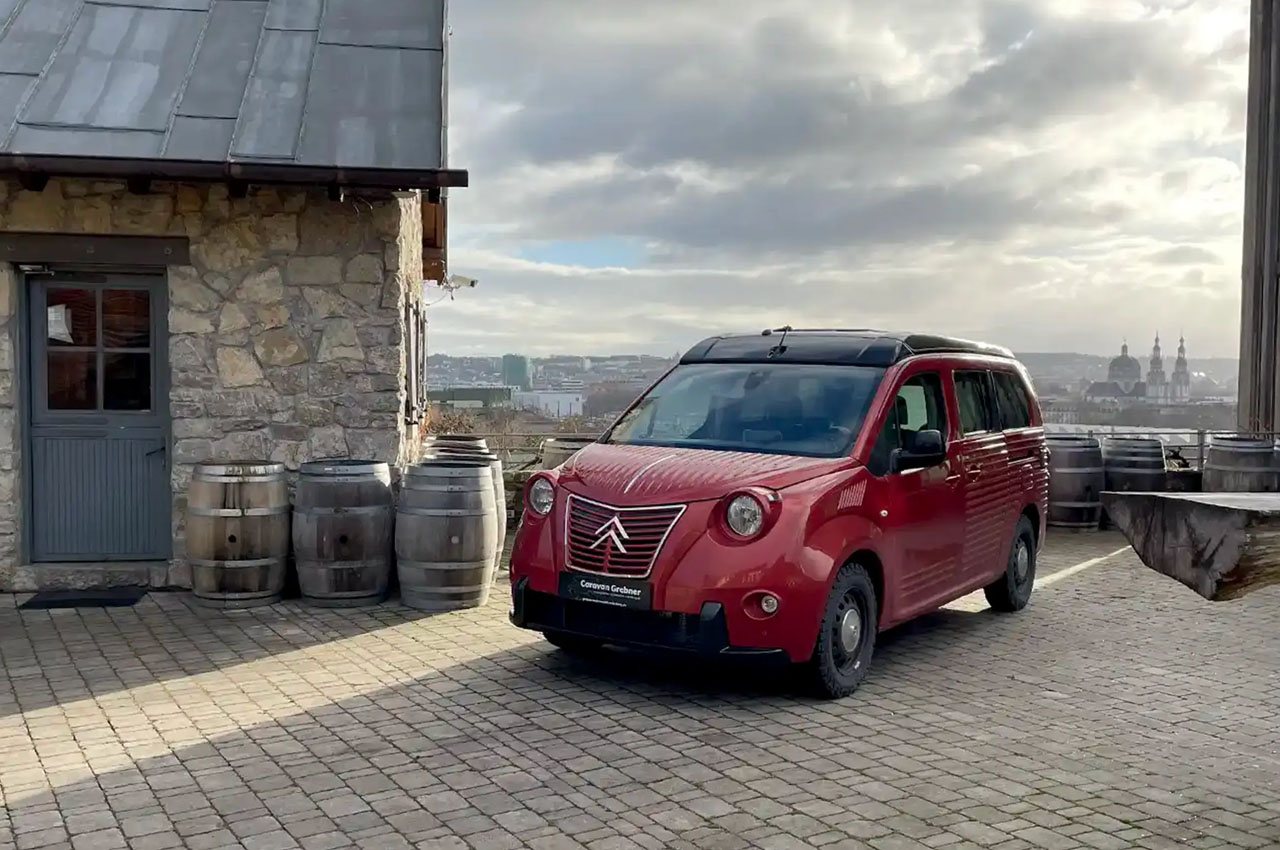
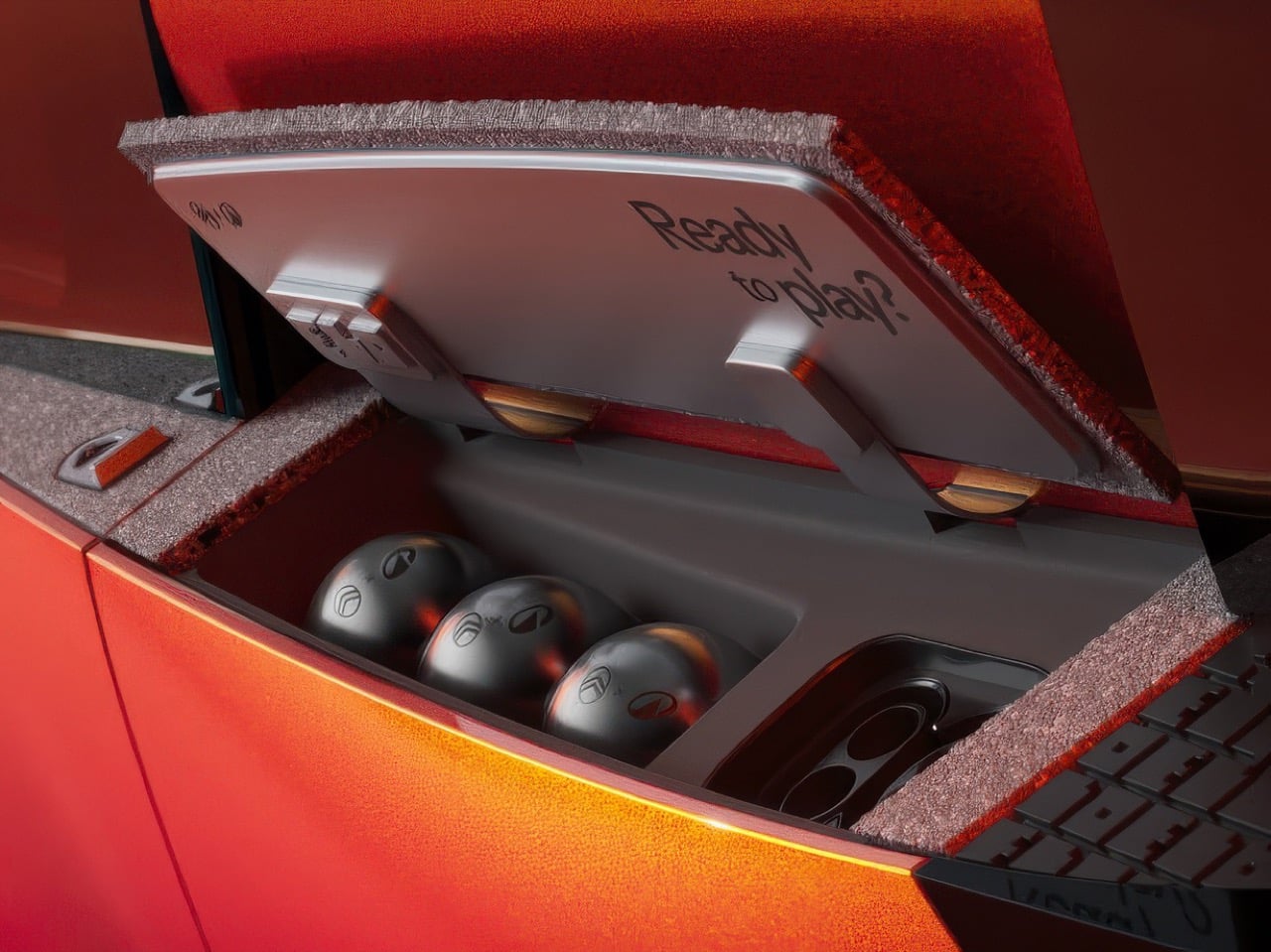
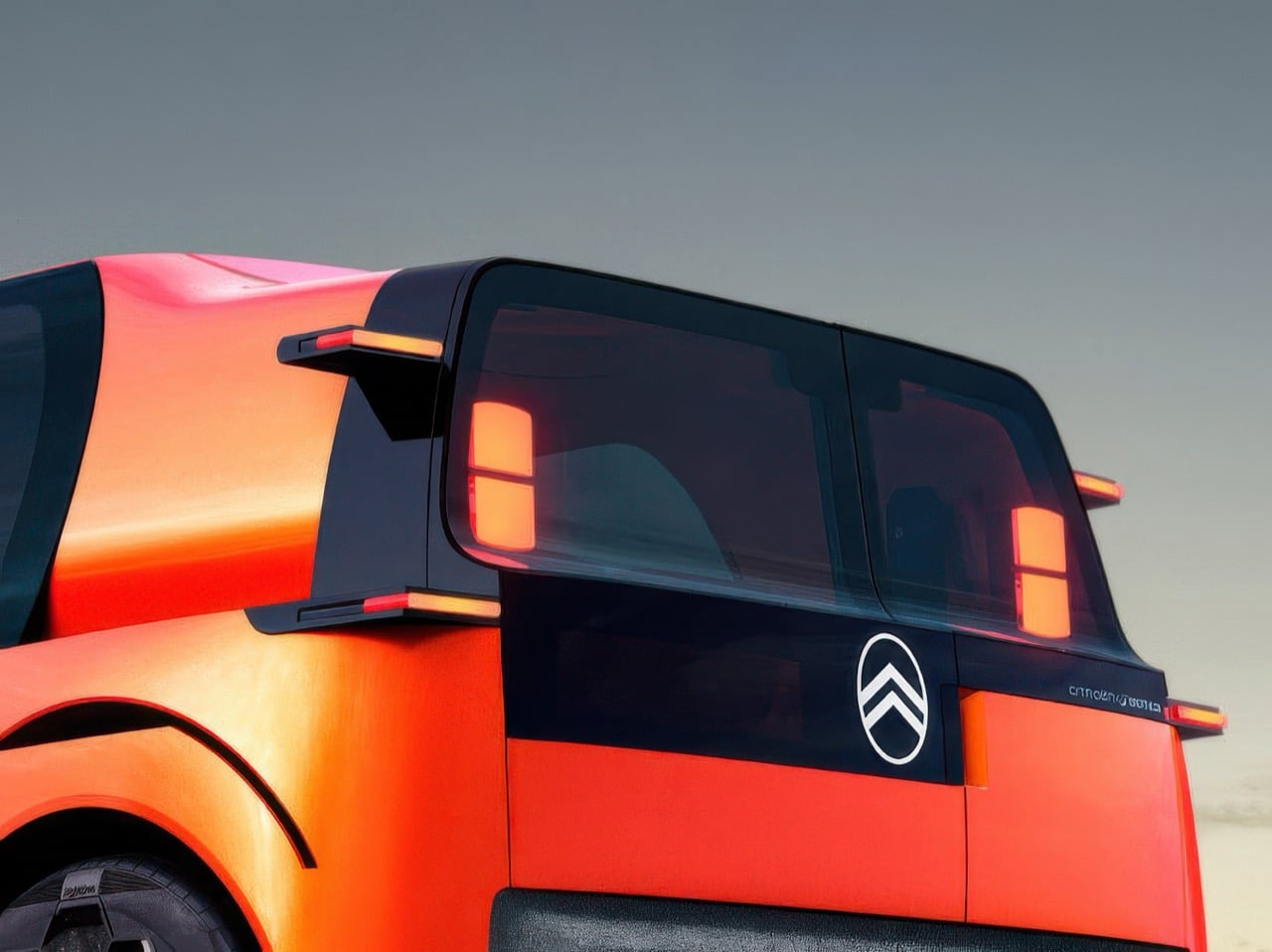
The exterior looks like Citroën told their designers to prioritize function over flash and actually meant it. The body is boxy and van-like, painted in a bold coral-orange that screams “adventure vehicle” without trying too hard. Those honeycomb wheel covers aren’t just styling exercises – they integrate the Citroën chevron logo and protect the wheels while looking distinctive. The front is minimalist with vertical LED strips flanking the badge and a textured grille pattern that’s more utilitarian than aggressive. Large glass surfaces dominate, including that massive windscreen and the sliding panoramic roof section. The doors open wide with no center pillar, making entry and exit genuinely easy instead of the usual concept car gymnastics. Above each wheel arch sits a flat platform for storing small items when parked – the photos show pétanque balls, because of course the French put boules storage on their concept car. The proportions are short and tall, maximizing interior volume without making the thing a nightmare to park in European cities.
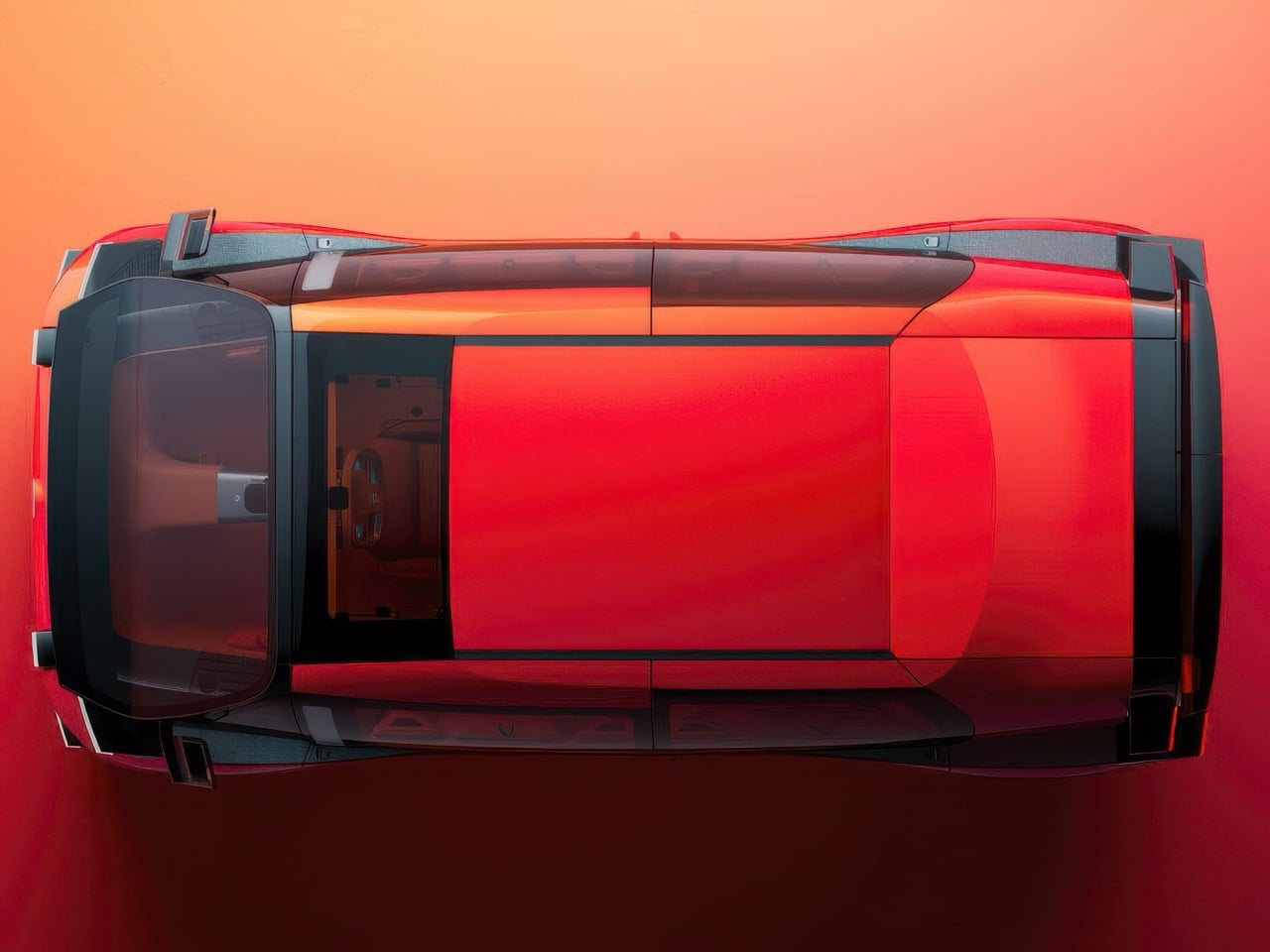
The driver sits in the center of the front row instead of off to one side. This isn’t some McLaren F1 tribute. It’s purely functional, giving you an unobstructed view through what is genuinely one of the largest windscreens I’ve seen on a vehicle this size. The steering wheel has a single spoke design with a massive opening in the middle, and Citroën ditched the traditional dashboard entirely. Everything projects onto a transparent strip across the windscreen. Two joystick controls sit on the wheel within easy reach of your thumbs. The interface is stripped down because this car needs to work when you’re tired, when you’re working, and when you’re just trying to get somewhere.
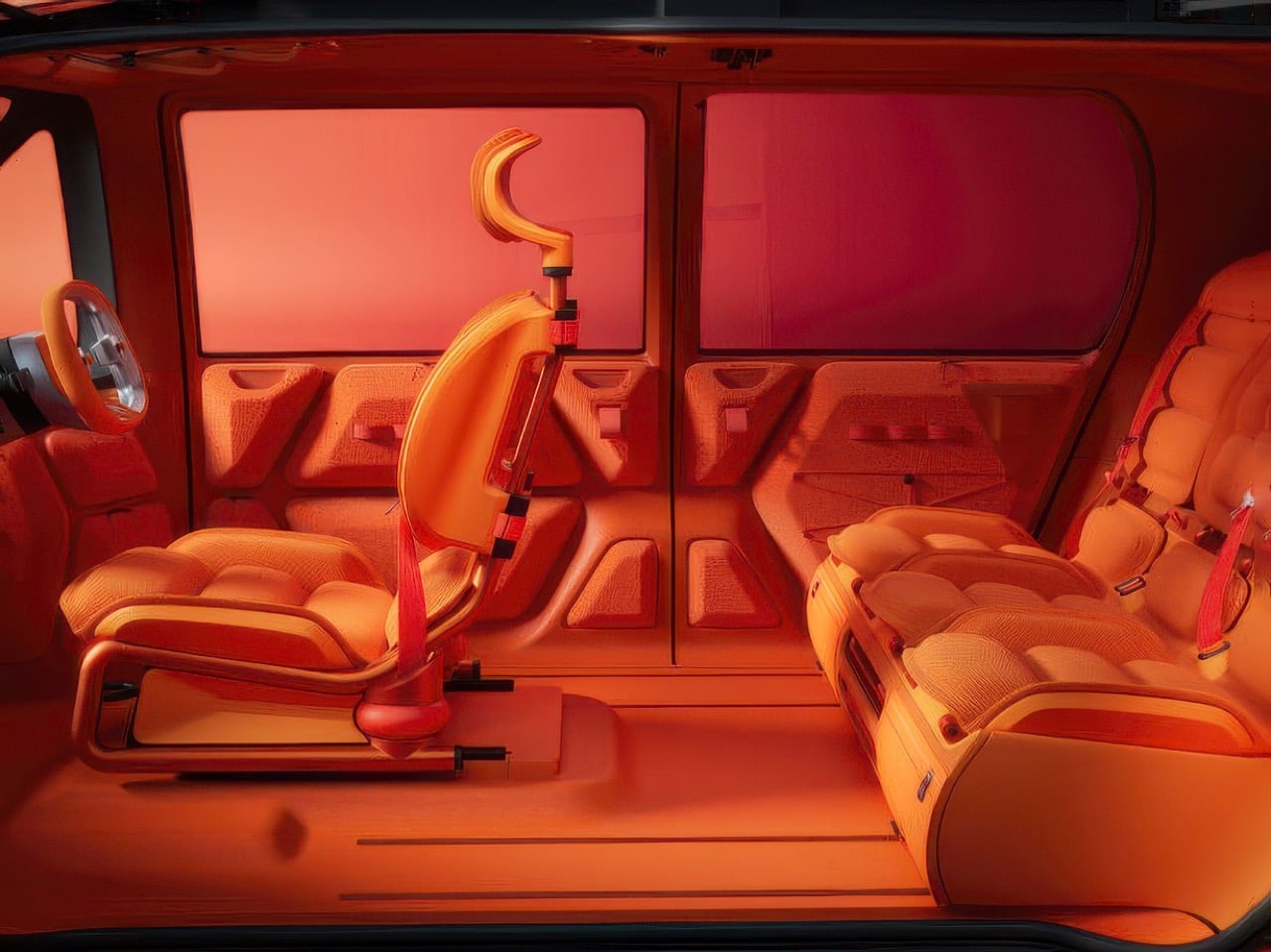
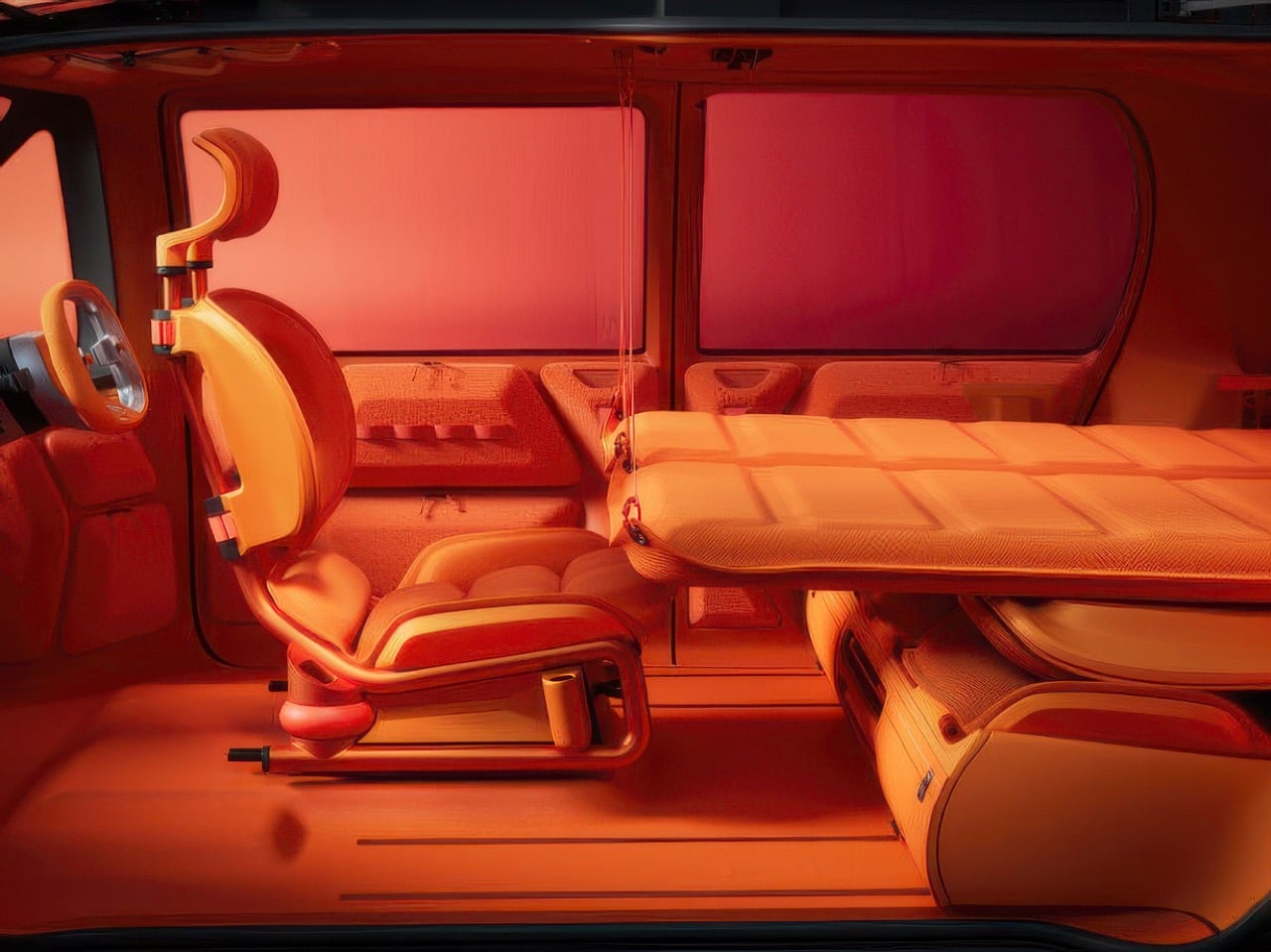
Modularity usually means “kind of adaptable if you spend twenty minutes reconfiguring things.” Not here. The second row has three identical seats that fold flat and detach completely. Use them as camp chairs. Two extra seats hide under the side seats, so you can haul six people when needed. Even with all six seats up, there’s cargo space left over. The driver’s seat spins 180 degrees to face backward. A work table folds out from under the center seat in the second row. If you forgot your laptop, the projection system works for video calls. The wheel arches have cutouts that hold phones and headphones.
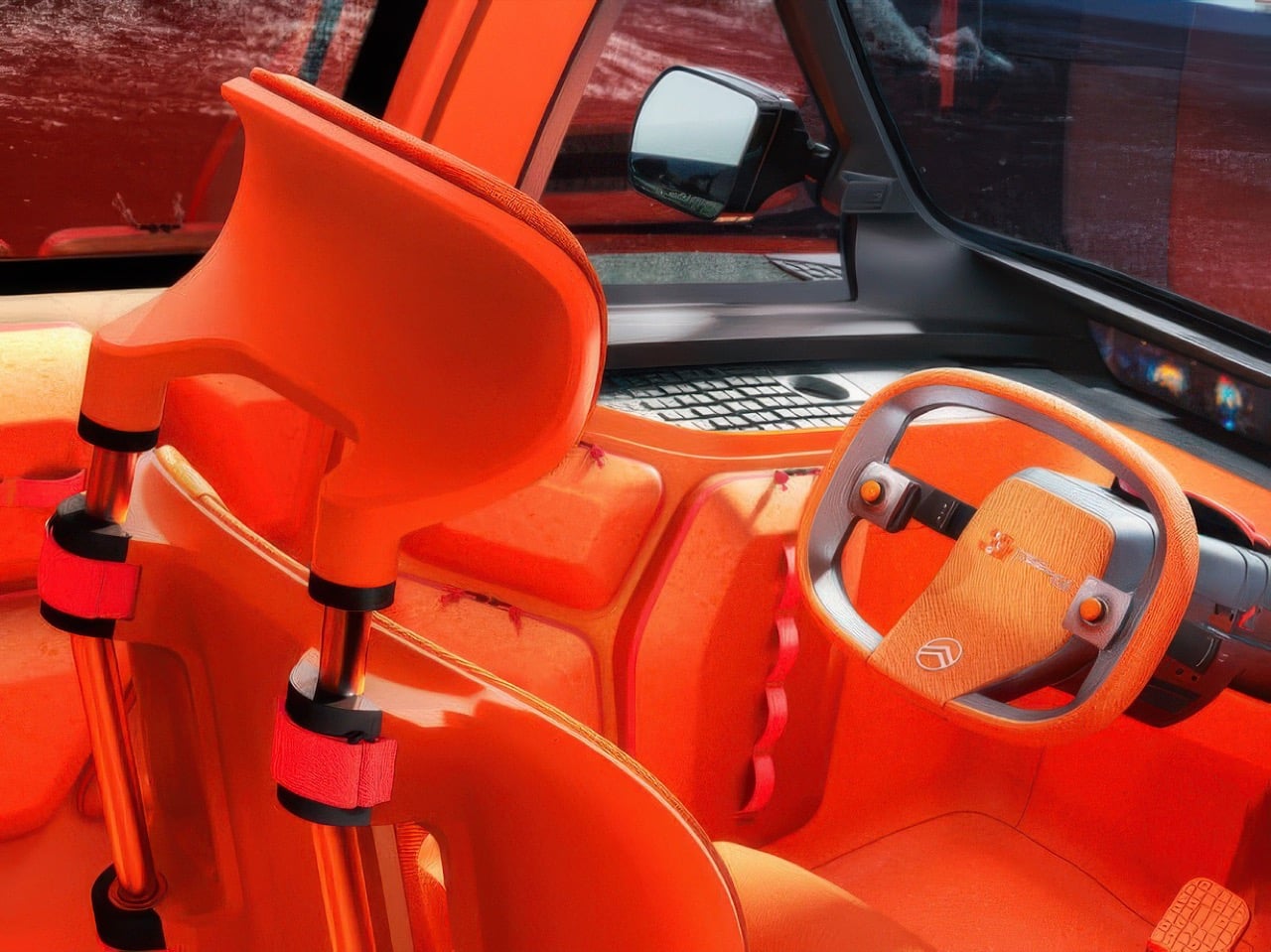
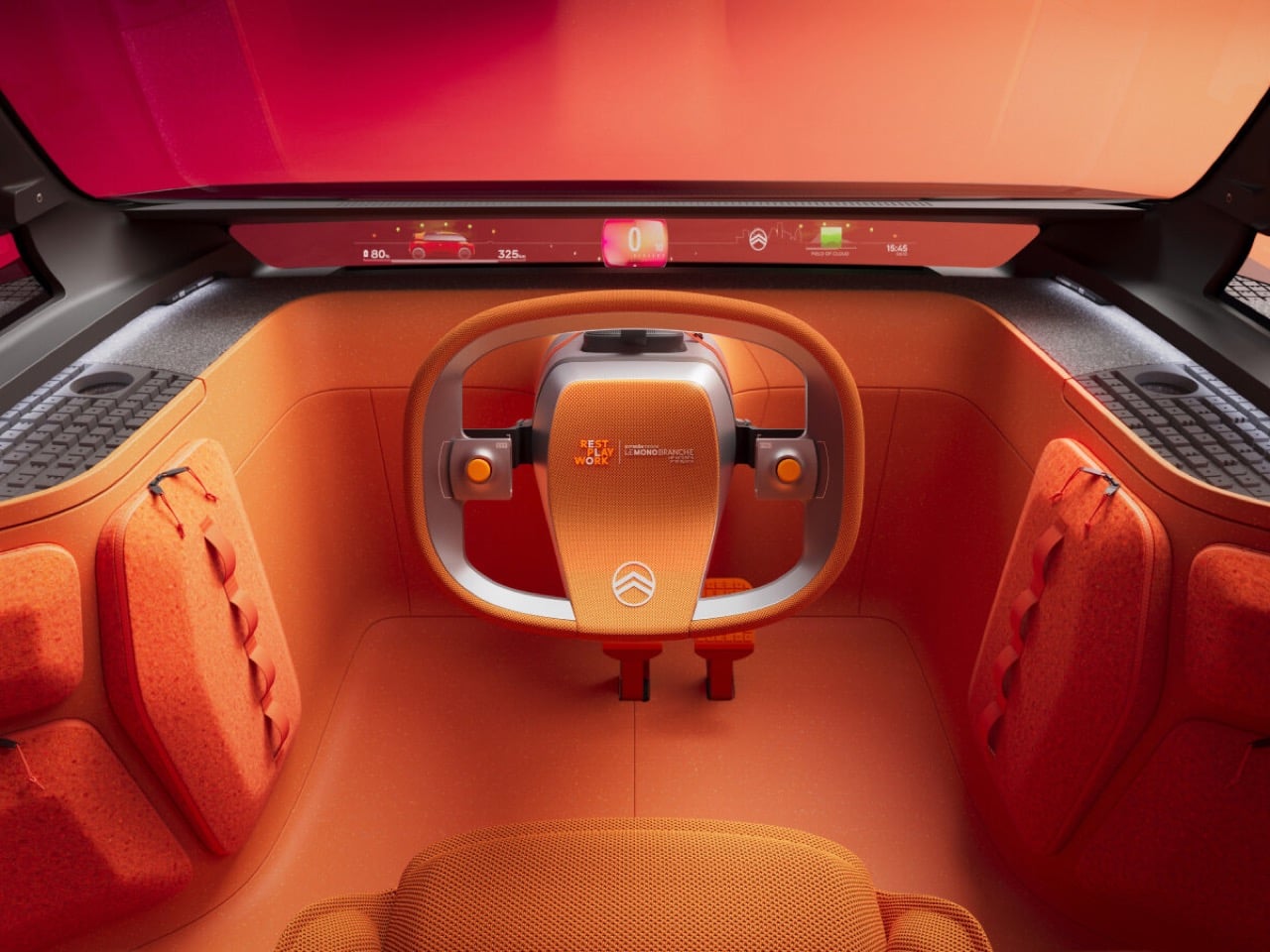
Expanded polypropylene keeps weight down and recycles easily. Same stuff they use in bike helmets. Felt sections come from recycled fabric scraps from other Citroën projects. The second-row seats have water and wear-resistant covers because obviously you’re going to trash them. The exterior stays simple with huge windows and wide doors that have no center pillar. Front and rear bumpers are identical to reduce parts count.
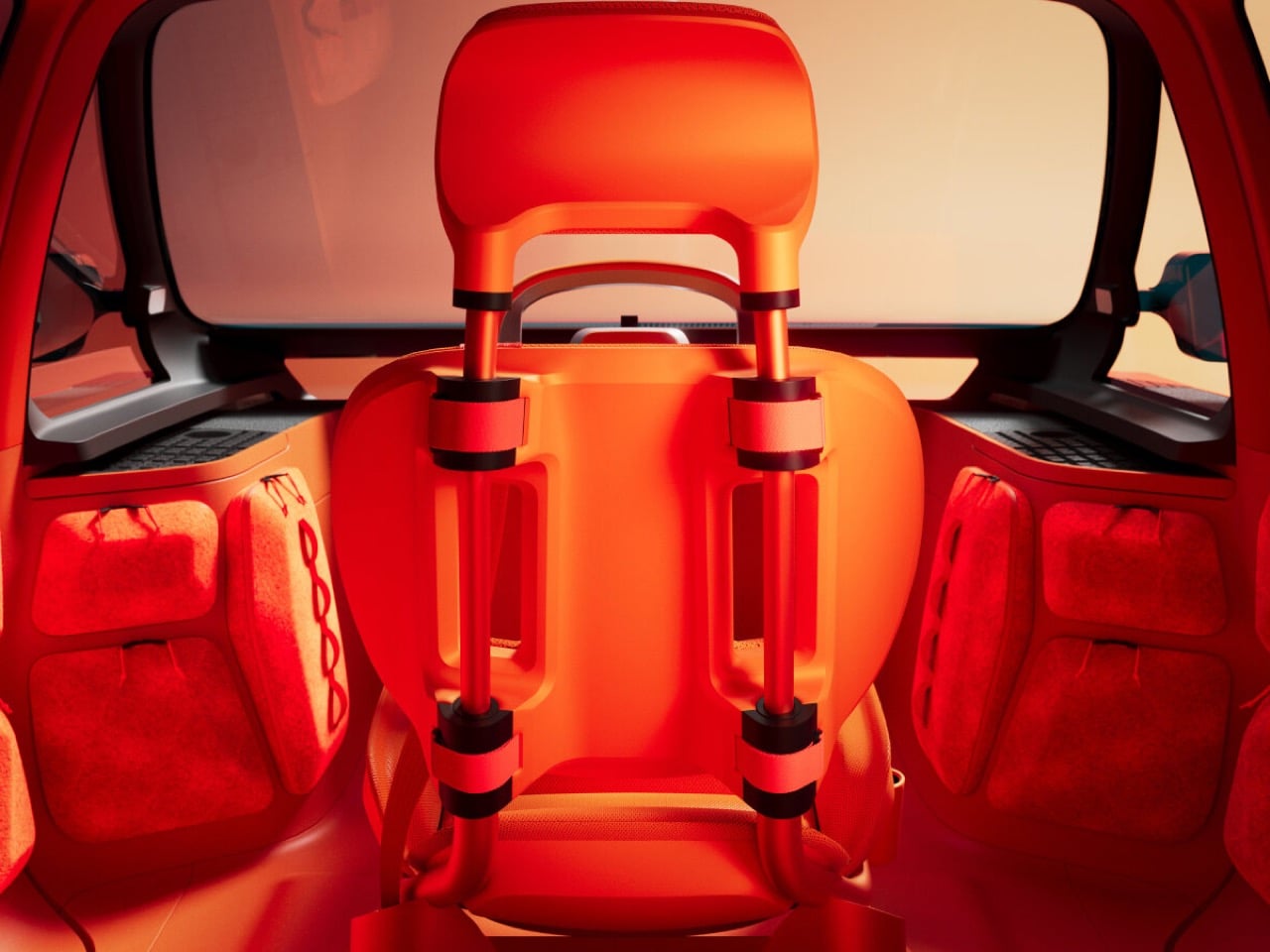
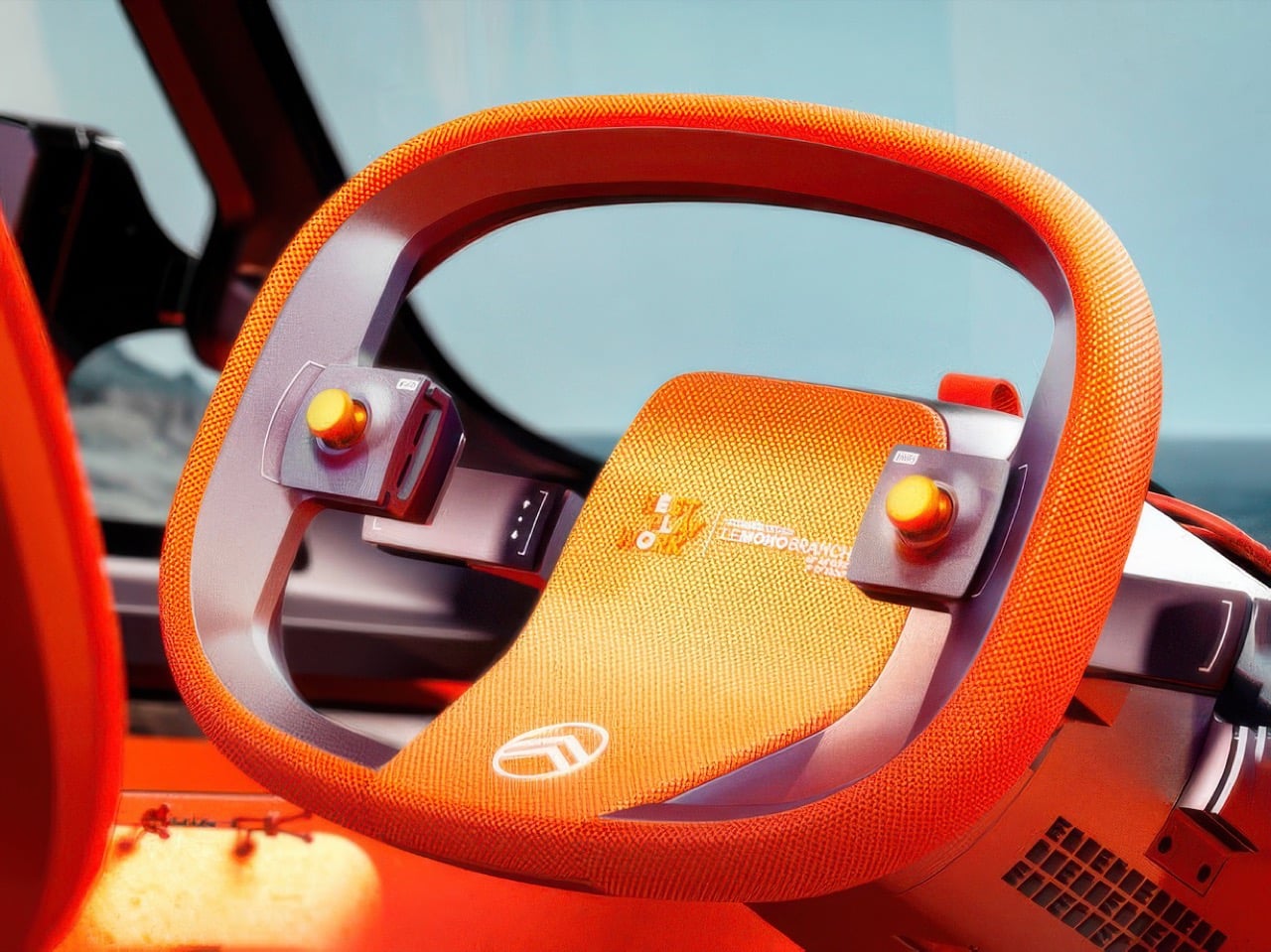
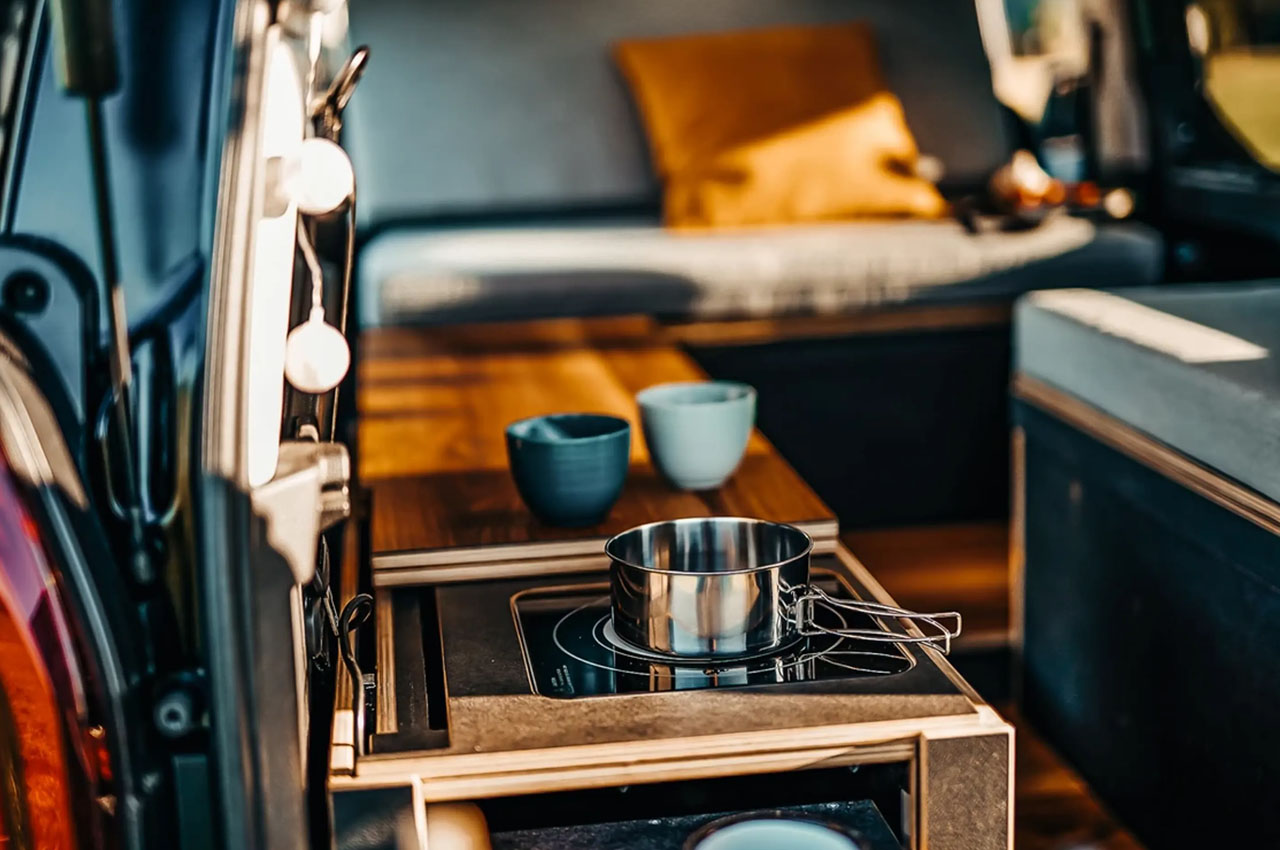
Power options go beyond the drive battery. The V2L system lets you run speakers, charge devices, or power cooking equipment. A built-in compressor handles paddleboards, bike tires, whatever needs air. Hooks on all four doors mount a large awning for covered outdoor space. You could genuinely set up a small basecamp without bringing any extra equipment.
Citroën calls this a mobility study, which is corporate speak for “we’re not committing to production yet.” But unlike most concepts that feel like design school fever dreams, the ELO solves real problems for people who work remotely, chase outdoor activities, or just refuse to stay in one place. It’s compact enough for cities but functional enough for extended trips. Whether this becomes a real product or just influences future designs, someone finally built a car for people whose home, office, and garage are increasingly the same place.
The post Citroën’s ELO Concept Car Transforms Into a Mobile Camp With Inflatable Beds and Built-In Power first appeared on Yanko Design.