Freescape puts side-extending inflatable pop-up roof on a Ford camper van

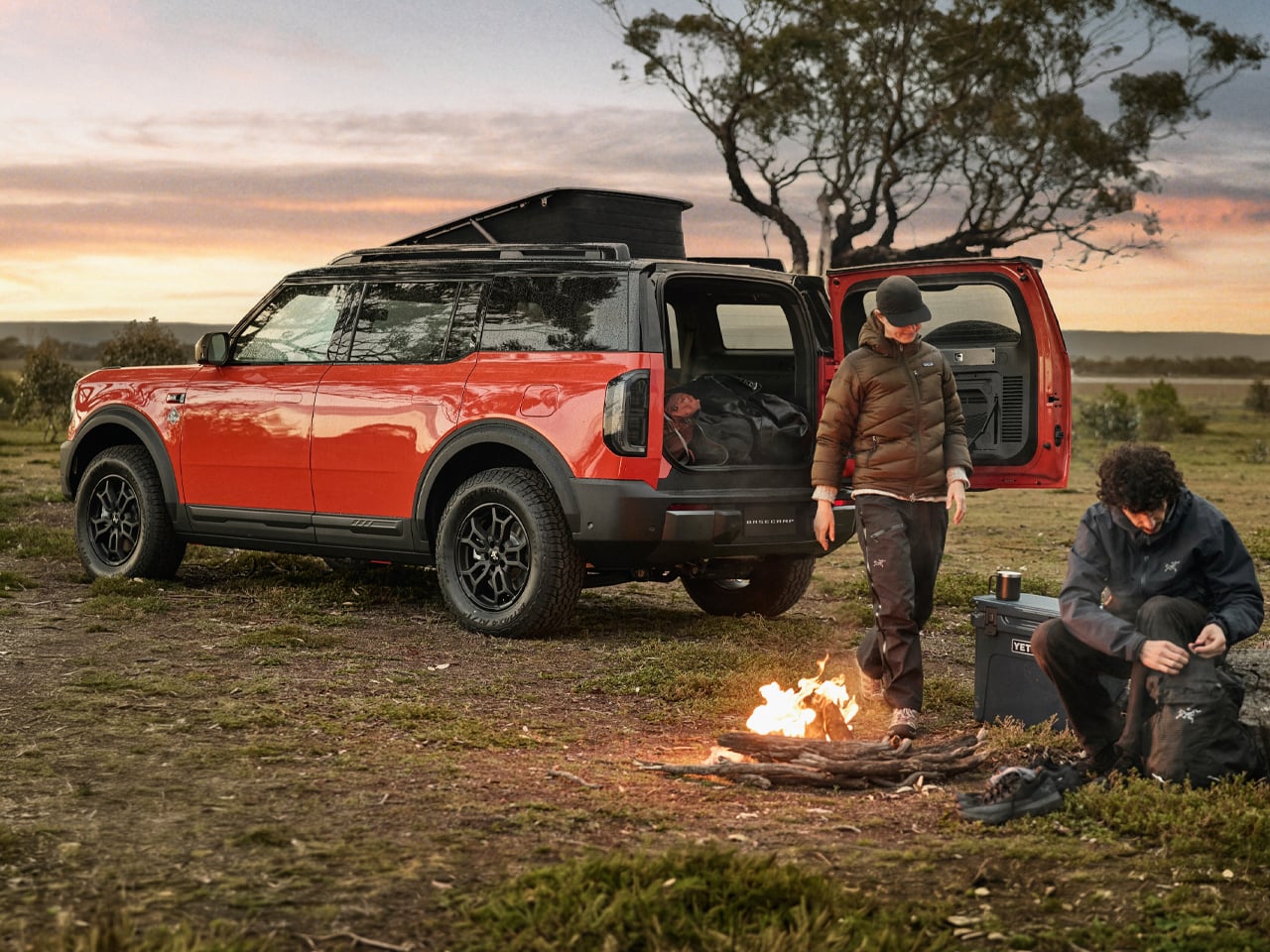
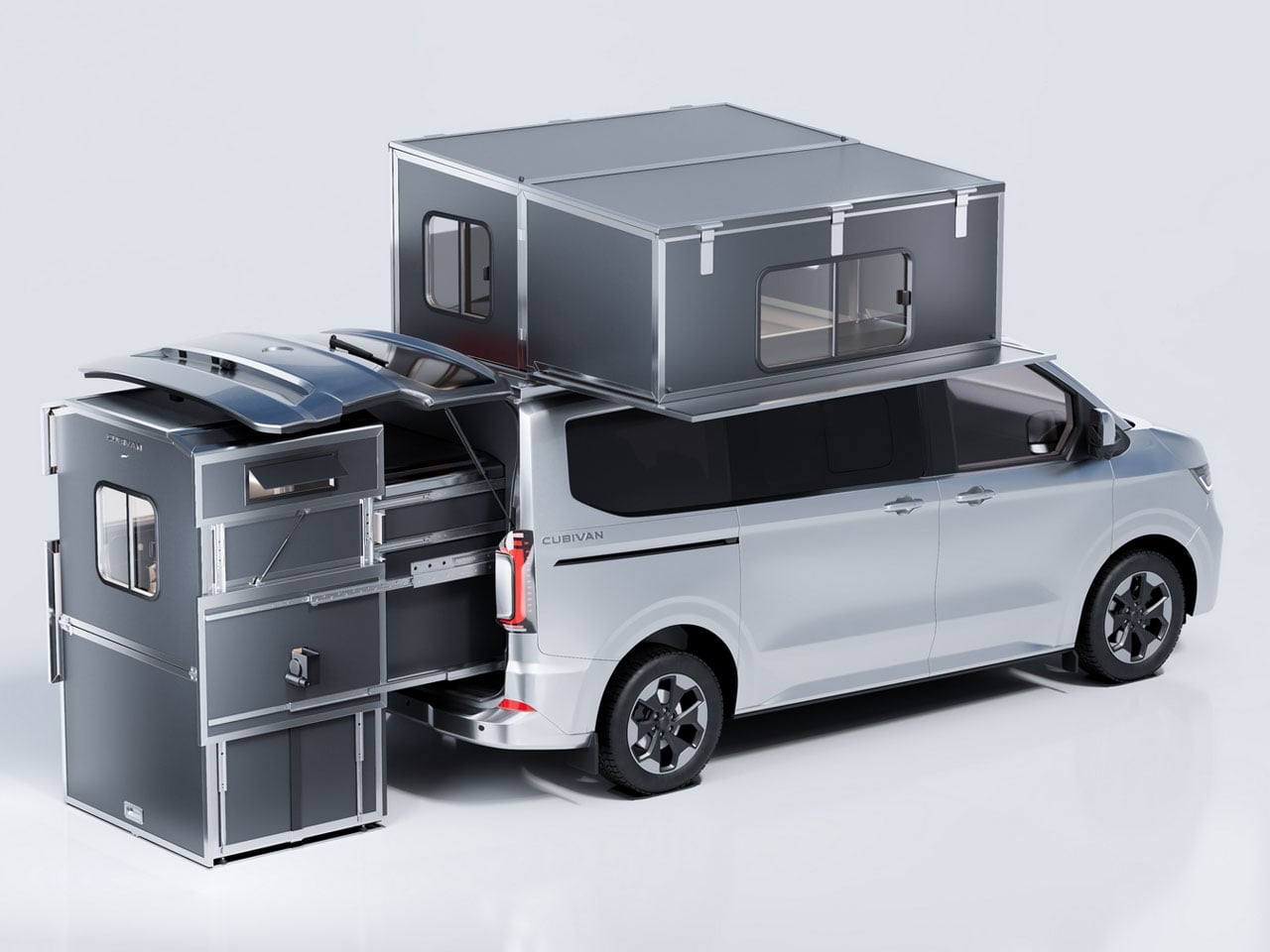
Just a few days ago, we saw a caravan featuring a pretty unique pop-up roof concept. It used an electronically lifting upper shell to double the interior space. The Freescape camper van is another rig that stands out thanks to its innovative pop-up roof system. It features an inflatable rooftop system that expands the vehicle’s interior and creates a comfortable sleeping area in a truly unconventional way.

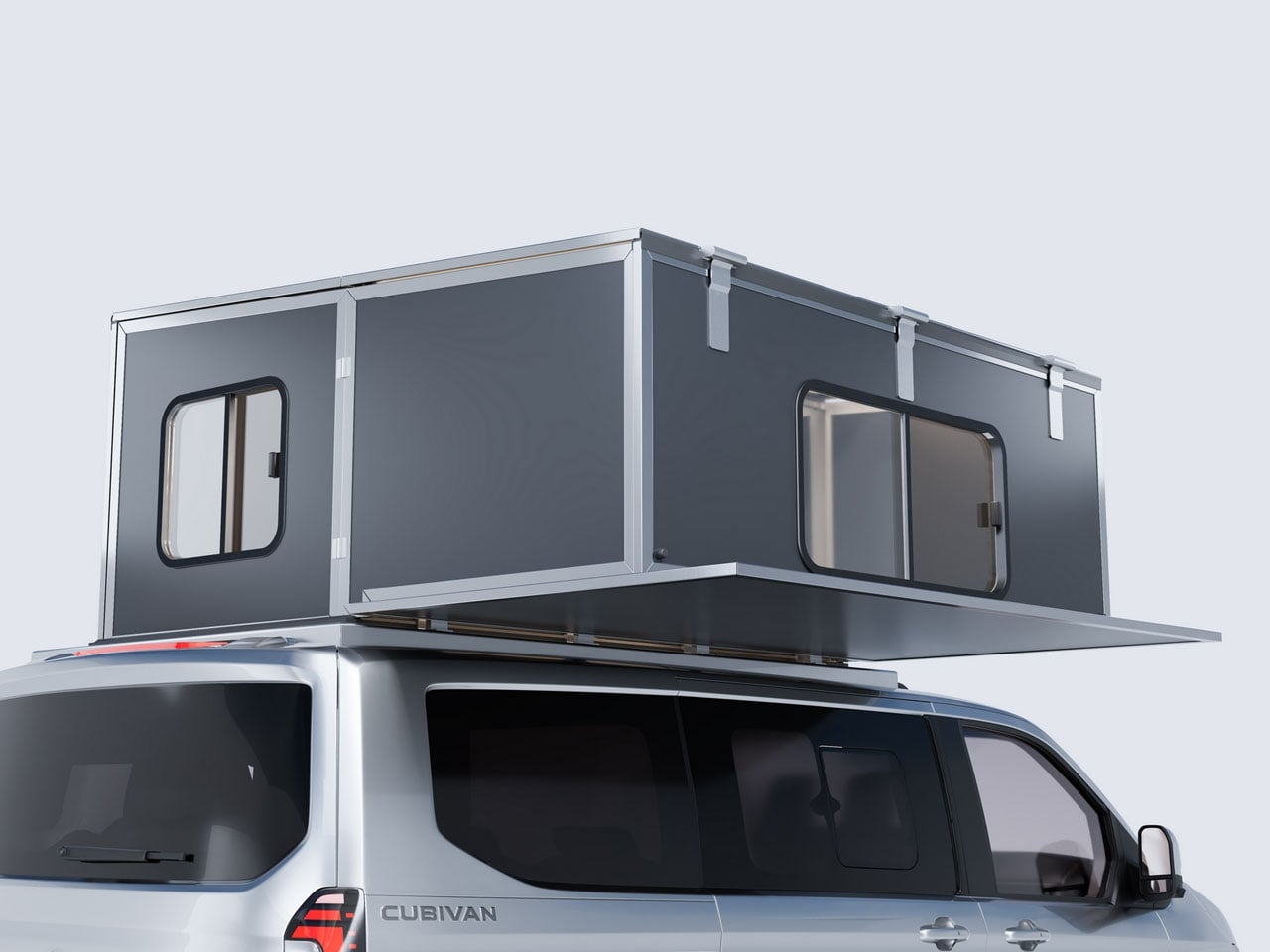
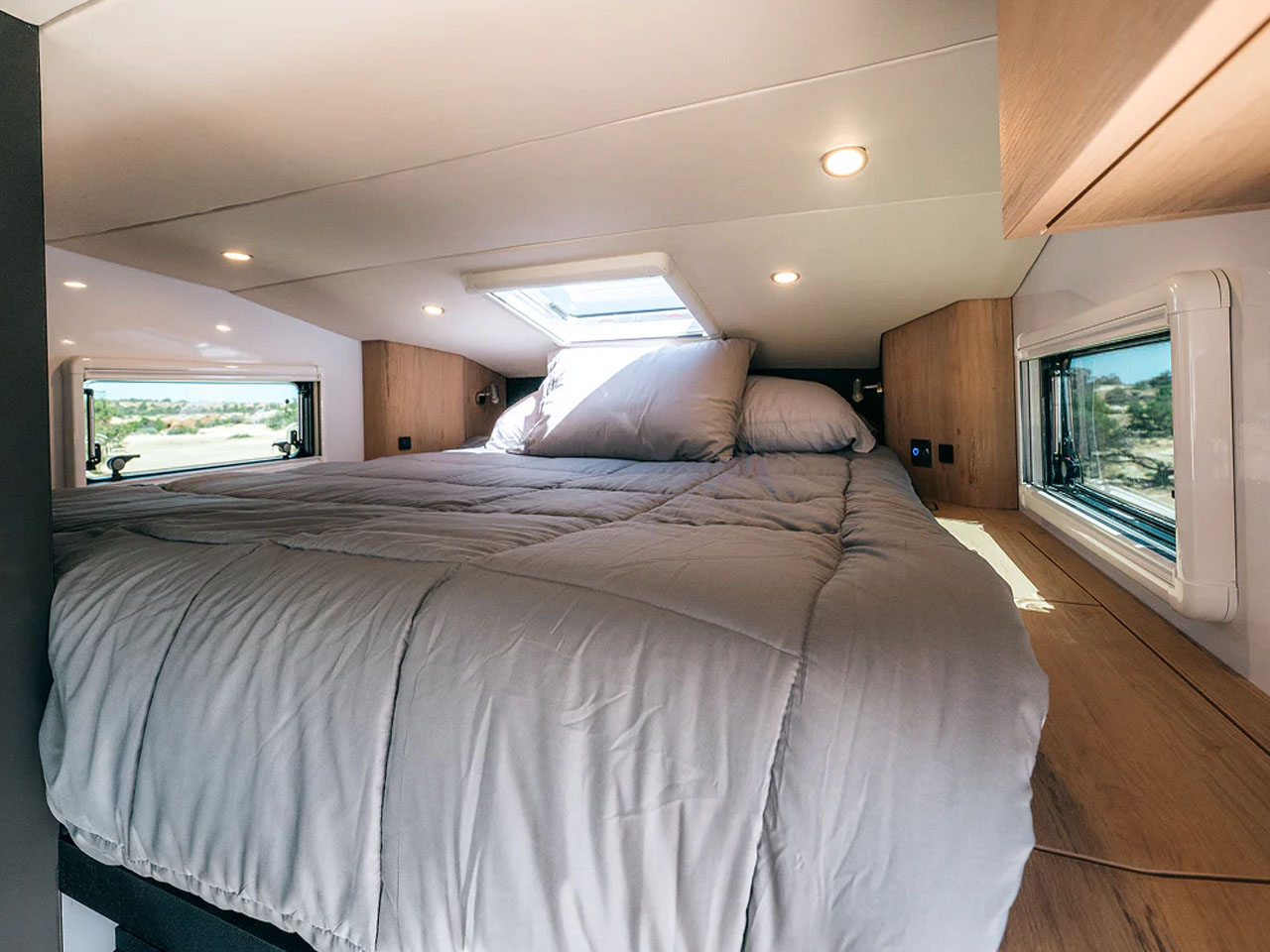
The roof tent swivels to one side, rather than sitting directly above the living area, leaving full headroom inside the van at all times. It is for the first time that such a concept for expanding the camper van living space has surfaced and is making way into a production vehicle. The van features a roof that tilts toward the driver’s side, allowing an inflatable tent inside to create a full sleeping space on the rooftop. It takes almost seven minutes for the entire thing to set up. The retraction is much quicker; more on that later.

Designer: Freescape

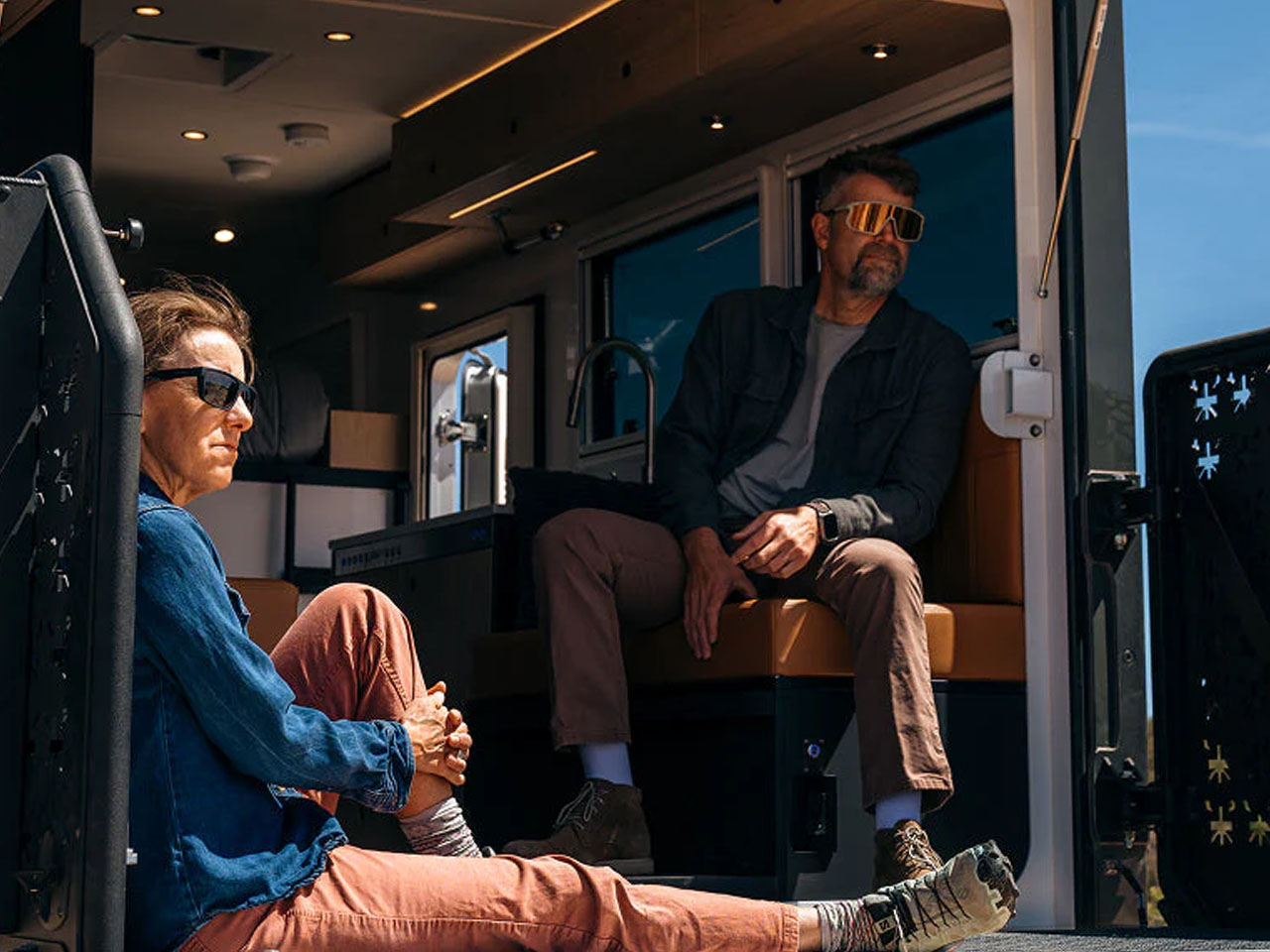
The new Freescape camper van has a flexible floor plan, which is also starkly different from ideas we have seen over the past. But, it’s frankly the patented pop-up roof that stands out on this all-wheel drive adventure camper van, which is based on the Ford Tourneo Custom and is configurable for the great outdoors and also for city commuting.

s

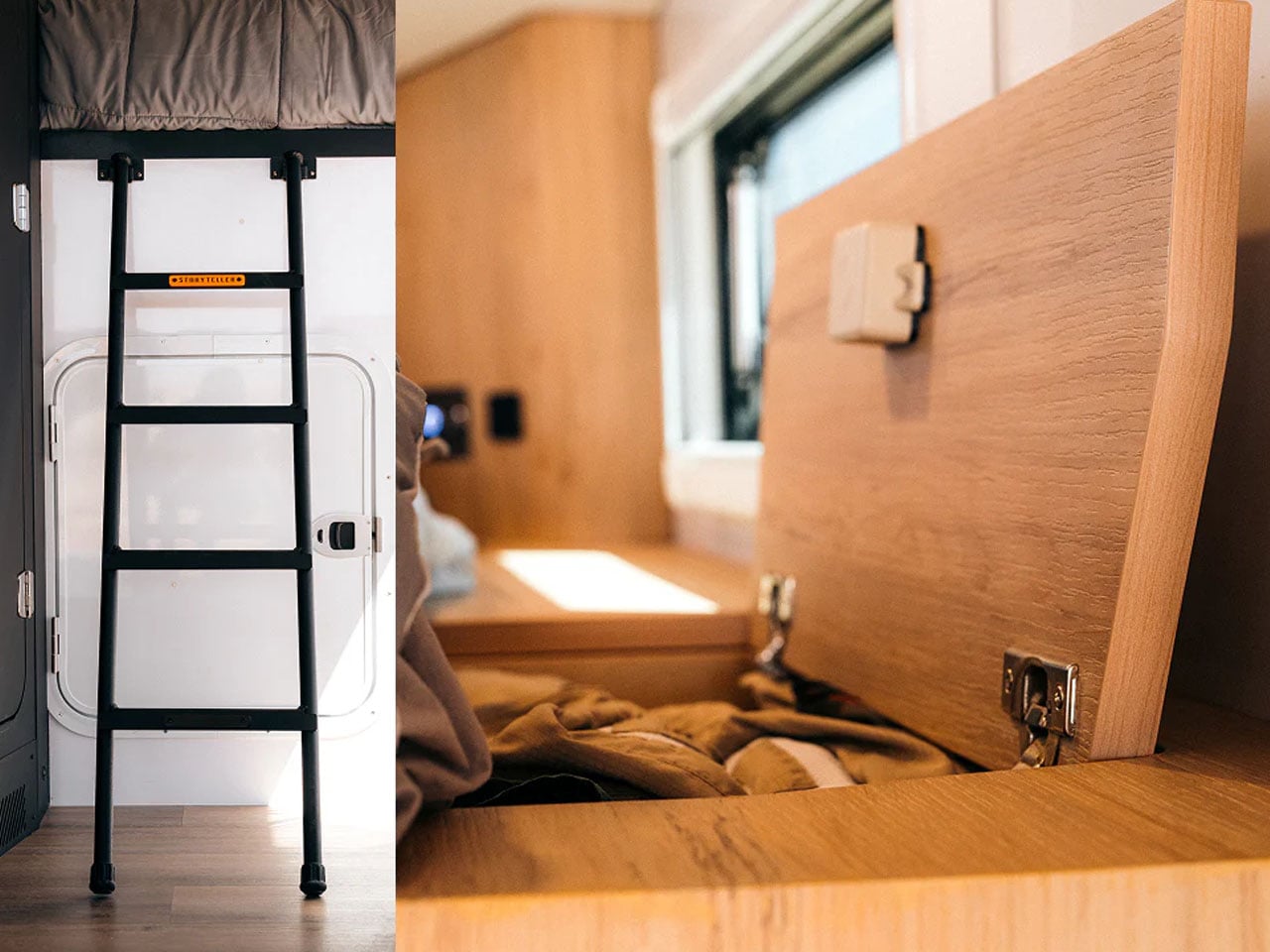
The side-extending pop-up roof of the Freescape camper van leaves the full amount of headroom inside the van while providing a 79 x 55-in double bed to sleep two people comfortably. It is set up on two support poles for stability. The roof-top tent is designed with multiple valves; one, to make the deflation quicker, and two to help prevent complete failure if one valve were to leak. Once deflated, it is easy to fold the tent back inside and close the roof.

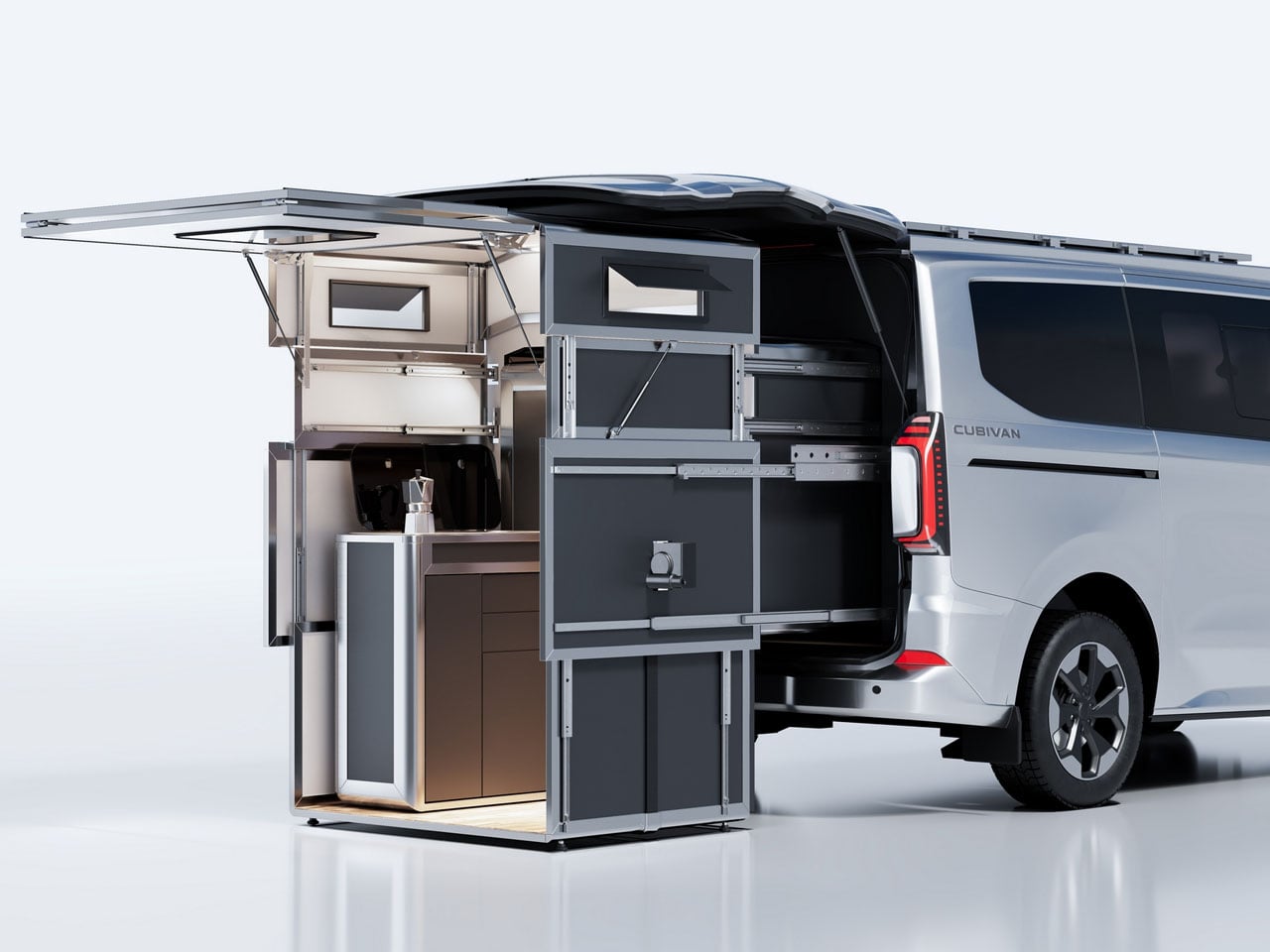
The advantages of a side-expanding roof are manifold. In addition to providing a sleeping space that’s not directly in the van’s roof, hindering the interior headroom, it also functions as an awning, providing shade and weather protection without a separate awning. The camper van has a swivel-out kitchen, which can be aligned below the extended roof awning.

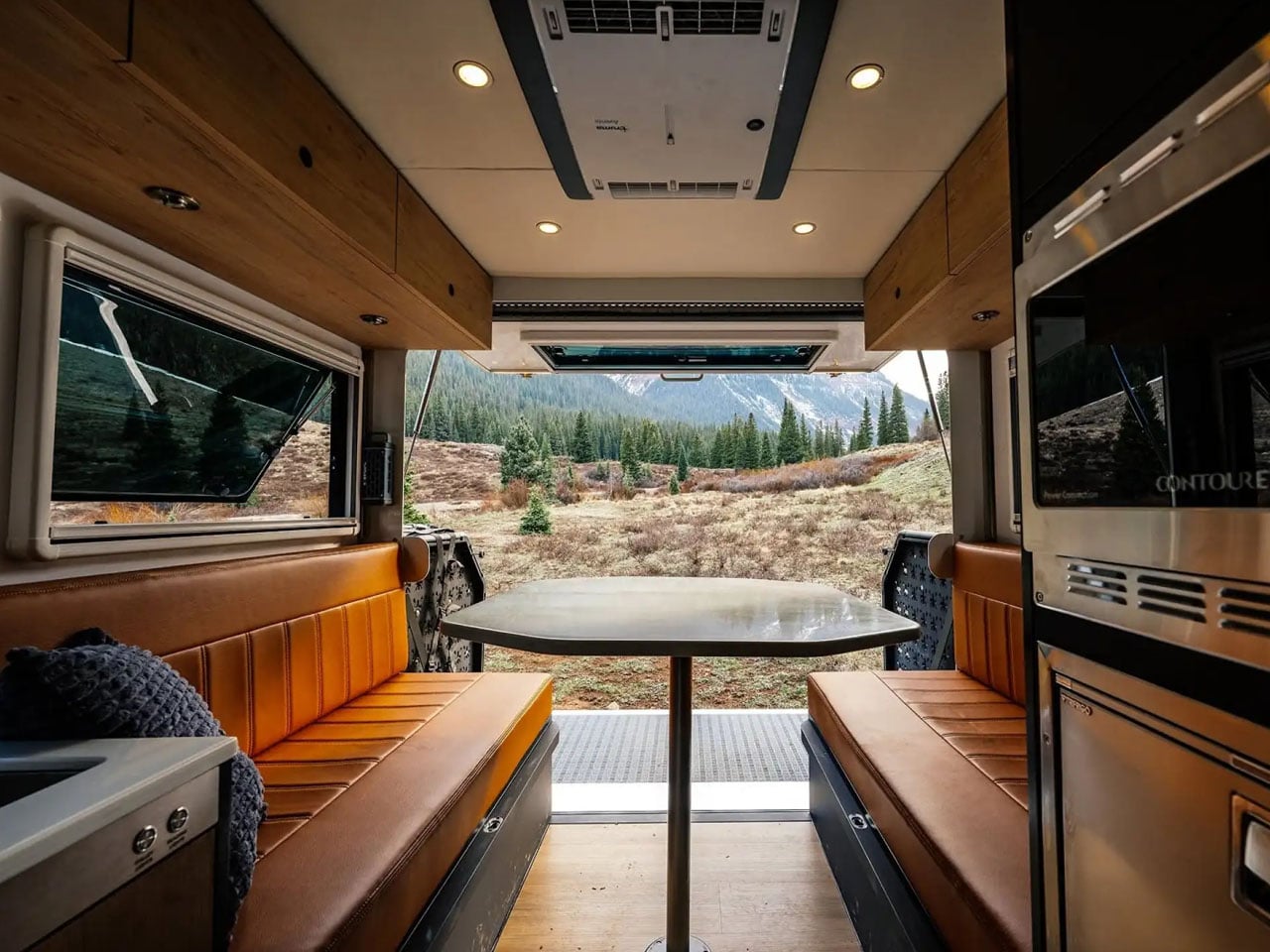
Definitely, Freescape camper van’s inflatable roof is the undeniable difference from the crowd, but the uniqueness of this van doesn’t really stop at the roof. The interior is equally cool. It’s provided with floor rails to move the seats and other hardware around the inside. The seats in the cockpit turn around to face the living area, while those at the back can be lowered to create another bed.

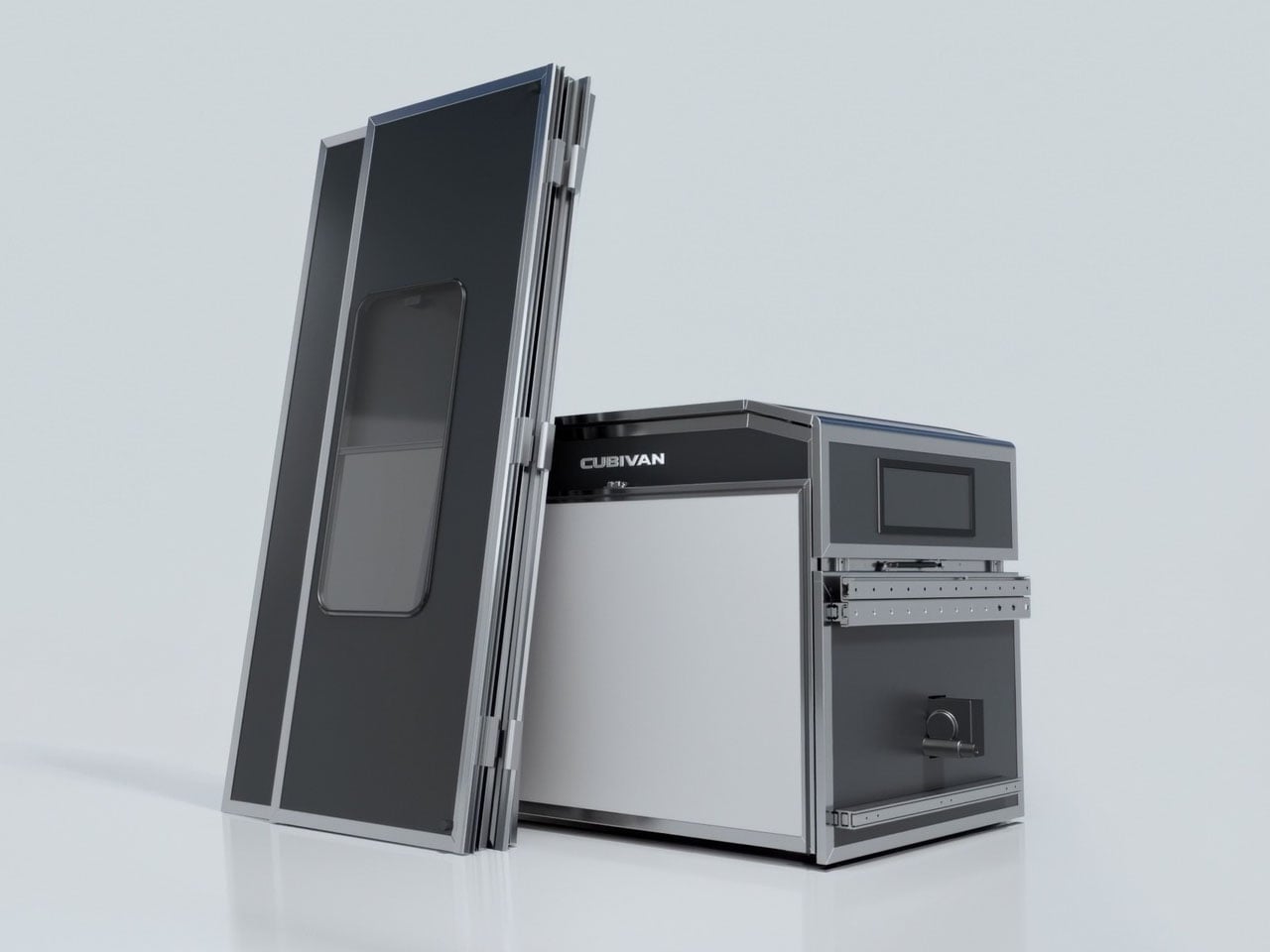
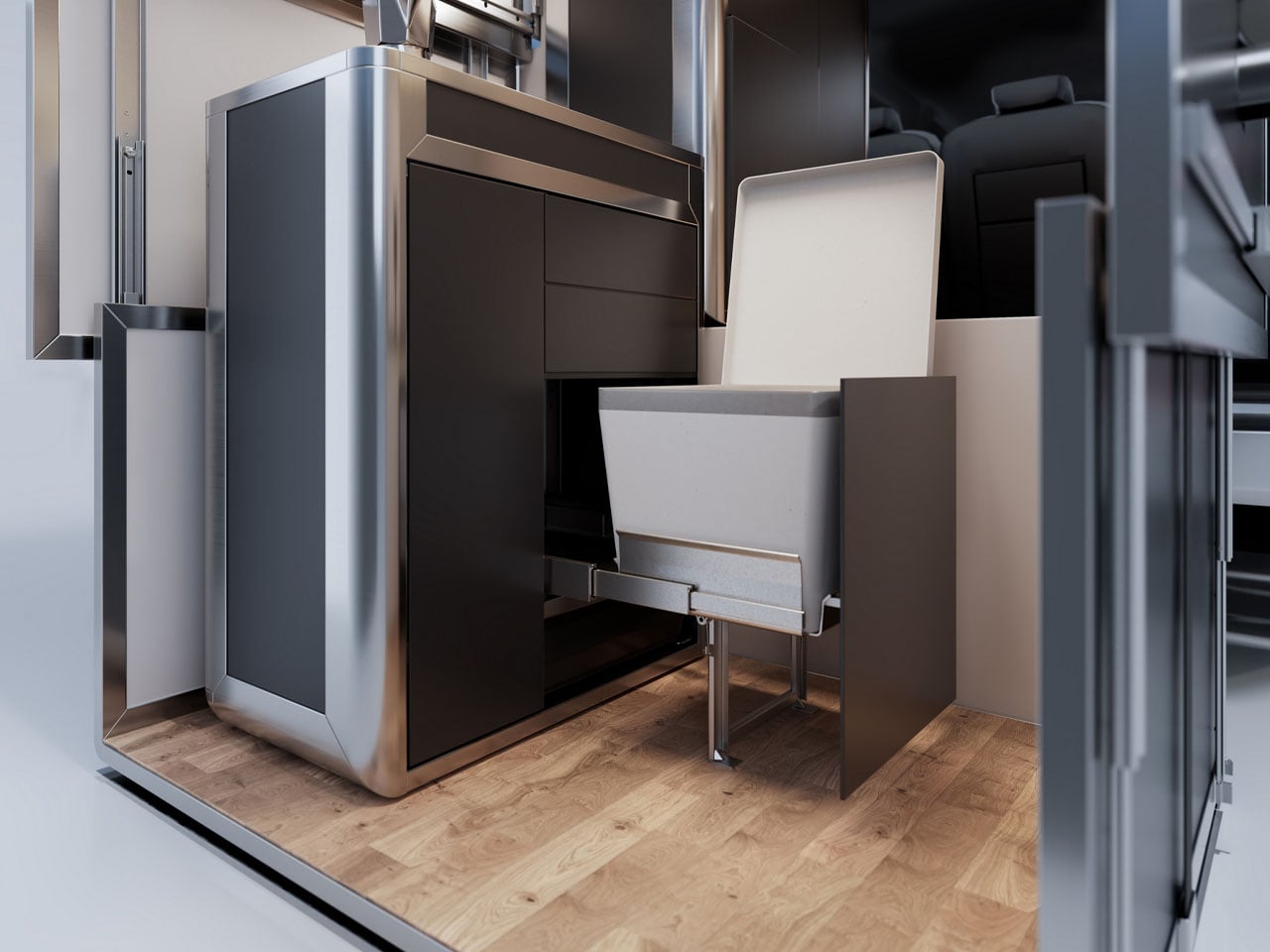
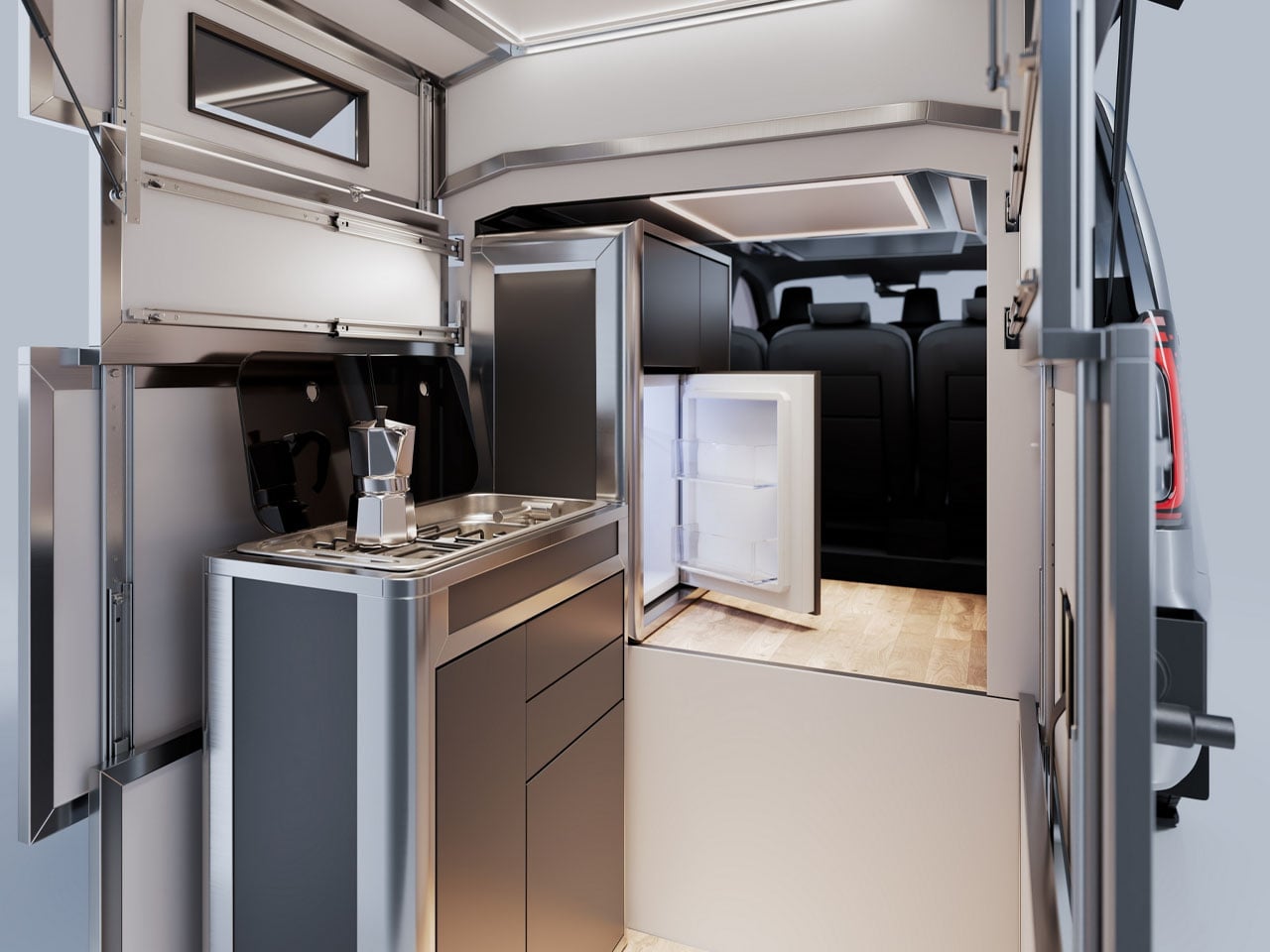
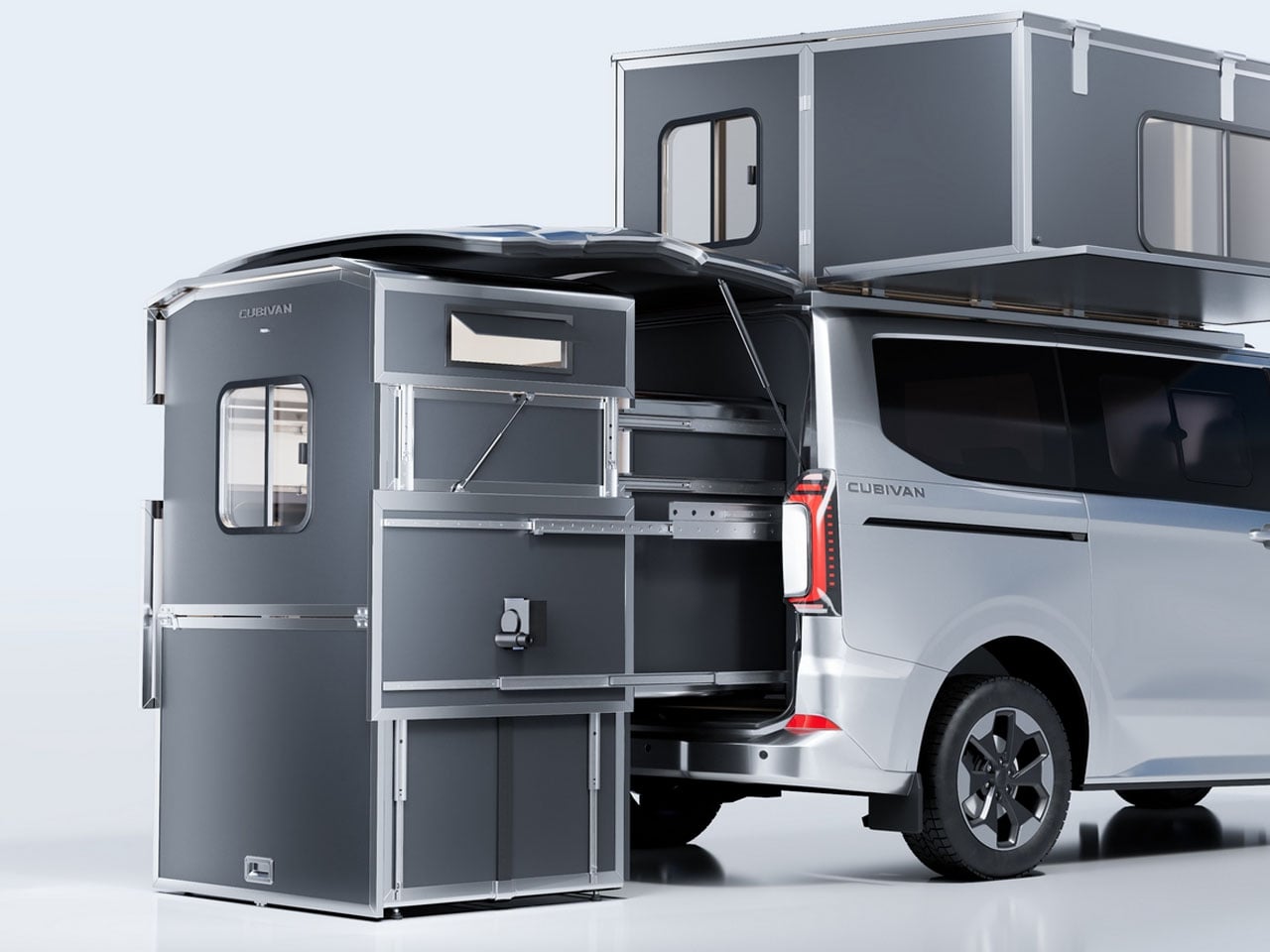
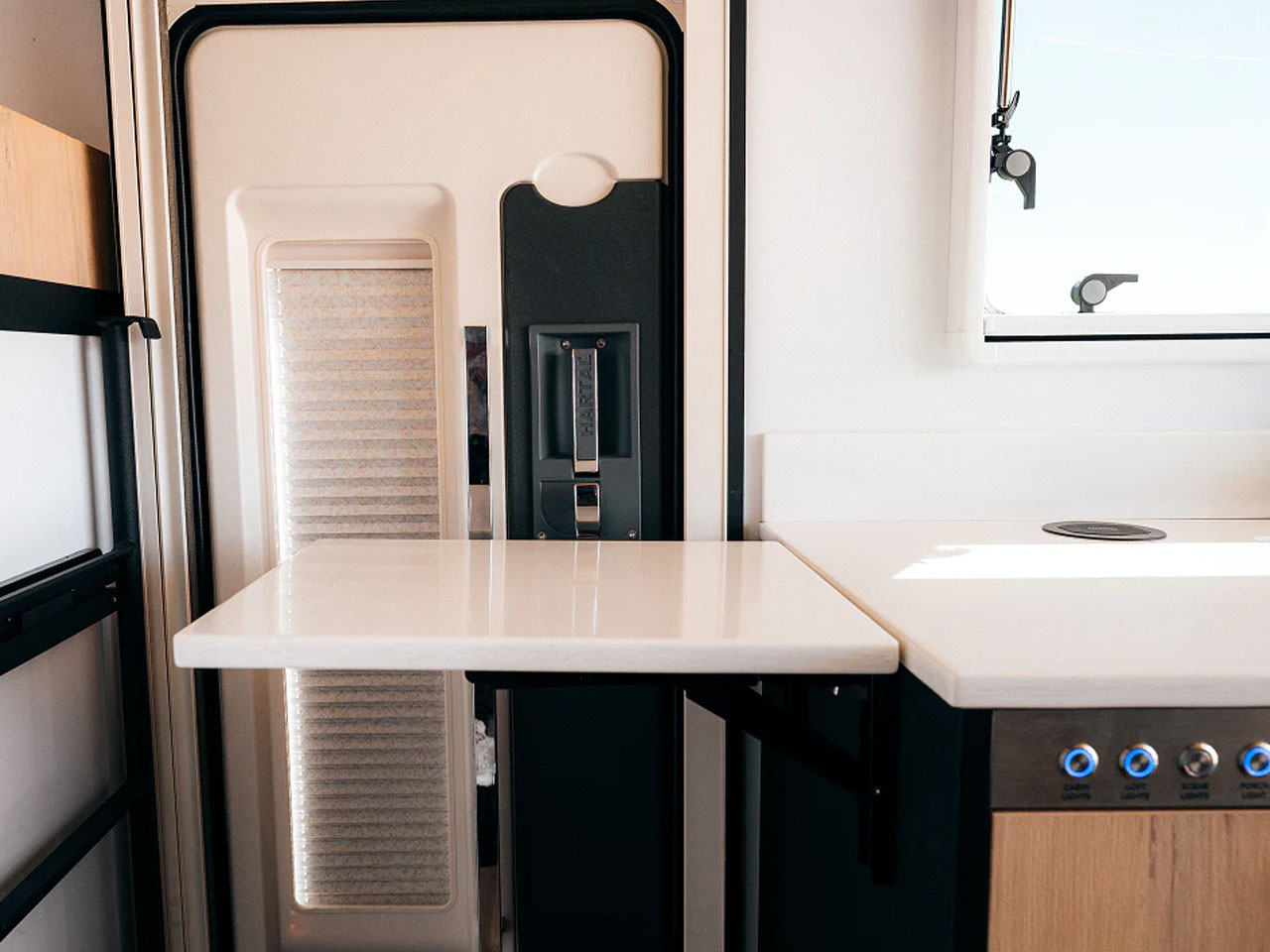
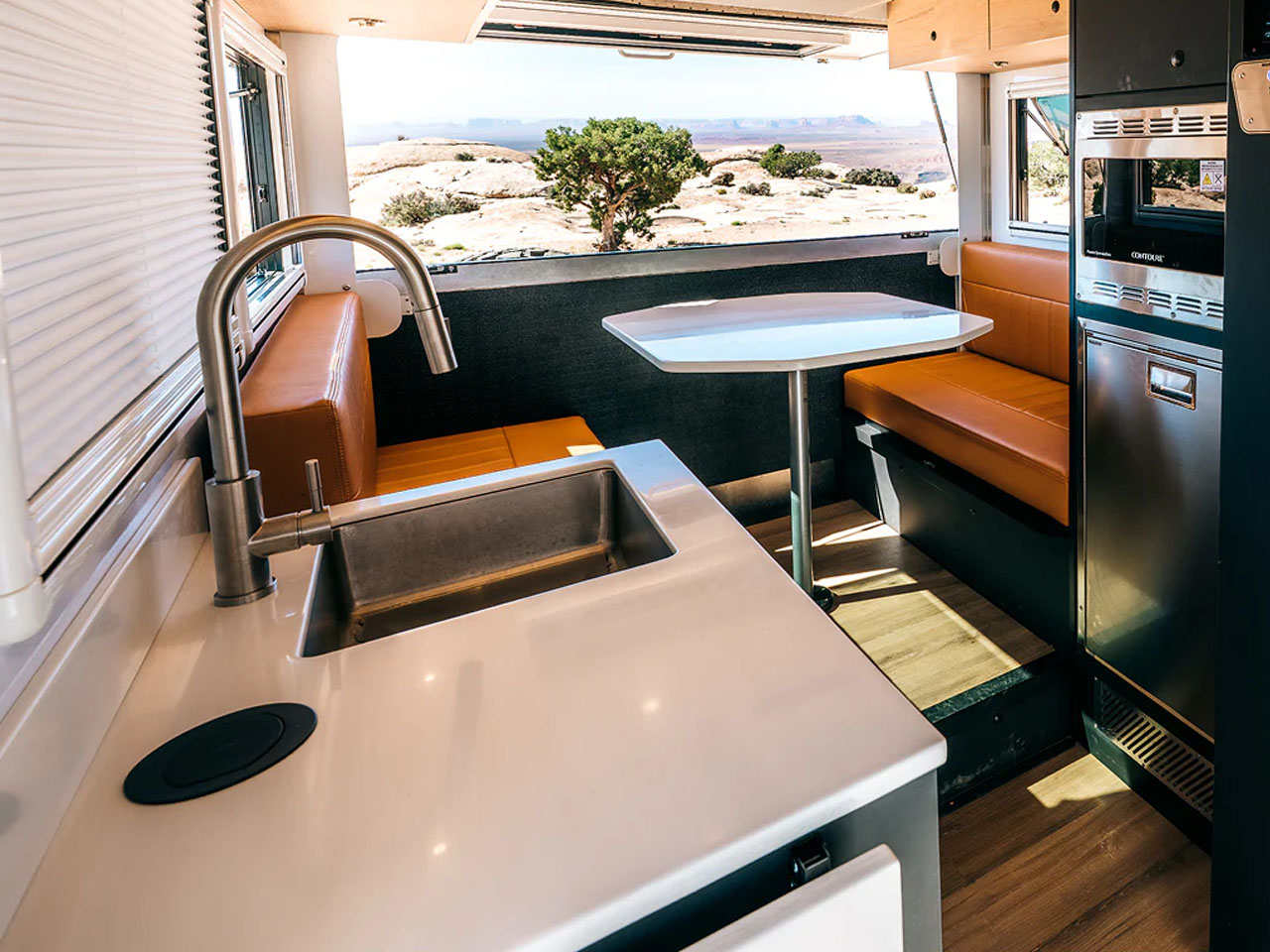
In the middle of the campervan is the multipurpose kitchen block that slides practically around the cabin and even extends out for outdoor cooking. It is provided with an induction cooktop, a worktop extension, and a sink. In addition to this, the sliding swivelling table, which pivots out of the wall, to the middle of the vehicle, functions as a table or work desk.  The camper van may be compact, but it comes with shelf-like modules that stack up in the tailgate area. The removable storage modules can be arranged as required or removed to make space for your sporting gear.

The Freescape is an ideal city commuter is the configuration possibilities inside, but it can also be equipped for off-grid adventures with 340 watts of solar power, a 300-Ah lithium battery, and a 3,000-W inverter. The camper van features a diesel camp heater, portable dry toilet, and a 25-liter fresh water tank, which also connects to an outdoor shower. The demo model for now is based on the Ford Tourneo Custom and costs $79,990. The company aims to provide plans for the Volkswagen Transporter and Caravelle in the near future.

The post Freescape puts side-extending inflatable pop-up roof on a Ford camper van first appeared on Yanko Design.

Hyundai’s STARIA Electric Camper reimagines adventure beyond the grid

Hyundai is serious about its ambitions of providing off-the-grid, liveable mobility for adventure seekers, and that’s proo enough with their latest STARIA Camper concept. Based on the STARIA Electric 11-seater MUV unveiled at the Brussels Motor Show, the zero-emission camper walks right into the trails of the Lightship AE.1 electric travel trailer, Colorado Campworks NS-1 camping trailer, and the Camp365 Model T camper.

The STARIA minivan is the perfect canvas for a camper revamp, as Hyundai wants to cater to the rising demand for electric mobility for living on the road. The concept is a direct invitation for the community of travelers whose feedback will decide the fate of the camper in the European market. Depending on the demand for electric vehicles that can satisfy the everyday usability, loaded with travel amenities, the camper version of the vehicle could make it to the production lines.

Designer: Hyundai

The electrically operated pop-top version of the van will trim down the capacity of the normal MUV to four people, who can comfortably make it their adventure vehicle. The South Korean giant will offer the STARIA with an extendable Fiamma awning that has built-in LED lights. The second row powered seats come with the flexibility to lie flat to make up the sleeping space. During the daytime, the hidden indoor table swings out in front of the second row seats to be used as a place to work offline or have meals.

Further back to the third row, there is another table that slides out to create an outdoor dining area. It resides in the trunk area, which doubles as a storage compartment, and also aids in loading cargo and sliding it further inside. For maximum space utilization, the space behind it hides another compartment that has a detachable shower head for on-the-go showers. On the driver’s side wall holding the kitchen, along with the sink and top-loading fridge. Over this section is a single lid that closes flat to give the riders a continuous shelf to prepare meals. There’s a portable induction cooker or a stove (Hyundai hasn’t specified clearly) that runs on the electric battery, so cooking should be sorted.

The utilitarian approach on the inside continues to the pegboard wall right above the corner section of the worktop. It is used for hanging the utensils and other everyday essentials. This section extends on the corners to make space for storing clothes and other household amenities. The additional power to run all the modern appliances comes from the 520-watt composite solar charging panel, providing 2.6 kWh of electricity. One can operate a 36-liter refrigerator, a portable shower, and the cabin temperature control system for complete autonomy for adventure seekers.

Privacy is a key feature in the STARIA Camper with electronically adjustable smart glass that’s touchscreen controlled via a module for adjusting the amount of tint. To make the vehicle more suited for heavy-duty adventure needs, it’ll have a structurally improved front and rear suspension system and sound-absorbing material. The STARIA Electric has a range of around 400 kilometers, so we can expect the camper version to hit the same numbers, given there is a solar panel that could charge the battery when not utilized by the smart electrical equipment.


The post Hyundai’s STARIA Electric Camper reimagines adventure beyond the grid first appeared on Yanko Design.
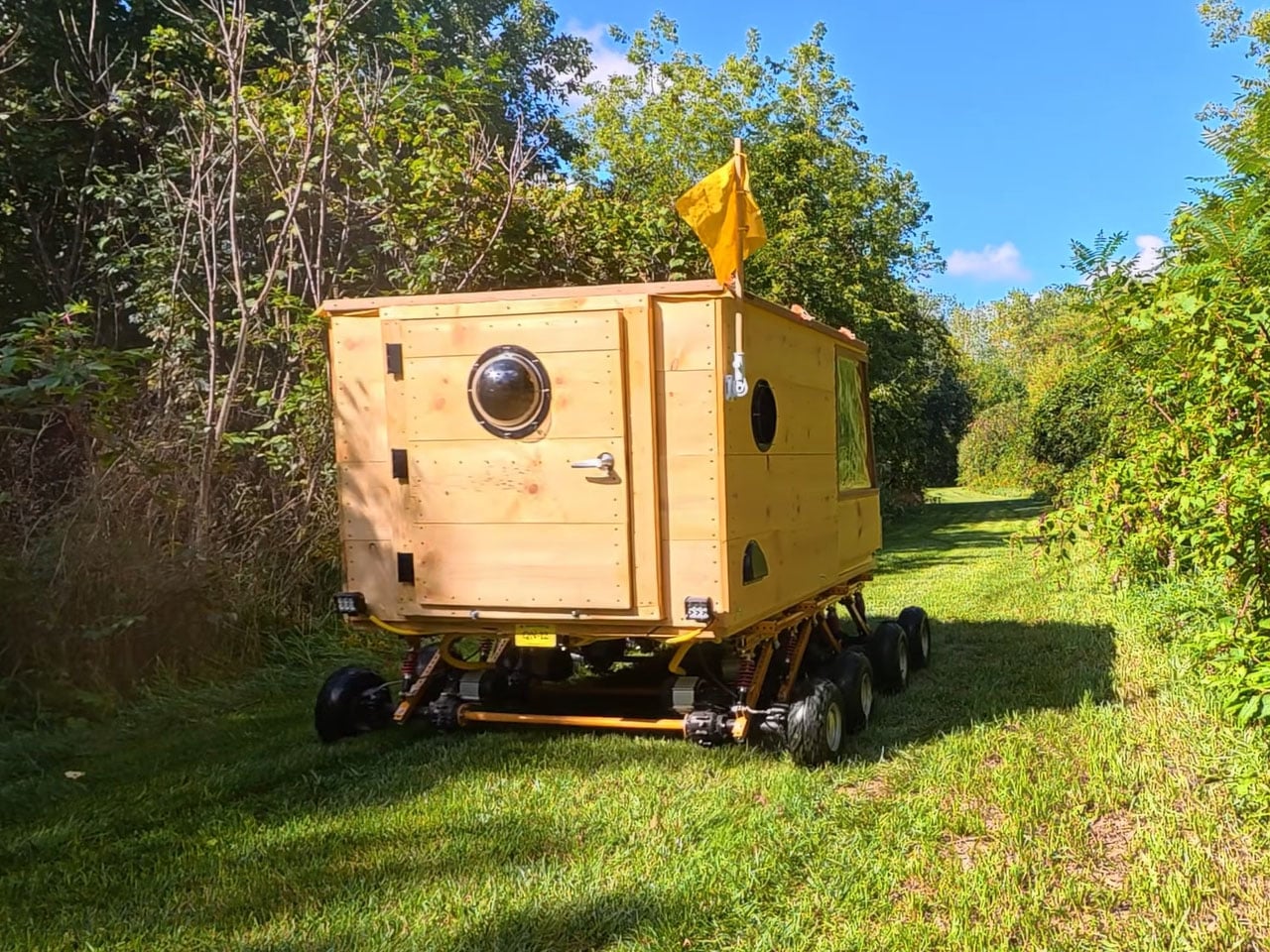
This 3-Storey DIY Camping Trailer Is As Tall As A Semi-Truck And It’s Legal

It’s not every day that we come across something as crazy as this triple-decker micro camper that YouTuber President Chay has put together. The entire build has been recorded on his channel, and the process – right from purchasing the trailer it’s based on to the completion, when it’s taken out on the road – is immensely satisfying.

There are two reasons for that. One, we don’t regularly see three-story campers, this one is a rare exception in the hoard of similarly designed options that follow the single, or at max, double story script. And second, that in spite of its peculiar design, the triple-story micro trailer is completely street legal.

Designer: President Chay

Chay Denne of President Chay is not a newcomer to building such unique camping solutions. It was just a couple of years back when the YouTuber surprised us with an exceptional double-decker micro camper, which was only left to rot in the corner later. This time the approach was not to build on the existing model, but to start from scratch. The journey thus started with a beefy trailer brought off a marketplace.

Building on the trailer, the YouTuber, along with his brother and father, setup the entire contraption painstakingly using wood. The three-story camping trailer is not just a gimmicky setup. It’s purposely designed to appear like a toaster on the outside, and on the inside, this mobile home packs a sizable kitchen, a living room, and a bathroom with a toilet and a shower. Measuring 13 ft high, it is the same height of a semi-truck, making it street-legal to drive.

The builder family starts on the trailer, layering it with plastic sheets for a moisture barrier and topping it with insulation for the floor. Particle board is used to build the individual floors both inside out, and all the floors are aptly insulated. Spray foam is used for insulating the top two levels, while the lower (entry level) uses batt insulation. As we are at it, the lower level is where most of the living space is created. The bathroom on the front is covered on the inside with concrete walls in order to ensure more weight can be added to the hitch for stability on the road.

Here at the entrance, you also have a furnished living room and a full-fledged kitchen with a cooktop and sink. The two levels above, accessible via ladders, have just enough headroom for the user to crawl onto their provided beds and watch some TV, which rests on a swivel arm to be moved into a position you want. TVs are available on both the first and second floors. To make the entire construction waterproof, a layer of fiberglass is used on the side walls, and the roof is completed with a layer of vinyl. Chay Denne and family have been able to keep the weight of this three-story trailer at roughly 3,700 lbs, which is incredible. Being street legal and perfectly balanced to ride behind your capable vehicle, it can handle up to 60 mph.

The post This 3-Storey DIY Camping Trailer Is As Tall As A Semi-Truck And It’s Legal first appeared on Yanko Design.
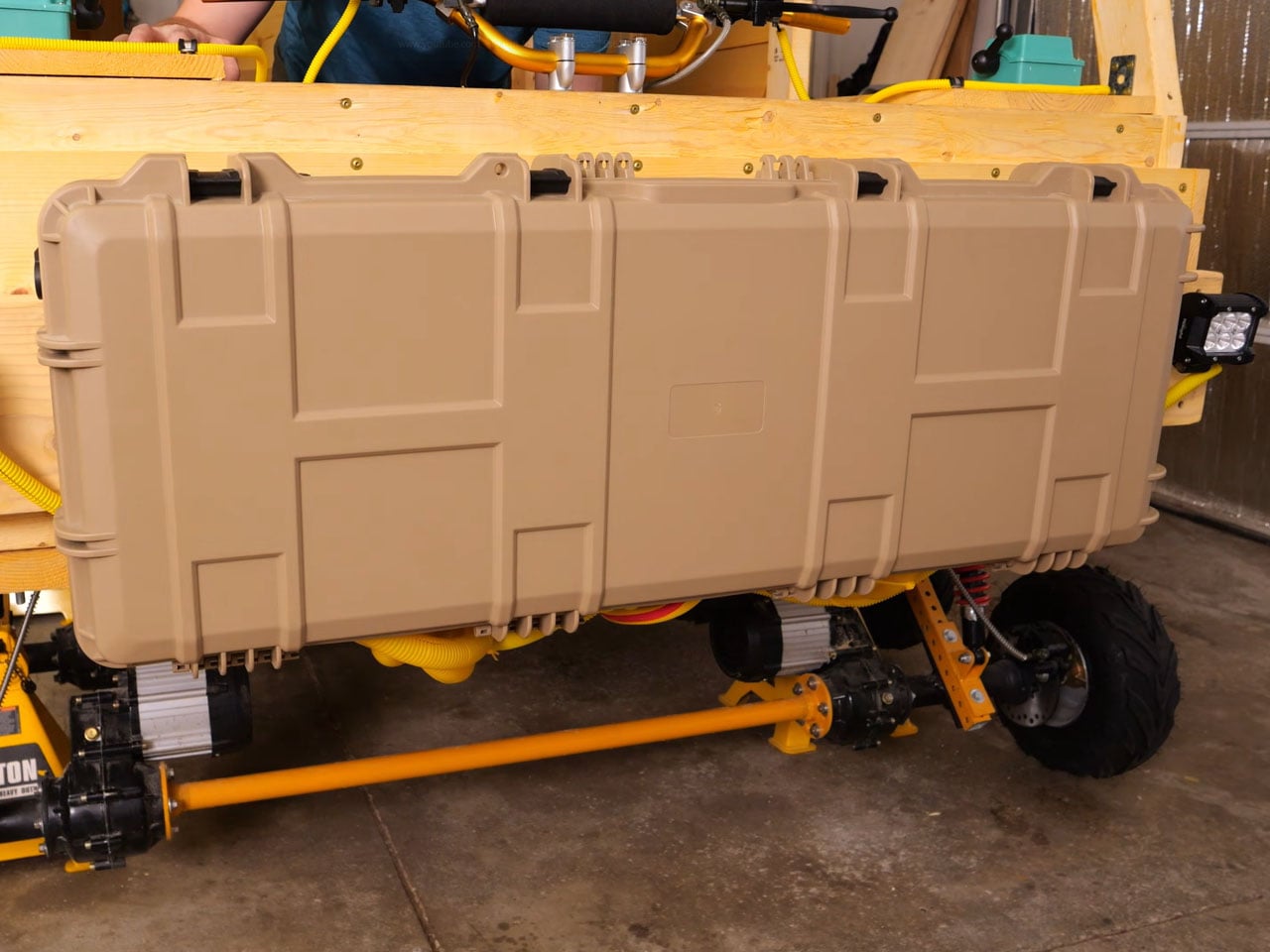
Tiny Camper Company’s Stubby is $2,900, all-composite slide-in camper built to last

I’m in awe of how quickly the RV industry is transitioning from wood and metal builds to all-composite construction. Following the release of the Unit-1 rugged squaredrop off-roader from California-based Ecno Evil, which was constructed without wood yet designed to tackle untamed roads, another 100 percent wood-free camper makes its presence known. Called the Stubby, it is a bare-bones slide-in camper that starts at just $2,900, making it an accessible entry point for almost any type of adventurer.

Completely wood-free, all-composite construction means this slide-in camper, whether it’s stationed on the pickup truck bed or mounted on a platform, will remain leak-proof and corrosion-free for the lifetime of the vehicle. To stay put where you choose to place it, the camper features a pair of aluminium slides and built-in tie-down points so it’s secure and stable to transport.

Designer: Tiny Camper Company

The Stubby is designed and engineered by the guys at the Tiny Camper Company in Florida, which has been creating affordable and compact RVs and has a decent portfolio to show. The Stubby slide-in can fit right into the back of a medium-sized truck with the help of only two people, who can lift and put it there. The cabin is absolutely lightweight at 280 lbs – largely because it’s only a sturdy and capable skeleton. If you want it out there in the wilderness with you, you will have to furnish it up at least with bedding, cooking, and toilet facilities.

Notably, Stubby makes provision for power with a 110V interior outlet and a Marine-grade exterior power connection, but an alternative power source would be necessary when you want to camp in it. With the optional Zero Breeze Mark 2 air conditioner (that comes for an additional $700) and other addons, the slide-in camper should be apt for off-grid adventures and as a quick sleeping solution when you want to “convert your truck into a resting spot.”

Crafted for utmost durability and maximum utility, the 48 inches wide x 6-foot 5 inches long Stubby may be bare bones on the inside to start with, but on the outside, it’s an impressive cabin. The rear access door, measuring 26 inches x 32 inches, is the only entrance. The periphery of the slide-in camper is marked by a set of 12-inch x 24-inch side windows that are strategically positioned to maximize natural light and ventilation. To ensure passive airflow, the Stubby also gets a half-moon air vent on either side. For an asking price of under $3,000, the Tiny Camper Company’s offering is surely enticing. Also, if you don’t like a lot of weight and side-protruding campers in your truck bed, the compact Stubby is a winner!


The post Tiny Camper Company’s Stubby is $2,900, all-composite slide-in camper built to last first appeared on Yanko Design.
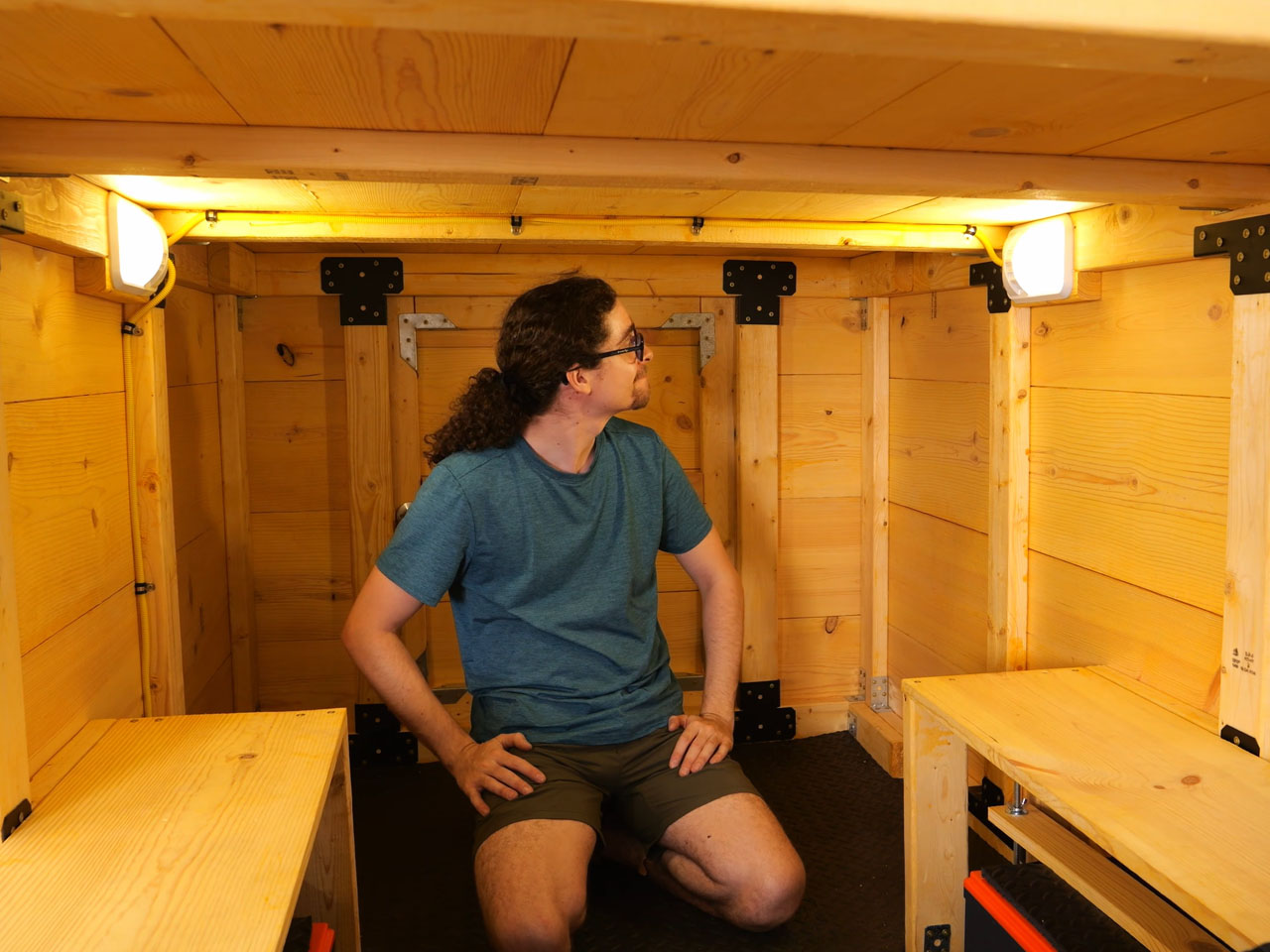
Citroën’s ELO Concept Car Transforms Into a Mobile Camp With Inflatable Beds and Built-In Power

French automaker Citroën just unveiled a concept that treats your car like a Swiss Army knife for modern nomads. The ELO is an electric vehicle that doubles as a bedroom, triples as an office, and moonlights as a power station. We’ve seen plenty of concepts that promise versatility, but most end up being vaporware with a nice press kit. This one actually has me convinced someone at Citroën has spent time living out of their car.

Two inflatable mattresses live in the rear cargo area, and they deploy using the car’s built-in compressed air system. You’re not wrestling with a manual pump or some finicky electric one you bought off Amazon. The mattresses fill the entire rear space to create an actual sleeping area for two adults. The roof slides open so you can stargaze without getting eaten alive by mosquitos, and the side lamps flip into bedside light mode. There’s a projector mounted inside with a pull-out screen for outdoor movies. Citroën partnered with Decathlon for the storage systems, which explains why everything feels less “auto show prop” and more “gear you’d actually use.”

Designer: Citroën

The exterior looks like Citroën told their designers to prioritize function over flash and actually meant it. The body is boxy and van-like, painted in a bold coral-orange that screams “adventure vehicle” without trying too hard. Those honeycomb wheel covers aren’t just styling exercises – they integrate the Citroën chevron logo and protect the wheels while looking distinctive. The front is minimalist with vertical LED strips flanking the badge and a textured grille pattern that’s more utilitarian than aggressive. Large glass surfaces dominate, including that massive windscreen and the sliding panoramic roof section. The doors open wide with no center pillar, making entry and exit genuinely easy instead of the usual concept car gymnastics. Above each wheel arch sits a flat platform for storing small items when parked – the photos show pétanque balls, because of course the French put boules storage on their concept car. The proportions are short and tall, maximizing interior volume without making the thing a nightmare to park in European cities.

The driver sits in the center of the front row instead of off to one side. This isn’t some McLaren F1 tribute. It’s purely functional, giving you an unobstructed view through what is genuinely one of the largest windscreens I’ve seen on a vehicle this size. The steering wheel has a single spoke design with a massive opening in the middle, and Citroën ditched the traditional dashboard entirely. Everything projects onto a transparent strip across the windscreen. Two joystick controls sit on the wheel within easy reach of your thumbs. The interface is stripped down because this car needs to work when you’re tired, when you’re working, and when you’re just trying to get somewhere.

Modularity usually means “kind of adaptable if you spend twenty minutes reconfiguring things.” Not here. The second row has three identical seats that fold flat and detach completely. Use them as camp chairs. Two extra seats hide under the side seats, so you can haul six people when needed. Even with all six seats up, there’s cargo space left over. The driver’s seat spins 180 degrees to face backward. A work table folds out from under the center seat in the second row. If you forgot your laptop, the projection system works for video calls. The wheel arches have cutouts that hold phones and headphones.

Expanded polypropylene keeps weight down and recycles easily. Same stuff they use in bike helmets. Felt sections come from recycled fabric scraps from other Citroën projects. The second-row seats have water and wear-resistant covers because obviously you’re going to trash them. The exterior stays simple with huge windows and wide doors that have no center pillar. Front and rear bumpers are identical to reduce parts count.

Power options go beyond the drive battery. The V2L system lets you run speakers, charge devices, or power cooking equipment. A built-in compressor handles paddleboards, bike tires, whatever needs air. Hooks on all four doors mount a large awning for covered outdoor space. You could genuinely set up a small basecamp without bringing any extra equipment.

Citroën calls this a mobility study, which is corporate speak for “we’re not committing to production yet.” But unlike most concepts that feel like design school fever dreams, the ELO solves real problems for people who work remotely, chase outdoor activities, or just refuse to stay in one place. It’s compact enough for cities but functional enough for extended trips. Whether this becomes a real product or just influences future designs, someone finally built a car for people whose home, office, and garage are increasingly the same place.

The post Citroën’s ELO Concept Car Transforms Into a Mobile Camp With Inflatable Beds and Built-In Power first appeared on Yanko Design.
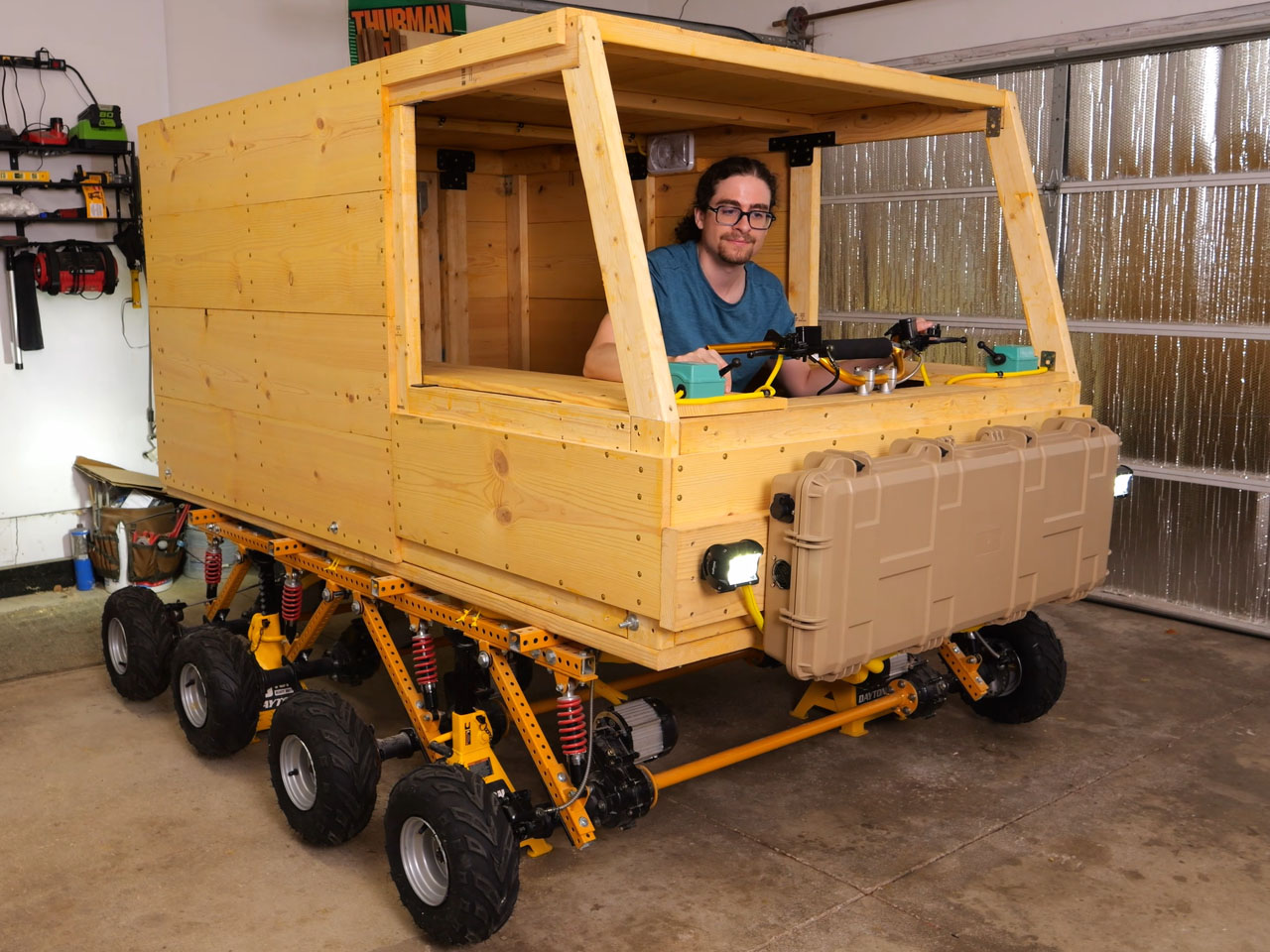
Escape Trailer’s 13-foot fiberglass egg trailer: fun adventures in a small package

There is a little of everything in an Escape Trailer. It’s compact yet spacious and lightweight yet robust. The Chilliwack, Canada-based trailer manufacturer has been through five fiberglass “egg trailers” and now for the sixth edition, it has launched the Escape 13’, which according to the company is ‘it’s lightest and most compact trailer yet.’

With decades of experience behind their conviction and handling of fiberglass, Escape Trailer has stayed true to its signature construction style allowing it to trim the weight. For the interested, the E13 is built with 100 percent molded fiberglass creating a true one-piece shell. To the tiny camping trailer, it means a lightweight and incredibly durable body, which is fuel-efficient to tow and easy to maintain over the decades.

Designer: Escape Trailer

In the past few days (if we doubted it in any little) a couple of new compact trailers, Escape 13 included, have proven that great adventures can pack well in small packages. A little space can be tailored to feel spacious enough to live without a compromise in convenience and safety. This was substantiated recently by the Scamp X off-road trailer. The first molded fiberglass egg trailer from Scamp Trailers, a popular Minnesota–based RV manufacturer of the ‘70s.

Purpose-built to tread off-the-paved-roads, Scamp X transforms the beloved egg camper into a serious off-roader, which the Escape 13 doesn’t really match up, but the latter’s interior makes up for it. On the outside, the two trailers are molded fiberglass shells but, on the inside, the E13 is created to maximize space and ensures small-scale camping is done right. If you love the vibe, the new trailer comes in 13 different exterior colors to choose from.

At 13 feet, the aerodynamic Escape 13 measuring 13’8” L x 6’7” W x 6’1” H is built on a single 3,500 lb. axle to make towing it easier even with smaller vehicles. With its dry weight of just 1,850 lbs and a GVWR of 2,500 lbs. the camper should be towable easily by small SUVs and even crossovers.

When you hop in through a side entry you witness a small, but surprisingly spacious interior that is planned to sleep three people comfortably. For this, the trailer is equipped with a double bed, a convertible dinette, and a well-equipped kitchen area. The compact galley kitchen has a dual burner stainless steel cooktop, a sink, and a 3 cu.ft. refrigerator.

A 12,000 BTU furnace keeps the residence in a cozy temperature, while Escape Trailer provides the E13 with porta potty that hides away from sight in one of the wooden cabinets. The maple wood cabinetry and overhead compartments span almost the entire part of the interior, sufficing the users’ storage requirements. The trailer features a screen door, while the acrylic windows allow natural light to make the interior feel slightly more expansive. All of this, Escape Trailers is making available starting at CA$33,600 ($24,000).

The post Escape Trailer’s 13-foot fiberglass egg trailer: fun adventures in a small package first appeared on Yanko Design.
Walkabout 26 Max travel trailer impresses with sliding atrium-style ceiling, toy hauling capability

Keystone, one of the major manufacturers of towable recreational vehicles, has grown in the shadows and not had its chance to shine like it would now with the launch of the Walkabout 26 Max: a purpose-built travel trailer that commands your attention. Its bold, adventure-ready design looks formidable on the outside while promising capability and durability on almost all terrains when paired with a strong tow vehicle.

The RV industry has evolved more dramatically than any other in recent years, with many motorhome, trailer, and camper manufacturers rising and fading over time. Founded in 1996 by Cole Davis in Goshen, Indiana, Keystone RV quickly became one of the top manufacturers of towable RVs in North America by the turn of the millennium. Recognizing its success, THOR Industries acquired Keystone in 2001, a move that helped establish THOR as the world’s largest manufacturer of recreational vehicles.

Designer: Keystone RV

Much of THOR’s growth and prominence can be attributed to Keystone’s strong performance, characterized by its lineup of stylish and soulful towable travel trailers, fifth-wheelers, and toy haulers. Now combining the goodness of its previous iterations with the nuances of the American and the Australian RV industries, the Walkabout is feature-packed for a prolonged outing in the wilderness.

The construction is pretty straightforward. Keystone eliminates wood in favor of aluminum panels, making up a more enticing auto-inspired finish, which elevates the Walkabout from its travel trailer DNA into a flavorful motorhome with ample onboard storage for your gear. Of course, the interior is a breakaway from the industry norm; the exterior is no short of sublime: the trailer home is, it’s safe to say, designed to maximize comfort outdoors and inside.

Starting underneath, the Walkabout is provided with CURT Touring Suspension for a balanced ride on bumpy trails. It rides on 15-inch all-terrain tires and features anti-lock brakes and one-touch 3-point leveling to automatically level the vehicle into position at camp. The 7,000-odd-pound trailer is slapped with panoramic windows around its perimeter and has more natural light and spaciousness flooding into the interior through the atrium-style sliding ceiling above the living area, providing a super, storage-integrated sofa for the whole family and a pair of trapezoid-shaped dinette tables.

While the layout inside is close to your home’s comfort with a full-sized, well-equipped kitchen – comprising workable counter space, a two-burner stove, a residential-sized fridge and storage cabinetry – spacious bathroom, bunk bed, a family-friendly living area, and a master bedroom cordoned off by a sliding double-door, which is perhaps the first of its kind I have seen in a travel trailer.

The glossy exterior of the Walkabout is packed with a lot of slide-outs, a toy hauling space in the rear, and a huge pass-through storage bay at the front. It is provided with hooks, stands, and supports for your equipment. An interesting slide-out for your muddy boots and gear alongside an outdoor shower makes cleaning them easy before the next use or storage. To hold the campers out in the fresh air, the trailer also adds an outdoor cooking station with a fold-down worktop. Keystone also puts a spare tire mount on the back and provides an awning and a telescoping ladder for roof access. Capable of being provided with an off-grid-ready add-on, the Walkabout 26 Max starts at $60,000.

The post Walkabout 26 Max travel trailer impresses with sliding atrium-style ceiling, toy hauling capability first appeared on Yanko Design.
Toyota Tacoma H2-Overlander wins hearts by running on hydrogen and making its own water

An ultimate overlanding rig has its own perks: goes anywhere, even where roads disappear; lets you camp under the starriest skies; and provides the comfort of a home on wheels. However, when it comes to the environment, overlanding vehicles are major gas guzzlers, leaving behind emissions that pollute even the cleanest of places. To address this, Toyota has taken a step in the right direction: it has prepared the Toyota Tacoma H2-Overlander concept, which is winning hearts not for its looks, but for its ability to breathe hydrogen and exhale water.

The concept vehicle is a badass overlanding rig with 547 horsepower that’s set to take you distances with its hydrogen fuel cell and battery electric powertrain, which leaves only water as tailpipe emissions. It’s perhaps this hydrogen fuel-cell technology that earns the concept its H2 moniker, with which it is going to debut at the SEMA show at the Las Vegas Convention Center between November 4 and 7.

Designer: Toyota

Tacoma H2-Overlander is a result of the technical expertise of Toyota Motor North America R&D (TMNA R&D), and is built by the Toyota Racing Development (TRD) engineering teams in California and North Carolina. The concept, based on the mid-size Tacoma pickup platform, is engineered especially for the SEMA show to showcase the viable potential of hydrogen fuel cells and their possible use case in an extreme adventure vehicle.

Toyota’s latest hydrogen fuel-cell propulsion system replaces the internal‐combustion engine or traditional battery-electric drivetrain in the Tacoma H2-Overlander that runs on compressed liquid hydrogen to power the 24.9 kWh lithium-ion battery and its 547-horsepower dual electric motor. The resultant output of the exhaust is pure water, and unlike the traditional battery, the liquid hydrogen tank takes far less time to refill. It can, Toyota affirms, be refilled in minutes like the conventional gas tanks.

Like you’d imagine, Toyota isn’t calling the Tacoma H2 an overlanding rig, just for the sake of it. It actually is designed with its own rooftop pop-up tent made from lightweight carbon fiber panels. The details about the configuration of the rooftop tent are scanty at the moment, but we learn that it has a bed, a mini fridge, and a gas grill, running on the same hydrogen powering the vehicle itself. The ride flaunts a splendid lightbar and a heavy-duty winch. But what’s really interesting about the concept Overlander is that it is an exhaust water recovery system. This essentially collects the water vapors released by the tailpipe (produced by hydrogen fuel cell combustion), and then fills it to be used by the occupants at camp.

The Toyota Tacoma H2-Overlander is provided with custom 17-inch wheels wrapped in 35-inch all-terrain tires. The rig offers up to 300 miles of range on a full hydrogen tank, which can be refilled in under five minutes. According to the press information, the overlander comes with two NEMA 14-50 outlets on the bedside, which can be used to recharge up to two EVs simultaneously or even power a home with up to 15 kilowatts of output.

The post Toyota Tacoma H2-Overlander wins hearts by running on hydrogen and making its own water first appeared on Yanko Design.

Toyota unveils Kayoibako-K micro camper van concept that can be used as self-driving mobile storefront

Daihatsu recently took to the Japan Mobility Show to showcase some of the fascinating vehicles it’s building in the small segment. Personally speaking, small cars are incredibly difficult to pull off with all the features and functionalities, let alone the idea of stuffing them with features to fit the camper segment. But that’s what Daihatsu continues to take up as a challenge for itself, which is evident in the showcase of the Toyota Daihatsu Kayoibako-K concept.

The adorable micro-transporter is showcased in various possible variants, including a camper van, a small family hauler, and as a self-driving adventurer and mobile delivery van. While the concept vehicle is not fully autonomous, the Kayoibako-K concept has been depicted in promotional videos as navigating itself to the driver’s doorsteps, driving autonomously on specific routes, or returning autonomously to its parking spot after a long day of work.

Designer: Daihatsu

Even though, for those who have been following Toyota’s vision of the micro-van, there wouldn’t be much to distinguish between the Kayoibako-K and the original Kayoibako concept the company showcased at the Japan Mobility Show, two years back in 2023, but the adorable micro-camper is skimmed down in size further to be more adaptable to city roads. Kayoibako is a name Toyota has picked from the name deriving from shipping containers in Japanese, which rely on modular interiors to haul different types of cargo. On similar lines, the Kayoibako-K is a compact concept van and mini-camper, is basically a single vehicle (a platform) that features interchangeable interiors for versatility and enhanced scope of use.

According to the press information received, Kayoibako-K van measures almost 3,395mm, 1,475 mm wide, and 1,475 mm high. It can accommodate 4 people, and is designed to pull off everything from last-mile deliveries in local communities to camping beyond the cityscapes, in of course what is the smallest mini vehicle form factor ever in the mini vehicle-sized commercial vehicles. In the camper version, this little vehicle puts on a roof tent accessible by a ladder, and off-road tires for traveling some unpaved roads on the way to the campsite.

Even though camping has its versatile functionality, the Kayoibako-K is primarily conceptualized with a large rear cabin for delivering packages. The van can work as a mobile storefront, used to carry tools, and even be used, if you may, as a cab to transport elderly passengers in an urban road setting. However, it’s the camper van feature of the Kayoibako-K that impresses me. The van is shown to feature a two-person rooftop tent, and can also be used to haul your gear, including a kayak, to the beach. There is no word on when or if the concept micro camper van will hit the market, but if and when it does, it will definitely slay the onlooker with its graphic detailing and blinky-like headlamps.

The post Toyota unveils Kayoibako-K micro camper van concept that can be used as self-driving mobile storefront first appeared on Yanko Design.
Kia unveils off-road capable EV concepts high on customization and spirit of adventure

This year’s Specialty Equipment Market Association (SEMA) show in Las Vegas saw its share of plug-in concepts, and Kia outshone them all. Known to be one of the biggest automotive ensembles when it comes to trending aftermarket modifications, the show saw the unveiling of the KIA Design Center America (KDCA) designed pair of all-electric concepts tailored for off-road adventures.

One of them is the EV9 ADVNTR Concept SUV based on Kia’s three-row electric EV9 SUV that debuted last year. This one looks much closer to a production-ready version, has to be said. The second one is the PV5 WKNDR concept EV Van built on the brand’s Purpose Beyond Vehicles more commonly known as PBVs. According to the design team, these two custom lifestyle vehicles “intrinsically blend form and function into machines designed for responsible engagement with nature.” Although none of these concepts is slated for a production run yet, we can expect more to transpire in a couple of year’s time.

Designer: Kia

The beefed-up variant of the EV9 SUV is 3 inches higher and comes with adventure and off-roading grade inclusions such as an improved roof rack for hauling adventure gear or pitching a bespoke roof-mounted tent, reinforced rocker panels for underbody protection, rugged tires for maximum traction, custom front and rear facias for assistance in approach and departure angles. When it’s time to set up camp for the night, the vehicle is your comfy mobile campsite.

PV5 WKNDR is more oriented towards longer stays away from home. The EV is well-equipped for wild overlanding adventures away from habitation. The vehicle can make your unknown adventure possible for weeks or even months in a single go. Kia labels the modular interior of the WKNDR as a Swiss army knife on wheels. The off-road capable vehicle comes with a pop-up camper, mobile kitchen, air compressor for filling up tires or inflating mattress, front-mounted winch, and loads of innovative storage solutions to stash all your essentials. One that we like in particular is the kitchen-style slide-out system that stores loads of things without taking up any interior space. It also comes with solar panels on top and innovative hydro turbine wheels to recharge the batteries.


 

The post Kia unveils off-road capable EV concepts high on customization and spirit of adventure first appeared on Yanko Design.