ecal x Google Just Imagined 10 Phones Beyond the Slab

At ECAL’s collaboration with Google’s Industrial Design team, the smartphone is no longer treated as a fixed icon of consumer tech. In A Message from Tomorrow, it becomes something far more fluid, a design question that deserves to be reopened. The brief invited ECAL’s Master Product Design students to develop mobile-focused concepts inspired by daily rituals, with an emphasis on storytelling and the human dimension of technology. That framing gives the exhibition its real energy. Instead of chasing the usual upgrades in speed, resolution, or sleekness, the projects ask how mobile devices might evolve if they were designed around touch, companionship, movement, energy, and the subtle gestures that shape everyday life.

That shift feels especially relevant now. Smartphones have absorbed nearly everything, from cameras and maps to notebooks, music players, and assistants, yet the object itself has become strangely stagnant. For all the complexity hidden inside, the form remains stubbornly familiar, a smooth slab built around endless visual attention. A Message from Tomorrow pushes against that stagnation by imagining mobile hardware as a much broader territory. Here, devices can be expressive, self-sufficient, spatial, tactile, or emotionally responsive. The exhibition does not present one neat answer to the future of the phone. It presents a series of alternate directions, each exposing something our current devices no longer do well.

Deigner: ECAL/University of Art and Design Lausanne x Google ID
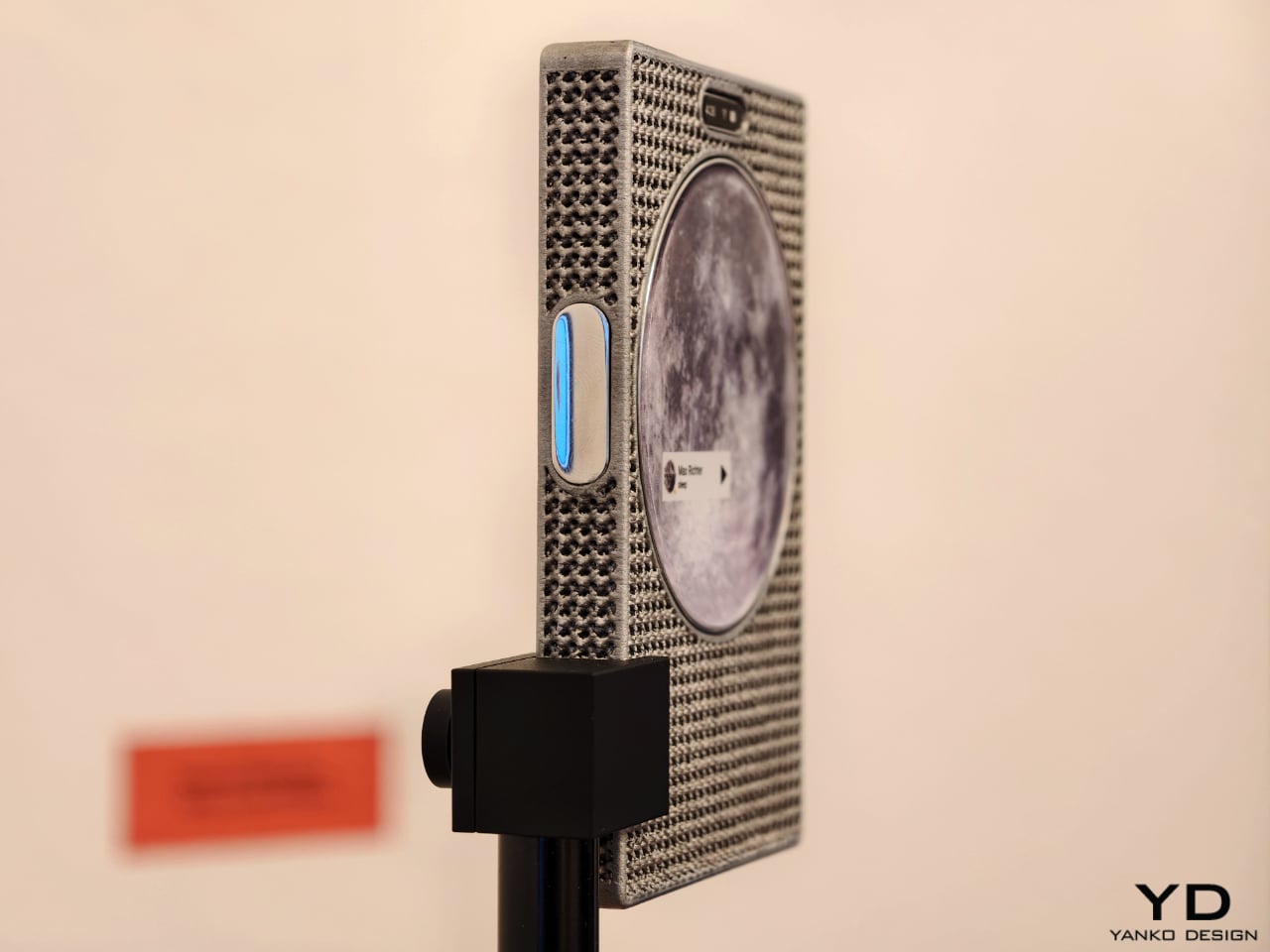
One of the show’s strongest ideas is that the future of mobile technology may not be screen-first at all. Several projects deliberately loosen the screen’s dominance and focus instead on sound, physical presence, or integration with the surrounding world. Sound Machine, by Xose Lois Piñeira, rebuilds the phone around voice. Its 3D-printed aluminum lattice body is acoustically transparent, allowing sound to move through a layered assembly while a contact transducer on the back transmits audio through surfaces or through the body when worn against the sternum. A small circular screen handles only the essentials. It is a compelling proposition because it refuses the idea that a phone must always function as a miniature display first and everything else second.
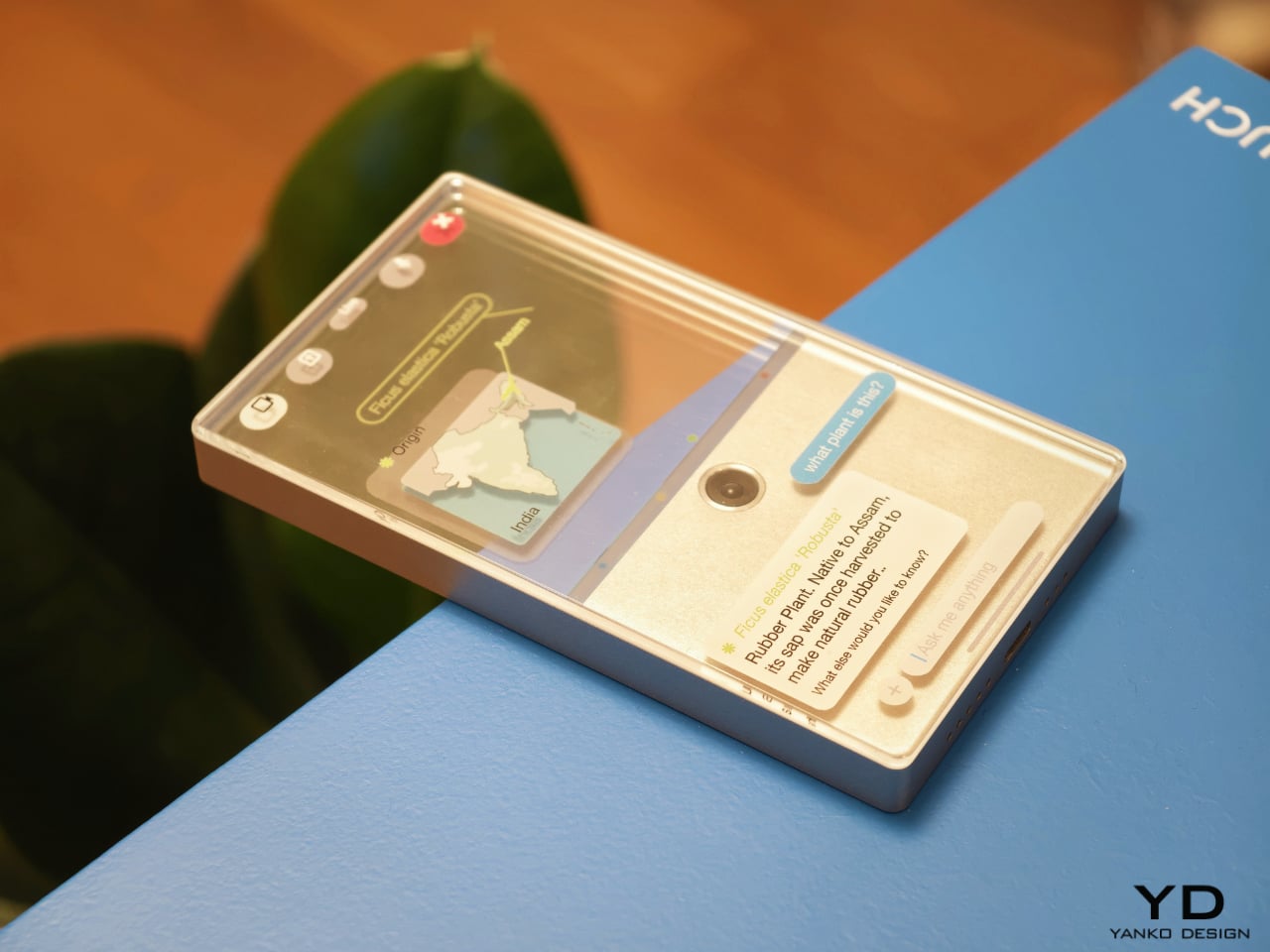
Liminal Frame, by Ehrat Lee, offers another escape from flat-screen logic. Its four-layer display can shift between opaque and transparent states, letting digital content coexist with the physical world rather than replacing it. The device allows users to look through the phone, place information in space, and return to it later without relying on a headset. It turns the phone into a kind of portal rather than a closed surface. In a moment when spatial computing is often imagined through bulky wearables, this project feels especially elegant. It suggests that the phone itself could evolve into a lighter and more natural bridge between digital and physical experience.
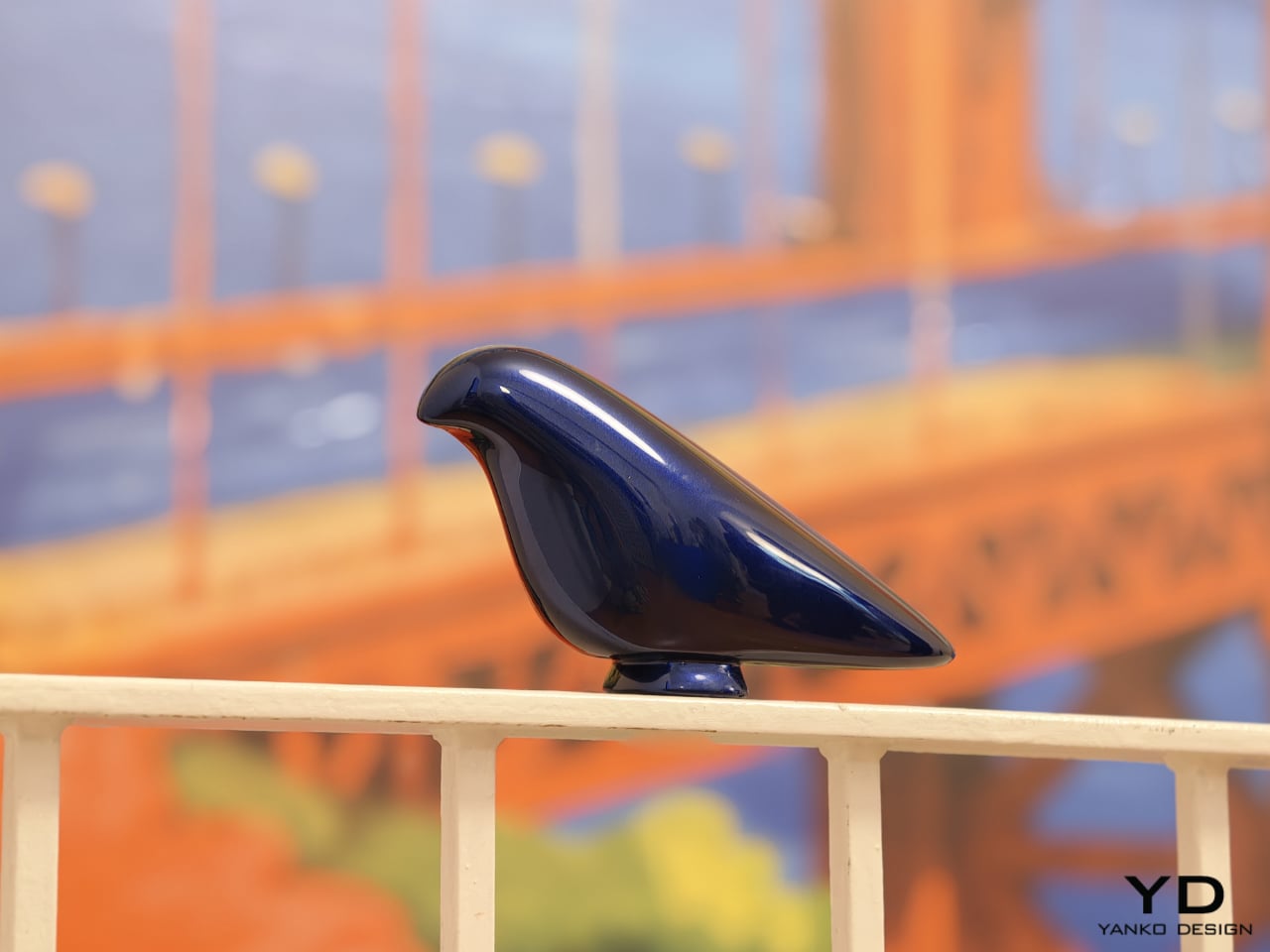
Some of the exhibition’s most memorable concepts explore personality as much as function. Robin, by Gyuhan Park, imagines a mobile device modeled on pet-bird behavior. Cameras become eyes, a beak-like feature acts as sensor and speaker, and the object communicates like a companion rather than a conventional assistant. It can tease, joke, or sulk while also helping with planning, messages, and everyday tasks. The concept is playful, but it also raises a serious question about the future of devices. As AI becomes more embedded in daily life, will our relationship with technology become less transactional and more behavioral.
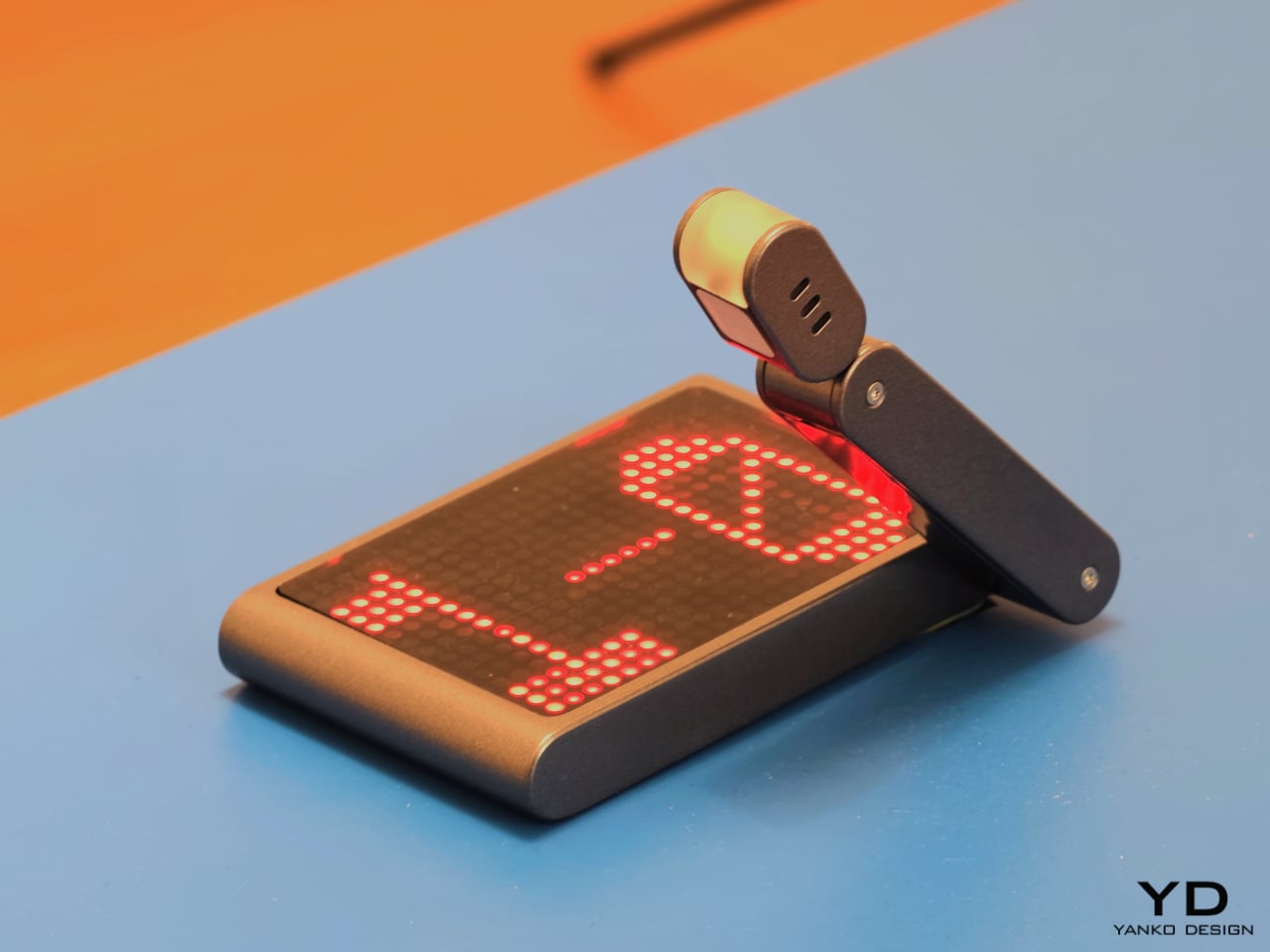
That same willingness to rethink familiar habits appears in The Finger Phone by Hugo Von Hofsten. Starting from the frustration that phones always need to be held, it introduces an animated finger-like extension carrying a camera, light, and touchpad. The idea is delightfully odd, but also surprisingly practical. It imagines a device that can stand on its own, assist in small moments, and illuminate more than just its own screen. In a market dominated by polished uniformity, The Finger Phone feels refreshingly unconcerned with conventional elegance. It is willing to be useful, strange, and memorable all at once.
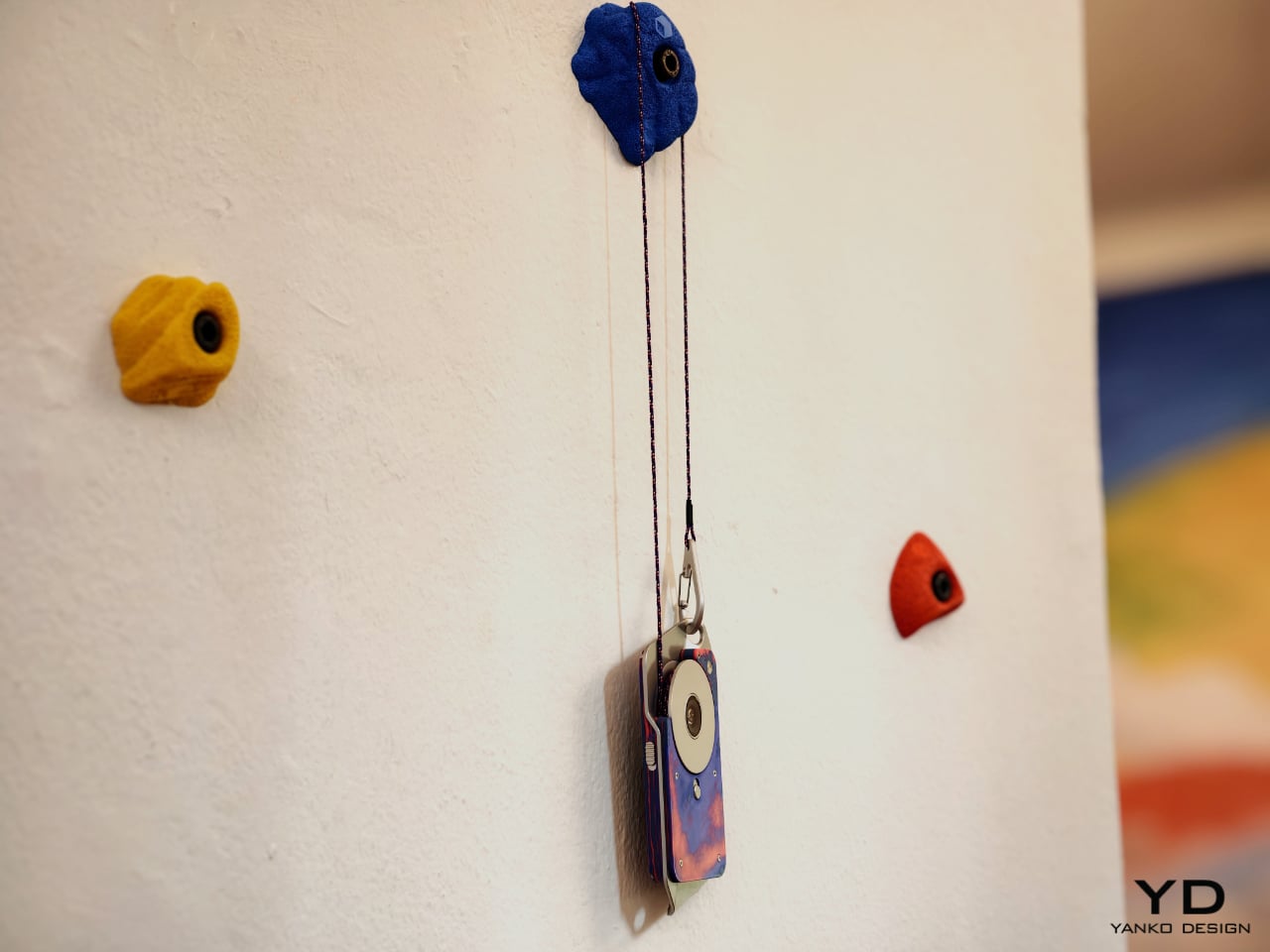
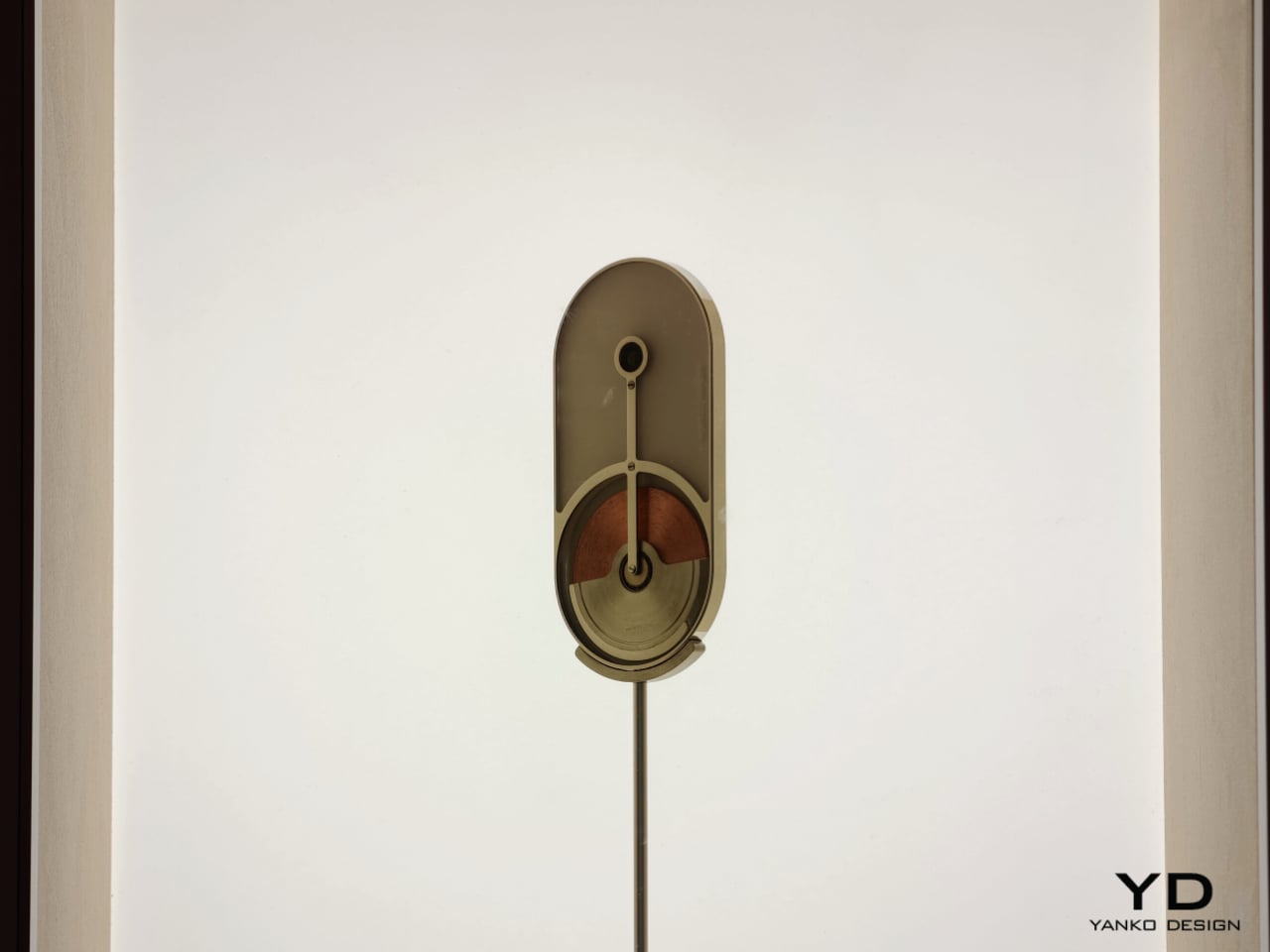
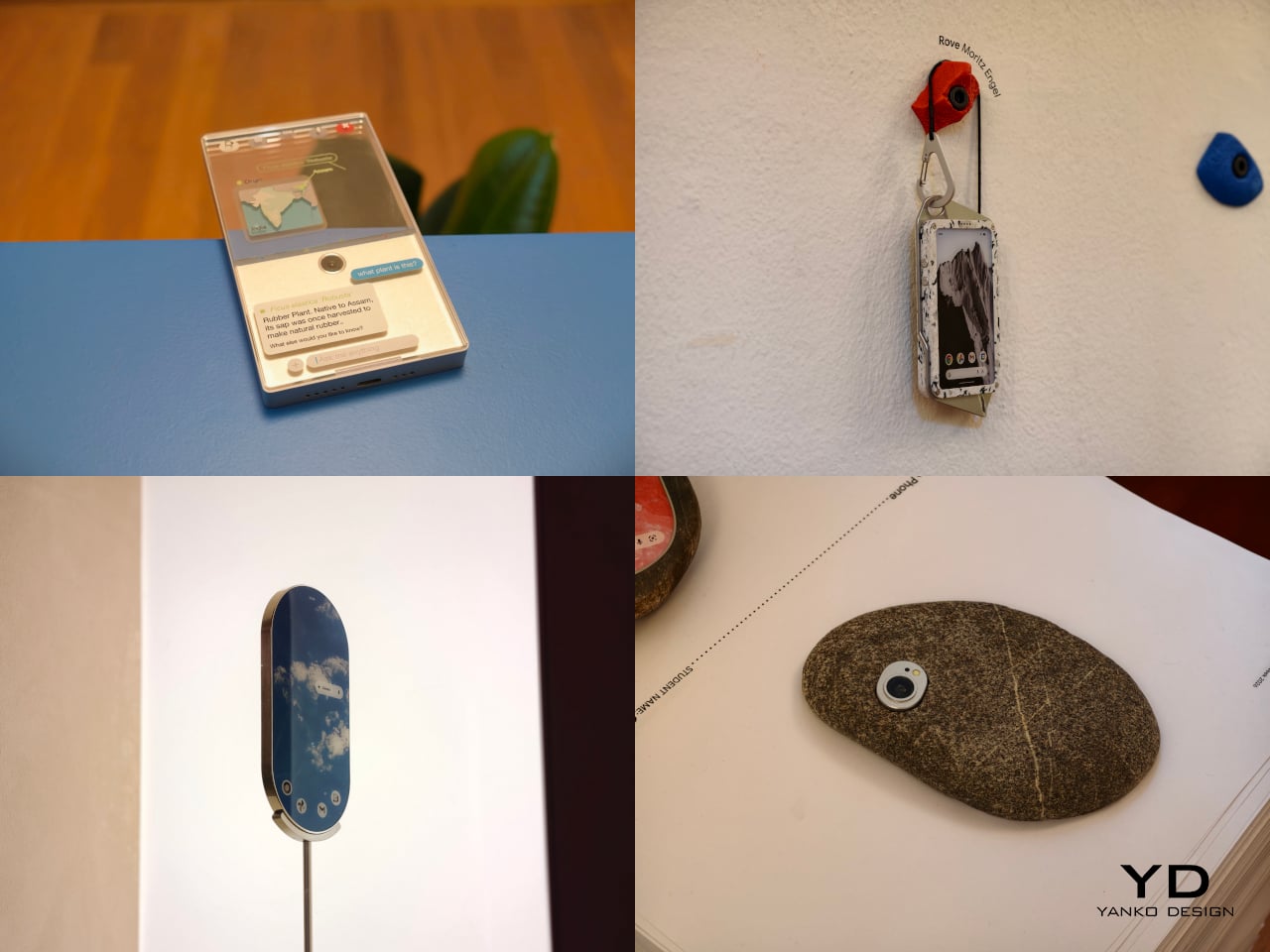
The exhibition also includes projects that challenge the smartphone’s dependence on charging infrastructure and standardized use cases. Rove, by Moritz Engel, is designed for off-grid wilderness and uses a pull-cord system to generate power through an axial flux generator. One minute of pulling creates twenty minutes of battery life, while the Dyneema cord doubles as a carrying strap and the spool becomes a tactile control wheel. Dyno, by Julia Siebert Cáceres, tackles the same problem from a more everyday angle, using body movement and electromagnetic induction to generate electricity throughout the day. Its visible rotor and magnet system make the act of charging tangible rather than hidden, giving the device an honesty that most sealed electronics lack.
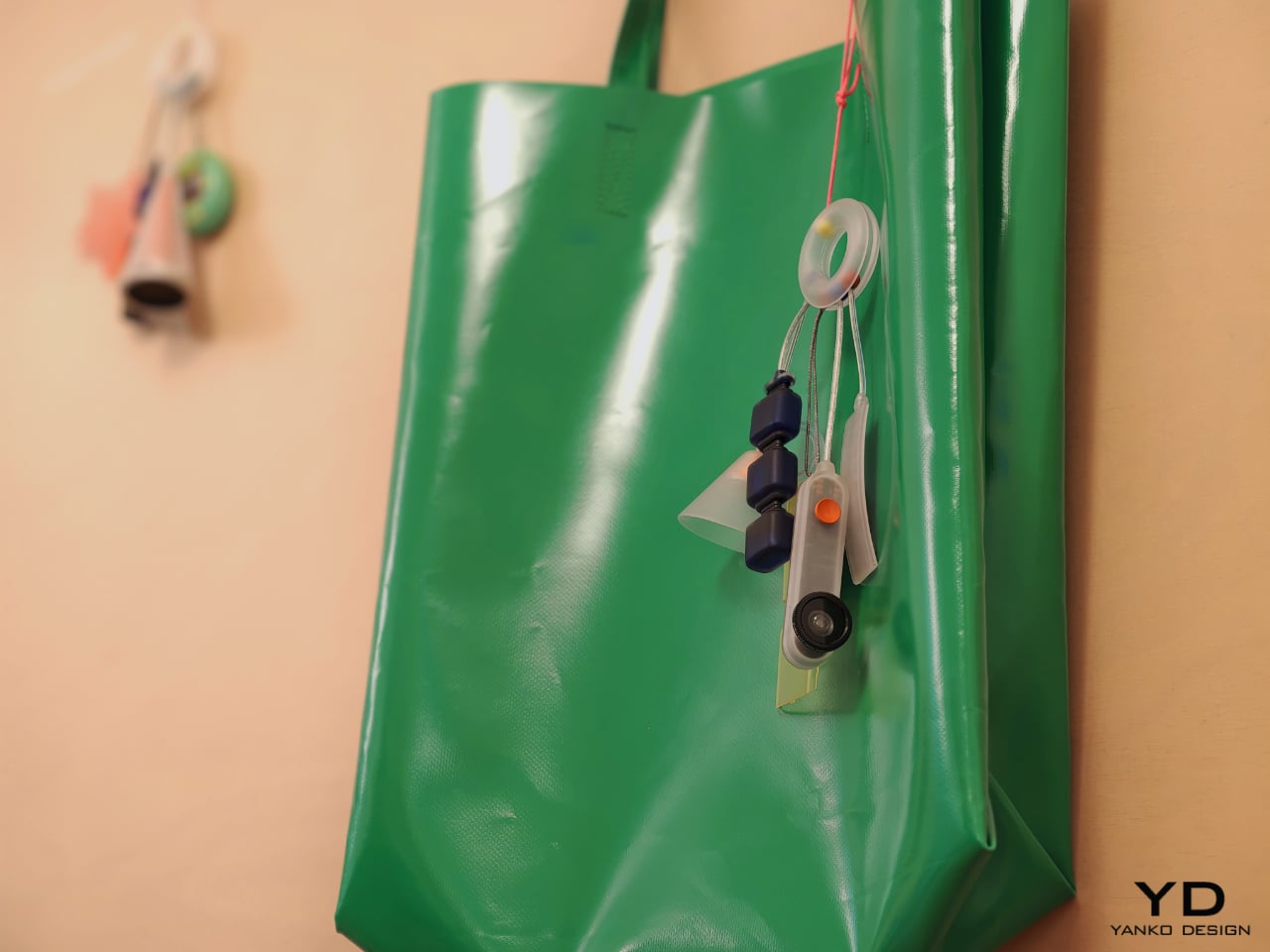
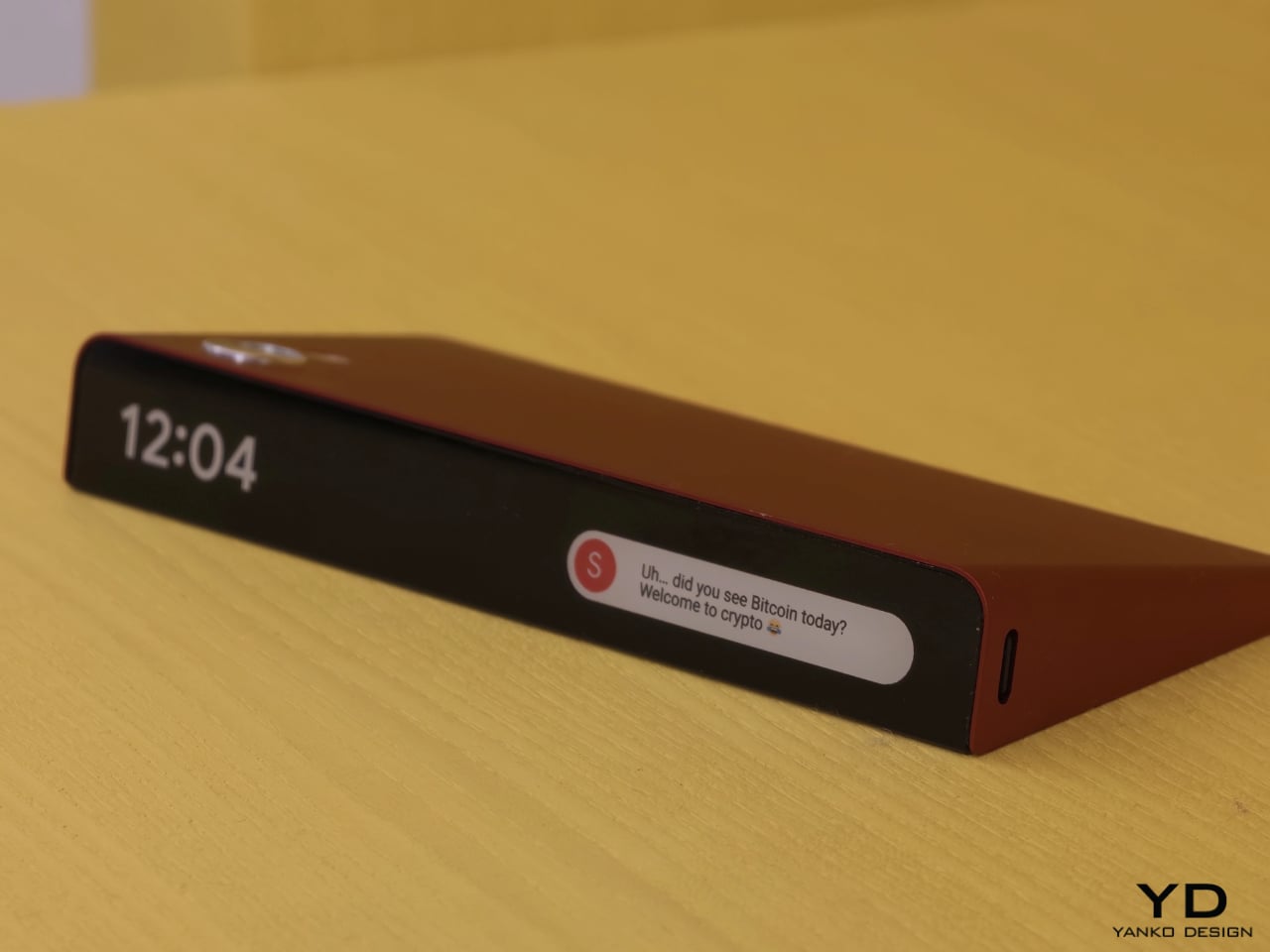
Other projects focus on what the phone means as a physical object in domestic and personal life. Everydaycarry, by Motong Yang, critiques the smartphone as a standardized entity that contains everything yet expresses very little. It proposes a more adaptive device whose character can still reflect the identity of the person carrying it. Totem, by Paul Quentin, reshapes the phone into a wedge so it can function more naturally as a tabletop object for video calls, media viewing, or AI assistance. When laid flat, its edge becomes a subtle notification interface. These projects are not simply formal experiments. They rethink how devices occupy space, signal presence, and fit into routines beyond the hand and pocket.
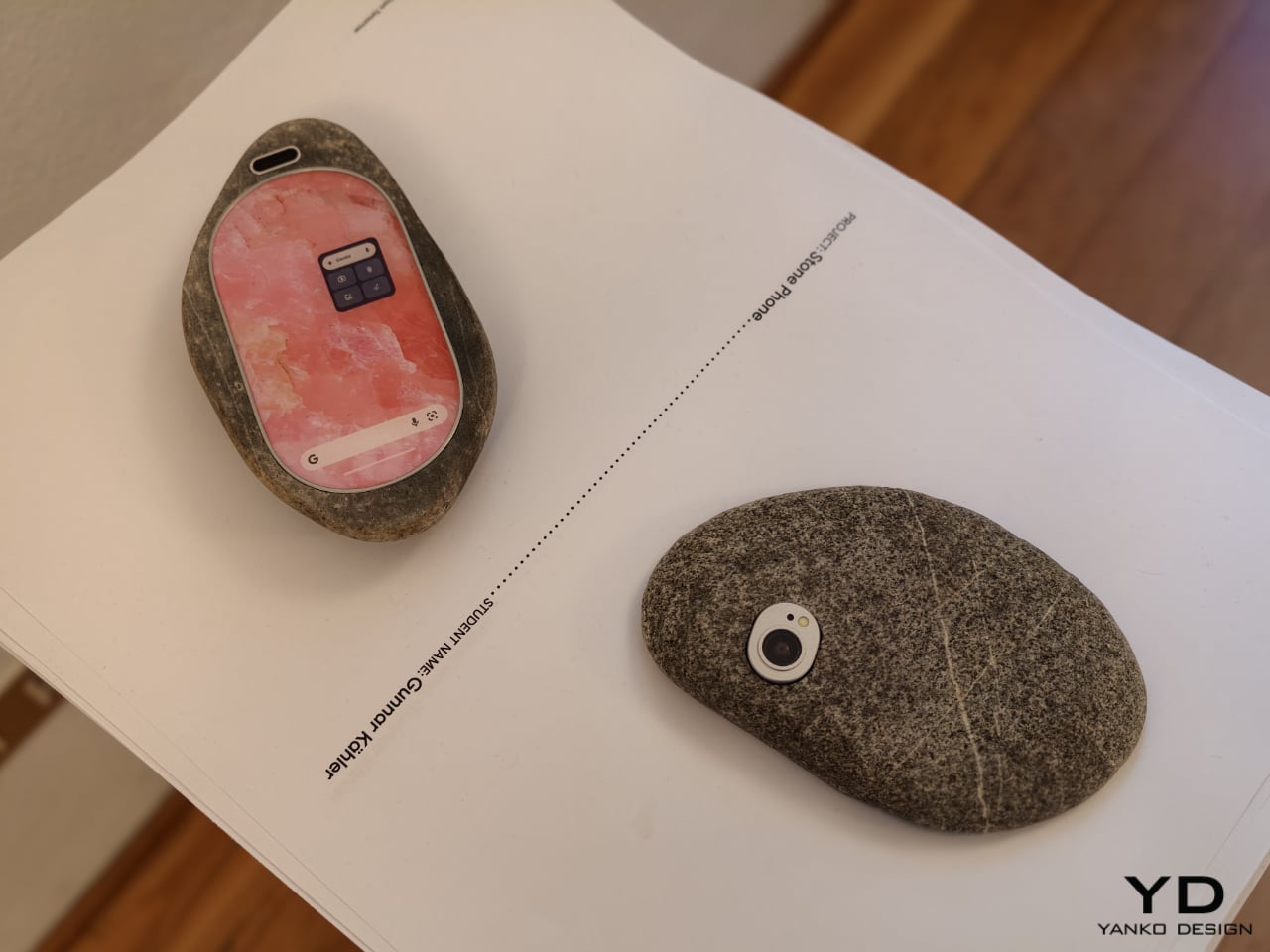
Then there is Stone Phone by Gunnar Kähler, one of the exhibition’s most quietly affecting concepts. Inspired by the instinctive act of picking up a stone from a beach or riverbank and choosing the one that feels right in the hand, the project imagines smartphones in an endlessly varied range of shapes. Instead of accepting industrial uniformity as a given, Stone Phone suggests that users might choose a device based on texture, comfort, and tactile pleasure. It blurs the line between archaic tool and advanced technology, making the smartphone feel less like a mass-produced command and more like a personal object discovered through touch. In a show full of speculative gestures, this one stands out for its simplicity. It reminds us that before a device does anything, it is first something we hold.

What makes A Message from Tomorrow compelling is not that every concept seems ready for mass production. It is that each one identifies a real tension in our relationship with mobile technology and gives it a physical form. Together, the projects reveal how narrow the current smartphone archetype has become. More importantly, they show that industrial design still has the power to meaningfully reshape our technological future. In an era when innovation is often framed as software alone, this exhibition argues that form, material, behavior, and ritual still matter deeply.

The post ecal x Google Just Imagined 10 Phones Beyond the Slab first appeared on Yanko Design.
Leave It to a Jewelry House to Make the Most Beautiful Candle

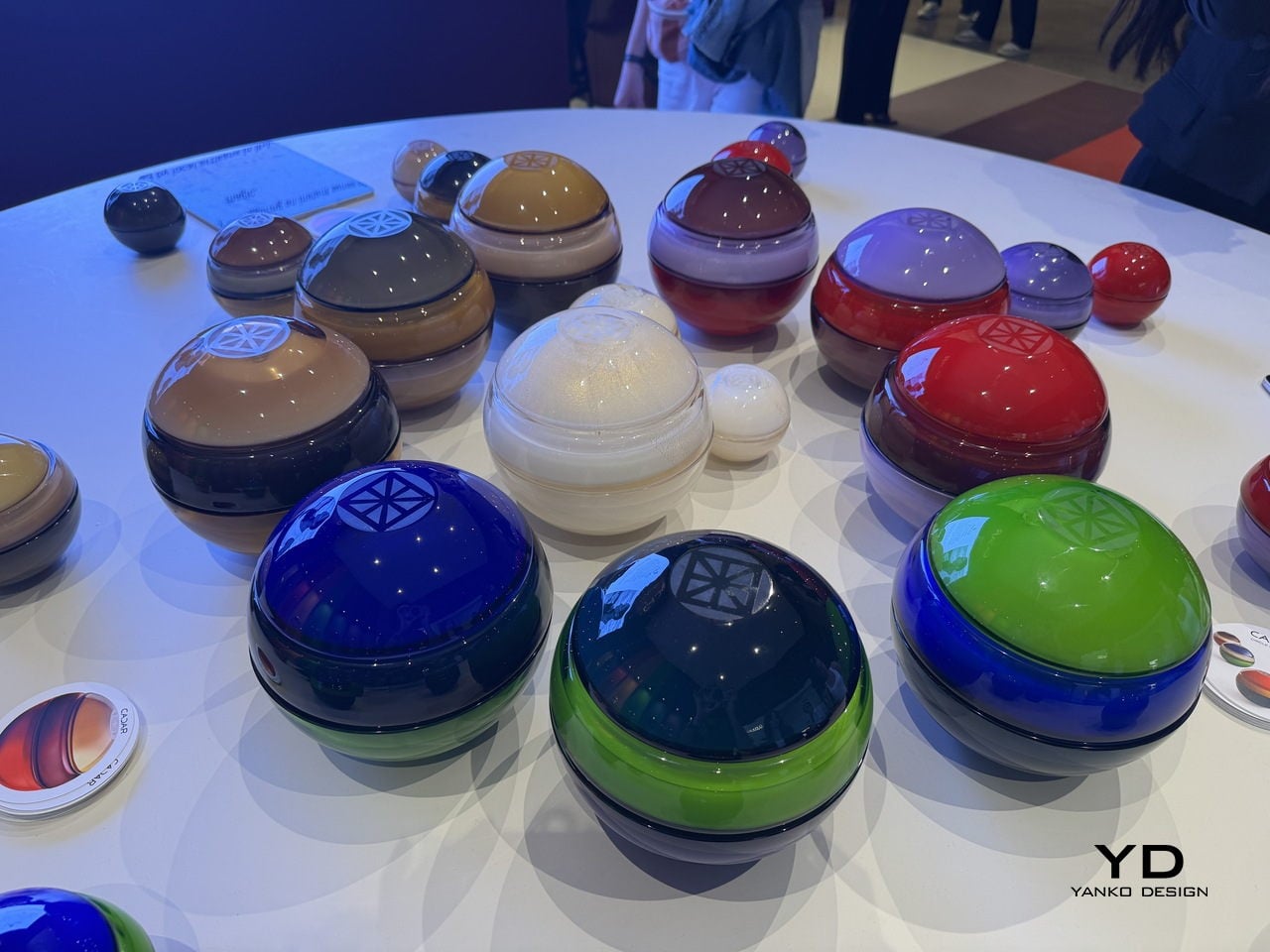
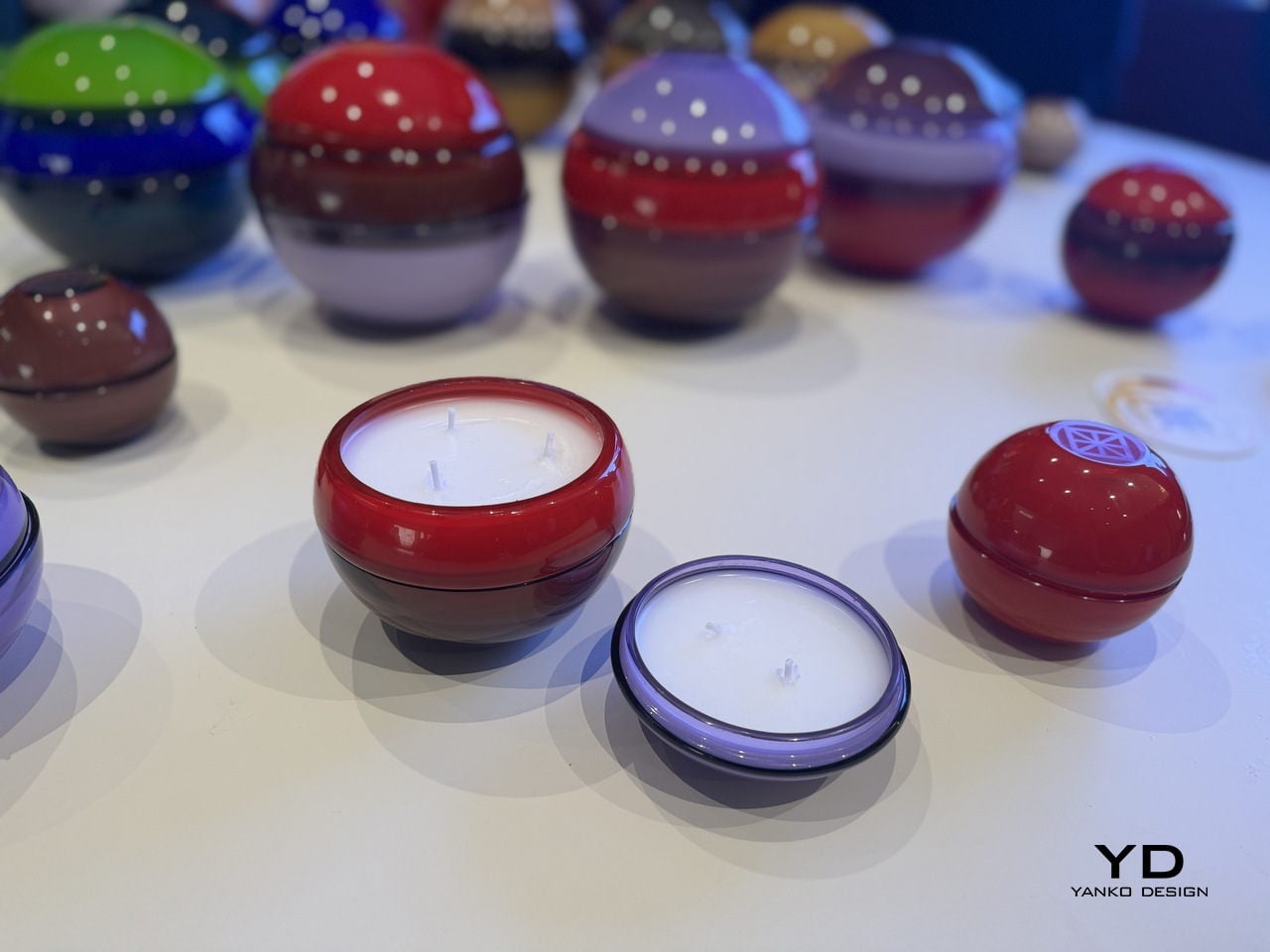
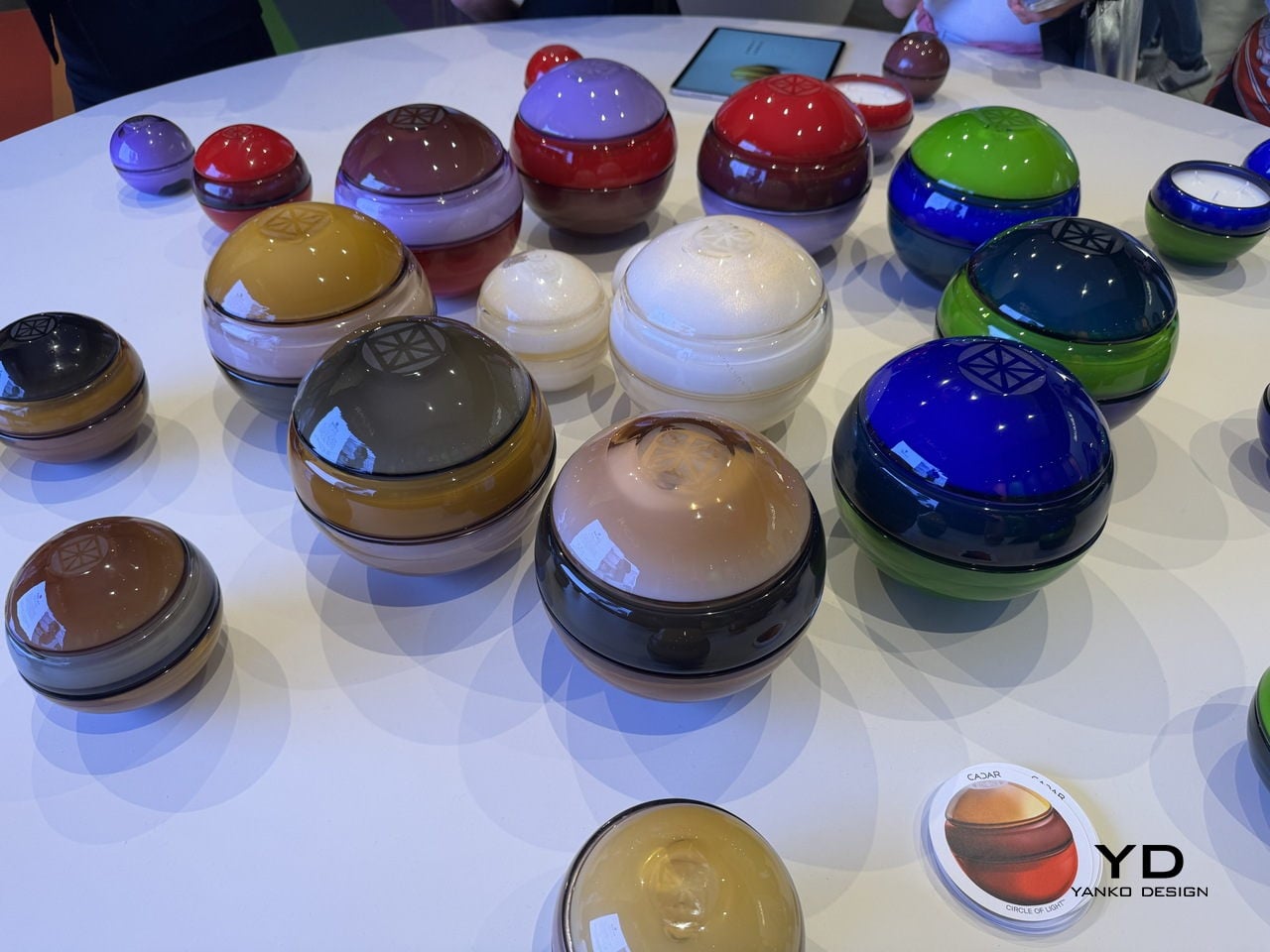
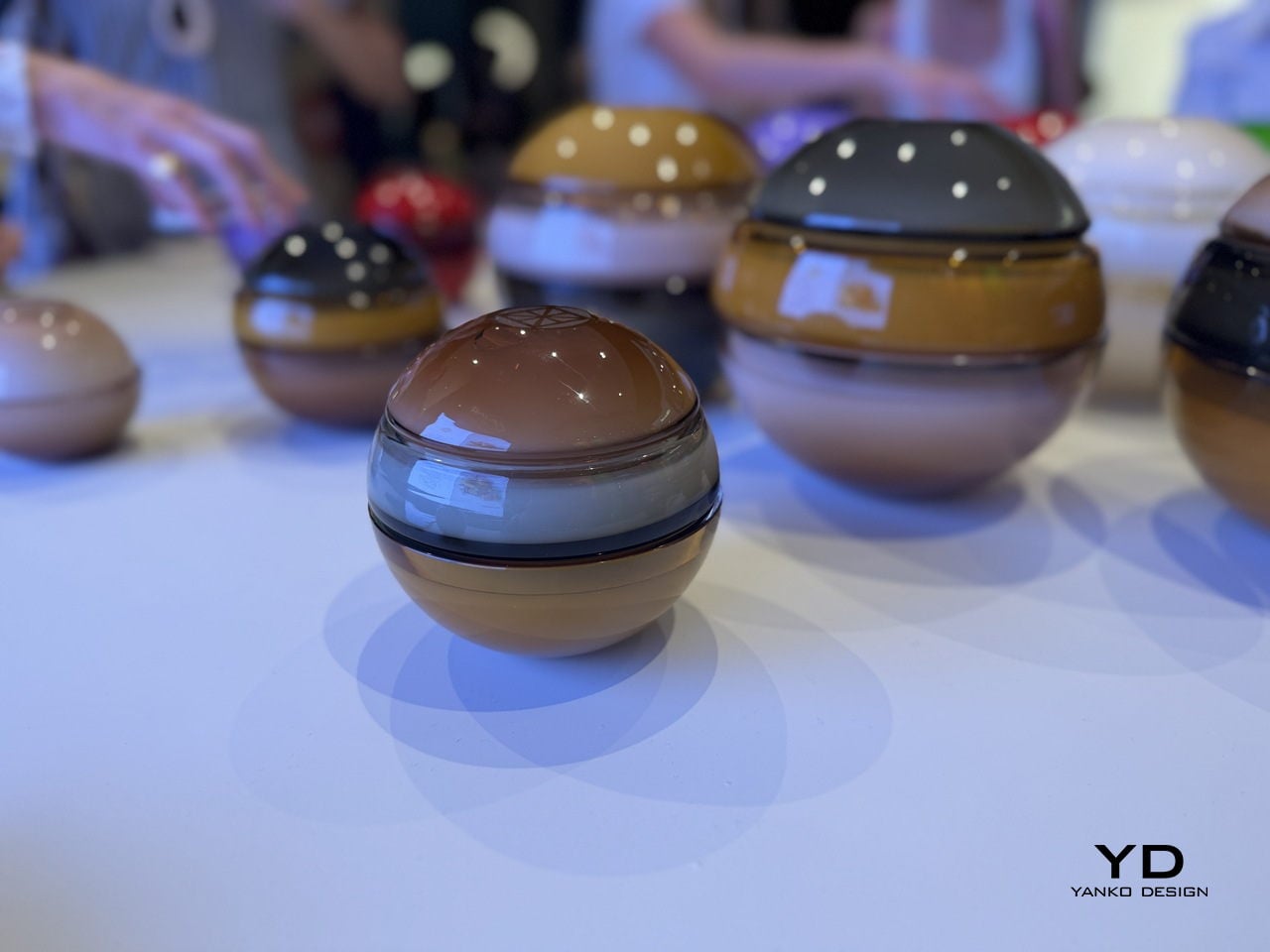
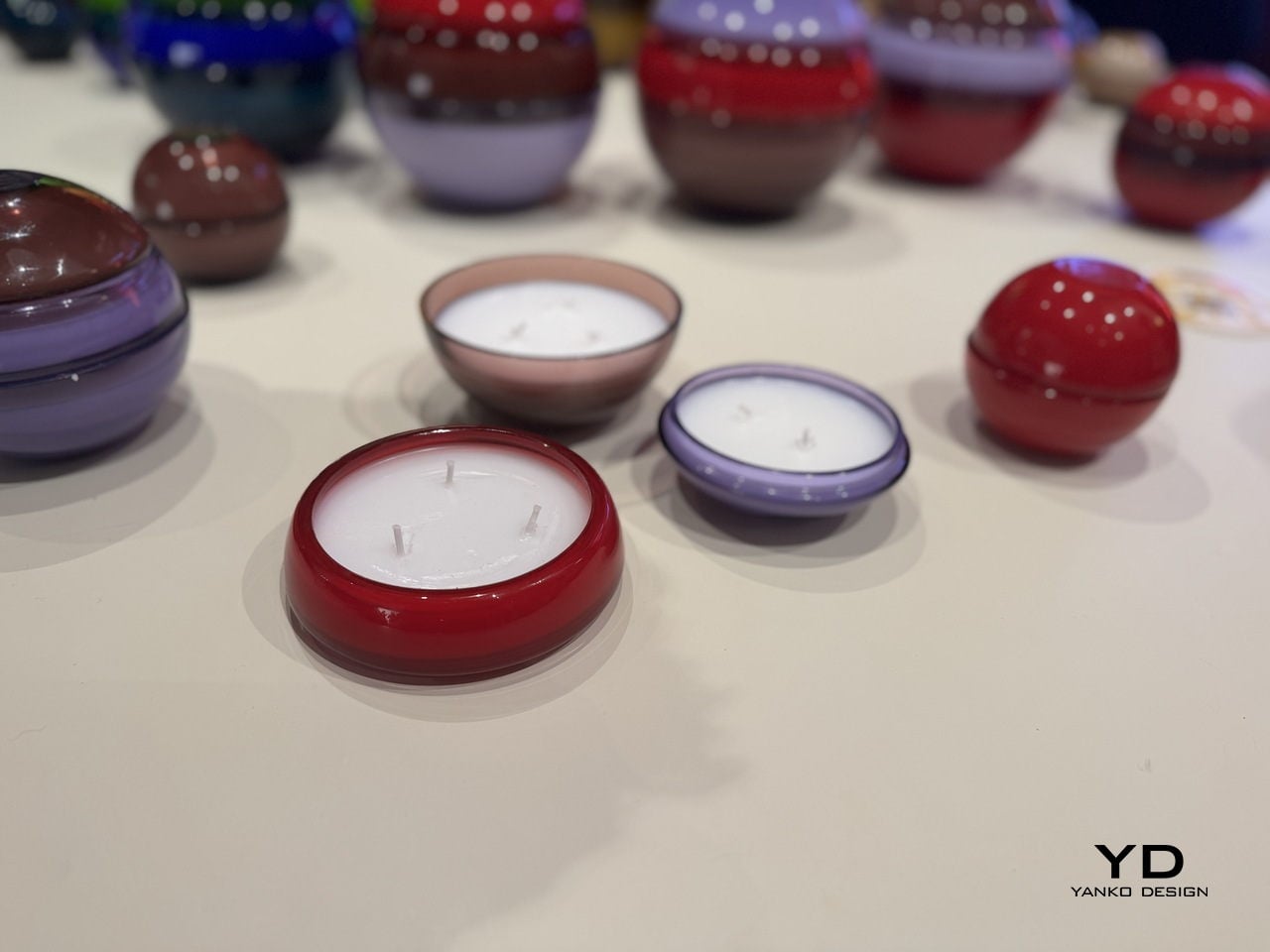
When Cadar showed up at Salone del Mobile this April, it did not bring jewelry. It brought candles. And not the kind you grab in a gift shop because they smell nice. These are hand-blown Murano glass spheres in colors so saturated and glossy they look less like home objects and more like something you might find in a collector’s vitrine. The moment you see them on a table, you want to pick one up. That instinct tells you everything about how well this design is working.

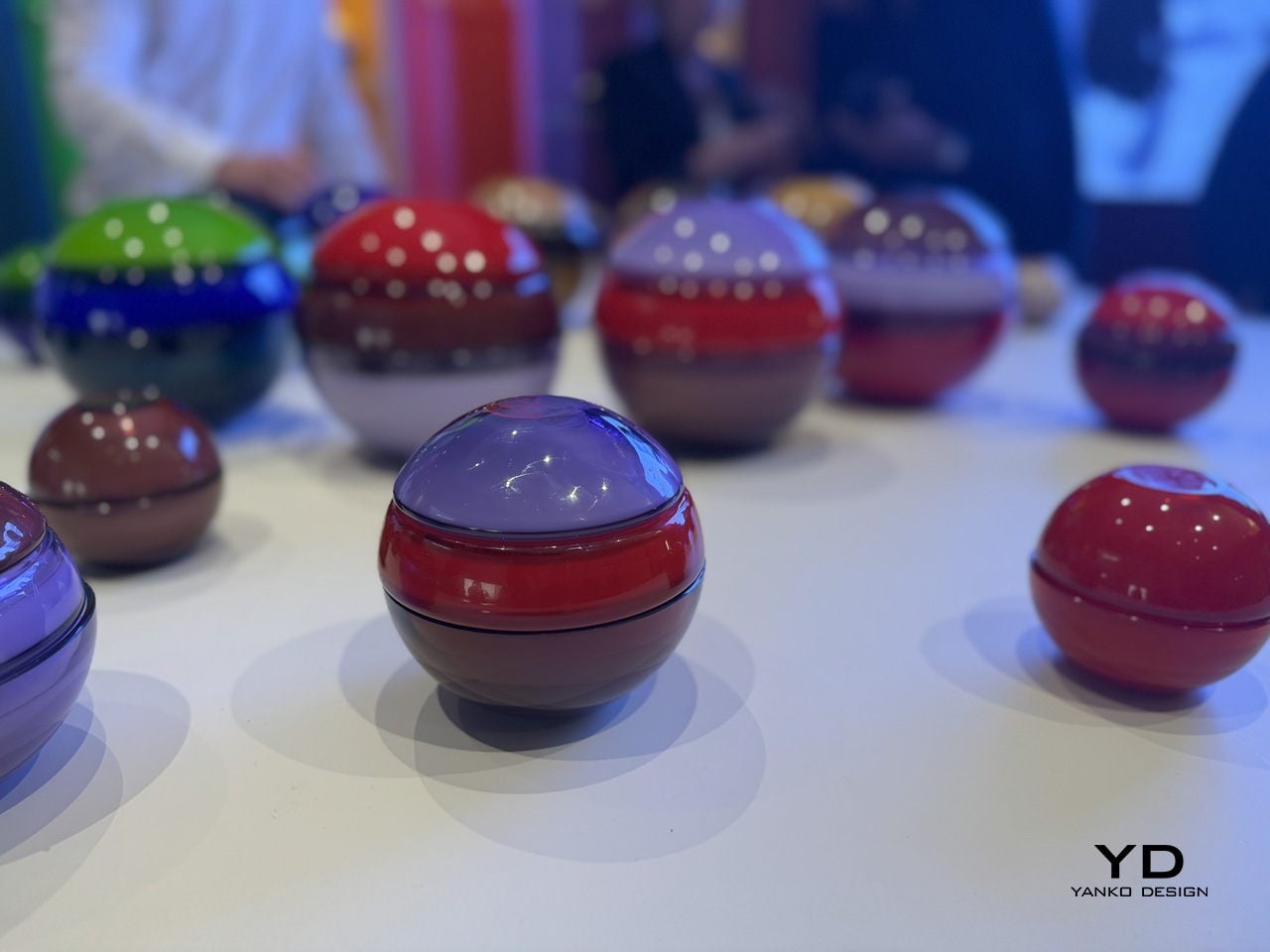
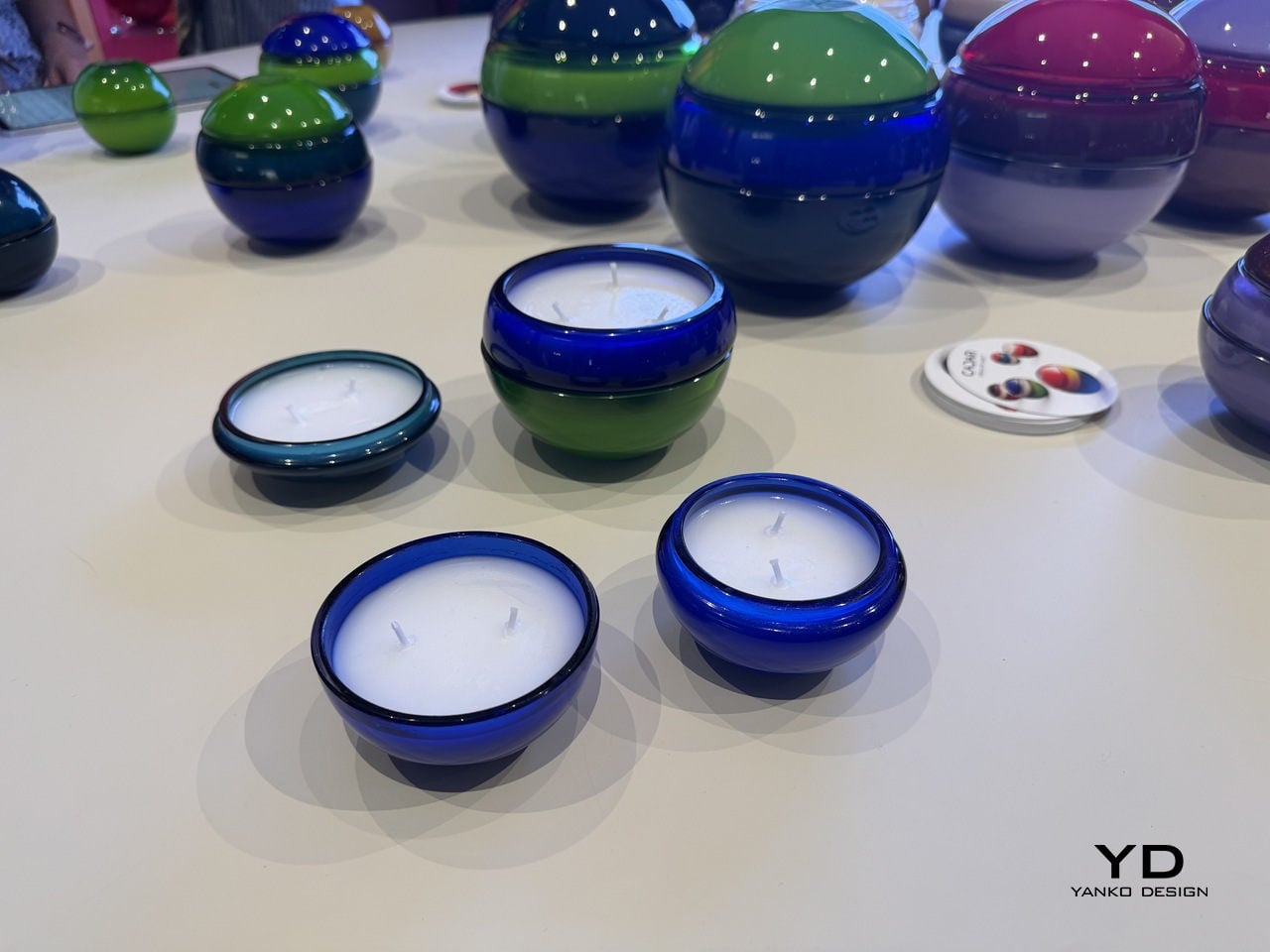
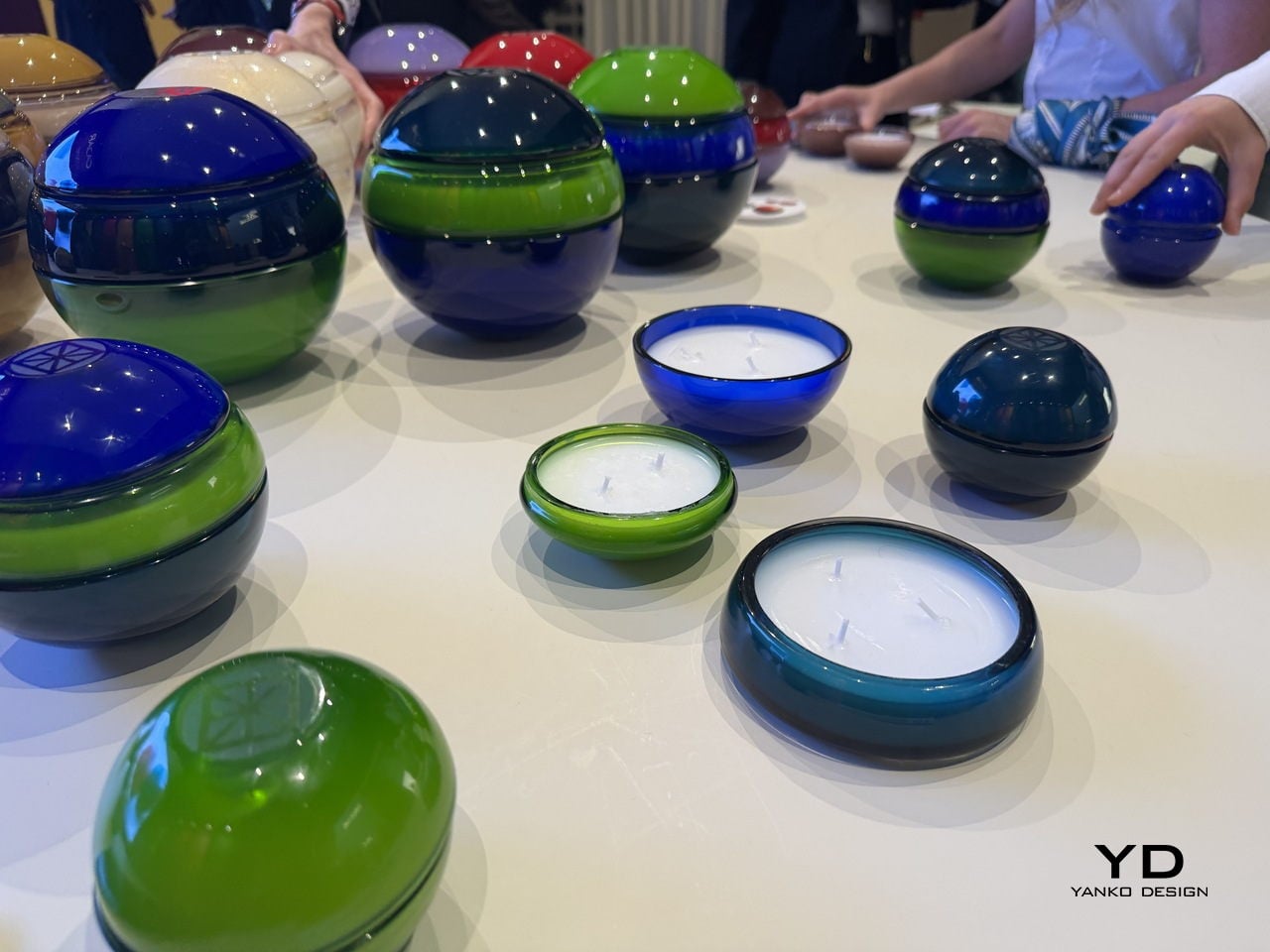
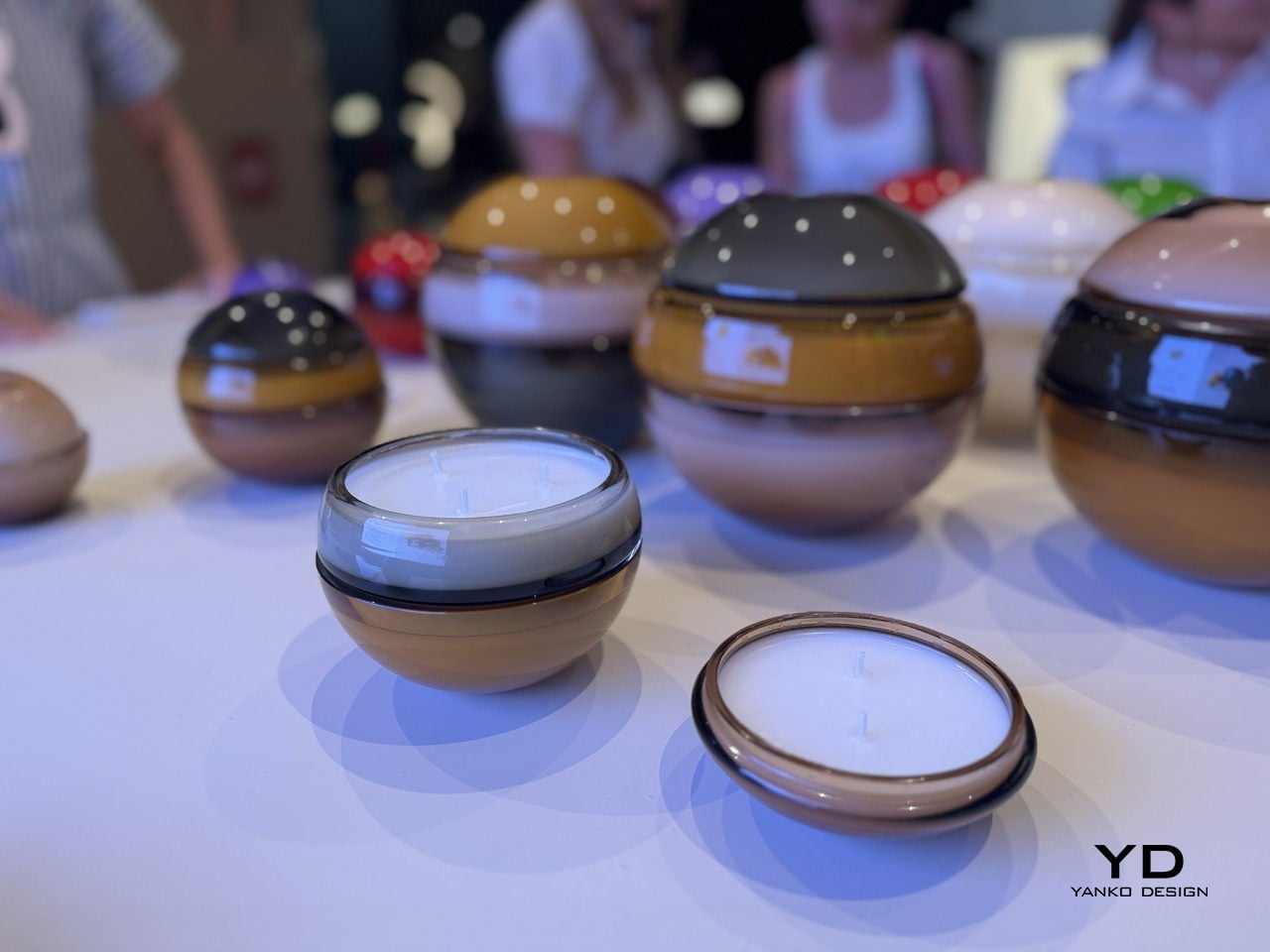
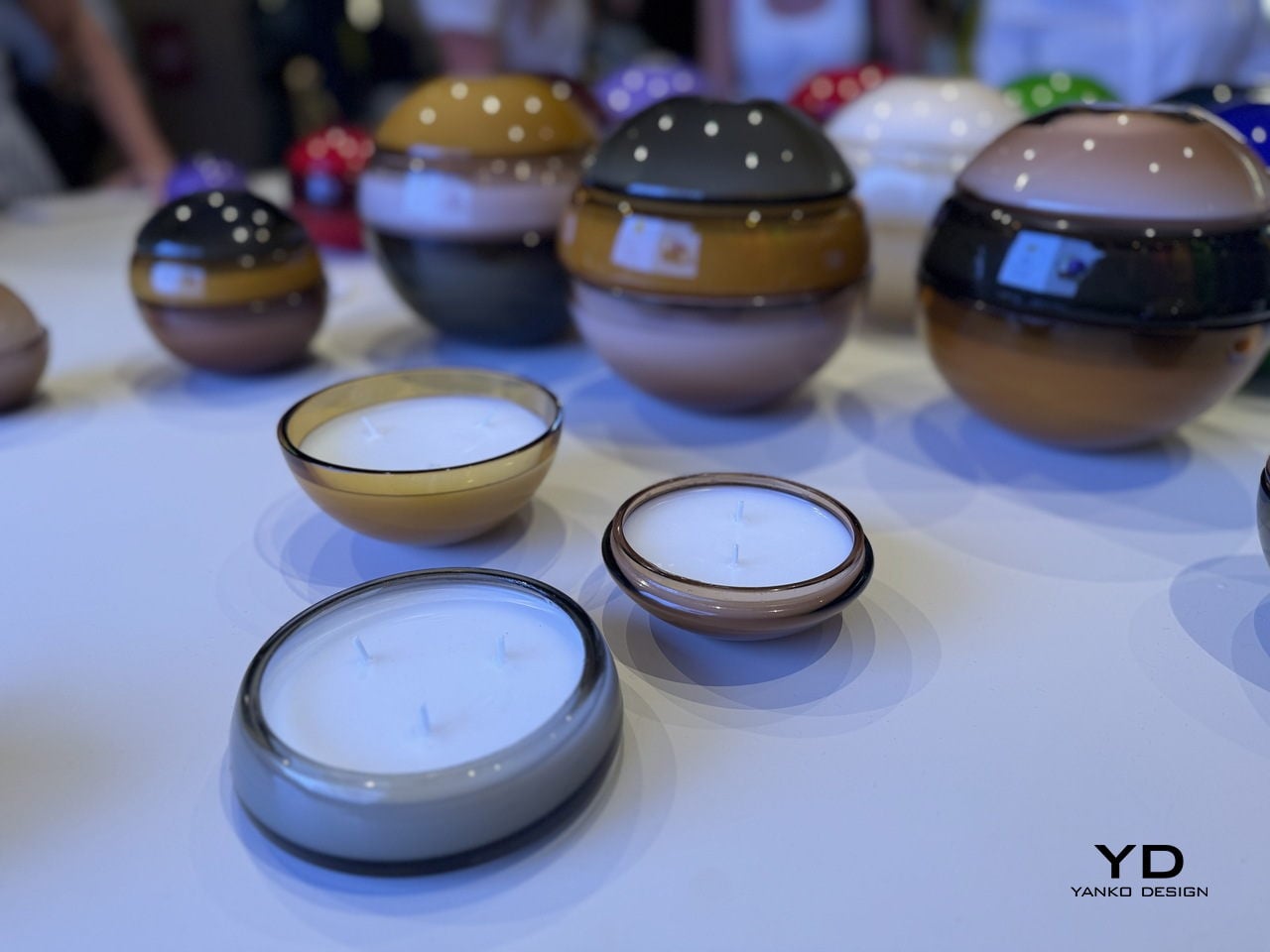
The form is deceptively simple. Each Circle of Light vessel is a sphere, composed of two to three separate hand-blown glass parts that stack and lock together into one seamless orb. The bottom is a wide, bowl-shaped candle vessel. A middle section can be added for a taller configuration, and the top is a smooth dome that caps the whole thing off. When assembled, the seam between pieces is visible but refined, almost like a deliberate detail rather than a structural necessity. When pulled apart, each piece becomes its own open candle vessel, low and round, sitting flat on a surface with quiet confidence.

Designer: Cadar Designs

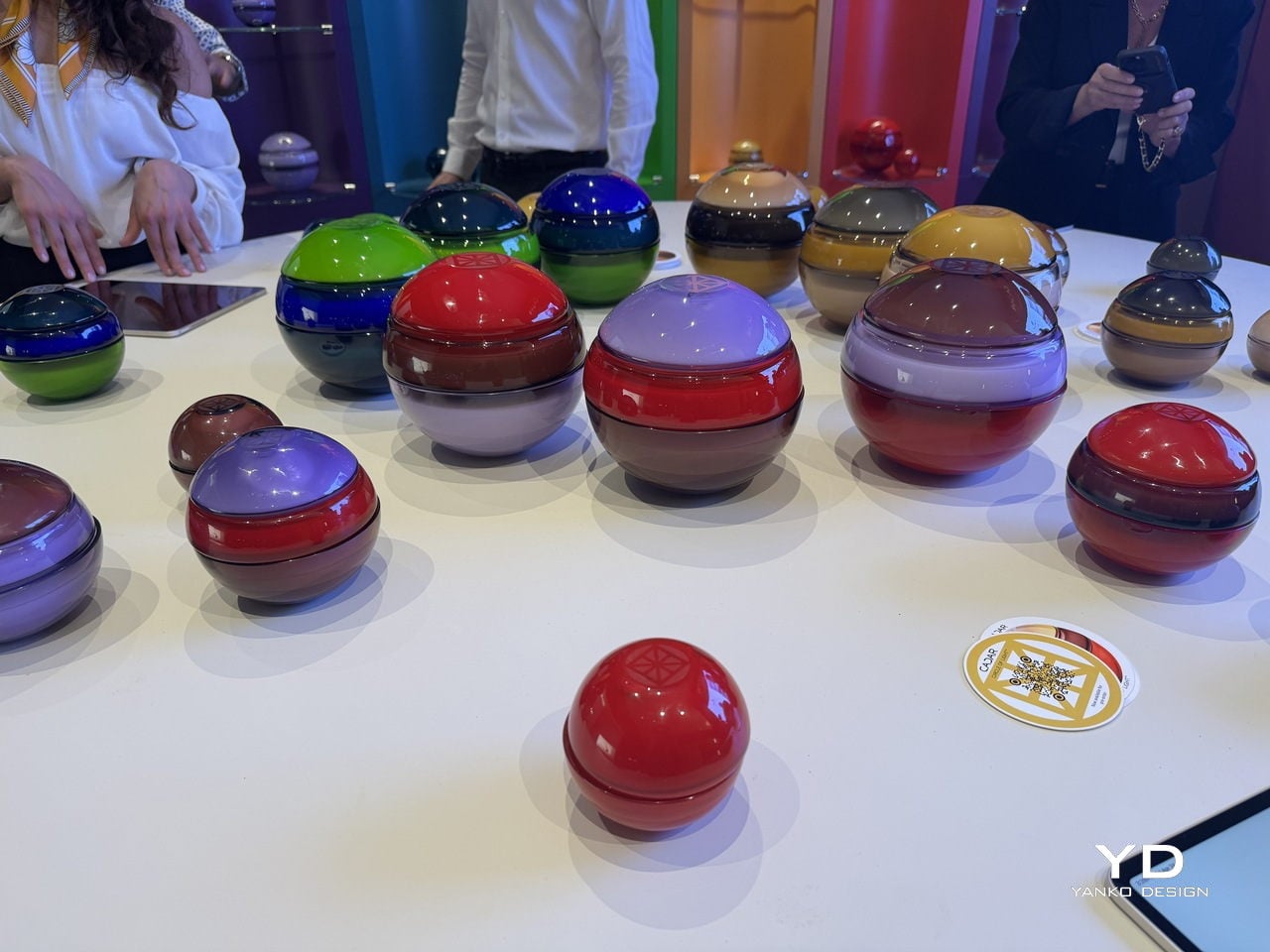
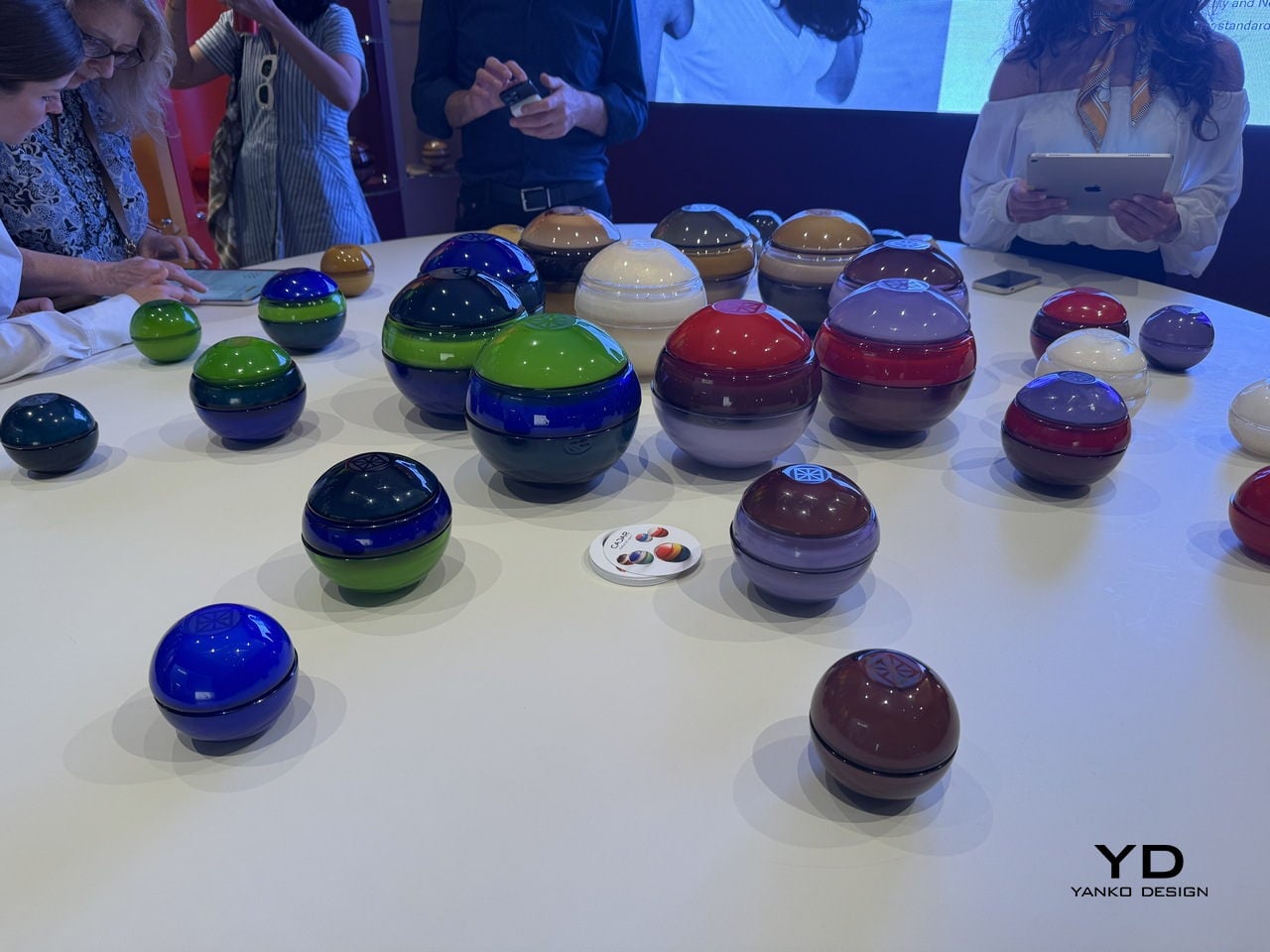
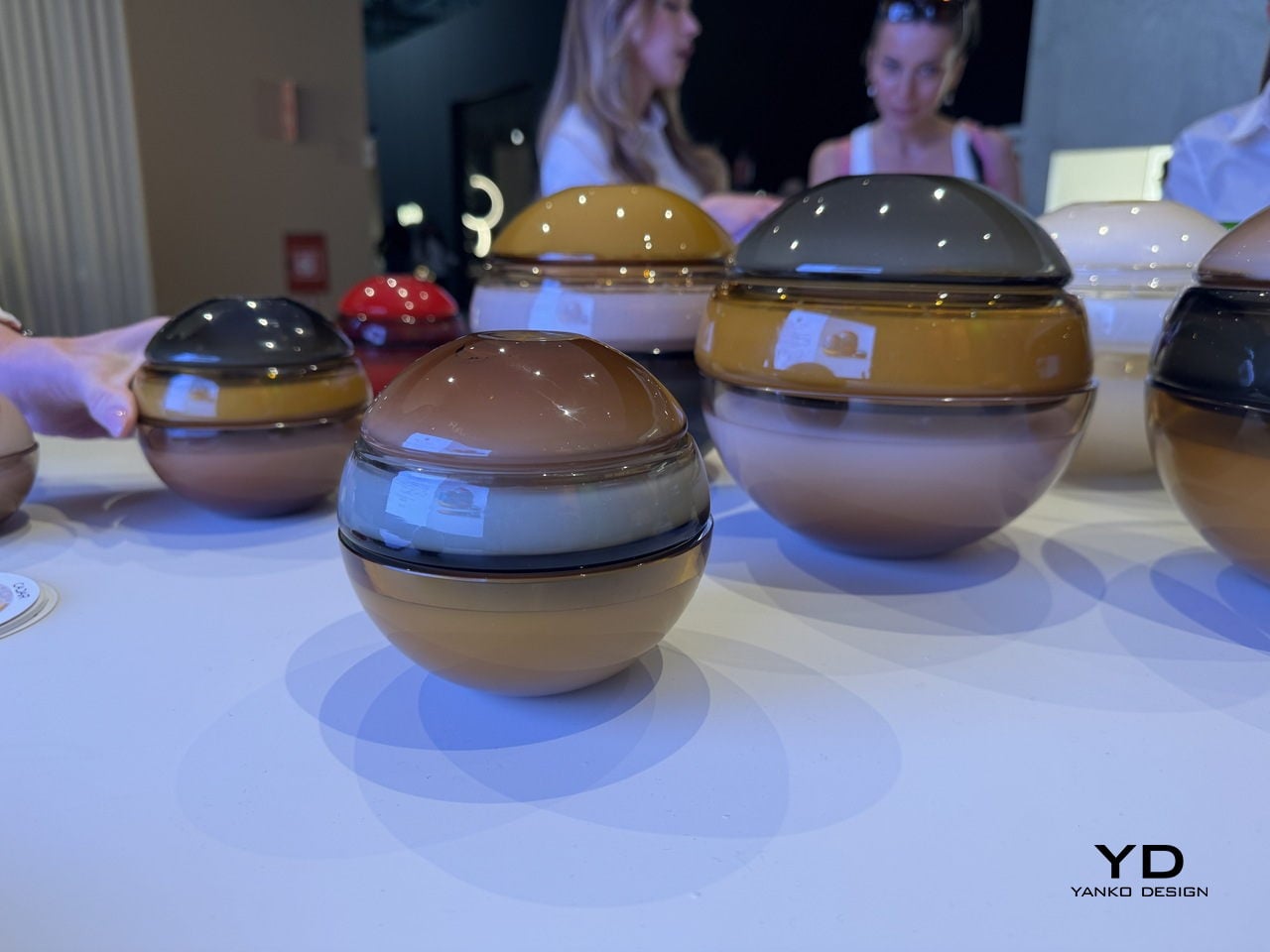
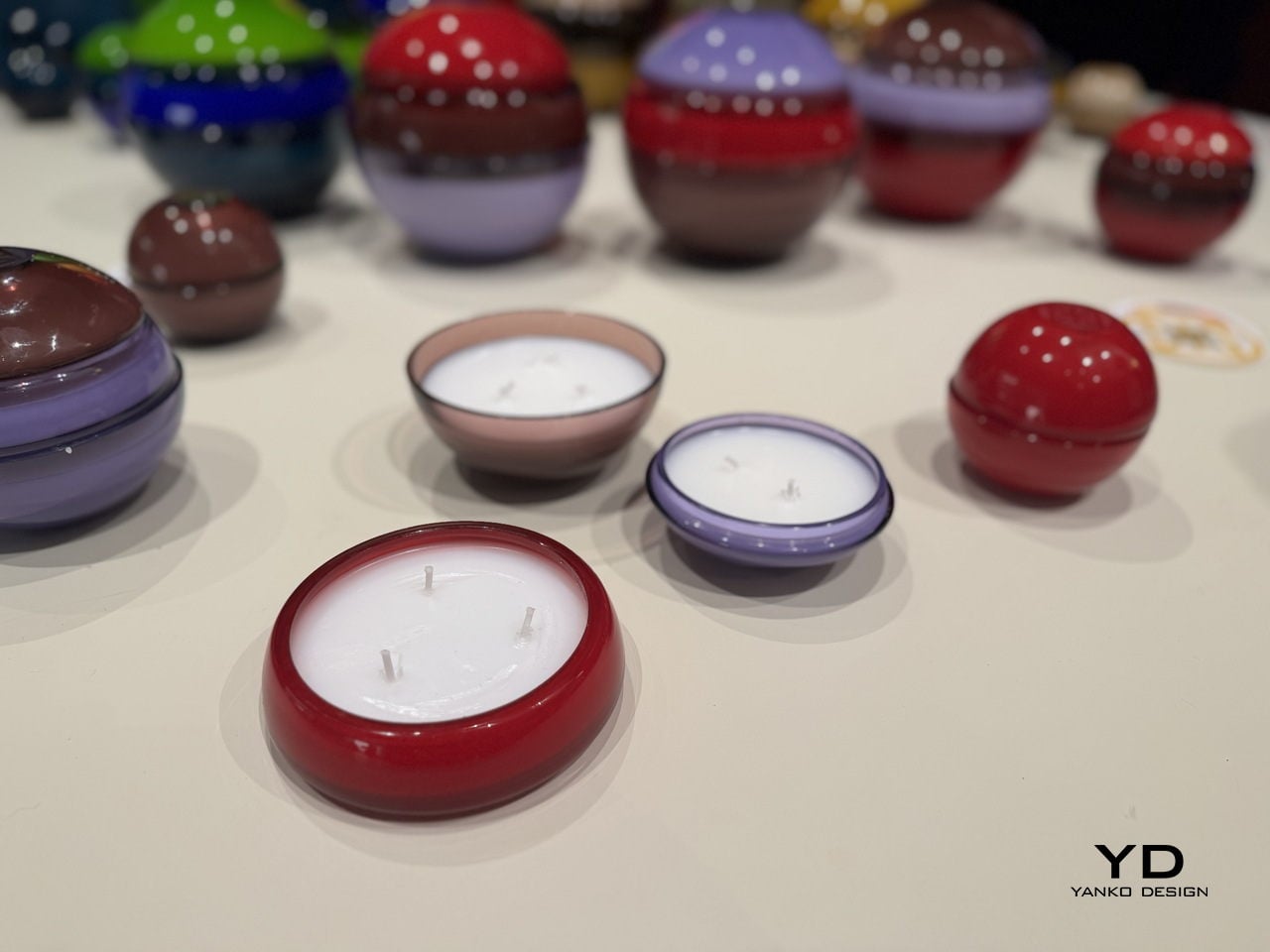
The colors are where this collection makes its boldest statement. Cadar and Venini did not play it safe. There is a deep cobalt blue paired with emerald green. A ruby red domed over a rich burgundy base. A warm amber sitting beneath a charcoal gray cap. A dusty lavender paired with a smoky brown. The combinations read like color theory exercises carried out by someone with very good instincts and zero fear. Looking at a table full of them, the effect is almost planetary. Each sphere feels like its own small world, and together they create something closer to a color installation than a product display.

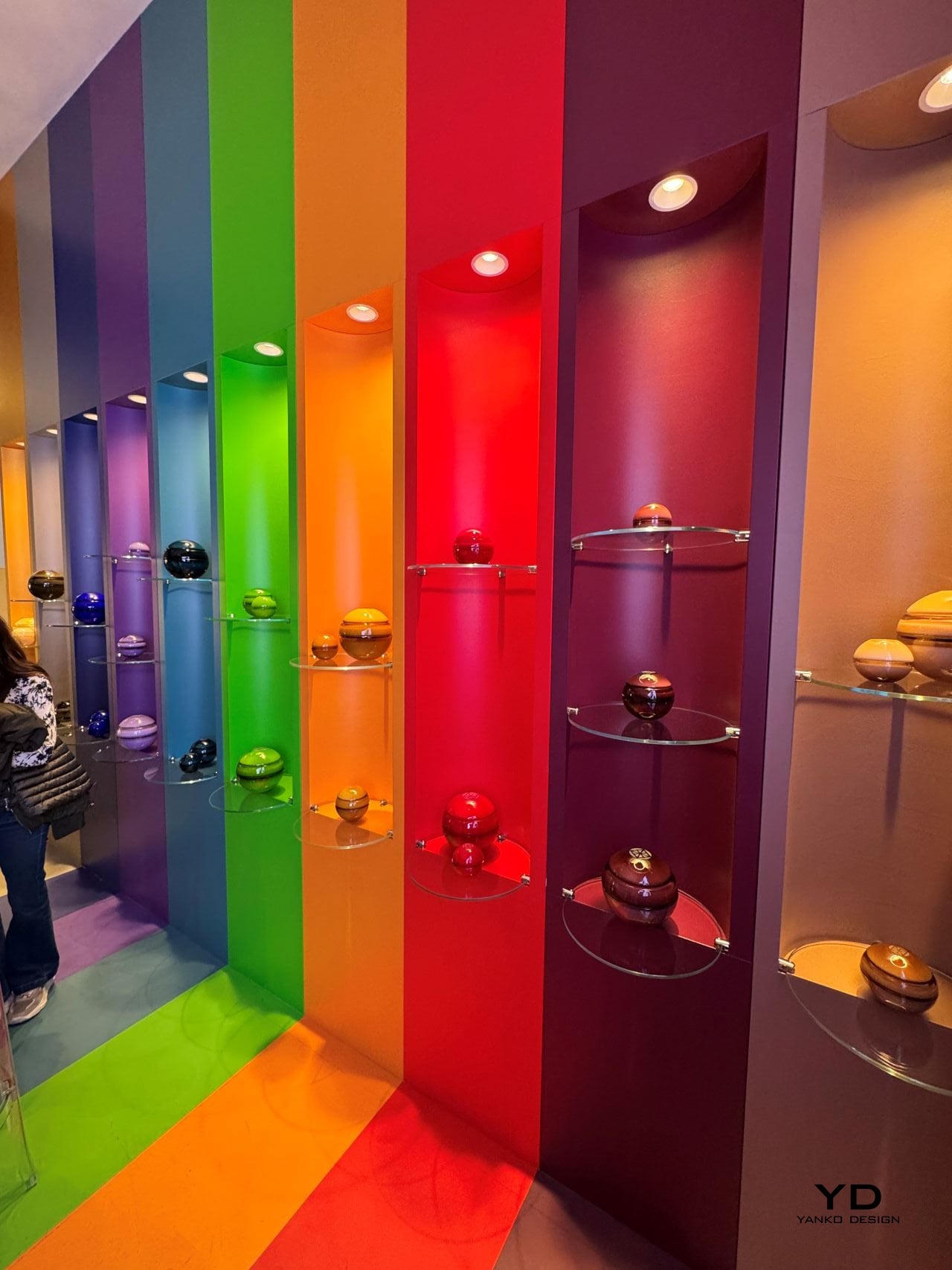
That display at the Venini booth reinforced the point. The booth itself was organized as a full-spectrum rainbow wall, with each color column housing its corresponding spheres on glass shelves. It was theatrical in the best way, the kind of presentation that makes you understand what a product is about before anyone explains it to you. The candles did not need signage. The visual language was that clear.

The glass itself deserves attention. Venini has been making Murano glass for 105 years, and you feel that history in the material. The surface has a depth to it that paint or glaze simply cannot replicate. Some of the dome tops carry a subtle engraved motif, a geometric pattern consistent with Cadar’s jewelry aesthetic, which grounds the collection in the brand’s visual identity without announcing itself loudly. The finish across all pieces is high-gloss and lacquered-looking, which amplifies the color and gives each sphere an almost liquid quality in certain light. Picked up and turned in your hands, the glass has real weight.

Cadar, founded in 2015 by designer Michal Kadar, built its reputation on 18k gold jewelry defined by bold minimalism and fluid movement. Michal’s background is in fashion, and it shows in the way her pieces are conceived with the body in mind, with proportion and balance as non-negotiable starting points. That same sensibility applies here. The sphere is not an arbitrary choice. It is a form Cadar has returned to repeatedly, and in translating it from fine metal to hand-blown glass, the design team found a material that responds to light in an entirely different, arguably more democratic way. Gold catches light and keeps it. Glass catches light and gives it back.

The fragrances, composed by master perfumer Alberto Morillas, are tied to Cadar’s existing jewelry collections: Light, Water, and Bloom. The idea that a scent corresponds to a visual collection is not new, but it works here because the objects themselves feel like they carry a mood. You would choose your sphere the way you choose what to wear, based on color, on scale, on what kind of atmosphere you are trying to create.

The collection is available for pre-order at the Cadar flagship boutique in New York’s Meatpacking District and online at cadar.com. It is the kind of thing you put on a shelf and look at before you even light it. And that, ultimately, is the whole point.

The post Leave It to a Jewelry House to Make the Most Beautiful Candle first appeared on Yanko Design.
Bang & Olufsen Just Taught Stone to Sing at Milan 2026

Every year, Milan Design Week raises the question of what design is actually for. Not in the abstract, philosophical sense that gets debated in panel discussions nobody remembers, but in the most immediate, physical way: you walk into a space, and either you feel it or you don’t. The Bang & Olufsen and Antolini installation this year, From Quarry to Garden: The Shape of Beautiful Sound, is the kind of experience that makes you feel it before you can even explain why.

The collaboration between Bang & Olufsen, the Danish audio luxury brand founded in 1925, and Antolini, the Verona-based natural stone company with 70 years of history, is one of those pairings that sounds unlikely on paper but makes complete sense once you see it. Both brands are obsessed with material. Both are deeply committed to the idea that an object should not only perform but move you. Putting them in the same room, or rather the same garden, was probably inevitable.

Designers: Antolini® with Bang & Olufsen

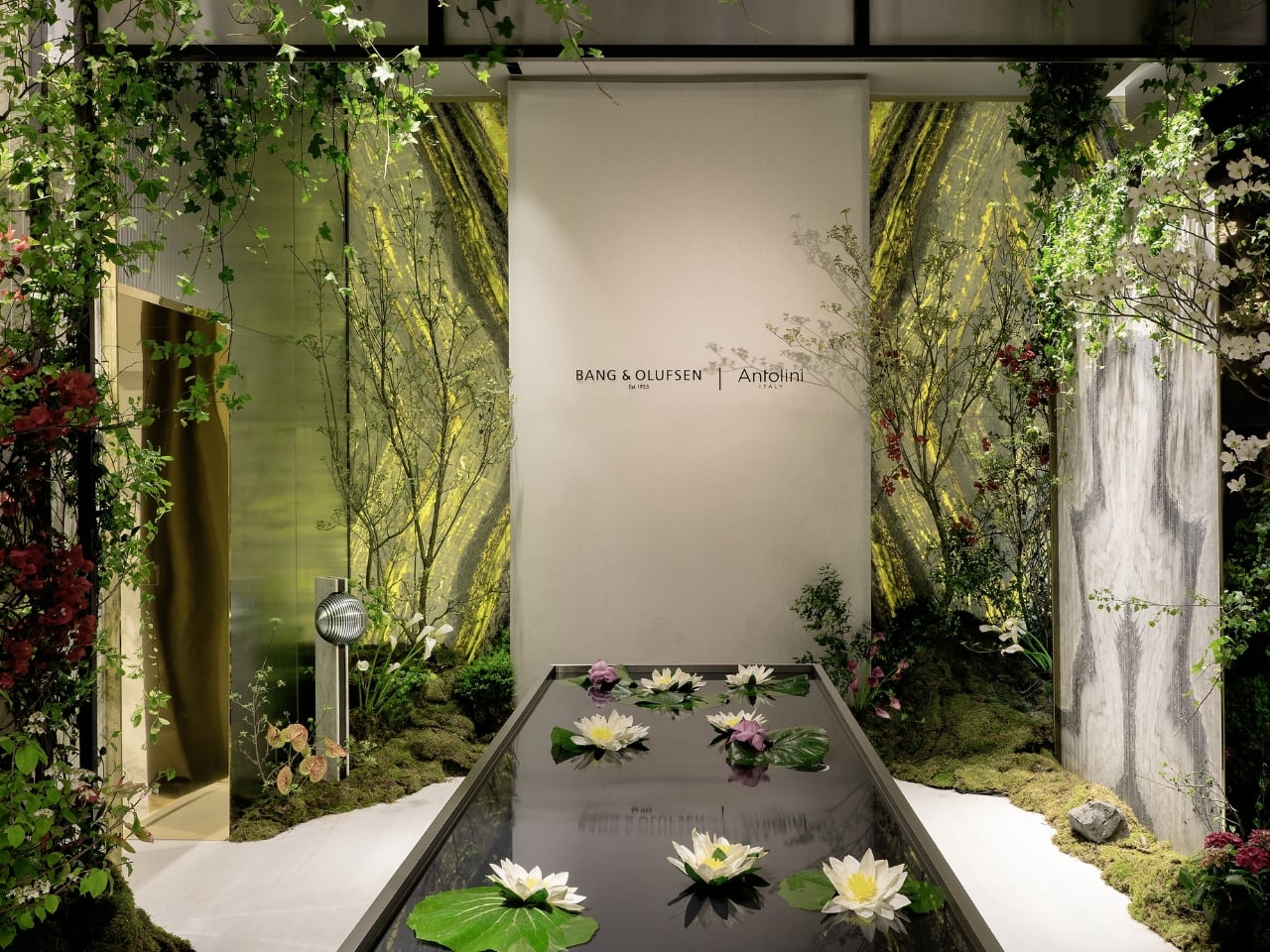
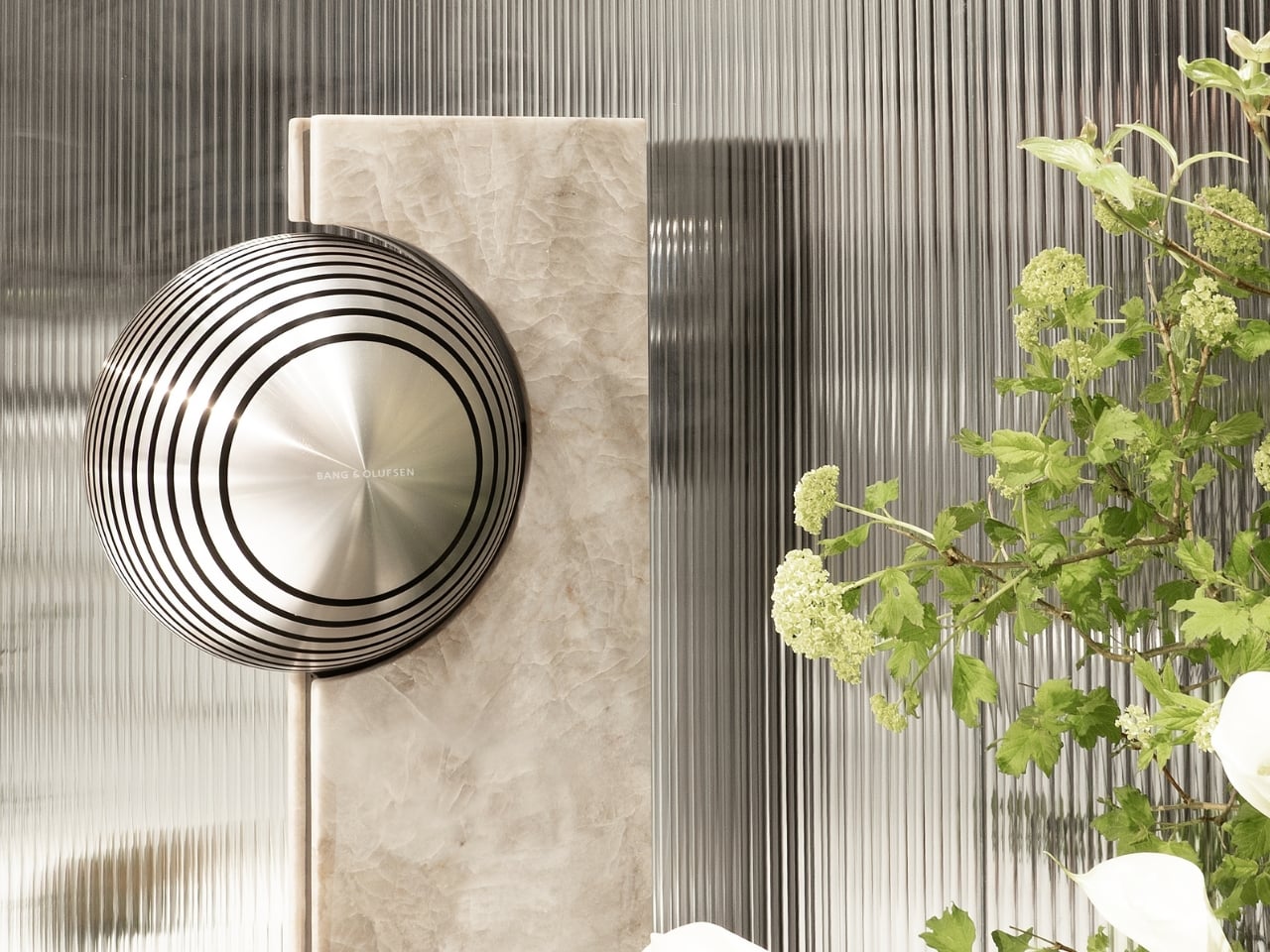
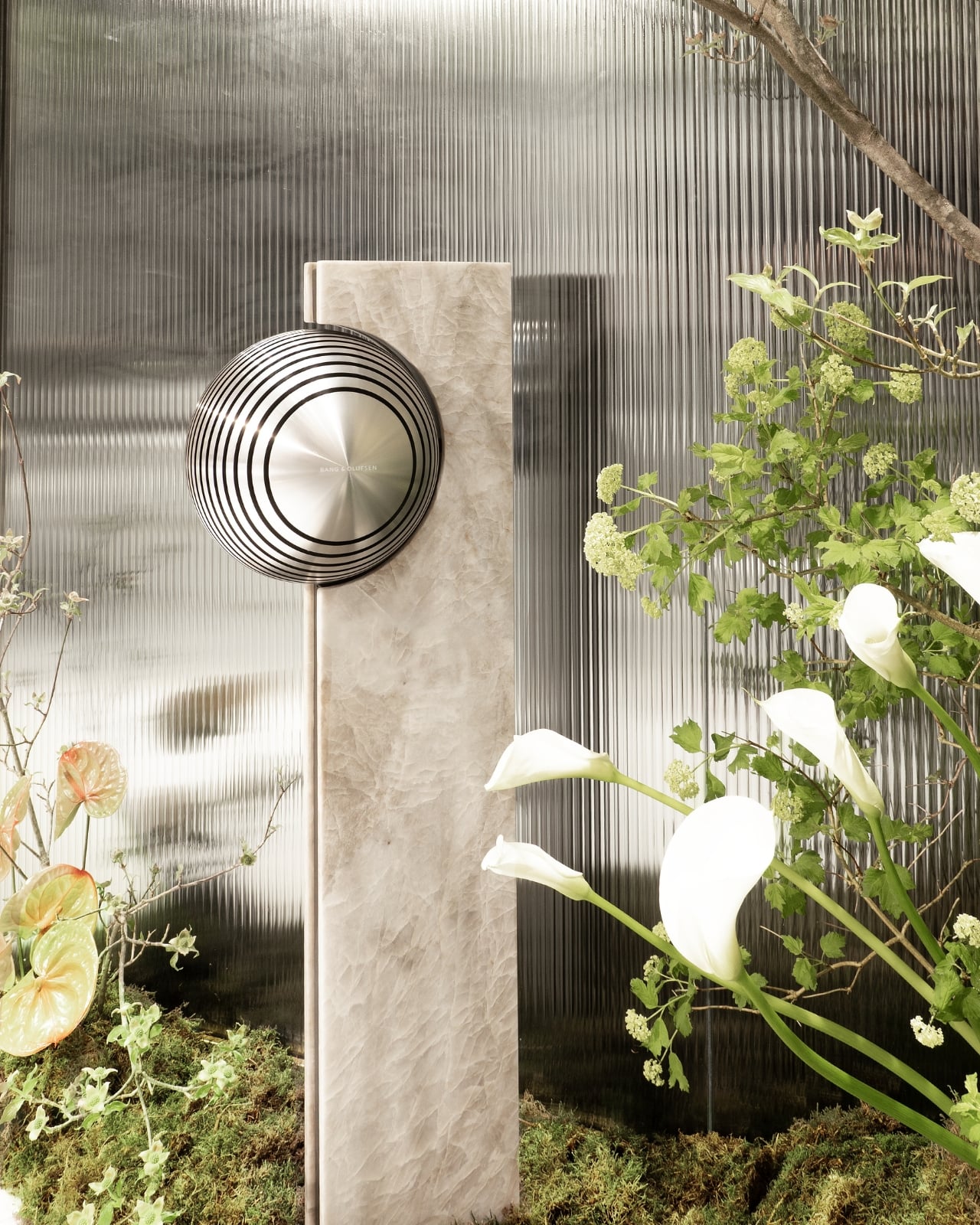
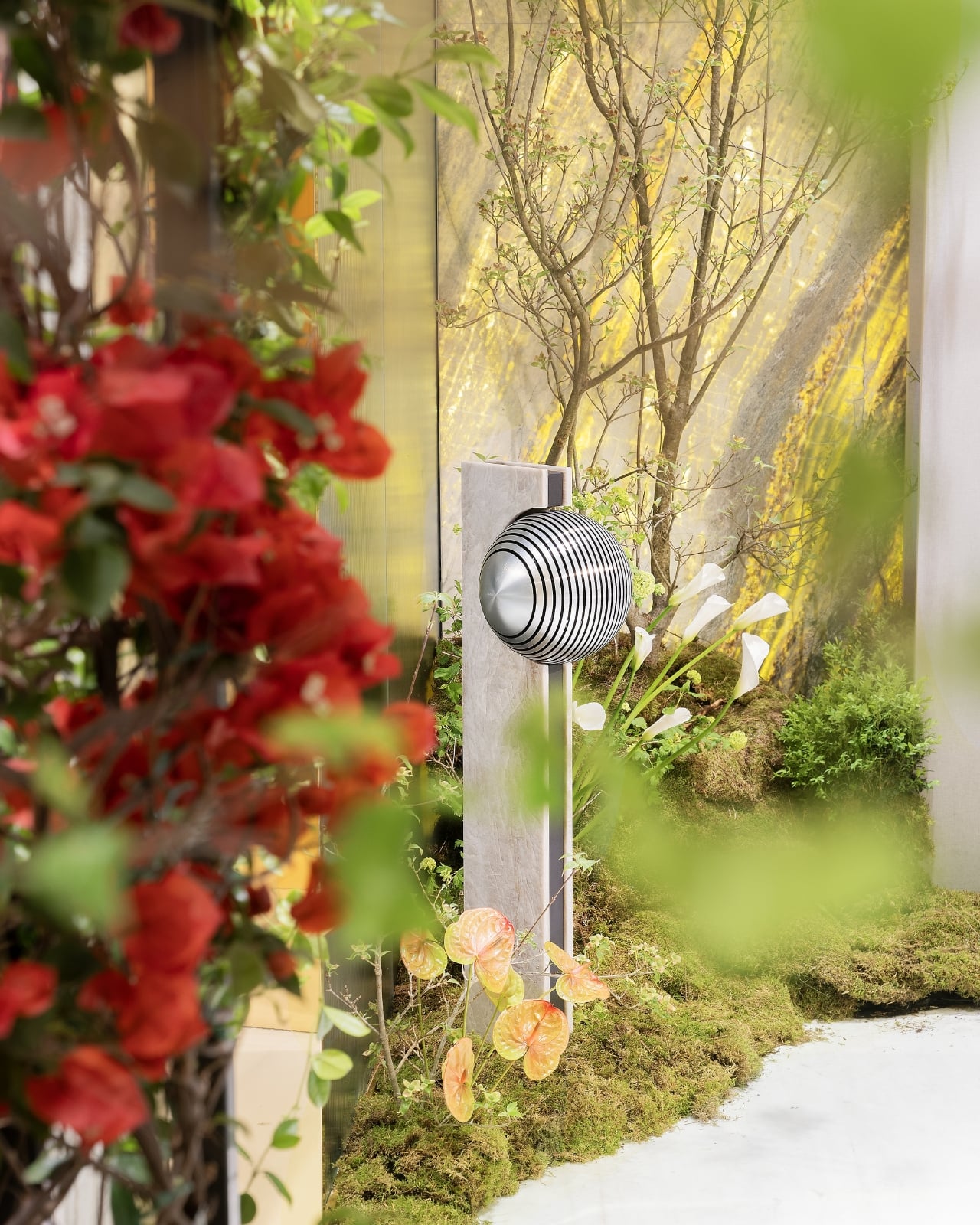
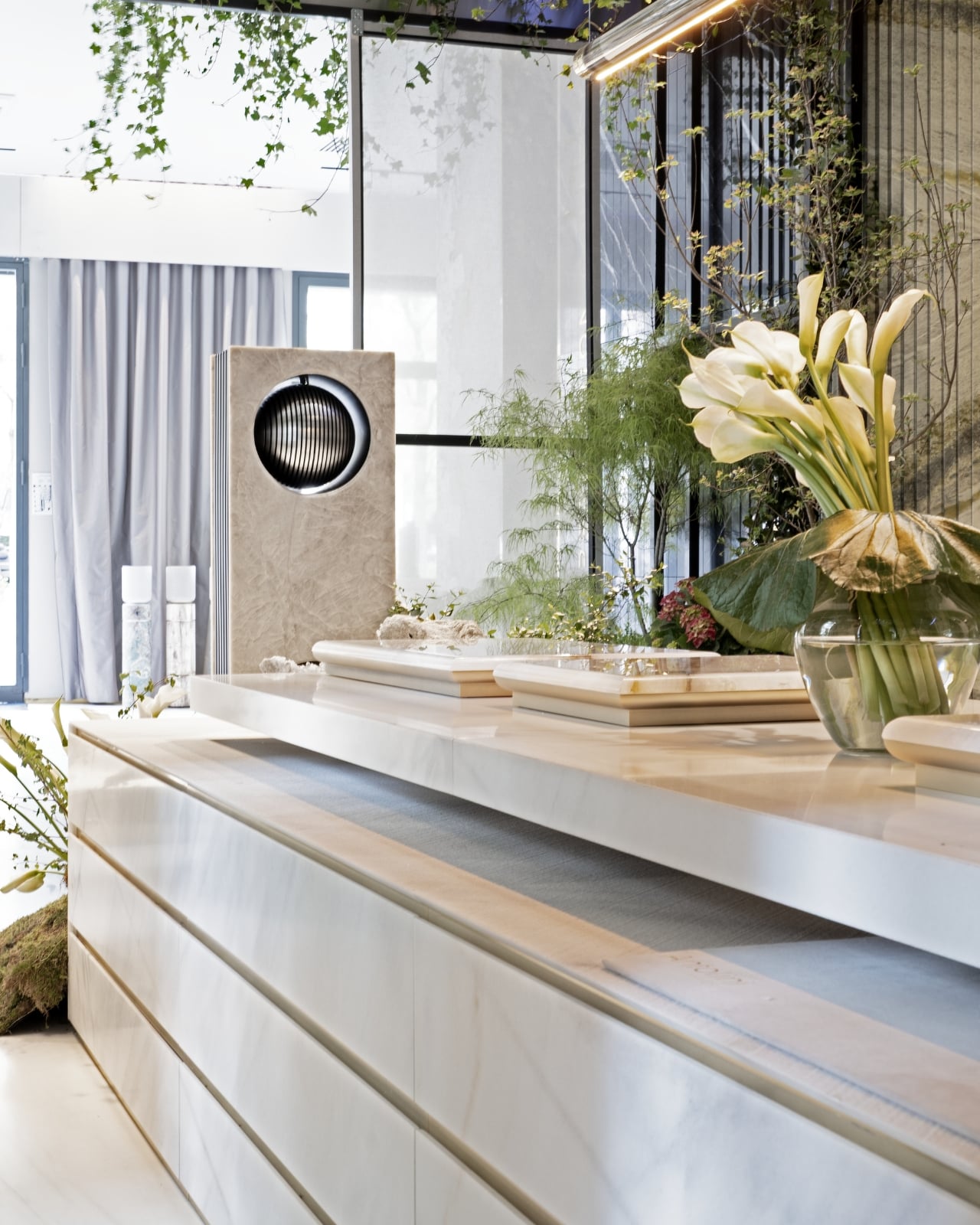
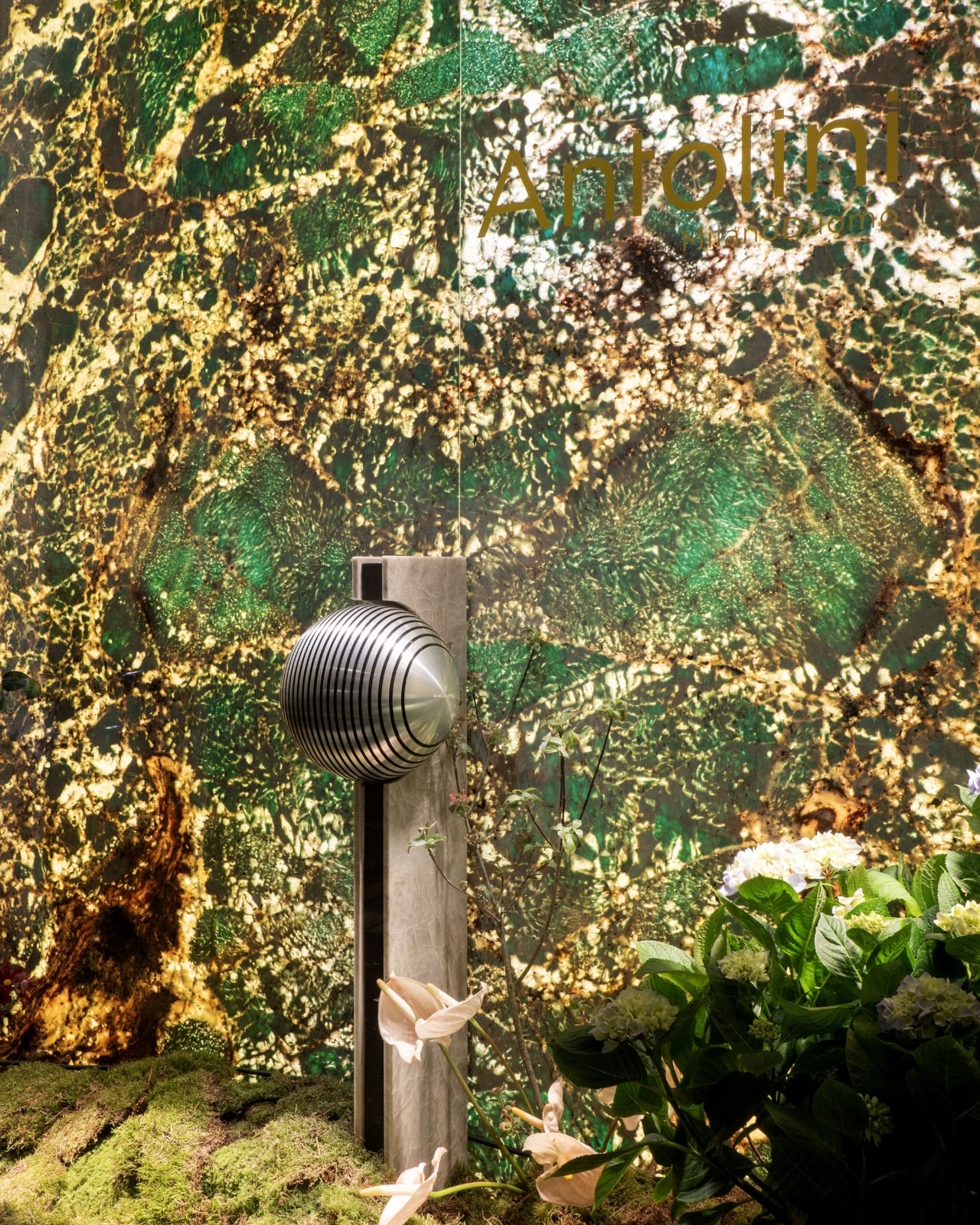
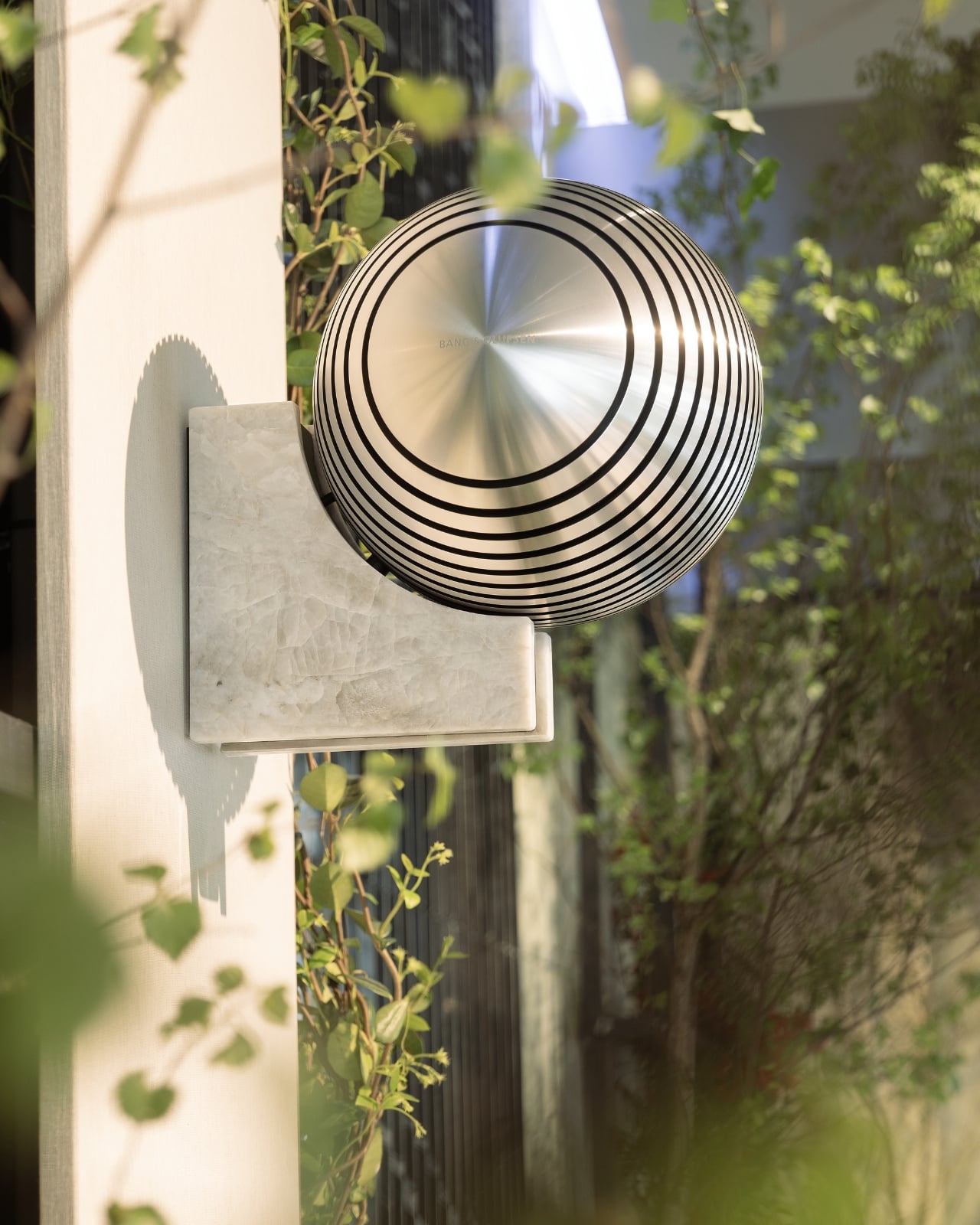
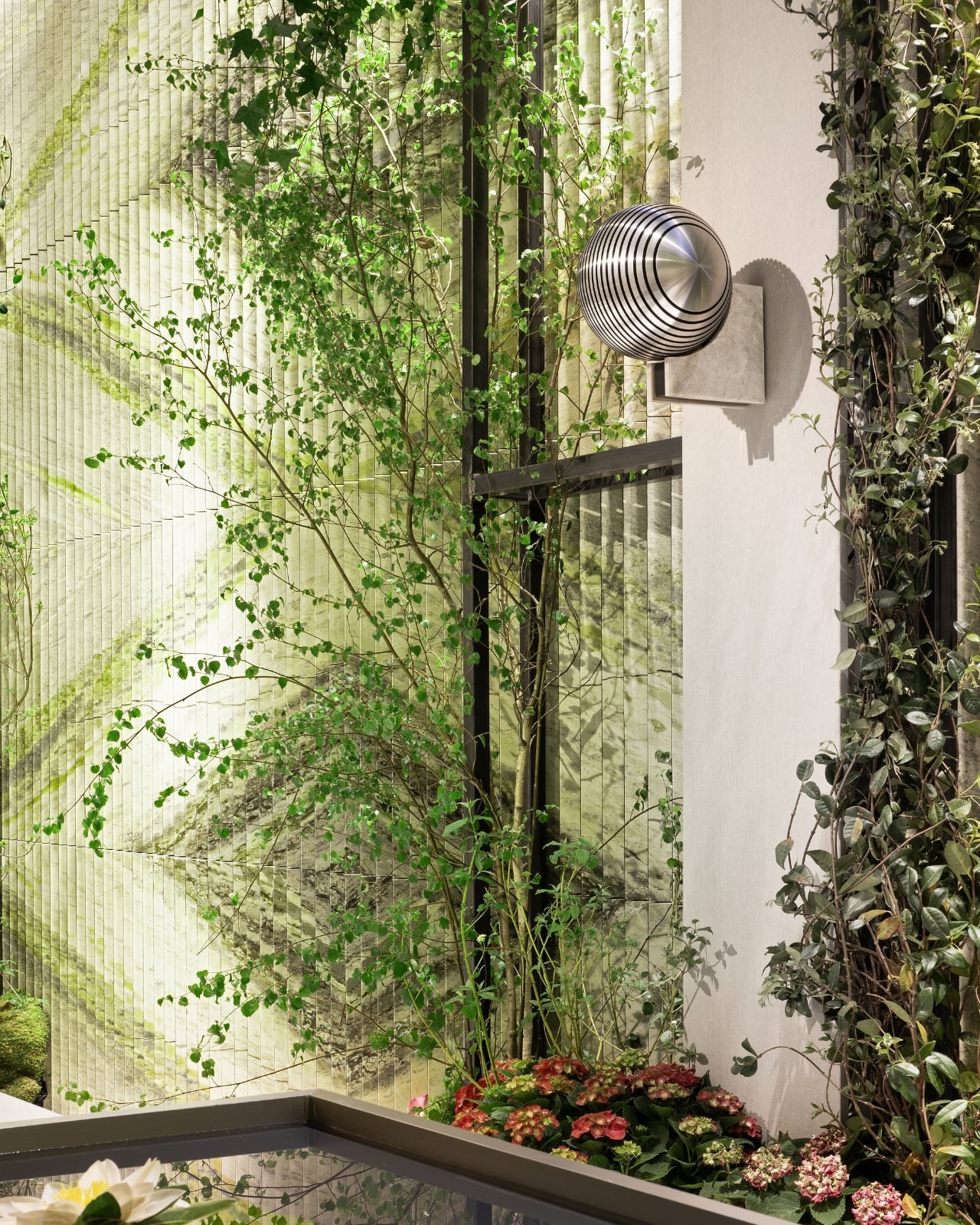
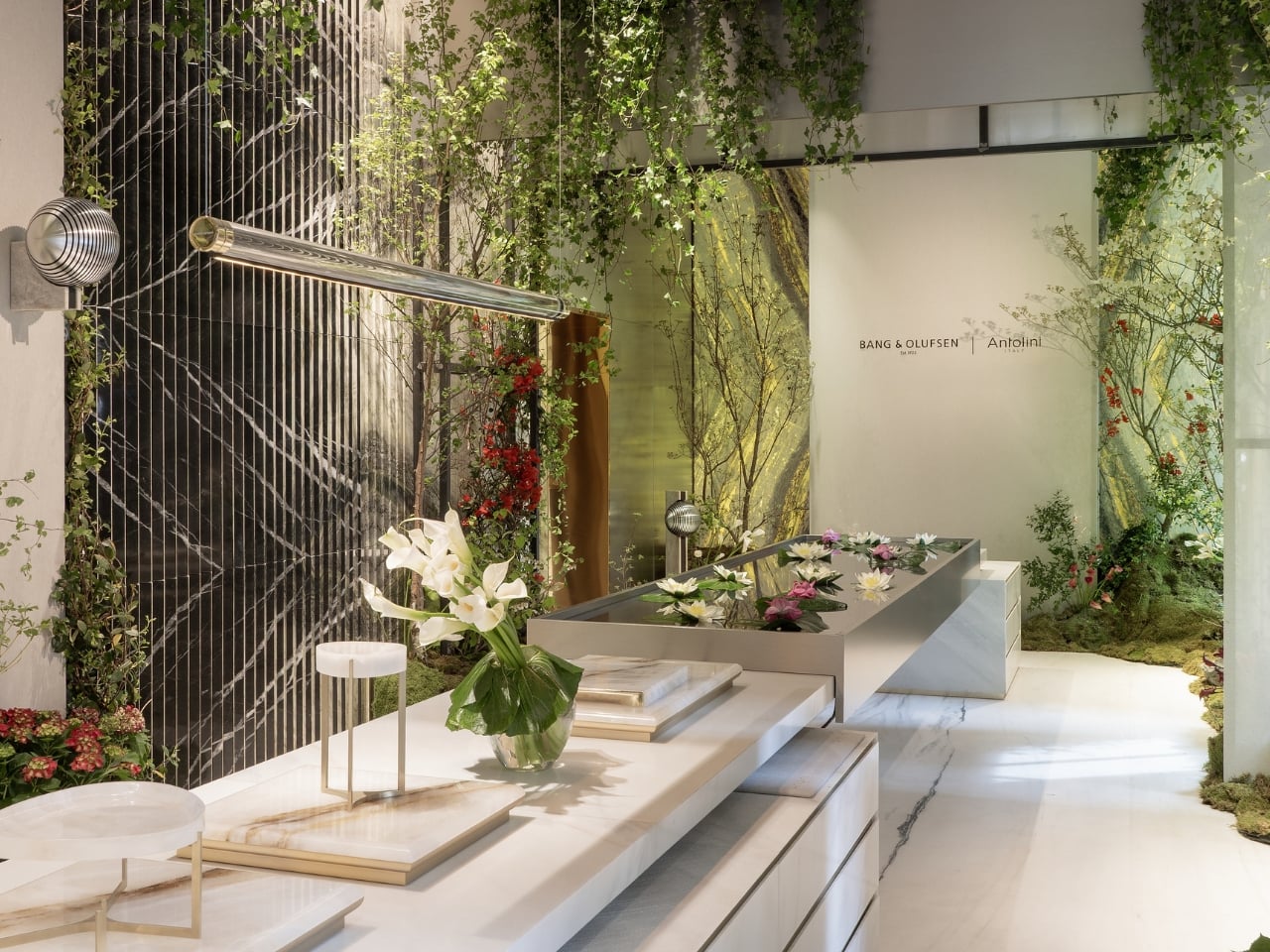
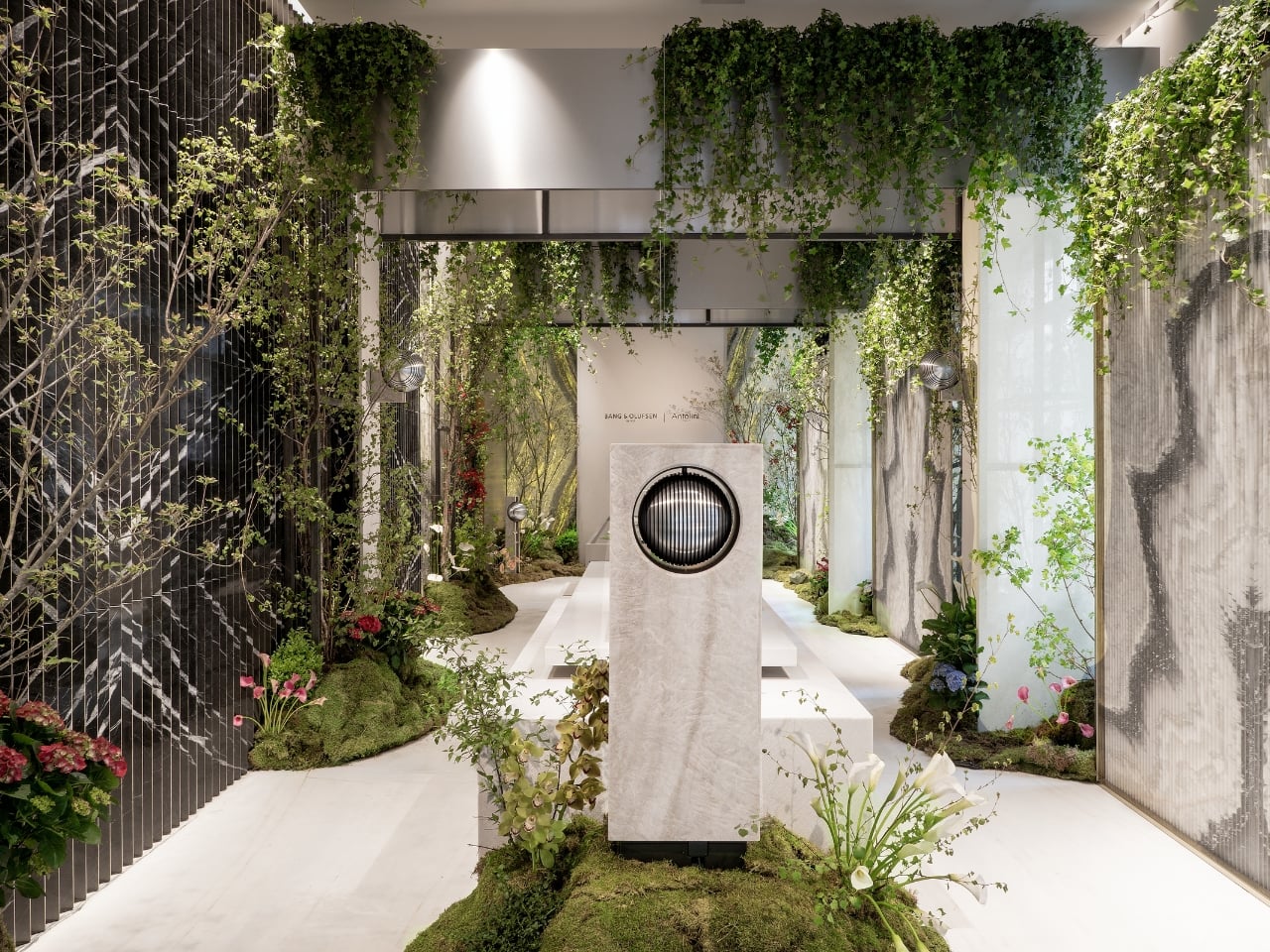
The installation, hosted at Antolini’s MilanoDuomo Stoneroom, centers on the preview of Beosound Haven, Bang & Olufsen’s forthcoming landscape speaker. It’s a sphere of precision-engineered aluminium that sits on a stone plinth, surrounded by living greenery, water lilies floating on a reflective table, and the kind of deliberate quiet that makes you lean in. Droplets fall onto the water surface and send out ripples, which is either a very beautiful metaphor for sound or just a very beautiful moment. I’m not sure it matters which.

The primary stone throughout the space is Antolini’s Taj Mahal quartzite in a matt finish, chosen for its soft, almost luminous tonality. It reads as both ancient and contemporary at once, exactly the kind of visual tension that great design installations live on. The stone doesn’t compete with the speaker; it contextualizes it. Beosound Haven looks like it belongs there, among the moss and the hydrangeas, in a way that speakers almost never manage to look like they belong anywhere outdoors.

That, to me, is the most interesting design question this collaboration raises: can sound be architectural? Not metaphorically, but literally, the way a wall or a window or a threshold is architectural? Bang & Olufsen’s Senior Director of Design, Kresten Bjørn Krab-Bjerre, speaks about sound as “an architectural language,” one that interacts with materials and forms atmosphere. It’s the kind of language that’s usually associated with interiors, with rooms and ceilings and acoustic panels. Translating it outdoors, into the open air, into a garden or a terrace, is a genuinely new proposition. And one worth taking seriously.

The collaboration also extends to a limited series of Beolab 18 speakers reinterpreted in Antolini stones: Amazonite, Retro Black Petrified Wood, Patagonia Original, Dalmata, Cipollino GreyWave, and Taj Mahal, each piece defined by the specific character of its material. No two are identical, which is exactly how it should be when you’re working with stone. Stone isn’t uniform and it was never meant to be. That unpredictability is part of the point.

This is the second chapter of the Bang & Olufsen and Antolini partnership, building on work introduced in 2025. It feels more confident this time around, more willing to make a statement. Carlo Alberto Antolini describes the result as “a dialogue between the elements,” and that framing feels right. It’s not a speaker placed in a garden. It’s a conversation between nature and craft, between sound and surface, between something ancient and something very, very deliberate.

Milan Design Week produces a lot of installations that photograph well and feel thin in person. This one seems to work differently, designed to be experienced with the body, not just processed with the eyes. The sound moves through the space. The stone holds light. The water catches everything. Whether you’re drawn in by the audio, the aesthetics, or simply the spectacle of a garden growing inside a Milan stoneroom, you’re likely to leave thinking about what it means to really listen to a space rather than just look at it.

The post Bang & Olufsen Just Taught Stone to Sing at Milan 2026 first appeared on Yanko Design.
Bosch and ECOVACS Built a Robot Vacuum That Hides Inside Your Kitchen Cabinet… Finally!

ECOVACS has been pushing robot vacuum technology forward for years, from their bagless X11 OmniCyclone to various innovations in navigation and mopping systems. Bosch has been perfecting built-in appliances since before most of us were born, understanding how to make dishwashers and ovens disappear into cabinetry while maintaining full functionality. Put those two companies in a room together and you get something neither could have built alone: the first robot vacuum system designed from scratch to be installed infrastructure rather than portable hardware.

ECOVACS contributed their robotics platform, the patented navigation technologies, the 20,000 Pa suction system, and the mopping mechanics that wash pads with 75°C water and dry them with hot air. Bosch handled the built-in integration, the plumbing connections that let the service station tap into your home’s water and drainage lines, and the cabinet design that fits everything into a sink base while leaving room for your garbage disposal. The system debuts in European stores spring 2026, controlled through the Bosch Home Connect app. Milan Design Week gave us our first look at hardware that reimagines where cleaning robots actually belong.

Designers: Bosch Home Appliances & ECOVACS ROBOTICS

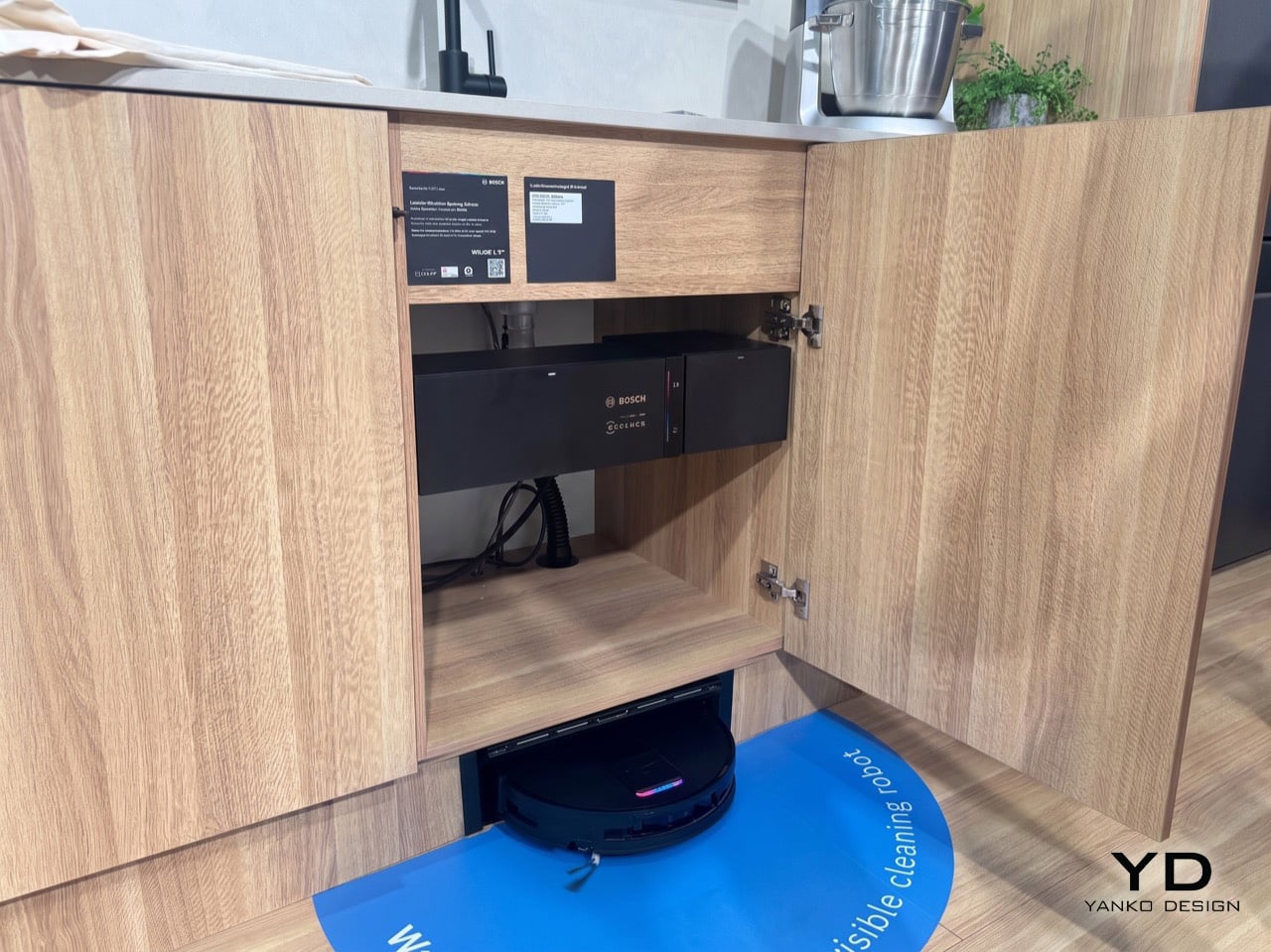
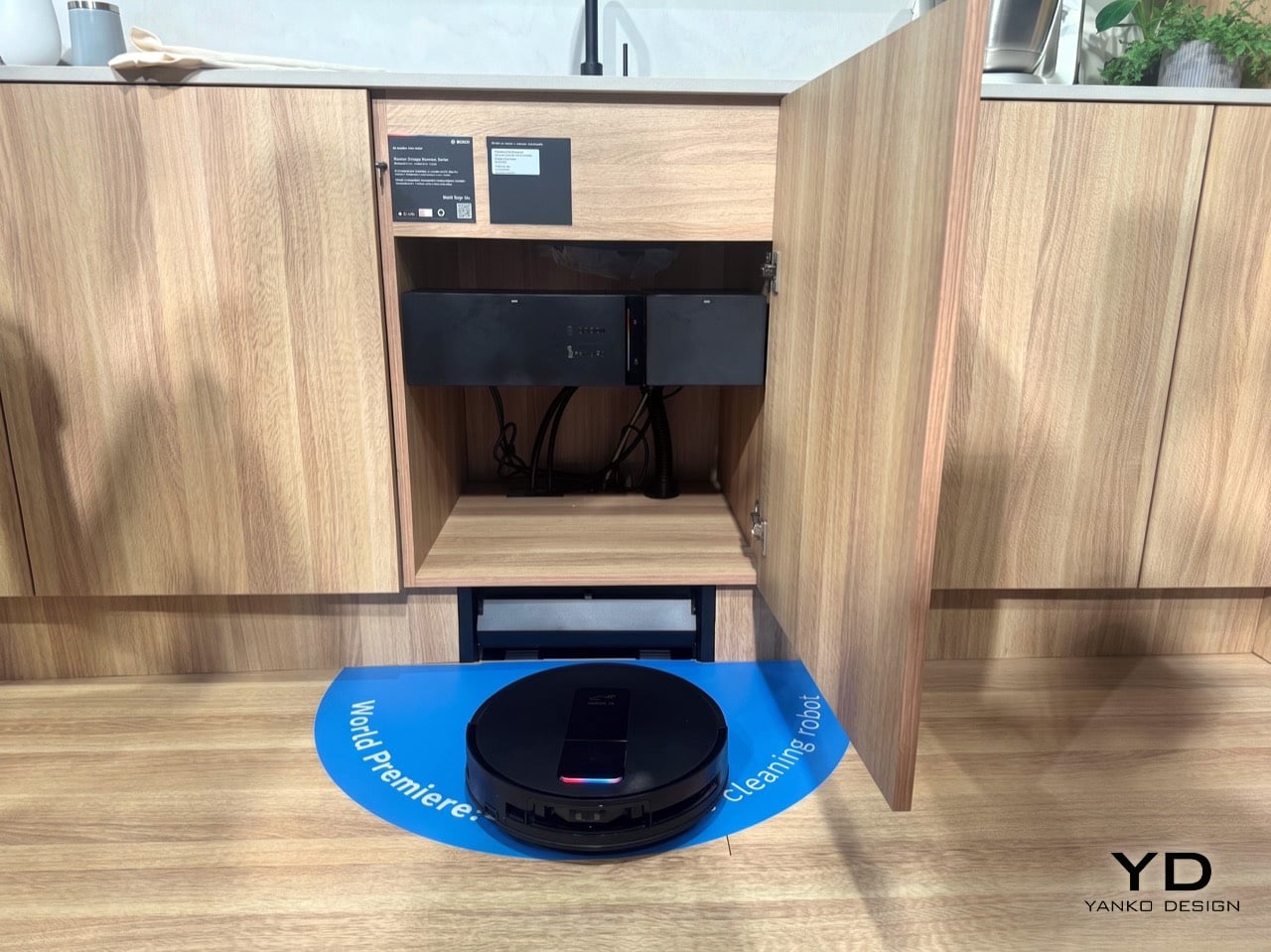
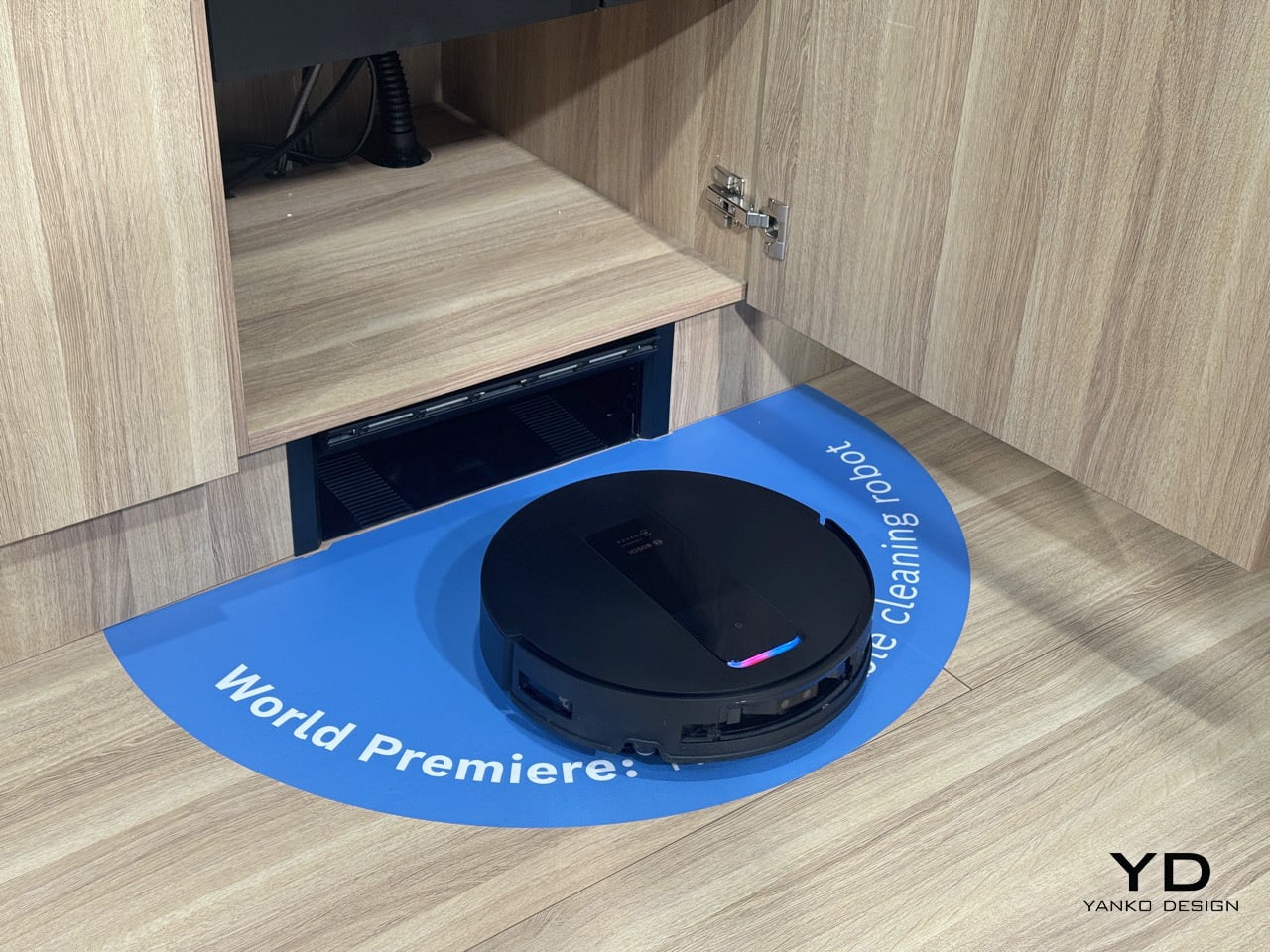
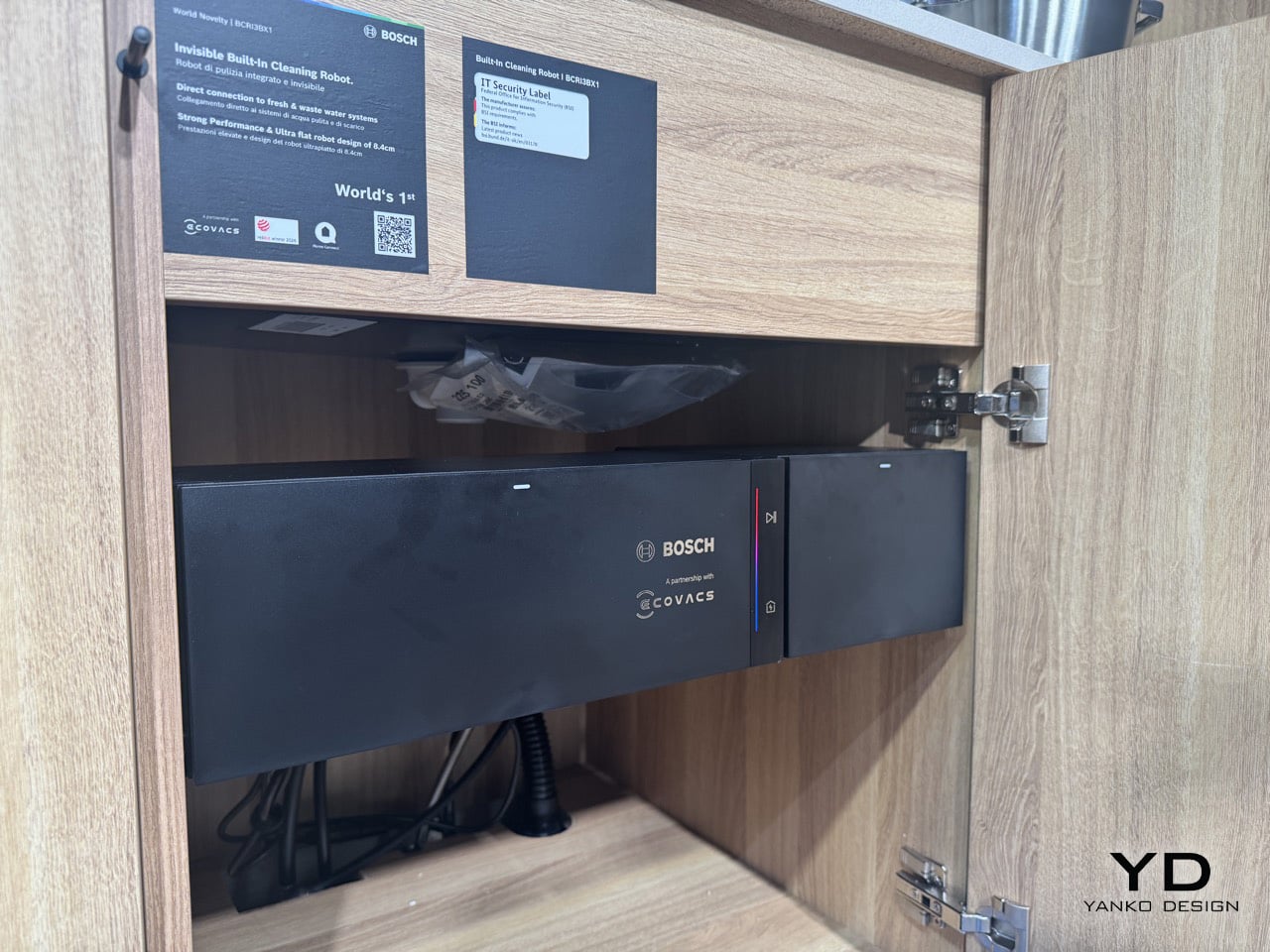
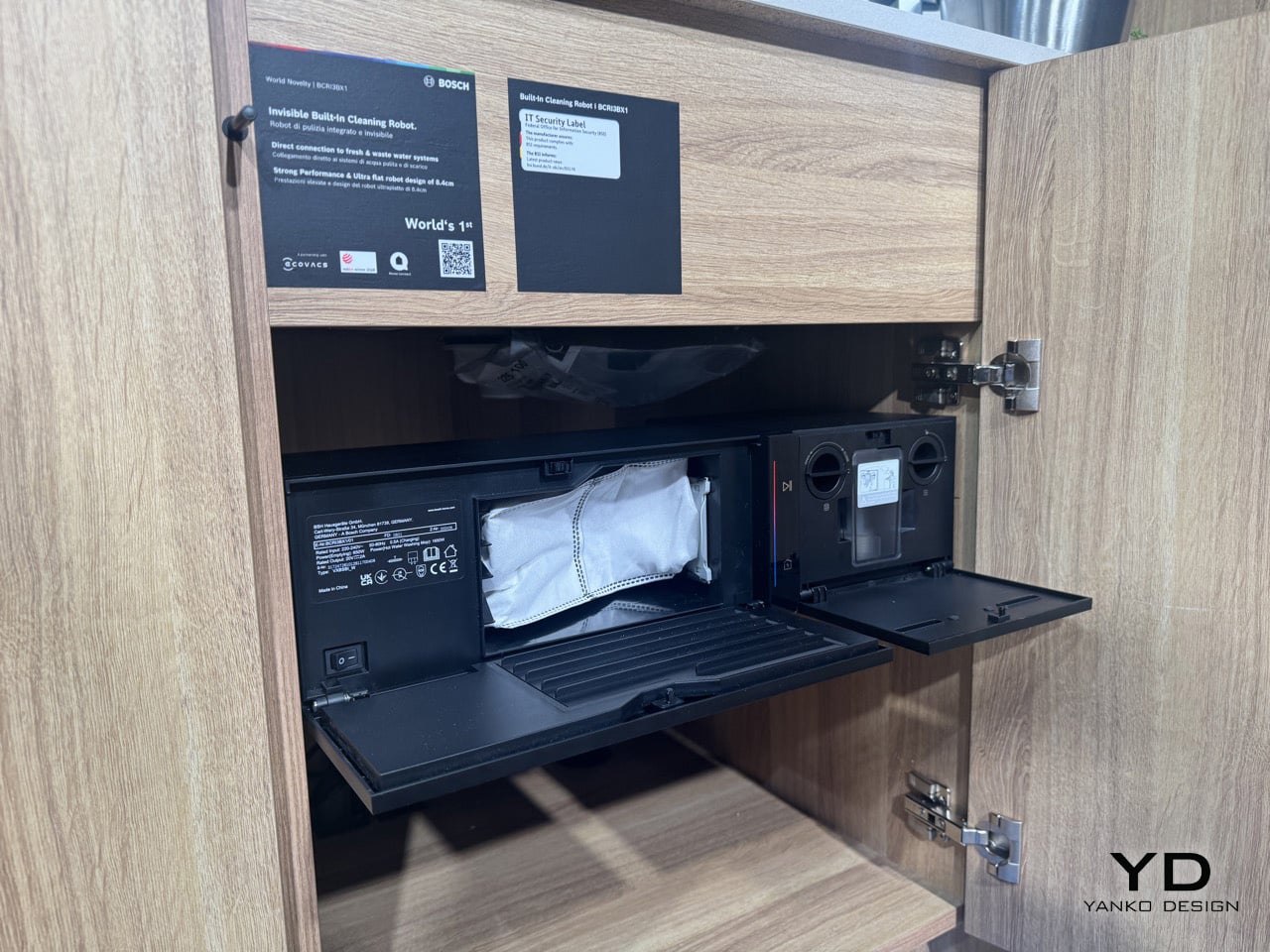
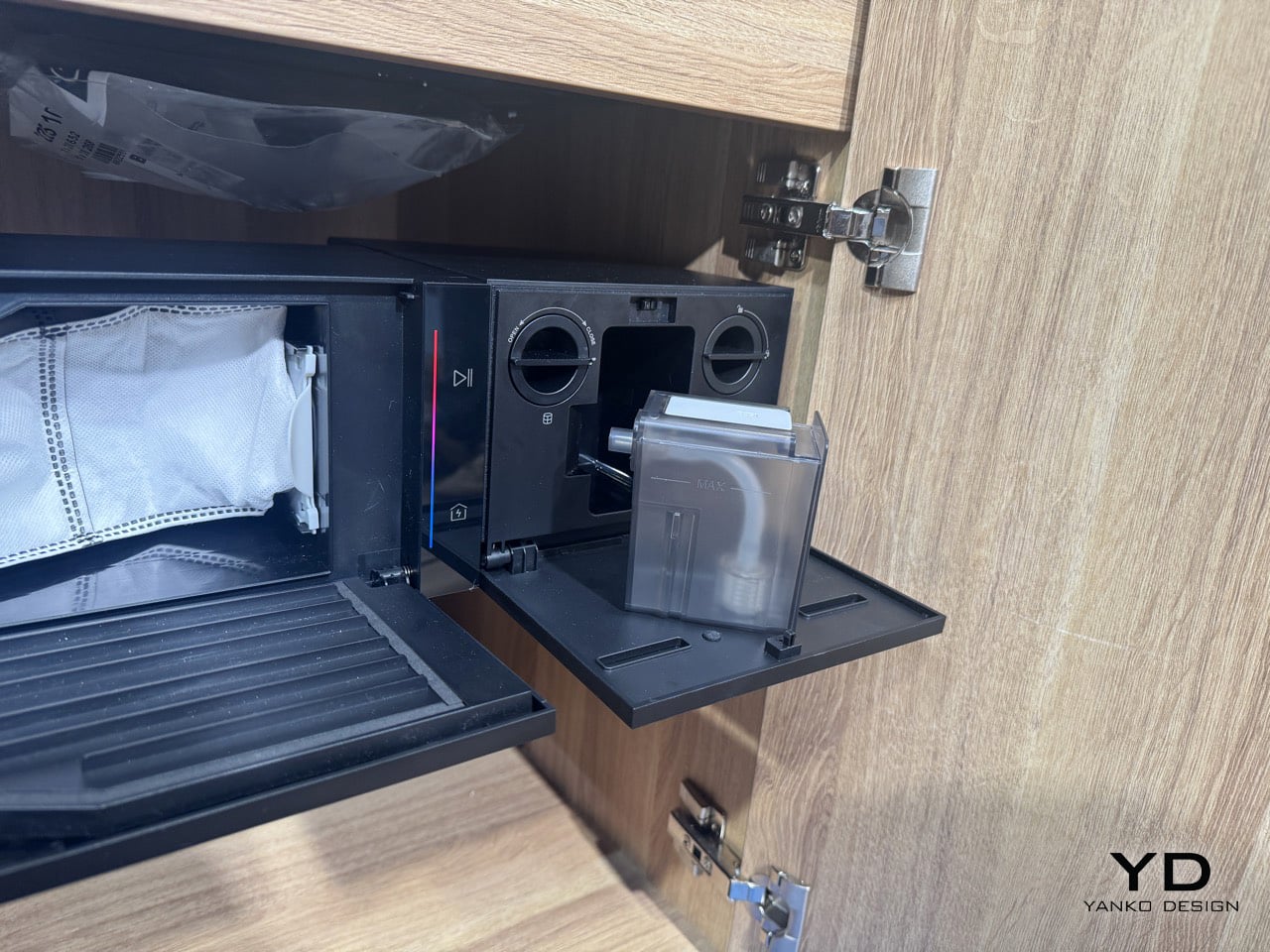
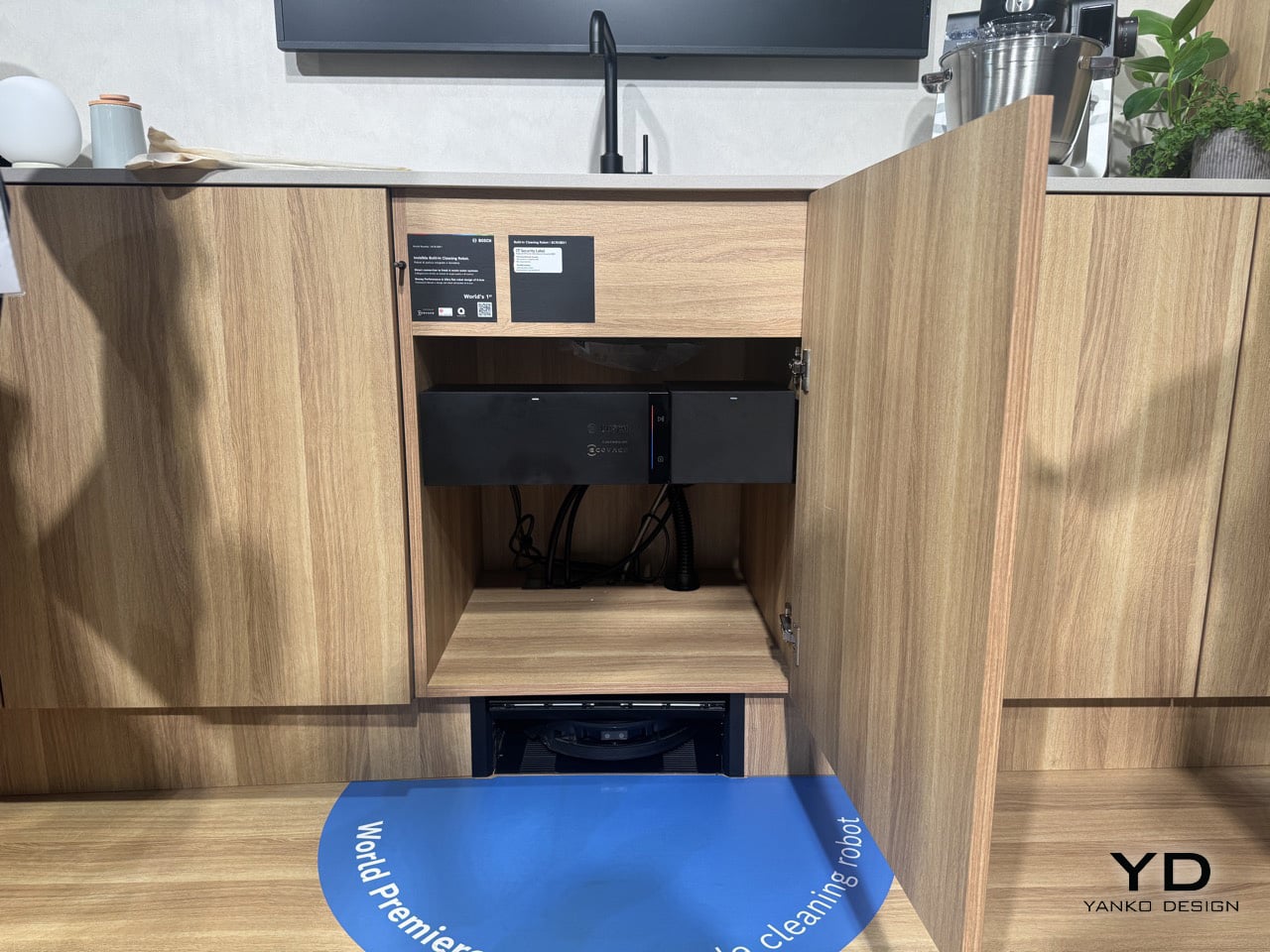
The installation lives entirely within a standard sink base cabinet, which sounds impossible until you see how they’ve packaged it. Two black modules mount to the cabinet’s interior walls, housing the service station components. The left module handles dust collection with a 2-liter antibacterial bag and automatic detergent dispensing. The right module contains the water management system, with fresh water tanks that draw directly from your home’s supply and waste water that drains straight into your plumbing. Between them sits the docking platform where the robot charges and gets serviced. A pull-out tray extends from the service station, revealing the fresh water reservoir with its translucent smoky housing and the cleaning mechanisms that maintain the robot between runs. Everything connects to your kitchen’s existing infrastructure, the same water, drain, and electrical lines that already serve your sink and dishwasher.

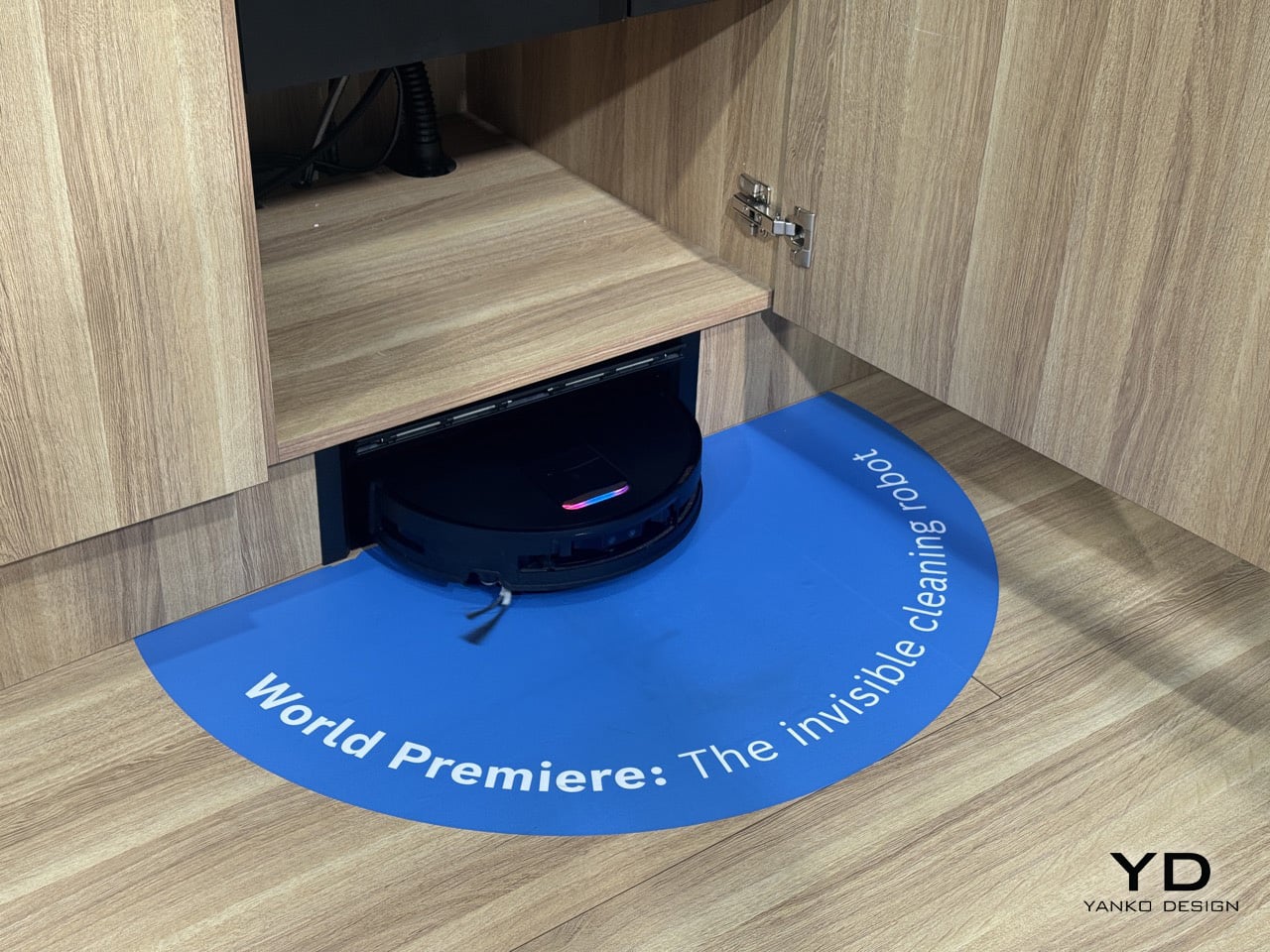
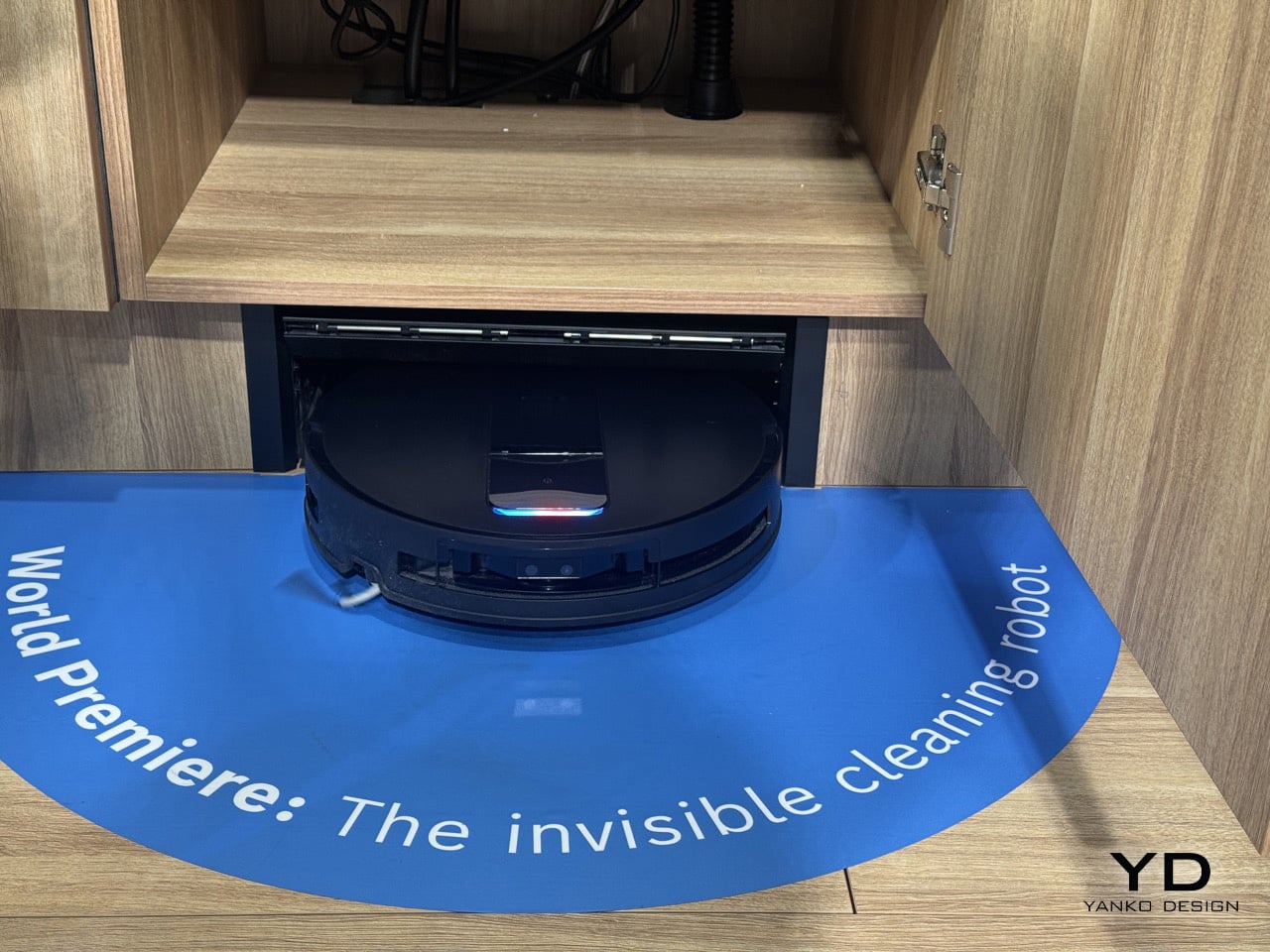
The robot itself measures just 84 millimeters tall, which puts it low enough to slip under most furniture and even beneath baseboards that sit 10 centimeters or higher. That 20,000 Pa suction rating makes it the most powerful vacuum Bosch has shipped, and ECOVACS packed in their full navigation suite: Smart Vision camera, structured light sensors, and obstacle detection that lets it map rooms and dodge furniture. Two rotating mop pads handle wet cleaning, with one that extends outward for edge work. An extendable side brush tackles corners. When the robot detects carpet, it lifts those mop pads up to 9 millimeters to avoid soaking fibers. It can climb thresholds up to 20 millimeters high, handling the transitions between rooms without getting stuck.

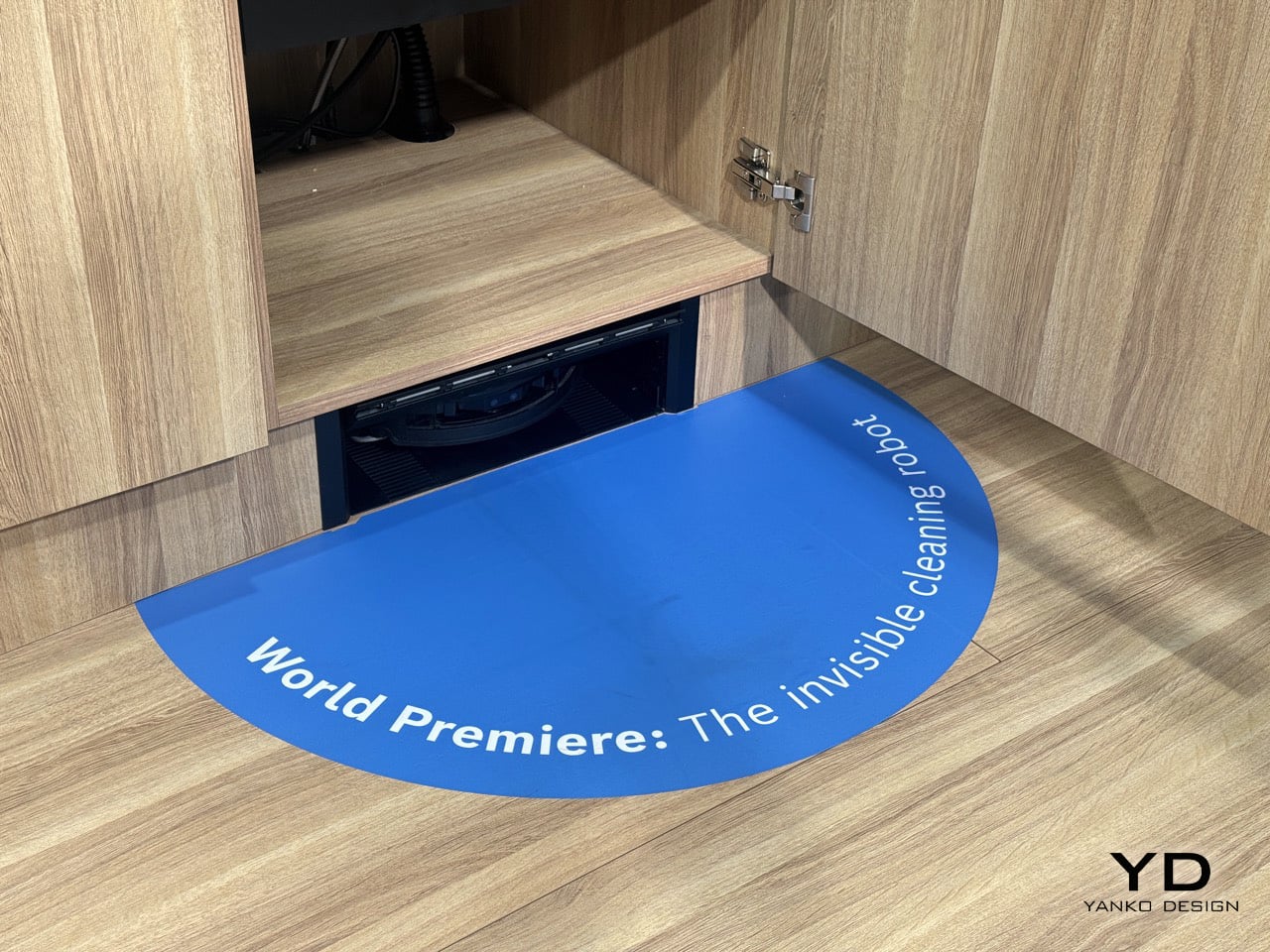
The demonstration setup at Milan Design Week shows the system in motion. The cabinet doors stay closed, presenting a seamless kitchen facade in light wood. When cleaning time arrives, a section of the baseboard kicks open automatically, revealing a slot just tall enough for the robot to pass through. The vacuum rolls out onto the floor, scans its surroundings, and begins its cleaning pattern. After finishing its route, it navigates back to that same baseboard opening, rolls inside, and the door closes behind it. The whole sequence happens without any visible hardware cluttering your kitchen. Inside the cabinet, the service station gets to work, emptying the dust bin into that 2-liter bag, flushing the mop pads with hot water, and drying them with heated air before the next cleaning cycle.

The control interface runs through Bosch’s Home Connect app, which already manages their other connected appliances. You can view and edit the floor plan the robot creates, set no-go zones for areas you want it to avoid, schedule cleaning routines, or trigger manual cleanings. The app also lets you name your robot if you’re into that sort of thing. All the data stays within EU servers under their data protection requirements, which should address privacy concerns for anyone wary of cloud-connected cleaning devices. The system meets both Bosch and ECOVACS quality and safety standards, combining Bosch’s appliance reliability with ECOVACS’ robotics expertise.

The Bosch built-in vacuum and mop robot is on display at Milan Design Week through April 13th at the Euro Cucina section, where Bosch is showing their latest kitchen innovations. This represents the first time most people will get to see a fully integrated robot cleaning system in person, and it’s the kind of thing you need to watch operate to fully understand. Spring 2026 availability means anyone renovating a kitchen or building new has about a year to plan for installation, which requires coordination with your kitchen installer and access to the necessary plumbing and electrical connections during construction.

The post Bosch and ECOVACS Built a Robot Vacuum That Hides Inside Your Kitchen Cabinet… Finally! first appeared on Yanko Design.
Smeg’s Air Fryer Comes With A Steam Function For Food That’s Crispy Outside and Juicy Inside

I was today years old when I learnt that Smeg’s origins were in enamel technology, not the gorgeously colorful kitchen appliances we’ve known them for these past few decades. Well, Smeg did end up perfecting the art of enameling wonderful hues onto appliances, so it’s just natural that they’d become famous for it, collaborating with Dolce & Gabbana and even Porsche to reveal appliances in some truly eye-catching colors.

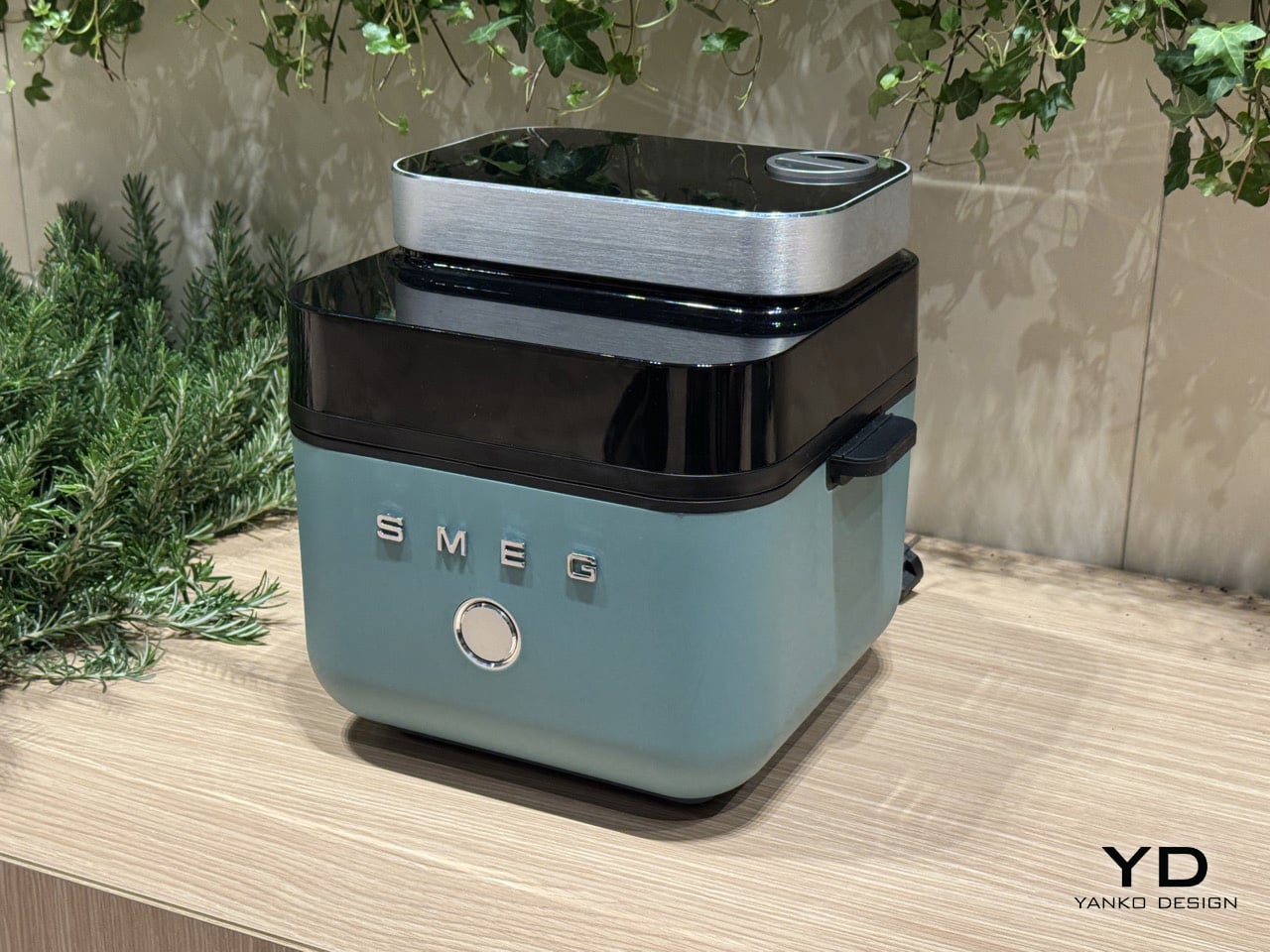
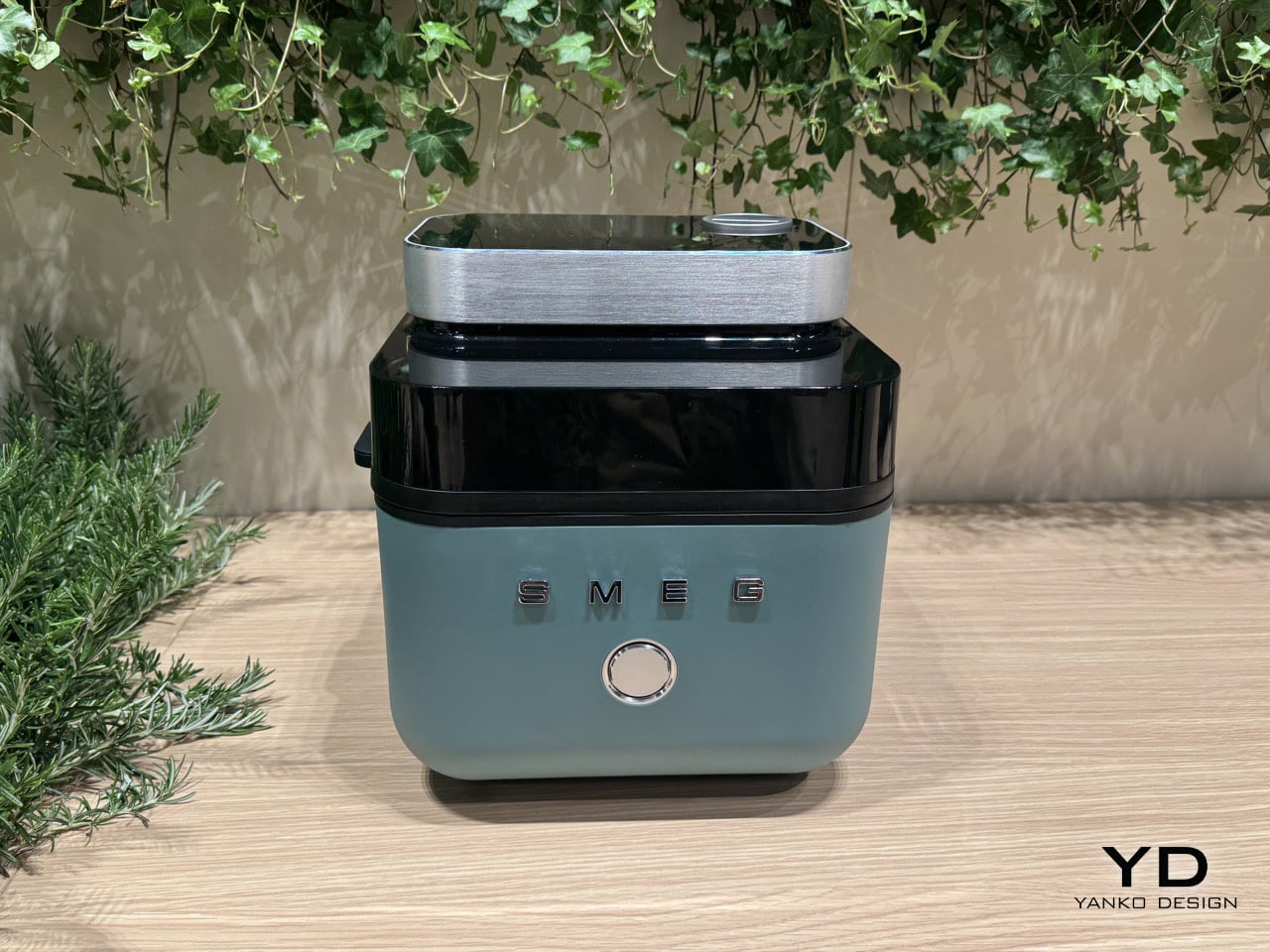
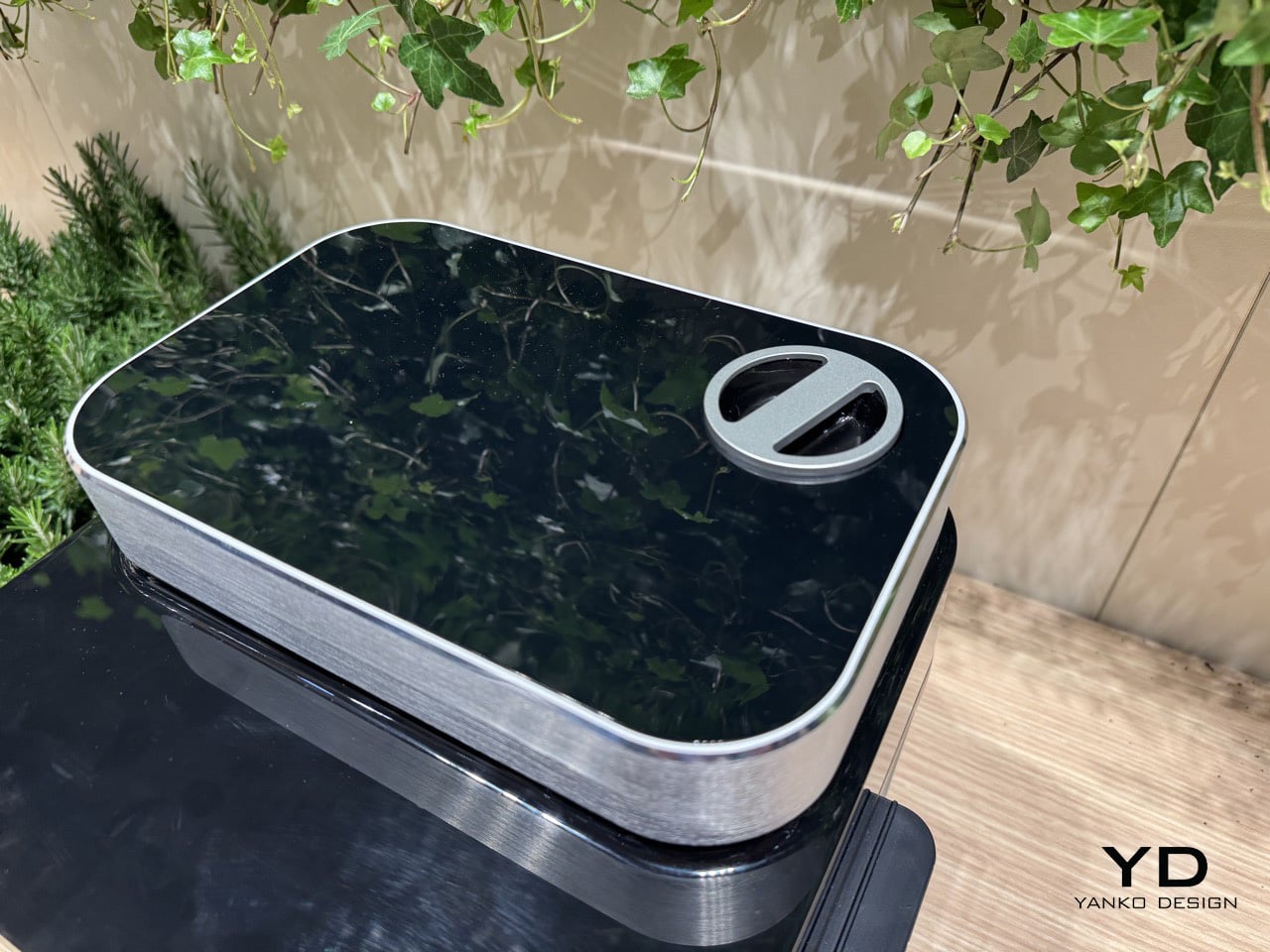
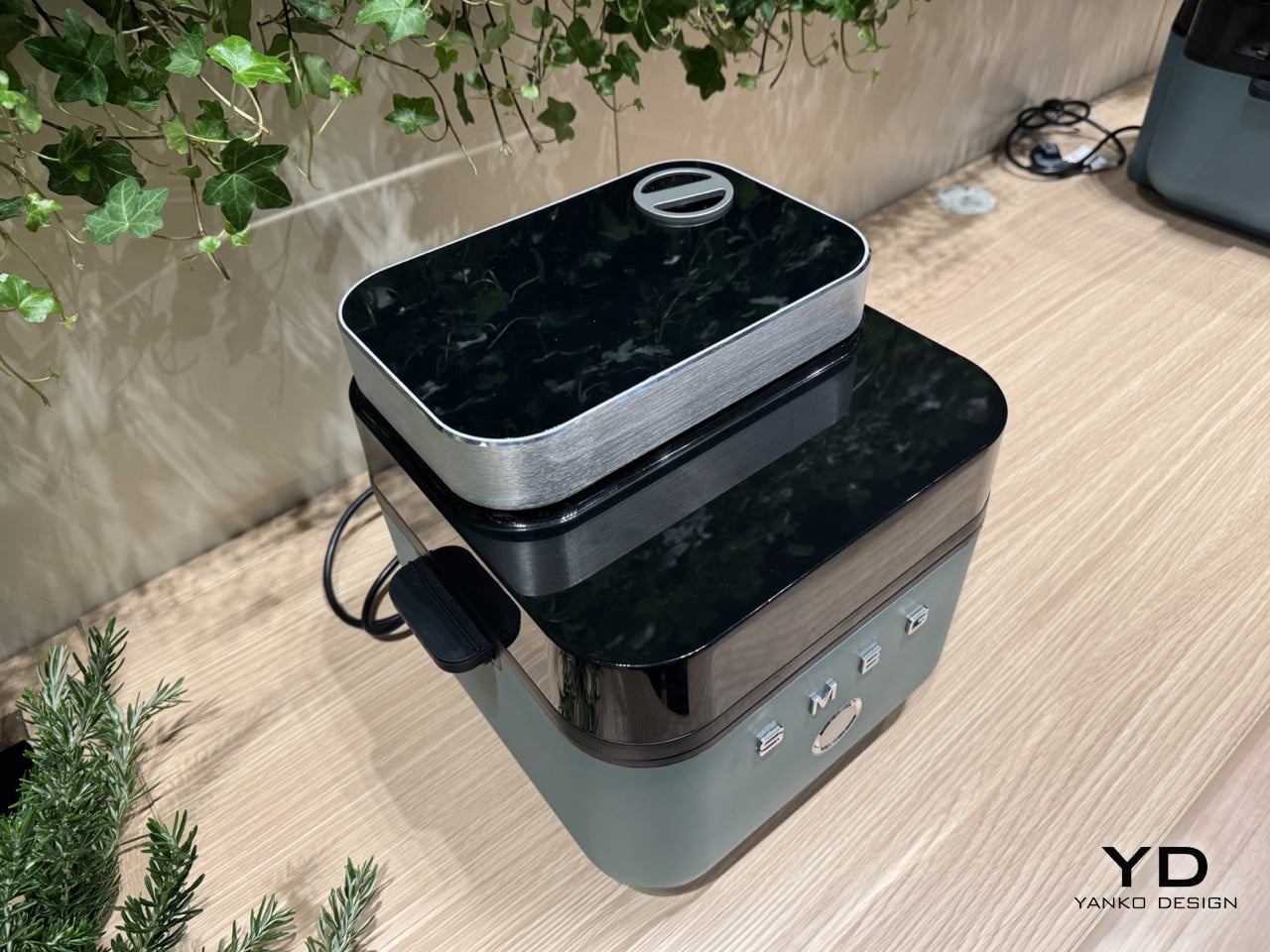
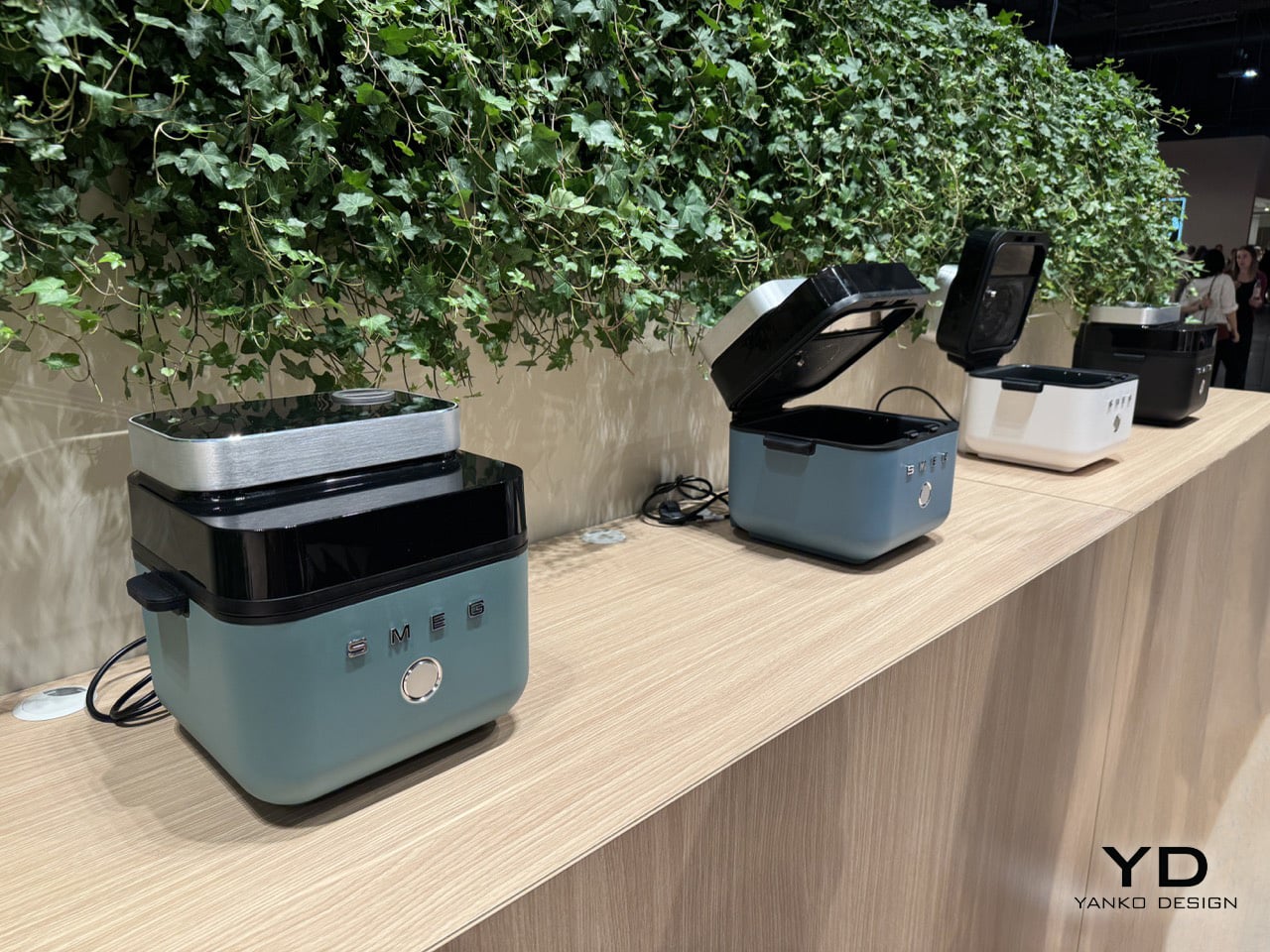
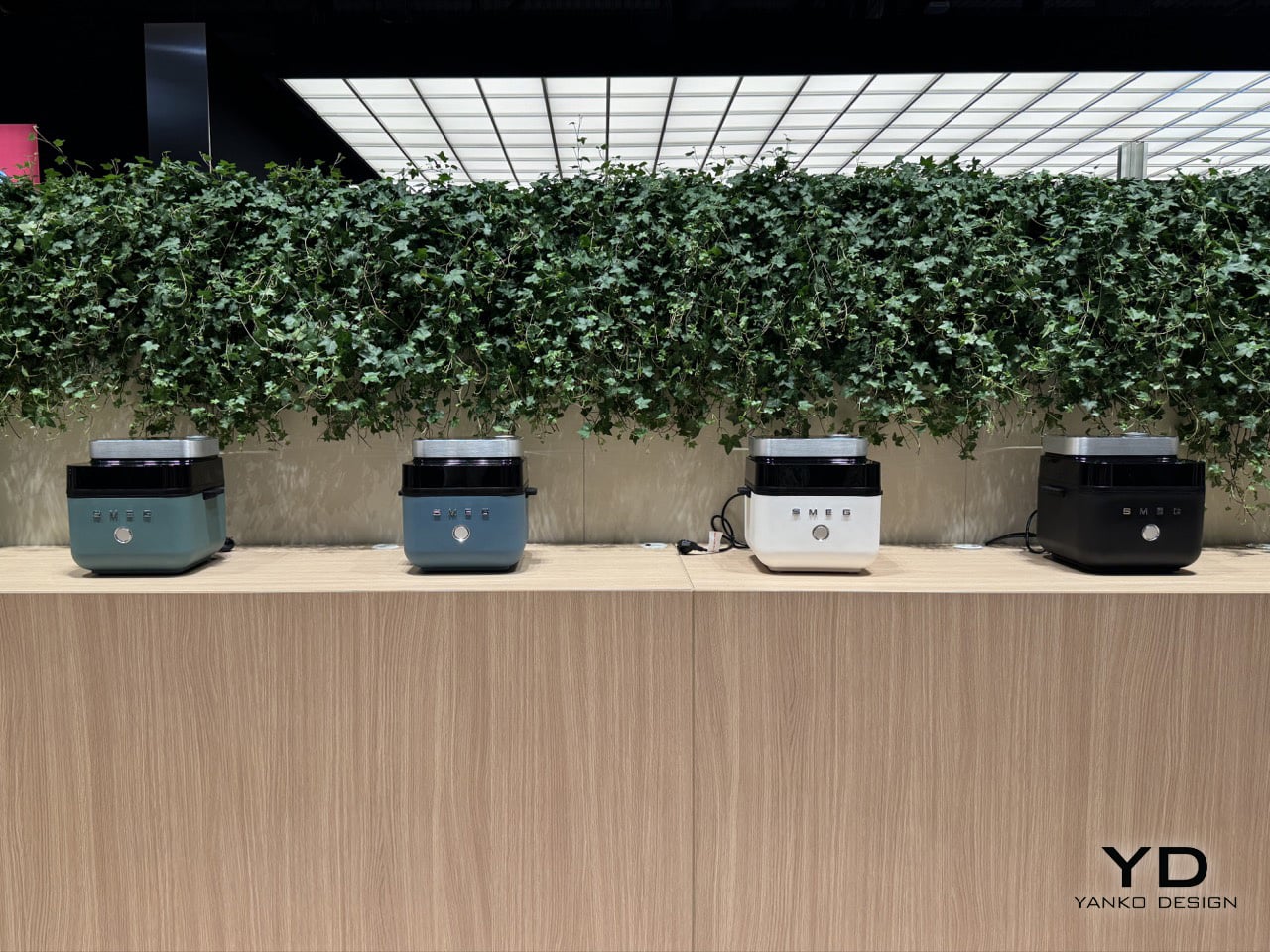
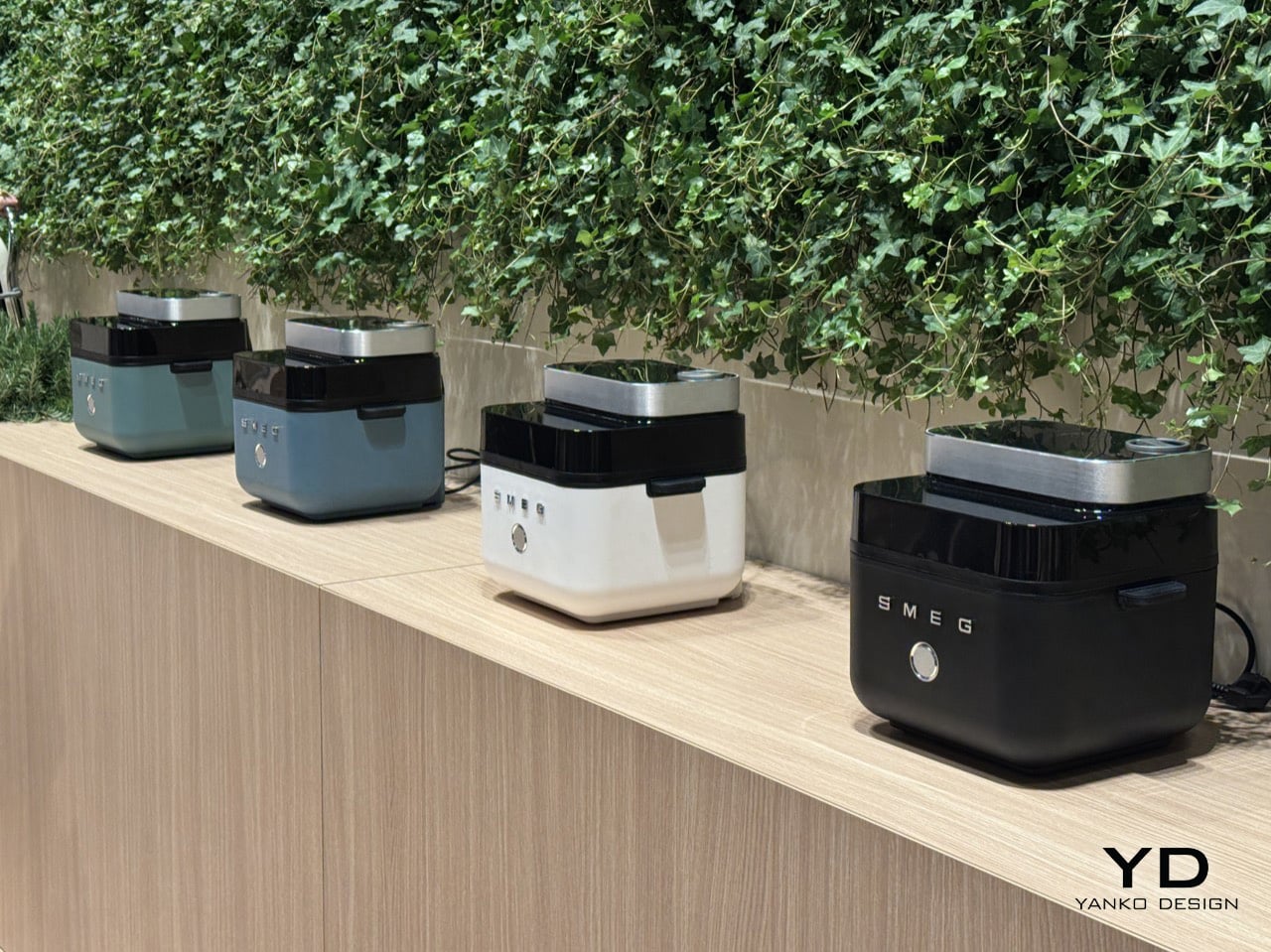
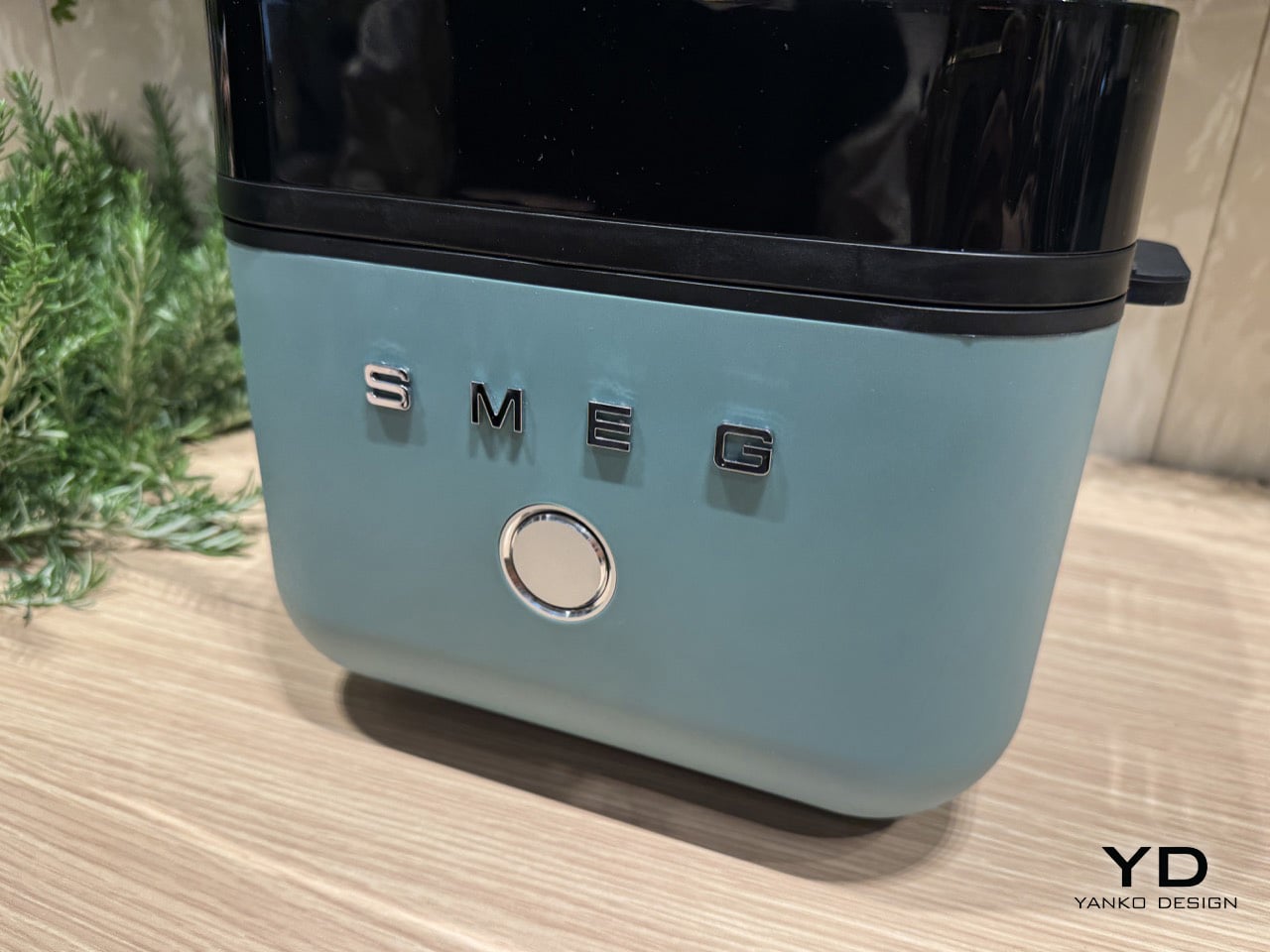
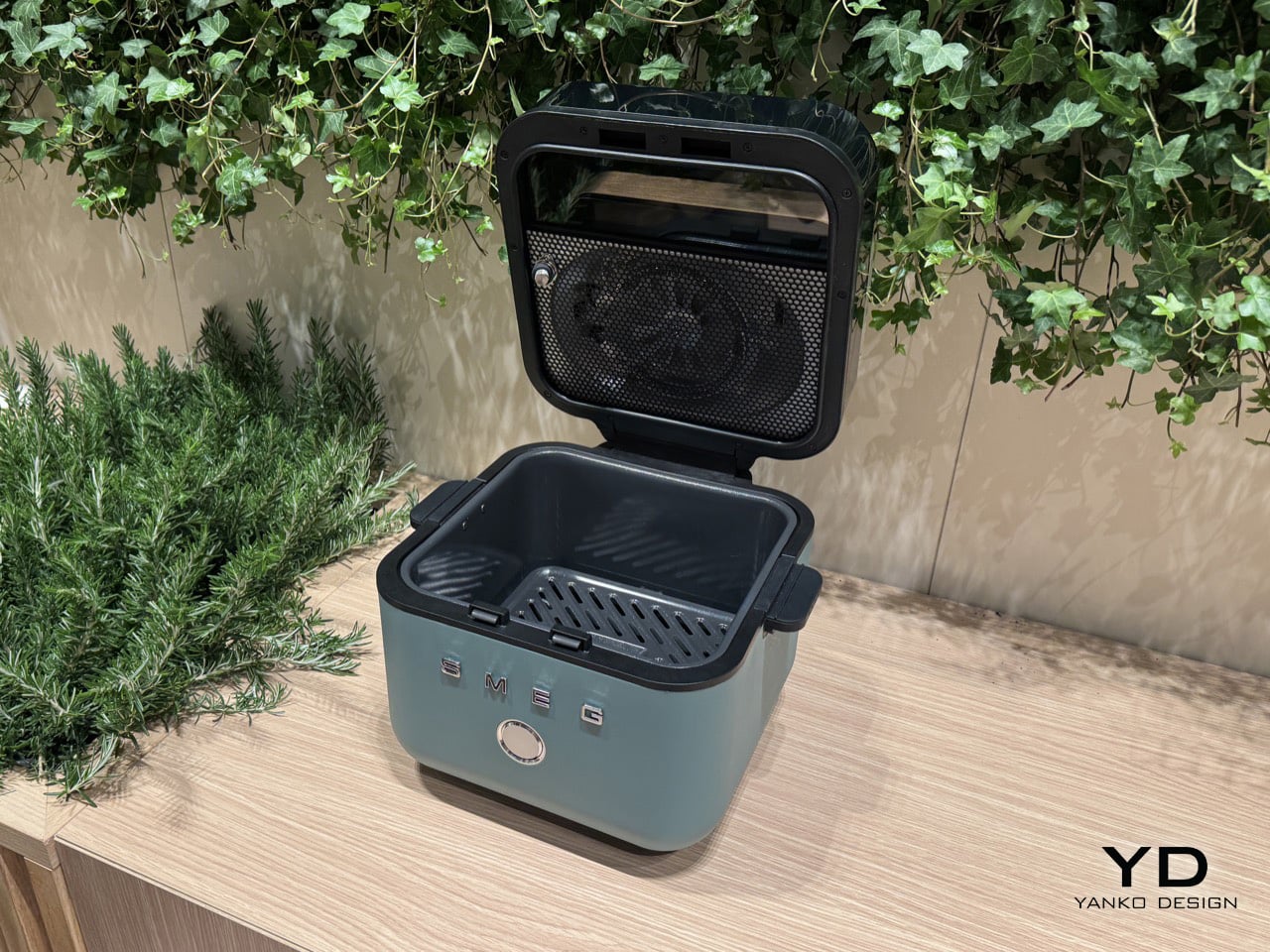
However, apart from the usual fanfare, Smeg even brought some concepts to the table at Milan Design Week, showcasing an innovative air fryer with its own built-in steamer feature. Currently just a concept (with really no product name, price, or market-launch date yet), the fryer channels Smeg’s familiar color language with 4 options, all interplaying wonderfully with gloss black and brushed metal trims.

Designer: Smeg

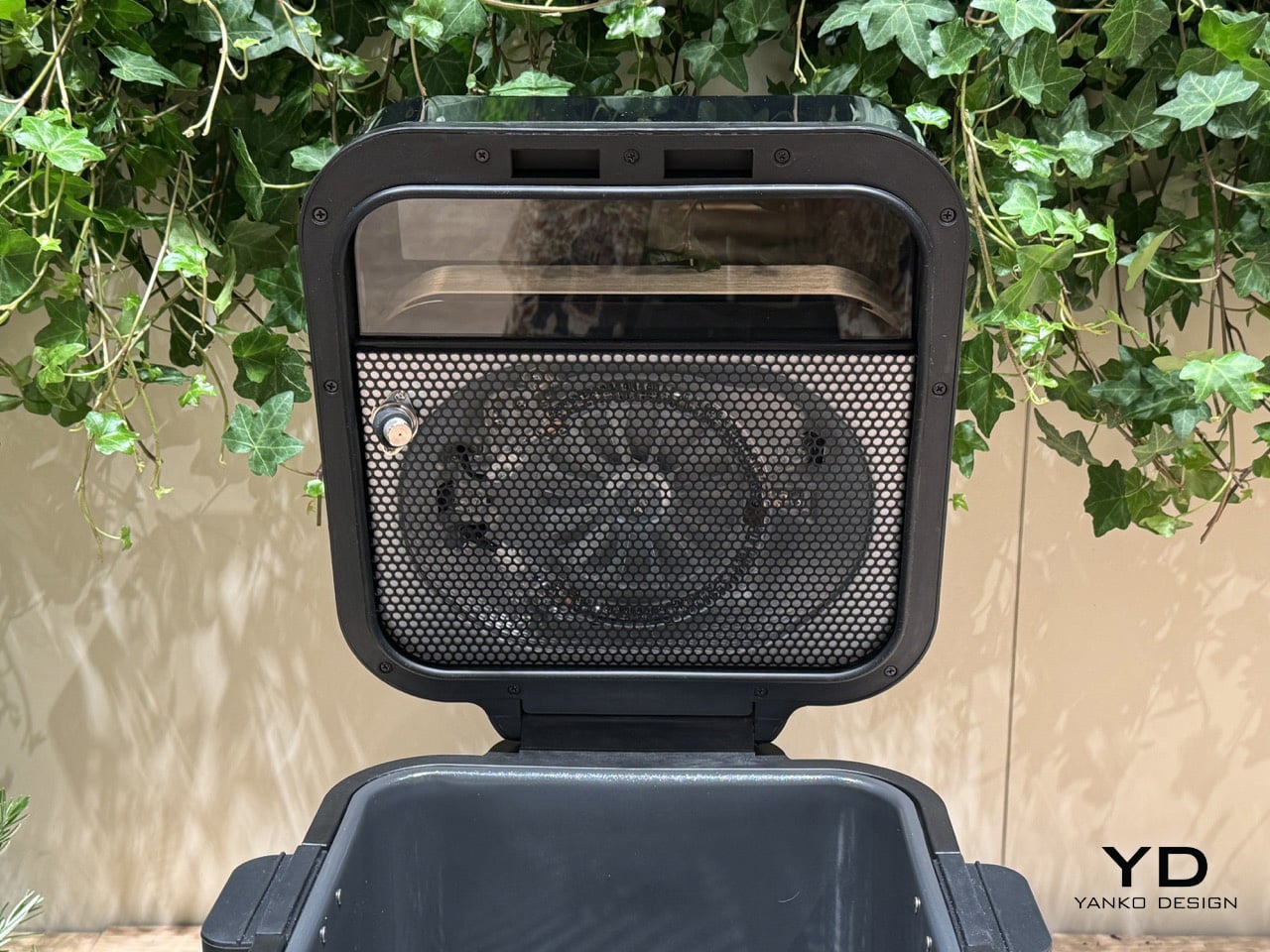
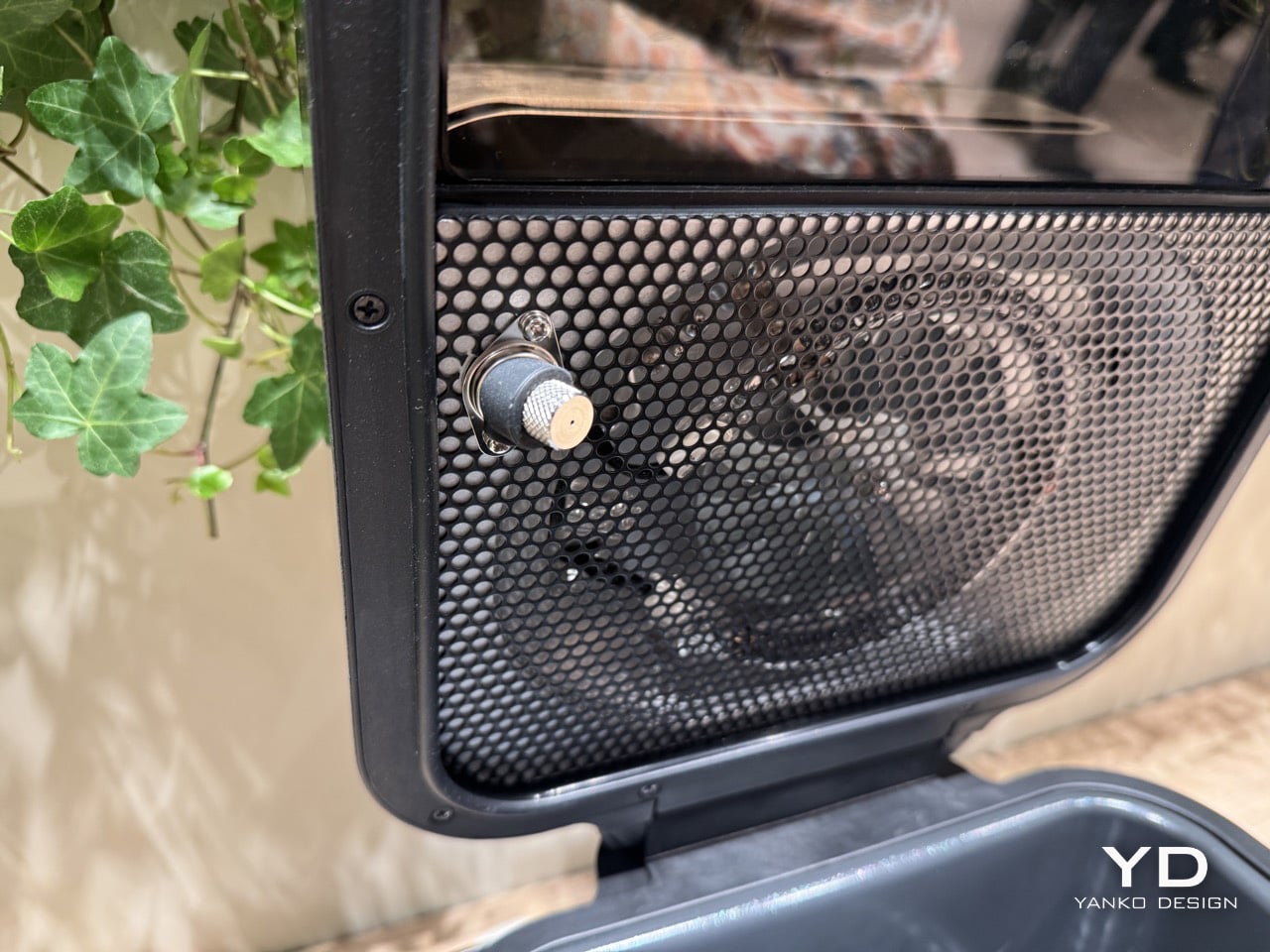
The fryer boasts a 7-liter internal capacity, accessed by a button on the front that ejects the fryer’s lid. Unlike most air fryers that open frontwards, Smeg’s opens from the top, letting you directly place items inside or even take the basket out by its handles. The coil and fan, which otherwise remains hidden from view, is directly visible here, right beside a tinted black visor that allows you to also look into the basket when the air fryer’s at work.

However, we wouldn’t be talking about an air fryer if it was just some basic piece of hardware. Smeg built a steamer into the fryer too, basically turning it into a steam oven, should you choose to use that feature. Most air fryers are just convection ovens redesigned in a different format, but the addition of steam makes a great difference to the fryer’s output. Contrary to popular belief, steam actually helps with crisping up of food, which is why breadmakers usually mist the insides of their oven while baking a loaf. The result is a gorgeous outer crust that’s perfectly brittle, with an inside that’s still fluffy. The same logic works with things like chicken wings, allowing you to cook them without oil, and still ensure that they don’t feel dry to the bite. The steam prevents the inside of the chicken from losing its moisture, so you still have the crack of a fried crust on the outside, with the delectable juiciness you love inside.

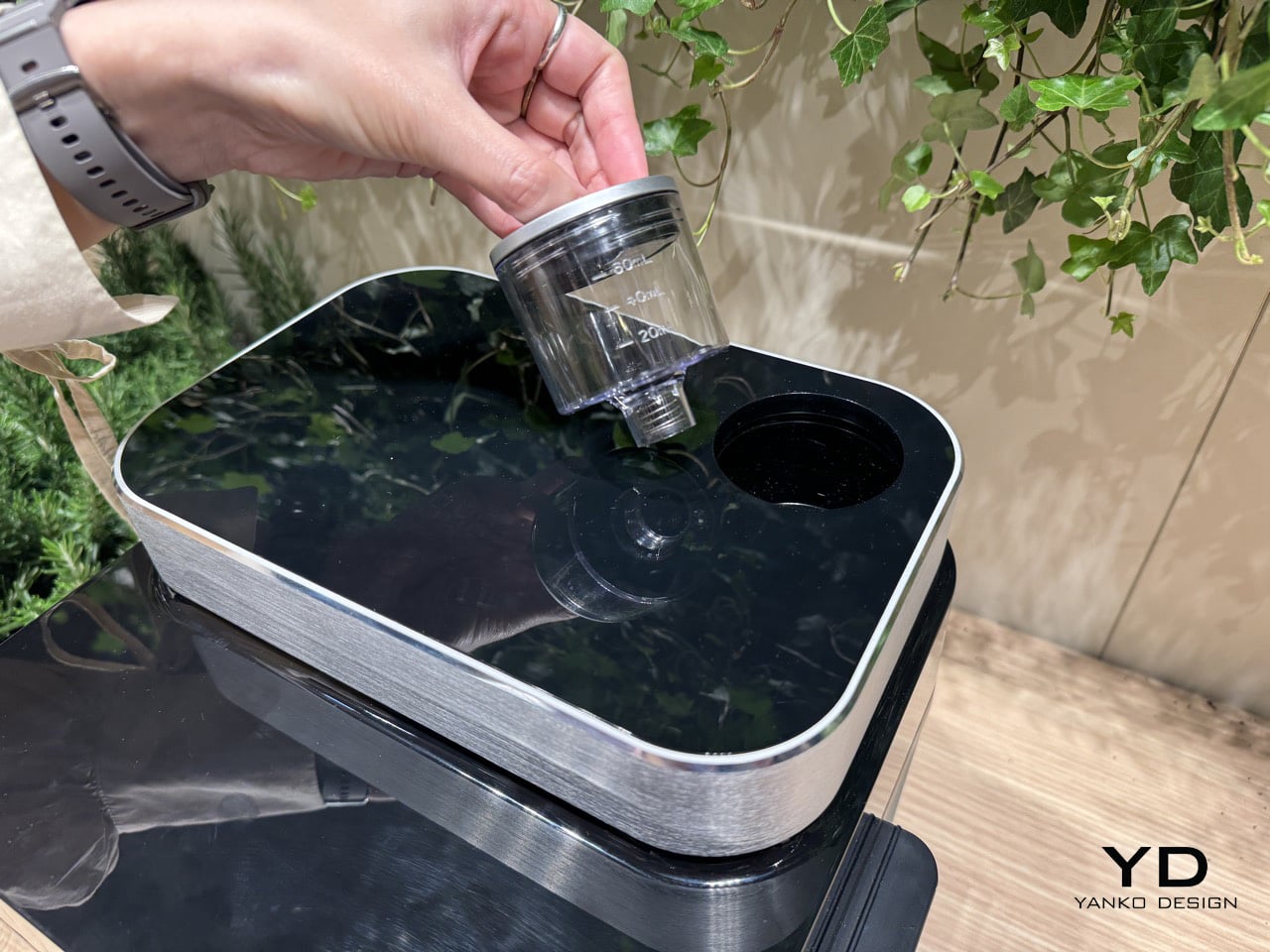
The way you use the steam feature is simple. Smeg built a water cartridge that you can pull out and fill up, before reloading back into your air fryer. Once chosen in the settings, the steam is deployed into the basket via a tiny nozzle on the top, permeating the inner chamber with moisture that makes breads fluffy, cakes delicious, and wedges/wings crispy outside and wonderful inside.

We probed Smeg to give us a launch date, but the air fryer + steamer is just a concept for now. Here’s to hoping that they actually launch it sometime in the future, although a representative did say that if it were to launch, it wouldn’t be before 2027. I guess I’ll have to settle for manually spritzing my food in the air fryer with water every few minutes until then!

Along with the concept Air Fryer, you can check out Smeg’s entire showcase at Salone del Mobile in Milan in the Euro Cucina section of the exhibition. The Italian kitchen brand is showcasing fridges, ovens, stoves, coffee machines, induction hobs, and even chimneys, combining color and enamel technology with a design aesthetic suited for both European as well as American markets.

The post Smeg’s Air Fryer Comes With A Steam Function For Food That’s Crispy Outside and Juicy Inside first appeared on Yanko Design.
If Fidget Spinners Were Furniture: This Marble Table Has a Brass Sphere You Push Around Endlessly

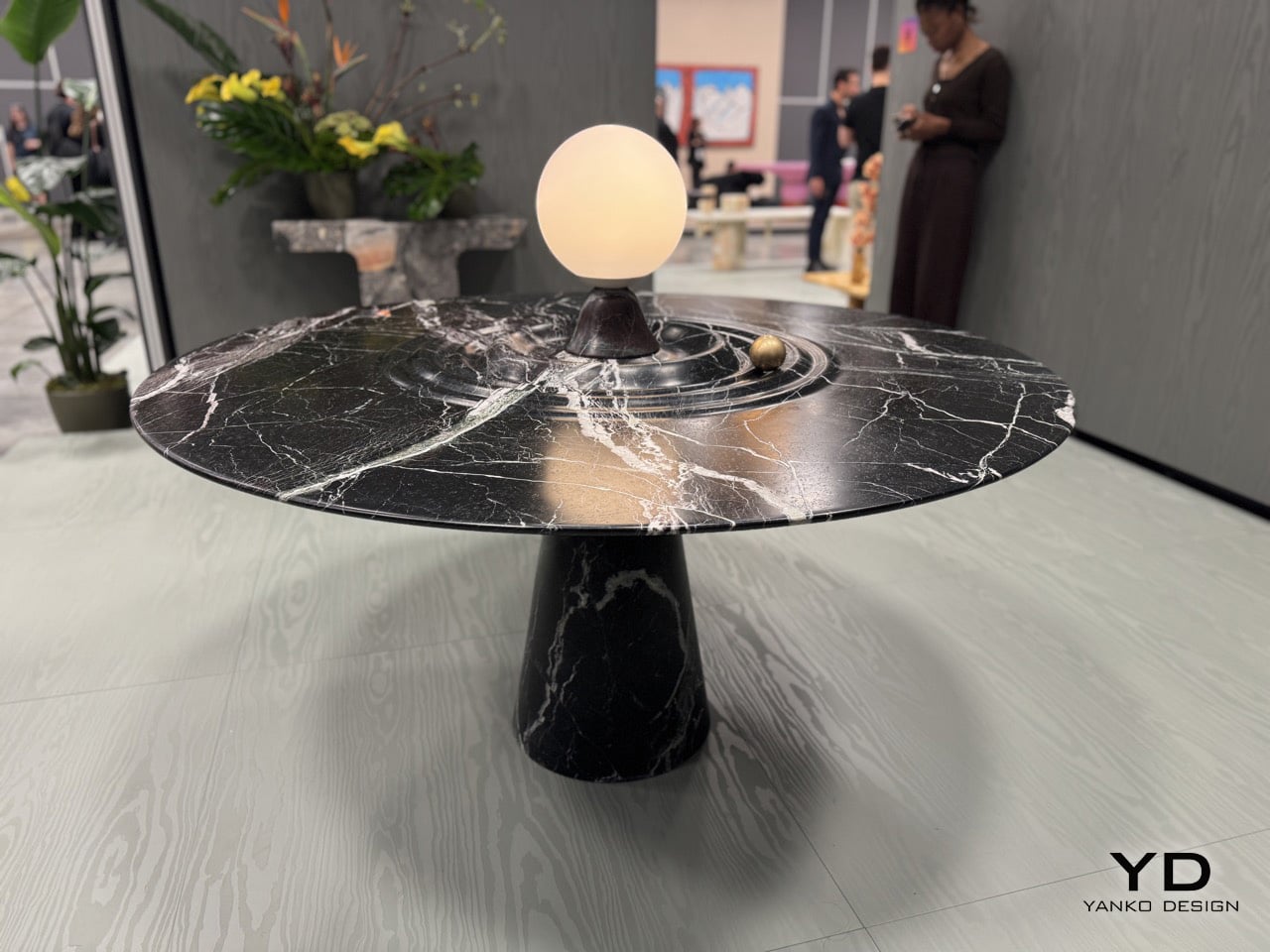
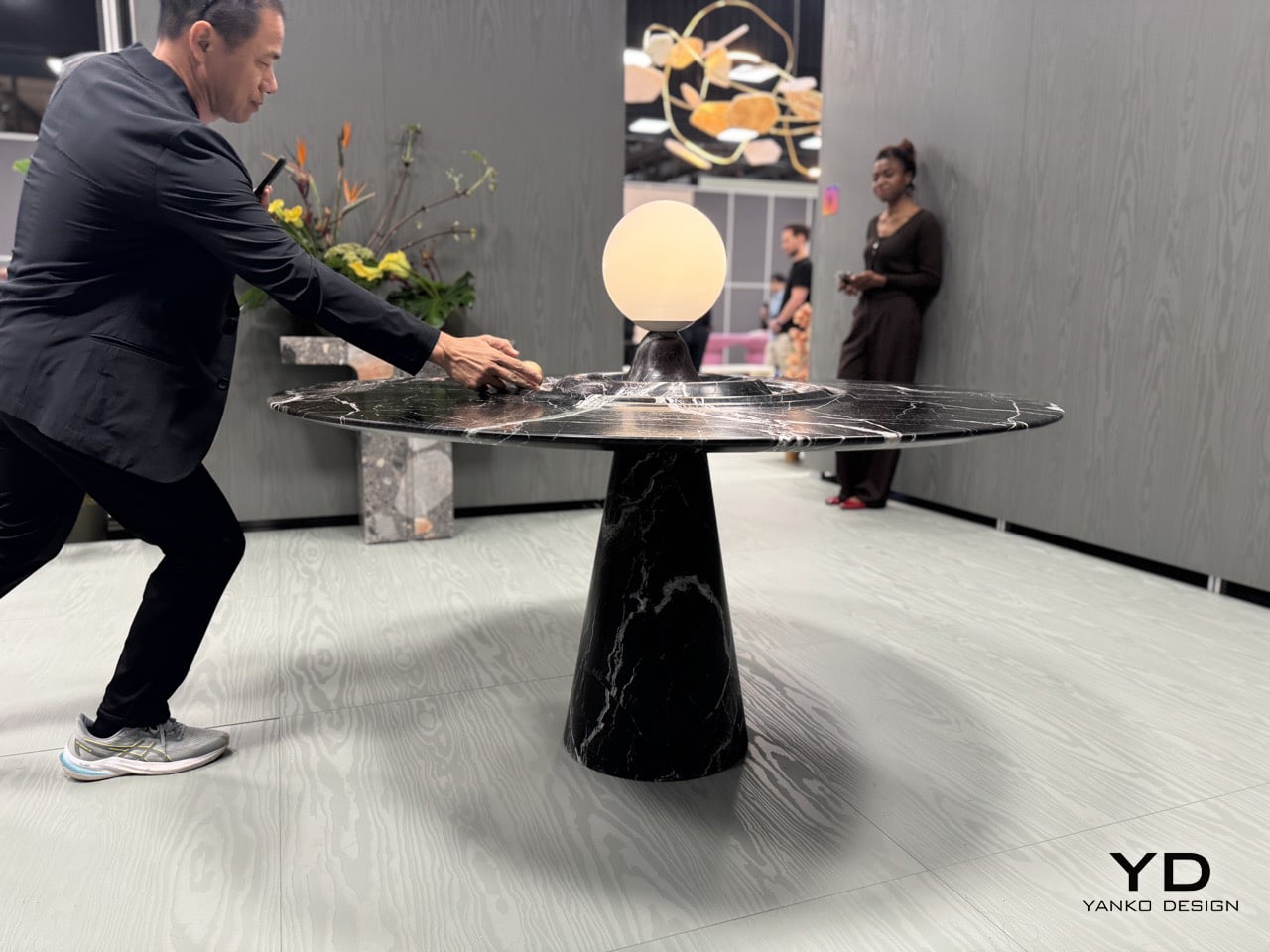
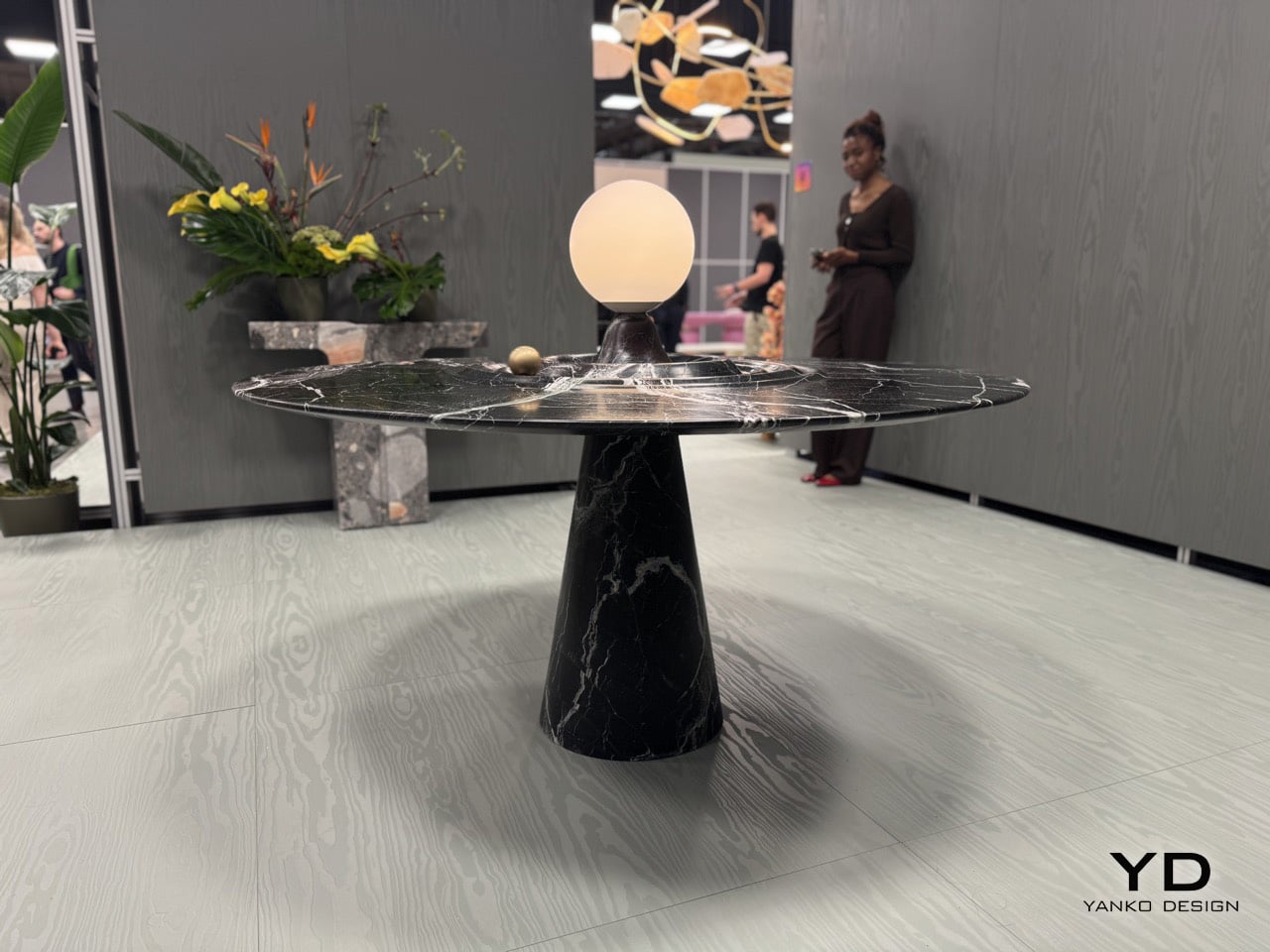
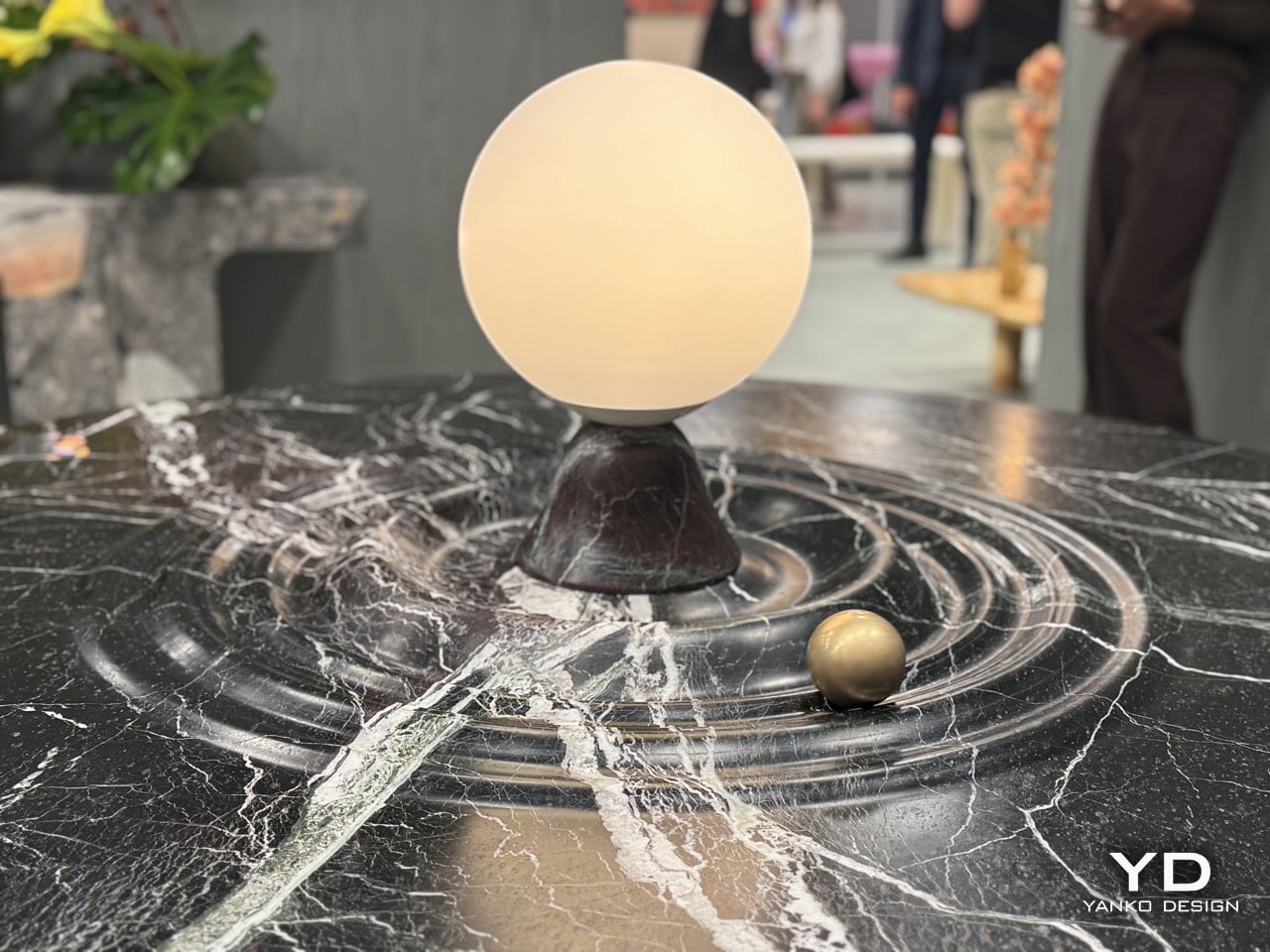
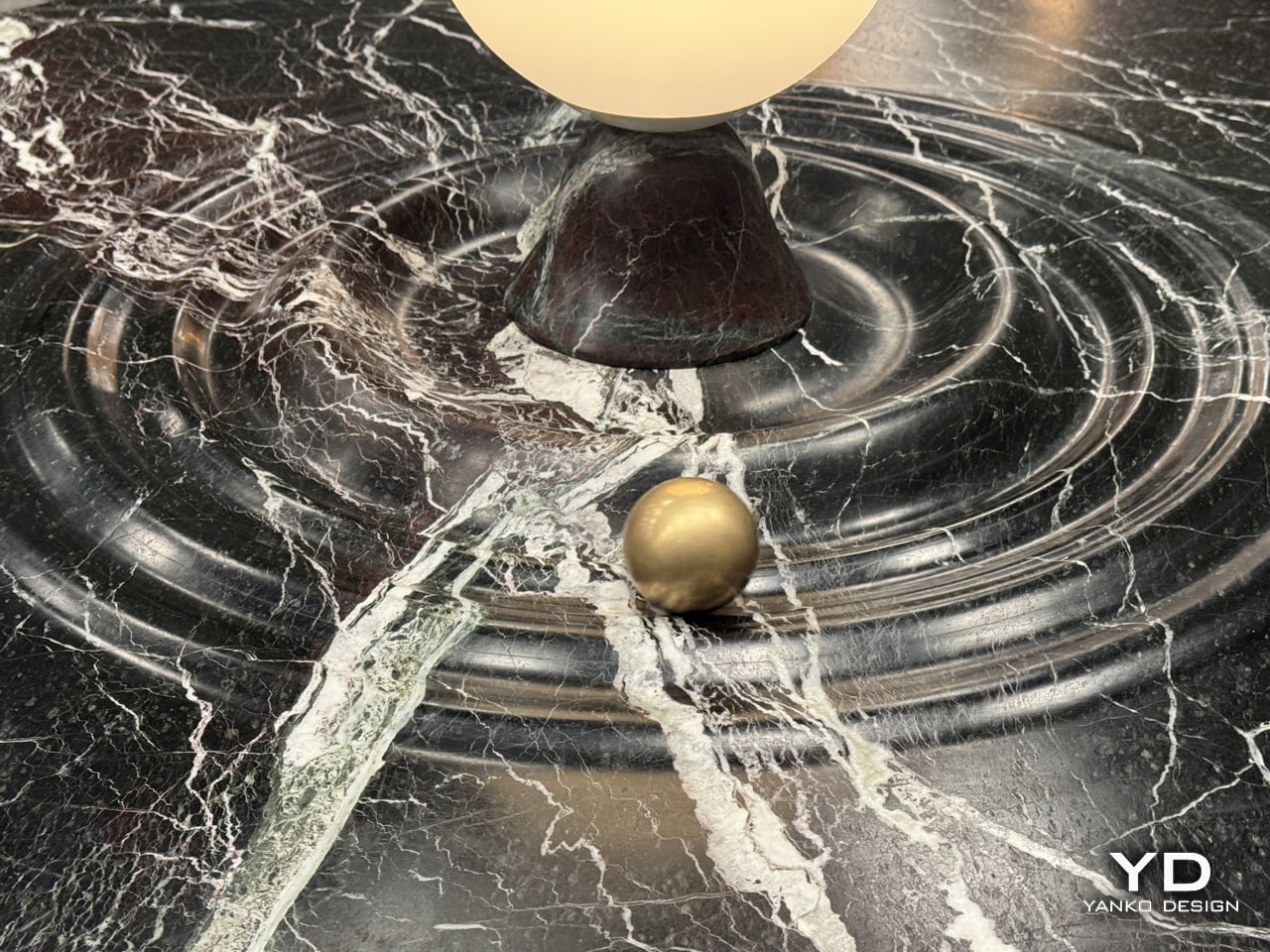
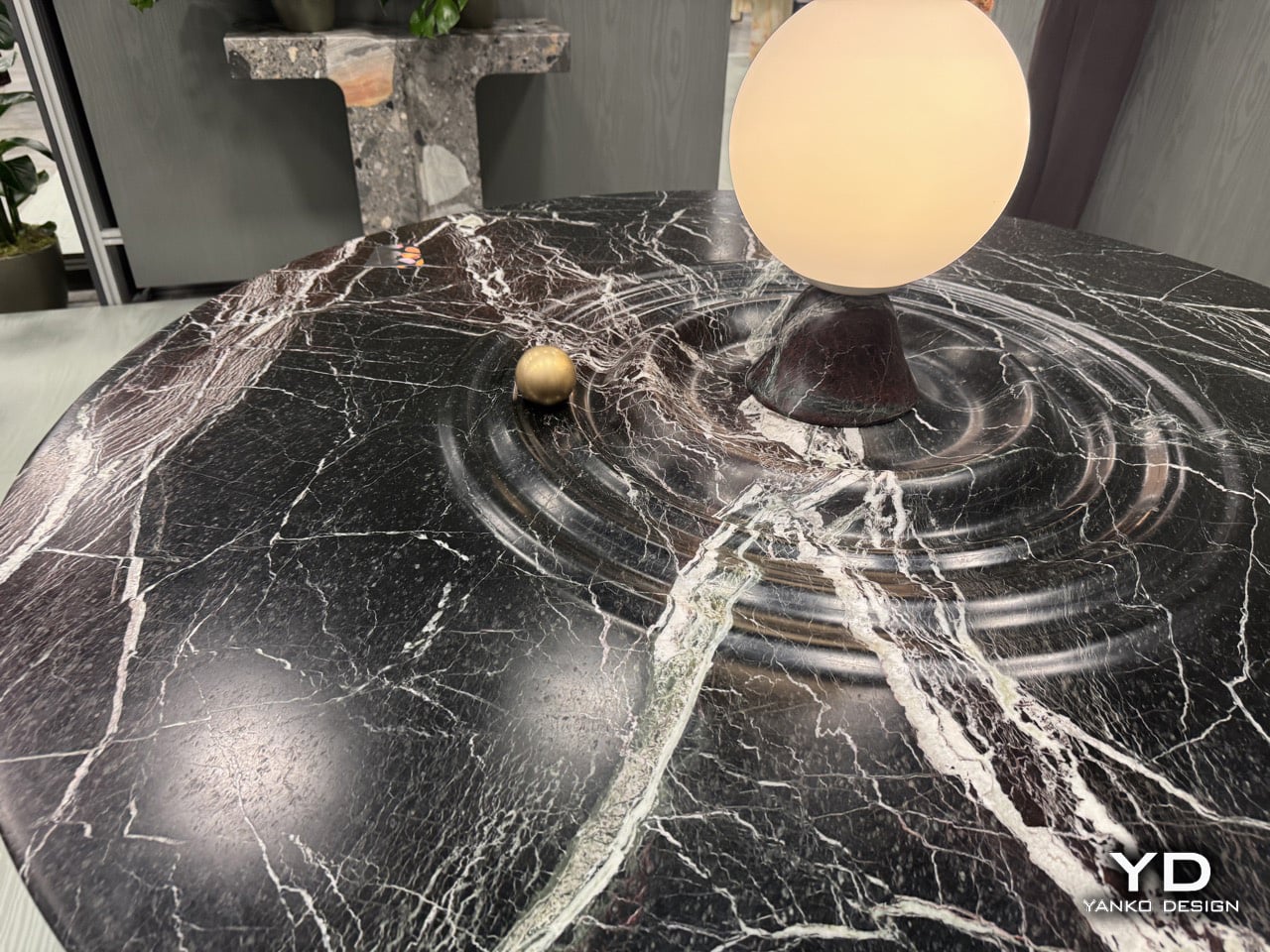
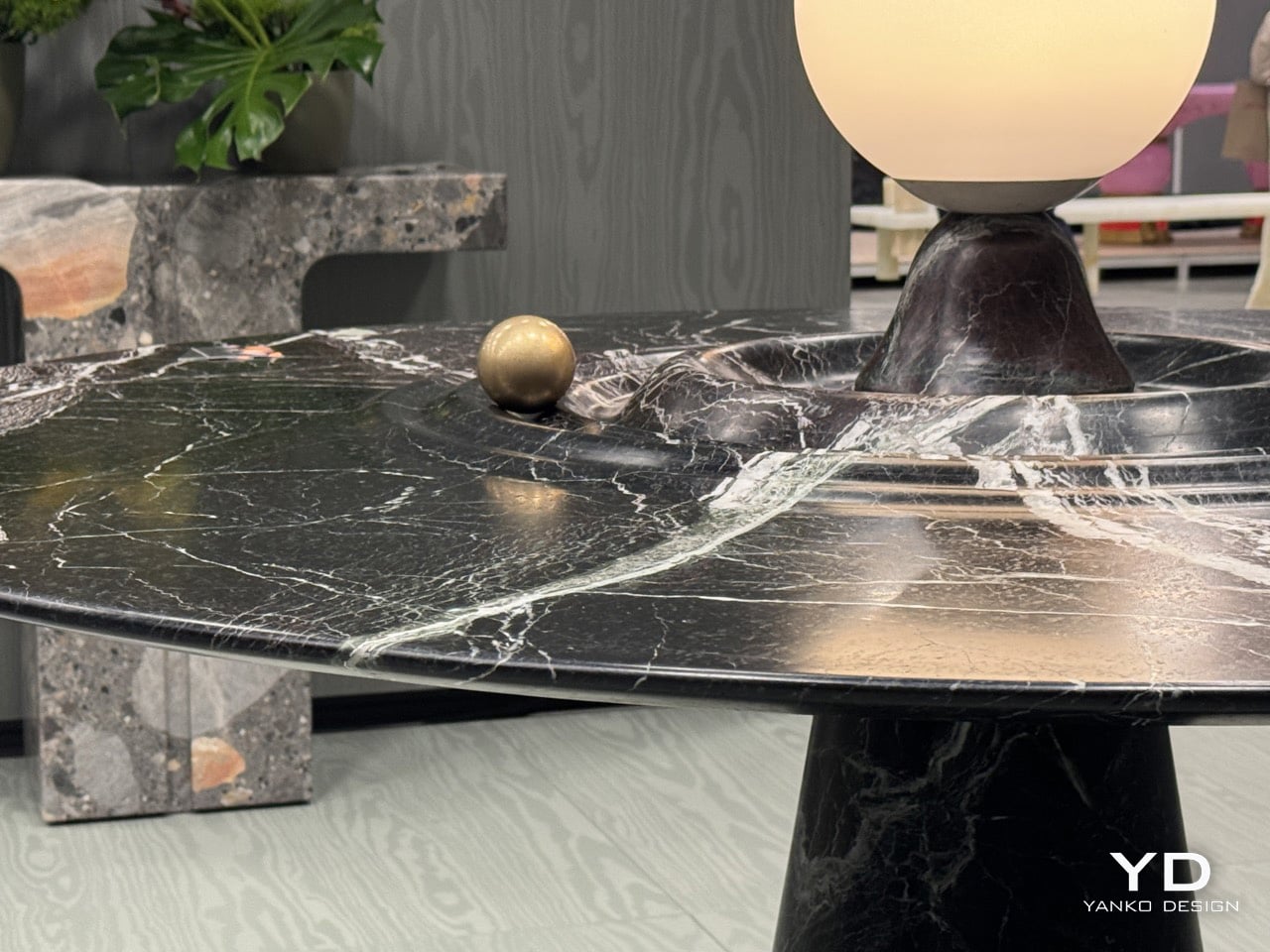
Furniture should probably stay still. That’s the basic contract between you and the table: it holds your dinner plates, you don’t worry about physics. Alessio Scalabrini decided that contract was negotiable. The Animo table, produced by Italian marble workshop Serafini, features a brass sphere that rotates around a central lamp fixture, tracing concentric ripples carved into the marble surface like a tiny planet orbiting its sun. The table functions perfectly well as a static dining surface, but it also invites you to set something in motion every time you walk past it, turning what could’ve been another high-end marble slab into an interactive kinetic object that happens to hold glassware.

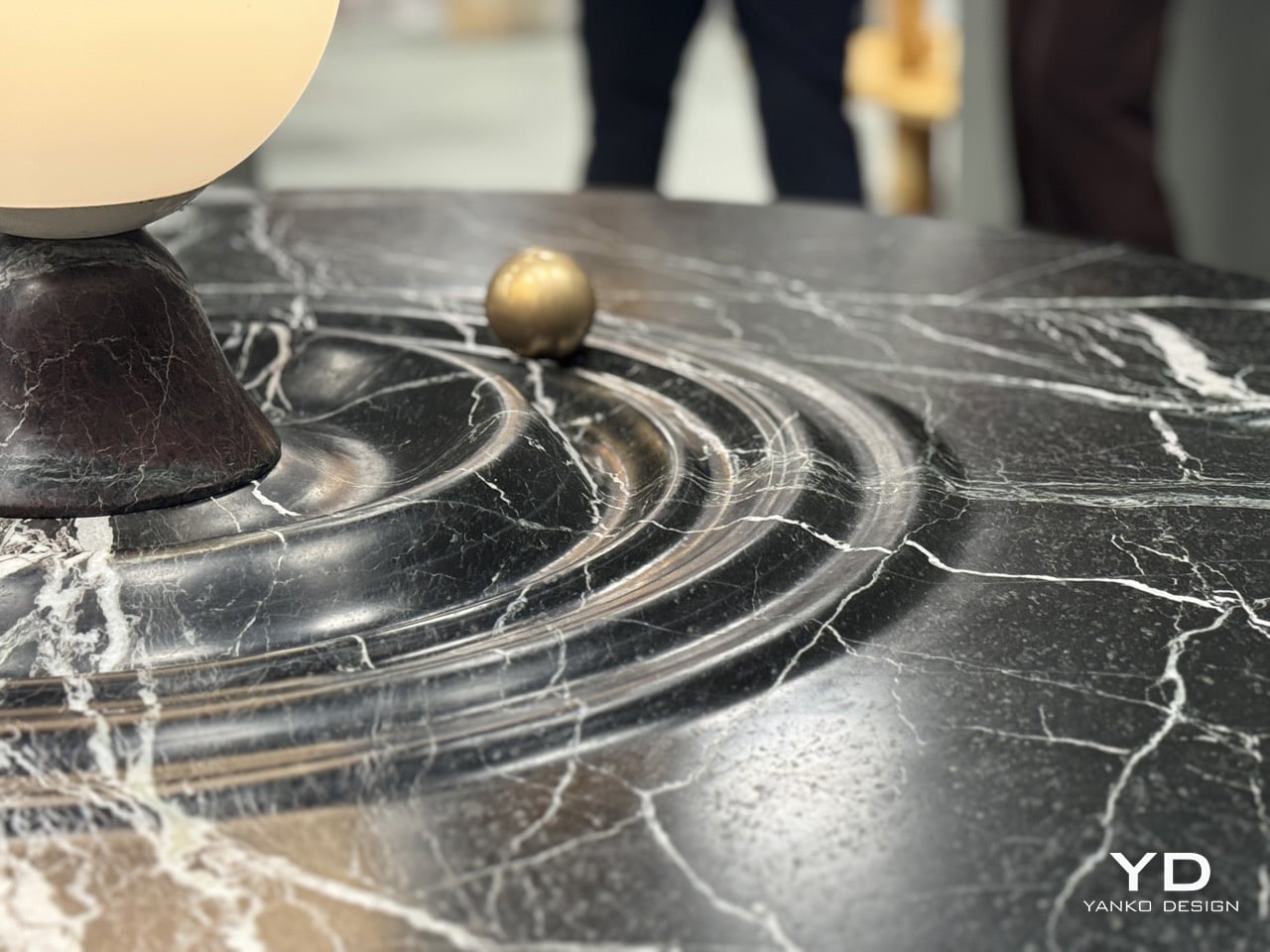
Named after the Italian word for Soul, the Animo table adds some animated joy with a dash of luxury to your space. The table, made entirely from Italian Rosso Levanto marble, is hand-finished with ripples that break the illusion of stillness, making it look fluid. Nestled in one of those ripples is a brass sphere, adding a dash of gold to the table’s ultra-dark burgundy and white-vein design. The result is furniture you can fidget with. It’s art and play combined brilliantly, with the kind of craftsmanship you can only expect from an Italian brand showcasing at Salone del Mobile!

Designer: Alessios Calabrini for Serafini

The table first attracts you with how it looks, then how it feels. The marble finish is impeccable, with the ripples crafted to absolute perfection. The perfection plays an important part here, because a brass sphere needs to seamlessly roll around the table, with the smoothness of a fidget spinner. The sphere has solid heft to it, giving it a fair amount of momentum when you nudge it around the table. It moves with little to no effort, completing tens of rotations before coming to a very gradual halt. Any other material would falter. Wood might end up deforming after years, metal would make the table feel unpleasant, rough stone wouldn’t cause the sphere to move as freely.

The central lamp adds another layer of functionality, illuminating the table from within while serving as the gravitational anchor for the sphere’s orbital path. The whole composition balances three distinct roles: functional dining surface, sculptural marble centerpiece, and interactive kinetic object. Most designers would’ve picked one and committed. Scalabrini made all three work simultaneously.

Scalabrini runs a Paris-based design studio with 18 years of experience merging traditional craftsmanship with contemporary fabrication technology, and that dual approach is visible throughout the Animo. The table uses Serafini’s established production methods, combining precision CNC machining with hand-finishing by Italian artisans who’ve been working marble their entire careers.

If you want to see the Animo table in person and experience the satisfying physics of that brass sphere yourself, Serafini is showing it at Salone Raritas during Salone del Mobile. The difference between seeing photos and actually pushing that orb around the channels is substantial. Photos capture the visual design, but they can’t communicate the tactile satisfaction of setting something that heavy into smooth, controlled motion.

The post If Fidget Spinners Were Furniture: This Marble Table Has a Brass Sphere You Push Around Endlessly first appeared on Yanko Design.
Skoda’s Inflatable Car Installation at Milan Design Week Looks Like a Bouncy Castle Grew Wheels

Cars belong to the world of hard surfaces, precision tolerances, and engineering constraints measured in fractions of millimeters. Ulises Studio works in the opposite direction. The Barcelona-based spatial design practice has spent years creating immersive environments that transform architecture into something tactile and experiential, turning rigid spaces into soft, inviting landscapes. Their installations have activated cultural venues and public spaces across Europe, and their approach is immediately recognizable: inflatable forms, vibrant color palettes, and a commitment to making people rethink how they interact with the built environment. When Skoda asked them to collaborate on an installation for Milan Design Week 2025, they brought that same philosophy to something designers rarely get to touch: an actual production car.

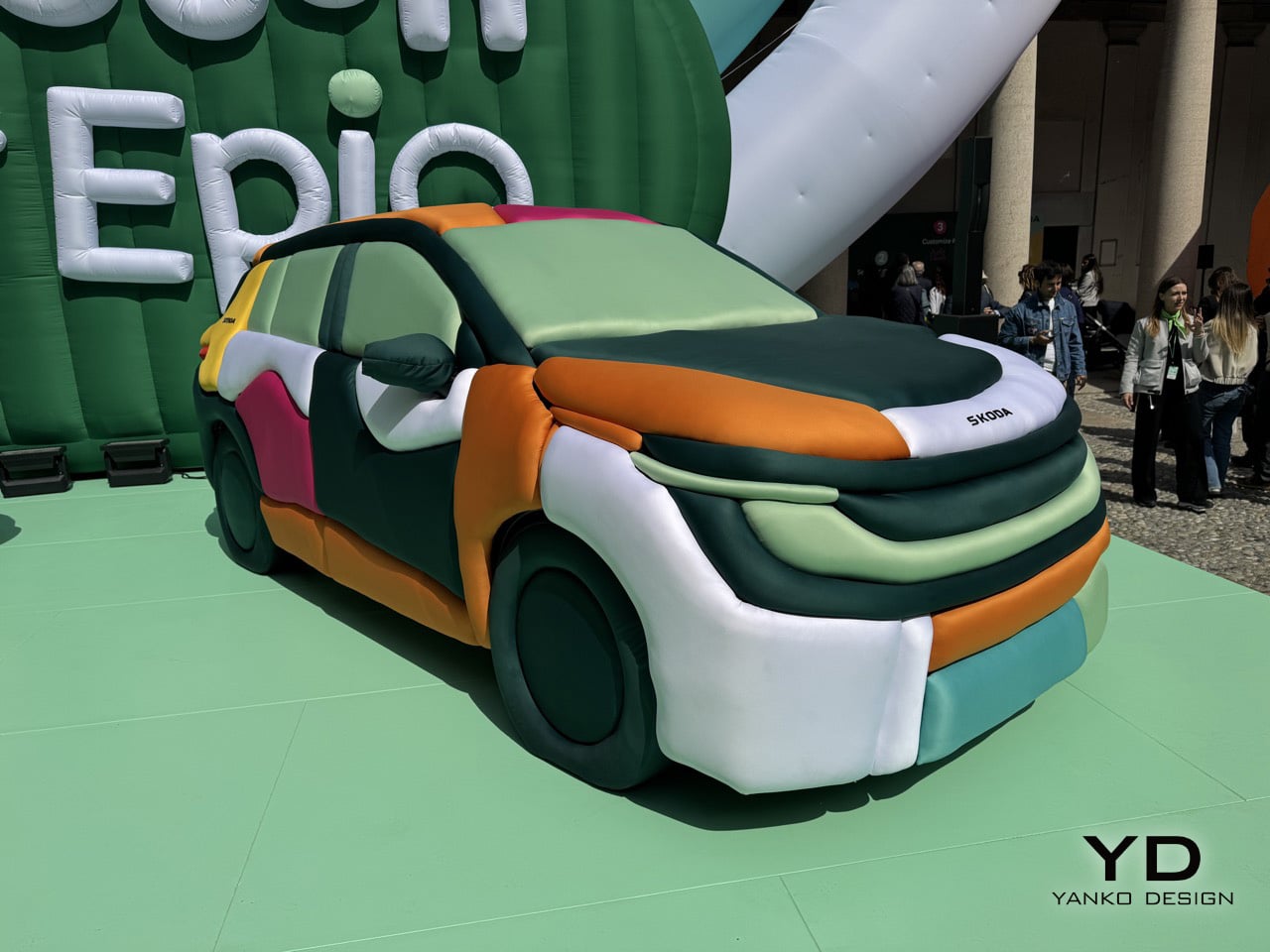
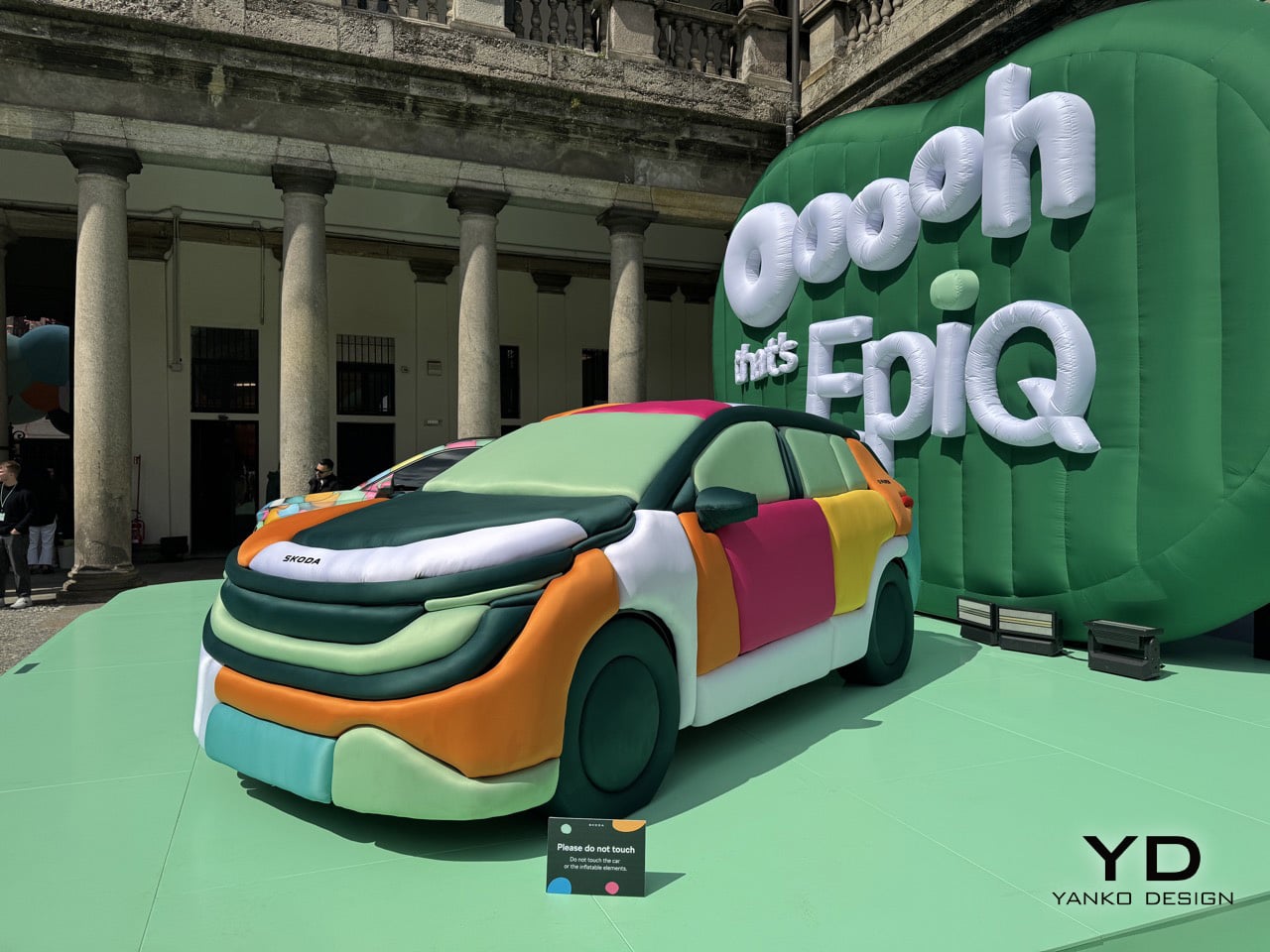
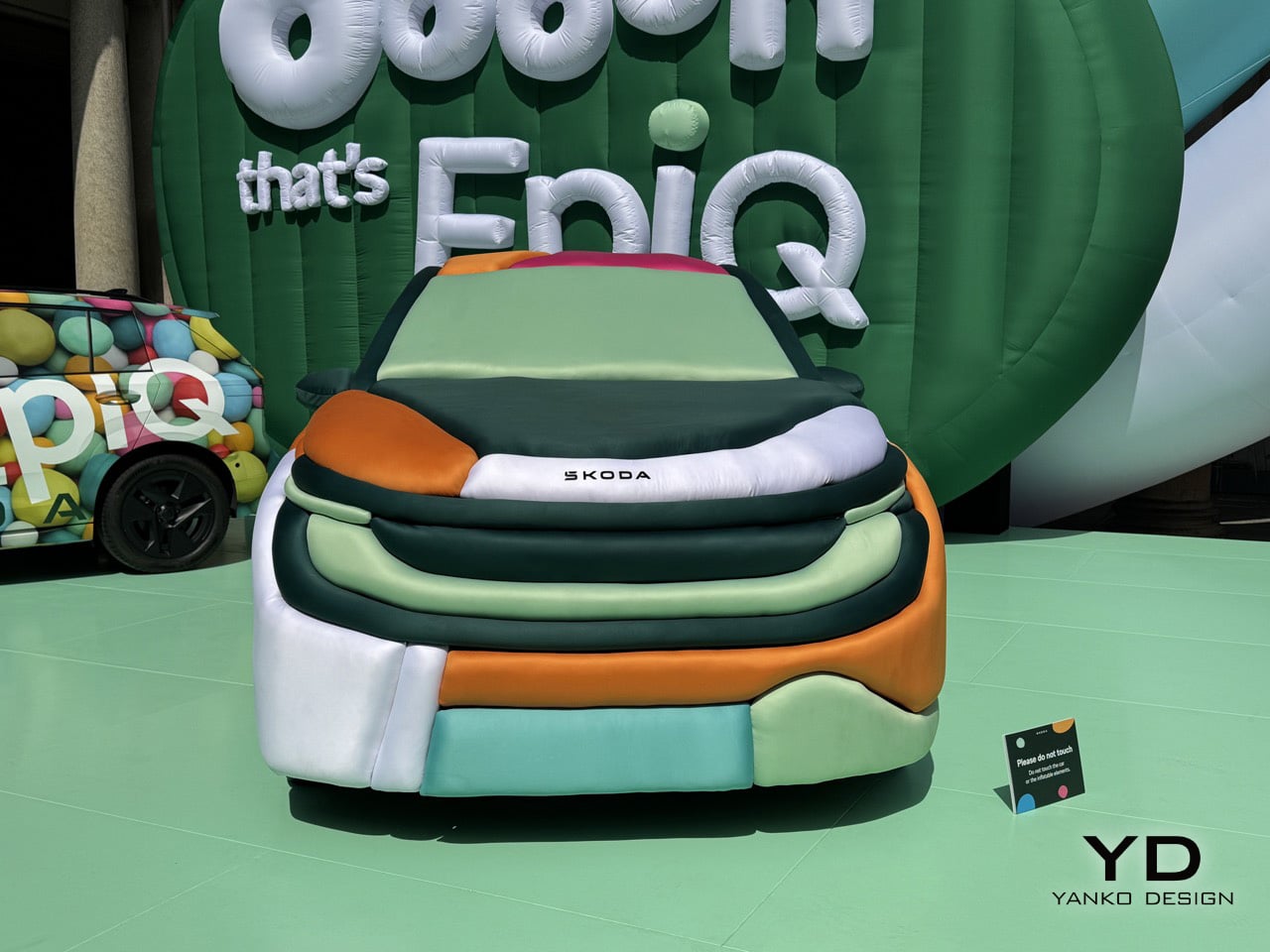
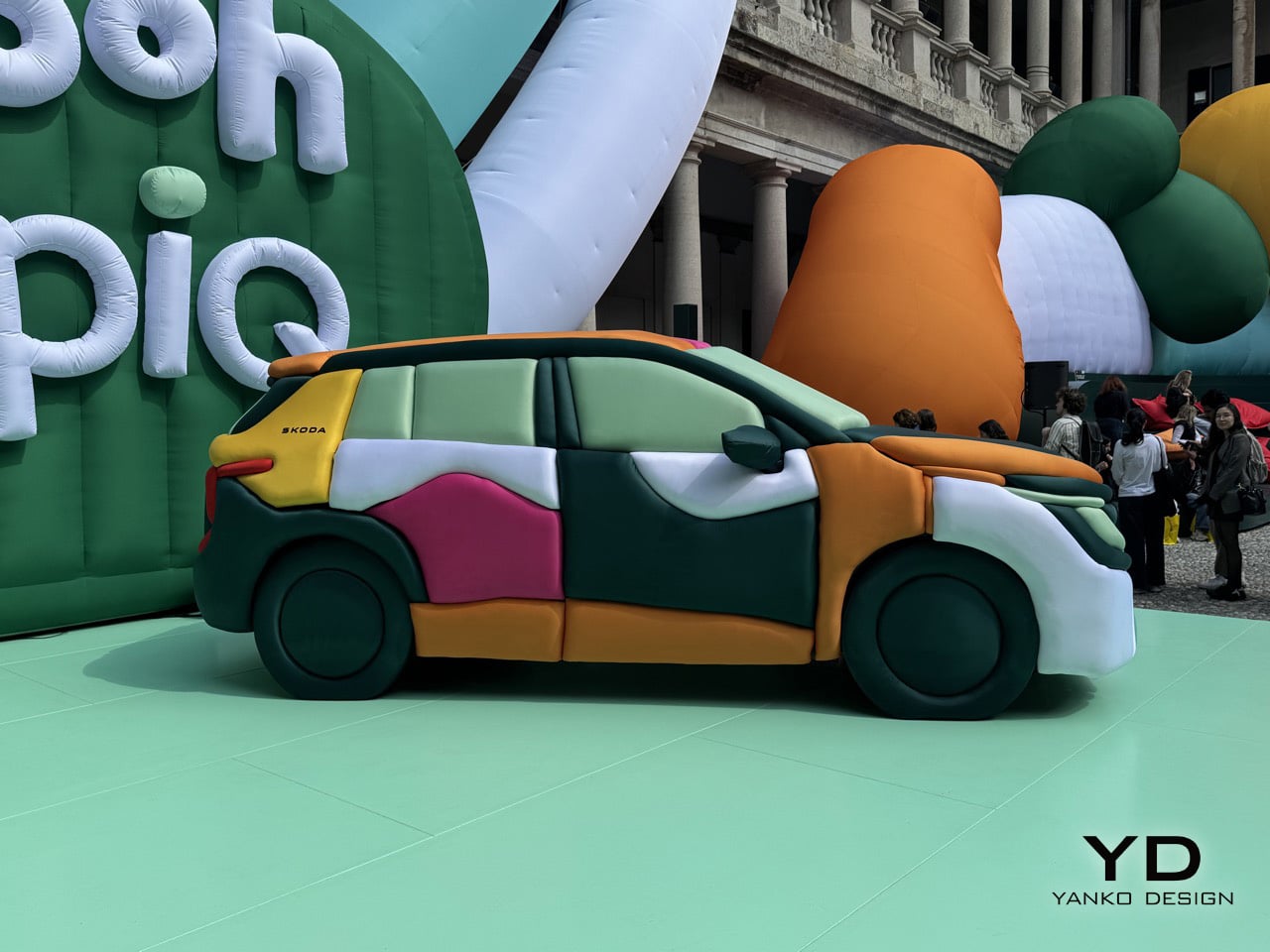
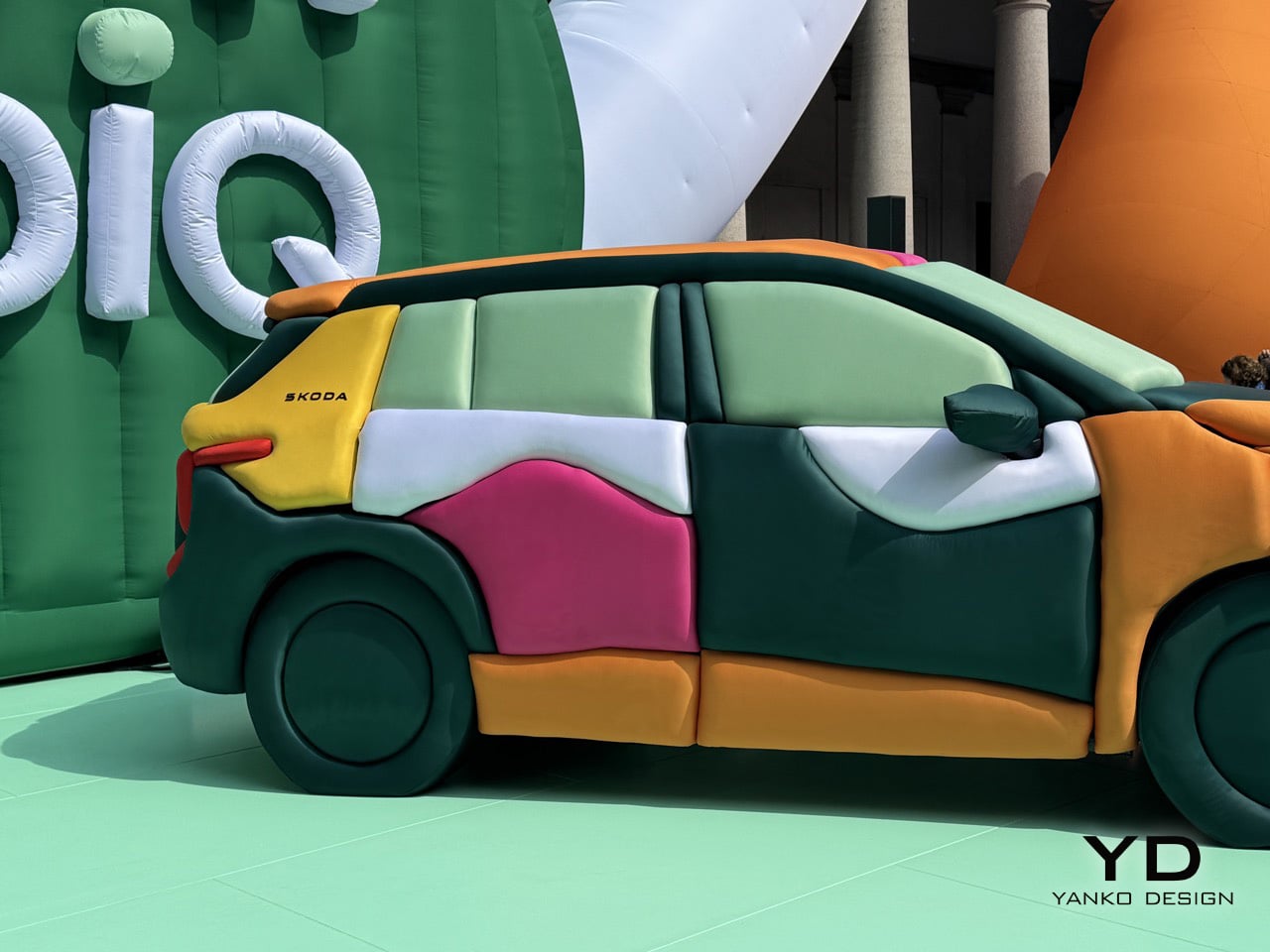
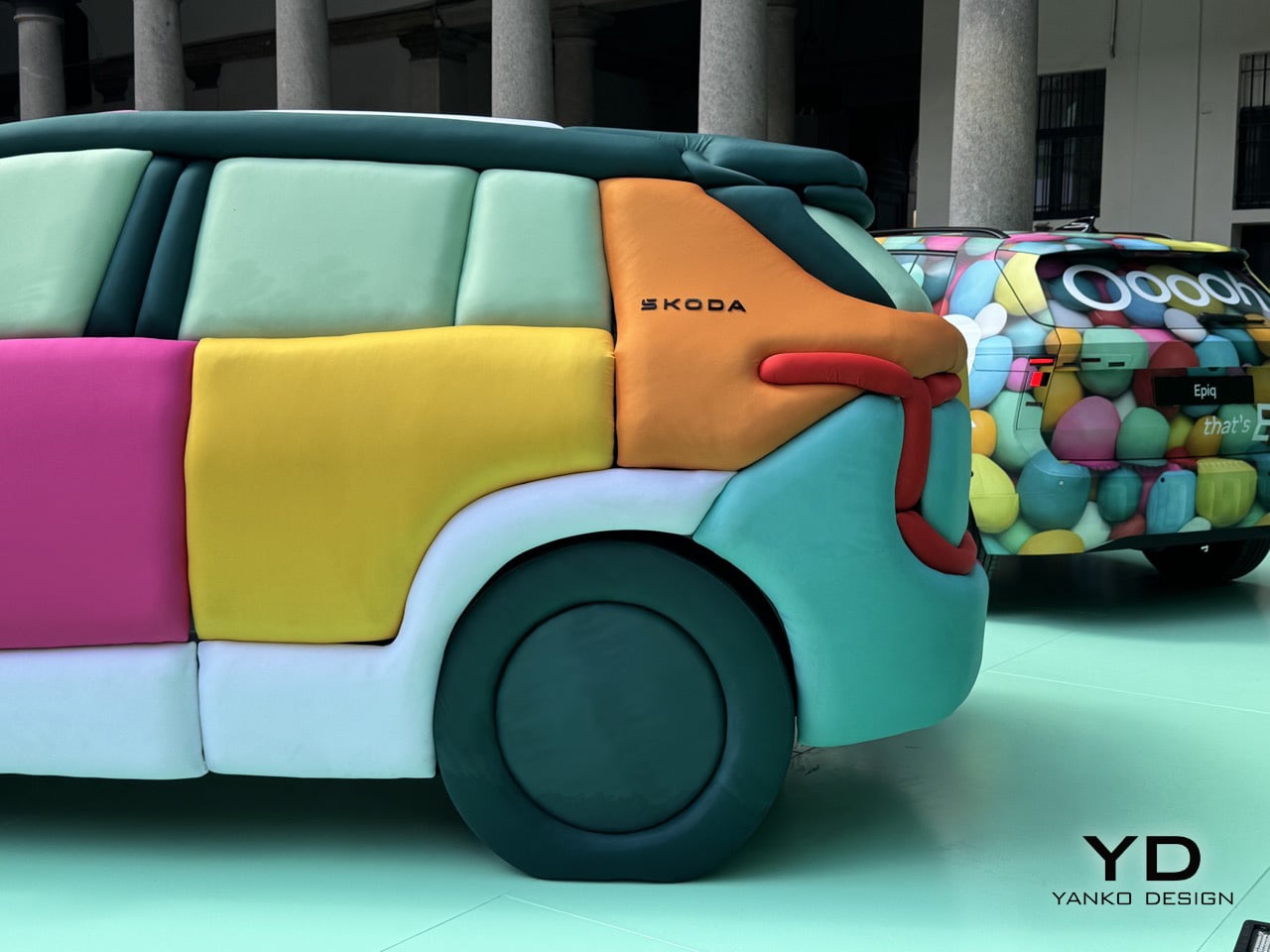
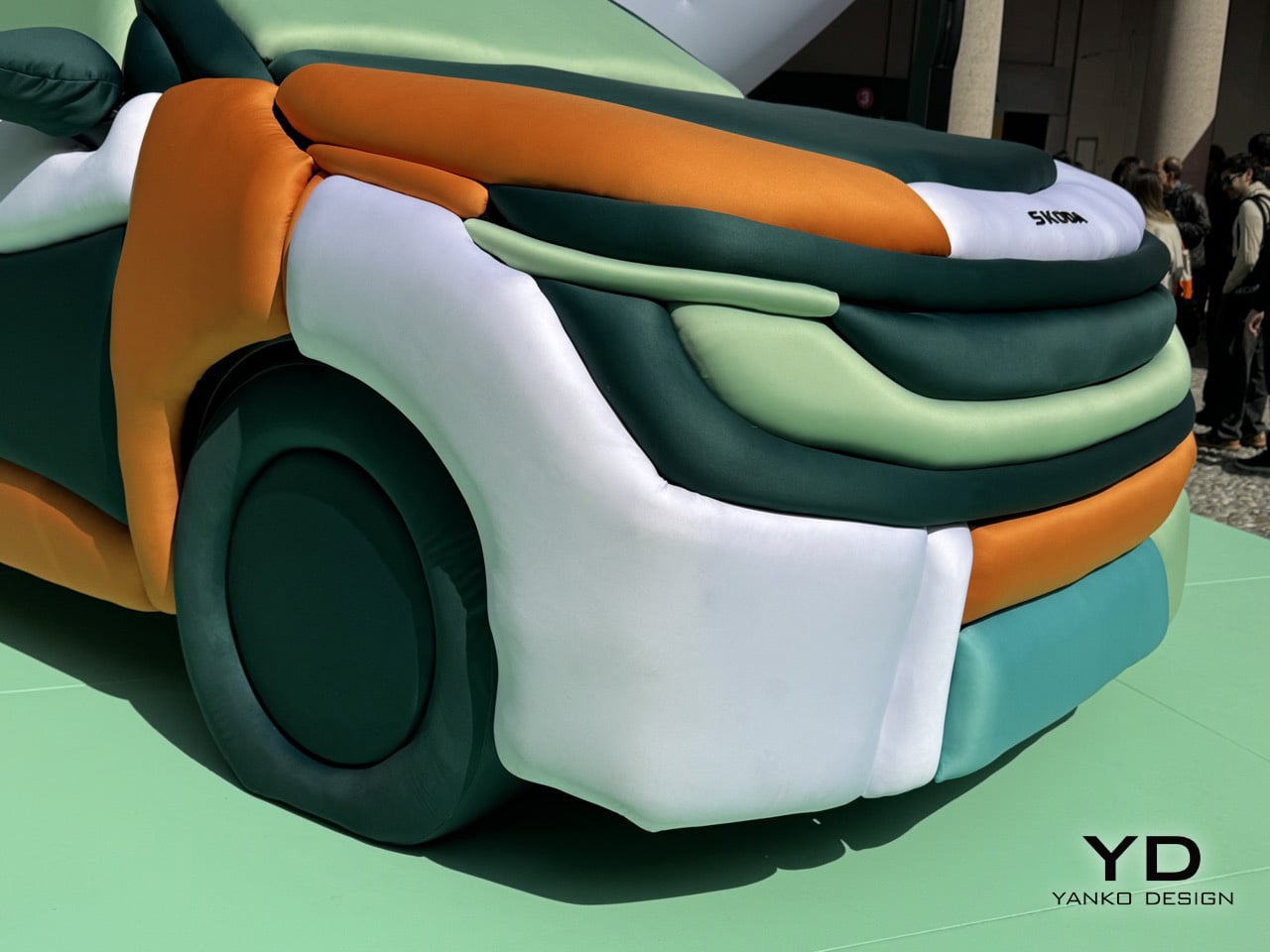
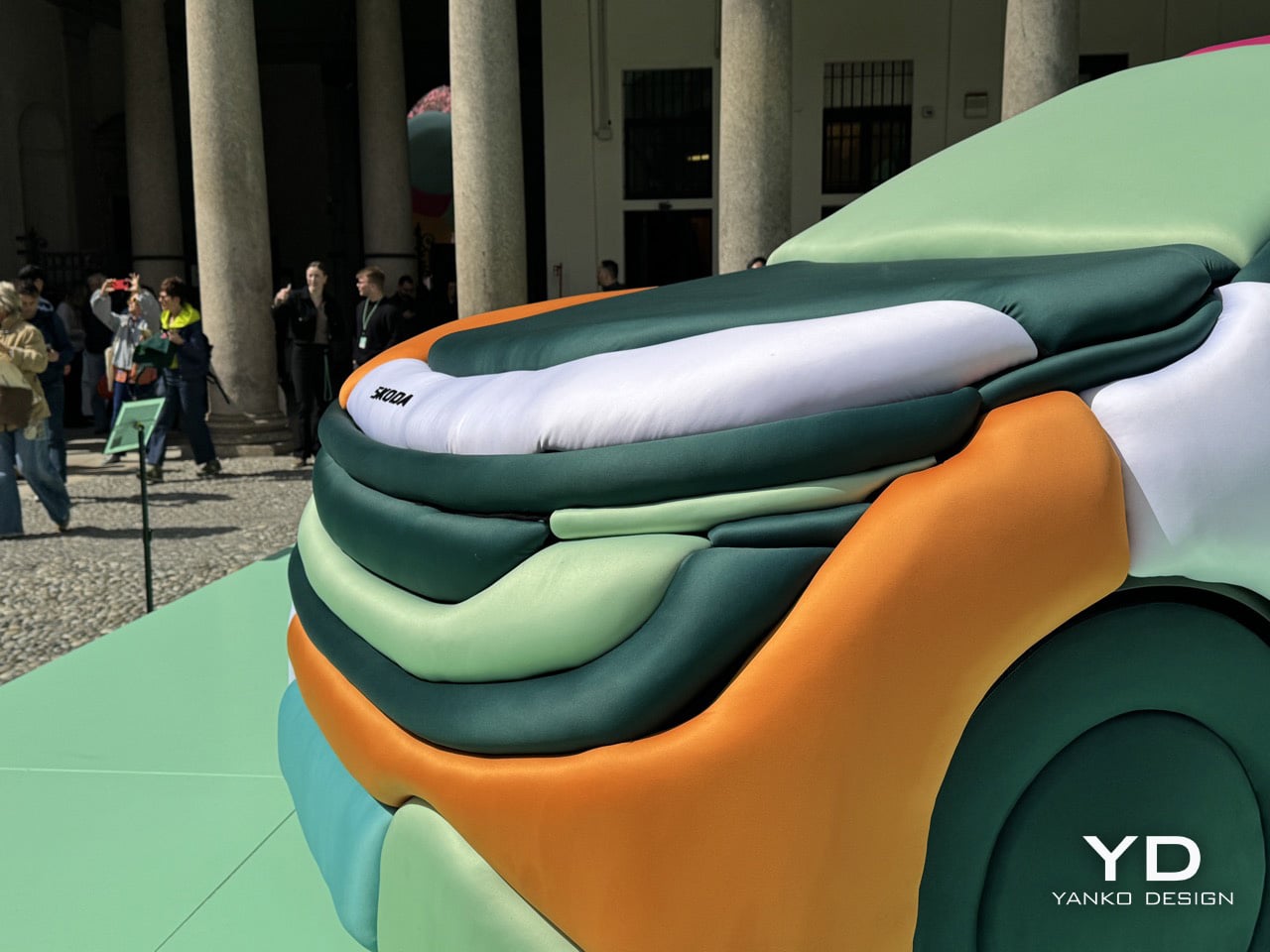
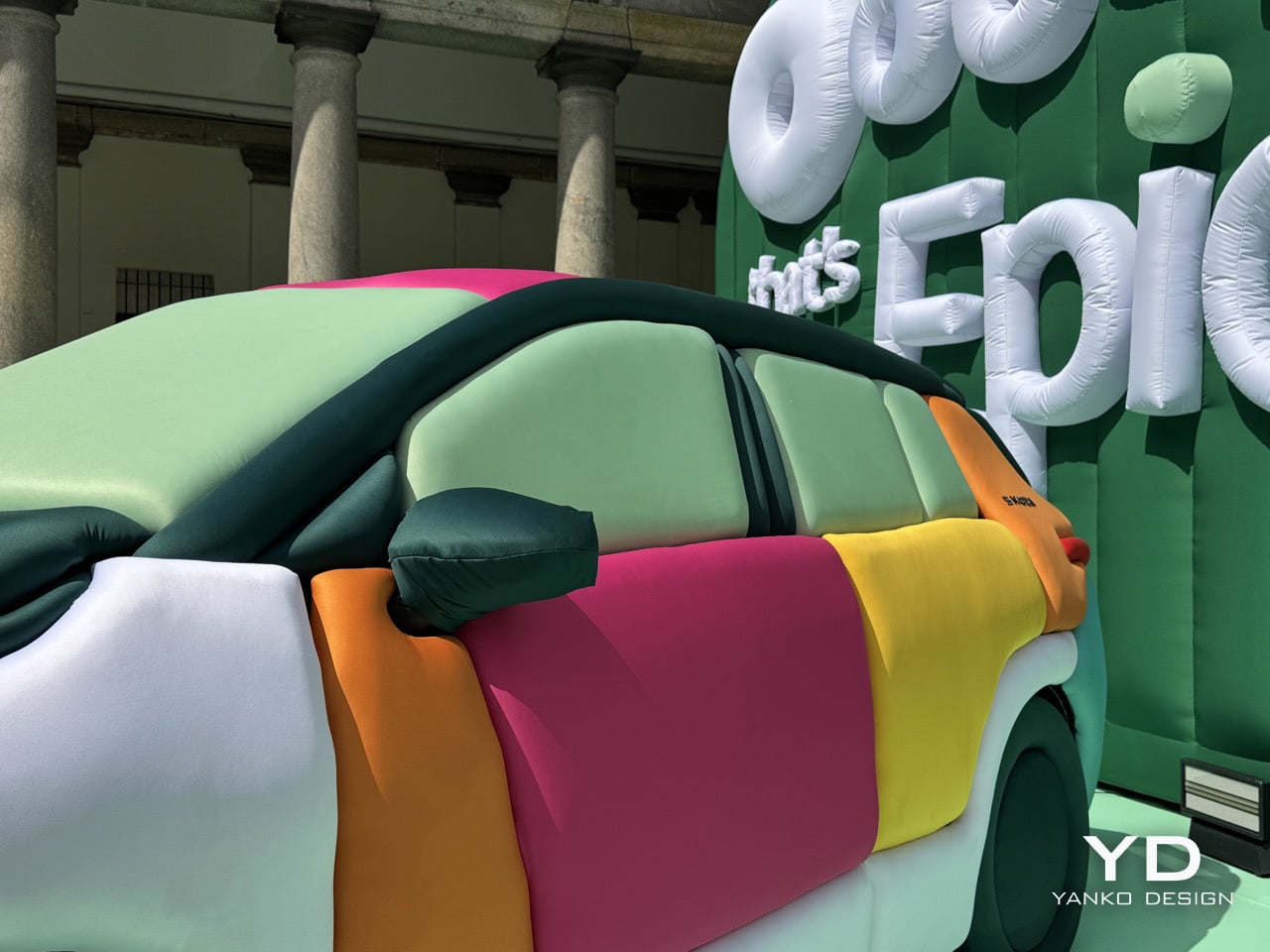
The Epiq, Skoda’s new electric SUV, became the canvas. Ulises Studio covered it entirely in inflatable fabric panels, each one a horizontal tube running across the body in a sequence of cheerful colors. Mint green, burnt orange, soft pink, butter yellow, pale turquoise. The effect is disarming. What should feel like a parked vehicle instead reads as a sculpture, a comment on automotive design language filtered through the lens of spatial intervention. Skoda staged it at Palazzo Senato with multiple Epiq vehicles, each wrapped in different inflatable treatments, creating a dialog between the engineered reality and Ulises Studio’s playful reinterpretation.

Designers: Ulises Studio & Skoda Design

The genius of the installation lies in how completely it transforms the car’s character without altering its underlying form. Every crease, every character line, every panel gap gets translated into soft, pillowy geometry. The horizontal tubes follow the Epiq’s actual contours, which means the inflatable version retains the proportions and stance of the real thing. You can still read it as a compact SUV, but now it feels approachable in a way sheet metal never could. The tactile quality is impossible to ignore. Your brain knows you’re looking at air-filled fabric wrapped around a vehicle, but your hands want to reach out and squeeze it anyway.

Ulises Studio didn’t stop at wrapping cars. They transformed the entire courtyard at Palazzo Senato into what they’re calling a “clay landscape,” an inflatable environment that extends the material language across the entire space. Oversized typography spelling out “Ooooh, that’s EpiQ” dominates one wall, each letter constructed from the same air-filled tubes. Smaller inflatable elements populate the courtyard like sculptural furniture, creating zones where visitors can pause and take in the installation from different angles. The floor itself gets treated to a matching mint-green surface that ties the whole environment together. This is spatial design at its most comprehensive, where every element reinforces the central idea.

What makes the collaboration work is that Ulises Studio treats the Epiq as part of a larger environmental narrative rather than the hero object that everything else orbits around. The cars are embedded in the landscape, surrounded by inflatable forms that share their material language and color palette. This creates a sense of cohesion that most automotive installations never achieve, where the vehicle feels like it genuinely belongs in the space rather than being awkwardly dropped into it. The studio’s background in creating immersive experiences shows in how they choreograph movement through the courtyard, using the placement of vehicles and sculptural elements to guide visitors through different zones of the installation. You don’t just look at the inflatable Epiq, you move around it, through the landscape it inhabits, encountering different perspectives and color relationships as you navigate the space.

Ulises Studio has always understood that spatial design is a form of storytelling. Their inflatable installations communicate ideas about accessibility, transformation, and how we experience objects in space. The Epiq installation applies that same thinking to automotive design. By swapping metal and glass for inflatable fabric, they strip away the aggression and seriousness that define most car launches and replace it with something genuinely delightful. The oversized inflatable typography spelling out “Ooooh, that’s EpiQ” reinforces the tone in a fairly Gen-Z coded way, allowing the brand to resonate with younger generations. This is design as spatial play, a reminder that objects can be functional and joyful simultaneously.

You’re an expert editor/blogger with a profound understanding of human psyche as well as Google SEO. Now generate 10 catchy, attention-grabbing, mildly provocative titles that are SEO-friendly too. Make your titles have natural language but craft them so they rank high on google News and Discover as of March 2026. Do your SEO research. Make them natural language, simple, yet captivating

The post Skoda’s Inflatable Car Installation at Milan Design Week Looks Like a Bouncy Castle Grew Wheels first appeared on Yanko Design.
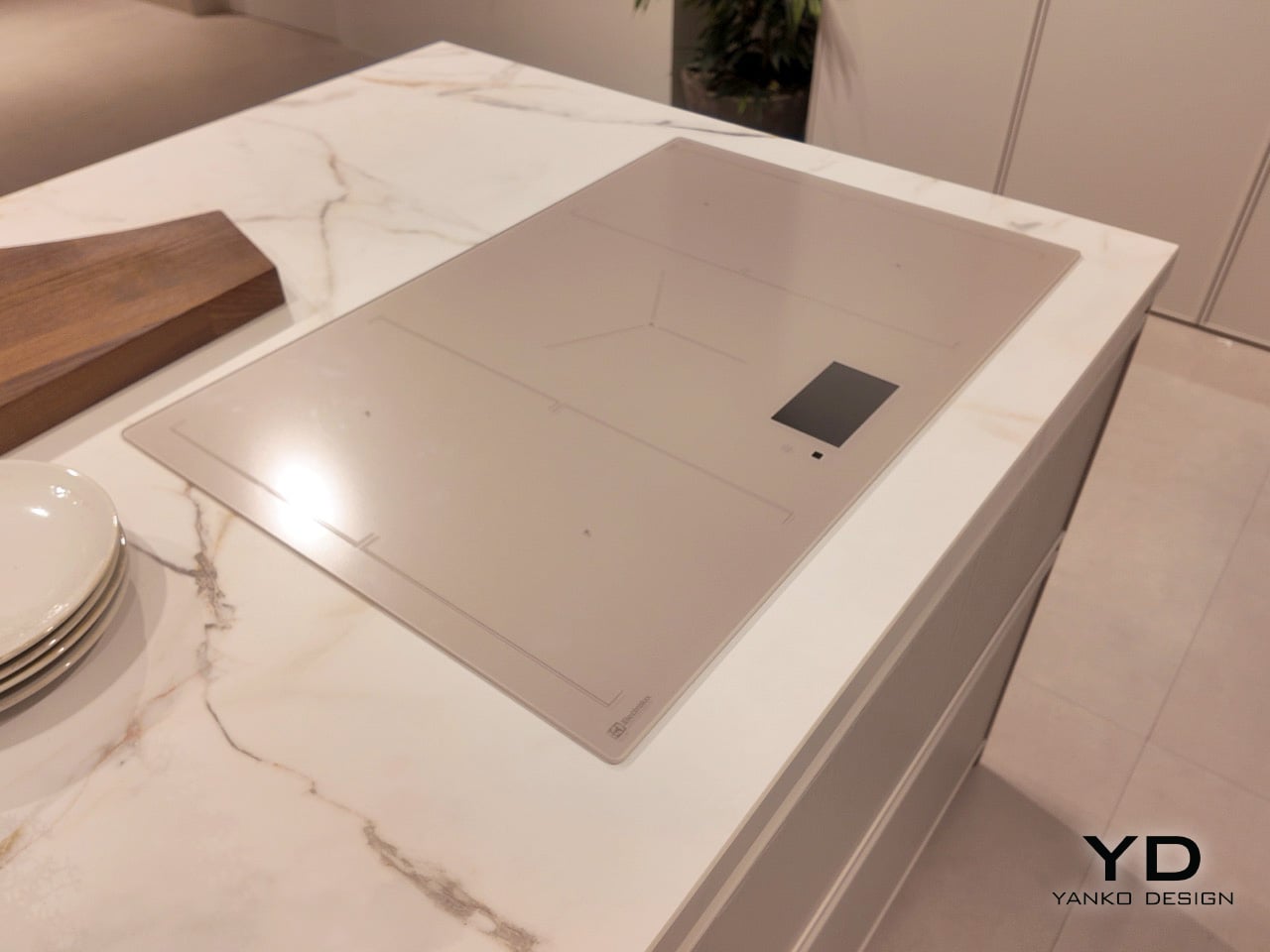
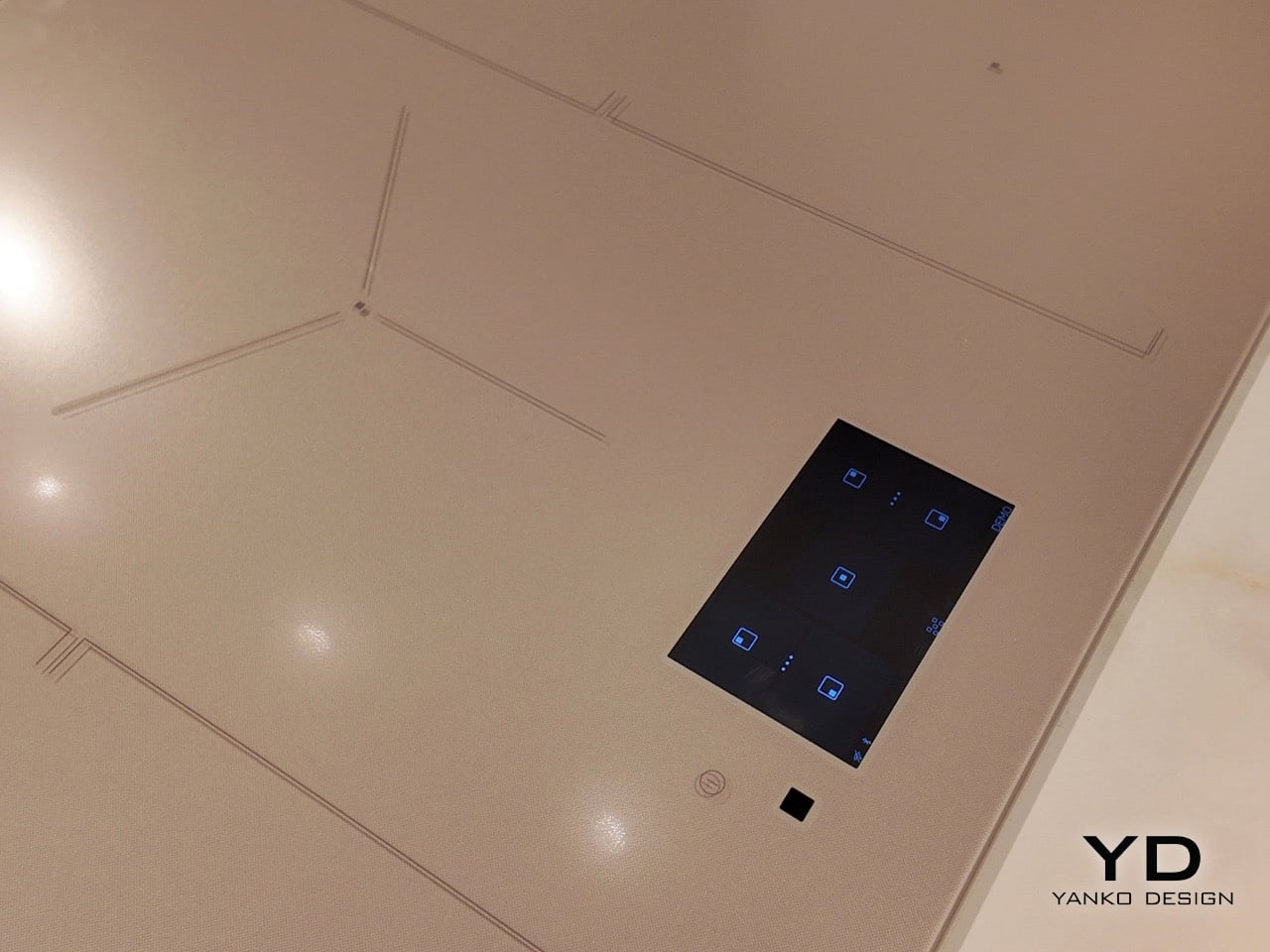
Electrolux and Veneta Cucine Use Biophilic Color Science to Rethink Kitchen Design at Milan 2026

Scandinavian winters keep people indoors for roughly six months a year, which gives Swedish designers a lot of time to think about what a kitchen surface shoul…Scandinavian winters keep people indoors for roughly six months a year, which gives Swedish designers a lot of time to think about what a kitchen surface should feel like when it becomes the primary thing you look at during months when going outside requires genuine commitment. Electrolux leaned into that constraint at Milan Design Week 2026, partnering with Italian kitchen specialist Veneta Cucine to present a color palette pulled directly from nature. Warm sand, dusty teal, soft sage, speckled stone. Colors designed to reduce visual noise and make a kitchen feel less like a collection of separate purchases and more like a unified spatial environment.

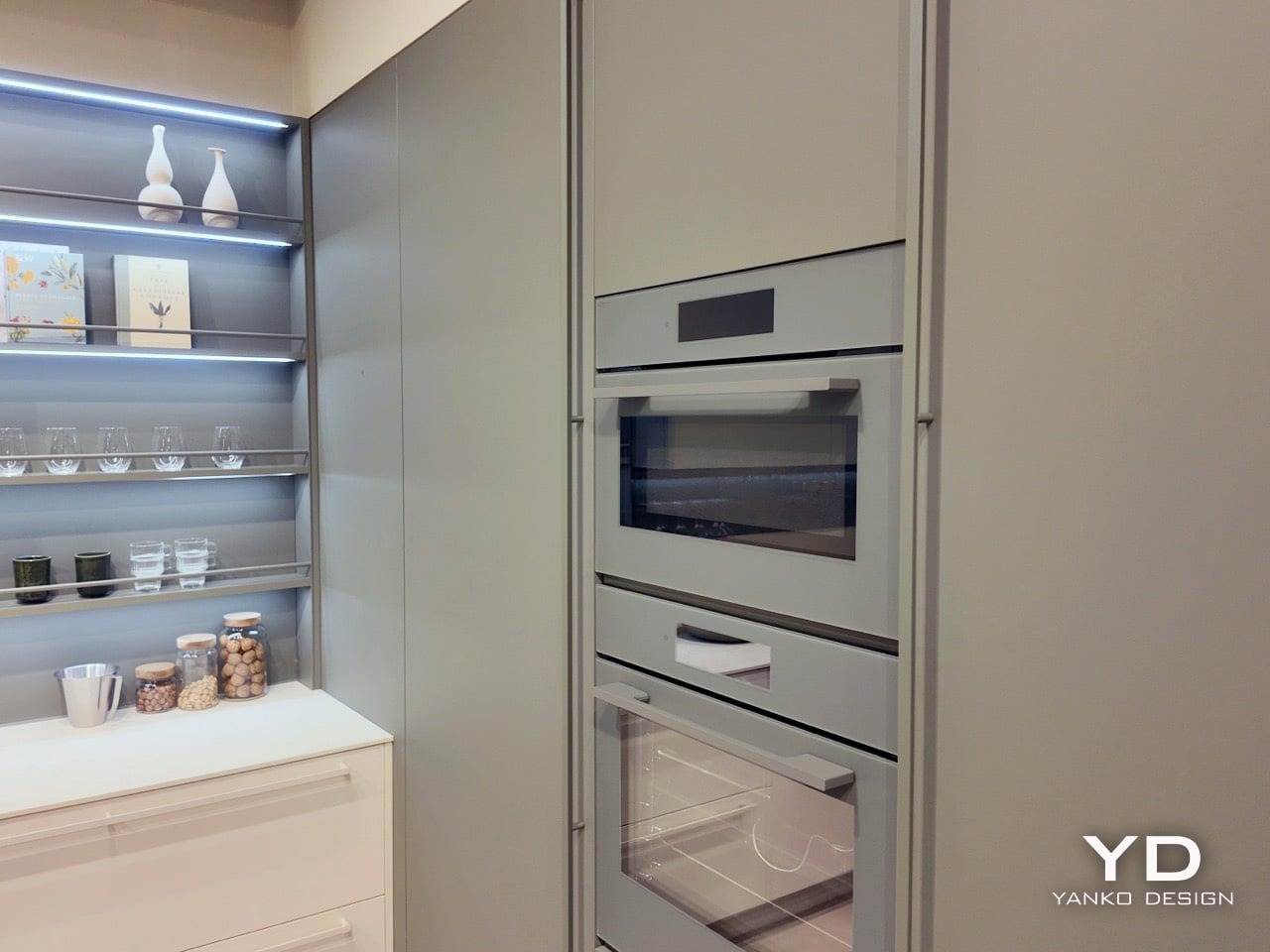
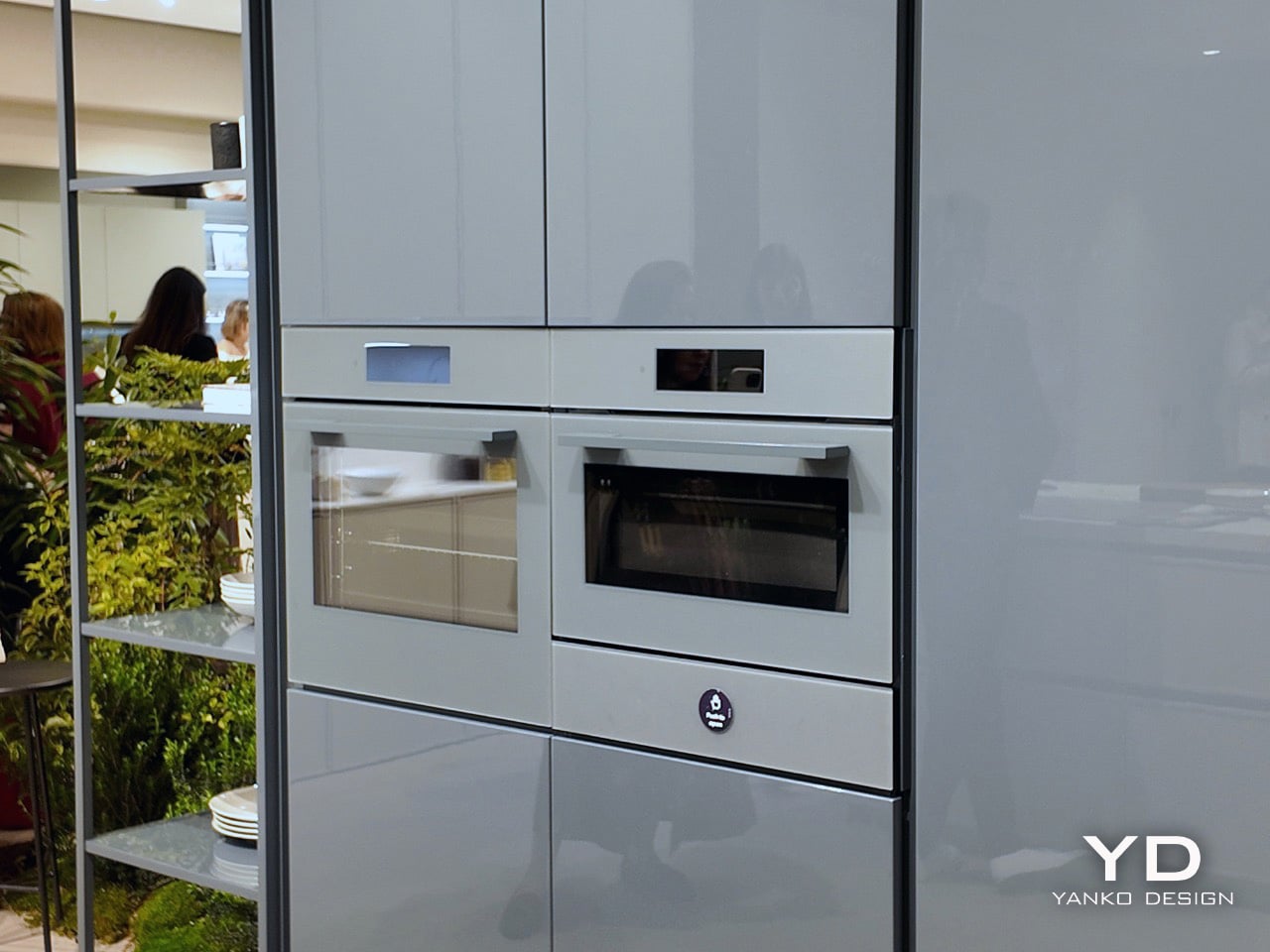
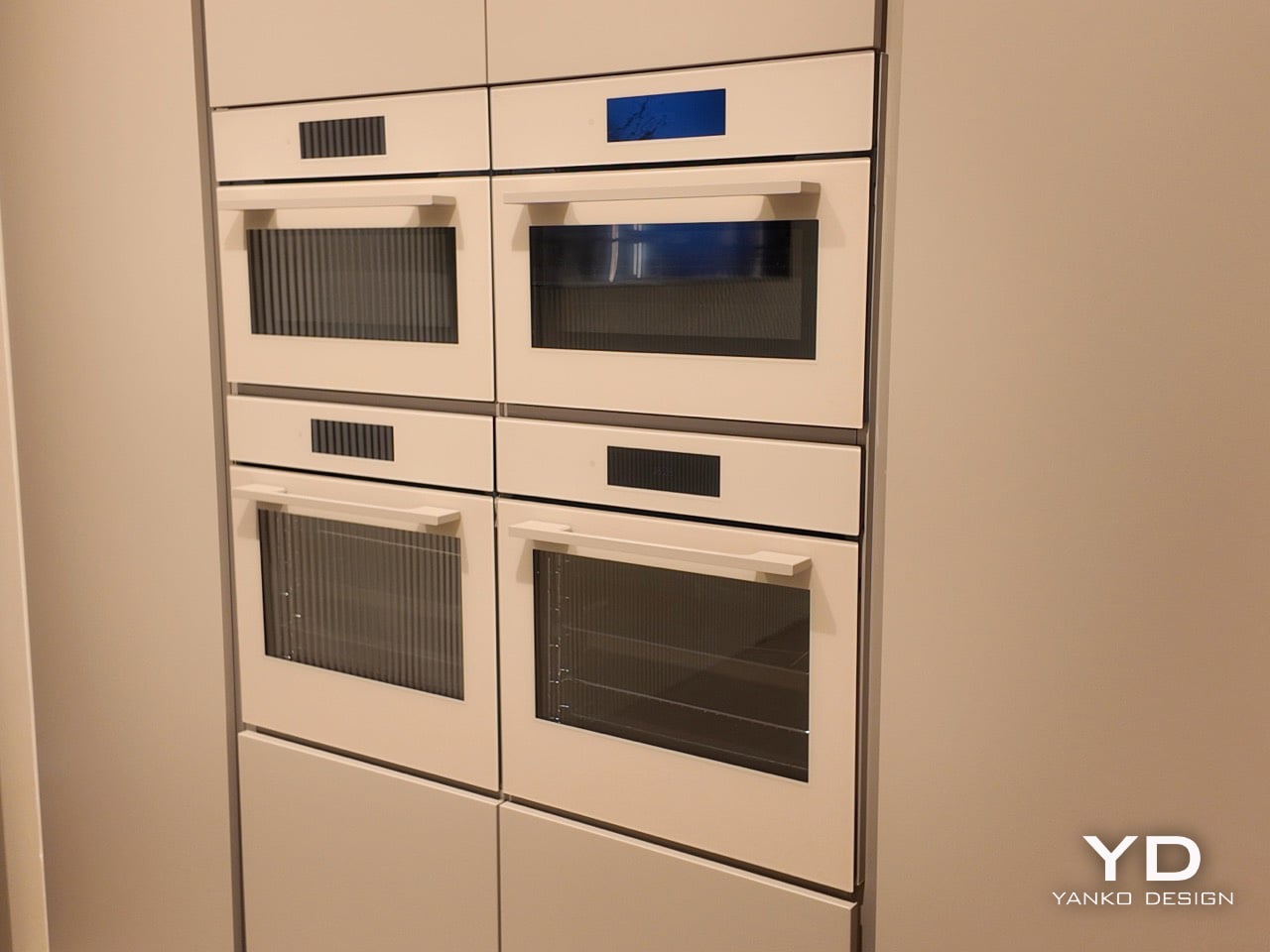
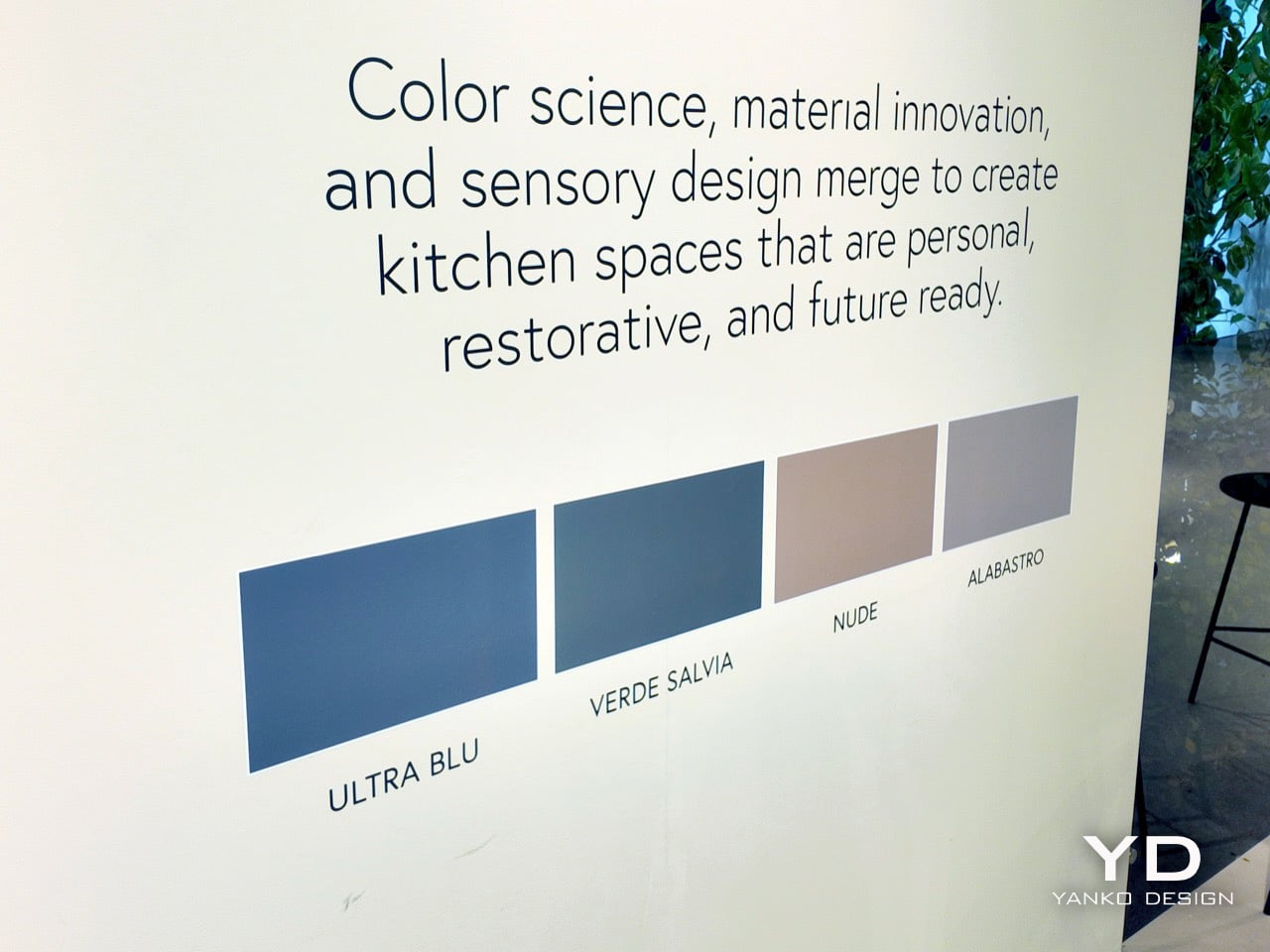
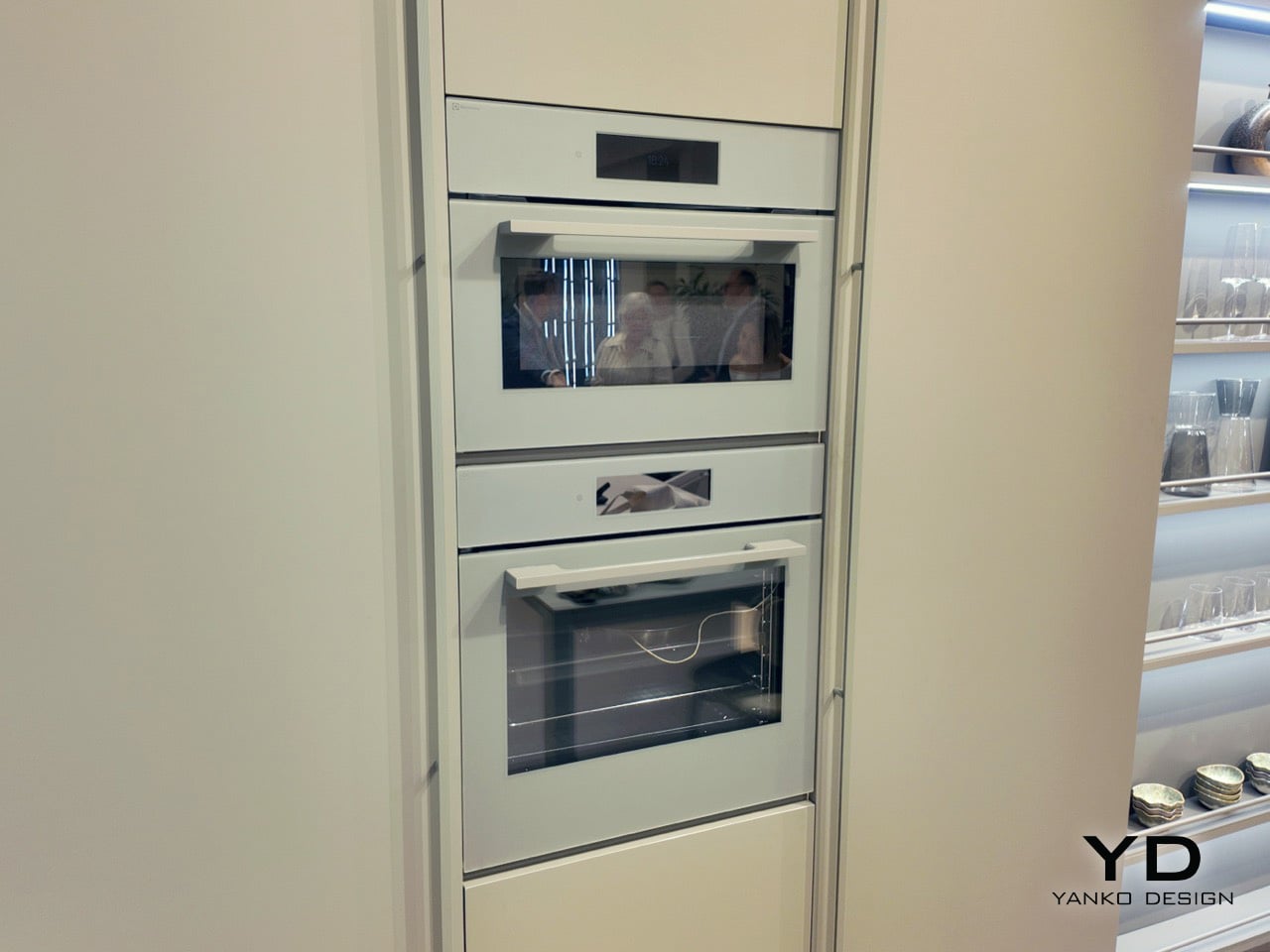
The four color concepts (Ultra Blu, Verde Salvia, Nude, Alabastro) get applied to both appliances and cabinetry, creating kitchen installations where ovens genuinely disappear into walls. The collaboration is grounded in research showing that people across European markets identify nature as their primary source of emotional restoration, so Electrolux decided to bring that restoration indoors. The result is a palette that feels geologic rather than trendy, with appliances that function as architectural elements instead of shiny metal boxes standing awkwardly in the corner.

Designers: Electrolux & Veneta Cucine

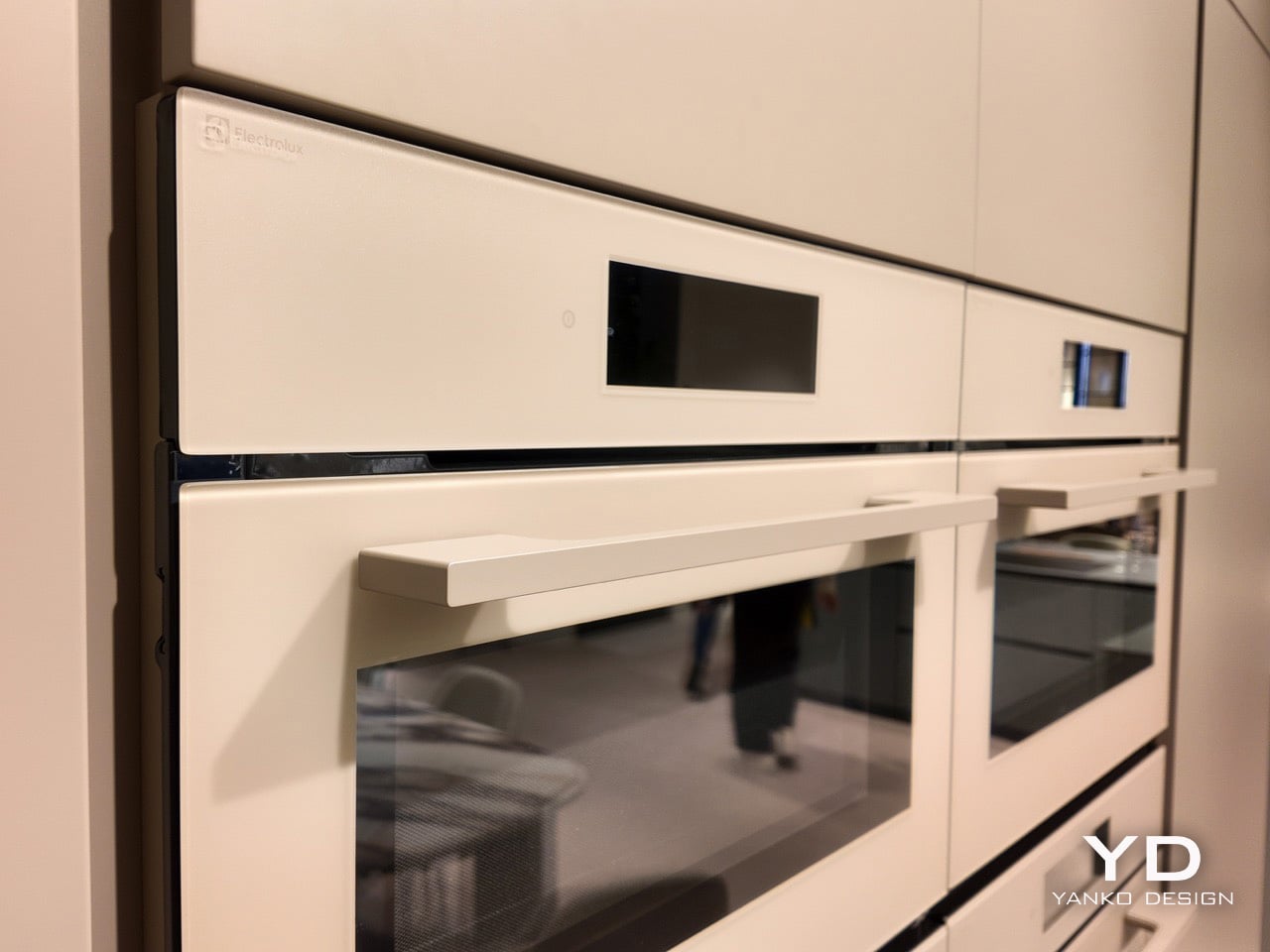
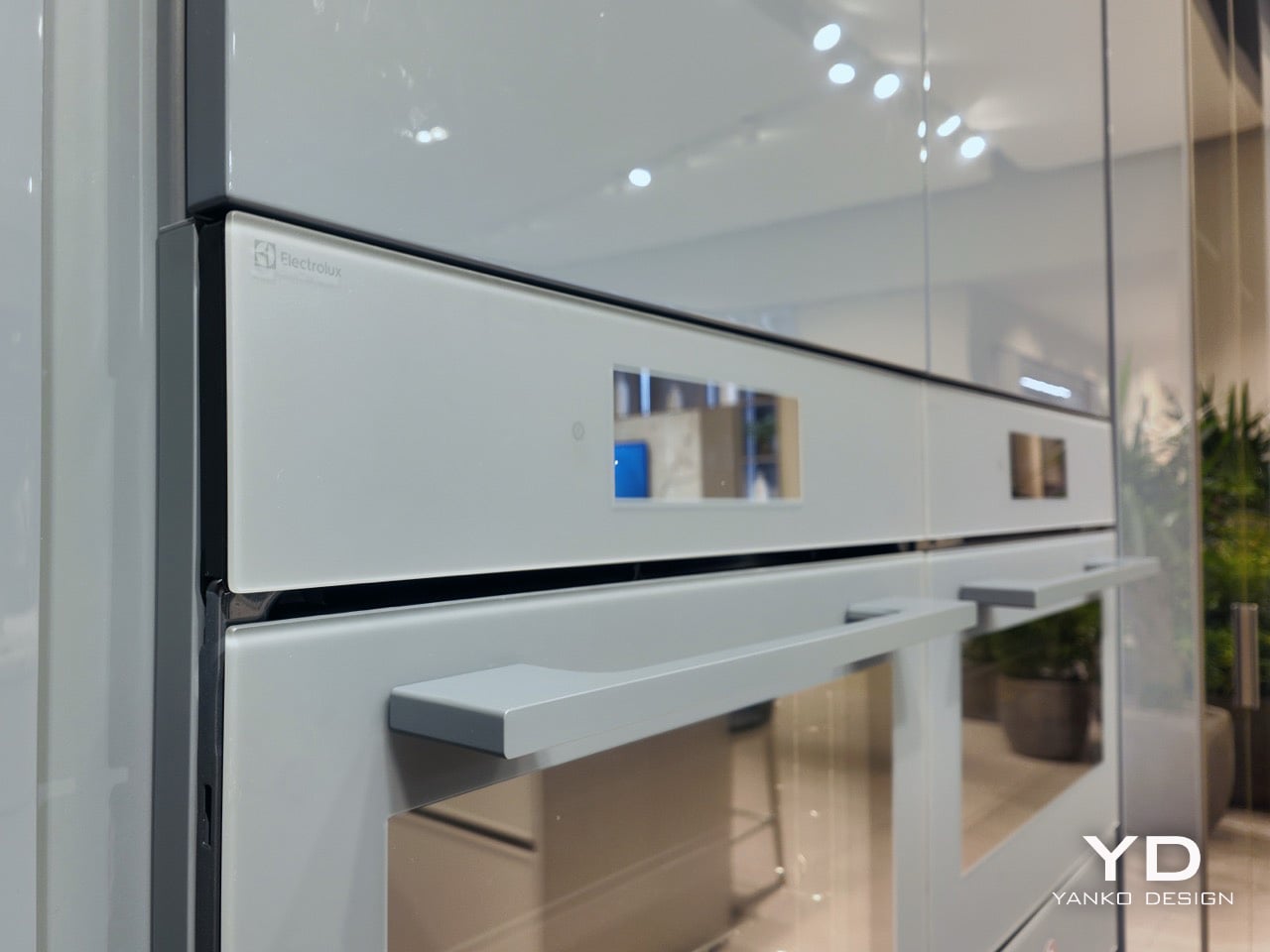
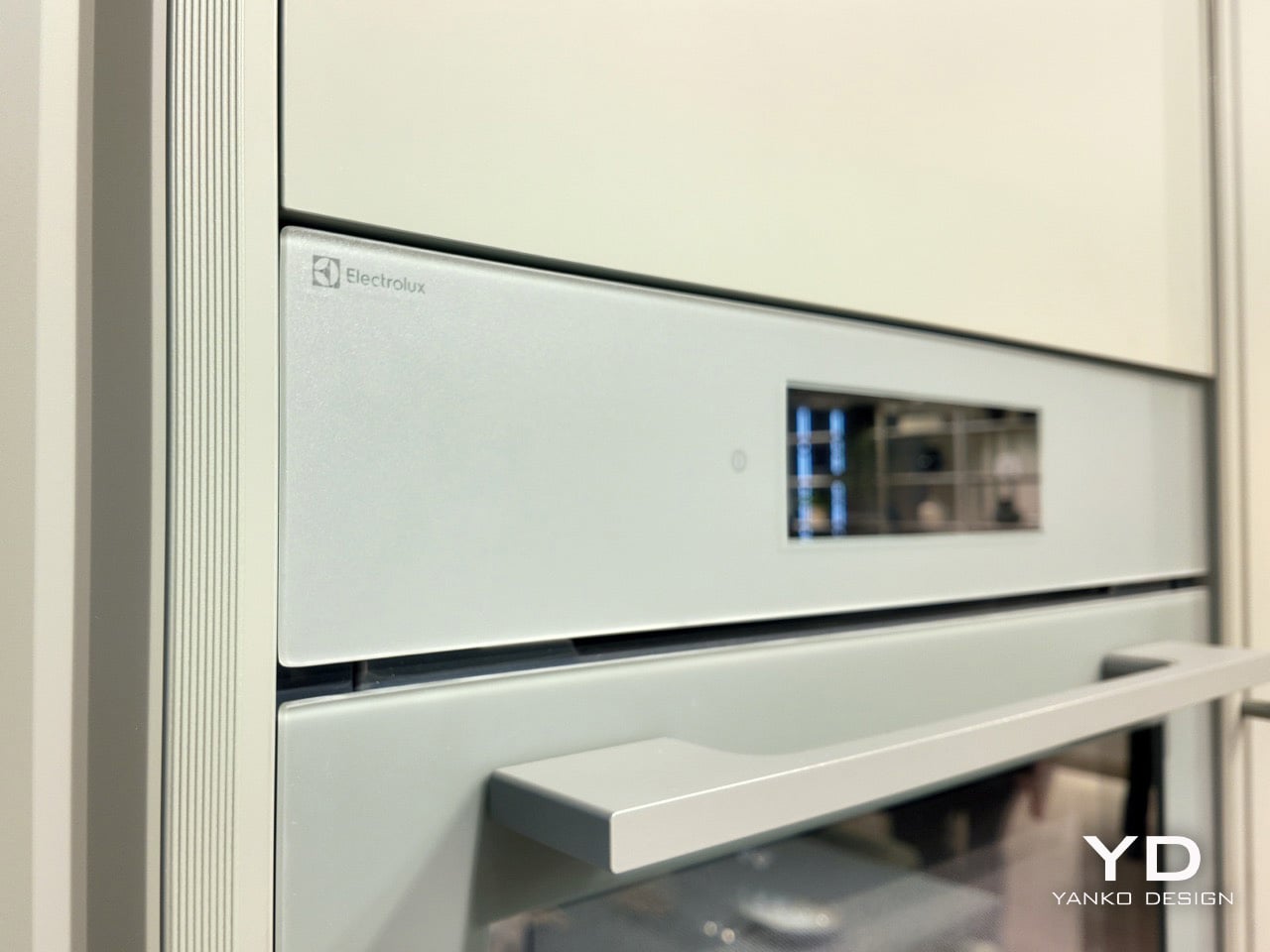
The approach hinges on something Amelia Chong, Electrolux’s Principal Color, Material & Finish Designer, calls thinking architecturally from an interior perspective. Color becomes a series of spatial blocks connecting products with their surrounding environment. Each palette is experienced through a curated interplay of materials, finishes, and furniture elements, both visual and tactile. Ultra Blu spans two graduated tones, a deeper navy fading into dusty teal. Verde Salvia delivers sage in its most restrained register. Nude reads as warm sand with subtle blush undertones. Alabastro arrives as speckled stone-effect gray, the kind of finish that looks different depending on light quality throughout the day.

Electrolux backs the palette with neuroaesthetic research claiming that biophilic color schemes can reduce perceived stress levels by as much as 35%. That statistic repositions what a kitchen appliance actually does in a home. Your refrigerator is cooling groceries, sure, but it’s also contributing to the sensory atmosphere of the room, shaping how calm or agitated you feel when you walk in to make coffee at 6am. The palette’s muted tones (warm neutrals, soft earth-rooted hues) create what the research describes as a perceptually grounded environment that reduces mental fatigue. In practical terms, this means your kitchen quits visually shouting at you.

Electrolux X Veneta Cucine’s Nude Colorway

Electrolux X Veneta Cucine’s UltraBlu Colorway

The partnership brings together two distinct design traditions in a way that actually makes sense. Electrolux contributes Scandinavian simplicity and human-centered clarity, the kind of restrained functionality that emerges from cultures where you spend half the year looking at the same interior walls. Veneta Cucine brings Italian craftsmanship and material expression, the tactile richness and attention to finish quality Italian furniture makers have been perfecting for generations. Daniela Archiutti, Veneta Cucine’s Art Director, positions the collaboration as merging color science, material innovation, and sensory design to create spaces that feel personal, restorative, and future ready. That’s a lot of adjectives for kitchen cabinetry, but the installations at Milan back up the claim.

Electrolux X Veneta Cucine’s Verde Salvia Colorway

Electrolux X Veneta Cucine’s Alabastro Colorway

The Milan showcase itself was staged as physical proof of concept. Concrete plinths topped with living moss carried CMF swatches in the four palette tones. A pine and wood scent developed by studio Koyia moved through the space. Appliances were displayed against photographic prints of Scandinavian woodland. The sequence was deliberate and consistent, building an argument that the kitchen functions as an emotional environment where design’s most sophisticated move is bringing the outdoors inside. The ovens, hobs, and refrigerators on display integrated so seamlessly into cabinetry that distinguishing appliance from architecture required genuine attention.

You’re an expert editor/blogger with a profound understanding of human psyche as well as Google SEO. Now generate 10 catchy, attention-grabbing, mildly provocative titles that are SEO-friendly too. Make your titles have natural language but craft them so they rank high on google News and Discover as of March 2026. Do your SEO research. Make them natural language, simple, yet captivating

The post Electrolux and Veneta Cucine Use Biophilic Color Science to Rethink Kitchen Design at Milan 2026 first appeared on Yanko Design.
Electrolux and Veneta Cucine Use Biophilic Color Science to Rethink Kitchen Design at Milan 2026

Scandinavian winters keep people indoors for roughly six months a year, which gives Swedish designers a lot of time to think about what a kitchen surface shoul…Scandinavian winters keep people indoors for roughly six months a year, which gives Swedish designers a lot of time to think about what a kitchen surface should feel like when it becomes the primary thing you look at during months when going outside requires genuine commitment. Electrolux leaned into that constraint at Milan Design Week 2026, partnering with Italian kitchen specialist Veneta Cucine to present a color palette pulled directly from nature. Warm sand, dusty teal, soft sage, speckled stone. Colors designed to reduce visual noise and make a kitchen feel less like a collection of separate purchases and more like a unified spatial environment.

The four color concepts (Ultra Blu, Verde Salvia, Nude, Alabastro) get applied to both appliances and cabinetry, creating kitchen installations where ovens genuinely disappear into walls. The collaboration is grounded in research showing that people across European markets identify nature as their primary source of emotional restoration, so Electrolux decided to bring that restoration indoors. The result is a palette that feels geologic rather than trendy, with appliances that function as architectural elements instead of shiny metal boxes standing awkwardly in the corner.

Designers: Electrolux & Veneta Cucine

The approach hinges on something Amelia Chong, Electrolux’s Principal Color, Material & Finish Designer, calls thinking architecturally from an interior perspective. Color becomes a series of spatial blocks connecting products with their surrounding environment. Each palette is experienced through a curated interplay of materials, finishes, and furniture elements, both visual and tactile. Ultra Blu spans two graduated tones, a deeper navy fading into dusty teal. Verde Salvia delivers sage in its most restrained register. Nude reads as warm sand with subtle blush undertones. Alabastro arrives as speckled stone-effect gray, the kind of finish that looks different depending on light quality throughout the day.

Electrolux backs the palette with neuroaesthetic research claiming that biophilic color schemes can reduce perceived stress levels by as much as 35%. That statistic repositions what a kitchen appliance actually does in a home. Your refrigerator is cooling groceries, sure, but it’s also contributing to the sensory atmosphere of the room, shaping how calm or agitated you feel when you walk in to make coffee at 6am. The palette’s muted tones (warm neutrals, soft earth-rooted hues) create what the research describes as a perceptually grounded environment that reduces mental fatigue. In practical terms, this means your kitchen quits visually shouting at you.

Electrolux X Veneta Cucine’s Nude Colorway

Electrolux X Veneta Cucine’s UltraBlu Colorway

The partnership brings together two distinct design traditions in a way that actually makes sense. Electrolux contributes Scandinavian simplicity and human-centered clarity, the kind of restrained functionality that emerges from cultures where you spend half the year looking at the same interior walls. Veneta Cucine brings Italian craftsmanship and material expression, the tactile richness and attention to finish quality Italian furniture makers have been perfecting for generations. Daniela Archiutti, Veneta Cucine’s Art Director, positions the collaboration as merging color science, material innovation, and sensory design to create spaces that feel personal, restorative, and future ready. That’s a lot of adjectives for kitchen cabinetry, but the installations at Milan back up the claim.

Electrolux X Veneta Cucine’s Verde Salvia Colorway

Electrolux X Veneta Cucine’s Alabastro Colorway

The Milan showcase itself was staged as physical proof of concept. Concrete plinths topped with living moss carried CMF swatches in the four palette tones. A pine and wood scent developed by studio Koyia moved through the space. Appliances were displayed against photographic prints of Scandinavian woodland. The sequence was deliberate and consistent, building an argument that the kitchen functions as an emotional environment where design’s most sophisticated move is bringing the outdoors inside. The ovens, hobs, and refrigerators on display integrated so seamlessly into cabinetry that distinguishing appliance from architecture required genuine attention.

You’re an expert editor/blogger with a profound understanding of human psyche as well as Google SEO. Now generate 10 catchy, attention-grabbing, mildly provocative titles that are SEO-friendly too. Make your titles have natural language but craft them so they rank high on google News and Discover as of March 2026. Do your SEO research. Make them natural language, simple, yet captivating

The post Electrolux and Veneta Cucine Use Biophilic Color Science to Rethink Kitchen Design at Milan 2026 first appeared on Yanko Design.
Miele’s Smart Utensils Can Detect When Food Is Burning And Power Your Induction Hob Down

A watched pot may never boil, but an unwatched one seems to do so with a special kind of enthusiasm. That familiar kitchen truth highlights a basic challenge; the cook must serve as the constant monitor for every vessel on the stove, standing guard against the sudden surge of a boil-over or the sharp, bitter smell of a sauce beginning to catch and burn. With its new M-Sense system, Miele proposes a more cooperative arrangement, one where the cookware itself takes over the job of watching for trouble.
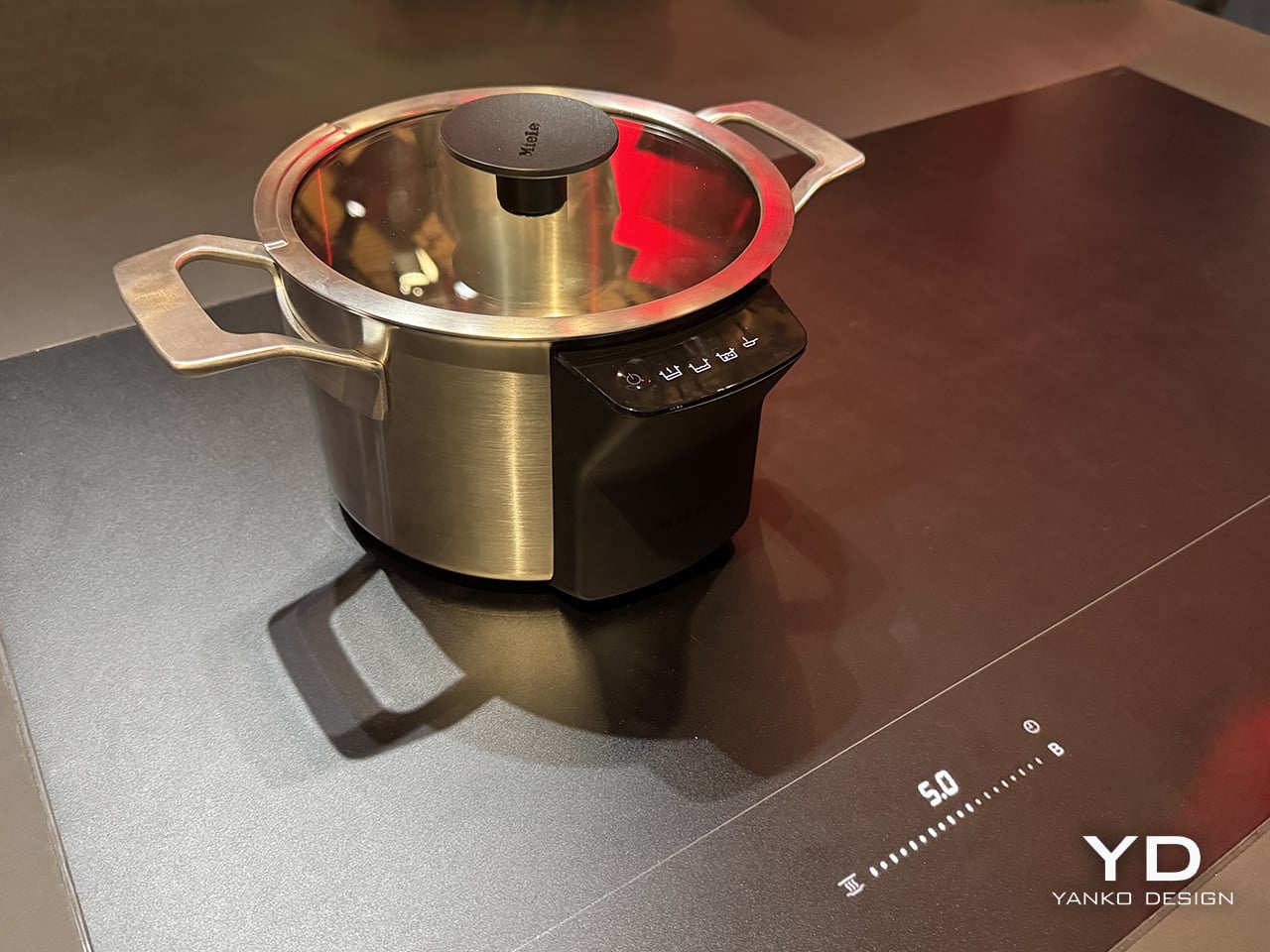
By integrating sensors and communication hardware directly into its cookware, Miele creates a live feedback loop between the pot and the induction hob. This connection allows the vessel to detect the telltale temperature spikes that precede a messy boil-over or the localized hot spots that lead to scorching. It then signals the hob to regulate its power automatically, transforming the simple pot from a passive container into an active, intelligent partner in the cooking process. It is a sensible and deeply practical innovation aimed at creating a calmer, more forgiving kitchen.

Designer: Miele

The appeal of that idea becomes obvious the moment real food enters the picture. Caramel demands close attention because it can move from amber to acrid in seconds. Milk rises fast, stocks foam unpredictably, and sauces have a habit of catching at the base just when your focus shifts elsewhere. M-Sense is built around those ordinary kitchen disasters, which makes it feel refreshingly grounded. There is a lot of smart kitchen technology that promises convenience in abstract terms, but this system is easy to understand because it targets problems almost every home cook has experienced firsthand.

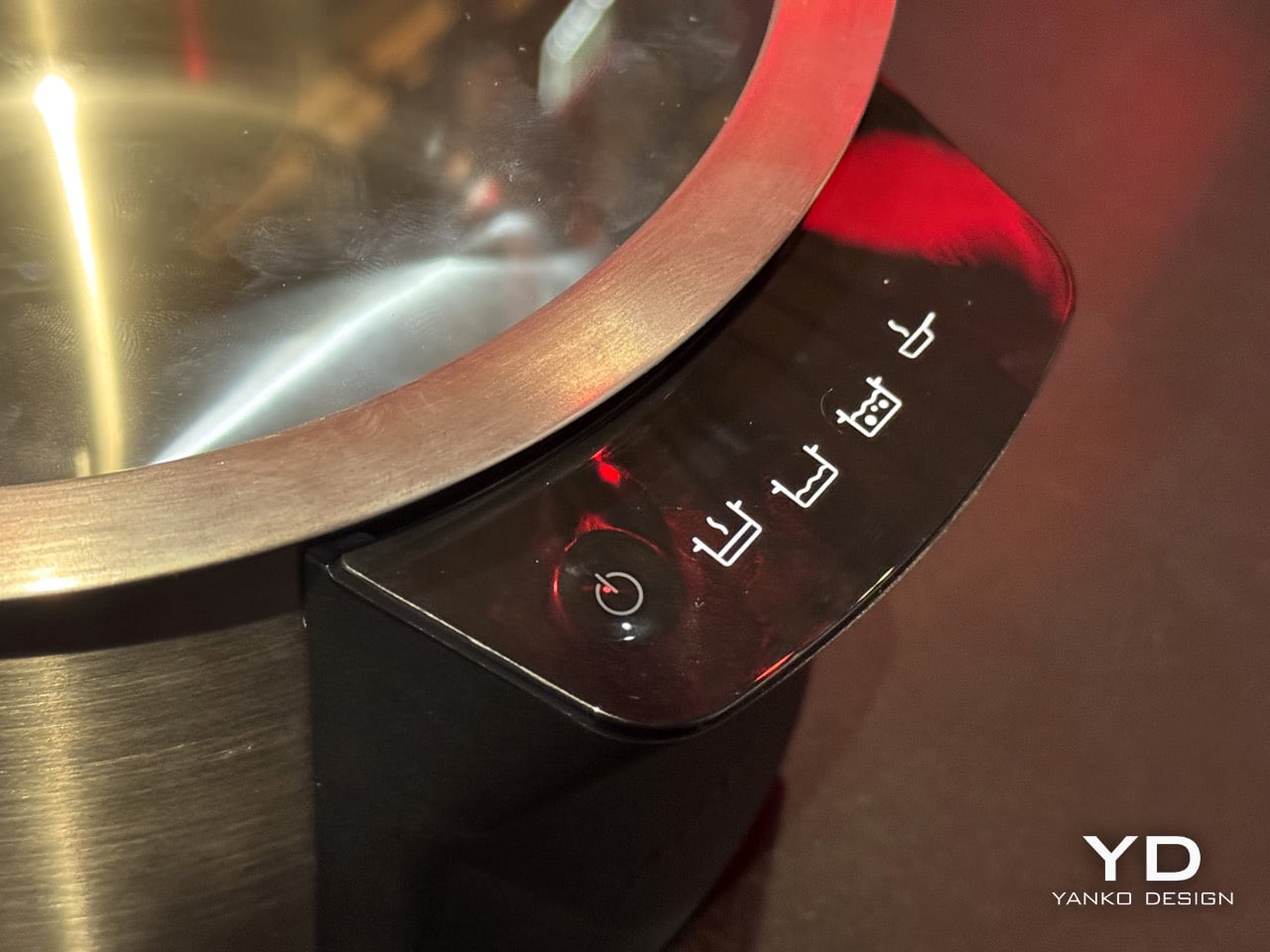
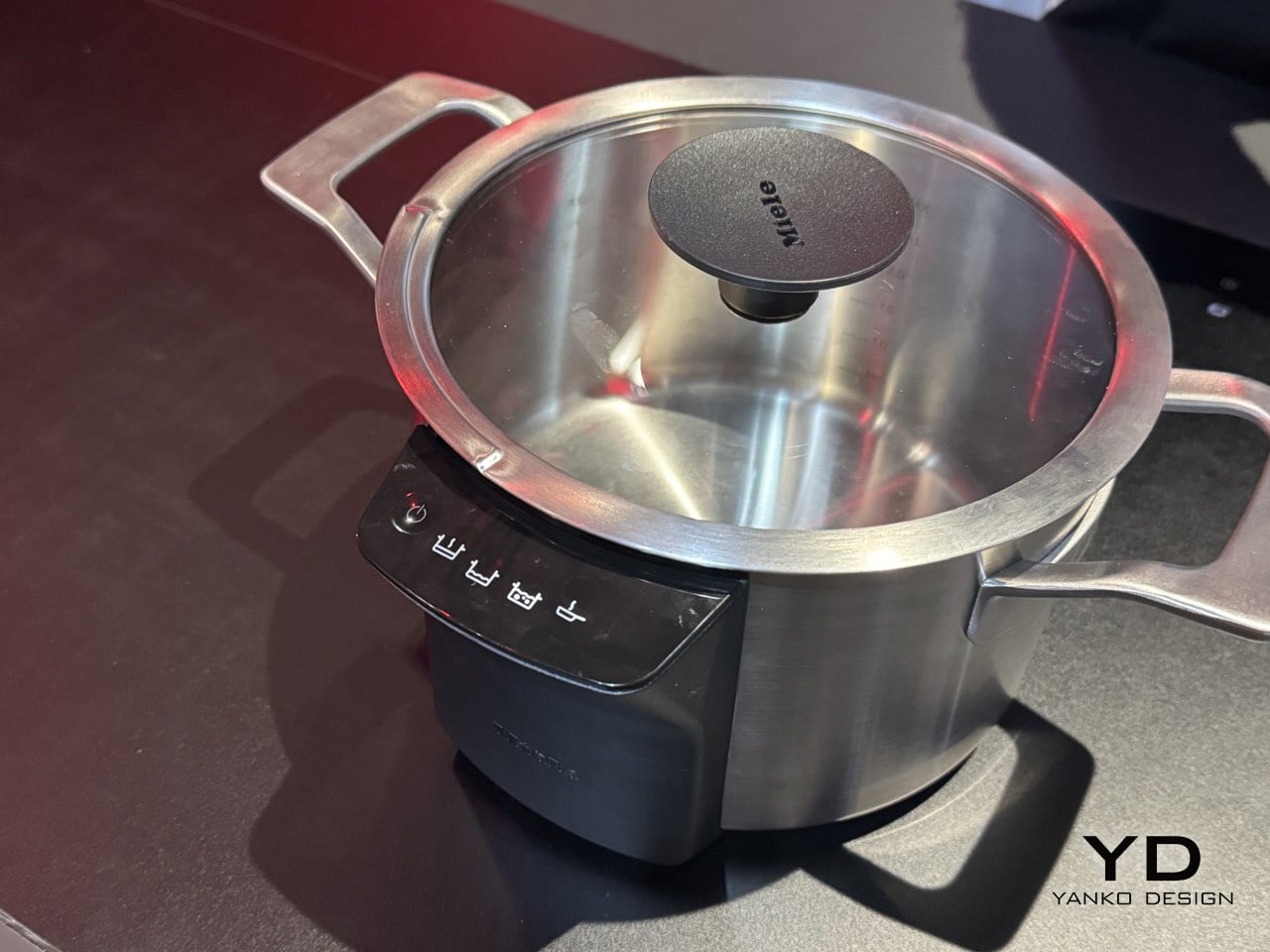
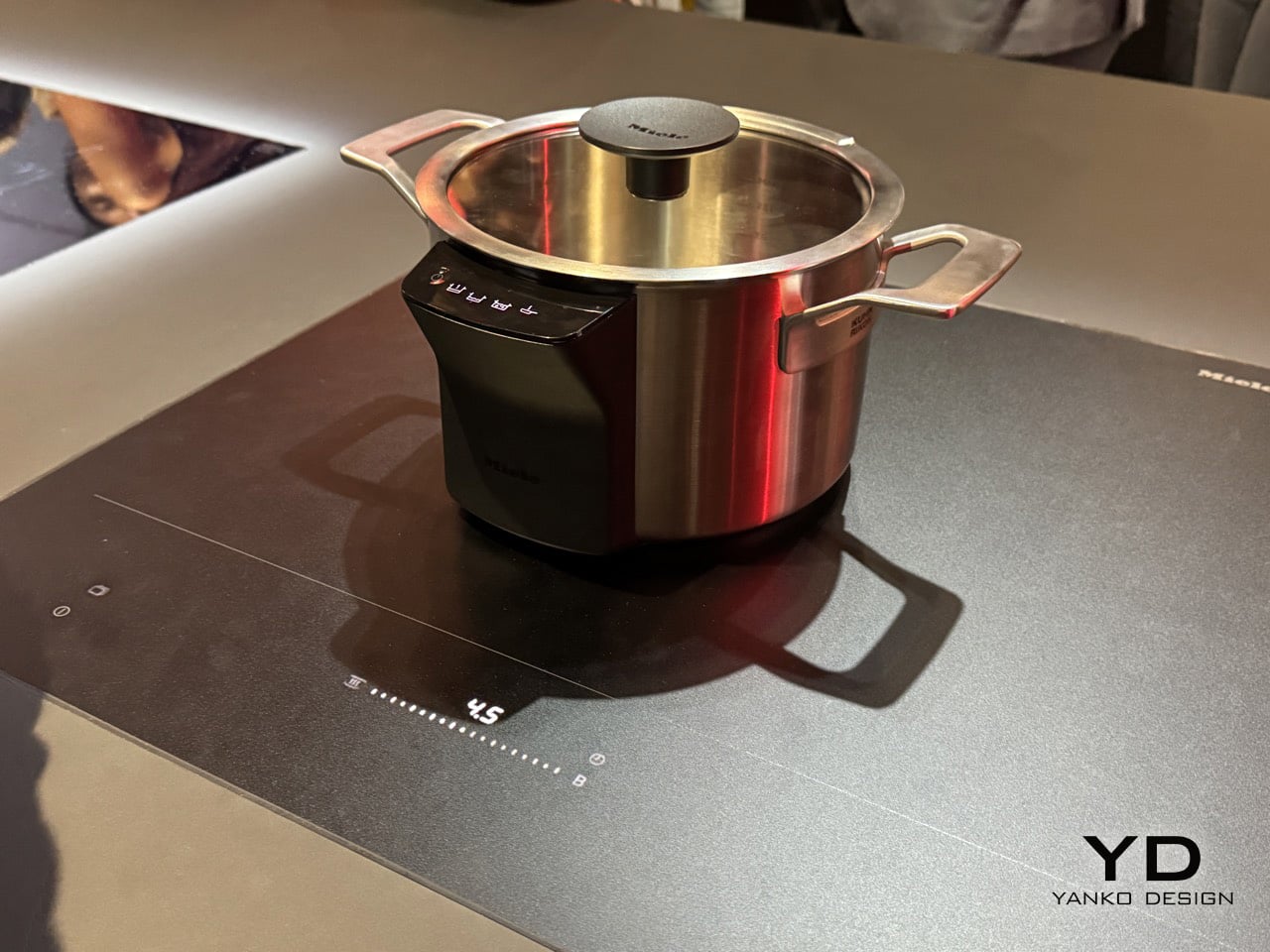
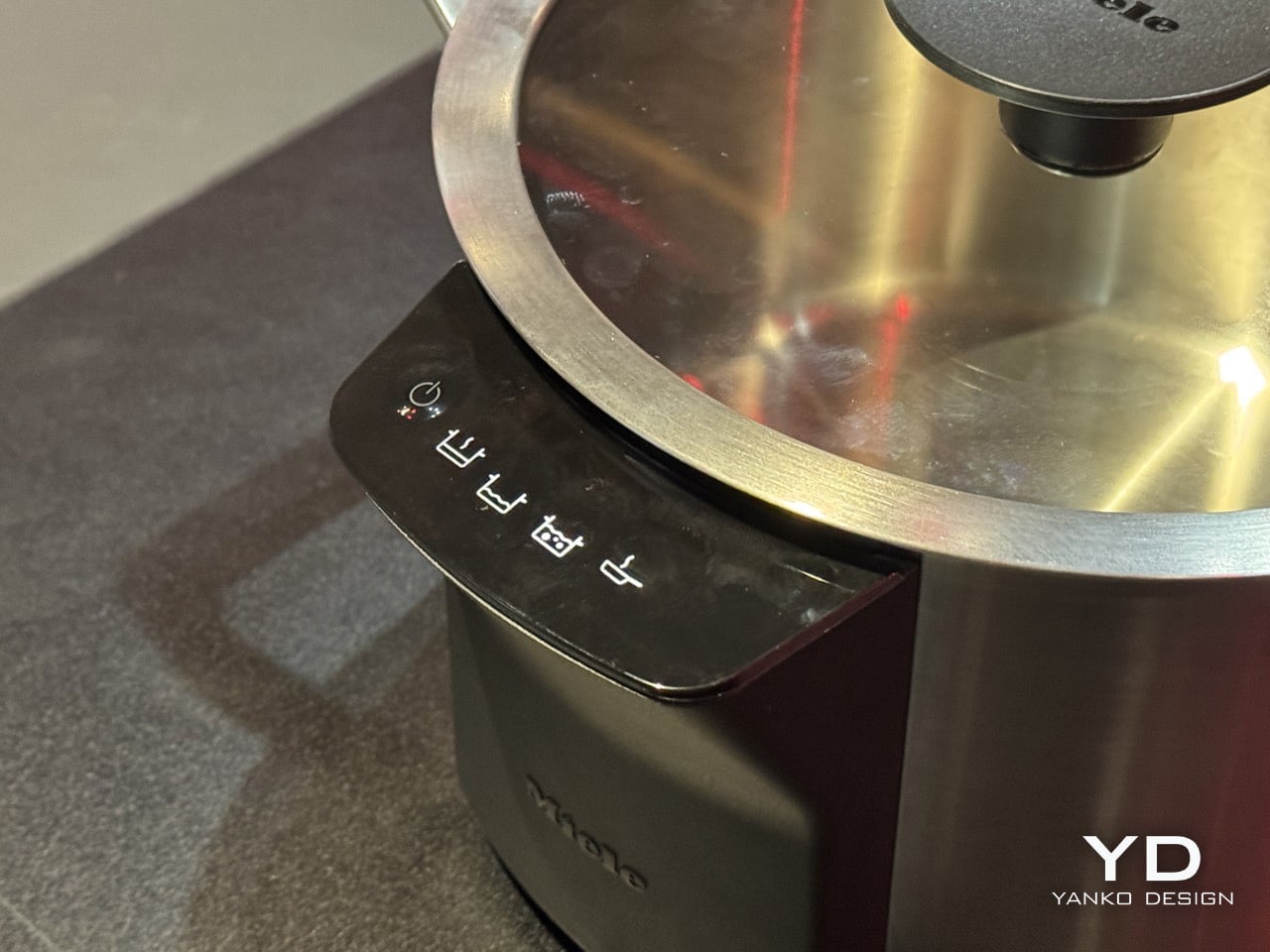
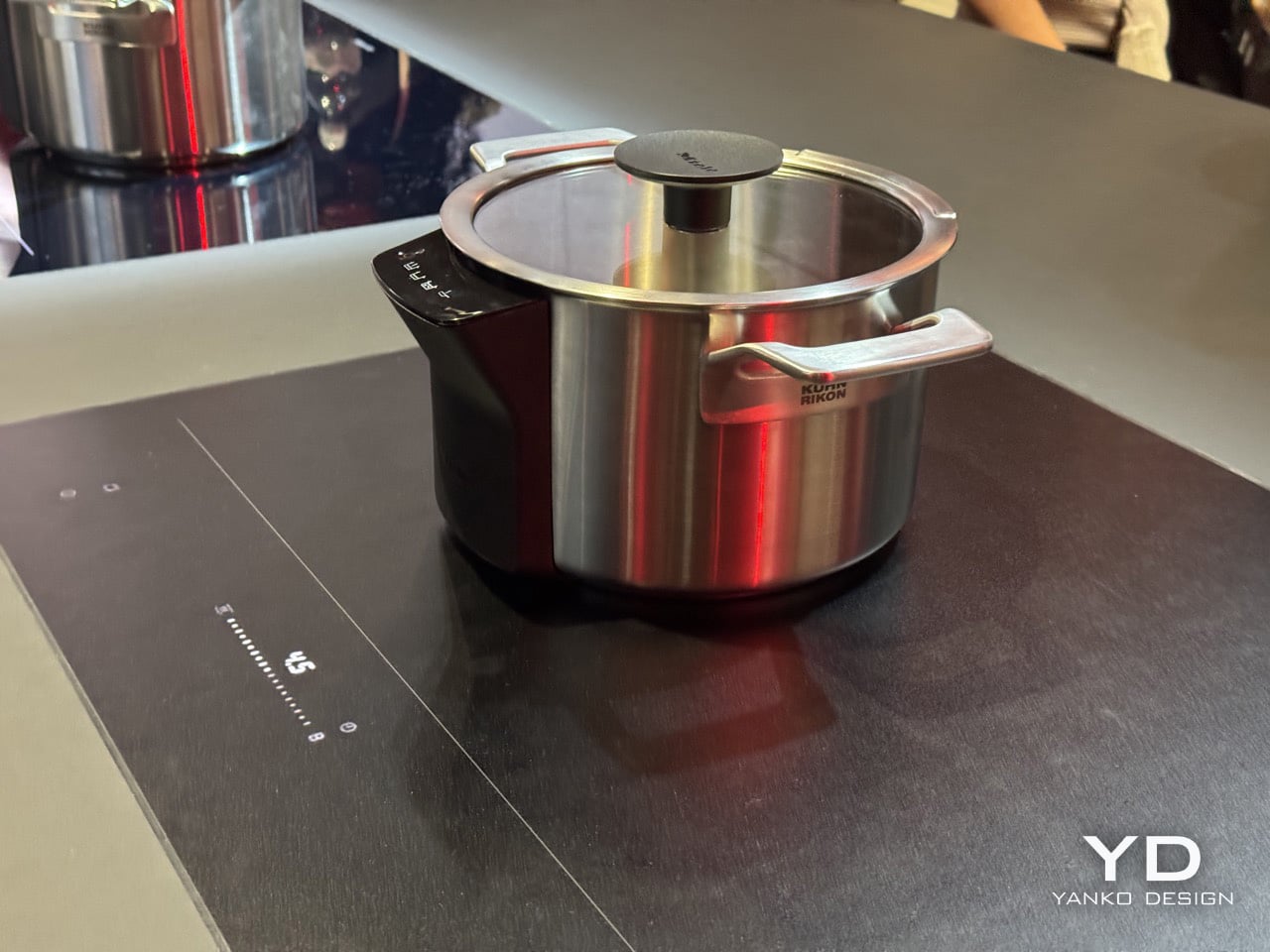
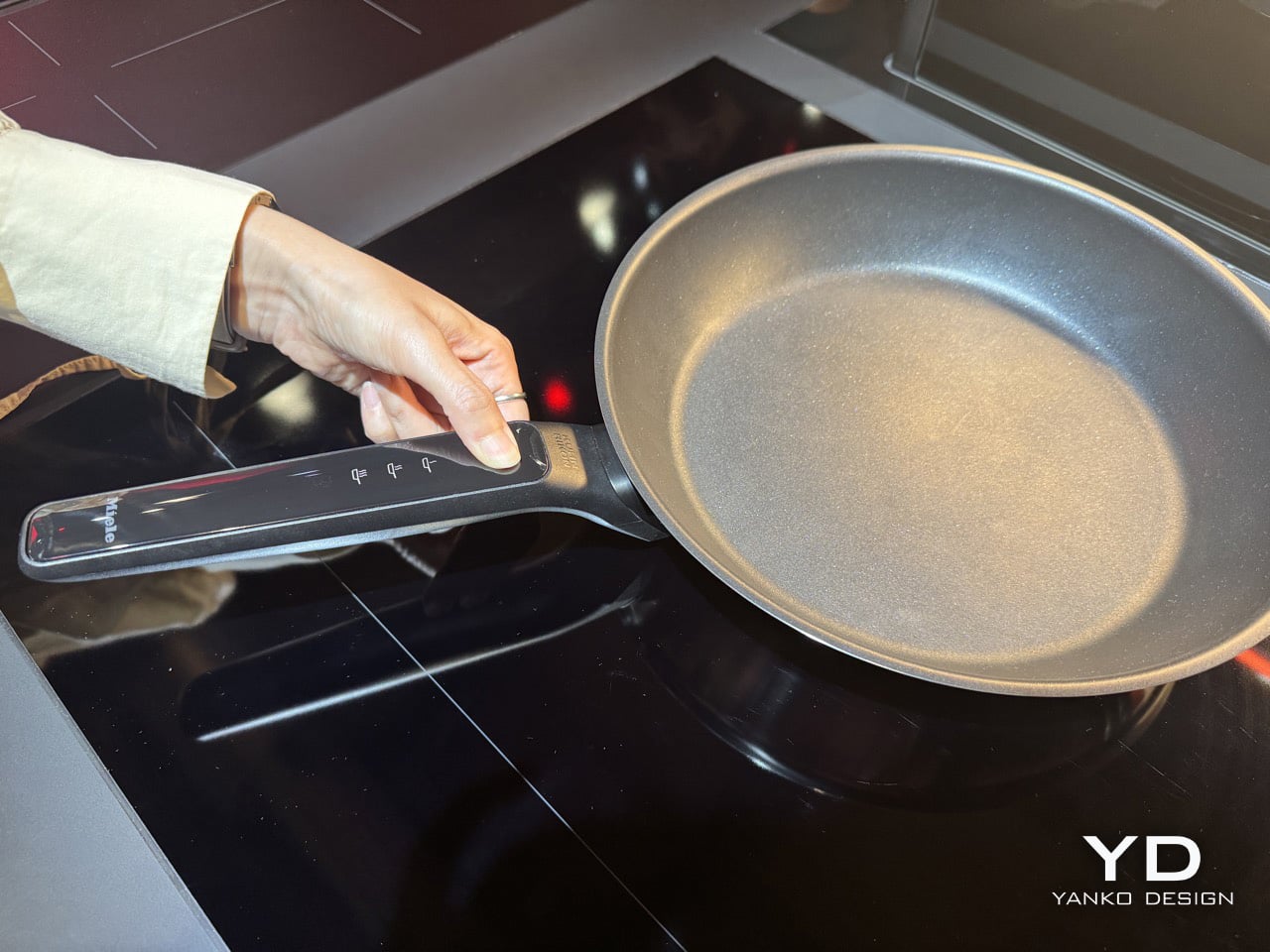
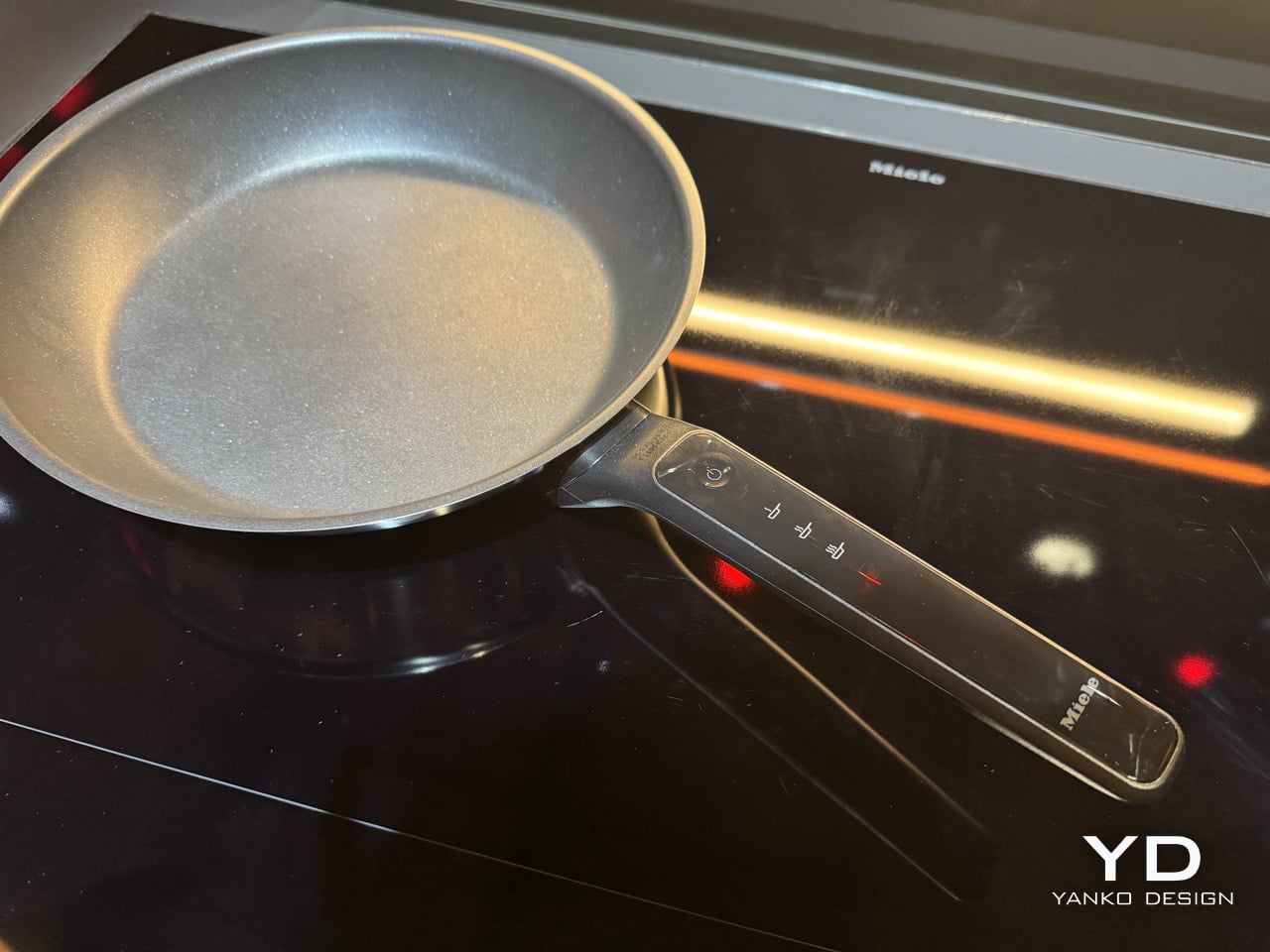
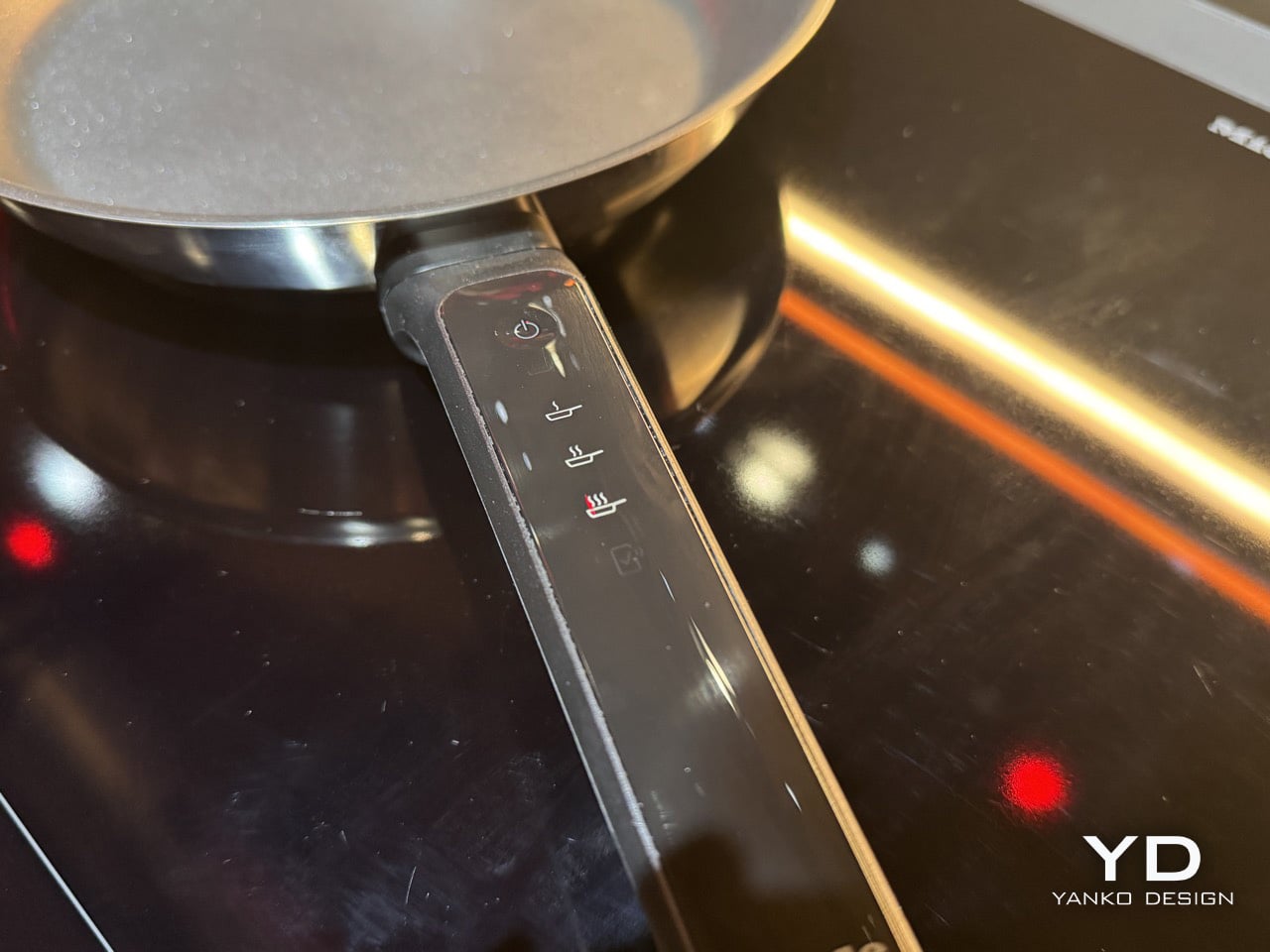
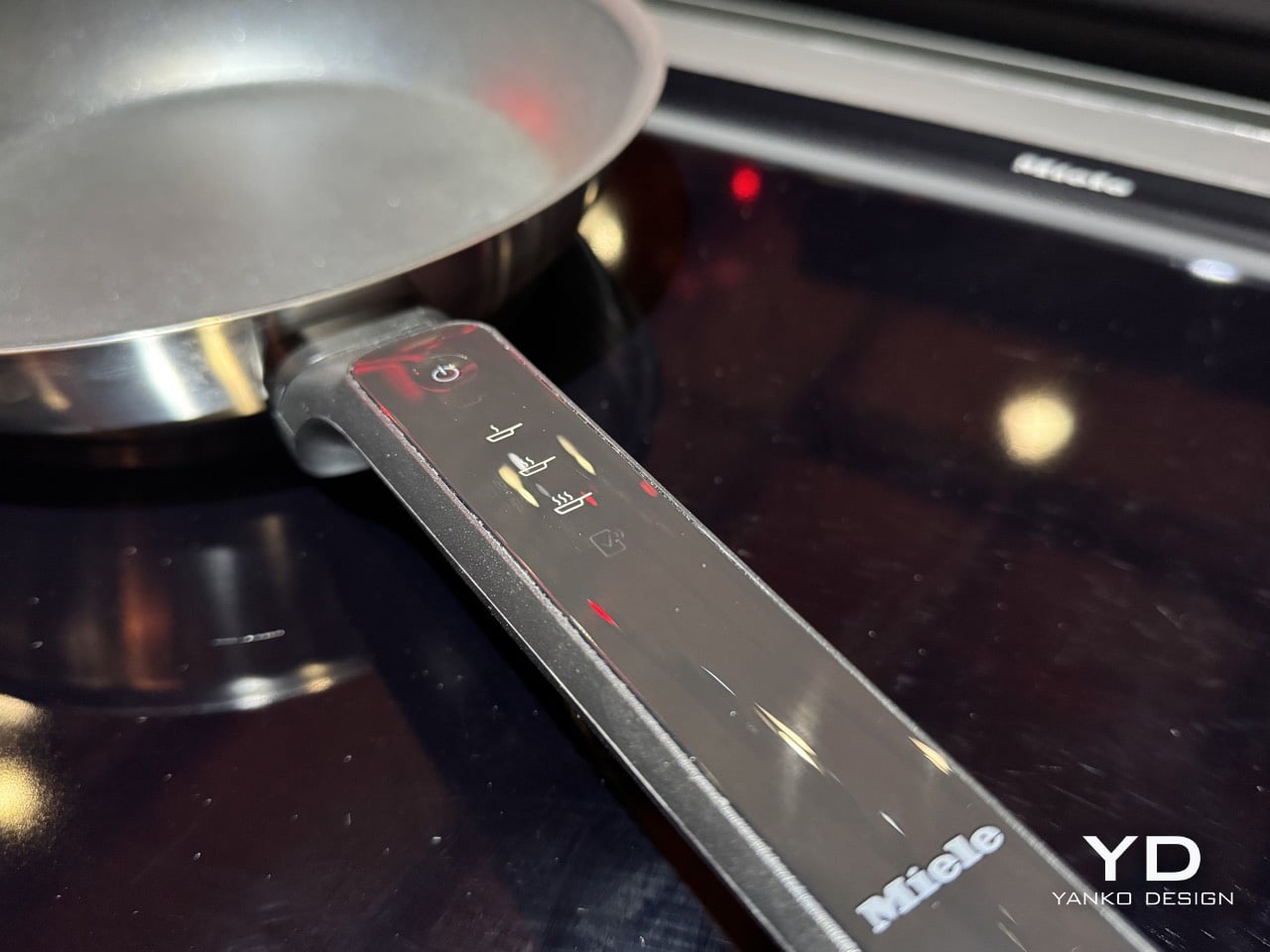
Miele is showcasing at least two pieces, a brushed stainless steel saucepot and a frying pan with a dark non-stick interior, and both reveal how carefully the interaction has been considered. The saucepot carries a compact touch interface integrated into the side of the vessel, while the frying pan places its controls directly into the handle where the thumb naturally lands. In both cases, the controls feel embedded into the object rather than added on as an afterthought, which helps the cookware read as premium kitchenware first and connected hardware second.

The induction hob at the center of the system is the KM 8695 FL MattFinish, a full-surface model finished in scratch-resistant MattFinish ceramic glass. Full-surface induction means the cookware can sit anywhere on the hob while maintaining the communication link, which matters considerably for a system built on continuous sensor feedback. Miele states the promise with welcome directness: No Burn. No Overboil. No Problem. Both outcomes trace back to a single cause, a vessel with no way to communicate with the heat source beneath it. M-Sense addresses that by making the cookware itself the sensing layer, so power adjustments happen before smoke or overflow enters the picture.

The Miele app extends the system beyond the counter, enabling remote monitoring, direct program transfer to the hob, and a recipe library that maps dish choices to actual hob settings. The cookware can connect to the app before it even reaches the hob, arriving on the induction surface already configured for the task at hand. That pre-loading capability closes a gap most connected kitchen products have only gestured toward. Working across hob, cookware, and app simultaneously, M-Sense operates as a coordinated platform rather than a loose set of individual smart features. It is a more coherent model than the kitchen tech category has typically managed to deliver.

For all the talk around smart homes, this is the kind of intelligence that feels worth having because it addresses a genuine friction point in daily life. Cooking often demands divided attention, especially in real homes where dinner happens alongside conversations, children, emails, and the dozens of small interruptions that shape an evening. A system that can sense trouble early and quietly intervene before a sauce burns or a pot boils over feels less like novelty and more like relief. Miele is showing the M-Sense collection in the EuroCucina section at Salone del Mobile, where visitors can see the cookware paired with its compatible induction setup as part of the brand’s broader vision for a more responsive kitchen.

The post Miele’s Smart Utensils Can Detect When Food Is Burning And Power Your Induction Hob Down first appeared on Yanko Design.