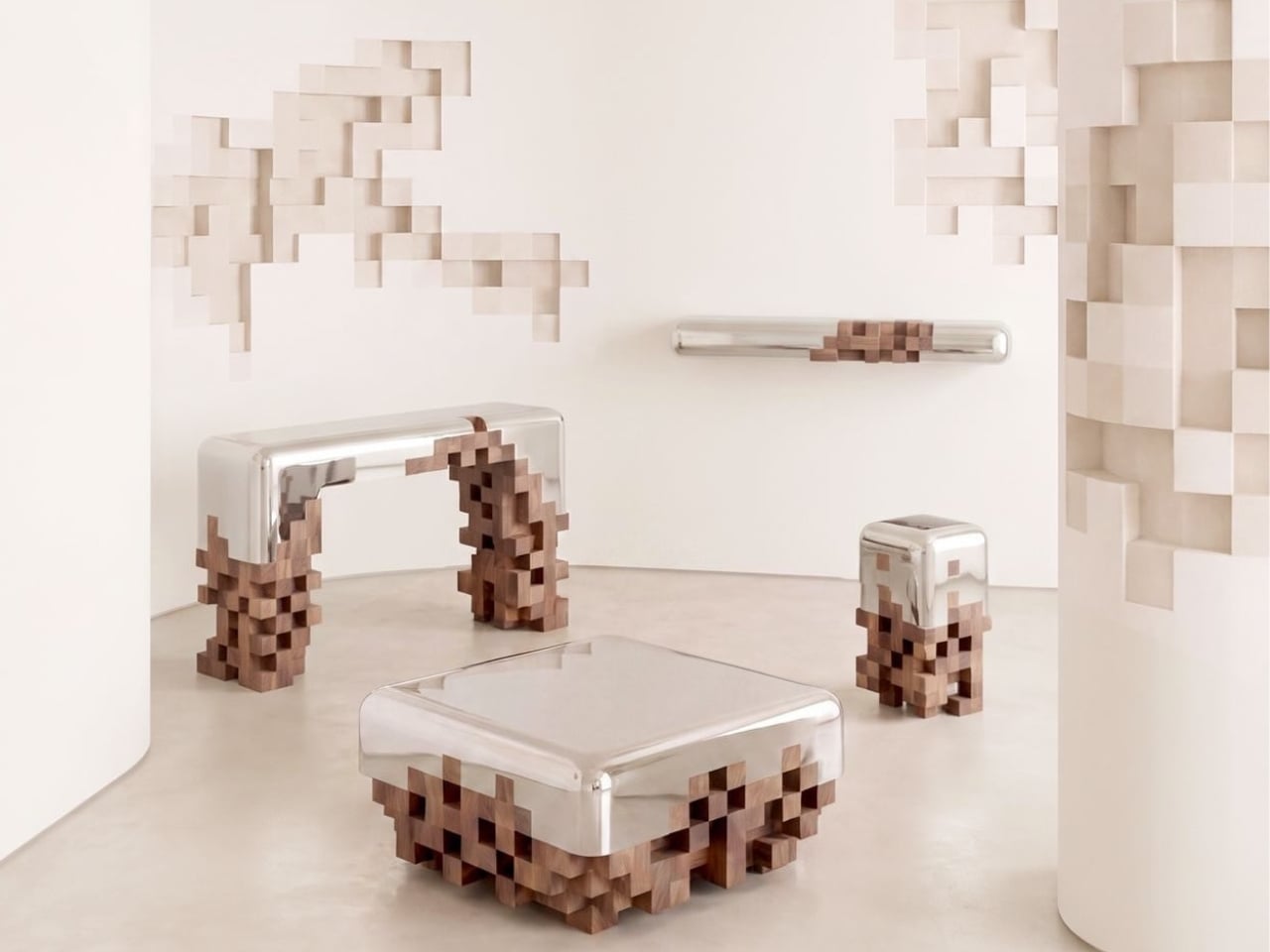
If you’ve ever looked at an old video game screenshot next to a 4K render and felt strangely moved by both, Alberto Essesi’s Ghost Collection might be the furniture version of that feeling. It’s a collection that sits right at the edge of two visual languages, digital and analog, raw and refined, and somehow makes that tension feel completely intentional.
Essesi, a designer whose portfolio spans robotics, vehicles, and collectible objects, built the Ghost Collection around a single, surprisingly poetic idea: the contrast between high resolution and low resolution. The pieces merge smooth, mirror-polished aluminum with solid walnut wood crafted into staggered, blocky forms that look unmistakably pixelated. Not as a gimmick. Not as nostalgia. But as a genuine material conversation about how two entirely different visual languages can share the same physical object.
Designer: Alberto Essesi
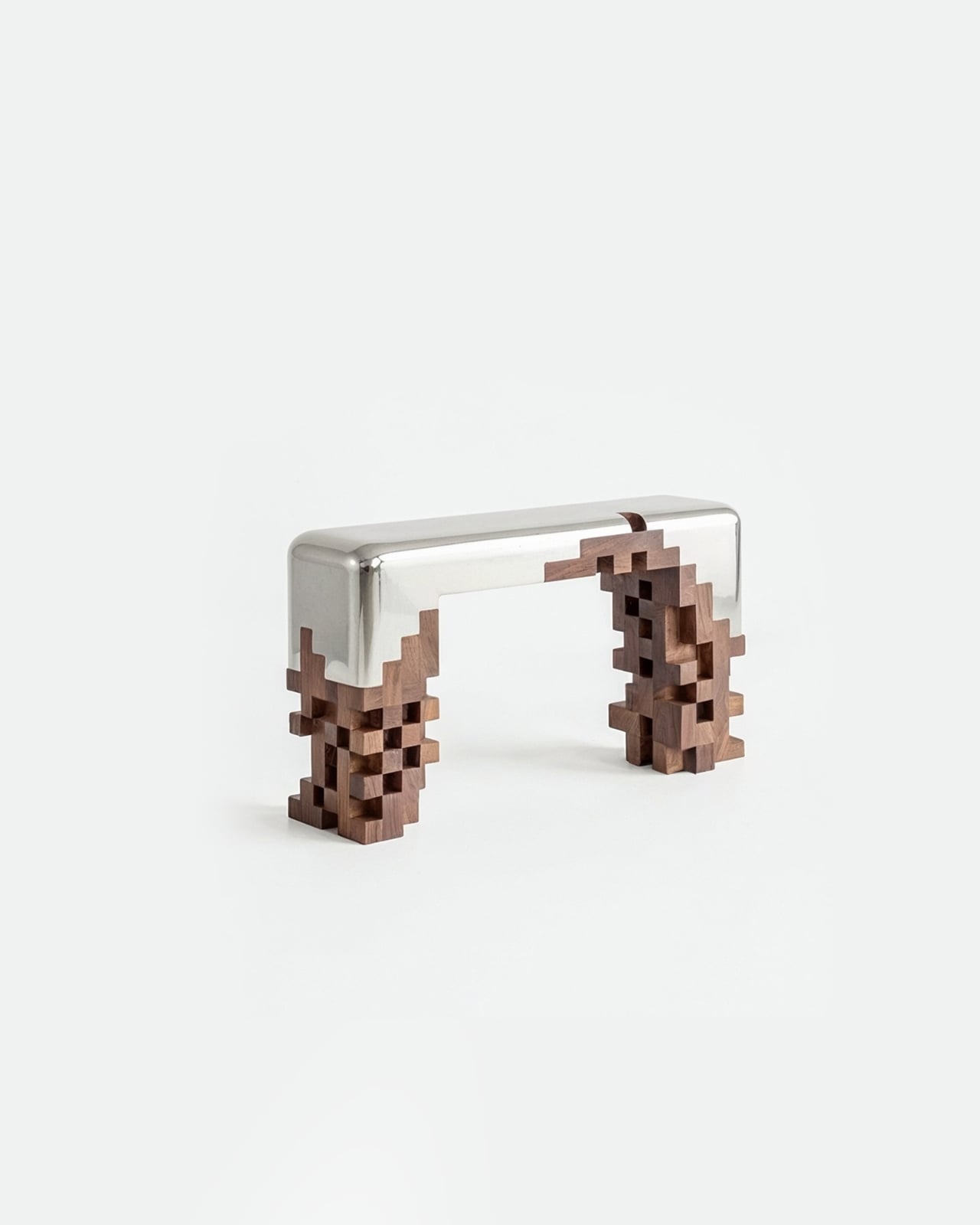
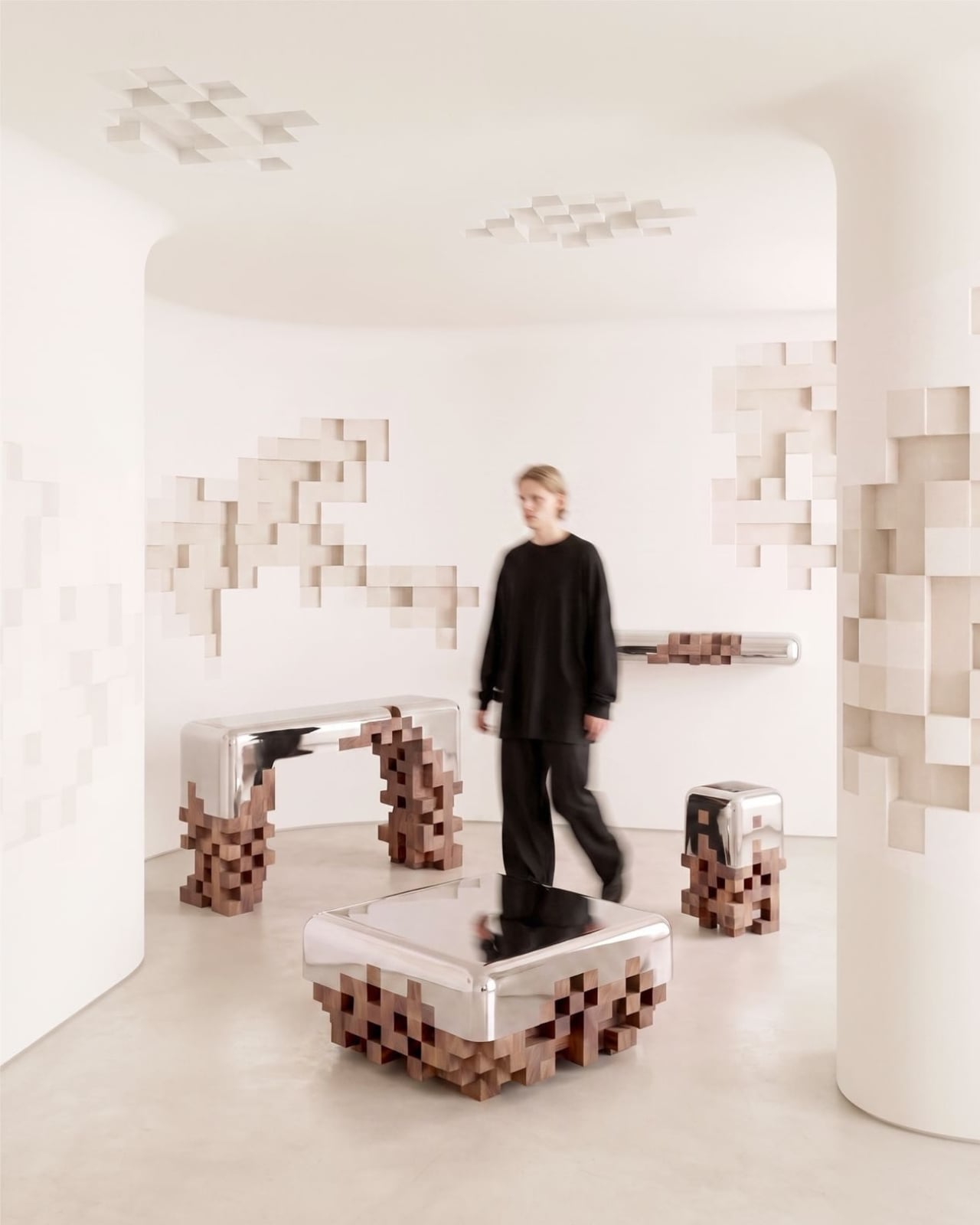
Looking at the console table, the aluminum top is sleek and almost liquid in its finish, all rounded edges and reflective calm. Then it simply dissolves downward into what looks like a freeze-frame of a video game rendering, where geometry hasn’t fully loaded yet. The legs don’t look broken. They look deliberate. Like the pixel isn’t an error in the process but the process itself.
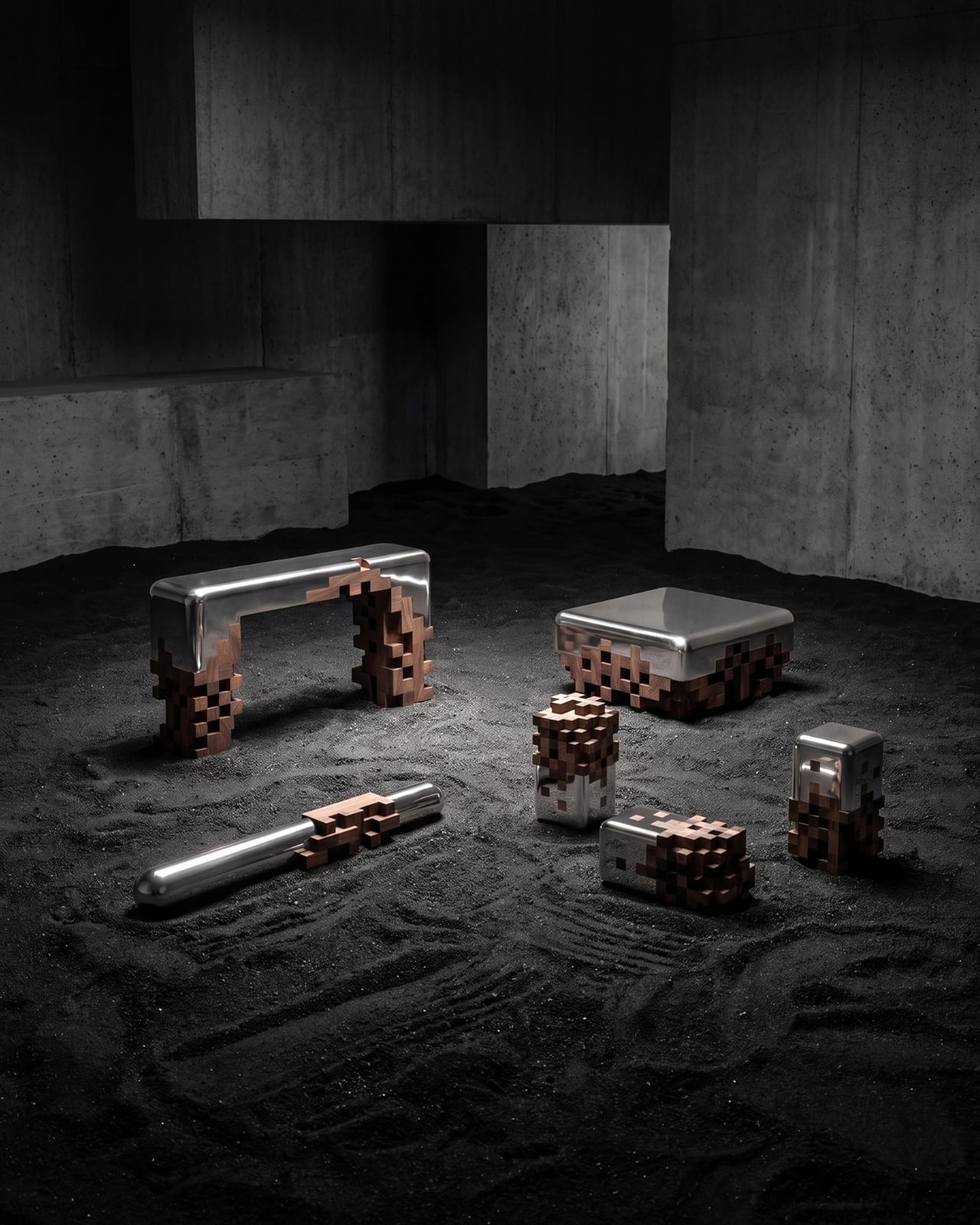
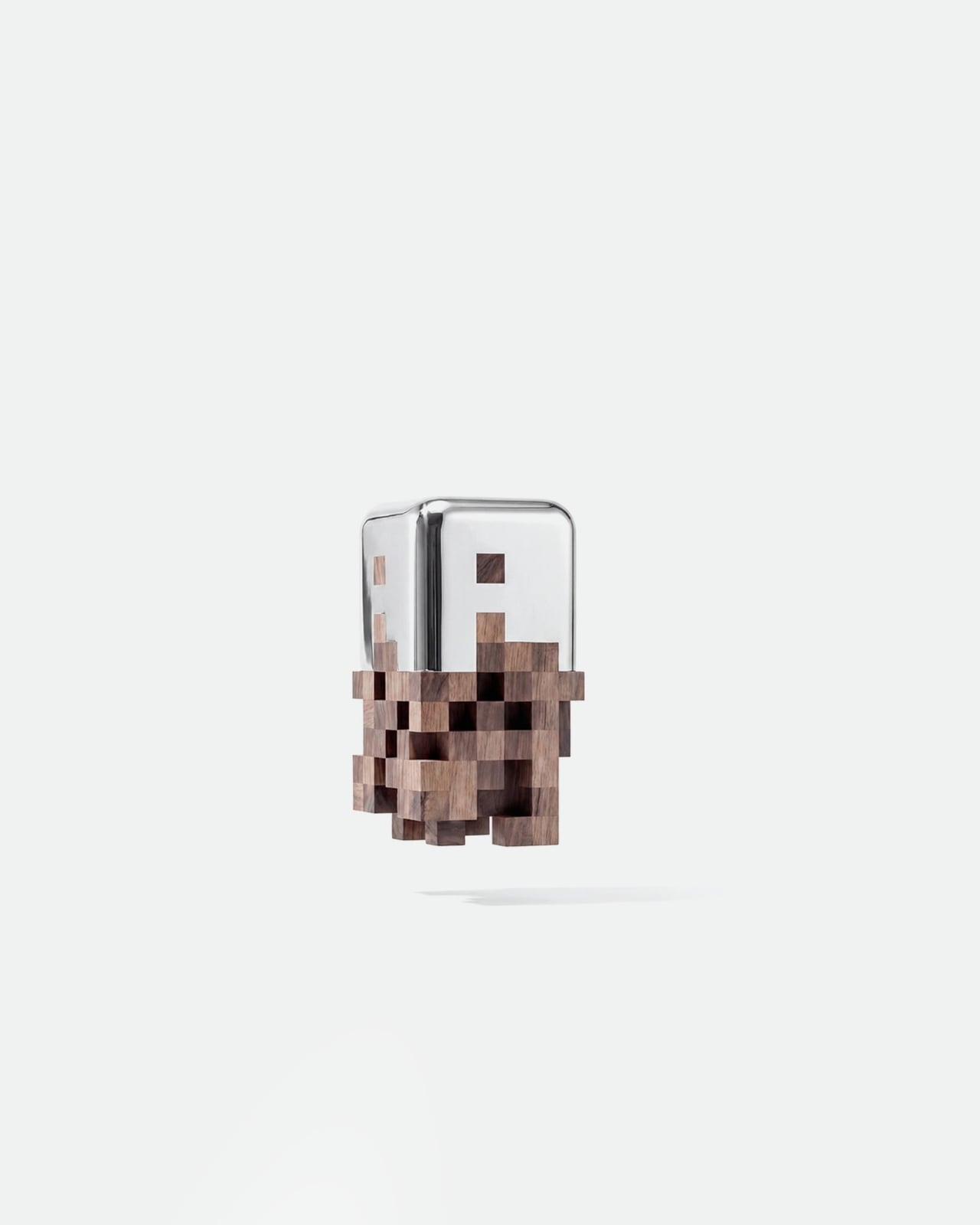
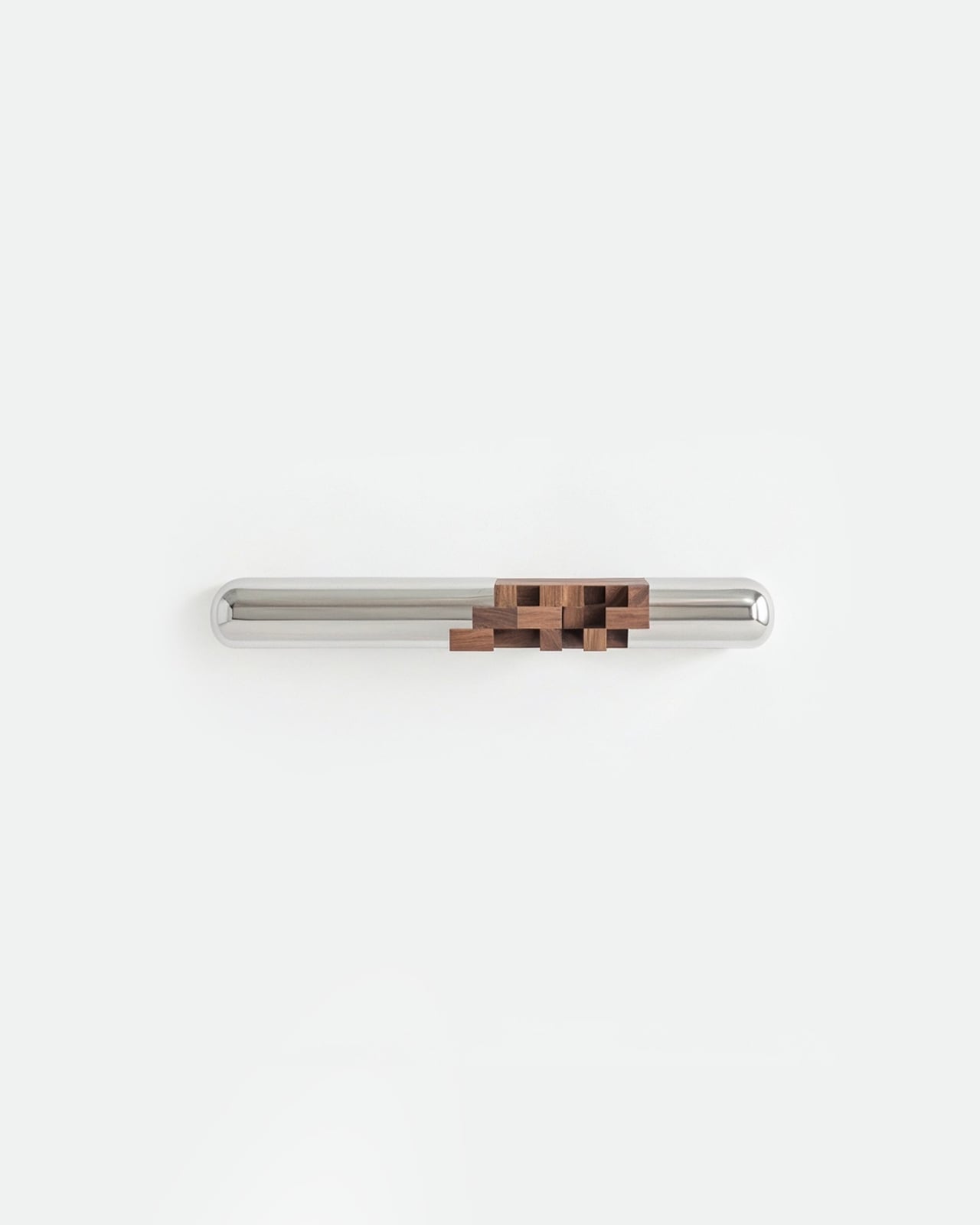
The same logic runs through every piece: the low-slung ottoman with its chrome top sitting above a pixelated walnut base, the wall bar with a single cluster of wood blocks anchoring an otherwise minimal steel rod, and the small sculptural objects that look, at certain angles, like characters from an early Minecraft world given physical weight and material warmth. That last detail is where the collection takes an unexpected turn into genuinely playful territory. The figurines don’t feel decorative in the traditional sense. They feel like they belong to a mythology the designer invented for this collection, artifacts from a world caught mid-render.
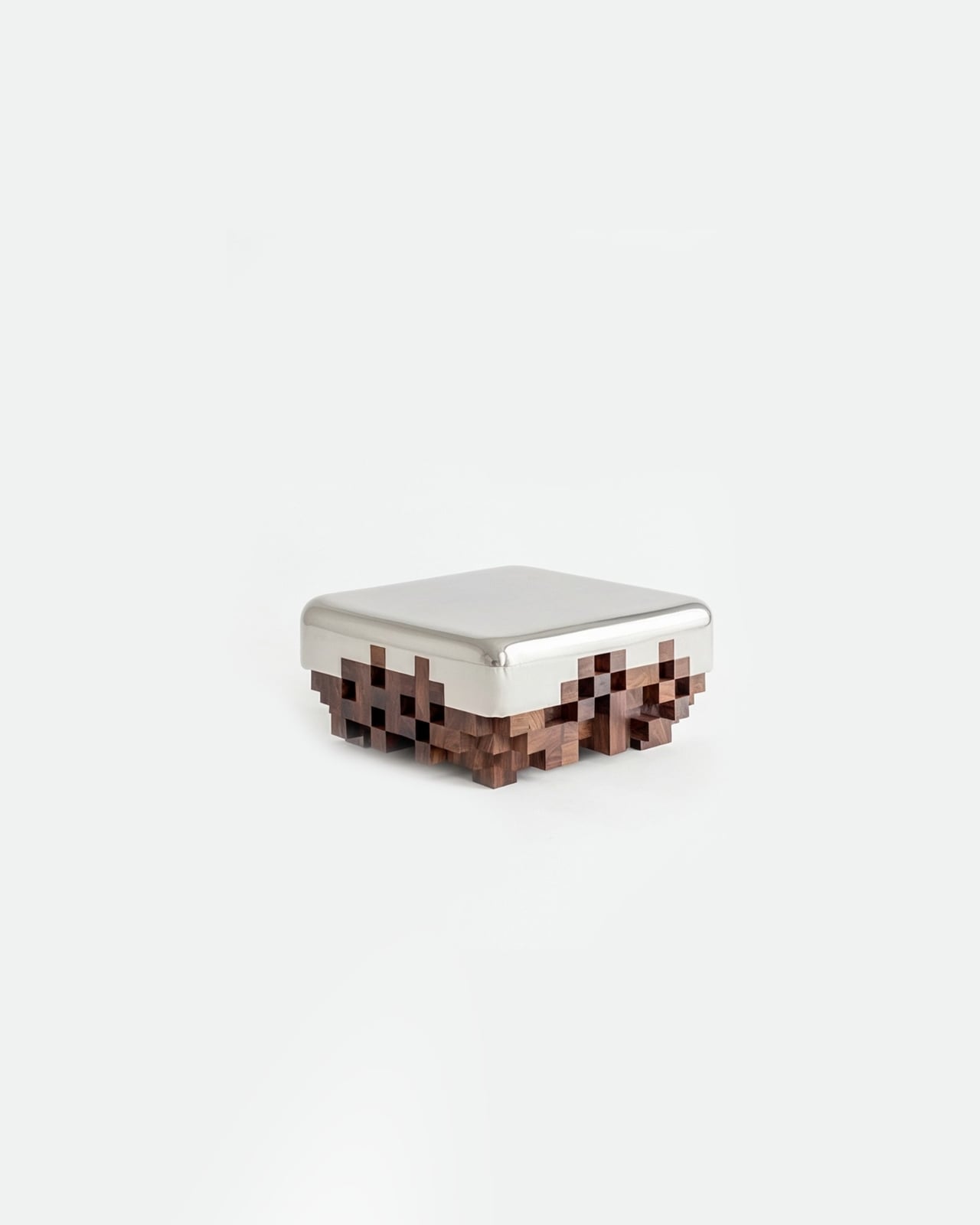
I’ll admit, my first instinct when I saw these pieces was to file them under “concept furniture,” the kind that photographs beautifully but lives permanently in a gallery or a mood board. The closer I looked, the less sure I was about that assessment. The craftsmanship is real. The walnut is solid and hand-detailed, each wooden block precisely cut and stacked into forms that read as chaotic but are actually quite controlled. The aluminum isn’t cold or clinical. It has a warmth to it in the way it curves, more like a well-worn chrome object than a surgical instrument.
The installation photography helps tell the story in two directions. Shot in a white gallery space, the pieces feel architectural, calm, almost meditative. Shot against dark, raked sand, they look like relics from some near-future archaeology, objects left behind when a digital civilization met a physical one. Both readings are valid, and I suspect Essesi wanted both.
There’s a question that lingers with this kind of work: who is it actually for? Collectible design at this level lives in a narrow category, somewhere between fine art and functional furniture, and it tends to attract a specific kind of buyer. But I’d argue that the Ghost Collection has a wider cultural reach than its price point might suggest. The pixel, as a visual symbol, has never been more loaded. A generation that grew up toggling between 8-bit games and ultra-HD screens carries a real emotional relationship with the idea of resolution. Essesi is tapping into that, not cynically, but with a genuine design point to make about what we find beautiful and why.
Whether or not you’d actually put a pixelated walnut ottoman in your living room, the Ghost Collection earns its name. These objects feel like furniture passing between states, fully formed and slightly out of phase at the same time. That’s a hard thing to design. Most pieces end up fully in one world or the other. These ones don’t, and that’s exactly what makes them worth paying attention to.
The post Half Pixel, Half Mirror: The Ghost Collection That Blurs Both Worlds first appeared on Yanko Design.