MagSafe Breadboard Turns Your iPhone Into a Circuit Prototyping Lab

Show me another MagSafe breadboard. I’ll wait. Kevin Yang’s Commi Board is the only one, and that alone tells you something about how design students occasionally see opportunities that entire industries miss. The engineering is smarter than it looks: instead of embedding a full microcontroller and battery into a phone accessory, Yang uses GPIO communication to let your smartphone handle the processing. Your phone already has more power than an Arduino Mega, better connectivity than most dev boards, and a screen you actually want to look at. Commi Board just provides the physical interface for components and the software to make it work. You get four programming methods ranging from conversational AI to a proper IDE, real-time circuit validation, and a small display that shows execution status. Dimensions are tight: 62mm by 98mm when installed, with the board itself at 62mm by 82mm when detached.

The color scheme gives strong Flipper Zero vibes, but there’s a key difference between that infamous pen-testing tool and this humble breadboard. Flipper wants to be everything: NFC reader, IR blaster, sub-GHz radio, GPIO interface, and more. Commi Board has a tighter scope and probably benefits from that focus. It’s specifically for prototyping circuits and validating code, not for pentesting your neighbor’s garage door. The modular design splits into the breadboard surface and a MagSafe mounting frame with that distinctive ring cutout for phone cameras. Everything connects through USB-C 3.2, BLE, or Bluetooth, and the cloud storage means you can start a project on your phone and pick it up later without dealing with local file management. Yang has a working theoretical PCB prototype with tested connectivity, though the full API integration is still in mockup phase. For a student project that started in June 2024, this is surprisingly far along.

Designer: Kevin Yang

Most IoT hardware tries to do everything and ends up mediocre at all of it. You get a device with its own processor, battery, screen, and connectivity stack, essentially rebuilding a worse version of the phone already in your pocket. Yang went the opposite direction. Commi Board is parasitic by design, borrowing your phone’s computational power, display, internet connection, and power management. What remains is pure interface: holes for components, GPIO pins for communication, and minimal onboard electronics to translate between physical circuits and software. This approach means lower weight, cheaper manufacturing, and no battery degradation to worry about in three years. After 3 years, swap your phone, but continue your tinkering. Sounds almost revolutionary, no?

You can tell Yang actually built and tested this thing because of how the modular split works. Sometimes you want the board magnetically stuck to your phone for portable testing. Other times you need it detached because your circuit blocks the camera or needs more space to breathe. The MagSafe frame has that circular cutout positioned exactly where iPhone camera arrays sit, which matters more than it sounds. Misalign that by a few millimeters and the magnetic connection feels sketchy. The orange border serves double duty as brand identity and a visual indicator of where the two pieces separate. Good industrial design makes functional divisions obvious without needing instruction manuals, and this pulls it off cleanly.

Four programming methods cover a wide range of experience levels, from ‘never touched circuitry in my life’ to ‘I ship builds and hardware for a living.’ Beginners can type “make an LED blink every second” and watch AI spit out working code. That builds intuition about syntax without requiring fluency first, which is how people actually learn instead of how computer science departments think they should learn. Visual block programming handles the intermediate phase where you understand logic flow but typing semicolons still feels unnatural. Puzzle-piece interfaces work surprisingly well for teaching conditionals because the physical constraints mirror logical ones. Then there’s the full IDE for anyone comfortable with text editors or shipping actual products. Most educational platforms force you to switch ecosystems as you level up, losing all your previous projects in the migration. This keeps you on the same hardware using the same project files, just changing how you communicate with the circuits.

Yang claims GPIO communication lets the phone simulate most microcontrollers, which holds up for Arduino-class applications but gets questionable under pressure. Smartphones have absurd amounts of raw compute, but they run full operating systems with schedulers and background processes that introduce latency. Blinking LEDs and reading sensors? Totally fine. Tight timing loops or bit-banging niche protocols? You’ll probably hit walls. The spec sheet lists USB-C 3.2 alongside Bluetooth and BLE, which tells me Yang ran into exactly these problems during development. USB-C handles the demanding stuff while Bluetooth covers casual wireless control. That’s the kind of tiered connectivity you see from someone who tested their assumptions and had to architect around reality.

And the Commi Board comes with cloud storage too, allowing you to save your projects/builds/experiments in a secure place that isn’t bound to your phone. Imagine the alternative – you get inspired, start wiring something up, then life happens and three weeks later you can’t remember which transistor you needed or where you saved that working code. Friction kills momentum harder than technical difficulty does. Being able to pull up a half-finished project on your phone while standing in a component aisle trying to remember your parts list solves a real problem. The project-sharing community is obviously coming next, which transforms this from a standalone product into a platform. If Yang opens the API properly for third-party development, this could turn into something way bigger than a thesis project. Right now there’s a working PCB prototype with tested connectivity, which means the core tech functions. Let’s hope Yang gets to a point where he can take this to a startup level, or even crowdfunding. I know I’d have my money ready.

The post MagSafe Breadboard Turns Your iPhone Into a Circuit Prototyping Lab first appeared on Yanko Design.

This Amazon Rainforest Pavilion Uses Bamboo and Biomimicry to Reconnect Humans With Nature

As technology accelerates and daily life becomes increasingly disconnected from the natural environment, the Amazon Immersion Pavilion offers a quiet counterpoint grounded in presence, atmosphere, and ecological respect. Conceived as a conceptual project for Iquitos, Peru, the pavilion proposes a gentle architectural intervention that allows visitors to experience the rainforest through sound, texture, light, and movement. It approaches the Amazon as a living partner rather than a backdrop, inviting visitors to rediscover a relationship with nature through deliberate sensory engagement.

The pavilion centers on the idea that architecture can heighten awareness when it blends into the rhythms of a landscape. The design seeks to create a space that listens to the environment and responds through form, materiality, and environmental intelligence.

Designer: Nathalia Cristina de Souza Vilela Telis

The project began with a desire to create deeper dialogue between humans and the forest. The Amazon provides constant motion and sound, and the design team wanted a structure that would reveal these qualities rather than compete with them. The result is an organically composed pavilion shaped by biomimicry, sustainable material thinking, and an understanding of local ecosystems. Bamboo was selected as the primary material because it is strong, flexible, and deeply rooted in regional construction traditions. Its use affirms the project’s commitment to low-impact building and ecological responsibility.

The sensory experience is structured as a gradual unfolding across two levels; the first floor establishes a calm and introspective atmosphere. The circular base, measuring 31,500 mm in diameter, creates a grounded platform for the structure. A partially enclosed volume captures natural light from an overhead opening, allowing soft illumination to guide the visitor. Water flows gently along the walls, creating a rhythmic soundscape similar to a small waterfall. Lush plantings soften the edges of the space, allowing architecture and vegetation to blend into one continuous environment. Humidity, aroma, and sound work together to create a cocoon-like experience.

As visitors move upward to the second floor, the atmosphere changes. The space opens outward and offers a wide view of the Amazon River as it stretches toward the horizon. The architecture recedes to make room for the scale of the landscape. The main body, with a diameter of 17,000 mm and a height of 14,000 mm, supports natural ventilation and introduces a sense of elevation within the forest canopy. The contrast between enclosure and openness creates a clear emotional arc: grounding, expansion, and renewed connection.

Sustainability shapes every design decision. The pavilion uses a biomimetic approach informed by natural growth patterns and the fluid movement of the river. Bamboo construction reduces environmental disruption and reflects local building culture. Passive ventilation works with the natural breezes of the rainforest, while carefully directed natural light reduces reliance on artificial systems. Low-impact assembly techniques help protect the forest floor and the delicate ecosystems surrounding the site. Together, these strategies allow the pavilion to behave like a companion to the landscape, quietly aligning itself with the rhythms of the forest.

The project draws from research on environmental design, indigenous construction knowledge, sensory behavior, and Amazonian ecology. The methodology included a bibliographic study, environmental impact evaluation, and an examination of the social context surrounding Iquitos. The goal was to create an architectural experience that supports ecological understanding and deepens a sense of environmental awareness.

Although the pavilion remains fictional, the design process revealed the challenges of creating architecture for remote natural settings. The limits of bamboo in large spans, the logistics of transporting sustainable materials, and the need for construction methods that respect ecological cycles were key considerations. Crafting an immersive sensory environment within such constraints required careful problem-solving and adaptation.

The post This Amazon Rainforest Pavilion Uses Bamboo and Biomimicry to Reconnect Humans With Nature first appeared on Yanko Design.

This Shape-Shifting Bed Care Device Uses Airbags to Protect Patients Around the Clock

For elderly individuals or patients confined to bed for extended periods, whether due to surgery, chronic illness, immobility, or long-term care, pressure ulcers are among the most serious and persistent complications. Also known as bedsores, these injuries develop when constant pressure restricts blood flow to vulnerable areas of the body, particularly the back, hips, and buttocks. Over time, the skin and underlying tissue break down, leading not only to pain and infection but also to a significant decline in overall quality of life. Traditional care relies heavily on manual repositioning by caregivers, which can be physically demanding, inconsistent, and sometimes insufficient in fully preventing tissue damage.

Flipcare emerges as a transformative solution to this longstanding medical challenge. Designed with both patients and caregivers in mind, Flipcare integrates smart engineering, ergonomic support, and automation into a single, seamless care system. At its core, the device is built around a network of adjustable airbags strategically positioned to minimize prolonged pressure on any one part of the body. These airbags expand and deflate in timed intervals, gently shifting the user’s weight and redistributing pressure without causing discomfort or disturbing rest. This dynamic support system mimics the natural micro-movements healthy individuals make during sleep, movements that bedridden patients may no longer be able to perform on their own.

Designer: suosi designBoyuan Pan, and Jianshen Yuan

Complementing the airbag system is Flipcare’s ergonomic back support design, crafted to follow the natural contours of the spine. Instead of forcing the user into a flat or rigid posture, the structure provides stable yet adaptive lumbar support that aligns with the body’s natural curvature. This not only enhances comfort but also reduces the risk of musculoskeletal strain, targeting one of the lesser-discussed but equally important consequences of long-term bed rest.

The hallmark of the device is its automated turning function, a clinically proven method for preventing pressure ulcers. Flipcare periodically shifts the patient from side to side using controlled, gentle rotations. These movements are precise and consistent, providing a level of care difficult to replicate manually over long hours. By automating this process, caregivers are relieved of repetitive physical labor, enabling them to focus on other essential tasks while ensuring that the patient receives uninterrupted pressure redistribution throughout the day and night.

What sets Flipcare apart is not just its technology but its human-centric approach. Every feature aims to enhance the patient’s dignity, comfort, and autonomy, while also reducing caregiver burden. With more consistent pressure management, patients experience improved skin health, better sleep, and reduced pain, critical factors that collectively elevate their overall well-being.

As the demand for long-term care rises and populations continue to age, Flipcare stands as a vital advancement in patient support. By merging intelligent design with compassionate engineering, it offers a safer, more comfortable, and more dignified care experience for those who need it most.

The post This Shape-Shifting Bed Care Device Uses Airbags to Protect Patients Around the Clock first appeared on Yanko Design.

A Wave-Inspired Villa That Redefines Organic Living in Brisbane

In contemporary architecture, few projects manage to break free from the familiar constraints of rigid geometry and strict structural logic. This Brisbane-based villa, whose construction began in February 2024, does exactly that, reimagining the home not as a static object, but as a living, breathing extension of nature itself. Inspired by the fluidity of landscapes and the organic movement found in oceans and sand dunes, the design embraces form as a medium for emotion, comfort, and connection. It proposes a radical yet deeply intuitive idea: that architecture, like nature, is at its best when it flows.

The villa’s sculptural identity emerges from its soft contours, sweeping rooflines, and a massing strategy built around gentle cantilevers. Instead of relying on hard angles or stacked boxes, the structure bends and curves gracefully, with overhanging planes that create depth, shade, and a sense of subtle motion. These fluid moves mimic the lines of beaches and the undulating rhythm of waves. More importantly, they soften the architecture’s presence, allowing it to settle into its environment with an ease rarely achieved in modern residential design. The elongated arcs, layered terraces, and floating edges generate a serene, almost meditative rhythm, evoking the sensations of walking along a coastline or watching sands shift in the wind.

Designer: Diachok Architects

Nature integration is not an added layer here; it is the foundation. While many contemporary homes treat greenery as decorative framing, this villa builds it directly into the architecture. Lush tropical vegetation cascades from terrace edges, wraps around curved walls, and spills into carved-out voids. Every balcony, softened corner, and transitional pathway carries some interaction with nature. This biophilic approach restores harmony between the built and natural worlds, allowing residents to experience the psychological uplift that comes from living in close dialogue with greenery, daylight, and open air. Inside and outside dissolve into one continuous, breathing environment.

Materiality plays a quiet but powerful role in reinforcing this softness. A palette of natural stone, warm-toned plaster, and timber accents grounds the building in a tactile, organic warmth. These earthy materials echo the villa’s coastal inspiration, ensuring the fluid geometry is complemented by surfaces that feel calm, timeless, and deeply human. The interiors continue this language with light tones, subtle textures, and a focus on atmosphere, making the home feel like a sanctuary shaped by nature rather than imposed upon it.

Behind the villa’s sculptural poetry lies precise technical execution. Achieving its flowing geometry required advanced computational modeling, allowing the design team to test, refine, and optimize every curve. Each sweep of the façade and every bend of the roof is calibrated not only for spatial harmony, but also for structural performance, natural lighting, and thermal comfort. High-efficiency materials and sustainable construction methods further support the design’s environmental goals, while handcrafted detailing ensures that even the most futuristic elements retain a sense of human workmanship.

A key design challenge was balancing luxurious aesthetics with sustainable principles, a tension that defines much of contemporary architecture. Here, luxury expresses itself not through excess, but through experience: passive cooling, abundant cross-ventilation, strategic shading, and nature-integrated thermal mass work together to create comfort without waste. Every design decision aims to reduce the environmental footprint while elevating sensory richness. It proves that luxury and sustainability do not need to compete; they can, when thoughtfully combined, heighten one another.

Beyond its architectural achievements, the villa carries a deeply human-centered philosophy. Every curve, every transition, every opening has been shaped by an understanding of how environments influence mood and well-being. Generous glazing, sheer curtains, and arched interior frames draw soft daylight into the home, encouraging calmness and connection. This is not simply a house; it is a vessel that nurtures creativity, mindfulness, and emotional balance.

As construction continues in Brisbane, this villa is already setting a standard for what future homes can aspire to be: sculptural yet functional, expressive yet sustainable, luxurious yet profoundly connected to nature. It demonstrates that innovation does not require abandoning humanity, and that beauty can coexist with environmental responsibility. Most importantly, it reaffirms that homes can be more than structures, they can be sanctuaries that hold us gently, inspire us daily, and bring us closer to the world that shapes us.

The post A Wave-Inspired Villa That Redefines Organic Living in Brisbane first appeared on Yanko Design.

This Air Fryer Flips 180° To Transform Into An Electric Cooktop

I’m telling you, a bachelor probably designed the Aouball because it’s giving such ‘MacGyvering a kitchen appliance’ energy that I absolutely love it! To be absolutely frank, an air fryer is nothing more than an electric heating coil and a fan… so what if you just flipped the coil upwards and shut the fan down? You’d have an electric cooktop! The Aouball might just be the first ever product to actually implement this genius idea and I can’t wait for it to become the new kitchen standard.

It’s simple – if a product serves multiple purposes it should be allowed to serve both purposes. A toaster can easily work as a quick pizza-maker too, but nobody makes vertical pizzas, which is why the toaster feels so incredibly limiting – apart from the fact that it warms up pop tarts too. Aouball breaks the air fryer’s format by allowing the main unit to flip 180°. This simple flip lets you cook normally, without frying, making the Aouball perfect for tiny apartments, dorms, or even the kitchenette in your hotel room.

Designer: Zhongshan Aouball Electric Appliances

“To offer a comprehensive and efficient one stop solution, the design team has created this compact device that supports multiple cooking methods like air frying, roasting, baking, shallow frying, stir frying, steaming and boiling, able to meet diverse cooking needs,” says maker Zhongshan Aouball Electric Appliances. “Such a device avoids the purchase of several devices with only a single function to ease the economic burden on users and save kitchen space,” they add.

After all, just manipulating a few parameters allows the air fryer to do so much more than ‘air fry’. Turn the fan off and it’s perfect for roasting or baking. Flip the coils over and add a shallow pan and you can stir-fry, saute, or griddle. Make the container deeper and you can shallow or deep fry, boil, steam, etc. The heat just gets applied in a different way and the cooking transforms entirely.

The Aouball is designed slightly differently compared to your average air fryer. The main unit (with the electricals) sits on a rotating element that allows it to flip downwards or upwards. When flipped down, the thing works as an oven or broiler. Turn the fans on and you now have a convection oven or air fryer. This is accompanied by a clear glass basket that slots into the gap in the base, with a metal grille for aiding in air circulation.

Flip the entire thing upwards and the vents on the side for the air get blocked (for good reason, they’re not in use anymore). Lock the unit in its new position and you’ve got yourself a cooktop (with storage space at the bottom!) The Aouball comes with its own cooktop vessel too, a 3″ deep rectangular tray with a non-stick coatin, a glass lid, and handles. A control panel on the side gives you complete control over the Aouball’s functionality, allowing you to access all the different cooking modes, temperatures, fan speeds, etc.

This simple trick is frankly genius. I love my air fryer, but I barely use it. It literally only gets used for intense work like roasting veggies, frying wedges, crisping up things, or just some basic baking. The air fryer, given that it uses a heating coil that heats up super fast, is capable of so much more, and the Aouball harnesses that. A winner of the A’ Design Award, the game-changing air-fryer is currently even available in China, although Alibaba lists its wholesale price at roughly $36. Perfect for small homes and smaller budgets!

The post This Air Fryer Flips 180° To Transform Into An Electric Cooktop first appeared on Yanko Design.
This 690 Sq.Ft. Bus Station Cuts Carbon Emissions by 70% Using Recycled Steel

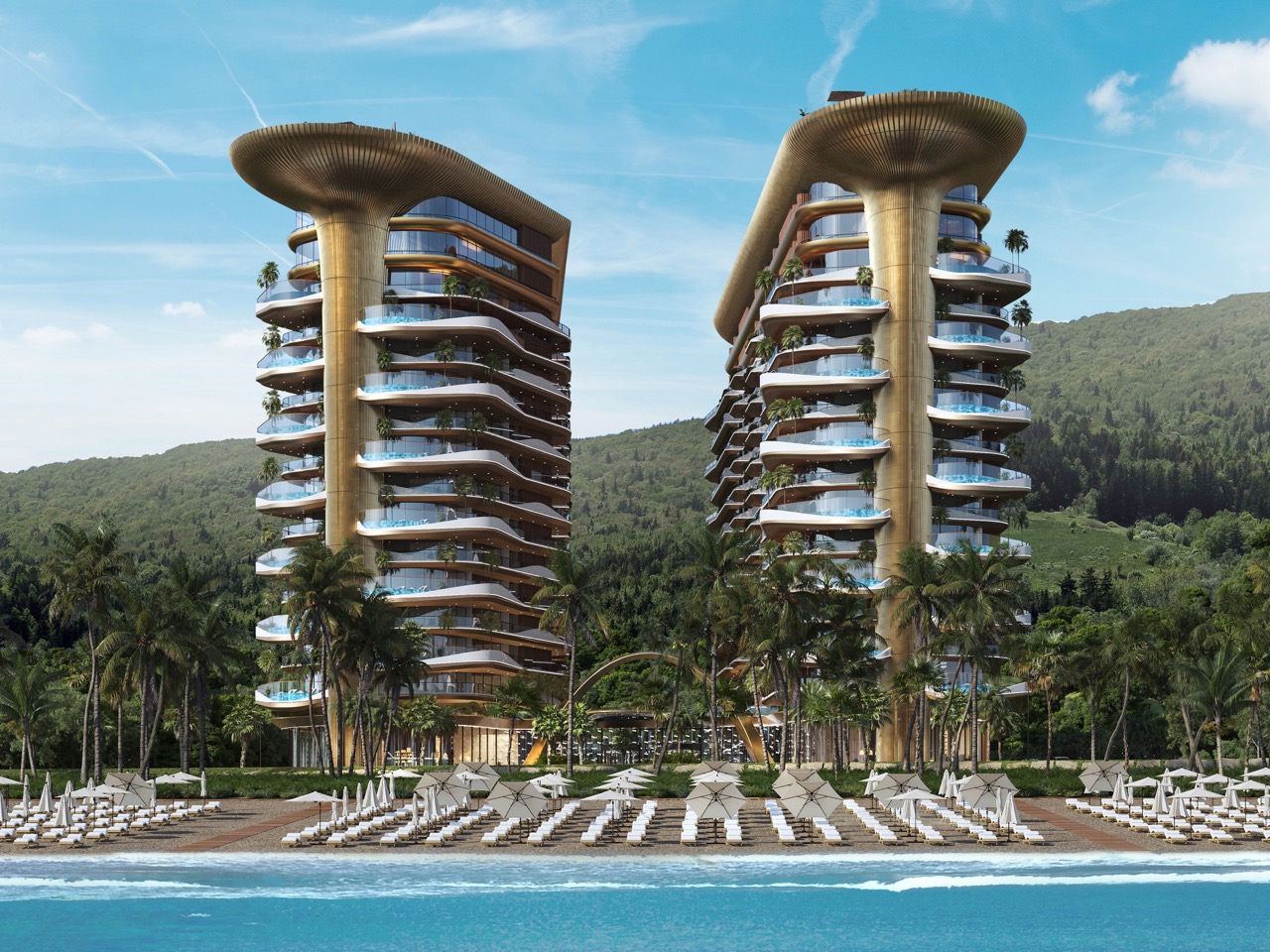
Waiting for a bus shouldn’t feel like purgatory, but in the intense heat and frequent downpours of Brazil’s Amazon region, it often does. Fernando Andrade understood this intimately when he began designing the Amazon Bus Station in Belém, a project born not from architectural ego but from genuine public consultation with the people who would actually use it. They asked for four things: protection from the weather, environmental comfort, durability, and reasonable cost. What they got exceeded every expectation: a soaring, sculptural shelter that treats public transit users as deserving of the same design attention typically reserved for museums and corporate headquarters.

The 16-meter structure, completed in February 2024, wraps passengers in a protective envelope of triangulated steel and reflective glass, its organic curves creating an embracing interior space that feels both sheltering and expansive. Yellow accessibility ramps guide users through a barrier-free environment where natural ventilation, achieved through traditional Amazonian roof fins, keeps air moving without mechanical systems. Shadows from the geometric framework dance across metal benches as daylight filters through the glass skin, creating an ever-changing interior atmosphere that connects occupants to the rhythms of weather and time. The design accommodates everyone, including those with mobility challenges, while pushing what architectural beauty can achieve in public infrastructure.

Designer:

The structural approach here is basically what happens when parametric design actually solves problems instead of just generating Instagram bait. The whole thing is built from 600mm triangular modules, each assembled from 75x3mm quadrangular steel tubes. That triangulation distributes loads efficiently enough that the entire 16-meter span rests on just four support points, which means minimal ground disruption and maximum flexibility for street-level circulation. And they used recycled steel throughout, dropping carbon emissions by 70% compared to conventional construction methods. The numbers matter because this approach could scale. Belém gets this one station, but the fabrication methodology, the material choices, the whole industrial-to-site assembly process translates to other locations dealing with similar climate challenges and budget constraints.

The 8mm laminated glass blocks 99.8% of direct solar radiation, which in equatorial conditions isn’t a nice-to-have feature, it’s the difference between a functional space and a greenhouse. But the clever bit is those ventilation fins at the roof ridge. They’re angled glass louvers that let hot air escape while keeping rain out, basically a stack effect ventilator with zero moving parts and zero maintenance requirements beyond occasional cleaning. No motors failing, no electronics corroding in humidity, no ongoing energy costs. Just heated air rising and escaping through geometry that works with local wind patterns. It’s the kind of solution that feels obvious in hindsight but requires serious environmental modeling to get right.

Nine months from concept to completion, with fabrication happening in a controlled industrial environment using local shipbuilders who know how to work with complex curves and weather-resistant assemblies. They pre-built the structure in three major sections, transported them to site, and only finished the connection joints on location. That level of prefabrication ensures tolerances stay tight and quality control doesn’t depend on field conditions, which matters when you’re dealing with structural silicone joints and precise glass panel alignments. The client, Centro Integrado de Inclusão e Reabilitação, specializes in accessibility infrastructure, so the barrier-free circulation wasn’t an afterthought added to satisfy code. It shaped the entire spatial concept from the beginning.

The real test of any transit infrastructure is whether it changes behavior. A better bus station doesn’t just shelter existing riders, it potentially converts people who currently drive because the bus experience feels too degrading or uncomfortable. Belém’s new station won’t single-handedly transform modal split numbers, but it signals that public transit users deserve environments worth occupying. These details accumulate into an experience that respects users enough to think through their actual needs rather than just checking regulatory boxes. That respect, rendered in recycled steel and high-performance glass, might be the most radical thing about the whole project.

The post This 690 Sq.Ft. Bus Station Cuts Carbon Emissions by 70% Using Recycled Steel first appeared on Yanko Design.
These Transparent Rolling Chairs Turn Your Living Room Into a Moving Color Canvas

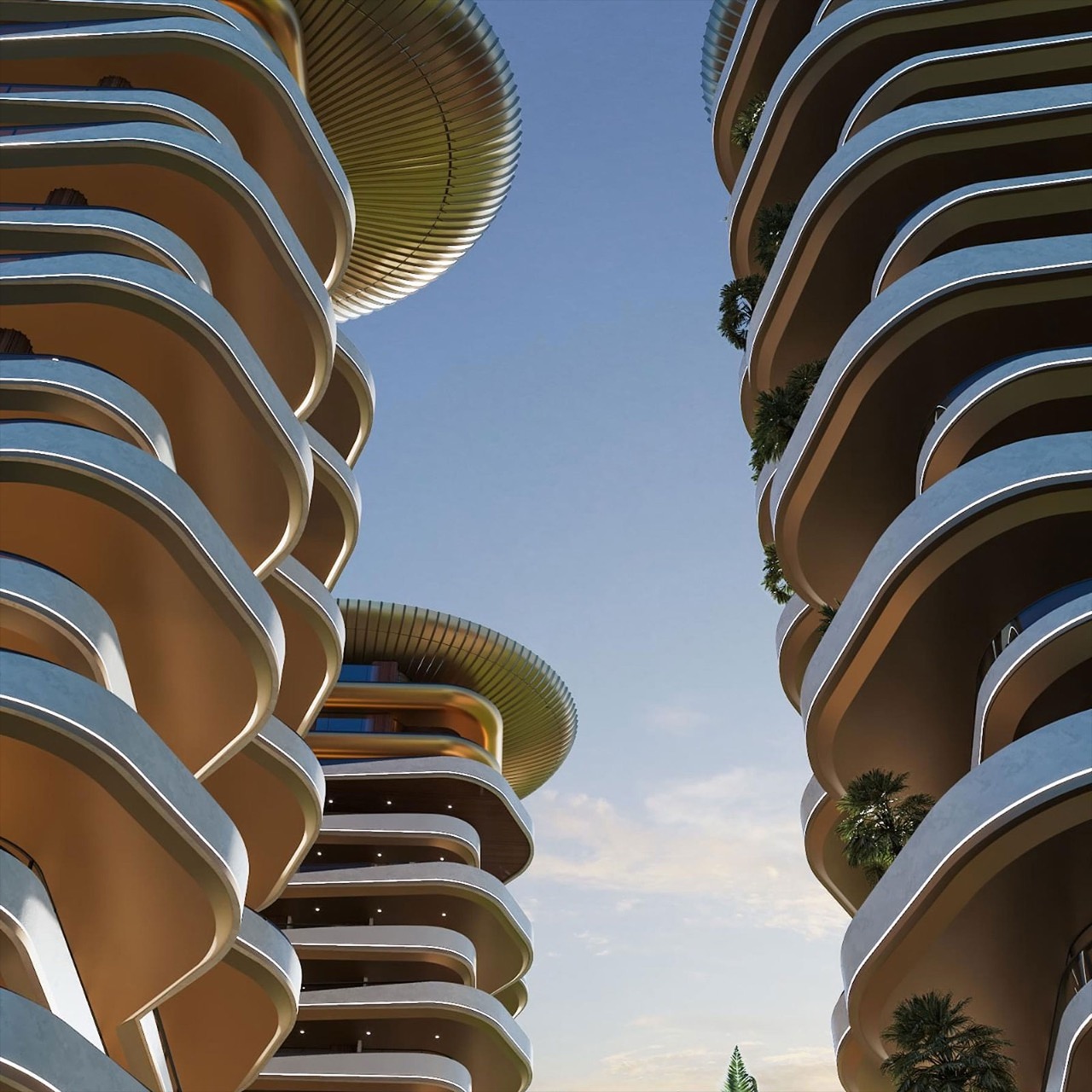
Like De Stijl once deconstructed form and space into elemental purity, Color Roller reimagines that legacy through motion and transparency. Using the three primary colors, red, yellow, and blue, this experimental furniture collection plays with the relationship between geometry, light, and interaction. When made transparent, these primary hues transcend their boundaries, merging into endless new shades through layering and rotation. The result is not just furniture, but an evolving chromatic sculpture that invites users to participate in the reconstruction of their environment.

At its core, Color Roller explores how color and form can coexist as active agents in spatial design. Each of the three components, a hexagonal chair, rectangular table, and triangular floor lamp, embodies a minimalist geometry while sharing a dynamic logic of rolling and transformation. Made entirely from transparent acrylic panels that intersect in pairs, these forms create a vivid and flexible composition of color. Depending on light direction and intensity, the furniture transforms, casting overlapping shadows and gradients that turn interiors into interactive canvases.

Designer: Chuheng He

The unique property of Color Roller lies in its capacity to change color combinations through rolling and rearrangement. By simply flipping or rotating the pieces, users can recompose the palette of their space. This transforms the act of furnishing into an act of play and authorship, where each arrangement reflects personal taste, emotion, and atmosphere. The design embraces De Stijl’s philosophy of modularity and freedom, yet it translates those ideas into a tactile, participatory experience.

From a technical standpoint, Color Roller is realized through colored acrylic thermoforming and adhesive bonding. The production process required precise experimentation to ensure both structural integrity and optical clarity. The research began with 1:5 scale models exploring the overlapping behavior of panels under various lighting conditions. Later, 1:1 prototypes were constructed to test materials, weight-bearing capacities, and balance. The hexagonal chair, in particular, underwent extensive trials with acrylic, wood, and aluminum to find a structure that was both light and strong. After iterative testing, the design was optimized, retaining its ethereal appearance while ensuring durability through minimal adhesive use and refined jointing.

The greatest challenge lay in reconciling aesthetics with performance. Early versions of the acrylic chair, though solid and stable, appeared too heavy, compromising the design’s intended transparency. Through reduction and structural optimization, the final outcome achieved both visual lightness and functional strength.

Ultimately, Color Roller aims at being an experiment in perception and participation. By letting color and geometry dance through light, it invites users to rediscover the poetry of everyday space. Each movement reveals a new intersection, a new hue, and a new perspective, transforming ordinary interiors into living expressions of form and color.

The post These Transparent Rolling Chairs Turn Your Living Room Into a Moving Color Canvas first appeared on Yanko Design.
The Pearl Chandelier puts pearl-shaped bulbs within metal sconce ‘oysters’ for a grand lighting aesthetic

Although pearls aren’t the first thing that come to your mind when you look at this chandelier, Waxy Design Studio’s Pearl Chandelier manages to weave a unique aesthetic out of its original starting point. The chandelier comes with multiple lighting elements mounted around it in a ring, creating an almost jewel-like experience. Each individual metal cone or sconce has a pearl-shaped lightbulb inside it, turning the chandelier into a necklace for your ceiling, and making the metal sconces have the concealing appeal of an oyster that just lets you peek in to see the pearl.

Designer: Waxy Design Studio

The chandelier comes in two styles – white or black, with an interplay against the golden metal color on the inside and the golden frame itself. Each chandelier has precisely 20 sconces or lighting elements, made of curved metal sheets. The light sits within the sheet, shining through the opening in the folds. It’s perhaps a very liberally abstract way to represent an oyster, but then again, the chandelier does focus the light both downwards as well as upwards, helping scatter the light in a meaningful and functional way. It does have a stunning appeal too, with the 20 sconces coming together almost like a necklace.

“Each Pearl Light unit encapsulates a delicate balance between the luminosity of the pearl and the protective embrace of metal, mirroring the relationship between an oyster and its precious gem,” says Waxy Design Studio. “This juxtaposition creates a visually striking and emotionally resonant lighting fixture that enhances any space with its unique charm.”

Meticulous attention to detail is evident in the seamless integration of the ‘pearls’ and metal components. Advanced production techniques ensure both the structural integrity of the piece and the delicate diffusion of light through the pearl. The result is a captivating play of light and shadow, inviting viewers to appreciate the fixture from various perspectives.

The post The Pearl Chandelier puts pearl-shaped bulbs within metal sconce ‘oysters’ for a grand lighting aesthetic first appeared on Yanko Design.
These Origami Cabins were designed to be rapidly constructed in a short span of time

Imagine a house that can adapt to any environment, from bustling cityscapes to serene mountain ranges. This is the vision behind the Infinity Mobile Architecture, an award-winning design by A.L.P.S. that’s redefining the concept of living spaces. Cities are getting saturated and as a result, people are leaving their urban lives behind, looking for a livable habitat in lesser-occupied areas. Designed to help you build a home with minimal effort, time, and destruction to the surroundings, the Infinity Mobile Architecture system by A.L.P.S. gives you a flexible home that can be rapidly constructed on any kind of terrain and in any climate. Relying on clever origami, the Infinity homes are stable and offer dynamic and aesthetic livable spaces that let you get away from the city without necessarily leaving the comforts of an urban home.

Designer: A.L.P.S.

The key to this flexibility lies in the ingenious skeletal structure. Crafted from high-grade, lightweight aluminum, it’s both robust and easy to transport. This innovative design allows the unit to adapt to various terrains, from mountain slopes to serene meadows. Nestled amidst rolling hills or perched on a rocky cliffside, the Infinity Mobile Architecture minimizes its footprint while maximizing your connection with the surrounding beauty.

The focus on lightweight materials reduces environmental impact during transportation and construction. A.L.P.S. has even explored eco-friendly facade options like soft fabric, ensuring the unit blends seamlessly with its natural surroundings. It’s a home that respects the environment, leaving minimal disruption in its wake. But the Infinity Mobile Architecture isn’t just about aesthetics. A.L.P.S. has incorporated clever technical advancements to ensure a comfortable and functional living experience. The retractable skeleton is not just lightweight, it’s designed for ease of use. During transport, it conveniently folds in, making the unit compact and manageable. Once you’ve reached your new haven, the skeleton expands to create a spacious living area.

This leaves you with roomy interiors that have a dynamic ceiling, enhancing the living space to break its cuboidal monotony. The ceiling evokes the dynamism of a kaleidoscope, further enhanced by the cabin’s full-length mirrors that let ample amounts of natural light in during the day.

The exterior, on the other hand, is clad with aircraft-grade aluminum panels, making the unit resistant to a wide range of temperatures, from scorching deserts to snow-capped mountains. Secondary lightweight structures and decking components can be assembled without heavy machinery, minimizing disruption to the environment. Additionally, the innovative single-point suspended ceiling system boasts a weight capacity of 80kg and can be hoisted into place in one go. This translates to a quicker turnaround time, allowing you to enjoy your new mobile haven sooner.

The post These Origami Cabins were designed to be rapidly constructed in a short span of time first appeared on Yanko Design.
This Modular Handbag Ditches Stitches for Interlocking Leather Pieces

In 2022, reports highlighted a significant trend among Iranian students and entrepreneurs: nearly 50% expressed a desire to emigrate, and 62% were undecided about returning home. This emigration wave, driven by the pursuit of better opportunities, underscores a broader narrative of seeking growth despite facing mental, emotional, and physical challenges. Olka, meaning “homeland” in Persian, is a product born from this very spirit of resilience and transformation.

Olka is a bag that symbolizes the journey of Iranian youth who venture abroad to build better lives. Inspired by these stories, it captures the essence of migration as a path fraught with pain yet ripe with potential for growth. The design metaphorically represents this journey, where every slit and seam is a stepping stone toward creating something beautiful, similar to a flower blooming through adversity.

Designer: Maryam Hosseini

Leather, known for its durability, often outlasts the threads used in stitching, which degrade faster, compromising the overall longevity of leather products. Olka addresses this issue innovatively by eliminating stitches altogether. Instead, it uses a modular interlocking system where leather pieces fit seamlessly together. This not only enhances the product’s durability but also streamlines production, as the assembly process is faster and more efficient. Additionally, any damaged component can be easily replaced, extending the bag’s life and making it sustainably fashionable.

One of Olka’s standout features is its consumer-centric design approach. The bag comprises 72 genuine cow leather pieces, each meticulously designed in 2D and 3D using AutoCAD and precisely cut with laser technology. These pieces are interwoven, creating a sturdy, cohesive structure without the need for stitching. Consumers have the option to order the bag in separate components, accompanied by a manual, allowing them to assemble it themselves. This DIY aspect fosters a deep emotional connection and sense of belonging, as users actively participate in the creation of their bag.

Olka also includes a handcrafted inner bag made from genuine cow leather, which can be used independently as a minimalist crossbody bag. This dual-functionality adds to the product’s versatility and appeal, catering to various needs and occasions.

The journey to creating the bag involved extensive research across several domains, including interlocking systems, modular design, consumer behavior, DIY product trends, and the migration patterns of young Iranians. This thorough exploration ensured that Olka was not just a product, but a solution that resonates deeply with its target audience. The primary challenge faced during Olka’s development was ensuring that the interlocked components provided strength comparable to traditional stitching. Additionally, the concept of delivering the bag in separate pieces for consumer assembly required meticulous testing to guarantee ease of use and durability. The successful resolution of these challenges is a testament to the innovative spirit and technical expertise behind the bag.

The post This Modular Handbag Ditches Stitches for Interlocking Leather Pieces first appeared on Yanko Design.