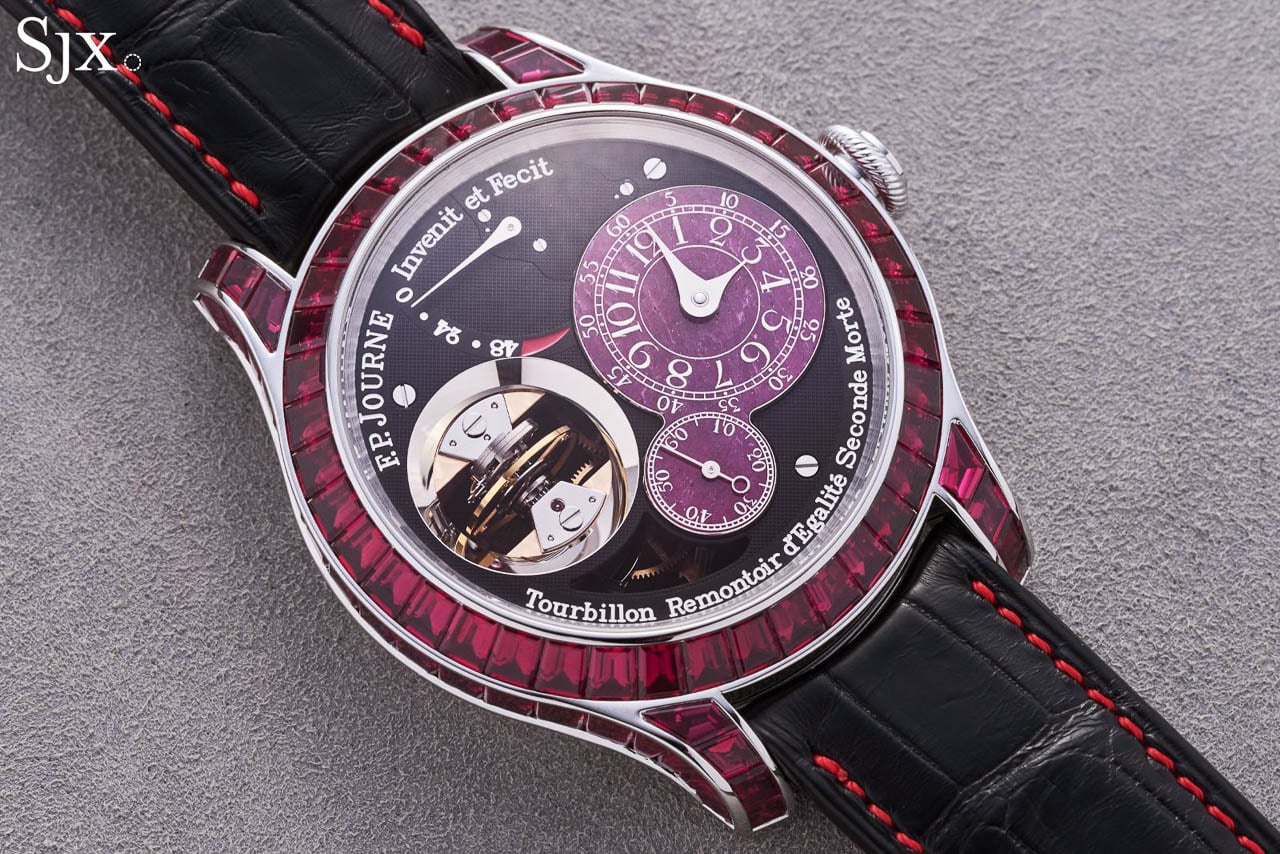
Most gem-set watches treat stones as decoration. F.P. Journe’s Tourbillon Souverain Vertical Joaillerie Rubis treats them as the entire point. This unique piece took eight years to build because finding 93 rubies that match perfectly in color, then cutting 61 carats of material away to achieve that uniformity, requires a timeline most manufacturers would never approve. The result is 25 carats of baguette rubies wrapped around a platinum case that was engineered specifically to hold them.
Designer: F.P. Journe
Jeweled complicated watches have drawn serious collectors since Geneva’s golden era of the late twentieth century. Brands including Patek Philippe and Piaget established the category, and demand has only intensified over the past decade as colored stones moved from novelty to centerpiece. But what F.P. Journe delivered here operates on a different scale entirely. This is closer to a wearable ruby sculpture than a watch that happens to feature gems.
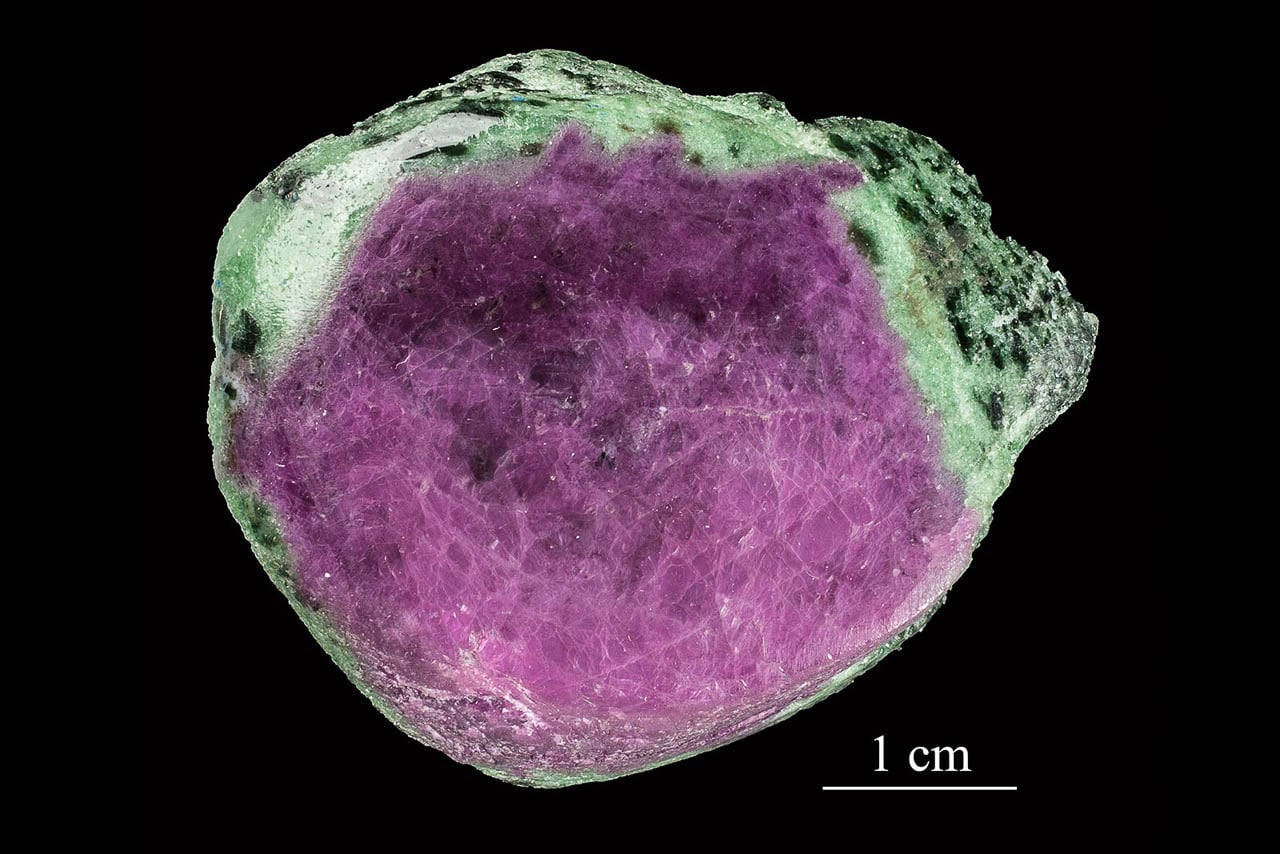
Image source: watchesbysjx.com
The arithmetic tells you everything. Eighty-six carats of rough ruby entered the workshop. Twenty-five carats survived. The remaining 61 carats were ground away in pursuit of identical size, clarity, and saturation across every stone. That ratio of loss would kill most projects before they started. F.P. Journe spent nearly a decade sourcing and recutting until the math worked.
The Case as Canvas
Every exterior metal surface carries rubies. Forty baguette-cut stones sit channel-set in the bezel, forming an unbroken red circuit around the dial. The lug hoods hold another 16 baguettes arranged in a fanned configuration that draws the eye outward and exaggerates the watch’s footprint on the wrist. The case band wraps the mid-section with 37 stones, the largest in the entire build.
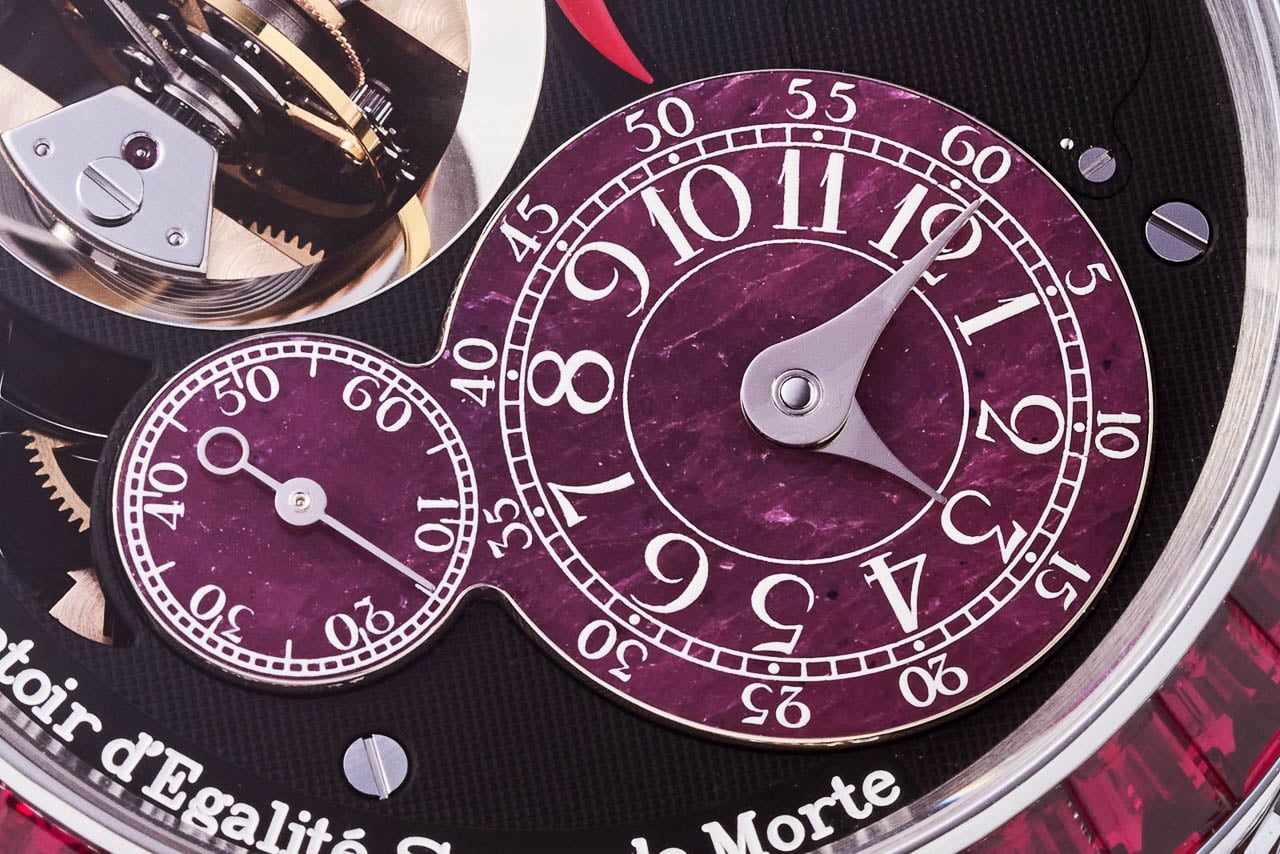
Image source: watchesbysjx.com
F.P. Journe describes those 37 case-band rubies as the largest baguette-cut stones ever set in a watch. The claim matters because ruby’s natural crystal structure favors oval or cushion cuts. Producing elongated baguettes from material that resists that shape required sourcing oval-cut rubies of appropriate dimensions, then recutting them to fit the Tourbillon Vertical geometry. The case itself grew 2mm wider than the standard model specifically to receive stones of this size without leaving visible gaps between settings.
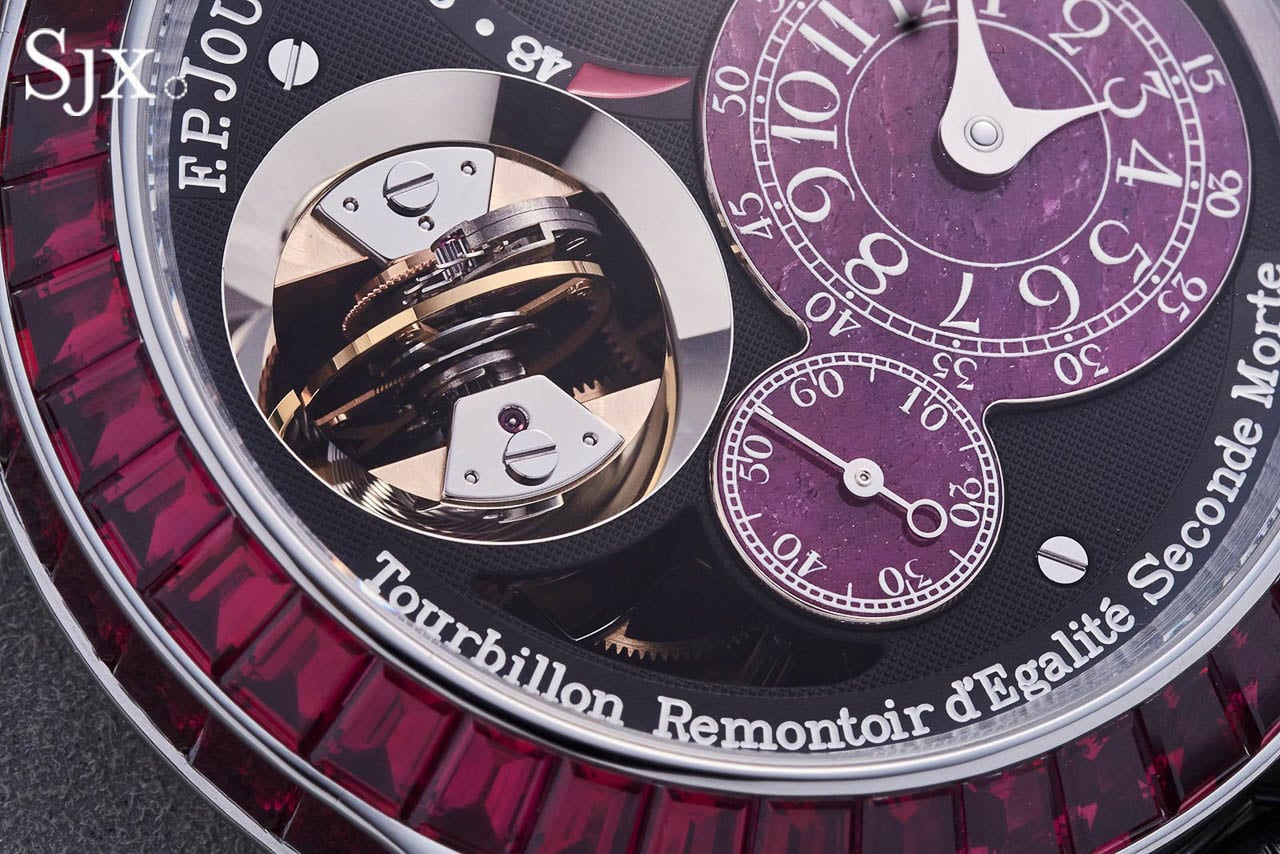
Image source: watchesbysjx.com
What you notice immediately is the seamlessness. No color variation breaks the surface. No pink tone drifts into orange. The 93 stones read as a single continuous shell rather than a patchwork of individual gems. Achieving that uniformity across bezel, lugs, and band demanded precise color matching at a level most jewelers would consider impractical.
That precision explains the eight-year development cycle. One stone that skews slightly warm or slightly cool would fracture the visual coherence of the entire case. Patience was not optional here.
Why Average Stone Weight Matters
Numbers put this in perspective. Each ruby on this watch averages 0.269 carats. Typical melee diamonds used in gem-set watches weigh under 0.02 carats and cost almost nothing because they trade as bulk commodities.
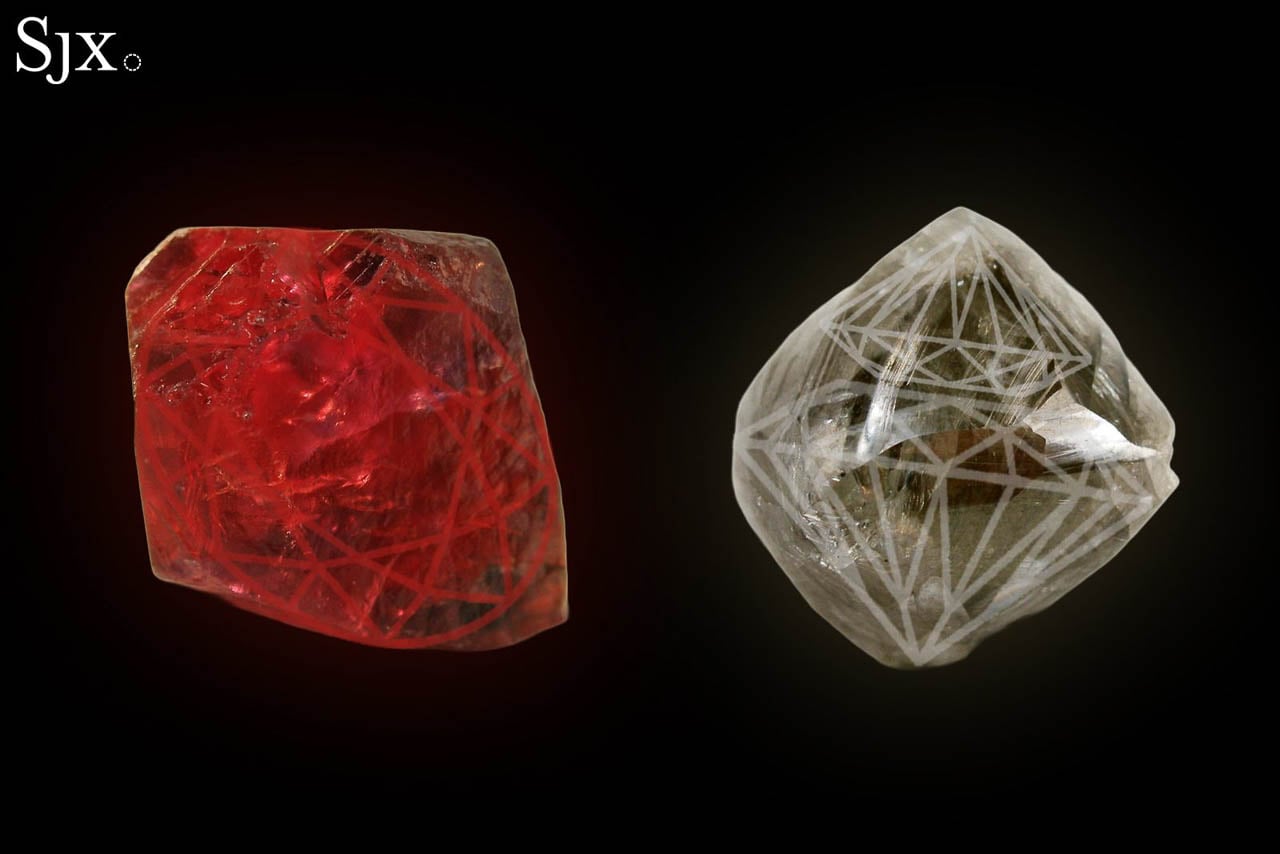
Image source: watchesbysjx.com
Patek Philippe’s fully set Grandmaster Chime carries 30.16 carats of baguette diamonds distributed across 392 stones, averaging 0.077 carats each. F.P. Journe’s diamond version of this same case averages 0.242 carats per stone. The ruby variant exceeds even that figure because ruby carries roughly 1.14 times the density of diamond: identical physical dimensions yield higher carat weight.
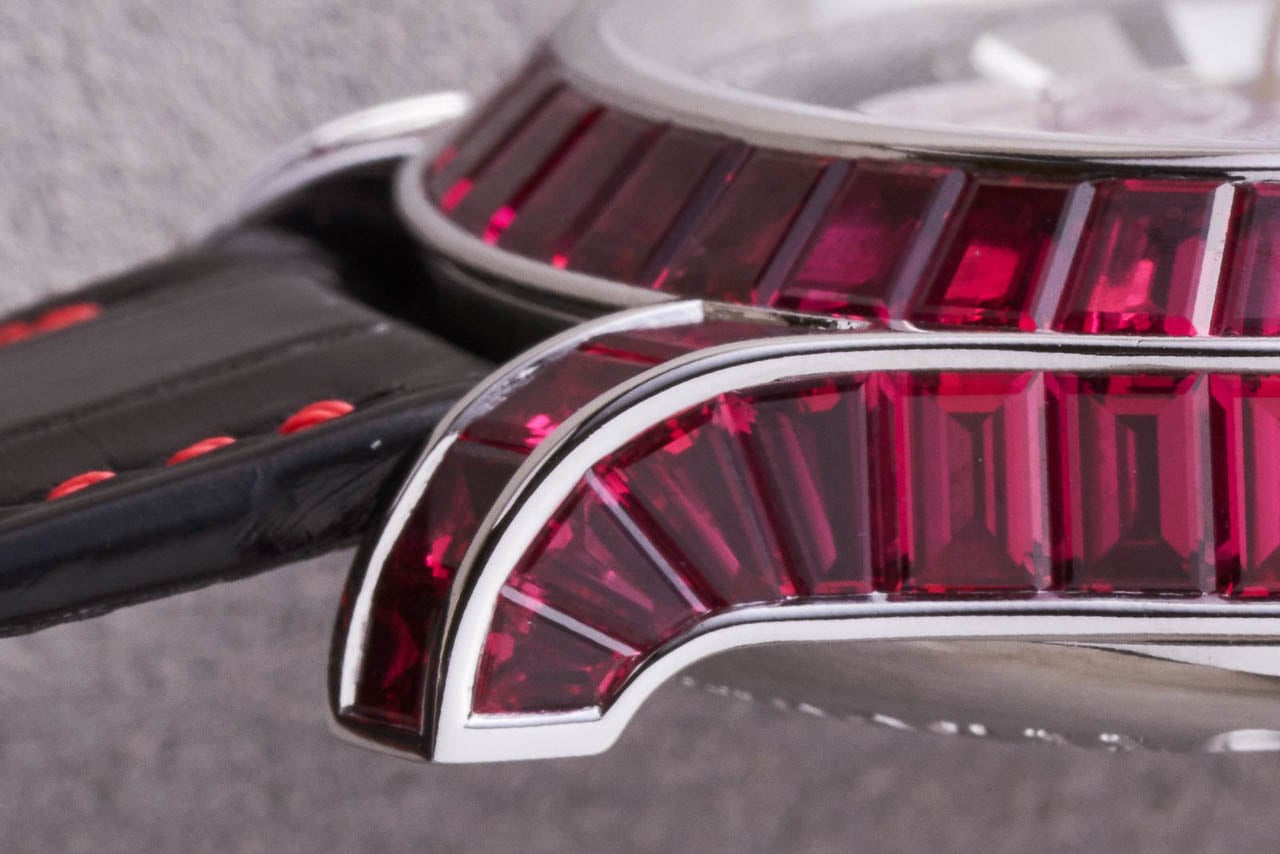
Image source: watchesbysjx.com
A Dial Built From Stone
The dial shifts the ruby theme into different territory. Instead of faceted gems, F.P. Journe selected cœur de rubis, a mineral combining red corundum growths with green zoisite matrix. The surface reads as ruby embedded in raw rock, textured and organic rather than polished to clarity.
Visually, the contrast works. The mottled dial recedes behind the geometric precision of the baguette case setting rather than competing with it. Thematically, the choice keeps everything on the watch connected to ruby in some form.
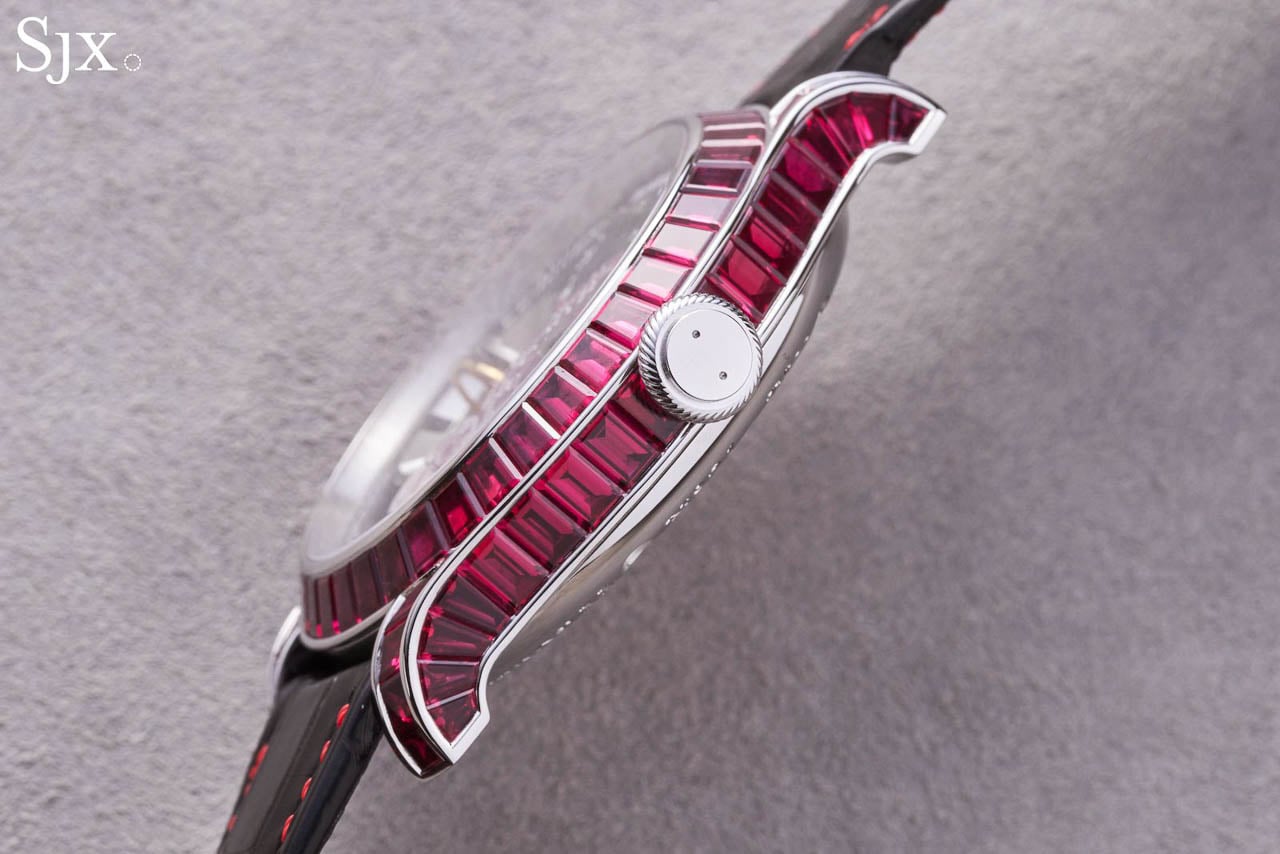
Image source: watchesbysjx.com
Machining corundum presents real difficulty. The material sits at 9 on the Mohs scale, just below diamond, and its brittleness makes drilling apertures for hands and the tourbillon window a high-risk operation. Scrap rates on dials like this run steep, adding another dimension of rarity to an already singular object.
F.P. Journe used ruby heart dials on the final 20-piece run of the Tourbillon Nouveau, so this represents continuation rather than experiment.
The Movement Behind the Gems
Caliber 1519 sits beneath the ruby exterior. This hand-wound movement carries one of F.P. Journe’s signature complications: a constant-force device built around a titanium blade-spring remontoir that François-Paul Journe designed in 1983 at the request of collector Eugene Gschwind.
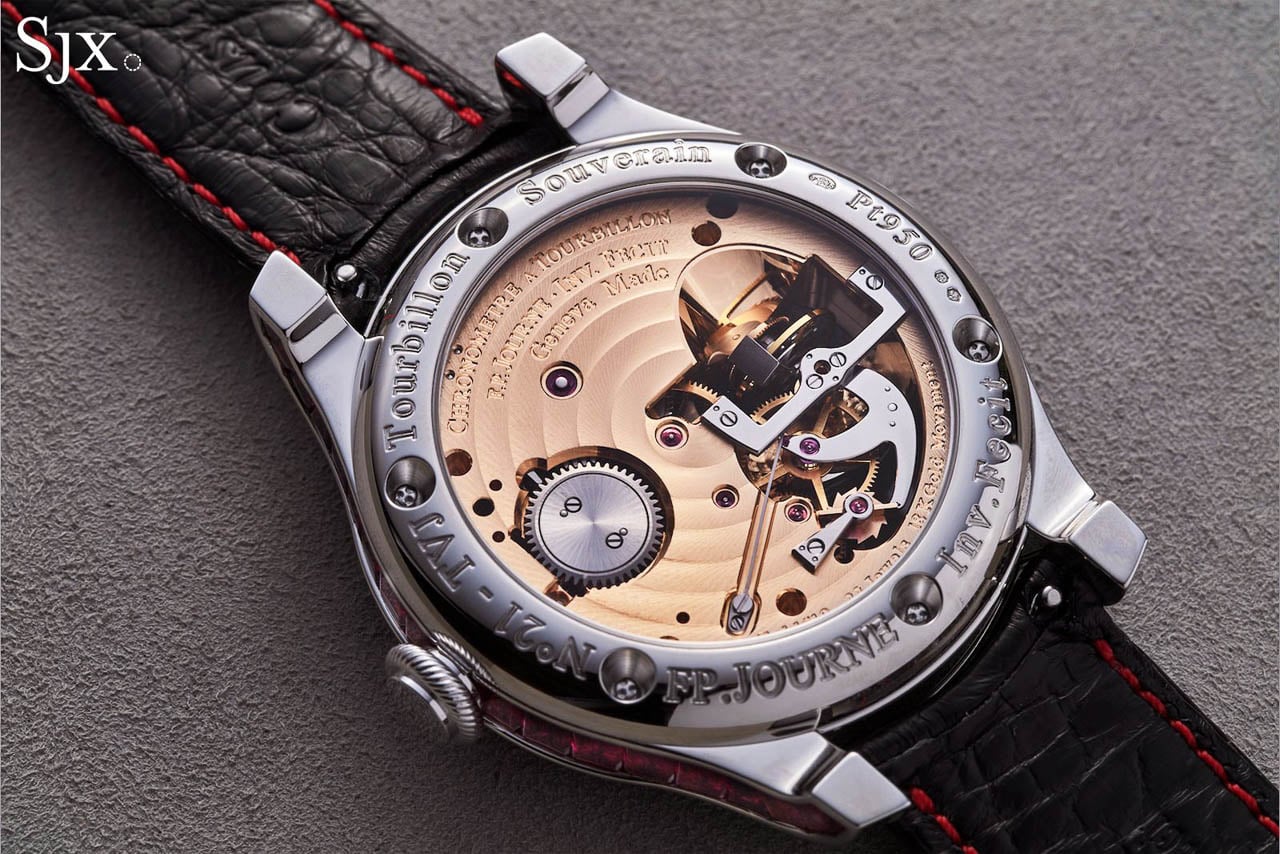
Image source: watchesbysjx.com
The constant-force mechanism produces what the brand calls natural jumping seconds. The seconds hand advances in discrete one-second increments without requiring a separate dead-beat module. You see the hand step crisply rather than sweep, which provides immediate visual confirmation that the remontoir is functioning and makes accuracy checks against a reference signal straightforward.
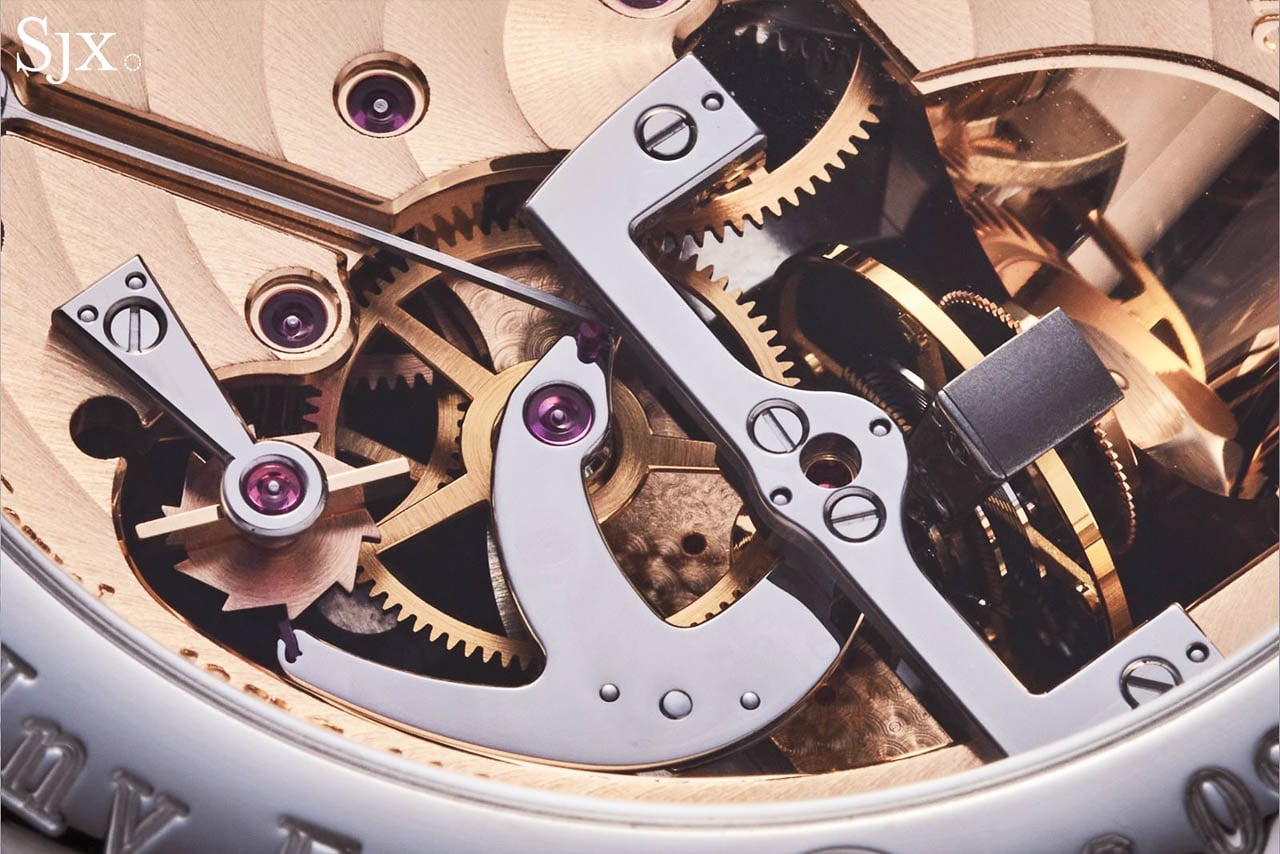
Image source: watchesbysjx.com
The tourbillon departs from convention by rotating 90 degrees from the standard orientation, linked through a crown gear. This vertical positioning keeps the balance wheel perpendicular to most watch movements, theoretically reducing rate variation between dial-up, dial-down, and crown positions. Whether that translates to measurable real-world accuracy gains depends on wearing habits, but the engineering ambition registers clearly. Total power reserve runs 80 hours, with a guaranteed 42-hour chronometric window during which the constant-force system operates at full effectiveness.
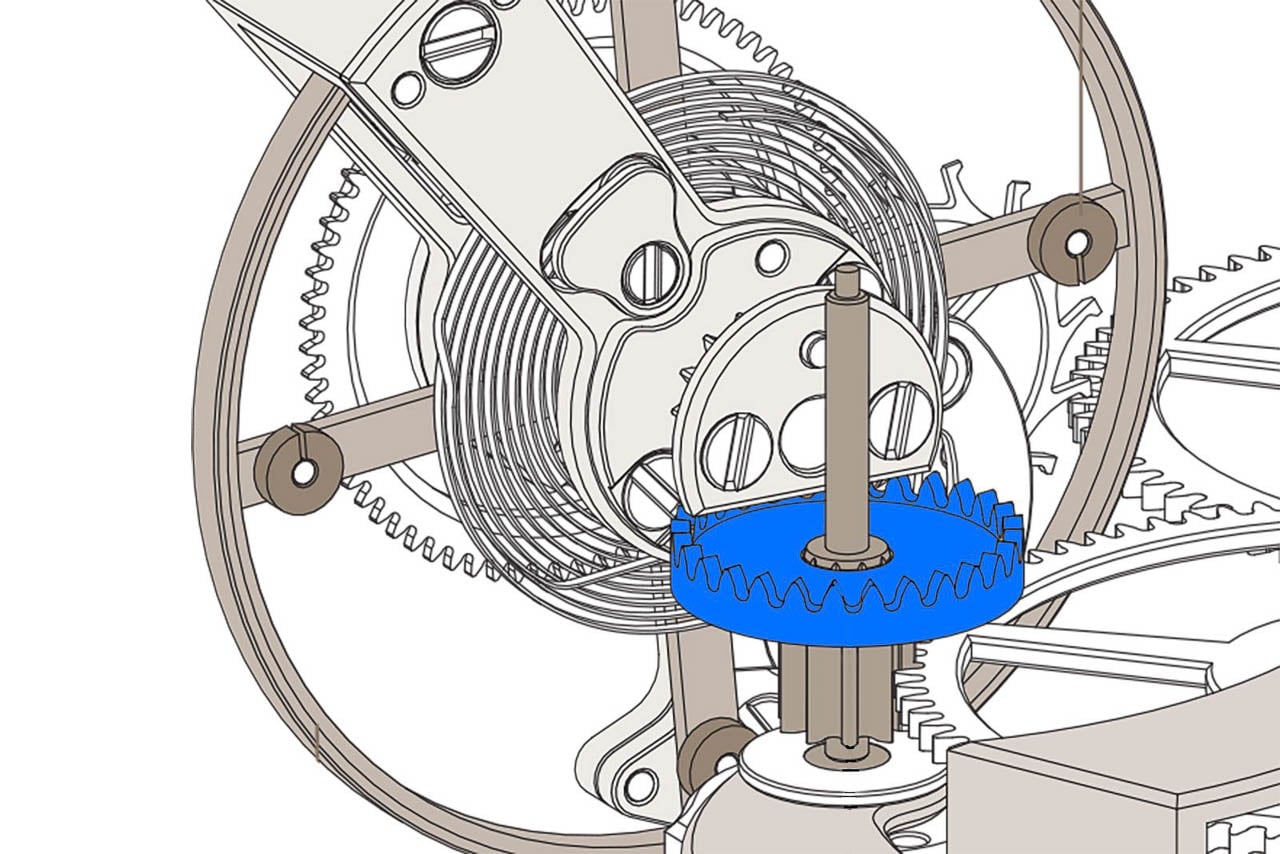
Image source: watchesbysjx.com
Positioning the Piece
The crocodile strap intentionally recedes, letting the case dominate. The platinum folding clasp does not: it carries 18 additional baguette-cut rubies, extending the red-on-platinum language to every visible metal surface including the underside of the wrist.
Water resistance registers at 30 meters, a specification that signals jewelry-object status rather than any expectation of practical use. This watch exists for controlled environments, not daily wear.
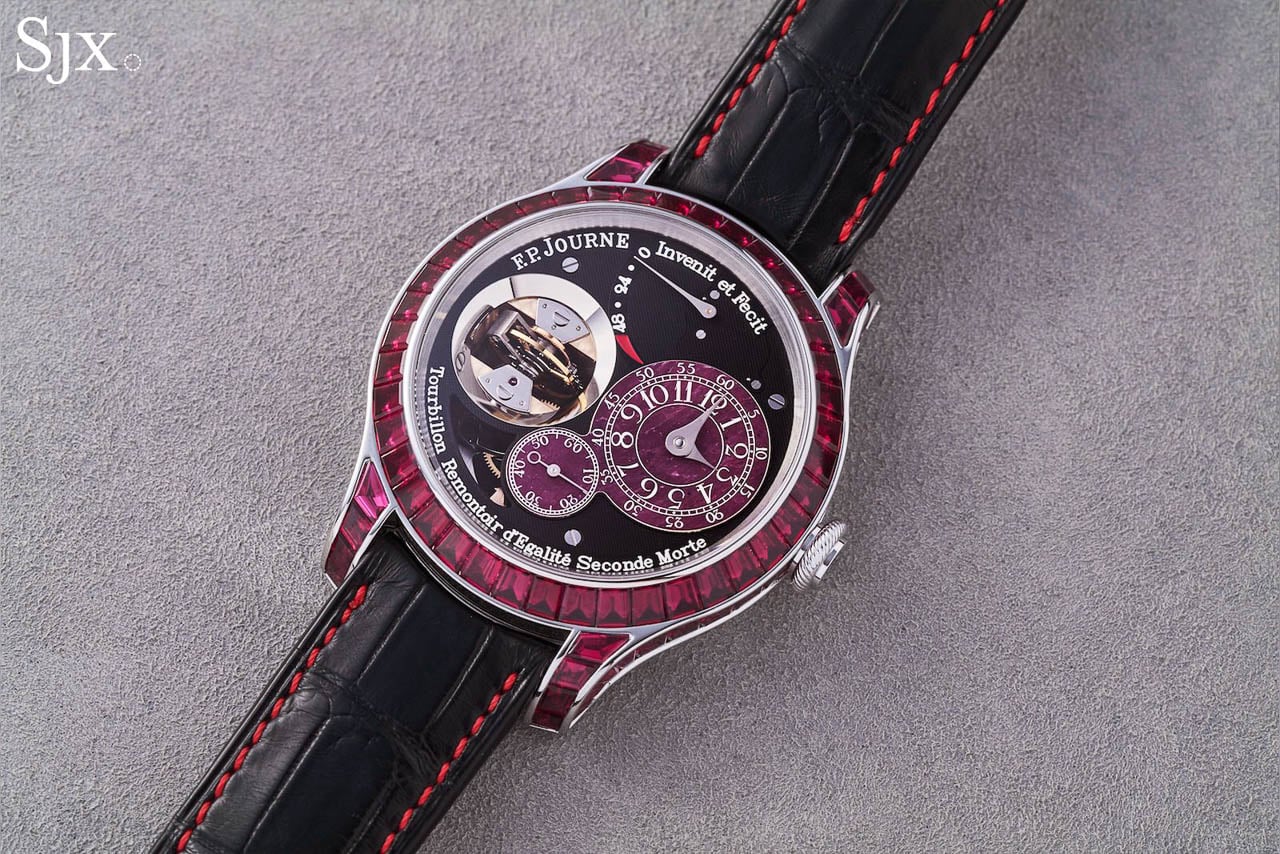
F.P. Journe has not published pricing, listing availability only through boutiques with figures disclosed upon application. Given the material costs, the eight-year timeline, and the unique-piece designation, the number will occupy territory where inquiring about it implies you probably cannot reach it. More relevant than the price is what this watch demonstrates: how far an independent maker will push when schedules, budgets, and conventional production logic become secondary to a singular creative vision.
F.P. Journe Tourbillon Souverain Vertical Joaillerie Rubis
- Case: 44mm × 13.76mm, platinum
- Crystal: Sapphire
- Water Resistance: 30m
- Movement: Cal. 1519, manual wind
- Functions: Hours, minutes, natural jumping seconds, power reserve, constant force device, tourbillon
- Frequency: 21,600 vph (3 Hz)
- Power Reserve: 80 hours total, 42 hours chronometric
- Strap: Crocodile with ruby-set folding clasp (18 baguette-cut rubies)
- Availability: Unique piece, F.P. Journe boutiques only
- Price: Upon application
The post F.P. Journe Turns 86 Carats of Rubies Into One Watch first appeared on Yanko Design.